US7824709B2 - Lipophilic drug delivery vehicle and methods of use thereof - Google Patents
Lipophilic drug delivery vehicle and methods of use thereof Download PDFInfo
- Publication number
- US7824709B2 US7824709B2 US10/778,640 US77864004A US7824709B2 US 7824709 B2 US7824709 B2 US 7824709B2 US 77864004 A US77864004 A US 77864004A US 7824709 B2 US7824709 B2 US 7824709B2
- Authority
- US
- United States
- Prior art keywords
- bioactive agent
- apolipoprotein
- agent delivery
- particles
- delivery particle
- Prior art date
- Legal status (The legal status is an assumption and is not a legal conclusion. Google has not performed a legal analysis and makes no representation as to the accuracy of the status listed.)
- Active, expires
Links
Images


Classifications
-
- A—HUMAN NECESSITIES
- A61—MEDICAL OR VETERINARY SCIENCE; HYGIENE
- A61K—PREPARATIONS FOR MEDICAL, DENTAL OR TOILETRY PURPOSES
- A61K9/00—Medicinal preparations characterised by special physical form
- A61K9/10—Dispersions; Emulsions
- A61K9/127—Synthetic bilayered vehicles, e.g. liposomes or liposomes with cholesterol as the only non-phosphatidyl surfactant
-
- A—HUMAN NECESSITIES
- A61—MEDICAL OR VETERINARY SCIENCE; HYGIENE
- A61K—PREPARATIONS FOR MEDICAL, DENTAL OR TOILETRY PURPOSES
- A61K31/00—Medicinal preparations containing organic active ingredients
- A61K31/66—Phosphorus compounds
- A61K31/661—Phosphorus acids or esters thereof not having P—C bonds, e.g. fosfosal, dichlorvos, malathion or mevinphos
-
- A—HUMAN NECESSITIES
- A61—MEDICAL OR VETERINARY SCIENCE; HYGIENE
- A61K—PREPARATIONS FOR MEDICAL, DENTAL OR TOILETRY PURPOSES
- A61K31/00—Medicinal preparations containing organic active ingredients
- A61K31/70—Carbohydrates; Sugars; Derivatives thereof
- A61K31/7042—Compounds having saccharide radicals and heterocyclic rings
- A61K31/7048—Compounds having saccharide radicals and heterocyclic rings having oxygen as a ring hetero atom, e.g. leucoglucosan, hesperidin, erythromycin, nystatin, digitoxin or digoxin
-
- A—HUMAN NECESSITIES
- A61—MEDICAL OR VETERINARY SCIENCE; HYGIENE
- A61P—SPECIFIC THERAPEUTIC ACTIVITY OF CHEMICAL COMPOUNDS OR MEDICINAL PREPARATIONS
- A61P23/00—Anaesthetics
-
- A—HUMAN NECESSITIES
- A61—MEDICAL OR VETERINARY SCIENCE; HYGIENE
- A61P—SPECIFIC THERAPEUTIC ACTIVITY OF CHEMICAL COMPOUNDS OR MEDICINAL PREPARATIONS
- A61P29/00—Non-central analgesic, antipyretic or antiinflammatory agents, e.g. antirheumatic agents; Non-steroidal antiinflammatory drugs [NSAID]
-
- A—HUMAN NECESSITIES
- A61—MEDICAL OR VETERINARY SCIENCE; HYGIENE
- A61P—SPECIFIC THERAPEUTIC ACTIVITY OF CHEMICAL COMPOUNDS OR MEDICINAL PREPARATIONS
- A61P3/00—Drugs for disorders of the metabolism
-
- A—HUMAN NECESSITIES
- A61—MEDICAL OR VETERINARY SCIENCE; HYGIENE
- A61P—SPECIFIC THERAPEUTIC ACTIVITY OF CHEMICAL COMPOUNDS OR MEDICINAL PREPARATIONS
- A61P31/00—Antiinfectives, i.e. antibiotics, antiseptics, chemotherapeutics
- A61P31/04—Antibacterial agents
-
- A—HUMAN NECESSITIES
- A61—MEDICAL OR VETERINARY SCIENCE; HYGIENE
- A61P—SPECIFIC THERAPEUTIC ACTIVITY OF CHEMICAL COMPOUNDS OR MEDICINAL PREPARATIONS
- A61P31/00—Antiinfectives, i.e. antibiotics, antiseptics, chemotherapeutics
- A61P31/10—Antimycotics
-
- A—HUMAN NECESSITIES
- A61—MEDICAL OR VETERINARY SCIENCE; HYGIENE
- A61P—SPECIFIC THERAPEUTIC ACTIVITY OF CHEMICAL COMPOUNDS OR MEDICINAL PREPARATIONS
- A61P35/00—Antineoplastic agents
-
- A—HUMAN NECESSITIES
- A61—MEDICAL OR VETERINARY SCIENCE; HYGIENE
- A61P—SPECIFIC THERAPEUTIC ACTIVITY OF CHEMICAL COMPOUNDS OR MEDICINAL PREPARATIONS
- A61P43/00—Drugs for specific purposes, not provided for in groups A61P1/00-A61P41/00
Definitions
- This application relates to compositions and methods for delivery of bioactive agents.
- the application relates to bioactive agent delivery particles that include a lipid binding polypeptide, a lipid bilayer, and a bioactive agent.
- Bioactive substances such as therapeutic agents, vaccine immunogens, and nutrients often cannot be administered in pure form, but must be incorporated into biocompatible formulations that enhance solubility of the bioactive material and package it in a suitable form to achieve optimal beneficial effects while minimizing undesirable side effects. Efficient delivery of bioactive agents is often hindered by a short clearance time of an agent in the body, inefficient targeting to a site of action, or the nature of the bioactive agent itself, for example, poor solubility in aqueous media or hydrophobicity. Thus, many formulation strategies have been developed to improve delivery, including controlled release formulations, emulsions, and liposomal preparations.
- Liposomes are completely closed, spherical lipid bilayer membranes containing an entrapped aqueous volume.
- the lipid bilayer includes two lipid monolayers composed of lipids having a hydrophobic tail region and a hydrophilic head region.
- the structure of the membrane bilayer is such that the hydrophobic, nonpolar tails of the lipid molecules orient toward the center of the bilayer while the hydrophilic heads orient toward the aqueous phases both on the exterior and the interior of the liposome.
- the aqueous, hydrophilic core region of a liposome may include a dissolved bioactive substance.
- hydrophobic substances Delivery of pharmaceutically useful hydrophobic substances is often particularly problematic because they are insoluble or poorly soluble in an aqueous environment.
- direct injection may be impossible or highly problematic, resulting in such dangerous conditions as hemolysis, phlebitis, hypersensitivity, organ failure, and/or death.
- improved formulations for hydrophobic bioactive substances that will promote stability in an aqueous environment and allow efficient delivery of such substances to a desired site of action.
- the invention provides compositions and methods for delivery of a bioactive agent to an individual.
- the invention provides a bioactive agent delivery particle that includes a lipid binding polypeptide, a lipid bilayer with an interior that includes a hydrophobic region, and a bioactive agent associated with the hydrophobic region of the lipid bilayer.
- Bioactive agent delivery particles generally do not include a hydrophilic or aqueous core.
- Bioactive agent delivery particles include one or more bioactive agents that include at least one hydrophobic region and are incorporated into, or associated with, the hydrophobic interior of the lipid bilayer.
- the hydrophobic region(s) of a bioactive agent are generally associated with hydrophobic surfaces in the interior of the lipid bilayer, e.g., fatty acyl chains.
- the bioactive agent is amphotericin B (AmB).
- the bioactive agent is camptothecin.
- Particles are typically disc shaped, with a diameter in the range of about 7 to about 29 nm.
- Bioactive agent delivery particles include bilayer-forming lipids, for example phospholipids.
- a bioactive agent delivery particle includes both bilayer-forming and non-bilayer-forming lipids.
- the lipid bilayer of a bioactive agent delivery particle includes phospholipids.
- the phospholipids incorporated into a delivery particle include dimyristoylphosphatidylcholine (DMPC) and dimyristoylphosphatidylglycerol (DMPG).
- the lipid bilayer includes DMPC and DMPG in a 7:3 molar ratio.
- the lipid binding polypeptide is an apolipoprotein.
- the predominant interaction between lipid binding polypeptides, e.g., apolipoprotein molecules, and the lipid bilayer is generally a hydrophobic interaction between residues on a hydrophobic face of an amphipathic structure, e.g., an ⁇ -helix of the lipid binding polypeptide and fatty acyl chains of lipids on an exterior surface at the perimeter of the particle.
- Particles of the invention may include exchangeable and/or non-exchangeable apolipoproteins.
- the lipid binding polypeptide is Apolipoprotein A-I (ApoA-I).
- particles are provided that include lipid binding polypeptide molecules, e.g., apolipoprotein molecules, that have been modified to increase stability of the particle.
- the modification includes introduction of cysteine residues to form intramolecular and/or intermolecular disulfide bonds.
- particles include a chimeric lipid binding polypeptide molecule, e.g., a chimeric apolipoprotein molecule, with one or more bound functional moieties, for example one or more targeting moieties and/or one or more moieties having a desired biological activity, e.g., antimicrobial activity, which may augment or work in synergy with the activity of a bioactive agent incorporated into the delivery particle.
- a chimeric lipid binding polypeptide molecule e.g., a chimeric apolipoprotein molecule
- one or more bound functional moieties for example one or more targeting moieties and/or one or more moieties having a desired biological activity, e.g., antimicrobial activity, which may augment or work in synergy with the activity of a bioactive agent incorporated into the delivery particle.
- a pharmaceutical composition in another aspect, includes a bioactive agent delivery particle in a pharmaceutically acceptable carrier.
- a method for administering a bioactive agent to an individual is also provided, which includes administering a pharmaceutical composition containing bioactive agent delivery particles in a pharmaceutically acceptable carrier to the individual.
- a therapeutically effective amount of the bioactive agent is administered in a pharmaceutically acceptable carrier.
- administration is parenteral, for example intravenous, intramuscular, transmucosal, or intrathecal.
- particles are administered as an aerosol.
- the bioactive agent is formulated for controlled release.
- a method for treating a fungal infection in an individual including administering a anti-fungal agent, for example, AmB, incorporated into bioactive agent delivery particles of the invention, often in a therapeutically effective amount in a pharmaceutically acceptable carrier.
- a method for treating a tumor in an individual including administering an anti-tumor agent, for example, camptothecin, incorporated into bioactive agent delivery particles of the invention, often in a therapeutically effective amount in a pharmaceutically acceptable carrier.
- the bioactive agent delivery particles include a lipid binding polypeptide with an attached vasoactive intestinal peptide targeting moiety, and the tumor is a breast tumor.
- the formulation process includes contacting a mixture that includes bilayer-forming lipids and a bioactive agent to form a lipid vesicle-bioactive agent mixture, and contacting the lipid vesicle-bioactive agent mixture with a lipid binding polypeptide.
- the formulation process includes formation of a dispersion of pre-formed bilayer-containing lipid vesicles to which a bioactive agent, dissolved in an appropriate solvent, is added.
- solvents for solubilizing a bioactive agent for this procedure include solvents with polar or hydrophilic character that are capable of solubilizing a bioactive agent to be incorporated into a delivery particle of the invention.
- suitable solvents include, but are not limited to, dimethylsulfoxide (DMSO) and dimethylformamide.
- DMSO dimethylsulfoxide
- lipid binding polypeptides are added, followed by incubation, sonication, or both.
- the bioactive agent incorporated into a delivery particle by any of the above processes is amphotericin B.
- the amphotericin B is solubilized in DMSO.
- the bioactive agent is camptothecin.
- the camptothecin is solubilized in DMSO.
- the invention includes bioactive agent delivery particles prepared according to any of the processes described above, and pharmaceutical compositions including particles prepared according to any of the above processes and a pharmaceutically acceptable carrier.
- kits including any of the bioactive agent delivery particles or pharmaceutical compositions described above, or delivery particles prepared by any of the above methods, and/or reagents for formulating the particles and/or instructions for use in a method for administering a bioactive agent to an individual.
- FIG. 1 depicts a UV/visible absorbance spectrum, from 250-450 nm, of ApoA-I-phospholipid particles without a bioactive agent, prepared as in Example 1.
- FIG. 2 depicts a UV/visible absorbance spectrum, from 250-450 nm, of ApoA-I-phospholipid-AmB particles, prepared as in Example 1.
- FIG. 3 depicts a plot of fraction number versus protein concentration for ApoA-I-phospholipid-AmB particles after density gradient ultracentrifugation.
- Particles were prepared as described in Example 2 and adjusted to 1.3 g/ml density by the addition of KBr. The solution was centrifuged in a discontinuous gradient for 5 hours at 275,000 ⁇ g at 110° C. Following centrifugation, the tube contents were fractionated from the top and the protein content in each fraction determined.
- FIG. 4 depicts a native polyacrylamide gel electrophoresis (PAGE) analysis of ApoA-I-phospholipid particles, on a 4-20% acrylamide gradient slab gel.
- PAGE polyacrylamide gel electrophoresis
- PAGE polyacrylamide gel electrophoresis
- FIG. 5 depicts a comparison of effects of different storage conditions on the size and structural integrity of Apoliprotein E N-terminal domain (ApoE3NT)-DMPC/DMPG-AmB particle stability.
- Particles were isolated by density ultracentrifugation and then subjected to electrophoresis on a native PAGE 4-20% gradient slab gel. The gel was stained with Amido Black.
- Lane 1 particles stored in phosphate buffer at 4° C. for 24 hours
- Lane 2 particles stored in phosphate buffer at ⁇ 20° C. for 24 hours
- Lane 3 particles lyophilized and frozen at ⁇ 80° C. for 24 hours, and then redissolved in H 2 O.
- the relative migration of size standards is shown on the left.
- FIG. 6 schematically illustrates the shape and molecular organization of a bioactive agent delivery particle.
- FIG. 7 schematically illustrates chimeric lipid binding polypeptides and their incorporation into a bioactive agent delivery particle.
- the chimeric proteins may include a targeting moiety ( FIG. 7A ) or a moiety with a desired biological activity ( FIG. 7B ).
- FIG. 7C schematically illustrates incorporation of the chimeric polypeptides shown in FIGS. 7A and 7B into a bioactive agent delivery particle.
- FIG. 8 graphically depicts antifungal activity of AmB-containing bioactive agent delivery particles against Saccharomyces cerevisiae ( S. cerevisiae ) in culture, as described in Example 2.
- FIG. 9 is a freeze fracture electron micrograph of AmB-containing bioactive agent delivery particles, prepared as described in Example 10.
- FIG. 10 shows a comparison between the ability of ApoA-I-DMPC/DMPG-AmB particles and AmBisome® to inhibit growth of S. cerevisiae , as described in Example 8.
- FIG. 11 shows fluorescence spectral comparison between camptothecin solubilized in SDS ( FIG. 11A ) and camptothecin-containing bioactive agent delivery particles ( FIG. 11B ), as described in Example 9.
- FIG. 12 depicts a UV/visible spectral comparison of AmB incorporation into lipid particles prepared as described in Example 7 ( FIG. 12A ) and bioactive agent delivery particles prepared as described in Example 6 ( FIG. 12B ).
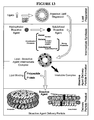
- FIG. 13 is an illustration of an embodiment of a bioactive agent delivery particle preparation procedure.
- the invention provides compositions and methods for delivery of a bioactive agent to an individual.
- Delivery vehicles are provided in the form of a bioactive agent incorporated into a particle that includes a lipid binding polypeptide and a lipid bilayer.
- the interior of the particle includes a hydrophobic region of the lipid bilayer that includes hydrophobic portions of lipid molecules, e.g., fatty acyl chains of lipids, in contrast to liposomes, which include a wholly enclosed aqueous interior surrounded by lipid hydrophilic surfaces of a bilayer.
- hydrophobic nature of the interior of a particle of the invention permits incorporation of hydrophobic molecules, for example, by intercalation between lipid molecules in the bilayer or sequestration into the hydrophobic region between leaflets of the bilayer.
- a bioactive agent that includes at least one hydrophobic region may be incorporated into the hydrophobic interior of the particle.
- incorpororation of a bioactive agent into the hydrophobic region of a lipid bilayer refers to solubilization into or association with a hydrophobic region or hydrophobic portions of lipid molecules of the bilayer, e.g., fatty acyl chains of lipids that form the bilayer, or intercalation with the fatty acyl chains.
- the particles are generally disc shaped, with a diameter in the range of about 7 to 29 nm, as determined by native pore limiting gradient gel electrophoresis, in comparison with standards of known Stokes' diameter, as described, for example, in Blanche et al. (1981) Biochim. Biophys. Acta. 665(3):408-19.
- the particles are stable in solution and may be lyophilized for long term storage, followed by reconstitution in aqueous solution.
- the lipid binding polypeptide component defines the boundary of the discoidal bilayer and provides structure and stability to the particles.
- Chimeric lipid binding polypeptide molecules e.g., apolipoprotein molecules
- apolipoprotein molecules Chimeric lipid binding polypeptide molecules are also provided and may be used to incorporate various additional functional properties into the delivery particles of the invention.
- the particles may be administered to an individual to deliver a bioactive agent to the individual.
- the invention provides a “particle” (also termed “delivery particle” or “bioactive agent delivery particle” herein) that includes one or more types of lipid binding polypeptide, a lipid bilayer comprising one or more types of bilayer-forming lipid, and one or more bioactive agents.
- a delivery particle also includes one or more types of non-bilayer-forming lipid.
- Compositions including the particles are also provided.
- a pharmaceutical composition is provided that includes delivery particles and a pharmaceutically acceptable carrier.
- the interior of a particle includes a hydrophobic region (e.g., comprised of lipid fatty acyl chains).
- Particles of the invention typically do not comprise a hydrophilic or aqueous core.
- the particles are generally disc shaped, having a flat, discoidal, roughly circular lipid bilayer circumscribed by amphipathic ⁇ -helices and/or ⁇ -sheets of the lipid binding polypeptides, which are associated with hydrophobic surfaces of the bilayer around the periphery of the disc.
- An illustrative example of a disc shaped bioactive agent delivery particle of the invention is schematically depicted in FIG. 6 .
- the diameter of a disc shaped delivery particle is about 7 to about 29 nm, often about 10 to about 25 nm, often about 15 to about 20 nm. “Diameter” refers to the diameter of one of the roughly circular shaped faces of the disc.
- lipid binding polypeptide refers to any synthetic or naturally occurring peptide or protein that forms a stable interaction with lipid surfaces and can function to stabilize the lipid bilayer of a particle of the invention.
- Particles may include one or more types of lipid binding polypeptides, i.e., the lipid binding polypeptides in a single particle may be identical or may be composed of two or more different polypeptide sequences.
- the lipid binding polypeptides circumscribe the periphery of the particle.
- lipid binding polypeptides useful for producing delivery particles in accordance with the invention include proteins having an amino acid sequence of a naturally occurring protein, or a fragment, natural variant, isoform, analog, or chimeric form thereof, proteins having a non-naturally occurring sequence, and proteins or peptides of any length that possess lipid binding properties consistent with known apolipoproteins, and may be purified from natural sources, produced recombinantly, or produced synthetically. An analog of a naturally-occurring protein may be used.
- a lipid binding polypeptide may include one or more non-natural amino acids (e.g., D-amino acids), amino acid analogs, or a peptidomimetic structure, in which the peptide bond is replaced by a structure more resistant to metabolic degradation, or individual amino acids are replaced by analogous structures.
- non-natural amino acids e.g., D-amino acids
- amino acid analogs e.g., amino acid analogs
- a peptidomimetic structure in which the peptide bond is replaced by a structure more resistant to metabolic degradation, or individual amino acids are replaced by analogous structures.
- the lipid binding polypeptide is an apolipoprotein. Any apolipoprotein or fragment or analog thereof may be used that is capable of associating with a lipid bilayer to form a disc shaped particle. Particles may include exchangeable, non-exchangeable, or a mixture of exchangeable and non-exchangeable apolipoprotein molecules.
- Apolipoproteins generally possess a class A amphipathic ⁇ -helix structural motif (Segrest et al. (1994) Adv. Protein Chem. 45:303-369), and/or a ⁇ -sheet motif.
- Apolipoproteins generally include a high content of ⁇ -helix secondary structure with the ability to bind to hydrophobic surfaces.
- a characteristic feature of these proteins is their ability to interact with certain lipid bilayer vesicles and to transform them into disc-shaped complexes (for a review, see Narayanaswami and Ryan (2000) Biochimica et Biophysica Acta 1483:15-36).
- the protein Upon contact with lipids, the protein undergoes a conformational change, adapting its structure to accommodate lipid interaction.
- an apolipoprotein may include an amphipathic ⁇ -sheet structure wherein hydrophobic residues of the ⁇ -sheet interact with lipid hydrophobic surfaces at the periphery of the disc.
- a bioactive agent delivery particle often comprises about 1 to about 10 molecules of one or more types of apolipoprotein per particle.
- the amount of amphipathic ⁇ -helix contributed by the apolipoproteins in a particle is generally sufficient to cover the otherwise exposed hydrophobic surface of the lipid molecules located at the edge of the disc shaped lipid bilayer (i.e., the periphery of the particle).
- the apolipoprotein is human apolipoprotein A-I (ApoA-I) and the lipid bilayer includes palmitoyloleoylphosphatidylcholine
- a particle comprises 2 ApoA-I molecules in a ratio of about 80 molecules of phospholipid to about 1 molecule of ApoA-I.
- apolipoproteins which may be used for formation of the delivery particles of the invention include, but are not limited to, ApoA-I, apolipoprotein E (ApoE), and apolipophorin III (ApoIII), apolipoprotein A-IV (ApoA-IV), apolipoprotein A-V (ApoA-V), apolipoprotein C-I (ApoC-I), apolipoprotein C-II (ApoC-II), apolipoprotein C-III (ApoC-III), apolipoprotein D (ApoD), apolipoprotein A-II (ApoA-II), apolipoprotein B-100 (ApoB-100), apolipoprotein J (ApoJ), apolipoprotein H (ApoH), or fragments, natural variants, isoforms, analogs, or chimeric forms thereof.
- ApoA-I
- the apolipoprotein is human ApoA-I. In other embodiments, the apolipoprotein is the C-terminal or N-terminal domain of apolipoprotein E3, or isoforms thereof. In some embodiments, the apolipoprotein includes a functional moiety that has been attached either synthetically or recombinantly, such as a targeting moiety or a moiety having biological activity, that is not intrinsic to the apolipoprotein (see, e.g., FIG. 7 ).
- an exchangeable apolipoprotein is used.
- An “exchangeable apolipoprotein” may be displaced from a preformed discoidal particle of the invention by another protein or peptide with lipid binding affinity, without destroying the integrity of the particle.
- Exchangeable apolipoproteins include synthetic or natural peptides or proteins capable of forming a stable binding interaction with lipids. More than a dozen unique exchangeable apolipoproteins have been identified in both vertebrates and invertebrates (see, e.g., Narayanaswami and Ryan, supra).
- non-exchangeable apolipoprotein refers to a protein or peptide that forms a stable interaction with lipid surfaces and can function to stabilize the phospholipid bilayer of particles of the invention, but cannot be removed from the surface of the particle without destroying the intrinsic structure of the particle.
- the delivery particles include one or more bioactive agents.
- bioactive agent refers to any compound or composition having biological, including therapeutic or diagnostic, activity.
- a bioactive agent may be a pharmaceutical agent, drug, compound, or composition that is useful in medical treatment, diagnosis, or prophylaxis.
- Bioactive agents incorporated into delivery particles as described herein generally include at least one hydrophobic (e.g., lipophilic) region capable of associating with or integrating into the hydrophobic portion of a lipid bilayer. In some embodiments, at least a portion of the bioactive agent is intercalated between lipid molecules in the interior of the delivery particle.
- hydrophobic region capable of associating with or integrating into the hydrophobic portion of a lipid bilayer.
- at least a portion of the bioactive agent is intercalated between lipid molecules in the interior of the delivery particle.
- bioactive agents examples include, but are not limited to, antibiotic or antimicrobial (e.g., antibacterial, antifungal, and antiviral) agents, antimetabolic agents, antineoplastic agents, steroids, peptides, proteins, such as, for example, cell receptor proteins, enzymes, hormones, and neurotransmitters, radiolabels such as radioisotopes and radioisotope-labeled compounds, fluorescent compounds, anesthetics, bioactive lipids, anticancer agents, anti-inflammatory agents, nutrients, antigens, pesticides, insecticides, herbicides, or a photosensitizing agent used in photodynamic therapy.
- antibiotic or antimicrobial e.g., antibacterial, antifungal, and antiviral
- antimetabolic agents e.g., antimetabolic agents, antineoplastic agents, steroids
- peptides, proteins such as, for example, cell receptor proteins, enzymes, hormones, and neurotransmitters
- radiolabels such as radioisotopes and radio
- the bioactive agent is the anti-fungal agent AmB.
- the bioactive agent is camptothecin, all-trans retinoic acid, annamycin, nystatin, paclitaxel, docetaxel, or etiopurpurins.
- Bioactive agents that include at least one hydrophobic region are known in the art and include, but are not limited to, ibuprofen, diazepam, griseofulvin, cyclosporin, cortisone, proleukin, etoposide, taxane, ⁇ -tocopherol, Vitamin E, Vitamin A, and lipopolysaccharides. See, for example, Kagkadis et al.
- a bioactive agent incorporated into a delivery particle of the invention is a non-polypeptide.
- a bioactive agent and the delivery particle that includes the bioactive agent are substantially nonimmunogenic when administered to an individual.
- Particles of the invention include a lipid bilayer, with the generally circular faces of the disc comprising polar head groups facing away from the interior of the particle, and the interior of the particle (i.e., the space between the circular faces) comprising a hydrophobic region of the lipid bilayer that contains hydrophobic portions of bilayer-forming lipid(s) and other lipid components, if present. Hydrophobic surfaces of the lipid molecules at the edge of the bilayer (the surface at the periphery of the bioactive agent delivery particle) contact the lipid binding polypeptides of the particles, as discussed above.
- Particles may include one or more types of bilayer-forming lipids, or a mixture of one or more types of bilayer-forming and one or more types of non-bilayer-forming lipids.
- lipid refers to a substance of biological or synthetic origin that is soluble or partially soluble in organic solvents or which partitions into a hydrophobic environment when present in aqueous phase.
- bilayer-forming lipid refers to a lipid that is capable of forming a lipid bilayer with a hydrophobic interior and a hydrophilic exterior.
- Bilayer-forming lipids include, but are not limited to, phospholipids, sphingolipids, glycolipids, alkylphospholipids, ether lipids, and plasmalogens.
- One type of bilayer-forming lipid may be used or a mixture of two or more types.
- the lipid bilayer includes phospholipids.
- Suitable phospholipids include, but are not limited to, DMPC, DMPG, POPC, dipalmitoylphosphatidylcholine (DPPC), dipalmitoylphosphatidylserine (DPPS), cardiolipin, dipalmitoylphosphatidylglycerol (DPPG), distearoylphosphatidylglycerol (DSPG), egg yolk phosphatidylcholine (egg PC), soy bean phosphatidylcholine, phosphatidylinositol, phosphatidic acid, sphingomyelin, and cationic phospholipids.
- suitable bilayer-forming lipids include cationic lipids and glycolipids.
- the particles include a phospholipid bilayer of DMPC and DMPG, often in a molar ratio of about 7:3.
- the particles include a phospholipid bilayer of POPC.
- mixtures of bilayer-forming lipids may be used in molar ratios of any of at least about 1:100, 1:50, 1:20, 1:10, 1:5, 3:7, 1:2, or 1:1.
- Particles may also include lipids that are not bilayer-forming lipids.
- lipids include, but are not limited to, cholesterol, cardiolipin, phosphatidylethanolamine (this lipid may form bilayers under certain circumstances), oxysterols, plant sterols, ergosterol, sitosterol, cationic lipids, cerebrosides, sphingosine, ceramide, diacylglycerol, monoacylglycerol, triacylglycerol, gangliosides, ether lipids, alkylphospholipids, plasmalogens, prostaglandins, and lysophospholipids.
- a lipid used for preparation of a delivery particle may include one or more bound functional moieties, such as targeting moieties, bioactive agents, or tags for purification or detection.
- a chimeric lipid binding polypeptide may include one or more attached “functional moieties,” such as for example, one or more targeting moieties, a moiety having a desired biological activity, an affinity tag to assist with purification, and/or a reporter molecule for characterization or localization studies.
- An attached moiety with biological activity may have an activity that is capable of augmenting and/or synergizing with the biological activity of a bioactive agent incorporated into the delivery particle.
- a moiety with biological activity may have antimicrobial (for example, antifungal, antibacterial, anti-protozoal, bacteriostatic, fungistatic, or antiviral) activity.
- an attached functional moiety of a chimeric lipid binding polypeptide is not in contact with hydrophobic surfaces of the lipid bilayer when the lipid binding polypeptide is incorporated into a bioactive agent delivery particle. In another embodiment, an attached functional moiety is in contact with hydrophobic surfaces of the lipid bilayer when the lipid binding polypeptide is incorporated into a bioactive agent delivery particle. In some embodiments, a functional moiety of a chimeric lipid binding polypeptide may be intrinsic to a natural protein. In some embodiments, a chimeric lipid binding polypeptide includes a ligand or sequence recognized by or capable of interaction with a cell surface receptor or other cell surface moiety.
- a chimeric lipid binding polypeptide is a chimeric apolipoprotein.
- a chimeric apolipoprotein includes a targeting moiety that is not intrinsic to the native apolipoprotein, such as for example, S. cerevisiae ⁇ -mating factor peptide, folic acid, transferrin, or lactoferrin.
- a chimeric apolipoprotein in another embodiment, includes a moiety with a desired biological activity that augments and/or synergizes with the activity of a bioactive agent incorporated into the delivery particle, such as for example, histatin-5, magainin peptide, mellitin, defensin, colicin, N-terminal lactoferrin peptide, echinocandin, hepcidin, bactenicin, or cyclosporine.
- a chimeric lipid binding polypeptide may include a functional moiety intrinsic to an apolipoprotein.
- an apolipoprotein intrinsic functional moiety is the intrinsic targeting moiety formed approximately by amino acids 130-150 of human ApoE, which comprises the receptor binding region recognized by members of the low density lipoprotein receptor family.
- Other examples of apolipoprotein intrinsic functional moieties include the region of ApoB-100 that interacts with the low density lipoprotein receptor and the region of ApoA-I that interacts with scavenger receptor type B 1.
- a functional moiety may be added synthetically or recombinantly to produce a chimeric lipid binding polypeptide.
- chimeric refers to two or more molecules that are capable of existing separately and are joined together to form a single molecule having the desired functionality of all of its constituent molecules.
- the constituent molecules of a chimeric molecule may be joined synthetically by chemical conjugation or, where the constituent molecules are all polypeptides or analogs thereof, polynucleotides encoding the polypeptides may be fused together recombinantly such that a single continuous polypeptide is expressed.
- a chimeric molecule is termed a fusion protein.
- a “fusion protein” is a chimeric molecule in which the constituent molecules are all polypeptides and are attached (fused) to each other such that the chimeric molecule forms a continuous single chain.
- the various constituents can be directly attached to each other or can be coupled through one or more linkers.
- linker or “spacer” as used herein in reference to a chimeric molecule refers to any molecule that links or joins the constituent molecules of the chimeric molecule.
- linker molecules are commercially available, for example from Pierce Chemical Company, Rockford Ill. Suitable linkers are well known to those of skill in the art and include, but are not limited to, straight or branched-chain carbon linkers, heterocyclic carbon linkers, or peptide linkers.
- the linker may be a peptide that joins the proteins comprising a fusion protein.
- a spacer generally has no specific biological activity other than to join the proteins or to preserve some minimum distance or other spatial relationship between them, the constituent amino acids of a peptide spacer may be selected to influence some property of the molecule such as the folding, net charge, or hydrophobicity.
- a chimeric lipid binding polypeptide such as a chimeric apolipoprotein, is prepared by chemically conjugating the lipid binding polypeptide molecule and the functional moiety to be attached.
- Means of chemically conjugating molecules are well known to those of skill in the art. Such means will vary according to the structure of the moiety to be attached, but will be readily ascertainable to those of skill in the art.
- Polypeptides typically contain a variety of functional groups, e.g., carboxylic acid (—COOH), free amino (—NH2), or sulfhydryl (—SH) groups, that are available for reaction with a suitable functional group on the functional moiety or on a linker to bind the moiety thereto.
- a functional moiety may be attached at the N-terminus, the C-terminus, or to a functional group on an interior residue (i.e., a residue at a position intermediate between the N- and C-termini) of an apolipoprotein molecule.
- the apolipoprotein and/or the moiety to be tagged can be derivatized to expose or attach additional reactive functional groups.
- lipid binding polypeptide fusion proteins that include a polypeptide functional moiety are synthesized using recombinant expression systems. Typically, this involves creating a nucleic acid (e.g., DNA) sequence that encodes the lipid binding polypeptide and the functional moiety such that the two polypeptides will be in frame when expressed, placing the DNA under the control of a promoter, expressing the protein in a host cell, and isolating the expressed protein.
- a nucleic acid e.g., DNA
- Lipid binding polypeptide sequences and sequences encoding functional moieties as described herein may be cloned, or amplified by in vitro methods, such as, for example, the polymerase chain reaction (PCR), the ligase chain reaction (LCR), the transcription-based amplification system (TAS), or the self-sustained sequence replication system (SSR).
- PCR polymerase chain reaction
- LCR ligase chain reaction
- TAS transcription-based amplification system
- SSR self-sustained sequence replication system
- DNA encoding desired fusion protein sequences may be prepared synthetically using methods that are well known to those of skill in the art, including, for example, direct chemical synthesis by methods such as the phosphotriester method of Narang et al. (1979) Meth. Enzymol. 68: 90-99, the phosphodiester method of Brown et al. (1979) Meth. Enzymol. 68: 109-151, the diethylphosphoramidite method of Beaucage et al. (1981) Tetra. Lett., 22: 1859-1862, or the solid support method of U.S. Pat. No. 4,458,066.
- a nucleic acid encoding a chimeric lipid binding polypeptide fusion polypeptide can be incorporated into a recombinant expression vector in a form suitable for expression in a host cell.
- an “expression vector” is a nucleic acid which, when introduced into an appropriate host cell, can be transcribed and translated into a polypeptide.
- the vector may also include regulatory sequences such as promoters, enhancers, or other expression control elements (e.g., polyadenylation signals). Such regulatory sequences are known to those skilled in the art (see, e.g., Goeddel (1990) Gene Expression Technology: Meth. Enzymol.
- a recombinant expression vector for production of a chimeric lipid binding polypeptide is a plasmid or cosmid.
- the expression vector is a virus, or portion thereof, that allows for expression of a protein encoded by the nucleic acid introduced into the viral nucleic acid.
- replication defective retroviruses, adenoviruses and adeno-associated viruses can be used.
- Expression vectors may be derived from bacteriophage, including all DNA and RNA phage (e.g., cosmids), or viral vectors derived from all eukaryotic viruses, such as baculoviruses and retroviruses, adenoviruses and adeno-associated viruses, Herpes viruses, Vaccinia viruses aid all single-stranded, double-stranded, and partially double-stranded DNA viruses, all positive and negative stranded RNA viruses, and replication defective retroviruses.
- YAC yeast artificial chromosome
- BAC bacterial artificial chromosome
- the chimeric lipid binding polypeptide fusion proteins of this invention can be expressed in a host cell.
- the term “host cell” refers to any cell or cell line into which a recombinant expression vector for production of a chimeric apolipoprotein fusion protein, as described above, may be transfected for expression.
- Host cells include progeny of a single host cell, and the progeny may not necessarily be completely identical (in morphology or in total genomic DNA complement) to the original parent cell due to natural, accidental, or deliberate mutation.
- a host cell includes cells transfected or transformed in vivo with an expression vector as described above. Suitable host cells include, but are not limited to, bacterial cells (e.g. E. coli ), fungal cells (e.g., S. cerevisiae ), invertebrate cells (e.g. insect cells such as SF9 cells), and vertebrate cells including mammalian cells.
- An expression vector encoding a chimeric lipid binding polypeptide fusion protein can be transfected into a host cell using standard techniques.
- Transfection or “transformation” refers to the insertion of an exogenous polynucleotide into a host cell.
- the exogenous polynucleotide may be maintained as a non-integrated vector, such as for example a plasmid, or alternatively may be integrated into the host cell genome.
- transfection techniques include, but are not limited to, calcium phosphate co-precipitation, DEAE-dextran-mediated transfection, lipofection, electroporation and microinjection. Suitable methods for transfecting host cells can be found in Sambrook et al.
- Nucleic acid can also be transferred into cells via a delivery mechanism suitable for introduction of nucleic acid into cells in vivo, such as via a retroviral vector (see e.g., Ferry et al. (1991) Proc. Natl. Acad. Sci., USA, 88: 8377-8381; and Kayetal. (1992) Human Gene Therapy 3: 641-647), an adenoviral vector (see, e.g., Rosenfeld (1992) Cell 68: 143-155; and Herz and Gerard (1993) Proc. Natl. Acad.
- a retroviral vector see e.g., Ferry et al. (1991) Proc. Natl. Acad. Sci., USA, 88: 8377-8381; and Kayetal. (1992) Human Gene Therapy 3: 641-647
- an adenoviral vector see, e.g., Rosenfeld (1992) Cell 68: 143-155; and Herz and Gerard (1993) Proc
- the chimeric lipid binding polypeptides may be purified according to standard procedures of the art, including, but not limited to affinity purification, ammonium sulfate precipitation, ion exchange chromatography, or gel electrophoresis.
- a chimeric lipid binding polypeptide may be produced using a cell free expression system or via solid-state peptide synthesis.
- a lipid binding polypeptide is provided that has been modified such that when the polypeptide is incorporated into a bioactive agent delivery particle as described above, the modification will increase stability of the particle or confer targeting ability.
- the modification permits the lipid binding polypeptides of a particle to stabilize the particle's disc shaped structure or conformation.
- the modification includes introduction of cysteine residues into apolipoprotein molecules to permit formation of intramolecular or intermolecular disulfide bonds, e.g., by site-directed mutagenesis.
- a chemical crosslinking agent is used to form intermolecular links between apolipoprotein molecules to enhance stability of the particles. Intermolecular crosslinking prevents or reduces dissociation of apolipoprotein molecules from the particles and/or prevents displacement by apolipoprotein molecules within an individual to whom the particles are administered.
- a lipid binding polypeptide is modified either by chemical derivatization of one or more amino acid residues or by site directed mutagenesis, to confer targeting ability to or recognition by a cell surface receptor.
- the invention provides a delivery system for delivery of a bioactive agent to an individual, comprising bioactive agent delivery particles as described above and a carrier, optionally a pharmaceutically acceptable carrier.
- the delivery system comprises an effective amount of the bioactive agent.
- the individual refers to any prokaryote or eukaryote to which one desires to deliver a bioactive agent.
- the individual is a prokaryote such as a bacterium.
- the individual is a eukaryote, such as a fungus, a plant, an invertebrate animal, such as an insect, or a vertebrate animal.
- the individual is a vertebrate, such as a human, a nonhuman primate, an experimental animal, such as a mouse or rat, a pet animal, such as a cat or dog, or a farm animal, such as a horse, sheep, cow, or pig, a bird (i.e., avian individual), or a reptile (i.e., reptilian individual).
- a vertebrate such as a human, a nonhuman primate
- an experimental animal such as a mouse or rat
- a pet animal such as a cat or dog
- a farm animal such as a horse, sheep, cow, or pig
- a bird i.e., avian individual
- reptile i.e., reptilian individual
- delivery particles are formulated in a suitable carrier for administration to an individual.
- carrier refers to a relatively inert substance that facilitates administration of a bioactive agent.
- a carrier can give form or consistency to the composition or can act as a diluent.
- “Pharmaceutically acceptable carriers” refer to carriers that are biocompatible (i.e., not toxic to the host) and suitable for a particular route of administration for a pharmacologically effective substance. Suitable pharmaceutically acceptable carriers include but are not limited to stabilizing agents, wetting and emulsifying agents, salts for varying osmolarity, encapsulating agents, buffers, and skin penetration enhancers. Examples of pharmaceutically acceptable carriers are described in Remington 's Pharmaceutical Sciences (Alfonso R. Gennaro, ed., 18th edition, 1990).
- an effective amount refers to an amount of a bioactive agent sufficient to effect desired results.
- a “therapeutically effective amount” or “therapeutic dose” refers to an amount of a bioactive agent sufficient to effect beneficial clinical results, such as for example reduction or alleviation of a symptom of a disease, reduction or alleviation of a fungal or bacterial infection, etc.
- the delivery system is a pharmaceutical composition comprising a bioactive agent delivery particle and a pharmaceutically acceptable carrier.
- the pharmaceutical composition comprises a bioactive agent delivery particle that contains a non-polypeptide bioactive agent and a pharmaceutically acceptable carrier.
- the bioactive agent delivery particle and the bioactive agent are non-immunogenic when administered to an individual. Immunogenicity may be measured by methods that are well known in the art. For example, immunogenicity may be assessed by an ELISA method, for example by probing serum from an individual to whom bioactive agent delivery particles have been administered for antibody binding to equivalent bioactive agent delivery particles bound to an immunosorbent plate.
- the invention provides methods for administering a bioactive agent to an individual.
- the methods of the invention include administering a delivery particle as described above that includes a lipid binding polypeptide, a lipid bilayer, and a bioactive agent, wherein the interior of the particle includes hydrophobic surfaces of the lipid bilayer.
- a therapeutically effective amount of the particles is administered, optionally in a pharmaceutically acceptable carrier.
- the particles are disc shaped, with a diameter of about 7 to about 29 nm, as measured by native pore limiting gradient gel electrophoresis.
- the bioactive agent includes at least one hydrophobic region, which may be integrated into a hydrophobic region of the lipid bilayer.
- the route of administration may vary according to the nature of the bioactive agent to be administered, the individual, or the condition to be treated. Where the individual is a mammal, generally administration is parenteral. Routes of administration include, but are not limited to, intravenous, intramuscular, subcutaneous, transmucosal, nasal, intrathecal, topical, and transdermal.
- the particles are administered as an aerosol. Delivery particles may be formulated in a pharmaceutically acceptable form for administration to an individual, optionally in a pharmaceutically acceptable carrier or excipient.
- the invention provides pharmaceutical compositions in the form of delivery particles in a solution for parenteral administration. For preparing such compositions, methods well known in the art may be used, and any pharmaceutically acceptable carriers, diluents, excipients, or other additives normally used in the art may be used.
- the delivery particles of the present invention can be made into pharmaceutical compositions by combination with appropriate medical carriers or diluents.
- the delivery particles can be solubilized in solvents commonly used in the preparation of injectable solutions, such as for example, physiological saline, water, or aqueous dextrose.
- suitable pharmaceutical carriers and their formulations are described in Remington's Pharmaceutical Sciences , supra.
- Such formulations may be made up in sterile vials containing delivery particles and optionally an excipient in a dry powder or lyophilized powder form.
- the physiologically acceptable diluent Prior to use, the physiologically acceptable diluent is added and the solution withdrawn via syringe for administration to an individual.
- Delivery particles may also be formulated for controlled release.
- controlled release refers to release of a bioactive agent from a formulation at a rate that the blood concentration of the agent in an individual is maintained within the therapeutic range for an extended duration, over a time period on the order of hours, days, weeks, or longer.
- Delivery particles may be formulated in a bioerodible or nonbioerodible controlled matrix, a number of which are well known in the art.
- a controlled release matrix may include a synthetic polymer or copolymer, for example in the form of a hydrogel.
- polymers examples include polyesters, polyorthoesters, polyanhydrides, polysaccharides, poly(phosphoesters), polyamides, polyurethanes, poly(imidocarbonates) and poly(phosphazenes), and poly-lactide-co-glycolide (PLGA), a copolymer of poly(lactic acid) and poly(glycolic acid). Collagen, albumin, and fibrinogen containing materials may also be used.
- Delivery particles may be administered according to the methods described herein to treat a number of conditions including, but not limited to, bacterial infections, fungal infections, disease conditions, metabolic disorders, or as a prophylactic medication, for example to prevent a bacterial or fungal infection (e.g., pre- or post-surgically). Delivery particles may be used, for example, to deliver an anti-tumor agent (e.g., chemotherapeutic agent, radionuclide) to a tumor.
- the lipid binding polypeptide includes a moiety that targets the particle to a particular tumor. Delivery particles may also be used for administration of nutraceutical substances, i.e., a food or dietary supplement that provides health benefits.
- delivery particles are co-administered with other conventional therapies, for example, as part of a multiple drug “cocktail,” or in combination with one or more orally administered agents, for example, for treatment of a fungal infection. Delivery particles may also be administered as insecticides or herbicides.
- the invention provides a method for treating a fungal infection in an individual.
- the method includes administering a therapeutically effective amount of an anti-fungal agent in a pharmaceutically acceptable carrier to the individual, wherein the anti-fungal agent is incorporated into a particle that includes a lipid binding polypeptide and a lipid bilayer, wherein the interior of the lipid bilayer is hydrophobic.
- the anti-fungal agent is AmB, incorporated into the hydrophobic interior of the lipid bilayer.
- the lipid binding polypeptide is a chimeric protein that includes a targeting moiety and/or a moiety with biological activity.
- the lipid binding polypeptide includes the targeting moiety yeast ⁇ -mating factor peptide.
- the lipid binding polypeptide includes the anti-microbial peptide histatin 5.
- the invention provides a method for treating a tumor in an individual.
- the method includes administering a therapeutically effective amount of a chemotherapeutic agent in bioactive agent delivery particles as described above, in a pharmaceutically acceptable carrier.
- the chemotherapeutic agent is camptothecin.
- a lipid binding polypeptide component of the delivery particles may include a targeting moiety to target the particles to tumor cells.
- vasoactive intestinal peptide (VIP) is attached to the lipid binding polypeptide. Since breast cancer cells often overexpress the VIP receptor, in one embodiment, bioactive agent delivery particles comprising camptothecin and lipid binding polypeptide-VIP chimeras are used in a method of treatment for breast cancer.
- a delivery particle of the invention may include a targeting functionality, for example to target the particles to a particular cell or tissue type, or to the infectious agent itself.
- the particle includes a targeting moiety attached to a lipid binding polypeptide or lipid component.
- the bioactive agent that is incorporated into the particle has a targeting capability.
- the particles can be targeted to a specific cell surface receptor.
- bioactive agent delivery particles may be targeted to a particular cell type known to harbor a particular type of infectious agent, for example by modifying the lipid binding polypeptide component of the particles to render it capable of interacting with a receptor on the surface of the cell type being targeted.
- a receptor-mediated targeting strategy may be used to deliver antileishmanial agents to macrophages, which are the primary site of infection for protozoal parasites from the genus Leishmania .
- macrophages which are the primary site of infection for protozoal parasites from the genus Leishmania .
- Examples of such species include Leishmania major, Leishmania donovani , and Leishmania braziliensis .
- Bioactive agent delivery particles containing an antileishmanial agent may be targeted to macrophages by altering the lipid binding polypeptide component of the particles to confer recognition by the macrophage endocytic class A scavenger receptor (SR-A).
- SR-A macrophage endocytic class A scavenger receptor
- an apolipoprotein which has been chemically or genetically modified to interact with SR-A may be incorporated into delivery particles that contain one or more bioactive agents that are effective against Leishmania species, such as, for example, AmB, a pentavalent antimonial, and/or hexadecylphosphocholine.
- Delivery particles that contain an antileishmanial agent specifically to macrophages may be used as a means of inhibiting the growth and proliferation of Leishmania spp.
- an SR-A targeted bioactive agent delivery particle containing AmB is administered to an individual in need of treatment for a leishmanial infection.
- another antileishmanial agent such as hexadecylphosphocholine is administered prior, concurrently, or subsequent to treatment with the AmB containing-particles.
- targeting is achieved by modifying a lipid binding polypeptide, such as an apolipoprotein, to be incorporated into the bioactive agent delivery particle, thereby conferring SR-A binding ability to the particle.
- targeting is achieved by altering the charge density of the lipid binding polypeptide by chemically modifying one or more lysine residues, for example with malondialdehyde, maleic anhydride, or acetic anhydride at alkaline pH (see, e.g., Goldstein et al. (1979) Proc. Natl. Acad. Sci. 98:241-260).
- Apo B-100 or a truncated form thereof is modified by reaction with malondialdehyde.
- an apolipoprotein molecule such as any of the apolipoproteins described herein, may also be chemically modified by, for example acetylation or maleylation, and incorporated into a bioactive agent delivery particle containing an antileishmanial agent.
- SR-A binding ability is conferred to a delivery particle by modifying the lipid binding polypeptide by site directed mutagenesis to replace one or more positively charged amino acids with a neutral or negatively charged amino acid.
- SR-A recognition is conferred by preparing a chimeric lipid binding polypeptide that includes an N- or C-terminal extension having a ligand recognized by SR-A or an amino acid sequence with a high concentration of negatively charged residues.
- a negatively charged polypeptide extension would not be attracted to the lipid surface of the bioactive agent delivery particle, thereby rendering it more accessible to the ligand binding site of the receptor.
- the invention provides methods for formulating a bioactive agent delivery particle.
- a process is provided that includes adding lipid binding polypeptide molecules to a mixture that includes bilayer-forming lipids and bioactive agent molecules.
- the lipid-bioactive agent mixture also includes a detergent, such as for example sodium cholate, cholic acid, or octyl glucoside, and the process further includes removing the detergent after the lipid binding polypeptide has been added.
- a detergent such as for example sodium cholate, cholic acid, or octyl glucoside
- the process further includes removing the detergent after the lipid binding polypeptide has been added.
- the detergent is removed by dialysis or gel filtration.
- the process includes combining bilayer-forming lipids and bioactive agent molecules in a solvent to form a-bioactive agent mixture, drying the mixture to remove the solvent (e.g., under a stream of N 2 and/or by lyophilization), contacting the dried mixture with a solution that includes a detergent to form a lipid-bioactive agent-detergent mixture, adding lipid binding polypeptide molecules to this mixture, and then removing the detergent.
- a solvent e.g., under a stream of N 2 and/or by lyophilization
- the particles are prepared using a microfluidizer processor. This procedure employs high pressure, forcing the components together in a reaction chamber.
- the particles are prepared by incubation of a suspension of lipid vesicles containing a bioactive agent in the presence of a lipid binding polypeptide, such as an apolipoprotein.
- the suspension is sonicated.
- delivery particles are prepared from a pre-formed vesicle dispersion.
- Lipids e.g., phospholipids
- solubilized bioactive agent is added in a suitable solvent to form a lipid-bioactive agent complex.
- the solvent is volatile or dialyzable for convenient removal after addition of bioactive agent to the lipid bilayer vesicle dispersion.
- lipid binding polypeptide is added and the sample is incubated, mixed by agitation, and/or sonicated.
- the vesicles and apolipoprotein are incubated at or near the gel to liquid crystalline phase transition temperature of the particular bilayer forming lipid or mixture of bilayer-forming lipids being used.
- the phase transition temperature may be determined by calorimetry.
- a suitable bilayer-forming lipid composition is used such that, upon dispersion in aqueous media, the lipid vesicles provide a suitable environment to transition a bioactive agent from a carrier solvent into an aqueous milieu without precipitation or phase separation of the bioactive agent.
- the pre-formed lipid bilayer vesicles are also preferably capable of undergoing lipid binding polypeptide-induced transformation to form the delivery particles of the invention.
- the lipid-bioactive agent complex preferably retains properties of the lipid vesicles that permit transformation into bioactive agent delivery particles upon incubation with a lipid binding polypeptide under appropriate conditions.
- lipid substrate-bioactive agent complex organization and lipid binding polypeptide properties combine to create a system whereby, under appropriate conditions of pH, ionic strength, temperature, and lipid-bioactive agent-lipid binding polypeptide concentration, a ternary structural reorganization of these materials occurs wherein stable lipid binding polypeptide circumscribing lipid bilayers are created with a bioactive agent incorporated into the lipid milieu of the bilayer.
- the particles prepared by any of the above processes may be further purified, for example by dialysis, density gradient centrifugation and/or gel permeation chromatography.
- bioactive agent delivery particles preferably at least about 70, more preferably at least about 80, even more preferably at least about 90, even more preferably at least about 95 percent of the bioactive agent used in the procedure is incorporated into the particles.
- the invention provides bioactive agent delivery particles prepared by any of the above methods.
- the invention provides a pharmaceutical composition comprising a delivery particle prepared by any of the above methods and a pharmaceutically acceptable carrier.
- Particles of the invention are stable for long periods of time under a variety of conditions (see, for example, FIG. 5 ).
- Particles, or compositions comprising particles of the invention may be stored at room temperature, refrigerated (e.g., about 4° C.), or frozen (e.g., about ⁇ 20° C. to about ⁇ 80° C.). They may be stored in solution or dried (e.g., lyophilized).
- Bioactive agent delivery particles may be stored in a lyophilized state under inert atmosphere, frozen, or in solution at 4° C.
- Particles may be stored in a liquid medium, such as a buffer (e.g., phosphate or other suitable buffer), or in a carrier, such as for example a pharmaceutically acceptable carrier, for use in methods of administration of a bioactive agent to an individual.
- a liquid medium such as a buffer (e.g., phosphate or other suitable buffer)
- a carrier such as for example a pharmaceutically acceptable carrier
- particles may be stored in a dried, lyophilized form and then reconstituted in liquid medium prior to use.
- kits of the invention include any of the following, separately or in combination: lipid binding polypeptides (e.g., apolipoproteins), phospholipids, bioactive agents, vectors, reagents, enzymes, host cells and/or growth medium for cloning and/or expression of recombinant lipid binding polypeptides (e.g., recombinant apolipoproteins) and/or lipid binding polypeptide chimeras (e.g., apolipoprotein chimeras), and reagents and/or pharmaceutically acceptable carriers for formulating delivery particles for administration to an individual.
- lipid binding polypeptides e.g., apolipoproteins
- phospholipids e.g., phospholipids
- bioactive agents e.g., phospholipid binding polypeptides
- vectors e.g., recombinant apolipoproteins
- enzymes e.g., recombinant apoli
- Each reagent or formulation is supplied in a solid form, liquid buffer, or pharmaceutically acceptable carrier that is suitable for inventory storage, or optionally for exchange or addition into a reaction, culture, or injectable medium.
- Suitable packaging is provided.
- “packaging” refers to a solid matrix or material customarily used in a system and capable of holding within fixed limits one or more of the reagents or components (e.g., delivery particles) for use in a method for delivery of a bioactive agent or one or more reagents for preparing or formulating delivery particles (e.g., apolipoprotein molecules, phospholipids, bioactive agents).
- Such materials include, but are not limited to, glass and plastic (e.g., polyethylene, polypropylene, and polycarbonate) bottles, vials, paper, plastic, and plastic-foil laminated envelopes, and the like.
- a kit may optionally provide additional components that are useful in the methods and formulation procedures of the invention, such as buffers, reacting surfaces, or means of purifying delivery particles.
- kits optionally include labeling and/or instructional or interpretive materials providing directions (i.e., protocols) for the practice of the methods of this invention, such as preparation, formulation and/or use of delivery particles.
- instructional materials typically comprise written or printed materials they are not limited to these formats. Any medium capable of storing such instructions and communicating them to an end user is contemplated by this invention. Such media include, but are not limited to electronic storage media (e.g., magnetic discs, tapes, cartridges, chips), optical media (e.g., CD ROM), and the like. Such media may include addresses to Internet sites that provide such instructional materials.
- ApoA-I-phospholipid-AmB particles were prepared as follows:
- a 7:3 molar ratio of dimyristoylphosphatidylcholine (DMPC) and dimyristoylphosphatidylglycerol (DMPG) were dissolved in chloroform:methanol (3:1, v/v).
- DMPC/DMPG mixture 0.25 ml of AmB (2 mg/ml; solubilized in acidified chloroform:methanol (3:1, v/v)) was added.
- AmB 2 mg/ml; solubilized in acidified chloroform:methanol (3:1, v/v)
- the dried lipid mixture was resuspended in 0.5 ml Tris-Saline buffer (10 mM Tris base 150 mM NaCl, pH 8), and the mixture was vortexed for 30 seconds.
- the sample was further purified by density gradient ultracentrifugation.
- the solution was adjusted to a density of 1.30 g/ml by the addition of solid KBr in 1.5 ml.
- the sample was transferred to a 3 ml centrifuge tube, overlayered with saline and centrifuged at 275,000 ⁇ g for 3 hours in a Beckman L7-55 centrifuge.
- the particles prepared according to this procedure were stable for more than 3 months in lyophilized form.
- FIG. 1 shows the scan for particles that do not include AmB. The only peak observed was a protein peak at around 280 nm.
- FIG. 2 shows the scan for AmB-containing particles prepared as described above. In addition to the peak at around 280 nm, a number of additional peaks were observed in the 300-400 nm region of the spectrum, confirming the presence of AmB. Free AmB is insoluble in aqueous media and has different spectral properties than observed in FIG. 2 . Madden et al. (1990) Chemistry and Physics of Lipids, 52:189-98.
- ApoA-I-DMPC/DMPG-AmB particles were prepared as described in Example 1 and used to determine antifungal activity of the complexes.
- Cultures of S. cerevisiae were grown in YPD medium in the presence of varying amounts of ApoA-I-DMPC/DMPG-AmB particles (0-25 ⁇ g AmB/ml). The cultures were grown for 16 hours at 30° C., and the extent of culture growth monitored spectrophotometrically. As shown in FIG. 8 , the AmB-containing particles were extremely effective in inhibiting fungal growth in a dose-dependent manner.
- ApoE3NT-terminal domain (ApoE3NT) was prepared as in Fisher et al. (1997) Biochem Cell Biol 75:45-53.
- ApoE3NT-AmB-containing particles were prepared via the cholate dialysis method described in Example 1, and used to assess long-term stability.
- FIG. 5 shows a native PAGE 4-20% gradient slab gel of particles stored in phosphate buffer at 4° C. (lane 1), stored in phosphate buffer at ⁇ 20° C. (lane 2), or frozen in phosphate buffer at ⁇ 80° C., lyophilized, and redissolved in H 2 O prior to analysis.
- the size and mobility of the AmB-containing particles were unaffected by freezing and thawing, or by lyophilization and resolubilization, indicating that the particles retained their integrity under these conditions. These are important parameters with regard to scale up and long-term storage of AmB delivery particles.
- ApoA-I-POPC particles were prepared using the cholate dialysis method described in Example 1.
- a native PAGE gradient gel analysis of ApoA-I-POPC particles is shown in FIG. 4 .
- Particles without AmB are shown in lane 1 and particles with AmB are shown in lane 2.
- the gel indicates that incorporation of AmB into the particles does not alter their size.
- the gel indicates that the POPC containing particles are a different size than DMPC/DMPG particles, shown in lane 3.
- ApoA-I, AmB, egg PC, DPPG, and cholesterol were combined in a microfluidizer sample holder and passed through the reaction chamber of microfluidizer processor at 18,000 psi.
- the resultant solution was collected and characterized in terms of particle formation, incorporation of hydrophobic substances, size, and stability.
- AmB-containing particles of about 16 nm diameter were obtained, which were stable to lyophilization and aqueous solvent reconstitution.
- a suspension of AmB-containing phospholipid vesicles was prepared by adding an aliquot of a 20-40 mg/ml solution of AmB in DMSO, corresponding to 2.5 mg AmB, to a preformed phospholipid aqueous dispersion containing a molar ratio of 7:3 DMPC:DMPG.
- the vesicles were incubated at the gel to liquid phase transition temperature of the phospholipids (about 24° C.).
- Addition of 4 mg apolipoprotein led to a time-dependent decrease in sample turbidity, consistent with formation of AmB-containing bioactive agent delivery particles.
- Full sample clarity was achieved by mild bath sonication at 21-25° C. for 1-20 minutes or in 4-16 hours without sonication at 24° C.
- the resulting particles exhibited >90% AmB incorporation efficiency, i.e., the percentage of AmB starting material that is recovered in delivery particles, and no material was lost upon filtration, centrifugation, or dialysis.
- AmB concentration adjusted to as high as 5 mg/10 mg phospholipid.
- This procedure worked equally well with any of five apolipoproteins tested (ApoA-I, ApoE3NT, Bombyx mori ApoIII, and a variant form of human ApoA-I that includes a C-terminal extension including the antifungal peptide, Histatin 5, and a variant form of human ApoA-I that includes a C-terminal extension including the S. cerevisiae ⁇ -mating factor peptide).
- Density gradient ultracentrifugation of ApoA-I or ApoE3NT containing particles revealed a single population of particles that floated to a characteristic density in the range of 1.21 g/ml, consistent with formation of lipid-protein complexes. Characterization of the fractions obtained following density gradient ultracentrifugation revealed that phospholipid, AmB, and apolipoprotein migrated to the same position in the gradient, consistent with formation of AmB-containing particles.
- the particles were frozen at ⁇ 20° C. or lyophilized. Freezing/thawing had no effect on the size distribution of the particles. Likewise, subjecting the particles to lyophilization and re-dissolving in H 2 O did not affect the size distribution or sample appearance.
- the sonication mixture was then centrifuged for 3 minutes to remove large particles and insoluble material and the supernatant analyzed by UV/Visible spectrophotometry to assess the amount of amphotericin B solubilized in the product particles. It was noted that the solution was slightly opaque. The sample was scanned from 250 nm to 500 nm. For comparison, AmB-containing particles prepared by the procedure described in Example 6 were examined. The results are shown in FIG. 12 . The region of the spectrum arising from AmB (300-500 nm) is quite distinct between the two samples.
- the data in FIG. 10 show that Apo-A-I-AmB bioactive agent delivery particles more effectively inhibited S. cerevisiae growth than the same amount of AmB formulated as AmBisome®.
- Apo-A-I-AmB bioactive agent delivery particles achieved 90% growth inhibition at 1 ⁇ g/ml, whereas this level of inhibition required 25 ⁇ g/ml AmBisome®.
- AmB-containing bioactive agent delivery particles were effective against both pathogenic fungal species, at a lower concentration than AmBisome®. Control particles lacking AmB were not effective. AmB-containing bioactive agent delivery particles exhibited an ED 90 (concentration at which 90% growth inhibition is observed) for C. albicans at a concentration of 0.1 ⁇ g/ml, whereas 0.8 ⁇ g/ml AmBisome® was required to achieve the same level of growth inhibition. For A. fumigatus , AmB-containing bioactive agent delivery particles inhibited 90% of fungal growth at a concentration of 0.2 ⁇ g/ml, whereas 1.6 ⁇ g/ml AmBisome® was required to achieve the same effect.
- AmB-containing bioactive agent delivery particles inhibited 90% of C. albicans growth at 0.03 ⁇ g/ml. A corresponding ED 90 of 0.4 ⁇ g/ml was obtained with AmBisome®. In the case of A. fumigatus , AmB-containing bioactive agent delivery particles inhibited 90% of fungal growth at 0.1 ⁇ g/ml, whereas a concentration of 2.5 ⁇ g/ml AmBisome® was required to achieve the same effect. In a similar manner, AmB-containing particles were effective at inhibiting C. neoformans growth at a five-fold lower AmB concentration than AmBisome®.
- Camptothecin-containing bioactive agent delivery particles were prepared as follows: A 7:3 molar ratio of DMPC:DMPG (5 mg total) was dispersed in buffer (20 mM sodium phosphate, pH 7.0) by vortexing for 1 minute to generate a dispersion of phospholipid bilayer vesicles. Ten microliters of a 10 mg/ml solution of camptothecin in DMSO was added to the phospholipid bilayer dispersion. Two mg of recombinant human apolipoprotein A-I (0.5 ml of a 4 mg/ml solution in 20 mM sodium phosphate, pH 7.0) was then added, and the sample was then subjected to sonication. The clarified sample was then centrifuged at 13,000 ⁇ g for 3 minutes and the supernatant recovered and stored at 4° C.
- FIG. 11 A fluorescence spectrum of the camptothecin-containing particles, in comparison with sodium dodecyl sulfate (SDS) solubilized camptothecin, is shown in FIG. 11 .
- Fluorescence measurements were obtained on a Perkin Elmer LS 50B luminescence spectrometer at an excitation wavelength of 360 nm with emission monitored from 400 to 600 nm.
- the blue shift in fluorescence emission maximum elicited by camptothecin in SDS micelles FIG. 11A
- camptothecin incorporated into bioactive agent delivery particles FIG. 11B
- a preparation of AmB-containing bioactive agent delivery particles was prepared for freeze fracture electron microscopy as follows: A sample of DMPC:DMPG (7:3 molar ratio) AmB bioactive agent delivery particles (3 mg/ml protein), prepared as in Example 6, was quenched using a sandwich technique, and liquid nitrogen cooled propane. The cryo-fixed sample was stored in liquid nitrogen for less than 2 hours prior to processing. The fracturing process was carried out in JOEL JED-900 freeze-etching equipment and the exposed fracture planes were shadowed with Pt for 30 seconds at an angle of 25-35 degrees, and with carbon for 35 seconds (2 kV/60-80 mA, 1 ⁇ 10 ⁇ 5 Torr).
- the replicas produced in this way were cleaned with concentrated fuming HNO 3 for 24 hours followed by repeated agitation with fresh chloroform/methanol (1:1 by volume) at least 5 times.
- the replicas cleaned in this way were examined on a JOEL 100 CX or a Philips CM 10 electron microscope.
- FIG. 9 An electron micrograph obtained from freeze fracture of AmB-containing particles as described above is shown in FIG. 9 . Electron micrographs taken from several freeze-fracture preparations indicate the presence of small protein-lipid complexes in high concentration. The apparent diameters range from about 20-60 nm with high frequency around 40 nm. The apparent diameter of particles as observed by freeze fracture electron microscopy is larger than values obtained by native pore limiting gradient gel electrophoresis. The difference may be due to the effect of sample handling or the staining procedure used to visualize the particles by electron microscopy.
- the substantially spherical complexes do not display concave or convex fracture faces (shadow in front and behind the structure, respectively), as are characteristic for liposomes. Further, no evidence for micellar structures was observed.
- mice Six to eight-week-old female BALB/c mice (20-25 g) are housed and maintained under standard laboratory conditions.
- mice each receive a dose (e.g., 1, 2, 5, 10, or 15 mg/kg AmB) in AmB-containing bioactive agent delivery particles, or control particles without AmB, in saline buffered to pH 7.4 with 10 mM sodium phosphate.
- a single dose is administered as a 0.1 ml volume intraperitoneally. Preliminary studies have indicated that the bioactive agent delivery particles are fully soluble under these conditions.
- mice Following injection, the mice are observed for any general reaction, for example, abnormal movement or posture, difficulty in breathing, ruffled fur, or inability to obtain food or drink. Observation for abnormality or mortality begins immediately after administration and continues twice daily for seven days. Body weight is recorded daily for the same period.
- Blood is collected from mice prior to euthanization. The blood is assayed for liver enzymes such as lactate dehydrogenase to assess the degree of liver specific damage
- the therapeutic range of AmB-containing particles is determined and compared with AmBisome® as follows:
- a clinical isolate of C. neoformans that is susceptible to AmB is cultured and prepared as an inoculum for infection at a concentration of 2 ⁇ 10 6 conidia/ml. Each mouse receives an inoculum of 1 ⁇ 10 5 conidia in 0.05 ml of normal saline intracranially under general anesthesia.
- Anti-fungal agents are administered intraperitoneally in 0.1 ml volumes daily for 5 days, starting 2 hours post-infection.
- the dosage of AmB used is determined based on the toxicity studies described above.
- One treatment group of mice receives AmBisome®, one treatment group receives AmB-containing bioactive agent delivery particles, and a control group receives no therapy.
- Infected mice are monitored twice daily and any signs of illness or mortality is recorded for up to 28 days. Body weight is recorded daily for the same time period. Moribund animals that fail to move normally or take food or drink are euthanized. Based on the outcome of these studies, a second set of studies is performed to verify and reproduce the findings. The AmB dose employed, as well as the number of mice in the control and treatment groups, may be adjusted to reflect knowledge gained from the previous experiment.
- mice are sacrificed one day after the last day of treatment.
- the kidneys and brains are removed aseptically and weighed.
- Tissues are homogenized and serially diluted in normal saline.
- the homogenates are cultured for 48 hours on PDA (potato dextrose agar) plates to determine the colony forming units (CFU). Fungal burden of CFU/gram of tissue is determined.
- PDA potato dextrose agar
- Blood, liver, kidney, ling, and cerebrospinal fluid samples are collected from infected mice at time points of 10 minutes, 2, 8, and 24 hours after intravenous injection of AmB bioactive agent delivery particles or AmBisome® at 0.8 and 2.0 mg/kg doses. While mice are under general anesthesia, whole blood is collected from axillary vessels. A thoracotomoy is performed, and tissue samples perfused with normal saline and then removed surgically. Tissues are homogenized with methanol containing 1-amino-4-nitronaphthalene. Serum and the supernatants of tissue homogenates are preserved until analysis. The concentration of AmB in each sample is determined by high-performance liquid chromatography (HPLC), as described in Granich et al.
- HPLC high-performance liquid chromatography
- the mobile phase is a mixture of acetonitrile and 10 mM sodium acetate buffer (pH 4.0; 11:17 (vol/vol)), at a flow rate of 1.0 ml/min.
- concentration of AmB is determined by the ratio of the peak height of AmB to that of the internal standard.
- Bioactive agent delivery agent particles are prepared with a VIP targeting moiety attached to the lipid binding polypeptide component.
- the lipid binding polypeptide component of the camptothecin-containing particles may be generated in recombinant form in Escherichia coli ( E. coli ) that have been transformed with a plasmid vector harboring the coding sequence of the lipid binding polypeptide.
- Escherichia coli E. coli
- a plasmid vector harboring the coding sequence of the lipid binding polypeptide for example, recombinant human ApoA-I may be employed.
- E. coli cells harboring an ApoA-I expression plasmid are cultured in media at 37° C. When the optical density of the culture at 600 nm reaches 0.6, ApoA-I synthesis is induced by the addition of isopropylthiogalactoside (0.5 mM final concentration).
- the bacteria are pelleted by centrifugation and disrupted by sonication.
- the cell lysate is centrifuged at 20,000 ⁇ g for 30 min at 4° C. and apoA-I isolated from the supernatant fraction.
- a recombinant lipid binding polypeptide chimera is produced by engineering ApoA-I to include an N-terminal and/or C-terminal peptide extension that corresponds to the 28 amino acid neuropeptide, vasoactive intestinal peptide (VIP).
- ApoA-I-VIP chimeras may be employed to create bioactive agent delivery particles comprised of phospholipid, camptothecin and ApooA-I-VIP chimera.
- an ApoA-I-VIP chimera may be constructed by synthesizing complementary oligonucleotide primers corresponding to the coding sequence of the VIP sequence possessing terminal Hind III and Xba I sites.
- the oligonucleotides ( ⁇ 100 base pairs) are annealed to generate double stranded DNA with the desired “sticky ends” and subcloned into the ApoA-I coding sequence-containing plasmid vector that has appropriately placed Hind III and Xba I restriction enzyme sites.
- the plasmid DNA is isolated and subject to automated dideoxy chain termination sequence analysis.
- ApoA-I-VIP chimera-camptothecin-containing bioactive agent delivery particles may be used in breast cancer cell growth inhibition studies to measure the extent of lipid particle targeting.
- the human breast cancer cell line MCF-7 is obtained from the American Type Culture Collection and maintained at 37° C. in a humidified 5% CO 2 incubator as monolayer cultures in modified Eagle's media supplemented with 10% fetal bovine serum and the antibiotics penicillin and streptomycin.
- Isolated wild type ApoA-I or ApoA-I-VIP chimera is radioiodinated and incorporated into camptothecin-containing bioactive agent delivery particles of the invention and incubated with the cells.
- Cell-associated radioactivity is determined after incubation of labeled camptothecin-containing bioactive agent delivery particles with cultured MCF-7 cells at 4° C.
- the ability of VIP to compete for binding of ApoA-I-VIP chimera or bioactive agent delivery particle-associated ApoA-I-VIP chimera to MCF cells is determined in competition binding assays.
- Cell binding data is evaluated by Scatchard analysis.
- the extent of MCF-7 cell internalization of ApoA-I-VIP chimera bioactive agent delivery particles is evaluated in incubations with radioiodinated ApoA-I-VIP chimera-containing bioactive agent delivery particles at 37° C. After incubation and washing, trichloroacetic acid soluble radioactivity is determined, providing a measure of lipid binding polypeptide degradation.
Landscapes
- Health & Medical Sciences (AREA)
- Chemical & Material Sciences (AREA)
- Life Sciences & Earth Sciences (AREA)
- Pharmacology & Pharmacy (AREA)
- Veterinary Medicine (AREA)
- Public Health (AREA)
- General Health & Medical Sciences (AREA)
- Medicinal Chemistry (AREA)
- Animal Behavior & Ethology (AREA)
- Nuclear Medicine, Radiotherapy & Molecular Imaging (AREA)
- General Chemical & Material Sciences (AREA)
- Chemical Kinetics & Catalysis (AREA)
- Organic Chemistry (AREA)
- Epidemiology (AREA)
- Dispersion Chemistry (AREA)
- Molecular Biology (AREA)
- Communicable Diseases (AREA)
- Engineering & Computer Science (AREA)
- Bioinformatics & Cheminformatics (AREA)
- Oncology (AREA)
- Hematology (AREA)
- Obesity (AREA)
- Anesthesiology (AREA)
- Diabetes (AREA)
- Rheumatology (AREA)
- Pain & Pain Management (AREA)
- Medicinal Preparation (AREA)
- Pharmaceuticals Containing Other Organic And Inorganic Compounds (AREA)
- Medicines That Contain Protein Lipid Enzymes And Other Medicines (AREA)
Priority Applications (4)
| Application Number | Priority Date | Filing Date | Title |
|---|---|---|---|
| US10/778,640 US7824709B2 (en) | 2003-02-14 | 2004-02-13 | Lipophilic drug delivery vehicle and methods of use thereof |
| US12/815,058 US8268357B2 (en) | 2003-02-14 | 2010-06-14 | Processes for the preparation of lipophilic drug delivery vehicles |
| US13/585,598 US8821939B2 (en) | 2003-02-14 | 2012-08-14 | Bioactive agent delivery particles |
| US13/939,089 US9107826B2 (en) | 2003-02-14 | 2013-07-10 | Lipophilic drug delivery vehicle and methods of use thereof |
Applications Claiming Priority (3)
| Application Number | Priority Date | Filing Date | Title |
|---|---|---|---|
| US44750803P | 2003-02-14 | 2003-02-14 | |
| US50803503P | 2003-10-01 | 2003-10-01 | |
| US10/778,640 US7824709B2 (en) | 2003-02-14 | 2004-02-13 | Lipophilic drug delivery vehicle and methods of use thereof |
Related Child Applications (1)
| Application Number | Title | Priority Date | Filing Date |
|---|---|---|---|
| US12/815,058 Division US8268357B2 (en) | 2003-02-14 | 2010-06-14 | Processes for the preparation of lipophilic drug delivery vehicles |
Publications (2)
| Publication Number | Publication Date |
|---|---|
| US20040229794A1 US20040229794A1 (en) | 2004-11-18 |
| US7824709B2 true US7824709B2 (en) | 2010-11-02 |
Family
ID=32912265
Family Applications (4)
| Application Number | Title | Priority Date | Filing Date |
|---|---|---|---|
| US10/778,640 Active 2027-03-14 US7824709B2 (en) | 2003-02-14 | 2004-02-13 | Lipophilic drug delivery vehicle and methods of use thereof |
| US12/815,058 Expired - Fee Related US8268357B2 (en) | 2003-02-14 | 2010-06-14 | Processes for the preparation of lipophilic drug delivery vehicles |
| US13/585,598 Expired - Lifetime US8821939B2 (en) | 2003-02-14 | 2012-08-14 | Bioactive agent delivery particles |
| US13/939,089 Expired - Lifetime US9107826B2 (en) | 2003-02-14 | 2013-07-10 | Lipophilic drug delivery vehicle and methods of use thereof |
Family Applications After (3)
| Application Number | Title | Priority Date | Filing Date |
|---|---|---|---|
| US12/815,058 Expired - Fee Related US8268357B2 (en) | 2003-02-14 | 2010-06-14 | Processes for the preparation of lipophilic drug delivery vehicles |
| US13/585,598 Expired - Lifetime US8821939B2 (en) | 2003-02-14 | 2012-08-14 | Bioactive agent delivery particles |
| US13/939,089 Expired - Lifetime US9107826B2 (en) | 2003-02-14 | 2013-07-10 | Lipophilic drug delivery vehicle and methods of use thereof |
Country Status (9)
| Country | Link |
|---|---|
| US (4) | US7824709B2 (enExample) |
| EP (2) | EP1596828B1 (enExample) |
| JP (2) | JP4777873B2 (enExample) |
| AT (1) | ATE538776T1 (enExample) |
| AU (1) | AU2004212944B2 (enExample) |
| CA (1) | CA2515892C (enExample) |
| ES (1) | ES2376875T3 (enExample) |
| TW (3) | TW201424770A (enExample) |
| WO (1) | WO2004073684A2 (enExample) |
Cited By (17)
| Publication number | Priority date | Publication date | Assignee | Title |
|---|---|---|---|---|
| US8268796B2 (en) | 2008-06-27 | 2012-09-18 | Children's Hospital & Research Center At Oakland | Lipophilic nucleic acid delivery vehicle and methods of use thereof |
| US20130164369A1 (en) * | 2011-12-21 | 2013-06-27 | The Regents Of The University Of California | Telodendrimer nanodiscs without apolipoprotein |
| US8821939B2 (en) | 2003-02-14 | 2014-09-02 | Children's Hospital And Research Center At Oakland | Bioactive agent delivery particles |
| US9644038B2 (en) | 2011-12-21 | 2017-05-09 | The Regents Of The University Of California | Apolipoprotein nanodiscs with telodendrimer |
| US9642916B2 (en) | 2012-12-12 | 2017-05-09 | The Regents Of The University Of California | Porphyrin modified telodendrimers |
| US9884128B2 (en) | 2012-12-18 | 2018-02-06 | Jens Frauenfeld | Salipro particles |
| US10159729B2 (en) | 2013-09-13 | 2018-12-25 | Sallpro Biotech AB | Antigen and method for production thereof |
| WO2020033791A1 (en) | 2018-08-09 | 2020-02-13 | Verseau Therapeutics, Inc. | Oligonucleotide compositions for targeting ccr2 and csf1r and uses thereof |
| US11097020B2 (en) | 2009-10-09 | 2021-08-24 | Signablok, Inc. | Methods and compositions for targeted delivery |
| US11207422B2 (en) | 2017-05-02 | 2021-12-28 | Lawrence Livermore National Security, Llc | MOMP telonanoparticles, and related compositions, methods and systems |
| US11279749B2 (en) | 2015-09-11 | 2022-03-22 | Lawrence Livermore National Security, Llc | Synthetic apolipoproteins, and related compositions methods and systems for nanolipoprotein particles formation |
| US11300572B2 (en) | 2007-05-09 | 2022-04-12 | Lawrence Livermore National Security, Llc | Methods and systems for producing nanolipoprotein particles |
| US11369688B2 (en) | 2016-09-15 | 2022-06-28 | The Regents Of The University Of California | Hybrid telodendrimers |
| US20220296519A1 (en) * | 2020-12-30 | 2022-09-22 | Lipotope, Llc | Protein stabilized liposomes (psl) and methods of making thereof |
| US12083223B2 (en) | 2017-05-02 | 2024-09-10 | Lawrence Livermore National Security, Llc | Nanolipoprotein particles and related compositions methods and systems for loading RNA |
| US12226529B2 (en) | 2015-08-25 | 2025-02-18 | Lawrence Livermore National Security, Llc | Stable nanolipoprotein particles and related compositions methods and systems |
| US12419839B2 (en) | 2009-10-09 | 2025-09-23 | Signablok, Inc. | Methods and compositions for targeted delivery of protein fragments |
Families Citing this family (44)
| Publication number | Priority date | Publication date | Assignee | Title |
|---|---|---|---|---|
| JP4786538B2 (ja) * | 2003-10-01 | 2011-10-05 | チルドレンズ ホスピタル アンド リサーチ センター アット オークランド | 親油性薬物送達ビヒクルおよびその使用方法 |
| TW200727900A (en) * | 2005-07-27 | 2007-08-01 | Yakult Honsha Kk | Aqueous solution preparation containing camptothecins |
| WO2007117469A2 (en) * | 2006-03-30 | 2007-10-18 | The Research Foundation Of State University Of New York | Compositions of less immunogenic and long-circulating protein-lipid complexes |
| US7875288B2 (en) * | 2006-03-30 | 2011-01-25 | The Research Foundation Of State University Of New York | Method for treating blood coagulation disorders |
| JP5067976B2 (ja) | 2006-07-01 | 2012-11-07 | オーパス ケイエスディー インコーポレイテッド | 組織固定具ならびに関連する挿入デバイス、機構、および方法 |
| US9707274B2 (en) | 2007-06-08 | 2017-07-18 | Healthpartners Research & Education | Methods for preventing and treating post-traumatic stress disorder (PTSD) |
| US8101565B2 (en) * | 2007-09-20 | 2012-01-24 | Abbott Cardiovascular Systems Inc. | Sustained release of Apo A-I mimetic peptides and methods of treatment |
| US7985728B1 (en) | 2007-09-20 | 2011-07-26 | Abbott Cardiovascular Systems Inc. | Sustained release of Apo A-I mimetic peptides and methods of treatment |
| US7985727B1 (en) | 2007-09-20 | 2011-07-26 | Abbott Cardiovascular Systems Inc. | Apo A-I mimetic peptides and methods of treatment |
| US8044021B2 (en) * | 2007-09-20 | 2011-10-25 | Abbott Cardiovascular Systems Inc. | Sustained release of apo A-I mimetic peptides and methods of treatment |
| US9173890B2 (en) * | 2007-09-20 | 2015-11-03 | Abbott Cardiovascular Systems Inc. | Sustained release of Apo A-I mimetic peptides and methods of treatment |
| EP2092834A1 (en) * | 2008-02-19 | 2009-08-26 | Innopact B.V. | Methods and compositions of sphingolipid for preventing treating microbial infections |
| BRPI0915093A2 (pt) * | 2008-06-13 | 2015-10-27 | Proyecto Biomedicina Cima Sl | conjugados para a administração de compostos biologicamente ativos |
| WO2010009277A2 (en) * | 2008-07-15 | 2010-01-21 | Novartis Ag | Immunogenic amphipathic peptide compositions |
| US9445975B2 (en) * | 2008-10-03 | 2016-09-20 | Access Business Group International, Llc | Composition and method for preparing stable unilamellar liposomal suspension |
| WO2011005916A1 (en) * | 2009-07-08 | 2011-01-13 | William Marsh Rice University | Nanoparticle compositions comprising a lipid bilayer and associated methods |
| US10894098B2 (en) | 2012-04-09 | 2021-01-19 | Signablok, Inc. | Methods and compositions for targeted imaging |
| KR101132626B1 (ko) * | 2009-10-12 | 2012-04-02 | 주식회사 녹십자 | 난용성 약물의 전달을 위한 고밀도지단백 나노입자의 제조방법 |
| ES2472667T3 (es) * | 2010-03-24 | 2014-07-02 | Cognis Ip Management Gmbh | Composiciones biocidas que comprenden glicerol(éter)fosfatos |
| US9232943B2 (en) | 2013-01-31 | 2016-01-12 | Opus Ksd Inc. | Delivering bioabsorbable fasteners |
| WO2015095854A1 (en) * | 2013-12-20 | 2015-06-25 | Discx Llc | Novel nanodisc clathrates and uses thereof |
| RU2721778C2 (ru) * | 2014-12-22 | 2020-05-22 | Консильо Национале Делле Ричерке | Продукты для доставки терапевтических/диагностических соединений к сердцу |
| US10596117B1 (en) * | 2014-12-31 | 2020-03-24 | Eric Morrison | Lipoleosomes as carriers for aromatic amide anesthetic compounds |
| EP3284460A1 (en) | 2016-08-19 | 2018-02-21 | Salipro Biotech AG | Saposin lipoprotein particles and libraries from crude membranes |
| US20190046446A1 (en) * | 2016-09-30 | 2019-02-14 | Eriochem Usa, Llc | Apo-e modified lipid nanoparticles for drug delivery to targeted tissues and therapeutic methods |
| US11180535B1 (en) | 2016-12-07 | 2021-11-23 | David Gordon Bermudes | Saccharide binding, tumor penetration, and cytotoxic antitumor chimeric peptides from therapeutic bacteria |
| WO2018181538A1 (ja) * | 2017-03-31 | 2018-10-04 | 株式会社カネカ | ナノディスクとその製造方法 |
| KR20200049759A (ko) * | 2017-07-07 | 2020-05-08 | 드렉셀유니버시티 | 전압-활성화 치료, 진단, 및/또는 치료진단 컨스트럭트 |
| US20190307892A1 (en) * | 2018-04-04 | 2019-10-10 | Eriochem Usa, Llc | Targeted drug delivery and therapeutic methods using apo-e modified lipid nanoparticles |
| EP3725304A1 (en) | 2019-04-15 | 2020-10-21 | Salipro Biotech AB | Production of salipro particles |
| EP3990041B1 (en) * | 2019-06-28 | 2025-08-06 | Board of Regents, The University of Texas System | Method of reconstituting liposomal annamycin |
| WO2020264160A1 (en) | 2019-06-28 | 2020-12-30 | Donald Picker | Preparation of preliposomal annamycin lyophilizate |
| DE202019003092U1 (de) * | 2019-07-24 | 2020-01-17 | Ruth-Maria Korth | Test zur Bestimmung von Proteophospholipiden und FIDA-Formeln zur Bestimmung von Schutzfaktoren , die mit Substraten auszugleichen sind |
| EP4135747A1 (en) | 2020-04-16 | 2023-02-22 | Abionyx Pharma SA | Methods for treating acute conditions using lipid binding protein- based complexes |
| JP2023543498A (ja) | 2020-10-01 | 2023-10-16 | アビオニクス ファーマ エスエー | 脂質結合タンパク質ベースの複合体を使用した、眼疾患を治療するための方法 |
| JP2024514154A (ja) | 2021-04-15 | 2024-03-28 | アビオニクス ファーマ エスエー | 臓器保存溶液における脂質結合タンパク質ベースの複合体の使用 |
| EP4504150A1 (en) | 2022-04-06 | 2025-02-12 | Abionyx Pharma SA | Methods for treating eye diseases using lipid binding protein-based complexes |
| EP4504233A1 (en) | 2022-04-06 | 2025-02-12 | Abionyx Pharma SA | Methods for treating leukocytosis, endothelial dysfunction and carditis using lipid binding protein-based complexes |
| CN120344255A (zh) | 2022-06-10 | 2025-07-18 | 阿比奥尼克斯制药公司 | 使用基于脂质结合蛋白的复合物治疗过度炎性病症的方法 |
| EP4536269A2 (en) | 2022-06-10 | 2025-04-16 | Abionyx Pharma SA | Methods for treating acute conditions using lipid binding protein-based complexes |
| KR102540330B1 (ko) * | 2022-10-19 | 2023-06-05 | 엠브릭스 주식회사 | 인지질인 포스파티딜에탄올아민을 포함하는 나노디스크 |
| WO2024137592A1 (en) * | 2022-12-19 | 2024-06-27 | Beckman Coulter, Inc. | Lipid based nanoparticle characterization |
| AU2024207875A1 (en) | 2023-01-13 | 2025-07-24 | Abionyx Pharma Sa | Lipid binding protein molecule therapy |
| WO2025093929A1 (en) | 2023-10-31 | 2025-05-08 | Abionyx Pharma Sa | Lipid binding protein molecule therapy |
Citations (43)
| Publication number | Priority date | Publication date | Assignee | Title |
|---|---|---|---|---|
| US4683202A (en) | 1985-03-28 | 1987-07-28 | Cetus Corporation | Process for amplifying nucleic acid sequences |
| EP0277849A1 (fr) | 1987-01-13 | 1988-08-10 | Ire-Celltarg S.A. | Procédé d'incorporation d'un ou plusieurs principes actifs lipophiles dans des lipoprotéines, lipoprotéines obtenues et composition pharmaceutique les contenant |
| US4970144A (en) | 1984-12-31 | 1990-11-13 | International Genetic Engineering | Peptide fragments of human apolipoprotein, type-specific antibodies and methods of use |
| US5128318A (en) * | 1987-05-20 | 1992-07-07 | The Rogosin Institute | Reconstituted HDL particles and uses thereof |
| US5490981A (en) | 1990-11-29 | 1996-02-13 | John E. Carbaugh, Jr. | Diagnostic and therapeutic compositions and methods for lipoprotein(a) |
| US5514670A (en) | 1993-08-13 | 1996-05-07 | Pharmos Corporation | Submicron emulsions for delivery of peptides |
| WO1996025942A1 (en) | 1995-02-22 | 1996-08-29 | Albany Medical College | Cochleate phospholipids in drug delivery |
| US5576016A (en) * | 1993-05-18 | 1996-11-19 | Pharmos Corporation | Solid fat nanoemulsions as drug delivery vehicles |
| US5733761A (en) | 1991-11-05 | 1998-03-31 | Transkaryotic Therapies, Inc. | Protein production and protein delivery |
| US5744155A (en) | 1993-08-13 | 1998-04-28 | Friedman; Doron | Bioadhesive emulsion preparations for enhanced drug delivery |
| US5746223A (en) | 1996-10-11 | 1998-05-05 | Williams; Kevin Jon | Method of forcing the reverse transport of cholesterol from a body part to the liver while avoiding harmful disruptions of hepatic cholesterol homeostasis |
| US5874549A (en) | 1990-09-28 | 1999-02-23 | Neorx Corporation | Acid-cleavable compound |
| US5877302A (en) * | 1994-03-23 | 1999-03-02 | Case Western Reserve University | Compacted nucleic acids and their delivery to cells |
| US5948441A (en) | 1988-03-07 | 1999-09-07 | The Liposome Company, Inc. | Method for size separation of particles |
| JP2001500886A (ja) | 1996-09-28 | 2001-01-23 | バイヤースドルフ・アクチエンゲゼルシヤフト | 親油性領域中に比較的長い鎖を有する分子が挿入されるか又は疎水性の相互作用によりこのような分子と結合されている、脂質二重膜を有する構造物 |
| US20010009670A1 (en) | 1995-10-11 | 2001-07-26 | Kevin Jon Williams | Method of forcing the reverse transport of cholesterol from a body part to the liver while avoiding harmful disruptions of hepatic cholesterol homeostasis, and pharmaceutical compositions and kit related thereto |
| US20010016327A1 (en) | 1996-09-20 | 2001-08-23 | Dana Giulian | Identification of agents that protect against inflammatory injury to neurons |
| US6288040B1 (en) * | 1997-10-17 | 2001-09-11 | Dss Drug Delivery Service Gesellschaft Zur Forderung Der Foshung In Phamazeutischer Technologi Und Biopharmazie Mbh | Medicament excipient particles for tissue-specific application of a medicament |
| US20010025026A1 (en) | 1995-06-06 | 2001-09-27 | Transkaryotic Therapies, Inc. Delaware Corporation | Chimeric proteins for use in transport of a selected substance into cells |
| US20010028895A1 (en) | 2000-02-04 | 2001-10-11 | Bisgaier Charles L. | Methods of treating alzheimer's disease |
| US20010031740A1 (en) | 1996-05-01 | 2001-10-18 | Imarx Pharmaceutical Corporation | Methods for delivering compounds into a cell |
| US20010031262A1 (en) | 1999-12-06 | 2001-10-18 | Michael Caplan | Controlled delivery of antigens |
| US20010038851A1 (en) * | 1996-10-11 | 2001-11-08 | Alza Corporation | Therapeutic liposome composition and method of preparation |
| US20010052136A1 (en) | 1993-11-09 | 2001-12-13 | Lee Virginia M. Y. | Compositions and methods for producing and using homogenous neuronal cell transplants |
| US20020001612A1 (en) | 1996-11-12 | 2002-01-03 | The Regents Of The University Of California | Methods of forming protein-linked lipidic microparticles, and compositions thereof |
| WO2002010501A1 (de) | 2000-07-27 | 2002-02-07 | Wacker-Chemie Gmbh | Verfahren zur behandlung von organischen fasern mit aminofunktionellen organosiliciumverbindungen |
| US20020015941A1 (en) | 2000-03-22 | 2002-02-07 | The General Hospital Corporation | Method for treatment of neurodegenerative diseases |
| US20020018806A1 (en) | 2000-03-24 | 2002-02-14 | Babita Agrawal | Lipopeptide adjuvants |
| US20020022053A1 (en) | 1995-10-11 | 2002-02-21 | Williams Kevin Jon | Method of forcing the reverse transport of cholesterol from a body part to the liver while avoiding harmful disruptions of hepatic cholesterol homeostasis, and pharmaceutical compositions and kit related thereto |
| US20020035217A1 (en) | 1999-04-23 | 2002-03-21 | Rutgers, The State University Of New Jersey | Hyperbranched polymeric micelles for encapsulation and delivery of hydrophobic molecules |
| US20020035082A1 (en) | 2000-06-09 | 2002-03-21 | Grinstaff Mark W. | Carbohydrate based lipid compositions and supramolecular structures comprising same |
| US20020048746A1 (en) | 2000-07-31 | 2002-04-25 | Gary Lynch | Model for alzheimer's disease and other neurodegenerative diseases |
| US20020051813A1 (en) * | 1999-01-15 | 2002-05-02 | Lawrence Boni | Lipomatrix preparation |
| WO2002040501A2 (en) | 2000-11-20 | 2002-05-23 | The Board Of Trustees Of The University Of Illinois | Membrane scaffold proteins |
| US20020068070A1 (en) | 1995-05-01 | 2002-06-06 | Ken Sasaki | High molecular weight major outer membrane protein of moraxella |
| US6458373B1 (en) | 1997-01-07 | 2002-10-01 | Sonus Pharmaceuticals, Inc. | Emulsion vehicle for poorly soluble drugs |
| US20020156007A1 (en) * | 2000-11-10 | 2002-10-24 | Proteopharma Aps | Apolipoprotein analogues |
| US6489297B1 (en) | 2000-02-18 | 2002-12-03 | Dabur Research Foundation | Vasoactive intestinal peptide analogs |
| US6514523B1 (en) * | 2000-02-14 | 2003-02-04 | Ottawa Heart Institute Research Corporation | Carrier particles for drug delivery and process for preparation |
| US20040053384A1 (en) | 2000-11-20 | 2004-03-18 | Sligar Stephen G. | Membrane scaffold proteins |
| WO2004050062A2 (en) | 2002-12-03 | 2004-06-17 | Blanchette Rockefeller Neurosciences Institute | Artificial low-density lipoprotein carriers for transport of substances across the blood-brain barrier |
| WO2004073684A2 (en) | 2003-02-14 | 2004-09-02 | Children's Hospital & Research Center At Oakland | Lipophilic drug delivery vehicle and methods of use thereof |
| WO2005039534A1 (en) | 2003-10-01 | 2005-05-06 | Children's Hospital & Research Center At Oakland | Lipophilic drug delivery vehicle and methods of use thereof |
Family Cites Families (8)
| Publication number | Priority date | Publication date | Assignee | Title |
|---|---|---|---|---|
| US4458066A (en) | 1980-02-29 | 1984-07-03 | University Patents, Inc. | Process for preparing polynucleotides |
| US5166320A (en) | 1987-04-22 | 1992-11-24 | University Of Connecticut | Carrier system and method for the introduction of genes into mammalian cells |
| EP0319557B1 (en) | 1987-05-20 | 1996-01-24 | The Rogosin Institute | Reconstituted hdl particles and uses thereof |
| FR2664500B1 (fr) * | 1990-07-13 | 1994-10-28 | Lille Ii Universite Droit Sant | Procede de preparation d'une lipoproteine modifiee par incorporation d'une substance active lipophile, lipoproteine modifiee ainsi obtenue et composition pharmaceutique ou cosmetique la contenant. |
| US5652339A (en) | 1993-12-31 | 1997-07-29 | Rotkreuzstiftung Zentrallaboratorium | Method of producing reconstituted lipoproteins |
| FR2734568B1 (fr) | 1995-05-22 | 1997-06-20 | Rhone Poulenc Rorer Sa | Nouveaux variants de l'apolipoproteine |
| US8097283B2 (en) | 2004-01-15 | 2012-01-17 | Mount Sinai School Of Medicine | Methods and compositions for imaging |
| US8268796B2 (en) | 2008-06-27 | 2012-09-18 | Children's Hospital & Research Center At Oakland | Lipophilic nucleic acid delivery vehicle and methods of use thereof |
-
2004
- 2004-02-13 TW TW103102370A patent/TW201424770A/zh unknown
- 2004-02-13 WO PCT/US2004/004295 patent/WO2004073684A2/en not_active Ceased
- 2004-02-13 EP EP04711116A patent/EP1596828B1/en not_active Expired - Lifetime
- 2004-02-13 JP JP2006503562A patent/JP4777873B2/ja not_active Expired - Lifetime
- 2004-02-13 ES ES04711116T patent/ES2376875T3/es not_active Expired - Lifetime
- 2004-02-13 TW TW093103488A patent/TWI369997B/zh not_active IP Right Cessation
- 2004-02-13 AT AT04711116T patent/ATE538776T1/de active
- 2004-02-13 US US10/778,640 patent/US7824709B2/en active Active
- 2004-02-13 AU AU2004212944A patent/AU2004212944B2/en not_active Ceased
- 2004-02-13 TW TW099139587A patent/TWI433693B/zh not_active IP Right Cessation
- 2004-02-13 EP EP10010573.3A patent/EP2314285B2/en not_active Expired - Lifetime
- 2004-02-13 CA CA2515892A patent/CA2515892C/en not_active Expired - Lifetime
-
2006
- 2006-11-14 JP JP2006308276A patent/JP2007063291A/ja active Pending
-
2010
- 2010-06-14 US US12/815,058 patent/US8268357B2/en not_active Expired - Fee Related
-
2012
- 2012-08-14 US US13/585,598 patent/US8821939B2/en not_active Expired - Lifetime
-
2013
- 2013-07-10 US US13/939,089 patent/US9107826B2/en not_active Expired - Lifetime
Patent Citations (49)
| Publication number | Priority date | Publication date | Assignee | Title |
|---|---|---|---|---|
| US4970144A (en) | 1984-12-31 | 1990-11-13 | International Genetic Engineering | Peptide fragments of human apolipoprotein, type-specific antibodies and methods of use |
| US4683202B1 (enExample) | 1985-03-28 | 1990-11-27 | Cetus Corp | |
| US4683202A (en) | 1985-03-28 | 1987-07-28 | Cetus Corporation | Process for amplifying nucleic acid sequences |
| EP0277849A1 (fr) | 1987-01-13 | 1988-08-10 | Ire-Celltarg S.A. | Procédé d'incorporation d'un ou plusieurs principes actifs lipophiles dans des lipoprotéines, lipoprotéines obtenues et composition pharmaceutique les contenant |
| US5128318A (en) * | 1987-05-20 | 1992-07-07 | The Rogosin Institute | Reconstituted HDL particles and uses thereof |
| US5948441A (en) | 1988-03-07 | 1999-09-07 | The Liposome Company, Inc. | Method for size separation of particles |
| US5874549A (en) | 1990-09-28 | 1999-02-23 | Neorx Corporation | Acid-cleavable compound |
| US5490981A (en) | 1990-11-29 | 1996-02-13 | John E. Carbaugh, Jr. | Diagnostic and therapeutic compositions and methods for lipoprotein(a) |
| US5733761A (en) | 1991-11-05 | 1998-03-31 | Transkaryotic Therapies, Inc. | Protein production and protein delivery |
| US5576016A (en) * | 1993-05-18 | 1996-11-19 | Pharmos Corporation | Solid fat nanoemulsions as drug delivery vehicles |
| US5744155A (en) | 1993-08-13 | 1998-04-28 | Friedman; Doron | Bioadhesive emulsion preparations for enhanced drug delivery |
| US5514670A (en) | 1993-08-13 | 1996-05-07 | Pharmos Corporation | Submicron emulsions for delivery of peptides |
| US20010052136A1 (en) | 1993-11-09 | 2001-12-13 | Lee Virginia M. Y. | Compositions and methods for producing and using homogenous neuronal cell transplants |
| US5877302A (en) * | 1994-03-23 | 1999-03-02 | Case Western Reserve University | Compacted nucleic acids and their delivery to cells |
| WO1996025942A1 (en) | 1995-02-22 | 1996-08-29 | Albany Medical College | Cochleate phospholipids in drug delivery |
| US20020068070A1 (en) | 1995-05-01 | 2002-06-06 | Ken Sasaki | High molecular weight major outer membrane protein of moraxella |
| US20010025026A1 (en) | 1995-06-06 | 2001-09-27 | Transkaryotic Therapies, Inc. Delaware Corporation | Chimeric proteins for use in transport of a selected substance into cells |
| US20010038845A1 (en) | 1995-10-11 | 2001-11-08 | Kevin Jon Williams | Method of forcing the reverse transport of cholesterol from a body part to the liver while avoiding harmful disruptions of hepatic cholesterol homeostasis, and pharmaceutical compositions and kit related thereto |
| US20020071862A1 (en) | 1995-10-11 | 2002-06-13 | Esperion Luv Development, Inc. | Method of forcing the reverse transport of cholesterol from a body part to the liver while avoiding harmful disruptions of hepatic cholesterol homeostasis, and pharmaceutical compositions, and kit related thereto |
| US20020041894A1 (en) | 1995-10-11 | 2002-04-11 | Kevin Jon Williams | Method of forcing the reverse transport of cholesterol from a body part to the liver while avoiding harmful disruptions of hepatic cholesterol homeostasis and pharmaceutical compositions and kit related thereto |
| US20020022053A1 (en) | 1995-10-11 | 2002-02-21 | Williams Kevin Jon | Method of forcing the reverse transport of cholesterol from a body part to the liver while avoiding harmful disruptions of hepatic cholesterol homeostasis, and pharmaceutical compositions and kit related thereto |
| US20010009670A1 (en) | 1995-10-11 | 2001-07-26 | Kevin Jon Williams | Method of forcing the reverse transport of cholesterol from a body part to the liver while avoiding harmful disruptions of hepatic cholesterol homeostasis, and pharmaceutical compositions and kit related thereto |
| US20010031740A1 (en) | 1996-05-01 | 2001-10-18 | Imarx Pharmaceutical Corporation | Methods for delivering compounds into a cell |
| US20010016327A1 (en) | 1996-09-20 | 2001-08-23 | Dana Giulian | Identification of agents that protect against inflammatory injury to neurons |
| US20010016326A1 (en) | 1996-09-20 | 2001-08-23 | Dana Giulian | Identification of agents that protect against inflammatory injury to neurons |
| JP2001500886A (ja) | 1996-09-28 | 2001-01-23 | バイヤースドルフ・アクチエンゲゼルシヤフト | 親油性領域中に比較的長い鎖を有する分子が挿入されるか又は疎水性の相互作用によりこのような分子と結合されている、脂質二重膜を有する構造物 |
| US20010038851A1 (en) * | 1996-10-11 | 2001-11-08 | Alza Corporation | Therapeutic liposome composition and method of preparation |
| US5746223A (en) | 1996-10-11 | 1998-05-05 | Williams; Kevin Jon | Method of forcing the reverse transport of cholesterol from a body part to the liver while avoiding harmful disruptions of hepatic cholesterol homeostasis |
| US20020001612A1 (en) | 1996-11-12 | 2002-01-03 | The Regents Of The University Of California | Methods of forming protein-linked lipidic microparticles, and compositions thereof |
| US6458373B1 (en) | 1997-01-07 | 2002-10-01 | Sonus Pharmaceuticals, Inc. | Emulsion vehicle for poorly soluble drugs |
| US6288040B1 (en) * | 1997-10-17 | 2001-09-11 | Dss Drug Delivery Service Gesellschaft Zur Forderung Der Foshung In Phamazeutischer Technologi Und Biopharmazie Mbh | Medicament excipient particles for tissue-specific application of a medicament |
| US20020051813A1 (en) * | 1999-01-15 | 2002-05-02 | Lawrence Boni | Lipomatrix preparation |
| US20020035217A1 (en) | 1999-04-23 | 2002-03-21 | Rutgers, The State University Of New Jersey | Hyperbranched polymeric micelles for encapsulation and delivery of hydrophobic molecules |
| US20010031262A1 (en) | 1999-12-06 | 2001-10-18 | Michael Caplan | Controlled delivery of antigens |
| US20010028895A1 (en) | 2000-02-04 | 2001-10-11 | Bisgaier Charles L. | Methods of treating alzheimer's disease |
| US6514523B1 (en) * | 2000-02-14 | 2003-02-04 | Ottawa Heart Institute Research Corporation | Carrier particles for drug delivery and process for preparation |
| US6489297B1 (en) | 2000-02-18 | 2002-12-03 | Dabur Research Foundation | Vasoactive intestinal peptide analogs |
| US20020015941A1 (en) | 2000-03-22 | 2002-02-07 | The General Hospital Corporation | Method for treatment of neurodegenerative diseases |
| US20020018806A1 (en) | 2000-03-24 | 2002-02-14 | Babita Agrawal | Lipopeptide adjuvants |
| US20020035082A1 (en) | 2000-06-09 | 2002-03-21 | Grinstaff Mark W. | Carbohydrate based lipid compositions and supramolecular structures comprising same |
| WO2002010501A1 (de) | 2000-07-27 | 2002-02-07 | Wacker-Chemie Gmbh | Verfahren zur behandlung von organischen fasern mit aminofunktionellen organosiliciumverbindungen |
| US20020048746A1 (en) | 2000-07-31 | 2002-04-25 | Gary Lynch | Model for alzheimer's disease and other neurodegenerative diseases |
| US20020156007A1 (en) * | 2000-11-10 | 2002-10-24 | Proteopharma Aps | Apolipoprotein analogues |
| WO2002040501A2 (en) | 2000-11-20 | 2002-05-23 | The Board Of Trustees Of The University Of Illinois | Membrane scaffold proteins |
| US20040053384A1 (en) | 2000-11-20 | 2004-03-18 | Sligar Stephen G. | Membrane scaffold proteins |
| WO2004050062A2 (en) | 2002-12-03 | 2004-06-17 | Blanchette Rockefeller Neurosciences Institute | Artificial low-density lipoprotein carriers for transport of substances across the blood-brain barrier |
| WO2004073684A2 (en) | 2003-02-14 | 2004-09-02 | Children's Hospital & Research Center At Oakland | Lipophilic drug delivery vehicle and methods of use thereof |
| WO2004073684A3 (en) | 2003-02-14 | 2004-11-11 | Childrens Hosp & Res Ct Oak | Lipophilic drug delivery vehicle and methods of use thereof |
| WO2005039534A1 (en) | 2003-10-01 | 2005-05-06 | Children's Hospital & Research Center At Oakland | Lipophilic drug delivery vehicle and methods of use thereof |
Non-Patent Citations (129)
Cited By (20)
| Publication number | Priority date | Publication date | Assignee | Title |
|---|---|---|---|---|
| US8821939B2 (en) | 2003-02-14 | 2014-09-02 | Children's Hospital And Research Center At Oakland | Bioactive agent delivery particles |
| US9107826B2 (en) | 2003-02-14 | 2015-08-18 | Children's Hospital And Research Center At Oakland | Lipophilic drug delivery vehicle and methods of use thereof |
| US11300572B2 (en) | 2007-05-09 | 2022-04-12 | Lawrence Livermore National Security, Llc | Methods and systems for producing nanolipoprotein particles |
| US8268796B2 (en) | 2008-06-27 | 2012-09-18 | Children's Hospital & Research Center At Oakland | Lipophilic nucleic acid delivery vehicle and methods of use thereof |
| US11097020B2 (en) | 2009-10-09 | 2021-08-24 | Signablok, Inc. | Methods and compositions for targeted delivery |
| US12419839B2 (en) | 2009-10-09 | 2025-09-23 | Signablok, Inc. | Methods and compositions for targeted delivery of protein fragments |
| US9644038B2 (en) | 2011-12-21 | 2017-05-09 | The Regents Of The University Of California | Apolipoprotein nanodiscs with telodendrimer |
| US8895055B2 (en) * | 2011-12-21 | 2014-11-25 | The Regents Of The University Of California | Telodendrimer nanodiscs without apolipoprotein |
| US20130164369A1 (en) * | 2011-12-21 | 2013-06-27 | The Regents Of The University Of California | Telodendrimer nanodiscs without apolipoprotein |
| US9642916B2 (en) | 2012-12-12 | 2017-05-09 | The Regents Of The University Of California | Porphyrin modified telodendrimers |
| US11219692B2 (en) | 2012-12-12 | 2022-01-11 | The Regents Of The University Of California | Porphyrin modified telodendrimers |
| US9884128B2 (en) | 2012-12-18 | 2018-02-06 | Jens Frauenfeld | Salipro particles |
| US10159729B2 (en) | 2013-09-13 | 2018-12-25 | Sallpro Biotech AB | Antigen and method for production thereof |
| US12226529B2 (en) | 2015-08-25 | 2025-02-18 | Lawrence Livermore National Security, Llc | Stable nanolipoprotein particles and related compositions methods and systems |
| US11279749B2 (en) | 2015-09-11 | 2022-03-22 | Lawrence Livermore National Security, Llc | Synthetic apolipoproteins, and related compositions methods and systems for nanolipoprotein particles formation |
| US11369688B2 (en) | 2016-09-15 | 2022-06-28 | The Regents Of The University Of California | Hybrid telodendrimers |
| US12083223B2 (en) | 2017-05-02 | 2024-09-10 | Lawrence Livermore National Security, Llc | Nanolipoprotein particles and related compositions methods and systems for loading RNA |
| US11207422B2 (en) | 2017-05-02 | 2021-12-28 | Lawrence Livermore National Security, Llc | MOMP telonanoparticles, and related compositions, methods and systems |
| WO2020033791A1 (en) | 2018-08-09 | 2020-02-13 | Verseau Therapeutics, Inc. | Oligonucleotide compositions for targeting ccr2 and csf1r and uses thereof |
| US20220296519A1 (en) * | 2020-12-30 | 2022-09-22 | Lipotope, Llc | Protein stabilized liposomes (psl) and methods of making thereof |
Also Published As
| Publication number | Publication date |
|---|---|
| CA2515892A1 (en) | 2004-09-02 |
| WO2004073684A3 (en) | 2004-11-11 |
| US20100311595A1 (en) | 2010-12-09 |
| US20120309628A1 (en) | 2012-12-06 |
| TW201106988A (en) | 2011-03-01 |
| AU2004212944B2 (en) | 2008-08-21 |
| TWI433693B (zh) | 2014-04-11 |
| CA2515892C (en) | 2012-10-23 |
| JP2006517972A (ja) | 2006-08-03 |
| JP2007063291A (ja) | 2007-03-15 |
| EP2314285B1 (en) | 2016-08-03 |
| EP1596828A2 (en) | 2005-11-23 |
| US20040229794A1 (en) | 2004-11-18 |
| WO2004073684A2 (en) | 2004-09-02 |
| TW201424770A (zh) | 2014-07-01 |
| TWI369997B (en) | 2012-08-11 |
| EP2314285A1 (en) | 2011-04-27 |
| US20140308339A1 (en) | 2014-10-16 |
| US9107826B2 (en) | 2015-08-18 |
| US8268357B2 (en) | 2012-09-18 |
| US8821939B2 (en) | 2014-09-02 |
| ES2376875T3 (es) | 2012-03-20 |
| ATE538776T1 (de) | 2012-01-15 |
| EP1596828B1 (en) | 2011-12-28 |
| TW200509986A (en) | 2005-03-16 |
| AU2004212944A1 (en) | 2004-09-02 |
| EP2314285B2 (en) | 2019-09-18 |
| JP4777873B2 (ja) | 2011-09-21 |
Similar Documents
| Publication | Publication Date | Title |
|---|---|---|
| US7824709B2 (en) | Lipophilic drug delivery vehicle and methods of use thereof | |
| JP2006517972A5 (enExample) | ||
| JP2010248255A (ja) | 親油性薬物送達ビヒクルおよびその使用方法 | |
| JP2010248255A6 (ja) | 親油性薬物送達ビヒクルおよびその使用方法 | |
| US6153217A (en) | Nanocochleate formulations, process of preparation and method of delivery of pharmaceutical agents | |
| EP0317120B1 (en) | Improved amphotericin b liposome preparation | |
| KR20010030892A (ko) | 공동-동결건조보존방법을 이용한 펩티드/지질 복합체 | |
| KR20010112301A (ko) | 리포좀내에 생활성 복합체의 포집 | |
| Agrawal et al. | Superior chemotherapeutic efficacy of amphotericin B in tuftsin-bearing liposomes against Leishmania donovani infection in hamsters | |
| CZ143895A3 (en) | Proteinaceous preparation and process for preparing thereof | |
| HK1156863A (en) | Lipophilic drug delivery vehicle and methods of us thereof | |
| JP2023039084A (ja) | ベシクル製剤および感染症治療剤 | |
| WO2005079860A1 (en) | New complexes | |
| AU2004200967A1 (en) | Novel hydrogel isolated ochleate formulations, process of preparation and their use for the delivery of biologically relevant molecules |
Legal Events
| Date | Code | Title | Description |
|---|---|---|---|
| AS | Assignment |
Owner name: CHILDREN'S HOSPITAL AND RESEARCH CENTER AT OAKLAND Free format text: ASSIGNMENT OF ASSIGNORS INTEREST;ASSIGNORS:RYAN, ROBERT O.;ODA, MICHAEL N.;REEL/FRAME:014857/0302 Effective date: 20040701 |
|
| AS | Assignment |
Owner name: NATIONAL INSTITUTES OF HEALTH (NIH), U.S. DEPT. OF Free format text: CONFIRMATORY LICENSE;ASSIGNOR:CHILDREN'S HOSPITAL & RES CTR AT OAKLAN;REEL/FRAME:023302/0055 Effective date: 20090928 |
|
| STCF | Information on status: patent grant |
Free format text: PATENTED CASE |
|
| CC | Certificate of correction | ||
| CC | Certificate of correction | ||
| AS | Assignment |
Owner name: NATIONAL INSTITUTES OF HEALTH (NIH), U.S. DEPT. OF Free format text: CONFIRMATORY LICENSE;ASSIGNOR:CHILDREN'S HOSPITAL & RES CTR AT OAKLAND;REEL/FRAME:029865/0949 Effective date: 20110113 |
|
| FPAY | Fee payment |
Year of fee payment: 4 |
|
| CC | Certificate of correction | ||
| MAFP | Maintenance fee payment |
Free format text: PAYMENT OF MAINTENANCE FEE, 8TH YR, SMALL ENTITY (ORIGINAL EVENT CODE: M2552) Year of fee payment: 8 |
|
| MAFP | Maintenance fee payment |
Free format text: PAYMENT OF MAINTENANCE FEE, 12TH YR, SMALL ENTITY (ORIGINAL EVENT CODE: M2553); ENTITY STATUS OF PATENT OWNER: SMALL ENTITY Year of fee payment: 12 |