US7723316B2 - Composition and methods of RNAi therapeutics for treatment of cancer and other neovascularization diseases - Google Patents
Composition and methods of RNAi therapeutics for treatment of cancer and other neovascularization diseases Download PDFInfo
- Publication number
- US7723316B2 US7723316B2 US11/824,426 US82442607A US7723316B2 US 7723316 B2 US7723316 B2 US 7723316B2 US 82442607 A US82442607 A US 82442607A US 7723316 B2 US7723316 B2 US 7723316B2
- Authority
- US
- United States
- Prior art keywords
- nucleic acid
- seq
- sirna
- composition
- vegf
- Prior art date
- Legal status (The legal status is an assumption and is not a legal conclusion. Google has not performed a legal analysis and makes no representation as to the accuracy of the status listed.)
- Expired - Fee Related, expires
Links
Images




Classifications
-
- A—HUMAN NECESSITIES
- A61—MEDICAL OR VETERINARY SCIENCE; HYGIENE
- A61K—PREPARATIONS FOR MEDICAL, DENTAL OR TOILETRY PURPOSES
- A61K48/00—Medicinal preparations containing genetic material which is inserted into cells of the living body to treat genetic diseases; Gene therapy
-
- A—HUMAN NECESSITIES
- A61—MEDICAL OR VETERINARY SCIENCE; HYGIENE
- A61K—PREPARATIONS FOR MEDICAL, DENTAL OR TOILETRY PURPOSES
- A61K31/00—Medicinal preparations containing organic active ingredients
- A61K31/70—Carbohydrates; Sugars; Derivatives thereof
-
- A—HUMAN NECESSITIES
- A61—MEDICAL OR VETERINARY SCIENCE; HYGIENE
- A61K—PREPARATIONS FOR MEDICAL, DENTAL OR TOILETRY PURPOSES
- A61K9/00—Medicinal preparations characterised by special physical form
- A61K9/48—Preparations in capsules, e.g. of gelatin, of chocolate
- A61K9/50—Microcapsules having a gas, liquid or semi-solid filling; Solid microparticles or pellets surrounded by a distinct coating layer, e.g. coated microspheres, coated drug crystals
- A61K9/51—Nanocapsules; Nanoparticles
- A61K9/5107—Excipients; Inactive ingredients
- A61K9/513—Organic macromolecular compounds; Dendrimers
- A61K9/5146—Organic macromolecular compounds; Dendrimers obtained otherwise than by reactions only involving carbon-to-carbon unsaturated bonds, e.g. polyethylene glycol, polyamines, polyanhydrides
-
- A—HUMAN NECESSITIES
- A61—MEDICAL OR VETERINARY SCIENCE; HYGIENE
- A61P—SPECIFIC THERAPEUTIC ACTIVITY OF CHEMICAL COMPOUNDS OR MEDICINAL PREPARATIONS
- A61P19/00—Drugs for skeletal disorders
- A61P19/02—Drugs for skeletal disorders for joint disorders, e.g. arthritis, arthrosis
-
- A—HUMAN NECESSITIES
- A61—MEDICAL OR VETERINARY SCIENCE; HYGIENE
- A61P—SPECIFIC THERAPEUTIC ACTIVITY OF CHEMICAL COMPOUNDS OR MEDICINAL PREPARATIONS
- A61P27/00—Drugs for disorders of the senses
- A61P27/02—Ophthalmic agents
-
- A—HUMAN NECESSITIES
- A61—MEDICAL OR VETERINARY SCIENCE; HYGIENE
- A61P—SPECIFIC THERAPEUTIC ACTIVITY OF CHEMICAL COMPOUNDS OR MEDICINAL PREPARATIONS
- A61P29/00—Non-central analgesic, antipyretic or antiinflammatory agents, e.g. antirheumatic agents; Non-steroidal antiinflammatory drugs [NSAID]
-
- A—HUMAN NECESSITIES
- A61—MEDICAL OR VETERINARY SCIENCE; HYGIENE
- A61P—SPECIFIC THERAPEUTIC ACTIVITY OF CHEMICAL COMPOUNDS OR MEDICINAL PREPARATIONS
- A61P31/00—Antiinfectives, i.e. antibiotics, antiseptics, chemotherapeutics
-
- A—HUMAN NECESSITIES
- A61—MEDICAL OR VETERINARY SCIENCE; HYGIENE
- A61P—SPECIFIC THERAPEUTIC ACTIVITY OF CHEMICAL COMPOUNDS OR MEDICINAL PREPARATIONS
- A61P35/00—Antineoplastic agents
-
- A—HUMAN NECESSITIES
- A61—MEDICAL OR VETERINARY SCIENCE; HYGIENE
- A61P—SPECIFIC THERAPEUTIC ACTIVITY OF CHEMICAL COMPOUNDS OR MEDICINAL PREPARATIONS
- A61P43/00—Drugs for specific purposes, not provided for in groups A61P1/00-A61P41/00
-
- A—HUMAN NECESSITIES
- A61—MEDICAL OR VETERINARY SCIENCE; HYGIENE
- A61P—SPECIFIC THERAPEUTIC ACTIVITY OF CHEMICAL COMPOUNDS OR MEDICINAL PREPARATIONS
- A61P9/00—Drugs for disorders of the cardiovascular system
-
- C—CHEMISTRY; METALLURGY
- C12—BIOCHEMISTRY; BEER; SPIRITS; WINE; VINEGAR; MICROBIOLOGY; ENZYMOLOGY; MUTATION OR GENETIC ENGINEERING
- C12N—MICROORGANISMS OR ENZYMES; COMPOSITIONS THEREOF; PROPAGATING, PRESERVING, OR MAINTAINING MICROORGANISMS; MUTATION OR GENETIC ENGINEERING; CULTURE MEDIA
- C12N15/00—Mutation or genetic engineering; DNA or RNA concerning genetic engineering, vectors, e.g. plasmids, or their isolation, preparation or purification; Use of hosts therefor
- C12N15/09—Recombinant DNA-technology
- C12N15/11—DNA or RNA fragments; Modified forms thereof; Non-coding nucleic acids having a biological activity
- C12N15/113—Non-coding nucleic acids modulating the expression of genes, e.g. antisense oligonucleotides; Antisense DNA or RNA; Triplex- forming oligonucleotides; Catalytic nucleic acids, e.g. ribozymes; Nucleic acids used in co-suppression or gene silencing
- C12N15/1136—Non-coding nucleic acids modulating the expression of genes, e.g. antisense oligonucleotides; Antisense DNA or RNA; Triplex- forming oligonucleotides; Catalytic nucleic acids, e.g. ribozymes; Nucleic acids used in co-suppression or gene silencing against growth factors, growth regulators, cytokines, lymphokines or hormones
-
- C—CHEMISTRY; METALLURGY
- C12—BIOCHEMISTRY; BEER; SPIRITS; WINE; VINEGAR; MICROBIOLOGY; ENZYMOLOGY; MUTATION OR GENETIC ENGINEERING
- C12N—MICROORGANISMS OR ENZYMES; COMPOSITIONS THEREOF; PROPAGATING, PRESERVING, OR MAINTAINING MICROORGANISMS; MUTATION OR GENETIC ENGINEERING; CULTURE MEDIA
- C12N15/00—Mutation or genetic engineering; DNA or RNA concerning genetic engineering, vectors, e.g. plasmids, or their isolation, preparation or purification; Use of hosts therefor
- C12N15/09—Recombinant DNA-technology
- C12N15/11—DNA or RNA fragments; Modified forms thereof; Non-coding nucleic acids having a biological activity
- C12N15/113—Non-coding nucleic acids modulating the expression of genes, e.g. antisense oligonucleotides; Antisense DNA or RNA; Triplex- forming oligonucleotides; Catalytic nucleic acids, e.g. ribozymes; Nucleic acids used in co-suppression or gene silencing
- C12N15/1138—Non-coding nucleic acids modulating the expression of genes, e.g. antisense oligonucleotides; Antisense DNA or RNA; Triplex- forming oligonucleotides; Catalytic nucleic acids, e.g. ribozymes; Nucleic acids used in co-suppression or gene silencing against receptors or cell surface proteins
-
- A—HUMAN NECESSITIES
- A61—MEDICAL OR VETERINARY SCIENCE; HYGIENE
- A61K—PREPARATIONS FOR MEDICAL, DENTAL OR TOILETRY PURPOSES
- A61K9/00—Medicinal preparations characterised by special physical form
- A61K9/0012—Galenical forms characterised by the site of application
- A61K9/0019—Injectable compositions; Intramuscular, intravenous, arterial, subcutaneous administration; Compositions to be administered through the skin in an invasive manner
-
- A—HUMAN NECESSITIES
- A61—MEDICAL OR VETERINARY SCIENCE; HYGIENE
- A61K—PREPARATIONS FOR MEDICAL, DENTAL OR TOILETRY PURPOSES
- A61K9/00—Medicinal preparations characterised by special physical form
- A61K9/0012—Galenical forms characterised by the site of application
- A61K9/0048—Eye, e.g. artificial tears
-
- C—CHEMISTRY; METALLURGY
- C12—BIOCHEMISTRY; BEER; SPIRITS; WINE; VINEGAR; MICROBIOLOGY; ENZYMOLOGY; MUTATION OR GENETIC ENGINEERING
- C12N—MICROORGANISMS OR ENZYMES; COMPOSITIONS THEREOF; PROPAGATING, PRESERVING, OR MAINTAINING MICROORGANISMS; MUTATION OR GENETIC ENGINEERING; CULTURE MEDIA
- C12N2310/00—Structure or type of the nucleic acid
- C12N2310/10—Type of nucleic acid
- C12N2310/14—Type of nucleic acid interfering nucleic acids [NA]
-
- C—CHEMISTRY; METALLURGY
- C12—BIOCHEMISTRY; BEER; SPIRITS; WINE; VINEGAR; MICROBIOLOGY; ENZYMOLOGY; MUTATION OR GENETIC ENGINEERING
- C12N—MICROORGANISMS OR ENZYMES; COMPOSITIONS THEREOF; PROPAGATING, PRESERVING, OR MAINTAINING MICROORGANISMS; MUTATION OR GENETIC ENGINEERING; CULTURE MEDIA
- C12N2310/00—Structure or type of the nucleic acid
- C12N2310/50—Physical structure
- C12N2310/53—Physical structure partially self-complementary or closed
-
- C—CHEMISTRY; METALLURGY
- C12—BIOCHEMISTRY; BEER; SPIRITS; WINE; VINEGAR; MICROBIOLOGY; ENZYMOLOGY; MUTATION OR GENETIC ENGINEERING
- C12N—MICROORGANISMS OR ENZYMES; COMPOSITIONS THEREOF; PROPAGATING, PRESERVING, OR MAINTAINING MICROORGANISMS; MUTATION OR GENETIC ENGINEERING; CULTURE MEDIA
- C12N2320/00—Applications; Uses
- C12N2320/30—Special therapeutic applications
- C12N2320/31—Combination therapy
-
- C—CHEMISTRY; METALLURGY
- C12—BIOCHEMISTRY; BEER; SPIRITS; WINE; VINEGAR; MICROBIOLOGY; ENZYMOLOGY; MUTATION OR GENETIC ENGINEERING
- C12N—MICROORGANISMS OR ENZYMES; COMPOSITIONS THEREOF; PROPAGATING, PRESERVING, OR MAINTAINING MICROORGANISMS; MUTATION OR GENETIC ENGINEERING; CULTURE MEDIA
- C12N2320/00—Applications; Uses
- C12N2320/30—Special therapeutic applications
- C12N2320/32—Special delivery means, e.g. tissue-specific
Definitions
- the invention provides compositions and methods for treatments of diseases with unwanted neovascularization (NV), often an abnormal or excessive proliferation and growth of blood vessels.
- NV neovascularization
- new therapeutic antagonists of angiogenesis including antagonists of the VEGF pathway
- treatment options for controlling NV are inadequate and a large and growing unmet clinical need remains for effective treatments of NV, either to inhibit disease progression or to reverse unwanted angiogenesis.
- NV also can be a normal biological process, inhibition of unwanted NV is preferably accomplished with selectivity for a pathological tissue, which preferably requires selective delivery of therapeutic molecules to the pathological tissue.
- the present invention overcomes this hurdle by providing treatments to control NV through selective inhibition of pro-angiogenic biochemical pathways, including inhibition of VEGF pathway gene expression and inhibition localized at pathological NV tissues.
- the present invention provides compositions and methods for using a tissue targeted nanoparticle composition comprising polymer conjugates and further comprising nucleic acid molecules that induce RNA interference (RNAi).
- RNAi RNA interference
- the present invention provides compositions and methods for inhibition of individual genes or combinations of genes active in NV and more preferably in the VEGF pathway.
- the dsRNA nanoparticle compositions of the invention can be used alone or in combination with other therapeutic agents, including targeted therapeutics, including VEGF pathway antagonists, such as monoclonal antibodies and small molecule inhibitors, and targeted therapeutics inhibiting EGF and its receptor or PDGF and its receptors or MEK or Bcr-Abl, and immunotherapy and chemotherapy.
- targeted therapeutics including VEGF pathway antagonists, such as monoclonal antibodies and small molecule inhibitors, and targeted therapeutics inhibiting EGF and its receptor or PDGF and its receptors or MEK or Bcr-Abl, and immunotherapy and chemotherapy.
- VEGF Vascular Endothelial Growth Factor
- RNA interference small interfering dsRNA oligonucleotides
- RNA interference is a post-transcriptional process where a double stranded RNA inhibits gene expression in a sequence specific fashion.
- the RNAi process occurs in at least two steps: During one step, a long dsRNA is cleaved by an endogenous ribonuclease into shorter, 21- or 23-nucleotide-long dsRNAs. In another second step, the smaller dsRNA mediates the degradation of an mRNA molecule with a matching sequence and as a result selectively down regulating expression of that gene.
- This RNAi effect can be achieved by introduction of either longer double-stranded RNA (dsRNA) or shorter small interfering RNA (siRNA) to the target sequence within cells.
- dsRNA double-stranded RNA
- siRNA small interfering RNA
- RNAi methods have been successfully used in gene function determination experiments in Drosophila (20,22,23,25) , C. elegans (14,15,16) , and Zebrafish (20) . In those model organisms, it has been reported that both the chemically synthesized shorter siRNA or in vitro transcribed longer dsRNA can effectively inhibit target gene expression. Methods have been reported that successfully achieved RNAi effects in non human mammalian and human cell cultures (39-56) . However, RNAi effects have been difficult to observe in adult animal models (57) .
- RNAi has potential applications in both gene target validation and nucleic acid therapeutics, progress of the technology has been hindered due to the poor delivery of RNAi molecules into animal disease models.
- RNAi molecules in vivo are of great importance. It is also apparent that tissue targeted delivery of nucleic acid molecules inducing RNAi are of great importance. It is also apparent that methods for delivering nucleic acid molecules inducing RNAi selective for VEGF pathway genes will be of great benefit for the treatment of NV diseases. These needs are addressed by the compositions and methods of the invention.
- RNAi to modulate angiogenesis process in order to reverse the disease process by down regulating gene expression involved in NV pathogenesis, more specifically genes in the VEGF pathway.
- compositions and methods for inhibiting expression of one or more VEGF pathway genes in a mammal It is a further object of the invention to provide compositions and methods for treating NV disease by inhibiting expression of one or more VEGF pathway genes alone or in combination with other agents including antagonists of the same VEGF pathway.
- compositions and method for down regulating endogenous VEGF pathway genes comprising administering to a tissue of the mammal a composition comprising a double-stranded RNA molecule where the RNA molecule specifically reduces or inhibits expression of the endogenous VEGF pathway gene.
- This down regulation of an endogenous gene may be used for treating a disease that is caused or exacerbated by activity of the VEGF pathway.
- the disease may be in a human.
- a method for treating a disease in a mammal associated with undesirable expression of a VEGF pathway gene comprising applying a nucleic acid composition comprising a dsRNA oligonucleotide, as the active pharmaceutical ingredient (API), associated with a formulation, wherein the formulation can comprise a polymer, where the nucleic acid composition is capable of reducing expression of the VEGF pathway genes and inhibiting NV in the disease.
- the disease may be cancer or a precancerous growth and the tissue may be, for example, a kidney tissue, breast tissue, colon tissue, a prostate tissue, a lung tissue or an ovarian tissue.
- oligonucleotides and similar terms based on this relate to short oligos composed of naturally occurring nucleotides as well as to oligos composed of synthetic or modified nucleotides. Oligonucleotides may be 10 or more nucleotides in length, or 15, or 16, or 17, or 18, or 19, or 20 or more nucleotides in length, or 21, or 22, or 23, or 24 or more nucleotides in length, or 25, or 26, or 27, or 28 or 29, or 30 or more nucleotides in length, 35 or more, 40 or more, 45 or more, up to about 50, nucleotides in length.
- An oligonucleotide that is an siRNA may have any number of nucleotides between 15 and 30 nucleotides. In many embodiments an siRNA may have any number of nucleotides between 19 and 27 nucleotides.
- an siRNA may have two blunt ends, or two sticky ends, or one blunt end with one sticky end.
- the over hang nucleotides of a sticky end can range from one to four nucleotides or more.
- the invention provides siRNA of 25 base pairs with blunt ends.
- polynucleotide and “oligonucleotide” are used synonymously herein.
- the composition may further comprise a polymeric carrier.
- the polymeric carrier may comprise a cationic polymer that binds to the RNA molecule and forms nanoparticles.
- the cationic polymer may be an amino acid copolymer, containing, for example, histidine and lysine residues.
- the polymer may comprise a branched polymer.
- the composition may comprise a targeted synthetic vector.
- the synthetic vector may comprise a cationic polymer as a nucleic acid carrier, a hydrophilic polymer as a steric protective material, and a targeting ligand as a target cell selective agent.
- the polymer may comprise a polyethyleneimine or a polyhistidine-lysine copolymer or a polylysine modified chemically or other effective polycationic carriers that can be used as the nucleic acid carrier module
- the hydrophilic polymer may comprise a polyethylene glycol or a polyacetal or a polyoxazoline
- the targeting ligand may comprise a peptide comprising an RGD sequence or a sugar or a sugar analogue or an mAb or a fragment of an mAb, or any other effective targeting moieties.
- an electric field may be applied to a tissue substantially contemporaneously with the composition or subsequent to application of the composition.
- the composition and method of the invention comprises dsRNA oligonucleotides with a sequence matching an endogenous VEGF pathway gene or a mutated endogenous gene, and at least one mutation in the mutated gene may be in a coding or regulatory region of the gene.
- the endogenous gene may be selected from the group consisting of VEGF pathway genes including growth factor genes, protein serine/threonine kinase genes, protein tyrosine kinase genes, protein serine/threonine phosphatase genes, protein tyrosine phosphatase genes, receptor genes, and transcription factor genes.
- the selected gene may include one or more genes from the group consisting of VEGF, VEGF-R1, VEGF-R2, VEGF-R3, VEGF121, VEGF165, VEGF 189, VEGF206, RAF-a, RAF-c, AKT, Ras, NF-Kb.
- the selected gene may include one or more genes from other biochemical pathways associated with NV including HIF, EGF, EGFr, bFGF, bFGFr, PDGF, and PDGFr.
- the selected gene may include one or more genes from other biochemical pathways operative in concert with NV including Her-2, c-Met, c-Myc and HGF.
- the present invention also provides compositions and methods for nucleic acid agents inducing RNAi to inhibit multiple genes including cocktails of siRNA (siRNA-OC).
- the compositions and methods of the invention may inhibit multiple genes substantially contemporaneously or they may inhibit multiple genes sequentially.
- siRNA-OC agents inhibit three VEGF pathway genes: VEGF, VEGF receptor 1, and VEGF receptor 2.
- siRNA-OC are administered substantially contemporaneously.
- the present invention provides agents with gene inhibition selectivity derived from matching the sequence of the siRNA largely to a sequence in the targeted gene mRNA. It also provides siRNA agents with substantially similar physiochemical properties that inhibit different genes in the VEGF pathway. It also provides nanoparticle compositions largely independent of the siRNA sequence. It also provides methods for treatment of human diseases, especially NV related diseases, which can be treated with inhibitors of multiple endogenous genes. It also provides methods for treatment of human diseases by combinations of therapeutic agents administered substantially contemporaneously in some cases and, in other cases, sequentially.
- nucleic acid agents inducing RNAi are used in concert with other therapeutic agents, such as but not limited to small molecules and monoclonal antibodies (mAb), in the same therapeutic regimen.
- FIG. 1 shows the inhibition of DLD-1 colon xenograft tumor growth by VEGF pathway siRNA nanoparticle compositions targeted by an RGD peptide ligand alone or in combination with Avastin treatment. Stronger anti-tumor efficacy has been observed using a combination cancer therapeutics with VEGFR2-siRNA inhibitor and Avastin (Bevacizumab) in the same treatment regimen, in a human colon carcinoma (DLD-1) xenograft tumor model.
- VEGFR2-siRNA inhibitor and Avastin Bevacizumab
- FIG. 2 VEGFR2-siRNA nanoparticle targeting neovasculature through systemic delivery demonstrated potent efficacy in colon carcinoma xenograft mouse model (DLD-1 tumor) after four repeated administrations every three days.
- RT-PCR results illustrate the knockdown of VEGFR2 gene expression at mRNA level.
- FIG. 3 Human VEGFR2-siRNA nanoparticle targeting neovasculature through systemic delivery demonstrated potent efficacy in colon carcinoma xenograft mouse model (DLD-1 tumor) after four repeated administrations every three days. Immunohistochemistry images show down regulation of VEGFR2 and CD31 expression in the tumor tissue.
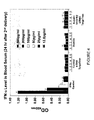
- FIG. 4 While human VEGFR2-siRNA nanoparticle targeting neovasculature through systemic delivery demonstrated potent efficacy in colon carcinoma xenograft mouse model (DLD-1 tumor), no significant IFN- ⁇ induction was observed in the mouse blood stream 24 hours after the 2nd delivery.
- FIG. 5 Human VEGF-siRNA (19 base pair with 3′ end overhangs) is effective for silencing hVEGF expression in vitro and in vivo, at both mRNA level and protein level, evaluated by RT-PCR and ELISA.
- Two upper figures demonstrated significant hVEGF knockdown at both mRNA and protein levels.
- the lower panel shows the anti-tumor activity of siRNA-mediated hVEGF knockdown in a MCF-7/VEGF 165 cell induced xenograft model, where the hVEGF expression was significantly down regulated in the tumor tissue.
- FIG. 6 Human VEGF-siRNA (19 base pair with 3′ end overhangs) is effective for silencing hVEGF expression in vivo resulting in tumor growth inhibition (HNSCC 1483 cell). Five times repeated intratumoral delivery with electroporation enhancement with 7 day interval.
- FIG. 7 Human VEGF-siRNA (25 basepair blunt end) is more effective for silencing hVEGF expression in vitro and stronger than the 19 base pair siRNA.
- FIG. 8 Human VEGF-siRNA (25 basepair blunt end) is effective for silencing hVEGF expression in vitro and has longer duration than that of the 19 basepair siRNA.
- FIG. 9 Human VEGFR1-siRNA (25 base pair blunt end) is effective for silencing hVEGFR1 expression in vitro after 48 hr.
- FIG. 10 Human VEGFR1-siRNA (25 base pair blunt end) is effective for silencing hVEGFR1 expression in vitro after 72 hr.
- FIG. 11 Human VEGFR2-siRNA (25 base pair blunt end) is effective for silencing hVEGFR2 expression in vitro at two different time points.
- FIG. 12 Human VEGF-siRNA (25 base pair blunt end) is effective for silencing hVEGF expression in vivo resulting in tumor growth inhibition, with a MDA-MB-435 breast carcinoma cell line.
- FIG. 13 Concept framework for using siRNA cocktail targeting VEGF, VEGFR1 and VEGFR2 in the same treatment to block the angiogenesis pathway.
- FIG. 14 siRNA cocktail targeting VEGF, VEGFR1 and VEGFR2 is more effective than any single siRNA targeting individual gene at the same dosage tested in the HSV induced ocular angiogenesis mouse model, with either local (left) or systemic (right) deliveries.
- FIG. 15 Inhibition of angiogenesis by administration of VEGF pathway siRNA cocktail on day 17 or day 14 after induction of disease in ocular tissues of a murine model of retinal angiogenesis in a perfusion/flatmount measurement.
- FIG. 16 siRNA cocktail targeting VEGF, VEGFR1 and VEGFR2 demonstrates very effective anti-angiogenesis activity in the retinopathy of prematural (ROP) mouse model induced by Hypoxia.
- ROP retinopathy of prematural
- FIG. 17 siRNA cocktail targeting VEGF 5 VEGFR1 and VEGFR2 demonstrates very effective anti-angiogenesis activity in the retinopathy of prematural (ROP) mouse model induced by Hypoxia.
- ROP retinopathy of prematural
- FIG. 18 siRNA cocktail targeting VEGF, VEGFR1 and VEGFR2 inhibits ocular angiogenesis significantly with different routes of administration with different carriers. IP delivery was mediated by a ligand-directed nanoparticle.
- siRNA Cocktail Mediated Knockdown of VEGF Pathway Factors RT-PCR Detection of mRNA levels with ROP Model.
- FIG. 19 Self-assembled nanoparticle for siRNA delivery.
- the nanoparticles When the pre-made RGD-PEG-PEI conjugate aqueous solution is mixed with the siRNA aqueous solution, the nanoparticles will be self-assembled as described.
- the nanoparticles are relatively homogeneous in size, from 50 nm to 100 nm.
- FIG. 20 siRNA nanoparticle targeting neovasculature demonstrated tumor targeting property using labeled siRNA payload (left) and plasmid payload expressing Luciferase reporter gene (right).
- FIG. 21 VEGFR2-siRNA nanoparticle targeting neovasculature demonstrated potent efficacy in neuroblastoma syngenic mouse model (N2A tumor) after four repeated administrations every three days.
- FIG. 22 VEGFR2-siRNA nanoparticle targeting neovasculature demonstrated potent efficacy in renal carcinoma xenograft mouse model (786-O tumor) after five repeated administrations every three days.
- FIG. 23 VEGFR2-siRNA nanoparticle targeting neovasculature demonstrated potent efficacy in colon carcinoma xenograft mouse model (DLD-1 tumor) after four repeated administrations every three days. Three different dosages were used in the study.
- FIG. 24 VEGFR2-siRNA nanoparticle targeting neovasculature demonstrated potent efficacy in colon carcinoma xenograft mouse model (DLD-1 tumor) after four repeated administrations every three days. Four mg per kilo of VEGFR2 dosing resulted in the same anti-tumor efficacy as 5 mg per kilogram of Avastin.
- FIG. 25 Manufacturing flow chart for production of an RGD-polymer conjugate and a nanoparticle-siRNA preparation starting from raw materials of a homobifunctional activated PEG, an RGD-2C peptide, a polyamine containing agent, and a mixture of dsRNA.
- FIG. 26 The use of a static mixer to manufacture a nanoparticle-siRNA preparation starting from two solutions, a polymer solution comprising polymer conjugates and an siRNA solution comprising three dsRNA agents.
- the present invention provides compositions and methods for treatment of NV diseases, which typically are characterized by attributes of multiple proteins and abnormally over-expressed disease-causing genes and multiple malfunctions of disease-causing proteins.
- the present invention provides nucleic acid agents, such as siRNA oligonucleotides, that activate RNA interference (RNAi) and are highly selective inhibitors of gene expression with a sequence specific manner.
- RNAi RNA interference
- the present invention provides inhibition of NV by modulation of protein activity including reduction of protein expression levels and post transcriptional modification of proteins.
- compositions and methods of the present invention demonstrate substantial knockdown of human VEGF in MCF-7 cells, MDA-MB-435 cells and 1483 cell-induced xenograft tumor models, achieving tumor growth inhibition of 40-80%, using intratumoral delivery of siRNA specifically targeting human VEGF pathway gene sequences.
- VEGF pathway gene expression induces anti-angiogenesis effects that alter the microvasculature in tumors and that activate tumor cell apoptosis and can enhance efficacy of cytotoxic chemotherapeutic drugs.
- a highly effective delivery method is necessary so that elevated concentrations of the drugs accumulate in the local tumor tissue, and in many instances through a systemic administration.
- the present inventors have described a method of validating drug targets that determines which targets control disease pathways and therefore justify drug development efforts (see PCT/US02/31554).
- the present inventors also have described technologies suitable for delivery of nucleic acids into animal tissues. See WO01/47496, the contents of which are hereby incorporated by reference in their entirety. These methods enable administration of nucleic acid and achieve a significant (for example, seven-fold) increase in efficiency compared to “gold standard” nucleotide delivery reagents. Accordingly, the methods provide strong activity of nucleic acids in tissues including activity of candidate target proteins. This platform is a powerful tool for validation of candidate genes in a tissue.
- RNA interference RNA interference
- a double stranded RNA targeted against a target mRNA results in the degradation of the target, thereby causing the silencing of the corresponding gene.
- Large double stranded RNA is cleaved into smaller fragments of 21-23 nucleotides long by an RNase III like activity involving an enzyme Dicer. These shorter fragments, known as siRNA (small interfering RNA), are believed to mediate the cleavage of mRNA.
- RNAi gene down-regulation by the RNAi mechanism has been studied in C. elegans and other lower organisms in recent past, its effectiveness in mammalian cells in culture has only recently been demonstrated.
- siRNA or dsRNA targeting a tumor related ligand (human VEGF) or receptor (mouse VEGFR2) was delivered to nude mice bearing xenografted human MCF-7 derived tumor or human MDA-MB-435 tumors.
- VEGF tumor related ligand
- mouse VEGFR2 receptor
- the present inventors have achieved for the first time therapeutic compositions and methods for treatment of a wide variety of NV diseases using dsRNA oligonucleotides inhibiting VEGF pathway genes.
- the invention is described here in detail, but one skilled in the art will appreciate the full extent of the invention.
- the present invention provides nucleic acid agents targeting and inhibiting VEGF pathway gene sequences with a variety of physicochemical structures.
- One preferred embodiment of the present invention uses nucleic acid agents called siRNA including 19 base pair dsRNA with 3′ overhangs and 25 base pair dsRNA with blunt ends.
- the siRNA of the invention with 25 base pair dsRNA with blunt ends were found to be some of the most potent inhibitors with some of the greatest duration of inhibition.
- incorporation of non-naturally occurring chemical analogues are useful in the invention, including 2′-O-Methyl ribose analogues of RNA, DNA and RNA chimeric oligonucleotides, and other chemical analogues of nucleic acid oligonucleotides.
- the 25 basepair siRNA with and without 2′-O-Methyl ribose in the sense strand of the siRNA and targeting human VEGF sequence provide strong and durable inhibitory effect, up to 70-80% in MCF-7/VEGF165 cells and in tumors growing in animals. This inhibitory effect in MCF-7/VEGF165 cell culture lasted for 5 days.
- siRNA targeting human genes and the encoded sequence also targets other mammalian species such as other primates, mice, and rats but not limited to these species. Methods well known to one skilled in the art can be used to identify and select siRNA provided by the invention. Many other forms of siRNA targeting VEGF pathway genes are provided for by the invention and others will be understood by one skilled in the art.
- hVEGF-25-siRNA-a Sense strand: 5′-r(CCUGAUGAGAUCGAGUACAUCUUCA)-3′ (SEQ ID NO: 1) Antisense strand: 5′-r(UGAAGAUGUACUCGAUCUCAUCAGG)-3′.
- SEQ ID NO: 2 hVEGF-25-siRNA-b: Sense strand: 5′-r(GAGAGAUGAGCUUCCUACAGCACAA)-3′ (SEQ ID NO: 3) Antisense strand: 5′-r(UUGUGCUGUAGGAAGCUCAUCUCUC)-3′.
- hVEGF-25-siRNA-c Sense strand: 5′-r(CACAACAAAUGUGAAUGCAGACCAA)-3′ (SEQ ID NO: 5) Antisense strand: 5′-r(UUGGUCUGCAUUCACAUUUGUUGUG)-3′ (SEQ ID NO: 6) 19 base pairs with two nucleotide (TT) overhangs at 3′: hVEGF165 5′-r(UCGAGACCCUGGUGGACAUTT)-3′ (SEQ ID NO: b. Human VEGF Receptor 1 Specific siRNA:
- hVEGFR1-25-siRNA-a Sense strand: (SEQ ID NO: 8) 5′-r(GCCAACAUAUUCUACAGUGUUCUUA)-3′
- Antisense strand (SEQ ID NO: 9) 5′-r(UAAGAACACUGUAGAAUAUGUUGGC)-3′
- hVEGFR1-25-siRNA-b Sense strand: (SEQ ID NO: 10) 5′-r(CCCUCGCCGGAAGUUGUAUGGUUAA)-3′
- Antisense strand (SEQ ID NO: 11) 5′-r(UUAACCAUACAACUUCCGGCGAGGG)-3′.
- VEGF R1 FLT
- FLT SEQ ID NO: 12
- hVEGFR2-25-siRNA-a Sense strand: (SEQ ID NO: 13) 5′-r(CCUCUUCUGUAAGACACUCACAAUU)-3′
- Antisense strand (SEQ ID NO: 14) 5′-r(AAUUGUGAGUGUCUUACAGAAGAGG)-3′
- hVEGFR2-25-siRNA-b Sense strand: (SEQ ID NO: 15) 5′-r(CCCUUGAGUCCAAUCACACAAUUAA)-3′
- Antisense strand (SEQ ID NO: 16) 5′-r(UUAAUUGUGUGAUUGGACUCAAGGG)-3′.
- hVEGFR2-25-siRNA-c Sense strand: (SEQ ID NO: 17) 5′-r(CCAAGUGAUUGAAGCAGAUGCCUUU)-3′
- Antisense strand (SEQ ID NO: 18) 5′-r(AAAGGCAUCUGCUUCAAUCACUUGG)-3′. 19 basepairs with 2 3′ (TT) nucleotide overhangs: hVEGF R2 (KDR) (SEQ ID NO: 19) 5′-CAGUAAGCGAAAGAGCCGGTT-3′
- the siRNA targeting human VEGF receptor 1 has the following sequence:
- Sense strand (SEQ ID NO. 20) 5′- r(CCUCAAGAGCAAACGUGACUUAUUU)-3′
- Antisense strand (SEQ ID NO. 21) 5′-r(AAAUAAGUCACGUUUGCUCUUGAGG)-3′.
- 25 Base Pair siRNA Oligos can Target the Corresponding Genes from Both Human and Mouse.
- the 25 base pair siRNA sequences were selected to against the corresponding mRNA sequences, including human VEGF, VEGFR1, VEGFR2, PDGFR-alpha, PDGFR-beta and EGFR genes.
- the sequences selected are not only specific to the human genes but also specific to the corresponding mouse genes, such as the sequences against human VEGF mRNAs are also against mouse VEGF mRNAs.
- the 25 base pair siRNA oligos are very useful for mouse xenograft tumor study since the anti-tumor efficacy relies on knockdown both human and mouse genes in the tumor tissue.
- knockdown VEGF expressions from both tumor cells (human origin) and endothelium cells (mouse origin) with the siRNA oligos targeting both sequences will provide better anti-tumor efficacy.
- the following sequences are the 25 base pair siRNA oligo sequences targeting VEGF, VEGFR2, VEGFR1, PDGFR-alpha, PDGFR-beta and EGFR mRNAs from both human and mouse genes, some of them can also target to their monkey and dog counterparts.
- mhVEGF25-1 sense, 5′-CAAGAUCCGCAGACGUGUAAAUGUU-3′; (SEQ ID NO. 22) antisense, 5′-AAC AUUUACACGUCUGCGGAUCUUG-3′ (SEQ ID NO. 23)
- mhVEGF25-2 sense, 5′-GCAGCUUGAGUUAAACGAACGUACU-3′; (SEQ ID NO. 24) antisense, 5′-AGUACGUUCGUUUAACUCAAGCUGC-3′ (SEQ ID NO. 25)
- mhVEGF25-3 sense, 5′-CAGCUUGAGUUAAACGAACGUACUU-3′; (SEQ ID NO.
- mhVEGF25-4 sense, 5′-CCAUGCCAAGUGGUCCCAGGCUGCA-3′; (SEQ ID NO. 28) antisense, 5′-TGCAGCCTGGGACCACTTGGCATGG-3′ (SEQ ID NO. 29) mhVEGF25-4: sense, 5′-CACAUAGGAGAGAUGAGCUUCCUCA-3′; (SEQ ID NO. 30) antisense, 5′-UGAGGAAGCUCAUCUCUCCUAUGUG-3′ (SEQ ID NO. 31) 25 Base Pair VEGF R2 siRNA Sequences Targeting Both Human and Mouse VEGFR2 mRNA Sequences:
- mhVEGFR225-1 sense, 5′-CCUACGGACCGUUAAGCGGGCCAAU-3′; (SEQ ID NO. 32) antisense: 5′-AUUGGCCCGCUUAACGGUCCGUAGG-3′ (SEQ ID NO. 33) mhVEGFR225-2: sense, 5′-CUCAUGUCUGUUCUCAAGAUCCUCA-3′; (SEQ ID NO. 34) antisense: 5′-UGAGGAUCUUGAGAACAGACAUGAG-3′ (SEQ ID NO. 35) mhVEGFR225-3: sense, 5′-CUCAUGGUGAUUGUGGAAUUCUGCA-3′; (SEQ ID NO.
- mhVEGFR225-4 sense, 5′-GAGCAUGGAAGAGGAUUCUGGACUC-3′;
- SEQ ID NO. 38 antisense: 5′-GAGUCCAGAAUCCTCUUCCAUGCTC-3′ (SEQ ID NO. 39)
- mhVEGFR225-5 sense, 5′-CAGAACAGUAAGCGAAAGAGCCGGC-3′;
- SEQ ID NO. 40 antisense: 5′-GCCGGCUCUUUCGCUUACUGUUCUG-3′ (SEQ ID NO.
- mhVEGFR225-6 sense, 5′-GACUUCCUGACCUUGGAGCAUCUCA-3′;
- SEQ ID NO. 42 antisense: 5′-UGAGAUGCUCCAAGGUCAGGAAGUC-3′
- mhVEGFR225-7 sense, 5′-CCUGACCUUGGAGCAUCUCAUCUGU-3′;
- SEQ ID NO. 44 antisense: 5′-ACAGAUGAGAUGCUCCAAGGUCAGG-3′
- mhVEGFR225-8 sense, 5′-GCUAAGGGCAUGGAGUUCUUGGCAU-3′;
- SEQ ID NO. 46 antisense: 5′-AUGCCAAGAACUCCAUGCCCUUAGC-3′
- SEQ ID NO. 47 25 Base Pairs VEGF R1 siRNA Sequences Targeting Both Human and Mouse VEGFR1 mRNA Sequences.
- mhVEGFR125-1 sense, 5′-CACGCUGUUUAUUGAAAGAGUCACA-3′;
- SEQ ID NO. 48 antisense: 5′-UGUGACUCUUUCAAUAAACAGCGUG-3′
- mhVEGFR125-2 sense, 5′-CGCUGUUUAUUGAAAGAGUCACAGA-3′;
- SEQ ID NO. 50 antisense: 5′-UCUGUGACUCUUUCAAUAAACAGCG-3′
- mhVEGFR125-3 sense, 5′-CAAGGAGGGCCUCUGAUGGUGAUGU-3′;
- mhVEGFR125-6 sense, 5′-CCAGAAAGUGCAUUCAUCGGGACCU-3′; (SEQ ID NO. 58) antisense: 5′-AGGUCCCGAUGAAUGCACUUUCUGG-3′ (SEQ ID NO. 59) mhVEGFR125-7: sense, 5′-CAUUCAUCGGGACCUGGCAGCGAGA-3′; (SEQ ID NO. 60) antisense: 5′-UCUCGCUGCCAGGUCCCGAUGAAUG-3′ (SEQ ID NO. 61) mhVEGFR125-8: sense, 5′-CAUCGGGACCUGGCAGCGAGAAACA-3′; (SEQ ID NO.
- mhVEGFR125-11 sense, 5′-GCCUGGAAAGAAUCAAAACCUUUGA-3′;
- SEQ ID NO. 68 antisense: 5′-UCAAAGGUUUUGAUUCUUUCCAGGC-3′ (SEQ ID NO. 69)
- mhVEGFR125-12 sense, 5′-CUGAACUGAGUUUAAAAGGCACCCA-3′;
- SEQ ID NO. 70 antisense: 5′-UGGGUGCCUUUUAAACUGAGUUCAG-3′
- mhVEGFR125-13 sense, 5′-GAACUGAGUUUAAAAGGCACCCAGC-3′;
- SEQ ID NO. 72 antisense: 5′-GCUGGGUGCCUUUUAAACUCAGUUG-3′ (SEQ ID NO. 73) 25 Base Pairs siRNA Sequences Targeting Both Human and Mouse PDGFR-Alpha:
- mhPDGFRa25-1 sense, 5′-GAAGAUAAUGACUCACCUGGGGCCA-3′;
- SEQ ID NO. 74 antisense: 5′-UGGCCCCAGGUGAGUCAUUAUCUUC-3′ (SEQ ID NO. 75)
- mhPDGFRa25-2 sense, 5′-GAUAAUGACUCACCUGGGGCCACAU-3′;
- SEQ ID NO. 76 antisense: 5′-AUGUGGCCCCAGGUGAGUCAUUAUC-3′
- mhPDGFRa25-3 sense, 5′-CUCACCUGGGGCCACAUUUGAACAU-3′;
- mhPDGFRa25-6 sense, 5′-CAGAGACUGAGCGCUGACAGUGGCU-3′;
- SEQ ID NO. 84 antisense: 5′-AGCCACUGUCUGCGCUCAGUCUCUG-3′
- mhPDGFRa25-7 sense, 5′-GACCUGGGCAAGAGGAACAGACACA-3′;
- SEQ ID NO. 86 antisense: 5′-UGUGUCUGUUCCUCUUGCCCAGGUC-3′
- mhPDGFRa25-8 sense, 5′-CCACCUUCAUCAAGAGAGAGGACGA-3′;
- mhPDGFRB25-1 sense, 5′-CUGCAGAGACCUCAAAAGGUGUCCA-3′;
- SEQ ID NO. 92 antisense: 5′-UGGACACCUUUUGAGGUCUCUGCAG-3′
- mhPDGFRB25-2 sense, 5′-CAGAGACCUCAAAAGGUGUCCACGU-3′;
- SEQ ID NO. 94 antisense: 5′-ACGUGGACACCUUUUGAGGUCUCUG-3′
- mhPDGFRB25-3 sense, 5′-GUGGUGGUGAUCUCAGCCAUCCUGG-3′;
- mhPDGFRB25-6 sense, 5′-GCAAGCUGGUCAAGAUCUGUGACUU-3′; (SEQ ID NO. 102) antisense: 5′-AAGUCACAGAUCUUGACCAGCUUGC-3′ (SEQ ID NO. 103) mhPDGFRB25-7: sense, 5′-GGGUGGCACCCCUUACCCAGAGCUG-3′; (SEQ ID NO. 104) antisense: 5′-CAGCUCUGGGUAAGGGGUGCCACCC-3′ (SEQ ID NO. 105) mhPDGFRB25-8: sense, 5′-GCACCCCUUACCCAGAGCUGCCCAU-3′; (SEQ ID NO.
- mhPDGFRB25-11 sense, 5′-GCCUCCGACGAGAUCUAUGAGAUCA-3′;
- SEQ ID NO. 112 antisense: 5′-UGAUCUCAUAGAUCUCGUCGGAGGC-3′ (SEQ ID NO. 113) mhPDGFRB25-12: sense, 5′-CCGACGAGAUCUAUGAGAUCAUGCA-3′;
- SEQ ID NO. 114 antisense: 5′-UGCAUGAUCUCAUAGAUCUCGUCGG-3′ (SEQ ID NO. 115) mhPDGFRB25-13: sense, 5′-GACGAGAUCUAUGAGAUCAUGCAGA-3′;
- SEQ ID NO. 116 antisense: 5′-UCUGCAUGAUCUCAUAGAUCUCGUC-3′ (SEQ ID NO. 117) 25 Base Pairs siRNA Sequences Targeting Both Human and Mouse EGFR:
- mhEGFR-1 sense, 5′-CUCUGGAUCCCAGAAGGUGAGAAAG-3′; (SEQ ID NO. 118) antisense: 5′-CUUUCUCACCUUCUGGGAUCCAGAG-3′ (SEQ ID NO. 119)
- mhEGFR-2 sense, 5′-CAGCAUGUCAAGAUCACAGAUUUUG-3′; (SEQ ID NO. 120) antisense: 5′-CAAAAUCUGUGAUCUUGACAUGCUG-3′ (SEQ ID NO. 121)
- mhEGFR-3 sense, 5′-GAUCACAGAUUUUGGGCUGGCCAAA-3′; (SEQ ID NO.
- mhEGFR-6 sense, 5′-CCAUCGAUGUCUACAUGAUCAUGGU-3′;
- SEQ ID NO. 1208 antisense: 5′-ACCAUGAUCAUGUAGACAUCGAUGG-3′ (SEQ ID NO. 129)
- mhEGFR-7 sense, 5′-CGAUGUCUACAUGAUCAUGGUCAAGU-3′;
- SEQ ID NO. 130 antisense: 5′-ACUUGACCAUGAUCAUGUAGACAUCG-3′
- mhEGFR-8 sense, 5′-CUACAUGAUCAUGGUCAAGUGCUGG-3′;
- mhEGFR-11 sense, 5′-GACAACCCUGACUACCAGCAGGACU-3′ (SEQ ID NO. 138) antisense: 5′-AGUCCUGCUGGUAGUCAGGGUUGUC-3′ (SEQ ID NO. 139)
- mhEGFR-12 sense, 5′-CCUUCUUAAAGACCAUCCAGGAGGU-3′; (SEQ ID NO. 140) antisense: 5′-ACCUCCUGGAUGGUCUUUAAGAAGG-3′ (SEQ ID NO. 141)
- Another embodiment is use of a combination of these oligos in the same drug payload.
- the treatment is e more effective since the knockdown of multiple gene expressions can effectively block the particular tumorigenic pathway.
- the following combinations can be further expended using the same general principles applied here.
- VEGF-VEGFR1-VEGFR2 Cocktail A
- mhVEGF25-1 sense, 5′-CAAGAUCCGCAGACGUGUAAAUGUU-3′; (SEQ ID NO. 142) antisense, 5′-AACAUUUACACGUCUGCGGAUCUUG-3′ (SEQ ID NO. 143) mhVEGFR125-3: sense, 5′-CAAGGAGGGCCUCUGAUGGUGAUGU-3′; (SEQ ID NO. 144) antisense: 5′-ACAUCACCAUCAGAGGCCCUCCUUG-3′ (SEQ ID NO. 145) mhVEGFR225-1: sense, 5′-CCUACGGACCGUUAAGCGGGCCAAU-3′; (SEQ ID NO. 146) antisense: 5′-AUUGGCCCGCUUAACGGUCCGUAGG-3′ (SEQ ID NO. 147) VEGF-VEGFR1-VEGFR2 Cocktail B:
- mhVEGF25-1 sense, 5′-CAAGAUCCGCAGACGUGUAAAUGUU-3′; (SEQ ID NO. 148) antisense, 5′-AACAUUUACACGUCUGCGGAUCUUG-3′ (SEQ ID NO. 149)
- mhVEGFR125-6 sense, 5′-CCAGAAAGUGCAUUCAUCGGGACCU-3′; (SEQ ID NO. 150) antisense: 5′-AGGUCCCGAUGAAUGCACUUUCUGG-3′ (SEQ ID NO. 151)
- mhVEGFR225-2 sense, 5′-CUCAUGUCUGUUCUCAAGAUCCUCA-3′; (SEQ ID NO. 152) antisense: 5′-UGAGGAUCUUGAGAACAGACAUGAG-3′ (SEQ ID NO. 153) VEGF-VEGFR1-VEGFR2 Cocktail C:
- mhVEGF25-2 sense, 5′-GCAGCUUGAGUUAAACGAACGUACU-3′; (SEQ ID NO. 154) antisense, 5′-AGUACGUUCGUUUAACUCAAGCUGC-3′ (SEQ ID NO. 155)
- mhVEGFR125-6 sense, 5′-CCAGAAAGUGCAUUCAUCGGGACCU-3′; (SEQ ID NO. 156) antisense: 5′-AGGUCCCGAUGAAUGCACUUUCUGG-3′ (SEQ ID NO. 157)
- mhVEGFR225-2 sense, 5′-CUCAUGUCUGUUCUCAAGAUCCUCA-3′; (SEQ ID NO. 158) antisense: 5′-UGAGGAUCUUGAGAACAGACAUGAG-3′ (SEQ ID NO. 159)
- VEGF-VEGFR2-EGFR Cocktail A
- mhVEGF25-1 sense, 5′-CAAGAUCCGCAGACGUGUAAAUGUU-3′; (SEQ ID NO. 160) antisense, 5′-AACAUUUACACGUCUGCGGAUCUUG-3′ (SEQ ID NO. 161) mhVEGFR225-1: sense, 5′-CCUACGGACCGUUAAGCGGGCCAAU-3′; (SEQ ID NO. 162) antisense: 5′-AUUGGCCCGCUUAACGGUCCGUAGG-3′ (SEQ ID NO. 163) mhEGFR-1: sense, 5′-CUCUGGAUCCCAGAAGGUGAGAAAG-3′; (SEQ ID NO. 164) antisense: 5′-CUUUCUCACCUUCUGGGAUCCAGAG-3′ (SEQ ID NO. 165) VEGF-VEGFR2-EGFR Cocktail B:
- mhVEGF25-1 sense, 5′-CAAGAUCCGCAGACGUGUAAAUGUU-3′; (SEQ ID NO. 166) antisense, 5′-AACAUUUACACGUCUGCGGAUCUUG-3′ (SEQ ID NO. 167)
- mhVEGFR225-2 sense, 5′-CUCAUGUCUGUUCUCAAGAUCCUCA-3′; (SEQ ID NO. 168) antisense: 5′-UG AGGAUCUUGAGAACAGACAUGAG-3′ (SEQ ID NO. 169)
- mhEGFR-5 sense, 5′-CAAAGUGCCUAUCAAGUGGAUGGCA-3′; (SEQ ID NO. 170) antisense: 5′-UGCCAUCCACUUGAUAGGCACUUUG-3′ (SEQ ID NO. 171) VEGF-VEGFR2-EGFR Cocktail C:
- mhVEGF25-2 sense, 5′-GCAGCUUGAGUUAAACGAACGUACU-3′; (SEQ ID NO. 172) antisense, 5′-AGUACGUUCGUUUAACUCAAGCUGC-3′ (SEQ ID NO. 173) mhVEGFR225-2: sense, 5′-CUCAUGUCUGUUCUCAAGAUCCUCA-3′; (SEQ ID NO. 174) antisense: 5′-UGAGGAUCUUGAGAACAGACAUGAG-3′ (SEQ ID NO. 175) mhEGFR-9: sense, 5′-CAUGAUCAUGGUCAAGUGCUGGAUGA-3′; (SEQ ID NO. 176) antisense: 5′-UCAUCCAGCACUUGACCAUGAUCAUG-3′ (SEQ ID NO. 177)
- VEGFR2-PDGFRa-EGFR Cocktail A VEGFR2-PDGFRa-EGFR Cocktail A:
- mhVEGFR225-1 sense, 5′-CCUACGGACCGUUAAGCGGGCCAAU-3′ (SEQ ID NO. 178) antisense: 5′-AUUGGCCCGCUUAACGGUCCGUAGG-3′ (SEQ ID NO. 179)
- mhPDGFRa25-1 sense, 5′-GAAGAUAAUGACUCACCUGGGGCCA-3′; (SEQ ID NO. 180) antisense: 5′-UGGCCCCAGGUGAGUCAUUAUCUUC-3′ (SEQ ID NO. 181)
- mhEGFR-1 sense, 5′-CUCUGGAUCCCAGAAGGUGAGAAAG-3′;
- SEQ ID NO. 182 antisense: 5′-CUUUCUCACCUUCUGGGAUCCAGAG-3′ (SEQ ID NO. 183)
- VEGFR 1-VEGFR2-PDGFRa-EGFR Cocktail B VEGFR 1-VEGFR2-PDGFRa-EGFR Cocktail B:
- mhVEGFR125-6 sense, 5′-CCAGAAAGUGCAUUCAUCGGGACCU-3′; (SEQ ID NO. 184) antisense: 5′-AGGUCCCGAUGAAUGCACUUUCUGG-3′ (SEQ ID NO. 185)
- mhVEGFR225-1 sense, 5′-CCUACGGACCGUUAAGCGGGCCAAU-3′; (SEQ ID NO. 186) antisense: 5′-AUUGGCCCGCUUAACGGUCCGUAGG-3′ (SEQ ID NO. 187)
- mhPDGFRa25-2 sense, 5′-GAUAAUGACUCACCUGGGGCCACAU-3′; (SEQ ID NO.
- mhVEGFR225-1 sense, 5′-CCUACGGACCGUUAAGCGGGCCAAU-3′; (SEQ ID NO. 192) antisense: 5′-AUUGGCCCGCUUAACGGUCCGUAGG-3′ (SEQ ID NO. 193)
- mhPDGFRa25-2 sense, 5′-GAUAAUGACUCACCUGGGGCCACAU-3′; (SEQ ID NO. 194) antisense: 5′-AUGUGGCCCCAGGUGAGUCAUUAUC-3′ (SEQ ID NO. 195)
- mhEGFR-12 sense, 5′-CCUUCUUAAAGACCAUCCAGGAGGU-3′; (SEQ ID NO. 196) antisense: 5′-ACCUCCUGGAUGGUCUUUAAGAAGG-3′ (SEQ ID NO. 197)
- VEGFR2-PDGFRb-EGFR Cocktail A VEGFR2-PDGFRb-EGFR Cocktail A:
- mhVEGFR225-1 sense, 5′-CCUACGGACCGUUAAGCGGGCCAAU-3′; (SEQ ID NO. 198) antisense: 5′-AUUGGCCCGCUUAACGGUCCGUAGG-3′ (SEQ ID NO. 199)
- mhPDGFRB25-5 sense, 5′-GGCAAGCUGGUCAAGAUCUGUGACU-3′; (SEQ ID NO. 200) antisense: 5′-AGUCACAGAUCUUGACCAGCUUGCC-3′ (SEQ ID NO. 201)
- mhEGFR-1 sense, 5′-CUCUGGAUCCCAGAAGGUGAGAAAG-3′; (SEQ ID NO. 202) antisense: 5′-CUUUCUCACCUUCUGGGAUCCAGAG-3′ (SEQ ID NO. 203)
- VEGFR2-PDGFRb-EGFR Cocktail B VEGFR2-PDGFRb-EGFR Cocktail B:
- mhVEGFR225-1 sense, 5′-CCUACGGACCGUUAAGCGGGCCAAU-3′; (SEQ ID NO. 204) antisense: 5′-AUUGGCCCGCUUAACGGUCCGUAGG-3′ (SEQ ID NO. 205)
- mhPDGFRB25-10 sense, 5′-CAUGCCUCCGACGAGAUCUAUGAGA-3′; (SEQ ID NO. 206) antisense: 5′-UCUCAUAGAUCUCGUCGGAGGCAUG-3′ (SEQ ID NO. 207)
- mhEGFR-1 sense, 5′-CUCUGGAUCCCAGAAGGUGAGAAAG-3′; (SEQ ID NO. 208) antisense: 5′-CUUUCUCACCUUCUGGGAUCCAGAG-3′ (SEQ ID NO. 209)
- VEGFR2-PDGFRb-EGFR Cocktail C VEGFR2-PDGFRb-EGFR Cocktail C:
- mhVEGFR225-1 sense, 5′-CCUACGGACCGUUAAGCGGGCCAAU-3′; (SEQ ID NO. 210) antisense: 5′-AUUGGCCCGCUUAACGGUCCGUAGG-3′ (SEQ ID NO. 211)
- mhPDGFRB25-5 sense, 5′-GGCAAGCUGGUCAAGAUCUGUGACU-3′; (SEQ ID NO. 212) antisense: 5′-AGUCACAGAUCUUGACCAGCUUGCC-3′ (SEQ ID NO. 213)
- mhEGFR-12 sense, 5′-CCUUCUUAAAGACCAUCCAGGAGGU-3′; (SEQ ID NO. 214) antisense: 5′-ACCUCCUGGAUGGUCUUUAAGAAGG-3′ (SEQ ID NO. 215)
- VEGFR2-PDGFRab-EGFR Cocktail A VEGFR2-PDGFRab-EGFR Cocktail A:
- mhVEGFR225-1 sense, 5′-CCUACGGACCGUUAAGCGGGCCAAU-3′; (SEQ ID NO. 216) antisense: 5′-AUUGGCCCGCUUAACGGUCCGUAGG-3′ (SEQ ID NO. 217)
- mhPDGFRa25-2 sense, 5′-GAUAAUGACUCACCUGGGGCCACAU-3′ (SEQ ID NO. 218) antisense: 5′-AUGUGGCCCCAGGUGAGUCAUUAUC-3′ (SEQ ID NO. 219)
- mhPDGFRb25-5 sense, 5′-GGCAAGCUGGUCAAGAUCUGUGACU-3′; (SEQ ID NO.
- mhVEGFR125-6 sense, 5′-CCAGAAAGUGCAUUCAUCGGGACCU-3′; (SEQ ID NO. 224) antisense: 5′-AGGUCCCGAUGAAUGCACUUUCUGG-3′ (SEQ ID NO. 225)
- mhVEGFR225-1 sense, 5′-CCUACGGACCGUUAAGCGGGCCAAU-3′; (SEQ ID NO. 226) antisense: 5′-AUUGGCCCGCUUAACGGUCCGUAGG-3′ (SEQ ID NO. 227)
- mhPDGFRB25-10 sense, 5′-CAUGCCUCCGACGAGAUCUAUGAGA-3′; (SEQ ID NO.
- mhVEGFR125-6 sense, 5′-CCAGAAAGUGCAUUCAUCGGGACCU-3′; (SEQ ID NO. 234) antisense: 5′-AGGUCCCGAUGAAUGCACUUUCUGG-3′ (SEQ ID NO. 235)
- mhVEGFR225-1 sense, 5′-CCUACGGACCGUUAAGCGGGCCAAU-3′ (SEQ ID NO. 236) antisense: 5′-AUUGGCCCGCUUAACGGUCCGUAGG-3′ (SEQ ID NO. 237)
- mhPDGFRa25-2 sense, 5′-GAUAAUGACUCACCUGGGGCCACAU-3′ (SEQ ID NO.
- mhVEGF25-2 sense, 5′-GCAGCUUGAGUUAAACGAACGUACU-3′ (SEQ ID NO. 244) antisense, 5′-AGUACGUUCGUUUAACUCAAGCUGC-3′ (SEQ ID NO. 245)
- NV diseases are complex and the result of multiple proteins and abnormally over-expressed disease-causing genes and multiple malfunctions of disease-causing proteins.
- nucleic acid agents that activate RNA interference (RNAi) are highly selective inhibitors of gene expression in a sequence specific manner.
- inhibition of NV by modulation of protein activity can be achieved by a number of methods, including an inhibition of protein function (antagonists), stimulation of protein function (agonists), reduction of protein expression levels, and post transcriptional modification of proteins.
- NV disease ideally requires sophisticated therapeutic actions to effectively shut down a particular biological pathway that is critical for disease progression, including simultaneously blocking functions of both ligands and their receptor, simultaneously blocking receptor activity and down stream signaling proteins, and simultaneously blocking redundant elements of a pathway. This is the case for the NV disease and the VEGF pathway.
- an aspect of the present invention are using s siRNA oligonucleotide gene inhibitors to provide a unique advantage to achieve combination effects with a combination of siRNA to target multiple disease causing genes in the same treatment.
- One advantage provided by the present invention is a result that all siRNA oligonucleotides are very similar chemically and pharmacologically, and can be from the same source of origin and same manufacturing process.
- Another advantage provided by the present invention is that multiple siRNA oligonucleotides can be formulated in a single preparation such as a nanoparticle preparation.
- an aspect of the present invention is to combine siRNA agents so as to achieve specific and selective inhibition of multiple VEGF pathway genes and as a result achieve a inhibition of NV disease and a better clinical benefit.
- the present invention provides for many combinations of siRNA targeting including combinations that target VEGF itself together with its receptors including VEGF R1 (Flt1) and VEGF R2 (KDR), parallel growth factors including PDGF and EGF and their receptors, down stream signaling factors including RAF and AKT, and transcription factors including NFKB, and their combination.
- a preferred embodiment is a combination of siRNA inhibiting VEGF and two of its receptors VEGF R1 (Flt1) and VEGF R2 (KDR).
- Another preferred embodiment is a combination of siRNA inhibiting VEGF and its receptors, PDGF and its receptors, and EGF and its receptors.
- Yet another preferred embodiment is a combination of siRNA inhibiting VEGF and its receptors and down stream signaling.
- the dsRNA oligonucleotides can be combined for a therapeutic for the treatment of NV disease.
- they can be mixed together as a cocktail and in another embodiment they can be administered sequentially by the same route or by different routes and formulations and in yet another embodiment some can be administered as a cocktail and some administered sequentially.
- Other combinations of siRNA and methods for their combination will be understood by one skilled in the art to achieve treatment of NV diseases.
- Disease is complicated and often involves multiple pathological processes as well as variations in severity of disease symptoms and, often, variations from one patient to another. Many diseases are caused by abnormal overexpression of disease-causing or disease control genes, or from foreign infectious organisms, or both. Disease progression, the development of reduced response to treatments over time and drug resistance also limit clinical benefit of a single treatment or modality.
- One means to overcome such limitations is through use of combinations of treatments and drugs.
- an aspect of the present invention is to combine siRNA agents with other agents so as to achieve a strong, durable, and robust inhibition of NV disease and a superior clinical benefit.
- the present invention provides multiple combinations of siRNA agents together with other agents, including combinations of therapeutic siRNA for VEGF itself and its receptors with antagonists of VEGF itself and its receptors (such as Avastin).
- the present invention also provides combinations of therapeutic siRNA agents with orally available kinase inhibitors (such as SUI 1248).
- the present invention also provides combinations of therapeutic siRNA agents with immunotherapy.
- Yet another embodiment of the present invention is to combine siRNA with antiproliferative agents. Other combinations of siRNA agents and other agents will be understood by one skilled in the art to achieve treatment of NV diseases.
- the present invention provides for formulations for siRNA dsRNA oligonucleotides that comprise tissue-targetable delivery with three additional properties. These properties are nucleic acid binding into a core that can release the siRNA into the cytoplasm, protection from non-specific interactions, and tissue targeting that provides cell uptake. No one material has all of these required properties in one molecule.
- the invention provides for compositions and methods that use modular conjugates of three materials to combine and assemble the multiple properties required. They can be designed and synthesized to incorporate various properties and then mixed with the siRNA payload to form the nanoparticles.
- a preferred embodiment comprises a modular polymer conjugate targeting neovasculature by coupling a peptide ligand specific for those cells to one end of a protective polymer, coupled at its other end to a cationic carrier for nucleic acids.
- This polymer conjugate has three functional domains, sometimes referred to as a tri-functional polymer (TFP).
- TFP tri-functional polymer
- the modular design of this conjugate allows replacement and optimization of each component separately.
- An alternative approach has been to attach surface coatings onto preformed nanoparticles. Adsorption of a steric polymer coating onto polymers is self-limiting; once a steric layer begins to form it will impede further addition of polymer.
- the compositions and methods of the invention permit an efficient method for optimization of each of the three functions, largely independent of the other two functions.
- nucleic acid therapeutics must assist their gaining access to the interior of cells and in a manner such that they can exert their biological activity.
- Efforts to address this challenge for nucleic acid therapeutics with synthetic materials include use of simple cationic lipid and polymer complexes developed as in vitro DNA transfection reagents. It was quickly found that both getting nucleic acids into cells and obtaining biological activity is extremely difficult. For example, achieving a stable nucleic acid package for transport is possible but not always easy to reconcile with the need to release the nucleic acid into the nucleus, or in the case of siRNA into the cytoplasm.
- cationic lipids and polymers that are effective in vitro do not retain activity when administered in vivo, unfortunately for reasons still largely unknown, providing little predictive value for developing complexes active in vivo.
- Interest in studies with RNA have lagged far behind, until now with the recent eruption of interest in siRNA. Nonetheless, lung tissue can often be transfected from an intravenous administration of DNA complexes. Similar biological activity has been observed when siRNA has been used as the payload.
- cationic polymers composed of defined polypeptide structures that appear to have broad capabilities.
- a large number of members of this class can be synthesized with defined structures covering linear and branched forms and have been found to offer biological activity both in vitro and in vivo. They have been shown to have activity with several types of nucleic acids, including plasmids and DNA or RNA oligonucleotides.
- the success with this class of cationic polymer appears to result from a design incorporating specific structures, including branching, and using a mixture of hard and weak bases to form a polymer with mixed cationic properties.
- Another advantage of this particular class is its biodegradable nature, being constructed entirely from natural amino acids, albeit non-natural branching.
- Optimized core forming polymers can be used as the basis for the other functions.
- liposomes with an external lipid bilayer resembling the outer cellular membrane are rapidly recognized and cleared from blood.
- nanotechnology has access to a broad range of synthetic polymer chemistry.
- Hydrophilic polymers such as PEG and polyacetals and polyoxazolines, have proven effective to form a “steric” protective layer on the surface of colloidal drug delivery systems whether liposomes, polymer or electrostatic nanoparticles, reducing immune clearance from blood.
- the use of this steric PEG layer was first developed and most extensively studied with sterically stabilized liposomes.
- the present invention provides for alternative approaches, such as chemical reduction of surface charge, in addition to a steric polymer coating.
- Advanced studies are constructing nanoparticle complexes with controlled variations in their physical properties followed by determination of their biological properties. From the many liposome studies, it is clear than physical properties with the greatest impact on biological activity can be obtained by synthesis of a matrix of conjugates varying size of the two polymers and the grafting density. Note that while the surface steric layer function is due to physical properties, the optimal conjugation chemistry still depends on the specific chemical nature of the steric polymer and the carrier to which it is coupled.
- Methods for formation of the nanoparticles with the surface steric polymer layer are also a relevant parameter.
- One embodiment of the present invention provides for methods where the steric polymer is coupled to the carrier polymer to give a conjugate that self-assembles with the nucleic acid forming a nanoparticle with the steric polymer surface layer.
- Another embodiment is to attach surface coatings onto preformed nanoparticles.
- self-assembly formation of the surface steric layer depends on interactions of the carrier polymer with the payload, not on penetration through a forming steric layer to react with particle surface. In this case, effects of the steric polymer on ability of the carrier polymer to bind the nucleic acid payload may have adverse effects on particle formation, and thus the surface steric layer. If this occurs, the grafting density of the steric polymer on the carrier will have exceeded its maximum, or the structural nature of the grafting is not adequate.
- Antibodies tend to meet many requirements for use as the ligand, including good binding selectivity and nearly routine preparation for nearly any receptor and broad applicability of protein coupling methods regardless of nanoparticle type. Monoclonal antibodies even show signs of utility to cross the blood-brain-barrier. On the other hand, they are not ideal. As targeting ligands, antibodies are very large proteins, about 150 Kd. This makes conjugation to yield a specific orientation difficult unless an extra Cys amino acid residue can be introduced, or other unique site identified, for the chemical coupling. Truncated forms can be used to reduce size but loss of affinity can occur, such as with “scFv” constructions.
- Another troubling property of antibodies is their multitude of biological activities, many conveyed in domains not associated with antigen binding, which are part of their role in the mammalian immune system. These immune activities can be exploited but they also can interfere in the nanoparticle steric layer role of avoiding immune clearance.
- Other proteins that are natural ligands also have been considered for targeting nanoparticles, such as transferrin for transferrin receptor and Factor VII and Factor VIIa proteins and their fragments. These agents can be good candidates but their successful use requires considerable effort to identify specific coupling chemistry, coupling without loss of binding activity, and exposure on the particle without reintroducing immune clearance.
- a preferred class of ligands are small molecular weight compounds with strong selective binding affinity for internalizing receptors. Studies have been evaluated natural metabolites such as vitamins like folate and thiamine, polysaccharides like wheat germ agglutinin or sialyl Lewis x for e-selectin, and peptide binding domains like RGD for integrins. Peptides offer a versatile class of ligand, since phage display libraries can be used to screen for natural or unnatural sequences, even with in vivo panning methods. Such phage display methods can permit retention of an unpaired Cys residue at one end for ease of coupling regardless of sequence.
- a preferred embodiment of the invention comprises an RGD-2C peptide ligand conjugate.
- the RGD-2C ligand provides localization at neovasculature as well as tumor cells nearby tumor neovascualture, intracellular internalization of the nucleic acid containing nanoparticles, and release of the nucleic acid giving effective biological activity of the nucleic acid.
- Another preferred embodiment of the invention comprises mixtures of ligand-conjugates of two or more ligands, or conjugates of two or more ligands.
- a preferred embodiment of the invention comprises mixtures of RGD peptide ligands with Factor VII proteins or their peptide fragments or chemical analogues.
- Another preferred embodiment of the invention comprises mixtures of RGD peptide ligands with ligands binding e-selectins.
- Another preferred embodiment of the invention comprises mixtures of RGD peptide ligands with apoE proteins or their peptide fragments or chemical analogues.
- Another preferred embodiment of the invention comprises mixtures of RGD peptide ligands with tumor cell binding ligands such as folate, transferrin, porphyrin, bFGF, and EGF. Another preferred embodiment of the invention comprises mixtures of three or more of these ligands.
- a preferred embodiment of the invention comprises a conjugate of two or more ligands at one domain of a carrier and a polyamine agent at a second domain of said carrier.
- Another preferred embodiment of the invention comprises mixtures of ligand conjugates.
- the mixture of ligand conjugates can comprise the ligands conjugated to the same carrier agent and optionally to the same domain of the carrier or the mixture of ligand conjugates can comprise the ligands conjugated to different carrier agents or optionally to different domains of carrier agents.
- the mixture of ligand conjugates can be further comprised of protective, fusogenic, or carrier agents, such as PEG or polyacetals or pH-sensitive polymers or polyamines or histidine-lysine copolymers.
- compositions and methods of the present invention provide for administration of RNAi comprising polymers, polymer conjugates, lipids, micelles, self-assembly colloids, nanoparticles, sterically stabilized nanoparticles, or ligand-directed nanoparticles.
- Targeted synthetic vectors of the type described in WO01/49324 which is hereby incorporated by reference in its entirety, may be used for systemic delivery of nucleic acids of the present invention inducing RNAi.
- a PEI-PEG-RGD polyethyleneimine-polyethylene glycol-argine-glycine-aspartic acid
- the vector was used to deliver RNAi systemically via intravenous injection.
- the skilled artisan will recognize that other targeted synthetic vector molecules known in the art may be used.
- the vector may have an inner shell made up of a core complex comprising the RNAi and at least one complex forming reagent.
- the vector also may contain a fusogenic moiety, which may comprise a shell that is anchored to the core complex, or may be incorporated directly into the core complex.
- the vector may further have an outer shell moiety that stabilizes the vector and reduces nonspecific binding to proteins and cells.
- the outer shell moiety may comprise a hydrophilic polymer, and/or may be anchored to the fusogenic moiety.
- the outer shell moiety may be anchored to the core complex.
- the vector may contain a targeting moiety that enhances binding of the vector to a target tissue and cell population. Suitable targeting moieties are known in the art and are described in detail in WO01/49324.
- FIGS. 25 and 26 show a method for the manufacture of RGD-2C-mediated tissue targeted nanoparticle containing siRNA.
- the targeting ligand, RGD containing peptide (ACRGDMFGCA) (SEQ ID NO: 246) is conjugated to a steric polymer such as polyethylene glycol, or other polymers with similar properties.
- This ligand-steric polymer conjugate is further conjugated to a polycation such as polyethyleneimine or other effective material such as a histidine-lysine copolymer.
- the conjugates can be covalent or non-covalent bonds and the covalent bonds can be non-cleavable or they can be cleavable such as by hydrolysis or by reducing agents.
- the conjugates can be prepared with hetero-bifunctional polymers, such as an NHS-PEG-VS commercially available reagent (Nektar) or hetero-bifunctional agents prepared for manufacturing, or with homo-bifunctional polymers, such as NHS-PEG-NHS commercially available reagent (Rapp Polymere) or homo-bifunctional agents prepared for manufacturing.
- One preferred embodiment of the present invention comprises use of a homo-bifunctional NHS-PEG-NHS agent, such as a reagent commercially available from RAPP Polymere, first to couple with an RGD-2C peptide prepared by solid phase synthesis and send to couple with a polyamine containing polymer such as PEI commercially available or a histidine-lysine copolymer prepared by solid phase synthesis.
- a homo-bifunctional NHS-PEG-NHS agent such as a reagent commercially available from RAPP Polymere
- Another preferred embodiment of the present invention comprises a first combination of an RGD-PEG-polyamine conjugate with a polyamine polymer, such as PEI or a histidine-lysine copolymer, and a second combination of the said polymer mixture with a second mixture of dsRNA oligonucleotides.
- a solution comprising the polymer conjugate, or comprising a mixture of a polymer conjugate with other polymer, lipid, or micelle such as materials comprising a ligand or a steric polymer or fusogen is mixed with a solution comprising the nucleic acid, in one embodiment an siRNA targeted against specific genes of interest, in desirable ratios to obtain nanoparticles that contain siRNA.
- nanoparticles are formed by layered nanoparticle self-assembly comprising mixing the polymer conjugate and the nucleic acid.
- Non-covalent electrostatic interactions between the negatively charged nucleic acid and the positively charged segment of the polymer conjugate drive the self-assembly process that leads to formation of nanoparticles.
- This process involves simple mixing of two solutions where one of the solutions containing the nucleic acid is added to another solution containing the polymer conjugate followed by or concurrent stirring.
- the ratio between the positively charged components and the negatively charged components in the mixture is determined by appropriately adjusting the concentrations of each solution or by adjusting the volume of solution added.
- the two solutions are mixed under continuous flow conditions using mixing apparatus such as static mixer ( FIG. 26 ).
- two or more solutions are introduced into a static mixer at rates and pressures giving a ratio of the solutions, where the streams of solutions get mixed within the static mixer. Arrangements are possible for mixers to be arranged in parallel or in series.
- RNAi may be administered with or without application of an electric field.
- This can be used, for example, to deliver the RNAi molecules of the invention via direct injections into, for example, tumor tissue and directly into or nearby an angiogenic tissue or a tissue with neovasculature.
- the siRNA may be in a suitable pharmaceutical carrier such as, for example, a saline solution or a buffered saline solution.
- Avastin monoclonal antibody against VEGF (25 mg/ml, Genetech); siRNA against mouse VEGFR2, sequence ((a) AAGCTCAGCACACAGAAAGAC (SEQ ID NO: 247); (b) AATGCGGCGGTGGTGACAGTA) (SEQ ID NO: 248); siRNA against luciferase (Qiagen); Avertin made of 1.5 gram 2,2,2,Tribromoethanol and 1.5 ml t-amyl alcohol (Cat# T4840-2, Cat#24048-6, Aldrich) in 100 ml distill water, St. Louis, Mo.].
- mice athymus female nude mice, 5 to 6 weeks old, were purchased from TACONIC and housed conventionally. All investigations followed guidelines of the Committee on the Care of Laboratory Animals Resources, Commission of Life Sciences, National Research Council. The animal facility of Biomedical Research Institute in Rockville Md. is fully accredited by the American Association of Laboratory Animal Care.
- Cells Colon carcinoma cell line, DLD-1 (CCL-221, ATCC) was grown in RPMI 1640 medium with 2 mM L-glutamine, 1.5 g/L sodium bicarbonate, 4.5 g/L glucose, 10 mM HEPES, and 1.0 mM sodium pyruvate, 10% fetal bovine serum.
- This example illustrates the present invention as it provides compositions and methods for treatment of cancer with small interfering dsRNA oligonucleotide gene inhibitors in combination with monoclonal antibodies (mAb) in the same therapeutic regimen, where the agents inhibit both expression of disease-causing genes and biological functions of disease-causing proteins, resulting in enhanced therapeutic efficacy.
- the example provides illustration of simultaneously blocking both the ligand (e.g. VEGF) and its receptor (e.g. VEGF R2) to provide effective inhibition of a particular biological pathway (e.g. angiogenesis pathway) thereby providing a treatment inhibiting disease progression. Therefore, combined applications of inhibitory activities contributed by two potent and targeted biological inhibitors, RNAi and mAb, is a means for effective treatment of NV diseases including cancer.
- Human VEGF 165 specific siRNA was transfected into the MCF-7/VEGF 165 cell (hVEGF over-expression) by Lipofectamine resulting in knockdown of hVEGF mRNA in the cell ( FIG. 2 upper panel).
- MCF-7/VEGF 165 cells were transfected by hVEGF 165 specific siRNA, resulting in down regulation of hVEGF expression as determined with an ELISA analysis.
- hVEGF165 specific siRNA When the hVEGF165 specific siRNA were delivered through intratumoral administration repeatedly, the growth of MCF-7/VEGF 165 cell induced xenograft tumors were significantly inhibited. This inhibition was further validated when the tumor tissues were collected for testing hVEGF mRNA expression which resulted in significant down regulation based on RT-PCR analysis.
- hVEGF165 specific siRNA we are also able to demonstrate tumor growth inhibition with head and neck squamous cell carcinoma (HNSCC, 1483 cell) xenograft model, through 5 repeated administrations intratumorally with seven day interval. Each injection requires 10 ⁇ g of the specific siRNA in 15 to 30 ⁇ L of RNAse free aqueous solution.
- the MCF/165 breast cancer cells overexpressing human VEGF were transfected with either 25 basepair blunted double-stranded siRNA (hVEGF-25-siRNA-a, hVEGF-25-siRNA-b, hVEGF-25-siRNA-c, Luc-25-siRNA) or 19 basepair siRNA with 3′ overhangs (hVEGF-siRNA-a, GFP-siRNA-a) using an electroporation mediated transfection method.
- MCF7/165 cells were resuspended in 200 ⁇ l of siPORT siRNA Electroporation Buffer (Ambion) mixed with 5 ⁇ g siRNA and then subjected to electroporation treatment using an Electro Square Porator ECM830 (BTX, Fisher Scientific).
- the parameters for the electroporation are: voltage 500 v; duration of pulse 60 us; pulse number 2; pulse interval 1 second.
- the transfected cells were seeded to 24-well plate at a density of 5 ⁇ 10 4 cell/well and cultured at 37° C. incubator with 5% CO 2 . At 24 hours post transfection, the culture media from each well were harvested and the concentration of human VEGF protein in the media was measured using a commercial hVEGF EKISA kit (R&D Systems).
- the MCF/165 breast cancer cells overexpressing human VEGF were transfected with either 25 basepair blunted double-stranded siRNA (hVEGF-25-siRNA-a, hVEGF-25-siRNA-b, hVEGF-25-siRNA-c, Luc-25-siRNA) or 19 basepair siRNA with 3′ overhangs (hVEGF-siRNA-a, GFP-siRNA-a) using an electroporation mediated transfection method.
- MCF7/165 cells were resuspended in 200 ⁇ l of siPORT siRNA Electroporation Buffer (Ambion) mixed with 2 ⁇ g or 5 ⁇ g siRNA and then subjected to electroporation treatment using an Electro Square Porator ECM830 (BTX, Fisher Scientific).
- the parameters for the electroporation are: voltage 500 v; duration of pulse 60 us; pulse number 2; pulse interval 1 second.
- the transfected cells were seeded to 24-well plate at a density of 5 ⁇ 10 4 cell/well and cultured at 37° C. incubator with 5% CO 2 . At 24, 48, 72, 96, and 120 hours post transfection, the culture media from each well were harvested and replaced with fresh culture media.
- the concentration of human VEGF protein in the media harvested at various time points was measured using a commercial hVEGF EKISA kit (R&D).
- the siRNA mediated hVEGF knockdown was normalized with the hVEGF protein levels measured in cells treated with respective non-specific control siRNA.
- the 25 basepair blunted double-stranded h VEGF-25-siRNA molecules not only gives a stronger target VEGF gene inhibition, but also results in a significant longer duration of effective target VEGF gene inhibition. For example, compared to only 48 hours of more than 60% hVEGF protein reduction achieved using 5 ⁇ g of regular 19 basepair hVEGF siRNA, at least 120 hours of more 60% reduction of protein was achieved using 25 basepair blunted double-stranded hVEGF siRNA. Therefore, the 25 basepair blunted double-stranded siRNA are more potent target gene inhibitor that can lead to more significant therapeutic efficacy.
- Luc-25-siRNA has the sequence of (sense strand 5′-rGGAACCGCUGGAGAGCAACUGCAUA-3′ (SEQ ID NO: 249) and antisense strand 5′-rCCUUGGCGACCUCUCGUUGACGUAU-3′) (SEQ ID NO: 250);
- hVEGF-siRNA-a has the sequence of (sense strand, 5′-rUCGAGACCCUGGUGGACAUdTT-3′ (SEQ ID NO: 251) and antisense strand, 5′-rAUGUCCACCAGGGUCUCGAdTT-3′) (SEQ ID NO: 252);
- GFP-siRNA has the sequence of (sense strand, 5′-rGCUGACCCUGAAGUUCAUCdTT-3′ (SEQ ID NO: 253) and (antisense strand, 5′-rGAUGAACUUCAGGGUCAGCdTT-3′) (SEQ ID NO: 254);
- VEGFR1-siRNA duplex a demonstrated the strongest VEGFR1 silencing activity, compared to two other siRNA, for both cell lysate protein and the free fragments in the cell culture supernatant solution ( FIGS. 9 and 10 ).
- 25 basepair long siRNA duplex targeting human VEGF 165 gene sequence demonstrated strong activity of tumor growth inhibition, after three repeated intratumoral administrations of 10 ⁇ g every 5 days ( FIG. 12 ), using a MDA-MB-435 breast carcinoma cell line known having high expression of VEGF and bFGF proteins.
- siRNA Cocktail Targeting VEGF, VEGFR1 and VEGFR1 Genes is More Potent than any of the Individual siRNA Targeting Only on of Those Genes in HSV Induced Ocular Neovascularization Model
- siRNA cocktail containing siRNA targeting VEGF, VEGFR1 and VEGFR2 can achieve more potent antiangiogenesis efficacy than only targeting one of those genes, at the same dosage, in the animal disease model.
- we are able to efficiently block the VEGF pathway which plays the key role for pathological angiogenesis ( FIG. 13 ).
- HSV DNA that contains abundant potentially bioactive CpG-containing motifs can induce the potent angiogenesis factor vascular endothelial growth factor (VEGF) and that neutralization of VEGF with antibody minimized HSV-induced angiogenesis.
- VEGF vascular endothelial growth factor
- ODNs bioactive CpGcontaining oligodeoxynucleotides
- Phosphorothioate ODNs were kindly provided by Dennis M. Klinman (Biologies Evaluation and Research, Food and Drug Administration, Washington, D.C.). The sequences of stimulatory ODNs used in this study were: 1466, TCAACGTTGA (SEQ ID NO: 256), and 1555, GCTAGACGTTAGCGT (SEQ ID NO: 257). Subsequent studies were performed using an equimolar mixture of ODNs 1466 and 1555.
- mVEGF pathway factors mVEGF A and two mVEGF receptors (mVEGFR1 and mVEGFR2), were targeted by RNAi.
- siRNA were designed correspondent to the above target sequences. These siRNA were designed according to the guideline proposed by Tuschl. 14,15 The designed siRNA (duplexes of sense and anti-sense strands) were synthesized by Qiagen (Valencia, Calif.). All siRNA were 21-nucleotides long doublestranded RNA oligos with a twonucleotide (TT) overhang at the 3_end.
- the targeted sequences of mVEGFA were (a) AAGCCGTCCTGTGTGCCGCTG (SEQ ID NO: 258) and (b) AACGATGAAGCCCTGGAGTGC (SEQ ID NO: 259).
- the targeted sequences of mVEGFR1 were: (a) AAGTTAAAAGTGCCTGAACTG (SEQ ID NO: 260) and (b) AAGCAGGCCAGACTCTCTTTC (SEQ ID NO: 261).
- the targeted sequences of mVEGFR2 were (a) AAGCTCAGCACACAGAAAGAC (SEQ ID NO: 262) and (b) ATGCGGCGGTGGTGACAGTA (SEQ ID NO: 263).
- the synthesis of unrelated siRNA controls, two target sequences each for LacZ and firefly luciferase were used.
- mice Female BALB/c mice (H-2d), 5 to 6 weeks old, were purchased from Harlan Sprague-Dawley (Indianapolis, Ind.) and housed conventionally. All investigations followed guidelines of the Committee on the Care of Laboratory Animals Resources, Commission of Life Sciences, National Research Council. The animal facilities of the University of Tennessee (Knoxville, Tenn.) are fully accredited by the American Association of Laboratory Animal Care.
- Virus HSV-I strain RE (kindly provided by Dr. Robert Lausch, University of Alabama, Mobile, Ala.) was used in all of the procedures. Virus was grown in Vero cell monolayers (catalog no. CCL81; American Type Culture Collection, Manassas, Va.), titrated, and stored in aliquots at 80° C. until used. In Vitro Efficacy of siRNA
- RNAi RNAi in vitro
- RAW264.7 gamma NO cells CRL-2278, ATCC
- the cells were plated in a six-well plate in RPMI with 10% fetal bovine serum overnight at 37° C. in 5% CO 2 .
- the cells were transfected with different concentrations of siVEGFA or siLuc (at 0, 0.1, 0.5, 1.0, or 2.0 ⁇ g/2 ml/well, respectively) using Lipofectamine 2000 (Invitrogen, Carlsbad, Calif.).
- RNA from these cells was extracted for reverse transcriptase-polymerase RNA Extraction and RT-PCR).
- SVR cells CRL-2280, ATCC
- the cells were plated in a six-well plate in Dulbecco's modified Eagle's medium with 5% fetal bovine serum overnight at 37° C. in 5% CO 2 .
- the cells were transfected with different concentrations of siVEGFR1 or siLuc (at 0, 0.1, 0.5, or 1.0 ⁇ g/2 ml/well, respectively) using Lipofectamine 2000.
- RNA from these cells was extracted for RSPCR to detect VEGFR1 (see RNA Extraction and NATemplate-Specific PCR) (RS-PCR).
- the 293 cells (CRL-1573, ATCC) were used to transfect with mVEGFR2-expressing plasmid for the detection of knockdown of exogenous mVEGFR2.
- the cells were plated in a six-well plate in Dulbecco's modified Eagle's medium with 5% fetal bovine serum overnight at 37° C. in 5% CO 2 .
- RNA from these cells was extracted for RS-PCR to detect VEGFR2.
- the corneal micropocket assay used in this study observed the general protocol of Kenyon and colleagues. Pellets for insertion into the cornea were made by combining known amounts of CpG ODNs, sucralfate (10 mg, Bulch Meditec, Vaerlose, Denmark), and hydron polymer in ethanol (120 mg/l ml ethanol; Interferon Sciences, New Brunswick, N.J.), and applying the mixture to a 15 mm 2 piece of synthetic mesh (Sefar America, Inc., Kansas City, Mo.). The mixture was allowed to air dry and fibers of the mesh were pulled apart, yielding pellets containing CpG ODNs.
- the micropocket was made under a stereomicroscope (Leica Microsystems, Wetzlar, Germany) (four eyes per group) and pellets containing CpG ODNs were inserted into the micropocket.
- Angiogenesis was evaluated at days 4 and 7 after pellet implantation by using calipers (Biomedical Research Instruments, Rockville, Md.) with a stereomicroscope.
- the length of the neovessels originated from the limbal vessel ring toward the center of the cornea and the width of the neovessels presented in clock hours were measured. Each clock hour is equal to 30° at the circumstance.
- the angiogenic area was calculated according to the formula for an ellipse.
- mice with CpG ODN-containing micropockets were given a single dose i.v. of 40 ⁇ g siRNA containing either siVEGFA, siVEGFR1, siVEGFR2, a mix of the three, or control siLacZ 6 and 24 h post pellet implantation.
- a polymer (“Targetran”) was used that was shown in previous studies on tumor angiogenesis to facilitate extravascular delivery of siRNA.
- the extent of angiogenesis was measured. All reagents used individually induced significant inhibition of neovascularization compared to the siLacZ treated group at day 4 after pellet implantation (p ⁇ 0.05).
- the mix of the three test reagents provided the most effective inhibition (average 40% inhibition, p ⁇ 0.01).
- the function of the polymer vehicle was evaluated by comparing the anti-neovascularization activity of the test mix suspended in polymer or given in PBS. These experiments revealed that the use of the polymer vehicle resulted in more effective anti 16 neovascularization than was evident when the PBS vehicle was used although result was only significant at the early test period (p ⁇ 0.05).
- the results demonstrate that ocular neovascularization can be controlled by the i.v. administration of siRNA that target the VEGF system genes and that the use of the RGD-mediated dsRNA nanoparticle delivery enhanced the efficacy of the therapeutic effect.
- mice with CpG ODN-containing micropockets were given a single dose i.v. of 10, 20, 40, 80 ⁇ g siRNA containing a mix of the siVEGFA, siVEGFR1 and siVEGFR2, or control siLuc with TargeTran vehicle at 6 and 24 h post pellet implantation.
- a administration of siRNA inhibited CpG induced angiogenesis in a dose dependent manner.
- VEGF is the critical angiogenic factor for induction of HSV specific angiogenesis in the HSK model.
- siRNA an equimolar mixture of siVEGFA, siVEGFR1, and siVEGFR2
- the angiogenesis and severity of HSK was significantly reduced in mice treated with siRNA targeting VEGF-pathway genes either locally or systemically compared to animals treated with siLuc control (p ⁇ 0.05). Whilst 80% of siLuc control treated eyes developed clinically evident lesions (score 2 or greater at day 10 p.i.), only 42% (local delivery) or 50% (systemic delivery) of eyes treated with siRNA targeting VEGF-pathway genes developed such lesions. In addition by day 10 p.i., the angiogenesis score was greater than 6 in 9 of 12 control eyes, but only in 5 of 12 eyes of mice treated with siRNA against VEGF-pathway genes by either local or systemic delivery. Taken together these results show that administration of siRNA against VEGF-pathway genes reduced development of HSK via inhibition of angiogenesis.
- Neovascularization in the eye is associated with various disorders, often causing severe loss of vision and eventually blindness.
- DR diabetic retinopathy
- AMD age-related macular degeneration
- RVO retinal vein occlusion
- ROP retinopathy of prematurity
- NV NV
- VEGF vascular endothelial growth factor
- RNA interference is the process of sequence-specific post-transcriptional gene silencing in a wide range of organisms, initiated by double stranded RNA (dsRNA) that is homologous in sequence to the targeting gene.
- dsRNA double stranded RNA
- siRNA small interference dsRNA oligonucleotides
- siRNA was kindly provided by Intradigm Corporation. Three mVEGF pathway factors, mVEGF A and two mVEGF receptors (mVEGFR1 and mVEGFR2) were targed by RNAi and called siMix. The siRNA targeting luciferase was called siLuc as control.
- the model we used imitates retinopathy of prematurity.
- P7 postnatal day seven
- P12 the mice and their nursing mother were placed in an airtight incubator (own production) ventilated by a mixture of oxygen and air to a final oxygen fraction of 75% ⁇ 2%.
- Oxygen levels were checked at least 3 times a day.
- P12 the mice were returned to room air.
- P17 the animals were sacrificed.
- the C57BL/6 mice were purchased from center of experimental animal of Guangzhou Medical college and Guangzhou University of traditional Chinese Medicine. All investigations followed guidelines of the Committee on the Care of Laboratory Animals Resources, Commission of Life Science, National Research Council.
- siMix (4 ⁇ g/2 ⁇ l per eye) was delivered subconjunctivaly or intravitreally in the left eye and siLuc (4 ⁇ g/2 ⁇ l per eye) in the right eye by a 32-gauge Hamilton syringe (Hamilton Co, Revo, Nev.) on P12 and P13 under deep anesthesia.
- siRNA (15 ⁇ g/50 ⁇ l per mouse) was mixed with the RGD-PEG-PEI polymer conjugate preparation (TargeTran) and delivered intraperitoneally on P12 and P13.
- Eyes were removed and frozen in optimal cutting temperature embedding compound (Miles Diagnostics). Ocular frozen sections (10 ⁇ m) were histochemically stained with biotinylated GSA. Slides were incubated in methanol/H 2 O 2 for 10 min at 4° C., washed with 0.05 M Tris-buffered saline (TBS), pH 7.6, and incubated for 30 min in 10% normal bovine serum. Slides were incubated 1 h at 37° C. with biotinylated GSA and after rinsing with 0.05 M TBS, they were incubated with avidin coupled to alkaline phosphatase (Vector Laboratories) for 45 min at room temperature.
- TBS Tris-buffered saline
- oligonucleotide primer sequences are: mVEGF (430 bp) ⁇ forward 5′---GAT GTC TAC CAG CGA AGC TAC TGC CGT CCG---3′ (SEQ ID NO: 268) ⁇ reverse 5′---GAA CAT CGA TGA CAA GCT TAG GTA TCG ATA caa get gcc teg cct tg---3′ (SEQ ID NO: 269) ⁇ mVEGFR1 (404 bp) ⁇ forward 5′---GTCAGC TGC TGG GAC ACC GCG GTC TTG CCT---3′ (SEQ ID NO: 270) ⁇ reverse 5′---GAA CAT CGA TGA CAA GCT TAG GTA TCG ATA tag art gaa gat tec gc---3′ (SEQ ID NO: 271) ⁇ mVEGFR2 (485 bp) ⁇ forward 5′-TGG CTG GTC AAA CAG CTC ATC-3′ (
- VEGFR2 ELISA for VEGF and VEGF1.
- VEGF, VEGFR1, and VEGFR2 were determined using the Quantikine M Murine VEGF, sVEGFR1, and sVEGFR2 Immunoassay Kits, respectively (R&D Systems Inc., Minneapolis, Minn.). Six to 12 tissue samples were analyzed for each group and time point.
- the retinas of the normal P17 mouse had both superficial and deep vascular layers (joined by connecting vessels) that extended from the optic nerve to the periphery.
- Retinas from P17 control mouse exposed to hyperoxia contained many neo vascular tufts (high fluorescein) extending from the surface of the retina at the junction between the perfused and nonperfused retina.
- neo vascular tufts high fluorescein
- Retinal NV was also assessed histologically by measured the GSA-positive cells (neovascularization) anterior to the internal limiting membrane (ILM).
- Retinas of P17 normoxic mice had superficial, middle, deep vessels and contained no endothelial cells anterior to the ILM.
- Retinas of P17 mice subjected to hyperoxia contained multiple neovascular tufts on the surface with some extending into the vitreous.
- Retinas of mice treated with subconjunctival injection of siLuc or siMix had no difference with the areas of NV. The areas of NV after intravitreal and intraperitoneal injection of siMix were obviously reduced compared to siLuc injection.
- VEGF vascular endothelial growth factor
- VEGFR1 VEGFR2 mRNA
- retinas were collected on P14 and P17 after intravitreal and intraperitoneal injection of siRNA.
- the mRNA levels were measured by RT-PCR.
- the expression of VEGF, VEGFR1, VEGFR2 mRNA were reduced in the retinas treated with siMix against VEGF pathway genes compared to the control retinas treated with siLuc(p ⁇ 0.05).
- VEGF vascular endothelial growth factor
- VEGFR1 VEGFR2 protein
- ELISA was used to measure VEGF, VEGFR1, VEGFR2 protein in siRNA-treated retinas on P14 and P17.
- VEGF, VEGFR1, VEGFR2 protein levels were lower in those that received siMix compared controls given with siLuc.
- VEGF vascular permeability and dilation. These biological activities are mediated by binding VEGF to high-affinity transmembrane autophosphorylating tyrosine kinase receptors [5] .
- VEGFR1 farnesoid tyrosine kinase-1 or Flt-1
- VEGFR2 kinase insert domain-containing receptor or KDR
- VEGFR3 farnesoid tyrosine kinase-4 or Flt-4
- VEGFR1 and VEGFR2 are predominantly expressed on vascular, VEGFR3 on lymphatic endothelium [6] .
- Increased intravitreal and intraretinal levels of VEGF are associated with retinal neovascularization not only in animal model but also in patients with ischemic retinopathy.
- Oxygen-induced retinopathy in mice is widely recognized in the world.
- Eric AP et al [7] had reported that the mRNA levels of VEGF increased dramatically between 6 to 12 h after hypoxia and remained elevated for several days and then decreased toward baseline with regression of retinopathy. So we delivered siRNA on P12 and P13 in order to interfere the synthesize of VEGF before upregulation.
- the results of whole mount and cryosection had proved that the NV areas of retinas treated with intravitreal and intraperitoneal injection of siMix were less than injection of siLuc. That is siMix can obviously inhibit retinal NV.
- VEGFR1 and VEGFR2 expressions on P14 and P17 were examined and the mRNA and protein levels were lower than the siLuc controls. These suggested it is through inhibiting VEGF pathway genes that siMix inhibit retinal NV.
- the vehicle TargeTran is composed of polyethylene imine (PEI), polyethylene glycol (PEG) and arginine-glycine-aspartate peptide sequences (RGD).
- PEI binds to negative charges in phosphates of the siRNA.
- RGD motif has been identified as an integrin ligand of activated endothelial cells. Endothelial cells express a number of different integrins and integrin ⁇ v ⁇ 3 and ⁇ 5 ⁇ 1 have been shown to be important during angiogenesis. Both integrins are the receptor for matrix proteins with an exposed RDG tripeptide moiety and are most prominent on activated endothelial cells during angiogenesis.
- Kim B et al [8] had reported the subconjunctival and intravenous injection of siMix can inhibit the CPG induced the corneal neovascularization in mice. It may also apply to other neovascular diseases.
- Ligand Directed Nanoparticle siRNA can be Specifically Delivery into Tumor with Systemic Administration
- This self-assembled siRNA nanoparticle has demonstrated the neovasculature targeting property when they were systemically administrated through IV injection.
- the tumor specific targeting capability of this siRNA nanoparticle system has been revealed with a Luciferase report gene system.
- Tumor targeted delivery of siRNA using the targeted nanoparticle system from iv administration is demonstrated using fluorescently labeled siRNA packaged in RGD-PEG-PEI nanoparticle.
- mice Female nude mice (6-8 weeks of age) were obtained from Taconic (Germantown, N.Y.), kept in filter-topped cages with standard rodent chow and water available ad libitum, and a 12 h light/dark cycle. Experiments were performed according to national regulations and approved by the local animal experiments ethical committee. Subcutaneous N2A tumors were induced by inoculation of 1 ⁇ 10 6 N2A-cells in the flank of the mice. At a tumor volume of approximately 0.5-1 cm 3 , mice received nanoplexes or free siRNA by i.v. injection of a solution of 0.2 ml via the tail vein.
- RNAi mediated inhibition of tumor angiogenesis and tumor growth were studied using tumor targeted nanoparticle formulation containing siRNA targeted against VEGFR2.
- Subcutaneous tumor bearing mice were treated by intravenous injection of the nanoparticle formulation at a dose of 40 ⁇ g siRNA per injection. Injections were repeated every third day and growth of the tumor was evaluated and compared with animals treated with control formulations. Inhibition of the angiogenesis was evaluated at the end of the experiment.
- mice Female nude mice (6-8 weeks of age) were obtained from Taconic (Germantown, N.Y.), kept in filter-topped cages with standard rodent chow and water available ad libitum, and a 12 h light/dark cycle. Experiments were performed according to national regulations and approved by the local animal experiments ethical committee. Subcutaneous N2A tumors were induced by inoculation of 1 ⁇ 10 6 N2A-cells in the flank of the mice. At a tumor volume of approximately 0.5-1 cm 3 , mice received nanoplexes or free siRNA by i.v. injection of a solution of 0.2 ml via the tail vein. The nanoparticle formulations containing siRNA were prepared by simple mixing of siRNA solutions with polymer solution at given N/P ratio.
- the experiment was started when the tumors became palpable, at 7 days after inoculation of the tumor cells.
- Treatment consisted of 40 ⁇ g siRNA per mouse in RPP-nanoplexes every 3 days intravenously via the tail vein.
- Tumor growth was measured at regular intervals using a digital caliper by an observer blinded to treatment allocation. Each measurement consisted of tumor diameter in two directions approximately 90 degrees apart. Tumor volume was calculated as, 0.52 ⁇ longest diameter ⁇ shortest diameter 2 .
- the animals were sacrificed and tumor tissue and surrounding skin was excised and put on a microscopy glass slide.
- Tissue examination for vascularization and angiogenesis was performed by microscopy using the Olympus microscope and camera equipment described above for fluorescent tissue measurements. Tissue was trans-illuminated to visualize blood vessels in the skin and a digital image was taken and stored as described above. Tissue was snap frozen immediately thereafter for Western blotting.
- VEGFR2 siRNA packaged in the RGD-PEG-PEI nanoparticle was studied using a 786-O xenograft tumor model.
- An experimental procedure similar to example 7 was used in this study. Briefly, female nude mice (6-8 weeks of age) were obtained from Taconic (Germantown, N.Y.). Subcutaneous 786-O tumors were induced by inoculation of 5 ⁇ 10 6 786-O cells in the flank of the mice. At a tumor volume reached approximately 100 mm 3 , treatment was started by i.v. injection of a solution of VEGFR2-siRNA in RGD-PEG-PEI nanoparticle via the tail vein.
- Control treatment groups received nanoparticles containing non-specific siRNA or saline. Treatment was repeated for several days with injections every three days. Tumor volume was measured once every three days as described in example 7. Result: Significant tumor growth inhibition was observed for animals treated with VEGFR2-siRNA nanoparticle formulation. No significant tumor growth inhibition was observed for animals treated with control siRNA nanoparticles. This experiment demonstrates that the VEGFR2 siRNA delivered by tumor targeted nanoparticle formulation can achieve tumor growth inhibition.
- the ligand directed siRNA nanoparticles were systemically administrated into a C57 mouse model with subcutaneous inoculation of N2A glioblastoma cells for evaluation of the impact of VEGF knockdown on the tumor angiogenesis activity.
- Female nude mice (6-8 weeks of age) were obtained from Taconic (Germantown, N.Y.), kept in filter-topped cages with standard rodent chow and water available ad libitum, and a 12 h light/dark cycle. The experiments were performed according to national regulations and approved by the local animal experiments ethical committee.
- Subcutaneous N2A tumors were induced by inoculation of 1 ⁇ 10 6 N2A cells in the flank of the mice.
- mice received nanoplexes or free siRNA by i.v. injection of a solution of 0.2 ml via the tail vein.
- the nanoplex solutions were prepared as above, at N/P ratio of 2.
- 40 mg fluorescently labeled siRNA was injected in the free form or as P- or RPP-nanoplexes.
- the tissues were dissected and examined with a dissection microscope fitted for fluorescence.
- Microscopic examination of tissues was performed with an Olympus SZX12 fluorescence microscope equipped with digital camera and connected to a PC running MagnaFire 2.0 camera software (Optronics, Goleta, Calif.). Pictures were taken at equal exposure times for each tissue.
- plasmid and siRNA were mixed in a 1:100 molar ratio, respectively (40 mg pLuc with 13 mg siRNA), and in the sequential delivery experiments 40 mg plasmid was delivered first, followed by 40 mg siRNA 2 h later (1:300 molar ratio).
- the tissues were dissected, weighed and put in ice-cold reporter lysis buffer (Promega) in magnetic beads containing 2 ml tubes (Q-Biogene, Carlsbad, Calif.), 24 h after injection of the nanoplexes.
- Tissues were homogenized with a Fastprep FP 120 magnetic homogenizer (Q-Biogene) and samples were assayed for reporter enzyme activity using the luciferase assay system (Promega) on a Monolight 2010 luminometer (Analytical Luminescence Laboratory).
- the experiment was started when the tumors became palpable at 7 days after inoculation of the tumor cells.
- Treatment consisted of 40 mg siRNA per mouse in RPP-nanoplexes every 3 days intravenously via the tail vein.
- Tumor growth was measured at regular intervals using a digital caliper by an observer blinded to treatment allocation. Each measurement consisted of tumor diameter in two directions of — 90_apart. Tumor volume was calculated as: 0.52 X longest diameter X shortest diameter 2 .
- Tissue examination for vascularization and angiogenesis was performed by microscopy using the Olympus microscope and camera equipment described above for fluorescent tissue measurements. Tissue was trans-illuminated to visualize blood vessels in the skin and a digital image was taken and stored as described above. Tissue was snap frozen immediately thereafter for western blotting.
- Ligand Directed Nanoparticle siRNA is Potent Anti-Tumor Agent Validated in Xenograft Tumor Model (Renal Carcinoma)
- the ligand directed siRNA nanoparticles were also tested in a mouse xenograft model with a renal carcinoma cell lines.
- the siRNA nanoparticles were manufactured with the same materials and same procedure, using the same route of delivery as that of Example 10. Five times of repeated deliveries with three day intervals using 2 mg/kg dosage were carried out with six animals per cohort. The significant tumor growth inhibition was observed.
- Ligand Directed Nanoparticle siRNA is Potent Anti-Tumor Agent Validated in Xenograft Tumor Model (Colorectal Carcinoma)
- siRNA nanoparticle targeting VEGFR2 gene we further tested the antitumor efficacy in mouse xenograft model with a human colorectal carcinoma cell line, DLD-1.
- Reagents Avastin, monoclonal antibody against VEGF (25 mg/ml, Genetech); siRNA against VEGFR2, sequence (Appendix 1); siRNA against luciferase (Qiagen); Avertin made of 1.5 gram 2,2,2,Tribromoethanol and 1.5 ml t-amyl alcohol (Cat# T4840-2, Cat#24048-6, Aldrich) in 100 ml distill water, St. Louis, Mo.].
- Mice athymus female nude mice, 5 to 6 weeks old, were purchased from TACONIC ( ) and housed conventionally. All investigations followed guidelines of the Committee on the Care of Laboratory Animals Resources, Commission of Life Sciences, National Research Council.
- Avastin, monoclonal antibody against VEGF 25 mg/ml, Genetech
- siRNA against VEGFR2, sequence Appendix 1
- siRNA against luciferase Qiagen
- Avertin made of 1.5 gram 2,2,2,Tribromoethanol and 1.5 ml t-amyl alcohol Cat# T4840-2, Cat#24048-6, Aldrich
- Mice athymus female nude mice, 5 to 6 weeks old, were purchased from TACONIC ( ) and housed conventionally. All investigations followed guidelines of the Committee on the Care of Laboratory Animals Resources, Commission of Life Sciences, National Research Council. The animal facility of Biomedical Research Institute in Rockville Md.
- DLD-1 Colon carcinoma cell line, DLD-1 (CCL-221, ATCC) was grown in RPMI 1640 medium with 2 mM L-glutamine, 1.5 g/L sodium bicarbonate, 4.5 g/L glucose, 10 mM HEPES, and 1.0 mM sodium pyruvate, 10% fetal bovine serum. Procedure: 1) DLD-1 cells near confluence were harvested and resuspended in serum-free RPMI medium. 2) Mice were anaesthetized with Avertin, 0.4 ml/mouse i.p. 3) 100 million cells in 0.1 ml serum-free RPMI medium were injected into mice back s.c.
- VEGF-1 human VEGF specific siRNA sequences (25 basepairs with blunt ends): VEGF-1, CCUGAUGAGAUCGAGUACAUCUUCA (SEQ ID NO: 276) VEGF-2, GAGUCCAACAUCACCAUGCAGAUUA (SEQ ID NO: 277) VEGF-3, AGUCCAACAUCACCAUGCAGAUUAU (SEQ ID NO: 278) VEGF-4, CCAACAUCACCAUGCAGAUUAUGCG (SEQ ID NO: 279) VEGF-5, CACCAUGCAGAUUAUGCGGAUCAAA (SEQ ID NO: 280) VEGF-6, GCACAUAGGAGAGAUGAGCUUCCUA (SEQ ID NO: 281) VEGF-7, GAGAGAUGAGCUUCCUACAGCACAA (SEQ ID NO: 282)
- VEGFR1-1 VEGFR1-1, CAAAGGACUUUAUACUUGUCGUGUA (SEQ ID NO: 283) VEGFR1-2, CCCUCGCCGGAAGUUGUAUGGUUAA (SEQ ID NO: 284) VEGFR1-3, CAUCACUCAGCGCAUGGCAAUAAUA (SEQ ID NO: 285) VEGFR1-4, CCACCACUUUAGACUGUCAUGCUAA (SEQ ID NO: 286) VEGFR1-5, CGGACAAGUCUAAUCUGGAGCUGAU (SEQ ID NO: 287) VEGFR1-6, UGACCCACAUUGGCCACCAUCUGAA (SEQ ID NO: 288) VEGFR1-7, GAGGGCCUCUGAUGGUGAUUGUUGA (SEQ ID NO: 289) VEGFR1-8, CGAGCUCCGGCUUUCAGGAAGAUAA (SEQ ID NO: 290) VEGFR1-9, CAAUCAAUG
- VEGFR2 specific siRNA sequences 25 basepairs with blunt ends: VEGFR2-1, CCUCGGUCAUUUAUGUCUAUGUUCA (SEQ ID NO: 293) VEGFR2-2, CAGAUCUCCAUUUAUUGCUUCUGUU (SEQ ID NO: 294) VEGFR2-3, GACCAACAUGGAGUCGUGUACAUUA (SEQ ID NO: 295) VEGFR2-4, CCCUUGAGUCCAAUCACACAAUUAA (SEQ ID NO: 296) VEGFR2-5, CCAUGUUCUUCUGGCUACUUCUUGU (SEQ ID NO: 297) VEGFR2-6, UCAUUCAUAUUGGUCACCAUCUCAA (SEQ ID NO: 298) VEGFR2-7, GAGUUCUUGGCAUCGCGAAAGUGUA (SEQ ID NO: 299) VEGFR2-8, CAGCAGGAAUCAGUCAGUAUCUGCA (SEQ ID NO: 300) VEGFR2-9, CAGUGGUAUG
Landscapes
- Health & Medical Sciences (AREA)
- Life Sciences & Earth Sciences (AREA)
- Engineering & Computer Science (AREA)
- Chemical & Material Sciences (AREA)
- Genetics & Genomics (AREA)
- General Health & Medical Sciences (AREA)
- Bioinformatics & Cheminformatics (AREA)
- Organic Chemistry (AREA)
- Biomedical Technology (AREA)
- Pharmacology & Pharmacy (AREA)
- Veterinary Medicine (AREA)
- Animal Behavior & Ethology (AREA)
- Medicinal Chemistry (AREA)
- Public Health (AREA)
- Molecular Biology (AREA)
- Biotechnology (AREA)
- General Engineering & Computer Science (AREA)
- Zoology (AREA)
- Wood Science & Technology (AREA)
- Nuclear Medicine, Radiotherapy & Molecular Imaging (AREA)
- Epidemiology (AREA)
- General Chemical & Material Sciences (AREA)
- Chemical Kinetics & Catalysis (AREA)
- Physics & Mathematics (AREA)
- Biochemistry (AREA)
- Plant Pathology (AREA)
- Biophysics (AREA)
- Microbiology (AREA)
- Nanotechnology (AREA)
- Rheumatology (AREA)
- Optics & Photonics (AREA)
- Endocrinology (AREA)
- Ophthalmology & Optometry (AREA)
- Communicable Diseases (AREA)
- Oncology (AREA)
- Heart & Thoracic Surgery (AREA)
- Cardiology (AREA)
- Pain & Pain Management (AREA)
- Immunology (AREA)
- Orthopedic Medicine & Surgery (AREA)
Priority Applications (1)
| Application Number | Priority Date | Filing Date | Title |
|---|---|---|---|
| US11/824,426 US7723316B2 (en) | 2005-04-12 | 2007-06-29 | Composition and methods of RNAi therapeutics for treatment of cancer and other neovascularization diseases |
Applications Claiming Priority (3)
| Application Number | Priority Date | Filing Date | Title |
|---|---|---|---|
| US67071705P | 2005-04-12 | 2005-04-12 | |
| PCT/US2006/013645 WO2006110813A2 (en) | 2005-04-12 | 2006-04-12 | Composition and methods of rnai therapeutics for treatment of cancer and other neovascularization diseases |
| US11/824,426 US7723316B2 (en) | 2005-04-12 | 2007-06-29 | Composition and methods of RNAi therapeutics for treatment of cancer and other neovascularization diseases |
Related Parent Applications (1)
| Application Number | Title | Priority Date | Filing Date |
|---|---|---|---|
| PCT/US2006/013645 Continuation WO2006110813A2 (en) | 2005-04-12 | 2006-04-12 | Composition and methods of rnai therapeutics for treatment of cancer and other neovascularization diseases |
Publications (2)
| Publication Number | Publication Date |
|---|---|
| US20080241198A1 US20080241198A1 (en) | 2008-10-02 |
| US7723316B2 true US7723316B2 (en) | 2010-05-25 |
Family
ID=37087668
Family Applications (5)
| Application Number | Title | Priority Date | Filing Date |
|---|---|---|---|
| US11/824,426 Expired - Fee Related US7723316B2 (en) | 2005-04-12 | 2007-06-29 | Composition and methods of RNAi therapeutics for treatment of cancer and other neovascularization diseases |
| US11/824,085 Expired - Fee Related US7534878B2 (en) | 2005-04-12 | 2007-06-29 | Composition and methods of RNAi therapeutics for treatment of cancer and other neovascularization diseases |
| US11/824,084 Expired - Fee Related US7893243B2 (en) | 2005-04-12 | 2007-06-29 | Composition and methods of RNAi therapeutics for treatment of cancer and other neovascularization diseases |
| US11/894,567 Abandoned US20080153771A1 (en) | 2005-04-12 | 2007-08-20 | Composition and methods of RNAi therapeutics for treatment of cancer and other neovascularization diseases |
| US12/420,907 Expired - Fee Related US7786092B2 (en) | 2005-04-12 | 2009-04-09 | Composition and method of RNAi therapeutics for treatment of cancer and other neovascularization diseases |
Family Applications After (4)
| Application Number | Title | Priority Date | Filing Date |
|---|---|---|---|
| US11/824,085 Expired - Fee Related US7534878B2 (en) | 2005-04-12 | 2007-06-29 | Composition and methods of RNAi therapeutics for treatment of cancer and other neovascularization diseases |
| US11/824,084 Expired - Fee Related US7893243B2 (en) | 2005-04-12 | 2007-06-29 | Composition and methods of RNAi therapeutics for treatment of cancer and other neovascularization diseases |
| US11/894,567 Abandoned US20080153771A1 (en) | 2005-04-12 | 2007-08-20 | Composition and methods of RNAi therapeutics for treatment of cancer and other neovascularization diseases |
| US12/420,907 Expired - Fee Related US7786092B2 (en) | 2005-04-12 | 2009-04-09 | Composition and method of RNAi therapeutics for treatment of cancer and other neovascularization diseases |
Country Status (12)
| Country | Link |
|---|---|
| US (5) | US7723316B2 (enExample) |
| EP (1) | EP1877065A4 (enExample) |
| JP (1) | JP2008537752A (enExample) |
| KR (1) | KR20080041145A (enExample) |
| CN (1) | CN101277704A (enExample) |
| AU (1) | AU2006235489A1 (enExample) |
| BR (1) | BRPI0610499A2 (enExample) |
| CA (1) | CA2604441A1 (enExample) |
| IL (1) | IL186578A0 (enExample) |
| MX (1) | MX2007012766A (enExample) |
| SG (1) | SG161267A1 (enExample) |
| WO (1) | WO2006110813A2 (enExample) |
Cited By (7)
| Publication number | Priority date | Publication date | Assignee | Title |
|---|---|---|---|---|
| US20080153771A1 (en) * | 2005-04-12 | 2008-06-26 | Yijia Liu | Composition and methods of RNAi therapeutics for treatment of cancer and other neovascularization diseases |
| US20090203894A1 (en) * | 2005-04-12 | 2009-08-13 | Yijia Liu | Composition and methods of RNAi therapeutics for treatment of cancer and other neovascularization diseases |
| US20090280166A1 (en) * | 2005-07-15 | 2009-11-12 | The Penn State Research Foundation | Ferritin as a therapeutic target in abnormal cells |
| WO2011039646A2 (en) | 2009-09-30 | 2011-04-07 | Inserm (Institut National De La Sante Et De La Recherche Medicale) | Papilloma virus -like particles for targeted gene delivery |
| US20110312877A1 (en) * | 2008-02-26 | 2011-12-22 | Aparna Biosceiences | Engineered tunable nanoparticles for delivery of therapeutics, diagnostics, and experimental compounds and related compositions for therapeutic use |
| US9228189B2 (en) | 2012-10-26 | 2016-01-05 | Geron Corporation | C-myc antisense oligonucleotides and methods for using the same to treat cell-proliferative disorders |
| EP4035659A1 (en) | 2016-11-29 | 2022-08-03 | PureTech LYT, Inc. | Exosomes for delivery of therapeutic agents |
Families Citing this family (58)
| Publication number | Priority date | Publication date | Assignee | Title |
|---|---|---|---|---|
| CA2482904A1 (en) | 2002-04-18 | 2003-10-23 | Lynkeus Biotech Gmbh | Means and methods for the specific modulation of target genes in the cns and the eye and methods for their identification |
| US7148342B2 (en) | 2002-07-24 | 2006-12-12 | The Trustees Of The University Of Pennyslvania | Compositions and methods for sirna inhibition of angiogenesis |
| US7619081B2 (en) | 2002-11-14 | 2009-11-17 | Dharmacon, Inc. | siRNA targeting coatomer protein complex, subunit beta 2 (COPB2) |
| US7592442B2 (en) | 2002-11-14 | 2009-09-22 | Dharmacon, Inc. | siRNA targeting ribonucleotide reductase M2 polypeptide (RRM2 or RNR-R2) |
| US8198427B1 (en) | 2002-11-14 | 2012-06-12 | Dharmacon, Inc. | SiRNA targeting catenin, beta-1 (CTNNB1) |
| US7977471B2 (en) | 2002-11-14 | 2011-07-12 | Dharmacon, Inc. | siRNA targeting TNFα |
| US9879266B2 (en) | 2002-11-14 | 2018-01-30 | Thermo Fisher Scientific Inc. | Methods and compositions for selecting siRNA of improved functionality |
| US9839649B2 (en) | 2002-11-14 | 2017-12-12 | Thermo Fisher Scientific Inc. | Methods and compositions for selecting siRNA of improved functionality |
| US9719092B2 (en) | 2002-11-14 | 2017-08-01 | Thermo Fisher Scientific Inc. | RNAi targeting CNTD2 |
| US10011836B2 (en) | 2002-11-14 | 2018-07-03 | Thermo Fisher Scientific Inc. | Methods and compositions for selecting siRNA of improved functionality |
| WO2006006948A2 (en) | 2002-11-14 | 2006-01-19 | Dharmacon, Inc. | METHODS AND COMPOSITIONS FOR SELECTING siRNA OF IMPROVED FUNCTIONALITY |
| US7635770B2 (en) | 2002-11-14 | 2009-12-22 | Dharmacon, Inc. | siRNA targeting protein kinase N-3 (PKN-3) |
| US7951935B2 (en) | 2002-11-14 | 2011-05-31 | Dharmacon, Inc. | siRNA targeting v-myc myelocytomatosis viral oncogene homolog (MYC) |
| US9771586B2 (en) | 2002-11-14 | 2017-09-26 | Thermo Fisher Scientific Inc. | RNAi targeting ZNF205 |
| US8090542B2 (en) | 2002-11-14 | 2012-01-03 | Dharmacon Inc. | Functional and hyperfunctional siRNA |
| US9719094B2 (en) | 2002-11-14 | 2017-08-01 | Thermo Fisher Scientific Inc. | RNAi targeting SEC61G |
| US7612196B2 (en) | 2002-11-14 | 2009-11-03 | Dharmacon, Inc. | siRNA targeting cyclin-dependent kinase inhibitor 1B (p27, Kip1) (CDKN1B) |
| US9228186B2 (en) | 2002-11-14 | 2016-01-05 | Thermo Fisher Scientific Inc. | Methods and compositions for selecting siRNA of improved functionality |
| US7691998B2 (en) | 2002-11-14 | 2010-04-06 | Dharmacon, Inc. | siRNA targeting nucleoporin 62kDa (Nup62) |
| CA2551100A1 (en) | 2003-12-23 | 2005-07-14 | The Trustees Of The University Of Pennsylvania | Compositions and methods for combined therapy of disease |
| US8491914B2 (en) * | 2004-02-13 | 2013-07-23 | Ibc Pharmaceuticals, Inc. | Dock-and-lock (DNL) complexes for delivery of interference RNA |
| US7605250B2 (en) | 2004-05-12 | 2009-10-20 | Dharmacon, Inc. | siRNA targeting cAMP-specific phosphodiesterase 4D |
| EP1934360A2 (en) * | 2005-10-14 | 2008-06-25 | Nastech Pharmaceutical Company Inc. | Compounds and methods for peptide ribonucleic acid condensate particles for rna therapeutics |
| EP1970078A4 (en) * | 2006-01-11 | 2010-11-17 | Kyowa Hakko Kirin Co Ltd | COMPOSITION INHIBITING THE EXPRESSION OF A TARGET GENE OF THE OCULAR GLOBE AND REMEDY FOR OCULAR GLOBE DISEASE |
| EP4082551A1 (en) | 2006-08-08 | 2022-11-02 | Rheinische Friedrich-Wilhelms-Universität Bonn | Structure and use of 5' phosphate oligonucleotides |
| WO2008045576A2 (en) * | 2006-10-12 | 2008-04-17 | Yijia Liu | Compositions and methods of rnai therapeutics for treatment of cancer and other neovascularization diseases |
| US20080274121A1 (en) * | 2007-04-30 | 2008-11-06 | Yao James C | Inhibition of Angiogenesis by Mithramycin |
| CN101363027B (zh) * | 2007-08-06 | 2011-07-27 | 武汉大学 | 携带短发夹rna的重组质粒的制备方法及用途 |
| CA2697737A1 (en) * | 2007-09-07 | 2009-03-12 | The University Of Tokushima | Method for promoting expression of p53, and p53 expression promoter for use in the method |
| CA2702039A1 (en) * | 2007-10-12 | 2009-04-23 | Intradigm Corporation | Therapeutic sirna molecules for reducing vegfr1 expression in vitro and in vivo |
| USRE46873E1 (en) | 2007-11-06 | 2018-05-29 | Sirnaomics, Inc. | Multi-targeted RNAi therapeutics for scarless wound healing of skin |
| US8829109B2 (en) * | 2007-11-07 | 2014-09-09 | University Of Utah Research Foundation | Cleavable modifications to reducible poly(amido ethylenimine)s to enhance nucleotide delivery |
| ES2338400B1 (es) * | 2008-05-06 | 2011-09-14 | David Benet Ferrus | Conjunto de moleculas antiangiogenicas y su uso. |
| EP2297323A1 (en) | 2008-05-21 | 2011-03-23 | Hartmann, Gunther | 5' triphosphate oligonucleotide with blunt end and uses thereof |
| US8541568B2 (en) * | 2008-05-24 | 2013-09-24 | Hai Yan | Compositions and methods using siRNA molecules for treatment of gliomas |
| AU2009322279A1 (en) | 2008-12-04 | 2011-07-14 | Opko Pharmaceuticals, Llc | Compositions and methods for selective inhibition of pro-angiogenic VEGF isoforms |
| US9012622B2 (en) | 2008-12-31 | 2015-04-21 | Patrick Y. Lu | Compositions and methods using siRNA molecules and siRNA cocktails for the treatment of breast cancer |
| DE102009006606A1 (de) * | 2009-01-29 | 2010-08-05 | Philipps-Universität Marburg | Nicht-virales Transfektionsmittel |
| CA2762524A1 (en) * | 2009-05-18 | 2011-01-13 | Ensysce Biosciences, Inc. | Carbon nanotubes complexed with multiple bioactive agents and methods related thereto |
| WO2011011061A2 (en) * | 2009-07-21 | 2011-01-27 | The Board Of Trustees Of The Leland Stanford Junior University | Method of regulating angiogenesis and lymphangiogenesis, and a pharmaceutical composition for effecting anti-angiogenic and anti-lymphangiogenic cancer therapy |
| JP2013523651A (ja) * | 2010-03-24 | 2013-06-17 | ノースイースタン ユニヴァーシティ | 多重コンパートメントのマクロファージ送達 |
| WO2011120053A1 (en) | 2010-03-26 | 2011-09-29 | Mersana Therapeutics, Inc. | Modified polymers for delivery of polynucleotides, method of manufacture, and methods of use thereof |
| CN102985546A (zh) | 2010-05-04 | 2013-03-20 | 圣诺制药公司 | TGF-beta和Cox-2抑制剂的联合及其治疗应用的方法 |
| WO2012016139A2 (en) | 2010-07-29 | 2012-02-02 | Sirnaomics, Inc. | Sirna compositions and methods for treatment of hpv and other infections |
| EP2508530A1 (en) | 2011-03-28 | 2012-10-10 | Rheinische Friedrich-Wilhelms-Universität Bonn | Purification of triphosphorylated oligonucleotides using capture tags |
| CN102727513B (zh) * | 2011-04-15 | 2014-07-09 | 百奥迈科生物技术有限公司 | 靶向于组织因子基因的小核酸及其用途 |
| US8592572B2 (en) * | 2011-05-23 | 2013-11-26 | Delta-Fly Pharma, Inc. | Liposome containing shRNA molecule targeting a thymidylate synthase and use thereof |
| US20120301537A1 (en) * | 2011-05-23 | 2012-11-29 | Delta-Fly Pharma, Inc. | LIPOSOME CONTAINING shRNA MOLECULE TARGETING A THYMIDYLATE SYNTHASE AND USE THEREOF |
| AU2013216361B2 (en) | 2012-02-02 | 2017-09-07 | The University Of British Columbia | Combination therapy for cancer using HSP27 inhibitor and EGFR tyrosine kinase inhibitors or anti-folates |
| EP2712870A1 (en) | 2012-09-27 | 2014-04-02 | Rheinische Friedrich-Wilhelms-Universität Bonn | Novel RIG-I ligands and methods for producing them |
| US9801953B2 (en) | 2012-10-15 | 2017-10-31 | Emory University | Nanoparticles carrying nucleic acid cassettes for expressing RNA |
| SG11201600379TA (en) * | 2013-08-07 | 2016-02-26 | Arrowhead Res Corp | Polyconjugates for delivery of rnai triggers to tumor cells in vivo |
| CN104635967B (zh) * | 2013-11-12 | 2018-04-10 | 宸鸿光电科技股份有限公司 | 有机发光二极管触控显示设备 |
| ES2774552T3 (es) * | 2014-03-24 | 2020-07-21 | Translate Bio Inc | Terapia de ARNm para el tratamiento de enfermedades oculares |
| CA2978431C (en) | 2015-03-02 | 2023-10-24 | 180 Therapeutics Lp | Method of treating a localized fibrotic disorder using a tnf receptor 2 antagonist |
| GB201904337D0 (en) * | 2019-03-28 | 2019-05-15 | Sisaf Ltd | A delivery system |
| CN111298129B (zh) * | 2019-08-28 | 2023-05-09 | 中国人民解放军陆军军医大学第二附属医院 | 二甲双胍介导核酸纳米材料自组装方法及采用该方法制备的纳米制剂和应用 |
| WO2025247332A1 (zh) * | 2024-05-31 | 2025-12-04 | 石药集团中奇制药技术(石家庄)有限公司 | 一种抑制vegfa基因和ang-2基因表达的双靶核酸分子 |
Citations (17)
| Publication number | Priority date | Publication date | Assignee | Title |
|---|---|---|---|---|
| WO1997015662A2 (en) | 1995-10-26 | 1997-05-01 | Ribozyme Pharmaceuticals, Inc. | Method and reagent for the treatment of diseases or conditions related to levels of vascular endothelial growth factor receptor |
| US6013780A (en) | 1996-09-06 | 2000-01-11 | Technion Research & Development Co. Ltd. | VEGF145 expression vectors |
| WO2002096927A2 (en) | 2001-05-29 | 2002-12-05 | Ribozyme Pharmaceuticals, Incorporated | Ribozyme based treatment of female reproductive diseases |
| US20030138407A1 (en) | 2001-11-02 | 2003-07-24 | Patrick Lu | Therapeutic methods for nucleic acid delivery vehicles |
| WO2004009769A2 (en) | 2002-07-24 | 2004-01-29 | The Trustees Of The University Of Pennsylvania | COMPOSITIONS AND METHODS FOR siRNA INHIBITION OF ANGIOGENESIS |
| WO2004045543A2 (en) | 2002-11-14 | 2004-06-03 | Dharmacon, Inc. | Functional and hyperfunctional sirna |
| US20040142895A1 (en) | 1995-10-26 | 2004-07-22 | Sirna Therapeutics, Inc. | Nucleic acid-based modulation of gene expression in the vascular endothelial growth factor pathway |
| US20050019927A1 (en) | 2003-07-13 | 2005-01-27 | Markus Hildinger | DECREASING GENE EXPRESSION IN A MAMMALIAN SUBJECT IN VIVO VIA AAV-MEDIATED RNAi EXPRESSION CASSETTE TRANSFER |
| US20050075304A1 (en) | 2001-11-30 | 2005-04-07 | Mcswiggen James | RNA interference mediated inhibition of vascular endothelial growth factor and vascular endothelial growth factor receptor gene expression using short interfering nucleic acid (siNA) |
| US20050153337A1 (en) | 2003-04-03 | 2005-07-14 | Muthiah Manoharan | iRNA conjugates |
| WO2005076998A2 (en) | 2004-02-05 | 2005-08-25 | Intradigm Corporation | Rnai therapeutics for treatment of eye neovascularization diseases |
| WO2005089224A2 (en) | 2004-03-12 | 2005-09-29 | Alnylam Pharmaceuticals, Inc. | iRNA AGENTS TARGETING VEGF |
| WO2005116204A1 (ja) | 2004-05-11 | 2005-12-08 | Rnai Co., Ltd. | Rna干渉を生じさせるポリヌクレオチド、および、これを用いた遺伝子発現抑制方法 |
| US20060217332A1 (en) | 2001-05-18 | 2006-09-28 | Sirna Therapeutics, Inc. | RNA interference mediated inhibition of vascular endothelial growth factor and vascular endothelial growth factor receptor gene expression using short interfering nucleic acid (siNA) |
| US7176304B2 (en) | 2002-02-20 | 2007-02-13 | Mcswiggen James | RNA interference mediated inhibition of vascular endothelial growth factor and vascular endothelial growth factor receptor gene expression using short interfering nucleic acid (siNA) |
| US20080153771A1 (en) | 2005-04-12 | 2008-06-26 | Yijia Liu | Composition and methods of RNAi therapeutics for treatment of cancer and other neovascularization diseases |
| US20080171025A1 (en) | 2004-11-17 | 2008-07-17 | Archibald Mixson | Highly Branched Hk Peptides as Effective Carriers of Sirna |
Family Cites Families (71)
| Publication number | Priority date | Publication date | Assignee | Title |
|---|---|---|---|---|
| US5240848A (en) * | 1988-11-21 | 1993-08-31 | Monsanto Company | Dna sequences encoding human vascular permeability factor having 189 amino acids |
| US5332671A (en) * | 1989-05-12 | 1994-07-26 | Genetech, Inc. | Production of vascular endothelial cell growth factor and DNA encoding same |
| US5726152A (en) * | 1990-09-21 | 1998-03-10 | Merck & Co., Inc. | Vascular endothelial cell growth factor II |
| DE69229454T2 (de) * | 1991-03-28 | 2000-01-05 | Merck & Co., Inc. | Untereinheit-C des vaskulären endothelialen Zellwachstumsfaktors |
| US6743909B2 (en) * | 2002-06-17 | 2004-06-01 | Isis Pharmaceuticals, Inc. | Antisense modulation of PTPN12 expression |
| US6710174B2 (en) | 2001-09-13 | 2004-03-23 | Isis Pharmaceuticals, Inc. | Antisense inhibition of vascular endothelial growth factor receptor-1 expression |
| US6037329A (en) * | 1994-03-15 | 2000-03-14 | Selective Genetics, Inc. | Compositions containing nucleic acids and ligands for therapeutic treatment |
| WO1996000286A1 (en) * | 1994-06-27 | 1996-01-04 | Toagosei Co., Ltd. | Antisense nucleic acid compound |
| WO1996006641A1 (en) | 1994-08-29 | 1996-03-07 | Prizm Pharmaceuticals, Inc. | Conjugates of vascular endothelial growth factor with targeted agents |
| NZ300808A (en) | 1994-12-23 | 1999-04-29 | Ludwig Inst Cancer Res | A method of detecting a ligand capable of binding the receptor protein nyk |
| US5928939A (en) * | 1995-03-01 | 1999-07-27 | Ludwig Institute For Cancer Research | Vascular endothelial growth factor-b and dna coding therefor |
| US5607918A (en) * | 1995-03-01 | 1997-03-04 | Ludwig Institute For Cancer Research | Vascular endothelial growth factor-B and DNA coding therefor |
| CA2229479C (en) * | 1995-08-15 | 2010-03-30 | Connective Therapeutics, Inc. | Method of promoting angiogenesis |
| US7005505B1 (en) * | 1995-08-25 | 2006-02-28 | Genentech, Inc. | Variants of vascular endothelial cell growth factor |
| EP1426444A3 (en) | 1996-09-06 | 2004-06-16 | Technion Research & Development Co., Ltd. | Use of the angiogenic factor VEGF145 in treating cardiovascular diseases |
| US6750044B1 (en) * | 1996-10-17 | 2004-06-15 | Genentech, Inc. | Variants of vascular endothelial cell growth factor having antagonistic properties, nucleic acids encoding the same and host cells comprising those nucleic acids |
| US6395707B1 (en) * | 1997-02-14 | 2002-05-28 | Genentech, Inc. | Methods of treatment utilizing variants of vascular endothelial cell growth factor |
| US6485942B1 (en) * | 1997-02-14 | 2002-11-26 | Genentech, Inc. | Variants of vascular endothelial cell growth factor having altered pharmacological properties, and recombinant methods of production |
| WO1999040197A2 (en) * | 1998-02-06 | 1999-08-12 | Collateral Therapeutics, Inc. | Variants of the angiogenic factor vascular endothelial cell growth factor: vegf |
| US6479729B1 (en) * | 1998-02-06 | 2002-11-12 | The Johns Hopkins University | Mouse model for ocular neovascularization |
| US6783961B1 (en) * | 1999-02-26 | 2004-08-31 | Genset S.A. | Expressed sequence tags and encoded human proteins |
| CA2334960C (en) * | 1998-06-10 | 2012-01-03 | Biognostik Gesellschaft Fur Biomolekulare Diagnostik Mbh | Combination of tgf-.beta. inhibition and immune stimulation to treat hyperproliferative diseases |
| WO1999063982A1 (en) | 1998-06-11 | 1999-12-16 | University Of Medicine & Dentistry Of New Jersey | Wound treatment through inhibition of adenosine diphosphate ribosyl transferase |
| EP0979869A1 (en) * | 1998-08-07 | 2000-02-16 | Hoechst Marion Roussel Deutschland GmbH | Short oligonucleotides for the inhibition of VEGF expression |
| US7030083B2 (en) * | 1998-09-09 | 2006-04-18 | University Of Washington | Treatment of eclampsia and preeclampsia |
| EP1417971A3 (en) | 1998-09-09 | 2004-06-30 | Scios Inc. | Use of an angiogenic factor for the treatment of microvascular angiopathies |
| IL141687A0 (en) * | 1998-09-09 | 2002-03-10 | Scios Inc | Treatment of microvascular angiopathies |
| US6677300B1 (en) * | 1998-09-09 | 2004-01-13 | Scios, Inc. | Treatment of microvascular angiopathies |
| US6916915B1 (en) * | 1998-11-20 | 2005-07-12 | Duke University | Stressor regulated genes |
| CA2296792A1 (en) | 1999-02-26 | 2000-08-26 | Genset S.A. | Expressed sequence tags and encoded human proteins |
| IL128852A0 (en) * | 1999-03-05 | 2000-01-31 | Compugen Ltd | Novel nucleic acid and amino acid sequences |
| US6783954B2 (en) * | 1999-03-05 | 2004-08-31 | Compugen Ltd. | VEGF nucleic acid and amino acid sequences |
| DE19910419A1 (de) | 1999-03-10 | 2000-09-21 | Aventis Pharma Gmbh | Zielzellspezifische, multivalente Proteine (MVP) |
| US6943153B1 (en) * | 1999-03-15 | 2005-09-13 | The Regents Of The University Of California | Use of recombinant gene delivery vectors for treating or preventing diseases of the eye |
| US6475796B1 (en) * | 1999-05-20 | 2002-11-05 | Scios, Inc. | Vascular endothelial growth factor variants |
| US6187822B1 (en) * | 1999-06-11 | 2001-02-13 | University Of Medicine & Dentistry Of Nj | Wound treatment through inhibition of adenosine diphosphate ribosyl transferase |
| AU7546600A (en) | 1999-10-08 | 2001-04-23 | Biofocus Discovery Limited | Methods and compositions for targeting a cell |
| US6770633B1 (en) * | 1999-10-26 | 2004-08-03 | Immusol, Inc. | Ribozyme therapy for the treatment of proliferative skin and eye diseases |
| US7078382B1 (en) * | 1999-11-02 | 2006-07-18 | Genentech, Inc. | Modulation of eNOS activity and therapeutic uses thereof |
| EP1252308A2 (en) * | 2000-01-19 | 2002-10-30 | Parkash S. Gill | Pharmaceutical compositions and methods of treatment based on vegf antisense oligonucleotides |
| ATE362770T1 (de) | 2000-02-09 | 2007-06-15 | Bas Medical Inc | Verwendung von relaxin zur behandlung von durch gefässverengung bedingten erkrankungen |
| US6965010B2 (en) * | 2000-02-25 | 2005-11-15 | Licentia, Ltd. | Materials and methods involving hybrid vascular endothelial growth factor DNAs and proteins |
| US6974667B2 (en) * | 2000-06-14 | 2005-12-13 | Gene Logic, Inc. | Gene expression profiles in liver cancer |
| US6727066B2 (en) * | 2000-07-28 | 2004-04-27 | Incyte Corporation | Genes expressed in treated human C3A liver cell cultures |
| US6673549B1 (en) * | 2000-10-12 | 2004-01-06 | Incyte Corporation | Genes expressed in C3A liver cell cultures treated with steroids |
| EP1325121A2 (en) | 2000-10-13 | 2003-07-09 | Institut de Cardiologie de Montreal | Antisense oligonucleotide directed toward mammalian vegf receptor genes and uses thereof |
| AU2002305236A1 (en) | 2001-04-24 | 2002-11-05 | Epigenesis Pharmaceuticals, Inc. | Composition, formulations and kits for treatment of respiratory and lung disease with anti-sense oligonucleotides and a bronchodilating agent |
| WO2002085308A2 (en) | 2001-04-24 | 2002-10-31 | Epigenesis Pharmaceuticals, Inc. | Antisense and anti-inflammatory based compositions to treat respiratory disorders |
| WO2003070910A2 (en) | 2002-02-20 | 2003-08-28 | Ribozyme Pharmaceuticals, Incorporated | INHIBITION OF VASCULAR ENDOTHELIAL GROWTH FACTOR (VEGF) AND VEGF RECEPTOR GENE EXPRESSION USING SHORT INTERFERING NUCLEIC ACID (siNA) |
| WO2004111237A1 (en) | 2003-04-16 | 2004-12-23 | Sirna Therapeutics, Inc. | RNA INTERFERENCE MEDIATED INHIBITION OF PLATELET-DERIVED ENDOTHELIAL CELL GROWTH FACTOR (ECGF1) GENE EXPRESSION USING SHORT INTERFERING NUCLEIC ACID (siNA) |
| AU2004266311B2 (en) * | 2001-05-18 | 2009-07-23 | Sirna Therapeutics, Inc. | RNA interference mediated inhibition of gene expression using chemically modified short interfering nucleic acid (siNA) |
| US20050222066A1 (en) * | 2001-05-18 | 2005-10-06 | Sirna Therapeutics, Inc. | RNA interference mediated inhibition of vascular endothelial growth factor and vascular endothelial growth factor receptor gene expression using short interfering nucleic acid (siNA) |
| EP1262199A1 (en) | 2001-05-23 | 2002-12-04 | Fornix Biosciences N.V. | Vectors for enhanced expression of VEGF for disease treatment |
| NZ530582A (en) * | 2001-07-17 | 2008-06-30 | Res Dev Foundation | Therapeutic agents comprising pro-apoptotic proteins, including granzyme, bax and TNF |
| JP2003088388A (ja) * | 2001-09-14 | 2003-03-25 | Herikkusu Kenkyusho:Kk | 新規な全長cDNA |
| EP1293569A3 (en) | 2001-09-14 | 2004-03-31 | Research Association for Biotechnology | Full-length cDNAs |
| FR2832154B1 (fr) | 2001-11-09 | 2007-03-16 | Centre Nat Rech Scient | Oligonucleotides inhibiteurs et leur utilisation pour reprimer specifiquement un gene |
| US6927779B2 (en) * | 2002-05-13 | 2005-08-09 | Large Scale Biology Corporation | Web-based well plate information retrieval and display system |
| KR20050084607A (ko) * | 2002-09-28 | 2005-08-26 | 매사추세츠 인스티튜트 오브 테크놀로지 | 인플루엔자 치료제 |
| FR2835838B1 (fr) | 2003-02-06 | 2007-11-16 | Centre Nat Rech Scient | Oligonucleotides inhibiteurs et leur utilisation pour reprimer specifiquement un gene codant pour un facteur de transcription |
| FR2835837B1 (fr) | 2003-02-06 | 2007-03-16 | Centre Nat Rech Scient | Oligonucleotides inhibiteurs et leurs utilisation pour reprimer specifiquement un gene codant pour un facteur de croissance |
| US20050096370A1 (en) | 2003-04-07 | 2005-05-05 | Bizbiotech Co., Ltd. | Method for inhibiting tumor angiogenesis and tumor growth |
| DE10316701A1 (de) | 2003-04-09 | 2004-11-04 | Hinzmann, Bernd, Dr. | Humane Nukleinsäuresequenzen aus Bronchialkarzinomen |
| EP1548445A3 (en) | 2003-12-22 | 2005-11-23 | F. Hoffmann-La Roche Ag | Novel targets for obesity from fat tissue |
| CA2555531A1 (en) * | 2004-02-05 | 2005-08-25 | Intradigm Corporation | Methods and compositions for combination rnai therapeutics |
| EP1607485A1 (en) | 2004-06-14 | 2005-12-21 | Institut National De La Sante Et De La Recherche Medicale (Inserm) | Method for quantifying VEGF121 isoform in a biological sample |
| US7893244B2 (en) | 2005-04-12 | 2011-02-22 | Intradigm Corporation | Composition and methods of RNAi therapeutics for treatment of cancer and other neovascularization diseases |
| EP1714970A1 (en) | 2005-04-22 | 2006-10-25 | Universität des Saarlandes | Use of inhibitors of RNAse A-family enzymes for stabilizing oligonucleotides having RNA interfering activity |
| CN100374573C (zh) | 2006-04-14 | 2008-03-12 | 中国医学科学院医药生物技术研究所 | 一种可稳定表达VEGF shRNA的载体pCD-VEGF |
| WO2008045576A2 (en) | 2006-10-12 | 2008-04-17 | Yijia Liu | Compositions and methods of rnai therapeutics for treatment of cancer and other neovascularization diseases |
| CA2702039A1 (en) | 2007-10-12 | 2009-04-23 | Intradigm Corporation | Therapeutic sirna molecules for reducing vegfr1 expression in vitro and in vivo |
-
2006
- 2006-04-12 AU AU2006235489A patent/AU2006235489A1/en not_active Abandoned
- 2006-04-12 JP JP2008506633A patent/JP2008537752A/ja active Pending
- 2006-04-12 SG SG201002548-4A patent/SG161267A1/en unknown
- 2006-04-12 CA CA002604441A patent/CA2604441A1/en not_active Abandoned
- 2006-04-12 CN CNA2006800190118A patent/CN101277704A/zh active Pending
- 2006-04-12 EP EP06749877A patent/EP1877065A4/en not_active Withdrawn
- 2006-04-12 KR KR1020077026255A patent/KR20080041145A/ko not_active Withdrawn
- 2006-04-12 WO PCT/US2006/013645 patent/WO2006110813A2/en not_active Ceased
- 2006-04-12 MX MX2007012766A patent/MX2007012766A/es not_active Application Discontinuation
- 2006-04-12 BR BRPI0610499-1A patent/BRPI0610499A2/pt not_active IP Right Cessation
-
2007
- 2007-06-29 US US11/824,426 patent/US7723316B2/en not_active Expired - Fee Related
- 2007-06-29 US US11/824,085 patent/US7534878B2/en not_active Expired - Fee Related
- 2007-06-29 US US11/824,084 patent/US7893243B2/en not_active Expired - Fee Related
- 2007-08-20 US US11/894,567 patent/US20080153771A1/en not_active Abandoned
- 2007-10-11 IL IL186578A patent/IL186578A0/en unknown
-
2009
- 2009-04-09 US US12/420,907 patent/US7786092B2/en not_active Expired - Fee Related
Patent Citations (24)
| Publication number | Priority date | Publication date | Assignee | Title |
|---|---|---|---|---|
| US6346398B1 (en) | 1995-10-26 | 2002-02-12 | Ribozyme Pharmaceuticals, Inc. | Method and reagent for the treatment of diseases or conditions related to levels of vascular endothelial growth factor receptor |
| WO1997015662A2 (en) | 1995-10-26 | 1997-05-01 | Ribozyme Pharmaceuticals, Inc. | Method and reagent for the treatment of diseases or conditions related to levels of vascular endothelial growth factor receptor |
| US20040142895A1 (en) | 1995-10-26 | 2004-07-22 | Sirna Therapeutics, Inc. | Nucleic acid-based modulation of gene expression in the vascular endothelial growth factor pathway |
| US6013780A (en) | 1996-09-06 | 2000-01-11 | Technion Research & Development Co. Ltd. | VEGF145 expression vectors |
| US20060217332A1 (en) | 2001-05-18 | 2006-09-28 | Sirna Therapeutics, Inc. | RNA interference mediated inhibition of vascular endothelial growth factor and vascular endothelial growth factor receptor gene expression using short interfering nucleic acid (siNA) |
| WO2002096927A2 (en) | 2001-05-29 | 2002-12-05 | Ribozyme Pharmaceuticals, Incorporated | Ribozyme based treatment of female reproductive diseases |
| US20030138407A1 (en) | 2001-11-02 | 2003-07-24 | Patrick Lu | Therapeutic methods for nucleic acid delivery vehicles |
| US20050075304A1 (en) | 2001-11-30 | 2005-04-07 | Mcswiggen James | RNA interference mediated inhibition of vascular endothelial growth factor and vascular endothelial growth factor receptor gene expression using short interfering nucleic acid (siNA) |
| US7176304B2 (en) | 2002-02-20 | 2007-02-13 | Mcswiggen James | RNA interference mediated inhibition of vascular endothelial growth factor and vascular endothelial growth factor receptor gene expression using short interfering nucleic acid (siNA) |
| WO2004009769A2 (en) | 2002-07-24 | 2004-01-29 | The Trustees Of The University Of Pennsylvania | COMPOSITIONS AND METHODS FOR siRNA INHIBITION OF ANGIOGENESIS |
| US7345027B2 (en) | 2002-07-24 | 2008-03-18 | The Trustees Of The University Of Pennsylvania | Compositions and methods for siRNA inhibition of angiogenesis |
| US7148342B2 (en) | 2002-07-24 | 2006-12-12 | The Trustees Of The University Of Pennyslvania | Compositions and methods for sirna inhibition of angiogenesis |
| WO2004045543A2 (en) | 2002-11-14 | 2004-06-03 | Dharmacon, Inc. | Functional and hyperfunctional sirna |
| US20050153337A1 (en) | 2003-04-03 | 2005-07-14 | Muthiah Manoharan | iRNA conjugates |
| US20050019927A1 (en) | 2003-07-13 | 2005-01-27 | Markus Hildinger | DECREASING GENE EXPRESSION IN A MAMMALIAN SUBJECT IN VIVO VIA AAV-MEDIATED RNAi EXPRESSION CASSETTE TRANSFER |
| WO2005076998A2 (en) | 2004-02-05 | 2005-08-25 | Intradigm Corporation | Rnai therapeutics for treatment of eye neovascularization diseases |
| US20060094032A1 (en) | 2004-03-12 | 2006-05-04 | Fougerolles Antonin D | iRNA agents targeting VEGF |
| WO2005089224A2 (en) | 2004-03-12 | 2005-09-29 | Alnylam Pharmaceuticals, Inc. | iRNA AGENTS TARGETING VEGF |
| WO2005116204A1 (ja) | 2004-05-11 | 2005-12-08 | Rnai Co., Ltd. | Rna干渉を生じさせるポリヌクレオチド、および、これを用いた遺伝子発現抑制方法 |
| US20080113351A1 (en) | 2004-05-11 | 2008-05-15 | Alphagen Co., Ltd. | Polynucleotides for causing RNA interference and method for inhibiting gene expression using the same |
| US20080171025A1 (en) | 2004-11-17 | 2008-07-17 | Archibald Mixson | Highly Branched Hk Peptides as Effective Carriers of Sirna |
| US20080153771A1 (en) | 2005-04-12 | 2008-06-26 | Yijia Liu | Composition and methods of RNAi therapeutics for treatment of cancer and other neovascularization diseases |
| US20090118208A1 (en) | 2005-04-12 | 2009-05-07 | Yijia Liu | Composition and methods of RNAI therapeutics for treatment of cancer and other neovascularization diseases |
| US7534878B2 (en) | 2005-04-12 | 2009-05-19 | Intradigm Corporation | Composition and methods of RNAi therapeutics for treatment of cancer and other neovascularization diseases |
Non-Patent Citations (4)
| Title |
|---|
| Shen et al., "Suppression of ocular neovascularization with siRNA targeting VEGF receptor 1," Gene Therapy, 13:225-234 (2006). |
| U.S. Appl. No. 12/069,349, filed Feb. 8, 2008, Liu et al. |
| U.S. Appl. No. 12/420,907, filed Apr. 9, 2009, Liu et al. |
| United States Patent and Trademark Office, "Notice of Allowance and Fee(s) Due," U.S. Appl. No. 11/824,085, filed Mar. 9, 2009. |
Cited By (12)
| Publication number | Priority date | Publication date | Assignee | Title |
|---|---|---|---|---|
| US20080153771A1 (en) * | 2005-04-12 | 2008-06-26 | Yijia Liu | Composition and methods of RNAi therapeutics for treatment of cancer and other neovascularization diseases |
| US20090118208A1 (en) * | 2005-04-12 | 2009-05-07 | Yijia Liu | Composition and methods of RNAI therapeutics for treatment of cancer and other neovascularization diseases |
| US20090203894A1 (en) * | 2005-04-12 | 2009-08-13 | Yijia Liu | Composition and methods of RNAi therapeutics for treatment of cancer and other neovascularization diseases |
| US7893243B2 (en) | 2005-04-12 | 2011-02-22 | Intradigm Corporation | Composition and methods of RNAi therapeutics for treatment of cancer and other neovascularization diseases |
| US7893244B2 (en) | 2005-04-12 | 2011-02-22 | Intradigm Corporation | Composition and methods of RNAi therapeutics for treatment of cancer and other neovascularization diseases |
| US20110124710A1 (en) * | 2005-04-12 | 2011-05-26 | Intradigm Corporation | Composition and methods of rnai therapeutics for treatment of cancer and other neovascularization diseases |
| US20090280166A1 (en) * | 2005-07-15 | 2009-11-12 | The Penn State Research Foundation | Ferritin as a therapeutic target in abnormal cells |
| US20110312877A1 (en) * | 2008-02-26 | 2011-12-22 | Aparna Biosceiences | Engineered tunable nanoparticles for delivery of therapeutics, diagnostics, and experimental compounds and related compositions for therapeutic use |
| WO2011039646A2 (en) | 2009-09-30 | 2011-04-07 | Inserm (Institut National De La Sante Et De La Recherche Medicale) | Papilloma virus -like particles for targeted gene delivery |
| US9228189B2 (en) | 2012-10-26 | 2016-01-05 | Geron Corporation | C-myc antisense oligonucleotides and methods for using the same to treat cell-proliferative disorders |
| US9771581B2 (en) | 2012-10-26 | 2017-09-26 | Geron Corporation | C-myc antisense oligonucleotides and methods for using the same to treat cell-proliferative disorders |
| EP4035659A1 (en) | 2016-11-29 | 2022-08-03 | PureTech LYT, Inc. | Exosomes for delivery of therapeutic agents |
Also Published As
| Publication number | Publication date |
|---|---|
| US20080220027A1 (en) | 2008-09-11 |
| CA2604441A1 (en) | 2006-10-19 |
| US7786092B2 (en) | 2010-08-31 |
| SG161267A1 (en) | 2010-05-27 |
| US20090118208A1 (en) | 2009-05-07 |
| US20080241198A1 (en) | 2008-10-02 |
| US7893243B2 (en) | 2011-02-22 |
| WO2006110813A2 (en) | 2006-10-19 |
| EP1877065A4 (en) | 2010-12-22 |
| US20090227657A1 (en) | 2009-09-10 |
| BRPI0610499A2 (pt) | 2010-06-22 |
| IL186578A0 (en) | 2008-01-20 |
| MX2007012766A (es) | 2008-10-01 |
| US7534878B2 (en) | 2009-05-19 |
| CN101277704A (zh) | 2008-10-01 |
| AU2006235489A1 (en) | 2006-10-19 |
| JP2008537752A (ja) | 2008-09-25 |
| US20080153771A1 (en) | 2008-06-26 |
| EP1877065A2 (en) | 2008-01-16 |
| KR20080041145A (ko) | 2008-05-09 |
| WO2006110813A3 (en) | 2007-11-15 |
Similar Documents
| Publication | Publication Date | Title |
|---|---|---|
| US7723316B2 (en) | Composition and methods of RNAi therapeutics for treatment of cancer and other neovascularization diseases | |
| US7893244B2 (en) | Composition and methods of RNAi therapeutics for treatment of cancer and other neovascularization diseases | |
| JP2008537752A5 (enExample) | ||
| Liu et al. | Polymeric nanoparticle mediated inhibition of miR-21 with enhanced miR-124 expression for combinatorial glioblastoma therapy | |
| Guo et al. | ICAM-1-targeted, Lcn2 siRNA-encapsulating liposomes are potent anti-angiogenic agents for triple negative breast cancer | |
| Varshney et al. | Targeted delivery of microRNA‐199a‐3p using self‐assembled dipeptide nanoparticles efficiently reduces hepatocellular carcinoma in mice | |
| Dong et al. | Therapeutic potential of targeted multifunctional nanocomplex co-delivery of siRNA and low-dose doxorubicin in breast cancer | |
| Tan et al. | Cancer, chitosan nanoparticles and catalytic nucleic acids | |
| US20090247604A1 (en) | RNAi Therapeutics for Treatment of Eye Neovascularization Diseases | |
| Gomes-da-Silva et al. | Toward a siRNA-containing nanoparticle targeted to breast cancer cells and the tumor microenvironment | |
| WO2008045576A2 (en) | Compositions and methods of rnai therapeutics for treatment of cancer and other neovascularization diseases | |
| Polyak et al. | Systemic delivery of siRNA by aminated poly (α) glutamate for the treatment of solid tumors | |
| US20100210710A1 (en) | THERAPEUTIC siRNA MOLECULES FOR REDUCING VEGFR1 EXPRESSION IN VITRO AND IN VIVO | |
| CN101897982A (zh) | 治疗癌症的siRNA药物组合物 | |
| US8361510B2 (en) | Nanogels for cellular delivery of therapeutics | |
| Gu et al. | Retro-inverso d-peptide-modified hyaluronic acid/bioreducible hyperbranched poly (amido amine)/pDNA core-shell ternary nanoparticles for the dual-targeted delivery of short hairpin RNA-encoding plasmids | |
| Wang et al. | Rational design of multimodal therapeutic nanosystems for effective inhibition of tumor growth and metastasis | |
| Shim et al. | Small interfering RNAs (siRNAs) as cancer therapeutics | |
| EP3957305A1 (en) | Nanoparticle complex for treating disease, and method for producing same | |
| HK1127276A (en) | Composition and methods of rnai therapeutics for treatment of cancer and other neovascularization diseases | |
| CN104189919A (zh) | 针对egfr的单克隆抗体修饰的pamam自组装转基因组合物及应用 | |
| Pai | In vitro evaluations of multifunctional nanoparticles for simultaneous EGFR gene silencing and drug delivery in pancreatic cancer |
Legal Events
| Date | Code | Title | Description |
|---|---|---|---|
| AS | Assignment |
Owner name: INTRADIGM CORPORATION, CALIFORNIA Free format text: ASSIGNMENT OF ASSIGNORS INTEREST;ASSIGNORS:XIE, FRANK Y.;XU, JUN;WOODLE, MARTIN;AND OTHERS;REEL/FRAME:022282/0958;SIGNING DATES FROM 20070524 TO 20070925 Owner name: INTRADIGM CORPORATION,CALIFORNIA Free format text: ASSIGNMENT OF ASSIGNORS INTEREST;ASSIGNORS:XIE, FRANK Y.;XU, JUN;WOODLE, MARTIN;AND OTHERS;SIGNING DATES FROM 20070524 TO 20070925;REEL/FRAME:022282/0958 |
|
| REMI | Maintenance fee reminder mailed | ||
| LAPS | Lapse for failure to pay maintenance fees | ||
| STCH | Information on status: patent discontinuation |
Free format text: PATENT EXPIRED DUE TO NONPAYMENT OF MAINTENANCE FEES UNDER 37 CFR 1.362 |
|
| STCH | Information on status: patent discontinuation |
Free format text: PATENT EXPIRED DUE TO NONPAYMENT OF MAINTENANCE FEES UNDER 37 CFR 1.362 |
|
| FP | Lapsed due to failure to pay maintenance fee |
Effective date: 20140525 |