US7462697B2 - Methods for antibody engineering - Google Patents
Methods for antibody engineering Download PDFInfo
- Publication number
- US7462697B2 US7462697B2 US10/984,473 US98447304A US7462697B2 US 7462697 B2 US7462697 B2 US 7462697B2 US 98447304 A US98447304 A US 98447304A US 7462697 B2 US7462697 B2 US 7462697B2
- Authority
- US
- United States
- Prior art keywords
- antibody
- amino acid
- antibodies
- acid sequence
- parent
- Prior art date
- Legal status (The legal status is an assumption and is not a legal conclusion. Google has not performed a legal analysis and makes no representation as to the accuracy of the status listed.)
- Expired - Lifetime, expires
Links
Images


Classifications
-
- G—PHYSICS
- G01—MEASURING; TESTING
- G01N—INVESTIGATING OR ANALYSING MATERIALS BY DETERMINING THEIR CHEMICAL OR PHYSICAL PROPERTIES
- G01N33/00—Investigating or analysing materials by specific methods not covered by groups G01N1/00 - G01N31/00
- G01N33/48—Biological material, e.g. blood, urine; Haemocytometers
- G01N33/50—Chemical analysis of biological material, e.g. blood, urine; Testing involving biospecific ligand binding methods; Immunological testing
- G01N33/53—Immunoassay; Biospecific binding assay; Materials therefor
- G01N33/577—Immunoassay; Biospecific binding assay; Materials therefor involving monoclonal antibodies binding reaction mechanisms characterised by the use of monoclonal antibodies; monoclonal antibodies per se are classified with their corresponding antigens
-
- C—CHEMISTRY; METALLURGY
- C07—ORGANIC CHEMISTRY
- C07K—PEPTIDES
- C07K16/00—Immunoglobulins [IGs], e.g. monoclonal or polyclonal antibodies
- C07K16/18—Immunoglobulins [IGs], e.g. monoclonal or polyclonal antibodies against material from animals or humans
- C07K16/24—Immunoglobulins [IGs], e.g. monoclonal or polyclonal antibodies against material from animals or humans against cytokines, lymphokines or interferons
- C07K16/241—Tumor Necrosis Factors
-
- C—CHEMISTRY; METALLURGY
- C07—ORGANIC CHEMISTRY
- C07K—PEPTIDES
- C07K16/00—Immunoglobulins [IGs], e.g. monoclonal or polyclonal antibodies
- C07K16/46—Hybrid immunoglobulins
- C07K16/461—Igs containing Ig-regions, -domains or -residues form different species
- C07K16/467—Igs with modifications in the FR-residues only
Definitions
- antibodies and immunoglobulin include antibodies or immunoglobulins of any isotype, fragments of antibodies which retain specific binding to antigen, including, but not limited to, Fab, Fv, scFv, and Fd fragments, chimeric antibodies, humanized antibodies, single-chain antibodies, and fusion proteins comprising an antigen-binding portion of an antibody and a non-antibody protein.
- the antibodies may be detectably labeled, e.g., with a radioisotope, an enzyme which generates a detectable product, a fluorescent protein, and the like.
- An immunoglobulin light or heavy chain variable region consists of a “framework” region (FR) interrupted by three hypervariable regions, also called “complementarity determining regions” or “CDRs”.
- the extent of the framework region and CDRs have been precisely defined (see, “Sequences of Proteins of Immunological Interest,” E. Kabat et al., U.S. Department of Health and Human Services, (1991)).
- the sequences of the framework regions of different light or heavy chains are relatively conserved within a species.
- the framework region of an antibody that is the combined framework regions of the constituent light and heavy chains, serves to position and align the CDRs.
- the CDRs are primarily responsible for binding to an epitope of an antigen.
- a “parent” antibody is an antibody is the target of amino acid substitutions.
- amino acids may be “donated” by a “donor” antibody to the parent antibody to produce an altered antibody.
- the phrase “selected antigen” includes any substance to which an antibody may be made, including, among others, polypeptides (including peptides), carbohydrates, inorganic or organic molecules, transition state analogs that resemble intermediates in an enzymatic process, nucleic acids, cells, including cancer cells, cell extracts, pathogens, including living or attenuated viruses, bacteria and the like.
- antigens which are of low immunogenicity may be accompanied with an adjuvant or hapten in order to increase the immune response (for example, complete or incomplete Freund's adjuvant) or with a carrier such as keyhole limpet hemocyanin (KLH).
- Antibody-encoding nucleic acids are isolated from these cells using standard molecular biology techniques such as polymerase chain reaction (PCR) or reverse transcription PCR (RT-PCR) (Ausubel, et al, Short Protocols in Molecular Biology, 3rd ed., Wiley & Sons, 1995; Sambrook, et al., Molecular Cloning: A Laboratory Manual , Second Edition, (1989) Cold Spring Harbor, N.Y.).
- PCR polymerase chain reaction
- RT-PCR reverse transcription PCR
- an “anchored polymerase chain reaction” may be performed (see Loh et al., Science 243:217-220, 1989).
- the first strand cDNA is primed with a 3′ DNA primer as above, and a poly(dG tail) is then added to the 3′ end of the strand with terminal deoxynucleotidyl transferase.
- the product is then amplified by PCR using the specific 3′ DNA primer and another oligonucleotide consisting of a poly(dC) tail attached to a sequence with convenient restriction sites.
- an animal is immunized with an antigen, and the amino acid sequence of a plurality (e.g., 2 or more, 3 or more, 5 or more, 10 or more, 15 or more, 20 or more, 30 or more, 50 or more, 80 or more 100 or more, usually up to 500 or 1000 or more) of monoclonal antibodies that bind to that antigen are obtained.
- the monoclonal antibodies are obtained from the cells of a single animal immunized with the antigen.
- the amino acids are compared to identify a group of related antibodies that have a similar sequence. This may be done by numbering the amino acid positions of each antibody using a suitable numbering system, such as that provided by Chothia or Kabat supra. CDR and/or framework residues may be identified using these methods.
- the numbered sequences may be aligned by eye, or by employing an alignment program such as one of the CLUSTAL suite of programs (Thompson et al Nucleic Acids Research, 22:4673-4680).
- the variable regions of antibodies within a related group of antibodies have amino acid sequences that are very similar.
- the VH or VL domains of antibodies within a related group of antibodies may have amino acid sequences that are at least about 90% identical (e.g., at least 95% or at least 98% or at least 99% identical), ignoring any gaps or insertions made to facilitate alignment of the sequences.
- Antibodies within a related group of antibodies have a VL domains that are similar to each other, as well as VH domains that are similar to each other.
- the VH or VL domains of two different related antibodies usually contain up to about five (i.e., one, two, three, four or five or more) amino acid differences.
- An amino acid difference may be present at any position of the variable domain, including in any CDR or in any framework region.
- a relatively low number e.g., less than about 5 or 10 groups
- only one or two groups may be identified.
- the antibodies within each group display greater than 90% sequence to each other, whereas any two antibodies of any two different groups typically display less than 90% to each other, across the entire length of the variable domains of the antibodies.
- a substitutable position of an antibody In order to identify a substitutable position of an antibody, the amino acid sequence of that antibody is compared to the sequences of other antibodies belonging to the same group as that antibody. If the identity of that amino acid varies between the different related antibodies of a group at any particular position, that position is a substitutable position of the antibody. In other words, a substitutable position is a position in which the identity of the amino acid varies between the related antibodies. Positions that contain a constant amino acid are not substitutable positions.
- the amino acid at positions a, b, d, e, g, h, i, j, k, m, n, o, q, r, s, u, v, w, x, z and ⁇ are constant, whereas the amino acids at positions c, f, l, p, t and y are variable.
- Positions c, f, l, p, t and y are substitutable (or variation tolerant) positions whereas positions a, b, d, e, g, h, i, j, k, m, n, o, q, r, s, u, v, w, x, z and ⁇ are not substitutable positions.
- the antibody consensus has a sequence: RTXATXCLFQ-FW1-RXWTVXA-FW2-PSXSHTVXIT (SEQ ID NO:54), where X can be any amino acid, any amino acid present at that position in a related antibody, or a conservatively substituted amino acid present at that position in a related antibody.
- Any antibody having a sequence that is encompassed by the consensus should bind to the same antigen as any of the related antibodies.
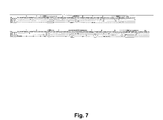
- Exemplary consensus sequences for the heavy and light chains of three sets of related antibodies that bind to TNF ⁇ are shown in FIG. 7 .
- the non-X amino acids are the same as those shown at the equivalent position of the antibody sequences shown in FIG. 4 .
- a consensus sequence may only contain the amino acid sequence of the CDR regions of an antibody.
- the method described above may be employed in methods of designing and making a variant of a parental antibody that at least maintains (i.e. maintains or increases) the antigen binding activity of the parental antibody. Because antibodies containing substitutions at substitutable positions have already been produced and tested by an immunized animal, substitutions at those positions can be made in the knowledge that they should not significantly decrease the binding activity of the antibody.
- non-polar amino acids e.g., val, ile, ala and met
- other non-polar amino acids e.g., leu
- the substituting amino acids may be chosen as being less polar than the other amino acids, and therefore less immunogenic.
- the selected human antibody and the parental antibody will typically have at least about 55%, at least about 65% identity, at least about 75%, at least about 80%, at least about 85%, at least about 90%, or at least about 95% amino acid sequence identity across the entire variable domain in one or both of the sequenced chains.
- both the light and heavy chains from the same human antibody may be used as amino acid donors.
- the parental antibody is compared to human germ-line antibody sequences.
- Immunogenetics Database Maintained by and found at the website of the European Bioinformatics Institute: www.ebi.ac.uk. This database is integrated specialized database containing nucleotide sequence information of genes important in the function of the immune system. It collects and annotates sequences belonging to the immunoglobulin superfamily which are involved in immune recognition.
- BLAST Altschul et al., J. Mol. Biol. 215:403-10, 1990
- BLOSUM62 an expect threshold of 10
- gaps allowed a word size of 3.
- one, two, three, four, five or six or more, usually up to about 10 or more, humanizing amino acid substitutions are made.
- Non-consecutive amino acids are generally substituted in these methods.
- the subject humanization methods may be incorporated into any humanization method that requires making amino acid substitutions in a parental antibody to make it more similar to a known human antibody (see, e.g., U.S. patent application Ser. Nos. 10/638,210 and 10/637,317, both filed on Aug. 7, 2003, and other references cited in the background, all incorporated by reference herein in their entirety).
- many prior humanization methods are directed to identifying particular amino acids in a parental antibody that can be substituted by a human amino acid (i.e., the amino acid found at the same position in a human antibody).
- the instant methods can be employed to identify which of those particular amino acids are substitutable amino acids and are therefore variation tolerant.
- the instant methods effectively employ the amino acid sequences of variant antibodies that have been selected as having strong binding activity by the immune system of the immunized animal (by affinity maturation), substituting an amino acid at a substitutable position of an antibody identified by the above methods often leads to an increase in binding affinity. This is particularly true of antibodies that have been subjected to directed substitutions, as described above. Accordingly, in general, the instant humanization methods may be employed to humanize a parental antibody to produce a humanized antibody that has a greater binding affinity for an antigen than the parental antibody.
- Suitable methods for screening antibodies are well known in the art, and include but are not limited to the following:
- Immunoprecipitation protocols generally involve lysing a population of cells in a lysis buffer such as RIPA buffer (1% NP-40 or Triton X-100, 1% sodium deoxycholate, 0.1% SDS, 0.15 M NaCl, 0.01 M sodium phosphate at pH 7.2, 1% Trasylol) supplemented with protein phosphatase and/or protease inhibitors (e.g., EDTA, PMSF, aprotinin, sodium vanadate), adding the antibody of interest to the cell lysate, incubating for a period of time (e.g., 1-4 hours) at 4..degree.
- a lysis buffer such as RIPA buffer (1% NP-40 or Triton X-100, 1% sodium deoxycholate, 0.1% SDS, 0.15 M NaCl, 0.01 M sodium phosphate at pH 7.2, 1% Trasylol
- protein phosphatase and/or protease inhibitors e.g.,
- antigen-binding fragments of antibodies may be made by the subject methods. These fragments include, but are not limited to, Fab, Fab′ and F(ab′) 2 , Fd, single-chain Fvs (scFv), single-chain immunoglobulins (e.g., wherein a heavy chain, or portion thereof, and light chain, or portion thereof, are fused), disulfide-linked Fvs (sdFv), diabodies, triabodies, tetrabodies, scFv minibodies, Fab minibodies, and dimeric scFv and any other fragments comprising a V L and a V H domain in a conformation such that a specific antigen binding region is formed.
- nucleic acids encoding a substituted antibody is well within the skill of an artisan.
- standard recombinant DNA technology Ausubel, et al, Short Protocols in Molecular Biology, 3rd ed., Wiley & Sons, 1995; Sambrook, et al., Molecular Cloning: A Laboratory Manual , Second Edition, (1989) Cold Spring Harbor, N.Y.
- antibody coding sequences may be isolated from antibody-producing cells using any one or a combination of a variety of recombinant methods that do not need to be described herein. Subsequent substitution, deletion, and/or addition of nucleotides in the nucleic acid sequence encoding a protein may also be done use standard recombinant DNA techniques.
- TK promoter of Herpes virus (McKnight, Cell 31:355-365, 1982); the SV40 early promoter (Benoist et al., Nature (London) 290:304-310, 1981); the yeast gall gene sequence promoter (Johnston et al., Proc. Natl. Acad. Sci. (USA) 79:6971-6975, 1982); Silver et al., Proc. Natl. Acad. Sci. (USA) 81:5951-59SS, 1984), the CMV promoter, the EF-1 promoter, Ecdysone-responsive promoter(s), tetracycline-responsive promoter, and the like.
- Viral promoters may be of particular interest as they are generally particularly strong promoters.
- a promoter is used that is a promoter of the target pathogen. Promoters for use in the present invention are selected such that they are functional in the cell type (and/or animal) into which they are being introduced. In certain embodiments, the promoter is a CMV promoter.
- Any cell suitable for expression of expression cassettes may be used as a host cell.
- a mammalian host cell line that does not ordinarily produce antibodies is used, examples of which are as follows: monkey kidney cells (COS cells), monkey kidney CVI cells transformed by SV40 (COS-7, ATCC CRL 165 1); human embryonic kidney cells (HEK-293, Graham et al. J. Gen Virol. 36:59 (1977)); baby hamster kidney cells (BHK, ATCC CCL 10); chinese hamster ovary-cells (CHO, Urlaub and Chasin, Proc. Natl. Acad. Sci.
- mice sertoli cells TM4, Mather, Biol. Reprod. 23:243-251 (1980)
- monkey kidney cells CVI ATCC CCL 70); african green monkey kidney cells (VERO-76, ATCC CRL-1587); human cervical carcinoma cells (HELA, ATCC CCL 2); canine kidney cells (MDCK, ATCC CCL 34); buffalo rat liver cells (BRL 3A, ATCC CRL 1442); human lung cells (W138, ATCC CCL 75); human liver cells (hep G2, HB 8065); mouse mammary tumor (MMT 060562, ATCC CCL 51); TRI cells (Mather et al., Annals N.Y. Acad.
- the cell After the subject nucleic acids have been introduced into a cell, the cell is typically incubated, normally at 37° C., sometimes under selection, for a period of about 1-24 hours in order to allow for the expression of the antibody.
- the antibody is typically secreted into the supernatant of the media in which the cell is growing in.
- an antibody molecule of the invention may be purified by any method known in the art for purification of an immunoglobulin molecule, for example, by chromatography (e.g., ion exchange, affinity, particularly by affinity for the specific antigen after Protein A, and sizing column chromatography), centrifugation, differential solubility, or by any other standard technique for the purification of proteins.
- chromatography e.g., ion exchange, affinity, particularly by affinity for the specific antigen after Protein A, and sizing column chromatography
- centrifugation e.g., ion exchange, affinity, particularly by affinity for the specific antigen after Protein A, and sizing column chromatography
- differential solubility e.g., differential solubility, or by any other standard technique for the purification of proteins.
- antibodies are secreted from the cell into culture medium and harvested from the culture medium.
- a modified antibody may be tested for affinity using any known method, such as: 1) competitive binding analysis using a labeled (radiolabeled or fluorescent labeled) parent antibody, a modified antibody and an antigen recognized by the parent antibody; 2) surface plasmon resonance using e.g. BIACore instrumentation to provide the binding characteristics of an antibody.
- antigens are immobilized on solid phase chips and the binding of antibodies in liquid phase are measured in a real-time manner; and 3) flow cytometry, for example, by using fluorescent activated cell sorting (FACS) analysis to study antibody binding to cell surface antigens; 4) ELISA; 5) equibrilium dialysis, or FACS.
- FACS fluorescent activated cell sorting
- affinity analysis reveals a decrease in antibody binding for the modified antibody as compared to its parent antibody
- fine tuning may be performed to increase the affinity.
- One method of doing this is to systematically change back each modified residues by site-directed mutagenesis. By expressing and analyzing these back mutant antibodies, one would predict the key residues that cannot be modified unless without decreasing affinity.
- autoimmune diseases where a particular type of immune cells attack self-antigens, such as insulin-dependent diabetes mellitus, systemic lupus erythematosus, pernicious anemia, allergy and rheumatoid arthritis; transplantation related immune activation, such as graft rejection and graft-vs-host disease; other immune system diseases such as septic shock; infectious diseases, such as viral infection or bacteria infection; cardiovascular diseases such as thrombosis and neurological diseases such as Alzeimer's disease.
- self-antigens such as insulin-dependent diabetes mellitus, systemic lupus erythematosus, pernicious anemia, allergy and rheumatoid arthritis
- transplantation related immune activation such as graft rejection and graft-vs-host disease
- other immune system diseases such as septic shock
- infectious diseases such as viral infection or bacteria infection
- cardiovascular diseases such as thrombosis and neurological diseases such as Alzeimer's disease.
- An antibody of particular interest is one that modulates, i.e., reduces or increases a symptom of the animal model disease or condition by at least about 10%, at least about 20%, at least about 25%, at least about 30%, at least about 35%, at least about 40%, at least about 45%, at least about 50%, at least about 55%, at least about 60%, at least about 65%, at least about 70%, at least about 80%, at least about 90%, or more, when compared to a control in the absence of the antibody.
- a monoclonal antibody of interest will cause a subject animal to be more similar to an equivalent animal that is not suffering from the disease or condition.
- Monoclonal antibodies that have therapeutic value that have been identified using the methods and compositions of the invention are termed “therapeutic” antibodies.
- kits for practicing the subject methods at least include one or more of: a substituted antibody made according to the above methods, a nucleic acid encoding the same, or a cell containing the same.
- the substituted antibody may be humanized.
- Other optional components of the kit include: restriction enzymes, control primers and plasmids; buffers; etc.
- the nucleic acids of the kit may also have restrictions sites, multiple cloning sites, primer sites, etc to facilitate their ligation to non-rabbit antibody CDR-encoding nucleic acids.
- the various components of the kit may be present in separate containers or certain compatible components may be precombined into a single container, as desired.
- kits including at least a computer readable medium including programming as discussed above and instructions.
- the instructions may include installation or setup directions.
- the instructions may include directions for use of the invention with options or combinations of options as described above.
- the instructions include both types of information.
- the subject invention provides an important new means for making amino acids changes to an antibody.
- the subject methods and systems find use in a variety of different applications, including research, agricultural, therapeutic and other applications.
- the invention provides a means for humanizing the antigen binding region (e.g., the CDR regions) of a non-human antibody. Accordingly, the present invention represents a significant contribution to the art.
Landscapes
- Health & Medical Sciences (AREA)
- Chemical & Material Sciences (AREA)
- Immunology (AREA)
- Life Sciences & Earth Sciences (AREA)
- Molecular Biology (AREA)
- Organic Chemistry (AREA)
- Engineering & Computer Science (AREA)
- General Health & Medical Sciences (AREA)
- Biochemistry (AREA)
- Medicinal Chemistry (AREA)
- Urology & Nephrology (AREA)
- Hematology (AREA)
- Biomedical Technology (AREA)
- Genetics & Genomics (AREA)
- Proteomics, Peptides & Aminoacids (AREA)
- Biophysics (AREA)
- Food Science & Technology (AREA)
- Cell Biology (AREA)
- Microbiology (AREA)
- Biotechnology (AREA)
- Chemical Kinetics & Catalysis (AREA)
- Physics & Mathematics (AREA)
- Analytical Chemistry (AREA)
- General Physics & Mathematics (AREA)
- Pathology (AREA)
- Peptides Or Proteins (AREA)
- Preparation Of Compounds By Using Micro-Organisms (AREA)
- Medicines Containing Antibodies Or Antigens For Use As Internal Diagnostic Agents (AREA)
- Micro-Organisms Or Cultivation Processes Thereof (AREA)
Priority Applications (19)
| Application Number | Priority Date | Filing Date | Title |
|---|---|---|---|
| US10/984,473 US7462697B2 (en) | 2004-11-08 | 2004-11-08 | Methods for antibody engineering |
| PT05851359T PT1819830E (pt) | 2004-11-08 | 2005-11-02 | Métodos para engenharia de anticorpos |
| CA2585742A CA2585742C (en) | 2004-11-08 | 2005-11-02 | Methods for antibody engineering |
| ES05851359T ES2362792T3 (es) | 2004-11-08 | 2005-11-02 | Procedimientos para la ingeniería de anticuerpos. |
| CA2901238A CA2901238C (en) | 2004-11-08 | 2005-11-02 | Methods for antibody engineering |
| CN201410236214.9A CN103980362A (zh) | 2004-11-08 | 2005-11-02 | 抗体工程改造方法 |
| DK05851359.9T DK1819830T3 (da) | 2004-11-08 | 2005-11-02 | Fremgangsmåder til antistofgenerering |
| EP05851359A EP1819830B1 (de) | 2004-11-08 | 2005-11-02 | Verfahren zur antikörpererzeugung |
| PCT/US2005/039930 WO2006050491A2 (en) | 2004-11-08 | 2005-11-02 | Methods for antibody engineering |
| DE602005027737T DE602005027737D1 (de) | 2004-11-08 | 2005-11-02 | Verfahren zur antikörpererzeugung |
| CNA2005800432521A CN101080496A (zh) | 2004-11-08 | 2005-11-02 | 抗体工程改造方法 |
| JP2007540061A JP2008518619A (ja) | 2004-11-08 | 2005-11-02 | 抗体エンジニアリングのための方法 |
| AT05851359T ATE507302T1 (de) | 2004-11-08 | 2005-11-02 | Verfahren zur antikörpererzeugung |
| US12/263,002 US7960517B2 (en) | 2004-11-08 | 2008-10-31 | Methods for antibody engineering |
| US13/100,089 US8404816B2 (en) | 2004-11-08 | 2011-05-03 | Methods for antibody engineering |
| JP2011279530A JP5096611B2 (ja) | 2004-11-08 | 2011-12-21 | 抗体エンジニアリングのための方法 |
| US13/572,239 US20120329069A1 (en) | 2004-11-08 | 2012-08-10 | Methods for antibody engineering |
| US14/518,977 US10613094B2 (en) | 2004-11-08 | 2014-10-20 | Methods for screening and engineering antibodies |
| HK15101381.8A HK1200854A1 (en) | 2004-11-08 | 2015-02-06 | Methods for antibody engineering |
Applications Claiming Priority (1)
| Application Number | Priority Date | Filing Date | Title |
|---|---|---|---|
| US10/984,473 US7462697B2 (en) | 2004-11-08 | 2004-11-08 | Methods for antibody engineering |
Related Child Applications (1)
| Application Number | Title | Priority Date | Filing Date |
|---|---|---|---|
| US12/263,002 Continuation US7960517B2 (en) | 2004-11-08 | 2008-10-31 | Methods for antibody engineering |
Publications (2)
| Publication Number | Publication Date |
|---|---|
| US20060099204A1 US20060099204A1 (en) | 2006-05-11 |
| US7462697B2 true US7462697B2 (en) | 2008-12-09 |
Family
ID=36316567
Family Applications (5)
| Application Number | Title | Priority Date | Filing Date |
|---|---|---|---|
| US10/984,473 Expired - Lifetime US7462697B2 (en) | 2004-11-08 | 2004-11-08 | Methods for antibody engineering |
| US12/263,002 Expired - Lifetime US7960517B2 (en) | 2004-11-08 | 2008-10-31 | Methods for antibody engineering |
| US13/100,089 Expired - Lifetime US8404816B2 (en) | 2004-11-08 | 2011-05-03 | Methods for antibody engineering |
| US13/572,239 Abandoned US20120329069A1 (en) | 2004-11-08 | 2012-08-10 | Methods for antibody engineering |
| US14/518,977 Active 2027-09-25 US10613094B2 (en) | 2004-11-08 | 2014-10-20 | Methods for screening and engineering antibodies |
Family Applications After (4)
| Application Number | Title | Priority Date | Filing Date |
|---|---|---|---|
| US12/263,002 Expired - Lifetime US7960517B2 (en) | 2004-11-08 | 2008-10-31 | Methods for antibody engineering |
| US13/100,089 Expired - Lifetime US8404816B2 (en) | 2004-11-08 | 2011-05-03 | Methods for antibody engineering |
| US13/572,239 Abandoned US20120329069A1 (en) | 2004-11-08 | 2012-08-10 | Methods for antibody engineering |
| US14/518,977 Active 2027-09-25 US10613094B2 (en) | 2004-11-08 | 2014-10-20 | Methods for screening and engineering antibodies |
Country Status (12)
| Country | Link |
|---|---|
| US (5) | US7462697B2 (de) |
| EP (1) | EP1819830B1 (de) |
| JP (2) | JP2008518619A (de) |
| CN (2) | CN101080496A (de) |
| AT (1) | ATE507302T1 (de) |
| CA (2) | CA2901238C (de) |
| DE (1) | DE602005027737D1 (de) |
| DK (1) | DK1819830T3 (de) |
| ES (1) | ES2362792T3 (de) |
| HK (1) | HK1200854A1 (de) |
| PT (1) | PT1819830E (de) |
| WO (1) | WO2006050491A2 (de) |
Cited By (56)
| Publication number | Priority date | Publication date | Assignee | Title |
|---|---|---|---|---|
| US20090246190A1 (en) * | 2008-03-26 | 2009-10-01 | Yaohuang Ke | Anti-vegf antibody |
| WO2011023130A1 (zh) | 2009-08-28 | 2011-03-03 | 江苏先声药物研究有限公司 | 一种抗vegf的单克隆抗体及含有该抗体的药物组合物 |
| WO2011072204A1 (en) | 2009-12-10 | 2011-06-16 | Regeneron Pharmaceuticals, Inc. | Mice that make heavy chain antibodies |
| WO2012118813A2 (en) | 2011-03-03 | 2012-09-07 | Apexigen, Inc. | Anti-il-6 receptor antibodies and methods of use |
| WO2012149356A2 (en) | 2011-04-29 | 2012-11-01 | Apexigen, Inc. | Anti-cd40 antibodies and methods of use |
| WO2013006706A1 (en) | 2011-07-05 | 2013-01-10 | Bioasis Technologies Inc. | P97-antibody conjugates and methods of use |
| WO2013009767A2 (en) | 2011-07-12 | 2013-01-17 | Epitomics, Inc. | Facs-based method for obtaining an antibody sequence |
| WO2013015821A1 (en) | 2011-07-22 | 2013-01-31 | The Research Foundation Of State University Of New York | Antibodies to the b12-transcobalamin receptor |
| WO2013022738A1 (en) | 2011-08-05 | 2013-02-14 | Bioasis Technologies, Inc. | P97 fragments with transfer activity |
| WO2013067098A1 (en) | 2011-11-02 | 2013-05-10 | Apexigen, Inc. | Anti-kdr antibodies and methods of use |
| WO2014160438A1 (en) | 2013-03-13 | 2014-10-02 | Bioasis Technologies Inc. | Fragments of p97 and uses thereof |
| WO2015031673A2 (en) | 2013-08-28 | 2015-03-05 | Bioasis Technologies Inc. | Cns-targeted conjugates having modified fc regions and methods of use thereof |
| US8992920B2 (en) | 2008-11-25 | 2015-03-31 | Alderbio Holdings Llc | Anti-IL-6 antibodies for the treatment of arthritis |
| US8992908B2 (en) | 2010-11-23 | 2015-03-31 | Alderbio Holdings Llc | Anti-IL-6 antibodies for the treatment of oral mucositis |
| US8999330B2 (en) | 2007-05-21 | 2015-04-07 | Alderbio Holdings Llc | Antagonists of IL-6 to prevent or treat thrombosis |
| WO2015084994A1 (en) | 2013-12-03 | 2015-06-11 | President And Fellows Of Harvard College | Methods and reagents for the assessment of gestational diabetes |
| US9085621B2 (en) | 2010-09-10 | 2015-07-21 | Apexigen, Inc. | Anti-IL-1β antibodies |
| US9085615B2 (en) | 2008-11-25 | 2015-07-21 | Alderbio Holdings Llc | Antibodies to IL-6 to inhibit or treat inflammation |
| US9120858B2 (en) | 2011-07-22 | 2015-09-01 | The Research Foundation Of State University Of New York | Antibodies to the B12-transcobalamin receptor |
| WO2015164330A1 (en) | 2014-04-21 | 2015-10-29 | Millennium Pharmaceuticals, Inc. | Anti-psyk antibody molecules and use of same for syk-targeted therapy |
| US9212223B2 (en) | 2008-11-25 | 2015-12-15 | Alderbio Holdings Llc | Antagonists of IL-6 to prevent or treat thrombosis |
| US9241990B2 (en) | 2007-05-21 | 2016-01-26 | Alderbio Holdings Llc | Antagonists of IL-6 to raise albumin and/or lower CRIP |
| WO2016131058A1 (en) | 2015-02-13 | 2016-08-18 | Biommune Technologies Inc. | Antibodies to l-type voltage gated channels and related methods |
| US9468676B2 (en) | 2009-11-24 | 2016-10-18 | Alderbio Holdings Llc | Antagonists of IL-6 to prevent or treat thrombosis |
| US9546213B2 (en) | 2007-05-21 | 2017-01-17 | Alderbio Holdings Llc | Antagonists of IL-6 to prevent or treat cachexia, weakness, fatigue, and/or fever |
| US9676861B2 (en) | 2012-10-30 | 2017-06-13 | Apexigen, Inc. | Anti-CD40 antibodies and methods of use |
| US9701747B2 (en) | 2007-05-21 | 2017-07-11 | Alderbio Holdings Llc | Method of improving patient survivability and quality of life by anti-IL-6 antibody administration |
| US9725509B2 (en) | 2007-05-21 | 2017-08-08 | Alderbio Holdings Llc | Expression vectors containing isolated nucleic acids encoding anti-human IL-6 antibody |
| US9771421B2 (en) | 2007-05-21 | 2017-09-26 | Alderbio Holdings Llc | Treating anemia in chronic IL-6 associated diseases using anti-IL-6 antibodies |
| US9775921B2 (en) | 2009-11-24 | 2017-10-03 | Alderbio Holdings Llc | Subcutaneously administrable composition containing anti-IL-6 antibody |
| US9834603B2 (en) | 2007-05-21 | 2017-12-05 | Alderbio Holdings Llc | Antibodies to IL-6 and use thereof |
| WO2018026969A2 (en) | 2016-08-03 | 2018-02-08 | Achaogen, Inc. | Plazomicin antibodies and methods of use |
| US9994635B2 (en) | 2008-11-25 | 2018-06-12 | Alderbio Holdings Llc | Antagonists of IL-6 to raise albumin and/or lower CRP |
| US10053506B2 (en) | 2008-11-25 | 2018-08-21 | Alderbio Holdings Llc | Antagonists of IL-6 to prevent or treat cachexia, weakness, fatigue, and/or fever |
| US10058619B2 (en) | 2014-05-01 | 2018-08-28 | Bioasis Technologies, Inc. | P97-polynucleotide conjugates |
| WO2018195338A1 (en) | 2017-04-20 | 2018-10-25 | Atyr Pharma, Inc. | Compositions and methods for treating lung inflammation |
| US10117955B2 (en) | 2008-11-25 | 2018-11-06 | Alderbio Holdings Llc | Methods of aiding in the diagnosis of diseases using anti-IL-6 antibodies |
| US10259878B2 (en) | 2013-03-14 | 2019-04-16 | Apexigen, Inc. | Anti-RANKL antibodies and methods of use |
| WO2019126401A1 (en) | 2017-12-19 | 2019-06-27 | Surrozen, Inc. | Anti-lrp5/6 antibodies and methods of use |
| WO2019126398A1 (en) | 2017-12-19 | 2019-06-27 | Surrozen, Inc. | Wnt surrogate molecules and uses thereof |
| US10392605B2 (en) | 2014-02-19 | 2019-08-27 | Bioasis Technologies Inc. | P97-IDS fusion proteins |
| WO2019233984A1 (en) | 2018-06-08 | 2019-12-12 | Ventana Medical Systems, Inc. | Universal or normalized antibody frameworks for improved functionality and manufacturability |
| WO2020010308A1 (en) | 2018-07-05 | 2020-01-09 | Surrozen, Inc. | Multi-specific wnt surrogate molecules and uses thereof |
| WO2020023300A1 (en) | 2018-07-22 | 2020-01-30 | Bioasis Technologies, Inc. | Treatment of lymmphatic metastases |
| US10716862B2 (en) | 2002-01-11 | 2020-07-21 | Bioasis Advanced Technologies Inc. | Use of P97 as an enzyme delivery system for the delivery of therapeutic lysosomal enzymes |
| US11034943B2 (en) | 2012-07-31 | 2021-06-15 | Bioasis Technologies, Inc. | Dephosphorylated lysosomal storage disease proteins and methods of use thereof |
| US11078283B2 (en) | 2018-01-17 | 2021-08-03 | Apexigen, Inc. | Anti-PD-L1 antibodies and methods of use |
| EP3954393A1 (de) | 2020-08-13 | 2022-02-16 | Bioasis Technologies Inc. | Kombinationstherapien zur verabreichung über die blut-hirn-schranke hinweg |
| US11643454B2 (en) | 2014-02-03 | 2023-05-09 | Bioasis Technologies, Inc. | P97 fusion proteins |
| WO2024148240A1 (en) | 2023-01-06 | 2024-07-11 | Lassen Therapeutics 1, Inc. | ANTI-IL-11Rα ANTIBODIES FOR TREATING THYROID EYE DISEASE |
| WO2024148241A1 (en) | 2023-01-06 | 2024-07-11 | Lassen Therapeutics 1, Inc. | Anti-il-18bp antibodies |
| WO2024148243A1 (en) | 2023-01-06 | 2024-07-11 | Lassen Therapeutics 1, Inc. | Anti-il-18bp antibodies |
| US12077571B2 (en) | 2015-09-16 | 2024-09-03 | Novartis Ag | Polyomavirus neutralizing antibodies |
| US12129303B2 (en) | 2021-08-30 | 2024-10-29 | Lassen Therapeutics 1, Inc. | Anti-interleukin-11 receptor subunit α (IL-11Rα) antibodies |
| EP4603508A2 (de) | 2017-12-19 | 2025-08-20 | Surrozen Operating, Inc. | Anti-frizzled-antikörper und verfahren zur verwendung |
| WO2025179282A1 (en) | 2024-02-23 | 2025-08-28 | Flatiron Bio, Llc | Antibodies targeting epstein-barr virus proteins and methods of use |
Families Citing this family (71)
| Publication number | Priority date | Publication date | Assignee | Title |
|---|---|---|---|---|
| US7462697B2 (en) * | 2004-11-08 | 2008-12-09 | Epitomics, Inc. | Methods for antibody engineering |
| EP3050963B1 (de) | 2005-03-31 | 2019-09-18 | Chugai Seiyaku Kabushiki Kaisha | Verfahren zur herstellung von polypeptiden durch regulierung der anordnung |
| CN105177091A (zh) | 2006-03-31 | 2015-12-23 | 中外制药株式会社 | 用于纯化双特异性抗体的抗体修饰方法 |
| CA2647846C (en) | 2006-03-31 | 2016-06-21 | Chugai Seiyaku Kabushiki Kaisha | Methods for controlling blood pharmacokinetics of antibodies |
| NZ572807A (en) * | 2006-05-19 | 2011-10-28 | Alder Biopharmaceuticals Inc | Culture method for obtaining a clonal population of antigen-specific b cells |
| IN2009DN05758A (de) | 2007-03-12 | 2015-07-24 | Esbatech Ag | |
| JP5859202B2 (ja) * | 2007-05-21 | 2016-02-10 | アルダーバイオ・ホールディングズ・エルエルシー | 新規のウサギ抗体ヒト化方法及びヒト化ウサギ抗体 |
| AU2013204593B2 (en) * | 2007-05-21 | 2016-01-21 | Alderbio Holdings Llc | Novel rabbit antibody humanization methods and humanized rabbit antibodies |
| US9056905B2 (en) * | 2007-05-21 | 2015-06-16 | Alderbio Holdings Llc | Antibodies to TNF-α and use thereof |
| KR101530723B1 (ko) * | 2007-06-25 | 2015-06-22 | 에스바테크 - 어 노바티스 컴파니 엘엘씨 | 단일 쇄 항체의 서열에 기초한 공학처리 및 최적화 |
| PL2158315T3 (pl) * | 2007-06-25 | 2016-10-31 | Sposoby modyfikowania przeciwciał i zmodyfikowane przeciwciała o ulepszonych właściwościach funkcjonalnych | |
| CN101848936B (zh) * | 2007-08-20 | 2017-05-03 | 葛兰素集团有限公司 | 生产方法 |
| KR102339457B1 (ko) | 2007-09-26 | 2021-12-14 | 추가이 세이야쿠 가부시키가이샤 | 항체 정상영역 개변체 |
| CN106519025B (zh) * | 2007-09-26 | 2021-04-23 | 中外制药株式会社 | 利用cdr的氨基酸取代来改变抗体等电点的方法 |
| US9365644B2 (en) | 2008-04-23 | 2016-06-14 | Epitomics, Inc. | Anti-TNFα antibody |
| AU2016273957C1 (en) * | 2008-06-25 | 2019-04-18 | Novartis Ag | STABLE AND SOLUBLE ANTIBODIES INHIBITING TNFa |
| KR102095257B1 (ko) * | 2008-06-25 | 2020-04-01 | 노바르티스 아게 | Vegf를 억제하는 안정하고 가용성인 항체 |
| CA2727992C (en) | 2008-06-25 | 2017-10-17 | Esbatech, An Alcon Biomedical Research Unit Llc | Stable and soluble antibodies inhibiting tnf.alpha. |
| TWI440469B (zh) | 2008-09-26 | 2014-06-11 | Chugai Pharmaceutical Co Ltd | Improved antibody molecules |
| US9079942B2 (en) * | 2009-02-09 | 2015-07-14 | Epitomics, Inc. | CDR-anchored amplification method |
| US9228017B2 (en) | 2009-03-19 | 2016-01-05 | Chugai Seiyaku Kabushiki Kaisha | Antibody constant region variant |
| WO2010107109A1 (ja) | 2009-03-19 | 2010-09-23 | 中外製薬株式会社 | 抗体定常領域改変体 |
| EP2414396B1 (de) | 2009-03-30 | 2015-02-25 | Edimer Biotech S.a. | Herstellung isolierter agonistischer monoklonaler-anti-edar-antikörper |
| US8765916B2 (en) | 2009-04-29 | 2014-07-01 | The Henry M. Jackson Foundation For The Advancement Of Military Medicine, Inc. | ERG monoclonal antibodies |
| US20100317539A1 (en) * | 2009-06-12 | 2010-12-16 | Guo-Liang Yu | Library of Engineered-Antibody Producing Cells |
| US8293483B2 (en) | 2009-09-11 | 2012-10-23 | Epitomics, Inc. | Method for identifying lineage-related antibodies |
| US10150808B2 (en) | 2009-09-24 | 2018-12-11 | Chugai Seiyaku Kabushiki Kaisha | Modified antibody constant regions |
| PL2516460T3 (pl) | 2009-12-22 | 2015-08-31 | Hoffmann La Roche | Agregacja zależna od sekwencji |
| EP2543730B1 (de) | 2010-03-04 | 2018-10-31 | Chugai Seiyaku Kabushiki Kaisha | Variante einer konstanten antikörperregion |
| CN101928345B (zh) * | 2010-06-21 | 2012-08-29 | 中国科学技术大学 | 一种人源化抗体及其人源化改造方法 |
| UY33679A (es) | 2010-10-22 | 2012-03-30 | Esbatech | Anticuerpos estables y solubles |
| RU2620071C2 (ru) | 2010-11-17 | 2017-05-22 | Чугаи Сеияку Кабушики Каиша | Мультиспецифическая связывающая антиген молекула, которая обладает альтернативной функцией к функции фактора свертывания крови viii |
| EP2679681B2 (de) | 2011-02-25 | 2023-11-15 | Chugai Seiyaku Kabushiki Kaisha | FcgammaRIIB-spezifischer Fc Antikörper |
| US9580496B2 (en) * | 2011-05-06 | 2017-02-28 | Nexvet Australia Pty Ltd | Therapeutic canine immunoglobulins and methods of using same |
| SG194793A1 (en) * | 2011-05-06 | 2013-12-30 | Nvip Pty Ltd | Anti-nerve growth factor antibodies and methods of preparing and using the same |
| GB201114858D0 (en) * | 2011-08-29 | 2011-10-12 | Nvip Pty Ltd | Anti-nerve growth factor antibodies and methods of using the same |
| US9988687B2 (en) | 2011-09-20 | 2018-06-05 | The George Washington Univeristy | Companion diagnostics for cancer and screening methods to identify companion diagnostics for cancer based on splicing variants |
| JP6322411B2 (ja) | 2011-09-30 | 2018-05-09 | 中外製薬株式会社 | 複数の生理活性を有する抗原の消失を促進する抗原結合分子 |
| TW201326209A (zh) | 2011-09-30 | 2013-07-01 | Chugai Pharmaceutical Co Ltd | 具有促進抗原清除之FcRn結合域的治療性抗原結合分子 |
| WO2013130565A1 (en) * | 2012-02-29 | 2013-09-06 | The Brigham And Women's Hosptial, Inc. | Neutralizing antibody for epstein barr virus associated disease |
| HK1211953A1 (en) | 2012-12-05 | 2016-06-03 | F. Hoffmann-La Roche Ag | Dual targeting |
| CN103145834B (zh) * | 2013-01-17 | 2015-03-18 | 广州泰诺迪生物科技有限公司 | 一种抗体人源化改造方法 |
| UY35468A (es) * | 2013-03-16 | 2014-10-31 | Novartis Ag | Tratamiento de cáncer utilizando un receptor quimérico de antígeno anti-cd19 |
| US10208125B2 (en) | 2013-07-15 | 2019-02-19 | University of Pittsburgh—of the Commonwealth System of Higher Education | Anti-mucin 1 binding agents and uses thereof |
| WO2015026606A1 (en) | 2013-08-19 | 2015-02-26 | Epitomics, Inc. | Antibody identification by lineage analysis |
| CN105764922B (zh) | 2013-09-27 | 2020-07-17 | 中外制药株式会社 | 多肽异源多聚体的制备方法 |
| CN105980404B (zh) * | 2013-11-19 | 2021-01-12 | 弗雷达克斯有限责任公司 | 人源化抗激肽释放酶-2抗体 |
| ES2803217T3 (es) | 2014-01-17 | 2021-01-25 | Minomic Int Ltd | Antígeno de superficie de células de cáncer de próstata para el diagnóstico |
| MA40764A (fr) | 2014-09-26 | 2017-08-01 | Chugai Pharmaceutical Co Ltd | Agent thérapeutique induisant une cytotoxicité |
| KR101618458B1 (ko) | 2014-11-28 | 2016-05-10 | 강원대학교산학협력단 | 항체에서 항원-항체 결합력과 양의 상관관계를 갖는 아미노산 서열에 대한 정보를 얻는 방법 |
| MY181199A (en) | 2014-12-19 | 2020-12-21 | Chugai Pharmaceutical Co Ltd | Anti-myostatin antibodies, polypeptides containing variant fc regions, and methods of use |
| TWI617580B (zh) | 2014-12-19 | 2018-03-11 | 中外製藥股份有限公司 | 抗c5抗體及使用方法 |
| GB201500464D0 (en) | 2015-01-12 | 2015-02-25 | Crescendo Biolog Ltd | Method of producing optimised therapeutic molecules |
| CN107108729A (zh) | 2015-02-05 | 2017-08-29 | 中外制药株式会社 | 包含离子浓度依赖性的抗原结合结构域的抗体,fc区变体,il‑8‑结合抗体,及其应用 |
| RU2730590C2 (ru) | 2015-02-27 | 2020-08-24 | Чугаи Сейяку Кабусики Кайся | Композиция для лечения заболеваний, связанных с ил-6 |
| WO2016159213A1 (ja) | 2015-04-01 | 2016-10-06 | 中外製薬株式会社 | ポリペプチド異種多量体の製造方法 |
| HRP20220893T1 (hr) | 2015-04-08 | 2022-10-14 | Novartis Ag | Cd20 terapije, cd22 terapije, i kombinirane terapije sa stanicom koja eksprimira cd19 kimerni antigenski receptor |
| WO2017110981A1 (en) | 2015-12-25 | 2017-06-29 | Chugai Seiyaku Kabushiki Kaisha | Anti-myostatin antibodies and methods of use |
| CA3004288C (en) | 2015-12-28 | 2025-05-27 | Chugai Seiyaku Kabushiki Kaisha | METHOD FOR PROMOTING THE CLEARANCE EFFICIENCY OF A POLYPEPTIDE CONTAINING THE FC REGION |
| BR112018068363A2 (pt) | 2016-03-14 | 2019-01-15 | Chugai Seiyaku Kabushiki Kaisha | fármaco terapêutico indutor de dano celular para uso em terapia de câncer |
| TWI820000B (zh) | 2016-04-28 | 2023-11-01 | 日商中外製藥股份有限公司 | 含抗體製劑 |
| EP3469003A4 (de) * | 2016-06-14 | 2020-07-29 | Agency for Science, Technology and Research | Prl3-antikörper |
| JP6527643B2 (ja) | 2016-08-05 | 2019-06-05 | 中外製薬株式会社 | Il−8関連疾患の治療用又は予防用組成物 |
| TW201833140A (zh) | 2017-01-09 | 2018-09-16 | 美商莫瑞麥克製藥公司 | 抗fgfr抗體及使用方法 |
| JP7185884B2 (ja) | 2017-05-02 | 2022-12-08 | 国立研究開発法人国立精神・神経医療研究センター | Il-6及び好中球の関連する疾患の治療効果の予測及び判定方法 |
| AR113816A1 (es) | 2017-11-01 | 2020-06-17 | Chugai Pharmaceutical Co Ltd | Variantes e isoformas de anticuerpos con actividad biológica reducida |
| CN112533956B (zh) * | 2018-07-31 | 2025-05-06 | 海德堡医药研究有限责任公司 | 针对psma的人源化抗体 |
| EP3850010A1 (de) | 2018-09-11 | 2021-07-21 | Deutsches Krebsforschungszentrum, Stiftung des öffentlichen Rechts | Verbesserte anti-flt3-antigenbindende proteine |
| WO2022223028A1 (zh) * | 2021-04-23 | 2022-10-27 | 上海君实生物医药科技股份有限公司 | 抗BLyS抗体、其药物组合物及其用途 |
| EP4296279A1 (de) | 2022-06-23 | 2023-12-27 | Fraunhofer-Gesellschaft zur Förderung der angewandten Forschung e.V. | Anti-transthyretin(ttr)-bindende proteine und ihre verwendungen |
| CN115819575B (zh) * | 2022-08-24 | 2023-06-27 | 武汉爱博泰克生物科技有限公司 | 针对人肿瘤坏死因子-α的单克隆抗体 |
Citations (9)
| Publication number | Priority date | Publication date | Assignee | Title |
|---|---|---|---|---|
| US4816567A (en) | 1983-04-08 | 1989-03-28 | Genentech, Inc. | Recombinant immunoglobin preparations |
| US4816397A (en) | 1983-03-25 | 1989-03-28 | Celltech, Limited | Multichain polypeptides or proteins and processes for their production |
| US5225539A (en) | 1986-03-27 | 1993-07-06 | Medical Research Council | Recombinant altered antibodies and methods of making altered antibodies |
| US5530101A (en) | 1988-12-28 | 1996-06-25 | Protein Design Labs, Inc. | Humanized immunoglobulins |
| US5639641A (en) | 1992-09-09 | 1997-06-17 | Immunogen Inc. | Resurfacing of rodent antibodies |
| US6329551B1 (en) | 1997-07-04 | 2001-12-11 | Nok Corporation | Phenylenediamine derivative, production method thereof and antioxidant for rubber using it as effective constituent |
| US6342587B1 (en) | 1999-10-22 | 2002-01-29 | Ludwig Institute For Cancer Research | A33 antigen specific immunoglobulin products and uses thereof |
| US20030198638A1 (en) | 2001-11-19 | 2003-10-23 | Watkins Jeffry D. | Tumor specific monoclonal antibodies |
| US20050033031A1 (en) * | 2003-08-07 | 2005-02-10 | Couto Fernando Jose Rebelo Do | Methods for humanizing rabbit monoclonal antibodies |
Family Cites Families (8)
| Publication number | Priority date | Publication date | Assignee | Title |
|---|---|---|---|---|
| US7365167B2 (en) * | 2001-11-26 | 2008-04-29 | Cell Matrix, Inc. | Humanized collagen antibodies and related methods |
| DE60329589D1 (de) * | 2002-04-30 | 2009-11-19 | Kyowa Hakko Kirin Co Ltd | Antikörper gegen den humanen "insulin-like" wachstumsfaktor |
| AU2003264009A1 (en) | 2002-08-15 | 2004-03-03 | Epitomics, Inc. | Humanized rabbit antibodies |
| ATE533849T1 (de) * | 2003-01-17 | 2011-12-15 | Danisco | Verfahren zur in-situ-herstellung eines emulgators in einem nahrungsmittel |
| EP1594542B1 (de) * | 2003-02-20 | 2010-06-30 | Seattle Genetics, Inc. | Anti-cd70 antikörper-arzneimittelkonjugate und ihre verwendung zur behandlung von krebs |
| US20070026398A1 (en) * | 2003-03-03 | 2007-02-01 | Farnsworth Amanda L | Protein tyrosine phosphatase-prl-1 a a marker and therapeutic target for pancreatic cancer |
| US8148335B2 (en) * | 2004-06-23 | 2012-04-03 | Children's Hospital & Research Center Oakland | De-N-acetyl sialic acid antigens, antibodies thereto, and methods of use in cancer therapy |
| US7462697B2 (en) * | 2004-11-08 | 2008-12-09 | Epitomics, Inc. | Methods for antibody engineering |
-
2004
- 2004-11-08 US US10/984,473 patent/US7462697B2/en not_active Expired - Lifetime
-
2005
- 2005-11-02 CA CA2901238A patent/CA2901238C/en not_active Expired - Lifetime
- 2005-11-02 WO PCT/US2005/039930 patent/WO2006050491A2/en not_active Ceased
- 2005-11-02 CA CA2585742A patent/CA2585742C/en not_active Expired - Lifetime
- 2005-11-02 CN CNA2005800432521A patent/CN101080496A/zh active Pending
- 2005-11-02 JP JP2007540061A patent/JP2008518619A/ja not_active Withdrawn
- 2005-11-02 CN CN201410236214.9A patent/CN103980362A/zh active Pending
- 2005-11-02 PT PT05851359T patent/PT1819830E/pt unknown
- 2005-11-02 ES ES05851359T patent/ES2362792T3/es not_active Expired - Lifetime
- 2005-11-02 EP EP05851359A patent/EP1819830B1/de not_active Expired - Lifetime
- 2005-11-02 DE DE602005027737T patent/DE602005027737D1/de not_active Expired - Lifetime
- 2005-11-02 DK DK05851359.9T patent/DK1819830T3/da active
- 2005-11-02 AT AT05851359T patent/ATE507302T1/de not_active IP Right Cessation
-
2008
- 2008-10-31 US US12/263,002 patent/US7960517B2/en not_active Expired - Lifetime
-
2011
- 2011-05-03 US US13/100,089 patent/US8404816B2/en not_active Expired - Lifetime
- 2011-12-21 JP JP2011279530A patent/JP5096611B2/ja not_active Expired - Lifetime
-
2012
- 2012-08-10 US US13/572,239 patent/US20120329069A1/en not_active Abandoned
-
2014
- 2014-10-20 US US14/518,977 patent/US10613094B2/en active Active
-
2015
- 2015-02-06 HK HK15101381.8A patent/HK1200854A1/xx unknown
Patent Citations (14)
| Publication number | Priority date | Publication date | Assignee | Title |
|---|---|---|---|---|
| US4816397A (en) | 1983-03-25 | 1989-03-28 | Celltech, Limited | Multichain polypeptides or proteins and processes for their production |
| US4816567A (en) | 1983-04-08 | 1989-03-28 | Genentech, Inc. | Recombinant immunoglobin preparations |
| US6331415B1 (en) | 1983-04-08 | 2001-12-18 | Genentech, Inc. | Methods of producing immunoglobulins, vectors and transformed host cells for use therein |
| US5225539A (en) | 1986-03-27 | 1993-07-06 | Medical Research Council | Recombinant altered antibodies and methods of making altered antibodies |
| US5693762A (en) | 1988-12-28 | 1997-12-02 | Protein Design Labs, Inc. | Humanized immunoglobulins |
| US5585089A (en) | 1988-12-28 | 1996-12-17 | Protein Design Labs, Inc. | Humanized immunoglobulins |
| US5693761A (en) | 1988-12-28 | 1997-12-02 | Protein Design Labs, Inc. | Polynucleotides encoding improved humanized immunoglobulins |
| US6180370B1 (en) | 1988-12-28 | 2001-01-30 | Protein Design Labs, Inc. | Humanized immunoglobulins and methods of making the same |
| US5530101A (en) | 1988-12-28 | 1996-06-25 | Protein Design Labs, Inc. | Humanized immunoglobulins |
| US5639641A (en) | 1992-09-09 | 1997-06-17 | Immunogen Inc. | Resurfacing of rodent antibodies |
| US6329551B1 (en) | 1997-07-04 | 2001-12-11 | Nok Corporation | Phenylenediamine derivative, production method thereof and antioxidant for rubber using it as effective constituent |
| US6342587B1 (en) | 1999-10-22 | 2002-01-29 | Ludwig Institute For Cancer Research | A33 antigen specific immunoglobulin products and uses thereof |
| US20030198638A1 (en) | 2001-11-19 | 2003-10-23 | Watkins Jeffry D. | Tumor specific monoclonal antibodies |
| US20050033031A1 (en) * | 2003-08-07 | 2005-02-10 | Couto Fernando Jose Rebelo Do | Methods for humanizing rabbit monoclonal antibodies |
Non-Patent Citations (14)
| Title |
|---|
| Becker et al., Somatic Diversification of Immunoglobulin Heavy Chain VDJ Genes: Evidence for Somatic Gene Conversion in Rabbits, Cell, 63:987-997, (1990). |
| De Pascalis et al., Grafting of "Abbreviated" Complementarity-Determining Regions Containing Specificity-Determining Residues Essential for Ligand Contact to Engineer a Less Immunogenic Humanized Monoclonal Antibody, J Imm., 2002, 169:3076-3084. |
| Delagrave et al., Effects of Humanization by Variable Domain Resurfacing on the Antiviral Activity of a Single-Chain Antibody Against Respiratory Syncytial Virus, Prot. Eng., 12: 357-362; (1999). |
| Green, L.L. Antibody engineering via genetic engineering of the mouse: XenoMouse strains are a vehicle for the facile generation of therapeutic human monoclonal antibodies. Journal of Immunological Methods, 1999. vol. 231, pp. 11-23. * |
| Knight et al., Molecular Basis of the Allelic Inheritance of Rabbit Immunoglobulin VH Allotypes: Implications for the Generation of Antibody Diversity, Cell, 60: 963-970, (1990). |
| Mehr et al., Analysis of Mutational Lineage Trees From Sites of Primary and Secondary Ig Gene Diversification in Rabbits and Chickens, J Immunol., 172:4790-6, (2004). |
| Morea et al., Antibody Modeling: Implications for Engineering and Design, Methods, 20: 267-279, (2000). |
| Popkov et al., Rabbit Immune Repertoires as Sources for Therapeutic Monoclonal Antibodies: The Impact of Kappa Allotype-Correlated Variation in Cysteine Content on Antibody Libraries Selected by Phage Display, J Mol Biol, 325:325-35, (2003). |
| Rader et al,. The Rabbit Antibody Repertoire as a Novel Source for the Generation of Therapeutic Human Antibodies, J. Biol. Chem., 275(13):13668-13676, (2000). |
| Rader et al., A Phage Display Approach for Rapid Antibody Humanization: Designed Combinatorial V Gene Libraries, Proc. Natl. Acad. Sci., 95:8910-8915. |
| Roguska et al., A Comparison of Two Murine Monoclonal Antibodies Humanized by CDR-Grafting and Variable Domain Resurfacing, Prot. Eng., 9: 895-904, (1996). |
| Roguska et al., Humanization of Murine Monoclonal Antibodies Through Variable Domain Resurfacing, Proc. Natl. Acad. Sci., 91: 969-973, (1994). |
| Steinberger et al., Generation and Characterization of a Recombinant Human CCR5-Specific Antibody, J. Bio. Chem., 275: 36073-36078 (2000). |
| Vaswani et al., Humanized Antibodies as Potential Therapeutic Drugs, Ann. Allergy Asthma Immunol., 81:105-119, (1998). |
Cited By (105)
| Publication number | Priority date | Publication date | Assignee | Title |
|---|---|---|---|---|
| US10716862B2 (en) | 2002-01-11 | 2020-07-21 | Bioasis Advanced Technologies Inc. | Use of P97 as an enzyme delivery system for the delivery of therapeutic lysosomal enzymes |
| US9834603B2 (en) | 2007-05-21 | 2017-12-05 | Alderbio Holdings Llc | Antibodies to IL-6 and use thereof |
| US9701747B2 (en) | 2007-05-21 | 2017-07-11 | Alderbio Holdings Llc | Method of improving patient survivability and quality of life by anti-IL-6 antibody administration |
| US10040851B2 (en) | 2007-05-21 | 2018-08-07 | Alderbio Holdings Llc | Antagonists to IL-6 to raise albumin and/or lower CRP |
| US10344086B2 (en) | 2007-05-21 | 2019-07-09 | Alderbio Holdings Llc | Antibodies to IL-6 and use thereof |
| US9546213B2 (en) | 2007-05-21 | 2017-01-17 | Alderbio Holdings Llc | Antagonists of IL-6 to prevent or treat cachexia, weakness, fatigue, and/or fever |
| US8999330B2 (en) | 2007-05-21 | 2015-04-07 | Alderbio Holdings Llc | Antagonists of IL-6 to prevent or treat thrombosis |
| US10160804B2 (en) | 2007-05-21 | 2018-12-25 | Alderbio Holdings Llc | Antagonists of IL-6 to prevent or treat cachexia, weakness, fatigue, and/or fever |
| US9926370B2 (en) | 2007-05-21 | 2018-03-27 | Alderbio Holdings Llc | Antagonists of IL-6 to prevent or treat thrombosis |
| US10233239B2 (en) | 2007-05-21 | 2019-03-19 | Alderbio Holdings Llc | Isolated host cells expressing anti-IL-6 antibodies |
| US11827700B2 (en) | 2007-05-21 | 2023-11-28 | Vitaeris Inc. | Treatment or prevention of diseases and disorders associated with cells that express IL-6 with Anti-IL-6 antibodies |
| US10787507B2 (en) | 2007-05-21 | 2020-09-29 | Vitaeris Inc. | Antagonists of IL-6 to prevent or treat thrombosis |
| US9725509B2 (en) | 2007-05-21 | 2017-08-08 | Alderbio Holdings Llc | Expression vectors containing isolated nucleic acids encoding anti-human IL-6 antibody |
| US10800841B2 (en) | 2007-05-21 | 2020-10-13 | Vitaeris, Inc. | Methods of treating autoimmunity using specific anti-IL-6 antibodies |
| US9241990B2 (en) | 2007-05-21 | 2016-01-26 | Alderbio Holdings Llc | Antagonists of IL-6 to raise albumin and/or lower CRIP |
| US10759853B2 (en) | 2007-05-21 | 2020-09-01 | Alderbio Holdings Llc | Antibodies to IL-6 and use thereof |
| US9771421B2 (en) | 2007-05-21 | 2017-09-26 | Alderbio Holdings Llc | Treating anemia in chronic IL-6 associated diseases using anti-IL-6 antibodies |
| US20090246190A1 (en) * | 2008-03-26 | 2009-10-01 | Yaohuang Ke | Anti-vegf antibody |
| US7803371B2 (en) | 2008-03-26 | 2010-09-28 | Epitomics, Inc. | Anti-VEGF antibody |
| US20110008367A1 (en) * | 2008-03-26 | 2011-01-13 | Epitomics, Inc. | Anti-vegf antibody |
| US8088375B2 (en) | 2008-03-26 | 2012-01-03 | Epitomics, Inc. | Anti-VEGF antibody |
| US8992920B2 (en) | 2008-11-25 | 2015-03-31 | Alderbio Holdings Llc | Anti-IL-6 antibodies for the treatment of arthritis |
| US10858424B2 (en) | 2008-11-25 | 2020-12-08 | Alderbio Holdings Llc | Anti-IL-6 antibodies for the treatment of arthritis |
| US10787511B2 (en) | 2008-11-25 | 2020-09-29 | Vitaeris Inc. | Antagonists of IL-6 to raise albumin and/or lower CRP |
| US10117955B2 (en) | 2008-11-25 | 2018-11-06 | Alderbio Holdings Llc | Methods of aiding in the diagnosis of diseases using anti-IL-6 antibodies |
| US9085615B2 (en) | 2008-11-25 | 2015-07-21 | Alderbio Holdings Llc | Antibodies to IL-6 to inhibit or treat inflammation |
| US9765138B2 (en) | 2008-11-25 | 2017-09-19 | Alderbio Holdings Llc | Isolated anti-IL-6 antibodies |
| US10053506B2 (en) | 2008-11-25 | 2018-08-21 | Alderbio Holdings Llc | Antagonists of IL-6 to prevent or treat cachexia, weakness, fatigue, and/or fever |
| US10640560B2 (en) | 2008-11-25 | 2020-05-05 | Alderbio Holdings Llc | Antagonists of IL-6 to prevent or treat cachexia, weakness, fatigue, and /or fever |
| US9994635B2 (en) | 2008-11-25 | 2018-06-12 | Alderbio Holdings Llc | Antagonists of IL-6 to raise albumin and/or lower CRP |
| US9212223B2 (en) | 2008-11-25 | 2015-12-15 | Alderbio Holdings Llc | Antagonists of IL-6 to prevent or treat thrombosis |
| US10391169B2 (en) | 2009-07-28 | 2019-08-27 | Alderbio Holdings Llc | Method of treating allergic asthma with antibodies to IL-6 |
| WO2011023130A1 (zh) | 2009-08-28 | 2011-03-03 | 江苏先声药物研究有限公司 | 一种抗vegf的单克隆抗体及含有该抗体的药物组合物 |
| US8986692B2 (en) | 2009-08-28 | 2015-03-24 | Jiangsu Simcere Pharmaceutical R & D Co., Ltd. | Anti-VEGF monoclonal antibody and pharmaceutical composition comprising said antibody |
| US9775921B2 (en) | 2009-11-24 | 2017-10-03 | Alderbio Holdings Llc | Subcutaneously administrable composition containing anti-IL-6 antibody |
| US9724410B2 (en) | 2009-11-24 | 2017-08-08 | Alderbio Holdings Llc | Anti-IL-6 antibodies or fragments thereof to treat or inhibit cachexia, associated with chemotherapy toxicity |
| US9821057B2 (en) | 2009-11-24 | 2017-11-21 | Alderbio Holdings Llc | Anti-IL-6 antibody for use in the treatment of cachexia |
| US9468676B2 (en) | 2009-11-24 | 2016-10-18 | Alderbio Holdings Llc | Antagonists of IL-6 to prevent or treat thrombosis |
| US9717793B2 (en) | 2009-11-24 | 2017-08-01 | Alderbio Holdings Llc | Method of improving patient survivability and quality of life by administering an anti-IL-6 antibody |
| EP3504964A1 (de) | 2009-12-10 | 2019-07-03 | Regeneron Pharmaceuticals, Inc. | Mäuse zur produktion von schwerkettigen antikörpern |
| EP2954779A1 (de) | 2009-12-10 | 2015-12-16 | Regeneron Pharmaceuticals, Inc. | Mäuse zur produktion von schwerkettigen antikörpern |
| WO2011072204A1 (en) | 2009-12-10 | 2011-06-16 | Regeneron Pharmaceuticals, Inc. | Mice that make heavy chain antibodies |
| US9085621B2 (en) | 2010-09-10 | 2015-07-21 | Apexigen, Inc. | Anti-IL-1β antibodies |
| US8992908B2 (en) | 2010-11-23 | 2015-03-31 | Alderbio Holdings Llc | Anti-IL-6 antibodies for the treatment of oral mucositis |
| US9957321B2 (en) | 2010-11-23 | 2018-05-01 | Alderbio Holdings Llc | Anti-IL-6 antibodies for the treatment of oral mucositis |
| US9304134B2 (en) | 2010-11-23 | 2016-04-05 | Alderbio Holdings Llc | Anti-IL-6 antibodies for the treatment of anemia |
| WO2012118813A2 (en) | 2011-03-03 | 2012-09-07 | Apexigen, Inc. | Anti-il-6 receptor antibodies and methods of use |
| US8753634B2 (en) | 2011-03-03 | 2014-06-17 | Apexigen, Inc. | Anti-IL-6 receptor antibodies and methods of use |
| US9951136B2 (en) | 2011-03-03 | 2018-04-24 | Apexigen, Inc. | Anti-IL-6 receptor antibodies and methods of use |
| US8957193B2 (en) | 2011-04-29 | 2015-02-17 | Apexigen, Inc. | Polynucleotides encoding anti-CD40 antibodies |
| US8778345B2 (en) | 2011-04-29 | 2014-07-15 | Apexigen, Inc. | Anti-CD40 antibodies |
| US11001637B2 (en) | 2011-04-29 | 2021-05-11 | Apexigen, Inc. | Anti-CD40 antibodies |
| US9556278B2 (en) | 2011-04-29 | 2017-01-31 | Apexigen, Inc. | Anti-CD40 antibodies |
| WO2012149356A2 (en) | 2011-04-29 | 2012-11-01 | Apexigen, Inc. | Anti-cd40 antibodies and methods of use |
| EP3508500A1 (de) | 2011-04-29 | 2019-07-10 | Apexigen, Inc. | Anti-cd40-antikörper und verfahren zur verwendung |
| US9266956B2 (en) | 2011-04-29 | 2016-02-23 | Apexigen, Inc. | Methods of inhibiting proliferation of CD40-expressing cancer cells with anti-CD40 antibodies |
| US9850472B2 (en) | 2011-07-05 | 2017-12-26 | Bioasis Technologies, Inc. | P97-antibody conjugates and methods of use |
| WO2013006706A1 (en) | 2011-07-05 | 2013-01-10 | Bioasis Technologies Inc. | P97-antibody conjugates and methods of use |
| EP3088005A1 (de) | 2011-07-05 | 2016-11-02 | biOasis Technologies Inc | P97-antikörperkonjugate |
| US9150846B2 (en) | 2011-07-05 | 2015-10-06 | Bioasis Technologies, Inc. | P97-antibody conjugates and methods of use |
| WO2013009767A2 (en) | 2011-07-12 | 2013-01-17 | Epitomics, Inc. | Facs-based method for obtaining an antibody sequence |
| US9834612B2 (en) | 2011-07-22 | 2017-12-05 | The Research Foundation Of State University Of New York | Antibodies to the B12-transcobalamin receptor |
| WO2013015821A1 (en) | 2011-07-22 | 2013-01-31 | The Research Foundation Of State University Of New York | Antibodies to the b12-transcobalamin receptor |
| US9120858B2 (en) | 2011-07-22 | 2015-09-01 | The Research Foundation Of State University Of New York | Antibodies to the B12-transcobalamin receptor |
| WO2013022738A1 (en) | 2011-08-05 | 2013-02-14 | Bioasis Technologies, Inc. | P97 fragments with transfer activity |
| US8722019B2 (en) | 2011-08-05 | 2014-05-13 | Bioasis Technologies, Inc. | P97 fragments with transfer activity |
| EP3321281A1 (de) | 2011-08-05 | 2018-05-16 | biOasis Technologies Inc | P97-fragmente mit transferaktivität |
| US9161992B2 (en) | 2011-08-05 | 2015-10-20 | Bioasis Technologies, Inc. | P97 fragments with transfer activity |
| WO2013067098A1 (en) | 2011-11-02 | 2013-05-10 | Apexigen, Inc. | Anti-kdr antibodies and methods of use |
| US11034943B2 (en) | 2012-07-31 | 2021-06-15 | Bioasis Technologies, Inc. | Dephosphorylated lysosomal storage disease proteins and methods of use thereof |
| US9676861B2 (en) | 2012-10-30 | 2017-06-13 | Apexigen, Inc. | Anti-CD40 antibodies and methods of use |
| US9994640B2 (en) | 2012-10-30 | 2018-06-12 | Apexigen, Inc. | Anti-CD40 antibodies |
| EP3925977A1 (de) | 2012-10-30 | 2021-12-22 | Apexigen, Inc. | Anti-cd40-antikörper und verfahren zur verwendung |
| US9993530B2 (en) | 2013-03-13 | 2018-06-12 | Bioasis Technologies, Inc. | Fragments of P97 and uses thereof |
| US9364567B2 (en) | 2013-03-13 | 2016-06-14 | Bioasis Technologies, Inc. | Fragments of p97 and uses thereof |
| WO2014160438A1 (en) | 2013-03-13 | 2014-10-02 | Bioasis Technologies Inc. | Fragments of p97 and uses thereof |
| US10772939B2 (en) | 2013-03-13 | 2020-09-15 | Bioasis Technologies, Inc. | Fragments of P97 and uses thereof |
| US10259878B2 (en) | 2013-03-14 | 2019-04-16 | Apexigen, Inc. | Anti-RANKL antibodies and methods of use |
| WO2015031673A2 (en) | 2013-08-28 | 2015-03-05 | Bioasis Technologies Inc. | Cns-targeted conjugates having modified fc regions and methods of use thereof |
| WO2015084994A1 (en) | 2013-12-03 | 2015-06-11 | President And Fellows Of Harvard College | Methods and reagents for the assessment of gestational diabetes |
| EP3620793A1 (de) | 2013-12-03 | 2020-03-11 | President And Fellows Of Harvard College | Verfahren und reagenzien zur beurteilung von schwangerschaftsdiabetes |
| US11643454B2 (en) | 2014-02-03 | 2023-05-09 | Bioasis Technologies, Inc. | P97 fusion proteins |
| US10392605B2 (en) | 2014-02-19 | 2019-08-27 | Bioasis Technologies Inc. | P97-IDS fusion proteins |
| US11124781B2 (en) | 2014-02-19 | 2021-09-21 | Bioasis Technologies, Inc. | P97-IDS fusion proteins |
| WO2015164330A1 (en) | 2014-04-21 | 2015-10-29 | Millennium Pharmaceuticals, Inc. | Anti-psyk antibody molecules and use of same for syk-targeted therapy |
| US10058619B2 (en) | 2014-05-01 | 2018-08-28 | Bioasis Technologies, Inc. | P97-polynucleotide conjugates |
| WO2016131058A1 (en) | 2015-02-13 | 2016-08-18 | Biommune Technologies Inc. | Antibodies to l-type voltage gated channels and related methods |
| US12077571B2 (en) | 2015-09-16 | 2024-09-03 | Novartis Ag | Polyomavirus neutralizing antibodies |
| WO2018026969A2 (en) | 2016-08-03 | 2018-02-08 | Achaogen, Inc. | Plazomicin antibodies and methods of use |
| WO2018195338A1 (en) | 2017-04-20 | 2018-10-25 | Atyr Pharma, Inc. | Compositions and methods for treating lung inflammation |
| WO2019126401A1 (en) | 2017-12-19 | 2019-06-27 | Surrozen, Inc. | Anti-lrp5/6 antibodies and methods of use |
| WO2019126398A1 (en) | 2017-12-19 | 2019-06-27 | Surrozen, Inc. | Wnt surrogate molecules and uses thereof |
| EP4603508A2 (de) | 2017-12-19 | 2025-08-20 | Surrozen Operating, Inc. | Anti-frizzled-antikörper und verfahren zur verwendung |
| US11078283B2 (en) | 2018-01-17 | 2021-08-03 | Apexigen, Inc. | Anti-PD-L1 antibodies and methods of use |
| WO2019233984A1 (en) | 2018-06-08 | 2019-12-12 | Ventana Medical Systems, Inc. | Universal or normalized antibody frameworks for improved functionality and manufacturability |
| WO2020010308A1 (en) | 2018-07-05 | 2020-01-09 | Surrozen, Inc. | Multi-specific wnt surrogate molecules and uses thereof |
| WO2020023300A1 (en) | 2018-07-22 | 2020-01-30 | Bioasis Technologies, Inc. | Treatment of lymmphatic metastases |
| EP3954393A1 (de) | 2020-08-13 | 2022-02-16 | Bioasis Technologies Inc. | Kombinationstherapien zur verabreichung über die blut-hirn-schranke hinweg |
| US12129303B2 (en) | 2021-08-30 | 2024-10-29 | Lassen Therapeutics 1, Inc. | Anti-interleukin-11 receptor subunit α (IL-11Rα) antibodies |
| US12365738B2 (en) | 2021-08-30 | 2025-07-22 | Lassen Therapeutics, Inc. | Method of treating an interleukin-11-associated or -mediated fibrotic disease or condition by administering an anti-interleukin-11 receptor subunit alpha (IL-11RA) antibody |
| WO2024148243A1 (en) | 2023-01-06 | 2024-07-11 | Lassen Therapeutics 1, Inc. | Anti-il-18bp antibodies |
| WO2024148241A1 (en) | 2023-01-06 | 2024-07-11 | Lassen Therapeutics 1, Inc. | Anti-il-18bp antibodies |
| US12365737B2 (en) | 2023-01-06 | 2025-07-22 | Lassen Therapeutics, Inc. | Anti-IL-18BP antibodies |
| WO2024148240A1 (en) | 2023-01-06 | 2024-07-11 | Lassen Therapeutics 1, Inc. | ANTI-IL-11Rα ANTIBODIES FOR TREATING THYROID EYE DISEASE |
| WO2025179282A1 (en) | 2024-02-23 | 2025-08-28 | Flatiron Bio, Llc | Antibodies targeting epstein-barr virus proteins and methods of use |
Also Published As
| Publication number | Publication date |
|---|---|
| EP1819830B1 (de) | 2011-04-27 |
| US20060099204A1 (en) | 2006-05-11 |
| CN101080496A (zh) | 2007-11-28 |
| ATE507302T1 (de) | 2011-05-15 |
| EP1819830A4 (de) | 2009-03-11 |
| US8404816B2 (en) | 2013-03-26 |
| JP5096611B2 (ja) | 2012-12-12 |
| US20120329069A1 (en) | 2012-12-27 |
| PT1819830E (pt) | 2011-07-20 |
| US20090155824A1 (en) | 2009-06-18 |
| CA2901238C (en) | 2020-03-24 |
| US10613094B2 (en) | 2020-04-07 |
| CA2585742A1 (en) | 2006-05-11 |
| CA2901238A1 (en) | 2006-05-11 |
| HK1200854A1 (en) | 2015-08-14 |
| US20150038370A1 (en) | 2015-02-05 |
| DE602005027737D1 (de) | 2011-06-09 |
| US7960517B2 (en) | 2011-06-14 |
| WO2006050491A3 (en) | 2006-12-28 |
| JP2012095654A (ja) | 2012-05-24 |
| CN103980362A (zh) | 2014-08-13 |
| ES2362792T3 (es) | 2011-07-13 |
| DK1819830T3 (da) | 2011-07-04 |
| CA2585742C (en) | 2016-04-12 |
| EP1819830A2 (de) | 2007-08-22 |
| JP2008518619A (ja) | 2008-06-05 |
| US20120003671A1 (en) | 2012-01-05 |
| WO2006050491A2 (en) | 2006-05-11 |
Similar Documents
| Publication | Publication Date | Title |
|---|---|---|
| US7462697B2 (en) | Methods for antibody engineering | |
| US20050033031A1 (en) | Methods for humanizing rabbit monoclonal antibodies | |
| US20040086979A1 (en) | Humanized rabbit antibodies | |
| US8617830B2 (en) | Method for identifying lineage-related antibodies | |
| US20140162904A1 (en) | Library of Cells That Produce Antibodies That Comprise Non-Naturally Paired IGH and IGL Variable Domains | |
| US9079942B2 (en) | CDR-anchored amplification method | |
| US11661598B2 (en) | Antibody identification by lineage analysis | |
| CN119735680B (zh) | 一种抗cd28的单克隆抗体及细胞 | |
| CN119490596A (zh) | 一种抗人IgM抗体及其应用 | |
| CN114716547A (zh) | 一种包括抗原结合结构域的结合蛋白及其生产方法和应用 |
Legal Events
| Date | Code | Title | Description |
|---|---|---|---|
| AS | Assignment |
Owner name: EPITOMICS, INC., CALIFORNIA Free format text: ASSIGNMENT OF ASSIGNORS INTEREST;ASSIGNORS:COUTO, FERNANDO JOSE REBELO DO;HENDRICKS, KRISTIN B.;WALLACE, S. ELLEN;AND OTHERS;REEL/FRAME:015593/0678;SIGNING DATES FROM 20050106 TO 20050117 |
|
| STCF | Information on status: patent grant |
Free format text: PATENTED CASE |
|
| FEPP | Fee payment procedure |
Free format text: PAYOR NUMBER ASSIGNED (ORIGINAL EVENT CODE: ASPN); ENTITY STATUS OF PATENT OWNER: LARGE ENTITY |
|
| CC | Certificate of correction | ||
| FPAY | Fee payment |
Year of fee payment: 4 |
|
| FEPP | Fee payment procedure |
Free format text: PAT HOLDER NO LONGER CLAIMS SMALL ENTITY STATUS, ENTITY STATUS SET TO UNDISCOUNTED (ORIGINAL EVENT CODE: STOL); ENTITY STATUS OF PATENT OWNER: LARGE ENTITY |
|
| FPAY | Fee payment |
Year of fee payment: 8 |
|
| MAFP | Maintenance fee payment |
Free format text: PAYMENT OF MAINTENANCE FEE, 12TH YEAR, LARGE ENTITY (ORIGINAL EVENT CODE: M1553); ENTITY STATUS OF PATENT OWNER: LARGE ENTITY Year of fee payment: 12 |