US7446183B2 - Fusion protein comprising growth hormone and growth hormone receptor - Google Patents
Fusion protein comprising growth hormone and growth hormone receptor Download PDFInfo
- Publication number
- US7446183B2 US7446183B2 US10/311,473 US31147303A US7446183B2 US 7446183 B2 US7446183 B2 US 7446183B2 US 31147303 A US31147303 A US 31147303A US 7446183 B2 US7446183 B2 US 7446183B2
- Authority
- US
- United States
- Prior art keywords
- cell
- vector
- binding agent
- nucleic acid
- receptor
- Prior art date
- Legal status (The legal status is an assumption and is not a legal conclusion. Google has not performed a legal analysis and makes no representation as to the accuracy of the status listed.)
- Expired - Fee Related
Links
Images




Classifications
-
- C—CHEMISTRY; METALLURGY
- C07—ORGANIC CHEMISTRY
- C07K—PEPTIDES
- C07K14/00—Peptides having more than 20 amino acids; Gastrins; Somatostatins; Melanotropins; Derivatives thereof
- C07K14/435—Peptides having more than 20 amino acids; Gastrins; Somatostatins; Melanotropins; Derivatives thereof from animals; from humans
- C07K14/705—Receptors; Cell surface antigens; Cell surface determinants
- C07K14/72—Receptors; Cell surface antigens; Cell surface determinants for hormones
-
- A—HUMAN NECESSITIES
- A61—MEDICAL OR VETERINARY SCIENCE; HYGIENE
- A61P—SPECIFIC THERAPEUTIC ACTIVITY OF CHEMICAL COMPOUNDS OR MEDICINAL PREPARATIONS
- A61P13/00—Drugs for disorders of the urinary system
- A61P13/12—Drugs for disorders of the urinary system of the kidneys
-
- A—HUMAN NECESSITIES
- A61—MEDICAL OR VETERINARY SCIENCE; HYGIENE
- A61P—SPECIFIC THERAPEUTIC ACTIVITY OF CHEMICAL COMPOUNDS OR MEDICINAL PREPARATIONS
- A61P19/00—Drugs for skeletal disorders
- A61P19/02—Drugs for skeletal disorders for joint disorders, e.g. arthritis, arthrosis
-
- A—HUMAN NECESSITIES
- A61—MEDICAL OR VETERINARY SCIENCE; HYGIENE
- A61P—SPECIFIC THERAPEUTIC ACTIVITY OF CHEMICAL COMPOUNDS OR MEDICINAL PREPARATIONS
- A61P19/00—Drugs for skeletal disorders
- A61P19/08—Drugs for skeletal disorders for bone diseases, e.g. rachitism, Paget's disease
- A61P19/10—Drugs for skeletal disorders for bone diseases, e.g. rachitism, Paget's disease for osteoporosis
-
- A—HUMAN NECESSITIES
- A61—MEDICAL OR VETERINARY SCIENCE; HYGIENE
- A61P—SPECIFIC THERAPEUTIC ACTIVITY OF CHEMICAL COMPOUNDS OR MEDICINAL PREPARATIONS
- A61P29/00—Non-central analgesic, antipyretic or antiinflammatory agents, e.g. antirheumatic agents; Non-steroidal antiinflammatory drugs [NSAID]
-
- A—HUMAN NECESSITIES
- A61—MEDICAL OR VETERINARY SCIENCE; HYGIENE
- A61P—SPECIFIC THERAPEUTIC ACTIVITY OF CHEMICAL COMPOUNDS OR MEDICINAL PREPARATIONS
- A61P3/00—Drugs for disorders of the metabolism
- A61P3/04—Anorexiants; Antiobesity agents
-
- A—HUMAN NECESSITIES
- A61—MEDICAL OR VETERINARY SCIENCE; HYGIENE
- A61P—SPECIFIC THERAPEUTIC ACTIVITY OF CHEMICAL COMPOUNDS OR MEDICINAL PREPARATIONS
- A61P3/00—Drugs for disorders of the metabolism
- A61P3/06—Antihyperlipidemics
-
- A—HUMAN NECESSITIES
- A61—MEDICAL OR VETERINARY SCIENCE; HYGIENE
- A61P—SPECIFIC THERAPEUTIC ACTIVITY OF CHEMICAL COMPOUNDS OR MEDICINAL PREPARATIONS
- A61P3/00—Drugs for disorders of the metabolism
- A61P3/08—Drugs for disorders of the metabolism for glucose homeostasis
- A61P3/10—Drugs for disorders of the metabolism for glucose homeostasis for hyperglycaemia, e.g. antidiabetics
-
- A—HUMAN NECESSITIES
- A61—MEDICAL OR VETERINARY SCIENCE; HYGIENE
- A61P—SPECIFIC THERAPEUTIC ACTIVITY OF CHEMICAL COMPOUNDS OR MEDICINAL PREPARATIONS
- A61P31/00—Antiinfectives, i.e. antibiotics, antiseptics, chemotherapeutics
-
- A—HUMAN NECESSITIES
- A61—MEDICAL OR VETERINARY SCIENCE; HYGIENE
- A61P—SPECIFIC THERAPEUTIC ACTIVITY OF CHEMICAL COMPOUNDS OR MEDICINAL PREPARATIONS
- A61P35/00—Antineoplastic agents
-
- A—HUMAN NECESSITIES
- A61—MEDICAL OR VETERINARY SCIENCE; HYGIENE
- A61P—SPECIFIC THERAPEUTIC ACTIVITY OF CHEMICAL COMPOUNDS OR MEDICINAL PREPARATIONS
- A61P37/00—Drugs for immunological or allergic disorders
- A61P37/02—Immunomodulators
-
- A—HUMAN NECESSITIES
- A61—MEDICAL OR VETERINARY SCIENCE; HYGIENE
- A61P—SPECIFIC THERAPEUTIC ACTIVITY OF CHEMICAL COMPOUNDS OR MEDICINAL PREPARATIONS
- A61P5/00—Drugs for disorders of the endocrine system
- A61P5/06—Drugs for disorders of the endocrine system of the anterior pituitary hormones, e.g. TSH, ACTH, FSH, LH, PRL, GH
-
- A—HUMAN NECESSITIES
- A61—MEDICAL OR VETERINARY SCIENCE; HYGIENE
- A61P—SPECIFIC THERAPEUTIC ACTIVITY OF CHEMICAL COMPOUNDS OR MEDICINAL PREPARATIONS
- A61P7/00—Drugs for disorders of the blood or the extracellular fluid
- A61P7/06—Antianaemics
-
- A—HUMAN NECESSITIES
- A61—MEDICAL OR VETERINARY SCIENCE; HYGIENE
- A61P—SPECIFIC THERAPEUTIC ACTIVITY OF CHEMICAL COMPOUNDS OR MEDICINAL PREPARATIONS
- A61P9/00—Drugs for disorders of the cardiovascular system
- A61P9/12—Antihypertensives
-
- C—CHEMISTRY; METALLURGY
- C07—ORGANIC CHEMISTRY
- C07K—PEPTIDES
- C07K14/00—Peptides having more than 20 amino acids; Gastrins; Somatostatins; Melanotropins; Derivatives thereof
- C07K14/435—Peptides having more than 20 amino acids; Gastrins; Somatostatins; Melanotropins; Derivatives thereof from animals; from humans
- C07K14/52—Cytokines; Lymphokines; Interferons
-
- C—CHEMISTRY; METALLURGY
- C07—ORGANIC CHEMISTRY
- C07K—PEPTIDES
- C07K14/00—Peptides having more than 20 amino acids; Gastrins; Somatostatins; Melanotropins; Derivatives thereof
- C07K14/435—Peptides having more than 20 amino acids; Gastrins; Somatostatins; Melanotropins; Derivatives thereof from animals; from humans
- C07K14/575—Hormones
- C07K14/61—Growth hormone [GH], i.e. somatotropin
-
- C—CHEMISTRY; METALLURGY
- C07—ORGANIC CHEMISTRY
- C07K—PEPTIDES
- C07K14/00—Peptides having more than 20 amino acids; Gastrins; Somatostatins; Melanotropins; Derivatives thereof
- C07K14/435—Peptides having more than 20 amino acids; Gastrins; Somatostatins; Melanotropins; Derivatives thereof from animals; from humans
- C07K14/705—Receptors; Cell surface antigens; Cell surface determinants
- C07K14/715—Receptors; Cell surface antigens; Cell surface determinants for cytokines; for lymphokines; for interferons
-
- A—HUMAN NECESSITIES
- A61—MEDICAL OR VETERINARY SCIENCE; HYGIENE
- A61K—PREPARATIONS FOR MEDICAL, DENTAL OR TOILETRY PURPOSES
- A61K38/00—Medicinal preparations containing peptides
-
- C—CHEMISTRY; METALLURGY
- C07—ORGANIC CHEMISTRY
- C07K—PEPTIDES
- C07K2319/00—Fusion polypeptide
-
- Y—GENERAL TAGGING OF NEW TECHNOLOGICAL DEVELOPMENTS; GENERAL TAGGING OF CROSS-SECTIONAL TECHNOLOGIES SPANNING OVER SEVERAL SECTIONS OF THE IPC; TECHNICAL SUBJECTS COVERED BY FORMER USPC CROSS-REFERENCE ART COLLECTIONS [XRACs] AND DIGESTS
- Y10—TECHNICAL SUBJECTS COVERED BY FORMER USPC
- Y10S—TECHNICAL SUBJECTS COVERED BY FORMER USPC CROSS-REFERENCE ART COLLECTIONS [XRACs] AND DIGESTS
- Y10S530/00—Chemistry: natural resins or derivatives; peptides or proteins; lignins or reaction products thereof
- Y10S530/81—Carrier - bound or immobilized peptides or proteins and the preparation thereof, e.g. biological cell or cell fragment as carrier
- Y10S530/812—Peptides or proteins is immobilized on, or in, an organic carrier
- Y10S530/815—Carrier is a synthetic polymer
Definitions
- This invention relates to agents which bind to cell surface receptors; methods to manufacture said agents; therapeutic compositions comprising said agents; and screening methods to identify novel agents.
- Intercellular and/or intracellular signalling via receptor mediated activation of biochemical and/or molecular mechanisms is a fundamental process for regulating cellular and/or tissue homeostasis.
- ligands which interact with receptors to bring about a suitable biochemical response are known as agonists and those that prevent, or hinder, a biochemical response are known as antagonists.
- cell specific growth factors are ligands that act as agonists and bind receptors located at the cell surface. Activation of the receptors by ligand-specific binding promotes cell proliferation via activation of intracellular signalling cascades that result in the expression of, amongst other things, cell-cycle specific genes, and the activation of quiescent cells to proliferate. Growth factors may also activate cellular differentiation.
- lymphokines also known as interleukins. Those secreted by monocytes and macrophages are termed monokines. Cytokines are also secreted by endocrine glands, (for example growth hormone (GH) by the pituitary gland), and adipose cells (for example leptin). Cytokines mediate their effects via receptors expressed at the cell surface on target cells.
- GH growth hormone
- adipose cells for example leptin
- Receptors of the cytokine receptor family possess a single transmembrane domain and lack intrinsic enzyme activity ( 1 ).
- Upon the binding of a cytokine to a cognate receptor either receptor homo- or hetero-dimerisation or oligomerisation occurs.
- the receptor complex is internalised and signalling occurs through the activation of associated signalling cascades that include the Jak/Stat and Mapk pathways. Internalisation is followed by a recycling step whereby the receptor molecule is regenerated for further use within the cell.
- GHR growth hormone receptor
- GM growth hormone
- the extracellular domain of the GHR exists as two linked domains each of approximately 100 amino acids (SD-100), the C-terminal SD-100 domain being closest to the cell surface and the N-terminal SD-100 domain being furthest away. It is a conformational change in these two domains that occurs on hormone binding with the formation of the trimeric complex GHR-GH-GHR ( FIG. 5 ). It has been proposed that ligand-driven receptor dimerization is the key event leading to signal activation ( 3 ), triggering phosphorylation cascades that include the Jak2/Stat5 pathway ( 7 ).
- U.S. Pat. No. 5,849,535 describes a human growth hormone including a number of amino acid substitutions which disrupt Site 2 binding.
- the substitution of a different amino acid at G120 is one modification that disrupts Site 2 binding and the hGH variant acts as an hGH antagonist.
- the in vivo efficacy of hGH and hGH variants is determined, in part, by their affinity for the hGH receptor and rate of clearance from the circulation.
- the kidneys are relatively small organs which receive approximately 25% of cardiac output.
- the kidneys perform several important functions primarily related to the regulation of the composition and volume of body fluids.
- the kidneys filter about 100 litres of plasma every day and of the blood flow in and out of a kidney only approximately 1% becomes urine. Approximately 20% of the plasma that passes through the kidney gets filtered into the nephron. Filtration takes place in the glomerulus which is driven by the hydrostatic pressure of the blood. Water and small molecules are filtered whereas blood cells and large molecules, for example polypeptides, do not pass through the glomerular filter.
- GH Growth Hormone
- erythropoeitin IL-6
- a further method to increase the effective molecular weight of proteins and to produce a product which has reduced immunogenicity is to coat the protein in polyethylene glycol (EG).
- EG polyethylene glycol
- pegylation See Abuchowski et al., J. Biol Chem., 252:3582-3586 (1977).
- PEG is typically characterised as a non-immunogenic uncharged polymer with three water molecules per ethylene oxide monomer.
- PEG is believed to slow renal clearance by providing increased hydrodynamic volume in pegylated proteins (Maxfield et al., Polymer, 16:505-509 (1975)).
- U.S. Pat. No. 5,849,535 also describes humanGH (hGH) variants which are conjugated to one or more polyols, such as poly(ethylene glycol) (PEG).
- a chimeric protein comprising the extracelluar domain, or part thereof, of a receptor linked, via a variable flexible linker molecule to its cognate ligand to produce an agent with an apparent molecular weight greater than the native ligand.
- GH is fused to at least part of the growth hormone receptor (GHR) which gives an approximate molecular weight of 55 kDa which when glycosylated increases the effective molecular weight to approximately 75 kDa This would be of sufficient size to prevent the chimera being filtered by the kidney and, importantly, the molecule retains biological activity.
- GHR growth hormone receptor
- a long-acting form of growth hormone could be used in the treatment of both childhood and adult onset growth hormone deficiency.
- Growth hormone has well known anabolic actions and a long-acting form of growth hormone could be used for the treatment of a number of conditions by virtue of its anabolic actions including promoting growth in Turner's syndrome, renal failure, osteoporosis and muscle wasting in catabolic patients.
- Bovine somatotropin is currently used to enhance milk production from cows.
- a long-acting form of growth hormone would be an effective treatment for increasing milk yield from cows (Peel et al. 1981).
- leptin is being trialed as a therapy for obesity (Mantzoros & Flier, 2000).
- a long-acting form of leptin could be used to treat obesity, insulin resistance, hyperlipidaemia and hypertension.
- Erythropoeitin is important in the generation of red cell mass.
- a long-acting form of erythropoeitin could be used to treat anaemia especially that associated with renal failure.
- Truncated GH receptors which lack the cytoplasmic domain of the receptor, act as dominant negative inhibitors of GH signalling ( 9 , 19 ).
- the truncated receptor is expressed at a high level on the cell surface because it lacks the cytoplasmic domain essential for internalisation ( 16 ).
- the truncated receptor heterodimerises with the fill length receptor and blocks signalling because it lacks the cytoplasmic domain.
- the truncated receptor fails to internalise it acts as a dominant negative inhibitor preventing internalisation of the GH receptor complex.
- a drug currently under trial is the pegylated GH antagonist B2036, designed using recently acquired knowledge of the molecular structure of the growth hormone receptor (GHR).
- GHR growth hormone receptor
- high levels of B2036 are required to antagonise GH action with drug levels over a 1000 times higher than endogenous GH levels ( 18 ).
- B2036 despite having a mutated site 2 , binds to a receptor dimer, and is internalised in an identical fashion to GH. It does not however trigger the conformational change required for signalling.
- the high dose requirement of the antagonist relates to its internalisation and its differential binding to soluble and membrane bound receptor.
- the pegylated antagonist does not bind efficiently to membrane bound receptor although pegylation increases half-life and lowers immunogenicity.
- the non-pegylated antagonist is rapidly internalised and cleared.
- the leptin receptor ( 28 ) and erythropoietin (EPO) receptor ( 29 , 30 ) share considerable structural homology to the GHR and require a similar dimerisation process to trigger signalling.
- Leptin supresses appetite and leptin resistance is associated with obesity.
- a leptin receptor antagonist will provide a treatment for anorexia nervosa. EPO excess causes polycythaemia which may be secondary to hypoxia (chronic lung disease), or primary in the case of polycythaemia rubra vera (a disorder of excess red blood cells).
- An EPO antagonist will provide a therapy for polycythaemia.
- a further example of a receptor is provided by the IL-6 activation of its cognate receptor.
- the current model for IL-6 activation of its cognate receptor stipulates that IL-6 binds to either soluble or membrane bound IL-6 receptor (IL-6R).
- IL-6R soluble or membrane bound IL-6 receptor
- the IL-6/UL-6R complex then recruits two molecules of gp130 and the tetramer signals through the dimerisation of the two gp130 molecules which possess cytoplasmic domains that associate with signalling molecules (Grotzinger et al., 1999).
- UL-6 and the IL-6R exist as separate molecules which possess high affinity binding sites for each other and the association with the signal transducing molecule gp130 occurs through covalent linkage and the formation of disulfide bonds.
- a truncated GHE which lacks the cytoplasmic domain of the receptor, can act as a dominant negative antagonist of GH signalling, ( FIG. 5 ) ( 9 , 20 ).
- the truncated receptor is expressed at a high level on the cell surface as it lacks cytoplasmic domain essential for internalisation ( 16 ).
- the truncated receptor heterodimerises with the full length receptor, blocks signalling as it lacks the cytoplasmic domain, and acts as a dominant negative because it is present in excess on the cell surface and prevents internalization of the GH receptor complex.
- a truncated receptor in the membrane would have to be generated from within the cell.
- the GHR is also proteolytically cleaved and in time the majority of the truncated receptor would be lost into the circulation.
- leptin receptor produces a soluble binding protein ( 21 ) as do many cytokine receptors ( 2 ), and the predominant peripheral form of the leptin receptor is a truncated receptor similar to the truncated GHR ( 27 , 28 ).
- truncated leptin receptors can inhibit leptin signalling.
- the erythropoietin (EPO) receptor shares a very similar crystal structure to GHR and an EPO chimera with the C-terminal SD100 of the EPO receptor would function as an antagonist.
- a binding agent comprising a first part capable of binding a ligand binding domain of a receptor linked to a second part comprising a receptor binding domain wherein said binding agent modulates the activity of the receptor.
- the binding agent antagonises the activity of the receptor.
- the binding agent agonises the activity of the receptor.
- the first part comprises a cytokine or the binding domain of a cytokine.
- the first part comprises a cytokine or the binding domain of a cytokine selected from the following: growth hormone; leptin; erythropoietin; prolactin; TNF, interleukins (IL), IL-2, IL-3, IL-4, IL-5, IL-6, IL-7, IL-9, IL-10, IL-11; the p35 subunit of IL-12, IL-13, IL-15; granulocyte colony stimulating factor (G-CSF); granulocyte macrophage colony stimulating factor (GM-CSF); ciliary neurotrophic factor (CNTF); cardiotrophin-I (CT-I); leukemia inhibitory factor (LIF); oncostatin M (OSM); interferon, IFN ⁇ and IFN ⁇ .
- a cytokine selected from the following: growth hormone; leptin; erythropoietin; prolactin; TNF, interleukins (IL), IL-2, IL-3, IL-4
- the second part of the binding agent comprises at least part of the cognate receptor of the cytokine or a part of an associated receptor.
- the first part is GH.
- the second part is one extracellular domain of GHR. More preferably the second part is the C-terminal SD-100 domain of GHR.
- the first part is IL-6 or a binding domain of IL-6 and the second part is a part of gp 130.
- An embodiment of the invention exploits the high affinity of a cytokine for its receptor and the failure of truncated receptors to internalise to generate a specific receptor antagonist which is a chimera of the cytokine and its cognate receptor.
- the binding agent of the invention has the important advantage that binding of the cytokine to its receptor does not trigger internalisation of the receptor-cytokine complex. This means that dosage of the antagonist can be minimised.
- the binding agent is a fusion protein.
- the first part is linked by a linker to the second part.
- the linker may be flexible.
- the linker could be at any residue within the extracellular domain of the receptor which would allow growth hormone to flexibly bind with the free receptor at the cell surface.
- the linkage may be made between any peptide residue in the GH and GHR.
- the linkage is made between a residue close to the C-terminus of the GH molecule and a residue close to the N-terminus of the GHR.
- the linkage is made between a residue close to the C-terminus of the GH molecule and a residue close to the N-terminal of the N-terminal of the C-terminal SD-100.
- the linkage is made at any of residues 126-128 of the N-terminus of the C-terminal SD-100 of the GHR. In one embodiment of the invention, the linkage is made at residue 127 of the N-terminus of the C-terminal SD-100.
- the linker is a peptide.
- linkers can be used to link first and second parts.
- suitable linkers might be a nucleic acid (eg oligonucleotide); a peptide nucleic acid; a chemical crosslinker (eg polyoxyethylene).
- the crystal structure of the GHR-GH-GHR complex reveals that the distance between the C-terminus of GH (residue 191) and N-terminus of the C-terminus SD-100 (residue 126-128) is 10A. This provides invaluable information with respect to linker design.
- the linker is a polypeptide which comprises 5 to 30 amino acid residues. More preferably the linker comprises 10 to 20 amino acid residues.
- linker comprises at least one copy of the peptide:
- the linker is 10 amino acids in length and comprises two copies of the Gly4Ser(SEQ ID NO: 17) linker. In an alternative embodiment of the invention, the linker is 15 amino acids in length and comprises three copies of the Gly4Ser (SEQ ID NO: 17) linker. In yet an alternative embodiment, the linker is 20 amino acids in length and comprises four copies of the Gly4Ser(SEQ ID NO: 17) linker. According to a further aspect of the invention there is provided a nucleic acid molecule comprising a nucleic acid sequence which encodes a binding agent according to the invention selected from the group consisting of:
- nucleic acid hybridises under stringent hybridisation conditions to the sequences represented in FIGS. 4 , 5 , 8 , 9 , or 21 .
- hybridisation conditions uses 4-6 ⁇ SSPE (20 ⁇ SSPE contains 175.3 g NaCl, 88.2 g NaH 2 PO 4 H 2 O and 7.4 g EDTA dissolved to 1 litre and the pH adjusted to 7.4); 5-10 ⁇ Denhardts solution (50 ⁇ Denhardts solution contains 5 g Ficoll (type 400, Pharmacia), 5 g polyvinylpyrrolidone abd 5 g bovine serum albumen/500 ml; 100 ⁇ g-1.0 mg/ml sonicated salmon/herring DNA; 0.1-1.0% sodium dodecyl sulphate; optionally 40-60% deionised formamide.
- Hybridisation temperature will vary depending on the GC content of the nucleic acid target sequence but will typically be between 42°-65° C.
- a polypeptide which is encoded by a nucleic acid molecule according to the invention.
- the polypeptide so encoded is modified by deletion, addition or substitution of at least one amino acid residue. Ideally said modification enhances the antagonistic or agonistic effects of said polypeptide with respect to the inhibition or activation of receptor mediated cell signalling.
- said modification includes the use of modified amino acids in the production of recombinant or synthetic forms of polypeptides.
- modified amino acids include, by way of example and not by way of limitation, 4-hydroxyproline, 5-hydroxylysine, N 6 -acetyllysine, N 6 -methyllysine, N 6 ,N 6 -dimethyllysine, N 6 ,N 6 ,N 6 -trimethyllysine, cyclohexyalanine, D-amino acids, ornithine.
- the incorporation of modified amino acids may confer advantageous properties on polypeptides comprising FIG. 21 .
- the incorporation of modified amino acids may increase the affinity of the polypeptide for its binding site, or the modified amino acids may confer increased in vivo stability on the polypeptide thus allowing a decrease in the effective amount of therapeutic polypeptide administered to a patient.
- a vector including a DNA molecule encoding a binding agent according to any preceding aspect or embodiment of the invention.
- said vector is provided with means to recombinantly manufacture the binding agent of the invention.
- Prokaryotic expression systems are well known in the art and comprise vectors adapted for high level constitutive and inducible expression. Inducible expression systems are particularly advantageous if the recombinant polypeptide is toxic to the bacterial cell. Induction of expression is tightly regulated by promoters responsive to various inducers (eg IPTG inducible). Bacterial cells can be grown to stationary phase before induction thereby reducing harmful effects of toxic polypeptides.
- said vector is an expression vector adapted for eukaryotic gene expression.
- said adaptation includes, by example and not by way of limitation, the provision of transcription control sequences (promoter sequences) which mediate cell/tissue specific expression.
- promoter sequences may be cell/tissue specific, inducible or constitutive.
- Enhancer elements are cis acting nucleic acid sequences often found 5′ to the transcription initiation site of a gene (enhancers can also be found 3′ to a gene sequence or even located in intronic sequences and are therefore position independent). Enhancers function to increase the rate of transcription of the gene to which the enhancer is linked. Enhancer activity is responsive to trans acting transcription factors (polypeptides) which have been shown to bind specifically to enhancer elements.
- transcription factors are responsive to a number of environmental cues which include, by example and not by way of limitation, intermediary metabolites (eg glucose, lipids), environmental effectors (eg light, heat).
- intermediary metabolites eg glucose, lipids
- environmental effectors eg light, heat
- Promoter elements also include so called TATA box and RNA polymerase initiation selection (RIS) sequences which function to select a site of transcription initiation. These sequences also bind polypeptides which function, inter alia, to facilitate transcription initiation selection by RNA polymerase.
- RIS RNA polymerase initiation selection
- Adaptations also include the provision of selectable markers and autonomous replication sequences which both facilitate the maintenance of said vector in either the eukaryotic cell or prokaryotic host.
- Vectors which are maintained autonomously are referred to as episomal vectors.
- said vector encodes, and thus said recombinant polypeptide is provided with, a secretion signal to facilitate purification of said binding agent polypeptide.
- said cell is prokaryotic and is an E. coli cell.
- a pharmaceutical composition comprising the binding agent according to the invention.
- said pharmaceutical composition includes a carrier, excipient and/or a diluent.
- the medicament can be delivered by direct injection. It is also envisioned that the compositions/medicaments be delivered intravenously, intramuscularly, subcutaneously or topically. Further still, the compositions/medicaments may be taken orally or rectally.
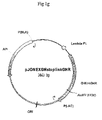
- FIG. 1 represents a schematic diagram of (a) pTrcHis-TOPO and its derivatives; (b) pTrcHis-TOPO/GHstop;(c)pTrcHis-TOPO/Ghstop/GHR;(d)pTrcHis-TOPO/GH/link/GHR; (e) pTrcHis-TOPO/GH/link/flecGHRstop; f) pJONEXGHstop; pJONEXGHstoplink GHR;
- FIG. 3 represents the sequence (SEQ ID NO: 2) of the cDNA of the 390 bp PCR amplified GHR SD 100 fragment (The 5′ EcoRI and 3′ HindIII restriction sites are shown in bold and the 3′ stop codons are shown in italics);
- FIG. 4 represents the nucleic acid sequence (SEQ ID NO: 3) of the fill length GHstopGHR SD100 construct
- FIG. 5 represents the nucleic acid sequence (SEQ ID NO: 4) of the full length GHlinkGHR construct (Not1, EcoRI and HindIII restriction sites are shown in bold and the two 3′ stop codons are shown in italics);
- FIG. 6 represents the protein sequence (SEQ ID NO: 5) of full length GHlinkGHR (340 amino acids);
- FIG. 7 represents the nucleic acid sequence (SEQ ID NO: 6) of the 762 bp PCR amplified full length extracellular domain of GHR (GHRflec) (the 5′ EcoRI and HindIII sites are shown in bold and the two 3′ stop codons are shown in italics);
- FIG. 8 represents the full length nucleic acid sequence (SEQ ID NO: 7) of the GHlinkGHRflec construct (the Not1, EcoRI and HindIII site are shown in bold and the two 3′ stop codons are shown in italics);
- FIG. 9 represents the nucleic acid sequence (SEQ ID NO: 8) of the 1157 bp PCR fragment, GHlinkGHR generated by oligonucleotides TrcRBSsacF and GHRA835H, (the SacI, Not1, EcoRI and HindIII sites are shown in bold, the new ribosome binding site is shown in bold and underlined and the start/stop codons are shown in italics);
- FIG. 10 represents the nucleic acid sequence (SEQ ID NO: 9) of the 740 bp PCR fragment, GHstop generated by nucleotides pTrcRBSsacI and TrcHlashv, (The SadI, Not1, EcoRI and HindIII sites are shown in bold, the new ribosome binding site is shown in bold and underlined and the start/stop codons are shown in italics);
- FIG. 11 represents the amino acid sequence (SEQ ID NO: 10) of IL-6;
- FIG. 12 represents the full length nucleic acid sequence (SEQ ID NO: 11) of gp130;
- FIG. 13 represents the amino acid sequence (SEQ ID NO: 12) of the IL-6/gp130 fusion polypeptide
- FIG. 14 represents the nucleic acid sequence (SEQ ID NO: 13) of the gp 130 domain 1 deletion (616-2112 bp);
- FIG. 15 represents the nucleic acid sequence (SEQ ID NO: 14) of gp130 domain 922-2112 bp;
- FIG. 16 represents a western blot of induced proteins expressed by E. coli transformed with various vectors
- FIG. 17 (a) is a graphical representation of reporter gene assays for Ghstop and GH link GIR; and (b) quantification of the data represented in (a);
- FIG. 18 is a schematic representation of GH:GHR interaction and GH:GHR chimera interaction with GHR.
- FIG. 19 represents the in vitro agonist activity of the GH/GHR chimera.
- FIG. 20 shows the results of a bioassay comparing the induction of a Stat5 reporter (luciferase activity) by growth hormone (GH), a negative control (XL blue) and partially purified antagonist (Chimera 1A2)
- FIG. 21 represents the nucleotide sequence (SEQ ID NO: 15) of the Chi 1A2 chimera.
- FIG. 22 represents the protein sequence (SEQ ID NO: 16) of Chi 1A2 chimera (311 amino acids).
- Table 3 explains the nomenclature used to define the protein constructs.
- the distance between the C-terminus of GH (residue 191) and N-terminus of the C-Terminus SD-100 GHR (residue 126-128) is 10 A.
- Linkers between 10-20 residues are designed and three constructs made with linkers of either 10, 15 or 20 residues comprising of 2, 3 or 4 copies of the basic Gly 4 Ser linker.
- the constructs are expressed in E. coli (JM109) and the protein purified on Invitrogen Xpress System Nickel columns with a secondary purification step by ion exchange chromatography. Lipopolysaccharide should not interfere with the bioassay as this requires a relatively short incubation in the cell culture system. If required the chimera antagonist is further purified using polymyxin B columns (Pierce).
- An established bioassay is used to screen for antagonist activity ( 9 ).
- a permanent cell line expressing the full length GHR is transiently transfected with a luciferase reporter that binds activated Stat5 ( 9 ). Twenty-four hours later the cells are stimulated with GH for 6 hours with or without antagonist. The cells are then lysed and luciferase activity measured ( 9 ).
- a permanent cell line expressing the full length GHR is transiently transfected with a luciferase reporter that binds activated Stat5 ( 9 ). Twenty-four hours later the cells are stimulated with or without the GH/GBR chimera for 6 hours. The cells are then lysed and luciferase activity measured ( 9 ).
- PCR reaction master mix 1. cDNA 2 ⁇ l pituitary 2 ⁇ l pituitary 2 ⁇ l control 2 ⁇ l water cDNA cDNA cDNA Forward primer 2 ⁇ l Actin primer Actin primer 2 ⁇ l (10 ⁇ M stock) GHS1-23 1 ⁇ l 1 ⁇ l GHS1-23 Reverse primer 2 ⁇ l Actin primer Actin primer 2 ⁇ l (10 ⁇ M stock) GHA573not 1 ⁇ l 1 ⁇ l GHA573not dNTP (10 mM 2 ⁇ l 2 ⁇ l 2 ⁇ l 2 ⁇ l stock) Sterile water 17 ⁇ l 19 ⁇ l 19 ⁇ l 17 ⁇ l
- the 5′-nucleotide (GHS1-23) has sequence homology to the 5′ end of the growth hormone gene and the 3′-nucleotide (GHA573not) contains a Not I site together with two stop codons.
- the PCR reaction produced a band of 588 bp (see FIG. 2 ) containing full-length human growth hormone.
- the fragment was then purified using the QIAquick PCR purification kit (Qiagen) and subsequently TOPO cloned into the pTrcHis-TOPO vector (Invitrogen, see FIG. 1 ). Ligations were transformed in to E. coli TOPO one shot cells (Invitrogen) by the calcium chloride method.
- Plasmid mini preparations were produced from positive transformants and screened by restriction digest using PstI/EcoRI. Clones with the correct insert size were then sequenced using vector specific primers supplied by invitrogen that bind 5′ and 3′ to the insert region (Xpress forward primer and pTrcHis reverse primer, see Table 1). This construct was named pTrcHisGHstop and was used as the template for subsequent cloning reactions.
- the GHR C-terminal SD100 domain ( FIG. 3 ) was amplified from human liver cDNA using the same PCR method as previously described, but using primers GHRS476 (forward) and GHRA835H (reverse), see table 1.
- the 5′-nucleotide contains an EcoRI site whilst the 3′-nucleotide contains two stop codons and a HindIII site.
- the PCR reaction was carried out and cleaned up as described previously.
- Both vector, pTrcHisGHstop, and PCR product were subjected to a double digest using EcoRI and HinidIII restriction enzymes (Promega).
- the PCR product was cleaned up using QIAquick PCR purification kit and the digested pTrcHisGHstop vector was separated by agarose gel electrophoresis and purified using the QIAquick gel extraction kit.
- the digested PCR fragment containing the C-terminal SD100 domain of GHR was then ligated to the above digested vector and transformed in to TOPO one shot cells (invitrogen) by the calcium chloride method. Ligations were transformed in to E. coli TOPO one shot cells (Invitrogen).
- Plasmid mini preparations were produced from positive transformants and screened by restriction digest using BamHI/EcoRI (Promega) and by PCR screening using GHS1-23 and GHRA835H primers. Clones with the correct insert size were then sequenced using pTrcHis reverse and GHseqF primers (see Table 1). This vector was called pTrcHisGHstopGHR and was used as the vehicle for the insertion of linker regions of varying lengths between GH and GHR in to the Not1/EcoRI sites.
- FIG. 4 shows the fill insert sequence for pTrcHisGHstopGHRP
- This construct allows the insertion of a linker molecule in to the Not1/EcoRI sites between Ghstop and GHlinkGHR.
- the initial linker was constructed composed of a 4 ⁇ repeating sequence of four glycine residues and one serine residue (20 residues in total) by annealing oligonucleotides G4S4 (forward) and G4COM4 (reverse) see Table 1.
- the 5′-nucleotide contains a NotI site and the 3′-nucleotide contains an EcoRI site.
- the vector pTrcHisGHstopGHR was double digested with Not1 and HindIII restriction enzymes and cleaned up using the QIAquick clean up kit (Qiagen).
- Oligonucleotides G4S4 and G4COMS4 were resuspended in annealing buffer [10 mM Tris-HCl, pH 7.5, 50 mM NaCl, 1 mM EDTA] to a final concentration 0.1 pmol/ ⁇ l. An equal volume of each oligonucleotide was then mixed and heated to 95° C. for 2 minutes and then allowed to cool over a 1 hour period.
- oligonucleotide duplexes were then ligated to the Not1/EcoRI double digested vector pTrcHisGHstopGHR and transformed in to TOPO one shot cells (Invitrogen) by the calcium chloride method. Plasmid mini preparations were produced from positive transformants and screened by restriction digest using Not1/EcoRI and by PCR screening using GHS 1-23 and GHRA835H primers. Clones with the correct insert size were then sequenced using pTrcHis reverse primer and GHseqF (see Table 1). This vector was called pTrcHisGHlinkGHR (See FIG. 1 ).
- the ligation process removes the 3′ stop codons within the GHstop region thus allowing transcription of the full length GHlinkGHR.
- the full length extracellular domain of GHR (SD100 N and C-terminal) was amplified using primers GHRS1ECOR and GHRA835H (see Table 1) following the same PCR protocol as described earlier for the generation of GHstop.
- the 5′-nucleotide (GERS1ECOR) contains an EcoRI site and the 3′-nucleotide contains a HindIII site.
- the PCR reaction produced a band of 762 bp (see FIG. 7 ) containing full length extracellular GHR and purified using Qiaquick PCR clean up kit (Qiagen). Both vector, pTrcHisGHlinkGHR and PCR product were subjected to a double restriction digest using EcoRI and HindIII restriction enzymes.
- the PCR product was cleaned up using QIAquick PCR clean up kits and the digested vector was separated by agarose gel electrophoresis and subsequently purified using the QIAquick gel extraction kit.
- Both vector, pTrcHisGHlinkGHR, and PCR product were double digested with EcoRI and HindIII, and cleaned up using QIAquick clean up kits (Qiagen).
- the digested PCR fragment was then ligated in to the digested pTrcHisGHlinkGHR vector and transformed in to TOPO one shot cells (Invitrogen) by the calcium chloride method. Positive transformants were screened by restriction digest using EcoRI and HindIII and by PCR using primers GHRS1ECOR and GHRA835H. Clones with the correct sized insert were sequenced using GHseqF and the vector specific primer pTrcHis reverse. The new construct was called pTrcHisGHlinkGHRflec. This can then be used as a template for any future linker inserts.
- pJONEX4 vector (See FIG. 1 ) was constructed in order to express inducible proteins that were potentially deleterious to the cell by placing them under the control of a strong repressor of transcription (cI857) and a heat inducible promoter (PL ⁇ ).
- cI857 strong repressor of transcription
- PL ⁇ heat inducible promoter
- the PL ⁇ promoter region was cloned into pUC19 in the EcoRI site and engineered so that only one EcoRI site remained downstream of the promoter to produce pJONEX4.
- Genes wishing to be transcribed can be inserted into the SacI/HindIII region downstream of the PL ⁇ promoter.
- This vector can be used to transform bacteria which specify a temperature sensitive lambda repressor (cI857), thus at low temperatures, below 30° C., transcription read through is prevented by the presence of the repressor protein. However, at higher temperatures (42° C.) induction of protein expression proceeds.
- the main aim was to construct primers in order to PCR up the fill length GHstop and GHlinkGHR from their parent vector pTrcHis-TOPO and subclone these fragments into the SacI/HindIII sites in pJONEX4.
- TrcRBSsacF contains an engineered SacI restriction site, a new ribosome binding site and the ATG start codon present in the pTrcHis-TOPO vector.
- Two 3′-nucleotides will be used to PCR GHstop and GHlinkGHR respectively from their parent vectors, pTrcHis.
- the 3′-nucleotide, TrcHlashv contains a HindIII site and will be used to PCR the full length GHstop gene.
- the other nucleotide, GHRA835H has already been described, and will be used to PCR up GHlinkGHR (see Table 1).
- Both PCR fragments and pJONEX4 vector were subjected to a double restriction digest using SacI/HindIII and purified using the QLAquick clean up kits (Qiagen).
- the digested PCR fragment was then ligated to the above digested vector and transformed in to E. coli M72 ( ⁇ ) cells by the method of electroporation.
- Plasmid mini preps were produced from positive transformants and screened by restriction digest using Sac/HindIII and by PCR using nucleotides TrcRBSsac1 and TrcHrimv for Ghstop and TrcRBSsac1 and GHRA835H for GHlinkGHR Clones with the correct insert size were then sequenced using GHS1-23, GhseqF, Xpress forward and GHA573not.
- the IL-6/gp130 chimeras are provided in a variety of vectors. Cloning into pTZ18U will facilitate in vitro mutagenisis and the pJONEX and pTrcHis-TOPO vectors can be used to generate recombinant protein in E. coli which can be purified using Nickel columns.
- Cloning is into pTrcHis using the TA cloning strategy devised for Ghstop/GHlinkGHR.
- the chimeras are then subcloned into the pJonex and pTZ18U system using the restriction sites BarH1/HindIII. This would maintain the upstream RBS and Hist6 tag in pJONEX and allow insertion into pTZ18U (they have the same multiple cloning site) for mutagenesis experiments.
- the strategy is to TA clone in IL-6 (fill length: see sequence below: FIG. 1 ) with the 3′prime nucleotide containing a Not 1 site together with another restriction site: Sal1 (or Xho1).
- This Sal1 site will thus allow the cloning of the gp130 gene in to the Sal1/HindIII sites (HindIII being in 3 ′end of the pTrcHis vector).
- the linker can then be inserted into the Not1/Sal1 sites.
- the construct once sequenced is subcloned into the pJonex and pTZ18U vectors using BamHI/HindIII.
- IL-6 and gp130 are amplified by PCR from IMAGE clones or cDNA from human lymphocytes.
- the following primers will be used in TA cloning of the IL-6 sequence as represented in FIG. 11 into pTrcHis.
- Reverse Primer (3′nucleotide: NotI/SalI and Stop codons are shown in bold, sequence shown in italics and underlined is insert sequence to keep sequence in frame and as an overhang for NotI/SalI digestion and incorporates the stop codons)
- the next stage is to sub-clone the gp130 full length extracellular domain (322-2112 bp; see FIG. 12 ). Clone gp130 into the Sal1/HindIII sites
- the step 3 is to ligate in the linker duplex that contain a 5′Not1 site and a 3′Sal1 site.
- the next step is to clone in gp130 truncation up to 922 bp (this deletes domains 1 and 2 from the extracellular region of gp130). Construct IL-6/link/gp130D1
- M72 ( ⁇ ) cells were grown o/n in 50 ml LB. 100 ml of this o/n culture was then added to 900 ml LB and grown at 30° C. until OD600 was between 0.5-0.6. Cells were then harvested at 4000 rpm, 20 min at room temperature using a Sorval RC-3B centrifuge. The pellet was resuspended and re-centrifuged at 4000 rpm, 4° C., 20 minutes in gradually reducing volumes of sterile ice cold 10% (v/v) glycerol of 1000 ml, 500 ml, 250 ml. The pellet was finally resuspended in 1000 ⁇ l of 10% (v/v) glycerol, divided in to 100 ⁇ L aliquots, flash frozen in liquid nitrogen and stored at ⁇ 80° C.
- Electrocompetant M72 ( ⁇ ) cells were defrosted on ice and placed in to an electroporation cuvette (cell width of 0.1 cm, Invitrogen) and electroporated at 1.8 KV. Positive transformants were selected for on LB plates supplemented with 100 ⁇ g/ml ampicillin and grown at 30° C. overnight.
- Transformed E. coli M72 ( ⁇ ) cells were grown o/n at 30° C. with shaking at 2000 rpm in LB supplemented with ampicillin (100 ⁇ g/ml). The next day the o/n culture was used to seed fresh LB and cells were grown until an OD600 of approximately 0.6 was reached. The temperature of the incubator was then adjusted to 42° C. and an equal volume of pre-warned media was added to bring the temperature of the culture up to 42° C. The cells were then grown at 42° C. for a further 4-5 hrs then harvested.
- IMAC Immobilised Metal Affinity Chromatography
- Induced cell pellets were resuspended in 20 mM sodium phosphate buffer, 500 mM sodium chloride, pH 7.8 and lysed by the addition of hen egg white lysozyme to a final concentration of 100 ⁇ g/ml, and left on ice for 15 minutes.
- the cells suspension was then sonicated by applying three 10 second bursts on a medium intensity setting whilst holding on ice.
- Insoluble material was then removed by centrifugation at 40000 ⁇ g, 4° C. for 20 minutes in a RC-3B centrifuge.
- the cleared cell lysate was then applied to a Probond resin column (Invitrogen) pre-equilibrated with 20 mM sodium phosphate buffer, 500 mM NaCl, pH 7.8.
- the column washed with 20 mM sodium phosphate buffer, 500 mM sodium chloride, pH 7.8 buffer followed by washing with 20 mM sodium phosphate buffer, 500 mM sodium chloride, pH 6.0.
- Bound protein was eluted by an increasing gradient of 50 mM to 500 mM imidazole made up in 20 mM sodium phosphate buffer, 500 nM sodium chloride, pH 6.0 buffer. 1 ml fractions were collected and purification monitored by bradford protein assay and SDS-PAGE.
- Hek293 cells were previously stabily transfected with full-length human growth hormone receptor.
- Cells were routinely cultured in Dulbeccos MEM/Nutrient F12 medium supplemented with 10% Foetal calf serum, 1% penicillin/streptomycin and 1% L-glutamine.
- Cells used for the bioassay were first dissociated, counted, then plated at 2 ⁇ 105 cells/ml in growth medium in a 12 well plate and grown o/n at 37° C., 5% CO2.
- next day cells were challenged with recombinant protein from 5-5000 ng/ml, made up in starvation medium [2 ⁇ 3Dulbeccos MEM/Nutrient F12 medium supplemented with 1% penicillin/streptomycin, 1% L-glutamine] supplemented with 100 ng/ ⁇ l dexamethasone.
- starvation medium [2 ⁇ 3Dulbeccos MEM/Nutrient F12 medium supplemented with 1% penicillin/streptomycin, 1% L-glutamine] supplemented with 100 ng/ ⁇ l dexamethasone.
- recombinant wild type GH was mixed with purified GHstop or Chimeric protein in a competition assay. Cells were incubated at 37° C., 5% CO2 for at least 5 hours before assaying for luciferase and ⁇ -galactosidase activity.
- the assays were performed according to the manufacturers instructions. Briefly media was aspirated from a 12 well plate and cells lysed with 150 ⁇ l reporter lysis buffer for 20 minutes at room temperature.
- ⁇ -galactosidase assay 25 ⁇ l of each lysate was added to duplicate wells of a 96 well plate and mixed with 75 ⁇ l assay buffer. The plate was incubated at 37° C. until a yellow coloration had developed at which point the plate was read at 420 nm.
- luciferase assay 50 ⁇ l of the remaining lysate was added to a luminometer cuvette to which was then added 50 ⁇ l of luciferase substrate. The sample was mixed by vortexing for 10 seconds and fluorescence measured at 15 and 60 second intervals.
- FIG. 17 shows data generated from a reporter gene assay using purified GH stop and GHlinkGHR.
- Samples from purification's were routinely analysed for growth hormone expression by first separating samples by 12% (v/v) SDS-PAGE under either reducing or non-reducing conditions and transferring to PVDF membrane. The membrane was then blocked in 4% (w/v) milk protein in PBS, supplemented with 0.05% (v/v) Tween 20 (PBS-T). The membrane was then probed with anti-growth hormone (10A7, mouse IgG1) at 1/2000 dilution in 1% (w/v) milk protein in PBS-T. After brief washing the membrane was probed with Sheep anti mouse-HRP (Amersham) at 1/5000 dilution in 1% (w/v) milk protein in PBS-T.
- FIG. 16 shows a western blot of induced proteins expressed either in the pTrcHis-TOPO of pJONEX vector systems.
- the human growth hormone assay was performed using the NETRIA human growth hormone IRMA assay which uses a rabbit polyclonal and a labelled monoclonal antibody.
- Sprague-Dawley rats are anaesthetised and cannulae implanted in femoral and jugular veins. Two days later GH or chimera is administered by intravenous or subcutaneous injection. Blood samples are collected via the femoral cannula and chimera levels measured by radio-immunoassay (see table 2). Pharmacokinetic parameters are estimated using available computer programs fitting hormone concentration against time.
- the partially purified chimera was prepared from transformed XL blue E. coli . Protein from untransformed XL blue E. coli was purified over nickel columns and used as a negative control to detect any non-specific agonist or antagonist action. All purified proteins were stored in glycerol.
- the negative control and Chimera IA2 were incubated with and without GH.
- FIG. 19 shows results of bioassay comparing the induction of a Stat5 reporter (luciferase activity) by growth hormone (GH), negative control (E blue), and partially purified antagonist (Chimera 1A2).
- the graph shows the expected dose-response to GH.
- Incubation with negative control showed no induction of luciferase activity but at high concentration partially inhibited the bioassay (this may be an effect of the increased glycerol concentration).
- At 500 ng/ml Chimera 1 A2 appeared to completely block GH signalling.
Landscapes
- Health & Medical Sciences (AREA)
- Chemical & Material Sciences (AREA)
- Life Sciences & Earth Sciences (AREA)
- Organic Chemistry (AREA)
- Medicinal Chemistry (AREA)
- General Health & Medical Sciences (AREA)
- Chemical Kinetics & Catalysis (AREA)
- General Chemical & Material Sciences (AREA)
- Public Health (AREA)
- Nuclear Medicine, Radiotherapy & Molecular Imaging (AREA)
- Veterinary Medicine (AREA)
- Pharmacology & Pharmacy (AREA)
- Animal Behavior & Ethology (AREA)
- Bioinformatics & Cheminformatics (AREA)
- Engineering & Computer Science (AREA)
- Zoology (AREA)
- Biochemistry (AREA)
- Toxicology (AREA)
- Endocrinology (AREA)
- Proteomics, Peptides & Aminoacids (AREA)
- Molecular Biology (AREA)
- Genetics & Genomics (AREA)
- Gastroenterology & Hepatology (AREA)
- Biophysics (AREA)
- Immunology (AREA)
- Diabetes (AREA)
- Cell Biology (AREA)
- Hematology (AREA)
- Rheumatology (AREA)
- Physical Education & Sports Medicine (AREA)
- Obesity (AREA)
- Orthopedic Medicine & Surgery (AREA)
- Emergency Medicine (AREA)
- Cardiology (AREA)
- Pain & Pain Management (AREA)
- Child & Adolescent Psychology (AREA)
- Heart & Thoracic Surgery (AREA)
- Urology & Nephrology (AREA)
- Oncology (AREA)
- Communicable Diseases (AREA)
Priority Applications (1)
| Application Number | Priority Date | Filing Date | Title |
|---|---|---|---|
| US12/175,582 US8173782B2 (en) | 2000-06-16 | 2008-07-18 | Fusion protein comprising growth hormone and growth hormone receptor |
Applications Claiming Priority (7)
| Application Number | Priority Date | Filing Date | Title |
|---|---|---|---|
| GB0014765A GB0014765D0 (en) | 2000-06-16 | 2000-06-16 | Binding agent |
| GB0014765.2 | 2000-06-16 | ||
| GB0105969A GB0105969D0 (en) | 2001-03-10 | 2001-03-10 | Binding agent |
| GB0105969.0 | 2001-03-10 | ||
| GB0106487.2 | 2001-03-16 | ||
| GB0106487A GB0106487D0 (en) | 2001-03-16 | 2001-03-16 | Agent |
| PCT/GB2001/002645 WO2001096565A2 (en) | 2000-06-16 | 2001-06-18 | Binding agents: chimeric ligand/receptor proteins |
Related Child Applications (1)
| Application Number | Title | Priority Date | Filing Date |
|---|---|---|---|
| US12/175,582 Continuation US8173782B2 (en) | 2000-06-16 | 2008-07-18 | Fusion protein comprising growth hormone and growth hormone receptor |
Publications (2)
| Publication Number | Publication Date |
|---|---|
| US20040071655A1 US20040071655A1 (en) | 2004-04-15 |
| US7446183B2 true US7446183B2 (en) | 2008-11-04 |
Family
ID=27255767
Family Applications (2)
| Application Number | Title | Priority Date | Filing Date |
|---|---|---|---|
| US10/311,473 Expired - Fee Related US7446183B2 (en) | 2000-06-16 | 2001-06-18 | Fusion protein comprising growth hormone and growth hormone receptor |
| US12/175,582 Expired - Fee Related US8173782B2 (en) | 2000-06-16 | 2008-07-18 | Fusion protein comprising growth hormone and growth hormone receptor |
Family Applications After (1)
| Application Number | Title | Priority Date | Filing Date |
|---|---|---|---|
| US12/175,582 Expired - Fee Related US8173782B2 (en) | 2000-06-16 | 2008-07-18 | Fusion protein comprising growth hormone and growth hormone receptor |
Country Status (6)
| Country | Link |
|---|---|
| US (2) | US7446183B2 (https=) |
| EP (2) | EP2316944A3 (https=) |
| JP (1) | JP4660062B2 (https=) |
| AU (1) | AU2001274234A1 (https=) |
| CA (1) | CA2447632C (https=) |
| WO (1) | WO2001096565A2 (https=) |
Cited By (3)
| Publication number | Priority date | Publication date | Assignee | Title |
|---|---|---|---|---|
| US20080118503A1 (en) * | 2003-11-17 | 2008-05-22 | Strasburger Christian J | Leptin Antagonist and Method for Quantitative Measurement of Leptin |
| US20090054336A1 (en) * | 2000-06-16 | 2009-02-26 | Asterion Limited | Binding Agent |
| US20140336117A1 (en) * | 2011-03-15 | 2014-11-13 | Asterion Limited | Modified receptor fusion proteins |
Families Citing this family (23)
| Publication number | Priority date | Publication date | Assignee | Title |
|---|---|---|---|---|
| GB2389115B (en) * | 2001-12-14 | 2005-03-16 | Asterion Ltd | Polypeptide having a plurality of modified growth hormone receptor binding domains of growth hormone |
| JP2007527695A (ja) | 2003-04-09 | 2007-10-04 | アステリオン・リミテッド | グリコシルホスファチジルイノシトールを含有するポリペプチド |
| EP1771467A2 (en) * | 2004-07-26 | 2007-04-11 | Asterion Limited | Linkers |
| GB0600122D0 (en) * | 2006-01-05 | 2006-02-15 | Univ Cardiff | Mutation in the growth hormone receptor |
| GB0606946D0 (en) * | 2006-04-06 | 2006-05-17 | Asterion Ltd | Polypeptide antagonist |
| GB0618082D0 (en) * | 2006-09-14 | 2006-10-25 | Asterion Ltd | Growth factor |
| GB0717985D0 (en) | 2007-07-20 | 2007-10-24 | Asterion Ltd | Growth hormone fusion proteins |
| EP2185582A2 (en) * | 2007-08-03 | 2010-05-19 | Asterion Limited | Erythropoietin fusion proteins |
| US20110182848A1 (en) * | 2007-08-03 | 2011-07-28 | Asterion Limited | Granulocyte colony stimulating factor |
| GB0715216D0 (en) * | 2007-08-03 | 2007-09-12 | Asterion Ltd | Leptin |
| GB0715213D0 (en) * | 2007-08-06 | 2007-09-12 | Asterlon Ltd | Igf-1 |
| GB0715383D0 (en) * | 2007-08-08 | 2007-09-19 | Asterion Ltd | Interferon |
| GB0719818D0 (en) * | 2007-10-11 | 2007-11-21 | Asterion Ltd | Growth hormone fusion polypeptides |
| WO2009077731A2 (en) * | 2007-12-19 | 2009-06-25 | Asterion Limited | Prolactin fusion proteins |
| GB0725201D0 (en) * | 2007-12-24 | 2008-01-30 | Asterion Ltd | Peptide fusion proteins |
| JP2011512134A (ja) * | 2008-02-19 | 2011-04-21 | アステリオン・リミテッド | 修飾リンカー |
| GB0808402D0 (en) * | 2008-05-09 | 2008-06-18 | Asterion Ltd | Tsh |
| GB0812019D0 (en) * | 2008-07-02 | 2008-08-06 | Asterion Ltd | Insulin |
| EP2606908A1 (en) | 2011-12-19 | 2013-06-26 | Ipsen Pharma S.A.S. | Novel pharmaceutical composition for a long acting growth hormone fusion protein (LAGH) |
| RS61391B1 (sr) | 2012-06-08 | 2021-02-26 | Alkermes Pharma Ireland Ltd | Ligandi modifikovani primenom cirkularnog permutiranja kao agonisti i antagonisti |
| GB201520021D0 (en) * | 2015-11-13 | 2015-12-30 | Asterion Ltd | Fusion polypeptide |
| US20220396609A1 (en) * | 2019-11-01 | 2022-12-15 | Senti Biosciences, Inc. | Chimeric receptor sensors |
| IL306074A (en) | 2021-03-24 | 2023-11-01 | Alkermes Inc | UPAR antibodies and fusion proteins with them |
Citations (10)
| Publication number | Priority date | Publication date | Assignee | Title |
|---|---|---|---|---|
| WO1986005804A1 (en) | 1985-04-03 | 1986-10-09 | Nordisk Gentofte A/S | A dna sequence |
| US4857637A (en) | 1986-05-07 | 1989-08-15 | Genentech, Inc. | Methods and compositions for immunologically modulating growth hormone receptor activity |
| WO1990005185A1 (fr) | 1988-11-07 | 1990-05-17 | L'universite De L'etat A Liege | Hormone de croissance humaine modifiee |
| WO1992021029A1 (en) | 1991-05-10 | 1992-11-26 | Genentech, Inc. | Selecting ligand agonists and antagonists |
| EP0741187A2 (en) | 1995-05-05 | 1996-11-06 | F. Hoffmann-La Roche Ag | Recombinant obese (Ob) proteins |
| WO1997032891A2 (de) | 1996-03-07 | 1997-09-12 | Angewandte Gentechnologie Systeme Gmbh | Konjugat zur beeinflussung von wechselwirkungen zwischen proteinen |
| WO1999002710A1 (en) * | 1997-07-10 | 1999-01-21 | Beth Israel Deaconess Medical Center | Production and use of recombinant protein multimers with altered biological activity |
| WO1999002552A2 (en) | 1997-07-10 | 1999-01-21 | Yeda Research And Development Co. Ltd. | Chimeric interleukin-6 soluble receptor/ligand protein, analogs thereof and uses thereof |
| EP0950710A2 (en) | 1998-04-03 | 1999-10-20 | Jcr Pharmaceuticals Co., Ltd. | Cells expressing a chimera receptor and their uses |
| WO2000018932A2 (en) | 1998-09-25 | 2000-04-06 | Regeneron Pharmaceuticals, Inc. | Receptor based antagonists and methods of making and using |
Family Cites Families (3)
| Publication number | Priority date | Publication date | Assignee | Title |
|---|---|---|---|---|
| CA2230492C (en) | 1995-09-21 | 2009-05-26 | Genentech, Inc. | Human growth hormone variants |
| JP4660062B2 (ja) * | 2000-06-16 | 2011-03-30 | アステリオン・リミテッド | 結合剤 |
| GB2389115B (en) * | 2001-12-14 | 2005-03-16 | Asterion Ltd | Polypeptide having a plurality of modified growth hormone receptor binding domains of growth hormone |
-
2001
- 2001-06-18 JP JP2002510682A patent/JP4660062B2/ja not_active Expired - Fee Related
- 2001-06-18 US US10/311,473 patent/US7446183B2/en not_active Expired - Fee Related
- 2001-06-18 AU AU2001274234A patent/AU2001274234A1/en not_active Abandoned
- 2001-06-18 WO PCT/GB2001/002645 patent/WO2001096565A2/en not_active Ceased
- 2001-06-18 EP EP10075428A patent/EP2316944A3/en not_active Withdrawn
- 2001-06-18 CA CA2447632A patent/CA2447632C/en not_active Expired - Fee Related
- 2001-06-18 EP EP01940731A patent/EP1290170A2/en not_active Withdrawn
-
2008
- 2008-07-18 US US12/175,582 patent/US8173782B2/en not_active Expired - Fee Related
Patent Citations (10)
| Publication number | Priority date | Publication date | Assignee | Title |
|---|---|---|---|---|
| WO1986005804A1 (en) | 1985-04-03 | 1986-10-09 | Nordisk Gentofte A/S | A dna sequence |
| US4857637A (en) | 1986-05-07 | 1989-08-15 | Genentech, Inc. | Methods and compositions for immunologically modulating growth hormone receptor activity |
| WO1990005185A1 (fr) | 1988-11-07 | 1990-05-17 | L'universite De L'etat A Liege | Hormone de croissance humaine modifiee |
| WO1992021029A1 (en) | 1991-05-10 | 1992-11-26 | Genentech, Inc. | Selecting ligand agonists and antagonists |
| EP0741187A2 (en) | 1995-05-05 | 1996-11-06 | F. Hoffmann-La Roche Ag | Recombinant obese (Ob) proteins |
| WO1997032891A2 (de) | 1996-03-07 | 1997-09-12 | Angewandte Gentechnologie Systeme Gmbh | Konjugat zur beeinflussung von wechselwirkungen zwischen proteinen |
| WO1999002710A1 (en) * | 1997-07-10 | 1999-01-21 | Beth Israel Deaconess Medical Center | Production and use of recombinant protein multimers with altered biological activity |
| WO1999002552A2 (en) | 1997-07-10 | 1999-01-21 | Yeda Research And Development Co. Ltd. | Chimeric interleukin-6 soluble receptor/ligand protein, analogs thereof and uses thereof |
| EP0950710A2 (en) | 1998-04-03 | 1999-10-20 | Jcr Pharmaceuticals Co., Ltd. | Cells expressing a chimera receptor and their uses |
| WO2000018932A2 (en) | 1998-09-25 | 2000-04-06 | Regeneron Pharmaceuticals, Inc. | Receptor based antagonists and methods of making and using |
Non-Patent Citations (15)
| Title |
|---|
| Baumann et al, 1989, Metabolism. 38(4): 330-333. * |
| Baumann. 2001. J Pediatr Endocrinol Metab. 14(4): 355-375. * |
| Desplancq et al 1994. Protein Engineering, 7(8): 1027-1033. * |
| Fernandez-Botran et al 2002. Expert Opin Biol Ther. 2(6): 585-605. * |
| Kopchick et al 2000, Molecular Genetics and Metabolism, 71: 293-314. * |
| L. Tartaglia et al. "Identification and expression cloning of a leptin receptor, OB-R", Cell, Cell Press, vol. 83, No. 7, Dec. 29, 1995, pp. 1263-1271, XP000602068. |
| M. Hibi et al. "Molecular Cloning and Expression of an IL-6 Signal Transducer GP130", Cell, Cell Press, Cambridge, vol. 63, Dec. 21, 1990, pp. 1149-1157, XP002931740. |
| P. Moran et al., "A nonfunctional sequence converted to a signal for glycophosphatidylinositol membrane anchor attachment". Journal of Cell Biology, vol. 115, No. 2 (1991) pp. 329-336, XP001031102. |
| Phillips, A., J Pharm Pharmacology 53: 1169-1174, 2001. * |
| R. Ross et al., "A short isoform of the human growth hormone receptor functions as a dominant negative inhibitor of the full-length receptor and generates large amounts of binding protein" Molecular Endocrinology, vol. 11, No. 3 (1997) pp. 265-173 XP002181691. |
| Renne et al, 1998. Journal of Biological Chemistry. 273(42): 27213-27219. * |
| Takahashi et al 1997. J Clin Invest. 100(5): 1159-1165. * |
| Tchelet, 1997. Molecular and Cellular Endocrinology. 130: 141-152. * |
| Wilkinson et al, Sep. 2007. Nature Medicine. 13(9): 1108-1113. * |
| Zhang Yiying et al. "Positional cloning of the mouse obese gene and its human homolouge". Nature, MacMillan Journals Ltd. London, vol. 372, No. 6505, Dec. 1, 1994, pp. 425-432, XP000602062. |
Cited By (7)
| Publication number | Priority date | Publication date | Assignee | Title |
|---|---|---|---|---|
| US20090054336A1 (en) * | 2000-06-16 | 2009-02-26 | Asterion Limited | Binding Agent |
| US8173782B2 (en) * | 2000-06-16 | 2012-05-08 | Asterion Limited | Fusion protein comprising growth hormone and growth hormone receptor |
| US20080118503A1 (en) * | 2003-11-17 | 2008-05-22 | Strasburger Christian J | Leptin Antagonist and Method for Quantitative Measurement of Leptin |
| US7807154B2 (en) * | 2003-11-17 | 2010-10-05 | Biofusion Licensing Limited | Leptin antagonist and method for quantitative measurement of leptin |
| US20140336117A1 (en) * | 2011-03-15 | 2014-11-13 | Asterion Limited | Modified receptor fusion proteins |
| US9493536B2 (en) * | 2011-03-15 | 2016-11-15 | Asterion Limited | Growth hormone receptor antagonists |
| US10030062B2 (en) | 2011-03-15 | 2018-07-24 | Asterion Limited | Growth hormone fusion proteins with growth hormone receptor agonist activity |
Also Published As
| Publication number | Publication date |
|---|---|
| US20090054336A1 (en) | 2009-02-26 |
| AU2001274234A1 (en) | 2001-12-24 |
| WO2001096565A3 (en) | 2002-08-01 |
| WO2001096565A2 (en) | 2001-12-20 |
| CA2447632C (en) | 2011-08-02 |
| JP2004503243A (ja) | 2004-02-05 |
| CA2447632A1 (en) | 2001-12-20 |
| US20040071655A1 (en) | 2004-04-15 |
| US8173782B2 (en) | 2012-05-08 |
| EP2316944A2 (en) | 2011-05-04 |
| JP4660062B2 (ja) | 2011-03-30 |
| EP2316944A3 (en) | 2011-11-02 |
| EP1290170A2 (en) | 2003-03-12 |
Similar Documents
| Publication | Publication Date | Title |
|---|---|---|
| US8173782B2 (en) | Fusion protein comprising growth hormone and growth hormone receptor | |
| Goffin et al. | Sequence-function relationships within the expanding family of prolactin, growth hormone, placental lactogen, and related proteins in mammals | |
| TW589376B (en) | Osteoprotegerin binding proteins and receptors | |
| US20110158993A1 (en) | Train-R: A Cysteine Rich Member of the TNF-Receptor Family | |
| WO1998055621A1 (en) | Ntn-2 member of tnf ligand family | |
| EP1012292A1 (en) | Ntn-2 member of tnf ligand family | |
| JP2002514079A (ja) | キメラopgポリペプチド | |
| US5643749A (en) | Soluble interferon α-receptor, its preparation and use | |
| US5919903A (en) | Low affinity human IL-12 beta2 receptor | |
| EP0790305B1 (en) | Mutant human growth hormones and their uses | |
| RU2325400C2 (ru) | Мультимеры рецептор-связывающих лигандов | |
| US7485713B2 (en) | Polypeptides comprising growth hormone receptor extracellular domain and glycosylphosphatidylinositol | |
| US6465616B1 (en) | Interleukin-5 antagonist | |
| CA2256368A1 (en) | An interleukin-5 antagonist | |
| CN101084238A (zh) | 受体选择性淋巴毒素衍生物 | |
| AU723413B2 (en) | An interleukin-5 antagonist | |
| Chen | Cloning and characterization of the pigeon prolactin receptor | |
| US20030059889A1 (en) | Tumor necrosis factor receptor related protein-1 gene and protein |
Legal Events
| Date | Code | Title | Description |
|---|---|---|---|
| AS | Assignment |
Owner name: ASTERION LIMITED, UNITED KINGDOM Free format text: ASSIGNMENT OF ASSIGNORS INTEREST;ASSIGNORS:ROSS, RICHARD;ARTYMIUK, PETER;SAYERS, JON;REEL/FRAME:014400/0891;SIGNING DATES FROM 20020612 TO 20021201 |
|
| FPAY | Fee payment |
Year of fee payment: 4 |
|
| REMI | Maintenance fee reminder mailed | ||
| LAPS | Lapse for failure to pay maintenance fees | ||
| STCH | Information on status: patent discontinuation |
Free format text: PATENT EXPIRED DUE TO NONPAYMENT OF MAINTENANCE FEES UNDER 37 CFR 1.362 |
|
| STCH | Information on status: patent discontinuation |
Free format text: PATENT EXPIRED DUE TO NONPAYMENT OF MAINTENANCE FEES UNDER 37 CFR 1.362 |
|
| FP | Lapsed due to failure to pay maintenance fee |
Effective date: 20161104 |