US7092775B2 - Production planning apparatus and production planning method - Google Patents
Production planning apparatus and production planning method Download PDFInfo
- Publication number
- US7092775B2 US7092775B2 US11/099,626 US9962605A US7092775B2 US 7092775 B2 US7092775 B2 US 7092775B2 US 9962605 A US9962605 A US 9962605A US 7092775 B2 US7092775 B2 US 7092775B2
- Authority
- US
- United States
- Prior art keywords
- production
- information
- plan
- storage portion
- calculation
- Prior art date
- Legal status (The legal status is an assumption and is not a legal conclusion. Google has not performed a legal analysis and makes no representation as to the accuracy of the status listed.)
- Expired - Lifetime
Links
Images



Classifications
-
- G—PHYSICS
- G06—COMPUTING OR CALCULATING; COUNTING
- G06Q—INFORMATION AND COMMUNICATION TECHNOLOGY [ICT] SPECIALLY ADAPTED FOR ADMINISTRATIVE, COMMERCIAL, FINANCIAL, MANAGERIAL OR SUPERVISORY PURPOSES; SYSTEMS OR METHODS SPECIALLY ADAPTED FOR ADMINISTRATIVE, COMMERCIAL, FINANCIAL, MANAGERIAL OR SUPERVISORY PURPOSES, NOT OTHERWISE PROVIDED FOR
- G06Q10/00—Administration; Management
- G06Q10/04—Forecasting or optimisation specially adapted for administrative or management purposes, e.g. linear programming or "cutting stock problem"
-
- Y—GENERAL TAGGING OF NEW TECHNOLOGICAL DEVELOPMENTS; GENERAL TAGGING OF CROSS-SECTIONAL TECHNOLOGIES SPANNING OVER SEVERAL SECTIONS OF THE IPC; TECHNICAL SUBJECTS COVERED BY FORMER USPC CROSS-REFERENCE ART COLLECTIONS [XRACs] AND DIGESTS
- Y02—TECHNOLOGIES OR APPLICATIONS FOR MITIGATION OR ADAPTATION AGAINST CLIMATE CHANGE
- Y02P—CLIMATE CHANGE MITIGATION TECHNOLOGIES IN THE PRODUCTION OR PROCESSING OF GOODS
- Y02P90/00—Enabling technologies with a potential contribution to greenhouse gas [GHG] emissions mitigation
- Y02P90/02—Total factory control, e.g. smart factories, flexible manufacturing systems [FMS] or integrated manufacturing systems [IMS]
Definitions
- the present invention relates to a production planning apparatus and method for an industrial product and in particular to a production planning apparatus and method for a product to be produced through multiple steps in different production forms.
- Available to Promise of, to a request from a sales department or a product dealer, that is, a request for “how many of which product by when”, checking whether the product can be manufactured and delivered as requested or not and answering “how many (amount) of which product are available by when (delivery time)”.
- the product subject to the Available to Promise, the delivery time and amount are informed to a production factory of the product of a manufacture company, and the production factory produces and ships the product so as to keep the delivery time and amount.
- a company not performing Available to Promise produces and ships a product in response to and accordance with a request from a sales department or dealer thereof.
- JP-A-2000-353190 discloses an example thereof.
- JP-A-2001-34321 discloses a production planning apparatus as a technology in consideration of differences among multiple production steps included in production steps of a product.
- the production planning apparatus proposes an algorithm allowing the load leveling in packets in both of production assembly step and source step, which is a bottleneck, but adopts a common algorithm in the both steps.
- Banbara et al “Java Niyoru Isyu Kyocho Seiyaku Kaisyo System No Kaihatsu (Development of Heterogeneous Constraint Solving System)”, Information-technology Promotion Agency, FY2002, Project Reports Rev. 2 introduces a technology relating to use of multiple algorithms.
- the technology does not embody the production planning algorithm but is implemented for obtaining a larger advantage than that of tuning of a single algorithm by operating multiple heterogeneous constraint solvers (algorithms) cooperatively and competitively in parallel.
- the cooperative constraint solving system disclosed in the document includes different kinds of solvers and a scheduler portion for managing the solvers, and the scheduler portion causes the constraints solvers to cooperate/compete to manage so as to obtain a solution efficiently.
- a production plan must be devised or changed quickly in order to control the supply of products quickly in accordance with a change in demand.
- an information system may be adopted which devises production plans for factories of all sections sharing the tasks for producing products.
- the production forms to be implemented by the factories do not always agree.
- the production forms may be divided into those of the process type and those of the assembly type, which have different constraint conditions on which the precision of the production plan depends.
- the assembly type has many parts to assemble, and whether required parts can be procured or not is an important issue for the production plan.
- An assembly task can be performed at a constant number of man-hours as far as required parts are available.
- the process type since the process type has constraints of efficiency and/or yield of production tasks due to changes of the types of manufacture apparatus, the order of tasks is an important issue for the production plan.
- the above-described example relating to personal computers has a hard disk and memory module requiring the process type production step relating to semiconductor in the parts processing in the upstream of the production while requiring the assembly type manufacture step of assembling parts in the downstream step.
- process type production steps relating to semiconductor in the parts processing in the upstream of the production
- assembly type manufacture step of assembling parts in the downstream step.
- steps in upper streams of production may have process type production forms.
- Material Requirements Planning (MRP) calculation method is an algorithm superior in production planning having parts as a constraint like the assembly type.
- MRP is a method for calculating a required amount of parts to order by exploding the product to be produced into parts, calculating a total amount of the parts required for the production and subtracting the inventory and stock on order therefrom.
- MRP calculation calculates a plan for procuring or manufacturing “a required amount (required amount) of required item (item) by a required time (delivery time)” for an item such as a part and a raw material based on a devised production level shipping plan thereof.
- MRP calculation does not calculate an order of tasks since the task times in steps are regarded as fixed values therein.
- a scheduling calculation method is an algorithm superior in production planning having an order of tasks as a constraint like the process type.
- Scheduling is a method for obtaining an order of tasks (in which order products must be produced) by handling the step operation times and product delivery time as constraints when multiple products must be produced in a step. In the production especially in multiple steps, the inter-step inventory of parts required for the production is not considered even if any.
- the invention was made in view of these points, and it is an object of the invention to allow devising a production plan, which is information required for accurately and quickly answering the delivery time of a product to be produced through multiple steps having different characteristics.
- Banbara et al “Java Niyoru Isyu Kyocho Seiyaku Kaisyo System No Kaihatsu (Development of Heterogeneous Constraint Solving System)”, Information-technology Promotion Agency, FY2002, Project Reports Rev. 2 discloses a technology in which multiple heterogeneous constraint solvers are effectively used in cooperative and competitive parallel operations with reference to the approximate optimum solution search and SAT planning examples using developed three kinds of probability constraint solvers. Banbara et al. further proposes a method in which solutions are obtained by candidate solvers and the best solution is selected therefrom when no reference is provided for selecting one of heterogeneous solvers.
- the invention divides a production step of the product into multiple production steps in advance based on a constraint to be considered when the production plan therefor is devised, defines identifiers for the multiple production steps and prestores the defined identifiers in a storage portion as step identification information, and prestores step information having at least correspondences between the production steps and items in the storage portion.
- a calculation processing portion identifies and determines production steps and order of calculations, which are involved in the production of the product, based on the shipping plan information, parts table and step information stored in the storage portion, determines which of first and second production plan calculation algorithms is to be executed based on the order of calculations and based on the step identification information stored for each production step, and calculates the production plan by using the determined algorithm.
- the invention may prestore, in the storage portion, setup time information indicating the setup time for each work schedule in each production step.
- the calculation processing portion may determine which of first and second production plan calculation algorithms is to be executed based on the setup time information and calculate the production plan by using the determined algorithm.
- a scheduling calculation may be applied to a step having an order constraint for a product production plan having a manufacturing step with a throughput depending on the order of start so that quick Available to Promise based on the accurate production plan can be achieved, which could not be achieved by conventional MRP.
- FIG. 1 is a diagram showing a construction of a production planning apparatus according to an embodiment of the invention
- FIG. 2 is a diagram describing an item flow according to the embodiment of the invention.
- FIG. 3 is a parts structure diagram for explanation of the embodiment of the invention.
- FIG. 4 is a diagram describing step information
- FIG. 5 is a diagram describing setup time information
- FIG. 6 is a diagram describing step identification information
- FIG. 7 is a diagram describing inventory information, warehousing schedule information and shipping planning information
- FIG. 8 is a diagram showing a flow of processing by a calculation control portion of the production planning apparatus according to the embodiment of the invention.
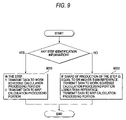
- FIG. 9 is a diagram showing calculation algorithm determining processing by the calculation control portion of the production planning apparatus according to the embodiment of the invention.
- FIG. 10 is a diagram describing production plan and procurement plan information.
- a supplier first procures a raw material ( 201 ) and produces parts from the raw material ( 202 ). Then, the supplier supplies the produced parts to a manufacturer in a downstream step. The manufacturer produces crosses from the parts supplied from the supplier ( 203 ) and produces a larger cross from the crosses and/or parts ( 204 ). Then, the manufacturer produces the product from these crosses ( 205 ) and ships the product. The shipped product is delivered to a client ( 206 ).
- a calculation control portion determines calculation processing portion among multiple calculation processing portions based on production constraints of the product, crosses and parts and calculates a production plan.
- a company produces multiple kinds of product.
- the parts structure to be handled in an assembly type production step among those products generally has more stages and is complicated. Furthermore, the number of process type production steps may be higher than 100. Describing embodiments of all of the steps for real products is not realistic then. Therefore, in order to clearly describe details of the invention, this embodiment will describe simplified type of product, parts construction and number of steps.
- step herein may refer to a set of tasks to be performed in one facility and/or worker or may be a set of tasks to be performed in multiple facilities and/or multiple workers.
- a factory may be regarded as one step.
- facilities and/or workers in the manufacture industry are often managed by an organization for some reasons such as works and costs. Therefore, the “step” may be handled in organizations.
- the production planning apparatus 100 of this embodiment mainly includes a “storage portion for storing input information”, a “processing portion for calculating and outputting a result” and a “storage portion for storing a calculation result”.
- the storage portion for storing input information among them has a shipping plan storage portion 101 , a parts table storage portion 102 , a step information storage portion 103 and a step identification information storage portion 104 .
- the shipping plan storage portion 101 stores the requested shipping date and amount of each product, that is, stores shipping plan information.
- the parts table storage portion 102 stores a parts structure and production lead time for each product.
- the step information storage portion 103 stores steps for producing a product or part (collectively called item), order of the steps and required times.
- the step identification information storage portion 104 stores identifiers of steps.
- the production planning apparatus 100 may further have an inventory information storage portion 105 , a warehousing schedule information storage portion 106 and a setup time information storage portion 107 as required.
- the inventory information storage portion 105 stores an inventory of an item.
- the warehousing information storage portion 106 stores an available time of each part when the part is procured to be available and the amount.
- the setup time information storage portion 107 stores a setup time required for producing an item in a step of producing the item.
- the storage portions 105 , 106 and 107 may be eliminated if no information is available to store therein.
- the processing portion for performing a calculation includes an MRP calculation processing portion 108 , a work schedule calculation processing portion 109 , a calculation control portion 110 and a plan output portion 112 .
- the MRP calculation processing portion 108 calculates a date to start, date to complete and amount to complete of an item based on shipping plan information and by using a parts table, inventory information and warehousing schedule information thereof.
- the work schedule calculation processing portion 109 calculates a date and time to start, date and time to complete and amount to complete of an item based on shipping plan information thereof and by using step information and setup time information.
- the calculation control portion 110 activates the MRP calculation processing portion 108 or work schedule calculation processing portion 109 based on shipping plan information and by using step identification information.
- the plan output portion 112 outputs an amount of an item to produce or procure per day to a plan storage portion.
- the storage portion for storing a calculation result corresponds to a plan storage portion 111 for storing a production plan including dates and amounts to produce a product, crosses and parts and a procurement plan including dates needing a raw material, which must be newly procured, and the amount.
- the production planning apparatus 100 of this embodiment may be installed in a computer such as a personal computer and may store programs of the “storage portion for storing input information”, “storage portion for storing a calculation result” and “processing portion for calculating and outputting a result” in a hard disk thereof.
- a CPU thereof performs processing described in the programs. More specifically, input information selected by the program is loaded from the “storage portion for storing input information” of the hard disk to a memory, and the CPU performs a computing selected by the program and temporarily stores the computing result in the memory.
- One selected by the program among computing results stored in the memory is output to the “storage portion for storing a calculation result” of the hard disk.
- the “storage portion for storing input information”, “processing portion for calculating and outputting a result” and “storage portion for storing a calculation result” may be all installed in a standalone computer or may be distributed to machines connected over a network such as Ethernet and information may be exchanged via the network as required.
- the storage portion relating to parts production and procurement may be provided in the machine managed by a supplier.
- the storage portion relating to cross production and procurement may be provided in the machine managed by a manufacturer.
- the planning portion, plan storage portion and plan output portion may be provided in the machine managed by an information department of a manufacturer.
- FIG. 3 shows parts structures of a product to be handled in this embodiment.
- Product-To-Produce P 01 includes Cross i 11 and Part B 11 , and the lead time is one (1) day.
- the parts table storage portion 102 stores the data shown in FIG. 3 .
- the names such as P 01 , i 11 and B 11 are codes given for convenience, and, if a product is a liquid crystal monitor, P 01 , i 11 , B 11 , B 12 and M 13 may be a liquid crystal monitor, a liquid crystal panel, a backlight, a TFT substrate and a glass substrate, respectively.
- a TFT is formed on the glass substrate, whereby a TFT substrate can be obtained.
- the TFT substrate is injected with a liquid crystal agent and is provided with a driver, whereby a liquid crystal panel can be obtained.
- the liquid crystal monitor can be obtained by assembling the backlight into the liquid crystal panel.
- FIG. 4 shows steps required for a production and the shares and available capacities of the steps per day.
- Item P 01 is produced in the product assembly step, and the share of the product assembly step for producing P 01 is 20 per unit.
- the product assembly step has a capacity of 2000 per day.
- the names, product assembly, cross assembly and parts manufacturing, are codes given for convenience.
- the product assembly refers to the step of producing the liquid crystal monitor.
- the cross assembly refers to the step of producing the liquid crystal panel from the TFT substrate.
- the parts manufacturing refers to the step of producing the TFT substrate.
- the step information storage portion 103 stores data shown in FIG. 4 .
- FIG. 5 shows shares of the steps required for item changes. For example, when B 11 is changed to B 12 , the share of the parts manufacturing step is 1000.
- the setup time information storage portion 107 stores the data shown in FIG. 5 .
- FIG. 6 shows step types.
- a step type is used to determine which calculation processing portion is to be used to calculate a production plan. In this example, if the step identification flag is “0”, the production plan is calculated by the MRP calculation processing portion 108 . If “1”, the production plan is calculated by the work schedule calculation processing portion 109 .
- the step identification information storage portion 104 stores the data shown in FIG. 6 .
- FIG. 7 shows information on inventories, warehousing schedules and shipping plans.
- Part B 11 has an inventory of 10.
- the inventory information storage portion 105 stores data on inventories.
- the warehousing schedule information storage portion 106 stores data on warehousing schedules.
- the shipping plan storage portion 101 stores shipping plans.
- the shipping plan information includes a requested amount to ship and date to ship of each product as shown in FIG. 7 .
- the calculation control portion 110 , the MRP calculation processing portion 108 and work schedule calculation portions 109 devise production plans based on the shipping plans.
- the calculation control portion 110 performs production plan devising processing by using the CPU and the memory in steps shown in FIG. 8 .
- the processing in each of the steps shown in FIG. 8 will be described below.
- Input information pieces 101 to 107 required for calculations are loaded from the “storage portion for storing input information” onto the memory. If no data on a shipping plan is available, it is regarded as that no item is requested to produce, and the processing ends.
- An order of steps for manufacturing a product registered with the shipping plan is determined including that for the production of parts therefor based on the shipping plan, parts table and step information. For example, since P 01 is produced in order of B 12 , i 11 , B 11 and P 01 on the parts table, the order of steps is parts manufacturing, cross assembly and product assembly. The order of steps for P 02 is also parts manufacturing, cross assembly and product assembly. The order of calculations is reverse to the order of steps. In this example, the order of calculations is product assembly, cross assembly and parts manufacturing. Since a topological sort is often used as the algorithm for calculating the order in general, the algorithm may be installed in the calculation control portion to calculate the order, which allows more efficient calculation.
- steps 803 to 805 the processing is performed in steps in the calculation order determined in step 802 .
- the calculation control portion may activate steps 803 to 805 to perform parallel calculations by using the information.
- the MRP calculation processing portion 108 and work schedule calculation processing portion 109 supporting the parallel calculations must be provided.
- FIG. 9 shows the determination flow.
- the memory is searched for step identification information storage portion 104 . If the step identification flag for the target step is “1” in the step identification information storage portion 104 if any, the work schedule calculation algorithm is selected, while the MRP calculation algorithm is selected if “0” in step 8031 . If the step identification information storage portion 104 is not available, the setup time information storage portion 107 for the target step is referred in step 8032 .
- the setup time information storage portion 107 has a share depending on the work schedule as described with reference to FIG. 5 . If the value is high, the share of the step largely depends on the work schedule.
- the setup share of 1000 shown in FIG. 5 is required in addition to the production share.
- the setup share is 2000. Since the capacity of the step corresponding to the time of the setup share cannot be used for the production, the “work schedule calculation algorithm” for calculating the work schedule is preferably selected if the value is high.
- the work schedule calculation algorithm is selected if the setup share is equal to or higher than a predefined reference. If the setup share is lower than the reference, the MRP calculation algorithm is selected.
- the reference is uniquely determined based on characteristics of the product and/or steps.
- a fixed threshold which is, for example, a half amount of the capacity of the step may be provided in the setup shares, and a setup share may be equal to or higher than the reference if at least one piece of data is equal to or higher than the threshold value in the target steps.
- the reference may be programmed as processing by the calculation control portion. Alternatively, another storage portion may be provided, and the reference may be loaded onto the memory therefrom.
- the setup share may be obtained based on the work performance (when and how many of which item was charged and was completed), and the setup share may be automatically input to the setup time information storage portion 107 of the production planning apparatus 100 .
- a production plan is devised by the calculation processing portion. More specifically, the date to start, date to complete and amount to produce are determined based on the item, requested date of shipping or the date to start in the previous step.
- Many algorithms have been proposed for the MRP calculation and work schedule calculation. The description on the details of the algorithms will be omitted in this description on this embodiment.
- the production plan (including the item, steps, date to start, date to complete and amount to produce) calculated in step 804 is output to the plan storage portion 111 .
- FIG. 10 shows the information to be output to the plan storage portion 111 .
- the production plan and procurement plan stored in the plan storage portion 111 may be output as electronic data to paper, a display or another system so as to check the result.
- steps 803 to 805 are implemented with the data shown in FIGS. 3 to 7 , the processing is performed in order of (1): product assembly, (2): cross assembly and (3): parts manufacturing as described below.
- Product Assembly includes:
- MRP calculation algorithm is determined as the algorithm for the product assembly based on the step identification flag, “0”, in the step identification information.
- the MRP calculation processing portion 108 calculates the amount to produce, date to start and date to complete by the MRP calculation algorithm.
- P 01 and P 02 are items to produce in the product assembly.
- the date to complete for both P 01 and P 02 is Apr. 30, 2004 since the requested date of shipping in the shipping plan in the shipping plan storage portion 101 is set from the memory.
- the amount to produce is calculated by setting the requested amount to ship in the shipping plan storage portion 101 and the amounts to produce, 50, for P 01 and P 02 are set from the memory and subtracting an inventory and a warehousing schedule in the inventory information storage portion 105 and warehousing schedule storage portion 106 from 50. Since no inventory and warehousing schedule are available in this example, the amounts to produce are 50.
- the date to start is calculated by subtracting a lead time in the parts table storage portion 102 from the date to complete.
- Searching information having Parent 01 results in 1 as the lead time of Child i 11 and 1 as the lead time of Child B 11 . Therefore, the lead time of Parent P 01 is 1, which is the highest value therebetween.
- the lead time for Parent P 02 is calculated in the same manner, and the date to start for both Parents P 01 and P 02 is Apr. 29, 2004.
- the information on the date to start is stored in the memory.
- MRP calculation algorithm is determined as the algorithm for the cross assembly based on the step identification flag.
- the MRP calculation processing portion 108 calculates the amount to produce, date to start and date to complete by the MRP calculation algorithm.
- i 11 and i 21 are items to produce in the cross assembly.
- the date to complete for i 11 is Apr. 29, 2004 since the date to start for Parent P 01 stored in the plan storage portion 111 is set where Parent P 01 is the parent of i 11 on the parts table.
- the date to start for i 21 is also Apr. 29, 2004.
- the amount to produce is calculated by multiplying the amount to produce, 50, for P 01 and P 02 , which are the parents on the parts table in the parts table storage portion 102 , by the number of components on the parts table in the parts table storage portion 102 and subtracting an inventory and a warehousing schedule in the inventory information storage portion 105 and warehousing schedule storage portion 106 therefrom. Since the number of component is 1 and no inventory and warehousing schedule are available in this example, the amounts to produce are 50.
- the date to start is calculated by subtracting a lead time on the parts table from the date to complete. Thus, the date to start for both i 11 and i 21 is calculated as Apr. 28, 2004.
- Parts Manufacturing includes:
- “Work schedule calculation algorithm” is determined as the algorithm for the parts manufacturing based on the step identification flag.
- the work schedule calculation processing portion 109 calculates the amount to produce, date to start and date to complete by the work schedule calculation algorithm.
- B 11 , B 12 and B 22 are items to produce in the parts manufacturing. First of all, the date to complete (which will be called requested date to complete) for them are calculated.
- the date to complete for B 11 is Apr. 29, 2004 since the date to start for Parent P 01 and date to start for Parent P 02 stored in the plan storage portion 111 are set where P 01 and P 02 are the parents on the parts table.
- the date to complete for B 12 and B 22 are Apr. 28, 2004 since the dates to start for i 11 and i 21 stored in the plan storage portion 111 are also referred and set where i 11 and i 21 are the parents on the parts table.
- B 11 has a share of 20 per unit, which is multiplied by the amount to produce 90, resulting in 1800.
- the same calculation is performed for B 12 and B 22 , resulting in 1000 for B 12 and 1000 for B 22 .
- the work schedule having the date to complete before the requested date to complete and having a date to start as late as possible is searched with reference to the setup share in the setup time information storage portion 107 .
- possible work schedules are listed.
- six of “B 11 , B 12 and B 22 ”, “B 11 , B 22 and B 12 ”, “B 12 , B 11 and B 22 ”, “B 12 , B 22 and B 11 ”, “B 11 , B 12 and B 22 ” and “B 11 , B 22 and B 12 ” are possible.
- Various algorithms have been proposed for the adoption of one of them. For example, the algorithm for assigning the capacity of the step in order of decreasing time to the requested dates to complete and in order of increasing setup time is used to solve the example.
- the setup time for changing to B 11 is compared in the setup shares in the setup time storage portion 107 . Since the setup time from B 12 to B 11 is 2000 and the setup time from B 22 to B 11 is 1000, B 22 is handled as a candidate to assign.
- B 12 serving as the next candidate to assign subtracting the setup time, 1000, for changing from B 12 to B 22 from the capacity with reference to the setup share in the setup time information storage portion 107 results in a remaining capacity of 1200 on Apr. 27, 2004.
- Subtracting the share time, 1000, of B 12 therefrom results in a consumption of 1000 of the remaining capacity, 1200, on Apr. 27, 2004. Therefore, both of the date to start and date to complete for B 21 are Apr. 27, 2004.
- the calculation control portion 110 can output the procurement plan. Then, the dates to start for B 12 and B 22 , which are parents of M 13 and M 23 , may be set as the dates to procure with reference to the parts table in the parts table storage portion 102 .
- FIG. 10 shows the production plan and procurement plan stored in the plan storage portion in this example.
- scheduling calculation is applied to steps having an order constraint in the product production plan having a manufacturing step with the throughput depending on the order of start.
- quick Available to Promise based on the accurate production plan can be achieved, which was not possible with conventional MRP only.
- the simplified kind of product and parts structure are adopted in this example for clear illustration of details of the invention, the invention is also applicable to a production form having multiple kinds of product and a complicated parts structure in many stages.
Landscapes
- Engineering & Computer Science (AREA)
- Business, Economics & Management (AREA)
- Human Resources & Organizations (AREA)
- Economics (AREA)
- Strategic Management (AREA)
- Marketing (AREA)
- Game Theory and Decision Science (AREA)
- Entrepreneurship & Innovation (AREA)
- Development Economics (AREA)
- Operations Research (AREA)
- Quality & Reliability (AREA)
- Tourism & Hospitality (AREA)
- Physics & Mathematics (AREA)
- General Business, Economics & Management (AREA)
- General Physics & Mathematics (AREA)
- Theoretical Computer Science (AREA)
- Management, Administration, Business Operations System, And Electronic Commerce (AREA)
- General Factory Administration (AREA)
Applications Claiming Priority (2)
| Application Number | Priority Date | Filing Date | Title |
|---|---|---|---|
| JP2004-113730 | 2004-04-08 | ||
| JP2004113730A JP4479316B2 (ja) | 2004-04-08 | 2004-04-08 | 生産計画立案装置および方法 |
Publications (2)
| Publication Number | Publication Date |
|---|---|
| US20050228521A1 US20050228521A1 (en) | 2005-10-13 |
| US7092775B2 true US7092775B2 (en) | 2006-08-15 |
Family
ID=35061624
Family Applications (1)
| Application Number | Title | Priority Date | Filing Date |
|---|---|---|---|
| US11/099,626 Expired - Lifetime US7092775B2 (en) | 2004-04-08 | 2005-04-06 | Production planning apparatus and production planning method |
Country Status (2)
| Country | Link |
|---|---|
| US (1) | US7092775B2 (enExample) |
| JP (1) | JP4479316B2 (enExample) |
Cited By (13)
| Publication number | Priority date | Publication date | Assignee | Title |
|---|---|---|---|---|
| US20050187646A1 (en) * | 2004-02-23 | 2005-08-25 | Xin Wen | Automated manufacturing system |
| US20070208444A1 (en) * | 2006-02-09 | 2007-09-06 | Hidenori Ueno | Production planning system |
| US20080021583A1 (en) * | 2006-07-21 | 2008-01-24 | Colas Thibaud | Computer implemented method for defining an input product |
| US20090037245A1 (en) * | 2007-08-02 | 2009-02-05 | Target Brands, Inc. | Gateway balancing |
| US20090037234A1 (en) * | 2007-08-02 | 2009-02-05 | Target Brands, Inc. | Inland freight management |
| US20090063215A1 (en) * | 2007-08-30 | 2009-03-05 | Torsten Heise | Location Determination by Current Day Confirmation |
| US20090069919A1 (en) * | 2007-09-07 | 2009-03-12 | International Business Machines Corporation | Intelligent mass production planning and routing system |
| US20100241263A1 (en) * | 2009-03-17 | 2010-09-23 | National Taiwan University Of Science And Technology | System and method of multi-objective capacity planning in tft-lcd panel manufacturing industry |
| US7840271B2 (en) | 2000-09-27 | 2010-11-23 | Cvrx, Inc. | Stimulus regimens for cardiovascular reflex control |
| US8086314B1 (en) | 2000-09-27 | 2011-12-27 | Cvrx, Inc. | Devices and methods for cardiovascular reflex control |
| US8583236B2 (en) | 2000-09-27 | 2013-11-12 | Cvrx, Inc. | Devices and methods for cardiovascular reflex control |
| US20160282844A1 (en) * | 2015-03-26 | 2016-09-29 | Hitachi, Ltd. | Production planning apparatus and production planning method |
| US12596339B2 (en) | 2022-03-23 | 2026-04-07 | Kabushiki Kaisha Toshiba | Production management device, production management system, production management method, and storage medium |
Families Citing this family (15)
| Publication number | Priority date | Publication date | Assignee | Title |
|---|---|---|---|---|
| JP4363279B2 (ja) * | 2004-09-03 | 2009-11-11 | 株式会社日立製作所 | 生産計画立案システム |
| TWI317909B (en) * | 2004-09-10 | 2009-12-01 | Hon Hai Prec Ind Co Ltd | System and method for mould production scheduling |
| US8155772B2 (en) * | 2008-02-04 | 2012-04-10 | Sap Ag | Method and system for integrating a restriction object with a material object |
| JP5967992B2 (ja) * | 2012-03-19 | 2016-08-10 | 三菱重工業株式会社 | 生産計画立案装置、生産計画立案方法および生産計画立案プログラム |
| WO2014073089A1 (ja) * | 2012-11-09 | 2014-05-15 | 株式会社日立製作所 | 調達計画作成装置 |
| EP2804105B1 (en) * | 2013-05-17 | 2015-10-07 | Fujitsu Limited | Method of improving fault tolerance in a computing system arranged to find a computational solution |
| KR101656989B1 (ko) * | 2015-02-27 | 2016-09-12 | 주식회사 티라유텍 | 제조업체 간의 협업을 위한 통합 플랫폼 관리시스템 |
| JP6695673B2 (ja) | 2015-10-05 | 2020-05-20 | 株式会社日立製作所 | 計画生成装置および計画生成方法 |
| WO2017103996A1 (ja) * | 2015-12-15 | 2017-06-22 | 株式会社日立製作所 | 生産計画立案装置、及び生産計画立案方法 |
| CN109074055B (zh) * | 2016-04-26 | 2021-06-15 | 富士通株式会社 | 作业辅助装置、作业辅助方法以及存储作业辅助程序的计算机可读取存储介质 |
| JP2019061310A (ja) * | 2017-09-25 | 2019-04-18 | パナソニックIpマネジメント株式会社 | 材料補給支援装置および材料補給支援方法 |
| US20190303815A1 (en) * | 2018-03-29 | 2019-10-03 | Sap Se | Distributed manufacturing system |
| JP7829374B2 (ja) * | 2022-03-23 | 2026-03-13 | 株式会社東芝 | 作成システム、作成方法、プログラム、及び記憶媒体 |
| JP7195558B1 (ja) * | 2022-03-25 | 2022-12-26 | AI inside株式会社 | プログラム、サーバ、システム及び方法 |
| CN115187180B (zh) * | 2022-09-09 | 2023-01-20 | 荣耀终端有限公司 | 物料数据处理方法及电子设备 |
Citations (8)
| Publication number | Priority date | Publication date | Assignee | Title |
|---|---|---|---|---|
| US5819232A (en) * | 1996-03-22 | 1998-10-06 | E. I. Du Pont De Nemours And Company | Method and apparatus for inventory control of a manufacturing or distribution process |
| JP2000353190A (ja) | 1999-06-09 | 2000-12-19 | Hitachi Ltd | 納期回答システム |
| JP2001034321A (ja) | 1999-07-23 | 2001-02-09 | Matsushita Electric Ind Co Ltd | 最適生産計画作成方法及び装置 |
| US20020120533A1 (en) * | 2001-02-23 | 2002-08-29 | Hubert Wiesenmaier | Method and system for management of ordering, production, and delivery of made-to-specification goods |
| US6606527B2 (en) * | 2000-03-31 | 2003-08-12 | International Business Machines Corporation | Methods and systems for planning operations in manufacturing plants |
| US6684117B2 (en) * | 2000-03-31 | 2004-01-27 | International Business Machines Corporation | Methods and systems for scheduling work |
| US20040148206A1 (en) * | 2002-11-29 | 2004-07-29 | Masaki Matsumoto | Production plan management system |
| US20050015167A1 (en) * | 2003-07-18 | 2005-01-20 | Searcy Allison Fay | Synchronized production with dynamic logistics routing |
-
2004
- 2004-04-08 JP JP2004113730A patent/JP4479316B2/ja not_active Expired - Lifetime
-
2005
- 2005-04-06 US US11/099,626 patent/US7092775B2/en not_active Expired - Lifetime
Patent Citations (8)
| Publication number | Priority date | Publication date | Assignee | Title |
|---|---|---|---|---|
| US5819232A (en) * | 1996-03-22 | 1998-10-06 | E. I. Du Pont De Nemours And Company | Method and apparatus for inventory control of a manufacturing or distribution process |
| JP2000353190A (ja) | 1999-06-09 | 2000-12-19 | Hitachi Ltd | 納期回答システム |
| JP2001034321A (ja) | 1999-07-23 | 2001-02-09 | Matsushita Electric Ind Co Ltd | 最適生産計画作成方法及び装置 |
| US6606527B2 (en) * | 2000-03-31 | 2003-08-12 | International Business Machines Corporation | Methods and systems for planning operations in manufacturing plants |
| US6684117B2 (en) * | 2000-03-31 | 2004-01-27 | International Business Machines Corporation | Methods and systems for scheduling work |
| US20020120533A1 (en) * | 2001-02-23 | 2002-08-29 | Hubert Wiesenmaier | Method and system for management of ordering, production, and delivery of made-to-specification goods |
| US20040148206A1 (en) * | 2002-11-29 | 2004-07-29 | Masaki Matsumoto | Production plan management system |
| US20050015167A1 (en) * | 2003-07-18 | 2005-01-20 | Searcy Allison Fay | Synchronized production with dynamic logistics routing |
Cited By (27)
| Publication number | Priority date | Publication date | Assignee | Title |
|---|---|---|---|---|
| US8583236B2 (en) | 2000-09-27 | 2013-11-12 | Cvrx, Inc. | Devices and methods for cardiovascular reflex control |
| US8086314B1 (en) | 2000-09-27 | 2011-12-27 | Cvrx, Inc. | Devices and methods for cardiovascular reflex control |
| US7840271B2 (en) | 2000-09-27 | 2010-11-23 | Cvrx, Inc. | Stimulus regimens for cardiovascular reflex control |
| US20050187646A1 (en) * | 2004-02-23 | 2005-08-25 | Xin Wen | Automated manufacturing system |
| US7242993B2 (en) * | 2004-02-23 | 2007-07-10 | Shutterfly, Inc. | Automated manufacturing system |
| US20070185603A1 (en) * | 2004-02-23 | 2007-08-09 | Xin Wen | Automated manufacturing system |
| US7317960B2 (en) | 2004-02-23 | 2008-01-08 | Shutterfly, Inc. | Automated manufacturing system |
| US20080288521A1 (en) * | 2004-02-23 | 2008-11-20 | Shulterfly Corporation | Automated manufacturing system |
| US8082053B2 (en) | 2004-02-23 | 2011-12-20 | Shutterfly, Inc. | Automated manufacturing system |
| US20070208444A1 (en) * | 2006-02-09 | 2007-09-06 | Hidenori Ueno | Production planning system |
| US7890201B2 (en) * | 2006-02-09 | 2011-02-15 | Hitachi, Ltd. | Production planning system |
| US7840295B2 (en) * | 2006-07-21 | 2010-11-23 | Dassault Systemes | Computer implemented method for defining an input product |
| US20080021583A1 (en) * | 2006-07-21 | 2008-01-24 | Colas Thibaud | Computer implemented method for defining an input product |
| US20090037234A1 (en) * | 2007-08-02 | 2009-02-05 | Target Brands, Inc. | Inland freight management |
| US8417550B2 (en) | 2007-08-02 | 2013-04-09 | Target Brands, Inc. | Inland freight management |
| US11403585B2 (en) | 2007-08-02 | 2022-08-02 | Target Brands, Inc. | Gateway balancing |
| US20090037245A1 (en) * | 2007-08-02 | 2009-02-05 | Target Brands, Inc. | Gateway balancing |
| US8131584B2 (en) | 2007-08-02 | 2012-03-06 | Target Brands, Inc. | Gateway balancing |
| US10878363B2 (en) | 2007-08-02 | 2020-12-29 | Target Brands Inc. | Inland freight management |
| US8306838B2 (en) * | 2007-08-30 | 2012-11-06 | Sap Aktiengeselleschaft | System and method for affirmative fulfillment of an order based on same day material availability during operating hours |
| US20090063215A1 (en) * | 2007-08-30 | 2009-03-05 | Torsten Heise | Location Determination by Current Day Confirmation |
| US20090069919A1 (en) * | 2007-09-07 | 2009-03-12 | International Business Machines Corporation | Intelligent mass production planning and routing system |
| US8175735B2 (en) | 2009-03-17 | 2012-05-08 | National Taiwan University Of Science And Technology | System and method of multi-objective capacity planning in TFT-LCD panel manufacturing industry |
| US20100241263A1 (en) * | 2009-03-17 | 2010-09-23 | National Taiwan University Of Science And Technology | System and method of multi-objective capacity planning in tft-lcd panel manufacturing industry |
| US20160282844A1 (en) * | 2015-03-26 | 2016-09-29 | Hitachi, Ltd. | Production planning apparatus and production planning method |
| US10037018B2 (en) * | 2015-03-26 | 2018-07-31 | Hitachi, Ltd. | Production planning apparatus and production planning method |
| US12596339B2 (en) | 2022-03-23 | 2026-04-07 | Kabushiki Kaisha Toshiba | Production management device, production management system, production management method, and storage medium |
Also Published As
| Publication number | Publication date |
|---|---|
| JP2005301466A (ja) | 2005-10-27 |
| JP4479316B2 (ja) | 2010-06-09 |
| US20050228521A1 (en) | 2005-10-13 |
Similar Documents
| Publication | Publication Date | Title |
|---|---|---|
| US20050228521A1 (en) | Production planning apparatus and production planning method | |
| Jeong et al. | An available-to-promise system for TFT LCD manufacturing in supply chain | |
| Kurbel | Enterprise resource planning and supply chain management | |
| US8069071B2 (en) | Suite of configurable supply chain infrastructure modules for deploying collaborative e-manufacturing solutions | |
| Scott et al. | Can overall factory effectiveness prolong Moore's law? | |
| Yang et al. | Simulation-based dynamic shop floor scheduling for a flexible manufacturing system in the industry 4.0 environment | |
| CN103034920B (zh) | 用于控制制造设施的操作的系统和方法 | |
| CN110705818A (zh) | 订单的排产方法、装置和计算机设备 | |
| US20020087227A1 (en) | System and method for production management | |
| Garcia-Sabater et al. | A new formulation technique to model materials and operations planning: the generic materials and operations planning (GMOP) problem | |
| US20190303815A1 (en) | Distributed manufacturing system | |
| US7200454B2 (en) | Method, system, and storage medium for integrating rework operations into an advanced planning process | |
| Haekal et al. | Comparative analysis of raw materials control using JIT and EOQ method for cost efficiency of raw material supply in automotive components company Bekasi, Indonesia | |
| US20040019538A1 (en) | Relational database for producing bill-of-materials from planning information | |
| Wänström et al. | The impact of engineering changes on materials planning | |
| JP2006341937A (ja) | 分散型トレーサビリティ管理システム | |
| US20030139952A1 (en) | Complexity management and production optimization system | |
| US6856857B2 (en) | Method and system for planning disassembly and production of recyclable products and for planning procurement of parts for production | |
| US7035704B2 (en) | Capacity management system and method | |
| JPH10301993A (ja) | 生産管理システム並びに生産計画演算装置及び生産計画演算方法 | |
| Cheng et al. | Applying RFID for cutting tool supply chain management | |
| Chiu et al. | Meeting multiproduct demand with a hybrid inventory replenishment system featuring quality reassurance | |
| US20250086691A1 (en) | Order processing method, electronic device and storage medium | |
| US20040122724A1 (en) | System and method for generating priorities of manufacturing orders | |
| JPWO2004085297A1 (ja) | サプライチェーン紐付け管理システム |
Legal Events
| Date | Code | Title | Description |
|---|---|---|---|
| AS | Assignment |
Owner name: HITACHI, LTD., JAPAN Free format text: ASSIGNMENT OF ASSIGNORS INTEREST;ASSIGNORS:NOMOTO, TAZU;ENOMOTO, MITSUHIRO;TODA, MASAYUKI;AND OTHERS;REEL/FRAME:016693/0713;SIGNING DATES FROM 20050512 TO 20050520 |
|
| STCF | Information on status: patent grant |
Free format text: PATENTED CASE |
|
| FEPP | Fee payment procedure |
Free format text: PAYOR NUMBER ASSIGNED (ORIGINAL EVENT CODE: ASPN); ENTITY STATUS OF PATENT OWNER: LARGE ENTITY |
|
| FEPP | Fee payment procedure |
Free format text: PAYER NUMBER DE-ASSIGNED (ORIGINAL EVENT CODE: RMPN); ENTITY STATUS OF PATENT OWNER: LARGE ENTITY |
|
| FEPP | Fee payment procedure |
Free format text: PAYOR NUMBER ASSIGNED (ORIGINAL EVENT CODE: ASPN); ENTITY STATUS OF PATENT OWNER: LARGE ENTITY |
|
| FPAY | Fee payment |
Year of fee payment: 4 |
|
| FPAY | Fee payment |
Year of fee payment: 8 |
|
| MAFP | Maintenance fee payment |
Free format text: PAYMENT OF MAINTENANCE FEE, 12TH YEAR, LARGE ENTITY (ORIGINAL EVENT CODE: M1553) Year of fee payment: 12 |