US6433142B1 - Megakaryocyte stimulating factors - Google Patents
Megakaryocyte stimulating factors Download PDFInfo
- Publication number
- US6433142B1 US6433142B1 US07/757,022 US75702291A US6433142B1 US 6433142 B1 US6433142 B1 US 6433142B1 US 75702291 A US75702291 A US 75702291A US 6433142 B1 US6433142 B1 US 6433142B1
- Authority
- US
- United States
- Prior art keywords
- seq
- msf
- sequence
- exons
- exon
- Prior art date
- Legal status (The legal status is an assumption and is not a legal conclusion. Google has not performed a legal analysis and makes no representation as to the accuracy of the status listed.)
- Expired - Fee Related
Links
- 210000003593 megakaryocyte Anatomy 0.000 title abstract description 86
- 230000004936 stimulating effect Effects 0.000 title abstract description 10
- 239000008194 pharmaceutical composition Substances 0.000 claims abstract description 7
- 102100028965 Proteoglycan 4 Human genes 0.000 claims description 236
- 210000004027 cell Anatomy 0.000 claims description 136
- 108090000623 proteins and genes Proteins 0.000 claims description 86
- 102000004169 proteins and genes Human genes 0.000 claims description 69
- 108091028043 Nucleic acid sequence Proteins 0.000 claims description 67
- 230000014509 gene expression Effects 0.000 claims description 61
- 239000012634 fragment Substances 0.000 claims description 46
- 125000003275 alpha amino acid group Chemical group 0.000 claims description 33
- 239000001963 growth medium Substances 0.000 claims description 4
- 238000012258 culturing Methods 0.000 claims description 3
- 101710127913 Proteoglycan 4 Proteins 0.000 claims 4
- 238000000034 method Methods 0.000 abstract description 55
- 230000012010 growth Effects 0.000 abstract description 9
- 238000011161 development Methods 0.000 abstract description 5
- 238000002360 preparation method Methods 0.000 abstract description 4
- 101000632056 Homo sapiens Septin-9 Proteins 0.000 description 263
- 101001027128 Homo sapiens Fibronectin Proteins 0.000 description 237
- 101001123332 Homo sapiens Proteoglycan 4 Proteins 0.000 description 237
- 108700024394 Exon Proteins 0.000 description 125
- 239000002773 nucleotide Substances 0.000 description 89
- 125000003729 nucleotide group Chemical group 0.000 description 89
- 235000001014 amino acid Nutrition 0.000 description 70
- 229940024606 amino acid Drugs 0.000 description 67
- 235000018102 proteins Nutrition 0.000 description 67
- 150000001413 amino acids Chemical class 0.000 description 63
- 108010041111 Thrombopoietin Proteins 0.000 description 49
- 230000000694 effects Effects 0.000 description 48
- 102000036693 Thrombopoietin Human genes 0.000 description 45
- 238000003556 assay Methods 0.000 description 45
- 239000013598 vector Substances 0.000 description 40
- 108020005038 Terminator Codon Proteins 0.000 description 36
- 241001529936 Murinae Species 0.000 description 31
- 239000000203 mixture Substances 0.000 description 31
- 108010073385 Fibrin Proteins 0.000 description 30
- 102000009123 Fibrin Human genes 0.000 description 30
- BWGVNKXGVNDBDI-UHFFFAOYSA-N Fibrin monomer Chemical compound CNC(=O)CNC(=O)CN BWGVNKXGVNDBDI-UHFFFAOYSA-N 0.000 description 30
- 239000002299 complementary DNA Substances 0.000 description 30
- 229950003499 fibrin Drugs 0.000 description 30
- 210000001772 blood platelet Anatomy 0.000 description 29
- 108020004414 DNA Proteins 0.000 description 26
- 238000000746 purification Methods 0.000 description 26
- 241000588724 Escherichia coli Species 0.000 description 24
- 230000004071 biological effect Effects 0.000 description 22
- 108090000765 processed proteins & peptides Proteins 0.000 description 22
- 210000002700 urine Anatomy 0.000 description 22
- WEVYAHXRMPXWCK-UHFFFAOYSA-N Acetonitrile Chemical compound CC#N WEVYAHXRMPXWCK-UHFFFAOYSA-N 0.000 description 21
- 210000004962 mammalian cell Anatomy 0.000 description 19
- 230000002485 urinary effect Effects 0.000 description 19
- DTQVDTLACAAQTR-UHFFFAOYSA-N Trifluoroacetic acid Chemical compound OC(=O)C(F)(F)F DTQVDTLACAAQTR-UHFFFAOYSA-N 0.000 description 18
- 239000013612 plasmid Substances 0.000 description 18
- 230000001580 bacterial effect Effects 0.000 description 17
- 102000004196 processed proteins & peptides Human genes 0.000 description 16
- 241000894007 species Species 0.000 description 16
- 102000004127 Cytokines Human genes 0.000 description 15
- 108090000695 Cytokines Proteins 0.000 description 15
- 229920001184 polypeptide Polymers 0.000 description 15
- 238000002415 sodium dodecyl sulfate polyacrylamide gel electrophoresis Methods 0.000 description 15
- 102000000646 Interleukin-3 Human genes 0.000 description 14
- 108010002386 Interleukin-3 Proteins 0.000 description 14
- 238000003752 polymerase chain reaction Methods 0.000 description 14
- 230000004048 modification Effects 0.000 description 13
- 238000012986 modification Methods 0.000 description 13
- FAPWRFPIFSIZLT-UHFFFAOYSA-M Sodium chloride Chemical compound [Na+].[Cl-] FAPWRFPIFSIZLT-UHFFFAOYSA-M 0.000 description 12
- 238000004519 manufacturing process Methods 0.000 description 12
- 239000013615 primer Substances 0.000 description 12
- 230000005757 colony formation Effects 0.000 description 11
- 102000037865 fusion proteins Human genes 0.000 description 11
- 108020001507 fusion proteins Proteins 0.000 description 11
- 238000004007 reversed phase HPLC Methods 0.000 description 11
- 101100007328 Cocos nucifera COS-1 gene Proteins 0.000 description 10
- 102000002933 Thioredoxin Human genes 0.000 description 10
- 210000001185 bone marrow Anatomy 0.000 description 10
- 210000004978 chinese hamster ovary cell Anatomy 0.000 description 10
- 239000003636 conditioned culture medium Substances 0.000 description 10
- 208000037265 diseases, disorders, signs and symptoms Diseases 0.000 description 10
- 210000000265 leukocyte Anatomy 0.000 description 10
- 239000002243 precursor Substances 0.000 description 10
- 108091008146 restriction endonucleases Proteins 0.000 description 10
- 230000003248 secreting effect Effects 0.000 description 10
- 230000001225 therapeutic effect Effects 0.000 description 10
- 108060008226 thioredoxin Proteins 0.000 description 10
- QTBSBXVTEAMEQO-UHFFFAOYSA-N Acetic acid Chemical compound CC(O)=O QTBSBXVTEAMEQO-UHFFFAOYSA-N 0.000 description 9
- 108020004705 Codon Proteins 0.000 description 9
- 108091034117 Oligonucleotide Proteins 0.000 description 9
- 238000006243 chemical reaction Methods 0.000 description 9
- 238000010790 dilution Methods 0.000 description 9
- 239000012895 dilution Substances 0.000 description 9
- 239000013604 expression vector Substances 0.000 description 9
- 230000013595 glycosylation Effects 0.000 description 9
- 238000006206 glycosylation reaction Methods 0.000 description 9
- 230000001105 regulatory effect Effects 0.000 description 9
- 239000006228 supernatant Substances 0.000 description 9
- 229940094937 thioredoxin Drugs 0.000 description 9
- 230000001361 thrombopoietic effect Effects 0.000 description 9
- 238000013519 translation Methods 0.000 description 9
- 102100024746 Dihydrofolate reductase Human genes 0.000 description 8
- 102100020880 Kit ligand Human genes 0.000 description 8
- 238000004458 analytical method Methods 0.000 description 8
- 238000005341 cation exchange Methods 0.000 description 8
- 108020001096 dihydrofolate reductase Proteins 0.000 description 8
- 238000009396 hybridization Methods 0.000 description 8
- 238000000338 in vitro Methods 0.000 description 8
- 230000000977 initiatory effect Effects 0.000 description 8
- 238000003786 synthesis reaction Methods 0.000 description 8
- HTTJABKRGRZYRN-UHFFFAOYSA-N Heparin Chemical compound OC1C(NC(=O)C)C(O)OC(COS(O)(=O)=O)C1OC1C(OS(O)(=O)=O)C(O)C(OC2C(C(OS(O)(=O)=O)C(OC3C(C(O)C(O)C(O3)C(O)=O)OS(O)(=O)=O)C(CO)O2)NS(O)(=O)=O)C(C(O)=O)O1 HTTJABKRGRZYRN-UHFFFAOYSA-N 0.000 description 7
- VMHLLURERBWHNL-UHFFFAOYSA-M Sodium acetate Chemical compound [Na+].CC([O-])=O VMHLLURERBWHNL-UHFFFAOYSA-M 0.000 description 7
- 108010039445 Stem Cell Factor Proteins 0.000 description 7
- 210000002798 bone marrow cell Anatomy 0.000 description 7
- 238000010276 construction Methods 0.000 description 7
- 238000012217 deletion Methods 0.000 description 7
- 230000037430 deletion Effects 0.000 description 7
- 238000010353 genetic engineering Methods 0.000 description 7
- 210000003958 hematopoietic stem cell Anatomy 0.000 description 7
- 229960002897 heparin Drugs 0.000 description 7
- 229920000669 heparin Polymers 0.000 description 7
- PHEDXBVPIONUQT-RGYGYFBISA-N phorbol 13-acetate 12-myristate Chemical compound C([C@]1(O)C(=O)C(C)=C[C@H]1[C@@]1(O)[C@H](C)[C@H]2OC(=O)CCCCCCCCCCCCC)C(CO)=C[C@H]1[C@H]1[C@]2(OC(C)=O)C1(C)C PHEDXBVPIONUQT-RGYGYFBISA-N 0.000 description 7
- 230000008569 process Effects 0.000 description 7
- 230000028327 secretion Effects 0.000 description 7
- 239000001632 sodium acetate Substances 0.000 description 7
- 235000017281 sodium acetate Nutrition 0.000 description 7
- 238000011282 treatment Methods 0.000 description 7
- 108020004635 Complementary DNA Proteins 0.000 description 6
- 208000031637 Erythroblastic Acute Leukemia Diseases 0.000 description 6
- 208000036566 Erythroleukaemia Diseases 0.000 description 6
- 241000238631 Hexapoda Species 0.000 description 6
- JLCPHMBAVCMARE-UHFFFAOYSA-N [3-[[3-[[3-[[3-[[3-[[3-[[3-[[3-[[3-[[3-[[3-[[5-(2-amino-6-oxo-1H-purin-9-yl)-3-[[3-[[3-[[3-[[3-[[3-[[5-(2-amino-6-oxo-1H-purin-9-yl)-3-[[5-(2-amino-6-oxo-1H-purin-9-yl)-3-hydroxyoxolan-2-yl]methoxy-hydroxyphosphoryl]oxyoxolan-2-yl]methoxy-hydroxyphosphoryl]oxy-5-(5-methyl-2,4-dioxopyrimidin-1-yl)oxolan-2-yl]methoxy-hydroxyphosphoryl]oxy-5-(6-aminopurin-9-yl)oxolan-2-yl]methoxy-hydroxyphosphoryl]oxy-5-(6-aminopurin-9-yl)oxolan-2-yl]methoxy-hydroxyphosphoryl]oxy-5-(6-aminopurin-9-yl)oxolan-2-yl]methoxy-hydroxyphosphoryl]oxy-5-(6-aminopurin-9-yl)oxolan-2-yl]methoxy-hydroxyphosphoryl]oxyoxolan-2-yl]methoxy-hydroxyphosphoryl]oxy-5-(5-methyl-2,4-dioxopyrimidin-1-yl)oxolan-2-yl]methoxy-hydroxyphosphoryl]oxy-5-(4-amino-2-oxopyrimidin-1-yl)oxolan-2-yl]methoxy-hydroxyphosphoryl]oxy-5-(5-methyl-2,4-dioxopyrimidin-1-yl)oxolan-2-yl]methoxy-hydroxyphosphoryl]oxy-5-(5-methyl-2,4-dioxopyrimidin-1-yl)oxolan-2-yl]methoxy-hydroxyphosphoryl]oxy-5-(6-aminopurin-9-yl)oxolan-2-yl]methoxy-hydroxyphosphoryl]oxy-5-(6-aminopurin-9-yl)oxolan-2-yl]methoxy-hydroxyphosphoryl]oxy-5-(4-amino-2-oxopyrimidin-1-yl)oxolan-2-yl]methoxy-hydroxyphosphoryl]oxy-5-(4-amino-2-oxopyrimidin-1-yl)oxolan-2-yl]methoxy-hydroxyphosphoryl]oxy-5-(4-amino-2-oxopyrimidin-1-yl)oxolan-2-yl]methoxy-hydroxyphosphoryl]oxy-5-(6-aminopurin-9-yl)oxolan-2-yl]methoxy-hydroxyphosphoryl]oxy-5-(4-amino-2-oxopyrimidin-1-yl)oxolan-2-yl]methyl [5-(6-aminopurin-9-yl)-2-(hydroxymethyl)oxolan-3-yl] hydrogen phosphate Polymers Cc1cn(C2CC(OP(O)(=O)OCC3OC(CC3OP(O)(=O)OCC3OC(CC3O)n3cnc4c3nc(N)[nH]c4=O)n3cnc4c3nc(N)[nH]c4=O)C(COP(O)(=O)OC3CC(OC3COP(O)(=O)OC3CC(OC3COP(O)(=O)OC3CC(OC3COP(O)(=O)OC3CC(OC3COP(O)(=O)OC3CC(OC3COP(O)(=O)OC3CC(OC3COP(O)(=O)OC3CC(OC3COP(O)(=O)OC3CC(OC3COP(O)(=O)OC3CC(OC3COP(O)(=O)OC3CC(OC3COP(O)(=O)OC3CC(OC3COP(O)(=O)OC3CC(OC3COP(O)(=O)OC3CC(OC3COP(O)(=O)OC3CC(OC3COP(O)(=O)OC3CC(OC3COP(O)(=O)OC3CC(OC3COP(O)(=O)OC3CC(OC3CO)n3cnc4c(N)ncnc34)n3ccc(N)nc3=O)n3cnc4c(N)ncnc34)n3ccc(N)nc3=O)n3ccc(N)nc3=O)n3ccc(N)nc3=O)n3cnc4c(N)ncnc34)n3cnc4c(N)ncnc34)n3cc(C)c(=O)[nH]c3=O)n3cc(C)c(=O)[nH]c3=O)n3ccc(N)nc3=O)n3cc(C)c(=O)[nH]c3=O)n3cnc4c3nc(N)[nH]c4=O)n3cnc4c(N)ncnc34)n3cnc4c(N)ncnc34)n3cnc4c(N)ncnc34)n3cnc4c(N)ncnc34)O2)c(=O)[nH]c1=O JLCPHMBAVCMARE-UHFFFAOYSA-N 0.000 description 6
- 208000021841 acute erythroid leukemia Diseases 0.000 description 6
- 125000000539 amino acid group Chemical group 0.000 description 6
- 238000003776 cleavage reaction Methods 0.000 description 6
- 230000007812 deficiency Effects 0.000 description 6
- 229940042399 direct acting antivirals protease inhibitors Drugs 0.000 description 6
- 201000010099 disease Diseases 0.000 description 6
- -1 e.g Proteins 0.000 description 6
- 230000004927 fusion Effects 0.000 description 6
- 238000004128 high performance liquid chromatography Methods 0.000 description 6
- 238000001727 in vivo Methods 0.000 description 6
- 230000001965 increasing effect Effects 0.000 description 6
- 238000003780 insertion Methods 0.000 description 6
- 230000037431 insertion Effects 0.000 description 6
- 239000000463 material Substances 0.000 description 6
- 239000002609 medium Substances 0.000 description 6
- 239000000137 peptide hydrolase inhibitor Substances 0.000 description 6
- 239000000047 product Substances 0.000 description 6
- 230000007017 scission Effects 0.000 description 6
- 210000002966 serum Anatomy 0.000 description 6
- 239000011780 sodium chloride Substances 0.000 description 6
- 239000000126 substance Substances 0.000 description 6
- 241000701161 unidentified adenovirus Species 0.000 description 6
- FWMNVWWHGCHHJJ-SKKKGAJSSA-N 4-amino-1-[(2r)-6-amino-2-[[(2r)-2-[[(2r)-2-[[(2r)-2-amino-3-phenylpropanoyl]amino]-3-phenylpropanoyl]amino]-4-methylpentanoyl]amino]hexanoyl]piperidine-4-carboxylic acid Chemical compound C([C@H](C(=O)N[C@H](CC(C)C)C(=O)N[C@H](CCCCN)C(=O)N1CCC(N)(CC1)C(O)=O)NC(=O)[C@H](N)CC=1C=CC=CC=1)C1=CC=CC=C1 FWMNVWWHGCHHJJ-SKKKGAJSSA-N 0.000 description 5
- FBOZXECLQNJBKD-ZDUSSCGKSA-N L-methotrexate Chemical compound C=1N=C2N=C(N)N=C(N)C2=NC=1CN(C)C1=CC=C(C(=O)N[C@@H](CCC(O)=O)C(O)=O)C=C1 FBOZXECLQNJBKD-ZDUSSCGKSA-N 0.000 description 5
- 210000002361 Megakaryocyte Progenitor Cell Anatomy 0.000 description 5
- 206010028980 Neoplasm Diseases 0.000 description 5
- 239000002202 Polyethylene glycol Substances 0.000 description 5
- 108010076504 Protein Sorting Signals Proteins 0.000 description 5
- 230000003321 amplification Effects 0.000 description 5
- 230000015572 biosynthetic process Effects 0.000 description 5
- 201000011510 cancer Diseases 0.000 description 5
- 238000010293 colony formation assay Methods 0.000 description 5
- 238000007796 conventional method Methods 0.000 description 5
- 230000004069 differentiation Effects 0.000 description 5
- 239000003814 drug Substances 0.000 description 5
- 102000046780 human SEPTIN9 Human genes 0.000 description 5
- 229960000485 methotrexate Drugs 0.000 description 5
- 238000003199 nucleic acid amplification method Methods 0.000 description 5
- 229920001223 polyethylene glycol Polymers 0.000 description 5
- 230000010076 replication Effects 0.000 description 5
- 238000002560 therapeutic procedure Methods 0.000 description 5
- 206010043554 thrombocytopenia Diseases 0.000 description 5
- 108091026890 Coding region Proteins 0.000 description 4
- 241000701959 Escherichia virus Lambda Species 0.000 description 4
- ZHNUHDYFZUAESO-UHFFFAOYSA-N Formamide Chemical compound NC=O ZHNUHDYFZUAESO-UHFFFAOYSA-N 0.000 description 4
- WHUUTDBJXJRKMK-VKHMYHEASA-N L-glutamic acid Chemical compound OC(=O)[C@@H](N)CCC(O)=O WHUUTDBJXJRKMK-VKHMYHEASA-N 0.000 description 4
- FFEARJCKVFRZRR-BYPYZUCNSA-N L-methionine Chemical compound CSCC[C@H](N)C(O)=O FFEARJCKVFRZRR-BYPYZUCNSA-N 0.000 description 4
- QIVBCDIJIAJPQS-VIFPVBQESA-N L-tryptophane Chemical compound C1=CC=C2C(C[C@H](N)C(O)=O)=CNC2=C1 QIVBCDIJIAJPQS-VIFPVBQESA-N 0.000 description 4
- 206010029260 Neuroblastoma Diseases 0.000 description 4
- JUJWROOIHBZHMG-UHFFFAOYSA-N Pyridine Chemical compound C1=CC=NC=C1 JUJWROOIHBZHMG-UHFFFAOYSA-N 0.000 description 4
- 240000004808 Saccharomyces cerevisiae Species 0.000 description 4
- QIVBCDIJIAJPQS-UHFFFAOYSA-N Tryptophan Natural products C1=CC=C2C(CC(N)C(O)=O)=CNC2=C1 QIVBCDIJIAJPQS-UHFFFAOYSA-N 0.000 description 4
- 102100035140 Vitronectin Human genes 0.000 description 4
- 108010031318 Vitronectin Proteins 0.000 description 4
- 239000002253 acid Substances 0.000 description 4
- 210000004899 c-terminal region Anatomy 0.000 description 4
- 230000001413 cellular effect Effects 0.000 description 4
- 239000000356 contaminant Substances 0.000 description 4
- 230000018109 developmental process Effects 0.000 description 4
- 208000035475 disorder Diseases 0.000 description 4
- 239000003102 growth factor Substances 0.000 description 4
- 230000003834 intracellular effect Effects 0.000 description 4
- 230000035800 maturation Effects 0.000 description 4
- 229930182817 methionine Natural products 0.000 description 4
- 210000005259 peripheral blood Anatomy 0.000 description 4
- 239000011886 peripheral blood Substances 0.000 description 4
- YBYRMVIVWMBXKQ-UHFFFAOYSA-N phenylmethanesulfonyl fluoride Chemical compound FS(=O)(=O)CC1=CC=CC=C1 YBYRMVIVWMBXKQ-UHFFFAOYSA-N 0.000 description 4
- 239000013641 positive control Substances 0.000 description 4
- 238000012545 processing Methods 0.000 description 4
- 238000011160 research Methods 0.000 description 4
- 210000005253 yeast cell Anatomy 0.000 description 4
- 229920001817 Agar Polymers 0.000 description 3
- 208000032467 Aplastic anaemia Diseases 0.000 description 3
- DCXYFEDJOCDNAF-UHFFFAOYSA-N Asparagine Natural products OC(=O)C(N)CC(N)=O DCXYFEDJOCDNAF-UHFFFAOYSA-N 0.000 description 3
- 241000710188 Encephalomyocarditis virus Species 0.000 description 3
- 108010013369 Enteropeptidase Proteins 0.000 description 3
- 102100029727 Enteropeptidase Human genes 0.000 description 3
- 108010017213 Granulocyte-Macrophage Colony-Stimulating Factor Proteins 0.000 description 3
- 102100039620 Granulocyte-macrophage colony-stimulating factor Human genes 0.000 description 3
- 102000003815 Interleukin-11 Human genes 0.000 description 3
- 108090000177 Interleukin-11 Proteins 0.000 description 3
- 102000004388 Interleukin-4 Human genes 0.000 description 3
- 108090000978 Interleukin-4 Proteins 0.000 description 3
- DCXYFEDJOCDNAF-REOHCLBHSA-N L-asparagine Chemical compound OC(=O)[C@@H](N)CC(N)=O DCXYFEDJOCDNAF-REOHCLBHSA-N 0.000 description 3
- 241000699666 Mus <mouse, genus> Species 0.000 description 3
- 108010033276 Peptide Fragments Proteins 0.000 description 3
- 102000007079 Peptide Fragments Human genes 0.000 description 3
- 108020004511 Recombinant DNA Proteins 0.000 description 3
- 150000007513 acids Chemical class 0.000 description 3
- 239000008272 agar Substances 0.000 description 3
- AVKUERGKIZMTKX-NJBDSQKTSA-N ampicillin Chemical compound C1([C@@H](N)C(=O)N[C@H]2[C@H]3SC([C@@H](N3C2=O)C(O)=O)(C)C)=CC=CC=C1 AVKUERGKIZMTKX-NJBDSQKTSA-N 0.000 description 3
- 229960000723 ampicillin Drugs 0.000 description 3
- 238000013459 approach Methods 0.000 description 3
- 229960001230 asparagine Drugs 0.000 description 3
- 235000009582 asparagine Nutrition 0.000 description 3
- 238000004166 bioassay Methods 0.000 description 3
- 230000037396 body weight Effects 0.000 description 3
- 238000010322 bone marrow transplantation Methods 0.000 description 3
- 239000000872 buffer Substances 0.000 description 3
- 125000003178 carboxy group Chemical group [H]OC(*)=O 0.000 description 3
- 238000011260 co-administration Methods 0.000 description 3
- 239000012141 concentrate Substances 0.000 description 3
- 230000002950 deficient Effects 0.000 description 3
- 238000004925 denaturation Methods 0.000 description 3
- 230000036425 denaturation Effects 0.000 description 3
- 239000000539 dimer Substances 0.000 description 3
- 229940079593 drug Drugs 0.000 description 3
- 239000003623 enhancer Substances 0.000 description 3
- 230000006870 function Effects 0.000 description 3
- 239000000499 gel Substances 0.000 description 3
- 230000002068 genetic effect Effects 0.000 description 3
- 230000001900 immune effect Effects 0.000 description 3
- 238000003119 immunoblot Methods 0.000 description 3
- 239000003550 marker Substances 0.000 description 3
- 108020004999 messenger RNA Proteins 0.000 description 3
- 239000000178 monomer Substances 0.000 description 3
- 108091033319 polynucleotide Proteins 0.000 description 3
- 102000040430 polynucleotide Human genes 0.000 description 3
- 239000002157 polynucleotide Substances 0.000 description 3
- 238000011084 recovery Methods 0.000 description 3
- 239000000243 solution Substances 0.000 description 3
- 239000002904 solvent Substances 0.000 description 3
- 210000001519 tissue Anatomy 0.000 description 3
- 238000001890 transfection Methods 0.000 description 3
- 239000003656 tris buffered saline Substances 0.000 description 3
- MTCFGRXMJLQNBG-REOHCLBHSA-N (2S)-2-Amino-3-hydroxypropansäure Chemical compound OC[C@H](N)C(O)=O MTCFGRXMJLQNBG-REOHCLBHSA-N 0.000 description 2
- 102000012440 Acetylcholinesterase Human genes 0.000 description 2
- 108010022752 Acetylcholinesterase Proteins 0.000 description 2
- 108091003079 Bovine Serum Albumin Proteins 0.000 description 2
- 241000282472 Canis lupus familiaris Species 0.000 description 2
- 241000282693 Cercopithecidae Species 0.000 description 2
- 241000699802 Cricetulus griseus Species 0.000 description 2
- 102000053602 DNA Human genes 0.000 description 2
- 239000003155 DNA primer Substances 0.000 description 2
- 108090000204 Dipeptidase 1 Proteins 0.000 description 2
- KCXVZYZYPLLWCC-UHFFFAOYSA-N EDTA Chemical compound OC(=O)CN(CC(O)=O)CCN(CC(O)=O)CC(O)=O KCXVZYZYPLLWCC-UHFFFAOYSA-N 0.000 description 2
- 241000701832 Enterobacteria phage T3 Species 0.000 description 2
- 102000004190 Enzymes Human genes 0.000 description 2
- 108090000790 Enzymes Proteins 0.000 description 2
- 102000003951 Erythropoietin Human genes 0.000 description 2
- 108090000394 Erythropoietin Proteins 0.000 description 2
- 102000018233 Fibroblast Growth Factor Human genes 0.000 description 2
- 108050007372 Fibroblast Growth Factor Proteins 0.000 description 2
- DHMQDGOQFOQNFH-UHFFFAOYSA-N Glycine Chemical compound NCC(O)=O DHMQDGOQFOQNFH-UHFFFAOYSA-N 0.000 description 2
- 108010017080 Granulocyte Colony-Stimulating Factor Proteins 0.000 description 2
- 102000004269 Granulocyte Colony-Stimulating Factor Human genes 0.000 description 2
- 102000012428 Hematopoietic Cell Growth Factors Human genes 0.000 description 2
- 108010022580 Hematopoietic Cell Growth Factors Proteins 0.000 description 2
- 101001010568 Homo sapiens Interleukin-11 Proteins 0.000 description 2
- 101001033279 Homo sapiens Interleukin-3 Proteins 0.000 description 2
- 241000725303 Human immunodeficiency virus Species 0.000 description 2
- AVXURJPOCDRRFD-UHFFFAOYSA-N Hydroxylamine Chemical compound ON AVXURJPOCDRRFD-UHFFFAOYSA-N 0.000 description 2
- 101150017040 I gene Proteins 0.000 description 2
- 108010002352 Interleukin-1 Proteins 0.000 description 2
- 102000000589 Interleukin-1 Human genes 0.000 description 2
- 108090001005 Interleukin-6 Proteins 0.000 description 2
- 102000004889 Interleukin-6 Human genes 0.000 description 2
- 108010002586 Interleukin-7 Proteins 0.000 description 2
- 102000015696 Interleukins Human genes 0.000 description 2
- 108010063738 Interleukins Proteins 0.000 description 2
- 108091092195 Intron Proteins 0.000 description 2
- CKLJMWTZIZZHCS-REOHCLBHSA-N L-aspartic acid Chemical compound OC(=O)[C@@H](N)CC(O)=O CKLJMWTZIZZHCS-REOHCLBHSA-N 0.000 description 2
- HNDVDQJCIGZPNO-YFKPBYRVSA-N L-histidine Chemical compound OC(=O)[C@@H](N)CC1=CN=CN1 HNDVDQJCIGZPNO-YFKPBYRVSA-N 0.000 description 2
- AGPKZVBTJJNPAG-WHFBIAKZSA-N L-isoleucine Chemical compound CC[C@H](C)[C@H](N)C(O)=O AGPKZVBTJJNPAG-WHFBIAKZSA-N 0.000 description 2
- ROHFNLRQFUQHCH-YFKPBYRVSA-N L-leucine Chemical compound CC(C)C[C@H](N)C(O)=O ROHFNLRQFUQHCH-YFKPBYRVSA-N 0.000 description 2
- COLNVLDHVKWLRT-QMMMGPOBSA-N L-phenylalanine Chemical compound OC(=O)[C@@H](N)CC1=CC=CC=C1 COLNVLDHVKWLRT-QMMMGPOBSA-N 0.000 description 2
- AYFVYJQAPQTCCC-GBXIJSLDSA-N L-threonine Chemical compound C[C@@H](O)[C@H](N)C(O)=O AYFVYJQAPQTCCC-GBXIJSLDSA-N 0.000 description 2
- OUYCCCASQSFEME-QMMMGPOBSA-N L-tyrosine Chemical compound OC(=O)[C@@H](N)CC1=CC=C(O)C=C1 OUYCCCASQSFEME-QMMMGPOBSA-N 0.000 description 2
- KZSNJWFQEVHDMF-BYPYZUCNSA-N L-valine Chemical compound CC(C)[C@H](N)C(O)=O KZSNJWFQEVHDMF-BYPYZUCNSA-N 0.000 description 2
- 102000004856 Lectins Human genes 0.000 description 2
- 108090001090 Lectins Proteins 0.000 description 2
- ROHFNLRQFUQHCH-UHFFFAOYSA-N Leucine Natural products CC(C)CC(N)C(O)=O ROHFNLRQFUQHCH-UHFFFAOYSA-N 0.000 description 2
- KDXKERNSBIXSRK-UHFFFAOYSA-N Lysine Natural products NCCCCC(N)C(O)=O KDXKERNSBIXSRK-UHFFFAOYSA-N 0.000 description 2
- 239000004472 Lysine Substances 0.000 description 2
- 108010046938 Macrophage Colony-Stimulating Factor Proteins 0.000 description 2
- 102000007651 Macrophage Colony-Stimulating Factor Human genes 0.000 description 2
- 241001465754 Metazoa Species 0.000 description 2
- 238000000636 Northern blotting Methods 0.000 description 2
- 108700026244 Open Reading Frames Proteins 0.000 description 2
- 238000010222 PCR analysis Methods 0.000 description 2
- 208000013544 Platelet disease Diseases 0.000 description 2
- ONIBWKKTOPOVIA-UHFFFAOYSA-N Proline Natural products OC(=O)C1CCCN1 ONIBWKKTOPOVIA-UHFFFAOYSA-N 0.000 description 2
- 102000006382 Ribonucleases Human genes 0.000 description 2
- 108010083644 Ribonucleases Proteins 0.000 description 2
- MTCFGRXMJLQNBG-UHFFFAOYSA-N Serine Natural products OCC(N)C(O)=O MTCFGRXMJLQNBG-UHFFFAOYSA-N 0.000 description 2
- 102000000890 Somatomedin B domains Human genes 0.000 description 2
- 108050007913 Somatomedin B domains Proteins 0.000 description 2
- AYFVYJQAPQTCCC-UHFFFAOYSA-N Threonine Natural products CC(O)C(N)C(O)=O AYFVYJQAPQTCCC-UHFFFAOYSA-N 0.000 description 2
- 239000004473 Threonine Substances 0.000 description 2
- KZSNJWFQEVHDMF-UHFFFAOYSA-N Valine Natural products CC(C)C(N)C(O)=O KZSNJWFQEVHDMF-UHFFFAOYSA-N 0.000 description 2
- 241000700605 Viruses Species 0.000 description 2
- 208000027418 Wounds and injury Diseases 0.000 description 2
- 229940022698 acetylcholinesterase Drugs 0.000 description 2
- 101150114167 ampC gene Proteins 0.000 description 2
- 238000005349 anion exchange Methods 0.000 description 2
- 230000003466 anti-cipated effect Effects 0.000 description 2
- 229940009098 aspartate Drugs 0.000 description 2
- 210000003719 b-lymphocyte Anatomy 0.000 description 2
- 230000008901 benefit Effects 0.000 description 2
- 102000006635 beta-lactamase Human genes 0.000 description 2
- 230000000975 bioactive effect Effects 0.000 description 2
- 230000033228 biological regulation Effects 0.000 description 2
- 210000004369 blood Anatomy 0.000 description 2
- 239000008280 blood Substances 0.000 description 2
- 150000001720 carbohydrates Chemical class 0.000 description 2
- 239000013592 cell lysate Substances 0.000 description 2
- 230000008859 change Effects 0.000 description 2
- 239000003153 chemical reaction reagent Substances 0.000 description 2
- 238000002512 chemotherapy Methods 0.000 description 2
- 238000004587 chromatography analysis Methods 0.000 description 2
- 238000010367 cloning Methods 0.000 description 2
- 230000035602 clotting Effects 0.000 description 2
- 238000004440 column chromatography Methods 0.000 description 2
- 150000001875 compounds Chemical class 0.000 description 2
- 235000018417 cysteine Nutrition 0.000 description 2
- 230000001086 cytosolic effect Effects 0.000 description 2
- 230000001419 dependent effect Effects 0.000 description 2
- 230000029087 digestion Effects 0.000 description 2
- 239000003937 drug carrier Substances 0.000 description 2
- 230000002367 endolytic effect Effects 0.000 description 2
- 229940088598 enzyme Drugs 0.000 description 2
- 229940105423 erythropoietin Drugs 0.000 description 2
- 239000012894 fetal calf serum Substances 0.000 description 2
- 229940126864 fibroblast growth factor Drugs 0.000 description 2
- 230000002538 fungal effect Effects 0.000 description 2
- 229930195712 glutamate Natural products 0.000 description 2
- 230000003394 haemopoietic effect Effects 0.000 description 2
- 206010073071 hepatocellular carcinoma Diseases 0.000 description 2
- 102000049885 human IL11 Human genes 0.000 description 2
- 102000055276 human IL3 Human genes 0.000 description 2
- 230000006698 induction Effects 0.000 description 2
- 238000002955 isolation Methods 0.000 description 2
- 229960000310 isoleucine Drugs 0.000 description 2
- AGPKZVBTJJNPAG-UHFFFAOYSA-N isoleucine Natural products CCC(C)C(N)C(O)=O AGPKZVBTJJNPAG-UHFFFAOYSA-N 0.000 description 2
- 239000002523 lectin Substances 0.000 description 2
- 239000006166 lysate Substances 0.000 description 2
- 125000003588 lysine group Chemical group [H]N([H])C([H])([H])C([H])([H])C([H])([H])C([H])([H])C([H])(N([H])[H])C(*)=O 0.000 description 2
- 239000012528 membrane Substances 0.000 description 2
- 230000035772 mutation Effects 0.000 description 2
- 239000013642 negative control Substances 0.000 description 2
- 201000008968 osteosarcoma Diseases 0.000 description 2
- COLNVLDHVKWLRT-UHFFFAOYSA-N phenylalanine Natural products OC(=O)C(N)CC1=CC=CC=C1 COLNVLDHVKWLRT-UHFFFAOYSA-N 0.000 description 2
- 230000008488 polyadenylation Effects 0.000 description 2
- OXCMYAYHXIHQOA-UHFFFAOYSA-N potassium;[2-butyl-5-chloro-3-[[4-[2-(1,2,4-triaza-3-azanidacyclopenta-1,4-dien-5-yl)phenyl]phenyl]methyl]imidazol-4-yl]methanol Chemical compound [K+].CCCCC1=NC(Cl)=C(CO)N1CC1=CC=C(C=2C(=CC=CC=2)C2=N[N-]N=N2)C=C1 OXCMYAYHXIHQOA-UHFFFAOYSA-N 0.000 description 2
- 239000002244 precipitate Substances 0.000 description 2
- BDERNNFJNOPAEC-UHFFFAOYSA-N propan-1-ol Chemical compound CCCO BDERNNFJNOPAEC-UHFFFAOYSA-N 0.000 description 2
- 230000020978 protein processing Effects 0.000 description 2
- 239000012460 protein solution Substances 0.000 description 2
- 230000006337 proteolytic cleavage Effects 0.000 description 2
- UMJSCPRVCHMLSP-UHFFFAOYSA-N pyridine Natural products COC1=CC=CN=C1 UMJSCPRVCHMLSP-UHFFFAOYSA-N 0.000 description 2
- 230000009467 reduction Effects 0.000 description 2
- 230000002441 reversible effect Effects 0.000 description 2
- 208000000587 small cell lung carcinoma Diseases 0.000 description 2
- 238000010561 standard procedure Methods 0.000 description 2
- 210000000130 stem cell Anatomy 0.000 description 2
- 230000000638 stimulation Effects 0.000 description 2
- 238000006467 substitution reaction Methods 0.000 description 2
- 238000012360 testing method Methods 0.000 description 2
- 229940124597 therapeutic agent Drugs 0.000 description 2
- 230000009466 transformation Effects 0.000 description 2
- OUYCCCASQSFEME-UHFFFAOYSA-N tyrosine Natural products OC(=O)C(N)CC1=CC=C(O)C=C1 OUYCCCASQSFEME-UHFFFAOYSA-N 0.000 description 2
- 239000004474 valine Substances 0.000 description 2
- 238000001262 western blot Methods 0.000 description 2
- 108091032973 (ribonucleotides)n+m Proteins 0.000 description 1
- 101150007902 ASPA gene Proteins 0.000 description 1
- HRPVXLWXLXDGHG-UHFFFAOYSA-N Acrylamide Chemical compound NC(=O)C=C HRPVXLWXLXDGHG-UHFFFAOYSA-N 0.000 description 1
- 108010039627 Aprotinin Proteins 0.000 description 1
- 101000904970 Arabidopsis thaliana Histone H2B.7 Proteins 0.000 description 1
- 101001035365 Arabidopsis thaliana Histone H2B.9 Proteins 0.000 description 1
- 239000004475 Arginine Substances 0.000 description 1
- KLKHFFMNGWULBN-VKHMYHEASA-N Asn-Gly Chemical compound NC(=O)C[C@H](N)C(=O)NCC(O)=O KLKHFFMNGWULBN-VKHMYHEASA-N 0.000 description 1
- 201000008162 B cell deficiency Diseases 0.000 description 1
- 235000014469 Bacillus subtilis Nutrition 0.000 description 1
- 208000035143 Bacterial infection Diseases 0.000 description 1
- 241000701822 Bovine papillomavirus Species 0.000 description 1
- 101100408682 Caenorhabditis elegans pmt-2 gene Proteins 0.000 description 1
- OYPRJOBELJOOCE-UHFFFAOYSA-N Calcium Chemical compound [Ca] OYPRJOBELJOOCE-UHFFFAOYSA-N 0.000 description 1
- 108060005980 Collagenase Proteins 0.000 description 1
- 102000029816 Collagenase Human genes 0.000 description 1
- 102000007644 Colony-Stimulating Factors Human genes 0.000 description 1
- 108010071942 Colony-Stimulating Factors Proteins 0.000 description 1
- 241000699800 Cricetinae Species 0.000 description 1
- LEVWYRKDKASIDU-QWWZWVQMSA-N D-cystine Chemical compound OC(=O)[C@H](N)CSSC[C@@H](N)C(O)=O LEVWYRKDKASIDU-QWWZWVQMSA-N 0.000 description 1
- 101150074155 DHFR gene Proteins 0.000 description 1
- 102000016928 DNA-directed DNA polymerase Human genes 0.000 description 1
- 108010014303 DNA-directed DNA polymerase Proteins 0.000 description 1
- BWGNESOTFCXPMA-UHFFFAOYSA-N Dihydrogen disulfide Chemical compound SS BWGNESOTFCXPMA-UHFFFAOYSA-N 0.000 description 1
- 108010016626 Dipeptides Proteins 0.000 description 1
- 206010059866 Drug resistance Diseases 0.000 description 1
- 108010042407 Endonucleases Proteins 0.000 description 1
- 102000004533 Endonucleases Human genes 0.000 description 1
- VGGSQFUCUMXWEO-UHFFFAOYSA-N Ethene Chemical compound C=C VGGSQFUCUMXWEO-UHFFFAOYSA-N 0.000 description 1
- 239000005977 Ethylene Substances 0.000 description 1
- 206010073306 Exposure to radiation Diseases 0.000 description 1
- 108010037362 Extracellular Matrix Proteins Proteins 0.000 description 1
- 102000010834 Extracellular Matrix Proteins Human genes 0.000 description 1
- 108010074860 Factor Xa Proteins 0.000 description 1
- 241000233866 Fungi Species 0.000 description 1
- WQZGKKKJIJFFOK-GASJEMHNSA-N Glucose Natural products OC[C@H]1OC(O)[C@H](O)[C@@H](O)[C@@H]1O WQZGKKKJIJFFOK-GASJEMHNSA-N 0.000 description 1
- 239000004471 Glycine Substances 0.000 description 1
- 101001076408 Homo sapiens Interleukin-6 Proteins 0.000 description 1
- 101000889450 Homo sapiens Trefoil factor 2 Proteins 0.000 description 1
- 108010001336 Horseradish Peroxidase Proteins 0.000 description 1
- 108010021625 Immunoglobulin Fragments Proteins 0.000 description 1
- 102000008394 Immunoglobulin Fragments Human genes 0.000 description 1
- 102000000704 Interleukin-7 Human genes 0.000 description 1
- ONIBWKKTOPOVIA-BYPYZUCNSA-N L-Proline Chemical compound OC(=O)[C@@H]1CCCN1 ONIBWKKTOPOVIA-BYPYZUCNSA-N 0.000 description 1
- QNAYBMKLOCPYGJ-REOHCLBHSA-N L-alanine Chemical compound C[C@H](N)C(O)=O QNAYBMKLOCPYGJ-REOHCLBHSA-N 0.000 description 1
- ODKSFYDXXFIFQN-BYPYZUCNSA-P L-argininium(2+) Chemical compound NC(=[NH2+])NCCC[C@H]([NH3+])C(O)=O ODKSFYDXXFIFQN-BYPYZUCNSA-P 0.000 description 1
- ZDXPYRJPNDTMRX-VKHMYHEASA-N L-glutamine Chemical compound OC(=O)[C@@H](N)CCC(N)=O ZDXPYRJPNDTMRX-VKHMYHEASA-N 0.000 description 1
- KDXKERNSBIXSRK-YFKPBYRVSA-N L-lysine Chemical compound NCCCC[C@H](N)C(O)=O KDXKERNSBIXSRK-YFKPBYRVSA-N 0.000 description 1
- GDBQQVLCIARPGH-UHFFFAOYSA-N Leupeptin Natural products CC(C)CC(NC(C)=O)C(=O)NC(CC(C)C)C(=O)NC(C=O)CCCN=C(N)N GDBQQVLCIARPGH-UHFFFAOYSA-N 0.000 description 1
- LOGFVTREOLYCPF-RHYQMDGZSA-N Lys-Pro-Thr Chemical compound C[C@@H](O)[C@@H](C(O)=O)NC(=O)[C@@H]1CCCN1C(=O)[C@@H](N)CCCCN LOGFVTREOLYCPF-RHYQMDGZSA-N 0.000 description 1
- 101710141452 Major surface glycoprotein G Proteins 0.000 description 1
- 241000124008 Mammalia Species 0.000 description 1
- 102000000422 Matrix Metalloproteinase 3 Human genes 0.000 description 1
- 108010090054 Membrane Glycoproteins Proteins 0.000 description 1
- 102000012750 Membrane Glycoproteins Human genes 0.000 description 1
- 241000699670 Mus sp. Species 0.000 description 1
- 102000008300 Mutant Proteins Human genes 0.000 description 1
- 108010021466 Mutant Proteins Proteins 0.000 description 1
- OVRNDRQMDRJTHS-UHFFFAOYSA-N N-acelyl-D-glucosamine Natural products CC(=O)NC1C(O)OC(CO)C(O)C1O OVRNDRQMDRJTHS-UHFFFAOYSA-N 0.000 description 1
- OVRNDRQMDRJTHS-FMDGEEDCSA-N N-acetyl-beta-D-glucosamine Chemical compound CC(=O)N[C@H]1[C@H](O)O[C@H](CO)[C@@H](O)[C@@H]1O OVRNDRQMDRJTHS-FMDGEEDCSA-N 0.000 description 1
- MBLBDJOUHNCFQT-LXGUWJNJSA-N N-acetylglucosamine Natural products CC(=O)N[C@@H](C=O)[C@@H](O)[C@H](O)[C@H](O)CO MBLBDJOUHNCFQT-LXGUWJNJSA-N 0.000 description 1
- HDFGOPSGAURCEO-UHFFFAOYSA-N N-ethylmaleimide Chemical compound CCN1C(=O)C=CC1=O HDFGOPSGAURCEO-UHFFFAOYSA-N 0.000 description 1
- 241000283973 Oryctolagus cuniculus Species 0.000 description 1
- 239000002033 PVDF binder Substances 0.000 description 1
- 108091005804 Peptidases Proteins 0.000 description 1
- 102000035195 Peptidases Human genes 0.000 description 1
- 102000015795 Platelet Membrane Glycoproteins Human genes 0.000 description 1
- 108010010336 Platelet Membrane Glycoproteins Proteins 0.000 description 1
- 241000288906 Primates Species 0.000 description 1
- 239000004365 Protease Substances 0.000 description 1
- KYHQZNGJUGFTGR-UHFFFAOYSA-N Proxyphylline Chemical compound CN1C(=O)N(C)C(=O)C2=C1N=CN2CC(O)C KYHQZNGJUGFTGR-UHFFFAOYSA-N 0.000 description 1
- 241000589516 Pseudomonas Species 0.000 description 1
- 101710105014 Putative serine protease Proteins 0.000 description 1
- 108091081062 Repeated sequence (DNA) Proteins 0.000 description 1
- 102000009661 Repressor Proteins Human genes 0.000 description 1
- 108010034634 Repressor Proteins Proteins 0.000 description 1
- 241000283984 Rodentia Species 0.000 description 1
- 241000293869 Salmonella enterica subsp. enterica serovar Typhimurium Species 0.000 description 1
- 229920002684 Sepharose Polymers 0.000 description 1
- BQCADISMDOOEFD-UHFFFAOYSA-N Silver Chemical compound [Ag] BQCADISMDOOEFD-UHFFFAOYSA-N 0.000 description 1
- 238000002105 Southern blotting Methods 0.000 description 1
- 101800001707 Spacer peptide Proteins 0.000 description 1
- 201000001322 T cell deficiency Diseases 0.000 description 1
- 210000001744 T-lymphocyte Anatomy 0.000 description 1
- 102100039172 Trefoil factor 2 Human genes 0.000 description 1
- 239000007983 Tris buffer Substances 0.000 description 1
- 241000209140 Triticum Species 0.000 description 1
- 235000021307 Triticum Nutrition 0.000 description 1
- 102100037697 Uridylate-specific endoribonuclease Human genes 0.000 description 1
- 208000036142 Viral infection Diseases 0.000 description 1
- 206010052428 Wound Diseases 0.000 description 1
- 230000002378 acidificating effect Effects 0.000 description 1
- 230000009471 action Effects 0.000 description 1
- 230000003213 activating effect Effects 0.000 description 1
- 238000011360 adjunctive therapy Methods 0.000 description 1
- 238000001042 affinity chromatography Methods 0.000 description 1
- 238000000246 agarose gel electrophoresis Methods 0.000 description 1
- 235000004279 alanine Nutrition 0.000 description 1
- 208000007502 anemia Diseases 0.000 description 1
- 210000004102 animal cell Anatomy 0.000 description 1
- 238000000137 annealing Methods 0.000 description 1
- 230000001093 anti-cancer Effects 0.000 description 1
- 239000000427 antigen Substances 0.000 description 1
- 102000036639 antigens Human genes 0.000 description 1
- 108091007433 antigens Proteins 0.000 description 1
- 229960004405 aprotinin Drugs 0.000 description 1
- 239000007864 aqueous solution Substances 0.000 description 1
- ODKSFYDXXFIFQN-UHFFFAOYSA-N arginine Natural products OC(=O)C(N)CCCNC(N)=N ODKSFYDXXFIFQN-UHFFFAOYSA-N 0.000 description 1
- 208000022362 bacterial infectious disease Diseases 0.000 description 1
- 244000052616 bacterial pathogen Species 0.000 description 1
- 230000003115 biocidal effect Effects 0.000 description 1
- 239000010836 blood and blood product Substances 0.000 description 1
- 229940125691 blood product Drugs 0.000 description 1
- 239000011575 calcium Substances 0.000 description 1
- 229910052791 calcium Inorganic materials 0.000 description 1
- 239000001506 calcium phosphate Substances 0.000 description 1
- 229910000389 calcium phosphate Inorganic materials 0.000 description 1
- 235000011010 calcium phosphates Nutrition 0.000 description 1
- 239000006143 cell culture medium Substances 0.000 description 1
- 230000011712 cell development Effects 0.000 description 1
- 238000012512 characterization method Methods 0.000 description 1
- 239000003638 chemical reducing agent Substances 0.000 description 1
- 239000003795 chemical substances by application Substances 0.000 description 1
- 210000000349 chromosome Anatomy 0.000 description 1
- 238000000975 co-precipitation Methods 0.000 description 1
- 229940047120 colony stimulating factors Drugs 0.000 description 1
- 230000002281 colonystimulating effect Effects 0.000 description 1
- 230000000295 complement effect Effects 0.000 description 1
- 230000001276 controlling effect Effects 0.000 description 1
- 210000004748 cultured cell Anatomy 0.000 description 1
- XUJNEKJLAYXESH-UHFFFAOYSA-N cysteine Natural products SCC(N)C(O)=O XUJNEKJLAYXESH-UHFFFAOYSA-N 0.000 description 1
- 150000001945 cysteines Chemical class 0.000 description 1
- 229960003067 cystine Drugs 0.000 description 1
- 230000006378 damage Effects 0.000 description 1
- 230000000994 depressogenic effect Effects 0.000 description 1
- 238000013461 design Methods 0.000 description 1
- 238000001514 detection method Methods 0.000 description 1
- 239000000032 diagnostic agent Substances 0.000 description 1
- 229940039227 diagnostic agent Drugs 0.000 description 1
- 238000002405 diagnostic procedure Methods 0.000 description 1
- 235000005911 diet Nutrition 0.000 description 1
- 230000037213 diet Effects 0.000 description 1
- 239000012470 diluted sample Substances 0.000 description 1
- 210000001840 diploid cell Anatomy 0.000 description 1
- 230000002708 enhancing effect Effects 0.000 description 1
- 238000007824 enzymatic assay Methods 0.000 description 1
- 230000002255 enzymatic effect Effects 0.000 description 1
- 210000003527 eukaryotic cell Anatomy 0.000 description 1
- 238000002474 experimental method Methods 0.000 description 1
- 239000013613 expression plasmid Substances 0.000 description 1
- 210000002744 extracellular matrix Anatomy 0.000 description 1
- 238000009472 formulation Methods 0.000 description 1
- 230000037433 frameshift Effects 0.000 description 1
- 239000008103 glucose Substances 0.000 description 1
- ZDXPYRJPNDTMRX-UHFFFAOYSA-N glutamine Natural products OC(=O)C(N)CCC(N)=O ZDXPYRJPNDTMRX-UHFFFAOYSA-N 0.000 description 1
- 229960000789 guanidine hydrochloride Drugs 0.000 description 1
- PJJJBBJSCAKJQF-UHFFFAOYSA-N guanidinium chloride Chemical compound [Cl-].NC(N)=[NH2+] PJJJBBJSCAKJQF-UHFFFAOYSA-N 0.000 description 1
- 238000010438 heat treatment Methods 0.000 description 1
- 210000000777 hematopoietic system Anatomy 0.000 description 1
- 230000011132 hemopoiesis Effects 0.000 description 1
- 230000023597 hemostasis Effects 0.000 description 1
- 208000006454 hepatitis Diseases 0.000 description 1
- 231100000283 hepatitis Toxicity 0.000 description 1
- UFFSXJKVKBQEHC-UHFFFAOYSA-N heptafluorobutyric anhydride Chemical compound FC(F)(F)C(F)(F)C(F)(F)C(=O)OC(=O)C(F)(F)C(F)(F)C(F)(F)F UFFSXJKVKBQEHC-UHFFFAOYSA-N 0.000 description 1
- HNDVDQJCIGZPNO-UHFFFAOYSA-N histidine Natural products OC(=O)C(N)CC1=CN=CN1 HNDVDQJCIGZPNO-UHFFFAOYSA-N 0.000 description 1
- 239000000710 homodimer Substances 0.000 description 1
- 102000052611 human IL6 Human genes 0.000 description 1
- 210000005104 human peripheral blood lymphocyte Anatomy 0.000 description 1
- 210000002865 immune cell Anatomy 0.000 description 1
- 230000028993 immune response Effects 0.000 description 1
- 230000037189 immune system physiology Effects 0.000 description 1
- 230000036039 immunity Effects 0.000 description 1
- 238000010324 immunological assay Methods 0.000 description 1
- 210000003000 inclusion body Anatomy 0.000 description 1
- 238000011534 incubation Methods 0.000 description 1
- 208000015181 infectious disease Diseases 0.000 description 1
- ZPNFWUPYTFPOJU-LPYSRVMUSA-N iniprol Chemical compound C([C@H]1C(=O)NCC(=O)NCC(=O)N[C@H]2CSSC[C@H]3C(=O)N[C@@H](CCCCN)C(=O)N[C@@H](C)C(=O)N[C@@H](CCCNC(N)=N)C(=O)N[C@H](C(N[C@H](C(=O)N[C@@H](CCCNC(N)=N)C(=O)N[C@@H](CC=4C=CC(O)=CC=4)C(=O)N[C@@H](CC=4C=CC=CC=4)C(=O)N[C@@H](CC=4C=CC(O)=CC=4)C(=O)N[C@@H](CC(N)=O)C(=O)N[C@@H](C)C(=O)N[C@@H](CCCCN)C(=O)N[C@@H](C)C(=O)NCC(=O)N[C@@H](CC(C)C)C(=O)N[C@@H](CSSC[C@H](NC(=O)[C@H](CC(O)=O)NC(=O)[C@H](CCC(O)=O)NC(=O)[C@H](C)NC(=O)[C@H](CO)NC(=O)[C@H](CCCCN)NC(=O)[C@H](CC=4C=CC=CC=4)NC(=O)[C@H](CC(N)=O)NC(=O)[C@H](CC(N)=O)NC(=O)[C@H](CCCNC(N)=N)NC(=O)[C@H](CCCCN)NC(=O)[C@H](C)NC(=O)[C@H](CCCNC(N)=N)NC2=O)C(=O)N[C@@H](CCSC)C(=O)N[C@@H](CCCNC(N)=N)C(=O)N[C@@H]([C@@H](C)O)C(=O)N[C@@H](CSSC[C@H](NC(=O)[C@H](CC=2C=CC=CC=2)NC(=O)[C@H](CC(O)=O)NC(=O)[C@H]2N(CCC2)C(=O)[C@@H](N)CCCNC(N)=N)C(=O)N[C@@H](CC(C)C)C(=O)N[C@@H](CCC(O)=O)C(=O)N2[C@@H](CCC2)C(=O)N2[C@@H](CCC2)C(=O)N[C@@H](CC=2C=CC(O)=CC=2)C(=O)N[C@@H]([C@@H](C)O)C(=O)NCC(=O)N2[C@@H](CCC2)C(=O)N3)C(=O)NCC(=O)NCC(=O)N[C@@H](C)C(O)=O)C(=O)N[C@@H](CCC(N)=O)C(=O)N[C@H](C(=O)N[C@@H](CC=2C=CC=CC=2)C(=O)N[C@H](C(=O)N1)C(C)C)[C@@H](C)O)[C@@H](C)CC)=O)[C@@H](C)CC)C1=CC=C(O)C=C1 ZPNFWUPYTFPOJU-LPYSRVMUSA-N 0.000 description 1
- 208000014674 injury Diseases 0.000 description 1
- 230000010354 integration Effects 0.000 description 1
- 102000006495 integrins Human genes 0.000 description 1
- 108010044426 integrins Proteins 0.000 description 1
- 108010013842 interleukin 1beta (193-195) Proteins 0.000 description 1
- 229940047122 interleukins Drugs 0.000 description 1
- 230000037041 intracellular level Effects 0.000 description 1
- 101150109249 lacI gene Proteins 0.000 description 1
- 230000002045 lasting effect Effects 0.000 description 1
- 201000002364 leukopenia Diseases 0.000 description 1
- 231100001022 leukopenia Toxicity 0.000 description 1
- GDBQQVLCIARPGH-ULQDDVLXSA-N leupeptin Chemical compound CC(C)C[C@H](NC(C)=O)C(=O)N[C@@H](CC(C)C)C(=O)N[C@H](C=O)CCCN=C(N)N GDBQQVLCIARPGH-ULQDDVLXSA-N 0.000 description 1
- 108010052968 leupeptin Proteins 0.000 description 1
- 238000004811 liquid chromatography Methods 0.000 description 1
- 230000000998 lymphohematopoietic effect Effects 0.000 description 1
- 210000002540 macrophage Anatomy 0.000 description 1
- 244000005700 microbiome Species 0.000 description 1
- 239000006151 minimal media Substances 0.000 description 1
- 102000035118 modified proteins Human genes 0.000 description 1
- 108091005573 modified proteins Proteins 0.000 description 1
- 238000001823 molecular biology technique Methods 0.000 description 1
- 238000010369 molecular cloning Methods 0.000 description 1
- 238000002703 mutagenesis Methods 0.000 description 1
- 231100000350 mutagenesis Toxicity 0.000 description 1
- 231100000219 mutagenic Toxicity 0.000 description 1
- 230000003505 mutagenic effect Effects 0.000 description 1
- 229950006780 n-acetylglucosamine Drugs 0.000 description 1
- 210000004967 non-hematopoietic stem cell Anatomy 0.000 description 1
- 150000007523 nucleic acids Chemical class 0.000 description 1
- 230000008520 organization Effects 0.000 description 1
- 230000003647 oxidation Effects 0.000 description 1
- 238000007254 oxidation reaction Methods 0.000 description 1
- 230000001575 pathological effect Effects 0.000 description 1
- 230000037361 pathway Effects 0.000 description 1
- 210000004976 peripheral blood cell Anatomy 0.000 description 1
- 239000000825 pharmaceutical preparation Substances 0.000 description 1
- 230000000144 pharmacologic effect Effects 0.000 description 1
- 230000001766 physiological effect Effects 0.000 description 1
- 239000000049 pigment Substances 0.000 description 1
- 108010045797 placental protein 11 Proteins 0.000 description 1
- 210000004180 plasmocyte Anatomy 0.000 description 1
- 229920002401 polyacrylamide Polymers 0.000 description 1
- 229920002981 polyvinylidene fluoride Polymers 0.000 description 1
- 238000011176 pooling Methods 0.000 description 1
- 230000003389 potentiating effect Effects 0.000 description 1
- 125000002924 primary amino group Chemical group [H]N([H])* 0.000 description 1
- 230000035755 proliferation Effects 0.000 description 1
- 230000017854 proteolysis Effects 0.000 description 1
- 210000001938 protoplast Anatomy 0.000 description 1
- 239000013014 purified material Substances 0.000 description 1
- 238000001959 radiotherapy Methods 0.000 description 1
- 239000011541 reaction mixture Substances 0.000 description 1
- 230000022532 regulation of transcription, DNA-dependent Effects 0.000 description 1
- 102000037983 regulatory factors Human genes 0.000 description 1
- 108091008025 regulatory factors Proteins 0.000 description 1
- 230000008439 repair process Effects 0.000 description 1
- 230000004044 response Effects 0.000 description 1
- 239000012465 retentate Substances 0.000 description 1
- 239000000523 sample Substances 0.000 description 1
- 238000012216 screening Methods 0.000 description 1
- 125000003607 serino group Chemical group [H]N([H])[C@]([H])(C(=O)[*])C(O[H])([H])[H] 0.000 description 1
- 239000012679 serum free medium Substances 0.000 description 1
- 229910052709 silver Inorganic materials 0.000 description 1
- 239000004332 silver Substances 0.000 description 1
- 239000007787 solid Substances 0.000 description 1
- 238000003860 storage Methods 0.000 description 1
- 108091007196 stromelysin Proteins 0.000 description 1
- 208000024891 symptom Diseases 0.000 description 1
- 230000002195 synergetic effect Effects 0.000 description 1
- 230000003582 thrombocytopenic effect Effects 0.000 description 1
- 231100000331 toxic Toxicity 0.000 description 1
- 230000002588 toxic effect Effects 0.000 description 1
- 238000013518 transcription Methods 0.000 description 1
- 230000035897 transcription Effects 0.000 description 1
- 230000005026 transcription initiation Effects 0.000 description 1
- 230000005030 transcription termination Effects 0.000 description 1
- 230000010474 transient expression Effects 0.000 description 1
- QORWJWZARLRLPR-UHFFFAOYSA-H tricalcium bis(phosphate) Chemical compound [Ca+2].[Ca+2].[Ca+2].[O-]P([O-])([O-])=O.[O-]P([O-])([O-])=O QORWJWZARLRLPR-UHFFFAOYSA-H 0.000 description 1
- 108010060175 trypsinogen activation peptide Proteins 0.000 description 1
- 241000701447 unidentified baculovirus Species 0.000 description 1
- 229960005486 vaccine Drugs 0.000 description 1
- 108700026220 vif Genes Proteins 0.000 description 1
- 230000009385 viral infection Effects 0.000 description 1
- 238000005406 washing Methods 0.000 description 1
- 230000029663 wound healing Effects 0.000 description 1
- 239000003357 wound healing promoting agent Substances 0.000 description 1
Images




Classifications
-
- C—CHEMISTRY; METALLURGY
- C07—ORGANIC CHEMISTRY
- C07K—PEPTIDES
- C07K14/00—Peptides having more than 20 amino acids; Gastrins; Somatostatins; Melanotropins; Derivatives thereof
- C07K14/435—Peptides having more than 20 amino acids; Gastrins; Somatostatins; Melanotropins; Derivatives thereof from animals; from humans
- C07K14/52—Cytokines; Lymphokines; Interferons
- C07K14/53—Colony-stimulating factor [CSF]
-
- A—HUMAN NECESSITIES
- A61—MEDICAL OR VETERINARY SCIENCE; HYGIENE
- A61P—SPECIFIC THERAPEUTIC ACTIVITY OF CHEMICAL COMPOUNDS OR MEDICINAL PREPARATIONS
- A61P7/00—Drugs for disorders of the blood or the extracellular fluid
-
- A—HUMAN NECESSITIES
- A61—MEDICAL OR VETERINARY SCIENCE; HYGIENE
- A61K—PREPARATIONS FOR MEDICAL, DENTAL OR TOILETRY PURPOSES
- A61K38/00—Medicinal preparations containing peptides
Definitions
- the present invention relates generally to a family of novel protein factors which share homologous sequences and biological activities with megakaryocyte colony-stimulating factor (meg-CSF) and which participate in the differentiation or maturation of megakaryocyte progenitors. Also provided are processes for obtaining and producing the factors from natural sources or by artificial means, e.g., chemical synthesis or recombinant genetic engineering techniques.
- meg-CSF megakaryocyte colony-stimulating factor
- Megakaryocytes are the hematopoietic cells, largely found in the bone marrow, but also in peripheral blood and perhaps other tissues as well, which produce platelets (also known as thrombocytes) and subsequently release them into circulation. Megakaryocytes, like all of the hematopoietic cells of the human hematopoietic system, ultimately are derived from a primitive stem cell after passing through a complex pathway comprising many cellular divisions and considerable differentiation and maturation.
- the platelets derived from these megakaryocytic cells are critical for maintaining hemostasis and for initiating blood clot formation at sites of injury. Platelets also release growth factors at the site of clot formation that speed the process of wound healing and may serve other functions.
- thrombocytopenia the inability to form clots is the most immediate and serious consequence, a potentially fatal complication of many therapies for cancer.
- Such cancer patients are generally treated for this problem with platelet transfusions.
- Other patients frequently requiring platelet transfusions are those undergoing bone marrow transplantation or patients with aplastic anemia.
- Platelets for such procedures are obtained by plateletphoresis from normal donors. Like most human blood products, platelets for transfusion have a relatively short shelf-life and also expose the patients to considerable risk of exposure to dangerous viruses, such as the human immunodeficiency virus (HIV) or a hepatitis virus.
- HIV human immunodeficiency virus
- Each class of factors can be defined by bioassay. Factors with meg-CSF activity support megakaryocyte colony formation, while factors with TPO activity elicit an elevation in the numbers of circulating platelets when administered to animals. It is not clear how many species of factors exist that have either one or both of these activities.
- human IL-3 supports human megakaryocyte colony formation and, at least in monkeys, frequently elicits an elevation in platelet count.
- IL-3 influences hematopoietic cell development in all of the hematopoietic lineages and can be distinguished from specific regulators of megakaryocytopoiesis and platelet formation which interact selectively with cells of the megakaryocytic lineage.
- the present inventors have previously identified a purified meg-CSF factor from urine described in PCT application No. WO91/02001, published Feb. 21, 1991, and further described in pending U.S. patent application Ser. No. 07/643,502 now abandoned.
- This homogeneous meg-CSF purified from urine and which may be produced via recombinant or synthetic techniques, is characterized by a specific activity in the murine fibrin clot assay of greater than 5 ⁇ 10 7 dilution units per mg and preferably, 2 ⁇ 10 8 dilution units per mg protein.
- This meg-CSF was processed from a precursor protein encoded by an approximately 18.2 kb genomic clone which contains ten exons.
- the present invention provides a family of human megakaryocyte stimulating factors (hereafter called MSFs) or biologically active peptide fragments thereof that are substantially free from association with proteins or substances with which they occur in nature.
- MSFs human megakaryocyte stimulating factors
- the MSF family includes non-naturally occurring MSF proteins which are characterized by sharing similar structure, DNA and amino acid sequences, and!or biological activity with naturally-occurring MSFS.
- Naturally-occurring MSFs may be isolated and purified from natural sources.
- Non-naturally occurring MSFs may be prepared by chemical synthesis and/or recombinant genetic engineering techniques.
- MSF proteins comprise DNA sequences encoding one or more of the exon sequences described below in FIG. 1 or biologically active fragments thereof.
- Each MSF protein of this invention is also characterized by one or a combination of the physical, biochemical, pharmacological or biological activities described herein.
- Another aspect of the present invention includes a mixture of different MSFs, and active fragments thereof.
- Another aspect of the present invention includes DNA sequences that encode the expression of these naturally occurring and non-naturally occurring MSFs.
- Still another aspect of the present invention are recombinant DNA molecules comprising vector DNAs and DNA sequences encoding the MSFs of this invention.
- Each DNA molecule provides the MSF DNA in operative association with a regulatory sequence capable of directing the replication and expression of each MSF in a selected host cell.
- Host cells transformed with such DNA molecules for use in expressing recombinant MSF proteins are also provided by the present invention.
- the DNA molecules and transformed cells of the invention may be employed in a novel process for producing recombinant MSFs, or biologically active peptide fragments thereof.
- the expressed MSF protein is then harvested from the host cell, cell lysate or culture medium by suitable conventional means.
- Still a further aspect of the present invention is a process for isolating and purifying an MSF composition of the present invention or a fragment thereof, or a mixture of MSFs and fragments, from natural sources, e.g. urine or peripheral blood leukocytes.
- the MSFs may be isolated and purified from conditioned medium or cell lysate of cells expressing recombinant MSF protein.
- compositions containing a therapeutically effective amount of one or more MSFs of the present invention may be employed in methods for treating disease states or disorders, for example, diseases characterized by a deficiency of platelets and other disorders referred to herein.
- a further aspect of the invention is a method for treating such disease states by administering to a patient a therapeutically effective amount of at least one MSF in a suitable pharmaceutical carrier.
- MSFs may be administered in combination.
- These therapeutic methods may include administering in combination, simultaneously, or sequentially with an MSF, an effective amount of at least one other TPO-like factor, meg-CSF or other cytokine, e.g, IL-3 or steel factor; hematopoietin, interleukin, growth factor, or antibody.
- Still another aspect of the present invention provides antibodies directed against an MSF of this invention.
- the invention includes cell lines capable of secreting such antibodies and methods for their production and use in diagnostic or therapeutic procedures.
- FIG. 1 is a cDNA sequence [SEQ ID NO: 1] encoding the MSF precursor [SEQ ID NO: 2] containing sequences found in human urinary meg-CSF, as well as sequences of other natural and artificial MSFs disclosed herein.
- Each of the twelve exons has been identified by alternating solid or dashed lines extending from above the first nucleotide in the DNA sequence encoded by that specific exon [SEQ ID NOS: 3, 5, 7, 9, 11, 13, 15, 17, 19, 21, 23 and 25].
- the corresponding amino acid sequences appears below each codon [SEQ ID NOS: 4, 6, 8, 10, 12, 14, 16, 18, 20, 22, 24 and 26].
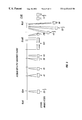
- FIG. 2 is a bar graph illustrating the genomic organization of the MSF gene with reference to the number of amino acids encoded by each exon.
- FIG. 3 is the modified nucleic acid sequence [SEQ ID NO: 27] of MSF-K130 which was used to produce the MSF as a fusion protein with thioredoxin in E.coli [SEQ ID NO: 28], as described in Example 5.
- the novel family of human megakaryocyte stimulating factors (MSFs) provided by the present invention are protein or proteinaceous compositions substantially free of association with other human proteinaceous materials, contaminants or other substances with which the factors occur in nature.
- An MSF may be purified from natural sources as a homogeneous protein, or from a selected cell line secreting or expressing it. Mixtures of naturally occurring MSFs may be obtained from natural sources, or from selected cell lines by similar purification techniques.
- Another class of MSFs are “recombinant or genetically engineered proteins” which are defined herein as naturally occurring and non-naturally occurring proteins prepared by chemical synthesis and/or recombinant genetic engineering techniques, and/or a combination of both techniques.
- MSFs may also be provided in optional association with amino acid residues and other substances with which they occur by virtue of expression of the factors in various expression systems.
- Recombinant or genetically-engineered MSFs of this invention may further be defined as including a polynucleotide of genomic, cDNA, semisynthetic, or synthetic origin with sequences from the meg-CSF DNA of FIG. 1 which, by virtue of its origin or manipulation: (1) is not associated with all or a portion of a polynucleotide with which it is associated in nature, (2) is linked to a polynucleotide other than that to which it is linked in nature, or (3) does not occur in nature.
- the MSFs of the present invention include active fragments and alternatively spliced sequences derived from the DNA [SEQ ID NO: 1] and amino acid [SEQ ID NO: 2] sequences reported in FIG. 1 below.
- FIG. 1 is a cDNA sequence [SEQ ID NO: 1] of the precursor protein encoding urinary meg-CSF, as disclosed in published PCT patent application No. WO91/02001, and in U.S. patent application Ser. No. 07/643,502, which are incorporated by reference herein.
- SEQ ID NO: 1 is believed to be substantially complete, there may be additional, presently unidentified, exons occurring between Exons VI [SEQ ID NO: 14] and IX [SEQ ID NO: 20] or following Exon XII [SEQ ID NO: 26], which provide sequence for other members of the MSF family.
- exons of the meg-CSF gene [SEQ ID NOS: 4, 6, 8, 10, 12, 14, 16, 18, 20, 22, 24 and 26] were identified by analysis of CDNA clones from COS cells transfected with the gene or pieces of the gene or from cDNAs isolated from stimulated human peripheral blood lymphocytes.
- the first exon [SEQ ID NO: 4], containing the initiating methionine, encodes a classical mammalian protein secretion signal sequence.
- Exons II [SEQ ID NO: 6] through IV [SEQ ID NO: 8] contain the amino acid sequences of the original mature urinary meg-CSF protein which most likely terminates in a region between amino acid residues 134 and 205 of FIG. 1, based on amino acid sequence data from the native protein.
- the mature human urinary meg-CSF protein terminates in the region between amino acid residues 134 and 147.
- Native meg-CSF is most likely generated by proteolytic cleavage (endolytic cleavage followed by endolytic and/or exolytic cleavage) at or near this site in larger precursor molecules containing additional amino acid sequences derived from one or more of Exons V [SEQ ID NO: 12] through XII [SEQ ID NO: 26].
- the Cys-rich regions of Exons II [SEQ ID NO: 5 and 6] and III [SEQ ID NO: 7 and 8] are also related to similar sequences in placental protein 11, a putative serine protease.
- RNA transcript is spliced in a variety of ways to yield a family of mRNAs each encoding different MSF proteins.
- these precursor proteins can be processed in different ways to yield different mature MSF proteins.
- a family of MSF's exist in nature, including the meg-CSF which was isolated from urine from the bone marrow transplant patients. All members of this family are believed to be derived from the 18.2 kb meg-CSF gene plus a few additional exons, found in the peripheral blood leukocyte cDNA located just downstream from the 3′ end of the 18.2 kb gene.
- This invention also contemplates the construction of “recombinant or genetically-engineered” classes of MSFs, which may be generated using different combinations of the amino acid sequences [SEQ ID NOS: 4, 6, 8, 10, 12, 14, 16, 18, 20, 22, 24 and 26] of the exons of FIG. 1 .
- Some of these novel MSFs may be easier to express and may have different biological properties than the native urinary meg-CSF.
- Exon I [SEQ ID NO: 3 and 4] is necessary for proper initiation and secretion of the MSF protein in mammalian cells; and that Exon XII [SEQ ID NO: 25 and 26] is necessary for termination of the translation of the naturally occurring protein.
- Exons II [SEQ ID NO: 5 and 6], III [SEQ ID NO: 7 and 8] and IV [SEQ ID NO: 9 and 10] are believed to contain the sequences essential to biological activity of the MSF.
- Exons V [SEQ ID NO: 11 and 12] and VI [SEQ ID NO: 13 and 14] may be related to activity of the factor, but are also implicated in the stability and binding of the molecule. Alternately spliced forms of MSF cDNAs containing either Exon V [SEQ ID NO: 11 and 12] or VI [SEQ ID NO: 13 and 14] have been observed. Exon V [SEQ ID NO: 11 and 12] and Exon VI [SEQ ID NO: 13 and 14] are also believed to play a role in the synergy of MSF with other cytokines. No alternative splicing has yet been observed between Exons VI [SEQ ID NO: 13 and 14] and XII [SEQ ID NO: 25 and 26].
- Exons V [SEQ ID NO: 11 and 12] through XII [SEQ ID NO: 25 and 26] are believed to be implicated in the processing or folding of the appropriate structure of the resulting factor.
- one or more of Exons V [SEQ ID NO: 11 and 12] through XII [SEQ ID NO: 25 and 26] may contain sequences which direct proteolytic cleavage, adhesion, or extracellular matrix processing.
- Both naturally occurring MSFs and non-naturally-occurring MSFs may be characterized by various combinations of alternatively spliced exons of FIG. 1, with the exons spliced together in differing orders to form different members of the MSF family.
- At a minimum at least one of the group consisting of Exons II [SEQ ID NO: 5 and 6], III [SEQ ID NO: 7 and 8] and IV [SEQ ID NO: 9 and 10] and a biologically active fragment thereof is present in a MSF.
- Naturally-occurring MSFs may possess at least Exon I [SEQ ID NO: 3 and 4], which contains both an initiating methionine necessary for translation and a secretory leader for secretion of the factor from mammalian cells, and one or more additional exons of FIG. 1 .
- additional exons at least one is selected from the group consisting of Exons II [SEQ ID NO: 5 and 6], III [SEQ ID NO: 7 and 8] and IV [SEQ ID NO: 9 and 10], and a biologically active fragment thereof.
- An exemplary MSF [SEQ ID NO: 55 and 56] of this class includes a protein represented by the spliced-together arrangement of Exons I [SEQ ID NO: 3 and 4], II [SEQ ID NO: 5 and 6], III [SEQ ID NO: 7 and 8].
- Still another exemplary MSF [SEQ ID NO: 57 and 58] of this class includes Exons I [SEQ ID NO: 3 and 4], III [SEQ ID NO: 5 and 6], V [SEQ ID NO: 11 and 12] and VI [SEQ ID NO: 13 and 14].
- MSFs may possess both Exon I [SEQ ID NO: 3 and 4] and Exon XII [SEQ ID NO: 25 and 26], which latter exon contains a termination codon for translation, and at least one additional exon selected from Exons II [SEQ ID NO: 5 and 6], III [SEQ ID NO: 7 and 8] and IV [SEQ ID NO: 9 and 10], and a biologically active fragment thereof. It is speculated that both the initiating Met of Exon I [SEQ ID NO: 3 and 4] and the termination codon of Exon XII [SEQ ID NO: 25 and 26] are required to produce an active, properly folded, naturally-occurring MSF in a eukaryotic cell.
- MSFs may contain at least Exons I [SEQ ID NO: 3 and 4] and XII [SEQ ID NO: 25 and 26] and another exon.
- An exemplary MSF [SEQ ID NO: 61] of this class includes a protein [SEQ ID NO: 62] represented by the spliced-together arrangement of exons selected from Exons I through XII of FIG. 1 [SEQ ID NO: 3-26].
- Still another exemplary MSF of this class includes a protein [SEQ ID NO: 30] encoded by the spliced Exons I [SEQ ID NO: 3 and 4], II [SEQ ID NO: 5 and 6], III [SEQ ID NO: 7 and 8], IV [SEQ ID NO: 9 and 10], V [SEQ ID NO: 11 and 12] and XII [SEQ ID NO: 25 and 26].
- Another MSF of this class is formed by spliced together Exons I [SEQ ID NO: 3 and 4], II [SEQ ID NO: 5 and 6], III [SEQ ID NO: 7 and 8], IV [SEQ ID NO: 9 and 10] and XII [SEQ ID NO: 25 and 26].
- Still another MSF [SEQ ID NO: 33 and 34] of this class includes the spliced together sequences of Exons I [SEQ ID NO: 3 and 4], II [SEQ ID NO: 5 and 6], III [SEQ ID NO: 7 and 8] and XII [SEQ ID NO: 25 and 26].
- Another MSF sequence [SEQ ID NO: 35 and 36] is formed by spliced together Exons I [SEQ ID NO: 3 and 4], III [SEQ ID NO: 7 and 8] and XII [SEQ ID NO: 25 and 26].
- Another MSF sequence [SEQ ID NO: 37 and 38] is formed by the spliced together arrangement of Exons I [SEQ ID NO: 3 and 4], III [SEQ ID NO: 7 and 8], IV [SEQ ID NO: 9 and 10] and XII [SEQ ID NO: 25 and 26].
- Another class of naturally occurring MSFs may be characterized by the presence of Exon I [SEQ ID NO: 3 and 4], at least one of Exons II [SEQ ID NO: 5 and 6], III [SEQ ID NO: 7 and 8] and IV [SEQ ID NO: 9 and 10], or a biologically active fragment thereof, and all of Exons VI through XII [SEQ ID NOS: 13-26].
- An exemplary MSF [SEQ ID NO: 39 and 40] of this class includes spliced together Exons I [SEQ ID NO: 3 and 4], II [SEQ ID NO: 5 and 6], III [SEQ ID NO: 7 and 8], IV [SEQ ID NO: 9 and 10], and VI through XII [SEQ ID NO: 13-26].
- Another MSF of this class [SEQ ID NO: 41 and 42] is formed by spliced together Exons I [SEQ ID NO: 3 and 4], II [SEQ ID NO: 5 and 6], III [SEQ ID NO: 7 and 8], and VI through XII [SEQ ID NO: 13-26].
- Still another MSF sequence [SEQ ID NO: 43 and 44] is formed from spliced together Exons I [SEQ ID NO: 3 and 4], III [SEQ ID NO: 7 and 8], and VI through XII [SEQ ID NO: 13-26].
- Another MSF sequence [SEQ ID NO: 45 and 46] of this class includes spliced together Exons I [SEQ ID NO: 3 and 4], III [SEQ ID NO: 7 and 8], IV and VI through XII [SEQ ID NO: 13-26].
- Still another class of naturally occurring MSFs may be characterized by the presence of Exon I [SEQ ID NO: 3 and 4], at least one of Exons II [SEQ ID NO: 5 and 6], III [SEQ ID NO: 7 and 8] and IV [SEQ ID NO: 9 and 10], and a biologically active fragment thereof; and Exons V through XII [SEQ ID NO: 11-26].
- An exemplary MSF [SEQ ID NO: 47 and 48] of this class includes spliced together Exons I [SEQ ID NO: 3 and 4], II [SEQ ID NO: 5 and 6], III [SEQ ID NO: 7 and 8], and V through XII [SEQ ID NO: 11-26].
- MSF [SEQ ID NO: 141 and 142] of this class is formed by spliced together Exons I [SEQ ID NO: 3 and 4], III [SEQ ID NO: 7 and 8], and V through XII [SEQ ID NO: 11-26].
- Still another MSF [SEQ ID NO: 49 and 50] sequence is formed from spliced together Exons I [SEQ ID NO: 3 and 4], II [SEQ ID NO: 5 and 6], and V through XII [SEQ ID NO: 11-26].
- Another MSF sequence [SEQ ID NO: 51 and 52] of this class includes spliced together Exons I [SEQ ID NO: 3 and 4], III [SEQ ID NO: 7 and 8], IV [SEQ ID NO: 9 and 10] and V through XII [SEQ ID NO: 11-26].
- Another class of naturally occurring MSFs m be characterized by the presence of Exon I [SEQ ID NO 3 and 4], at least one of Exons II [SEQ ID NO: 5 and 6], III [SEQ ID NO: 7 and 8] and IV [SEQ ID NO: 9 and 10], and a biologically active fragment thereof; Exon V [SEQ ID NO: 11 and 12], and Exons VII through XII [SEQ ID NO: 15-26].
- An exemplary MSF [SEQ ID NO: 53 and 54] of this class includes spliced together Exons I [SEQ ID NO: 3 and 4], II [SEQ ID NO: 5 and 6], III [SEQ ID NO: 7 and 8], IV [SEQ ID NO: 9 and 10], V [SEQ ID NO: 11 and 12] and VII through XII [SEQ ID NO: 15-26].
- Another MSF of this class [SEQ ID NO: 63 and 64] is formed by Exons I [SEQ ID NO: 3 and 4], III [SEQ ID NO: 7 and 8], V [SEQ ID NO: 11 and 12] and VII through XII [SEQ ID NO: 15-26] in a spliced together form.
- Still another MSF sequence [SEQ ID NO: 65 and 66] is formed from spliced together Exons I [SEQ ID NO: 3 and 4], II [SEQ ID NO: 5 and 6], IV [SEQ ID NO: 9 and 10], V [SEQ ID NO: 11 and 12] and VII through XII [SEQ ID NO: 15-26].
- Another MSF sequence [SEQ ID NO: 67 and 68] of this class includes Exons I [SEQ ID NO: 3 and 4], III [SEQ ID NO: 7 and 8], IV [SEQ ID NO: 9 and 10], V [SEQ ID NO: 11 and 12] and VII through XII [SEQ ID NO: 15-26] spliced together.
- MSFs may be characterized by the presence of Exon I [SEQ ID NO: 3 and 4], at least one of Exons II [SEQ ID NO: 5 and 6], III [SEQ ID NO: 7 and 8] and IV [SEQ ID NO: 9 and 10] and a biologically active fragment thereof; at least one of Exons V through XI [SEQ ID NO: 11-24]; and Exon XII [SEQ ID NO: 25 and 26].
- An exemplary MSF [SEQ ID NO: 69 and 70] of this class includes spliced together Exons I [SEQ ID NO: 3 and 4], II [SEQ ID NO: 5 and 6], III [SEQ ID NO: 7 and 8], IV [SEQ ID NO: 9 and 10], V [SEQ ID NO: 11 and 12], X [SEQ ID NO: 21 and 22] and XII [SEQ ID NO: 25 and 26].
- Another MSF [SEQ ID NO: 71 and 72] of this class is formed by spliced together Exons I [SEQ ID NO: 3 and 4], II [SEQ ID NO: 5 and 6], III [SEQ ID NO: 7 and 8], VIII [SEQ ID NO: 17 and 18], IX [SEQ ID NO: 19 and 20] and XII [SEQ ID NO: 25 and 26].
- Still another MSF sequence [SEQ ID NO: 73 and 74] is formed from spliced together Exons I [SEQ ID NO: 3 and 4], III [SEQ ID NO: 7 and 8], VI [SEQ ID NO: 13 and 14] and XII [SEQ ID NO: 25 and 26].
- Another MSF sequence [SEQ ID NO: 75 and 76] of this class includes spliced together Exons I [SEQ ID NO: 3 and 4], II [SEQ ID NO: 5 and 6], IV [SEQ ID NO: 9 and 10], V [SEQ ID NO: 11 and 12], VII [SEQ ID NO: 15 and 16] and XII [SEQ ID NO: 25 and 26].
- Exon I For recombinant or genetically engineered MSFs, Exon I [SEQ ID NO: 3 and 4] may be replaced by a synthetic or heterologous sequence containing an initiating Met and a selected secretory leader designed for use in a selected expression system (hereafter referred to for simplicity as “artificial Exon I”).
- the natural Exon I [SEQ ID NO: 3 and 4] may be completely absent for intracellular expression in a bacterial host, such as E. coli .
- a secretory leader may be selected from among known sequences for secretion of proteins from a variety of host cells.
- a number of secretory leaders are known for bacterial cells, yeast cells, mammalian cells, insect cells and fungi which may be useful as host cells for expression of a recombinant or genetically-engineered MSF.
- the construction of an appropriate genetically engineered Exon I sequence containing a secretory leader and initiating Met is within the skill of the art with resort to known sequences and techniques.
- one class of recombinant MSFs may be characterized by a genetically-engineered Exon I in place of the naturally occurring Exon I [SEQ ID NO: 3 and 4] of FIG. 1 .
- the termination codon supplied by Exon XII [SEQ ID NO: 25 and 26] to naturally occurring MSFs may be replaced by inserting into, or after, a selected exon of FIG. 1 a termination codon suitable to a selected host cell (hereafter referred to for simplicity as “artificial termination codon”).
- artificial termination codon a termination codon suitable to a selected host cell
- the construction of an appropriate MSF sequence containing a termination codon is within the skill of the art with resort to known codons for a variety of host cells and conventional techniques.
- one class of recombinant MSFs may be characterized by the presence of an artificial termination codon.
- MSFs include a naturally-occurring Exon I [SEQ ID NO: 3 and 4], at least one of Exons II [SEQ ID NO: 5 and 6], III [SEQ ID NO: 7 and 8] and IV [SEQ ID NO: 9 and 10], and a biologically active fragment thereof; and an artificial termination codon.
- An example of such an MSF is MSF-K130 [SEQ ID NO: 77 and 78] and MSF-N141 [SEQ ID NO: 79 and 80], among others described in detail below.
- Another class of recombinant MSFs include an artificial Exon I, at least one of Exons II [SEQ ID NO: 5 and 6], III [SEQ ID NO: 7 and 8] and IV [SEQ ID NO: 9 and 10], and a biologically active fragment thereof; and Exon XII [SEQ ID NO: 25 and 26].
- Still another class of recombinant MSFs include an artificial Exon I, at least one of Exons II [SEQ ID NO: 5 and 6], III [SEQ ID NO: 7 and 8] and IV [SEQ ID NO: 9 and 10], and a biologically active fragment thereof; and an artificial termination codon.
- Another class of recombinant, genetically-engineered MSFs include genetically-engineered Exon I, at least one of Exons II [SEQ ID NO: 5 and 6], III [SEQ ID NO: 7 and 8] and IV [SEQ ID NO: 9 and 10], and a biologically active fragment thereof; and all of Exons V through XII [SEQ ID NO: 11-26].
- Still another class of recombinant MSFs may be characterized by the presence of genetically-engineered Exon I, at least one of Exons II [SEQ ID NO: 5 and 6], III [SEQ ID NO: 7 and 8] and IV [SEQ ID NO: 9 and 10], and a biologically active fragment thereof; and Exons VI through XII [SEQ ID NO: 13-26].
- Another class of recombinant MSFs may be characterized by the presence of genetically-engineered Exon I, at least one of Exons II [SEQ ID NO: 5 and 6], III [SEQ ID NO: 7 and 8] and IV [SEQ ID NO: 9 and 10], and a biologically active fragment thereof; Exon V [SEQ ID NO: 11 and 12], and Exons VII through XII [SEQ ID NO: 15-26].
- Yet another class of recombinant MSFs may be characterized by the presence of genetically-engineered Exon I, at least one of Exons II [SEQ ID NO: 5 and 6], III [SEQ ID NO: 7 and 8] and IV [SEQ ID NO: 9 and 10] and a biologically active fragment thereof; at least one of Exons V through XI [SEQ ID NO: 11-24]; and an artificial termination codon.
- Another class of recombinant MSFs is characterized by genetically-engineered Exon I, at least one of Exons II [SEQ ID NO: 5 and 6], III [SEQ ID NO: 7 and 8] and IV [SEQ ID NO: 9 and 10], and a biologically active fragment thereof; all of Exons V through XI [SEQ ID NO: 11-24], with an artificial termination codon either inserted into, or added onto a selected last exon of the sequence.
- Another class of recombinant MSFs is characterized by genetically-engineered Exon I, at least one of Exons II [SEQ ID NO: 5 and 6], III [SEQ ID NO: 7 and 8] and IV [SEQ ID NO: 9 and 10], and a biologically active fragment thereof; all of Exons VI through XI [SEQ ID NO: 13-24], with an artificial termination codon.
- Another class of recombinant MSFs may be characterized by the presence of native Exon I [SEQ ID NO: 3 and 4], at least one of Exons II [SEQ ID NO: 5 and 6], III [SEQ ID NO: 7 and 8] and IV [SEQ ID NO: 9 and 10], and a biologically active fragment thereof, and all of Exons V through XI [SEQ ID NO: 11-24], with an artificial termination codon.
- Still another class of recombinant MSFs may be characterized by the presence of Exon I [SEQ ID NO: 3 and 4], at least one of Exons II [SEQ ID NO: 5 and 6], III [SEQ ID NO: 7 and 8] and IV [SEQ ID NO: 9 and 10], and a biologically active fragment thereof; and all of Exons VI through XI [SEQ ID NO: 13-24], with an artificial termination codon.
- Yet another class of recombinant MSFs may be characterized by the presence of Exon I [SEQ ID NO: 3 and 4], at least one of Exons II [SEQ ID NO: 5 and 6], III [SEQ ID NO: 7 and 8] and IV [SEQ ID NO: 9 and 10] and a biologically active fragment thereof; at least one of Exons V through XI [SEQ ID NO: 11-24]; and an artificial termination codon.
- a further class of recombinant, genetically-engineered MSFs is characterized by the complete absence of an Exon I.
- Such MSFs are useful for intracellular expression in bacterial cells, such as E. coli .
- These MSFs may comprise at least one of Exons II [SEQ ID NO: 5 and 6], III [SEQ ID NO: 7 and 8] and IV [SEQ ID NO: 9 and 10] and a biologically active fragment thereof; optionally one or more exons from Exons V through XII [SEQ ID NO: 11-26].
- Exon XII SEQ ID NO: 25 and 26
- an artificial termination codon may be inserted into or after the last preferred carboxy terminal exon.
- Exemplary MSFs of this invention are MSF-234 [SEQ ID NO: 81 and 82] and MSF 236 [SEQ ID NO: 83 and 84] described below in detail.
- MSF sequence structures will provide for precursor MSFs capable of being processed naturally, or by a host cell expression system, into mature MSF proteins, it is considered that mature, processed form of the proteins produced in eukaryotic systems will be missing all or part of Exon I [SEQ ID NO: 3 and 4]. Perhaps the mature proteins may be missing a portion of Exon II [SEQ ID NO: 5 and 6] as well, in order to remove the leader sequence from the processed form.
- the processed forms of MSF proteins may also be missing substantial sequences from the carboxy terminus. For example, sequences from Exons V through XII [SEQ ID NO: 11-26] may be absent in mature, processed MSF proteins.
- sequences from Exons VI through XII [SEQ ID NO: 13-26] may be absent in mature, processed MSF proteins.
- sequences from Exons VII through XII [SEQ ID NO: 15-26] may be absent in mature, processed MSF proteins.
- human urinary meg-CSF an illustrative naturally-occurring MSF [SEQ ID NO: 81 and 82] has a mature protein sequence characterized by the presence of Exons II [SEQ ID NO: 5 and 6], III [SEQ ID NO: 7 and 8] and IV [SEQ ID NO: 9 and 10] in a predominantly homodimeric form.
- Selected examples of artificial MSFs were prepared by the following methods. During the analysis of the meg-CSF gene, a contiguous cDNA was constructed containing Exons I through VI [SEQ ID NO: 3-14], in which the primary translation product was artificially interrupted by inserting artificial termination codons at different positions in Exons IV [SEQ ID NO: 9 and 10], V [SEQ ID NO: 11 and 12], and VI [SEQ ID NO: 13 and 14] near the point at which the original meg-CSF was believed to be processed, i.e. the region between amino acid residues 134 and 209. These cDNAs were transfected into COS cells and the resulting supernatants were tested for meg-CSF activity. Through this process, several different biologically active MSFs were identified.
- One MSF of the present invention is characterized by the DNA sequence [SEQ ID NO: 77] extending from nucleotide number 1 of Exon I through nucleotide number 390 of Exon IV, encoding an amino acid sequence [SEQ ID NO: 78] which is a continuous fusion in frame extending from amino acid 1 of Exon I [SEQ ID NO: 3 and 4] through amino acid 130 of Exon IV [SEQ ID NO: 9 and 10] of the sequence of FIG. 1, with a termination codon inserted thereafter.
- the predicted molecular weight of this MSF [SEQ ID NO: 77 and 78] is approximately 11.6 kD.
- MSF sodium dodecyl sulfate polyacrylamide gel electrophoresis
- this MSF CDNA sequence [SEQ ID NO: 77] produces a mixture of monomeric and homo-dimeric species.
- the homodimer has exhibited activity in the fibrin clot assay of Example 8.
- this is one of the most easily expressed MSF [SEQ ID NO: 77 and 78] which is also highly active in the fibrin clot assay.
- the MSF expressed by this sequence [SEQ ID NO: 77 and 78] in mammalian cells approximates the structure and properties of the native human urinary meg-CSF.
- MSF-N141 Another MSF of the present invention, called MSF-N141 [SEQ ID NO: 79 and 80], is characterized by a nucleotide sequence [SEQ ID NO: 79] extending from nucleotide number 1 of Exon I [SEQ ID NO: 3] through nucleotide number 423 of Exon IV [SEQ ID NO: 9], encoding an amino acid sequence [SEQ ID NO: 80] extending from amino acid 1 through amino acid 141 of the sequence of FIG. 1 with an artificial termination codon inserted thereafter.
- the predicted molecular weight of this MSF [SEQ ID NO: 79 and 80] is approximately 13.2 kD.
- This MSF [SEQ ID NO: 79 and 80] binds heparin under standard binding conditions.
- this MSF CDNA sequence [SEQ ID NO: 79] produces a mixture of monomeric and homo-dimeric species.
- the monomeric form is the major form secreted by COS-1 cells.
- the COS cell conditioned medium from this transfection also yielded biological activity in the murine fibrin clot assay.
- the homodimeric form is the major species secreted by CHO cells.
- MSF-S172 [SEQ ID NO: 87 and 88] is characterized by a nucleotide sequence [SEQ ID NO: 87] extending from nucleotide numbers 1 of Exon I through 516 of Exon V, encoding an amino acid sequence [SEQ ID NO: 88] extending from amino acid 1 through amino acid 172 of the sequence of FIG. 1 with an artificial termination codon inserted thereafter.
- the predicted molecular weight of this MSF [SEQ ID NO: 87 and 88] is approximately 16.2 kD, and in 4-20% SDS-PAGE under reducing conditions, a major species of molecular weight of approximately 23.5 kD has been detected.
- This MSF [SEQ ID NO: 87 and 88] also binds to heparin under standard binding conditions.
- a further MSF of the present invention is characterized by a nucleotide sequence [SEQ ID NO: 89] extending from nucleotide number 1 of Exon I through 576 of Exon V, encoding an amino acid sequence [SEQ ID NO: 90] extending from amino acid 1 through amino acid 192 of the sequence of FIG. 1 with an artificial termination codon inserted thereafter.
- the predicted molecular weight of this MSF [SEQ ID NO: 89 and 90] is approximately 18.4 kD, and in 4-20% SDS-PAGE under reducing conditions, a major species of molecular weight of approximately 27 kD has been detected.
- This MSF [SEQ ID NO: 89 and 90] also binds to heparin under standard conditions.
- MSF-K204 is characterized by a nucleotide sequence [SEQ ID NO: 91] extending from nucleotide numbers 1 of Exon I through 612 of Exon VI, encoding an amino acid sequence [SEQ ID NO: 92) extending from amino acid 1 through amino acid 204 of the sequence of FIG. 1 .
- the predicted molecular weight of this MSF [SEQ ID NO: 91 and 92] is approximately 19.8 kD. In 4-20% SDS-PAGE under reducing conditions, a major species of molecular weight of approximately 28 kD has been detected.
- This MSF [SEQ ID NO: 91 and 92] also binds to heparin under standard conditions.
- MSF-K209 is characterized by a nucleotide sequence [SEQ ID NO: 93] extending from nucleotide numbers 1 of Exon I through 627 of Exon VI, encoding an amino acid sequence [SEQ ID NO: 94] extending from amino acid 1 through amino acid 209 of the sequence of FIG. 1 with an artificial termination codon inserted thereafter.
- the predicted molecular weight of this MSF [SEQ ID NO: 93 and 94] is approximately 20.4 kD, and in 4-20% SDS-PAGE under reducing conditions, a major species of molecular weight of approximately 29 kD has been detected.
- This MSF [SEQ ID NO: 93 and 94] also binds to heparin under standard conditions.
- MSF-D220 [SEQ ID NO: 95 and 96] is characterized by a nucleotide sequence [SEQ ID NO: 95] extending from nucleotide numbers 1 of Exon I through 660 of Exon VI, encoding an amino acid sequence [SEQ ID NO: 96] extending from amino acid 1 through amino acid 220 of the sequence of FIG. 1 with an artificial termination codon inserted thereafter.
- the predicted molecular weight of this MSF [SEQ ID NO: 95 and 96] is approximately 21.6 kD, and in 4-20% SDS-PAGE under reducing conditions, a major species of molecular weight of approximately 30 kD has been detected.
- This MSF [SEQ ID NO: 95 and 96] also binds to heparin under standard conditions.
- each MSF is defined precisely, it is to be understood that addition or deletion of one or several amino acids (and consequent DNA coding region) from either end of any of the MSFs (or from either end of any of the exons forming the spliced MSFs) is not likely to significantly alter the properties of the particular NSF.
- Such truncated MSFs which also retain MSF biological activities are also encompassed by this disclosure.
- the deliberate insertion of artificial termination codons at other positions in the MSF sequences can provide other members of the MSF family.
- the alternatively spliced MSFs of the present invention are characterized by amino acid sequences containing at least two exons and less than twelve exons of FIG. 1 as described above, which exons are spliced together in various arrangements.
- Several representative “alternatively-spliced” naturally occurring MSF sequences have been identified by polymerase chain reaction (PCR) of cDNA prepared from various cell lines. The sequences of these MSFs were confirmed by hybridization to oligonucleotides spanning exon junctions, molecular weight of PCR fragments, and by DNA sequence in one case.
- a second method of obtaining MSF sequences involved natural isolation of cDNAs from a HeLa cDNA library. The molecular weights of these MSFs were calculated.
- MSF-136 SEQ ID NO: 97 and 98
- SEQ ID NO: 97 and 98 the 5′ end of one such MSF, called MSF-136 [SEQ ID NO: 97 and 98] identified by PCR is characterized by a contiguous amino acid sequence containing amino acid 1 to 25 of Exon I [SEQ ID NO: 4] (nucleotides 1 through 76 of FIG. 1 [SEQ ID NO: 3]) joined in frame to amino acid 67 to 106 of Exon III [SEQ ID NO: 8] (nucleotides 200 through 319 [SEQ ID NO: 7]), joined in frame to amino acid 200 to about 250 of Exon VI [SEQ ID NO: 100] (nucleotides 598 through about 748 [SEQ ID NO: 99]).
- MSF MSF
- SEQ ID NO: 97 and 98 additional 3′ sequence may be present in this MSF [SEQ ID NO: 97 and 98], as in each of the below described PCR-identified sequences.
- This 5′ MSF sequence [SEQ ID NO: 97 and 98] has been detected in the cDNA of the following cell lines: the osteosarcoma cell line U20S (ATCC No. HTB96), the small cell lung carcinoma H128 (ATCC No. HTB120), the neuroblastoma SK-N-SH (ATCC No. HTB11), the neuroblastoma SK-N-MC (ATCC No. HTB10), the erythroleukemia cell line OCIM1, the erythroleukemia cell line K562 (ATCC No.
- MSF-136 indicates that a naturally-occurring alternately spliced MSF may comprise Exons I [SEQ ID NO: 3 and 4], III [SEQ ID NO: 7 and 8], VI [SEQ ID NO: 13 and 14] and optionally one or more of Exons VII through XII [SEQ ID NO: 15-26].
- An artificial MSF mimicking this structure may have an artificial termination codon inserted within or after Exon VI [SEQ ID NO: 13 and 14].
- MSF-1236 Another PCR-identified 5′ MSF sequence, called MSF-1236 [SEQ ID NO: 101 and 102], is characterized by a contiguous amino acid sequence [SEQ ID NO: 102] containing amino acid 1 to 25 [SEQ ID NO: 4] (nucleotides 1 through 76 [SEQ ID NO: 3]) of Exon I joined in frame to amino acid 26 to 66 [SEQ ID NO: 6] (nucleotides 77 through 199 [SEQ ID NO: 5]) of Exon II, joined in frame to amino acid 67 to 106 [SEQ ID NO: 8] (nucleotides 200 through 319 [SEQ ID NO: 7]) of Exon III, joined in frame to amino acid 200 to about 250 [SEQ ID NO: 100] (nucleotides 598 through about 748 [SEQ ID NO: 99]) of Exon VI.
- This 5′ MSF sequence [SEQ ID NO: 101 and 102] has been detected by PCR analysis of the following cell lines: U20S, H128, SK-N-SH, SK-N-MC, the neuroglioma epithelial-like cell line H4 (ATCC No. HTB148), OCIM1, K562, K562 in the presence of PMA, the erythroleukemia cell line HEL (ATCC No. TIB180) in the presence of PMA, OCIM2, HEPG2 and stimulated PBLs.
- MSF-1236 (SEQ ID NO: 101 and 102] indicates that a naturally-occurring alternately spliced MSF may comprise Exons I [SEQ ID NO: 3 and 4], II [SEQ ID NO: 5 and 6], III [SEQ ID NO: 7 and 8], VI [SEQ ID NO: 13 and 14] and optionally one or more of Exons VII through XII [SEQ ID NO: 15-26].
- a recombinant MSF mimicking this structure may have an artificial termination codon inserted within or after Exon VI [SEQ ID NO: 13 and 14].
- Still another MSF [SEQ ID NO: 103 and 104] is characterized by a contiguous amino acid sequence containing amino acid 1 to 25 [SEQ ID NO: 4] (nucleotides 1 through 76 [SEQ ID NO: 3]) of Exon I joined in frame to amino acid 26 to 66 [SEQ ID NO: 6] (nucleotides 77 through 199 [SEQ ID NO: 5]) of Exon II, joined in frame to amino acid 67 to 106 [SEQ ID NO: 8] (nucleotides 200 through 319 [SEQ ID NO: 7]) of Exon III, joined in frame to amino acid 107 to 156 [SEQ ID NO: 10] (nucleotides 320 through 469 [SEQ ID NO: 9]) of Exon IV, joined in frame to amino acid 200 to 1140 [SEQ ID NO: 14] (nucleotides 598 through 3421 [SEQ ID NO: 13]) of Exon VI.
- This MSF-12346 [SEQ ID NO: 103 and 104] has been detected by PCR analysis of the following cell lines: U20S, SK-N-SH, SK-N-MC, OCIM1 in the presence of PMA, K562 in the presence of PMA, HEPG2 and stimulated PBLs.
- MSF-12346 indicates that a naturally-occurring alternately spliced MSF may comprise Exons I [SEQ ID NO: 3 and 4], II [SEQ ID NO: 5 and 6], III [SEQ ID NO: 7 and 8], IV [SEQ ID NO: 9 and 10], VI [SEQ ID NO: 13 and 14] and optionally one or more of Exons VII through XII [SEQ ID NO: 15-26].
- a recombinant MSF mimicking this structure may have an artificial termination codon inserted within or after Exon VI [SEQ ID NO: 13 and 14].
- Another MSF sequence of this invention may include MSF-1234, [SEQ ID NO: 105 and 106] characterized by a contiguous amino acid sequence containing amino acid 1 to 25 [SEQ ID NO: 4] (nucleotides 1 through 76 [SEQ ID NO: 3]) of Exon I (signal peptide) joined in frame to amino acid 26 to 66 [SEQ ID NO: 6] (nucleotides 77 through 199 [SEQ ID NO: 5]) of Exon II, joined in frame to amino acid 67 to 106 [SEQ ID NO: 8] (nucleotides 200 through 319 [SEQ ID NO: 7]) of Exon III, joined in frame to amino acid 107 to 156 [SEQ ID NO: 10] (nucleotides 320 through 469 [SEQ ID NO: 9]) of Exon IV.
- This sequence optionally has a 3′ sequence comprising one or more of Exons V through XII [SEQ ID NO: 11-26]. This
- MSF-134 is characterized by a contiguous amino acid sequence containing amino acid 1 to 25 [SEQ ID NO: 4] (nucleotides 1 through 76 [SEQ ID NO: 3]) of Exon I (signal peptide) joined in frame to amino acid 67 to 106 [SEQ ID NO: 8] (nucleotides 200 through 319 [SEQ ID NO: 7]) of Exon III, joined in frame to amino acid 107 to 156 [SEQ ID NO: 10] (nucleotides 320 through 469 [SEQ ID NO: 9]) of Exon IV.
- This sequence [SEQ ID NO: 107 and 108] optionally has a 3′ sequence comprising one or more of Exons V through XII [SEQ ID NO: 11-26].
- This sequence [SEQ ID NO: 107 and 108] may also contain an artificial termination codon inserted within or after any selected C-terminal exon.
- MSFs Two examples of MSFs that may be useful for bacterial intracellular expression include MSF-234 [SEQ ID NO: 81 and 82], characterized by a contiguous amino acid sequence containing amino acid 26 to 66 [SEQ ID NO: 6] (nucleotides 77 through 199 [SEQ ID NO: 5]) of Exon II joined in frame to amino acid 67 to 106 [SEQ ID NO: 8] (nucleotides 200 through 319 [SEQ ID NO: 7]) of Exon III, joined in frame to amino acid 107 to 156 [SEQ ID NO: 10] (nucleotides 320 through 469 [SEQ ID NO: 9]) of Exon IV; and MSF-236 [SEQ ID NO: 83 and 84], characterized by a contiguous amino acid sequence containing amino acid 26 to 66 [SEQ ID NO: 6] (nucleotides 77 through 199 [SEQ ID NO: 5]) of Exon II joined in frame to amino acid 67
- sequences [SEQ ID NOS: 81 and 82; SEQ ID NOS: 83 and 84] each optionally may have a 3′ sequence comprising one or more of Exons V through XII [SEQ ID NO: 11-26].
- sequences [SEQ ID NOS: 81 and 82; SEQ ID NOS: 83 and 84] may also contain an artificial termination codon inserted within or after any selected C terminal exon.
- MSFs which may be characterized by having MSF biological activities and which may be useful as research agents, diagnostic agents or as therapeutic agents, include factors having other combinations and arrangements of two or more of the exons identified in FIG. 1 [SEQ ID NO: 1 and 2].
- the splicing of the exons to form recombinant MSFs may be accomplished by conventional genetic engineering techniques or chemical synthesis, as described herein.
- MSF analogs are included within the scope of this invention.
- An MSF analog may be a mutant or modified protein or polypeptide that retains MSF activity and preferably has a homology of at least about 50%, more preferably about 70%, and most preferably between about 90 to about 95% to human urinary meg-CSF.
- Still other MSF analogs are mutants that retain MSF activity and preferably have a homology of at least about 50%, more preferably about 80%, and most preferably between 90 to 95% to MSF-K130 [SEQ ID NO: 77 and 78] and the other truncated MSFs.
- such analogs differ by only 1, 2, 3, or 4 codon changes.
- Examples include MSFs with minor amino acid variations from the amino acid sequences of native or recombinant meg-CSF, or any of the above-described MSFs, in particular, conservative amino acid replacements.
- Conservative replacements are those that take place within a family of amino acids that are related in their side chains.
- the MSFs of this invention may form monomers or homo- or hetero-dimers when expressed in suitable expression systems, due to the presence of cysteine-rich sequences in the exons.
- two specific homodimeric forms have been identified, namely the MSF-K130 [SEQ ID NO: 77 and 78] characterized by the sequence of amino acid 1 through 130 of FIG. 1, and the MSF-N141 [SEQ ID NO: 79 and 80] characterized by the sequence of amino acid 1 through 141 of FIG. 1 .
- These homodimeric forms were found as abundant forms of these proteins. However, these proteins existed in mixtures of other dimeric and monomeric forms.
- MSFs of this invention are predominantly monomers rather than mixtures, such as the MSFs characterized by the sequence of amino acids 1 through 209 of FIG. 1 [SEQ ID NO: 93 and 94], or amino acids 1 through 172 of FIG. 1 [SEQ ID NO: 87 and 88], among others.
- MSFs of the present invention may act directly on megakaryocyte progenitor cells and/or megakaryocytes. MSFs may act indirectly on accessory cells, such as macrophages and T cells, to produce cytokines which stimulate megakaryocyte colony functions. Specifically, MSFs display megakaryocyte colony stimulating activity. Another MSF activity is the promotion of megakaryocyte maturation.
- the active MSF compositions of the present invention have biological activity in the murine fibrin clot megakaryocyte colony formation assay.
- the MSF characterized by the amino acid sequence amino acid 1 of Exon I through amino acid 130 of Exon IV (MSF-K130) [SEQ ID NO: 77 and 78] has a specific activity of greater than approximately 1 ⁇ 10 7 dilution units/mg protein.
- MSFs may also be used in synergy with other cytokines.
- MSFs also display enhancement of IL-3-dependent megakaryocyte colony formation.
- MSFs may display enhancement of steel factor-dependent megakaryocyte colony formation [See, K. M. Zsebo et al, Cell, 63:195-201 (1990) for the identification of steel factor, also known as SCF. This document is incorporated by reference herein].
- these cytokines, IL-3 and steel factor have been shown to stimulate increased megakaryocyte colony formation in vitro.
- IL-3 has been shown to elevate the level of platelets in non-human primates in vivo.
- MSFs encoded by the combinations of sequences selected from Exons I through XII [SEQ ID NO: 61 and 62] as reported above will have MSF biological activity, for example, activity in the murine fibrin clot assay, either alone or in combination with other cytokines.
- All modified or mutant MSF peptides or polypeptides of this invention, including the spliced forms of MSF may be readily tested for activity in the megakaryocyte fibrin clot assay, either alone or in combination with other known cytokines including IL-3, steel factor or GM-CSF.
- MSFs may also have biological or physiological activities in addition to the ability to stimulate the growth and development of colonies consisting of intermediate and large size megakaryocytes in culture in the assay using murine bone marrow target cells.
- an MSF composition of the present invention stimulates the growth of multiple colony types, but at least 50% of the colonies are pure megakaryocytic or mixed lineage colonies having significant numbers of megakaryocytes.
- the exact composition of colony types may vary with different assay conditions (fetal calf serum lots, etc).
- the megakaryocyte-containing colonies typically 50-70% are pure megakaryocytic in composition.
- an MSF of the present invention may stimulate colonies of megakaryocytes.
- the particular MSF may not by itself stimulate megakaryocyte colony formation, but rather may enhance negakaryocyte colony formation supported by other factors, such as IL-3 or steel factor; or it may synergize with other factors, such as IL-11, which alone is not capable of supporting megakaryocyte colony formation in the fibrin clot assay.
- the present invention also encompasses MSF-encoding DNA sequences, free of association with sequences and substances with which the DNA occurs in natural sources.
- These DNA sequences including the sequences reported in FIG. 1 [SEQ ID NO: 1 and 2] and identified above, code for the expression for MSF polypeptides. These sequences, when expressed in mammalian cells, yield precursor MSFs which are processed in the mammalian cells to yield functional proteins. Similar processing is expected to be seen in other non-mammalian expression systems.
- MSF DNA sequences may include a DNA sequence comprising nucleotides 1 through 390 of FIG. 1 [SEQ ID NO: 77]. Another MSF DNA sequence comprises nucleotides 1 through 423 of FIG. 1 [SEQ ID NO: 79]. Another MSF DNA sequence comprises nucleotides 1 through 516 of FIG. 1 [SEQ ID NO: 87]. Yet another example of an MSF DNA sequence comprises nucleotides 1 through 576 of FIG. 1 [SEQ ID NO: 89]. Still a further illustration of an MSF DNA sequence comprises nucleotides 1 through 612 of FIG. 1 [SEQ ID NO: 91]. An additional MSF DNA sequence comprises nucleotides 1 through 627 of FIG. 1 [SEQ ID NO: 93]. An MSF DNA sequence may also comprise nucleotides 1 through 660 of FIG. 1 [SEQ ID NO: 95].
- MSF DNA sequences include the 5′ sequences of certain alternately spliced MSFs, such as a sequence [SEQ ID NO: 109] comprising nucleotides 1-76 of FIG. 1 [SEQ ID NO: 3] fused in frame to nucleotides 200-319 of FIG. 1 [SEQ ID NO: 7], fused in frame to nucleotides 598-748 of FIG. 1 [SEQ ID NO: 111].
- Another such 5′ DNA sequence [SEQ ID NO: 113 and 114] comprises nucleotides 1-319 of FIG. 1 [SEQ ID NO: 55] fused in frame to nucleotides 598-748 of FIG. 1 [SEQ ID NO: 111].
- Still another DNA sequence [SEQ ID NO: 115] comprising nucleotides 1-469 of FIG. 1 [SEQ ID NO: 117] fused in frame to nucleotides 598-748 of FIG. 1 [SEQ ID NO: 111].
- Another MSF DNA sequence [SEQ ID NO: 119] comprises nucleotides 1-76 of FIG. 1 [SEQ ID NO: 3] fused in frame to nucleotides 200-319 of FIG. 1 [SEQ ID NO: 7], fused in frame to nucleotides 598-748 of FIG. 1 [SEQ ID NO: 111].
- Still another DNA sequence [SEQ ID NO: 117] extends from nucleotides 1 through 469 of FIG. 1 .
- Another MSF DNA sequence [SEQ ID NO: 121] comprises nucleotides 1 to 76 of FIG. 1 [SEQ ID NO: 3] fused in frame to nucleotides 200 through 469 of FIG. 1 [SEQ ID NO: 7-9].
- MSF DNA sequences which encode homo- or heterodimers of the above-described MSF DNA sequences or DNA sequences encoding a biologically active fragment of such sequences are also included in this invention.
- an allelic variation of the MSF DNA sequences, and a DNA sequence capable of hybridizing to any of MSF DNA sequences, which encodes a peptide or polypeptide having activity in the fibrin clot assay are also encompassed by this invention.
- DNA sequences of this invention which encode biologically active human MSFs may also comprise DNA sequences capable of hybridizing under appropriate conditions, or which would be capable of hybridizing under said conditions, but for the degeneracy of the genetic code, to an isolated DNA sequence of FIG. 1 [SEQ ID NO: 1 and 2] or to active MSFs formed by alternate splicing of two or more exons of FIG. 1 as described above.
- DNA sequences include those sequences encoding all or a fragment of the above-identified exon peptide sequences and those sequences which hybridize under stringent or relaxed hybridization conditions [see, T.
- an exemplary stringent hybridization condition is hybridization in 4 ⁇ SSC at 65° C., followed by a washing in 0.1 ⁇ SSC at 65° C. for an hour.
- an exemplary stringent hybridization condition is in 50% formamide, 4 ⁇ SSC at 50° C.
- DNA sequences which hybridize to the sequences for an MSF under relaxed hybridization conditions and which code for the expression of MSF peptides having MSF biological properties also encode novel MSF polypeptides.
- non-stringent hybridization conditions are 4 ⁇ SSC at 50° C. or hybridization with 30-40% formamide at 42° C.
- a DNA sequence which shares regions of significant homology e.g., Exons II [SEQ ID NO: 5], III [SEQ ID NO: 7] or IV [SEQ ID NO: 9], and/or glycosylation sites or disulfide linkages, with the sequences of MSF and encodes a protein having one or more MSF biological property clearly encodes an MSF polypeptide even if such a DNA sequence would not stringently hybridize to the MSF sequences.
- the DNA sequences of this invention may include or contain modifications in the non-coding sequences, signal sequences or coding sequences based on allelic variation among species, degeneracies of the genetic code or deliberate modification. Allelic variations are naturally-occurring base changes in the species population which may or may not result in an amino acid change. Degeneracies in the genetic code can result in DNA sequences which code for MSF polypeptides but which differ in codon sequence. Deliberate modifications can include variations in the DNA sequence of MSF which are caused by point mutations or by induced modifications to enhance the activity, half-life or production of the polypeptides encoded thereby. All such sequences are encompassed in the invention.
- Modifications of interest in the MSF sequences may include the replacement, insertion or deletion of a selected nucleotide or amino acid residue in the coding sequences.
- the structural gene may be manipulated by varying individual nucleotides, while retaining the correct amino acid(s), or the nucleotides may be varied, so as to change the amino acids, without loss of biological activity.
- Mutagenic techniques for such replacement, insertion or deletion e.g., in vitro mutagenesis and primer repair, are well known to one skilled in the art [See, e.g., U.S. Pat. No. 4,518,584].
- the encoding DNA of a naturally occurring MSF may be truncated at its 3′-terminus while retaining its biological activity.
- a recombinant, genetically-engineered MSF DNA sequence may be altered or truncated at both its 3′ and 5′ termini while retaining biological activity. It also may be desirable to remove the region encoding the signal sequence, and/or to replace it with a heterologous sequence. It may also be desirable to ligate a portion of the MSF sequence to a heterologous coding sequence, and thus to create a fusion peptide with the biological activity of MSF.
- an asparagine-linked glycosylation recognition site comprises a tripeptide sequence which is specifically recognized by appropriate cellular glycosylation enzymes. These tripeptide sequences are either Asn-X-Thr or Asn-X-Ser, where X can be any amino acid except proline. For example, such a site can be found in the cDNA illustrated in FIG. 1 [SEQ ID NO: 2] at amino acids #206-#208.
- a variety of amino acid substitutions or deletions at one or both of the first or third amino acid positions of a glycosylation recognition site (and/or amino acid deletion at the second position) results in non-glycosylation at the modified tripeptide sequence.
- Expression of such altered nucleotide sequences produces variants which are not glycosylated at that site.
- ORFS open reading frames
- structural genes encoding MSFs may be obtained and/or created from cDNA libraries from other animal cell sources.
- ORFS open reading frames
- a murine MSF genomic clone and several partial MSF cDNA clones have been isolated by the inventors.
- a naturally occurring MSF of this invention may be obtained as a single homogeneous protein or mixture of various alternately spliced MSF proteins and purified from natural sources.
- natural sources are human urine or stimulated PBLs, other mammalian cell sources producing the factors naturally or upon induction with other factors from cell lines.
- the DNA of such MSFs may also be obtained and purified from natural sources.
- the purification technique comprises the following steps which are described in more detail in Example 1 below.
- the example and the following summary illustrate the purification for an exemplary naturally-occurring MSF, human urinary meg-CSF, which is isolated from human urine.
- the purification includes concentrating pooled bone marrow transplant patient urine through an Amicon YM-10 filter. The concentrated urine is passed through an anion exchange chromatographic column and the flow-through is bound onto a cation exchange chromatographic column. The urinary protein eluate is then subjected to pooling, dialyzing and heating and is applied to a lectin affinity chromatographic column.
- This eluate is then dialyzed and applied to a cation exchange fine performance liquid chromatography (FPLC) column. Finally this eluate is applied through three cycles of reverse phase high pressure liquid chromatography (HPLC) using different solvent systems for each HPLC run.
- FPLC fine performance liquid chromatography
- batches with the highest levels of MSF in the murine fibrin clot assay, described below, are selected for further purification at the semi-preparative scale (between 30 and 100 liters urine equivalent) to maximize recovery and yield.
- a homogeneous MSF, native meg-CSF may be obtained by applying the purification procedures described in Example 1 to human urine or other sources of human MSF, e.g., activated PBLs.
- tissue sources and cell lines from which naturally occurring MSFs may be isolated include HeLa cell lines, e.g. ATCC #098-AH2, and bone marrow cell lines, such as murine bone marrow cell line, FCM-1 [Genetics Institute, Inc., Cambridge, Mass.], osteosarcoma cell line U20S, small cell lung carcinoma H128, neuroblastoma SK-N-SH, neuroblastoma SK-N-MC, neuroglioma epithelial-like cell line H4, erythroleukemia cell line OCIM1 and OCIM2, erythroleukemia cell line K562 in the presence of PMA, erythroleukemia cell line HEL in the presence of PMA, and hepatoma cell line HEPG2. Procedures for culturing a cell source which may be found to produce an MSF are known to those of skill in the art.
- the MSF proteins and the DNA sequences encoding MSFs of this invention can be produced via recombinant genetic engineering techniques and purified from a mammalian cell line which has been designed to secrete or express the MSF to enable large quantity production of pure, active MSFs useful for therapeutic applications.
- the proteins may also be expressed in bacterial cells, e.g., E. coli , and purified therefrom.
- the proteins may also be expressed and purified in yeast cells or in baculovirus or insect cells.
- an MSF or active fragments thereof may be chemically synthesized.
- An MSF may also be synthesized by a combination of the above-listed techniques. Suitable techniques for these different expression systems are known to those of skill in the art.
- the DNA sequence encoding the factor can be introduced into any one of a variety of expression vectors to make an expression system capable of producing an MSF or one or more fragments thereof in a selected host cell.
- the DNA sequences of the individual exons may be obtained by chemical synthesis or may be obtained from the following two deposits by standard restriction enzyme subcloning techniques or by the polymerase chain reaction (PCR) using synthetic primers for each exon based on the nucleotide sequences of FIG. 1 [SEQ ID NO: 1].
- Two genomic clones containing meg-CSF sequences which may be used as sources of the MSF sequences have been deposited with the American Type Culture Collection, 12301 Parklawn Drive, Rockville, Md. 20852, USA in accordance with the requirements of the Budapest Treaty on the International Recognition of the Deposit of Microorganisms for the Purposes of Patent Procedure on Aug. 3, 1990.
- Meg Kpn-SnaBI An approximately 12 kb genomic fragment (referred to as Meg Kpn-SnaBI) containing the sequences spanning Exon I through part of Exon VI [See FIG. 2, the 5′ KpnI site to the 3′ SnaBI site] in an E. coli plasmid was given the accession number ATCC 40857.
- the entire 18.2 kb sequence of spanning Exons I through Exon X (referred to as 18-5665) [SEQ ID NO: 3-22] inserted into bacteriophage lambda DNA was deposited under the accession number ATCC 40856.
- Exons XI and XII [SEQ ID NO: 13 and 25] may be made from the PBL derived cDNA clone stored at Genetics Institute, Inc., referred to above.
- the MSF DNA obtained as described above or modified as described above may be introduced into a selected expression vector to make a recombinant molecule or vector for use in the method of expressing novel MSF polypeptides.
- These vectors contain the novel MSF DNA sequences recited herein, which alone or in combination with other sequences, code for MSF polypeptides of the invention or active fragments thereof.
- the vector employed in the method also contains selected regulatory sequences in operative association with the DNA coding sequences of the invention. Regulatory sequences preferably present in the selected vector include promoter fragments, terminator fragments and other suitable sequences which direct the expression of the protein in an appropriate host cell.
- the resulting vector is capable of directing the replication and expression of an MSF in selected host cells. The transformation of these vectors into appropriate host cells can result in expression of the MSF polypeptides.
- Mammalian cell expression vectors are desirable for expression.
- Bacterial cells e.g., E. coli, are also desirable for expression of MSFs.
- Mammalian cell expression vectors described herein may be synthesized by techniques well known to those skilled in this art.
- the components of the vectors e.g. replicons, selection genes, enhancers, promoters, and the like, may be obtained from natural sources or synthesized by known procedures. See, Kaufman et al, J. Mol. Biol., 159:511-521 (1982); and Kaufman, Proc. Natl. Acad. Sci. USA, 82:689-693 (1985).
- the vector DNA may include all or part of the bovine papilloma virus genome [Lusky et al, Cell, 36:391-401 (1984)] and be carried in cell lines such as C127 mouse cells as a stable episomal element.
- pXM Y. C. Yang et al, Cell, 47:3-10 (1986)].
- This vector contains the SV40 origin of replication and enhancer, the adenovirus major late promoter, a cDNA copy of the adenovirus tripartite leader sequence, a small hybrid intervening sequence, an SV40 polyadenylation signal and the adenovirus VA I gene, in appropriate relationships to direct the high level expression of the desired cDNA in mammalian cells [See, e.g., Kaufman, Proc. Natl. Acad. Sci. USA, 82:689-693 (1985)].
- the pXM vector is linearized with an appropriate restriction endonuclease enzyme and separately ligated to the cDNA encoding MSF which has been appropriately prepared by restriction endonuclease digestion, for example.
- pMT21 is prepared by linearizing pMT2pc (which has been deposited with the ATCC under Accession Number 40348) by digestion with PstI. The DNA is then blunted using T 4 DNA polymerase.
- pMT21 This plasmid is called pMT21.
- a desired polylinker with restriction sites for NotI, KpnI, SalI and SnabI is introduced into this vector for ready insertion of the MSF coding sequence.
- Still another vector which may be employed to express MSF in CHO cells is pED4DPC-1.
- This vector is prepared from pED4, also known as pEMC2B1.
- pXM the SV40 origin of replication and enhancer, the adenovirus major late promoter, a cDNA copy of the majority of the adenovirus tripartite leader sequence, a small hybrid intervening sequence, an SV40 polyadenylation signal and the adenovirus VA I gene, in appropriate relationships to direct the high level expression of the desired cDNA in mammalian cells.
- it contains DHFR and ⁇ -lactamase markers and an EMC sequence which pXM does not contain.
- the sequence 1075 through 1096 is removed from pED4 to remove a stretch of cytosines.
- a new polylinker is added to introduce the restriction sites NotI, SalI and SnabI to the plasmid.
- the vector is linearized with an appropriate endonuclease enzyme and subsequently ligated separately to the cDNA encoding MSF.
- vectors do not limit this invention, because one skilled in the art can also construct other useful mammalian expression vectors by, e.g., inserting the DNA sequence of the MSF from the plasmid with appropriate enzymes and employing well-known recombinant genetic engineering techniques and other known vectors, such as pJL3 and pJL4 [Gough et al., EMBO J., 4:645-653 (1985)] and pMT2 (starting with pMT2-VWF, ATCC #67122; see PCT application PCT/US87/00033).
- pJL3 and pJL4 Gough et al., EMBO J., 4:645-653 (1985)
- pMT2 starting with pMT2-VWF, ATCC #67122; see PCT application PCT/US87/00033.
- a selected host cell is transformed by conventional techniques with the vector containing MSF.
- the method of this present invention therefore comprises culturing a suitable cell or cell line, which has been transformed with a DNA sequence coding for expression of an MSF polypeptide under the control of known regulatory sequences.
- Suitable cells or cell lines may be mammalian cells, such as Chinese hamster ovary cells (CHO) or the monkey COS-1 cell line.
- CHO cells are preferred as a mammalian host cell of choice for stable integration of the vector DNA, and for subsequent amplification of the integrated vector DNA, both by conventional methods.
- the selection of suitable mammalian host cells and methods for transformation, culture, amplification, screening and product production and purification are known in the art. See, e.g., Gething and Sambrook, Nature, 293:620-625 (1981), or alternatively, Kaufman et al, Mol. Cell. Biol., 5(7):1750-1759 (1985) or Howley et al, U.S. Pat. No. 4,419,446.
- Another suitable mammalian cell line is the CV-1 cell line.
- Further exemplary mammalian host cells include particularly primate cell lines and rodent cell lines, including transformed cell lines. Normal diploid cells, cell strains derived from in vitro culture of primary tissue, as well as primary explants, are also suitable.
- Candidate cells may be genotypically deficient in the selection gene, or may contain a dominantly acting selection gene.
- Other suitable mammalian cell lines include, but are not limited to, HeLa, mouse L-929 cells, 3T3 or 293 lines derived from Swiss, Balb-c or NIH mice, BHK or HaK hamster cell lines.
- E. coli e.g., HB101, MC1061 and strains used in the following examples
- E. coli permits the expression of the MSF protein as a single protein.
- MSF may also be expressed in bacterial cells as a fusion protein with thioredoxin, as disclosed in detail in U.S. patent application Ser. No. 07/652,531, which is incorporated herein by reference.
- Various strains of B. subtilis , Pseudomonas, other bacilli and the like may also be employed in this method.
- yeast cells Many strains of yeast cells known to those skilled in the art are also available as host cells for expression of the polypeptides of the present invention. Additionally, where desired, insect cells may be utilized as host cells in the method of the present invention. See, e.g. Miller et al, Genetic Engineering, 8:277-298 (Plenum Press 1986) and references cited therein. Fungal cells may also be employed as expression systems.
- the MSF is expressed by the transformed and cultured cells, it is then recovered, isolated and purified from the culture medium (or from the cell, if expressed intracellularly) by appropriate means known to one of skill in the art.
- a preferred purification procedure to isolate a recombinant or synthetic MSF from serum free mammalian cell (COS-1) conditioned medium is characterized by steps are similar to those for the purification of native meg-CSF from urine and are described in detail in Example 7.
- the recombinant MSF is concentrated from COS-1 cell supernatant through an Amicon YM-10 filter with a 10,000 Dalton molecular weight cut-off.
- the concentrate is dialyzed into 20 mm sodium acetate, pH4.5, and then applied to an S Toyopearl cation exchange FPLC column equilibrated in 20 mM sodium acetate, pH4.5.
- the bound material is then eluted from the column and applied through a cycle of C4 reverse phase HPLC using 0.1% TFA/acetonitrile as the solvent system.
- the protein elutes between 20-30% of a buffer containing 0.1% TFA, 95% acetonitrile.
- Other non-naturally occurring MSFs described above may be obtained by applying this purification scheme described in detail in Example 7 for MSF-K130 [SEQ ID NO: 77 and 78].
- MSF polypeptides may also be produced by known conventional chemical synthesis, e.g., by Merrifield synthesis or modifications thereof. Methods for constructing the polypeptides of the present invention by synthetic means are known to those of skill in the art.
- the synthetically-constructed MSF polypeptide sequences by virtue of sharing primary, secondary, or tertiary structural and conformational characteristics with native MSF polypeptides may possess MSF biological properties in common therewith. Thus, they may be employed as biologically active or immunological substitutes for natural, purified MSF polypeptides in therapeutic and immunological processes.
- MSFs or active fragments thereof purified in a homogeneous form or as a mixture of different MSFs from natural sources or produced recombinantly or synthetically, may be used in a pharmaceutical preparation or formulation.
- the MSF pharmaceutical compositions of the present invention or pharmaceutically effective fragments thereof may be employed in the treatment of immune deficiencies or disorders.
- MSFs may also be employed to treat deficiencies in hematopoietic progenitor or stem cells, or disorders relating thereto.
- MSFs may be employed in methods for treating cancer and other pathological states resulting from disease, exposure to radiation or drugs, and including for example, leukopenia, bacterial and viral infections, anemia, B cell or T cell deficiencies, including immune cell or hematopoietic cell deficiency following a bone marrow transplantation. MSFs may also be used to potentiate the immune response to a variety of vaccines creating longer lasting and more effective immunity. MSFs may be employed to stimulate development of B cells, as well as megakaryocytes.
- the MSFs of the present invention may also have utility in stimulating platelet production, stimulating platelet recovery following chemotherapy or bone marrow transplantation, treating thrombocytopenia, aplastic anemia and other platelet disorders, preserving and extending the lifetime of platelets in storage, and stimulating platelet production in vitro for use in platelet transfusions.
- MSFs may also be employed to stimulate the growth and development of other colonies of hematopoietic and non-hematopoietic cells. Similarly, these factors may be useful in cell-targeting.
- MSF may also be useful in the treatment of wounds or burns, alone or with other wound-healing agents, such as fibroblast growth factor (FGF). Adhesion related therapeutic uses are also contemplated for MSFs of this invention.
- MSF compositions may be used as an adjunctive therapy for bone marrow transplant patients.
- MSF polypeptide compositions may avoid undesirable side effects caused by treatment with presently available serum-derived factors or transfusions of human platelets. It may also be possible to employ one or more active peptide fragments of MSF in such pharmaceutical formulations.
- compositions for treating the conditions referred to above comprise a therapeutically effective amount of a MSF protein, a therapeutically effective fragment thereof, or a mixture of variously spliced or otherwise modified MSFs in admixture with a pharmaceutically acceptable carrier.
- This composition can be systemically administered parenterally. Alternatively, the composition may be administered intravenously. If desired, the composition may be administered subcutaneously.
- the therapeutic composition for use in this invention is in the form of a pyrogen-free, parenterally acceptable aqueous solution.
- the preparation of such pharmaceutically acceptable protein solutions having due regard to pH, isotonicity, stability and the like, is within the skill of the art.
- the dosage regimen involved in a method for treating the above-described conditions will be determined by the attending physician considering various factors which modify the action of drugs, e.g. the condition, body weight, sex and diet of the patient, the severity of any infection, time of administration and other clinical factors.
- the daily regimen should be in the range of about 1 to about 1000 micrograms of MSF protein, mixture of MSF proteins or fragments thereof.
- about 50 to about 50,000 units i.e., one unit being the minimum concentration of MSF protein, or MSF protein mixture, which yields the maximal number of colonies in the murine fibrin clot megakaryocyte colony formation assay
- MSF protein per kilogram of body weight may be a desirable dosage range.
- the therapeutic method, compositions, purified proteins and polypeptides of the present invention may also be employed, alone or in combination with other cytokines, hematopoietins, interleukins, growth factors or antibodies in the treatment of disease states characterized by other symptoms as well as platelet deficiencies. It is anticipated that an MSF, if it does not itself have TPO activity, will prove useful in treating some forms of thrombocytopenia in combination with general stimulators of hematopoiesis, such as IL-3, IL-6, GM-CSF, steel factor, IL-11 (described in co-owned copending U.S. patent application Ser. No. 07/526,474 and in published PCT Patent Application No.
- cytokines or hematopoietins for such co-administration include TPO, G-CSF, the CSF-ls (including M-CSF), IL-1, IL-4, IL-7, erythropoietin, and variants of all of these cytokines, or a combination of multiple cytokines.
- the dosage recited above would be adjusted to compensate for such additional components in the therapeutic composition.
- the MSF may be administered in amounts from 1 to 1000 ⁇ g/kg body weight and the other cytokine may be administered in the same amounts in such a co-administration protocol.
- co-administration may permit lesser amounts of each therapeutic agent to be administered. Progress of the treated patient can be monitored by conventional methods.
- antibodies generated by standard methods for in vivo or in vitro diagnostic or therapeutic use may also be useful in affinity columns and the like to further purify and identify the complete meg-CSF protein.
- Such antibodies may include both monoclonal and polyclonal antibodies, as well as chimeric antibodies or “recombinant” antibodies generated by known techniques.
- the antibodies of the present invention may be utilized for in vivo and in vitro diagnostic purposes, such as by associating the antibodies with detectable labels or label systems. Alternatively these antibodies may be employed for in vivo and in vitro therapeutic purposes, such as by association with certain toxic or therapeutic compounds or moieties known to those of skill in this art. These antibodies also have utility as research reagents.
- Also provided by this invention are the cell lines generated by presenting MSF or a fragment thereof as an antigen to a selected mammal, followed by fusing cells of the animal with certain cancer cells to create immortalized cell lines by known techniques.
- the methods employed to generate such cell lines and antibodies directed against all or portions of a human MSF protein or recombinant polypeptide of the present invention are also encompassed by this invention.
- the following procedures are employed to obtain native meg-CSF protein from urine of human bone marrow transplant patients.
- the same or similar procedure may be employed to purify other MSFs from natural sources.
- Urine from patients with aplastic anemia or thrombocytopenia accompanying other disease states may also be used as the source of the factor employing this purification.
- Urine was collected from bone marrow transplant patients between days 5 and 18 following transplant.
- One hundred liters of pooled urine were treated with protease inhibitors phenylmethyl-sulfonylfluoride (PMSF) and ethylenediaminetetraacetic acid (EDTA).
- PMSF phenylmethyl-sulfonylfluoride
- EDTA ethylenediaminetetraacetic acid
- This pooled urine was concentrated on an Amicon YM-10 filter (10,000 molecular weight cut-off) to remove excess pigments and reduce the volume.
- a cocktail of protease inhibitors [leupeptin, aprotinin, ethylene glycol-bis-tetraacetic acid (EGTA) and N-ethylmaleimide (NEM)] was added to the urine at this step and the next three steps to minimize proteolysis.
- the pH of the urine concentrate was adjusted to 8.0 and diluted to a conductivity of 7 mS/cm.
- STEP 2 The retentate from this first step of the purification was then subjected to anion exchange column chromatography on a QAE Zetaprep [Cuno] at pH 8.0. The QAE flow-through was adjusted to a pH4.5 with 1M acetic acid.
- STEP 3 The flow-through from the second purification step was bound to a cation exchange chromatographic column, an SP-Zetaprep column [Cuno] at pH 4.5. Bound protein containing Meg-CSF was eluted with 1M NaCl at a pH of 4.5. The eluate was pooled, protease inhibitors were added as above and the bound protein was either neutralized to pH7 and stored at ⁇ 80° C. until further chromatography was performed or dialyzed into a Tris-buffered saline (TBS) solution, with the addition of the protease inhibitors described in Step 1. This dialyzate was heated at 56° C. for 30 minutes.
- TBS Tris-buffered saline
- STEP 4 The resulting material was added to a lectin affinity chromatographic column, a Wheat Germ Sepharose column [Pharmacia]. Urinary Meg-CSF was found to bind to this column. This protein was then eluted with 0.25 M N-acetyl glucosamine (N-acglcNH 2 ) in TBS, and dialyzed against 20 mM sodium acetate, pH 4.5 in the presence of the protease inhibitors of Step 1.
- STEP 5 This dialysate was applied to a 10 ml S-Toyopearl FPLC cation exchange column and eluted using a linear gradient of 0 to 1M NaCl in 20 mM sodium acetate at pH 4.5.
- the protein eluted from this step was tested for Meg-CSF activity in the fibrin clot assay described below.
- the Meg-CSF activity was observed to elute in two discrete peaks.
- the major activity eluted between 0.1M and 0.25M NaCl.
- a minor, but reproducible activity eluted between 0.3M and 0.5N NaCl.
- the two activities may be due to protein or carbohydrate modification of a single protein; however the data presented further herein refers to the major protein.
- STEP 6 The eluate from this fifth purification step was then purified on a reverse phase HPLC (C4) column [Vydac; 1 cm ⁇ 25 cm] which was eluted with a linear gradient of between 23-33% acetonitrile in 0.1% trifluoroacetic acid (TFA). This step removes an abundant 30 Kd protein contaminant. Recombinant MSF elutes at a slightly lower gradient of about 20 to about 30% of the buffer.
- C4 reverse phase HPLC
- STEP 7 The HPLC step was repeated in a different solvent system, after the eluate of Step 6 was diluted with two parts acetic acid and pyridine. The purified material eluted between 6-15% n-propanol in pyridine and acetic acid on a C18 reverse phase HPLC column (0.46 ⁇ 25 cm). The material produced after this step, when assayed gave the specific activity of greater than 5 ⁇ 10 7 dilution units reported in the murine assay. This optional step removes the bulk of urinary ribonuclease, a major contaminant, from the preparation.
- STEP 8 The HPLC step was repeated once more on a C4 column (Vydac; 0.46 ⁇ 25 cm) using 0.15% HFBA in acetonitrile. The material eluted between 27-37% acetonitrile. The last HPLC step removed substantially all remaining ribonuclease and proteinaceous contaminants present after Step 7.
- This purified meg-CSF material was then analyzed by SDS-PAGE, bioassayed and labelled with 125 I.
- Homogenous protein is obtained from this procedure, omitting step 7, having a specific activity ranging from about 5 ⁇ 10 7 to about 2-5 ⁇ 10 8 dilution units per mg protein in the murine megakaryocyte colony assay described below.
- a unit of activity is defined as the reciprocal of the maximum dilution which stimulates the maximum number of megakaryocyte colonies per ml.
- This process is preferably used to purify any naturally occurring MSF protein, or mixture thereof, from a natural source.
- MSF-K130 SEQ ID NO: 77 and 78
- Seven oligonucleotide primers were synthesized as follows:
- Primer (1) was designed to hybridize to the CDNA flanking the initiating methionine codon and contains nine MSF-homologous nucleotides, a NotI restriction endonuclease site and three additional nucleotides to enhance restriction endonuclease recognition (as suggested in the New England Biolabs catalog).
- oligonucleotide primers were designed to hybridize to the 3′ regions of the cDNA and to flank the putative MSF protein processing site codons for [SEQ ID NO: 87] MSF-S172 (2), [SEQ ID NO: 89] MSF-R192 (3), [SEQ ID NO: 91] MSF-K204 (4), [SEQ ID NO: 77] MSF-K130 and [SEQ ID NO: 95] D220 (5), [SEQ ID NO: 79] N141 (6) and [SEQ ID NO: 131] T208 (7).
- the 3′ primers contain twelve nucleotides of MSF-homologous sequence, a translation termination codon, an XhoI restriction endonuclease site and three additional nucleotides to enhance restriction endonuclease recognition.
- PCR reactions were performed in duplicate, using the conditions recommended by Perkin-Elmer Cetus Corp. Each of the six duplicate reactions contained the 5′ primer (No. 1, 1.0 ⁇ M), one of the 3′ primers (1.0 ⁇ M) and 1 ng of MSF cDNA as template. The reactions were carried through two rounds of eighteen cycles each. One cycle consisted of a two minute denaturation of 95° C. followed by three minutes of annealing/extension of 72° C. After the first round of eighteen cycles, 10 ⁇ l of the first reaction was transferred to a fresh reaction mixture (100 ⁇ l total), and the amplification cycles were repeated. The PCR products generated by the second round of amplification reactions (twelve in all) were digested with NotI and XhoI, using conditions described by the vendor, and fractionated by agarose gel electrophoresis.
- the vector pMT21-2 is identical to the vector pMT21 except for the polylinker region, containing PstI, NotI, KpnI, ApaI, EcoRV, EcoRI and XhoI sites, which was changed to facilitate cloning of MSF DNA fragments.
- Competent DH5 cells were transformed with the recombinant plasmid and selected for resistance to ampicillin. Plasmid DNA was prepared from transformed cells and sequenced with selected internal oligonucleotides across the MSF insert. All the above techniques are conventional and described in Sambrook et al, cited above.
- S172 encodes MSF amino acids 1-172 [SEQ ID NO: 88], terminating with a serine residue.
- Position 173 encodes a translation termination codon. The exception was one of the two reactions designed to synthesize D220 [SEQ ID NO: 95 and 96].
- oligonucleotide primer similar in design i.e., an oligonucleotide containing twelve nucleotides of MSF-homologous sequence, a translation termination codon, an XhoI restriction site and a few additional nucleotides to enhance restriction endonuclease recognition.
- An example of a suitable 3′ primer would be the following sequence: SEQ ID NO: 133 GCGCTCGAGCTAATTTGATGGTTT.
- the pMT21-2 plasmid, containing the MSF DNA sequence is transfected onto COS cells.
- the conditioned medium from the transfected COS cells contains MSF biological activity as measured in the murine assays.
- the modified pED4DPC-1 construct containing the cDNA for MSF is transfected into CHO cells.
- the vector pED4DPC-1 may be derived from pMT21 vector.
- pMT21 is cut with EcoRI and XhoI which cleaves the plasmid at two adjacent cloning sites.
- An EMCV fragment of 508 base pairs is cut from pMT 2 ECAT 1 [S. K. Jong et al, J. Virol., 63:1651-1660 (1989)] with the restriction enzymes EcoRI and taq ⁇ I.
- a pair of oligonucleotides 68 nucleotides in length are synthesized to duplicate the EMCV sequence up to the ATG. The ATG is changed to an ATT, and a C is added, creating a XhoI site at the 3′ end.
- a taq ⁇ I site is situated at the 5′ end.
- the sequences of the oligonucleotides are [SEQ ID NO: 134]:
- Stable transformants are then screened for expression of the product by standard immunological, biological or enzymatic assays, such as those described below in Example 8.
- the presence of the DNA and mRNA encoding the MSF polypeptides is detected by standard procedures such as Southern and Northern blotting.
- Transient expression of the DNA encoding the polypeptides during the several days after introduction of the expression vector DNA into suitable host cells is measured without selection by activity or immunologic assay, e.g., the murine fibrin clot assay, of the proteins in the culture medium.
- One skilled in the art could manipulate the sequences encoding the MSF polypeptide by eliminating any human regulatory sequences flanking the coding sequences, eliminating the mammalian secretory sequence of Exon I, and inserting bacterial regulatory sequences to create bacterial vectors for intracellular or extracellular expression of the MSF polypeptide of the invention by bacterial cells.
- the DNA encoding the polypeptides may be further modified to contain different codons to optimize bacterial expression as is known in the art.
- sequences encoding the mature MSF are operatively linked in-frame to nucleotide sequences encoding a secretory leader polypeptide permitting bacterial expression, secretion and processing of the mature MSF polypeptides, also by methods known in the art.
- the expression of MSF in E. coli using such secretion systems is expected to result in the secretion of the active polypeptide. This approach has yielded active chimeric antibody fragments [See, e.g., Bitter et al, Science, 240:1041-1043 (1983)].
- the MSF may be expressed as a cytoplasmic protein in E. coli , either directly or as a carboxy terminal fusion to proteins, such as thioredoxin, which can maintain many peptides in soluble form in E. coli .
- the fusion proteins can be cleaved and the free MSF isolated using enzymatic cleavage (enterokinase, Factor Xa) or chemical cleavage (hydroxylamine) depending on the amino acid sequence used to fuse the molecules.
- cytoplasmic MSF or MSF fusion protein is expressed in inclusion bodies, then either molecule would most likely have to be refolded after complete denaturation with guanidine hydrochloride and a reducing agent a process also known in the art.
- guanidine hydrochloride and a reducing agent a process also known in the art.
- MSF protein or MSF-fusion protein remain in solution after expression in E. coli , they are likely to not require denaturation but only mild oxidation to generate the correct disulfide bridges.
- the compounds expressed through either route in bacterial host cells may then be recovered, purified, and/or characterized with respect to physicochemical, biochemical and/or clinical parameters, all by known methods.
- An MSF can be expressed at high levels in E. coli as a thioredoxin fusion protein using the modified expression vector similar to pALtrxA/EK/IL11 ⁇ Pro-581 described in pending U.S. patent application Ser. No. 07/652,351.
- MSF-K130 [SEQ ID NO: 77 and 78] was employed.
- the first 25 amino acids of Exon I [SEQ ID NO: 3 and 4] which encode the secretory leader, were removed from the MSF-K130 sequence [SEQ ID NO: 77 and 78].
- An enterokinase site which is [SEQ ID NO: 143] Asp Asp Asp Asp Lys, was inserted at the 5′ end of Exon II [SEQ ID NO: 5 and 6] of MSF-K130.
- the plasmid expression vector used for expression is a modified pALtrxA/EK/IL11 ⁇ Pro-581, illustrated in FIG. 1 of the above-referenced application.
- This plasmid contains the following principal features:
- Nucleotides 1-2060 contain DNA sequences originating from the plasmid pUC-18 [Norrander et al, Gene, 26: 101-106 (1983)] including sequences containing the gene for ⁇ -lactamase which confers resistance to the antibiotic ampicillin in host E. coli strains, and a colE1-derived origin of replication.
- Nucleotides 2061-2221 contain DNA sequences for the major leftward promoter (pL) of bacteriophage ⁇ [Sanger et al, J. Mol. Biol., 162:729-773 (1982)], including three operator sequences, O L 1, O L 2 and O L 3.
- Nucleotides 2222-2241 contain a strong ribosome binding sequence derived from that of gene 10 of bacteriophage T7 [Dunn and Studier J. Mol. Biol., 166:477-535 (1983)].
- Nucleotides 2242-2568 contain a DNA sequence encoding the E. coli thioredoxin protein [Lim et al, J. Bacteriol., 163:311-316 (1985)]. There is no translation termination codon at the end of the thioredoxin coding sequence in this plasmid.
- Nucleotides 2569-2583 contain DNA sequence encoding the amino acid sequence for a short, hydrophilic, flexible spacer peptide “--GSGSG--”. Nucleotides 2584-2598 provide DNA sequence encoding the amino acid sequence for the cleavage recognition site of enterokinase (EC 3.4.4.8), “--DDDDK--” [Maroux et al, J. Biol. Chem., 246:5031-5039 (1971)].
- Nucleotides 2599-3132 contain DNA sequence encoding the amino acid sequence of a modified form of mature human IL11 [Paul et al, Proc. Natl. Acad. Sci. USA, 87:7512-7516 (1990)], deleted for the N-terminal prolyl-residue normally found in the natural protein.
- the sequence includes a translation termination codon at the 3′-end of the IL11 sequence.
- Nucleotides 3133-3159 provide a “Linker” DNA sequence containing restriction endonuclease sites.
- Nucleotides 3160-3232 provide a transcription termination sequence based on that of the E. coli aspA gene [Takagi et al, Nucl. Acids Res., 13:2063-2074 (1985)].
- Nucleotides 3233-3632 are DNA sequences derived from pUC-18.
- This plasmid is modified in the following manner to replace the ribosome binding site of bacteriophage T7 with that of ⁇ CII.
- nucleotides 2222 and 2241 were removed by conventional means. Inserted in place of those nucleotides was a sequence of nucleotides formed by nucleotides 35566 to 35472 and 38137 to 38361 from bacteriophage lambda as described in Sanger et al (1982) cited above. This reference is incorporated by reference for the purpose of disclosing this sequence.
- the resulting plasmid was transformed into the E. coli host strain GI724 (F ⁇ , lacI q , lacP L8 , ampC:: ⁇ cI + ) by the procedure of Dagert and Ehrlich, Gene, 6: 23 (1979).
- the untransformed host strain E. coli GI724 was deposited with the American Type Culture Collection, 12301 Parklawn Drive, Rockville, Md. on Jan. 31, 1991 under ATCC No. 55151 for patent purposes pursuant to applicable laws and regulations.
- Transformants were selected on 1.5% w/v agar plates containing IMC medium, which is composed of M9 medium [Miller, “Experiments in Molecular Genetics”, Cold Spring Harbor Laboratory, New York (1972)] supplemented with 0.5% w/v glucose, 0.2% w/v casamino acids and 100 ⁇ g/ml ampicillin.
- GI724 contains a copy of the wild-type ⁇ cI repressor gene stably integrated into the chromosome at the ampC locus, where it has been placed under the transcriptional control of Salmonella typhimurium trp promoter/operator sequences.
- ⁇ cI protein is made only during growth in tryptophan-free media, such as minimal media or a minimal medium supplemented with casamino acids such as IMC, described above. Addition of tryptophan to a culture of GI724 will repress the trp promoter and turn off synthesis of ⁇ cI, gradually causing the induction of transcription from pL promoters if they are present in the cell.
- GI724 transformed with the MSF containing plasmid was grown at 37° C. to an A 550 of 0.5 in IMC medium. Tryptophan was added to a final concentration of 100 ⁇ g/ml and the culture incubated for a further 4 hours.
- thioredoxin-MSF fusion protein was found in the soluble cellular fraction, representing up to 10% of the total protein.
- the fusion protein was heat stable, remaining soluble after treatment at 80 degrees Celsius for fifteen minutes. Preliminary testing with the fusion protein has shown activity in the fibrin clot assay described below.
- Manipulations can be performed for the construction of an insect vector for expression of MSF polypeptides in insect cells [See, e.g., procedures described in published European patent application 155,476].
- yeast vectors may be constructed employing yeast regulatory sequences to express CDNA encoding the precursor, in yeast cells to yield secreted extracellular active MSF.
- the polypeptide may be expressed intracellularly in yeast, the polypeptide isolated and refolded to yield active MSF.
- the dialyzed MSF-K130 containing solution was applied to an S Toyopearl cation exchange FPLC column, equilibrated in 20 mM sodium acetate pH 4.5. Bound protein was eluted with a gradient of 0 to 1M NaCl in 20 mM sodium acetate, pH 4.5, at room temperature. Typically, MSF-K130 [SEQ ID NO: 77 and 78] eluted between 0.1 to 0.2 M NaCl.
- the active MSF peak was observed to have a molecular weight on SDS-PAGE 10-20% gradient polyacrylamide gels of between 20-50 kD under non-reducing conditions and 18-21 kD under reducing conditions. This was determined by probing a Western Immunoblot with rabbit antisera raised against a peptide in Exon III of the MSF gene of FIG. 1 .
- pool of active MSF-K130 [SEQ ID NO: 77 and 78] was divided into three aliquots based on the molecular weights under non-reducing conditions.
- Pool A consisted of mostly high molecular weight dimer, 35-50 kD.
- Pool B consisted of intermediate molecular weight dimer species ranging from 20-45 kD; and pool C comprised predominantly monomer species of molecular weight range 14-25 kD.
- MSF from all three pools had a molecular weight of 18-21 kD under reducing conditions.
- the final purification step was one cycle of reverse phase-HPLC. Protein from the three pools were acidified with 10% TFA to 0.1% TFA (v/v), filtered through a 0.45 um PVDF membrane and injected 1 ml/min onto a 25 cm ⁇ 4.6 mm C4 (Vydec) reverse phase HPLC column equilibrated in 0.1% TFA at room temperature. Bound protein was eluted with a gradient of 0-95% acetonitrile in 0.1% TFA. Typically, MSF-K130 activity eluted between 15-30% buffer B (95% acetonitrile in 0.1% TFA).
- the following assays were performed using the purified native urinary meg-CSF described in Example 1, and in some cases, crude or highly purified preparations of recombinant MSF-K130 [SEQ ID NO: 77 and 78].
- the other recombinant or naturally occurring MSFs may exhibit MSF biological properties in these same assays or other assays.
- the meg-CSF obtained from Step 7 of the purification techniques of Example 1 was tested for activity in the megakaryocyte colony formation assay performed substantially as described in S. Kuriya et al, Exp. Hematol., 15:896-901 (1987).
- a fibrin clot was formed containing 2.5 ⁇ 10 5 mouse bone marrow cells in a 6-well plate.
- the diluted sample was layered around the clot and incubated for 6 days. Thereafter, cells were fixed and megakaryocytes were stained for acetylcholinesterase, a specific marker for murine megakaryocytes.
- a colony was defined as three or more megakaryocytes per unit area.
- a mixture of pure and mixed colonies containing megakaryocyte colonies were routinely observed: 70% pure megakaryocyte colonies containing no additional cell types: 30 % mixed megakaryocyte colonies containing additional non-megakaryocyte cell types to 50% pure: 50% mixed type depending on the assay.
- the pure colonies typically contain on average 4 to 5 cells per colony, ranging from 3 to 8 cells per colony.
- the cells within the colony are variable in size and appear to contain both mature and immature megakaryocytes.
- the megakaryocytes are fairly dispersed within the colony.
- a typical mixed megakaryocyte colony is composed on average of 10 cells per colony ranging from 7 to 17 cells. The cells appear more clustered than the megakaryocytes in pure megakaryocyte colonies.
- a positive control was WEHI conditioned medium (murine IL-3), which produced between 7-25 (average 12) megakaryocyte colonies per clot, approximately 50% pure and 50% mixed megakaryocyte colonies.
- Another positive control was serum taken from lethally irradiated dogs at the nadir or low point of the platelet count [see Mazur et al, Exp. Hematol., 13:1164-1172 (1985)], which produced between 6-22 (average 15) megakaryocyte colonies per clot, of which approximately 70% were pure and 30% were mixed megakaryocyte colonies.
- the negative control was Iscoves Medium, which produced 2-4 megakaryocyte colonies per clot.
- the purified urinary meg-CSF has a specific activity of greater than approximately 5 ⁇ 10 7 dilution units/mg of protein.
- a unit of activity is defined as described in Example 1.
- the major meg-CSF obtained from bone marrow transplant urine eluted from the S-Toyopearl cation exchange column chromatography step in the purification of Example 1 has been analyzed in this assay alone, together, and in combination with other cytokines. In the fibrin clot assay, it produced between 6-16 (average 13) megakaryocyte colonies, with 50-70% pure megakaryocyte colonies.
- the urinary meg-CSF has been shown to have variable synergy with murine IL-3 and does not synergize with human IL-6 or murine IL-4 in the fibrin clot culture system.
- Megakaryocyte colony formation was observed in response to recombinant MSF-K130 [SEQ ID NO: 77 and 78] in the murine bone marrow fibrin clot assay.
- Murine megakaryocytes were identified as acetylcholinesterase positive cells and a megakaryocyte colony was defined as greater than three megakaryocyte cells per unit area in a fibrin clot culture.
- Recombinant MSF typically stimulated megakaryocyte colonies of three to six cells/unit area and averaged between 6 to 15 colonies/2.5 ⁇ 10 5 murine bone marrow cells.
- Two types of megakaryocyte colonies were observed in the assay, pure megakaryocyte colonies and megakaryocyte cells with other cell types, termed mixed megakaryocyte colonies.
- the two colony types were at a ratio between 1:1 to 7:3 pure colonies to mixed megakaryocyte colonies. This ratio was consistent throughout the purification of recombinant MSF-K130 [SEQ ID NO: 77 and 78].
- the number of megakaryocyte cells/colony and size of megakaryocytes were about the same for both pure and mixed colonies, some megakaryocytes were smaller in the mixed megakaryocyte colonies.
- the supernatant from COS-1 cells transfected with MSF-K130 cDNA [SEQ ID NO: 77] was variably active on the fibrin clot assay. In each assay the samples were tested in duplicate and in three dilutions.
- the human urinary meg-CSF of this invention was also tested for human activity on the plasma clot MSF assay described in E. Mazur et al, Blood, 57:277-286 (1981) with modifications.
- Non-adherent peripheral blood cells were isolated from Leukopacs and frozen in aliquots.
- the test sample was mixed with platelet-poor human AB plasma and 1.25 ⁇ 10 5 cells in 24-well plates and allowed to clot by the addition of calcium. After a 12 day incubation, megakaryocytes were identified using a monoclonal antibody directed against platelet glycoproteins IIb/IIIa and a horseradish peroxidase/anti-peroxidase chromogenic detection system.
- Recombinant human IL-3 [Genetics Institute, Inc.] was used as a positive control, producing 12-30 megakaryocyte colonies per clot with approximately 60% pure and 40% mixed megakaryocyte colonies.
- the aplastic dog serum was also used as a positive control, which produced between 5-10 megakaryocyte colonies per clot, of which approximately 50% were pure megakaryocyte colonies containing less than 10 cells, and 50% were mixed megakaryocyte colonies containing more than 40 megakaryocytes.
- the negative control was Alpha Medium, which produced 0-1 megakaryocyte colonies per clot.
- the human urinary meg-CSF product from Step 6 of the purification scheme of Example 1 had variable activity in this assay.
- MSF-K130 [SEQ ID NO: 77 and 78] has shown variable activity in the human plasma clot megakaryocyte colony assay.
- Recombinant MSF-K130 Cos-1 cell supernatant and purified recombinant MSF were assayed alone and in combination with other cytokines in the various CFU-MEG assay systems, fibrin clot, agar and the human CFU-MEG plasma clot assays.
- MSF expressed in Escherichia coli as a thioredoxin-MSF-K130 fusion protein was soluble and active in the fibrin clot assay.
- E. coli expressed MSF-K130 stimulated the same range of CFU-meg/2.5 ⁇ 10 5 murine bone marrow cells as COS derived MSF-K130. This activity was not neutralized by the addition of anti-IL-3 antibody at a level that did neutralize CFU-Meg formation by IL-3.
- Megakaryocyte colony formation activity of the MSF-Kl3O thioredoxin fusion protein from E. coli lysate was 5 ⁇ 10 6 dilution units/ml.
- the specific activity of the MSF-K130 thioredoxin fusion protein in E. coli lysate was greater than 1 ⁇ 10 6 U/mg. Thioredoxin was not active in the assay.
- One method for producing high levels of the MSF protein of the invention from mammalian cells involves the construction of cells containing multiple copies of the cDNA encoding the MSF.
- the cDNA is co-transfected with an amplifiable marker, e.g., the DHFR gene for which cells containing increasing concentrations of methotrexate (MTX) according to the procedures of Kaufman and Sharp, J. Mol. Biol., (1982) supra.
- an amplifiable marker e.g., the DHFR gene for which cells containing increasing concentrations of methotrexate (MTX) according to the procedures of Kaufman and Sharp, J. Mol. Biol., (1982) supra.
- MTX methotrexate
- This approach can be employed with a number of different cell types.
- the MSF cDNA and drug resistance selection gene e.g., DHFR
- DHFR drug resistance selection gene
- MSF-K130 [SEQ ID NO: 77 and 78] and MSF-N141 [SEQ ID NO: 79 and 80] are being expressed in vector pEMC3-1, a vector identical to pE04DPC-1, but in which the polylinker has been changed (PstI, NotI, SalI, SnaBI, EcoRI, PacI) as described above per pMT21.
- the pMT21 vector containing the MSF gene in operative association with other plasmid sequences enabling expression thereof is introduced into DHFR-deficient CHO cells, DUKX-BII, along with a DHFR expression plasmid such as pAdD26SVpA3 [Kaufman, Proc. Natl. Acad. Sci. USA, 82:689-693 (1985)] by calcium phosphate coprecipitation and transfection.
- the pED4DPC-1 vector containing the MSF gene in operative association with other plasmid sequences enabling expression thereof is introduced into DHFR-deficient CHO cells, DUKX-BII, by protoplast fusion or transfection.
- the MSF gene and DHFR marker gene are both efficiently expressed when MSF is introduced into pEMC2B1.
- DHFR expressing transformants are selected for growth in alpha media with dialyzed fetal calf serum.
- Transformants are checked for expression of MSF by Western blotting, bioassay, or RNA blotting and positive pools are subsequently selected for amplification by growth in increasing concentrations of MTX (sequential steps in 0.02, 0.2, 1.0 and 5 uM MTX) as described in Kaufman et al., Mol. Cell Biol., 5:1750 (1983).
- the amplified lines are cloned, and MSF protein expression is monitored by the fibrin clot assay. MSF expression is expected to increase with increasing levels of MTX resistance.
- the resulting cell lines can be further amplified by appropriate drug selection, resulting cell lines recloned and the level of expression assessed using the murine fibrin clot assay described in Example 4.
- the MSF expressing CHO cell lines can be adapted to growth in serum-free medium.
- MSF expressed in CHO cells is purified from serum-free conditioned medium using the same purification scheme as COS-1 cell supernatant.
- Homogeneous MSF can be isolated from conditioned medium from the cell line using methods familiar in the art, including techniques such as lectin-affinity chromatography, reverse phase HPLC, FPLC and the like.
Landscapes
- Health & Medical Sciences (AREA)
- Chemical & Material Sciences (AREA)
- Life Sciences & Earth Sciences (AREA)
- Organic Chemistry (AREA)
- Medicinal Chemistry (AREA)
- General Health & Medical Sciences (AREA)
- Biochemistry (AREA)
- Biophysics (AREA)
- Gastroenterology & Hepatology (AREA)
- Genetics & Genomics (AREA)
- Zoology (AREA)
- Molecular Biology (AREA)
- Proteomics, Peptides & Aminoacids (AREA)
- Toxicology (AREA)
- Engineering & Computer Science (AREA)
- Pharmacology & Pharmacy (AREA)
- Diabetes (AREA)
- Hematology (AREA)
- Chemical Kinetics & Catalysis (AREA)
- General Chemical & Material Sciences (AREA)
- Nuclear Medicine, Radiotherapy & Molecular Imaging (AREA)
- Bioinformatics & Cheminformatics (AREA)
- Animal Behavior & Ethology (AREA)
- Public Health (AREA)
- Veterinary Medicine (AREA)
- Peptides Or Proteins (AREA)
- Micro-Organisms Or Cultivation Processes Thereof (AREA)
- Medicines That Contain Protein Lipid Enzymes And Other Medicines (AREA)
- Acyclic And Carbocyclic Compounds In Medicinal Compositions (AREA)
- Preparation Of Compounds By Using Micro-Organisms (AREA)
Priority Applications (9)
| Application Number | Priority Date | Filing Date | Title |
|---|---|---|---|
| US07/757,022 US6433142B1 (en) | 1989-08-08 | 1991-09-10 | Megakaryocyte stimulating factors |
| EP05004734A EP1535929A3 (de) | 1991-01-18 | 1992-01-17 | Megakaryozyt-stimulierende Faktoren |
| JP4506745A JPH06505631A (ja) | 1991-01-18 | 1992-01-17 | 巨核球刺激因子 |
| EP04005792A EP1428883A1 (de) | 1991-01-18 | 1992-01-17 | Megakaryozyt-stimulierender Faktor |
| PCT/US1992/000433 WO1992013075A1 (en) | 1991-01-18 | 1992-01-17 | Megakaryocyte stimulating factors |
| EP92907075A EP0567599A1 (de) | 1991-01-18 | 1992-01-17 | Megakaryozyt-stimulierender factor |
| AU14417/92A AU1441792A (en) | 1991-01-18 | 1992-01-17 | Megakaryocyte stimulating factors |
| US10/124,557 US7030223B2 (en) | 1989-08-08 | 2002-04-16 | Megakaryocyte stimulating factors |
| US11/169,232 US7361738B2 (en) | 1989-08-08 | 2005-06-28 | Megakaryocyte stimulating factors |
Applications Claiming Priority (5)
| Application Number | Priority Date | Filing Date | Title |
|---|---|---|---|
| US39090189A | 1989-08-08 | 1989-08-08 | |
| US45719689A | 1989-12-28 | 1989-12-28 | |
| US07/546,114 US5326558A (en) | 1989-08-08 | 1990-06-29 | Megakaryocytopoietic factor |
| US64350291A | 1991-01-18 | 1991-01-18 | |
| US07/757,022 US6433142B1 (en) | 1989-08-08 | 1991-09-10 | Megakaryocyte stimulating factors |
Related Parent Applications (1)
| Application Number | Title | Priority Date | Filing Date |
|---|---|---|---|
| US64350291A Continuation-In-Part | 1989-08-08 | 1991-01-18 |
Related Child Applications (1)
| Application Number | Title | Priority Date | Filing Date |
|---|---|---|---|
| US10/124,557 Continuation US7030223B2 (en) | 1989-08-08 | 2002-04-16 | Megakaryocyte stimulating factors |
Publications (1)
| Publication Number | Publication Date |
|---|---|
| US6433142B1 true US6433142B1 (en) | 2002-08-13 |
Family
ID=27094278
Family Applications (3)
| Application Number | Title | Priority Date | Filing Date |
|---|---|---|---|
| US07/757,022 Expired - Fee Related US6433142B1 (en) | 1989-08-08 | 1991-09-10 | Megakaryocyte stimulating factors |
| US10/124,557 Expired - Fee Related US7030223B2 (en) | 1989-08-08 | 2002-04-16 | Megakaryocyte stimulating factors |
| US11/169,232 Expired - Fee Related US7361738B2 (en) | 1989-08-08 | 2005-06-28 | Megakaryocyte stimulating factors |
Family Applications After (2)
| Application Number | Title | Priority Date | Filing Date |
|---|---|---|---|
| US10/124,557 Expired - Fee Related US7030223B2 (en) | 1989-08-08 | 2002-04-16 | Megakaryocyte stimulating factors |
| US11/169,232 Expired - Fee Related US7361738B2 (en) | 1989-08-08 | 2005-06-28 | Megakaryocyte stimulating factors |
Country Status (5)
| Country | Link |
|---|---|
| US (3) | US6433142B1 (de) |
| EP (3) | EP1428883A1 (de) |
| JP (1) | JPH06505631A (de) |
| AU (1) | AU1441792A (de) |
| WO (1) | WO1992013075A1 (de) |
Cited By (20)
| Publication number | Priority date | Publication date | Assignee | Title |
|---|---|---|---|---|
| US20040072741A1 (en) * | 1999-04-23 | 2004-04-15 | Jay Gregory D. | Tribonectin polypeptides and uses thereof |
| US20040138430A1 (en) * | 2001-02-28 | 2004-07-15 | Han Zhongchao | Novel polypeptide compose substance for promoting blood and blood vessel cell growth |
| US20040229804A1 (en) * | 1999-04-23 | 2004-11-18 | Rhode Island Hospital | Tribonectins |
| WO2005016130A3 (en) * | 2003-08-14 | 2006-02-02 | Wyeth Corp | Recombinant lubricin molecules and uses thereof |
| US7001881B1 (en) * | 1999-04-23 | 2006-02-21 | Rhode Island Hospital | Tribonectins |
| US20060134783A1 (en) * | 2004-10-25 | 2006-06-22 | Cellerant Therapeutics, Inc. | Methods of expanding myeloid cell populations and uses thereof |
| US20060240037A1 (en) * | 2003-06-04 | 2006-10-26 | Edward Fey | Methods and compositions for the treatment and prevention of degenerative joint disorders |
| US20070111327A1 (en) * | 2005-05-05 | 2007-05-17 | Jay Gregory D | Methods of detecting lubricin |
| US20070249557A1 (en) * | 2004-07-23 | 2007-10-25 | Mucosal Therapeutics, Llc | Compositions and methods for viscosupplementation |
| US20080139458A1 (en) * | 2004-12-03 | 2008-06-12 | Jay Gregory D | Methods of Treatment For Injured or Diseased Joints |
| US20090068247A1 (en) * | 2007-09-12 | 2009-03-12 | Mucosal Therapeutics | Biocompatible devices coated with a tribonectin and methods for their production |
| US20090155200A1 (en) * | 2004-04-20 | 2009-06-18 | Jay Gregory D | Methods of promoting cartilage healing or cartilage integration |
| US20110142908A1 (en) * | 2008-05-07 | 2011-06-16 | The Regents Of The University Of California | Ophthalmic Device, and Method of Use Thereof, for Increasing Ocular Boundary Lubrication |
| US8980840B2 (en) | 2009-01-13 | 2015-03-17 | Schepens Eye Research Institute | Therapeutic modulation of vaginal epithelium boundary lubrication |
| WO2015081121A1 (en) | 2013-11-26 | 2015-06-04 | Lubris Llc | Compositions and methods for inhibiting intercellular interactions |
| WO2016123123A1 (en) | 2015-01-26 | 2016-08-04 | Lubris Llc | Use of prg4 as an anti-inflammatory agent |
| US9730865B2 (en) | 2009-05-22 | 2017-08-15 | Lubris, Llc | Application and uses of PRG4 and therapeutic modulation thereof |
| US11213566B2 (en) | 2010-01-19 | 2022-01-04 | Lubris Llc | Oral care compositions and methods |
| US11666529B2 (en) | 2015-05-19 | 2023-06-06 | Lubris Llc | Use of PRG4 to improve dynamic visual acuity and higher order aberrations |
| WO2023212598A1 (en) | 2022-04-27 | 2023-11-02 | Lubris Llc | Methods of making polymer films |
Families Citing this family (7)
| Publication number | Priority date | Publication date | Assignee | Title |
|---|---|---|---|---|
| US5795569A (en) * | 1994-03-31 | 1998-08-18 | Amgen Inc. | Mono-pegylated proteins that stimulate megakaryocyte growth and differentiation |
| RO115788B1 (ro) * | 1994-03-31 | 2000-06-30 | Amgen Inc. | Polipeptidă mgdf, derivat de polipeptidă mgdf, polipeptidă mgdf mono-pegilată şi procedee de obţinere a acestora |
| RU2158603C2 (ru) * | 1994-05-31 | 2000-11-10 | Амген Инк. | Способы и препараты для стимулирования роста и дифференцировки мегакариоцитов |
| US6187558B1 (en) * | 1998-06-24 | 2001-02-13 | Boyce Thompson Institute For Plant Research, Inc. | Invertebrate intestinal mucin cDNA and related products and methods |
| AU2001236589A1 (en) * | 2000-02-04 | 2001-08-14 | Aeomica, Inc. | Methods and apparatus for high-throughput detection and characterization of alternatively spliced genes |
| EP1347993A2 (de) * | 2000-12-29 | 2003-10-01 | Glaxo Group Limited | Das "superficial zone protein" und verfahren zu dessen herstellung und anwendung |
| CA2437342C (en) * | 2001-02-01 | 2013-08-06 | F. Hoffmann-La Roche Ag | Method for producing recombinant trypsin |
Citations (6)
| Publication number | Priority date | Publication date | Assignee | Title |
|---|---|---|---|---|
| US4658018A (en) | 1984-03-13 | 1987-04-14 | Immunex Corporation | Process for producing homogeneous colony stimulating factor |
| US4894440A (en) | 1986-09-17 | 1990-01-16 | Massachusetts Institute Of Technology | Method of isolating megakaryocyte stimulatory factor |
| EP0354989A1 (de) | 1988-06-28 | 1990-02-21 | Yissum Research Development Company Of The Hebrew University Of Jerusalem | Megakaryocytopoietin, seine Herstellung und Benutzung |
| WO1990003397A1 (fr) | 1988-09-21 | 1990-04-05 | Meiji Seika Kaisha, Ltd. | Nouveau facteur de stimulation de colonies megakaryocytiques et procede de preparation |
| WO1992000319A1 (en) | 1990-07-02 | 1992-01-09 | Hipple Cancer Research Center | Human meg-csf protein and methods |
| JPH09118925A (ja) | 1995-10-23 | 1997-05-06 | Daihatsu Motor Co Ltd | 歯車の熱処理装置及び熱処理方法 |
Family Cites Families (3)
| Publication number | Priority date | Publication date | Assignee | Title |
|---|---|---|---|---|
| WO1990012108A1 (en) * | 1989-04-03 | 1990-10-18 | Genetics Institute, Inc. | Megakaryocyte growth promoting activity |
| DK0487613T3 (da) * | 1989-08-08 | 1996-11-25 | Genetics Inst | Megakarycytopiesk faktor |
| CA2084074A1 (en) | 1990-05-31 | 1991-12-01 | Keita Matsunaga | Megakaryocyte colony stimulating factor and production thereof |
-
1991
- 1991-09-10 US US07/757,022 patent/US6433142B1/en not_active Expired - Fee Related
-
1992
- 1992-01-17 EP EP04005792A patent/EP1428883A1/de not_active Withdrawn
- 1992-01-17 JP JP4506745A patent/JPH06505631A/ja active Pending
- 1992-01-17 EP EP92907075A patent/EP0567599A1/de not_active Withdrawn
- 1992-01-17 WO PCT/US1992/000433 patent/WO1992013075A1/en not_active Ceased
- 1992-01-17 AU AU14417/92A patent/AU1441792A/en not_active Abandoned
- 1992-01-17 EP EP05004734A patent/EP1535929A3/de not_active Withdrawn
-
2002
- 2002-04-16 US US10/124,557 patent/US7030223B2/en not_active Expired - Fee Related
-
2005
- 2005-06-28 US US11/169,232 patent/US7361738B2/en not_active Expired - Fee Related
Patent Citations (6)
| Publication number | Priority date | Publication date | Assignee | Title |
|---|---|---|---|---|
| US4658018A (en) | 1984-03-13 | 1987-04-14 | Immunex Corporation | Process for producing homogeneous colony stimulating factor |
| US4894440A (en) | 1986-09-17 | 1990-01-16 | Massachusetts Institute Of Technology | Method of isolating megakaryocyte stimulatory factor |
| EP0354989A1 (de) | 1988-06-28 | 1990-02-21 | Yissum Research Development Company Of The Hebrew University Of Jerusalem | Megakaryocytopoietin, seine Herstellung und Benutzung |
| WO1990003397A1 (fr) | 1988-09-21 | 1990-04-05 | Meiji Seika Kaisha, Ltd. | Nouveau facteur de stimulation de colonies megakaryocytiques et procede de preparation |
| WO1992000319A1 (en) | 1990-07-02 | 1992-01-09 | Hipple Cancer Research Center | Human meg-csf protein and methods |
| JPH09118925A (ja) | 1995-10-23 | 1997-05-06 | Daihatsu Motor Co Ltd | 歯車の熱処理装置及び熱処理方法 |
Non-Patent Citations (6)
| Title |
|---|
| H.H. Yang et al., Chem Abstr., 105(5): 36292x (1986). |
| M. Kawakita et al., Chem Abstr. 105(13): 109495y (1986). |
| M. Kawakita et al., Prog. Clin. Biol. Res., 215: 201-208 (1986). |
| P. Hunt et al., Blood, 76(10: 460a, abstract #1830 (Nov. 1990). |
| R. Hoffman et al., J. Clin. Invest., 75:1174-1182 (1985). |
| T. Miyake et al., Chem Abstr., 98 (11): 83667v (1982). |
Cited By (52)
| Publication number | Priority date | Publication date | Assignee | Title |
|---|---|---|---|---|
| US7618941B2 (en) | 1999-04-23 | 2009-11-17 | Rhode Island Hospital | Treating degenerative joint disorders with tribonectins |
| EP1173567B2 (de) † | 1999-04-23 | 2012-10-31 | Rhode Island Hospital | Tribonektine |
| US20040229804A1 (en) * | 1999-04-23 | 2004-11-18 | Rhode Island Hospital | Tribonectins |
| US6960562B2 (en) * | 1999-04-23 | 2005-11-01 | Rhode Island Hospital, A Lifespan Partner | Tribonectin polypeptides and uses thereof |
| US20100204087A1 (en) * | 1999-04-23 | 2010-08-12 | Rhode Island Hospital | Tribonectins |
| US7001881B1 (en) * | 1999-04-23 | 2006-02-21 | Rhode Island Hospital | Tribonectins |
| US8026346B2 (en) | 1999-04-23 | 2011-09-27 | Rhode Island Hospital | Tribonectins |
| US8680057B2 (en) | 1999-04-23 | 2014-03-25 | Rhode Island Hospital | Tribonectins |
| US20040072741A1 (en) * | 1999-04-23 | 2004-04-15 | Jay Gregory D. | Tribonectin polypeptides and uses thereof |
| US20040138430A1 (en) * | 2001-02-28 | 2004-07-15 | Han Zhongchao | Novel polypeptide compose substance for promoting blood and blood vessel cell growth |
| US20060240037A1 (en) * | 2003-06-04 | 2006-10-26 | Edward Fey | Methods and compositions for the treatment and prevention of degenerative joint disorders |
| US8987205B2 (en) | 2003-08-14 | 2015-03-24 | Wyeth Llc | Polynucleotides encoding recombinant lubricin molecules and uses thereof |
| US20070191268A1 (en) * | 2003-08-14 | 2007-08-16 | Wyeth | Recombiant lubricin molecules and uses thereof |
| US8420793B2 (en) | 2003-08-14 | 2013-04-16 | Pfizer Inc. | Polynucleotides encoding recombinant lubricin molecules and uses thereof |
| US20110189731A1 (en) * | 2003-08-14 | 2011-08-04 | Wyeth Llc | Polynucleotides encoding recombinant lubricin molecules and uses thereof |
| US7642236B2 (en) | 2003-08-14 | 2010-01-05 | Wyeth | Recombinant lubricin molecules and uses thereof |
| US20100074935A1 (en) * | 2003-08-14 | 2010-03-25 | Wyeth | Recombinant lubricin molecules and uses thereof |
| US20100080848A1 (en) * | 2003-08-14 | 2010-04-01 | Wyeth | Recombinant Lubricin Molecules and Uses Thereof |
| WO2005016130A3 (en) * | 2003-08-14 | 2006-02-02 | Wyeth Corp | Recombinant lubricin molecules and uses thereof |
| US7893029B2 (en) | 2003-08-14 | 2011-02-22 | Wyeth Llc | Recombinant lubricin molecules and uses thereof |
| US7897571B2 (en) | 2003-08-14 | 2011-03-01 | Wyeth Llc | Recombinant lubricin molecules and uses thereof |
| US20090155200A1 (en) * | 2004-04-20 | 2009-06-18 | Jay Gregory D | Methods of promoting cartilage healing or cartilage integration |
| US20080287369A1 (en) * | 2004-07-23 | 2008-11-20 | Jay Gregory D | Compositions and Methods for Viscosupplementation |
| US20070249557A1 (en) * | 2004-07-23 | 2007-10-25 | Mucosal Therapeutics, Llc | Compositions and methods for viscosupplementation |
| US8877495B2 (en) | 2004-10-25 | 2014-11-04 | Cellerant Therapeutics, Inc. | Methods of expanding myeloid cell populations and uses thereof |
| US20060134783A1 (en) * | 2004-10-25 | 2006-06-22 | Cellerant Therapeutics, Inc. | Methods of expanding myeloid cell populations and uses thereof |
| US10260044B1 (en) | 2004-10-25 | 2019-04-16 | Cellerant Therapeutic, Inc. | Methods of expanding myeloid cell populations and uses thereof |
| US8252587B2 (en) | 2004-10-25 | 2012-08-28 | Celerant Therapeutics, Inc. | Methods of expanding myeloid cell populations and uses thereof |
| US8481315B2 (en) | 2004-10-25 | 2013-07-09 | Cellerant Therapeutics, Inc. | Methods of expanding myeloid cell populations and uses thereof |
| US20080139458A1 (en) * | 2004-12-03 | 2008-06-12 | Jay Gregory D | Methods of Treatment For Injured or Diseased Joints |
| US20070111327A1 (en) * | 2005-05-05 | 2007-05-17 | Jay Gregory D | Methods of detecting lubricin |
| US20090068247A1 (en) * | 2007-09-12 | 2009-03-12 | Mucosal Therapeutics | Biocompatible devices coated with a tribonectin and methods for their production |
| US8563028B2 (en) | 2008-05-07 | 2013-10-22 | The Regents Of The University Of California | Ophthalmic device, and method of use thereof, for increasing ocular boundary lubrication |
| US8945604B2 (en) | 2008-05-07 | 2015-02-03 | The Regents Of The University Of California | Ophthalmic device, and method of use thereof, for increasing ocular boundary lubrication |
| EP2915529A1 (de) | 2008-05-07 | 2015-09-09 | The Regents of The University of California | Therapeutische Auffüllung und Anreicherung der Augenflächenbenetzung |
| US20110142908A1 (en) * | 2008-05-07 | 2011-06-16 | The Regents Of The University Of California | Ophthalmic Device, and Method of Use Thereof, for Increasing Ocular Boundary Lubrication |
| US8980840B2 (en) | 2009-01-13 | 2015-03-17 | Schepens Eye Research Institute | Therapeutic modulation of vaginal epithelium boundary lubrication |
| US10383796B2 (en) | 2009-05-22 | 2019-08-20 | Lubris Llc | Application and uses of PRG4 and therapeutic modulation thereof |
| US9730865B2 (en) | 2009-05-22 | 2017-08-15 | Lubris, Llc | Application and uses of PRG4 and therapeutic modulation thereof |
| US11213566B2 (en) | 2010-01-19 | 2022-01-04 | Lubris Llc | Oral care compositions and methods |
| US10960047B2 (en) | 2013-11-26 | 2021-03-30 | Lubris Llc | Compositions and methods for inhibiting intercellular interactions |
| US10500251B2 (en) | 2013-11-26 | 2019-12-10 | Lubris Llc | Compositions and methods for inhibiting intercellular interactions |
| US10500250B2 (en) | 2013-11-26 | 2019-12-10 | Lubris Llc | Compositions and methods for inhibiting intercellular interactions |
| WO2015081121A1 (en) | 2013-11-26 | 2015-06-04 | Lubris Llc | Compositions and methods for inhibiting intercellular interactions |
| EP4062924A1 (de) | 2013-11-26 | 2022-09-28 | Lubris LLC | Zusammensetzungen und verfahren zur verhinderung interzellulärer interaktionen |
| US11752194B2 (en) | 2013-11-26 | 2023-09-12 | Lubris Llc | Compositions and methods for inhibiting intercellular interactions |
| EP3718559A1 (de) | 2015-01-26 | 2020-10-07 | Lubris LLC | Verwendung von prg4 als entzündungshemmer |
| WO2016123123A1 (en) | 2015-01-26 | 2016-08-04 | Lubris Llc | Use of prg4 as an anti-inflammatory agent |
| US10967048B2 (en) | 2015-01-26 | 2021-04-06 | Lubris Llc | Use of PRG4 as an anti-inflammatory agent |
| US11717557B2 (en) | 2015-01-26 | 2023-08-08 | Lubris Llc | Use of PRG4 as an anti-inflammatory agent |
| US11666529B2 (en) | 2015-05-19 | 2023-06-06 | Lubris Llc | Use of PRG4 to improve dynamic visual acuity and higher order aberrations |
| WO2023212598A1 (en) | 2022-04-27 | 2023-11-02 | Lubris Llc | Methods of making polymer films |
Also Published As
| Publication number | Publication date |
|---|---|
| US7030223B2 (en) | 2006-04-18 |
| US7361738B2 (en) | 2008-04-22 |
| US20060025570A1 (en) | 2006-02-02 |
| WO1992013075A1 (en) | 1992-08-06 |
| EP1535929A2 (de) | 2005-06-01 |
| JPH06505631A (ja) | 1994-06-30 |
| AU1441792A (en) | 1992-08-27 |
| EP1535929A3 (de) | 2006-04-26 |
| EP1428883A1 (de) | 2004-06-16 |
| US20020137894A1 (en) | 2002-09-26 |
| EP0567599A1 (de) | 1993-11-03 |
Similar Documents
| Publication | Publication Date | Title |
|---|---|---|
| US6433142B1 (en) | Megakaryocyte stimulating factors | |
| US5326558A (en) | Megakaryocytopoietic factor | |
| CA2002607C (en) | Natural killer stimulatory factor | |
| JP3115318B2 (ja) | Gm―csf及びil―3を含む融合タンパク質 | |
| US5573763A (en) | Family of CSF-l proteins | |
| AU705745B2 (en) | Novel hIL-4 mutant proteins as antagonists or partial agonists of human interleukin 4 | |
| AU615630B2 (en) | Production and use of il-6 | |
| US4868119A (en) | Hematopoietic growth factors | |
| JP2642942B2 (ja) | 霊長動物造血成長因子の新規種族 | |
| WO1992005256A1 (en) | Natural killer stimulatory factor | |
| AU8917491A (en) | Multidomain hematopoiesis stimulators | |
| JPH0763378B2 (ja) | TGF−βをコードしているDNA | |
| WO1997026907A1 (en) | Novel administration of thrombopoietin | |
| AU640686B2 (en) | A megakaryocytopoietic factor | |
| HK1075258A (en) | Megakaryocyte stimulating factors | |
| HK1066827A (en) | Megakaryocyte stimulating factors | |
| KR970004941B1 (ko) | 신규 영장류 조혈 성장 인자족(family) 발현용 벡터 및 형질전환체 | |
| IE70605B1 (en) | A novel family of primate hematopoietic growth factors | |
| IE75354B1 (en) | Method for purifying interleukin-4 |
Legal Events
| Date | Code | Title | Description |
|---|---|---|---|
| AS | Assignment |
Owner name: GENETICS INSTITUTE, INC., MASSACHUSETTS Free format text: ASSIGNMENT OF ASSIGNORS INTEREST;ASSIGNORS:TURNER, KATHERINE;CLARK, STEVEN C.;JACOBS, KENNETH;AND OTHERS;REEL/FRAME:007984/0028;SIGNING DATES FROM 19910918 TO 19911003 |
|
| AS | Assignment |
Owner name: GENETICS INSTITUTE, LLC, MASSACHUSETTS Free format text: CHANGE OF NAME;ASSIGNOR:GENETICS INSTITUTE, INC.;REEL/FRAME:012772/0631 Effective date: 20020101 |
|
| CC | Certificate of correction | ||
| FPAY | Fee payment |
Year of fee payment: 4 |
|
| FPAY | Fee payment |
Year of fee payment: 8 |
|
| REMI | Maintenance fee reminder mailed | ||
| LAPS | Lapse for failure to pay maintenance fees | ||
| STCH | Information on status: patent discontinuation |
Free format text: PATENT EXPIRED DUE TO NONPAYMENT OF MAINTENANCE FEES UNDER 37 CFR 1.362 |
|
| FP | Lapsed due to failure to pay maintenance fee |
Effective date: 20140813 |