US6152983A - Method of producing reduced iron pellets - Google Patents
Method of producing reduced iron pellets Download PDFInfo
- Publication number
- US6152983A US6152983A US09/213,249 US21324998A US6152983A US 6152983 A US6152983 A US 6152983A US 21324998 A US21324998 A US 21324998A US 6152983 A US6152983 A US 6152983A
- Authority
- US
- United States
- Prior art keywords
- pellets
- iron
- amount
- dusts
- oxide
- Prior art date
- Legal status (The legal status is an assumption and is not a legal conclusion. Google has not performed a legal analysis and makes no representation as to the accuracy of the status listed.)
- Expired - Lifetime
Links
Images





Classifications
-
- C—CHEMISTRY; METALLURGY
- C21—METALLURGY OF IRON
- C21B—MANUFACTURE OF IRON OR STEEL
- C21B13/00—Making spongy iron or liquid steel, by direct processes
- C21B13/10—Making spongy iron or liquid steel, by direct processes in hearth-type furnaces
- C21B13/105—Rotary hearth-type furnaces
-
- C—CHEMISTRY; METALLURGY
- C21—METALLURGY OF IRON
- C21B—MANUFACTURE OF IRON OR STEEL
- C21B13/00—Making spongy iron or liquid steel, by direct processes
- C21B13/10—Making spongy iron or liquid steel, by direct processes in hearth-type furnaces
-
- C—CHEMISTRY; METALLURGY
- C22—METALLURGY; FERROUS OR NON-FERROUS ALLOYS; TREATMENT OF ALLOYS OR NON-FERROUS METALS
- C22B—PRODUCTION AND REFINING OF METALS; PRETREATMENT OF RAW MATERIALS
- C22B1/00—Preliminary treatment of ores or scrap
- C22B1/14—Agglomerating; Briquetting; Binding; Granulating
- C22B1/24—Binding; Briquetting ; Granulating
- C22B1/2406—Binding; Briquetting ; Granulating pelletizing
-
- C—CHEMISTRY; METALLURGY
- C22—METALLURGY; FERROUS OR NON-FERROUS ALLOYS; TREATMENT OF ALLOYS OR NON-FERROUS METALS
- C22B—PRODUCTION AND REFINING OF METALS; PRETREATMENT OF RAW MATERIALS
- C22B19/00—Obtaining zinc or zinc oxide
- C22B19/30—Obtaining zinc or zinc oxide from metallic residues or scraps
-
- C—CHEMISTRY; METALLURGY
- C22—METALLURGY; FERROUS OR NON-FERROUS ALLOYS; TREATMENT OF ALLOYS OR NON-FERROUS METALS
- C22B—PRODUCTION AND REFINING OF METALS; PRETREATMENT OF RAW MATERIALS
- C22B7/00—Working up raw materials other than ores, e.g. scrap, to produce non-ferrous metals and compounds thereof; Methods of a general interest or applied to the winning of more than two metals
- C22B7/02—Working-up flue dust
-
- Y—GENERAL TAGGING OF NEW TECHNOLOGICAL DEVELOPMENTS; GENERAL TAGGING OF CROSS-SECTIONAL TECHNOLOGIES SPANNING OVER SEVERAL SECTIONS OF THE IPC; TECHNICAL SUBJECTS COVERED BY FORMER USPC CROSS-REFERENCE ART COLLECTIONS [XRACs] AND DIGESTS
- Y02—TECHNOLOGIES OR APPLICATIONS FOR MITIGATION OR ADAPTATION AGAINST CLIMATE CHANGE
- Y02P—CLIMATE CHANGE MITIGATION TECHNOLOGIES IN THE PRODUCTION OR PROCESSING OF GOODS
- Y02P10/00—Technologies related to metal processing
- Y02P10/10—Reduction of greenhouse gas [GHG] emissions
- Y02P10/134—Reduction of greenhouse gas [GHG] emissions by avoiding CO2, e.g. using hydrogen
-
- Y—GENERAL TAGGING OF NEW TECHNOLOGICAL DEVELOPMENTS; GENERAL TAGGING OF CROSS-SECTIONAL TECHNOLOGIES SPANNING OVER SEVERAL SECTIONS OF THE IPC; TECHNICAL SUBJECTS COVERED BY FORMER USPC CROSS-REFERENCE ART COLLECTIONS [XRACs] AND DIGESTS
- Y02—TECHNOLOGIES OR APPLICATIONS FOR MITIGATION OR ADAPTATION AGAINST CLIMATE CHANGE
- Y02P—CLIMATE CHANGE MITIGATION TECHNOLOGIES IN THE PRODUCTION OR PROCESSING OF GOODS
- Y02P10/00—Technologies related to metal processing
- Y02P10/20—Recycling
-
- Y—GENERAL TAGGING OF NEW TECHNOLOGICAL DEVELOPMENTS; GENERAL TAGGING OF CROSS-SECTIONAL TECHNOLOGIES SPANNING OVER SEVERAL SECTIONS OF THE IPC; TECHNICAL SUBJECTS COVERED BY FORMER USPC CROSS-REFERENCE ART COLLECTIONS [XRACs] AND DIGESTS
- Y10—TECHNICAL SUBJECTS COVERED BY FORMER USPC
- Y10S—TECHNICAL SUBJECTS COVERED BY FORMER USPC CROSS-REFERENCE ART COLLECTIONS [XRACs] AND DIGESTS
- Y10S75/00—Specialized metallurgical processes, compositions for use therein, consolidated metal powder compositions, and loose metal particulate mixtures
- Y10S75/961—Treating flue dust to obtain metal other than by consolidation
Definitions
- the present invention concerns a method of producing reduced iron pellets formed by reducing iron oxide pellets containing Zn ingredients. More in particular, the invention relates to a method of producing reduced iron pellets formed by reducing iron oxide pellets containing dusts (including sludges) containing Zn ingredients formed in iron works.
- iron and steel making processes including blast furnaces, converters and electric furnaces, various kinds of iron oxide-containing dusts or sludges are formed in a great amount which are recovered and reused as iron sources (used in the form of pellets or sintered ores).
- iron oxide-containing dusts or sludges resulting from iron and steel making processes may contain noxious Zn ingredients such as Zn oxide, to result in a problem that iron sources of high Zn amount can not be used as the starting material (hereinafter, used as the meaning of feed material) for blast furnaces.
- the starting material contains a great amount of Zn, the operability of the blast furnace is worsened, as well as it leads to a problem that Zn attacks refractories of furnace walls.
- the method of using a rotary kiln has a merit in that Zn can be decreased to as low as 0.01 mass % and metallization ratio can be improved to about 80% (about 87% as a reducing ratio).
- this method results in a problem that pellets are powderized during operation, which are melted and deposited to form kiln rings, thereby making the operation impossible.
- the total amount of Zn in the starting material fed to the blast furnace is controlled (for example, 0.2 kg Zn/t-pig iron), and the amount of using reduced pellets containing Zn is restricted, the amount of Zn has to be further decreased for use as the starting material for the blast furnace also in this method.
- reduced pellets are produced by forming green pellets comprising a mixture of dusts from steel works, carbonaceous material such as coal or coke and an organic binder, feeding the green pellets on a layer of pellets baked in a rotary hearth furnace, drying them at a temperature lower than 900° C. for 10 to 15 min, thereby forming coked dried pellets and then reducing the pellets at a temperature lower than 1150° C. for 20 to 30 min.
- Residue of a great amount of carbon brings about a problem that not only the content of iron in the reduced pellets is decreased to lower the utilizing efficiency as an iron source, but also the strength of the reduced pellets per se is deteriorated. Particularly, when coal is added as the carbonaceous material, it tends to greatly deteriorate the strength of the reduced pellets per se. If the strength of the pellets is lower, it results in a problem that the reduced pellets are pulverized or crushed in the blast furnace, to lower the air ventilation in the blast furnace and worsen the blast furnace operation, so that the pellets can not be used as the starting material for the blast furnace.
- An object of the present invention is to provide reduction pellets with less Zn content as noxious ingredients, having appropriate grain size and strength and with high reduction ratio as the starting material for the blast furnace, by using iron oxide-containing dusts (including sludges) formed from iron works, particularly, those blast furnace dusts (which contain carbonaceous material but can not be used as the starting material for the blast furnace because of Zn ingredients contained and finely particulate form thereof) and other dust containing Zn ingredients, as well as a method of producing them.
- reduced iron pellets are produced by controlling a carbonaceous material such that the amount of carbon is from 7 to 60 mass % based on the total amount of iron and Zn in a starting material mixture containing one or more of dusts containing iron oxide and Zn oxide and a sufficient amount of a binder to bond the dusts and then adding water to prepare them into green pellets incorporated with the carbonaceous material.
- reduced iron pellets are produced by drying the thus prepared green pellets into a reduction furnace, heating the dry pellets by heat conduction, mainly, irradiation such that a temperature elevation rate is from 3 to 13° C./sec within a temperature range of the pellets from 150 to 900° C., reducing Zn oxide and evaporating Zn and reducing iron oxide.
- the temperature elevation rate of the pellets is increased and the amount of carbon charged in the pellets is optimized. Accordingly, the shape of the pellets upon reduction can be retained and, as a result, the reduction ratio of the reduced pellets can be improved and pulverization of the pellets can be prevented during reduction.
- iron oxides and Zn oxides are preferred to reduce iron oxides and Zn oxides at 1100 to 1350° C.
- the Zn oxide is reduced preferentially to the reduction of the iron oxide at a temperature higher than 1100° C.
- the amount of Zn in the pellets can be decreased remarkably.
- the reduction ratio is improved and the sintering of metallic iron is proceeded, the strength of the reduced pellets can be increased.
- dusts carbonaceous material-containing blast furnace dusts, converter dusts, sintering dusts, electric furnace dusts or a mixture thereof can be used. Use of the dusts can decrease the amount of industrial wastes.
- a carbonaceous material comprising a coke ingredient.
- a rotary hearth furnace hearth as the sintering furnace.
- FIG. 1 is a table showing compositions for wet blast furnace dusts and rolling sludges in Example 4;
- FIG. 2 is a table showing blending ratios of starting materials for sintering of wet blast furnace dusts and rolling sludges in Example 4;
- FIG. 3 is a table showing reduction ratio and Zn-removing ratio of reduced pellets produced in Example 4.
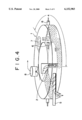
- FIG. 4 is a conceptional view illustrating a structure of a rotary hearth furnace used in the present invention.
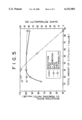
- FIG. 5 is a view showing effects of the amount of carbon on the reduction ratio of the pellets, Zn removing ratio and original shape retainability of the pellets when they are heated in an inert atmosphere at 1300° C.;
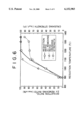
- FIG. 6 is a view showing effects of reduction temperature on the reduction ratio of pellets, Zn-removing ratio and compression strength
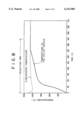
- FIG. 7 is a view showing effects of the temperature elevational rate of pellets on the original shape retainability and the crushing strength of the reduced pellets in a case of heating the pellets at 1300° C. in an inert atmosphere;
- FIG. 8 is a view showing a temperature elevation curve of the pellets
- FIG. 9 is a conceptional view illustrating a structure of an electric heating furnace used in the example of the present invention.
- FIG. 10 is a graph showing a relationship between the ratio (C/O) for the amount of oxygen bonded with Fe and Zn in the pellets, and the reduction ratio of the reduced pellets, the Zn removing ratio and the original shape retaining ratio.
- a carbonaceous material is controlled such that the amount of carbon is from 7 to 60 mass % based on the total amount of iron and Zn in a starting mixture comprising one or more of dusts containing iron oxide and Zn oxide and a binder in an amount sufficient to bond the dusts, and water is added to prepare them into carbonaceous material-incorporated green pellets.
- the thus prepared green pellets are dried, the dry pellets are charged in a reduction furnace, and the dry pellets are heated by heat transfer mainly radiation such that the temperature elevation rate is from 3 to 13° C./sec within a temperature range of the pellets from 150 to 900° C., thereby reducing Zn oxide and evaporating Zn, as well as reducing iron oxide to prepare reduced iron pellets.
- the amount of carbon of the carbonaceous material in the pellets is from 7 to 60 mass % based on the total amount of iron and Zn in the pellets. If it is less than 7 mass %, the amount of carbon required for the reduction of the iron oxide and Zn oxide in the pellets is insufficient to lower the reduction ratio of the iron oxide and make reduction of Zn oxide insufficient thereby lowering the Zn removing ratio and also lowering the pellet strength. On the other hand, if the amount of carbon exceeds 60 mass %, the pellet shape can no more be retained during reduction to lower the reduction efficiency.
- the amount of carbon of the carbonaceous material in the pellets is from 13 to 60 mass % based on the total amount of iron and Zn in the pellets. This is because the metallizing ratio can be further improved at 13 mass % or higher. From 13 to 45 mass % is further preferred. If the carbon amount is 45 mass % or less, the pellet reduction ratio can be increased and the pellet shape can be retained more firmly. 13 to 20 mass % is further preferred. If the carbon amount is less than 20 mass %, the blending amount of the carbonaceous material can be decreased to save the amount of the carbonaceous material, as well as the iron productivity is improved due to the increase in the iron component.
- the pellet reduction ratio is determined depending on the ratio between the amount of carbon and the amount of iron (amount of iron oxide). Namely, iron components in the dusts or sludges as the starting material for the pellets are usually present in the form of iron oxide. In the reduction of the iron oxide, the iron oxide is reduced directly by the carbonaceous material present in the vicinity thereof, and the iron oxide is further reduced with CO gas formed from the reaction between CO 2 formed upon reduction of the oxides gas and the carbonaceous material.
- CO 2 gas formed upon reduction of the oxides and CO gas formed by reaction between the CO 2 gas and the carbonaceous material may often been discharged out of the pellets. Accordingly, it is preferred to incorporate the carbonaceous material into the pellets in an amount greater than a stoichimetrical amount of carbon required for reducing the iron oxides.
- the Zn ingredient in the pellets is often present in the state of oxide like that iron oxide, it is necessary to further incorporate a carbonaceous material into the pellets in order to reduce Zn oxide. Therefore, it is preferred to incorporate carbon into the pellets in an amount more than the theoretical amount of carbon required to reduce the iron oxide and Zn oxide. While the theoretical amount of carbon varies depending on the form of the reducing reaction of iron oxide and Zn oxide at the intended reduction temperature or the state of the oxides and it ranges from about 10 to 15 mass % based on the total amount of iron and Zn in the pellets.
- the amount of the carbonaceous material to be blended can be decreased to 13% or less. This can provide a merit capable of decreasing the amount of the carbonaceous material and improving the productivity.
- the addition amount of the carbonaceous material incorporated in the pellets is increased, the shape retainability of the pellets is deteriorated to result in pulverization of the pellets during reduction. Since the pulverization of pellets lowers the efficiency of contact of iron oxide and Zn oxide with the carbonaceous material or CO gas, the reduction efficiency for the iron oxide and the reduction efficiency for Zn oxide are lowered. Furthermore, since the proceeding of the sintering for the pellets is inhibited making it difficult to retain the pellet shape, the original shape retainability of the pellets is deteriorated remarkably. Accordingly, by defining the amount of carbon in the pellets, preferably, to 60 mass % and, more preferably, to 45 mass % or less, the reduction ratio of the pellets can be further improved and the shape of the pellets can be retained more firmly.
- the temperature elevation ratio to 3 to 13° C./sec within a temperature region of the pellets from 150 to 900° C. This is because the reduction of the pellets does not proceed so effectively, sintering for the iron ingredient particles less occurs and the strength of the pellets is not increased within a temperature region from 150 to 900° C. and, accordingly, it is necessary to rapidly pass this temperature region from 150 to 950° C. rapidly.
- the strength of the pellets can be increased by bringing the pellets into a temperature region of 900° C. or higher where the reduction ratio of iron oxide is high and reduced iron particles in the pellets are sintered more rapidly while setting the temperature elevation rate to 3° C./sec or higher.
- the pellets are preferably reduced at a temperature elevation rate of 5 to 10° C./sec.
- the temperature elevation rate is set to 5° C./sec or higher, the strength of the reduced pellets can be further improved, and the shape can be retained more effectively.
- the temperature elevation rate it is possible to rapidly reach a temperature region of 1100° C. or higher where Zn is removed preferentially and, as a result, Zn can be removed more efficiently with the carbonaceous material in the pellets.
- this range for the temperature elevation rate is suitable.
- the pellet productivity can also be improved by increasing the temperature elevation rate for the pellets.
- the pellets are preferably reduced within a temperature range from 1100 to 1350° C.
- the amount of Zn in the pellets can be decreased significantly.
- the temperature for reduction of the pellets is at 1100° C. or higher, the reduction ratio is increased and the sintering for metal iron is proceeded to increase the strength of the reduced pellets.
- the crush strength of the pellets reduced at 1100° C. is 70 kgf/P or more, and the value gives a sufficient strength of pellets as the starting material for the blast furnace. This is because a value of 40 kgf/P or more is necessary as the starting material for the blast furnace.
- the reduction temperature is preferably set to 1200° C. or higher. This is because Zn oxide can be reduced more preferentially and the strength of the reduced iron pellets can be increased further. Furthermore, the productivity can be improved while maintaining the quality of the reduced iron pellets (Zn removing ratio, strength and iron reduction ratio). On the other hand, if the pellets are reduced at a temperature higher than 1350° C., pellets tend to be fused to each other, so that the pellet reduction temperature is preferably set to 1350° C. or lower.
- coke ingredients are preferably used. Since coke scarcely has volatile ingredients, it does not evaporate the volatile ingredients at a temperature region in which reduction and sintering of the pellets less occur (150-900° C.). Since this does not increase the gas pressure accompanying the evaporation of the volatile ingredients and does not cause pulverization of the pellets, the temperature elevation rate of the pellets can be increased.
- the sintering furnace has a furnace structure of interrupting the inside of the furnace from external air and preferably has a heating means for heating pellets fed in the furnace by heat conduction, mainly, radiation and a discharge means for discharging reaction gases containing the Zn ingredient reduced and evaporized from the pellets out of the furnace.
- a heating means for heating pellets fed in the furnace by heat conduction, mainly, radiation and a discharge means for discharging reaction gases containing the Zn ingredient reduced and evaporized from the pellets out of the furnace.
- the heating means radiation heat of burner combustion flames or radiation heat from radiant tubes can be used.
- a rotary hearth furnace is preferably used as the sintering furnace in the embodiment of the present invention.
- Reduced pellets can be manufactured in a great amount and at a high efficiency.
- the structure of the rotary hearth furnace is to be explained with reference to FIG. 4.
- the rotary hearth furnace has a disc-shaped hearth, on which pellets are fed and moved along with the movement of the hearth, thereby producing reduced pellets continuously. Since the pellets are moved together with the hearth and the pellet themselves do not move, pulverization of pellets during reduction as occurred in a rotary kiln can be prevented. Further, the rotary hearth furnace has a furnace structure in which the inside of the furnace and the external air are interrupted. As an interrupting structure, heat resistant metal materials or refractories are used. Since the inside of the furnace is interrupted from the external air as described above, the atmosphere can be controlled easily.
- a rotary hearth furnace 1 comprises a pellet charging port 2, a reducing zone 4 and a reduced pellet discharge port 5.
- the pellets are heated by heat conduction of radiation from a burner 6 and a furnace wall.
- For heating the pellets it is possible to use not only heating by the burner but also radiation heat generated by putting a CO gas resulting from the pellets to secondary combustion with air (shown at 7 in FIG. 4).
- the combustion gas is released from a gas discharge port 8 to the outside of the furnace.
- the combustion gas contains reaction gases containing Zn ingredients reduced and evaporated from the pellets, which form solid Zn oxide due to lowering of the temperature and can recover and treat Zn oxide by a dust collecting device.
- Pellets prepared by a pelletizer are dried in order to improve the productivity of the rotary hearth furnace.
- the dried pellets are fed through the pellet charge port 2 to the rotary hearth furnace.
- the pellets are laid by one layer or laminated by two layers on the hearth. In this case, pellets are not fused to each other.
- pellets are merely laid by one layer or laminated by two layers in the furnace and suffer from no substantial effect of gravitational sintering caused by the lamination of the pellets to each other and that the pellets are not fused to each other since there is less points of contact between each of the pellets.
- the temperature of the pellets is rapidly elevated by heat conduction of radiation through burner combustion and secondary combustion, in which iron oxide is reduced and Zn oxide is reduced and evaporated with the carbonaceous material incorporated in the pellets.
- the amount of the carbonaceous material fed in the pellets is more than the theoretical amount of carbon required for the reduction of iron oxide and Zn oxide (within a range from about 10 to 15 mass %: although varying depending on the form of the compounds and the manner of reaction)
- CO 2 and steam (H 2 O) formed by burner combustion or secondary combustion reach the surface of the pellets, they are reduced to CO or H 2 with the carbonaceous material incorporated in excess to the pellets, so that iron oxide and Zn oxide can be reduced.
- the reduced pellets are mechanically discharged from the pellet discharge port 5.
- the pellets are heated so as to be kept within a temperature range from 1100 to 1350° C., and heat is supplied for the temperature elevation and endothermic reaction of the pellets in order to reduce iron oxide and Zn oxide in the pellets.
- heat conduction mainly, radiation can be conducted efficiently.
- FIG. 1 is a table showing compositions for wet blast furnace dusts and rolling sludges used in this example
- FIG. 2 is a table showing blending ratios for sintering materials of the wet blast furnace dusts and rolling sludges
- FIG. 3 is a table showing reduction ratio, Zn removing ratio and the like of reduced pellets produced by this example.
- the wet blast furnace dusts used comprise iron oxide containing 33 mass % of carbon as the coke ingredient and 3 mass % of Zn ingredient as impurities.
- the iron component and the Zn ingredient in the blast furnace dusts are present substantially in the form of oxides.
- the rolling sludges contain 4 mass % of an oil component and, like that blast furnace dusts, the iron component in the rolling sludges is present substantially in the form of oxides.
- Such blast furnace dusts and rolling sludges were mixed in a blending ratios shown in FIG. 2, to which a binder and water were added and molded into green pellets with a diameter of about 16 to 20 mm. Then, the green pellets were dried at 160° C. by a gas mixture comprising a combustion gas and air till the water content was lowered to less than 1.0 mass %.
- the sintering furnace used in the experiment of the present invention is an electric heating furnace 10 shown in FIG. 9 in which the inside of the furnace is interrupted from external air by a pipe 11 made of a refractory material.
- the carbonaceous material incorporated pellets were set to a specimen holder 12 and charged into the electric heating furnace 10 previously maintained at a predetermined reduction temperature in an N 2 atmosphere.
- Thermocouples (not illustrated) were set to a central portion of the pellets in order to measure the temperature elevation rate of the pellets.
- the abscissa indicates the amount of carbon incorporated in the pellets based on the total amount of iron and Zn in the pellets, while the ordinate indicates the reduction ratio of the pellets (in solid line) and the shape retainability of the pellets (in dotted chain).
- the reduction ratio of the pellets is a value obtained by dividing "amount of oxygen bonded with Fe removed by reduction" with "initial amount oxygen bonded with Fe".
- the original shape retainability defines the appearance of the reduced pellets as:
- the original shape retainability is expressed by defining the shape index as:
- the amount of carbon in the pellets based on the total amount of iron and Zn is within a range from 13 to 60 mass %, the reduction ratio of the pellets is 75 mass % or more, and the shape retainability of the reduced pellets is 50% or more.
- the Zn removing ratio is 98 mass % and it can be seen that Zn can be reduced satisfactorily.
- the reduction ratio of the reduced pellets is 75 mass % or more, and the original shape retainability of the reduced pellets has a limit for the shape retainability of 50% with a view point of the handlability upon charging them into a blast furnace and a converter.
- the strength of the reduced pellets in this case is within a range from 45 to 80 kgf/P and can be used as the starting material for the blast furnace.
- Example 2 is an example showing the effect of the reduction temperature of the pellets.
- the pellets were charged into the electric heating furnace kept at a temperature from 900 to 1350° C., maintained for 12 min after the pellets reached a predetermined temperature and then the pellet reduction was conducted.
- FIG. 6 shows the results of measuring the Zn amount, the reduction ratio and the crushing strength of the reduced pellets.
- the Zn removing ratio of the reduced pellets reached 99 mass % or more at 1200° C. or higher, and the Zn amount was reduced to 0.01 mass % or less.
- Zn oxide is reduced preferentially to iron oxide in a high temperature region and it has been proved that the amount of Zn is lower by one digit and Zn can be removed more efficiently than in the prior art.
- the reduction ratio and the crushing strength of the reduced pellets are increased along with the elevation of the reduction temperature. They have a sufficient strength of the reduced pellets as the starting material for the blast furnace at 1100° C. or higher. In this case, although fusion was partially recognized between each of the pellets at 1350° C., fusion was not recognized at other temperatures. Further, partially fused portions between each of the pellets at 1350° C. can also be pulverized mechanically.
- Example 3 is an example showing the effect of the temperature elevation rate of the pellets.
- the original shape retainability of the pellets can be maintained to 50% at the temperature elevation rate of the pellets of 13° C./sec or less, and the original shape retainability of the pellets can be improved and shape retainability of the pellets is about 100% at the temperature elevation rate of the pellets of 5° C./sec or less.
- the original shape retainability of the pellets is improved along with the decrease of the temperature elevation rate of the pellets, and the original shape retainability of the pellets can be maintained to 50% or higher by keeping the temperature elevation rate of the pellets to 10° C./sec or lower.
- the crushing strength of 40 kgf/P is obtainable due to the sintering of the metallic iron at the temperature elevation rate of 3° C./sec or higher and the sintering becomes complete to obtain reduced pellets having a sufficient strength at a temperature elevation rate of 5° C./sec or higher. Accordingly, it can be seen that a temperature elevation rate of 3 to 13° C./sec, preferably, 5 to 10° C./sec is necessary in order to obtain reduced pellets with high original shape retainability and high strength.
- Example 4 is an example showing the reduction ratio and the Zn removing ratio of reduced pellets produced under the conditions of Example 1. As shown in FIG. 3, it has been confirmed in any of examples of the present invention that the amount of Zn was reduced to 0.020 mass % or less and Zn can be reduced satisfactorily.
- the original shape retainability of the pellets is kept at 50% or more, the crushing strength of the resultant reduced pellets is 45 kgf/P or more and the reduction ratio is also 75 mass % or higher, which can be used as the starting material for the blast furnace.
- a test material 3 comprising blast furnace dusts and rolling sludges each at 50 mass % blending ratio (amount of carbon in pellets based on iron+Zn component ratio)
- resultant pellets have a reduction ratio of 99.1% and an original shape retainability of 98%, so that the reduction ratio and the original shape retainability of the pellets can be removed remarkably.
- the oil component was contained by 2 mass % in the initially molded green pellets but, if the oil content in the green pellet is about 2 mass %, breakage of pellets during reduction was not recognized.
- the method of the present invention can provide reduced pellets at high reduction degree (reduction ratio at 75 mass % or more) and with extremely small amount of Zn as the starting material not only for the blast furnace but also for the converter and the electric furnace.
- the method of the present invention is not restricted only to this embodiment, and the method can use not only the blast furnace dusts containing the carbonaceous material and rolling sludges but also other iron oxide-containing dusts or sludges resulting from iron and steel making processes as the starting material for the pellets.
- the grain size of the pellets is not restricted only to about 16-20 mm as shown in this example, but it may be about 6 to 16 mm which is a general particle size of sintered iron oxide pellets used for the blast furnace.
- the method of the present invention can be used not only to the reduced pellets but also to the manufacture of reduced briquettes.
- Dry briquettes are used for the manufacture of the reduced briquettes and dry briquettes are obtained by a method, for example, of adding water to raw materials containing additives into briquettes and then drying them like in the case of the green pellets, and a method of briquetting by adding additives to previously dried raw materials.
- the pellets were reduced in the electric heating furnace shown in FIG. 9, and the results can be applied to a rotary hearth furnace.
- reduced pellets with extremely low Zn content, having appropriate grain size and strength and with high reduction ratio can be produced in a great amount and at a high efficiency.
- an inert gas typically represent by N 2 gas (also including Ar gas) was used as the atmosphere, but an atmosphere such as a combustion gas by burner heating as in a rotary hearth furnace may also be used. Since the combustion gas can be used as a carrier gas for the reaction gas containing the Zn ingredients reduced and evaporated from the pellets, there is no requirement for additionally supplying an N 2 gas or the like as the carrier gas, which can not only save N 2 gas or the like but also avoid heat loss caused by N 2 gas supplied separately.
- the method of the present invention can also cope with a case in which a small amount of metallic iron, metallic Zn and composite compounds of iron and Zn are present.
- the amount of carbon in the pellets may be within a preferred range of 13 to 60 mass % based on the total amount of iron and Zn. This can be mentioned, in another expression, as that the ratio of the amount of the carbon blended in the pellets and the amount of oxygen bonded with Fe and Zn in the pellets (C/O) is within a range from 65 to 160 mass %.
Landscapes
- Chemical & Material Sciences (AREA)
- Engineering & Computer Science (AREA)
- Organic Chemistry (AREA)
- Materials Engineering (AREA)
- Metallurgy (AREA)
- Manufacturing & Machinery (AREA)
- Mechanical Engineering (AREA)
- Life Sciences & Earth Sciences (AREA)
- Environmental & Geological Engineering (AREA)
- General Life Sciences & Earth Sciences (AREA)
- Geology (AREA)
- Geochemistry & Mineralogy (AREA)
- Manufacture And Refinement Of Metals (AREA)
- Manufacture Of Iron (AREA)
- Manufacture Of Metal Powder And Suspensions Thereof (AREA)
Priority Applications (1)
| Application Number | Priority Date | Filing Date | Title |
|---|---|---|---|
| US09/612,981 US6302938B1 (en) | 1997-12-18 | 2000-07-10 | Reduced pellets |
Applications Claiming Priority (2)
| Application Number | Priority Date | Filing Date | Title |
|---|---|---|---|
| JP9-349473 | 1997-12-18 | ||
| JP34947397 | 1997-12-18 |
Related Child Applications (1)
| Application Number | Title | Priority Date | Filing Date |
|---|---|---|---|
| US09/612,981 Continuation US6302938B1 (en) | 1997-12-18 | 2000-07-10 | Reduced pellets |
Publications (1)
| Publication Number | Publication Date |
|---|---|
| US6152983A true US6152983A (en) | 2000-11-28 |
Family
ID=18403989
Family Applications (2)
| Application Number | Title | Priority Date | Filing Date |
|---|---|---|---|
| US09/213,249 Expired - Lifetime US6152983A (en) | 1997-12-18 | 1998-12-17 | Method of producing reduced iron pellets |
| US09/612,981 Expired - Lifetime US6302938B1 (en) | 1997-12-18 | 2000-07-10 | Reduced pellets |
Family Applications After (1)
| Application Number | Title | Priority Date | Filing Date |
|---|---|---|---|
| US09/612,981 Expired - Lifetime US6302938B1 (en) | 1997-12-18 | 2000-07-10 | Reduced pellets |
Country Status (10)
| Country | Link |
|---|---|
| US (2) | US6152983A (de) |
| EP (1) | EP0924304B1 (de) |
| KR (1) | KR100327034B1 (de) |
| AT (1) | ATE221129T1 (de) |
| AU (1) | AU714097B2 (de) |
| CA (1) | CA2256135C (de) |
| DE (1) | DE69806718T2 (de) |
| ES (1) | ES2183281T3 (de) |
| PT (1) | PT924304E (de) |
| TW (1) | TW495552B (de) |
Cited By (38)
| Publication number | Priority date | Publication date | Assignee | Title |
|---|---|---|---|---|
| US6302938B1 (en) * | 1997-12-18 | 2001-10-16 | Kabushiki Kaisha Kobe Seiko Sho | Reduced pellets |
| US6368379B1 (en) | 1999-10-15 | 2002-04-09 | Kobe Steel, Ltd. | Apparatus and method for producing reduced metal |
| US20020108861A1 (en) * | 2001-02-12 | 2002-08-15 | Ismail Emesh | Method and apparatus for electrochemical planarization of a workpiece |
| US20020194959A1 (en) * | 2001-06-06 | 2002-12-26 | Kabushiki Kaisha Kobe Seiko Sho (Kobe Steel, Ltd) | Heat treatment method for treating mobile waste |
| US6503289B2 (en) | 2000-03-30 | 2003-01-07 | Midrex International B.V. Zurich Branch | Process for manufacturing molten metal iron |
| US6511316B2 (en) | 2000-06-29 | 2003-01-28 | Kabushiki Kaisha Kobe Seiko Sho | Method of operating a rotary hearth furnace |
| US6517770B1 (en) | 2000-03-30 | 2003-02-11 | Kobe Steel, Ltd. | Temperature control device and temperature control method for high-temperature exhaust gas |
| US6521171B2 (en) | 2000-05-19 | 2003-02-18 | Kabushiki Kaisha Kobe Seiko Sho (Kobe Steel, Ltd.) | Processing method for high-temperature exhaust gas |
| US20030037714A1 (en) * | 2001-08-22 | 2003-02-27 | Kabushiki Kaisha Kobe Seiko Sho (Kobe Steel, Ltd) | Method for combustion treatment of combustible waste and apparatus therefor |
| US20030061127A1 (en) * | 2001-09-26 | 2003-03-27 | Kabushiki Kaisha Kobe Seiko Sho (Kobe Steel, Ltd) | Method and system for providing information on industrial wastes, server and terminal for providing the information, recording medium for recording computer-readable program, and program allowing computer to execute process |
| US6569223B2 (en) | 2000-03-31 | 2003-05-27 | Midrex International B.V. Zurich Branch | Method of manufacturing molten metal iron |
| US6579505B2 (en) | 1997-10-30 | 2003-06-17 | Kabushiki Kaisha Kobe Seiko Sho | Method of producing iron oxide pellets |
| US6585800B2 (en) | 2001-07-27 | 2003-07-01 | Kabushiki Kaisha Kobe Seiko Sho | Method for making molten metal |
| US6592647B2 (en) | 2000-08-09 | 2003-07-15 | Kabushiki Kaisha Kobe Seiko Sho (Kobe Steel, Ltd.) | Method for producing metallic iron |
| US6602320B2 (en) | 2000-04-10 | 2003-08-05 | Kabushiki Kaisha Kobe Seiko Sho (Kobe Steel, Ltd.) | Method for producing reduced iron |
| US6630010B2 (en) | 2000-03-30 | 2003-10-07 | Midrex International B.V. Zurich Branch | Method of producing metallic iron |
| US20030188603A1 (en) * | 2002-04-03 | 2003-10-09 | Kabushiki Kaisha Kobe Seiko Sho (Kobe Steel, Ltd.) | Method for making reduced iron |
| US20030196517A1 (en) * | 2002-04-17 | 2003-10-23 | Kabushiki Kaisha Kobe Seiko Sho(Kobe Steel, Ltd.) | Method of treating heavy metal and/or organic compound |
| US6660221B2 (en) | 2000-04-26 | 2003-12-09 | Kabushiki Kaisha Kobe Seiko Sho | Rotary hearth furnace and screw thereof for discharging reduced iron |
| US20030233912A1 (en) * | 2002-06-18 | 2003-12-25 | Kabushiki Kaisha Kobe Seiko Sho (Kobe Steel Ltd) | Method of producing stainless steel by re-using waste material of stainless steel producing process |
| US6689182B2 (en) | 2001-10-01 | 2004-02-10 | Kobe Steel, Ltd. | Method and device for producing molten iron |
| US20040163493A1 (en) * | 2003-02-26 | 2004-08-26 | Kabushiki Kaisha Kobe Seiko Sho (Kobe Steel, Ltd.) | Method for manufacturing reduced metal |
| US20040168549A1 (en) * | 2002-01-24 | 2004-09-02 | Isao Kobayashi | Process for producing molten iron |
| US6790255B2 (en) | 2001-07-17 | 2004-09-14 | Kobe Steel, Ltd. | Moving-hearth heating furnace and method for making reduced metal agglomerates |
| US6797034B2 (en) | 2001-05-30 | 2004-09-28 | Kabushiki Kaisha Seiko Sho | Method of producing reduced metals and apparatus for reducing metal oxides |
| US20040216280A1 (en) * | 2001-10-24 | 2004-11-04 | Kabushiki Kaisha Kobe Seiko Sho (Kobe Steel, Ltd.) | Method for making metal oxide agglomerates |
| US20040221426A1 (en) * | 1997-10-30 | 2004-11-11 | Kabushiki Kaisha Kobe Seiko Sho (Kobe Steel, Ltd.) | Method of producing iron oxide pellets |
| US20050087039A1 (en) * | 2001-11-12 | 2005-04-28 | Shoichi Kikuchi | Method of producing metallic iron |
| US20050211020A1 (en) * | 2002-10-18 | 2005-09-29 | Hiroshi Sugitatsu | Ferronickel and process for producing raw material for ferronickel smelting |
| US20060070495A1 (en) * | 2001-05-15 | 2006-04-06 | Midrex International B. V. Zurich Branch | Granular metallic iron |
| US20060150774A1 (en) * | 2004-12-07 | 2006-07-13 | Nu-Iron Technology, Llc | Method and system for producing metallic iron nuggets |
| US7198658B2 (en) | 2002-10-09 | 2007-04-03 | Kobe Steel, Ltd. | Method for producing feed material for molten metal production and method for producing molten metal |
| US20090229414A1 (en) * | 2006-10-04 | 2009-09-17 | Nu-Iron Technology, Llc | System and method for producing metallic iron |
| US8518146B2 (en) | 2009-06-29 | 2013-08-27 | Gb Group Holdings Limited | Metal reduction processes, metallurgical processes and products and apparatus |
| CN112899472A (zh) * | 2021-01-21 | 2021-06-04 | 张家港宏昌钢板有限公司 | 一种用转底炉处理电炉初炼除尘灰的方法 |
| CN114854985A (zh) * | 2022-05-17 | 2022-08-05 | 宝武集团环境资源科技有限公司 | 转底炉协同处理轧钢油泥与含铁锌尘泥的方法及系统 |
| CN115725835A (zh) * | 2022-12-05 | 2023-03-03 | 云南曲靖钢铁集团呈钢钢铁有限公司 | 一种钢厂废弃尘泥的改性烧结处置方法 |
| CN116179848A (zh) * | 2023-02-21 | 2023-05-30 | 武汉钢铁有限公司 | 一种高质量金属化球团的制备方法 |
Families Citing this family (14)
| Publication number | Priority date | Publication date | Assignee | Title |
|---|---|---|---|---|
| DE60138725D1 (de) | 2000-10-30 | 2009-06-25 | Nippon Steel Corp | METALLOXID ENTHALTENDES GRÜNPELLET FÜR REDUKTIONSOFEN und VERFAHREN ZU SEINER HERSTELLUNG, VERFAHREN ZU SEINER REDUKTION |
| EP2341153A1 (de) * | 2001-09-27 | 2011-07-06 | Nippon Steel Corporation | Verfahren zum Trocknen eines metalloxidhaltigen Presskörpers, Verfahren zur Metalloxidreduktion und Drehherd-Metallreduktionsofen |
| GB2435649A (en) * | 2006-03-03 | 2007-09-05 | Anglo Operations Ltd | Process for reducing metal ores. |
| US8177880B2 (en) | 2006-10-04 | 2012-05-15 | Nu-Iron Technology, Llc | System and method of producing metallic iron |
| US8636824B2 (en) * | 2007-05-28 | 2014-01-28 | Kabushiki Kaisha Kobe Seiko Sho (Kobe Steel, Ltd.) | Production method for carbonaceous material-containing metal oxide briquettes |
| JP4317579B2 (ja) * | 2007-09-05 | 2009-08-19 | 新日本製鐵株式会社 | 還元鉄成形体の製造方法、及び銑鉄の製造方法 |
| JP4317580B2 (ja) * | 2007-09-14 | 2009-08-19 | 新日本製鐵株式会社 | 還元鉄ペレットの製造方法及び銑鉄の製造方法 |
| TWI426133B (zh) * | 2008-05-30 | 2014-02-11 | Jfe Steel Corp | Production method of pig iron |
| GB2578275A (en) * | 2018-07-27 | 2020-05-06 | British Steel Ltd | Agglomerate for use in iron-making and/or steel-making |
| CN110055361B (zh) * | 2019-06-10 | 2020-12-01 | 成渝钒钛科技有限公司 | 焦丁高炉应用技术方法 |
| KR102908785B1 (ko) * | 2020-08-13 | 2026-01-07 | 한국공학대학교산학협력단 | 폐기물을 이용한 철의 제조방법 및 그에 의해 제조된 철 |
| CN112430741A (zh) * | 2020-12-01 | 2021-03-02 | 唐山华纤科技有限公司 | 一种从高炉布袋除尘灰中回收氧化锌的方法 |
| CN113186392B (zh) * | 2021-04-02 | 2022-10-04 | 首钢京唐钢铁联合有限责任公司 | 一种实现冶金固废高效利用的造球方法 |
| PL441677A1 (pl) * | 2022-07-08 | 2024-01-15 | Dobrzyński Michał P.P.H.U Stilmar | Sposób odzysku metali z odpadów pohutniczych |
Citations (10)
| Publication number | Priority date | Publication date | Assignee | Title |
|---|---|---|---|---|
| US3770416A (en) * | 1972-04-17 | 1973-11-06 | Univ Michigan Tech | Treatment of zinc rich steel mill dusts for reuse in steel making processes |
| US3836353A (en) * | 1968-10-18 | 1974-09-17 | C Holley | Pellet reclamation process |
| JPS502276A (de) * | 1973-05-15 | 1975-01-10 | ||
| DE2456893A1 (de) * | 1974-12-02 | 1976-08-12 | Siemens Ag | Speicherelement |
| EP0387479A1 (de) * | 1989-03-14 | 1990-09-19 | Zia Metallurgical Processes, Inc. | Verfahren und Anlage zur Rückgewinnung von NE-Metallen mittels eines Schachtofens mit kontinuierlicher Zufuhr |
| EP0508166A2 (de) * | 1991-04-12 | 1992-10-14 | Zia Metallurgical Processes, Inc. | Verfahren und Vorrichtung zur Direktreduktion |
| JPH06330198A (ja) * | 1993-05-18 | 1994-11-29 | Nkk Corp | ダスト中の亜鉛の回収方法 |
| JPH09157766A (ja) * | 1995-12-05 | 1997-06-17 | Nippon Steel Corp | 含亜鉛ダストの処理方法 |
| JPH09209047A (ja) * | 1996-02-05 | 1997-08-12 | Hiroshima Gas Kaihatsu Kk | ステンレス鋼製造工程廃棄物の再利用方法 |
| US5865875A (en) * | 1995-08-25 | 1999-02-02 | Maumee Research & Engineering, Inc. | Process for treating metal oxide fines |
Family Cites Families (1)
| Publication number | Priority date | Publication date | Assignee | Title |
|---|---|---|---|---|
| TW495552B (en) * | 1997-12-18 | 2002-07-21 | Kobe Steel Ltd | Method of producing reduced iron pellets |
-
1998
- 1998-12-04 TW TW87120155A patent/TW495552B/zh not_active IP Right Cessation
- 1998-12-15 CA CA 2256135 patent/CA2256135C/en not_active Expired - Fee Related
- 1998-12-15 AU AU97119/98A patent/AU714097B2/en not_active Ceased
- 1998-12-17 DE DE69806718T patent/DE69806718T2/de not_active Expired - Lifetime
- 1998-12-17 US US09/213,249 patent/US6152983A/en not_active Expired - Lifetime
- 1998-12-17 EP EP19980124203 patent/EP0924304B1/de not_active Expired - Lifetime
- 1998-12-17 AT AT98124203T patent/ATE221129T1/de not_active IP Right Cessation
- 1998-12-17 ES ES98124203T patent/ES2183281T3/es not_active Expired - Lifetime
- 1998-12-17 PT PT98124203T patent/PT924304E/pt unknown
- 1998-12-18 KR KR1019980056089A patent/KR100327034B1/ko not_active Expired - Fee Related
-
2000
- 2000-07-10 US US09/612,981 patent/US6302938B1/en not_active Expired - Lifetime
Patent Citations (11)
| Publication number | Priority date | Publication date | Assignee | Title |
|---|---|---|---|---|
| US3836353A (en) * | 1968-10-18 | 1974-09-17 | C Holley | Pellet reclamation process |
| US3770416A (en) * | 1972-04-17 | 1973-11-06 | Univ Michigan Tech | Treatment of zinc rich steel mill dusts for reuse in steel making processes |
| JPS502276A (de) * | 1973-05-15 | 1975-01-10 | ||
| DE2456893A1 (de) * | 1974-12-02 | 1976-08-12 | Siemens Ag | Speicherelement |
| EP0387479A1 (de) * | 1989-03-14 | 1990-09-19 | Zia Metallurgical Processes, Inc. | Verfahren und Anlage zur Rückgewinnung von NE-Metallen mittels eines Schachtofens mit kontinuierlicher Zufuhr |
| EP0508166A2 (de) * | 1991-04-12 | 1992-10-14 | Zia Metallurgical Processes, Inc. | Verfahren und Vorrichtung zur Direktreduktion |
| US5186741A (en) * | 1991-04-12 | 1993-02-16 | Zia Patent Company | Direct reduction process in a rotary hearth furnace |
| JPH06330198A (ja) * | 1993-05-18 | 1994-11-29 | Nkk Corp | ダスト中の亜鉛の回収方法 |
| US5865875A (en) * | 1995-08-25 | 1999-02-02 | Maumee Research & Engineering, Inc. | Process for treating metal oxide fines |
| JPH09157766A (ja) * | 1995-12-05 | 1997-06-17 | Nippon Steel Corp | 含亜鉛ダストの処理方法 |
| JPH09209047A (ja) * | 1996-02-05 | 1997-08-12 | Hiroshima Gas Kaihatsu Kk | ステンレス鋼製造工程廃棄物の再利用方法 |
Non-Patent Citations (8)
| Title |
|---|
| Derwent Abstract, AN 40157W/24, & JP 50 002276 A, Mar. 11, 1975. * |
| Derwent Abstract, AN 40157W/24, JP 50-02276, Mar. 11, 1975. |
| Derwent Abstract, AN 44697W/27, & DE 2 456 893 A1, 1975. * |
| Derwent Abstract, AN 44697W/27, DT 2 456 893, 1975. |
| Patent Abstracts of Japan, vol. 095, No. 002, Mar. 31, 1995, & JP 06 330198 A, Nov. 29, 1994. * |
| Patent Abstracts of Japan, vol. 095, No. 002, Mar. 31, 1995, JP 06 330198, Nov. 29, 1994. |
| Patent Abstracts of Japan, vol. 097, No. 012, Dec. 25, 1997, & JP 09 209047 A, Aug. 12, 1997. * |
| Patent Abstracts of Japan, vol. 097, No. 012, Dec. 25, 1997, JP 09 209047, Aug. 12, 1997. |
Cited By (65)
| Publication number | Priority date | Publication date | Assignee | Title |
|---|---|---|---|---|
| US20030198779A1 (en) * | 1997-10-30 | 2003-10-23 | Kabushiki Kaisha Kobe Seiko Sho | Method of producing iron oxide pellets |
| US7438730B2 (en) | 1997-10-30 | 2008-10-21 | Kobe Steel, Ltd. | Method of producing iron oxide pellets |
| US20040221426A1 (en) * | 1997-10-30 | 2004-11-11 | Kabushiki Kaisha Kobe Seiko Sho (Kobe Steel, Ltd.) | Method of producing iron oxide pellets |
| US6811759B2 (en) | 1997-10-30 | 2004-11-02 | Kabushiki Kaisha Kobe Seiko Sho | Method of producing iron oxide pellets |
| US6579505B2 (en) | 1997-10-30 | 2003-06-17 | Kabushiki Kaisha Kobe Seiko Sho | Method of producing iron oxide pellets |
| US20060218753A1 (en) * | 1997-10-30 | 2006-10-05 | Kabushiki Kaisha Kobe Seiko Sho (Kobe Steel, Ltd.) | Method of producing iron oxide pellets |
| US6302938B1 (en) * | 1997-12-18 | 2001-10-16 | Kabushiki Kaisha Kobe Seiko Sho | Reduced pellets |
| US6368379B1 (en) | 1999-10-15 | 2002-04-09 | Kobe Steel, Ltd. | Apparatus and method for producing reduced metal |
| US6517770B1 (en) | 2000-03-30 | 2003-02-11 | Kobe Steel, Ltd. | Temperature control device and temperature control method for high-temperature exhaust gas |
| US6503289B2 (en) | 2000-03-30 | 2003-01-07 | Midrex International B.V. Zurich Branch | Process for manufacturing molten metal iron |
| US6630010B2 (en) | 2000-03-30 | 2003-10-07 | Midrex International B.V. Zurich Branch | Method of producing metallic iron |
| US6569223B2 (en) | 2000-03-31 | 2003-05-27 | Midrex International B.V. Zurich Branch | Method of manufacturing molten metal iron |
| US6602320B2 (en) | 2000-04-10 | 2003-08-05 | Kabushiki Kaisha Kobe Seiko Sho (Kobe Steel, Ltd.) | Method for producing reduced iron |
| US6660221B2 (en) | 2000-04-26 | 2003-12-09 | Kabushiki Kaisha Kobe Seiko Sho | Rotary hearth furnace and screw thereof for discharging reduced iron |
| US6521171B2 (en) | 2000-05-19 | 2003-02-18 | Kabushiki Kaisha Kobe Seiko Sho (Kobe Steel, Ltd.) | Processing method for high-temperature exhaust gas |
| US6511316B2 (en) | 2000-06-29 | 2003-01-28 | Kabushiki Kaisha Kobe Seiko Sho | Method of operating a rotary hearth furnace |
| US6592647B2 (en) | 2000-08-09 | 2003-07-15 | Kabushiki Kaisha Kobe Seiko Sho (Kobe Steel, Ltd.) | Method for producing metallic iron |
| US20020108861A1 (en) * | 2001-02-12 | 2002-08-15 | Ismail Emesh | Method and apparatus for electrochemical planarization of a workpiece |
| US7806959B2 (en) | 2001-05-15 | 2010-10-05 | Midrex International B.V. Zurich Branch | Metallic iron nuggets |
| US20060070495A1 (en) * | 2001-05-15 | 2006-04-06 | Midrex International B. V. Zurich Branch | Granular metallic iron |
| US20070258843A1 (en) * | 2001-05-15 | 2007-11-08 | Midrex International B. V. Zurich | Metallic iron nuggets |
| US20070227301A1 (en) * | 2001-05-15 | 2007-10-04 | Midrex International B.V. Zurich Branch | Metallic iron nuggets |
| US20060248981A1 (en) * | 2001-05-15 | 2006-11-09 | Midrex International B.V. Zurich Branch | Granular metallic iron |
| US6797034B2 (en) | 2001-05-30 | 2004-09-28 | Kabushiki Kaisha Seiko Sho | Method of producing reduced metals and apparatus for reducing metal oxides |
| US20020194959A1 (en) * | 2001-06-06 | 2002-12-26 | Kabushiki Kaisha Kobe Seiko Sho (Kobe Steel, Ltd) | Heat treatment method for treating mobile waste |
| US6790255B2 (en) | 2001-07-17 | 2004-09-14 | Kobe Steel, Ltd. | Moving-hearth heating furnace and method for making reduced metal agglomerates |
| US6585800B2 (en) | 2001-07-27 | 2003-07-01 | Kabushiki Kaisha Kobe Seiko Sho | Method for making molten metal |
| US20030037714A1 (en) * | 2001-08-22 | 2003-02-27 | Kabushiki Kaisha Kobe Seiko Sho (Kobe Steel, Ltd) | Method for combustion treatment of combustible waste and apparatus therefor |
| US7032526B2 (en) | 2001-08-22 | 2006-04-25 | Kabushiki Kaisha Kobe Seiko Sho | Method for combustion treatment of combustible waste and apparatus therefor |
| US7340420B2 (en) | 2001-09-26 | 2008-03-04 | Kabushiki Kaisha Kobe Seiko Sho (Kobe Steel, Ltd.) | Method and system for providing information on industrial wastes, server and terminal for providing the information, recording medium for recording computer-readable program, and program allowing computer to execute process |
| US20030061127A1 (en) * | 2001-09-26 | 2003-03-27 | Kabushiki Kaisha Kobe Seiko Sho (Kobe Steel, Ltd) | Method and system for providing information on industrial wastes, server and terminal for providing the information, recording medium for recording computer-readable program, and program allowing computer to execute process |
| US6689182B2 (en) | 2001-10-01 | 2004-02-10 | Kobe Steel, Ltd. | Method and device for producing molten iron |
| US20040216280A1 (en) * | 2001-10-24 | 2004-11-04 | Kabushiki Kaisha Kobe Seiko Sho (Kobe Steel, Ltd.) | Method for making metal oxide agglomerates |
| US20050087039A1 (en) * | 2001-11-12 | 2005-04-28 | Shoichi Kikuchi | Method of producing metallic iron |
| US7384450B2 (en) | 2001-11-12 | 2008-06-10 | Kobe Steel, Ltd. | Method for producing metallic iron |
| US20040168549A1 (en) * | 2002-01-24 | 2004-09-02 | Isao Kobayashi | Process for producing molten iron |
| US7160353B2 (en) | 2002-01-24 | 2007-01-09 | Kabushiki Kaisha Kobe Seiko Sho (Kobe Steel, Ltd.) | Process for producing molten iron |
| US6918947B2 (en) | 2002-04-03 | 2005-07-19 | Kobe Steel, Ltd. | Method for making reduced iron |
| US20030188603A1 (en) * | 2002-04-03 | 2003-10-09 | Kabushiki Kaisha Kobe Seiko Sho (Kobe Steel, Ltd.) | Method for making reduced iron |
| US20030196517A1 (en) * | 2002-04-17 | 2003-10-23 | Kabushiki Kaisha Kobe Seiko Sho(Kobe Steel, Ltd.) | Method of treating heavy metal and/or organic compound |
| US20060278042A1 (en) * | 2002-06-18 | 2006-12-14 | Kabushiki Kaisha Kobe Seiko Sho ( Kobe Steel, Ltd) | Method of producing stainless steel by re-using waste material of stainless steel producing process |
| US7175691B2 (en) | 2002-06-18 | 2007-02-13 | Kobe Steel, Ltd. | Method of producing stainless steel by re-using waste material of stainless steel producing process |
| US20070079667A1 (en) * | 2002-06-18 | 2007-04-12 | Kabushiki Kaisha Kobe Seiko Sho (Kobe Steel, Ltd) | Method of producing stainless steel by re-using waste material of stainless steel producing process |
| US20030233912A1 (en) * | 2002-06-18 | 2003-12-25 | Kabushiki Kaisha Kobe Seiko Sho (Kobe Steel Ltd) | Method of producing stainless steel by re-using waste material of stainless steel producing process |
| US7198658B2 (en) | 2002-10-09 | 2007-04-03 | Kobe Steel, Ltd. | Method for producing feed material for molten metal production and method for producing molten metal |
| US20070113708A1 (en) * | 2002-10-18 | 2007-05-24 | Kabushiki Kaisha Kobe Seiko Sho (Kobe Steel Ltd.) | Ferronickel and process for producing raw material for ferronickel smelting |
| US20050211020A1 (en) * | 2002-10-18 | 2005-09-29 | Hiroshi Sugitatsu | Ferronickel and process for producing raw material for ferronickel smelting |
| US20040163493A1 (en) * | 2003-02-26 | 2004-08-26 | Kabushiki Kaisha Kobe Seiko Sho (Kobe Steel, Ltd.) | Method for manufacturing reduced metal |
| US7572316B2 (en) | 2003-02-26 | 2009-08-11 | Kobe Steel, Ltd. | Method for manufacturing reduced metal |
| US20060150774A1 (en) * | 2004-12-07 | 2006-07-13 | Nu-Iron Technology, Llc | Method and system for producing metallic iron nuggets |
| US8158054B2 (en) | 2004-12-07 | 2012-04-17 | Nu-Iron Technology, Llc | Method and system for producing metallic iron nuggets |
| US20060150773A1 (en) * | 2004-12-07 | 2006-07-13 | Nu-Iron Technology, Llc | Method and system for producing metallic iron nuggets |
| US7628839B2 (en) | 2004-12-07 | 2009-12-08 | Iwao Iwasaki | Method and system for producing metallic iron nuggets |
| US7641712B2 (en) | 2004-12-07 | 2010-01-05 | Nu-Iron Technology, Llc | Method and system for producing metallic iron nuggets |
| US7695544B2 (en) | 2004-12-07 | 2010-04-13 | Nu-Iron Technology, Llc | Method and system for producing metallic iron nuggets |
| US20060150772A1 (en) * | 2004-12-07 | 2006-07-13 | Nu-Iron Technology, Llc | Method and system for producing metallic iron nuggets |
| US20100164150A1 (en) * | 2004-12-07 | 2010-07-01 | Nu-Iron Technology, Llc | Method and system for producing metallic iron nuggets |
| US8097065B2 (en) | 2006-10-04 | 2012-01-17 | Nu-Iron Technology, Llc | System and method for producing metallic iron |
| US20090229414A1 (en) * | 2006-10-04 | 2009-09-17 | Nu-Iron Technology, Llc | System and method for producing metallic iron |
| US8535602B2 (en) | 2006-10-04 | 2013-09-17 | Nu-Iron Technology, Llc | System and method for producing metallic iron |
| US8518146B2 (en) | 2009-06-29 | 2013-08-27 | Gb Group Holdings Limited | Metal reduction processes, metallurgical processes and products and apparatus |
| CN112899472A (zh) * | 2021-01-21 | 2021-06-04 | 张家港宏昌钢板有限公司 | 一种用转底炉处理电炉初炼除尘灰的方法 |
| CN114854985A (zh) * | 2022-05-17 | 2022-08-05 | 宝武集团环境资源科技有限公司 | 转底炉协同处理轧钢油泥与含铁锌尘泥的方法及系统 |
| CN115725835A (zh) * | 2022-12-05 | 2023-03-03 | 云南曲靖钢铁集团呈钢钢铁有限公司 | 一种钢厂废弃尘泥的改性烧结处置方法 |
| CN116179848A (zh) * | 2023-02-21 | 2023-05-30 | 武汉钢铁有限公司 | 一种高质量金属化球团的制备方法 |
Also Published As
| Publication number | Publication date |
|---|---|
| CA2256135C (en) | 2004-08-10 |
| ES2183281T3 (es) | 2003-03-16 |
| AU714097B2 (en) | 1999-12-16 |
| TW495552B (en) | 2002-07-21 |
| DE69806718T2 (de) | 2003-03-13 |
| KR100327034B1 (ko) | 2002-04-17 |
| PT924304E (pt) | 2002-12-31 |
| KR19990063198A (ko) | 1999-07-26 |
| EP0924304B1 (de) | 2002-07-24 |
| AU9711998A (en) | 1999-07-08 |
| CA2256135A1 (en) | 1999-06-18 |
| ATE221129T1 (de) | 2002-08-15 |
| US6302938B1 (en) | 2001-10-16 |
| DE69806718D1 (de) | 2002-08-29 |
| EP0924304A1 (de) | 1999-06-23 |
Similar Documents
| Publication | Publication Date | Title |
|---|---|---|
| US6152983A (en) | Method of producing reduced iron pellets | |
| EP0952230A1 (de) | Verfahren zur Herstellung von reduzierten Eisenagglomeraten | |
| EP1027461B1 (de) | Verfahren und vorrichtung zur herstellung von metallischem eisen | |
| EP1160336A1 (de) | Verfahren und Vorrichtung zur Herstellung von metallischen Eisen | |
| KR101304686B1 (ko) | 고로용 부분 환원철 및 그 제조방법 | |
| KR19990044124A (ko) | 금속 산화물 미분을 처리하는 방법 | |
| US4983214A (en) | Method and apparatus for direct reduction of metal oxides | |
| WO1999016913A1 (en) | Rotary hearth furnace for reducing oxides, and method of operating the furnace | |
| WO2022271032A1 (en) | Biochar and biochar pyrolysis oil briquettes | |
| JP3043325B2 (ja) | 還元鉄ペレットの製造方法およびこの方法で製造した還元鉄ペレット | |
| JP3635253B2 (ja) | 還元炉向けペレットの製造方法、および、酸化金属の還元方法 | |
| US3311465A (en) | Iron-containing flux material for steel making process | |
| JPH1053820A (ja) | 鋼ダスト、スラッジ及び/又は鉱石の金属化合物類の処理方法 | |
| JP3863052B2 (ja) | 高炉原料装入方法 | |
| JPH10317033A (ja) | 還元鉄の製造方法 | |
| JPH1112619A (ja) | 還元鉄の製造方法 | |
| AU703821B2 (en) | Process for reduction of metal oxide to metal and apparatus and composite for use in the process | |
| JP3844028B2 (ja) | 冶金ダスト類から有価金属成分の回収方法 | |
| JP3678034B2 (ja) | 部分還元鉄の製造方法 | |
| JP3451901B2 (ja) | 移動型炉床炉の操業方法 | |
| JP2000119722A (ja) | 還元鉄ペレットの製造方法 | |
| CA2266301C (en) | Method of producing reduced iron agglomerates | |
| JPH0699691B2 (ja) | 含クロムコ−クスの製造法 | |
| JP2004204287A (ja) | 還元金属の製造方法 | |
| KR810002043B1 (ko) | 산화철 함유 물질로 부터 아연과 납을 휘발시키는 발쯔법 |
Legal Events
| Date | Code | Title | Description |
|---|---|---|---|
| AS | Assignment |
Owner name: KABUSHIKI KAISHA KOBE SEIKO SHO, JAPAN Free format text: ASSIGNMENT OF ASSIGNORS INTEREST;ASSIGNORS:KAMIJO, TSUNAO;MIYAGAWA, KAZUYA;TAKENAKA, YOSHIMICHI;AND OTHERS;REEL/FRAME:009786/0345 Effective date: 19981201 |
|
| STCF | Information on status: patent grant |
Free format text: PATENTED CASE |
|
| FEPP | Fee payment procedure |
Free format text: PAYER NUMBER DE-ASSIGNED (ORIGINAL EVENT CODE: RMPN); ENTITY STATUS OF PATENT OWNER: LARGE ENTITY Free format text: PAYOR NUMBER ASSIGNED (ORIGINAL EVENT CODE: ASPN); ENTITY STATUS OF PATENT OWNER: LARGE ENTITY |
|
| FPAY | Fee payment |
Year of fee payment: 4 |
|
| FPAY | Fee payment |
Year of fee payment: 8 |
|
| FPAY | Fee payment |
Year of fee payment: 12 |