US3271816A - Apparatus for moulding articles from plastic materials - Google Patents
Apparatus for moulding articles from plastic materials Download PDFInfo
- Publication number
- US3271816A US3271816A US448759A US44875965A US3271816A US 3271816 A US3271816 A US 3271816A US 448759 A US448759 A US 448759A US 44875965 A US44875965 A US 44875965A US 3271816 A US3271816 A US 3271816A
- Authority
- US
- United States
- Prior art keywords
- sheet
- tool
- valve
- outlet
- carriage
- Prior art date
- Legal status (The legal status is an assumption and is not a legal conclusion. Google has not performed a legal analysis and makes no representation as to the accuracy of the status listed.)
- Expired - Lifetime
Links
- 239000000463 material Substances 0.000 title claims description 85
- 239000004033 plastic Substances 0.000 title description 23
- 238000000465 moulding Methods 0.000 title description 13
- 238000001125 extrusion Methods 0.000 claims description 25
- 239000012815 thermoplastic material Substances 0.000 claims description 2
- 239000007788 liquid Substances 0.000 description 46
- 238000009740 moulding (composite fabrication) Methods 0.000 description 21
- 230000000694 effects Effects 0.000 description 11
- 210000005244 lower chamber Anatomy 0.000 description 11
- 238000005520 cutting process Methods 0.000 description 8
- 230000007246 mechanism Effects 0.000 description 7
- 238000010438 heat treatment Methods 0.000 description 5
- 238000013459 approach Methods 0.000 description 3
- 239000012530 fluid Substances 0.000 description 3
- 230000002093 peripheral effect Effects 0.000 description 3
- 241001673669 Porcine circovirus 2 Species 0.000 description 2
- 230000008878 coupling Effects 0.000 description 1
- 238000010168 coupling process Methods 0.000 description 1
- 238000005859 coupling reaction Methods 0.000 description 1
- 230000003247 decreasing effect Effects 0.000 description 1
- 230000000977 initiatory effect Effects 0.000 description 1
- 238000004519 manufacturing process Methods 0.000 description 1
- 210000002105 tongue Anatomy 0.000 description 1
Images

Classifications
-
- B—PERFORMING OPERATIONS; TRANSPORTING
- B65—CONVEYING; PACKING; STORING; HANDLING THIN OR FILAMENTARY MATERIAL
- B65B—MACHINES, APPARATUS OR DEVICES FOR, OR METHODS OF, PACKAGING ARTICLES OR MATERIALS; UNPACKING
- B65B61/00—Auxiliary devices, not otherwise provided for, for operating on sheets, blanks, webs, binding material, containers or packages
- B65B61/04—Auxiliary devices, not otherwise provided for, for operating on sheets, blanks, webs, binding material, containers or packages for severing webs, or for separating joined packages
- B65B61/06—Auxiliary devices, not otherwise provided for, for operating on sheets, blanks, webs, binding material, containers or packages for severing webs, or for separating joined packages by cutting
-
- B—PERFORMING OPERATIONS; TRANSPORTING
- B29—WORKING OF PLASTICS; WORKING OF SUBSTANCES IN A PLASTIC STATE IN GENERAL
- B29C—SHAPING OR JOINING OF PLASTICS; SHAPING OF MATERIAL IN A PLASTIC STATE, NOT OTHERWISE PROVIDED FOR; AFTER-TREATMENT OF THE SHAPED PRODUCTS, e.g. REPAIRING
- B29C51/00—Shaping by thermoforming, i.e. shaping sheets or sheet like preforms after heating, e.g. shaping sheets in matched moulds or by deep-drawing; Apparatus therefor
- B29C51/26—Component parts, details or accessories; Auxiliary operations
-
- B—PERFORMING OPERATIONS; TRANSPORTING
- B29—WORKING OF PLASTICS; WORKING OF SUBSTANCES IN A PLASTIC STATE IN GENERAL
- B29C—SHAPING OR JOINING OF PLASTICS; SHAPING OF MATERIAL IN A PLASTIC STATE, NOT OTHERWISE PROVIDED FOR; AFTER-TREATMENT OF THE SHAPED PRODUCTS, e.g. REPAIRING
- B29C31/00—Handling, e.g. feeding of the material to be shaped, storage of plastics material before moulding; Automation, i.e. automated handling lines in plastics processing plants, e.g. using manipulators or robots
- B29C31/004—Arrangements for converting the motion of a material which is continuously fed to a working station in a stepwise motion
-
- B—PERFORMING OPERATIONS; TRANSPORTING
- B29—WORKING OF PLASTICS; WORKING OF SUBSTANCES IN A PLASTIC STATE IN GENERAL
- B29C—SHAPING OR JOINING OF PLASTICS; SHAPING OF MATERIAL IN A PLASTIC STATE, NOT OTHERWISE PROVIDED FOR; AFTER-TREATMENT OF THE SHAPED PRODUCTS, e.g. REPAIRING
- B29C49/00—Blow-moulding, i.e. blowing a preform or parison to a desired shape within a mould; Apparatus therefor
- B29C49/28—Blow-moulding apparatus
- B29C49/28006—Blow-moulding apparatus having special frame
-
- B—PERFORMING OPERATIONS; TRANSPORTING
- B29—WORKING OF PLASTICS; WORKING OF SUBSTANCES IN A PLASTIC STATE IN GENERAL
- B29C—SHAPING OR JOINING OF PLASTICS; SHAPING OF MATERIAL IN A PLASTIC STATE, NOT OTHERWISE PROVIDED FOR; AFTER-TREATMENT OF THE SHAPED PRODUCTS, e.g. REPAIRING
- B29C51/00—Shaping by thermoforming, i.e. shaping sheets or sheet like preforms after heating, e.g. shaping sheets in matched moulds or by deep-drawing; Apparatus therefor
- B29C51/04—Combined thermoforming and prestretching, e.g. biaxial stretching
-
- B—PERFORMING OPERATIONS; TRANSPORTING
- B29—WORKING OF PLASTICS; WORKING OF SUBSTANCES IN A PLASTIC STATE IN GENERAL
- B29C—SHAPING OR JOINING OF PLASTICS; SHAPING OF MATERIAL IN A PLASTIC STATE, NOT OTHERWISE PROVIDED FOR; AFTER-TREATMENT OF THE SHAPED PRODUCTS, e.g. REPAIRING
- B29C51/00—Shaping by thermoforming, i.e. shaping sheets or sheet like preforms after heating, e.g. shaping sheets in matched moulds or by deep-drawing; Apparatus therefor
- B29C51/18—Thermoforming apparatus
-
- B—PERFORMING OPERATIONS; TRANSPORTING
- B29—WORKING OF PLASTICS; WORKING OF SUBSTANCES IN A PLASTIC STATE IN GENERAL
- B29C—SHAPING OR JOINING OF PLASTICS; SHAPING OF MATERIAL IN A PLASTIC STATE, NOT OTHERWISE PROVIDED FOR; AFTER-TREATMENT OF THE SHAPED PRODUCTS, e.g. REPAIRING
- B29C51/00—Shaping by thermoforming, i.e. shaping sheets or sheet like preforms after heating, e.g. shaping sheets in matched moulds or by deep-drawing; Apparatus therefor
- B29C51/18—Thermoforming apparatus
- B29C51/20—Thermoforming apparatus having movable moulds or mould parts
-
- B—PERFORMING OPERATIONS; TRANSPORTING
- B29—WORKING OF PLASTICS; WORKING OF SUBSTANCES IN A PLASTIC STATE IN GENERAL
- B29C—SHAPING OR JOINING OF PLASTICS; SHAPING OF MATERIAL IN A PLASTIC STATE, NOT OTHERWISE PROVIDED FOR; AFTER-TREATMENT OF THE SHAPED PRODUCTS, e.g. REPAIRING
- B29C51/00—Shaping by thermoforming, i.e. shaping sheets or sheet like preforms after heating, e.g. shaping sheets in matched moulds or by deep-drawing; Apparatus therefor
- B29C51/26—Component parts, details or accessories; Auxiliary operations
- B29C51/30—Moulds
- B29C51/32—Moulds having cutting means
-
- B—PERFORMING OPERATIONS; TRANSPORTING
- B65—CONVEYING; PACKING; STORING; HANDLING THIN OR FILAMENTARY MATERIAL
- B65B—MACHINES, APPARATUS OR DEVICES FOR, OR METHODS OF, PACKAGING ARTICLES OR MATERIALS; UNPACKING
- B65B11/00—Wrapping, e.g. partially or wholly enclosing, articles or quantities of material, in strips, sheets or blanks, of flexible material
- B65B11/50—Enclosing articles, or quantities of material, by disposing contents between two sheets, e.g. pocketed sheets, and securing their opposed free margins
- B65B11/52—Enclosing articles, or quantities of material, by disposing contents between two sheets, e.g. pocketed sheets, and securing their opposed free margins one sheet being rendered plastic, e.g. by heating, and forced by fluid pressure, e.g. vacuum, into engagement with the other sheet and contents, e.g. skin-, blister-, or bubble- packaging
-
- B—PERFORMING OPERATIONS; TRANSPORTING
- B65—CONVEYING; PACKING; STORING; HANDLING THIN OR FILAMENTARY MATERIAL
- B65B—MACHINES, APPARATUS OR DEVICES FOR, OR METHODS OF, PACKAGING ARTICLES OR MATERIALS; UNPACKING
- B65B47/00—Apparatus or devices for forming pockets or receptacles in or from sheets, blanks, or webs, comprising essentially a die into which the material is pressed or a folding die through which the material is moved
- B65B47/02—Apparatus or devices for forming pockets or receptacles in or from sheets, blanks, or webs, comprising essentially a die into which the material is pressed or a folding die through which the material is moved with means for heating the material prior to forming
-
- B—PERFORMING OPERATIONS; TRANSPORTING
- B29—WORKING OF PLASTICS; WORKING OF SUBSTANCES IN A PLASTIC STATE IN GENERAL
- B29C—SHAPING OR JOINING OF PLASTICS; SHAPING OF MATERIAL IN A PLASTIC STATE, NOT OTHERWISE PROVIDED FOR; AFTER-TREATMENT OF THE SHAPED PRODUCTS, e.g. REPAIRING
- B29C51/00—Shaping by thermoforming, i.e. shaping sheets or sheet like preforms after heating, e.g. shaping sheets in matched moulds or by deep-drawing; Apparatus therefor
- B29C51/10—Forming by pressure difference, e.g. vacuum
Definitions
- This invention relates to apparatus for moulding articles lfrom plastic material.
- apparatus for moul-ding articles from plastic material comprises tool means reciprocaibly mounted on Ian elongated supporting struc- Iture which, when disposed close to the outlet of an extrusion apparatus, provides a path along which the tool means can be reciprocated towards and away from the said outlet, driving means for driving material emerging from the said outlet along the path provided by the supporting structure, means for causinlg the tool means to engage and thereby effect a forming operation on a section of heated material close to t-he said outlet, means for advancing the engaged t-ool means along the said path in a direction away from the outlet and at a rate sensibly equal to the rate of supply of material therefrom, means for releasing the tool means from the section .after travel through a predetermined distance, Wlhereby the section retains its formed shape, and means for rapidly returning the tool means along the path to their initial position for engagement with a succeeding section of material.
- the elongated supporting structure is upright and provides .a vertical path down which material emerging from the outlet of an extrusion apparatus can fbe driven and along which the tool means are reciprocable.
- the apparatus may comprise upper driving means which are disposed in an upper part of the supporting structure and are adapted-to engage material emerging from the sai-d outlet and to draiw the engaged material downwardly int-o the vertical path.
- the upper driving means may in-clude a pair of parallel arranged driving rollers between which the sheet is gripped, the spacing of the rollers and the speed off rotation thereof being so adjusted relative 4to the rate of supply of material from the extrusion apparatus that a sheet of predetermined thickness is supplied to the vertical path.
- Heating means may be provided for maintaining the driving rollers at a temperature suicient to prevent chilling of the plastic material emerg'ing from the outlet of the extrusion apparatus.
- the tool means are preferably coupled to the material driving means by means including unidirecti-onal clutch means which serve to ensure that the tool means move downwardly at a rate sensibly equal to the rate of downward movement of the material but permit rapid upward return movement off the tool means after their release from the material.
- the means for advancing the engaged tool means along the said path and for returning the tool means to their i-nitial position after release from the material may be hydraulically operated, .as m'ay the means for causing the tool means to eng-age the material and to be released therefrom.
- the apparat-us may further comprise means tor cutting a formed arti-cle from the material and these means are preferably arranged to operate prior to release of the tool means from the material.
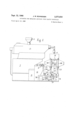
- FIGURLE l is a side elevation of an extrusion apparatus and an apparatus according to the invention for forming articles from sheet plastic material supplied from 'the extrusion appara-tus;
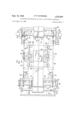
- FIGUR-E ⁇ 2 is a side eleva-tion of the forming apparatus of FIGURE 1 with parts thereof shown in section;
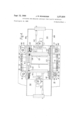
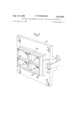
- FIGURE 3 is a section taken along the line III-III of FIGURE 2;
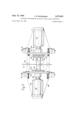
- FIGURE 4 is a plan view, partly in section, of a carriage upon which article form-ing tools of the forming apparatus of FIGURE l are mounted;
- FIGURE 5 is a section taken along the line V--V of FIGURE 3;
- FIGURE 6 is a perspective view of an article forming tool and associated parts of the forming apparatus of FIGURE l;
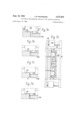
- FIGURE 7A to 7E show, diagrammatically, successive stages in the forming of an article by the for-ming apparatus of FIGURE l and the detaching of the formed article from the sheet.
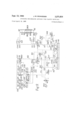
- FIGURE 8 shows diagramma-tically the hydraulic circuit for controlling the operations of the forming apparatus.
- an apparat-us 1 is for use with a conventional eXtruding apparatus 2 having a heating chamber, a hopper 3 for the supply off powdered plastic material to an inlet of the heating chamber, and a screw for conveying heated material from the chamber and forcing the material through .an extruding die at the outlet 4 of the apparatus to form a sheet 6.
- the extrud'ing apparatus 2 is mounted on a framework 7 with the extrudinlg dies so arranged that the sheet 6 off extruded material is travelling downwardly as it emerges from the outlet 4.
- the apparatus 1 operates on successive sections of sheet 6 as they emerge from the extrusion apparatus 2, tool means lof the apparatus ibeing arranged to engage a section whilst it is still hot and form the section to the shape of an article whilst moving downwardly in engagement With the section. After a predetermined 4interval of time sufficient for the section to cool, knives iixedly secured relative to the tool means eiect cropping of the forme-d article from the remainder of the sheet, whereupon the tool means are disengaged and return to their initial position ready to operate on the succeeding section.
- the formed article is ejected from an outlet passage 8 of the apparatus 1 whilst the remainder of the sheet is returned to an inlet 9 of a granulator 10 for yreturn to the extrusion apparatus 2.
- the sequence of operations is effected automatically by means of a hydraulic circuit (shown in FIGURE 8 and described hereinafter) which includes electrically operated control valves, part of the control apparatus for the hydraulic circuit and the controls for the extrusion apparatus for the hydraulic circuit and the controls for the eX- tus being located in a control cabinet 11 mounted alongside and beneath the extrusion apparatus 2.
- a hydraulic circuit shown in FIGURE 8 and described hereinafter
- Heated sheet 6 is travelling downwardly as it emerges from the extrusion apparatus 2 and the apparatus 1 is therefore provided with an upright elongated supporting structure 12, which can be arranged beneath the outlet 4 to dene a downwardly extending path for the sheet.
- This supporting structure includes a substantial base 13 and a supporting head 14 which is mounted on the base, immediately below the outlet 4 of the extrusion apparatus, by four upstanding pillars 16.
- the pillars 16 are disposed at the corners of a rectangle, when the apparatus is viewed in plan (see FIGURE 4).
- material emerging from the outlet 4 of the extrusion apparatus 2 is drawn downwardly through an aperture 17 in the supporting head 14 by a pair of upper driving rollers 18 and 19, respectively, mounted in the head and arranged to engage opposite sides respectively of the sheet 6.
- the roller 19 is biased horizontally towards the roller 18 in the manner hereinafter described so that the sheet 6 is gripped rmly between the rollers.
- From the upper driving rollers 18 and 152 a section of the sheet 6 travels downwardly through the space defined between the four supporting pillars 16, where an article is formed from the section, detached, and is then ejected forwardly of the apparatus through the outlet passage 8 in the base 13.
- the remainder of the sheet travels between a pair of lower driving rollers 21 and 22, respectively, disposed one above the other in the base 13 of the structure, upwardly and rearwardly from the rollers 21 and 22 to engage a lower part of an idler roller 23, upwardly from the idler roller 23 to a driven roller 24, and finally downwardly between roller 24 and a roller 25 to the inlet 9 of the granulator.
- the head 14 of the supporting structure comprises a top plate 26 which is mounted on the upper ends of the pillars 16 and in which is formed the central, rectangular aperture 17 for the sheet of extruded material.
- Side plates 27 of the head 14 extend downwardly from the top plate 26, on opposed sides of the sheet 6, respectively, and these plates provide support for the upper driving rollers 18 and 19, driving elements associated with these rollers, and means for adjusting the horizontal location of the roller 19.
- the upper driving rollers 18 and 19 are mounted on parallel shafts 28 and 29, respectively, which extend between the side plates 27 of the head and are journalled in bearings supported by the side plates.
- the housings 31 of the bearings which support the shaft 28 are xedly secured relative to respective side plates 27 and are so arranged that the rearmost portion of the roller 18 contacts the front surface of the sheet 6 of plastic material.
- Housings 32 of the bearings for shaft 29 are mounted in horizontally extending apertures formed in respective blocks 33 on the outer surfaces of the side plates 27, the housings 32 and blocks 33 being formed with engaging tongues and grooves which permit relative horizontal movement therebetween.
- Adjustment of the housings 32 in the blocks 33 is effected by air pressure operated devices each of which comprises an air cylinder 34 secured to a side plate 27 of the head 14 and piston rod 35 connected to the housing.
- the cylinders 34 are provided with conduits 36 for the supply thereto of air under pressure.
- the location of the blocks 33 relative to the side plates 27 is adjusted so as to ensure that a minimum spacing slightly less than the thickness of the sheet emerging from the outlet 4 of the extrusion apparatus 2 is provided between the rollers 18 and 19.
- Each of these driving rollers 18 and 19 and their supporting shafts 28 and 29, respectively, is hollow and a universal junction 37 is provided at each end of each of the shafts. Pipes 38 are connected to the junctions 37 for supplying heated oil to the driving rollers, for purposes hereinafter described.
- the base 13 of the supporting structure comprises an upper plate 39 upon which the pillars are mounted and in which there is provided an aperture 41 for the passage of sheet from which articles have been formed.
- Upper plate 39 is supported upon a ground-engaging plate 42 by means of pillars 43.
- the driving rollers 21 and 22 are mounted on parallel shafts 43 and 44, respectively, which extend transversely of the structure and are journalled in bearings at their ends.
- the housings 45 of the bearings for the shaft 44 are mounted on brackets which depend from the upper plate 39 of the base 13 and are xedly secured relative to that plate.
- the housings 46 of the bearings for the shaft 43 are mounted on respective arms 47, however, each arm being pivotally mounted at its end remote from the housing on a block 48 which is mounted on the ground-engaging plate.
- Pivotal movement of the arms 47 causes substantially vertical movement of the shaft 43 and roller 21, towards and away from the shaft 44 and roller 22. Adjustment of the position of the shaft 43 is effected by means of air pressure operated devices provided at opposed ends, respectively of the shaft, each device including an air cylinder 49 which depends from the upper plate 39 and a movable piston rod 51 which is secured at its end remote from the cylinder to one of the arms 47.
- endless duplex chains 52 and 53 are provided on opposed sides, respectively, of the supporting structure 12, each chain having an upper run within the head 14 of the supporting structure, a lower run which extends into the base 13, and upward and downward runs which extend between the base and the head.
- the chain 52 travels from front to rear of the apparatus, i.e. from right to left as viewed in FIGURE 2 of the drawings.
- Chain 53 travels from the rear to the front of the apparatus, i.e.
- idler sprocket wheel 58 passes upwardly from idler sprocket wheel 58, over a sprocket wheel 5K9l on the shaft 29 of driving roller 19, downwardly to idler sprocket wheel 61 and finally across to idler sprocket wheel 62.
- Idler sprocket wheels 54, 56 and 58 are mounted on one side plate 27 of the head and idler sprocket wheels 58, 61 and 62 on the other side plate 27.
- the chain 52 travels from rear to front of the apparatus 1, the run extending downwardly and forwardly from an idle-r sprocket wheel 63, which is mounted to an upstanding bracket 64 on upper plate 39 of the base, to engage a sprocket wheel 65 on the shaft 44, Ibeneath an idler sprocket wheel 66 on bracket 67 which depends from plate 39, and, finally, upwardly to idler sprocket wheel 68 on bracket 69.
- an idle-r sprocket wheel 63 which is mounted to an upstanding bracket 64 on upper plate 39 of the base, to engage a sprocket wheel 65 on the shaft 44, Ibeneath an idler sprocket wheel 66 on bracket 67 which depends from plate 39, and, finally, upwardly to idler sprocket wheel 68 on bracket 69.
- Chain 53 travels rearwardly and downwardly from idler sprocket wheel 71 on upstanding bracket 72 at the front of the apparatus to engage a lower part of sprocket wheel 73 on shaft 44 and then upwardly from sprocket wheel 73 to idler sprocket wheel 74 on a bracket 75 at the rear of the apparatus.
- the linear speeds of travel of the chains 52 and 53 are equal to one another and to the peripheral speeds of the upper driving rollers 18 and 19 and the lower driving rollers 21 and 22, which in turn determine the speed of travel of the sheet 6. Accordingly, it will be appreciated that during the major part of their downward runs the chains are moving parallel with and at the same speed as the downwardly moving sheet.
- the chains 52 and 53 are driven by means of an electric motor 78 having a worm gear 79 coupled to the output shaft thereof and mounted in the base 13 of the structure.
- Drive is transmitted from a sprocket wheel 81 on an output shaft of the worm gear 79 to a sprocket wheel 82 on the shaft 44 of driving roller 22 by means of an endless chain 83.
- Driving roller 24 is also driven at the sam-e peripheral speed as the driving roller 22 by means of a cha-in 84 which engages a sprocket wheel secu-red to the roller shaft and a further sprocket wheel on the output shaft of the worm gear 79.
- Driving roller 24 and the idler roller 25 associated therewith are provided with knife blades which extend normally to the ⁇ axes of the rollers and cut the material into longitudinally extending strips as it passes between them to the inlet 9 of the extrusion apparatus 2.
- the tools for forming an article from a section of an extruded sheet and knives for detachn-g an article from the remainder of the sheet are mounted on a carriage 85 which is movable upwardly and downwardly relative to the supporting structure 1-2.
- This carriage includes four upright cylinders 86 each of which embraces a section of a pillar 16 of the structure and is of length approximately equal to one half the height of the pillar.
- a piston 87 is secured to a central section of each of a first pair of diagonally opposed pillars 16 and is disposed within the upright cylinder 86 associated with the pillar so as to divide the cylinder into upper and lower chambers 88 and A89, respectively.
- the upper part of each of this first pair of pillars 116 is formed with an axially extend-ing passage 91 which is connected to an inlet pipe 92 on the head 14 of the structure by means of a passage 93- in topplate 26 and is connected to the interior of the upper chamber 88 of the associated cylinder 86 by means of radial ports 94 close to the piston 87.
- a further axial passage 95 is formed in the lower part of each of this pair of pillars 16 and communicates with an inlet pipe (not shown in the drawings) via a passage 9.6 in the upper plate 39 of the base and with the interior of the lower chamber 819 of the cylinder via ports 97.
- FIGURE 2 of the drawings the carriage 85 is just approaching its uppermost position and a central sect-ion 918 of a lower end closure 99 of each of this rst pair of cylinders 86 extends above the radial ports 9-7. Communication between these ports and the lower chamber 89 of the cylinder 86 is then restricted to a narrow channel 101 in this central section of the end closure and the rate of exhaust of liquid from the chamber is reduced. The carriage is therefore decelerated so that the lower end closure 99 of the cylinder does not impinge against the piston 87 with too much force.
- Narrow channels 102 in upper end closures 103 of the first pair of cylinders 86 ensure that a similar decelerating effect is produced when the carriage approaches its lowermost position.
- Each of the other pair of diagonally opposed pillars 16 of the supporting structure 12 is formed with an axial passage 104 which extends upwardly fro-m the upper plate 39 of the base 13y to radial ports 105 which open into the cylinder 86 associated with that pillar.
- Liquid under pressure is supplied to this other pair of cylinders 86 via respective inlets 106 and passages 107 in the upper plate 319 and axial passages 1014 and radial ports 105 in the pil- 6 lars 16. From this pair of cylinders liquid is supplied via pipes (not shown in the drawings) to hydraulic mechanisms on the carriage 8-5 for operating the tools and knives in the manner hereinafter described.
- each side plate 108 is fixedly secured to a cylinder 86 disposed rearwardly of the sheet by means of a pair of brackets 109 and is secured to a cylinder disposed forwardly of the sheet by respective trunnions 111.
- the carriage 85 can therefore rotate slightly about a horizontal axis parallel with the plane of the sheet 6 when it is subjected to large forces during operation of the tools.
- each side plate 108 Mounted on each side plate 108 are two idler sprocket Wheels 112, which are disposed vertically one above the other, and one of the unidirectional clutch mechanisms 76 which is disposed at a vertical location intermediate those of 4the sprocket wheels 112 and is spaced horizontally therefrom.
- each chain engages the two idler sprocket wheels 112 which are disposed on the same side of the apparatus as the chain and in travelling from one sprocket wheel to the other engages a major portion of a sprocket wheel 113 on the unidirectional clutch mechanism 76.
- the clutch mechanisms 76 When the carriage 85 is moving downwardly the clutch mechanisms 76 are engaged and serve to prevent the speed of the carriage from exceeding that of the chains 52 and 53, i.e., the speed of movement of the sheet 6. During upward movement of the carriage 85 the clutch mechanisms 76 are disengaged, however, and the carriage can be returned rapidly to its uppermost position.
- each of the platens 117 and 118 mounted on the side of each of the platens 117 and 118 which is remote from the sheet 6 are two guide blocks 122, each disposed midway between the upper and lower edges of the platen and close to an upright side edge thereof.
- a horizontally extending recess is formed in each guide block 122 and the upper and lower faces of the recess are formed with grooves which engage a guide element 123 secured to a side plate 108 of the carriage 85.
- Operation of the above-mentioned hydraulically operated devices causes relative movement between cylinders 115 and 116 and respective piston rods 119 and 120 upon which the platens are mounted and engagement between guide blocks 122 and respective guide element 123 serves to ensure that this movement is restricted to directions normal to the plane of the sheet material.
- Two stop elements 124 are secured to each side plate 108 of the carriage and serve to lirnit advance of the platens towards the sheet, as hereinafter described.
- each of th platens 117, 118 Secured to the inwardly facing side of each of th platens 117, 118 is a tool for use in forming an article from a section of the sheet 6 of hot plastic material.
- the tool 125 which is provided on the platen 118 disposed rearwardly of the sheet 6 has an operative face which is substantially flat but is formed with apertures 126 and passages 127 through which gas under pressure may be applied to the rear -face of the sheet.
- the operative face of the tool 128 on the forwardly disposed platen 117 is formed with recesses 129 of shape corresponding to the shape of the article or articles, to be formed from the sheet.
- the-forward tool 128 is also provided with cutting means in the form of knives which extend along the periphery of articles to be cut from the section of sheet material between the tools (see FIGURES to 7).
- cutting means in the form of knives which extend along the periphery of articles to be cut from the section of sheet material between the tools (see FIGURES to 7).
- four main knife blades 133 are secured to respective sides of the tool so as to form a rectangle when viewed from the rear of the apparatus.
- Additional knife blades 134 and 135 extend parallel with horizontal and vertical pairs of knife blades 133, respectively, and each denes the boundary between an adjacent pair of articles.
- the knives 133 and 134 and 135 are all fiXedly secured to the tool 128 on the forward platen 17, and hence are fixed relative to the lplaten itself.
- Each knife is arranged With its cutting edge projecting rearwardly of the tool face by a distance equal to 11/2 times the thickness of the material which is being formed, i.e., for material of 0.010 inch in thickness the knives project 0.015 inch.
- each platen Close to each of the four corners of each platen is a threaded aperture which extends through the platen and engaged in these apertures are respective stop screws 136. Each stop screw is provided with a locking nut 137.
- the four stop screws 136 of the rearward platen 118 extend forwardly through the platen and in use of the apparatus are adjusted so that their forward ends engage respective stop elements 124 on side plates 108 of the carriage 85 when the operative face of the tool 125 just touches the rear surface of the sheet 6.
- the stop ⁇ screws 136 on the forward platen 117 project rearwardly thereof and engage respective stop elements 124 when the knives 133, 134 and 135 just touch the front surface of the sheet.
- each rod which is remote from the associated platen 117 or 118 is of enlarged diameter and is arranged to engage and operate the associated -switch when the platen is moved inwardly .towards the sheet and the tool thereon is about to engage the sheet.
- Actuation of a switch 138 or 139 in this manner effects operation of the associated deceleration valve 141 or 142 which causes deceleration of the platen in the manner hereinafter described.
- the apparatus is provided with a hydraulic circuit including control valves which are electrically operated. Microswitches are mounted on the supporting structure 12 so as to be engaged 'by the carriage and effect operation of the various valves, and hence the carrying out of the various operations performed by the apparatus sequentially and in a predetermined time relationship.
- liquid under pressure for raising and lowering the carriage is supplied from a tank 140 by means of a double-pump 143, and liquid under pressure for moving the tools and 128 is supplied from a second double pump 151). Both pumps are driven by an electric motor 144.
- the pump 143 has two outlets 145 and 146 for supplying liquid to a main supply line 147, at rates equal to 8 and 50 gallons per minute, respectively.
- Outlet 145 of the pump is connected di-rectly to the line 147 but outlet 146 is connect-ed to the line via a one way check valve CV2 and is also connected to tank via a pilot-operated unloading valve UV2.
- Operation of unloading valve UV2 is controlled by liquid in a pilot line 148 whichV extends from an outlet 162 of pump 150, via a ow control valve FCZ and a solenoid operated four-way valve V4 to the valve UV2, and then from valve UV2 to tank via the valve V4.
- Main supply line 147 is connected to a rst inlet of a solenoid-operated valve V3 which has a first outlet thereof connected to ltank by means of a line 149, and second and third loutlets connected to lines 151 and 152, respectively.
- a one-way check valve CV6 which is in parallel with a pilot operated, stop Valve SV3 connects the line 151 to the inlet pipe 92. 'on the head 14 of the supporting structure and thence via passage 93 and passages 91 to the upper chamber 88 of each of the first pair of diagonally opposed cylinders of the carriage S5, designated 86A and 86B, respectively, in FIGURE 8.
- Line 152 is connected to the lower chamber 89 of each of the cylinders 86A'and 86B by means of a parallel circuit consisting of a one-way check valve CVS and a ow control valve FCl, passage 96 in the upper plate 39 of the base of the supporting structure and a passage 95 in the associated pillar 16.
- Pressure relief valves RVZ and RV3 are connected between lines 147 and 152, respectively, and tank.
- the outlet 146 of pump 143 is connected to tank by the unloading valve UV2 and liquid is being supplied f-rom the outlet 14-5 to the lower chambers 89 of the cylinders 86A and 86B via line 147, valve V3 and flow control valve FCI.
- the carriage engages a first microswitch which is mounted on the supporting structure and controls the operation of solenoid operated valves V3 and V4, the spool of each valve being moved to the left of the position shown in FIGURE 8.
- the outlet of pump 143 is therefore connected to the upper chambers 88 by means of line 147, valve V3, line 151 and one-way check valve CV6 and liquid is supplied to these chambers at a rate of 8 gallons per minute.
- Liquid flows out from the chambers 89 to tank, via check valve CV3 and valve V3, at a corresponding rate and the carriage 85 therefore begins to rise slowly.
- Operation of valve V4 allows liquid to flow in pilot line 148, at a rate determined by the setting of flow control valve FCZ, and, accordingly, at a predetermined time after the beginning of the upward movement of the carriage the unloading valve UV2 is operated and outlet 146 of the pump 143 is disconnected from the tank. Liquid 1s then supplied from outlet 146 .through check valve CVZ to the line 147, and hence to chambers 88, at a rate of 50 gallons per minute, causing the carriage to rise rapidly.
- Liquid can now flow from the upper chambers 88 to tank, via valves SVS and V3, and the carriage begins to descend. Moreover, after a predetermined interval, ydetermined by the setting of the flow control valve FC2, unloading Valve UV2 operates to disconnect outlet 146 of pump 143 from the tank and liquid is then supplied from both outlets 145 and 146 to the chambers 89.
- the maximum rate at which liquid can be supplied to the lower chambers 89, determined by ow control valve 'FCL is arranged to be sufcient to cause the carriage 85 to descend at a slightly faster speed than the speed of travel of the sheet 6 of plastic material.
- the engagement of unidirectional clutch mechanisms 76 with respective chains 52 and 53 serves to ensure that the carriage 85 moves downwardly at the same speed as the sheet.
- the pump 150 has two outlets 161 and 162 for supplying liquid to a main supply line 163 at rates respectively equal to 35 ⁇ and 8 gallons per minute.
- Outlets 161 and 162 are connected to the line 163 by respective one-way check valves CV1 and CV4, and outlet 161 is also connected to tank via a pilot operated unloading valve UV1 :and a heat exchanger HE. Operation of unloading valve UV1 is controlled by liquid in a pilot line 164 which extends from the outlet 162 of the pump 150, via a solenoid-operated four-way valve V5 to tank.
- the main supply line 163 is 'connected to a first inlet of a solenoid-operated valve V1 which has a first outlet thereof connected by line 165 to one of the second pair of diagonally opposed cylinders 86, designated 86C in FIGURE 8, and :a second outlet connected by line 166 to the second of this pair of cylinders, designated 86D.
- a third outlet of the valve V1 is connected to ⁇ a solenoid operated valve V2 by means of a line 167, the valve V2 having one outlet connected by line 168 to the line 166 and a second outlet connected by line 169 and the heat exchanger HE to tank.
- a pressure relief valve RV1 is connected to main supply line 163 :and is adapted to connect this line to tank via the heat exchanger HE if the pressure in the line exceeds approximately 2000 lbs. per square inch. If the pressure is below this value the valve RV1 connects the line 163 via a line 171 to an inlet of a solenoid operated valve V6 which has an outlet connected to tank by a second relief valve RV4. Valve RV4 is set to open :at a pressure of from 80 to 200 lbs. per square inch.
- liquid is supplied directly along a line 172 to the cylinder 116 of the hydraulic device which is disposed at the rear end of the carriage 85, line 172 being connected to the side of the piston remote from piston rod 120, platen 118 and tool 125 mounted thereon.
- This cylinder 86D is also yconnected by means 10 of a parallel circuit, consisting of a one-way check valve CV7 and a pilot operated stop valve SVZ, and a line 173 to the cylinder 115 of the hydraulic device at the front of the carriage, line 173 being connected to the side of the piston remote from piston rod 119, platen 117 and tool 128.
- the cylinder 86C is connected by means of a line 174, a parallel circuit comprising a pressure control valve PCV1, the mechanically operated deceleration valve 142, mentioned above, and a one-way check valve CVS, to a line 175, which in turn is connected to the chamber in cylinder 116 through which the piston rod 120 extends.
- Line 174 also connects the cylinder 86C to the cylinder 115 via a parallel circuit consisting of stop valve SV4 and check valve CV9, a parallel circuit comprising a pressure control valve PCV2, the mechanically operated deceleration valve 141, mentioned above, and one-way check valve CV10, and a line 176.
- Pressure control valves PCV1 and PCV2 are connected to a pilot line 177 which extends via the ysolenoid-operated valve V5 to tank.
- the piston in cylinder 116 is therefore moved from left to right in FIGURE 8, causing the platen 118 and tool 125 to advance towards the sheet 6.
- valve V2 When the platen 118 is a predetermined distance from the sheet a seventh microswitch on the carriage 85 is operated by the platen, causing valve V2 to be returned to the position shown in FIGURE l8 and valve V5 to be moved to the right from the position shown in the ligure.
- the movement -of valve V2 prevents liquid flow from line 167 to 168, reducing the flow of liquid along line 166 to that supplied from the pump 150.
- the movement of V5 operates unloading valve UV1 to connect outlet 161 of the pump 143 to tank, thereby reducing the volume of liquid supplied along line 166 from the pump 150, and in addition allows a ow of liquid to tank along line 177, thereby causing pilot control valve PCV1 to close.
- an eighth microswitch on the carriage 85 is operated by the platen and causes operation of valve V5 to disconnect line 177 from tank and effect operation of unloading valve UV1, thereby disconnecting the outlet 161 -of pump 150 from tank.
- a ninth microswitch is operated by the carriage and causes a vacuum pump to be connected to the passage 131, openings 132 and the interior of recesses 129 of tool 128, and a tenth microswitch to be opera-ted and cause air to be blown through passages 127 and openings 126 on to the rear face of the sheet.
- the section of sheet between the tools 125 and 128 is therefore drawn forwardly so that parts thereof enter respective recesses 129 in the tool 128 and assume the shape of these recesses.
- the downwardly moving carriage operates an eleventh microswitch on the supporting structure which causes momentary operation of valve V6 to close relief valve RV4.
- the pressure in line 171, and hence the pressure in lines 163, 166, 172 and 173, can therefore rise to a value determined by the setting of relief valve RV1, i.e. approximately 2000 lbs. per square inch.
- valve- V1, line 167, valve V2, line 129 and heat exchanger HE The piston in the cylinder 116 therefore moves so that the platen 118 and t-ool 125 are moved rearwardly of the carriage 85, away from the sheet 6.
- the platen 118 and tool 125 When the platen 118 and tool 125 have reached their forward position the platen causes operation of a thir- -teenth microswitch, which causes air to lbe blown along passage 131 and openings 132 in the tool 128. The four formed articles are therefore blown from the tool 128 and fall through an aperture in the upper plate 32 of the base of vthe structure and emerge from the outlet 8.
- the cycle of operations can then be repeated.
- the heaters of the extrusion apparatus 2 are turned on and powdered plastic material is supplied to the inlet thereof via the inlet hopper 3.
- the valves V1 and V3 of the hydraulic circuit shown in FIGURE ⁇ 8 are moved into the positions shown in this gure, so that the outlets 161 and 162 of pump 150 and the outlets 145 and 146 of pump 143 are connected to tank and the electric motor 144 is switched on.
- sheet extruded from its outlet is arranged so that it travels downward'ly between the upper driving rollers 18 and 19 of the apparatus 1, through the space defined by the four pillars 86 of the supporting structure 12, between the lower driving rollers 21 and 22, and then via the rollers 23, 24 and 25 to the inlet 9.
- the motor 78 in the base -of the apparatus is switched on so that the roller 24 and the lower driving rollers 21 and 22 are rotated and drive is transmitted via the chains 52 and 53 to the upper driving rollers 18 and 19.
- the .speed of rotation of the upper driving rollers 18 and 19 is adjusted by varying the speed of motor 78 and the spacing of these rollers adjusted by -means of the air pressure operated devices comprising respective cylinders 34 and piston rods 35, the adjustments being such that sheet is drawn downwardly from the outlet 4 at a rate which, in accordance with the rate at which material is being extruded, produces the desired sheet thickness.
- valve V3 With the sheet being extruded Ifrom outlet 4 and travelling down the supporting ⁇ structure 12 properly the valve V3 is moved -to the Ileft from the position shown in FIGURE 8 of the drawings and the icarriage 85 begins to ascend, first slowly, then rapidly, and finally againV slowly, in the manner described above. Upon reaching the top of the structure the carriage begins to descend, first slowly and then at a rate equal to the rate of downward travel of the sheet, as described, and then engages the fifth microswitch which sets in motion the above mentioned sequence 4of platen movements.
- FIGURES 7A to 7E show, diagrammatical'ly, successive stages in the forming of articles and the ycutting of the formed articles from the sheet 6.
- the stop screws 136 on the rear platen 118 have already engaged respective stop elements 124, so that the tool is in contact with the rear surface of the sheet 6, and the stop screws 136 on the front platen 117 are just approaching respective stop elements ⁇ 124.
- FIGURE 7B shows the stop screws 136 on the front platen 117 in their engaged positions, with the knives 133, 134 and 135 just contacting the-front surface of the sheet, and
- FIGURES 7D and 7E both show the apparatus at the moment when an increased pressure has been applied to the cylinders 115 and 116, urging the platens 117 and 118 more strongly together and causing the knives 133, 134 and 135 to engage the front face of tool 125 and in so doing pierce the sheet 6.
- the carriage 85 operates the twelfth microswitch and sets in motion the above described sequence of operations involving withdrawing the rear platen 118 and forward platen 117 from the sheet and ejecting the formed articles from the recesses 129.
- the carriage 85 is then decelerated, stops, and commences its return, upward movement as described.
- the return, upward movement of the carriage 85 is made as rapid as possible relative to the speed of downwards movement so that the amount of sheet material between successive sections engaged by the tools 125 and 128 is a minimum.
- the time during which a section of the sheet is engaged by the tools for forming and cutting is such that the vertical location of the upper edge of the section at disengagement of the ltools is just above the original vertical location -of the lower edge at engagement.
- an apparatus according to the invention can also be used for forming articles -from extruded tubes of plastic material.
- the platens are adjusted to close at a much slower speed than when using sheet material.
- a vacuum pump is connected to both platens, rather than to one only, so as to pull opposite sides of the tube to the faces of respective platens.
- the microswitch for causing connecting of the platens to the va-cuum pump is set so that the vacuum is applied -to the platens before they close.
- both Iplatens are again connected to a vacuum pump as they -are closing so that opposite sides of the tube are drawn to the faces of respective platens.
- the latter are so designed, however, that they seal to- -gether a section of the tube around a continuous peripheral line so as to yform -a sealed, hollow container containing a volume of air equal to the volume between the working faces of the engaged platens.
- the container is then moved, whilst s-til-l hot, to a further pair of platens where the container is subjected to a further forming action which converts it into -a hollow walled Vessel.
- Apparatus for'moulding articles from thermoplastic material lcomprising Ian elongated supporting structure which, when disposed close to the outlet of an extrusion apparatus, provides a path along which material emerging from said outlet can be driven, means for driving material emerging from said outlet alo-ng the said path, said -driving means including means which lare adapted to engage material emerging from said outlet and to draw Imaterial into said path at a rate which is adjusted relative to the rate of supply of material from said extrusion apparatus so that material of predetermined thickness is supplied to said path, tool means reciprocably mounted on said supporting structure, means for causing said tool means to engage a section of heated material close to said outlet, means for advancing said engaged tool means along said path in a direction away from said outlet, said tool means eifecting ⁇ a forming operation on the material while in engagement therewith, means coupling said tool -advancing means to said material driving means so that said tool means is advanced at a rate substantially equal t-o the rate of travel of material along said path, means for
- the driving means include a pair of parallel arranged driving rollers between which the sheet is gripped, the driving rollers being disposed close to the outlet of the extrusion apparatus and the spacing of the rollers and the speed of rotation thereof being so adjusted relative to the rate of supply of material from the extrusion apparatus that a sheet of predetermined thickness is supplied to the vertical path.
- driving rollers is supported on mounting means which are movable laterally of the axis of the roller towards and away from the other driving roller; and biassing means are provided for urging the said one roller towards the other so that the sheet is gripped therebetween.
- biassing means include fluid pressure operated means having relatively movable parts thereof secured relative to the mounting means and the supporting structure, respectively, so that the position of the said one roller relative to the other can be adjusted by adjusting the supply of fluid to the said fluid pressure operated means.
- Apparatus as claimed in claim 3 comprising heating means for maintaining the driving rollers at a temperature sufficient to prevent chilling of the plastic material emerging from the outlet of the extrusion apparatus.
- each driving roller is hollow and is formed with inlet and outlet means for the supply to the interior thereof of a heating liquid.
- the material driving means include an endless driving element having a run a part of which extends parallel with the said path, the tool means being coupled, during their downward movement, to a part of the driving element which is moving down the said part of the run.
- Apparatus as claimed in claim 2 comprising hydraulically operated means for advancing the engaged tool means along the said path and for returning the tool means to their initial position after release from the material.
- Apparatus as claimed in claim 3 wherein one of the 13. Apparatus as claimed in claim 12, wherein the upright supporting member is formed with conduits respectively opening into the said upper and lower chambers for the supply of liquid thereto.
- the supporting structure includes four elongated upright supporting members which are disposed at the corners of a rectangle when the structure is viewed in plan, a diagonally opposed pair of the members being each provided with a piston and having associated therewith an upright cylinder of the carriage.
- Apparatus as claimed in claim 2, wherein the means for causing the tool means to engage the material and to be released therefrom are hydraulically operated means.
- Apparatus as claimed in claim 2 comprising two parallel arranged, relatively movable platens respectively providing co-operating tool means, and stop means having parts which engage when the tool means are in their material engaging positions and serve to retain the tool means in lthese positions against the action of the tool engaging means.
- the tool means include a pair of tools respectively disposed on opposed sides of the path for the sheet, each tool being movable laterally of the path from a position in which it engages the material to a disengaged position.
- Apparatus as claimed in claim 1 comprising means for cutting a formed article from the material.
- Apparatus as claimed in claim 1 comprising control means adapted to effect sequential operation of the means for causing the tool means to engage a section, the means for advancing the engaged tool means along the said path, and the means for releasing the tool means from the section and returning the tool means to their initial position.
Landscapes
- Engineering & Computer Science (AREA)
- Mechanical Engineering (AREA)
- Robotics (AREA)
- Physics & Mathematics (AREA)
- Fluid Mechanics (AREA)
- Manufacturing & Machinery (AREA)
- Processing And Handling Of Plastics And Other Materials For Molding In General (AREA)
- Blow-Moulding Or Thermoforming Of Plastics Or The Like (AREA)
Applications Claiming Priority (2)
| Application Number | Priority Date | Filing Date | Title |
|---|---|---|---|
| GB1673164A GB1108369A (en) | 1964-04-22 | 1964-04-22 | Improvements in apparatus for moulding articles from plastics material |
| GB4290364 | 1964-10-21 |
Publications (1)
| Publication Number | Publication Date |
|---|---|
| US3271816A true US3271816A (en) | 1966-09-13 |
Family
ID=26252206
Family Applications (2)
| Application Number | Title | Priority Date | Filing Date |
|---|---|---|---|
| US448595A Expired - Lifetime US3267523A (en) | 1964-04-22 | 1965-04-16 | Apparatus for moulding articles from plastics material |
| US448759A Expired - Lifetime US3271816A (en) | 1964-04-22 | 1965-04-16 | Apparatus for moulding articles from plastic materials |
Family Applications Before (1)
| Application Number | Title | Priority Date | Filing Date |
|---|---|---|---|
| US448595A Expired - Lifetime US3267523A (en) | 1964-04-22 | 1965-04-16 | Apparatus for moulding articles from plastics material |
Country Status (10)
| Country | Link |
|---|---|
| US (2) | US3267523A (da) |
| AT (2) | AT301864B (da) |
| BE (2) | BE662878A (da) |
| CH (2) | CH431032A (da) |
| DE (2) | DE1479046A1 (da) |
| DK (2) | DK119798B (da) |
| GB (1) | GB1108243A (da) |
| LU (2) | LU48435A1 (da) |
| NL (1) | NL6513576A (da) |
| SE (2) | SE324227B (da) |
Cited By (6)
| Publication number | Priority date | Publication date | Assignee | Title |
|---|---|---|---|---|
| US3419204A (en) * | 1965-03-05 | 1968-12-31 | Molins Machine Co Ltd | Web-feeding devices |
| US3456296A (en) * | 1965-07-29 | 1969-07-22 | Calmec Mfg Ltd | Apparatus for moulding articles from plastic material |
| US3640666A (en) * | 1969-09-25 | 1972-02-08 | Monsanto Co | Trim in place thermoforming apparatus |
| US3663146A (en) * | 1969-11-05 | 1972-05-16 | Molins Machine Co Ltd | Apparatus for forming a plastic container |
| US3728062A (en) * | 1970-04-02 | 1973-04-17 | Monsanto Co | Forming articles from sheet material |
| US3942933A (en) * | 1972-12-11 | 1976-03-09 | Dyno Industrier A/S | Apparatus for manufacturing hollow articles, such as bowls, trays, cups and similar articles |
Families Citing this family (8)
| Publication number | Priority date | Publication date | Assignee | Title |
|---|---|---|---|---|
| DE1296348B (de) * | 1965-02-01 | 1969-05-29 | Reifenhaeuser Kg | Vorrichtung und Verfahren zum Herstellen von Sackventilen in Schlauch- oder Flachfolien |
| US3518334A (en) * | 1968-10-01 | 1970-06-30 | Kirkhof Mfg Corp | Method of forming three dimensional plastic articles |
| US4053272A (en) * | 1975-06-20 | 1977-10-11 | Caterpillar Tractor Co. | Apparatus and method for forming a tube article on a core |
| DE2556350C3 (de) * | 1975-12-13 | 1981-03-12 | Häberle, Wilhelm, 7486 Scheer | Verfahren zum Transportieren einer thermoplastisch verformbaren Kunststfoff-Folie zwischen einem Extruder und einer Thermoformmaschine und Maschine zur Durchführung des Verfahrens |
| DE3220416C2 (de) * | 1982-05-29 | 1984-08-30 | Adolf Illig Maschinenbau Gmbh & Co, 7100 Heilbronn | Vorrichtung zum abfallfreien Umformen eines Bahnabschnittes aus thermoplastischem Kunststoff |
| CA1232824A (en) * | 1983-11-30 | 1988-02-16 | Shoso Ishimori | Running apparatus for an agricultural vehicle |
| GB9317070D0 (en) * | 1993-08-17 | 1993-09-29 | Polbeth Packaging Ltd | Moulding plastics sheet material |
| DE4408445A1 (de) * | 1994-03-12 | 1995-09-14 | Tetra Laval Holdings & Finance | Verfahren und Vorrichtung zur Herstellung einer Fließmittelpackung über eine Halbschale |
Citations (12)
| Publication number | Priority date | Publication date | Assignee | Title |
|---|---|---|---|---|
| US2051011A (en) * | 1932-05-03 | 1936-08-11 | Ralph S Allen | Press mechanism |
| US2058663A (en) * | 1935-10-12 | 1936-10-27 | Brown Davis | Automatic brick and tile cutter |
| US2397608A (en) * | 1942-02-19 | 1946-04-02 | Corydon M Johnson | Former for sheet metal parts |
| US2487233A (en) * | 1947-02-28 | 1949-11-08 | Us Rubber Co | Method of making battery separators |
| US2525744A (en) * | 1947-03-03 | 1950-10-10 | Dunlop Tire & Rubber Corp | Calender |
| US2545921A (en) * | 1947-07-02 | 1951-03-20 | Beloit Iron Works | Control mechanism for fluid motors |
| US2641041A (en) * | 1948-01-02 | 1953-06-09 | Julianna Orbell | Cutting machine for plastic material |
| US2641042A (en) * | 1950-09-28 | 1953-06-09 | Philip E Kopp | Cutting machine for extruded clay products |
| US2998621A (en) * | 1959-01-08 | 1961-09-05 | Owens Illinois Glass Co | Guiding means for plastic tubing |
| US3000050A (en) * | 1958-11-04 | 1961-09-19 | Owens Illinois Glass Co | Method and apparatus for forming hollow plastic articles |
| US3116787A (en) * | 1960-10-14 | 1964-01-07 | Phillips Petroleum Co | Heat exchange apparatus for extruded products |
| US3159698A (en) * | 1960-12-01 | 1964-12-01 | Sweetheart Plastics | Method for making and forming plastic material |
Family Cites Families (4)
| Publication number | Priority date | Publication date | Assignee | Title |
|---|---|---|---|---|
| FR1147007A (fr) * | 1951-10-08 | 1957-11-18 | Fords Ltd | Matrice perfectionnée pour presses |
| GB935285A (en) * | 1958-09-09 | 1963-08-28 | Hoechst Ag | Improvements in or relating to the production of plastic containers |
| US2967328A (en) * | 1958-11-03 | 1961-01-10 | Continental Can Co | Molding machine |
| USRE26413E (en) * | 1961-12-18 | 1968-06-25 | Keyes forming method |
-
1964
- 1964-04-22 GB GB17023/65A patent/GB1108243A/en not_active Expired
-
1965
- 1965-04-16 US US448595A patent/US3267523A/en not_active Expired - Lifetime
- 1965-04-16 US US448759A patent/US3271816A/en not_active Expired - Lifetime
- 1965-04-20 CH CH541865A patent/CH431032A/de unknown
- 1965-04-20 CH CH541765A patent/CH431031A/de unknown
- 1965-04-20 DE DE19651479046 patent/DE1479046A1/de active Pending
- 1965-04-20 DE DE19651479047 patent/DE1479047A1/de active Pending
- 1965-04-21 DK DK201765AA patent/DK119798B/da unknown
- 1965-04-21 SE SE5179/65A patent/SE324227B/xx unknown
- 1965-04-21 DK DK201665AA patent/DK121886B/da unknown
- 1965-04-21 LU LU48435A patent/LU48435A1/xx unknown
- 1965-04-21 SE SE5178/65A patent/SE324230B/xx unknown
- 1965-04-22 LU LU48445A patent/LU48445A1/xx unknown
- 1965-04-22 AT AT370465A patent/AT301864B/de not_active IP Right Cessation
- 1965-04-22 BE BE662878D patent/BE662878A/xx unknown
- 1965-04-22 BE BE662879D patent/BE662879A/xx unknown
- 1965-04-22 AT AT370565A patent/AT309801B/de not_active IP Right Cessation
- 1965-10-20 NL NL6513576A patent/NL6513576A/xx unknown
Patent Citations (12)
| Publication number | Priority date | Publication date | Assignee | Title |
|---|---|---|---|---|
| US2051011A (en) * | 1932-05-03 | 1936-08-11 | Ralph S Allen | Press mechanism |
| US2058663A (en) * | 1935-10-12 | 1936-10-27 | Brown Davis | Automatic brick and tile cutter |
| US2397608A (en) * | 1942-02-19 | 1946-04-02 | Corydon M Johnson | Former for sheet metal parts |
| US2487233A (en) * | 1947-02-28 | 1949-11-08 | Us Rubber Co | Method of making battery separators |
| US2525744A (en) * | 1947-03-03 | 1950-10-10 | Dunlop Tire & Rubber Corp | Calender |
| US2545921A (en) * | 1947-07-02 | 1951-03-20 | Beloit Iron Works | Control mechanism for fluid motors |
| US2641041A (en) * | 1948-01-02 | 1953-06-09 | Julianna Orbell | Cutting machine for plastic material |
| US2641042A (en) * | 1950-09-28 | 1953-06-09 | Philip E Kopp | Cutting machine for extruded clay products |
| US3000050A (en) * | 1958-11-04 | 1961-09-19 | Owens Illinois Glass Co | Method and apparatus for forming hollow plastic articles |
| US2998621A (en) * | 1959-01-08 | 1961-09-05 | Owens Illinois Glass Co | Guiding means for plastic tubing |
| US3116787A (en) * | 1960-10-14 | 1964-01-07 | Phillips Petroleum Co | Heat exchange apparatus for extruded products |
| US3159698A (en) * | 1960-12-01 | 1964-12-01 | Sweetheart Plastics | Method for making and forming plastic material |
Cited By (6)
| Publication number | Priority date | Publication date | Assignee | Title |
|---|---|---|---|---|
| US3419204A (en) * | 1965-03-05 | 1968-12-31 | Molins Machine Co Ltd | Web-feeding devices |
| US3456296A (en) * | 1965-07-29 | 1969-07-22 | Calmec Mfg Ltd | Apparatus for moulding articles from plastic material |
| US3640666A (en) * | 1969-09-25 | 1972-02-08 | Monsanto Co | Trim in place thermoforming apparatus |
| US3663146A (en) * | 1969-11-05 | 1972-05-16 | Molins Machine Co Ltd | Apparatus for forming a plastic container |
| US3728062A (en) * | 1970-04-02 | 1973-04-17 | Monsanto Co | Forming articles from sheet material |
| US3942933A (en) * | 1972-12-11 | 1976-03-09 | Dyno Industrier A/S | Apparatus for manufacturing hollow articles, such as bowls, trays, cups and similar articles |
Also Published As
| Publication number | Publication date |
|---|---|
| CH431031A (de) | 1967-02-28 |
| SE324230B (da) | 1970-05-25 |
| LU48445A1 (da) | 1965-06-22 |
| BE662879A (da) | 1965-10-22 |
| BE662878A (da) | 1965-10-22 |
| LU48435A1 (da) | 1965-06-21 |
| SE324227B (da) | 1970-05-25 |
| GB1108243A (en) | 1968-04-03 |
| CH431032A (de) | 1967-02-28 |
| DK119798B (da) | 1971-02-22 |
| AT309801B (de) | 1973-09-10 |
| DK121886B (da) | 1971-12-13 |
| DE1479046A1 (de) | 1969-06-04 |
| US3267523A (en) | 1966-08-23 |
| AT301864B (de) | 1972-09-25 |
| DE1479047A1 (de) | 1969-01-16 |
| NL6513576A (da) | 1966-04-22 |
Similar Documents
| Publication | Publication Date | Title |
|---|---|---|
| US3271816A (en) | Apparatus for moulding articles from plastic materials | |
| US3193881A (en) | Automatic plastic forming and trimming machine | |
| CN104552982B (zh) | 一种纤维布注胶成型制品多模具周转自动生产线装置 | |
| US3412183A (en) | Method of and apparatus for forming hollow plastic structures | |
| CN112172090A (zh) | 一种具有降温结构的大型塑料桶吹塑装置及方法 | |
| CN106313452B (zh) | 一种无人化盖板生产系统 | |
| CN1035079A (zh) | 改进型的挤压设备 | |
| CN100484657C (zh) | 多功能液压翻边机翻边工艺 | |
| CN214605856U (zh) | 一种打杯成型机 | |
| US4150930A (en) | Plastic sheet extruder combined with forming machine | |
| CN204604937U (zh) | 一种纤维布注胶成型制品多模具周转自动生产线装置 | |
| CN107804500B (zh) | 一种充填对叠封合一体机 | |
| US3193599A (en) | Method and apparatus for molding thermoplastic sheet material | |
| US3114620A (en) | Pneumatic sheet molding apparatus | |
| CN1048520A (zh) | 塑料片材的热成型方法及其装置 | |
| CN118636453B (zh) | 一种环保型汽车内饰件加工设备 | |
| US3520962A (en) | Method and apparatus for the formation of deep drawn bodies from plastics material | |
| JPS5917931B2 (ja) | 可塑性材料の成形方法および装置 | |
| CN119458804A (zh) | 一种连续熔接成型的pe塑料筐制备装置及方法 | |
| CN110385822A (zh) | 一种全自动中底拉模成型机 | |
| US3619864A (en) | Thermoplastic sheet forming machine | |
| CN219618422U (zh) | 一种便于脱模的玩具生产用注塑成型模具 | |
| USRE25484E (en) | Automatic vacuum forming machine for plastics | |
| US3377658A (en) | Carpet molding and trimming | |
| CN208084798U (zh) | 一种全自动中底拉模成型机 |