US11858904B2 - Process for preparing large size isoxazoline particles - Google Patents
Process for preparing large size isoxazoline particles Download PDFInfo
- Publication number
- US11858904B2 US11858904B2 US16/761,695 US201816761695A US11858904B2 US 11858904 B2 US11858904 B2 US 11858904B2 US 201816761695 A US201816761695 A US 201816761695A US 11858904 B2 US11858904 B2 US 11858904B2
- Authority
- US
- United States
- Prior art keywords
- particle size
- particles
- isoxazoline
- fluralaner
- crystals
- Prior art date
- Legal status (The legal status is an assumption and is not a legal conclusion. Google has not performed a legal analysis and makes no representation as to the accuracy of the status listed.)
- Active, expires
Links
Images




Classifications
-
- C—CHEMISTRY; METALLURGY
- C07—ORGANIC CHEMISTRY
- C07D—HETEROCYCLIC COMPOUNDS
- C07D261/00—Heterocyclic compounds containing 1,2-oxazole or hydrogenated 1,2-oxazole rings
- C07D261/02—Heterocyclic compounds containing 1,2-oxazole or hydrogenated 1,2-oxazole rings not condensed with other rings
- C07D261/04—Heterocyclic compounds containing 1,2-oxazole or hydrogenated 1,2-oxazole rings not condensed with other rings having one double bond between ring members or between a ring member and a non-ring member
-
- A—HUMAN NECESSITIES
- A01—AGRICULTURE; FORESTRY; ANIMAL HUSBANDRY; HUNTING; TRAPPING; FISHING
- A01N—PRESERVATION OF BODIES OF HUMANS OR ANIMALS OR PLANTS OR PARTS THEREOF; BIOCIDES, e.g. AS DISINFECTANTS, AS PESTICIDES OR AS HERBICIDES; PEST REPELLANTS OR ATTRACTANTS; PLANT GROWTH REGULATORS
- A01N43/00—Biocides, pest repellants or attractants, or plant growth regulators containing heterocyclic compounds
- A01N43/72—Biocides, pest repellants or attractants, or plant growth regulators containing heterocyclic compounds having rings with nitrogen atoms and oxygen or sulfur atoms as ring hetero atoms
- A01N43/80—Biocides, pest repellants or attractants, or plant growth regulators containing heterocyclic compounds having rings with nitrogen atoms and oxygen or sulfur atoms as ring hetero atoms five-membered rings with one nitrogen atom and either one oxygen atom or one sulfur atom in positions 1,2
-
- A—HUMAN NECESSITIES
- A61—MEDICAL OR VETERINARY SCIENCE; HYGIENE
- A61K—PREPARATIONS FOR MEDICAL, DENTAL OR TOILETRY PURPOSES
- A61K31/00—Medicinal preparations containing organic active ingredients
- A61K31/33—Heterocyclic compounds
- A61K31/395—Heterocyclic compounds having nitrogen as a ring hetero atom, e.g. guanethidine or rifamycins
- A61K31/41—Heterocyclic compounds having nitrogen as a ring hetero atom, e.g. guanethidine or rifamycins having five-membered rings with two or more ring hetero atoms, at least one of which being nitrogen, e.g. tetrazole
- A61K31/42—Oxazoles
-
- A—HUMAN NECESSITIES
- A61—MEDICAL OR VETERINARY SCIENCE; HYGIENE
- A61K—PREPARATIONS FOR MEDICAL, DENTAL OR TOILETRY PURPOSES
- A61K47/00—Medicinal preparations characterised by the non-active ingredients used, e.g. carriers or inert additives; Targeting or modifying agents chemically bound to the active ingredient
- A61K47/02—Inorganic compounds
-
- A—HUMAN NECESSITIES
- A61—MEDICAL OR VETERINARY SCIENCE; HYGIENE
- A61K—PREPARATIONS FOR MEDICAL, DENTAL OR TOILETRY PURPOSES
- A61K47/00—Medicinal preparations characterised by the non-active ingredients used, e.g. carriers or inert additives; Targeting or modifying agents chemically bound to the active ingredient
- A61K47/06—Organic compounds, e.g. natural or synthetic hydrocarbons, polyolefins, mineral oil, petrolatum or ozokerite
- A61K47/08—Organic compounds, e.g. natural or synthetic hydrocarbons, polyolefins, mineral oil, petrolatum or ozokerite containing oxygen, e.g. ethers, acetals, ketones, quinones, aldehydes, peroxides
- A61K47/10—Alcohols; Phenols; Salts thereof, e.g. glycerol; Polyethylene glycols [PEG]; Poloxamers; PEG/POE alkyl ethers
-
- A—HUMAN NECESSITIES
- A61—MEDICAL OR VETERINARY SCIENCE; HYGIENE
- A61K—PREPARATIONS FOR MEDICAL, DENTAL OR TOILETRY PURPOSES
- A61K47/00—Medicinal preparations characterised by the non-active ingredients used, e.g. carriers or inert additives; Targeting or modifying agents chemically bound to the active ingredient
- A61K47/06—Organic compounds, e.g. natural or synthetic hydrocarbons, polyolefins, mineral oil, petrolatum or ozokerite
- A61K47/08—Organic compounds, e.g. natural or synthetic hydrocarbons, polyolefins, mineral oil, petrolatum or ozokerite containing oxygen, e.g. ethers, acetals, ketones, quinones, aldehydes, peroxides
- A61K47/12—Carboxylic acids; Salts or anhydrides thereof
-
- A—HUMAN NECESSITIES
- A61—MEDICAL OR VETERINARY SCIENCE; HYGIENE
- A61K—PREPARATIONS FOR MEDICAL, DENTAL OR TOILETRY PURPOSES
- A61K47/00—Medicinal preparations characterised by the non-active ingredients used, e.g. carriers or inert additives; Targeting or modifying agents chemically bound to the active ingredient
- A61K47/06—Organic compounds, e.g. natural or synthetic hydrocarbons, polyolefins, mineral oil, petrolatum or ozokerite
- A61K47/24—Organic compounds, e.g. natural or synthetic hydrocarbons, polyolefins, mineral oil, petrolatum or ozokerite containing atoms other than carbon, hydrogen, oxygen, halogen, nitrogen or sulfur, e.g. cyclomethicone or phospholipids
-
- A—HUMAN NECESSITIES
- A61—MEDICAL OR VETERINARY SCIENCE; HYGIENE
- A61K—PREPARATIONS FOR MEDICAL, DENTAL OR TOILETRY PURPOSES
- A61K47/00—Medicinal preparations characterised by the non-active ingredients used, e.g. carriers or inert additives; Targeting or modifying agents chemically bound to the active ingredient
- A61K47/30—Macromolecular organic or inorganic compounds, e.g. inorganic polyphosphates
- A61K47/34—Macromolecular compounds obtained otherwise than by reactions only involving carbon-to-carbon unsaturated bonds, e.g. polyesters, polyamino acids, polysiloxanes, polyphosphazines, copolymers of polyalkylene glycol or poloxamers
-
- A—HUMAN NECESSITIES
- A61—MEDICAL OR VETERINARY SCIENCE; HYGIENE
- A61K—PREPARATIONS FOR MEDICAL, DENTAL OR TOILETRY PURPOSES
- A61K47/00—Medicinal preparations characterised by the non-active ingredients used, e.g. carriers or inert additives; Targeting or modifying agents chemically bound to the active ingredient
- A61K47/30—Macromolecular organic or inorganic compounds, e.g. inorganic polyphosphates
- A61K47/36—Polysaccharides; Derivatives thereof, e.g. gums, starch, alginate, dextrin, hyaluronic acid, chitosan, inulin, agar or pectin
- A61K47/38—Cellulose; Derivatives thereof
-
- A—HUMAN NECESSITIES
- A61—MEDICAL OR VETERINARY SCIENCE; HYGIENE
- A61K—PREPARATIONS FOR MEDICAL, DENTAL OR TOILETRY PURPOSES
- A61K9/00—Medicinal preparations characterised by special physical form
- A61K9/0012—Galenical forms characterised by the site of application
- A61K9/0019—Injectable compositions; Intramuscular, intravenous, arterial, subcutaneous administration; Compositions to be administered through the skin in an invasive manner
-
- A—HUMAN NECESSITIES
- A61—MEDICAL OR VETERINARY SCIENCE; HYGIENE
- A61K—PREPARATIONS FOR MEDICAL, DENTAL OR TOILETRY PURPOSES
- A61K9/00—Medicinal preparations characterised by special physical form
- A61K9/10—Dispersions; Emulsions
-
- A—HUMAN NECESSITIES
- A61—MEDICAL OR VETERINARY SCIENCE; HYGIENE
- A61P—SPECIFIC THERAPEUTIC ACTIVITY OF CHEMICAL COMPOUNDS OR MEDICINAL PREPARATIONS
- A61P33/00—Antiparasitic agents
- A61P33/14—Ectoparasiticides, e.g. scabicides
-
- C—CHEMISTRY; METALLURGY
- C07—ORGANIC CHEMISTRY
- C07B—GENERAL METHODS OF ORGANIC CHEMISTRY; APPARATUS THEREFOR
- C07B2200/00—Indexing scheme relating to specific properties of organic compounds
- C07B2200/13—Crystalline forms, e.g. polymorphs
Definitions
- Isoxazoline compounds are known in the art and these compounds and their use as antiparasitic are described, for example, in US patent application US 2007/0066617, and International Patent applications WO 2005/085216, WO 2007/079162, WO 2009/002809, WO 2009/024541, WO 2009/003075, WO 2010/070068 and WO 2010/079077, the disclosures of which, as well as the references cited herein, are incorporated by reference.
- This class of compounds is known to possess excellent activity against ectoparasites, i.e. parasitic insect and acarids, such as fleas and ticks and endoparasites such as nematodes.
- isoxazoline compounds are carbamoyl benzamide phenyl isoxazoline (CBPI) compounds.
- CBPI carbamoyl benzamide phenyl isoxazoline
- a specific example of a CBPI compound is 4-[5-(3,5-Dichlorophenyl)-5-trifluoromethyl-4,5-dihydroisoxazol-3-yl]-2-methyl-N-[(2,2,2-trifluoro-ethylcarbamoyl)-methyl]-benzamide (CAS RN [864731-61-3])—USAN fluralaner.
- the CBPI compound fluralaner is disclosed in patent application WO 2005/085216.
- Bravecto® is a chewable tablet which contains fluralaner approved for the treatment and prevention of flea infestations and the treatment and control of tick infestations in dogs (see NADA 141-426, May 15, 2014).
- Crystallization is a commonly used technique for the purification of chemical and pharmaceutical substances. It is a separation technique in which solids are separated from a solution.
- a solid substance (solute) is mixed with a liquid solvent and stirred, the solute dissolves in the solvent to form a solution.
- the saturation point a point comes after which no more solute can be dissolved in the solvent. This point is known as the saturation point, and the solution is called a saturated solution.
- the amount of solute that can dissolve in the solvent is a function of temperature. As the temperature of the solvent is increased, the amount of solute that can be dissolved increases.
- R 3 and R 4 together form a substituent selected from the group consisting of:
- An isoxazoline compound particle composition comprising particles with a thickness of greater than 10 ⁇ m, preferably greater than 20 ⁇ m as measured by scanning electron microscopy (SEM), and a mechanical resiliency as measured by a pressure titration using the Sympatec HELOS, wherein the particle size distribution (d50) of the particles does not decrease by more than 40% from 1 to 3 bar dispersion pressure.
- SEM scanning electron microscopy
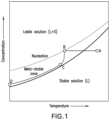
- FIG. 1 Temporal dependence of crystal formulation
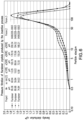
- FIG. 2 Temporal dependence of the solubility of fluralaner in isopropanol (IPA).
- FIG. 3 a schematic diagram of the crystallizer vessel and the other components of the system.
- FIG. 4 (3A) Particle size distribution for fluralaner crystals not produced by the inventive process; and (3B) SEM image of the same crystals.
- FIG. 5 Pressure titration of fluralaner crystals not produced by the inventive process.
- Sympatec Pressure Titration as pressure increased from 1-3 bar, particle size (d50) decreases from 50 ⁇ m to 25 ⁇ m. Material made from non optimized recirculation process. In this case, the crystals are thin, and not mechanically robust, as can be seen from the pressure titration experiment where between 1 bar dispersing pressure and 3 bar dispersing pressure, the ⁇ 50 is reduced from 110 um at 1 bar, to 80 um at 2 bar to 60 at 3 bar, or 46% reduction in size from 1 bar to 3 bar.
- FIG. 6 Particle size distribution and pressure titration of fluralaner crystals produced by the inventive process. Sympatec Pressure Titration: as pressure increased from 1-3 bar, particle size (d50) decreases from 100 um to 73 um.
- FIG. 7 Particle size distribution and pressure titration of fluralaner crystals produced by the inventive process.
- FIG. 8 is a SEM image of fluralaner crystals produced by a process that is not the inventive process.
- FIG. 9 SEM image of fluralaner crystals produced by the inventive process.
- FIG. 10 Particle size distribution of the material made from Example 3. Resulting material had an ⁇ 50 of 108, and an approximately 24% reduction in ⁇ 50 from the pressure titration from 1 bar to 3 bar.
- FIG. 11 SEM of the material made from Example 3.
- FIG. 12 Schottrachlorosarbal
- FIG. 13 Particle size distribution of the material made from Example 4. Resulting material had an d50 of 103 ⁇ m, and d10 of 47.3 ⁇ m and an d90 of 158.8 ⁇ m. The particle size measurement for this sample was conducted with a wet method using a Microtrac static light scattering system.
- FIG. 14 SEM of the material made from Example 4.
- FIG. 15 Particle size distribution of the material made from Example 5. Resulting material had an average d50 of 99 ⁇ m, and an approximately 20% reduction in d50 from the pressure titration from 1 bar to 3 bar.
- FIG. 16 SEM of the material made from Example 5.
- An improved process to produce large isoxazoline compound particles which comprises initiating crystallization and then maintaining the temperature of the crystallization in the metastable region by removing, reheating and recycling a portion of the solvent thereby allowing the existing crystals to grow larger while minimizing the formation of newer smaller crystals.
- nucleation is initiated by nucleation, which happens either spontaneously or is induced by vibration or seed particles. Nucleated crystals are small crystals formed when there is a drop in the temperature of a saturated solution. If nucleation sets in too quickly, too many too small crystals will grow.
- the seed crystals are typically less than 10 ⁇ m length.
- the process of crystallization starts with the addition of nucleated material (seed crystals) to a solution of isoxazoline compound in solution to achieve surface properties of the starting crystals that are amenable to growth.
- seed crystals seed crystals
- a slurry of isoxazoline compound particles in the solvent is formed. This initial slurry is kept at a relatively high temperature (52-54° C.) to facilitate reasonable growth rates and avoid further nucleation. At lower temperatures, growth rates are significantly slower, and the risk of nucleation is greater.
- a portion of the batch of isoxazoline compound particle slurry is removed, heated to dissolve any crystals that have formed and returned to the crystallizer to provide continuous supersaturation to drive crystal growth.
- This recycle rate cannot be too low slow since under these growth conditions thin plates are preferentially formed, which are susceptible to breakage.
- the recycle rate cannot be too high, since under these conditions either nucleation, or aggregation can occur.
- the return of the dissolved isoxazoline compound solution to the crystallizer vessel is conducted at rate of approximately 0.25 to 0.75 batch volumes per hour to achieve continuous crystal growth of the isoxazoline compound particles.
- the crystallizer is cooled to about 0° C., preferable about ⁇ 10° C. over 10-48 hours, preferably 12-20 hours to further relieve supersaturation and achieve growth to the desired dimensions.
- compositions comprising particles of isoxazoline compounds with a defined particle size produced by the inventive process show desirable bioavailability and duration of efficacy, while causing minimal irritation at the injection site.
- Such compositions also provide desirable safety profiles toward the warm-blooded and bird animal recipients.
- a single administration of such compositions generally provides potent activity against one or more parasites (e.g., ectoparasites, e.g. fleas, ticks or mites), while also tending to provide fast onset of activity, long duration of activity, and/or desirable safety profiles.
- parasites e.g., ectoparasites, e.g. fleas, ticks or mites
- Scanning electron microscopy is an analytical instrument that uses a focused beam of high-energy electrons to generate a variety of signals at the surface of solid specimens.
- the signals reveal information about the sample including external morphology (texture), chemical composition, and crystalline structure and orientation of materials making up the sample.
- Solvent with temperature dependent solubility for the solute means that the solubility of the solute in the solvent varies with temperature. Generally, this means the solubility increases with increased temperature.
- the meta-stable region of the solubility temperature curve is the region where existing crystals will grow, but no new crystals are formed.
- Crystallizer vessel is a vessel in which crystallization occurs.
- Saturation is the state of a solution when it holds the maximum equilibrium quantity of dissolved matter at a given temperature.
- Slurry is a thin suspension.
- Batch volume is the volume of the batch.
- particle size data reported are volume weighted as measured by conventional particle techniques well known to those skilled in the art, such as static light scattering (also known as laser diffraction), image analysis or sieving. More discussion of particle size measurement is provided below.
- Mechanical resiliency is the resistance of crystals or particles to break into smaller crystals or particles when exposed to pressure or stress from other sources. Mechanical resiliency can be measured by a pressure titration using the Sympatec HELOS. This instrument can simultaneously measure the particle size distribution. In this experiment, pressure is applied to the crystals to disperse or separate them one from another. The change in the particle size distribution measurement of d50 is monitored as the pressure on the crystals is increased from 1 bar to 3 bars.
- the isoxazoline compound particles of the subject invention will not decrease their particle size distribution measurement of d50 by more than 30-40% when the dispersion pressure is increased from 1 to 3 bar.
- T is selected from
- Q is selected from
- R 3 , R 4 , X and Z A are as defined above, and
- an isoxazoline for use in the invention is as presented in Table 1.
- an isoxazoline for use in the invention is as presented in Table 2.
- R 1a , R 1b , R 1c are independently from each other: hydrogen, Cl or CF 3 .
- R 1a and R 1c are Cl or CF 3 , and R 1b is hydrogen,
- R 3 is H
- R 4 is: —CH 2 —C(O)—NH—CH 2 —CF 3 , —CH 2 —C(O)—NH—CH 2 —CH 3 , —CH 2 —CH 2 —CF 3 or —CH 2 —CF 3 .
- the isoxazoline for use in the invention also includes pharmaceutically acceptable salts, esters, and/or N-oxides thereof.
- the reference to an isoxazoline compound refers equally to any of its polymorphic forms or stereoisomers.
- the pharmaceutical composition according to the invention may employ a racemic mixture of an isoxazoline for use in the invention, containing equal amounts of the enantiomers of such isoxazoline compound as described above.
- the pharmaceutical composition may use isoxazoline compounds that contain enriched stereoisomers compared to the racemic mixture in one of the enantiomers of the isoxazoline as defined herein.
- the pharmaceutical composition may use an essentially pure stereoisomer of such isoxazoline compounds.
- Such enriched- or purified stereoisomer preparations of an isoxazoline for use in the invention may be prepared by methods known in the art. Examples are chemical processes utilizing catalytic asymmetric synthesis, or the separation of diastereomeric salts (see e.g.: WO 2009/063910, and JP 2011/051977, respectively).
- the isoxazoline is one or more selected from the group consisting of fluralaner, afoxolaner, lotilaner or sarolaner.
- the compound of Formula (I) is 4-[5-(3,5-Dichlorophenyl)-5-trifluoromethyl-4,5-dihydro isoxazol-3-yl]-2-methyl-N-[(2,2,2-trifluoro-ethylcarbamoyl)-methyl]-benzamide (CAS RN 864731-61-3-USAN fluralaner).
- the fluralaner is S-fluralaner.
- the compound of Formula (I) is 4-[5-[3-Chloro-5-(trifluoromethyl)phenyl]-4,5-dihydro-5-(trifluoromethyl)-3-isoxazolyl]-N-[2-oxo-2-[(2,2,2-trifluoroethyl)amino]ethyl]-1-naphthalenecarboxamide (CAS RN 1093861-60-9, USAN-afoxolaner) that was disclosed in WO2007/079162.
- the isoxazoline is lotilaner (CAS RN: 1369852-71-0; 3-methyl-N-[2-oxo-2-(2,2,2-trifluoroethylamino)ethyl]-5-[(5S)-5-(3,4,5-trichlorophenyl)-5-(trifluoromethyl)-4H-1,2-oxazol-3-yl]thiophene-2-carboxamide).
- the isoxazoline is sarolaner (CAS RN: 1398609-39-6; 1-(5′-((5S)-5-(3,5-dichloro-4-fluorophenyl)-5-(trifluoromethyl)-4,5-dihydroisoxazol-3-yl)-3′-H-spiro(azetidine-3,1′-(2) benzofuran)-1-yl)-2-(methylsulfonyl) ethanone).
- the compound of Formula (I) is (Z)-4-[5-(3,5-Dichlorophenyl)-5-trifluoromethyl-4,5-dihydroisoxazol-3-yl]-N-[(methoxyimino)methyl]-2-methylbenzamide (CAS RN 928789-76-8).
- the compound of Formula (I) is 4-[5-(3,5-dichlorophenyl)-5-(trifluoromethyl)-4H-isoxazol-3-yl]-2-methyl-N-(thietan-3-yl)benzamide (CAS RN 1164267-94-0) that was disclosed in WO2009/0080250.
- the compound according to the invention is 5-[5-(3,5-Dichlorophenyl)-4,5-dihydro-5-(trifluoromethyl)-3-isoxazolyl]-3-methyl-N-[2-oxo-2-[(2,2,2-trifluoroethyl)amino]ethyl]-2-thiophenecarboxamide (CAS RN: 1231754-09-8), which was disclosed in WO 2010/070068.
- An embodiment of the invention is a process for preparing isoxazoline compound particles wherein the isoxazoline compound is a compound of Formula (I) comprising
- the desired particle dimensions are particles having a volume weighted particle size distribution (d50) as measured by a light scattering instrument of between 75 and 120 ⁇ m and an average particle thickness greater than 10 ⁇ m, preferably greater than 20 ⁇ m.
- d50 volume weighted particle size distribution
- the isoxazoline compound is fluralaner.
- the solvent is methanol or acetone. In yet another embodiment, the solvent is an acetate or acetonitrile. In an embodiment, the solvent is selected from the group of dimethyl acetamide (DMA), N-methylpyrrolidone (NMP), dimethyl sulfoxide (DMSO), N,N-diethy-m-toluamide (DEET), 2-pyrrolidone, acetone, g-hexalactone, glycofurol (tetraglycol), methyl ethyl ketone, diethylene glycol monoethyl ether (Transcutol®), ethyl lactate, dimethylisosorbide, ethyl acetate, macrogol glycerol caprylcaprate (Labrasol®), dipropylene glycol monomethyl ether (DowanolTM DPM), glycerol formal, benzyl alcohol, methanol, polyethylene glycol 200, propylene carbonate, 1-methoxy-2-propy
- the solvent is isopropanol.
- the solvent is a mixture of toluene and ethyl acetate.
- the crystallizer of step b is heated to a temperature greater than 60° C., preferably about 65° C.
- step c) the crystallizer vessel is cooled to achieve supersaturation, preferably to a temperature of about 48-55° C., more preferably to a temperature of about 52-54° C.
- the removed portion is heated to a temperature greater than 60° C., preferably about 65° C.
- the removed portion is heated via a heat exchanger or in a second vessel.
- the rate of removal in step e) is 0.40 to 0.46 batch volumes per hour.
- the rate of removal is maintained for about 4 to 24 hours, preferably about 6 hours.
- the crystallizer vessel of step g) is cooled to a temperature of around 0° C. or less, preferably about ⁇ 10° C.
- the temperature of the filtering is maintained at a temperature of 0° C. or less, preferably at ⁇ 10° C.
- the filtered isoxazoline particles are dried.
- Embodiments of the invention are the isoxazoline compound particles produced by any of processes disclosed herein.
- An embodiment of the invention is a isoxazoline compound particle composition
- a isoxazoline compound particle composition comprising particles with a thickness of greater than 10 ⁇ m, preferably greater than 20 ⁇ m as measured by scanning electron microscopy (SEM), and a mechanical resiliency as measured by a pressure titration using the Sympatec HELOS, wherein the particle size distribution (d50) of the particles does not decrease by more than 40% from 1 to 3 bar dispersion pressure.
- the particle size distribution (d50) of the particles does not decrease by more than 35% from 1 to 3 bar dispersion pressure.
- the particle size distribution (d50) of the particles does not decrease by more than 30% from 1 to 3 bar dispersion pressure.
- the isoxazoline compound particle composition comprising particles with a thickness of greater than 10 ⁇ m but less than 100 ⁇ m, preferably greater than 20 ⁇ m but less than 90 ⁇ m, preferably greater than 30 ⁇ m but less than 80 ⁇ m as measured by scanning electron microscopy (SEM).
- SEM scanning electron microscopy
- the isoxazoline compound particle composition comprising particles with a thickness of greater than 10 ⁇ m, preferably greater than 20 ⁇ m.
- the isoxazoline compound has a particle size distribution of D50 as measured by a static light scattering instrument of from about 25 microns to about 250 microns, particle size of from about 11 microns to about 250 microns, particle size of from about 50 microns to about 150 microns, particle size of from about 75 microns to about 125 microns, particle size of from about 75 microns to about 150 microns, particle size of from about 90 microns to about 110 microns or a particle size of from about 30 microns to about 100 microns.
- Particle size distribution describes the relative amount of particles present according to size.
- D10 is a particle size distribution that expresses the size that 10% of the particles are smaller than.
- D50 is a particle size measurement distribution that expresses the size that 50% of the particles are smaller than.
- D90 is a particle size measurement distribution that expresses the size that 90% of the particles are smaller than.
- the D10 of particle size is about 10 ⁇ m, about 20 ⁇ m, about 30 ⁇ m, about 40 ⁇ m, about 50 ⁇ m, about 60 ⁇ m, or about 80 ⁇ m.
- the D50 of particle size is about 50 ⁇ m, about 75 ⁇ m, about 80 ⁇ m, about 90 ⁇ m, about 100 ⁇ m, about 110 ⁇ m, about 120 ⁇ m, about 130 ⁇ m about 140 ⁇ m or about 150 ⁇ m.
- the D90 of particle size is about 100 ⁇ m, about 130 ⁇ m, about 150 ⁇ m, about 175 ⁇ m, about 200 ⁇ m, or about 250 ⁇ m.
- the D10 of the particle size is about 20 to 35 ⁇ m
- the D50 of the particle size is about 90 to 105 ⁇ m
- the D90 of the particle size is about 155 to 175 ⁇ m.
- the D10 of the particle size is about 25 to 30 ⁇ m
- the D50 of the particle size is about 95 to 100 ⁇ m
- the D90 of the particle size is about 160 to 170 ⁇ m.
- the D10 of the particle size is about 10 to 20 ⁇ m
- the D50 of the particle size is about 85 to 110 ⁇ m
- the D90 of the particle size is about 170 to 185 ⁇ m.
- the D10 of the particle size is about 10 to 15 ⁇ m
- the D50 of the particle size is about 95 to 105 ⁇ m
- the D90 of the particle size is about 175 to 180 ⁇ m.
- the D10 of the particle size is about 10 to 25 ⁇ m
- the D50 of the particle size is about 40 to 60 ⁇ m
- the D90 of the particle size is about 95 to 100 ⁇ m.
- the D10 of the particle size is about 15 to 20 ⁇ m
- the D50 of the particle size is about 45 to 55 ⁇ m
- the D90 of the particle size is about 90 to 95 ⁇ m.
- the D10 of the particle size is about 30 to 50 ⁇ m and the D50 of the particle size is about 70 to 130 ⁇ m.
- the D10 of the particle size is about 35 to 45 ⁇ m and the D50 of the particle size is about 90 to 110 ⁇ m.
- the D10 of the particle size is about 40 ⁇ m and the D50 of the particle size is about 100 ⁇ m.
- the volume weighted particle size can be measured by sieving, microscopy or laser diffraction (Malvern or Sympatec)
- the volume weighted particle size measurement can be performed with a Malvern Mastersizer 2000 with the Hydro 2000G measuring cell, or with a Horiba LA-910 laser scattering particle size distribution analyzer.
- the volume weighted particle size can be measured by a Sympatec Helos instrument.
- the isoxazonline compound is fluralaner.
- Fluralaner was added at a concentration of 100 mg/mL in IPA, with 60 g added to 600 mL of isopropanol. This composition was heated to 65° C. over 1 hour, and aged for one hour to ensure full dissolution. The solution was cooled over 20 minutes to 50° C. and seeded with 0.6 g of crystalline fluralaner seed. The batch was further cooled to 20° C. over two hours to establish the starting particles. The batch was heated to 54° C., at which point a stream of the batch was removed and heated to an elevated temperature until fully dissolved (>65° C.). The removal rate and return rate to the crystallizer were set to approximately 4.4-4.8 mL/min.
- the recycle loop continued for 6 hours, at which point the ⁇ 50 particle size dimension is approximately 40 ⁇ m.
- the batch was aged at 54° C. for 6 hours to further relieve supersaturation, then cooled to 45° C. over 6 hours, and further cooled to 0° C. over 16 hours. See FIG. 3 for a schematic of the process equipment.
- the resultant slurry was filtered and dried to produce fluralaner particles. The dried fluralaner particles were measured to determine the particle dimensions and mechanical resiliency.
- the volume weighted particle size of the fluralaner crystals was measured by laser diffraction (Sympatec Helos) to determine the particle size distribution.
- the mechanical resiliency was also
- FIG. 4 shows the particle size
- this material is the product of the previous commercial process using an unseeded, distallative crystallization process from an ethyl acetate, toluene solvent system.
- this material is the product of the previous commercial process using an unseeded, distallative crystallization process from an ethyl acetate, toluene solvent system.
- the lower particle size and general wider distribution of sizes of the particles are the lower particle size and general wider distribution of sizes of the particles.
- FIG. 5 shows the results of the pressure titration experiment.
- the particle size distribution was monitored as the particles are exposed to increasing pressure from 1 bar to 3 bar.
- FIG. 5 shows that as the pressure increased, the median particle size (d50) decreases from 110 ⁇ m to 60 ⁇ m, a loss of around 45%.
- the particle size distribution curve broadens and shifts towards smaller particle sizes. This is evidence that these particles are being broken under the increased pressure and is an indication that the particles were very thin.
- FIG. 10 shows the particle size distribution of the fluralaner crystals produced by the inventive process. These particles have a larger d50 than the particles of FIG. 5 . Furthermore, in the pressure titration test, for the particles produced by the inventive process, the d50 was reduced by only around 25% of the original value. This is an indication of the increased mechanical resiliency of these particles. Also of note is the fact that under the elevated pressures, the distribution does not broaden in the same fashion as the particles from the unoptimized process shown in FIG. 5 .
- FIG. 7 shows the particle size distribution and pressure titration of an additional batch of fluralaner particles that were produced by the inventive process.
- the original d50 of around 103 ⁇ m was reduced to around 67 ⁇ m, a loss of around 35%.
- FIG. 8 is a scanning electron microscopy image of fluralaner particles that were not produced the inventive process. Of note is that these crystals are rather thin.
- FIG. 9 is a scanning electron microscopy image of fluralaner particles that were produce by the inventive process. In contrast to the particles shown in FIG. 8 , these particles are large (around 100 ⁇ m) and thick (around 10-20 ⁇ m).
- Fluralaner was added at a concentration of 100 mg/mL in isopropanol (IPA), with 600 g added to 6 L of isopropanol. This composition was heated to 65° C. over 1 hour, and aged for one hour to ensure full dissolution. The solution was cooled over 20 minutes to 50° C. and seeded with 6 g of crystalline fluralaner seed, in this instance unmilled seed with an d50 of approximately 10 ⁇ m. The batch was further cooled to 20° C. over two hours to establish the starting particles. The batch was heated to 54° C., at which point 1.2 L of the batch was removed and heated to an elevated temperature until all solids were fully dissolved (>65° C.).
- IPA isopropanol
- a recirculation loop was then started, with the removal rate and return rate to the crystallizer set to approximately 44-48 mL/min.
- the recycle loop continued for 3 hours, at which point the d50 particle size dimension is approximately 45 ⁇ m.
- the batch was aged at 54° C. for 6 hours to further relieve supersaturation, then cooled to 45° C. over 6 hours, and further cooled to 0° C. over 16 hours.
- the resultant slurry was filtered and dried to produce fluralaner particles.
- the dried fluralaner particles were measured to determine the particle dimensions and inform mechanical resiliency of the particles, and shown in FIG. 10 . See FIG. 11 for an SEM image of the resulting particles.
- Fluralaner was added at a concentration of 100 mg/mL in IPA, with 60 kg added to 600 L of isopropanol. This composition was heated to 65° C. over 1 hour, and aged for one hour to ensure full dissolution. The solution was cooled over 20 minutes to 50° C. and seeded with 600 g of crystalline fluralaner seed, again with unmilled seed crystals having an d50 of approximately 10 ⁇ m. The batch was further cooled to 20° C. over two hours to establish the starting particles. The batch was heated to 54° C., at which point 120 L of the batch was removed and heated to an elevated temperature until fully dissolved (>65° C.). The removal rate and return rate to the crystallizer were set to approximately 4.4-4.8 L/min.
- the recycle loop continued for 2.75 hours, at which point the d50 particle size dimension is approximately 40 ⁇ m.
- the batch was aged at 54° C. for 6 hours to further relieve supersaturation, then cooled to 45° C. over 6 hours, and further cooled to 0° C. over 16 hours. See FIG. 12 for a schematic of the process equipment.
- the resultant slurry was filtered and dried to produce fluralaner particles. Agitation was limited during the filtration and drying.
- the material was delumped at low speed in a conical mill.
- the dried fluralaner particles were measured to determine the particle dimensions and mechanical resiliency. See FIG. 13 for the particle size distribution and mechanical resiliency. See FIG. 14 for an SEM image of the resulting particles.
- Example 5 Provides to Form Large Particle Size Fluralaner from an Alternative Solvent System
- Fluralaner was added at a concentration of 100 mg/mL in 5:3 (volume basis) of Toluene:Ethyl Acetate, with 60 g added to 600 mL of solvent. This composition was heated to 65° C. over 1 hour, and aged for one hour to ensure full dissolution. The solution was cooled over 20 minutes to 50° C. and seeded with 0.6 g of crystalline fluralaner seed, again with unmilled seed crystals having an d50 of approximately 10 ⁇ m. The batch was further cooled to 20° C. over two hours to establish the starting particles. The batch was heated to 54° C., at which point 120 mL of the batch was removed and heated to an elevated temperature until fully dissolved (>65° C.).
- the removal rate and return rate to the crystallizer were set to approximately 4.3 mL/min.
- the recycle loop continued for 2.2 hours, at which point the ⁇ 50 particle size dimension is approximately 50 ⁇ m.
- the batch was aged at 54° C. for 5 hours to further relieve supersaturation, then cooled to 45° C. over 6 hours, and further cooled to 0° C. over 16 hours.
- the dried fluralaner particles were measured to determine the particle dimensions and mechanical resiliency. See FIG. 15 for the particle size distribution and mechanical resiliency as measured with the pressure titration on the Sympatec static light scattering system. See FIG. 16 for an SEM image of the resulting particles.
Landscapes
- Health & Medical Sciences (AREA)
- Chemical & Material Sciences (AREA)
- Life Sciences & Earth Sciences (AREA)
- General Health & Medical Sciences (AREA)
- Veterinary Medicine (AREA)
- Pharmacology & Pharmacy (AREA)
- Public Health (AREA)
- Animal Behavior & Ethology (AREA)
- Medicinal Chemistry (AREA)
- Epidemiology (AREA)
- Organic Chemistry (AREA)
- Engineering & Computer Science (AREA)
- General Chemical & Material Sciences (AREA)
- Chemical Kinetics & Catalysis (AREA)
- Inorganic Chemistry (AREA)
- Oil, Petroleum & Natural Gas (AREA)
- Environmental Sciences (AREA)
- Zoology (AREA)
- Pest Control & Pesticides (AREA)
- Plant Pathology (AREA)
- Wood Science & Technology (AREA)
- Agronomy & Crop Science (AREA)
- Dentistry (AREA)
- Tropical Medicine & Parasitology (AREA)
- Nuclear Medicine, Radiotherapy & Molecular Imaging (AREA)
- Proteomics, Peptides & Aminoacids (AREA)
- Dermatology (AREA)
- Molecular Biology (AREA)
- Biophysics (AREA)
- Dispersion Chemistry (AREA)
- Heterocyclic Carbon Compounds Containing A Hetero Ring Having Nitrogen And Oxygen As The Only Ring Hetero Atoms (AREA)
- Pharmaceuticals Containing Other Organic And Inorganic Compounds (AREA)
- Insects & Arthropods (AREA)
- Medicinal Preparation (AREA)
- Medicines That Contain Protein Lipid Enzymes And Other Medicines (AREA)
- Polymers With Sulfur, Phosphorus Or Metals In The Main Chain (AREA)
Priority Applications (1)
| Application Number | Priority Date | Filing Date | Title |
|---|---|---|---|
| US16/761,695 US11858904B2 (en) | 2017-11-07 | 2018-11-06 | Process for preparing large size isoxazoline particles |
Applications Claiming Priority (4)
| Application Number | Priority Date | Filing Date | Title |
|---|---|---|---|
| US201762582381P | 2017-11-07 | 2017-11-07 | |
| US201762608904P | 2017-12-21 | 2017-12-21 | |
| US16/761,695 US11858904B2 (en) | 2017-11-07 | 2018-11-06 | Process for preparing large size isoxazoline particles |
| PCT/EP2018/080230 WO2019091940A1 (en) | 2017-11-07 | 2018-11-06 | Process for preparing large size isoxazoline particles |
Related Parent Applications (1)
| Application Number | Title | Priority Date | Filing Date |
|---|---|---|---|
| PCT/EP2018/080230 A-371-Of-International WO2019091940A1 (en) | 2017-11-07 | 2018-11-06 | Process for preparing large size isoxazoline particles |
Related Child Applications (1)
| Application Number | Title | Priority Date | Filing Date |
|---|---|---|---|
| US18/510,718 Continuation US20240246921A1 (en) | 2017-11-07 | 2023-11-16 | Process for Preparing Large Size Isoxazoline Particles |
Publications (2)
| Publication Number | Publication Date |
|---|---|
| US20200331867A1 US20200331867A1 (en) | 2020-10-22 |
| US11858904B2 true US11858904B2 (en) | 2024-01-02 |
Family
ID=64172503
Family Applications (2)
| Application Number | Title | Priority Date | Filing Date |
|---|---|---|---|
| US16/761,695 Active 2040-01-30 US11858904B2 (en) | 2017-11-07 | 2018-11-06 | Process for preparing large size isoxazoline particles |
| US18/510,718 Pending US20240246921A1 (en) | 2017-11-07 | 2023-11-16 | Process for Preparing Large Size Isoxazoline Particles |
Family Applications After (1)
| Application Number | Title | Priority Date | Filing Date |
|---|---|---|---|
| US18/510,718 Pending US20240246921A1 (en) | 2017-11-07 | 2023-11-16 | Process for Preparing Large Size Isoxazoline Particles |
Country Status (16)
| Country | Link |
|---|---|
| US (2) | US11858904B2 (enExample) |
| EP (1) | EP3707129A1 (enExample) |
| JP (3) | JP7446222B2 (enExample) |
| KR (2) | KR102819993B1 (enExample) |
| CN (1) | CN111295375B (enExample) |
| AU (2) | AU2018363686B2 (enExample) |
| BR (1) | BR112020008848A2 (enExample) |
| CA (1) | CA3081653A1 (enExample) |
| CL (1) | CL2020001172A1 (enExample) |
| CO (1) | CO2020006258A2 (enExample) |
| IL (1) | IL274075A (enExample) |
| MX (3) | MX2020004693A (enExample) |
| PE (1) | PE20210170A1 (enExample) |
| PH (1) | PH12020500586A1 (enExample) |
| UA (1) | UA127892C2 (enExample) |
| WO (1) | WO2019091940A1 (enExample) |
Cited By (1)
| Publication number | Priority date | Publication date | Assignee | Title |
|---|---|---|---|---|
| US20210177808A1 (en) * | 2017-11-07 | 2021-06-17 | Intervet Inc. | Injectable isoxazoline pharmaceutical compositions and their use against parasite infestation |
Families Citing this family (4)
| Publication number | Priority date | Publication date | Assignee | Title |
|---|---|---|---|---|
| MX2022007455A (es) | 2019-12-18 | 2022-08-15 | Elanco Tiergesundheit Ag | Derivados de isoxazolina como plaguicidas. |
| AU2021277491B2 (en) | 2020-05-20 | 2024-05-16 | Intervet International B.V. | Injectable pharmaceutical compositions and uses thereof |
| KR20230043904A (ko) | 2020-07-24 | 2023-03-31 | 엘랑코 유에스 인코포레이티드 | 이속사졸린 화합물 및 이의 중간체의 제조 공정 |
| CN112724095A (zh) * | 2020-09-25 | 2021-04-30 | 安徽省公众检验研究院有限公司 | 氟雷拉钠晶型及其制备方法 |
Citations (21)
| Publication number | Priority date | Publication date | Assignee | Title |
|---|---|---|---|---|
| WO2005085216A1 (ja) | 2004-03-05 | 2005-09-15 | Nissan Chemical Industries, Ltd. | イソキサゾリン置換ベンズアミド化合物及び有害生物防除剤 |
| WO2007079162A1 (en) | 2005-12-30 | 2007-07-12 | E. I. Du Pont De Nemours And Company | Isoxazolines for controlling invertebrate pests |
| WO2009003075A1 (en) | 2007-06-27 | 2008-12-31 | E.I. Du Pont De Nemours And Company | Animal pest control method |
| WO2009002809A2 (en) | 2007-06-26 | 2008-12-31 | E. I. Du Pont De Nemours And Company | Naphthalene isoxazoline invertebrate pest control agents |
| WO2009024541A2 (en) | 2007-08-17 | 2009-02-26 | Intervet International B.V. | Isoxazoline compositions and their use as antiparasitics |
| WO2010005048A1 (ja) | 2008-07-09 | 2010-01-14 | 日産化学工業株式会社 | イソキサゾリン置換安息香酸アミド化合物の製造方法 |
| WO2010070068A2 (en) | 2008-12-19 | 2010-06-24 | Novartis Ag | Organic compounds |
| WO2010079077A1 (en) | 2008-12-18 | 2010-07-15 | Novartis Ag | Isoxazolines derivatives and their use as pesticide |
| WO2010149727A2 (en) | 2009-06-24 | 2010-12-29 | N.V. Organon | Injectable formulations containing asenapine and method of treatment using same |
| WO2011149749A1 (en) | 2010-05-27 | 2011-12-01 | E.I. Du Pont De Nemours And Company | Crystalline form of 4- [5 - [3 -chloro-5 - (trifluoromethyl) phenyl] -4, 5 - dihydro - 5 - (trifluoromethyl) -3 - isoxazolyl] -n- [2-0x0-2- [ ( 2, 2, 2 - trifluoroethyl) amino] ethyl] -1- naphthalenecarboxamide |
| CN102858417A (zh) | 2010-04-08 | 2013-01-02 | 约莎丽丝制药股份有限公司 | 晶体活性成分颗粒的制备方法 |
| US20140121194A1 (en) | 2012-11-01 | 2014-05-01 | Sumitomo Chemical Company, Limited | Method for administering agent for controlling ectoparasite to dog |
| WO2014126208A1 (ja) | 2013-02-14 | 2014-08-21 | 日産化学工業株式会社 | イソキサゾリン置換ベンズアミド化合物の結晶性多形体及びその製造方法 |
| US20150005507A1 (en) | 2013-06-27 | 2015-01-01 | Nissan Chemical Industries, Ltd. | Crystalline polymorphs of isoxazoline compound and production method thereof |
| WO2015048371A1 (en) | 2013-09-30 | 2015-04-02 | Zoetis Llc | Long-acting spiro-isoxazoline formulations |
| WO2015091898A1 (en) | 2013-12-20 | 2015-06-25 | Intervet International B.V. | Isoxazoline compositions and use thereof in the prevention or treatment of parasite infestations in animals |
| WO2016138339A1 (en) | 2015-02-26 | 2016-09-01 | Merial, Inc. | Long-acting injectable formulations comprising an isoxazoline active agent, methods and uses thereof |
| WO2016164487A1 (en) | 2015-04-08 | 2016-10-13 | Merial, Inc. | Extended release injectable formulations comprising an isoxazoline active agent, methods and uses thereof |
| US9609869B2 (en) | 2009-12-01 | 2017-04-04 | Syngenta Crop Protection, Llc | Insecticidal compounds based on isoxazoline derivatives |
| US20170239218A1 (en) | 2016-02-24 | 2017-08-24 | Merial Inc. | Antiparasitic isoxazoline compounds, long-acting injectable formulations comprising them, methods and uses thereof |
| WO2019091936A1 (en) | 2017-11-07 | 2019-05-16 | Intervet International B.V. | Injectable isoxazoline pharmaceutical compositions and their use against parasite infestation |
Family Cites Families (3)
| Publication number | Priority date | Publication date | Assignee | Title |
|---|---|---|---|---|
| WO2009063910A1 (ja) | 2007-11-12 | 2009-05-22 | Nissan Chemical Industries, Ltd. | 光学活性イソキサゾリン化合物の触媒的不斉合成方法 |
| TWI411395B (zh) | 2007-12-24 | 2013-10-11 | Syngenta Participations Ag | 殺蟲化合物 |
| JP5679102B2 (ja) | 2009-08-03 | 2015-03-04 | 日産化学工業株式会社 | ジヒドロイソキサゾール置換安息香酸化合物の光学活性体とジアステレオマー塩及びその製造方法 |
-
2018
- 2018-11-06 CN CN201880071993.8A patent/CN111295375B/zh active Active
- 2018-11-06 AU AU2018363686A patent/AU2018363686B2/en active Active
- 2018-11-06 US US16/761,695 patent/US11858904B2/en active Active
- 2018-11-06 WO PCT/EP2018/080230 patent/WO2019091940A1/en not_active Ceased
- 2018-11-06 JP JP2020524272A patent/JP7446222B2/ja active Active
- 2018-11-06 CA CA3081653A patent/CA3081653A1/en active Pending
- 2018-11-06 BR BR112020008848-0A patent/BR112020008848A2/pt active Search and Examination
- 2018-11-06 KR KR1020247026604A patent/KR102819993B1/ko active Active
- 2018-11-06 PE PE2020000564A patent/PE20210170A1/es unknown
- 2018-11-06 UA UAA202003421A patent/UA127892C2/uk unknown
- 2018-11-06 EP EP18799512.1A patent/EP3707129A1/en active Pending
- 2018-11-06 KR KR1020207015894A patent/KR102694519B1/ko active Active
- 2018-11-06 MX MX2020004693A patent/MX2020004693A/es unknown
-
2020
- 2020-04-20 IL IL274075A patent/IL274075A/en unknown
- 2020-05-04 CL CL2020001172A patent/CL2020001172A1/es unknown
- 2020-05-22 CO CONC2020/0006258A patent/CO2020006258A2/es unknown
- 2020-06-01 PH PH12020500586A patent/PH12020500586A1/en unknown
- 2020-07-13 MX MX2025006001A patent/MX2025006001A/es unknown
- 2020-07-13 MX MX2023014279A patent/MX2023014279A/es unknown
-
2023
- 2023-04-24 JP JP2023070584A patent/JP7578752B2/ja active Active
- 2023-10-20 JP JP2023180745A patent/JP2024010042A/ja active Pending
- 2023-11-16 US US18/510,718 patent/US20240246921A1/en active Pending
-
2024
- 2024-02-22 AU AU2024201160A patent/AU2024201160A1/en active Pending
Patent Citations (32)
| Publication number | Priority date | Publication date | Assignee | Title |
|---|---|---|---|---|
| WO2005085216A1 (ja) | 2004-03-05 | 2005-09-15 | Nissan Chemical Industries, Ltd. | イソキサゾリン置換ベンズアミド化合物及び有害生物防除剤 |
| US20070066617A1 (en) | 2004-03-05 | 2007-03-22 | Nissan Chemical Industries, Ltd. | Isoxazoline-substituted benzamide compound and pesticide |
| WO2007079162A1 (en) | 2005-12-30 | 2007-07-12 | E. I. Du Pont De Nemours And Company | Isoxazolines for controlling invertebrate pests |
| WO2009002809A2 (en) | 2007-06-26 | 2008-12-31 | E. I. Du Pont De Nemours And Company | Naphthalene isoxazoline invertebrate pest control agents |
| WO2009003075A1 (en) | 2007-06-27 | 2008-12-31 | E.I. Du Pont De Nemours And Company | Animal pest control method |
| WO2009024541A2 (en) | 2007-08-17 | 2009-02-26 | Intervet International B.V. | Isoxazoline compositions and their use as antiparasitics |
| CN102149695A (zh) | 2008-07-09 | 2011-08-10 | 日产化学工业株式会社 | 异*唑啉取代的苯甲酰胺化合物的制造方法 |
| EP2308857A1 (en) | 2008-07-09 | 2011-04-13 | Nissan Chemical Industries, Ltd. | Process for production of isoxazoline-substituted benzoic acid amide compound |
| US20110144349A1 (en) | 2008-07-09 | 2011-06-16 | Nissan Chemical Industries, Ltd. | Production method of isoxazoline-substituted benzoic acid amide compound |
| WO2010005048A1 (ja) | 2008-07-09 | 2010-01-14 | 日産化学工業株式会社 | イソキサゾリン置換安息香酸アミド化合物の製造方法 |
| WO2010079077A1 (en) | 2008-12-18 | 2010-07-15 | Novartis Ag | Isoxazolines derivatives and their use as pesticide |
| WO2010070068A2 (en) | 2008-12-19 | 2010-06-24 | Novartis Ag | Organic compounds |
| WO2010149727A2 (en) | 2009-06-24 | 2010-12-29 | N.V. Organon | Injectable formulations containing asenapine and method of treatment using same |
| CN102596172A (zh) | 2009-06-24 | 2012-07-18 | Msd欧斯股份有限公司 | 含有阿塞那平的注射剂和使用其的治疗方法 |
| US9609869B2 (en) | 2009-12-01 | 2017-04-04 | Syngenta Crop Protection, Llc | Insecticidal compounds based on isoxazoline derivatives |
| CN102858417A (zh) | 2010-04-08 | 2013-01-02 | 约莎丽丝制药股份有限公司 | 晶体活性成分颗粒的制备方法 |
| CN102947278A (zh) | 2010-05-27 | 2013-02-27 | 杜邦公司 | 4-[5-[3-氯-5-(三氟甲基)苯基]-4,5-二氢-5-(三氟甲基)-3-异*唑基]-n-[2-氧代-2-[(2,2,2-三氟乙基)氨基]乙基]-1-萘甲酰胺的晶形 |
| JP2013528177A (ja) | 2010-05-27 | 2013-07-08 | イー・アイ・デュポン・ドウ・ヌムール・アンド・カンパニー | 4−[5−[3−クロロ−5−(トリフルオロメチル)フェニル]−4,5−ジヒドロ−5−(トリフルオロメチル)−3−イソオキサゾリル]−n−[2−オキソ−2−[(2,2,2−トリフルオロエチル)アミノ]エチル]−1−ナフタレンカルボキサミドの結晶質形態 |
| WO2011149749A1 (en) | 2010-05-27 | 2011-12-01 | E.I. Du Pont De Nemours And Company | Crystalline form of 4- [5 - [3 -chloro-5 - (trifluoromethyl) phenyl] -4, 5 - dihydro - 5 - (trifluoromethyl) -3 - isoxazolyl] -n- [2-0x0-2- [ ( 2, 2, 2 - trifluoroethyl) amino] ethyl] -1- naphthalenecarboxamide |
| US20140121194A1 (en) | 2012-11-01 | 2014-05-01 | Sumitomo Chemical Company, Limited | Method for administering agent for controlling ectoparasite to dog |
| CN103800324A (zh) | 2012-11-01 | 2014-05-21 | 住友化学株式会社 | 向狗施用防治体外寄生虫的药剂的方法 |
| JP2014111578A (ja) | 2012-11-01 | 2014-06-19 | Sumitomo Chemical Co Ltd | 外部寄生虫防除剤の投与方法 |
| WO2014126208A1 (ja) | 2013-02-14 | 2014-08-21 | 日産化学工業株式会社 | イソキサゾリン置換ベンズアミド化合物の結晶性多形体及びその製造方法 |
| JP2015028006A (ja) | 2013-06-27 | 2015-02-12 | 日産化学工業株式会社 | イソキサゾリン化合物の結晶性多形体およびその製造方法 |
| US20150005507A1 (en) | 2013-06-27 | 2015-01-01 | Nissan Chemical Industries, Ltd. | Crystalline polymorphs of isoxazoline compound and production method thereof |
| WO2015048371A1 (en) | 2013-09-30 | 2015-04-02 | Zoetis Llc | Long-acting spiro-isoxazoline formulations |
| WO2015091898A1 (en) | 2013-12-20 | 2015-06-25 | Intervet International B.V. | Isoxazoline compositions and use thereof in the prevention or treatment of parasite infestations in animals |
| CN105813651A (zh) | 2013-12-20 | 2016-07-27 | 英特维特国际股份有限公司 | 异噁唑啉组合物及其在预防或治疗动物的寄生虫侵袭中的用途 |
| WO2016138339A1 (en) | 2015-02-26 | 2016-09-01 | Merial, Inc. | Long-acting injectable formulations comprising an isoxazoline active agent, methods and uses thereof |
| WO2016164487A1 (en) | 2015-04-08 | 2016-10-13 | Merial, Inc. | Extended release injectable formulations comprising an isoxazoline active agent, methods and uses thereof |
| US20170239218A1 (en) | 2016-02-24 | 2017-08-24 | Merial Inc. | Antiparasitic isoxazoline compounds, long-acting injectable formulations comprising them, methods and uses thereof |
| WO2019091936A1 (en) | 2017-11-07 | 2019-05-16 | Intervet International B.V. | Injectable isoxazoline pharmaceutical compositions and their use against parasite infestation |
Non-Patent Citations (6)
| Title |
|---|
| Guranda, D.F. et al., Synthesis methods and drug production technology. Obtaining polymorphic modifications of medicinal substances, Chemical Pharmaceutical Journal, 2010, 1-7 (Translated from Khimiko-Farmatsevticheskii Zhurnal, vol. 44, No. 5, pp. 22-28, May 2010), 44(5). |
| Intervet, Inc., Corrected Freedom of Informatioan Summary, NADA 141-426, 2014, 1-40, N/A. |
| Kilp, S et al., Pharmacokinetics of fluralaner in dogs following a single oral or intravenous administration, Parasites & Vectors, 2014, 1-5, 7:85. |
| Knunyants, I.L. (Editor), Chemical Encyclopedic Dictionary, Moscow, Soviet Encyclopaedia, 1983, 130-131, N/A. |
| Knunyants, I.L. (Editor), Khimicheskii Entsiklopedicheskii Slovar, Moscow, Sovetskaya Entsiklopediya, 1983, 130-131, N/A. |
| Laguerie, C. et al., Crystallization and Crystallizing Processes to Produce Controlled-Properties Solid Particles, KONA Powder and Particle Journal, 1994, 17-26, 12. |
Cited By (1)
| Publication number | Priority date | Publication date | Assignee | Title |
|---|---|---|---|---|
| US20210177808A1 (en) * | 2017-11-07 | 2021-06-17 | Intervet Inc. | Injectable isoxazoline pharmaceutical compositions and their use against parasite infestation |
Also Published As
| Publication number | Publication date |
|---|---|
| KR20200085295A (ko) | 2020-07-14 |
| JP2021501755A (ja) | 2021-01-21 |
| US20240246921A1 (en) | 2024-07-25 |
| AU2024201160A1 (en) | 2024-03-14 |
| CN111295375B (zh) | 2025-06-24 |
| AU2018363686A1 (en) | 2020-05-07 |
| KR20240125076A (ko) | 2024-08-19 |
| JP2023099059A (ja) | 2023-07-11 |
| MX2025006001A (es) | 2025-07-01 |
| NZ765172A (en) | 2024-05-31 |
| JP2024010042A (ja) | 2024-01-23 |
| RU2020117583A3 (enExample) | 2021-12-24 |
| KR102819993B1 (ko) | 2025-06-11 |
| BR112020008848A2 (pt) | 2020-10-20 |
| EP3707129A1 (en) | 2020-09-16 |
| CO2020006258A2 (es) | 2020-05-29 |
| AU2018363686B2 (en) | 2023-11-23 |
| CL2020001172A1 (es) | 2020-10-23 |
| JP7446222B2 (ja) | 2024-03-08 |
| US20200331867A1 (en) | 2020-10-22 |
| IL274075A (en) | 2020-06-30 |
| CA3081653A1 (en) | 2019-05-16 |
| PH12020500586A1 (en) | 2021-06-21 |
| CN111295375A (zh) | 2020-06-16 |
| JP7578752B2 (ja) | 2024-11-06 |
| PE20210170A1 (es) | 2021-01-29 |
| RU2020117583A (ru) | 2021-12-08 |
| MX2023014279A (es) | 2024-07-10 |
| MX2020004693A (es) | 2020-08-20 |
| WO2019091940A1 (en) | 2019-05-16 |
| KR102694519B1 (ko) | 2024-08-13 |
| UA127892C2 (uk) | 2024-02-07 |
Similar Documents
| Publication | Publication Date | Title |
|---|---|---|
| US20240246921A1 (en) | Process for Preparing Large Size Isoxazoline Particles | |
| US8067423B2 (en) | Polymorphs of dasatinib isopropyl alcohol and process for preparation thereof | |
| US8779161B2 (en) | Asenapine maleate | |
| EP2709993A2 (en) | Amorphous mirabegron and processes for crystal forms of mirabegron | |
| US9655885B2 (en) | Amorphous mirabegron and processes for crystal forms of mirabegron | |
| JP2024010042A5 (enExample) | ||
| US9533994B2 (en) | Monoclinic crystalline form of asenapine maleate with a specific particle size distribution | |
| RU2797561C2 (ru) | Способ получения частиц изоксазолина большого размера | |
| EP3008055B1 (en) | Tetrazolone derivatives | |
| US20050143577A1 (en) | Method for producing the automeric form of (1) of 2, 4, 6-trianilino-p- (carbo-2'-ethyl-heyk-1'oxyl)-1, 2, 5-triazine | |
| KR101573616B1 (ko) | 구아닐우레아 디니트라미드의 재결정에 의한 형상 및 입도 조절방법 | |
| KR20100102098A (ko) | 결정질 화학요법제 | |
| CN113278016B (zh) | 一种小粒径阿齐沙坦的制备方法 | |
| WO2014030082A1 (en) | Novel method to obtain olmesartan medoxomil with reduced particle size | |
| US10206874B2 (en) | Rufinamide solid dispersion | |
| WO2017134679A1 (en) | Novel crystalline polymorphs of 4-[(2.4-dichioro-5-methoxvphenvl)aniinol- 6-methoxv-7-13-(4-methyl-l-piperazinvl)propoxvl-3-quinolinecarbonitrile and process for preparation thereof | |
| JP7486763B2 (ja) | 安定なアジルサルタン微細結晶の製造方法 | |
| NZ805055A (en) | Process for preparing large size isoxazoline particles | |
| US20070066656A1 (en) | Novel stable polymorphic forms of an anticonvulsant | |
| NZ765172B2 (en) | Process for preparing large size isoxazoline particles | |
| US20160168133A1 (en) | Improved Process for the Preparation of Crystalline Form IV of Posaconazole | |
| RU2018104704A (ru) | Твердые фармацевтические композиции для перорального введения на основе изоксазолиновых соединений |
Legal Events
| Date | Code | Title | Description |
|---|---|---|---|
| AS | Assignment |
Owner name: INTERVET INC., NEW JERSEY Free format text: ASSIGNMENT OF ASSIGNORS INTEREST;ASSIGNORS:SCHENCK, LUKE RYAN;KOYNOV, ATHANAS;ZHOU, GEORGE X.;AND OTHERS;SIGNING DATES FROM 20181029 TO 20181031;REEL/FRAME:052575/0335 |
|
| FEPP | Fee payment procedure |
Free format text: ENTITY STATUS SET TO UNDISCOUNTED (ORIGINAL EVENT CODE: BIG.); ENTITY STATUS OF PATENT OWNER: LARGE ENTITY |
|
| STPP | Information on status: patent application and granting procedure in general |
Free format text: APPLICATION DISPATCHED FROM PREEXAM, NOT YET DOCKETED |
|
| STPP | Information on status: patent application and granting procedure in general |
Free format text: DOCKETED NEW CASE - READY FOR EXAMINATION |
|
| STPP | Information on status: patent application and granting procedure in general |
Free format text: NON FINAL ACTION MAILED |
|
| STPP | Information on status: patent application and granting procedure in general |
Free format text: RESPONSE TO NON-FINAL OFFICE ACTION ENTERED AND FORWARDED TO EXAMINER |
|
| STPP | Information on status: patent application and granting procedure in general |
Free format text: NON FINAL ACTION MAILED |
|
| STPP | Information on status: patent application and granting procedure in general |
Free format text: FINAL REJECTION MAILED |
|
| STPP | Information on status: patent application and granting procedure in general |
Free format text: NOTICE OF ALLOWANCE MAILED -- APPLICATION RECEIVED IN OFFICE OF PUBLICATIONS |
|
| AS | Assignment |
Owner name: INTERVET INC., NEW JERSEY Free format text: CHANGE OF ADDRESS;ASSIGNOR:INTERVET INC.;REEL/FRAME:065028/0818 Effective date: 20230912 |
|
| STPP | Information on status: patent application and granting procedure in general |
Free format text: PUBLICATIONS -- ISSUE FEE PAYMENT RECEIVED |
|
| STPP | Information on status: patent application and granting procedure in general |
Free format text: PUBLICATIONS -- ISSUE FEE PAYMENT VERIFIED |
|
| STCF | Information on status: patent grant |
Free format text: PATENTED CASE |
|
| CC | Certificate of correction |