US10629544B2 - Semiconductor packages - Google Patents

Semiconductor packages Download PDF

Info

Publication number
US10629544B2
US10629544B2 US16/270,184 US201916270184A US10629544B2 US 10629544 B2 US10629544 B2 US 10629544B2 US 201916270184 A US201916270184 A US 201916270184A US 10629544 B2 US10629544 B2 US 10629544B2
Authority
US
United States
Prior art keywords
substrate
separation layer
semiconductor package
shield
semiconductor
Prior art date
Legal status (The legal status is an assumption and is not a legal conclusion. Google has not performed a legal analysis and makes no representation as to the accuracy of the status listed.)
Active
Application number
US16/270,184
Other versions
US20190172792A1 (en
Inventor
Jaewook YOO
Current Assignee (The listed assignees may be inaccurate. Google has not performed a legal analysis and makes no representation or warranty as to the accuracy of the list.)
Samsung Electronics Co Ltd
Original Assignee
Samsung Electronics Co Ltd
Priority date (The priority date is an assumption and is not a legal conclusion. Google has not performed a legal analysis and makes no representation as to the accuracy of the date listed.)
Filing date
Publication date
Application filed by Samsung Electronics Co Ltd filed Critical Samsung Electronics Co Ltd
Priority to US16/270,184 priority Critical patent/US10629544B2/en
Publication of US20190172792A1 publication Critical patent/US20190172792A1/en
Application granted granted Critical
Publication of US10629544B2 publication Critical patent/US10629544B2/en
Active legal-status Critical Current
Anticipated expiration legal-status Critical

Links

Images

Classifications

    • HELECTRICITY
    • H01ELECTRIC ELEMENTS
    • H01LSEMICONDUCTOR DEVICES NOT COVERED BY CLASS H10
    • H01L23/00Details of semiconductor or other solid state devices
    • H01L23/552Protection against radiation, e.g. light or electromagnetic waves
    • HELECTRICITY
    • H01ELECTRIC ELEMENTS
    • H01LSEMICONDUCTOR DEVICES NOT COVERED BY CLASS H10
    • H01L21/00Processes or apparatus adapted for the manufacture or treatment of semiconductor or solid state devices or of parts thereof
    • H01L21/02Manufacture or treatment of semiconductor devices or of parts thereof
    • H01L21/02041Cleaning
    • H01L21/02057Cleaning during device manufacture
    • H01L21/02068Cleaning during device manufacture during, before or after processing of conductive layers, e.g. polysilicon or amorphous silicon layers
    • HELECTRICITY
    • H01ELECTRIC ELEMENTS
    • H01LSEMICONDUCTOR DEVICES NOT COVERED BY CLASS H10
    • H01L21/00Processes or apparatus adapted for the manufacture or treatment of semiconductor or solid state devices or of parts thereof
    • H01L21/02Manufacture or treatment of semiconductor devices or of parts thereof
    • H01L21/04Manufacture or treatment of semiconductor devices or of parts thereof the devices having potential barriers, e.g. a PN junction, depletion layer or carrier concentration layer
    • H01L21/48Manufacture or treatment of parts, e.g. containers, prior to assembly of the devices, using processes not provided for in a single one of the groups H01L21/18 - H01L21/326 or H10D48/04 - H10D48/07
    • H01L21/4814Conductive parts
    • H01L21/4817Conductive parts for containers, e.g. caps
    • HELECTRICITY
    • H01ELECTRIC ELEMENTS
    • H01LSEMICONDUCTOR DEVICES NOT COVERED BY CLASS H10
    • H01L21/00Processes or apparatus adapted for the manufacture or treatment of semiconductor or solid state devices or of parts thereof
    • H01L21/02Manufacture or treatment of semiconductor devices or of parts thereof
    • H01L21/04Manufacture or treatment of semiconductor devices or of parts thereof the devices having potential barriers, e.g. a PN junction, depletion layer or carrier concentration layer
    • H01L21/50Assembly of semiconductor devices using processes or apparatus not provided for in a single one of the groups H01L21/18 - H01L21/326 or H10D48/04 - H10D48/07 e.g. sealing of a cap to a base of a container
    • H01L21/56Encapsulations, e.g. encapsulation layers, coatings
    • H01L21/563Encapsulation of active face of flip-chip device, e.g. underfilling or underencapsulation of flip-chip, encapsulation preform on chip or mounting substrate
    • HELECTRICITY
    • H01ELECTRIC ELEMENTS
    • H01LSEMICONDUCTOR DEVICES NOT COVERED BY CLASS H10
    • H01L21/00Processes or apparatus adapted for the manufacture or treatment of semiconductor or solid state devices or of parts thereof
    • H01L21/70Manufacture or treatment of devices consisting of a plurality of solid state components formed in or on a common substrate or of parts thereof; Manufacture of integrated circuit devices or of parts thereof
    • H01L21/77Manufacture or treatment of devices consisting of a plurality of solid state components or integrated circuits formed in, or on, a common substrate
    • H01L21/78Manufacture or treatment of devices consisting of a plurality of solid state components or integrated circuits formed in, or on, a common substrate with subsequent division of the substrate into plural individual devices
    • H01L21/7806Manufacture or treatment of devices consisting of a plurality of solid state components or integrated circuits formed in, or on, a common substrate with subsequent division of the substrate into plural individual devices involving the separation of the active layers from a substrate
    • HELECTRICITY
    • H01ELECTRIC ELEMENTS
    • H01LSEMICONDUCTOR DEVICES NOT COVERED BY CLASS H10
    • H01L23/00Details of semiconductor or other solid state devices
    • H01L23/28Encapsulations, e.g. encapsulating layers, coatings, e.g. for protection
    • H01L23/31Encapsulations, e.g. encapsulating layers, coatings, e.g. for protection characterised by the arrangement or shape
    • H01L23/3107Encapsulations, e.g. encapsulating layers, coatings, e.g. for protection characterised by the arrangement or shape the device being completely enclosed
    • H01L23/3121Encapsulations, e.g. encapsulating layers, coatings, e.g. for protection characterised by the arrangement or shape the device being completely enclosed a substrate forming part of the encapsulation
    • H01L23/3128Encapsulations, e.g. encapsulating layers, coatings, e.g. for protection characterised by the arrangement or shape the device being completely enclosed a substrate forming part of the encapsulation the substrate having spherical bumps for external connection
    • HELECTRICITY
    • H01ELECTRIC ELEMENTS
    • H01LSEMICONDUCTOR DEVICES NOT COVERED BY CLASS H10
    • H01L23/00Details of semiconductor or other solid state devices
    • H01L23/28Encapsulations, e.g. encapsulating layers, coatings, e.g. for protection
    • H01L23/31Encapsulations, e.g. encapsulating layers, coatings, e.g. for protection characterised by the arrangement or shape
    • H01L23/3107Encapsulations, e.g. encapsulating layers, coatings, e.g. for protection characterised by the arrangement or shape the device being completely enclosed
    • H01L23/3135Double encapsulation or coating and encapsulation
    • HELECTRICITY
    • H01ELECTRIC ELEMENTS
    • H01LSEMICONDUCTOR DEVICES NOT COVERED BY CLASS H10
    • H01L23/00Details of semiconductor or other solid state devices
    • H01L23/58Structural electrical arrangements for semiconductor devices not otherwise provided for, e.g. in combination with batteries
    • H01L23/60Protection against electrostatic charges or discharges, e.g. Faraday shields
    • HELECTRICITY
    • H01ELECTRIC ELEMENTS
    • H01LSEMICONDUCTOR DEVICES NOT COVERED BY CLASS H10
    • H01L24/00Arrangements for connecting or disconnecting semiconductor or solid-state bodies; Methods or apparatus related thereto
    • H01L24/01Means for bonding being attached to, or being formed on, the surface to be connected, e.g. chip-to-package, die-attach, "first-level" interconnects; Manufacturing methods related thereto
    • H01L24/02Bonding areas ; Manufacturing methods related thereto
    • H01L24/07Structure, shape, material or disposition of the bonding areas after the connecting process
    • H01L24/09Structure, shape, material or disposition of the bonding areas after the connecting process of a plurality of bonding areas
    • HELECTRICITY
    • H01ELECTRIC ELEMENTS
    • H01LSEMICONDUCTOR DEVICES NOT COVERED BY CLASS H10
    • H01L24/00Arrangements for connecting or disconnecting semiconductor or solid-state bodies; Methods or apparatus related thereto
    • H01L24/01Means for bonding being attached to, or being formed on, the surface to be connected, e.g. chip-to-package, die-attach, "first-level" interconnects; Manufacturing methods related thereto
    • H01L24/10Bump connectors ; Manufacturing methods related thereto
    • H01L24/11Manufacturing methods
    • HELECTRICITY
    • H01ELECTRIC ELEMENTS
    • H01LSEMICONDUCTOR DEVICES NOT COVERED BY CLASS H10
    • H01L24/00Arrangements for connecting or disconnecting semiconductor or solid-state bodies; Methods or apparatus related thereto
    • H01L24/01Means for bonding being attached to, or being formed on, the surface to be connected, e.g. chip-to-package, die-attach, "first-level" interconnects; Manufacturing methods related thereto
    • H01L24/10Bump connectors ; Manufacturing methods related thereto
    • H01L24/12Structure, shape, material or disposition of the bump connectors prior to the connecting process
    • H01L24/14Structure, shape, material or disposition of the bump connectors prior to the connecting process of a plurality of bump connectors
    • HELECTRICITY
    • H01ELECTRIC ELEMENTS
    • H01LSEMICONDUCTOR DEVICES NOT COVERED BY CLASS H10
    • H01L24/00Arrangements for connecting or disconnecting semiconductor or solid-state bodies; Methods or apparatus related thereto
    • H01L24/01Means for bonding being attached to, or being formed on, the surface to be connected, e.g. chip-to-package, die-attach, "first-level" interconnects; Manufacturing methods related thereto
    • H01L24/42Wire connectors; Manufacturing methods related thereto
    • H01L24/47Structure, shape, material or disposition of the wire connectors after the connecting process
    • H01L24/49Structure, shape, material or disposition of the wire connectors after the connecting process of a plurality of wire connectors
    • HELECTRICITY
    • H01ELECTRIC ELEMENTS
    • H01LSEMICONDUCTOR DEVICES NOT COVERED BY CLASS H10
    • H01L25/00Assemblies consisting of a plurality of semiconductor or other solid state devices
    • H01L25/03Assemblies consisting of a plurality of semiconductor or other solid state devices all the devices being of a type provided for in a single subclass of subclasses H10B, H10D, H10F, H10H, H10K or H10N, e.g. assemblies of rectifier diodes
    • H01L25/04Assemblies consisting of a plurality of semiconductor or other solid state devices all the devices being of a type provided for in a single subclass of subclasses H10B, H10D, H10F, H10H, H10K or H10N, e.g. assemblies of rectifier diodes the devices not having separate containers
    • H01L25/065Assemblies consisting of a plurality of semiconductor or other solid state devices all the devices being of a type provided for in a single subclass of subclasses H10B, H10D, H10F, H10H, H10K or H10N, e.g. assemblies of rectifier diodes the devices not having separate containers the devices being of a type provided for in group H10D89/00
    • H01L25/0655Assemblies consisting of a plurality of semiconductor or other solid state devices all the devices being of a type provided for in a single subclass of subclasses H10B, H10D, H10F, H10H, H10K or H10N, e.g. assemblies of rectifier diodes the devices not having separate containers the devices being of a type provided for in group H10D89/00 the devices being arranged next to each other
    • HELECTRICITY
    • H10SEMICONDUCTOR DEVICES; ELECTRIC SOLID-STATE DEVICES NOT OTHERWISE PROVIDED FOR
    • H10DINORGANIC ELECTRIC SEMICONDUCTOR DEVICES
    • H10D89/00Aspects of integrated devices not covered by groups H10D84/00 - H10D88/00
    • H10D89/011Division of wafers or substrates to produce devices, each consisting of a single electric circuit element
    • HELECTRICITY
    • H01ELECTRIC ELEMENTS
    • H01LSEMICONDUCTOR DEVICES NOT COVERED BY CLASS H10
    • H01L21/00Processes or apparatus adapted for the manufacture or treatment of semiconductor or solid state devices or of parts thereof
    • H01L21/02Manufacture or treatment of semiconductor devices or of parts thereof
    • H01L21/04Manufacture or treatment of semiconductor devices or of parts thereof the devices having potential barriers, e.g. a PN junction, depletion layer or carrier concentration layer
    • H01L21/50Assembly of semiconductor devices using processes or apparatus not provided for in a single one of the groups H01L21/18 - H01L21/326 or H10D48/04 - H10D48/07 e.g. sealing of a cap to a base of a container
    • H01L21/56Encapsulations, e.g. encapsulation layers, coatings
    • H01L21/561Batch processing
    • HELECTRICITY
    • H01ELECTRIC ELEMENTS
    • H01LSEMICONDUCTOR DEVICES NOT COVERED BY CLASS H10
    • H01L2224/00Indexing scheme for arrangements for connecting or disconnecting semiconductor or solid-state bodies and methods related thereto as covered by H01L24/00
    • H01L2224/01Means for bonding being attached to, or being formed on, the surface to be connected, e.g. chip-to-package, die-attach, "first-level" interconnects; Manufacturing methods related thereto
    • H01L2224/02Bonding areas; Manufacturing methods related thereto
    • H01L2224/04Structure, shape, material or disposition of the bonding areas prior to the connecting process
    • H01L2224/0401Bonding areas specifically adapted for bump connectors, e.g. under bump metallisation [UBM]
    • HELECTRICITY
    • H01ELECTRIC ELEMENTS
    • H01LSEMICONDUCTOR DEVICES NOT COVERED BY CLASS H10
    • H01L2224/00Indexing scheme for arrangements for connecting or disconnecting semiconductor or solid-state bodies and methods related thereto as covered by H01L24/00
    • H01L2224/01Means for bonding being attached to, or being formed on, the surface to be connected, e.g. chip-to-package, die-attach, "first-level" interconnects; Manufacturing methods related thereto
    • H01L2224/02Bonding areas; Manufacturing methods related thereto
    • H01L2224/04Structure, shape, material or disposition of the bonding areas prior to the connecting process
    • H01L2224/04042Bonding areas specifically adapted for wire connectors, e.g. wirebond pads
    • HELECTRICITY
    • H01ELECTRIC ELEMENTS
    • H01LSEMICONDUCTOR DEVICES NOT COVERED BY CLASS H10
    • H01L2224/00Indexing scheme for arrangements for connecting or disconnecting semiconductor or solid-state bodies and methods related thereto as covered by H01L24/00
    • H01L2224/01Means for bonding being attached to, or being formed on, the surface to be connected, e.g. chip-to-package, die-attach, "first-level" interconnects; Manufacturing methods related thereto
    • H01L2224/26Layer connectors, e.g. plate connectors, solder or adhesive layers; Manufacturing methods related thereto
    • H01L2224/31Structure, shape, material or disposition of the layer connectors after the connecting process
    • H01L2224/32Structure, shape, material or disposition of the layer connectors after the connecting process of an individual layer connector
    • H01L2224/321Disposition
    • H01L2224/32151Disposition the layer connector connecting between a semiconductor or solid-state body and an item not being a semiconductor or solid-state body, e.g. chip-to-substrate, chip-to-passive
    • H01L2224/32221Disposition the layer connector connecting between a semiconductor or solid-state body and an item not being a semiconductor or solid-state body, e.g. chip-to-substrate, chip-to-passive the body and the item being stacked
    • H01L2224/32225Disposition the layer connector connecting between a semiconductor or solid-state body and an item not being a semiconductor or solid-state body, e.g. chip-to-substrate, chip-to-passive the body and the item being stacked the item being non-metallic, e.g. insulating substrate with or without metallisation
    • HELECTRICITY
    • H01ELECTRIC ELEMENTS
    • H01LSEMICONDUCTOR DEVICES NOT COVERED BY CLASS H10
    • H01L2224/00Indexing scheme for arrangements for connecting or disconnecting semiconductor or solid-state bodies and methods related thereto as covered by H01L24/00
    • H01L2224/01Means for bonding being attached to, or being formed on, the surface to be connected, e.g. chip-to-package, die-attach, "first-level" interconnects; Manufacturing methods related thereto
    • H01L2224/42Wire connectors; Manufacturing methods related thereto
    • H01L2224/44Structure, shape, material or disposition of the wire connectors prior to the connecting process
    • H01L2224/45Structure, shape, material or disposition of the wire connectors prior to the connecting process of an individual wire connector
    • H01L2224/45001Core members of the connector
    • H01L2224/45099Material
    • HELECTRICITY
    • H01ELECTRIC ELEMENTS
    • H01LSEMICONDUCTOR DEVICES NOT COVERED BY CLASS H10
    • H01L2224/00Indexing scheme for arrangements for connecting or disconnecting semiconductor or solid-state bodies and methods related thereto as covered by H01L24/00
    • H01L2224/01Means for bonding being attached to, or being formed on, the surface to be connected, e.g. chip-to-package, die-attach, "first-level" interconnects; Manufacturing methods related thereto
    • H01L2224/42Wire connectors; Manufacturing methods related thereto
    • H01L2224/47Structure, shape, material or disposition of the wire connectors after the connecting process
    • H01L2224/48Structure, shape, material or disposition of the wire connectors after the connecting process of an individual wire connector
    • H01L2224/4805Shape
    • H01L2224/4809Loop shape
    • H01L2224/48091Arched
    • HELECTRICITY
    • H01ELECTRIC ELEMENTS
    • H01LSEMICONDUCTOR DEVICES NOT COVERED BY CLASS H10
    • H01L2224/00Indexing scheme for arrangements for connecting or disconnecting semiconductor or solid-state bodies and methods related thereto as covered by H01L24/00
    • H01L2224/01Means for bonding being attached to, or being formed on, the surface to be connected, e.g. chip-to-package, die-attach, "first-level" interconnects; Manufacturing methods related thereto
    • H01L2224/42Wire connectors; Manufacturing methods related thereto
    • H01L2224/47Structure, shape, material or disposition of the wire connectors after the connecting process
    • H01L2224/48Structure, shape, material or disposition of the wire connectors after the connecting process of an individual wire connector
    • H01L2224/481Disposition
    • H01L2224/48151Connecting between a semiconductor or solid-state body and an item not being a semiconductor or solid-state body, e.g. chip-to-substrate, chip-to-passive
    • H01L2224/48221Connecting between a semiconductor or solid-state body and an item not being a semiconductor or solid-state body, e.g. chip-to-substrate, chip-to-passive the body and the item being stacked
    • H01L2224/48225Connecting between a semiconductor or solid-state body and an item not being a semiconductor or solid-state body, e.g. chip-to-substrate, chip-to-passive the body and the item being stacked the item being non-metallic, e.g. insulating substrate with or without metallisation
    • H01L2224/48227Connecting between a semiconductor or solid-state body and an item not being a semiconductor or solid-state body, e.g. chip-to-substrate, chip-to-passive the body and the item being stacked the item being non-metallic, e.g. insulating substrate with or without metallisation connecting the wire to a bond pad of the item
    • HELECTRICITY
    • H01ELECTRIC ELEMENTS
    • H01LSEMICONDUCTOR DEVICES NOT COVERED BY CLASS H10
    • H01L2224/00Indexing scheme for arrangements for connecting or disconnecting semiconductor or solid-state bodies and methods related thereto as covered by H01L24/00
    • H01L2224/73Means for bonding being of different types provided for in two or more of groups H01L2224/10, H01L2224/18, H01L2224/26, H01L2224/34, H01L2224/42, H01L2224/50, H01L2224/63, H01L2224/71
    • H01L2224/732Location after the connecting process
    • H01L2224/73251Location after the connecting process on different surfaces
    • H01L2224/73265Layer and wire connectors
    • HELECTRICITY
    • H01ELECTRIC ELEMENTS
    • H01LSEMICONDUCTOR DEVICES NOT COVERED BY CLASS H10
    • H01L2224/00Indexing scheme for arrangements for connecting or disconnecting semiconductor or solid-state bodies and methods related thereto as covered by H01L24/00
    • H01L2224/80Methods for connecting semiconductor or other solid state bodies using means for bonding being attached to, or being formed on, the surface to be connected
    • H01L2224/83Methods for connecting semiconductor or other solid state bodies using means for bonding being attached to, or being formed on, the surface to be connected using a layer connector
    • HELECTRICITY
    • H01ELECTRIC ELEMENTS
    • H01LSEMICONDUCTOR DEVICES NOT COVERED BY CLASS H10
    • H01L2224/00Indexing scheme for arrangements for connecting or disconnecting semiconductor or solid-state bodies and methods related thereto as covered by H01L24/00
    • H01L2224/80Methods for connecting semiconductor or other solid state bodies using means for bonding being attached to, or being formed on, the surface to be connected
    • H01L2224/85Methods for connecting semiconductor or other solid state bodies using means for bonding being attached to, or being formed on, the surface to be connected using a wire connector
    • HELECTRICITY
    • H01ELECTRIC ELEMENTS
    • H01LSEMICONDUCTOR DEVICES NOT COVERED BY CLASS H10
    • H01L2224/00Indexing scheme for arrangements for connecting or disconnecting semiconductor or solid-state bodies and methods related thereto as covered by H01L24/00
    • H01L2224/93Batch processes
    • H01L2224/95Batch processes at chip-level, i.e. with connecting carried out on a plurality of singulated devices, i.e. on diced chips
    • H01L2224/97Batch processes at chip-level, i.e. with connecting carried out on a plurality of singulated devices, i.e. on diced chips the devices being connected to a common substrate, e.g. interposer, said common substrate being separable into individual assemblies after connecting
    • HELECTRICITY
    • H01ELECTRIC ELEMENTS
    • H01LSEMICONDUCTOR DEVICES NOT COVERED BY CLASS H10
    • H01L2924/00Indexing scheme for arrangements or methods for connecting or disconnecting semiconductor or solid-state bodies as covered by H01L24/00
    • HELECTRICITY
    • H01ELECTRIC ELEMENTS
    • H01LSEMICONDUCTOR DEVICES NOT COVERED BY CLASS H10
    • H01L2924/00Indexing scheme for arrangements or methods for connecting or disconnecting semiconductor or solid-state bodies as covered by H01L24/00
    • H01L2924/0001Technical content checked by a classifier
    • H01L2924/00012Relevant to the scope of the group, the symbol of which is combined with the symbol of this group
    • HELECTRICITY
    • H01ELECTRIC ELEMENTS
    • H01LSEMICONDUCTOR DEVICES NOT COVERED BY CLASS H10
    • H01L2924/00Indexing scheme for arrangements or methods for connecting or disconnecting semiconductor or solid-state bodies as covered by H01L24/00
    • H01L2924/0001Technical content checked by a classifier
    • H01L2924/00014Technical content checked by a classifier the subject-matter covered by the group, the symbol of which is combined with the symbol of this group, being disclosed without further technical details
    • HELECTRICITY
    • H01ELECTRIC ELEMENTS
    • H01LSEMICONDUCTOR DEVICES NOT COVERED BY CLASS H10
    • H01L2924/00Indexing scheme for arrangements or methods for connecting or disconnecting semiconductor or solid-state bodies as covered by H01L24/00
    • H01L2924/15Details of package parts other than the semiconductor or other solid state devices to be connected
    • H01L2924/151Die mounting substrate
    • H01L2924/153Connection portion
    • H01L2924/1531Connection portion the connection portion being formed only on the surface of the substrate opposite to the die mounting surface
    • H01L2924/15311Connection portion the connection portion being formed only on the surface of the substrate opposite to the die mounting surface being a ball array, e.g. BGA
    • HELECTRICITY
    • H01ELECTRIC ELEMENTS
    • H01LSEMICONDUCTOR DEVICES NOT COVERED BY CLASS H10
    • H01L2924/00Indexing scheme for arrangements or methods for connecting or disconnecting semiconductor or solid-state bodies as covered by H01L24/00
    • H01L2924/30Technical effects
    • H01L2924/301Electrical effects
    • H01L2924/3025Electromagnetic shielding

Definitions

  • Embodiments relate to a semiconductor package and a method of fabricating the same.
  • electric waves may be emitted from some semiconductor packages
  • Embodiments are directed to a semiconductor package and a method of fabricating the same.
  • the embodiments may be realized by providing a method of fabricating a semiconductor package, the method including mounting semiconductor chips on a substrate; forming a mold layer that covers the semiconductor chips on the substrate; forming external terminals on a bottom surface of the substrate; forming a separation layer on the external terminals and the bottom surface of the substrate; cutting the substrate and the mold layer to separate the semiconductor chips from each other; and forming a shield surrounding the mold layer and a side surface of the substrate.
  • the embodiments may be realized by providing a semiconductor package including a substrate including an external terminal on a bottom surface thereof; a semiconductor chip mounted on a top surface of the substrate; a mold layer covering the semiconductor chip and the top surface of the substrate; a shield covering a top surface of the mold layer, a side surface of the mold layer, and a side surface of the substrate; and a separation layer on the bottom surface of the substrate.
  • the embodiments may be realized by providing a method of fabricating a semiconductor package, the method including mounting a semiconductor chip on a substrate; forming a mold layer that covers the semiconductor chip on the substrate; forming external terminals on a bottom surface of the substrate; forming a separation layer on an outer edge of the bottom surface of the substrate; and forming an electromagnetic interference shield such that the electromagnetic interference shield covers the mold layer and a side surface of the substrate.
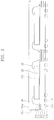
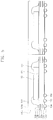
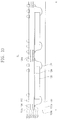
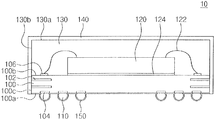
  • FIGS. 1 and 2 illustrate cross-sectional views of a semiconductor package according to exemplary embodiments.
  • FIGS. 3 to 8 illustrate cross-sectional views of stages in a method of fabricating a semiconductor package according to exemplary embodiments.
  • FIG. 9 illustrates a plan view showing patterning of a separation layer.
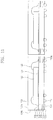
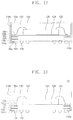
  • FIGS. 10 to 13 illustrate cross-sectional views of stages in a method of fabricating a semiconductor package according to exemplary embodiments.
  • FIGS. 1 and 2 illustrate cross-sectional views for explaining a semiconductor package according to exemplary embodiments.
  • a semiconductor package 10 may include, e.g., a substrate 100 , an external terminal 110 , a semiconductor chip 120 , a mold layer 30 , a shield 140 , and a separation layer 150 .
  • the substrate 100 may be provided.
  • the substrate 100 may include a bottom surface 100 a , a top surface 100 b facing or opposite to the bottom surface 100 a , and a side surface 100 c that connects the bottom and top surfaces 100 a and 100 b with each other.
  • the substrate 100 may include, e.g., a printed circuit board (PCB) or a semiconductor substrate.
  • PCB printed circuit board
  • the substrate 100 may include one or more ground patterns 102 .
  • the ground patterns 102 may be embedded in the substrate 100 .
  • the ground patterns 102 may be exposed through or at the side surface 100 c of the substrate 100 .
  • a plurality of external terminals 110 may be disposed below the substrate 100 .
  • the external terminals 110 may be disposed on terminal pads 104 that are disposed on the bottom surface 100 a of the substrate 100 .
  • One or more of the external terminals 110 may be electrically connected to the ground patterns 102 .
  • the semiconductor chip 120 may be disposed on the substrate 100 .
  • the semiconductor chip 120 and the substrate 100 may be electrically connected to each other through bonding wires 122 and chip pads 106 disposed on the top surface 100 a of the substrate 100 .
  • the semiconductor chip 120 may be electrically connected to the external terminals 110 .
  • one semiconductor chip 120 may be provided, or the semiconductor chip 120 may be provided in plural.
  • the semiconductor chip 120 may be, e.g., a logic chip, a memory chip, or a combination thereof.
  • the semiconductor chip 120 may be mounted in a wire bonding manner.
  • the semiconductor chip 120 may be mounted in a flip-chip bonding manner or other various manners.
  • An adhesive layer 124 may be interposed between the semiconductor chip 120 and the substrate 100 .
  • the adhesive layer 124 may include a die attach film (DAF).
  • DAF die attach film
  • the semiconductor chip 120 may be adhered to the top surface 100 b of the substrate 100 through the adhesive layer 124 .
  • the mold layer 130 may be disposed on the semiconductor chip 120 .
  • the mold layer 130 may encapsulate the semiconductor chip 120 and the bonding wires 122 .
  • the mold layer 130 may cover the semiconductor chip 120 and the top surface 100 b of the substrate 100 .
  • the mold layer 130 may include an insulating polymer material.
  • the mold layer 130 may include an epoxy molding compound (EMC).
  • the shield 140 may be disposed on the mold layer 130 .
  • the shield 140 may cover a top surface 130 a of the mold layer 130 , a side surface 130 b of the mold layer 130 , and the side surface 100 c of the substrate 100 .
  • the shield 140 may be in contact with the ground patterns 102 .
  • the shield 140 may have a lowermost surface whose level is the same as or lower than that of the bottom surface 100 a of the substrate 100 .
  • the shield 140 may include a conductive material such as metal.
  • the shield 140 may shelter or shield the semiconductor chip 10 from an electromagnetic wave that is externally applied thereto and/or block an electromagnetic wave emitted from the semiconductor package 10 .
  • the shield 140 may be grounded through the ground patterns 102 .
  • An electromagnetic wave may be absorbed by the shield 140 and may be discharged through the ground patterns 102 .
  • the separation layer 150 may be disposed on the bottom surface 100 a of the substrate 100 .
  • the separation layer 150 may cover the external terminals 110 and the bottom surface 100 a of the substrate 100 .
  • the separation layer 150 may conformally cover the external terminals 110 and the bottom surface 100 a of the substrate 100 .
  • the separation layer 150 may have a thickness of, e.g., about 1 nm to about 10 nm.
  • the separation layer 150 may have a bottom surface whose level is the same as that of the lowermost surface of the shield 140 (e.g., where the separation layer 150 and the shield 140 meet).
  • the bottom surface of the separation layer 150 may be coplanar with the lowermost surface of the shield 140 (e.g., where the separation layer 150 and the shield 140 meet).
  • the separation layer 150 may include, e.g., a carbon fluoride (CF x ).
  • the carbon fluoride of the separation layer 150 may include tetrafluoroethylene or carbon trifluoride.
  • the separation layer 150 may cover the external terminals 110 and the bottom surface 100 a of the substrate 100 .
  • the separation layer 150 may only partially cover the bottom surface 100 a of the substrate 100 .
  • the separation layer 150 may expose the external terminals 110 and a central portion of the bottom surface 100 a of the substrate 100 .
  • the separation layer 150 may overlap only an edge portion of the bottom surface 100 a of the substrate 100 .
  • FIGS. 3 to 8 illustrate cross-sectional views of stages in a method of fabricating a semiconductor package according to exemplary embodiments.
  • FIG. 9 illustrates a plan view showing patterning of a separation layer.
  • FIGS. 10 to 13 illustrate cross-sectional views of stages in a method of fabricating a semiconductor package according to exemplary embodiments.
  • a substrate 100 may be provided.
  • the substrate 100 may be a strip type substrate.
  • the substrate 100 may include ground pattern 102 embedded therein.
  • a plurality of semiconductor chips 120 may be mounted on the substrate 100 .
  • the semiconductor chips 120 may be mounted on the substrate 100 through bonding wires 122 .
  • the semiconductor chips 120 may be spaced apart from each other. As viewed in a plan view, the semiconductor chips 120 may be disposed between the ground patterns 102 .
  • a mold layer 130 may be formed on the semiconductor chips 120 .
  • the mold layer 130 may cover the semiconductor chips 120 and a top surface 100 b of the substrate 100 .
  • the mold layer 130 may be formed by a mold under fill (MUF) process.
  • the mold layer 130 may include an epoxy molding compound (EMC).
  • External terminals 110 may be formed below the substrate 100 .
  • the external terminals 110 may be adhered on terminal pads 104 disposed on a bottom surface 100 a of the substrate 100 .
  • the external terminals 110 may include solder balls or solder bumps.
  • a separation layer 150 may be formed below the substrate 100 .
  • the separation layer 150 may be coated to cover the external terminals 110 and the bottom surface 100 a of the substrate 100 .
  • the separation layer 150 may be formed using an organic layer coating process such a plasma coating process or a spray coating process.
  • the separation layer 150 may include, e.g., a carbon fluoride (CF x ).
  • the substrate 100 and the mold layer 130 may be cut.
  • a singulation process may be performed on the substrate 100 and the mold layer 130 .
  • the substrate 100 and the mold layer 130 may be singulated, or diced, through a blade sawing process or a laser sawing process performed along a sawing line SL.
  • the sawing line SL may be between the semiconductor chips 120 .
  • the singulation process may form a cutting surface between the semiconductor chips 120 .
  • the cutting of the substrate 100 and the mold layer 130 may separate the semiconductor chips 120 from each other.
  • the singulation process may also cut the ground patterns 102 .
  • the cut ground patterns 102 may have a side surface, which is exposed through or at a side surface 100 c of the cut substrate 100 that has experienced or undergone the singulation process.
  • a shield 140 may be formed on the mold layer 130 .
  • the shield 140 may be formed by depositing a conductive material on a top surface 130 a of the mold layer 130 , a side surface 130 b of the mold layer 130 , and the side surface 100 c of the substrate 100 .
  • the shield 140 may be formed by a sputtering process.
  • the shield 140 may be formed by a plating process such as an electroplating or an electro-less plating.
  • the conductive material may include a metal.
  • the shield 140 may have a distal end portion 140 a partially covering the bottom surface 100 a of the substrate 100 .
  • the conductive material may overflow onto an edge portion of the bottom surface 100 a of the substrate 100 . This overflow could induce an electrical short between the external terminals 110 . If an amount of deposition were to be controlled such that the conductive material does not overflow onto the bottom surface 100 a of the substrate 100 , the conductive material might not completely cover the side surface 100 c of the substrate 100 . A coating failure could then occur at the side surface 100 c of the substrate 100 .
  • the separation layer 150 may be formed to cover the external terminals 110 and the bottom surface 100 a of the substrate 100 .
  • the conductive material may therefore be deposited to completely or desirably cover the side surface 100 c of the substrate 100 , and a coating defect may be prevented from occurring at the side surface 100 c of the substrate 100 .
  • the separation layer 150 may protect the external terminals 110 and the bottom surface 100 a of the substrate 100 .
  • the distal end portion 140 a of the shield 140 formed on the separation layer 150 may be removed, and thus a semiconductor package 10 may be fabricated.
  • a cleaning process such as acetone cleaning process or a plasma cleaning process, may be performed to remove the distal end portion 140 a of the shied 140 formed on the separation layer 150 .
  • the separation layer 150 may not be removed but rather may remain on the bottom surface 100 a of the substrate 100 .
  • an adhesive strength between the separation layer 150 and the substrate 100 may be greater than between the separation layer 150 and the overlying distal end portion 140 a of the shield 140 . Therefore, during the cleaning process, the separation layer 150 may remain on the bottom surface 100 a of the substrate 100 , while the distal end portion 140 a of the shield 140 may be removed from the separation layer 150 .
  • the separation layer 150 may be removed.
  • a plasma cleaning process may be performed to remove the separation layer 150 .
  • a plasma cleaning process for removing the separation layer 150 may be carried out under a condition different from that for removing the distal end portion 140 a of the shield 140 .
  • the same plasma cleaning process may be consistently performed to remove the separation layer 150 .
  • the removal of the separation layer 150 may be omitted.
  • the semiconductor package 10 may be mounted on a board 160 .
  • the board 160 may be provided on the bottom surface 100 a of the substrate 100 .
  • the board 160 may include a memory module board.
  • the board 160 may include board pads 162 on its top surface.
  • a flux 170 may be provided between the bottom surface 100 a of the substrate 100 and the top surface of the board 160 .
  • the flux 170 may be coated on the bottom surface 100 a of the substrate 100 , and thus the external terminals 110 may be covered with the flux 170 .
  • the flux 170 may be coated on the top surface of the board 160 , and thus the board pads 162 may be covered with the flux 170 .
  • the flux 170 may be coated through a printing process or a dipping process.
  • the flux 170 may include, e.g., a resin, an activator, and a solvent.
  • the solvent may include a glycol ether ester-bases compound, a glycol ether-based compound, an ester-based compound, a ketone-based compound, or a cyclic ester-based compound.
  • the semiconductor package 10 may be mounted on the board 160 .
  • the separation layer 150 may be removed.
  • the separation layer 150 may be dissolved in the flux 170 .
  • the separation layer 150 may include a carbon fluoride, which may be soluble to an organic solvent included in the flux 170 .
  • the external terminals 110 may come into contact with the board pads 162 .
  • the separation layer 150 may cover the external terminals 110 and the bottom surface 100 a of the substrate 100 , thereby protecting a bottom surface of the semiconductor package 10 .
  • the separation layer 150 may be dissolved and removed in the flux 170 .
  • the separation layer 150 may help prevent damage to the semiconductor package 10 that might otherwise occur on its lower portion before the mounting process is performed.
  • the separation layer 150 may not cover a portion of the bottom surface 100 a of the substrate 100 .
  • FIG. 9 illustrates a plan view showing patterning of the separation layer.
  • FIGS. 10 to 13 illustrate cross-sectional views of stages in a method of fabricating a semiconductor package according to exemplary embodiments.
  • FIG. 10 illustrates a cross-sectional view taken along line A-A′ of FIG. 9 .
  • components the same as those discussed above are allocated the same reference numerals thereto, and a repetitive explanation thereof may be omitted or abridged for brevity of the description.
  • a substrate 100 may be provided.
  • the substrate 100 may include ground patterns 102 therein.
  • a plurality of semiconductor chips 120 may be mounted on the substrate 100 .
  • a mold layer 130 may be formed on the semiconductor chips 120 .
  • External terminals 110 may be formed below, e.g., on the bottom surface of, the substrate 100 .
  • a separation layer 150 may be coated to cover the external terminals 110 and a bottom surface 100 a of the substrate 100 .
  • the separation layer 150 may be patterned.
  • a mask pattern may be formed on the separation layer 150 , and then the separation layer 150 may be partially removed by a plasma etching process using the mask pattern as an etching mask.
  • the patterned separation layer 150 a may expose the external terminals 110 and a central portion of the bottom surface 100 a of the substrate 100 .
  • the patterned separation layer 150 a may be superimposed on a sawing line SL while also overlapping an edge portion of the bottom surface 100 a of the substrate 100 .
  • the central and edge portions of the bottom surface 100 a of the substrate 100 may mean that central and edge portions of the bottom surface 100 a of the substrate 100 that is singulated, or diced, after a subsequent singulation process is done.
  • the substrate 100 and the mold layer 130 may be cut to separate the semiconductor chips 120 from each other.
  • the substrate 100 and the mold layer 130 may experience a singulation process performed along the sawing line SL.
  • the singulation process may also cut the ground patterns 102 .
  • the ground patterns 102 may be exposed through or at a side surface 100 c of the cut substrate 100 .
  • a shield 140 may be formed on the mold layer 130 .
  • a conductive material may be deposited to form the shield 140 .
  • the conductive material may overflow onto an edge portion of the bottom surface 100 a of the substrate 100 , e.g., forming a distal end portion 140 a of the shield 140 .
  • the distal end portion 140 a of the shield 140 may be removed, and therefore a semiconductor package 10 may be fabricated.
  • the patterned separation layer 150 a may be formed to cover the edge portion, onto which the conductive material is to overflow, of the bottom surface 100 a of the substrate 100 and may not cover the external terminals 110 . Accordingly, the semiconductor package 10 may be protected on its bottom surface from the overflow of the conductive material. Moreover, as the external terminals 110 are exposed through the patterned separation layer 150 a , a variety of techniques may alternatively be employed to mount the semiconductor package 10 on the board 160 .
  • the separation layer may be formed to, e.g., completely, cover the external terminals and the bottom surface of the substrate, and an electrical short may be prevented between the external terminals and the conductive material overflowing onto the bottom surface of the substrate.
  • the conductive material may be deposited to, e.g., completely, cover the side surface of the substrate, and thus it may be possible to prevent a coating defect occurred on the side surface of the substrate.
  • the separation layer may cover to protect the external terminals and the bottom surface of the substrate.
  • electric waves emitted from some semiconductor packages may affect or cause problems to other semiconductor packages mounted therearound.
  • An electromagnetic field may be created around a data signal line in accordance with current flow, and the electromagnetic field may also affect signals transmitting through adjacent signal lines.
  • EMI electromagnetic interference
  • the electromagnetic interference (EMI) could cause weakness of circuit function, malfunction, operation abnormality, operation failure, et cetera in electronic products.
  • the electromagnetic interference may be severe when signal lines transmit high frequency signal for high speed operation.
  • the semiconductor package may be formed to protect its bottom surface by covering the external terminals and the bottom surface of the substrate.
  • the separation layer may be dissolved and removed in the flux in a subsequent mounting process of the semiconductor package. As such, the separation layer may help reduce or prevent damage to the semiconductor package that could possibly occur on its lower portion before the mounting of the semiconductor package.
  • the embodiments may provide a semiconductor package and a method of fabricating the same including an electromagnetic interference (EMI) shield.
  • EMI electromagnetic interference
  • the embodiments may provide a method of fabricating a semiconductor package capable of preventing damage to external terminals and a bottom surface of a substrate when an electromagnetic interference shield is formed.

Landscapes

  • Engineering & Computer Science (AREA)
  • Microelectronics & Electronic Packaging (AREA)
  • Power Engineering (AREA)
  • Computer Hardware Design (AREA)
  • Physics & Mathematics (AREA)
  • Condensed Matter Physics & Semiconductors (AREA)
  • General Physics & Mathematics (AREA)
  • Manufacturing & Machinery (AREA)
  • Health & Medical Sciences (AREA)
  • Electromagnetism (AREA)
  • Toxicology (AREA)
  • Structures Or Materials For Encapsulating Or Coating Semiconductor Devices Or Solid State Devices (AREA)

Abstract

A semiconductor package and a method of fabricating the same, the method including mounting semiconductor chips on a substrate; forming a mold layer that covers the semiconductor chips on the substrate; forming external terminals on a bottom surface of the substrate; forming a separation layer on the external terminals and the bottom surface of the substrate; cutting the substrate and the mold layer to separate the semiconductor chips from each other; and forming a shield surrounding the mold layer and a side surface of the substrate.

Description

CROSS-REFERENCE TO RELATED APPLICATIONS
This is a continuation application based on pending application Ser. No. 15/499,353, filed Apr. 27, 2017, the entire contents of which is hereby incorporated by reference.
Korean Patent Application No. 10-2016-0115240, filed on Sep. 7, 2016, in the Korean Intellectual Property Office, and entitled: “Semiconductor Packages and Methods of Fabricating the Same,” is incorporated by reference herein in its entirety.
BACKGROUND
1. Field
Embodiments relate to a semiconductor package and a method of fabricating the same.
2. Description of the Related Art
For many kinds of electronic products, electric waves may be emitted from some semiconductor packages
SUMMARY
Embodiments are directed to a semiconductor package and a method of fabricating the same.
The embodiments may be realized by providing a method of fabricating a semiconductor package, the method including mounting semiconductor chips on a substrate; forming a mold layer that covers the semiconductor chips on the substrate; forming external terminals on a bottom surface of the substrate; forming a separation layer on the external terminals and the bottom surface of the substrate; cutting the substrate and the mold layer to separate the semiconductor chips from each other; and forming a shield surrounding the mold layer and a side surface of the substrate.
The embodiments may be realized by providing a semiconductor package including a substrate including an external terminal on a bottom surface thereof; a semiconductor chip mounted on a top surface of the substrate; a mold layer covering the semiconductor chip and the top surface of the substrate; a shield covering a top surface of the mold layer, a side surface of the mold layer, and a side surface of the substrate; and a separation layer on the bottom surface of the substrate.
The embodiments may be realized by providing a method of fabricating a semiconductor package, the method including mounting a semiconductor chip on a substrate; forming a mold layer that covers the semiconductor chip on the substrate; forming external terminals on a bottom surface of the substrate; forming a separation layer on an outer edge of the bottom surface of the substrate; and forming an electromagnetic interference shield such that the electromagnetic interference shield covers the mold layer and a side surface of the substrate.
BRIEF DESCRIPTION OF THE DRAWINGS
Features will be apparent to those of skill in the art by describing in detail exemplary embodiments with reference to the attached drawings in which:
FIGS. 1 and 2 illustrate cross-sectional views of a semiconductor package according to exemplary embodiments.
FIGS. 3 to 8 illustrate cross-sectional views of stages in a method of fabricating a semiconductor package according to exemplary embodiments.
FIG. 9 illustrates a plan view showing patterning of a separation layer.
FIGS. 10 to 13 illustrate cross-sectional views of stages in a method of fabricating a semiconductor package according to exemplary embodiments.
DETAILED DESCRIPTION
It will be herein described about a semiconductor package according to an embodiment with reference to accompanying drawings.
FIGS. 1 and 2 illustrate cross-sectional views for explaining a semiconductor package according to exemplary embodiments.
Referring to FIG. 1, a semiconductor package 10 according to exemplary embodiments may include, e.g., a substrate 100, an external terminal 110, a semiconductor chip 120, a mold layer 30, a shield 140, and a separation layer 150.
The substrate 100 may be provided. The substrate 100 may include a bottom surface 100 a, a top surface 100 b facing or opposite to the bottom surface 100 a, and a side surface 100 c that connects the bottom and top surfaces 100 a and 100 b with each other. The substrate 100 may include, e.g., a printed circuit board (PCB) or a semiconductor substrate.
The substrate 100 may include one or more ground patterns 102. The ground patterns 102 may be embedded in the substrate 100. The ground patterns 102 may be exposed through or at the side surface 100 c of the substrate 100.
A plurality of external terminals 110 may be disposed below the substrate 100. For example, the external terminals 110 may be disposed on terminal pads 104 that are disposed on the bottom surface 100 a of the substrate 100. One or more of the external terminals 110 may be electrically connected to the ground patterns 102.
The semiconductor chip 120 may be disposed on the substrate 100. The semiconductor chip 120 and the substrate 100 may be electrically connected to each other through bonding wires 122 and chip pads 106 disposed on the top surface 100 a of the substrate 100. The semiconductor chip 120 may be electrically connected to the external terminals 110. In an implementation, as shown in FIG. 1, one semiconductor chip 120 may be provided, or the semiconductor chip 120 may be provided in plural. The semiconductor chip 120 may be, e.g., a logic chip, a memory chip, or a combination thereof. In an implementation, the semiconductor chip 120 may be mounted in a wire bonding manner. In an implementation, the semiconductor chip 120 may be mounted in a flip-chip bonding manner or other various manners. An adhesive layer 124 may be interposed between the semiconductor chip 120 and the substrate 100. For example, the adhesive layer 124 may include a die attach film (DAF). The semiconductor chip 120 may be adhered to the top surface 100 b of the substrate 100 through the adhesive layer 124.
The mold layer 130 may be disposed on the semiconductor chip 120. For example, the mold layer 130 may encapsulate the semiconductor chip 120 and the bonding wires 122. The mold layer 130 may cover the semiconductor chip 120 and the top surface 100 b of the substrate 100. The mold layer 130 may include an insulating polymer material. For example, the mold layer 130 may include an epoxy molding compound (EMC).
The shield 140 may be disposed on the mold layer 130. The shield 140 may cover a top surface 130 a of the mold layer 130, a side surface 130 b of the mold layer 130, and the side surface 100 c of the substrate 100. The shield 140 may be in contact with the ground patterns 102. The shield 140 may have a lowermost surface whose level is the same as or lower than that of the bottom surface 100 a of the substrate 100. The shield 140 may include a conductive material such as metal.
The shield 140 may shelter or shield the semiconductor chip 10 from an electromagnetic wave that is externally applied thereto and/or block an electromagnetic wave emitted from the semiconductor package 10. The shield 140 may be grounded through the ground patterns 102. An electromagnetic wave may be absorbed by the shield 140 and may be discharged through the ground patterns 102.
The separation layer 150 may be disposed on the bottom surface 100 a of the substrate 100. For example, the separation layer 150 may cover the external terminals 110 and the bottom surface 100 a of the substrate 100. For example, the separation layer 150 may conformally cover the external terminals 110 and the bottom surface 100 a of the substrate 100. The separation layer 150 may have a thickness of, e.g., about 1 nm to about 10 nm. The separation layer 150 may have a bottom surface whose level is the same as that of the lowermost surface of the shield 140 (e.g., where the separation layer 150 and the shield 140 meet). The bottom surface of the separation layer 150 may be coplanar with the lowermost surface of the shield 140 (e.g., where the separation layer 150 and the shield 140 meet). In an implementation, the separation layer 150 may include, e.g., a carbon fluoride (CFx). For example, the carbon fluoride of the separation layer 150 may include tetrafluoroethylene or carbon trifluoride. In an implementation, as shown in FIG. 1, the separation layer 150 may cover the external terminals 110 and the bottom surface 100 a of the substrate 100. In an implementation, as shown in FIG. 2, the separation layer 150 may only partially cover the bottom surface 100 a of the substrate 100. For example, the separation layer 150 may expose the external terminals 110 and a central portion of the bottom surface 100 a of the substrate 100. For example, the separation layer 150 may overlap only an edge portion of the bottom surface 100 a of the substrate 100.
It will be described hereinafter about a method of fabricating the semiconductor package 10 with reference to the accompanying drawings. Hereinafter, for brevity of the description, components the same as those discussed with reference to FIGS. 1 and 2 are allocated the same reference numerals thereto, and a repetitive explanation thereof may be omitted or abridged.
FIGS. 3 to 8 illustrate cross-sectional views of stages in a method of fabricating a semiconductor package according to exemplary embodiments. FIG. 9 illustrates a plan view showing patterning of a separation layer. FIGS. 10 to 13 illustrate cross-sectional views of stages in a method of fabricating a semiconductor package according to exemplary embodiments.
Referring to FIG. 3, a substrate 100 may be provided. The substrate 100 may be a strip type substrate. The substrate 100 may include ground pattern 102 embedded therein.
A plurality of semiconductor chips 120 may be mounted on the substrate 100. For example, the semiconductor chips 120 may be mounted on the substrate 100 through bonding wires 122. The semiconductor chips 120 may be spaced apart from each other. As viewed in a plan view, the semiconductor chips 120 may be disposed between the ground patterns 102.
A mold layer 130 may be formed on the semiconductor chips 120. The mold layer 130 may cover the semiconductor chips 120 and a top surface 100 b of the substrate 100. For example, the mold layer 130 may be formed by a mold under fill (MUF) process. The mold layer 130 may include an epoxy molding compound (EMC).
External terminals 110 may be formed below the substrate 100. For example, the external terminals 110 may be adhered on terminal pads 104 disposed on a bottom surface 100 a of the substrate 100. In an implementation, the external terminals 110 may include solder balls or solder bumps.
Referring to FIG. 4, a separation layer 150 may be formed below the substrate 100. The separation layer 150 may be coated to cover the external terminals 110 and the bottom surface 100 a of the substrate 100. For example, the separation layer 150 may be formed using an organic layer coating process such a plasma coating process or a spray coating process. In an implementation, the separation layer 150 may include, e.g., a carbon fluoride (CFx).
Referring to FIG. 5, the substrate 100 and the mold layer 130 may be cut. A singulation process may be performed on the substrate 100 and the mold layer 130. For example, the substrate 100 and the mold layer 130 may be singulated, or diced, through a blade sawing process or a laser sawing process performed along a sawing line SL. The sawing line SL may be between the semiconductor chips 120. For example, the singulation process may form a cutting surface between the semiconductor chips 120. The cutting of the substrate 100 and the mold layer 130 may separate the semiconductor chips 120 from each other. The singulation process may also cut the ground patterns 102. The cut ground patterns 102 may have a side surface, which is exposed through or at a side surface 100 c of the cut substrate 100 that has experienced or undergone the singulation process.
Referring to FIG. 6, a shield 140 may be formed on the mold layer 130. The shield 140 may be formed by depositing a conductive material on a top surface 130 a of the mold layer 130, a side surface 130 b of the mold layer 130, and the side surface 100 c of the substrate 100. For example, the shield 140 may be formed by a sputtering process. In an implementation, the shield 140 may be formed by a plating process such as an electroplating or an electro-less plating. In an implementation, the conductive material may include a metal.
In an implementation, the shield 140 may have a distal end portion 140 a partially covering the bottom surface 100 a of the substrate 100. For example, the conductive material may overflow onto an edge portion of the bottom surface 100 a of the substrate 100. This overflow could induce an electrical short between the external terminals 110. If an amount of deposition were to be controlled such that the conductive material does not overflow onto the bottom surface 100 a of the substrate 100, the conductive material might not completely cover the side surface 100 c of the substrate 100. A coating failure could then occur at the side surface 100 c of the substrate 100.
According to exemplary embodiments, the separation layer 150 may be formed to cover the external terminals 110 and the bottom surface 100 a of the substrate 100. Thus, the possibility of an electrical short between the external terminals 110 and the conductive material overflowing onto the bottom surface 100 a of the substrate 100 may be reduced and/or prevented. The conductive material may therefore be deposited to completely or desirably cover the side surface 100 c of the substrate 100, and a coating defect may be prevented from occurring at the side surface 100 c of the substrate 100. In addition, the separation layer 150 may protect the external terminals 110 and the bottom surface 100 a of the substrate 100.
Referring to FIG. 7, the distal end portion 140 a of the shield 140 formed on the separation layer 150 may be removed, and thus a semiconductor package 10 may be fabricated. For example, a cleaning process, such as acetone cleaning process or a plasma cleaning process, may be performed to remove the distal end portion 140 a of the shied 140 formed on the separation layer 150. In this step, the separation layer 150 may not be removed but rather may remain on the bottom surface 100 a of the substrate 100. For example, an adhesive strength between the separation layer 150 and the substrate 100 may be greater than between the separation layer 150 and the overlying distal end portion 140 a of the shield 140. Therefore, during the cleaning process, the separation layer 150 may remain on the bottom surface 100 a of the substrate 100, while the distal end portion 140 a of the shield 140 may be removed from the separation layer 150.
In an implementation, after the shied 140 is formed, the separation layer 150 may be removed. A plasma cleaning process may be performed to remove the separation layer 150. For example, a plasma cleaning process for removing the separation layer 150 may be carried out under a condition different from that for removing the distal end portion 140 a of the shield 140. In an implementation, after a plasma cleaning process is performed to remove the distal end portion 140 a of the shield 140, the same plasma cleaning process may be consistently performed to remove the separation layer 150. In an implementation, the removal of the separation layer 150 may be omitted. Hereinafter, for convenience of the description, it will be described about the case that the separation layer 150 is not removed as shown in FIG. 7.
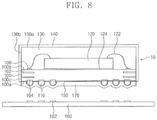
In an implementation, as shown in FIG. 8, the semiconductor package 10 may be mounted on a board 160. Referring to FIG. 8, the board 160 may be provided on the bottom surface 100 a of the substrate 100. For example, the board 160 may include a memory module board. The board 160 may include board pads 162 on its top surface. A flux 170 may be provided between the bottom surface 100 a of the substrate 100 and the top surface of the board 160. For example, the flux 170 may be coated on the bottom surface 100 a of the substrate 100, and thus the external terminals 110 may be covered with the flux 170. In an implementation, the flux 170 may be coated on the top surface of the board 160, and thus the board pads 162 may be covered with the flux 170. The flux 170 may be coated through a printing process or a dipping process. The flux 170 may include, e.g., a resin, an activator, and a solvent. The solvent may include a glycol ether ester-bases compound, a glycol ether-based compound, an ester-based compound, a ketone-based compound, or a cyclic ester-based compound.
Thereafter, the semiconductor package 10 may be mounted on the board 160. In this step, the separation layer 150 may be removed. For example, the separation layer 150 may be dissolved in the flux 170. For example, the separation layer 150 may include a carbon fluoride, which may be soluble to an organic solvent included in the flux 170. As the separation layer 150 is dissolved, the external terminals 110 may come into contact with the board pads 162.
According to exemplary embodiments, the separation layer 150 may cover the external terminals 110 and the bottom surface 100 a of the substrate 100, thereby protecting a bottom surface of the semiconductor package 10. In a subsequent mounting process of the semiconductor package 10, the separation layer 150 may be dissolved and removed in the flux 170. The separation layer 150 according to exemplary embodiments may help prevent damage to the semiconductor package 10 that might otherwise occur on its lower portion before the mounting process is performed.
In an implementation, the separation layer 150 may not cover a portion of the bottom surface 100 a of the substrate 100.
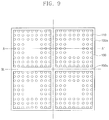
FIG. 9 illustrates a plan view showing patterning of the separation layer. FIGS. 10 to 13 illustrate cross-sectional views of stages in a method of fabricating a semiconductor package according to exemplary embodiments. FIG. 10 illustrates a cross-sectional view taken along line A-A′ of FIG. 9. Hereinafter, components the same as those discussed above are allocated the same reference numerals thereto, and a repetitive explanation thereof may be omitted or abridged for brevity of the description.
Referring to FIGS. 3 and 4, a substrate 100 may be provided. The substrate 100 may include ground patterns 102 therein. A plurality of semiconductor chips 120 may be mounted on the substrate 100. A mold layer 130 may be formed on the semiconductor chips 120. External terminals 110 may be formed below, e.g., on the bottom surface of, the substrate 100. A separation layer 150 may be coated to cover the external terminals 110 and a bottom surface 100 a of the substrate 100.
Referring to FIGS. 9 and 10, the separation layer 150 may be patterned. For example, a mask pattern may be formed on the separation layer 150, and then the separation layer 150 may be partially removed by a plasma etching process using the mask pattern as an etching mask. The patterned separation layer 150 a may expose the external terminals 110 and a central portion of the bottom surface 100 a of the substrate 100. The patterned separation layer 150 a may be superimposed on a sawing line SL while also overlapping an edge portion of the bottom surface 100 a of the substrate 100. In this description, the central and edge portions of the bottom surface 100 a of the substrate 100 may mean that central and edge portions of the bottom surface 100 a of the substrate 100 that is singulated, or diced, after a subsequent singulation process is done.
Referring to FIG. 11, the substrate 100 and the mold layer 130 may be cut to separate the semiconductor chips 120 from each other. For example, the substrate 100 and the mold layer 130 may experience a singulation process performed along the sawing line SL. The singulation process may also cut the ground patterns 102. The ground patterns 102 may be exposed through or at a side surface 100 c of the cut substrate 100.
Referring to FIG. 12, a shield 140 may be formed on the mold layer 130. A conductive material may be deposited to form the shield 140. When the shield 140 is formed, the conductive material may overflow onto an edge portion of the bottom surface 100 a of the substrate 100, e.g., forming a distal end portion 140 a of the shield 140.
Referring to FIG. 13, the distal end portion 140 a of the shield 140 may be removed, and therefore a semiconductor package 10 may be fabricated.
In some embodiments, the patterned separation layer 150 a may be formed to cover the edge portion, onto which the conductive material is to overflow, of the bottom surface 100 a of the substrate 100 and may not cover the external terminals 110. Accordingly, the semiconductor package 10 may be protected on its bottom surface from the overflow of the conductive material. Moreover, as the external terminals 110 are exposed through the patterned separation layer 150 a, a variety of techniques may alternatively be employed to mount the semiconductor package 10 on the board 160.
In accordance with the method of fabricating a semiconductor package according to exemplary embodiments, the separation layer may be formed to, e.g., completely, cover the external terminals and the bottom surface of the substrate, and an electrical short may be prevented between the external terminals and the conductive material overflowing onto the bottom surface of the substrate. In addition, the conductive material may be deposited to, e.g., completely, cover the side surface of the substrate, and thus it may be possible to prevent a coating defect occurred on the side surface of the substrate. Furthermore, the separation layer may cover to protect the external terminals and the bottom surface of the substrate.
By way of summation and review, electric waves emitted from some semiconductor packages may affect or cause problems to other semiconductor packages mounted therearound. An electromagnetic field may be created around a data signal line in accordance with current flow, and the electromagnetic field may also affect signals transmitting through adjacent signal lines. As a result, an electromagnetic interference (EMI) phenomenon disturbing normal operation of components may be induced. The electromagnetic interference (EMI) could cause weakness of circuit function, malfunction, operation abnormality, operation failure, et cetera in electronic products. For example, the electromagnetic interference may be severe when signal lines transmit high frequency signal for high speed operation.
According to exemplary embodiments, the semiconductor package may be formed to protect its bottom surface by covering the external terminals and the bottom surface of the substrate. The separation layer may be dissolved and removed in the flux in a subsequent mounting process of the semiconductor package. As such, the separation layer may help reduce or prevent damage to the semiconductor package that could possibly occur on its lower portion before the mounting of the semiconductor package.
The embodiments may provide a semiconductor package and a method of fabricating the same including an electromagnetic interference (EMI) shield.
The embodiments may provide a method of fabricating a semiconductor package capable of preventing damage to external terminals and a bottom surface of a substrate when an electromagnetic interference shield is formed.
Example embodiments have been disclosed herein, and although specific terms are employed, they are used and are to be interpreted in a generic and descriptive sense only and not for purpose of limitation. In some instances, as would be apparent to one of ordinary skill in the art as of the filing of the present application, features, characteristics, and/or elements described in connection with a particular embodiment may be used singly or in combination with features, characteristics, and/or elements described in connection with other embodiments unless otherwise specifically indicated. Accordingly, it will be understood by those of skill in the art that various changes in form and details may be made without departing from the spirit and scope of the present invention as set forth in the following claims.
Claims (14)

What is claimed is:
1. A semiconductor package, comprising:
a substrate including an external terminal on a bottom surface thereof;
a semiconductor chip mounted on a top surface of the substrate;
a mold layer covering the semiconductor chip and the top surface of the substrate;
a shield covering a top surface of the mold layer, a side surface of the mold layer, and a side surface of the substrate; and
a separation layer on the bottom surface of the substrate,
wherein:
the separation layer overlaps an edge portion of the bottom surface of the substrate,
the shield has a bottom surface that is coplanar with a bottom surface of the separation layer, and
the separation layer conformally and completely covers the external terminal and the bottom surface of the substrate.
2. The semiconductor package as claimed in claim 1, wherein the substrate comprises:
insulating patterns;
a chip pads on a top surface of the substrate; and
a conductive pattern between the insulating patterns and electrically connecting the semiconductor chip to the chip pads.
3. The semiconductor package as claimed in claim 2, wherein:
the conductive pattern includes a ground pattern, and
the shield is electrically connected to the ground pattern.
4. The semiconductor package as claimed in claim 3, wherein the ground pattern is exposed through or at a side surface of the substrate.
5. The semiconductor package as claimed in claim 3, wherein the ground pattern contacts the shield, and is electrically connected to the shield.
6. The semiconductor package as claimed in claim 1, wherein a width of the semiconductor chip is smaller than a width of the substrate.
7. The semiconductor package as claimed in claim 1, wherein, when viewed in plan, the external terminal surrounds an outside of the semiconductor chip.
8. The semiconductor package as claimed in claim 1, wherein the semiconductor chip is mounted in a flip-chip bonding manner or a wire bonding manner.
9. The semiconductor package as claimed in claim 1, wherein the shield contacts a side surface of the separation layer.
10. The semiconductor package as claimed in claim 1, wherein the separation layer includes a carbon fluoride.
11. A semiconductor package, comprising:
a substrate including a ground pattern embedded therein;
an external terminal on a bottom surface of the substrate;
a semiconductor chip mounted on a top surface of the substrate;
a shield covering a semiconductor chip and a side surface of the substrate, the shield is electrically connected to the ground pattern exposing at the side surface of the substrate; and
a separation layer on the bottom surface of the substrate,
wherein the separation layer conformally and completely covers the external terminal and the bottom surface of the substrate.
12. The semiconductor package as claimed in claim 11, wherein the external terminal surrounds an outside of the semiconductor chip when viewed in plan.
13. The semiconductor package as claimed in claim 11, wherein the separation layer includes an organic material.
14. The semiconductor package as claimed in claim 11, further comprising a mold layer covering the semiconductor chip and the top surface of the substrate,
wherein the shield covers a top surface of the mold layer, and a side surface of the mold layer.
US16/270,184 2016-09-07 2019-02-07 Semiconductor packages Active US10629544B2 (en)

Priority Applications (1)

Application Number Priority Date Filing Date Title
US16/270,184 US10629544B2 (en) 2016-09-07 2019-02-07 Semiconductor packages

Applications Claiming Priority (4)

Application Number Priority Date Filing Date Title
KR1020160115240A KR102634389B1 (en) 2016-09-07 2016-09-07 Semiconductor package and method of fabricating the same
KR10-2016-0115240 2016-09-07
US15/499,353 US10468353B2 (en) 2016-09-07 2017-04-27 Semiconductor packages and methods of fabricating the same
US16/270,184 US10629544B2 (en) 2016-09-07 2019-02-07 Semiconductor packages

Related Parent Applications (1)

Application Number Title Priority Date Filing Date
US15/499,353 Continuation US10468353B2 (en) 2016-09-07 2017-04-27 Semiconductor packages and methods of fabricating the same

Publications (2)

Publication Number Publication Date
US20190172792A1 US20190172792A1 (en) 2019-06-06
US10629544B2 true US10629544B2 (en) 2020-04-21

Family

ID=61280695

Family Applications (2)

Application Number Title Priority Date Filing Date
US15/499,353 Active 2037-10-05 US10468353B2 (en) 2016-09-07 2017-04-27 Semiconductor packages and methods of fabricating the same
US16/270,184 Active US10629544B2 (en) 2016-09-07 2019-02-07 Semiconductor packages

Family Applications Before (1)

Application Number Title Priority Date Filing Date
US15/499,353 Active 2037-10-05 US10468353B2 (en) 2016-09-07 2017-04-27 Semiconductor packages and methods of fabricating the same

Country Status (2)

Country Link
US (2) US10468353B2 (en)
KR (1) KR102634389B1 (en)

Families Citing this family (3)

* Cited by examiner, † Cited by third party
Publication number Priority date Publication date Assignee Title
US10319684B2 (en) * 2017-04-11 2019-06-11 STATS ChipPAC Pte. Ltd. Dummy conductive structures for EMI shielding
KR102187350B1 (en) 2018-11-20 2020-12-07 주식회사 에스모머티리얼즈 Apparatus for molding semiconductor package and semiconductor package manufactured by the same
CN117832199A (en) * 2022-09-27 2024-04-05 Jcet星科金朋韩国有限公司 Semiconductor device and method for manufacturing the same

Citations (17)

* Cited by examiner, † Cited by third party
Publication number Priority date Publication date Assignee Title
KR20000020585U (en) 1999-05-10 2000-12-05 김영환 Apparatus for cleansing semiconductor wafer of coating system
JP2005276981A (en) 2004-03-24 2005-10-06 Matsushita Electric Ind Co Ltd Manufacturing method of circuit component built-in module
US20080210462A1 (en) * 2005-11-28 2008-09-04 Murata Manufacturing Co., Ltd. Method for manufacturing circuit modules and circuit module
US20110156225A1 (en) 2008-09-10 2011-06-30 Renesas Electronics Corporation Semiconductor device and method of manufacturing the same
US20110221046A1 (en) 2010-03-11 2011-09-15 Ambit Microsystems (Zhongshan) Ltd. Semiconductor assembly package having shielding layer and method therefor
US20110298111A1 (en) * 2010-06-08 2011-12-08 Samsung Electro-Mechanics Co., Ltd. Semiconductor package and manufactring method thereof
US8156644B2 (en) 2001-03-19 2012-04-17 Hewlett-Packard Development Company, L.P. Method for manufacturing a printed circuit board having conformal EMI shield
US20120300412A1 (en) 2011-05-25 2012-11-29 In-Sang Song Memory Device and Fabricating Method Thereof
US20130043568A1 (en) * 2011-08-16 2013-02-21 In-Sang Song Memory device and a fabricating method thereof
KR101247343B1 (en) 2011-09-30 2013-03-26 에스티에스반도체통신 주식회사 Method for manufacturing a semiconductor package having a anti- electromagnetic wave means
US20130214396A1 (en) 2012-02-16 2013-08-22 Samsung Electronics Co., Ltd. Semiconductor packages
US20140262475A1 (en) 2013-03-12 2014-09-18 Taiwan Semiconductor Manufacturing Company, Ltd. 3D Shielding Case and Methods for Forming the Same
KR101479248B1 (en) 2014-05-28 2015-01-05 (주) 씨앤아이테크놀로지 Sputtering Method for EMI(Electro Magnetic Interference) Shielding of Semiconductor Package Using Liquid Adhesives and Apparatus Thereof
US8963268B2 (en) 2007-11-07 2015-02-24 University Of Washington Through Its Center For Commercialization Free-standing two-sided devices
US20150179588A1 (en) 2013-12-23 2015-06-25 SK Hynix Inc. Semiconductor packages having emi shielding layers, methods of fabricating the same, electronic systems including the same, and memory cards including the same
KR101614721B1 (en) 2015-03-24 2016-04-22 (주)씨앤아이테크놀로지 Attaching and Detaching Method of Semiconductor Packages on tray for EMI shielding Using Adhesive-Pad
KR101629634B1 (en) 2015-12-15 2016-06-14 제너셈(주) The deburring brush assembly for EMI shielding

Family Cites Families (2)

* Cited by examiner, † Cited by third party
Publication number Priority date Publication date Assignee Title
KR20110020548A (en) * 2009-08-24 2011-03-03 주식회사 하이닉스반도체 Semiconductor package and manufacturing method thereof
JP5521955B2 (en) * 2010-09-29 2014-06-18 Tdk株式会社 Electronic circuit module parts

Patent Citations (17)

* Cited by examiner, † Cited by third party
Publication number Priority date Publication date Assignee Title
KR20000020585U (en) 1999-05-10 2000-12-05 김영환 Apparatus for cleansing semiconductor wafer of coating system
US8156644B2 (en) 2001-03-19 2012-04-17 Hewlett-Packard Development Company, L.P. Method for manufacturing a printed circuit board having conformal EMI shield
JP2005276981A (en) 2004-03-24 2005-10-06 Matsushita Electric Ind Co Ltd Manufacturing method of circuit component built-in module
US20080210462A1 (en) * 2005-11-28 2008-09-04 Murata Manufacturing Co., Ltd. Method for manufacturing circuit modules and circuit module
US8963268B2 (en) 2007-11-07 2015-02-24 University Of Washington Through Its Center For Commercialization Free-standing two-sided devices
US20110156225A1 (en) 2008-09-10 2011-06-30 Renesas Electronics Corporation Semiconductor device and method of manufacturing the same
US20110221046A1 (en) 2010-03-11 2011-09-15 Ambit Microsystems (Zhongshan) Ltd. Semiconductor assembly package having shielding layer and method therefor
US20110298111A1 (en) * 2010-06-08 2011-12-08 Samsung Electro-Mechanics Co., Ltd. Semiconductor package and manufactring method thereof
US20120300412A1 (en) 2011-05-25 2012-11-29 In-Sang Song Memory Device and Fabricating Method Thereof
US20130043568A1 (en) * 2011-08-16 2013-02-21 In-Sang Song Memory device and a fabricating method thereof
KR101247343B1 (en) 2011-09-30 2013-03-26 에스티에스반도체통신 주식회사 Method for manufacturing a semiconductor package having a anti- electromagnetic wave means
US20130214396A1 (en) 2012-02-16 2013-08-22 Samsung Electronics Co., Ltd. Semiconductor packages
US20140262475A1 (en) 2013-03-12 2014-09-18 Taiwan Semiconductor Manufacturing Company, Ltd. 3D Shielding Case and Methods for Forming the Same
US20150179588A1 (en) 2013-12-23 2015-06-25 SK Hynix Inc. Semiconductor packages having emi shielding layers, methods of fabricating the same, electronic systems including the same, and memory cards including the same
KR101479248B1 (en) 2014-05-28 2015-01-05 (주) 씨앤아이테크놀로지 Sputtering Method for EMI(Electro Magnetic Interference) Shielding of Semiconductor Package Using Liquid Adhesives and Apparatus Thereof
KR101614721B1 (en) 2015-03-24 2016-04-22 (주)씨앤아이테크놀로지 Attaching and Detaching Method of Semiconductor Packages on tray for EMI shielding Using Adhesive-Pad
KR101629634B1 (en) 2015-12-15 2016-06-14 제너셈(주) The deburring brush assembly for EMI shielding

Also Published As

Publication number Publication date
US10468353B2 (en) 2019-11-05
KR102634389B1 (en) 2024-02-06
KR20180027947A (en) 2018-03-15
US20180068956A1 (en) 2018-03-08
US20190172792A1 (en) 2019-06-06

Similar Documents

Publication Publication Date Title
TWI387070B (en) Chip package and manufacturing method thereof
US9899335B2 (en) Method for fabricating package structure
US7851894B1 (en) System and method for shielding of package on package (PoP) assemblies
US8093691B1 (en) System and method for RF shielding of a semiconductor package
KR101858952B1 (en) Semiconductor package and method of manufacturing the same
US8008753B1 (en) System and method to reduce shorting of radio frequency (RF) shielding
US8030750B2 (en) Semiconductor device packages with electromagnetic interference shielding
US8368185B2 (en) Semiconductor device packages with electromagnetic interference shielding
KR101046250B1 (en) Electromagnetic Shielding Device of Semiconductor Package
US12476202B2 (en) Semiconductor packages and associated methods with solder mask opening(s) for in-package ground and conformal coating contact
TWI872270B (en) Selective emi shielding using preformed mask
US9824979B2 (en) Electronic package having electromagnetic interference shielding and associated method
US11942437B2 (en) Semiconductor package including an electromagnetic shield and method of fabricating the same
US20080315376A1 (en) Conformal EMI shielding with enhanced reliability
KR101837514B1 (en) Semiconductor package, method of manufacturing the same and system in package
KR101858954B1 (en) Semiconductor package and method of manufacturing the same
US8508023B1 (en) System and method for lowering contact resistance of the radio frequency (RF) shield to ground
US10629544B2 (en) Semiconductor packages
KR101870421B1 (en) Ems antenna module and method of manufacturing the same and semiconductor package including the same
US20190252325A1 (en) Chip package structure and manufacturing method thereof
KR101741648B1 (en) Semiconductor package having electromagnetic waves shielding means, and method for manufacturing the same
KR20150093870A (en) Semiconductor package and manufacturing method thereof

Legal Events

Date Code Title Description
FEPP Fee payment procedure

Free format text: ENTITY STATUS SET TO UNDISCOUNTED (ORIGINAL EVENT CODE: BIG.); ENTITY STATUS OF PATENT OWNER: LARGE ENTITY

STPP Information on status: patent application and granting procedure in general

Free format text: NON FINAL ACTION MAILED

STPP Information on status: patent application and granting procedure in general

Free format text: RESPONSE TO NON-FINAL OFFICE ACTION ENTERED AND FORWARDED TO EXAMINER

STPP Information on status: patent application and granting procedure in general

Free format text: FINAL REJECTION MAILED

STPP Information on status: patent application and granting procedure in general

Free format text: NOTICE OF ALLOWANCE MAILED -- APPLICATION RECEIVED IN OFFICE OF PUBLICATIONS

STCF Information on status: patent grant

Free format text: PATENTED CASE

MAFP Maintenance fee payment

Free format text: PAYMENT OF MAINTENANCE FEE, 4TH YEAR, LARGE ENTITY (ORIGINAL EVENT CODE: M1551); ENTITY STATUS OF PATENT OWNER: LARGE ENTITY

Year of fee payment: 4