US10473645B2 - Methods for identifying a receptor for a ligand and uses thereof - Google Patents
Methods for identifying a receptor for a ligand and uses thereof Download PDFInfo
- Publication number
- US10473645B2 US10473645B2 US15/506,266 US201515506266A US10473645B2 US 10473645 B2 US10473645 B2 US 10473645B2 US 201515506266 A US201515506266 A US 201515506266A US 10473645 B2 US10473645 B2 US 10473645B2
- Authority
- US
- United States
- Prior art keywords
- receptor
- olfactory
- chemoreceptor
- olfactory receptor
- level
- Prior art date
- Legal status (The legal status is an assumption and is not a legal conclusion. Google has not performed a legal analysis and makes no representation as to the accuracy of the status listed.)
- Expired - Fee Related, expires
Links
Images




Classifications
-
- G—PHYSICS
- G01—MEASURING; TESTING
- G01N—INVESTIGATING OR ANALYSING MATERIALS BY DETERMINING THEIR CHEMICAL OR PHYSICAL PROPERTIES
- G01N33/00—Investigating or analysing materials by specific methods not covered by groups G01N1/00 - G01N31/00
- G01N33/48—Biological material, e.g. blood, urine; Haemocytometers
- G01N33/50—Chemical analysis of biological material, e.g. blood, urine; Testing involving biospecific ligand binding methods; Immunological testing
- G01N33/5005—Chemical analysis of biological material, e.g. blood, urine; Testing involving biospecific ligand binding methods; Immunological testing involving human or animal cells
- G01N33/5008—Chemical analysis of biological material, e.g. blood, urine; Testing involving biospecific ligand binding methods; Immunological testing involving human or animal cells for testing or evaluating the effect of chemical or biological compounds, e.g. drugs, cosmetics
- G01N33/502—Chemical analysis of biological material, e.g. blood, urine; Testing involving biospecific ligand binding methods; Immunological testing involving human or animal cells for testing or evaluating the effect of chemical or biological compounds, e.g. drugs, cosmetics for testing non-proliferative effects
- G01N33/5041—Chemical analysis of biological material, e.g. blood, urine; Testing involving biospecific ligand binding methods; Immunological testing involving human or animal cells for testing or evaluating the effect of chemical or biological compounds, e.g. drugs, cosmetics for testing non-proliferative effects involving analysis of members of signalling pathways
-
- A—HUMAN NECESSITIES
- A01—AGRICULTURE; FORESTRY; ANIMAL HUSBANDRY; HUNTING; TRAPPING; FISHING
- A01K—ANIMAL HUSBANDRY; AVICULTURE; APICULTURE; PISCICULTURE; FISHING; REARING OR BREEDING ANIMALS, NOT OTHERWISE PROVIDED FOR; NEW BREEDS OF ANIMALS
- A01K67/00—Rearing or breeding animals, not otherwise provided for; New or modified breeds of animals
- A01K67/027—New or modified breeds of vertebrates
- A01K67/0275—Genetically modified vertebrates, e.g. transgenic
- A01K67/0278—Knock-in vertebrates, e.g. humanised vertebrates
-
- C—CHEMISTRY; METALLURGY
- C12—BIOCHEMISTRY; BEER; SPIRITS; WINE; VINEGAR; MICROBIOLOGY; ENZYMOLOGY; MUTATION OR GENETIC ENGINEERING
- C12N—MICROORGANISMS OR ENZYMES; COMPOSITIONS THEREOF; PROPAGATING, PRESERVING, OR MAINTAINING MICROORGANISMS; MUTATION OR GENETIC ENGINEERING; CULTURE MEDIA
- C12N5/00—Undifferentiated human, animal or plant cells, e.g. cell lines; Tissues; Cultivation or maintenance thereof; Culture media therefor
- C12N5/06—Animal cells or tissues; Human cells or tissues
- C12N5/0602—Vertebrate cells
- C12N5/0618—Cells of the nervous system
- C12N5/0619—Neurons
-
- G—PHYSICS
- G01—MEASURING; TESTING
- G01N—INVESTIGATING OR ANALYSING MATERIALS BY DETERMINING THEIR CHEMICAL OR PHYSICAL PROPERTIES
- G01N33/00—Investigating or analysing materials by specific methods not covered by groups G01N1/00 - G01N31/00
- G01N33/48—Biological material, e.g. blood, urine; Haemocytometers
- G01N33/50—Chemical analysis of biological material, e.g. blood, urine; Testing involving biospecific ligand binding methods; Immunological testing
- G01N33/5005—Chemical analysis of biological material, e.g. blood, urine; Testing involving biospecific ligand binding methods; Immunological testing involving human or animal cells
- G01N33/5008—Chemical analysis of biological material, e.g. blood, urine; Testing involving biospecific ligand binding methods; Immunological testing involving human or animal cells for testing or evaluating the effect of chemical or biological compounds, e.g. drugs, cosmetics
- G01N33/5044—Chemical analysis of biological material, e.g. blood, urine; Testing involving biospecific ligand binding methods; Immunological testing involving human or animal cells for testing or evaluating the effect of chemical or biological compounds, e.g. drugs, cosmetics involving specific cell types
- G01N33/5058—Neurological cells
-
- G—PHYSICS
- G01—MEASURING; TESTING
- G01N—INVESTIGATING OR ANALYSING MATERIALS BY DETERMINING THEIR CHEMICAL OR PHYSICAL PROPERTIES
- G01N33/00—Investigating or analysing materials by specific methods not covered by groups G01N1/00 - G01N31/00
- G01N33/48—Biological material, e.g. blood, urine; Haemocytometers
- G01N33/50—Chemical analysis of biological material, e.g. blood, urine; Testing involving biospecific ligand binding methods; Immunological testing
- G01N33/53—Immunoassay; Biospecific binding assay; Materials therefor
- G01N33/566—Immunoassay; Biospecific binding assay; Materials therefor using specific carrier or receptor proteins as ligand binding reagents where possible specific carrier or receptor proteins are classified with their target compounds
-
- G—PHYSICS
- G01—MEASURING; TESTING
- G01N—INVESTIGATING OR ANALYSING MATERIALS BY DETERMINING THEIR CHEMICAL OR PHYSICAL PROPERTIES
- G01N33/00—Investigating or analysing materials by specific methods not covered by groups G01N1/00 - G01N31/00
- G01N33/48—Biological material, e.g. blood, urine; Haemocytometers
- G01N33/50—Chemical analysis of biological material, e.g. blood, urine; Testing involving biospecific ligand binding methods; Immunological testing
- G01N33/68—Chemical analysis of biological material, e.g. blood, urine; Testing involving biospecific ligand binding methods; Immunological testing involving proteins, peptides or amino acids
- G01N33/6872—Intracellular protein regulatory factors and their receptors, e.g. including ion channels
-
- A—HUMAN NECESSITIES
- A01—AGRICULTURE; FORESTRY; ANIMAL HUSBANDRY; HUNTING; TRAPPING; FISHING
- A01K—ANIMAL HUSBANDRY; AVICULTURE; APICULTURE; PISCICULTURE; FISHING; REARING OR BREEDING ANIMALS, NOT OTHERWISE PROVIDED FOR; NEW BREEDS OF ANIMALS
- A01K2207/00—Modified animals
- A01K2207/15—Humanized animals
-
- A—HUMAN NECESSITIES
- A01—AGRICULTURE; FORESTRY; ANIMAL HUSBANDRY; HUNTING; TRAPPING; FISHING
- A01K—ANIMAL HUSBANDRY; AVICULTURE; APICULTURE; PISCICULTURE; FISHING; REARING OR BREEDING ANIMALS, NOT OTHERWISE PROVIDED FOR; NEW BREEDS OF ANIMALS
- A01K2217/00—Genetically modified animals
- A01K2217/05—Animals comprising random inserted nucleic acids (transgenic)
- A01K2217/052—Animals comprising random inserted nucleic acids (transgenic) inducing gain of function
-
- A—HUMAN NECESSITIES
- A01—AGRICULTURE; FORESTRY; ANIMAL HUSBANDRY; HUNTING; TRAPPING; FISHING
- A01K—ANIMAL HUSBANDRY; AVICULTURE; APICULTURE; PISCICULTURE; FISHING; REARING OR BREEDING ANIMALS, NOT OTHERWISE PROVIDED FOR; NEW BREEDS OF ANIMALS
- A01K2227/00—Animals characterised by species
- A01K2227/10—Mammal
- A01K2227/105—Murine
-
- A—HUMAN NECESSITIES
- A01—AGRICULTURE; FORESTRY; ANIMAL HUSBANDRY; HUNTING; TRAPPING; FISHING
- A01K—ANIMAL HUSBANDRY; AVICULTURE; APICULTURE; PISCICULTURE; FISHING; REARING OR BREEDING ANIMALS, NOT OTHERWISE PROVIDED FOR; NEW BREEDS OF ANIMALS
- A01K2267/00—Animals characterised by purpose
- A01K2267/03—Animal model, e.g. for test or diseases
-
- C—CHEMISTRY; METALLURGY
- C12—BIOCHEMISTRY; BEER; SPIRITS; WINE; VINEGAR; MICROBIOLOGY; ENZYMOLOGY; MUTATION OR GENETIC ENGINEERING
- C12N—MICROORGANISMS OR ENZYMES; COMPOSITIONS THEREOF; PROPAGATING, PRESERVING, OR MAINTAINING MICROORGANISMS; MUTATION OR GENETIC ENGINEERING; CULTURE MEDIA
- C12N2510/00—Genetically modified cells
-
- G—PHYSICS
- G01—MEASURING; TESTING
- G01N—INVESTIGATING OR ANALYSING MATERIALS BY DETERMINING THEIR CHEMICAL OR PHYSICAL PROPERTIES
- G01N2333/00—Assays involving biological materials from specific organisms or of a specific nature
- G01N2333/435—Assays involving biological materials from specific organisms or of a specific nature from animals; from humans
- G01N2333/705—Assays involving receptors, cell surface antigens or cell surface determinants
- G01N2333/72—Assays involving receptors, cell surface antigens or cell surface determinants for hormones
- G01N2333/726—G protein coupled receptor, e.g. TSHR-thyrotropin-receptor, LH/hCG receptor, FSH
-
- G—PHYSICS
- G01—MEASURING; TESTING
- G01N—INVESTIGATING OR ANALYSING MATERIALS BY DETERMINING THEIR CHEMICAL OR PHYSICAL PROPERTIES
- G01N2500/00—Screening for compounds of potential therapeutic value
- G01N2500/10—Screening for compounds of potential therapeutic value involving cells
Definitions
- the present invention relates to the identification of chemoreceptors responding to defined chemical molecules or blend of chemical molecules, i.e. identifying pairs of receptor/ligand, and the application of the knowledge of such a relationship in any industry including food industry, fragrance industry, and health industry.
- Olfr391ps and Olfr1025ps are considered herewith as potentially functional OR genes and Olfr1174ps as dubious.
- Right panel RT-qPCRs of selected OR gene candidates after 5% acetophenone exposure.
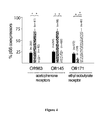
- FIG. 4 Neurons whose transcripts are downregulated by odorant exposure are activated neurons. Receptor transcript-specific in situ hybridization followed by immunolabeling of the activity-dependent marker pS6 were performed. Quantification of pS6 coexpression with Olfr983, Olfr171 and Olfr145 after acetophenone or ethyl isobutyrate exposure.
- variants of a chemoreceptor encompasses polypeptides that have a high degree of similarity or a high degree of identity with the amino acid sequence of a chemoreceptor found in nature (e.g. a human chemoreceptor or a murine chemoreceptor) and which are biologically active, i.e. said polypeptides function as chemoreceptors and transduce a chemical signal into cellular responses.
- variants of a chemoreceptor encompasses polypeptides substantially homologous to a reference polypeptide (e.g.
- Substantially homologous means a variant amino acid sequence that is at least 80%, at least 85%, at least 90%, at least 95%, at least 96%, at least 97%, at least 98% or at least 99% identical to the reference amino acid sequence.
- the term “variant” also applies to the nucleic acid sequence encoding a chemoreceptor. Applied to a nucleic acid sequence, substantially homologous means a variant nucleic acid sequence that is at least 80%, at least 85%, at least 90%, at least 95%, at least 96%, at least 97%, at least 98% or at least 99% identical to the reference nucleic acid sequence.
- the “percentage of identity” between two amino acid sequences or between two nucleic acid sequences can be determined by visual inspection and/or mathematical calculation, or more easily by comparing sequence information using known computer programs used for sequence analyses such as Clustal package version 1.83.
- G protein-coupled receptor proteins also known as “seven-transmembrane domain receptors”, “7TM receptors”, “heptahelical receptors”, “serpentine receptors”, and “G protein-linked receptors (GPLR)”, designate a large protein family of receptors that sense molecules outside the cell and activate, inside the cell, signal transductions pathways and, ultimately, cellular responses.
- GPCRs are found in eukaryotes, including yeast and animals.
- the ligands that bind and activate these receptors include light-sensitive compounds, odors, pheromones, hormones, and neurotransmitters, and vary in size from small molecules to peptides to large proteins.
- olfactory receptors designate the receptors expressed in the cell membranes of olfactory sensory neurons responsible for the detection of chemical cues. Activated olfactory receptors are the initial player in a signal transduction cascade which ultimately produces a nerve impulse which is transmitted to the brain. Most of these receptors are members of the GPCR superfamily. The olfactory receptors form a multigene family consisting of about 400 potentially functional genes in humans and about 1250 genes in mice.
- Olfactory receptors are generally categorized, in mammals, into several receptor families including odorant receptors (ORs), vomeronasal receptors (V1Rs and V2Rs), trace amine-associated receptors (TAARs), formyl peptide receptors (FPRs), and the membrane guanyl cyclase GC-D.
- ORs odorant receptors
- V1Rs and V2Rs vomeronasal receptors
- TAARs trace amine-associated receptors
- FPRs formyl peptide receptors
- membrane guanyl cyclase GC-D membrane guanyl cyclase GC-D.
- ligand or “chemical stimulus” as used herein refers to a molecule that can bind a chemoreceptor and modulate (activate or inhibit) the function of said chemoreceptor. It follows that a ligand can modulate the downstream signaling activities of its cognate chemoreceptor (e.g., a GPCR) and/or the global olfactory response in the specific case of an olfactory receptor.
- a molecule activates a chemoreceptor, it is qualified as “agonist” of said receptor.
- a molecule inhibits the activation by an agonist of its cognate chemoreceptor said molecule is qualified as “antagonist” of said receptor.
- olfactory stimulus or “odorant” as used herein comprises any molecule, or group of molecules, volatile or not, aqueous soluble or not, that could interact with an olfactory receptor system such as an olfactory receptor in vivo or an olfactory receptor in vitro expressed in a cell or a tissue.
- an olfactory receptor system such as an olfactory receptor in vivo or an olfactory receptor in vitro expressed in a cell or a tissue.
- the sources and the identity of pleasant and unpleasant odorants are very diverse.
- Olfactory stimuli can be molecules such as alkanes, esters, linear terpenes, cyclic terpenes, aromatic, amines, alcohols, aldehydes, ketones, lactones, thiols, gases.
- agonist and “antagonist” of a chemoreceptor refer herewith to an agent that modulates (activates and inhibits, respectively) the function of said chemoreceptor and, thus, the downstream signaling activities related to said chemoreceptor and/or, in the case of a ligand binding an olfactory receptor for instance, a global olfactory response related to said olfactory receptor.
- the agonist and antagonist of a chemoreceptor can act by modulating (enhancing and inhibiting, respectively) the binding of a ligand for its chemoreceptor.
- said GPCR is a non-OR GPCR.
- said chemoreceptor is a human non-OR chemoreceptor, in particular a human non-OR chemoreceptor selected from the group consisting of: a gustatory receptor, a Tip channel, a V1r or a V2r.
- the identification of a mouse chemoreceptor as a receptor for a given ligand can be extended to the receptor or receptors of another species, in particular a human, because of the high sequence homology between the mouse receptor and the human receptor(s).
- Table 1 provides examples of human odorant receptors and murine odorant receptors which show at least 90% identity in their amino acid sequences.
- the biological sample comprises a tissue comprising cells expressing at least one chemoreceptor as described above.
- said tissue is the main olfactory epithelium.
- said tissue is the taste epithelium from the tongue.
- said tissue is the sensillae from the antennae or from the palps from an insect.
- each cell suitable for the invention expresses one chemoreceptor gene as described herewith.
- said animal is a non-human animal.
- said animal is a rodent including mice, rats and rabbits.
- the animal is an invertebrate such as a tick, a fly or a mosquito.
- said non-human animal is a transgenic animal as described herewith.
- the test compound to which the biological sample or the animal has been exposed can be of various natures including a peptide, a polypeptide, a lipid, a carbohydrate, and a small organic or non-organic molecule including but not limited to an odorant, a fragrance compound, a palatable or non-palatable compound, a pheromone, a molecule from a synthetic or natural source, from a chemical or peptide library for instance.
- the test compound is selected from the group consisting of esters, linear terpenes, cyclic terpenes, aromatic, amines, alcohols, aldehydes, ketones, lactones, thiols, sulfated compounds, alkanes, gases.
- test compound in another embodiment, more than one test compound can be tested in a mixture of several test compounds.
- the invention uses the following mixtures of test compounds:
- the level of transcription of between about 10 and 2000 genes, for instance between about 20 and about 300, between about 20 and about 200 genes, encoding a chemoreceptor is determined.
- said nucleic acids comprising said at least one exogenous chemoreceptor gene are bacterial artificial chromosomes (BACs) of typically 80-300 kb comprising said at least one chemoreceptor gene.
- BACs bacterial artificial chromosomes
- said ligand and/or said agonist and/or antagonist have been identified with the methods of the invention described herewith.
- mice were habituated to pure DMSO on a cotton ball. 200 ⁇ l were pipetted directly onto the cotton and placed in the cage, replacing any cotton that was already in the cage for nest-making purposes.
- Acetophenone was tested, which downregulates the messenger levels of Olfr1377, Olfr556, Olfr983 and Olfr160 ( FIG. 1 ).
Landscapes
- Life Sciences & Earth Sciences (AREA)
- Health & Medical Sciences (AREA)
- Engineering & Computer Science (AREA)
- Biomedical Technology (AREA)
- Immunology (AREA)
- Chemical & Material Sciences (AREA)
- Molecular Biology (AREA)
- Urology & Nephrology (AREA)
- Biotechnology (AREA)
- Hematology (AREA)
- General Health & Medical Sciences (AREA)
- Cell Biology (AREA)
- Microbiology (AREA)
- Biochemistry (AREA)
- Environmental Sciences (AREA)
- Analytical Chemistry (AREA)
- Zoology (AREA)
- Physics & Mathematics (AREA)
- Food Science & Technology (AREA)
- General Physics & Mathematics (AREA)
- Pathology (AREA)
- Medicinal Chemistry (AREA)
- Bioinformatics & Cheminformatics (AREA)
- Neurology (AREA)
- Animal Husbandry (AREA)
- Animal Behavior & Ethology (AREA)
- Veterinary Medicine (AREA)
- Biodiversity & Conservation Biology (AREA)
- Neurosurgery (AREA)
- Tropical Medicine & Parasitology (AREA)
- Toxicology (AREA)
- Genetics & Genomics (AREA)
- Wood Science & Technology (AREA)
- Organic Chemistry (AREA)
- Proteomics, Peptides & Aminoacids (AREA)
- General Engineering & Computer Science (AREA)
- Micro-Organisms Or Cultivation Processes Thereof (AREA)
- Measuring Or Testing Involving Enzymes Or Micro-Organisms (AREA)
- Peptides Or Proteins (AREA)
Applications Claiming Priority (4)
| Application Number | Priority Date | Filing Date | Title |
|---|---|---|---|
| EP14182350 | 2014-08-26 | ||
| EP14182350 | 2014-08-26 | ||
| EP14182350.0 | 2014-08-26 | ||
| PCT/EP2015/069454 WO2016030378A1 (en) | 2014-08-26 | 2015-08-25 | Methods for identifying a receptor for a ligand and uses thereof |
Publications (2)
| Publication Number | Publication Date |
|---|---|
| US20170285009A1 US20170285009A1 (en) | 2017-10-05 |
| US10473645B2 true US10473645B2 (en) | 2019-11-12 |
Family
ID=51392198
Family Applications (1)
| Application Number | Title | Priority Date | Filing Date |
|---|---|---|---|
| US15/506,266 Expired - Fee Related US10473645B2 (en) | 2014-08-26 | 2015-08-25 | Methods for identifying a receptor for a ligand and uses thereof |
Country Status (4)
| Country | Link |
|---|---|
| US (1) | US10473645B2 (enExample) |
| EP (1) | EP3194978B1 (enExample) |
| JP (1) | JP2017528120A (enExample) |
| WO (1) | WO2016030378A1 (enExample) |
Families Citing this family (22)
| Publication number | Priority date | Publication date | Assignee | Title |
|---|---|---|---|---|
| JP2019510510A (ja) | 2016-02-24 | 2019-04-18 | アロマイクス・コーポレーション | 臭い(smell)、香り(scent)および食味(taste)を検出するためのバイオセンサー |
| EP3436609B1 (en) * | 2016-03-30 | 2022-05-04 | The Johns Hopkins University | Olfr90 specificity and methods of detection |
| WO2018064636A1 (en) * | 2016-09-30 | 2018-04-05 | Mars, Incorporated | Screening methods using olfactory receptors and novel compounds identified using the same |
| WO2018081588A1 (en) * | 2016-10-27 | 2018-05-03 | Duke University | Methods for vapor detection and discrimination with mammalian odorant receptors expressed in heterologous cells |
| EP3336544B1 (en) * | 2016-12-14 | 2019-11-27 | Takasago International Corporation | Method for identifying malodour counteractants |
| JP2020510417A (ja) * | 2017-02-17 | 2020-04-09 | コニク インコーポレイテッド | 検出のためのシステム |
| EP3609521A4 (en) | 2017-04-14 | 2021-06-16 | University of Massachusetts | TARGETING OF CELL TROPISM RECEPTORS TO INHIBIT INFECTION BY THE CYTOMEGALOVIRUS |
| US10209239B1 (en) * | 2017-08-16 | 2019-02-19 | Aromyx Corporation | Method of making an aromagraph comprising ectopic olfactory receptors |
| KR102012837B1 (ko) * | 2017-09-18 | 2019-08-21 | 중앙대학교 산학협력단 | G9a 및 LSD1에 의한 후각 수용체 발현 조절을 이용한 백혈병 치료제 스크리닝 방법 |
| CN111032095B (zh) * | 2017-11-22 | 2022-07-01 | 弗门尼舍有限公司 | 鉴定能调节衣物恶臭、发霉恶臭和/或汗液恶臭的化合物的方法 |
| CN111050856B (zh) * | 2017-12-21 | 2024-12-31 | 弗门尼舍有限公司 | 鉴定气味剂受体的正变构调节剂的方法 |
| WO2020006108A2 (en) * | 2018-06-26 | 2020-01-02 | Duke University | Synthetic odorant receptors |
| CN113195040A (zh) | 2018-08-10 | 2021-07-30 | 科尼库公司 | 堆叠式集成平台架构 |
| KR20200052189A (ko) | 2018-11-06 | 2020-05-14 | 한국식품연구원 | Spr 센서를 이용한 세포막단백질-리간드 상호작용의 확인 방법 |
| US12165743B2 (en) | 2018-11-09 | 2024-12-10 | The Broad Institute, Inc. | Compressed sensing for screening and tissue imaging |
| US12533310B2 (en) | 2019-11-01 | 2026-01-27 | Takasago International Corporation | Fragrance or flavor composition |
| CN111939260B (zh) * | 2019-12-11 | 2021-12-14 | 山东大学 | 嗅觉受体or12d3作为糖尿病防治靶点的应用 |
| JP7902416B2 (ja) * | 2021-06-07 | 2026-08-10 | エステー株式会社 | 嗅覚受容体の阻害剤、消臭剤、消臭方法 |
| JP7776818B2 (ja) * | 2022-02-10 | 2025-11-27 | エステー株式会社 | アルデヒド臭の抑制剤の探索方法 |
| JPWO2025047522A1 (enExample) * | 2023-08-31 | 2025-03-06 | ||
| CN117487815B (zh) * | 2023-10-16 | 2025-03-18 | 中国农业科学院深圳农业基因组研究所(岭南现代农业科学与技术广东省实验室深圳分中心) | 气味受体基因OR49b识别苯并噻唑及其在橘小实蝇防控方面的应用 |
| CN122484305B (zh) * | 2026-06-29 | 2026-09-04 | 中国科学院海洋研究所 | 斑石鲷or1e1基因的特异性标记、引物对、检测方法及应用 |
Citations (4)
| Publication number | Priority date | Publication date | Assignee | Title |
|---|---|---|---|---|
| WO2000035274A1 (en) | 1998-12-17 | 2000-06-22 | The Johns Hopkins University School Of Medicine | Olfactory receptor expression libraries and methods of making and using them |
| WO2001068805A2 (en) | 2000-03-13 | 2001-09-20 | Senomyx, Inc. | Human olfactory receptors and genes encoding same |
| WO2003020913A2 (en) | 2001-09-04 | 2003-03-13 | Sentigen Corp. | Anopheles gambiae odorant receptors and genes |
| EP1391508A1 (en) | 2002-08-09 | 2004-02-25 | F. Hoffmann-La Roche Ag | Transgenic nematode expressing mammalian GPCRS used for screening assay |
-
2015
- 2015-08-25 WO PCT/EP2015/069454 patent/WO2016030378A1/en not_active Ceased
- 2015-08-25 JP JP2017501219A patent/JP2017528120A/ja active Pending
- 2015-08-25 EP EP15754209.3A patent/EP3194978B1/en active Active
- 2015-08-25 US US15/506,266 patent/US10473645B2/en not_active Expired - Fee Related
Patent Citations (4)
| Publication number | Priority date | Publication date | Assignee | Title |
|---|---|---|---|---|
| WO2000035274A1 (en) | 1998-12-17 | 2000-06-22 | The Johns Hopkins University School Of Medicine | Olfactory receptor expression libraries and methods of making and using them |
| WO2001068805A2 (en) | 2000-03-13 | 2001-09-20 | Senomyx, Inc. | Human olfactory receptors and genes encoding same |
| WO2003020913A2 (en) | 2001-09-04 | 2003-03-13 | Sentigen Corp. | Anopheles gambiae odorant receptors and genes |
| EP1391508A1 (en) | 2002-08-09 | 2004-02-25 | F. Hoffmann-La Roche Ag | Transgenic nematode expressing mammalian GPCRS used for screening assay |
Non-Patent Citations (24)
| Title |
|---|
| Araneda, R. C. et al. "The molecular receptive range of an odorant receptor" Nature Neuroscience, Dec. 2000, pp. 1248-1255, vol. 3, No. 12. |
| Bavan, S. et al. "Discovery of Novel Ligands for Mouse Olfactory Receptor MOR42-3 Using an In Silico Screening Approach and In Vitro Validation" PLOS One, Mar. 2014, pp. 1-11, vol. 9, Issue 3, e92064. |
| Bozza, T. et al. "Odorant Receptor Expression Defines Functional Units in the Mouse Olfactory System" The Journal of Neuroscience, Apr. 15, 2002, pp. 3033-3043, vol. 22, No. 8. |
| Hallem, E. A. et al. "Coding of Odors by a Receptor Repertoire" Cell, Apr. 7, 2006, pp. 143-160, vol. 125. |
| Huang, Y.-J. et al. "Mouse Taste Buds Use Serotonin as a Neurotransmitter" The Journal of Neuroscience, Jan. 26, 2005, pp. 843-847, vol. 25, No. 4. |
| Kaupp, U. B. et al. "Olfactory signalling in vertebrates and insects: differences and commonalities" Nature, Mar. 2010, pp. 188-200, vol. 11. |
| Knight, Z. A. et al. "Molecular Profiling of Activated Neurons by Phosphorylated Ribosome Capture" Cell, Nov. 21, 2012, pp. 1126-1137, vol. 151. |
| Malnic, B. et al. "Combinatorial Receptor Codes for Odors" Cell, Mar. 5, 1999, pp. 713-723, vol. 96. |
| Murrell, J. R. et al. "An Olfactory Sensory Neuron Line, Odora, Properly Targets Olfactory Proteins and Responds to Odorants" The Journal of Neuroscience, Oct. 1, 1999, pp. 8260-8270, vol. 19, No. 19. |
| Nagashima, A. et al. "Enzymatic Conversion of Odorants in Nasal Mucus Affects Olfactory Glomerular Activation Patterns and Odor Perception" The Journal of Neuroscience, Dec. 1, 2010, pp. 16391-16398, vol. 30, No. 48. |
| Nishizumi, H. et al. "Decoding and deorphanizing an olfactory map" Nature Neuroscience, Oct. 2015, pp. 1432-1433, vol. 18, No. 10. |
| Oka, Y. et al. "Odorant Receptor Map in the Mouse Olfactory Bulb: In Vivo Sensitivity and Specificity of Receptor-Defined Glomeruli" Neuron, Dec. 7, 2006, pp. 857-869, vol. 52. |
| Peterlin, Z. etal. "The state of the art of odorant receptor deorphanization: A report from the orphanage" The Journal of General Physiology, 2014, pp. 527-542, vol. 143, No. 5. |
| Richgels, P. K. et al. "Genetic Variation in Odorant Receptors Contributes to Variation in Olfactory Behavior in a Natural Population of Drosophila melanogaster" Chemical Senses, Oct. 29, 2011, pp. 229-240, vol. 37. |
| Rinker, D. C. et al. "Novel high-throughput screens of Anopheles gambiaeodorant receptors reveal candidate behaviour-modifying chemicals for mosquitoes" Physiological Entomology, 2012, pp. 33-41, vol. 37. |
| Rivière, S. et al. "Formyl peptide receptor-like proteins are a novel family of vomeronasal chemosensors" Nature, May 28, 2009, pp. 574-577, vol. 459. |
| Shirokova, E. et al. "Identification of Specific Ligands for Orphan Olfactory Receptors" The Journal of Biological Chemistry, Mar. 25, 2005, pp. 11807-11815, supplemental pp. 1-6, vol. 280, No. 12. |
| Thiebaud, N. et al. "Odorant Metabolism Catalyzed by Olfactory Mucosal Enzymes Influences Peripheral Olfactory Responses in Rats" PLOS One, Mar. 2013, pp. 1-13, vol. 8, Issue 3, e59547. |
| Trimmer, C. et al. "High-throughput Analysis of Mammalian Olfactory Receptors: Measurement of Receptor Activation via Luciferase Activity" Journal of Visualized Experiments, Jun. 2014, pp. 1-10, vol. 88, e51640. |
| Vassalli, A. et al. "Homeodomain binding motifs modulate the probability of odorant receptor gene choice in transgenic mice" Molecular and Cellular Neuroscience, Feb. 2011, pp. 381-396, vol. 46, No. 2. |
| Vassalli, A. et al. "Minigenes Impart Odorant Receptor-Specific Axon Guidance in the Olfactory Bulb" Neuron, Aug. 15, 2002, pp. 681-696, vol. 35. |
| Von der Weid, B. et al. "Large-scale transcriptional profiling of chemosensory neurons identifies receptor-ligand pair in vivo" Nature Neuroscience, Oct. 2015, pp. 1455-1465, supplemental pp. 1-2, vol. 18, No. 10. |
| Written Opinion in International Application No. PCT/EP2015/069454, Feb. 18, 2016, pp. 1-9. |
| Zhang, J. et al. "Ultrasensitive Detection of Amines by a Trace Amine-Associated Receptor" The Journal of Neuroscience, Feb. 13, 2013, pp. 3228-3239, vol. 33, No. 7. |
Also Published As
| Publication number | Publication date |
|---|---|
| JP2017528120A (ja) | 2017-09-28 |
| US20170285009A1 (en) | 2017-10-05 |
| EP3194978B1 (en) | 2018-11-07 |
| EP3194978A1 (en) | 2017-07-26 |
| WO2016030378A1 (en) | 2016-03-03 |
Similar Documents
| Publication | Publication Date | Title |
|---|---|---|
| EP3194978B1 (en) | Methods for identifying a receptor for a ligand and uses thereof | |
| Ameku et al. | Midgut-derived neuropeptide F controls germline stem cell proliferation in a mating-dependent manner | |
| Lehrbach et al. | Protein sequence editing of SKN-1A/Nrf1 by peptide: N-glycanase controls proteasome gene expression | |
| Thorne et al. | Atypical expression of Drosophila gustatory receptor genes in sensory and central neurons | |
| Cole et al. | Two functional but noncomplementing Drosophila tyrosine decarboxylase genes: distinct roles for neural tyramine and octopamine in female fertility | |
| Benton et al. | An essential role for a CD36-related receptor in pheromone detection in Drosophila | |
| Ng et al. | Amplification of Drosophila olfactory responses by a DEG/ENaC channel | |
| Kim et al. | LUSH odorant-binding protein mediates chemosensory responses to alcohols in Drosophila melanogaster | |
| Sakurai et al. | A single sex pheromone receptor determines chemical response specificity of sexual behavior in the silkmoth Bombyx mori | |
| Wan et al. | SRD‐1 in AWA neurons is the receptor for female volatile sex pheromones in C. elegans males | |
| Ganguly et al. | Requirement for an Otopetrin-like protein for acid taste in Drosophila | |
| Nelson et al. | Acute regulation of habituation learning via posttranslational palmitoylation | |
| Penn et al. | Regulation of sexually dimorphic expression of major urinary proteins | |
| JP2018520665A (ja) | 匂い物質および芳香の受容体をスクリーニングするための細胞株 | |
| Rodriguez | Pheromone receptors in mammals | |
| Kaneko-Goto et al. | Goofy coordinates the acuity of olfactory signaling | |
| Hohenbrink et al. | Functional promiscuity in a mammalian chemosensory system: extensive expression of vomeronasal receptors in the main olfactory epithelium of mouse lemurs | |
| Wu et al. | Magnesium efflux from Drosophila Kenyon cells is critical for normal and diet-enhanced long-term memory | |
| Romano et al. | High-affinity peptide transporter PEPT2 (SLC15A2) of the zebrafish Danio rerio: functional properties, genomic organization, and expression analysis | |
| Igual Gil et al. | Neuronal Chemosensation and Osmotic Stress Response Converge in the Regulation of aqp-8 in C. elegans | |
| Lesch et al. | The homeodomain protein hmbx-1 maintains asymmetric gene expression in adult C. elegans olfactory neurons | |
| Bennett et al. | Odor-evoked gene regulation and visualization in olfactory receptor neurons | |
| Touhara | Molecular biology of peptide pheromone production and reception in mice | |
| Bredendiek et al. | Goα is involved in sugar perception in Drosophila | |
| Park et al. | Molecular and cellular organization of odorant binding protein genes in Drosophila |
Legal Events
| Date | Code | Title | Description |
|---|---|---|---|
| AS | Assignment |
Owner name: UNIVERSITE DE GENEVE, SWITZERLAND Free format text: ASSIGNMENT OF ASSIGNORS INTEREST;ASSIGNORS:RODRIGUEZ, IVAN;CARLETON, ALAN JACQUES HENRI CYRUS;ROSSIER, DANIEL;SIGNING DATES FROM 20150831 TO 20150910;REEL/FRAME:041369/0077 |
|
| STPP | Information on status: patent application and granting procedure in general |
Free format text: FINAL REJECTION MAILED |
|
| STPP | Information on status: patent application and granting procedure in general |
Free format text: RESPONSE AFTER FINAL ACTION FORWARDED TO EXAMINER |
|
| STPP | Information on status: patent application and granting procedure in general |
Free format text: NOTICE OF ALLOWANCE MAILED -- APPLICATION RECEIVED IN OFFICE OF PUBLICATIONS |
|
| FEPP | Fee payment procedure |
Free format text: ENTITY STATUS SET TO UNDISCOUNTED (ORIGINAL EVENT CODE: BIG.); ENTITY STATUS OF PATENT OWNER: LARGE ENTITY |
|
| STPP | Information on status: patent application and granting procedure in general |
Free format text: PUBLICATIONS -- ISSUE FEE PAYMENT VERIFIED |
|
| STCF | Information on status: patent grant |
Free format text: PATENTED CASE |
|
| FEPP | Fee payment procedure |
Free format text: MAINTENANCE FEE REMINDER MAILED (ORIGINAL EVENT CODE: REM.); ENTITY STATUS OF PATENT OWNER: LARGE ENTITY |
|
| LAPS | Lapse for failure to pay maintenance fees |
Free format text: PATENT EXPIRED FOR FAILURE TO PAY MAINTENANCE FEES (ORIGINAL EVENT CODE: EXP.); ENTITY STATUS OF PATENT OWNER: LARGE ENTITY |
|
| STCH | Information on status: patent discontinuation |
Free format text: PATENT EXPIRED DUE TO NONPAYMENT OF MAINTENANCE FEES UNDER 37 CFR 1.362 |
|
| FP | Lapsed due to failure to pay maintenance fee |
Effective date: 20231112 |