RU2777093C1 - Method for producing a biofertiliser - Google Patents
Method for producing a biofertiliser Download PDFInfo
- Publication number
- RU2777093C1 RU2777093C1 RU2021111458A RU2021111458A RU2777093C1 RU 2777093 C1 RU2777093 C1 RU 2777093C1 RU 2021111458 A RU2021111458 A RU 2021111458A RU 2021111458 A RU2021111458 A RU 2021111458A RU 2777093 C1 RU2777093 C1 RU 2777093C1
- Authority
- RU
- Russia
- Prior art keywords
- production
- microorganisms
- temperature
- bacteria
- soil
- Prior art date
Links
- 238000004519 manufacturing process Methods 0.000 title claims abstract description 23
- 239000000758 substrate Substances 0.000 claims abstract description 28
- 244000061456 Solanum tuberosum Species 0.000 claims abstract description 21
- 235000002595 Solanum tuberosum Nutrition 0.000 claims abstract description 21
- 235000011389 fruit/vegetable juice Nutrition 0.000 claims abstract description 20
- 239000007788 liquid Substances 0.000 claims abstract description 19
- 239000003643 water by type Substances 0.000 claims abstract description 16
- 230000001580 bacterial effect Effects 0.000 claims abstract description 14
- 239000000284 extract Substances 0.000 claims abstract description 11
- 239000004021 humic acid Substances 0.000 claims abstract description 11
- 238000010438 heat treatment Methods 0.000 claims abstract description 10
- 229920002472 Starch Polymers 0.000 claims abstract description 9
- 235000019698 starch Nutrition 0.000 claims abstract description 9
- 239000008107 starch Substances 0.000 claims abstract description 9
- 238000009343 monoculture Methods 0.000 claims abstract description 8
- 241000589151 Azotobacter Species 0.000 claims abstract description 5
- 241000589941 Azospirillum Species 0.000 claims abstract description 4
- 241000193830 Bacillus <bacterium> Species 0.000 claims abstract description 4
- 241000186660 Lactobacillus Species 0.000 claims abstract description 4
- 241000589180 Rhizobium Species 0.000 claims abstract description 4
- 229940039696 lactobacillus Drugs 0.000 claims abstract description 4
- 238000000034 method Methods 0.000 claims description 28
- 235000021374 legumes Nutrition 0.000 claims description 10
- 150000001875 compounds Chemical class 0.000 claims description 4
- 102000004169 proteins and genes Human genes 0.000 claims description 2
- 108090000623 proteins and genes Proteins 0.000 claims description 2
- 238000009331 sowing Methods 0.000 claims description 2
- 239000006227 byproduct Substances 0.000 claims 1
- 239000000725 suspension Substances 0.000 abstract description 25
- 239000002689 soil Substances 0.000 abstract description 22
- 235000013339 cereals Nutrition 0.000 abstract description 17
- 241000894006 Bacteria Species 0.000 abstract description 13
- 238000002360 preparation method Methods 0.000 abstract description 8
- 241000196324 Embryophyta Species 0.000 abstract description 7
- 239000000126 substance Substances 0.000 abstract description 4
- 238000010899 nucleation Methods 0.000 abstract description 2
- 230000000694 effects Effects 0.000 abstract 1
- 244000005700 microbiome Species 0.000 description 24
- 239000000203 mixture Substances 0.000 description 24
- 239000003337 fertilizer Substances 0.000 description 22
- 229910052500 inorganic mineral Inorganic materials 0.000 description 11
- 239000011707 mineral Substances 0.000 description 11
- 235000010755 mineral Nutrition 0.000 description 11
- 235000015097 nutrients Nutrition 0.000 description 11
- FAPWRFPIFSIZLT-UHFFFAOYSA-M Sodium chloride Chemical compound [Na+].[Cl-] FAPWRFPIFSIZLT-UHFFFAOYSA-M 0.000 description 8
- 210000003608 fece Anatomy 0.000 description 7
- 239000002699 waste material Substances 0.000 description 7
- 239000010871 livestock manure Substances 0.000 description 6
- 239000002028 Biomass Substances 0.000 description 5
- KWYUFKZDYYNOTN-UHFFFAOYSA-M Potassium hydroxide Chemical compound [OH-].[K+] KWYUFKZDYYNOTN-UHFFFAOYSA-M 0.000 description 5
- 230000002906 microbiologic effect Effects 0.000 description 5
- 239000003895 organic fertilizer Substances 0.000 description 5
- JVTAAEKCZFNVCJ-UHFFFAOYSA-N lactic acid Chemical compound CC(O)C(O)=O JVTAAEKCZFNVCJ-UHFFFAOYSA-N 0.000 description 4
- 230000000813 microbial effect Effects 0.000 description 4
- 239000011780 sodium chloride Substances 0.000 description 4
- 241000209140 Triticum Species 0.000 description 3
- 235000021307 Triticum Nutrition 0.000 description 3
- 235000001014 amino acid Nutrition 0.000 description 3
- 150000001413 amino acids Chemical class 0.000 description 3
- 229940041514 candida albicans extract Drugs 0.000 description 3
- 239000002361 compost Substances 0.000 description 3
- 238000001816 cooling Methods 0.000 description 3
- 230000013872 defecation Effects 0.000 description 3
- 238000005516 engineering process Methods 0.000 description 3
- 235000013305 food Nutrition 0.000 description 3
- 230000002035 prolonged effect Effects 0.000 description 3
- 239000002994 raw material Substances 0.000 description 3
- 239000010802 sludge Substances 0.000 description 3
- XLYOFNOQVPJJNP-UHFFFAOYSA-N water Substances O XLYOFNOQVPJJNP-UHFFFAOYSA-N 0.000 description 3
- 239000012138 yeast extract Substances 0.000 description 3
- GHOKWGTUZJEAQD-ZETCQYMHSA-N (D)-(+)-Pantothenic acid Chemical compound OCC(C)(C)[C@@H](O)C(=O)NCCC(O)=O GHOKWGTUZJEAQD-ZETCQYMHSA-N 0.000 description 2
- BJEPYKJPYRNKOW-REOHCLBHSA-N (S)-malic acid Chemical compound OC(=O)[C@@H](O)CC(O)=O BJEPYKJPYRNKOW-REOHCLBHSA-N 0.000 description 2
- MSWZFWKMSRAUBD-IVMDWMLBSA-N 2-amino-2-deoxy-D-glucopyranose Chemical compound N[C@H]1C(O)O[C@H](CO)[C@@H](O)[C@@H]1O MSWZFWKMSRAUBD-IVMDWMLBSA-N 0.000 description 2
- IJGRMHOSHXDMSA-UHFFFAOYSA-N Atomic nitrogen Chemical compound N#N IJGRMHOSHXDMSA-UHFFFAOYSA-N 0.000 description 2
- ZOXJGFHDIHLPTG-UHFFFAOYSA-N Boron Chemical compound [B] ZOXJGFHDIHLPTG-UHFFFAOYSA-N 0.000 description 2
- 229920002101 Chitin Polymers 0.000 description 2
- 229920001661 Chitosan Polymers 0.000 description 2
- 241000287828 Gallus gallus Species 0.000 description 2
- QIVBCDIJIAJPQS-VIFPVBQESA-N L-tryptophane Chemical compound C1=CC=C2C(C[C@H](N)C(O)=O)=CNC2=C1 QIVBCDIJIAJPQS-VIFPVBQESA-N 0.000 description 2
- QIVBCDIJIAJPQS-UHFFFAOYSA-N Tryptophan Natural products C1=CC=C2C(CC(N)C(O)=O)=CNC2=C1 QIVBCDIJIAJPQS-UHFFFAOYSA-N 0.000 description 2
- XSQUKJJJFZCRTK-UHFFFAOYSA-N Urea Chemical compound NC(N)=O XSQUKJJJFZCRTK-UHFFFAOYSA-N 0.000 description 2
- BJEPYKJPYRNKOW-UHFFFAOYSA-N alpha-hydroxysuccinic acid Natural products OC(=O)C(O)CC(O)=O BJEPYKJPYRNKOW-UHFFFAOYSA-N 0.000 description 2
- 239000002956 ash Substances 0.000 description 2
- MSWZFWKMSRAUBD-UHFFFAOYSA-N beta-D-galactosamine Natural products NC1C(O)OC(CO)C(O)C1O MSWZFWKMSRAUBD-UHFFFAOYSA-N 0.000 description 2
- 229910052796 boron Inorganic materials 0.000 description 2
- 150000001720 carbohydrates Chemical class 0.000 description 2
- 235000014633 carbohydrates Nutrition 0.000 description 2
- 238000011161 development Methods 0.000 description 2
- 230000018109 developmental process Effects 0.000 description 2
- 238000001035 drying Methods 0.000 description 2
- 229960002442 glucosamine Drugs 0.000 description 2
- 244000000013 helminth Species 0.000 description 2
- 239000003621 irrigation water Substances 0.000 description 2
- 239000004310 lactic acid Substances 0.000 description 2
- 235000014655 lactic acid Nutrition 0.000 description 2
- 239000001630 malic acid Substances 0.000 description 2
- 235000011090 malic acid Nutrition 0.000 description 2
- 239000000463 material Substances 0.000 description 2
- 244000000010 microbial pathogen Species 0.000 description 2
- 150000002823 nitrates Chemical class 0.000 description 2
- 235000012015 potatoes Nutrition 0.000 description 2
- 235000004252 protein component Nutrition 0.000 description 2
- 238000000926 separation method Methods 0.000 description 2
- 239000011573 trace mineral Substances 0.000 description 2
- 235000013619 trace mineral Nutrition 0.000 description 2
- PAWQVTBBRAZDMG-UHFFFAOYSA-N 2-(3-bromo-2-fluorophenyl)acetic acid Chemical compound OC(=O)CC1=CC=CC(Br)=C1F PAWQVTBBRAZDMG-UHFFFAOYSA-N 0.000 description 1
- ZCYVEMRRCGMTRW-UHFFFAOYSA-N 7553-56-2 Chemical compound [I] ZCYVEMRRCGMTRW-UHFFFAOYSA-N 0.000 description 1
- 241000589938 Azospirillum brasilense Species 0.000 description 1
- 244000063299 Bacillus subtilis Species 0.000 description 1
- 235000014469 Bacillus subtilis Nutrition 0.000 description 1
- 241000219310 Beta vulgaris subsp. vulgaris Species 0.000 description 1
- 241000589174 Bradyrhizobium japonicum Species 0.000 description 1
- OYPRJOBELJOOCE-UHFFFAOYSA-N Calcium Chemical compound [Ca] OYPRJOBELJOOCE-UHFFFAOYSA-N 0.000 description 1
- GHOKWGTUZJEAQD-UHFFFAOYSA-N Chick antidermatitis factor Natural products OCC(C)(C)C(O)C(=O)NCCC(O)=O GHOKWGTUZJEAQD-UHFFFAOYSA-N 0.000 description 1
- ZAMOUSCENKQFHK-UHFFFAOYSA-N Chlorine atom Chemical compound [Cl] ZAMOUSCENKQFHK-UHFFFAOYSA-N 0.000 description 1
- VYZAMTAEIAYCRO-UHFFFAOYSA-N Chromium Chemical compound [Cr] VYZAMTAEIAYCRO-UHFFFAOYSA-N 0.000 description 1
- 235000010523 Cicer arietinum Nutrition 0.000 description 1
- 244000045195 Cicer arietinum Species 0.000 description 1
- 235000008733 Citrus aurantifolia Nutrition 0.000 description 1
- RYGMFSIKBFXOCR-UHFFFAOYSA-N Copper Chemical compound [Cu] RYGMFSIKBFXOCR-UHFFFAOYSA-N 0.000 description 1
- PXGOKWXKJXAPGV-UHFFFAOYSA-N Fluorine Chemical compound FF PXGOKWXKJXAPGV-UHFFFAOYSA-N 0.000 description 1
- 235000002918 Fraxinus excelsior Nutrition 0.000 description 1
- 241000233866 Fungi Species 0.000 description 1
- DGAQECJNVWCQMB-PUAWFVPOSA-M Ilexoside XXIX Chemical compound C[C@@H]1CC[C@@]2(CC[C@@]3(C(=CC[C@H]4[C@]3(CC[C@@H]5[C@@]4(CC[C@@H](C5(C)C)OS(=O)(=O)[O-])C)C)[C@@H]2[C@]1(C)O)C)C(=O)O[C@H]6[C@@H]([C@H]([C@@H]([C@H](O6)CO)O)O)O.[Na+] DGAQECJNVWCQMB-PUAWFVPOSA-M 0.000 description 1
- 240000006024 Lactobacillus plantarum Species 0.000 description 1
- 235000013965 Lactobacillus plantarum Nutrition 0.000 description 1
- GUBGYTABKSRVRQ-QKKXKWKRSA-N Lactose Natural products OC[C@H]1O[C@@H](O[C@H]2[C@H](O)[C@@H](O)C(O)O[C@@H]2CO)[C@H](O)[C@@H](O)[C@H]1O GUBGYTABKSRVRQ-QKKXKWKRSA-N 0.000 description 1
- FYYHWMGAXLPEAU-UHFFFAOYSA-N Magnesium Chemical compound [Mg] FYYHWMGAXLPEAU-UHFFFAOYSA-N 0.000 description 1
- 241000736262 Microbiota Species 0.000 description 1
- ZOKXTWBITQBERF-UHFFFAOYSA-N Molybdenum Chemical compound [Mo] ZOKXTWBITQBERF-UHFFFAOYSA-N 0.000 description 1
- 231100000678 Mycotoxin Toxicity 0.000 description 1
- 241001134691 Nitrospirillum amazonense Species 0.000 description 1
- OAICVXFJPJFONN-UHFFFAOYSA-N Phosphorus Chemical compound [P] OAICVXFJPJFONN-UHFFFAOYSA-N 0.000 description 1
- 241000865252 Rhizobium cellulosilyticum Species 0.000 description 1
- 240000004808 Saccharomyces cerevisiae Species 0.000 description 1
- BUGBHKTXTAQXES-UHFFFAOYSA-N Selenium Chemical compound [Se] BUGBHKTXTAQXES-UHFFFAOYSA-N 0.000 description 1
- 229930006000 Sucrose Natural products 0.000 description 1
- CZMRCDWAGMRECN-UGDNZRGBSA-N Sucrose Chemical compound O[C@H]1[C@H](O)[C@@H](CO)O[C@@]1(CO)O[C@@H]1[C@H](O)[C@@H](O)[C@H](O)[C@@H](CO)O1 CZMRCDWAGMRECN-UGDNZRGBSA-N 0.000 description 1
- 235000021536 Sugar beet Nutrition 0.000 description 1
- NINIDFKCEFEMDL-UHFFFAOYSA-N Sulfur Chemical compound [S] NINIDFKCEFEMDL-UHFFFAOYSA-N 0.000 description 1
- 235000011941 Tilia x europaea Nutrition 0.000 description 1
- 240000008042 Zea mays Species 0.000 description 1
- 235000005824 Zea mays ssp. parviglumis Nutrition 0.000 description 1
- 235000002017 Zea mays subsp mays Nutrition 0.000 description 1
- HCHKCACWOHOZIP-UHFFFAOYSA-N Zinc Chemical compound [Zn] HCHKCACWOHOZIP-UHFFFAOYSA-N 0.000 description 1
- 238000010521 absorption reaction Methods 0.000 description 1
- 238000012271 agricultural production Methods 0.000 description 1
- OENHQHLEOONYIE-UKMVMLAPSA-N all-trans beta-carotene Natural products CC=1CCCC(C)(C)C=1/C=C/C(/C)=C/C=C/C(/C)=C/C=C/C=C(C)C=CC=C(C)C=CC1=C(C)CCCC1(C)C OENHQHLEOONYIE-UKMVMLAPSA-N 0.000 description 1
- 229910052785 arsenic Inorganic materials 0.000 description 1
- RQNWIZPPADIBDY-UHFFFAOYSA-N arsenic atom Chemical compound [As] RQNWIZPPADIBDY-UHFFFAOYSA-N 0.000 description 1
- 235000013734 beta-carotene Nutrition 0.000 description 1
- TUPZEYHYWIEDIH-WAIFQNFQSA-N beta-carotene Natural products CC(=C/C=C/C=C(C)/C=C/C=C(C)/C=C/C1=C(C)CCCC1(C)C)C=CC=C(/C)C=CC2=CCCCC2(C)C TUPZEYHYWIEDIH-WAIFQNFQSA-N 0.000 description 1
- 239000011648 beta-carotene Substances 0.000 description 1
- 229960002747 betacarotene Drugs 0.000 description 1
- 230000004071 biological effect Effects 0.000 description 1
- 230000033558 biomineral tissue development Effects 0.000 description 1
- 230000015572 biosynthetic process Effects 0.000 description 1
- -1 bird droppings Substances 0.000 description 1
- 239000011575 calcium Substances 0.000 description 1
- 229910052791 calcium Inorganic materials 0.000 description 1
- 239000004202 carbamide Substances 0.000 description 1
- 229940077731 carbohydrate nutrients Drugs 0.000 description 1
- BVKZGUZCCUSVTD-UHFFFAOYSA-N carbonic acid Chemical compound OC(O)=O BVKZGUZCCUSVTD-UHFFFAOYSA-N 0.000 description 1
- 239000003518 caustics Substances 0.000 description 1
- 239000000460 chlorine Substances 0.000 description 1
- 229910052801 chlorine Inorganic materials 0.000 description 1
- 229910052804 chromium Inorganic materials 0.000 description 1
- 239000011651 chromium Substances 0.000 description 1
- 229910017052 cobalt Inorganic materials 0.000 description 1
- 239000010941 cobalt Substances 0.000 description 1
- GUTLYIVDDKVIGB-UHFFFAOYSA-N cobalt atom Chemical compound [Co] GUTLYIVDDKVIGB-UHFFFAOYSA-N 0.000 description 1
- 238000010276 construction Methods 0.000 description 1
- 238000011109 contamination Methods 0.000 description 1
- 229910052802 copper Inorganic materials 0.000 description 1
- 239000010949 copper Substances 0.000 description 1
- 235000005822 corn Nutrition 0.000 description 1
- 238000012258 culturing Methods 0.000 description 1
- 238000000354 decomposition reaction Methods 0.000 description 1
- AWADHHRPTLLUKK-UHFFFAOYSA-N diazanium sulfuric acid sulfate Chemical compound [NH4+].[NH4+].OS(O)(=O)=O.[O-]S([O-])(=O)=O AWADHHRPTLLUKK-UHFFFAOYSA-N 0.000 description 1
- 238000004821 distillation Methods 0.000 description 1
- 239000003814 drug Substances 0.000 description 1
- 241001233061 earthworms Species 0.000 description 1
- 238000005265 energy consumption Methods 0.000 description 1
- 230000007613 environmental effect Effects 0.000 description 1
- 239000003344 environmental pollutant Substances 0.000 description 1
- 230000035558 fertility Effects 0.000 description 1
- 239000011737 fluorine Substances 0.000 description 1
- 229910052731 fluorine Inorganic materials 0.000 description 1
- 238000005469 granulation Methods 0.000 description 1
- 230000003179 granulation Effects 0.000 description 1
- 239000003102 growth factor Substances 0.000 description 1
- 229940093915 gynecological organic acid Drugs 0.000 description 1
- 229910001385 heavy metal Inorganic materials 0.000 description 1
- 239000003864 humus Substances 0.000 description 1
- 238000009776 industrial production Methods 0.000 description 1
- 239000011630 iodine Substances 0.000 description 1
- 229910052740 iodine Inorganic materials 0.000 description 1
- XEEYBQQBJWHFJM-UHFFFAOYSA-N iron Substances [Fe] XEEYBQQBJWHFJM-UHFFFAOYSA-N 0.000 description 1
- 229910052742 iron Inorganic materials 0.000 description 1
- 229940072205 lactobacillus plantarum Drugs 0.000 description 1
- 239000008101 lactose Substances 0.000 description 1
- 239000004571 lime Substances 0.000 description 1
- 235000021073 macronutrients Nutrition 0.000 description 1
- 239000011777 magnesium Substances 0.000 description 1
- 229910052749 magnesium Inorganic materials 0.000 description 1
- 238000012423 maintenance Methods 0.000 description 1
- WPBNNNQJVZRUHP-UHFFFAOYSA-L manganese(2+);methyl n-[[2-(methoxycarbonylcarbamothioylamino)phenyl]carbamothioyl]carbamate;n-[2-(sulfidocarbothioylamino)ethyl]carbamodithioate Chemical compound [Mn+2].[S-]C(=S)NCCNC([S-])=S.COC(=O)NC(=S)NC1=CC=CC=C1NC(=S)NC(=O)OC WPBNNNQJVZRUHP-UHFFFAOYSA-L 0.000 description 1
- QSHDDOUJBYECFT-UHFFFAOYSA-N mercury Chemical compound [Hg] QSHDDOUJBYECFT-UHFFFAOYSA-N 0.000 description 1
- 229910052753 mercury Inorganic materials 0.000 description 1
- 235000013336 milk Nutrition 0.000 description 1
- 239000008267 milk Substances 0.000 description 1
- 210000004080 milk Anatomy 0.000 description 1
- 238000012986 modification Methods 0.000 description 1
- 230000004048 modification Effects 0.000 description 1
- 229910052750 molybdenum Inorganic materials 0.000 description 1
- 239000011733 molybdenum Substances 0.000 description 1
- 239000002636 mycotoxin Substances 0.000 description 1
- 229910052757 nitrogen Inorganic materials 0.000 description 1
- 150000007524 organic acids Chemical class 0.000 description 1
- 235000005985 organic acids Nutrition 0.000 description 1
- 150000002894 organic compounds Chemical class 0.000 description 1
- 239000010815 organic waste Substances 0.000 description 1
- 235000019161 pantothenic acid Nutrition 0.000 description 1
- 229940055726 pantothenic acid Drugs 0.000 description 1
- 239000011713 pantothenic acid Substances 0.000 description 1
- 230000001717 pathogenic effect Effects 0.000 description 1
- 239000003415 peat Substances 0.000 description 1
- 239000000575 pesticide Substances 0.000 description 1
- 239000002367 phosphate rock Substances 0.000 description 1
- 239000011574 phosphorus Substances 0.000 description 1
- 229910052698 phosphorus Inorganic materials 0.000 description 1
- 230000001766 physiological effect Effects 0.000 description 1
- 229930195732 phytohormone Natural products 0.000 description 1
- 229940072033 potash Drugs 0.000 description 1
- 239000011591 potassium Substances 0.000 description 1
- 229910052700 potassium Inorganic materials 0.000 description 1
- BWHMMNNQKKPAPP-UHFFFAOYSA-L potassium carbonate Substances [K+].[K+].[O-]C([O-])=O BWHMMNNQKKPAPP-UHFFFAOYSA-L 0.000 description 1
- 235000015320 potassium carbonate Nutrition 0.000 description 1
- 239000001103 potassium chloride Substances 0.000 description 1
- WCUXLLCKKVVCTQ-UHFFFAOYSA-M potassium chloride Inorganic materials [Cl-].[K+] WCUXLLCKKVVCTQ-UHFFFAOYSA-M 0.000 description 1
- 235000011164 potassium chloride Nutrition 0.000 description 1
- CHWRSCGUEQEHOH-UHFFFAOYSA-N potassium oxide Chemical group [O-2].[K+].[K+] CHWRSCGUEQEHOH-UHFFFAOYSA-N 0.000 description 1
- 229910001950 potassium oxide Inorganic materials 0.000 description 1
- OTYBMLCTZGSZBG-UHFFFAOYSA-L potassium sulfate Chemical compound [K+].[K+].[O-]S([O-])(=O)=O OTYBMLCTZGSZBG-UHFFFAOYSA-L 0.000 description 1
- 229910052939 potassium sulfate Inorganic materials 0.000 description 1
- 235000011151 potassium sulphates Nutrition 0.000 description 1
- 239000000843 powder Substances 0.000 description 1
- 235000018102 proteins Nutrition 0.000 description 1
- 239000011669 selenium Substances 0.000 description 1
- 229910052711 selenium Inorganic materials 0.000 description 1
- 239000011734 sodium Substances 0.000 description 1
- 229910052708 sodium Inorganic materials 0.000 description 1
- 239000007787 solid Substances 0.000 description 1
- 238000005507 spraying Methods 0.000 description 1
- 230000001954 sterilising effect Effects 0.000 description 1
- 238000004659 sterilization and disinfection Methods 0.000 description 1
- 238000003756 stirring Methods 0.000 description 1
- 239000010902 straw Substances 0.000 description 1
- 239000005720 sucrose Substances 0.000 description 1
- 239000011593 sulfur Substances 0.000 description 1
- 229910052717 sulfur Inorganic materials 0.000 description 1
- 239000002426 superphosphate Substances 0.000 description 1
- 238000003786 synthesis reaction Methods 0.000 description 1
- 230000002194 synthesizing effect Effects 0.000 description 1
- 239000008399 tap water Substances 0.000 description 1
- 235000020679 tap water Nutrition 0.000 description 1
- 238000009265 vermicomposting Methods 0.000 description 1
- 235000013343 vitamin Nutrition 0.000 description 1
- 239000011782 vitamin Substances 0.000 description 1
- 229940088594 vitamin Drugs 0.000 description 1
- 229930003231 vitamin Natural products 0.000 description 1
- 239000002351 wastewater Substances 0.000 description 1
- 239000011701 zinc Substances 0.000 description 1
- 229910052725 zinc Inorganic materials 0.000 description 1
- OENHQHLEOONYIE-JLTXGRSLSA-N β-Carotene Chemical compound CC=1CCCC(C)(C)C=1\C=C\C(\C)=C\C=C\C(\C)=C\C=C\C=C(/C)\C=C\C=C(/C)\C=C\C1=C(C)CCCC1(C)C OENHQHLEOONYIE-JLTXGRSLSA-N 0.000 description 1
Images
Abstract
Description
Изобретение относится к области биотехнологии и сельского хозяйства и может быть реализовано при получении биоорганического удобрения.The invention relates to the field of biotechnology and agriculture and can be implemented in the production of bioorganic fertilizer.
Активное использование минеральных удобрений является причиной нарушения в почве естественного процесса биологического саморегулирования, потерей биогумуса, негативно отражается на состоянии почв. Органические удобрения в отличие от минеральных удобрений полностью усваиваются, поддерживая естественный процесс саморегуляции почв. В связи с этим весьма актуально создание и использование новых форм биоудобрений, включающих кроме органических компонентов микроорганизмы.The active use of mineral fertilizers is the cause of the violation in the soil of the natural process of biological self-regulation, the loss of vermicompost, and negatively affects the condition of the soil. Organic fertilizers, unlike mineral fertilizers, are completely absorbed, supporting the natural process of soil self-regulation. In this regard, it is very important to create and use new forms of biofertilizers, which include, in addition to organic components, microorganisms.
Описан способ получения биологически активного органического удобрения, включающий биоконверсию навоза с соломой в течение 3 месяцев при температуре до 50°С с использованием штамма бактерий Bac.subtilts (Патент RU №2 376 270. 2009 г.).A method for obtaining a biologically active organic fertilizer is described, including the bioconversion of manure with straw for 3 months at temperatures up to 50°C using the bacterial strain Bac.subtilts (Patent RU No. 2 376 270. 2009).
Недостатком способа является длительность приготовления биоудобрения, составляющая 3 месяца, невозможность достижения полного обеззараживания навоза содержащего патогенные микроорганизмы, гельминты, семена сорных растений используемого для выращивания бактерий Bac.subtilis.The disadvantage of this method is the duration of the preparation of biofertilizer, which is 3 months, the impossibility of achieving complete disinfection of manure containing pathogenic microorganisms, helminths, weed seeds used to grow bacteria Bac.subtilis.
Известна микробная композиция, для повышения урожайности растений содержащая два компонента - консорциум микроорганизмов, полученный из образцов плодородной почвы и хитин или хитозан или глюкозамин или аминокислоты (Патент RU №2 583 294)A microbial composition is known to increase plant productivity, containing two components - a consortium of microorganisms obtained from fertile soil samples and chitin or chitosan or glucosamine or amino acids (Patent RU No. 2 583 294)
Недостатками композиции является использование дорогостоящих и востребованных в медицине и пищевой промышленности хитина, хитозана, глюкозамина и аминокислот.The disadvantages of the composition is the use of expensive and popular in medicine and food industry chitin, chitosan, glucosamine and amino acids.
Известен способ приготовления бактериального удобрения с использованием бактерий рода Azotobacter путем их культивирования на плотной питательной среде Эшби, затем на выращивание на жидкой питательной среде Берка с добавлением 0,3-0,7 г/л экстракта кормовых дрожжей в термостате на качалке в течение 20-24 час, внесение в рабочий объем среды Берка с добавлением триптофана и экстракта кормовых дрожжей в количестве 0,2-1.0 г/л, культивирование в течение 40-48 час, готовый продукт помещают в холодильник (Патент RU №2 286 324).A known method of preparing a bacterial fertilizer using bacteria of the genus Azotobacter by culturing them on a solid Ashby nutrient medium, then growing on a liquid Burke nutrient medium with the addition of 0.3-0.7 g/l of fodder yeast extract in a thermostat on a rocking chair for 20- 24 hours, introduction into the working volume of Burke's medium with the addition of tryptophan and fodder yeast extract in the amount of 0.2-1.0 g/l, cultivation for 40-48 hours, the finished product is placed in a refrigerator (Patent RU No. 2 286 324).
Недостатком способа является трудоемкость и многоэтапность процесса получения бактериального удобрения, использование дорогостоящих питательных субстратов и триптофана.The disadvantage of this method is the complexity and multi-stage process of obtaining bacterial fertilizer, the use of expensive nutrient substrates and tryptophan.
Предлагается способ получения комплексного микробиологического удобрения заключающийся в совмещении микробиологической составляющей представляющей собой материал грибов микоризы и природного биосовместимого носителя - дефекационную грязь (дефекат)- отход свеклосахарного производства (Патент RU №2 312 784, 2008 г)A method for obtaining a complex microbiological fertilizer is proposed, which consists in combining the microbiological component, which is the material of mycorrhiza fungi, and a natural biocompatible carrier - defecation mud (defecation) - waste of sugar beet production (Patent RU No. 2 312 784, 2008)
Недостатком способа является высокое содержание в составе дефеката извести углекислой (с примесью едкой) - 60-75%, что ограничивает его использование известкованием главным образом дерново-подзолистых почв, выщелоченных черноземов, преимущественно в районах свеклосеяния,The disadvantage of this method is the high content of carbonic acid lime (with an admixture of caustic) in the composition of the defecation - 60-75%, which limits its use by liming mainly soddy-podzolic soils, leached chernozems, mainly in beet-growing areas,
Известен способ получения биоудобрения включающий приготовление микробной биомассы штамма или сообщества микроорганизмов и иммобилизацию биомассы на органическом носителе - сухом гранулированном курином помете (Патент RU №210005. 1999 г).A known method for producing biofertilizers includes the preparation of microbial biomass of a strain or community of microorganisms and the immobilization of biomass on an organic carrier - dry granular chicken manure (Patent RU No. 210005. 1999).
Способ имеет существенный недостаток связанный с высокими трудовыми и энергетическими затратами на отделение биомассы микроорганизмов, сушку и грануляция куриного помета.The method has a significant drawback associated with high labor and energy costs for the separation of the biomass of microorganisms, drying and granulation of chicken manure.
Предлагается органическое удобрение, включающее микробную биомассу, полученную из нефтешлама, иловую массу и бор.An organic fertilizer is proposed, including microbial biomass obtained from oil sludge, silt mass and boron.
Однако предлагаемое органическое удобрение имеет существенный недостаток -в его составе присутствует 0.5-3.0% нефтешлама. состоящего из смеси нефти, нефтепродуктов, продуктов перегонки нефти собранных при очистке сточных, технологических и канализационных вод, являющихся основными загрязнителями окружающей среды, а также получение биомассы дрожжей выращенных на нефтешламе с добавлением питательного раствора.However, the proposed organic fertilizer has a significant drawback - it contains 0.5-3.0% oil sludge. consisting of a mixture of oil, oil products, oil distillation products collected during the treatment of waste, process and sewer waters, which are the main environmental pollutants, as well as the production of yeast biomass grown on oil sludge with the addition of a nutrient solution.
Известен способ приготовления биоудобрений включающий получение жидкой бактериальной культуры, подготовку биогумуса путем вермикультивирования дождевых червей на отходах сельскохозяйственного и примышленного производства, стерилизацию полученного биогумуса в течение 0.8-1.2 час при давлении 0.8-1.2 атм, засев биогумуса-субстрата носителя) бактериальной культурой Rhizobium japonicum, выдерживание при температуре 20-25°С в течение 5-7 дней (Патент RU №2 280 629. 2006 г. - прототип).A known method for the preparation of biofertilizers includes obtaining a liquid bacterial culture, preparing biohumus by vermicultivation of earthworms on waste from agricultural and industrial production, sterilizing the obtained biohumus for 0.8-1.2 hours at a pressure of 0.8-1.2 atm, seeding the biohumus-substrate carrier) with a bacterial culture of Rhizobium japonicum, keeping at a temperature of 20-25°C for 5-7 days (Patent RU No. 2 280 629. 2006 - prototype).
Недостатком способа является длительность и трудоемкость приготовления, удобрения, высокие энергозатраты в результате продолжительного автоклавирования и длительного культивирования бактерий (5-7 дней).The disadvantage of this method is the duration and complexity of preparation, fertilizer, high energy consumption as a result of prolonged autoclaving and prolonged cultivation of bacteria (5-7 days).
Уровень техники.The level of technology.
Для повышения урожайности сельскохозяйственных культур используют минеральные (фосфатные-суперфосфат, фосфоритная мука, азотные - сульфат аммония, мочевина, аммиачная селитра, калийные - хлористый и сернокислый калий,) и органические - навоз, птичий помет, торф, компост и др. удобрения.To increase the yield of crops, mineral (phosphate-superphosphate, phosphate rock, nitrogen - ammonium sulfate, urea, ammonium nitrate, potash - potassium chloride and potassium sulfate) and organic - manure, bird droppings, peat, compost and other fertilizers are used.
Внесение большого количества и длительное использование минеральных удобрений приводит к загрязнению сельскохозяйственной продукции, почв и пресных вод нитратами, тяжелыми металлами, оказывает негативное влияние на почву, приводит к потерям гумуса, изменяет состав почв и почвенной микробиоты.The introduction of a large amount and prolonged use of mineral fertilizers leads to the pollution of agricultural products, soils and fresh waters with nitrates, heavy metals, has a negative impact on the soil, leads to loss of humus, changes the composition of soils and soil microbiota.
В настоящее время, для снижения отрицательного влияния минеральных удобрений на окружающую среду, активно разрабатываются новые, альтернативные минеральным, виды органических удобрений.Currently, in order to reduce the negative impact of mineral fertilizers on the environment, new, alternative to mineral, types of organic fertilizers are being actively developed.
В состав органических удобрений входит биогумус, который получают верми-компостированием органических отходов с использованием червей в течение 2-3 месяцев, и микроорганизмы, преимущественно азотфиксаторы, которые вносятся после отделения червей от биогумуса (Пат. RU №2 619 473. 2017 г., Пат. RU №2 360 893. 2017 г, Пат. RU №2 286 973. 2006 г.) или компосты и биопрепараты содержащие различные виды микроорганизмов, элементы питания и ростовые факторы (Рабинович Г.Ю., Ковалев Н.Г., Смирнова Ю.Д, 2015 г.).The composition of organic fertilizers includes vermicompost, which is obtained by vermi-composting organic waste using worms for 2-3 months, and microorganisms, mainly nitrogen fixers, which are introduced after the separation of worms from vermicompost (Pat. RU No. 2 619 473. 2017, Pat. RU No. 2 360 893. 2017, Pat. RU No. 2 286 973. 2006) or composts and biological products containing various types of microorganisms, nutrients and growth factors (Rabinovich G.Yu., Kovalev N.G., Smirnova Yu.D., 2015).
Однако, несмотря на высокую ценность компоста, и компостированного навоза этот вид органического удобрения нельзя отнести к экологически чистым ввиду значительной загрязненности патогенными или условно патогенными микроорганизмами, семенами сорняков, гельминтов и др. (Рабинович Г.Ю. 2000 г.). Также ограничены сырьевые ресурсы для их производства.However, despite the high value of compost and composted manure, this type of organic fertilizer cannot be classified as environmentally friendly due to significant contamination with pathogenic or conditionally pathogenic microorganisms, weed seeds, helminths, etc. (Rabinovich G.Yu. 2000). Raw materials for their production are also limited.
В связи с этим весьма актуальна разработка нетрадиционных приемов получения безопасных органических удобрений, основанных на использовании отходов пищевых производств и штаммов микроорганизмовIn this regard, it is very important to develop non-traditional methods for obtaining safe organic fertilizers based on the use of food production waste and strains of microorganisms.
Решаемая задача - разработка способа получения биоорганического удобрения с использованием отходов крахмалопаточного производства - картофельного сока, замочных вод и экстрактов зерна, зернобобовых, гуминовых кислот иThe problem to be solved is the development of a method for obtaining bioorganic fertilizer using waste products of starch production - potato juice, castle waters and extracts of grain, leguminous, humic acids and
микроорганизмов, расширение спектра биоудобрений и новых субстратов носителей для их получения. Технический результат:microorganisms, expanding the range of biofertilizers and new carrier substrates for their production. Technical result:
• снижение материальных, трудовых и энергетических затрат на производство биоудобрения за счет использования нового вида субстрата-носителя-, картофельного сока, замочных вод и экстрактов зерновых, зернобобовых для азотфиксирующих и молочнокислых микроорганизмов, разработка экологически безопасной упрощенной технологии утилизации отходов;• reduction of material, labor and energy costs for the production of biofertilizers through the use of a new type of substrate-carrier - potato juice, spring water and extracts of cereals, legumes for nitrogen-fixing and lactic acid microorganisms, the development of an environmentally friendly simplified waste disposal technology;
• сокращение стоимости биоудобрения путем использования дешевого сырья - замочных вод и экстрактов крахмалопаточного производства основанного на получении крахмала из картофеля, зерновых, зернобобовых, экономии поливных вод. уменьшение расходов на строительство и обслуживание очистных сооружений;• reducing the cost of biofertilizers by using cheap raw materials - key waters and extracts of starch-and-treatment production based on the production of starch from potatoes, cereals, legumes, saving irrigation water. reducing the cost of construction and maintenance of treatment facilities;
• повышение ценности биоудобрения в результате применения в качестве субстратов-носителей замочных вод и экстрактов крахмалопаточного производства, основанного на получении крахмала из картофеля, зерновых и зернобобовых, представляющих собой источник органических веществ, макро- и микроэлементов, а также микроорганизмов способствующих ускорению разложения органических компонентов почвы, синтезирующих биологически активные соединения;• increasing the value of biofertilizers as a result of the use as carrier substrates of steep waters and extracts of starch production based on the production of starch from potatoes, cereals and legumes, which are a source of organic substances, macro- and microelements, as well as microorganisms that accelerate the decomposition of organic soil components , synthesizing biologically active compounds;
• достижение высокого уровня микробиологической и экологической чистоты путем предварительной термической обработки субстратов -носителей, картофельного сока, замочных вод и экстрактов зерновых и, зернобобовых;• Achieving a high level of microbiological and ecological purity by preliminary heat treatment of carrier substrates, potato juice, castle waters and extracts of cereals and legumes;
• снижение экологической нагрузки на окружающую среду в результате утилизации стоков, замочных вод и экстрактов крахмального производства• reduction of the ecological burden on the environment as a result of the disposal of wastewater, key waters and extracts of starch production
Технический результата достигается тем, что в способе приготовления биоудобрений включающего получение жидкой бактериальной культуры, подготовку субстрата-носителя и его засев, при этом в качестве субстрата-носителя используют сок картофеля, замочные воды или экстракты зерновых и зернобобовых. которые готовятThe technical result is achieved by the fact that in the method of preparing biofertilizers, including obtaining a liquid bacterial culture, preparing a carrier substrate and sowing it, while potato juice, key waters or extracts of cereals and legumes are used as a carrier substrate. who cook
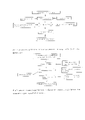
путем подщелачивания до рН 6.5…8.5. последующей термической обработки при температуре 90-120°С в течение 10-15 мин, охлаждения до температуры 24-32°С, затем вносят гуминовые кислоты в количестве 0,05% - 0,005%, и засевают монокультурами родов Azotobacter, Azospirillum, Bacillus, Rhizobium, Lactobacillus или их сообществом составленном в любом соотношении, затем перемешивают суспензию бактерий, и непосредственно вносят в почву или выращивают бактерии в течение 6-24 час при температуре - 24-35°С, до достижения концентрации бактерий 109 -1011 клеток/мл (рис. 1, 2).by alkalization to pH 6.5…8.5. subsequent heat treatment at a temperature of 90-120°C for 10-15 minutes, cooling to a temperature of 24-32°C, then humic acids are added in an amount of 0.05% - 0.005%, and seeded with monocultures of the genera Azotobacter, Azospirillum, Bacillus, Rhizobium, Lactobacillus or their community composed in any ratio, then mix the suspension of bacteria, and directly add to the soil or grow bacteria for 6-24 hours at a temperature of - 24-35 ° C, until the concentration of bacteria reaches 10 9 -10 11 cells / ml (Fig. 1, 2).
Сущность предлагаемого способа заключается в следующем, у замочных вод, высвободившихся после получения крахмала из зерна, зернобобовых, и сока картофеля корректируют рН 6.5…8.5, термически обрабатывают субстрат-носитель при 90…120°С в течение 10…15 мин, охлаждения до температуры 24…32°С, в полученный субстрат-носитель вносят гуминовые кислоты в количестве 0,05%…0,005%. засевают суспензией микроорганизмов состоящей из монокультур родов Azotobacter, Azospirillum, Bacillus, Rhizobium, Lactobacillus или их сообществом составленном в любом соотношении, затем перемешивают суспензию бактерий, и непосредственно вносят в почву или выращивают бактерии в течение 6…24 час при температуре -24…35°С, до достижения концентрации бактерий 105…1011 клеток/мл (рис. 1, 2).The essence of the proposed method is as follows, in the key waters released after obtaining starch from grains, legumes, and potato juice, the pH is adjusted to 6.5 ... 8.5, the carrier substrate is thermally treated at 90 ... 120 ° C for 10 ... 24 ... 32 ° C, humic acids are added to the resulting carrier substrate in an amount of 0.05% ... 0.005%. inoculate with a suspension of microorganisms consisting of monocultures of the genera Azotobacter, Azospirillum, Bacillus, Rhizobium, Lactobacillus or their community in any ratio, then mix the suspension of bacteria, and directly add to the soil or grow bacteria for 6 ... 24 hours at a temperature of -24 ... 35 ° C, until the concentration of bacteria reaches 10 5 ... 10 11 cells/ml (Fig. 1, 2).
Готовый продукт представляет собой суспензию живых микроорганизмов, содержащую 105 -1011 клеток/мл, может использоваться как в виде суспензии микроорганизмов в жидком субстрате-носителе (картофельный сок, замочные воды зерновых и зернобобовых), так и после высушивания в виде порошка.The finished product is a suspension of living microorganisms containing 10 5 -10 11 cells / ml, can be used both as a suspension of microorganisms in a liquid carrier substrate (potato juice, cereal and leguminous waters) and after drying in the form of a powder.
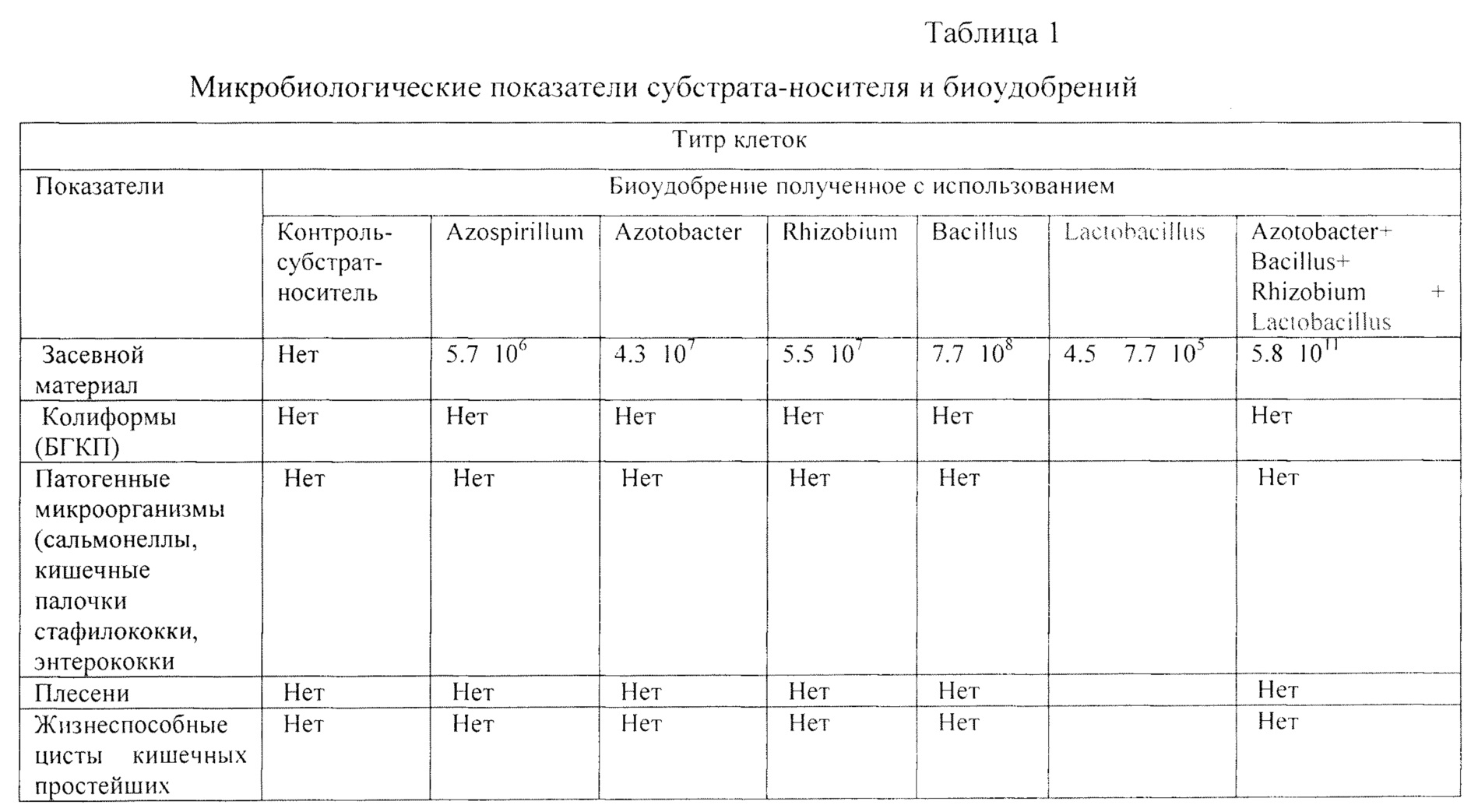
Микробиологические характеристики субстрата-носителя и биоудобрений приведены в табл. 1.Microbiological characteristics of the carrier substrate and biofertilizers are given in Table. one.
В золе картофельного сока, замочных вод зерновых и зернобобовых содержатся практически все микроэлементы, их минеральный состав представлен:The ashes of potato juice, grain waters and grain legumes contain almost all trace elements, their mineral composition is represented by:
• макроэлементами - калий, кальций, магний, натрий, сера, фосфор, хлор:• macronutrients - potassium, calcium, magnesium, sodium, sulfur, phosphorus, chlorine:
• микроэлементами - железо, иод. марганец, медь, молибден, селен, фтор, хром, цинк, бор, кобальт.• trace elements - iron, iodine. manganese, copper, molybdenum, selenium, fluorine, chromium, zinc, boron, cobalt.
Около 60% зольных элементов картофельного сока составляет оксид калия, который является важным компонентом минеральных удобрений.About 60% of the ash elements of potato juice is potassium oxide, which is an important component of mineral fertilizers.
В состав органических соединении картофельного сока, замочных вод зерновых и зернобобовых, белки содержащие более 12 аминокислот, углеводы, витамины - С, РР, В9, Е, бета- каротин, пантотеновая кислота, углеводы, органические кислоты и др.The composition of organic compounds of potato juice, grain and leguminous waters, proteins containing more than 12 amino acids, carbohydrates, vitamins - C, PP, B9, E, beta-carotene, pantothenic acid, carbohydrates, organic acids, etc.
Ртуть, мышьяк, пестициды и микотоксины в соке картофеля, замочных водах зерновых и зернобобовых отсутствуют, нитраты и радионуклеотиды не превышают допустимых уровней (Дышлюк Л.С, Асякина Л.К., Карчин К.В., Зимина М.И. 2015 г.).Mercury, arsenic, pesticides and mycotoxins in potato juice, grain and leguminous grain waters are absent, nitrates and radionucleotides do not exceed permissible levels (Dyshlyuk L.S., Asyakina L.K., Karchin K.V., Zimina M.I. 2015 .).
Минеральные и питательные вещества усваиваются растениями только в жидкой форме, поэтому введение в почву предлагаемого нами органического удобрения в виде раствора питательных элементов и микроорганизмов. как часть поливных вод, способствует лучшем} поглощению минеральных и других соединений удобрения растениями.Mineral and nutrients are absorbed by plants only in liquid form, so the introduction of the organic fertilizer we offer into the soil in the form of a solution of nutrients and microorganisms. as part of irrigation water, it contributes to a better absorption of mineral and other fertilizer compounds by plants.
Направленная модификация стоков крахмального производства путем комплексного использования картофельного сока, замочных вод зерна и зернобобовых, гуминовых кислот и микроорганизмов позволяет достичь максимального результата по качественному составу биоудобреиия.Directed modification of starch production effluents through the integrated use of potato juice, grain water, grain legumes, humic acids and microorganisms allows achieving the maximum result in terms of the qualitative composition of biofertilizers.
Разработанный нами способ получения биоорганического удобрения и его практическое применение имеет важный экологический аспект, он способствует оздоровлению окружающей среды в результате снижения вредных стоков пищевых производств.The method we have developed for obtaining bioorganic fertilizer and its practical application has an important environmental aspect, it contributes to the improvement of the environment by reducing harmful effluents from food production.
Внесение в почву в составе жидкого биоудобрения азотфиксирующих и молочнокислых бактерий в активном состоянии, являющихся естественными обитателями почв, позволяет им легко прижиться и вписаться в состав почвенных микро-биоценозов, формирующих почвенное плодородие. Состав биоудобрения способствует повышению биологической активности почв сельскохозяйственного назначения.The introduction of nitrogen-fixing and lactic acid bacteria in the soil as part of a liquid biofertilizer in an active state, which are natural inhabitants of the soil, allows them to easily take root and fit into the composition of soil microbiocenoses that form soil fertility. The composition of the biofertilizer helps to increase the biological activity of agricultural soils.
Пример 1. Стерильную жидкую питательную среду, имеющую следующий состав г/л: K2HPO4 - 0.5; MgSO4 7H2O - 0.2; NaCl - 0.1; FeCl3 6H2O - 0.15; Яблочная кислота - 5.0; КОН - 4.8, засевают монокультурой Azospirillum amazonense в количестве 3%, выращивают в течение 24-28 час при температуре 24°С в условиях качалки при 250 об/мин. Полученную бактериальную суспензию, содержащую 109 - 1011 клеток/мл, переносят в субстрат-носитель, который получают после подщелачивания картофельного сока до рН 6.5, термической обработки сока при 100°С в течение 10 мин, удаления белковых компонентов, охлаждения до 28°С, культивирования при перемешивании и температуре 27°С в течение 10 час.Example 1. Sterile liquid nutrient medium having the following composition g/l: K 2 HPO 4 - 0.5; MgSO 4 7H 2 O - 0.2; NaCl - 0.1; FeCl 3 6H 2 O - 0.15; Malic acid - 5.0; KOH - 4.8, inoculated with a monoculture of Azospirillum amazonense in an amount of 3%, grown for 24-28 hours at a temperature of 24°C in a rocking chair at 250 rpm. The resulting bacterial suspension containing 10 9 - 10 11 cells/ml is transferred into a carrier substrate, which is obtained after alkalization of potato juice to pH 6.5, heat treatment of the juice at 100°C for 10 min, removal of protein components, cooling to 28° C, cultivation with stirring and a temperature of 27°C for 10 hours.
Готовый продукт представляет собой суспензию, содержащую 107 -1011 клеток/мл. может использоваться в виде суспензии микроорганизмов в жидком субстрате-носителе.The finished product is a suspension containing 10 7 -10 11 cells/ml. can be used as a suspension of microorganisms in a liquid carrier substrate.
Пример 2. Стерильную жидкую питательную среду, имеющую следующий состав г/л: K2HPO4 - 0.5; MgSO4 7H2O - 0.2; NaCl - 0.1; FeCl3 6H2O - 0.15; Яблочная кислота - 5.0; КОН - 4.8, засевают монокультурой Azospirillum brasilense в количестве 5%. выращивают в течение 24-28 час при температуре 24°С в условиях качалки при 250 об/мин. Полученную бактериальную суспензию, содержащую 1010 -1011 клеток/мл, переносят в субстрат-носитель, который получают после подщелачивания нутового экстракта до рН 6.5. термической обработки при 100°С в течение 10 мин, удаления белковых компонентов. охлаждения до 28°С, перемешивают в течение 10 -20 мин.Example 2. Sterile liquid nutrient medium having the following composition g/l: K 2 HPO 4 - 0.5; MgSO 4 7H 2 O - 0.2; NaCl - 0.1; FeCl 3 6H 2 O - 0.15; Malic acid - 5.0; KOH - 4.8, seeded with a monoculture of Azospirillum brasilense in the amount of 5%. grown for 24-28 hours at a temperature of 24°C in a rocking chair at 250 rpm. The resulting bacterial suspension, containing 10 10 -10 11 cells/ml, is transferred to the carrier substrate, which is obtained after alkalization of the chickpea extract to pH 6.5. heat treatment at 100°C for 10 min, removal of protein components. cooling to 28°C, stirred for 10 -20 min.
Готовый продукт представляет собой суспензию, содержащую 105 -109 клеток/мл, может использоваться в виде суспензии микроорганизмов в жидком субстрате-носителе.The finished product is a suspension containing 10 5 -10 9 cells/ml, can be used as a suspension of microorganisms in a liquid carrier substrate.
Пример 3. Стерильную жидкую питательную среду, имеющую следующий состав, г/л: сахароза - 10.0, MgSO4 7H2O - 0.2; NaCl - 0.1, K2HPO4 - 0.2, K2SO4 - 0.2; СаСО3 - 5,0, засевают монокультурой Rhizobium cellulosilyticum в соотношении …2:2:1… в количестве 5%, выращивают в течение 24-28 час при температуре 26°С в условиях качалки при 250 об/мин. Полученную бактериальную суспензию, содержащую 109 -1010 клеток/мл, переносят в субстрат-носитель, который получают после подщелачивания картофельного сока до рН 7.0. термической обработки сока при 90°С в течение 15 мин, внесения гуминовых кислот в количестве 0,05%. и перемешивают.Example 3. Sterile liquid nutrient medium having the following composition, g/l: sucrose - 10.0, MgSO 4 7H 2 O - 0.2; NaCl - 0.1, K 2 HPO 4 - 0.2, K 2 SO 4 - 0.2; CaCO 3 - 5.0, inoculated with a monoculture of Rhizobium cellulosilyticum in a ratio of ...2:2:1... in an amount of 5%, grown for 24-28 hours at a temperature of 26°C in a rocking chair at 250 rpm. The resulting bacterial suspension, containing 10 9 -10 10 cells/ml, is transferred to the carrier substrate, which is obtained after alkalization of potato juice to pH 7.0. heat treatment of juice at 90°C for 15 min, introduction of humic acids in the amount of 0.05%. and mix.
Готовый продукт представляет собой суспензию, содержащую 107 -1010 клеток/мл, может использоваться в виде суспензии микроорганизмов в жидком субстрате-носителеThe finished product is a suspension containing 10 7 -10 10 cells / ml, can be used as a suspension of microorganisms in a liquid carrier substrate
Пример 4. Стерильную жидкую питательную среду, имеющую следующий состав, г/л: кукурузный экстракт - 12.4, дрожжевой экстракт - 2.1, лактоза - 2.8, CuSO4⋅5H2O. - 0.003. (NH4)2HPO4 - 8.4, NaCl - 0.28, MgSO4 7H2O 0.14,, K2SO4 - 2.8, CaCl2 - 0.4. засевают культурой Bacillus subtilis в количестве 5%, выращивают в течение 24-28 час при температуре 30°С в условиях качалки при 250 об/мин. Полученную бактериальную суспензию, содержащую 109 -1011 клеток/мл, переносят в субстрат-носитель, который получают после подщелачивания замочных вод пшеницы до рН 8.5, последующей термической обработки при 120°С в течение 10 мин и перемешивают.Example 4. Sterile liquid nutrient medium having the following composition, g/l: corn extract - 12.4, yeast extract - 2.1, lactose - 2.8, CuSO 4 ⋅5H 2 O. - 0.003. (NH 4 ) 2 HPO 4 - 8.4, NaCl - 0.28, MgSO 4 7H2O 0.14, K 2 SO 4 - 2.8, CaCl 2 - 0.4. inoculated with a culture of Bacillus subtilis in an amount of 5%, grown for 24-28 hours at a temperature of 30°C in a rocking chair at 250 rpm. The resulting bacterial suspension containing 10 9 -10 11 cells/ml is transferred into a carrier substrate, which is obtained after alkalization of the wheat steep water to pH 8.5, followed by heat treatment at 120°C for 10 min, and stirred.
Готовый продукт представляет собой суспензию, содержащую 107 - 1010 клеток/мл, может использоваться в виде суспензии микроорганизмов в жидком субстрате-носителе. Пример 5. Стерильную молочную засевают монокультурой Lactobacillus plantarum в количестве 5%, выращивают в течение 24-28 час при температуре 37°С в условиях качалки при 250 об/мин. Полученную бактериальную суспензию, содержащую 105 - 106 клеток/мл, переносят в субстрат-носитель, который получают после подщелачивания замочных вод гороха до рН 7.0, термической обработки при 90°С в течение 15 мин, внесения гуминовых кислот в количестве 0,05%, и перемешивают.The finished product is a suspension containing 10 7 - 10 10 cells/ml, can be used as a suspension of microorganisms in a liquid carrier substrate. Example 5. Sterile milk is inoculated with a monoculture of Lactobacillus plantarum in an amount of 5%, grown for 24-28 hours at a temperature of 37°C in a rocking chair at 250 rpm. The resulting bacterial suspension, containing 10 5 - 10 6 cells/ml, is transferred into a carrier substrate, which is obtained after alkalization of pea tap water to pH 7.0, heat treatment at 90°C for 15 min, introduction of humic acids in an amount of 0.05 %, and mix.
Готовый продукт представляет собой суспензию, содержащую 1010 - 1012 клеток/мл, может использоваться в виде суспензии микроорганизмов в жидком субстрате-носителе Пример 6. Суспензию бактериальных культур Azotobacter amazonense, Bacillus subtilis и Rhizobium cellulosilyticum полученную в стерильной жидкой питательной среде, содержащую 109 -1011 клеток/мл, переносят при соотношении 1:1:1 в количестве 4%. в субстрат-носитель, который получают после подщелачивания картофельного сока до рН 7.2, термической обработки сока при 90°С в течение 10 мин, внесения гуминовых кислот в количестве 0,005%, и перемешивают. Готовый продукт представляет собой суспензию, содержащую 107 -1010 клеток/мл, может использоваться в виде суспензии микроорганизмов в жидком субстрате-носителе.The finished product is a suspension containing 10 10 - 10 12 cells / ml, can be used as a suspension of microorganisms in a liquid carrier substrate 9 -10 11 cells/ml, transferred at a ratio of 1:1:1 in the amount of 4%. into the carrier substrate, which is obtained after alkalization of potato juice to pH 7.2, heat treatment of the juice at 90°C for 10 min, addition of humic acids in an amount of 0.005%, and mix. The finished product is a suspension containing 10 7 -10 10 cells/ml, can be used as a suspension of microorganisms in a liquid carrier substrate.
Известно, что внесение в почву удобрений и препаратов, содержащих гуминовые кислоты, активирует рост почвенных микроорганизмов, при этом повышается потребление органических и минеральных соединений, что увеличивает минерализацию органических веществ, которые активно используются растениями (Безутлова О.С., Полиенко Е.А., Горовцов А.В., 2016 г.).It is known that the introduction of fertilizers and preparations containing humic acids into the soil activates the growth of soil microorganisms, while the consumption of organic and mineral compounds increases, which increases the mineralization of organic substances that are actively used by plants (Bezutlova O.S., Polienko E.A. , Gorovtsov A.V., 2016).
Введение в состав суспензии, замочных вод зерновых или зернобобовых или картофельного сока, микроорганизмов, гуминовых кислот, позволяет не только максимально улучшить состав биоудобрения, но и повысить физиологическую активность, синтез фитогормонов микроорганизмов.Introduction to the composition of the suspension, the key waters of cereals or legumes or potato juice, microorganisms, humic acids, allows not only to improve the composition of the biofertilizer as much as possible, but also to increase the physiological activity, the synthesis of phytohormones of microorganisms.
Промышленная применимость. Заявляемый способ, приготовления биоудобрения, предназначен для применения в виде раствора или суспензии для непосредственного внесения в поля любым известным способом, как внутрипочвенным, так и поверхностным (разбрызгиванием, поливом, разливом по поверхности почвы и др.). Способ может быть осуществлен на традиционном оборудовании с применением имеющихся технических устройств - машин для внесения жидких удобрений, при любых погодных условиях.Industrial applicability. The claimed method, preparation of biofertilizer, is intended for use in the form of a solution or suspension for direct application to the fields by any known method, both subsoil and surface (spraying, watering, spilling over the soil surface, etc.). The method can be carried out on traditional equipment using existing technical devices - machines for applying liquid fertilizers, under any weather conditions.
Таким образом, совокупность существенных признаков, содержащихся в формуле изобретения, позволяет достичь желаемого технического результата.Thus, the combination of essential features contained in the claims, allows you to achieve the desired technical result.
ЛитератураLiterature
1. Лопес-Сервантес Хайаме, Рохин Карл Райнер ФИК. Микробный способ и композиция для сельскохозяйственного применения. Патент RU №2583294. 2011 г.1. Lopez-Servantes Jayame, Rohin Karl Reiner FIK. Microbial method and composition for agricultural use. Patent RU No. 2583294. 2011
2. Ладыгина Г.Н., Олюнина Л.П., Речкин А.И., Мацкова Ю.А., Алексеева А.Е. Способ приготовления бактериального удобрения на основе бактерий рода Azotobacter. Патент RU №2286324. 2006 г.2. Ladygina G.N., Olyunina L.P., Rechkin A.I., Matskova Yu.A., Alekseeva A.E. Method for preparation of bacterial fertilizer based on bacteria of the genus Azotobacter. Patent RU No. 2286324. 2006
3. Степанов А.И., Неустроев М.П., Прибылых Е.И., Иванов Э.Г., Тарабукина Н.П., Парникова С.И. Способ приготовления биологически активного биологически активного удобрения (БАОУ). Пат. RU №2376270. 2009 г.3. Stepanov A.I., Neustroev M.P., Pribylykh E.I., Ivanov E.G., Tarabukina N.P., Parnikova S.I. Method for preparation of biologically active biologically active fertilizer (BAOU). Pat. RU No. 2376270. 2009
4. Кощаев А.Г. Способ приготовления биоудобрения. Пат RU №2280629, 2006 г4. Koshaev A.G. Method for preparing biofertilizer. Pat RU №2280629, 2006
5. Чеботарь В.К., Казаков А.Е., Ерофеев С.В., Данилова Т.Н., Наумкина Т.С., Штарк О.Ю., Борисов А.Ю. Способ получения комплексного микробиологического удобрения. Пат RU №2312784. 2008 г.5. Chebotar V.K., Kazakov A.E., Erofeev S.V., Danilova T.N., Naumkina T.S., Shtark O.Yu., Borisov A.Yu. The method of obtaining a complex microbiological fertilizer. Pat RU No. 2312784. 2008
6. Райманов И.Т., Алимова Ф.К., Ожиганова Г.У., Хабибуллин Р.Э., Крылова Н.И., Фаттахова А.Н. Способ получения биоудобрения. Пат RU №210005, 1999 г6. Raimanov I.T., Alimova F.K., Ozhiganova G.U., Khabibullin R.E., Krylova N.I., Fattakhova A.N. Method for obtaining biofertilizer. Pat RU No. 210005, 1999
7. Шпербер Р.Е., Беляев Б.О., Крапивин Т.Д., Усова У.Б., Шпербер Е.Р., Шпербер Ф.Р., Шпербер И.Р., Шпербер Д.Р., Шпербер Р.С пат RU №2210557 Органическое удобрение 2003 г.7. R. E. Shperber, B. O. Belyaev, T. D. Krapivin, U. B. Usova, E. R. Shperber, F. R. Shperber, I. R. Shperber, and D. R. Shperber, Shperber R.S Pat RU No. 2210557 Organic fertilizer 2003
8. Лящев А.А. Способ получения биогумуса. Пат.RU №2619473. 2017 г.8. Lyashchev A.A. Method for obtaining biohumus. Pat.RU No. 2619473. 2017
9. Мохов В.В. Биоорганическое удобрение. Пат.RU №2360893. 2017 г9. Mokhov V.V. Bioorganic fertilizer. Pat.RU No. 2360893. 2017
10. Кощаев А.Г. Способ изготовления биогумуса обогащенного азотфиксирующими бактериями. Пат.RU №2286973. 2006 г.10. Koshaev A.G. Method for the production of biohumus enriched with nitrogen-fixing bacteria. Pat.RU No. 2286973. 2006
11. Рабинович Г.Ю., Ковалев Н.Г., Смирнова Ю.Д. Применение глвых биоудобрений и биопрепаратов при возделывании яровой пшеницы (Triticum aeslivum L.) и картофеля {Solatium tuberosum L.). Сельскохозяйственная биология. 2015 г. том 50, №5, стр. 665-672. Экологические основы безопасной агротехнологии.11. Rabinovich G.Yu., Kovalev N.G., Smirnova Yu.D. Application of main biofertilizers and biopreparations in the cultivation of spring wheat (Triticum aeslivum L.) and potato {Solatium tuberosum L.). Agricultural biology. 2015 Volume 50, No. 5, pp. 665-672. Ecological bases of safe agricultural technology.
12. Рабинович Г.Ю. Автореф. докт. биол. наук. Тверь 2000 год. Биоконверсия органического сырья.12. Rabinovich G.Yu. Abstract doc. biol. Sciences. Tver 2000. Bioconversion of organic raw materials.
13. Дышлюк Л.С, Асякина Л.К., Карчин К.В., Зимина М.И. Изучение химического состава и показателей безопасности отходов картофельного производства. Современные проблемы науки и образования. 2014 г., №3.13. Dyshlyuk L.S., Asyakina L.K., Karchin K.V., Zimina M.I. Study of the chemical composition and safety indicators of potato production waste. Modern problems of science and education. 2014, No. 3.
14. Безуглова О.С., Полиенко Е.А., Горовцов А.В. Гуминовые препараты как стимуляторы роста растений и микроорганизмов (обзор). Известия Оренбургского аграрного университета, 2016 г.14. Bezuglova O.S., Polienko E.A., Gorovtsov A.V. Humic preparations as plant and microorganism growth stimulators (review). Proceedings of the Orenburg Agrarian University, 2016
Claims (1)
Publications (1)
| Publication Number | Publication Date |
|---|---|
| RU2777093C1 true RU2777093C1 (en) | 2022-08-01 |
Family
ID=
Citations (5)
| Publication number | Priority date | Publication date | Assignee | Title |
|---|---|---|---|---|
| RU2241692C2 (en) * | 2002-10-11 | 2004-12-10 | Общество С Ограниченной Ответственностью "Бисолби-Интер" | Biofertilizer production method |
| RU2286324C1 (en) * | 2005-05-11 | 2006-10-27 | Галина Николаевна Ладыгина | METHOD FOR PRODUCTION OF BACTERIAL FERTILIZER BASED ON BACTERIUM OF GENUS Azotobacter |
| RU2376270C2 (en) * | 2007-12-10 | 2009-12-20 | Государственное научное учреждение Якутский научно-исследовательский институт сельского хозяйства РАСХН | Method for production of biologically active organic fertiliser (baof) |
| RU2500302C2 (en) * | 2009-02-13 | 2013-12-10 | Харбос Бриггери А/С | Transparent and soluble grain extract production method |
| RU2583294C2 (en) * | 2010-06-16 | 2016-05-10 | Агринос Ас | Microbe method and composition for agricultural use |
Patent Citations (5)
| Publication number | Priority date | Publication date | Assignee | Title |
|---|---|---|---|---|
| RU2241692C2 (en) * | 2002-10-11 | 2004-12-10 | Общество С Ограниченной Ответственностью "Бисолби-Интер" | Biofertilizer production method |
| RU2286324C1 (en) * | 2005-05-11 | 2006-10-27 | Галина Николаевна Ладыгина | METHOD FOR PRODUCTION OF BACTERIAL FERTILIZER BASED ON BACTERIUM OF GENUS Azotobacter |
| RU2376270C2 (en) * | 2007-12-10 | 2009-12-20 | Государственное научное учреждение Якутский научно-исследовательский институт сельского хозяйства РАСХН | Method for production of biologically active organic fertiliser (baof) |
| RU2500302C2 (en) * | 2009-02-13 | 2013-12-10 | Харбос Бриггери А/С | Transparent and soluble grain extract production method |
| RU2583294C2 (en) * | 2010-06-16 | 2016-05-10 | Агринос Ас | Microbe method and composition for agricultural use |
Non-Patent Citations (1)
| Title |
|---|
| РАБИНОВИЧ Г.Ю. и др. Применение глвых биоудобрений и биопрепаратов при возделывании яровой пшеницы (Triticum aeslivum L.) и картофеля (Solatium tuberosum L.), Сельскохозяйственная биология. 2015 г., том 50, N 5, стр. 665-672. * |
Similar Documents
| Publication | Publication Date | Title |
|---|---|---|
| CN105838644B (en) | Complex micro organism fungicide and bacterial manure and preparation method thereof and the application in reparation salt affected soil | |
| EP1248754B1 (en) | Biological addition to organic-mineral fertilizers | |
| CN102531776B (en) | Compound microbial fertilizer and method for producing same | |
| Kobayashi et al. | Contribution to nitrogen fixation and soil fertility by photosynthetic bacteria | |
| CN104926530A (en) | High-efficiency biological organic fertilizer for organic crops and preparation method thereof | |
| CN105152811A (en) | Biofertilizer for improving saline and alkaline lands and preparation method and application of biofertilizer | |
| CN113200794A (en) | Method for improving and repairing soil by using quaternary method | |
| CN107324945A (en) | A kind of method that utilization animal dung produces particular biological organic fertilizer | |
| CN110437000A (en) | A kind of microbial manure and its preparation method and application | |
| CN108178707A (en) | A kind of Queensland nut biological organic fertilizer and preparation method and application | |
| CN107129327A (en) | Microbial manure and preparation method thereof | |
| CN106316674A (en) | Biological carbon fertilizer capable of promoting crop growth | |
| CN100361937C (en) | A kind of production method of multifunctional microbial organic fertilizer | |
| CN1107178A (en) | Bioligical fertilizer producing method and used microbe | |
| NL1017592C2 (en) | Mixture of micro-organisms, intended for fixing nitrogen from the air and increasing the solubility of phosphorus compounds in water, and their preparation. | |
| CN107141100A (en) | It is a kind of with liquid organic fertilizer processed containing amino-acid liquid and preparation method thereof | |
| Singh et al. | Biofertilizers and plant growth regulators as key player in sustainable agriculture by enhancing soil fertility and crop productivity | |
| Radwan et al. | Effect of soil amendments with various organic wastes with multi-biofertilizers on peanut plants in sandy soil | |
| Singh et al. | Impact of phosphorus and sulphur organo mineral fertilizers on growth and yield attributes of green gram (Vigna radiate (L.) Wilczek) on alluvial soil | |
| CN117247304A (en) | A hydrothermal carbon-based fertilizer based on salinized soil improvement and its preparation method | |
| CN103288544B (en) | Production process of biological compound fertilizer | |
| CN108675894A (en) | A kind of microbial organic fertilizer containing bacillus cereus | |
| Pajčin et al. | Biotechnological production of plant inoculants based on nitrogen-fixing bacteria | |
| CZ302599A3 (en) | Process for preparing mixture of micro-organisms for binding nitrogen from air for increasing solubility of phosphorus compounds and for decomposition of foodstuff oil sediment as well as such mixture per se | |
| CN109809946A (en) | A kind of microbial-bacterial fertilizer |