JP5367525B2 - How to feed pollen to bees for pollination - Google Patents
How to feed pollen to bees for pollination Download PDFInfo
- Publication number
- JP5367525B2 JP5367525B2 JP2009224387A JP2009224387A JP5367525B2 JP 5367525 B2 JP5367525 B2 JP 5367525B2 JP 2009224387 A JP2009224387 A JP 2009224387A JP 2009224387 A JP2009224387 A JP 2009224387A JP 5367525 B2 JP5367525 B2 JP 5367525B2
- Authority
- JP
- Japan
- Prior art keywords
- pollen
- pollination
- bees
- bee
- nest
- Prior art date
- Legal status (The legal status is an assumption and is not a legal conclusion. Google has not performed a legal analysis and makes no representation as to the accuracy of the status listed.)
- Active
Links
Images


Landscapes
- Breeding Of Plants And Reproduction By Means Of Culturing (AREA)
Abstract
Description
本発明は、授粉用ハチへの花粉給餌方法に関する。 The present invention relates to a method for feeding pollen to a bee for pollination.
商品作物(果物または野菜)を授粉させるためには、手作業に頼らざるを得ない一部の作物を除いて、ほとんどの場合に授粉用ハチが使用されている。こうして使用される授粉用ハチとしては、ミツバチ、マルハナバチ、マメコバチなどが知られている。例えば、マルハナバチは、トマト等のナス科植物の授粉に使用されており、効果的な繁殖方法が開発されている(特許文献1)。
授粉用ハチは、自ら花粉またはミツを採取するのであるから、商品作物の付近に巣箱を置いておけば、飼育などの手間が不要のようにも思われる。しかしながら、一定期間に渡って、効率よく授粉作業または集蜜作業を行わせるには、外部から適当な栄養源(タンパク源、水分、糖分など)を与える作業が必要である。実際には、巣の内部または巣箱の内部空間に、水分(例えば、適当量の糖分を含むもの)やタンパク源(例えば、花粉)を与える作業が行われている。
In order to pollinate commercial crops (fruits or vegetables), pollination bees are used in most cases, with the exception of some crops that have to rely on manual labor. Known bees for pollination used in this way include bees, bumblebees, bees and the like. For example, bumblebees are used for pollination of solanaceous plants such as tomatoes, and an effective breeding method has been developed (Patent Document 1).
Since pollination bees collect pollen or honey on their own, it seems that if a nest box is placed in the vicinity of the product crops, labor such as rearing is unnecessary. However, in order to perform pollination work or honey collection work efficiently over a certain period of time, it is necessary to provide an appropriate nutrient source (protein source, moisture, sugar, etc.) from the outside. Actually, an operation of supplying moisture (for example, a substance containing an appropriate amount of sugar) or a protein source (for example, pollen) to the interior of the nest or the interior of the nest box is performed.
この給餌作業は、授粉用ハチに授粉作業または集蜜作業を行わせる期間(例えば、2〜4ヶ月程度)について、ほぼ毎日繰り返される。この作業中には、作業者が授粉用ハチに刺されてケガをすることがある。スズメバチのような大型のハチによるケガは良く知られているが、授粉用ハチに刺されて、アナフィラキシーなどの重篤な障害が発生することは農業従事者には良く知られている。また、投入したタンパク量が多すぎると、巣箱内でタンパク質が腐敗したり、巣内にダニが発生することがあり、授粉用ハチの飼育環境が低下し、授粉効率が低下してしまう。 This feeding operation is repeated almost every day for a period (for example, about 2 to 4 months) in which the pollination bees perform the pollination operation or the honey collection operation. During this operation, an operator may be stabbed by a bee for pollination and injured. Injuries caused by large bees such as hornets are well known, but it is well known to farmers that serious damage such as anaphylaxis occurs when stabbed by a pollination bee. In addition, if the amount of protein added is too large, the protein may rot in the nest box or mites may be generated in the nest, reducing the breeding environment of the bee for pollination and reducing the pollination efficiency.
本発明は、上記した事情に鑑みてなされたものであり、その目的は、授粉用ハチに対して安全かつ適量の花粉を与えられる給餌方法を提供することである。 This invention is made | formed in view of an above-described situation, The objective is to provide the feeding method which can give a safe and appropriate quantity of pollen with respect to the bee for pollination.
本発明者は、鋭意検討の結果、授粉用ハチの巣箱の外部に花粉を置くことにより、授粉用ハチが自ら必要なだけ花粉を巣に運び込むことを見出し、基本的には本発明を完成するに至った。
こうして、本発明に係る授粉用ハチへの花粉給餌方法は、授粉用ハチの巣を封入した巣箱の外部において、前記巣箱の近傍に給餌用の花粉を置いておき、前記授粉用ハチが自ら前記花粉を前記巣内に運び込むようにしたことを特徴とする。
授粉用ハチとは、主として商品作物の授粉を行わせるために飼育されるハチのことを意味している。具体的には、ミツバチまたはマルハナバチ(在来種またはセイヨウを含む)が含まれる。
As a result of intensive studies, the present inventor found that pollen bees carry pollen into the nest as much as necessary by placing pollen outside the bee hive for pollination, and basically completes the present invention. It came to.
Thus, the pollen feeding method to the bee for pollination according to the present invention, the pollen for feeding is placed in the vicinity of the nest box outside the nest box in which the nest of the bee for pollination is enclosed, and the bee for pollination itself The pollen is carried into the nest.
The bee for pollination means a bee that is raised mainly to pollinate commercial crops. Specifically, bees or bumblebees (including native species or antelopes) are included.
巣箱とは、授粉用ハチが繁殖しやすいように工夫された箱を意味しており、その内部では、社会性昆虫の一つである授粉用ハチが社会を形成する。授粉を行う花がある場所に巣箱を運搬して授粉用ハチを放つと、巣箱を中心として集めた花粉またはミツを巣箱内の巣に蓄える。本発明においては、巣箱の形状および材料には係わらずに実施できる。
近傍とは、巣箱の外方であって、授粉用ハチが容易に花粉を集めることが可能な程度の場所を意味する。例えば、巣箱の数メートル以内であれば、授粉用ハチは容易に花粉を見つけて、必要なだけの量の花粉を巣内に運び込む。但し、直接に花粉を地面上に置くと傷みが速いので、中空に置くことが好ましい。このとき、巣箱を利用して、巣箱の壁面に隣接して花粉を置くことが可能な花粉給餌器を設けることが好ましい。
給餌用の花粉とは、授粉用ハチへの栄養(主として、タンパク質)補給のために与えられる花粉を意味する。なお、給餌用の花粉は、補給のために与えられるのであり、本来の目的である授粉を必要とする作物に対する授粉用ハチの作業(例えば、花粉またはミツの採取)については、影響を与えない。
The nest box means a box that is devised so that pollination bees are easy to breed. Inside, the pollination bees that are one of the social insects form a society. When the nest box is transported to the place where the pollination flower is located and the pollination bee is released, the pollen or honey collected around the nest box is stored in the nest in the nest box. In this invention, it can implement irrespective of the shape and material of a birdhouse.
The vicinity means the place outside the nest box, where pollen bees can easily collect pollen. For example, within a few meters of the nest box, pollination bees easily find pollen and carry as much pollen as necessary into the nest. However, if pollen is placed directly on the ground, the damage is fast, so it is preferable to place it in a hollow space. At this time, it is preferable to use a nest box and provide a pollen feeder capable of placing pollen adjacent to the wall surface of the nest box.
The pollen for feeding means the pollen given for the nutrition (mainly protein) supply to the bee for pollination. In addition, the pollen for feeding is given for replenishment, and it does not affect the work of the bee for pollination (for example, collecting pollen or honey) for the crop that requires pollination, which is the original purpose. .
本発明によれば、養蜂家は授粉用ハチに花粉を与えるときにも巣箱を開ける必要がないので、安全かつ適量の花粉を与えることが可能となる。 According to the present invention, since the beekeeper does not need to open the nest box when giving pollen to the bee for pollination, it is possible to give a safe and appropriate amount of pollen.
次に、本発明の実施形態について、図表を参照しつつ説明するが、本発明の技術的範囲は、これらの実施形態によって限定されるものではなく、発明の要旨を変更することなく様々な形態で実施することができる。また、本発明の技術的範囲は、均等の範囲にまで及ぶものである。
<巣箱および花粉給餌器の構成>
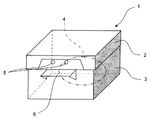
図1には、巣箱1の斜視図を示した。巣箱1は、下側の本体部3と、その上面側を覆う蓋部2とから中空の直方体状に形成されている。この巣箱1は、例えば段ボールなどの軽い材質により構成されている。巣箱1の内部空間には、授粉用ハチ8(例えば、マルハナバチ)の巣4が封入されている。巣箱1の側面の一つには、授粉用ハチ8の出入りを許容する出入口5が開口されている。出入口5の下方には、授粉用ハチ8の出入りを助ける着陸台6が突設されている。着陸台6は、巣箱1の側面の一部を切欠き、折り返すことにより形成されている。また、着陸台6が設けられているところは、本体部3の厚さが二枚となっており、その隙間に後述の取付片13が挿入可能とされている。
Next, embodiments of the present invention will be described with reference to the drawings. However, the technical scope of the present invention is not limited by these embodiments, and various forms can be made without changing the gist of the invention. Can be implemented. Further, the technical scope of the present invention extends to an equivalent range.
<Configuration of birdhouse and pollen feeder>
FIG. 1 shows a perspective view of the nest box 1. The nest box 1 is formed in a hollow rectangular parallelepiped shape from a
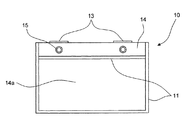
着陸台6の上面には、図2および図3に示す花粉給餌器10が装着される。花粉給餌器10は、着陸台6よりも大きな長方形状とされている。花粉給餌器10には、長方形状の底板14と、この底板14の三方の縁部(前縁部および左右両側縁部)と奥側縁部から前方に位置するところの四方から立ち上げられた壁部11とが設けられている。底板14および壁部11は、全てプラスチックから構成されている。底板14において、四方の壁部11によって取り囲まれたところが、花粉載置部14aとされる。花粉載置部14aに置かれた花粉12は、壁部11によって脱落が規制される。また、花粉給餌器10の奥側縁部からは、左右一対の取付片13が垂下されている。取付片13は、L字型のプラスチック片から構成されており、その短辺が金属製の鳩目15によって底板14の底面側に固定されている。両取付片13が着陸台6の奥側に差し込まれることで、図4に示すように、花粉給餌器10の位置決め固定がなされる。なお、花粉給餌器10は、複数回に渡って着陸台6に対して、容易に着脱可能とされている。また、花粉給餌器10は、プラスチックおよび金属により形成されているので、長期間に渡って使用可能とされている。
A
<効果確認試験>
次に、上記のように構成された巣箱と花粉給餌器を用いて、授粉用ハチへの花粉給餌試験を行った。
巣箱として、在来種マルハナバチの巣箱である「ハニートーン」(東海物産株式会社製)を用いた。岐阜県飛騨および高山周辺のトマト農家で使用されているハニートーンについて、花粉給餌器を設置した巣箱による花粉給餌方法と、従来の花粉給餌方法とを用いた場合の授粉期間を比較した。従来の花粉給餌方法としては、一日に一回、巣箱の蓋部を開放し、巣内に花粉を供給する方法とした(以下、「従来法」という)。一般的に、従来法を用いた場合の授粉期間は、平均して45日間であることが知られている。
<Effect confirmation test>
Next, the pollen feeding test to the bee for pollination was conducted using the nest box and the pollen feeder configured as described above.
As the nest box, a “honey tone” (manufactured by Tokai Bussan Co., Ltd.) which is a nest box of a native bumblebee was used. For honey tones used by tomato farmers in Hida and Takayama, Gifu Prefecture, we compared the pollination period when using the pollen feeding method with a nest box with a pollen feeder and the conventional pollen feeding method. As a conventional pollen feeding method, the lid of the nest box was opened once a day, and pollen was supplied into the nest (hereinafter referred to as “conventional method”). Generally, it is known that the pollination period when using the conventional method is 45 days on average.
試験には、1ハウス当り1群のハニートーンを静置した。1日に与える花粉量は2gとし、適宜、花粉給餌器内および巣箱内に供給し、トマトの花を観察し、マルハナバチが授粉活動を行った痕跡(以下、「バイトマーク」という)が確認できなくなるまでの日数を計測した。
授粉継続期間の算出は、バイトマークが確認できなくなった期日を授粉終了日とし、使用開始からの日数を本発明の給餌方法と従来法との場合で比較した。
結果を表1に示した。
In the test, one group of honey tones was allowed to stand per house. The amount of pollen to be given per day is 2 g, supplied to the pollen feeder and nest box as appropriate, the tomato flower is observed, and traces of bumble bee pollination activity (hereinafter referred to as “byte mark”) can be confirmed. The number of days until it disappeared was measured.
For the calculation of the pollination continuation period, the date when the byte mark could not be confirmed was used as the pollination end date, and the number of days from the start of use was compared between the feeding method of the present invention and the conventional method.
The results are shown in Table 1.

本発明の給餌方法を用いた場合の授粉期間は48〜55日であり、平均として51.5±2.94(日)(Mean±S.D.)であった。これは、従来法での平均授粉期間である45日に比較すると、1週間程度は長かった。
こうして、花粉を巣箱の外部に設けた花粉給餌器に供給することによって、授粉用ハチの寿命の短縮は認められず、従来法の平均的な授粉期間よりも長期間に渡る飼育期間が確保できた。
また、花粉を巣箱の外部に設けた花粉給餌器に供給することによって、授粉用ハチの活動状況を示すバイトマークの減少は認められなかった。このことから、本実施形態の花粉給餌方法は、授粉用ハチの活動性に影響は無いことが分かった。
The pollination period when using the feeding method of the present invention was 48 to 55 days, and averaged 51.5 ± 2.94 (days) (Mean ± SD). This was about one week longer than 45 days, which is the average pollination period in the conventional method.
In this way, by supplying pollen to the pollen feeder provided outside the nest box, the shortening of the life of the pollination bees is not recognized, and a breeding period that is longer than the average pollination period of the conventional method can be secured. It was.
In addition, by supplying pollen to the pollen feeder provided outside the nest box, there was no decrease in the bite mark indicating the activity status of the bee for pollination. From this, it was found that the pollen feeding method of this embodiment has no effect on the activity of the bee for pollination.
このように本実施形態によれば、巣箱を開けることなく授粉用ハチに花粉を給餌することができたので、養蜂家に対して安全であり、かつ授粉用ハチに対しても良好な花粉給餌方法であることが分かった。 As described above, according to the present embodiment, pollen can be fed to the bee for pollination without opening the nest box. Therefore, pollen feeding is safe for beekeepers and good for bee for pollination. It turned out to be a method.
1…巣箱
4…巣
8…授粉用ハチ
10…花粉給餌器
1 ... Nest box 4 ...
Claims (2)
前記授粉用ハチが、ミツバチ、在来種マルハナバチ、およびセイヨウマルハナバチからなる群から選択される一つのものであり、
前記花粉は、前記巣箱を利用して巣箱の壁面に隣接して置くことが可能な花粉給餌器を用いて給餌されることを特徴とする授粉用ハチへの花粉給餌方法。 Outside the nest box enclosing the honeycomb for pollination, aside pollen for feeding in the vicinity of the nesting box, the pollenizer bees to Professor powder for bees which is adapted themselves the pollen bring in into said nest A pollen feeding method ,
The pollination bee is one selected from the group consisting of bees, native bumblebees, and bumblebees,
A method for feeding pollen to a bee for pollination, wherein the pollen is fed using a pollen feeder capable of being placed adjacent to a wall surface of the nest box using the nest box.
Priority Applications (1)
| Application Number | Priority Date | Filing Date | Title |
|---|---|---|---|
| JP2009224387A JP5367525B2 (en) | 2009-09-29 | 2009-09-29 | How to feed pollen to bees for pollination |
Applications Claiming Priority (1)
| Application Number | Priority Date | Filing Date | Title |
|---|---|---|---|
| JP2009224387A JP5367525B2 (en) | 2009-09-29 | 2009-09-29 | How to feed pollen to bees for pollination |
Publications (2)
| Publication Number | Publication Date |
|---|---|
| JP2011072204A JP2011072204A (en) | 2011-04-14 |
| JP5367525B2 true JP5367525B2 (en) | 2013-12-11 |
Family
ID=44016893
Family Applications (1)
| Application Number | Title | Priority Date | Filing Date |
|---|---|---|---|
| JP2009224387A Active JP5367525B2 (en) | 2009-09-29 | 2009-09-29 | How to feed pollen to bees for pollination |
Country Status (1)
| Country | Link |
|---|---|
| JP (1) | JP5367525B2 (en) |
Families Citing this family (3)
| Publication number | Priority date | Publication date | Assignee | Title |
|---|---|---|---|---|
| JP5954787B2 (en) * | 2012-10-31 | 2016-07-20 | 株式会社アグリ総研 | How to introduce pollinating insects into cultivation facilities |
| NL2017905B1 (en) * | 2016-12-01 | 2018-06-18 | Biobest Group Nv | Beneficial candida yeasts for arthropods |
| JP7315958B2 (en) * | 2020-01-23 | 2023-07-27 | 国立研究開発法人農業・食品産業技術総合研究機構 | Crop imaging device and crop imaging method |
Family Cites Families (5)
| Publication number | Priority date | Publication date | Assignee | Title |
|---|---|---|---|---|
| JP3054633B1 (en) * | 1999-02-18 | 2000-06-19 | 農林水産省畜産試験場長 | A nest box for yearly breeding and grouping of bees |
| JP2002253085A (en) * | 2001-02-27 | 2002-09-10 | Tamagawa Gakuen | Propagation and distribution control method by closed system of living things |
| JP2003199461A (en) * | 2003-01-28 | 2003-07-15 | Tamagawa Gakuen | How to rear bumblebees |
| JP2008113605A (en) * | 2006-11-06 | 2008-05-22 | Nakamura Kazuo | Method for breeding, supplying and raising japanese indigenous bumblebees |
| JP4968584B2 (en) * | 2007-06-25 | 2012-07-04 | 株式会社アグリ総研 | How to introduce pollinating insects such as bumblebees into cultivation facilities |
-
2009
- 2009-09-29 JP JP2009224387A patent/JP5367525B2/en active Active
Also Published As
| Publication number | Publication date |
|---|---|
| JP2011072204A (en) | 2011-04-14 |
Similar Documents
| Publication | Publication Date | Title |
|---|---|---|
| JP2008113605A (en) | Method for breeding, supplying and raising japanese indigenous bumblebees | |
| CN104322396B (en) | Method for rapidly separating queen bees of Chinese bees | |
| Sain et al. | Economics and importance of beekeeping | |
| EP2888934B1 (en) | Production device for queen bees and royal jelly | |
| CN103461220B (en) | A kind of middle honeybee beehive and middle honeybee are used for the method for greenhouse crops pollination | |
| CN103141410A (en) | Automatic constant-temperature Chinese drone beehive with circular inside and square outside | |
| JP4260569B2 (en) | Paper beehive for bees for pollination | |
| KR20180037362A (en) | breeding cube and spawning frame for producing royal jelly by the same or spawning frame for growing queen bee by the same | |
| JP5367525B2 (en) | How to feed pollen to bees for pollination | |
| EP2525652B1 (en) | Bumblebee nest box | |
| CN106937613A (en) | A kind of protected crop Bee pollinizing box | |
| US9801358B1 (en) | Method and apparatus for field incubation of bees | |
| WO2011094201A1 (en) | Honey bee packaging system | |
| JP2012055231A (en) | Queen honeybee discharge-preventing tool also used as worker honeybee doorway, for japanese honeybee only | |
| KR100658428B1 (en) | Milking Care of Beekeepers for Royal Jelly Collection | |
| JP2009195130A (en) | Apiculture method for cultivating cabbage and collecting honey from flower of cabbage in green house | |
| CN108849750A (en) | The artificial breeding method of Alfalfa leafcutter bee | |
| US20220369601A1 (en) | Breeding comb for solitary bees | |
| CN223437673U (en) | A device for physically preventing and controlling nest insects in bee production process | |
| KR200412845Y1 (en) | Insect Desorption Vegetable Gloss of Beekeeping Chopper for Royal Jelly Collection | |
| JP2011147393A (en) | Beehive for bumblebee | |
| RU2804805C1 (en) | Hive for wild bees pollinators of hard-to-pollinate crops and plants of rare and endangered species | |
| Asada | Studies on year-round rearing of Japanese native bumblebees (Bombus spp.) for buzz-foraging crop pollination | |
| JP2012055217A (en) | Honeybee-collecting method for japanese honeybee only | |
| JP2009195128A (en) | Apiculture method for collecting honey from artificially cultivated plant |
Legal Events
| Date | Code | Title | Description |
|---|---|---|---|
| A621 | Written request for application examination |
Free format text: JAPANESE INTERMEDIATE CODE: A621 Effective date: 20120724 |
|
| A977 | Report on retrieval |
Free format text: JAPANESE INTERMEDIATE CODE: A971007 Effective date: 20130614 |
|
| A131 | Notification of reasons for refusal |
Free format text: JAPANESE INTERMEDIATE CODE: A131 Effective date: 20130709 |
|
| A521 | Request for written amendment filed |
Free format text: JAPANESE INTERMEDIATE CODE: A523 Effective date: 20130807 |
|
| TRDD | Decision of grant or rejection written | ||
| A01 | Written decision to grant a patent or to grant a registration (utility model) |
Free format text: JAPANESE INTERMEDIATE CODE: A01 Effective date: 20130910 |
|
| A61 | First payment of annual fees (during grant procedure) |
Free format text: JAPANESE INTERMEDIATE CODE: A61 Effective date: 20130911 |
|
| R150 | Certificate of patent or registration of utility model |
Ref document number: 5367525 Country of ref document: JP Free format text: JAPANESE INTERMEDIATE CODE: R150 Free format text: JAPANESE INTERMEDIATE CODE: R150 |
|
| R250 | Receipt of annual fees |
Free format text: JAPANESE INTERMEDIATE CODE: R250 |
|
| R250 | Receipt of annual fees |
Free format text: JAPANESE INTERMEDIATE CODE: R250 |
|
| R250 | Receipt of annual fees |
Free format text: JAPANESE INTERMEDIATE CODE: R250 |
|
| R250 | Receipt of annual fees |
Free format text: JAPANESE INTERMEDIATE CODE: R250 |
|
| R250 | Receipt of annual fees |
Free format text: JAPANESE INTERMEDIATE CODE: R250 |
|
| R250 | Receipt of annual fees |
Free format text: JAPANESE INTERMEDIATE CODE: R250 |