JP4498552B2 - Polycarbonate resin composition and molded article - Google Patents
Polycarbonate resin composition and molded article Download PDFInfo
- Publication number
- JP4498552B2 JP4498552B2 JP2000194519A JP2000194519A JP4498552B2 JP 4498552 B2 JP4498552 B2 JP 4498552B2 JP 2000194519 A JP2000194519 A JP 2000194519A JP 2000194519 A JP2000194519 A JP 2000194519A JP 4498552 B2 JP4498552 B2 JP 4498552B2
- Authority
- JP
- Japan
- Prior art keywords
- polycarbonate
- resin composition
- polycarbonate resin
- mass
- copolymer
- Prior art date
- Legal status (The legal status is an assumption and is not a legal conclusion. Google has not performed a legal analysis and makes no representation as to the accuracy of the status listed.)
- Expired - Fee Related
Links
Images
Landscapes
- Manufacture Of Macromolecular Shaped Articles (AREA)
- Compositions Of Macromolecular Compounds (AREA)
Description
【0001】
【発明の属する技術分野】
本発明はポリカーボネート樹脂組成物に関し、詳しくは、耐衝撃性を低下させることなく成形性、すなわち溶融流動性にすぐれ、ハロゲン系、リン系難燃剤を用いることなく難燃化も可能なポリカーボネート樹脂組成物および成形品に関する。
【0002】
【従来の技術】
ポリカーボネート樹脂は、すぐれた耐衝撃特性、耐熱性、電気的特性などにより、OA(オフィスオートメーション)機器、情報・通信機器、家庭電化機器などの電気・電子機器、自動車分野、建築分野など様々な分野において幅広く利用されている。ポリカーボネート樹脂は、一般的に自己消火性樹脂ではあるが、OA機器、情報・通信機器、家庭電化機器などの電気・電子機器分野を中心として、高度の難燃性を要求される分野があり、各種難燃剤の添加により、その改善が図られている。
【0003】
ポリカーボネート樹脂の難燃性を向上する方法として、ハロゲン化ビスフェノールA、ハロゲン化ポリカーボネートオリゴマーなどのハロゲン系難燃剤が難燃剤効率の点から酸化アンチモンなどの難燃助剤とともに用いられてきた。しかし、近時安全性、廃棄・焼却時の環境への影響の観点から、ハロゲンを含まない難燃剤による難燃化方法が市場より求められている。ノンハロゲン系難燃剤として、有機リン系難燃剤、特に有機リン酸エステル化合物を配合したポリカーボネート樹脂組成物は優れた難燃性を示すとともに、可塑剤としての作用もあり、多くの方法が提案されている。
【0004】
ポリカーボネート樹脂をリン酸エステル化合物で難燃化するためには、リン酸エステル化合物を比較的多量に配合する必要がある。また、ポリカーボネート樹脂は成形温度が高く、溶融粘度も高いために、成形品の薄肉化、大型化に対応するために、ますます成形温度が高くなる傾向にある。このため、リン酸エステル化合物は一般的に難燃性には寄与するものの、成形加工時の金型腐食、ガスの発生など、成形環境や成形品外観上必ずしも十分でない場合がある。また、成形品が加熱下に置かれたり、高温高湿度下に置かれた場合の、衝撃強度の低下、変色の発生などの問題点が指摘されている。さらに、近時の省資源化におけるリサイクル適性が熱安定性が不十分であることから困難であるなどの問題点を残している。
【0005】
これに対して、ポリカーボネート樹脂にシリコーン化合物を配合することによって、燃焼時に有害なガスを発生することなく難燃性を付与することも知られている。たとえば、(1)特開平10−139964号公報には特定の構造や特定分子量を有するシリコーン樹脂からなる難燃剤が開示されている。
【0006】
また、(2)特開昭51−45160号公報、特開平1−318069号公報、特開平6−306265号公報、特開平8−12868号公報、特開平8−295796号公報、特公平3−48947号公報などにおいてもシリコーン類を用いる難燃性ポリカーボネート樹脂が開示されている。しかしながら、前者の(1)記載のものでは、難燃性のレベルはある程度すぐれたものであるが耐衝撃性が十分でない場合がある。後者の(2)記載のものは、シリコーン類は難燃剤としての単独使用ではなく、耐ドロッピング性の改良を目的としての、例示化合物としての使用であつたり、他の難燃性添加剤としての、リン酸エステル化合物、周期律表第2族金属塩などとの併用を必須とするものである点において、前者とは異なるものである。また、難燃剤含有による成形性、物性の低下と言う別の問題点がある。
【0007】
さらに、ポリカーボネート樹脂として、ポリカーボネート−ポリオルガノシロキサン共重合体含有樹脂を用い、フィブリル形成能を有するポリテトラフルオロエチレンからなるポリカーボネート樹脂組成物からなる難燃性樹脂組成物も知られている(特開平8−81620号公報)。この組成物はポリオルガノシロキサンの含有率が少量である特定範囲においてすぐれた難燃性を示す組成物である。しかしながら、難燃特性はすぐれたものであるが、ポリカーボネート樹脂の特長である耐衝撃性が低下する場合がある。
【0008】
【発明が解決しようとする課題】
本発明は、上記現状の下、ポリカーボネート樹脂の有する特長である耐衝撃性を保持しながら、成形性、すなわち溶融流動性が改善され、しかもハロゲン系、リン系難燃剤を用いることなく難燃性に優れたポリカーボネート樹脂成形品を得ることができるポリカーボネート樹脂組成物およびこの組成物を用いた成形品の提供を目的とするものである。
【0009】
【課題を解決するための手段】
本発明者らは、ポリカーボネート樹脂のシリコーン化合物による難燃化において、耐衝撃性、耐熱性、リサイクル性と共に、成形性などの改良について鋭意検討した。その結果、ポリカーボネート樹脂組成物において、特定の少量のシリコーン化合物と特定のゴム状弾性体を選択使用するとともに、特定のポリカーボネート樹脂を選択することにより、耐衝撃性を低下させることなく成形性、難燃性性が著しく向上することを見いだし、本発明を完成するに到った。
【0010】
すなわち、本発明は、
(1) (A)脂肪族セグメントを有するコポリエステルカーボネートからなるポリカーボネート系樹脂又はこれを含有するポリカーボネート系樹脂組成物100質量部に対して、(B)官能基含有シリコーン化合物0.1〜10質量部および(C)コア/シエルタイプグラフトゴム状弾性体0.2〜10質量部を含有してなる、ハロゲン系難燃剤及びリン系難燃剤を含有しないポリカーボネート樹脂組成物。
(2) (A)前記ポリカーボネート系樹脂組成物が、少なくともポリカーボネート−ポリオルガノシロキサン共重合体を含有し、かつ、前記ポリカーボネート系樹脂組成物中のポリオルガノシロキサン含有量が0.1〜10質量%である(1)記載のポリカーボネート樹脂組成物。
(3) さらに、(A)前記のポリカーボネート系樹脂又はポリカーボネート系樹脂組成物100質量部に対して、(D)ポリフルオロオレフィン樹脂を、0.02〜5質量部含有してなる(1)または(2)に記載のポリカーボネート樹脂組成物。
(4) (1)〜(3)のいずれかに記載のポリカーボネート樹脂組成物からなる成形品。
(5) (1)〜(3)のいずれかに記載のポリカーボネート樹脂組成物からなる電気・電子機器のハウジングまたは部品を提供するものである。
【0011】
【発明の実施の形態】
以下、本発明を詳細に説明する。
本発明のポリカーボネート樹脂組成物を構成する(A)脂肪族セグメントを有するコポリエステルカーボネート共重合体(以下、PC−PMDC共重合体と略記することがある。)は、たとえば、芳香族ポリカーボネート部と、二価フェノールとポリメチレンジカルボン酸から誘導されるポリエステル部からなる共重合体であれば特に制限はないが、好ましくは、下記構造式(1)で表される構造単位からなる芳香族ポリカーボネート部と下記構造式(2)で表される構造単位からなるポリエステル部を分子内に有する共重合体を挙げることができる。
【0012】
【化1】

【化2】
ここで、式中、R1 及びR2 は炭素数1〜6のアルキル基又はフェニル基を示し、同一でも異なっていてもよい。
Zは単結合、炭素数1〜20のアルキレン基又は炭素数1〜20のアルキリデン基、炭素数5〜20のシクロアルキレン基又は炭素数5〜20のシクロアルキリデン基、あるいは−SO2 −、−SO−、−S−、−O−、−CO−結合を示す。好ましくは、イソプロピリデン基である。
【0015】
a及びbは0〜4の整数で好ましくは0である。mは5〜20の整数を示し、好ましくは8〜12である。
この(A)成分を構成するPC−PMDC共重合体の粘度平均分子量は10,000〜40,000が好ましく、さらに好ましくは12,000〜30,000である。なお、測定方法は後記に同じである。
【0016】
このPC−PMDC共重合体は、例えば、予め製造された芳香族ポリカーボネート部を構成するポリカーボネートオリゴマー(以下PCオリゴマーと略称する場合がある。)と、ポリメチレンジカルボン酸とを、塩化メチレン、クロロベンゼン、クロロホルム等の溶媒に溶解させ、二価フェノールの苛性アルカリ水溶液を加え、触媒として、第三級アミン(トリエチルアミン等)や第四級アンモニウム塩(トリメチルベンジルアンモニウムクロライド等)を用い、末端停止剤の存在下界面重縮合反応することにより製造することができる。
【0017】
このPCオリゴマーは、通常のポリカーボネート樹脂製造の場合と同様の方法で製造される。例えば塩化メチレンなどの溶媒中で、二価フェノールとホスゲンまたは炭酸エステル化合物などのカーボネート前駆体とを反応させることによって容易に製造することができる。
【0018】
すなわち、例えば、塩化メチレンなどの溶媒中において、二価フェノールとホスゲンのようなカーボネート前駆体との反応により、あるいは二価フェノールとジフェニルカーボネートのようなカーボネート前駆体とのエステル交換反応などによって製造される。
【0019】
二価フェノールとしては、4,4’−ジヒドロキシジフェニル;1,1−ビス(4−ヒドロキシフェニル)メタン、1,1−ビス(4−ヒドロキシフェニル)エタン、2,2−ビス(4−ヒドロキシフェニル)プロパン等のビス(4−ヒドロキシフェニル)アルカン;ビス(4−ヒドロキシフェニル)シクロアルカン;ビス(4−ヒドロキシフェニル)オキシド;ビス(4−ヒドロキシフェニル)スルフィド;ビス(4−ヒドロキシフェニル)スルホン;ビス(4−ヒドロキシフェニル)スルホキシド;ビス(4−ヒドロキシフェニル)エーテル;ビス(4−ヒドロキシフェニル)ケトンなどを挙げることができる。なかでも、2,2−ビス(4−ヒドロキシフェニル)プロパン(ビスフェノールA)が好ましい。これらの二価フェノールはそれぞれ単独で用いてもよいし、二種以上を組み合わせて用いてもよい。
【0020】
また、炭酸エステル化合物としては、ジフェニルカーボネート等のジアリールカーボネートやジメチルカーボネート、ジエチルカーボネート等のジアルキルカーボネートを挙げることができる。
【0021】
本発明において、PC−PMDC共重合体の製造に供されるPCオリゴマーは、前記の二価フェノール一種を用いたホモポリマーであってもよく、また二種以上を用いたコポリマーであってもよい。さらに、多官能性芳香族化合物を上記二価フェノールと併用して得られる熱可塑性ランダム分岐ポリカーボネートであってもよい。その場合、分岐剤(多官能性芳香族化合物)として、1,1,1−トリス(4−ヒドロキシフェニル)エタン、α,α’,α”−トリス(4−ヒドロキシフェニル)−1,3,5−トリイソプロピルベンゼン、1−[α−メチル−α−(4’−ヒドロキシフェニル)エチル]−4−[α’,α’−ビス(4”−ヒドロキシルフェニル)エチル]ベンゼン、フロログルシン、トリメリット酸、イサチンビス(o−クレゾール)などを使用することができる。
【0022】
また、分子量の調節のためには、フェノール、p−t−ブチルフェノール、p−t−オクチルフェノール、p−クミルフェノール、p−デシルフェノール、p−ドデシルフェノール、p−ペンタデシルフエノールなどが用いられる。
【0023】
上記のポリメチレンジカルボン酸としては、炭素数5〜20のポリメチレン基を有すジカルボン酸が使用され、好ましくは炭素数8〜12である。
(A)成分中の脂肪族セグメントを有するコポリエステルカーボネートは、上記によって製造することができるが、一般に芳香族ポリカーボネート樹脂が副生し、混合物として製造され、全体の粘度平均分子量は10,000〜40,000が好ましく、さらに好ましくは12,000〜30,000である。また、ポリメチレンジカルボン酸の量は二価フェノールに対して1〜25モル%である。
【0024】
次に、上記(A)成分は、ビスフェノール−Aポリカーボネートなどと脂肪族セグメントを有するコポリエステルカーボネートとの混合物に対して、他のポリカーボネート系樹脂が配合されたものでもよい。その場合、新たに配合するポリカーボネート系樹脂の粘度平均分子量は10,000〜40,000のものが好ましく、さらに好ましくは12,000〜30,000である。
【0025】
他のポリカーボネート系樹脂(PC)としては、特に制限はなく、種々のものが挙げられる。通常、二価フェノールとカーボネート前駆体との反応により製造される芳香族ポリカーボネートを用いることができる。すなわち、二価フェノールとカーボネート前駆体とを溶液法あるいは溶融法、すなわち、二価フェノールとホスゲンの反応、二価フェノールとジフェニルカーボネートなどとのエステル交換法により反応させて製造されたものを使用することができる。
【0026】
二価フェノールとしては、様々なものが挙げられるが、特に2,2−ビス(4−ヒドロキシフェニル)プロパン〔ビスフェノールA〕、ビス(4−ヒドロキシフェニル)メタン、1,1−ビス(4−ヒドロキシフェニル)エタン、2,2−ビス(4−ヒドロキシ−3,5−ジメチルフェニル)プロパン、4,4’−ジヒドロキシジフェニル、ビス(4−ヒドロキシフェニル)シクロアルカン、ビス(4−ヒドロキシフェニル)オキシド、ビス(4−ヒドロキシフェニル)スルフィド、ビス(4−ヒドロキシフェニル)スルホン、ビス(4−ヒドロキシフェニル)スルホキシド、ビス(4−ヒドロキシフェニル)エーテル、ビス(4−ヒドロキシフェニル)ケトンなどが挙げられる。この他、二価フェノールとしては、ハイドロキノン、レゾルシン、カテコール等が挙げられる。これらの二価フェノールは、それぞれ単独で用いてもよいし、2種以上を混合して用いてもよい。
【0027】
特に好ましい二価フェノールとしては、ビス(ヒドロキシフェニル)アルカン系、特にビスフェノールAを主原料としたものである。また、カーボネート前駆体としては、カルボニルハライド、カルボニルエステル、またはハロホルメートなどであり、具体的にはホスゲン、二価フェノールのジハロホーメート、ジフェニルカーボネート、ジメチルカーボネート、ジエチルカーボネートなどである。
【0028】
なお、芳香族ポリカーボネート系樹脂は、分岐構造を有していてもよく、分岐剤としては、1,1,1−トリス(4−ヒドロキシフェニル)エタン、α,α’,α”−トリス(4−ビドロキシフェニル)−1,3,5−トリイソプロピルベンゼン、フロログルシン、トリメリット酸、イサチンビス(o−クレゾール)などがある。また、分子量の調節のためには、フェノール、p−t−ブチルフェノール、p−t−オクチルフェノール、p−クミルフェノール、p−デシルフェノール、p−ドデシルフェノール、p−ペンタデシルフエノールなどが用いられる。
【0029】
また、本発明に用いられるポリカーボネート系樹脂としては、テレフタル酸などの2官能性芳香族カルボン酸またはそのエステル形成誘導体などのエステル前駆体の存在下でポリカーボネートの重合を行うことによって得られる芳香族ポリエステル−ポリカーボネート樹脂などの共重合体、あるいは、種々のポリカーボネート樹脂の混合物であってもよい。
【0030】
さらに、芳香族ポリカーボネート系共重合体としては、特にポリカーボネート−ポリオルガノシロキサン共重合体(以下PC−PDMS共重合体と略記することがある。)を例示することができる。PC−PDMS共重合体は、ポリカーボネート部とポリオルガノシロキサン部からなるものであり、たとえば、ポリカーボネートオリゴマーとポリオルガノシロキサン部を構成する末端に反応性基を有するポリオルガノシロキサン(ポリジメチルシロキサン、ポリジエチルシロキサン、ポリメチルフェニルシロキサンなど)とを、塩化メチレンなどの溶媒に溶解させ、ビスフェノールAの水酸化ナトリウム水溶液を加え、トリエチルアミンなどの触媒を用い、界面重縮合反応することにより製造することができる。このPC−PDMS共重合体については、特開平3−292359号公報、特開平4−202465号公報、特開平8−81620号公報、特開平8−302178号公報、特開平10−7897号公報などに開示されている。
【0031】
PC−PDMS共重合体のポリカーボネート部の重合度は、3〜100、ポリジメチルシロキサン部の重合度は2〜500程度のものが好ましく用いられる。また、PC−PDMS共重合体中のポリジメチルシロキサンの含有量としては、通常0.5〜30質量%、好ましくは1〜20質量%の範囲である。本発明に用いられるポリカーボネート系樹脂、PC−PDMS共重合体などの粘度平均分子量は通常10,000〜100,000、好ましくは11,000〜30,000、特に好ましくは12,000〜30,000である。ここで、(A)成分の各種ポリカーボネート系樹脂の粘度平均分子量(Mv)は、ウベローデ型粘度計を用いて、20℃における塩化メチレン溶液の粘度を測定し、これより極限粘度 [η〕を求め、次式にて算出するものである。
【0032】
[η〕=1.23×10⁻⁵Mv0.83
(A)成分の芳香族ポリカーボネート系樹脂全体の粘度平均分子量は10,000〜40,000が好ましく、さらに好ましくは12,000〜30,000であり、特に好ましくは14,000〜26,000である。分子量が低すぎると、本発明の樹脂組成物の機械的強度、特に耐衝撃性に劣る場合があり、分子量が高すぎると、本発明の樹脂組成物の流動性、すなわち成形性に劣る場合がある。
【0033】
前記のPC−PDMS共重合体を含有する場合のポリオルガノシロキサン含有率は、(A)成分のポリカーボネート系樹脂全体の0.1〜10質量%の範囲が、本発明の樹脂組成物の難燃性の点で好ましい。さらに好ましくは0.2〜5質量%であり、特に好ましくは0.3〜3質量%である。
【0034】
また、前記ポリメチレンジカルボン酸の量は、(A)成分のポリカーボネート系樹脂全体の主単量体(二価フェノール)に対し1〜15モル%であるのが好ましく、より好ましくは1〜12モル%であり、特に好ましくは2〜10モル%である。ポリメチレンジカルボン酸の量が少なすぎると、本発明の樹脂組成物の流動性向上が見られない場合があり、多すぎると、本発明の樹脂組成物の耐熱性が低下する場合がある。
【0035】
次に、本発明における、(B)成分としての、官能基含有シリコーン化合物としては官能基を有する(ポリ)オルガノシロキサン類であり、その骨格としては、
式 R1aR2bSiO(4-a-b)/2
〔式中、R1 は官能基含有基、R2 は炭素数1〜12の炭化水素基、aおよびbは、0<a≦3、0≦b<3、0<a+b≦3〕で表される基本構造を有する重合体、共重合体である。また、官能基としては、アルコキシ基、アリールオキシ、ポリオキシアルキレン基、水素基、水酸基、カルボキシル基、シアノール基、アミノ基、メルカプト基、エポキシ基などを含有するものである。
【0036】
これら官能基含有シリコーン化合物としては、複数の官能基を有するシリコーン化合物、異なる官能基を有するシリコーン化合物を併用することもできる。この官能基を有するシリコーン化合物は、その官能基(R1 )/炭化水素基(R2 )が、通常0.1〜3、好ましくは0.3〜2程度のものである。
【0037】
これらシリコーン化合物は液状物、パウダーなどであるが、溶融混練において分散性の良好なものが好ましい。たとえば、室温での動粘度が10〜500,000mm2 /s程度の液状のものを例示できる。本発明のポリカーボネート樹脂組成物にあっては、シリコーン化合物が液状であっても、組成物に均一に分散するとともに、成形時や成形品の表面にブリードすることが少ない大きな特長がある。なお、ここで、官能基を有さないシリコーン化合物を用いたのでは本発明の難燃性の効果を得ることができにくい。
【0038】
この官能基含有シリコーン化合物は、(A)成分のポリカーボネート系樹脂100質量部に対して、0.1〜10質量部、好ましくは0.2〜5質量部含有することができる。なお、この官能基含有シリコーン化合物の含有量は、ポリカーボネート系樹脂として、PC−PDMS共重合体を含有するポリカーボネート樹脂を用いた場合には、組成物全体におけるシリコーンの含有量も考慮して、適宜決定することができる。この場合は、既にある程度のシリコーンを含有しているので、官能基含有シリコーン化合物の含有量を少なくすることができ、また、組成物全体中のシリコーン含有量が低下しても難燃性のレベルを高く維持できる効果がある。
【0039】
次に、本発明のポリカーボネート樹脂組成物の(C)成分としてのコア/シェルタイプグラフトゴム状弾性体は、コア(芯)とシェル(殻)から構成される2層構造を有しており、コア部分は軟質なゴム状態であって、その表面のシェル部分は硬質な樹脂状態であり、弾性体自体は粉末状(粒子状態)であるグラフトゴム状弾性体である。このコア/シェルタイプグラフトゴム状弾性体は、ポリカーボネート樹脂と溶融ブレンドした後も、その粒子状態は、大部分がもとの形態を保っている。配合されたグラフトゴム状弾性体の大部分がもとの形態を保っていることにより、均一に分散し表層剥離を起こさない効果が得られる。
【0040】
このコア/シェルタイプグラフトゴム状弾性体としては、種々なものを挙げることができる。市販のものとしては、例えばハイブレンB621(日本ゼオン株式会社製)、KM−330(ローム&ハース株式会社製)、メタブレンW529、メタブレンS2001、メタブレンC223、メタブレンB621(三菱レイヨン株式会社製)等が挙げられる。
【0041】
これらの中で、例えば、アルキルアクリレートやアルキルメタクリレート、ジメチルシロキサンを主体とする単量体から得られるゴム状重合体の存在下に、ビニル系単量体の1種または2種以上を重合させて得られるものが挙げられる。ここで、アルキルアクリレートやアクリルメタクリレートとしては、炭素数2〜10のアルキル基を有するものが好適である。
【0042】
具体的には、例えばエチルアクリレート、ブチルアクリレート、2−エチルヘキシルアクリレート、n−オクチルメタクリレート等が挙げられる。これらのアルキルアクリレート類を主体とする単量体から得られるゴム状弾性体としては、アルキルアクリレート類70質量%以上と、これと共重合可能な他のビニル系単量体、例えばメチルメタクリレート、アクリロニトリル、酢酸ビニル、スチレン等30質量%以下とを反応させて得られる重合体が挙げられる。なお、この場合、ジビニルベンゼン、エチレンジメタクリレート、トリアリルシアヌレート、トリアリルイソシアヌレート等の多官能性単量体を架橋剤として適宜添加して反応させてもよい。
【0043】
ゴム状重合体の存在下に反応させるビニル系単量体としては、例えば、スチレン、α−メチルスチレン等の芳香族ビニル化合物、アクリル酸メチル、アクリル酸エチル等のアクリル酸エステル、メタクリル酸メチル、メタクリル酸エチル等のメタクリル酸エステル等が挙げられる。これらの単量体は、1種または2種以上を組み合わせて用いてもよいし、また、他のビニル系重合体、例えばアクリロニトリル、メタクリロニトリル等のシアン化ビニル化合物や、酢酸ビニル、プロピオン酸ビニル等のビニルエステル化合物等と共重合させてもよい。この重合反応は、例えば塊状重合、懸濁重合、乳化重合などの各種方法によって行うことができる。特に、乳化重合法が好適である。
【0044】
このようにして得られるコア/シェルタイプグラフトゴム状弾性体は、前記ゴム状重合体を20質量%以上含有していることが好ましい。このようなコア/シェルタイプグラフトゴム状弾性体としては、具体的には60〜80質量%のn−ブチルアクリレートと、スチレン、メタクリル酸メチルとのグラフト共重合体などのMAS樹脂弾性体が挙げられる。また、ポリシロキサンゴム成分が5〜95質量%とポリアクリル(メタ)アクリレートゴム成分95〜5質量%とが、分離できないように相互に絡み合った構造を有する、平均粒子径が0.01〜1μm程度の複合ゴムに少なくとも一種のビニル単量体がグラフト重合されてなる複合ゴム系グラフト共重合体が特に好ましい。この共重合体は、それぞれのゴム単独でのグラフト共重合体よりも耐衝撃改良効果が高い。この複合ゴム系グラフト共重合体は、市販品としての、三菱レイヨン株式会社製メタブレンS−2001などとして、入手できる。
【0045】
この、(C)成分であるコア/シエルタイプグラフトゴム状弾性体の含有量は、(A)成分のポリカーボネート系樹脂100質量部に対して、0.2〜10質量部、好ましくは0.5〜5質量部である。ここで、グラフトゴム状弾性体の含有量が0.2質量部未満であると、耐衝撃性の改良効果が低く、10質量%を越えると難燃性、耐熱性、剛性が低くなる場合があり、通常は10質量部までで十分である。本発明のポリカーボネート樹脂組成物は、(B)成分である官能基含有シリコーン化合物と(C)成分であるコア/シエルタイプグラフトゴム状弾性体を比較的少量併用することによって、初めてすぐれた効果を発揮するものである。なお、ここでコア/シェルタイプグラフトゴム状弾性体に代えて、他のグラフト共重合体を用いた場合には、耐衝撃強度の改良は見られる場合もあるが、本発明の最終目的である難燃性のレベルを維持することが困難である場合がある。
【0046】
なお、本発明のポリカーボネート樹脂組成物は、難燃性、耐衝撃性の観点からは、上記3成分により、十分本発明の目的を達成することができる。しかしながら、難燃性試験などにおける燃焼時の溶融滴下防止を目的にさらに、公知の溶融滴下防止剤を含有することができる。溶融滴下防止剤としては、(D)ポリフルオロオレフィン樹脂を好適に用いることができる。ここでポリフルオロオレフィン樹脂としては、通常フルオロエチレン構造を含む重合体、共重合体であり、たとえば、ジフルオロエチレン重合体、テトラフルオロエチレン重合体、テトラフルオロエチレン−ヘキサフルオロプロピレン共重合体、テトラフルオロエチレンとフッ素を含まないエチレン系モノマーとの共重合体である。好ましくは、ポリテトラフルオロエチレン(PTFE)であり、その平均分子量は、500,000以上であることが好ましく、特に好ましくは500,000〜10,000,000である。本発明で用いることができるポリテトラフルオロエチレンとしては、現在知られているすべての種類のものを用いることができる。
【0047】
なお、ポリテトラフルオロエチレンのうち、フィブリル形成能を有するものを用いると、さらに高い溶融滴下防止性を付与することができる。フィブリル形成能を有するポリテトラフルオロエチレン(PTFE)には特に制限はないが、例えば、ASTM規格において、タイプ3に分類されるものが挙げられる。その具体例としては、例えばテフロン6−J(三井・デュポンフロロケミカル株式会社製)、ポリフロンD−1、ポリフロンF−103、ポリフロンF201(ダイキン工業株式会社製)、CD076(旭アイシーアイフロロポリマーズ株式会社製)等が挙げられる。
【0048】
また、上記タイプ3に分類されるもの以外では、例えばアルゴフロンF5(モンテフルオス株式会社製)、ポリフロンMPA、ポリフロンFA−100(ダイキン工業株式会社製)等が挙げられる。これらのポリテトラフルオロエチレン(PTFE)は、単独で用いてもよいし、2種以上を組み合わせてもよい。上記のようなフィブリル形成能を有するポリテトラフルオロエチレン(PTFE)は、例えばテトラフルオロエチレンを水性溶媒中で、ナトリウム、カリウム、アンモニウムパーオキシジスルフィドの存在下で、0.01〜1MPaの圧力下、温度0〜200℃、好ましくは20〜100℃で重合させることによって得られる。
【0049】
ここで、ポリフルオロオレフィン樹脂の含有量は、前記(A)ポリカーボネート系樹脂100質量部に対して、0.02〜5質量部、好ましくは、0.05〜2質量部である。ここで、0.02質量部未満であると、目的とする難燃性における溶融滴下防止性が十分でない場合があり、5質量部を超えても、これに見合った効果の向上はなく、耐衝撃性、成形品外観に悪影響を与える場合がある。したがって、それぞれの成形品に要求される難燃性の程度、たとえば、UL−94のV−0、V−1、V−2などにより他の含有成分の使用量などを考慮して適宜決定することができる。
【0050】
また、本発明のポリカーボネート樹脂組成物には、必要により、無機充填材を、成形品の剛性、さらには難燃性をさらに向上させるために含有させることができる。ここで、無機充填材としては、タルク、マイカ、カオリン、珪藻土、炭酸カルシウム、硫酸カルシウム、硫酸バリウム、ガラス繊維、炭素繊維、チタン酸カリウム繊維などをあげることができる。なかでも、板状であるタルク、マイカなどや、ガラス繊維、炭素繊維などの繊維状の充填材が好ましい。タルクとしては、マグネシウムの含水ケイ酸塩であり、一般に市販されているものを用いることができる。また、タルクなどの無機充填材の平均粒径は0.1〜50μm、好ましくは、0.2〜20μmである。これら無機充填材、特にタルクを含有させることにより、剛性向上効果に加えて、シリコーン化合物の配合量を減少させることができる場合がある。
【0051】
ここで、無機充填材の含有量は、(A)成分のポリカーボネート系樹脂100質量部に対して、1〜100質量部、好ましくは、2〜50質量部である。ここで、1質量部未満であると、目的とする剛性、難燃性改良効果が十分でない場合があり、100質量部を超えると、耐衝撃性、溶融流動性が低下する場合があり、成形品の厚み、樹脂流動長など、成形品の要求性状と成形性を考慮して適宜決定することができる。
【0052】
本発明のポリカーボネート樹脂組成物は、成形性、耐衝撃性、外観改善、耐候性改善、剛性改善等の目的で、上記(A)、(B)、(C)からなる必須成分に、(D)などの任意成分とともに、ポリエステル樹脂、ポリアミド樹脂などの熱可塑性樹脂、熱可塑性樹脂に常用されている添加剤成分を必要により含有することができる。例えば、フェノール系、リン系、イオウ系酸化防止剤、帯電防止剤、ポリアミドポリエーテルブロック共重合体(永久帯電防止性能付与)、ベンゾトリアゾール系やベンゾフェノン系の紫外線吸収剤、ヒンダードアミン系の光安定剤(耐候剤)、可塑剤、抗菌剤、相溶化剤、着色剤(染料、顔料)等が挙げられる。任意成分の配合量は、本発明の,ポリカーボネート樹脂組成物の特性が維持される範囲とすることが望ましい。
【0053】
次に、本発明のポリカーボネート樹脂組成物の製造方法について説明する。本発明のポリカーボネート樹脂組成物は、前記の各成分(A)、(B)、(C)を上記割合で、さらに必要に応じて用いられる、(D)などの各種任意成分を所定の割合で配合し、混練することにより得られる。このときの配合および混練は、通常用いられている機器、例えばリボンブレンダー、ドラムタンブラーなどで予備混合して、バンバリーミキサー、単軸スクリュー押出機、二軸スクリュー押出機、多軸スクリュー押出機、コニーダ等を用いる方法で行うことができる。混練の際の加熱温度は、通常240〜300℃の範囲で適宜選択される。この溶融混練成形としては、押出成形機、特にベント式の押出成形機の使用が好ましい。なお、ポリカーボネート樹脂以外の含有成分は、あらかじめ、ポリカーボネート樹脂あるいは他の熱可塑性樹脂と溶融混練、すなわちマスターバッチとして添加することもできる。
【0054】
本発明のポリカーボネート樹脂組成物は、上記の溶融混練成形機で直接成形品を製造したり、あるいは、得られたペレットを原料として、射出成形法、射出圧縮成形法、押出成形法、ブロー成形法、プレス成形法、真空成形法、発泡成形法などにより各種成形品を製造することができる。しかし、上記溶融混練方法により、ペレット状の成形原料を製造し、ついで、このペレットを用いて、射出成形、射出圧縮成形による射出成形品の製造に特に好適に用いることができる。なお、射出成形方法としては、外観のヒケ防止のため、あるいは軽量化のためのガス注入成形を採用することもできる。
【0055】
本発明のポリカーボネート樹脂組成物から得られる成形品としては、複写機、ファックス、テレビ、ラジオ、テープレコーダー、ビデオデッキ、パソコン、プリンター、電話機、情報端末機、冷蔵庫、電子レンジなどの電気・電子機器のハウジウングまたは部品、さらには、自動車部品など他の分野にも用いられる。
【0056】
【実施例】
更に、本発明を製造例,実施例及び比較例によりさらに具体的に説明するが、本発明はこれらの例によってなんら限定されるものではない。
製造例1
[PCオリゴマーの製造]
400リットルの5質量%水酸化ナトリウム水溶液に、60kgのビスフェノールAを溶解させ、ビスフェノールAの水酸化ナトリウム水溶液を調製した。
【0057】
次いで、室温に保持したこのビスフェノールAの水酸化ナトリウム水溶液を138リットル/時間の流量で、また、塩化メチレンを69リットル/時間の流量で、内径10mm、管長10mの管型反応器にオリフィス板を通して導入し、これにホスゲンを並流して10.7kg/時間の流量で吹き込み、3時間連続的に反応させた。ここで用いた管型反応器は二重管となっており、ジャケット部分には冷却水を通して反応液の排出温度を25℃に保った。また、排出液のpHは10〜11となるように調整した。
【0058】
このようにして得られた反応液を静置することにより、水相を分離、除去し、塩化メチレン相(220リットル)を採取して、PCオリゴマー(濃度317g/リットル)を得た。ここで得られたPCオリゴマーの重合度は2〜4であり、クロロホーメイト基の濃度は0.7規定であった。
【0059】
製造例2
・[PC−PMDC共重合体〔I〕の製造]
製造例1で得られたPCオリゴマー10リットルにデカンジカルボン酸の水酸化ナトリウム水溶液(デカンジカルボン酸317g、水酸化ナトリウム110g、水2リットル)とトリエチルアミン5.8ミリリットルを加え、室温で1時間300rpmで攪拌し、反応させた。その後、上記系にビスフェノールAの水酸化ナトリウム水溶液(ビスフェノールA534g、水酸化ナトリウム312g、水5リットル)及びp−クミルフェノール136gを混合し、さらに塩化メチレン8リットルを加え、1時間500rpmで攪拌し反応させた。反応後、塩化メチレン7リットル及び水5リットルを加え、10分間500rpmで攪拌した。攪拌停止後静置し、有機相と水相を分離した。得られた有機相を0.03規定水酸化ナトリウム水溶液5リットルでアルカリ洗浄、0.2規定塩酸5リットルで酸洗浄、及び水5リットルで2回水洗を順次行い、最後に塩化メチレンを除去し、フレーク状のポリマーを得た。粘度平均分子量は17,000であり、全モノマーに対するデカンジカルボン酸の含有率は5.2モル%であった。
【0060】
・PC−PMDC共重合体〔II〕
市販のPC−PMDC共重合体として、ゼネラル・エレクトリック社製レキサンSP1010を用いた。コモノマーはデカンジカルボン酸であり、末端停止剤はp−クミルフェノールである。粘度平均分子量は18,800であり、全モノマーに対するデカンジカルボン酸の含有率は8.2モル%であった。
【0061】
製造例3
[反応性PDMSの製造]
1,483gのオクタメチルシクロテトラシロキサン、96gの1,1,3,3−テトラメチルジシロキサン及び35gの86%硫酸を混合し、室温で17時間攪拌した。その後、オイル相を分離し、25gの炭酸水素ナトリウムを加え1時間攪拌した。濾過した後、150℃、3torr(4×10² Pa)で真空蒸留し、低沸点物を除きオイルを得た。
【0062】
60gの2−アリルフェノールと0.0014gの塩化白金−アルコラート錯体としてのプラチナとの混合物に、上記で得られたオイル294gを90℃の温度で添加した。この混合物を90〜115℃の温度に保ちながら3時間攪拌した。生成物を塩化メチレンで抽出し、80%の水性メタノールで3回洗浄し、過剰の2−アリルフェノールを除いた。その生成物を無水硫酸ナトリウムで乾燥させ、真空中で115℃の温度まで昇温し溶剤を留去した。
得られた末端フェノールPDMSは、NMRの測定により、ジメチルシラノオキシ単位の繰り返し数は30であった。
【0063】
製造例4
[PC−PDMS共重合体の製造]
製造例3で得られた反応性PDMS182gを塩化メチレン2リットルに溶解させ、製造例1で得られたPCオリゴマー10リットルを混合した。そこへ、水酸化ナトリウム26gを水1リットルに溶解させたものと、トリエチルアミン5.7ccを加え、500rpmで室温にて1時間攪拌、反応させた。
【0064】
反応終了後、上記反応系に、5.2重量%の水酸化ナトリウム水溶液5リットルにビスフェノールA600gを溶解させたもの、塩化メチレン8リットル及びp−tert−ブチルフェノ−ル96gを加え、500rpmで室温にて2時間攪拌、反応させた。
【0065】
反応後、塩化メチレン5リットルを加え、さらに、水5リットルで水洗、0.03規定水酸化ナトリウム水溶液5リットルでアルカリ洗浄、0.2規定塩酸5リットルで酸洗浄、及び水5リットルで水洗2回を順次行い、最後に塩化メチレンを除去し、フレーク状のPC−PDMS共重合体を得た。得られたPC−PDMS共重合体を120℃で24時間真空乾燥させた。粘度平均分子量は17,000であり、PDMS含有率は4.0質量%であった。
【0066】
なお、粘度平均分子量、PDPS含有率は下記の要領で行った。
(1)粘度平均分子量 (Mv)
ウベローデ型粘度計にて、20℃における塩化メチレン溶液の粘度を測定し、これより極限粘度[η]を求めた後、次式にて算出した。
[η]=1.23×10⁻⁵Mv0.83
(2)PDMS含有率
1H−NMRで1.7ppmに見られるビスフェノールAのイソプロピルのメチル基のピークと、0.2ppmに見られるジメチルシロキサンのメチル基のピークとの強度比を基に求めた。
【0067】
実施例1〜6および比較例1〜6
第1表−1、第1表−2に示す割合で各成分を配合〔(A)成分は質量%)他の成分は、(A)成分樹脂100質量部に対する質量部で示す。〕し、ベント式二軸押出成形機(機種名:TEM35、東芝機械株式会社製)に供給し、280℃で溶融混練し、ペレット化した。なお、すべての実施例および比較例において、酸化防止剤としてイルガノックス1076(チバ・スペシヤルティ・ケミカルズ社製)0.2質量部およびアデカスタブC(旭電化工業社製)0.1質量部をそれぞれ配合した。得られたペレットを、120℃で12時間乾燥した後、成形温度270℃、金型温度80℃で射出成形して試験片を得た。得られた試験片を用いて性能を各種試験によって評価し、その結果を第1表−1、第1表−2に示した。
【0068】
なお、用いた成形材料および性能評価方法を次に示す。
(A)ポリカーボネート系樹脂
・PC−1:タフロン A1700(出光石油化学株式会社製):ビスフェノールAポリカーボネート樹脂、MFR=27g/10分(温度:300℃、荷重:11.77N)、粘度平均分子量:17,000
・PC−2:タフロン A1500(出光石油化学株式会社製):ビスフェノールAポリカーボネート樹脂、MFR=50g/10分、粘度平均分子量:15,000
・PC−PMDC〔I〕:前記製造例3で得られた脂肪族ユニットを有するポリエステルカーボネート樹脂
・PC−PMDC〔II〕:前記市販品
・PC−PDMS:前記製造例4で得られたビスフェノールA−ポリジメチルシロキサン(PDMS)共重合体
【0069】
(B)シリコーン化合物
・シリコーン−1:ビニル基メトキシ基含有メチルフェニルシリコーン、KR219(信越化学工業株式会社製)、動粘度=18mm2 /s
・シリコーン−2:メトキシ基含有ジメチルシリコーン、KC−89(信越化学工業株式会社製)、動粘度=20mm2 /s
・シリコーン−3:ジメチルシリコーン、SH200(東レダウコーニング株式会社製)、動粘度=350mm2 /s
【0070】
(C)コアシェルタイプグラフトゴム状弾性体
・ゴム状弾性体−1:複合ゴム系グラフト共重合体:メタブレンS2001(三菱レイヨン株式会社製):ポリジメチルシロキサン含有量:50質量%以上
・ゴム状弾性体−2:MBS系グラフト共重合体:メタブレンC223(三菱レイヨン株式会社製)ポリブタジェン含有量:60質量%以上
・ゴム状弾性体−3:SBS系グラフト共重合体(比較):VECTOR8550−5(DexcoPolymers社製)
(D)ポリフルオロオレフィン樹脂
・PTFE:CD076(旭アイシーアイフロロポリマーズ株式会社製)
【0071】
〔性能評価方法]
(1)溶融流動性
MFR(メルトフローレート):JIS K 7210に準拠。温度:300℃、荷重:11.77N
(2)IZOD(アイゾット衝撃強度)
ASTM D256に準拠、23℃(肉厚:3.2mm)
(3)難燃性
UL94燃焼試験に準拠
なお、V−2NGは、V−0、V−1、V−2のいずれにも該当しないことを示す。
(5)耐グリース性
耐薬品性評価法(1/4楕円による限界歪み)に準拠した。
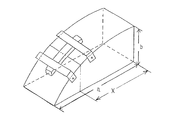
図1(斜視図)に示す、1/4楕円の面に試料片(厚み=3mm)を固定し、試料片にアルバニアグリース(昭和シェル石油株式会社製)を塗布し、48時間保持した。クラックが発生する最小長さ(X)を読み取り、下記の式(1)より限界歪(%)を求めた。
【0072】
【数1】
(5)リサイクル性
各組成物ペレットを用いて、成形温度300℃、金型温度80℃の条件で射出成形によりノートパソコンハウジング(A4タイプ)を成形した。この成形品を粉砕して、100%リサイクル原料として再度、同条件で試験片を成形した。
・リサイクル成形試験片のIZOD衝撃強度を測定した。
・リサイクル成形試験片の色調変化を測定した。JIS H7103(黄変度試験方法)に準拠して、色差計でリサイクル前後の試験片の色相(L,a,b)を測定し、色相変化を(ΔE)として算出した。
【0074】
【表1】
【表2】
第1表の結果から、実施例の本発明のポリカーボネート樹脂組成物からの成形品は、高い衝撃強度を維持して、溶融流動性が改良され、且つ難燃性にも優れていることが明らかである。また、耐グリース性、リサイクル性にもすぐれている。さらに、PTFEの添加によって、難燃性がV−0のレベルとなり優れていることが明らかである。また、比較例においては、溶融流動性、耐衝撃性、難燃性を全て満足することが困難である。
【0077】
【発明の効果】
本発明のポリカーボネート樹脂組成物は、ハロゲン系、リン系難燃剤を用いることなく、且つ少量の添加剤の含有で、難燃性、耐衝撃性、溶融流動性の全てにおいて、高いレベルにある。また、リサイクル性にすぐれ、再生使用が可能となり、良成形性による成形品の薄肉化と相まって、環境問題、省資源に貢献できるものである。したがって、OA機器、情報機器、家庭電化機器などの電気・電子機器、自動車部品などその応用分野の拡大が期待される。
【図面の簡単な説明】
【図1】本発明組成物の耐グリース性を評価するための試験片取り付け治具の斜視図である。[0001]
BACKGROUND OF THE INVENTION
The present invention relates to a polycarbonate resin composition. More specifically, the polycarbonate resin composition has excellent moldability without reducing impact resistance, that is, excellent melt flowability, and can be flame retardant without using a halogen-based or phosphorus-based flame retardant. Product and molded article.
[0002]
[Prior art]
Polycarbonate resins have excellent impact resistance, heat resistance, electrical properties, etc., and are used in various fields such as OA (office automation) equipment, information / communication equipment, home electrical appliances and other electrical / electronic equipment, automotive fields, and architectural fields. Widely used in Polycarbonate resin is generally a self-extinguishing resin, but there are fields that require high flame retardance, mainly in the field of electrical and electronic equipment such as OA equipment, information / communication equipment, and home appliances. The improvement is achieved by the addition of various flame retardants.
[0003]
As a method for improving the flame retardancy of polycarbonate resin, halogen flame retardants such as halogenated bisphenol A and halogenated polycarbonate oligomer have been used together with flame retardant aids such as antimony oxide from the viewpoint of flame retardant efficiency. However, from the viewpoint of safety in recent years and the impact on the environment at the time of disposal / incineration, a flame retardant method using a flame retardant containing no halogen is required from the market. As non-halogen flame retardants, polycarbonate resin compositions formulated with organophosphorus flame retardants, especially organophosphate compounds, exhibit excellent flame retardancy and also act as plasticizers, and many methods have been proposed. Yes.
[0004]
In order to make a polycarbonate resin flame-retardant with a phosphoric ester compound, it is necessary to blend a relatively large amount of the phosphoric ester compound. In addition, since the polycarbonate resin has a high molding temperature and a high melt viscosity, the molding temperature tends to be higher in order to cope with the reduction in thickness and size of the molded product. Therefore, although the phosphate ester compound generally contributes to flame retardancy, it may not always be sufficient in terms of molding environment and appearance of the molded product, such as die corrosion during molding and generation of gas. In addition, problems have been pointed out such as reduced impact strength and occurrence of discoloration when the molded product is placed under heating or under high temperature and high humidity. Furthermore, there are still problems such as difficulty in recyclability in recent resource savings due to insufficient thermal stability.
[0005]
On the other hand, it is also known to impart flame retardancy without generating harmful gas during combustion by blending a silicone compound with a polycarbonate resin. For example, (1) JP-A-10-139964 discloses a flame retardant comprising a silicone resin having a specific structure and a specific molecular weight.
[0006]
Further, (2) JP-A-51-45160, JP-A-1-318069, JP-A-6-306265, JP-A-8-12868, JP-A-8-295796, JP 3-B Japanese Patent No. 48947 discloses a flame retardant polycarbonate resin using silicones. However, in the former (1), the flame retardancy level is excellent to some extent, but the impact resistance may not be sufficient. In the latter (2), silicones are not used alone as flame retardants, but are used as exemplary compounds for the purpose of improving drop resistance, and as other flame retardant additives. , A phosphoric acid ester compound, a periodic table group 2 metal salt, etc. are different from the former in that the combined use is essential. In addition, there is another problem that moldability and physical properties are reduced due to the inclusion of the flame retardant.
[0007]
Furthermore, a flame retardant resin composition comprising a polycarbonate resin composition made of polytetrafluoroethylene having a fibril-forming ability using a polycarbonate-polyorganosiloxane copolymer-containing resin as a polycarbonate resin is also known (Japanese Patent Laid-Open No. Hei. 8-81620). This composition is a composition showing excellent flame retardancy in a specific range where the content of polyorganosiloxane is small. However, although the flame retardancy is excellent, the impact resistance, which is a feature of the polycarbonate resin, may be lowered.
[0008]
[Problems to be solved by the invention]
The present invention, while maintaining the impact resistance characteristic of the polycarbonate resin under the above-mentioned conditions, improves moldability, that is, melt flowability, and is flame retardant without using a halogen-based or phosphorus-based flame retardant. An object of the present invention is to provide a polycarbonate resin composition capable of obtaining an excellent polycarbonate resin molded article and a molded article using the composition.
[0009]
[Means for Solving the Problems]
The present inventors diligently investigated improvements in moldability as well as impact resistance, heat resistance, and recyclability in the flame retardant of polycarbonate resin with a silicone compound. As a result, in a polycarbonate resin composition, a specific small amount of a silicone compound and a specific rubber-like elastic body are selected and used, and by selecting a specific polycarbonate resin, moldability and difficulty can be reduced without reducing impact resistance. The inventors have found that the flammability is remarkably improved and have completed the present invention.
[0010]
That is, the present invention
(1) (B) Functional group containing silicone compound 0.1-10 mass with respect to 100 mass parts of polycarbonate-type resin which consists of copolyester carbonate which has an aliphatic segment, or polycarbonate-type resin composition containing this And (C) a polycarbonate resin composition containing 0.2 to 10 parts by mass of a core / shell type graft rubber-like elastic body and containing no halogen flame retardant and phosphorus flame retardant .
(2) (A) the polycarbonate resin composition is at least polycarbonate - containing polyorganosiloxane copolymer, and polyorganosiloxane content of the polycarbonate-based resin composition is 0.1 to 10 mass% The polycarbonate resin composition according to (1).
(3) Furthermore, (A) 0.02-5 mass parts of (D) polyfluoroolefin resin is contained with respect to 100 mass parts of said polycarbonate-type resin or polycarbonate-type resin composition, or (1) or The polycarbonate resin composition as described in (2).
(4) A molded article comprising the polycarbonate resin composition according to any one of (1) to (3).
(5) Provided is a housing or part of an electric / electronic device comprising the polycarbonate resin composition according to any one of (1) to (3).
[0011]
DETAILED DESCRIPTION OF THE INVENTION
Hereinafter, the present invention will be described in detail.
The (A) copolyester carbonate copolymer having an aliphatic segment constituting the polycarbonate resin composition of the present invention (hereinafter sometimes abbreviated as PC-PMDC copolymer) is, for example, an aromatic polycarbonate part. There is no particular limitation as long as it is a copolymer comprising a polyester part derived from dihydric phenol and polymethylene dicarboxylic acid, but preferably an aromatic polycarbonate part comprising a structural unit represented by the following structural formula (1) And a copolymer having in its molecule a polyester portion composed of a structural unit represented by the following structural formula (2).
[0012]
[Chemical 1]
[Chemical formula 2]
Here, in the formula, R 1 and R 2 represents an alkyl group or a phenyl group having 1 to 6 carbon atoms and may be the same or different.
Z is a single bond, an alkylene group having 1 to 20 carbon atoms or an alkylidene group having 1 to 20 carbon atoms, a cycloalkylene group having 5 to 20 carbon atoms, a cycloalkylidene group having 5 to 20 carbon atoms, or —SO 2 —, — SO-, -S-, -O-, -CO- bond is shown. Preferably, it is an isopropylidene group.
[0015]
a and b are integers of 0 to 4, preferably 0. m shows the integer of 5-20, Preferably it is 8-12.
The viscosity average molecular weight of the PC-PMDC copolymer constituting the component (A) is preferably 10,000 to 40,000, and more preferably 12,000 to 30,000. The measuring method is the same as described later.
[0016]
This PC-PMDC copolymer includes, for example, a polycarbonate oligomer (hereinafter sometimes abbreviated as PC oligomer) constituting an aromatic polycarbonate part produced in advance, and polymethylene dicarboxylic acid, methylene chloride, chlorobenzene, Dissolve in a solvent such as chloroform, add a caustic aqueous solution of dihydric phenol, use a tertiary amine (such as triethylamine) or a quaternary ammonium salt (such as trimethylbenzylammonium chloride) as a catalyst, and the presence of a terminal terminator It can be produced by a lower interfacial polycondensation reaction.
[0017]
This PC oligomer is produced by the same method as in the case of ordinary polycarbonate resin production. For example, it can be easily produced by reacting a dihydric phenol with a carbonate precursor such as phosgene or a carbonate compound in a solvent such as methylene chloride.
[0018]
That is, it is produced, for example, by a reaction between a dihydric phenol and a carbonate precursor such as phosgene in a solvent such as methylene chloride, or by a transesterification reaction between a dihydric phenol and a carbonate precursor such as diphenyl carbonate. The
[0019]
As the dihydric phenol, 4,4′-dihydroxydiphenyl; 1,1-bis (4-hydroxyphenyl) methane, 1,1-bis (4-hydroxyphenyl) ethane, 2,2-bis (4-hydroxyphenyl) ) Bis (4-hydroxyphenyl) alkanes such as propane; bis (4-hydroxyphenyl) cycloalkane; bis (4-hydroxyphenyl) oxide; bis (4-hydroxyphenyl) sulfide; bis (4-hydroxyphenyl) sulfone; Examples thereof include bis (4-hydroxyphenyl) sulfoxide; bis (4-hydroxyphenyl) ether; bis (4-hydroxyphenyl) ketone. Of these, 2,2-bis (4-hydroxyphenyl) propane (bisphenol A) is preferable. These dihydric phenols may be used alone or in combination of two or more.
[0020]
Examples of the carbonate compound include diaryl carbonates such as diphenyl carbonate, and dialkyl carbonates such as dimethyl carbonate and diethyl carbonate.
[0021]
In the present invention, the PC oligomer used for the production of the PC-PMDC copolymer may be a homopolymer using one kind of the above-mentioned dihydric phenol or a copolymer using two or more kinds. . Furthermore, the thermoplastic random branched polycarbonate obtained by using a polyfunctional aromatic compound together with the said bihydric phenol may be sufficient. In that case, as a branching agent (polyfunctional aromatic compound), 1,1,1-tris (4-hydroxyphenyl) ethane, α, α ′, α ″ -tris (4-hydroxyphenyl) -1,3, 5-triisopropylbenzene, 1- [α-methyl-α- (4′-hydroxyphenyl) ethyl] -4- [α ′, α′-bis (4 ″ -hydroxylphenyl) ethyl] benzene, phloroglucin, trimellit Acid, isatin bis (o-cresol), and the like can be used.
[0022]
For the adjustment of the molecular weight, phenol, pt-butylphenol, pt-octylphenol, p-cumylphenol, p-decylphenol, p-dodecylphenol, p-pentadecylphenol and the like are used.
[0023]
As said polymethylene dicarboxylic acid, the dicarboxylic acid which has a C5-C20 polymethylene group is used, Preferably it is C8-C12.
The copolyester carbonate having an aliphatic segment in the component (A) can be produced as described above. Generally, an aromatic polycarbonate resin is produced as a by-product and produced as a mixture, and the overall viscosity average molecular weight is 10,000 to 10,000. 40,000 is preferable, More preferably, it is 12,000-30,000. The amount of polymethylene dicarboxylic acid is 1 to 25 mol% with respect to the dihydric phenol.
[0024]
Next, the component (A) may be a mixture of a bisphenol-A polycarbonate or the like and a copolyester carbonate having an aliphatic segment with another polycarbonate resin. In that case, the newly added polycarbonate-based resin preferably has a viscosity average molecular weight of 10,000 to 40,000, more preferably 12,000 to 30,000.
[0025]
There is no restriction | limiting in particular as another polycarbonate-type resin (PC), A various thing is mentioned. Usually, an aromatic polycarbonate produced by a reaction between a dihydric phenol and a carbonate precursor can be used. That is, a product prepared by reacting a dihydric phenol and a carbonate precursor by a solution method or a melting method, that is, a reaction of a dihydric phenol and phosgene or a transesterification method of a dihydric phenol and diphenyl carbonate or the like is used. be able to.
[0026]
Various dihydric phenols can be mentioned, and in particular, 2,2-bis (4-hydroxyphenyl) propane [bisphenol A], bis (4-hydroxyphenyl) methane, 1,1-bis (4-hydroxy). Phenyl) ethane, 2,2-bis (4-hydroxy-3,5-dimethylphenyl) propane, 4,4′-dihydroxydiphenyl, bis (4-hydroxyphenyl) cycloalkane, bis (4-hydroxyphenyl) oxide, Examples thereof include bis (4-hydroxyphenyl) sulfide, bis (4-hydroxyphenyl) sulfone, bis (4-hydroxyphenyl) sulfoxide, bis (4-hydroxyphenyl) ether, and bis (4-hydroxyphenyl) ketone. In addition, examples of the dihydric phenol include hydroquinone, resorcin, and catechol. These dihydric phenols may be used alone or in combination of two or more.
[0027]
Particularly preferred dihydric phenols are bis (hydroxyphenyl) alkanes, especially those using bisphenol A as the main raw material. The carbonate precursor is carbonyl halide, carbonyl ester, haloformate or the like, and specifically, phosgene, dihaloformate of dihydric phenol, diphenyl carbonate, dimethyl carbonate, diethyl carbonate or the like.
[0028]
The aromatic polycarbonate-based resin may have a branched structure. Examples of the branching agent include 1,1,1-tris (4-hydroxyphenyl) ethane, α, α ′, α ″ -tris (4 -Bidroxyphenyl) -1,3,5-triisopropylbenzene, phloroglucin, trimellitic acid, isatin bis (o-cresol), etc. In order to adjust the molecular weight, phenol, pt-butylphenol, Pt-octylphenol, p-cumylphenol, p-decylphenol, p-dodecylphenol, p-pentadecylphenol and the like are used.
[0029]
The polycarbonate resin used in the present invention is an aromatic polyester obtained by polymerizing polycarbonate in the presence of an ester precursor such as a bifunctional aromatic carboxylic acid such as terephthalic acid or an ester-forming derivative thereof. -It may be a copolymer such as a polycarbonate resin, or a mixture of various polycarbonate resins.
[0030]
Further, examples of the aromatic polycarbonate-based copolymer include a polycarbonate-polyorganosiloxane copolymer (hereinafter sometimes abbreviated as a PC-PDMS copolymer). The PC-PDMS copolymer is composed of a polycarbonate part and a polyorganosiloxane part. For example, a polyorganosiloxane having a reactive group at the terminal constituting the polycarbonate oligomer and the polyorganosiloxane part (polydimethylsiloxane, polydiethylsiloxane). Siloxane, polymethylphenylsiloxane, etc.) are dissolved in a solvent such as methylene chloride, an aqueous sodium hydroxide solution of bisphenol A is added, and an interfacial polycondensation reaction is performed using a catalyst such as triethylamine. Regarding this PC-PDMS copolymer, JP-A-3-292359, JP-A-4-202465, JP-A-8-81620, JP-A-8-302178, JP-A-10-7897, etc. Is disclosed.
[0031]
The degree of polymerization of the polycarbonate part of the PC-PDMS copolymer is preferably 3 to 100, and the degree of polymerization of the polydimethylsiloxane part is preferably about 2 to 500. Moreover, as content of polydimethylsiloxane in a PC-PDMS copolymer, it is 0.5-30 mass% normally, Preferably it is the range of 1-20 mass%. The viscosity average molecular weight of the polycarbonate resin, PC-PDMS copolymer and the like used in the present invention is usually 10,000 to 100,000, preferably 11,000 to 30,000, particularly preferably 12,000 to 30,000. It is. Here, the viscosity average molecular weight (Mv) of various polycarbonate resins of component (A) is determined by measuring the viscosity of a methylene chloride solution at 20 ° C. using an Ubbelohde viscometer, and obtaining the intrinsic viscosity [η] from this. Is calculated by the following equation.
[0032]
[η] = 1.23 × 10 −5 Mv 0.83
The viscosity average molecular weight of the entire aromatic polycarbonate resin (A) is preferably 10,000 to 40,000, more preferably 12,000 to 30,000, and particularly preferably 14,000 to 26,000. is there. If the molecular weight is too low, the mechanical strength of the resin composition of the present invention, particularly impact resistance, may be inferior. If the molecular weight is too high, the fluidity of the resin composition of the present invention, that is, moldability may be inferior. is there.
[0033]
The content of the polyorganosiloxane in the case of containing the PC-PDMS copolymer is in the range of 0.1 to 10% by mass of the whole polycarbonate resin of the component (A), and the flame retardant of the resin composition of the present invention. From the viewpoint of sex. More preferably, it is 0.2-5 mass%, Most preferably, it is 0.3-3 mass%.
[0034]
The amount of the polymethylene dicarboxylic acid is preferably 1 to 15 mol%, more preferably 1 to 12 mol, based on the main monomer (dihydric phenol) of the entire polycarbonate resin as the component (A). %, Particularly preferably 2 to 10 mol%. If the amount of the polymethylene dicarboxylic acid is too small, the fluidity of the resin composition of the present invention may not be improved. If it is too large, the heat resistance of the resin composition of the present invention may be reduced.
[0035]
Next, in the present invention, the functional group-containing silicone compound as the component (B) is a (poly) organosiloxane having a functional group, and the skeleton thereof is:
Formula R 1 aR 2 bSiO (4-ab) / 2
[Wherein R 1 is a functional group-containing group, R 2 is a hydrocarbon group having 1 to 12 carbon atoms, and a and b are 0 <a ≦ 3, 0 ≦ b <3, 0 <a + b ≦ 3] It is a polymer or copolymer having a basic structure. The functional group includes an alkoxy group, aryloxy, polyoxyalkylene group, hydrogen group, hydroxyl group, carboxyl group, cyanol group, amino group, mercapto group, epoxy group and the like.
[0036]
As these functional group-containing silicone compounds, silicone compounds having a plurality of functional groups and silicone compounds having different functional groups can be used in combination. The silicone compound having this functional group has a functional group (R 1 ) / hydrocarbon group (R 2 ) of usually 0.1 to 3, preferably about 0.3 to 2 .
[0037]
These silicone compounds are liquids, powders, etc., but those having good dispersibility in melt kneading are preferred. For example, a liquid material having a kinematic viscosity at room temperature of about 10 to 500,000 mm 2 / s can be exemplified. The polycarbonate resin composition of the present invention has the great features that even when the silicone compound is in a liquid state, it is uniformly dispersed in the composition and is less likely to bleed during molding or on the surface of the molded product. Here, if a silicone compound having no functional group is used, it is difficult to obtain the flame-retardant effect of the present invention.
[0038]
This functional group-containing silicone compound can be contained in an amount of 0.1 to 10 parts by mass, preferably 0.2 to 5 parts by mass, with respect to 100 parts by mass of the polycarbonate resin as the component (A). In addition, the content of the functional group-containing silicone compound is appropriately determined in consideration of the silicone content in the entire composition when a polycarbonate resin containing a PC-PDMS copolymer is used as the polycarbonate resin. Can be determined. In this case, since a certain amount of silicone is already contained, the content of the functional group-containing silicone compound can be reduced, and even if the silicone content in the whole composition is lowered, the flame retardant level is reduced. Can be maintained high.
[0039]
Next, the core / shell type graft rubber-like elastic body as the component (C) of the polycarbonate resin composition of the present invention has a two-layer structure composed of a core and a shell. The core portion is in a soft rubber state, the shell portion on the surface thereof is in a hard resin state, and the elastic body itself is a graft rubber-like elastic body in a powder form (particle state). The core / shell type graft rubber-like elastic body maintains the original form for the most part even after being melt-blended with the polycarbonate resin. Since most of the blended rubber-like elastic body maintains the original form, an effect of uniformly dispersing and preventing surface peeling can be obtained.
[0040]
Various examples of the core / shell type graft rubber-like elastic body can be mentioned. Examples of commercially available products include Hybrene B621 (made by Nippon Zeon Co., Ltd.), KM-330 (made by Rohm & Haas Co., Ltd.), Metabrene W529, Metabrene S2001, Metabrene C223, Metabrene B621 (Mitsubishi Rayon Co., Ltd.) and the like. It is done.
[0041]
Among these, for example, in the presence of a rubbery polymer obtained from a monomer mainly composed of alkyl acrylate, alkyl methacrylate, or dimethylsiloxane, one or more vinyl monomers are polymerized. What is obtained is mentioned. Here, as the alkyl acrylate or acrylic methacrylate, those having an alkyl group having 2 to 10 carbon atoms are suitable.
[0042]
Specific examples include ethyl acrylate, butyl acrylate, 2-ethylhexyl acrylate, n-octyl methacrylate, and the like. Examples of rubber-like elastic bodies obtained from monomers mainly composed of these alkyl acrylates include alkyl acrylates of 70% by mass or more and other vinyl monomers copolymerizable therewith, such as methyl methacrylate and acrylonitrile. , A polymer obtained by reacting 30% by mass or less of vinyl acetate, styrene and the like. In this case, a polyfunctional monomer such as divinylbenzene, ethylene dimethacrylate, triallyl cyanurate, triallyl isocyanurate or the like may be appropriately added as a crosslinking agent for reaction.
[0043]
Examples of vinyl monomers to be reacted in the presence of the rubbery polymer include aromatic vinyl compounds such as styrene and α-methylstyrene, acrylic acid esters such as methyl acrylate and ethyl acrylate, methyl methacrylate, And methacrylates such as ethyl methacrylate. These monomers may be used alone or in combination of two or more, and other vinyl polymers such as vinyl cyanide compounds such as acrylonitrile and methacrylonitrile, vinyl acetate, propionic acid, etc. You may make it copolymerize with vinyl ester compounds, such as vinyl. This polymerization reaction can be performed by various methods such as bulk polymerization, suspension polymerization, and emulsion polymerization. In particular, the emulsion polymerization method is suitable.
[0044]
The core / shell type graft rubber-like elastic body thus obtained preferably contains 20% by mass or more of the rubber-like polymer. Specific examples of such a core / shell type graft rubber-like elastic body include MAS resin elastic bodies such as a graft copolymer of 60 to 80% by mass of n-butyl acrylate, styrene, and methyl methacrylate. It is done. In addition, the polysiloxane rubber component has a structure in which 5 to 95% by mass of the polysiloxane rubber component and 95 to 5% by mass of the polyacrylic (meth) acrylate rubber component are intertwined so as not to be separated, and the average particle size is 0.01 to 1 μm. A composite rubber-based graft copolymer obtained by graft-polymerizing at least one vinyl monomer to a composite rubber of a certain degree is particularly preferable. This copolymer has a higher impact resistance improving effect than the graft copolymer of each rubber alone. This composite rubber-based graft copolymer can be obtained as a commercially available product, such as METABRENE S-2001 manufactured by Mitsubishi Rayon Co., Ltd.
[0045]
The content of the core / shell type graft rubber-like elastic body as the component (C) is 0.2 to 10 parts by mass, preferably 0.5 with respect to 100 parts by mass of the polycarbonate resin as the component (A). -5 parts by mass. Here, if the content of the graft rubber-like elastic body is less than 0.2 parts by mass, the impact resistance improving effect is low, and if it exceeds 10% by mass, the flame retardancy, heat resistance, and rigidity may be low. Yes, usually up to 10 parts by weight is sufficient. The polycarbonate resin composition of the present invention has an excellent effect for the first time by using a relatively small amount of the functional group-containing silicone compound (B) and the core / shell type graft rubber-like elastic body (C). It is something that demonstrates. Here, in the case where another graft copolymer is used instead of the core / shell type graft rubber-like elastic body, the impact strength may be improved, but this is the final object of the present invention. It may be difficult to maintain a level of flame retardancy.
[0046]
In addition, the polycarbonate resin composition of this invention can fully achieve the objective of this invention with the said 3 component from a flame retardance and an impact-resistant viewpoint. However, for the purpose of preventing melt dripping during combustion in a flame retardancy test or the like, a known melt dripping inhibitor can be further contained. As the melt dripping inhibitor, (D) polyfluoroolefin resin can be suitably used. Here, the polyfluoroolefin resin is usually a polymer or copolymer having a fluoroethylene structure, such as a difluoroethylene polymer, a tetrafluoroethylene polymer, a tetrafluoroethylene-hexafluoropropylene copolymer, or a tetrafluoro. It is a copolymer of ethylene and an ethylene monomer that does not contain fluorine. Polytetrafluoroethylene (PTFE) is preferable, and the average molecular weight is preferably 500,000 or more, and particularly preferably 500,000 to 10,000,000. As polytetrafluoroethylene that can be used in the present invention, all of the currently known types can be used.
[0047]
In addition, when polytetrafluoroethylene having a fibril forming ability is used, it is possible to impart higher melt dripping prevention property. Although there is no restriction | limiting in particular in the polytetrafluoroethylene (PTFE) which has a fibril formation ability, For example, what is classified into the type 3 in ASTM standard is mentioned. Specific examples thereof include, for example, Teflon 6-J (Mitsui / DuPont Fluorochemical Co., Ltd.), Polyflon D-1, Polyflon F-103, Polyflon F201 (Daikin Industries Co., Ltd.), CD076 (Asahi IC Fluoropolymers Co., Ltd.) Company-made).
[0048]
Other than those classified as type 3, for example, Algoflon F5 (manufactured by Montefluos Co., Ltd.), polyflon MPA, polyflon FA-100 (manufactured by Daikin Industries, Ltd.), and the like can be given. These polytetrafluoroethylene (PTFE) may be used independently and may combine 2 or more types. Polytetrafluoroethylene (PTFE) having the fibril-forming ability as described above is, for example, tetrafluoroethylene in an aqueous solvent in the presence of sodium, potassium, ammonium peroxydisulfide, under a pressure of 0.01 to 1 MPa, It is obtained by polymerizing at a temperature of 0 to 200 ° C, preferably 20 to 100 ° C.
[0049]
Here, content of polyfluoroolefin resin is 0.02-5 mass parts with respect to 100 mass parts of said (A) polycarbonate-type resin, Preferably, it is 0.05-2 mass parts. Here, if it is less than 0.02 parts by mass, the target flame retardancy may not be sufficient for preventing melt dripping, and even if it exceeds 5 parts by mass, the effect corresponding to this is not improved, It may adversely affect the impact properties and appearance of the molded product. Therefore, it is determined as appropriate in consideration of the amount of other components used depending on the degree of flame retardancy required for each molded article, for example, UL-94 V-0, V-1, V-2, etc. be able to.
[0050]
Moreover, the polycarbonate resin composition of the present invention can contain an inorganic filler, if necessary, in order to further improve the rigidity and flame retardancy of the molded product. Here, examples of the inorganic filler include talc, mica, kaolin, diatomaceous earth, calcium carbonate, calcium sulfate, barium sulfate, glass fiber, carbon fiber, and potassium titanate fiber. Of these, plate-like talc and mica, and fibrous fillers such as glass fiber and carbon fiber are preferable. As the talc, magnesium hydrate silicate, which is commercially available, can be used. Moreover, the average particle diameter of inorganic fillers, such as a talc, is 0.1-50 micrometers, Preferably, it is 0.2-20 micrometers. By including these inorganic fillers, particularly talc, the compounding amount of the silicone compound may be reduced in addition to the rigidity improving effect.
[0051]
Here, content of an inorganic filler is 1-100 mass parts with respect to 100 mass parts of polycarbonate-type resin of (A) component, Preferably, it is 2-50 mass parts. Here, if it is less than 1 part by mass, the intended rigidity and flame retardancy improving effect may not be sufficient, and if it exceeds 100 parts by mass, impact resistance and melt fluidity may be reduced, and molding The thickness of the product, the resin flow length, etc. can be appropriately determined in consideration of the required properties and moldability of the molded product.
[0052]
The polycarbonate resin composition of the present invention contains (D) an essential component composed of the above (A), (B), and (C) for the purpose of moldability, impact resistance, appearance improvement, weather resistance improvement, rigidity improvement, and the like. ) And other optional components such as thermoplastic resins such as polyester resins and polyamide resins, and additive components commonly used in thermoplastic resins can be included as necessary. For example, phenol-based, phosphorus-based, sulfur-based antioxidants, antistatic agents, polyamide polyether block copolymers (permanent antistatic performance imparted), benzotriazole-based or benzophenone-based UV absorbers, hindered amine-based light stabilizers (Weathering agent), plasticizer, antibacterial agent, compatibilizing agent, colorant (dye, pigment) and the like. The blending amount of the optional component is desirably within a range in which the characteristics of the polycarbonate resin composition of the present invention are maintained.
[0053]
Next, the manufacturing method of the polycarbonate resin composition of this invention is demonstrated. In the polycarbonate resin composition of the present invention, the above-mentioned components (A), (B), (C) are used in the above proportions, and various optional components such as (D), which are used as necessary, in a predetermined proportion. It is obtained by blending and kneading. In this case, the compounding and kneading are premixed with commonly used equipment such as a ribbon blender and a drum tumbler, and then a Banbury mixer, a single screw extruder, a twin screw extruder, a multi-screw extruder, and a kneader. Or the like. The heating temperature at the time of kneading is usually appropriately selected within the range of 240 to 300 ° C. As this melt-kneading molding, it is preferable to use an extrusion molding machine, particularly a vent type extrusion molding machine. It should be noted that the components other than the polycarbonate resin can be added in advance as a masterbatch by melt-kneading with the polycarbonate resin or other thermoplastic resin.
[0054]
The polycarbonate resin composition of the present invention can be produced directly by the above melt-kneading molding machine, or by using the obtained pellet as a raw material, an injection molding method, an injection compression molding method, an extrusion molding method, a blow molding method. Various molded products can be produced by a press molding method, a vacuum molding method, a foam molding method, or the like. However, a pellet-shaped forming raw material can be produced by the melt-kneading method, and then the pellet can be used particularly suitably for production of an injection-molded product by injection molding or injection compression molding. As an injection molding method, gas injection molding for preventing the appearance of sink marks or for weight reduction can be adopted.
[0055]
Examples of molded articles obtained from the polycarbonate resin composition of the present invention include copying machines, fax machines, televisions, radios, tape recorders, video decks, personal computers, printers, telephones, information terminals, refrigerators, microwave ovens, and other electrical / electronic devices. It is also used in other fields such as housings and parts, as well as automobile parts.
[0056]
【Example】
Further, the present invention will be described more specifically with reference to production examples, examples and comparative examples, but the present invention is not limited to these examples.
Production Example 1
[Production of PC oligomer]
60 kg of bisphenol A was dissolved in 400 liters of 5 mass% sodium hydroxide aqueous solution to prepare a sodium hydroxide aqueous solution of bisphenol A.
[0057]
Next, this aqueous solution of bisphenol A in sodium hydroxide maintained at room temperature at a flow rate of 138 liter / hour and methylene chloride at a flow rate of 69 liter / hour was passed through an orifice plate through a tubular reactor having an inner diameter of 10 mm and a tube length of 10 m. It was introduced, and phosgene was co-flowed into it and blown in at a flow rate of 10.7 kg / hour, and reacted continuously for 3 hours. The tubular reactor used here was a double tube, and the discharge temperature of the reaction solution was maintained at 25 ° C. through the jacket portion through cooling water. The pH of the effluent was adjusted to 10-11.
[0058]
The reaction solution thus obtained was allowed to stand to separate and remove the aqueous phase, and the methylene chloride phase (220 liters) was collected to obtain a PC oligomer (concentration 317 g / liter). The degree of polymerization of the PC oligomer obtained here was 2 to 4, and the concentration of the chloroformate group was 0.7N.
[0059]
Production Example 2
[Production of PC-PMDC copolymer [I]]
To 10 liters of the PC oligomer obtained in Production Example 1, an aqueous sodium hydroxide solution of decanedicarboxylic acid (317 g of decanedicarboxylic acid, 110 g of sodium hydroxide, 2 liters of water) and 5.8 ml of triethylamine were added, and at room temperature for 1 hour at 300 rpm. Stir and react. Thereafter, an aqueous sodium hydroxide solution of bisphenol A (534 g of bisphenol A, 312 g of sodium hydroxide, 5 liters of water) and 136 g of p-cumylphenol were added to the above system, 8 liters of methylene chloride was further added, and the mixture was stirred at 500 rpm for 1 hour. Reacted. After the reaction, 7 liters of methylene chloride and 5 liters of water were added and stirred for 10 minutes at 500 rpm. The mixture was allowed to stand after the stirring was stopped, and the organic phase and the aqueous phase were separated. The obtained organic phase was washed with 5 liters of 0.03 N aqueous sodium hydroxide solution, washed with 5 liters of 0.2 N hydrochloric acid and washed with 5 liters of water twice, and finally methylene chloride was removed. A flaky polymer was obtained. The viscosity average molecular weight was 17,000, and the content of decanedicarboxylic acid relative to all monomers was 5.2 mol%.
[0060]
・ PC-PMDC copolymer [II]
As a commercially available PC-PMDC copolymer, Lexan SP1010 manufactured by General Electric Co. was used. The comonomer is decanedicarboxylic acid and the end-stopper is p-cumylphenol. The viscosity average molecular weight was 18,800, and the content of decanedicarboxylic acid based on all monomers was 8.2 mol%.
[0061]
Production Example 3
[Production of reactive PDMS]
1,483 g of octamethylcyclotetrasiloxane, 96 g of 1,1,3,3-tetramethyldisiloxane and 35 g of 86% sulfuric acid were mixed and stirred at room temperature for 17 hours. Thereafter, the oil phase was separated, 25 g of sodium bicarbonate was added, and the mixture was stirred for 1 hour. After filtration, vacuum distillation was performed at 150 ° C. and 3 torr (4 × 10 2 Pa) to remove low-boiling substances to obtain oil.
[0062]
To a mixture of 60 g 2-allylphenol and 0.0014 g platinum as platinum chloride-alcolate complex, 294 g of the oil obtained above was added at a temperature of 90 ° C. The mixture was stirred for 3 hours while maintaining the temperature at 90 to 115 ° C. The product was extracted with methylene chloride and washed 3 times with 80% aqueous methanol to remove excess 2-allylphenol. The product was dried over anhydrous sodium sulfate, heated to 115 ° C. in a vacuum, and the solvent was distilled off.
The terminal phenol PDMS obtained had 30 repeats of dimethylsilanooxy units as measured by NMR.
[0063]
Production Example 4
[Production of PC-PDMS copolymer]
182 g of reactive PDMS obtained in Production Example 3 was dissolved in 2 liters of methylene chloride, and 10 liters of PC oligomer obtained in Production Example 1 were mixed. Thereto, 26 g of sodium hydroxide dissolved in 1 liter of water and 5.7 cc of triethylamine were added, and the mixture was stirred and reacted at room temperature at 500 rpm for 1 hour.
[0064]
After completion of the reaction, to the above reaction system was added 600 g of bisphenol A dissolved in 5 liters of a 5.2 wt% aqueous sodium hydroxide solution, 8 liters of methylene chloride and 96 g of p-tert-butylphenol, and the mixture was brought to room temperature at 500 rpm. And stirred for 2 hours.
[0065]
After the reaction, add 5 liters of methylene chloride, and further wash with 5 liters of water, wash with alkali with 5 liters of 0.03 N aqueous sodium hydroxide, wash with acid with 5 liters of 0.2 N hydrochloric acid, and wash with 5 liters of water. The methylene chloride was removed at the end, and a flaky PC-PDMS copolymer was obtained. The obtained PC-PDMS copolymer was vacuum-dried at 120 ° C. for 24 hours. The viscosity average molecular weight was 17,000, and the PDMS content was 4.0% by mass.
[0066]
In addition, the viscosity average molecular weight and the PDPS content were performed as follows.
(1) Viscosity average molecular weight (Mv)
The viscosity of the methylene chloride solution at 20 ° C. was measured with an Ubbelohde viscometer, and the intrinsic viscosity [η] was determined from the viscosity.
[Η] = 1.23 × 10 −5 Mv 0.83
(2) PDMS content
It was determined based on the intensity ratio between the isopropyl methyl group peak of bisphenol A found at 1.7 ppm by 1 H-NMR and the methyl group peak of dimethylsiloxane found at 0.2 ppm.
[0067]
Examples 1-6 and Comparative Examples 1-6
Each component is blended in the proportions shown in Table 1 and Table 1 (component (A) is in mass%), and other components are shown in parts by mass with respect to 100 parts by mass of component (A) resin. Then, it was supplied to a vent type twin screw extruder (model name: TEM35, manufactured by Toshiba Machine Co., Ltd.), melted and kneaded at 280 ° C., and pelletized. In all Examples and Comparative Examples, 0.2 parts by mass of Irganox 1076 (manufactured by Ciba Specialty Chemicals) and 0.1 part by mass of Adeka Stub C (manufactured by Asahi Denka Kogyo Co., Ltd.) were used as antioxidants. Blended. The obtained pellets were dried at 120 ° C. for 12 hours and then injection molded at a molding temperature of 270 ° C. and a mold temperature of 80 ° C. to obtain test pieces. The performance was evaluated by various tests using the obtained test pieces, and the results are shown in Table 1 and Table 1.
[0068]
The molding materials and performance evaluation methods used are shown below.
(A) Polycarbonate-based resin / PC-1: Toughlon A1700 (manufactured by Idemitsu Petrochemical Co., Ltd.): Bisphenol A polycarbonate resin, MFR = 27 g / 10 min (temperature: 300 ° C., load: 11.77 N), viscosity average molecular weight: 17,000
PC-2: Toughlon A1500 (manufactured by Idemitsu Petrochemical Co., Ltd.): bisphenol A polycarbonate resin, MFR = 50 g / 10 minutes, viscosity average molecular weight: 15,000
PC-PMDC [I]: Polyester carbonate resin having aliphatic units obtained in Production Example 3 PC-PMDC [II]: Commercial product PC-PDMS: Bisphenol A obtained in Production Example 4 -Polydimethylsiloxane (PDMS) copolymer
(B) Silicone compound / silicone-1: vinyl group methoxy group-containing methylphenyl silicone, KR219 (manufactured by Shin-Etsu Chemical Co., Ltd.), kinematic viscosity = 18 mm 2 / s
Silicone-2: methoxy group-containing dimethyl silicone, KC-89 (manufactured by Shin-Etsu Chemical Co., Ltd.), kinematic viscosity = 20 mm 2 / s
Silicone-3: dimethyl silicone, SH200 (manufactured by Toray Dow Corning Co., Ltd.), kinematic viscosity = 350 mm 2 / s
[0070]
(C) Core-shell type graft rubber-like elastic body / rubber-like elastic body-1: Composite rubber-based graft copolymer: Methbrene S2001 (manufactured by Mitsubishi Rayon Co., Ltd.): Polydimethylsiloxane content: 50% by mass or more Body-2: MBS graft copolymer: Metabrene C223 (Mitsubishi Rayon Co., Ltd.) Polybutadiene content: 60% by mass or more Rubber-like elastic body-3: SBS graft copolymer (comparison): VECTOR 8550-5 ( (Dexco Polymers)
(D) Polyfluoroolefin resin / PTFE: CD076 (Asahi IC fluoropolymers)
[0071]
[Performance evaluation method]
(1) Melt fluidity MFR (melt flow rate): Conforms to JIS K 7210. Temperature: 300 ° C, load: 11.77N
(2) IZOD (Izod impact strength)
Conforms to ASTM D256, 23 ° C (wall thickness: 3.2 mm)
(3) Compliant with flame retardant UL94 combustion test Note that V-2NG does not correspond to any of V-0, V-1, and V-2.
(5) Based on the grease resistance and chemical resistance evaluation method (limit strain due to ¼ ellipse).
A sample piece (thickness = 3 mm) was fixed to a quarter ellipse surface shown in FIG. 1 (perspective view), and Albania grease (made by Showa Shell Sekiyu KK) was applied to the sample piece and held for 48 hours. The minimum length (X) at which cracks occurred was read, and the critical strain (%) was determined from the following formula (1).
[0072]
[Expression 1]
(5) Recyclability Using each composition pellet, a notebook computer housing (A4 type) was molded by injection molding under conditions of a molding temperature of 300 ° C and a mold temperature of 80 ° C. The molded product was pulverized, and a test piece was molded again under the same conditions as a 100% recycled raw material.
-The IZOD impact strength of the recycled molded specimen was measured.
-Change in color tone of recycled molded specimens was measured. In accordance with JIS H7103 (yellowing degree test method), the hue (L, a, b) of the test piece before and after recycling was measured with a color difference meter, and the hue change was calculated as (ΔE).
[0074]
[Table 1]
[Table 2]
From the results of Table 1, it is clear that the molded products from the polycarbonate resin compositions of the present invention in the examples maintain high impact strength, have improved melt flowability, and are excellent in flame retardancy. It is. It also has excellent grease resistance and recyclability. Further, it is clear that the addition of PTFE is superior in that the flame retardancy is at the V-0 level. Moreover, in the comparative example, it is difficult to satisfy all of melt fluidity, impact resistance, and flame retardancy.
[0077]
【The invention's effect】
The polycarbonate resin composition of the present invention is at a high level in all of flame retardancy, impact resistance and melt fluidity without using a halogen-based or phosphorus-based flame retardant and containing a small amount of additives. In addition, it is excellent in recyclability and can be reused, and it can contribute to environmental problems and resource saving in combination with thinning of molded products due to good moldability. Therefore, it is expected that application fields such as OA equipment, information equipment, home appliances and other electric / electronic equipment, and automobile parts will be expanded.
[Brief description of the drawings]
FIG. 1 is a perspective view of a test piece mounting jig for evaluating the grease resistance of a composition of the present invention.
Claims (5)
Priority Applications (3)
| Application Number | Priority Date | Filing Date | Title |
|---|---|---|---|
| JP2000194519A JP4498552B2 (en) | 2000-06-28 | 2000-06-28 | Polycarbonate resin composition and molded article |
| EP01114744A EP1167448A3 (en) | 2000-06-28 | 2001-06-22 | Polycarbonate resin composition and shaped article |
| US09/891,521 US20020026008A1 (en) | 2000-06-28 | 2001-06-27 | Polycarbonate resin composition and shaped article |
Applications Claiming Priority (1)
| Application Number | Priority Date | Filing Date | Title |
|---|---|---|---|
| JP2000194519A JP4498552B2 (en) | 2000-06-28 | 2000-06-28 | Polycarbonate resin composition and molded article |
Publications (2)
| Publication Number | Publication Date |
|---|---|
| JP2002012745A JP2002012745A (en) | 2002-01-15 |
| JP4498552B2 true JP4498552B2 (en) | 2010-07-07 |
Family
ID=18693333
Family Applications (1)
| Application Number | Title | Priority Date | Filing Date |
|---|---|---|---|
| JP2000194519A Expired - Fee Related JP4498552B2 (en) | 2000-06-28 | 2000-06-28 | Polycarbonate resin composition and molded article |
Country Status (1)
| Country | Link |
|---|---|
| JP (1) | JP4498552B2 (en) |
Families Citing this family (2)
| Publication number | Priority date | Publication date | Assignee | Title |
|---|---|---|---|---|
| US6676852B2 (en) * | 2002-05-31 | 2004-01-13 | General Electric Company | Phosphorescent thermoplastic composition |
| CN110072918B (en) * | 2016-12-19 | 2021-10-22 | 科思创德国股份有限公司 | Production of siloxane-containing block copolycarbonates with the aid of compatibilizers |
Family Cites Families (5)
| Publication number | Priority date | Publication date | Assignee | Title |
|---|---|---|---|---|
| JP2855486B2 (en) * | 1991-03-28 | 1999-02-10 | 日本ジーイープラスチックス株式会社 | Flame retardant resin composition |
| JP3393616B2 (en) * | 1994-01-27 | 2003-04-07 | 出光石油化学株式会社 | Polycarbonate-polyorganosiloxane triblock copolymer and resin composition containing the same |
| JP3037588B2 (en) * | 1994-07-15 | 2000-04-24 | 出光石油化学株式会社 | Polycarbonate resin composition |
| JPH08295796A (en) * | 1995-04-26 | 1996-11-12 | Denki Kagaku Kogyo Kk | Flame-retardant resin composition |
| JP3432434B2 (en) * | 1998-11-12 | 2003-08-04 | 出光石油化学株式会社 | Flame retardant polycarbonate resin composition and molded article |
-
2000
- 2000-06-28 JP JP2000194519A patent/JP4498552B2/en not_active Expired - Fee Related
Also Published As
| Publication number | Publication date |
|---|---|
| JP2002012745A (en) | 2002-01-15 |
Similar Documents
| Publication | Publication Date | Title |
|---|---|---|
| JP4368977B2 (en) | Polycarbonate resin composition | |
| US7851529B2 (en) | Polycarbonate resin composition and molded article | |
| JP3662424B2 (en) | Flame retardant polycarbonate resin composition and injection molded article | |
| WO2000039217A1 (en) | Frame-retardant polycarbonate resin composition and formed article | |
| JP4377484B2 (en) | Polycarbonate resin composition | |
| JP4212959B2 (en) | Polycarbonate resin composition and molded product | |
| WO2002036687A1 (en) | Polycarbonate resin compositions | |
| JP2004035587A (en) | Polycarbonate resin composition and molding | |
| EP1167448A2 (en) | Polycarbonate resin composition and shaped article | |
| JP3616791B2 (en) | Flame retardant polycarbonate resin composition and molded article | |
| JP3623117B2 (en) | Flame retardant polycarbonate resin composition and molded article | |
| JP5654744B2 (en) | Polycarbonate resin composition | |
| EP1167449A1 (en) | Polycarbonate resin composition and shaped article | |
| JP2002146173A (en) | Polycarbonate resin composition and molded product | |
| JP5086499B2 (en) | Polycarbonate resin composition and molded product | |
| JP3621974B2 (en) | Flame retardant polycarbonate resin composition and molded article | |
| JP4540804B2 (en) | Polycarbonate resin composition and molded article | |
| JP4691316B2 (en) | Polycarbonate resin composition and injection molded body | |
| JP2004027112A (en) | Polycarbonate resin composition and molding prepared therefrom | |
| JP4012439B2 (en) | Polycarbonate resin composition and molded body comprising the same | |
| JP4242730B2 (en) | Flame retardant polycarbonate resin composition | |
| JP5463255B2 (en) | Polycarbonate resin composition | |
| JP3649611B2 (en) | Flame retardant polycarbonate resin composition and molded article | |
| JP2002012745A (en) | Polycarbonate resin composition and molded article | |
| JP4478300B2 (en) | Polycarbonate resin composition and molded product |
Legal Events
| Date | Code | Title | Description |
|---|---|---|---|
| A711 | Notification of change in applicant |
Free format text: JAPANESE INTERMEDIATE CODE: A712 Effective date: 20041216 |
|
| A621 | Written request for application examination |
Free format text: JAPANESE INTERMEDIATE CODE: A621 Effective date: 20061212 |
|
| A977 | Report on retrieval |
Free format text: JAPANESE INTERMEDIATE CODE: A971007 Effective date: 20090615 |
|
| A131 | Notification of reasons for refusal |
Free format text: JAPANESE INTERMEDIATE CODE: A131 Effective date: 20090901 |
|
| A521 | Request for written amendment filed |
Free format text: JAPANESE INTERMEDIATE CODE: A523 Effective date: 20091029 |
|
| TRDD | Decision of grant or rejection written | ||
| A01 | Written decision to grant a patent or to grant a registration (utility model) |
Free format text: JAPANESE INTERMEDIATE CODE: A01 Effective date: 20100406 |
|
| A01 | Written decision to grant a patent or to grant a registration (utility model) |
Free format text: JAPANESE INTERMEDIATE CODE: A01 |
|
| A61 | First payment of annual fees (during grant procedure) |
Free format text: JAPANESE INTERMEDIATE CODE: A61 Effective date: 20100414 |
|
| FPAY | Renewal fee payment (event date is renewal date of database) |
Free format text: PAYMENT UNTIL: 20130423 Year of fee payment: 3 |
|
| R150 | Certificate of patent or registration of utility model |
Free format text: JAPANESE INTERMEDIATE CODE: R150 |
|
| LAPS | Cancellation because of no payment of annual fees |