JP2017028126A - Electronic device and method of manufacturing electronic device - Google Patents
Electronic device and method of manufacturing electronic device Download PDFInfo
- Publication number
- JP2017028126A JP2017028126A JP2015145923A JP2015145923A JP2017028126A JP 2017028126 A JP2017028126 A JP 2017028126A JP 2015145923 A JP2015145923 A JP 2015145923A JP 2015145923 A JP2015145923 A JP 2015145923A JP 2017028126 A JP2017028126 A JP 2017028126A
- Authority
- JP
- Japan
- Prior art keywords
- land
- electronic device
- circuit board
- solder
- electrode
- Prior art date
- Legal status (The legal status is an assumption and is not a legal conclusion. Google has not performed a legal analysis and makes no representation as to the accuracy of the status listed.)
- Pending
Links
Images





Classifications
-
- H—ELECTRICITY
- H05—ELECTRIC TECHNIQUES NOT OTHERWISE PROVIDED FOR
- H05K—PRINTED CIRCUITS; CASINGS OR CONSTRUCTIONAL DETAILS OF ELECTRIC APPARATUS; MANUFACTURE OF ASSEMBLAGES OF ELECTRICAL COMPONENTS
- H05K1/00—Printed circuits
- H05K1/18—Printed circuits structurally associated with non-printed electric components
-
- H—ELECTRICITY
- H05—ELECTRIC TECHNIQUES NOT OTHERWISE PROVIDED FOR
- H05K—PRINTED CIRCUITS; CASINGS OR CONSTRUCTIONAL DETAILS OF ELECTRIC APPARATUS; MANUFACTURE OF ASSEMBLAGES OF ELECTRICAL COMPONENTS
- H05K3/00—Apparatus or processes for manufacturing printed circuits
- H05K3/30—Assembling printed circuits with electric components, e.g. with resistor
- H05K3/32—Assembling printed circuits with electric components, e.g. with resistor electrically connecting electric components or wires to printed circuits
- H05K3/34—Assembling printed circuits with electric components, e.g. with resistor electrically connecting electric components or wires to printed circuits by soldering
Landscapes
- Engineering & Computer Science (AREA)
- Microelectronics & Electronic Packaging (AREA)
- Manufacturing & Machinery (AREA)
- Electric Connection Of Electric Components To Printed Circuits (AREA)
Abstract
Description
本発明は、回路基板に形成されたランドと、実装部品の電極とがはんだによって接合された電子装置及び電子装置の製造方法に関する。 The present invention relates to an electronic device in which lands formed on a circuit board and electrodes of a mounted component are joined by solder and a method for manufacturing the electronic device.
従来、上記のような構成の電子装置の一例として、特許文献1に開示された技術がある。特許文献1には、回路基板としてのプリント基板に形成されたランドと、実装部品としてのチップ部品の電極とがはんだによって接合されている。
Conventionally, as an example of an electronic apparatus having the above-described configuration, there is a technique disclosed in
ところで、はんだ付けは、はんだ材料にフラックス成分が予め付与された材料を用いることがある。この場合、はんだ付け後の回路基板の表面や実装部品の表面には、フラックス成分が残る。残留フラックス成分は、洗浄処理で除去することが考えられる。洗浄処理は、例えば、回路基板に実装部品が実装された電子装置を洗浄液に浸漬させて、残留フラックス成分を洗浄液に溶出させることで除去する。しかしながら、電子装置は、回路基板と実装部品とで挟まれた対向空間が形成される。この対向空間に形成されたフラックス成分は、洗浄液で除去されずに残りやすい。 By the way, the soldering may use a material in which a flux component is previously applied to the solder material. In this case, a flux component remains on the surface of the circuit board after soldering and the surface of the mounted component. The residual flux component can be removed by a cleaning process. The cleaning process is performed by, for example, immersing an electronic device in which a mounting component is mounted on a circuit board in a cleaning liquid and eluting a residual flux component into the cleaning liquid. However, in the electronic device, a facing space sandwiched between the circuit board and the mounting component is formed. The flux component formed in the facing space tends to remain without being removed by the cleaning liquid.
本発明は、上記問題点に鑑みなされたものであり、電極間にフラックス成分が残ることを抑制できる電子装置、及び電子装置の製造方法を提供することを目的とする。 The present invention has been made in view of the above problems, and an object of the present invention is to provide an electronic device and a method for manufacturing the electronic device that can suppress a flux component from remaining between electrodes.
上記目的を達成するための本発明の一つは、
配線の一部である二つのランド(11〜14、151、152)を有した回路基板(10)と、
回路基板に実装されており、ランドの夫々と個別に対向した二つの電極(22、221、222)を有した実装部品(20、20a)と、
ランドと、電極におけるランドが対向した部位とを接合している二つのはんだ(30)と、を備え、
一つの電極の対向領域は、ランド及びはんだが配置された領域と、ランド及びはんだが配置されていない領域とを含み、
他の電極の対向領域は、ランド及びはんだが配置された領域を少なくとも含み、
回路基板と実装部品とが対向している領域には、二つのはんだで挟まれ、且つ、両端が開口した対向空間(50)が形成されており、
対向空間は、自身の両端における開口面積よりも狭い開口面積である狭部位を含むことを特徴とする。
One of the present invention for achieving the above object is as follows:
A circuit board (10) having two lands (11-14, 151, 152) which are part of the wiring;
A mounting component (20, 20a) mounted on a circuit board and having two electrodes (22, 221, 222) individually facing each of the lands;
Two solders (30) joining the land and the portion of the electrode facing the land,
The opposing region of one electrode includes a region where lands and solder are disposed, and a region where lands and solder are not disposed,
The opposing region of the other electrode includes at least a region where lands and solder are disposed,
In the area where the circuit board and the mounting component face each other, an opposing space (50) sandwiched between two solders and opened at both ends is formed.
The facing space includes a narrow portion having an opening area narrower than the opening area at both ends of itself.
このように、本発明は、はんだを介して、電極とランドとが接合されて、実装部品が回路基板に実装されている。また、本発明は、回路基板と実装部品とが対向している領域に、二つのはんだで挟まれ、且つ、両端が開口した対向空間が形成されている。 Thus, according to the present invention, the electrode and the land are joined via the solder, and the mounting component is mounted on the circuit board. Further, according to the present invention, a facing space is formed in a region where the circuit board and the mounting component face each other and is sandwiched between two solders and both ends are open.
ところで、はんだは、接合工程後に、自身の表面にフラックス成分が形成される。また、フラックス成分は、対向空間にも形成される。通常、このフラックス成分は、接合工程後に、回路基板と実装部品とを洗浄液に浸漬することで洗浄(除去)される。 By the way, the flux component is formed on the surface of the solder after the joining process. Further, the flux component is also formed in the facing space. Usually, this flux component is cleaned (removed) by immersing the circuit board and the mounted component in a cleaning solution after the joining step.
そこで、本発明は、対向空間に、対向空間の両端における開口面積よりも狭い開口面積である狭部位を含んでいる。これによって、本発明は、洗浄液の圧力差を大きくすることができる。洗浄液の圧力は、対向空間における両端よりも狭部位の方が大きくできる。このため、本発明は、接合工程後の回路基板と実装部品とを洗浄液に浸漬した場合、対向空間における両端に挟まれたところから両端に向かって洗浄液が流れやすくなる。従って、本発明は、はんだのフラックス成分の洗浄性を向上できる構成、すなわち、洗浄時間を短縮できる構成を有することができ、電極間にフラックス成分が残ることを抑制できる。 Therefore, the present invention includes a narrow portion in the facing space that has an opening area smaller than the opening area at both ends of the facing space. Thus, the present invention can increase the pressure difference of the cleaning liquid. The pressure of the cleaning liquid can be larger at the narrow part than at both ends in the facing space. For this reason, in the present invention, when the circuit board and the mounting component after the joining step are immersed in the cleaning liquid, the cleaning liquid easily flows from the position sandwiched between the both ends in the facing space toward the both ends. Therefore, this invention can have the structure which can improve the washability of the flux component of a solder, ie, the structure which can shorten washing | cleaning time, and can suppress that a flux component remains between electrodes.
また、上記目的を達成するための本発明の一つは、
配線の一部である二つのランド(11〜14、151、152)を有した回路基板(10)と、
回路基板に実装されており、ランドの夫々と個別に対向した二つの電極(22、221、222)を有した実装部品(20、20a)と、
ランドと、電極におけるランドが対向した部位とを接合している二つのはんだ(30)と、を備えた電子装置の製造方法であって、
一つの電極の対向領域は、ランド及びはんだが配置された領域と、ランド及びはんだが配置されていない領域とを含み、
他の電極の対向領域は、ランド及びはんだが配置された領域を少なくとも含み、
回路基板と実装部品とが対向している領域には、二つのはんだで挟まれ、且つ、両端が開口した対向空間(50)が形成されており、
対向空間は、自身の両端における開口面積よりも狭い開口面積である狭部位を含み、
各電極と各ランドとの間に、フラックス成分を含むはんだの構成材料を設け、構成材料を溶融及び硬化させことで、各電極と各ランドとをはんだによって接合する接合工程と、
接合工程後に、電子装置を洗浄液に浸漬して、電子装置の表面に付着しているフラックス成分を除去する洗浄工程と、を含むことを特徴とする。
In addition, one of the present invention for achieving the above object is as follows:
A circuit board (10) having two lands (11-14, 151, 152) which are part of the wiring;
A mounting component (20, 20a) mounted on a circuit board and having two electrodes (22, 221, 222) individually facing each of the lands;
A method of manufacturing an electronic device comprising: a land and two solders (30) that join a portion of the electrode facing the land,
The opposing region of one electrode includes a region where lands and solder are disposed, and a region where lands and solder are not disposed,
The opposing region of the other electrode includes at least a region where lands and solder are disposed,
In the area where the circuit board and the mounting component face each other, an opposing space (50) sandwiched between two solders and opened at both ends is formed.
The facing space includes a narrow portion that is an opening area narrower than the opening area at both ends of itself,
A joining step of joining each electrode and each land with solder by providing a constituent material of solder containing a flux component between each electrode and each land, and melting and hardening the constituent material;
And a cleaning step of immersing the electronic device in a cleaning liquid after the bonding step to remove a flux component adhering to the surface of the electronic device.
このように、本発明は、はんだを介して、電極とランドとが接合されて、実装部品が回路基板に実装された電子装置の製造方法である。また、電子装置は、回路基板と実装部品とが対向している領域に、二つのはんだで挟まれ、且つ、両端が開口した対向空間が形成されている。 As described above, the present invention is a method of manufacturing an electronic device in which an electrode and a land are bonded via solder and a mounting component is mounted on a circuit board. Further, in the electronic device, a facing space that is sandwiched between two solders and that is open at both ends is formed in a region where the circuit board and the mounting component face each other.
そして、本発明は、各電極と各ランドとの間に、フラックス成分を含むはんだの構成材料を設け、構成材料を溶融及び硬化させことで、各電極と各ランドとをはんだによって接合する。その後、本発明は、回路基板と実装部品とを洗浄液に浸漬して、接合工程で発生したフラックス成分を除去する。接合工程で発生したフラックス成分は、対向空間にも形成される。 In the present invention, a constituent material of solder including a flux component is provided between each electrode and each land, and the constituent material is melted and cured to join each electrode and each land with solder. Then, this invention immerses a circuit board and mounting components in a washing | cleaning liquid, and removes the flux component which generate | occur | produced at the joining process. The flux component generated in the joining process is also formed in the facing space.
電子装置は、対向空間に、対向空間の両端における開口面積よりも狭い開口面積である狭部位を含んでいる。これによって、電子装置は、洗浄液の圧力差を大きくすることができる。洗浄液の圧力は、対向空間における両端よりも狭部位の方が大きくできる。このため、本発明は、接合工程後の電子装置を洗浄液に浸漬した場合、対向空間における両端に挟まれたところから両端に向かって洗浄液が流れやすくなる。従って、本発明は、はんだのフラックス成分の洗浄性を向上でき、すなわち、洗浄時間を短縮でき、電極間にフラックス成分が残ることを抑制できる。また、本発明は、フラックス成分を洗浄により除去する時間を短縮できるため、その分、短時間で電子装置を製造できる。 The electronic device includes a narrow portion in the facing space that has an opening area that is narrower than the opening area at both ends of the facing space. Thereby, the electronic device can increase the pressure difference of the cleaning liquid. The pressure of the cleaning liquid can be larger at the narrow part than at both ends in the facing space. For this reason, in the present invention, when the electronic device after the bonding step is immersed in the cleaning liquid, the cleaning liquid easily flows from the position sandwiched between the both ends in the facing space toward the both ends. Therefore, the present invention can improve the cleaning performance of the solder flux component, that is, the cleaning time can be shortened and the flux component can be prevented from remaining between the electrodes. Further, the present invention can shorten the time for removing the flux component by washing, and accordingly, the electronic device can be manufactured in a short time.
なお、特許請求の範囲、及びこの項に記載した括弧内の符号は、ひとつの態様として後述する実施形態に記載の具体的手段との対応関係を示すものであって、発明の技術的範囲を限定するものではない。 The reference numerals in parentheses described in the claims and in this section indicate the correspondence with the specific means described in the embodiments described later as one aspect, and the technical scope of the invention is as follows. It is not limited.
以下において、図面を参照しながら、発明を実施するための複数の形態を説明する。各形態において、先行する形態で説明した事項に対応する部分には同一の参照符号を付して重複する説明を省略する場合がある。各形態において、構成の一部のみを説明している場合は、構成の他の部分については先行して説明した他の形態を参照し適用することができる。 Hereinafter, a plurality of embodiments for carrying out the invention will be described with reference to the drawings. In each embodiment, portions corresponding to the matters described in the preceding embodiment may be denoted by the same reference numerals and redundant description may be omitted. In each embodiment, when only a part of the configuration is described, the other configurations described above can be applied to other portions of the configuration.
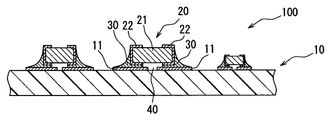
まず、図1〜図5を用いて、電子装置100の構成に関して説明する。電子装置100は、図1、図2に示すように、回路基板10と、回路基板10に実装された実装部品20と、回路基板10と実装部品20とを接合しているはんだ30とを備えて構成されている。
First, the configuration of the
回路基板10は、樹脂やセラミックスなどの絶縁基材に、CuやAgなどの導体パターンによって配線が形成されたものである。また、回路基板10は、例えば、導体パターンが絶縁基材を介して積層された多層基板などを採用できる。回路基板10は、一面に実装部品20が実装されている。回路基板10の実装部品20が実装された面は、実装面とも言える。
The
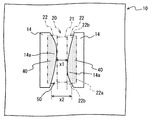
回路基板10は、図2などに示すように、実装面に配線の一部であるランド11が形成されている。つまり、ランド11は、配線の一部として、実装面に平坦に形成された部位である。また、ランド11は、実装部品20の電極22と接合される部位であり実装ランドとも言える。後程説明するが、本実施形態では、二つの電極22を有した二端子素子である実装部品20を採用している。このため、本実施形態では、一つの実装部品20に対して一対のランド11、すなわち二つのランド11が形成された回路基板10を採用している。しかしながら、本発明はこれに限定されない。実装部品20が三つ以上の電極22を有している場合、回路基板10は、この実装部品20が実装されるランド11として、実装部品20の電極22の個数と同数のランド11が形成されることになる。
As shown in FIG. 2 and the like, the
ランド11は、電極22が対向配置され、はんだ30を介して電極22と電気的及び機械的に接続される。つまり、二つのランド11は、一つのランド11に対して一つの電極22が対向配置され、対向配置された電極22と接合されている。なお、図1においては、はんだ30に隠れた位置にランド11が配置されている。また、ランド11は、例えば、厚みが10μm以上であり、好ましくは30〜80μmである。
In the
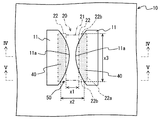
また、ランド11は、図3に示すように、凸部11aが形成されている。一対のランド11は、凸部11aの頂点同士が向かい合って配置されている。ランド11は、図3に示す平面視では、自身に対向配置されたランド11との対向部位が曲線形状をなして凸部11aが形成されている。また、一対のランド11間の距離は、各対向部位の両端から中央に向かうに連れて短くなっている。つまり、一対のランド11は、各対向部位の両端における間隔よりも、各対向部位の中央における間隔の方が狭い。なお、凸部11aの少なくとも一部は、実装部品20に対向配置されている。
Further, as shown in FIG. 3, the
各ランド11は、図3に示す平面視では、自身に対向配置された電極22の対向辺の二か所と交差すると共に、各端辺の一か所と交差する。また、二つのランド11は、電極22の一部に凸部11aが対向配置されている。つまり、各ランド11と各電極22とは、一部のみがオーバーラップして配置されていると言える。
In the plan view shown in FIG. 3, each
実装部品20は、基部21と、基部21に形成された電極22とを備えて構成されている。実装部品20は、回路基板10に実装されており、ランド11の夫々と個別に対向した二つの電極22を有している。各電極22は、実装部品20が回路基板10に実装された状態で、実装面に対向する部位を含んでいる。また、実装部品20は、二つの電極22が平行に配置されている。なお、実装部品20は、例えばチップ抵抗やチップコンデンサなどの受動素子を採用できる。
The mounting
また、実装部品20は、二つの電極22に沿う仮想直線の端部を素子端部と称することができる。さらに、各電極22は、対向配置された電極22と対向する部位を対向辺と称することができ、素子端部に対応する部位を端辺と称することができる。よって、各電極22は、二つの端辺と、二つの短辺に連なる対向辺とを含むと言える。
Further, in the mounting
図3に示すように、各電極22の対向領域は、ランド11及びはんだ30が配置された配置領域22aと、ランド11及びはんだ30が配置されていない非配置領域22bとを含む。各電極22の対向領域とは、各電極22における実装面と対向する面の投影領域に相当する。また、各電極22の対向領域とは、各電極22における実装面と対向する面と、実装面とで挟まれた領域である。
As shown in FIG. 3, the opposing region of each
回路基板10と実装部品20とは、配置領域22aにおいて、電極22とランド11とがはんだ30を介して接合されている。図3の符号40は、電極22とランド11とがはんだ30で接合された接合部である。よって、配置領域22aと接合部40とは、同じ範囲とみなすこともできる。また、非配置領域22bでは、電極22とはんだ30とが接合されていない。このように、電極22は、実装面と対向する部位の一部のみが、はんだ30を介してランド11と接合されている。なお、図3は、断面図ではないが、接合部40と他の領域とをわかりやするためにハッチングを施している。
The
しかしながら、本発明はこれに限定されない。本発明は、一つの電極22の対向領域が配置領域22aと非配置領域22bとを含んでおり、他の電極22の対向領域が配置領域22aを少なくとも含んでいればよい。つまり、二つの電極22のうちの一方は、回路基板10との対向面の全域がはんだ30を介してランド11と接合されていてもよい。
However, the present invention is not limited to this. In the present invention, the facing region of one
特に、本実施形態では、実装部品20として、二つの電極22の間隔よりも、二つの電極に沿う長さの方が長い長辺電極部品を採用している。また、長辺電極部品は、回路基板10に実装された状態において、長辺電極部品下に形成される空間の奥行長さx3と一対の電極22の間隔x1の比が2.0以上の部品である。なお、奥行長さは、長辺電極部品の部品長さと同等である。
In particular, in the present embodiment, a long-side electrode component having a longer length along the two electrodes than the interval between the two
なお、本発明は、これに限定されない。実装部品20は、短辺電極部品であっても採用できる。短辺電極部品は、二つの電極22の間隔よりも、二つの電極に沿う長さの方が短い、又は、二つの電極22の間隔と二つの電極に沿う長さが同等の部品である。また、実装部品20は、半導体を主成分とする基部に電極が形成されたベアチップ状の半導体素子やパッケージ化された電子部品などでも採用できる。
Note that the present invention is not limited to this. The mounting
はんだ30は、上記のように、ランド11と、電極22におけるランド11が対向した部位とを接合している。よって、電子装置100は、一つの実装部品20に対して、二つのはんだ30を備えている。
As described above, the
はんだ30は、ランド11と電極22との間にはんだペースト30aが配置された状態でリフロー工程を行った後のものである。はんだ30の構成材料であるはんだペースト30aは、はんだ微粉末とフラックス成分31とを混ぜ合わせてクリーム状にしたものである。はんだ微粉末を構成する合金としては、例えば、Sn-Cu、Sn-Pb、Sn-Pb-Ag、Sn-Pb-BiなどのSn基合金、In-PbなどのIn基合金、Pb-AgなどのPb基合金が挙げられる。一方、フラックス成分31は、母材表面の酸化膜を除去するロジン、はんだ付け性を促進する活性剤、印刷性に関与する溶剤などで構成されている。
The
はんだ30は、ランド11上に形成される。このため、実装部品20は、上記のように、配置領域22aにははんだ30が接合されているものの、非配置領域22bにははんだ30が接合されていない。また、実装部品20は、電極22から露出している基部21にもはんだ30が接続されていない。つまり、電子装置100は、回路基板10と実装部品20とで挟まれた領域では、ランド11と配置領域22aとが対向した領域のみにはんだ30が形成されて接合部40をなしている。
The
よって、電子装置100は、図3に示すように、回路基板10と実装部品20とが対向している領域に、二つのはんだ30で挟まれ、且つ、両端が開口した対向空間50が形成されている。対向空間50における開口した端部は、対向空間50の開口端とも言える。また、電子装置100は、実装部品20の素子端部と回路基板10との間に、対向空間50の開口端が形成されていると言える。
Therefore, as shown in FIG. 3, in the
対向空間50は、自身の両端間に、二つのはんだ30の間隔が、自身の両端における二つのはんだ30の間隔よりも狭い狭部位を含む。つまり、電子装置100は、対向空間50における中央のはんだ30の間隔x1<対向空間50における両端のはんだ30の間隔x2である。また、言い換えると、電子装置100は、対向空間50に、二つの接合部40の間隔が、両端における二つの接合部40の間隔よりも狭い部位を含む。本実施形態では、対向空間50における両端から対向空間50の中央に行くにつれて接合部40の間隔が徐々に狭くなり、且つ、対向空間50の中央を含む所定範囲で接合部40の間隔が一定である電子装置100を採用している。なお、間隔x1及び間隔x2は、接合部40の間隔とも言える。
The opposing
従って、電子装置100は、図4、図5に示すように、対向空間50における開口端の開口面積A2よりも、対向空間50における中央の開口面積A1が狭いと言える。また、対向空間50は、開口端の開口面積A2よりも狭い開口面積となる領域を含んでいると言える。なお、開口面積は、対向空間50における二つの電極22に直交する仮想平面に沿う範囲の面積に相当する。また、一方の開口端と他方の開口端との間隔は、対向空間50の奥行とも言える。
Therefore, as shown in FIGS. 4 and 5, the
また、本実施形態では、一例として、はんだ付け後の実装部品20下の寸法が、高さが0.07〜0.15mm、電極22の間隔が0.5mm、奥行が3.5mmとなる電子装置100を採用する。なお、高さとは、回路基板10と実装部品20の間隔である。
Further, in the present embodiment, as an example, an electronic device in which the dimension under the mounting
なお、電子装置100は、回路基板10の実装面と、実装部品20とを一体的に覆う封止樹脂を備えていてもよい。また、電子装置100は、三つ以上の電極22を有した実装部品と、この実装部品の各電極に個別に対応したランドが形成された回路基板とを備えていてもよい。
The
ここで、図6〜図10を用いて、電子装置100の製造方法に関して説明する。本製造方法は、以下に説明する第1工程〜第5工程を含んでいる。
Here, a method for manufacturing the
まず、第1工程では、図6に示すように、ランド11が形成された回路基板10を用意する。次に、第2工程では、図7に示すように、ランド11上にはんだペースト30aを形成する(接合工程)。第2工程では、ディスペンサーを用いた塗布やスクリーン印刷によって、予め決められた量のはんだペースト30aをランド上に形成する。次に、第3工程では、図8に示すように、はんだペースト30a上に、実装部品20を搭載する(接合工程)。このとき、はんだペースト30aは、硬化していないため、ランド11と電極22とは強固に固定されていない。
First, in the first step, as shown in FIG. 6, a
その後、第4工程では、はんだペースト30aを溶融及び硬化させことで、各電極22と各ランド11とをはんだ30によって接合する(接合工程)。つまり、第4工程は、リフロー工程と言える。このようにして、回路基板10と実装部品20は、はんだ30を介して接合される。
Thereafter, in the fourth step, the
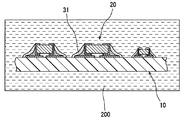
ところで、はんだペースト30aは、上記のように、フラックス成分31を含んでいる。このフラックス成分31は、図9に示すように、リフロー工程を行った後、回路基板10、実装部品20、はんだ30の表面に付着して残留する。また、フラックス成分31は、はんだ30を覆うように流動して、対向空間50に流入する。つまり、第4工程が終了した段階では、電子装置100の表面にフラックス成分31が付着した状態となる。この残留しているフラックス成分31は、後工程での実装加工を阻害することもありうる。さらに、残留しているフラックス成分31は、マイグレーションが発生する原因となりうる。
By the way, the
そのため、本製造方法では、第4工程後に、電子装置100の表面に残留しているフラックス成分31を除去する第5工程を行う。つまり、第5工程は、洗浄工程に相当する。
For this reason, in the present manufacturing method, after the fourth step, the fifth step of removing the
第5工程では、例えば、図10に示すように、フラックス成分31が付着した電子装置100を洗浄液200に浸漬する。また、第5工程では、フラックス成分31が付着した電子装置100を洗浄液200に浸漬させた状態で放置することで、フラックス成分31が洗浄液200に接する部分から溶出して除去する。本製造方法では、電子装置100に付着しているフラックス成分31を除去できる。
In the fifth step, for example, as shown in FIG. 10, the
このように、本製造方法では、フラックス成分31が除去されるため、マイグレーションの発生を抑制可能な電子装置100を製造できる。また、本製造方法は、第5工程後に電子装置100の実装加工がなされる場合、フラックス成分31で実装加工が阻害されることを抑制できる。さらに、電子装置100は、冷熱サイクル試験時に発生する応力の低いランド11の中央部の接合面積が確保できるため長寿命化できる。
Thus, in this manufacturing method, since the
なお、フラックス成分31の溶出に要する時間は、残留しているフラックス成分31の量とフラックス成分31の周囲における洗浄液200の循環量にて決まる。なた、フラックス成分31の量は、フラックス成分31の厚みとみなすこともできる。また、フラックス成分31の溶出に要する時間は、洗浄時間とも言える。
The time required for elution of the
以上のように、電子装置100は、対向空間50に、対向空間の両端における開口面積よりも狭い開口面積である狭部位を含んでいる。これによって、電子装置100は、洗浄液200の圧力差を大きくすることができる。洗浄液200の圧力は、対向空間50における両端よりも狭部位の方が大きくできる。
As described above, the
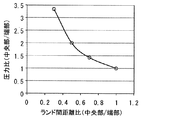
図11に示すように、電極22とランド11の形状において、ランド端部の方が中央部よりも広いランド間の距離となる構造とすることで、ランド端部とランド中央部において、対向空間50にある洗浄液200の圧力差を大きくすることが出来る。なお、図11は、横軸がランド11中央部の寸法をランド11端部の寸法で割った値であり、縦軸がランド11中央部の圧力をランド11端部の圧力で割った値である。寸法とは、ランド11間の距離である。
As shown in FIG. 11, in the shape of the
圧力差、つまり、圧力勾配があると、フラックス成分31を含んだ洗浄液200は、対向空間50における中央部から開口端側に流れる。このため、第5工程では、対向空間50に新鮮な洗浄液200が流入してフラックス成分31の溶解能力を維持できる。
When there is a pressure difference, that is, a pressure gradient, the cleaning liquid 200 including the
なお、圧力差は、一例ではあるが、以下の式に示すベルヌーイの定理の応用を用いた考え方により求めることができる。トンネル形状における液体の流量と流速の関係は、式1で示される。
Note that the pressure difference is an example, but can be obtained by an idea using an application of Bernoulli's theorem shown in the following equation. The relationship between the liquid flow rate and the flow velocity in the tunnel shape is expressed by
Q=C×A×V…式1
Q:流量、C:係数、A:面積、V:流速
流速Vは
V=(2×P÷ρ)0.5…式2
で表すことができる。
Q = C × A × V ...
Q: flow rate, C: coefficient, A: area, V: flow velocity, flow velocity V is V = (2 × P ÷ ρ) 0.5
Can be expressed as
式1に式2を代入し、Pに変換する。
Substituting
P=(Q/A)
なお、液体は同じであるためC、ρなどは割愛する。
P = (Q / A)
Since the liquid is the same, C, ρ, etc. are omitted.
このため、電子装置100は、接合工程後の回路基板10と実装部品20とを洗浄液200に浸漬した場合、対向空間50における両開口端で挟まれたところから両開口端に洗浄液200が流れやすくなる。従って、電子装置100は、フラックス成分31の洗浄性を向上できる構成、すなわち、洗浄時間を短縮できる構成を有することができ、電極22間にフラックス成分31が残ることを抑制できる。また、電子装置100は、洗浄時間を短縮できる構造を有していると言える。
For this reason, in the
また、本製造方法は、狭部位を含んでいる電子装置100を洗浄液200に浸漬させて残留しているフラックス成分31を除去するため、第5工程におけるフラックス成分31の洗浄性を向上でき、電極22間にフラックス成分31が残ることを抑制できる。
Moreover, since this manufacturing method removes the remaining
また、対向空間50の奥行と幅の割合を変えた時のフラックス成分31を除去する時間の変化割合を確認したところ、洗浄時間は、対向空間50の奥行が長くなるに連れて長くなることがわかった。さらに、回路基板は、長辺電極部品が実装されている場合、同等の体格の短辺電極部品が実装される場合よりもランドが広くなり、はんだペーストの量が増え、その結果、残留するフラックス成分の量も増えることになる。また、電子装置は、長辺電極部品が実装されている場合、同等の体格の短辺電極部品が実装される場合よりも対向空間が狭くなり、洗浄液の循環量も低下する。従って、電子装置は、長辺電極部品が実装されている場合、同等の体格の短辺電極部品が実装される場合よりも、対向空間に残留したフラックス成分を除去するのに要する時間が長くなる。
In addition, when the rate of change of the time for removing the
本実施形態では、上記のように、実装部品20として長辺電極部品を採用している。しかしながら、電子装置100は、対向空間50における両端に挟まれたとことから両端に向かって洗浄液200が流れやすくなるため、実装部品20として長辺電極部品を採用しつつ、フラックス成分31を洗浄により除去する時間を短縮できる。また、本製造方法は、フラックス成分31を洗浄により除去する時間を短縮できるため、その分、短時間で電子装置100を製造できる。
In the present embodiment, as described above, the long-side electrode component is employed as the mounting
また、実装部品20として長辺電極部品を採用しつつ、対向空間50を広くして洗浄時間を短くするために、電極22の間隔よりもランド11の間隔を広くすることも考えられる。しかしながら、このようにすると、ランド11と電極22との接合面積が狭くなり、接合信頼性が低下する可能性がある。これに対して、電子装置100は、ランド11と電極22との接合面積が狭くなることを抑えつつ、洗浄時間を短くできる。よって、電子装置100は、ランド11と電極22との接合信頼性を保ちつつ、洗浄時間を短くできる。
It is also conceivable that the distance between the
以上、本発明の好ましい実施形態について説明した。しかしながら、本発明は、上記実施形態に何ら制限されることはなく、本発明の趣旨を逸脱しない範囲において、種々の変形が可能である。以下に、本発明の変形例1〜4に関して説明する。上記実施形態及び変形例1〜4は、夫々単独で実施することも可能であるが、適宜組み合わせて実施することも可能である。本発明は、実施形態において示された組み合わせに限定されることなく、種々の組み合わせによって実施可能である。 The preferred embodiments of the present invention have been described above. However, the present invention is not limited to the above embodiment, and various modifications can be made without departing from the spirit of the present invention. Below, the modifications 1-4 of this invention are demonstrated. Although the said embodiment and the modifications 1-4 can each be implemented independently, it is also possible to implement it combining suitably. The present invention is not limited to the combinations shown in the embodiments, and can be implemented by various combinations.
(変形例1)
図12を用いて、変形例1の電子装置を説明する。変形例1の電子装置は、ランド12の形状が電子装置100と異なる。各ランド12は、図12に示す平面視では、対向部位が三角形状をなして凸部12aが形成されている。また、各ランド12は、ランド11と異なり、図12に示す平面視では、自身に対向配置された電極22の各端辺の一か所と交差するものの、対向辺と交差しない。なお、各ランド12は、電極22の各端辺と交差していなくてもよい。
(Modification 1)
The electronic device of the
これによって、本変形例の電子装置は、電子装置100と同様の対向空間50が形成される。変形例1の電子装置は、電子装置100と同様の効果を奏することができる。
As a result, the electronic device of the present modification forms a facing
(変形例2)
図13を用いて、変形例2の電子装置を説明する。変形例2の電子装置は、ランド13の形状が電子装置100と異なる。各ランド13は、図13に示す平面視では、対向部位が矩形形状をなして凸部13aが形成されている。また、各ランド13は、ランド11と異なり、図13に示す平面視では、自身に対向配置された電極22の各端辺の一か所と交差するものの、対向辺と交差しない。つまり、各ランド13は、電極22と対向する部位に、周辺よりも突出した凸部13aが形成されている。なお、各ランド13は、電極22の各端辺と交差していなくてもよい。
(Modification 2)
The electronic device of the
これによって、本変形例の電子装置は、電子装置100と同様の対向空間50が形成される。よって、変形例2の電子装置は、電子装置100と同様の効果を奏することができる。
As a result, the electronic device of the present modification forms a facing
(変形例3)
図14を用いて、変形例3の電子装置を説明する。変形例3の電子装置は、ランド14の形状が電子装置100と異なる。各ランド14は、ランド11と同様に、図14に示す平面視では、対向部位が曲線形状をなして凸部14aが形成されている。また、各ランド14は、ランド11と異なり、図14に示す平面視では、自身に対向配置された電極22の各端辺の一か所と交差するものの、対向辺と交差しない。さらに、一対のランド14は、凸部14aの頂点同士が向かい合っておらず、ずれた位置に配置されている。なお、各ランド14は、電極22の各端辺と交差していなくてもよい。
(Modification 3)
The electronic device of the
これによって、本変形例の電子装置は、電子装置100と同様の対向空間50が形成される。よって、変形例3の電子装置は、電子装置100と同様の効果を奏することができる。
As a result, the electronic device of the present modification forms a facing
(変形例4)
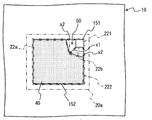
図15を用いて、変形例4の電子装置を説明する。変形例4の電子装置は、実装部品20aとランド151,152の形状が電子装置100と異なる。
(Modification 4)
The electronic device of the modification 4 is demonstrated using FIG. The electronic device of Modification 4 is different from the
実装部品20aは、ベアチップ状態の半導体素子である。また、実装部品20aは、パワー半導体素子とも言える。実装部品20aは、一面にドレイン電極が形成されており、且つ、一面の反対面にゲート電極221とソース電極222が形成されている。実装部品20aは、反対面が回路基板10と対向した状態で、回路基板10に実装される。なお、実装部品20aは、一面にエミッタ電極が形成され、反対面にベース電極とコレクタ電極が形成されたものであっても採用できる。
The mounting
一方、回路基板10は、実装部品20aに対応して、ゲート用ランド151とソース用ランド152とを備えている。変形例4の電子装置は、この点が電子装置100と異なる。なお、変形例4の回路基板10は、ゲート用ランド151とソース用ランド152が形成されている点で回路基板10と異なるが、便宜的に、上記実施形態と同じ符号を付与している。
On the other hand, the
本変形例の電子装置は、ゲート電極221とゲート用ランド151がはんだ30で接合され、ソース電極222がソース用ランド152とはんだ30で接続されている。特に、ソース電極222の対向領域は、ソース用ランド152及びはんだ30が配置された配置領域22aと、ソース用ランド152及びはんだ30が配置されていない非配置領域22bとを含む。これによって、本変形例の電子装置は、電子装置100と同様の対向空間50が形成される。このため、変形例4の電子装置は、電子装置100と同様の効果を奏することができる。
In the electronic device of this modification, the
10 回路基板、11〜14 ランド、151 ゲート用ランド、152 ソース用ランド、11a〜14a 凸部、20 実装部品、21 基部、22 電極、20a 実装部品、30 はんだ、100 電子装置
DESCRIPTION OF
Claims (4)
前記回路基板に実装されており、前記ランドの夫々と個別に対向した二つの電極(22、221、222)を有した実装部品(20、20a)と、
前記ランドと、前記電極における前記ランドが対向した部位とを接合している二つのはんだ(30)と、を備え、
一つの前記電極の対向領域は、前記ランド及び前記はんだが配置された領域と、前記ランド及び前記はんだが配置されていない領域とを含み、
他の前記電極の対向領域は、前記ランド及び前記はんだが配置された領域を少なくとも含み、
前記回路基板と前記実装部品とが対向している領域には、二つの前記はんだで挟まれ、且つ、両端が開口した対向空間(50)が形成されており、
前記対向空間は、自身の両端における開口面積よりも狭い開口面積である狭部位を含むことを特徴とする電子装置。 A circuit board (10) having two lands (11-14, 151, 152) which are part of the wiring;
A mounting component (20, 20a) mounted on the circuit board and having two electrodes (22, 221, 222) individually facing each of the lands;
Two solders (30) joining the lands and portions of the electrodes facing the lands,
One opposing region of the electrode includes a region where the land and the solder are arranged, and a region where the land and the solder are not arranged,
The other facing region of the electrode includes at least a region where the land and the solder are disposed,
In the region where the circuit board and the mounting component are opposed to each other, an opposing space (50) sandwiched between the two solders and open at both ends is formed.
The electronic device according to claim 1, wherein the facing space includes a narrow portion having an opening area narrower than an opening area at both ends thereof.
前記回路基板に実装されており、前記ランドの夫々と個別に対向した二つの電極(22、221、222)を有した実装部品(20、20a)と、
前記ランドと、前記電極における前記ランドが対向した部位とを接合している二つのはんだ(30)と、を備えた電子装置の製造方法であって、
一つの前記電極の対向領域は、前記ランド及び前記はんだが配置された領域と、前記ランド及び前記はんだが配置されていない領域とを含み、
他の前記電極の対向領域は、前記ランド及び前記はんだが配置された領域を少なくとも含み、
前記回路基板と前記実装部品とが対向している領域には、二つの前記はんだで挟まれ、且つ、両端が開口した対向空間(50)が形成されており、
前記対向空間は、自身の両端における開口面積よりも狭い開口面積である狭部位を含み、
各電極と各ランドとの間に、フラックス成分を含む前記はんだの構成材料を設け、前記構成材料を溶融及び硬化させことで、各電極と各ランドとを前記はんだによって接合する接合工程と、
前記接合工程後に、前記電子装置を洗浄液に浸漬して、前記電子装置の表面に付着している前記フラックス成分を除去する洗浄工程と、を含むことを特徴とする電子装置の製造方法。 A circuit board (10) having two lands (11-14, 151, 152) which are part of the wiring;
A mounting component (20, 20a) mounted on the circuit board and having two electrodes (22, 221, 222) individually facing each of the lands;
A method of manufacturing an electronic device comprising: the land and two solders (30) joining the portions of the electrode facing the land.
One opposing region of the electrode includes a region where the land and the solder are arranged, and a region where the land and the solder are not arranged,
The other facing region of the electrode includes at least a region where the land and the solder are disposed,
In the region where the circuit board and the mounting component are opposed to each other, an opposing space (50) sandwiched between the two solders and open at both ends is formed.
The facing space includes a narrow portion having an opening area narrower than an opening area at both ends of the opposite space,
A joining step of joining each electrode and each land with the solder by providing a constituent material of the solder containing a flux component between each electrode and each land, and melting and curing the constituent material;
A method of manufacturing an electronic device, comprising: a step of immersing the electronic device in a cleaning liquid after the joining step to remove the flux component adhering to the surface of the electronic device.
Priority Applications (2)
| Application Number | Priority Date | Filing Date | Title |
|---|---|---|---|
| JP2015145923A JP2017028126A (en) | 2015-07-23 | 2015-07-23 | Electronic device and method of manufacturing electronic device |
| PCT/JP2016/003110 WO2017013839A1 (en) | 2015-07-23 | 2016-06-29 | Electronic device and method for manufacturing electronic device |
Applications Claiming Priority (1)
| Application Number | Priority Date | Filing Date | Title |
|---|---|---|---|
| JP2015145923A JP2017028126A (en) | 2015-07-23 | 2015-07-23 | Electronic device and method of manufacturing electronic device |
Publications (1)
| Publication Number | Publication Date |
|---|---|
| JP2017028126A true JP2017028126A (en) | 2017-02-02 |
Family
ID=57835116
Family Applications (1)
| Application Number | Title | Priority Date | Filing Date |
|---|---|---|---|
| JP2015145923A Pending JP2017028126A (en) | 2015-07-23 | 2015-07-23 | Electronic device and method of manufacturing electronic device |
Country Status (2)
| Country | Link |
|---|---|
| JP (1) | JP2017028126A (en) |
| WO (1) | WO2017013839A1 (en) |
Cited By (2)
| Publication number | Priority date | Publication date | Assignee | Title |
|---|---|---|---|---|
| JP2018182005A (en) * | 2017-04-10 | 2018-11-15 | 株式会社デンソー | Electronic device |
| JP2023111536A (en) * | 2022-01-31 | 2023-08-10 | パナソニックIpマネジメント株式会社 | Circuit boards and circuit modules |
Family Cites Families (2)
| Publication number | Priority date | Publication date | Assignee | Title |
|---|---|---|---|---|
| JP2003046216A (en) * | 2001-07-30 | 2003-02-14 | Kyocera Corp | Mounting structure of surface mount electronic components, circuit boards and surface mount electronic components |
| JP2012199269A (en) * | 2011-03-18 | 2012-10-18 | Seiko Epson Corp | Electronic component, method of manufacturing the same, and wiring substrate |
-
2015
- 2015-07-23 JP JP2015145923A patent/JP2017028126A/en active Pending
-
2016
- 2016-06-29 WO PCT/JP2016/003110 patent/WO2017013839A1/en not_active Ceased
Cited By (2)
| Publication number | Priority date | Publication date | Assignee | Title |
|---|---|---|---|---|
| JP2018182005A (en) * | 2017-04-10 | 2018-11-15 | 株式会社デンソー | Electronic device |
| JP2023111536A (en) * | 2022-01-31 | 2023-08-10 | パナソニックIpマネジメント株式会社 | Circuit boards and circuit modules |
Also Published As
| Publication number | Publication date |
|---|---|
| WO2017013839A1 (en) | 2017-01-26 |
Similar Documents
| Publication | Publication Date | Title |
|---|---|---|
| JP5649805B2 (en) | Manufacturing method of semiconductor device | |
| TWI430725B (en) | Printed circuit board and method of manufacturing the same | |
| CN1988767B (en) | Chip component mounting method and circuit board | |
| US20060172566A1 (en) | Circuit board | |
| CN104113982A (en) | Composite Electronic Component | |
| JP2014525689A (en) | Method for packaging quad flat no-lead package body and package body | |
| JP6570728B2 (en) | Electronic device and manufacturing method thereof | |
| JP2017028126A (en) | Electronic device and method of manufacturing electronic device | |
| US20100327452A1 (en) | Mounting structure and method of manufacturing the same | |
| TWI634823B (en) | Electronic device | |
| JP7322456B2 (en) | PCB with electronic components | |
| JP6504762B2 (en) | Module manufacturing method | |
| JP2013055208A (en) | Printed circuit board | |
| JP5062376B1 (en) | Manufacturing method of electronic component mounting board | |
| JP6214030B2 (en) | Circuit board, circuit module, circuit board manufacturing method, and circuit module manufacturing method | |
| JP2017059597A (en) | Chip resistor | |
| JP2016163020A (en) | Board connection structure | |
| CN219740730U (en) | Bonding pad structure, PCB and electronic equipment | |
| JP7069404B2 (en) | Printed wiring board and electronic equipment | |
| JP7597037B2 (en) | Substrate for mounting electronic components, electronic component mounting body and manufacturing method thereof, and electronic device | |
| JP2006229177A (en) | Printed circuit board | |
| JP2020096029A (en) | Application method of material for joining electronic component, and circuit board on which electronic component is mounted | |
| JP7165946B2 (en) | Mass production method for chip element mounting board module | |
| JPH02114595A (en) | Mounting of chip component | |
| JPH0435917B2 (en) |