JP2005298915A - Surface treatment method, ornaments and watches - Google Patents
Surface treatment method, ornaments and watches Download PDFInfo
- Publication number
- JP2005298915A JP2005298915A JP2004117879A JP2004117879A JP2005298915A JP 2005298915 A JP2005298915 A JP 2005298915A JP 2004117879 A JP2004117879 A JP 2004117879A JP 2004117879 A JP2004117879 A JP 2004117879A JP 2005298915 A JP2005298915 A JP 2005298915A
- Authority
- JP
- Japan
- Prior art keywords
- covering portion
- decorative article
- treatment method
- surface treatment
- liquid
- Prior art date
- Legal status (The legal status is an assumption and is not a legal conclusion. Google has not performed a legal analysis and makes no representation as to the accuracy of the status listed.)
- Withdrawn
Links
- 238000000034 method Methods 0.000 title claims abstract description 86
- 238000004381 surface treatment Methods 0.000 title claims abstract description 42
- 239000007788 liquid Substances 0.000 claims abstract description 119
- 239000000463 material Substances 0.000 claims abstract description 104
- 238000000576 coating method Methods 0.000 claims abstract description 95
- 239000011248 coating agent Substances 0.000 claims abstract description 94
- 239000000758 substrate Substances 0.000 claims abstract description 26
- 239000011521 glass Substances 0.000 claims description 43
- 239000000470 constituent Substances 0.000 claims description 20
- 239000002243 precursor Substances 0.000 claims description 18
- 229910001069 Ti alloy Inorganic materials 0.000 claims description 15
- 239000002245 particle Substances 0.000 claims description 14
- 239000007787 solid Substances 0.000 claims description 10
- 229910052719 titanium Inorganic materials 0.000 claims description 10
- 239000012780 transparent material Substances 0.000 claims description 3
- 230000006866 deterioration Effects 0.000 abstract description 8
- 239000002585 base Substances 0.000 description 87
- 238000011282 treatment Methods 0.000 description 27
- 238000004140 cleaning Methods 0.000 description 26
- 238000005530 etching Methods 0.000 description 22
- 238000005498 polishing Methods 0.000 description 19
- 210000002374 sebum Anatomy 0.000 description 19
- 238000004519 manufacturing process Methods 0.000 description 18
- 230000035807 sensation Effects 0.000 description 18
- 230000000052 comparative effect Effects 0.000 description 17
- 238000012545 processing Methods 0.000 description 17
- 229920005989 resin Polymers 0.000 description 17
- 239000011347 resin Substances 0.000 description 17
- 239000000203 mixture Substances 0.000 description 16
- 239000002344 surface layer Substances 0.000 description 16
- 238000005406 washing Methods 0.000 description 16
- XLYOFNOQVPJJNP-UHFFFAOYSA-N water Substances O XLYOFNOQVPJJNP-UHFFFAOYSA-N 0.000 description 16
- 229910052751 metal Inorganic materials 0.000 description 15
- 239000002184 metal Substances 0.000 description 15
- 238000012856 packing Methods 0.000 description 15
- 238000001746 injection moulding Methods 0.000 description 14
- 239000008151 electrolyte solution Substances 0.000 description 13
- 239000000843 powder Substances 0.000 description 13
- 230000000694 effects Effects 0.000 description 12
- 239000000243 solution Substances 0.000 description 12
- -1 Si 3 N 4 Inorganic materials 0.000 description 11
- 230000007797 corrosion Effects 0.000 description 11
- 238000005260 corrosion Methods 0.000 description 11
- 230000008569 process Effects 0.000 description 11
- 238000007654 immersion Methods 0.000 description 10
- 239000007769 metal material Substances 0.000 description 10
- 239000000919 ceramic Substances 0.000 description 9
- 239000002609 medium Substances 0.000 description 9
- XKRFYHLGVUSROY-UHFFFAOYSA-N Argon Chemical compound [Ar] XKRFYHLGVUSROY-UHFFFAOYSA-N 0.000 description 8
- 229910045601 alloy Inorganic materials 0.000 description 8
- 239000000956 alloy Substances 0.000 description 8
- 238000005238 degreasing Methods 0.000 description 8
- 229920003023 plastic Polymers 0.000 description 8
- 239000004033 plastic Substances 0.000 description 8
- 239000000126 substance Substances 0.000 description 8
- VYPSYNLAJGMNEJ-UHFFFAOYSA-N Silicium dioxide Chemical compound O=[Si]=O VYPSYNLAJGMNEJ-UHFFFAOYSA-N 0.000 description 7
- 238000005266 casting Methods 0.000 description 7
- 238000011156 evaluation Methods 0.000 description 7
- 239000004115 Sodium Silicate Substances 0.000 description 6
- 239000003513 alkali Substances 0.000 description 6
- 239000007864 aqueous solution Substances 0.000 description 6
- 230000015572 biosynthetic process Effects 0.000 description 6
- 238000007598 dipping method Methods 0.000 description 6
- 239000002612 dispersion medium Substances 0.000 description 6
- 229920001971 elastomer Polymers 0.000 description 6
- 239000005060 rubber Substances 0.000 description 6
- NTHWMYGWWRZVTN-UHFFFAOYSA-N sodium silicate Chemical compound [Na+].[Na+].[O-][Si]([O-])=O NTHWMYGWWRZVTN-UHFFFAOYSA-N 0.000 description 6
- 229910052911 sodium silicate Inorganic materials 0.000 description 6
- 239000002904 solvent Substances 0.000 description 6
- 238000004804 winding Methods 0.000 description 6
- 238000010438 heat treatment Methods 0.000 description 5
- 238000007733 ion plating Methods 0.000 description 5
- 238000005245 sintering Methods 0.000 description 5
- 238000007711 solidification Methods 0.000 description 5
- 230000008023 solidification Effects 0.000 description 5
- 230000003746 surface roughness Effects 0.000 description 5
- QAOWNCQODCNURD-UHFFFAOYSA-N Sulfuric acid Chemical compound OS(O)(=O)=O QAOWNCQODCNURD-UHFFFAOYSA-N 0.000 description 4
- 229910052786 argon Inorganic materials 0.000 description 4
- 238000005229 chemical vapour deposition Methods 0.000 description 4
- 238000005520 cutting process Methods 0.000 description 4
- 238000002845 discoloration Methods 0.000 description 4
- 239000006185 dispersion Substances 0.000 description 4
- 239000007789 gas Substances 0.000 description 4
- 238000006386 neutralization reaction Methods 0.000 description 4
- 239000003960 organic solvent Substances 0.000 description 4
- 238000007747 plating Methods 0.000 description 4
- 229920000098 polyolefin Polymers 0.000 description 4
- 239000011241 protective layer Substances 0.000 description 4
- 239000010935 stainless steel Substances 0.000 description 4
- 229910001220 stainless steel Inorganic materials 0.000 description 4
- 229920005992 thermoplastic resin Polymers 0.000 description 4
- 229920001187 thermosetting polymer Polymers 0.000 description 4
- UHOVQNZJYSORNB-UHFFFAOYSA-N Benzene Chemical compound C1=CC=CC=C1 UHOVQNZJYSORNB-UHFFFAOYSA-N 0.000 description 3
- 239000004721 Polyphenylene oxide Substances 0.000 description 3
- YXFVVABEGXRONW-UHFFFAOYSA-N Toluene Chemical compound CC1=CC=CC=C1 YXFVVABEGXRONW-UHFFFAOYSA-N 0.000 description 3
- 239000002253 acid Substances 0.000 description 3
- 229910052782 aluminium Inorganic materials 0.000 description 3
- HVYWMOMLDIMFJA-DPAQBDIFSA-N cholesterol Chemical group C1C=C2C[C@@H](O)CC[C@]2(C)[C@@H]2[C@@H]1[C@@H]1CC[C@H]([C@H](C)CCCC(C)C)[C@@]1(C)CC2 HVYWMOMLDIMFJA-DPAQBDIFSA-N 0.000 description 3
- 229910052802 copper Inorganic materials 0.000 description 3
- 238000005034 decoration Methods 0.000 description 3
- 230000001771 impaired effect Effects 0.000 description 3
- 238000002347 injection Methods 0.000 description 3
- 239000007924 injection Substances 0.000 description 3
- 238000000465 moulding Methods 0.000 description 3
- 230000002093 peripheral effect Effects 0.000 description 3
- 238000005554 pickling Methods 0.000 description 3
- 229920000728 polyester Polymers 0.000 description 3
- 229920006324 polyoxymethylene Polymers 0.000 description 3
- 230000001681 protective effect Effects 0.000 description 3
- 238000005507 spraying Methods 0.000 description 3
- 229910052725 zinc Inorganic materials 0.000 description 3
- 229920000742 Cotton Polymers 0.000 description 2
- 229920000219 Ethylene vinyl alcohol Polymers 0.000 description 2
- KRHYYFGTRYWZRS-UHFFFAOYSA-N Fluorane Chemical compound F KRHYYFGTRYWZRS-UHFFFAOYSA-N 0.000 description 2
- 229920002292 Nylon 6 Polymers 0.000 description 2
- 229920000572 Nylon 6/12 Polymers 0.000 description 2
- NBIIXXVUZAFLBC-UHFFFAOYSA-N Phosphoric acid Chemical compound OP(O)(O)=O NBIIXXVUZAFLBC-UHFFFAOYSA-N 0.000 description 2
- 239000004696 Poly ether ether ketone Substances 0.000 description 2
- 239000004952 Polyamide Substances 0.000 description 2
- 239000004698 Polyethylene Substances 0.000 description 2
- 239000004372 Polyvinyl alcohol Substances 0.000 description 2
- PPBRXRYQALVLMV-UHFFFAOYSA-N Styrene Chemical compound C=CC1=CC=CC=C1 PPBRXRYQALVLMV-UHFFFAOYSA-N 0.000 description 2
- 229920000122 acrylonitrile butadiene styrene Polymers 0.000 description 2
- 239000012298 atmosphere Substances 0.000 description 2
- 229910052804 chromium Inorganic materials 0.000 description 2
- 239000002131 composite material Substances 0.000 description 2
- 238000001816 cooling Methods 0.000 description 2
- 229920001577 copolymer Polymers 0.000 description 2
- 238000009503 electrostatic coating Methods 0.000 description 2
- 239000005038 ethylene vinyl acetate Substances 0.000 description 2
- 239000004744 fabric Substances 0.000 description 2
- 239000010419 fine particle Substances 0.000 description 2
- 238000005242 forging Methods 0.000 description 2
- 230000006870 function Effects 0.000 description 2
- 229910052742 iron Inorganic materials 0.000 description 2
- 238000004898 kneading Methods 0.000 description 2
- 238000001182 laser chemical vapour deposition Methods 0.000 description 2
- 150000002739 metals Chemical class 0.000 description 2
- 238000002156 mixing Methods 0.000 description 2
- 229910052750 molybdenum Inorganic materials 0.000 description 2
- 229910052759 nickel Inorganic materials 0.000 description 2
- 239000003921 oil Substances 0.000 description 2
- 239000011368 organic material Substances 0.000 description 2
- 229910052763 palladium Inorganic materials 0.000 description 2
- 239000012188 paraffin wax Substances 0.000 description 2
- 239000008188 pellet Substances 0.000 description 2
- 238000005268 plasma chemical vapour deposition Methods 0.000 description 2
- 229910052697 platinum Inorganic materials 0.000 description 2
- 229920001200 poly(ethylene-vinyl acetate) Polymers 0.000 description 2
- 229920000052 poly(p-xylylene) Polymers 0.000 description 2
- 229920002647 polyamide Polymers 0.000 description 2
- 229920001707 polybutylene terephthalate Polymers 0.000 description 2
- 229920002530 polyetherether ketone Polymers 0.000 description 2
- 229920000573 polyethylene Polymers 0.000 description 2
- 229920000139 polyethylene terephthalate Polymers 0.000 description 2
- 239000005020 polyethylene terephthalate Substances 0.000 description 2
- 229920000642 polymer Polymers 0.000 description 2
- 229920006380 polyphenylene oxide Polymers 0.000 description 2
- 229920002451 polyvinyl alcohol Polymers 0.000 description 2
- 239000004800 polyvinyl chloride Substances 0.000 description 2
- 229920000915 polyvinyl chloride Polymers 0.000 description 2
- 238000004663 powder metallurgy Methods 0.000 description 2
- 229910052709 silver Inorganic materials 0.000 description 2
- 238000004544 sputter deposition Methods 0.000 description 2
- 210000004243 sweat Anatomy 0.000 description 2
- 238000012360 testing method Methods 0.000 description 2
- 238000002230 thermal chemical vapour deposition Methods 0.000 description 2
- 229910052718 tin Inorganic materials 0.000 description 2
- 238000002834 transmittance Methods 0.000 description 2
- DCXXMTOCNZCJGO-UHFFFAOYSA-N tristearoylglycerol Chemical compound CCCCCCCCCCCCCCCCCC(=O)OCC(OC(=O)CCCCCCCCCCCCCCCCC)COC(=O)CCCCCCCCCCCCCCCCC DCXXMTOCNZCJGO-UHFFFAOYSA-N 0.000 description 2
- 229910052720 vanadium Inorganic materials 0.000 description 2
- 238000007740 vapor deposition Methods 0.000 description 2
- 239000001993 wax Substances 0.000 description 2
- 238000009736 wetting Methods 0.000 description 2
- 230000002087 whitening effect Effects 0.000 description 2
- YYGNTYWPHWGJRM-UHFFFAOYSA-N (6E,10E,14E,18E)-2,6,10,15,19,23-hexamethyltetracosa-2,6,10,14,18,22-hexaene Chemical compound CC(C)=CCCC(C)=CCCC(C)=CCCC=C(C)CCC=C(C)CCC=C(C)C YYGNTYWPHWGJRM-UHFFFAOYSA-N 0.000 description 1
- WRIDQFICGBMAFQ-UHFFFAOYSA-N (E)-8-Octadecenoic acid Natural products CCCCCCCCCC=CCCCCCCC(O)=O WRIDQFICGBMAFQ-UHFFFAOYSA-N 0.000 description 1
- TWJNQYPJQDRXPH-UHFFFAOYSA-N 2-cyanobenzohydrazide Chemical compound NNC(=O)C1=CC=CC=C1C#N TWJNQYPJQDRXPH-UHFFFAOYSA-N 0.000 description 1
- LQJBNNIYVWPHFW-UHFFFAOYSA-N 20:1omega9c fatty acid Natural products CCCCCCCCCCC=CCCCCCCCC(O)=O LQJBNNIYVWPHFW-UHFFFAOYSA-N 0.000 description 1
- HVYWMOMLDIMFJA-UHFFFAOYSA-N 3-cholesterol Natural products C1C=C2CC(O)CCC2(C)C2C1C1CCC(C(C)CCCC(C)C)C1(C)CC2 HVYWMOMLDIMFJA-UHFFFAOYSA-N 0.000 description 1
- QSBYPNXLFMSGKH-UHFFFAOYSA-N 9-Heptadecensaeure Natural products CCCCCCCC=CCCCCCCCC(O)=O QSBYPNXLFMSGKH-UHFFFAOYSA-N 0.000 description 1
- 239000004925 Acrylic resin Substances 0.000 description 1
- 229920000178 Acrylic resin Polymers 0.000 description 1
- 229910018072 Al 2 O 3 Inorganic materials 0.000 description 1
- 229910017083 AlN Inorganic materials 0.000 description 1
- PIGFYZPCRLYGLF-UHFFFAOYSA-N Aluminum nitride Chemical compound [Al]#N PIGFYZPCRLYGLF-UHFFFAOYSA-N 0.000 description 1
- 229910001369 Brass Inorganic materials 0.000 description 1
- OKTJSMMVPCPJKN-UHFFFAOYSA-N Carbon Chemical compound [C] OKTJSMMVPCPJKN-UHFFFAOYSA-N 0.000 description 1
- 239000004709 Chlorinated polyethylene Substances 0.000 description 1
- LFQSCWFLJHTTHZ-UHFFFAOYSA-N Ethanol Chemical compound CCO LFQSCWFLJHTTHZ-UHFFFAOYSA-N 0.000 description 1
- YCKRFDGAMUMZLT-UHFFFAOYSA-N Fluorine atom Chemical compound [F] YCKRFDGAMUMZLT-UHFFFAOYSA-N 0.000 description 1
- JHWNWJKBPDFINM-UHFFFAOYSA-N Laurolactam Chemical compound O=C1CCCCCCCCCCCN1 JHWNWJKBPDFINM-UHFFFAOYSA-N 0.000 description 1
- 229920000106 Liquid crystal polymer Polymers 0.000 description 1
- 239000004977 Liquid-crystal polymers (LCPs) Substances 0.000 description 1
- 239000004640 Melamine resin Substances 0.000 description 1
- 229920000877 Melamine resin Polymers 0.000 description 1
- TUNFSRHWOTWDNC-UHFFFAOYSA-N Myristic acid Natural products CCCCCCCCCCCCCC(O)=O TUNFSRHWOTWDNC-UHFFFAOYSA-N 0.000 description 1
- 235000021360 Myristic acid Nutrition 0.000 description 1
- GRYLNZFGIOXLOG-UHFFFAOYSA-N Nitric acid Chemical compound O[N+]([O-])=O GRYLNZFGIOXLOG-UHFFFAOYSA-N 0.000 description 1
- 229920000571 Nylon 11 Polymers 0.000 description 1
- 229920000299 Nylon 12 Polymers 0.000 description 1
- 229920003189 Nylon 4,6 Polymers 0.000 description 1
- 229920000305 Nylon 6,10 Polymers 0.000 description 1
- 229920002302 Nylon 6,6 Polymers 0.000 description 1
- ZQPPMHVWECSIRJ-UHFFFAOYSA-N Oleic acid Natural products CCCCCCCCC=CCCCCCCCC(O)=O ZQPPMHVWECSIRJ-UHFFFAOYSA-N 0.000 description 1
- 239000005642 Oleic acid Substances 0.000 description 1
- 239000002033 PVDF binder Substances 0.000 description 1
- 229930040373 Paraformaldehyde Natural products 0.000 description 1
- 229920008285 Poly(ether ketone) PEK Polymers 0.000 description 1
- 229930182556 Polyacetal Natural products 0.000 description 1
- 239000004962 Polyamide-imide Substances 0.000 description 1
- 239000005062 Polybutadiene Substances 0.000 description 1
- 239000004695 Polyether sulfone Substances 0.000 description 1
- 239000004697 Polyetherimide Substances 0.000 description 1
- 239000004642 Polyimide Substances 0.000 description 1
- 239000004734 Polyphenylene sulfide Substances 0.000 description 1
- 239000004743 Polypropylene Substances 0.000 description 1
- 239000004793 Polystyrene Substances 0.000 description 1
- 229920001328 Polyvinylidene chloride Polymers 0.000 description 1
- ZLMJMSJWJFRBEC-UHFFFAOYSA-N Potassium Chemical compound [K] ZLMJMSJWJFRBEC-UHFFFAOYSA-N 0.000 description 1
- 229910004298 SiO 2 Inorganic materials 0.000 description 1
- CDBYLPFSWZWCQE-UHFFFAOYSA-L Sodium Carbonate Chemical compound [Na+].[Na+].[O-]C([O-])=O CDBYLPFSWZWCQE-UHFFFAOYSA-L 0.000 description 1
- BHEOSNUKNHRBNM-UHFFFAOYSA-N Tetramethylsqualene Natural products CC(=C)C(C)CCC(=C)C(C)CCC(C)=CCCC=C(C)CCC(C)C(=C)CCC(C)C(C)=C BHEOSNUKNHRBNM-UHFFFAOYSA-N 0.000 description 1
- 229910010413 TiO 2 Inorganic materials 0.000 description 1
- ATJFFYVFTNAWJD-UHFFFAOYSA-N Tin Chemical compound [Sn] ATJFFYVFTNAWJD-UHFFFAOYSA-N 0.000 description 1
- BAECOWNUKCLBPZ-HIUWNOOHSA-N Triolein Natural products O([C@H](OCC(=O)CCCCCCC/C=C\CCCCCCCC)COC(=O)CCCCCCC/C=C\CCCCCCCC)C(=O)CCCCCCC/C=C\CCCCCCCC BAECOWNUKCLBPZ-HIUWNOOHSA-N 0.000 description 1
- PHYFQTYBJUILEZ-UHFFFAOYSA-N Trioleoylglycerol Natural products CCCCCCCCC=CCCCCCCCC(=O)OCC(OC(=O)CCCCCCCC=CCCCCCCCC)COC(=O)CCCCCCCC=CCCCCCCCC PHYFQTYBJUILEZ-UHFFFAOYSA-N 0.000 description 1
- 229920001807 Urea-formaldehyde Polymers 0.000 description 1
- 238000005299 abrasion Methods 0.000 description 1
- XECAHXYUAAWDEL-UHFFFAOYSA-N acrylonitrile butadiene styrene Chemical compound C=CC=C.C=CC#N.C=CC1=CC=CC=C1 XECAHXYUAAWDEL-UHFFFAOYSA-N 0.000 description 1
- 239000004676 acrylonitrile butadiene styrene Substances 0.000 description 1
- 229920001893 acrylonitrile styrene Polymers 0.000 description 1
- 230000009471 action Effects 0.000 description 1
- 150000001298 alcohols Chemical class 0.000 description 1
- 229910052910 alkali metal silicate Inorganic materials 0.000 description 1
- 229910000147 aluminium phosphate Inorganic materials 0.000 description 1
- 238000002048 anodisation reaction Methods 0.000 description 1
- 230000003373 anti-fouling effect Effects 0.000 description 1
- 125000003118 aryl group Chemical group 0.000 description 1
- 229910052454 barium strontium titanate Inorganic materials 0.000 description 1
- JRPBQTZRNDNNOP-UHFFFAOYSA-N barium titanate Chemical compound [Ba+2].[Ba+2].[O-][Ti]([O-])([O-])[O-] JRPBQTZRNDNNOP-UHFFFAOYSA-N 0.000 description 1
- 229910002113 barium titanate Inorganic materials 0.000 description 1
- 239000011230 binding agent Substances 0.000 description 1
- 239000005388 borosilicate glass Substances 0.000 description 1
- 239000010951 brass Substances 0.000 description 1
- 239000006229 carbon black Substances 0.000 description 1
- 239000004927 clay Substances 0.000 description 1
- 238000000748 compression moulding Methods 0.000 description 1
- 239000006059 cover glass Substances 0.000 description 1
- 238000005336 cracking Methods 0.000 description 1
- 239000013078 crystal Substances 0.000 description 1
- 125000004122 cyclic group Chemical group 0.000 description 1
- 238000000354 decomposition reaction Methods 0.000 description 1
- 230000007547 defect Effects 0.000 description 1
- 230000002950 deficient Effects 0.000 description 1
- 239000000539 dimer Substances 0.000 description 1
- 238000004090 dissolution Methods 0.000 description 1
- PRAKJMSDJKAYCZ-UHFFFAOYSA-N dodecahydrosqualene Natural products CC(C)CCCC(C)CCCC(C)CCCCC(C)CCCC(C)CCCC(C)C PRAKJMSDJKAYCZ-UHFFFAOYSA-N 0.000 description 1
- 238000001035 drying Methods 0.000 description 1
- 238000004070 electrodeposition Methods 0.000 description 1
- 238000007772 electroless plating Methods 0.000 description 1
- 239000003792 electrolyte Substances 0.000 description 1
- 238000009713 electroplating Methods 0.000 description 1
- 239000003822 epoxy resin Substances 0.000 description 1
- 239000004715 ethylene vinyl alcohol Substances 0.000 description 1
- 238000004299 exfoliation Methods 0.000 description 1
- 238000001125 extrusion Methods 0.000 description 1
- 229910052731 fluorine Inorganic materials 0.000 description 1
- 239000011737 fluorine Substances 0.000 description 1
- 229920001973 fluoroelastomer Polymers 0.000 description 1
- 239000011888 foil Substances 0.000 description 1
- 238000009689 gas atomisation Methods 0.000 description 1
- 230000004313 glare Effects 0.000 description 1
- 229910052737 gold Inorganic materials 0.000 description 1
- 229910002804 graphite Inorganic materials 0.000 description 1
- 239000010439 graphite Substances 0.000 description 1
- 238000000227 grinding Methods 0.000 description 1
- 230000006872 improvement Effects 0.000 description 1
- 229910010272 inorganic material Inorganic materials 0.000 description 1
- 239000011147 inorganic material Substances 0.000 description 1
- 229910000765 intermetallic Inorganic materials 0.000 description 1
- 229920000554 ionomer Polymers 0.000 description 1
- JEIPFZHSYJVQDO-UHFFFAOYSA-N iron(III) oxide Inorganic materials O=[Fe]O[Fe]=O JEIPFZHSYJVQDO-UHFFFAOYSA-N 0.000 description 1
- 230000001678 irradiating effect Effects 0.000 description 1
- QXJSBBXBKPUZAA-UHFFFAOYSA-N isooleic acid Natural products CCCCCCCC=CCCCCCCCCC(O)=O QXJSBBXBKPUZAA-UHFFFAOYSA-N 0.000 description 1
- 239000010410 layer Substances 0.000 description 1
- 239000005355 lead glass Substances 0.000 description 1
- 239000002932 luster Substances 0.000 description 1
- 238000003754 machining Methods 0.000 description 1
- 229910052749 magnesium Inorganic materials 0.000 description 1
- 229910052748 manganese Inorganic materials 0.000 description 1
- 230000007246 mechanism Effects 0.000 description 1
- 201000005299 metal allergy Diseases 0.000 description 1
- 239000011259 mixed solution Substances 0.000 description 1
- 239000000178 monomer Substances 0.000 description 1
- 229910052758 niobium Inorganic materials 0.000 description 1
- 229910017604 nitric acid Inorganic materials 0.000 description 1
- 150000004767 nitrides Chemical class 0.000 description 1
- 229910052755 nonmetal Inorganic materials 0.000 description 1
- QIQXTHQIDYTFRH-UHFFFAOYSA-N octadecanoic acid Chemical compound CCCCCCCCCCCCCCCCCC(O)=O QIQXTHQIDYTFRH-UHFFFAOYSA-N 0.000 description 1
- 238000007645 offset printing Methods 0.000 description 1
- ZQPPMHVWECSIRJ-KTKRTIGZSA-N oleic acid Chemical compound CCCCCCCC\C=C/CCCCCCCC(O)=O ZQPPMHVWECSIRJ-KTKRTIGZSA-N 0.000 description 1
- TWNQGVIAIRXVLR-UHFFFAOYSA-N oxo(oxoalumanyloxy)alumane Chemical compound O=[Al]O[Al]=O TWNQGVIAIRXVLR-UHFFFAOYSA-N 0.000 description 1
- 239000005011 phenolic resin Substances 0.000 description 1
- 238000000016 photochemical curing Methods 0.000 description 1
- 229920003229 poly(methyl methacrylate) Polymers 0.000 description 1
- 229920002492 poly(sulfone) Polymers 0.000 description 1
- 229920002312 polyamide-imide Polymers 0.000 description 1
- 229920001230 polyarylate Polymers 0.000 description 1
- 229920002857 polybutadiene Polymers 0.000 description 1
- 239000004417 polycarbonate Substances 0.000 description 1
- 229920000515 polycarbonate Polymers 0.000 description 1
- 229920000647 polyepoxide Polymers 0.000 description 1
- 229920000570 polyether Polymers 0.000 description 1
- 229920006393 polyether sulfone Polymers 0.000 description 1
- 229920001601 polyetherimide Polymers 0.000 description 1
- 229920001721 polyimide Polymers 0.000 description 1
- 229920001195 polyisoprene Polymers 0.000 description 1
- 239000004926 polymethyl methacrylate Substances 0.000 description 1
- 229920000306 polymethylpentene Polymers 0.000 description 1
- 229920000069 polyphenylene sulfide Polymers 0.000 description 1
- 229920001155 polypropylene Polymers 0.000 description 1
- 229920002223 polystyrene Polymers 0.000 description 1
- 229920001343 polytetrafluoroethylene Polymers 0.000 description 1
- 239000004810 polytetrafluoroethylene Substances 0.000 description 1
- 229920002635 polyurethane Polymers 0.000 description 1
- 239000004814 polyurethane Substances 0.000 description 1
- 239000005033 polyvinylidene chloride Substances 0.000 description 1
- 229920002981 polyvinylidene fluoride Polymers 0.000 description 1
- 239000011591 potassium Substances 0.000 description 1
- 229910052700 potassium Inorganic materials 0.000 description 1
- 238000003825 pressing Methods 0.000 description 1
- 230000002265 prevention Effects 0.000 description 1
- 238000007639 printing Methods 0.000 description 1
- SCUZVMOVTVSBLE-UHFFFAOYSA-N prop-2-enenitrile;styrene Chemical compound C=CC#N.C=CC1=CC=CC=C1 SCUZVMOVTVSBLE-UHFFFAOYSA-N 0.000 description 1
- 238000007650 screen-printing Methods 0.000 description 1
- 239000000377 silicon dioxide Substances 0.000 description 1
- 229910052814 silicon oxide Inorganic materials 0.000 description 1
- 229920002050 silicone resin Polymers 0.000 description 1
- 239000002689 soil Substances 0.000 description 1
- 229940031439 squalene Drugs 0.000 description 1
- TUHBEKDERLKLEC-UHFFFAOYSA-N squalene Natural products CC(=CCCC(=CCCC(=CCCC=C(/C)CCC=C(/C)CC=C(C)C)C)C)C TUHBEKDERLKLEC-UHFFFAOYSA-N 0.000 description 1
- 238000013020 steam cleaning Methods 0.000 description 1
- 238000003756 stirring Methods 0.000 description 1
- 239000004575 stone Substances 0.000 description 1
- VEALVRVVWBQVSL-UHFFFAOYSA-N strontium titanate Chemical compound [Sr+2].[O-][Ti]([O-])=O VEALVRVVWBQVSL-UHFFFAOYSA-N 0.000 description 1
- KKEYFWRCBNTPAC-UHFFFAOYSA-L terephthalate(2-) Chemical compound [O-]C(=O)C1=CC=C(C([O-])=O)C=C1 KKEYFWRCBNTPAC-UHFFFAOYSA-L 0.000 description 1
- 238000007751 thermal spraying Methods 0.000 description 1
- 229920002803 thermoplastic polyurethane Polymers 0.000 description 1
- 239000013638 trimer Substances 0.000 description 1
- PHYFQTYBJUILEZ-IUPFWZBJSA-N triolein Chemical compound CCCCCCCC\C=C/CCCCCCCC(=O)OCC(OC(=O)CCCCCCC\C=C/CCCCCCCC)COC(=O)CCCCCCC\C=C/CCCCCCCC PHYFQTYBJUILEZ-IUPFWZBJSA-N 0.000 description 1
- 229940117972 triolein Drugs 0.000 description 1
- 229910052721 tungsten Inorganic materials 0.000 description 1
- 238000004506 ultrasonic cleaning Methods 0.000 description 1
- 229920006305 unsaturated polyester Polymers 0.000 description 1
- 239000013585 weight reducing agent Substances 0.000 description 1
- 239000002023 wood Substances 0.000 description 1
- 125000006839 xylylene group Chemical group 0.000 description 1
- 229910052726 zirconium Inorganic materials 0.000 description 1
Images
Landscapes
- Other Surface Treatments For Metallic Materials (AREA)
Abstract
【課題】 優れた外観を有し、汚れ等が付着した場合であっても審美性の低下が少なく、かつ、耐久性に優れた装飾品を提供することができる表面処理方法を提供すること、前記表面処理方法を用いて製造される装飾品を提供すること、また、前記装飾品を備えた時計を提供すること。
【解決手段】 本発明の表面処理方法は、部材1の表面付近(1a)に存在する不要部9を除去し基材2を得る不要部除去工程(1b)と、基材2の表面に被覆部形成用液体8を付与する被覆部形成用液体付与工程(1c)と、基材2の表面に付与された被覆部形成用液体8に含まれる液状媒体を除去することにより、透明性を有する材料で構成された複数個の被覆部3を多点状に形成し、装飾品10を得る工程(1d)とを有する。
【選択図】図1PROBLEM TO BE SOLVED: To provide a surface treatment method capable of providing a decorative article having an excellent appearance, having little deterioration in aesthetics even when dirt or the like adheres, and having excellent durability. To provide a decorative article manufactured using the surface treatment method, and to provide a watch provided with the decorative article.
SOLUTION: The surface treatment method of the present invention includes an unnecessary part removing step (1b) in which an unnecessary part 9 existing near the surface (1a) of a member 1 is removed to obtain a base material 2, and the surface of the base material 2 is coated. The coating part forming liquid application step (1c) for applying the part forming liquid 8 and the liquid medium contained in the coating part forming liquid 8 applied to the surface of the substrate 2 have transparency. A step (1d) of obtaining a decorative article 10 by forming a plurality of covering portions 3 made of a material into a multipoint shape.
[Selection] Figure 1
Description
本発明は、表面処理方法、装飾品および時計に関する。 The present invention relates to a surface treatment method, a decorative article, and a watch.
腕時計の外装ケース等の装飾品を構成する金属材料としては、従来から、ステンレス鋼、黄銅、洋白、その他の各種金属が用いられてきた。
近年、装飾品を構成する金属材料として、Tiが注目されている。このTiは、軽量、高耐食性、高強度であり、また、耐金属アレルギー素材であるという利点がある。
しかしながら、TiやTi合金を装飾品に用いた場合には、以下のような問題点がある。
Conventionally, stainless steel, brass, white and other various metals have been used as metal materials constituting decorative articles such as wristwatch exterior cases.
In recent years, Ti has been attracting attention as a metal material constituting a decorative article. This Ti has the advantages of being light weight, high corrosion resistance, high strength, and being a metal allergy resistant material.
However, when Ti or Ti alloy is used for a decorative article, there are the following problems.
すなわち、上記のような利点を有する一方で、皮脂等の汚れ等が付着し易く、このような汚れ等が付着した場合、他の材料に比べて装飾品の外観に与える影響が大きく(いわゆる、ギラツキ等を生じ易く)、その審美性を著しく損なうことがある。また、TiやTi合金で構成された装飾品においては、一旦、汚れが付着してしまった場合に、装飾品の外観に与える影響が実質的になくなる程度に、付着した汚れを除去するのが、他の材料で構成されたものに比べて困難である。 That is, while having the advantages as described above, dirt such as sebum is likely to adhere, and when such dirt or the like adheres, the influence on the appearance of the decorative article is large compared to other materials (so-called, Glare and the like), and the aesthetics may be significantly impaired. In addition, in a decorative article made of Ti or a Ti alloy, once the dirt has adhered, the attached dirt should be removed to such an extent that the effect on the appearance of the decorative article is substantially eliminated. It is difficult compared to other materials.
上記のような問題を解決する目的で、Tiの表面に、保護被膜を形成した時計ケースが提案されている(例えば、特許文献1参照)。このような装飾品では、汚れ等の付着による装飾品の外観の変化を抑制することはできるものの、透明保護層がTiの全面に設けられているため、装飾品そのものの外観(汚れが付着していない状態での外観)を損なってしまい、特に、装飾品に求められる高級感を損なってしまうという問題点であった。より詳しく説明すると、透明保護層がTiの全面に形成されることにより、装飾品全体が、重厚感のある金属光沢とは異なる、安っぽい照りがでてしまったり、濡れ現象で装飾品が黒っぽく見えてしまう等の問題があった。また、このような装飾品では、衝撃が加わった際等に、透明保護膜にクラックが発生したり、透明保護膜が剥離、脱落する場合があった。また、上記のようなクラック等が発生すると、装飾品の外観を著しく損なうばかりでなく、それに伴い発生した空隙に、汚れ、水分等が浸入、残存し易くなり、Tiの腐食等が進行し易くなってしまう。 In order to solve the above problems, a watch case in which a protective film is formed on the surface of Ti has been proposed (see, for example, Patent Document 1). Although such an ornament can suppress changes in the appearance of the ornament due to adhesion of dirt, etc., since the transparent protective layer is provided on the entire surface of Ti, the appearance of the ornament itself (dirt adheres to it). The appearance in a state where it has not been removed), and in particular, the high-class feeling required for decorative products is impaired. More specifically, the transparent protective layer is formed on the entire surface of the Ti, so that the entire decorative product has a cheerful shine different from the heavy metallic luster, or the decorative product looks dark due to the wetting phenomenon. There was a problem such as. In such a decorative product, when an impact is applied, the transparent protective film may crack, or the transparent protective film may be peeled off or dropped off. In addition, when cracks such as the above occur, not only the appearance of the decorative article is remarkably impaired, but also dirt, moisture, etc. are likely to enter and remain in the voids generated thereby, and Ti corrosion and the like easily proceed. turn into.
本発明の目的は、優れた外観を有し、汚れ等が付着した場合であっても審美性の低下が少なく、かつ、耐久性に優れた装飾品を提供することができる表面処理方法を提供すること、前記表面処理方法を用いて製造される装飾品を提供すること、また、前記装飾品を備えた時計を提供することにある。 An object of the present invention is to provide a surface treatment method that can provide a decorative article having an excellent appearance, having little deterioration in aesthetics even when dirt or the like adheres, and having excellent durability. It is another object of the present invention to provide an ornament manufactured using the surface treatment method, and to provide a watch including the ornament.
このような目的は、下記の本発明により達成される。
本発明の表面処理方法は、少なくとも表面付近が、主としてTiまたはTi合金で構成された基材の表面に、透明性を有する材料で構成された複数個の被覆部を、多点状に形成することを特徴とする。
これにより、優れた外観を有し、汚れ等が付着した場合であっても審美性の低下が少なく、かつ、耐久性に優れた装飾品を提供することができる表面処理方法を提供することができる。
Such an object is achieved by the present invention described below.
In the surface treatment method of the present invention, a plurality of covering portions made of a transparent material are formed in a multipoint shape on the surface of a base material mainly made of Ti or Ti alloy at least near the surface. It is characterized by that.
Accordingly, it is possible to provide a surface treatment method that has an excellent appearance, can reduce a decrease in aesthetics even when dirt or the like adheres, and can provide a decorative article having excellent durability. it can.
本発明の表面処理方法では、前記被覆部は、平面視したときの1個当たりの面積が75〜2000μm2であることが好ましい。
これにより、装飾品に衝撃が加わった際等に、被覆部にクラックを生じたり、被覆部が剥離、脱落するのをより効果的に防止することができる。また、装飾品の審美性をさらに向上させることができるとともに、装飾品の表面に皮脂等の汚れが付着することによる装飾品の美的外観の低下をより効果的に防止することができる。また、装飾品の触感を特に優れたものとすることができる。
In the surface treatment method of the present invention, the covering portion preferably has an area of 75 to 2000 μm 2 when viewed in plan.
Thereby, when an impact is applied to the decorative article, it is possible to more effectively prevent cracks in the covering portion and peeling and dropping off of the covering portion. In addition, the aesthetics of the decorative article can be further improved, and a decrease in the aesthetic appearance of the decorative article due to adhesion of sebum and the like to the surface of the decorative article can be more effectively prevented. Moreover, the tactile sensation of the decorative article can be made particularly excellent.
本発明の表面処理方法では、前記被覆部は、平面視したときの形状が略円形であることが好ましい。
これにより、装飾品に衝撃が加わった際等に、被覆部にクラックを生じたり、被覆部が剥離、脱落するのをより効果的に防止することができる。また、装飾品の審美性をさらに向上させることができるとともに、装飾品の表面に皮脂等の汚れが付着することによる装飾品の美的外観の低下をより効果的に防止することができる。また、装飾品の触感を特に優れたものとすることができる。
In the surface treatment method of the present invention, the covering portion preferably has a substantially circular shape when viewed in plan.
Thereby, when an impact is applied to the decorative article, it is possible to more effectively prevent cracks in the covering portion and peeling and dropping off of the covering portion. In addition, the aesthetics of the decorative article can be further improved, and a decrease in the aesthetic appearance of the decorative article due to adhesion of sebum and the like to the surface of the decorative article can be more effectively prevented. Moreover, the tactile sensation of the decorative article can be made particularly excellent.
本発明の表面処理方法では、前記被覆部の直径の平均値は、10〜50μmであることが好ましい。
これにより、装飾品に衝撃が加わった際等に、被覆部にクラックを生じたり、被覆部が剥離、脱落するのをより効果的に防止することができる。また、装飾品の審美性をさらに向上させることができるとともに、装飾品の表面に皮脂等の汚れが付着することによる装飾品の美的外観の低下をより効果的に防止することができる。また、装飾品の触感を特に優れたものとすることができる。
In the surface treatment method of the present invention, the average value of the diameter of the covering portion is preferably 10 to 50 μm.
Thereby, when an impact is applied to the decorative article, it is possible to more effectively prevent cracks in the covering portion and peeling and dropping off of the covering portion. In addition, the aesthetics of the decorative article can be further improved, and a decrease in the aesthetic appearance of the decorative article due to adhesion of sebum and the like to the surface of the decorative article can be more effectively prevented. Moreover, the tactile sensation of the decorative article can be made particularly excellent.
本発明の表面処理方法では、前記被覆部の直径の平均値をD[μm]、隣接する前記被覆部同士の中心間距離の平均値をP[μm]としたとき、0.2≦D/P≦1.0の関係を満足することが好ましい。
これにより、装飾品に衝撃が加わった際等に、被覆部にクラックを生じたり、被覆部が剥離、脱落するのをより効果的に防止することができる。また、装飾品の審美性をさらに向上させることができるとともに、装飾品の表面に皮脂等の汚れが付着することによる装飾品の美的外観の低下をより効果的に防止することができる。また、装飾品の触感を特に優れたものとすることができる。
In the surface treatment method of the present invention, when the average value of the diameters of the covering portions is D [μm] and the average value of the center-to-center distance between the adjacent covering portions is P [μm], 0.2 ≦ D / It is preferable to satisfy the relationship of P ≦ 1.0.
Thereby, when an impact is applied to the decorative article, it is possible to more effectively prevent cracks in the covering portion and peeling and dropping off of the covering portion. In addition, the aesthetics of the decorative article can be further improved, and a decrease in the aesthetic appearance of the decorative article due to adhesion of sebum and the like to the surface of the decorative article can be more effectively prevented. Moreover, the tactile sensation of the decorative article can be made particularly excellent.
本発明の表面処理方法では、隣接する前記被覆部同士の中心間距離の平均値は、20〜100μmであることが好ましい。
これにより、装飾品に衝撃が加わった際等に、被覆部にクラックを生じたり、被覆部が剥離、脱落するのをより効果的に防止することができる。また、装飾品の審美性をさらに向上させることができるとともに、装飾品の表面に皮脂等の汚れが付着することによる装飾品の美的外観の低下をより効果的に防止することができる。また、装飾品の触感を特に優れたものとすることができる。
In the surface treatment method of the present invention, the average value of the center-to-center distances between the adjacent coating parts is preferably 20 to 100 μm.
Thereby, when an impact is applied to the decorative article, it is possible to more effectively prevent cracks in the covering portion and peeling and dropping off of the covering portion. In addition, the aesthetics of the decorative article can be further improved, and a decrease in the aesthetic appearance of the decorative article due to adhesion of sebum and the like to the surface of the decorative article can be more effectively prevented. Moreover, the tactile sensation of the decorative article can be made particularly excellent.
本発明の表面処理方法では、前記基材の前記被覆部が設けられている側の面の面積をS0[μm2]、前記被覆部により被覆されている部位の総面積をS1[μm2]としたとき、0.2≦S1/S0≦0.6の関係を満足することが好ましい。
これにより、装飾品に衝撃が加わった際等に、被覆部にクラックを生じたり、被覆部が剥離、脱落するのをより効果的に防止することができる。また、装飾品の審美性をさらに向上させることができるとともに、装飾品の表面に皮脂等の汚れが付着することによる装飾品の美的外観の低下をより効果的に防止することができる。また、装飾品の触感を特に優れたものとすることができる。
In the surface treatment method of the present invention, the area of the surface of the substrate on which the covering portion is provided is S 0 [μm 2 ], and the total area of the portions covered by the covering portion is S 1 [μm]. 2 ], it is preferable that the relationship of 0.2 ≦ S 1 / S 0 ≦ 0.6 is satisfied.
Thereby, when an impact is applied to the decorative article, it is possible to more effectively prevent cracks in the covering portion and peeling and dropping off of the covering portion. In addition, the aesthetics of the decorative article can be further improved, and a decrease in the aesthetic appearance of the decorative article due to adhesion of sebum and the like to the surface of the decorative article can be more effectively prevented. Moreover, the tactile sensation of the decorative article can be made particularly excellent.
本発明の表面処理方法では、前記被覆部は、主としてガラスで構成されたものであることが好ましい。
これにより、装飾品の外観、触感、耐擦傷性、耐久性等を特に優れたものとすることができ、また、汚れの付着による審美性の低下をより生じ難いものとすることができる。また、好適な形状の被覆部を比較的容易に形成することができる。
In the surface treatment method of the present invention, it is preferable that the covering portion is mainly composed of glass.
As a result, the appearance, tactile sensation, scratch resistance, durability, and the like of the decorative article can be made particularly excellent, and the aesthetics can be more unlikely to deteriorate due to the adhesion of dirt. In addition, a covering portion having a suitable shape can be formed relatively easily.
本発明の表面処理方法では、前記被覆部の構成材料またはその前駆体を含む液体を、前記基材の表面に塗布し、その後、前記液体を固化させることにより、前記被覆部を形成することが好ましい。
これにより、好適な形状の被覆部を容易かつ確実に形成することができる。
本発明の表面処理方法では、前記液体は、前記被覆部の構成材料またはその前駆体を、固形成分として含むものであることが好ましい。
これにより、好適な形状の被覆部を容易かつ確実に形成することができる。
In the surface treatment method of the present invention, the coating portion may be formed by applying a liquid containing the constituent material of the coating portion or a precursor thereof to the surface of the base material and then solidifying the liquid. preferable.
Thereby, the cover part of a suitable shape can be formed easily and reliably.
In the surface treatment method of the present invention, the liquid preferably contains the constituent material of the covering portion or a precursor thereof as a solid component.
Thereby, the cover part of a suitable shape can be formed easily and reliably.
本発明の表面処理方法では、前記固形成分の平均粒径は、0.1〜3μmであることが好ましい。
これにより、好適な形状の被覆部を容易かつ確実に形成することができる。
本発明の表面処理方法では、前記液体中における前記固形成分の含有率は、0.1〜40wt%であることが好ましい。
これにより、好適な形状の被覆部を容易かつ確実に形成することができる。
In the surface treatment method of the present invention, the average particle size of the solid component is preferably 0.1 to 3 μm.
Thereby, the cover part of a suitable shape can be formed easily and reliably.
In the surface treatment method of the present invention, the solid component content in the liquid is preferably 0.1 to 40 wt%.
Thereby, the cover part of a suitable shape can be formed easily and reliably.
本発明の表面処理方法では、前記液体の25℃における粘度は、100〜600cpsであることが好ましい。
これにより、好適な形状の被覆部を容易かつ確実に形成することができる。
本発明の表面処理方法では、前記被覆部の高さは、0.5〜2.0μmであることが好ましい。
これにより、装飾品の外観、触感、耐擦傷性、耐久性等を特に優れたものとすることができ、また、汚れの付着による審美性の低下をより生じ難いものとすることができる。
In the surface treatment method of the present invention, the viscosity of the liquid at 25 ° C. is preferably 100 to 600 cps.
Thereby, the cover part of a suitable shape can be formed easily and reliably.
In the surface treatment method of the present invention, the height of the covering portion is preferably 0.5 to 2.0 μm.
As a result, the appearance, tactile sensation, scratch resistance, durability, and the like of the decorative article can be made particularly excellent, and the aesthetics can be more unlikely to deteriorate due to the adhesion of dirt.
本発明の装飾品は、本発明の方法を用いて製造されたことを特徴とする。
これにより、優れた外観を有し、汚れ等が付着した場合であっても審美性の低下が少なく、かつ、耐久性に優れた装飾品を提供することができる。
本発明の装飾品は、時計用外装部品であることが好ましい。
時計用外装部品は、装飾品として外観の美しさが要求されるとともに、実用品として、耐久性、耐食性、耐摩耗性や、優れた触感等が要求されるが、本発明によればこれらの要件を全て満足することができる。したがって、本発明は、時計用外装部品に好適に適用することができる。
本発明の時計は、本発明の装飾品を備えたことを特徴とする。
これにより、優れた外観を有し、汚れ等が付着した場合であっても審美性の低下が少なく、かつ、耐久性に優れた時計を提供することができる。
The decorative article of the present invention is manufactured using the method of the present invention.
As a result, it is possible to provide a decorative article having an excellent appearance, having little deterioration in aesthetics even when dirt or the like adheres, and having excellent durability.
The decorative article of the present invention is preferably a watch exterior part.
A watch exterior part is required to have a beautiful appearance as a decorative product, and as a practical product, durability, corrosion resistance, wear resistance, excellent tactile sensation, etc. are required. All requirements can be satisfied. Therefore, the present invention can be suitably applied to a watch exterior part.
The timepiece of the present invention is characterized by including the decorative article of the present invention.
As a result, it is possible to provide a timepiece having an excellent appearance, having little deterioration in aesthetics even when dirt or the like adheres, and having excellent durability.
本発明によれば、優れた外観を有し、汚れ等が付着した場合であっても審美性の低下が少なく、かつ、耐久性に優れた装飾品を提供することができる表面処理方法を提供すること、前記表面処理方法を用いて製造される装飾品を提供すること、また、前記装飾品を備えた時計を提供することができる。 According to the present invention, there is provided a surface treatment method capable of providing a decorative article having an excellent appearance, having little deterioration in aesthetics even when dirt or the like adheres, and having excellent durability. In addition, it is possible to provide a decorative article manufactured using the surface treatment method, and it is possible to provide a timepiece including the decorative article.
以下、本発明の表面処理方法、装飾品および時計の好適な実施形態について、添付図面を参照しつつ説明する。
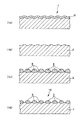
図1は、本発明の表面処理方法の好適な実施形態を示す断面図である。
図1に示すように、本実施形態の表面処理方法は、部材1の表面付近(1a)に存在する不要部9を除去し基材2を得る不要部除去工程(1b)と、基材2の表面に被覆部形成用液体8を付与する被覆部形成用液体付与工程(1c)と、基材2の表面に付与された被覆部形成用液体8に含まれる液状媒体を除去することにより、固体状の被覆部3を形成し、装飾品10を得る工程(1d)とを有する。
Hereinafter, preferred embodiments of a surface treatment method, a decorative article, and a timepiece according to the present invention will be described with reference to the accompanying drawings.
FIG. 1 is a cross-sectional view showing a preferred embodiment of the surface treatment method of the present invention.
As shown in FIG. 1, the surface treatment method of the present embodiment includes an unnecessary part removing step (1b) in which the unnecessary part 9 existing near the surface (1a) of the member 1 is removed to obtain the
[部材]
部材1は、少なくともその表面付近に、主としてTiまたはTi合金で構成された領域を有するものである(1a)。Ti合金は、少なくともTiを含む合金であればよいが、Tiが主成分の合金(好ましくは、構成元素の中でTiの含有率(原子%としての含有率)が最も大きい合金、より好ましくは、Tiの含有率が50原子%以上の合金)であるのが好ましい。これにより、Tiの優れた特性(特に、装飾品として求められる、美的外観、硬度等の特性)をより効果的に発揮することができる。Tiと合金(または金属間化合物)化する金属としては、例えば、Al、V、Mo、W、Fe、Co、Cr、Cu、Ag、Pt、Pd、Zn等が挙げられるが、これらに限定されるものではない。なお、Tiと合金化する元素は、1種であっても2種以上であってもよい。
[Element]
The member 1 has a region mainly composed of Ti or Ti alloy at least in the vicinity of its surface (1a). The Ti alloy may be an alloy containing at least Ti, but an alloy containing Ti as a main component (preferably an alloy having the highest Ti content (content as atomic%) among constituent elements, more preferably An alloy having a Ti content of 50 atomic% or more is preferred. Thereby, the outstanding characteristic (especially characteristics, such as an aesthetic appearance and hardness calculated | required as a decorative article) of Ti can be exhibited more effectively. Examples of the metal that forms an alloy (or intermetallic compound) with Ti include, but are not limited to, Al, V, Mo, W, Fe, Co, Cr, Cu, Ag, Pt, Pd, and Zn. It is not something. The element alloyed with Ti may be one type or two or more types.
本実施形態では、後述するような不要部除去工程において、不要部9が除去されることにより得られる基材2の表面付近が、主としてTiまたはTi合金で構成されたものとなるように、部材1は、不要部9の内面側に、主としてTiまたはTi合金で構成された領域を有している。
部材1は、不要部9を除く部分(基材2に対応する部分)について、各部位で実質的に均一な組成を有するものであってもよいし、部位によって組成の異なるものであってもよい。例えば、部材1の不要部9を除く部分(基材2に対応する部分)は、主としてTi、Ti合金以外の材料で構成された基部と、該基部上に設けられた表面層を有するものであってもよい。このような場合、表面層(後述する被覆部3が形成されるべき部位)が主としてTiまたはTi合金で構成されたものであればよい。部材1がこのような構成のものであると、基部の構成材料の選択により、例えば、部材1の成形の自由度を増すことができ、より複雑な形状の装飾品10であっても、比較的容易に製造することができる。部材1が基部と表面層とを有するものである場合、表面層の厚さ(平均値)は、特に限定されないが、0.5〜30μmであるのが好ましく、1.0〜10μmであるのがより好ましい。表面層の厚さが前記範囲内の値であると、最終的な装飾品10において、Ti、Ti合金が有する優れた美的外観(高級感、重厚感等)をより効果的に発揮させることができるとともに、表面層の基部からの不本意な剥離等をより確実に防止することができ、装飾品10の耐久性、信頼性を特に優れたものとすることができる。
In the present embodiment, in the unnecessary part removing step as will be described later, the member is so formed that the vicinity of the surface of the
The member 1 may have a substantially uniform composition at each part with respect to a part (a part corresponding to the base material 2) excluding the unnecessary part 9, or may have a different composition depending on the part. Good. For example, a portion (a portion corresponding to the base material 2) excluding the unnecessary portion 9 of the member 1 has a base portion mainly made of a material other than Ti and a Ti alloy, and a surface layer provided on the base portion. There may be. In such a case, it is only necessary that the surface layer (portion where the covering portion 3 described later is to be formed) is mainly composed of Ti or a Ti alloy. When the member 1 has such a configuration, for example, the degree of freedom in forming the member 1 can be increased by selecting the constituent material of the base, and even a more complex-shaped
部材1が基部と表面層とを有するものである場合、基部の構成材料としては、例えば、金属材料、非金属材料等を用いることができる。
基部が金属材料で構成される場合、特に優れた強度特性を有する装飾品10を提供することができる。
また、基部が金属材料で構成される場合、基部の表面粗さが比較的大きい場合であっても、表面層を形成する際のレベリング効果により、部材1(基材2)の表面粗さを比較的小さいものとすることができる。例えば、基部の表面に対する切削加工、研磨加工などによる機械加工を省略しても、鏡面仕上げを行うことが可能となったり、基部がMIM法により成形されたもので、その表面が梨地面である場合でも、容易に鏡面にすることができる。これにより、光沢に優れた装飾品を得ることができる。
When the member 1 has a base portion and a surface layer, for example, a metal material, a non-metal material, or the like can be used as a constituent material of the base portion.
When the base is made of a metal material, the
Further, when the base is made of a metal material, even if the surface roughness of the base is relatively large, the surface roughness of the member 1 (base material 2) is reduced by the leveling effect when forming the surface layer. It can be relatively small. For example, it is possible to perform mirror finish even if machining such as cutting and polishing on the surface of the base is omitted, or the base is formed by the MIM method, and the surface is pear-ground. Even in this case, it can be easily mirror-finished. As a result, a decorative article having excellent gloss can be obtained.
基部が非金属材料で構成される場合、比較的軽量で携帯し易く、かつ、重厚な外観を有する装飾品10を提供することができる。
また、基部が非金属材料で構成される場合、比較的容易に、所望の形状に成形することができる。
また、基部が非金属材料で構成される場合、電磁ノイズを遮蔽する効果も得られる。
When the base is made of a non-metallic material, it is possible to provide the
Further, when the base is made of a non-metallic material, it can be formed into a desired shape relatively easily.
Further, when the base is made of a nonmetallic material, an effect of shielding electromagnetic noise can be obtained.
基部を構成する金属材料としては、例えば、Fe、Cu、Zn、Ni、Ti、Mg、Cr、Mn、Mo、Nb、Al、V、Zr、Sn、Au、Pd、Pt、Ag等の各種金属や、これらのうち少なくとも1種を含む合金等が挙げられる。この中でも特に、Cu、Zn、Ni、Ti、Alまたはこれらのうち少なくとも1種を含む合金が好ましい。基部が前述したような材料で構成されることにより、基部と、表面層との密着性を特に優れたものとすることができるとともに、基部の加工性が向上し、部材1(基材2)全体としての成形の自由度がさらに増す。 Examples of the metal material constituting the base include various metals such as Fe, Cu, Zn, Ni, Ti, Mg, Cr, Mn, Mo, Nb, Al, V, Zr, Sn, Au, Pd, Pt, and Ag. And alloys containing at least one of these. Among these, Cu, Zn, Ni, Ti, Al or an alloy containing at least one of these is preferable. When the base is made of the material as described above, the adhesion between the base and the surface layer can be made particularly excellent, the workability of the base is improved, and the member 1 (base material 2). The flexibility of molding as a whole is further increased.
また、基部を構成する非金属材料としては、例えば、セラミックス、プラスチック(特に耐熱性プラスチック)、石材、木材等が挙げられる。
セラミックスとしては、例えば、Al2O3、SiO2、TiO2、Ti2O3、ZrO2、Y2O3、チタン酸バリウム、チタン酸ストロンチウム等の酸化物系セラミックス、AlN、Si3N4、SiN、TiN、BN、ZrN、HfN、VN、TaN、NbN、CrN、Cr2N等の窒化物系セラミックス、グラファイト、SiC、ZrC、Al4C3、CaC2、WC、TiC、HfC、VC、TaC、NbC等の炭化物系のセラミックス、ZrB2、MoB等のホウ化物系のセラミックス、あるいは、これらのうちの2以上を任意に組み合わせた複合セラミックスが挙げられる。
基部が前記のようなセラミックスで構成される場合、特に優れた強度、硬度を有する装飾品10を得ることができる。
Moreover, as a nonmetallic material which comprises a base, ceramics, a plastics (especially heat resistant plastic), a stone material, wood, etc. are mentioned, for example.
As ceramics, for example, Al 2 O 3 , SiO 2 , TiO 2 , Ti 2 O 3 , ZrO 2 , Y 2 O 3 , oxide-based ceramics such as barium titanate and strontium titanate, AlN, Si 3 N 4 , SiN, TiN, BN, ZrN, HfN, VN, TaN, NbN, CrN, Cr 2 N, and other nitride ceramics, graphite, SiC, ZrC, Al 4 C 3 , CaC 2 , WC, TiC, HfC, VC , Carbide ceramics such as TaC and NbC, boride ceramics such as ZrB 2 and MoB, or composite ceramics in which two or more of these are arbitrarily combined.
When the base is made of the ceramic as described above, the
また、基部を構成するプラスチック材料としては、各種熱可塑性樹脂、各種熱硬化性樹脂が挙げられ、例えば、ポリエチレン、ポリプロピレン、エチレン−プロピレン共重合体、エチレン−酢酸ビニル共重合体(EVA)等のポリオレフィン、環状ポリオレフィン、変性ポリオレフィン、ポリ塩化ビニル、ポリ塩化ビニリデン、ポリスチレン、ポリアミド(例:ナイロン6、ナイロン46、ナイロン66、ナイロン610、ナイロン612、ナイロン11、ナイロン12、ナイロン6−12、ナイロン6−66)、ポリイミド、ポリアミドイミド、ポリカーボネート(PC)、ポリ−(4−メチルペンテン−1)、アイオノマー、アクリル系樹脂、ポリメチルメタクリレート、アクリロニトリル−ブタジエン−スチレン共重合体(ABS樹脂)、アクリロニトリル−スチレン共重合体(AS樹脂)、ブタジエン−スチレン共重合体、ポリオキシメチレン、ポリビニルアルコール(PVA)、エチレン−ビニルアルコール共重合体(EVOH)、ポリエチレンテレフタレート(PET)、ポリブチレンテレフタレート(PBT)、ポリシクロヘキサンテレフタレート(PCT)等のポリエステル、ポリエーテル、ポリエーテルケトン(PEK)、ポリエーテルエーテルケトン(PEEK)、ポリエーテルイミド、ポリアセタール(POM)、ポリフェニレンオキシド、変性ポリフェニレンオキシド、ポリサルフォン、ポリエーテルサルフォン、ポリフェニレンサルファイド、ポリアリレート、芳香族ポリエステル(液晶ポリマー)、ポリテトラフルオロエチレン、ポリフッ化ビニリデン、その他フッ素系樹脂、スチレン系、ポリオレフィン系、ポリ塩化ビニル系、ポリウレタン系、ポリエステル系、ポリアミド系、ポリブタジエン系、トランスポリイソプレン系、フッ素ゴム系、塩素化ポリエチレン系等の各種熱可塑性エラストマー、エポキシ樹脂、フェノール樹脂、ユリア樹脂、メラミン樹脂、不飽和ポリエステル、シリコーン系樹脂、ウレタン系樹脂、ポリパラキシリレン(poly-para-xylylene)、ポリモノクロロパラキシリレン(poly-monochloro-para-xylylene)、ポリジクロロパラキシリレン(poly-dichloro-para-xylylene)、ポリモノフルオロパラキシリレン(poly-monofluoro-para-xylylene)、ポリモノエチルパラキシリレン(poly-monoethyl-para-xylylene)等のポリパラキシリレン樹脂等、またはこれらを主とする共重合体、ブレンド体、ポリマーアロイ等が挙げられ、これらのうちの1種または2種以上を組み合わせて(例えば、ブレンド樹脂、ポリマーアロイ、積層体等として)用いることができる。 Examples of the plastic material constituting the base include various thermoplastic resins and various thermosetting resins, such as polyethylene, polypropylene, ethylene-propylene copolymer, and ethylene-vinyl acetate copolymer (EVA). Polyolefin, cyclic polyolefin, modified polyolefin, polyvinyl chloride, polyvinylidene chloride, polystyrene, polyamide (example: nylon 6, nylon 46, nylon 66, nylon 610, nylon 612, nylon 11, nylon 12, nylon 6-12, nylon 6 -66), polyimide, polyamideimide, polycarbonate (PC), poly- (4-methylpentene-1), ionomer, acrylic resin, polymethyl methacrylate, acrylonitrile-butadiene-styrene copolymer (ABS resin) , Acrylonitrile-styrene copolymer (AS resin), butadiene-styrene copolymer, polyoxymethylene, polyvinyl alcohol (PVA), ethylene-vinyl alcohol copolymer (EVOH), polyethylene terephthalate (PET), polybutylene terephthalate ( Polyesters such as PBT) and polycyclohexane terephthalate (PCT), polyether, polyether ketone (PEK), polyether ether ketone (PEEK), polyether imide, polyacetal (POM), polyphenylene oxide, modified polyphenylene oxide, polysulfone, poly Ether sulfone, polyphenylene sulfide, polyarylate, aromatic polyester (liquid crystal polymer), polytetrafluoroethylene, polyvinylidene fluoride Other thermoplastic resins such as fluorine resins, styrene, polyolefin, polyvinyl chloride, polyurethane, polyester, polyamide, polybutadiene, trans polyisoprene, fluoro rubber, chlorinated polyethylene, and epoxy Resin, phenol resin, urea resin, melamine resin, unsaturated polyester, silicone resin, urethane resin, poly-para-xylylene, poly-monochloro-para-xylylene, Polypara-xylylene, poly-monofluoro-para-xylylene, poly-monoethyl-para-xylylene, poly-monoethyl-para-xylylene, etc. Xylylene resins, etc., or copolymers, blends, polymer Etc., and singly or in combination of two or more of these (e.g., a blend resin, polymer alloy, as a laminate or the like) can be used.
また、部材1は、いかなる方法で製造(成形)されたものであってもよい。部材1の製造方法としては、例えば、プレス加工、切削加工、鍛造加工、鋳造加工、粉末冶金焼結、金属粉末射出成形(MIM)、ロストワックス法等が挙げられる。この中でも特に、鋳造加工または金属粉末射出成形(MIM)が好ましい。鋳造加工、金属粉末射出成形(MIM)は、特に、加工性に優れている。このため、これらの方法を用いた場合、複雑な形状の部材1を比較的容易に得ることができる。
また、部材1が基部と表面層(TiまたはTi合金で構成された表面層)とを有するものである場合、表面層は、例えば、電解めっき、浸漬めっき、無電解めっき等の湿式めっき法、熱CVD、プラズマCVD、レーザーCVD等の化学蒸着法(CVD)、真空蒸着、スパッタリング、イオンプレーティング等の乾式めっき法、溶射、金属箔の接合等の方法により形成することができる。
また、基部の製造方法(成形方法)は、特に限定されないが、その構成材料等により、以下のような方法を好適に用いることができる。
すなわち、基部が金属材料で構成される場合、その製造方法としては、例えば、プレス加工、切削加工、鍛造加工、鋳造加工、粉末冶金焼結、金属粉末射出成形(MIM)、ロストワックス法等が挙げられる。この中でも特に、鋳造加工または金属粉末射出成形(MIM)が好ましい。鋳造加工、金属粉末射出成形(MIM)は、特に、加工性に優れている。このため、これらの方法を用いた場合、複雑な形状の部材1を比較的容易に得ることができる。
また、基部が前記のようなセラミックスで構成される場合、その製造方法は、特に限定されないが、金属粉末射出成形(MIM)であるのが好ましい。金属粉末射出成形(MIM)は、特に、加工性に優れているため、複雑な形状の部材1を比較的容易に得ることができる。
また、基部が前記のようなプラスチックで構成される場合、その製造方法としては、例えば、圧縮成形、押出成形、射出成形、光造形等が挙げられる。
また、部材1(基材2)の形状、大きさは、特に限定されず、通常、装飾品10の形状、大きさに基づいて決定される。
The member 1 may be manufactured (molded) by any method. Examples of the method for producing the member 1 include press working, cutting, forging, casting, powder metallurgy sintering, metal powder injection molding (MIM), and lost wax method. Among these, casting or metal powder injection molding (MIM) is particularly preferable. Casting and metal powder injection molding (MIM) are particularly excellent in workability. For this reason, when these methods are used, the member 1 having a complicated shape can be obtained relatively easily.
Moreover, when the member 1 has a base and a surface layer (a surface layer composed of Ti or a Ti alloy), the surface layer is, for example, a wet plating method such as electrolytic plating, immersion plating, electroless plating, It can be formed by a chemical vapor deposition method (CVD) such as thermal CVD, plasma CVD, or laser CVD, a dry plating method such as vacuum vapor deposition, sputtering, or ion plating, thermal spraying, metal foil bonding, or the like.
Moreover, the manufacturing method (molding method) of the base is not particularly limited, but the following method can be suitably used depending on the constituent materials and the like.
That is, when the base is made of a metal material, the manufacturing method includes, for example, pressing, cutting, forging, casting, powder metallurgy sintering, metal powder injection molding (MIM), lost wax method and the like. Can be mentioned. Among these, casting or metal powder injection molding (MIM) is particularly preferable. Casting and metal powder injection molding (MIM) are particularly excellent in workability. For this reason, when these methods are used, the member 1 having a complicated shape can be obtained relatively easily.
Further, when the base is made of the ceramic as described above, the manufacturing method is not particularly limited, but metal powder injection molding (MIM) is preferable. Since metal powder injection molding (MIM) is particularly excellent in workability, the member 1 having a complicated shape can be obtained relatively easily.
Moreover, when a base is comprised with the above plastics, as the manufacturing method, compression molding, extrusion molding, injection molding, stereolithography, etc. are mentioned, for example.
Moreover, the shape and size of the member 1 (base material 2) are not particularly limited, and are usually determined based on the shape and size of the
[不要部除去工程]
本実施形態において、部材1は、少なくとも表面付近が主としてTiまたはTi合金で構成され、所定形状を有する母材に、ホーニング加工、スジ目加工、鏡面加工等の機械的加工を施すことにより得られたものである(1a)。一般に、上記のような加工が施された部材1は、その表面に、不要部9が形成されることが多い。不要部9は、通常、前記母材の構成材料の酸化物や、成形型に付着していた汚れ、上記加工に用いる工具に付着していた汚れ等で構成されている。また、例えば、部材1が金属粉末射出成形(MIM)法で製造されたものである場合には、不要部9は、MIM法において用いられる射出物の構成成分としての有機バインダーやその分解物等を含む場合もある。本実施形態においては、後述する被覆部形成用液体付与工程に先立ち、不要部9を除去し、少なくともその表面付近が主としてTiまたはTi合金で構成された基材2を得る(1b)。このように本発明においては、被覆部形成用液体付与工程に先立ち不要部を除去するのが好ましい。すなわち、本発明においては、上記のような部材をそのまま基材として用いてもよいが、不要部が除去された基材を用いるのが好ましい。これにより、基材と被覆部(後述するような形状、組成を有する被覆部)との密着性を特に優れたものとすることができる。また、不要部を除去することにより、基材と被覆部形成用液体との濡れ性(接触角)を好適なものとすることができ、最適な大きさ、形状の被覆部を容易かつ確実に形成することができる。
[Unnecessary part removal process]
In the present embodiment, the member 1 is obtained by performing mechanical processing such as honing processing, streak processing, mirror surface processing, etc. on a base material that is mainly composed of Ti or Ti alloy at least near the surface and has a predetermined shape. (1a). In general, the member 1 that has been processed as described above often has an unnecessary portion 9 formed on the surface thereof. The unnecessary portion 9 is generally composed of an oxide of the constituent material of the base material, dirt attached to the mold, dirt attached to the tool used for the above processing, and the like. Further, for example, when the member 1 is manufactured by a metal powder injection molding (MIM) method, the unnecessary portion 9 includes an organic binder as a constituent of an injection used in the MIM method, a decomposition product thereof, and the like. May be included. In this embodiment, prior to the coating portion forming liquid application step described later, the unnecessary portion 9 is removed to obtain a
不要部除去工程は、いかなる方法で行うものであってもよいが、具体的な方法としては、例えば、<1>エッチング処理液を用いた化学研磨、<2>電解研磨、<3>洗浄(例えば、水洗(水洗浄)、アルカリ洗浄、酸洗浄、有機溶剤洗浄等)が挙げられる。以下、これらの方法について順次説明する。なお、図示の構成では、不要部9は、部材1の全面に形成されているが、本工程は、表面の一部に不要部9を有する部材1に対して行うものであってもよい。 The unnecessary portion removing step may be performed by any method. Specific methods include, for example, <1> chemical polishing using an etching solution, <2> electrolytic polishing, <3> cleaning ( For example, water washing (water washing), alkali washing, acid washing, organic solvent washing and the like can be mentioned. Hereinafter, these methods will be sequentially described. In the illustrated configuration, the unnecessary portion 9 is formed on the entire surface of the member 1. However, this step may be performed on the member 1 having the unnecessary portion 9 on a part of the surface.
<1>エッチング処理液を用いた化学研磨
部材1とエッチング処理液とを接触させることにより、部材1の表面に化学研磨を施す。部材1とエッチング処理液とを接触させる方法としては、例えば、エッチング液中への部材1の浸漬、部材1の表面へのエッチング液の噴霧等が挙げられる。
化学研磨の条件(例えば、エッチング処理液の組成、温度、エッチング液と部材との接触時間(浸漬時間)等)は、特に限定されないが、その好適例を以下に説明する。
<1> Chemical Polishing Using Etching Treatment Liquid The surface of the member 1 is subjected to chemical polishing by bringing the member 1 into contact with the etching treatment liquid. Examples of the method for bringing the member 1 into contact with the etching treatment liquid include immersion of the member 1 in the etching liquid, spraying of the etching liquid onto the surface of the member 1, and the like.
The conditions for chemical polishing (for example, the composition of the etching treatment solution, the temperature, the contact time between the etching solution and the member (immersion time), etc.) are not particularly limited, but suitable examples thereof will be described below.
エッチング処理液としては、例えば、HF、HNO3およびH2SO4を含む混合液を好適に用いることができる。例えば、HFとHNO3との混合液を用いることもできるが、さらにH2SO4を含むことにより、基材2の表面の荒れ等をより効果的に防止しつつ、得られる基材2の更なる白色化を図ることができる。
特に、エッチング処理液は、HF:1〜10vol%、HNO3:15〜40vol%、H2SO4:30〜60vol%を含む水溶液であるのが好ましい。このような組成範囲(以下「最適範囲」と言う)とすることにより、比較的短い処理時間で、すなわち高い生産性で、基材2の表面の荒れ等をより効果的に防止しつつ、得られる基材2の更なる白色化を図ることができ、より優れた光沢を引き出すことができる。
As the etching treatment liquid, for example, a mixed liquid containing HF, HNO 3 and H 2 SO 4 can be suitably used. For example, a mixed solution of HF and HNO 3 can be used, but by further containing H 2 SO 4 , the surface of the
In particular, the etching treatment liquid is preferably an aqueous solution containing HF: 1 to 10 vol%, HNO 3 : 15 to 40 vol%, and H 2 SO 4 : 30 to 60 vol%. By adopting such a composition range (hereinafter referred to as “optimum range”), the surface of the
エッチング処理液中に、HF、HNO3の少なくとも一方が存在しないかまたは極めて少ないと、エッチングが実質的に進行しないかまたはその進行が遅い。HFが1vol%未満またはHNO3が15vol%未満であると、エッチング処理効果が少なく、処理時間が長くなる傾向を示す。
逆に、HFが10vol%を超えるかまたはHNO3が40vol%を超えると、処理温度等によっては、表面荒れが生じ易くなる。H2SO4が30vol%未満の場合も、処理温度等によっては、表面荒れが生じ易くなり、H2SO4が60vol%を超えると、エッチング処理効果が低下する傾向を示す。
特に、鏡面加工が施された部材1の場合には、表面荒れの影響が大きいので、この場合には、エッチング処理液の組成は、HF:1〜5vol%、HNO3:15〜35vol%、H2SO4:40〜60vol%とすることがより好ましい。
If at least one of HF and HNO 3 is not present or very little in the etching processing solution, the etching does not proceed substantially or progresses slowly. When HF is less than 1 vol% or HNO 3 is less than 15 vol%, the etching effect is small and the processing time tends to be long.
Conversely, when HF exceeds 10 vol% or HNO 3 exceeds 40 vol%, surface roughness tends to occur depending on the processing temperature and the like. Even when H 2 SO 4 is less than 30 vol%, surface roughness tends to occur depending on the processing temperature or the like, and when H 2 SO 4 exceeds 60 vol%, the etching effect tends to decrease.
In particular, in the case of the member 1 subjected to mirror finishing, the influence of surface roughness is large. In this case, the composition of the etching treatment liquid is HF: 1 to 5 vol%, HNO 3 : 15 to 35 vol%, H 2 SO 4: and more preferably to 40~60vol%.
エッチング処理液の具体例としては、市販の45〜50vol%のHF(フッ化水素酸)を5vol%、市販の60〜70vol%のHNO3(硝酸)を45vol%、市販の98vol%のH2SO4(濃硫酸)を50vol%混合した液が挙げられる。このエッチング処理液の組成は、HF:2.25〜2.5vol%、HNO3:27〜31.5vol%、H2SO4:49vol%、残部が水となり、組成の最適範囲を満足する。このようなエッチング処理液に、部材1を、例えば、5〜60秒間程度浸漬することにより、好適に化学研磨処理することができる。
なお、本発明において行われる化学研磨の条件(例えば、エッチング処理液の組成等)は、上記のようなものに限定されるものではない。
As specific examples of the etching treatment liquid, commercially available 45 to 50 vol% HF (hydrofluoric acid) is 5 vol%, commercially available 60 to 70 vol% HNO 3 (nitric acid) is 45 vol%, and commercially available 98 vol% H 2. SO 4 (sulfuric acid) solution obtained by mixing 50 vol% of the like. The composition of the etching solution, HF: 2.25~2.5vol%, HNO 3 : 27~31.5vol%,
The conditions for chemical polishing performed in the present invention (for example, the composition of the etching treatment liquid) are not limited to the above.
<2>電解研磨
部材1に電解研磨を施す。この電解研磨は、電解液中で部材1を陽極として電解処理し、部材1の表面付近を溶解(陽極溶解)せしめることによりなされる。
この方法によれば、不要部9をより確実に除去することができるとともに、得られる基材2の表面(不要部9が存在した側の面)をより効果的に均質化することができ、基材2と被覆部3との密着力を特に優れたものとすることができる。その結果、最終的に得られる装飾品10は、特に優れた美的外観、耐久性を有するものとなる。
<2> Electrolytic polishing The member 1 is subjected to electrolytic polishing. This electropolishing is performed by electrolytically treating the member 1 as an anode in an electrolytic solution and dissolving the vicinity of the surface of the member 1 (anodic dissolution).
According to this method, the unnecessary portion 9 can be more reliably removed, and the surface of the obtained base material 2 (the surface on the side where the unnecessary portion 9 was present) can be more effectively homogenized. The adhesion between the
電解研磨の条件(例えば、電解液(電解処理液)の組成、温度、電流密度、処理時間等)は、特に限定されないが、その好適例を以下に説明する。
電解液としては、例えば、H3PO4(リン酸)を含むものを好適に用いることができる。H3PO4を含む電解液は、特に、主としてTiまたはTi合金で構成された部材1に対する電解処理に適し、処理後の表面性状を特に良好なものとすることができる。
The conditions for electrolytic polishing (for example, the composition of the electrolytic solution (electrolytic treatment solution), temperature, current density, treatment time, etc.) are not particularly limited, but preferred examples thereof will be described below.
As the electrolytic solution, for example, an electrolyte containing H 3 PO 4 (phosphoric acid) can be suitably used. The electrolytic solution containing H 3 PO 4 is particularly suitable for the electrolytic treatment for the member 1 mainly composed of Ti or Ti alloy, and the surface properties after the treatment can be made particularly good.
このような場合、電解液中のH3PO4の濃度は、8〜12vol%であるのが好ましい。電解液中のH3PO4の濃度が低すぎると、研磨力が低下し、不要部9の除去を効率良く行うのが困難となる。一方、電解液中のH3PO4の濃度が高すぎると、電解液の研磨力が高くなり過ぎ、得られる基材2は変色し易いものなる。
また、電解液のpHは、特に限定されないが、通常、1.0〜1.2程度が好ましく、1.05〜1.1程度がより好ましい。
電解液の液温は、特に限定されず、例えば、25〜30℃程度とすることができる。
In such a case, the concentration of H 3 PO 4 in the electrolytic solution is preferably 8 to 12 vol%. If the concentration of H 3 PO 4 in the electrolytic solution is too low, the polishing power is reduced, and it is difficult to efficiently remove the unnecessary portion 9. On the other hand, when the concentration of H 3 PO 4 in the electrolytic solution is too high, the polishing power of the electrolytic solution becomes too high, and the obtained
Further, the pH of the electrolytic solution is not particularly limited, but is usually preferably about 1.0 to 1.2, and more preferably about 1.05 to 1.1.
The liquid temperature of electrolyte solution is not specifically limited, For example, it can be set as about 25-30 degreeC.
電解処理時間は、特に限定されず、電解液の組成や電流密度等の条件に応じて適宜決定されるが、通常、3秒〜2分程度が好ましく、5秒〜1分程度がより好ましい。電解処理時間が短過ぎると、電解液の組成や電流密度等の条件によっては、十分な電解研磨がなされず、不要部9を十分に除去することが困難になる場合がある。一方、電解処理時間が長過ぎると、基材2、装飾品10の生産性を低下させる。また、電解処理時間を前記上限値より長くしても、上記のような効果の更なる向上はほとんど望めない。
The electrolytic treatment time is not particularly limited and is appropriately determined according to conditions such as the composition of the electrolytic solution and the current density. Usually, it is preferably about 3 seconds to 2 minutes, and more preferably about 5 seconds to 1 minute. If the electrolytic treatment time is too short, sufficient electrolytic polishing may not be performed depending on conditions such as the composition of the electrolytic solution and the current density, and it may be difficult to sufficiently remove the unnecessary portion 9. On the other hand, if the electrolytic treatment time is too long, the productivity of the
また、電解研磨において、陽極の電流密度は、特に限定されないが、0.5〜10A/cm2程度とするのが好ましく、1〜5A/cm2程度とするのがより好ましい。この電流密度が低すぎると、短時間では十分な電解研磨を行うことが困難となり、基材2、装飾品10の生産性が低下する。一方、電流密度が高すぎると、電解研磨処理時間等によっては、陽極酸化の作用により基材2の表面(不要部9が存在した側の面)が変色(特に、黄変)し、最終的に得られる装飾品10において十分な白色度が得られない場合がある。
なお、本発明において行われる電解研磨の条件(例えば、電解液の組成、pH、温度、電流密度等)は、上記のようなものに限定されるものではない。
Further, in electrolytic polishing, the current density of the anode is not particularly limited, may preferably be 0.5~10A / cm 2 or so, and more preferably, 1-5A / cm 2 approximately. If the current density is too low, it is difficult to perform sufficient electropolishing in a short time, and the productivity of the
In addition, the conditions (for example, composition of electrolyte solution, pH, temperature, current density, etc.) of electropolishing performed in the present invention are not limited to the above.
<3>洗浄
洗浄としては、酸洗浄(酸洗)、アルカリ洗浄(アルカリ脱脂、酸中和処理等を含む)、水洗(水洗浄)、温水洗、高圧水蒸気洗浄や、アルコール等の有機溶媒(有機溶剤)による洗浄、オイル洗浄が挙げられ、これらのうちの1種または2種以上を適宜組み合わせて行うことができる。
<3> Cleaning As cleaning, acid cleaning (pickling), alkali cleaning (including alkali degreasing, acid neutralization, etc.), water cleaning (water cleaning), warm water cleaning, high-pressure steam cleaning, and organic solvents such as alcohol ( Cleaning with an organic solvent) and oil cleaning may be mentioned, and one or two or more of these may be combined as appropriate.
このような場合、前記酸洗における酸洗液としては、例えば、硫酸3〜5vol%程度のものが好適に使用され、前記アルカリ洗におけるアルカリ洗液としては、例えば、ディプソール41C(ディプソール社製)3.5〜5vol%程度のものが好適に使用される。
また、洗浄の方法は、特に限定されず、例えば、シャワー洗浄、ジェット洗浄、超音波洗浄、精密洗浄、あるいは、単なる洗浄液への浸漬や、撹拌を伴う洗浄液への浸漬等、いかなるものでもよい。
洗浄液の温度も、特に限定されず、常温(15℃)程度から100℃程度の高温洗浄まで、いかなるものでもよい。
In such a case, as the pickling solution in the pickling, for example, about 3 to 5 vol% of sulfuric acid is preferably used, and as the alkaline cleaning solution in the alkali washing, for example, Dipsol 41C (manufactured by Dipsor) About 3.5-5 vol% is preferably used.
The cleaning method is not particularly limited, and may be any method such as shower cleaning, jet cleaning, ultrasonic cleaning, precision cleaning, simple immersion in a cleaning solution, or immersion in a cleaning solution with stirring.
The temperature of the cleaning liquid is not particularly limited, and may be any temperature from about normal temperature (15 ° C.) to high temperature cleaning of about 100 ° C.
<4>前記<1>〜<3>の組み合わせ
前記<1>〜<3>の処理を任意の順序で任意の回数組み合わせて行うことができる。
例えば、<1>または<2>を実施した後、<3>を行うことができ、これにより、得られる基材2の表面の性状をより良好にすること、またはより清浄にすることができる。
このような異なる種類の処理を併用することで、得られる基材2の表面の性状を微妙に調整することが可能となり、それにより、例えば後述する被覆部3との密着性の更なる向上を図ることができる。
<4> Combination of <1> to <3> The processes <1> to <3> can be performed in any number of combinations in any order.
For example, after <1> or <2> is performed, <3> can be performed, and thereby the surface properties of the obtained
By using such different types of treatments in combination, it becomes possible to finely adjust the surface properties of the obtained
[被覆部形成用液体付与工程]
上記のような基材2に対して、被覆部形成用液体8を付与する(1c)。
被覆部形成用液体8は、後述する被覆部3の構成材料またはその前駆体(前駆物質)を含む材料で構成されている。被覆部3は、透明性を有する材料で構成されるものであればいかなるものであってもよいが、被覆部3の構成材料としては、例えば、ソーダガラス、カリウムガラス等のアルカリガラス、結晶性ガラス、石英ガラス、鉛ガラス、ホウ珪酸ガラス、無アルカリガラス等の各種ガラス、酸化アルミニウム、酸化シリコン等の各種無機材料、熱可塑性樹脂、熱硬化性樹脂、光硬化性樹脂等の各種樹脂材料(各種有機材料)や、これらの複合材料等が挙げられる。したがって、被覆部3が主としてガラスで構成されるものである場合には、被覆部形成用液体8は、ガラスまたはガラスの前駆体(例えば、アルカリ珪酸塩等)を含む材料で構成されるものであり、樹脂材料で構成されるものである場合、被覆部形成用液体8は、前記樹脂材料または前記樹脂材料の前駆体(例えば、前記樹脂のモノマー、ダイマー、トリマー、オリゴマー、プレポリマー等)を含む材料で構成されるものである。
[Liquid application process for forming a coating part]
The covering
The coating
なお、本明細書中において、「透明性」とは、可視光領域(380〜770nm)の任意の波長の光が所定の割合で透過可能な状態のことを指すが、具体的には、可視光領域(380〜770nm)の波長の光についての透過率が30%以上であるのが好ましく、50%以上であるのがより好ましい。また、本発明においては、最終的に形成される被覆部が透明性を有するものであればよく、その形成に用いる被覆部形成用液体は、透明性を有していなくてもよい。 In this specification, “transparency” refers to a state in which light of an arbitrary wavelength in the visible light region (380 to 770 nm) can be transmitted at a predetermined ratio. The transmittance for light having a wavelength in the light region (380 to 770 nm) is preferably 30% or more, and more preferably 50% or more. Moreover, in this invention, the coating | coated part finally formed should just have transparency, and the coating | coated part formation liquid used for the formation does not need to have transparency.
また、被覆部3は、透明性を有するものであれば特に限定されないが、後述するように、主としてガラスで構成されるものであるのが好ましい。したがって、以下の説明では、特に断りがない限り、形成すべき被覆部3が主としてガラスで構成されるものであり、被覆部形成用液体8としてガラスまたはガラスの前駆体を含む材料で構成されるものを用いるものとして説明する。
Moreover, the coating | coated part 3 will not be specifically limited if it has transparency, However, As mentioned later, it is preferable that it is mainly comprised with glass. Therefore, in the following description, unless otherwise specified, the covering portion 3 to be formed is mainly made of glass, and the covering
被覆部形成用液体8を基材2上に付与する方法としては、例えば、刷毛塗り、噴霧塗装、静電塗装、電着塗装、ディッピング(浸漬法)等の塗布法、スクリーン印刷、たこ印刷、オフセット印刷等が挙げられるが、この中でも、噴霧塗装、静電塗装が好ましい。これにより、基材2への被覆部形成用液体8の付与量の調節を容易かつ確実に行うことができる。
Examples of the method for applying the coating portion forming liquid 8 on the
被覆部形成用液体8は、後述する被覆部3の形状に対応する形状(多点状)に、基材2の表面に付与してもよいし(図1参照)、基材2のほぼ全面(被覆部3を形成すべき面側のほぼ全面)に付与してもよい。また、例えば、基材2の特性(特に、撥液性等の表面特性)、被覆部形成用液体8の特性(特に、粘度、凝集力等の特性)を積極的に利用することにより、基材2上において被覆部形成用液体8が多点状に存在するようにしてもよい。より具体的には、例えば、ディッピング等の方法により、基材2のほぼ全面に被覆部形成用液体8を接触させ、その後当該被覆部形成用液体8を凝集させることにより、基材2上において、被覆部形成用液体8が多点状に存在するようにしてもよい。このような方法を採用することにより、所望の形状(大きさ、被覆率等も含む)の被覆部3を、より容易に形成することができる。特に、部材1(基材2)としてホーニング加工、スジ目加工が施されたものを用いた場合、基材2の被覆部3を形成すべき面側のほぼ全体に被覆部形成用液体8を接触させても、基材2の表面の凹部内およびその周辺に、優先的に被覆部形成用液体8を付与することができる。その結果、後に詳述する被覆部形成用液体固化工程において、比較的容易に、基材2の表面形状に対応したパターンで配された多数の被覆部3を形成することができる。
The covering portion forming liquid 8 may be applied to the surface of the
被覆部形成用液体8としては、例えば、被覆部3の構成材料としてのガラスまたはガラスの前駆体が分散した液体(分散液)や、ガラスの前駆体が溶解または分散した液体等を用いることができるが、被覆部3の構成材料としてのガラスまたはガラスの前駆体が分散した液体(分散液)を用いるのが好ましい。これにより、後述する被覆部形成用液体固化工程において、ガラスまたはガラスの前駆体を核として凝縮させることができ、より好適な形状の被覆部(より多点状で、均一な大きさの被覆部)をより確実に形成することができる。また、被覆部形成用液体固化工程後におけるガラス質の結晶状態をより均一性の高いものとすることができる。
As the covering
被覆部形成用液体8がガラスの粒子を含むものである場合(被覆部形成用液体8としてガラスが分散している分散液を用いる場合)、ガラス粒子の平均粒径は、0.1〜3μmであるのが好ましく、0.5〜2μmであるのがより好ましい。これにより、後述する被覆部形成用液体固化工程において、多点状で、均一な大きさの被覆部をより確実に形成することができる。特に、各部位での大きさ、形状のばらつきの小さい被覆部を容易かつ確実に形成することができる。 When the coating portion forming liquid 8 contains glass particles (when a dispersion in which glass is dispersed is used as the coating portion forming liquid 8), the average particle size of the glass particles is 0.1 to 3 μm. Is preferable, and it is more preferable that it is 0.5-2 micrometers. Thereby, in the liquid solidification process for covering portion formation described later, a multi-point covering portion having a uniform size can be more reliably formed. In particular, it is possible to easily and reliably form a covering portion with small variations in size and shape at each part.
被覆部形成用液体8は、ガラスまたはガラスの前駆体(被覆部3の構成材料またはその前駆体)以外の成分を含むものであってもよい。例えば、被覆部形成用液体8は、ガラスまたはガラスの前駆体を溶解、分散させる液状媒体(溶媒、分散媒)を含むものであってもよい。このような液状媒体としては、例えば、水等の向き溶媒、アルコール類、ベンゼン、トルエン等の有機溶媒等が挙げられ、これらから選択される1種または2種以上を組み合わせて用いることができる。 The covering portion forming liquid 8 may include components other than glass or a glass precursor (a constituent material of the covering portion 3 or a precursor thereof). For example, the coating portion forming liquid 8 may include a liquid medium (solvent, dispersion medium) in which glass or a glass precursor is dissolved and dispersed. Examples of such a liquid medium include an orientation solvent such as water, an organic solvent such as alcohols, benzene, and toluene, and one or a combination of two or more selected from these can be used.
また、被覆部形成用液体8中には、例えば、シリカ、熱可塑性樹脂、熱硬化性樹脂、光硬化性樹脂等の各種樹脂材料(各種有機材料)等の微粒子が含まれていてもよい。これにより、被覆部と基材との密着性をさらに優れたものとすることができる。このような場合、前記微粒子の平均粒径は、40μm以下であるのが好ましい。これにより、多点状で、均一な大きさの被覆部をより確実に形成することができる。特に、各部位での大きさ、形状のばらつきの小さい被覆部を容易かつ確実に形成することができる。 In addition, the coating portion forming liquid 8 may contain fine particles such as various resin materials (various organic materials) such as silica, thermoplastic resin, thermosetting resin, and photocurable resin. Thereby, the adhesiveness of a coating | coated part and a base material can be made further excellent. In such a case, the average particle size of the fine particles is preferably 40 μm or less. As a result, a multi-point and uniform size covering portion can be more reliably formed. In particular, it is possible to easily and reliably form a covering portion with small variations in size and shape at each part.
被覆部形成用液体8中に占めるガラスまたはガラスの前駆体の含有率は、特に限定されないが、0.1〜40wt%であるのが好ましく、5〜20wt%であるのがより好ましい。これにより、所望の量の被覆部形成用液体8を、基材2上に容易かつ確実に付与することができるとともに、形成すべき被覆部3の形状、大きさ等をより確実に制御することができる。言い換えると、後述する被覆部形成用液体固化工程において、好適な形状の被覆部3を容易かつ確実に形成することができる。
Although the content rate of the glass or glass precursor which occupies in the
また、被覆部形成用液体8の粘度は、特に限定されないが、25℃において、100〜600cpsであるのが好ましく、100〜500cpsであるのがより好ましく、150〜500cpsであるのがさらに好ましく、150〜400cpsであるのがもっとも好ましい。特に、基材2(または部材1)がホーニング加工を施されたものである場合、被覆部形成用液体8の粘度は、特に限定されないが、25℃において、150〜600cpsであるのが好ましく、200〜500cpsであるのがより好ましい。また、基材2(または部材1)がスジ目加工を施されたものである場合、被覆部形成用液体8の粘度は、特に限定されないが、25℃において、150〜600cpsであるのが好ましく、200〜500cpsであるのがより好ましい。また、基材2(または部材1)が鏡面加工を施されたものである場合、被覆部形成用液体8の粘度は、特に限定されないが、25℃において、150〜400cpsであるのが好ましく、150〜200cpsであるのがより好ましい。被覆部形成用液体8の粘度が上記範囲内の値であると、所望の量の被覆部形成用液体8を、基材2上に容易かつ確実に付与することができるとともに、形成すべき被覆部3の形状、大きさ等をより確実に制御することができる。言い換えると、後述する被覆部形成用液体固化工程において、好適な形状の被覆部3を容易かつ確実に形成することができる。これに対し、被覆部形成用液体8の粘度が前記下限値未満であると、被覆部形成用液体8の基材2に対する濡れ性(接触角)等によっては、十分な高さ(厚さ)の被覆部3を形成するのが困難になる場合がある。また、被覆部形成用液体8の粘度が前記上限値を超えると、被覆部と基材との密着性、耐磨耗性が低下する。なお、被覆部形成用液体8の粘度は、被覆部形成用液体8中における、液状媒体(溶媒、分散媒等)やガラス(またはガラスの前駆体)の含有率、液状媒体(溶媒、分散媒等)の組成、ガラスの大きさ等を調節することにより、容易かつ確実に制御することができる。
Further, the viscosity of the covering
[被覆部形成用液体固化工程(被覆部形成工程)]
基材2の表面に付与した被覆部形成用液体8を固化させ、透明性を有する材料で構成された、複数個の被覆部3を多点状に形成する(1d)。これにより、装飾品10が得られる。このように、本発明では、被覆部を多点状に形成する点に特徴を有する。これにより、装飾品の表面に皮脂等の汚れが付着することによる装飾品の美的外観の低下を効果的に防止することができる。また、本発明では、被覆部を多点状に設けるため、衝撃等により、被覆部にクラックを生じたり、被覆部が剥離、脱落するのを効果的に防止することができる。言い換えると、被覆部を基材の全面に形成した場合には、比較的小さな外力が加わった場合であっても、被覆部におけるクラックや被覆部の剥離、脱落を生じ易いのに対し、本発明のように、被覆部を多点状に設けることにより、このような不都合の発生を効果的に防止することができる。したがって、本発明によれば、耐久性に優れた装飾品を提供することができる。また、被覆部を多点状に形成することにより、濡れ現象で装飾品の外観が黒っぽく見えるのを効果的に防止することができ、また、(特に装飾品の角部付近における)干渉色の発生を効果的に防止することができる。その結果、装飾品の装飾性(美的外観)を特に優れたものとすることができる。また、被覆部を多点状に形成することにより、装飾品の触感を優れたものとすることができる。言い換えると、被覆部を基材の全面に形成した場合には、装飾品に触れたとき(特に、長時間身に付けたとき)に、べたつき等による違和感、不快感を感じ易いが、本発明のように被覆部を多点状に設けることにより、上記のような問題の発生を効果的に防止することができる。したがって、本発明は、通常長時間身体に接触して用いられるような装飾品(例えば、時計用外装部品や、メガネ、指輪、ネックレス、ブレスレット、アンクレット、ブローチ、ペンダント、イヤリング、ピアス等の装身具等の装身具)に、より好適に適用することができる。
[Liquid solidification step for covering portion formation (covering portion forming step)]
The covering portion forming liquid 8 applied to the surface of the
被覆部形成用液体8を固化させる方法は、特に限定されず、被覆部形成用液体8の構成材料等に応じて選択される。
例えば、被覆部形成用液体8が液状媒体を含むものである場合、被覆部形成用液体8が付与された基材2を加熱したり、減圧環境下に放置すること等により、液状媒体を除去し、固体状の被覆部3を形成することができる。また、被覆部形成用液体8が液状の熱硬化性樹脂を含むものである場合、被覆部形成用液体8が付与された基材2を加熱することにより、固体状の被覆部3を形成することができる。また、被覆部形成用液体8が液状の光硬化性樹脂を含むものである場合、基材2の被覆部形成用液体8が付与された側の面に光を照射することにより、固体状の被覆部3を形成することができる。
The method for solidifying the coating
For example, when the coating portion forming liquid 8 contains a liquid medium, the liquid medium is removed by heating the
本工程を液状媒体(溶媒、分散媒等)を除去することにより行う場合、本工程は、例えば、常温〜250℃の温度で、1〜20分間程度行うのが好ましく、150〜230℃の温度で、5〜15分間程度行うのがより好ましい。
また、本工程は、同一または異なる条件での2回以上の処理により行うものであってもよい。特に、液状媒体(溶媒、分散媒等)の除去を、異なる条件で2回以上の処理(乾燥)で行う場合には、形成される被覆部3の特性(例えば、被覆部3の緻密性、均質性、高さ(厚さ)の均一性、基材2との密着性等)を特に優れたものとすることができる。
また、本工程では、被覆部形成用液体8の付与、固化を含む一連の処理を1サイクルとして、これを複数回繰り返し行ってもよい。これにより、例えば、形成される被覆部3の特性(例えば、被覆部3の緻密性、均質性、高さ(厚さ)の均一性、基材2との密着性等)を特に優れたものとすることができる。
When this step is performed by removing the liquid medium (solvent, dispersion medium, etc.), this step is preferably performed at a temperature of room temperature to 250 ° C. for about 1 to 20 minutes, and a temperature of 150 to 230 ° C. And it is more preferable to carry out for about 5 to 15 minutes.
Further, this step may be performed by two or more treatments under the same or different conditions. In particular, when the removal of the liquid medium (solvent, dispersion medium, etc.) is performed by two or more treatments (drying) under different conditions, the characteristics of the coating 3 to be formed (for example, the denseness of the coating 3, The homogeneity, the uniformity of the height (thickness), the adhesion with the
In this step, a series of processes including application and solidification of the coating portion forming liquid 8 may be set as one cycle, and this may be repeated a plurality of times. Thereby, for example, the characteristics (for example, the denseness, homogeneity, uniformity of height (thickness), adhesion to the
本工程で形成される被覆部3の構成材料は、(被覆部形成用液体の組成等によって決まるものであり、)透明性を有するものであれば特に限定されないが、主としてガラスであるのが好ましい。これにより、装飾品10の外観、触感、耐擦傷性、耐久性等を特に優れたものとすることができる。また、これにより、装飾品10を、汚れの付着による審美性の低下が特に生じ難いものとすることができる。また、後述するような好適な形状の被覆部3を比較的容易に形成することができる。
The constituent material of the covering portion 3 formed in this step is not particularly limited as long as it is transparent (as determined by the composition of the covering portion forming liquid), but is preferably mainly glass. . Thereby, the external appearance, touch feeling, scratch resistance, durability, and the like of the
上記のように、本工程に形成される被覆部3は、多点上に設けられたものであり、基材2との密着性に優れている。特に、部材1(基材2)として、ホーニング加工、スジ目加工が施されたものを用いた場合、基材2の表面に存在する微小な凹凸によるアンカー効果が発揮され、基材2と被覆部3との密着性は特に優れたものとなる。
被覆部3は、いかなる配置で形成されるものであってもよく、例えば、格子状、千鳥状等のように規則的に配されたものであってもよいし、不規則に配されたものであってもよい。
As described above, the covering portion 3 formed in this step is provided on multiple points and has excellent adhesion to the
The covering portion 3 may be formed in any arrangement, for example, may be regularly arranged such as a lattice shape or a staggered shape, or may be irregularly arranged. It may be.
また、本工程で形成される被覆部3は、平面視したときの1個当たりの面積が75〜2000μm2であるのが好ましく、300〜1500μm2であるのがより好ましい。被覆部3の1個当たりの面積が前記範囲内の値であると、装飾品10に衝撃が加わった際等に、被覆部3にクラックを生じたり、被覆部3が剥離、脱落するのをより効果的に防止することができる。また、装飾品10の審美性をさらに向上させることができるとともに、装飾品10の表面に皮脂等の汚れが付着することによる装飾品10の美的外観の低下をより効果的に防止することができる。また、装飾品10の触感を特に優れたものとすることができる。これに対し、被覆部3の1個当たりの面積が前記下限値未満であると、被覆部3の密着性が低下し、剥離しやすくなると共に、表面に皮脂等の汚れが付着しやすくなる傾向を示す。また、被覆部3の1個当たりの面積が前記上限値を超えると、被覆部3の構成材料、厚さ等によっては、本発明の効果が十分に発揮されない可能性がある。
Further, the covering portion 3 formed in this step is preferably an area is 75~2000Myuemu 2 per in a plan view, and more preferably 300~1500μm 2. When the area per cover 3 is within the above range, when the
また、本工程で形成される被覆部3は、いかなる形状のものであってもよいが、平面視したときの形状が略円形であるのが好ましい。これにより、装飾品10に衝撃が加わった際等に、被覆部3にクラックを生じたり、被覆部3が剥離、脱落するのをより効果的に防止することができる。また、装飾品10の審美性をさらに向上させることができるとともに、装飾品10の表面に皮脂等の汚れが付着することによる装飾品10の美的外観の低下をより効果的に防止することができる。また、装飾品10の触感を特に優れたものとすることができる。
The covering portion 3 formed in this step may have any shape, but it is preferable that the shape when viewed in plan is substantially circular. Thereby, when an impact is applied to the
また、被覆部3の平面視したときの形状が略円形である場合、被覆部3の直径(平均値)は、10〜50μmであるのが好ましく、20〜30μmであるのがより好ましい。これにより、前述した効果はさらに顕著なものとなる。これに対し、被覆部3の直径が前記下限値未満であると、被覆部3の密着性が低下し、剥離しやすくなると共に、表面に皮脂等の汚れが付着しやすくなる傾向を示す。また、被覆部3の直径が前記上限値を超えると、被覆部3の構成材料、厚さ等によっては、本発明の効果が十分に発揮されない可能性がある。 Moreover, when the shape when the coating | coated part 3 is planarly viewed is a substantially circular shape, it is preferable that the diameter (average value) of the coating | coated part 3 is 10-50 micrometers, and it is more preferable that it is 20-30 micrometers. Thereby, the effect mentioned above becomes further remarkable. On the other hand, when the diameter of the covering portion 3 is less than the lower limit value, the adhesiveness of the covering portion 3 is lowered, and the covering portion 3 tends to be peeled off, and dirt such as sebum tends to adhere to the surface. Moreover, when the diameter of the coating | coated part 3 exceeds the said upper limit, depending on the constituent material, thickness, etc. of the coating | coated part 3, the effect of this invention may not fully be exhibited.
また、隣接する被覆部3同士の中心間距離の平均値は、20〜100μmであるのが好ましく、60〜80μmであるのがより好ましい。隣接する被覆部3同士の中心間距離の平均値が前記範囲内の値であると、装飾品10の審美性をさらに向上させることができるとともに、装飾品10の表面に皮脂等の汚れが付着することによる装飾品10の美的外観の低下をより効果的に防止することができる。また、装飾品10の触感を特に優れたものとすることができる。これに対し、隣接する被覆部3同士の中心間距離の平均値が前記下限値未満であると、装飾品10に衝撃が加わった際等に、被覆部3にクラックを生じたり、被覆部3が剥離、脱落しやすくなる傾向を示す。また、隣接する被覆部3同士の中心間距離の平均値が前記上限値を超えると、表面に皮脂等の汚れが付着しやすくなる傾向を示す。
Moreover, it is preferable that it is 20-100 micrometers, and, as for the average value of the distance between centers of the adjacent coating | coated parts 3, it is more preferable that it is 60-80 micrometers. When the average value of the center-to-center distances between the adjacent covering portions 3 is a value within the above range, the aesthetics of the
また、被覆部3の直径の平均値をD[μm]、隣接する被覆部3同士の中心間距離の平均値をP[μm]としたとき、0.2≦D/P≦1.0の関係を満足するのが好ましく、0.5≦D/P≦1.0の関係を満足するのがより好ましく、0.6≦D/P≦0.8の関係を満足するのがさらに好ましい。このような関係を満足することにより、装飾品10の審美性をさらに向上させることができるとともに、装飾品10の表面に皮脂等の汚れが付着することによる装飾品10の美的外観の低下をより効果的に防止することができる。また、装飾品10の触感を特に優れたものとすることができる。これに対し、D/Pの値が前記下限値未満であると、Pの値等によっては、装飾品10の表面に皮脂等の汚れが付着することによる装飾品10の審美性低下を十分に防止抑制するのが困難になる場合がある。また、D/Pの値が前記上限値を超えると、装飾品10に衝撃が加わった際等に、被覆部3にクラックを生じたり、被覆部3が剥離、脱落しやすくなる傾向を示す。
Further, when the average value of the diameters of the covering portions 3 is D [μm] and the average value of the distance between the centers of the adjacent covering portions 3 is P [μm], 0.2 ≦ D / P ≦ 1.0 The relationship is preferably satisfied, the relationship 0.5 ≦ D / P ≦ 1.0 is more preferably satisfied, and the relationship 0.6 ≦ D / P ≦ 0.8 is further preferably satisfied. By satisfying such a relationship, the aesthetics of the
また、基材2の被覆部3が設けられている側の面の面積をS0[μm2]、被覆部3により被覆されている部位の総面積をS1[μm2]としたとき、0.2≦S1/S0≦0.6の関係を満足するのが好ましく、0.4≦S1/S0≦0.6の関係を満足するのがより好ましい。すなわち、被覆部3が設けられている面側における被覆部3による被覆率は、20〜60%であるのが好ましく、40〜60%であるのがより好ましい。このような条件を満足することにより、装飾品10の審美性をさらに向上させることができるとともに、装飾品10の表面に皮脂等の汚れが付着することによる装飾品10の美的外観の低下をより効果的に防止することができる。また、装飾品10の触感を特に優れたものとすることができる。これに対し、S1/S0の値(被覆率)が前記下限値未満であると、被覆部3の1個当たりの面積等によっては、装飾品10の表面に皮脂等の汚れが付着することによる装飾品10の審美性低下を十分に防止抑制するのが困難になる場合がある。また、S1/S0の値(被覆率)が前記上限値を超えると、装飾品10に衝撃が加わった際等に、被覆部3にクラックを生じたり、被覆部3が剥離、脱落しやすくなる傾向を示す。
Further, when the area of the surface of the
被覆部3の高さ(厚さ)の平均値は、0.5〜2.0μmであるのが好ましく、0.5〜1.0μmであるのがより好ましい。被覆部3の高さが前記範囲内の値であると、装飾品10の外観、触感、耐擦傷性、耐久性等を特に優れたものとすることができ、また、汚れの付着による審美性の低下をより生じ難いものとすることができる。これに対し、被覆部3の高さが前記下限値未満であると、被覆部3の構成材料等によっては、被覆部3を形成することによる効果が十分に発揮されない可能性がある。また、被覆部3の高さが前記上限値を超えると、装飾品10に衝撃が加わった際等に、被覆部3にクラックを生じたり、被覆部3が剥離、脱落しやすくなる傾向を示す。
The average value of the height (thickness) of the covering portion 3 is preferably 0.5 to 2.0 μm, and more preferably 0.5 to 1.0 μm. When the height of the covering portion 3 is a value within the above range, the appearance, touch, scratch resistance, durability, etc. of the
[装飾品]
次に、上記のようにして得られる装飾品10について説明する。
装飾品10は、装飾性を備えた物品であればいかなるものでもよいが、例えば、置物等のインテリア、エクステリア用品、宝飾品、時計ケース(胴、裏蓋、胴と裏蓋とが一体化されたワンピースケース等)、時計バンド(バンド中留、バンド・バングル着脱機構等を含む)、文字盤、時計用針、ベゼル(例えば、回転ベゼル等)、りゅうず(例えば、ネジロック式りゅうず等)、ボタン、カバーガラス、ガラス縁、ダイヤルリング、見切板、パッキン等の時計用外装部品、ムーブメントの地板、歯車、輪列受け、回転錘等の時計用内装部品、メガネ(例えば、メガネフレーム)、ネクタイピン、カフスボタン、指輪、ネックレス、ブレスレット、アンクレット、ティアラ、ブローチ、ペンダント、イヤリング、ピアス等の装身具、ライターまたはそのケース、ペン、自動車のホイール、ゴルフクラブ等のスポーツ用品、銘板、パネル、賞杯、その他ハウジング等を含む各種機器部品、各種容器等に適用することができる。この中でも特に、少なくともその一部が皮膚に接触して用いられる装飾品(例えば、時計用外装部品や、メガネ、指輪、ネックレス、ブレスレット、アンクレット、ブローチ、ペンダント、イヤリング、ピアス等の装身具等の装身具)が好ましく、時計用外装部品がより好ましい。これらは、装飾品として外観の美しさが要求されるとともに、実用品として、耐久性、耐食性、耐摩耗性や、優れた触感等が要求されるが、本発明によればこれらの要件を全て満足することができる。
[Decoration]
Next, the
The
次に、上述したような本発明の装飾品を備えた本発明の時計について説明する。
本発明の時計は、上述したような本発明の装飾品を有するものである。上述したように、本発明の装飾品は、優れた外観を有し、汚れ等が付着した場合であっても審美性の低下が少なく、かつ、耐久性に優れたものである。また、本発明の装飾品は、優れた触感を有している。このため、このような装飾品を備えた本発明の時計は、時計としての求められる要件を十分に満足することができる。すなわち、本発明の時計は、特に優れた審美性を長期間にわたって安定的に保持することができ、優れた装着感を有している。なお、本発明の時計を構成する前記装飾品以外の部品としては、公知のものを用いることができるが、以下に、本発明の時計の構成の一例について説明する。
Next, the timepiece of the present invention provided with the decorative product of the present invention as described above will be described.
The timepiece of the present invention has the ornament of the present invention as described above. As described above, the decorative article of the present invention has an excellent appearance, has little deterioration in aesthetics even when dirt or the like adheres, and has excellent durability. Moreover, the decorative article of the present invention has an excellent tactile sensation. For this reason, the timepiece of the present invention provided with such a decorative article can sufficiently satisfy the required requirements as a timepiece. That is, the timepiece of the present invention can stably maintain a particularly excellent aesthetic property over a long period of time and has an excellent wearing feeling. In addition, as a part other than the decorative article constituting the timepiece of the present invention, known parts can be used, but an example of the configuration of the timepiece of the present invention will be described below.
図2は、本発明の時計(携帯時計)の好適な実施形態を示す部分断面図である。
図2に示すように、本実施形態の腕時計(携帯時計)100は、胴(ケース)22と、裏蓋23と、ベゼル(縁)24と、ガラス板25とを備えている。また、ケース22内には、図示しないムーブメント(例えば、文字盤、針付きのもの)が収納されている。
胴22には巻真パイプ26が嵌入・固定され、この巻真パイプ26内にはりゅうず27の軸部271が回転可能に挿入されている。
FIG. 2 is a partial sectional view showing a preferred embodiment of the timepiece (portable timepiece) of the present invention.
As shown in FIG. 2, a wristwatch (portable timepiece) 100 according to this embodiment includes a case (case) 22, a
A winding
胴22とベゼル24とは、プラスチックパッキン28により固定され、ベゼル24とガラス板25とはプラスチックパッキン29により固定されている。
また、胴22に対し裏蓋23が嵌合(または螺合)されており、これらの接合部(シール部)50には、リング状のゴムパッキン(裏蓋パッキン)60が圧縮状態で介挿されている。この構成によりシール部50が液密に封止され、防水機能が得られる。
The
Further, the
りゅうず27の軸部271の途中の外周には溝272が形成され、この溝272内にはリング状のゴムパッキン(りゅうずパッキン)30が嵌合されている。ゴムパッキン30は巻真パイプ26の内周面に密着し、該内周面と溝272の内面との間で圧縮される。この構成により、りゅうず27と巻真パイプ26との間が液密に封止され防水機能が得られる。なお、りゅうず27を回転操作したとき、ゴムパッキン30は軸部271と共に回転し、巻真パイプ26の内周面に密着しながら周方向に摺動する。
A
本発明の腕時計100は、ベゼル24、胴22、りゅうず27、裏蓋23、時計バンド(図示せず)等の装飾品(特に、時計用外装部品)のうち少なくとも1つが前述したような本発明の装飾品で構成されたものである。
なお、上記の説明では、時計の一例として、腕時計(携帯時計)を挙げて説明したが、本発明は、腕時計以外の携帯時計、置時計、掛け時計等の他の種類の時計にも同様に適用することができる。
The
In the above description, a wristwatch (portable clock) is described as an example of a clock, but the present invention is similarly applied to other types of clocks such as a portable clock, a table clock, and a wall clock other than the wristwatch. be able to.
以上、本発明の装飾品の製造方法、装飾品および時計の好適な実施形態について説明したが、本発明は、これらに限定されるものではない。
例えば、本発明の装飾品の製造方法では、必要に応じて、任意の目的の工程を追加することもできる。
また、前述した実施形態では、被覆部形成用液体を用いて被覆部を形成するものとして説明したが、被覆部の形成方法は、このようなものに限定されず、例えば、熱CVD、プラズマCVD、レーザーCVD等の化学蒸着法(CVD)、真空蒸着、スパッタリング、イオンプレーティング等の乾式めっき法等の方法を用いてもよい。
The preferred embodiments of the method for manufacturing a decorative article, the decorative article, and the timepiece of the present invention have been described above, but the present invention is not limited thereto.
For example, in the method for manufacturing a decorative article of the present invention, an optional process can be added as necessary.
In the above-described embodiment, the covering portion is formed using the covering portion forming liquid. However, the method for forming the covering portion is not limited to this, and for example, thermal CVD, plasma CVD. Alternatively, a chemical vapor deposition method (CVD) such as laser CVD, a dry plating method such as vacuum vapor deposition, sputtering, or ion plating may be used.
また、装飾品の表面の少なくとも一部には、耐食性、耐候性、耐水性、耐油性、耐摩耗性、耐変色性等を付与し、防錆、防汚、防曇、防傷等の効果を向上する保護層等が形成されていてもよい。このような保護層は、装飾品の使用時等において除去されるものであってもよい。
また、本発明の装飾品は、上記のような時計に限らず、各種電子機器類にも好適に適用することができる。このような電子機器としては、例えば、携帯電話機(PHSを含む)、ポケットベル、電卓、パーソナルコンピュータ、ワードプロセッサ、プリンタ、複写機、カメラ、ビデオ装置、テレビ、オーディオ機器、電子玩具、各種測定機器等が挙げられる。
In addition, at least a part of the surface of the decorative article is given corrosion resistance, weather resistance, water resistance, oil resistance, abrasion resistance, discoloration resistance, etc., and effects such as rust prevention, antifouling, antifogging, and scratch resistance A protective layer or the like may be formed. Such a protective layer may be removed when a decorative article is used.
Further, the decorative article of the present invention can be suitably applied not only to the timepiece as described above but also to various electronic devices. Examples of such electronic devices include mobile phones (including PHS), pagers, calculators, personal computers, word processors, printers, copiers, cameras, video devices, televisions, audio devices, electronic toys, various measuring devices, etc. Is mentioned.
次に、本発明の具体的実施例について説明する。
1.装飾品の製造
(実施例1)
以下に示すような方法により、装飾品(腕時計ケース(裏蓋))を製造した。
まず、腕時計ケース(裏蓋)の形状を有する部材を以下に述べるような金属粉末射出成形(MIM)により作製した。
まず、ガスアトマイズ法により製造された平均粒径52μmのTi粉末を用意した。
このTi粉末:75vol%と、ポリエチレン:8vol%と、ポリプロピレン:7vol%と、パラフィンワックス:10vol%とからなる材料を混練した。前記材料の混練には、ニーダーを用いた。また、混練時における材料温度は60℃であった。
Next, specific examples of the present invention will be described.
1. Manufacture of decorative products (Example 1)
A decorative article (watch case (back cover)) was manufactured by the method as described below.
First, a member having the shape of a watch case (back cover) was produced by metal powder injection molding (MIM) as described below.
First, a Ti powder having an average particle diameter of 52 μm manufactured by a gas atomization method was prepared.
A material composed of Ti powder: 75 vol%, polyethylene: 8 vol%, polypropylene: 7 vol%, and paraffin wax: 10 vol% was kneaded. A kneader was used for kneading the materials. Moreover, the material temperature at the time of kneading | mixing was 60 degreeC.
次に、得られた混練物を粉砕、分級して平均粒径3mmのペレットとした。このペレットを用いて、射出形成機にて金属粉末射出成形(MIM)し、腕時計ケースの形状を有する成形体を製造した。このとき成形体は、脱バインダー処理、焼結時での収縮を考慮して成形した。射出成形時における成形条件は、金型温度40℃、射出圧力80kgf/cm2、射出時間20秒、冷却時間40秒であった。 Next, the obtained kneaded material was pulverized and classified into pellets having an average particle diameter of 3 mm. Using these pellets, metal powder injection molding (MIM) was performed with an injection molding machine to produce a molded body having the shape of a watch case. At this time, the molded body was molded in consideration of debinding treatment and shrinkage during sintering. The molding conditions at the time of injection molding were a mold temperature of 40 ° C., an injection pressure of 80 kgf / cm 2 , an injection time of 20 seconds, and a cooling time of 40 seconds.
次に、前記成形体に対して、脱脂炉を用いた脱バインダー処理を施し、脱脂体を得た。この脱バインダー処理は、1.0×10⁻¹Paのアルゴンガス雰囲気中、80℃で1時間、次いで、10℃/時間の速度で400℃まで昇温した。熱処理時におけるサンプルの重さを測定し、重量低下がなくなった時点を脱バインダー終了時点とした。
次に、このようにして得られた脱脂体に対し、焼結炉を用いて焼結を行い、装飾品製造用の部材(装飾品製造用部材)を得た。この焼結は、1.3×10⁻³〜1.3×10⁻⁴Paのアルゴンガス雰囲気中で、900〜1100℃×6時間の熱処理を施すことにより行った。
以上のようにして得られた部材について、その表面付近に存在する不要部を切削、研磨により除去し、さらに、洗浄を行うことにより、装飾品製造用の基材を得た。洗浄としては、まず、アルカリ電解脱脂を30秒間行い、次いで、アルカリ浸漬脱脂を30秒間行った。その後、中和を10秒間、水洗を10秒間、純水洗浄を10秒間行った。
Next, the molded body was subjected to a debinding process using a degreasing furnace to obtain a degreased body. In this debinding treatment, the temperature was raised to 80 ° C. for 1 hour and then to 400 ° C. at a rate of 10 ° C./hour in an argon gas atmosphere of 1.0 × 10 −1 Pa. The weight of the sample at the time of heat treatment was measured, and the point at which the weight reduction disappeared was defined as the end of debinding.
Next, the degreased body thus obtained was sintered using a sintering furnace to obtain a member for decorative product manufacture (member for decorative product manufacture). This sintering was performed by performing a heat treatment at 900 to 1100 ° C. for 6 hours in an argon gas atmosphere of 1.3 × 10 −3 to 1.3 × 10 −4 Pa.
About the member obtained by making it above, the unnecessary part which exists in the surface vicinity was removed by cutting and grinding | polishing, and also the base material for decoration manufacture was obtained by performing washing | cleaning. As cleaning, first, alkaline electrolytic degreasing was performed for 30 seconds, and then alkaline immersion degreasing was performed for 30 seconds. Thereafter, neutralization was performed for 10 seconds, washing with water for 10 seconds, and washing with pure water for 10 seconds.
上記のようにして得られた基材の全面に、ディッピングにより、被覆部形成用液体を付与した。ディッピングを行う際の被覆部形成用液体の温度は、25℃であった。また、基材の被覆部形成用液体への浸漬時間は、60秒であった。被覆部形成用液体としては、分散媒としての水を含み、平均粒径:0.8μmの石英ガラス粒子が均一に分散した分散液を用いた。被覆部形成用液体中における石英ガラス粒子の含有率は、5wt%であった。また、被覆部形成用液体の25℃における粘度は、150cpsであった。
上記のようにして被覆部形成用液体を付与した後、温度:200℃の環境下に30分間放置することにより、複数個の石英ガラス粒子が凝集、結合してなる被覆部が多点状に形成された装飾品(腕時計ケース(裏蓋))が得られた。
The covering portion forming liquid was applied to the entire surface of the base material obtained as described above by dipping. The temperature of the coating portion forming liquid when dipping was 25 ° C. The immersion time of the base material in the coating portion forming liquid was 60 seconds. As the coating portion forming liquid, a dispersion liquid containing water as a dispersion medium and in which quartz glass particles having an average particle diameter of 0.8 μm were uniformly dispersed was used. The content rate of the quartz glass particles in the coating portion forming liquid was 5 wt%. Further, the viscosity at 25 ° C. of the coating portion forming liquid was 150 cps.
After the coating part forming liquid is applied as described above, the coating part formed by agglomerating and bonding a plurality of quartz glass particles in a temperature: 200 ° C. environment for 30 minutes becomes multipoint. A formed decorative article (watch case (back cover)) was obtained.
形成された被覆部は、平面視したときの形状が略円形であった。被覆部の直径の平均値は、10μmであった。また、被覆部の平面視したときの1個当たりの平均面積は、80μm2であった。また、隣接する被覆部同士の中心間距離の平均値は、25μmであった。また、被覆部の平均高さは、0.5μmであった。また、得られた装飾品は、被覆部による被覆率(S1/S0×100)が55%であった。 The formed covering portion had a substantially circular shape when viewed in plan. The average value of the diameter of the covering portion was 10 μm. Moreover, the average area per piece when the covering portion was viewed in plan was 80 μm 2 . Moreover, the average value of the distance between centers of adjacent coating | coated parts was 25 micrometers. The average height of the covering portion was 0.5 μm. Moreover, the obtained decorative article had a coverage (S 1 / S 0 × 100) of 55% by the covering portion.
(実施例2〜10)
被覆部形成用液体に含まれるガラス粒子の平均粒径、含有率を変更し、被覆部形成用液体の粘度を表1に示すようなものとした以外は、前記実施例1と同様にして装飾品(腕時計ケース(裏蓋))を製造した。
(Examples 2 to 10)
The decoration is the same as in Example 1 except that the average particle size and content of the glass particles contained in the coating forming liquid are changed and the viscosity of the coating forming liquid is as shown in Table 1. Product (watch case (back cover)) was manufactured.
(実施例11〜20)
基材として、ステンレス鋼(SUS444)製の基部の表面に、Ti製の表面層が設けられたものを用いた以外は、前記実施例1〜10と同様にして装飾品(腕時計ケース(裏蓋))を製造した。
基材の製造は、以下のようにして行った。
(Examples 11 to 20)
As a base material, a decorative article (watch case (back cover) was used in the same manner as in Examples 1 to 10 except that a surface of a base made of stainless steel (SUS444) was provided with a surface layer made of Ti. )) Was manufactured.
The base material was manufactured as follows.
まず、ステンレス鋼(SUS444)を用いて、鋳造により、腕時計ケース(裏蓋)の形状を有する、基部となるべき部材を作製し、その後、必要箇所を切削、研磨した。
次に、この部材(基部となるべき部材)を洗浄した。基材の洗浄としては、まず、アルカリ電解脱脂を30秒間行い、次いで、アルカリ浸漬脱脂を30秒間行った。その後、中和を10秒間、水洗を10秒間、純水洗浄を10秒間行った。
First, using stainless steel (SUS444), a member having the shape of a wristwatch case (back cover) and serving as a base was produced by casting, and then necessary portions were cut and polished.
Next, this member (member to be a base) was washed. As the cleaning of the substrate, first, alkaline electrolytic degreasing was performed for 30 seconds, and then alkaline immersion degreasing was performed for 30 seconds. Thereafter, neutralization was performed for 10 seconds, washing with water for 10 seconds, and washing with pure water for 10 seconds.
次に、イオンプレーティング装置を用いて、洗浄を行った部材(基部となるべき部材)の表面に、以下のようにして、Tiで構成される表面層を形成した。
まず、洗浄を行った基材を、イオンプレーティング装置の処理室内に設置した。
次に、イオンプレーティング装置の処理室内を予熱しながら、処理室内を3×10⁻³Paまで排気(減圧)した。
Next, using an ion plating apparatus, a surface layer composed of Ti was formed on the surface of the cleaned member (member to be a base) as follows.
First, the cleaned substrate was placed in a processing chamber of an ion plating apparatus.
Next, the processing chamber was evacuated (depressurized) to 3 × 10 −3 Pa while preheating the processing chamber of the ion plating apparatus.
次に、クリーニング用アルゴンガスを処理室内に導入して、5分間のクリーニング処理を行った。クリーニング処理は、350Vの直流電圧を印加することにより行った。
その後、処理室内にアルゴンガスを導入し、400Vの直流電圧を印加して30〜60分保持した。このような状態で、ターゲットとしてTiを用い、イオン化電圧:30V、イオン化電流:20A、処理時間:60分間に設定することにより、Tiで構成される表面層を形成し、装飾品製造用部材を得た。形成された表面層の平均厚さは、0.8μmであった。
Next, a cleaning argon gas was introduced into the processing chamber, and a cleaning process was performed for 5 minutes. The cleaning process was performed by applying a DC voltage of 350V.
Thereafter, argon gas was introduced into the processing chamber, and a DC voltage of 400 V was applied and held for 30 to 60 minutes. In such a state, using Ti as a target, setting the ionization voltage: 30 V, ionization current: 20 A, treatment time: 60 minutes, a surface layer composed of Ti is formed, and the decorative article manufacturing member is Obtained. The average thickness of the formed surface layer was 0.8 μm.
次に、上記のようにして得られた装飾品製造用部材について、ホーニング加工を施した。
その後、表面付近に存在する主として酸化物で構成された不要部を化学研磨により除去した。この化学研磨は、エッチング処理液として、HF、HNO3およびH2SO4を含む水溶液を用いることにより行った。エッチング処理液中における、HF濃度は、2.5vol%、HNO3濃度は、27vol%、H2SO4濃度は、49vol%であった。また、エッチング時間(浸漬時間)は、15秒間であった。その後、さらに、洗浄を行うことにより、装飾品製造用の基材を得た。洗浄としては、まず、水洗を30秒間行い、次いで、アルカリ電解脱脂、アルカリ浸漬脱脂を、それぞれ30秒間ずつ行った。その後、中和を10秒間、水洗を10秒間、純水洗浄を10秒間行った。
Next, honing was performed on the member for manufacturing an ornament obtained as described above.
Thereafter, unnecessary portions mainly composed of oxides existing in the vicinity of the surface were removed by chemical polishing. This chemical polishing was performed by using an aqueous solution containing HF, HNO 3 and H 2 SO 4 as an etching treatment liquid. In the etching treatment liquid, the HF concentration was 2.5 vol%, the HNO 3 concentration was 27 vol%, and the H 2 SO 4 concentration was 49 vol%. The etching time (immersion time) was 15 seconds. Then, the base material for decorative article manufacture was obtained by performing further washing | cleaning. As washing, first, washing with water was performed for 30 seconds, and then alkaline electrolytic degreasing and alkaline immersion degreasing were performed for 30 seconds each. Thereafter, neutralization was performed for 10 seconds, washing with water for 10 seconds, and washing with pure water for 10 seconds.
(比較例1)
基材の表面に被覆部を形成しなかった以外は、前記実施例1と同様にして装飾品(腕時計ケース(裏蓋))を製造した。
(比較例2)
基材の表面全体に、以下のようにして被覆部(被覆層)を形成した以外は、前記実施例1と同様にして装飾品(腕時計ケース(裏蓋))を製造した。
まず、前記実施例1と同様の基材を用意した。
この基材を、珪酸ナトリウム水溶液中に60秒間浸漬し、その後、珪酸ナトリウム水溶液が付与された基材を、温度:150℃の環境下に30分間放置することにより、基材の全面に層状の被覆部が形成された装飾品(腕時計ケース(裏蓋))を得た。形成された被覆部の平均厚さは、5.0μmであった。なお、珪酸ナトリウム水溶液としては、珪酸ナトリウムの含有率が10wt%のものを用いた。
(Comparative Example 1)
A decorative article (watch case (back cover)) was produced in the same manner as in Example 1 except that the covering portion was not formed on the surface of the substrate.
(Comparative Example 2)
A decorative article (watch case (back cover)) was produced in the same manner as in Example 1 except that the covering portion (covering layer) was formed on the entire surface of the base material as follows.
First, the same base material as in Example 1 was prepared.
This base material is immersed in an aqueous solution of sodium silicate for 60 seconds, and then the base material to which the aqueous solution of sodium silicate has been applied is allowed to stand in an environment at a temperature of 150 ° C. for 30 minutes. A decorative article (watch case (back cover)) having a covering portion was obtained. The average thickness of the formed coating was 5.0 μm. As the sodium silicate aqueous solution, a sodium silicate content of 10 wt% was used.
(比較例3〜5)
珪酸ナトリウム水溶液中における珪酸ナトリウムの含有率を変更することにより、被覆部の平均厚さを表2に示すように調節した以外は、前記比較例2と同様にして装飾品(腕時計ケース(裏蓋))を製造した。
(比較例6)
ディッピングによる被覆部形成用液体を付与、熱処理(温度:200℃の環境下に30分間放置)および放冷(室温での放置)の一連の処理を複数回繰り返し行うことにより、基材の全面に被覆部を形成した以外は、前記実施例20と同様にして装飾品(腕時計ケース(裏蓋))を製造した。
各実施例および各比較例の装飾品の構成、および、これらの装飾品の製造に用いた被覆部形成用液体の条件を表1、表2にまとめて示す。なお、表1、表2中においては、ステンレス鋼をSUSで示した。なお、各実施例および各比較例の装飾品においては、いずれも、被覆部は実質的に透明なもの(380〜770nmの波長領域の光についての透過率が90%以上)であった。
(Comparative Examples 3-5)
A decorative article (watch case (back cover) was prepared in the same manner as in Comparative Example 2 except that the average thickness of the coating was adjusted as shown in Table 2 by changing the content of sodium silicate in the aqueous solution of sodium silicate. )) Was manufactured.
(Comparative Example 6)
By applying a liquid for forming a coating part by dipping, heat treatment (temperature: left in an environment of 200 ° C. for 30 minutes), and cooling (leaving at room temperature) a plurality of times repeatedly, the entire surface of the substrate A decorative article (watch case (back cover)) was produced in the same manner as in Example 20 except that the covering portion was formed.
Tables 1 and 2 collectively show the configurations of the decorative articles of each Example and each Comparative Example, and the conditions of the coating portion forming liquid used for manufacturing these decorative articles. In Tables 1 and 2, stainless steel is indicated by SUS. In each of the decorative articles of each example and each comparative example, the covering portion was substantially transparent (transmittance for light in the wavelength region of 380 to 770 nm was 90% or more).
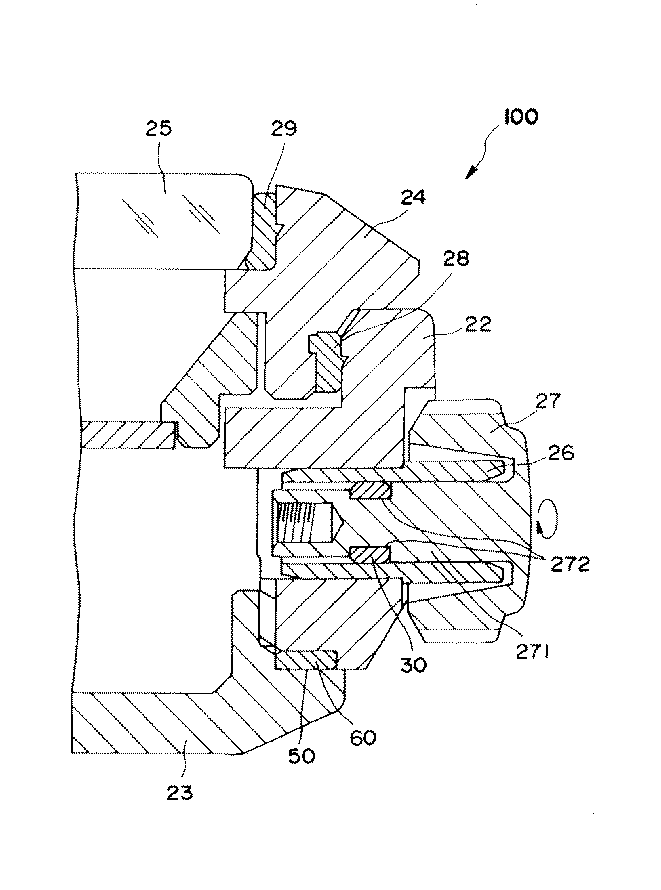
2.装飾品の外観評価
前記各実施例および各比較例で製造した装飾品について、目視および顕微鏡による観察を行い、これらの外観を以下の4段階の基準に従い、評価した。
◎:外観優良。
○:外観良。
△:外観やや不良。
×:外観不良。
2. Appearance evaluation of ornaments The ornaments manufactured in each of the above Examples and Comparative Examples were visually and microscopically observed, and their appearance was evaluated according to the following four-stage criteria.
A: Appearance is excellent.
○: Good appearance.
Δ: Appearance is slightly poor.
X: Appearance defect.
3.汚れ付着後における装飾品の外観評価
前記各実施例および各比較例で製造した装飾品の表面に、人工皮脂(ミリスチン酸:8.3重量部、オレイン酸:8.3重量部、トリステアリン:8.3重量部、トリオレイン:8.3重量部、コレステリン:重量部4.4、コレステリンステアレート:1.1重量部、パラフィンロウ:5.5重量部、スクワレン:5.5重量部、粘土:49.75重量部、カーボンブラック:0.5重量部の混合物)を、綿布に十分に付着させた後、荷重100gf/cm2にて10往復させるという条件で付着させた。30分放置した後、清浄な綿布を用いて、荷重100gf/cm2にて10往復させるという条件で各装飾品の表面に付着した汚れを拭き取った。
その後、上記の「装飾品の外観評価」で用いた4段階の基準に従い、各装飾品の外観を評価した。
3. Appearance evaluation of ornaments after adhering to soils Artificial sebum (myristic acid: 8.3 parts by weight, oleic acid: 8.3 parts by weight, tristearin: on the surface of the ornaments produced in the above Examples and Comparative Examples. 8.3 parts by weight, triolein: 8.3 parts by weight, cholesterin: parts by weight 4.4, cholesterin stearate: 1.1 parts by weight, paraffin wax: 5.5 parts by weight, squalene: 5.5 parts by weight Part, clay: 49.75 parts by weight, carbon black: 0.5 parts by weight) was sufficiently adhered to the cotton cloth, and then adhered under the condition of 10 reciprocations at a load of 100 gf / cm 2 . After leaving for 30 minutes, the dirt adhering to the surface of each decorative article was wiped off using a clean cotton cloth under the condition of 10 reciprocations at a load of 100 gf / cm 2 .
Thereafter, the external appearance of each decorative article was evaluated according to the four-stage criteria used in the above “appearance evaluation of decorative article”.
4.被覆部の密着性評価
前記各実施例および各比較例で製造した各装飾品について、以下に示すような試験を行い、被覆部の密着性を評価した。
各装飾品を高さ1.5mから自由落下させ、厚さ20cmのコンクリートブロックに衝突させた。この操作を10回繰り返し行った後、装飾品の外観を目視により観察し、これらの外観を以下の4段階の基準に従い、評価した。
◎:被覆部の剥離、脱落や、被覆部におけるクラックの発生が全く認められない。
○:被覆部の剥離、脱落または、被覆部におけるクラックの発生がわずかに認められ
る。
△:被覆部におけるクラックの発生が顕著に認められる。
×:被覆部の剥離、脱落が顕著に認められる。
4). Evaluation of Adhesiveness of Covering Part Each decorative article manufactured in each of the above Examples and Comparative Examples was subjected to the following test to evaluate the adhesiveness of the covering part.
Each ornament was dropped freely from a height of 1.5 m and collided with a concrete block having a thickness of 20 cm. After repeating this
(Double-circle): Peeling | exfoliation of a coating part, drop-off, and generation | occurrence | production of the crack in a coating part are not recognized at all.
◯: Slight peeling or peeling off of the coating or cracking in the coating was observed.
(Triangle | delta): Generation | occurrence | production of the crack in a coating | coated part is recognized notably.
X: Peeling and dropping off of the covering portion are noticeable.
5.装飾品の耐食性評価
前記各実施例および各比較例の各装飾品について、以下に示すような試験を行い、耐食性を評価した。
デシケーター内に人工汗を入れ、40℃で24時間放置した。その後、デシケーター内に、前記密着性評価を行った各装飾品を入れ、さらに40℃で放置した。このとき、各装飾品は、人工汗中に浸漬しないように配置した。24時間後、各装飾品をデシケーター内から取り出し、目視および顕微鏡による観察を行い、これらの外観を以下の4段階の基準に従い、評価した。
◎:腐食や変色等が全く認められない。
○:変色がわずかに認められる。
△:変色がはっきりと認められる。
×:比較的大きな腐食部がはっきりと認められる。
これらの結果を、表3にまとめて示す。
5). Corrosion resistance evaluation of decorative products Each decorative product of each of the examples and comparative examples was subjected to the following test to evaluate the corrosion resistance.
Artificial sweat was placed in a desiccator and left at 40 ° C. for 24 hours. Thereafter, each decorative article subjected to the adhesion evaluation was put in a desiccator and further allowed to stand at 40 ° C. At this time, each decorative article was arranged so as not to be immersed in artificial sweat. After 24 hours, each decorative article was taken out from the desiccator, visually and observed with a microscope, and the appearance was evaluated according to the following four-stage criteria.
A: No corrosion or discoloration is observed at all.
○: Slight discoloration is observed.
Δ: Discoloration is clearly recognized.
X: A relatively large corroded portion is clearly recognized.
These results are summarized in Table 3.
表3から明らかなように、本発明の装飾品は、いずれも優れた美的外観を有しており、汚れが付着した場合であっても、容易にその汚れを除去することができ、また、そのときの美的外観も優れている。また、本発明の装飾品は、被覆部の密着性に優れ、衝撃等が加わった場合であっても、被覆部の剥離、脱落や、被覆部におけるクラックの発生が極めて生じ難い。また、本発明の装飾品は、耐食性にも優れている。また、本発明の装飾品は、いずれも、べたつき感、ザラツキ感のない、優れた触感を有していた。特に、好適な条件で形成された被覆部を有する装飾品、被覆部が好適な形状、パターンで形成された装飾品においては、特に優れた結果が得られた。 As is clear from Table 3, the decorative articles of the present invention all have an excellent aesthetic appearance, and even when dirt is attached, the dirt can be easily removed, The aesthetic appearance at that time is also excellent. In addition, the decorative article of the present invention is excellent in the adhesion of the covering portion, and even when an impact or the like is applied, the covering portion is hardly peeled off or dropped off, or cracks are hardly generated in the covering portion. The decorative article of the present invention is also excellent in corrosion resistance. Moreover, all the decorative articles of the present invention had an excellent tactile sensation without stickiness or roughness. Particularly excellent results were obtained for a decorative article having a covering portion formed under suitable conditions and a decorative article having a covering portion formed in a suitable shape and pattern.
これに対し、比較例では、満足な結果が得られなかった。特に、比較例1の装飾品は、汚れが付着した場合、その汚れの除去を試みても完全に除去するのが困難であり、その美的外観は著しく低下した。また、比較例2〜6の装飾品は、上記のような汚れの除去は比較的容易に行えるものの、基材と被覆部との密着性に劣り、衝撃が加わった際に、被覆部の剥離、脱落や、被覆部におけるクラックの発生が生じ易かった。また、このような被覆部の剥離、脱落や、被覆部におけるクラックの発生等により、装飾品の美的外観は著しく低下した。また、比較例2〜6の装飾品は、耐食性評価にも劣っていた。これは、以下のような理由によるものであると考えられる。すなわち、比較例2〜6の装飾品では、上記のように被覆部の剥離、脱落や、被覆部におけるクラックの発生が生じ易い。そして、このような被覆部の結果を生じた装飾品に汚れが付着すると、拭き取り等による汚れの除去を試みても、クラックなどの欠陥部に汚れが残存し易い。このため、このような装飾品は、汚れと長時間にわたって接触することになり、腐食等が進行し易くなるものと考えられる。
また、前記各実施例および比較例で製造した装飾品を用いて、図2に示すような腕時計を組み立てた。これらの腕時計について、上記と同様な評価を行ったところ、上記と同様な結果が得られた。
On the other hand, in the comparative example, a satisfactory result was not obtained. In particular, in the case where the decorative article of Comparative Example 1 was contaminated, it was difficult to completely remove the dirt even if an attempt was made to remove the dirt, and its aesthetic appearance was significantly lowered. Moreover, although the ornaments of Comparative Examples 2 to 6 can remove the dirt as described above relatively easily, the adhesion between the base material and the covering portion is inferior, and when the impact is applied, the covering portion is peeled off. Occurrence of falling off and occurrence of cracks in the covering portion were easy to occur. In addition, the aesthetic appearance of the decorative article has been remarkably deteriorated due to such peeling and dropping of the covering portion and generation of cracks in the covering portion. Moreover, the decorative articles of Comparative Examples 2 to 6 were also inferior in corrosion resistance evaluation. This is considered to be due to the following reasons. That is, in the decorative articles of Comparative Examples 2 to 6, as described above, peeling and dropping of the covering portion and occurrence of cracks in the covering portion are likely to occur. And if dirt adheres to the decorative product resulting in such a covering part, even if an attempt is made to remove the dirt by wiping or the like, the dirt tends to remain in a defective part such as a crack. For this reason, such a decorative article will come into contact with dirt for a long time, and corrosion or the like is likely to proceed.
Further, a wristwatch as shown in FIG. 2 was assembled using the decorative articles manufactured in the respective examples and comparative examples. When these wristwatches were evaluated in the same manner as described above, the same results as described above were obtained.
10…装飾品 1…部材 2…基材 3…被覆部 8…被覆部形成用液体 9…不要部 100…腕時計(携帯時計) 22…胴(ケース) 23…裏蓋 24…ベゼル(縁) 25…ガラス板 26…巻真パイプ 27…りゅうず 271…軸部 272…溝 28…プラスチックパッキン 29…プラスチックパッキン 30…ゴムパッキン(りゅうずパッキン) 50…接合部(シール部) 60…ゴムパッキン(裏蓋パッキン)
DESCRIPTION OF
Claims (17)
Priority Applications (1)
| Application Number | Priority Date | Filing Date | Title |
|---|---|---|---|
| JP2004117879A JP2005298915A (en) | 2004-04-13 | 2004-04-13 | Surface treatment method, ornaments and watches |
Applications Claiming Priority (1)
| Application Number | Priority Date | Filing Date | Title |
|---|---|---|---|
| JP2004117879A JP2005298915A (en) | 2004-04-13 | 2004-04-13 | Surface treatment method, ornaments and watches |
Publications (1)
| Publication Number | Publication Date |
|---|---|
| JP2005298915A true JP2005298915A (en) | 2005-10-27 |
Family
ID=35330825
Family Applications (1)
| Application Number | Title | Priority Date | Filing Date |
|---|---|---|---|
| JP2004117879A Withdrawn JP2005298915A (en) | 2004-04-13 | 2004-04-13 | Surface treatment method, ornaments and watches |
Country Status (1)
| Country | Link |
|---|---|
| JP (1) | JP2005298915A (en) |
Cited By (1)
| Publication number | Priority date | Publication date | Assignee | Title |
|---|---|---|---|---|
| WO2014002498A1 (en) * | 2012-06-27 | 2014-01-03 | 東ソー株式会社 | Composite plate and production method therefor |
-
2004
- 2004-04-13 JP JP2004117879A patent/JP2005298915A/en not_active Withdrawn
Cited By (2)
| Publication number | Priority date | Publication date | Assignee | Title |
|---|---|---|---|---|
| WO2014002498A1 (en) * | 2012-06-27 | 2014-01-03 | 東ソー株式会社 | Composite plate and production method therefor |
| US10696022B2 (en) | 2012-06-27 | 2020-06-30 | Tosoh Corporation | Composite plate and production method therefor |
Similar Documents
| Publication | Publication Date | Title |
|---|---|---|
| JP6015225B2 (en) | Ornaments and watches | |
| JP3642427B1 (en) | Ornaments and watches | |
| JP4479812B2 (en) | Decorative product manufacturing method, decorative product and watch | |
| CN100422386C (en) | Surface treatment methods for ornaments, ornaments and clocks | |
| JP5327018B2 (en) | Decorative product manufacturing method, decorative product and watch | |
| JP3969296B2 (en) | Surface treatment method for ornaments, ornaments and watches | |
| EP1295961B1 (en) | Decorative article having a white film | |
| JP2005270479A (en) | Ornament with gold coating film and manufacturing method thereof | |
| JP2002249887A (en) | Surface treatment method for decorative article and decorative article | |
| JP3960227B2 (en) | Surface treatment method for ornaments, ornaments and watches | |
| JP2004232030A (en) | Method for removing diamond-like carbon film, ornament, and watch | |
| JP2005272901A (en) | Decorative product manufacturing method, decorative product and watch | |
| JP2006212341A (en) | Ornaments and watches | |
| JP6786904B2 (en) | Exterior parts for watches and watches | |
| JP2004084036A (en) | Surface treatment method, metal parts and clock | |
| JP2009222603A (en) | Manufacturing method of ornament, ornament, and timepiece | |
| JP2007101271A (en) | Decorative product, method of manufacturing decorative product, and watch | |
| JP2013224965A (en) | Decorative article and timepiece | |
| JP2007275144A (en) | Ornaments and watches | |
| JP2006212340A (en) | Ornaments and watches | |
| JP2003277979A (en) | Surface treatment method of ornament, ornament and clock | |
| JP2004084035A (en) | Surface treatment method, metal parts and clock | |
| JP4100318B2 (en) | Decorative surface treatment method | |
| JP2011117023A (en) | Method of manufacturing ornament, ornament and clock | |
| JP2006249510A (en) | Decorative product manufacturing method, decorative product and watch |
Legal Events
| Date | Code | Title | Description |
|---|---|---|---|
| RD04 | Notification of resignation of power of attorney |
Free format text: JAPANESE INTERMEDIATE CODE: A7424 Effective date: 20070403 |
|
| A621 | Written request for application examination |
Free format text: JAPANESE INTERMEDIATE CODE: A621 Effective date: 20070412 |
|
| A977 | Report on retrieval |
Free format text: JAPANESE INTERMEDIATE CODE: A971007 Effective date: 20090424 |
|
| A131 | Notification of reasons for refusal |
Free format text: JAPANESE INTERMEDIATE CODE: A131 Effective date: 20090428 |
|
| A761 | Written withdrawal of application |
Free format text: JAPANESE INTERMEDIATE CODE: A761 Effective date: 20090626 |