EP4583201A1 - Negativelektrodenaktivmaterial und herstellungsverfahren dafür, negativelektrodenfolie, batterie und elektrische vorrichtung - Google Patents
Negativelektrodenaktivmaterial und herstellungsverfahren dafür, negativelektrodenfolie, batterie und elektrische vorrichtung Download PDFInfo
- Publication number
- EP4583201A1 EP4583201A1 EP23927124.0A EP23927124A EP4583201A1 EP 4583201 A1 EP4583201 A1 EP 4583201A1 EP 23927124 A EP23927124 A EP 23927124A EP 4583201 A1 EP4583201 A1 EP 4583201A1
- Authority
- EP
- European Patent Office
- Prior art keywords
- negative electrode
- electrode active
- active material
- carbon
- wave absorbing
- Prior art date
- Legal status (The legal status is an assumption and is not a legal conclusion. Google has not performed a legal analysis and makes no representation as to the accuracy of the status listed.)
- Pending
Links
Images


Classifications
-
- C—CHEMISTRY; METALLURGY
- C01—INORGANIC CHEMISTRY
- C01B—NON-METALLIC ELEMENTS; COMPOUNDS THEREOF; METALLOIDS OR COMPOUNDS THEREOF NOT COVERED BY SUBCLASS C01C
- C01B32/00—Carbon; Compounds thereof
- C01B32/05—Preparation or purification of carbon not covered by groups C01B32/15, C01B32/20, C01B32/25, C01B32/30
-
- H—ELECTRICITY
- H01—ELECTRIC ELEMENTS
- H01M—PROCESSES OR MEANS, e.g. BATTERIES, FOR THE DIRECT CONVERSION OF CHEMICAL ENERGY INTO ELECTRICAL ENERGY
- H01M10/00—Secondary cells; Manufacture thereof
- H01M10/05—Accumulators with non-aqueous electrolyte
- H01M10/052—Li-accumulators
-
- H—ELECTRICITY
- H01—ELECTRIC ELEMENTS
- H01M—PROCESSES OR MEANS, e.g. BATTERIES, FOR THE DIRECT CONVERSION OF CHEMICAL ENERGY INTO ELECTRICAL ENERGY
- H01M10/00—Secondary cells; Manufacture thereof
- H01M10/05—Accumulators with non-aqueous electrolyte
- H01M10/052—Li-accumulators
- H01M10/0525—Rocking-chair batteries, i.e. batteries with lithium insertion or intercalation in both electrodes; Lithium-ion batteries
-
- H—ELECTRICITY
- H01—ELECTRIC ELEMENTS
- H01M—PROCESSES OR MEANS, e.g. BATTERIES, FOR THE DIRECT CONVERSION OF CHEMICAL ENERGY INTO ELECTRICAL ENERGY
- H01M4/00—Electrodes
- H01M4/02—Electrodes composed of, or comprising, active material
- H01M4/04—Processes of manufacture in general
- H01M4/0471—Processes of manufacture in general involving thermal treatment, e.g. firing, sintering, backing particulate active material, thermal decomposition, pyrolysis
-
- H—ELECTRICITY
- H01—ELECTRIC ELEMENTS
- H01M—PROCESSES OR MEANS, e.g. BATTERIES, FOR THE DIRECT CONVERSION OF CHEMICAL ENERGY INTO ELECTRICAL ENERGY
- H01M4/00—Electrodes
- H01M4/02—Electrodes composed of, or comprising, active material
- H01M4/13—Electrodes for accumulators with non-aqueous electrolyte, e.g. for lithium-accumulators; Processes of manufacture thereof
- H01M4/133—Electrodes based on carbonaceous material, e.g. graphite-intercalation compounds or CFx
-
- H—ELECTRICITY
- H01—ELECTRIC ELEMENTS
- H01M—PROCESSES OR MEANS, e.g. BATTERIES, FOR THE DIRECT CONVERSION OF CHEMICAL ENERGY INTO ELECTRICAL ENERGY
- H01M4/00—Electrodes
- H01M4/02—Electrodes composed of, or comprising, active material
- H01M4/13—Electrodes for accumulators with non-aqueous electrolyte, e.g. for lithium-accumulators; Processes of manufacture thereof
- H01M4/134—Electrodes based on metals, Si or alloys
-
- H—ELECTRICITY
- H01—ELECTRIC ELEMENTS
- H01M—PROCESSES OR MEANS, e.g. BATTERIES, FOR THE DIRECT CONVERSION OF CHEMICAL ENERGY INTO ELECTRICAL ENERGY
- H01M4/00—Electrodes
- H01M4/02—Electrodes composed of, or comprising, active material
- H01M4/13—Electrodes for accumulators with non-aqueous electrolyte, e.g. for lithium-accumulators; Processes of manufacture thereof
- H01M4/139—Processes of manufacture
- H01M4/1393—Processes of manufacture of electrodes based on carbonaceous material, e.g. graphite-intercalation compounds or CFx
-
- H—ELECTRICITY
- H01—ELECTRIC ELEMENTS
- H01M—PROCESSES OR MEANS, e.g. BATTERIES, FOR THE DIRECT CONVERSION OF CHEMICAL ENERGY INTO ELECTRICAL ENERGY
- H01M4/00—Electrodes
- H01M4/02—Electrodes composed of, or comprising, active material
- H01M4/13—Electrodes for accumulators with non-aqueous electrolyte, e.g. for lithium-accumulators; Processes of manufacture thereof
- H01M4/139—Processes of manufacture
- H01M4/1395—Processes of manufacture of electrodes based on metals, Si or alloys
-
- H—ELECTRICITY
- H01—ELECTRIC ELEMENTS
- H01M—PROCESSES OR MEANS, e.g. BATTERIES, FOR THE DIRECT CONVERSION OF CHEMICAL ENERGY INTO ELECTRICAL ENERGY
- H01M4/00—Electrodes
- H01M4/02—Electrodes composed of, or comprising, active material
- H01M4/36—Selection of substances as active materials, active masses, active liquids
-
- H—ELECTRICITY
- H01—ELECTRIC ELEMENTS
- H01M—PROCESSES OR MEANS, e.g. BATTERIES, FOR THE DIRECT CONVERSION OF CHEMICAL ENERGY INTO ELECTRICAL ENERGY
- H01M4/00—Electrodes
- H01M4/02—Electrodes composed of, or comprising, active material
- H01M4/36—Selection of substances as active materials, active masses, active liquids
- H01M4/362—Composites
-
- H—ELECTRICITY
- H01—ELECTRIC ELEMENTS
- H01M—PROCESSES OR MEANS, e.g. BATTERIES, FOR THE DIRECT CONVERSION OF CHEMICAL ENERGY INTO ELECTRICAL ENERGY
- H01M4/00—Electrodes
- H01M4/02—Electrodes composed of, or comprising, active material
- H01M4/36—Selection of substances as active materials, active masses, active liquids
- H01M4/362—Composites
- H01M4/364—Composites as mixtures
-
- H—ELECTRICITY
- H01—ELECTRIC ELEMENTS
- H01M—PROCESSES OR MEANS, e.g. BATTERIES, FOR THE DIRECT CONVERSION OF CHEMICAL ENERGY INTO ELECTRICAL ENERGY
- H01M4/00—Electrodes
- H01M4/02—Electrodes composed of, or comprising, active material
- H01M4/36—Selection of substances as active materials, active masses, active liquids
- H01M4/362—Composites
- H01M4/366—Composites as layered products
-
- H—ELECTRICITY
- H01—ELECTRIC ELEMENTS
- H01M—PROCESSES OR MEANS, e.g. BATTERIES, FOR THE DIRECT CONVERSION OF CHEMICAL ENERGY INTO ELECTRICAL ENERGY
- H01M4/00—Electrodes
- H01M4/02—Electrodes composed of, or comprising, active material
- H01M4/36—Selection of substances as active materials, active masses, active liquids
- H01M4/38—Selection of substances as active materials, active masses, active liquids of elements or alloys
-
- H—ELECTRICITY
- H01—ELECTRIC ELEMENTS
- H01M—PROCESSES OR MEANS, e.g. BATTERIES, FOR THE DIRECT CONVERSION OF CHEMICAL ENERGY INTO ELECTRICAL ENERGY
- H01M4/00—Electrodes
- H01M4/02—Electrodes composed of, or comprising, active material
- H01M4/36—Selection of substances as active materials, active masses, active liquids
- H01M4/38—Selection of substances as active materials, active masses, active liquids of elements or alloys
- H01M4/386—Silicon or alloys based on silicon
-
- H—ELECTRICITY
- H01—ELECTRIC ELEMENTS
- H01M—PROCESSES OR MEANS, e.g. BATTERIES, FOR THE DIRECT CONVERSION OF CHEMICAL ENERGY INTO ELECTRICAL ENERGY
- H01M4/00—Electrodes
- H01M4/02—Electrodes composed of, or comprising, active material
- H01M4/36—Selection of substances as active materials, active masses, active liquids
- H01M4/48—Selection of substances as active materials, active masses, active liquids of inorganic oxides or hydroxides
- H01M4/483—Selection of substances as active materials, active masses, active liquids of inorganic oxides or hydroxides for non-aqueous cells
-
- H—ELECTRICITY
- H01—ELECTRIC ELEMENTS
- H01M—PROCESSES OR MEANS, e.g. BATTERIES, FOR THE DIRECT CONVERSION OF CHEMICAL ENERGY INTO ELECTRICAL ENERGY
- H01M4/00—Electrodes
- H01M4/02—Electrodes composed of, or comprising, active material
- H01M4/36—Selection of substances as active materials, active masses, active liquids
- H01M4/58—Selection of substances as active materials, active masses, active liquids of inorganic compounds other than oxides or hydroxides, e.g. sulfides, selenides, tellurides, halogenides or LiCoFy; of polyanionic structures, e.g. phosphates, silicates or borates
- H01M4/583—Carbonaceous material, e.g. graphite-intercalation compounds or CFx
- H01M4/587—Carbonaceous material, e.g. graphite-intercalation compounds or CFx for inserting or intercalating light metals
-
- H—ELECTRICITY
- H01—ELECTRIC ELEMENTS
- H01M—PROCESSES OR MEANS, e.g. BATTERIES, FOR THE DIRECT CONVERSION OF CHEMICAL ENERGY INTO ELECTRICAL ENERGY
- H01M4/00—Electrodes
- H01M4/02—Electrodes composed of, or comprising, active material
- H01M4/62—Selection of inactive substances as ingredients for active masses, e.g. binders, fillers
-
- H—ELECTRICITY
- H01—ELECTRIC ELEMENTS
- H01M—PROCESSES OR MEANS, e.g. BATTERIES, FOR THE DIRECT CONVERSION OF CHEMICAL ENERGY INTO ELECTRICAL ENERGY
- H01M4/00—Electrodes
- H01M4/02—Electrodes composed of, or comprising, active material
- H01M4/62—Selection of inactive substances as ingredients for active masses, e.g. binders, fillers
- H01M4/624—Electric conductive fillers
- H01M4/625—Carbon or graphite
-
- C—CHEMISTRY; METALLURGY
- C01—INORGANIC CHEMISTRY
- C01P—INDEXING SCHEME RELATING TO STRUCTURAL AND PHYSICAL ASPECTS OF SOLID INORGANIC COMPOUNDS
- C01P2004/00—Particle morphology
- C01P2004/60—Particles characterised by their size
- C01P2004/61—Micrometer sized, i.e. from 1-100 micrometer
-
- C—CHEMISTRY; METALLURGY
- C01—INORGANIC CHEMISTRY
- C01P—INDEXING SCHEME RELATING TO STRUCTURAL AND PHYSICAL ASPECTS OF SOLID INORGANIC COMPOUNDS
- C01P2006/00—Physical properties of inorganic compounds
- C01P2006/16—Pore diameter
-
- C—CHEMISTRY; METALLURGY
- C01—INORGANIC CHEMISTRY
- C01P—INDEXING SCHEME RELATING TO STRUCTURAL AND PHYSICAL ASPECTS OF SOLID INORGANIC COMPOUNDS
- C01P2006/00—Physical properties of inorganic compounds
- C01P2006/40—Electric properties
-
- H—ELECTRICITY
- H01—ELECTRIC ELEMENTS
- H01M—PROCESSES OR MEANS, e.g. BATTERIES, FOR THE DIRECT CONVERSION OF CHEMICAL ENERGY INTO ELECTRICAL ENERGY
- H01M4/00—Electrodes
- H01M4/02—Electrodes composed of, or comprising, active material
- H01M2004/021—Physical characteristics, e.g. porosity, surface area
-
- H—ELECTRICITY
- H01—ELECTRIC ELEMENTS
- H01M—PROCESSES OR MEANS, e.g. BATTERIES, FOR THE DIRECT CONVERSION OF CHEMICAL ENERGY INTO ELECTRICAL ENERGY
- H01M4/00—Electrodes
- H01M4/02—Electrodes composed of, or comprising, active material
- H01M2004/026—Electrodes composed of, or comprising, active material characterised by the polarity
- H01M2004/027—Negative electrodes
-
- Y—GENERAL TAGGING OF NEW TECHNOLOGICAL DEVELOPMENTS; GENERAL TAGGING OF CROSS-SECTIONAL TECHNOLOGIES SPANNING OVER SEVERAL SECTIONS OF THE IPC; TECHNICAL SUBJECTS COVERED BY FORMER USPC CROSS-REFERENCE ART COLLECTIONS [XRACs] AND DIGESTS
- Y02—TECHNOLOGIES OR APPLICATIONS FOR MITIGATION OR ADAPTATION AGAINST CLIMATE CHANGE
- Y02E—REDUCTION OF GREENHOUSE GAS [GHG] EMISSIONS, RELATED TO ENERGY GENERATION, TRANSMISSION OR DISTRIBUTION
- Y02E60/00—Enabling technologies; Technologies with a potential or indirect contribution to GHG emissions mitigation
- Y02E60/10—Energy storage using batteries
Definitions
- This application relates to the field of batteries, and specifically, to a negative electrode active material and a preparation method therefor, a negative electrode plate, a battery, and an electrical device.
- a content of the silicon-based particles ranges from 30wt% to 70wt%, and optionally, from 30wt% to 50wt%.
- the content of the silicon-based particles is controlled within the given range, so that both the gram capacity and cycle stability of the negative electrode active material can be taken into account.
- a porosity of the porous carbon skeleton layer ranges from 40% to 70%.
- the porosity of the porous carbon skeleton layer is controlled within the given range, so that the gram capacity and the cycle stability of the negative electrode active material can be improved while taking overall strength of the negative electrode active material into account.
- the pore-forming agent includes one or more of sodium chloride, potassium chloride, zinc chloride, sodium carbonate, potassium carbonate, zinc carbonate, zinc acetate, and ammonium ethanoate.
- a sum of a mass fraction of the pore-forming agent and a mass fraction of the carbon skeleton precursor material in the first mixed liquid ranges from 10wt% to 70wt%.
- a mass ratio of the pore-forming agent to the carbon skeleton precursor material is (10 to 1):(1 to 100), optionally, is (10 to 1):(2 to 10), and further optionally, is (10 to 1):(2 to 5). Controlling a dosage of the pore-forming agent within the given range can further help obtain the porous carbon skeleton layer having an expected porosity and a micro-mesoporous porous structure.
- a negative electrode plate including the negative electrode active material according to the first aspect of this application, and/or a negative electrode active material prepared by using the preparation method for a negative electrode active material according to the second aspect of this application.
- a battery including the negative electrode active material according to the first aspect of this application, and/or a negative electrode active material prepared by using the preparation method for a negative electrode active material according to the second aspect of this application, and/or the negative electrode plate according to the third aspect of this application.
- an electrical device including the negative electrode active material according to the first aspect of this application, and/or a negative electrode active material prepared by using the preparation method for a negative electrode active material according to the second aspect of this application, and/or the negative electrode plate according to the third aspect of this application, and/or the battery according to the fourth aspect of this application.
- an embodiment in this application means that a particular feature, structure or characteristic described in combination with the embodiment may be included in at least one embodiment of this application.
- the phrase shown in various locations in the specification may not necessarily refer to a same embodiment, and is not an independent or optional embodiment exclusive from another embodiment. It is explicitly and implicitly understood by a person skilled in the art that the embodiments described in this application may be combined with another embodiment.
- a “range” disclosed in this application is defined in a form of a lower limit and/or an upper limit.
- a given range is defined by selection of a lower limit and/or an upper limit, and the selected lower limit and/or upper limit define a boundary of the particular range.
- a range defined in this manner may be inclusive or exclusive of end values, and may be arbitrarily combined, that is, any lower limit may be combined with any upper limit to form a range that is not clearly recorded, any lower limit may be combined with another lower limit to form a range that is not clearly recorded, and similarly, any upper limit may be combined with any other upper limit to form a range that is not clearly recorded.
- each separately disclosed point or single numerical value may be used as a lower limit or an upper limit to combine with any other point or other single numerical value or with any other lower or upper limit to form a range that is not clearly recorded.
- a range of being not greater than 20 is listed for a particular parameter, it is understood that a range from 2 to 18, a range from 5 to 15, or the like that is not greater than 20 is also contemplated.
- minimum range values of 1 and 5 are listed, and maximum range values of 10 and 30 are listed, the following ranges are all contemplated: 1 to 10, 1 to 30, 5 to 10, and 5 to 30.
- a numerical range such as “30 to 100” represents an abbreviated representation of any combination of real numbers between 30 to 100, where both 30 and 100 are real numbers.
- a numerical range "1 to 30” indicates that all real numbers in “1 to 30” have been listed in this specification, and "1 to 30” is only a shortened representation of these numerical combinations.
- step S1 and step S2 means that the method may include step S1 and step S2 performed sequentially, or may include step S1 and step S2 performed sequentially.
- step S3 means that step S3 may be added to the method in any order.
- the method may include step S1, step S2, and step S3, or may include step S1, step S3, and step S2, or may include step S3, step S1, and step S2.
- the terms such as “include”, “comprise”, and their variants mentioned in this application may be open-ended or closed-ended.
- the terms such as “include”, “comprise”, and their variants may mean that other components not listed may be further included or comprised, or only the listed components may be included or comprised.
- the term "a plurality of" or “a plurality of types of” indicates two or more.
- the term "and/or" in this application describes only an association relationship for describing associated objects and represents that three relationships may exist.
- a and/or B may represent the following three cases: Only A exists, both A and B exist, and only B exists.
- the character "/" usually indicates an "or" relationship between the associated objects.
- negative electrode active material features both high conductivity and stability of a carbon material and a high capacity of a silicon material, and use of the negative electrode active material in a negative electrode plate helps improve a capacity and conductivity of a negative electrode, and improve energy density and electrical performance of a battery.
- the silicon-based particles are distributed in the carbon core and the porous carbon skeleton layer, that is, the silicon-based particles are distributed in the outermost carbon cladding layer, so that volume expansion of silicon during a charge and discharge cycle can be effectively limited by using a porous structure of the porous carbon skeleton layer and the outermost carbon cladding layer, to improve structural stability of the negative electrode active material. Therefore, possible volume expansion of the negative electrode plate and the battery during cycling can be effectively alleviated, and cycle performance of the battery is improved.
- a preparation process of the negative electrode active material is controllable, and directional distribution of the silicon-based particles in the regions in which the carbon core and the porous carbon skeleton layer are located can be implemented by using the wave absorbing material.
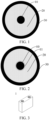
- a content of the wave absorbing material distributed in the porous carbon skeleton layer 20 is greater than a content of the wave absorbing material distributed in the region in which the carbon core 10 is located.
- Reasons for which a large amount of silicon free outside a carbon structure or exposed on a surface of a silicon-carbon composite negative electrode active material exists in the silicon-carbon composite negative electrode active material include: A high temperature is required in a conventional method for performing heat treatment on a silicon-carbon composite material, sintering duration is long, a large amount of energy needs to be consumed, and temperatures in different regions of the material cannot be accurately controlled. In this conventional heat treatment process mode, it is very difficult to control a status of a finished product of the silicon-carbon composite material.
- a central thermal field may be formed on a surface of the carbon core, so that a wave absorbing effect inside the overall negative electrode active material is better, to further facilitate deposition of silicon inside the entire negative electrode active material, reduce a content of silicon on a surface of the negative electrode active material, and improve a limiting effect of the negative electrode active material on the volume expansion of the silicon-based particles during a charge and discharge cycle.
- a thickness of the carbon core cladding layer 11 may be not greater than 1 ⁇ m, for example, may be 0.1 ⁇ m, 0.2 ⁇ m, 0.3 ⁇ m, 0.4 ⁇ m, 0.5 ⁇ m, 0.6 ⁇ m, 0.7 ⁇ m, 0.8 ⁇ m, 0.9 ⁇ m, 1 ⁇ m, or the like, or may be a range including any of the foregoing values.
- the thickness of the carbon core cladding layer may be obtained by cutting a material in vacuum by using an Ar ion beam, directly observing a cross-sectional morphology, identifying a layered object on the surface of the carbon core, selecting particles to test thicknesses of a plurality of points, and obtaining an average value.
- the thickness of the carbon core cladding layer is controlled within the given range, so that deposition of more silicon inside the negative electrode active material is facilitated, and the cycle performance is improved, based on which the gram capacity of the entire negative electrode active material can be further taken into account.
- the thickness of the carbon core cladding layer 11 may range 0.3 ⁇ m to 1 ⁇ m, and further optionally, range from 0.3 ⁇ m to 0.5 ⁇ m.
- a resistivity of the negative electrode active material at room temperature and a pressure of 4 Mpa may range from 100 ⁇ cm to 10000 ⁇ cm, for example, may be 100 ⁇ cm, 120 ⁇ cm, 150 ⁇ cm, 200 ⁇ cm, 250 ⁇ cm, 300 ⁇ cm, 350 ⁇ cm, or 400 ⁇ cm, or the like, or may be a range including any of the foregoing values.
- the resistivity of the negative electrode active material may be measured by using a powder resistivity & a compaction densitometer (where for example, a model may be PRCD2100, Initial Energy Science & Technology).
- Specific operations may include: weighing a sample of a particular mass at room temperature, adjusting a depth of a feeding cavity, adding the sample to the feeding cavity, applying pressure, manually collecting data, and recording resistivity testing results of sample powder at different pressure points.
- a resistivity of the sample powder at 4 Mpa may be emphatically recorded and inspected.
- the kinetic performance of the negative electrode active material may be further improved by improving an ion conductivity rate of the negative electrode active material.
- the resistivity of the negative electrode active material at room temperature and the pressure of 4 Mpa may range from 100 ⁇ cm to 300 ⁇ cm.
- the resistivity of the negative electrode active material is controlled within the given range, so that a volume effect and the cycle performance of the negative electrode active material are improved, based on which the kinetic performance can be further improved.
- a preparation method for the negative electrode active material according to the first aspect of this application includes: mixing a carbon core material, a pore-forming agent, a carbon skeleton precursor material, and a solvent, to obtain a first mixed liquid; mixing a wave absorbing material with the first mixed liquid, to obtain a second mixed liquid; performing spray forming and fluidized drying treatment on the second mixed liquid, to obtain composite particles; carbonizing and activating the composite particle, to obtain skeleton particles of a porous carbon skeleton layer covering a carbon core; performing microwave heating on the skeleton particles, and introducing a gas-phase silicon source to deposit silicon, to obtain precursor particles; and cladding at least a part of an outer surface of the precursor particles with a carbon cladding layer, to obtain the negative electrode active material.
- the wave absorbing material is added in a preparation process, so that a wave band of the wave absorbing material may be coupled to a basic fine structure of the material to generate heat, to precisely heat a particular location of the material, and advantages, such as a high temperature rising speed, high energy utilization, high heating efficiency, safety, hygiene, and non-pollution, are achieved.
- a heating temperature and heating duration can further be effectively reduced through self-heating, non-gradient overall heating, and a high temperature rising speed of the wave absorbing material, to improve a production rate, reduce costs, and improve product quality.
- more silicon is enabled to be deeply deposited in pores of the porous carbon skeleton layer, to effectively limit volume expansion of silicon, and maintain structural stability of the silicon-based particle during long-term cycling.
- a composite core-shell structure is obtained by further forming the carbon cladding layer, so that structures of the layers interact with each other, thereby further limiting expansion of the internal silicon-based particle and improving the cycle performance of the battery.
- the preparation method for a negative electrode active material in this application has at least the following beneficial effects:
- a preparation process is controllable, and precise heating may be performed by using the wave absorbing material and through microwave heating, to implement directional distribution of silicon, and obtain the negative electrode active material of an expected structure.
- the method further helps reduce a heating temperature and heating duration in a preparation process, improve production efficiency, and reduce costs.
- the prepared negative electrode active material can effectively limit volume expansion of silicon, to improve structural stability of the negative electrode active material during cycling.
- a carbon core material for example, hard carbon material
- a pore-forming agent for example, a carbon skeleton precursor material (for example, phenolic resin), and a solvent (for example, optionally, a volatile solvent) are mixed, to obtain a first mixed liquid.
- the carbon skeleton precursor material is mixed with the carbon core material, to help later form the porous carbon skeleton layer on a surface of a material of the carbon core.
- the carbon skeleton precursor material and the pore-forming agent may be sufficiently dissolved in the solvent, to better help form the porous carbon skeleton layer on the surface of a material of the carbon core.
- the pore-forming agent may form a porous structure in the later formed carbon skeleton layer, to help subsequent deposition of silicon. It may be understood that specific types of the pore-forming agent and the solvent are not specifically limited, provided that a related effect can be achieved, and a person skilled in the art can flexibly select the pore-forming agent and the solvent based on an actual requirement.
- the pore-forming agent may include one or more of sodium chloride, potassium chloride, zinc chloride, sodium carbonate, potassium carbonate, zinc carbonate, zinc acetate, and ammonium ethanoate.
- the solvent includes, but is not limited to, water and/or alcohol.
- the solvent may be a mixture of water and alcohol, that is, an alcohol solution.
- the alcohol includes, but is not limited to, methanol, ethanol, ethylene glycol, polyethylene glycol, glycerol, isopropyl alcohol, or polyol.
- the hard carbon material, the phenolic resin, the zinc chloride, and an ethanol aqueous solution may be sufficiently mixed to obtain the first mixed liquid.
- relative dosages of the carbon core material and the carbon skeleton precursor material may be flexibly selected based on actual situations such as an expected obtained core-shell structure size of the negative electrode active material and a type of a core-shell material, and are not specifically limited herein. Related features, such as a type of the carbon core material, the particle size, and a type of the carbon skeleton precursor material, are described in the foregoing part, and details are not described herein again.
- the mass ratio of the pore-forming agent to the carbon skeleton precursor material may be (10 to 1):(2 to 10), for example, may be 1:(2 to 10), further optionally, may be (10 to 1):(2 to 5), for example, 1:(2 to 5).
- a sum of a mass fraction of the pore-forming agent and a mass fraction of the carbon skeleton precursor material in the first mixed liquid may range from 10wt% to 70wt%, for example, may be 15wt%, 20wt%, 25wt%, 30wt%, 35wt%, 40wt%, 45wt%, 50wt%, 55wt%, 60wt%, 65wt%, or the like or may be a range including any of the foregoing values.
- a dosage of the carbon core material is less than that of the carbon skeleton precursor material.
- the pore-forming agent and the carbon skeleton precursor material can be completely dissolved in the solvent.
- the mass fraction of the pore-forming agent and the mass fraction of the carbon skeleton precursor material in the first mixed liquid are controlled to satisfy the given ranges, to further help form the porous carbon skeleton layer on a surface of the carbon core.
- a thickness of the porous carbon skeleton layer may be flexibly controlled by adjusting the mass fraction of the pore-forming agent and the mass fraction of the carbon skeleton precursor material in the first mixed liquid, to further help obtain a negative electrode active material of an expected structural size.
- a particle size of the wave absorbing material may be controlled at a nanometer-level.
- Fe 3 O 4 nanoparticles may be mixed with the first mixed liquid.
- selecting the nanometer-level wave absorbing material not only helps distribute the wave absorbing material more in the later formed carbon skeleton layer, but also helps improve distribution evenness of the wave absorbing material in the carbon skeleton layer.
- surface activity of the wave absorbing material can be improved, thereby improving wave absorbing performance.
- the method may further include: cladding at least a part of an outer surface of the carbon core material with a carbon core cladding layer.
- the wave absorbing material is distributed in the carbon core cladding layer.
- the wave absorbing material or a precursor material of the wave absorbing material may be attached to a surface of the carbon core material by using a liquid phase method, and the carbon core cladding layer may be formed through a related post-treatment process.
- Fe 3 O 4 is used as the wave absorbing material of the carbon core cladding layer.
- the carbon core material, soluble base salt, and water may be mixed to obtain an alkaline dispersant, and then the alkaline dispersant is mixed with soluble iron salt to perform a hydrothermal reaction and heat treatment, to form the carbon core cladding layer having a structure similar to that of the porous carbon skeleton layer on the surface of the carbon core material.
- post-treatment may further be performed based on an actual situation, to obtain the carbon core cladding layer having the structure similar to that of the porous carbon skeleton layer.
- ultrasonic dispersion may be performed on the carbon core material (for example, hard carbon) in deionized water, and NaOH is added to adjust the mixed liquid to be slightly alkaline.
- a pH value of the mixed liquid may be adjusted to approximately 9, and optionally, 9 ⁇ 1.
- ferric iron salt and/or a hydrate for example, FeCl 3 •6 H 2 O
- a reducing agent for example, hydrazine
- the porous cladding layer includes the wave absorbing material Fe 3 O 4 .
- Sintering in a nitrogen atmosphere can effectively avoid or suppress a problem that the carbon core material is sensitive to oxygen and is prone to oxidation and ablation at a high temperature.
- the wave absorbing material Fe 3 O 4 formed by using the soluble iron salt as a precursor can help further improve dispersion evenness of the wave absorbing material on a surface of the carbon core, and help obtain the wave absorbing material with a nano-particle size.
- a specific operation process of controlling the carbon core cladding layer to be formed on the surface of the carbon core material and a control process parameter may be flexibly selected based on an actual requirement such as a type of a selected wave absorbing material, and are not specifically limited herein.
- other related features and effects of forming, on the surface of the carbon core material, the carbon core cladding layer including the wave absorbing material are described in the foregoing part, and details are not described herein again.
- a mass ratio of the wave absorbing material to the carbon core material may be 1:(5 to 20), for example, may be 1/6, 1/7, 1/8, 1/9, 1/10, 1/11, 1/12, 1/13, 1/14, 1/15, 1/16, 1/17, 1/18, 1/19, or the like or may be a range including any of the foregoing values.
- the carbon core cladding layer on the surface of the carbon core material may include sufficient wave absorbing material, so that more silicon is deeply deposited in the pores of the porous carbon skeleton layer.
- the wave absorbing material agglomerates into a macromolecule on the surface of the carbon core material when the amount of the wave absorbing material is excessively large, affecting dispersion evenness and a wave absorbing effect of the wave absorbing material on the surface of the carbon core material, to further facilitate even and directional deposition of silicon, and improve the cycle performance of the negative electrode active material.
- the second mixed liquid may be atomized and solidified into spherical particles at a condition of being not less than 100°C, and then the step of fluidized drying is performed, to stabilize a surface of a resin and reduce sticking between the particles. Then, the collected spherical particles are sintered and carbonized, and then the sintered and carbonized product is activated by introducing overheated water stream.
- a temperature of carbonization may range from 700°C to 1600°C
- a temperature of activation may range from 700°C to 1200°C
- duration may optionally range from 0.5 h to 10 h. Controlling conditions of carbonization and activation within the given ranges may further facilitate forming of a composite structure in which the porous carbon skeleton layer is cladded on the carbon core.
- a frequency setting range and heating duration of microwave treatment may be flexibly selected based on a type of the wave absorbing material.
- a microwave frequency range may be set to 8.0 GHz to 12.4 GHz to implement fixed-point heating with an absorptivity range of 12 dB to 16 dB.
- the wave absorbing material converts a wavelength in the frequency-band range into thermal energy, and the heating duration is adjusted based on a silicon deposition amount.
- a specific type of the gas-phase silicon source is not specifically limited herein, and may be flexibly selected based on an actual requirement.
- the gas-phase silicon source may be gas-phase silane.
- the microwave heating duration and a flow rate of the gas-phase silicon source per unit time can be flexibly adjusted based on an expected deposition amount of solicon inside the negative electrode active material.
- the precursor particles when the carbon cladding layer is formed on the surface of the precursor particles obtained by depositing silicon through microwave heating, the precursor particles may be mixed with a precursor material (for example, bitumen) of the carbon cladding layer for heat treatment, to obtain the negative electrode active material in which the carbon cladding layer is cladded on at least a part of the outer surface of the precursor particles.
- a temperature of heat treatment may range from 800°C to 1150°C, and duration may range from 1 h to 5 h.
- a negative electrode plate including the negative electrode active material according to the first aspect of this application, and/or a negative electrode active material prepared by using the preparation method for a negative electrode active material according to the second aspect of this application. It should be noted that features and effects described for the negative electrode active material according to the first aspect of this application and the preparation method for a negative electrode active material according to the second aspect of this application are also applicable to the negative electrode plate, and details are not described herein again. In general, structure stability of the negative electrode plate is better during a charge and discharge cycle, to help reduce safety risks such as battery bulging.
- the negative electrode plate may include a negative electrode current collector and a negative electrode active material layer arranged on at least one layer of the negative electrode current collector.
- An active material in the negative electrode active material layer may be partially or completely the negative electrode active material according to the first aspect of this application.
- the negative electrode active material layer may further include a conductive agent and a binder.
- Relative dosages of the active material, the conductive agent, and the binder, a content of the negative electrode active material according to the first aspect of this application in the active material, specific types of the conductive agent and the binder, a material of the negative electrode current collector, a thickness, compacted density, or areal density of the negative electrode active material layer, and the like may be flexibly selected based on an actual situation, and are not specifically limited herein.
- a battery including the negative electrode active material according to the first aspect of this application, and/or a negative electrode active material prepared by using the preparation method for a negative electrode active material according to the second aspect of this application, and/or the negative electrode plate according to the third aspect of this application.
- the battery may be a secondary battery.
- the battery may be a lithium-ion battery.
- the negative electrode active material according to the first aspect of this application, and/or a negative electrode active material prepared by using the preparation method for a negative electrode active material according to the second aspect of this application, and/or the negative electrode plate in the third aspect of this application are used, to help improve cycle performance and energy density of the battery.
- features and effects described for the negative electrode active material according to the first aspect of this application, and/or a negative electrode active material prepared by using the preparation method for a negative electrode active material according to the second aspect of this application, and/or the negative electrode plate according to the third aspect of this application are also applicable to the battery in the fourth aspect of this application, and details are not described herein again.
- the battery in addition to the negative electrode plate, the battery usually further includes a positive electrode plate, a separator, an electrolyte solution, and a housing assembly.
- the electrode plates, the separator, and the electrolyte solution are located in an accommodating cavity formed by the housing assembly.
- the housing component may be an aluminum plastic film, a metal housing component, or the like.
- the metal housing component may further include a square housing component and a cylindrical housing component.
- any type of battery including the negative electrode active material in the first aspect of this application, and/or a negative electrode active material prepared by using the preparation method for a negative electrode active material according to the second aspect of this application, and/or the negative electrode plate according to the third aspect of this application may be understood as being included in the technical scope of the battery according to the fourth aspect of this application.
- a feature of the negative electrode plate is described in the foregoing part, and details are not described herein again.
- a structure and a composition of the positive electrode plate, and a specific material or type of the separator may be those commonly selected in the art.
- a composition of the electrolyte solution may also be that commonly selected in the art, and a person skilled in the art may flexibly select the composition based on an actual requirement.
- the battery may be a laminated battery, or may be a winded battery.
- the winded battery may be a square battery (referring to FIG. 3 for understanding), may be a cylindrical battery, or may have any other shape.
- the positive electrode plate, the negative electrode plate, and the separator not only may be arranged in a stacked manner to form a laminated unit, but also may be stacked and then winded, to form a winding body.
- the battery such as a battery core, a battery module, or a battery packet, not only may serve as a power supply of the electrical device, but also may serve as an energy storage unit of the electrical device.
- the electrical device may include, but is not limited to, a mobile device (for example, a mobile phone or a notebook computer), an electric vehicle (for example, a pure electric vehicle, a hybrid electric vehicle, a plug-in hybrid electric vehicle, an electric bicycle, an electric scooter, an electric golf cart, or an electric truck), an electric train, a ship, a satellite, and an energy storage system.
- a mobile device for example, a mobile phone or a notebook computer
- an electric vehicle for example, a pure electric vehicle, a hybrid electric vehicle, a plug-in hybrid electric vehicle, an electric bicycle, an electric scooter, an electric golf cart, or an electric truck
- an electric train for example, a ship, a satellite, and an energy storage system.
- the electrical device may be a vehicle.
- a specific type of a battery may be selected based on a use requirement of the electrical device, for example, a battery core, a battery module, or a battery packet may be selected.
- the electrical device may be a pure electric vehicle, a hybrid electric vehicle, or a plug-in hybrid electric vehicle.
- a battery packet or a battery module may be used.
- a positive electrode active material lithium iron phosphate, a conductive agent acetylene black, and a binder polyvinylidene fluoride (PVDF) were mixed according to a mass ratio of 96:2:2, a solvent N-methylpyrrolidone (NMP) was added, and mixing was performed under an action of a vacuum mixer until a system was even, to obtain a positive electrode slurry; the positive electrode slurry was evenly cladded on two surfaces of a positive electrode current collector aluminum foil whose thickness was 12 ⁇ m, and was dried for 15 min at 115°C, to obtain, through cold pressing, a single-side positive electrode active material layer whose thickness was 84 ⁇ m; and cutting was performed to obtain a positive electrode plate whose length was 605 mm and film width was 88 mm, where a single-side cladding weight was 20 mg/cm 2 , and compaction density of the positive electrode active material layer was 2.4 g/cm 3 .
- a negative electrode active material 25wt% of the silicon-carbon composite negative electrode active material prepared in step (i)+75wt% of artificial graphite
- conductive carbon black a thickener sodium carboxymethyl cellulose (CMC-Na)
- a binder styrene-butadiene rubber (SBR) latex were sufficiently mixed in an appropriate amount of deionized water according to a weight ratio of 96.5:1.0:1.0:1.5, to form an even negative electrode slurry
- the negative electrode slurry was cladded on two surfaces of a negative electrode current collector copper foil whose thickness was 8 ⁇ m, and a negative electrode plate with a single-side negative electrode active material layer whose thickness was 50 ⁇ m and single-side areal density was 8 mg/cm 2 was obtained after procedures such as drying, where compaction density of the negative electrode active material layer was 1.6 g/cm3.
- Ethylene carbonate (EC), ethyl methyl carbonate (EMC), and diethyl carbonate (DEC) were mixed according to a volume ratio of 1:1:1, to obtain an organic solvent, sufficiently dried lithium salt LiPF6 was dissolved into the organic solvent, where a concentration of the lithium salt was 1 mol/L, and mixing was evenly performed to obtain the electrolyte solution.
- the positive electrode plate, the separator, and the negative electrode plate were sequentially stacked, so that the separator was located between the positive electrode plate and the negative electrode plate to implement separation.
- a lithium foil was arranged on a surface of a non-reaction region, and then the lithium foil was winded to obtain a bare cell.
- the bare cell was arranged in an outer package, then the electrolyte solution was injected at a liquid injection coefficient of 4.2 g/Ah, and a secondary battery whose capacity was approximately 3 Ah was obtained through procedures such as vacuum packaging, static disposing, and shaping.
- step (a) includes:
- Example 1 A difference from Example 1 lies in that, when the negative electrode active material was synthesized in (i), the average particle size of the used wave absorbing material Fe 3 O 4 was different. For details, refer to Table 1.
- a difference from Example 2 lies in that, when the negative electrode active material was synthesized in (I), the amount of FeCl 3 ⁇ 6H 2 O was different in step (a-2), and a thickness of a formed carbon core cladding layer was different.
- Table 1 For details, refer to Table 1.
- Example 1 A difference from Example 1 lies in that, when the negative electrode active material was synthesized in (i), the type of the wave absorbing material was different. For details, refer to Table 1.
- a difference from Example 1 lies in that, when the negative electrode active material was synthesized in (i), the amount of bitumen used to form the carbon cladding layer was different, and the thickness of the formed carbon cladding layer was different. For details, refer to Table 1.
- a difference from Example 1 lies in that, when the negative electrode active material was synthesized in (i), in step (a), the amount of the pore-forming agent was different.
- step (a) the amount of the phenolic resin was controlled to be the same as that in Example 1, but the amount of the pore-forming agent was changed, so that a mass ratio of the two was changed.
- Table 1 For details, refer to Table 1.
- Tests such as a rate charging performance test and a cycle performance test were performed on a secondary battery prepared in the foregoing embodiments and comparative example.
- a test method includes the following steps.
- statically disposing the secondary battery for 5 minutes statically disposing the secondary battery for 5 minutes; discharging the secondary battery to 2.5 V at 0.33 C; statically disposing the secondary battery for 5 minutes; charging the secondary battery to 3.65 V at 0.33 C, and charging the secondary battery to 0.05 C at a constant voltage of 3.65 V; statically disposing the secondary battery for 5 minutes; and discharging the secondary battery to 2.5 V at 0.33 C, and recording a current capacity as C 0 '.
- the secondary battery was transferred to an environment of 45°C, and a charge and discharge cycle was performed according to the following steps: statically disposing the secondary battery for 20 minutes, charging the secondary battery to 3.65 V at 1 C, and charging the secondary battery to 0.05 C at a constant voltage of 3.65 V; statically disposing the secondary battery for 5 minutes; discharging the secondary battery to 2.5 V at 1 C; and statically disposing the secondary battery for 5 minutes.
- a prepared negative electrode plate was taken. Before winding, a thickness of the negative electrode plate was measured at a plurality of points (which may be performed by using a polymer film), and an average value was taken and recorded as d 0 . After a secondary battery was mounted, in an environment of 25°C, the secondary battery was statically arranged to be at a constant temperature. The secondary battery was charged to 3.65 V at a constant current of 0.33 C, and was charged at a constant voltage of 3.65 V until a current was 0.05 C; and then the secondary battery was discharged to 2.5 V at 0.33 C.
Landscapes
- Chemical & Material Sciences (AREA)
- General Chemical & Material Sciences (AREA)
- Chemical Kinetics & Catalysis (AREA)
- Electrochemistry (AREA)
- Engineering & Computer Science (AREA)
- Materials Engineering (AREA)
- Composite Materials (AREA)
- Manufacturing & Machinery (AREA)
- Inorganic Chemistry (AREA)
- Organic Chemistry (AREA)
- Battery Electrode And Active Subsutance (AREA)
- Secondary Cells (AREA)
- Carbon And Carbon Compounds (AREA)
Applications Claiming Priority (2)
| Application Number | Priority Date | Filing Date | Title |
|---|---|---|---|
| CN202310238346.4A CN118645592B (zh) | 2023-03-13 | 2023-03-13 | 负极活性材料及其制备方法、负极片、电池和用电装置 |
| PCT/CN2023/129567 WO2024187783A1 (zh) | 2023-03-13 | 2023-11-03 | 负极活性材料及其制备方法、负极片、电池和用电装置 |
Publications (2)
| Publication Number | Publication Date |
|---|---|
| EP4583201A1 true EP4583201A1 (de) | 2025-07-09 |
| EP4583201A4 EP4583201A4 (de) | 2026-04-22 |
Family
ID=92669970
Family Applications (1)
| Application Number | Title | Priority Date | Filing Date |
|---|---|---|---|
| EP23927124.0A Pending EP4583201A4 (de) | 2023-03-13 | 2023-11-03 | Negativelektrodenaktivmaterial und herstellungsverfahren dafür, negativelektrodenfolie, batterie und elektrische vorrichtung |
Country Status (6)
| Country | Link |
|---|---|
| US (1) | US20250276900A1 (de) |
| EP (1) | EP4583201A4 (de) |
| JP (1) | JP2025537869A (de) |
| KR (1) | KR20250071283A (de) |
| CN (1) | CN118645592B (de) |
| WO (1) | WO2024187783A1 (de) |
Families Citing this family (2)
| Publication number | Priority date | Publication date | Assignee | Title |
|---|---|---|---|---|
| CN119601624B (zh) * | 2024-11-28 | 2025-10-03 | 四川紫宸科技有限公司 | 一种硅碳负极材料及其制备方法、负极片和锂离子电池 |
| CN119480912B (zh) * | 2025-01-10 | 2025-05-30 | 江苏固芯能源科技有限公司 | 一种负极极片、其制备方法及圆柱形电池、电子烟 |
Family Cites Families (16)
| Publication number | Priority date | Publication date | Assignee | Title |
|---|---|---|---|---|
| KR101256067B1 (ko) * | 2011-03-24 | 2013-04-18 | 삼성에스디아이 주식회사 | 리튬 이차 전지용 음극, 이의 제조 방법 및 이를 포함하는 리튬 이차 전지 |
| US20130344391A1 (en) * | 2012-06-18 | 2013-12-26 | Sila Nanotechnologies Inc. | Multi-shell structures and fabrication methods for battery active materials with expansion properties |
| EP4512791A3 (de) * | 2015-08-28 | 2025-09-03 | Group14 Technologies, Inc. | Neue materialien mit extrem langlebiger einlagerung von lithium und herstellungsverfahren dafür |
| CN107293700B (zh) * | 2016-03-31 | 2020-08-07 | 比亚迪股份有限公司 | 一种锂离子电池负极活性材料及其制备方法、负极和电池 |
| KR102048343B1 (ko) * | 2016-05-27 | 2019-11-25 | 주식회사 엘지화학 | 음극활물질 및 이를 포함하는 리튬 이차전지 |
| US11289697B2 (en) * | 2018-11-26 | 2022-03-29 | Global Graphene Group, Inc. | Graphite protected anode active material particles for lithium batteries |
| CN110416522B (zh) * | 2019-08-02 | 2021-08-31 | 上海汽车集团股份有限公司 | 一种含锂复合负极材料、其制备方法和其在锂二次电池中的应用 |
| US11374218B2 (en) * | 2019-08-21 | 2022-06-28 | GM Global Technology Operations LLC | Multilayer siloxane coatings for silicon negative electrode materials for lithium ion batteries |
| CN111816856B (zh) * | 2020-07-21 | 2022-08-26 | 深圳先进技术研究院 | 复合材料及其制备方法和负极 |
| CN114725327B (zh) * | 2021-01-06 | 2025-03-25 | 贝特瑞新材料集团股份有限公司 | 复合负极材料及其制备方法、锂离子电池 |
| WO2022193286A1 (zh) * | 2021-03-19 | 2022-09-22 | 宁德新能源科技有限公司 | 负极材料及其制备方法、电化学装置及电子装置 |
| KR102688288B1 (ko) * | 2021-06-25 | 2024-07-26 | 주식회사 한솔케미칼 | 음극 활물질, 그의 제조방법 및 이를 포함하는 리튬 이차전지 |
| CN113793924B (zh) * | 2021-08-25 | 2023-03-14 | 浙江工业大学 | 一种利用超临界CO2流体介质制备Si/Fe/Fe3O4/C复合材料的方法 |
| CN114709405A (zh) * | 2022-04-27 | 2022-07-05 | 深圳市寒暑科技新能源有限公司 | 一种基于生物质的硬碳复合材料制备方法 |
| CN115692638A (zh) * | 2022-09-02 | 2023-02-03 | 中国第一汽车股份有限公司 | 纳米硅复合负极活性材料、制备方法、极片及锂离子电池 |
| CN115663132A (zh) * | 2022-10-09 | 2023-01-31 | 浙江锂宸新材料科技有限公司 | 一种硅碳复合负极材料及制备方法 |
-
2023
- 2023-03-13 CN CN202310238346.4A patent/CN118645592B/zh active Active
- 2023-11-03 EP EP23927124.0A patent/EP4583201A4/de active Pending
- 2023-11-03 JP JP2025528954A patent/JP2025537869A/ja active Pending
- 2023-11-03 WO PCT/CN2023/129567 patent/WO2024187783A1/zh not_active Ceased
- 2023-11-03 KR KR1020257014759A patent/KR20250071283A/ko active Pending
-
2025
- 2025-05-20 US US19/212,760 patent/US20250276900A1/en active Pending
Also Published As
| Publication number | Publication date |
|---|---|
| US20250276900A1 (en) | 2025-09-04 |
| EP4583201A4 (de) | 2026-04-22 |
| JP2025537869A (ja) | 2025-11-20 |
| KR20250071283A (ko) | 2025-05-21 |
| CN118645592B (zh) | 2025-09-23 |
| WO2024187783A1 (zh) | 2024-09-19 |
| CN118645592A (zh) | 2024-09-13 |
Similar Documents
| Publication | Publication Date | Title |
|---|---|---|
| CN113097438B (zh) | 电化学装置和电子装置 | |
| US20250276900A1 (en) | Negative electrode active material and preparation method therefor, negative electrode plate, battery, and electrical device | |
| JP2023515496A (ja) | 二次電池、その製造方法、この二次電池を含む電池モジュール、電池パック及び装置 | |
| JP6216965B2 (ja) | 電極材料と電極板及びリチウムイオン電池並びに電極材料の製造方法、電極板の製造方法 | |
| CN118679597B (zh) | 一种硅碳复合材料及其制备方法、二次电池和用电装置 | |
| CN114975980A (zh) | 负极材料及使用其的电化学装置和电子装置 | |
| JP2013069566A (ja) | 電極材料及びその製造方法並びに電極、リチウムイオン電池 | |
| CN117063306A (zh) | 二次电池及用电装置 | |
| US11374221B2 (en) | Lithium-ion secondary battery | |
| CN115101734B (zh) | 橄榄石型复合正极材料及其制备方法与应用、锂离子电池 | |
| EP3547418A1 (de) | Elektrodenmaterial für lithiumionenbatterie und lithiumionenbatterie dasselbe umfassend | |
| CN118507713B (zh) | 正极活性材料、及其制备方法、正极极片、二次电池和用电装置 | |
| WO2024168473A1 (zh) | 二次电池及用电装置 | |
| CN118630200B (zh) | 正极活性复合材料、及其制备方法、正极极片、二次电池和用电装置 | |
| CN118367139B (zh) | 正极活性材料、及其制备方法、正极极片、二次电池、电池模块、电池包和用电装置 | |
| CN111146410A (zh) | 负极活性材料及电池 | |
| EP4012799A1 (de) | Festkörperbatterie | |
| JP7571714B2 (ja) | リチウムイオン二次電池用正極 | |
| CN112736225A (zh) | 硅氧锂颗粒团聚体及其制备方法、负极材料、极片和电池 | |
| US10014522B2 (en) | Cathode material for lithium-ion secondary battery | |
| EP4621877A1 (de) | Negativelektrodenaktivmaterial und herstellungsverfahren dafür, negativelektrodenfolie, lithium-ionen-batterie und elektrische vorrichtung | |
| CN119764393A (zh) | 负极材料及电池 | |
| CN120829158A (zh) | 碳基材料及其制备方法、二次电池以及用电装置 |
Legal Events
| Date | Code | Title | Description |
|---|---|---|---|
| STAA | Information on the status of an ep patent application or granted ep patent |
Free format text: STATUS: THE INTERNATIONAL PUBLICATION HAS BEEN MADE |
|
| PUAI | Public reference made under article 153(3) epc to a published international application that has entered the european phase |
Free format text: ORIGINAL CODE: 0009012 |
|
| STAA | Information on the status of an ep patent application or granted ep patent |
Free format text: STATUS: REQUEST FOR EXAMINATION WAS MADE |
|
| 17P | Request for examination filed |
Effective date: 20250401 |
|
| AK | Designated contracting states |
Kind code of ref document: A1 Designated state(s): AL AT BE BG CH CY CZ DE DK EE ES FI FR GB GR HR HU IE IS IT LI LT LU LV MC ME MK MT NL NO PL PT RO RS SE SI SK SM TR |
|
| A4 | Supplementary search report drawn up and despatched |
Effective date: 20260320 |
|
| RIC1 | Information provided on ipc code assigned before grant |
Ipc: H01M 4/36 20060101AFI20260316BHEP Ipc: H01M 4/134 20100101ALI20260316BHEP Ipc: H01M 4/133 20100101ALI20260316BHEP |