EP4582916A1 - Information processing device, information processing method, and information processing program - Google Patents
Information processing device, information processing method, and information processing program Download PDFInfo
- Publication number
- EP4582916A1 EP4582916A1 EP23860430.0A EP23860430A EP4582916A1 EP 4582916 A1 EP4582916 A1 EP 4582916A1 EP 23860430 A EP23860430 A EP 23860430A EP 4582916 A1 EP4582916 A1 EP 4582916A1
- Authority
- EP
- European Patent Office
- Prior art keywords
- link
- structure diagram
- voting
- display
- peripheral element
- Prior art date
- Legal status (The legal status is an assumption and is not a legal conclusion. Google has not performed a legal analysis and makes no representation as to the accuracy of the status listed.)
- Pending
Links
Images



































Classifications
-
- G—PHYSICS
- G06—COMPUTING OR CALCULATING; COUNTING
- G06F—ELECTRIC DIGITAL DATA PROCESSING
- G06F3/00—Input arrangements for transferring data to be processed into a form capable of being handled by the computer; Output arrangements for transferring data from processing unit to output unit, e.g. interface arrangements
- G06F3/01—Input arrangements or combined input and output arrangements for interaction between user and computer
- G06F3/048—Interaction techniques based on graphical user interfaces [GUI]
- G06F3/0481—Interaction techniques based on graphical user interfaces [GUI] based on specific properties of the displayed interaction object or a metaphor-based environment, e.g. interaction with desktop elements like windows or icons, or assisted by a cursor's changing behaviour or appearance
-
- G—PHYSICS
- G06—COMPUTING OR CALCULATING; COUNTING
- G06F—ELECTRIC DIGITAL DATA PROCESSING
- G06F3/00—Input arrangements for transferring data to be processed into a form capable of being handled by the computer; Output arrangements for transferring data from processing unit to output unit, e.g. interface arrangements
- G06F3/01—Input arrangements or combined input and output arrangements for interaction between user and computer
- G06F3/048—Interaction techniques based on graphical user interfaces [GUI]
- G06F3/0484—Interaction techniques based on graphical user interfaces [GUI] for the control of specific functions or operations, e.g. selecting or manipulating an object, an image or a displayed text element, setting a parameter value or selecting a range
- G06F3/04842—Selection of displayed objects or displayed text elements
-
- G—PHYSICS
- G06—COMPUTING OR CALCULATING; COUNTING
- G06F—ELECTRIC DIGITAL DATA PROCESSING
- G06F3/00—Input arrangements for transferring data to be processed into a form capable of being handled by the computer; Output arrangements for transferring data from processing unit to output unit, e.g. interface arrangements
- G06F3/01—Input arrangements or combined input and output arrangements for interaction between user and computer
- G06F3/048—Interaction techniques based on graphical user interfaces [GUI]
- G06F3/0481—Interaction techniques based on graphical user interfaces [GUI] based on specific properties of the displayed interaction object or a metaphor-based environment, e.g. interaction with desktop elements like windows or icons, or assisted by a cursor's changing behaviour or appearance
- G06F3/0482—Interaction with lists of selectable items, e.g. menus
-
- G—PHYSICS
- G06—COMPUTING OR CALCULATING; COUNTING
- G06F—ELECTRIC DIGITAL DATA PROCESSING
- G06F3/00—Input arrangements for transferring data to be processed into a form capable of being handled by the computer; Output arrangements for transferring data from processing unit to output unit, e.g. interface arrangements
- G06F3/01—Input arrangements or combined input and output arrangements for interaction between user and computer
- G06F3/048—Interaction techniques based on graphical user interfaces [GUI]
- G06F3/0484—Interaction techniques based on graphical user interfaces [GUI] for the control of specific functions or operations, e.g. selecting or manipulating an object, an image or a displayed text element, setting a parameter value or selecting a range
- G06F3/0486—Drag-and-drop
-
- G—PHYSICS
- G06—COMPUTING OR CALCULATING; COUNTING
- G06F—ELECTRIC DIGITAL DATA PROCESSING
- G06F40/00—Handling natural language data
-
- G—PHYSICS
- G06—COMPUTING OR CALCULATING; COUNTING
- G06Q—INFORMATION AND COMMUNICATION TECHNOLOGY [ICT] SPECIALLY ADAPTED FOR ADMINISTRATIVE, COMMERCIAL, FINANCIAL, MANAGERIAL OR SUPERVISORY PURPOSES; SYSTEMS OR METHODS SPECIALLY ADAPTED FOR ADMINISTRATIVE, COMMERCIAL, FINANCIAL, MANAGERIAL OR SUPERVISORY PURPOSES, NOT OTHERWISE PROVIDED FOR
- G06Q10/00—Administration; Management
- G06Q10/10—Office automation; Time management
-
- G—PHYSICS
- G06—COMPUTING OR CALCULATING; COUNTING
- G06Q—INFORMATION AND COMMUNICATION TECHNOLOGY [ICT] SPECIALLY ADAPTED FOR ADMINISTRATIVE, COMMERCIAL, FINANCIAL, MANAGERIAL OR SUPERVISORY PURPOSES; SYSTEMS OR METHODS SPECIALLY ADAPTED FOR ADMINISTRATIVE, COMMERCIAL, FINANCIAL, MANAGERIAL OR SUPERVISORY PURPOSES, NOT OTHERWISE PROVIDED FOR
- G06Q10/00—Administration; Management
- G06Q10/40—Business processes related to social networking or social networking services
Definitions
- the present invention relates to an information processing apparatus, an information processing method, and an information processing program.
- Patent Literature 1 discloses a technology in which an individual's thinking pattern is displayed as a topology graph, concept-correspondence data, which are components, are disposed as coupling nodes, and the coupling nodes are connected to each other with coupling links.
- PTL 2 discloses a technology in which, with respect to a structured thinking and discussion process, analyses, opinions, and criticisms are extracted and aggregated from a plurality of users and a relationship between elements is confirmed.
- An object of the present invention is to provide a technology for solving the above-described problem.
- an information processing apparatus includes:
- an information processing method includes:
- an information processing program causes a computer to execute:
- Information processing apparatus 100 as Embodiment 1 of the present invention will be described with reference to FIG. 1 .
- Information processing apparatus 100 is an apparatus for expressing a thought structure.
- Embodiment 2 of the present invention a configuration and a processing procedure for generating a thought structure diagram by repeatedly inputting central element data, peripheral element data, and link data through a display screen of a user terminal will be described. Further, editing of the generated thought structure diagram will be described. Note that, in the present embodiment, an example is supposed in which "medieval Europe” is disposed as the subject as the central element, and “heliocentrism”, “Renaissance”, and “Reformation” are disposed as peripheral elements thereof.
- a thought structure diagram centered on a proposition "Heliocentrism is correct!, which is further a peripheral element of "heliocentrism” that is one of the peripheral elements, will be described, where the thought structure diagram is displayed by zooming in on the proposition "Heliocentrism is correct!.
- the present invention is not limited the present example. That is, in the present example, "Heliocentrism is correct! (proposition), which is one peripheral element in the second hierarchy, is treated as the subject.
- a thought structure diagram may include a plurality of elements each of which can be a subject or a proposition.
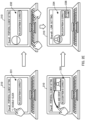
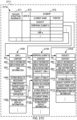
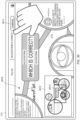
- FIG. 2A illustrates display screen 201 of user terminal 210 according to the present embodiment.
- Display screen 201 is also referred to as a canvas, and is expressed in such a manner that a thought structure can be understood at a glance by arranging various elements via links.
- Display screen 201 includes "medieval Europe" as subject 202 that is one central element which is central to thought. Then, as subjects 203 that are three peripheral elements thereof, there are “heliocentrism”, “Renaissance”, and “Reformation”. These subjects 203 are also linked to each other or through peripheral element(s) 204 (for example, element "letterpress printing”). One of subjects 203, “heliocentrism”, is linked to proposition 212 "Heliocentrism is correct! as a peripheral element. Here, by zooming in on proposition 212 "Heliocentrism is correct!, a thought structure diagram with the proposition "Heliocentrism is correct! as the central element appears. In the present embodiment, as described above, one thought structure diagram itself becomes an "element”, and it is possible to create a much larger thought structure diagram that is hierarchized.
- step S351 ShareB server 310 aggregates the approval votes through user terminal 220 (and user terminal 210), and in step S353, determines whether the votes indicate edit approval or edit rejection. Then, in step S355, ShareB server 310 performs processing according to the determination result: the processing in step S325 when the determination result is edit approval or the processing in step S331 when the determination result is edit rejection.
- Communication control unit 401 controls communication with user terminals 210 and 220 via network 320.
- Subject acquisition unit 402 acquires a subject as the central element transmitted from user terminal 210.
- Subject display instruction unit 412 instructs the display of an acquired subject in a predetermined position (for example, in the center of the screen) of user terminal 210.
- Peripheral element acquisition unit 403 acquires a peripheral element(s) transmitted from user terminal 210.
- Peripheral element display instruction unit 413 instructs the display of an acquired peripheral element(s) in a predetermined position(s) (for example, around the subject) of user terminal 210.
- Link acquisition unit 404 acquires a link(s) transmitted from user terminal 210 together with its/their type(s).
- Link display instruction unit 414 instructs the display of an acquired link(s) in a predetermined position(s) (for example, between the subject and a peripheral element, or between peripheral elements) of user terminal 210 according to the type(s) of the link(s).
- Database 311 stores data, parameters, and programs necessary for processing by ShareB server 310, as well as thought structure diagrams including subjects, peripheral elements, and links.
- Thought structure diagram generation unit 405 includes thought structure diagram generation table 451, and generates a thought structure diagram by using an acquired or stored subject, an acquired or stored peripheral element(s), and an acquired or stored link(s).
- Viewing request reception unit 406 receives a viewing request for a thought structure diagram from user terminal 220.
- thought structure diagram publication unit 407 publishes the thought structure diagram to user terminals 210 and 220 by taking into account the set visibility.
- thought structure diagram publication unit 407 includes a publication restriction unit that restricts the publication of a thought structure diagram by thought structure diagram publication unit 407 based on information on the visibility.
- Editing authority confirmation unit 409 confirms the editing authority of a user who has instructed an edit of a thought structure diagram. In a case where a user is granted the full editing authority, editing authority confirmation unit 409 permits an edit of a thought structure diagram by the user. On the other hand, in a case where an user who has instructed an edit of a thought structure diagram does not have the editing authority, or in a case where the level of the editing authority of the user is lower than the editing authority level for the thought structure diagram, editing authority confirmation unit 409 causes editing authority informing unit 410 to inform the user of no editing authority through user terminal 220.
- editing authority confirmation unit 409 causes editing authority informing unit 410 to inform the user of approval voting through user terminal 220.
- Approval vote aggregation unit 415 aggregates approval votes through user terminal 220 (and user terminal 210) within a predetermined time.
- Approval voting determiner 416 determines based on the aggregation of the approval votes whether an edit requested through user terminal 220 has been approved or rejected.
- Approval voting determiner 416 instructs thought structure diagram generation unit 405 to determine the edit when the edit has been approved, and instructs thought structure diagram generation unit 405 to cause the edit to disappear when the edit has been rejected.
- FIGS. 5A and 5B are diagrams illustrating a configuration of database 311 according to the present embodiment.
- Database 311 stores data, parameters, and programs necessary for processing by ShareB server 310, as well as thought structure diagrams including subjects, elements, and links.
- Database 311 includes subject storage unit 510, peripheral element storage unit 520, link storage unit 530, and visibility/editing authority registration unit 540.
- FIG. 5A illustrates data acquired from user terminals 210 and 220, and illustration of basic storage data such as user registration is omitted in FIG. 5A .
- Subject storage unit 510 stores subject(s) 513 as a central element(s) set in user terminal 210, in association with user ID 511 of a user, who generates a thought structure diagram(s), and terminal ID 512 of user terminal 210 of the user.
- subject 513 may include a position on a display screen where the subject is displayed.
- Peripheral element storage unit 520 stores peripheral element(s) 523 set in user terminal 210 and subject(s) 524 related to peripheral element(s) 523, in association with user ID 521 of a user, who generates a thought structure diagram(s), and terminal ID 522 of user terminal 210 of the user.
- peripheral element 523 may include a position on a display screen on which the peripheral element is displayed.
- Link storage unit 530 stores link(s) 533 set in user terminal 210, subject(s) 534, peripheral element(s) 535, and peripheral element(s) 536 that are connected with link(s) 533, and link type(s) 537 of link(s) 533, in association with user ID 531 of a user, who generates a thought structure diagram(s), and terminal ID 532 of user terminal 210 of the user. Further, link storage unit 530 stores subject(s) 538 related to link(s) 533. Note that, two of subject 534, peripheral element 535, and peripheral element 536, which are connected with link 533, are selected. Further, link 533 may include a position on a display screen where the link is displayed, and the position of the link may be adjusted based on two positions connected with link 533.
- Visibility/editing authority registration unit 540 stores presence/absence of editing authority 542, rank of editing authority 543, and visibility 544 in association with user ID 541.
- database 311 may store a threshold that is compared with rank of editing authority 543, editing thresholds for each thought structure diagram, and/or the like.
- FIG. 5B illustrates a configuration of thought structure diagram storage unit 570 stored in database 311. Note that, FIG. 5B illustrates the configuration of one thought structure diagram, but numerous registered thought structure diagrams are stored.
- Thought structure diagram storage unit 570 stores user ID 572 of a user, who has registered a thought structure diagram of thought structure diagram ID 571, and elements 573 that constitute the thought structure diagram, in association with thought structure diagram ID 571.
- elements 573 a subject, a peripheral element(s), a link(s) as element names, and pointers to subject data storage unit 580, peripheral element data storage unit 590, and link data storage unit 500, which indicate the respective elements, are stored.
- FIG. 5B in a case where it is desired to retain the history of editing processing, user IDs of users who have edited can be recorded separately from user IDs registered in user ID 572 correspondingly to elements 573 in the editing results.
- Subject data storage unit 580 stores content 581, display information 582, link destination peripheral element(s) 583, and the like of the subject.
- Display information 582 includes the display position, shape, size, color(s), and the like of the subject.
- Link destination peripheral element 583 stores, for example, that the subject is connected to peripheral element A with link a or that the subject is connected to peripheral element B with link b.
- Peripheral element data storage unit 590 (peripheral element A) stores content 591, display information 592, link destination element 593, and the like of peripheral element A.
- Display information 592 includes the display position, shape, size, color(s), and the like of peripheral element A.
- Link destination element 593 stores, for example, that peripheral element A is connected to the subject with link a. Note that, in a case where there is a link between peripheral element A and peripheral element B, peripheral element B and the link name are stored.
- Link data storage unit 500 stores content 501, display information 502, link information 503, and the like of link a.
- Display information 502 includes the display position, shape, size, color(s), and the like of link a.
- Link information 503 stores, for example, that this link represents a parent-child relationship, and the direction is that the parent is the subject and the child is peripheral element A. Note that, when the relationship of the link indicates equality or opposition, the relationship is stored in link information 503.
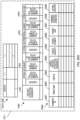
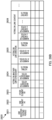
- FIG. 5C illustrates a configuration of thought structure diagram generation table 451 according to the present embodiment.
- t structure diagram generation table 451 is used in a case where thought structure diagram generation unit 405 generates a thought structure diagram by using a subject as the central element, a peripheral element(s), and a link(s), which are acquired or stored.
- Thought structure diagram generation table 451 includes attribute table 550 indicating attributes of a generated thought structure diagram and configuration table 560 indicating a configuration of the thought structure diagram.
- Attribute table 550 stores, in association with user ID 551 of a user who has generated a thought structure diagram and terminal ID 552 of the user terminal of the user, thought structure diagram ID 553, generation date 554, visibility 555 which has been set, and set editing authority 556 which has been set.
- Configuration table 560 stores, in association with thought structure diagram ID 561, subject 562 and peripheral element(s) 563 related to each subject 562.
- Subject 562 includes the content of the subject and the display position of the subject.
- Peripheral element 563 includes the content of a peripheral element, the display position of the peripheral element, a link of the peripheral element with the subject and the link type thereof, and a link of the peripheral element with another peripheral element and the link type thereof. Note that, with respect to peripheral element 563 that is not linked to subject 562, data of "link with subject” and “Link type” are not significant. Further, in a case where one peripheral element 563 is linked to a plurality of subjects 562, the same peripheral element has a plurality of "links with subjects" and "link types”.
- FIG. 6 is a block diagram illustrating a hardware configuration of ShareB server 310 according to the present embodiment.
- central processing unit (CPU) 610 is a processor for operation control, and realizes the components in FIG. 4 by executing a program.
- Read only memory (ROM) 620 stores fixed data and programs such as initial data and programs.
- Network interface 630 controls communication with user terminals 210 and 220 via network 320.
- Random access memory (RAM) 640 is a random access memory as a work area for temporary storage used by CPU 610. RAM 640 secures an area for storing data necessary for realizing the present embodiment.
- User ID (terminal ID) 641 is an ID of a user or a user terminal that is communicating with ShareB server 310.
- Subject 642 is data of a subject as the central element received from a user terminal.
- Peripheral element 643 is data of a peripheral element received from a user terminal.
- Link 644 is data of a link received from a user terminal.
- Thought structure diagram generation table 451 is a table used by thought structure diagram generation unit 405 described in FIG. 6B to generate a thought structure diagram.
- Thought structure diagram data 645 is data of a thought structure diagram that is generated and shared with users.
- Editing authority comment 646 is a comment for informing a user in a case where the user does not have the editing authority for a thought structure diagram or the level of the editing authority of the user is low. Further, editing authority comment 646 also includes a comment requesting approval voting for an edit.
- Transmission/reception data 647 is data that is transmitted to and received from user terminals 210 and 220 via network 320.
- Storage 650 stores a database, various parameters, or data or programs to be described later, necessary for realizing the present embodiment.
- Database 311 is a database that stores synthetic data, and includes, as illustrated in FIG. 5A , storage units 510 to 530 for a subject/peripheral element/link, respectively, and visibility/editing authority registration unit 540.
- Processing program 651 of ShareB server is a program for controlling ShareB server 310 in its entirety.
- Subject/peripheral element/link acquisition module 652 is a module that acquires the subject, peripheral element, and link settings from a user terminal.
- Thought structure diagram generation module 653 is a module that generates a thought structure diagram by using a subject, a peripheral element(s), and a link(s), which have been acquired.
- Thought structure diagram sharing module 654 is a module that publishes a thought structure diagram in response to a viewing request from a user terminal and attempts sharing of the thought structure diagram by users, and also includes determination processing of the visibility.
- Thought structure diagram editing module 655 is a module that performs an edit of a thought structure diagram by a user, and also includes determination processing of the editing authority.
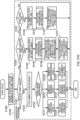
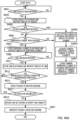
- FIG. 7 is a flowchart illustrating a processing procedure of ShareB server 310 according to the present embodiment. Note that, this flowchart is executed by CPU 610 in FIG. 6 using RAM 640, which realizes the components in FIG. 4 .
- step S711 ShareB server 310 determines whether a thought structure diagram is generated. In a case where a thought structure diagram is generated, thought structure diagram generation processing is executed in step S713.
- ShareB server 310 determines in step S721 whether a thought structure diagram is viewed. When a thought structure diagram is viewed, ShareB server 310 determines in step S722 whether the viewing user has the viewing authority. When the viewing user does not have the viewing authority, ShareB server 310 informs the viewing user of no viewing authority in step S724. When the viewing user has the viewing authority, ShareB server 310 acquires the corresponding thought structure diagram requested for viewing in step S723. Then, in step S725, ShareB server 310 publishes the thought structure diagram as sharing processing of the thought structure diagram (sharing with a terminal(s) having the access right).
- ShareB server 310 determines in step S731 whether a thought structure diagram is edited.
- ShareB server 310 acquires the user ID of the user who has requested the edit in step S733.
- ShareB server 310 checks the editing authority of the user for the thought structure diagram to be edited, based on the acquired user ID in step S735.
- step S737 when the check result of the editing authority indicates that the full authority is granted, ShareB server 310 causes the editing processing of the thought structure diagram to be executed and shares the editing result in step S739. Further, when the user has no editing authority, ShareB server 310 informs the user of no editing authority through the user terminal in step S741.
- ShareB server 310 causes the editing processing to be performed based on voting results with respect to the edit approval in step S743. That is, when the voting results are for the edit approval, the editing portion is determined. On the other hand, when the voting results are for the edit rejection, the editing portion is diminished.
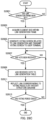
- FIG. 8 is a flowchart illustrating a procedure of thought structure diagram generation processing S713 according to the present embodiment.
- ShareB server 310 waits to receive a link from user terminal 210.
- ShareB server 310 saves the received link in database 311 in step S811 and instructs the display of the link in a predetermined position (for example, between the subject and a peripheral element, or between peripheral elements) on the display screen of user terminal 210.
- a predetermined position for example, between the subject and a peripheral element, or between peripheral elements
- FIG. 8 the procedure of performing connection with a link each time an element is added is illustrated, but the present invention is not limited to this procedure, and the procedure may be a procedure in which a plurality of elements is added and then connections are collectively performed with links.
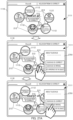
- an element with numerous votes for inappropriate element and an element with small votes for inappropriate element are displayed in an identifiable manner even when the votes including subject support/subject denial are the same. That is, although an element is displayed in a size corresponding to the importance of the element in the thought structure diagram, which is indicated by the voting results, the importance is indicated by referring to, for example, "the value obtained by subtracting inappropriateness votes from the total number of votes", “the difference or ratio between appropriateness votes and inappropriateness votes", and further "the sum of support votes and denial votes”.
- voting on subject 212 as the central element is voting for or against, while voting on a peripheral element or a link is not voting for or against, but rather voting to determine the attribute or importance of information.
- voting on subject 212 or proposition
- a peripheral element or a link is not voting for or against, but rather voting to determine the attribute or importance of information.
- the user looks at peripheral element 213 Copernicus and feels that "this peripheral element supports heliocentrism", the user will vote for "this peripheral element supports heliocentrism”.
- the user feels that "this peripheral element supports geocentrism"
- the user will vote for "this peripheral element supports geocentrism”.
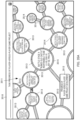
- the colors, shapes, and the like of ring 1112, which is a pie chart around peripheral element 213 Copernicus, and link 214 extending from the peripheral element are determined according to the ratio thereof. In FIG.
- this peripheral element has low credibility
- this peripheral element has weak relevance to the subject (or proposition) as this central element
- votes accordingly the size of this peripheral element is reduced, and the opacity decreases further in a state in which the size is reduced to the minimum size. Then, when the opacity reaches its minimum state and a certain period has passed, the element disappears.
- the display method is not limited to "the size is reduced” or “the opacity decreases", and may be any other display method.
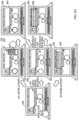
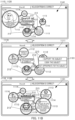
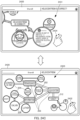
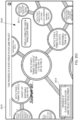
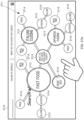
- FIG. 11C illustrates displays of a thought structure diagram, on which filtering processing has been performed, on user terminals 1110 and 1120.
- Display screen 1141 in the central diagram in FIG. 11C is the same as the upper diagram in FIG. 11B .
- filtering is performed on voting results of users under various conditions with respect to the thought structure diagram on display screen 1141 in which the voting results have been reflected.
- the upper, lower, left, and right diagrams in FIG. 11C illustrate the thought structure diagram that has changed as a result of filtering under different conditions, respectively.
- Display screens 1161 and 1181 of the left and right diagrams in FIG. 11C indicate results of filtering based on the nationalities of users who have voted.
- Display screen 1161 of the left diagram indicates the thought structure diagram in which the votes of users having the nationality of country A have been searched and the voting results have been reflected.
- Display screen 1181 of the right diagram indicates the thought structure diagram in which the votes of users having the nationality of country B have been searched and the voting results have been reflected.
- display screens 1171 and 1191 of the upper and lower diagrams in FIG. 11C indicate results of filtering based on the religions that users who have voted believe in.
- Display screen 1171 of the upper diagram indicates the thought structure diagram in which the votes of users who believe in religion a have been searched and the voting results have been reflected.
- Display screen 1191 of the lower diagram indicates the thought structure diagram in which the votes of users who believe in religion b have been searched and the voting results have been reflected.
- the filtering conditions are not limited to other conditions (such as age or gender) according to the attributes of users, but include any conditions necessary for analyzing a thought structure, such as voting period, voting time, or geographical conditions.
- FIG. 12A is a block diagram illustrating a configuration of information processing system 1200 according to the present embodiment.
- user terminal 1120 which allows a user to view a thought structure diagram and vote on the subject, a peripheral element(s), and a link(s) thereof, and ShareB server 1210 as an information processing apparatus, which aggregates votes through user terminal 1120 and reflects the aggregated votes in the thought structure diagram are connected via network 320.
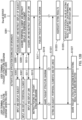
- FIG. 12B is a sequence diagram illustrating an operation procedure of information processing system 1200 according to the present embodiment. Further, in FIG. 12B , the editing of the thought structure diagram in FIG. 3B is omitted, but the editing of the thought structure diagram is also included.
- step S1221 voting on a subject and/or an element(s) in a thought structure diagram, which is being viewed, is performed through user terminals 1110 and 1120.
- ShareB server 1210 that has received the voting results aggregates voting results with respect to the subject, each peripheral element, and/or each link of each thought structure diagram in step S1223.
- step S1225 ShareB server 1210 reflects the statistical values of the aggregated voting results (for example, the total number of votes and the ratios of support and denial) in the display of the subject, each peripheral element, and/or each link, and transmits the thought structure diagram to user terminals 1110 and 1120.
- step S1227 user terminals 1110 and 1120 share the thought structure diagram in which the voting has been reflected.
- FIG. 12C is a sequence diagram illustrating an operation procedure in the information processing system according to the present embodiment.
- FIG. 12C illustrates filtering processing on voting results.
- step S1231 the age groups of the users who have voted are instructed as a filtering condition through user terminal 1110.
- ShareB server 1210 aggregates the voting results accumulated in the database by age group.
- step S1235 ShareB server 1210 reflects the statistical values by age group in the subject, peripheral element(s), and/or link(s), and transmits the thought structure diagram to user terminal 1110.
- step S1237 user terminal 1110 displays the received age group-specific thought structure diagram.
- step S1241 the religions that the users who have voted believe in are instructed as a filtering condition through user terminal 1120.
- ShareB server 1210 aggregates the voting results accumulated in the database by faith religion (and further by sect). Then, in step S1245, ShareB server 1210 reflects the statistical values by faith religion in the subject, peripheral element(s), and/or link(s), and transmits the thought structure diagram to user terminal 1120.
- step S1247 user terminal 1120 displays the received faith religion-specific thought structure diagram.
- step S1251 the genders of the users who have voted are instructed as a filtering condition through user terminal 1110.
- ShareB server 1210 aggregates the voting results accumulated in the database by gender.
- step S1255 ShareB server 1210 reflects the statistical value by gender in the subject, peripheral element(s), and/or link(s), and transmits the thought structure diagram to user terminal 1110.
- step S1257 user terminal 1110 displays the received thought structure diagram in which the voting results by gender have been reflected.
- FIG. 13 is a block diagram illustrating a functional configuration of ShareB server 1210 as an information processing apparatus according to the present embodiment. Further, in FIG. 13 , the functional elements related to the editing of a thought structure diagram in FIG. 4 are omitted.
- ShareB server 1210 includes voting result acquisition unit 1307, voting result aggregation unit 1308, thought structure diagram modification unit 1309, and database 1211.
- Voting result acquisition unit 1307 acquires voting results on a subject, each peripheral element, and/or each link in a thought structure diagram from user terminal 1120.
- the voting results include identifiers (user IDs) of users who have voted, an identifier (thought structure diagram ID) of the thought structure diagram, an identifier(s) (element ID(s)) of the subject, each peripheral element, and/or each link, a flag for subject support/subject denial/inappropriate, and the like.
- Voting result aggregation unit 1308 includes voting result aggregation table 1381, and aggregates acquired statistical results on each thought structure diagram, each subject, each peripheral element, and/or each link, and calculates statistical values (such as total numbers and rates).
- t structure diagram modification unit 1309 includes thought structure diagram modification table 1391, and reflects the aggregated results in the generation of a subject, each peripheral element, and/or each link in a thought structure diagram by thought structure diagram generation unit 405.
- the total number of votes is indicated by the size or opacity of a peripheral element, or the color(s) or opacity of a link, and the rate is indicated by a display in an identifiable manner (in the case of a peripheral element, by the length of the arc around the peripheral element) (see FIGS. 11A to 11C ).
- these display methods allow visual recognition during viewing, various methods other than those exemplified here can be considered.
- thought structure diagram publication unit 407 also functions as a voting result display instruction unit that causes the voting results to be reflected. Note that, although not illustrated in FIG.
- ShareB server 1210 includes a condition acquisition unit that acquires a filtering condition(s) for filtering the voting results.
- thought structure diagram modification unit 1309 functions as a filtering reflection unit that reflects, in response to voting results aggregated correspondingly to the filtering condition(s), the voting results in at least one display of a subject, a peripheral element, and a link included in a thought structure diagram.
- FIG. 14A illustrates a configuration of database 1211 according to the present embodiment.
- Database 1211 stores data, parameters, and programs necessary for processing by ShareB server 1210, as well as thought structure diagrams including subjects, peripheral elements, and links.
- Database 1211 includes voting result storage unit 1450 in addition to subject storage unit 510, peripheral element storage unit 520, link storage unit 530, and editing authority registration unit 540 in FIG. 5A .
- Voting result storage unit 1450 accumulates voting results and aggregation results thereof from user terminal 1120.
- Voting result storage unit 1450 stores, in association with thought structure diagram ID 1451, voting on subject 1452 as the central element, voting on peripheral element 1453, and voting on link 1454.
- Voting on subject 1452 includes, for example, the content of the subject, the number of subject support votes on the subject, the number of subject denial votes on the subject, and the number of inappropriate subject votes on the subject.
- voting on peripheral element 1453 includes, for example, for a plurality of peripheral elements, the content of each peripheral element, the number of subject support votes on the subject in each peripheral element, the number of subject denial votes on the subject in each peripheral element, and the number of inappropriate element votes on each peripheral element.
- voting on link 1454 includes, for example, for a plurality of links, the content of each link, the number of necessary link votes on each link, the number of unnecessary link votes on each link, and the number of link type votes on each link. Note that, the configuration of voting result storage unit 1450 is not limited to that in FIG. 14A . In a case where one thought structure diagram includes a plurality of subjects, voting on a plurality of subjects 1452 is stored in association with one thought structure diagram ID 1451.
- FIG. 14B illustrates a configuration of thought structure diagram storage unit 1470 stored in database 1211 according to the present embodiment. Note that, FIG. 14B illustrates the configuration of one thought structure diagram, but numerous registered thought structure diagrams are stored.
- Subject data storage unit 1410 stores voting results 1414 and voting result display information 1415.
- Voting results 1414 store information on subject support votes, information on subject denial votes, and information on inappropriate subject votes.
- Voting result display information 1415 stores, for example, information for displaying the inside of the region of the display shape of the subject in different colors for the subject support rate and the subject denial rate.
- Peripheral element data storage unit 1420 stores element attribute 1424, voting results 1425, and voting result display information 1426.
- Element attribute 1424 is information indicating whether voting results on peripheral element A are reflected as they are or are reflected in the opposite manner for, for example, a subject to which peripheral element A is connected with a link. In the voting method of the present embodiment, the "order relationship" in which voting results on peripheral element A are reflected as they are is fixed.
- Voting results 1425 store, for example, information on subject support votes, information on subject denial votes, and information on inappropriate element votes, where the respective votes are cast on peripheral element A.
- Voting result display information 1426 stores, for example, information for displaying the periphery (in the case of a circle, the circumference) of the display shape of peripheral element A in different colors for the subject support rate and the subject denial rate.
- Link data storage unit 1430 stores voting results 1434 and voting result display information 1435.
- Voting results 1434 store, for example, information on necessary link votes and information on unnecessary link votes, and information on voting on the link type.
- the voting on the link type includes, for example, parent-child relationship, equality, opposition, or the like. Note that, the parent-child relationship, equality, opposition, or the like may be selected from voting results on an element connected with link a described above.
- Voting result display information 1435 stores, for example, information on the display shape, thickness, opacity, and the like for displaying link a.
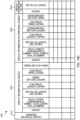
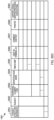
- FIG. 14C illustrates a configuration of voting result aggregation table 1381 according to the present embodiment.
- Voting result aggregation table 1381 is used to aggregate voting results acquired from user terminal 1120 by voting result aggregation unit 1308.
- Voting result aggregation table 1381 stores, in association with thought structure diagram ID 1461, vote aggregation on subject 1462 as the central element, vote aggregation on peripheral element 1463, and vote aggregation on link 1464.
- Vote aggregation on subject 1462 stores, for example, the content of the subject, the total number of votes on the subject, the number of inappropriate subject votes on the subject, the number of valid subject votes, the subject support voting rate, and the subject denial voting rate.
- the number of valid subject votes is the number of votes obtained by subtracting the number of inappropriate subject votes from the total number of votes.
- the subject support voting rate is a value obtained by dividing the number of subject support votes on the subject by the number of valid subject votes.
- the subject denial voting rate is a value obtained by dividing the number of subject denial votes on the subject by the number of valid subject votes.
- vote aggregation on peripheral element 1463 stores, for example, the content of a peripheral element, the total number of votes on the peripheral element, the number of inappropriate element votes on the peripheral element, the number of valid element votes, the subject support voting rate, and the subject denial voting rate.
- the number of valid element votes is the number of votes obtained by subtracting the number of inappropriate element votes from the total number of votes.
- the subject support voting rate is a value obtained by dividing the number of subject support votes in the peripheral element by the number of valid element votes.
- the subject denial voting rate is a value obtained by dividing the number of subject denial votes in the peripheral element by the number of valid element votes.
- vote aggregation on link 1464 stores, for example, the content of a link, the total number of votes on the link, the number of necessary link votes on the link, the number of unnecessary link votes, the necessary link voting rate, and the link type voting rate.
- the necessary link voting rate is a value obtained by dividing the number of necessity votes on the link by the sum of the number of necessity votes and the number of unnecessity votes.
- the size, opacity and the like of a peripheral element are determined by the ratio of "the number of valid element votes" to "the number of inappropriate element votes", the difference in the number of votes therebetween, and/or the like. Further, the opacity and the like of a link are determined by the necessary link voting rate or the like. Note that, the configuration of voting result aggregation table 1381 is not limited to that in FIG. 14C . In a case where one thought structure diagram includes a plurality of subjects, vote aggregation on a plurality of subjects 1462 is stored in association with one thought structure diagram ID 1461.
- votes on a peripheral element may be reflected in votes on the subject or another peripheral element, which is associated with the peripheral element with a link. Further, votes on a peripheral element may be reflected in votes on a link which is connected to the peripheral element. For example, in a case where numerous votes for "inappropriateness" are cast for a peripheral element and the opacity or the like of the peripheral element is affected, the opacity or the like of a link which is connected to the peripheral element also decreases. Alternatively, in a case where voting results of one of two peripheral elements connected with a link and voting result of the other of the two peripheral elements are in conflict with each other, the link is changed to have a shape or color representing the opposition.
- FIG. 14D illustrates a configuration of thought structure diagram modification table 1391 according to the present embodiment. Thought structure diagram modification table 1391 is used by thought structure diagram modification unit 1309 to modify a thought structure diagram in response to the aggregation of voting results.
- Thought structure diagram modification table 1391 stores, in association with thought structure diagram ID 1471, display information on subject 1472, display information on peripheral element 1473, and display information on link 1474.
- Display information on subject 1472 stores, for example, the content of the subject, (the number of valid subject votes - the number of inappropriate subject votes), the display size of the subject, the subject support voting rate, the display size of the subject support rate, the subject denial voting rate, and the display size of the subject denial rate.
- FIGS. 11A to 11C illustrate examples in which the display size of the subject does not change, but the display size of the subject desirably changes, for example, in a case where a thought structure diagram includes a plurality of subjects.
- the change is not limited to a change in the display size, and other expression techniques that allow visual recognition may also be used, such as opacity. Further, in FIGS. 11A to 11C , the display size of the subject support rate and the display size of the subject denial rate are expressed by the ratio of the area within the display size of the subject that does not change.
- display information on peripheral element 1473 stores, for example, for a plurality of peripheral elements, the content of each peripheral element, (the number of valid element votes - the number of inappropriate element votes), the display size, opacity or the like of each peripheral element, each subject support voting rate, the display size of each subject support rate, each subject denial voting rate, and the display size of each subject denial rate.
- the size of the circle changes according to the number of (the number of element valid votes - the number of inappropriate element votes) and the opacity of the peripheral element becomes transparent after the circle becomes the minimum circle in FIGS. 11A to 11C (not illustrated).
- the expression method is not limited to the display size or opacity of a peripheral element, and other expression techniques that allow visual recognition may also be used.
- the display size of the subject support rate and the display size of the subject denial rate in a peripheral element are expressed by the ratio of the length of each color of the arc around the circle (in FIGS. 11A to 11C , the difference in color is indicated by the difference in pattern).
- the display size is not limited to the ratio of the length of each color of the arc around the circle, and other expression techniques that allow visual recognition may also be used.
- the color(s) thereof change(s) according to voting results on peripheral elements, and the necessity voting rate and (the number of necessity votes - the number of unnecessity votes) are expressed by the opacity and/or the shape of display information on link 1474. Further, not only the opacity and/or the shape, but other expression techniques that allow visual recognition may also be used. Note that, the configuration of thought structure diagram modification table 1391 is not limited to that in FIG. 14D . The shape selection for a link may be determined by voting.
- FIG. 14E illustrates a configuration of database 1211 in a case where the filtering processing illustrated in FIGS. 11C and 12C is performed. Note that, the configuration of database 1211 is not limited to that in FIG. 14E .
- Database 1211 in FIG. 14E includes, in addition to subject storage unit 510, peripheral element storage unit 520, link storage unit 530, editing authority registration unit 540, and voting result storage unit 1450 in FIG. 14A , filtering storage unit 1480.
- Filtering storage unit 1480 stores, in association with thought structure diagram ID 1481, user ID (voting source) 1482 of a user who has voted on this thought structure diagram, user attribute 1483, voting period 1484 and the like which serve as filtering conditions, and voting on subject 1485, voting on peripheral element 1486, and voting on link 1487 which are voting results.
- the configuration of filtering storage unit 1480 is not limited to that in FIG. 14E .
- filtering can also be performed to invalidate duplicate votes through the same user terminal in order to maintain the fairness of voting, or the like.
- FIG. 14F illustrates a configuration of voting result aggregation table 1381 in which voting contents that match filtering conditions are collected. During filtering, FIG. 14C is replaced with FIG. 14F . Thought structure diagram modification unit 1309 refers to this voting result aggregation table 1381 and changes the thought structure diagram by using thought structure diagram modification table 1391.
- Voting result aggregation table 1381 stores collection instruction 1491 and collection target 1492 in association with thought structure diagram ID 1461. Collection instruction 1491 and/or collection target 1492 described above correspond(s) to the filtering conditions. The votes collected based on each filtering condition have the same configuration as in FIG. 14C .
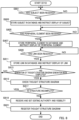
- FIG. 15A is a flowchart illustrating a processing procedure of ShareB server 1210 in the present embodiment. Further, this flowchart is executed by CPU 610 using RAM 640 in FIG. 6 , which realizes the components in FIG. 13 .
- ShareB server 1210 determines in step S1519 whether aggregation with filtering is performed (whether there is a request from a user terminal). In a case where the aggregation with filtering is performed, ShareB server 1210 proceeds to step S1591 in FIG. 15D .
- ShareB server 1210 determines in step S1511 whether voting results from user terminal 1120 are acquired. When voting results are acquired, ShareB server 1210 executes aggregation processing of the acquired voting results in step S1513. In step S1515, ShareB server 1210 executes reflection processing of the voting results in the thought structure diagram. Then, in step S1517, ShareB server 1210 performs sharing processing of the thought structure diagram after the reflection (sharing with a terminal(s) having the access right).
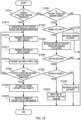
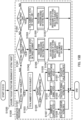
- FIG. 15B is a flowchart illustrating a procedure of voting result aggregation processing S1513 according to the present embodiment.
- step S1520 ShareB server 1210 acquires the thought structure diagram ID of a voting target, which is included in voting information obtained from user terminal 1120.
- step S1521 ShareB server 1210 determines whether the voting target is the subject as the central element. When the voting target is the subject, ShareB server 1210 adds 1 to the total number of votes on the subject in step S1523.
- the voting indicates that the subject is inappropriate
- ShareB server 1210 adds 1 to the number of inappropriateness votes in step S1535 and calculates the total number of valid votes and the valid voting rate in step S1537.
- the total number of valid votes is (the total number of votes - the number of inappropriateness votes)
- the valid voting rate is (the total number of valid votes / the total number of votes).
- ShareB server 1210 determines in step S1541 whether the voting target is a peripheral element. In a case where the voting target is a peripheral element, ShareB server 1210 adds 1 to the total number of votes on the target element in step S1543. Next, in step S1545, ShareB server 1210 performs, on the peripheral element, the same processing as the processing in steps S1525 to S1537 for the subject. Then, in step S1547, ShareB server 1210 performs reflection processing of the voting results on the peripheral element in the subject, another/other peripheral element(s), a link(s), or the like.
- ShareB server 1210 determines in step S1551 whether the voting target is a link. In a case where the voting target is a link, ShareB server 1210 adds 1 to the total number of votes on the target link in step S1553. Next, in step S1555, ShareB server 1210 performs, on the link, the same processing as the processing in steps S1525 to S1537 for the subject. Note that, in the voting on the link, voting to select the shape of the link, such as "parent-child ⁇ ", “equality ⁇ ", or "opposition ⁇ ", may be performed.
- ShareB server 1210 may optionally perform, in step S1557, reflection processing of the voting results on the link in the subject or a peripheral element(s) or another/other link(s). Further, it the reflection processing, it may be determined whether the reflection is performed at the time of generating a thought structure diagram or at the time of editing an existing thought structure diagram. Note that, although not illustrated in FIG. 15B , data reflection processing of reflecting voting results on the subject in another subject, a peripheral element(s), or a link(s) may also be added.
- FIG. 15C is a flowchart illustrating a procedure of reflection processing S1515 in a thought structure diagram in the present embodiment.
- step S1561 ShareB server 1210 determines whether to reflect voting in the display of the subject. In a case where voting on the subject occurs and is reflected in the display of the subject, ShareB server 1210 acquires the total number of valid votes or the valid voting rate of votes on the subject in step S1562. Then, in step S1563, ShareB server 1210 sets the display size of the subject corresponding to the total number of valid votes or the valid voting rate. In step S1564, ShareB server 1210 acquires the subject support voting rate and the subject denial voting rate on the subject. Then, in step S1565, ShareB server 1210 sets the display size of the subject support rate and the display size of the subject denial rate on the subject.
- ShareB server 1210 modifies the display size of the subject (in the present example, no modification is made), modifies the display size of the support rate on the subject and the display size of the denial rate on the subject, and generates a display image of the subject. Note that, in steps S1562 to S1566, when the reflection of the voting results in the subject display is not indicated with the size, other changes in the display, which allow visual recognition, may also be set.
- ShareB server 1210 determines in step S1571 whether the voting is voting on a peripheral element and whether the voting is reflected in the display of the peripheral element. In a case where the voting is reflected in the display of the peripheral element, ShareB server 1210 acquires the total number of valid votes or the valid voting rate of votes on the target element in step S1572. Then, in step S1573, ShareB server 1210 sets the display size or opacity of the target element corresponding to the total number of valid votes or the valid voting rate of the votes. In step S1574, ShareB server 1210 acquires the subject support voting rate and the subject denial voting rate on the target element.
- step S1575 ShareB server 1210 sets the display size of the subject support rate and the display size of the subject denial rate on the target element.
- step S1576 ShareB server 1210 modifies the display size of the target element, modifies the display size of the subject support rate and the display size of the subject denial rate on the target element, and generates a display image of the target element. Note that, in steps S1572 to S1576, when the reflection of the voting results in the peripheral element display is not indicated with the size or the opacity, other changes in the display, which allow visual recognition, may also be set.
- ShareB server 1210 determines in step S1581 whether the voting is voting on a link and whether the voting is reflected in the display of the link. In a case where the voting is reflected in the display of the link, ShareB server 1210 acquires the necessity voting rate or the unnecessity voting rate on the link in step S1582. Then, in step S1583, ShareB server 1210 sets the opacity of the display of the target link corresponding to the total number of valid votes or the valid voting rate of the votes, or the like.
- step S1584 ShareB server 1210 acquires the shape and color(s) as the type of the target link. Then, in step S1585, ShareB server 1210 sets the color(s) for the target link.
- ShareB server 1210 may acquire, in step S1584, the subject support voting rate(s) and the subject denial voting rate(s) on a target peripheral element(s) to which the target link is connected, and may set, in step S1585, the color(s) for the target link based on the subject support voting rate(s) and the subject denial voting rate(s) on the target peripheral element(s). Further, in step S1587, the shape of the link is set correspondingly to voting results on the shape of the target link or voting results on elements which are connected with the target link.
- FIG. 15D is a flowchart illustrating a processing procedure of filtering processing in the case of YES in step S1519 of FIG. 15A .
- step S1591 ShareB server 1210 waits to receive a filtering condition(s) set by user terminals 1110 and 1120 for the filtering processing.
- ShareB server 1210 stores the received filtering condition(s) in step S1593.
- step S1595 ShareB server 1210 searches and collects a vote(s) meeting the filtering condition(s) from database 1211.
- step S1513 ShareB server 1210 executes the vote aggregation processing illustrated in FIG. 15B on the vote(s) meeting the filtering condition(s).
- step S1515 ShareB server 1210 executes the reflection processing in the thought structure diagram illustrated in FIG. 15C by using the aggregation result(s) of the vote(s) meeting the filtering condition(s).
- FIG. 16 is a block diagram illustrating a functional configuration of user terminals 1110 and 1120 according to the present embodiment. Further, since user terminals 1110 and 1120 have the same functions, user terminal 1110 will be described as a representative. Further, in FIG. 16 , the functions related to the editing of the thought structure diagram in FIG. 9 are omitted.
- User terminal 1110 includes voting content acquisition unit 1613 and voting content transmission unit 1614.
- Voting content acquisition unit 1613 acquires a voting content(s) for the subject, each peripheral element, each link, and the like input by the user through operation unit 922.
- Voting content transmission unit 1614 transmits information including the user ID, a thought structure diagram ID which is being viewed, a subject ID(s) as a voting target(s), a peripheral element ID(s) as a voting target(s), a link ID(s) as a voting target(s), a voting content(s), and the like to ShareB server 1210.
- FIG. 17 is a flowchart illustrating a processing procedure of user terminals 1110 and 1120 according to the present embodiment. Note that, the edit instruction for the thought structure diagram in FIG. 10 is omitted in FIG. 17 .
- step S1745 user terminal 1110 determines whether a filtering condition(s) has/have been input. In a case where a filtering condition(s) has/have been input, user terminal 1110 receives and displays the thought structure diagram resulting from filtering from ShareB server 1210 in step S1747. In a case where a filtering condition(s) has/have not been input, user terminal 1110 proceeds to step S1737.
- step S1737 user terminal 1110 determines whether a voting input occurs.
- user terminal 1110 acquires the voting content in step S1739, and transmits the voting target (the thought structure diagram ID, the subject ID, the peripheral element ID, the link ID, or the like) and the voting content to ShareB server 1210.
- step S1741 user terminal 1110 waits for a response indicating that the voting has been reflected in the thought structure diagram which is being viewed, and when the response occurs, user terminal 1110 receives and displays, in step S1743, the thought structure diagram in which the voting has been reflected.
- FIG. 17 the operation of the user terminal through which voting has been performed is illustrated, but the reflection in the thought structure diagram at a user terminal different from the user terminal through which voting has been performed can be realized by processing steps S1741 and S1743 separately after step S1747.
- voting it is desirable to perform control such as prohibiting duplicate votes by the same user or the same group, or setting a upper limit on the number of votes, in order to prevent biased voting results due to the same user casting a large number of votes or a large number of people of the same group casting votes.
- control such as prohibiting duplicate votes by the same user or the same group, or setting a upper limit on the number of votes, in order to prevent biased voting results due to the same user casting a large number of votes or a large number of people of the same group casting votes.
- voting on a first peripheral element or a second peripheral element does not necessarily affect voting results on the central element.
- voting on one peripheral element affects another peripheral element to which the one peripheral element is connected with a link.
- voting results on a first peripheral element or a second peripheral element are used independently only for organizing the directional of information of the first peripheral element or the second peripheral element and the results thereof do not affect voting results on the central element. It is also configured such that these settings can be switched arbitrarily by a user who has generated a thought structure diagram or a user who views and edits a thought structure diagram at the time of the generation of the thought structure diagram, or at the time of an edit thereof, or at the time of viewing thereof.
- filtering for example, filtering of changes in the ratio of votes for to votes against the central element, the size or opacity of a peripheral element, the shape or thickness of a link, and the like, as well as information that affects those described above may be performed based on, for example, invalidation of voting through the same user terminal, gender, place of origin, and/or the like. Further, a filtering function may be provided when a thought structure diagram is displayed.
- a user who has generated a thought structure diagram, or an information processing apparatus switching between settings, it is also possible to switch whether a filtering function is implemented, to switch the content of the filtering function, or filtering for viewing users who are the target of the filtering, or the like, by referring to the attributes of the viewing users.
- votes on each peripheral element, subject, proposition, and the like are reaggregated based on the attributes of each user, such as "gender of the voter", "place of origin of the voter", and "age of the voter", and are reflected in the thought structure diagram displayed on the screen.
- voting results on the subject or elements by users are reflected in a thought structure diagram, and thus, it is possible to obtain a universal thought structure diagram that is not extremely biased. Further, since voting results of a large number of users are reflected in the structure of a thought structure diagram, there is also an effect of forming collective intelligence and an effect of sharing a logical thought circuit with numerous users. As a result, it is possible to shape a fair and more accurate collective intelligence.
- Embodiment 4 of the present invention differs from the information processing systems according to Embodiments 2 and 3 described above in that comments associated with the displayed subject or peripheral elements are input and displayed. Since the other configurations and operations are the same as those in Embodiment 2 or 3, the same reference signs are given to the same configurations and operations, and detailed descriptions thereof will be omitted.
- FIG. 18 illustrates display screen 1811 of user terminal 1810 in the information processing system according to the present embodiment.
- Display screen (canvas) 1811 of user terminal 1810 displays comment section 1812 for users with respect to a thought structure diagram that has been displayed for viewing.
- comment section 1812 in FIG. 18 colors corresponding to votes for and against (colors corresponding to the colors of 1112 and 1113 in the figure) are applied to the peripheries or backgrounds of comments or user names in the comment section such that it is possible to understand whether each user in the comment section has cast a vote for or against a proposition or a subject, which is a central element.
- An element associated with a comment in the comment section may be associated with the comment as a vote (on the subject of the user) and the comment may be reflected in the element.
- comment section 1812 may be integrated with the thought structure diagram, or may be independent of the thought structure diagram, and comment section 1812 in the latter case may include comments posted on, for example, social media or the like.
- comment section 1812 it is desirable that each comment in the comment section be displayed so as to clarify the linking with the subject or each element in the thought structure diagram which is being viewed.
- comments in the comment section can be tagged or associated with the central element or peripheral elements correspondingly thereto, and when the mouse is hovered over the comments, the corresponding central element, peripheral elements, links, or the like are highlighted. Note that, it is also possible to reply to existing comments, and in such a case, the parent-child relationship of the comments is displayed to be easily visually recognized.
- media or URL links are provided with a button that allows a new peripheral element (or central element) to be incorporated into the thought structure diagram with a single click (or a single tap).
- Comments are associated with each object (central element, peripheral element, link, etc.) (which is selected at pull-down menu 1813), and when the mouse is hovered over each corresponding object within display screen 1811, a comment(s) (thread(s)) associated with the object is/are highlighted at the same time.
- a dedicated tag (channel) may be present for each link, or a comment on a link may be substituted by selecting both tags (channels) that respectively correspond to two elements located at both ends of the link.
- reply comments it is possible to further add new tags (channels) in association with other elements or links.
- the user's comments may be language-processed by an LLM (large language model) and treated as votes with respect to each element.
- N nodes peripheral elements
- N+1 tags or channels
- users select one of the tags (channels) and make comments.
- the tags (channels) one tag (channel) is used when commenting on the subject/proposition itself in general.
- a correspondingly increased number of tags (channels) are used instead of the one tag (channel), and when the number of subjects/propositions is M, (N + M) tags are required.
- tags channels
- the tag (channel) of the reply destination comment parent comment
- the reply comment child comment
- an information correlation diagram that includes at least two graphic elements (a central element and a peripheral element(s)) indicating a difference in importance of information in an identifiable manner based on an analysis of a comment of a user acquired from a user terminal and expresses the comment may be generated. Further, in order to transmit the comment to another user, the user terminal operated by the other user may be instructed to display the information correlation diagram.
- FIG. 19 is a block diagram illustrating a functional configuration of ShareB server 1910 as an information processing apparatus according to the present embodiment. Further, in FIG. 19 , the functional elements related to the editing of the thought structure diagram in FIG. 4 and the functional elements related to the voting in FIG. 13 are omitted.
- ShareB server 1910 includes comment acquisition unit 1908, comment display instruction unit 1909, and database 1911.
- Comment acquisition unit 1908 acquires a comment(s) on a thought structure diagram or on the subject, each peripheral element, and/or each link from user terminal 1120.
- a comment includes an identifier (user ID) of the user who has made the comment, an identifier (thought structure diagram ID) of the thought structure diagram, an identifier(s) of the subject and/or each peripheral element or an identifier (element ID) of each link, the content of the comment, and the like.
- Comment display instruction unit 1909 includes comment display table 1991, associates the acquired comment(s) with the generation of the subject, each peripheral element, and/or each link in a thought structure diagram by thought structure diagram generation unit 405, and reflects the acquired comment(s) in the generation of the subject, each peripheral element, and/or each link.
- FIG. 20A illustrates a configuration of database 1911 according to the present embodiment.
- Database 1911 stores data, parameters, and programs necessary for processing by ShareB server 1910, as well as thought structure diagrams including subjects as central elements, peripheral elements, and links.
- Database 1911 includes, in addition to subject storage unit 510, peripheral element storage unit 520, link storage unit 530, editing authority registration unit 540, and voting result storage unit 1450, comment storage unit 2060.
- Comment storage unit 2060 collects and stores comments input through user terminals 1810 and 1820.
- Comment storage unit 2060 stores, in association with comment ID 2061, timestamp 2062 of when a comment is input, and user ID 2063 of a user who has input the comment. Then, comment storage unit 2060 stores target thought structure diagram ID 2064 of a thought structure diagram on which a comment has been made, target subject 2065, target peripheral element 2066, target link 2067, comment content 2068, and voting content 2069 when there is a vote through the comment section.
- comment content 2068 may be a pointer to the comment content.
- comment content 2068 includes an external site(s) (news site(s), Wikipedia (registered trademark), social media, etc.) as the link destination(s), media such as an image(s), a moving image(s), and an audio(s) (including those uploaded from user's PCs, those linked on the Internet, and both), and the like. That is, comments of the same type and content as those which can be posted on Twitter (registered trademark) or other media can be posted as comments.
- the configuration of comment storage unit 2060 is not limited to that in FIG. 20A .
- FIG. 20B illustrates configurations of thought structure diagram storage unit 1470 and comment storage unit 2070 that are stored in database 1911 according to the present embodiment. Note that, FIG. 20B illustrates the configuration of one thought structure diagram, but numerous registered thought structure diagrams are stored.
- Comment storage unit 2070 stores identification marks 2071 for identifying peripheral elements or links on which comments have been made (in the case of a plurality of subjects, comment storage unit 2070 also stores the identification marks of the plurality of subjects). Then, parameters of a plurality of displayed comments are stored correspondingly to the subject or each peripheral element/link. As the parameters of comments, comment storage unit 2070 stores timestamps 2072 arranged in a time series, user IDs and terminal IDs 2073, comment contents 2074, link destinations 2075 to the comment contents, and types 2076 of support/denial/inappropriateness associated with the comments, and the like. Note that, the configuration of comment storage unit 2070 is not limited to that in FIG. 20B .
- FIG. 20C illustrates a configuration of comment display table 1991 according to the present embodiment.
- Comment display table 1991 is used to display comments acquired by comment display instruction unit 1909 from user terminals 1810 and 1820 together with a thought structure diagram. Note that, FIG. 20C illustrates a case where there is one subject in a thought structure diagram, but the present invention is not limited thereto. Further, the configuration of comment display table 1991 is not limited to that in FIG. 20C .
- step S2111 ShareB server 1910 determines whether a comment has been acquired from user terminal 1810. In a case where a comment has been acquired, ShareB server 1910 acquires in step S2113 the user ID (terminal ID) of the user who has made the comment. In step S2115, ShareB server 1910 acquires a thought structure diagram of the comment target and a subject, peripheral element or link as the comment target. In step S2117, ShareB server 1910 links the comment content with the thought structure diagram of the comment target and the subject, peripheral element or link as the comment target and inserts the comment content into the comment list. Then, in step S2119, ShareB server 1910 updates the comment section of the thought structure diagram of the target and causes user terminals 1810 and 1820 to display the comment section together with the thought structure diagram. In step S2120, ShareB server 1910 determines whether the vote is acquired from the comment section. In a case where ShareB server 1910 determines that the vote is acquired, ShareB server 1910 proceeds to step S2121 in FIG. 21B .
- ShareB server 1910 determines in step S2121 whether the vote has been cast through a voting window in the comment section. When the vote has been cast through the voting window, ShareB server 1910 acquires the voting content in step S2123. Note that, the voting window may be similar to those in Embodiment 3 ( FIG. 11A or the like), Embodiment 6 ( FIG. 25A or the like), and Embodiment 7 ( FIG. 27A or the like), or may be in another format corresponding to the comment section.
- ShareB server 1910 reflects the voting content in database 1911 correspondingly to the thought structure diagram, and the subject, peripheral element or link. Then, in step S2127, ShareB server 1910 generates a thought structure diagram updated by the vote and instructs the display thereof.
- ShareB server 1910 analyzes a comment(s) in the comment section and determines whether the vote is taken as a vote in step S2131. In a case where the comment(s) has/have been analyzed and the vote is taken as a vote, ShareB server 1910 acquires the target comment(s) in step S2133. Then, in step S2135, ShareB server 1910 analyzes the presence or absence of a corresponding voting content based on the comment(s). Note that, the analysis of the corresponding voting content based on the comment(s) is performed by document recognition or the like, but a detailed description thereof is omitted here.
- ShareB server 1910 determines whether there is voting content, and when there is a voting content, ShareB server 1910 proceeds to step S2125 and reflects the voting content in database 1911 correspondingly to the thought structure diagram, and the subject, peripheral element or link.
- FIG. 22 is a block diagram illustrating a functional configuration of user terminals 1810 and 1820 according to the present embodiment. Further, since user terminals 1810 and 1820 have the same functions, user terminal 1810 will be described as a representative. Further, in FIG. 22 , the functions related to the editing of the thought structure diagram in FIG. 9 and the functions related to voting on the subject or peripheral element(s) in FIG. 16 are omitted.
- User terminal 1810 includes comment acquisition unit 2213, comment transmission unit 2214, comment section reception unit 2215, and comment section display instruction unit 2216.
- Comment acquisition unit 2213 acquires a comment input through operation unit 922 for a thought structure diagram which is being viewed.
- Comment transmission unit 2214 assigns the user ID of a user who has input the comment, the thought structure diagram ID, the subject ID or the peripheral element ID of the comment target, and the like to the acquired comment content, and transmits the comment content to ShareB server 1910.
- Comment section reception unit 2215 receives an updated comment section corresponding to the thought structure diagram which is being viewed, from ShareB server 1910.
- Comment section display instruction unit 2216 causes display unit 921 to display the associated comment section together with the thought structure diagram which is being viewed.
- FIG. 23 is a flowchart illustrating a processing procedures of user terminals 1810 and 1820 according to the present embodiment. Note that, the edit instruction for the thought structure diagram in FIG. 10 and the voting input in FIG. 17 are omitted in FIG. 23 .
- step S2337 user terminal 1810 determines whether a comment input occurs.
- user terminal 1810 acquires the comment content in step S2339, and transmits the comment target (the thought structure diagram ID, the subject ID, the peripheral element ID, or the like) and the comment content to ShareB server 1910.
- step S2341 user terminal 1810 waits for a response indicating that the comment has been reflected in the comment section corresponding to the thought structure diagram which is being viewed, and when the response occurs, user terminal 1810 receives and displays, in step S2343, the comment section in which the comment has been reflected. Note that, in FIG.
- step S1035 the operation of the user terminal through which a comment has been made is illustrated, but the reflection in the comment section at a user terminal different from the user terminal through which a comment has been made can be realized by processing steps S2341 and S2343 separately after step S1035.
- the comment section may be configured to be provided with a button that allows a peripheral element as a new peripheral element (or a central element) to be incorporated into a thought structure diagram.
- the information processing system according to the present embodiment differs from the information processing systems according to Embodiments 2 to 4 described above in terms of including voting on a proposition as a subject as three-branch voting.
- the number of branches is not particularly limited to three, but may be four, five, or more. Since the other configurations and operations are the same as those in Embodiment 2, the same reference signs are given to the same configurations and operations, and detailed descriptions thereof will be omitted.
- FIG. 24A illustrates display screen 2411 of user terminal 2410 in the information processing system according to the present embodiment.
- subject 2412 On display screen 2411 of user terminal 2410, subject 2412 has three options. The three options are associated based on the contents of the respective elements. Note that, the options are not limited, and the number of options may exceed three as long as the options do not become too complex for users to understand a thought structure. Further, when editing a thought structure diagram, it is also possible to add options as necessary based on the content of the thought structure diagram.
- FIG. 24B illustrates another display screen 2421 of user terminal 2420 in the information processing system according to the present embodiment.
- indication 2423 "information is not appropriate” is possible in voting on peripheral element 2422. Note that, it may be configured such that "information is not appropriate” is included in “meaningless (lacking credibility, lacking relevance)".
- FIG. 24C illustrates other display screens 2431 and 2433 of user terminal 2420 in the information processing system according to the present embodiment.
- display screen 2431 in which a part of the thought structure diagram is enlarged is displayed from display screen 2433 by pinch-out operation 2432 of the user.
- This operation is useful for narrowing down the target to a part of a thought structure diagram in a case where the thought structure diagram includes numerous elements and is complex, or in a case where the thought structure diagram includes a plurality of subjects and is complex.
- This operation corresponds to the zoom-in in FIG. 2A .
- display screen 2433 in which the display of the thought structure diagram has been reduced is displayed from display screen 2431 by pinch-in operation 2434 of the user.
- This operation is useful for expanding a target toward the entire thought structure diagram in a case where it is desired to know where a part of the thought structure diagram is located in the entire thought structure diagram or how a part of the thought structure diagram is connected to another part thereof.
- FIG. 24D illustrates another display screen of user terminal 2420 in the information processing system according to the present embodiment.
- two elements are linked with each other as one group.
- the two peripheral elements become one group.
- operations simplified as one group are realized.
- the number of elements to be grouped may be three or more, and the elements may include a subject.
- a group may include a plurality of subjects.
- a name symbolizing a group may be given to the group, and operations may be performed in units of groups by the name.
- the grouping is illustrated with closed curve 2444, which, however, may also be an open curve. For example, it is also possible to apply a method in which both ends are not closed by crossing each other or the like as in a lasso, and the both ends are automatically connected in a straight line to enclose an operation target.
- a part of a thought structure diagram can be enlarged to view the detailed structure thereof and to set the detailed structure as an operation target, or a thought structure diagram can be reduced to view a wide range or the entire structure thereof and to set the wide range or the entire structure as an operation target. Further, a plurality of elements in a part of a thought structure diagram can be grouped together and presented as one element.
- the information processing system according to the present embodiment differs from the information processing system according to Embodiment 3 described above in that voting on each element or link is divided into first-stage voting (voting concerning the presence or absence of an element) in which voting for appropriate/inappropriate is performed, and second-stage voting (voting concerning the approval or denial of an element content) in which voting for support/deny is performed. Since the other configurations and operations are the same as those in Embodiments 2 and 3, the same reference signs are given to the same configurations and operations, and detailed descriptions thereof will be omitted.
- FIG. 25A illustrates a voting operation of user terminals 1110 and 1120 in the information processing system according to the present embodiment.
- the central diagram in FIG. 25A illustrates a state in which the user has selected "Eudoxus", which is peripheral element 213, as the voting destination.
- Window 2501 for describing Eudoxus opens, and soft buttons for voting for either "appropriate for the subject” (hereinafter referred to as appropriate subject) or "not appropriate for the subject” (hereinafter referred to as inappropriate subject) are displayed together with the description of Eudoxus. Note that, even when another peripheral element is selected as the voting destination, the same soft buttons are displayed together with the description of the peripheral element.
- the lower diagram in FIG. 25A illustrates a state in which the user has voted "appropriate for the subject" in window 2501 in the central diagram.
- New window 2502 opens, and soft buttons for voting for either "I support the subject” (hereinafter referred to as subject support) or "I deny the subject” (hereinafter referred to as subject denial) are displayed.
- the voting result by the user is transmitted to ShareB server 1210 and accumulated in database 2611.
- the display (size, shape, color(s), etc.) of the peripheral element is changed in accordance with the accumulated voting results, and the change is reflected in the other peripheral elements or subject that are associated with the peripheral element with the links, and is also reflected in the links.
- the first-stage voting in which voting for appropriate/inappropriate is performed and the second-stage voting in which voting for support/deny is performed have been described as continuous operations, but the first-stage voting and the second-stage voting may be implemented independently, aggregated independently, and reflected in the thought structure diagram. In this case, either the first-stage voting or the second-stage voting is selected before the voting. Further, it may be configured such that the first-stage voting in which voting for appropriate/inappropriate is performed is completed and a basic thought structure diagram is determined, and then the second-stage voting in which voting for support/deny is performed is started and the basic thought structure diagram is changed. In this case, a combination in which the first-stage voting is entrusted to experts and the second-stage voting is made open to the public, or the like, can also be considered.
- FIG. 25B is a sequence diagram illustrating an operation procedure of information processing system 2500 according to the present embodiment.
- steps S301 to S315 in FIGS. 3B and 12B are omitted.
- the editing processing in FIG. 3B is also omitted, where the editing of the thought structure diagram is also included.
- step S2521 the first-stage voting in which voting for appropriate/ inappropriate on a subject, an element(s), and/or a link(s) in a thought structure diagram which is being viewed is performed through user terminals 1110 and 1120.
- ShareB server 2510 that has received the voting results aggregates the first-stage voting results on the subject, each peripheral element, and each link in each thought structure diagram in step S2523.
- ShareB server 2510 reflects the statistical values of the aggregation results of the first-stage voting (for example, the total number of votes and the ratios of appropriate and inappropriate) in the displays of the subject, each peripheral element, and each link in the thought structure diagram, and transmits the thought structure diagram to user terminals 1110 and 1120.
- step S2527 user terminals 1110 and 1120 share the thought structure diagram in which the first-stage voting has been reflected.
- step S2531 the second-stage voting including voting for support/deny on the subject and/or element(s) or voting on the link type(s) for the link(s) in the thought structure diagram which is being viewed and in which the first-stage voting has been reflected is performed through user terminals 1110 and 1120.
- ShareB server 2510 that has received the voting results aggregates the second-stage voting results on the subject, each peripheral element, and each link in each thought structure diagram in step S2533.
- ShareB server 2510 reflects the statistical values of the aggregation results of the second-stage voting (for example, the total number of votes, the ratios of support and denial, and the ranking of the types) in the displays of the subject, each peripheral element, and each link in the thought structure diagram, and transmits the thought structure diagram to user terminals 1110 and 1120.
- user terminals 1110 and 1120 share the thought structure diagram in which the second-stage voting has been reflected.
- FIGS. 26A and 26B illustrate a configuration of database 2611 according to the present embodiment.
- Database 2611 stores data, parameters, and programs necessary for processing by ShareB server 2510, as well as thought structure diagrams including subjects, peripheral elements, and links.
- Database 2611 includes, in addition to subject storage unit 510, peripheral element storage unit 520, link storage unit 530, and editing authority registration unit 540 in FIG. 5A , first-stage voting result storage unit 2650 and second-stage voting result storage unit 2660.
- First-stage voting result storage unit 2650 stores first-stage voting results from user terminal 1120 and the aggregation results thereof.
- Voting result storage unit 2650 stores, in association with thought structure diagram ID 1451, first-stage voting 2652 on a subject as the central element, first-stage voting 2653 on a peripheral element(s), and first-stage voting 2654 on a link(s).
- First-stage voting 2652 on a subject includes, for example, the content of the subject, the number of appropriate subject votes on the subject, and the number of inappropriate subject votes on the subject.
- first-stage voting 2653 on a peripheral element(s) includes, for example, for a plurality of peripheral elements, the content of each peripheral element, the number of appropriate element votes in each peripheral element, and the number of inappropriate element votes in each peripheral element.
- first-stage voting 1454 on a link(s) includes, for example, for a plurality of links, the content of each link, the number of necessary link votes on each link, and the number of unnecessary link votes on each link. Note that, the configuration of first-stage voting result storage unit 2650 is not limited to that in FIG. 26A . In a case where one thought structure diagram includes a plurality of subjects, first-stage voting 2652 on the plurality of subjects is stored in association with one thought structure diagram ID 1451.
- Second-stage voting result storage unit 2660 stores second-stage voting results from user terminal 1120 and the aggregation results thereof.
- Second-stage voting result storage unit 2660 stores, in association with thought structure diagram ID 1451, second-stage voting 2662 on a subject as the central element, second-stage voting 2663 on a peripheral element(s), and second-stage voting 2664 on a link(s).
- Second-stage voting 2662 on a subject includes, for example, the content of the subject, the number of subject support votes on the subject, and the number of subject denial votes on the subject.
- second-stage voting 2663 on a peripheral element(s) includes, for example, for a plurality of peripheral elements, the content of each peripheral element, the number of subject support votes on the subject in each peripheral element, and the number of subject denial votes on the subject in each peripheral element.
- second-stage voting 2664 on a link(s) includes, for example, for a plurality of links, the content of each link and the number of link type votes on each link. Note that, the configuration of second-stage voting result storage unit 2660 is not limited to that in FIG. 26B . In a case where one thought structure diagram includes a plurality of subjects, second-stage voting 2662 on the plurality of subjects is stored in association with one thought structure diagram ID 1451.
- FIG. 26C illustrates a configuration of thought structure diagram storage unit 2670 stored in database 2611 according to the present embodiment. Note that, FIG. 14B illustrates the configuration of one thought structure diagram, but numerous registered thought structure diagrams are stored.
- Subject data storage unit 2610 stores first-stage voting results 2613 and second-stage voting results 2614.
- First-stage voting results 2613 store, for example, information on appropriateness votes on a subject and inappropriateness votes on the subject.
- Second-stage voting results 2614 store, for example, information on subject support votes and information on subject denial votes.
- Peripheral element data storage unit 2620 stores first-stage voting results 2624 and second-stage voting results 2625.
- First-stage voting results 2624 store, for example, information on appropriateness votes on an element and inappropriateness votes on the element.
- Second-stage voting results 2625 store, for example, information on subject support votes and information on subject denial votes, where the subject support votes and the subject denial votes are cast on peripheral element A.
- Link data storage unit 2630 stores first-stage voting results 2633 and second-stage voting results 2634.
- First-stage voting results 2633 store, for example, information on necessary link votes and information on unnecessary link votes.
- Second-stage voting results 2634 includes, for example, parent-child relationship, equality, opposition, or the like as the voting on the link type. Note that, parent-child relationship, equality, opposition, or the like may be selected from voting results on the elements connected with link a.
- FIG. 26D is a flowchart illustrating a processing procedure of ShareB server 2510 in the present embodiment. Further, this flowchart is executed by CPU 610 using RAM 640 in FIG. 6 , which realizes the components that execute the processing in FIG. 25B .
- ShareB server 2510 determines whether first-stage voting results on whether an element is appropriate or inappropriate have been acquired from user terminal 1120. In a case where first-stage voting results have been acquired, ShareB server 2510 executes aggregation processing of the acquired first-stage voting results in step S2612. In step S2613, ShareB server 2510 executes reflection processing of the first-stage voting results in the thought structure diagram. Then, in step S1517, ShareB server 2510 performs sharing processing of the thought structure diagram after the first-stage voting results have been reflected (sharing with a terminal(s) having the access right).
- step S2614 ShareB server 2510 determines whether second-stage voting results on whether a subject is supported or denied have been acquired from user terminal 1120. In a case where second-stage voting results have been acquired, ShareB server 2510 executes aggregation processing of the acquired second-stage voting results in step S2615. In step S2616, ShareB server 2510 executes reflection processing of the second-stage voting results in the thought structure diagram. Then, in step S1517, ShareB server 2510 performs sharing processing of the thought structure diagram after the first-stage voting results and/or the second-stage voting results have been reflected (sharing with a terminal(s) having the access right).
- ShareB server 2510 determines whether aggregation with filtering is performed (whether there is a request from a user terminal). In a case where the aggregation with filtering is performed, ShareB server 2510 proceeds to step S1591 in FIG. 15D .
- FIG. 26E is a flowchart illustrating a procedure of first-stage voting result aggregation processing S2612 according to the present embodiment.
- ShareB server 2510 performs, in step S2645, on the peripheral element, the same processing of determining whether the peripheral element is appropriate or inappropriate as the processing in steps S2625 to S2637 for the subject. Then, in step S1547, ShareB server 2510 performs reflection processing of the first-stage voting results on the peripheral element in data of the subject, another/other peripheral element(s), a link(s), or the like.
- ShareB server 2510 performs, in step S2655, on the link, the same processing of determining whether the link is appropriate or inappropriate as the processing in steps S2625 to S2637 for the subject. Then, ShareB server 2510 may optionally perform, in step S1557, reflection processing of the voting results on the link in the subject or a peripheral element(s) or another/other link(s).
- step S2615 in FIG. 26D is obvious to those skilled in the art with reference to FIGS. 15B and 26E , and thus, an overlapping description thereof will be omitted.
- reflection processing procedure of the voting results in the thought structure diagram to be displayed in steps S2613 and S2616 in FIG. 26D is obvious to those skilled in the art with reference to FIG. 15C , and thus, an overlapping description thereof will be omitted.
- the information processing system according to the present embodiment differs from the information processing system according to Embodiment 3 described above in that voting in a peripheral element is not voting on the "subject” but voting with respect to the content of the "peripheral element". Since the other configurations and operations are the same as those in Embodiment 2, the same reference signs are given to the same configurations and operations, and detailed descriptions thereof will be omitted.
- FIG. 27A illustrates a voting operation of user terminals 1110 and 1120 in the information processing system according to the present embodiment.
- the central diagram in FIG. 27A illustrates a state in which the user has selected "Eudoxus", which is peripheral element 213, as the voting destination.
- Window 2701 for describing Eudoxus opens, and soft buttons for voting for any of "Eudoxus is correct” (hereinafter referred to as element support), "Eudoxus is wrong” (hereinafter referred to as element denial), and "not appropriate for the subject” (hereinafter referred to as inappropriate element) are displayed together with the description of Eudoxus. Note that, even when another peripheral element is selected as the voting destination, the same soft buttons are displayed together with the description of the peripheral element.
- the lower diagram in FIG. 27A illustrates a state in which the user has voted for "Eudoxus is wrong".
- the voting result is transmitted to ShareB server 1210 and accumulated in database 2711.
- the display (size, shape, color(s), etc.) of the peripheral element is changed in accordance with the accumulated voting results, and the change may be reflected in the other peripheral elements or subject that are associated with the peripheral element with the links. Further, the change may also be reflected in a link(s) connected to the peripheral element on which the voting has been performed.
- FIG. 27B illustrates a configuration of database 2711 according to the present embodiment.
- Database 2711 stores data, parameters, and programs necessary for processing by ShareB server 1210, as well as thought structure diagrams including subjects, peripheral elements, and links.
- This configuration is merely an example, and the configuration is not limited thereto.
- Database 2711 includes, in addition to subject storage unit 510, peripheral element storage unit 520, link storage unit 530, and editing authority registration unit 540 in FIG. 5A , voting result storage unit 2750.
- Voting result storage unit 2750 accumulates voting results from user terminal 1120 and the aggregation results thereof.
- Voting result storage unit 2750 associates thought structure diagram ID 1451 with voting on peripheral element 2753 which includes, for example, for a plurality of peripheral elements, the content of each peripheral element, the number of element support votes on the content of each peripheral element, the number of element denial votes on the content of each peripheral element, and the number of inappropriate element votes on each peripheral element.
- FIG. 27C illustrates a configuration of thought structure diagram storage unit 2770 stored in database 2711 according to the present embodiment. Note that, FIG. 27C illustrates the configuration of one thought structure diagram, but numerous registered thought structure diagrams are stored.
- Peripheral element data storage unit 2720 stores element attribute 2724, voting results 2725, and voting result display information 2726.
- Element attribute 2724 is information indicating whether voting results on peripheral element A are reflected as they are (hereinafter referred to as "order relationship") or are reflected in the opposite manner (hereinafter referred to as "inverse relationship") on, for example, a subject to which peripheral element A is connected with a link.
- order relationship information indicating whether voting results on peripheral element A are reflected as they are (hereinafter referred to as "order relationship") or are reflected in the opposite manner (hereinafter referred to as "inverse relationship") on, for example, a subject to which peripheral element A is connected with a link.
- whether the relationship is an "order relationship" or an "inverse relationship” is determined and stored based on the link setting at the time of creation and editing of a thought structure diagram, voting results on a peripheral element(s) and/or a link(s), and the like.
- the relationship between 100% "order relationship” and 100% “inverse relationship” may be determined by a "ratio" in element attribute 2724.
- This "ratio” may be set by a user at the time of creation and editing of a thought structure diagram, or may be determined based on users' voting results or the like.
- Voting results 2725 store information on element support votes, information on element denial votes, and information on inappropriate element votes, where the respective votes are cast on peripheral element A.
- Voting results 2725 are reflected in the subject and/or another/other peripheral element(s) of the link destination according to element attribute 2724.
- Voting result display information 2726 stores display information of voting results generated based on voting results 2725. This display information of the voting results corresponds to voting results of users with respect to the content of a peripheral element as "correct”, “wrong", or "inappropriate”.
- FIG. 27D is a flowchart illustrating a procedure of voting result aggregation processing S 1513 according to the present embodiment.
- the voting indicates that the subject is inappropriate
- ShareB server 1210 adds 1 to the number of inappropriateness votes in step S2735 and calculates the total number of valid votes and the valid voting rate in step S2737.
- the total number of valid votes is (the total number of votes - the number of inappropriateness votes)
- the valid voting rate is (the total number of valid votes / the total number of votes).
- ShareB server 1210 performs, in step S2745, on the peripheral element, the same processing as the processing in steps S2725 to S2737 for the subject.
- step S2746 ShareB server 1210 determines whether the reflection in the link destination is performed with an "order relationship" or an "inverse relationship” by referring to element attribute 2724, link destination element 593 or voting results 2725 of the peripheral element, or the like.
- step S1547 ShareB server 1210 performs reflection processing of the voting results on the peripheral element in the subject, another/other peripheral element(s), a link(s), or the like in accordance with element attribute 2724. Note that, in the reflection processing, it may be determined whether the reflection is performed at the time of generating a thought structure diagram or at the time of editing an existing thought structure diagram.
- ShareB server 1210 performs, in step S2755, on a link, the same processing as the processing in steps S2725 to S2737 for the subject. Then, ShareB server 1210 may optionally perform, in step S1557, reflection processing of voting results on the link in the subject or a peripheral element(s) or another/other link(s).
- Embodiment 8 of the present invention will be described.
- the information processing system according to the present embodiment is different in that, while Embodiments 2 to 7 described above have a structure in which an "element” is the main actor and a "link” connects a "central element (subject, proposition) ⁇ peripheral element", the present embodiment has a structure which is centered on a "link” and in which it is set by voting how "elements" are linked to each other. Since the other configurations and operations are the same as those in Embodiments 2 to 7, and thus, the same reference signs are given to the same configurations and operations, and detailed descriptions thereof will be omitted. Further, the application of the technologies described in Embodiments 2 to 7 is also easily possible, and the same effects are achieved.
- FIG. 28A illustrates display screen 2810 of user terminal 210 in the information processing system according to the present embodiment.
- FIG. 28A illustrates the generation of a thought structure diagram in which the very link 2814, which indicates the relevance between element 2812 and element 2813 within link generation frame 2811, is the subject or proposition.
- a thought structure diagram in a form of "Is there the relevance between element A and element B in consideration of various peripheral information?" is generated rather than voting questioning the validity of a link in creating a thought structure diagram.
- FIG. 28B illustrates link generation table 2820 according to the present embodiment.
- Link generation table 2820 is used to generate link 2814 between element 2812 and element 2813 within link generation frame 2811 in a case where link generation frame 2811 has been generated.
- This configuration of the link generation table is merely an example, and the configuration of the link generation table is not limited thereto.
- Link generation table 2820 stores one element (A) 2822 and the other element (B) 2823 within the link generation frame in association with link ID (identifier) 2821, which is a voting target on whether the relevance is found. Note that, a voting period is set for voting on link generation. Alternatively, when a link is discussed permanently, the voting period is not limited. Then, for example, as the voting content, link generation table 2820 stores voting on whether link is necessary 2824 on whether a link between elements is necessary, voting on link direction 2825, and voting on link content 2826. In voting on whether link is necessary 2824, the number of votes indicating that a link is necessary, the number of votes indicating that a link is not necessary, and the voting results at the end of the voting or the current voting results are stored.
- voting 3225 on the link direction includes voting related to other shapes, such as whether the link is in an opposition relationship ( ⁇ ) or an equal relationship ( ⁇ ).
- the display of the link direction may be displayed in a manner that makes it possible to identify the certainty of the direction in which the results of the number of votes have been reflected.
- voting on link content 2826 the number of votes on the link content as a, the number of votes on the link content as b, the number of votes on other contents, and the voting results at the end of the voting or the current voting results are stored.
- the link content may be displayed as the content with the maximum number of votes, may be as a plurality of contents in order from the top of the number of votes, or may be in another display format.
- FIG. 28C is a flowchart illustrating a processing procedure of the information processing apparatus according to the present embodiment. This flowchart is executed by the CPU of the information processing apparatus using the RAM.
- step S2801 the information processing apparatus waits for whether a link generation frame has been set. In a case where a link generation frame has been set, the information processing apparatus acquires the identifier(s) (ID(s)) of an element(s) within the link generation frame in step S2803. In step S2805, the information processing apparatus generates a voting screen related to link generation and transmits the voting screen to a user terminal. Then, in step S2807, the information processing apparatus waits for the reception of a vote from the user terminal.
- ID(s) the identifier(s)
- step S2807 the information processing apparatus waits for the reception of a vote from the user terminal.
- step S2811 the information processing apparatus generates a link or does not generate a link based on voting results in link generation table 2820, and reflects the/no link in the thought structure diagram.
- step S2813 the information processing apparatus determines whether the voting period has ended. When the voting period has not ended, the information processing apparatus returns to step S2807 and waits for the next vote.
- step S2813 is replaced with "Is thought structure diagram viewed?", and after the end of step S2813, the processing returns to step S2807 again to wait for a vote.
- the present embodiment it is possible to question the relevance between elements by voting of users and to determine whether the elements are connected with a link along a theme, the linking method, and the link content.
- Embodiment 9 of the present invention will be described.
- the information processing system according to the present embodiment is different in terms of having, in addition to those in Embodiments 2 to 8 described above, a structure in which a window pops up that makes it possible to confirm details by clicking (or hovering the mouse over, or the like) an "element" including information such as a news node. Since the other configurations and operations are the same as those in Embodiments 2 to 8, the same reference signs are given to the same configurations and operations, and detailed descriptions thereof will be omitted. Further, the application of the technologies described in Embodiments 2 to 8 is also easily possible, and the same effects are achieved.
- FIG. 29 illustrates display screen 2910 of user terminal 210 in the information processing system according to the present embodiment.
- window 2912 pops up that makes it possible to confirm details of an article as that on the left side of the same location. That is, the text of the article is displayed in a pop-up manner when the mouse is hovered over a node (element). Further, reactions such as those on social media may be randomly extracted and a plurality of reactions may be displayed.
- the present embodiment it is possible to know the content of each element in a thought structure diagram step by step. That is, even when the size of each element is reduced due to voting, it is possible to quickly know the detailed content of each element. Even in a case where the detailed information is not reduced, the original detailed information that is not omitted can be quickly confirmed.
- Embodiment 10 of the present invention will be described.
- the information processing system according to the present embodiment is different in terms of having, in addition to those in Embodiments 2 to 9 described above, a structure in which the entire configuration is displayed by a reduced thumbnail screen. Since the other configurations and operations are the same as those in Embodiments 2 to 9, the same reference signs are given to the same configurations and operations, and detailed descriptions thereof will be omitted. Further, the application of the technologies described in Embodiments 2 to 9 is also easily possible, and the same effects are achieved.
- FIG. 30 illustrates display screen 3010 of user terminal 210 in the information processing system according to the present embodiment.
- the entire configuration is displayed by thumbnail screen 3012 which has been reduced. That is, as in FIG. 30 , the entire thought structure diagram is displayed by thumbnail screen 3012 at a corner of the screen by performing an instruction of the button of thumbnail 3011 or another operation (for example, a double touch on the screen), and it is clearly indicated with, for example, red frame 3013 that "which part is displayed”.
- Thumbnail screen 3012 may be caused to disappear by clicking (a touch operation) on the outside of frame 3013 and on the inside of thumbnail screen 3012.
- the present embodiment it is possible to freely grasp the whole or a part of a thought structure diagram. That is, it is possible to freely grasp the whole or a part of a thought structure diagram and to quickly move to a part that the user wishes to view.
- the information processing system according to the present embodiment differs from the information processing systems according to Embodiments 2 to 10 in terms of having a structure in which a link is displayed with the direction (arrow), the shape, and/or the like, and with a comment indicating a simple link. Since the other configurations and operations are the same as those in Embodiments 2 to 10, the same reference signs are given to the same configurations and operations, and detailed descriptions thereof will be omitted. Further, the application of the technologies described in Embodiments 2 to 10 is also easily possible, and the same effects are achieved.
- FIG. 31 illustrates display screen 3110 of user terminal 210 in the information processing system according to the present embodiment.
- links 3111 and 3112 are provided with arrows with small comments, where the arrows are given special names and special meanings.
- the editor of the thought structure diagram gives a special meaning to links by describing "master-disciple relationship", “friendship”, “married couple”, and/or "former colleague”.
- the present invention is not necessarily limited to relationships of persons, but also includes objects such as "the action of gravity”, “electrical conductivity”, “evolution (using a line of a triangle)", and “predator-prey relationships”.
- the information processing system according to the present embodiment differs from the information processing systems according to Embodiments 2 to 11 in that a subject (proposition) that serves as the central element is not illustrated, and in that the information processing system has a structure in which elements are connected to each other with two or more links. Since the other configurations and operations are the same as those in Embodiments 2 to 11, the same reference signs are given to the same configurations and operations, and detailed descriptions thereof will be omitted. Further, the application of the technologies described in Embodiments 2 to 11 is also easily possible, and the same effects are achieved.
- FIG. 32 illustrates display screen 3210 of user terminal 210 in the information processing system according to the present embodiment.
- Link 3213 from "Satsuma Domain” to "Takamori Saigo” is named “low-ranked fusedal retainer”
- link 3214 from "Takamori Saigo” to "Satsuma Domain” is named “domain political reform”.
- This is an example in which two different types of links are connected as vectors in the reverse directions between two elements. For example, in a case where a link from "person A” to "person B” is “love” and a link from "person B” to "person A” is "indifference” or the like, a thought structure diagram thereof can be created in the present embodiment.
- link 3215 named “death in battle” is established between “Takamori Saigo” and “Battle of Shiroyama”. This is an example in which not only a “person” and a “person” are necessarily linked, and a “person” and a “historical event” are linked here.
- link 3217 named “performed kaishaku” is established between “Takamori Saigo” and “Shinsuke Beppu”.
- an element can be a person, an animal, a phenomenon, a religion, a historical event, or any other event, rather than a question with options.
- Each link connecting elements can be given a name that describes the relationship between the elements. Further, it is also possible to connect two or more links between two elements. Further, it is also possible to group elements, such as "Satsuma Domain” or "Tokugawa Shogunate", by using the element grouping function.
- each element it is also possible to change the size of each element according to not voting, but according to the number of views of each element, an arbitrary setting of the creator of the thought structure diagram, an automatic arrangement function of a link or an element (node), or the like, and it is possible to create an easily viewable thought structure diagram.
- Embodiment 13 of the present invention differs from the information processing systems according to Embodiments 2 to 12 in terms of having a structure for displaying a three-dimensional thought structure diagram. Since the other configurations and operations are the same as those in Embodiments 2 to 12, the same reference signs are given to the same configurations and operations, and detailed descriptions thereof will be omitted. Further, the application of the technologies described in Embodiments 2 to 12 is also easily possible, and the same effects are achieved.
- FIG. 33 illustrates display screen 3310 of user terminal 210 in the information processing system according to the present embodiment.
- a thought structure diagram is not limited to a two-dimensional expression that is viewed on a monitor or the like. As illustrated in FIG. 33 , a three-dimensional display is also possible.
- a thought structure diagram may be displayed on a monitor using 3D CG, or may be a thought structure diagram that can be actually touched (can be operated with the sense of actual touch) using VR, AR or the like.
- an element may be a sphere, a hexagon, or have another shape. Monitors capable of three-dimensional display already exist, and implementation using holograms is also possible.
- FIG. 33 illustrates how 3311, 3312, and 3313 in a three-dimensional thought structure diagram rotate by the user's instruction.
- Embodiment 14 of the present invention differs from the information processing systems in Embodiments 2 to 13 in terms of illustrating a thought structure for policy making as another example of a thought structure diagram. Since the other configurations and operations are the same as those in Embodiments 2 to 13, the same reference signs are given to the same configurations and operations, and detailed descriptions thereof will be omitted. Further, the application of the technologies described in Embodiments 2 to 13 is also easily possible, and the same effect is achieved.
- FIG. 34A illustrates a display screen of user terminal 3410 in the information processing system according to the present embodiment.
- FIG. 34A is a structure diagram illustrating the relationship of each issue with one policy goal.
- the "subject” in the embodiments described above corresponds to one policy goal 3412
- each "peripheral element” corresponds to each issue 3413 in the related field.
- promotional opinions on each issue 3413 are expressed by lattice pattern 3414 (corresponding to "support: affirmative opinion"), and suppression opinions thereon are indicated by slanted line pattern 3415 (corresponding to "denial: negative opinion”). These promotional opinions and suppression opinions are expressed by user voting in Embodiment 3.
- lattice pattern 3414 corresponding to "support: affirmative opinion
- suppression opinions thereon are indicated by slanted line pattern 3415 (corresponding to "denial: negative opinion”).
- the degree of reflection of voting results on a lower-level issue in a higher-level issue may be set arbitrarily by the user or automatically at the time of generation or editing of the thought structure diagram. Further, the reflection degree may be adjusted in real time when opinions are aggregated.
- FIG. 34B illustrates another display screen 3422 of user terminal 3410 in the information processing system according to the present embodiment.
- Display screen 3422 of user terminal 3410 illustrates how voting results 3416 on lower-level issues are reflected in higher-level voting. The reflection in the voting results becomes smaller as the level of an issue becomes higher.
- FIG. 34C illustrates another display screen 3433 of user terminal 3410 in the information processing system according to the present embodiment.
- Display screen 3433 of user terminal 3410 illustrates a case where a consensus has been built on one issue 3417.
- the consensus building may maintain the original issue or may change the issue.
- Issue 3417 determined by consensus building or majority vote is displayed in an identifiable manner (in the present embodiment, the issue is displayed in a translucent manner, but the display form is not limited as long as the issue can be clearly distinguished from unachieved tasks).
- the technical idea of the present invention can be applied to structuring in other fields, such as policy making.
- policy making has been described, but the present invention is not limited thereto as long as management of information or a thought that branches from a large item to a small item is involved.
- a mind map may be used for budget management or for an individual.
- by classifying information by category it is possible to organize the information in an easily visible manner such that users can understand complex information at a glance.
- the information processing system according to the present embodiment differs from the information processing systems according to Embodiments 2 to 5 in that the technical idea of the present invention is applied to task management (control) such as grasping the progress situation of development. Since the other configurations and operations are the same as those in Embodiment 2, the same reference signs are given to the same configurations and operations, and detailed descriptions thereof will be omitted.
- FIG. 35A illustrates display screen 3511 of user terminal 3510.
- Display screen 3511 displays a structure diagram indicating a progress situation of a player-versus-player game development project.
- Progress situation icon 3512 for the entire project is displayed as the "subject”
- tasks 3513 of groups and members responsible for developing specific elements are displayed as "peripheral elements", respectively.
- the progress degrees of tasks 3513 for each group or member are indicated by lattice pattern 3514 (corresponding to "affirmative: achievement degree") or slant line pattern 3515 (corresponding to "negative: non-achievement degree”).
- lattice pattern 3514 corresponding to "affirmative: achievement degree”
- slant line pattern 3515 corresponding to "negative: non-achievement degree”
- the progress degree of a lower-level task directly affects the progress degree of a higher-level task. That is, higher-level development tasks are completed at the point when the development of all lower-level tasks has been completed.
- FIG. 35B illustrates display screen 3522 of user terminal 3510 in the information processing system according to the present embodiment.
- Display screen 3522 of user terminal 3510 illustrates how increase 3516 in the progress degree of a lower-level issue is reflected in a higher-level progress situation. The reflection in a progress degree becomes smaller as the level of a task becomes higher.
- FIG. 35C illustrates display screen 3533 of user terminal 3510 in the information processing system according to the present embodiment.
- Display screen 3533 of user terminal 3510 illustrates a case where the progress degree of task 3517 of one group (member) is 100% (complete).
- Completed task 3517 is displayed in an identifiable manner.
- the task is displayed in a translucent manner, but the display form is not limited as long as the task can be clearly distinguished from unachieved tasks.
- the progress situation of a project can be easily visualized.
- Embodiment 16 of the present invention differs from the information processing systems according to the embodiments described above in terms of visualizing relative evaluations of companies. Since the other configurations and operations are the same as those in the other embodiments, the same reference signs are given to the same configurations and operations, and detailed descriptions thereof will be omitted.
- FIG. 36A illustrates display screen 3611 of user terminal 3610, which indicates a comparison of evaluation results of a plurality of companies in the information processing system according to the present embodiment.
- Display screen 3611 is a two-dimensional graph in which the evaluation results of the prices and reliabilities of a plurality of passenger car brands are elements and are disposed on the vertical axis and the horizontal axis, respectively. Further, the sizes of the elements of the respective passenger car brands indicate sales thereof.
- Display screen 3622 indicates evaluations of the selected company in a thought-structural manner.
- five large elements are linked as elements that determine the evaluations of the company.
- small elements related to the large elements are linked.
- display screen 3622 only three layers of the passenger car brand element (subject), the large elements, and the small elements are illustrated, but more detailed elements may be linked in multiple layers.
- the operability, ride comfort, ease of work for employees, and the like are affected by aggregation results of votes for positive or negative evaluations of each element from user terminal 3610.
- the determination is not necessarily made based on voting and may be made based on other factors such as statistics.
- FIG. 36C illustrates an example of a modification operation of an evaluation result on display screen 3633 of user terminal 3610 according to the present embodiment.
- the configuration may be such that the overall evaluation (voting) is reflected in the passenger car brand element as illustrated in FIG. 36C .
- each peripheral element that appears is compared, parameterized, and organized in an easily visible manner such that users can understand complex information at a glance.
- the embodiments illustrated in FIGS. 36A and 36B need not necessarily be used as a set, and each can be used alone.
- FIG. 36B can be applied to structuring in household management and the like by the use thereof alone.
- Embodiment 17 of the present invention is different in terms of having a structure of "central element (subject, proposition) ⁇ option ⁇ peripheral element" while Embodiments 2 to 7 described above have a structure of "central element (subject, proposition) ⁇ peripheral element". Since the other configurations and operations are the same as those in Embodiments 2 to 7, the same reference signs are given to the same configurations and operations, and detailed descriptions thereof will be omitted.
- FIG. 37A illustrates display screen 3711 of user terminal 3710.
- Display screen 3711 illustrates an initial thought structure diagram.
- FIG. 37B illustrates display screen 3721 on which the thought structure diagram at the time of completion is displayed.
- peripheral element 3724 indicating the distance to the restaurant or the like is added and displayed as a unique peripheral element that is uniquely linked to each option 3713.
- peripheral element 3724 "nutrition (information from a nutritional point of view)”, “mood of the day”, “type of meal on the previous day”, “length of lunch break time allocated for a meal”, “advantages of Italian cuisine”, “quick preparation time of fast food”, and/or the like may be added.
- Peripheral element 3724 may be further linked to lower peripheral element 3725.
- common peripheral elements options that are supposed to include a plurality of common parameters can be connected as child elements of each "option element” and can be compared and discussed.
- the screen is composed of the following four types of nodes and links.
- the colors and shapes of these four types of elements differ according to the respective types, resulting in an easily viewable thought structure diagram.
- the common peripheral elements it may be configured such that different colors or shapes are assigned to "price”, “nutritional balance”, “waiting time”, and the like, respectively, and can be compared and discussed at a glance.
- the same peripheral elements should be present and should be compared in each option. It is possible to compare and discuss the same peripheral elements for a common parameter(s) such as "price”, “nutritional balance”, “taste”, “distance to restaurant”, “waiting time”, “physical condition”, “likes and dislikes", and the like.
- peripheral elements when the mouse is hovered over one peripheral element, another/other similar peripheral element(s) is/are also highlighted.
- the display is performed as the size (not necessarily the size) of a peripheral element or parameters quantified in a pie chart around the peripheral element. For example, it is possible to use the size as indicating "the importance of the element in the matter to be discussed” and to use the pie chart as indicating "quantified parameters" (for example, the element "price” is important and therefore relatively large, and the pie chart indicates an "average price", and/or the like). It may be configured such that when a peripheral element is clicked, the ranks of option elements in the peripheral element are displayed.
- the color(s) and shape for each peripheral element may be determined for each object (common peripheral element) having the same content (for example, the node "meal time" is yellow), and a specific numerical value may be input into each node.
- a score according to the rank may be set for each peripheral element having the same content, and the total value of scores according to the rank may be displayed.
- the content input into one of the peripheral elements (here, the content refers to a common category such as "price”, “nutritional balance”, “taste”, or the like, and is not a "value” stored in the element) is also input into the same peripheral element connected to another option element.
- the category content "price” is also assigned to a common peripheral element connected to another option element, which corresponds to the common peripheral element.
- a unique peripheral element is connected as a child element of a peripheral element labeled as a "unique element (which may alternatively be expressed as an advantage of ⁇ )". It may be set at the time of generating a thought structure diagram whether a unique peripheral element is a positive element or a negative element, and the evaluation of each option element may be affected based on voting results on "high degree of influence"/"low degree of influence" to be described later.
- the degree of influence may be determined by voting (the degree of influence is clearly indicated in a visual manner by a method such as the size of the element). That is, by allowing voting on the options of "high degree of influence”/"low degree of influence", the degree of influence of each peripheral element may be determined, and may be reflected in the size of the peripheral element. Since the portions of the pie chart indicate the values of the parameters, it may be configured such that numerical values are actually directly input, a five-stage evaluation of "A to E" (the evaluation may not be necessarily a five-stage evaluation, and may be a six-stage or three-stage evaluation) is input (for example, a five-stage evaluation is more preferred for "nutritional balance"), or the like.
- the meal time, the price and the like are fixed amounts, and are therefore displayed in a pie chart around the element (the numerical values thereof may be displayed in each node).
- the numerical values thereof may be displayed in each node.
- five-stage evaluations of "A to E" may be displayed in a pie chart (for example, an arc is divided into five parts, and the proportion of the color of "affirmation" increases as the rank increases).
- each peripheral element it is possible to consider both a case where each peripheral element includes a fixed parameter according to its category or nature and a case where a parameter of each peripheral element is determined by voting of viewing users. For example, in the case of a peripheral element in the category "price", it is sufficient to input the average meal price at the restaurant, which becomes a fixed parameter since there is no room for discussion among viewing users.
- a method may be used in which the results for a lower-level peripheral element affect a higher-level peripheral element (however, the degree of influence thereof decreases as the level becomes higher), such as task management.
- the total value of scores of each peripheral element is reflected in the size of each option element.
- voting by viewing users may be performed on each option element, which is indicated in a pie chart at the outer circumference.
- the size may represent the voting results
- the pie chart may represent the total value of scores of each peripheral element.
- a table may be first created and may be automatically converted into a thought structure diagram.
- a table may be configured such that a thought structure diagram is automatically created by inputting a table as follows. Subject Option Element Evaluation Item What do you have for lunch today? Italian cuisine Nutrition Fast food Price Japanese cuisine Waiting time Distance to restaurant
- Embodiment 18 of the present invention differs from the information processing systems according to the embodiments described above in that an option element is disposed. Since the other configurations and operations are the same, the same reference signs are assigned to the same configurations and operations, and detailed descriptions thereof will be omitted.
- FIG. 38 is a block diagram illustrating a functional configuration of ShareB server 3810 as an information processing apparatus according to the present embodiment.
- ShareB server 3810 includes option element acquisition unit 3803, option element display instruction unit 3813, database 3811, and thought structure diagram generation unit 3805.
- Option element acquisition unit 3803 receives and acquires an option element input by a user through the user terminal of the user, and stores the option element in association with the subject, in database 3811.
- Option element display instruction unit 3813 instructs a user terminal to display an acquired option element in a position linked to the display position of the subject as the central element with a link.
- Database 3811 stores, in addition to the content of database 311, option elements.
- Thought structure diagram generation unit 3805 includes thought structure diagram generation table 3851, and generates a thought structure diagram by associating a subject, an option element(s), a peripheral element(s), and a link(s) and disposing the subject, the option element(s), the peripheral element(s), and the link(s).
- an option element has been described as being distinguished from a peripheral element, but an option element may be regarded as a first peripheral element that is linked to a subject as the central element, and a peripheral element that is linked to the option element may be regarded as a second peripheral element.
- the contents expressed by the thought structure diagrams are different, but the structures of each element with the central element, the first peripheral element, and the second peripheral element may be regarded as the same.
- FIG. 39 illustrates a configuration of thought structure diagram generation table 3851 according to the present embodiment.
- t structure diagram generation table 3851 includes common element table 3950 that stores common peripheral elements and configuration table 3960 that indicates the configuration of a thought structure diagram.
- Common element table 3950 which stores common peripheral elements, is used to generate and display common peripheral elements related to a plurality of option elements.
- Common element table 3950 which stores common peripheral elements, stores set 3952 of option elements in association with subject content 3951. Then, common peripheral element(s) 3953 is/are stored in association with each set 3952 of option elements.
- Common peripheral element 3953 includes the content of a peripheral element and a link of the peripheral element with an option element.
- Configuration table 3960 stores, in association with thought structure diagram ID 561, subject 562 as the central element, option element 3963 related to subject 562, and peripheral element 3964 related to option element 3963.
- Option element 3963 includes the content of an option element, the display position of the option element, and a link of the option element with the subject.
- Peripheral element 3964 which is referred to in the selection of an option element, includes the content of a peripheral element, the display position of the peripheral element, and a link of the peripheral element with an option element.
- FIG. 40A is a flowchart illustrating a procedure of a thought structure diagram generation processing according to the present embodiment.
- ShareB server 3810 determines whether the setting of an option element has been received. In a case where the setting of an option element has been received, ShareB server 3810, in step S4003, sets the option element, saves the option element in the database, and instructs the user terminal, through which the option element has been set, to perform the additional display of the option element in the thought structure diagram.
- ShareB server 3810 searches whether a common peripheral element common to a plurality of the option elements is stored in common element table 3950, and, when a common peripheral element is stored therein, acquires the common peripheral element and links between the common peripheral element and each option element.
- ShareB server 3810 stores the common peripheral element and the links between the common peripheral element and each option element in configuration table 3960 of thought structure diagram generation table 3851, saves the common peripheral element and the links in the database, and instructs the user terminal, through which the option element has been set, to perform the additional display of the common peripheral element and the links in the thought structure diagram.
- FIG. 40B is a flowchart illustrating a procedure of voting result aggregation processing and a procedure for reflection processing in a thought structure diagram according to the present embodiment (corresponding to S1513 and S1515 in FIG. 15A ).
- step S4041 ShareB server 3810 determines whether the voting target is an option element.
- ShareB server 3810 adds 1 to the total number of votes on the option element, which is the target element, in step S4043.
- step S4045 ShareB server 3810 performs, on the option element, the same processing as the processing in steps S1525 to S1537.
- step S4047 ShareB server 3810 may perform reflection processing of the voting results on the option element in the subject. Note that, with respect to the reflection processing, it may be determined whether the reflection is performed at the time of generation or editing of a thought structure diagram, or the like.
- step S4071 ShareB server 3810 determines whether the voting is voting on an option element and whether the voting is reflected in the display of the option element. In a case where the voting is reflected in the display of the option element, ShareB server 3810 acquires the total number of valid votes on the option element, which is the target element, in step S4072. Then, in step S4073, ShareB server 3810 sets the display size or opacity of the target option element corresponding to the total number of valid votes. In step S4074, ShareB server 3810 acquires the affirmative voting rate and the denial voting rate on the target option element. Then, in step S4075, ShareB server 3810 sets the display size of the affirmative rate and the display size of the denial rate on the target option element. In step S4076, ShareB server 3810 modifies the display size of the target option element, modifies the display size of the affirmative rate and the display size of the denial rate on the target option element, and generates a display image of the target option element.
- a user can organize information at a glance from a thought structure diagram and grasp the thought tendency thereof.
- providing "option elements” and “common peripheral elements” helps organize, compare and discuss information on a plurality of options, which shares the same parameter and has similar properties.
- the ranks of option elements in the common peripheral element may be displayed.
- the color(s) and shape for each peripheral element may be determined for each object (common peripheral element) having the same content (for example, the node "meal time” is yellow), and a specific numerical value may be input into each node.
- a score according to the rank is set for each common peripheral element, and the total value of scores according to the rank and the total value of scores set to a unique peripheral elements may affect the size of an option element or the pie chart.
- common peripheral elements are generated not automatically, but at a user's discretion; when a category theme "price" is input into one common peripheral element, the same category theme "price” is input in the same manner into the same common peripheral element(s) connected to another/other option element(s).
- a peripheral element not necessarily needs to be circular
- a central element also not necessarily needs to be a rounded rectangle
- various shapes can be adopted.
- each element be easily visible and identifiable according to its function within the thought structure diagram, such as the shapes of the peripheral element and the central element.
- the line is a curved line
- lines intersect with each other, or the like a specific line shape or a specific form is used for the shape, the display method, and the like of a link, in response to the behavior of the mouse of a user.
- FIGS. 41A to 41C are tables summarizing functions related to the thought structure diagram and specific contents thereof.
- FIGS. 42 to 46 are tables summarizing other functions of the above system and specific contents thereof.
- a group of peripheral elements that have been grouped may be considered as one large peripheral element, and voting or the like may be performed for each group.
- voting in addition to selecting only one as in "A, B, or C", the order of A, B, and C may be determined.
- a pie chart may be divided by 120 degrees, and voting may be performed (in this case, it is configured such that "information reliability" voting is possible in a lower portion thereof, or pinch-in is performed).
- the thought structure diagram also corresponds to three or more options (four, five, six ). It is also possible to display a plurality of thought structure diagrams on one canvas. The thought structure diagrams not necessarily need to be linked.
- a function of easily displaying a screenshot of the thought structure diagram or the like on other social media may be provided.
- Nodes may be searched not only based on tags, but also based on the types of the nodes.
- a function of searching thought structure diagrams having the same or similar nodes in the thought structure diagrams may be provided.
- a function of searching and comparing the same or similar thought structure diagrams may be provided.
- a function of, when a specific click is performed on each node, extracting only discussions related to each node and displaying a threaded comment section may be provided.
- the thought structure diagram itself can also be stored as the central element or a peripheral element in another thought structure diagram.
- a detail confirmation window (with reactions on social media or the like) may be displayed by clicking on a node, hovering the mouse over a node, or the like.
- An automatic processing function may be provided that brings, as information element candidates, information in news sites and the like as "recommended articles/information", when new thought structure diagram is created, and coupling, comparison, reference or the like with a thought structure diagram of another agenda that includes the same (or very close) information node(s) may be recommended.
- Each information element may be cross-searchable.
- a function of automatically arranging links and elements (nodes) may be provided. A part of a text of news or the like used as an information element may be highlighted.
- the display method of the thought structure diagram is not necessarily limited to a two-dimensional display.
- a three-dimensional display, or a display using a hologram, VR, AR, or the like may be performed.
- Function of returning to the thought structure diagram with one touch of a button and incorporating a favorite news source by using a browser extension function or an application may be provided.
- a comment posting function in a thread format that is opened only to registered users (viewing is possible even for non-registered users), a tag function that associates each comment with a thought structure diagram component, and the like may be provided.
- a function of highlighting a comment including the same tag as a thought structure diagram component over which the mouse is hovered or the like in each comment (conversely, when the mouse is hovered over (or the like) a component, a comment corresponding to the component is highlighted) may be provided.
- a function of enabling a web link in a comment, uploading of an image, and the like may be provided, where the user who has the authority to edit the thought structure diagram is allowed to add the link in the comment, the image, and the like to the thought structure diagram by performing drag-and-drop or clicking a "button for performing addition to the thought structure diagram".
- a plurality of images is drag-and-dropped simultaneously, it may be possible to select whether "to cause the plurality of images to be a single peripheral element" or "to cause each of the plurality of imaged to be an independent peripheral element".
- a function in which the component is displayed larger as the component is closer to the subject and is displayed smaller as the component goes to an end may be provided.
- a function in which components of the thought structure diagram are automatically tagged, and are reflected when making comments in the comment window may be provided.
- a function of making comments on components in the thought structure diagram (the comments are displayed in a comment thread on the right side of the screen), and a function in which, when the mouse is hovered over a component (or a component is long pressed) or the like, a comment on the component is displayed in a pop-up manner, and when the displayed comment is clicked, the screen scrolls to the corresponding comment in the comment thread on the right side of the screen may be provided.
- a function may be provided in which, when a component is clicked or the like, a detail confirmation window for the component opens, and at the same time, comments other than those with tags for the component are omitted in the comment section, and only comments posted by viewing users on the component are displayed (in addition, comments with tags corresponding to the subject itself may also be displayed simultaneously; what is important is that comments related to the component are extracted and the display of other comments are temporarily omitted).
- each thought structure diagram is basically reduced in a common manner, and when it is reduced to a certain extent or more, the subject/group name(s) and the like in each thought structure diagram are displayed.
- a function may be provided in which, in that state, each thought structure diagram is regarded as a component and is connected to another/other thought structure diagram(s), thereby enabling an edit of a thought structure diagram on a large scale.
- Votes from the same IP may also be accepted by age, gender, region, and the like and counted a plurality of times. However, an option of "counting votes from the same IP as one" may be prepared in the filtering function.
- a function of grouping voting users according to the voting content (for or against) and highlighting the groups may be provided.
- the present invention is also applicable to, for example, generation of an assembly drawing, organization of materials on an image board, creation of a flowchart, and the like, and the same effects are achieved thereby.
- the present invention may be applied to a system including a plurality of devices or may be applied to a single apparatus. Further, the present invention is also applicable even where an information processing program for implementing the functions of the embodiments is supplied to the system or apparatus and is executed by a built-in processor.
- a program installed in a computer to implement the functions of the present invention on the computer, a medium storing the program, a server for downloading the program, and a processor for executing the program also fall within the technical scope of the present invention.
- at least a non-transitory computer-readable medium storing a program that causes a computer to execute processing steps included in the embodiments described above falls within the technical scope of the present invention.
Landscapes
- Engineering & Computer Science (AREA)
- Theoretical Computer Science (AREA)
- General Engineering & Computer Science (AREA)
- Physics & Mathematics (AREA)
- General Physics & Mathematics (AREA)
- Business, Economics & Management (AREA)
- Human Computer Interaction (AREA)
- Entrepreneurship & Innovation (AREA)
- Human Resources & Organizations (AREA)
- Strategic Management (AREA)
- General Business, Economics & Management (AREA)
- Economics (AREA)
- Quality & Reliability (AREA)
- Operations Research (AREA)
- Marketing (AREA)
- Tourism & Hospitality (AREA)
- Artificial Intelligence (AREA)
- Audiology, Speech & Language Pathology (AREA)
- Computational Linguistics (AREA)
- General Health & Medical Sciences (AREA)
- Health & Medical Sciences (AREA)
- Data Mining & Analysis (AREA)
- User Interface Of Digital Computer (AREA)
- Information Retrieval, Db Structures And Fs Structures Therefor (AREA)
- Information Transfer Between Computers (AREA)
Applications Claiming Priority (2)
| Application Number | Priority Date | Filing Date | Title |
|---|---|---|---|
| JP2022137221 | 2022-08-30 | ||
| PCT/JP2023/031590 WO2024048668A1 (ja) | 2022-08-30 | 2023-08-30 | 情報処理装置、情報処理方法および情報処理プログラム |
Publications (1)
| Publication Number | Publication Date |
|---|---|
| EP4582916A1 true EP4582916A1 (en) | 2025-07-09 |
Family
ID=90099782
Family Applications (1)
| Application Number | Title | Priority Date | Filing Date |
|---|---|---|---|
| EP23860430.0A Pending EP4582916A1 (en) | 2022-08-30 | 2023-08-30 | Information processing device, information processing method, and information processing program |
Country Status (5)
| Country | Link |
|---|---|
| EP (1) | EP4582916A1 (https=) |
| JP (2) | JP7587096B2 (https=) |
| KR (1) | KR20250056271A (https=) |
| CN (1) | CN119768762A (https=) |
| WO (1) | WO2024048668A1 (https=) |
Families Citing this family (1)
| Publication number | Priority date | Publication date | Assignee | Title |
|---|---|---|---|---|
| JP2025096077A (ja) * | 2023-12-15 | 2025-06-26 | 株式会社ビコーズ | プログラム、情報処理システム及び情報処理方法 |
Family Cites Families (7)
| Publication number | Priority date | Publication date | Assignee | Title |
|---|---|---|---|---|
| JP2004192399A (ja) | 2002-12-12 | 2004-07-08 | Hitachi Ltd | コミュニケーション方法、コミュニティ管理サーバ、コミュニティ管理サーバ用プログラム、及びコミュニティ管理サーバ用プログラムの記録媒体 |
| JP2007317070A (ja) | 2006-05-29 | 2007-12-06 | Itochu Techno-Solutions Corp | トポロジーグラフ表示システムおよびコンピュータプログラム |
| JP5648773B2 (ja) * | 2006-06-06 | 2015-01-07 | 広樹 島 | ドキュメント入力編集システム |
| JP2009020724A (ja) * | 2007-07-12 | 2009-01-29 | Comment Market:Kk | コメント管理システム、コメント管理方法、クライアント、およびプログラム |
| JP6112762B2 (ja) | 2011-11-11 | 2017-04-12 | コクヨ株式会社 | 思考・議論プロセス構造化支援システム |
| JP6852483B2 (ja) | 2016-12-14 | 2021-03-31 | カシオ計算機株式会社 | データ管理システム、データ管理方法およびデータ管理プログラム |
| JP7110541B2 (ja) | 2018-01-11 | 2022-08-02 | 株式会社東京精密 | ワーク分割装置及びワーク分割方法 |
-
2023
- 2023-08-30 JP JP2024504582A patent/JP7587096B2/ja active Active
- 2023-08-30 CN CN202380062440.7A patent/CN119768762A/zh active Pending
- 2023-08-30 WO PCT/JP2023/031590 patent/WO2024048668A1/ja not_active Ceased
- 2023-08-30 EP EP23860430.0A patent/EP4582916A1/en active Pending
- 2023-08-30 KR KR1020257010402A patent/KR20250056271A/ko active Pending
-
2024
- 2024-10-08 JP JP2024176382A patent/JP2025011190A/ja active Pending
Also Published As
| Publication number | Publication date |
|---|---|
| JPWO2024048668A1 (https=) | 2024-03-07 |
| KR20250056271A (ko) | 2025-04-25 |
| JP2025011190A (ja) | 2025-01-23 |
| JP7587096B2 (ja) | 2024-11-20 |
| CN119768762A (zh) | 2025-04-04 |
| WO2024048668A1 (ja) | 2024-03-07 |
Similar Documents
| Publication | Publication Date | Title |
|---|---|---|
| Chen et al. | Supporting story synthesis: Bridging the gap between visual analytics and storytelling | |
| US10338790B2 (en) | Methods and apparatus for managing and exchanging information using information objects | |
| Sun et al. | EvoRiver: Visual analysis of topic coopetition on social media | |
| Marres | On some uses and abuses of topology in the social analysis of technology (or the problem with smart meters) | |
| KR20170027740A (ko) | 다수의 장치에 걸친 복합 애플리케이션 프리젠테이션 기법 | |
| EP4582916A1 (en) | Information processing device, information processing method, and information processing program | |
| Zhou et al. | Contemporary research trends in human-computer interface design | |
| Efird et al. | Combinatorialism and the Possibility of Nothing | |
| HK40120665A (zh) | 信息处理装置、信息处理方法及信息处理程序 | |
| Panahi | Big data visualization platform for mixed reality | |
| US12511593B2 (en) | Business intelligence socialization platform and methods of using the same | |
| Budikova et al. | Visual exploration of human motion data | |
| Genz et al. | Processing physiological sensor data in near real-time as social signals for their use on social virtual reality platforms | |
| Cho et al. | Literature review on human-automation interaction: relation between work from home and virtual environments | |
| Wang et al. | Research on data-driven multi-agent decision-making technology for communication network operation and maintenance | |
| Liu | Information visualization-based study on interactive design of elderly health management application | |
| Wu | Visualization of social networks | |
| Yaghoobian | Data-Body Machine: A Deleuzian Perspective in Digital Ontology | |
| US20250356487A1 (en) | Systems and methods for collaborative review of electronic images in digital pathology | |
| Aldana-Mendoza | The Speciesist Logic behind Social Oppressions: A Decolonial and Intersectional Approach | |
| Atzenbeck et al. | Emergent structure and awareness support for intelligence analysis | |
| Labancz et al. | Cognitive visualization for the design of complex systems | |
| Lambotte | Making Social Media Activity Analytics Intelligible for Oneself and for Others: A “Boundary Object” Approach to Dashboard Design | |
| Yao et al. | Construction Conceptual Situation Awareness Framework Based on Quantitative Analysis | |
| Noël et al. | Towards 3D visualization metaphors for better PLM perception |
Legal Events
| Date | Code | Title | Description |
|---|---|---|---|
| STAA | Information on the status of an ep patent application or granted ep patent |
Free format text: STATUS: THE INTERNATIONAL PUBLICATION HAS BEEN MADE |
|
| PUAI | Public reference made under article 153(3) epc to a published international application that has entered the european phase |
Free format text: ORIGINAL CODE: 0009012 |
|
| STAA | Information on the status of an ep patent application or granted ep patent |
Free format text: STATUS: REQUEST FOR EXAMINATION WAS MADE |
|
| 17P | Request for examination filed |
Effective date: 20250228 |
|
| AK | Designated contracting states |
Kind code of ref document: A1 Designated state(s): AL AT BE BG CH CY CZ DE DK EE ES FI FR GB GR HR HU IE IS IT LI LT LU LV MC ME MK MT NL NO PL PT RO RS SE SI SK SM TR |
|
| DAV | Request for validation of the european patent (deleted) | ||
| DAX | Request for extension of the european patent (deleted) |