EP4579892A1 - Sekundärbatterie und elektronische vorrichtung - Google Patents
Sekundärbatterie und elektronische vorrichtung Download PDFInfo
- Publication number
- EP4579892A1 EP4579892A1 EP24223515.8A EP24223515A EP4579892A1 EP 4579892 A1 EP4579892 A1 EP 4579892A1 EP 24223515 A EP24223515 A EP 24223515A EP 4579892 A1 EP4579892 A1 EP 4579892A1
- Authority
- EP
- European Patent Office
- Prior art keywords
- electrode
- connection region
- edge
- secondary battery
- electrode terminal
- Prior art date
- Legal status (The legal status is an assumption and is not a legal conclusion. Google has not performed a legal analysis and makes no representation as to the accuracy of the status listed.)
- Pending
Links
Images






Classifications
-
- H—ELECTRICITY
- H01—ELECTRIC ELEMENTS
- H01M—PROCESSES OR MEANS, e.g. BATTERIES, FOR THE DIRECT CONVERSION OF CHEMICAL ENERGY INTO ELECTRICAL ENERGY
- H01M50/00—Constructional details or processes of manufacture of the non-active parts of electrochemical cells other than fuel cells, e.g. hybrid cells
- H01M50/50—Current conducting connections for cells or batteries
- H01M50/543—Terminals
- H01M50/552—Terminals characterised by their shape
- H01M50/553—Terminals adapted for prismatic, pouch or rectangular cells
- H01M50/557—Plate-shaped terminals
-
- H—ELECTRICITY
- H01—ELECTRIC ELEMENTS
- H01M—PROCESSES OR MEANS, e.g. BATTERIES, FOR THE DIRECT CONVERSION OF CHEMICAL ENERGY INTO ELECTRICAL ENERGY
- H01M50/00—Constructional details or processes of manufacture of the non-active parts of electrochemical cells other than fuel cells, e.g. hybrid cells
- H01M50/10—Primary casings; Jackets or wrappings
- H01M50/102—Primary casings; Jackets or wrappings characterised by their shape or physical structure
- H01M50/105—Pouches or flexible bags
-
- H—ELECTRICITY
- H01—ELECTRIC ELEMENTS
- H01M—PROCESSES OR MEANS, e.g. BATTERIES, FOR THE DIRECT CONVERSION OF CHEMICAL ENERGY INTO ELECTRICAL ENERGY
- H01M10/00—Secondary cells; Manufacture thereof
- H01M10/05—Accumulators with non-aqueous electrolyte
- H01M10/058—Construction or manufacture
-
- H—ELECTRICITY
- H01—ELECTRIC ELEMENTS
- H01M—PROCESSES OR MEANS, e.g. BATTERIES, FOR THE DIRECT CONVERSION OF CHEMICAL ENERGY INTO ELECTRICAL ENERGY
- H01M10/00—Secondary cells; Manufacture thereof
- H01M10/05—Accumulators with non-aqueous electrolyte
- H01M10/052—Li-accumulators
- H01M10/0525—Rocking-chair batteries, i.e. batteries with lithium insertion or intercalation in both electrodes; Lithium-ion batteries
-
- H—ELECTRICITY
- H01—ELECTRIC ELEMENTS
- H01M—PROCESSES OR MEANS, e.g. BATTERIES, FOR THE DIRECT CONVERSION OF CHEMICAL ENERGY INTO ELECTRICAL ENERGY
- H01M10/00—Secondary cells; Manufacture thereof
- H01M10/05—Accumulators with non-aqueous electrolyte
- H01M10/058—Construction or manufacture
- H01M10/0585—Construction or manufacture of accumulators having only flat construction elements, i.e. flat positive electrodes, flat negative electrodes and flat separators
-
- H—ELECTRICITY
- H01—ELECTRIC ELEMENTS
- H01M—PROCESSES OR MEANS, e.g. BATTERIES, FOR THE DIRECT CONVERSION OF CHEMICAL ENERGY INTO ELECTRICAL ENERGY
- H01M50/00—Constructional details or processes of manufacture of the non-active parts of electrochemical cells other than fuel cells, e.g. hybrid cells
- H01M50/10—Primary casings; Jackets or wrappings
- H01M50/172—Arrangements of electric connectors penetrating the casing
- H01M50/174—Arrangements of electric connectors penetrating the casing adapted for the shape of the cells
- H01M50/178—Arrangements of electric connectors penetrating the casing adapted for the shape of the cells for pouch or flexible bag cells
-
- H—ELECTRICITY
- H01—ELECTRIC ELEMENTS
- H01M—PROCESSES OR MEANS, e.g. BATTERIES, FOR THE DIRECT CONVERSION OF CHEMICAL ENERGY INTO ELECTRICAL ENERGY
- H01M50/00—Constructional details or processes of manufacture of the non-active parts of electrochemical cells other than fuel cells, e.g. hybrid cells
- H01M50/10—Primary casings; Jackets or wrappings
- H01M50/183—Sealing members
- H01M50/184—Sealing members characterised by their shape or structure
-
- H—ELECTRICITY
- H01—ELECTRIC ELEMENTS
- H01M—PROCESSES OR MEANS, e.g. BATTERIES, FOR THE DIRECT CONVERSION OF CHEMICAL ENERGY INTO ELECTRICAL ENERGY
- H01M50/00—Constructional details or processes of manufacture of the non-active parts of electrochemical cells other than fuel cells, e.g. hybrid cells
- H01M50/10—Primary casings; Jackets or wrappings
- H01M50/183—Sealing members
- H01M50/186—Sealing members characterised by the disposition of the sealing members
-
- H—ELECTRICITY
- H01—ELECTRIC ELEMENTS
- H01M—PROCESSES OR MEANS, e.g. BATTERIES, FOR THE DIRECT CONVERSION OF CHEMICAL ENERGY INTO ELECTRICAL ENERGY
- H01M50/00—Constructional details or processes of manufacture of the non-active parts of electrochemical cells other than fuel cells, e.g. hybrid cells
- H01M50/50—Current conducting connections for cells or batteries
- H01M50/528—Fixed electrical connections, i.e. not intended for disconnection
-
- H—ELECTRICITY
- H01—ELECTRIC ELEMENTS
- H01M—PROCESSES OR MEANS, e.g. BATTERIES, FOR THE DIRECT CONVERSION OF CHEMICAL ENERGY INTO ELECTRICAL ENERGY
- H01M50/00—Constructional details or processes of manufacture of the non-active parts of electrochemical cells other than fuel cells, e.g. hybrid cells
- H01M50/50—Current conducting connections for cells or batteries
- H01M50/531—Electrode connections inside a battery casing
-
- H—ELECTRICITY
- H01—ELECTRIC ELEMENTS
- H01M—PROCESSES OR MEANS, e.g. BATTERIES, FOR THE DIRECT CONVERSION OF CHEMICAL ENERGY INTO ELECTRICAL ENERGY
- H01M50/00—Constructional details or processes of manufacture of the non-active parts of electrochemical cells other than fuel cells, e.g. hybrid cells
- H01M50/50—Current conducting connections for cells or batteries
- H01M50/531—Electrode connections inside a battery casing
- H01M50/536—Electrode connections inside a battery casing characterised by the method of fixing the leads to the electrodes, e.g. by welding
-
- H—ELECTRICITY
- H01—ELECTRIC ELEMENTS
- H01M—PROCESSES OR MEANS, e.g. BATTERIES, FOR THE DIRECT CONVERSION OF CHEMICAL ENERGY INTO ELECTRICAL ENERGY
- H01M50/00—Constructional details or processes of manufacture of the non-active parts of electrochemical cells other than fuel cells, e.g. hybrid cells
- H01M50/50—Current conducting connections for cells or batteries
- H01M50/531—Electrode connections inside a battery casing
- H01M50/54—Connection of several leads or tabs of plate-like electrode stacks, e.g. electrode pole straps or bridges
-
- H—ELECTRICITY
- H01—ELECTRIC ELEMENTS
- H01M—PROCESSES OR MEANS, e.g. BATTERIES, FOR THE DIRECT CONVERSION OF CHEMICAL ENERGY INTO ELECTRICAL ENERGY
- H01M50/00—Constructional details or processes of manufacture of the non-active parts of electrochemical cells other than fuel cells, e.g. hybrid cells
- H01M50/50—Current conducting connections for cells or batteries
- H01M50/543—Terminals
- H01M50/547—Terminals characterised by the disposition of the terminals on the cells
- H01M50/55—Terminals characterised by the disposition of the terminals on the cells on the same side of the cell
-
- H—ELECTRICITY
- H01—ELECTRIC ELEMENTS
- H01M—PROCESSES OR MEANS, e.g. BATTERIES, FOR THE DIRECT CONVERSION OF CHEMICAL ENERGY INTO ELECTRICAL ENERGY
- H01M50/00—Constructional details or processes of manufacture of the non-active parts of electrochemical cells other than fuel cells, e.g. hybrid cells
- H01M50/50—Current conducting connections for cells or batteries
- H01M50/543—Terminals
- H01M50/552—Terminals characterised by their shape
- H01M50/553—Terminals adapted for prismatic, pouch or rectangular cells
-
- H—ELECTRICITY
- H01—ELECTRIC ELEMENTS
- H01M—PROCESSES OR MEANS, e.g. BATTERIES, FOR THE DIRECT CONVERSION OF CHEMICAL ENERGY INTO ELECTRICAL ENERGY
- H01M50/00—Constructional details or processes of manufacture of the non-active parts of electrochemical cells other than fuel cells, e.g. hybrid cells
- H01M50/50—Current conducting connections for cells or batteries
- H01M50/543—Terminals
- H01M50/564—Terminals characterised by their manufacturing process
- H01M50/566—Terminals characterised by their manufacturing process by welding, soldering or brazing
-
- H—ELECTRICITY
- H01—ELECTRIC ELEMENTS
- H01M—PROCESSES OR MEANS, e.g. BATTERIES, FOR THE DIRECT CONVERSION OF CHEMICAL ENERGY INTO ELECTRICAL ENERGY
- H01M50/00—Constructional details or processes of manufacture of the non-active parts of electrochemical cells other than fuel cells, e.g. hybrid cells
- H01M50/20—Mountings; Secondary casings or frames; Racks, modules or packs; Suspension devices; Shock absorbers; Transport or carrying devices; Holders
- H01M50/233—Mountings; Secondary casings or frames; Racks, modules or packs; Suspension devices; Shock absorbers; Transport or carrying devices; Holders characterised by physical properties of casings or racks, e.g. dimensions
- H01M50/242—Mountings; Secondary casings or frames; Racks, modules or packs; Suspension devices; Shock absorbers; Transport or carrying devices; Holders characterised by physical properties of casings or racks, e.g. dimensions adapted for protecting batteries against vibrations, collision impact or swelling
-
- Y—GENERAL TAGGING OF NEW TECHNOLOGICAL DEVELOPMENTS; GENERAL TAGGING OF CROSS-SECTIONAL TECHNOLOGIES SPANNING OVER SEVERAL SECTIONS OF THE IPC; TECHNICAL SUBJECTS COVERED BY FORMER USPC CROSS-REFERENCE ART COLLECTIONS [XRACs] AND DIGESTS
- Y02—TECHNOLOGIES OR APPLICATIONS FOR MITIGATION OR ADAPTATION AGAINST CLIMATE CHANGE
- Y02E—REDUCTION OF GREENHOUSE GAS [GHG] EMISSIONS, RELATED TO ENERGY GENERATION, TRANSMISSION OR DISTRIBUTION
- Y02E60/00—Enabling technologies; Technologies with a potential or indirect contribution to GHG emissions mitigation
- Y02E60/10—Energy storage using batteries
Definitions
- This application relates to the field of energy storage technologies, and in particular, to a secondary battery and an electronic apparatus.
- a secondary battery as a power source of an electronic apparatus, is crucial for ensuring normal use of the electronic apparatus.
- Increasingly high popularity of electronic apparatuses such as mobile phones and laptops results in more complicated operating conditions of the electronic apparatuses. Therefore, increasingly high requirements are imposed on the reliability of secondary batteries.
- An electrode terminal is a conductive structure that is electrically connected to an electrode assembly of a secondary battery so as to guide electrical energy to an external circuit.
- a connection region between an electrode terminal and an electrode assembly is prone to breakage or disconnection, affecting charge and discharge of the secondary battery, thus reducing the reliability.
- this application provides a secondary battery and an electronic apparatus, helping to improve the reliability of the secondary battery.
- this application provides a secondary battery.
- the secondary battery includes an electrode assembly, an electrode terminal, and a sealing member.
- the electrode terminal includes a first portion and a second portion. The first portion and the second portion are arranged in a first direction.
- the first portion is connected to the electrode assembly and has a first connection region, and the second portion is connected to the electrode assembly and has a second connection region.
- the sealing member is connected to the electrode terminal, where the sealing member is disposed on one side of the electrode assembly in a second direction, and the first direction is perpendicular to the second direction.
- the first connection region has a first edge away from the sealing member and a second edge close to the sealing member; the second connection region has a third edge away from the sealing member and a fourth edge close to the sealing member; and in the extension direction of the electrode terminal, a minimum distance between the first edge and the third edge is D 1 , a minimum distance between the second edge and the fourth edge is D 2 , and at least one of D 1 or D 2 is greater than 0.
- the first portion and the second portion are provided, and the edges of the first connection region and the second connection region are staggered, such that tension regions between the electrode terminal and the electrode assembly are separated, reducing the risk of simultaneous disconnection of the first connection region and the second connection region, and increasing the possibility of maintained connection between the electrode terminal and the electrode assembly when the secondary battery faces situations such as impact and bending of the electrode terminal, thereby reducing the influence of the above situations on charging, discharging, lithium precipitation, and the like on the secondary battery, and improving the reliability of the secondary battery.
- a width of the first groove is T 1
- a length of an orthographic projection of the first portion on the electrode plate in the second direction is T 2
- a length of an orthographic projection of the second portion on the electrode plate in the second direction is T 3 , T 1 -0.5 mm ⁇ T 2 ⁇ T 1 -5 mm and T 1 -0.5 mm ⁇ T 3 ⁇ T 1 -5 mm.
- a welded region is not too small, helping to enhance the welding strength and improve the stability of connection between the electrode terminal and the electrode assembly; moreover, the welded region is not too large, helping to reduce the risk of a failure in effective welding and the risk of structural strength reduction of the electrode terminal, thereby improving the welding effect.
- the first portion is connected to the third surface
- the second portion is connected to the fourth surface, such that the first portion and the second portion are connected to different sides of the tab, helping to reduce mutual influence between the first portion and the second portion.
- the first portion and the second portion being connected to different sides of the tab helps to reduce the risk of the first portion and the second portion being welded together, and also helps to reduce the risk of mutual force transmission between the first portion and the second portion.
- the first portion and the second portion being connected to different sides of the tab also helps to disperse the tension regions between the electrode terminal and the electrode assembly.
- the electrode terminal further includes a third portion.
- the third portion connects the first portion and the second portion.
- the third portion is connected to the sealing member, and the third portion is configured to be connected to an external device.
- the third portion provided helps to enhance the integrity of the electrode terminal and also facilitates the connection between the electrode terminal and the external device.
- the first portion and the second portion are separated, and the sealing member connects the first portion and the second portion.
- the first portion and the second portion being completely separated helps to further reduce the mutual influence between the first portion and the second portion, helps to reduce the risk of mutual force transmission between the first portion and the second portion, and helps to further improve the reliability of the secondary battery.
- a plurality of refers to two or more than two.
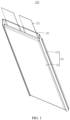
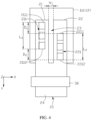
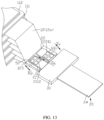
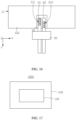
- the electrode terminal 20 includes a first portion 21 and a second portion 22, where the first portion 21 and the second portion 22 are arranged in a first direction X, the first portion 21 is connected to the electrode assembly 10 and has a first connection region 211, and the second portion 22 is connected to the electrode assembly 10 and has a second connection region 221.
- the first connection region 211 is a region part where the first portion 21 is fixed to the electrode assembly 10
- the second connection region 221 is a region part where the second portion 22 is fixed to the electrode assembly 10.
- the first portion 21 is welded to the electrode assembly 10, and a welded region formed between the first portion 21 and the electrode assembly 10 overlaps with the first connection region 211.
- the second portion 22 is welded to the electrode assembly 10, and a welded region formed between the second portion 22 and the electrode assembly 10 overlaps with the second connection region 221.
- the electrode terminal 20 is connected to the positive electrode plate 11 or the negative electrode plate 11.
- the electrode terminal 20 has a positive polarity.
- the electrode terminal 20 has a negative polarity.
- the electrode terminal 20 is a metal sheet, and the electrode terminal 20 is made of any one of copper, aluminum, or nickel.
- the secondary battery 100 further includes a housing 40, where the electrode assembly 10 is accommodated in the housing 40, and a part of the electrode terminal 20 extends out of the housing 40 and leads the polarity of the electrode assembly 10 out of the housing 40.
- the secondary battery 100 is a pouch battery.
- the housing 40 includes a main body portion 41 and a sealing portion 42.
- the main body portion 41 is provided with an electrolyte solution inside, and the electrode assembly 10 is accommodated in the main body portion 41.
- the sealing portion 42 seals the main body portion 41, and the electrode terminal 20 extends out of the housing 40 through the sealing portion 42.
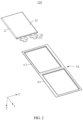
- FIG. 2 is a schematic exploded view of the secondary battery 100 in FIG. 1 . To make the accompanying drawings clear, the electrolyte solution is omitted in FIG. 2 .
- the housing 40 includes a first packaging portion 43 and a second packaging portion 44.
- One side of the first packaging portion 43 is connected to one side of the second packaging portion 44.
- a joint of the first packaging portion 43 and the second packaging portion 44 is folded, such that the first packaging portion 43 and the second packaging portion 44 are connected, and the first packaging portion 43 and the second packaging portion 44 enclose the main body portion 41.
- a part where the first packaging portion 43 and the second packaging portion 44 are connected forms the sealing portion 42.
- the sealing member 30 is connected to the electrode terminal 20, the sealing member 30 is disposed on one side of the electrode assembly 10 in a second direction Y, and the first direction X is perpendicular to the second direction Y
- At least a part of the sealing member 30 is disposed in the sealing portion 42, helping to improve the sealing performance for the electrode assembly 10.
- the sealing member 30 is made of plastic or rubber.
- the first connection region 211 has a first edge 2111 away from the sealing member 30 and a second edge 2112 close to the sealing member 30, and the second connection region 221 has a third edge 2211 away from the sealing member 30 and a fourth edge 2212 close to the sealing member 30.
- a minimum distance between the first edge 2111 and the third edge 2211 is D 1
- a minimum distance between the second edge 2112 and the fourth edge 2212 is D 2
- at least one of D 1 or D 2 is greater than 0.
- the secondary battery 100 faces various challenges during production, transportation, or use, for example, impacts caused by a plurality of rounds of drop of the secondary battery 100 or bending of the electrode terminal 20.
- impacts caused by a plurality of rounds of drop of the secondary battery 100 or bending of the electrode terminal 20 there is a risk of breakage or disconnection of the connection region between the electrode terminal 20 and the electrode assembly 10.
- the current collector 111 is becoming thinner, and the electrode terminal 20 is becoming thicker.
- a reacting force generated during bending of the electrode terminal 20 is likely to cause breakage of the connection region between the electrode terminal 20 and the electrode assembly 10.
- the connection region between the electrode terminal 20 and the electrode assembly 10 is broken or disconnected, continuing to charge and discharge the secondary battery causes a reliability issue such as lithium precipitation.
- the first portion 21 and the second portion 22 are provided, and the edges of the first connection region 211 and the second connection region 221 are staggered, such that the tension regions between the electrode terminal 20 and the electrode assembly 10 are separated, reducing the risk of simultaneous disconnection of the first connection region 211 and the second connection region 221, and increasing the possibility of maintained connection between the electrode terminal 20 and the electrode assembly 10 when the secondary battery 100 faces situations such as impact and bending of the electrode terminal 20, thereby reducing the influence of the above situations on charging, discharging, lithium precipitation, and the like on the secondary battery 100, and improving the reliability of the secondary battery 100.
- first edge 2111, the second edge 2112, the third edge 2211, and the fourth edge 2212 may be straight edges extending along the first direction X.
- first edge 2111, the second edge 2112, the third edge 2211, and the fourth edge 2212 may be curved, zigzag, or wavy edges. This is not specifically limited herein.
- a length of the first connection region 211 is L 1
- a length of the second connection region 221 is L 2
- a length of the first connection region 211 is L 1
- a length of the second connection region 221 is L 2
- a distance by which the first connection region 211 and the second connection region 221 are staggered in the extension direction of the electrode terminal 20 is not greater than the length of any one of the connection regions, such that the first connection region 211 and the second connection region 221 are not entirely staggered, helping to reduce a length occupied by both the two connection regions.
- the above conditions being satisfied helps to increase the lengths of the first connection region 211 and the second connection region 221 so as to improve the stability of the connection between the electrode terminal 20 and the electrode assembly 10, thereby improving the reliability of the secondary battery 100.
- L 2 may be any one of 0.5 mm, 1 mm, 2 mm, 4 mm, 6 mm, 8 mm, 10 mm, 12 mm, 14 mm, 16 mm, 18 mm, 20 mm, 22 mm, 24 mm, 26 mm, 28 mm, or 30 mm.
- the welded region is not too small, helping to enhance the welding strength and helping to improve the stability of the connection between the electrode terminal 20 and the electrode assembly 10; moreover, the welded region is not too large, helping to reduce the risk of a failure in effective welding and reduce the risk of structural strength reduction of the electrode terminal 20, thereby improving the welding effect.
- the plurality of first weld marks 50 are unlikely to be too far apart and the plurality of second weld marks 60 are unlikely to be too far apart such that the first weld marks 50 and the second weld marks 60 are unlikely to crack, thereby improving the stability of the connection between the electrode terminal 20 and the electrode assembly 10; in addition, the first weld marks 50 are unlikely to be too close to each other such that the difficulty in effective welding is avoided, thereby improving the welding effect.
- D 3 and D 4 may be any one of 3 mm, 2.8 mm, 2.5 mm, 2.2 mm, 2 mm, 1.8 mm, 1.5 mm, 1.3 mm, 1 mm, 0.8 mm, or 0.5 mm.
- W 3 and W 4 may be equal or not equal.
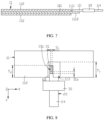
- a distance between the second edge 2112 and the sealing member 30 is less than or equal to a distance between the third edge 2211 and the sealing member 30.
- a minimum distance between a geometric center of a first weld mark 50 closest to the second edge 2112 among the plurality of first weld marks 50 and a geometric center of a second weld mark 60 closest to the third edge 2211 among the plurality of second weld marks 60 is D 5 , and 0.5 mm ⁇ Ds ⁇ 3 mm.
- D 5 may be any one of 3 mm, 2.8 mm, 2.5 mm, 2.2 mm, 2 mm, 1.8 mm, 1.5 mm, 1.3 mm, 1 mm, 0.8 mm, or 0.5 mm.
- a method for testing a failure rate of a drop test of the secondary battery 100 was as follows.
- Example 3 differed from Example 1 in that the minimum distance D 2 between the second edge 2112 and the fourth edge 2212 was 1.5 mm.
- Example 5 differed from Example 1 in that the minimum distance D 2 between the second edge 2112 and the fourth edge 2212 was 1.5 mm, and in the arrangement direction of the first portion 21 and the second portion 22, the minimum width W 1 of the gap 23 was 0.5 mm.
- Example 6 differed from Example 1 in that the minimum distance D 2 between the second edge 2112 and the fourth edge 2212 was 1.5 mm, and in the arrangement direction of the first portion 21 and the second portion 22, the minimum width W 1 of the gap 23 was 2 mm.
- Example 9 differed from Example 1 in that the minimum distance D 2 between the second edge 2112 and the fourth edge 2212 was 1.5 mm, and in the arrangement direction of the first portion 21 and the second portion 22, the minimum width W 1 of the gap 23 was 5 mm.
- Example 10 differed from Example 1 in that the minimum distance D 2 between the second edge 2112 and the fourth edge 2212 was 1.5 mm, and in the arrangement direction of the first portion 21 and the second portion 22, the minimum width W 1 of the gap 23 was 5.5 mm.
- Example 11 differed from Example 1 in that the minimum distance D 2 between the second edge 2112 and the fourth edge 2212 was 1.5 mm, the width S 1 of the first weld mark 50 was 0.3 mm, and in the extension direction of the electrode terminal 20, the length S 2 of the first weld mark 50 was 0.3 mm.
- Example 12 differed from Example 1 in that the minimum distance D 2 between the second edge 2112 and the fourth edge 2212 was 1.5 mm, the width S 1 of the first weld mark 50 was 0.5 mm, and in the extension direction of the electrode terminal 20, the length S 2 of the first weld mark 50 was 0.5 mm.
- Example 13 differed from Example 1 in that the minimum distance D 2 between the second edge 2112 and the fourth edge 2212 was 1.5 mm, the width S 1 of the first weld mark 50 was 2 mm, and in the extension direction of the electrode terminal 20, the length S 2 of the first weld mark 50 was 2 mm.
- Example 14 differed from Example 1 in that the minimum distance D 2 between the second edge 2112 and the fourth edge 2212 was 1.5 mm, the width S 1 of the first weld mark 50 was 4 mm, and in the extension direction of the electrode terminal 20, the length S 2 of the first weld mark 50 was 4 mm.
- Example 15 differed from Example 1 in that the minimum distance D 2 between the second edge 2112 and the fourth edge 2212 was 1.5 mm, the width S 1 of the first weld mark 50 was 6 mm, and in the extension direction of the electrode terminal 20, the length S 2 of the first weld mark 50 was 6 mm.
- Example 16 differed from Example 1 in that the minimum distance D 2 between the second edge 2112 and the fourth edge 2212 was 1.5 mm, the width S 1 of the first weld mark 50 was 8 mm, and in the extension direction of the electrode terminal 20, the length S 2 of the first weld mark 50 was 8 mm.
- Example 18 differed from Example 1 in that the minimum distance D 2 between the second edge 2112 and the fourth edge 2212 was 1.5 mm, and in the extension direction of the electrode terminal 20, the length L 1 of the first connection region 211 was 2 mm, and the length L 2 of the second connection region 221 was 1.5 mm.
- Example 19 differed from Example 1 in that the minimum distance D 2 between the second edge 2112 and the fourth edge 2212 was 1.5 mm, and in the arrangement direction of the first portion 21 and the second portion 22 and in the extension direction of the electrode terminal 20, the length L 1 of the first connection region 211 was 1 mm, and the length L 2 of the second connection region 221 was 0.5 mm.
- the electronic apparatus 1000 further includes an apparatus body 200.
- the secondary battery 100 is installed at the apparatus body 200 and is configured to supply power to the apparatus body 200.
- the electronic apparatus 1000 at least has the beneficial effects brought by the technical solution of any one of the foregoing embodiments of the secondary battery 100, which are not described one by one herein again.
Landscapes
- Chemical & Material Sciences (AREA)
- Chemical Kinetics & Catalysis (AREA)
- Electrochemistry (AREA)
- General Chemical & Material Sciences (AREA)
- Engineering & Computer Science (AREA)
- Manufacturing & Machinery (AREA)
- Materials Engineering (AREA)
- Connection Of Batteries Or Terminals (AREA)
Applications Claiming Priority (1)
| Application Number | Priority Date | Filing Date | Title |
|---|---|---|---|
| CN202311872287.2A CN118099536A (zh) | 2023-12-29 | 2023-12-29 | 二次电池以及电子装置 |
Publications (1)
| Publication Number | Publication Date |
|---|---|
| EP4579892A1 true EP4579892A1 (de) | 2025-07-02 |
Family
ID=91157200
Family Applications (1)
| Application Number | Title | Priority Date | Filing Date |
|---|---|---|---|
| EP24223515.8A Pending EP4579892A1 (de) | 2023-12-29 | 2024-12-27 | Sekundärbatterie und elektronische vorrichtung |
Country Status (3)
| Country | Link |
|---|---|
| US (1) | US20250219265A1 (de) |
| EP (1) | EP4579892A1 (de) |
| CN (1) | CN118099536A (de) |
Families Citing this family (1)
| Publication number | Priority date | Publication date | Assignee | Title |
|---|---|---|---|---|
| CN118801054A (zh) * | 2024-06-29 | 2024-10-18 | 宁德新能源科技有限公司 | 二次电池及电子装置 |
Citations (2)
| Publication number | Priority date | Publication date | Assignee | Title |
|---|---|---|---|---|
| CN115552720A (zh) * | 2020-11-23 | 2022-12-30 | 株式会社Lg新能源 | 电池电芯和包括该电池电芯的电池模块 |
| JP2023143964A (ja) * | 2021-08-06 | 2023-10-06 | 大日本印刷株式会社 | 蓄電デバイス、及び、蓄電デバイスの製造方法 |
-
2023
- 2023-12-29 CN CN202311872287.2A patent/CN118099536A/zh active Pending
-
2024
- 2024-12-27 US US19/003,131 patent/US20250219265A1/en active Pending
- 2024-12-27 EP EP24223515.8A patent/EP4579892A1/de active Pending
Patent Citations (2)
| Publication number | Priority date | Publication date | Assignee | Title |
|---|---|---|---|---|
| CN115552720A (zh) * | 2020-11-23 | 2022-12-30 | 株式会社Lg新能源 | 电池电芯和包括该电池电芯的电池模块 |
| JP2023143964A (ja) * | 2021-08-06 | 2023-10-06 | 大日本印刷株式会社 | 蓄電デバイス、及び、蓄電デバイスの製造方法 |
Also Published As
| Publication number | Publication date |
|---|---|
| US20250219265A1 (en) | 2025-07-03 |
| CN118099536A (zh) | 2024-05-28 |
Similar Documents
| Publication | Publication Date | Title |
|---|---|---|
| US11108108B2 (en) | Method of forming a package | |
| US20240213635A1 (en) | Electrochemical apparatus and electronic apparatus | |
| US20220223948A1 (en) | Electrochemical apparatus and electronic apparatus | |
| EP4550441A1 (de) | Elektrochemische vorrichtung und herstellungsverfahren dafür sowie elektronische vorrichtung | |
| CN114156607A (zh) | 一种电化学装置及电子装置 | |
| KR20110096492A (ko) | 비수 전해질 2차 전지 및 그 제조 방법 | |
| CN111933999A (zh) | 一种固态电池、电池模组、电池包及其相关的装置 | |
| EP4550440A1 (de) | Elektrochemische vorrichtung und herstellungsverfahren dafür sowie elektronische vorrichtung | |
| CN115347291B (zh) | 电化学装置和电子装置 | |
| CN115843399B (zh) | 电化学装置和电子装置 | |
| JP7818581B2 (ja) | 電気化学装置及び電子装置 | |
| EP4535498A1 (de) | Elektrochemische vorrichtung und elektronische vorrichtung | |
| EP4020648A1 (de) | Elektrochemische vorrichtung und elektronische vorrichtung damit | |
| EP4579892A1 (de) | Sekundärbatterie und elektronische vorrichtung | |
| CN107275669A (zh) | 锂二次电池 | |
| JP2004127541A (ja) | 電池用電極群およびそれを用いた非水電解液二次電池 | |
| CN111146505A (zh) | 非水电解液二次电池 | |
| EP4503321A1 (de) | Elektrodenfolie und batterie | |
| WO2022266894A1 (zh) | 电化学装置及电子装置 | |
| EP4704243A2 (de) | Sekundärbatterie und elektronische vorrichtung | |
| CN116742293A (zh) | 电化学装置及电子装置 | |
| CN2598160Y (zh) | 方型锂离子二次电池 | |
| JP7521436B2 (ja) | 蓄電装置 | |
| EP4661116A2 (de) | Elektrodenfolie und elektrochemische vorrichtung damit sowie elektronische vorrichtung | |
| CN1269251C (zh) | 非水电解液锂二次电池 |
Legal Events
| Date | Code | Title | Description |
|---|---|---|---|
| PUAI | Public reference made under article 153(3) epc to a published international application that has entered the european phase |
Free format text: ORIGINAL CODE: 0009012 |
|
| STAA | Information on the status of an ep patent application or granted ep patent |
Free format text: STATUS: REQUEST FOR EXAMINATION WAS MADE |
|
| 17P | Request for examination filed |
Effective date: 20241227 |
|
| AK | Designated contracting states |
Kind code of ref document: A1 Designated state(s): AL AT BE BG CH CY CZ DE DK EE ES FI FR GB GR HR HU IE IS IT LI LT LU LV MC ME MK MT NL NO PL PT RO RS SE SI SK SM TR |
|
| GRAP | Despatch of communication of intention to grant a patent |
Free format text: ORIGINAL CODE: EPIDOSNIGR1 |
|
| STAA | Information on the status of an ep patent application or granted ep patent |
Free format text: STATUS: GRANT OF PATENT IS INTENDED |
|
| RIC1 | Information provided on ipc code assigned before grant |
Ipc: H01M 50/105 20210101AFI20251202BHEP Ipc: H01M 50/178 20210101ALI20251202BHEP Ipc: H01M 50/186 20210101ALI20251202BHEP Ipc: H01M 50/553 20210101ALI20251202BHEP Ipc: H01M 50/566 20210101ALI20251202BHEP |
|
| INTG | Intention to grant announced |
Effective date: 20251211 |
|
| GRAS | Grant fee paid |
Free format text: ORIGINAL CODE: EPIDOSNIGR3 |
|
| GRAA | (expected) grant |
Free format text: ORIGINAL CODE: 0009210 |
|
| STAA | Information on the status of an ep patent application or granted ep patent |
Free format text: STATUS: THE PATENT HAS BEEN GRANTED |