EP4550441A1 - Elektrochemische vorrichtung und herstellungsverfahren dafür sowie elektronische vorrichtung - Google Patents
Elektrochemische vorrichtung und herstellungsverfahren dafür sowie elektronische vorrichtung Download PDFInfo
- Publication number
- EP4550441A1 EP4550441A1 EP23830518.9A EP23830518A EP4550441A1 EP 4550441 A1 EP4550441 A1 EP 4550441A1 EP 23830518 A EP23830518 A EP 23830518A EP 4550441 A1 EP4550441 A1 EP 4550441A1
- Authority
- EP
- European Patent Office
- Prior art keywords
- electrode plate
- negative
- active material
- negative electrode
- lithium
- Prior art date
- Legal status (The legal status is an assumption and is not a legal conclusion. Google has not performed a legal analysis and makes no representation as to the accuracy of the status listed.)
- Pending
Links
Images



Classifications
-
- H—ELECTRICITY
- H01—ELECTRIC ELEMENTS
- H01M—PROCESSES OR MEANS, e.g. BATTERIES, FOR THE DIRECT CONVERSION OF CHEMICAL ENERGY INTO ELECTRICAL ENERGY
- H01M10/00—Secondary cells; Manufacture thereof
- H01M10/04—Construction or manufacture in general
- H01M10/0431—Cells with wound or folded electrodes
-
- H—ELECTRICITY
- H01—ELECTRIC ELEMENTS
- H01M—PROCESSES OR MEANS, e.g. BATTERIES, FOR THE DIRECT CONVERSION OF CHEMICAL ENERGY INTO ELECTRICAL ENERGY
- H01M10/00—Secondary cells; Manufacture thereof
- H01M10/05—Accumulators with non-aqueous electrolyte
- H01M10/052—Li-accumulators
- H01M10/0525—Rocking-chair batteries, i.e. batteries with lithium insertion or intercalation in both electrodes; Lithium-ion batteries
-
- H—ELECTRICITY
- H01—ELECTRIC ELEMENTS
- H01M—PROCESSES OR MEANS, e.g. BATTERIES, FOR THE DIRECT CONVERSION OF CHEMICAL ENERGY INTO ELECTRICAL ENERGY
- H01M10/00—Secondary cells; Manufacture thereof
- H01M10/05—Accumulators with non-aqueous electrolyte
- H01M10/058—Construction or manufacture
- H01M10/0583—Construction or manufacture of accumulators with folded construction elements except wound ones, i.e. folded positive or negative electrodes or separators, e.g. with "Z"-shaped electrodes or separators
-
- H—ELECTRICITY
- H01—ELECTRIC ELEMENTS
- H01M—PROCESSES OR MEANS, e.g. BATTERIES, FOR THE DIRECT CONVERSION OF CHEMICAL ENERGY INTO ELECTRICAL ENERGY
- H01M10/00—Secondary cells; Manufacture thereof
- H01M10/05—Accumulators with non-aqueous electrolyte
- H01M10/058—Construction or manufacture
- H01M10/0587—Construction or manufacture of accumulators having only wound construction elements, i.e. wound positive electrodes, wound negative electrodes and wound separators
-
- H—ELECTRICITY
- H01—ELECTRIC ELEMENTS
- H01M—PROCESSES OR MEANS, e.g. BATTERIES, FOR THE DIRECT CONVERSION OF CHEMICAL ENERGY INTO ELECTRICAL ENERGY
- H01M4/00—Electrodes
- H01M4/02—Electrodes composed of, or comprising, active material
- H01M4/04—Processes of manufacture in general
- H01M4/0438—Processes of manufacture in general by electrochemical processing
- H01M4/044—Activating, forming or electrochemical attack of the supporting material
- H01M4/0445—Forming after manufacture of the electrode, e.g. first charge, cycling
-
- H—ELECTRICITY
- H01—ELECTRIC ELEMENTS
- H01M—PROCESSES OR MEANS, e.g. BATTERIES, FOR THE DIRECT CONVERSION OF CHEMICAL ENERGY INTO ELECTRICAL ENERGY
- H01M4/00—Electrodes
- H01M4/02—Electrodes composed of, or comprising, active material
- H01M4/13—Electrodes for accumulators with non-aqueous electrolyte, e.g. for lithium-accumulators; Processes of manufacture thereof
-
- H—ELECTRICITY
- H01—ELECTRIC ELEMENTS
- H01M—PROCESSES OR MEANS, e.g. BATTERIES, FOR THE DIRECT CONVERSION OF CHEMICAL ENERGY INTO ELECTRICAL ENERGY
- H01M4/00—Electrodes
- H01M4/02—Electrodes composed of, or comprising, active material
- H01M4/13—Electrodes for accumulators with non-aqueous electrolyte, e.g. for lithium-accumulators; Processes of manufacture thereof
- H01M4/131—Electrodes based on mixed oxides or hydroxides, or on mixtures of oxides or hydroxides, e.g. LiCoOx
-
- H—ELECTRICITY
- H01—ELECTRIC ELEMENTS
- H01M—PROCESSES OR MEANS, e.g. BATTERIES, FOR THE DIRECT CONVERSION OF CHEMICAL ENERGY INTO ELECTRICAL ENERGY
- H01M4/00—Electrodes
- H01M4/02—Electrodes composed of, or comprising, active material
- H01M4/13—Electrodes for accumulators with non-aqueous electrolyte, e.g. for lithium-accumulators; Processes of manufacture thereof
- H01M4/133—Electrodes based on carbonaceous material, e.g. graphite-intercalation compounds or CFx
-
- H—ELECTRICITY
- H01—ELECTRIC ELEMENTS
- H01M—PROCESSES OR MEANS, e.g. BATTERIES, FOR THE DIRECT CONVERSION OF CHEMICAL ENERGY INTO ELECTRICAL ENERGY
- H01M4/00—Electrodes
- H01M4/02—Electrodes composed of, or comprising, active material
- H01M4/13—Electrodes for accumulators with non-aqueous electrolyte, e.g. for lithium-accumulators; Processes of manufacture thereof
- H01M4/134—Electrodes based on metals, Si or alloys
-
- H—ELECTRICITY
- H01—ELECTRIC ELEMENTS
- H01M—PROCESSES OR MEANS, e.g. BATTERIES, FOR THE DIRECT CONVERSION OF CHEMICAL ENERGY INTO ELECTRICAL ENERGY
- H01M4/00—Electrodes
- H01M4/02—Electrodes composed of, or comprising, active material
- H01M4/13—Electrodes for accumulators with non-aqueous electrolyte, e.g. for lithium-accumulators; Processes of manufacture thereof
- H01M4/139—Processes of manufacture
- H01M4/1391—Processes of manufacture of electrodes based on mixed oxides or hydroxides, or on mixtures of oxides or hydroxides, e.g. LiCoOx
-
- H—ELECTRICITY
- H01—ELECTRIC ELEMENTS
- H01M—PROCESSES OR MEANS, e.g. BATTERIES, FOR THE DIRECT CONVERSION OF CHEMICAL ENERGY INTO ELECTRICAL ENERGY
- H01M4/00—Electrodes
- H01M4/02—Electrodes composed of, or comprising, active material
- H01M4/13—Electrodes for accumulators with non-aqueous electrolyte, e.g. for lithium-accumulators; Processes of manufacture thereof
- H01M4/139—Processes of manufacture
- H01M4/1393—Processes of manufacture of electrodes based on carbonaceous material, e.g. graphite-intercalation compounds or CFx
-
- H—ELECTRICITY
- H01—ELECTRIC ELEMENTS
- H01M—PROCESSES OR MEANS, e.g. BATTERIES, FOR THE DIRECT CONVERSION OF CHEMICAL ENERGY INTO ELECTRICAL ENERGY
- H01M4/00—Electrodes
- H01M4/02—Electrodes composed of, or comprising, active material
- H01M4/36—Selection of substances as active materials, active masses, active liquids
- H01M4/362—Composites
- H01M4/364—Composites as mixtures
-
- H—ELECTRICITY
- H01—ELECTRIC ELEMENTS
- H01M—PROCESSES OR MEANS, e.g. BATTERIES, FOR THE DIRECT CONVERSION OF CHEMICAL ENERGY INTO ELECTRICAL ENERGY
- H01M4/00—Electrodes
- H01M4/02—Electrodes composed of, or comprising, active material
- H01M4/36—Selection of substances as active materials, active masses, active liquids
- H01M4/38—Selection of substances as active materials, active masses, active liquids of elements or alloys
- H01M4/386—Silicon or alloys based on silicon
-
- H—ELECTRICITY
- H01—ELECTRIC ELEMENTS
- H01M—PROCESSES OR MEANS, e.g. BATTERIES, FOR THE DIRECT CONVERSION OF CHEMICAL ENERGY INTO ELECTRICAL ENERGY
- H01M4/00—Electrodes
- H01M4/02—Electrodes composed of, or comprising, active material
- H01M4/36—Selection of substances as active materials, active masses, active liquids
- H01M4/48—Selection of substances as active materials, active masses, active liquids of inorganic oxides or hydroxides
- H01M4/483—Selection of substances as active materials, active masses, active liquids of inorganic oxides or hydroxides for non-aqueous cells
-
- H—ELECTRICITY
- H01—ELECTRIC ELEMENTS
- H01M—PROCESSES OR MEANS, e.g. BATTERIES, FOR THE DIRECT CONVERSION OF CHEMICAL ENERGY INTO ELECTRICAL ENERGY
- H01M4/00—Electrodes
- H01M4/02—Electrodes composed of, or comprising, active material
- H01M4/62—Selection of inactive substances as ingredients for active masses, e.g. binders, fillers
-
- H—ELECTRICITY
- H01—ELECTRIC ELEMENTS
- H01M—PROCESSES OR MEANS, e.g. BATTERIES, FOR THE DIRECT CONVERSION OF CHEMICAL ENERGY INTO ELECTRICAL ENERGY
- H01M4/00—Electrodes
- H01M4/02—Electrodes composed of, or comprising, active material
- H01M2004/021—Physical characteristics, e.g. porosity, surface area
-
- H—ELECTRICITY
- H01—ELECTRIC ELEMENTS
- H01M—PROCESSES OR MEANS, e.g. BATTERIES, FOR THE DIRECT CONVERSION OF CHEMICAL ENERGY INTO ELECTRICAL ENERGY
- H01M4/00—Electrodes
- H01M4/02—Electrodes composed of, or comprising, active material
- H01M2004/026—Electrodes composed of, or comprising, active material characterised by the polarity
- H01M2004/027—Negative electrodes
-
- Y—GENERAL TAGGING OF NEW TECHNOLOGICAL DEVELOPMENTS; GENERAL TAGGING OF CROSS-SECTIONAL TECHNOLOGIES SPANNING OVER SEVERAL SECTIONS OF THE IPC; TECHNICAL SUBJECTS COVERED BY FORMER USPC CROSS-REFERENCE ART COLLECTIONS [XRACs] AND DIGESTS
- Y02—TECHNOLOGIES OR APPLICATIONS FOR MITIGATION OR ADAPTATION AGAINST CLIMATE CHANGE
- Y02E—REDUCTION OF GREENHOUSE GAS [GHG] EMISSIONS, RELATED TO ENERGY GENERATION, TRANSMISSION OR DISTRIBUTION
- Y02E60/00—Enabling technologies; Technologies with a potential or indirect contribution to GHG emissions mitigation
- Y02E60/10—Energy storage using batteries
-
- Y—GENERAL TAGGING OF NEW TECHNOLOGICAL DEVELOPMENTS; GENERAL TAGGING OF CROSS-SECTIONAL TECHNOLOGIES SPANNING OVER SEVERAL SECTIONS OF THE IPC; TECHNICAL SUBJECTS COVERED BY FORMER USPC CROSS-REFERENCE ART COLLECTIONS [XRACs] AND DIGESTS
- Y02—TECHNOLOGIES OR APPLICATIONS FOR MITIGATION OR ADAPTATION AGAINST CLIMATE CHANGE
- Y02P—CLIMATE CHANGE MITIGATION TECHNOLOGIES IN THE PRODUCTION OR PROCESSING OF GOODS
- Y02P70/00—Climate change mitigation technologies in the production process for final industrial or consumer products
- Y02P70/50—Manufacturing or production processes characterised by the final manufactured product
Definitions
- This application relates to the field of electrochemical technology, and in particular, to an electrochemical device, a method for preparing same, and an electronic device.
- Lithium-ion batteries are widely used in the field of consumer electronics by virtue of characteristics such as a high specific energy, a high working voltage, a low self-discharge rate, a small size, and a light weight. With rapid development of portable electronic devices, people are imposing higher requirements on the energy density, cycle performance, and the like of the lithium-ion batteries.
- the energy density of a lithium-ion battery can be further increased by supplementing a negative electrode plate with lithium.
- the negative electrode plate supplemented with lithium may be prone to lithium plating, thereby being adverse to improving safety of the lithium-ion battery.
- a first aspect of this application provides an electrochemical device.
- the electrochemical device includes an electrode assembly.
- the electrode assembly includes a positive electrode plate and a negative electrode plate.
- the positive electrode plate includes a positive current collector and a first positive active material layer disposed on a surface of the positive current collector.
- the negative electrode plate includes a negative current collector and a first negative active material layer disposed on a surface of the negative current collector.
- the first negative active material layer includes a prelithiation region and a non-prelithiation region.
- the negative electrode plate includes a first groove that runs through the first negative active material layer and exposes the surface of the negative current collector.
- the non-prelithiation region includes a first edge and a second edge. The first edge is disposed along a first direction, and the second edge is disposed along a second direction and connected to the first edge.
- the first direction is a length direction of the negative electrode plate, and the second direction is a width direction of the negative electrode plate.
- a distance between the first edge and an adjacent edge of the first groove is A 1 mm.
- a dimension of the first groove in the second direction is B 1 mm.
- the positive electrode plate further includes a first insulation layer affixed onto the first positive active material layer facing the first groove.
- the non-prelithiation region is located inside an orthographic projection of the first insulation layer on the negative electrode plate.
- a dimension of the first insulation layer in the second direction is C 1 mm, satisfying: 0.5 ⁇ A 1 ⁇ C 1 - B 1 + 1.
- This application reduces the risk of lithium plating on the negative electrode plate by creating a non-prelithiation region on the first negative active material layer around the first groove on the negative electrode plate. More lithium ions from the positive electrode can be intercalated in the non-prelithiation region than in the prelithiation region.
- the positive electrode plate further includes a first insulation layer affixed onto the first positive active material layer facing the first groove. During the cycling of the electrochemical device, the bonding force of the first insulation layer may be weakened by the expansion and contraction of the first positive active material layer and/or by an electrolyte solution.
- a second aspect of this application provides an electronic device.
- the electronic device includes the electrochemical device according to the first aspect of this application. Due to the good safety performance of the electrochemical device according to this application, the electronic device according to this application possesses good safety performance.
- this application is construed by using a lithium-ion battery as an example of the electrochemical device, but the electrochemical device according to this application is not limited to the lithium-ion battery.
- a first aspect of this application provides an electrochemical device.
- the electrochemical device includes an electrode assembly 10.
- the electrode assembly 10 includes a positive electrode plate 11 and a negative electrode plate 12.
- FIG. 2 is a schematic structural diagram of a positive electrode plate according to an embodiment of this application;
- FIG. 3 is a schematic structural diagram of a negative electrode plate according to an embodiment of this application;
- FIG. 4 is a cross-sectional view of a positive electrode plate sectioned along a thickness direction of the positive electrode plate according to an embodiment of this application;
- FIG. 5 is a cross-sectional view of a negative electrode plate sectioned along an A-A line shown in FIG. 3 in a thickness direction of the negative electrode plate according to an embodiment of this application.
- the positive electrode plate 11 includes a positive current collector 111 and a first positive active material layer 112 disposed on a surface of the positive current collector 111.
- the negative electrode plate 12 includes a negative current collector 122 and a first negative active material layer 121 disposed on a surface of the negative current collector 122.
- the first negative active material layer 121 includes a prelithiation region 123 and a non-prelithiation region 124.
- the non-prelithiation region 124 is a region that does not overlap the prelithiation region 123 in the first negative active material layer 121.
- the negative electrode plate 12 includes a first groove 13 that runs through the first negative active material layer 121 and exposes the surface of the negative current collector 122.
- a thickness direction perpendicular to the negative electrode plate 12 is defined as a z-direction, and two directions perpendicular to the z-direction are defined as a first direction (x-direction) and a second direction (y-direction).
- the first direction (x-direction) is perpendicular to the second direction (y-direction).
- the non-prelithiation region 124 includes a first edge 1241 and a second edge 1242. The first edge is disposed along a first direction (x-direction), and the second edge is disposed along a second direction (y-direction) and connected to the first edge 1241.
- the first direction (x-direction) is a length direction of the negative electrode plate 12, and the second direction (y-direction) is a width direction of the negative electrode plate 12.
- a distance between the first edge 1241 and an adjacent edge 131 of the first groove 13 is A 1 mm. That is, the distance between the first edge 1241 and an edge of the first groove 13, the edge extending along the first direction (x-direction) and closest to the first edge 1241, is A 1 mm.
- a dimension of the first groove 13 in the second direction (y-direction) is B 1 mm.
- the positive electrode plate 11 further includes a first insulation layer 14 affixed onto the first positive active material layer 112 facing the first groove 13.
- the non-prelithiation region 124 is located inside an orthographic projection of the first insulation layer 14 on the negative electrode plate 12.
- a dimension of the first insulation layer 14 in the second direction (y-direction) is C 1 mm, satisfying: 0.5 ⁇ A 1 ⁇ C 1 - B 1 + 1.
- the positive electrode plate 11 further includes a first insulation layer 14 affixed onto the first positive active material layer 112 facing the first groove 13. During the cycling of the electrochemical device, the bonding force of the first insulation layer 14 may be weakened by the expansion and contraction of the first positive active material layer 112 and/or by an electrolyte solution.
- Lithium ions in the first positive active material layer 112 covered by the first insulation layer 14 are migrated out and intercalated into the corresponding negative electrode plate 12. Due to the non-prelithiation region 124 created around the first groove 13 on the negative electrode plate 12, a local capacity of the region is relatively high and can accommodate the lithium ions escaping from the region covered by the first insulation layer 14. In this way, the risk of lithium plating around the first groove 13 of the negative electrode plate 12 is reduced on the basis of increasing the overall capacity of the electrochemical device by supplementing lithium, and the safety of the electrochemical device is improved.
- the positive electrode plate 11 includes a positive current collector 111 and a first positive active material layer 112 disposed on one surface of the positive current collector 111.
- the negative electrode plate 12 includes a negative current collector 122 and a first negative active material layer 121 disposed on one surface of the negative current collector 122, thereby also achieving the objectives of this application.
- a distance between the second edge 1242 and an adjacent edge 132 of the first groove 13 is A 2 mm. That is, the distance between the second edge 1242 and an edge of the first groove 13, the edge extending along the second direction (y-direction) and closest to the second edge 1242, is A 2 mm.
- a dimension of the first groove 13 in the first direction (x-direction) is B 2 mm, and a dimension of the first insulation layer 14 in the first direction (x-direction) is C 2 mm, satisfying: 0.5 ⁇ A 2 ⁇ 0.5 ⁇ (C 2 - B 2 ) + 1.
- this application can reduce the risk of lithium plating on the negative electrode plate 12, improve the safety of the electrochemical device, and achieve an electrochemical device of a relatively high capacity.
- B 1 may be 18, 19, 20, 21, 22, or a value falling within a range formed by any two thereof.
- B 2 may be 9, 10, 11, 12, 13, or a value falling within a range formed by any two thereof.
- C 1 may be 25, 26, 27, 28, 29, or a value falling within a range formed by any two thereof.
- C 2 may be 23, 24, 25, 26, 27, or a value falling within a range formed by any two thereof.
- this application can reduce the risk of lithium plating on the negative electrode plate 12, and improve the safety and the cycle capacity retention rate of the electrochemical device.
- the prelithiation region 123 includes a stripe portion.
- a width of the stripe portion is 0.1 mm to 2 mm; and/or, in the thickness direction, a thickness of the stripe portion is 0.04 ⁇ m to 0.5 ⁇ m.
- the negative electrode plate 12 with the above features can improve the first-cycle Coulombic efficiency of the negative electrode plate 12, and improve the energy density of the electrochemical device and the manufacturing efficiency of the prelithiation region.
- the width of the stripe portion in the first direction, is 0.1 mm to 2 mm; and, in the thickness direction, the thickness of the stripe portion is 0.04 ⁇ m to 0.5 ⁇ m. In an embodiment, in the first direction, the width of the stripe portion is 0.1 mm to 2 mm. In an embodiment, in the thickness direction, the thickness of the stripe portion is 0.04 ⁇ m to 0.5 ⁇ m.
- the stripe portion means a lithium strip containing spaced stripes and formed during calendering of lithium metal when lithium is supplemented by using metallic lithium foil.
- the lithium strip containing spaced stripes can be maintained. Therefore, the stripe portion can be observed from the thickness direction (z-direction) of the negative electrode plate 12.
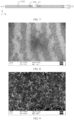
- the prelithiation region 123 on the negative electrode plate 12 includes a stripe portion, as shown in a SEM image in FIG. 8 , while the non-prelithiation region 124 around the first groove 13 includes no stripe region, as shown in a SEM image in FIG. 9 .
- the material of the prelithiation region 123 includes at least one of lithium carbonate, lithium oxide, lithium nitride, or lithium fluoride.
- the metallic lithium reacts with the air (such as oxygen and a trace amount of moisture) and reacts with a fluorine-containing substance in the electrolyte solution in a chemical formation process of the electrochemical device to form a layer of lithium-containing compound on the surface of the first negative active material layer 121.
- Main components of the lithium-containing compound include at least one of lithium carbonate, lithium nitride, lithium fluoride, or lithium oxide.
Landscapes
- Chemical & Material Sciences (AREA)
- Chemical Kinetics & Catalysis (AREA)
- Electrochemistry (AREA)
- General Chemical & Material Sciences (AREA)
- Engineering & Computer Science (AREA)
- Materials Engineering (AREA)
- Manufacturing & Machinery (AREA)
- Composite Materials (AREA)
- Inorganic Chemistry (AREA)
- Secondary Cells (AREA)
- Battery Electrode And Active Subsutance (AREA)
- Electric Double-Layer Capacitors Or The Like (AREA)
- Connection Of Batteries Or Terminals (AREA)
Applications Claiming Priority (2)
| Application Number | Priority Date | Filing Date | Title |
|---|---|---|---|
| CN202210763419.7A CN114843440B (zh) | 2022-07-01 | 2022-07-01 | 电化学装置及其制备方法和电子装置 |
| PCT/CN2023/104950 WO2024002355A1 (zh) | 2022-07-01 | 2023-06-30 | 电化学装置及其制备方法和电子装置 |
Publications (2)
| Publication Number | Publication Date |
|---|---|
| EP4550441A1 true EP4550441A1 (de) | 2025-05-07 |
| EP4550441A4 EP4550441A4 (de) | 2025-08-13 |
Family
ID=82574183
Family Applications (1)
| Application Number | Title | Priority Date | Filing Date |
|---|---|---|---|
| EP23830518.9A Pending EP4550441A4 (de) | 2022-07-01 | 2023-06-30 | Elektrochemische vorrichtung und herstellungsverfahren dafür sowie elektronische vorrichtung |
Country Status (5)
| Country | Link |
|---|---|
| US (1) | US20240243247A1 (de) |
| EP (1) | EP4550441A4 (de) |
| JP (1) | JP2025520824A (de) |
| CN (1) | CN114843440B (de) |
| WO (1) | WO2024002355A1 (de) |
Families Citing this family (7)
| Publication number | Priority date | Publication date | Assignee | Title |
|---|---|---|---|---|
| CN114843440B (zh) * | 2022-07-01 | 2022-10-18 | 宁德新能源科技有限公司 | 电化学装置及其制备方法和电子装置 |
| CN119325653A (zh) * | 2022-11-09 | 2025-01-17 | 宁德时代新能源科技股份有限公司 | 负极片组件和存储补锂负极片的方法 |
| CN116230943B (zh) * | 2023-03-30 | 2026-02-24 | 厦门新能安科技有限公司 | 电芯及包含其的用电设备 |
| CN116565292B (zh) * | 2023-07-06 | 2023-10-13 | 宁德新能源科技有限公司 | 一种电化学装置及电子装置 |
| CN117154013A (zh) * | 2023-10-18 | 2023-12-01 | 珠海冠宇电池股份有限公司 | 一种负极片、电极组件以及电池 |
| WO2026065471A1 (zh) * | 2024-09-30 | 2026-04-02 | 宁德新能源科技有限公司 | 二次电池及电子设备 |
| CN119381511A (zh) * | 2024-10-09 | 2025-01-28 | 宁德新能源科技有限公司 | 二次电池及电子设备 |
Family Cites Families (12)
| Publication number | Priority date | Publication date | Assignee | Title |
|---|---|---|---|---|
| JP4878963B2 (ja) * | 2006-08-29 | 2012-02-15 | Fdk株式会社 | 蓄電素子およびその製造方法 |
| CN108847474B (zh) * | 2018-06-26 | 2021-06-08 | 桑顿新能源科技有限公司 | 一种预补锂的微织构化负极片及其制备方法 |
| CN110896140B (zh) * | 2018-09-13 | 2021-01-15 | 宁德时代新能源科技股份有限公司 | 富锂负极片、电芯及锂离子电池 |
| CN109449375A (zh) * | 2018-10-22 | 2019-03-08 | 东莞塔菲尔新能源科技有限公司 | 一种补锂负极极片及其制备方法 |
| CN109786662A (zh) * | 2019-01-18 | 2019-05-21 | 湖北锂诺新能源科技有限公司 | 一种锂离子电池负极补锂极片及其制备方法 |
| CN112331928A (zh) * | 2019-08-05 | 2021-02-05 | 宁德时代新能源科技股份有限公司 | 一种负极补锂极片及锂离子电池 |
| CN112397682B (zh) * | 2019-08-13 | 2022-07-15 | 宁德时代新能源科技股份有限公司 | 一种补锂的负极极片及其锂离子电池 |
| US20230058850A1 (en) * | 2020-03-04 | 2023-02-23 | Ningde Amperex Technology Limited | Electrochemical device and electronic device comprising same |
| EP4131543A4 (de) * | 2020-03-31 | 2023-11-29 | Ningde Amperex Technology Ltd. | Elektrochemische vorrichtung und elektronische vorrichtung |
| CN111554982B (zh) * | 2020-05-11 | 2021-09-07 | 珠海冠宇电池股份有限公司 | 卷绕电芯及其制备方法、电池以及电子产品 |
| CN112993213A (zh) * | 2021-03-11 | 2021-06-18 | 湖南立方新能源科技有限责任公司 | 一种负极预锂化补锂容量的计算方法及其应用 |
| CN114843440B (zh) * | 2022-07-01 | 2022-10-18 | 宁德新能源科技有限公司 | 电化学装置及其制备方法和电子装置 |
-
2022
- 2022-07-01 CN CN202210763419.7A patent/CN114843440B/zh active Active
-
2023
- 2023-06-30 EP EP23830518.9A patent/EP4550441A4/de active Pending
- 2023-06-30 JP JP2024576685A patent/JP2025520824A/ja active Pending
- 2023-06-30 WO PCT/CN2023/104950 patent/WO2024002355A1/zh not_active Ceased
-
2024
- 2024-03-29 US US18/622,206 patent/US20240243247A1/en active Pending
Also Published As
| Publication number | Publication date |
|---|---|
| CN114843440A (zh) | 2022-08-02 |
| US20240243247A1 (en) | 2024-07-18 |
| CN114843440B (zh) | 2022-10-18 |
| WO2024002355A1 (zh) | 2024-01-04 |
| EP4550441A4 (de) | 2025-08-13 |
| JP2025520824A (ja) | 2025-07-03 |
Similar Documents
| Publication | Publication Date | Title |
|---|---|---|
| EP4550441A1 (de) | Elektrochemische vorrichtung und herstellungsverfahren dafür sowie elektronische vorrichtung | |
| CN113097441B (zh) | 电化学装置及电子装置 | |
| US12388073B2 (en) | Electrochemical device and electronic device | |
| EP3886218A1 (de) | Negative elektrodenplatte, elektrochemische vorrichtung und elektronische vorrichtung | |
| CN114430018B (zh) | 一种电化学装置及包含该电化学装置的电子装置 | |
| EP4550440A1 (de) | Elektrochemische vorrichtung und herstellungsverfahren dafür sowie elektronische vorrichtung | |
| CN112002868A (zh) | 一种电化学装置及电子装置 | |
| EP4489109A1 (de) | Elektrochemische vorrichtung und elektronische vorrichtung damit | |
| US20230246272A1 (en) | Electrochemical apparatus and electronic apparatus | |
| US20250192238A1 (en) | Electrochemical apparatus and electronic apparatus | |
| CN117413379B (zh) | 正极极片、电化学装置和电子装置 | |
| WO2024082291A1 (zh) | 锂离子电池和用电装置 | |
| EP4485581A1 (de) | Sekundärbatterie und elektronische vorrichtung | |
| US20220223915A1 (en) | Electrolyte, electrochemical device including same, and electronic device | |
| CN116325266A (zh) | 一种电化学装置和电子装置 | |
| CN113707975A (zh) | 一种电化学装置及包含该电化学装置的电子装置 | |
| EP4084127B1 (de) | Elektrochemische vorrichtung und elektronische ausrüstung | |
| US20260031397A1 (en) | Electrochemical apparatus and electronic apparatus | |
| EP4447144A1 (de) | Elektrochemische vorrichtung und elektronische vorrichtung damit | |
| JP5296971B2 (ja) | 二次電池用負極の製造方法 | |
| US20250329751A1 (en) | Electrochemical device and electronic device | |
| EP4318637A1 (de) | Sekundärbatterie und herstellungsverfahren dafür, batteriemodul, batteriepack und elektrische vorrichtung | |
| WO2026044769A1 (zh) | 二次电池及用电设备 | |
| WO2026065478A1 (zh) | 二次电池及电子装置 | |
| WO2023164914A1 (zh) | 电化学装置及电子装置 |
Legal Events
| Date | Code | Title | Description |
|---|---|---|---|
| STAA | Information on the status of an ep patent application or granted ep patent |
Free format text: STATUS: THE INTERNATIONAL PUBLICATION HAS BEEN MADE |
|
| PUAI | Public reference made under article 153(3) epc to a published international application that has entered the european phase |
Free format text: ORIGINAL CODE: 0009012 |
|
| STAA | Information on the status of an ep patent application or granted ep patent |
Free format text: STATUS: REQUEST FOR EXAMINATION WAS MADE |
|
| 17P | Request for examination filed |
Effective date: 20250131 |
|
| AK | Designated contracting states |
Kind code of ref document: A1 Designated state(s): AL AT BE BG CH CY CZ DE DK EE ES FI FR GB GR HR HU IE IS IT LI LT LU LV MC ME MK MT NL NO PL PT RO RS SE SI SK SM TR |
|
| A4 | Supplementary search report drawn up and despatched |
Effective date: 20250715 |
|
| RIC1 | Information provided on ipc code assigned before grant |
Ipc: H01M 4/13 20100101AFI20250709BHEP Ipc: H01M 4/62 20060101ALI20250709BHEP Ipc: H01M 10/0525 20100101ALI20250709BHEP Ipc: H01M 10/0583 20100101ALI20250709BHEP Ipc: H01M 4/04 20060101ALI20250709BHEP Ipc: H01M 4/131 20100101ALI20250709BHEP Ipc: H01M 4/133 20100101ALI20250709BHEP Ipc: H01M 4/1391 20100101ALI20250709BHEP Ipc: H01M 4/1393 20100101ALI20250709BHEP Ipc: H01M 4/36 20060101ALI20250709BHEP Ipc: H01M 4/48 20100101ALI20250709BHEP Ipc: H01M 10/04 20060101ALI20250709BHEP Ipc: H01M 4/134 20100101ALI20250709BHEP Ipc: H01M 4/38 20060101ALI20250709BHEP Ipc: H01M 10/0587 20100101ALI20250709BHEP Ipc: H01M 10/02 20060101ALI20250709BHEP Ipc: H01M 4/02 20060101ALI20250709BHEP |
|
| DAV | Request for validation of the european patent (deleted) | ||
| DAX | Request for extension of the european patent (deleted) |