EP4579239A1 - Chemilumineszente substratlösung und chemilumineszenzdetektionsverfahren - Google Patents
Chemilumineszente substratlösung und chemilumineszenzdetektionsverfahren Download PDFInfo
- Publication number
- EP4579239A1 EP4579239A1 EP24220833.8A EP24220833A EP4579239A1 EP 4579239 A1 EP4579239 A1 EP 4579239A1 EP 24220833 A EP24220833 A EP 24220833A EP 4579239 A1 EP4579239 A1 EP 4579239A1
- Authority
- EP
- European Patent Office
- Prior art keywords
- chemiluminescent substrate
- substrate solution
- photons
- detection
- linear detection
- Prior art date
- Legal status (The legal status is an assumption and is not a legal conclusion. Google has not performed a legal analysis and makes no representation as to the accuracy of the status listed.)
- Pending
Links
Images



Classifications
-
- G—PHYSICS
- G01—MEASURING; TESTING
- G01N—INVESTIGATING OR ANALYSING MATERIALS BY DETERMINING THEIR CHEMICAL OR PHYSICAL PROPERTIES
- G01N33/00—Investigating or analysing materials by specific methods not covered by groups G01N1/00 - G01N31/00
- G01N33/48—Biological material, e.g. blood, urine; Haemocytometers
- G01N33/50—Chemical analysis of biological material, e.g. blood, urine; Testing involving biospecific ligand binding methods; Immunological testing
- G01N33/74—Chemical analysis of biological material, e.g. blood, urine; Testing involving biospecific ligand binding methods; Immunological testing involving hormones or other non-cytokine intercellular protein regulatory factors such as growth factors, including receptors to hormones and growth factors
- G01N33/76—Human chorionic gonadotropin including luteinising hormone, follicle stimulating hormone, thyroid stimulating hormone or their receptors
-
- C—CHEMISTRY; METALLURGY
- C09—DYES; PAINTS; POLISHES; NATURAL RESINS; ADHESIVES; COMPOSITIONS NOT OTHERWISE PROVIDED FOR; APPLICATIONS OF MATERIALS NOT OTHERWISE PROVIDED FOR
- C09K—MATERIALS FOR MISCELLANEOUS APPLICATIONS, NOT PROVIDED FOR ELSEWHERE
- C09K11/00—Luminescent materials, e.g. electroluminescent or chemiluminescent
- C09K11/06—Luminescent materials, e.g. electroluminescent or chemiluminescent containing organic luminescent materials
-
- C—CHEMISTRY; METALLURGY
- C09—DYES; PAINTS; POLISHES; NATURAL RESINS; ADHESIVES; COMPOSITIONS NOT OTHERWISE PROVIDED FOR; APPLICATIONS OF MATERIALS NOT OTHERWISE PROVIDED FOR
- C09K—MATERIALS FOR MISCELLANEOUS APPLICATIONS, NOT PROVIDED FOR ELSEWHERE
- C09K11/00—Luminescent materials, e.g. electroluminescent or chemiluminescent
- C09K11/06—Luminescent materials, e.g. electroluminescent or chemiluminescent containing organic luminescent materials
- C09K11/07—Luminescent materials, e.g. electroluminescent or chemiluminescent containing organic luminescent materials having chemically-interreactive components, e.g. reactive chemiluminescent compositions
-
- C—CHEMISTRY; METALLURGY
- C12—BIOCHEMISTRY; BEER; SPIRITS; WINE; VINEGAR; MICROBIOLOGY; ENZYMOLOGY; MUTATION OR GENETIC ENGINEERING
- C12Q—MEASURING OR TESTING PROCESSES INVOLVING ENZYMES, NUCLEIC ACIDS OR MICROORGANISMS; COMPOSITIONS OR TEST PAPERS THEREFOR; PROCESSES OF PREPARING SUCH COMPOSITIONS; CONDITION-RESPONSIVE CONTROL IN MICROBIOLOGICAL OR ENZYMOLOGICAL PROCESSES
- C12Q1/00—Measuring or testing processes involving enzymes, nucleic acids or microorganisms; Compositions therefor; Processes of preparing such compositions
- C12Q1/34—Measuring or testing processes involving enzymes, nucleic acids or microorganisms; Compositions therefor; Processes of preparing such compositions involving hydrolase
- C12Q1/42—Measuring or testing processes involving enzymes, nucleic acids or microorganisms; Compositions therefor; Processes of preparing such compositions involving hydrolase involving phosphatase
-
- G—PHYSICS
- G01—MEASURING; TESTING
- G01N—INVESTIGATING OR ANALYSING MATERIALS BY DETERMINING THEIR CHEMICAL OR PHYSICAL PROPERTIES
- G01N21/00—Investigating or analysing materials by the use of optical means, i.e. using sub-millimetre waves, infrared, visible or ultraviolet light
- G01N21/75—Systems in which material is subjected to a chemical reaction, the progress or the result of the reaction being investigated
- G01N21/76—Chemiluminescence; Bioluminescence
-
- G—PHYSICS
- G01—MEASURING; TESTING
- G01N—INVESTIGATING OR ANALYSING MATERIALS BY DETERMINING THEIR CHEMICAL OR PHYSICAL PROPERTIES
- G01N33/00—Investigating or analysing materials by specific methods not covered by groups G01N1/00 - G01N31/00
- G01N33/48—Biological material, e.g. blood, urine; Haemocytometers
- G01N33/50—Chemical analysis of biological material, e.g. blood, urine; Testing involving biospecific ligand binding methods; Immunological testing
- G01N33/53—Immunoassay; Biospecific binding assay; Materials therefor
- G01N33/543—Immunoassay; Biospecific binding assay; Materials therefor with an insoluble carrier for immobilising immunochemicals
- G01N33/54313—Immunoassay; Biospecific binding assay; Materials therefor with an insoluble carrier for immobilising immunochemicals the carrier being characterised by its particulate form
- G01N33/54326—Magnetic particles
-
- G—PHYSICS
- G01—MEASURING; TESTING
- G01N—INVESTIGATING OR ANALYSING MATERIALS BY DETERMINING THEIR CHEMICAL OR PHYSICAL PROPERTIES
- G01N33/00—Investigating or analysing materials by specific methods not covered by groups G01N1/00 - G01N31/00
- G01N33/48—Biological material, e.g. blood, urine; Haemocytometers
- G01N33/50—Chemical analysis of biological material, e.g. blood, urine; Testing involving biospecific ligand binding methods; Immunological testing
- G01N33/58—Chemical analysis of biological material, e.g. blood, urine; Testing involving biospecific ligand binding methods; Immunological testing involving labelled substances
- G01N33/581—Chemical analysis of biological material, e.g. blood, urine; Testing involving biospecific ligand binding methods; Immunological testing involving labelled substances with enzyme label (including co-enzymes, co-factors, enzyme inhibitors or substrates)
-
- G—PHYSICS
- G01—MEASURING; TESTING
- G01N—INVESTIGATING OR ANALYSING MATERIALS BY DETERMINING THEIR CHEMICAL OR PHYSICAL PROPERTIES
- G01N33/00—Investigating or analysing materials by specific methods not covered by groups G01N1/00 - G01N31/00
- G01N33/48—Biological material, e.g. blood, urine; Haemocytometers
- G01N33/50—Chemical analysis of biological material, e.g. blood, urine; Testing involving biospecific ligand binding methods; Immunological testing
- G01N33/58—Chemical analysis of biological material, e.g. blood, urine; Testing involving biospecific ligand binding methods; Immunological testing involving labelled substances
- G01N33/582—Chemical analysis of biological material, e.g. blood, urine; Testing involving biospecific ligand binding methods; Immunological testing involving labelled substances with fluorescent label
-
- C—CHEMISTRY; METALLURGY
- C09—DYES; PAINTS; POLISHES; NATURAL RESINS; ADHESIVES; COMPOSITIONS NOT OTHERWISE PROVIDED FOR; APPLICATIONS OF MATERIALS NOT OTHERWISE PROVIDED FOR
- C09K—MATERIALS FOR MISCELLANEOUS APPLICATIONS, NOT PROVIDED FOR ELSEWHERE
- C09K2211/00—Chemical nature of organic luminescent or tenebrescent compounds
- C09K2211/10—Non-macromolecular compounds
- C09K2211/1018—Heterocyclic compounds
- C09K2211/1025—Heterocyclic compounds characterised by ligands
- C09K2211/1088—Heterocyclic compounds characterised by ligands containing oxygen as the only heteroatom
-
- G—PHYSICS
- G01—MEASURING; TESTING
- G01N—INVESTIGATING OR ANALYSING MATERIALS BY DETERMINING THEIR CHEMICAL OR PHYSICAL PROPERTIES
- G01N2333/00—Assays involving biological materials from specific organisms or of a specific nature
- G01N2333/435—Assays involving biological materials from specific organisms or of a specific nature from animals; from humans
- G01N2333/575—Hormones
- G01N2333/59—Follicle-stimulating hormone [FSH]; Chorionic gonadotropins, e.g. HCG; Luteinising hormone [LH]; Thyroid-stimulating hormone [TSH]
-
- G—PHYSICS
- G01—MEASURING; TESTING
- G01N—INVESTIGATING OR ANALYSING MATERIALS BY DETERMINING THEIR CHEMICAL OR PHYSICAL PROPERTIES
- G01N2333/00—Assays involving biological materials from specific organisms or of a specific nature
- G01N2333/90—Enzymes; Proenzymes
- G01N2333/914—Hydrolases (3)
- G01N2333/916—Hydrolases (3) acting on ester bonds (3.1), e.g. phosphatases (3.1.3), phospholipases C or phospholipases D (3.1.4)
-
- G—PHYSICS
- G01—MEASURING; TESTING
- G01N—INVESTIGATING OR ANALYSING MATERIALS BY DETERMINING THEIR CHEMICAL OR PHYSICAL PROPERTIES
- G01N2470/00—Immunochemical assays or immunoassays characterised by the reaction format or reaction type
- G01N2470/04—Sandwich assay format
- G01N2470/06—Second binding partner specifically binding complex of analyte with first binding partner
Definitions
- the present disclosure relates to the field of immunoassays for in-vitro diagnosis, and in particular to an alkaline-phosphatase-catalyzed chemiluminescent substrate solution and a chemiluminescence detection method.
- An object of the present disclosure is to provide a chemiluminescent substrate solution with wide linearity, and a chemiluminescence detection method.
- a first aspect of the present disclosure provides a chemiluminescent substrate solution including a chemiluminescent substrate, a fluorescein, and a water-soluble polymeric quaternary ammonium salt, wherein the chemiluminescent substrate is selected from chlorinated dioxetane compounds with a spiroadamantane substituent.
- the chlorinated dioxetane compounds with a spiroadamantane substituent are ADP-STAR and CDP-STAR.
- the water-soluble polymeric quaternary ammonium salt is selected from polyvinyl-containing quaternary ammonium salts.
- the water-soluble polymeric quaternary ammonium salt is selected from at least one of polyvinylbenzyl-trimethylammonium chloride, polyvinylbenzyl-benzyldimethylammonium chloride, and polyvinylbenzyl-tributylammonium chloride.
- the ratio of the number of photons generated per second at the upper limit of linear detection of the chemiluminescent substrate solution to that at the lower limit of linear detection thereof is 30,000 or more, preferably 50,000 or more.
- the lower limit of linear detection of the chemiluminescent substrate solution is less than or equal to 3,000 photons/second, and the upper limit of linear detection thereof is larger than or equal to 100M photons/second.
- the lower limit of linear detection of the chemiluminescent substrate solution is 1,000-3,000 photons/second, preferably 1,000-2,000 photons/second; and the upper limit of linear detection of the chemiluminescent substrate solution is 100M-200M photons/second, preferably 120M-200M photons/second.
- the chemiluminescent substrate solution includes 50-500 mg/L of the chemiluminescent substrate, 30-500 mg/L of the fluorescein, and 1-10 g/L of the water-soluble polymeric quaternary ammonium salt.
- the chemiluminescent substrate solution includes 150-250 mg/L of the chemiluminescent substrate, 150-250 mg/L of the fluorescein, and 3-7 g/L of the water-soluble polymeric quaternary ammonium salt.
- the chemiluminescent substrate solution further includes a buffer and a preservative.
- the buffer is selected from at least one of Tris-HCl, AMP-HCl, AMPD-HCl, DEA-HCl, CHES-HCl, boric acid-NaOH, glycine-NaOH buffer systems, and preferably the buffer is selected from an AMP-HCl buffer system.
- the preservative is selected from at least one of sodium azide, Proclin series, potassium sorbate, and sodium benzoate.
- the chemiluminescent substrate solution is chemiluminescent through the catalysis of an alkaline phosphatase.
- the present disclosure provides a chemiluminescent substrate solution with wide linear luminescence values and a chemiluminescence immunoassay method.
- a chemiluminescent substrate refers to a compound that participates in energy transfer in a chemiluminescent reaction and finally releases energy in the form of emitting photons, which is also known as a chemiluminescent reagent or a luminescent substrate.
- Dioxetane compounds are enzymatic glow-type chemiluminescent substrates and are ultra-sensitive substrates for an alkaline phosphatase (AP).
- AP alkaline phosphatase
- the dioxetane compound will decompose and emit signals that may last for 20 hours or longer, which is an ideal chemiluminescent substance.
- a chemiluminescent substrate solution with the ratio of the number of photons generated per second at the upper limit of detection to that at the lower limit of detection reaching 30,000 or more, even 50,000 or more can be obtained from a chlorinated dioxetane compound with a spiroadamantane substituent when combined with a specific chemiluminescence enhancer such as a fluorescein or a carboxylic acid derivative thereof in the presence of a cationic surfactant of water-soluble polymeric quaternary ammonium salt, which can be conveniently applied to the immunoassay of samples such as HCG in which the concentrations of the analyte differ by orders of magnitude of up to 10 5 -10 6 .
- dioxetane compounds with a spiroadamantane substituent refer to compounds based on the structure below:
- the examples include, but are not limited to, the following compounds:
- chlorinated dioxetane compounds with a spiroadamantane substituent refer to those including at least one chlorine atom in the structure of AMPPD.
- the chlorinated dioxetane compound with a spiroadamantane substituent is one of ADP-STAR and CDP-STAR.
- the chemiluminescent substrate in the chemiluminescent substrate solution may be present in the form of a salt of the aforementioned compound.
- the salt may be an alkali metal salt, such as a sodium salt.
- dioxetane compounds with a chloro group particularly ADP-STAR and CDP-STAR
- a fluorescein or a carboxyl derivative thereof and a water-soluble polymeric quaternary ammonium salt in an alkaline-phosphatase-catalyzed system can unexpectedly provide sufficiently low sensitivity while maintaining linearity within a wide range of luminescence values.
- the fluorescer and the surfactant can improve the chemiluminescence efficiency.
- the surfactant forms micelles in the solution to protect the chemiluminescent substrate, resulting in the reduction of quenching reaction of the chemiluminescent substrate in an aqueous solution.
- the fluorescer receives the energy of photons in a system through the effect of energy transfer and is excited to generate light signals, thus enhancing the luminescence efficiency.
- the fluorescer in the chemiluminescent substrate solution of the present disclosure is at least one of a fluorescein and a carboxyl-substituted fluorescein.
- the carboxyl-substituted fluorescein includes a compound represented by general formula I:
- the carboxyfluorescein represented by general formula I may be 5-carboxyfluorescein, 6-carboxyfluorescein, or 5(6)-carboxyfluorescein.
- the carboxyfluorescein represented by general formula I may be 5-carboxyfluorescein, 6-carboxyfluorescein, or 5(6)-carboxyfluorescein.
- the fluorescer is a fluorescein.
- the fluorescer may be any carboxyl-substituted fluorescein, particularly one of 5-carboxyfluorescein, 6-carboxyfluorescein, and 5(6)-carboxyfluorescein.
- the surfactant is a cationic surfactant of water-soluble polymeric quaternary ammonium salt.
- the water-soluble polymeric quaternary ammonium salt is selected from polyvinyl-containing quaternary ammonium salts.
- Such quaternary ammonium salts are, for example, polyvinylbenzyl-trihydrocarbylammonium halides.
- the three hydrocarbyl groups substituted on the N atom which may be the same or different, for example, may be independently selected from methyl, ethyl, propyl, butyl, pentyl, benzyl, and the like.
- the water-soluble polymeric quaternary ammonium salt is selected from at least one of polyvinylbenzyl-trimethylammonium chloride, polyvinylbenzyl-benzyldimethylammonium chloride, and polyvinylbenzyl-tributylammonium chloride.
- the cationic surfactant of water-soluble polymeric quaternary ammonium salt may likewise form micelles in an aqueous solution, with the chemiluminescent substrate located at the hydrophobic portion inside the micelles, and the fluorescer located at the hydrophilic portion outside the micelles, which is more conducive to the energy transfer from the chemiluminescent substrate to the fluorescer to enhance the light signals.
- the polymeric quaternary ammonium salt has a longer alkane chain compared to a small-molecule quaternary ammonium salt, which can prevent the quenching of the chemiluminescent substrate in an aqueous solution more effectively.
- the polymeric quaternary ammonium salt may also decrease a background signal and increase a detection signal. By comparison, the small-molecule quaternary ammonium salt under the same conditions has a high background signal value and a lower detection signal, failing to achieve a wide linear detection range.
- the above specific combination of the chemiluminescent substrate, the fluorescer, and the surfactant provides a chemiluminescent substrate solution with wide linear luminescence values.
- the chemiluminescent substrate solution in an alkaline phosphatase system may achieve a linear range with a lower limit of 3,000 photons/second or less and an upper limit of 100,000,000 (100M) photons/second or more.
- the chemiluminescent substrate solution in an alkaline phosphatase system may achieve a linear range with a lower limit of 1,000-3,000 photons/second and an upper limit of 100,000,000 (100M) - 200,000,000 (200M) photons/second.
- the chemiluminescent substrate solutions in an alkaline phosphatase system may achieve a linear range with a background luminescence value of 1,000-2,000 photons/second and an upper limit of 120,000,000 (120M) - 200,000,000 (200M) photons/second. It is understood that the ranges of the lower limit and the upper limit mentioned above are merely exemplary, and a lower limit of fewer photons/second or an upper limit of more photons/second may be obtained by, for example, adjusting the detection apparatus or signal processing method.
- the ratio of the number of photons generated per second at the upper limit of detection to that at the lower limit of detection of the chemiluminescent substrate solution is 30,000 or more, for example, 50,000 or more, even 60,000 or more. In some embodiments, the ratio of the number of photons generated per second at the upper limit of detection to that at the lower limit of detection of the chemiluminescent substrate solution is 1,000,000 or less, such as 800,000 or less, 600,000 or less, 500,000 or less, even 400,000 or less.
- the ratio of the number of photons generated per second at the upper limit of detection to that at the lower limit of detection of the chemiluminescent substrate solution is 30,000-1,000,000, 30,000-800,000, 30,000-500,000, 50,000-1,000,000, 50,000-800,000, 50,000-500,000, etc.
- the chemiluminescent substrate solution includes 30-500 mg/L of the fluorescer.
- the chemiluminescent substrate solution includes 150-250 mg/L, and more preferably 200 mg/L of the fluorescer.
- the chemiluminescent substrate solution includes 150 mg/L, 160 mg/L, 170 mg/L, 180 mg/L, 190 mg/L, 200 mg/L, 210 mg/L, 220 mg/L, 230 mg/L, 240 mg/L, and 250 mg/L of the fluorescer.
- the chemiluminescent substrate solution includes 1-10 g/L of the water-soluble polymeric quaternary ammonium salt.
- the chemiluminescent substrate solution includes 3-7 g/L, and more preferably 5 g/L of the water-soluble polymeric quaternary ammonium salt.
- the chemiluminescent substrate solution includes 3 g/L, 4 g/L, 5 g/L, 6 g/L, and 7 g/L of the water-soluble polymeric quaternary ammonium salt.
- the chemiluminescent substrate solution includes 50-500 mg/L, preferably 150-250 mg/L of ADP-STAR or CDP-STAR, 30-500 mg/L, preferably 150-250 mg/L of the fluorescein, and 1-10 g/L, preferably 3-7 g/L of the water-soluble polymeric quaternary ammonium salt.
- the chemiluminescent substrate solution includes 50-500 mg/L, preferably 150-250 mg/L of ADP-STAR, 30-500 mg/L, preferably 150-250 mg/L of the fluorescein or a carboxyl-substituted fluorescein, and 1-10 g/L, preferably 3-7 g/L of the water-soluble polymeric quaternary ammonium salt.
- the chemiluminescent substrate solution further includes a buffer, a preservative, and other additives.
- the buffer is not particularly limited in the present disclosure, and all conventionally applicable buffers can be used in the chemiluminescent substrate solution of the present disclosure.
- the buffer may be selected from a Tris buffer solution, an AMP buffer solution (AMP is 2-amino-2-methylpropanol), an AMPD buffer solution (AMPD is 2-amino-2-methyl-1,3-propanediol), a DEA buffer solution (DEA is diethanolamine), a CHES buffer solution (CHES is 2-(N-cyclohexylamino)ethanesulfonic acid), a Mopso buffer solution, an imidazole buffer solution, a phosphoric acid buffer solution, a carbonic acid buffer solution, a malic acid buffer solution, and a glycine buffer solution, but is not limited thereto.
- AMP buffer solution AMP is 2-amino-2-methylpropanol
- AMPD buffer solution AMPD is 2-amino-2-methyl-1,3-propanediol
- the buffer may be selected from at least one of Tris-HCl, AMP-HCl, AMPD-HCl, DEA-HCl, CHES-HCl, boric acid-NaOH, and glycine-NaOH buffer systems.
- the buffer solution is selected from an AMP-HCl buffer system.
- the AMP-HCl buffer system may have a good buffering effect within a pH range of 9.0-10.0, and research has found that it is conducive to the stability of the chemiluminescent substrate molecules.
- the pH of the buffer is 7.1-10.6, preferably about 9.0 to about 10.0, especially preferably about 9.5.
- the type of the preservative is not particularly limited in the present disclosure, and all preservatives conventionally used in a detection reagent can be used in the present disclosure.
- the examples may be: sodium azide, Proclin series, potassium sorbate, sodium benzoate, BND, erythromycin, gentamicin and the like, but are not limited thereto.
- Sodium azide and Proclin series are preferred.
- the amount of the buffer is not particularly limited in the present disclosure and can be determined depending on the type of the selected preservative.
- the chemiluminescent substrate solution may further include magnesium chloride.
- magnesium chloride 0.1-2 mM of magnesium chloride may be included.
- the chemiluminescent substrate solution includes 50-500 mg/L, preferably 150-250 mg/L of ADP-STAR or CDP-STAR; 30-500 mg/L, preferably 150-250 mg/L of the fluorescein; 1-10 g/L, preferably 3-7 g/L of the water-soluble polymeric quaternary ammonium salt; a proper amount (e.g., 30-500 mM) of the AMP-HCl buffer solution; and a proper amount (e.g., 0.5-2 g/L) of sodium azide, with a pH of about 9.0 to about 10.0, such as about 9.5.
- the chemiluminescent substrate solution of the present disclosure has a low background luminescence value, a high luminescence efficiency, and a wide linear range, which is suitable for an alkaline-phosphatase-catalyzed luminescence system, especially applicable to chemiluminescent immunoassay.
- the chemiluminescent substrate solution of the present disclosure is especially suitable for detecting human chorionic gonadotropin (HCG) in a sample to be tested.
- HCG is a glycoprotein primarily secreted by placental trophoblast cells with a low level in non-pregnant populations, usually less than 3 mIU/ml.
- concentration of HCG may be up to about 2,000,000 mIU/ml during pregnancy.
- the clinical use of HCG test results helps determine pregnancy. Meanwhile, the detection of HCG during pregnancy is also of great significance.
- the chemiluminescent substrate solution of the present disclosure has a characteristic of wide linear luminescence, making it suitable for samples with greatly varying concentrations of analyte such as HCG.
- the double-antibody sandwich method is used for the detection of HCG.
- HCG high-density polypeptide
- the detection superparamagnetic particles coated with an HCG antibody are used as a capture reagent, and an alkaline-phosphatase-labeled HCG antibody is employed as a marker.
- the HCG antibody is a monoclonal antibody.
- the chemiluminescent substrate solution of the present disclosure when combined with the double-antibody sandwich method, exhibits high sensitivity for detecting HCG and a wide linear range and does not require additional dilution of the sample, thus simplifying operations, saving detection reagents and avoiding the interference and precision reduction caused by the additional dilution.
- the specific form and amount of the HCG antibody, the specific capture reagent, the alkaline phosphatase marker and the other components in the corresponding immunoassay reagent are not particularly limited, and any suitable reagents can be used.
- sample refers to a biological sample, which may be from a mammal, preferably a blood sample from a human, and more preferably a serum sample.
- a chemiluminescence detection method using the aforementioned chemiluminescent substrate solution is further provided.
- the chemiluminescence detection method includes steps of:
- the chemiluminescent substrate solution includes ADP-STAR or CDP-STAR as a chemiluminescent substrate, a fluorescein, and a water-soluble polymeric quaternary ammonium salt.
- the chemiluminescent substrate solution includes ADP-STAR, a fluorescein or a carboxyl-substituted fluorescein as a fluorescer, and a water-soluble polymeric quaternary ammonium salt.
- the chemiluminescent substrate solution includes 30-500 mg/L of the fluorescein.
- the chemiluminescent substrate solution includes 150-250 mg/L, and more preferably 200 mg/L of the fluorescein.
- the chemiluminescent substrate solution includes 1-10 g/L of the water-soluble polymeric quaternary ammonium salt.
- the chemiluminescent substrate solution includes 3-7 g/L, and more preferably 5 g/L of the water-soluble polymeric quaternary ammonium salt.
- the water-soluble polymeric quaternary ammonium salt is as described above.
- the chemiluminescent substrate solution further includes a buffer, a preservative and other additives.
- the buffer, preservative and other additives are as described above, and will not be repeated herein.
- the chemiluminescent substrate solution includes 50-500 mg/L, preferably 150-250 mg/L of ADP-STAR or CDP-STAR; 30-500 mg/L, preferably 150-250 mg/L of the fluorescein; 1-10 g/L, preferably 3-7 g/L of the water-soluble polymeric quaternary ammonium salt; a proper amount (e.g., 30-500 mM) of the AMP-HCl buffer solution; and a proper amount (e.g., 0.5-2 g/L) of sodium azide, with a pH of about 9.0 to about 10.0, such as about 9.5.
- the chemiluminescent substrate solution includes 50-500 mg/L, preferably 150-250 mg/L of ADP-STAR; 30-500 mg/L, preferably 150-250 mg/L of the fluorescein or a carboxyl-substituted fluorescein; 1-10 g/L, preferably 3-7 g/L of the water-soluble polymeric quaternary ammonium salt; a proper amount (e.g., 30-500 mM) of the AMP-HCl buffer solution; and a proper amount (e.g., 0.5-2 g/L) of sodium azide, with a pH of about 9.0 to about 10.0, such as about 9.5.
- a chemiluminescence detection method as another embodiment, is further provided.
- the chemiluminescence detection method includes steps of:
- chemiluminescence detection method a chemiluminescent substrate solution with wide linear luminescence values is used, with the ratio of the number of photons per second at the upper limit of detection to that at the lower limit of detection being 30,000 or more, which can apply to the immunoassay of a sample in which the concentrations of the analyte differ by orders of magnitude of up to 10 5 -10 6 .
- the ratio of the number of photons generated per second at the upper limit of linear detection of the chemiluminescent substrate solution to that at the lower limit of linear detection thereof is 50,000 or more, even up to 60,000 or more. In some embodiments, the ratio of the number of photons generated per second at the upper limit of detection of the chemiluminescent substrate solution to that at the lower limit of detection thereof is 1,000,000 or less, such as 800,000 or less, 600,000 or less, 500,000 or less, even 400,000 or less.
- determining the light signals of the mixed solution includes determining the light signals of the mixed solution using a photometer, with the lower limit of detection of the photometer being less than or equal to 2,000 photons/second, and the upper limit of detection of the photometer being larger than or equal to 100M photons/second.
- Using such a photometer may better match the wide range of luminescence values of the chemiluminescent substrate solution of the present disclosure, further simplify the detection steps, and improve the efficiency and precision of the detection.
- the chlorinated dioxetane compounds with a spiroadamantane substituent are ADP-STAR and CDP-STAR.
- the carboxyl-substituted fluorescein is 5-carboxyfluorescein, 6-carboxyfluorescein, and 5(6)-carboxyfluorescein.
- the contents of the chemiluminescent substrate, the fluorescer, and the water-soluble polymeric quaternary ammonium salt in the chemiluminescent substrate solution are as described above, and will not be repeated herein.
- the analyte is human chorionic gonadotropin (HCG).
- the concentration of HCG in the sample to be tested ranges from 1 mIU/mL to 200,000 mIU/mL.
- the method is a double-antibody sandwich method.
- the capture reagent is superparamagnetic particles coated with an HCG antibody.
- the HCG antibody is a monoclonal antibody.
- the sample to be tested is as defined above.
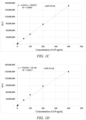
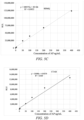
- Example 1 Linearity performance when using different chemiluminescent substrates
- chemiluminescent substrate solutions 1-1 to 1-4 were prepared according to the formulation above, using the chemiluminescent substrates as shown in Table 1 below.
- Table 1 Chemiluminescent substrate solution
- the chemiluminescent substrate solution 6-1 was prepared according to the following formulation:
- the chemiluminescent substrate solution 6-2 was prepared according to the following formulation:
- the prepared serum samples with different HCG concentrations were tested using the aforementioned chemiluminescent substrate solutions 6-1 to 6-2 on a Mindray CL-6000i full-automatic chemiluminescence immunoassay analyzer.
- the concentration of the samples ranged from 1 mIU/mL to 200,000 mIU/mL, and the HCG detection kit was the Total ⁇ Human Chorionic Gonadotropin (Total ⁇ HCG) detection kit from Mindray (chemiluminescence immunoassay).
- the samples were incubated with the chemiluminescent substrate solutions 6-1 and 6-2, respectively, and after incubating for 2 minutes, the light signals (the number of photons/second) were acquired and recorded, and the concentrations of HCG in the samples were calculated according to the light signals and denoted as back-calculated concentration. The relative deviations of the back-calculated concentrations were calculated relative to the nominal concentrations of HCG in the samples, and the results were shown in Tables 11 and 12 below. Table 11 Chemiluminescent substrate solution 6-1 Sample no.
- the chemiluminescent substrate solutions of the present disclosure can be directly used for detection and analysis without dilution, and the deviations of the detection results relative to nominal concentration are all within ⁇ 5%.
Landscapes
- Health & Medical Sciences (AREA)
- Life Sciences & Earth Sciences (AREA)
- Chemical & Material Sciences (AREA)
- Engineering & Computer Science (AREA)
- Immunology (AREA)
- Molecular Biology (AREA)
- Biomedical Technology (AREA)
- Hematology (AREA)
- Urology & Nephrology (AREA)
- Physics & Mathematics (AREA)
- Biochemistry (AREA)
- General Health & Medical Sciences (AREA)
- Analytical Chemistry (AREA)
- Pathology (AREA)
- General Physics & Mathematics (AREA)
- Microbiology (AREA)
- Biotechnology (AREA)
- Cell Biology (AREA)
- Medicinal Chemistry (AREA)
- Food Science & Technology (AREA)
- Organic Chemistry (AREA)
- Endocrinology (AREA)
- Chemical Kinetics & Catalysis (AREA)
- Reproductive Health (AREA)
- Materials Engineering (AREA)
- Proteomics, Peptides & Aminoacids (AREA)
- Wood Science & Technology (AREA)
- Zoology (AREA)
- Plasma & Fusion (AREA)
- General Chemical & Material Sciences (AREA)
- Biophysics (AREA)
- Bioinformatics & Cheminformatics (AREA)
- General Engineering & Computer Science (AREA)
- Genetics & Genomics (AREA)
- Investigating Or Analysing Materials By The Use Of Chemical Reactions (AREA)
Applications Claiming Priority (1)
| Application Number | Priority Date | Filing Date | Title |
|---|---|---|---|
| CN202311870910.0A CN120230544A (zh) | 2023-12-29 | 2023-12-29 | 一种化学发光底物液及化学发光检测方法 |
Publications (1)
| Publication Number | Publication Date |
|---|---|
| EP4579239A1 true EP4579239A1 (de) | 2025-07-02 |
Family
ID=93926322
Family Applications (1)
| Application Number | Title | Priority Date | Filing Date |
|---|---|---|---|
| EP24220833.8A Pending EP4579239A1 (de) | 2023-12-29 | 2024-12-18 | Chemilumineszente substratlösung und chemilumineszenzdetektionsverfahren |
Country Status (3)
| Country | Link |
|---|---|
| US (1) | US20250216403A1 (de) |
| EP (1) | EP4579239A1 (de) |
| CN (1) | CN120230544A (de) |
Citations (5)
| Publication number | Priority date | Publication date | Assignee | Title |
|---|---|---|---|---|
| DE3921609A1 (de) * | 1989-06-27 | 1991-01-03 | Tropix Inc | Chemilumineszenzsteigerung |
| WO1997005209A1 (en) * | 1995-07-28 | 1997-02-13 | Kohne David E | Method for enhancing chemiluminescence |
| EP0907082A2 (de) * | 1989-07-20 | 1999-04-07 | Tropix, Inc. | Verfahren zum Nachweis einer Substanz unter Verwendung der enzymatisch bedingten Zersetzung von Dioxetanen |
| CN103076458A (zh) * | 2012-12-16 | 2013-05-01 | 北京利德曼生化股份有限公司 | 游离人绒毛膜促性腺激素β亚单位磁微粒化学发光法定量测定试剂盒及其制备方法 |
| EP4394016A1 (de) * | 2022-12-30 | 2024-07-03 | Shenzhen Mindray Bio-Medical Electronics Co., Ltd. | Chemilumineszente substratlösung, chemilumineszenzverstärker und verwendung davon |
-
2023
- 2023-12-29 CN CN202311870910.0A patent/CN120230544A/zh active Pending
-
2024
- 2024-12-18 EP EP24220833.8A patent/EP4579239A1/de active Pending
- 2024-12-23 US US18/999,254 patent/US20250216403A1/en active Pending
Patent Citations (5)
| Publication number | Priority date | Publication date | Assignee | Title |
|---|---|---|---|---|
| DE3921609A1 (de) * | 1989-06-27 | 1991-01-03 | Tropix Inc | Chemilumineszenzsteigerung |
| EP0907082A2 (de) * | 1989-07-20 | 1999-04-07 | Tropix, Inc. | Verfahren zum Nachweis einer Substanz unter Verwendung der enzymatisch bedingten Zersetzung von Dioxetanen |
| WO1997005209A1 (en) * | 1995-07-28 | 1997-02-13 | Kohne David E | Method for enhancing chemiluminescence |
| CN103076458A (zh) * | 2012-12-16 | 2013-05-01 | 北京利德曼生化股份有限公司 | 游离人绒毛膜促性腺激素β亚单位磁微粒化学发光法定量测定试剂盒及其制备方法 |
| EP4394016A1 (de) * | 2022-12-30 | 2024-07-03 | Shenzhen Mindray Bio-Medical Electronics Co., Ltd. | Chemilumineszente substratlösung, chemilumineszenzverstärker und verwendung davon |
Non-Patent Citations (2)
| Title |
|---|
| no. 160081-62-9 |
| ZHAO LI-XIA ET AL: "Micro-plate magnetic chemiluminescence...", 31 December 2004 (2004-12-31), XP093272065, Retrieved from the Internet <URL:https://sioc-journal.cn/Jwk_hxxb/EN/abstract/abstract343833.shtml> * |
Also Published As
| Publication number | Publication date |
|---|---|
| CN120230544A (zh) | 2025-07-01 |
| US20250216403A1 (en) | 2025-07-03 |
Similar Documents
| Publication | Publication Date | Title |
|---|---|---|
| DE3528391C2 (de) | Lumineszenz- oder luminometrischer Assay | |
| CN111474341B (zh) | 基于免疫比浊和余辉发光的均相联合检测试剂和检测方法 | |
| CN109917134B (zh) | 一种校准品稳定剂、测定c肽的检测试剂盒及检测方法 | |
| EP0505198A1 (de) | Verfahren zum Steigern einer Lumineszenzreaktion, Luminometrischer Test und Testsätze zur Verwendung in demselben | |
| JPH0648997B2 (ja) | 促進された化学ルミネセンス反応並びに診断アッセイ | |
| EP0698217B1 (de) | Verfahren zum nachweis von substanzen | |
| CN106990100B (zh) | 一种稳定的hrp酶促化学发光底物液 | |
| WO2023245853A1 (zh) | 检测目标蛋白的试剂组合、试剂盒、检测系统及检测方法 | |
| CN110988368A (zh) | 一种游离甲状腺素发光免疫检测试剂盒及其制备方法 | |
| US6066505A (en) | Fluorescence polarization immunoassay | |
| Templeton et al. | Time-resolved fluorescence detection of enzyme-amplified lanthanide luminescence for nucleic acid hybridization assays | |
| EP4579239A1 (de) | Chemilumineszente substratlösung und chemilumineszenzdetektionsverfahren | |
| EP4394016B1 (de) | Chemilumineszente substratlösung, chemilumineszenzverstärker und verwendung davon | |
| CN210269868U (zh) | 联合检测机构和女性生育能力检测装置 | |
| CN115656152A (zh) | 一种吖啶酯底物发光系统 | |
| CN210323044U (zh) | Il-6/pct联合检测时间分辨检测卡及试剂盒 | |
| CN1474185A (zh) | 心肌肌钙蛋白鲁米诺化学发光免疫分析检测方法 | |
| US5387527A (en) | Use of pH dependence for scatter correction in fluorescent methods | |
| JP4526220B2 (ja) | 生物学的サンプル中の被検体を定量するための化学発光酸化還元アッセイ | |
| CN115508558A (zh) | 一种用于检测T2毒素的“Turn-on”检测模式能量共振转移型试纸条 | |
| CN113533735A (zh) | 吖啶酯类似物在制备吖啶酯类似物标记抗体中的应用 | |
| CN121410257B (zh) | 胶体金免疫层析快速检测卡的信号增强剂及其制备方法 | |
| CN121784283A (zh) | 一种基于均相化学发光法的铁蛋白测定试剂盒及其测定方法 | |
| CN112462069B (zh) | 检测犬胰腺炎的荧光免疫层析试剂盒及其制备方法 | |
| JP3745112B2 (ja) | 化学発光酵素免疫測定方法 |
Legal Events
| Date | Code | Title | Description |
|---|---|---|---|
| PUAI | Public reference made under article 153(3) epc to a published international application that has entered the european phase |
Free format text: ORIGINAL CODE: 0009012 |
|
| STAA | Information on the status of an ep patent application or granted ep patent |
Free format text: STATUS: REQUEST FOR EXAMINATION WAS MADE |
|
| 17P | Request for examination filed |
Effective date: 20241218 |
|
| AK | Designated contracting states |
Kind code of ref document: A1 Designated state(s): AL AT BE BG CH CY CZ DE DK EE ES FI FR GB GR HR HU IE IS IT LI LT LU LV MC ME MK MT NL NO PL PT RO RS SE SI SK SM TR |