EP4574153A2 - Kinasehemmer zur behandlung von erkrankungen des zentralen und peripheren nervensystems - Google Patents
Kinasehemmer zur behandlung von erkrankungen des zentralen und peripheren nervensystems Download PDFInfo
- Publication number
- EP4574153A2 EP4574153A2 EP24223406.0A EP24223406A EP4574153A2 EP 4574153 A2 EP4574153 A2 EP 4574153A2 EP 24223406 A EP24223406 A EP 24223406A EP 4574153 A2 EP4574153 A2 EP 4574153A2
- Authority
- EP
- European Patent Office
- Prior art keywords
- mmol
- fluoro
- benzamido
- compound
- solution
- Prior art date
- Legal status (The legal status is an assumption and is not a legal conclusion. Google has not performed a legal analysis and makes no representation as to the accuracy of the status listed.)
- Pending
Links
Images

Classifications
-
- A—HUMAN NECESSITIES
- A61—MEDICAL OR VETERINARY SCIENCE; HYGIENE
- A61K—PREPARATIONS FOR MEDICAL, DENTAL OR TOILETRY PURPOSES
- A61K31/00—Medicinal preparations containing organic active ingredients
- A61K31/185—Acids; Anhydrides, halides or salts thereof, e.g. sulfur acids, imidic, hydrazonic or hydroximic acids
- A61K31/19—Carboxylic acids, e.g. valproic acid
- A61K31/192—Carboxylic acids, e.g. valproic acid having aromatic groups, e.g. sulindac, 2-aryl-propionic acids, ethacrynic acid
-
- A—HUMAN NECESSITIES
- A61—MEDICAL OR VETERINARY SCIENCE; HYGIENE
- A61K—PREPARATIONS FOR MEDICAL, DENTAL OR TOILETRY PURPOSES
- A61K31/00—Medicinal preparations containing organic active ingredients
- A61K31/33—Heterocyclic compounds
- A61K31/395—Heterocyclic compounds having nitrogen as a ring hetero atom, e.g. guanethidine or rifamycins
- A61K31/435—Heterocyclic compounds having nitrogen as a ring hetero atom, e.g. guanethidine or rifamycins having six-membered rings with one nitrogen as the only ring hetero atom
- A61K31/44—Non condensed pyridines; Hydrogenated derivatives thereof
- A61K31/4427—Non condensed pyridines; Hydrogenated derivatives thereof containing further heterocyclic ring systems
- A61K31/4439—Non condensed pyridines; Hydrogenated derivatives thereof containing further heterocyclic ring systems containing a five-membered ring with nitrogen as a ring hetero atom, e.g. omeprazole
-
- A—HUMAN NECESSITIES
- A61—MEDICAL OR VETERINARY SCIENCE; HYGIENE
- A61P—SPECIFIC THERAPEUTIC ACTIVITY OF CHEMICAL COMPOUNDS OR MEDICINAL PREPARATIONS
- A61P25/00—Drugs for disorders of the nervous system
-
- A—HUMAN NECESSITIES
- A61—MEDICAL OR VETERINARY SCIENCE; HYGIENE
- A61P—SPECIFIC THERAPEUTIC ACTIVITY OF CHEMICAL COMPOUNDS OR MEDICINAL PREPARATIONS
- A61P25/00—Drugs for disorders of the nervous system
- A61P25/14—Drugs for disorders of the nervous system for treating abnormal movements, e.g. chorea, dyskinesia
- A61P25/16—Anti-Parkinson drugs
-
- A—HUMAN NECESSITIES
- A61—MEDICAL OR VETERINARY SCIENCE; HYGIENE
- A61P—SPECIFIC THERAPEUTIC ACTIVITY OF CHEMICAL COMPOUNDS OR MEDICINAL PREPARATIONS
- A61P25/00—Drugs for disorders of the nervous system
- A61P25/18—Antipsychotics, i.e. neuroleptics; Drugs for mania or schizophrenia
-
- A—HUMAN NECESSITIES
- A61—MEDICAL OR VETERINARY SCIENCE; HYGIENE
- A61P—SPECIFIC THERAPEUTIC ACTIVITY OF CHEMICAL COMPOUNDS OR MEDICINAL PREPARATIONS
- A61P25/00—Drugs for disorders of the nervous system
- A61P25/22—Anxiolytics
-
- A—HUMAN NECESSITIES
- A61—MEDICAL OR VETERINARY SCIENCE; HYGIENE
- A61P—SPECIFIC THERAPEUTIC ACTIVITY OF CHEMICAL COMPOUNDS OR MEDICINAL PREPARATIONS
- A61P25/00—Drugs for disorders of the nervous system
- A61P25/24—Antidepressants
-
- A—HUMAN NECESSITIES
- A61—MEDICAL OR VETERINARY SCIENCE; HYGIENE
- A61P—SPECIFIC THERAPEUTIC ACTIVITY OF CHEMICAL COMPOUNDS OR MEDICINAL PREPARATIONS
- A61P25/00—Drugs for disorders of the nervous system
- A61P25/28—Drugs for disorders of the nervous system for treating neurodegenerative disorders of the central nervous system, e.g. nootropic agents, cognition enhancers, drugs for treating Alzheimer's disease or other forms of dementia
-
- C—CHEMISTRY; METALLURGY
- C07—ORGANIC CHEMISTRY
- C07D—HETEROCYCLIC COMPOUNDS
- C07D207/00—Heterocyclic compounds containing five-membered rings not condensed with other rings, with one nitrogen atom as the only ring hetero atom
- C07D207/02—Heterocyclic compounds containing five-membered rings not condensed with other rings, with one nitrogen atom as the only ring hetero atom with only hydrogen or carbon atoms directly attached to the ring nitrogen atom
- C07D207/04—Heterocyclic compounds containing five-membered rings not condensed with other rings, with one nitrogen atom as the only ring hetero atom with only hydrogen or carbon atoms directly attached to the ring nitrogen atom having no double bonds between ring members or between ring members and non-ring members
- C07D207/10—Heterocyclic compounds containing five-membered rings not condensed with other rings, with one nitrogen atom as the only ring hetero atom with only hydrogen or carbon atoms directly attached to the ring nitrogen atom having no double bonds between ring members or between ring members and non-ring members with hetero atoms or with carbon atoms having three bonds to hetero atoms with at the most one bond to halogen, e.g. ester or nitrile radicals, directly attached to ring carbon atoms
- C07D207/14—Nitrogen atoms not forming part of a nitro radical
-
- C—CHEMISTRY; METALLURGY
- C07—ORGANIC CHEMISTRY
- C07D—HETEROCYCLIC COMPOUNDS
- C07D213/00—Heterocyclic compounds containing six-membered rings, not condensed with other rings, with one nitrogen atom as the only ring hetero atom and three or more double bonds between ring members or between ring members and non-ring members
- C07D213/02—Heterocyclic compounds containing six-membered rings, not condensed with other rings, with one nitrogen atom as the only ring hetero atom and three or more double bonds between ring members or between ring members and non-ring members having three double bonds between ring members or between ring members and non-ring members
- C07D213/04—Heterocyclic compounds containing six-membered rings, not condensed with other rings, with one nitrogen atom as the only ring hetero atom and three or more double bonds between ring members or between ring members and non-ring members having three double bonds between ring members or between ring members and non-ring members having no bond between the ring nitrogen atom and a non-ring member or having only hydrogen or carbon atoms directly attached to the ring nitrogen atom
- C07D213/60—Heterocyclic compounds containing six-membered rings, not condensed with other rings, with one nitrogen atom as the only ring hetero atom and three or more double bonds between ring members or between ring members and non-ring members having three double bonds between ring members or between ring members and non-ring members having no bond between the ring nitrogen atom and a non-ring member or having only hydrogen or carbon atoms directly attached to the ring nitrogen atom with hetero atoms or with carbon atoms having three bonds to hetero atoms with at the most one bond to halogen, e.g. ester or nitrile radicals, directly attached to ring carbon atoms
- C07D213/78—Carbon atoms having three bonds to hetero atoms, with at the most one bond to halogen, e.g. ester or nitrile radicals
- C07D213/81—Amides; Imides
-
- C—CHEMISTRY; METALLURGY
- C07—ORGANIC CHEMISTRY
- C07D—HETEROCYCLIC COMPOUNDS
- C07D401/00—Heterocyclic compounds containing two or more hetero rings, having nitrogen atoms as the only ring hetero atoms, at least one ring being a six-membered ring with only one nitrogen atom
- C07D401/02—Heterocyclic compounds containing two or more hetero rings, having nitrogen atoms as the only ring hetero atoms, at least one ring being a six-membered ring with only one nitrogen atom containing two hetero rings
- C07D401/12—Heterocyclic compounds containing two or more hetero rings, having nitrogen atoms as the only ring hetero atoms, at least one ring being a six-membered ring with only one nitrogen atom containing two hetero rings linked by a chain containing hetero atoms as chain links
-
- C—CHEMISTRY; METALLURGY
- C07—ORGANIC CHEMISTRY
- C07D—HETEROCYCLIC COMPOUNDS
- C07D401/00—Heterocyclic compounds containing two or more hetero rings, having nitrogen atoms as the only ring hetero atoms, at least one ring being a six-membered ring with only one nitrogen atom
- C07D401/14—Heterocyclic compounds containing two or more hetero rings, having nitrogen atoms as the only ring hetero atoms, at least one ring being a six-membered ring with only one nitrogen atom containing three or more hetero rings
-
- C—CHEMISTRY; METALLURGY
- C07—ORGANIC CHEMISTRY
- C07D—HETEROCYCLIC COMPOUNDS
- C07D403/00—Heterocyclic compounds containing two or more hetero rings, having nitrogen atoms as the only ring hetero atoms, not provided for by group C07D401/00
- C07D403/02—Heterocyclic compounds containing two or more hetero rings, having nitrogen atoms as the only ring hetero atoms, not provided for by group C07D401/00 containing two hetero rings
- C07D403/12—Heterocyclic compounds containing two or more hetero rings, having nitrogen atoms as the only ring hetero atoms, not provided for by group C07D401/00 containing two hetero rings linked by a chain containing hetero atoms as chain links
-
- C—CHEMISTRY; METALLURGY
- C07—ORGANIC CHEMISTRY
- C07D—HETEROCYCLIC COMPOUNDS
- C07D471/00—Heterocyclic compounds containing nitrogen atoms as the only ring hetero atoms in the condensed system, at least one ring being a six-membered ring with one nitrogen atom, not provided for by groups C07D451/00 - C07D463/00
- C07D471/02—Heterocyclic compounds containing nitrogen atoms as the only ring hetero atoms in the condensed system, at least one ring being a six-membered ring with one nitrogen atom, not provided for by groups C07D451/00 - C07D463/00 in which the condensed system contains two hetero rings
- C07D471/04—Ortho-condensed systems
Definitions
- SCI spinal cord injury
- CNS central nervous system
- Developing drugs to treat SCI is complicated by the existence of two mechanisms that inhibit axon growth: 1) a loss of the intrinsic regenerative capacity of CNS neurons, and 2) the inhibitory CNS microenvironment confronting damaged axons. It is hypothesized that effective cures may be based upon simultaneously treat both sources of regeneration failure in order to induce clinically meaningful axon regrowth after injury.
- ring A comprises a 5-6-membered monocyclic heteroaryl ring or a 8-11-membered bicyclic heteroaryl ring having 1, 2, or 3 nitrogen ring atoms
- L 1 is null or C 1-2 alkylene
- X 1 is -NH-, -CH 2 NH-, -NHCH 2 -, -CH 2 CH 2 NH-, or -NHCH 2 CH 2 -
- X 2 is NR 2 or O
- X 3 is NR 2 or O
- L 2 is C(O), O, CH 2 , or CHOH
- R 1 is H or halo
- each R 2 is independently H or C 1-3 alkyl
- R 3 is H, C 1-3 alky, C 3-6 cycloalkyl, aryl, C(O)C 1-3 alkyl, C(O)C 3-6 cycloalkyl, or C(O)aryl
- R 4 is H, OH,
- ROCK Rho kinasae
- S6K ribosomal protein S6 kinase
- PKC ribosomal protein S6 kinase
- the CNS disorder is paralysis, spinal cord injury, optic nerve injury, glaucoma, multiple sclerosis, traumatic brain injury, diffuse axonal injury, stroke, or a degenerative disease (such as Parkinson's disease).
- PNS peripheral nervous system
- the PNS disorder is peripheral nerve trauma, repetitive stress, amyotrophic lateral sclerosis (ALS), erectile dysfunction, a disorder associated with an organ transplant, neurofibromatosis, blood vessel disease, diabetes, an autoimmune disorder, a disorder associated with chemical toxicity, or kidney disease.
- ALS amyotrophic lateral sclerosis
- erectile dysfunction a disorder associated with an organ transplant, neurofibromatosis, blood vessel disease, diabetes, an autoimmune disorder, a disorder associated with chemical toxicity, or kidney disease.
- ring A comprises a 5-6-membered monocyclic heteroaryl ring or a 8-11-membered bicyclic heteroaryl ring having 1, 2, or 3 nitrogen ring atoms
- L 1 is null or C 1-2 alkylene
- X 1 is - NH-, -CH 2 NH-, -NHCH 2 -, -CH 2 CH 2 NH-, or -NHCH 2 CH 2 -
- X 2 is NR 2 or O
- X 3 is NR 2 or O
- L 2 is C(O), O, or CHOH
- R 1 is H or halo
- each R 2 is independently H or C 1-3 alkyl
- R 3 is H, C 1-3 alky, C 3-6 cycloalkyl, aryl, C(O)C 1-3 alkyl, C(O)C 3-6 cycloalkyl, or C(O)aryl
- R 4 is H,
- ROCK Rho Kinase
- PLC protein kinase C
- S6K ribosomal protein S6 kinase
- RO48 (A92) was tested in a second model of spinal cord regeneration (pyramidatomy), and it was found that delivering RO48 to the CSF of injured animals enhanced compensatory sprouting from spared axons.
- a preliminary experiment using a third model of CNS injury (optic nerve crush) was performed, and it was found found that injecting RO40 into the eye of animals enhanced regeneration of optic nerve axons.
- the disclosed compounds can also inhibit 2 other kinases that were determined by to be potential targets for promoting neurite outgrowth. These are PKG and PKX.
- the compounds disclosed herein can inhibit one or more kinases, e.g., Rho kinase (ROCK), ribosomal protein S6 kinase (S6K), and/or protein kinase C. inhibition of one or more of these kinases can promote neurite outgrowth and/or axon growth in the central nervous system (CNS).
- kinases e.g., Rho kinase (ROCK), ribosomal protein S6 kinase (S6K), and/or protein kinase C.
- ring A comprises a 5-6-membered monocyclic heteroaryl ring or a 8-11-membered bicyclic heteroaryl ring having 1, 2, or 3 nitrogen ring atoms
- L 1 is null or C 1-2 alkylene
- X 1 is - NH-, -CH 2 NH-, -NHCH 2 -, -CH 2 CH 2 NH-, or -NHCH 2 CH 2 -
- X 2 is NR 2 or O
- X 3 is NR 2 or O
- L 2 is C(O), O, or CHOH
- R 1 is H or halo
- each R 2 is independently H or C 1-3 alkyl
- R 3 is H, C 1-3 alky, C 3-6 cycloalkyl, aryl, C(O)C 1-3 alkyl, C(O)C 3-6 cycloalkyl, or C(O)aryl
- R 4 is H
- X 1 is -NH-, -CH 2 NH-, or -NHCH 2 -.
- R 4 is H, OH, halo, C 1-4 alkyl, C 1-4 alkoxy, C(O)C 1-4 alkoxy, C 3-6 cycloalkyl, aryl, -OC 3-6 cycloalkyl, -Oaryl, C(O)OC 3-6 cycloalkyl, C(O)Oaryl; and R 5 is H, halo, C 1-4 alkyl, or C 1-4 alkoxy.
- alkyl refers to straight chained and branched saturated hydrocarbon groups.
- C n means the alkyl group has "n" carbon atoms.
- C 4 alkyl refers to an alkyl group that has 4 carbon atoms.
- C 1 -C 7 alkyl refers to an alkyl group having a number of carbon atoms encompassing the entire range (i.e., 1 to 7 carbon atoms), as well as all subgroups (e.g., 1-6, 2-7, 1-5, 3-6, 1, 2, 3, 4, 5, 6, and 7 carbon atoms).
- alkyl groups include, methyl, ethyl, n-propyl, isopropyl, n-butyl, sec-butyl (2-methylpropyl), t-butyl (1,1-dimethylethyl), 3,3-dimethylpentyl, and 2-ethylhexyl.
- an alkyl group can be an unsubstituted alkyl group or a substituted alkyl group.
- Non-limiting examples of substituted alkyl groups include haloalkyl groups (i.e., alkyl groups substituted with one or more halo groups), hydroxyalkyl groups (i.e., alkyl groups substituted with one or more hydroxy groups), and the like.
- alkylene used herein refers to an alkyl group having a substituent.
- alkylenearyl refers to an alkyl group substituted with an aryl group.
- an alkylene group can be -CH 2 CH 2 - or -CH 2 -.
- C n means the alkylene group has "n" carbon atoms.
- C 1-6 alkylene refers to an alkylene group having a number of carbon atoms encompassing the entire range, as well as all subgroups, as previously described for "alkyl” groups. Unless otherwise indicated, an alkylene group can be an unsubstituted alkylene group or a substituted alkylene group.
- Nonlimiting examples of cycloalkyl groups include cyclopropyl, cyclobutyl, cyclopentyl, and cyclohexyl. Unless otherwise indicated, a cycloalkyl group can be an unsubstituted cycloalkyl group or a substituted cycloalkyl group.
- the cycloalkyl groups described herein can be isolated or fused to another cycloalkyl group, a heterocycloalkyl group, an aryl group and/or a heteroaryl group.
- Example 23 N-((3R,4R)-4-(4-(2-hydroxy-5-methylbenzoyl)benzamido)pyrrolidin-3-yl)isonicotinamide .
- Example 24 N-((3R,4R)-4-(4-(2-hydroxy-5-methoxybenzoyl)benzamido)pyrrolidin-3-yl)isonicotinamide .
- Example 25 2-amino-N-((3R,4R)-4-(4-(2-hydroxy-5-methoxybenzoyl)benzamido)pyrrolidin-3-yl)pyrimidine-4-carboxamide .
- Example 28 N-((3R,4R)-4-(4-(2-hydroxy-3-methoxybenzoyl)benzamido)pyrrolidin-3-yl)isonicotinamide .
- Example 33 2-amino-N-((3R,4R)-4-(4-(2-hydroxybenzoyl)-2-methoxybenzamido)pyrrolidin-3-yl)pyrimidine-4-carboxamide .
- Example 35 2-amino-N-((3R,4R)-4-(3-chloro-4-(2-hydroxybenzoyl)benzamido)pyrrolidin-3-yl)pyrimidine-4-carboxamide.
- Example 36 N-((3R,4R)-4-(2-chloro-4-(2-hydroxybenzoyl)benzamido)pyrrolidin-3-yl)isonicotinamide .
- Example 37 N-((3R,4R)-4-(4-(2-hydroxybenzoyl)-3-methylbenzamido)pyrrolidin-3-yl)isonicotinamide .
- Example 38 4-(ethoxymethoxy)-2-fluoro-1-methoxybenzene.
- Example 39 N-(2-(4-(2-fluoro-6-hydroxy-3-methoxybenzoyl)benzamido)ethyl)isonicotinamide.
- Example 40 N-(2-(4-(2-fluoro-3,6-dimethoxybenzoyl)benzamido)ethyl)isonicotinamide.
- Example 41 N-((1R,2R)-2-(4-(2-fluoro-6-hydroxy-3-methoxybenzoyl)benzamido)cycloheptyl)isonicotinamide.
- HATU 114 mg, 0.300 mmol
- tert-butyl ((1R,2R)-2-aminocycloheptyl)carbamate 69 mg, 0.300 mmol
- isonicotinic acid 37 mg, 0.300 mmol
- triethyl amine 84 ⁇ L, 0.600 mmol
- acetonitrile 1.5 mL
- the solution was quenched with water and extracted with EtOAc.
- the organic extract was thrice washed with water and concentrated in vacuo. The residue was then dissolved in 4 N HCl in dioxane (2 mL) which formed a precipitate.
- Example 42 N-((1R,2R)-2-(4-(2-fluoro-3,6-dimethoxybenzoyl)benzamido)cycloheptyl)isonicotinamide.
- N-((1R,2R)-2-(4-(2-fluoro-6-hydroxy-3-methoxybenzoyl)benzamido)cycloheptyl) isonicotinamide 5.0 mg
- DMF 0.5 mL
- the solution was treated with iodomethane (0.6 ⁇ L, added as a DMF solution) and excess potassium carbonate.
- the solution was stirred for 2 h, quenched with water and purified directly on HPLC to give N-((1R,2R)-2-(4-(2-fluoro-3,6-dimethoxybenzoyl)benzamido)cycloheptyl)isonicotinamide.
- Example 43 N-((1R,2R)-2-(4-benzoylbenzamido)cycloheptyl)isonicotinamide.
- N-((1R,2R)-2-aminocycloheptyl) isonicotinamide (0.100 mmol) thus formed was dissolved in a mixture of acetonitrile (1.0 mL) and DMF (1.0 mL). Triethylamine (84 ⁇ L, 0.6 mmol) was added, followed by 4-(benzoyl)benzoic acid (23 mg, 0.100 mmol) and HATU (38 mg, 0.100 mmol). The resulting solution was stirred at room temperature for 120 min and then quenched with water.
- Example 44 N-((1R,2R)-2-(4-(2-fluoro-6-hydroxy-3-methoxybenzoyl)benzamido)cyclohexyl)isonicotinamide.
- HATU 114 mg, 0.300 mmol
- tert-butyl ((1R,2R)-2-aminocyclohexyl)carbamate 64 mg, 0.300 mmol
- isonicotinic acid 37 mg, 0.300 mmol
- triethyl amine 84 ⁇ L, 0.600 mmol
- acetonitrile 1.5 mL
- the solution was quenched with water and extracted with EtOAc.
- the organic extract was thrice washed with water and concentrated in vacuo. The residue was then dissolved in 4 N HCl in dioxane (4 mL) and stirred for 20 min.
- Example 45 N-((1R,2R)-2-(4-(2-fluoro-3,6-dimethoxybenzoyl)benzamido)cyclohexyl)isonicotinamide.
- Example 46 N-((1R,2R)-2-(4-benzoylbenzamido)cyclohexyl)isonicotinamide.
- N-((1R,2R)-2-aminocyclohexyl) isonicotinamide (0.150 mmol) was dissolved in DMF (1.5 mL). Triethylamine (84 ⁇ L, 0.60 mmol) was added, followed by 4-(benzoyl)benzoic acid (34 mg, 0.150 mmol) and HATU (57 mg, 0.150 mmol). The resulting solution was stirred at room temperature for 15 min and then quenched with water.
- Example 47 N-((1R,2R)-2-(4-(2-fluoro-6-hydroxy-3-methoxybenzoyl)benzamido)cyclopentyl)isonicotinamide.
- HATU 114 mg, 0.300 mmol
- tert-butyl ((1R,2R)-2-aminocyclopentyl)carbamate 60 mg, 0.300 mmol
- isonicotinic acid 37 mg, 0.300 mmol
- triethyl amine 84 ⁇ L, 0.600 mmol
- acetonitrile 1.5 mL
- the solution was quenched with water and extracted with EtOAc.
- the organic extract was thrice washed with water and concentrated in vacuo. The residue was then dissolved in 4 N HCl in dioxane (2 mL) and stirred for 18 h.
- Example 48 N-((1R,2R)-2-(4-(2-fluoro-3,6-dimethoxybenzoyl)benzamido)cyclopentyl)isonicotinamide.
- Example 49 N-((1R,2R)-2-(4-benzoylbenzamido)cyclopentyl)isonicotinamide.
- N-((1R,2R)-2-aminocyclopentyl) isonicotinamide (0.100 mmol) was dissolved in DMF (1.5 mL). Triethylamine (84 ⁇ L, 0.60 mmol) was added, followed by 4-(benzoyl)benzoic acid (23 mg, 0.100 mmol) and HATU (38 mg, 0.100 mmol). The resulting solution was stirred at room temperature for 70 min and then quenched with water.
- Example 50 N-((1R,2R)-1-(4-(2-fluoro-6-hydroxy-3-methoxybenzoyl)benzamido)-2,3-dihydro-1H-inden-2-yl)isonicotinamide.
- HATU 114 mg, 0.300 mmol
- tert-butyl ((1R,2R)-2-amino-2,3-dihydro-1H-inden-1-yl)carbamate 75 mg, 0.300 mmol
- isonicotinic acid 37 mg, 0.300 mmol
- triethyl amine 84 ⁇ L, 0.600 mmol
- acetonitrile 1.5 mL
- Example 51 N-((1R,2R)-1-(4-(2-fluoro-3,6-dimethoxybenzoyl)benzamido)-2,3-dihydro-1H-inden-2-yl)isonicotinamide.
- Example 52 N-((1R,2R)-1-(4-benzoylbenzamido)-2,3-dihydro-1H-inden-2-yl)isonicotinamide.
- N-((1R,2R)-1-amino-2,3-dihydro-1H-inden-2-yl)isonicotinamide (0.100 mmol) was dissolved in DMF (1.5 mL). Triethylamine (84 ⁇ L, 0.60 mmol) was added, followed by 4-(benzoyl)benzoic acid (23 mg, 0.100 mmol) and HATU (38 mg, 0.100 mmol). The resulting solution was stirred at room temperature for 60 min and then quenched with water.
- Example 53 (4-(4-(2-fluoro-6-hydroxy-3-methoxybenzoyl)benzoyl)piperazin-1-yl)(pyridin-4-yl)methanone.
- HATU 114 mg, 0.300 mmol
- tert-butyl piperazine-1-carboxylate 56 mg, 0.300 mmol
- isonicotinic acid 37 mg, 0.300 mmol
- triethyl amine 84 ⁇ L, 0.600 mmol
- acetonitrile 1.5 mL
- the solution was quenched with water and extracted with EtOAc.
- the organic extract was thrice washed with water and concentrated in vacuo. The residue was then dissolved in 4 N HCl in dioxane (1 mL) and stirred for 30 min. Concentration in vacuo gave a solid which was used without further purification.
- Example 54 (4-(4-(2-fluoro-3,6-dimethoxybenzoyl)benzoyl)piperazin-1-yl)(pyridin-4-yl)methanone.
- Example 57 N-(2-(4-(2-fluoro-6-hydroxy-3-methoxybenzoyl)benzamido)phenyl)isonicotinamide.
- Example 58 N-(2-(4-(2-fluoro-3,6-dimethoxybenzoyl)benzamido)phenyl)isonicotinamide.
- a stock solution was prepared from 0.20 mL iodomethane and 20 mL of N,N-dimethylformamide.
- a portion of N-(2-(4-(2-fluoro-6-hydroxy-3-methoxybenzoyl)benzamido)phenyl)isonicotinamide (11.9 mg, 0.025 mmol, synthesis described above) was charged with potassium carbonate (10.4 mg, 0.075 mmol), 0.8 mL DMF, and 0.2 mL of the stock solution to deliver 2 ⁇ L of iodomethane (0.032 mmol). After 3 days, the mixture was diluted with 8 mL water and extracted with 2, 1, and 1 mL portions of 20% methanol / chloroform.
- Example 59 N-(2-(4-benzoylbenzamido)phenyl)isonicotinamide.
- Example 60 N-(4-(4-(2-fluoro-6-hydroxy-3-methoxybenzoyl)benzamido)pyridin-3-yl)isonicotinamide.
- Example 61 N-(4-(4-(2-fluoro-3,6-dimethoxybenzoyl)benzamido)pyridin-3-yl)isonicotinamide.
- a stock solution was prepared from 0.20 mL iodomethane and 20 mL of N,N-dimethylformamide.
- a portion of N-(4-(4-(2-fluoro-6-hydroxy-3-methoxybenzoyl)benzamido)pyridin-3-yl)isonicotinamide (21.1 mg, 0.0434 mmol, synthesis described above) was charged with potassium carbonate (18 mg, 0.13 mmol), 0.8 mL DMF, and 0.27 mL of the stock solution to deliver 2.7 ⁇ L of iodomethane (0.043 mmol). After 3 days, the mixture was diluted with 8 mL water and extracted with 2, 1, and 1 mL portions of 20% methanol / chloroform.
- Example 62 N-(4-(4-benzoylbenzamido)pyridin-3-yl)isonicotinamide.
- Example 63 N-((3R,4R)-4-(4-(2-fluoro-6-hydroxy-3-methoxybenzoyl)benzamido)pyrrolidin-3-yl)-1H-pyrazole-4-carboxamide.
- Example 64 N-((3R,4R)-4-(4-(2-fluoro-6-hydroxy-3-methoxybenzoyl)benzamido)pyrrolidin-3-yl)-1H-indazole-5-carboxamide.
- Example 65 N-((3R,4R)-4-(4-(2-fluoro-6-hydroxy-3-methoxybenzoyl)benzamido)pyrrolidin-3-yl)pyrimidine-4-carboxamide.
- Example 66 N-((3R,4R)-4-(4-(2-fluoro-6-hydroxy-3-methoxybenzoyl)benzamido)pyrrolidin-3-yl)-2-hydroxyisonicotinamide.
- Example 67 N-((3R,4R)-4-(4-(2-fluoro-6-hydroxy-3-methoxybenzoyl)benzamido)pyrrolidin-3-yl)-6-hydroxynicotinamide.
- Example 68 N-((3R,4R)-4-(4-(2-fluoro-6-hydroxy-3-methoxybenzoyl)benzamido)pyrrolidin-3-yl)nicotinamide.
- Example 69 4-(2-fluoro-6-hydroxy-3-methoxybenzoyl)-N-((3R,4R)-4-(4-hydroxybenzamido)pyrrolidin-3-yl)benzamide.
- Example 70 2-amino-N-((3R,4R)-4-(4-(2-fluoro-6-hydroxy-3-methoxybenzoyl)benzamido)pyrrolidin-3-yl)pyrimidine-4-carboxamide.
- Example 71 N-((3R,4R)-4-(4-(2-fluoro-6-hydroxy-3-methoxybenzoyl)benzamido)pyrrolidin-3-yl)-2-oxoindoline-5-carboxamide.
- Example 72 N-((3S,4S)-4-(4-(2-fluoro-6-hydroxy-3-methoxybenzoyl)benzamido)pyrrolidin-3-yl)isonicotinamide.
- Example 73 N-((3R,4R)-4-(4-(2-fluoro-3,6-dimethoxybenzoyl)benzamido)-1-methylpyrrolidin-3-yl)isonicotinamide.
- Example 75 (3R,4R)-3-(isonicotinamido)piperidin-4-yl 4-(2-fluoro-6-hydroxy-3-methoxybenzoyl)benzoate.
- Example 77 (3R,4R)-4-(isonicotinamido)pyrrolidin-3-yl 4-(2-fluoro-6-hydroxy-3-methoxybenzoyl)benzoate.
- Example 78 (3R,4R)-4-(isonicotinamido)-1-methylpyrrolidin-3-yl 4-(2-fluoro-3,6-dimethoxybenzoyl)benzoate.
- Example 79 N-((3R,4R)-4-(4-((2-fluoro-6-hydroxy-3-methoxyphenyl)(hydroxy)methyl)benzamido)pyrrolidin-3-yl)isonicotinamide.
- Example 80 N-((3R,4R)-4-(4-(2-fluoro-6-hydroxy-3-methoxybenzoyl)benzamido)pyrrolidin-3-yl)-1H-benzo[d][1,2,3]triazole-5-carboxamide.
- Example 81 N-((3R,4R)-4-(4-(2-fluoro-6-hydroxy-3-methoxybenzoyl)benzamido)pyrrolidin-3-yl)-1H-indazole-6-carboxamide.
- Example 82 N-((3R,4R)-4-(4-(2-fluoro-6-hydroxy-3-methoxybenzoyl)benzamido)pyrrolidin-3-yl)-1H-pyrrolo[2,3-b]pyridine-4-carboxamide.
- Example 83 N-((3R,4R)-4-(4-(2-fluoro-6-hydroxy-3-methoxybenzyl)benzamido)pyrrolidin-3-yl)isonicotinamide.
- Example 84 2-amino-N-((3R,4R)-4-(4-(2-fluoro-6-hydroxy-3-methoxybenzoyl)benzamido)pyrrolidin-3-yl)isonicotinamide.
- Example 85 N-((3R,4R)-4-(4-(2-fluoro-6-hydroxy-3-methoxybenzoyl)benzamido)pyrrolidin-3-yl)-1-methyl-1H-indazole-5-carboxamide.
- Example 86 N-((3R,4R)-4-(4-(2-fluoro-6-hydroxy-3-methoxybenzoyl)benzamido)pyrrolidin-3-yl)-1H-benzo[d]imidazole-5-carboxamide.
- Example 87 4-(2-(ethoxymethoxy)-6-fluorobenzoyl)benzoic acid.
- Example 88 N-((3R,4R)-4-(4-(2-fluoro-6-hydroxybenzoyl)benzamido)pyrrolidin-3-yl)isonicotinamide.
- Example 90 N-((3R,4R)-4-(4-(2-fluoro-6-hydroxybenzoyl)benzamido)pyrrolidin-3-yl)-1H-indazole-5-carboxamide.
- Example 91 N-((3R,4R)-4-(4-(2-fluoro-6-hydroxy-3-methoxybenzoyl)benzamido)pyrrolidin-3-yl)-3H-imidazo[4,5-b]pyridine-7-carboxamide.
- Example 92 N-((3R,4R)-4-(2-(1H-pyrazol-4-yl)acetamido)pyrrolidin-3-yl)-4-(2-fluoro-6-hydroxy-3-methoxybenzoyl) benzamide.
- Example 93 4-(2-fluoro-6-hydroxy-3-methoxybenzoyl)-N-((3R,4R)-4-(2-(pyridin-3-yl)acetamido)pyrrolidin-3-yl)benzamide.
- Example 94 2-amino-N-((3R,4R)-4-(4-(2-fluoro-6-hydroxy-3-methoxybenzyl)benzamido)pyrrolidin-3-yl)pyrimidine-4-carboxamide.
- Dissociation media was prepared by combining 4.5 mL of Hibernate E (without SM1) with 0.5 mL of trypsin and 100 ⁇ l of DNAse solution. The medium over the hippocampi was carefully removed and replaced with dissociation solution, then incubated at 37 °C for 15-20 minutes, occasionally swirling the tube.
- the final rinse media was removed from the tube and 1 pipette-full (1-2 mL) of Hibernate E with SM1 was added. Using the flame-polished Pasteur pipette (pre-wetted with rinse media), the tube was triturated until all cells had dissociated and no visible chunks of tissue remained. Fewer than ten triturations were typically performed. The volume was adjusted to 8-12 mL using Hibernate E containing SM1, the well was mixed and cell concentration was determined.
- PLATING The cells were diluted in culture media (NbActiv4 Cell-culture media) to a final concentration of 10,000 cells/mL.
- the HBSS was aspirated from PDL coated plates, and 150 ⁇ L of cell solution was loaded in the middle 48 wells at 1500 cells per well. Water was loaded in the outer wells to decrease evaporation from edge wells. Cells were allowed to adhere for 2 hours in tissue culture incubator prior to treatment.
- TREATMENT Compounds were diluted to various concentrations to provide 9 dose response concentrations of 20 ⁇ M, 10 ⁇ M, 5, ⁇ M, 2.5 ⁇ M, 1.25 ⁇ M, 0.625 ⁇ M, 0.3125 ⁇ M, 0.15625 ⁇ M, and 0.078125 ⁇ M. The plates were cultured for 48 hours, exposed to the compound at the various dose response concentrations.
- FIXING THE CULTURES The culture medium was removed from the plates and immediately replaced with 100-200 ⁇ l of warm (37 °C) 4% paraformaldehyde (PFA) solution in phosphate-buffered saline (PBS). The cells were fixed for 15-20 minutes at room temperature, and then rinsed with PBS (200 ⁇ l /well ⁇ 3).
- PFA paraformaldehyde
- the plate was imaged using a Cellomics ArrayScan VTI in 2 different channels for nuclear staining (Hoechst) and cell body/neurite staining ( ⁇ III-tubulin). Typically, nine fields per well were imaged with a 5X objective and automatically traced by the Neuronal Profiling Bioapplication. To get reproducible results, at least 200-300 valid neurons were measured per condition.
- Table 1 The data for each compound as assessed in the above assay are presented in Table 1, below, showing the neurite growth length (%NTL) upon exposure to the compound at each concentration.
- Table 1 20 ⁇ M %NTL 10 ⁇ M %NTL 5 ⁇ M %NTL 2.5 ⁇ M %NTL 1.25 ⁇ M %NTL 625 nM %NTL 312 nM %NTL 156 nM %NTL 78 nM %NTL A1 84.59 86.99 92.91 85.81 93.47 90.99 89.64 88.96 89.92 A2 100.38 93.37 94.12 91.10 88.92 93.05 84.59 96.16 93.76 A3 96.62 92.90 93.64 95.07 96.65 92.57 96.28 99.86 98.31 A4 160.62 132.08 113.83 114.28 105.00 93.21 110.
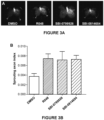
- the unilateral pyramidotomy model was employed, in which the pyramid in the ventral brainstem was severed unilaterally, rostral to the decussation of corticospinal tract (CST) axons.
- CST corticospinal tract
- the animals then received bilateral cortical injections of a compound described herein (or DMSO) mixed 1:1 with AAV8-UbC-GFP or AAV8-UbC-TdTomato (5x10 13 GC/mL) for a final concentration of 2mM (2 animals (mice) for each condition).
Landscapes
- Chemical & Material Sciences (AREA)
- Organic Chemistry (AREA)
- Health & Medical Sciences (AREA)
- Engineering & Computer Science (AREA)
- Bioinformatics & Cheminformatics (AREA)
- Biomedical Technology (AREA)
- Neurology (AREA)
- Neurosurgery (AREA)
- Life Sciences & Earth Sciences (AREA)
- Public Health (AREA)
- Medicinal Chemistry (AREA)
- Veterinary Medicine (AREA)
- General Health & Medical Sciences (AREA)
- Pharmacology & Pharmacy (AREA)
- Animal Behavior & Ethology (AREA)
- Chemical Kinetics & Catalysis (AREA)
- General Chemical & Material Sciences (AREA)
- Nuclear Medicine, Radiotherapy & Molecular Imaging (AREA)
- Psychiatry (AREA)
- Hospice & Palliative Care (AREA)
- Epidemiology (AREA)
- Pain & Pain Management (AREA)
- Psychology (AREA)
- Pharmaceuticals Containing Other Organic And Inorganic Compounds (AREA)
- Pyridine Compounds (AREA)
- Plural Heterocyclic Compounds (AREA)
- Nitrogen Condensed Heterocyclic Rings (AREA)
- Pyrrole Compounds (AREA)
Applications Claiming Priority (3)
| Application Number | Priority Date | Filing Date | Title |
|---|---|---|---|
| US201762579368P | 2017-10-31 | 2017-10-31 | |
| EP18811401.1A EP3704103B1 (de) | 2017-10-31 | 2018-10-31 | Kinaseinhibitoren zur behandlung von erkrankungen des zentralen und peripheren nervensystems |
| PCT/US2018/058411 WO2019089729A1 (en) | 2017-10-31 | 2018-10-31 | Kinase inhibitors for the treatment of central and peripheral nervous system disorders |
Related Parent Applications (1)
| Application Number | Title | Priority Date | Filing Date |
|---|---|---|---|
| EP18811401.1A Division EP3704103B1 (de) | 2017-10-31 | 2018-10-31 | Kinaseinhibitoren zur behandlung von erkrankungen des zentralen und peripheren nervensystems |
Publications (2)
| Publication Number | Publication Date |
|---|---|
| EP4574153A2 true EP4574153A2 (de) | 2025-06-25 |
| EP4574153A3 EP4574153A3 (de) | 2025-07-23 |
Family
ID=64557124
Family Applications (2)
| Application Number | Title | Priority Date | Filing Date |
|---|---|---|---|
| EP24223406.0A Pending EP4574153A3 (de) | 2017-10-31 | 2018-10-31 | Kinasehemmer zur behandlung von erkrankungen des zentralen und peripheren nervensystems |
| EP18811401.1A Active EP3704103B1 (de) | 2017-10-31 | 2018-10-31 | Kinaseinhibitoren zur behandlung von erkrankungen des zentralen und peripheren nervensystems |
Family Applications After (1)
| Application Number | Title | Priority Date | Filing Date |
|---|---|---|---|
| EP18811401.1A Active EP3704103B1 (de) | 2017-10-31 | 2018-10-31 | Kinaseinhibitoren zur behandlung von erkrankungen des zentralen und peripheren nervensystems |
Country Status (8)
| Country | Link |
|---|---|
| US (2) | US11926613B2 (de) |
| EP (2) | EP4574153A3 (de) |
| JP (1) | JP7329509B2 (de) |
| KR (1) | KR102805772B1 (de) |
| CN (1) | CN111801322B (de) |
| AU (1) | AU2018359413B2 (de) |
| IL (1) | IL274067B2 (de) |
| WO (1) | WO2019089729A1 (de) |
Families Citing this family (3)
| Publication number | Priority date | Publication date | Assignee | Title |
|---|---|---|---|---|
| CN116375746B (zh) * | 2021-12-23 | 2025-08-05 | 上海馨远医药科技有限公司 | 一种(2-氟-6-羟基苯基)三氟硼酸钾的制备方法 |
| WO2023122325A2 (en) * | 2021-12-23 | 2023-06-29 | Regents Of The University Of Michigan | Meta anilide compounds and methods for use of the same to treat diseases and disorders |
| CN114605325A (zh) * | 2022-03-23 | 2022-06-10 | 天方药业有限公司 | 一种医药中间体吡唑-4-乙酸盐酸盐的制备方法 |
Citations (1)
| Publication number | Priority date | Publication date | Assignee | Title |
|---|---|---|---|---|
| US5466468A (en) | 1990-04-03 | 1995-11-14 | Ciba-Geigy Corporation | Parenterally administrable liposome formulation comprising synthetic lipids |
Family Cites Families (7)
| Publication number | Priority date | Publication date | Assignee | Title |
|---|---|---|---|---|
| EP0687249A1 (de) * | 1993-03-03 | 1995-12-20 | Eli Lilly And Company | Balanoide als proteinkinase c inhibitoren |
| AU686691B2 (en) * | 1994-01-12 | 1998-02-12 | F. Hoffmann-La Roche Ag | Novel azepanes and homologs thereof |
| US6887864B2 (en) * | 2002-03-12 | 2005-05-03 | Hoffmann-La Roche Inc. | Azepane derivatives |
| WO2007095586A2 (en) * | 2006-02-14 | 2007-08-23 | The Trustees Of Columbia University In The City Of New York | Neuronal pain pathway modulators |
| EP3013339B1 (de) * | 2013-06-26 | 2018-09-12 | The Trustees of Columbia University in the City of New York | Markierte pkg-1-alpha-bindende verbindungen und deren verwendung zur abbildung und quantifizierung von schmerzen |
| CN104610233B (zh) * | 2013-11-04 | 2016-06-08 | 天津键凯科技有限公司 | 具有更高蛋白激酶g抑制活性的化合物及其制备方法 |
| US20170147743A1 (en) * | 2015-11-23 | 2017-05-25 | University Of Miami | Rapid identification of pharmacological targets and anti-targets for drug discovery and repurposing |
-
2018
- 2018-10-31 JP JP2020524043A patent/JP7329509B2/ja active Active
- 2018-10-31 AU AU2018359413A patent/AU2018359413B2/en active Active
- 2018-10-31 WO PCT/US2018/058411 patent/WO2019089729A1/en not_active Ceased
- 2018-10-31 US US16/760,365 patent/US11926613B2/en active Active
- 2018-10-31 KR KR1020207014843A patent/KR102805772B1/ko active Active
- 2018-10-31 CN CN201880084890.5A patent/CN111801322B/zh active Active
- 2018-10-31 EP EP24223406.0A patent/EP4574153A3/de active Pending
- 2018-10-31 IL IL274067A patent/IL274067B2/en unknown
- 2018-10-31 EP EP18811401.1A patent/EP3704103B1/de active Active
-
2024
- 2024-03-11 US US18/601,218 patent/US20250145586A1/en active Pending
Patent Citations (1)
| Publication number | Priority date | Publication date | Assignee | Title |
|---|---|---|---|---|
| US5466468A (en) | 1990-04-03 | 1995-11-14 | Ciba-Geigy Corporation | Parenterally administrable liposome formulation comprising synthetic lipids |
Non-Patent Citations (5)
| Title |
|---|
| "Pharmaceutics and Pharmacy Practice", 1982, J. B. LIPPINCOTT CO., pages: 238 - 250 |
| AL-ALI ET AL., ACS CHEM BIOL., vol. 10, no. 183311-28-6, 2015, pages 1939 - 512015 |
| AL-ALI ET AL.: "Assay Guidance Manual", 15 October 2013, ELI LILLY & COMPANY, article "High Content Screening with Primary Neurons" |
| S. M. BERGE ET AL., J. PHARMACEUTICAL SCIENCES, vol. 66, 1977, pages 1 - 19 |
| TOISSEL: "ASHP Handbook on Injectable Drugs", 1986, pages: 622 - 630 |
Also Published As
| Publication number | Publication date |
|---|---|
| EP3704103B1 (de) | 2025-01-01 |
| AU2018359413A1 (en) | 2020-05-07 |
| CN111801322A (zh) | 2020-10-20 |
| CN111801322B (zh) | 2024-03-15 |
| IL274067A (en) | 2020-06-30 |
| EP4574153A3 (de) | 2025-07-23 |
| KR20200080273A (ko) | 2020-07-06 |
| IL274067B (en) | 2022-11-01 |
| US20210163444A1 (en) | 2021-06-03 |
| US11926613B2 (en) | 2024-03-12 |
| IL274067B2 (en) | 2023-03-01 |
| US20250145586A1 (en) | 2025-05-08 |
| EP3704103A1 (de) | 2020-09-09 |
| JP2021503442A (ja) | 2021-02-12 |
| KR102805772B1 (ko) | 2025-05-14 |
| JP7329509B2 (ja) | 2023-08-18 |
| WO2019089729A1 (en) | 2019-05-09 |
| AU2018359413B2 (en) | 2023-11-23 |
Similar Documents
| Publication | Publication Date | Title |
|---|---|---|
| KR102534962B1 (ko) | 8,9-디하이드로이미다졸[1,2-a]피리미도[5,4-e]피리미딘-5(6H)-케톤계 화합물 | |
| AU2018302026B2 (en) | TLR7/8 antagonists and uses thereof | |
| EP3068784B1 (de) | Substituierte 4,5,6,7-tetrahydropyrazolo[1,5-a]pyrazin-derivative als casein-kinase-1-d/e-inhibitoren | |
| KR102653190B1 (ko) | 고 활성 sting 단백질 작용제 화합물 | |
| US20250145586A1 (en) | Kinase inhibitors for the treatment of central and peripheral nervous system disorders | |
| EP2780332B1 (de) | Morpholinylbenzotriazine zur anwendung in der krebstherapie | |
| RS65319B1 (sr) | 8-cijano-5-piperidino-hinolini kao tlr7/8 antagonisti i njihova upotreba u lečenju imunoloških poremećaja | |
| CN106255679A (zh) | 用作na v通道抑制剂的杂环化合物及其用途 | |
| JP5073655B2 (ja) | キナーゼ阻害物質として有用なピロロトリアジンおよびそれを用いるキナーゼ関連疾患の治療方法 | |
| ES2927529T3 (es) | Compuesto heterocíclico condensado | |
| CA3178129A1 (en) | Pyridopyrimidinone derivatives and their use as aryl hydrocarbon receptor modulators | |
| EP2807162B1 (de) | Substituierte phenylimidazopyrazole und ihre verwendung | |
| EP3842437A1 (de) | Sting-proteinagonist mit hoher aktivität | |
| US20190062274A1 (en) | Heterocyclic compound | |
| EP3383865B1 (de) | Furanderivate als hemmer von atad2 | |
| CA3181351A1 (en) | Nampt modulators | |
| EP3013804B1 (de) | Phthalazin-derivate | |
| EP4671239A1 (de) | Arylsubstituentenhaltiges abbaumittel für cdk12/13, herstellungsverfahren dafür und pharmazeutische zusammensetzung und verwendung davon | |
| EP3878841B1 (de) | Indazol-kinase-inhibitor und verwendung davon | |
| EP4495111A1 (de) | Neuartige verbindung und verwendung davon zur hemmung der checkpoint-kinase 2 | |
| WO2024227026A1 (en) | Heterocyclic compounds as parp1 inhibitors | |
| HK40044966A (en) | High activity sting protein agonist |
Legal Events
| Date | Code | Title | Description |
|---|---|---|---|
| PUAI | Public reference made under article 153(3) epc to a published international application that has entered the european phase |
Free format text: ORIGINAL CODE: 0009012 |
|
| STAA | Information on the status of an ep patent application or granted ep patent |
Free format text: STATUS: THE APPLICATION HAS BEEN PUBLISHED |
|
| REG | Reference to a national code |
Ref country code: DE Ref legal event code: R079 Free format text: PREVIOUS MAIN CLASS: A61K0031506000 Ipc: C07D0401120000 |
|
| PUAL | Search report despatched |
Free format text: ORIGINAL CODE: 0009013 |
|
| AC | Divisional application: reference to earlier application |
Ref document number: 3704103 Country of ref document: EP Kind code of ref document: P |
|
| AK | Designated contracting states |
Kind code of ref document: A2 Designated state(s): AL AT BE BG CH CY CZ DE DK EE ES FI FR GB GR HR HU IE IS IT LI LT LU LV MC MK MT NL NO PL PT RO RS SE SI SK SM TR |
|
| AK | Designated contracting states |
Kind code of ref document: A3 Designated state(s): AL AT BE BG CH CY CZ DE DK EE ES FI FR GB GR HR HU IE IS IT LI LT LU LV MC MK MT NL NO PL PT RO RS SE SI SK SM TR |
|
| RIC1 | Information provided on ipc code assigned before grant |
Ipc: C07D 401/12 20060101AFI20250617BHEP Ipc: C07D 403/12 20060101ALI20250617BHEP Ipc: C07D 207/14 20060101ALI20250617BHEP Ipc: C07D 213/81 20060101ALI20250617BHEP Ipc: C07D 471/04 20060101ALI20250617BHEP Ipc: A61P 25/00 20060101ALI20250617BHEP Ipc: A61P 25/16 20060101ALI20250617BHEP Ipc: A61P 25/18 20060101ALI20250617BHEP Ipc: A61P 25/22 20060101ALI20250617BHEP Ipc: A61P 25/24 20060101ALI20250617BHEP Ipc: A61P 25/28 20060101ALI20250617BHEP Ipc: A61K 31/4439 20060101ALI20250617BHEP Ipc: A61K 31/455 20060101ALI20250617BHEP Ipc: A61K 31/506 20060101ALI20250617BHEP |
|
| STAA | Information on the status of an ep patent application or granted ep patent |
Free format text: STATUS: REQUEST FOR EXAMINATION WAS MADE |
|
| STAA | Information on the status of an ep patent application or granted ep patent |
Free format text: STATUS: EXAMINATION IS IN PROGRESS |
|
| 17P | Request for examination filed |
Effective date: 20260123 |
|
| 17Q | First examination report despatched |
Effective date: 20260212 |