EP4570837A1 - Polymerkontrastmittel - Google Patents
Polymerkontrastmittel Download PDFInfo
- Publication number
- EP4570837A1 EP4570837A1 EP23852648.7A EP23852648A EP4570837A1 EP 4570837 A1 EP4570837 A1 EP 4570837A1 EP 23852648 A EP23852648 A EP 23852648A EP 4570837 A1 EP4570837 A1 EP 4570837A1
- Authority
- EP
- European Patent Office
- Prior art keywords
- group
- copolymer
- copolymer according
- hydrogen atom
- substituent
- Prior art date
- Legal status (The legal status is an assumption and is not a legal conclusion. Google has not performed a legal analysis and makes no representation as to the accuracy of the status listed.)
- Pending
Links
Images



Classifications
-
- A—HUMAN NECESSITIES
- A61—MEDICAL OR VETERINARY SCIENCE; HYGIENE
- A61K—PREPARATIONS FOR MEDICAL, DENTAL OR TOILETRY PURPOSES
- A61K49/00—Preparations for testing in vivo
- A61K49/06—Nuclear magnetic resonance [NMR] contrast preparations; Magnetic resonance imaging [MRI] contrast preparations
- A61K49/08—Nuclear magnetic resonance [NMR] contrast preparations; Magnetic resonance imaging [MRI] contrast preparations characterised by the carrier
- A61K49/10—Organic compounds
- A61K49/12—Macromolecular compounds
-
- A—HUMAN NECESSITIES
- A61—MEDICAL OR VETERINARY SCIENCE; HYGIENE
- A61K—PREPARATIONS FOR MEDICAL, DENTAL OR TOILETRY PURPOSES
- A61K49/00—Preparations for testing in vivo
- A61K49/06—Nuclear magnetic resonance [NMR] contrast preparations; Magnetic resonance imaging [MRI] contrast preparations
- A61K49/08—Nuclear magnetic resonance [NMR] contrast preparations; Magnetic resonance imaging [MRI] contrast preparations characterised by the carrier
- A61K49/085—Nuclear magnetic resonance [NMR] contrast preparations; Magnetic resonance imaging [MRI] contrast preparations characterised by the carrier conjugated systems
-
- A—HUMAN NECESSITIES
- A61—MEDICAL OR VETERINARY SCIENCE; HYGIENE
- A61K—PREPARATIONS FOR MEDICAL, DENTAL OR TOILETRY PURPOSES
- A61K47/00—Medicinal preparations characterised by the non-active ingredients used, e.g. carriers or inert additives; Targeting or modifying agents chemically bound to the active ingredient
- A61K47/30—Macromolecular organic or inorganic compounds, e.g. inorganic polyphosphates
- A61K47/32—Macromolecular compounds obtained by reactions only involving carbon-to-carbon unsaturated bonds, e.g. carbomers, poly(meth)acrylates, or polyvinyl pyrrolidone
-
- A—HUMAN NECESSITIES
- A61—MEDICAL OR VETERINARY SCIENCE; HYGIENE
- A61K—PREPARATIONS FOR MEDICAL, DENTAL OR TOILETRY PURPOSES
- A61K49/00—Preparations for testing in vivo
- A61K49/06—Nuclear magnetic resonance [NMR] contrast preparations; Magnetic resonance imaging [MRI] contrast preparations
- A61K49/08—Nuclear magnetic resonance [NMR] contrast preparations; Magnetic resonance imaging [MRI] contrast preparations characterised by the carrier
- A61K49/10—Organic compounds
- A61K49/12—Macromolecular compounds
- A61K49/126—Linear polymers, e.g. dextran, inulin, PEG
- A61K49/128—Linear polymers, e.g. dextran, inulin, PEG comprising multiple complex or complex-forming groups, being either part of the linear polymeric backbone or being pending groups covalently linked to the linear polymeric backbone
-
- A—HUMAN NECESSITIES
- A61—MEDICAL OR VETERINARY SCIENCE; HYGIENE
- A61K—PREPARATIONS FOR MEDICAL, DENTAL OR TOILETRY PURPOSES
- A61K49/00—Preparations for testing in vivo
- A61K49/06—Nuclear magnetic resonance [NMR] contrast preparations; Magnetic resonance imaging [MRI] contrast preparations
- A61K49/18—Nuclear magnetic resonance [NMR] contrast preparations; Magnetic resonance imaging [MRI] contrast preparations characterised by a special physical form, e.g. emulsions, microcapsules, liposomes
- A61K49/1818—Nuclear magnetic resonance [NMR] contrast preparations; Magnetic resonance imaging [MRI] contrast preparations characterised by a special physical form, e.g. emulsions, microcapsules, liposomes particles, e.g. uncoated or non-functionalised microparticles or nanoparticles
-
- C—CHEMISTRY; METALLURGY
- C08—ORGANIC MACROMOLECULAR COMPOUNDS; THEIR PREPARATION OR CHEMICAL WORKING-UP; COMPOSITIONS BASED THEREON
- C08F—MACROMOLECULAR COMPOUNDS OBTAINED BY REACTIONS ONLY INVOLVING CARBON-TO-CARBON UNSATURATED BONDS
- C08F220/00—Copolymers of compounds having one or more unsaturated aliphatic radicals, each having only one carbon-to-carbon double bond, and only one being terminated by only one carboxyl radical or a salt, anhydride ester, amide, imide or nitrile thereof
- C08F220/02—Monocarboxylic acids having less than ten carbon atoms; Derivatives thereof
- C08F220/10—Esters
- C08F220/12—Esters of monohydric alcohols or phenols
- C08F220/16—Esters of monohydric alcohols or phenols of phenols or of alcohols containing two or more carbon atoms
- C08F220/18—Esters of monohydric alcohols or phenols of phenols or of alcohols containing two or more carbon atoms with acrylic or methacrylic acids
- C08F220/1807—C7-(meth)acrylate, e.g. heptyl (meth)acrylate or benzyl (meth)acrylate
-
- C—CHEMISTRY; METALLURGY
- C08—ORGANIC MACROMOLECULAR COMPOUNDS; THEIR PREPARATION OR CHEMICAL WORKING-UP; COMPOSITIONS BASED THEREON
- C08F—MACROMOLECULAR COMPOUNDS OBTAINED BY REACTIONS ONLY INVOLVING CARBON-TO-CARBON UNSATURATED BONDS
- C08F220/00—Copolymers of compounds having one or more unsaturated aliphatic radicals, each having only one carbon-to-carbon double bond, and only one being terminated by only one carboxyl radical or a salt, anhydride ester, amide, imide or nitrile thereof
- C08F220/02—Monocarboxylic acids having less than ten carbon atoms; Derivatives thereof
- C08F220/10—Esters
- C08F220/26—Esters containing oxygen in addition to the carboxy oxygen
- C08F220/28—Esters containing oxygen in addition to the carboxy oxygen containing no aromatic rings in the alcohol moiety
- C08F220/281—Esters containing oxygen in addition to the carboxy oxygen containing no aromatic rings in the alcohol moiety and containing only one oxygen, e.g. furfuryl (meth)acrylate or 2-methoxyethyl (meth)acrylate
-
- C—CHEMISTRY; METALLURGY
- C08—ORGANIC MACROMOLECULAR COMPOUNDS; THEIR PREPARATION OR CHEMICAL WORKING-UP; COMPOSITIONS BASED THEREON
- C08F—MACROMOLECULAR COMPOUNDS OBTAINED BY REACTIONS ONLY INVOLVING CARBON-TO-CARBON UNSATURATED BONDS
- C08F220/00—Copolymers of compounds having one or more unsaturated aliphatic radicals, each having only one carbon-to-carbon double bond, and only one being terminated by only one carboxyl radical or a salt, anhydride ester, amide, imide or nitrile thereof
- C08F220/02—Monocarboxylic acids having less than ten carbon atoms; Derivatives thereof
- C08F220/10—Esters
- C08F220/26—Esters containing oxygen in addition to the carboxy oxygen
- C08F220/28—Esters containing oxygen in addition to the carboxy oxygen containing no aromatic rings in the alcohol moiety
- C08F220/285—Esters containing oxygen in addition to the carboxy oxygen containing no aromatic rings in the alcohol moiety and containing a polyether chain in the alcohol moiety
- C08F220/286—Esters containing oxygen in addition to the carboxy oxygen containing no aromatic rings in the alcohol moiety and containing a polyether chain in the alcohol moiety and containing polyethylene oxide in the alcohol moiety, e.g. methoxy polyethylene glycol (meth)acrylate
-
- C—CHEMISTRY; METALLURGY
- C07—ORGANIC CHEMISTRY
- C07D—HETEROCYCLIC COMPOUNDS
- C07D257/00—Heterocyclic compounds containing rings having four nitrogen atoms as the only ring hetero atoms
- C07D257/02—Heterocyclic compounds containing rings having four nitrogen atoms as the only ring hetero atoms not condensed with other rings
-
- C—CHEMISTRY; METALLURGY
- C08—ORGANIC MACROMOLECULAR COMPOUNDS; THEIR PREPARATION OR CHEMICAL WORKING-UP; COMPOSITIONS BASED THEREON
- C08F—MACROMOLECULAR COMPOUNDS OBTAINED BY REACTIONS ONLY INVOLVING CARBON-TO-CARBON UNSATURATED BONDS
- C08F2438/00—Living radical polymerisation
- C08F2438/03—Use of a di- or tri-thiocarbonylthio compound, e.g. di- or tri-thioester, di- or tri-thiocarbamate, or a xanthate as chain transfer agent, e.g . Reversible Addition Fragmentation chain Transfer [RAFT] or Macromolecular Design via Interchange of Xanthates [MADIX]
Definitions
- the present invention relates to a polymer contrast agent useful for nuclear magnetic resonance imaging. More specifically, the present invention relates to a paramagnetic metal-containing polymer contrast agent.
- DDS drug delivery systems
- cancer still accounts for a large proportion of noncommunicable disease-related deaths.
- molecular targeted therapy using antibody drugs there has been active development of in vitro diagnostic drugs for purpose of testing malignant tumorrelated genes.
- in vitro diagnostic drugs for purpose of testing malignant tumorrelated genes.
- cancers which are difficult to find at an early stage, and thus it is desired to further improve diagnosis accuracy by utilizing various diagnosis modalities.
- MRI magnetic resonance imaging
- Imaging methods by the MRI are roughly divided into contrast MRI using a contrast agent and simple MRI without the contrast-enhanced agent.
- Gadolinium (Gd) which is a paramagnetic material, is often used as the contrast agent in the contrast MRI. Because Gd is a metal of a rare earth element, Gd has strong toxicity in the body, and thus a compound in which Gd is complexed with a chelating agent has been used.
- a contrast enhancement effect of the contrast agent and a temporal change thereof are utilized.
- an existing contrast agent is diffused into the whole body immediately after administration and then excreted, it has a limited period of time in the imaging, and it is difficult to achieve a remarkable effect in imaging of tumors other than those in the brain. Therefore, the contrast agent is used for purpose of auxiliary data acquisition.
- gadoxetate disodium (trade name: EOB ⁇ Primovist Injection Syringes, manufactured and sold by Bayer Holding Ltd.) imparts a specific uptake effect to normal hepatocytes by converting a substituent of the chelating agent to an aromatic ring. This effect prolongs a retention time of the contrast agent in a normal liver tissue, and thus can be applied to differentiation of liver tumors. However, this is not applicable for differentiation of tumors of other organs. As such, an MRI contrast agent capable of differentiating tumors of various organs in a wide range has not yet been put into practical use.
- Drug delivery carriers are therefore required to have the ability to avoid barriers such as non-specific interactions with blood components, foreign body recognition by the reticuloendothelial system (RES) in the liver, spleen, and lungs, and glomerular filtration in the kidneys.
- RES reticuloendothelial system
- these barriers can be overcome by optimizing particle properties such as particle diameter and surface modification with a biocompatible polymer.
- the particle diameter of the drug delivery carrier be greater than about 6 nm, which is the threshold for renal clearance, and less than 200 nm, which may avoid recognition by the RES.
- the particle diameter of the drug delivery carrier is also known to affect tissue permeation at a disease site.
- the anticancer activity of drug-encapsulating nanoparticles with particle diameters measuring 30 nm, 50 nm, 70 nm, and 100 nm, which exhibit equivalent blood retention has been compared and studied, and it has been revealed that drug-encapsulating nanoparticles with a particle diameter of 30 nm reach the deep parts of a disease site and thus exhibit the highest therapeutic effect (Non-Patent Literature 1). Therefore, it would be desirable for the particle diameter of nanoparticles for a drug delivery carrier targeting solid cancer to be as small as possible within the range that avoids renal clearance.
- nanoparticles for drug delivery carriers methods using colloidal dispersions such as liposomes, emulsions, or nanoparticles, methods using biologically derived raw materials such as albumin, methods using natural polymers such as natural polysaccharides, or methods using synthetic polymers, have been developed.
- synthetic polymers are widely used as constituents of drug delivery carriers because it is possible to prepare nanoparticles whose particle diameter is precisely controlled by appropriately selecting monomers as constituent components and synthesis methods.
- a method for utilizing an amphiphilic block copolymer composed of a hydrophilic segment and a hydrophobic segment as a drug delivery carrier is disclosed.
- the block copolymer spontaneously associates in an aqueous medium by, for example, hydrophobic interaction between molecules as a driving force to form core-shell type nanoparticles (polymeric micelles).
- core-shell type nanoparticles polymeric micelles.
- the polymeric micelle is an assembly of multiple molecules, a particle diameter of about 30 nm is the lower limit value that can be prepared.
- a method in which iron microparticles coated with polysaccharides are used Non-Patent Literature 2
- a method in which a paramagnetic metal complex is contained in a liposome Patent Literature 2
- a method in which a paramagnetic metal complex is bonded to a synthetic polymer (block copolymer) to form a polymeric micelle Patent Literature 3
- the lower limit of the particle diameter of each of the nanoparticles is about 20 nm, and it has not been achieved to finely control the particle diameter around 10 nm where influence of renal clearance can be avoided.
- SCNPs single chain nanoparticles
- An object of the present invention is to provide a new polymer contrast agent, and more specifically, an MRI polymer contrast agent capable of widely differentiating tumors of various organs.
- the present inventors conducted extensive research and discovered that a terpolymer of an acrylic acid derivative has the property of forming SCNPs in water. Furthermore, the present inventors succeeded in creating a novel polymer for a drug delivery carrier, which is capable of precisely controlling the particle diameter of SCNPs at a minute scale of 20 nm or less and about 10 nm, and has high tumor accumulation. Further, the present inventors also succeeded in creation of a derivative of the terpolymer that forms a contrast agent molecule-bonded SCNP in which contrast agent molecules are loaded into the polymer. As the contrast agent molecule-bonded SCNP was administered to a model mouse subcutaneously transplanted with a colon cancer, it exhibited an excellent imaging ability.
- the present invention relates to the following inventions.
- the polymer contrast agent in which the contrast agent molecules are loaded into SCNP obtained by self-association of the copolymer of the present invention can be applied as a diagnostic imaging drug for malignant tumors since the polymer contrast agent showed a temporal change in the imaging ability in a C26-transplanted, tumor-bearing mouse. Further, since the polymer contrast agent of the present invention has high imaging ability at a low dose, it is possible to provide a diagnostic imaging drug for malignant tumors capable of achieving both action enhancement and side effect suppression.
- nanoparticle refers to a structure having a particle diameter of 100 nm or less.
- single chain nanoparticle refers to a nanoparticle formed by using, for example, chemical crosslinking, hydrophobic interaction, or ionic bonding in a single chain as a driving force.
- the SCNP often indicates a nanoparticle having a relatively small particle diameter of 20 nm or less among nanoparticles.
- initiator means an initiator for thermal radical polymerization such as an azo compound or a peroxide.
- chain transfer agent refers to a compound that causes a chain transfer reaction in radical polymerization, and is preferably a compound having a thiocarbonyl group.
- C 1-3 alkyl group means a linear or branched, alkyl group having 1 to 3 carbon atoms, and examples thereof include a methyl group, an ethyl group, an n-propyl group, and an isopropyl group.
- C 1-18 alkyl group means a linear or branched, alkyl group having 1 to 18 carbon atoms, and examples thereof include a methyl group, an ethyl group, an n-propyl group, an isopropyl group, an n-butyl group, an isobutyl group, a sec-butyl group, a tert-butyl group, a pentyl group, a hexyl group, a heptyl group, an octyl group, a nonyl group, a decyl group, an undecyl group, a dodecyl group, a tridecyl group, a tetradecyl group, a pentadecyl group, a hexadecyl group, a heptadecyl group, and an octadecyl group.
- the term "3- to 8-membered cycloalkyl group optionally having a substituent” means a cyclic alkyl group having 3 to 8 carbon atoms, and examples thereof include a cyclopropyl group, a cyclobutyl group, a cyclopentyl group, a cyclohexyl group, a cycloheptyl group, and a cyclooctyl group.
- the substituent is not particularly limited, and examples thereof include a halogen atom, an alkyl group having 1 to 6 carbon atoms, an alkenyl group having 2 to 6 carbon atoms, an alkynyl group having 2 to 6 carbon atoms, a hydroxyl group, an alkoxy group having 1 to 6 carbon atoms, an amino group, an alkylamino group having 1 to 6 carbon atoms, a di-alkylamino group having 1 to 6 carbon atoms in which alkyl groups are the same or different, a thiol group, an alkylthio group having 1 to 6 carbon atoms, a carboxyl group, an alkoxycarbonyl group having 1 to 6 carbon atoms, and a carbamoyl group.
- a halogen atom an alkyl group having 1 to 6 carbon atoms, an alkenyl group having 2 to 6 carbon atoms, an alkynyl group having 2 to 6 carbon atoms, a hydroxyl group
- C 6-18 aryl group optionally having a substituent means a monocyclic or polycyclic condensed aromatic hydrocarbon group, and examples thereof include a phenyl group, a naphthyl group, an anthracenyl group, a phenanthrenyl group, a triphenylenyl group, a pyrenyl group, a chrysenyl group, and a naphthacenyl group.
- a "C 6-14 aryl group optionally having a substituent” means a monocyclic or polycyclic condensed aromatic hydrocarbon group, and examples thereof include a phenyl group, a naphthyl group, an anthracenyl group, and a phenanthrenyl group.
- the substituent is not particularly limited, and examples thereof include a halogen atom, an alkyl group having 1 to 6 carbon atoms, an alkenyl group having 2 to 6 carbon atoms, an alkynyl group having 2 to 6 carbon atoms, a hydroxyl group, an alkoxy group having 1 to 6 carbon atoms, an amino group, an alkylamino group having 1 to 6 carbon atoms, a di-alkylamino group having 1 to 6 carbon atoms in which alkyl groups are the same or different, a thiol group, an alkylthio group having 1 to 6 carbon atoms, a carboxyl group, an alkoxycarbonyl group having 1 to 6 carbon atoms, and a carbamoyl group.
- a halogen atom an alkyl group having 1 to 6 carbon atoms, an alkenyl group having 2 to 6 carbon atoms, an alkynyl group having 2 to 6 carbon atoms, a hydroxyl group
- the term "5- to 10-membered heteroaryl group optionally having a substituent” means a 5- to 10-membered, monocyclic aromatic heterocyclic group or condensed aromatic heterocyclic group containing 1 to 4 heteroatoms selected from a nitrogen atom, an oxygen atom, and a sulfur atom, other than a carbon atom, as atoms constituting the ring.
- Examples of the monocyclic aromatic heterocyclic group include a furyl group, a thienyl group, a pyrrolyl group, a pyridinyl group, a pyrazinyl group, a pyrimidinyl group, a pyridazinyl group, an imidazolyl group, a pyrazyl group, a thiallyl group, an oxazolyl group, an isoxazolyl group, a 1,3,4-thiadiazolyl group, a 1,2,3-triazolyl group, a 1,2,4-triazolyl group, and a tetrazolyl group.
- Examples of the condensed aromatic heterocyclic group include a benzofuranyl group, a benzothiophenyl group, a quinoxalinyl group, an indolyl group, an isoindolyl group, an isobenzofuranyl group, a chromanyl group, a benzimidazolyl group, a benzothiazolyl group, a benzoxazolyl group, a quinolyl group, and an isoquinolinyl group.
- 6- to 10-membered heteroaryl group optionally having a substituent means a 6- to 10-membered, monocyclic aromatic heterocyclic group or condensed aromatic heterocyclic group containing 1 to 4 heteroatoms selected from a nitrogen atom, an oxygen atom, and a sulfur atom, other than a carbon atom, as the atoms constituting the ring.
- monocyclic aromatic heterocyclic group include a pyridinyl group, a pyrazinyl group, a pyrimidinyl group, and a pyridazinyl group.
- Examples of the condensed aromatic heterocyclic group include a benzofuranyl group, a benzothiophenyl group, a quinoxalinyl group, an indolyl group, an isoindolyl group, an isobenzofuranyl group, a chromanyl group, a benzimidazolyl group, a benzothiazolyl group, a benzoxazolyl group, a quinolyl group, and an isoquinolinyl group.
- the substituent is not particularly limited, and examples thereof include a halogen atom, an alkyl group having 1 to 6 carbon atoms, an alkenyl group having 2 to 6 carbon atoms, an alkynyl group having 2 to 6 carbon atoms, a hydroxyl group, an alkoxy group having 1 to 6 carbon atoms, an amino group, an alkylamino group having 1 to 6 carbon atoms, a di-alkylamino group having 1 to 6 carbon atoms in which alkyl groups are the same or different, a thiol group, an alkylthio group having 1 to 6 carbon atoms, a carboxyl group, an alkoxycarbonyl group having 1 to 6 carbon atoms, and a carbamoyl group.
- a halogen atom an alkyl group having 1 to 6 carbon atoms, an alkenyl group having 2 to 6 carbon atoms, an alkynyl group having 2 to 6 carbon atoms, a hydroxyl group
- halogen atom examples include a fluorine atom, a chlorine atom, a bromine atom, and an iodine atom.
- hydroxyalkyl group means a linear or branched, alkyl group having 1 to 3 carbon atoms in which one hydrogen atom is substituted with a hydroxyl group, and examples thereof include a hydroxymethyl group, a hydroxyethyl group, and a hydroxypropyl group.
- arylene group means a divalent aromatic hydrocarbon cyclic group having 6 to 10 carbon atoms, and examples thereof include phenylene and naphthylene.
- cycloalkylene group means a divalent cyclic saturated hydrocarbon group having 3 to 7 carbon atoms, and examples thereof include cyclopropylene, cyclobutylene, cyclopentylene, cyclohexylene, and cycloheptylene.
- the "contrast agent” is a compound to be administered into the body for purpose of improving accuracy of diagnostic imaging, and is a drug used in, for example, the MRI, computed tomography (CT), positron emission tomography (PET), single photon emission computed tomography (SPECT), or ultrasonic diagnostic imaging.
- the contrast agent is usually a compound (contrast agent molecule) in which the paramagnetic metal is coordinated to respective chelating agent molecules.
- the contrast agent molecule may be loaded into the copolymer by an action such as electrostatic interaction, hydrogen bond, hydrophobic interaction, or covalent bond to the copolymer X of the present invention.
- the "chelating agent molecule” is a compound that forms a complex by a coordination bond to a metal ion.
- the metal ion is preferably a paramagnetic metal ion.
- the "pharmaceutical composition” means one composed of the copolymer (hereinafter, also referred to as the chelating agent-bonded copolymer or the contrast agent molecule-bonded copolymer) in which the chelating agent molecule or the contrast agent molecule is bonded to (loaded into due to an action such as electrostatic interaction, hydrogen bond, hydrophobic interaction, or covalent bond) the copolymer X of the present invention, and a carrier.
- the loading form of the contrast agent molecule include a form in which the contrast agent molecule is present on the particle surface, a form in which the contrast agent molecule is contained in a nanoparticle, and a combination form thereof where the contrast agent molecule-bonded copolymer forms the nanoparticle.
- One embodiment of the present invention is a copolymer (chelating agent molecule-bonded copolymer or contrast agent molecule-bonded copolymer) in which a chelating agent molecule or a contrast agent molecule is bonded to a copolymer X having structural units represented by the following formulas (A), (B), and (C): wherein, R 1 , R 2 , and R 3 are the same or different and represent a hydrogen atom or a C 1-3 alkyl group, R 4 represents a C 1-3 alkyl group, R 5 represents a hydrogen atom, a C 1-18 alkyl group, a 3- to 8-membered cycloalkyl group optionally having a substituent, an adamantyl group, a C 6-18 aryl group optionally having a substituent, or a 5-to 10-membered heteroaryl group optionally having a substituent, X 1 , X 2 , and X 3 are the same or different and represent an oxygen atom, a
- the structural unit (A) functions as a unit that imparts hydrophilicity
- the structural unit (B) functions as a unit that imparts hydrophobicity
- the structural unit (C) functions as a scaffold to which an active ingredient (drug or contrast agent molecule) is bonded to the copolymer X, the chelating agent molecule-bonded copolymer, or the contrast agent molecule-bonded copolymer.
- R 1 in the structural unit (A) represents a hydrogen atom or a C 1-3 alkyl group, and is preferably a hydrogen atom or a methyl group, preferably a hydrogen atom, an ethyl group, or a propyl group, and more preferably a hydrogen atom.
- X 1 represents an oxygen atom, the sulfur atom, or N-R 7 , and is preferably an oxygen atom, a sulfur atom, or NH, and more preferably an oxygen atom.
- m represents an integer of 1 to 100, preferably an integer of 3 to 100, and from a viewpoint of imparting good hydrophilicity, preferably 3 to 80, more preferably from 4 to 60, still more preferably 4 to 40, and yet more preferably from 4 to 22.
- R 4 represents a C 1-3 alkyl group, specifically a methyl group, an ethyl group, an n-propyl group or an isopropyl group, preferably a methyl group or an ethyl group, and more preferably a methyl group.
- R 2 in the structural unit (B) represents a hydrogen atom or a C 1-3 alkyl group, and is preferably a hydrogen atom or a methyl group, preferably a hydrogen atom, an ethyl group, or a propyl group, and more preferably a hydrogen atom.
- X 2 represents an oxygen atom, a sulfur atom, or N-R 7 , and is preferably an oxygen atom, a sulfur atom, or NH, and more preferably an oxygen atom.
- n represents an integer of 0 to 3, preferably an integer of 1 to 3, and more preferably 1.
- R 5 represents a hydrogen atom, a C 1-18 alkyl group, a 3-to 8-membered cycloalkyl group optionally having a substituent, an adamantyl group, a C 6-18 aryl group optionally having a substituent, or a 5- to 10-membered heteroaryl group optionally having a substituent, and from a viewpoint of imparting the hydrophobicity to the structural unit (B), preferably a C 1-18 alkyl group, a 3- to 8-membered cycloalkyl group optionally having a substituent, an adamantyl group, a C 6-18 aryl group optionally having a substituent, or a 5- to 10-membered heteroaryl group optionally having a substituent, more preferably a C 1-18 alkyl group, a 3- to 8-membered cycloalkyl group optionally having a substituent, an adamantyl group, a C 6-18 aryl group optionally having a substitu
- a 3- to 8-membered cycloalkyl group optionally having a substituent, an adamantyl group, a C 6-14 aryl group optionally having a substituent, or a 6- to 10-membered heteroaryl group optionally having a substituent is also preferable.
- the substituent is preferably one or more types selected from a halogen atom, an alkyl group having 1 to 6 carbon atoms, an alkenyl group having 2 to 6 carbon atoms, and an alkynyl group having 2 to 6 carbon atoms.
- R 3 in the structural unit (C) represents a hydrogen atom or a C 1-3 alkyl group, and is preferably a hydrogen atom or a methyl group, preferably a hydrogen atom, an ethyl group, or a propyl group, and more preferably a hydrogen atom.
- X 3 represents an oxygen atom, a sulfur atom, or N-R 7 , and is preferably an oxygen atom, a sulfur atom, or NH, and more preferably an oxygen atom.
- R 6 represents a hydrogen atom, a leaving group, or a linker.
- the leaving group is a group that can detach when the structural unit (C) binds to the drug (contrast agent molecule) or the chelating agent molecule
- the linker is a group that can be used for crosslinking when the structural unit (C) binds to the drug (contrast agent molecule) or the chelating agent molecule.
- the leaving group or linker a C 1-18 alkyl group optionally having a substituent, a 3- to 8-membered cycloalkyl group optionally having a substituent, or a C 7-19 aralkyl group optionally having a substituent is preferable.
- examples of the substituent include a halogen atom, an alkyl group having 1 to 6 carbon atoms, an alkenyl group having 2 to 6 carbon atoms, an alkynyl group having 2 to 6 carbon atoms, a hydroxyl group, an alkoxy group having 1 to 6 carbon atoms, an amino group, an alkylamino group having 1 to 6 carbon atoms, a di-alkylamino group having 1 to 6 carbon atoms in which alkyl groups are the same or different, a thiol group, an alkylthio group having 1 to 6 carbon atoms, a carboxyl group, an alkoxycarbonyl group having 1 to 6 carbon atoms, and a carbamoyl group.
- the linker is preferably a group having a functional group such as a hydroxyl group, an amino group, a thiol group, or a carboxyl group as a substituent.
- Preferred examples of the leaving group of R 6 include a group represented by the following formula (4):
- Preferred examples of the linker of R 6 include groups selected from the following formulas (5) to (7).
- the copolymer X of the present invention is the copolymer having the structural units represented by formulas (A), (B) and (C).
- the copolymer X may be a random copolymer or a block copolymer and is preferably a random copolymer.
- a composition ratio of each structural unit in one molecule when (A) is 1 part by mass, preferably (B) is 0.01 to 100 parts by mass and (C) is 0.1 to 100 parts by mass; more preferably (B) is 0.05 to 18 parts by mass and (C) is 0.1 to 20 parts by mass, and particularly preferably (B) is 0.05 to 4 parts by mass and (C) is 0.1 to 16 parts by mass.
- a polymerization degree of the copolymer X of the present invention is not particularly limited, and the number average molecular weight thereof is preferably 5 000 to 150 000, and more preferably 8 000 to 150 000.
- the monomer represented by general formula (1) functions as a unit that imparts the hydrophilicity
- the monomer represented by general formula (2) functions as a unit that imparts the hydrophobicity
- the monomer represented by general formula (3) functions as a scaffold to which the drug and the copolymer are bonded.
- Examples of the monomer functioning as the hydrophobic unit represented by general formula (2) include monomers represented by the following formulas.
- R 1 represents a hydrogen atom or a C 1-3 alkyl group, and is preferably a hydrogen atom or a methyl group, preferably a hydrogen atom, an ethyl group, or a propyl group, and more preferably a hydrogen atom.
- R 2 represents a hydrogen atom or a C 1-3 alkyl group, and is preferably a hydrogen atom or a methyl group, preferably a hydrogen atom, an ethyl group, or a propyl group, and more preferably a hydrogen atom.
- R 3 represents a hydrogen atom or a C 1-3 alkyl group, and is preferably a hydrogen atom or a methyl group, preferably a hydrogen atom, an ethyl group, or a propyl group, and more preferably a hydrogen atom.
- R 4 represents a C 1-3 alkyl group, specifically a methyl group, an ethyl group, an n-propyl group or an isopropyl group, preferably a methyl group or an ethyl group, and more preferably a methyl group.
- X 1 represents an oxygen atom, a sulfur atom, or N-R 7 , and is preferably an oxygen atom, a sulfur atom, or NH, and more preferably an oxygen atom.
- m represents an integer of 1 to 100, and is preferably an integer of 3 to 100, and preferably 3 to 80, more preferably 4 to 60, still more preferably 4 to 40, and yet more preferably 4 to 22 from the viewpoint of imparting good hydrophilicity.
- R 5 represents a hydrogen atom, a C 1-18 alkyl group, a 3- to 8-membered cycloalkyl group optionally having a substituent, an adamantyl group, a C 6-18 aryl group optionally having a substituent, or a 5- to 10-membered heteroaryl group optionally having a substituent, and from the viewpoint of imparting hydrophobicity to the structural unit (B), a C 1-18 alkyl group, a 3- to 8-membered cycloalkyl group optionally having a substituent, an adamantyl group, a C 6-18 aryl group optionally having a substituent, or a 5- to 10-membered heteroaryl group optionally having a substituent is preferable, a C 1-18 alkyl group, a 3- to 8-membered cycloalkyl group optionally having a substituent, an adamantyl group, a C 6-18 aryl group optionally having a substituent, or
- a 3- to 8-membered cycloalkyl group optionally having a substituent, an adamantyl group, a C 6-14 aryl group optionally having a substituent, or a 6- to 10-membered heteroaryl group optionally having a substituent is also preferable.
- the substituent is preferably one or more selected from a halogen atom, an alkyl group having 1 to 6 carbon atoms, an alkenyl group having 2 to 6 carbon atoms, and an alkynyl group having 2 to 6 carbon atoms.
- X 2 represents an oxygen atom, a sulfur atom, or N-R 7 , and is preferably an oxygen atom, a sulfur atom, or NH, and more preferably an oxygen atom.
- n represents an integer of 0 to 3, preferably an integer of 1 to 3, and more preferably 1.
- R 6 represents a hydrogen atom, a leaving group, or a linker.
- a leaving group or linker a C 1-18 alkyl group optionally having a substituent, a 3- to 8-membered cycloalkyl group optionally having a substituent, or a C 7-19 aralkyl group optionally having a substituent is preferable.
- examples of the substituent include a halogen atom, an alkyl group having 1 to 6 carbon atoms, an alkenyl group having 2 to 6 carbon atoms, an alkynyl group having 2 to 6 carbon atoms, a hydroxyl group, an alkoxy group having 1 to 6 carbon atoms, an amino group, an alkylamino group having 1 to 6 carbon atoms, a di-alkylamino group having 1 to 6 carbon atoms in which alkyl groups are the same or different, a thiol group, an alkylthio group having 1 to 6 carbon atoms, a carboxyl group, an alkoxycarbonyl group having 1 to 6 carbon atoms, and a carbamoyl group.
- a group having a functional group such as a hydroxyl group, an amino group, a thiol group, or a carboxyl group as a substituent is preferable.
- Preferred specific examples of the leaving group of R 6 include a group represented by the following formula (4):
- linker of R 6 include groups selected from the following formulas (5) to (7):
- X 3 represents an oxygen atom, a sulfur atom, or N-R 7 , and is preferably an oxygen atom, a sulfur atom, or NH, and more preferably an oxygen atom.
- the copolymer X of the present invention is formed by copolymerizing three monomers represented by general formulas (1) to (3).
- the copolymerization may be random copolymerization or block copolymerization, and those formed by random copolymerization are preferable.
- a blending ratio of the three monomers it is preferable that 0.01 to 100 parts by mass of monomer (2) and 0.1 to 100 parts by mass of monomer (3) are polymerized, it is more preferable that 0.05 to 18 parts by mass of monomer (2) and 0.1 to 20 parts by mass of monomer (3) are polymerized, and it is particularly preferable that 0.05 to 4 parts by mass of monomer (2) and 0.1 to 16 parts by mass of monomer (3) are polymerized, with respect to 1 part by mass of monomer (1).
- solvates in which various solvents are coordinated are also included in the copolymer X of the present invention.
- examples of the "solvate” include a hydrate and an ethanolate.
- the solvent may be coordinated to the copolymer X of the present invention in any number.
- the copolymer X of the present invention can be produced by various known methods.
- the production method is not particularly limited, and for example, the copolymer X can be produced according to a basic polymer synthesis method described below.
- R' represents a hydrogen atom or a C 1-3 alkyl group
- R" represents a group represented by R 4 , R 5 or R 6 .
- This reaction shows a step of producing a polymer (III) by reacting a monomer (I) with a chain transfer agent (II) and an initiator.
- This reaction can be performed in the absence of a solvent or in a solvent such as alcohols such as methanol, ethanol, 1-propanol, and 2-propanol; ethers such as diethyl ether, tetrahydrofuran, and 1,4-dioxane; aromatic hydrocarbons such as benzene, toluene, and xylene; halogenated hydrocarbons such as dichloromethane, chloroform, and 1,2-dichloroethane; N,N-dimethylformamide; N,N-dimethylacetamide; N-methylpyrrolidone; acetonitrile; and ethyl acetate, and it is preferable to use aromatic hydrocarbons such as toluene and xylene as a solvent.
- chain transfer agent for example, it is possible to use 2-(dodecylthiocarbonothioylthio)-2-methylpropionic acid (DDMAT), cyanomethyl dodecyltrithiocarbonate (CDTTC), 2-cyano-2-propyldodecyl trithiocarbonate (CPDTTC), 4-cyano-4-[(dodecylsulfanyl-thiocarbonyl)sulfanyl]pentanoic acid (CDSPA), or 2-(dodecylthiocarbonothioylthio)-2-methylpropionic acid 3-azido-1-propanol ester (N 3 -CTA), and it is preferable to use DDMAT.
- DDMAT 2-(dodecylthiocarbonothioylthio)-2-methylpropionic acid
- CDTTC cyanomethyl dodecyltrithiocarbonate
- CPDTTC 2-cyano-2-propyldodecyl
- the copolymer X of the present invention has a structure in which a part or all of a structure of the chain transfer agent is partially bonded. Where the copolymer X includes a structure of the chain transfer agent, the structure may be removed by an appropriate method.
- an azo polymerization initiator such as 2,2'-azobisisobutyronitrile (AIBN), 1,1'-azobis(cyclohexanecarbonitrile) (ACHN), 2,2'-azobis-2-methylbutyronitrile (AMBN), 2,2'-azobis-2,4-dimethylvaleronitrile (ADVN), or dimethyl 2,2'-azobis(2-methylpropionate) (MAIB)
- AIBN is preferably used.
- the reaction temperature is 0 to 300°C, preferably 0 to 150°C, and more preferably 1 to 100°C
- the reaction time is 1 minute to 48 hours, and preferably 5 minutes to 24 hours.
- a random copolymerized copolymer X can be produced by carrying out the reaction in the coexistence of monomers (I) having different structures.
- Examples of the chelating agent include 1,4,7,10-tetraazacyclododecane-1,4,7,10-tetraacetic acid (DOTA), 1,4,7,10-tetraazacyclododecane-1,4,7-triacetic acid (DO3A), 1-(2-hydroxypropyl)-1,4,7,10-tetraazacyclododecane-1,2,3-triacetic acid (HP-DO3A), 10-[1,1,1-tris(hydroxymethyl)methyl]-1,4,7-triscarboxymethyl-1,4,7,10-tetraazacyclododecane (DO3A-butrol), 1,4,7,10-tetraazacyclododecane-N,N',N'',N''-tetraacetic acid mono-(N-hydroxysuccinimidyl) ester (DOTA-NHS), [(2S,5S,8S,11S)-4,7-bis-carboxymethyl-2,5,8,
- paramagnetic metal ion examples include a gadolinium ion, a manganese ion, an iron ion, a nickel ion, a cobalt ion, a dysprosium ion, and a terbium ion, and among the ions, the gadolinium ion or the manganese ion is preferable.
- the contrast agent molecule-bonded copolymer of the present invention includes the chelating agent-bonded copolymer and the paramagnetic metal.
- a known MRI contrast agent can be used, and a complex molecule of the paramagnetic metal ion and formula (a) is preferable, Gd-DOTA, Gd-HP-DO3A, Gd-DO3A-butrol, Gd-DO3A-Thiol, and Gd-DOTA-p-NH2-Bn are more preferable, and Gd-DOTA is particularly preferable.
- a salt of the contrast agent molecule-bonded copolymer of the present invention is not particularly limited as long as the salt is a pharmaceutically acceptable salt.
- examples of such salt include alkali metal salts such as a sodium salt and a potassium salt, salts with metals of Group 2 elements such as a calcium salt and a magnesium salt, organic amine salts such as a phenethylamine salt, and ammonium salts.
- the contrast agent molecule-bonded copolymer of the present invention can be produced by various known methods.
- the production method is not particularly limited, and for example, the contrast agent molecule-bonded copolymer can be produced according to a synthesis method described below.
- R', R", X 4 , Y, Y', or L represents a similar group as described above, and P 1 or P 2 represents a protecting group.
- This reaction refers to a process of producing a chelating agent-bonded copolymer (VI) by reacting the copolymer (III) with a linker (IV) and a chelating agent (V) in a solvent or without a solvent, in the presence of a condensing agent and in the presence or absence of a reaction accelerator.
- the solvent is not particularly limited, and this reaction can be performed in a solvent, for example, alcohols such as methanol, ethanol, 1-propanol, and 2-propanol; ethers such as diethyl ether, tetrahydrofuran, and 1,4-dioxane; aromatic hydrocarbons such as benzene, toluene, and xylene; halogenated hydrocarbons such as dichloromethane, chloroform, and 1,2-dichloroethane; N,N-dimethylformamide; N,N-dimethylacetamide; N-methylpyrrolidone; acetonitrile; and ethyl acetate.
- alcohols such as methanol, ethanol, 1-propanol, and 2-propanol
- ethers such as diethyl ether, tetrahydrofuran, and 1,4-dioxane
- aromatic hydrocarbons such as benzene, toluene,
- an aprotic polar solvent such as tetrahydrofuran, dichloromethane, N,N-dimethylformamide, N,N-dimethylacetamide, N-methylpyrrolidone, acetonitrile, or ethyl acetate.
- the linker is not particularly limited as long as the linker can link the copolymer and the chelating agent, and examples thereof include ethylenediamine, N-Boc-ethylenediamine, 1,3-propanediamine, N-Boc-1,3-propanediamine, 1,4-butanediamine, N-Boc-1,4-butanediamine, 1,5-pentanediamine, N-Boc-1,5-pentanediamine, 1,6-hexanediamine, N-Boc-1,6-hexanediamine, 1,7-heptanediamine, N-Boc-1,7-heptanediamine, 1,8-octanediamine, N-Boc-1,8-octanediamine, 1,9-nonanediamine, N-Boc-1,9-nonanediamine, 1,10-decanediamine, N-Boc-1,10-decanediamine, 2-aminoethanol, 2-(Boc-amino)-1-ethanol
- the chelating agent includes a functional group linkable to the copolymer X in its structure, it is also possible to directly link the copolymer and the chelating agent without interposing the linker.
- the protecting group represented by P 1 and P 2 is not particularly limited, and can be selected with reference to, for example, a literature ( Protective Groups in Organic Synthesis Fifth Edition, John Wiley & Sons, Inc. ).
- the condensing agent examples include carbodiimide reagents such as dicyclohexylcarbodiimide (DCC), 1-ethyl-3-(3-dimethylaminopropyl)carbodiimide (EDC), 1-ethyl-3-(3-dimethylaminopropyl)carbodiimide hydrochloride (WSC-HCl), and diisopropylcarbodiimide (DIPCDI), and phosphonium salt type or guanidinium salt type reagents such as (1H-benzotriazol-1-yloxy)tris(dimethylamino)phosphonium hexafluorophosphate (BOP), (1H-benzotriazol-1-yloxy)tris(pyrrolidino)phosphonium hexafluorophosphate (PyBOP), 1-[bis(dimethylamino)methylene]-1H-1,2,3-triazolo(4,5-b)pyridinium
- reaction accelerator examples include triethylamine, diisopropylethylamine, pyridine, lutidine, picoline, N,N-dimethylaminopyridine (DMAP), 1-methylimidazole, 2,2,6,6-tetramethylpiperidine (TMP), 7-methyl-1,5,7-triazabicyclo[4.4.0]dec-5-ene (MTBD), 1,5,7-triazabicyclo[4.4.0]dec-5-ene (TBD), N-methylmorpholine (NMM), 1,8-diazabicyclo[5.4.0]-7-undecene (DBU), 1-hydroxybenzotriazole (HOBt), 6-chloro-1-hydroxybenzotriazole (6-Cl-HOBt), 3,4-dihydro-3-hydroxy-4-oxo-1,2,3-benzotriazine (HOOBt), and 1-hydroxy-7-azabenzotriazole (HOAt), and among the reaction accelerators, diisopropylethyl
- the reaction temperature may be from 0°C to 100°C, preferably from 1 to 80°C, and the reaction time may be from 5 minutes to 1 week, and preferably from 2 hours to 3 days.
- the reaction may be performed under a nitrogen stream or an argon stream.
- R', R", X 4 , Y, Y', or L represents a similar group as described above, and M represents a paramagnetic metal ion.
- This reaction refers to a process of producing a contrast agent molecule-bonded copolymer (VII) by reacting a chelating agent-bonded polymer (VI) with a paramagnetic metal ion (M).
- This reaction can be performed in water or in a solvent, for example, alcohols such as methanol, ethanol, 1-propanol, and 2-propanol; an aprotic polar solvent such as N,N-dimethylformamide, N,N-dimethylacetamide, N-methylpyrrolidone, acetonitrile, or ethyl acetate, and is preferably performed in water.
- a solvent for example, alcohols such as methanol, ethanol, 1-propanol, and 2-propanol
- an aprotic polar solvent such as N,N-dimethylformamide, N,N-dimethylacetamide, N-methylpyrrolidone, acetonitrile, or ethyl acetate
- the paramagnetic metal ion is not particularly limited as long as the ion has coordination ability to the chelating agent, and it is possible to use, for example, Fe(2+), Fe(3+), Cu(2+), Ni(2+), Rh(2+), Co(2+), Cr(3+), Gd(3+), Eu(3+), Dy(3+), Tb(3+), Pm(3+), Nd(3+), Tm(3+), Ce(3+), Y(3+), Ho(3+), Er(3+), La(3+), Yb(3+), Mn(3+), or Mn(2+), and it is preferable to use Gd(3+) or Mn(2+).
- the reaction temperature may be from 0 to 300°C, preferably from 0 to 150°C, and more preferably from 1 to 100°C, and the reaction time may be from 1 minute to 48 hours, and preferably from 5 minutes to 24 hours.
- the produced polymer X and contrast agent molecule-bonded copolymer of the present invention can be purified by a polymer isolation and purification method generally known in the field of polymer chemistry. Specific examples thereof include treatment operations such as extraction, recrystallization, salting out using, for example, ammonium sulfate or sodium sulfate, centrifugation, dialysis, ultrafiltration, adsorption chromatography, ion exchange chromatography, hydrophobic chromatography, normal phase chromatography, reverse phase chromatography, gel filtration, gel permeation chromatography, affinity chromatography, electrophoresis, countercurrent distribution, and combinations thereof.
- treatment operations such as extraction, recrystallization, salting out using, for example, ammonium sulfate or sodium sulfate, centrifugation, dialysis, ultrafiltration, adsorption chromatography, ion exchange chromatography, hydrophobic chromatography, normal phase chromatography, reverse phase chromatography, gel filtration, gel perme
- the copolymer X and the contrast agent molecule-bonded copolymer of the present invention can be utilized as carriers for transporting various drugs (contrast agents).
- a pharmaceutical composition including the contrast agent molecule-bonded copolymer in which the contrast agent is loaded into (contained in) the copolymer X of the present invention can be used as a contrast agent and/or a diagnostic drug for various cancer diseases such as a colon cancer, a duodenal cancer, a gastric cancer, a pancreatic cancer, a liver cancer, a lung cancer, a uterine cancer, an ovarian cancer, and brain tumors because the tumor accumulation ability is high, as confirmed in test examples described later.
- the dose and the number of doses may be appropriately selected in consideration of, for example, administration form, age and body weight of a patient, and nature or severity of a symptom to be treated, and the dose and the number of doses should not be limited.
- a polymer encapsulating a drug is intravenously injected by an injection, for example, for an adult (60 kg)
- a single dose is preferably administered in an amount of 0.12 mg to 12 000 000 mg, more preferably 1.2 mg to 1 200 000 mg, and particularly preferably 12 to 120 000 mg.
- the pharmaceutical composition of the present invention can be produced by mixing the copolymer X of the present invention with the contrast agent molecule. Further, the pharmaceutical composition can also be produced by mixing the copolymer X of the present invention with the chelating agent molecule and then with the paramagnetic metal.
- the single chain nanoparticle may be produced using the contrast agent molecule-bonded copolymer of the present invention, or the single chain nanoparticle of the copolymer X of the present invention may be produced and then mixed with the contrast agent molecule.
- the single chain nanoparticle can be produced by a known method.
- the contrast agent molecule may be loaded into the copolymer X or the contrast agent molecule-bonded copolymer by the action such as electrostatic interaction, hydrogen bond, hydrophobic interaction, or covalent bond.
- a route of administration of the pharmaceutical composition of the present invention is desirably the most effective one for treatment, and the pharmaceutical composition can be administered by a parenteral administration preparation such as an oral administration preparation, an injection, or a transdermal administration preparation.
- parenteral administration such as intraarterial injection, intravenous injection, subcutaneous injection, intramuscular injection, or intraperitoneal injection is preferable, and intraarterial injection and intravenous injection are more preferable.
- the number of doses should not be limited, and examples thereof include one to several doses per week average.
- preparations suitable for the route of administration can be produced by a conventional method by appropriately selecting preparation additives such as excipients, extenders, binders, wetting agents, disintegrants, lubricants, surfactants, dispersants, buffers, preservatives, solubilizing agents, antiseptics, flavoring agents, soothing agents, stabilizers, and isotonizing agents that are conventionally used in formulation.
- preparation additives such as excipients, extenders, binders, wetting agents, disintegrants, lubricants, surfactants, dispersants, buffers, preservatives, solubilizing agents, antiseptics, flavoring agents, soothing agents, stabilizers, and isotonizing agents that are conventionally used in formulation.
- preparation additives that can be contained in the various preparations described above are not particularly limited as long as the preparation additives are pharmaceutically acceptable.
- preparation additives include purified water, water for injection, distilled water for injection, pharmaceutically acceptable organic solvents, collagen, polyvinyl alcohol, polyvinylpyrrolidone, carboxyvinyl polymer, sodium alginate, water-soluble dextran, sodium carboxymethyl starch, pectin, xanthan gum, gum arabic, casein, gelatin, agar, glycerin, propylene glycol, polyethylene glycol, petrolatum, paraffin, stearyl alcohol, stearic acid, human serum albumin, mannitol, sorbitol, and lactose.
- Additives to be used are appropriately selected according to various preparations, and can be used alone or in combination.
- the injection can also be prepared as a non-aqueous diluent (for example, polyethylene glycol, vegetable oils such as olive oil, and alcohols such as ethanol), a suspension, or an emulsion. Sterilization of the injection can be performed by filtration sterilization using a filter, and blending of, for example, a microbicide.
- the injection can be produced in a form of preparation before use. That is, the injection can be formed into a sterile solid composition by, for example, lyophilization, and can be dissolved in water for injection, distilled water for injection, or another solvent before use.
- Ethyl vinyl ether (28.725 mL) was weighed under an argon atmosphere, and thereto was added a phosphoric acid (50 mg) under ice cooling. Thereto was added acrylic acid (17.15 mL), and the mixture was stirred at room temperature for 48 hours. Further thereto was added hydrotalcite (3 g), and the mixture was stirred for 2 hours, and the reaction was stopped. After celite filtration, unreacted ethyl vinyl ether was removed by evaporation. Thereto was added phenothiazine (up to 500 ppm) as a polymerization inhibitor, and the mixture was purified by distillation under reduced pressure together with calcium hydride (distillation temperature of 28 to 32°C). The obtained 1-ethoxyethyl acrylate was dispensed into a glass vial and stored at -30°C.
- DDMAT 2-(dodecylthiocarbonothioylthio)-2-methylpropionic acid
- DDMAT/toluene stock solution 5.78 mg/mL as a DDMAT concentration
- AIBN 2,2'-azobis(2-methylpropionitrile)
- mPEGA poly(ethylene glycol) methyl ether acrylate
- BnA benzyl acrylate
- 1-ethoxyethyl acrylate 1.73 mL of a DDMAT/toluene stock solution
- AIBN/toluene stock solution 1.73 mL of an AIBN/toluene stock solution
- the obtained copolymer was basically a viscous body
- an operation of dropping the reaction solution into a centrifuge tube to which a poor solvent (hexane/ethyl acetate 7/3 [v/v]) was added and recovering the solution by centrifugation (2 000 ⁇ g, 5 min) was repeated 3 times, and finally vacuum drying was performed to obtain 1.223 g of poly[(benzyl acrylate)-co-(poly(ethylene glycol) methyl ether acrylate)-co-(1-ethoxyethyl acrylate)].
- Polymers having different composition ratios and average molecular weights shown in the following table were produced by appropriately changing the type, charged amount, reaction temperature, and polymerization time of the monomers (mPEGA, BnA, and EEA) used in Example 1, and using the same method as in Example 1.
- DDMAT 2-(dodecylthiocarbonothioylthio)-2-methylpropionic acid
- DDMAT/toluene stock solution 5.78 mg/mL as a DDMAT concentration
- AIBN 2,2'-azobis(2-methylpropionitrile)
- the obtained copolymer was basically a viscous body
- an operation of dropping the reaction solution into a centrifuge tube to which a poor solvent (hexane/ethyl acetate 7/3 [v/v]) was added and recovering the solution by centrifugation (2 000 ⁇ g, 5 min) was repeated 3 times, and finally the vacuum drying was performed.
- Polymers having different composition ratios and average molecular weights as shown in the following table were produced by appropriately changing charged amounts and polymerization times of the monomers (mPEGA, BnA, and EEA) used in Example 69, by the same method as Example 69.
- Example 69 In toluene (70 mL), the copolymer obtained in Example 69 (7.00 g) was dissolved. To this solution, AIBN (411 mg) and lauroyl peroxide (100 mg) were added, and the mixture was stirred in a hot water bath at 80°C overnight. After the reaction was stopped by ice cooling, the copolymer was recovered by subjecting the reaction solution to reprecipitation method or dialyzed against methanol.
- the obtained copolymer was basically a viscous body
- a residual ratio of the end structure of the obtained copolymer was evaluated based on an absorbance of a peak derived from a trithiocarbonate group (wavelength: 309 nm) in a UV spectrum measured by using an ultraviolet-visible spectrophotometer, and a result thereof was 0.0%.
- Copolymers having different end structures as shown in the following table were synthesized by appropriately changing a type and a charged amount of the azo compound for the copolymers obtained in Examples 70 to 97 by the same method as Example 98.
- [Table 8] Example Copolymer used Azo compound used in reaction Residual ratio of end structure (%) 99
- Example 70 AIBN 0.0 100 Example 74 AIBN 0.0 101
- Example 82 MAIB 0.0 105 Example 93 MAIB 0.0
- Example 98 In DMF (13 mL), the copolymer obtained in Example 98 (650 mg) was dissolved, (1-cyano-2-ethoxy-2-oxoethylideneaminooxy)dimethylaminomorpholinocarbenium hexafluorophosphate (COMU) (166 mg) and 2,2,6,6-tetramethylpiperidine (TMP) (66 ⁇ L) were added, and the mixture was stirred at room temperature for 3 hours. Thereto was added Boc-cystamine hydrochloride (280 mg), and the mixture was stirred at 30°C for 3 days.
- COMPU 1-cyano-2-ethoxy-2-oxoethylideneaminooxy
- TMP 2,2,6,6-tetramethylpiperidine
- the reaction solution was dialyzed and purified (dialysis membrane: Spectra/Por Regenerated Cellulose Membrane 6, molecular cut off: 3.5 kDa, and external liquid: methanol), and then the solvent was removed by the distillation under reduced pressure and the vacuum drying to recover the copolymer.
- DCM dichloromethane
- TFA trifluoroacetic acid
- the reaction solution was dialyzed and purified (dialysis membrane: Spectra/Por Regenerated Cellulose Membrane 6, molecular cut off: 3.5 kDa, and external liquid: methanol), and then the solvent was removed by the distillation under reduced pressure and the vacuum drying to recover the copolymer.
- DMF 21 mL
- the obtained copolymer 534 mg
- DOTA-tris(t-Bu ester) 387 mg
- COMU (289 mg) 2, and TMP (114 ⁇ L) were added, and the mixture was stirred at 30°C for 3 days.
- the reaction solution was dialyzed and purified (dialysis membrane: Spectra/Por Regenerated Cellulose Membrane 6, molecular cut off: 3.5 kDa, and external liquid: methanol), and then the solvent was removed by the distillation under reduced pressure and the vacuum drying to recover the copolymer.
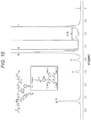
- the number of the chelating agent introduced to one molecule of the copolymer was analyzed from a 1 H-NMR spectrum measured by using NMR, and a result thereof was 11 mol/mol.
- copolymers obtained in Examples 69 to 105 copolymers having different numbers of the chelating agent introduced to one molecule of each copolymer as shown in the following table were synthesized by appropriately changing charged amounts of the linker and the chelating agent by the same method as Example 106.
- Example 69 11 Example 70 2
- Example 74 4 Example 75 4
- Example 78 10 112 Example 79 8
- Example 80 13 Example 81 12
- Example 82 19 Example 83 18
- Example 84 28 118
- Example 85 29 119
- Example 86 22 120
- Example 87 20 121
- Example 88 10 Example 90 10
- Example 91 30 Example 92 23 125
- Example 94 19 Example 99 3 128
- Example 100 5 Example 101 10 130
- Example 102 28 131
- Example 103 Example 103 25
- Example 104 12
- Example 69 In DMF (16 mL), the copolymer obtained in Example 69 (400 mg) was dissolved, COMU (153 mg) and TMP (61 ⁇ L) were added, and the mixture was stirred at room temperature for 3 hours. Then, N-(tert-butoxycarbonyl)-1,2-diaminoethane (58 mg) was added, and the mixture was stirred at 30°C for 3 days.
- the reaction solution was dialyzed and purified (dialysis membrane: Spectra/Por Regenerated Cellulose Membrane 6, molecular cut off: 3.5 kDa, and external liquid: methanol), and then the solvent was removed by the distillation under reduced pressure and the vacuum drying to recover the copolymer.
- the reaction solution was dialyzed and purified (dialysis membrane: Spectra/Por Regenerated Cellulose Membrane 6, molecular cut off: 3.5 kDa, and external liquid: methanol), and then the solvent was removed by the distillation under reduced pressure and the vacuum drying to recover the copolymer.
- the obtained copolymer (276 mg) was dissolved, DOTA-tris(t-Bu ester) (96 mg), COMU (89 mg), and TMP (70 ⁇ L) were added, and the mixture was stirred at 30°C for 3 days.
- the reaction solution was dialyzed and purified (dialysis membrane: Spectra/Por Regenerated Cellulose Membrane 6, molecular cut off: 3.5 kDa, and external liquid: methanol), and then the solvent was removed by the distillation under reduced pressure and the vacuum drying to recover the copolymer.
- the number of the chelating agent introduced to one molecule of the copolymer was analyzed from a 1 H-NMR spectrum measured by using NMR, and a result thereof was 11 mol/mol.
- Example 98 To a solution of the copolymer obtained in Example 98 (300 mg) in DMF (15 mL), were added COMU (65 mg) and TMP (26 uL), and the mixture was stirred at room temperature for 3 hours. Thereto was added p-NH 2 -Bn-DOTA-tetra(t-Bu ester) (114 mg), and the mixture was stirred at 30°C for 3 days.
- the reaction solution was dialyzed and purified (dialysis membrane: Spectra/Por Regenerated Cellulose Membrane 6, molecular cut off: 3.5 kDa, and external liquid: methanol), and then the solvent was removed by the distillation under reduced pressure and the vacuum drying to recover the copolymer.
- the number of the chelating agent introduced to one molecule of the copolymer was analyzed from a 1 H-NMR spectrum measured by using NMR, and a result thereof was 7 mol/mol.
- Example 98 In dichloromethane (7 mL), the copolymer obtained in Example 98 (400 mg) was dissolved, 1-(3-dimethylaminopropyl)-3-ethylcarbodiimide hydrochloride (WSC-HCl) (69 mg) and 4-(dimethylamino)pyridine (DMAP) (44 mg) were added, and the mixture was stirred at room temperature for 3 hours. Then, 2-(tert-butoxycarbonylamino)-1-ethanol (183 ⁇ L) was added, and the mixture was stirred at 30°C for 3 days.
- WSC-HCl 1-(3-dimethylaminopropyl)-3-ethylcarbodiimide hydrochloride
- DMAP 4-(dimethylamino)pyridine
- the reaction solution was dialyzed and purified (dialysis membrane: Spectra/Por Regenerated Cellulose Membrane 6, molecular cut off: 3.5 kDa, and external liquid: methanol), and then the solvent was removed by the distillation under reduced pressure and the vacuum drying to recover the copolymer.
- the reaction solution was dialyzed and purified (dialysis membrane: Spectra/Por Regenerated Cellulose Membrane 6, molecular cut off: 3.5 kDa, and external liquid: methanol), and then the solvent was removed by the distillation under reduced pressure and the vacuum drying to recover the copolymer.
- DMF 7 mL
- the obtained copolymer 350 mg
- DOTA-tris(t-Bu ester) 118 mg
- COMU 88 mg
- TMP 35 ⁇ L
- the reaction solution was dialyzed and purified (dialysis membrane: Spectra/Por Regenerated Cellulose Membrane 6, molecular cut off: 3.5 kDa, and external liquid: methanol), and then the solvent was removed by the distillation under reduced pressure and the vacuum drying to recover the copolymer.
- the number of the chelating agent introduced to one molecule of the copolymer was analyzed from a 1 H-NMR spectrum measured by using NMR, and a result thereof was 12 mol/mol.
- Example 100 To a solution of the copolymer obtained in Example 100 (400 mg) in dichloromethane (7 mL), were added WSC-HCl (69 mg) and DMAP (44 mg), and the mixture was stirred at room temperature for 3 hours. Thereto was added tert-butyl glycolate (111 ⁇ L), and the mixture was stirred at 30°C for 3 days.
- the reaction solution was dialyzed and purified (dialysis membrane: Spectra/Por Regenerated Cellulose Membrane 6, molecular cut off: 3.5 kDa, and external liquid: methanol), and then the solvent was removed by the distillation under reduced pressure and the vacuum drying to recover the copolymer.
- the reaction solution was dialyzed and purified (dialysis membrane: Spectra/Por Regenerated Cellulose Membrane 6, molecular cut off: 3.5 kDa, and external liquid: methanol), and then the solvent was removed by the distillation under reduced pressure and the vacuum drying to recover the copolymer.
- the number of the chelating agent introduced to one molecule of the copolymer was analyzed from a 1 H-NMR spectrum measured by using NMR, and a result thereof was 13 mol/mol.
- Example 106 In purified water (50 mL), the chelating agent-bonded copolymer obtained in Example 106 (500 mg) was dissolved and the mixture was bubbled with argon for 20 minutes. After addition of gadolinium chloride hexahydrate (313 mg), the solution was adjusted to pH 6.5 with 1N aqueous sodium hydroxide solution. This solution was stirred at 60°C for 3 hours to perform a complex formation reaction between Gd and DOTA. Then, dialysis purification was performed using purified water as an external liquid (dialysis membrane: Spectra/Por Regenerated Cellulose Membrane 6, molecular cut off: 3.5 kDa, external liquid: purified water) to roughly purify free Gd.
- purified water purified water as an external liquid (dialysis membrane: Spectra/Por Regenerated Cellulose Membrane 6, molecular cut off: 3.5 kDa, external liquid: purified water) to roughly purify free Gd.
- the free Gd was precipitated as phosphate by adding 10-fold concentrated Dulbecco's phosphate buffered saline (D-PBS(-)) (8.5 mL) and stirring for 30 minutes. This solution was filtered through a filter (pore diameter: 0.2 ⁇ m), and then dialyzed against purified water again to remove salts contained in the buffer. An obtained inner fluid of the dialysis membrane was lyophilized to obtain the Gd-DOTA-bonded SCNP (356 mg).
- D-PBS(-) Dulbecco's phosphate buffered saline
- the number of Gd bonded to one molecule of the copolymer of the Gd-DOTA-bonded SCNP obtained after the purification was measured by inductively coupled plasma-atomic emission spectrometry (ICP-AES), and was 9.4 mol/mol. Further, a Z-average particle diameter and a polydispersity index of the Gd-DOTA-bonded SCNP when dispersed in PBS were measured by dynamic light scattering (DLS), and a result of the Z-average particle diameter was 9.3 nm (polydispersity index: 0.15).
- contrast agent molecule-bonded SCNPs having different numbers of the paramagnetic metal bonded to one molecule of each copolymer as shown in the following table were synthesized by appropriately changing a type and a charged amount of the paramagnetic metal, and using a similar method as in Example 152.
- Example 120 Gd 16.5 11.1 0.30 167
- the Gd-DOTA-bonded SCNP obtained in Example 152 was adjusted such that the Gd ion concentration in PBS was 1, 0.5, 0.25, 0.125, 0.0625, or 0.03125 mmol/L, respectively, and a longitudinal relaxation time (T 1 time) and a transverse relaxation time (T 2 time) were measured. From the obtained T 1 time and T 2 time, longitudinal relaxivity (r 1 ) and transverse relaxivity (r 2 ) were given according to equations 1 and 2, respectively, and were 13.1 and 15.9.
- the T 1 time and the T 2 time of the magnescope solution were measured by the same procedure as described above. From the obtained T 1 time and T 2 time, r 1 was 4.1, and r 2 was 4.9.
- MRI Magnetic resonance imaging
- T 1 represents a longitudinal relaxation time(s) of water in the presence of the contrast agent
- T 1 0 represents a longitudinal relaxation time(s) of water (in the absence of the contrast agent)
- r 1 represents the longitudinal relaxivity (mS -1 s -1 )
- [Gd] represents a concentration (mmol/L) of Gd ions contained in the contrast agent.
- T 2 represents a longitudinal relaxation time(s) of water in the presence of the contrast agent
- T 2 0 represents a longitudinal relaxation time(s) of water (in the absence of the contrast agent)
- r 2 represents the transverse relaxivity (mS -1 s -1 )
- [Gd] represents the concentration (mmol/L) of Gd ions contained in the contrast agent.
- Tumor-bearing models obtained by subcutaneously transplanting a mouse colon cancer cell line C26 into female nude mice were used for the contrast test.
- the mouse colon cancer cell line C26 subcultured in a CO 2 incubator was suspended in a liquid medium (Dulbecco's Modified Eagle's Medium-high glucose, Sigma-Aldrich), and injected subcutaneously in the back of each nude mice such that the number of cells per mouse was 1 ⁇ 10 6 /50 ⁇ L. Then, the nude mice were raised for about 10 days, and then administered with the agent when an average value of tumor volumes of the mice was grown to about 200 mm 3 .
- the Gd-DOTA-bonded SCNP obtained in Example 152 was intravenously administered through the tail vein, and the contrast test was performed immediately after the administration, 1 hour after the administration, 2 hours after the administration, and 24 hours after the administration.
- the magnescope solution (Comparative Example 1) was used, and administered in a similar manner. A dose of each agent was 0.4 mmol/kg in terms of Gd.
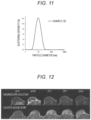
- FIG. 12 A temporal change in the imaging ability is shown in Fig. 12 .
- the Gd-DOTA-bonded SCNP an effect of enhancing the contrast was confirmed immediately after the administration, and the effect was sustained until 24 hours after the administration with a peak at 2 hours after the administration.
- the magnescope solution Comparative Example 1
- an effect of enhancing the contrast was confirmed immediately after the administration, and the effect was reduced to the same extent as before the administration after 1 hour from the administration.
- the effect of enhancing the contrast immediately after the administration of the magnescope solution was weaker than the effect of enhancing the contrast after 2 hours from the administration of the Gd-DOTA-bonded SCNP.
- the above results indicate that the Gd-DOTA-bonded SCNP has an excellent imaging effect compared to the magnescope solution.
- MRI Magnetic resonance imaging
Landscapes
- Health & Medical Sciences (AREA)
- Chemical & Material Sciences (AREA)
- Medicinal Chemistry (AREA)
- Public Health (AREA)
- Veterinary Medicine (AREA)
- General Health & Medical Sciences (AREA)
- Animal Behavior & Ethology (AREA)
- Life Sciences & Earth Sciences (AREA)
- Epidemiology (AREA)
- Radiology & Medical Imaging (AREA)
- Nuclear Medicine, Radiotherapy & Molecular Imaging (AREA)
- Organic Chemistry (AREA)
- Chemical Kinetics & Catalysis (AREA)
- Polymers & Plastics (AREA)
- Inorganic Chemistry (AREA)
- Pharmacology & Pharmacy (AREA)
- Engineering & Computer Science (AREA)
- Nanotechnology (AREA)
- Medicines Containing Antibodies Or Antigens For Use As Internal Diagnostic Agents (AREA)
Applications Claiming Priority (2)
| Application Number | Priority Date | Filing Date | Title |
|---|---|---|---|
| JP2022128538 | 2022-08-10 | ||
| PCT/JP2023/029358 WO2024034686A1 (ja) | 2022-08-10 | 2023-08-10 | 高分子造影剤 |
Publications (1)
| Publication Number | Publication Date |
|---|---|
| EP4570837A1 true EP4570837A1 (de) | 2025-06-18 |
Family
ID=89851689
Family Applications (1)
| Application Number | Title | Priority Date | Filing Date |
|---|---|---|---|
| EP23852648.7A Pending EP4570837A1 (de) | 2022-08-10 | 2023-08-10 | Polymerkontrastmittel |
Country Status (6)
| Country | Link |
|---|---|
| US (1) | US20260041776A1 (de) |
| EP (1) | EP4570837A1 (de) |
| JP (1) | JPWO2024034686A1 (de) |
| KR (1) | KR20250047358A (de) |
| CN (1) | CN119677788A (de) |
| WO (1) | WO2024034686A1 (de) |
Family Cites Families (4)
| Publication number | Priority date | Publication date | Assignee | Title |
|---|---|---|---|---|
| JP3270592B2 (ja) | 1992-10-26 | 2002-04-02 | 日本化薬株式会社 | ブロック共重合体−抗癌剤複合体医薬製剤 |
| JP4892378B2 (ja) | 2007-03-10 | 2012-03-07 | 財団法人神奈川科学技術アカデミー | 高分子ミセル型mri造影剤 |
| GB0920304D0 (en) | 2009-11-20 | 2010-01-06 | Medical Res Council | Novel liposome nanoparticles for tumour magnetic resonance imaging |
| CN104817664B (zh) * | 2015-04-02 | 2017-10-13 | 浙江大学 | 两亲性嵌段共聚物及包含该共聚物的纳米粒子、其制备方法和应用 |
-
2023
- 2023-08-10 KR KR1020257007366A patent/KR20250047358A/ko active Pending
- 2023-08-10 WO PCT/JP2023/029358 patent/WO2024034686A1/ja not_active Ceased
- 2023-08-10 EP EP23852648.7A patent/EP4570837A1/de active Pending
- 2023-08-10 US US19/101,601 patent/US20260041776A1/en active Pending
- 2023-08-10 JP JP2024540535A patent/JPWO2024034686A1/ja active Pending
- 2023-08-10 CN CN202380058828.XA patent/CN119677788A/zh active Pending
Also Published As
| Publication number | Publication date |
|---|---|
| KR20250047358A (ko) | 2025-04-03 |
| US20260041776A1 (en) | 2026-02-12 |
| WO2024034686A1 (ja) | 2024-02-15 |
| CN119677788A (zh) | 2025-03-21 |
| JPWO2024034686A1 (de) | 2024-02-15 |
Similar Documents
| Publication | Publication Date | Title |
|---|---|---|
| Zhu et al. | Hyperbranched polymers for bioimaging | |
| Esser et al. | Gadolinium-functionalized nanoparticles for application as magnetic resonance imaging contrast agents via polymerization-induced self-assembly | |
| EP2931290B1 (de) | Porphyrinmodifizierte telodendrimere | |
| Huang et al. | Biodegradable polydisulfide dendrimer nanoclusters as MRI contrast agents | |
| CN101305006B (zh) | 含有短氨基醇链的化合物和用于医学成像的金属络合物 | |
| US20070014725A1 (en) | Conjugates of macrocyclic metal complexes with biomolecules and their use for the production of agents for NMR diagnosis and radiodiagnosis as well as radiotherapy | |
| JP2025137881A (ja) | ボロン酸エステルプロドラッグおよびそれらの使用 | |
| CN110078915B (zh) | 用硝基苯硼酸组合物稳定的纳米粒子 | |
| US20180243442A1 (en) | Poly(vinyl alcohol) nanocarriers | |
| KR19990022575A (ko) | 의학적 영상화용 조영제로서의 킬레이트 중합체 | |
| US20110217241A1 (en) | Conjugates of 19f mr imaging tracers for use in multi-chromic mri imaging | |
| US20150320890A1 (en) | Nanoparticles for brain tumor imaging | |
| US20210361777A1 (en) | Pharmaceutical prodrugs and methods of their preparation and use | |
| JP2024523854A (ja) | デンドリマーコンジュゲートおよびその使用方法 | |
| EP4289877A1 (de) | Neues copolymer | |
| Jackson et al. | Octreotide functionalized nano-contrast agent for targeted magnetic resonance imaging | |
| JP2008222804A (ja) | 高分子ミセル型mri造影剤 | |
| Milne et al. | Water-soluble gold nanoparticles (AuNP) functionalized with a gadolinium (III) chelate via Michael addition for use as a MRI contrast agent | |
| WO2021126989A1 (en) | Two-way magnetic resonance tuning nanoprobe enhanced subtraction imaging | |
| KR101451446B1 (ko) | 퍼플루오르화 peg기를 갖는 금속 킬레이트, 그의 제조 방법, 및 그의 용도 | |
| US20260041776A1 (en) | Polymer contrast agent | |
| Polyanichko et al. | Synthesis of dendronized polymeric chelating agents using hydrazone ligation strategy | |
| JP5320569B2 (ja) | 高分子ミセル及びそれを有効成分として含有する固形がんの診断又は治療剤 | |
| WO2007061036A1 (ja) | フラーレン誘導体を用いた造影剤 | |
| EP4570835A1 (de) | Neues copolymer |
Legal Events
| Date | Code | Title | Description |
|---|---|---|---|
| STAA | Information on the status of an ep patent application or granted ep patent |
Free format text: STATUS: THE INTERNATIONAL PUBLICATION HAS BEEN MADE |
|
| PUAI | Public reference made under article 153(3) epc to a published international application that has entered the european phase |
Free format text: ORIGINAL CODE: 0009012 |
|
| STAA | Information on the status of an ep patent application or granted ep patent |
Free format text: STATUS: REQUEST FOR EXAMINATION WAS MADE |
|
| 17P | Request for examination filed |
Effective date: 20250305 |
|
| AK | Designated contracting states |
Kind code of ref document: A1 Designated state(s): AL AT BE BG CH CY CZ DE DK EE ES FI FR GB GR HR HU IE IS IT LI LT LU LV MC ME MK MT NL NO PL PT RO RS SE SI SK SM TR |
|
| DAV | Request for validation of the european patent (deleted) | ||
| DAX | Request for extension of the european patent (deleted) |