EP4567342A1 - Steuerungsverfahren für multisplit-klimaanlage, steuergerät, klimaanlage und medium - Google Patents
Steuerungsverfahren für multisplit-klimaanlage, steuergerät, klimaanlage und medium Download PDFInfo
- Publication number
- EP4567342A1 EP4567342A1 EP23853966.2A EP23853966A EP4567342A1 EP 4567342 A1 EP4567342 A1 EP 4567342A1 EP 23853966 A EP23853966 A EP 23853966A EP 4567342 A1 EP4567342 A1 EP 4567342A1
- Authority
- EP
- European Patent Office
- Prior art keywords
- indoor unit
- target indoor
- degree
- temperature
- target
- Prior art date
- Legal status (The legal status is an assumption and is not a legal conclusion. Google has not performed a legal analysis and makes no representation as to the accuracy of the status listed.)
- Pending
Links
Images


Classifications
-
- F—MECHANICAL ENGINEERING; LIGHTING; HEATING; WEAPONS; BLASTING
- F24—HEATING; RANGES; VENTILATING
- F24F—AIR-CONDITIONING; AIR-HUMIDIFICATION; VENTILATION; USE OF AIR CURRENTS FOR SCREENING
- F24F11/00—Control or safety arrangements
- F24F11/89—Arrangement or mounting of control or safety devices
-
- F—MECHANICAL ENGINEERING; LIGHTING; HEATING; WEAPONS; BLASTING
- F24—HEATING; RANGES; VENTILATING
- F24F—AIR-CONDITIONING; AIR-HUMIDIFICATION; VENTILATION; USE OF AIR CURRENTS FOR SCREENING
- F24F11/00—Control or safety arrangements
- F24F11/50—Control or safety arrangements characterised by user interfaces or communication
- F24F11/61—Control or safety arrangements characterised by user interfaces or communication using timers
-
- F—MECHANICAL ENGINEERING; LIGHTING; HEATING; WEAPONS; BLASTING
- F24—HEATING; RANGES; VENTILATING
- F24F—AIR-CONDITIONING; AIR-HUMIDIFICATION; VENTILATION; USE OF AIR CURRENTS FOR SCREENING
- F24F11/00—Control or safety arrangements
- F24F11/62—Control or safety arrangements characterised by the type of control or by internal processing, e.g. using fuzzy logic, adaptive control or estimation of values
- F24F11/63—Electronic processing
- F24F11/64—Electronic processing using pre-stored data
-
- F—MECHANICAL ENGINEERING; LIGHTING; HEATING; WEAPONS; BLASTING
- F24—HEATING; RANGES; VENTILATING
- F24F—AIR-CONDITIONING; AIR-HUMIDIFICATION; VENTILATION; USE OF AIR CURRENTS FOR SCREENING
- F24F11/00—Control or safety arrangements
- F24F11/70—Control systems characterised by their outputs; Constructional details thereof
- F24F11/72—Control systems characterised by their outputs; Constructional details thereof for controlling the supply of treated air, e.g. its pressure
- F24F11/74—Control systems characterised by their outputs; Constructional details thereof for controlling the supply of treated air, e.g. its pressure for controlling air flow rate or air velocity
-
- F—MECHANICAL ENGINEERING; LIGHTING; HEATING; WEAPONS; BLASTING
- F24—HEATING; RANGES; VENTILATING
- F24F—AIR-CONDITIONING; AIR-HUMIDIFICATION; VENTILATION; USE OF AIR CURRENTS FOR SCREENING
- F24F11/00—Control or safety arrangements
- F24F11/70—Control systems characterised by their outputs; Constructional details thereof
- F24F11/80—Control systems characterised by their outputs; Constructional details thereof for controlling the temperature of the supplied air
- F24F11/83—Control systems characterised by their outputs; Constructional details thereof for controlling the temperature of the supplied air by controlling the supply of heat-exchange fluids to heat-exchangers
- F24F11/84—Control systems characterised by their outputs; Constructional details thereof for controlling the temperature of the supplied air by controlling the supply of heat-exchange fluids to heat-exchangers using valves
-
- F—MECHANICAL ENGINEERING; LIGHTING; HEATING; WEAPONS; BLASTING
- F25—REFRIGERATION OR COOLING; COMBINED HEATING AND REFRIGERATION SYSTEMS; HEAT PUMP SYSTEMS; MANUFACTURE OR STORAGE OF ICE; LIQUEFACTION SOLIDIFICATION OF GASES
- F25B—REFRIGERATION MACHINES, PLANTS OR SYSTEMS; COMBINED HEATING AND REFRIGERATION SYSTEMS; HEAT PUMP SYSTEMS
- F25B13/00—Compression machines, plants or systems, with reversible cycle
-
- F—MECHANICAL ENGINEERING; LIGHTING; HEATING; WEAPONS; BLASTING
- F25—REFRIGERATION OR COOLING; COMBINED HEATING AND REFRIGERATION SYSTEMS; HEAT PUMP SYSTEMS; MANUFACTURE OR STORAGE OF ICE; LIQUEFACTION SOLIDIFICATION OF GASES
- F25B—REFRIGERATION MACHINES, PLANTS OR SYSTEMS; COMBINED HEATING AND REFRIGERATION SYSTEMS; HEAT PUMP SYSTEMS
- F25B49/00—Arrangement or mounting of control or safety devices
- F25B49/02—Arrangement or mounting of control or safety devices for compression type machines, plants or systems
-
- F—MECHANICAL ENGINEERING; LIGHTING; HEATING; WEAPONS; BLASTING
- F24—HEATING; RANGES; VENTILATING
- F24F—AIR-CONDITIONING; AIR-HUMIDIFICATION; VENTILATION; USE OF AIR CURRENTS FOR SCREENING
- F24F2110/00—Control inputs relating to air properties
- F24F2110/10—Temperature
-
- F—MECHANICAL ENGINEERING; LIGHTING; HEATING; WEAPONS; BLASTING
- F24—HEATING; RANGES; VENTILATING
- F24F—AIR-CONDITIONING; AIR-HUMIDIFICATION; VENTILATION; USE OF AIR CURRENTS FOR SCREENING
- F24F2110/00—Control inputs relating to air properties
- F24F2110/20—Humidity
-
- F—MECHANICAL ENGINEERING; LIGHTING; HEATING; WEAPONS; BLASTING
- F24—HEATING; RANGES; VENTILATING
- F24F—AIR-CONDITIONING; AIR-HUMIDIFICATION; VENTILATION; USE OF AIR CURRENTS FOR SCREENING
- F24F2140/00—Control inputs relating to system states
- F24F2140/20—Heat-exchange fluid temperature
-
- F—MECHANICAL ENGINEERING; LIGHTING; HEATING; WEAPONS; BLASTING
- F25—REFRIGERATION OR COOLING; COMBINED HEATING AND REFRIGERATION SYSTEMS; HEAT PUMP SYSTEMS; MANUFACTURE OR STORAGE OF ICE; LIQUEFACTION SOLIDIFICATION OF GASES
- F25B—REFRIGERATION MACHINES, PLANTS OR SYSTEMS; COMBINED HEATING AND REFRIGERATION SYSTEMS; HEAT PUMP SYSTEMS
- F25B2313/00—Compression machines, plants or systems with reversible cycle not otherwise provided for
- F25B2313/023—Compression machines, plants or systems with reversible cycle not otherwise provided for using multiple indoor units
- F25B2313/0233—Compression machines, plants or systems with reversible cycle not otherwise provided for using multiple indoor units in parallel arrangements
-
- F—MECHANICAL ENGINEERING; LIGHTING; HEATING; WEAPONS; BLASTING
- F25—REFRIGERATION OR COOLING; COMBINED HEATING AND REFRIGERATION SYSTEMS; HEAT PUMP SYSTEMS; MANUFACTURE OR STORAGE OF ICE; LIQUEFACTION SOLIDIFICATION OF GASES
- F25B—REFRIGERATION MACHINES, PLANTS OR SYSTEMS; COMBINED HEATING AND REFRIGERATION SYSTEMS; HEAT PUMP SYSTEMS
- F25B2500/00—Problems to be solved
- F25B2500/19—Calculation of parameters
-
- F—MECHANICAL ENGINEERING; LIGHTING; HEATING; WEAPONS; BLASTING
- F25—REFRIGERATION OR COOLING; COMBINED HEATING AND REFRIGERATION SYSTEMS; HEAT PUMP SYSTEMS; MANUFACTURE OR STORAGE OF ICE; LIQUEFACTION SOLIDIFICATION OF GASES
- F25B—REFRIGERATION MACHINES, PLANTS OR SYSTEMS; COMBINED HEATING AND REFRIGERATION SYSTEMS; HEAT PUMP SYSTEMS
- F25B2500/00—Problems to be solved
- F25B2500/26—Problems to be solved characterised by the startup of the refrigeration cycle
-
- F—MECHANICAL ENGINEERING; LIGHTING; HEATING; WEAPONS; BLASTING
- F25—REFRIGERATION OR COOLING; COMBINED HEATING AND REFRIGERATION SYSTEMS; HEAT PUMP SYSTEMS; MANUFACTURE OR STORAGE OF ICE; LIQUEFACTION SOLIDIFICATION OF GASES
- F25B—REFRIGERATION MACHINES, PLANTS OR SYSTEMS; COMBINED HEATING AND REFRIGERATION SYSTEMS; HEAT PUMP SYSTEMS
- F25B2600/00—Control issues
- F25B2600/21—Refrigerant outlet evaporator temperature
-
- F—MECHANICAL ENGINEERING; LIGHTING; HEATING; WEAPONS; BLASTING
- F25—REFRIGERATION OR COOLING; COMBINED HEATING AND REFRIGERATION SYSTEMS; HEAT PUMP SYSTEMS; MANUFACTURE OR STORAGE OF ICE; LIQUEFACTION SOLIDIFICATION OF GASES
- F25B—REFRIGERATION MACHINES, PLANTS OR SYSTEMS; COMBINED HEATING AND REFRIGERATION SYSTEMS; HEAT PUMP SYSTEMS
- F25B2600/00—Control issues
- F25B2600/25—Control of valves
- F25B2600/2513—Expansion valves
-
- Y—GENERAL TAGGING OF NEW TECHNOLOGICAL DEVELOPMENTS; GENERAL TAGGING OF CROSS-SECTIONAL TECHNOLOGIES SPANNING OVER SEVERAL SECTIONS OF THE IPC; TECHNICAL SUBJECTS COVERED BY FORMER USPC CROSS-REFERENCE ART COLLECTIONS [XRACs] AND DIGESTS
- Y02—TECHNOLOGIES OR APPLICATIONS FOR MITIGATION OR ADAPTATION AGAINST CLIMATE CHANGE
- Y02B—CLIMATE CHANGE MITIGATION TECHNOLOGIES RELATED TO BUILDINGS, e.g. HOUSING, HOUSE APPLIANCES OR RELATED END-USER APPLICATIONS
- Y02B30/00—Energy efficient heating, ventilation or air conditioning [HVAC]
- Y02B30/70—Efficient control or regulation technologies, e.g. for control of refrigerant flow, motor or heating
Definitions
- the present invention relates to the technical field of air conditioners, and in particular, to a method for controlling a multi-split air conditioning system, a controller, an air conditioning system, and a medium.
- a multi-piping multi-split air conditioning system includes an outdoor unit and a plurality of indoor units each connected to the outdoor unit by a separate piping.
- different indoor units may be in different operational modes during operation. For example, a regular cooling mode of one indoor unit is turned on, and a breezeless, gentle breeze, or anti-direct blowing mode of another indoor unit is turned on.
- the compressor of the air conditioner is controlled according to the logic of the regular cooling mode, which is likely to cause problems such as low outlet air temperature and dewing of the indoor unit in the breezeless, gentle breeze, or anti-direct blowing mode.
- Embodiments of the present invention provides a method for controlling a multi-split air conditioning system, a controller, an air conditioning system, and a medium, to control the degrees of superheat of indoor units according to operational statuses of the indoor units to meet the personalized air blowing requirements of different users.
- an embodiment provides a method for controlling a multi-split air conditioning system, where the multi-split air conditioning system includes at least one target indoor unit with an air blowing mode turned on.
- the method includes:
- the method for controlling a multi-split air conditioning system at least has the following beneficial effects.
- the degree of superheat of the target indoor unit with the air blowing mode turned on is controlled through two stages.
- a first stage the preset condition is not met.
- the first stage is an early stage of start-up of the multi-split air conditioning system, during which the multi-split air conditioning system has not reached a stable operating state.
- the opening degree of the throttling element is controlled according to the temperature characteristic value of the evaporator coil of the target indoor unit and the evaporation outlet temperature value.
- the preset condition is met, and the multi-split air conditioning system is in a stable operating state.
- the opening degree of the throttling element is controlled according to the temperature characteristic value, the evaporation outlet temperature value, and an air blowing correction parameter corresponding to the air blowing mode of the target indoor unit.
- the evaporation outlet temperature value is introduced as a parameter for controlling the opening degree, and the problem of deviation of the degree of superheat due to a long connecting pipe between the target indoor unit and the outdoor unit is considered.
- the preset condition includes a judgment on the time for which the compressor has continuously operated, a judgment on the time for which the compressor has continuously been in a stable state, and a judgment on the evaporation temperature of the target indoor unit
- an expansion valve of the target indoor unit can be separately controlled by comprehensively considering the operational status of the indoor unit and the operational status of the compressor, such that the multi-split air conditioning system can execute a precise control strategy even when the indoor units are respectively operating in a plurality of different modes, thereby improving user experience.
- a first temperature sensor is arranged at a refrigerant pipeline between an evaporator of the target indoor unit and an air inlet of the compressor, and the first temperature sensor is located on the outdoor unit side to serve as a temperature measurement point to measure the evaporation outlet temperature value.
- the compressor being in the stable state includes at least one of:
- the first degree of superheat is obtained in the following manner:
- the second degree of superheat is obtained in the following manner:
- adjusting an opening degree of a throttling element of the target indoor unit according to the first degree of superheat includes:
- adjusting the opening degree of the throttling element of the target indoor unit according to the second degree of superheat includes:
- a second temperature sensor is arranged in a middle portion of an evaporator of the target indoor unit, and the second temperature sensor serves as a temperature measurement point to measure the temperature characteristic value.
- the target evaporation temperature is determined according to a dew point temperature corresponding to the target indoor unit, an evaporation temperature correction coefficient, and the air blowing mode of the target indoor unit; and the dew point temperature is related to an indoor humidity detected by the target indoor unit and an indoor temperature.
- whether each indoor unit satisfies the preset condition is re-detected based on a preset time interval.
- an embodiment provides a controller, including a memory, a processor, and a computer program stored in the memory and executable by the processor, where the computer program, when executed by the processor, causes the processor to implement the method in accordance with the first aspect.
- an embodiment provides a multi-split air conditioning system, including the controller in accordance with the second aspect.
- an embodiment provides a computer-readable storage medium, storing a computer-executable instruction which, when executed by a processor, causes the processor to implement the method in accordance with the first aspect.
- the term “at least one” means one or more
- the term “plurality of” (or multiple) means at least two
- the term such as “greater than”, “less than”, “exceed” or variants thereof prior to a number or series of numbers is understood to not include the number adjacent to the term.
- the term “above”, “below”, “within” or variants thereof prior to a number or series of numbers is understood to include the number adjacent to the term.
- the terms such as “first”, “second” and the like are merely used for distinguishing technical features, and are not intended to indicate or imply relative importance, or implicitly point out the number of the indicated technical features, or implicitly point out the order of the indicated technical features.
- serial numbers assigned herein to components such as “first”, “second” and the like are merely used to distinguish the described objects and do not have any sequential or technical meaning.
- the terms such as “connect”, “couple”, and their variants in the present invention include direct and indirect connection (coupling) unless otherwise specified.
- a multi-piping multi-split air conditioning system includes an outdoor unit and a plurality of indoor units each connected to the outdoor unit by a separate piping. A change of the operational status of an indoor unit will affect the operational status of the outdoor unit, which in turn affects the operational statuses of all indoor units that are operating.
- the control of the air blowing modes of multi-piping multi-split air conditioning systems is more likely to have the risk of dewing and low outlet air temperature.
- the problems are determined by the characteristics of multi-piping multi-split air conditioning systems.
- the outdoor unit of the multi-split air conditioning system is used in combination with a plurality of indoor units.
- a small number of indoor units e.g., one or two indoor units
- the minimum load of the outdoor unit is still too large for the load needed by these indoor units.
- the indoor unit operates in the breezeless mode, the fan speed of the indoor unit is relatively low, the load of the indoor unit is further reduced, and the outlet air temperature of the indoor unit is relatively low.
- the operation of the outdoor unit will affect the operational statuses of all indoor units, so when the operational status of the outdoor unit changes, the indoor units need to perform self-adjustment to reduce the impact. For example, when one indoor unit is operating in the cooling mode and another indoor unit is operating in the breezeless mode, the frequency of the outdoor unit will be changed in order to ensure the cooling effect. If distribution of refrigerant is not performed for the indoor units, the outlet air temperature of the indoor unit in the breezeless mode will be significantly lower than that of the indoor unit in the cooling mode. When all indoor units are operating in the breezeless mode, the operating statuses of all the indoor units should be considered, and reliability should be ensured first.
- the indoor units may operate in different modes.
- the multi-piping multi-split air conditioning system needs to provide an appropriate temperature and a comfortable air blowing effect while avoiding dewing, so a high evaporation temperature is desired.
- the multi-piping multi-split air conditioning system needs to provide an appropriate temperature and rapid cooling, so a low evaporation temperature is desired.
- embodiments of the present invention provide a method for controlling a multi-split air conditioning system, a controller, an air conditioning system, and a medium.
- an operational status of the multi-split air conditioning system is determined according to a preset condition, and a degree of superheat of a target indoor unit is controlled according to the operational status, such that the target indoor unit can meet the personalized air blowing requirement of the user, while stable operation of the multi-split air conditioning system is ensured.
- an embodiment of the present invention provides a method for controlling a multi-split air conditioning system.
- the multi-split air conditioning system includes at least one target indoor unit with an air blowing mode turned on.
- the method includes the following steps.
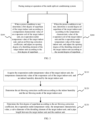
- a first degree of superheat of the target indoor unit is determined according to a temperature characteristic value of an evaporator coil of the target indoor unit, an evaporation outlet temperature value of the target indoor unit, and an air blowing correction coefficient, and an opening degree of a throttling element of the target indoor unit is adjusted according to the first degree of superheat.
- a second degree of superheat of the target indoor unit is determined according to the temperature characteristic value of the evaporator coil of the target indoor unit and the evaporation outlet temperature value of the target indoor unit, and the opening degree of the throttling element of the target indoor unit is adjusted according to the second degree of superheat.
- the air blowing correction coefficient is related to the air blowing mode of the target indoor unit, and a temperature measurement point corresponding to the evaporation outlet temperature value is located on an outdoor unit side.
- the preset condition includes: a compressor of the multi-split air conditioning system has continuously operated for longer than a first preset time, the compressor has continuously been in a stable state for longer than a second preset time, and the temperature characteristic value of the target indoor unit is less than a target evaporation temperature of the target indoor unit.
- the multi-split air-conditioning system mentioned in the present invention refers to a multi-piping multi-split system.
- Each indoor unit is connected to the outdoor unit through its own piping (refrigerant pipeline).
- a refrigerant is converged in the outdoor unit and inputted into an air inlet of the compressor. Then, the refrigerant is outputted from an exhaust outlet of the compressor and distributed at the outdoor unit to the indoor units.
- the term "multi-split air conditioning system” is used below to represent the multi-piping multi-split air conditioning system.
- the air blowing mode mentioned in the present invention is an operation mode in which the indoor unit reduces the amount of air blown directly to the user, and includes, but not limited to, breezeless, gentle breeze, and anti-direct blowing functions commonly seen in conventional air conditioners. Therefore, the air blowing mode is a general term for these functional modes, and is put forward in consideration of distinguishing of differences between cooling capacity output requirements of the breezeless, gentle breeze, and anti-direct blowing functions in the following description.
- a plurality of indoor units are used in combination with one outdoor unit.
- different indoor units may operate in different modes. For example, an indoor unit is operating in the breezeless mode, another indoor unit is operating in the anti-direct blowing mode, and yet another indoor unit is operating in the regular cooling mode. Because the indoor units in different modes have different operational statuses, how to enable the indoor units to operate in their respective operation modes while cooperating with the outdoor unit is an issue that affects the stability of the multi-split air conditioning system and user experience.
- the outdoor unit can adjust its operational status according to a requirement of the indoor unit.
- the pipe length between the outdoor unit and the indoor unit is fixed, so the control is relatively easy.
- parameters such as the evaporation outlet temperature that are measured by the control method for single-split air conditioning systems cannot be directly applied to the multi-split air conditioning system.
- the deviation of the degree of superheat due to an excessively long refrigerant pipeline between the indoor unit and the outdoor unit is considered, the degree of superheat is controlled according to the operational status of the compressor and different operational statuses of the indoor units, and the opening degree of the throttling element of the indoor unit can be adjusted according to the magnitude of the degree of superheat.
- the multi-split air conditioning system can respectively adjust the operational status of each indoor unit, enabling different indoor units to meet the corresponding personalized requirements from users. For example, when the preset condition is not met, i.e., at an early stage of start-up of the multi-split air conditioning system, the multi-split air conditioning system has not reached a stable operating state. In this case, the opening degree of the throttling element is controlled according to the temperature characteristic value of the evaporator coil of the target indoor unit and the evaporation outlet temperature value.
- the opening degree of the throttling element is controlled according to the temperature characteristic value, the evaporation outlet temperature value, and an air blowing correction parameter corresponding to the air blowing mode of the target indoor unit.
- the opening degree of the throttling element of the target indoor unit is adjusted to realize the cooperation between the outdoor unit and the indoor units, thereby improving user experience.
- FIG. 1 is a schematic structural diagram showing the connection between components of the multi-split air conditioning system.
- An air outlet of the compressor is connected to a condenser of the outdoor unit through a four-way valve.
- An outlet of the condenser is respectively connected to a plurality of indoor units ( FIG. 1 takes four indoor units as an example: indoor unit A, indoor unit B, indoor unit C, and indoor unit D) through refrigerant pipelines.
- An independent refrigerant pipeline is arranged between an evaporator inlet of each indoor unit and the outlet of the condenser of the outdoor unit.
- Each independent refrigerant pipeline is provided with a throttling element.
- each indoor unit is also connected to an independent refrigerant pipe. After these refrigerant pipelines converge, the refrigerant enters an air-liquid separator through the four-way valve and finally returns to the air inlet of the compressor.
- a first temperature sensor is arranged at a refrigerant pipeline between an evaporator outlet of each indoor unit and an air inlet of the compressor (where each of the indoor unit A, the indoor unit B, the indoor unit C, and the indoor unit D corresponds to one first temperature sensor), and the first temperature sensor is located on the outdoor unit side to serve as a temperature measurement point to measure the evaporation outlet temperature value.
- a second temperature sensor is arranged in a middle portion of an evaporator of each indoor unit, and the second temperature sensor serves as a temperature measurement point to measure the temperature characteristic value.
- the evaporation outlet temperature value because the pipe lengths between the indoor units and the outdoor unit are inconsistent, if the temperature value is directly measured at the evaporator outlet of each indoor unit by a conventional method, the temperatures of the refrigerant outputted from the evaporators of different indoor units to the air inlet of the compressor differ greatly, and an inaccurate temperature value will affect the accuracy of control.
- the temperature measurement point for measuring the evaporation outlet temperature value is arranged on the outdoor unit side, to ensure that the temperature values of the refrigerant outputted by the evaporators of different indoor units can be measured at particular positions on the outdoor unit side, thereby avoiding the problem of the deviation of the degree of superheat due to an excessively long refrigerant pipeline between the indoor unit and the outdoor unit, and improving the control accuracy.
- the temperature characteristic value is used to characterize the temperature of the evaporator of the target indoor unit.
- a temperature value measured at the middle portion of the evaporator (related to the distribution of the refrigerant pipeline) is used as the temperature characteristic value of the evaporator.
- the second temperature sensor may also be arranged at other positions on the evaporator to achieve different control effects, which are not limited herein.
- the target evaporation temperature is related to an indoor dew point temperature of the target indoor unit and the current air blowing mode of the target indoor unit.
- the air blowing correction coefficient is related to indoor humidity detected by the target indoor unit and the current air blowing mode of the target indoor unit. Method of determining the target evaporation temperature and the air blowing correction coefficient will be described in detail below.
- the preset condition is used for determining the operational status of the multi-split air-conditioning system. When the following three conditions are satisfied, it is determined that the multi-split air-conditioning system is operating in a stable state and there is at least one indoor unit operating in an air blowing mode:
- the first degree of superheat of the target indoor unit is determined according to the temperature characteristic value of the target indoor unit, the evaporation outlet temperature value of the target indoor unit, and the air blowing correction coefficient.
- the preset condition is not satisfied, indicating that the multi-split air conditioning system is at an early stage of start-up or in a state such as operational status switching and has not reached a stable state
- the second degree of superheat of the target indoor unit is determined according to the temperature characteristic value of the target indoor unit and the evaporation outlet temperature value of the target indoor unit.
- the first degree of superheat and the second degree of superheat of the multi-split air conditioning system that are obtained through calculation vary with different operational statuses. Therefore, it can be considered that when the preset condition is not satisfied, the multi-split air conditioning system is controlled according to a first stage of degree-of-superheat control, and when the preset condition is satisfied, the multi-split air conditioning system is controlled according to a second stage of degree-of-superheat control.
- the multi-split air conditioning system first performs rapid cooling (i.e., the temperature in the room needs to be lowered before an air blowing mode is entered), then enters the first stage of degree-of-superheat control, and then enters the second stage of degree-of-superheat control.
- the first preset time may be 35 minutes and may range from 20 minutes to 60 minutes
- the second preset time may be 5 minutes and may range from 2 minutes to 10 minutes.
- the opening degree of the throttling element of the target indoor unit can be controlled according to the first degree of superheat or the second degree of superheat.
- different degrees of superheat correspond to different values of the opening degree
- different degrees of superheat correspond to different adjustment amounts of the opening degree
- one opening degree adjustment rule is used for the first stage of degree-of-superheat control and another opening degree adjustment rule is used for the second stage of degree-of- superheat control, which is not limited herein.
- the embodiments of the present invention do not involve the control of the fan speed and the deflector of the indoor unit.
- control of the fan speed and the deflector reference may be made to the control method for single-split air conditioning systems.
- condition 2 in the preset conditions i.e., the compressor being in the stable state
- condition 2 in the preset conditions may be expressed as at least one of the following states:
- the judgment on the frequency fluctuation amplitude of the compressor and the judgment on the target evaporation temperature of the target indoor unit both require a duration of longer than the second preset time, i.e., the frequency fluctuation amplitude of the compressor is less than the preset amplitude throughout the second preset time, or the average value of the temperature characteristic values of all the indoor units having a capacity requirement is greater than the target evaporation temperature of the target indoor unit throughout the second preset time.
- the target evaporation temperature of the target indoor unit is determined according to:
- the operation mode of the target indoor unit may be determined by a mode flag bit.
- a flag bit corresponding to the gentle breeze mode of the target indoor unit is detected and the humidity is greater than 70%
- the value in Table 1 above is applied.
- the value of Ca is directly set to zero.
- the value in Table 2 above is applied.
- Cb is directly set to zero. It can be understood that for any indoor unit, only one mode flag bit can exist at the same time, i.e., the value of at least one of Ca and Cb is set to zero.
- the indoor unit may not enter a comfortable air blowing mode immediately after receiving a comfortable air blowing mode instruction set by the user. For example, the indoor unit has just been started and the temperature in the room has not yet dropped. In this case, although the comfortable air blowing mode of the indoor unit has been turned on, the temperature in the room needs to be cooled down first, and then the airflow speed of the indoor unit is reduced to enter the comfortable air blowing mode, to adjust the temperature and humidity and take anti-dewing measures. Therefore, in practice, each indoor unit sends an actual capacity requirement carrying a mode flag bit to the outdoor unit, and the outdoor unit calculates a total capacity requirement according to the actual capacity requirements and determines the mode flag bit of each indoor unit.
- the indoor units need to comply with the adjustment performed by the outdoor unit, and even if a room environment in which an indoor unit is located allows the indoor unit to operate in the breezeless mode, the gentle breeze mode, or the anti-direct blowing mode, the indoor unit does not immediately enter the corresponding operation mode.
- the outdoor unit determines an initial frequency of the compressor, acquires operation modes that the indoor units are about to enter respectively, and determines whether each indoor unit can execute the operation mode corresponding to the corresponding mode flag bit.
- the outdoor unit returns a flag bit corresponding to the mode that can be executed to the corresponding indoor unit, to indicate that the indoor unit is allowed to enter the operation mode corresponding to the mode flag bit.
- the outdoor unit When an indoor unit sends the flag bit corresponding to the anti-direct blowing mode to the outdoor unit, the outdoor unit, after acquiring the mode flag bits of all the indoor units having a refrigeration requirement, determines the initial frequency of the compressor and determines that the indoor unit can perform an anti-direct blowing function, and further returns the flag bit corresponding to the anti-direct blowing mode that can be executed to the indoor unit.
- the indoor unit receives the flag bit corresponding to the anti-direct blowing mode that can be executed, and executes the anti-direct blowing mode.
- the indoor units and the outdoor unit are not originally a complete set. Indoor units of different models have different functions, some indoor units may have new functions, some indoor units may only have the regular cooling function. In some cases, the outdoor unit may not have the function of adjusting the comfortable air blowing mode, the outdoor unit cannot return a flag bit corresponding to an operation mode that can be executed to the indoor unit, even if an indoor unit is equipped with the comfortable air blowing mode, it cannot perform an operation related to the comfortable air blowing mode. As such, comfort and reliability risks are avoided.
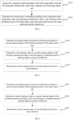
- the first degree of superheat of the target indoor unit is determined by executing the following steps.
- a step of S110 the evaporation outlet temperature value of the target indoor unit, the temperature characteristic value of the evaporator coil of the target indoor unit, and an indoor humidity detected by the target indoor unit are acquired.
- the air blowing correction coefficient is determined according to the indoor humidity and the air blowing mode of the target indoor unit.
- the first degree of superheat is obtained according to the air blowing correction coefficient, the evaporation outlet temperature value, the temperature characteristic value, a valve diameter of the throttling element of the target indoor unit, and a pipe length between the target indoor unit and the outdoor unit.
- the evaporation outlet temperature value and the temperature characteristic value of the target indoor unit and the indoor humidity detected by the target indoor unit are acquired, the air blowing correction coefficient is determined according to the indoor humidity and the air blowing mode of the target indoor unit, and the first degree of superheat is calculated according to the air blowing correction coefficient, the evaporation outlet temperature value, the temperature characteristic value, the valve diameter of the throttling element, and the pipe length between the target indoor unit and the outdoor unit.
- Ts1 represents the first degree of superheat
- T2b represents the evaporation outlet temperature value of the target indoor unit
- T2 represents the temperature characteristic value of the evaporator coil of the target indoor unit
- C1 represents the valve diameter of the throttling element of the target indoor unit
- C2 represents the pipe length between the target indoor unit and the outdoor unit
- SH represents the air blowing correction coefficient
- H2 represents a value corresponding to the indoor humidity detected by the target indoor unit
- Ca represents the correction coefficient corresponding to the gentle breeze mode
- Cb represents the correction coefficient corresponding to the anti-direct blowing mode.
- H2 is determined with reference to Table 3 below.
- Table 3 Table of values corresponding to indoor humidity Temperature range H2 value (recommended value) H2 value (available range) >75% 3 2 to 6 60% to 75% 2 1 to 3 ⁇ 60% 1 -1 to 2
- C1 and C2 may be determined with reference to Tables 4 and 5 below.
- Table 4 Table of values of valve diameter of throttling element Diameter d of electronic expansion valve, mm C1 (recommended value) C1 (general range) d ⁇ 1.3 1 0 to 1.5 1.3 ⁇ d ⁇ 2.0 0 -0.5 to 0.5 d>2.0 -1 -1.5 to -0.5 Table 5.
- the value of the pipe length may be set through DIP switch setting or in an engineering setting mode during installation of the multi-split air conditioning system. It can be understood that C2 may not only represent the value of the pipe length, but may also be a value corresponding to a combination of the pipe length and other installation information.
- the second degree of superheat of the target indoor unit is determined by executing the following steps.
- a step of S210 the evaporation outlet temperature value of the target indoor unit and the temperature characteristic value of the evaporator coil of the target indoor unit are acquired.
- the second degree of superheat is obtained according to the evaporation outlet temperature value, the temperature characteristic value, a valve diameter of the throttling element of the target indoor unit, and a pipe length between the target indoor unit and the outdoor unit.
- the evaporation outlet temperature value and the temperature characteristic value of the target indoor unit are acquired, and the second degree of superheat is calculated according to the evaporation outlet temperature value, the temperature characteristic value, the valve diameter of the throttling element, and the pipe length between the target indoor unit and the outdoor unit.
- C1 and C2 may be determined with reference to Tables 6 and 7 below.
- Table 6 Table of values of valve diameter of throttling element Diameter d of electronic expansion valve, mm C1 (recommended value) C1 (general range) d ⁇ 1.3 1 0 to 1.5 1.3 ⁇ d ⁇ 2.0 0 -0.5 to 0.5 d>2.0 -1 -1.5 to -0.5
- Table 7 Table of values of pipe length Pipe length L, m C2 (recommended value) C2 (general range) L>10 1 0 to 1.5 5 ⁇ L ⁇ 10 0 -0.5 to 0.5 L ⁇ 5 -1 -1.5 to -0.5
- adjusting an opening degree of a throttling element of the target indoor unit according to the first degree of superheat in S 100 may be implemented by executing the following steps.
- an opening degree correction coefficient is determined according to a current opening degree of the throttling element of the target indoor unit.
- a first opening value is determined as a current opening degree of the throttling element according to the first degree of superheat and the opening degree correction coefficient.
- a step of S 160 the current opening degree of the throttling element is maintained for a preset duration.
- the opening degree of the throttling element is adjusted by an adjustment amount.
- the adjustment amount of the opening degree is calculated with reference to Table 8 below.
- Table 8 Table of opening degree adjustment rules of throttling element corresponding to the first degree of superheat Degree of superheat Ts Throttling element adjustment Ea Adjustment time interval ⁇ t Throttling element adjustment correction coefficient k1 Throttling element adjustment correction coefficient k2 Ts>3 +16 20
- k1 takes effect
- k1 0.5
- k2 1.2 2 ⁇ Ts ⁇ 3 +10 40 1 ⁇ Ts ⁇ 2 +6 40 0.5 ⁇ Ts ⁇ 1 +4 60 -0.5 ⁇ Ts ⁇ 0.5 0 60 -1 ⁇ Ts ⁇ -0.5 -2 30 -2 ⁇ Ts ⁇ -1 -8 20 Ts ⁇ -2 -14 10
- ⁇ t represents the preset duration. As can be seen from Table 8, different degree-of-superheat ranges correspond to different opening degree adjustment amounts and different preset durations.
- the preset duration represents a duration for which an opening degree obtained by adjusting the opening degree of the throttling element by the corresponding opening degree adjustment amount needs to be maintained. Only one of the opening degree correction coefficients k1 and k2 takes effect.
- adjusting an opening degree of a throttling element of the target indoor unit according to the second degree of superheat in S200 may be implemented by executing the following steps.
- an opening degree correction coefficient is determined according to a current opening degree of the throttling element of the target indoor unit.
- a second opening value is determined as a current opening degree of the throttling element according to the second degree of superheat and the opening degree correction coefficient.
- a step of S250 the current opening degree of the throttling element is maintained for a preset duration.
- the opening degree of the throttling element is adjusted by an adjustment amount.
- the adjustment amount of the opening degree is calculated with reference to Table 9 below.
- Table 9 Table of opening degree adjustment rules of throttling element corresponding to the second degree of superheat Degree of superheat Ts Throttling element adjustment Ea Throttling time interval ⁇ t Throttling element adjustment correction coefficient k1 Throttling element adjustment correction coefficient k2 Ts>3 +16 20
- k1 takes effect
- k1 0.5
- k2 1.2 2 ⁇ Ts ⁇ 3 +10 40 1 ⁇ Ts ⁇ 2 +6 40 0.5 ⁇ Ts ⁇ 1 +4 60 -0.5 ⁇ Ts ⁇ 0.5 0 60 -1 ⁇ Ts ⁇ -0.5 -2 30 -2 ⁇ Ts ⁇ -1 -8 20 Ts ⁇ -2 -14 10
- ⁇ t represents the preset duration. As can be seen from Table 9, different degree-of-superheat ranges correspond to different opening degree adjustment amounts and different preset durations.
- the preset duration represents a duration for which an opening degree obtained by adjusting the opening degree of the throttling element by the corresponding opening degree adjustment amount needs to be maintained. Only one of the opening degree correction coefficients k1 and k2 takes effect.
- the throttling element may be an element such as a thermal expansion valve or an electronic expansion valve.
- An expansion valve is an important component in a refrigeration system, and is generally mounted between a condenser and an evaporator. A medium-temperature high-pressure liquid refrigerant undergoes a throttling process of the expansion valve to become a low-temperature low-pressure humid vapor. Then, the refrigerant absorbs heat in the evaporator to achieve a refrigeration effect.
- the flow rate of the expansion valve may be controlled according to the change in the degree of superheat at the end of the evaporator to prevent underutilization of evaporator area and cylinder knocking.
- an adjustment range may be set for the opening degree of the throttling element.
- a maximum opening degree of the throttling element may range from 350p to 450p, and a minimum opening degree may range from 60p to 120p.
- the maximum opening degree is 400p, and the minimum opening degree is 80p.
- the multi-split air conditioning system may also re-detect, based on a preset time interval, whether each indoor unit satisfies the preset condition, and perform degree-of-superheat calculation and opening degree adjustment according to S 100 or S200.
- the length of the preset time interval may be set according to requirements in practice, and is not limited herein.
- the degree of superheat is controlled through two stages.
- a first stage the preset condition is not met.
- the first stage is an early stage of start-up of the multi-split air conditioning system, during which the multi-split air conditioning system has not reached a stable operating state.
- the opening degree of the throttling element is controlled according to the temperature characteristic value of the evaporator coil of the target indoor unit and the evaporation outlet temperature value.
- the preset condition is met, and the multi-split air conditioning system is in a stable operating state.
- the opening degree of the throttling element is controlled according to the temperature characteristic value, the evaporation outlet temperature value, and an air blowing correction parameter corresponding to the air blowing mode of the target indoor unit.
- the evaporation outlet temperature value is introduced as a parameter for controlling the opening degree, and the problem of deviation of the degree of superheat due to a long connecting pipe between the target indoor unit and the outdoor unit is considered.
- the preset condition includes a judgment on the time for which the compressor has continuously operated, a judgment on the time for which the compressor has continuously been in a stable state, and a judgment on the evaporation temperature of the target indoor unit
- an expansion valve of the target indoor unit can be separately controlled by comprehensively considering the operational status of the indoor unit and the operational status of the compressor, such that the multi-split air conditioning system can execute a precise control strategy even when the indoor units are respectively operating in a plurality of different modes, thereby improving user experience.
- an embodiment of the present invention provides a controller, including a memory, a processor, and a computer program stored in the memory and executable by the processor, where the computer program, when executed by the processor, causes the processor to implement the method described above.
- a control processor 1001 and a memory 1002 in a controller 1000 may be connected via a bus.
- the memory 1002 as a non-transitory computer-readable storage medium, may be configured for storing a non-transitory software program and a non-transitory computer-executable program.
- the memory 1002 may include a highspeed random access memory, and may also include a non-transitory memory, e.g., at least one magnetic disk storage device, flash memory device, or other non-transitory solid-state storage device.
- the memory 1002 optionally includes memories located remotely from the control processor 1001, and the remote memories may be connected to the controller 1000 via a network. Examples of the network include, but not limited to, the Internet, an intranet, a local area network, a mobile communication network, and combinations thereof.
- the apparatus structure shown in FIG. 7 does not constitute a limitation to the controller 1000, and the controller 1000 may include more or fewer components than those shown in the figure, or some components may be combined, or a different component arrangement may be used.
- an embodiment of the present invention provides a multi-split air conditioning system, including the controller 1000.
- the controller executes the method described above.
- an embodiment of the present invention provides a computer-readable storage medium, storing computer-executable instructions configured for implementing the method described above.
- the computer-executable instructions when executed by one or more processors, for example, by a processor 1001 in FIG. 7 , may cause the one or more processors to implement the method in the above method embodiments, for example, implement the method steps S100 to S200 in FIG. 2 , the method steps S110 to S130 in FIG. 3 , the method steps S210 to S220 in FIG. 4 , the method steps S140 to S160 in FIG. 5 , or the method steps S230 to S250 in FIG. 6 .
- the apparatus embodiments described above are merely examples.
- the units described as separate components may or may not be physically separated, i.e., they may be located in one place or may be distributed over a plurality of network nodes. Some or all of the modules may be selected according to actual needs to achieve the objects of the scheme of this embodiment.
- computer-readable storage medium includes volatile and nonvolatile, removable and non-removable media implemented in any method or technology for storage of information (such as computer-readable instructions, data structures, program modules, or other data).
- the computer-readable storage medium includes, but not limited to, a Random Access Memory (RAM), a Read-Only Memory (ROM), an Electrically Erasable Programmable Read-Only Memory (EEPROM), a flash memory or other memory technology, a Compact Disc Read-Only Memory (CD-ROM), a Digital Versatile Disc (DVD) or other optical storage, a cassette, a magnetic tape, a magnetic disk storage or other magnetic storage device, or any other medium which can be used to store the desired information and can be accessed by a computer.
- the communication medium typically includes computer-readable instructions, data structures, program modules, or other data in a modulated data signal such as a carrier or other transport mechanism, and can include any information delivery medium.
Landscapes
- Engineering & Computer Science (AREA)
- Mechanical Engineering (AREA)
- General Engineering & Computer Science (AREA)
- Combustion & Propulsion (AREA)
- Chemical & Material Sciences (AREA)
- Physics & Mathematics (AREA)
- Signal Processing (AREA)
- Thermal Sciences (AREA)
- Fluid Mechanics (AREA)
- Fuzzy Systems (AREA)
- Mathematical Physics (AREA)
- Human Computer Interaction (AREA)
- Air Conditioning Control Device (AREA)
Applications Claiming Priority (2)
| Application Number | Priority Date | Filing Date | Title |
|---|---|---|---|
| CN202210987656.1A CN115235072B (zh) | 2022-08-17 | 2022-08-17 | 多联机空调系统的控制方法、控制器、空调系统及介质 |
| PCT/CN2023/092765 WO2024037059A1 (zh) | 2022-08-17 | 2023-05-08 | 多联机空调系统的控制方法、控制器、空调系统及介质 |
Publications (2)
| Publication Number | Publication Date |
|---|---|
| EP4567342A1 true EP4567342A1 (de) | 2025-06-11 |
| EP4567342A4 EP4567342A4 (de) | 2025-10-15 |
Family
ID=83679347
Family Applications (1)
| Application Number | Title | Priority Date | Filing Date |
|---|---|---|---|
| EP23853966.2A Pending EP4567342A4 (de) | 2022-08-17 | 2023-05-08 | Steuerungsverfahren für multisplit-klimaanlage, steuergerät, klimaanlage und medium |
Country Status (3)
| Country | Link |
|---|---|
| EP (1) | EP4567342A4 (de) |
| CN (1) | CN115235072B (de) |
| WO (1) | WO2024037059A1 (de) |
Families Citing this family (2)
| Publication number | Priority date | Publication date | Assignee | Title |
|---|---|---|---|---|
| CN115235072B (zh) * | 2022-08-17 | 2024-04-09 | 广东美的制冷设备有限公司 | 多联机空调系统的控制方法、控制器、空调系统及介质 |
| CN116222011A (zh) * | 2023-03-09 | 2023-06-06 | 广东海悟科技有限公司 | 多联式系统末端冷媒流量分配控制系统、方法 |
Family Cites Families (13)
| Publication number | Priority date | Publication date | Assignee | Title |
|---|---|---|---|---|
| JPH086952B2 (ja) * | 1987-05-12 | 1996-01-29 | 日本電装株式会社 | 冷凍サイクル制御装置 |
| CN1782581A (zh) * | 2004-11-30 | 2006-06-07 | 乐金电子(天津)电器有限公司 | 中央空调器过热度控制方法 |
| US7784296B2 (en) * | 2007-03-08 | 2010-08-31 | Nordyne Inc. | System and method for controlling an air conditioner or heat pump |
| JP2008249288A (ja) * | 2007-03-30 | 2008-10-16 | Matsushita Electric Ind Co Ltd | 空気調和機 |
| JP5797022B2 (ja) * | 2011-06-09 | 2015-10-21 | 三菱重工業株式会社 | マルチ形空気調和機およびその制御方法 |
| AU2017416002B2 (en) * | 2017-05-24 | 2021-07-01 | Toshiba Carrier Corporation | Air conditioner |
| CN111664549B (zh) * | 2020-06-10 | 2023-09-12 | 青岛海信日立空调系统有限公司 | 空调器 |
| CN111912082A (zh) * | 2020-09-07 | 2020-11-10 | 云森威尔智能环境(深圳)有限公司 | 一种空调柔性出风控制方法 |
| CN113531857B (zh) * | 2021-07-20 | 2022-09-20 | 广东美的制冷设备有限公司 | 多联机空调的控制方法、多联机空调及存储介质 |
| CN113531837B (zh) * | 2021-07-30 | 2022-03-18 | 美的集团武汉暖通设备有限公司 | 多联机空调器无风感控制方法、多联机空调器和存储介质 |
| CN113587408B (zh) * | 2021-07-30 | 2022-11-29 | 美的集团武汉暖通设备有限公司 | 多联机空调器及其控制方法以及可读存储介质 |
| CN114811868B (zh) * | 2022-02-14 | 2023-09-08 | 宁波奥克斯电气股份有限公司 | 电子膨胀阀的控制方法、装置及多联机系统 |
| CN115235072B (zh) * | 2022-08-17 | 2024-04-09 | 广东美的制冷设备有限公司 | 多联机空调系统的控制方法、控制器、空调系统及介质 |
-
2022
- 2022-08-17 CN CN202210987656.1A patent/CN115235072B/zh active Active
-
2023
- 2023-05-08 EP EP23853966.2A patent/EP4567342A4/de active Pending
- 2023-05-08 WO PCT/CN2023/092765 patent/WO2024037059A1/zh not_active Ceased
Also Published As
| Publication number | Publication date |
|---|---|
| WO2024037059A1 (zh) | 2024-02-22 |
| EP4567342A4 (de) | 2025-10-15 |
| CN115235072A (zh) | 2022-10-25 |
| CN115235072B (zh) | 2024-04-09 |
Similar Documents
| Publication | Publication Date | Title |
|---|---|---|
| CN110849007B (zh) | 一种冷媒量自动调节控制方法、装置及空调器 | |
| EP4567339A1 (de) | Steuerungsverfahren für multisplit-klimaanlage und steuergerät, klimaanlage und medium | |
| EP4567342A1 (de) | Steuerungsverfahren für multisplit-klimaanlage, steuergerät, klimaanlage und medium | |
| CN107940827B (zh) | 多联机系统及其冷媒分配控制方法和装置 | |
| CN113366266B (zh) | 空调管理装置、空调管理系统、空调管理方法以及程序 | |
| CN113339946B (zh) | 空调器运行控制方法、装置、空调器和计算机存储介质 | |
| CN106091506B (zh) | 空调防结霜方法及系统 | |
| CN105091204A (zh) | 多联机系统的控制方法 | |
| CN109458747B (zh) | 空调外机、空调器和调节空调器内冷媒的方法 | |
| US12146676B2 (en) | Control method and device for increasing amount of circulating refrigerant and air conditioner | |
| CN111981653A (zh) | 空调机除霜控制方法 | |
| CN107477788B (zh) | 空调系统及其室内风机的控制方法和装置 | |
| CN111720962A (zh) | 变频空调器的制冷除湿控制方法以及空调系统 | |
| EP0282782B1 (de) | Klimaanlage für mehrere Räume und Regelverfahren dafür | |
| CN108592295A (zh) | 空调器除霜控制方法 | |
| CN111486634A (zh) | 制冷设备及其控制方法及计算机可读存储介质 | |
| CN101865510B (zh) | 空调器的除霜控制方法及其应用 | |
| EP4033170B1 (de) | Verfahren zur steuerung der gleichmässigen vereisung von ausseneinheiten in einem multi-split-klimaanlagensystem | |
| CN107477802B (zh) | 空调器及其室内机控制装置和控制方法 | |
| CN114083959B (zh) | 驻车空调器的控制方法、装置、驻车空调器及存储介质 | |
| CN114608140B (zh) | 一种空调器的控制方法及装置、空调器、计算机存储介质 | |
| CN115111701B (zh) | 空调器的控制方法、控制器、空调器以及存储介质 | |
| CN115507563B (zh) | 变频热泵机组除霜控制方法及变频热泵机组 | |
| CN117404950A (zh) | 一种蓄能结构、空调系统及控制方法 | |
| EP0278701A2 (de) | Abtauanlage für Wärmeaustauscher |
Legal Events
| Date | Code | Title | Description |
|---|---|---|---|
| STAA | Information on the status of an ep patent application or granted ep patent |
Free format text: STATUS: THE INTERNATIONAL PUBLICATION HAS BEEN MADE |
|
| PUAI | Public reference made under article 153(3) epc to a published international application that has entered the european phase |
Free format text: ORIGINAL CODE: 0009012 |
|
| STAA | Information on the status of an ep patent application or granted ep patent |
Free format text: STATUS: REQUEST FOR EXAMINATION WAS MADE |
|
| 17P | Request for examination filed |
Effective date: 20250304 |
|
| AK | Designated contracting states |
Kind code of ref document: A1 Designated state(s): AL AT BE BG CH CY CZ DE DK EE ES FI FR GB GR HR HU IE IS IT LI LT LU LV MC ME MK MT NL NO PL PT RO RS SE SI SK SM TR |
|
| A4 | Supplementary search report drawn up and despatched |
Effective date: 20250916 |
|
| RIC1 | Information provided on ipc code assigned before grant |
Ipc: F24F 11/84 20180101AFI20250910BHEP Ipc: F24F 11/64 20180101ALI20250910BHEP Ipc: F24F 11/61 20180101ALI20250910BHEP Ipc: F24F 11/74 20180101ALI20250910BHEP Ipc: F24F 11/89 20180101ALI20250910BHEP Ipc: F24F 110/20 20180101ALI20250910BHEP Ipc: F24F 110/10 20180101ALI20250910BHEP Ipc: F24F 140/20 20180101ALI20250910BHEP Ipc: F25B 13/00 20060101ALI20250910BHEP Ipc: F25B 49/02 20060101ALI20250910BHEP |
|
| DAV | Request for validation of the european patent (deleted) | ||
| DAX | Request for extension of the european patent (deleted) |