EP4033170B1 - Verfahren zur steuerung der gleichmässigen vereisung von ausseneinheiten in einem multi-split-klimaanlagensystem - Google Patents
Verfahren zur steuerung der gleichmässigen vereisung von ausseneinheiten in einem multi-split-klimaanlagensystem Download PDFInfo
- Publication number
- EP4033170B1 EP4033170B1 EP20865879.9A EP20865879A EP4033170B1 EP 4033170 B1 EP4033170 B1 EP 4033170B1 EP 20865879 A EP20865879 A EP 20865879A EP 4033170 B1 EP4033170 B1 EP 4033170B1
- Authority
- EP
- European Patent Office
- Prior art keywords
- frosting
- outdoor unit
- outdoor
- outdoor units
- degrees
- Prior art date
- Legal status (The legal status is an assumption and is not a legal conclusion. Google has not performed a legal analysis and makes no representation as to the accuracy of the status listed.)
- Active
Links
Images
Classifications
-
- F—MECHANICAL ENGINEERING; LIGHTING; HEATING; WEAPONS; BLASTING
- F25—REFRIGERATION OR COOLING; COMBINED HEATING AND REFRIGERATION SYSTEMS; HEAT PUMP SYSTEMS; MANUFACTURE OR STORAGE OF ICE; LIQUEFACTION SOLIDIFICATION OF GASES
- F25B—REFRIGERATION MACHINES, PLANTS OR SYSTEMS; COMBINED HEATING AND REFRIGERATION SYSTEMS; HEAT PUMP SYSTEMS
- F25B47/00—Arrangements for preventing or removing deposits or corrosion, not provided for in another subclass
- F25B47/02—Defrosting cycles
-
- F—MECHANICAL ENGINEERING; LIGHTING; HEATING; WEAPONS; BLASTING
- F24—HEATING; RANGES; VENTILATING
- F24F—AIR-CONDITIONING; AIR-HUMIDIFICATION; VENTILATION; USE OF AIR CURRENTS FOR SCREENING
- F24F11/00—Control or safety arrangements
- F24F11/30—Control or safety arrangements for purposes related to the operation of the system, e.g. for safety or monitoring
- F24F11/41—Defrosting; Preventing freezing
- F24F11/42—Defrosting; Preventing freezing of outdoor units
-
- F—MECHANICAL ENGINEERING; LIGHTING; HEATING; WEAPONS; BLASTING
- F24—HEATING; RANGES; VENTILATING
- F24F—AIR-CONDITIONING; AIR-HUMIDIFICATION; VENTILATION; USE OF AIR CURRENTS FOR SCREENING
- F24F11/00—Control or safety arrangements
- F24F11/62—Control or safety arrangements characterised by the type of control or by internal processing, e.g. using fuzzy logic, adaptive control or estimation of values
-
- F—MECHANICAL ENGINEERING; LIGHTING; HEATING; WEAPONS; BLASTING
- F24—HEATING; RANGES; VENTILATING
- F24F—AIR-CONDITIONING; AIR-HUMIDIFICATION; VENTILATION; USE OF AIR CURRENTS FOR SCREENING
- F24F11/00—Control or safety arrangements
- F24F11/62—Control or safety arrangements characterised by the type of control or by internal processing, e.g. using fuzzy logic, adaptive control or estimation of values
- F24F11/63—Electronic processing
- F24F11/64—Electronic processing using pre-stored data
-
- F—MECHANICAL ENGINEERING; LIGHTING; HEATING; WEAPONS; BLASTING
- F24—HEATING; RANGES; VENTILATING
- F24F—AIR-CONDITIONING; AIR-HUMIDIFICATION; VENTILATION; USE OF AIR CURRENTS FOR SCREENING
- F24F11/00—Control or safety arrangements
- F24F11/62—Control or safety arrangements characterised by the type of control or by internal processing, e.g. using fuzzy logic, adaptive control or estimation of values
- F24F11/63—Electronic processing
- F24F11/65—Electronic processing for selecting an operating mode
-
- F—MECHANICAL ENGINEERING; LIGHTING; HEATING; WEAPONS; BLASTING
- F24—HEATING; RANGES; VENTILATING
- F24F—AIR-CONDITIONING; AIR-HUMIDIFICATION; VENTILATION; USE OF AIR CURRENTS FOR SCREENING
- F24F11/00—Control or safety arrangements
- F24F11/70—Control systems characterised by their outputs; Constructional details thereof
-
- F—MECHANICAL ENGINEERING; LIGHTING; HEATING; WEAPONS; BLASTING
- F24—HEATING; RANGES; VENTILATING
- F24F—AIR-CONDITIONING; AIR-HUMIDIFICATION; VENTILATION; USE OF AIR CURRENTS FOR SCREENING
- F24F11/00—Control or safety arrangements
- F24F11/88—Electrical aspects, e.g. circuits
-
- F—MECHANICAL ENGINEERING; LIGHTING; HEATING; WEAPONS; BLASTING
- F25—REFRIGERATION OR COOLING; COMBINED HEATING AND REFRIGERATION SYSTEMS; HEAT PUMP SYSTEMS; MANUFACTURE OR STORAGE OF ICE; LIQUEFACTION SOLIDIFICATION OF GASES
- F25B—REFRIGERATION MACHINES, PLANTS OR SYSTEMS; COMBINED HEATING AND REFRIGERATION SYSTEMS; HEAT PUMP SYSTEMS
- F25B13/00—Compression machines, plants or systems, with reversible cycle
-
- F—MECHANICAL ENGINEERING; LIGHTING; HEATING; WEAPONS; BLASTING
- F24—HEATING; RANGES; VENTILATING
- F24F—AIR-CONDITIONING; AIR-HUMIDIFICATION; VENTILATION; USE OF AIR CURRENTS FOR SCREENING
- F24F2110/00—Control inputs relating to air properties
- F24F2110/10—Temperature
- F24F2110/12—Temperature of the outside air
-
- F—MECHANICAL ENGINEERING; LIGHTING; HEATING; WEAPONS; BLASTING
- F24—HEATING; RANGES; VENTILATING
- F24F—AIR-CONDITIONING; AIR-HUMIDIFICATION; VENTILATION; USE OF AIR CURRENTS FOR SCREENING
- F24F2110/00—Control inputs relating to air properties
- F24F2110/30—Velocity
- F24F2110/32—Velocity of the outside air
Definitions
- the present disclosure relates to the technical field of air conditioning; in particular, the present disclosure relates to a method for controlling balanced frosting of outdoor units in a multi-connection air conditioning system.
- a multi-connection air conditioning system is formed by connecting an outdoor unit set with each indoor unit through manifolds, and the outdoor unit set is formed by multiple outdoor units gathered through refrigerant pipes.
- the outdoor units will be frosted during low-temperature heating, and a heating effect will be affected if the outdoor units are frosted.
- a frosting degree of the outdoor unit reaches a certain condition, it is required to defrost the outdoor unit.
- the multi-connection air conditioning system When the multi-connection air conditioning system is running, in many cases, only some of the outdoor units in the outdoor unit set need to be turned on at the same time to ensure normal running of the multi-connection air conditioning system.
- the outdoor units that are running will be frosted, whereas the outdoor units that are not running will not be frosted.
- the frosting degrees of the outdoor units having different actual output capacities will also differ greatly. Even when all the outdoor units are running at the same actual output capacities, the frosting degrees of individual outdoor units will also be different due to uneven distribution of refrigerant, etc. As a result, some outdoor units are very seriously frosted, whereas some outdoor units are very slightly frosted.
- Patent literature WO2018/221144 A1 discloses an air conditioning system wherein the overall heat load provided by multiple outdoor units is distributed among the outdoor units according to the defrost frequency in each of the outdoor units.
- Patent literature CN110173939A describes a method of controlling the refrigerant flow in an outdoor unit having multiple set of coils, wherein the degree of frosting in each set of coils is determined, and the flow of refrigerant in each set of coils is controlled according to the degree of frosting of each set of coils.
- the present disclosure provides a method for controlling balanced frosting of outdoor units in a multi-connection air conditioning system.
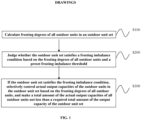
- the present disclosure provides a method for controlling balanced frosting of outdoor units in a multi-connection air conditioning system, and the method includes: calculating frosting degrees of all outdoor units in an outdoor unit set; judging whether the outdoor unit set satisfies a frosting imbalance condition based on the frosting degrees of all the outdoor units and a preset frosting imbalance threshold; and if the outdoor unit set satisfies the frosting imbalance condition, selectively controlling actual output capacities of the outdoor units in the outdoor unit set based on the frosting degrees of all the outdoor units, and making a total amount of the actual output capacities of all the outdoor units not less than a required total amount of the output capacity of the outdoor unit set.
- the step of "judging whether the outdoor unit set satisfies the frosting imbalance condition based on the frosting degrees of all the outdoor units and the preset frosting imbalance threshold” includes: selecting a preset frosting degree reference value as the frosting imbalance threshold when only some of the outdoor units are turned on; comparing the frosting degrees of all the outdoor units in the turned-on state with the preset frosting degree reference value respectively; and if there is any one of all the outdoor units in the turned-on state whose frosting degree is greater than or equal to the preset frosting degree reference value, then determining that the outdoor unit set satisfies the frosting imbalance condition.
- the "controlling the actual output capacities of the outdoor units in the outdoor unit set based on the frosting degrees of all the outdoor units” includes: selecting a maximum value of the frosting degrees of all the outdoor units in the turned-on state and a minimum value of the frosting degrees of all the outdoor units in a turned-off state and comparing the maximum value with the minimum value; and controlling the actual output capacities of the outdoor units in the outdoor unit set based on a comparison result.
- the "controlling the actual output capacities of the outdoor units in the outdoor unit set based on the comparison result" includes: if the minimum value of the frosting degrees is smaller than the maximum value of the frosting degrees, then turning off the outdoor unit corresponding to the maximum value of the frosting degrees, and turning on the outdoor unit corresponding to the minimum value of the frosting degrees.
- the control method further includes: repeating the step of "selecting the maximum value of the frosting degrees of all the outdoor units in the turned-on state and the minimum value of the frosting degrees of all the outdoor units in the turned-off state and comparing the maximum value with the minimum value; and controlling the actual output capacities of the outdoor units in the outdoor unit set based on the comparison result" and the step of "if the minimum value of the frosting degrees is smaller than the maximum value of the frosting degrees, then turning off the outdoor unit corresponding to the maximum value of the frosting degrees, and turning on the outdoor unit corresponding to the minimum value of the frosting degrees” until the frosting degrees of the outdoor units in the turned-on state are each less than the frosting degrees of the outdoor units in the turned-off state.
- the step of "judging whether the outdoor unit set satisfies the frosting imbalance condition based on the frosting degrees of all the outdoor units and the preset frosting imbalance threshold" includes: in a case where all the outdoor units in the outdoor unit set are turned on, using a preset standard difference of the frosting degree as the frosting imbalance threshold; calculating a difference between a maximum value of the frosting degrees and a minimum value of the frosting degrees in all the current outdoor units; comparing the difference with the standard difference of the frosting degree; and if the difference is larger than or equal to the standard difference of the frosting degree, then determining that the outdoor unit set satisfies the frosting imbalance condition.
- the "selectively controlling the actual output capacities of the outdoor units in the outdoor unit set based on the frosting degrees of all the outdoor units” includes: calculating an average value of the frosting degrees of all the outdoor units; using the average value of the frosting degree as a current frosting degree reference value; or using a sum of the average value of the frosting degrees and a set deviation value as the current frosting degree reference value; and controlling the actual output capacities of the outdoor units in the outdoor unit set based on the frosting degrees of all the outdoor units and the current frosting degree reference value.
- the "selectively controlling the actual output capacities of the outdoor units in the outdoor unit set based on the frosting degrees of all the outdoor units and the current frosting degree reference value" includes: reducing the output capacities of the outdoor units whose frosting degrees are greater than the current frosting degree reference value, and/or increasing the output capacities of the outdoor units whose frosting degrees are less than the current frosting degree reference value.
- the "calculating the frosting degrees of all the outdoor units in the outdoor unit set” includes: making a statistic on an actual duration in which a temperature of a condenser of the outdoor unit is lower than a preset temperature threshold; and calculating a ratio of the actual duration to a preset duration as the frosting degree of the outdoor unit.
- control method further includes: controlling all the outdoor units in the outdoor unit set to enter a defrosting state, if there is any outdoor unit in the outdoor unit set whose frosting degree reaches a defrosting condition.
- the actual output capacities of the outdoor units in the outdoor unit set are selectively controlled under the premise of ensuring that the total amount of the actual output capacities of all the outdoor units is not less than a required total amount of the output capacity of the outdoor unit set. In this way, the difference in the frosting degrees of different outdoor units in the outdoor unit set at the same time can be reduced, so that when the outdoor unit set enters the defrosting state, the heating capacities of all the outdoor units can be fully utilized.
- the present disclosure proposes different control methods respectively, so that the method for controlling balanced frosting of outdoor units in a multi-connection air conditioning system provided by the present disclosure can be adapted to different application scenes, and further ensures the application effect of the method for controlling balanced frosting of outdoor units in a multi-connection air conditioning system provided by the present disclosure.
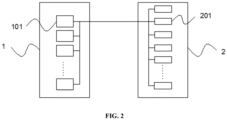
- FIG. 2 is a schematic structural diagram of a multi-connection air conditioning system.
- the existing multi-connection air conditioning system is formed by connecting an outdoor unit set 1 to individual indoor unit systems 2 through manifolds.
- the outdoor unit set 1 is formed by multiple outdoor units 101 gathered through refrigerant pipes, whereas the indoor unit system 2 is composed of indoor units 201 distributed in different rooms of user.
- the outdoor units 101 will be frosted during low-temperature heating, and a heating effect will be affected if the outdoor units 101 are frosted. When a frosting degree of the outdoor unit 101 reaches a certain condition, it is required to defrost the outdoor unit 101.
- this embodiment provides a method for controlling balanced frosting of outdoor units in a multi-connection air conditioning system.
- this embodiment provides a method for controlling balanced frosting of outdoor units in a multi-connection air conditioning system, and the method includes:
- the frosting degree of the outdoor unit will gradually increase.
- the required amount of the total capacity in this embodiment is the required amount of the total cooling capacity, which is related to factors such as compressor frequency, fan speed, and electric heating power.
- the parameter "output capacity" of the outdoor unit generally has a nominal value in the outdoor unit, and the nominal amount of output capacity is the maximum cooling capacity or maximum heating capacity per unit time.
- the actual output capacity in this embodiment mainly refers to a ratio of the actual heating capacity per unit time to the nominal maximum heating capacity, expressed as a percentage. When the outdoor unit is turned off, its actual output capacity is 0.
- the total amount of the actual output capacities of all the outdoor units has to be no less than a required total amount of the output capacity of the outdoor unit set.
- the output capacity of the outdoor unit will change over time. For example, the required total amount of the output capacity of the outdoor unit set at night is lower than that during the daytime; the required total amount of the output capacity of the outdoor unit set may also be a fixed value, such as a maximum value of the required total amount of the outdoor units in a day.
- the required total amount of the output capacity of the outdoor unit set remains unchanged during the process of controlling the output capacity of the outdoor unit set.
- the actual output capacities of the outdoor units in the outdoor unit set are selectively controlled under the premise of ensuring that the total amount of the actual output capacities of all the outdoor units is not less than a required total amount of the output capacity of the outdoor unit set. In this way, the difference in the frosting degrees of different outdoor units in the outdoor unit set at the same time is reduced, so that when the outdoor unit set enters the defrosting state, the heating capacities of all the outdoor units can be fully utilized.
- the step of "judging whether the outdoor unit set satisfies the frosting imbalance condition based on the frosting degrees of all the outdoor units and the preset frosting imbalance threshold" in step S200 includes: selecting a preset frosting degree reference value as the frosting imbalance threshold when only some of the outdoor units are turned on; comparing the frosting degrees of all the outdoor units in the turned-on state with the preset frosting degree reference value respectively; and if there is any one of all the outdoor units in the turned-on state whose frosting degree is greater than or equal to the preset frosting degree reference value, then determining that the outdoor unit set satisfies the frosting imbalance condition.
- the preset frosting degree reference value determines under what circumstances it is necessary to selectively control the actual output capacities of the outdoor units in the outdoor unit set, and the preset frosting degree reference value may theoretically be smaller than any value below a defrosting condition.
- the defrosting condition means that the frosting degree reaches 100%; however, in practice, in order to improve the efficiency of adjusting the outdoor units, the preset frosting degree reference value may generally be chosen within a range from 20% to 70%. In this embodiment, the preset frosting degree reference value is chosen as 40%.
- Table 1 example of a control process of the outdoor units when only some of the outdoor units are turned on outdoor unit 1 outdoor unit 2 outdoor unit 3 outdoor unit 4 case running state/frosting degree running state/frosting degree running state/frosting degree running state/frosting degree 1 ON/40% ON/35% OFF/36% OFF/30% 2 OFF/40% ON/35% OFF/36% ON/30% 3 ON/45% ON/40% OFF/36% OFF/35% 4 OFF/45% OFF/40% ON/36% ON/35% 5 OFF/40% OFF/40% ON/40% ON/38%
- the frosting degrees of the outdoor units obtained in step S 100 are shown.
- case 1 there are a total of 4 outdoor units, of which outdoor unit 1 and outdoor unit 2 are both in a turned-on state, and outdoor unit 3 and outdoor unit 4 are both in a turned-off state.
- the frosting degree of the outdoor unit 1 is 40%
- the frosting degree of the outdoor unit 2 is 35%
- the frosting degree of the outdoor unit 3 is 36%
- the frosting degree of the outdoor unit 4 is 30%.
- step S200 it is judged whether the outdoor unit set satisfies the frosting imbalance condition based on the frosting degrees of all the outdoor units and the preset frosting imbalance threshold.
- the frosting degree of the outdoor unit 1 in the turned-on state is equal to the preset frosting degree reference value 40%, so it can be seen that the outdoor unit set satisfies the frosting imbalance condition.
- step S300 the "selectively controlling the actual output capacities of the outdoor units in the outdoor unit set based on the frosting degrees of all the outdoor units” includes: selecting a maximum value of the frosting degrees of all the outdoor units in the turned-on state and a minimum value of the frosting degrees of all the outdoor units in a turned-off state and comparing the maximum value with the minimum value; and controlling the actual output capacities of the outdoor units in the outdoor unit set based on a comparison result.
- the maximum value of the frosting degrees in the outdoor unit 1 and the outdoor unit 2 in the turned-on state is 40%
- the minimum value of the frosting degrees in the outdoor unit 3 and the outdoor unit 4 in the turned-off state is 30%.
- the comparison result is that the frosting degree of the outdoor unit 4 in the turned-off state is less than the frosting degree of the outdoor unit 1 in the turned-on state.
- the "controlling the actual output capacities of the outdoor units in the outdoor unit set based on the comparison result" includes: if the minimum value of the frosting degrees is smaller than the maximum value of the frosting degrees, then turning off the outdoor unit corresponding to the maximum value of the frosting degrees, and turning on the outdoor unit corresponding to the minimum value of the frosting degrees.
- the result of controlling the actual output capacities of the outdoor units in the outdoor unit set is that the outdoor unit 1 with the highest frosting degree is turned off, and the outdoor unit 4 with the least frosting degree is turned on. It can be understood by those skilled in the art that the purpose of turning on one outdoor unit and turning off one outdoor unit in a case where the actual output capabilities of the outdoor units in the turned-on state are the same is to ensure that the total amount of the actual output capacities of all the outdoor units is not less than the required total amount of the output capacity of the outdoor unit set.
- the total amount of the actual output capacities of all the outdoor units can be also made not less than the required total amount of the output capacity of the outdoor unit set.
- control method further includes: repeating the step of "selecting the maximum value of the frosting degrees of all the outdoor units in the turned-on state and the minimum value of the frosting degrees of all the outdoor units in the turned-off state and comparing the maximum value with the minimum value; and controlling the actual output capacities of the outdoor units in the outdoor unit set based on the comparison result" and the step of "if the minimum value of the frosting degrees is smaller than the maximum value of the frosting degrees, then turning off the outdoor unit corresponding to the maximum value of the frosting degrees, and turning on the outdoor unit corresponding to the minimum value of the frosting degrees” until the frosting degrees of the outdoor units in the turned-on state are each less than the frosting degrees of the outdoor units in the turned-off state.
- the case 1 becomes the case 2.
- the frosting degrees of the outdoor unit 2 and the outdoor unit 4 in the turned-on state is each less than the frosting degrees of the outdoor unit 1 and the outdoor unit 3 in the turned-off state. Therefore, it is not necessary to perform the above repeating steps.
- the frosting degrees of all the outdoor units are obtained according to step S 100.
- the frosting degree of the outdoor unit 1 is 45%
- the frosting degree of the outdoor unit 2 is 40%
- the frosting degree of the outdoor unit 3 is 36%
- the frosting degree of the outdoor unit 4 is 35%.
- step S200 it is judged whether the outdoor unit set satisfies the frosting imbalance condition based on the frosting degrees of all the outdoor units and the preset frosting imbalance threshold.
- the frosting degree of the outdoor unit 1 in the turned-on state is 45%, which is larger than the preset frosting degree reference value of 40%, and the frosting degree of the outdoor unit 2 in the turned-on state is 40%, which is equal to the preset frosting degree reference value of 40%. Therefore, it can be seen that the outdoor unit set satisfies the frosting imbalance condition.
- the maximum value of the frosting degrees of the outdoor unit 1 and the outdoor unit 2 in the turned-on state is 45%, and the minimum value of the frosting degrees of the outdoor unit 3 and the outdoor unit 4 in the turned-off state is 35%.
- step S300 the actual output capacities of the outdoor units in the outdoor unit set are selectively controlled based on the frosting degrees of all the outdoor units, and the comparison result is that the frosting degree of the outdoor unit 4 in the turned-off state is less than the frosting degree of the outdoor unit 1 in the turned-on state. Therefore, the specific process of controlling the actual output capacities of the outdoor units in the outdoor unit set is to turn off the outdoor unit 1 with the greatest frosting degree, and turn on the outdoor unit 4 with the least frosting degree.
- the frosting degree of the outdoor unit 2 is 40%, and the frosting degree of the outdoor unit 4 is 35%; therefore, out of the outdoor units in the turned-on state, the outdoor unit 2 has the greatest frosting degree, and the corresponding maximum value of the frosting degrees is 40%; out of the outdoor units in the turned-off state, the frosting degree of the outdoor unit 1 is 45%, and the frosting degree of the outdoor unit 3 is 36%; therefore, out of the outdoor units in the turned-off state, the outdoor unit 3 has the least frosting degree, and the corresponding minimum value of the frosting degrees is 36%.
- the outdoor unit 2 corresponding to the maximum value of the frosting degrees is turned off, and the outdoor unit 3 corresponding to the minimum value of the frosting degrees is turned on, which becomes the case 4. Till now, the frosting degrees of the outdoor units in the turned-on state are each less than the frosting degrees of the outdoor units in the turned-off state.
- the frosting degree of the outdoor unit 3 in the turned-on state is 40%, and it can be seen that the outdoor unit set satisfies the frosting imbalance condition.
- the frosting degrees of the outdoor unit 1 and the outdoor unit 2 in the turned-off state are also each 40%, which is not less than the frosting degree of the outdoor unit 3. Therefore, the outdoor unit 3 can only continue to run at this time.
- the outdoor unit corresponding to the minimum value of the frosting degrees in the turned-off state can be chosen and turned on; that is, the frosting degree of the outdoor unit 3 in the turned-off state at this time is greater than 40%.
- the step of S200 "judging whether the outdoor unit set satisfies the frosting imbalance condition based on the frosting degrees of all the outdoor units and the preset frosting imbalance threshold" includes: in a case where all the outdoor units in the outdoor unit set are turned on, using a preset standard difference of the frosting degree as the frosting imbalance threshold; calculating a difference between the maximum value of the frosting degrees and the minimum value of the frosting degrees in all the current outdoor units; comparing the difference with the standard difference of the frosting degree; and if the difference is larger than or equal to the standard difference of the frosting degree, then determining that the outdoor unit set satisfies the frosting imbalance condition.
- the preset standard difference of the frosting degree determines under what circumstances it is necessary to selectively control the actual output capacities of the outdoor units in the outdoor unit set.
- Those skilled in the art may select a reasonable value according to the specific situation, and it is recommended to select the preset standard difference of the frosting degree as 5%-10%. In this embodiment, the preset standard difference of the frosting degree is selected as 5%.
- the frosting degrees of the outdoor units are obtained according to step S100.
- the outdoor unit 4 has the maximum frosting degree, which is 65%
- the outdoor unit 3 has the minimum frosting degree, which is 46%.
- the difference between the maximum value of the frosting degree and the minimum value of the frosting degree is 19%, which is larger than the standard difference of the frosting degree of 5%. Therefore, the outdoor unit set in case A satisfies the frosting imbalance condition.
- Table 2 example of a control process of the outdoor units when all the outdoor units are turned on outdoor unit 1 outdoor unit 2 outdoor unit 3 outdoor unit 4 case actual output capacity/frosting degree actual output capacity/frosting degree actual output capacity/frosting degree actual output capacity/frosting degree actual output capacity/frosting degree A 50%/50% 50%/55% 50%/46% 50%/65% B 51%/50% 50%/55% 51%/46% 48%/65% C 51%/60% 50%/57% 51%/53% 48%/66% D 51%/60% 51%/57% 52%/53% 46%/66% E 51%/98% 51%/99% 52%/98% 46%/100% F 100%/80% 100%/87% 100%/90% 100%/85%
- the "selectively controlling the actual output capacities of the outdoor units in the outdoor unit set based on the frosting degrees of all the outdoor units" in step S300 includes: calculating an average value of the frosting degrees of all the outdoor units; using the average value of the frosting degree as a current frosting degree reference value; or using a sum of the average value of the frosting degrees and a set deviation value as the current frosting degree reference value; and controlling the actual output capacities of the outdoor units in the outdoor unit set based on the frosting degrees of all the outdoor units and the current frosting degree reference value.
- the average value of the frosting degrees of all the outdoor units is calculated, which is 54%, and the deviation value is set to be 1%, so the current frosting degree reference value is 55%. Therefore, it is necessary to control the actual output capacities of the outdoor units according to the frosting degree of each outdoor unit of 50%, 55%, 46% and 65% and the current frosting degree reference value of 55%.
- the "selectively controlling the actual output capacities of the outdoor units in the outdoor unit set based on the frosting degrees of all the outdoor units and the current frosting degree reference value" includes: reducing the output capacities of the outdoor units whose frosting degrees are greater than the current frosting degree reference value, and/or increasing the output capacities of the outdoor units whose frosting degrees are less than the current frosting degree reference value.
- the actual output capacities of the outdoor units are controlled based on the frosting degrees of the outdoor units in the case A and the above current frosting degree reference value of 55%.
- the greater the reduction is the smaller the actual output capacity of the outdoor unit and the lower the frosting speed will be.
- the actual output capacity of the outdoor unit it is recommended that the actual output capacity of the outdoor unit be generally reduced by only 1% to 5%. In this embodiment, an example will be used for description in which the output capacity of the outdoor unit whose frosting degree is greater than the current frosting degree reference value is reduced by 2%.
- the actual output capacity of the outdoor unit 4 whose frosting degree is greater than the current frosting degree reference value of 55% is reduced by 2%, the actual output capacity of the outdoor unit 2 whose frosting degree is equal to the current frosting degree reference value of 55% remains unchanged, and the actual output capacities of the outdoor unit 1 and the outdoor unit 3 whose frosting degrees are less than the current frosting degree reference value of 55% are each increased by 1%, so that the total amount of the actual output capacities of all the outdoor units is not affected.
- the frosting degrees of the outdoor units in the outdoor unit set may be obtained every other certain period (e.g., 5 minutes), and based on the frosting degrees of all the outdoor units, the actual output capacities of the outdoor units in the outdoor unit set can be selectively controlled.
- the frosting degrees of the outdoor units are obtained according to step S 100. As shown in case C in table 2, the outdoor unit 4 has the greatest frosting degree, which is 66%, and the outdoor unit 3 has the least frosting degree, which is 53%.
- step S200 it is judged whether the outdoor unit set satisfies the frosting imbalance condition based on the frosting degrees of all the outdoor units and the preset frosting imbalance threshold.
- the difference between the maximum value of the frosting degrees and the minimum value of the frosting degrees is 13%, which is larger than the standard difference of the frosting degree of 5%. Therefore, the outdoor unit set in case C satisfies the frosting imbalance condition.
- step S300 the actual output capacities of the outdoor units in the outdoor unit set are selectively controlled based on the frosting degrees of all the outdoor units.
- the average value of the frosting degrees of all the outdoor units is 59%, and the deviation value is set to be 1%, so the current frosting degree reference value is 60%. Therefore, it is necessary to control the actual output capacities of the outdoor units according to the frosting degree of each outdoor unit of 60%, 57%, 53% and 66% and the current frosting degree reference value of 60%.
- the actual output capacity of the outdoor unit 4 whose frosting degree is greater than the current frosting degree reference value of 60% is reduced by 2%, the actual output capacity of the outdoor unit 1 whose frosting degree is equal to the current frosting degree reference value of 60% remains unchanged, and the actual output capacities of the outdoor unit 2 and the outdoor unit 3 whose frosting degrees are less than the current frosting degree reference value of 60% are each increased by 1%, so that the total amount of the actual output capacities of all the outdoor units is not affected.
- the frosting degrees of the outdoor units are obtained according to step S 100.
- the outdoor unit 3 has the greatest frosting degree, which is 90%
- the outdoor unit 1 has the least frosting degree, which is 80%.
- the difference between the maximum value of the frosting degrees and the minimum value of the frosting degrees is 10%, which is larger than the standard difference of the frosting degree of 5%. Therefore, the outdoor unit set in case C satisfies the frosting imbalance condition.
- the actual output capacities of all the outdoor units have all reached 100% at this time, there is no need to adjust the actual output capacities of the outdoor units.
- the outdoor unit set continues to run until it satisfies the defrosting condition and enters the defrosting state.
- This embodiment proposes different control methods for two different situations in which only some of the outdoor units in the outdoor unit set are turned on and all the outdoor units in the outdoor unit set are turned on respectively, so that the method for controlling balanced frosting of outdoor units in a multi-connection air conditioning system proposed by this embodiment can be adapted to different application scenes, which further ensures the application effect of the method for controlling balanced frosting of outdoor units in a multi-connection air conditioning system provided by this embodiment.
- the "calculating the frosting degrees of all the outdoor units in the outdoor unit set" includes: making a statistic on an actual duration in which a temperature of a condenser of the outdoor unit is lower than a preset temperature threshold; and calculating a ratio of the actual duration to a preset duration as the frosting degree of the outdoor unit.
- control method further includes: controlling all the outdoor units in the outdoor unit set to enter a defrosting state, if there is any outdoor unit in the outdoor unit set whose frosting degree reaches a defrosting condition.
- the defrosting condition is that the frosting degree reaches 100%.
- the method for calculating the frosting degree is to make a statistic on an actual duration in which a temperature of a condenser of the outdoor unit is lower than a preset temperature threshold, and calculate a ratio of the actual duration to a preset duration as the frosting degree of the outdoor unit.
- the defrosting condition may be that a cumulative time during which the temperature of the outdoor unit is lower than -10°C reaches 50 minutes, that is, the frosting degree reaches 100%. When the cumulative time during which the temperature of the outdoor unit is lower than -10°C reaches 20 minutes, the frosting degree of the outdoor unit is correspondingly 40%.
- the actual output capacities of the outdoor units can be adjusted by adjusting operating frequencies of the outdoor units.
- the method of calculating the frosting degree of the outdoor unit in step S100 may also be: judging the frosting degree of the outdoor unit by obtaining any parameter value of a wind pressure of the outdoor unit, a wind speed of the outdoor unit, a current of the outdoor unit and a rotational speed of the outdoor unit when the temperature of the outdoor unit is lower than a preset temperature when the outdoor unit of the air conditioner is in a heating mode.
- the preset temperature can be calibrated according to the actual situation; for example, the preset temperature may be various preset values such as 0°C, -10°C, etc.
- the specific judging method is to set multiple thresholds in advance, and then compare the actually obtained parameter values with the multiple thresholds respectively to determine the frosting degrees of the outdoor units.
- the wind pressure of the outdoor unit may be detected by a wind pressure sensor installed on a heat exchanger of the outdoor unit
- the wind speed of the outdoor unit may be detected by a wind speed sensor installed on the heat exchanger of the outdoor unit
- the current of the outdoor unit may be detected by a current sensor
- the rotational speed of the outdoor unit may be detected by a rotational speed sensor.
- the maximum value of the frosting degrees and the minimum value of the frosting degrees of all the outdoor units may be obtained, and the outdoor unit corresponding to the maximum value of the frosting degrees may be turned off accordingly, or the actual output capacity of the outdoor unit corresponding to the maximum value of the frosting degrees in the turned-on state may be reduced; at the same time, the outdoor unit corresponding to the minimum value of the frosting degrees may be turned on, or the actual output capacity of the outdoor unit corresponding to the maximum value of the frosting degrees in the turned-on state may be increased.
- the method for controlling balanced frosting of outdoor units in a multi-connection air conditioning system may be stored as a program in a computer readable storage medium.
- the storage medium would include several instructions that enable a computer device (which may be a personal computer, a server, or a network device, etc.) or a processor to execute some steps of the methods in various embodiments of the present disclosure.
- the above storage medium includes: a U disk, a mobile hard disk, a read-only memory (ROM), a random access memory (RAM), a magnetic disk or an optical disk and other media that can store program codes.
Landscapes
- Engineering & Computer Science (AREA)
- Mechanical Engineering (AREA)
- General Engineering & Computer Science (AREA)
- Chemical & Material Sciences (AREA)
- Combustion & Propulsion (AREA)
- Signal Processing (AREA)
- Physics & Mathematics (AREA)
- Fuzzy Systems (AREA)
- Mathematical Physics (AREA)
- Thermal Sciences (AREA)
- Air Conditioning Control Device (AREA)
Claims (10)
- Ein Verfahren zur Steurung der ausgewogenen Glasur von Außengeräten in einer Mehranschluss-Klimaanlage, das Verfahren umfasst:Berechnung der Frostgrade aller Außengeräte in einem Außengerätesatz;Beurteilung, ob das Set für Außengeräte eine Bedingung für das Ungleichgewicht der Glasur erfüllt, basierend auf dem Grad der Glasur aller Außengeräte und einer voreingestellten Schwelle für das Ungleichgewicht der Glasur; undwenn der Außengerätesatz die Bedingung des Frostingungleichgewichts erfüllt, selektiv die tatsächlichen Ausgangskapazitäten der Außengeräte im Außengerätesatz auf der Grundlage der Frostinggrade aller Außengeräte steuern und eine Gesamtmenge der tatsächlichen Ausgangskapazitäten aller Außengeräte nicht geringer als eine erforderliche Gesamtmenge der Ausgangskapazität des Außengerätesatzes machen.
- Das Steurverfahren gemäß Anspruch 1, bei dem der Schritt "beurteilen, ob das Außengeräteset die Bedingung der Glasur-Unwucht-Bedingung auf der Grundlage der Frostgrade aller Außengeräte und der voreingestellten Frostungleichgewichtsschwelle erfüllt" umfasst:auswahl eines voreingestellten Referenzwertes für den Zuckergrad als Schwellenwert für den Zuckerungleichgewicht, wenn nur einige der Außengeräte eingeschaltet sind;Vergleich der Frostgrade aller Außengeräte im eingeschalteten Zustand mit dem voreingestellten Frostgrad-Referenzwert; undwenn sich eine der Außengeräte im eingeschalteten Zustand befindet, deren Frostgrad größer oder gleich dem voreingestellten Frostgrad-Referenzwert ist, dann muss festgestellt werden, ob die Außeneinheit die Bedingung des Frostungleichgewichts erfüllt.
- Das Steurverfahren gemäß Anspruch 2, wobei die "Steuerung der tatsächlichen Ausgangsleistungen der Außengeräte im Außengerätesatz anhand der Frostgrade aller Außengeräte" umfasst:auswahl eines Maximalwertes der Frostgrade aller Außengeräte im eingeschalteten Zustand und eines Minimalwertes der Frostgrade aller Außengeräte im ausgeschalteten Zustand und Vergleich des Maximalwertes mit dem Minimalwert; undSteuerung der tatsächlichen Ausgangsleistungen der Außengeräte im Außengerätesatz anhand eines Vergleichsergebnisses.
- Das Steurverfahren gemäß Anspruch 3, wobei die "Steuerung der tatsächlichen Ausgangsleistungen der Außengeräte im Außengerätesatz anhand des Vergleichsergebnisses" umfasst:
wenn der Mindestwert der Frostgrade kleiner als der Maximalwert der Frostgrade ist, dann schalten Sie das Außengerät aus, das dem Maximalwert der Frostgrade entspricht, und schalten Sie das Außengerät ein, das dem Minimalwert der Frostgrade entspricht. - Das Steurverfahren gemäß Anspruch 4, das ferner Folgendes umfasst:
Wiederholung der in den Ansprüchen 3 und 4 beschriebenen Schritte, bis die Frostgrade der Außengeräte im eingeschalteten Zustand jeweils kleiner sind als die Frostgrade der Außengeräte im ausgeschalteten Zustand. - Das Steurverfahren gemäß Anspruch 1, bei dem der Schritt "beurteilen, ob das Außengeräteset die Bedingung der Glasur-Unwucht-Bedingung auf der Grundlage der Frostgrade aller Außengeräte und der voreingestellten Frostungleichgewichtsschwelle erfüllt" umfasst:in einem Fall, in dem alle Außengeräte des Außengerätesets eingeschaltet sind, unter Verwendung einer voreingestellten Standarddifferenz des Frostgrades als Schwelle für das Ungleichgewicht der Glasur;Berechnung einer Differenz zwischen einem Höchstwert der Frostgrade und einem Mindestwert der Frostgrade in allen aktuellen Außeneinheiten;Vergleich der Differenz mit der Standarddifferenz des Zuckergrades; undwenn die Differenz größer oder gleich der Standarddifferenz des Frostgrades ist, dann wird festgestellt, dass der Satz der Außeneinheit die Bedingung des Frostungleichgewichts erfüllt.
- Das Steurverfahren gemäß Anspruch 6, wobei die "Regelung der tatsächlichen Ausgangsleistungen der Außengeräte im Außengerätesatz anhand der Frostgrade aller Außengeräte" umfasst:Berechnung eines Durchschnittswertes der Frostgrade aller Außengeräte;Verwendung des Durchschnittswertes des Frostgrades als aktuellen Frostgrad-Referenzwert; oder unter Verwendung einer Summe des Durchschnittswertes der Frostinggrade und eines festgelegten Abweichungswerts als aktuellen Frostinggrad-Referenzwert; undSteuerung der tatsächlichen Ausgangsleistungen der Außengeräte im Außengerätesatz anhand der Frostgrade aller Außengeräte und des aktuellen Frostgradbezugswertes.
- Das Steurverfahren gemäß Anspruch 7, wobei die "Regelung der tatsächlichen Ausgangsleistungen der Außengeräte im Außengerät auf der Grundlage der Frostgrade aller Außengeräte und des aktuellen Frostgrades" umfasst:
Verringerung der Ausgangsleistungen der Außengeräte, deren Frostgrad größer als der aktuelle Frostgrad-Referenzwert ist, und/oder Erhöhung der Ausgangsleistungen der Außengeräte, deren Frostgrad kleiner als der aktuelle Frostgrad-Referenzwert ist. - Das Steurverfahren gemäß Anspruch 1, bei dem die "Berechnung der Frostgrade aller Außengeräte im Außengerätesatz" umfasst:Erstellung einer Statistik über eine tatsächliche Dauer, in der die Temperatur eines Kondensators der Außeneinheit niedriger als eine voreingestellte Temperaturschwelle ist; undBerechnung eines Verhältnisses der tatsächlichen Dauer zu einer voreingestellten Dauer als Frostgrad der Außeneinheit.
- Das Steurverfahren gemäß Anspruch 1, das ferner Folgendes umfasst:
Steuerung aller Außengeräte im Außengeräteset, um in einen Auftauzustand zu gelangen, wenn sich im Außengeräteset eine Außeneinheit befindet, deren Frostgrad einen Auftauzustand erreicht.
Applications Claiming Priority (2)
| Application Number | Priority Date | Filing Date | Title |
|---|---|---|---|
| CN201910877989.7A CN112524746B (zh) | 2019-09-17 | 2019-09-17 | 多联机空调系统中室外机均衡结霜的控制方法 |
| PCT/CN2020/113395 WO2021052193A1 (zh) | 2019-09-17 | 2020-09-04 | 多联机空调系统中室外机均衡结霜的控制方法 |
Publications (3)
| Publication Number | Publication Date |
|---|---|
| EP4033170A1 EP4033170A1 (de) | 2022-07-27 |
| EP4033170A4 EP4033170A4 (de) | 2022-11-09 |
| EP4033170B1 true EP4033170B1 (de) | 2023-07-19 |
Family
ID=74883878
Family Applications (1)
| Application Number | Title | Priority Date | Filing Date |
|---|---|---|---|
| EP20865879.9A Active EP4033170B1 (de) | 2019-09-17 | 2020-09-04 | Verfahren zur steuerung der gleichmässigen vereisung von ausseneinheiten in einem multi-split-klimaanlagensystem |
Country Status (4)
| Country | Link |
|---|---|
| US (1) | US12000605B2 (de) |
| EP (1) | EP4033170B1 (de) |
| CN (1) | CN112524746B (de) |
| WO (1) | WO2021052193A1 (de) |
Families Citing this family (3)
| Publication number | Priority date | Publication date | Assignee | Title |
|---|---|---|---|---|
| CN110686366B (zh) * | 2019-10-16 | 2021-02-09 | 广东美的暖通设备有限公司 | 空调控制方法、装置及计算机可读存储介质 |
| CN115638509B (zh) * | 2022-11-09 | 2024-06-11 | 宁波奥克斯电气股份有限公司 | 一种空调控制方法、装置、空调及存储介质 |
| CN116772288A (zh) * | 2023-05-18 | 2023-09-19 | 青岛海信日立空调系统有限公司 | 一种空调器及其控制方法 |
Family Cites Families (45)
| Publication number | Priority date | Publication date | Assignee | Title |
|---|---|---|---|---|
| JPS5774535A (en) * | 1980-10-29 | 1982-05-10 | Hitachi Ltd | Heating operation control method for heat pump system heating and cooling device |
| JP2831838B2 (ja) | 1990-11-06 | 1998-12-02 | 株式会社東芝 | 空気調和機 |
| US5319943A (en) * | 1993-01-25 | 1994-06-14 | Copeland Corporation | Frost/defrost control system for heat pump |
| US6263686B1 (en) * | 2000-07-10 | 2001-07-24 | Carrier Corporation | Defrost control method and apparatus |
| KR100442392B1 (ko) * | 2001-12-20 | 2004-07-30 | 엘지전자 주식회사 | 한 쌍의 실외열교환기를 구비한 냉난방 겸용 공기조화기 |
| JP2003240391A (ja) * | 2002-02-21 | 2003-08-27 | Mitsubishi Electric Corp | 空気調和機 |
| JP2004271113A (ja) * | 2003-03-11 | 2004-09-30 | Matsushita Electric Ind Co Ltd | 熱交換器 |
| KR101013373B1 (ko) * | 2003-08-28 | 2011-02-14 | 삼성전자주식회사 | 공기조화기 |
| JP4342473B2 (ja) * | 2004-06-09 | 2009-10-14 | 三洋電機株式会社 | 機器制御システム |
| KR100688202B1 (ko) * | 2005-02-25 | 2007-03-02 | 엘지전자 주식회사 | 멀티 에어컨의 피크전력 제어 시스템 및 그 제어방법 |
| KR101264779B1 (ko) * | 2005-11-18 | 2013-05-15 | 삼성전자주식회사 | 공기 조화기 및 그 제어 방법 |
| KR100844326B1 (ko) * | 2007-01-26 | 2008-07-07 | 엘지전자 주식회사 | 멀티에어컨의 디맨드 제어시스템 및 디맨드 제어방법 |
| JP4724730B2 (ja) * | 2008-04-09 | 2011-07-13 | 株式会社日立製作所 | 情報処理システムの運用管理方法、運用管理プログラム、および運用管理装置、ならびに情報処理システム |
| JP5696877B2 (ja) * | 2010-10-01 | 2015-04-08 | 清水建設株式会社 | 運転管理装置、運転管理方法、および運転管理プログラム |
| CA2762395C (en) * | 2010-12-16 | 2018-09-04 | Lennox Industries Inc | Priority-based energy management |
| US8674543B2 (en) * | 2010-12-22 | 2014-03-18 | Lg Electronics Inc. | Electronic device for controlling consumption power and method of operating the same |
| JP5785050B2 (ja) * | 2011-10-27 | 2015-09-24 | 株式会社日立製作所 | 情報処理システム、その省電力制御方法、及び装置 |
| CN102706054B (zh) | 2012-06-20 | 2017-06-06 | 青岛海尔空调电子有限公司 | 空调设备的除霜方法、装置和空调设备 |
| US9939181B2 (en) * | 2013-12-11 | 2018-04-10 | Trane International Inc. | Micro-combined heat and power heat pump defrost procedure |
| EP3086046B1 (de) * | 2013-12-18 | 2019-11-20 | Mitsubishi Electric Corporation | Klimatisierungsvorrichtung und verfahren zur energiespeisung von fernbedienungen |
| JP6370401B2 (ja) * | 2014-11-12 | 2018-08-08 | 三菱電機株式会社 | 空調管理装置および空調システム |
| JP6249932B2 (ja) * | 2014-12-04 | 2017-12-20 | 三菱電機株式会社 | 空調システム |
| KR101698261B1 (ko) * | 2015-01-12 | 2017-01-19 | 엘지전자 주식회사 | 공기 조화기 및 공기 조화기의 제어 방법 |
| JP5994900B1 (ja) * | 2015-05-19 | 2016-09-21 | ダイキン工業株式会社 | 複数の空気調和装置の管理装置 |
| CN105091233B (zh) * | 2015-08-11 | 2018-06-01 | 珠海格力电器股份有限公司 | 空调室外机的结霜检测方法及装置 |
| TWI598541B (zh) * | 2016-01-19 | 2017-09-11 | 台達電子工業股份有限公司 | 空調的空氣側設備的能源最佳化系統及能源最佳化方法 |
| EP3531045A4 (de) * | 2016-10-20 | 2019-08-28 | GD Midea Heating & Ventilating Equipment Co., Ltd. | Verfahren und vorrichtung zum entfrosten einer klimaanlage |
| CN106556106B (zh) * | 2016-11-09 | 2020-03-31 | 青岛海尔空调器有限总公司 | 一种空调室内机自清洁的控制方法及装置 |
| JP2018204813A (ja) * | 2017-05-31 | 2018-12-27 | 三菱重工サーマルシステムズ株式会社 | 空気調和装置の制御装置、空気調和装置、空気調和装置の制御方法、及び空気調和装置の制御プログラム |
| CN107166679A (zh) * | 2017-06-22 | 2017-09-15 | 广东工业大学 | 一种结霜均匀度测定方法及系统 |
| CN107525220B (zh) * | 2017-07-31 | 2020-11-27 | 青岛海尔空调器有限总公司 | 空调器及其室外机自清洁控制方法 |
| US10914503B2 (en) * | 2018-02-01 | 2021-02-09 | Johnson Controls Technology Company | Coil heating systems for heat pump systems |
| US10488099B2 (en) * | 2018-02-22 | 2019-11-26 | Schneider Electric USA, Inc. | Frost detection in HVACandR systems |
| CN109798600A (zh) * | 2019-03-20 | 2019-05-24 | 珠海格力电器股份有限公司 | 热泵系统、空调、室外机及室外机的控制方法 |
| ES3049179T3 (en) * | 2019-03-28 | 2025-12-15 | Daikin Ind Ltd | Air conditioning capability indication system |
| CN113692518B (zh) * | 2019-04-09 | 2023-03-28 | 东芝开利株式会社 | 空调装置 |
| CN110057029A (zh) * | 2019-04-25 | 2019-07-26 | 宁波奥克斯电气股份有限公司 | 一种空调除霜控制方法、装置及空调器 |
| CN110107986B (zh) * | 2019-05-09 | 2020-02-28 | 珠海格力电器股份有限公司 | 温度调节设备的化霜控制方法、装置、系统和空调 |
| CN110173939A (zh) * | 2019-05-17 | 2019-08-27 | 青岛海尔空调电子有限公司 | 用于空调器的除霜控制方法 |
| CN114051525B (zh) * | 2019-06-19 | 2024-07-02 | 大金工业株式会社 | 含有制冷剂的组合物、其用途、具有该组合物的冷冻机、该冷冻机的运转方法以及具有冷冻机的冷冻循环装置 |
| JP7418744B2 (ja) * | 2020-05-28 | 2024-01-22 | 株式会社日立製作所 | エネルギー管理システムおよびエネルギー管理方法 |
| JP7152678B2 (ja) * | 2020-09-30 | 2022-10-13 | ダイキン工業株式会社 | 電力制御システムおよびプログラム |
| CN112665133B (zh) * | 2021-01-21 | 2022-05-17 | 广东美的暖通设备有限公司 | 多联机耗电量检测方法、热回收多联机、存储介质及装置 |
| CN113007865B (zh) * | 2021-04-20 | 2022-09-20 | 广东积微科技有限公司 | 一种多室外机并联式不换向除霜系统及其除霜控制方法 |
| US11892188B2 (en) * | 2021-05-30 | 2024-02-06 | Trane International Inc. | Capacity control for HVAC system |
-
2019
- 2019-09-17 CN CN201910877989.7A patent/CN112524746B/zh active Active
-
2020
- 2020-09-04 WO PCT/CN2020/113395 patent/WO2021052193A1/zh not_active Ceased
- 2020-09-04 EP EP20865879.9A patent/EP4033170B1/de active Active
- 2020-09-04 US US17/641,973 patent/US12000605B2/en active Active
Also Published As
| Publication number | Publication date |
|---|---|
| CN112524746A (zh) | 2021-03-19 |
| US12000605B2 (en) | 2024-06-04 |
| US20220307713A1 (en) | 2022-09-29 |
| WO2021052193A1 (zh) | 2021-03-25 |
| EP4033170A1 (de) | 2022-07-27 |
| EP4033170A4 (de) | 2022-11-09 |
| CN112524746B (zh) | 2021-11-26 |
Similar Documents
| Publication | Publication Date | Title |
|---|---|---|
| CN111425992B (zh) | 一种空调化霜控制方法、装置、存储介质及空调 | |
| EP4033170B1 (de) | Verfahren zur steuerung der gleichmässigen vereisung von ausseneinheiten in einem multi-split-klimaanlagensystem | |
| EP3657103B1 (de) | Abtausteuerungsverfahren für multisplit-system | |
| EP3734177B1 (de) | Steuerungsverfahren für klimaanlage | |
| EP4567339A1 (de) | Steuerungsverfahren für multisplit-klimaanlage und steuergerät, klimaanlage und medium | |
| CN112283878B (zh) | 一种空调控制方法、装置、存储介质及空调 | |
| CN113063213A (zh) | 一种空调控制方法、装置、存储介质及空调 | |
| CN107477798B (zh) | 用于控制空调的冷媒的方法和装置、空调 | |
| CN115095955A (zh) | 空调器和空调器除霜控制方法 | |
| JP4905939B2 (ja) | 空調システムの運転制御方法 | |
| CN110736213B (zh) | 用于空调除霜的控制方法、控制装置及空调 | |
| CN108592295A (zh) | 空调器除霜控制方法 | |
| CN108692426B (zh) | 空调器除霜控制方法 | |
| CN108592297B (zh) | 空调器除霜控制方法 | |
| US20240410636A1 (en) | Method and a system for preventing a freeze event using refrigerant temperature | |
| CN110470000B (zh) | 用于空调除霜的控制方法、装置及空调 | |
| JP4811077B2 (ja) | 空調システム | |
| CN110470009B (zh) | 用于空调除霜的控制方法及装置、空调 | |
| CN114135973B (zh) | 一种多联机控制方法、装置及多联机 | |
| JPH09287856A (ja) | 空気調和機の除霜方法 | |
| CN112484238B (zh) | 化霜控制方法、装置、多模块机组及暖通设备 | |
| CN110469998B (zh) | 用于空调除霜的控制方法、装置及空调 | |
| CN108800451B (zh) | 空调器除霜控制方法 | |
| CN108954674A (zh) | 空调器除霜控制方法 | |
| CN108692425A (zh) | 空调器除霜控制方法 |
Legal Events
| Date | Code | Title | Description |
|---|---|---|---|
| STAA | Information on the status of an ep patent application or granted ep patent |
Free format text: STATUS: THE INTERNATIONAL PUBLICATION HAS BEEN MADE |
|
| PUAI | Public reference made under article 153(3) epc to a published international application that has entered the european phase |
Free format text: ORIGINAL CODE: 0009012 |
|
| STAA | Information on the status of an ep patent application or granted ep patent |
Free format text: STATUS: REQUEST FOR EXAMINATION WAS MADE |
|
| 17P | Request for examination filed |
Effective date: 20220315 |
|
| AK | Designated contracting states |
Kind code of ref document: A1 Designated state(s): AL AT BE BG CH CY CZ DE DK EE ES FI FR GB GR HR HU IE IS IT LI LT LU LV MC MK MT NL NO PL PT RO RS SE SI SK SM TR |
|
| A4 | Supplementary search report drawn up and despatched |
Effective date: 20221011 |
|
| RIC1 | Information provided on ipc code assigned before grant |
Ipc: F25B 13/00 20060101ALI20221005BHEP Ipc: F24F 11/42 20180101ALI20221005BHEP Ipc: F25B 47/02 20060101ALI20221005BHEP Ipc: F24F 11/62 20180101AFI20221005BHEP |
|
| DAV | Request for validation of the european patent (deleted) | ||
| DAX | Request for extension of the european patent (deleted) | ||
| REG | Reference to a national code |
Ref country code: DE Ref legal event code: R079 Free format text: PREVIOUS MAIN CLASS: F24F0011640000 Ipc: F24F0011620000 Ref country code: DE Ref legal event code: R079 Ref document number: 602020014222 Country of ref document: DE Free format text: PREVIOUS MAIN CLASS: F24F0011640000 Ipc: F24F0011620000 |
|
| GRAP | Despatch of communication of intention to grant a patent |
Free format text: ORIGINAL CODE: EPIDOSNIGR1 |
|
| STAA | Information on the status of an ep patent application or granted ep patent |
Free format text: STATUS: GRANT OF PATENT IS INTENDED |
|
| RIC1 | Information provided on ipc code assigned before grant |
Ipc: F25B 13/00 20060101ALI20230127BHEP Ipc: F24F 11/42 20180101ALI20230127BHEP Ipc: F25B 47/02 20060101ALI20230127BHEP Ipc: F24F 11/62 20180101AFI20230127BHEP |
|
| INTG | Intention to grant announced |
Effective date: 20230228 |
|
| GRAS | Grant fee paid |
Free format text: ORIGINAL CODE: EPIDOSNIGR3 |
|
| GRAA | (expected) grant |
Free format text: ORIGINAL CODE: 0009210 |
|
| STAA | Information on the status of an ep patent application or granted ep patent |
Free format text: STATUS: THE PATENT HAS BEEN GRANTED |
|
| AK | Designated contracting states |
Kind code of ref document: B1 Designated state(s): AL AT BE BG CH CY CZ DE DK EE ES FI FR GB GR HR HU IE IS IT LI LT LU LV MC MK MT NL NO PL PT RO RS SE SI SK SM TR |
|
| REG | Reference to a national code |
Ref country code: GB Ref legal event code: FG4D |
|
| REG | Reference to a national code |
Ref country code: CH Ref legal event code: EP |
|
| REG | Reference to a national code |
Ref country code: DE Ref legal event code: R096 Ref document number: 602020014222 Country of ref document: DE |
|
| REG | Reference to a national code |
Ref country code: IE Ref legal event code: FG4D |
|
| REG | Reference to a national code |
Ref country code: LT Ref legal event code: MG9D |
|
| REG | Reference to a national code |
Ref country code: NL Ref legal event code: MP Effective date: 20230719 |
|
| PGFP | Annual fee paid to national office [announced via postgrant information from national office to epo] |
Ref country code: DE Payment date: 20230911 Year of fee payment: 4 |
|
| REG | Reference to a national code |
Ref country code: AT Ref legal event code: MK05 Ref document number: 1589827 Country of ref document: AT Kind code of ref document: T Effective date: 20230719 |
|
| PG25 | Lapsed in a contracting state [announced via postgrant information from national office to epo] |
Ref country code: NL Free format text: LAPSE BECAUSE OF FAILURE TO SUBMIT A TRANSLATION OF THE DESCRIPTION OR TO PAY THE FEE WITHIN THE PRESCRIBED TIME-LIMIT Effective date: 20230719 |
|
| PG25 | Lapsed in a contracting state [announced via postgrant information from national office to epo] |
Ref country code: GR Free format text: LAPSE BECAUSE OF FAILURE TO SUBMIT A TRANSLATION OF THE DESCRIPTION OR TO PAY THE FEE WITHIN THE PRESCRIBED TIME-LIMIT Effective date: 20231020 |
|
| PG25 | Lapsed in a contracting state [announced via postgrant information from national office to epo] |
Ref country code: IS Free format text: LAPSE BECAUSE OF FAILURE TO SUBMIT A TRANSLATION OF THE DESCRIPTION OR TO PAY THE FEE WITHIN THE PRESCRIBED TIME-LIMIT Effective date: 20231119 |
|
| PG25 | Lapsed in a contracting state [announced via postgrant information from national office to epo] |
Ref country code: SE Free format text: LAPSE BECAUSE OF FAILURE TO SUBMIT A TRANSLATION OF THE DESCRIPTION OR TO PAY THE FEE WITHIN THE PRESCRIBED TIME-LIMIT Effective date: 20230719 Ref country code: RS Free format text: LAPSE BECAUSE OF FAILURE TO SUBMIT A TRANSLATION OF THE DESCRIPTION OR TO PAY THE FEE WITHIN THE PRESCRIBED TIME-LIMIT Effective date: 20230719 Ref country code: PT Free format text: LAPSE BECAUSE OF FAILURE TO SUBMIT A TRANSLATION OF THE DESCRIPTION OR TO PAY THE FEE WITHIN THE PRESCRIBED TIME-LIMIT Effective date: 20231120 Ref country code: NO Free format text: LAPSE BECAUSE OF FAILURE TO SUBMIT A TRANSLATION OF THE DESCRIPTION OR TO PAY THE FEE WITHIN THE PRESCRIBED TIME-LIMIT Effective date: 20231019 Ref country code: LV Free format text: LAPSE BECAUSE OF FAILURE TO SUBMIT A TRANSLATION OF THE DESCRIPTION OR TO PAY THE FEE WITHIN THE PRESCRIBED TIME-LIMIT Effective date: 20230719 Ref country code: LT Free format text: LAPSE BECAUSE OF FAILURE TO SUBMIT A TRANSLATION OF THE DESCRIPTION OR TO PAY THE FEE WITHIN THE PRESCRIBED TIME-LIMIT Effective date: 20230719 Ref country code: IS Free format text: LAPSE BECAUSE OF FAILURE TO SUBMIT A TRANSLATION OF THE DESCRIPTION OR TO PAY THE FEE WITHIN THE PRESCRIBED TIME-LIMIT Effective date: 20231119 Ref country code: HR Free format text: LAPSE BECAUSE OF FAILURE TO SUBMIT A TRANSLATION OF THE DESCRIPTION OR TO PAY THE FEE WITHIN THE PRESCRIBED TIME-LIMIT Effective date: 20230719 Ref country code: GR Free format text: LAPSE BECAUSE OF FAILURE TO SUBMIT A TRANSLATION OF THE DESCRIPTION OR TO PAY THE FEE WITHIN THE PRESCRIBED TIME-LIMIT Effective date: 20231020 Ref country code: FI Free format text: LAPSE BECAUSE OF FAILURE TO SUBMIT A TRANSLATION OF THE DESCRIPTION OR TO PAY THE FEE WITHIN THE PRESCRIBED TIME-LIMIT Effective date: 20230719 Ref country code: AT Free format text: LAPSE BECAUSE OF FAILURE TO SUBMIT A TRANSLATION OF THE DESCRIPTION OR TO PAY THE FEE WITHIN THE PRESCRIBED TIME-LIMIT Effective date: 20230719 |
|
| PG25 | Lapsed in a contracting state [announced via postgrant information from national office to epo] |
Ref country code: PL Free format text: LAPSE BECAUSE OF FAILURE TO SUBMIT A TRANSLATION OF THE DESCRIPTION OR TO PAY THE FEE WITHIN THE PRESCRIBED TIME-LIMIT Effective date: 20230719 |
|
| REG | Reference to a national code |
Ref country code: DE Ref legal event code: R097 Ref document number: 602020014222 Country of ref document: DE |
|
| PG25 | Lapsed in a contracting state [announced via postgrant information from national office to epo] |
Ref country code: ES Free format text: LAPSE BECAUSE OF FAILURE TO SUBMIT A TRANSLATION OF THE DESCRIPTION OR TO PAY THE FEE WITHIN THE PRESCRIBED TIME-LIMIT Effective date: 20230719 |
|
| PG25 | Lapsed in a contracting state [announced via postgrant information from national office to epo] |
Ref country code: SM Free format text: LAPSE BECAUSE OF FAILURE TO SUBMIT A TRANSLATION OF THE DESCRIPTION OR TO PAY THE FEE WITHIN THE PRESCRIBED TIME-LIMIT Effective date: 20230719 Ref country code: RO Free format text: LAPSE BECAUSE OF FAILURE TO SUBMIT A TRANSLATION OF THE DESCRIPTION OR TO PAY THE FEE WITHIN THE PRESCRIBED TIME-LIMIT Effective date: 20230719 Ref country code: ES Free format text: LAPSE BECAUSE OF FAILURE TO SUBMIT A TRANSLATION OF THE DESCRIPTION OR TO PAY THE FEE WITHIN THE PRESCRIBED TIME-LIMIT Effective date: 20230719 Ref country code: EE Free format text: LAPSE BECAUSE OF FAILURE TO SUBMIT A TRANSLATION OF THE DESCRIPTION OR TO PAY THE FEE WITHIN THE PRESCRIBED TIME-LIMIT Effective date: 20230719 Ref country code: DK Free format text: LAPSE BECAUSE OF FAILURE TO SUBMIT A TRANSLATION OF THE DESCRIPTION OR TO PAY THE FEE WITHIN THE PRESCRIBED TIME-LIMIT Effective date: 20230719 Ref country code: CZ Free format text: LAPSE BECAUSE OF FAILURE TO SUBMIT A TRANSLATION OF THE DESCRIPTION OR TO PAY THE FEE WITHIN THE PRESCRIBED TIME-LIMIT Effective date: 20230719 Ref country code: SK Free format text: LAPSE BECAUSE OF FAILURE TO SUBMIT A TRANSLATION OF THE DESCRIPTION OR TO PAY THE FEE WITHIN THE PRESCRIBED TIME-LIMIT Effective date: 20230719 |
|
| REG | Reference to a national code |
Ref country code: CH Ref legal event code: PL |
|
| PG25 | Lapsed in a contracting state [announced via postgrant information from national office to epo] |
Ref country code: LU Free format text: LAPSE BECAUSE OF NON-PAYMENT OF DUE FEES Effective date: 20230904 |
|
| PLBE | No opposition filed within time limit |
Free format text: ORIGINAL CODE: 0009261 |
|
| STAA | Information on the status of an ep patent application or granted ep patent |
Free format text: STATUS: NO OPPOSITION FILED WITHIN TIME LIMIT |
|
| REG | Reference to a national code |
Ref country code: BE Ref legal event code: MM Effective date: 20230930 |
|
| PG25 | Lapsed in a contracting state [announced via postgrant information from national office to epo] |
Ref country code: LU Free format text: LAPSE BECAUSE OF NON-PAYMENT OF DUE FEES Effective date: 20230904 Ref country code: MC Free format text: LAPSE BECAUSE OF FAILURE TO SUBMIT A TRANSLATION OF THE DESCRIPTION OR TO PAY THE FEE WITHIN THE PRESCRIBED TIME-LIMIT Effective date: 20230719 |
|
| 26N | No opposition filed |
Effective date: 20240422 |
|
| REG | Reference to a national code |
Ref country code: IE Ref legal event code: MM4A |
|
| PG25 | Lapsed in a contracting state [announced via postgrant information from national office to epo] |
Ref country code: IE Free format text: LAPSE BECAUSE OF NON-PAYMENT OF DUE FEES Effective date: 20230904 |
|
| PG25 | Lapsed in a contracting state [announced via postgrant information from national office to epo] |
Ref country code: CH Free format text: LAPSE BECAUSE OF NON-PAYMENT OF DUE FEES Effective date: 20230930 |
|
| PG25 | Lapsed in a contracting state [announced via postgrant information from national office to epo] |
Ref country code: IE Free format text: LAPSE BECAUSE OF NON-PAYMENT OF DUE FEES Effective date: 20230904 Ref country code: CH Free format text: LAPSE BECAUSE OF NON-PAYMENT OF DUE FEES Effective date: 20230930 Ref country code: SI Free format text: LAPSE BECAUSE OF FAILURE TO SUBMIT A TRANSLATION OF THE DESCRIPTION OR TO PAY THE FEE WITHIN THE PRESCRIBED TIME-LIMIT Effective date: 20230719 |
|
| PG25 | Lapsed in a contracting state [announced via postgrant information from national office to epo] |
Ref country code: BE Free format text: LAPSE BECAUSE OF NON-PAYMENT OF DUE FEES Effective date: 20230930 |
|
| PG25 | Lapsed in a contracting state [announced via postgrant information from national office to epo] |
Ref country code: BG Free format text: LAPSE BECAUSE OF FAILURE TO SUBMIT A TRANSLATION OF THE DESCRIPTION OR TO PAY THE FEE WITHIN THE PRESCRIBED TIME-LIMIT Effective date: 20230719 |
|
| PG25 | Lapsed in a contracting state [announced via postgrant information from national office to epo] |
Ref country code: BG Free format text: LAPSE BECAUSE OF FAILURE TO SUBMIT A TRANSLATION OF THE DESCRIPTION OR TO PAY THE FEE WITHIN THE PRESCRIBED TIME-LIMIT Effective date: 20230719 |
|
| REG | Reference to a national code |
Ref country code: DE Ref legal event code: R119 Ref document number: 602020014222 Country of ref document: DE |
|
| GBPC | Gb: european patent ceased through non-payment of renewal fee |
Effective date: 20240904 |
|
| PG25 | Lapsed in a contracting state [announced via postgrant information from national office to epo] |
Ref country code: DE Free format text: LAPSE BECAUSE OF NON-PAYMENT OF DUE FEES Effective date: 20250401 |
|
| PG25 | Lapsed in a contracting state [announced via postgrant information from national office to epo] |
Ref country code: GB Free format text: LAPSE BECAUSE OF NON-PAYMENT OF DUE FEES Effective date: 20240904 |
|
| PG25 | Lapsed in a contracting state [announced via postgrant information from national office to epo] |
Ref country code: CY Free format text: LAPSE BECAUSE OF FAILURE TO SUBMIT A TRANSLATION OF THE DESCRIPTION OR TO PAY THE FEE WITHIN THE PRESCRIBED TIME-LIMIT; INVALID AB INITIO Effective date: 20200904 |
|
| PG25 | Lapsed in a contracting state [announced via postgrant information from national office to epo] |
Ref country code: HU Free format text: LAPSE BECAUSE OF FAILURE TO SUBMIT A TRANSLATION OF THE DESCRIPTION OR TO PAY THE FEE WITHIN THE PRESCRIBED TIME-LIMIT; INVALID AB INITIO Effective date: 20200904 |
|
| PGFP | Annual fee paid to national office [announced via postgrant information from national office to epo] |
Ref country code: IT Payment date: 20250909 Year of fee payment: 6 |
|
| PGFP | Annual fee paid to national office [announced via postgrant information from national office to epo] |
Ref country code: FR Payment date: 20250929 Year of fee payment: 6 |
|
| PG25 | Lapsed in a contracting state [announced via postgrant information from national office to epo] |
Ref country code: TR Free format text: LAPSE BECAUSE OF FAILURE TO SUBMIT A TRANSLATION OF THE DESCRIPTION OR TO PAY THE FEE WITHIN THE PRESCRIBED TIME-LIMIT Effective date: 20230719 |