EP4567262A1 - Vorrichtung zur zeitsteuerung der ventilöffnung und -schliessung - Google Patents
Vorrichtung zur zeitsteuerung der ventilöffnung und -schliessung Download PDFInfo
- Publication number
- EP4567262A1 EP4567262A1 EP24215363.3A EP24215363A EP4567262A1 EP 4567262 A1 EP4567262 A1 EP 4567262A1 EP 24215363 A EP24215363 A EP 24215363A EP 4567262 A1 EP4567262 A1 EP 4567262A1
- Authority
- EP
- European Patent Office
- Prior art keywords
- lubricating oil
- phase
- rotating body
- control device
- closing timing
- Prior art date
- Legal status (The legal status is an assumption and is not a legal conclusion. Google has not performed a legal analysis and makes no representation as to the accuracy of the status listed.)
- Pending
Links
Images




Classifications
-
- F—MECHANICAL ENGINEERING; LIGHTING; HEATING; WEAPONS; BLASTING
- F01—MACHINES OR ENGINES IN GENERAL; ENGINE PLANTS IN GENERAL; STEAM ENGINES
- F01L—CYCLICALLY OPERATING VALVES FOR MACHINES OR ENGINES
- F01L1/00—Valve-gear or valve arrangements, e.g. lift-valve gear
- F01L1/34—Valve-gear or valve arrangements, e.g. lift-valve gear characterised by the provision of means for changing the timing of the valves without changing the duration of opening and without affecting the magnitude of the valve lift
- F01L1/344—Valve-gear or valve arrangements, e.g. lift-valve gear characterised by the provision of means for changing the timing of the valves without changing the duration of opening and without affecting the magnitude of the valve lift changing the angular relationship between crankshaft and camshaft, e.g. using helicoidal gear
- F01L1/3442—Valve-gear or valve arrangements, e.g. lift-valve gear characterised by the provision of means for changing the timing of the valves without changing the duration of opening and without affecting the magnitude of the valve lift changing the angular relationship between crankshaft and camshaft, e.g. using helicoidal gear using hydraulic chambers with variable volume to transmit the rotating force
-
- F—MECHANICAL ENGINEERING; LIGHTING; HEATING; WEAPONS; BLASTING
- F01—MACHINES OR ENGINES IN GENERAL; ENGINE PLANTS IN GENERAL; STEAM ENGINES
- F01L—CYCLICALLY OPERATING VALVES FOR MACHINES OR ENGINES
- F01L1/00—Valve-gear or valve arrangements, e.g. lift-valve gear
- F01L1/34—Valve-gear or valve arrangements, e.g. lift-valve gear characterised by the provision of means for changing the timing of the valves without changing the duration of opening and without affecting the magnitude of the valve lift
- F01L1/344—Valve-gear or valve arrangements, e.g. lift-valve gear characterised by the provision of means for changing the timing of the valves without changing the duration of opening and without affecting the magnitude of the valve lift changing the angular relationship between crankshaft and camshaft, e.g. using helicoidal gear
- F01L1/352—Valve-gear or valve arrangements, e.g. lift-valve gear characterised by the provision of means for changing the timing of the valves without changing the duration of opening and without affecting the magnitude of the valve lift changing the angular relationship between crankshaft and camshaft, e.g. using helicoidal gear using bevel or epicyclic gear
-
- F—MECHANICAL ENGINEERING; LIGHTING; HEATING; WEAPONS; BLASTING
- F02—COMBUSTION ENGINES; HOT-GAS OR COMBUSTION-PRODUCT ENGINE PLANTS
- F02D—CONTROLLING COMBUSTION ENGINES
- F02D13/00—Controlling the engine output power by varying inlet or exhaust valve operating characteristics, e.g. timing
- F02D13/02—Controlling the engine output power by varying inlet or exhaust valve operating characteristics, e.g. timing during engine operation
- F02D13/0203—Variable control of intake and exhaust valves
- F02D13/0215—Variable control of intake and exhaust valves changing the valve timing only
- F02D13/0219—Variable control of intake and exhaust valves changing the valve timing only by shifting the phase, i.e. the opening periods of the valves are constant
-
- F—MECHANICAL ENGINEERING; LIGHTING; HEATING; WEAPONS; BLASTING
- F01—MACHINES OR ENGINES IN GENERAL; ENGINE PLANTS IN GENERAL; STEAM ENGINES
- F01L—CYCLICALLY OPERATING VALVES FOR MACHINES OR ENGINES
- F01L1/00—Valve-gear or valve arrangements, e.g. lift-valve gear
- F01L1/02—Valve drive
- F01L1/04—Valve drive by means of cams, camshafts, cam discs, eccentrics or the like
- F01L1/047—Camshafts
- F01L1/053—Camshafts overhead type
-
- F—MECHANICAL ENGINEERING; LIGHTING; HEATING; WEAPONS; BLASTING
- F01—MACHINES OR ENGINES IN GENERAL; ENGINE PLANTS IN GENERAL; STEAM ENGINES
- F01L—CYCLICALLY OPERATING VALVES FOR MACHINES OR ENGINES
- F01L1/00—Valve-gear or valve arrangements, e.g. lift-valve gear
- F01L1/02—Valve drive
- F01L1/04—Valve drive by means of cams, camshafts, cam discs, eccentrics or the like
- F01L1/047—Camshafts
- F01L2001/0476—Camshaft bearings
-
- F—MECHANICAL ENGINEERING; LIGHTING; HEATING; WEAPONS; BLASTING
- F01—MACHINES OR ENGINES IN GENERAL; ENGINE PLANTS IN GENERAL; STEAM ENGINES
- F01L—CYCLICALLY OPERATING VALVES FOR MACHINES OR ENGINES
- F01L2250/00—Camshaft drives characterised by their transmission means
- F01L2250/02—Camshaft drives characterised by their transmission means the camshaft being driven by chains
-
- F—MECHANICAL ENGINEERING; LIGHTING; HEATING; WEAPONS; BLASTING
- F01—MACHINES OR ENGINES IN GENERAL; ENGINE PLANTS IN GENERAL; STEAM ENGINES
- F01L—CYCLICALLY OPERATING VALVES FOR MACHINES OR ENGINES
- F01L2250/00—Camshaft drives characterised by their transmission means
- F01L2250/04—Camshaft drives characterised by their transmission means the camshaft being driven by belts
-
- F—MECHANICAL ENGINEERING; LIGHTING; HEATING; WEAPONS; BLASTING
- F01—MACHINES OR ENGINES IN GENERAL; ENGINE PLANTS IN GENERAL; STEAM ENGINES
- F01L—CYCLICALLY OPERATING VALVES FOR MACHINES OR ENGINES
- F01L2800/00—Methods of operation using a variable valve timing mechanism
- F01L2800/01—Starting
-
- F—MECHANICAL ENGINEERING; LIGHTING; HEATING; WEAPONS; BLASTING
- F01—MACHINES OR ENGINES IN GENERAL; ENGINE PLANTS IN GENERAL; STEAM ENGINES
- F01L—CYCLICALLY OPERATING VALVES FOR MACHINES OR ENGINES
- F01L2800/00—Methods of operation using a variable valve timing mechanism
- F01L2800/03—Stopping; Stalling
-
- F—MECHANICAL ENGINEERING; LIGHTING; HEATING; WEAPONS; BLASTING
- F01—MACHINES OR ENGINES IN GENERAL; ENGINE PLANTS IN GENERAL; STEAM ENGINES
- F01L—CYCLICALLY OPERATING VALVES FOR MACHINES OR ENGINES
- F01L2810/00—Arrangements solving specific problems in relation with valve gears
- F01L2810/02—Lubrication
-
- F—MECHANICAL ENGINEERING; LIGHTING; HEATING; WEAPONS; BLASTING
- F01—MACHINES OR ENGINES IN GENERAL; ENGINE PLANTS IN GENERAL; STEAM ENGINES
- F01L—CYCLICALLY OPERATING VALVES FOR MACHINES OR ENGINES
- F01L2820/00—Details on specific features characterising valve gear arrangements
- F01L2820/03—Auxiliary actuators
- F01L2820/032—Electric motors
Definitions
- the present disclosure relates to a valve opening and closing timing control device.
- JP 2007-56839 A describes a valve opening and closing timing control device (a valve timing device in the literature) capable of setting a valve timing of an intake valve of an internal combustion engine by a driving force of an electric motor.
- the valve opening and closing timing control device described in JP 2007-56839 A sets four temperature regions as temperature regions of an internal combustion engine (an engine in the literature), determines which of the four temperature regions the temperature of the internal combustion engine belongs to at the time of starting the internal combustion engine, and sets a target valve timing set for each temperature region.
- JP 2018-87564 A describes a valve opening and closing timing control device that can set the timing by a driving force of an electric motor, as in JP 2007-56839 A .
- the valve opening and closing timing control device described in JP 2018-87564 A includes a drive-side rotating body, a driven-side rotating body, a gear-type phase adjustment mechanism, a phase control motor that drives the phase adjustment mechanism, an Oldham's coupling, a front plate, and the like.
- the driven-side rotating body is accommodated in the drive-side rotating body, and a phase adjustment mechanism is configured as a hypocyclo-type reduction mechanism so as to relatively rotate the drive-side rotating body and the driven-side rotating body by a driving force of a phase control motor.
- valve opening and closing timing control device is configured to discharge the lubricating oil remaining inside when the internal combustion engine is stopped from the guide groove of the outer case or the opening of the front plate.
- valve opening and closing timing control device when the lubricating oil remains in the valve opening and closing timing control device at the time of starting the internal combustion engine in a low-temperature environment, it is difficult to set the valve timing by the control of the valve opening and closing timing control device immediately after the start of the internal combustion engine, and it takes time to set the valve timing.
- a configuration of a valve opening and closing timing control device includes a drive-side rotating body that rotates synchronously with a crankshaft of an internal combustion engine about a rotation axis, a driven-side rotating body that is disposed coaxially with the rotation axis and inside the drive-side rotating body, and rotates integrally with a camshaft for opening and closing a valve of the internal combustion engine, a phase adjustment mechanism that includes a plurality of gears for reducing a driving rotational force of an electric motor and sets a relative rotational phase between the drive-side rotating body and the driven-side rotating body, a lubricating oil supply unit that supplies lubricating oil to the phase adjustment mechanism from an outside, and an oil discharge control unit that performs oil discharge control of discharging lubricating oil by changing the relative rotational phase by driving the electric motor in accordance with stop control of stopping the internal combustion engine.
- the oil discharge control unit changes the relative rotational phase in accordance with the stop control for stopping the internal combustion engine, so that the lubricating oil remaining inside can be discharged from, for example, the opening portion at the end of the drive-side rotating body or the gap between the driven-side rotating body and the plurality of gears constituting the phase adjustment mechanism.
- the valve opening and closing timing control device that can appropriately set the valve timing when starting the internal combustion engine at a low temperature has been configured.
- valve opening and closing timing control device 100 As an example of a phase adjustment mechanism C, a configuration is described in which an output gear 25 having an annular internal tooth portion 25A and an input gear 30 having an annular external tooth portion 30A so as to be engaged with part of the output gear 25 are provided, and these are driven by a phase control motor M (electric motor) outside a drive-side rotating body A.
- phase control motor M electric motor
- the valve opening and closing timing control device 100 is not limited to the following embodiment, and various modifications can be made without departing from the gist of the embodiment.
- the valve opening and closing timing control device 100 includes the drive-side rotating body A, a driven-side rotating body B, and the phase adjustment mechanism C.
- the drive-side rotating body A rotates about the rotation axis X in synchronization with a crankshaft 1 of an engine E as an internal combustion engine.
- the driven-side rotating body B is disposed inside the drive-side rotating body A coaxially with a rotation axis X.
- the driven-side rotating body B rotates integrally with an intake camshaft 2 (an example of a camshaft) that opens and closes an intake valve 2B of the engine E (internal combustion engine).
- the phase adjustment mechanism C sets the relative rotational phase between the drive-side rotating body A and the driven-side rotating body B by the driving force of the phase control motor M (an example of an electric motor).
- the valve opening and closing timing control device 100 is provided in the engine E of a vehicle such as a passenger car, and realizes control of the valve timing (opening and closing timing) of the intake valve 2B, the exhaust valve, or the intake/exhaust valve.
- the engine E is configured as a four-cycle type in which a piston 4 is accommodated in each of a plurality of cylinders 3 formed in a cylinder block, and each piston 4 is connected to the crankshaft 1 by a connecting rod 5.
- a timing chain 6 (which may be a timing belt or the like) is wound across an output sprocket 1S of the crankshaft 1 of the engine E and a drive sprocket 11S of the drive-side rotating body A.
- valve opening and closing timing control device 100 rotates about the rotation axis X when the engine E is in operation.
- the valve opening and closing timing control device 100 is configured to be able to operate the phase adjustment mechanism C by the driving force of the phase control motor M (electric motor) and displace the driven-side rotating body B with respect to the drive-side rotating body A in the same direction as the rotation direction or the opposite direction.
- the valve opening and closing timing control device 100 can set the relative rotational phase between the drive-side rotating body A and the driven-side rotating body B to the advance side and the retard side by the operation of the phase adjustment mechanism C, and sets the opening and closing timing (opening and closing timing) of the intake valve 2B by a cam portion 2A of the intake camshaft 2.
- the intake timing of the intake valve 2B is advanced, and the intake compression ratio is increased.
- the intake timing of the intake valve 2B is delayed, and the intake compression ratio is reduced.
- the drive-side rotating body A includes an outer case 11 having a drive sprocket 11S formed on the outer periphery and a front plate 12 that are fastened with a plurality of fastening bolts 13.
- the outer case 11 has a bottomed cylindrical shape having an opening at the bottom.
- the front plate 12 is provided away from the intake camshaft 2 with respect to an eccentric member 26 in the direction along the rotation axis X.
- an intermediate member 20 as the driven-side rotating body B and the phase adjustment mechanism C having a plurality of gears is accommodated in the internal space of the outer case 11.
- the phase adjustment mechanism C is linked to an Oldham's coupling Cx that reflects the phase change on the drive-side rotating body A and the driven-side rotating body B.
- the intermediate member 20 constituting the driven-side rotating body B has a support wall portion 21 connected to the intake camshaft 2 in a posture orthogonal to the rotation axis X, and a cylindrical wall portion 22 having a cylindrical shape centered on the rotation axis X and protruding from an outer peripheral edge of the support wall portion 21 in a direction away from the intake camshaft 2, the intake camshaft and the cylindrical wall portion being integrally formed.
- the intermediate member 20 is fitted in the outer case 11 so as to be relatively rotatable in a state where the outer face of the cylindrical wall portion 22 is in contact with the inner face of the outer case 11, and is fixed to the end of the intake camshaft 2 by a connecting bolt 23 inserted into the through hole at the center of the support wall portion 21.
- the connecting bolt 23 In the state of the connecting bolt 23 being fixed in this manner, the end of the cylindrical wall portion 22 on the outer side (away from the intake camshaft 2) is located inside the front plate 12.
- a groove 22a is formed on the outer periphery of the cylindrical wall portion 22 over the entire circumference, and the groove 22a improves the retention of lubricating oil between the outer face of the cylindrical wall portion 22 and the inner face of the outer case 11. As a result, frictional force between the cylindrical wall portion 22 and the outer case 11 is reduced, and smooth relative rotation between the intermediate member 20 and the outer case 11 is realized.
- the phase control motor M is supported by the engine E by the support frame 7 so that an output shaft Ma of the phase control motor M is disposed coaxially with the rotation axis X.
- a pair of engagement pins 8 in a posture orthogonal to the rotation axis X is formed on the output shaft Ma of the phase control motor M.
- the phase adjustment mechanism C includes the intermediate member 20, the output gear 25 formed on the inner peripheral face of the cylindrical wall portion 22 of the intermediate member 20, the eccentric member 26, an elastic member S, a first bearing 28, a second bearing 29, the input gear 30, a fixing ring 31, a ring-shaped spacer 32, and the Oldham's coupling Cx.
- a rolling bearing is used for the first bearing 28 and the second bearing 29, but a plain bearing can also be used.
- the first bearing 28 is a ball bearing having an inner ring 28a in contact with the outer peripheral face of the eccentric member 26 and an outer ring 28b in contact with the inner peripheral face of the intermediate member 20.
- the second bearing 29 is a ball bearing having an inner ring 29a in contact with the outer peripheral face of the eccentric member 26 and an outer ring 29b in contact with the inner peripheral face of the input gear 30.
- a support face 22S centered on the rotation axis X is formed on the inner side (position adjacent to the support wall portion 21) in the direction (hereinafter, it is described as an axial direction) along the rotation axis X, and an output gear 25 centered on the rotation axis X is integrally formed outside the support face 22S (away from the intake camshaft 2).
- the eccentric member 26 has a cylindrical shape.
- the eccentric member 26 has a circumferential support face 26S, which is the outer peripheral face centered on the rotation axis X on the inner side (close to the intake camshaft 2) in the axial direction.
- the eccentric member 26 has a flange portion 26Q protruding further outward in the radial direction from the circumferential support face 26S further inside the circumferential support face 26S (close to the intake camshaft 2) in the axial direction.
- the eccentric member 26 has an eccentric support face 26E, which is the outer peripheral face centered on an eccentric axis Y that is eccentric in a posture parallel to the rotation axis X on the outer side (away from the intake camshaft 2). Therefore, the eccentric member 26 has the flange portion 26Q, the circumferential support face 26S, and the eccentric support face 26E in this order from the side close to the intake camshaft 2 along the axial direction.
- the direction along the eccentric axis Y is the same as the axial direction, hereinafter, the direction along the eccentric axis Y is also simply referred to as the axial direction.
- the eccentric support face 26E has a first recess 70 that is recessed inward along the radial direction of the eccentric member 26.
- the bottom face of the first recess 70 has a pair of second recesses 79 and 79 recessed radially toward the axis of the eccentric member 26 at both ends of the eccentric member 26 in the circumferential direction.
- the first recesses 70 are symmetrical in the circumferential direction.
- the second recesses 79 and 79 are formed at the respective ends of the first recess 70 in the circumferential direction of the eccentric member 26.
- the maximum depth of the bottom faces of the second recesses 79 and 79 in the radial direction of the eccentric member 26 is deeper than the depth of the bottom face of the first recess 70 near the circumferential center of the eccentric member 26.
- the face from the bottom face to the end portion of each of the second recesses 79 and 79 in the circumferential direction of the eccentric member 26 is formed in a shape along the curved shape of a spring member 71 described later.
- the elastic member S is fitted into the first recess 70.
- the elastic member S includes a pair of spring members 71 and 71.
- the pair of spring members 71 and 71 has the same shape and the same size.
- the elastic member S applies a biasing force to the input gear 30 via the second bearing 29 so that part of the external tooth portion 30A of the input gear 30 meshes with part of the internal tooth portion 25A of the output gear 25.
- a pair of engagement grooves 26T with which a pair of engagement pins 8 of the phase control motor M (see Fig. 1 ) can be engaged, respectively, are formed in a posture parallel to the rotation axis X.
- a tapered portion 26c (inclined portion) in which the diameter decreases toward the inner side (close to the intake camshaft 2) are formed on both side portions of the engagement groove 26T.
- the eccentric member 26 is rotatably supported by the intermediate member 20 about the rotation axis X by externally fitting the first bearing 28 to the circumferential support face 26S and fitting the first bearing 28 into the support face 22S of the cylindrical wall portion 22.
- the input gear 30 is rotatably supported by the eccentric support face 26E of the eccentric member 26 via the second bearing 29 about the eccentric axis Y.
- the number of teeth of the external tooth portion 30A of the input gear 30 is set to be smaller than the number of teeth of the internal tooth portion 25A of the output gear 25 by one tooth.
- Part of the external tooth portion 30A of the input gear 30 meshes with part of the internal tooth portion 25A of the output gear 25.
- the fixing ring 31 is supported by the outer periphery of the eccentric member 26 in a fitted state to prevent the second bearing 29 from coming off via the spacer 32.
- a gap is formed between the eccentric member 26 and the support wall portion 21 of the intermediate member 20.
- the Oldham's coupling Cx includes a plate-shaped joint member 40 with a central annular portion 41, a pair of external engagement arms 42 protruding radially outward from the annular portion 41 along a first direction (left-right direction in Fig. 2 ), and an internal engagement arm 43 protruding radially outward from the annular portion 41 along a second direction (up-down direction in Fig. 2 ) orthogonal to the first direction that are integrally formed.
- Each of the pair of internal engagement arms 43 has an engagement recess 43a continuous with the opening of the annular portion 41.
- a pair of guide grooves 11a extending in the radial direction about the rotation axis X from the internal space to the external space of the outer case 11 is formed in a penetrating groove shape at an opening edge portion that the front plate 12 contacts.
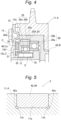
- the groove width of the guide groove 11a is set to be slightly wider than the width of the external engagement arm 42, and a cut portions 42a cut obliquely are formed at each of both circumferential ends of the external engagement arm 42 as illustrated in Fig. 5 .
- a pair of discharge flow paths 11b is cut formed at the guide grooves 11a and the cut portions 42a at both ends of the external engagement arm 42 in the circumferential direction.
- one or more pocket portions 11c whose inner periphery is cut along the circumferential direction are formed at a portion other than the guide groove 11a.
- the pocket portion 11c collects the foreign matter that moves to the outer peripheral side by receiving the centrifugal force due to the rotation of the drive-side rotating body A.
- Figs. 2 and 3 illustrate a structure in which four pocket portions 11c are formed.
- a pair of engagement protrusions 30T is integrally formed at an end face of the input gear 30, the face facing the front plate 12.
- the engagement width of the engagement protrusion 30T is set to be slightly narrower than the engagement width of the engagement recess 43a of the internal engagement arm 43.
- the joint member 40 can be displaced in the first direction (the left-right direction in Fig. 2 ) in which the external engagement arm 42 extends with respect to the outer case 11, and the input gear 30 can be displaced in the second direction (the up-down direction in Fig. 2 ) along the forming direction of the engagement recess 43a of the internal engagement arm 43 with respect to the joint member 40.
- the spacer 32 makes the distance of the gap in which the second bearing 29 can move in the axial direction equal to or less than a predetermined set value. Since the spacer 32 is provided between the Oldham's coupling Cx (joint member 40) and the second bearing 29, the movement of the second bearing 29 in the axial direction is limited to a distance equal to or less than a predetermined set value.
- a recess 12d recessed toward the outside (away from the intake camshaft 2) is formed on a face, of the front plate 12, facing the input gear 30, a recess 12d recessed toward the outside (away from the intake camshaft 2) is formed.
- the recess 12d is provided to face the opening portion of the joint member 40 in the front plate 12, and the recess 12d is formed to be slightly wider than the opening portion of the joint member 40. Accordingly, contact between the engagement protrusion 30T of the input gear 30 and the front plate 12 can be prevented.
- the support wall portion 21 of the intermediate member 20 is connected to the end of the intake camshaft 2 by the connecting bolt 23, and these components rotate integrally.
- the eccentric member 26 is supported by the intermediate member 20 using the first bearing 28 so as to be relatively rotatable about the rotation axis X.
- the input gear 30 is supported by the eccentric support face 26E of the eccentric member 26 via the second bearing 29, and part of the external tooth portion 30A of the input gear 30 meshes with part of the internal tooth portion 25A of the output gear 25.
- the external engagement arm 42 of the Oldham's coupling Cx is engaged with the pair of guide grooves 11a of the outer case 11, and the engagement protrusion 30T of the input gear 30 is engaged with the engagement recess 43a of the internal engagement arm 43 of the Oldham's coupling Cx.
- the joint member 40 is movable in a direction orthogonal to the rotation axis X in a state of being in contact with the inner face of the front plate 12.
- the Oldham's coupling Cx is disposed outside both the first bearing 28 and the second bearing 29 (away from the intake camshaft 2) and inside the front plate 12 (close to the intake camshaft 2).
- the pair of engagement pins 8 formed on the output shaft Ma of the phase control motor M is engaged with the engagement grooves 26T of the eccentric member 26.
- the phase control motor M is controlled by a control device 80 illustrated in Fig. 7 .
- the control device 80 receives detection signals of a camshaft sensor S1 and a crankshaft sensor S2 that detect rotation angles of the crankshaft 1 and the intake camshaft 2.
- the control device 80 maintains the relative rotational phase by driving the phase control motor M at a speed equal to the rotation speed of the intake camshaft 2 when the engine E is in operation.
- the advance operation is performed by reducing the rotation speed of the phase control motor M to be lower than the rotation speed of the intake camshaft 2, and the retard operation is performed by increasing the rotation speed.
- the intake compression ratio is increased by the advance operation, and the intake compression ratio is reduced by the retard operation.
- the control device 80 is configured to perform oil discharge control for discharging lubricating oil inside the valve opening and closing timing control device 100 immediately after the engine E is stopped. Details of this oil discharge control will be described later.
- phase control motor M rotates at a speed equal to that of the outer case 11 (equal to that of the intake camshaft 2), the position of the meshing portion of the external tooth portion 30A of the input gear 30 with respect to the internal tooth portion 25A of the output gear 25 does not change, so that the relative rotational phase of the driven-side rotating body B with respect to the drive-side rotating body A is maintained.
- the eccentric axis Y revolves around the rotation axis X in the phase adjustment mechanism C. Due to this revolution, the position of the meshing portion of the external tooth portion 30A of the input gear 30 with respect to the internal tooth portion 25A of the output gear 25 is displaced along the inner circumference of the output gear 25, and a rotational force acts between the input gear 30 and the output gear 25. That is, a rotational force about the rotation axis X acts on the output gear 25, and a rotational force to rotate about the eccentric axis Y acts on the input gear 30.
- the input gear 30 since the engagement protrusion 30T of the input gear 30 is engaged with the engagement recess 43a of the internal engagement arm 43 of the joint member 40, the input gear does not rotate with respect to the outer case 11, and the rotational force acts on the output gear 25.
- the intermediate member 20 together with the output gear 25 rotates about the rotation axis X with respect to the outer case 11.
- the relative rotational phase between the drive-side rotating body A and the driven-side rotating body B are set, and the opening and closing timing by the intake camshaft 2 is set.
- the number of teeth of the external tooth portion 30A of the input gear 30 is set to be smaller than the number of teeth of the internal tooth portion 25A of the output gear 25 by one tooth, in a case where the eccentric axis Y of the input gear 30 revolves by one rotation around the rotation axis X, the output gear 25 rotates by one tooth, and large reduction is realized.
- the intake camshaft 2 has a lubricating oil passage 15 through which lubricating oil from an external oil pump P (an example of a lubricating oil supply unit) is supplied via an oil passage forming member 9.
- an oil supply passage 21a that guides lubricating oil flowing through the lubricating oil passage 15 is formed inside the eccentric member 26. That is, the support wall portion 21 has the oil supply passage 21a through which the lubricating oil can be supplied from the outside to the inside of the driven-side rotating body B.
- a gap is formed between the eccentric member 26 and the support wall portion 21 of the intermediate member 20.
- the oil supply passage 21a communicates with this gap.
- the lubricating oil supplied from the oil pump P (lubricating oil supply unit) is supplied from the lubricating oil passage 15 of the intake camshaft 2 to the internal space of the intermediate member 20 via the oil supply passage 21a of the support wall portion 21 of the intermediate member 20.
- Part of the lubricating oil supplied to the internal space of the intermediate member 20 flows through the internal space of the eccentric member 26, but part of the lubricating oil is supplied to the first bearing 28 through a gap between the eccentric member 26 and the support wall portion 21 of the intermediate member 20 by the centrifugal force to smoothly operate (slide) the first bearing 28.
- the lubricating oil supplied to the first bearing 28 is then supplied to the adjacent second bearing 29, and is also supplied between the internal tooth portion 25A of the output gear 25 and the external tooth portion 30A of the input gear 30, which are disposed on the outer periphery of the second bearing 29 and biased by the elastic member S, to smoothly operate (slide) these portions (particularly, the meshing portion).
- the lubricating oil supplied to the second bearing 29 and between the internal tooth portion 25A of the output gear 25 and the external tooth portion 30A of the input gear 30 is further supplied to the joint member 40.
- the lubricating oil supplied to the joint member 40 is supplied between the front plate 12 and the joint member 40, and is supplied to a gap between the external engagement arm 42 of the joint member 40 and the guide groove 11a of the outer case 11. As a result, the joint member 40 is operated smoothly.
- the guide groove 11a has a pair of discharge flow paths 11b (see Figs. 2 and 3 ). Therefore, the lubricating oil supplied to the joint member 40 is discharged to the outside from the gap between the external engagement arm 42 of the joint member 40 and the guide groove 11a of the outer case 11. In addition, since the guide groove 11a has the discharge flow path 11b, the lubricating oil inside can be discharged from the discharge flow path 11b by the centrifugal force when the engine E is started.
- the front plate 12 has a circular opening 12a centered on the rotation axis X at the center.
- a step G is formed between the opening edge of the opening 12a of the front plate 12 and the inner periphery of the eccentric member 26.
- the step G is set to the minimum within a range in which the eccentric member 26 does not contact the front plate 12 when rotating.
- step G when the engine E stops, the lubricating oil in the internal space of the eccentric member 26 is discharged from the opening 12a of the front plate 12, and the amount of the lubricating oil remaining inside can be reduced.
- protrusions 12e protruding inward are formed along the circumferential direction of the front plate 12 on the face, of the front plate 12, facing the intermediate member 20.
- the protrusion 12e is provided so as to face a boundary portion between the inner peripheral face of the outer case 11 and the outer peripheral face of the intermediate member 20 along the axial direction.
- the flow of the lubricating oil discharged from between the outer case 11 and the intermediate member 20 can be made different from the flow of the lubricating oil discharged from between the outer case 11 and the intermediate member 20 in the portion where the protrusion 12e is not provided, and the lubricating oil in the outer case 11 can be caused to flow.
- the valve opening and closing timing control device 100 is configured to have an oil reservoir structure Z that reduces the discharge amount of the lubricating oil discharged from the inside of the outer case 11 with respect to the supply amount of the lubricating oil supplied from the oil supply passage 21a to the inside of the intermediate member 20 during the synchronous rotation.
- the oil reservoir structure Z will be described.
- the external engagement arm 42 of the joint member 40 is engaged with the guide groove 11a of the outer case 11.
- the guide groove 11a is configured to be supplied with lubricating oil in order to enhance lubricity with the external engagement arm 42.
- the amount of the lubricating oil discharged from the guide groove 11a is limited to a predetermined amount or less.
- the lubricating oil in the guide groove 11a flows through a pair of discharge flow paths 11b cut formed from the inside to the outside of the outer case 11 in each of the pair of guide grooves 11a as illustrated in Fig. 5 .
- the oil reservoir structure Z is configured so that the amount of lubricating oil discharged from the pair of discharge flow paths 11b is smaller than the amount of lubricating oil flowing through the oil supply passage 21a when the outer case 11 rotates. Accordingly, the lubricating oil supplied to the inside of the outer case 11 has a lubricating function in the guide groove 11a and is hardly discharged.
- one side of the eccentric member 26 in the axial direction is inserted into the opening 12a which is an opening at a radially central portion of the front plate 12.
- the front plate 12 is opened to the position of the inserted radially outer end in a state where in the eccentric member 26, the difference of the eccentric axis Y with respect to the rotation axis X is the largest with the rotation axis X as the center.
- the front plate 12 closes the opening portion of the outer case 11 to the position of the inserted radially outer end in the state where in the eccentric member 26, the difference of the eccentric axis Y with respect to the rotation axis X is the largest with the rotation axis X as the center. That is, as described above, the eccentric axis Y is eccentric with respect to the rotation axis X, and the eccentric axis Y revolves around the rotation axis X.
- the portion, inserted through the front plate 12, of the eccentric member 26 rotates about the rotation axis X with a radius obtained by adding the amount of eccentricity of the eccentric axis Y with respect to the rotation axis X to half of the outer diameter of the portion, inserted through the front plate 12, of the eccentric member 26 as the rotation radius.
- the opening 12a is configured so that a portion, inserted into the front plate 12, of the eccentric member 26 has an inner radius that is a sum of a half of an outer diameter of the portion, inserted into the front plate 12, of the eccentric member 26 with respect to the rotation axis X and an amount of eccentricity of the eccentric axis Y with respect to the rotation axis X so as not to come into contact with the front plate 12 when the eccentric member 26 rotates.
- the inner radius of the opening 12a is smaller than the inner radius of the joint member 40, the joint member 40 is covered by the front plate 12, and the joint member 40 cannot be visually recognized from the outside.
- the lubricating oil can be configured to be accumulated from the inner peripheral face to the opening 12a of the outer case 11 during operation of the engine E.
- Such a configuration of the opening 12a also corresponds to the oil reservoir structure Z described above.
- Fig. 6 illustrates a flow form of the lubricating oil in the valve opening and closing timing control device 100.
- the lubricating oil is supplied from the oil pump P to the oil supply passage 21a via the lubricating oil passage 15 (a).
- the lubricating oil supplied from the oil supply passage 21a to the inside of the intermediate member 20 flows between the inner peripheral face of the intermediate member 20 and the outer peripheral face of the eccentric member 26 and to the inside of the eccentric member 26.
- the lubricating oil flowing through the first bearing 28 flows between the inner ring 28a and the outer ring 28b (c), and is supplied to (d) between the intermediate member 20 and the input gear 30 and to the second bearing 29 (e).
- the lubricating oil flowing between the intermediate member 20 and the input gear 30 and the lubricating oil supplied to the second bearing 29 and flowing between the inner ring 29a and the outer ring 29b are discharged to the outside of the outer case 11 through the gap between the front plate 12 and the outer case 11 (f), but most of the lubricating oil is stored inside the outer case 11.
- the front plate 12 covers a region where the lubricating oil flows between the inner peripheral face of the intermediate member 20 and the outer peripheral face of the eccentric member 26. That is, the inner peripheral face of the opening 12a is provided at a position closer to the rotation axis X than a portion (d) between the intermediate member 20 and the input gear 30 described above and the path (e) supplied to the second bearing 29.
- the lubricating oil is accumulated in the outer case 11 from the inner peripheral face of the outer case 11 by the centrifugal force, and the lubricating oil is discharged from the opening 12a when reaching the opening 12a (g).
- the pair of discharge flow paths 11b is configured so that the discharge amount of the lubricating oil from the pair of discharge flow paths 11b is smaller than the discharge amount of the lubricating oil flowing between the inner peripheral face of the intermediate member 20 and the outer peripheral face of the eccentric member 26.
- the flow rate in (a) of Fig. 6 is the sum of the flow rate in (c) and the flow rate in (h), and the flow rate in (f) is smaller than the flow rate in (c), and the lubricating oil can be stored in the outer case 11 until the lubricating oil flows out along (g).
- the lubricating oil flowing in (b) flows along (c), (d), and (e), is stored in the outer case 11 by the centrifugal force, and is discharged along (g) when the liquid level reaches the opening 12a.
- the flow rate in (b) is the sum of the flow rate in (f) and the flow rate in (g). That is, the oil amount of the lubricating oil discharged from the discharge flow path 11b is configured to be smaller than the oil amount obtained by subtracting the oil amount of the lubricating oil flowing through the inside of the eccentric member 26 from the oil amount of the lubricating oil flowing through the oil supply passage 21a.
- the lubricating oil can be stored inside during the driving of the valve opening and closing timing control device 100, it is possible to reduce the loudness of the sound caused by the contact or collision of respective components by the damping effect of the oil (lubricating oil). Therefore, noise and vibration generated from the valve opening and closing timing control device 100 can be reduced.
- the lubricating oil can be discharged from the opening 12a and the gap between the front plate 12 and the outer case 11.
- the lubricating oil can be discharged, it is possible to suppress a decrease in the starting speed of the engine E (deterioration in starting performance of the engine E) due to, for example, viscosity of the lubricating oil at a low temperature.
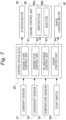
- Fig. 7 illustrates a control device 80 that functions as an engine control unit (ECU) for controlling the phase of the valve opening and closing timing control device 100.
- the control device 80 includes an engine start control unit 81 configured as software, an engine stop control unit 82, an oil discharge control unit 83, and a phase control unit 84.
- control device 80 receives signals from the camshaft sensor S1, the crankshaft sensor S2, a temperature sensor S3, and a start switch SW, and outputs control signals to a starter motor 85, an engine control unit 86, and the phase control motor M.
- the camshaft sensor S1 measures a rotation angle of the intake camshaft 2.
- the crankshaft sensor S2 measures a rotation angle of the crankshaft 1.
- the temperature sensor S3 measures the outside air temperature.
- the start switch SW starts the engine E by an artificial ON operation and stops the engine E by an artificial OFF operation.
- the camshaft sensor S1 and the crankshaft sensor S2 are pickup-type sensors capable of acquiring a rotation angle from a reference rotational attitude as a count value by a pulse signal.
- the phase control unit 84 acquires the relative rotational phase between the drive-side rotating body A and the driven-side rotating body B from the relative relationship between the count values of the pulse signals in the camshaft sensor S1 and the crankshaft sensor S2.
- the starter motor 85 is driven in accordance with the ON operation of the start switch SW to drive and rotate the crankshaft 1.
- the engine control unit 86 controls a plurality of ignition plugs 86a that ignite the air-fuel mixture in the combustion chamber of the engine E and a plurality of injectors 86b that inject fuel into the combustion chamber of the engine E.
- the engine start control unit 81 drives the starter motor 85 based on the ON operation of the start switch SW, controls the valve opening and closing timing control device 100 so as to set the opening and closing timing of the intake valve 2B to a timing suitable for combustion, and injects fuel into the combustion chamber by the injector 86b after the crankshaft 1 reaches a startable rotation speed, and ignites by the ignition plug 86a to realize the start of the engine E.
- the engine start control unit 81 drives the oil pump P in accordance with the control of starting the engine E.
- the oil pump P is assumed to be configured to transmit the rotational force of the crankshaft 1, for example, but may be driven by an electric motor.
- the engine stop control unit 82 stops the injection of fuel by the injector 86b based on the OFF operation of the start switch SW in a situation where the engine E operates, and stops the engine E. Further, the oil pump P stops as the engine E stops.
- the oil discharge control unit 83 measures the outside air temperature by the temperature sensor S3 at the time when the engine E is stopped by the control of the engine stop control unit 82, and when it is determined that the outside air temperature is 0°C or less (an example of a predetermined value or less), alternately displaces the relative rotational phase of the valve opening and closing timing control device 100 to the advance side and the retard side by the control of the phase control motor M, and discharges the lubricating oil in the valve opening and closing timing control device 100.
- a control mode of the oil discharge control unit 83 will be described later.
- the oil discharge control unit 83 performs the oil discharge control when the outside air temperature is equal to or lower than 0°C as a predetermined value, but the predetermined value is not limited to 0°C, and any value can be set.
- the phase control unit 84 calculates the relative rotational phase of the valve opening and closing timing control device 100 by acquiring the signals of the camshaft sensor S1 and the crankshaft sensor S2, and controls the phase control motor M so as to set the relative rotational phase thus calculated to the target relative rotational phase.
- the lubricating oil is supplied to the inside of the valve opening and closing timing control device 100, it is also assumed that the viscosity of the lubricating oil inside increases as in a case where the outside air temperature decreases after the engine E is stopped.
- the viscosity of the lubricating oil increases in this manner, it is assumed that there is an inconvenience that it takes time to set the relative rotational phase of the valve opening and closing timing control device 100 at the time of starting the engine E, and control of discharging the lubricating oil by the oil discharge control unit 83 in association with the control to stop the engine E is performed.
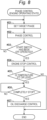
- the phase control unit 84 sets a target phase and performs phase control (steps #01 to #02).
- the setting of the target phase is set by the control device 80 that has received a command from a host ECU based on the situation such as the depression amount of the accelerator pedal, the load acting on the engine E, and the traveling speed of the vehicle.
- This target phase corresponds to the valve timing of the intake valve 2B.
- the phase control unit 84 performs feedback control so that the relative rotational phase acquired from the signals of camshaft sensor S1 and crankshaft sensor S2 reaches the target phase.
- the phase control unit 84 continues the control until the start switch SW is turned OFF (step #03).
- the engine stop control unit 82 performs control to stop the engine E (step #04).
- step #06 After the control for stopping the engine E is executed in this manner, after it is confirmed that the engine E has completely stopped (step #06), such as when it is determined that the outside air temperature measured by the temperature sensor S3 is 0°C or lower (Yes in step #05), when the number of rotations Q (see Fig. 9 ) of the crankshaft 1 per unit time reaches zero ("0"), or when the hydraulic pressure of the oil pump driven by the engine E reaches a predetermined set value or lower, the oil discharge control for alternately displacing the valve opening and closing timing control device 100 between the most advanced phase AD and the most retarded phase RE is performed (step #07), and then the phase control is terminated.
- step #05 When the outside air temperature measured by the temperature sensor S3 is higher than 0°C in step #05 (No in step #05), the control is ended without performing the oil discharge control.
- Fig. 9 shows a chart from the control for stopping the engine E to the oil discharge control (#07 step).
- the number of rotations Q of the crankshaft 1 of the engine E is illustrated in the upper stage, and the relative rotational phase R of the valve opening and closing timing control device 100 is illustrated in the lower stage.
- T1 in Fig. 9 indicates a timing (stop start timing T1) at which stop control of the engine E is started
- T2 indicates a timing (complete stop timing T2) at which the engine E is completely stopped
- T3 indicates a timing (oil discharge control start timing T3) at which oil discharge control is started.
- step #04 the engine stop control in step #04 is started in accordance with the OFF operation of the start switch SW at the stop start timing T1, the number of rotations Q of the crankshaft 1 decreases, and the number of rotations Q decreases to zero at the complete stop timing T2.
- the oil discharge control unit 83 drives the phase control motor M to perform control to displace the relative rotational phase to the most advanced phase AD, then to the most retarded phase RE, and then to the intermediate phase N to maintain the relative rotational phase.
- step #07 the timing at which the relative rotational phase of the valve opening and closing timing control device 100 reaches the most advanced phase AD and the timing at which the relative rotational phase reaches the most retarded phase RE are determined, and the phase control motor M is controlled.
- the lubricating oil remaining in the valve opening and closing timing control device 100 is discharged to the outside from the guide groove 11a of the outer case 11, and the lubricating oil is caused to flow from the engagement recess 43a of the joint member 40 to the opening 12a of the front plate 12 and is discharged to the outside.
- the valve opening and closing timing control device 100 has an oil reservoir structure Z therein and is configured to enable discharge of lubricating oil when the engine E is stopped.
- the configuration that enables the discharge of the lubricating oil in this manner is a configuration that discharges the lubricating oil inside the valve opening and closing timing control device 100 by the weight of the lubricating oil, for example, it has been considered that the lubricating oil remains in the oil reservoir structure Z.
- the oil discharge control unit 84 controls the phase control motor M to alternately change the relative rotational phase of the valve opening and closing timing control device 100 after the engine E is completely stopped by the stop control of the engine E.
- the oil discharge control unit 84 controls the phase control motor M to alternately change the relative rotational phase of the valve opening and closing timing control device 100 after the engine E is completely stopped by the stop control of the engine E.
- This configuration makes it possible to discharge the lubricating oil from the regions such as the guide groove 11a of the outer case 11 and the opening 12a of the front plate 12 without changing the mechanical structure such as changing the shape of the valve opening and closing timing control device 100 or adding a special mechanism, and to satisfactorily discharge the lubricating oil remaining in the valve opening and closing timing control device 100.
- step #07 in the oil discharge control (step #07), the relative rotational phase of the valve opening and closing timing control device 100 is displaced between the most advanced phase AD and the most retarded phase RE. Therefore, the relative rotational phase is greatly changed, and the lubricating oil remaining in the internal space of the valve opening and closing timing control device 100 is caused to flow, and this flow force is also used to realize reliable oil discharge.
- the present disclosure may be configured as follows in addition to the above-described embodiment (those having the same functions as those in the embodiment are designated by the same number and reference numeral as those in the embodiment).
- valve timing can be easily set at the time of starting the internal combustion engine (engine E).
- oil discharge control is not performed when the outside air temperature is high, electric energy is not wastefully consumed.
- the present disclosure can be used in a valve opening and closing timing control device.
Landscapes
- Engineering & Computer Science (AREA)
- Mechanical Engineering (AREA)
- General Engineering & Computer Science (AREA)
- Chemical & Material Sciences (AREA)
- Combustion & Propulsion (AREA)
- Valve Device For Special Equipments (AREA)
- Output Control And Ontrol Of Special Type Engine (AREA)
- Control Of Vehicle Engines Or Engines For Specific Uses (AREA)
- Lubrication Of Internal Combustion Engines (AREA)
Applications Claiming Priority (1)
| Application Number | Priority Date | Filing Date | Title |
|---|---|---|---|
| JP2023204494A JP2025089706A (ja) | 2023-12-04 | 2023-12-04 | 弁開閉時期制御装置 |
Publications (1)
| Publication Number | Publication Date |
|---|---|
| EP4567262A1 true EP4567262A1 (de) | 2025-06-11 |
Family
ID=93656098
Family Applications (1)
| Application Number | Title | Priority Date | Filing Date |
|---|---|---|---|
| EP24215363.3A Pending EP4567262A1 (de) | 2023-12-04 | 2024-11-26 | Vorrichtung zur zeitsteuerung der ventilöffnung und -schliessung |
Country Status (3)
| Country | Link |
|---|---|
| US (1) | US20250179946A1 (de) |
| EP (1) | EP4567262A1 (de) |
| JP (1) | JP2025089706A (de) |
Citations (6)
| Publication number | Priority date | Publication date | Assignee | Title |
|---|---|---|---|---|
| DE10256992A1 (de) * | 2001-12-05 | 2003-07-17 | Aisin Seiki | Ventilzeitpunktsteuervorrichtung |
| JP2007056839A (ja) | 2005-08-26 | 2007-03-08 | Toyota Motor Corp | 内燃機関のバルブタイミング制御装置 |
| DE102007054547A1 (de) * | 2007-11-15 | 2009-05-20 | Schaeffler Kg | Motorsteuerstrategie für hydraulischen Nockenwellenversteller mit mechanischer Mittenverriegelung |
| US20130118430A1 (en) * | 2010-07-30 | 2013-05-16 | Toyota Jidosha Kabushiki Kaisha | Valve timing control apparatus for internal combustion engine and control method thereof |
| JP2018087564A (ja) | 2016-11-18 | 2018-06-07 | アイシン精機株式会社 | 弁開閉時期制御装置 |
| EP4177451A1 (de) * | 2020-07-03 | 2023-05-10 | Aisin Corporation | Stoppsteuervorrichtung für verbrennungsmotor |
-
2023
- 2023-12-04 JP JP2023204494A patent/JP2025089706A/ja active Pending
-
2024
- 2024-11-15 US US18/949,557 patent/US20250179946A1/en active Pending
- 2024-11-26 EP EP24215363.3A patent/EP4567262A1/de active Pending
Patent Citations (6)
| Publication number | Priority date | Publication date | Assignee | Title |
|---|---|---|---|---|
| DE10256992A1 (de) * | 2001-12-05 | 2003-07-17 | Aisin Seiki | Ventilzeitpunktsteuervorrichtung |
| JP2007056839A (ja) | 2005-08-26 | 2007-03-08 | Toyota Motor Corp | 内燃機関のバルブタイミング制御装置 |
| DE102007054547A1 (de) * | 2007-11-15 | 2009-05-20 | Schaeffler Kg | Motorsteuerstrategie für hydraulischen Nockenwellenversteller mit mechanischer Mittenverriegelung |
| US20130118430A1 (en) * | 2010-07-30 | 2013-05-16 | Toyota Jidosha Kabushiki Kaisha | Valve timing control apparatus for internal combustion engine and control method thereof |
| JP2018087564A (ja) | 2016-11-18 | 2018-06-07 | アイシン精機株式会社 | 弁開閉時期制御装置 |
| EP4177451A1 (de) * | 2020-07-03 | 2023-05-10 | Aisin Corporation | Stoppsteuervorrichtung für verbrennungsmotor |
Also Published As
| Publication number | Publication date |
|---|---|
| JP2025089706A (ja) | 2025-06-16 |
| US20250179946A1 (en) | 2025-06-05 |
Similar Documents
| Publication | Publication Date | Title |
|---|---|---|
| US6530351B2 (en) | Apparatus for controlling valve timing of internal combustion engine | |
| JP2010223016A (ja) | 内燃機関の制御装置 | |
| JP2013002373A (ja) | 内燃機関のバルブタイミング制御装置 | |
| MX2014000821A (es) | Aparato de control para la temporizacion de valvulas de motores de combustion interna. | |
| US6062182A (en) | Valve timing control device | |
| US6378476B2 (en) | Valve timing adjusting device | |
| JP3865027B2 (ja) | バルブタイミング調整装置 | |
| KR100963453B1 (ko) | 내연 기관용 밸브 타이밍 제어 장치 및 제어 방법 | |
| JP3804239B2 (ja) | 回転位相差可変機構 | |
| EP4567262A1 (de) | Vorrichtung zur zeitsteuerung der ventilöffnung und -schliessung | |
| US9291076B2 (en) | Valve timing control apparatus for internal combustion engine | |
| US9157342B2 (en) | Valve timing control apparatus for internal combustion engine | |
| US20060266318A1 (en) | Valve timing control apparatus and internal combustion engine | |
| CN115735051B (zh) | 内燃机的停止控制装置 | |
| JP2014051919A (ja) | 弁開閉時期制御装置 | |
| CN119754947B (zh) | 一种发动机的控制方法、发动机系统及车辆 | |
| US20060260577A1 (en) | Valve timing control apparatus and internal combustion engine | |
| WO2012086085A1 (ja) | 内燃機関の可変動弁装置 | |
| EP2977594A1 (de) | Steuerungsvorrichtung für einen verbrennungsmotor | |
| EP4596849A1 (de) | Vorrichtung zur steuerung der ventilöffnungs-/schliesszeit | |
| JP6251778B2 (ja) | 内燃機関のバルブタイミング制御装置 | |
| US12385421B2 (en) | Valve opening and closing timing control device | |
| JP3075177B2 (ja) | 内燃機関のバルブタイミング制御装置 | |
| JP7509019B2 (ja) | 弁開閉時期制御装置 | |
| JPH11141362A (ja) | 内燃機関の始動装置 |
Legal Events
| Date | Code | Title | Description |
|---|---|---|---|
| PUAI | Public reference made under article 153(3) epc to a published international application that has entered the european phase |
Free format text: ORIGINAL CODE: 0009012 |
|
| STAA | Information on the status of an ep patent application or granted ep patent |
Free format text: STATUS: THE APPLICATION HAS BEEN PUBLISHED |
|
| AK | Designated contracting states |
Kind code of ref document: A1 Designated state(s): AL AT BE BG CH CY CZ DE DK EE ES FI FR GB GR HR HU IE IS IT LI LT LU LV MC ME MK MT NL NO PL PT RO RS SE SI SK SM TR |
|
| STAA | Information on the status of an ep patent application or granted ep patent |
Free format text: STATUS: REQUEST FOR EXAMINATION WAS MADE |
|
| 17P | Request for examination filed |
Effective date: 20251106 |