EP4535947A1 - Ladevorrichtung - Google Patents
Ladevorrichtung Download PDFInfo
- Publication number
- EP4535947A1 EP4535947A1 EP23814693.0A EP23814693A EP4535947A1 EP 4535947 A1 EP4535947 A1 EP 4535947A1 EP 23814693 A EP23814693 A EP 23814693A EP 4535947 A1 EP4535947 A1 EP 4535947A1
- Authority
- EP
- European Patent Office
- Prior art keywords
- air
- charging
- chamber
- charging device
- charging module
- Prior art date
- Legal status (The legal status is an assumption and is not a legal conclusion. Google has not performed a legal analysis and makes no representation as to the accuracy of the status listed.)
- Pending
Links
Images


Classifications
-
- H—ELECTRICITY
- H02—GENERATION; CONVERSION OR DISTRIBUTION OF ELECTRIC POWER
- H02J—ELECTRIC POWER NETWORKS; CIRCUIT ARRANGEMENTS OR SYSTEMS FOR SUPPLYING OR DISTRIBUTING ELECTRIC POWER; SYSTEMS FOR STORING ELECTRIC ENERGY
- H02J7/00—Circuit arrangements for charging or discharging batteries or for supplying loads from batteries
- H02J7/70—Circuit arrangements for charging or discharging batteries or for supplying loads from batteries characterised by the mechanical construction
-
- B—PERFORMING OPERATIONS; TRANSPORTING
- B60—VEHICLES IN GENERAL
- B60L—PROPULSION OF ELECTRICALLY-PROPELLED VEHICLES; SUPPLYING ELECTRIC POWER FOR AUXILIARY EQUIPMENT OF ELECTRICALLY-PROPELLED VEHICLES; ELECTRODYNAMIC BRAKE SYSTEMS FOR VEHICLES IN GENERAL; MAGNETIC SUSPENSION OR LEVITATION FOR VEHICLES; MONITORING OPERATING VARIABLES OF ELECTRICALLY-PROPELLED VEHICLES; ELECTRIC SAFETY DEVICES FOR ELECTRICALLY-PROPELLED VEHICLES
- B60L53/00—Methods of charging batteries, specially adapted for electric vehicles; Charging stations or on-board charging equipment therefor; Exchange of energy storage elements in electric vehicles
- B60L53/30—Constructional details of charging stations
- B60L53/302—Cooling of charging equipment
-
- B—PERFORMING OPERATIONS; TRANSPORTING
- B60—VEHICLES IN GENERAL
- B60L—PROPULSION OF ELECTRICALLY-PROPELLED VEHICLES; SUPPLYING ELECTRIC POWER FOR AUXILIARY EQUIPMENT OF ELECTRICALLY-PROPELLED VEHICLES; ELECTRODYNAMIC BRAKE SYSTEMS FOR VEHICLES IN GENERAL; MAGNETIC SUSPENSION OR LEVITATION FOR VEHICLES; MONITORING OPERATING VARIABLES OF ELECTRICALLY-PROPELLED VEHICLES; ELECTRIC SAFETY DEVICES FOR ELECTRICALLY-PROPELLED VEHICLES
- B60L53/00—Methods of charging batteries, specially adapted for electric vehicles; Charging stations or on-board charging equipment therefor; Exchange of energy storage elements in electric vehicles
- B60L53/30—Constructional details of charging stations
- B60L53/31—Charging columns specially adapted for electric vehicles
-
- H—ELECTRICITY
- H05—ELECTRIC TECHNIQUES NOT OTHERWISE PROVIDED FOR
- H05K—PRINTED CIRCUITS; CASINGS OR CONSTRUCTIONAL DETAILS OF ELECTRIC APPARATUS; MANUFACTURE OF ASSEMBLAGES OF ELECTRICAL COMPONENTS
- H05K7/00—Constructional details common to different types of electric apparatus
- H05K7/20—Modifications to facilitate cooling, ventilating, or heating
- H05K7/20536—Modifications to facilitate cooling, ventilating, or heating for racks or cabinets of standardised dimensions, e.g. electronic racks for aircraft or telecommunication equipment
- H05K7/20554—Forced ventilation of a gaseous coolant
- H05K7/20572—Forced ventilation of a gaseous coolant within cabinets for removing heat from sub-racks, e.g. plenum
-
- H—ELECTRICITY
- H05—ELECTRIC TECHNIQUES NOT OTHERWISE PROVIDED FOR
- H05K—PRINTED CIRCUITS; CASINGS OR CONSTRUCTIONAL DETAILS OF ELECTRIC APPARATUS; MANUFACTURE OF ASSEMBLAGES OF ELECTRICAL COMPONENTS
- H05K7/00—Constructional details common to different types of electric apparatus
- H05K7/20—Modifications to facilitate cooling, ventilating, or heating
- H05K7/2089—Modifications to facilitate cooling, ventilating, or heating for power electronics, e.g. for inverters for controlling motor
- H05K7/20909—Forced ventilation, e.g. on heat dissipaters coupled to components
-
- Y—GENERAL TAGGING OF NEW TECHNOLOGICAL DEVELOPMENTS; GENERAL TAGGING OF CROSS-SECTIONAL TECHNOLOGIES SPANNING OVER SEVERAL SECTIONS OF THE IPC; TECHNICAL SUBJECTS COVERED BY FORMER USPC CROSS-REFERENCE ART COLLECTIONS [XRACs] AND DIGESTS
- Y02—TECHNOLOGIES OR APPLICATIONS FOR MITIGATION OR ADAPTATION AGAINST CLIMATE CHANGE
- Y02T—CLIMATE CHANGE MITIGATION TECHNOLOGIES RELATED TO TRANSPORTATION
- Y02T10/00—Road transport of goods or passengers
- Y02T10/60—Other road transportation technologies with climate change mitigation effect
- Y02T10/70—Energy storage systems for electromobility, e.g. batteries
Definitions
- the present application relates to the technical field of charging devices, and in particular to a charging device.
- a charging module which is an important component of a charging device, generates a large amount of heat in operation, causing an increased overall heat of the charging device.
- the adopted method is to install a cooling air blower to directly dissipate heat from the inside of the charging module, which increases costs. Meanwhile, it is difficult to achieve a high level of protection for the charging module, which may cause a shortened service life.
- the cooling air blower is often located in the high-temperature zone of a cooling air duct, such as at an air outlet, causing high energy consumption, a short service life, and a poor actual cooling effect of the cooling air blower.
- An object of the present application is to provide a charging device, which is direct to ensure the service life of the air blower while also improve the heat dissipation efficiency and use safety of the charging module, thereby providing a reliable use of the charging device.
- a charging device including:
- a gap is provided between the air blower and the charging module for cold air flowing there through.
- the charging module includes a housing, and a sealed chamber for accommodating a conversion device is provided in the housing.
- a heat dissipation device is provided on an exterior of the housing.
- the housing is provided with multiple side surfaces
- the heat dissipation device includes a radiating fin
- the radiation fin is located on at least one side surface.
- the air inlet is aligned with the radiating fin.
- the charging device further includes an air baffle fixed inside the accommodation chamber and extending towards the air outlet to guide air inside the accommodation chamber to the air outlet.
- the case includes a front plate, a back plate, and a top plate connecting the front plate and the back plate, and the front plate and the back plate are arranged in opposite, where the air inlet is formed on the front plate and the air outlet is formed on at least one of the back plate and the top plate, or the air inlet is formed on the back plate and the air outlet is formed on at least one of the front plate and the top plate.
- the charging module includes multiple charging modules, which are arranged in array along a height direction and a width direction of the case, respectively.
- At least two columns of the multiple charging modules are staggered, and/or at least two rows of the multiple charging modules are staggered.
- a partition plate is further arranged inside the case, and the partition plate partitions the accommodation chamber to form a first chamber and at least one second chamber, and the charging module is located in the first chamber and the second chamber is configured to accommodate an electrical component.
- the partition plate is provided with an air vent to allow a part of the air to enter the second chamber for heat dissipation of the electrical component.
- the second chamber is arranged above the first chamber, or
- the charging module is arranged between the air inlet and the air outlet and the air blower is located close to the air inlet, which is positioned in a low-temperature area, avoiding the hot air backflow from affecting the operation of the air blower.
- the air blower Under the action of the air blower, a cold air outside the device may be drawn into the accommodation chamber through the air inlet. Due to the pressure difference, the cold air flows over the surface of the charging module and flows towards the air outlet and is discharged outside of the device through the air outlet.
- the cold air absorbs the heat generated by the charging module and becomes the heated air, reducing the overall heat of the case, lowering the temperature inside the accommodation chamber and the temperature of the charging module, which ensures both the service life of the air blower and enhances the heat dissipation efficiency and the uses safety of the charging module, ensuring a reliable use of the charging device.
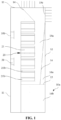
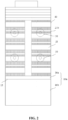
- 10 case 15 partition plate, 10a accommodation chamber, 16a first chamber, 10b air inlet, 16b second chamber, 10c air outlet, 20 charging unit, 11 front plate, 21 charging module, 12 back plate, 21a housing, 13 top plate, 21b radiating fin, 14 air baffle, 30 air blower, 14a guide air duct.
- the cold air absorbs the heat generated by the charging module in a manner of heat exchanging and becomes heated air, reducing the overall heat of the case 10 and lowering the temperature inside the accommodation chamber 10a and the temperature of the charging module 21, which not only ensures the service life of the air blower 30 but also enhances the heat dissipation efficiency and the use safety of the charging module 21, providing a reliable use of the charging device.
- the case 10 has a high protection level, and/or the charging unit 20 has a high protection level, ensuring the charging module 21 to be in a well-sealed environment, thus preventing a potential malfunction or even failure caused by adverse conditions such as strong wind, heavy rain, or high temperature.
- the charging unit 20 is used to charge electrical devices. Specifically, the charging unit 20 is directly or indirectly connected to electrical devices in order to charging them.
- the charging module 21 of the charging unit 20 is a power conversion module for converting the power for inputting the charging module 21 into the power required by the electrical devices, realizing the charging process for the electrical devices.
- Multiple charging modules 21 can be provided, which are arranged in parallel to provide the required power for the electrical devices, making it suitable for small charging locations such as charging posts as well as for large charging locations such as large-scale charging stations.
- the charging unit 20 can be provided with multiple charging modules 21 to achieve a power stack, so that, during the charging process, different numbers of charging modules 21 can be turned on based on the power demand during charging, enabling the charging device to charge different electrical devices, which makes the usage scenarios of charging devices diverse and adaptable .
- the charging device may be a charging post, a charging station and so on.
- a gap is provided between the air blower 30 and the charging module 21 for the cold air flowing there through. That is, sufficient cold air can be filled between the air blower 30 and the charging module 21. With this configuration, it facilitates of extending the duration of cold air inside the accommodation chamber 10a and increasing the amount of cold air inside the accommodation chamber 10a, making cold air sufficiently contact the charging module 21 for heat exchanging, thereby the heat dissipation efficiency of the charging module 21 is improved.
- the main heat source in the charging device is the charging module 21, which generates a significant amount of heat during operation, causing an increase of the overall temperature of the device.
- the charging device needs to be timely cooled. Therefore, in the embodiment, a heat dissipation device is provided on the exterior of the housing 21a to implement an independent heat dissipation for the charging module 21.
- the housing 21a is provided with multiple side surfaces, and the heat dissipation device is a radiating fin 21b located on at least one side surface. It can be understood that the housing 21a is enclosed by multiple side surfaces.
- the heat dissipation device is the radiating fin 21b
- multiple radiating fins 21b may be provided, which are arranged on one side surface, or arranged on opposite side surfaces, or arranged on each side surface, so as to ensure a relatively large effective contact area between cold air drawn in through the air inlet 10b and the multiple radiating fins 21b, thereby greatly improving the heat dissipation efficiency of the charging module 21 and ensuring the reliable use of the charging module 21.
- the present application is not limited to this, where, in other embodiments, the heat dissipation device may be in the form of slots formed on the surface of the housing 21a.
- the air inlet 10b and the multiple radiating fins 21b are aligned.
- cold air can flow directly towards the multiple radiating fins 21b and disperse, so as to concentrate most of the cold air to act on the multiple radiating fins 21b, which shortens the path for cold air to the charging module 21 and increases the heat dissipation rate of the charging module 21.
- the charging device in order to direct the airflow inside the accommodation chamber 10a towards the air outlet 10c, the charging device further includes an air baffle 14, which is fixed inside the accommodation chamber 10a and extending towards the air outlet 10c, so as to guide the air inside the accommodation chamber 10a towards the air outlet 10c.
- the charging device can guide the air after being in heat exchanging with the charging module 21 to concentrate the air after being in heat exchanging with the charging module 21 at the air outlet 10c to be further discharged when more external cold air is drawn into the accommodation chamber 10a by the air blower 30, thereby lowering the temperature inside the accommodation chamber 10a.
- At least one air baffle 14 is provided, and forms a guide air duct 14a together with the case 10 and one side of the charging module 21 away from the air inlet 10b.
- the guide air duct 14a is in communication with the air outlet 10c, that is, a side wall of the case 10, the side of the charging module 21 away from the air inlet 10b, and the air baffle 14 enclose to form a guide air duct 14a, which is conducive to concentrating the air after being heat exchanged at the air outlet 10c, facilitating the discharge of the heat-exchanged air, and improving the heat dissipation efficiency.
- Multiple air baffles 14 may be provided to gather the air after being heat exchanged from various directions inside the case 10.
- the multiple air baffles 14 may be in an integrated structure, and their specific form can be configured to match with the location of the air outlet 10c on the case 10.
- the multiple air baffles 14 may be of a detachable structure, for example, being secured through splicing, snap fitting, and other connection methods for easy disassembly and assembly.
- One end of the air baffle 14 is connected to the side wall of the case 10 and is located close to the air outlet 10c.
- the other end can be directly suspended above/below the side of the charging module 21 away from the air inlet 10b, or on the side portion at the side the charging module 21 away from the air inlet 10b, or connected to the other side wall of the case 10, so as to ensure the air flowing through the charging module 21 to flow towards the air outlet 10c.
- the air baffle 14 is inclined towards the air outlet 10c to guide the air flowing towards the outlet 10c. It can be understood that, by inclining the air baffle 14 towards the air outlet 10c, i.e., based on the position relationship between the side of the charging module 21 away from the air inlet 10b and the air outlet 10c, the rear end of the air baffle 14 can be gradually expanded or tapered towards the direction away from the air outlet 10c, which can further reduce the range of air escape, facilitate the concentration of heat exchange air, improve the flowing rate of the air towards the direction of the air outlet 10c, and improve heat dissipation efficiency.
- the air baffle 14 may be a straight plate with a simple structure and easy disassembly.
- the air baffle 14 may also be an arc-shaped plate, which is designed according to the location of the charging module 21 and the air outlet 10c to match the direction of air flow with the arc-shaped structure of the air baffle 14, so as to better guide the heat-exchanged air to flow to the air outlet 10c and further improve the guiding effect of the air baffle 14.
- the case 10 includes a front plate 11 and a back plate 12 that are arranged in opposite, and a top plate 13 connecting the front plate 11 and the back plate 12.
- the air inlet 10b is formed on the front plate 11, and the air outlet 10c is formed on at least one of the back plate 12 and the top plate 13.
- the air inlet 10b is formed on the back plate 12, and the air outlet 10c is formed on at least one of the front plate 11 and the top plate 13. It can be understood that, for example, if the air inlet 10b is formed on the front plate 11, when only one air outlet 10c is provided, the air outlet 10c may be formed in the back plate 12 close to the top plate 13, or in the top plate 13 close to the back plate 12.
- the air outlets 10c may be formed on the back plate 12 close to the top plate 13 and in the top plate 13 close to the back plate 12, respectively, which ensures the heat exchanged air to rise after passing through the charging module 21 and is then discharged through the air outlet 10c with a low resistance and a high discharging rate, thereby improving the heat dissipation efficiency.
- the present application is not limited to this, and in other embodiments, the air outlet 10c may be formed in the middle of the back plate 12 or at the bottom of the back plate 12, which can shorten the distance of the air flowing through part of the charging module 21 flowing to the air outlet 10c.
- the air outlet 10c may be formed in the front plate 11 close to the top plate 13 or in the top plate 13 close to the front plate 11.
- the air outlet 10c may be formed in the front plate 11 close to the top plate 13 and in the top plate 13 close to the front plate 11, respectively, which ensures the heat-exchanged air to rise after passing through the charging module 21 and be then discharged through the air outlet 10c with a low resistance and a high discharging rate, thereby improving the heat dissipation efficiency.
- the air outlet 10c may be formed in the middle of the front plate 11 or at the bottom of the front plate 11, which can shorten the distance of the air flowing through part of the charging module 21 flowing to the air outlet 10c.
- multiple charging modules 21 are provided, which are arranged in array along the height and width directions of the case 10. That is, according to the size of the case 10 and power requirements, the multiple charging modules 21 may be arranged in a single column, single row, or multiple rows and columns. With the superposition of the multiple charging modules 21, i.e., different numbers of charging modules 21 connected in parallel, the required power of the electrical equipment can be provided, thereby completing charging and enhancing the adaptability of the charging device, and making it suitable for various charging locations.
- At least two rows of the charging modules 21 are staggered, and/or at least two rows of charging modules 21 are staggered. With this configuration, it can extend the retention duration of cold air inside the accommodation chamber 10a, ensuring each charging module 21 inside the accommodation chamber 10a to come into full contact with the cold air, thereby implementing the heat exchanging between the cold air and the radiating fins 21b on the charging module 21, and the heat dissipation efficiency of the charging modules 21 is improved and the use reliability and the use safety of the charging device are improved.
- each charging module 21 when the opposite surfaces of each charging module 21 are provided with the aforementioned heat dissipation device, such as radiating fins 21b, taking the height direction of the case 10 as a reference, as shown in FIG. 1 and FIG. 2 , the charging module 21 are spaced apart along the height direction of the case 10, and the radiating fins 21b are arranged on the upper and lower surfaces of the charging module 21, respectively.
- multiple air inlets 10b may be provided, which are all aligned with the radiating fins 21b of the charging module 21.
- only a part of air inlets 10b are aligned with the radiating fins 21b of a part of charging module 21.
Landscapes
- Engineering & Computer Science (AREA)
- Power Engineering (AREA)
- Microelectronics & Electronic Packaging (AREA)
- Transportation (AREA)
- Mechanical Engineering (AREA)
- Physics & Mathematics (AREA)
- Thermal Sciences (AREA)
- Aviation & Aerospace Engineering (AREA)
- Cooling Or The Like Of Electrical Apparatus (AREA)
- Charge And Discharge Circuits For Batteries Or The Like (AREA)
Applications Claiming Priority (2)
| Application Number | Priority Date | Filing Date | Title |
|---|---|---|---|
| CN202221344844.4U CN217825775U (zh) | 2022-05-30 | 2022-05-30 | 充电设备 |
| PCT/CN2023/080243 WO2023231494A1 (zh) | 2022-05-30 | 2023-03-08 | 充电设备 |
Publications (2)
| Publication Number | Publication Date |
|---|---|
| EP4535947A1 true EP4535947A1 (de) | 2025-04-09 |
| EP4535947A4 EP4535947A4 (de) | 2026-04-15 |
Family
ID=83988725
Family Applications (1)
| Application Number | Title | Priority Date | Filing Date |
|---|---|---|---|
| EP23814693.0A Pending EP4535947A4 (de) | 2022-05-30 | 2023-03-08 | Ladevorrichtung |
Country Status (3)
| Country | Link |
|---|---|
| EP (1) | EP4535947A4 (de) |
| CN (1) | CN217825775U (de) |
| WO (1) | WO2023231494A1 (de) |
Families Citing this family (2)
| Publication number | Priority date | Publication date | Assignee | Title |
|---|---|---|---|---|
| CN217825775U (zh) * | 2022-05-30 | 2022-11-15 | 阳光电源股份有限公司 | 充电设备 |
| CN117755121B (zh) * | 2024-01-25 | 2024-06-14 | 南京能可瑞科技有限公司 | 一种广告箱一体式充电桩 |
Family Cites Families (6)
| Publication number | Priority date | Publication date | Assignee | Title |
|---|---|---|---|---|
| JP6696869B2 (ja) * | 2016-09-21 | 2020-05-20 | ニチコン株式会社 | 急速充電器 |
| CN208069456U (zh) * | 2018-04-09 | 2018-11-09 | 南京能瑞电力科技有限公司 | 一种非车载充电机 |
| CN208210538U (zh) * | 2018-04-24 | 2018-12-07 | 杭州汇誉新能源科技有限公司 | 一种多功率通用的直流充电柜 |
| CN215552647U (zh) * | 2021-10-11 | 2022-01-18 | 北京超充科技有限公司 | 一种基于碳化硅充电模组的分体式充电桩后端机及充电桩 |
| CN114261298A (zh) * | 2021-12-27 | 2022-04-01 | 深圳市车电网络有限公司 | 降噪充电桩 |
| CN217825775U (zh) * | 2022-05-30 | 2022-11-15 | 阳光电源股份有限公司 | 充电设备 |
-
2022
- 2022-05-30 CN CN202221344844.4U patent/CN217825775U/zh active Active
-
2023
- 2023-03-08 WO PCT/CN2023/080243 patent/WO2023231494A1/zh not_active Ceased
- 2023-03-08 EP EP23814693.0A patent/EP4535947A4/de active Pending
Also Published As
| Publication number | Publication date |
|---|---|
| EP4535947A4 (de) | 2026-04-15 |
| WO2023231494A1 (zh) | 2023-12-07 |
| CN217825775U (zh) | 2022-11-15 |
Similar Documents
| Publication | Publication Date | Title |
|---|---|---|
| US10461381B2 (en) | Battery cooling apparatus | |
| EP4535947A1 (de) | Ladevorrichtung | |
| CN111883712A (zh) | 储能电池柜 | |
| CN116648030B (zh) | 一种顶挂式散热的光伏逆变设备 | |
| CN217822988U (zh) | 一种电池箱及电池包 | |
| CN216391914U (zh) | 电力设备机柜 | |
| WO2026037388A1 (zh) | 电池包和用电设备 | |
| CN217983474U (zh) | 一种液冷储能电池箱 | |
| CN219086074U (zh) | 一种电池冷却装置 | |
| CN218731274U (zh) | 动力电池的散热系统 | |
| CN115863841B (zh) | 一种户外锂电池移动电源组合结构及使用方法 | |
| CN218919046U (zh) | 电池包及用电设备 | |
| CN218385482U (zh) | 储能设备 | |
| CN215496940U (zh) | 电池散热结构及飞行器 | |
| CN216750144U (zh) | 一种模块化储能柜 | |
| CN221632675U (zh) | 储能设备 | |
| CN217508704U (zh) | 一种稳定性较高的光伏接线盒 | |
| CN223967240U (zh) | 一种便于散热的磷酸铁锂电池组装置 | |
| CN222463054U (zh) | 一种具有快速散热结构的电池组 | |
| CN223140856U (zh) | 一种风冷储能电池包 | |
| CN222339827U (zh) | 电子设备 | |
| CN223714427U (zh) | 一种功率变换设备 | |
| CN222463049U (zh) | 一种电源装置及充放电设备 | |
| US20250240927A1 (en) | Containerized data center | |
| CN118486901B (zh) | 稳固型锂离子电池组 |
Legal Events
| Date | Code | Title | Description |
|---|---|---|---|
| STAA | Information on the status of an ep patent application or granted ep patent |
Free format text: STATUS: THE INTERNATIONAL PUBLICATION HAS BEEN MADE |
|
| PUAI | Public reference made under article 153(3) epc to a published international application that has entered the european phase |
Free format text: ORIGINAL CODE: 0009012 |
|
| STAA | Information on the status of an ep patent application or granted ep patent |
Free format text: STATUS: REQUEST FOR EXAMINATION WAS MADE |
|
| 17P | Request for examination filed |
Effective date: 20240808 |
|
| AK | Designated contracting states |
Kind code of ref document: A1 Designated state(s): AL AT BE BG CH CY CZ DE DK EE ES FI FR GB GR HR HU IE IS IT LI LT LU LV MC ME MK MT NL NO PL PT RO RS SE SI SK SM TR |
|
| DAV | Request for validation of the european patent (deleted) | ||
| DAX | Request for extension of the european patent (deleted) | ||
| A4 | Supplementary search report drawn up and despatched |
Effective date: 20260317 |
|
| RIC1 | Information provided on ipc code assigned before grant |
Ipc: H05K 7/20 20060101AFI20260311BHEP Ipc: B60L 53/302 20190101ALI20260311BHEP |