EP4534342A1 - Batterieschaltung und fahrzeug - Google Patents
Batterieschaltung und fahrzeug Download PDFInfo
- Publication number
- EP4534342A1 EP4534342A1 EP23814684.9A EP23814684A EP4534342A1 EP 4534342 A1 EP4534342 A1 EP 4534342A1 EP 23814684 A EP23814684 A EP 23814684A EP 4534342 A1 EP4534342 A1 EP 4534342A1
- Authority
- EP
- European Patent Office
- Prior art keywords
- battery pack
- terminal
- switch
- battery
- unit
- Prior art date
- Legal status (The legal status is an assumption and is not a legal conclusion. Google has not performed a legal analysis and makes no representation as to the accuracy of the status listed.)
- Pending
Links
Images

Classifications
-
- B—PERFORMING OPERATIONS; TRANSPORTING
- B60—VEHICLES IN GENERAL
- B60L—PROPULSION OF ELECTRICALLY-PROPELLED VEHICLES; SUPPLYING ELECTRIC POWER FOR AUXILIARY EQUIPMENT OF ELECTRICALLY-PROPELLED VEHICLES; ELECTRODYNAMIC BRAKE SYSTEMS FOR VEHICLES IN GENERAL; MAGNETIC SUSPENSION OR LEVITATION FOR VEHICLES; MONITORING OPERATING VARIABLES OF ELECTRICALLY-PROPELLED VEHICLES; ELECTRIC SAFETY DEVICES FOR ELECTRICALLY-PROPELLED VEHICLES
- B60L58/00—Methods or circuit arrangements for monitoring or controlling batteries or fuel cells, specially adapted for electric vehicles
- B60L58/10—Methods or circuit arrangements for monitoring or controlling batteries or fuel cells, specially adapted for electric vehicles for monitoring or controlling batteries
-
- B—PERFORMING OPERATIONS; TRANSPORTING
- B60—VEHICLES IN GENERAL
- B60L—PROPULSION OF ELECTRICALLY-PROPELLED VEHICLES; SUPPLYING ELECTRIC POWER FOR AUXILIARY EQUIPMENT OF ELECTRICALLY-PROPELLED VEHICLES; ELECTRODYNAMIC BRAKE SYSTEMS FOR VEHICLES IN GENERAL; MAGNETIC SUSPENSION OR LEVITATION FOR VEHICLES; MONITORING OPERATING VARIABLES OF ELECTRICALLY-PROPELLED VEHICLES; ELECTRIC SAFETY DEVICES FOR ELECTRICALLY-PROPELLED VEHICLES
- B60L58/00—Methods or circuit arrangements for monitoring or controlling batteries or fuel cells, specially adapted for electric vehicles
- B60L58/10—Methods or circuit arrangements for monitoring or controlling batteries or fuel cells, specially adapted for electric vehicles for monitoring or controlling batteries
- B60L58/18—Methods or circuit arrangements for monitoring or controlling batteries or fuel cells, specially adapted for electric vehicles for monitoring or controlling batteries of two or more battery modules
-
- B—PERFORMING OPERATIONS; TRANSPORTING
- B60—VEHICLES IN GENERAL
- B60L—PROPULSION OF ELECTRICALLY-PROPELLED VEHICLES; SUPPLYING ELECTRIC POWER FOR AUXILIARY EQUIPMENT OF ELECTRICALLY-PROPELLED VEHICLES; ELECTRODYNAMIC BRAKE SYSTEMS FOR VEHICLES IN GENERAL; MAGNETIC SUSPENSION OR LEVITATION FOR VEHICLES; MONITORING OPERATING VARIABLES OF ELECTRICALLY-PROPELLED VEHICLES; ELECTRIC SAFETY DEVICES FOR ELECTRICALLY-PROPELLED VEHICLES
- B60L58/00—Methods or circuit arrangements for monitoring or controlling batteries or fuel cells, specially adapted for electric vehicles
- B60L58/10—Methods or circuit arrangements for monitoring or controlling batteries or fuel cells, specially adapted for electric vehicles for monitoring or controlling batteries
- B60L58/18—Methods or circuit arrangements for monitoring or controlling batteries or fuel cells, specially adapted for electric vehicles for monitoring or controlling batteries of two or more battery modules
- B60L58/19—Switching between serial connection and parallel connection of battery modules
-
- B—PERFORMING OPERATIONS; TRANSPORTING
- B60—VEHICLES IN GENERAL
- B60L—PROPULSION OF ELECTRICALLY-PROPELLED VEHICLES; SUPPLYING ELECTRIC POWER FOR AUXILIARY EQUIPMENT OF ELECTRICALLY-PROPELLED VEHICLES; ELECTRODYNAMIC BRAKE SYSTEMS FOR VEHICLES IN GENERAL; MAGNETIC SUSPENSION OR LEVITATION FOR VEHICLES; MONITORING OPERATING VARIABLES OF ELECTRICALLY-PROPELLED VEHICLES; ELECTRIC SAFETY DEVICES FOR ELECTRICALLY-PROPELLED VEHICLES
- B60L58/00—Methods or circuit arrangements for monitoring or controlling batteries or fuel cells, specially adapted for electric vehicles
- B60L58/10—Methods or circuit arrangements for monitoring or controlling batteries or fuel cells, specially adapted for electric vehicles for monitoring or controlling batteries
- B60L58/18—Methods or circuit arrangements for monitoring or controlling batteries or fuel cells, specially adapted for electric vehicles for monitoring or controlling batteries of two or more battery modules
- B60L58/21—Methods or circuit arrangements for monitoring or controlling batteries or fuel cells, specially adapted for electric vehicles for monitoring or controlling batteries of two or more battery modules having the same nominal voltage
-
- B—PERFORMING OPERATIONS; TRANSPORTING
- B60—VEHICLES IN GENERAL
- B60L—PROPULSION OF ELECTRICALLY-PROPELLED VEHICLES; SUPPLYING ELECTRIC POWER FOR AUXILIARY EQUIPMENT OF ELECTRICALLY-PROPELLED VEHICLES; ELECTRODYNAMIC BRAKE SYSTEMS FOR VEHICLES IN GENERAL; MAGNETIC SUSPENSION OR LEVITATION FOR VEHICLES; MONITORING OPERATING VARIABLES OF ELECTRICALLY-PROPELLED VEHICLES; ELECTRIC SAFETY DEVICES FOR ELECTRICALLY-PROPELLED VEHICLES
- B60L58/00—Methods or circuit arrangements for monitoring or controlling batteries or fuel cells, specially adapted for electric vehicles
- B60L58/10—Methods or circuit arrangements for monitoring or controlling batteries or fuel cells, specially adapted for electric vehicles for monitoring or controlling batteries
- B60L58/18—Methods or circuit arrangements for monitoring or controlling batteries or fuel cells, specially adapted for electric vehicles for monitoring or controlling batteries of two or more battery modules
- B60L58/22—Balancing the charge of battery modules
-
- H—ELECTRICITY
- H01—ELECTRIC ELEMENTS
- H01M—PROCESSES OR MEANS, e.g. BATTERIES, FOR THE DIRECT CONVERSION OF CHEMICAL ENERGY INTO ELECTRICAL ENERGY
- H01M10/00—Secondary cells; Manufacture thereof
- H01M10/42—Methods or arrangements for servicing or maintenance of secondary cells or secondary half-cells
- H01M10/425—Structural combination with electronic components, e.g. electronic circuits integrated to the outside of the casing
-
- H—ELECTRICITY
- H01—ELECTRIC ELEMENTS
- H01M—PROCESSES OR MEANS, e.g. BATTERIES, FOR THE DIRECT CONVERSION OF CHEMICAL ENERGY INTO ELECTRICAL ENERGY
- H01M10/00—Secondary cells; Manufacture thereof
- H01M10/42—Methods or arrangements for servicing or maintenance of secondary cells or secondary half-cells
- H01M10/425—Structural combination with electronic components, e.g. electronic circuits integrated to the outside of the casing
- H01M10/4264—Structural combination with electronic components, e.g. electronic circuits integrated to the outside of the casing with capacitors
-
- H—ELECTRICITY
- H01—ELECTRIC ELEMENTS
- H01M—PROCESSES OR MEANS, e.g. BATTERIES, FOR THE DIRECT CONVERSION OF CHEMICAL ENERGY INTO ELECTRICAL ENERGY
- H01M10/00—Secondary cells; Manufacture thereof
- H01M10/42—Methods or arrangements for servicing or maintenance of secondary cells or secondary half-cells
- H01M10/44—Methods for charging or discharging
- H01M10/441—Methods for charging or discharging for several batteries or cells simultaneously or sequentially
-
- H—ELECTRICITY
- H01—ELECTRIC ELEMENTS
- H01M—PROCESSES OR MEANS, e.g. BATTERIES, FOR THE DIRECT CONVERSION OF CHEMICAL ENERGY INTO ELECTRICAL ENERGY
- H01M10/00—Secondary cells; Manufacture thereof
- H01M10/42—Methods or arrangements for servicing or maintenance of secondary cells or secondary half-cells
- H01M10/46—Accumulators structurally combined with charging apparatus
-
- H—ELECTRICITY
- H02—GENERATION; CONVERSION OR DISTRIBUTION OF ELECTRIC POWER
- H02J—ELECTRIC POWER NETWORKS; CIRCUIT ARRANGEMENTS OR SYSTEMS FOR SUPPLYING OR DISTRIBUTING ELECTRIC POWER; SYSTEMS FOR STORING ELECTRIC ENERGY
- H02J7/00—Circuit arrangements for charging or discharging batteries or for supplying loads from batteries
-
- H—ELECTRICITY
- H02—GENERATION; CONVERSION OR DISTRIBUTION OF ELECTRIC POWER
- H02J—ELECTRIC POWER NETWORKS; CIRCUIT ARRANGEMENTS OR SYSTEMS FOR SUPPLYING OR DISTRIBUTING ELECTRIC POWER; SYSTEMS FOR STORING ELECTRIC ENERGY
- H02J7/00—Circuit arrangements for charging or discharging batteries or for supplying loads from batteries
- H02J7/34—Parallel operation in networks using both storage and other DC sources, e.g. providing buffering
- H02J7/342—The other DC source being a battery actively interacting with the first one, i.e. battery to battery charging
-
- H—ELECTRICITY
- H02—GENERATION; CONVERSION OR DISTRIBUTION OF ELECTRIC POWER
- H02J—ELECTRIC POWER NETWORKS; CIRCUIT ARRANGEMENTS OR SYSTEMS FOR SUPPLYING OR DISTRIBUTING ELECTRIC POWER; SYSTEMS FOR STORING ELECTRIC ENERGY
- H02J7/00—Circuit arrangements for charging or discharging batteries or for supplying loads from batteries
- H02J7/50—Circuit arrangements for charging or discharging batteries or for supplying loads from batteries acting upon multiple batteries simultaneously or sequentially
-
- H—ELECTRICITY
- H02—GENERATION; CONVERSION OR DISTRIBUTION OF ELECTRIC POWER
- H02J—ELECTRIC POWER NETWORKS; CIRCUIT ARRANGEMENTS OR SYSTEMS FOR SUPPLYING OR DISTRIBUTING ELECTRIC POWER; SYSTEMS FOR STORING ELECTRIC ENERGY
- H02J7/00—Circuit arrangements for charging or discharging batteries or for supplying loads from batteries
- H02J7/50—Circuit arrangements for charging or discharging batteries or for supplying loads from batteries acting upon multiple batteries simultaneously or sequentially
- H02J7/575—Parallel/serial switching of connection of batteries to charge or load circuit
-
- H—ELECTRICITY
- H02—GENERATION; CONVERSION OR DISTRIBUTION OF ELECTRIC POWER
- H02J—ELECTRIC POWER NETWORKS; CIRCUIT ARRANGEMENTS OR SYSTEMS FOR SUPPLYING OR DISTRIBUTING ELECTRIC POWER; SYSTEMS FOR STORING ELECTRIC ENERGY
- H02J7/00—Circuit arrangements for charging or discharging batteries or for supplying loads from batteries
- H02J7/60—Circuit arrangements for charging or discharging batteries or for supplying loads from batteries including safety or protection arrangements
-
- B—PERFORMING OPERATIONS; TRANSPORTING
- B60—VEHICLES IN GENERAL
- B60L—PROPULSION OF ELECTRICALLY-PROPELLED VEHICLES; SUPPLYING ELECTRIC POWER FOR AUXILIARY EQUIPMENT OF ELECTRICALLY-PROPELLED VEHICLES; ELECTRODYNAMIC BRAKE SYSTEMS FOR VEHICLES IN GENERAL; MAGNETIC SUSPENSION OR LEVITATION FOR VEHICLES; MONITORING OPERATING VARIABLES OF ELECTRICALLY-PROPELLED VEHICLES; ELECTRIC SAFETY DEVICES FOR ELECTRICALLY-PROPELLED VEHICLES
- B60L2240/00—Control parameters of input or output; Target parameters
- B60L2240/40—Drive Train control parameters
- B60L2240/54—Drive Train control parameters related to batteries
- B60L2240/547—Voltage
-
- B—PERFORMING OPERATIONS; TRANSPORTING
- B60—VEHICLES IN GENERAL
- B60Y—INDEXING SCHEME RELATING TO ASPECTS CROSS-CUTTING VEHICLE TECHNOLOGY
- B60Y2200/00—Type of vehicle
- B60Y2200/90—Vehicles comprising electric prime movers
- B60Y2200/91—Electric vehicles
-
- H—ELECTRICITY
- H01—ELECTRIC ELEMENTS
- H01M—PROCESSES OR MEANS, e.g. BATTERIES, FOR THE DIRECT CONVERSION OF CHEMICAL ENERGY INTO ELECTRICAL ENERGY
- H01M2220/00—Batteries for particular applications
- H01M2220/20—Batteries in motive systems, e.g. vehicle, ship, plane
-
- H—ELECTRICITY
- H02—GENERATION; CONVERSION OR DISTRIBUTION OF ELECTRIC POWER
- H02J—ELECTRIC POWER NETWORKS; CIRCUIT ARRANGEMENTS OR SYSTEMS FOR SUPPLYING OR DISTRIBUTING ELECTRIC POWER; SYSTEMS FOR STORING ELECTRIC ENERGY
- H02J2207/00—Details of circuit arrangements for charging or discharging batteries or supplying loads from batteries
- H02J2207/20—Charging or discharging characterised by the power electronics converter
-
- Y—GENERAL TAGGING OF NEW TECHNOLOGICAL DEVELOPMENTS; GENERAL TAGGING OF CROSS-SECTIONAL TECHNOLOGIES SPANNING OVER SEVERAL SECTIONS OF THE IPC; TECHNICAL SUBJECTS COVERED BY FORMER USPC CROSS-REFERENCE ART COLLECTIONS [XRACs] AND DIGESTS
- Y02—TECHNOLOGIES OR APPLICATIONS FOR MITIGATION OR ADAPTATION AGAINST CLIMATE CHANGE
- Y02T—CLIMATE CHANGE MITIGATION TECHNOLOGIES RELATED TO TRANSPORTATION
- Y02T10/00—Road transport of goods or passengers
- Y02T10/60—Other road transportation technologies with climate change mitigation effect
- Y02T10/70—Energy storage systems for electromobility, e.g. batteries
-
- Y—GENERAL TAGGING OF NEW TECHNOLOGICAL DEVELOPMENTS; GENERAL TAGGING OF CROSS-SECTIONAL TECHNOLOGIES SPANNING OVER SEVERAL SECTIONS OF THE IPC; TECHNICAL SUBJECTS COVERED BY FORMER USPC CROSS-REFERENCE ART COLLECTIONS [XRACs] AND DIGESTS
- Y02—TECHNOLOGIES OR APPLICATIONS FOR MITIGATION OR ADAPTATION AGAINST CLIMATE CHANGE
- Y02T—CLIMATE CHANGE MITIGATION TECHNOLOGIES RELATED TO TRANSPORTATION
- Y02T10/00—Road transport of goods or passengers
- Y02T10/60—Other road transportation technologies with climate change mitigation effect
- Y02T10/7072—Electromobility specific charging systems or methods for batteries, ultracapacitors, supercapacitors or double-layer capacitors
-
- Y—GENERAL TAGGING OF NEW TECHNOLOGICAL DEVELOPMENTS; GENERAL TAGGING OF CROSS-SECTIONAL TECHNOLOGIES SPANNING OVER SEVERAL SECTIONS OF THE IPC; TECHNICAL SUBJECTS COVERED BY FORMER USPC CROSS-REFERENCE ART COLLECTIONS [XRACs] AND DIGESTS
- Y02—TECHNOLOGIES OR APPLICATIONS FOR MITIGATION OR ADAPTATION AGAINST CLIMATE CHANGE
- Y02T—CLIMATE CHANGE MITIGATION TECHNOLOGIES RELATED TO TRANSPORTATION
- Y02T10/00—Road transport of goods or passengers
- Y02T10/60—Other road transportation technologies with climate change mitigation effect
- Y02T10/72—Electric energy management in electromobility
Definitions
- the present disclosure relates to the technical field of vehicles, and more specifically, to a battery circuit and a vehicle.
- a dual battery pack including a power-type battery pack and an energy-type battery pack is provided.
- the present disclosure is intended to provide a new technical solution for a battery circuit.
- a battery circuit which includes a power supply terminal, a first battery pack, a second battery pack of a different type from the first battery pack, a voltage transformation unit, a first switch, a second switch, and a grounding terminal.
- a positive electrode of the first battery pack is connected with the power supply terminal.
- a negative electrode of the first battery pack is connected with a positive electrode of the second battery pack.
- a negative electrode of the second battery pack is connected with the grounding terminal.
- a first terminal of the first switch is connected with the power supply terminal.
- a second terminal of the first switch is connected with a first terminal of the second switch.
- a second terminal of the second switch is connected with the grounding terminal.
- a voltage transformation unit is connected between the negative electrode of the first battery pack and the second terminal of the first switch.
- a deviation between a rated voltage of the first battery pack and a rated voltage of the second battery pack is less than a first preset range; and/or a deviation between a ratio of a capacity of the first battery pack to a capacity of the second battery pack and a ratio of a maximum discharge rate of the second battery pack to a maximum discharge rate of the first battery pack is less than a second preset range.
- the rated voltage of the first battery pack is the same as the rated voltage of the second battery pack; and/or the ratio of the capacity of the first battery pack to the capacity of the second battery pack is the same as the ratio of the maximum discharge rate of the second battery pack to the maximum discharge rate of the first battery pack.
- the battery circuit further includes a control unit.
- a first terminal of the control unit is connected with a control terminal of the first switch.
- a second terminal of the control unit is connected with a control terminal of the second switch.
- the control unit is configured to: control the first switch and the second switch to be opened or closed according to a first preset control rule under a first preset condition, to cause an output power of the second battery pack to increase; and/or
- the first battery pack is a power-type battery pack; and the second battery pack is an energy-type battery pack; or the first battery pack is an energy-type battery pack; and the second battery pack is a power-type battery pack.
- the first battery pack is a power-type battery pack
- the second battery pack is an energy-type battery pack.
- the battery circuit further includes a filtering unit.
- a first terminal of the filtering unit is connected with the positive electrode of the first battery pack.
- a second terminal of the filtering unit is connected with the power supply terminal.
- a third terminal of the filtering unit is connected with the negative electrode of the first battery pack.
- the filtering unit includes a first inductor and a first capacitor.
- a first terminal of the first inductor is connected with the positive electrode of the first battery pack.
- a second terminal of the first inductor is connected with the power supply terminal.
- a first terminal of the first capacitor is connected with the first terminal of the first inductor.
- a second terminal of the first capacitor is connected with the negative electrode of the first battery pack.
- the battery circuit further includes a first freewheeling unit and a second freewheeling unit.
- An input terminal of the first freewheeling unit is connected with the second terminal of the first switch.
- An output terminal of the first freewheeling unit is connected with the first terminal of the first switch.
- An input terminal of the second freewheeling unit is connected with the second terminal of the second switch.
- An output terminal of the second freewheeling unit is connected with the first terminal of the second switch.
- An anode of the first diode is connected with the second terminal of the first switch.
- a cathode of the first diode is connected with the first terminal of the first switch.
- An anode of the second diode is connected with the second terminal of the second switch.
- a cathode of the second diode is connected with the first terminal of the second switch.
- the battery circuit further includes a voltage stabilization unit.
- the voltage stabilization unit is connected between the power supply terminal and the grounding terminal.
- the voltage stabilization unit is a second capacitor.
- the voltage transformation unit is a second inductor.
- a vehicle includes the battery circuit in any implementation of the foregoing first aspect.
- a hardware circuit foundation is provided for controlling a dual battery pack including the first battery pack and the second battery pack.
- any specific value should be construed as merely exemplary and not as a limitation. Therefore, other examples of the exemplary embodiments may have different values.
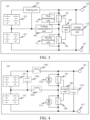
- the battery circuit 100 includes a power supply terminal 101, a first battery pack 102, a second battery pack 103 of a different type from the first battery pack 102, a voltage transformation unit 104, a first switch 105, a second switch 106, and a grounding terminal 107.
- a positive electrode of the first battery pack 102 is connected with the power supply terminal 101.
- a negative electrode of the first battery pack 102 is connected with a positive electrode of the second battery pack 103.
- a negative electrode of the second battery pack 103 is connected with the grounding terminal 107.
- a first terminal of the first switch 105 is connected with the power supply terminal 101.
- a second terminal of the first switch 105 is connected with a first terminal of the second switch 106.
- a second terminal of the second switch 106 is connected with the grounding terminal 107.
- the voltage transformation unit 104 is connected between the negative electrode of the first battery pack 102 and the second terminal of the first switch 105.
- a deviation between a rated voltage of the first battery pack 102 and a rated voltage of the second battery pack 103 is less than a first preset range; and/or a deviation between a ratio of a capacity of the first battery pack 102 to a capacity of the second battery pack 103 and a ratio of a maximum discharge rate of the second battery pack 103 to a maximum discharge rate of the first battery pack 102 is less than a second preset threshold.
- the deviation between the rated voltage of the first battery pack and the rated voltage of the second battery pack is less than the first preset range.
- the deviation between the ratio of the capacity of the first battery pack to the capacity of the second battery pack and the ratio of the maximum discharge rate of the second battery pack to the maximum discharge rate of the first battery pack is less than the second preset range.
- the power supply terminal 101 in the battery circuit 100 is configured to connect to a power input terminal of a load
- the grounding terminal 107 in the battery circuit 100 is configured to connect to a grounding terminal of the load.
- the load may be a motor of an electric vehicle or a hybrid vehicle.
- the power supply terminal 101 in the battery circuit 100 is configured to connect to a power output terminal of a charging device
- the grounding terminal 107 in the battery circuit 100 is configured to connect to a grounding terminal of the charging device.
- the charging device may be a charging pile or a braking system of an electric vehicle or a hybrid vehicle.
- the voltage transformation unit 104 may be a second inductor 1041. Certainly, the voltage transformation unit 104 may be implemented in another manner.
- an inductance value of the second inductor 1041 may be set to a range of 2 ⁇ H to 1500 ⁇ H.
- the voltage transformation unit 104 has a low cost and a simple structure in a case that the voltage transformation unit 104 is the second inductor 1041.
- the first switch 105 and the second switch 106 may be a switch IC, a metal oxide semiconductor field effect transistor (MOSFET), an insulated gate bipolar transistor (IGBT), a silicon carbide (SiC) switch, or the like.
- MOSFET metal oxide semiconductor field effect transistor
- IGBT insulated gate bipolar transistor
- SiC silicon carbide
- the first battery pack 102 and the second battery pack 103 are of different types.
- the first battery pack 102 is a power-type battery pack
- the second battery pack 103 is an energy-type battery pack.
- the first battery pack 102 is an energy-type battery pack
- the second battery pack 103 is a power-type battery pack.
- the power-type battery pack is a battery pack with a high power density.
- the power density is a maximum energy transfer power during charging or discharging of a battery with a unit weight or volume.
- a voltage value of the power-type battery pack may be set to a range of 100 V to 1000 V.
- the energy-type battery pack is a battery pack with a high energy density.
- the energy density is energy stored in a battery with a unit weight or volume.
- a voltage value of the energy-type battery pack may be set to a range of 100 V to 1000 V.
- specific types of the first battery pack 102 and the second battery pack 103 are not limited, which can improve compatibility of the battery circuit 100 provided in the embodiments of the present disclosure.
- a deviation between a rated voltage U1 of the first battery pack 102 and a rated voltage U2 of the second battery pack 103 is less than a first preset range.
- the first preset range is an allowable range of the deviation between the rated voltage U1 of the first battery pack 102 and the rated voltage U3 of the second battery pack 103.
- the deviation between the rated voltage U1 of the first battery pack 102 and the rated voltage U2 of the second battery pack 103 is less than the first preset range, it indicates that the rated voltage U1 of the first battery pack 102 is substantially the same as the rated voltage U2 of the second battery pack 103.
- the first preset range may exemplarily be 0.2*U1 or 0.2*U2. In a case that the first preset range is 0.2*U1, 1.2*U1 ⁇ U2 ⁇ 0.8*U1. In a case that the first preset range is 0.2*U2, 1.2*U2 ⁇ U1 ⁇ 0.8*U2.
- efficient energy transfer can be achieved between the first battery pack 102 and the second battery pack 103.
- efficient mutual charging can be achieved between the first battery pack 102 and the second battery pack 103.
- the rated voltage U1 of the first battery pack 102 is the same as the rated voltage U2 of the second battery pack 103. In this way, most efficient energy transfer can be achieved between the first battery pack 102 and the second battery pack 103.
- Uout 550V.
- a deviation between a ratio of a capacity Q1 of the first battery pack 102 to a capacity Q2 of the second battery pack 103 and a ratio of a maximum discharge rate X2 of the second battery pack 103 to a maximum discharge rate X1 of the first battery pack 102 is less than a second preset range.
- the second preset range is an allowable range of the deviation between the ratio of the capacity Q1 of the first battery pack 102 to the capacity Q2 of the second battery pack 103 and the ratio of the maximum discharge rate X2 of the second battery pack 103 to the maximum discharge rate X1 of the first battery pack 102.
- the ratio of the capacity Q1 of the first battery pack 102 to the capacity Q2 of the second battery pack 103 and the ratio of the maximum discharge rate X2 of the second battery pack 103 to the maximum discharge rate X1 of the first battery pack 102 is less than the second preset range, it indicates that the ratio of the capacity Q1 of the first battery pack 102 to the capacity Q2 of the second battery pack 103 is substantially the same as the ratio of the maximum discharge rate X2 of the second battery pack 103 to the maximum discharge rate X1 of the first battery pack 102.
- the second preset range may exemplarily be ⁇ 0.5.
- maximum discharging currents of the two battery packs can be substantially the same.
- the two battery packs can be connected in series for stable discharging.
- the ratio of the capacity Q1 of the first battery pack 102 to the capacity Q2 of the second battery pack 103 is the same as the ratio of the maximum discharge rate X2 of the second battery pack 103 to the maximum discharge rate X1 of the first battery pack 102. In this way, the maximum discharging currents of the two battery packs can be exactly the same.
- Qnom 120 Ah.
- Q1 100 Ah
- Q2 20 Ah
- X1 1 C
- the battery circuit 100 shown in FIG. 1 provided in the embodiments of the present disclosure provides a hardware foundation for controlling a dual battery pack including a power-type battery pack and an energy-type battery pack.
- the dual battery pack including the power-type battery pack and the energy-type battery pack may be controlled as follows.
- the battery circuit 100 further includes a control unit 108.
- a first terminal of the control unit 108 is connected with a control terminal of the first switch 105.
- a second terminal of the control unit 108 is connected with a control terminal of the second switch 106.
- control unit 108 may exemplarily be a central processing unit (CPU), a microcontroller unit (MCU), or the like.
- the control unit 108 is configured to control the first switch 105 and the second switch 106 to be opened or closed according to a first preset control rule under a first preset condition, to cause an output power of the second battery pack 103 to increase.
- the first preset condition may be that the battery circuit 100 is in a discharging state.
- the first preset control rule may be performing a first on/off operation, which includes: controlling the first switch 105 to be opened and the second switch 106 to be closed within a first preset time period and controlling the first switch 105 to be closed and the second switch 106 to be opened within a second preset time period. The first on/off operation is repeated until the first battery pack 102 is open circuited.
- the second preset time period is a time period adjacent to the first preset time period and after the first preset time period. Durations corresponding to the first preset time period and the second preset time period may be set according to experience or otherwise.
- the first switch 105 is controlled to be opened and the second switch 106 is controlled to be closed within the first preset time period.
- the second battery pack 103 charges the voltage transformation unit 104.
- the first switch 105 is controlled to be closed and the second switch 106 is controlled to be opened within the second preset time period.
- the voltage transformation unit 104 releases the stored power.
- a voltage at the output terminal of the voltage transformation unit 104 rises.
- the first battery pack 102 is open circuited. In this way, only the second battery pack 103 is discharged, and the power outputted by the second battery pack 103 is greater than the power outputted by the second battery pack 103. In other words, the output power of the second battery pack 103 is increased.
- the control unit 108 is further configured to control the first switch 105 and the second switch 106 to be opened or closed according to a second preset control rule under a second preset condition, so that an input power of the first battery pack 102 is different from an input power of the second battery pack 103.
- the second preset condition may be that the battery circuit 100 is in a charging state.
- the second preset control rule may be performing a second on/off operation, which includes controlling the first switch 105 to be closed and the second switch 106 to be opened within a third preset time period and controlling the first switch 105 to be opened and the second switch 106 to be closed within a fourth preset time period. The second on/off operation is repeated.
- the fourth preset time period is a time period adjacent to the third preset time period and after the third preset time period. Durations corresponding to the third preset time period and the fourth preset time period may be set according to experience or otherwise.
- the first switch 105 is controlled to be closed and the second switch 106 is controlled to be opened within the third preset time period.
- the first battery pack 102 and/or a charging device charges the voltage transformation unit 104.
- the first switch 105 is controlled to be opened and the second switch 106 is controlled to be closed within the fourth preset time period.
- the voltage transformation unit 104 releases the stored power to charge the second battery pack 103 together with the charging device.
- the voltage transformation unit 104 implements a boosting function.
- an input power of the second battery pack 103 can be greater than the input power of the first battery pack 102. In other words, the input power of the second battery pack 103 is different from the input power of the first battery pack 102.
- the first switch 105 is controlled to be opened and the second switch 106 is controlled to be closed within the third preset time period, and the first switch 105 is controlled to be closed and the second switch 106 is controlled to be opened within the fourth preset time period.
- the operation is repeated.
- the input power of the first battery pack 102 can be greater than the input power of the second battery pack 103.
- the input power of the second battery pack 103 is different from the input power of the first battery pack 102.
- the control unit 108 is further configured to control the first switch 105 and the second switch 106 to be opened or closed according to a third preset control rule under a third preset condition, to cause the first battery pack 102 to charge the second battery pack 103 or cause the second battery pack 103 to charge the first battery pack 102.
- the third preset condition may be that a charging current of the second battery pack 103 is less than a maximum charging current of the second battery pack 103.
- the third preset control rule is performing a third on/off operation, which includes controlling the first switch 105 to be closed and the second switch 106 to be opened within a fifth preset time period and controlling the first switch 105 to be opened and the second switch 106 to be closed within a sixth preset time period. The third on/off operation is repeated.
- the sixth preset time period is a time period adjacent to the fifth preset time period and after the fifth preset time period. Durations corresponding to the fifth preset time period and the sixth preset time period may be set according to experience or otherwise.
- the first switch 105 is controlled be to be closed and the second switch 106 is controlled to be opened within the fifth preset time period.
- the first battery pack 102 charges the voltage transformation unit 104.
- the first switch 105 is controlled to be opened and the second switch 106 is controlled to be closed within the sixth preset time period.
- the voltage transformation unit 104 releases the stored power to the second battery pack 103.
- the voltage transformation unit 104 implements a boosting function. The process is repeated, so that the first battery pack 102 can charge the second battery pack 103.
- the third preset control rule is a control rule opposite to repeating the third on/off operation.
- the first switch 105 is controlled to be opened and the second switch 106 is controlled to be closed within the fifth preset time period, and the first switch 105 is controlled to be closed and the second switch 106 is controlled to be opened within the sixth preset time period. The operation is repeated. In this way, the second battery pack 103 can charge the first battery pack 102.
- the control unit 108 is further configured to control the first switch 105 and the second switch 106 to be opened under a fourth preset condition, to connect the first battery pack 102 and the second battery pack 103 in series for discharging or charging.
- the fourth preset condition is that the battery circuit 100 is in a discharging state or a charging state.
- the first switch 105 and the second switch 106 are controlled to be opened under the fourth preset condition. In this way, the first battery pack 102 and the second battery pack 103 are jointly discharged or charged.
- the embodiments of the present disclosure provide multiple types of control according to the battery circuit shown in FIG. 1 .
- the battery circuit which includes the power supply terminal, the first battery pack, the second battery pack of a different type from the first battery pack, the voltage transformation unit, the first switch, the second switch, and the grounding terminal.
- the positive electrode of the first battery pack is connected with the power supply terminal.
- the negative electrode of the first battery pack is connected with the positive electrode of the second battery pack.
- the negative electrode of the second battery pack is connected with the grounding terminal.
- the first terminal of the first switch is connected with the power supply terminal.
- the second terminal of the first switch is connected with the first terminal of the second switch.
- the second terminal of the second switch is connected with the grounding terminal.
- the voltage transformation unit is connected between the negative electrode of the first battery pack and the second terminal of the first switch.
- the deviation between the rated voltage of the first battery pack and the rated voltage of the second battery pack is less than the first preset range.
- the deviation between the ratio of the capacity of the first battery pack to the capacity of the second battery pack and the ratio of the maximum discharge rate of the second battery pack to the maximum discharge rate of the first battery pack is less than the second preset range.
- the battery circuit 100 provided in this embodiment of the present disclosure further includes a filtering unit 109.
- a first terminal of the filtering unit 109 is connected with the positive electrode of the first battery pack 102.
- a second terminal of the filtering unit 109 is connected with the power supply terminal 101.
- a third terminal of the filtering unit 109 is connected with the negative electrode of the first battery pack 102.
- the power-type battery pack is usually used only in a case that a peak power is generated during the traveling of the electric vehicle or the hybrid vehicle (such as the peak discharging power generated during traction and the peak charging power generated during the braking), in other cases, an output current of the power-type battery pack is expected to be 0.
- arranging the filtering unit 109 can suppress a current ripple of the first battery pack 102, to prevent the output current of the power-type battery pack (the first battery pack 102) from fluctuating around 0. In this way, high-frequency rapid charging/discharging of the first battery pack 102 can be avoided, thereby reducing a life decrease of the first battery pack 102.
- the filtering unit 109 includes a first inductor 1091 and a first capacitor 1092.
- a first terminal of the first inductor 1091 is connected with the positive electrode of the first battery pack 102.
- a second terminal of the first inductor 1091 is connected with the power supply terminal.
- a first terminal of the first capacitor 1092 is connected with the first terminal of the first inductor 1091.
- a second terminal of the first capacitor 1092 is connected with the negative electrode of the first battery pack 102.
- a filtering unit 109 of another structure may also be used, which is not described in detail in this embodiment of the present disclosure.
- the first inductor 1091 is a filter inductor, and the first inductor 1091 may be configured with a value in a range of 2 ⁇ H to 1500 ⁇ H.
- the first capacitor 1092 is a filter capacitor, the first capacitor 1092 may be configured with a value a range of 2 ⁇ F to 1500 ⁇ F.
- the first inductor 1091 and the first capacitor 1092 may be configured with relatively small values.
- the first inductor 1091 may be configured with a value of 2 ⁇ H
- the first capacitor 1092 may be configured with a value of 2 ⁇ F.
- the first inductor 1091 and the first capacitor 1092 may be configured with relatively large values.
- the first inductor 1091 may be configured with a value of 1500 ⁇ H
- the first capacitor 1092 may be configured with a value of 1500 ⁇ F.
- the filtering unit 109 with a simple structure is provided, which can reduce hardware costs, design difficulty, and a footprint of the battery circuit 100.
- the battery circuit 100 provided in this embodiment of the present disclosure further includes a first freewheeling unit 110 and a second freewheeling unit 111.
- An input terminal of the first freewheeling unit 110 is connected with the second terminal of the first switch 105.
- An output terminal of the first freewheeling unit 110 is connected with the first terminal of the first switch 105.
- An input terminal of the second freewheeling unit 111 is connected with the second terminal of the second switch 106.
- An output terminal of the second freewheeling unit 111 is connected with the first terminal of the second switch 106.
- the first switch 105 at an initial moment of closing the second switch 106 and opening the first switch 105, the first switch 105 usually cannot be controlled to be immediately opened as a result of freewheeling time and action time of the first switch 105. As a result, a short circuit quickly occurs between the first switch 105 and the second switch 106, which causes the first battery pack 102 and the second battery pack 103 to be burnt.
- the second freewheeling unit 111 is connected in parallel with the two terminals of the second switch 106, and the second freewheeling unit 111 performs freewheeling. In this way, closing time of the second switch 106 can be delayed during control of the first switch 105 to be opened, thereby preventing the first battery pack 102 and the second battery pack 103 from being burnt by a short circuit.
- the first freewheeling unit 110 is connected in parallel with the two terminals of the first switch 105, and the first freewheeling unit 110 performs freewheeling. In this way, closing time of the first switch 105 can be delayed during control of the second switch 106 to be opened, thereby preventing the first battery pack 102 and the second battery pack 103 from being burnt by a short circuit.
- the first freewheeling unit 109 is a first diode 1101
- the second freewheeling unit 111 is a second diode 1111.
- An anode of the first diode 1101 is connected with the second terminal of the first switch 105.
- a cathode of the first diode 1101 is connected with the first terminal of the first switch 105.
- An anode of the second diode 1111 is connected with the second terminal of the second switch 106.
- a cathode of the second diode 1111 is connected with the first terminal of the second switch 106.
- the first freewheeling unit 110 and the second freewheeling unit 111 with a simple structure are provided, which can reduce hardware costs, design difficulty, and a footprint of the battery circuit 100.
- the battery circuit 100 provided in this embodiment of the present disclosure further includes a voltage stabilization unit 112.
- the voltage stabilization unit 112 is connected between the power supply terminal 101 and the grounding terminal 107.
- the voltage stabilization unit 111 is configured to filter out a voltage fluctuation on a bus, that is, a line on which the power supply terminal 101 of the battery circuit 100 is located, which can stabilize a voltage supplied to the load, and is further configured to reduce negative impact of a voltage fluctuation jointly generated by the first battery pack 102 and the voltage transformation unit 104 on the second battery pack 103.
- the voltage stabilization unit 112 may exemplarily be a second capacitor 1121. Certainly, the voltage stabilization unit 112 may be implemented in another manner.
- the second capacitor 1121 is a support capacitor, and the second capacitor 1121 may be configured with a value in a range of 2 ⁇ F to 1500 ⁇ F.
- the voltage stabilization unit 112 with a simple structure is provided, which can reduce hardware costs, design difficulty, and a footprint of the battery circuit 100.
- An embodiment of the present disclosure further provides a vehicle.
- the vehicle includes the battery circuit 100 in any of the foregoing embodiments.
- the vehicle is an electric vehicle or a hybrid vehicle.
Landscapes
- Engineering & Computer Science (AREA)
- Power Engineering (AREA)
- Mechanical Engineering (AREA)
- Sustainable Development (AREA)
- Sustainable Energy (AREA)
- Transportation (AREA)
- Life Sciences & Earth Sciences (AREA)
- Manufacturing & Machinery (AREA)
- Chemical & Material Sciences (AREA)
- Chemical Kinetics & Catalysis (AREA)
- Electrochemistry (AREA)
- General Chemical & Material Sciences (AREA)
- Microelectronics & Electronic Packaging (AREA)
- Charge And Discharge Circuits For Batteries Or The Like (AREA)
- Electric Propulsion And Braking For Vehicles (AREA)
Applications Claiming Priority (2)
| Application Number | Priority Date | Filing Date | Title |
|---|---|---|---|
| CN202210614132.8A CN117183813B (zh) | 2022-05-31 | 2022-05-31 | 电池电路以及车辆 |
| PCT/CN2023/079719 WO2023231485A1 (zh) | 2022-05-31 | 2023-03-06 | 电池电路以及车辆 |
Publications (2)
| Publication Number | Publication Date |
|---|---|
| EP4534342A1 true EP4534342A1 (de) | 2025-04-09 |
| EP4534342A4 EP4534342A4 (de) | 2025-10-15 |
Family
ID=89002254
Family Applications (1)
| Application Number | Title | Priority Date | Filing Date |
|---|---|---|---|
| EP23814684.9A Pending EP4534342A4 (de) | 2022-05-31 | 2023-03-06 | Batterieschaltung und fahrzeug |
Country Status (6)
| Country | Link |
|---|---|
| US (1) | US20250033526A1 (de) |
| EP (1) | EP4534342A4 (de) |
| JP (1) | JP2025515947A (de) |
| KR (1) | KR20240155898A (de) |
| CN (1) | CN117183813B (de) |
| WO (1) | WO2023231485A1 (de) |
Family Cites Families (23)
| Publication number | Priority date | Publication date | Assignee | Title |
|---|---|---|---|---|
| US5479083A (en) * | 1993-06-21 | 1995-12-26 | Ast Research, Inc. | Non-dissipative battery charger equalizer |
| JPH07123703A (ja) * | 1993-10-20 | 1995-05-12 | N F Kairo Sekkei Block:Kk | 変換回路 |
| JP3625789B2 (ja) * | 2001-08-10 | 2005-03-02 | 本田技研工業株式会社 | 車両の電源装置 |
| JP2009142069A (ja) * | 2007-12-06 | 2009-06-25 | Gs Yuasa Corporation:Kk | 組電池の温度調整装置、組電池の温度調整方法 |
| JP2010057291A (ja) * | 2008-08-28 | 2010-03-11 | Sanyo Electric Co Ltd | 車両用の電源装置 |
| US9209644B2 (en) * | 2010-07-30 | 2015-12-08 | Byd Company Limited | Circuits and methods for heating batteries in series using resonance components in series |
| JP5887077B2 (ja) * | 2011-07-21 | 2016-03-16 | 本田技研工業株式会社 | 電源システム及び燃料電池車両 |
| US9118201B2 (en) * | 2012-05-08 | 2015-08-25 | General Electric Company | Systems and methods for energy transfer control |
| JP6065821B2 (ja) * | 2013-12-06 | 2017-01-25 | 株式会社豊田自動織機 | セルの充放電電力/電流制限装置、組電池の充放電電力/電流制限装置及び組電池 |
| JP2015171310A (ja) * | 2014-03-11 | 2015-09-28 | 株式会社豊田自動織機 | 電圧均等化装置および電圧均等化方法 |
| FR3029709B1 (fr) * | 2014-12-05 | 2018-01-19 | Valeo Equipements Electriques Moteur | Dispositif d'alimentation et convertisseur de tension continue ameliore |
| EP3497776A4 (de) * | 2016-08-10 | 2020-02-05 | Briggs & Stratton Corporation | Benutzerskalierbare antriebseinheit mit abnehmbaren batteriepacks |
| CN108808754B (zh) * | 2017-05-03 | 2020-10-16 | 华为技术有限公司 | 分布式电池、电池控制方法与电动汽车 |
| CN109130891B (zh) * | 2018-10-18 | 2020-05-19 | 西安交通大学 | 电动汽车多模式混合储能系统复合式拓扑结构及控制方法 |
| CN209823441U (zh) * | 2018-12-21 | 2019-12-20 | 蔚来汽车有限公司 | 动力电池的电压转换控制装置和电动汽车 |
| JP7370223B2 (ja) * | 2019-01-24 | 2023-10-27 | 株式会社Soken | 電力変換装置 |
| GB2584829B (en) * | 2019-06-04 | 2023-01-11 | Jaguar Land Rover Ltd | Vehicle traction battery circuit and control system |
| CN112848969A (zh) * | 2019-11-27 | 2021-05-28 | 光阳工业股份有限公司 | 电动车辆的电池并联控制方法 |
| CN111422100A (zh) * | 2019-11-29 | 2020-07-17 | 蜂巢能源科技有限公司 | 电池包的加热电路、电源系统和电动车辆 |
| JP2022002430A (ja) * | 2020-06-19 | 2022-01-06 | マツダ株式会社 | 車両用駆動システム |
| CN111628653B (zh) * | 2020-06-30 | 2025-02-28 | 博格华纳驱动系统(苏州)有限公司 | 双向三电平dc-dc转换器的升压、降压控制装置及方法 |
| CN112677821B (zh) * | 2020-12-30 | 2024-11-08 | 珠海冠宇动力电池有限公司 | 电池系统及电动车辆 |
| CN113696785A (zh) * | 2021-09-06 | 2021-11-26 | 鲨港科技(上海)有限公司 | 一种串联电源组的控制电路、充放电的方法及车辆 |
-
2022
- 2022-05-31 CN CN202210614132.8A patent/CN117183813B/zh active Active
-
2023
- 2023-03-06 EP EP23814684.9A patent/EP4534342A4/de active Pending
- 2023-03-06 JP JP2024568427A patent/JP2025515947A/ja active Pending
- 2023-03-06 WO PCT/CN2023/079719 patent/WO2023231485A1/zh not_active Ceased
- 2023-03-06 KR KR1020247031428A patent/KR20240155898A/ko active Pending
-
2024
- 2024-10-16 US US18/917,397 patent/US20250033526A1/en active Pending
Also Published As
| Publication number | Publication date |
|---|---|
| CN117183813A (zh) | 2023-12-08 |
| WO2023231485A1 (zh) | 2023-12-07 |
| US20250033526A1 (en) | 2025-01-30 |
| JP2025515947A (ja) | 2025-05-20 |
| EP4534342A4 (de) | 2025-10-15 |
| CN117183813B (zh) | 2025-07-11 |
| KR20240155898A (ko) | 2024-10-29 |
Similar Documents
| Publication | Publication Date | Title |
|---|---|---|
| EP4534341A1 (de) | Batterieschaltung und fahrzeug | |
| EP4534338A1 (de) | Batterieschaltung und fahrzeug | |
| US9000740B2 (en) | Two-directional current double-boost quadratic DC/DC converter | |
| EP2378622B1 (de) | Erhaltungsladegerät für Hochenergiespeichersysteme | |
| WO2010140217A1 (ja) | 電源システム | |
| CN117977763A (zh) | 一种电池储能并联均衡变换器拓扑及其控制方法 | |
| EP4534342A1 (de) | Batterieschaltung und fahrzeug | |
| CN112803388B (zh) | 储能装置的放电系统及新能源交通车辆的地面放电系统 | |
| EP4535601A1 (de) | Batterieschaltung und fahrzeug | |
| CN107910931A (zh) | 一种单组和多组储能变换装置的控制方法 | |
| CN220562583U (zh) | 电动车的多组电池并联控制系统 | |
| CN219339219U (zh) | 充放电系统和车辆 | |
| EP4470826A1 (de) | Batterieschaltung, steuerungsverfahren für batterieschaltung und fahrzeug | |
| CN117183811B (zh) | 电池电路以及车辆 | |
| EP4270754A1 (de) | Wandlerschaltung, spannungswandlervorrichtung und elektrofahrzeug | |
| CN216819431U (zh) | 一种脉冲充放电系统端口电路及脉冲充放电系统 | |
| WO2025161965A1 (zh) | 电路系统、用电装置和车辆工作模式控制方法 | |
| JP2002218653A (ja) | 電気二重層キャパシタを適用した電力変換装置 | |
| CN121841111A (zh) | 一种基于buck-boost拓扑的功率平抑电源变换器 | |
| WO2024046180A1 (zh) | 混用电池充电电路、方法、设备及存储介质 | |
| CN120728808A (zh) | 一种应用于钠离子电池的升降压电路 |
Legal Events
| Date | Code | Title | Description |
|---|---|---|---|
| STAA | Information on the status of an ep patent application or granted ep patent |
Free format text: STATUS: THE INTERNATIONAL PUBLICATION HAS BEEN MADE |
|
| PUAI | Public reference made under article 153(3) epc to a published international application that has entered the european phase |
Free format text: ORIGINAL CODE: 0009012 |
|
| STAA | Information on the status of an ep patent application or granted ep patent |
Free format text: STATUS: REQUEST FOR EXAMINATION WAS MADE |
|
| 17P | Request for examination filed |
Effective date: 20240925 |
|
| AK | Designated contracting states |
Kind code of ref document: A1 Designated state(s): AL AT BE BG CH CY CZ DE DK EE ES FI FR GB GR HR HU IE IS IT LI LT LU LV MC ME MK MT NL NO PL PT RO RS SE SI SK SM TR |
|
| DAV | Request for validation of the european patent (deleted) | ||
| DAX | Request for extension of the european patent (deleted) | ||
| A4 | Supplementary search report drawn up and despatched |
Effective date: 20250915 |
|
| RIC1 | Information provided on ipc code assigned before grant |
Ipc: B60L 58/18 20190101AFI20250909BHEP Ipc: B60L 58/22 20190101ALI20250909BHEP |