EP4530350A2 - Verbesserte fackeltechnologie (durchflusszytometriegedämpfte reporterexpression) für schnelle massensortierung - Google Patents
Verbesserte fackeltechnologie (durchflusszytometriegedämpfte reporterexpression) für schnelle massensortierung Download PDFInfo
- Publication number
- EP4530350A2 EP4530350A2 EP24212463.4A EP24212463A EP4530350A2 EP 4530350 A2 EP4530350 A2 EP 4530350A2 EP 24212463 A EP24212463 A EP 24212463A EP 4530350 A2 EP4530350 A2 EP 4530350A2
- Authority
- EP
- European Patent Office
- Prior art keywords
- population
- cells
- producer cells
- heterogeneous
- polypeptide
- Prior art date
- Legal status (The legal status is an assumption and is not a legal conclusion. Google has not performed a legal analysis and makes no representation as to the accuracy of the status listed.)
- Pending
Links
Images












Classifications
-
- G—PHYSICS
- G01—MEASURING; TESTING
- G01N—INVESTIGATING OR ANALYSING MATERIALS BY DETERMINING THEIR CHEMICAL OR PHYSICAL PROPERTIES
- G01N33/00—Investigating or analysing materials by specific methods not covered by groups G01N1/00 - G01N31/00
- G01N33/48—Biological material, e.g. blood, urine; Haemocytometers
- G01N33/50—Chemical analysis of biological material, e.g. blood, urine; Testing involving biospecific ligand binding methods; Immunological testing
- G01N33/53—Immunoassay; Biospecific binding assay; Materials therefor
- G01N33/536—Immunoassay; Biospecific binding assay; Materials therefor with immune complex formed in liquid phase
- G01N33/537—Immunoassay; Biospecific binding assay; Materials therefor with immune complex formed in liquid phase with separation of immune complex from unbound antigen or antibody
-
- C—CHEMISTRY; METALLURGY
- C07—ORGANIC CHEMISTRY
- C07K—PEPTIDES
- C07K16/00—Immunoglobulins [IG], e.g. monoclonal or polyclonal antibodies
-
- C—CHEMISTRY; METALLURGY
- C12—BIOCHEMISTRY; BEER; SPIRITS; WINE; VINEGAR; MICROBIOLOGY; ENZYMOLOGY; MUTATION OR GENETIC ENGINEERING
- C12N—MICROORGANISMS OR ENZYMES; COMPOSITIONS THEREOF; PROPAGATING, PRESERVING, OR MAINTAINING MICROORGANISMS; MUTATION OR GENETIC ENGINEERING; CULTURE MEDIA
- C12N15/00—Mutation or genetic engineering; DNA or RNA concerning genetic engineering, vectors, e.g. plasmids, or their isolation, preparation or purification; Use of hosts therefor
- C12N15/09—Recombinant DNA-technology
- C12N15/10—Processes for the isolation, preparation or purification of DNA or RNA
- C12N15/1034—Isolating an individual clone by screening libraries
- C12N15/1086—Preparation or screening of expression libraries, e.g. reporter assays
-
- C—CHEMISTRY; METALLURGY
- C12—BIOCHEMISTRY; BEER; SPIRITS; WINE; VINEGAR; MICROBIOLOGY; ENZYMOLOGY; MUTATION OR GENETIC ENGINEERING
- C12N—MICROORGANISMS OR ENZYMES; COMPOSITIONS THEREOF; PROPAGATING, PRESERVING, OR MAINTAINING MICROORGANISMS; MUTATION OR GENETIC ENGINEERING; CULTURE MEDIA
- C12N15/00—Mutation or genetic engineering; DNA or RNA concerning genetic engineering, vectors, e.g. plasmids, or their isolation, preparation or purification; Use of hosts therefor
- C12N15/09—Recombinant DNA-technology
- C12N15/63—Introduction of foreign genetic material using vectors; Vectors; Use of hosts therefor; Regulation of expression
- C12N15/79—Vectors or expression systems specially adapted for eukaryotic hosts
- C12N15/85—Vectors or expression systems specially adapted for eukaryotic hosts for animal cells
-
- G—PHYSICS
- G01—MEASURING; TESTING
- G01N—INVESTIGATING OR ANALYSING MATERIALS BY DETERMINING THEIR CHEMICAL OR PHYSICAL PROPERTIES
- G01N15/00—Investigating characteristics of particles; Investigating permeability, pore-volume or surface-area of porous materials
- G01N15/10—Investigating individual particles
- G01N15/14—Optical investigation techniques, e.g. flow cytometry
-
- G—PHYSICS
- G01—MEASURING; TESTING
- G01N—INVESTIGATING OR ANALYSING MATERIALS BY DETERMINING THEIR CHEMICAL OR PHYSICAL PROPERTIES
- G01N33/00—Investigating or analysing materials by specific methods not covered by groups G01N1/00 - G01N31/00
- G01N33/48—Biological material, e.g. blood, urine; Haemocytometers
- G01N33/50—Chemical analysis of biological material, e.g. blood, urine; Testing involving biospecific ligand binding methods; Immunological testing
- G01N33/5005—Chemical analysis of biological material, e.g. blood, urine; Testing involving biospecific ligand binding methods; Immunological testing involving human or animal cells
- G01N33/5008—Chemical analysis of biological material, e.g. blood, urine; Testing involving biospecific ligand binding methods; Immunological testing involving human or animal cells for testing or evaluating the effect of chemical or biological compounds, e.g. drugs, cosmetics
- G01N33/5044—Chemical analysis of biological material, e.g. blood, urine; Testing involving biospecific ligand binding methods; Immunological testing involving human or animal cells for testing or evaluating the effect of chemical or biological compounds, e.g. drugs, cosmetics involving specific cell types
-
- C—CHEMISTRY; METALLURGY
- C07—ORGANIC CHEMISTRY
- C07K—PEPTIDES
- C07K2317/00—Immunoglobulins specific features
- C07K2317/10—Immunoglobulins specific features characterized by their source of isolation or production
-
- C—CHEMISTRY; METALLURGY
- C12—BIOCHEMISTRY; BEER; SPIRITS; WINE; VINEGAR; MICROBIOLOGY; ENZYMOLOGY; MUTATION OR GENETIC ENGINEERING
- C12N—MICROORGANISMS OR ENZYMES; COMPOSITIONS THEREOF; PROPAGATING, PRESERVING, OR MAINTAINING MICROORGANISMS; MUTATION OR GENETIC ENGINEERING; CULTURE MEDIA
- C12N2510/00—Genetically modified cells
- C12N2510/02—Cells for production
-
- G—PHYSICS
- G01—MEASURING; TESTING
- G01N—INVESTIGATING OR ANALYSING MATERIALS BY DETERMINING THEIR CHEMICAL OR PHYSICAL PROPERTIES
- G01N15/00—Investigating characteristics of particles; Investigating permeability, pore-volume or surface-area of porous materials
- G01N15/10—Investigating individual particles
- G01N15/14—Optical investigation techniques, e.g. flow cytometry
- G01N15/149—Optical investigation techniques, e.g. flow cytometry specially adapted for sorting particles, e.g. by their size or optical properties
-
- G—PHYSICS
- G01—MEASURING; TESTING
- G01N—INVESTIGATING OR ANALYSING MATERIALS BY DETERMINING THEIR CHEMICAL OR PHYSICAL PROPERTIES
- G01N2333/00—Assays involving biological materials from specific organisms or of a specific nature
- G01N2333/435—Assays involving biological materials from specific organisms or of a specific nature from animals; from humans
- G01N2333/705—Assays involving receptors, cell surface antigens or cell surface determinants
- G01N2333/70592—CD52
Definitions
- Methods for selection of producer cell populations and cell clones are imperative for the manufacturing of biologics, such as antibodies and fusion proteins. Such methods generally rely on use of a selection agent, such as methotrexate (MTX) or methionine sulphoximine (MSX), to bias and amplify the production of biologics. Selection agent-based methods may affect the viability or growth rate of selected populations or may have a negative impact on clonal stability. Such drug based selections can also be time consuming, often requiring multiple rounds of selection to obtain populations which contain clones that are suitable for biologic manufacturing. There remains a need for rapid and reliable methods of generating both large cell populations and clones that produce high titers of biologics with less negative impact to the host cell.
- MTX methotrexate
- MSX methionine sulphoximine
- the disclosure provides methods of batch selection and clonal selection of producer cells.
- methods for batch selection were developed that relied upon rapid bulk sorting of heterogeneous populations of producer cells using fluorescence activated cell sorting (FACS) without the use of MTX as an amplification agent.
- FACS fluorescence activated cell sorting
- the methods described herein were surprisingly found to be both faster and more productive than traditional MTX amplification.
- the methods described herein are useful, e.g., for the generation of productive pools of producer cells for screening of polypeptides of interest (such as in early clinical development) and for the generation of high titer clones, which can be utilized to produce a polypeptide of interest both for small and large scale manufacturing.
- the disclosure provides a method of fluorescence activated cell sorting (FACS) to batch select producer cells expressing a target polypeptide, the method comprising (a) providing a heterogeneous population of producer cells, wherein the producer cells in the population express varying levels of a FACS selectable polypeptide and a target polypeptide that are encoded by the same multicistronic mRNA, (b) selecting from the heterogeneous population of producer cells a first heterogeneous sub-population of producer cells using FACS, wherein the producer cells in the first heterogeneous sub-population express the FACS selectable polypeptide at a level that is higher than the level of at least 80% of the producer cells in the heterogeneous population in (a), and (c) expanding the first heterogeneous sub-population of producer cells in drug-selection-free medium, thereby producing an expanded first heterogeneous sub-population of producer cells.
- FACS fluorescence activated cell sorting
- the method further comprises (d) selecting from the expanded first heterogeneous sub-population of producer cells in (c) a second heterogeneous sub-population of producer cells using FACS, wherein the producer cells in the second sub-population express the FACS selectable polypeptide at a level that is higher than the level of at least 80% of the producer cells in the expanded first heterogeneous sub-population of producer cells in (c), and (e) expanding the second heterogeneous sub-population of producer cells in a drug-selection-free medium, thereby producing an expanded second heterogeneous sub-population of producer cells.
- the method further comprises isolating the target polypeptide from the expanded first or second heterogeneous sub-population. In some embodiments of any one of the methods provided, the method further comprises isolating one or more single producer cells from the expanded first or second heterogeneous sub-population and individually culturing the one or more single producer cells to produce clonal populations of the one or more single producer cells. In some embodiments of any one of the methods provided, the expanded first heterogeneous sub-population of producer cells yields a 1.2- to 5-fold improvement in production of the target polypeptide compared to that of the heterogeneous population of producer cells in (a).
- the expanded second heterogeneous sub-population of producer cells yields a 1.2- to 2.5-fold improvement in production of the target polypeptide compared to that of the expanded first heterogeneous sub-population of producer cells in (c).
- at least one of the clonal populations of the one or more single cells yields a 5- to 30-fold improvement in production of the target polypeptide compared to that of the heterogeneous population of producer cells in (a).
- the heterogeneous population of producer cells subject to FACS in (b) contains 80-120 ⁇ 10 6 cells.
- the first and/or second heterogeneous sub-population of producer cells contains 0.5 - 6.0 ⁇ 10 6 cells prior to expansion in step (c) or (e).
- the expanding in step c) is for between 7-14 days. In some embodiments of any one of the methods provided, the expanding in step e) is for between 7-14 days.
- the drug-selection-free medium is methotrexate-free medium or methionine sulphoximine-free medium.
- the heterogeneous population of producer cells in (a) is produced by transfecting cells with a vector that encodes the multicistronic mRNA and subjecting the transfected cells to one round of medium-based selection to select cells expressing varying levels of the multicistronic mRNA.
- the vector further contains a dihydrofolate reductase (DHFR) gene.
- the medium-based selection is methotrexate-containing medium or nucleotide-deficient medium.
- the heterogeneous population of producer cells in (a) is produced by transfecting cells with a vector that encodes the multicistronic mRNA and subjecting the transfected cells to FACS to select cells expressing varying levels of the multicistronic mRNA.
- the multicistronic mRNA comprises a first open reading frame (ORF) that encodes the FACS selectable polypeptide and a second ORF that encodes the target polypeptide, wherein the first ORF is 5' to the second ORF.
- the first ORF has a non-AUG start codon.
- the second ORF has an AUG start codon.
- the non-AUG start codon is a UUG, GUG or CUG in a Kozak consensus sequence.
- the ORF that encodes the FACS selectable polypeptide is devoid of any AUG sequences.
- the FACS selectable polypeptide is CD52 or CD59.
- the target polypeptide is a therapeutic agent.
- the target polypeptide is a secreted protein.
- the target polypeptide is an antibody or an Fc fusion protein.
- the producer cells are CHO cells, HEK293 cells, or HeLa cells.
- aspects of the disclosure relate to a clonal population of producer cells that express a FACS selectable polypeptide and a target polypeptide obtainable by any one of the methods described above or otherwise described herein.
- the clonal population yields a 5- to 30-fold improvement in production of the target polypeptide compared to that of the heterogeneous population of producer cells in (a).
- Yet other aspects of the disclosure relate to a method of increasing viability of cells after fluorescence activated cell sorting (FACS), the method comprising using a first round of FACS to select based on a viability marker a first sub-population of cells from a population of cells expressing a target polypeptide, and using a second round of FACS to select based on the viability marker a second sub-population of cells from the first sub-population of cells, wherein the first round and second round of FACS occur within 8 hours of each other.
- the viability marker is a forward scatter/side scatter population differentiation and/or a propidium iodide stain.
- the second sub-population has a post sort viability improvement of 1.2- to 4-fold compared to the initial sub-population post sort viability.
- the method further comprises expanding the second sub-population.
- the method further comprises individually culturing cells from the second sub-population in order to generate one or more clonal populations.
- the selection in step (b) is performed between 2 to about 15 days after transfection of the heterogeneous population of producer cells with a vector encoding the multicistronic mRNA. In certain exemplary embodiments, the selection in step (b) is performed between about 2 and about 10 days, about 2 and about 6 days, about 2 and about 4 days after transfection. In one exemplary embodiment, the selection in step (b) is performed two days after transfection. In another exemplary embodiment, the selection in step (b) is performed three days after transfection.
- the disclosure provides a method of fluorescence activated cell sorting (FACS) to batch select producer cells expressing a sFc fusion polypeptide, the method comprising (a) providing a heterogeneous population of producer cells, wherein the producer cells in the population express varying levels of a FACS selectable CD52 polypeptide and the sFc fusion polypeptide which are encoded by the same multicistronic mRNA, (b) selecting from the heterogeneous population of producer cells a first heterogeneous sub-population of producer cells using FACS, wherein the producer cells in the first heterogeneous sub-population express the CD52 polypeptide at a level that is higher than the level of 90% of the producer cells in the heterogeneous population in (a), and (c) expanding 1.3 million cells of the first heterogeneous sub-population of producer cells in drug-selection-free medium for seven days, thereby producing an expanded first heterogeneous sub-population of producer cells, wherein the heterogene
- FACS flu
- the disclosure provides a method of fluorescence activated cell sorting (FACS) to batch select producer cells expressing a sFc fusion polypeptide, the method comprising (a) providing a heterogeneous population of producer cells, wherein the producer cells in the population express varying levels of a FACS selectable CD52 polypeptide and the sFc fusion polypeptide which are encoded by the same multicistronic mRNA, (b) selecting from the heterogeneous population of producer cells a first heterogeneous sub-population of producer cells using FACS, wherein the producer cells in the first heterogeneous sub-population express the CD52 polypeptide at a level that is higher than the level of 90% of the producer cells in the heterogeneous population in (a), (c) expanding the first heterogeneous sub-population of producer cells in drug-selection-free medium for twelve days, thereby producing an expanded first heterogeneous sub-population of producer cells, (d) selecting from the expanded first heterogeneous
- the disclosure provides a method of fluorescence activated cell sorting (FACS) to batch select producer cells expressing a sFc fusion polypeptide, the method comprising (a) providing a heterogeneous population of producer cells, wherein the producer cells in the population express varying levels of a FACS selectable CD52 polypeptide and the sFc fusion polypeptide which are encoded by the same multicistronic mRNA, (b) selecting from the heterogeneous population of producer cells a first heterogeneous sub-population of producer cells using FACS, wherein the producer cells in the first heterogeneous sub-population express the CD52 polypeptide at a level that is higher than the level of 90% of the producer cells in the heterogeneous population in (a), (c) expanding the first heterogeneous sub-population of 3-4 ⁇ 10 6 producer cells in drug-selection-free medium for eight days, thereby producing an expanded first heterogeneous sub-population of producer cells, (d) selecting from the expanded FACS
- the disclosure provides a method of fluorescence activated cell sorting (FACS) to batch select producer cells expressing a sFc fusion polypeptide, the method comprising (a) providing a heterogeneous population of producer cells, wherein the producer cells in the population express varying levels of a FACS selectable CD52 polypeptide and the sFc fusion polypeptide which are encoded by the same multicistronic mRNA, (b) selecting from the heterogeneous population of producer cells a first heterogeneous sub-population of producer cells using FACS, wherein the producer cells in the first heterogeneous sub-population express the CD52 polypeptide at a level that is higher than the level of 90% of the producer cells in the heterogeneous population in (a), (c) expanding the first heterogeneous sub-population of 3-4 ⁇ 10 6 producer cells in drug-selection-free medium for eight days, thereby producing an expanded first heterogeneous sub-population of producer cells, (d) selecting from the
- polynucleotide intends a polymeric form of nucleotides of any length, examples of which include, but are not limited to, a gene or gene fragment, exons, introns, messenger RNA (mRNA), transfer RNA, ribosomal RNA, ribozymes, cDNA, recombinant polynucleotides, branched polynucleotides, plasmids, vectors, isolated DNA of any sequence, isolated RNA of any sequence, nucleic acid probes, and primers.
- a polynucleotide may comprise modified nucleotides, such as methylated nucleotides and nucleotide analogs.
- polypeptide intends a polymeric form of amino acids of any length, examples of which include, but are not limited to, a protein, a protein fragment, a multimeric protein, a fusion protein, an antibody (including fragments thereof) or a peptide.
- FACS fluorescence activated cell sorting
- a "FACS selectable polypeptide” is a polypeptide that can be detected, directly or indirectly, by flow cytometry.
- FACS selectable polypeptides include polypeptides that include an extracellular domain (e.g., CD52 or CD59) that are capable of being bound to a detectable binding partner (e.g., a fluorescently-labeled antibody) for indirect detection of the polypeptide by flow cytometry.
- FACS selectable polypeptides include fluorescent proteins such as green fluorescent protein (GFP), red fluorescent protein (RFP), yellow fluorescent protein (YFP), blue fluorescent protein (BFP), and variants thereof including eGFP, Venus, mCherry, mTomato, and the like, which may be detected directly by flow cytometry.
- fluorescent proteins such as green fluorescent protein (GFP), red fluorescent protein (RFP), yellow fluorescent protein (YFP), blue fluorescent protein (BFP), and variants thereof including eGFP, Venus, mCherry, mTomato, and the like, which may be detected directly by flow cytometry.
- target polypeptide refers to a protein, a protein fragment, a multimeric protein, a fusion protein, an antibody (including fragments thereof), or a peptide that can be produced in host cells and in the aspects exemplified herein, the target polypeptide is selected because of its potential as a therapeutic agent, e.g., an antibody (including a fragment thereof), a Fc fusion protein, a hormone or an enzyme.
- the target polypeptide is a secreted protein.
- diagnostic polypeptides or polypeptides for use in the environment are also contemplated for use as a target polypeptide in a method disclosed herein.
- antibody refers to such assemblies (e.g., intact antibody molecules, antibody fragments, or variants thereof) which have significant known specific immunoreactive activity to an antigen of interest.
- Antibodies and immunoglobulins comprise light and heavy chains, with or without an interchain covalent linkage between them. Basic immunoglobulin structures in vertebrate systems are relatively well understood.
- antibody includes entire antibodies as well as antigen-binding fragments and variants of such antibodies.
- Antibodies may be of any class, such as IgG, IgA or IgM; and of any subclass, such as IgG1 or IgG4.
- the antibody can be a polyclonal or a monoclonal antibody, or it can be fragments of the polyclonal or monoclonal antibody.
- the antibody can be chimeric, humanized, bi-specific, bifunctional or totally human. Any antigen-binding fragment or variant of an antibody is also contemplated, such as Fab, Fab', Fab'2, single chain variable regions and variations of the same.
- a "Fc fusion protein” refers to a protein comprising an immunoglobulin Fc domain that is linked, directly or indirectly, to a polypeptide, such as a protein or peptide.
- the linked polypeptide can be any proteinaceous molecule of interest, such as a ligand, a receptor, or an antigenic peptide.
- producer cells refer to cells that are suitable for production of proteins, e.g., in a small- or large-scale manufacturing method for producing biologics.
- producer cells are mammalian or insect cells. Producer cells are further discussed herein.
- a "heterogeneous population of producer cells” is a population of cells that expresses varying levels of one or more polypeptides, e.g., a FACS selectable polypeptide and a target polypeptide that are encoded by the same multicistronic mRNA.
- the varying levels include a variation (e.g., a range) of at least 10-fold, at least 100-fold, at least 1,000-fold, or at least 10,000-fold of the one or more polypeptides in the population.
- the varying levels include a variation (e.g., a range of relative fluorescence) of at least 10-fold, at least 100-fold, at least 1,000-fold, or at least 10,000-fold of the FACS selectable polypeptide in the population as detected by flow cytometry (e.g., on a BD Influx TM cell sorter). Methods for generating heterogeneous populations of producer cells are described herein.
- a "multicistronic mRNA” is an mRNA that contains at least two open reading frames (ORFs) that are capable of encoding two or more polypeptides.
- a "drug-selection-free medium” is a culture medium that is devoid of a drug (e.g., methotrexate (MTX)) that is used to select sub-populations of cells that express a protein that confers drug-resistance to the sub-population.
- a drug e.g., methotrexate (MTX)
- MTX methotrexate
- medium-based selection is a selection process by which the culture medium is altered to include a selection agent (e.g., MTX) or to exclude a component of medium, which results in selection of a sub-population that is resistant to the selection agent or can survive in the absence of the medium component.
- a selection agent e.g., MTX
- nucleotide-deficient medium is culture medium that is devoid of or contains low levels (e.g., less than 10 micrograms/mL) of one or more of adenine (A), cytosine (C), guanine (G), thymine (T), hypoxanthine, or thymidine.
- nucleotide-deficient medium is medium that is devoid of hypoxanthine and thymidine.
- Exemplary nucleotide-deficient medium includes CD CHO Medium (Gibco, Life Technologies, Catalogue numbers 10743 (liquid) and 12490 (granulated)).
- viability marker is a cell characteristic that is indicative of cell viability and is detectable by FACS.
- exemplary viability markers include forward scatter, side scatter, propidium iodide stain, or combinations thereof.
- non-AUG start codon is intended to include any non-AUG polynucleotide (typically a triplet) that functions as a start site for translation initiation with reduced efficiency relative to that of an AUG start codon.
- Naturally occurring alternate start codon usage is known in the art and described for example in Kozak (1991) J. Cell Biol. 115(4): 887-903 ; Mehdi et al. (1990) Gene 91:173-178 ; Kozak (1989) Mol. Cell. Biol. 9(11): 5073-5080 .
- non-AUG start codons have decreased translation efficiencies compared to that of an AUG; for example, the alternate start codon GUG may have 3-5% translation efficiency compared to that of an AUG (100%).
- the translation efficiency of a non-AUG start codon can also be affected by its sequence context; for example, an optimal Kozak consensus sequence is reported to have a positive effect on translation initiation at non-AUG start codons ( Mehdi et al. (1990) Gene 91:173-178 ; Kozak (1989) Mol. Cell. Biol. 9(11): 5073-5080 ).
- the complete Kozak DNA consensus sequence is GCCRCC ATG G (SEQ ID NO: 8), where the start codon ATG (AUG in RNA) is underlined, the A of the ATG start codon is designated as the +1 position, and "R" at position -3 is a purine (A or G).
- the two most highly conserved positions are a purine, preferably an A, at -3 and a G at +4 ( Kozak (1991) J Cell Biol 115(4): 887-903 ).
- Alternate start codon usage is described for attenuated expression of a selectable marker in U.S. Patent Publication 2006/0172382 and U.S. Patent Publication 2006/0141577 .
- sequences described herein as DNA will have correlative sequences as RNA molecules e.g., DNA sequence ATG, for example, would correspond to RNA sequence AUG, and vice versa.
- pre-sort when used in connection with a population of cells refers to a population of cells that has not yet undergone the FACS selection as described herein, e.g. using FLARE, and optionally has been subjected to initial selection with MTX (e.g., 5 nM MTX) or MTX-free medium (e.g. 0 nM MTX) prior to undergoing the FACS selection.
- MTX e.g., 5 nM MTX
- MTX-free medium e.g. 0 nM MTX
- FLARE refers to "Flow Cytometry Attenuated Reporter Expression.” FLARE is an expression system utilizing a multicistronic mRNA that contains at least two open reading frames (ORFs), one upstream ORF containing a non-AUG start codon and encoding a FACS selectable polypeptide and a second downstream ORF containing an AUG start codon and encoding a target polypeptide.
- ORFs open reading frames
- the term "about” shall refer to a range of tolerance of 10% around a stated value. Therefore, when the term “about” is used to modify a stated value, the range indicated will encompass any number within ⁇ 0.01%, 0.02%, 0.05%, 0.1%, 0.2%, 0.5%, 1%, 2%, 3%, 4%, 5%, 6%, 7%, 8%, 9%, or 10% of the stated value.
- the disclosure relates to a method of fluorescence activated cell sorting (FACS) to batch select producer cells expressing a target polypeptide.
- FACS fluorescence activated cell sorting
- the method comprises:
- the method further comprises:
- FACS cell sorters suitable for carrying out a method described herein are well-known in the art and commercially available.
- Exemplary FACS cell sorters include BD Influx TM (BD Biosciences) and other equivalent cell sorters produced by other commercial vendors such as Sony, Bio-Rad and Beckman Coulter.
- the producer cells are cultured under conditions that facilitate expression of the FACS selectable polypeptide in the cells.
- the FACS selectable marker is a cell surface marker.
- cell surface marker polypeptides include, but are not limited to CD2, CD20, CD52 or CD59. Exemplary, non-limiting, amino acid sequences for CD52 and CD59 cell surface marker polypeptides are provided below.
- any method known in the art useful for detecting a cell surface marker may be used in connection with the methods of the disclosure.
- an antibody or other cell surface marker-specific binding agent is contacted directly or indirectly with the producer cell under conditions that favor binding of antibody to the FACS selectable polypeptide and therefore the producer cell.
- the selection of the binding agent or antibody is determined by: 1) its ability to selectively bind the FACS selectable polypeptide that is expressed on the host cell; and 2) its ability to be labeled with a detectable label or bind to a detectable label, for example, for use in flow cytometry or FACS.
- a first agent can be a protein or peptide that binds to the FACS selectable polypeptide which first agent also in turn binds to a second agent that is capable of being detectably labeled (e.g., incorporating a fluorescent, enzymatic, colormetric, or other detectable label). It is intended, although not always explicitly stated that "indirect" binding to the FACS selectable polypeptide includes the use of any number of intermediate partners.
- the agent or antibody binds directly to the cell surface marker and comprises a fluorescent label.
- fluorescent labels include, but are not limited to, fluorescein, rhodamine, tetramethylrhodamine, eosin, erythrosin, coumarin, methyl-coumarins, pyrene, Malacite green, stilbene, Lucifer Yellow, Cascade Blue, and Texas Red.
- Other suitable optical dyes are described in the Molecular Probes® Handbook, 11th Edition, 2010 .
- the fluorescent label is functionalized to facilitate covalent attachment to the agent or agents.
- Suitable functional groups include, but are not limited to, isothiocyanate groups, amino groups, haloacetyl groups, maleimides, succinimidyl esters, and sulfonyl halides, all of which may be used to attach the fluorescent label to a second molecule.
- the choice of the functional group of the fluorescent label will depend on the site of attachment to the linker, the agent, the FACS selectable polypeptide, or the second labeling agent.
- Attachment of the fluorescent label may be either direct or via a linker to the antibody or agent.
- the linker is a relatively short coupling moiety that generally is used to attach molecules.
- attachment of the first labeling moiety to the candidate agents will be done as is generally appreciated by those in the art, and may include techniques outlined above for the incorporation of fluorescent labels.
- Suitable binding pairs for use in indirectly linking the label to the agent include, but are not limited to, antigens/antibodies, including digoxigenin/antibody, dinitrophenyl (DNP)/anti-DNP, dansyl-X/anti-dansyl, fluorescein/anti-fluorescein, lucifer yellow/anti-lucifer yellow, rhodamine/anti-rhodamine; and biotin/avidin (or biotin/streptavidin).
- the binding pairs should have high affinities for each other, sufficient to withstand the shear forces during FACS sorting or other detection system used in connection with the disclosure.
- first labeling moieties include, but are not limited to, haptens such as biotin.
- Biotinylation of target molecules is well known, for example, a large number of biotinylation agents are known, including amine-reactive and thiol-reactive agents, for the biotinylation of proteins, nucleic acids, carbohydrates, carboxylic acids.
- haptenylation reagents are also known.
- the antibodies used in a method described herein can be produced in cell culture, in phage, or in various animals, including but not limited to cows, rabbits, goats, mice, rats, hamsters, guinea pigs, sheep, dogs, cats, monkeys, chimpanzees, apes, etc., so long as the antibodies retain specificity of binding for the FACS selectable polypeptide.
- Antibodies can be tested for specificity of binding by comparing binding to appropriate antigen to binding to irrelevant antigen or antigen mixture under a given set of conditions.
- the antibody or agent against the FACS selectable polypeptide preferably also contains and retains the ability to bind a secondary agent which is detectable after binding to the cell via the FACS selectable polypeptide.
- the FACS selectable polypeptide when the FACS selectable polypeptide is CD59, the FACS selectable polypeptide may be detected using an anti-CD59 antibody.
- Anti-CD59 antibody refers to an antibody that specifically recognizes and binds CD59. Anti-CD59 antibodies can be generated by methods well known in the art. See for example, CURRENT PROTOCOLS IN MOLECULAR BIOLOGY (F. M. Ausubel, et al. eds., 1987 to present versions) and ANTIBODIES A LABORATORY MANUAL, Second edition (Greenfield, ed. 2013 ). Additionally, several anti-CD59 antibodies are commercially available (e.g., antibodies conjugated to a fluorescent label, such as those sold by the commercial vendors AbCam, SeroTec, and BioLegend).
- the FACS selectable polypeptide when the FACS selectable polypeptide is CD52, the FACS selectable polypeptide may be detected using an anti-CD52 antibody.
- Anti-CD52 antibody refers to an antibody that specifically recognizes and binds CD52. Anti-CD52 antibodies can be generated by methods well known in the art. Additionally, several anti-CD52 antibodies are commercially available (e.g., antibodies conjugated to a fluorescent label, such as those sold by the commercial vendors AbCam, SeroTec, and BioLegend).
- the FACS selectable polypeptide when the FACS selectable polypeptide is CD20, the FACS selectable polypeptide may be detected using an anti-CD20 antibody.
- Anti-CD20 antibody refers to an antibody that specifically recognizes and binds CD20 polypeptide or protein. Anti-CD20 antibodies can be generated by methods well known in the art. Additionally, several anti-CD20 antibodies are commercially available from vendors such as BD Pharmigen; Beckman Coulter, Inc. (Fullerton, Calif., numerous clones including Catalog No. 6604106 Clone H299 (B1); Isotype IgG2a and Catalog No.
- a heterogeneous population of producer cells as described herein is contacted with an agent that recognizes and directly or indirectly binds the FACS selectable polypeptide, if present, on the surface of the cells.
- the contacting is performed under conditions that favor or are suitable for specific binding (directly or indirectly) of the agent or antibody with the FACS selectable polypeptide.
- the cells that are bound to the agent or antibody are then selected for using FACS (e.g., by gating for cells that express the FACS selectable polypeptide at a high level such as a level that is at least 80% of the level of the population) and used to create a heterogeneous sub-population of producer cells.
- the heterogeneous sub-population of producer cells are then grown under conditions that result in expansion of the population to produce enough cells to perform a second round of FACS, if desired, or to produce a batch population to produce the target polypeptide.
- the heterogeneous sub-population of producer cells can be further sorted to produce clonal populations. Preparation of a clonal population can be performed by any method known in the art.
- the selected cells may be plated into 96-well (or other size) plates at a density of one cell per well and permitted to grow for a period of time (e.g., typically 7-28 days) which permits the single cell to grow into a multi-cell colony of daughter cells (i.e., a clonal population).
- the method may next comprise analyzing one or more of the clonal populations by detecting the level of the FACS selectable polypeptide and/or target polypeptide expression on said clonal population and selecting one or more clonal populations with a high expression level of the FACS selectable polypeptide and/or target polypeptide, thereby selecting one or more clonal populations stably expressing the target polypeptide.
- the clonal population is cultured for 7-28 days after plating at a single cell density before the clonal populations are analyzed.
- the method may further include contacting the clonal population with a detectable agent that recognizes and directly or indirectly binds the FACS selectable polypeptide, if present, on the surface of the clonal cell under conditions that favor binding of the agent with the FACS selectable polypeptide; and selecting or detecting one or more cells that are directly or indirectly bound to the agent or antibody. These cells so selected also can be isolated and cultured.
- the method may further include analyzing target polypeptide expression of the one or more clones, e.g., using protein A screening (such as when the target polypeptide is an antibody or Fc-fusion), Western blot, SDS page with Coomassie Blue or silver stain, or an enzyme activity assay.
- protein A screening such as when the target polypeptide is an antibody or Fc-fusion
- Western blot SDS page with Coomassie Blue or silver stain
- an enzyme activity assay e.g., enzyme activity assay.
- a method provided herein may further comprise isolating one or more single producer cells from an expanded first or second (or third or fourth or fifth or sixth) heterogeneous sub-population and individually culturing the one or more single producer cells to produce clonal populations of the one or more single producer cells.
- the expanded first heterogeneous sub-population of producer cells yields a 1.2- to 5-fold, 1.2- to 4-fold, 1.2- to 3-fold, 1.2- to 2.5-fold ,1.5- to 10-fold, 1.5- to 9-fold, 1.5- to 8-fold, 1.5- to 7-fold, 1.5- to 6-fold, 1.5- to 5-fold, 1.5- to 4-fold, 1.5- to 3-fold, or 1.5- to 2.5-fold, 2- to 10-fold, 2- to 9-fold, 2- to 8-fold, 2- to 7-fold, 2- to 6-fold, or 2- to 5-fold improvement in production of the target polypeptide compared to that of the heterogeneous population of producer cells.
- the expanded second heterogeneous sub-population of producer cells yields a 1.2- to 5-fold, 1.2- to 4-fold, 1.2- to 3-fold, 1.2- to 2.5-fold, 1.5- to 5-fold, 1.5- to 4-fold, 1.5- to 3-fold, or 1.5- to 2.5-fold improvement in production of the target polypeptide compared to that of the expanded first heterogeneous sub-population of producer cells.
- At least one of the clonal populations of the one or more single cells yields a 3- to 30-fold, 5- to 30-fold, 5- to 20-fold, 3- to 20-fold, 5- to 10-fold, 3- to 10-fold, or 3- to 5-fold improvement in production of the target polypeptide compared to that of the heterogeneous population of producer cells (e.g., compared to the average production of the target polypeptide in the heterogeneous population of producer cells).
- the method further comprises isolating the target polypeptide from the expanded first or second (or third or fourth or fifth or sixth) heterogeneous sub-population or the clonal population.
- the target polypeptide can be isolated using any method known in the art and may be further purified, e.g., according to Current Good Manufacturing Practice (CGMP) for recombinant proteins and antibodies, to a purity level of at least 90%, at least 95%, at least 96%, at least 97%, at least 98%, at least 99%, at least 99.9%, or more.
- CGMP Current Good Manufacturing Practice
- the heterogeneous population of producer cells subject to FACS contains 1-500 ⁇ 10 6 cells, 1-400 ⁇ 10 6 cells, 1-300 ⁇ 10 6 cells, 1-200 ⁇ 10 6 cells, 1-150 ⁇ 10 6 cells, 10-500 ⁇ 10 6 cells, 10-400 ⁇ 10 6 cells, 10-300 ⁇ 10 6 cells, 10-200 ⁇ 10 6 cells, 10-150 ⁇ 10 6 cells, 50-500 ⁇ 10 6 cells, 50-400 ⁇ 10 6 cells, 50-300 ⁇ 10 6 cells, 50-200 ⁇ 10 6 cells, 50-150 ⁇ 10 6 cells, 80-500 ⁇ 10 6 cells, 80-400 ⁇ 10 6 cells, 80-300 ⁇ 10 6 cells, 80-200 ⁇ 10 6 cells, 80-150 ⁇ 10 6 cells, or 80-120 ⁇ 10 6 cells.
- the first and/or second (and/or third and/or fourth and/or fifth and/or sixth) heterogeneous sub-population of producer cells contains 0.1 - 10.0 ⁇ 10 6 cells, 0.2 - 10.0 ⁇ 10 6 cells, 0.3 - 10.0 ⁇ 10 6 cells, 0.4 - 10.0 ⁇ 10 6 cells, 0.5 - 10.0 ⁇ 10 6 cells, 0.1 - 9.0 ⁇ 10 6 cells, 0.2 - 9.0 ⁇ 10 6 cells, 0.3 - 9.0 ⁇ 10 6 cells, 0.4 - 9.0 ⁇ 10 6 cells, 0.5 - 9.0 ⁇ 10 6 cells, 0.1 - 8.0 ⁇ 10 6 cells, 0.2 - 8.0 ⁇ 10 6 cells, 0.3 - 8.0 ⁇ 10 6 cells, 0.4 - 8.0 ⁇ 10 6 cells, 0.5 - 8.0 ⁇ 10 6 cells, 0.1 - 7.0 ⁇ 10 6 cells, 0.2 - 7.0 ⁇ 10 6 cells, 0.3 - 8.0 ⁇ 10 6 cells, 0.3
- an expansion step described herein is performed for between 5-21 days, 5-14 days, 6-21 days, 6-14 days, 7-21 days, or 7-14 days.
- the drug-selection-free medium is methotrexate-free medium or methionine sulphoximine-free medium.
- a producer cell can be generated using any cell type suitable for production of a target polypeptide from a multicistronic mRNA.
- the cell is a eukaryotic cell.
- Suitable eukaryotic cells to produce a target polypeptide include, but are not limited to, a Chinese Hamster Ovary cell line, including those designated CHO-DBX11, CHO-DG44, CHO-S, CHO-K1, and the hamster cell line BHK-21; the murine cell lines designated NIH3T3, NS0, C127, the simian cell lines COS, Vero; and the human cell lines HeLa, HEK293 (also called 293), NIH-3T3, U-937 and Hep G2.
- a Chinese Hamster Ovary cell line including those designated CHO-DBX11, CHO-DG44, CHO-S, CHO-K1, and the hamster cell line BHK-21
- the murine cell lines designated NIH3T3, NS0, C127, the simian cell lines COS, Vero
- the human cell lines HeLa, HEK293 also called 293
- yeast cells include yeast cells, insect cells (e.g., Drosophila Schnieder S2 cells, Sf9 insect cells, WO 94/126087 , BTI-TN-5B1-4 (High Five TM ) insect cells (Invitrogen)), plant cells, avian cells, fungal cells and bovine cells.
- yeast useful for expression include, but are not limited to Saccharomyces, Schizosaccharomyces, Hansenula, Candida, Torulopsis, Yarrowia, or Pichia. See e.g., U.S. Pat. Nos.
- producer cells can be prokaryotic, including bacterial cells such as E. coli (e.g., strain DH5aTM) (Invitrogen, Carlsbad, CA), PerC6 (Crucell, Leiden, NL), B. subtilis and/or other suitable bacteria.
- E. coli e.g., strain DH5aTM
- PerC6 Cell, Leiden, NL
- B. subtilis Bacillus subtilis
- the cells can be purchased from a commercial vendor such as the American Type Culture Collection (ATCC, Rockville, Md. USA) or cultured from an isolate using methods known in the art.
- a heterogeneous population of producer cells is provided.
- the heterogeneous population of producer cells can be produced using any method known in the art or described herein.
- the heterogeneous population of producer cells is produced by transfecting cells with a vector that encodes the multicistronic mRNA and subjecting the transfected cells to less than or equal to one round of medium-based selection to select cells expressing varying levels (e.g., a variation of at least 10-, 100-, 1,000-, or 10,000-fold) of the multicistronic mRNA.
- the vector further contains a dihydrofolate reductase (DHFR) gene and the medium-based selection is methotrexate (MTX, e.g., 1nM-100 nM MTX), nucleotide-deficient medium, or a combination thereof.
- the vector further contains a glutamine synthetase (GS) gene and the medium-based selection is methionine sulphoximine (MSX, e.g., 25-100 ⁇ M MSX).
- FACS is used to select cells expressing varying levels of the multicistronic mRNA, e.g., by using the FACS selectable polypeptide level to select the cells.
- the vector lacks a drug-selectable marker, e.g., lacks a DHFR gene or GS gene.
- the producer cells of the disclosure contain a recombinant polynucleotide (e.g., a recombinant cDNA) that encodes a multicistronic mRNA molecule from which the target and FACS selectable polypeptides are separately translated from different ORFs.
- a first ORF is provided which encodes a FACS selectable polypeptide, such as CD59 or CD52. Exemplary, non-limiting first ORF sequences for CD52 and CD59 are provided below.
- a second ORF which encodes a target polypeptide, such as an antibody, enzyme or Fc fusion protein.
- a target polypeptide such as an antibody, enzyme or Fc fusion protein.
- separate translation is accomplished by use of a non-AUG start codon for translation initiation of the FACS selectable polypeptide and the use of an AUG start codon for translation initiation of the target polypeptide.
- the polynucleotide encoding the target polypeptide is located downstream from the polynucleotide encoding the FACS selectable polypeptide.
- Separate translation can also be achieved using an internal ribosome entry site (IRES).
- the IRES element is located upstream from the polynucleotide encoding the target polypeptide and downstream from the polynucleotide encoding the FACS selectable polypeptide. In some embodiments, the IRES element is located upstream from the polynucleotide encoding the FACS selectable polypeptide and downstream from the polynucleotide encoding the target polypeptide.
- a non-AUG start codon is located within the DNA encoding the FACS selectable polypeptide in such a way that translation of the FACS selectable polypeptide is less efficient than translation of the target polypeptide.
- the AUG start codon of the FACS selectable polypeptide may be changed to an alternate non-AUG start codon, examples of which include but are not limited to: CUG, GUG, UUG, AUU, AUA, or ACG.
- a FACS selectable polypeptide when using an alternate non-AUG start codon, expression of a FACS selectable polypeptide can be attenuated relative to that of a co-expressed target polypeptide.
- the DNA encoding the FACS selectable polypeptide may be modified at all internal ATG triplets to prevent internal initiation of translation.
- the FACS selectable polypeptide has a short amino acid sequence ( ⁇ 200 amino acids) with few ( ⁇ 10) ATG triplets.
- ribosomes begin scanning at the 5' cap structure of the mRNA with the majority scanning past the alternate start codon (for example, UUG) and instead initiate translation at the downstream AUG start codon.
- alternate start codon for example, UUG
- translation initiation can occur at the alternate start codon with very low frequency so that a low level of the FACS selectable polypeptide is expressed.
- the recombinant polynucleotide(s) can be inserted into the cell using any suitable transfer technique (e.g., by transformation, transfection, electroporation or transduction).
- a vector for insertion of the polynucleotide(s) into the cell can be used.
- Vectors that may be used include plasmid, virus, phage, transposons, and minichromosomes of which plasmids are a typical embodiment.
- such vectors further include a signal sequence, origin of replication, one or more marker genes, a promoter and transcription termination sequences operably linked to the gene encoding the multicistronic mRNA so as to facilitate expression.
- DNA viral vectors examples include adenovirus (Ad) or adeno-associated virus (AAV).
- Ads adenovirus-based vectors for the delivery of polynucleotides are known in the art and may be obtained commercially or constructed by standard molecular biological methods.
- Adenoviruses (Ads) are a group of viruses, including over 50 serotypes. See, e.g., International PCT Application No. WO 95/27071 .
- Other viral vectors for use in the present disclosure include vectors derived from vaccinia, herpesvirus (e.g., herpes simplex virus (HSV)), and retroviruses.
- Gene delivery vehicles also include several non-viral vectors, including DNA/liposome complexes, and targeted viral protein-DNA complexes.
- Vectors that contain both a promoter and a cloning site into which a polynucleotide can be operatively linked are known in the art and available from commercial vendors. Such vectors are capable of transcribing RNA in vitro or in vivo, and are commercially available from sources such as Agilent Technologies and Promega Corporation. In order to optimize expression and/or in vitro transcription, it may be necessary to remove, add or alter 5' and/or 3' untranslated portions to eliminate extra, potentially inappropriate alternative translation initiation codons or other sequences that may interfere with or reduce expression, either at the level of transcription or translation. Alternatively, consensus ribosome binding sites can be inserted immediately 5' of the start codon to enhance expression.
- producer cells that contain a first recombinant polynucleotide encoding a multicistronic mRNA as described herein and further contain a second recombinant polynucleotide encoding a second target protein or polypeptide under the control of the first or a second promoter element.
- a promoter can be provided for expression in the producer cell. Promoters can be constitutive or inducible. For example, a promoter can be operably linked to a nucleic acid encoding a multicistronic mRNA, such that it directs expression of the encoded polypeptides.
- a variety of suitable promoters for prokaryotic and eukaryotic hosts are available. Prokaryotic promoters include lac, tac, T3, T7 promoters for E.
- 3-phosphoglycerate kinase or other glycolytic enzymes e.g., enolase, glyceralderhyde 3-phosphate dehydrogenase, hexokinase, pyruvate decarboxylase, phosphofructokinase, glucose 6 phosphate isomerase, 3-phosphoglycerate mutase and glucokinase.
- Eukaryotic promoters include inducible yeast promoters such as alcohol dehydrogenase 2, isocytochrome C, acid phosphatase, metallothionein and enzymes responsible for nitrogen metabolism or maltose/galactose utilization; RNA polymerase II promoters including viral promoters such as polyoma, fowlpox and adenoviruses (e.g., adenovirus 2), bovine papilloma virus, avian sarcoma virus, cytomegalovirus (in particular, the immediate early gene promoter), retrovirus, hepatitis B virus, actin, rous sarcoma virus (RSV) promoter and the early or late Simian virus 40 and non-viral promoters such as EF-1 alpha ( Mizushima and Nagata (1990) Nucleic Acids Res. 18(17):5322 ).
- RNA polymerase II promoters including viral promoters such as polyoma
- enhancer elements can be included instead of or as well as those found located in the promoters described above.
- suitable mammalian enhancer sequences include enhancer elements from globin, elastase, albumin, fetoprotein, metallothionine and insulin.
- an enhancer element from a eukaryotic cell virus such as SV40 enhancer, cytomegalovirus early promoter enhancer, polyoma enhancer, baculoviral enhancer or murine IgG2a locus (see, WO 04/009823 ).
- enhancers are often located on the vector at a site upstream to the promoter, they can also be located elsewhere e.g., within the untranslated region or downstream of the polyadenylation signal. The choice and positioning of enhancer may be based upon compatibility with the host cell used for expression.
- the vectors may comprise a selectable marker for selection of host cells carrying the vector, and, in the case of a replicable vector, an origin of replication.
- Genes encoding products which confer antibiotic or drug resistance are common selectable markers and may be used in prokaryotic (e.g., f3-lactamase gene (ampicillin resistance), tet gene (tetracycline resistance) and eukaryotic cells (e.g., neomycin (G418 or geneticin), gpt (mycophenolic acid), ampicillin, or hygromycin 5 resistance genes).
- the dihydrofolate reductase (DHFR) gene permits selection with methotrexate or nucleotide-deficient medium in a variety of hosts.
- the glutamine synthetase (GS) gene permits selection with methionine sulphoximine.
- Genes encoding the gene product of auxotrophic markers of the host e.g., LEU2, URA3, HIS3 are often used as selectable markers in yeast.
- Use of viral (e.g., baculovirus) or phage vectors, and vectors which are capable of integrating into the genome of the host cell, such as retroviral vectors, are also contemplated.
- polyadenylation and termination signals may be operably linked to a polynucleotide encoding the multicistronic mRNA as described herein. Such signals are typically placed 3' of an open reading frame.
- polyadenylation/termination signals include those derived from growth hormones, elongation factor-1 alpha and viral (e.g., SV40) genes or retroviral long terminal repeats.
- polydenylation/termination signals include those derived from the phosphoglycerate kinase ( PGK ) and the alcohol dehydrogenase 1 ( ADH ) genes.
- polyadenylation signals are typically not required and it is instead usual to employ shorter and more defined terminator sequences.
- the choice of polyadenylation/termination sequences may be based upon compatibility with the host cell used for expression.
- other features that can be employed to enhance yields include chromatin remodeling elements, introns and host cell specific codon modification.
- Producer cells may be cultured in spinner flasks, shake flasks, roller bottles, wave reactors (e.g., System 1000 from wavebiotech.com) or hollow fiber systems, or for large scale production, stirred tank reactors or bag reactors (e.g., Wave Biotech, Somerset, New Jersey USA) are used particularly for suspension cultures.
- Stirred tank reactors can be adapted for aeration using e.g., spargers, baffles or low shear impellers.
- direct aeration with air or oxygen bubbles may be used.
- the medium can be supplemented with a cell protective agent such as pluronic F-68 to help prevent cell damage as a result of the aeration process.
- a cell protective agent such as pluronic F-68 to help prevent cell damage as a result of the aeration process.
- microcarriers may be used as growth substrates for anchorage dependent cell lines, or the cells may be adapted to suspension culture.
- the culturing of host cells, particularly vertebrate host cells may utilize a variety of operational modes such as batch, fed-batch, repeated batch processing (see, Drapeau et al. (1994) Cytotechnology 15:103-109 ), extended batch process or perfusion culture.
- recombinantly transformed producer cells may be cultured in serum-containing media such media comprising fetal calf serum (FCS), in some embodiments, such host cells are cultured in serum-free media such as disclosed in Keen et al. (1995) Cytotechnology 17:153-163 , or commercially available media such as ProCHO-CDM or UltraCHOTM (Cambrex NJ, USA), supplemented where necessary with an energy source such as glucose and synthetic growth factors such as recombinant insulin.
- FCS fetal calf serum
- serum-free media such as disclosed in Keen et al. (1995) Cytotechnology 17:153-163
- commercially available media such as ProCHO-CDM or UltraCHOTM (Cambrex NJ, USA)
- an energy source such as glucose and synthetic growth factors such as recombinant insulin.
- the serum-free culturing of host cells may require that those cells are adapted to grow in serum-free conditions.
- One adaptation approach is to culture such host cells in serum containing media and repeatedly exchange 80% of the culture medium for the serum-free media so that the host cells learn to adapt in serum-free conditions (see, e.g., Scharfenberg, K. et al. (1995) Animal Cell Technology: Developments Towards the 21st Century (Beuvery, E.C. et al., eds), pp.619-623, Kluwer Academic publishers ).
- a target polypeptide according to the described embodiments may be secreted into the medium and recovered and purified therefrom using a variety of techniques to provide a degree of purification suitable for the intended use.
- a target polypeptide e.g., an antibody or Fc-fusion protein
- the use of a target polypeptide for the treatment of human subjects typically mandates at least 95% purity as determined by reducing SDS-PAGE, more typically 98% or 99% purity, when compared to the culture media comprising the target polypeptide.
- cell debris from the culture media can be removed using centrifugation followed by a clarification step of the supernatant using e.g., microfiltration, ultrafiltration and/or depth filtration.
- a target polypeptide can be harvested by microfiltration, ultrafiltration or depth filtration without prior centrifugation.
- a variety of other techniques such as dialysis and gel electrophoresis and chromatographic techniques such as hydroxyapatite (HA), affinity chromatography (optionally involving an affinity tagging system such as polyhistidine) and/or hydrophobic interaction chromatography (HIC) (see, US 5,429,746 ) are available.
- HA hydroxyapatite
- affinity chromatography optionally involving an affinity tagging system such as polyhistidine
- HIC hydrophobic interaction chromatography
- a target polypeptide such as an antibody or Fc-fusion following various clarification steps, is captured using Protein A or G affinity chromatography followed by further chromatography steps such as ion exchange and/or HA chromatography, anion or cation exchange, size exclusion chromatography and ammonium sulphate precipitation.
- Various virus removal steps may also be employed (e.g., nanofiltration using, e.g., a DV-20 filter).
- a purified preparation comprising at least 10 mg/ml or greater, e.g., 100 mg/ml or greater of the target polypeptide described herein is provided.
- the clonal population yields a 3- to 30-fold, 5- to 30-fold, 5- to 20-fold, 3- to 20-fold, 5- to 10-fold, 3- to 10-fold, or 3- to 5-fold improvement in production of the target polypeptide compared to that of the heterogeneous population of producer cells in (a) (e.g., a 3- to 30-fold, 5- to 30-fold, 5- to 20-fold, 3- to 20-fold, 5- to 10-fold, 3- to 10-fold, 3- to 5-fold, or 1.2- to 5-fold improvement compared to the average production of the target polypeptide in the heterogeneous population of producer cells).
- a e.g., a 3- to 30-fold, 5- to 30-fold, 5- to 20-fold, 3- to 20-fold, 5- to 10-fold, 3- to 10-fold, 3- to 5-fold, or 1.2- to 5-fold improvement compared to the average production of the target polypeptide in the heterogeneous population of producer cells.
- the method comprises using a first round of FACS to select based on a viability marker a first sub-population of cells from a population of cells expressing a target polypeptide, and using a second round of FACS to select based on the viability marker a second sub-population of cells from the first sub-population of cells, wherein the first round and second round of FACS occur within 8 hours (e.g., within 8, within 7, within 6, within 5, within 4, within 3, within 2, or within 1 hour, or within 60 minutes or within 30 minutes) of each other.
- FACS fluorescence activated cell sorting
- the viability marker is a forward scatter/side scatter population differentiation and/or a propidium iodide stain.
- the second sub-population has a post sort viability improvement of 1.2- to 4-fold, 2- to 4-fold, or 3- to 4-fold compared to the initial sub-population post sort viability.
- the viability of the cells subjected to the method is greater than 75%, greater than 80%, greater than 85%, or greater than 90% viability (e.g., 90% of cells contain or display the viability marker after the performance of the method).
- the method further comprises expanding the second sub-population. In some embodiments of any one of the methods, the method further comprises individually culturing cells from the second sub-population in order to generate one or more clonal populations. In some embodiments, the method of increasing viability of cells after fluorescence activated cell sorting (FACS) is performed after a batch selection method as described herein (see, e.g., Section II above). In some embodiments, the cells express a target polypeptide and a FACS selectable marker as described herein. In some embodiments, the method further comprises isolating the target polypeptide.
- FACS fluorescence activated cell sorting
- FLARE FL ow cytometry A ttenuated R eporter E xpression is a cell line generation process used previously for 1) cell sorting to isolate clones and 2) clone screening (see, e.g., Cairns, V. et al. (2011) Utilization of Non-AUG Initiation Codons in a Flow Cytometric Method for Efficient Selection of Recombinant Cell Lines. Biotechnol Bioeng 108(11):2611-2622 ).
- a cell surface reporter open reading frame (ORF) utilizing a non-ATG initiation codon is located immediately upstream of a gene encoding a protein interest (e.g., an antibody or fusion protein of interest) ORF.
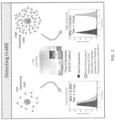
- the two ORFs are transcribed as a single mRNA but are translated independently ( FIG. 1 ).
- scanning ribosomes recognize the non-AUG initiating codon at a very low frequency (UUG has approximately 1% the initiation capacity as compared to AUG) while the majority of ribosomes continue scanning to the primary AUG initiating codon of the protein of interest. This results in low level expression of the cell surface reporter and relatively high level expression of the protein of interest.
- the bi-cistronic mRNA containing 2 ORFs ensures that cell surface reporter expression is predictive of the protein of interest expression.
- Cells expressing a protein of interest with the FLARE system are assessed by flow cytometry to determine levels of a cell surface reporter (CD52 in this example) which are predictive of protein of interest titers.
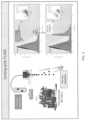
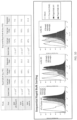
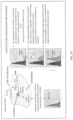
- Cells are stained with FITC anti-CD52 mAb and acquired on a flow cytometer. Protein of interest expressing cells will have a level of reporter expression that can be visualized in a histogram overlay and measured in relative fluorescence units (RFU, FIG. 2 ).
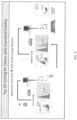
- the FLARE system can also be used with a cell sorter to identify and isolate individual high expressing cells from a diverse expression population to be collected as either a bulk enriched pool or plated as individual cells in a 96-well plate format ( FIG. 3 and FIG. 4 ). Sorting can assess and collect millions of cells in a short time period making it an extremely high throughput method. Sort enriched cells can be collected as a post-sort population and assessed for enrichment and viability.
- Clones generated by sorting with FLARE yield a group of clones with a greater frequency of high producers than Limiting Dilution Cloning methodologies.
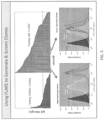
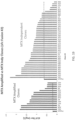
- FLARE generated clones have a wide range of productivity with the highest expressing clones showing the most robust reporter expression ( FIG. 5 ). Individual clones may therefore be assessed very early (in 96-well plate expansion stage) using the FLARE system to eliminate the less productive clones in a screening step based on reporter expression.
- ADC-free CHO 8D6 DXB11 Parental Host cells were transfected by electroporation with a pGZ729 FLARE vector that either encoded an IgG heavy chain or a Fc-fusion protein as previously described ( Cairns, V. et al. (2011) Utilization of Non-AUG Initiation Codons in a Flow Cytometric Method for Efficient Selection of Recombinant Cell Lines. Biotechnol Bioeng 108(11):2611-2622 ).
- Each FLARE vector contained two ORFs driven by a single beta-actin promoter upstream of the two ORFs and a single SV40 polyadenylation site downstream of the two ORFs.
- the upstream ORF encoded a CD52 reporter gene with a UUG start codon.
- the CD52 reporter gene was further optimized by modifying all internal AUG start codons in any frame and all internal non-AUG start codons within a Kozak context in any frame within the CD52 ORF.
- the AUG start codon of CD52 was replaced with a single non-AUG start codon (UUG) within a Kozak consensus sequence.
- the downstream ORF encoded either an IgG heavy chain or a sFc-fusion protein with a AUG start codon.
- the FLARE vector encoding the IgG heavy chain was co-transfected in the CHO cells with a second vector encoding an IgG light chain in order to produce a monoclonal antibody (mAb).
- Each FLARE vector further contained an independent dihydrofolate reductase (DHFR) expression cassette.
- DHFR dihydrofolate reductase
- the pGZ729 FLARE vector backbone sequence is shown below, followed by annotations of the sequence.
- Rapid bulk sorting was carried out as follows and is exemplified in FIG. 7 :
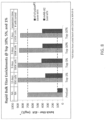
- Table 1 Different % cut-off for sorting versus titer of a mAb target polypeptide SORT # of Cells sorted Expansion time* Titer of mAb PreSort NA NA 104 mg/L Top 10% 500,000 cells 9 days 397 mg/L Top 5% 500,000 cells 9 days 415 mg/L Top 1 % 50,000 cells 16 days 335 mg/L * time from the sort to produce a cell population that contains a number of cells suitable for freezing down, setting up a batch culture and/or resorting (60-80 ⁇ 10 6 cells)
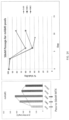
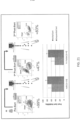
- Rapid bulk sorting a mAb-expressing pool producing only 100 mg/L demonstrated a 4-fold improvement in pool productivity in as little as 7 days ( FIG. 8 , second top 10% sort). Furthermore, an already very productive pool expressing a Fc-fusion protein at 700 mg/L was enriched by 20% within the same timeframe ( FIG. 8 ). These results demonstrated that rapid bulk sorting with the FLARE system was 1) feasible, 2) fast (limited only by the number of cells one can sort and the recovery of the post-sort population), and 3) highly productive. This rapid bulk sorting was also shown to work with both a mAb and Fc fusion protein and was successful for both high and low productivity starter pools.
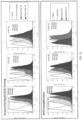
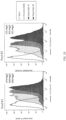
- FIG. 10 shows the reporter expression (flow cytometry histogram overlays) and target polypeptide titer for each sort enriched pool relative to the starting 5 nM pool. The data shows that it is possible to sequentially enrich expression through repetitive rapid bulk sorting.
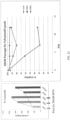
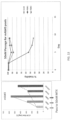
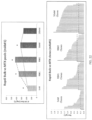
- each starting 5 nM pool was also subjected to two additional rounds of MTX selection (50 nM and 250 nM; FIGs. 11 and 15 ). As shown in FIGs. 11 and 15 , not only did the sequential rapid bulk sorts achieve significantly better titers of target polypeptides than both the 50 nM and 250 nM MTX selections but each rapid bulk sort (with the exception of mAb#3 RB#1) was generated 2-3 times faster than each corresponding round of MTX amplification.
- Clones were generated from both MTX amplified pools (5 nM and 50 nM MTX) and from rapid bulked pools (RB#1 and RB#2) expressing mAb#1 to comparatively evaluate productivities. Clones were generated using FLARE as previously described (see, e.g., Cairns, V. et al. (2011) Utilization of Non-AUG Initiation Codons in a Flow Cytometric Method for Efficient Selection of Recombinant Cell Lines. Biotechnol Bioeng 108(11):2611-2622 ). Briefly, FLARE was used to isolate and single cell plate the top 1-3% of reporter-expressing cells from each pool using FACS.
- Expanded clones were then screened (taking top 25-30% positive expressers), again using FLARE, to identify only the top tier clones to expand for target polypeptide titer evaluation.
- rapid bulk sorting generated clones from RB#1 and RB#2 pools expressing mAb#1 which were comparable to those generated from both 5 nM and 50 nM MTX amplified pools.
- Top rapid bulk clone titers where achieved at 1.4 g/L and 1.6 g/L for RB#1 and RB#2 respectively.
- Top MTX amplified clone titers where achieved at 1.2 g/L and 1.9 g/L for 5 nM and 50 nM respectively.
- top clone performance and frequency of top producers was slightly greater in 50 nM MTX generated clones, it is believed the rapid bulk generated clones may demonstrate a more robust profile in stability studies as MTX concentrations used are 10 fold lower and removed during cloning process.
- sequential rapid bulk sorting from 5 nM MTX pools were shown to be a viable alternative to a direct selection process using MTX.
- Sequential rapid bulk sorting was shown to be faster (timeline difference of up to 2-3 weeks), to use less MTX (potentially resulting in more robust and stable clones), to be more productive (significantly better pool titers of target polypeptides were achieved), and to work with 3 different target polypeptides (2 different mAbs and a Fc fusion protein).
- the test starter pools expressed a Fc Fusion Protein (sFcF #2).
- sFcF #2 Two starter pools were established by initial selection of transfected cells with nucleotide deficient media (CD CHO Medium, Gibco, Life Technologies, Catalogue number 10743) supplemented with glutamine (i.e. 0 nM MTX) for 21 days.
- nucleotide deficient media CD CHO Medium, Gibco, Life Technologies, Catalogue number 10743
- glutamine i.e. 0 nM MTX
- Nucleotide-deficient initial selection without MTX generally yields lower expressing pools in slightly shorter timeframes (generally this is not preferred in standard MTX expression platforms because it generates a larger percentage of lower expressing cells which eventually need to be killed in later rounds of MTX amplifications).
- the 0 nM MTX pool was rapid bulk sorted (top 10%) and 3-4 ⁇ 10 6 cells were collected as Rapid Bulk #1.
- the cell population of Rapid Bulk #1 was allowed to expand for 8 days and was then re-sorted as described below and was set up as a batch culture for target polypeptide titer evaluation and for FACS analysis for reporter expression.
- the expanded Rapid Bulk #1 pool was rapid bulk sorted (top 10%) and 3-4 ⁇ 10 6 cells were collected as Rapid Bulk #2.
- the cell population of Rapid Bulk #2 was allowed to expand for 8 days and was then set up as a batch culture for target polypeptide titer evaluation and for FACS analysis for reporter expression. This process was performed for the second 0 nM MTX pool, resulting in two separate Rapid Bulk #1 and #2 populations.
- EXAMPLE 4 EARLY POST-TRANSFECTION ISOLATION OF CELLS (EPIC)
- EPIC Error Post-transfection Isolation of Cells
- FIG. 29 depicts a general scheme for EPIC.
- FIG. 20 shows the apparent early expression of the reporter gene during the nucleotide-deficient selection process.
- EPIC can be executed by transfecting a population and allowing early expression to develop, which can be targeted for isolation using flow cytometry sorting. These sort-isolated early-expression populations can then be placed in a selection media to establish a stable expression pool. Isolation of these post-transfection early expression populations prior to selection yields improved productivity over standard transfection/ selection methodologies alone.
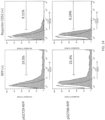
- CHO cells transfected with either pGZ729-RFP or pGZ700-RFP were analyzed for RFP and CD52 expression.
- both CHO cells transfected with pGZ729-RFP and CHO cells transfected with pGZ700-RFP robustly expressed RFP (top left and bottom left, respectively), whereas CHO cells transfected with pGZ729-RFP had modest expression of CD52 (top right), and CHO cells transfected with pGZ700-RFP expressed essentially no detectable CD52 (bottom right).
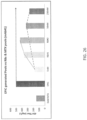
- the EPIC generated pool (which targeted early RFP expression) yielded a stable pool (EPIC pool) with greater RFP and CD52 reporter expression than traditional transfection/selection methodology alone (0nM pool). Results demonstrate a FLARE independent proof of principle supporting the claim that EPIC generated pools are more productive than traditional transfection/selection methodologies.
- EPIC was initially attempted using mAb#1 in which CHO cells were transfected and given 2 days to recover after which 0nM MTX selection was initiated to establish early expression.
- EPIC sorting yielded a slightly enriched population as shown by reporter expression compared to standard selection by day 8.
- the EPIC and standard selected pools were both used to establish unfed batch cultures to determine mAb#1 titers. As shown in FIGs. 25 and 26 , the EPIC generated pool yielded a titer of 502 mg/L, far outpacing any pools generated by either rapid bulking or MTX amplification, again using no MTX throughout the processes. Comparatively, the pool generated by standard selection yielded a titer of 150 mg/L, which was 3-fold lower than that of the EPIC generated pool.
- This EPIC generated pool was next used to generate clones again using FLARE as previously described (see, e.g., Cairns, V. et al. (2011) Utilization of Non-AUG Initiation Codons in a Flow Cytometric Method for Efficient Selection of Recombinant Cell Lines. Biotechnol Bioeng 108(11):2611-2622 ). Briefly, FLARE was used to isolate and single cell plate the top 3-5% of reporter-expressing cells from each pool using FACS. Expanded clones were then screened (taking top 30% positive expressers), again using FLARE, to identify only the top tier clones to expand for target polypeptide titer evaluation. As shown in FIG.
- top expressing EPIC generated clones achieved similar titers to those of the top expressing clones from traditional methods, e.g., using MTX-amplified (near 2.0 g/L).
- Results demonstrate that using EPIC to isolate early expression populations prior to selection is a viable alternative to traditional transfection and selection methodologies.
- EPIC offers a MTX independent methodology to achieve clone titers similar to those from traditional MTX methodologies resulting in potentially more robust and stable clones.
- EPIC is also amenable to MTX introduction during selection/expansion of EPIC generated populations which holds the potential to drive higher expression in these enriched populations.
- Table 2 Immediate repetitive sorting viability of different protein-expressing cells Construct % viability after 1 st sort % viability after immediate 2 nd sort sFcF#1 47 83 40 77 22 76 64 71 mAb #1 41 79 65 89 54 74 57 63 54 89 66 80 70 72 mAb #3 76 82 67 78 79 89 65 93 mAb #2 58 69 30 81 47 77
Landscapes
- Health & Medical Sciences (AREA)
- Life Sciences & Earth Sciences (AREA)
- Chemical & Material Sciences (AREA)
- Engineering & Computer Science (AREA)
- Genetics & Genomics (AREA)
- Biomedical Technology (AREA)
- Immunology (AREA)
- Organic Chemistry (AREA)
- Molecular Biology (AREA)
- Biotechnology (AREA)
- Biochemistry (AREA)
- General Health & Medical Sciences (AREA)
- Bioinformatics & Cheminformatics (AREA)
- Physics & Mathematics (AREA)
- General Engineering & Computer Science (AREA)
- Wood Science & Technology (AREA)
- Zoology (AREA)
- Microbiology (AREA)
- Biophysics (AREA)
- Hematology (AREA)
- Urology & Nephrology (AREA)
- General Physics & Mathematics (AREA)
- Pathology (AREA)
- Analytical Chemistry (AREA)
- Cell Biology (AREA)
- Medicinal Chemistry (AREA)
- Plant Pathology (AREA)
- Food Science & Technology (AREA)
- Crystallography & Structural Chemistry (AREA)
- Bioinformatics & Computational Biology (AREA)
- Dispersion Chemistry (AREA)
- Proteomics, Peptides & Aminoacids (AREA)
- Tropical Medicine & Parasitology (AREA)
- Toxicology (AREA)
- Micro-Organisms Or Cultivation Processes Thereof (AREA)
- Preparation Of Compounds By Using Micro-Organisms (AREA)
- Measuring Or Testing Involving Enzymes Or Micro-Organisms (AREA)
- Epoxy Compounds (AREA)
Applications Claiming Priority (3)
| Application Number | Priority Date | Filing Date | Title |
|---|---|---|---|
| US201562239515P | 2015-10-09 | 2015-10-09 | |
| EP16788602.7A EP3359665B1 (de) | 2015-10-09 | 2016-10-07 | Frühe post-transfektions isolierung von zellen (epic) zur herstellung biologischer materialien |
| PCT/US2016/055915 WO2017062722A2 (en) | 2015-10-09 | 2016-10-07 | Improved flare (flow cytometry attenuated reporter expression) technology for rapid bulk sorting |
Related Parent Applications (1)
| Application Number | Title | Priority Date | Filing Date |
|---|---|---|---|
| EP16788602.7A Division EP3359665B1 (de) | 2015-10-09 | 2016-10-07 | Frühe post-transfektions isolierung von zellen (epic) zur herstellung biologischer materialien |
Publications (2)
| Publication Number | Publication Date |
|---|---|
| EP4530350A2 true EP4530350A2 (de) | 2025-04-02 |
| EP4530350A3 EP4530350A3 (de) | 2025-06-25 |
Family
ID=57211576
Family Applications (4)
| Application Number | Title | Priority Date | Filing Date |
|---|---|---|---|
| EP24212463.4A Pending EP4530350A3 (de) | 2015-10-09 | 2016-10-07 | Verbesserte fackeltechnologie (durchflusszytometriegedämpfte reporterexpression) für schnelle massensortierung |
| EP16788603.5A Active EP3359666B1 (de) | 2015-10-09 | 2016-10-07 | Frühe post-transfektions isolierung von zellen (epic) zur herstellung biologischer materialien |
| EP16788602.7A Active EP3359665B1 (de) | 2015-10-09 | 2016-10-07 | Frühe post-transfektions isolierung von zellen (epic) zur herstellung biologischer materialien |
| EP25158011.4A Pending EP4567425A3 (de) | 2015-10-09 | 2016-10-07 | Frühe isolierung von zellen nach der transfektion (epic) zur herstellung biologischer stoffe |
Family Applications After (3)
| Application Number | Title | Priority Date | Filing Date |
|---|---|---|---|
| EP16788603.5A Active EP3359666B1 (de) | 2015-10-09 | 2016-10-07 | Frühe post-transfektions isolierung von zellen (epic) zur herstellung biologischer materialien |
| EP16788602.7A Active EP3359665B1 (de) | 2015-10-09 | 2016-10-07 | Frühe post-transfektions isolierung von zellen (epic) zur herstellung biologischer materialien |
| EP25158011.4A Pending EP4567425A3 (de) | 2015-10-09 | 2016-10-07 | Frühe isolierung von zellen nach der transfektion (epic) zur herstellung biologischer stoffe |
Country Status (12)
| Country | Link |
|---|---|
| US (4) | US11635363B2 (de) |
| EP (4) | EP4530350A3 (de) |
| CN (3) | CN108368505B (de) |
| AU (3) | AU2016335699A1 (de) |
| CA (2) | CA3001364A1 (de) |
| ES (2) | ES3008383T3 (de) |
| HU (2) | HUE071193T2 (de) |
| IL (4) | IL258537B2 (de) |
| MX (1) | MX2018004366A (de) |
| PL (2) | PL3359665T3 (de) |
| SG (3) | SG11201802823VA (de) |
| WO (2) | WO2017062722A2 (de) |
Families Citing this family (24)
| Publication number | Priority date | Publication date | Assignee | Title |
|---|---|---|---|---|
| US10577627B2 (en) | 2014-06-09 | 2020-03-03 | Voyager Therapeutics, Inc. | Chimeric capsids |
| CN107106689A (zh) | 2014-11-05 | 2017-08-29 | 沃雅戈治疗公司 | 用于治疗帕金森病的aadc多核苷酸 |
| IL292999A (en) | 2014-11-14 | 2022-07-01 | Voyager Therapeutics Inc | Compositions and methods of treating amyotrophic lateral sclerosis (als) |
| CN112410338A (zh) | 2014-11-14 | 2021-02-26 | 沃雅戈治疗公司 | 调节性多核苷酸 |
| WO2016094783A1 (en) | 2014-12-12 | 2016-06-16 | Voyager Therapeutics, Inc. | Compositions and methods for the production of scaav |
| IL258537B2 (en) | 2015-10-09 | 2024-05-01 | Genzyme Corp | Improved flare (flow cytometry attenuated reporter expression) technology for rapid bulk sorting |
| US11326182B2 (en) | 2016-04-29 | 2022-05-10 | Voyager Therapeutics, Inc. | Compositions for the treatment of disease |
| WO2017189964A2 (en) | 2016-04-29 | 2017-11-02 | Voyager Therapeutics, Inc. | Compositions for the treatment of disease |
| SG11201809699XA (en) | 2016-05-18 | 2018-12-28 | Voyager Therapeutics Inc | Modulatory polynucleotides |
| KR20220108216A (ko) | 2016-05-18 | 2022-08-02 | 보이저 테라퓨틱스, 인크. | 헌팅톤 질환을 치료하기 위한 조성물 및 방법 |
| CL2016001661A1 (es) * | 2016-06-29 | 2017-03-03 | Univ Chile | Promotor hibrido de ß-actina (de cricetulus griseus) y citomegalovirus (cmv), con región rica en dinucleótidos, citosina-guanina, vectores, líneas celulares, procedimiento para producir proteínas recombinantes. |
| CN110650673B (zh) | 2016-08-30 | 2024-04-09 | 加利福尼亚大学董事会 | 用于生物医学靶向和递送的方法以及用于实践该方法的装置和系统 |
| CN118497271A (zh) | 2016-10-07 | 2024-08-16 | 建新公司 | 用于生物制品生产的细胞的早期转染后分离(epic) |
| SG11201909870SA (en) | 2017-05-05 | 2019-11-28 | Voyager Therapeutics Inc | Compositions and methods of treating amyotrophic lateral sclerosis (als) |
| JP2020518259A (ja) | 2017-05-05 | 2020-06-25 | ボイジャー セラピューティクス インコーポレイテッドVoyager Therapeutics,Inc. | ハンチントン病治療組成物および方法 |
| JOP20190269A1 (ar) | 2017-06-15 | 2019-11-20 | Voyager Therapeutics Inc | بولي نوكليوتيدات aadc لعلاج مرض باركنسون |
| JP7229989B2 (ja) | 2017-07-17 | 2023-02-28 | ボイジャー セラピューティクス インコーポレイテッド | 軌道アレイガイドシステム |
| MX2020003042A (es) | 2017-09-29 | 2020-11-18 | Voyager Therapeutics Inc | Rescate del fenotipo neurológico central y periférico de la ataxia de friedreich mediante administración intravenosa. |
| EP4454654A3 (de) | 2017-10-16 | 2025-02-19 | Voyager Therapeutics, Inc. | Behandlung von amyotropher lateralsklerose (als) |
| US11434502B2 (en) | 2017-10-16 | 2022-09-06 | Voyager Therapeutics, Inc. | Treatment of amyotrophic lateral sclerosis (ALS) |
| EP3794126A1 (de) | 2018-05-15 | 2021-03-24 | Voyager Therapeutics, Inc. | Zusammensetzungen und verfahren zur behandlung von morbus parkinson |
| CN113383010B (zh) | 2018-09-28 | 2025-09-09 | 沃雅戈治疗公司 | 具有经工程化改造的启动子的共济蛋白表达构建体及其使用方法 |
| CN116615655A (zh) | 2020-11-19 | 2023-08-18 | 建新公司 | 流式细胞术减弱报告物表达(flare)多种报告物系统及其使用方法 |
| US20250281605A1 (en) | 2024-03-08 | 2025-09-11 | Sanofi | Antigenic Epstein Barr Virus Polypeptides |
Citations (11)
| Publication number | Priority date | Publication date | Assignee | Title |
|---|---|---|---|---|
| US4812405A (en) | 1986-02-18 | 1989-03-14 | Phillips Petroleum Company | Double auxotrophic mutants of Pichia pastoris and methods for preparation |
| US4818700A (en) | 1985-10-25 | 1989-04-04 | Phillips Petroleum Company | Pichia pastoris argininosuccinate lyase gene and uses thereof |
| US4929555A (en) | 1987-10-19 | 1990-05-29 | Phillips Petroleum Company | Pichia transformation |
| US5429746A (en) | 1994-02-22 | 1995-07-04 | Smith Kline Beecham Corporation | Antibody purification |
| WO1995027071A2 (en) | 1994-04-04 | 1995-10-12 | Board Of Regents, The University Of Texas System | An adenovirus supervector system |
| US5736383A (en) | 1996-08-26 | 1998-04-07 | Zymogenetics, Inc. | Preparation of Pichia methanolica auxotrophic mutants |
| US5888768A (en) | 1996-08-26 | 1999-03-30 | Zymogenetics, Inc. | Compositions and methods for producing heterologous polypeptides in Pichia methanolica |
| US6258559B1 (en) | 1999-03-22 | 2001-07-10 | Zymogenetics, Inc. | Method for producing proteins in transformed Pichia |
| WO2004009823A1 (en) | 2002-07-18 | 2004-01-29 | Lonza Biologics Plc. | Method of expressing recombinant protein in cho cells |
| US20060141577A1 (en) | 2004-11-08 | 2006-06-29 | Otte Arie P | Selection of host cells expressing protein at high levels |
| US20060172382A1 (en) | 2004-11-08 | 2006-08-03 | Chromagenics B.V. | Selection of host cells expressing protein at high levels |
Family Cites Families (35)
| Publication number | Priority date | Publication date | Assignee | Title |
|---|---|---|---|---|
| US4937190A (en) | 1987-10-15 | 1990-06-26 | Wisconsin Alumni Research Foundation | Translation enhancer |
| AU6067590A (en) | 1989-07-24 | 1991-02-22 | Seragen, Inc. | Prevention of internal initiation |
| US5648267A (en) | 1992-11-13 | 1997-07-15 | Idec Pharmaceuticals Corporation | Impaired dominant selectable marker sequence and intronic insertion strategies for enhancement of expression of gene product and expression vector systems comprising same |
| WO1994026087A2 (en) | 1993-05-14 | 1994-11-24 | Connor Kim C O | Recombinant protein production and insect cell culture and process |
| AU6667798A (en) | 1997-02-25 | 1998-09-09 | Q.B.I. Enterprises Ltd. | Ires sequences with high translational efficiency and expression vectors containing the sequence |
| US7001733B1 (en) * | 1998-05-12 | 2006-02-21 | Rigel Pharmaceuticals, Inc. | Methods and compositions for screening for modulations of IgE synthesis, secretion and switch rearrangement |
| GB9815909D0 (en) | 1998-07-21 | 1998-09-16 | Btg Int Ltd | Antibody preparation |
| DK1196566T3 (da) * | 1999-07-12 | 2006-06-06 | Genentech Inc | Ekspressionsvektorer og -metoder |
| US20050005310A1 (en) * | 1999-07-12 | 2005-01-06 | Genentech, Inc. | Expression vectors and methods |
| WO2001057212A1 (en) | 2000-02-02 | 2001-08-09 | Iconix Pharmaceuticals, Inc. | Rapid, parallel identification of cell lines |
| WO2002070710A1 (en) | 2001-03-01 | 2002-09-12 | University Of California | Method to identify ires elements |
| DE10143237A1 (de) | 2001-09-04 | 2003-03-20 | Icon Genetics Ag | Herstellung künstlicher interner ribosomaler Eingangsstellenelemente (Ires-Elemente) |
| DE10143238A1 (de) | 2001-09-04 | 2003-03-20 | Icon Genetics Ag | Identifizierung eukaryotischer interner Ribosomen-Eingangsstellen (IRES)-Elemente |
| AU2003243273A1 (en) | 2002-05-22 | 2003-12-12 | Biogen Idec Ma Inc. | Detection of secreted polypeptides |
| US7119187B2 (en) | 2002-07-09 | 2006-10-10 | National Health Research Institutes | Internal ribosome entry site of the labial gene for protein expression |
| EP1540008A4 (de) * | 2002-07-19 | 2006-04-12 | Diversa Corp | FLUORESZENZPROTEINE, DIESE CODIERENDE NUKLEINSûUREN SOWIE VERFAHREN ZU DEREN HERSTELLUNG UND VERWENDUNG |
| US7384744B2 (en) * | 2002-11-29 | 2008-06-10 | Boehringer Ingelheim Pharma Gmbh & Co., Kg | Expression vector, methods for the production of heterologous gene products and for the selection of recombinant cells producing high levels of such products |
| US7344886B2 (en) | 2002-11-29 | 2008-03-18 | Boehringer Ingelheim Pharma Gmbh & Co., Kg | Neomycin-phosphotransferase-genes and methods for the selection of recombinant cells producing high levels of a desired gene product |
| WO2004060910A2 (en) | 2002-12-16 | 2004-07-22 | Wayne State University | Bioactive peptides and unique ires elements from myelin proteolipid protein plp/dm20 |
| BRPI0411843B8 (pt) | 2003-06-24 | 2021-05-25 | Genzyme Corp | ácido nucleico compreendendo um promotor de beta-actina, vetor e método de produzir uma proteína |
| US7776584B2 (en) | 2003-08-01 | 2010-08-17 | Genetix Limited | Animal cell colony picking apparatus and method |
| EP1749538A4 (de) | 2004-03-31 | 2009-11-11 | Kirin Pharma Kk | Verfahren zur auslösung der differenzierung von regulatorischen t-zellen und ihrer proliferation mit gpi-anker-protein-agonisten und medizinische zusammensetzung dafür |
| US7078179B2 (en) | 2004-05-04 | 2006-07-18 | Newlink Genetics Corporation | Selectable gene marker system based on expression of N-acetyllactosaminide 3-α galactosyltransferase |
| US20060188964A1 (en) * | 2004-07-28 | 2006-08-24 | Filippo Mancia | Processing for producing and crystallizing G-protein coupled receptors |
| CA2588936A1 (en) | 2004-12-14 | 2006-06-22 | F. Hoffmann-La Roche Ag | Method for improved selection of rnai transfectants |
| WO2007118208A2 (en) | 2006-04-10 | 2007-10-18 | The Regents Of The University Of California | Systems for collection of single cells and colonies |
| PT2064337E (pt) | 2006-09-20 | 2012-07-26 | Genzyme Corp | Sistema à base de facs e proteína repórter para o desenvolvimento de elevado desempenho de proteínas terapêuticas |
| CN101778637B (zh) | 2007-03-05 | 2013-05-29 | 新南创新私人有限公司 | 检测和调节肿瘤细胞对抗有丝分裂剂的敏感性的方法 |
| JP6039552B2 (ja) * | 2010-07-01 | 2016-12-07 | グラクソ グループ リミテッドGlaxo Group Limited | 高産生細胞株を選択するための改良された方法 |
| WO2013151663A1 (en) * | 2012-04-02 | 2013-10-10 | modeRNA Therapeutics | Modified polynucleotides for the production of membrane proteins |
| EP2700713B1 (de) * | 2012-08-21 | 2016-07-13 | Miltenyi Biotec GmbH | Untersuchungs- und Anreicherungssystem für die Proteinexpression in eukaryotischen Zellen unter Verwendung einer trizistronischen Expressionskassette |
| EP2970956A1 (de) | 2013-03-11 | 2016-01-20 | Novartis AG | Verfahren zum screening von zellklonen |
| EP3027646B1 (de) * | 2013-07-31 | 2018-06-27 | Novartis AG | Neuartige auswahlvektoren sowie verfahren zur auswahl eukaryotischer wirtszellen |
| IL258537B2 (en) | 2015-10-09 | 2024-05-01 | Genzyme Corp | Improved flare (flow cytometry attenuated reporter expression) technology for rapid bulk sorting |
| CN118497271A (zh) | 2016-10-07 | 2024-08-16 | 建新公司 | 用于生物制品生产的细胞的早期转染后分离(epic) |
-
2016
- 2016-10-07 IL IL258537A patent/IL258537B2/en unknown
- 2016-10-07 SG SG11201802823VA patent/SG11201802823VA/en unknown
- 2016-10-07 WO PCT/US2016/055915 patent/WO2017062722A2/en not_active Ceased
- 2016-10-07 ES ES16788602T patent/ES3008383T3/es active Active
- 2016-10-07 ES ES16788603T patent/ES3024209T3/es active Active
- 2016-10-07 EP EP24212463.4A patent/EP4530350A3/de active Pending
- 2016-10-07 SG SG10202111233SA patent/SG10202111233SA/en unknown
- 2016-10-07 CN CN201680072391.5A patent/CN108368505B/zh active Active
- 2016-10-07 IL IL309289A patent/IL309289A/en unknown
- 2016-10-07 US US15/288,036 patent/US11635363B2/en active Active
- 2016-10-07 HU HUE16788603A patent/HUE071193T2/hu unknown
- 2016-10-07 CA CA3001364A patent/CA3001364A1/en active Pending
- 2016-10-07 EP EP16788603.5A patent/EP3359666B1/de active Active
- 2016-10-07 EP EP16788602.7A patent/EP3359665B1/de active Active
- 2016-10-07 HU HUE16788602A patent/HUE069884T2/hu unknown
- 2016-10-07 SG SG11201802829YA patent/SG11201802829YA/en unknown
- 2016-10-07 IL IL297805A patent/IL297805A/en unknown
- 2016-10-07 EP EP25158011.4A patent/EP4567425A3/de active Pending
- 2016-10-07 IL IL258538A patent/IL258538B2/en unknown
- 2016-10-07 CA CA3001238A patent/CA3001238C/en active Active
- 2016-10-07 MX MX2018004366A patent/MX2018004366A/es unknown
- 2016-10-07 WO PCT/US2016/055918 patent/WO2017062724A1/en not_active Ceased
- 2016-10-07 AU AU2016335699A patent/AU2016335699A1/en not_active Abandoned
- 2016-10-07 PL PL16788602.7T patent/PL3359665T3/pl unknown
- 2016-10-07 PL PL16788603.5T patent/PL3359666T3/pl unknown
- 2016-10-07 CN CN202310124801.8A patent/CN116660127A/zh active Pending
- 2016-10-07 CN CN201680071815.6A patent/CN108368504B/zh active Active
- 2016-10-07 US US15/288,050 patent/US10317329B2/en active Active
-
2019
- 2019-04-23 US US16/392,174 patent/US20200018682A1/en active Pending
-
2022
- 2022-11-25 AU AU2022275507A patent/AU2022275507B2/en active Active
-
2023
- 2023-03-10 US US18/181,803 patent/US12590880B2/en active Active
-
2025
- 2025-09-04 AU AU2025226783A patent/AU2025226783A1/en active Pending
Patent Citations (12)
| Publication number | Priority date | Publication date | Assignee | Title |
|---|---|---|---|---|
| US4818700A (en) | 1985-10-25 | 1989-04-04 | Phillips Petroleum Company | Pichia pastoris argininosuccinate lyase gene and uses thereof |
| US4812405A (en) | 1986-02-18 | 1989-03-14 | Phillips Petroleum Company | Double auxotrophic mutants of Pichia pastoris and methods for preparation |
| US4929555A (en) | 1987-10-19 | 1990-05-29 | Phillips Petroleum Company | Pichia transformation |
| US5429746A (en) | 1994-02-22 | 1995-07-04 | Smith Kline Beecham Corporation | Antibody purification |
| WO1995027071A2 (en) | 1994-04-04 | 1995-10-12 | Board Of Regents, The University Of Texas System | An adenovirus supervector system |
| US5736383A (en) | 1996-08-26 | 1998-04-07 | Zymogenetics, Inc. | Preparation of Pichia methanolica auxotrophic mutants |
| US5888768A (en) | 1996-08-26 | 1999-03-30 | Zymogenetics, Inc. | Compositions and methods for producing heterologous polypeptides in Pichia methanolica |
| US5955349A (en) | 1996-08-26 | 1999-09-21 | Zymogenetics, Inc. | Compositions and methods for producing heterologous polypeptides in Pichia methanolica |
| US6258559B1 (en) | 1999-03-22 | 2001-07-10 | Zymogenetics, Inc. | Method for producing proteins in transformed Pichia |
| WO2004009823A1 (en) | 2002-07-18 | 2004-01-29 | Lonza Biologics Plc. | Method of expressing recombinant protein in cho cells |
| US20060141577A1 (en) | 2004-11-08 | 2006-06-29 | Otte Arie P | Selection of host cells expressing protein at high levels |
| US20060172382A1 (en) | 2004-11-08 | 2006-08-03 | Chromagenics B.V. | Selection of host cells expressing protein at high levels |
Non-Patent Citations (19)
| Title |
|---|
| "CURRENT PROTOCOLS IN MOLECULAR BIOLOGY", 1987, JOHN WILEY & SONS, INC. |
| "Molecular Probes® Handbook", 2010 |
| BAILEY, BIOTECH. BIOENG., vol. 80, no. 6, 2002, pages 670 - 676 |
| BREZINSKY ET AL., J. IMUMUNOL. METHODS, vol. 277, 2003, pages 141 - 155 |
| CAIRNS, V. ET AL.: "Utilization of Non-AUG Initiation Codons in a Flow Cytometric Method for Efficient Selection of Recombinant Cell Lines", BIOTECHNOL BIOENG, vol. 108, no. 11, 2011, pages 2611 - 2622, XP055008818, DOI: 10.1002/bit.23219 |
| CARROLLAL-RUBEAI, EXPT. OPIN. BIOL. THERAPY, vol. 4, 2004, pages 1821 - 1829 |
| DRAPEAU, CYTOTECHNOLOGY, vol. 15, 1994, pages 103 - 109 |
| KEEN ET AL., CYTOTECHNOLOGY, vol. 17, 1995, pages 153 - 163 |
| KLUCHER ET AL., NUCLEIC ACIDS RES., vol. 25, no. 23, 1997, pages 4853 - 4860 |
| KOZAK, J CELL BIOL, vol. 115, no. 4, 1991, pages 887 - 903 |
| KOZAK, J. CELL BIOL., vol. 115, no. 4, 1991, pages 887 - 903 |
| KOZAK, MOL. CELL. BIOL., vol. 9, no. 11, 1989, pages 5073 - 5080 |
| MEHDI ET AL., GENE, vol. 91, 1990, pages 173 - 178 |
| MENG, GENE, vol. 242, 2000, pages 201 - 207 |
| MIZUSHIMANAGATA, NUCLEIC ACIDS RES., vol. 18, no. 17, 1990, pages 5322 |
| MR GREENJ. SAMBROOKHARLOW: "Molecular Cloning: A Laboratory Manual", 2013, COLD SPRING HARBOR LABORATORY |
| SCHARFENBERG, K. ET AL.: "Animal Cell Technology: Developments Towards the 21st Century", 1995, KLUWER ACADEMIC PUBLISHERS, pages: 619 - 623 |
| YOSHIKAWA ET AL., BIOTECHNOL. BIOENG., vol. 71, no. 4, 2001, pages 266 - 273 |
| ZEYDA ET AL., BIOTECHNOL. PROG., vol. 15, 1999, pages 953 - 957 |
Also Published As
Similar Documents
| Publication | Publication Date | Title |
|---|---|---|
| US12590880B2 (en) | Flare (flow cytometry attenuated reporter expression) technology for rapid bulk sorting | |
| AU2024201853A1 (en) | Early post-transfection isolation of cells (EPIC) for biologics production | |
| HK40123121A (en) | Improved flare (flow cytometry attenuated reporter expression) technology for rapid bulk sorting | |
| HK1259493B (en) | Improved flare (flow cytometry attenuated reporter expression) technology for rapid bulk sorting | |
| HK40012831A (en) | Early post-transfection isolation of cells (epic) for biologics production | |
| HK40012831B (en) | Early post-transfection isolation of cells (epic) for biologics production |
Legal Events
| Date | Code | Title | Description |
|---|---|---|---|
| PUAI | Public reference made under article 153(3) epc to a published international application that has entered the european phase |
Free format text: ORIGINAL CODE: 0009012 |
|
| STAA | Information on the status of an ep patent application or granted ep patent |
Free format text: STATUS: THE APPLICATION HAS BEEN PUBLISHED |
|
| AC | Divisional application: reference to earlier application |
Ref document number: 3359665 Country of ref document: EP Kind code of ref document: P |
|
| AK | Designated contracting states |
Kind code of ref document: A2 Designated state(s): AL AT BE BG CH CY CZ DE DK EE ES FI FR GB GR HR HU IE IS IT LI LT LU LV MC MK MT NL NO PL PT RO RS SE SI SK SM TR |
|
| PUAL | Search report despatched |
Free format text: ORIGINAL CODE: 0009013 |
|
| AK | Designated contracting states |
Kind code of ref document: A3 Designated state(s): AL AT BE BG CH CY CZ DE DK EE ES FI FR GB GR HR HU IE IS IT LI LT LU LV MC MK MT NL NO PL PT RO RS SE SI SK SM TR |
|
| RIC1 | Information provided on ipc code assigned before grant |
Ipc: G01N 33/50 20060101ALI20250520BHEP Ipc: C07K 16/00 20060101ALI20250520BHEP Ipc: G01N 33/537 20060101ALI20250520BHEP Ipc: C12N 15/10 20060101AFI20250520BHEP |
|
| REG | Reference to a national code |
Ref country code: HK Ref legal event code: DE Ref document number: 40123121 Country of ref document: HK |
|
| STAA | Information on the status of an ep patent application or granted ep patent |
Free format text: STATUS: REQUEST FOR EXAMINATION WAS MADE |
|
| 17P | Request for examination filed |
Effective date: 20251223 |