EP4528259A1 - Biosensor und herstellungsverfahren dafür - Google Patents
Biosensor und herstellungsverfahren dafür Download PDFInfo
- Publication number
- EP4528259A1 EP4528259A1 EP23807010.6A EP23807010A EP4528259A1 EP 4528259 A1 EP4528259 A1 EP 4528259A1 EP 23807010 A EP23807010 A EP 23807010A EP 4528259 A1 EP4528259 A1 EP 4528259A1
- Authority
- EP
- European Patent Office
- Prior art keywords
- engraved
- biosensor
- line
- engraved line
- sensor
- Prior art date
- Legal status (The legal status is an assumption and is not a legal conclusion. Google has not performed a legal analysis and makes no representation as to the accuracy of the status listed.)
- Pending
Links
Images










Classifications
-
- G—PHYSICS
- G01—MEASURING; TESTING
- G01N—INVESTIGATING OR ANALYSING MATERIALS BY DETERMINING THEIR CHEMICAL OR PHYSICAL PROPERTIES
- G01N27/00—Investigating or analysing materials by the use of electric, electrochemical, or magnetic means
- G01N27/26—Investigating or analysing materials by the use of electric, electrochemical, or magnetic means by investigating electrochemical variables; by using electrolysis or electrophoresis
- G01N27/28—Electrolytic cell components
- G01N27/30—Electrodes, e.g. test electrodes; Half-cells
- G01N27/327—Biochemical electrodes, e.g. electrical or mechanical details for in vitro measurements
-
- A—HUMAN NECESSITIES
- A61—MEDICAL OR VETERINARY SCIENCE; HYGIENE
- A61B—DIAGNOSIS; SURGERY; IDENTIFICATION
- A61B5/00—Measuring for diagnostic purposes; Identification of persons
- A61B5/145—Measuring characteristics of blood in vivo, e.g. gas concentration or pH-value ; Measuring characteristics of body fluids or tissues, e.g. interstitial fluid or cerebral tissue
- A61B5/14532—Measuring characteristics of blood in vivo, e.g. gas concentration or pH-value ; Measuring characteristics of body fluids or tissues, e.g. interstitial fluid or cerebral tissue for measuring glucose, e.g. by tissue impedance measurement
-
- C—CHEMISTRY; METALLURGY
- C12—BIOCHEMISTRY; BEER; SPIRITS; WINE; VINEGAR; MICROBIOLOGY; ENZYMOLOGY; MUTATION OR GENETIC ENGINEERING
- C12Q—MEASURING OR TESTING PROCESSES INVOLVING ENZYMES, NUCLEIC ACIDS OR MICROORGANISMS; COMPOSITIONS OR TEST PAPERS THEREFOR; PROCESSES OF PREPARING SUCH COMPOSITIONS; CONDITION-RESPONSIVE CONTROL IN MICROBIOLOGICAL OR ENZYMOLOGICAL PROCESSES
- C12Q1/00—Measuring or testing processes involving enzymes, nucleic acids or microorganisms; Compositions therefor; Processes of preparing such compositions
- C12Q1/001—Enzyme electrodes
- C12Q1/005—Enzyme electrodes involving specific analytes or enzymes
- C12Q1/006—Enzyme electrodes involving specific analytes or enzymes for glucose
-
- G—PHYSICS
- G01—MEASURING; TESTING
- G01N—INVESTIGATING OR ANALYSING MATERIALS BY DETERMINING THEIR CHEMICAL OR PHYSICAL PROPERTIES
- G01N27/00—Investigating or analysing materials by the use of electric, electrochemical, or magnetic means
- G01N27/26—Investigating or analysing materials by the use of electric, electrochemical, or magnetic means by investigating electrochemical variables; by using electrolysis or electrophoresis
-
- G—PHYSICS
- G01—MEASURING; TESTING
- G01N—INVESTIGATING OR ANALYSING MATERIALS BY DETERMINING THEIR CHEMICAL OR PHYSICAL PROPERTIES
- G01N27/00—Investigating or analysing materials by the use of electric, electrochemical, or magnetic means
- G01N27/26—Investigating or analysing materials by the use of electric, electrochemical, or magnetic means by investigating electrochemical variables; by using electrolysis or electrophoresis
- G01N27/28—Electrolytic cell components
- G01N27/30—Electrodes, e.g. test electrodes; Half-cells
- G01N27/327—Biochemical electrodes, e.g. electrical or mechanical details for in vitro measurements
- G01N27/3271—Amperometric enzyme electrodes for analytes in body fluids, e.g. glucose in blood
- G01N27/3272—Test elements therefor, i.e. disposable laminated substrates with electrodes, reagent and channels
-
- G—PHYSICS
- G01—MEASURING; TESTING
- G01N—INVESTIGATING OR ANALYSING MATERIALS BY DETERMINING THEIR CHEMICAL OR PHYSICAL PROPERTIES
- G01N27/00—Investigating or analysing materials by the use of electric, electrochemical, or magnetic means
- G01N27/26—Investigating or analysing materials by the use of electric, electrochemical, or magnetic means by investigating electrochemical variables; by using electrolysis or electrophoresis
- G01N27/28—Electrolytic cell components
- G01N27/30—Electrodes, e.g. test electrodes; Half-cells
- G01N27/327—Biochemical electrodes, e.g. electrical or mechanical details for in vitro measurements
- G01N27/3271—Amperometric enzyme electrodes for analytes in body fluids, e.g. glucose in blood
- G01N27/3273—Devices therefor, e.g. test element readers, circuitry
-
- G—PHYSICS
- G01—MEASURING; TESTING
- G01N—INVESTIGATING OR ANALYSING MATERIALS BY DETERMINING THEIR CHEMICAL OR PHYSICAL PROPERTIES
- G01N27/00—Investigating or analysing materials by the use of electric, electrochemical, or magnetic means
- G01N27/26—Investigating or analysing materials by the use of electric, electrochemical, or magnetic means by investigating electrochemical variables; by using electrolysis or electrophoresis
- G01N27/416—Systems
- G01N27/4163—Systems checking the operation of, or calibrating, the measuring apparatus
-
- G—PHYSICS
- G01—MEASURING; TESTING
- G01N—INVESTIGATING OR ANALYSING MATERIALS BY DETERMINING THEIR CHEMICAL OR PHYSICAL PROPERTIES
- G01N33/00—Investigating or analysing materials by specific methods not covered by groups G01N1/00 - G01N31/00
- G01N33/48—Biological material, e.g. blood, urine; Haemocytometers
- G01N33/50—Chemical analysis of biological material, e.g. blood, urine; Testing involving biospecific ligand binding methods; Immunological testing
- G01N33/53—Immunoassay; Biospecific binding assay; Materials therefor
- G01N33/543—Immunoassay; Biospecific binding assay; Materials therefor with an insoluble carrier for immobilising immunochemicals
- G01N33/54366—Apparatus specially adapted for solid-phase testing
- G01N33/54373—Apparatus specially adapted for solid-phase testing involving physiochemical end-point determination, e.g. wave-guides, FETS, gratings
- G01N33/5438—Electrodes
-
- G—PHYSICS
- G01—MEASURING; TESTING
- G01N—INVESTIGATING OR ANALYSING MATERIALS BY DETERMINING THEIR CHEMICAL OR PHYSICAL PROPERTIES
- G01N33/00—Investigating or analysing materials by specific methods not covered by groups G01N1/00 - G01N31/00
- G01N33/48—Biological material, e.g. blood, urine; Haemocytometers
- G01N33/50—Chemical analysis of biological material, e.g. blood, urine; Testing involving biospecific ligand binding methods; Immunological testing
- G01N33/66—Chemical analysis of biological material, e.g. blood, urine; Testing involving biospecific ligand binding methods; Immunological testing involving blood sugars, e.g. galactose
Definitions
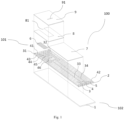
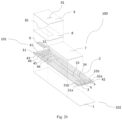
- FIG. 1 A method for manufacturing the biosensor shown in Fig. 1 is illustrated by taking Figs. 3 , 4 and 5 as an example.
- the enzyme is selected from one or more of glucose oxidase, glucose dehydrogenase, lactate oxidase, lactate dehydrogenase, urate oxidase, cholesterol oxidase or D-3-hydroxybutyrate oxidase, etc.;
- the electronic mediator is selected from one or more of ruthenium compounds, potassium ferricyanide, ferrocene, etc.;
- the buffer system is any one or more of sodium succinate, sodium citrate, piperazine buffer, propanesulfonic acid, PBS buffer or sodium fumarate;
- the disintegrant is any one or more of crosslinked PVP, sodium carboxymethyl starch, or crosslinked CCNa;
- the surfactant is any one or more of anionic surfactant, cationic surfactant, diatomic surfactant, or nonionic surfactant;
- the stabilizer is one or more of maltitol, trehalose, BSA, or protein protective agent.
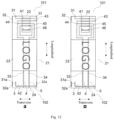
- Figs. 6, 6-1 and 6-2 will be used below to specifically introduce how the cutting assembly process affects the finished product effect of the sensor and how to achieve identification and removal of scrapped or defective sensors after cutting assembly when preparing the biosensor in Figs. 1 and 2 .
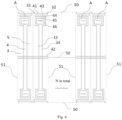
- Fig. 6 is a schematic diagram of the positions of two adjacent sensors waiting to be cut (in this example the color layer 7 represents a company logo with characters LOGO, and for ease of illustration, the reagent layer 6 is not embodied in the illustration for the time being, as is also the case in Fig. 6-1 and Fig. 6-2 ), and the cutter divides them into two independent biosensors along the preset cutting line 51.
- the color layer 7 represents a company logo with characters LOGO, and for ease of illustration, the reagent layer 6 is not embodied in the illustration for the time being, as is also the case in Fig. 6-1 and Fig. 6-2 ), and the cutter divides them into two independent biosensors along the preset cutting line 51.
- the quality inspector can consider that the obtained sensor is a complete finished sensor, at which point the electrode system of the finished sensor is cut along the cutting line 51 without cutting deviation, then the electrodes are not damaged, and the test performance of the sensor obtained by cutting is not affected; at the same time, the LOGO on the appearance thereof and the sample injection groove at the sample contacting end are both located close to the central axis of the finished sensor.
- the finished sensor has a relatively beautiful appearance and a visually comfortable user experience.
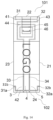
- the cutter may cut at a preset position that deviates from the cutting line 51, and the appearance of the actually obtained sensor may change, and the quality inspector will determine the relative positions of the engraved line 42 for identifying cutting deviation and the side edges 21, 23 of the sensor to determine whether the cutting quality of the sensor obtained by cutting is good or poor.
- the two endpoints of the engraved line 42 for identifying cutting deviation can be seen on the side of the contact end of the sensor, as shown in Fig.
- Fig. 6-2 only shows the case where the cutting line deviates from one side, and the case where the cutting line deviates from the other side is similar, which will not be described in this example.
- the engraved lines covered under the interlayer and the color layer in Figs. 6-1 and 6-2 are represented by dotted lines, while the exposed engraved lines that can be observed by the quality inspector are represented by solid lines. From the comparative analysis of the cutting situations in Figs. 6-1 and 6-2 , it can be seen that by adding the engraved line for identifying cutting deviation, which does not intersect the side edges of the sensor, at the contact end of the sensor, it can help the quality inspector to carry out QC screening on the biosensors after cutting assembly to ensure the quality of the product.
- the obtained sensor when the endpoints of a complete engraved line for identifying cutting deviation can be seen on both sides of the contact end of the sensor after cutting, the obtained sensor can be considered to be an complete finished product; and when the endpoints of the engraved line for identifying cutting deviation can be seen on one side only, the sensor at this point is a scrapped or defective product, which should be removed by the quality inspector in time to prevent the sensor from flowing into the next production process.
- the scrapped and defective products after cutting can be simply and efficiently screened out through such method, thus effectively ensuring the stability and effectiveness of the delivered products.
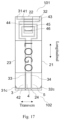
- Fig. 6-3 shows another design method of this example.
- Transverse engraved lines 42a and 42b are disposed in segments at the contact end of the biosensor.
- the engraved lines 42a and 42b serve as the engraved lines for identifying cutting deviation in the present design
- the engraved line 42a is located on the electrode 3 or in the region that the electrode 3 extends towards the contact end
- the engraved line 42b is located on the electrode 5 or in the region that the electrode 5 extends towards the contact end.
- the engraved lines 42a and 42b are observable, or at least two ends of the engraved lines are observable, for example, the engraved lines 42a and 42b are not wholly covered by the upper cover 9 or the color layer 7.
- the left end of the engraved line 42a does not intersect the longitudinal side edge 23 of the sensor, and the right end of the engraved line 42b does not intersect the longitudinal side edge 21 of the sensor.
- the engraved lines 42a and 42b are disconnected, and neither of the two ends thereof intersects the side edges of the sensor.
- the quality inspector determines whether the sensor meets the quality requirements by observing the intersection of the engraved lines 42a and 42b with the side edges of the sensor, as well as the number of endpoints of the engraved line on a side of the sensor.
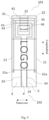
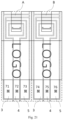
- the biosensor 100 in the second aspect described in the present invention is stated by taking Fig. 7 as an example.
- the electrode system of the biosensor 100 is enclosed by insulated engraved lines formed by carrying out laser etching on the conductive layer covering the insulating substrate to remove some conductive layer.
- the sensor also includes a sample contacting end contacting a sample and a contact end contacting an analyzer.
- a fluid channel for entrance of the sample is composed of an interlayer with an open groove and an upper cover covering the interlayer and having an air hole, and part or all of the electrodes in the fluid channel are covered with a reagent layer.
- the preparation process of biosensor 100 is basically consistent with that described in Example 1.
- the engraved lines covered under the color layer and the interlayer are represented by dotted lines
- the exposed engraved lines that can be seen are represented by solid lines.
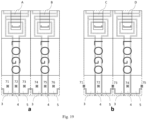
- Vertical engraved lines 31a and 32a for identifying cutting deviation in the longitudinal direction are disposed on both sides of the sensor close to the side edges 23 and 21 of the sensor, the engraved lines 31a and 32a do not intersect any of the engraved lines at the sample contacting end and contact end of the sensor, and the engraved lines 31a and 32a are not covered at all or in part and are observable.
- a in Fig. 7 it is a sensor obtained from cutting in strict accordance with cutting standards, complete cutting lines 31a and 32a can be seen on both sides of the sensor, at which point the cutting does not result in damage to any electrodes, the sample injection port and the LOGO on the color layer are also located close to the central axis of the sensor, and the sensor at this point has better performance and the most acceptable and comfortable appearance for the user.
- Appropriate and reasonable deviation exists in the cutting process, for example, two cases where the cutter cuts with offsets slightly to the left and slightly to the right, specifically as shown in b in Fig. 7 and in c in Fig. 7 , and the standards for determining a qualified sensor product are still met in the states of b in Fig.
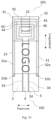
- FIG. 8 it is front schematic diagrams of two different sensors obtained after the semi-finished large card is subjected to the cutting process, wherein the engraved lines covered under the color layer and the interlayer are indicated by dotted lines, and the exposed engraved lines that can be seen are indicated by solid lines.
- a in Fig. 8 slight deviation exceeding the preset value occurs in the cutting process, so that the edge line 21 of the sensor obtained after cutting exactly passes through the engraved line 32a, and the engraved line 32a can be seen at positions next to both side edges of the sensor, but is incomplete and imperfect.
- the engraved lines 31a and 32a for identifying cutting deviation are located on the same side of the sensor but do not appear on the other side, which results in that the LOGO on the color layer of the sensor and the sample injection groove at the sample injection end have completely deviated from the preset range of the central axis of the sensor, meanwhile the electrode at the sample contacting end is also damaged, and the sensor at this point may be considered to be a scrapped sensor.
- the relative positions of the engraved lines 31a, 32a and the side edges 21, 23 of the sensor are more intuitive and easier to identify and interpret than the relative positions of the endpoints of the engraved line 42 for identifying cutting deviation and the side edges 21, 23 of the sensor in Example 1, so that the quality inspector can identify the positions more simply and quickly, reducing the reading errors that may be caused by relying only on interpreting the positions of the endpoints of the engraved line 42, and improving the efficiency and accuracy of the production process.
Landscapes
- Health & Medical Sciences (AREA)
- Life Sciences & Earth Sciences (AREA)
- Chemical & Material Sciences (AREA)
- Immunology (AREA)
- Molecular Biology (AREA)
- Physics & Mathematics (AREA)
- General Health & Medical Sciences (AREA)
- Pathology (AREA)
- Biochemistry (AREA)
- Analytical Chemistry (AREA)
- General Physics & Mathematics (AREA)
- Hematology (AREA)
- Engineering & Computer Science (AREA)
- Electrochemistry (AREA)
- Chemical Kinetics & Catalysis (AREA)
- Biomedical Technology (AREA)
- Urology & Nephrology (AREA)
- Biophysics (AREA)
- Biotechnology (AREA)
- Microbiology (AREA)
- Medicinal Chemistry (AREA)
- Food Science & Technology (AREA)
- Cell Biology (AREA)
- Organic Chemistry (AREA)
- Diabetes (AREA)
- Emergency Medicine (AREA)
- Proteomics, Peptides & Aminoacids (AREA)
- Wood Science & Technology (AREA)
- Zoology (AREA)
- Bioinformatics & Cheminformatics (AREA)
- General Engineering & Computer Science (AREA)
- Genetics & Genomics (AREA)
- Optics & Photonics (AREA)
- Heart & Thoracic Surgery (AREA)
- Medical Informatics (AREA)
- Surgery (AREA)
- Animal Behavior & Ethology (AREA)
- Public Health (AREA)
- Veterinary Medicine (AREA)
- Investigating Or Analysing Biological Materials (AREA)
Applications Claiming Priority (2)
| Application Number | Priority Date | Filing Date | Title |
|---|---|---|---|
| CN202210547593 | 2022-05-18 | ||
| PCT/CN2023/094908 WO2023222059A1 (zh) | 2022-05-18 | 2023-05-17 | 一种生物传感器及其制作方法 |
Publications (2)
| Publication Number | Publication Date |
|---|---|
| EP4528259A1 true EP4528259A1 (de) | 2025-03-26 |
| EP4528259A4 EP4528259A4 (de) | 2026-04-22 |
Family
ID=88778077
Family Applications (4)
| Application Number | Title | Priority Date | Filing Date |
|---|---|---|---|
| EP23807003.1A Pending EP4528258A4 (de) | 2022-05-18 | 2023-05-17 | Biosensor und herstellungsverfahren dafür |
| EP23807010.6A Pending EP4528259A4 (de) | 2022-05-18 | 2023-05-17 | Biosensor und herstellungsverfahren dafür |
| EP23807029.6A Pending EP4528260A4 (de) | 2022-05-18 | 2023-05-18 | Biosensor und verfahren zur herstellung des biosensors |
| EP23807050.2A Pending EP4528261A4 (de) | 2022-05-18 | 2023-05-18 | Biosensor und herstellungsverfahren dafür |
Family Applications Before (1)
| Application Number | Title | Priority Date | Filing Date |
|---|---|---|---|
| EP23807003.1A Pending EP4528258A4 (de) | 2022-05-18 | 2023-05-17 | Biosensor und herstellungsverfahren dafür |
Family Applications After (2)
| Application Number | Title | Priority Date | Filing Date |
|---|---|---|---|
| EP23807029.6A Pending EP4528260A4 (de) | 2022-05-18 | 2023-05-18 | Biosensor und verfahren zur herstellung des biosensors |
| EP23807050.2A Pending EP4528261A4 (de) | 2022-05-18 | 2023-05-18 | Biosensor und herstellungsverfahren dafür |
Country Status (4)
| Country | Link |
|---|---|
| US (4) | US20250258126A1 (de) |
| EP (4) | EP4528258A4 (de) |
| CN (3) | CN117092183A (de) |
| WO (4) | WO2023222052A1 (de) |
Families Citing this family (1)
| Publication number | Priority date | Publication date | Assignee | Title |
|---|---|---|---|---|
| CN119534570A (zh) * | 2024-11-20 | 2025-02-28 | 广东乐心医疗电子股份有限公司 | 酶液和用于血糖测定的电化学生物传感器及其制备方法 |
Family Cites Families (23)
| Publication number | Priority date | Publication date | Assignee | Title |
|---|---|---|---|---|
| JP2868365B2 (ja) * | 1992-05-28 | 1999-03-10 | アルプス電気株式会社 | サーマルヘッドにおけるパターンずれ検出構造 |
| JP3239806B2 (ja) * | 1997-06-26 | 2001-12-17 | 株式会社村田製作所 | 電子部品の製造方法 |
| CN100347537C (zh) * | 1999-11-15 | 2007-11-07 | 松下电器产业株式会社 | 生物传感器 |
| US20030175946A1 (en) * | 2001-04-16 | 2003-09-18 | Hiroyuki Tokunaga | Biosensor |
| JP2004226278A (ja) * | 2003-01-24 | 2004-08-12 | Matsushita Electric Ind Co Ltd | バイオセンサ |
| JP4879979B2 (ja) * | 2005-06-14 | 2012-02-22 | エフ ホフマン−ラ ロッシュ アクチェン ゲゼルシャフト | 同一平面電気化学センサー上の短絡回路不良の影響を制御する方法およびシステム |
| AU2006279579A1 (en) * | 2005-08-16 | 2007-02-22 | Home Diagnostics, Inc. | Method for test strip manufacturing and analysis |
| JP5580247B2 (ja) * | 2011-04-27 | 2014-08-27 | 株式会社ユニオンアロー・テクノロジー | パターン検査装置 |
| JPWO2013073073A1 (ja) * | 2011-11-18 | 2015-04-02 | 株式会社村田製作所 | バイオセンサおよびバイオセンサの製造方法 |
| CN103092447B (zh) * | 2013-01-22 | 2015-12-23 | 苏州汉纳材料科技有限公司 | 图形化电路结构、其制备方法及应用 |
| KR102007585B1 (ko) * | 2014-11-03 | 2019-08-05 | 에프. 호프만-라 로슈 아게 | 전기화학 테스트 엘리먼트들에 대한 전극 배열들 및 그의 이용 방법들 |
| CN206431088U (zh) * | 2016-12-01 | 2017-08-22 | 杭州微策生物技术有限公司 | 一种生物传感器 |
| CN107328830B (zh) * | 2017-07-20 | 2019-09-20 | 浙江亿联康医疗科技有限公司 | 一种生物传感器 |
| WO2019049567A1 (ja) * | 2017-09-06 | 2019-03-14 | 日本碍子株式会社 | 微粒子検出素子及び微粒子検出器 |
| CN108289375A (zh) * | 2018-01-15 | 2018-07-17 | 深圳华麟电路技术有限公司 | 高像素摄像头模组软硬结合板加工方法 |
| CN207965418U (zh) * | 2018-03-29 | 2018-10-12 | 信利半导体有限公司 | 一种玻璃基板及液晶面板 |
| CN110504103B (zh) * | 2019-08-28 | 2024-11-01 | 广东风华高新科技股份有限公司 | 一种多层陶瓷电容器 |
| CN110459402A (zh) * | 2019-08-28 | 2019-11-15 | 广东风华高新科技股份有限公司 | 一种多层陶瓷电容器 |
| CN110504104A (zh) * | 2019-08-28 | 2019-11-26 | 广东风华高新科技股份有限公司 | 一种多层陶瓷电容器 |
| CN211927776U (zh) * | 2020-01-19 | 2020-11-13 | 杭州微策生物技术有限公司 | 一种带有积分电极的电化学测试条 |
| CN113447541B (zh) * | 2020-03-27 | 2025-06-13 | 爱科来株式会社 | 生物传感器和使用了该生物传感器的测定方法 |
| EP4246139A4 (de) * | 2020-11-11 | 2024-10-09 | Leadway (HK) Limited | Biosensor |
| CN218674842U (zh) * | 2022-05-18 | 2023-03-21 | 杭州临安艾康生物技术有限公司 | 生物传感器 |
-
2023
- 2023-05-17 EP EP23807003.1A patent/EP4528258A4/de active Pending
- 2023-05-17 US US18/866,942 patent/US20250258126A1/en active Pending
- 2023-05-17 WO PCT/CN2023/094858 patent/WO2023222052A1/zh not_active Ceased
- 2023-05-17 CN CN202310557399.2A patent/CN117092183A/zh active Pending
- 2023-05-17 US US18/866,950 patent/US20250258125A1/en active Pending
- 2023-05-17 WO PCT/CN2023/094908 patent/WO2023222059A1/zh not_active Ceased
- 2023-05-17 EP EP23807010.6A patent/EP4528259A4/de active Pending
- 2023-05-18 EP EP23807029.6A patent/EP4528260A4/de active Pending
- 2023-05-18 CN CN202321204448.6U patent/CN220438232U/zh active Active
- 2023-05-18 US US18/866,974 patent/US20260056158A1/en active Pending
- 2023-05-18 WO PCT/CN2023/095023 patent/WO2023222078A1/zh not_active Ceased
- 2023-05-18 US US18/866,963 patent/US20250258127A1/en active Pending
- 2023-05-18 EP EP23807050.2A patent/EP4528261A4/de active Pending
- 2023-05-18 WO PCT/CN2023/095159 patent/WO2023222100A1/zh not_active Ceased
- 2023-05-18 CN CN202321210616.2U patent/CN221199543U/zh active Active
Also Published As
| Publication number | Publication date |
|---|---|
| EP4528258A4 (de) | 2026-04-22 |
| EP4528261A4 (de) | 2026-04-29 |
| US20250258126A1 (en) | 2025-08-14 |
| EP4528260A1 (de) | 2025-03-26 |
| CN220438232U (zh) | 2024-02-02 |
| EP4528260A4 (de) | 2026-04-29 |
| WO2023222078A1 (zh) | 2023-11-23 |
| WO2023222059A1 (zh) | 2023-11-23 |
| WO2023222052A1 (zh) | 2023-11-23 |
| US20260056158A1 (en) | 2026-02-26 |
| EP4528259A4 (de) | 2026-04-22 |
| US20250258127A1 (en) | 2025-08-14 |
| CN221199543U (zh) | 2024-06-21 |
| US20250258125A1 (en) | 2025-08-14 |
| EP4528261A1 (de) | 2025-03-26 |
| WO2023222100A1 (zh) | 2023-11-23 |
| EP4528258A1 (de) | 2025-03-26 |
| CN117092183A (zh) | 2023-11-21 |
Similar Documents
| Publication | Publication Date | Title |
|---|---|---|
| EP2267439B1 (de) | Biosensor zur Quantifizierung eines Substrats | |
| EP1145000B1 (de) | Kleinvolumiger in-vitro-analyt-sensor | |
| US7073246B2 (en) | Method of making a biosensor | |
| US8287703B2 (en) | Biosensor and method of making | |
| CN218674842U (zh) | 生物传感器 | |
| EP4528259A1 (de) | Biosensor und herstellungsverfahren dafür | |
| JP2001305096A (ja) | バイオセンサ | |
| JP4576672B2 (ja) | バイオセンサ | |
| CA2423837C (en) | Small volume in vitro analyte sensor and methods | |
| CN221782170U (zh) | 用于检测样本的生物传感器 | |
| CN221782171U (zh) | 生物传感器 | |
| JP2009019935A (ja) | 分析用具の製造方法 | |
| CN119000822A (zh) | 生物传感器及制作过程的监控方法 | |
| CN120385729A (zh) | 生物传感器及其制备的方法 | |
| CN119000814A (zh) | 生物传感器及制备生物传感器的方法 | |
| US20110290668A1 (en) | Analytical test strip with crossroads exposed electrode configuration |
Legal Events
| Date | Code | Title | Description |
|---|---|---|---|
| STAA | Information on the status of an ep patent application or granted ep patent |
Free format text: STATUS: THE INTERNATIONAL PUBLICATION HAS BEEN MADE |
|
| PUAI | Public reference made under article 153(3) epc to a published international application that has entered the european phase |
Free format text: ORIGINAL CODE: 0009012 |
|
| STAA | Information on the status of an ep patent application or granted ep patent |
Free format text: STATUS: REQUEST FOR EXAMINATION WAS MADE |
|
| 17P | Request for examination filed |
Effective date: 20241218 |
|
| AK | Designated contracting states |
Kind code of ref document: A1 Designated state(s): AL AT BE BG CH CY CZ DE DK EE ES FI FR GB GR HR HU IE IS IT LI LT LU LV MC ME MK MT NL NO PL PT RO RS SE SI SK SM TR |
|
| DAV | Request for validation of the european patent (deleted) | ||
| DAX | Request for extension of the european patent (deleted) | ||
| A4 | Supplementary search report drawn up and despatched |
Effective date: 20260325 |
|
| RIC1 | Information provided on ipc code assigned before grant |
Ipc: G01N 27/327 20060101AFI20260319BHEP Ipc: G01B 5/00 20060101ALI20260319BHEP Ipc: A61B 5/145 20060101ALI20260319BHEP Ipc: C12Q 1/00 20060101ALI20260319BHEP Ipc: G01N 27/26 20060101ALI20260319BHEP Ipc: G01N 33/543 20060101ALI20260319BHEP Ipc: G01N 33/66 20060101ALI20260319BHEP |