EP4524146A1 - Mrna cap analog and method for producing same, method for producing mrna, and kit - Google Patents
Mrna cap analog and method for producing same, method for producing mrna, and kit Download PDFInfo
- Publication number
- EP4524146A1 EP4524146A1 EP23803589.3A EP23803589A EP4524146A1 EP 4524146 A1 EP4524146 A1 EP 4524146A1 EP 23803589 A EP23803589 A EP 23803589A EP 4524146 A1 EP4524146 A1 EP 4524146A1
- Authority
- EP
- European Patent Office
- Prior art keywords
- group
- mrna
- compound
- functional group
- bond
- Prior art date
- Legal status (The legal status is an assumption and is not a legal conclusion. Google has not performed a legal analysis and makes no representation as to the accuracy of the status listed.)
- Pending
Links
Images




Classifications
-
- C—CHEMISTRY; METALLURGY
- C07—ORGANIC CHEMISTRY
- C07H—SUGARS; DERIVATIVES THEREOF; NUCLEOSIDES; NUCLEOTIDES; NUCLEIC ACIDS
- C07H19/00—Compounds containing a hetero ring sharing one ring hetero atom with a saccharide radical; Nucleosides; Mononucleotides; Anhydro-derivatives thereof
- C07H19/02—Compounds containing a hetero ring sharing one ring hetero atom with a saccharide radical; Nucleosides; Mononucleotides; Anhydro-derivatives thereof sharing nitrogen
- C07H19/04—Heterocyclic radicals containing only nitrogen atoms as ring hetero atom
- C07H19/16—Purine radicals
- C07H19/20—Purine radicals with the saccharide radical esterified by phosphoric or polyphosphoric acids
- C07H19/207—Purine radicals with the saccharide radical esterified by phosphoric or polyphosphoric acids the phosphoric or polyphosphoric acids being esterified by a further hydroxylic compound, e.g. flavine adenine dinucleotide or nicotinamide-adenine dinucleotide
-
- C—CHEMISTRY; METALLURGY
- C07—ORGANIC CHEMISTRY
- C07H—SUGARS; DERIVATIVES THEREOF; NUCLEOSIDES; NUCLEOTIDES; NUCLEIC ACIDS
- C07H1/00—Processes for the preparation of sugar derivatives
-
- C—CHEMISTRY; METALLURGY
- C07—ORGANIC CHEMISTRY
- C07H—SUGARS; DERIVATIVES THEREOF; NUCLEOSIDES; NUCLEOTIDES; NUCLEIC ACIDS
- C07H21/00—Compounds containing two or more mononucleotide units having separate phosphate or polyphosphate groups linked by saccharide radicals of nucleoside groups, e.g. nucleic acids
-
- C—CHEMISTRY; METALLURGY
- C07—ORGANIC CHEMISTRY
- C07H—SUGARS; DERIVATIVES THEREOF; NUCLEOSIDES; NUCLEOTIDES; NUCLEIC ACIDS
- C07H21/00—Compounds containing two or more mononucleotide units having separate phosphate or polyphosphate groups linked by saccharide radicals of nucleoside groups, e.g. nucleic acids
- C07H21/02—Compounds containing two or more mononucleotide units having separate phosphate or polyphosphate groups linked by saccharide radicals of nucleoside groups, e.g. nucleic acids with ribosyl as saccharide radical
-
- C—CHEMISTRY; METALLURGY
- C12—BIOCHEMISTRY; BEER; SPIRITS; WINE; VINEGAR; MICROBIOLOGY; ENZYMOLOGY; MUTATION OR GENETIC ENGINEERING
- C12N—MICROORGANISMS OR ENZYMES; COMPOSITIONS THEREOF; PROPAGATING, PRESERVING, OR MAINTAINING MICROORGANISMS; MUTATION OR GENETIC ENGINEERING; CULTURE MEDIA
- C12N15/00—Mutation or genetic engineering; DNA or RNA concerning genetic engineering, vectors, e.g. plasmids, or their isolation, preparation or purification; Use of hosts therefor
- C12N15/09—Recombinant DNA-technology
- C12N15/11—DNA or RNA fragments; Modified forms thereof; Non-coding nucleic acids having a biological activity
Definitions
- the present invention relates to a mRNA cap analog and a method for producing the same, a method for producing mRNA, and a kit.
- NTP nucleoside triphosphate
- ARCA anti-reverse CAP analog
- the mRNA having the 5' cap structure can be produced, while mRNA having no 5' cap structure (i.e., having a triphosphate structure at the 5' end) is produced as a byproduct.
- the mRNA having no 5' cap structure is desirable to be separated and removed because it will induce spontaneous immunity and reduce a translation efficiency, but it is difficult to separate the mRNA by a purification method such as chromatography. Therefore, separation of the mRNA having no 5' cap structure produced as a by-product in the production of mRNA by in vitro transcription can be a useful approach for production of active pharmaceutical ingredients using mRNAs.
- An object of the present invention is to provide a mRNA cap analog and a method for producing the same, a method for producing a mRNA, and a kit, which can separate a mRNA having a 5' cap structure from a mRNA having no 5' cap structure.
- mRNA having the 5' cap structure can be separated from mRNA having no 5' cap structure by introducing a linker having a specific structure into the sugar or base moiety of the nucleotide making up the mRNA cap analog, and they have completed the present invention. That is, the present invention is exemplified as follows:
- a mRNA cap analog and a method for producing the same, a method for producing mRNA, and a kit, which can separate a mRNA having a 5' cap structure from a mRNA having no 5' cap structure.
- FIG. 1 is a schematic view for explaining the structure of the mRNA cap analog according to the present invention.
- the mRNA cap analog according to the present invention has: a nucleotide (represented as "CAP") that provides a 5' cap structure; and a functional group A (represented as "A") capable of reacting with a functional group B, in which they are linked via a structure (shown by a dotted line) cleavable by light or a fluoride ion.
- CAP nucleotide
- A functional group A
- linker the moiety represented by A and the dotted line in FIG. 1 is referred to as a "linker”.
- FIG. 2 is a schematic view for explaining a process of separating a mRNA having a 5' cap structure from a mRNA having no 5' cap structure, which are produced by in vitro transcription using the mRNA cap analog according to the present invention.
- the mRNA having the 5' cap structure (referred to as “Capped RNA”) and the mRNA having no 5' cap structure (referred to as “Uncapped RNA”) are produced by in vitro transcription. Since the mRNA having the 5' cap structure has the functional group A capable of reacting with a functional group B (referred to as "B"), the functional group A being introduced into the 5' cap structure, it is allowed to react with an insoluble support having the functional group B to produce a conjugate, so that only the mRNA having no 5' cap structure can be separated and removed by filtration and washing. The linker of the separated and recovered conjugate is cleaved (cut) by application of light or a fluoride ion, so that only the mRNA having the 5' cap structure is isolated.
- B a functional group B
- the linker of the separated and recovered conjugate is cleaved (cut) by application of light or a fluoride ion, so that only the mRNA having the 5' cap structure is isolated.
- mRNA cap analog refers to a capping reagent used for producing the mRNA having the 5' cap structure by in vitro transcription.
- nucleotide is a compound including a base and a sugar having a phosphate group covalently bonded thereto.
- the nucleotide may be modified with any of a variety of substituents.
- the combination with the insoluble support in which the functional group B is the carboxylic acid active ester group can lead to production of a conjugate having an amide bond (-CONH-) generated by a reaction of the mRNA having the 5' cap structure having the introduced functional group A with the insoluble support having the functional group B.
- the combination with the insoluble support in which the functional group B is the amino group can lead to production of a conjugate having an amide bond generated by a reaction of the mRNA having the 5' cap structure having the introduced functional group A with the insoluble support having the functional group B.
- Non-limiting examples of the amino group include a monomethylamino group, a monoethylamino group, a mono-n-propylamino group, a monoisopropylamino group, a mono-n-butylamino group, a mono-sec-butylamino group, a mono-tert-butylamino group, a mono-isobutylamino group, a tert-butylisopropylamino group, a mono-n-hexylamino group, a mono-n-octylamino group, a mono-n-decylamino group, a monophenylamino group, a trimethylsilylamino group, a mono-tert-butyldimethylsilylamino group, a pyrrolidinyl group, a piperidinyl group, a carbazolyl group, a dihydroindolyl group, a dihydro
- Non-limiting examples of the carboxylic acid active ester group include halides, thiophenyl esters, 4-nitrophenyl thioesters, cyanomethyl esters, nitro esters, dinitrophenyl esters, N-hydroxysuccinimide esters, p-nitrophenyl esters, 2,3,5-trichlorophenyl esters, 2,4,6-trichlorophenyl esters, 2,4,5-trichlorophenyl esters, pentachlorophenyl esters, 2,4-dinitrophenyl esters, and N-hydroxyphthalimide esters of carboxylic acids, and so on.
- the combination with the insoluble support in which the functional group B is the thiol group can lead to production of a conjugate having a disulfide bond (-SS-) generated by the reaction of the mRNA having the 5' cap structure having the introduced functional group A with the insoluble support having the functional group B.
- -SS- disulfide bond
- the combination with the insoluble support in which the functional group B is the thiol group can lead to production of a conjugate having a thioether bond (-S-) generated by the reaction of the mRNA having the 5' cap structure having the introduced functional group A with the insoluble support having the functional group B.
- the combination with the insoluble support in which the functional group B is the haloacetyl group can lead to production of a conjugate having a thioether bond generated by the reaction of the mRNA having the 5' cap structure having the introduced functional group A with the insoluble support having the functional group B.
- Non-limiting examples of the haloacetyl group include a chloroacetyl group, a bromoacetyl group, an iodoacetyl group and so on.
- the haloacetyl group may be optionally substituted.
- the combination with the insoluble support in which the functional group B is the thiol group can lead to production of a conjugate that is a Michael adduct generated by the reaction of the mRNA having the 5' cap structure having the introduced functional group A with the insoluble support having the functional group B.
- the combination with the insoluble support in which the functional group B is the Michael acceptor functional group can lead to production of a conjugate that is a Michael adduct of the mRNA having the 5' cap structure having the introduced functional group A with the insoluble support having the functional group B.
- Michael acceptor functional group refers to a functional group that can be a Michael acceptor.
- Non-limiting examples of the Michael acceptor functional group include a maleimide group, an ⁇ , ⁇ -unsaturated carbonyl group, and so on.
- the Michael acceptor functional group may be optionally substituted.
- the combination with the insoluble support in which the functional group B is the 1,3-dipolar functional group can lead to production of a conjugate having a bond due to 1,3-dipolar cyclization generated by the reaction of the mRNA having the 5' cap structure having the introduced functional group A with the insoluble support having the functional group B.
- the combination with the insoluble support in which the functional group B is the alkynyl group can lead to production of a conjugate having a bond due to 1,3-dipolar cyclization generated by the reaction of the mRNA having the 5' cap structure having the introduced functional group A with the insoluble support having the functional group B.
- the reaction generated by this combination is called a click reaction.
- the click reaction is particularly preferable among the above various combinations because it can perform a quantitative reaction under very mild conditions.
- the alkynyl group is a linear or branched hydrocarbon chain containing one or more triple bonds.
- the alkynyl group can have, for example, from 2 to 20 carbon atoms.
- Typical alkynyl groups include ethynyl, propynyl, butynyl, pentynyl, and hexynyl groups, and the like.
- the alkynyl group may be optionally substituted.
- Non-limiting examples of the 1,3-dipole functional group include a nitrone group, an azomethine imine group, an azomethine ylide group, an azimine group, an azoxy group, a nitro group, a carbonyl ylide group, a carbonyl imine group, a carbonyl oxide group, a nitrosoimine group, a nitrosoxide group, a nitrile oxide group, a nitrile imine group, a nitrile ylide group, a diazoalkane group, and an azido group. These may be optionally substituted.
- a triazole ring can be formed by bonding with the alkynyl group by the click reaction.
- Non-limiting examples of the linker structure cleavable by light or a fluoride ion include an o-nitrobenzyl ether structure or a silyl ether structure.
- the o-nitrobenzyl ether structure can be cleaved (cut) by application of light (typically, irradiation with ultraviolet light having a wavelength of 365 nm).
- the silyl ether structure can be cleaved (cut) by the action of the fluoride ion.
- Tetrabutylammonium fluoride (TBAF), cesium fluoride (CsF) and the like can be used as a source of the fluoride ion.
- the base moiety of the nucleotide to which the linker is linked is not particularly limited and may be adenine (A), guanine (G), cytosine (C) or uracil (U), the guanine (G) being preferred.
- the position of the sugar moiety of the nucleotide to which the linker is linked is not particularly limited and may be the carbon at the 2'-portion or the carbon at the 3'-position, but it is preferably the carbon at the 2'-position.
- the position of the base moiety of the nucleotide to which the linker is linked is not particularly limited, but in the case of adenine or guanine having a purine skeleton, it is preferably the carbon at the 2-position or the carbon at the 6-position, and in the case of cytosine or uracil having a pyrimidine skeleton, it is preferably the nitrogen at the 3-position, the carbon at the 4-position, the carbon at the 5-position, or the carbon at the 6-position.
- the mRNA cap analogue according to the embodiment of the present invention can be typically represented by the following general formula (1) or (2).
- the mRNA cap analogue having such a structure also has a good efficiency for in vitro transcription reaction.
- R 1 is OH, OCH 3 or a group represented by the following general formula (3):
- R 2 is OH or OCH 3 .
- R 3 is O, OH, NH 2 , NHCH 3 or N(CH 3 ) 2
- R 3 when R 3 is O, the bond between the C bonded to R 3 and R 3 (the bond represented by the dotted line and the solid line) is a double bond, and the bond between the C bonded to R 3 and N adjacent thereto (the bond represented by the dotted line and the solid line) is a single bond
- R 3 when R 3 is OH, NH 2 , NHCH 3 or N(CH 3 ) 2 , the bond between the C bonded to R 3 and R 3 (the bond represented by the dotted line and the solid line) is a single bond, and the bond between the C bonded to R 3 and the N adjacent thereto (the bond represented by the dotted line and the solid line) is a double bond.
- R 3 is O.
- R 4 is NH 2 , NHCH 3 , N(CH 3 ) 2 or H.
- R 4 is NH 2 .
- R 5 is a propargyloxy group or an azidoethoxy group. It is preferable that R 5 is the azidoethoxy group.
- R 6 and R 7 which may be identical or different, are OH or OCH 3 .
- a is 3 to 6. It is preferable that a is 3.
- b is 0 to 19.
- the second step is to mix the insoluble support having the functional group B capable of reacting with the functional group A with the above preparation to generate a conjugate of the mRNA having the 5' cap structure and the insoluble support.
- the conditions for generating the conjugate are not particularly limited and they may be set according to the types of the functional group A of the mRNA having the 5' cap structure and the functional group B of the insoluble support.
- Sup is an insoluble support structural moiety.
- the insoluble support structural moiety is a moiety composed of the support as described above.
- Sup is an insoluble support structural moiety.
- the insoluble support structural moiety is a moiety composed of the support as described above.
- the third step is to filter and wash the conjugate.
- the conjugate of the mRNA having the 5' cap structure and the insoluble support is in a form of a solid, whereas the mRNA having no 5' cap structure is in a form of a liquid. Therefore, by filtering and washing the conjugate, the mRNA having no 5' cap structure can be separated and removed.
- the kit according to the embodiment of the present invention may further include one or more components selected from nucleoside triphosphate, a template DNA, and RNA polymerase, as needed. These components are raw materials used in preparing the mRNA having the 5' cap structure by in vitro transcription. Therefore, the kit including these components allows the mRNA having the 5' cap structure to be easily prepared.
- Me represents a methyl group
- Et represents an ethyl group
- Ac represents an acetyl group
- nucleoside derivatives having various introduced linkers were synthesized and cleavage experiments were conducted.
- the three types of linkers having a methoxy group, a propargyloxy group, and a 2-azidoethoxy group as the functional groups A were synthesized, respectively.
- the nucleoside derivative was synthesized by introducing each of these linkers into the base moiety of guanosine.
- the filtrate was diluted with ethyl acetate and washed with 1 mol/L of hydrochloric acid and saturated sodium hydrogen carbonate.
- the organic layer was dried over anhydrous sodium sulfate and concentrated.
- the concentrate was then purified by medium pressure silica gel column chromatography (Biotage ® Sfar Silica HC D, 25 g, 10-20 w/w% AcOEt in Hexane) to obtain Compound 14 (4.20 g, 5.31 mmol, 78.3%).
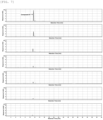
- a linker cleavage test was conducted by irradiating Compound 15 with ultraviolet light having a wavelength of 365 nm. Specifically, a UV lamp was placed in an aqueous solution of Compound 15, and irradiated with ultraviolet light having a wavelength of 365 nm at room temperature for 2 hours to investigate whether the following photocleavage reaction would proceed:
- the photocleavage reaction as described above was evaluated by analyzing an aqueous solution of Compound 15 by HPLC before and after irradiation with ultraviolet light, and the results are shown in FIG. 3 .
- oligonucleotide derivatives As oligonucleotide derivatives, a dimer (Compound 30) and a 21-mer (Compound 31) having the following sequences were synthesized:
- Q represents guanosine having an introduced linker that is cleaved by light (Compound 26).
- the concentrate was purified by medium pressure silica gel column chromatography (Biotage ® Sfar Silica HC D, 25 g, 25-50 w/w% AcOEt in Hexane) to obtain Compound 24 (1.84 g, 1.77 mmol, 80.0%).
- the concentrate was purified by medium pressure silica gel column chromatography (Biotage ® Sfar Silica HC D, 25 g, 1 w/w% MeOH in CHCl 3 ; fractions containing by-products were repurified under the same conditions) to obtain Compound 25 (1.31 g, 1.42 mmol, 81.8%).
- the concentrate was purified by medium pressure silica gel column chromatography (Yamazen Silica Gel 2L, 3.0 ⁇ 20.0 cm, 55 g, 25-33-50 w/w% AcOEt in Hexane). After concentrating the fraction containing the target product, the concentrate was dissolved in dichloromethane (3 mL) and added dropwise to hexane (500 mL). The resulting precipitate was filtered, washed (hexane), and then dried in vacuum to obtain Compound 26 (0.89 g, 0.79 mmol, 71.0%).
- the resulting crude Compound 28 was azeotroped three times with acetonitrile, and the residue was dissolved in acetonitrile (10 mL), and triethylamine (0.0717 mL, 0.515 mmol) and Cytiva Primer support TM 5G amino (1.23 g, 0.45 mmol/g) were added, and stirred at room temperature for 17 hours. After confirming that the raw material was not present in the supernatant by TLC, the insoluble substances were collected by filtration. It was then washed with acetonitrile and dried in vacuum (1.29 g).
- Cap A [1-methylimidazole-acetonitrile (2:8)] (5 mL)
- Cap B1 acetic anhydride-acetonitrile (4:6)]
- Cap B2 2,6-lutidine-acetonitrile (4:6)]
- the solid phase support obtained by the above synthesis was then transferred to a glass sealed tube, and 28 w/w% ammonia water (10 mL) was added, and heated at 60°C for 18 hours with stirring. After cooling, the solid phase support was removed by filtration and washed with 50 w/w% ethanol (100 mL). The filtrate and the washed solution were combined and concentrated, and then diluted in measuring cylinder with deionized water to 50 mL total.
- a dimeric oligonucleotide derivative (Compound 30) (3.37 ⁇ mol), copper (I) iodide (12.8 mg in 50 w/w% MeCN, 3.37 mL), tris[(1-benzyl-1H-1,2,3-triazol-4-yl)methyl]amine (TBTA) (71.5 mg), and sodium ascorbate (66.8 mg) were mixed together, and an insoluble support (Compound 29) (100 mg, 33.5 ⁇ mol) was then added and stirred at room temperature for 2 hours to carry out a click reaction.
- the insoluble support (reactant) was filtered off, washed with MeCN, and then dried in vacuum (104 mg).
- the resulting insoluble support was suspended in acetonitrile (1 mL) and an aqueous 100 mmol/L disodium ethylenediaminetetraacetate solution (3 mL) and stirred at room temperature for 16 hours.
- the insoluble support was filtered off, washed with deionized water and then washed with acetonitrile, and dried in vacuum to obtain a conjugate of the oligonucleotide derivative and the insoluble support (Compound 32).
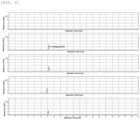
- the solution (supernatant) after the above click reaction was analyzed by HPLC and compared with the HPLC results of the solution before the click reaction (aqueous solution of dimeric oligonucleotide derivative). The results are shown in FIG. 4 .
- a 21-mer oligonucleotide derivative (Compound 31) (1.12 mL), deionized water (2.24 mL), copper (I) iodide (12.8 mg in 50 w/w% MeCN, 3.37 mL), tris [(1-benzyl-1H-1,2,3-triazol-4-yl)methyl]amine (TBTA) (71.5 mg), and sodium ascorbate (66.8 mg) were mixed, and an insoluble support (29) (100 mg, 33.5 ⁇ mol) was then added and stirred at room temperature for 6 hours to carry out a click reaction. Subsequently, the insoluble support (reactant) was filtered off, washed with MeCN, and then dried in vacuum.
- the resulting insoluble support was suspended in acetonitrile (1 mL) and an aqueous 100 mmol/L disodium ethylenediaminetetraacetate solution (3 mL) and stirred at room temperature for 16 hours.
- the insoluble support was filtered off, washed with deionized water and then washed with acetonitrile, and dried in vacuum to obtain a conjugate of the oligonucleotide derivative and the insoluble support (Compound 33).
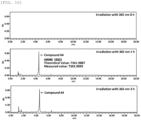
- the conjugate of the oligonucleotide derivative and the insoluble support (Compound 32) were suspended in acetonitrile (3 mL) and deionized water (7 mL), irradiated with ultraviolet light having a wavelength of 365 nm (room temperature, 3 hours), and the supernatant was analyzed by HPLC over time to investigate whether the following photocleavage reaction progressed.
- the HPLC results are shown in FIG. 5 .
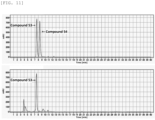
- the conjugate of the oligonucleotide derivative and the insoluble support was suspended in acetonitrile (3 mL) and deionized water (7 mL), irradiated with ultraviolet light having a wavelength of 365 nm (room temperature, 3 hours), and the supernatant was analyzed by HPLC over time to investigate whether the following photocleavage reaction progressed.
- the HPLC results are shown in FIG. 6 .
- the concentrate was brought into a solution of 200 mmol/L triethylammonium acetate (500 mL) and purified by ODS silica gel column chromatography (YAMAZEN ODS-SM 30 ⁇ m, L, 3.0 ⁇ 16.5 cm, 37 g, 100 mmol/L of triethylammonium acetate to 50 w/w% of acetonitrile, 100 mmol/L of triethylammonium acetate). After concentrating the fraction containing the target product, the concentrate was azeotroped 10 times with deionized water.
- the resulting crystalline residue was dissolved in ethanol (75 mL) with heating, and the precipitated crystals were collected by filtration and dried to obtain Compound 42 (2.41 g, 3.37 mmol, 55.1%).
- the crystal mother liquor was re-purified by ODS silica gel column chromatography (YAMAZEN ODS-SM 30 ⁇ m, L, 3.0 ⁇ 16.5 cm, 37 g, 100 mmol/L of triethylammonium acetate to 50 w/w% of acetonitrile, 100 mmol/L of triethylammonium acetate), thereby further obtaining 0.28 g of Compound 42.
- reaction solution was diluted with deionized water (10 mL) and then purified by ODS silica gel column chromatography (YAMAZEN ODS-SM 30 ⁇ m, L, 3.0 ⁇ 16.5 cm, 37 g, deionized water to 50 w/w% acetonitrile).
- the fraction containing the target product was concentrated, and the concentrate was azeotroped three times with acetonitrile and dried in vacuum to obtain Compound 47 (98 mg, 0.089 mmol, 60%).
- Compound 47 was synthesized using a method different from that described above.
- Tributylamine (163 ⁇ L, 637 ⁇ mol) was added to an aqueous solution of Compound 48 (84.8 mmol/L, 4.51 mL, 382 ⁇ mol) and concentrated, and the concentrate was azeotroped three times with N,N-dimethylformamide. The residue was dissolved in N,N-dimethylformamide (1.59 mL), and 1,1'-carbonyldiimidazole (129 mg, 0.797 mmol) was added, and stirred at room temperature for 3 hours.
- the fraction containing the target product was concentrated and then desalted by ODS silica gel column chromatography (YAMAZEN ODS-SM, 30 ⁇ m, M, 2.3 ⁇ 12.3 cm, 14 g, deionized water to 50 w/w% of acetonitrile).
- the fraction containing the target substance was concentrated to a small volume and passed through a cation exchange column (Dowex 50w ⁇ 8, Na type, 10 mL) and washed with water.
- the eluate and the washed solution were combined and concentrated, and the concentrate was dried in vacuum to obtain Compound 47 (101 mg, 185 ⁇ mol, 49.2%).
- the fraction containing the target product was concentrated and then desalted by ODS silica gel column chromatography (YAMAZEN ODS-AQ, 30 ⁇ m, 2 L, 3.0 ⁇ 20.0 cm, 51 g, deionized water to 50 w/w% of acetonitrile).
- the fraction containing the target product was concentrated to obtain Compound 54 as an aqueous solution (6.86 ⁇ mol, 27.4%).
- a suspension of EAH-Sepharose TM 4B (7-12 ⁇ mol/mL) was centrifuged at 2,000 rpm for 5 minutes (volume after centrifugation: 10 mL), and the supernatant was removed by decantation.
- the precipitate was suspended in acetonitrile (10 mL), and then centrifuged at 2,000 rpm for 5 minutes, and the supernatant was removed by decantation. This procedure was repeated five times.
- the precipitate was suspended in acetonitrile (10 mL), and N,N-diisopropylethylamine (25 ⁇ L, 0.14 mmol) and Compound 59 (61 mg, 70 ⁇ mol) were added, and stirred at room temperature for 15 hours.
Landscapes
- Chemical & Material Sciences (AREA)
- Health & Medical Sciences (AREA)
- Life Sciences & Earth Sciences (AREA)
- Organic Chemistry (AREA)
- Engineering & Computer Science (AREA)
- Genetics & Genomics (AREA)
- Molecular Biology (AREA)
- Biochemistry (AREA)
- Biotechnology (AREA)
- General Health & Medical Sciences (AREA)
- Biomedical Technology (AREA)
- General Engineering & Computer Science (AREA)
- Bioinformatics & Cheminformatics (AREA)
- Wood Science & Technology (AREA)
- Zoology (AREA)
- Physics & Mathematics (AREA)
- Biophysics (AREA)
- Plant Pathology (AREA)
- Microbiology (AREA)
- Saccharide Compounds (AREA)
Applications Claiming Priority (2)
| Application Number | Priority Date | Filing Date | Title |
|---|---|---|---|
| JP2022077734 | 2022-05-10 | ||
| PCT/JP2023/017621 WO2023219114A1 (ja) | 2022-05-10 | 2023-05-10 | mRNAキャップアナログ及びその製造方法、mRNAの製造方法、並びにキット |
Publications (1)
| Publication Number | Publication Date |
|---|---|
| EP4524146A1 true EP4524146A1 (en) | 2025-03-19 |
Family
ID=88730294
Family Applications (1)
| Application Number | Title | Priority Date | Filing Date |
|---|---|---|---|
| EP23803589.3A Pending EP4524146A1 (en) | 2022-05-10 | 2023-05-10 | Mrna cap analog and method for producing same, method for producing mrna, and kit |
Country Status (4)
| Country | Link |
|---|---|
| EP (1) | EP4524146A1 (https=) |
| JP (1) | JPWO2023219114A1 (https=) |
| KR (1) | KR20250009433A (https=) |
| WO (1) | WO2023219114A1 (https=) |
Families Citing this family (2)
| Publication number | Priority date | Publication date | Assignee | Title |
|---|---|---|---|---|
| WO2026014365A1 (ja) * | 2024-07-08 | 2026-01-15 | 国立大学法人東海国立大学機構 | 5´キャップアナログ |
| WO2026018876A1 (ja) * | 2024-07-18 | 2026-01-22 | 国立大学法人 東京大学 | 化合物の製造方法 |
Family Cites Families (3)
| Publication number | Priority date | Publication date | Assignee | Title |
|---|---|---|---|---|
| US8304529B2 (en) | 2006-07-28 | 2012-11-06 | Life Technologies Corporation | Dinucleotide MRNA cap analogs |
| WO2013059475A1 (en) * | 2011-10-18 | 2013-04-25 | Life Technologies Corporation | Alkynyl-derivatized cap analogs, preparation and uses thereof |
| PL2922554T3 (pl) * | 2012-11-26 | 2022-06-20 | Modernatx, Inc. | Na zmodyfikowany na końcach |
-
2023
- 2023-05-10 JP JP2024520478A patent/JPWO2023219114A1/ja active Pending
- 2023-05-10 KR KR1020247037435A patent/KR20250009433A/ko active Pending
- 2023-05-10 WO PCT/JP2023/017621 patent/WO2023219114A1/ja not_active Ceased
- 2023-05-10 EP EP23803589.3A patent/EP4524146A1/en active Pending
Also Published As
| Publication number | Publication date |
|---|---|
| JPWO2023219114A1 (https=) | 2023-11-16 |
| WO2023219114A1 (ja) | 2023-11-16 |
| KR20250009433A (ko) | 2025-01-17 |
Similar Documents
| Publication | Publication Date | Title |
|---|---|---|
| JP5645840B2 (ja) | リン原子修飾核酸の合成方法 | |
| JP2552048B2 (ja) | ヌクレオチド鎖合成用試薬 | |
| JP2705913B2 (ja) | インビトロにおけるオリゴヌクレオチド合成法 | |
| EP4524146A1 (en) | Mrna cap analog and method for producing same, method for producing mrna, and kit | |
| JP4705716B2 (ja) | オリゴヌクレオチドの脱保護法 | |
| JPH10501809A (ja) | 分子内求核置換による公知および新規2′−ヌクレオシドの新規製造方法 | |
| WO1990012020A1 (en) | Coumarin derivatives for use as nucleotide crosslinking reagents | |
| JP2002536381A5 (https=) | ||
| CN117534719A (zh) | 一种c6'取代锁核酸修饰加帽类似物及其应用 | |
| JP5194256B2 (ja) | 2’水酸基修飾リボヌクレオシド誘導体 | |
| JP2011184318A (ja) | リボヌクレシドh−ボラノホスホネート | |
| Leiter et al. | Practical synthesis of cap‐4 RNA | |
| EP1710249A1 (en) | Ribonucleic acid compound and method of liquid-phase synthesis of oligonucleic acid compound | |
| Ishikawa et al. | Synthesis and Properties of Gapmer Oligonucleotides Containing 4′‐Carboxy‐and 4′‐Carbamoyl‐Thymidine Analogs | |
| Jastrzębska et al. | Biologically relevant morpholino nucleoside thio-and dithiophosphates via an oxathiaphospholane approach | |
| Mori et al. | Synthesis and hybridization property of a boat-shaped pyranosyl nucleic acid containing an exocyclic methylene group in the sugar moiety | |
| US6486313B1 (en) | Oligonucleotides having alkylphosphonate linkages and methods for their preparation | |
| EP4667479A1 (en) | Polyphosphorylated nucleoside, phosphate-activated nucleotide used for synthesis of polyphosphorylated nucleoside and method for synthesis of same, and method for synthesis of polyphosphorylated nucleoside using phosphate-activated nucleotide | |
| JP7776154B2 (ja) | ホスホロチオエート及びボラノホスフェートを含むキメラ型核酸オリゴマー、及びその製造方法 | |
| JPH05501418A (ja) | オリゴヌクレオチドの官能化方法 | |
| Ohkubo et al. | Efficient solid-phase synthesis of oligodeoxynucleotides having a 5′-terminal 2, 2, 7-trimethylguanosine pyrophosphate linkage | |
| EP4410803A1 (en) | Method for producing 2' modified pyrimidine nucleoside | |
| Ruetz | Heavy modified RNA nucleosides and nucleotides as internal standard for high resolution mass spectrometry | |
| Ushioda et al. | Unique Participation of Unprotected Internucleotidic Phosphodiester Residues on Unexpected Cleavage Reaction of the Si O Bond of the Diisopropylsilandiyl Group Used as a Linker for the Solid‐Phase Synthesis of 5′‐Terminal Guanylated Oligodeoxynucleotides | |
| Sittiwong | Synthesis of pseudouridine derivatives |
Legal Events
| Date | Code | Title | Description |
|---|---|---|---|
| STAA | Information on the status of an ep patent application or granted ep patent |
Free format text: STATUS: THE INTERNATIONAL PUBLICATION HAS BEEN MADE |
|
| PUAI | Public reference made under article 153(3) epc to a published international application that has entered the european phase |
Free format text: ORIGINAL CODE: 0009012 |
|
| STAA | Information on the status of an ep patent application or granted ep patent |
Free format text: STATUS: REQUEST FOR EXAMINATION WAS MADE |
|
| 17P | Request for examination filed |
Effective date: 20241206 |
|
| AK | Designated contracting states |
Kind code of ref document: A1 Designated state(s): AL AT BE BG CH CY CZ DE DK EE ES FI FR GB GR HR HU IE IS IT LI LT LU LV MC ME MK MT NL NO PL PT RO RS SE SI SK SM TR |
|
| DAV | Request for validation of the european patent (deleted) | ||
| DAX | Request for extension of the european patent (deleted) |