EP4521131A1 - Informationsverarbeitungsvorrichtung, informationsverarbeitungsverfahren, computerlesbares medium und informationsverarbeitungssystem - Google Patents
Informationsverarbeitungsvorrichtung, informationsverarbeitungsverfahren, computerlesbares medium und informationsverarbeitungssystem Download PDFInfo
- Publication number
- EP4521131A1 EP4521131A1 EP24176878.7A EP24176878A EP4521131A1 EP 4521131 A1 EP4521131 A1 EP 4521131A1 EP 24176878 A EP24176878 A EP 24176878A EP 4521131 A1 EP4521131 A1 EP 4521131A1
- Authority
- EP
- European Patent Office
- Prior art keywords
- battery
- assembled battery
- cell
- capacity
- assembled
- Prior art date
- Legal status (The legal status is an assumption and is not a legal conclusion. Google has not performed a legal analysis and makes no representation as to the accuracy of the status listed.)
- Pending
Links
Images
Classifications
-
- G—PHYSICS
- G01—MEASURING; TESTING
- G01R—MEASURING ELECTRIC VARIABLES; MEASURING MAGNETIC VARIABLES
- G01R31/00—Arrangements for testing electric properties; Arrangements for locating electric faults; Arrangements for electrical testing characterised by what is being tested not provided for elsewhere
- G01R31/36—Arrangements for testing, measuring or monitoring the electrical condition of accumulators or electric batteries, e.g. capacity or state of charge [SoC]
- G01R31/396—Acquisition or processing of data for testing or for monitoring individual cells or groups of cells within a battery
-
- G—PHYSICS
- G01—MEASURING; TESTING
- G01R—MEASURING ELECTRIC VARIABLES; MEASURING MAGNETIC VARIABLES
- G01R31/00—Arrangements for testing electric properties; Arrangements for locating electric faults; Arrangements for electrical testing characterised by what is being tested not provided for elsewhere
- G01R31/36—Arrangements for testing, measuring or monitoring the electrical condition of accumulators or electric batteries, e.g. capacity or state of charge [SoC]
- G01R31/382—Arrangements for monitoring battery or accumulator variables, e.g. SoC
- G01R31/3842—Arrangements for monitoring battery or accumulator variables, e.g. SoC combining voltage and current measurements
-
- Y—GENERAL TAGGING OF NEW TECHNOLOGICAL DEVELOPMENTS; GENERAL TAGGING OF CROSS-SECTIONAL TECHNOLOGIES SPANNING OVER SEVERAL SECTIONS OF THE IPC; TECHNICAL SUBJECTS COVERED BY FORMER USPC CROSS-REFERENCE ART COLLECTIONS [XRACs] AND DIGESTS
- Y02—TECHNOLOGIES OR APPLICATIONS FOR MITIGATION OR ADAPTATION AGAINST CLIMATE CHANGE
- Y02E—REDUCTION OF GREENHOUSE GAS [GHG] EMISSIONS, RELATED TO ENERGY GENERATION, TRANSMISSION OR DISTRIBUTION
- Y02E60/00—Enabling technologies; Technologies with a potential or indirect contribution to GHG emissions mitigation
- Y02E60/10—Energy storage using batteries
Definitions
- the present disclosure relates to an information processing device, an information processing method, a computer-readable medium, and an information processing system.
- the conventional index is expressed to include SOH (state of health) of a battery cell, and thus cannot appropriately express the state of the cell balance. For this reason, the conventional technology does not provide an index that appropriately expresses the degree of collapse of the cell balance of the assembled battery.
- an information processing device includes a memory and one or more processors coupled to the memory.
- the one or more processors are configured to calculate a ratio between an assembled battery capacity of an assembled battery in which a plurality of battery cells are serially connected and a cell capacity of a specific battery cell in the plurality of battery cells included in the assembled battery, as an index indicating a degree of collapse of a cell balance of the assembled battery.
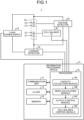
- Fig. 1 is a schematic diagram illustrating an example of an information processing system 1 according to the present arrangement.
- the information processing system 1 includes an information processing device 10, an assembled battery 20, a load/power supply 24, a current detector 26, a voltage detector 28, and a cell balance IC (integrated circuit) 30.
- the assembled battery 20 is a battery in which a plurality of battery cells 22 are serially connected.
- the battery cell 22 is a secondary battery such as a lithium-ion battery.
- the battery cell 22 may be referred to as a single battery.
- the number of the serially-connected battery cells 22 included in the assembled battery 20 may be two or more.
- the number of the serially-connected battery cells 22 included in the assembled battery 20 may be around several hundred.
- the assembled battery 20 may have a configuration that cell blocks each including the plurality of battery cells 22 connected in parallel are serially connected. In this case, each of the serially-connected cell blocks corresponds to a battery cell according to the present arrangement.
- the assembled battery 20 is mounted on a battery equipped apparatus, for example.
- a battery equipped apparatus includes a large-sized storage battery for electric power system, a smartphone, a vehicle, a stationary power supply device, a robot, a drone, and the like.
- a vehicle includes a railway vehicle, an electric bus, an electric vehicle, and the like.
- the load/power supply 24 is connected to the assembled battery 20, and acts as a load consuming electric power of the assembled battery 20 and a power supply supplying electric power to the assembled battery 20.
- the current detector 26 detects an electric current flowing in the assembled battery 20.
- the current detector 26 measures an electric current flowing through the serially-connected battery cells 22 included in the assembled battery 20 at one place to detect an electric current flowing through the entire of the assembled battery 20 and an electric current flowing through each of the plurality of battery cells 22.
- the voltage detector 28 measures a voltage between a positive terminal and a negative terminal of the assembled battery 20 and a voltage between a positive terminal and a negative terminal of each of the battery cells 22 included in the assembled battery 20.
- the cell balance IC 30 is an IC that performs the control of aligning voltages of the plurality of battery cells 22 included in the assembled battery 20 to the same voltage and equalizing variation in the cell capacity between the battery cells 22.
- the cell balance IC 30 may employ a well-known cell balance IC.
- the cell balance IC 30 may be any of a passive IC and an active IC.
- the information processing device 10 executes a calculation process etc. of an index indicating a degree of collapse of a cell balance of the assembled battery 20.
- the information processing device 10 is electrically connected to the load/power supply 24, the current detector 26, the voltage detector 28, and the cell balance IC 30.
- the information processing device 10 includes a communication unit 12, a UI (user interface) unit 14, a memory 16, and a processor 18.
- the communication unit 12, the UI unit 14, and the memory 16 are connected to the processor 18 by a bus etc. to be able to communicate with each other.
- the communication unit 12 communicates with an external information processing device via the network etc.
- the UI unit 14 has an input function receiving an operation input by a user and an output function outputting various information.
- the input function is an input device such as a keyboard.
- the output function is a display displaying various information, a speaker outputting a voice, and the like.
- the memory 16 stores therein various information.
- the processor 18 is an arithmetic unit that executes information processing.
- the processor 18 includes a capacity calculating module 18A, an index calculating module 18B, an output control module 18C, and a cell balance control module 18D.
- At least one of the capacity calculating module 18A, the index calculating module 18B, the output control module 18C, and the cell balance control module 18D is realized by one or more processors, for example.
- each module described above may be realized by causing a processor such as CPU to execute a program, that is, by software.
- Each module described above may realize by a processor such as a dedicated IC (integrated circuit), that is, by hardware.
- Each module described above may be realized by using software and hardware together. When using a plurality of processors, each processor may realize one of the modules, or may realize two or more of the modules.
- the processor 18 may have a configuration that includes at least the capacity calculating module 18A and the index calculating module 18B, or may have a configuration that does not include at least one of the output control module 18C and the cell balance control module 18D.
- the processor 18 may be realized by processing circuits such as "one or more CPUs, microprocessors, GPUs (graphics processing unit), ASICs (application specific integrated circuit), and FPGAs (field-programmable gate array)", or electronic circuits including these circuits etc.
- the processor 18 may be realized by an information processing device such as a computer, a computer system in which a plurality of computers or servers are configured to communicate with each other via the network, a PC cluster in which a plurality of computers execute information processing in collaboration, or the like.
- the capacity calculating module 18A calculates the assembled battery capacity of the assembled battery 20 and the cell capacities of the battery cells 22 included in the assembled battery 20.
- the assembled battery capacity indicates the estimated full charge capacity of the assembled battery 20.
- the cell capacity indicates the estimated full charge capacity of the battery cell 22.
- the capacity calculating module 18A may calculate the cell capacity of each of the plurality of battery cells 22 included in the assembled battery 20 and the assembled battery capacity of the assembled battery 20 in a well-known method.
- the capacity calculating module 18A calculates the cell capacities and the assembled battery capacity.
- the capacity calculating module 18A records, when charging or discharging the assembled battery 20, a current of each of the assembled battery 20 and the battery cells 22 detected by the current detector 26 and a voltage of each of the assembled battery 20 and the battery cells 22 detected by the voltage detector 28 in the memory 16 as a charging history.
- the capacity calculating module 18A updates the charging history by repeating the record every predetermined time.
- the predetermined time is not limited, but the time is preferably to be about 0.1 seconds to 1 second, for example.
- the capacity calculating module 18A calculates an internal state of the battery cell 22 by the regression calculation from the charging history in the well-known method etc. disclosed in Japanese Laid-open Patent Publication No. 2012-251806 etc.
- the internal state of the battery cell 22 is expressed by a positive electrode capacity of the battery cell 22, a negative electrode capacity of the battery cell 22, a positive electrode charge amount of the battery cell 22 at a certain time point, a negative electrode charge amount of the battery cell 22 at a certain time point, an internal resistance of the battery cell 22, or the like.
- the positive electrode capacity of the battery cell 22 is an amount of active material constituting the positive electrode of the battery cell 22.
- the negative electrode capacity of the battery cell 22 is an amount of active material constituting the negative electrode of the battery cell 22.
- the capacity calculating module 18A calculates the internal state by performing the regression calculation from the charging history.
- the voltage of the battery cell 22 is expressed by Expression (1) when the voltage is represented with an overvoltage by the OCP (open circuit potential) of the positive electrode, the OCP of the negative electrode, and the internal resistance.
- V ⁇ Q ⁇ f c Q M c + q 0 c ⁇ f a Q M a + q 0 a + RI
- the internal state ⁇ is expressed by a vector, and is expressed by Expression (2).
- ⁇ M c M a q 0 c q 0 a R T
- the capacity calculating module 18A acquires a current value of the battery cell 22 at a certain time point from the charging history. Moreover, the capacity calculating module 18A integrates the current value over time by using the charging history to calculate the positive electrode charge amount and the negative electrode charge amount at a certain time point. Moreover, the function indicating a relationship between the charge amount and the electric potential of the positive electrode and the function indicating a relationship between the charge amount and the electric potential of the negative electrode may be previously stored in the memory 16.
- the capacity calculating module 18A performs regression calculation, in such a manner that a residual dross between a voltage value of the battery cell 22 associated with a predetermined time in the charging history and a voltage value calculated by Expression (1) becomes small, to calculate the internal state ⁇ .
- the regression calculation may employ the calculation method disclosed in Japanese Laid-open Patent Publication No. 2018-77259 , Japanese Laid-open Patent Publication No. 2015-111086 , or Japanese Laid-open Patent Publication No. 2012-251806 .
- the internal state ⁇ may include a positive electrode mass that is a parameter corresponding to the positive electrode capacity and a negative electrode mass that is a parameter corresponding to the negative electrode capacity. Based on the positive electrode capacity and the type of material forming the positive electrode, the positive electrode mass can be calculated by a well-known method. Similarly, based on the negative electrode capacity and the type of material forming the negative electrode, the negative electrode mass can be calculated by a well-known method.
- the internal state ⁇ may include the shift of operation window (SOW) that is a shift between the initial charge amount of the positive electrode and the initial charge amount of the negative electrode.
- the internal state ⁇ may include a parameter associated with the internal resistance of the battery cell 22 and include a parameter associated with the resistance of the positive electrode, a parameter associated with the resistance of the negative electrode, and the like.
- the full charge capacity and SOC (state of charge) of each of the assembled battery 20 and the battery cells 22 are defined by an open circuit voltage (OCV) .
- OCV at a certain SOC x of the i-th battery cell 22 in the serially-connected n battery cells 22 included in the assembled battery 20 is set as OCV i (x). Moreover, at this time, the charge/discharge amount that satisfies Expressions (3) and (4) and is required from SOC 0% to 100% is set as a full charge capacity FCCi of the battery cell 22.
- V l in Expression (3) indicates the lower limit voltage of the battery cell 22.
- V h in Expression (4) indicates the upper limit voltage of the battery cell 22.
- OCV when the SOC of the assembled battery 20 is x p is expressed by Expression (5).
- FCC P in Expression (5) indicates the full charge capacity of the assembled battery 20.
- FCC i indicates the full charge capacity of the battery cell 22.
- the full charge capacity of the assembled battery 20 is expressed by the charge/discharge amount that satisfies Expressions (6) and (7) and is required from SOC 0% to 100%.
- the lower limit voltage of the assembled battery 20 is defined as SOC 0% when each of the battery cells 22 included in the assembled battery 20 does not reach the lower limit voltage of the battery cell 22, and when the SOC of the battery cell 22 reaches 0% (i.e., lower limit voltage) before that, the SOC of the assembled battery 20 is defined as 0% at that time point.
- the upper limit voltage of the assembled battery 20 is defined as SOC 100% when each of the battery cells 22 included in the assembled battery 20 does not reach the upper limit voltage of the battery cell 22, and when the SOC of the battery cell 22 reaches 100% before that, the SOC of the assembled battery 20 is defined as 100% at that time point.
- any SOC of the assembled battery 20 can be calculated.
- the capacity calculating module 18A calculates the internal state ⁇ i of the i-th battery cell 22 at a certain time point by the above calculation.
- an estimated value of the OCV for a certain charge amount Q is expressed by Expression (8) by omitting an overvoltage part of Expression (1).
- OCV ⁇ Q ⁇ f c Q M c + q 0 c ⁇ f a Q M a + q 0 a .
- the capacity calculating module 18A calculates an estimated full charge capacity that is the cell capacity of the i-th battery cell 22 by Expression (9).
- FCC ⁇ i Q hi ⁇ Q li
- FCC ⁇ i Cell capacity of battery cell
- the capacity calculating module 18A may calculate the cell capacity of each of the plurality of battery cells 22 included in the assembled battery 20.
- the capacity calculating module 18A calculates an assembled battery capacity of the assembled battery 20.
- the capacity calculating module 18A calculates the SOC of each of the battery cells 22 included in the assembled battery 20 when the SOC of the assembled battery 20 is 0%.
- the capacity calculating module 18A calculates a charge amount Q lp that satisfies Expression (12), and Expression (13) is defined based on Expression (6).
- Q l max Q lp , Q l 1 , Q l 2 , ... , Q ln
- the capacity calculating module 18A calculates the SOC xi of each the battery cell 22 when the SOC of the assembled battery 20 is 0%.
- the capacity calculating module 18A calculates the SOC of each of the battery cells 22 included in the assembled battery 20 when the SOC of the assembled battery 20 is 100%.
- the capacity calculating module 18A calculates a charge amount Q hP that satisfies Expression (15), and Expression (16) is defined based on Expression (7).
- Q h min Q hp , Q h 1 , Q h 2 , ... , Q hn
- the capacity calculating module 18A calculates the SOC yi of each the battery cell 22 when the SOC of the assembled battery 20 is 100%.
- the capacity calculating module 18A calculates the assembled battery capacity of the assembled battery 20 by Expression (18).
- FCC p ⁇ Q h ⁇ Q l
- FCC ⁇ p Assembled battery capacity of assembled battery
- the capacity calculating module 18A calculates the cell capacity of each of the plurality of battery cells 22 included in the assembled battery 20 and the assembled battery capacity of the assembled battery 20.
- the capacity calculating module 18A may calculate the assembled battery capacity of the assembled battery 20 by using the voltages of some of the battery cells 22 included in the assembled battery 20 instead of all the battery cells 22 included in the assembled battery 20.
- the capacity calculating module 18A may calculate the assembled battery capacity of the assembled battery 20 by the above calculation.
- the index calculating module 18B calculates a ratio between the assembled battery capacity of the assembled battery 20 and the cell capacity of the specific battery cell 22 (hereinafter, referred to as specific battery cell) of the plurality of battery cells 22 included in the assembled battery 20, as an index indicating a degree of collapse of a cell balance of the assembled battery 20.
- the specific battery cell may be an arbitrary one battery cell of the plurality of battery cells 22 included in the assembled battery 20.
- the index calculating module 18B calculates SOB (state of cell-balance) expressed by Expression (19) as an index indicating the degree of collapse of the cell balance of the assembled battery 20.
- SOB Assembled battery capacity / Cell capacity of Specific battery cell
- the SOB is an index indicating the degree of collapse of the cell balance according to the present arrangement.
- the index calculating module 18B calculates, as the SOB, a ratio of the assembled battery capacity to the cell capacity of the specific battery cell.
- the cell capacity and the assembled battery capacity are assumed as a capacity having a unit such as Ah as calculated by the current integration.
- the assembled battery capacity can be substituted by an average value etc. of the cell capacities of the battery cells 22.
- the index calculating module 18B calculates the SOB expressed by Expression (20) as the index indicating the degree of collapse of the cell balance of the assembled battery 20.
- SOB Assembled battery capacity / Minimum cell capacity of Battery cells 22 constituting Assembled battery 20 (20)
- the index calculating module 18B calculates a ratio of the assembled battery capacity to the cell capacity of the specific battery cell, which is the minimum cell capacity, among the plurality of battery cells 22 included in the assembled battery 20, as the index indicating the degree of collapse of the cell balance of the assembled battery 20.
- SOB is 1.
- the SOCs of the battery cells 22 may be identical when the SOC of the assembled battery 20 is the state of 100%.
- the SOCs of the battery cells 22 on the SOC 0% side of the assembled battery 20 have a state of variation. Therefore, in this case, the conventional technology cannot appropriately represent the degree of collapse of the cell balance.
- the SOB indicating the degree of collapse of the cell balance used by the index calculating module 18B according to the present arrangement
- SOB ⁇ 1 when the cell balance is collapsed when the SOB is expressed by Expression (20), the SOB is expressed by a value within a range not less than 0 indicating the highest degree of collapse and not more than 1 indicating the lowest degree of collapse.
- the assembled battery 20 in which the ten battery cells 22 are serially connected has the same cell capacity in all the battery cells but the SOCs of the adjacent battery cells 22 in series are shifted by 1% in the same direction.
- the assembled battery capacity is substantially the same as the cell capacity if the cell balance is not collapsed. However, in this case, because the cell balance is collapsed, it can be checked by an index that the assembled battery capacity decreases.
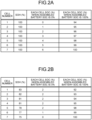
- Fig. 2A is a diagram illustrating an example of a state of the assembled battery 20 in an initial state.
- Fig. 2B is a diagram illustrating an example of a state of the assembled battery 20 where a cycle test is executed on the assembled battery 20 in the state of Fig. 2A and at least some of the battery cells 22 are deteriorated.
- Figs. 2A and 2B illustrate the SOH of the assembled battery 20 in which the seven battery cells 22 are serially connected, the SOC of each the battery cell 22 when the SOC of the assembled battery 20 is 0%, and the SOC of each the battery cell 22 when the SOC of the assembled battery 20 is 100%.
- Fig. 2A illustrates, as an example, the assembled battery 20 in which the SOH of the assembled battery 20 is 100% and all the cell capacities are the same in the initial state but the SOCs of the adjacent battery cells 22 in series are shifted by 1% in the same direction.
- the value of the index SOB indicating the degree of collapse of the cell balance calculated by the above calculation is 0.94.
- the index SOB that appropriately indicates the degree of collapse of the cell balance of the assembled battery 20.
- the capacity calculating module 18A may calculate the assembled battery capacity of the assembled battery 20 by the above calculation, for example, by using an average voltage obtained by dividing the maximum voltage, the minimum voltage, and the voltage of the assembled battery 20, among the voltages of all the battery cells 22 included in the assembled battery 20, by the number of the battery cells 22 included in the assembled battery 20.
- the index calculating module 18B can represent the assembled battery 20 with three types of voltages to calculate the index SOB. For this reason, in this case, the processor 18 can calculate the degree of collapse of the cell balance of the assembled battery 20 with low load by using less data.
- the output control module 18C outputs the index SOB calculated by the index calculating module 18B.
- the output control module 18C causes the UI unit 14 to display the value of the index SOB calculated by the index calculating module 18B.
- the output control module 18C may transmit the value of the index SOB calculated by the index calculating module 18B to an external information processing device via the communication unit 12.
- the output control module 18C may transmit the charging history recorded every hour and the value of the index SOB calculated based on the charging history to the external information processing device.
- recording or transmission to the external information processing device of all the voltages of the battery cells 22 may have limitation of a recorded data amount or communication limitation.
- the output control module 18C may extract the charging history of some of the battery cells 22 included in the assembled battery 20, and record the charging history in the memory 16 or transmit the charging history to the external information processing device.
- the capacity calculating module 18A may calculate the assembled battery capacity of the assembled battery 20 by the above calculation, for example, by using the average voltage obtained by dividing the maximum voltage, the minimum voltage, and the voltage of the assembled battery 20, among the voltages of all the battery cells 22 included in the assembled battery 20, by the number of the battery cells 22 included in the assembled battery 20.
- the output control module 18C may specify at least one of the maximum voltage, the minimum voltage, the voltage of the assembled battery 20, and the average voltage of the voltages of the battery cells 22 included in the assembled battery 20, and record these voltages in association with detection times in the memory 16 as the charging history and transmit them to the external information processing device.
- the cell balance control module 18D performs adjustment so that the cell balance of the assembled battery 20 becomes uniform.
- the predetermined value may be previously determined.
- the predetermined value is 1, for example, but may be a value less than 1.
- the predetermined value is 1 in the present arrangement and the value of the index SOB calculated by the index calculating module 18B is less than 1, a configuration of performing adjustment so that the cell balance of the assembled battery 20 becomes uniform will be explained as an example.
- the cell balance control module 18D controls the cell balance IC 30 so that the cell balance of the assembled battery 20 becomes uniform.
- the cell balance IC 30 may align the voltages of the plurality of battery cells 22 included in the assembled battery 20 to the same voltage, and perform the well-known control of equalizing variation in the cell capacity between the battery cells 22.
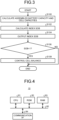
- Fig. 3 is a flowchart illustrating an example of a flow of information processing that is executed by the processor 18.
- the capacity calculating module 18A calculates the assembled battery capacity of the assembled battery 20 and the cell capacities of the battery cells 22 included in the assembled battery 20 (Step S100). Based on the voltage and current of the assembled battery 20, the voltage and current of at least some of the battery cells 22 included in the assembled battery 20, and the internal state calculated by the regression calculation from a relationship between the charge amount and voltage of active material of the battery cell 22, the capacity calculating module 18A calculates the cell capacities and the assembled battery capacity.
- the index calculating module 18B calculates the assembled battery capacity of the assembled battery 20 relative to the cell capacity of the specific battery cell in the battery cells 22 calculated in Step S100 as the index SOB indicating the degree of collapse of the cell balance (Step S102).
- the index calculating module 18B calculates the index SOB expressed by Expression (20) will be described.
- the output control module 18C outputs the index SOB calculated in Step S102 (Step S104).
- the cell balance control module 18D determines whether the index SOB calculated in Step S102 is less than 1 (Step S106). When the index SOB is 1 (Step S106: No), the present routine is terminated. When the index SOB is less than 1 (Step S106: Yes), the present routine proceeds to Step S108.
- Step S108 the cell balance control module 18D controls the cell balance IC 30 so that the cell balance of the assembled battery 20 becomes uniform (Step S108). Then, the present routine is terminated.
- the processor 18 of the information processing device 10 calculates the ratio between the assembled battery capacity of the assembled battery 20 in which the plurality of battery cells 22 are serially connected and the cell capacity of the specific battery cell in the plurality of battery cells 22 included in the assembled battery 20, as the index SOB indicating the degree of collapse of the cell balance of the assembled battery 20.
- a lithium-ion battery that is the battery cell 22 has excellent gravimetric energy density and volumetric energy density compared with the conventional secondary battery, and is used for various electronic/electrical products. It is expected that the battery cell 22 is installed in a mobile device such as a smartphone, and further is rapidly installed in an electric vehicle, a storage battery system, etc. with the expansion of renewable energy utilization. In the electric vehicle and the storage battery system, for the purpose of the installation of a large capacity battery, higher voltage/higher efficiency, and the like, the utilization of the assembled battery 20 in which the battery cells 22 are serially connected is performed.
- the configuration of the assembled battery 20 is performed after adjusting the cells with the same cell capacity to the same SOC when assembling the assembled battery 20.
- the SOCs of the battery cells 22 are identical even if the charging and discharging are performed, the assembled battery 20 can be operated in the same way as when using a single cell.
- the first factor is a difference between self-discharge rates of the battery cells 22. Even if the self-discharge rates of the battery cells 22 are slightly different, the SOCs of the battery cells 22 are shifted bit by bit due to the long-term use.
- the second factor is a difference between deterioration rates of the battery cells 22. It is known that the deterioration rates are greatly different depending on temperature. When configuring the large assembled battery 20 in an electric vehicle, a storage battery system, or the like, a temperature difference occurs between the battery cells 22. For that reason, deterioration rates are different in accordance with temperature, and all the battery cells 22 do not have the same cell capacity and their SOCs are shifted.
- the state where the SOCs between the cells are not identical is referred to as the collapse of the cell balance.
- the upper limit voltage and the lower limit voltage of the entire of the assembled battery 20 are defined, and further the upper limit voltage and the lower limit voltage of each the battery cell 22 are defined in many cases to prevent overcharge and overdischarge of each the battery cell 22. Therefore, the assembled battery capacity of the assembled battery 20 is not determined only by the chargeable and dischargeable capacity from the upper limit voltage to the lower limit voltage of the entire of the assembled battery 20, and is determined by the cell capacities of the battery cells 22 constituting the assembled battery 20 and the degree of collapse of the cell balance (the state of the cell balance).
- this conventional method is a method indicating a difference between cell capacities (difference between SOCs) of the battery cells 22 at a certain voltage.
- this conventional method is a method of estimating the SOCs of the battery cells 22 at the lower limit voltage (SOC 0%) of the assembled battery 20 and the SOCs of the battery cells 22 at the upper limit voltage (SOC 100%) of the assembled battery 20, as the degree of collapse of the cell balance.
- the processor 18 of the information processing device 10 calculates the ratio between the assembled battery capacity of the assembled battery 20 in which the plurality of battery cells 22 are serially connected and the cell capacity of the specific battery cell in the plurality of battery cells 22 included in the assembled battery 20, as the index SOB indicating the degree of collapse of the cell balance of the assembled battery 20.
- the processor 18 can provide the index SOB appropriately representing the degree of collapse of the cell balance, even if the SOCs of the battery cells 22 at SOC 100% of the assembled battery 20 are identical and the SOCs of the battery cells 22 at SOC 0% of the assembled battery 20 have the variation, although the capacities of the plurality of battery cells 22 included in the assembled battery 20 have the large variation.
- the processor 18 can provide an index appropriately indicating the degree of collapse of the cell balance of the assembled battery 20 in which the battery cells 22 are serially connected.
- Fig. 4 is a hardware configuration diagram illustrating an example of the information processing device 10 according to the above arrangement.
- the information processing device 10 has a hardware configuration of using a normal computer that includes a CPU (central processing unit) 81, a ROM (read only memory) 82, a RAM (random access memory) 83, a communication I/F 84, and the like to be interconnected by a bus 85.
- a CPU central processing unit
- ROM read only memory
- RAM random access memory
- the CPU 81 is an arithmetic device that controls the information processing device 10 according to the above arrangement.
- the ROM 82 stores therein a program etc. that realizes various types of processes by the CPU 81.
- the description is performed by using the CPU, but a GPU (graphics processing unit) may be used as an arithmetic device that controls the information processing device 10.
- the RAM 83 stores therein data required for various types of processes by the CPU 81.
- the communication I/F 84 is an interface to transmit and receive data.
- the CPU 81 reads and executes a program on the RAM 83 from the ROM 82 and thus each the function is realized on the computer.
- a program for executing each the process executed by the information processing device 10 according to the above arrangement may be stored in HDD (hard disk drive). Moreover, a program for executing each the process executed by the information processing device 10 according to the above arrangement may be previously incorporated into the ROM 82 and be provided.
- a program for executing each the process executed by the information processing device 10 according to the above arrangement may be stored in a computer readable storage medium such as a CD-ROM, a CD-R, a memory card, a DVD (digital versatile disk), and a flexible disk (FD) in an installable or executable format, and be provided as a computer program product.
- a program for executing each the process executed by the information processing device 10 according to the above arrangement may be stored in a computer connected to a network such as the Internet and be downloaded by way of the network to be provided.
- a program for executing each the process executed by the information processing device 10 according to the above arrangement may be provided or distributed by way of a network such as the Internet.
Landscapes
- Physics & Mathematics (AREA)
- General Physics & Mathematics (AREA)
- Secondary Cells (AREA)
- Charge And Discharge Circuits For Batteries Or The Like (AREA)
- Tests Of Electric Status Of Batteries (AREA)
Applications Claiming Priority (1)
| Application Number | Priority Date | Filing Date | Title |
|---|---|---|---|
| JP2023145273A JP7819161B2 (ja) | 2023-09-07 | 2023-09-07 | 情報処理装置、情報処理方法、情報処理プログラム、および情報処理システム |
Publications (1)
| Publication Number | Publication Date |
|---|---|
| EP4521131A1 true EP4521131A1 (de) | 2025-03-12 |
Family
ID=91186572
Family Applications (1)
| Application Number | Title | Priority Date | Filing Date |
|---|---|---|---|
| EP24176878.7A Pending EP4521131A1 (de) | 2023-09-07 | 2024-05-20 | Informationsverarbeitungsvorrichtung, informationsverarbeitungsverfahren, computerlesbares medium und informationsverarbeitungssystem |
Country Status (3)
| Country | Link |
|---|---|
| US (1) | US20250085358A1 (de) |
| EP (1) | EP4521131A1 (de) |
| JP (1) | JP7819161B2 (de) |
Citations (6)
| Publication number | Priority date | Publication date | Assignee | Title |
|---|---|---|---|---|
| JP2012251806A (ja) | 2011-05-31 | 2012-12-20 | Toshiba Corp | 算出方法、算出プログラム、算出システム、算出装置 |
| JP2015111086A (ja) | 2013-12-06 | 2015-06-18 | 株式会社東芝 | 電池状態算出装置および電池状態算出方法 |
| JP2018077259A (ja) | 2018-02-13 | 2018-05-17 | 株式会社東芝 | 算出装置及び算出方法 |
| US20220146585A1 (en) * | 2019-11-29 | 2022-05-12 | Mintech Co.,Ltd | Device and method for estimating state of battery |
| EP4160236A1 (de) * | 2021-09-30 | 2023-04-05 | Yokogawa Electric Corporation | Diagnosevorrichtung, diagnoseverfahren und computerdiagnoseprogramm |
| WO2023153602A1 (ko) * | 2022-02-08 | 2023-08-17 | 주식회사 민테크 | 배터리 수명 상태 추정 장치 및 방법 |
Family Cites Families (12)
| Publication number | Priority date | Publication date | Assignee | Title |
|---|---|---|---|---|
| JP3870577B2 (ja) * | 1998-09-14 | 2007-01-17 | 株式会社デンソー | 組電池のばらつき判定方法及びバッテリ装置 |
| JP2002084666A (ja) * | 2000-09-07 | 2002-03-22 | Sanyo Electric Co Ltd | 電気自動車用バッテリシステムのバッテリ容量補正方式 |
| JP3919604B2 (ja) * | 2001-06-08 | 2007-05-30 | 敏孝 丈井 | 組電池の電池管理方法とシステム |
| JP5493407B2 (ja) * | 2009-03-17 | 2014-05-14 | 日産自動車株式会社 | 組電池の容量調整装置 |
| JP2012002660A (ja) * | 2010-06-16 | 2012-01-05 | Toshiba Corp | 二次電池装置 |
| JP2014233177A (ja) * | 2013-05-30 | 2014-12-11 | 株式会社東芝 | 電子機器および充電制御方法 |
| CN107196385A (zh) * | 2017-07-26 | 2017-09-22 | 北京创昱科技有限公司 | 光伏储能系统的蓄电池均衡方法与装置及该光伏储能系统 |
| JP6744886B2 (ja) * | 2018-03-20 | 2020-08-19 | 株式会社東芝 | 電池安全性評価装置、電池安全性評価方法、プログラム、制御回路及び蓄電システム |
| KR102248227B1 (ko) * | 2019-01-10 | 2021-05-03 | 주식회사 엘지화학 | 배터리 밸런싱 장치, 방법 및 이를 포함하는 배터리 팩 |
| JP7057463B1 (ja) * | 2021-04-20 | 2022-04-19 | 古河電池株式会社 | 双極型鉛蓄電池、双極型鉛蓄電池の製造方法 |
| JP7619205B2 (ja) * | 2021-08-06 | 2025-01-22 | トヨタ自動車株式会社 | バッテリ管理装置および方法 |
| KR102453917B1 (ko) * | 2022-02-17 | 2022-10-12 | 주식회사 크레스트 | 정전류를 이용한 배터리 밸런싱 장치 및 방법 |
-
2023
- 2023-09-07 JP JP2023145273A patent/JP7819161B2/ja active Active
-
2024
- 2024-05-06 US US18/655,396 patent/US20250085358A1/en active Pending
- 2024-05-20 EP EP24176878.7A patent/EP4521131A1/de active Pending
Patent Citations (6)
| Publication number | Priority date | Publication date | Assignee | Title |
|---|---|---|---|---|
| JP2012251806A (ja) | 2011-05-31 | 2012-12-20 | Toshiba Corp | 算出方法、算出プログラム、算出システム、算出装置 |
| JP2015111086A (ja) | 2013-12-06 | 2015-06-18 | 株式会社東芝 | 電池状態算出装置および電池状態算出方法 |
| JP2018077259A (ja) | 2018-02-13 | 2018-05-17 | 株式会社東芝 | 算出装置及び算出方法 |
| US20220146585A1 (en) * | 2019-11-29 | 2022-05-12 | Mintech Co.,Ltd | Device and method for estimating state of battery |
| EP4160236A1 (de) * | 2021-09-30 | 2023-04-05 | Yokogawa Electric Corporation | Diagnosevorrichtung, diagnoseverfahren und computerdiagnoseprogramm |
| WO2023153602A1 (ko) * | 2022-02-08 | 2023-08-17 | 주식회사 민테크 | 배터리 수명 상태 추정 장치 및 방법 |
Also Published As
| Publication number | Publication date |
|---|---|
| JP2025038572A (ja) | 2025-03-19 |
| JP7819161B2 (ja) | 2026-02-24 |
| US20250085358A1 (en) | 2025-03-13 |
Similar Documents
| Publication | Publication Date | Title |
|---|---|---|
| KR102493232B1 (ko) | 배터리 관리 장치 | |
| EP3171483B1 (de) | Verfahren und vorrichtung zum batterieausgleich und batteriepack damit | |
| KR102521576B1 (ko) | 배터리 관리 장치 | |
| KR102630222B1 (ko) | 배터리 진단 장치 및 방법 | |
| CN103620432B (zh) | 用于估计电池状态的设备和方法 | |
| CN101960691B (zh) | 电池组的充电装置和电池组的品质判断装置 | |
| US12523700B2 (en) | Battery diagnosing apparatus and method | |
| CN115166532B (zh) | 镍氢电池容量预测方法、装置、电子设备及存储介质 | |
| KR20180115124A (ko) | 노이즈를 반영한 배터리 잔존 용량 산출 장치 및 방법 | |
| EP4156449B1 (de) | Batteriebank-leistungssteuervorrichtung und -verfahren | |
| US11762032B2 (en) | Diagnosis method of battery, diagnosis device of battery, diagnosis system of battery, battery-mounted device, and non-transitory storage medium | |
| EP3852219B1 (de) | Lade- und entladesteuerungsvorrichtung, lade- und entladesystem, lade- und entladesteuerungsverfahren und lade- und entladesteuerungsprogramm | |
| EP4152025B1 (de) | Vorrichtung und verfahren zur diagnose einer batterie | |
| EP4131568B1 (de) | Batterieverwaltungsgerät und -verfahren | |
| US10830822B2 (en) | Power storage system | |
| EP4521131A1 (de) | Informationsverarbeitungsvorrichtung, informationsverarbeitungsverfahren, computerlesbares medium und informationsverarbeitungssystem | |
| EP4729966A1 (de) | Vorrichtung und verfahren zur verwaltung einer batterie | |
| EP4297236A1 (de) | Entladeausgleichsverfahren für batterieausrüstung | |
| EP4502632A1 (de) | Batterieverwaltungsvorrichtung und -verfahren | |
| EP4001939A1 (de) | Vorrichtung und verfahren zur bestimmung, ob eine batteriezelle bestanden hat | |
| EP4734324A1 (de) | Ladeverwaltungsvorrichtung und betriebsverfahren dafür | |
| EP4597133A1 (de) | Vorrichtung und verfahren zur batteriediagnose | |
| EP4545989A1 (de) | Verfahren und system zur berechnung des ladezustandes einer batterie | |
| US12584966B2 (en) | Apparatus and method for managing battery | |
| EP4697043A1 (de) | Batteriediagnosevorrichtung und betriebsverfahren dafür |
Legal Events
| Date | Code | Title | Description |
|---|---|---|---|
| PUAI | Public reference made under article 153(3) epc to a published international application that has entered the european phase |
Free format text: ORIGINAL CODE: 0009012 |
|
| STAA | Information on the status of an ep patent application or granted ep patent |
Free format text: STATUS: REQUEST FOR EXAMINATION WAS MADE |
|
| 17P | Request for examination filed |
Effective date: 20240520 |
|
| AK | Designated contracting states |
Kind code of ref document: A1 Designated state(s): AL AT BE BG CH CY CZ DE DK EE ES FI FR GB GR HR HU IE IS IT LI LT LU LV MC ME MK MT NL NO PL PT RO RS SE SI SK SM TR |