EP4516774A2 - Modulatoren des leberrezeptorhomologs 1 (lrh-1) und verwendungen - Google Patents
Modulatoren des leberrezeptorhomologs 1 (lrh-1) und verwendungen Download PDFInfo
- Publication number
- EP4516774A2 EP4516774A2 EP24216906.8A EP24216906A EP4516774A2 EP 4516774 A2 EP4516774 A2 EP 4516774A2 EP 24216906 A EP24216906 A EP 24216906A EP 4516774 A2 EP4516774 A2 EP 4516774A2
- Authority
- EP
- European Patent Office
- Prior art keywords
- alkyl
- amino
- compound
- hydroxy
- alkanoyl
- Prior art date
- Legal status (The legal status is an assumption and is not a legal conclusion. Google has not performed a legal analysis and makes no representation as to the accuracy of the status listed.)
- Pending
Links
Images






Classifications
-
- A—HUMAN NECESSITIES
- A61—MEDICAL OR VETERINARY SCIENCE; HYGIENE
- A61P—SPECIFIC THERAPEUTIC ACTIVITY OF CHEMICAL COMPOUNDS OR MEDICINAL PREPARATIONS
- A61P3/00—Drugs for disorders of the metabolism
- A61P3/08—Drugs for disorders of the metabolism for glucose homeostasis
- A61P3/10—Drugs for disorders of the metabolism for glucose homeostasis for hyperglycaemia, e.g. antidiabetics
-
- C—CHEMISTRY; METALLURGY
- C07—ORGANIC CHEMISTRY
- C07C—ACYCLIC OR CARBOCYCLIC COMPOUNDS
- C07C13/00—Cyclic hydrocarbons containing rings other than, or in addition to, six-membered aromatic rings
- C07C13/28—Polycyclic hydrocarbons or acyclic hydrocarbon derivatives thereof
- C07C13/32—Polycyclic hydrocarbons or acyclic hydrocarbon derivatives thereof with condensed rings
- C07C13/44—Polycyclic hydrocarbons or acyclic hydrocarbon derivatives thereof with condensed rings with a bicyclo ring system containing eight carbon atoms
-
- C—CHEMISTRY; METALLURGY
- C07—ORGANIC CHEMISTRY
- C07C—ACYCLIC OR CARBOCYCLIC COMPOUNDS
- C07C215/00—Compounds containing amino and hydroxy groups bound to the same carbon skeleton
- C07C215/68—Compounds containing amino and hydroxy groups bound to the same carbon skeleton having amino groups bound to carbon atoms of six-membered aromatic rings and hydroxy groups bound to acyclic carbon atoms or to carbon atoms of rings other than six-membered aromatic rings of the same carbon skeleton
- C07C215/70—Compounds containing amino and hydroxy groups bound to the same carbon skeleton having amino groups bound to carbon atoms of six-membered aromatic rings and hydroxy groups bound to acyclic carbon atoms or to carbon atoms of rings other than six-membered aromatic rings of the same carbon skeleton with rings other than six-membered aromatic rings being part of the carbon skeleton
-
- C—CHEMISTRY; METALLURGY
- C07—ORGANIC CHEMISTRY
- C07C—ACYCLIC OR CARBOCYCLIC COMPOUNDS
- C07C229/00—Compounds containing amino and carboxyl groups bound to the same carbon skeleton
- C07C229/46—Compounds containing amino and carboxyl groups bound to the same carbon skeleton having amino or carboxyl groups bound to carbon atoms of rings other than six-membered aromatic rings of the same carbon skeleton
-
- C—CHEMISTRY; METALLURGY
- C07—ORGANIC CHEMISTRY
- C07C—ACYCLIC OR CARBOCYCLIC COMPOUNDS
- C07C233/00—Carboxylic acid amides
- C07C233/01—Carboxylic acid amides having carbon atoms of carboxamide groups bound to hydrogen atoms or to acyclic carbon atoms
- C07C233/02—Carboxylic acid amides having carbon atoms of carboxamide groups bound to hydrogen atoms or to acyclic carbon atoms having nitrogen atoms of carboxamide groups bound to hydrogen atoms or to carbon atoms of unsubstituted hydrocarbon radicals
- C07C233/04—Carboxylic acid amides having carbon atoms of carboxamide groups bound to hydrogen atoms or to acyclic carbon atoms having nitrogen atoms of carboxamide groups bound to hydrogen atoms or to carbon atoms of unsubstituted hydrocarbon radicals with carbon atoms of carboxamide groups bound to acyclic carbon atoms of an acyclic saturated carbon skeleton
- C07C233/06—Carboxylic acid amides having carbon atoms of carboxamide groups bound to hydrogen atoms or to acyclic carbon atoms having nitrogen atoms of carboxamide groups bound to hydrogen atoms or to carbon atoms of unsubstituted hydrocarbon radicals with carbon atoms of carboxamide groups bound to acyclic carbon atoms of an acyclic saturated carbon skeleton having the nitrogen atom of at least one of the carboxamide groups bound to a carbon atom of a ring other than a six-membered aromatic ring
-
- C—CHEMISTRY; METALLURGY
- C07—ORGANIC CHEMISTRY
- C07C—ACYCLIC OR CARBOCYCLIC COMPOUNDS
- C07C233/00—Carboxylic acid amides
- C07C233/57—Carboxylic acid amides having carbon atoms of carboxamide groups bound to carbon atoms of rings other than six-membered aromatic rings
- C07C233/58—Carboxylic acid amides having carbon atoms of carboxamide groups bound to carbon atoms of rings other than six-membered aromatic rings having the nitrogen atoms of the carboxamide groups bound to hydrogen atoms or to carbon atoms of unsubstituted hydrocarbon radicals
-
- C—CHEMISTRY; METALLURGY
- C07—ORGANIC CHEMISTRY
- C07C—ACYCLIC OR CARBOCYCLIC COMPOUNDS
- C07C247/00—Compounds containing azido groups
- C07C247/14—Compounds containing azido groups with azido groups bound to carbon atoms of rings other than six-membered aromatic rings
-
- C—CHEMISTRY; METALLURGY
- C07—ORGANIC CHEMISTRY
- C07C—ACYCLIC OR CARBOCYCLIC COMPOUNDS
- C07C255/00—Carboxylic acid nitriles
- C07C255/45—Carboxylic acid nitriles having cyano groups bound to carbon atoms of rings other than six-membered aromatic rings
- C07C255/47—Carboxylic acid nitriles having cyano groups bound to carbon atoms of rings other than six-membered aromatic rings to carbon atoms of rings being part of condensed ring systems
-
- C—CHEMISTRY; METALLURGY
- C07—ORGANIC CHEMISTRY
- C07C—ACYCLIC OR CARBOCYCLIC COMPOUNDS
- C07C271/00—Derivatives of carbamic acids, i.e. compounds containing any of the groups, the nitrogen atom not being part of nitro or nitroso groups
- C07C271/06—Esters of carbamic acids
- C07C271/32—Esters of carbamic acids having oxygen atoms of carbamate groups bound to carbon atoms of rings other than six-membered aromatic rings
- C07C271/34—Esters of carbamic acids having oxygen atoms of carbamate groups bound to carbon atoms of rings other than six-membered aromatic rings with the nitrogen atoms of the carbamate groups bound to hydrogen atoms or to acyclic carbon atoms
-
- C—CHEMISTRY; METALLURGY
- C07—ORGANIC CHEMISTRY
- C07C—ACYCLIC OR CARBOCYCLIC COMPOUNDS
- C07C275/00—Derivatives of urea, i.e. compounds containing any of the groups, the nitrogen atoms not being part of nitro or nitroso groups
- C07C275/26—Derivatives of urea, i.e. compounds containing any of the groups, the nitrogen atoms not being part of nitro or nitroso groups having nitrogen atoms of urea groups bound to carbon atoms of rings other than six-membered aromatic rings
-
- C—CHEMISTRY; METALLURGY
- C07—ORGANIC CHEMISTRY
- C07C—ACYCLIC OR CARBOCYCLIC COMPOUNDS
- C07C307/00—Amides of sulfuric acids, i.e. compounds having singly-bound oxygen atoms of sulfate groups replaced by nitrogen atoms, not being part of nitro or nitroso groups
- C07C307/02—Monoamides of sulfuric acids or esters thereof, e.g. sulfamic acids
-
- C—CHEMISTRY; METALLURGY
- C07—ORGANIC CHEMISTRY
- C07C—ACYCLIC OR CARBOCYCLIC COMPOUNDS
- C07C307/00—Amides of sulfuric acids, i.e. compounds having singly-bound oxygen atoms of sulfate groups replaced by nitrogen atoms, not being part of nitro or nitroso groups
- C07C307/04—Diamides of sulfuric acids
-
- C—CHEMISTRY; METALLURGY
- C07—ORGANIC CHEMISTRY
- C07C—ACYCLIC OR CARBOCYCLIC COMPOUNDS
- C07C307/00—Amides of sulfuric acids, i.e. compounds having singly-bound oxygen atoms of sulfate groups replaced by nitrogen atoms, not being part of nitro or nitroso groups
- C07C307/04—Diamides of sulfuric acids
- C07C307/08—Diamides of sulfuric acids having nitrogen atoms of the sulfamide groups bound to carbon atoms of rings other than six-membered aromatic rings
-
- C—CHEMISTRY; METALLURGY
- C07—ORGANIC CHEMISTRY
- C07C—ACYCLIC OR CARBOCYCLIC COMPOUNDS
- C07C309/00—Sulfonic acids; Halides, esters, or anhydrides thereof
- C07C309/63—Esters of sulfonic acids
- C07C309/64—Esters of sulfonic acids having sulfur atoms of esterified sulfo groups bound to acyclic carbon atoms
- C07C309/65—Esters of sulfonic acids having sulfur atoms of esterified sulfo groups bound to acyclic carbon atoms of a saturated carbon skeleton
- C07C309/66—Methanesulfonates
-
- C—CHEMISTRY; METALLURGY
- C07—ORGANIC CHEMISTRY
- C07C—ACYCLIC OR CARBOCYCLIC COMPOUNDS
- C07C35/00—Compounds having at least one hydroxy or O-metal group bound to a carbon atom of a ring other than a six-membered aromatic ring
- C07C35/22—Compounds having at least one hydroxy or O-metal group bound to a carbon atom of a ring other than a six-membered aromatic ring polycyclic, at least one hydroxy group bound to a condensed ring system
- C07C35/23—Compounds having at least one hydroxy or O-metal group bound to a carbon atom of a ring other than a six-membered aromatic ring polycyclic, at least one hydroxy group bound to a condensed ring system with hydroxy on a condensed ring system having two rings
- C07C35/31—Compounds having at least one hydroxy or O-metal group bound to a carbon atom of a ring other than a six-membered aromatic ring polycyclic, at least one hydroxy group bound to a condensed ring system with hydroxy on a condensed ring system having two rings the condensed ring system containing eight carbon atoms
-
- C—CHEMISTRY; METALLURGY
- C07—ORGANIC CHEMISTRY
- C07C—ACYCLIC OR CARBOCYCLIC COMPOUNDS
- C07C35/00—Compounds having at least one hydroxy or O-metal group bound to a carbon atom of a ring other than a six-membered aromatic ring
- C07C35/48—Halogenated derivatives
- C07C35/50—Alcohols with at least two rings
-
- C—CHEMISTRY; METALLURGY
- C07—ORGANIC CHEMISTRY
- C07C—ACYCLIC OR CARBOCYCLIC COMPOUNDS
- C07C35/00—Compounds having at least one hydroxy or O-metal group bound to a carbon atom of a ring other than a six-membered aromatic ring
- C07C35/48—Halogenated derivatives
- C07C35/52—Alcohols with a condensed ring system
-
- C—CHEMISTRY; METALLURGY
- C07—ORGANIC CHEMISTRY
- C07C—ACYCLIC OR CARBOCYCLIC COMPOUNDS
- C07C39/00—Compounds having at least one hydroxy or O-metal group bound to a carbon atom of a six-membered aromatic ring
- C07C39/23—Compounds having at least one hydroxy or O-metal group bound to a carbon atom of a six-membered aromatic ring polycyclic, containing six-membered aromatic rings and other rings, with unsaturation outside the aromatic rings
-
- C—CHEMISTRY; METALLURGY
- C07—ORGANIC CHEMISTRY
- C07C—ACYCLIC OR CARBOCYCLIC COMPOUNDS
- C07C39/00—Compounds having at least one hydroxy or O-metal group bound to a carbon atom of a six-membered aromatic ring
- C07C39/24—Halogenated derivatives
- C07C39/42—Halogenated derivatives containing six-membered aromatic rings and other rings
-
- C—CHEMISTRY; METALLURGY
- C07—ORGANIC CHEMISTRY
- C07C—ACYCLIC OR CARBOCYCLIC COMPOUNDS
- C07C43/00—Ethers; Compounds having groups, groups or groups
- C07C43/02—Ethers
- C07C43/20—Ethers having an ether-oxygen atom bound to a carbon atom of a six-membered aromatic ring
- C07C43/23—Ethers having an ether-oxygen atom bound to a carbon atom of a six-membered aromatic ring containing hydroxy or O-metal groups
-
- C—CHEMISTRY; METALLURGY
- C07—ORGANIC CHEMISTRY
- C07C—ACYCLIC OR CARBOCYCLIC COMPOUNDS
- C07C43/00—Ethers; Compounds having groups, groups or groups
- C07C43/02—Ethers
- C07C43/235—Ethers having an ether-oxygen atom bound to a carbon atom of a six-membered aromatic ring and to a carbon atom of a ring other than a six-membered aromatic ring
- C07C43/253—Ethers having an ether-oxygen atom bound to a carbon atom of a six-membered aromatic ring and to a carbon atom of a ring other than a six-membered aromatic ring containing hydroxy or O-metal groups
-
- C—CHEMISTRY; METALLURGY
- C07—ORGANIC CHEMISTRY
- C07C—ACYCLIC OR CARBOCYCLIC COMPOUNDS
- C07C49/00—Ketones; Ketenes; Dimeric ketenes; Ketonic chelates
- C07C49/587—Unsaturated compounds containing a keto groups being part of a ring
- C07C49/657—Unsaturated compounds containing a keto groups being part of a ring containing six-membered aromatic rings
- C07C49/683—Unsaturated compounds containing a keto groups being part of a ring containing six-membered aromatic rings having unsaturation outside the aromatic rings
-
- C—CHEMISTRY; METALLURGY
- C07—ORGANIC CHEMISTRY
- C07C—ACYCLIC OR CARBOCYCLIC COMPOUNDS
- C07C49/00—Ketones; Ketenes; Dimeric ketenes; Ketonic chelates
- C07C49/76—Ketones containing a keto group bound to a six-membered aromatic ring
- C07C49/82—Ketones containing a keto group bound to a six-membered aromatic ring containing hydroxy groups
- C07C49/83—Ketones containing a keto group bound to a six-membered aromatic ring containing hydroxy groups polycyclic
-
- C—CHEMISTRY; METALLURGY
- C07—ORGANIC CHEMISTRY
- C07C—ACYCLIC OR CARBOCYCLIC COMPOUNDS
- C07C59/00—Compounds having carboxyl groups bound to acyclic carbon atoms and containing any of the groups OH, O—metal, —CHO, keto, ether, groups, groups, or groups
- C07C59/40—Unsaturated compounds
- C07C59/42—Unsaturated compounds containing hydroxy or O-metal groups
- C07C59/54—Unsaturated compounds containing hydroxy or O-metal groups containing six-membered aromatic rings and other rings
-
- C—CHEMISTRY; METALLURGY
- C07—ORGANIC CHEMISTRY
- C07C—ACYCLIC OR CARBOCYCLIC COMPOUNDS
- C07C59/00—Compounds having carboxyl groups bound to acyclic carbon atoms and containing any of the groups OH, O—metal, —CHO, keto, ether, groups, groups, or groups
- C07C59/40—Unsaturated compounds
- C07C59/76—Unsaturated compounds containing keto groups
- C07C59/86—Unsaturated compounds containing keto groups containing six-membered aromatic rings and other rings
-
- C—CHEMISTRY; METALLURGY
- C07—ORGANIC CHEMISTRY
- C07C—ACYCLIC OR CARBOCYCLIC COMPOUNDS
- C07C69/00—Esters of carboxylic acids; Esters of carbonic or haloformic acids
- C07C69/02—Esters of acyclic saturated monocarboxylic acids having the carboxyl group bound to an acyclic carbon atom or to hydrogen
- C07C69/12—Acetic acid esters
- C07C69/16—Acetic acid esters of dihydroxylic compounds
-
- C—CHEMISTRY; METALLURGY
- C07—ORGANIC CHEMISTRY
- C07D—HETEROCYCLIC COMPOUNDS
- C07D249/00—Heterocyclic compounds containing five-membered rings having three nitrogen atoms as the only ring hetero atoms
- C07D249/02—Heterocyclic compounds containing five-membered rings having three nitrogen atoms as the only ring hetero atoms not condensed with other rings
- C07D249/04—1,2,3-Triazoles; Hydrogenated 1,2,3-triazoles
-
- C—CHEMISTRY; METALLURGY
- C07—ORGANIC CHEMISTRY
- C07D—HETEROCYCLIC COMPOUNDS
- C07D303/00—Compounds containing three-membered rings having one oxygen atom as the only ring hetero atom
- C07D303/02—Compounds containing oxirane rings
- C07D303/04—Compounds containing oxirane rings containing only hydrogen and carbon atoms in addition to the ring oxygen atoms
-
- C—CHEMISTRY; METALLURGY
- C07—ORGANIC CHEMISTRY
- C07F—ACYCLIC, CARBOCYCLIC OR HETEROCYCLIC COMPOUNDS CONTAINING ELEMENTS OTHER THAN CARBON, HYDROGEN, HALOGEN, OXYGEN, NITROGEN, SULFUR, SELENIUM OR TELLURIUM
- C07F9/00—Compounds containing elements of Groups 5 or 15 of the Periodic Table
- C07F9/02—Phosphorus compounds
- C07F9/06—Phosphorus compounds without P—C bonds
- C07F9/08—Esters of oxyacids of phosphorus
- C07F9/09—Esters of phosphoric acids
- C07F9/091—Esters of phosphoric acids with hydroxyalkyl compounds with further substituents on alkyl
-
- C—CHEMISTRY; METALLURGY
- C07—ORGANIC CHEMISTRY
- C07F—ACYCLIC, CARBOCYCLIC OR HETEROCYCLIC COMPOUNDS CONTAINING ELEMENTS OTHER THAN CARBON, HYDROGEN, HALOGEN, OXYGEN, NITROGEN, SULFUR, SELENIUM OR TELLURIUM
- C07F9/00—Compounds containing elements of Groups 5 or 15 of the Periodic Table
- C07F9/02—Phosphorus compounds
- C07F9/547—Heterocyclic compounds, e.g. containing phosphorus as a ring hetero atom
- C07F9/553—Heterocyclic compounds, e.g. containing phosphorus as a ring hetero atom having one nitrogen atom as the only ring hetero atom
- C07F9/572—Five-membered rings
-
- C—CHEMISTRY; METALLURGY
- C07—ORGANIC CHEMISTRY
- C07C—ACYCLIC OR CARBOCYCLIC COMPOUNDS
- C07C2602/00—Systems containing two condensed rings
- C07C2602/02—Systems containing two condensed rings the rings having only two atoms in common
- C07C2602/14—All rings being cycloaliphatic
- C07C2602/22—All rings being cycloaliphatic the ring system containing eight carbon atoms, e.g. pentalene
Definitions
- LRP-1 Liver receptor homologue 1
- NR nuclear hormone receptor
- LRH-1 was identified to be involved with cholesterol homeostasis and early fetal development.
- the use of an LRH-1 agonist for treating diabetes is reported in Lee et al. Nature, 2011, 474, 506-510 .
- the medium-chain dietary phospholipid, dilauroyl-phosphatidylcholine (DLPC) was identified as a LRH-1 agonist.
- Diabetic mice fed DLPC had improved glucose tolerance and reduced hepatic fat accumulation, as well as reduced quantities of circulating insulin, triglycerides and free fatty acids.
- LRH-1 binds phosphatidyl-inositol 3,4,5-trisphosphate (PIP3), which is an important signaling lipid in diabetes.
- PIP3 phosphatidyl-inositol 3,4,5-trisphosphate
- LRH-1 is also aberrantly overexpressed in certain cancers. It is believed to promote tumor growth through estrogen receptor and ⁇ -catenin signaling. See Christina et al. Liver receptor homolog-1 (LRH-1): a potential therapeutic target for cancer. CancerBiol Ther, 2015, 16(7): 997-1004 . Whitby et al. report small molecule agonists of LRH-1. J Med Chem 2006, 49(23):6652-5 . See also Whitby et al., J Med Chem, 2011, 54, 2266-2281 ; Busby et al. Probe Reports from the NIH Molecular Libraries Program, 2010, 1:1-55 ; Benod et al. Antagonists of nuclear receptor LRH-1. J Biol Chem, 2013, 288:19830-44 , US2013/0210143 , US2008/0227864 , and US 2004/0038862 .
- modulators of liver receptor homologue 1 LLRH-1
- modulators are derivatives of hexahydropentalene.
- this disclosure relates to methods of treating or preventing diabetes, cancer, or cardiovascular disease by administering an effective amount of a hexahydropentalene derivative disclosed herein to a subject in need thereof.
- derivatives of hexahydropentalene have the following formula: or salts thereof wherein the substituents are reported herein.
- the disclosure contemplates pharmaceutical compositions comprising compounds disclosed herein or pharmaceutically acceptable salts thereof and pharmaceutically acceptable excipients.
- the pharmaceutical products may be in the form of a tablets, pills, capsules, gels, granules, or aqueous buffer solutions.
- Embodiments of the present disclosure will employ, unless otherwise indicated, techniques of medicine, organic chemistry, biochemistry, molecular biology, pharmacology, and the like, which are within the skill of the art. Such techniques are explained fully in the literature.
- Certain of the compounds described herein may contain one or more asymmetric centers and may give rise to enantiomers, diastereomers, and other stereoisomeric forms that can be defined, in terms of absolute stereochemistry at each asymmetric atom, as (R)- or (S)-.
- the present chemical entities, pharmaceutical compositions and methods are meant to include all such possible isomers, including racemic mixtures, tautomer forms, hydrated forms, optically substantially pure forms and intermediate mixtures.
- structures depicted herein are also meant to include compounds which differ only in the presence of one or more isotopically enriched atoms.
- compounds having the present structures except for the replacement or enrichment of a hydrogen by deuterium or tritium at one or more atoms in the molecule, or the replacement or enrichment of a carbon by 13 C or 14 C at one or more atoms in the molecule are within the scope of this disclosure.
- isotopically labeled compounds having one or more hydrogen atoms replaced by or enriched by tritium are isotopically labeled compounds having one or more hydrogen atoms replaced by or enriched by tritium.
- isotopically labeled compounds having one or more carbon atoms replaced or enriched by 13 C. In one embodiment, provided herein are isotopically labeled compounds having one or more carbon atoms replaced or enriched by 14 C.
- the disclosure also embraces isotopically labeled compounds that are identical to those recited herein, except that one or more atoms are replaced by an atom having an atomic mass or mass number different from the atomic mass or mass number usually found in nature.
- isotopes that can be incorporated into disclosed compounds include isotopes of hydrogen, carbon, nitrogen, oxygen, phosphorus, sulfur, fluorine, and chlorine, such as, e.g., 2 H, 3 H, 13 C, 14 C, 15 N, 18 O, 17 O, 31 P, 32 P, 35 S, 18 F, and 36 Cl, respectively.
- isotopically labeled compounds are useful in compound and/or substrate tissue distribution assays. Tritiated (i.e., 3 H) and carbon-14 (i.e., 14 C) isotopes can allow for ease of preparation and detectability. Further, substitution with heavier isotopes such as deuterium (i.e., 2 H) can afford certain therapeutic advantages resulting from greater metabolic stability (e.g., increased in vivo half-life or reduced dosage requirements). Isotopically labeled disclosed compounds can generally be prepared by substituting an isotopically labeled reagent for a non-isotopically labeled reagent.
- provided herein are compounds that can also contain unnatural proportions of atomic isotopes at one or more of atoms that constitute such compounds. All isotopic variations of the compounds as disclosed herein, whether radioactive or not, are encompassed within the scope of the present disclosure.
- a "linking group” refers to any variety of molecular arrangements that can be used to bridge to molecular moieties together.
- An example formula may be -R m - wherein R is selected individually and independently at each occurrence as: -CR m R m -, -CHR m -, -CH-, -C-, -CH 2 -, -C(OH)R m , -C(OH)(OH)-, -C(OH)H, -C(Hal)R m -, -C(Hal)(Hal)-, -C(Hal)H-, -C(N 3 )R m -, -C(CN)R m -, -C(CN)(CN)-, -C(CN)H-, -C(N 3 )(N 3 )-, -C(N 3 )H-, -O-, -S-, -N-, -NH-,
- the term "Hal" refers to a halogen.
- lipid refers to a hydrophobic group that is naturally or non-naturally occurring that is highly insoluble in water.
- a lipid group is considered highly insoluble in water when the point of connection on the lipid is replaced with a hydrogen and the resulting compound has a solubility of less than 3 x 10 -3 w/w (at 25 °C) in water, e.g., 9.5 x 10 -4 % w/w (at 25 °C) which is the percent solubility of hexane in water by weight. See Solvent Recovery Handbook, 2nd Ed, Smallwood, 2002 by Blackwell Science, page 193 .
- Naturally occurring lipids include saturated or unsaturated hydrocarbon chains found in fatty acids, glycerolipids, cholesterol, steroids, polyketides, and derivatives.
- Non-naturally occurring lipids include derivatives of naturally occurring lipids, acrylic polymers, and alkylated compounds and derivatives thereof.
- alkyl means a noncyclic straight chain or branched, unsaturated or saturated hydrocarbon such as those containing from 1 to 22 carbon atoms, while the term “lower alkyl” or “C 1-4 alkyl” has the same meaning as alkyl but contains from 1 to 4 carbon atoms. The term “higher alkyl” has the same meaning as alkyl but contains from 8 to 22 carbon atoms.
- saturated straight chain alkyls include methyl, ethyl, n-propyl, n-butyl, n-pentyl, n-hexyl, n-septyl, n-octyl, n-nonyl, and the like; while saturated branched alkyls include isopropyl, sec-butyl, isobutyl, tert-butyl, isopentyl, and the like.
- Unsaturated alkyls contain at least one double or triple bond between adjacent carbon atoms (referred to as an "alkenyl" or "alkynyl", respectively).
- Representative straight chain and branched alkenyls include ethylenyl, propylenyl, 1-butenyl, 2-butenyl, isobutylenyl, 1-pentenyl, 2-pentenyl, 3 -methyl- 1-butenyl, 2-methyl-2-butenyl, 2,3- dimethyl-2-butenyl, and the like; while representative straight chain and branched alkynyls include acetylenyl, propynyl, 1-butynyl, 2-butynyl, 1-pentynyl, 2-pentynyl, 3- methyl-1-butynyl, and the like.
- Non-aromatic mono or polycyclic alkyls are referred to herein as "carbocycles" or “carbocyclyl” groups.
- Representative saturated carbocycles include cyclopropyl, cyclobutyl, cyclopentyl, cyclohexyl, and the like; while unsaturated carbocycles include cyclopentenyl and cyclohexenyl, and the like.
- Heterocarbocycles or heterocarbocyclyl groups are carbocycles which contain from 1 to 4 heteroatoms independently selected from nitrogen, oxygen and sulfur which may be saturated or unsaturated (but not aromatic), monocyclic or polycyclic, and wherein the nitrogen and sulfur heteroatoms may be optionally oxidized, and the nitrogen heteroatom may be optionally quaternized.
- Heterocarbocycles include morpholinyl, pyrrolidinonyl, pyrrolidinyl, piperidinyl, hydantoinyl, valerolactamyl, oxiranyl, oxetanyl, tetrahydrofuranyl, tetrahydropyranyl, tetrahydropyridinyl, tetrahydroprimidinyl, tetrahydrothiophenyl, tetrahydrothiopyranyl, tetrahydropyrimidinyl, tetrahydrothiophenyl, tetrahydrothiopyranyl, and the like.
- Aryl means an aromatic carbocyclic monocyclic or polycyclic ring such as phenyl or naphthyl. Polycyclic ring systems may, but are not required to, contain one or more non-aromatic rings, as long as one of the rings is aromatic.
- Arylalkyl means an alkyl substituted with an aryl, e.g., benzyl, methyl substituted with phenyl.
- heteroaryl refers to an aromatic heterocarbocycle having 1 to 4 heteroatoms selected from nitrogen, oxygen and sulfur, and containing at least 1 carbon atom, including both mono- and polycyclic ring systems.
- Polycyclic ring systems may, but are not required to, contain one or more non-aromatic rings, as long as one of the rings is aromatic.
- heteroaryls are furyl, benzofuranyl, thiophenyl, benzothiophenyl, pyrrolyl, indolyl, isoindolyl, azaindolyl, pyridyl, quinolinyl, isoquinolinyl, oxazolyl, isooxazolyl, benzoxazolyl, pyrazolyl, imidazolyl, benzimidazolyl, thiazolyl, benzothiazolyl, isothiazolyl, pyridazinyl, pyrimidinyl, pyrazinyl, triazinyl, cinnolinyl, phthalazinyl, and quinazolinyl. It is contemplated that the use of the term "heteroaryl” includes N-alkylated derivatives such as a 1-methylimidazol-5-yl substituent.
- heterocycle or “heterocyclyl” refers to mono- and polycyclic ring systems having 1 to 4 heteroatoms selected from nitrogen, oxygen and sulfur, and containing at least 1 carbon atom.
- the mono- and polycyclic ring systems may be aromatic, non-aromatic or mixtures of aromatic and non-aromatic rings.
- Heterocycle includes heterocarbocycles, heteroaryls, and the like.
- Alkylthio refers to an alkyl group as defined above attached through a sulfur bridge.
- An example of an alkylthio is methylthio, (i.e., -S-CH 3 ).
- Alkoxy refers to an alkyl group as defined above attached through an oxygen bridge.
- alkoxy include, but are not limited to, methoxy, ethoxy, n-propoxy, i-propoxy, n-butoxy, s-butoxy, t-butoxy, n- pentoxy, and s-pentoxy.
- Preferred alkoxy groups are methoxy, ethoxy, n-propoxy, i- propoxy, n-butoxy, s-butoxy, and t-butoxy.
- Alkylamino refers to an alkyl group as defined above attached through an amino bridge.
- An example of an alkylamino is methylamino, (i.e., -NH-CH 3 ).
- aminoalkyl refers to an amino group attached through an alkyl bridge.
- An example of an aminoalkyl is aminomethyl, (i.e., NH 2 -CH 2 -).
- Hydroxyalkyl refers to a hydroxy group attached through an alkyl bridge.
- An example of a hydroxyalkyl is hydroxyethyl, (i.e., HO-CH 2 CH 2 -).
- Ra and Rb in this context may be the same or different and independently hydrogen, halogen hydroxyl, alkyl, alkoxy, alkyl, amino, alkylamino, dialkylamino, carbocyclyl, carbocycloalkyl, heterocarbocyclyl, heterocarbocycloalkyl, aryl, arylalkyl, heteroaryl, heteroarylalkyl.
- salts refer to derivatives of the disclosed compounds where the parent compound is modified making acid or base salts thereof.
- salts include, but are not limited to, mineral salts such as sodium, potassium, or zinc carboxylic acid salts, or organic acid salts of basic residues such as amines, alkylamines, or dialkylamines; alkali or organic salts of acidic residues such as carboxylic acids; and the like.
- the salts are conventional nontoxic pharmaceutically acceptable salts including the quaternary ammonium salts of the parent compound formed, and non-toxic inorganic or organic acids.
- Preferred salts include those derived from inorganic acids such as hydrochloric, hydrobromic, sulfuric, sulfamic, phosphoric, nitric and the like; and the salts prepared from organic acids such as acetic, propionic, succinic, glycolic, stearic, lactic, malic, tartaric, citric, ascorbic, pamoic, maleic, hydroxymaleic, phenylacetic, glutamic, benzoic, salicylic, sulfanilic, 2-acetoxybenzoic, fumaric, toluenesulfonic, methanesulfonic, ethane disulfonic, oxalic, isethionic, and the like.
- inorganic acids such as hydrochloric, hydrobromic, sulfuric, sulfamic, phosphoric, nitric and the like
- organic acids such as acetic, propionic, succinic, glycolic, stearic, lactic, malic,
- Subject refers to any animal, preferably a human patient, livestock, rodent, monkey or domestic pet.
- the term "derivative" refers to a structurally similar compound that retains sufficient functional attributes of the identified analogue.
- the derivative may be structurally similar because it is lacking one or more atoms, substituted with one or more substituents, a salt, in different hydration/oxidation states, e.g., substituting a single or double bond, substituting a hydroxy group for a ketone, or because one or more atoms within the molecule are switched, such as, but not limited to, replacing an oxygen atom with a sulfur or nitrogen atom or replacing an amino group with a hydroxyl group or vice versa.
- Replacing a carbon with nitrogen in an aromatic ring is a contemplated derivative.
- the derivative may be a prodrug.
- Derivatives may be prepared by any variety of synthetic methods or appropriate adaptations presented in the chemical literature or as in synthetic or organic chemistry text books, such as those provide in March's Advanced Organic Chemistry: Reactions, Mechanisms, and Structure, Wiley, 6th Edition (2007 ) Michael B. Smith or Domino Reactions in Organic Synthesis, Wiley (2006 ) Lutz F. Tietze hereby incorporated by reference.
- prodrug refers to an agent that is converted into a biologically active form in vivo.
- Prodrugs are often useful because, in some situations, they may be easier to administer than the parent compound. They may, for instance, be bioavailable by oral administration whereas the parent compound is not.
- the prodrug may also have improved solubility in pharmaceutical compositions over the parent drug.
- a prodrug may be converted into the parent drug by various mechanisms, including enzymatic processes and metabolic hydrolysis.
- Typical prodrugs are pharmaceutically acceptable esters or enol ethers.
- Prodrugs include compounds wherein a hydroxy, amino or mercapto group is bonded to any group that, when the prodrug of the active compound is administered to a subject, cleaves to form a free hydroxy, free amino or free mercapto group, respectively.
- Examples of prodrugs include, but are not limited to, acetate, formate and benzoate derivatives of an alcohol or acetamide, formamide and benzamide derivatives of an amine functional group in the active compound and the like.
- a prodrug can comprise a pharmaceutically acceptable ester formed by the replacement of the hydrogen atom of the acid group with a group such as (C 1 -C 8 )alkyl, (C 2 -C 12 )alkanoyloxymethyl, 1-(alkanoyloxy)ethyl having from 4 to 9 carbon atoms, 1-methyl-1-(alkanoyloxy)-ethyl having from 5 to 10 carbon atoms, alkoxycarbonyloxymethyl having from 3 to 6 carbon atoms, 1-(alkoxycarbonyloxy)ethyl having from 4 to 7 carbon atoms, 1-methyl-1-(alkoxycarbonyloxy)ethyl having from 5 to 8 carbon atoms, N-(alkoxycarbonyl)aminomethyl having from 3 to 9 carbon atoms, 1-(N-(alkoxycarbonyl)amino)ethyl
- a prodrug can be formed by the replacement of the hydrogen atom of the alcohol group with a group such as (C 1 -C 6 )alkanoyloxymethyl, 1-(( C 1 -C 6 )alkanoyloxy) ethyl, 1-methyl-1((C 1 -C 6 )alkanoyloxy)ethyl (C 1 -C 6 )alkoxycarbonyloxymethyl, -N-(C 1 -C 6 )alkoxycarbonylaminomethyl, succinoyl, (C 1 -C 6 )alkanoyl, alpha-amino(C 1 -C 4 )alkanoyl, arylacyl and alpha-aminoacyl, or alpha-aminoacyl-alpha-aminoacyl, where each alpha-aminoacyl group is independently selected from naturally occurring L-amino acids P(O)
- a prodrug can be formed by the replacement of a hydrogen atom in the amine group with a group such as R-carbonyl, RO-carbonyl, NRR'-carbonyl where R and R' are each independently (C 1 -C 10 )alkyl, (C 3 -C 7 )cycloalkyl, benzyl, a natural alpha-aminoacyl, -C(OH)C(O)OY 1 wherein Y 1 is H, (C 1 -C 6 )alkyl or benzyl, -C(OY 2 )Y 3 wherein Y 2 is (C 1 -C 4 ) alkyl and Y 3 is (C 1 -C 6 )alkyl, carboxy(C 1 -C 6 )alkyl, amino(C 1 -C 4 )alkyl or mono-Nor di-N,N-(C 1 -C 6
- esters include, but are not limited to, alkyl, alkenyl, alkynyl, aryl, arylalkyl, and cycloalkyl esters of acidic groups, including, but not limited to, carboxylic acids, phosphoric acids, phosphinic acids, sulfonic acids, sulfinic acids, and boronic acids.
- Cancer refers any of various cellular diseases with malignant neoplasms characterized by the proliferation of cells. It is not intended that the diseased cells must actually invade surrounding tissue and metastasize to new body sites. Cancer can involve any tissue of the body and have many different forms in each body area. Within the context of certain embodiments, whether “cancer is reduced” may be identified by a variety of diagnostic manners known to one skill in the art including, but not limited to, observation the reduction in size or number of tumor masses or if an increase of apoptosis of cancer cells observed, e.g., if more than a 5 % increase in apoptosis of cancer cells is observed for a sample compound compared to a control without the compound. It may also be identified by a change in relevant biomarker or gene expression profile, such as PSA for prostate cancer, HER2 for breast cancer, or others.
- a “chemotherapy agent,” “chemotherapeutic,” “anti-cancer agent” or the like, refer to molecules that are recognized to aid in the treatment of a cancer.
- Contemplated examples include the following molecules or derivatives such as temozolomide, carmustine, bevacizumab, procarbazine, lomustine, vincristine, gefitinib, erlotinib, cisplatin, carboplatin, oxaliplatin, 5-fluorouracil, gemcitabine, tegafur, raltitrexed, methotrexate, cytosine arabinoside, hydroxyurea, adriamycin, bleomycin, doxorubicin, daunomycin, epirubicin, idarubicin, mitomycin-C, dactinomycin, mithramycin, vinblastine, vindesine, vinorelbine, paclitaxel, taxol, docetaxel, etoposide,
- the terms “prevent” and “preventing” include the prevention of the recurrence, spread or onset. It is not intended that the present disclosure be limited to complete prevention. In some embodiments, the onset is delayed, or the severity of the disease is reduced.
- the terms “treat” and “treating” are not limited to the case where the subject (e.g., patient) is cured and the disease is eradicated. Rather, embodiments, of the present disclosure also contemplate treatment that merely reduces symptoms, and/or delays disease progression.
- the term "combination with” when used to describe administration with an additional treatment means that the agent may be administered prior to, together with, or after the additional treatment, or a combination thereof.
- LRH-1 synthetic modulators are highly sought as pharmacological tools and as potential therapeutic agents.
- a detailed exploration of structural mechanisms governing regulation of LRH-1 by synthetic ligands was performed. See Mays et al., J Biol Chem, 2016, 291(49):25281-25291 .
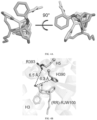
- Relative to the bacterial phospholipids (PL) LRH-1 agonist, dilauroylphosphatidyl choline (DLPC), the agonist (RR-RJW100) constricts the binding pocket and destabilizes portions of the activation function surface (AFS) ( Figs. 1B ).
- Stabilization of the AFS may facilitate co-activator binding, leading to greater potency or efficacy.
- analogs designed to enhance the AFS destabilization may be effective antagonists or inverse agonists.
- RJW100 was an effective derivative but modestly increased LRH-1 activation.
- Thr-352 interaction in LRH-1 activation by RR-RJW100 was demonstrated through the marked loss of activation by this compound when this residue was mutated.
- an RJW100 analog lacking a hydroxyl group was a poor activator.
- the T352V mutation also resulted in a loss of activity for GSK8470, although this compound does not interact with the Thr-352-coordinated water molecule.
- the T352V mutation weakens GSK8470's interaction with His-390, perhaps via destabilization of the conserved water network. This could be responsible for the loss of activity of GSK8470 when Thr-352 is mutated.
- this disclosure relates to compounds that are hexahydropentalene derivatives.
- the hexahydropentalene derivatives are any of the compounds disclosed herein optionally substituted with one or more substituents.
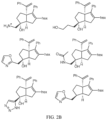
- the compounds have the following formula: including prodrugs, or salts thereof wherein,
- R 2 and R 3 are hydrogen, R 4 is 1-phenylvinyl or 1-phenylethyl, and R 5 is phenyl.
- R 6 is alkyl terminally substituted with a hydroxy, carboxy, or phosphate, wherein the hydroxy, carboxy, or phosphate are optionally further substituted with R 10 .
- compounds have one of the following formula or wherein R 6 is hydrogen, alkyl, or alkanoyl optionally substituted with R 10 .
- R 1 is hydroxyl, alkyl, amino, aminoalkyl, carbamoyl, sulphate, sulfonate, aminosulfonyl, phosphate, phosphonate, or heterocyclyl, wherein R 1 is optionally substituted with R 10 .
- R 1 is thiazolidinedione or triazole.
- compounds have one of the following formula: and wherein,
- X, Y, Z, and R 1 may be:
- R 7 is hydroxyl or alkoxy, wherein R 7 is optionally substituted with one or more, the same or different, R 10 .
- the compounds have the following formula: including prodrugs, or salts thereof wherein,
- R 6 is alkyl terminally substituted with a hydroxy, carboxy, or phosphate, wherein the hydroxy, carboxy, or phosphate are optionally further substituted with R 10 .
- this disclosure relates to methods of treating or preventing diseases or conditions associated with LRH-1 such as diabetes, cancer, or cardiovascular disease by administering an effective amount of a hexahydropentalene derivative disclosed herein to a subject in need thereof.
- the disclosure relates to methods of treating or preventing diabetes comprising administering an effective amount of a pharmaceutical composition comprising compounds disclosed herein to a subject in need thereof.
- the subject is at risk of, exhibiting symptoms of, or diagnosed with diabetes, insulin-dependent diabetes mellitus, non insulin-dependent diabetes mellitus, or gestational diabetes.
- this disclosure relates to compounds disclosed herein that are LRH-1 agonists for use in the prevention of progressive loss of pancreatic beta-cells. It also relates to an LRH-1 agonist for use in the preservation or restoration of pancreatic beta-cells. Further, it relates to an LRH-1 agonist for use in the prevention or treatment of type I diabetes or insulin-dependent diabetes mellitus, the increment of survival of pancreatic beta-cells, the increment of the performance of pancreatic beta-cells, the increment of the survival of a beta-cell graft, the in vitro preservation of pancreatic beta-cells, maintaining insulin secretion and/or in a method of transplanting pancreatic islet cells.
- Diabetes mellitus is often simply referred to as diabetes.
- Diabetes is a condition in which a person has a high blood sugar (glucose) level as a result of the body either not producing enough insulin, or because body cells do not properly respond to the insulin that is produced.
- glucose blood sugar
- Insulin In healthy persons, blood glucose levels are maintained within a narrow range, primarily by the actions of the hormone insulin. Insulin is released by pancreatic beta-cells at an appropriate rate in response to circulating glucose concentrations, the response being modulated by other factors including other circulating nutrients, islet innervation and incretin hormones. Insulin maintains glucose concentrations by constraining the rate of hepatic glucose release to match the rate of glucose clearance.
- Insulin thus enables body cells to absorb glucose, to turn into energy. If the body cells do not absorb the glucose, the glucose accumulates in the blood (hyperglycemia), leading to various potential medical complications. Accordingly, diabetes is characterized by increased blood glucose resulting in secondary complications such as cardiovascular diseases, kidney failure, retinopathy and neuropathy if not properly controlled.
- Two major pathophysiologies are related to increase glycemia. The first is an autoimmune attack against the pancreatic insulin-producing beta-cells (Type 1 diabetes or insulin-dependent diabetes) whilst the second is associated to poor beta-cell function and increased peripheral insulin resistance (Type 2 diabetes or non-insulin dependent diabetes). Similar to Type 1, beta-cell death is also observed in Type 2 diabetes. Type 1 and often Type 2 diabetes requires the person to inject insulin.
- Type 1 DM is typically characterized by loss of the insulin-producing beta-cells of the islets of Langerhans in the pancreas leading to insulin deficiency. This type of diabetes can be further classified as immune-mediated or idiopathic. The majority of Type 1 diabetes is of the immune-mediated nature, where beta-cell loss is a T-cell mediated autoimmune attack. Sensitivity and responsiveness to insulin are usually normal, especially in the early stages. Type 1 diabetes can affect children or adults but was traditionally termed "juvenile diabetes" because it represents a majority of the diabetes cases in children.
- Type 2 DM is characterized by beta-cell dysfunction in combination with insulin resistance. The defective responsiveness of body tissues to insulin is believed to involve the insulin receptor. Similar to Type 1 diabetes an insufficient beta cell mass is also a pathogenic factor in many Type 2 diabetic patients. In the early stage of Type 2 diabetes, hyperglycemia can be reversed by a variety of measures and medications that improve insulin secretion and reduce glucose production by the liver. As the disease progresses, the impairment of insulin secretion occurs, and therapeutic replacement of insulin may sometimes become necessary in certain patients. In certain embodiments, the treatment of diabetes by administering compounds disclosed herein is in combination with the administration of insulin.
- Acute complications include hyperglycaemia, diabetic ketoacidosis, or nonketotic hyperosmolar coma.
- Serious long-term complications include cardiovascular disease, chronic renal failure, retinal damage.
- this disclosure relates to methods of treating or preventing cardiovascular disease comprising administering an effective amount of a pharmaceutical composition comprising a compound disclosed herein to a subject in need thereof.
- the cardiovascular disease is coronary artery diseases (CAD), angina, myocardial infarction, stroke, hypertensive heart disease, rheumatic heart disease, cardiomyopathy, heart arrhythmia, congenital heart disease, valvular heart disease, carditis, aortic aneurysms, peripheral artery disease, and venous thrombosis.
- CAD coronary artery diseases
- angina myocardial infarction
- stroke hypertensive heart disease
- rheumatic heart disease cardiomyopathy
- heart arrhythmia congenital heart disease
- valvular heart disease carditis
- aortic aneurysms peripheral artery disease
- venous thrombosis venous thrombosis
- this disclosure relates to methods of managing cancer. In certain embodiments, this disclosure relates to methods of treating cancer comprising administering an effective amount of an agent to a subject in need thereof.
- the cancer is pancreatic cancer, breast cancer, liver cancer, colon cancer, or gastrointestinal tumors.
- the cancer is selected from bladder cancer, breast cancer, colon cancer, rectal cancer, endometrial cancer, kidney cancer, leukemia, lung cancer, melanoma, non-Hodgkin lymphoma, pancreatic cancer, prostate cancer, and thyroid cancer.
- the compounds disclosed herein can be used alone in the treatment of each of the foregoing conditions or can be used to provide additive or potentially synergistic effects with certain existing chemotherapies, radiation, biological or immunotherapeutics (including monoclonal antibodies) and vaccines.
- the compounds disclosed herein may be useful for restoring effectiveness of certain existing chemotherapies and radiation and or increasing sensitivity to certain existing chemotherapies and/or radiation.
- this disclosure relates to methods to prevent or treat gut, intestinal, and colonic inflammation, comprising administrating a compound disclosed herein in an effective amount to a subject in need thereof.
- the subject is at risk of, exhibiting symptoms of, or diagnosed with intestinal and colonic inflammation.
- the disclosure relates to methods to prevent or treat inflammatory bowel diseases (IBD), comprising administrating a compound disclosed herein in an effective amount to a subject in need thereof.
- IBD inflammatory bowel diseases
- the subject is at risk of, exhibiting symptoms of, or diagnosed with inflammatory bowel diseases (IBD).
- the disclosure relates to methods to prevent or treat Crohn's disease, comprising administrating a compound disclosed herein in an effective amount to a subject in need thereof.
- the subject is at risk of, exhibiting symptoms of, or diagnosed with Crohn's disease.
- the disclosure relates to methods to prevent or treat colitis or ulcerative colitis, comprising administrating a compound disclosed herein in an effective amount to a subject in need thereof.
- the subject is at risk of, exhibiting symptoms of, or diagnosed with colitis or ulcerative colitis.
- BMI body mass index
- Nonalcoholic fatty liver disease is a fatty liver disease associated with obesity-related disorders, such as type-2 diabetes and metabolic syndrome, occurring in people who drink little or no alcohol.
- Nonalcoholic steatohepatitis is a more advanced and severe subtype of NAFLD where steatosis is complicated by liver-cell injury and inflammation, with or without fibrosis. NASH can be severe and can lead to cirrhosis, in which the liver is permanently damaged and scarred and no longer able to work properly.
- NASH Insulin resistance, altered lipid storage and metabolism, accumulation of cholesterol within the liver, oxidative stress resulting in increased hepatic injury, and bacterial translocation secondary to disruption of gut microbiota have all been implicated as important co-factors contributing to progression of NASH. Due to the growing epidemic of obesity and diabetes, NASH is projected to become the most common cause of advanced liver disease and the most common indication for liver transplantation.
- DLPC dilauroyl phosphatidylcholine
- DLPC treatment induces bile acid biosynthetic enzymes in mouse liver, increases bile acid levels, and lowers hepatic triglycerides and serum glucose.
- DLPC treatment also decreases hepatic steatosis and improves glucose homeostasis in two mouse models of insulin resistance. Nature volume 474, pages 506-510 (2011 ).
- Sahini et al. report differentially expressed genes (DEGs) were identified which are mechanistically linked to lipid droplet (LD) formation in hepatocytes. LD-associated DEGs frequently regulated in patient samples were identified. Liver-receptor homolog-1 (NR5A2), was commonly repressed among patients examined. Translational Research, 177: 41- 69 (2016 ).
- this disclosure relates to methods to prevent or treat hepatic steatosis or metabolic syndrome, comprising administrating compounds disclosed herein in an effective amount to a subject in need thereof.
- the subject is at risk of, exhibiting symptoms of, or diagnosed with nonalcoholic fatty liver disease (NAFLD).
- NAFLD nonalcoholic fatty liver disease
- the subject is at risk of, exhibiting symptoms of, or diagnosed with nonalcoholic steatohepatitis (NASH).
- NASH nonalcoholic steatohepatitis
- ALD alcoholic liver disease
- the subject is at risk of, exhibiting symptoms of, or diagnosed with alcoholic steatohepatitis (ASH).
- a subject is at risk of NAFLD due to obesity, insulin resistance, an enlarged liver, signs of cirrhosis, or abnormal levels of liver enzymes, triglycerides and/or cholesterol.
- Signs of insulin resistance include darkened skin patches over your knuckles, elbows, and knees.
- Signs of cirrhosis include jaundice, a condition that causes your skin and whites of your eyes to turn yellow.
- a sign of NAFLD or NASH includes blood test showing increased levels of the liver enzymes alanine aminotransferase (ALT) and aspartate aminotransferase (AST).
- An enlarged liver or an abnormal amount of fat in a liver may be identified by ultrasound, computerized tomography (CT) scans, magnetic resonance imaging or combinations thereof.
- a liver biopsy may be used to detect liver inflammation and damage to diagnose NASH.
- Metabolic syndrome is typically diagnosed in the presence of three or more of the following medical issues: large waste size, e.g., 40 inches or more, high triglycerides e.g., triglyceride level of 150 mg/dL or higher, low levels of HDL cholesterol less than 50 mg/dL, high blood pressure, e.g., 130/85 mmHg or higher, and high blood glucose (or blood sugar) levels, a fasting blood sugar level of 100 mg/dL or higher.
- large waste size e.g., 40 inches or more
- high triglycerides e.g., triglyceride level of 150 mg/dL or higher
- low levels of HDL cholesterol less than 50 mg/dL high blood pressure, e.g., 130/85 mmHg or higher
- high blood glucose (or blood sugar) levels a fasting blood sugar level of 100 mg/dL or higher.
- the disclosure relates to methods to control or reduce the serum cholesterol level, comprising administrating compounds disclosed herein in an effective amount to a subject in need thereof.
- the subject has a borderline high serum cholesterol level, 200-239 mg/dL.
- the subject has a high serum cholesterol level, >240 mg/dL.
- the subject is at risk of, exhibiting symptoms, or diagnosed with hypercholesterolemia.
- the disclosure relates to methods to prevent or treat hepatic steatosis, comprising administrating a compound disclosed herein in an effective amount to a subject in need thereof.
- the subject is at risk of, exhibiting symptoms of, or diagnosed with alcoholic liver disease (ALD).
- the subject is at risk of, exhibiting symptoms of, or diagnosed with alcoholic steatohepatitis (ASH).
- the subject is at risk of, exhibiting symptoms of, or diagnosed with nonalcoholic fatty liver disease (NAFLD).
- NAFLD nonalcoholic fatty liver disease
- the subject is at risk of, exhibiting symptoms of, or diagnosed with nonalcoholic steatohepatitis (NASH).
- a subject is at risk of NAFLD due to obesity, insulin resistance, an enlarged liver, signs of cirrhosis, or abnormal levels of liver enzymes, triglycerides and/or cholesterol.
- Signs of insulin resistance include darkened skin patches over your knuckles, elbows, and knees.
- Signs of cirrhosis include jaundice, a condition that causes your skin and whites of your eyes to turn yellow.
- a sign of NAFLD or NASH includes blood test showing increased levels of the liver enzymes alanine aminotransferase (ALT) and aspartate aminotransferase (AST).
- An enlarged liver or an abnormal amount of fat in a liver may be identified by ultrasound, computerized tomography (CT) scans, magnetic resonance imaging or combinations thereof.
- a liver biopsy may be used to detect liver inflammation and damage to diagnose NASH.
- the precise therapeutically effective amount of the compounds of this disclosure will depend on a number of factors. There are variables inherent to the compounds including, but not limited to, the following: molecular weight, absorption, bioavailability, distribution in the body, tissue penetration, half-life, metabolism, protein binding, and excretion. These variables determine what dose of compound needs to be administered in a sufficient percentage and for a sufficient amount of time to have the desired effect on the condition being treated (e.g., neoplasm). The duration of drug exposure will be limited only by the compound half-life, and side effects from treatment requiring cessation of dosing.
- the amount of compound administered will also depend on factors related to patients and disease including, but not limited to, the following: the age, weight, concomitant medications and medical condition of the subject being treated, the precise condition requiring treatment and its severity, the nature of the formulation, and the route of administration. Ultimately the dose will be at the discretion of the attendant physician or veterinarian.
- the compound disclosed herein will be given for treatment in the range of 0.01 to 30 mg/kg body weight of recipient (mammal) per day or per dose or per cycle of treatment and more usually in the range of 0.1 to 10 mg/kg body weight per day or per dose or per cycle of treatment.
- the actual amount per day or per dose or per cycle of treatment would usually be from 1 to 2000 mg and this amount may be given in a single or multiple doses per day or per dose or per cycle of treatment.
- Dosing regimens may vary significantly and will be determined and altered based on clinical experience with the compound. The full spectrum of dosing regimens may be employed ranging from continuous dosing (with daily doses) to intermittent dosing.
- a therapeutically effective amount of a pharmaceutically acceptable salt of a compound disclosed herein may be determined as a proportion of the therapeutically effective amount of the compound as the free base.
- compositions may be adapted for administration by any appropriate route, for example by the oral (including capsules, tablets, liquid-filled capsules, disintegrating tablets, immediate, delayed and controlled release tablets, oral strips, solutions, syrups, buccal and sublingual), rectal, nasal, inhalation, topical (including transdermal), vaginal or parenteral (including subcutaneous, intramuscular, intravenous or intradermal) route.
- Such formulations may be prepared by any method known in the art of pharmacy, for example by bringing into association the active ingredient with the carrier(s), excipient(s) or diluent.
- the active drug component can be combined with an oral pharmaceutically acceptable carrier such as ethanol, glycerol, water and the like.
- an oral pharmaceutically acceptable carrier such as ethanol, glycerol, water and the like.
- Powders are prepared by comminuting the compound to a suitable fine size and mixing with a similarly comminuted pharmaceutical carrier such as an edible carbohydrate, as, for example, starch or mannitol. Flavoring, preservative, dispersing and coloring agent can also be present.
- Solid capsules are made by preparing a powder mixture, as described above, and filling formed gelatin sheaths.
- Glidants and lubricants such as colloidal silica, talc, magnesium stearate, calcium stearate or solid polyethylene glycol can be added to the powder mixture before the filling operation.
- a disintegrating or solubilizing agent such as agar-agar, calcium carbonate or sodium carbonate can also be added to improve the availability of the medicament when the capsule is ingested.
- suitable binders include starch, gelatin, natural sugars such as glucose or beta-lactose, corn sweeteners, natural and synthetic gums such as acacia, tragacanth or sodium alginate, carboxymethylcellulose, polyethylene glycol, waxes and the like.
- Lubricants used in these dosage forms include sodium oleate, sodium stearate, magnesium stearate, sodium benzoate, sodium acetate, sodium chloride and the like.
- Disintegrators include, without limitation, starch, methyl cellulose, agar, bentonite, xanthan gum and the like.
- Tablets are formulated, for example, by preparing a powder mixture, granulating or slugging, adding a lubricant and disintegrant and pressing into tablets.
- a powder mixture is prepared by mixing the compound, suitably comminuted, with a diluent or base as described above, and optionally, with a binder such as carboxymethylcellulose, an alginate, gelatin, or polyvinyl pyrrolidone, a solution retardant such as paraffin, a resorption accelerator such as a quaternary salt and/or an absorption agent such as bentonite, kaolin or dicalcium phosphate.
- a binder such as carboxymethylcellulose, an alginate, gelatin, or polyvinyl pyrrolidone
- a solution retardant such as paraffin
- a resorption accelerator such as a quaternary salt
- an absorption agent such as bentonite, kaolin or dicalcium phosphate.
- the powder mixture can be granulated by wetting with a binder such as syrup, starch paste, acadia mucilage or solutions of cellulosic or polymeric materials and forcing through a screen.
- a binder such as syrup, starch paste, acadia mucilage or solutions of cellulosic or polymeric materials and forcing through a screen.
- the powder mixture can be run through the tablet machine and the result is imperfectly formed slugs broken into granules.
- the granules can be lubricated to prevent sticking to the tablet forming dies by means of the addition of stearic acid, a stearate salt, talc or mineral oil.
- the lubricated mixture is then compressed into tablets.
- the compounds disclosed herein can also be combined with a free flowing inert carrier and compressed into tablets directly without going through the granulating or slugging steps.
- a clear or opaque protective coating consisting of a sealing coat of shellac, a coating of sugar
- Oral fluids such as solutions, syrups and elixirs can be prepared in dosage unit form so that a given quantity contains a predetermined amount of the compound.
- Solutions and syrups can be prepared by dissolving the compound in a suitably flavored aqueous solution, while elixirs are prepared through the use of a pharmaceutically acceptable alcoholic vehicle.
- Suspensions can be formulated by dispersing the compound in a pharmaceutically acceptable vehicle.
- Solubilizers and emulsifiers such as ethoxylated isostearyl alcohols and polyoxy ethylene sorbitol ethers, preservatives, flavor additive such as peppermint oil or natural sweeteners or saccharin or other artificial sweeteners, and the like can also be added.
- unit dosage formulations for oral administration can be microencapsulated.
- the formulation can also be prepared to prolong or sustain the release as for example by coating or embedding particulate material in polymers, wax or the like.
- the compounds of the disclosure can also be administered in the form of liposome delivery systems, such as small unilamellar vesicles, large unilamellar vesicles and multilamellar vesicles.
- Liposomes can be formed from a variety of phospholipids, such as cholesterol, stearylamine or phosphatidylcholines.
- compositions adapted for topical administration in the mouth include lozenges, pastilles and mouth washes.
- compositions adapted for rectal administration may be presented as suppositories or as enemas.
- compositions adapted for nasal administration wherein the carrier is a solid include a coarse powder having a particle size for example in the range 20 to 500 microns which is administered in the manner in which snuff is taken, i.e. by rapid inhalation through the nasal passage from a container of the powder held close up to the nose.
- Suitable formulations wherein the carrier is a liquid, for administration as a nasal spray or as nasal drops, include aqueous or oil solutions of the active ingredient.
- Fine particle dusts or mists which may be generated by means of various types of metered dose pressurized aerosols, metered dose inhalers, dry powder inhalers, nebulizers or insufflators.
- compositions adapted for vaginal administration may be presented as pessaries, tampons, creams, gels, pastes, foams or spray formulations.
- compositions adapted for parenteral administration include aqueous and non-aqueous sterile injection solutions which may contain anti-oxidants, buffers, bacteriostats and solutes which render the formulation of pharmaceutically acceptable tonicity with the blood of the intended recipient; and aqueous and non-aqueous sterile suspensions which may include suspending agents and thickening agents.
- the formulations may be presented in unit-dose or multidose containers, for example sealed ampoules and vials, and may be stored in a freeze-dried (lyophilized) condition requiring only the addition of the sterile liquid carrier, for example water for injection, immediately prior to use.
- Extemporaneous injection solutions and suspensions may be prepared from sterile powders, granules and tablets.
- formulations may include other agents conventional in the art having regard to the type of formulation in question, for example, those suitable for oral administration may include flavoring agents.
- the bound isomer has R stereochemistry at both the 1-position (hydroxyl-substituted) and 3a-position (styrene-substituted) (hereafter RR-RJW100, Fig. 1B ).
- the ligand is bound at a single site deep in the binding pocket and is fully engulfed within it. This binding mode is markedly different from that of the PL ligands, DLPC and PIP3, which extend lower in the pocket with the headgroups protruding into the solvent (seen by superposition with PDBs 4DOS and 4RWV, respectively, Fig. 3C and D ).
- PL ligands also increase the pocket volume and width compared with RJW100.
- the mouth of the pocket is ⁇ 3 ⁇ wider and nearly 40% larger in volume when DLPC is bound versus RJW100 ( Fig. 3E ).
- This effect appears to be mainly due to a shift of H6, which swings away from the mouth of the pocket in the DLPC structure by ⁇ 3 ⁇ ( Fig. 3E ).
- the direction and magnitude of the H6 movement are similar in other LRH-1-PL structures; comparison of four published human LRH-1-PL structures shows an average H6 shift of 3.0 ⁇ 0.2 ⁇ relative to LRH-1 in the apo-state or when synthetic ligands are bound.
- H6 appears to be related to whether the ligand is a PL or small molecule and not to crystal form or packing contacts. It likely occurs to avoid stearic clashes with the PL headgroup.
- H6/ ⁇ -sheet region has been recently identified as a site through which PL ligands allosterically communicate with the AFS to modulate LRH-1 activity.
- the fact that the synthetic agonists do not displace H6 relative to the apo-receptor suggests that they utilize a different mechanism for receptor activation.
- RR-RJW100 makes several hydrophobic contacts, many of which are also made by GSK8470 (shown in, Fig. 5A ). Additionally, RR-RJW100 makes several unique contacts (shown in Fig. 5A ). Many of these unique contacts are also hydrophobic; however, the RR-RJW100 hydroxyl group forms an indirect polar contact with residue Thr-352 via a water molecule. A portion of the electron density map is shown in Fig. 5A to emphasize the strong evidence for this interaction.
- SR-RJW100 also interacts with Thr-352 through the same water molecule, despite the differing conformations of the hydroxyl group ( Fig. 5B ).
- the position of the SR-RJW100 hydroxyl group also permits a second water-mediated hydrogen-bonding interaction with the backbone nitrogen of residue Val-406 ( Fig. 5B ).
- Residue Thr-352 maintained a hydrogen bond with the water molecule for 100% of each simulation, regardless of which ligand was bound. Additionally, both RR-RJW100 and SR-RJW100 maintained hydrogen bonding with the water molecule for the majority of the simulations (53.7% of the time for RR-RJW100 and 64.4% of the time for SR-RJW100).
- residue Thr-352 was mutated to valine in MDS, the time spent interacting with the Thr-352-coordinated water molecule was drastically reduced (22.9 and 0.5% when RR-RJW100 and SR-RJW100 were bound, respectively), demonstrating that this mutation likely disrupts this water-mediated interaction made by these ligands.
- the ⁇ - ⁇ -stacking of GSK8470 with residue His-390 has been described as important for activation of LRH-1 by synthetic compounds.
- the RJW100 diastereomers also engage in ⁇ - ⁇ -stacking with His-390, but with some key differences.
- the ⁇ - ⁇ -stacking is face-to-face for GSK8470 and edge-to-face for the RJW100 isomers.
- the agonists do not use analogous phenyl rings for ⁇ - ⁇ -stacking; GSK8470 uses the aniline group, whereas the RJW100 isomers use the adjacent phenyl substituent.
- MDS demonstrate ligand-dependent differences in the stability of this interaction.
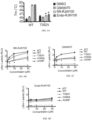
- Thr-352 and His-390 interactions for binding and activation of LRH-1 by the agonists was investigated using mutagenesis. Binding and stabilization of LRH-1 were detected using DSF. Although the T352V mutation (designed to remove the water-mediated hydrogen bond with bound ligands) had little effect on the overall thermostability of DLPC-bound LRH-1, it completely abrogated the stabilizing effect of RR-RJW100 and SR-RJW100. Likewise, disrupting this interaction by using an RJW100 analog lacking the hydroxyl group prevented the positive Tm shift in wild-type (WT) LRH-1 ( Fig. 6A ). GSK8470 did not affect the melting profile of LRH-1 in WT or T352V protein, supporting the notion that the hydroxyl group is important for stabilizing the protein-ligand complex.
- Thr-352 interaction was also found to be important for LRH-1 activation by small molecule agonists.
- the Compound lacking the hydroxyl group and unable to make this interaction was an extremely poor LRH-1 activator in luciferase reporter assays.
- the endo-RJW100 was also a weak agonist, although statistically significant activation was achieved at the highest dose with WT LRH-1 (-1.4-fold over DMSO, Fig. 6D ).
- RR-RJW100 and GSK8470 were equally effective toward WT LRH-1, and both increased activity by -2.5-fold compared with DMSO at the highest dose, and both had EC 50 values of around 4 ⁇ m ( Fig. 6B and 6C ).
- the T352V mutation greatly reduced the ability of RR-RJW100 to activate LRH-1 compared with WT protein, while not significantly affecting baseline activity.
- this mutation similarly attenuated activation by GSK8470, perhaps suggesting a broader role for this residue (or perhaps for the water network it coordinates) in ligand-mediated activation.
- introduction of a T352V mutation to GSK8470-bound LRH-1 in MDS disrupts the water network, causing complete displacement of the water molecule typically coordinated by Thr-352.
- the T352V mutation also significantly reduces the amount of time GSK8470 spends ⁇ - ⁇ -stacking with His-390 (25.7% versus 89.5% of the simulation). Both the destabilization of the water network and the disruption of stable His-390 ⁇ - ⁇ -stacking by the T352V mutation could contribute to the observed loss of activity for GSK8470 in the context of this mutation.
- aldehyde (1.0 equiv.) as a solution in dry THF.
- the solution as cooled to -78 C and vinylmagnesium bromide (1.0 M, 1.5 equiv.) was added.
- the reaction mixture was stirred and allowed to warm to room temperature over 5 h.
- the reaction was quenched with ammonium chloride, poured onto water, and extracted with ethyl acetate.
- the combined organic layers were washed with brine, dried with MgSO 4 and concentrated in vacuo.
- the resulting oil was purified on silica in 5-10% EtOAc/Hexanes to afford a clear, colorless oil.
- Triphenylphosphite (1.1 equiv) was added to an oven-dried three-neck flask under nitrogen, dissolved in dichloromethane (DCM), and cooled to -78 C in a dry ice/acetone bath. Bromine (1.1 equiv) was added portionwise. Triethylamine (1.1 equiv.) was added dropwise and the solution was allowed to stir for 5 minutes. The required aldehyde (1b-8b) was added as a solution in dichloromethane and the mixture was allowed to stir for 5 hours. Upon completion, the reaction mixture was filtered over a plug of silica (eluted with ethyl acetate) and the filtrate was concentrated in vacuo.
- bis(cyclopentadienyl)zirconium(IV) dichloride (zirconecene dichloride) (1.2 equiv.) was dried by azeotroping away latent water with benzene four times before being placed under nitrogen, dissolved in dry, degassed tetrahydrofuran (THF) and cooled to -78 °C in a dry ice/acetone bath.
- the resulting solution of zirconecene dichloride was treated with nBuLi (1.6M in hex, 2.4 equiv.) to form a clear, light yellow solution and allowed to stir.
- Freshly prepared lithium diisopropylamine (LDA, 1.0 M, 1.1 equiv.) was added at -78 °C and stirred for 15 minutes.
- Freshly prepared lithium phenylacetylide (3.6 equiv.) was added to the reaction mixture dropwise in dry, degassed THF. The resulting dark reddish brown solution was stirred at -78 °C for 1.5 hours.
- the reaction was then quenched with methanol and saturated aqueous sodium bicarbonate and allowed to warm to room temperature to form a light yellow slurry. The slurry was poured over water and extracted with ethyl acetate four times. The combined organic layers were washed with brine, dried with MgSO 4 , and concentrated in vacuo.
- the resulting colored yellow oil was roughly purified on a plug of silica and eluted with 20% EtOAc/Hexanes to afford an oil which is a mixture of quenched phenylacetylide, desired bis-protected [3.3.0] bicyclic compounds (and in some cases protonolysis byproduct), which was carried on without further purification.
- the crude oil was then dissolved in a round bottom flask charged with a stir bar and open to air. TBAF (approx. 2.0 equiv. of enyne starting material) was added. The solution rapidly darkened and was allowed to stir at room temperature for 16 h.
- TPAP tetrapropylammoniumperruthate
- NMO n-methylmorpholine oxide
- acetonitrile a solution of tetrapropylammoniumperruthate (TPAP) (0.1 equiv.) and n-methylmorpholine oxide (NMO) (10.0 equiv.) in acetonitrile was made and added to the required cyclized primary alcohol (5d-12d) (1.0 equiv.) in a scintillation vial open to air.
- Reagent grade water (10.0 equiv.) was added and the solution was allowed to stir for 3 hours at room temperature, or until the reaction was complete by TLC.
- the resulting black solution was concentrated in vacuo and passed through a short plug of silica and eluted with 50% EtOAc/Hexanes with 0.1% Acetic Acid added to afford the protected carboxylic acid intermediates.
- the tube was capped, allowed to warm to room temperature, and then heated to 90 °C for 16 h. After the reaction was complete, the pressure tube was allowed to cool to R.T. before being further cooled to -78 °C and uncapped. The solution was allowed to re-warm to room temperature before being concentrated inside a fume hood and carried on without further purification.
- the crude reaction mixture was dissolved in acetonitrile, and 2-5 drops of concentrated HCl was added. The mixture was allowed to stir until the reaction was complete (5-30 min, monitored by LCMS), and then concentrated.
- the crude reaction mixture was purified on alumina in 65/35/5 CH2Cl2/MeOH/NH4OH to afford the desired compound 13b.
- the tube was capped, allowed to warm to room temperature, and then heated to 90 °C for 16 h. After the reaction was complete, the pressure tube was allowed to cool to R.T. before being further cooled to -78 °C and uncapped. The solution was allowed to re-warm to room temperature before being concentrated inside a fume hood and carried on without further purification.
- the crude reaction mixture was dissolved in acetonitrile, and 2-5 drops of concentrated HCl was added. The mixture was allowed to stir until the reaction was complete (5-30 min, monitored by LCMS), and then concentrated. The crude reaction mixture was purified via preparatory HPLC to afford the desired compound 14d.
- FT-IR (neat): 3357, 3079, 3020, 2925, 2854, 1736, 1715, 1686, 1618, 1598, 1555, 1490, 1463, 1440, 1363, 1250, 1201, 1175, 1085, 1025, 967, 912, 800, 760, 702 cm-1.
- bis(cyclopentadienyl)zirconium(IV) dichloride (zirconecene dichloride) (1.2 equiv.) was dried by azeotroping away latent water with benzene four times before being placed under nitrogen, dissolved in tetrahydrofuran (THF) and cooled to -78 °C in a dry ice/acetone bath. The resulting solution of zirconecene dichloride was treated with nBuLi (2.4 equiv.) to form a clear, light yellow solution and allowed to stir.
- zirconecene dichloride 1.2 equiv.
- Lithium phenylacetylide (3.6 equiv.) was then prepared and added to the reaction mixture dropwise in dry THF ⁇ . The resulting dark reddish brown solution was stirred at -78 °C for one hour. The reaction was then quenched with methanol and saturated aqueous sodium bicarbonate and allowed to warm to room temperature to form a light yellow slurry. The resulting slurry was poured over water and extracted with ethyl acetate four times. The combined organic layers were washed with brine, dried with MgSO4, and concentrated in vacuo.
- the resulting colored oil (typically yellow, orange, or brown), was roughly purified on a plug of silica and eluted with 20% EtOAc/Hex to afford a yellow oil which is a mixture of phenylacetylene, desired protected [3.3.0] bicyclic compounds, and (in some cases) protected protonolysis byproduct.
- This oil was carried on without further purification. This procedure affords exo and endo diastereomers in a 7:1 ratio as determined by characteristic 1H NMR signals.
- a reaction tube (A) equipped with a magnetic stir bar was charged with tBuBrettPhos (0.04 equiv.) and sodium tert butoxide (3.0 equiv.) before being evacuated and backfilled with nitrogen.
- the required brominated [3.3.0] bicycle was added in dioxane before ammonia in dioxane (10 equiv.) was added and allowed to stir for ⁇ 15 minutes.
- tBuBrettPhos precatalyst (0.04 equiv.) was added, and the tube was evacuated and backfilled with nitrogen.
- the tBuBrettPhos precatalyst was then dissolved in dry, degassed dioxane.
- the solution of tBuBrettPhos precatalyst in reaction tube B was transferred to the stirring reaction mixture in reaction tube A.
- the nitrogen inlet was removed and the reaction mixture was heated to 80 °C for 16 hours behind a blast shield.
- the mixture was cooled to room temperature, diluted with water and extracted with EtOAc.
- the organics were washed with water and brine to remove dioxane, dried over MgSO4, and concentrated in vacuo.
- the crude oil was purified by silica gel chromatography in (typically 20-30% ) EtOAc/Hex.
- bis(cyclopentadienyl)zirconium(IV) dichloride (zirconecene dichloride) (1.2 equiv.) was dried by azeotroping away latent water with benzene four times before being placed under nitrogen, dissolved in dry, degassed tetrahydrofuran (THF) and cooled to -78 °C in a dry ice/acetone bath.
- the resulting solution of zirconecene dichloride was treated with nBuLi (2.4 equiv.) to form a clear, light yellow solution and allowed to stir.
- RJW100 (1.0 equiv.) was dissolved in DCM and cooled to -78 °C. Ozone (excess) was bubbled through the solution until the reaction mixture was blue. At this point, the stream of ozone was stopped and the reaction was stirred until the blue color disappated. Dimethylsulfide (DMS) was added, and the reaction was briefly stirred. The reaction solution was then concentrated in vacuo and the crude reaction mixture was purified on silica in 0-20% EtOAc/Hex to afford a clear, colorless oil (14 mg, 63%).
- DMS Dimethylsulfide
- a solution of 25 in ethylene glycol was prepared at room temperature. Hydrazine hydrate (9.5 equiv.) was added to the reaction mixture before heating to 100°C for 1 h. Potassium hydroxide (10.0 equiv.) was subsequently added and the reaction mixture was stirred at 150 °C for ⁇ 48 h. After stirring, the solution was cooled to room temperature, partitioned between water and EtOAc, and extracted with EtOAc 3x. The combined organic layers were dried with MgSO4, filtered, and concentrated in vacuo. The crude reaction mixture was purified on silica in 10-20% EtOAc/Hex (2.6 mg, 22%).
- Triphenylphosphite (1.1 equiv) was suspended in DCM and cooled to -78 °C. Bromine (1.1 equiv) was added dropwise and stirred briefly. Heptanal (1.0 equiv.) was then added in DCM and the reaction was allowed to come to room temperature over 3 hours. The reaction mixture was then filtered through silica and concentrated in vacuo. The crude oil was purified by silica gel chromatography in 100% hexanes to afford a clear, colorless oil (67%).
- bis(cyclopentadienyl)zirconium(IV) dichloride (zirconecene dichloride) (1.2 equiv.) was dried by azeotroping away latent water with benzene four times before being placed under nitrogen, dissolved in tetrahydrofuran (THF) and cooled to -78°C in a dry ice/acetone bath. The resulting solution of zirconecene dichloride was treated with nBuLi (2.4 equiv.) to form a clear, light yellow solution and allowed to stir.
- zirconecene dichloride 1.2 equiv.
- the required alcohol isomer (1.0 equiv.) was suspended in MeCN and cooled to -15°C. Chlorosulfonyl isocyanate (2.0 equiv.) was added and the reaction was stirred for 2 hours. After completion via TLC, concentrated hydrochloric acid (0.5) was added slowly and stirred to room temperature over 4 hours. The solution was quenched with NaHCO3, diluted with water, and extracted with EtOAc. The organic layers were rinsed with brine, dried with Na2SO4, filtered, and concentrated in vacuo. The resulting oil was purified by silica gel chromatography in 5-30% EtOAc/Hex to afford the title compounds as yellow oils (79%).
- Endo LRMS (ESI, APCI) m/z: calc'd for C29H39NO3 [M+H2O]- 449.3, 449.1
- Endo FTIR (neat): 3490, 3343, 3085, 3050, 3015, 2955, 2926, 2855, 1716, 1598, 1491, 1440, 1392, 1335, 1041, 903, 765, 701 cm-1.
- Exo LRMS (ESI, APCI) m/z: calc'd for C29H39NO3 [M+H2O]- 449.3, 449.3
- Exo FTIR (neat): 3350, 3194, 3055, 2956, 2927, 2855, 1712, 1597, 1544, 1492, 1443, 1408, 1336, 1077, 819, 759, 702 cm-1.
- Endo LRMS (ESI, APCI) m/z: calc'd for C29H38O3S [M] 466.3, found [M-CH3O3S] 368.9 Endo FTIR (neat): 3070, 3028, 2955, 2931, 2857, 1570, 1492, 1445, 1356, 1180, 938, 908, 857, 764, 702 cm-1.
- Exo LRMS (ESI, APCI) m/z: calc'd for C29H38O3S [M] 466.3, found [M-CH3O3S] 368.9
- Exo FTIR (neat): 3060, 3028, 2960, 2929, 2855, 1560, 1544, 1498, 1441, 1354, 1173, 930, 901, 702 cm-1.
- Endo LRMS (ESI, APCI) m/z: calc'd for C29H35N [M+H]+ 396.6 found 396.4 Endo FTIR (neat): 3075, 3053, 3025, 2950, 2926, 2854, 2237, 1598, 1573, 1491, 1442, 1378, 1074, 1029, 907, 765, 702 cm-1.
- Endo LRMS (ESI, APCI) m/z: calc'd for C30H38N3 [M+H]+ 440.3, found 440.4 Endo FTIR (neat): 3080, 3053, 2956, 2927, 2854, 1598, 1573, 1491, 1441, 1288, 1073, 1029, 905, 775, 702 cm-1.
- Exo LRMS (ESI, APCI) m/z: calc'd for C30H38N3 [M+H]+ 4.3, found 439.3
- Exo FTIR (neat): 3088, 3055, 2955, 2925, 2855, 1599, 1491, 1446, 1265, 1074, 910, 773, 703 cm-1.
- Endo LRMS (ESI, APCI) m/z: calc'd for C30H39NO [M+H]+ 430.3, found 430.3 Endo FT-IR (neat): 3284, 3079, 3055, 2954, 2924, 2853, 1646, 1551, 1491, 1441, 1375, 1301, 1249, 902, 774, 701, 668 cm-1.
- Exo LRMS (ESI, APCI) m/z: calc'd for C30H39NO [M+H]+ 430.3, found 430.3
- Exo FTIR (neat): 3280, 3079, 3055, 2955, 2854, 1646, 1598, 1550, 1491, 1441, 1375, 1304, 1178, 1074, 1029, 903, 766, 701, 668 cm-1.
- Endo LRMS (ESI, APCI) m/z: calc'd for C29H37N2O [M+H]+ 429.7, found 428.9 Endo FT-IR (neat): 3348, 3080, 3053, 3018, 2952, 2923, 2853, 1740, 1655, 1599, 1552, 1491, 1458, 1377, 1341, 1287, 1234, 1212, 1156, 1104, 1075, 1029, 966, 902, 860, 773, 763, 725, 701, 669 cm-1.
- Exo LRMS (ESI, APCI) m/z: calc'd for C29H37N2O [M+H]+ 429.7, found 428.9
- Exo FTIR (neat): 3317, 3079, 3053, 3018, 2954, 2923, 2854, 1641, 1591, 1545, 1491, 1459, 1440, 1378, 1339, 1261, 1195, 1182, 1157, 1075, 1028, 903, 844, 803, 775, 764, 720, 700, 669 cm-1.
- Trimethylsilyliodide (3.0 equiv.) was dissolved in a reaction vial open to air. Potassium Hydroxide (12.0 equiv.) was added and stirred until dissolved, then water ( ⁇ 20 equiv.) was added. 27 in acetonitrile was added to the reaction mixture before the reaction was heated to 60 °C for 16 h. The reaction mixture was then cooled to room temperature and filtered through celite. The filtrate was then poured onto water and extracted three times with EtOAc. The organic layers were concentrated in vacuo and the crude oil was purified on silica in 5-10% EtOAc/Hex.
- FT-IR (neat): 3475, 3275, 3080, 3053, 3019, 2924, 2853, 1707, 1598, 1572, 1491, 1457, 1440, 1357, 1260, 1181, 1092, 1075, 1027, 927, 904, 800, 763, 701 cm-1.
- Protein expression and purification-LRH-1 LBD (residues 299-541) in the pMSC7 vector was expressed in BL21(DE3) pLysS E. coli by induction with IPTG (1 mM) for 4 hr at 30°C. Protein was purified by nickel affinity chromatography. Protein used for Thermofluor experiments was incubated with DLPC (five-fold molar excess) for four hours at room temperature, and then repurified by size-exclusion into an assay buffer of 20 mM Tris-HCl, pH 7.5, 150 mM NaCl, and 5% glycerol. Protein used for crystallization was incubated with TEV protease to cleave the His tag.
- the cleaved protein was then separated from the His tag and TEV by a second round of nickel affinity chromatography.
- protein was incubated with ligands overnight (10-fold molar excess) and repurified by size-exclusion, using a final buffer of 100 mM ammonium acetate, pH 7.4, 150 mM sodium chloride, 1 mM DTT, 1 mM EDTA, and 2 mM CHAPS.
- Thermofluor assays-Purified LRH-1 LBD-His protein (0.2 mg/ml) was incubated overnight with 50 ⁇ M of each compound at 4°C. The final DMSO concentration in the reactions was 1%. SYPRO orange dye (Invitrogen) was then added at a 1:1000 dilution. Reactions were heated at a rate of 0.5°C per minute, using a StepOne Plus Real Time PCR System (ThermoFisher). Fluorescence was recorded at every degree using the ROX filter (602 nm). Data were analyzed by first subtracting baseline fluorescence (ligands + SYPRO with no protein) and then fitting the curves using the Bolzman equation (GraphPad Prism, v6) to determine the Tm.
- Luciferase reporter assays-HeLa cells were seeded at a density of 10,000 cells per well in white-walled, clear-bottomed 96-well culture plates. The next day, cells were transfected with LRH-1 and reporters, using Fugene HD (Roche) at a ratio of 5:2 Fugene ( ⁇ l): DNA ( ⁇ g). The transfected plasmids included full-length LRH-1 in a pCI vector (5 ng/ well), and a SHP-luc reporter, encoding the LRH-1 response element and surrounding sequence from the SHP promoter cloned upstream of firefly luciferase in the pGL3 basic vector (50 ng/ well).
- Cells were also co-transfected with a constitutive Renilla luciferase reporter (utilizing the CMV promoter), which was used for normalization of firefly signal (1 ng/ well).
- Control cells received pCI empty vector at 5 ng/ well in place of LRH-1-pCI.
- cells were treated with agonists for 24 hours at the concentrations indicated in the figure legends.
- Agonists were dissolved in DMSO and then diluted into media, with a final concentration of 0.3% DMSO in all wells. Luciferase signal was quantified using the DualGlo kit (Promega). Experiments were conducted at least two times in triplicate.
- Tail lengths of 8-10 carbons in length conferred the strongest activation of LRH-1.
- Protein expression and purification-LRH-1 LBD (residues 299-541) in the pMSC7 vector was expressed in BL21(DE3) pLysS E. coli by induction with IPTG (1 mM) for 4 hr at 30°C. Protein was purified by nickel affinity chromatography. Protein used for thermofluor experiments was incubated with DLPC (five-fold molar excess) for four hours at room temperature, and then repurified by size-exclusion into an assay buffer of 20 mM Tris-HCl, pH 7.5, 150 mM NaCl, and 5% glycerol. Protein used for crystallization was incubated with TEV protease to cleave the His tag.
- the cleaved protein was then separated from the His tag and TEV by a second round of nickel affinity chromatography.
- protein was incubated with ligands overnight (10-fold molar excess) and repurified by size-exclusion, using a final buffer of 100 mM ammonium acetate, pH 7.4, 150 mM sodium chloride, 1 mM DTT, 1 mM EDTA, and 2 mM CHAPS.
- Thermofluor assays-Purified LRH-1 LBD-His protein (0.2 mg/ml) was incubated overnight with 50 ⁇ M of each compound at 4°C. The final DMSO concentration in the reactions was 1%. SYPRO orange dye (Invitrogen) was then added at a 1:1000 dilution. Reactions were heated at a rate of 0.5°C per minute, using a StepOne Plus Real Time PCR System (ThermoFisher). Fluorescence was recorded at every degree using the ROX filter (602 nm). Data were analyzed by first subtracting baseline fluorescence (ligands + SYPRO with no protein) and then fitting the curves using the Bolzman equation (GraphPad Prism, v6) to determine the Tm.
- Luciferase reporter assays-HeLa cells were seeded at a density of 10,000 cells per well in white-walled, clear-bottomed 96-well culture plates. The next day, cells were transfected with LRH-1 and reporters, using Fugene HD (Roche) at a ratio of 5:2 Fugene ( ⁇ l): DNA ( ⁇ g). The transfected plasmids included full-length LRH-1 in a pCI vector (5 ng/ well), and a SHP-luc reporter, encoding the LRH-1 response element and surrounding sequence from the SHP promoter cloned upstream of firefly luciferase in the pGL3 basic vector (50 ng/ well).
- Cells were also co-transfected with a constitutive Renilla luciferase reporter (utilizing the CMV promoter), which was used for normalization of firefly signal (1 ng/ well).
- Control cells received pCI empty vector at 5 ng/ well in place of LRH-1-pCI.
- cells were treated with agonists for 24 hours at concentrations of 0.03, 0.3, 1, 3, 10, and 30 ⁇ M of each compound.
- Agonists were dissolved in DMSO and then diluted into media, with a final concentration of 0.3% DMSO in all wells. Luciferase signal was quantified using the DualGlo kit (Promega).
- Crystallization- Protein-ligand complexes were incubated with a peptide derived from human Tif2 NR Box 3 or SMRT at four-fold molar excess for two hours at room temperature and then concentrated to 6.5 mg/ml. Crystallization conditions were identified using our Phoenix robot to screen in a high throughput manner or were based on the conditions used to produce RJW100-LRH-1 crystals.
- Relative Activity refers to fold increase in activity over baseline (DMSO-treated cells) for each compound relative to the fold increase induced by RJW100. A value of "0" indicates no activity over baseline, values between 0 and 1 indicate less active compounds, and values over 1 indicate compounds that are more active than RJW100 in these assays.
- ⁇ Tm values were determined in thermofluor assays and refer to the difference in melting temperature of the LRH-1 ligand complex relative to DLPC-bound LRH-1 (PC 12:0/12:0, a phospholipid LRH-1 agonist). The Tm of RJW100 relative to DLPC is ⁇ 3°C.
Landscapes
- Chemical & Material Sciences (AREA)
- Organic Chemistry (AREA)
- Health & Medical Sciences (AREA)
- Life Sciences & Earth Sciences (AREA)
- General Health & Medical Sciences (AREA)
- Biochemistry (AREA)
- Molecular Biology (AREA)
- Diabetes (AREA)
- Hematology (AREA)
- General Chemical & Material Sciences (AREA)
- Engineering & Computer Science (AREA)
- Bioinformatics & Cheminformatics (AREA)
- Emergency Medicine (AREA)
- Obesity (AREA)
- Chemical Kinetics & Catalysis (AREA)
- Endocrinology (AREA)
- Medicinal Chemistry (AREA)
- Nuclear Medicine, Radiotherapy & Molecular Imaging (AREA)
- Pharmacology & Pharmacy (AREA)
- Animal Behavior & Ethology (AREA)
- Public Health (AREA)
- Veterinary Medicine (AREA)
- Pharmaceuticals Containing Other Organic And Inorganic Compounds (AREA)
- Acyclic And Carbocyclic Compounds In Medicinal Compositions (AREA)
Applications Claiming Priority (3)
| Application Number | Priority Date | Filing Date | Title |
|---|---|---|---|
| US201762473036P | 2017-03-17 | 2017-03-17 | |
| EP18766936.1A EP3595652B1 (de) | 2017-03-17 | 2018-03-16 | Modulatoren des leberrezeptor-homologs 1 (lrh-1) |
| PCT/US2018/022923 WO2018170430A1 (en) | 2017-03-17 | 2018-03-16 | Modulators of liver receptor homologue 1 (lrh-1) and uses |
Related Parent Applications (1)
| Application Number | Title | Priority Date | Filing Date |
|---|---|---|---|
| EP18766936.1A Division EP3595652B1 (de) | 2017-03-17 | 2018-03-16 | Modulatoren des leberrezeptor-homologs 1 (lrh-1) |
Publications (2)
| Publication Number | Publication Date |
|---|---|
| EP4516774A2 true EP4516774A2 (de) | 2025-03-05 |
| EP4516774A3 EP4516774A3 (de) | 2025-05-14 |
Family
ID=63523281
Family Applications (2)
| Application Number | Title | Priority Date | Filing Date |
|---|---|---|---|
| EP18766936.1A Active EP3595652B1 (de) | 2017-03-17 | 2018-03-16 | Modulatoren des leberrezeptor-homologs 1 (lrh-1) |
| EP24216906.8A Pending EP4516774A3 (de) | 2017-03-17 | 2018-03-16 | Modulatoren des leberrezeptorhomologs 1 (lrh-1) und verwendungen |
Family Applications Before (1)
| Application Number | Title | Priority Date | Filing Date |
|---|---|---|---|
| EP18766936.1A Active EP3595652B1 (de) | 2017-03-17 | 2018-03-16 | Modulatoren des leberrezeptor-homologs 1 (lrh-1) |
Country Status (6)
| Country | Link |
|---|---|
| US (5) | US10843996B2 (de) |
| EP (2) | EP3595652B1 (de) |
| DK (1) | DK3595652T3 (de) |
| ES (1) | ES3015124T3 (de) |
| PT (1) | PT3595652T (de) |
| WO (1) | WO2018170430A1 (de) |
Families Citing this family (7)
| Publication number | Priority date | Publication date | Assignee | Title |
|---|---|---|---|---|
| DK3595652T3 (da) | 2017-03-17 | 2025-03-03 | Univ Emory | Modulatorer af leverreceptorhomolog 1 (lrh-1) |
| CN112250557A (zh) * | 2020-10-23 | 2021-01-22 | 徐州工程学院 | 一种高效合成1,6-二烯-3-酮衍生物的方法 |
| WO2023244864A1 (en) * | 2022-06-17 | 2023-12-21 | Spencer Spence | Ozone therapeutic treatment apparatus and method of use to treat a treatment location |
| CN120475965A (zh) * | 2022-10-27 | 2025-08-12 | 爱莫里大学 | 肝受体同源物1 (lrh-1)的调节剂和用途 |
| WO2025226827A1 (en) * | 2024-04-25 | 2025-10-30 | Emory University | Liver receptor homolog-1 (lrh-1) antagonists and uses thereof |
| WO2025226833A1 (en) * | 2024-04-25 | 2025-10-30 | Emory University | Liver receptor homolog-1 (lrh-1) agonist isosteres and uses |
| WO2026086823A1 (en) * | 2024-10-22 | 2026-04-30 | Centre for Translational Stem Cell Biology Limited | In vitro production of expanded potential stem cells |
Citations (3)
| Publication number | Priority date | Publication date | Assignee | Title |
|---|---|---|---|---|
| US20040038862A1 (en) | 2001-07-30 | 2004-02-26 | Goodwin Bryan James | Identification of new therapeutic targets for modulating bile acid synthesis |
| US20080227864A1 (en) | 2004-02-24 | 2008-09-18 | Bryan James Goodwin | Lhr1 Activators as Medicaments |
| US20130210143A1 (en) | 2010-05-20 | 2013-08-15 | Fundacion Publica Andaluza Progreso Y Salud | Novel methods for preventing or treating diabetes |
Family Cites Families (2)
| Publication number | Priority date | Publication date | Assignee | Title |
|---|---|---|---|---|
| MX2010003113A (es) * | 2007-09-25 | 2010-04-01 | Abbott Lab | Compuestos de octahidropentaleno como antagonistas del receptor de quimiocina. |
| DK3595652T3 (da) | 2017-03-17 | 2025-03-03 | Univ Emory | Modulatorer af leverreceptorhomolog 1 (lrh-1) |
-
2018
- 2018-03-16 DK DK18766936.1T patent/DK3595652T3/da active
- 2018-03-16 ES ES18766936T patent/ES3015124T3/es active Active
- 2018-03-16 EP EP18766936.1A patent/EP3595652B1/de active Active
- 2018-03-16 WO PCT/US2018/022923 patent/WO2018170430A1/en not_active Ceased
- 2018-03-16 EP EP24216906.8A patent/EP4516774A3/de active Pending
- 2018-03-16 PT PT187669361T patent/PT3595652T/pt unknown
- 2018-03-16 US US16/495,092 patent/US10843996B2/en active Active
-
2020
- 2020-10-15 US US17/071,382 patent/US11691939B2/en active Active
-
2023
- 2023-05-22 US US18/200,431 patent/US12065402B2/en active Active
-
2024
- 2024-07-05 US US18/764,540 patent/US12415770B2/en active Active
-
2025
- 2025-08-21 US US19/306,212 patent/US20260055046A1/en active Pending
Patent Citations (3)
| Publication number | Priority date | Publication date | Assignee | Title |
|---|---|---|---|---|
| US20040038862A1 (en) | 2001-07-30 | 2004-02-26 | Goodwin Bryan James | Identification of new therapeutic targets for modulating bile acid synthesis |
| US20080227864A1 (en) | 2004-02-24 | 2008-09-18 | Bryan James Goodwin | Lhr1 Activators as Medicaments |
| US20130210143A1 (en) | 2010-05-20 | 2013-08-15 | Fundacion Publica Andaluza Progreso Y Salud | Novel methods for preventing or treating diabetes |
Non-Patent Citations (18)
| Title |
|---|
| "Solvent Recovery Handbook", 2002, BLACKWELL SCIENCE, pages: 193 |
| BENOD ET AL.: "Antagonists of nuclear receptor LRH-1", J BIOL CHEM, vol. 288, 2013, pages 19830 - 44, XP055643697, DOI: 10.1074/jbc.M112.411686 |
| BENOD ET AL.: "report LRH-1 regulates pancreatic cancer cell growth and proliferation", PROC NATL ACAD SCI U S A, vol. 108, no. 41, 2011, pages 16927 - 31 |
| BUSBY ET AL., PROBE REPORTS FROM THE NIH MOLECULAR LIBRARIES PROGRAM, vol. 1, 2010, pages 1 - 55 |
| CHRISTINA ET AL.: "Liver receptor homolog-1 (LRH-1): a potential therapeutic target for cancer", CANCER BIOL THER, vol. 16, no. 7, 2015, pages 997 - 1004, XP055951990, DOI: 10.1080/15384047.2015.1045693 |
| COSTE ET AL.: "report LRH-1-mediated glucocorticoid synthesis in enterocytes protects against inflammatory bowel disease", PNAS, vol. 104, no. 32, 2007, pages 13098 - 13103, XP055289788, DOI: 10.1073/pnas.0702440104 |
| FERNANDEZ-MARCOS ET AL.: "Emerging actions of the nuclear receptor LRH-1 in the gut", BIOCHIM BIOPHYS ACTA, vol. 1812, no. 8, August 2011 (2011-08-01), pages 947 - 955 |
| HOLLY ET AL.: "LRH-1 drives colon cancer cell growth by repressing the expression of the CDKN1A gene in a p53-dependent manner", NUCLEIC ACIDS RES, vol. 44, no. 2, 2016, pages 582 - 594 |
| MAYS ET AL., J BIOL CHEM, vol. 291, no. 49, 2016, pages 25281 - 25291 |
| MAYS ET AL.: "report the crystal structures of LRH-1 bound to synthetic agonists", J BIOL CHEM, vol. 291, no. 49, 2016, pages 25281 - 25291 |
| MICHAEL B. SMITH: "Domino Reactions in Organic Synthesis", 2006, WILEY |
| MUELLER ET AL.: "The nuclear receptor LRH-1 critically regulates extra-adrenal glucocorticoid synthesis in the intestine", JOURNAL OF EXPERIMENTAL MEDICINE, vol. 203, no. 9, September 2006 (2006-09-01), pages 2057 - 2062 |
| PAN ET AL.: "report LRH-1-dependent programming of mitochondrial glutamine processing drives liver cancer", GENES DEV, vol. 30, no. 11, 2016, pages 1255 - 1260 |
| SAHINI ET AL., NATURE, vol. 474, 2011, pages 506 - 510 |
| TRANSLATIONAL RESEARCH, vol. 177, 2016, pages 41 - 69 |
| WHITBY ET AL., J MED CHEM, vol. 54, 2011, pages 2266 - 2281 |
| WHITBY ET AL.: "report small molecule agonists of LRH-1", J MED CHEM, vol. 49, no. 23, 2006, pages 6652 - 5 |
| WHITBY ET AL.: "Small molecule agonists of the orphan nuclear receptors steroidogenic factor-1 (SF-1, NRSA1) and liver receptor homologue-1 (LRH-1, NR5A2", JOURNAL OF MEDICINAL CHEMISTRY, vol. 54, 2011, pages 2266 - 2281, XP055271382, DOI: 10.1021/jm1014296 |
Also Published As
| Publication number | Publication date |
|---|---|
| US12065402B2 (en) | 2024-08-20 |
| DK3595652T3 (da) | 2025-03-03 |
| US10843996B2 (en) | 2020-11-24 |
| EP3595652B1 (de) | 2024-12-04 |
| EP3595652A1 (de) | 2020-01-22 |
| WO2018170430A1 (en) | 2018-09-20 |
| US20260055046A1 (en) | 2026-02-26 |
| EP3595652A4 (de) | 2020-12-23 |
| US11691939B2 (en) | 2023-07-04 |
| US20210047258A1 (en) | 2021-02-18 |
| US20230295070A1 (en) | 2023-09-21 |
| US20200017433A1 (en) | 2020-01-16 |
| EP4516774A3 (de) | 2025-05-14 |
| ES3015124T3 (en) | 2025-04-29 |
| PT3595652T (pt) | 2025-03-11 |
| US20240368066A1 (en) | 2024-11-07 |
| US12415770B2 (en) | 2025-09-16 |
Similar Documents
| Publication | Publication Date | Title |
|---|---|---|
| US12415770B2 (en) | Modulators of liver receptor homologue 1 (LRH-1) and uses | |
| KR102903367B1 (ko) | Kras-g12c 억제제로서의 스피로 고리 화합물 | |
| TW202423442A (zh) | Kras g12d降解劑及其製備方法與應用 | |
| ES2947089T3 (es) | Compuestos como antagonistas del receptor histamínico 3 neuronal y usos de los mismos | |
| ES2540992T3 (es) | Derivados de piperidinona como inhibidores de MDM2 para el tratamiento de cáncer | |
| WO2023280280A1 (zh) | 作为KRas G12D抑制剂的稠环化合物 | |
| EP3937943A1 (de) | Neue kleinmolekülige inhibitoren der tead-transkriptionsfaktoren | |
| JP2020527577A (ja) | Tlr7/8アンタゴニストおよびそれらの使用 | |
| EP3260463A1 (de) | Deuteriertes chenodesoxycholsäurederivat und pharmazeutische zusammensetzung mit verbindung davon | |
| CA2922532A1 (en) | Aminoheteroaryl benzamides as kinase inhibitors | |
| EP3750908A1 (de) | Steroidderivatregulatoren, verfahren zu ihrer herstellung und ihre verwendungen | |
| KR102658095B1 (ko) | 안드로겐 수용체 길항제로서 다이아릴티오하이단토인 화합물 | |
| KR20200130686A (ko) | 선택적인 에스트로겐 수용체 분해제로서의 치환된 벤조티오펜 유사체 | |
| BR112020020940A2 (pt) | compostos antiproliferação e uso dos mesmos | |
| EP4074699A1 (de) | Verbindung als cyclin-abhängiger kinase-9-inhibitor und deren verwendung | |
| JP2026035660A (ja) | エキサテカン由来トポイソメラーゼ-1阻害薬医薬組成物及びその使用 | |
| EP3541786B1 (de) | Tricyclische sulfone als ror-gamma-modulatoren | |
| HK40123151A (en) | Modulators of liver receptor homologue 1 (lrh-1) and uses | |
| EP4083032A1 (de) | Pd-l1-antagonistenverbindung | |
| ES2991127T3 (es) | Inhibidores de MLL1 y agentes anticancerígenos | |
| AU2023367021A1 (en) | Modulators of liver receptor homologue 1 (lrh-1) and uses | |
| WO2025226827A1 (en) | Liver receptor homolog-1 (lrh-1) antagonists and uses thereof | |
| WO2025226833A1 (en) | Liver receptor homolog-1 (lrh-1) agonist isosteres and uses | |
| CN116507617B (zh) | 作为vhl抑制剂的1-(2-(4-环丙基-1h-1,2,3-三唑-1-基)乙酰基)-4-羟基吡咯烷-2-甲酰胺衍生物 | |
| JP2026507019A (ja) | Cdk2阻害剤としての新規な大環状アミノピラゾール化合物 |
Legal Events
| Date | Code | Title | Description |
|---|---|---|---|
| PUAI | Public reference made under article 153(3) epc to a published international application that has entered the european phase |
Free format text: ORIGINAL CODE: 0009012 |
|
| STAA | Information on the status of an ep patent application or granted ep patent |
Free format text: STATUS: THE APPLICATION HAS BEEN PUBLISHED |
|
| AC | Divisional application: reference to earlier application |
Ref document number: 3595652 Country of ref document: EP Kind code of ref document: P |
|
| AK | Designated contracting states |
Kind code of ref document: A2 Designated state(s): AL AT BE BG CH CY CZ DE DK EE ES FI FR GB GR HR HU IE IS IT LI LT LU LV MC MK MT NL NO PL PT RO RS SE SI SK SM TR |
|
| PUAL | Search report despatched |
Free format text: ORIGINAL CODE: 0009013 |
|
| AK | Designated contracting states |
Kind code of ref document: A3 Designated state(s): AL AT BE BG CH CY CZ DE DK EE ES FI FR GB GR HR HU IE IS IT LI LT LU LV MC MK MT NL NO PL PT RO RS SE SI SK SM TR |
|
| STAA | Information on the status of an ep patent application or granted ep patent |
Free format text: STATUS: REQUEST FOR EXAMINATION WAS MADE |
|
| REG | Reference to a national code |
Ref country code: HK Ref legal event code: DE Ref document number: 40123151 Country of ref document: HK |
|
| 17P | Request for examination filed |
Effective date: 20250929 |
|
| REG | Reference to a national code |
Ref country code: DE Ref legal event code: R079 Free format text: PREVIOUS MAIN CLASS: C07C0233580000 Ipc: C07C0275260000 |
|
| GRAP | Despatch of communication of intention to grant a patent |
Free format text: ORIGINAL CODE: EPIDOSNIGR1 |
|
| STAA | Information on the status of an ep patent application or granted ep patent |
Free format text: STATUS: GRANT OF PATENT IS INTENDED |
|
| RIC1 | Information provided on ipc code assigned before grant |
Ipc: C07C 275/26 20060101AFI20260219BHEP Ipc: C07C 307/04 20060101ALI20260219BHEP Ipc: C07C 309/66 20060101ALI20260219BHEP Ipc: C07D 249/04 20060101ALI20260219BHEP Ipc: C07D 303/04 20060101ALI20260219BHEP Ipc: A61P 3/10 20060101ALI20260219BHEP |
|
| INTG | Intention to grant announced |
Effective date: 20260311 |