EP4516292A1 - Instant-nanopartikelzusammensetzung und herstellungsverfahren dafür - Google Patents
Instant-nanopartikelzusammensetzung und herstellungsverfahren dafür Download PDFInfo
- Publication number
- EP4516292A1 EP4516292A1 EP23795441.7A EP23795441A EP4516292A1 EP 4516292 A1 EP4516292 A1 EP 4516292A1 EP 23795441 A EP23795441 A EP 23795441A EP 4516292 A1 EP4516292 A1 EP 4516292A1
- Authority
- EP
- European Patent Office
- Prior art keywords
- suspension
- nanoparticle
- nanoparticle composition
- composition
- active ingredient
- Prior art date
- Legal status (The legal status is an assumption and is not a legal conclusion. Google has not performed a legal analysis and makes no representation as to the accuracy of the status listed.)
- Pending
Links
Images


Classifications
-
- A—HUMAN NECESSITIES
- A61—MEDICAL OR VETERINARY SCIENCE; HYGIENE
- A61K—PREPARATIONS FOR MEDICAL, DENTAL OR TOILETRY PURPOSES
- A61K9/00—Medicinal preparations characterised by special physical form
- A61K9/48—Preparations in capsules, e.g. of gelatin, of chocolate
- A61K9/50—Microcapsules having a gas, liquid or semi-solid filling; Solid microparticles or pellets surrounded by a distinct coating layer, e.g. coated microspheres, coated drug crystals
- A61K9/51—Nanocapsules; Nanoparticles
- A61K9/5107—Excipients; Inactive ingredients
- A61K9/513—Organic macromolecular compounds; Dendrimers
- A61K9/5169—Proteins, e.g. albumin, gelatin
-
- A—HUMAN NECESSITIES
- A61—MEDICAL OR VETERINARY SCIENCE; HYGIENE
- A61P—SPECIFIC THERAPEUTIC ACTIVITY OF CHEMICAL COMPOUNDS OR MEDICINAL PREPARATIONS
- A61P35/00—Antineoplastic agents
-
- A—HUMAN NECESSITIES
- A61—MEDICAL OR VETERINARY SCIENCE; HYGIENE
- A61K—PREPARATIONS FOR MEDICAL, DENTAL OR TOILETRY PURPOSES
- A61K31/00—Medicinal preparations containing organic active ingredients
- A61K31/33—Heterocyclic compounds
- A61K31/335—Heterocyclic compounds having oxygen as the only ring hetero atom, e.g. fungichromin
- A61K31/337—Heterocyclic compounds having oxygen as the only ring hetero atom, e.g. fungichromin having four-membered rings, e.g. taxol
-
- A—HUMAN NECESSITIES
- A61—MEDICAL OR VETERINARY SCIENCE; HYGIENE
- A61K—PREPARATIONS FOR MEDICAL, DENTAL OR TOILETRY PURPOSES
- A61K31/00—Medicinal preparations containing organic active ingredients
- A61K31/33—Heterocyclic compounds
- A61K31/395—Heterocyclic compounds having nitrogen as a ring hetero atom, e.g. guanethidine or rifamycins
-
- A—HUMAN NECESSITIES
- A61—MEDICAL OR VETERINARY SCIENCE; HYGIENE
- A61K—PREPARATIONS FOR MEDICAL, DENTAL OR TOILETRY PURPOSES
- A61K31/00—Medicinal preparations containing organic active ingredients
- A61K31/33—Heterocyclic compounds
- A61K31/395—Heterocyclic compounds having nitrogen as a ring hetero atom, e.g. guanethidine or rifamycins
- A61K31/41—Heterocyclic compounds having nitrogen as a ring hetero atom, e.g. guanethidine or rifamycins having five-membered rings with two or more ring hetero atoms, at least one of which being nitrogen, e.g. tetrazole
- A61K31/425—Thiazoles
- A61K31/427—Thiazoles not condensed and containing further heterocyclic rings
-
- A—HUMAN NECESSITIES
- A61—MEDICAL OR VETERINARY SCIENCE; HYGIENE
- A61K—PREPARATIONS FOR MEDICAL, DENTAL OR TOILETRY PURPOSES
- A61K31/00—Medicinal preparations containing organic active ingredients
- A61K31/33—Heterocyclic compounds
- A61K31/395—Heterocyclic compounds having nitrogen as a ring hetero atom, e.g. guanethidine or rifamycins
- A61K31/435—Heterocyclic compounds having nitrogen as a ring hetero atom, e.g. guanethidine or rifamycins having six-membered rings with one nitrogen as the only ring hetero atom
- A61K31/4353—Heterocyclic compounds having nitrogen as a ring hetero atom, e.g. guanethidine or rifamycins having six-membered rings with one nitrogen as the only ring hetero atom ortho- or peri-condensed with heterocyclic ring systems
- A61K31/436—Heterocyclic compounds having nitrogen as a ring hetero atom, e.g. guanethidine or rifamycins having six-membered rings with one nitrogen as the only ring hetero atom ortho- or peri-condensed with heterocyclic ring systems the heterocyclic ring system containing a six-membered ring having oxygen as a ring hetero atom, e.g. rapamycin
-
- A—HUMAN NECESSITIES
- A61—MEDICAL OR VETERINARY SCIENCE; HYGIENE
- A61K—PREPARATIONS FOR MEDICAL, DENTAL OR TOILETRY PURPOSES
- A61K31/00—Medicinal preparations containing organic active ingredients
- A61K31/33—Heterocyclic compounds
- A61K31/395—Heterocyclic compounds having nitrogen as a ring hetero atom, e.g. guanethidine or rifamycins
- A61K31/435—Heterocyclic compounds having nitrogen as a ring hetero atom, e.g. guanethidine or rifamycins having six-membered rings with one nitrogen as the only ring hetero atom
- A61K31/47—Quinolines; Isoquinolines
- A61K31/4738—Quinolines; Isoquinolines ortho- or peri-condensed with heterocyclic ring systems
- A61K31/4745—Quinolines; Isoquinolines ortho- or peri-condensed with heterocyclic ring systems condensed with ring systems having nitrogen as a ring hetero atom, e.g. phenantrolines
-
- A—HUMAN NECESSITIES
- A61—MEDICAL OR VETERINARY SCIENCE; HYGIENE
- A61K—PREPARATIONS FOR MEDICAL, DENTAL OR TOILETRY PURPOSES
- A61K45/00—Medicinal preparations containing active ingredients not provided for in groups A61K31/00 - A61K41/00
-
- A—HUMAN NECESSITIES
- A61—MEDICAL OR VETERINARY SCIENCE; HYGIENE
- A61K—PREPARATIONS FOR MEDICAL, DENTAL OR TOILETRY PURPOSES
- A61K47/00—Medicinal preparations characterised by the non-active ingredients used, e.g. carriers or inert additives; Targeting or modifying agents chemically bound to the active ingredient
- A61K47/02—Inorganic compounds
-
- A—HUMAN NECESSITIES
- A61—MEDICAL OR VETERINARY SCIENCE; HYGIENE
- A61K—PREPARATIONS FOR MEDICAL, DENTAL OR TOILETRY PURPOSES
- A61K47/00—Medicinal preparations characterised by the non-active ingredients used, e.g. carriers or inert additives; Targeting or modifying agents chemically bound to the active ingredient
- A61K47/30—Macromolecular organic or inorganic compounds, e.g. inorganic polyphosphates
- A61K47/36—Polysaccharides; Derivatives thereof, e.g. gums, starch, alginate, dextrin, hyaluronic acid, chitosan, inulin, agar or pectin
-
- A—HUMAN NECESSITIES
- A61—MEDICAL OR VETERINARY SCIENCE; HYGIENE
- A61K—PREPARATIONS FOR MEDICAL, DENTAL OR TOILETRY PURPOSES
- A61K47/00—Medicinal preparations characterised by the non-active ingredients used, e.g. carriers or inert additives; Targeting or modifying agents chemically bound to the active ingredient
- A61K47/30—Macromolecular organic or inorganic compounds, e.g. inorganic polyphosphates
- A61K47/42—Proteins; Polypeptides; Degradation products thereof; Derivatives thereof, e.g. albumin, gelatin or zein
-
- A—HUMAN NECESSITIES
- A61—MEDICAL OR VETERINARY SCIENCE; HYGIENE
- A61K—PREPARATIONS FOR MEDICAL, DENTAL OR TOILETRY PURPOSES
- A61K9/00—Medicinal preparations characterised by special physical form
- A61K9/0012—Galenical forms characterised by the site of application
- A61K9/0019—Injectable compositions; Intramuscular, intravenous, arterial, subcutaneous administration; Compositions to be administered through the skin in an invasive manner
-
- A—HUMAN NECESSITIES
- A61—MEDICAL OR VETERINARY SCIENCE; HYGIENE
- A61K—PREPARATIONS FOR MEDICAL, DENTAL OR TOILETRY PURPOSES
- A61K9/00—Medicinal preparations characterised by special physical form
- A61K9/10—Dispersions; Emulsions
-
- A—HUMAN NECESSITIES
- A61—MEDICAL OR VETERINARY SCIENCE; HYGIENE
- A61K—PREPARATIONS FOR MEDICAL, DENTAL OR TOILETRY PURPOSES
- A61K9/00—Medicinal preparations characterised by special physical form
- A61K9/14—Particulate form, e.g. powders, Processes for size reducing of pure drugs or the resulting products, Pure drug nanoparticles
- A61K9/19—Particulate form, e.g. powders, Processes for size reducing of pure drugs or the resulting products, Pure drug nanoparticles lyophilised, i.e. freeze-dried, solutions or dispersions
-
- A—HUMAN NECESSITIES
- A61—MEDICAL OR VETERINARY SCIENCE; HYGIENE
- A61K—PREPARATIONS FOR MEDICAL, DENTAL OR TOILETRY PURPOSES
- A61K9/00—Medicinal preparations characterised by special physical form
- A61K9/48—Preparations in capsules, e.g. of gelatin, of chocolate
- A61K9/50—Microcapsules having a gas, liquid or semi-solid filling; Solid microparticles or pellets surrounded by a distinct coating layer, e.g. coated microspheres, coated drug crystals
- A61K9/51—Nanocapsules; Nanoparticles
- A61K9/5107—Excipients; Inactive ingredients
- A61K9/5115—Inorganic compounds
-
- A—HUMAN NECESSITIES
- A61—MEDICAL OR VETERINARY SCIENCE; HYGIENE
- A61K—PREPARATIONS FOR MEDICAL, DENTAL OR TOILETRY PURPOSES
- A61K9/00—Medicinal preparations characterised by special physical form
- A61K9/48—Preparations in capsules, e.g. of gelatin, of chocolate
- A61K9/50—Microcapsules having a gas, liquid or semi-solid filling; Solid microparticles or pellets surrounded by a distinct coating layer, e.g. coated microspheres, coated drug crystals
- A61K9/51—Nanocapsules; Nanoparticles
- A61K9/5107—Excipients; Inactive ingredients
- A61K9/5123—Organic compounds, e.g. fats, sugars
-
- A—HUMAN NECESSITIES
- A61—MEDICAL OR VETERINARY SCIENCE; HYGIENE
- A61K—PREPARATIONS FOR MEDICAL, DENTAL OR TOILETRY PURPOSES
- A61K9/00—Medicinal preparations characterised by special physical form
- A61K9/48—Preparations in capsules, e.g. of gelatin, of chocolate
- A61K9/50—Microcapsules having a gas, liquid or semi-solid filling; Solid microparticles or pellets surrounded by a distinct coating layer, e.g. coated microspheres, coated drug crystals
- A61K9/51—Nanocapsules; Nanoparticles
- A61K9/5107—Excipients; Inactive ingredients
- A61K9/513—Organic macromolecular compounds; Dendrimers
- A61K9/5161—Polysaccharides, e.g. alginate, chitosan, cellulose derivatives; Cyclodextrin
-
- A—HUMAN NECESSITIES
- A61—MEDICAL OR VETERINARY SCIENCE; HYGIENE
- A61P—SPECIFIC THERAPEUTIC ACTIVITY OF CHEMICAL COMPOUNDS OR MEDICINAL PREPARATIONS
- A61P37/00—Drugs for immunological or allergic disorders
- A61P37/02—Immunomodulators
- A61P37/06—Immunosuppressants, e.g. drugs for graft rejection
-
- A—HUMAN NECESSITIES
- A61—MEDICAL OR VETERINARY SCIENCE; HYGIENE
- A61K—PREPARATIONS FOR MEDICAL, DENTAL OR TOILETRY PURPOSES
- A61K47/00—Medicinal preparations characterised by the non-active ingredients used, e.g. carriers or inert additives; Targeting or modifying agents chemically bound to the active ingredient
- A61K47/06—Organic compounds, e.g. natural or synthetic hydrocarbons, polyolefins, mineral oil, petrolatum or ozokerite
- A61K47/26—Carbohydrates, e.g. sugar alcohols, amino sugars, nucleic acids, mono-, di- or oligo-saccharides; Derivatives thereof, e.g. polysorbates, sorbitan fatty acid esters or glycyrrhizin
Definitions
- the present invention relates to the field of pharmaceuticals, and more specifically to a nanoparticle composition for rapid suspension comprising human serum albumin and a hydrophobic drug and a preparation method therefor.
- Paclitaxel which is an anti-cancer drug extracted from the trunk and bark of the Taxus plants, is a mitotic microtubule inhibitor that has the effect of polymerizing and stabilizing intracellular microtubules.
- paclitaxel prevents microtubules from separating, thereby blocking cells in the G2 and M phases of the cell cycle. Therefore, paclitaxel causes rapidly dividing tumor cells to be fixed in the mitotic stage, such that the cell replication is blocked and the cells die.
- Paclitaxel has important clinical activity against various cancers (such as breast cancer, ovarian cancer, lung cancer, bladder cancer, etc.).
- Taxol ® in which the surfactant polyoxyethylene castor oil (Cremophor ® EL) and absolute ethanol are used together as the solvent to increase the solubility of paclitaxel.
- Taxol has significant activity against ovarian cancer, breast cancer, lung cancer, esophageal cancer, and head and neck cancer.
- Taxol has been shown to induce administration-related toxicities, as well as significant acute and cumulative toxicities such as myelosuppression, neutropenic fever, anaphylaxis, etc.
- US5439686 , US6537579 , US6749868 , US2006121119 , CN97199720.9 , CN03108361.7 and CN200610077006.4 disclose a method for preparing paclitaxel albumin nanoparticles, obtaining a formulation with significant advantages and developing the marketed product Abraxane ® , wherein the advantages include 1) no pretreatment with antihistamines before administration, the significantly reduced incidence of allergic reactions than Taxol ® , and no influence on the activity of PD-1/PDL1 when used in combination with PD-1/PDL1; 2) shortened infusion time from 3 hours for ordinary preparations to 30 minutes; 3) improved safety and effectiveness because it is rapidly disintegrated and disperses after injection into the blood and transported to the tumor tissues through a special transport mechanism.
- the preparation before using the lyophilized powder injection of albumin-bound paclitaxel, Abraxane ® is complicated and includes six steps: 1) under aseptic operation, use 20 ml of 0.9% sodium chloride injection per vial to disperse and dissolve; 2) slowly inject the 20 ml of 0.9% sodium chloride injection along the inner wall of the vial with a sterile syringe, with the injection time of not less than 1 minute; 3) do not inject the 0.9% sodium chloride injection directly onto the lyophilized cake/powder to avoid the formation of foam; 4) after injection, allow the vial to stand for at least 5 minutes to ensure that the lyophilized cake/powder is completely soaked; 5) gently shake the vial or slowly turn the vial upside down for at least 2 minutes to allow all lyophilized cakes/powder in the vial to be completely dispersed and dissolved to avoid the formation of foam; 6) if foam occurs, leave it still for 15 minutes until the
- HSA human serum albumin
- CN201580045838.5 filed by the present applicant in 2015 provides purified therapeutic nanoparticles consisting of an active ingredient and human serum albumin, wherein the weight ratio of human serum albumin to the active ingredient is selected from a range from 0.01:1 to 8.5:1, and wherein the therapeutic nanoparticles are substantially free of free HAS that is not comprised in the nanoparticles.
- the pharmaceutical composition when provided in the form of a lyophilized powder, it comprises one or more excipients for lyophilization selected from the group consisting of mannitol, sucrose, lactose, maltose, trehalose, dextran, or a combination thereof.
- the therapeutic nanoparticles disclosed in this patent are intended to be administered via intravenous infusion, so the sterility of the product needs to be ensured.
- Both the nanoparticles and human serum albumin are temperature sensitive, so they cannot be sterilized by heat sterilization, and possible sterilization solutions include full aseptic production or sterilization by filtration.
- the suspension obtained after removing the organic solvent is sterilized by filtration through a filter membrane, and then lyophilized to obtain a solid, which is resuspended in water.
- the solid is resuspended in water and the paclitaxel is adjusted to about 5 mg/ml.
- NaCl (0, 0.2M, 0.4M, 0.6M, 0.8M and 1.0M were examined) was added during the preparation, and it was shown that when NaCl was 0-0.8M (corresponding to a weight percentage of 0-4.6%), it had a solubilizing effect on paclitaxel, and when NaCl was 0.4M (corresponding to a weight percentage of 2.3%), paclitaxel and HSA had the highest binding rate of 91.0%. In this method, the added NaCl was not removed from the system. This report does not mention whether the system comprised nanoparticles, nor did it involve lyophilizing the system, let alone studying issues that urgently need to be addressed in the prior art such as the stability before and after lyophilization and the reconstitution time.
- the composition of the present invention shortens the reconstitution time of the preparation to be within 2 minutes, and can reduce foaming and avoid problems such as incomplete dissolution. Moreover, the composition of the present invention can maintain the functional structure and stability of the nanoparticles unchanged, and has the same safety and therapeutic effect. Furthermore, in the nanoparticle composition for rapid suspension of the present invention, the amount of HSA is reduced and thus allergic reactions caused by HSA can be reduced.
- the preparation process of the present invention involves the formation of nanoparticles and does not need adjustment of the pH of the system.
- the present inventors found that it is necessary not only to adopt an appropriate concentration of NaCl during preparation of the nanoparticle composition for rapid suspension, but also to control the NaCl content in the finally obtained nanoparticle composition for rapid suspension.
- nanoparticles refers to particles having a nanoscale size, e.g., a size of about 1 nm, about 10 nm or about 100 nm, in at least one dimension, e.g., one, two or three dimensions.
- purified nanoparticles refers to nanoparticles formed from human serum albumin and an active ingredient, in which the free human serum albumin has been removed to 5% to 50% of the original amount.
- nanoparticle composition for rapid suspension refers to a nanoparticle composition which is obtained by lyophilizing the above-mentioned purified nanoparticles and can be rapidly dispersed upon addition of a solvent.
- Human serum albumin monomer or “HSA monomer” refers to a soluble globulin composed of 585 amino acids, with a molecular weight of about 66,000 Daltons. It is the most abundant protein in human plasma and the last peak in size exclusion chromatography, and accounts for the vast majority of normal human serum albumin products. HSA has multiple hydrophobic binding sites and can bind a set of diverse drugs, particularly neutral or negatively charged hydrophobic compounds.
- active ingredient means a pharmaceutically active ingredient.
- the active ingredient means any substance or entity capable of exerting a therapeutic effect, e.g., treating, preventing, alleviating or inhibiting any disease and/or condition.
- dialysis fold refers to the ratio of the volume of dialysate consumed to the volume of feed after dialysis when the volume of the feed does not change during isovolumetric dialysis.
- lyoprotectant refers to a substance added to the pharmaceutical composition comprising the purified nanoparticles in order to protect the nanoparticles during lyophilization.
- treatment refers to a clinical regimen for a disease, disorder, or health condition in a patient (see, for example, Stedman's Medical Dictionary), and "treating a tumor” means reducing the number of symptoms of a tumor, reducing the severity of one or more symptoms of a tumor, or slowing the progression of a tumor.
- a “therapeutically effective amount” of a particular therapeutic agent is an amount of the therapeutic agent sufficient to reduce the number of tumor symptoms, reduce the severity of one or more tumor symptoms, or slow the progression of the tumor.
- the present invention provides a nanoparticle composition for rapid suspension comprising an active ingredient, an albumin, a particle stabilizer, and optionally a lyoprotectant.
- the present invention provides a nanoparticle composition for rapid suspension comprising an active ingredient, an albumin, a lyoprotectant and a particle stabilizer.
- the active ingredient is selected from active ingredients suitable for being wrapped in human serum albumin, and should have the following characteristics: insoluble or slightly soluble in water, and soluble or easily soluble in specific organic solvents.
- the active ingredient is selected from the group consisting of taxanes, including but not limited to paclitaxel, docetaxel, cabazitaxel, or lipophilic derivatives of docetaxel; macrolides, including but not limited to rapamycin and derivatives thereof, epothilone B and derivatives thereof, tanespimycin and derivatives thereof, etc.; camptothecins, including but not limited to 10-hydroxycamptothecin, SN38 and derivatives thereof, etc.; anthracyclines, including but not limited to aclarubicin, pirarubicin, etc.; and other active ingredients, including colchicine and derivatives thereof, thiocolchicine dimer, amiodarone, liothyronine, cyclosporine, exemestane, flutamide, fulvestrant, romidepsin, semustine, ibuprofen, etc.
- taxanes including but not limited to paclitaxel, docetaxe
- the active ingredient is selected from taxanes, preferably, the taxane is selected from the group consisting of paclitaxel or docetaxel.
- the albumin is selected from serum albumin with carrier function, such as human serum albumin and bovine serum albumin, preferably human serum albumin.
- the lyoprotectant is selected from the group consisting of mannitol, sucrose, lactose, maltose, trehalose, dextran or any combination thereof, preferably a combination of mannitol and sucrose, and the ratio therebetween is preferably 10:1 to 1:1, preferably 8:1 to 2:1, preferably 8:1 to 3:1, further preferably 5:1 to 2:1, further preferably 5:1 to 3:1, and most preferably 5:1.
- the particle stabilizer is selected from the group consisting of sodium chloride, disodium hydrogen phosphate, sodium dihydrogen phosphate, and potassium chloride, preferably sodium chloride.
- the nanoparticle composition for rapid suspension comprises, by weight percentage, 1-30% of an active ingredient, 0.1-30% of a protein, 0.00001-3% of a particle stabilizer, and balance of lyoprotectant.
- the nanoparticle composition for rapid suspension comprises, by weight percentage, 0.00001-3%, preferably 0.0001-1%, or any subrange within the range, for example, 0.0001-1%, 0.0001-0.1%, 0.0005-0.5%, 0.001-0.1%, 0.005-0.05%, 0.008-0.022% of the particle stabilizer.
- the nanoparticle composition for rapid suspension comprises, by weight percentage, 1-30%, preferably 2-20% or 3-15% or 5-10% of the active ingredient.
- the nanoparticle composition for rapid suspension comprises, by weight percentage, 0.1-30% or 1-25% or 5-20% of the protein.
- the binding rate of the active ingredient to protein is great than 90%.
- the weight ratio of the protein to the active ingredient is 0.1:1-5:1, preferably 0.3:1-3:1 or 0.5:1-3:1 or 1:1-3:1 or 0.5:1-2.5:1, for example, is selected from the group consisting of 0.1:1, 0.2:1, 0.3:1, 0.4:1, 0.5:1, 0.6:1, 0.70:1, 0.8:1, 0.9:1, 0.95:1, 1:1, 1.1:1 , 1.2:1, 1.3:1, 1.4:1, 1.5:1, 1.6:1, 1.7:1, 1.8:1, 1.8:1, 1.9:1, 2:1, 2.1:1, 2.2:1, 2.3 :1, 2.4:1, 2.5:1, 2.6:1, 2.7:1, 2.8:1, 2.9:1, 3:1, 3.5:1, 4:1, 4.5:1, 5:1 or a range between any two of the above ratios.
- the protein is human serum albumin.
- the nanoparticle for rapid suspension in the composition have an average particle size of 30-200 nm, preferably 100-180 nm, preferably 110-170 nm, more preferably 110-160 nm, more preferably 110-140 nm, further preferably 115-130 nm, more preferably 118-125 nm, most preferably 118-122 nm, for example, selected from the group consisting of 30, 40, 50, 60, 70, 80, 90, 100, 110, 111, 112, 113, 114, 115, 116, 117, 118, 119, 120, 121, 122, 123, 124, 125, 126, 127, 128, 129, 130, 131, 132, 133, 134, 135, 136, 137, 138, 140, 141, 142, 143, 144, 145, 146, 147, 148, 149, 150, 151, 152, 153, 154, 155, 156, 157
- an organic solvent is used to dissolve the active ingredient.
- the organic solvent is selected from the group consisting of pure solvents with low water solubility and low boiling point or a mixed solvent thereof with a small molecular alcohol.
- the organic solvent is one or more selected from the group consisting of chloroform, dichloromethane, ethanol or tert-butyl alcohol, preferably chloroform or a combination of chloroform and ethanol.
- the organic solvent can be removed from the emulsion by any appropriate method, such as evaporation under reduced pressure, dialysis etc., to minimize the residual organic solvent in the product.
- the residual amount of the organic solvent is less than 0.1 mg/ml, preferably less than 0.08 mg/ml, 0.05 mg/ml, 0.04 mg/ml, 0.03 mg/ml, 0.02 mg/ml or 0.01 mg/ml, further preferably less than 5 mg/ml, 1 mg/ml, 0.5 mg/ml, 0.1 mg/ml, 0.05 mg/ml or 0.01 ⁇ g/ml.
- the nanoparticle composition for rapid suspension does not comprise any surfactant, such as polyoxyethylene castor oil, polyvinylpyrrolidone, polyvinyl alcohol, hydroxypropyl methylcellulose, poloxamer, lecithin, cholates, etc.
- surfactant such as polyoxyethylene castor oil, polyvinylpyrrolidone, polyvinyl alcohol, hydroxypropyl methylcellulose, poloxamer, lecithin, cholates, etc.
- the present invention provides a pharmaceutical composition comprising the nanoparticle composition for rapid suspension of the first aspect.
- the pharmaceutical composition is in a solid or liquid form.
- the pharmaceutical composition is provided in a liquid form, including, but not limited to, a form suitable for injection to a subject.
- the pharmaceutical composition is an injection solution.
- the pharmaceutical composition is provided in a liquid form, wherein the nanoparticle for rapid suspension are suspended in a pharmaceutically acceptable carrier.
- the pharmaceutically acceptable carrier includes, but not limited to, a buffer, a preservative, water for injection, physiological saline, and isotonic solution.
- the liquid form pharmaceutical composition of the present invention comprises the active ingredient (such as paclitaxel) in a content of 0.1-100 mg/ml, preferably 0.5-50 mg/ml, more preferably 1-20 mg/ml, such as 5 mg/ml.
- the pharmaceutical composition is in a solid form, including but not limited to dry powder or lyophilized powder.
- the present invention provides the pharmaceutical composition in a solid form.
- the nanoparticle composition for rapid suspension comprises the active ingredient (e.g. paclitaxel) in a content of 1-30%, preferably 2-20% or 3-15% or 5-10% by weight.
- Such solid form pharmaceutical composition may be resuspended in a pharmaceutically acceptable carrier.
- the pharmaceutically acceptable carrier includes, but not limited to, a buffer, a preservative, water for injection, physiological saline, and isotonic solution.
- this solid is resuspended in water for injection, preferably the resulting resuspension comprises the active ingredient (e.g., paclitaxel) in a content of about 5 mg/ml.
- the present invention further provides a method for preparing the above nanoparticle composition for rapid suspension, comprising the steps of: (1) dissolving the active ingredient in an organic solvent to form an oil phase, and dissolving the protein in water to form an aqueous phase, (2) mixing and homogenizing the oil phase and the aqueous phase to form a nanoemulsion, (3) removing the organic solvent in the nanoemulsion to obtain a suspension, (4) dialyzing, and optionally (5) lyophilizing.
- the organic solvent is selected from the group consisting of pure solvents with low water solubility and low boiling point or a mixed solvent thereof with a small molecular alcohol.
- the organic solvent is one or more selected from the group consisting of chloroform, dichloromethane, ethanol or tert-butyl alcohol, preferably chloroform or a combination of chloroform and ethanol.
- a skilled person can select an appropriate organic solvent based on the nature of the active ingredient.
- the organic solvent that can be used is one or more selected from the group consisting of chloroform and ethanol.
- the organic solvent that can be used is a mixed system of chloroform and ethanol.
- the volume ratio of chloroform to ethanol is 1:1 to 20:1, preferably 1:1 to 15:1, preferably 1:1 to 11:1; for example, selected from the group consisting of 1:1, 4:1, 9:1 and 11:1.
- the concentration of the active ingredient in the oil phase ranges from 20 to 500 mg/ml, preferably from 50 to 350 mg/ml, preferably from 60 to 250 mg/ml, and preferably from 80 to 200 mg/ml. In some specific embodiments, the concentration of the active ingredient in the oil phase is selected from the group consisting of 20 mg/ml, 30 mg/ml, 50 mg/ml, 83 mg/ml, 100 mg/ml, 133 mg/ml, 150 mg/ml, 167 mg/ml, 180 mg/ml, 200 mg/ml, 250 mg/ml, 300 mg/ml, 333 mg/ml, 450 mg/ml and 500 mg/ml.
- the concentration of the protein in the aqueous phase is 2% to 10% (w/v), preferably 2% to 7% (w/v), preferably 2% to 5% (w/v), for example, selected from the group consisting of 2%, 4%, 5% and 10%.
- the oil phase and the water phase are mixed to form a nanoemulsion, and the volume ratio of the oil phase to the water phase is 1:10 to 1:100, preferably 1:10 to 1:60, more preferably 1:20 to 1:40. In some specific embodiments, the mixing ratio of the oil phase to the water phase is 3:100 or 1:25.
- the nanoemulsion can be formed using a method known in the art, including but not limited to homogenization. For example, the mixture of the oil phase and the water phase is homogenated by a high-shear disperser, and then homogenized by a high-pressure homogenizer to obtain an oil-in-water emulsion.
- the mixture of the oil phase and the water phase is homogenated by a high shear disperser for 2-10 minutes, and then homogenized by a high-pressure homogenizer at 10,000-20,000 psi to obtain an oil-in-water emulsion.
- step (3) the organic solvent in the nanoemulsion is removed, and any known suitable method may be used, such as evaporation under reduced pressure, dialysis, etc. Among them, evaporation under reduced pressure includes falling-film evaporation.
- falling-film evaporation is used to remove the organic solvent in the nanoemulsion.
- the emulsion is evaporated by a falling-film evaporator at 60°C and 40 mbar to remove the organic solvent in the emulsion.
- the resulting suspension comprises the nanoparticles of the present disclosure.
- the suspension at this moment also comprised an excess amount of albumin, which did not actually participate in the formation of the nanoparticles.
- step (3) can be combined with step (4).
- the dialyzing in the step (4) is performed in a dialysis fold of 2-10, preferably 3-6.
- the dialyzing is performed by adding a particle stabilizer to the suspension obtained in step (3), so that the concentration of the particle stabilizer in the suspension is 0.01%-1.4% (w/v), and dialyzing in an aqueous solution of a lyoprotectant.
- the concentration of the particle stabilizer in the suspension is 0.1%-1.4% (w/v), preferably 0.1%-0.9% (w/v).
- the aqueous solution of the lyoprotectant comprises 1%-10%, preferably 2%-8%, preferably 5%-6% of the lyoprotectant.
- the dialyzing is performed by dialyzing in an aqueous solution of a lyoprotectant, and the aqueous solution further comprises a particle stabilizer in a concentration of 0.01%-1.4% (w/v), preferably 0.05%-0.9% (w/v), preferably 0.05%-0.5% (w/v), more preferably 0.05%-0.15%.
- the aqueous solution of the lyoprotectant comprises 1%-10%, preferably 2%-8%, preferably 5%-6% of the lyoprotectant.
- the dialyzing is performed by dialyzing in a solution of a particle stabilizer with an appropriate concentration of 0.01%-1.4% (w/v), preferably 0.1%-1.4% (w/v), preferably 0.1%-0.9% (w/v).
- a lyoprotectant is added after dialysis, and preferably, the lyoprotectant is added until the resulting liquid comprises 1%-10%, preferably 2%-8%, more preferably 5%-6 % of the lyoprotectant.
- the lyophilizing in step (4) is performed by freezing between -20°C and -60°C and drying at a temperature between 0°C and +40°C.
- the nanoparticle for rapid suspension involved in the present invention are intended to be administered via intravenous infusion, so the sterility of the product needs to be ensured.
- Both the nanoparticles and human serum albumin are temperature sensitive, so they cannot be sterilized by heat sterilization, and possible sterilization solutions include full aseptic production or sterilization by filtration.
- the present invention further provides a method of using the above nanoparticle for rapid suspension or the pharmaceutical composition.
- the nanoparticle for rapid suspension or the pharmaceutical composition can effectively transport multiple active ingredients, they can be used to treat diseases that are responsive to the active ingredient.
- the nanoparticle for rapid suspension or the composition thereof can be used to treat cancer, such as liver cancer, prostate cancer, lung cancer, breast cancer, multiple myeloma, transplant rejection, colon cancer, and lymphoma.
- Other diseases further include fever and so on.
- the present disclosure further provides use of the above nanoparticle for rapid suspension or the pharmaceutical composition in the preparation of a medicament for treating a disease responsive to the active ingredient.
- the disease includes cancer such as liver cancer, prostate cancer, lung cancer, breast cancer, multiple myeloma, transplant rejection, colon cancer, and lymphoma.
- Other diseases further include fever and so on.
- the particle size of particles may be measured by any existing or future suitable method, including but not limited to sedimentation, sieving, microscopy, or laser particle size analyzer. It should also be understood that, when the nanoparticles in the present disclosure are multiple, the particle size of each nanoparticle is not consistent, and it is also included in the scope of the present disclosure as long as its average particle size meets the above limitations. In some specific embodiments, the particle size is determined by a laser particle size analyzer.
- the preparation before using the marketed albumin-bound paclitaxel Abraxane ® includes six steps and is complicated in operation, requiring a minimum of 8 minutes.
- the product dispersion time is long and the risk of contamination increases during drug preparation.
- the preparation operation takes up a lot of space and time, affecting the work efficiency of the preparation personnel; and when the preparation operation is irregular, it is easy to generate a lot of foam and occur incomplete dissolution, which may lead to problems such as inaccurate liquid metering and clogging of infusion lines, and may affect medication safety or lead to medical disputes.
- the lyophilized product of the present invention can be quickly resuspended without complicated operations, shortening the reconstitution time of the preparation to be within 2 minutes, or even to 1 minute, and can reduce foaming and avoid problems such as incomplete dissolution, which greatly improves the convenience in clinical application and work efficiency and is beneficial to ensuring the safety of medication.
- the nanoparticle for rapid suspension or the pharmaceutical composition of the present invention have good stability whether during the preparation process or after reconstitution and resuspension. When it is left at room temperature for 24 hours or even 48 hours, there are no obvious changes in liquid appearance, particle size, transmittance, etc. When the nanoparticle for rapid suspension or the pharmaceutical composition is placed under accelerated conditions for 10 days, there are no significant changes in particle size, transmittance, reconstitution time, etc.
- the present invention greatly reduces the amount of human serum albumin by optimizing the prescription formulation, not only maintains the functional structure and stability of the nanoparticles, but also can significantly reduce the allergic reaction caused by HSA.
- the product of the present invention has no significant difference in therapeutic effect while having significantly improved safety.
- the preparation method of the present invention is convenience and operable and suitable for large-scale production.
- the albumin content was determined by HPLC method at a detection wavelength of 228nm on a UV detector equipped with a Tosohaas TSK G3000 SWXL gel chromatographic column using a 0.1mol/L dipotassium hydrogen phosphate solution (adjusting pH to 7.0 ⁇ 0.1 by hydrochloric acid) as the mobile phase at a column temperature of 25 °C, a flow rate of 0.7ml/min and an injection volume of 10 ⁇ l, and calculated using an external standard method.
- test solution The solution to be tested was diluted with a 0.9% sodium chloride solution to give a solution with the albumin concentration of less than 3 mg/ml, which was used as the test solution.
- the paclitaxel content was determined by HPLC method on a UV detector equipped with an octadecylsilane bonded silica gel chromatographic column at a detection wavelength of 228nm using acetonitrile-water (1:1, v/v) as the mobile phase at a column temperature of 25°C, a flow rate of 1.0ml/min and an injection volume of 10 ⁇ l, and calculated using an external standard method.
- test solution The solution to be tested was diluted with acetonitrile until the paclitaxel is completely dissolved to obtain a solution with a concentration of 20-200 ⁇ g/ml, which was used as the test solution.
- the mannitol content was determined by HPLC method on a differential refractive index detector equipped with a Sepax Carbomix Ca-NP chromatographic column using water as the mobile phase at a flow rate of 0.5 ml/min, a column temperature of 50°C, a detection temperature of the differential refractive index detector of 55°C and an injection volume of 20 ⁇ l, and calculated using an external standard method.
- sucrose content was determined by HPLC method on an evaporative light scattering detector equipped with an Agilent ZORBAX NH2 chromatographic column using acetonitrile-water (80:20, v/v) as the mobile phase at a flow rate of 1.5ml/min, a column temperature of 35°C, a nebulizer temperature of 55°C, a drift tube temperature of 55°C and a gas flow rate of 1.0ml/min for the evaporative light scattering detector, and an injection volume of 5 ⁇ L, and calculated from the standard curve.
- the sodium ion content was determined on a conductivity detector equipped with a cation exchange chromatographic column (DionexIonPacTM CS16) using 30mM aqueous solution of methylsulfonic acid as the mobile phase at a flow rate of 0.4ml/min, a column temperature of 30°C and an injection volume of 25 ⁇ L, and calculated using an external standard method.
- a conductivity detector equipped with a cation exchange chromatographic column (DionexIonPacTM CS16) using 30mM aqueous solution of methylsulfonic acid as the mobile phase at a flow rate of 0.4ml/min, a column temperature of 30°C and an injection volume of 25 ⁇ L, and calculated using an external standard method.
- the change in transmittance of a transmittable product can reflect the change in stability of the product.
- the measurement was performed on a multiple light scattering instrument (Turbiscan, Formulaction), which scans the product at different times and monitors changes in the product's transmittance or backscattered light to determine whether the product has unstable such as aggregation, sedimentation, and stratification.
- sample cell The sample to be tested was shaken evenly and put into a sample cell with a sample volume of about 20ml, and the sample cell was placed on a sample holder, and covered with a cap.
- Sample measurement The sample was measured by intelligent scanning by setting the scanning time to 24 hours and automatically performing a measurement every 30 seconds, and the transmittance values were selected at a fixed position and at different times.
- reagents and instruments used in the examples are from the same model and/or manufacturer.
- paclitaxel (CAS: 33069-62-4 , Hainan Yew Pharmaceutical Co., Ltd.) was dissolved in 120ml of chloroform/ethanol (11:1, v/v) to obtain an oil phase, and 800ml of human serum albumin solution ( CAS: 70024-90-7 , Hebei Daan Pharmaceutical Co., Ltd.) (20% w/v) was added with water to 4L to obtain an aqueous phase.
- the oil phase and the aqueous phase were emulsified online by a high shear disperser (model F22E, FLUKO Equipment (Shanghai) Co., Ltd.) to form a primary emulsion, and then homogenized by a high-pressure homogenizer (model M-110EH30K, Microfluidics Company) at 10,000-20,000 psi to obtain a nanoemulsion.
- a high shear disperser model F22E, FLUKO Equipment (Shanghai) Co., Ltd.
- a high-pressure homogenizer model M-110EH30K, Microfluidics Company
- the nanoemulsion was transferred to a falling film evaporator (model APLS -70L, Shanghai Tofflon Science and Technology Co., Ltd.) at a heating temperature of 50°C and a vacuum degree of lower than 80mbar, and evaporated under reduced pressure to remove the organic solvent in the solution to obtain a translucent suspension having paclitaxel albumin nanoparticles with an average diameter of 114nm.
- a falling film evaporator model APLS -70L, Shanghai Tofflon Science and Technology Co., Ltd.
- the obtained suspension was dialyzed by a 300kD ultrafiltration membrane. After 6-fold dialysis with the dialysis substances in the following table respectively, most of the free human serum albumin in the suspension was replaced to give purified nanoparticle suspensions 1-1 to 1-8.
- paclitaxel 20g was dissolved in 200ml of chloroform/ethanol (11:1, v/v) to obtain an oil phase, and 800g of human serum albumin solution (20% w/v) was added with water to 4L to obtain an aqueous phase.
- the oil phase and the aqueous phase were emulsified online by a high-shear disperser to form a primary emulsion, and then homogenized by a high-pressure homogenizer at 10,000-20,000 psi to obtain a nanoemulsion.
- the nanoemulsion was transferred to a falling film evaporator at a heating temperature of 50°C and a vacuum degree of lower than 80mbar, and evaporated under reduced pressure to remove the organic solvent in the solution to obtain a translucent suspension having paclitaxel albumin nanoparticles with an average diameter of 112nm.
- the obtained suspension was dialyzed 4-folds in volume by a 300kD ultrafiltration membrane using 5% mannitol solutions (comprising 0, 0.05%, 0.1%, 0.2%, 0.3%, 0.4%, and 0.5% sodium chloride respectively) as the dialysis solutions.
- 5% mannitol solutions comprising 0, 0.05%, 0.1%, 0.2%, 0.3%, 0.4%, and 0.5% sodium chloride respectively.
- most of the free human serum albumin in the suspension was replaced to give purified nanoparticle suspensions 2-0 to 2-6.
- 20 ml of each of the purified nanoparticle suspensions was put into a vial for lyophilizing to obtain nanoparticle lyophilized powder for rapid suspension 2-0 to 2-6 as white cakes.
- the nanoparticle lyophilized powder for rapid suspension 2-0 to 2-6 obtained above were added with 20ml of water for injection respectively.
- the vials were swirled and/or inverted gently to allow all the lyophilized cakes/powders in the vials to be completely dispersed and dissolved, and the white cakes was dissolved completely within about 1 minute.
- the particle size of the suspensions obtained by resuspending the lyophilized powders 2-1 to 2-6 did not change significantly, while the particle size of the sample 2-0 after lyophilization and reconstitution increased to 137 nm.
- the lyophilized powders 2-0 to 2-6 were left at a high temperature of 60°C for 5 days, and the white cakes were completely dissolved within 2 minutes.
- the reconstituted samples were left at room temperature for 24 hours without obvious change in the appearance of all samples; and for 48 hours without precipitation in samples 2-1 and 2-2.
- paclitaxel 20g was dissolved in 200ml of chloroform/ethanol (11:1, v/v) to obtain an oil phase, and 800g of human serum albumin solution (20% w/v) was added with water to 4L to obtain an aqueous phase.
- the oil phase and the aqueous phase were emulsified online by a high-shear disperser to form a primary emulsion, and then homogenized by a high-pressure homogenizer at 10,000-20,000 psi to obtain a nanoemulsion.
- the nanoemulsion was transferred to a falling film evaporator at a heating temperature of 50°C and a vacuum degree of lower than 80mbar, and evaporated under reduced pressure to remove the organic solvent in the solution to obtain a translucent suspension having paclitaxel albumin nanoparticles with an average diameter of 122nm.
- the purified nanoparticle suspensions 3-1 to 3-5 were packaged and lyophilized in a lyophilizer for 40 hours to obtain stable white cakes, which are the nanoparticle lyophilized powder for rapid suspension 3-1 to 3-5.
- the nanoparticle lyophilized powder for rapid suspension 3-1 to 3-5 were added into water and resuspended to become isotonic solutions.
- the white cakes could be completely dissolved within 2 minutes.
- the nanoparticle lyophilized powder for rapid suspension 3-1 to 3-5 were left at a high temperature of 60°C for 10 days, and transmittance was measured according to the "Detection Method (II) Method for measuring transmittance" and the average particle size was measured. The results are shown in the table below.
- Table 4 results of accelerated stability of purified nanoparticle suspension and lyophilized powders
- Type of dialysis solution lyophilized powder 3-1 lyophilized powder 3-2 lyophilized powder 3-3 lyophilized powder 3-4 lyophilized powder 3-5 Drug solution after dialysis Drug concentration(m g/ml) 5.91 5.77 6.15 6.23 6.05 Protein concentration(m g/ml) 11.82 10.90 14.15 12.46 12.28 Protein: Drug 2.10 1.89 2.30 2.00 2.03 Particle protective agent 0.04 0.04 0.04 0.04 0.04 0.04 Particle size (nm) 122 122 122 122 122 Transmittance% (0h) 11.29 13.68 13.45 13.78 11.99 Transmittance% (24h) 11.43 13.29 13.46 13.81 11.90 lyophilize d powder (0 day) Cake Appearance White cake with a lot of crystals White cake with a small volume and a lot of crystals White cake White cake White cake Reconstitution time (s) 77 65 67 90 45 Particle size (
- mannitol as a lyoprotectant can protect purified paclitaxel albumin nanoparticles, and the addition of sucrose can better ensure the stability of paclitaxel nanoparticles during lyophilization (little change in transmittance between 0h and 24h).
- sucrose can better ensure the stability of paclitaxel nanoparticles during lyophilization (little change in transmittance between 0h and 24h).
- the combination of mannitol/sucrose as the lyoprotectant has a good protective effect on both the feed solutions during dialysis and the lyophilized products.
- lyophilized powders 3-1, 3-2, 3-4, and 3-5 after reconstitution showed particle size increase in different degrees, while the particle size and transmittance of lyophilized powder 3-3 remained unchanged, indicating that 5% mannitol + 1% sucrose as a lyoprotectant had the best effect and no additional osmotic osmotic pressure adjuster was required to meet the requirements.
- lyophilized powders 3-4 and 3-5 Similar to lyophilized powder 3-3, the particle size and transmittance of lyophilized powders 3-4 and 3-5 remain basically unchanged, and 1% mannitol + 1% sucrose and 4% mannitol + 2% sucrose as lyoprotectants were also the best.
- paclitaxel 50g was dissolved in 500ml of chloroform/ethanol (11:1, v/v) to obtain an oil phase, and 2.08kg of human serum albumin solution (20% w/v) was added with water to 10L to obtain an aqueous phase.
- the oil phase and the aqueous phase were emulsified online by a high-shear disperser to form a primary emulsion, and then homogenized by a high-pressure homogenizer at 10,000-20,000 psi to obtain a nanoemulsion.
- the nanoemulsion was transferred to a falling film evaporator at a heating temperature of 50°C and a vacuum degree of lower than 80mbar, and evaporated under reduced pressure to remove the organic solvent in the solution to obtain a translucent suspension having paclitaxel albumin nanoparticles with an average diameter of 118nm.
- the purified nanoparticle suspension after dialysis was filtered smoothly through a 0.22 micron sterilization filter (Sartorius, Germany).
- the particle size did not change significantly after filtration, and no significant change was observed when the suspension was left at room temperature for 48 hours.
- the suspension was packaged and then lyophilized in a lyophilizer for 80 hours to obtain a stable white cake, which is the nanoparticle lyophilized powder for rapid suspension 4 (referred to as lyophilized powder 4).
- the white cake obtained by lyophilization was added with water for injection to become an isotonic solution, and shaken gently to be dissolved completely.
- the white cake could be completely dissolved in about 1 minute with slight foaming.
- the resuspended suspension was left at room temperature for 48 hours without significant changes.
- Example 4 The method in Example 4 was used to prepare three batches of nanoparticle lyophilized powder for rapid suspension, named 5-1, 5-2 and 5-3 respectively.
- the sample names and main formulations and processes are shown in the table below.
- Table 5 Preparation of nanoparticle lyophilized powder for rapid suspension 17, 18 and 19 Name Dialysis solution Process Particle size (nm) Name after lyophilization Purified nanoparticle suspension 5-1 5% mannitol + 1% sucrose 3-fold dialysis 118 nanoparticle lyophilized powder for rapid suspension 5-1
- Purified nanoparticle suspension 5-2 120 nanoparticle lyophilized powder for rapid suspension 5-2
- Purified nanoparticle suspension 5-3 122 nanoparticle lyophilized powder for rapid suspension 5-3
- the purified nanoparticle suspension 3-3 obtained in Example 3 was dialyzed at different folds. After each dialysis, the contents of human serum albumin and paclitaxel were determined according to "Detection methods (I) methods for determining the contents of respective components of the product" to obtain protein-drug ratio.
- the products after each dialysis were lyophilized, and then added with 20ml of water for injection, and shaken gently to be dissolved completely. The reconstitution dispersion time and foaming of the lyophilized samples at different dialysis folds were observed. The results are as follows.
- the paclitaxel albumin nanoparticle suspension (before dialysis) prepared as described in the first paragraph of Example 4 was lyophilized and left together with the nanoparticle lyophilized powder for rapid suspension 4 under accelerated conditions of 40°C and 60°C for 5 days and 10 days. After taking out, they were reconstituted with 0.9% sodium chloride solution and 20ml of water for injection respectively. The changes in dispersion time, particle size and transmittance were recorded, and the results are as follows.
- the nanoparticle lyophilized powder for rapid suspension 4 has no significant differences in particle size after isotonic reconstitution and transmittance at 24h and no disadvantage in stability, with significantly accelerated reconstitution speed and significantly reduced foam, compared with the paclitaxel albumin nanoparticle lyophilized powder.
- the nanoparticle lyophilized powder for rapid suspension4 in Example 4 was added with 20 ml of injection water, and shaken gently to completely dissolve. The white cake was completely dissolved in 24 seconds with only slight foaming.
- the reconstituted suspension of the nanoparticle lyophilized powder 4 and Abraxane were left at room temperature to evaluate the stability, and both of them have no significant change within 72 hours.
- the particle dispersion in the present invention does not require complicated operating steps, and has a dispersion time of less than 1 minute, which is significantly shorter than Abraxane, and significantly reduced foaming.
- the nanoparticle lyophilized powder for rapid suspension 5-1 to 5-3 in Example 5 were compared with the commercially available Abraxane in quality, and the comparison items included appearance, pH, moisture, dispersion time, average particle size, total impurities, human serum albumin, human serum albumin polymer, paclitaxel binding rate, in vitro release rate and content.
- composition of the present invention has significantly reduced human serum albumin content and reconstitution time, and lowered total impurities and human serum albumin polymer content, which are better than Abraxane, and the other indicators are basically the same.
- the nanoparticle lyophilized powder for rapid suspension 5-1 in Example 5 was left at 60°C and compared with a commercial Abraxane.
- the comparison items included appearance, pH, moisture, dispersion time, average particle size, related substances, human serum albumin, human serum albumin polymer, paclitaxel binding rate, in vitro release rate and content.
- the nanoparticle lyophilized powder for rapid suspension 5-1 in Example 5 was left under light and compared with a commercial Abraxane.
- the comparison items included appearance, pH, moisture, dispersion time, average particle size, related substances, human serum albumin, human serum albumin polymer, paclitaxel binding rate, in vitro release rate and content.
- the nanoparticle lyophilized powder for rapid suspension of the present invention has no significantly increased total impurities, which was significantly lower than Abraxane; and for the other indicators, there is no significant change trend for respective products.
- Example 12 Determination of the content of each component in the nanoparticle lyophilized powder for rapid suspension
- the nanoparticle lyophilized powder for rapid suspension in Examples 4 to 5 were determined in terms of the contents of mannitol, sucrose and sodium ion according to "Detection methods (I) methods for determining the contents of respective components of the product".
- Table 11 Test results of respective components in the nanoparticle lyophilized powder for rapid suspension Sample Albumin (mg/vial) Paclitaxel (mg/vial) Mannitol (mg/vial) Sucrose (mg/vial) Sodium ion (mM) Content of sodium chloride*(%)
- Nanoparticle lyophilized powder for rapid suspension 4 138 102.7 963.0 192.6 0.10 0.008 Nanoparticle lyophilized powder for rapid suspension 5-1 245 100.9 923.9 189.2 0.28 0.022 Nanoparticle lyophilized powder for rapid suspension 5-2 233 99.2 933.9 190.3 0.28 0.0
- test drugs were commercially available preparation Abraxane and lyophilized powder 4 in Example 4, and beagle dogs were used to conduct in vivo pharmacokinetic studies of the two preparations.
- the dosage is 5 mg/kg, and the administration time is controlled within 30 minutes.
- test drugs were commercially available preparation Abraxane and the nanoparticle lyophilized powder for rapid suspension 4 in Example 4.
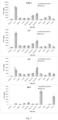
- 48 human breast cancer JIMT-1 tumor-bearing mice were randomly divided into 2 experimental groups, with a total of 6 mice in each experimental group at each time point. Both of the two preparations were administered to the respective experimental mice at a dose of 20 mg/kg through tail vein injection. Blood samples were collected from each group at 0.25, 1, 3 and 24 hours after administration and the mice were sacrificed immediately.
- Tumor, heart, liver, spleen, lung, kidney, stomach, small intestine, pancreas and ovary tissues were dissected and subjected to pretreatments such as homogenization, the drug concentration in each tissue sample was determined by protein precipitation-LC/MS/MS method, and the main pharmacokinetic parameters were calculated by using the non-compartmental model of Phoenix WinNonlin 8.0 software (Pharsight, USA). The tissue distribution results are shown in Fig. 3 .
- mice paclitaxel was widely distributed in mice, and could be detected in tumor, liver, lung, heart, stomach, small intestine, spleen and kidney tissues, with the highest exposure in the liver. According to the drug exposure in vivo, the two preparations had basically consistent exposure in various tissues of mice, without significant differences.
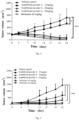
- mice were subcutaneously inoculated with human breast cancer JIMT-1 cells (1 ⁇ 10 7 /0.1mL/mouse) in the axilla of the right forelimb.
- the average tumor volume grew to approximately 165 mm 3 .
- 40 Animals with good tumor growth were selected and divided equally into 5 groups (Day0) according to the tumor volume, with 8 animals in each group, including a vehicle control group, 10, 20 and 40mg/kg groups of lyophilized powder 4, and 20mg/kg group of Abraxane ® .
- the drug was administered intravenously once a week for a total of 3 times (abbreviated as qw ⁇ 3, that is, administered on D0, D7, and D14), and the experiment ended on Day 24.
- SPSS 19.0 statistical software was used for data processing, and the Repeated Measure process was used to analyze the changes in tumor volume between multiple measurements over time.
- mice were subcutaneously inoculated with human breast cancer KPL-4 cells (1 ⁇ 10 7 /0.1mL/mouse) in the axilla of the right forelimb. On Day 12 after inoculation, the average tumor volume grew to approximately 105mm 3 . 48 Animals with good tumor growth were selected and divided equally into 6 groups (Day0) according to the tumor volume, including a vehicle control group, 15, 30 and 60mg/kg groups of lyophilized powder 4, and 30 and 60mg/kg groups of Abraxane ® . The dosing frequency was qw ⁇ 3, and the experiment ended on D22.
- SPSS 19.0 statistical software was used for data processing, and the Repeated Measure process was used to analyze the changes in tumor volume between multiple measurements over time.
- mice were subcutaneously inoculated with human pancreatic cancer CFPAC-1 cells (1 ⁇ 10 7 /0.1mL/mouse) in the axilla of the right forelimb.
- the average tumor volume grew to approximately 195mm 3 .
- Animals with good tumor growth were selected and divided equally into 5 groups (Day0) according to the tumor volume, including a vehicle control group, 10, 20, and 40 mg/kg groups of lyophilized powder 4, and 20mg/kg group of Abraxane ® .
- the dosing frequency was qw ⁇ 3, and the experiment ended on D23.
- SPSS 19.0 statistical software was used for data processing, and the Repeated Measure process was used to analyze the changes in tumor volume between multiple measurements over time.
- a lyophilized powder 4 low-dose group (0.3mg/kg), a lyophilized powder 4 medium-dose group (0.6mg/kg), a lyophilized powder 4 high dose group (1.2mg/kg), an Abraxane ® group (1.2mg/kg), a negative control group (0.9% sodium chloride injection), an excipient control group-1 (human serum albumin 1.7mg/kg, consistent with the protein content of the lyophilized powder 4 high-dose group), and an excipient control group-2 (human serum albumin 10.8 mg/kg, consistent with the protein content of the Abraxane ® group).
- the drug was administered by intravenous injection at equal concentrations (5 mg/ml) and unequal volumes, once a week for a total of 3 times.
- In vitro hemolysis experiment was conducted by using red blood cells of New Zealand white rabbit. The sample was added with lyophilized powder 4 at a concentration of 5 mg/mL, and a negative control group (0.9% sodium chloride injection), an excipient control group (human serum albumin) and a positive control group (deionized water) were set up at the same time.
- a negative control group (0.9% sodium chloride injection
- an excipient control group human serum albumin
- a positive control group deionized water
- mice half male and half female, were selected and randomly divided into 8 groups, including a negative control group (0.9% sodium chloride injection), an excipient control group (human serum albumin 103.5 mg/kg, consistent with the protein content of the high-dose group of the test sample), 25 mg/kg, 75 mg/kg and 225 mg/kg groups of the test sample lyophilized powder 4, and 25mg/kg, 75mg/kg and 225mg/kg groups of the commercial control Abraxane ® .
- the drug was administered 3 times by intravenous injection at equal concentrations (5 mg/ml) and unequal volumes, with an interval of at least 4 hours between each administration.
- MTD maximum tolerated dose
- docetaxel was dissolved in 15ml of methylene chloride/ethanol (1:1, v/v), and then added with 500ml of human serum albumin solution (4% w/v).
- the mixture was homogenated by a high-shear disperser (fluko FZ-20) for 2 minutes to form a primary emulsion, and then homogenized by a high-pressure homogenizer at 10,000-20,000 psi to obtain a nanoemulsion.
- the nanoemulsion was transferred to a rotary evaporator, heated in a water bath at 40 °C, and evaporated under a reduced pressure at 40 mbar to remove the organic solvent in the solution.
- the produced docetaxel albumin nanoparticles had a diameter of 102 nm, and the suspension was translucent.
- the obtained docetaxel albumin nanoparticle suspension was dialyzed 5 folds by volume by a 100kD ultrafiltration membrane using a 0.9% sodium chloride solution. After dialysis, the average diameter of the nanoparticles was 104 nm, and there was no significant change in particle size during the dialysis. A docetaxel purified nanoparticle suspension was obtained as a white translucent liquid.
- the purified docetaxel nanoparticle suspension after dialysis passed smoothly through a 0.22 micron filter membrane.
- the docetaxel content in the suspension was determined by HPLC, and the suspension was packaged by adjusting the package amount to 50 mg/vial according to the content, and lyophilized in a lyophilizer for 75 hours to obtain a stable white cake.
- the white cake obtained after lyophilization was added with water for injection and shaken gently to be dissolved completely.
- the white cake was completely dissolved within 2 minutes, and the suspension was translucent with only slight foaming.
- the resuspended suspension did not have significant change in particle size, compared with that before lyophilization, and no significant changes were found in the appearance and transmittance after being left at room temperature for 24 hours.
- the contents of human serum albumin and docetaxel in the product were determined respectively, and the ratio of albumin to docetaxel was found to be 0.83:1.
- cabazitaxel 500 mg was dissolved in 3 ml of chloroform/ethanol (8:1, v/v), and then added with 150 ml of human serum albumin solution (5% w/v).
- the mixture was homogenated by a high-shear disperser (fluko FZ-20) for 2 minutes to form a primary emulsion, and then homogenized by a high-pressure homogenizer at 10,000-20,000 psi to obtain a nanoemulsion.
- the nanoemulsion was transferred to a rotary evaporator, heated in a water bath at 40 °C, and evaporated under a reduced pressure at 40 mbar to remove the organic solvent in the solution.
- the produced cabazitaxel albumin nanoparticles had a diameter of 100nm, and the suspension was translucent.
- the obtained cabazitaxel albumin nanoparticle suspension was added with an appropriate amount of sodium chloride so that the concentration of sodium chloride was 0.4%.
- a 100kD ultrafiltration membrane and a 5% mannitol + 1% sucrose solution were used for dialysis. The dialysis was 3 folds in volume.
- the nanoparticles had an average diameter of 101 nm, and there was no significant change in particle size during the dialysis.
- a purified cabazitaxel nanoparticle suspension was obtained as a white translucent liquid.
- the purified cabazitaxel nanoparticle suspension after dialysis passed smoothly through a 0.22 micron filter membrane.
- the cabazitaxel content in the suspension was determined by HPLC.
- the suspension was packaged by adjusting the package amount to 5 mg/vial according to the content, and lyophilized in a lyophilizer for 48 hours to obtain a stable white cake.
- the white cake obtained after lyophilization was added with water for injection and shaken gently to be dissolved completely.
- the white cake was completely dissolved within 2 minutes, and the suspension was translucent with only slight foaming.
- the resuspended suspension did not have significant change in particle size, compared with that before lyophilization, and no significant changes were found in the appearance and transmittance after being left at room temperature for 24 hours.
- the contents of human serum albumin and cabazitaxel in the product were determined respectively, and the ratio of albumin to cabazitaxel was found to be 2.53:1.
- docetaxel acetyl derivative 200 mg was dissolved in 2 ml of chloroform/ethanol (1:1, v/v), and then added with 100 ml of human serum albumin solution (5% w/v).
- the mixture was homogenated by a high-shear disperser (fluko FZ-20) for 2 minutes to form a primary emulsion, and then homogenized by a high-pressure homogenizer at 10,000-20,000 psi to obtain a nanoemulsion.
- the nanoemulsion was transferred to a rotary evaporator, heated in a water bath at 40 °C, and evaporated under a reduced pressure at 40 mbar to remove the organic solvent in the solution.
- the produced docetaxel acetyl derivative albumin nanoparticles had a diameter of 122 nm, and the suspension was translucent.
- the obtained docetaxel acetyl derivative albumin nanoparticle suspension was dialyzed by a 1000kD ultrafiltration membrane with a 5% mannitol + 0.2% NaCl solution. The dialysis was 4 folds in volume. The nanoparticles had an average diameter of 161 nm, and there was no significant change in particle size during the dialysis. A purified docetaxel acetyl derivative nanoparticle suspension was obtained as a white translucent liquid.
- the purified docetaxel acetyl derivative nanoparticle suspension after dialysis passed smoothly through a 0.22 micron filter membrane.
- the docetaxel acetyl derivative content in the suspension was determined by HPLC, and the suspension was packaged by adjusting the package amount to 5 mg/vial according to the content, and lyophilized in a lyophilizer for 48 hours to obtain a stable white cake.
- the white cake obtained after lyophilization was added with water for injection and shaken gently to be dissolved completely.
- the white cake was completely dissolved within 2 minutes, and the suspension was translucent with only slight foaming.
- the resuspended suspension did not have significant change in particle size, compared with that before lyophilization, and no significant changes were found in the appearance and transmittance after being left at room temperature for 24 hours.
- the contents of human serum albumin and docetaxel acetyl derivative in the product were determined respectively, and the ratio of albumin to docetaxel acetyl derivative was found to be 1.66:1.
- rapamycin was dissolved in 1 ml of chloroform, and then added with 40 ml of human serum albumin solution (5% w/v).
- the mixture was homogenated by a high-shear disperser (fluko FZ-20) for 2 minutes to form a primary emulsion, and then homogenized by a high-pressure homogenizer at 10,000-20,000 psi to obtain a nanoemulsion.
- the nanoemulsion was transferred to a rotary evaporator, heated in a water bath at 40 °C, and evaporated under a reduced pressure at 40 mbar to remove the organic solvent in the solution.
- the produced rapamycin albumin nanoparticles had a diameter of 78 nm, and the suspension was translucent.
- rapamycin albumin nanoparticle suspension was added with an appropriate amount of sodium chloride so that the concentration of sodium chloride was 0.9%.
- a 100kD ultrafiltration membrane and a 4% mannitol + 2% sucrose solution were used for dialysis. The dialysis was 4 folds in volume.
- the nanoparticles had an average diameter of 61 nm, and there was no significant change in particle size during the dialysis.
- a purified rapamycin nanoparticle suspension was obtained as a white translucent liquid.
- the purified rapamycin nanoparticle suspension after dialysis passed smoothly through a 0.22 micron filter membrane.
- the rapamycin content in the suspension was determined by HPLC.
- the suspension was packaged by adjusting the package amount to 10 mg/vial according to the content, and lyophilized in a lyophilizer for 75 hours to obtain a stable white cake.
- the white cake obtained after lyophilization was added with water for injection and shaken gently to be dissolved completely.
- the white cake was completely dissolved within 2 minutes, and the suspension was translucent with only slight foaming.
- the resuspended suspension did not have significant change in particle size, compared with that before lyophilization, and no significant changes were found in the appearance and transmittance after being left at room temperature for 24 hours.
- the contents of human serum albumin and rapamycin in the product were determined respectively, and the ratio of albumin to rapamycin was found to be 1.53:1.
- Example 27 Preparation of temsirolimus albumin nanoparticle for rapid suspension and subsequent property investigation
- temsirolimus 101 mg was dissolved in 0.5 ml of dichloromethane, and then added with 19.5 ml of human serum albumin solution (5% w/v).
- the mixture was homogenated by a high-shear disperser (fluko FZ- 20) for 2 minutes to form a primary emulsion, and then homogenized by a high-pressure homogenizer at 10,000-20,000 psi to obtain a nanoemulsion.
- the nanoemulsion was transferred to a rotary evaporator, heated in a water bath at 40 °C, and evaporated under a reduced pressure at 40 mbar to remove the organic solvent in the solution.
- the produced temsirolimus albumin nanoparticles had a diameter of 88 nm, and the suspension was translucent.
- the obtained temsirolimus albumin nanoparticle suspension was added with an appropriate amount of sodium chloride so that the concentration of sodium chloride was 1.0%.
- a 100kD ultrafiltration membrane and a 5% mannitol + 1% sucrose solution were used for dialysis. The dialysis was 3 folds in volume.
- the nanoparticles had an average diameter of 77 nm, and there was no significant change in particle size during the dialysis.
- a purified temsirolimus nanoparticle suspension was obtained as a white translucent liquid.
- the purified temsirolimus nanoparticle suspension after dialysis passed smoothly through a 0.22 micron filter membrane.
- the temsirolimus content in the suspension was determined by HPLC.
- the suspension was packaged by adjusting the package amount to 10 mg/vial according to the content, and lyophilized in a lyophilizer for 66 hours to obtain a stable white cake.
- the white cake obtained after lyophilization was added with 20 ml of water for injection and shaken gently to be dissolved completely.
- the white cake was completely dissolved within 2 minutes, and the suspension was translucent with only slightly foaming.
- the resuspended suspension did not have significant change in particle size, compared with that before lyophilization, and no significant changes were found in the appearance and transmittance after being left at room temperature for 24 hours.
- the contents of human serum albumin and temsirolimus in the product were determined respectively, and the ratio of albumin to temsirolimus was found to be 2.27:1.
- Example 28 Preparation of epothilone B albumin nanoparticle for rapid suspension and subsequent property investigation
- epothilone B 127 mg was dissolved in 2 ml of chloroform/ethanol (10:1, v/v), and then added with 52 ml of human serum albumin solution (5% w/v).
- the mixture was homogenated by a high-shear disperser (fluko FZ-20) for 2 minutes to form a primary emulsion, and then homogenized by a high-pressure homogenizer at 10,000-20,000 psi to obtain a nanoemulsion.
- the nanoemulsion was transferred to a rotary evaporator, heated in a water bath at 40 °C, and evaporated under a reduced pressure at 40 mbar to remove the organic solvent in the solution.
- the produced epothilone B albumin nanoparticles had a diameter of 113 nm, and the suspension was translucent.
- the obtained epothilone B albumin nanoparticle suspension was dialyzed by a 300kD ultrafiltration membrane with a 5% sucrose + 0.5% sodium chloride solution. The dialysis was 5 folds in volume. The nanoparticles had an average diameter of 102 nm, and there was no significant change in particle size during the dialysis. A purified epothilone B nanoparticle suspension was obtained as a white translucent liquid.
- the purified epothilone B nanoparticle suspension after dialysis passed smoothly through a 0.22 micron filter membrane.
- the epothilone B content in the suspension was determined by HPLC, and the suspension was packaged by adjusting the package amount to 10 mg/vial according to the content, and lyophilized in a lyophilizer for 65 hours to obtain a stable white cake.
- the white cake obtained after lyophilization was added with 20 ml of water for injection and shaken gently to be dissolved completely.
- the white cake was completely dissolved within 2 minutes, and the suspension was translucent with only slight foaming.
- the resuspended suspension did not have significant change in particle size, compared with that before lyophilization, and no significant changes were found in the appearance and transmittance after being left at room temperature for 24 hours.
- the contents of human serum albumin and epothilone B in the product were determined respectively, and the ratio of albumin to epothilone B was found to be 1.03:1.
- Example 29 Preparation of tanespimycin albumin nanoparticle for rapid suspension and subsequent property investigation
- tanespimycin was dissolved in 0.6 ml of chloroform, and then added with 22 ml of human serum albumin solution (8% w/v).
- the mixture was homogenated by a high-shear disperser (fluko FZ-20) for 2 minutes to form a primary emulsion, and then homogenized by a high-pressure homogenizer at 10,000-20,000 psi to obtain a nanoemulsion.
- the nanoemulsion was transferred to a rotary evaporator, heated in a water bath at 40 °C, and evaporated under a reduced pressure at 40 mbar to remove the organic solvent in the solution.
- the produced tanespimycin albumin nanoparticles had a diameter of 105nm, and the suspension was translucent.
- the obtained tanespimycin albumin nanoparticle suspension was added with an appropriate amount of sodium chloride so that the concentration of sodium chloride was 0.9%.
- a 300kD ultrafiltration membrane and a 3% mannitol + 3% sucrose solution were used for dialysis. The dialysis was 4 folds in volume.
- the nanoparticles had an average diameter of 102 nm, and there was no significant change in particle size during the dialysis.
- a purified tanespimycin nanoparticle suspension was obtained as a purple liquid.
- the purified tanespimycin nanoparticle suspension after dialysis passed smoothly through a 0.22 micron filter membrane.
- the tanespimycin content in the suspension was determined by HPLC.
- the suspension was packaged by adjusting the package amount to 10 mg/vial according to the content, and lyophilized in a lyophilizer for 45 hours to obtain a stable purple cake.
- the purple cake obtained after lyophilization was added with water for injection and shaken gently to be dissolved completely.
- the purple cake was completely dissolved within 2 minutes, and the suspension was purple in color with only slight foaming.
- the resuspended suspension did not have significant change in particle size, compared with that before lyophilization, and no significant changes were found in the appearance and transmittance after being left at room temperature for 24 hours.
- the contents of human serum albumin and tanespimycin in the product were determined respectively, and the ratio of albumin to tanespimycin was found to be 1.76:1.
- 10-hydroxycamptothecin was dissolved in 2 ml of dichloromethane/ethanol (10:1, v/v), and then added with 48 ml of human serum albumin solution (5% w/v).
- the mixture was homogenated by a high-shear disperser (fluko FZ-20) for 2 minutes to form a primary emulsion, and then homogenized by a high-pressure homogenizer at 10,000-20,000 psi to obtain a nanoemulsion.
- the nanoemulsion was transferred to a rotary evaporator, heated in a water bath at 40 °C, and evaporated under a reduced pressure at 40 mbar to remove the organic solvent in the solution.
- the produced 10-hydroxycamptothecin albumin nanoparticles had a diameter of 118nm, and the suspension was yellow and translucent.
- the obtained 10-hydroxycamptothecin albumin nanoparticle suspension was dialyzed by a 300kD ultrafiltration membrane with a 5% mannitol + 0.1% sodium chloride solution. The dialysis was 4 folds in volume. The nanoparticles had an average diameter of 102 nm, and there was no significant change in particle size during the dialysis. A purified 10-hydroxycamptothecin nanoparticle suspension was obtained as a yellow translucent liquid.
- the purified 10-hydroxycamptothecin nanoparticle suspension after dialysis passed smoothly through a 0.22 micron filter membrane.
- the 10-hydroxycamptothecin content in the suspension was determined by HPLC, and the suspension was packaged by adjusting the package amount to 20 mg/vial according to the content, and lyophilized in a lyophilizer for 45 hours to obtain a stable yellow cake.
- the yellow cake obtained after lyophilization was added with water for injection and shaken gently to be dissolved completely.
- the yellow cake was completely dissolved within 2 minutes, and the suspension is yellow and translucent with only slight foaming.
- the resuspended suspension did not have significant change in particle size, compared with that before lyophilization, and no significant changes were found in the appearance and transmittance after being left at room temperature for 24 hours.
- the contents of human serum albumin and 10-hydroxycamptothecin in the product were determined respectively, and the ratio of albumin to 10-hydroxycamptothecin was found to be 1.49:1.
Landscapes
- Health & Medical Sciences (AREA)
- Chemical & Material Sciences (AREA)
- Life Sciences & Earth Sciences (AREA)
- Medicinal Chemistry (AREA)
- Pharmacology & Pharmacy (AREA)
- Animal Behavior & Ethology (AREA)
- General Health & Medical Sciences (AREA)
- Public Health (AREA)
- Veterinary Medicine (AREA)
- Engineering & Computer Science (AREA)
- Bioinformatics & Cheminformatics (AREA)
- Epidemiology (AREA)
- Nanotechnology (AREA)
- Physics & Mathematics (AREA)
- Optics & Photonics (AREA)
- Biomedical Technology (AREA)
- Immunology (AREA)
- General Chemical & Material Sciences (AREA)
- Chemical Kinetics & Catalysis (AREA)
- Organic Chemistry (AREA)
- Nuclear Medicine, Radiotherapy & Molecular Imaging (AREA)
- Inorganic Chemistry (AREA)
- Transplantation (AREA)
- Proteomics, Peptides & Aminoacids (AREA)
- Biochemistry (AREA)
- Molecular Biology (AREA)
- Oil, Petroleum & Natural Gas (AREA)
- Dispersion Chemistry (AREA)
- Dermatology (AREA)
- Medicinal Preparation (AREA)
- Pharmaceuticals Containing Other Organic And Inorganic Compounds (AREA)
Applications Claiming Priority (2)
| Application Number | Priority Date | Filing Date | Title |
|---|---|---|---|
| CN202210450810 | 2022-04-27 | ||
| PCT/CN2023/090721 WO2023208009A1 (zh) | 2022-04-27 | 2023-04-26 | 一种速溶型纳米粒子组合物及其制备方法 |
Publications (2)
| Publication Number | Publication Date |
|---|---|
| EP4516292A1 true EP4516292A1 (de) | 2025-03-05 |
| EP4516292A4 EP4516292A4 (de) | 2026-04-15 |
Family
ID=88446808
Family Applications (1)
| Application Number | Title | Priority Date | Filing Date |
|---|---|---|---|
| EP23795441.7A Pending EP4516292A4 (de) | 2022-04-27 | 2023-04-26 | Instant-nanopartikelzusammensetzung und herstellungsverfahren dafür |
Country Status (7)
| Country | Link |
|---|---|
| US (1) | US20250288535A1 (de) |
| EP (1) | EP4516292A4 (de) |
| JP (1) | JP2025514246A (de) |
| KR (1) | KR20240164809A (de) |
| CN (1) | CN116942634A (de) |
| AU (1) | AU2023260204A1 (de) |
| WO (1) | WO2023208009A1 (de) |
Families Citing this family (2)
| Publication number | Priority date | Publication date | Assignee | Title |
|---|---|---|---|---|
| CN121568695A (zh) * | 2024-04-12 | 2026-02-24 | 北京华昊中天生物医药股份有限公司 | 一种优替德隆药物组合物及其制备方法 |
| WO2026067584A1 (zh) * | 2024-09-27 | 2026-04-02 | 石药集团中奇制药技术(石家庄)有限公司 | 一种西罗莫司白蛋白组合物及其制备方法 |
Family Cites Families (8)
| Publication number | Priority date | Publication date | Assignee | Title |
|---|---|---|---|---|
| US6749868B1 (en) | 1993-02-22 | 2004-06-15 | American Bioscience, Inc. | Protein stabilized pharmacologically active agents, methods for the preparation thereof and methods for the use thereof |
| US6537579B1 (en) | 1993-02-22 | 2003-03-25 | American Bioscience, Inc. | Compositions and methods for administration of pharmacologically active compounds |
| US5439686A (en) | 1993-02-22 | 1995-08-08 | Vivorx Pharmaceuticals, Inc. | Methods for in vivo delivery of substantially water insoluble pharmacologically active agents and compositions useful therefor |
| ITMI20020681A1 (it) | 2002-03-29 | 2003-09-29 | Acs Dobfar Spa | Procedimento per la produzione di nanoparticelle di paclitaxel ed albumina |
| CN101658516B (zh) * | 2008-08-26 | 2011-10-05 | 齐鲁制药有限公司 | 紫杉醇类药物组合物及其制备方法 |
| CN104434808A (zh) * | 2014-07-03 | 2015-03-25 | 石药集团中奇制药技术(石家庄)有限公司 | 一种治疗性纳米粒子及其制备方法 |
| CN105055341A (zh) * | 2015-08-13 | 2015-11-18 | 黑龙江泰华源生物技术有限责任公司 | 一种紫杉醇白蛋白结合型冻干制剂及其制备方法 |
| CN105012251A (zh) * | 2015-08-24 | 2015-11-04 | 吉林大学 | 注射用紫杉烷类药物白蛋白纳米粒冻干制剂及制备方法 |
-
2023
- 2023-04-26 CN CN202310461824.8A patent/CN116942634A/zh active Pending
- 2023-04-26 WO PCT/CN2023/090721 patent/WO2023208009A1/zh not_active Ceased
- 2023-04-26 US US18/860,369 patent/US20250288535A1/en active Pending
- 2023-04-26 AU AU2023260204A patent/AU2023260204A1/en active Pending
- 2023-04-26 JP JP2024563446A patent/JP2025514246A/ja active Pending
- 2023-04-26 EP EP23795441.7A patent/EP4516292A4/de active Pending
- 2023-04-26 KR KR1020247035602A patent/KR20240164809A/ko active Pending
Also Published As
| Publication number | Publication date |
|---|---|
| WO2023208009A1 (zh) | 2023-11-02 |
| JP2025514246A (ja) | 2025-05-02 |
| AU2023260204A1 (en) | 2024-11-14 |
| EP4516292A4 (de) | 2026-04-15 |
| CN116942634A (zh) | 2023-10-27 |
| US20250288535A1 (en) | 2025-09-18 |
| KR20240164809A (ko) | 2024-11-20 |
Similar Documents
| Publication | Publication Date | Title |
|---|---|---|
| JP7832108B2 (ja) | アルブミンおよびラパマイシンの医薬組成物 | |
| RU2663687C2 (ru) | Композиции наночастиц альбумина и паклитаксела | |
| CN101909614B (zh) | 纳米分散体 | |
| WO2015018380A2 (en) | Therapeutic nanoparticles and the preparation methods thereof | |
| EP3372226B1 (de) | Gezielte hydrophobe tumorhemmende arzneimittelnanoformulierung und herstellungsverfahren dafür | |
| WO2001089522A1 (en) | Compositions and methods for administration of pharmacologically active compounds | |
| EP4516292A1 (de) | Instant-nanopartikelzusammensetzung und herstellungsverfahren dafür | |
| RU2391966C1 (ru) | Наносистема на основе растительных фосфолипидов для включения биологически активных соединений и способ ее получения (варианты) | |
| CN102370622A (zh) | 一种载药物纳米粒及其制备方法和应用 | |
| EP3838265A1 (de) | Injizierbare pharmazeutische zusammensetzung und herstellungsverfahren dafür | |
| WO2022160971A1 (zh) | 一种含有难溶性药物的浓缩液以及由其制备的乳剂 | |
| WO2016015522A1 (zh) | 脂肪酸结合型白蛋白-药物纳米粒子冻干制剂及制备方法 | |
| EP4070786B1 (de) | Pharmazeutische zusammensetzung mit elemen, herstellungsverfahren dafür sowie verwendung davon | |
| HK40102079A (zh) | 一种速溶型纳米粒子组合物及其制备方法 | |
| EP4417204A1 (de) | Zusammensetzung mit antitumorwirkstoff und herstellungsverfahren dafür und verwendung davon | |
| Liu et al. | A Comprehensive Preclinical Evaluation of Intravenous Etoposide Lipid Emulsion: Liu et al. | |
| RU2838027C1 (ru) | Фармацевтическая композиция, содержащая элемен, способ ее получения и ее применение | |
| CN102228446B (zh) | 前列地尔脂质毫微球冻干注射剂及其制备方法 | |
| HK40081213A (en) | Stable docetaxel albumin nanoparticle composition | |
| HK40078790A (en) | Pharmaceutical composition containing elemene, preparation method therefor, and use thereof | |
| US20170071866A1 (en) | Nanoparticles loaded with active ingredients, their process of preparation, and their uses | |
| WO2021213327A1 (zh) | 包含7-乙基-10-羟基喜树碱的组合物及其制备方法和用途 | |
| CN114712316A (zh) | 一种难溶性药物组合物及制备方法 |
Legal Events
| Date | Code | Title | Description |
|---|---|---|---|
| STAA | Information on the status of an ep patent application or granted ep patent |
Free format text: STATUS: THE INTERNATIONAL PUBLICATION HAS BEEN MADE |
|
| PUAI | Public reference made under article 153(3) epc to a published international application that has entered the european phase |
Free format text: ORIGINAL CODE: 0009012 |
|
| STAA | Information on the status of an ep patent application or granted ep patent |
Free format text: STATUS: REQUEST FOR EXAMINATION WAS MADE |
|
| 17P | Request for examination filed |
Effective date: 20241025 |
|
| AK | Designated contracting states |
Kind code of ref document: A1 Designated state(s): AL AT BE BG CH CY CZ DE DK EE ES FI FR GB GR HR HU IE IS IT LI LT LU LV MC ME MK MT NL NO PL PT RO RS SE SI SK SM TR |
|
| DAV | Request for validation of the european patent (deleted) | ||
| DAX | Request for extension of the european patent (deleted) | ||
| A4 | Supplementary search report drawn up and despatched |
Effective date: 20260313 |
|
| RIC1 | Information provided on ipc code assigned before grant |
Ipc: A61K 9/19 20060101AFI20260309BHEP Ipc: A61K 47/42 20170101ALI20260309BHEP Ipc: A61K 31/337 20060101ALI20260309BHEP Ipc: A61P 35/00 20060101ALI20260309BHEP Ipc: A61K 47/26 20060101ALI20260309BHEP Ipc: A61K 9/00 20060101ALI20260309BHEP Ipc: A61K 9/51 20060101ALI20260309BHEP |