EP4513608A2 - Elektrolytzusatz, verfahren zur synthese und anwendungen davon - Google Patents
Elektrolytzusatz, verfahren zur synthese und anwendungen davon Download PDFInfo
- Publication number
- EP4513608A2 EP4513608A2 EP24196389.1A EP24196389A EP4513608A2 EP 4513608 A2 EP4513608 A2 EP 4513608A2 EP 24196389 A EP24196389 A EP 24196389A EP 4513608 A2 EP4513608 A2 EP 4513608A2
- Authority
- EP
- European Patent Office
- Prior art keywords
- formula
- group
- electrolyte additive
- electrochemical device
- hydrogen
- Prior art date
- Legal status (The legal status is an assumption and is not a legal conclusion. Google has not performed a legal analysis and makes no representation as to the accuracy of the status listed.)
- Pending
Links
Images






Classifications
-
- H—ELECTRICITY
- H01—ELECTRIC ELEMENTS
- H01M—PROCESSES OR MEANS, e.g. BATTERIES, FOR THE DIRECT CONVERSION OF CHEMICAL ENERGY INTO ELECTRICAL ENERGY
- H01M10/00—Secondary cells; Manufacture thereof
- H01M10/05—Accumulators with non-aqueous electrolyte
- H01M10/056—Accumulators with non-aqueous electrolyte characterised by the materials used as electrolytes, e.g. mixed inorganic/organic electrolytes
- H01M10/0564—Accumulators with non-aqueous electrolyte characterised by the materials used as electrolytes, e.g. mixed inorganic/organic electrolytes the electrolyte being constituted of organic materials only
- H01M10/0566—Liquid materials
- H01M10/0567—Liquid materials characterised by the additives
-
- H—ELECTRICITY
- H01—ELECTRIC ELEMENTS
- H01M—PROCESSES OR MEANS, e.g. BATTERIES, FOR THE DIRECT CONVERSION OF CHEMICAL ENERGY INTO ELECTRICAL ENERGY
- H01M10/00—Secondary cells; Manufacture thereof
- H01M10/05—Accumulators with non-aqueous electrolyte
- H01M10/052—Li-accumulators
-
- H—ELECTRICITY
- H01—ELECTRIC ELEMENTS
- H01M—PROCESSES OR MEANS, e.g. BATTERIES, FOR THE DIRECT CONVERSION OF CHEMICAL ENERGY INTO ELECTRICAL ENERGY
- H01M10/00—Secondary cells; Manufacture thereof
- H01M10/05—Accumulators with non-aqueous electrolyte
- H01M10/054—Accumulators with insertion or intercalation of metals other than lithium, e.g. with magnesium or aluminium
-
- H—ELECTRICITY
- H01—ELECTRIC ELEMENTS
- H01M—PROCESSES OR MEANS, e.g. BATTERIES, FOR THE DIRECT CONVERSION OF CHEMICAL ENERGY INTO ELECTRICAL ENERGY
- H01M10/00—Secondary cells; Manufacture thereof
- H01M10/42—Methods or arrangements for servicing or maintenance of secondary cells or secondary half-cells
-
- H—ELECTRICITY
- H01—ELECTRIC ELEMENTS
- H01M—PROCESSES OR MEANS, e.g. BATTERIES, FOR THE DIRECT CONVERSION OF CHEMICAL ENERGY INTO ELECTRICAL ENERGY
- H01M10/00—Secondary cells; Manufacture thereof
- H01M10/42—Methods or arrangements for servicing or maintenance of secondary cells or secondary half-cells
- H01M10/4235—Safety or regulating additives or arrangements in electrodes, separators or electrolyte
-
- H—ELECTRICITY
- H01—ELECTRIC ELEMENTS
- H01M—PROCESSES OR MEANS, e.g. BATTERIES, FOR THE DIRECT CONVERSION OF CHEMICAL ENERGY INTO ELECTRICAL ENERGY
- H01M10/00—Secondary cells; Manufacture thereof
- H01M10/42—Methods or arrangements for servicing or maintenance of secondary cells or secondary half-cells
- H01M10/44—Methods for charging or discharging
-
- H—ELECTRICITY
- H01—ELECTRIC ELEMENTS
- H01M—PROCESSES OR MEANS, e.g. BATTERIES, FOR THE DIRECT CONVERSION OF CHEMICAL ENERGY INTO ELECTRICAL ENERGY
- H01M4/00—Electrodes
- H01M4/02—Electrodes composed of, or comprising, active material
- H01M4/62—Selection of inactive substances as ingredients for active masses, e.g. binders, fillers
-
- H—ELECTRICITY
- H01—ELECTRIC ELEMENTS
- H01M—PROCESSES OR MEANS, e.g. BATTERIES, FOR THE DIRECT CONVERSION OF CHEMICAL ENERGY INTO ELECTRICAL ENERGY
- H01M4/00—Electrodes
- H01M4/02—Electrodes composed of, or comprising, active material
- H01M2004/026—Electrodes composed of, or comprising, active material characterised by the polarity
- H01M2004/027—Negative electrodes
-
- H—ELECTRICITY
- H01—ELECTRIC ELEMENTS
- H01M—PROCESSES OR MEANS, e.g. BATTERIES, FOR THE DIRECT CONVERSION OF CHEMICAL ENERGY INTO ELECTRICAL ENERGY
- H01M2300/00—Electrolytes
- H01M2300/0017—Non-aqueous electrolytes
- H01M2300/0025—Organic electrolyte
-
- Y—GENERAL TAGGING OF NEW TECHNOLOGICAL DEVELOPMENTS; GENERAL TAGGING OF CROSS-SECTIONAL TECHNOLOGIES SPANNING OVER SEVERAL SECTIONS OF THE IPC; TECHNICAL SUBJECTS COVERED BY FORMER USPC CROSS-REFERENCE ART COLLECTIONS [XRACs] AND DIGESTS
- Y02—TECHNOLOGIES OR APPLICATIONS FOR MITIGATION OR ADAPTATION AGAINST CLIMATE CHANGE
- Y02E—REDUCTION OF GREENHOUSE GAS [GHG] EMISSIONS, RELATED TO ENERGY GENERATION, TRANSMISSION OR DISTRIBUTION
- Y02E60/00—Enabling technologies; Technologies with a potential or indirect contribution to GHG emissions mitigation
- Y02E60/10—Energy storage using batteries
Definitions
- Present invention is related to an electrolyte additive, in particularly the electrolyte additive designed for applications of electrochemical devices.
- One of the preferred applications for the electrolyte additive of the present invention pertains to secondary batteries. This application will be described and exemplified in the following as a preferred embodiment. However, the scope of equivalent applications covered by the present invention extends beyond this singular use. Other electrochemical devices, sharing similarities or serving similar purposes, are encompassed within the range of applications addressed by the present invention.
- the present invention provides a method for prolonging the lifespan of the electrochemical device, the steps of which comprise: providing an electrochemical device comprising at least a positive electrode, a negative electrode, and an electrolyte provided in the electrochemical device,the electrolyte containing an electrolyte additive, and charging and discharging the electrochemical device at least once by means of an overcharge voltage.
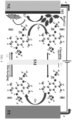
- the electrolyte additive maintains an oxidized state at the positive electrode; the oxidized electrolyte additive shuttles to the negative electrode to oxidize a metal deposited on the negative electrode into a metal ion which converts the electrolyte additive to a reduced state and shuttles back to the positive electrode where the oxidized state is restored.
- the electrolyte additive applicable to the electrochemical device provided by the present invention has a double safety mechanism, which can selectively activate the oxidation-reduction function at high voltage (4.2V-6V) and stably shuttle between the positive and negative electrodes, and the additive can activate the oxidation potential (state) at the positive electrode in the state of overcharge, which can reduce the exothermic reaction of the electrodes caused by the overcharge.
- the oxidized electrolyte additive can shuttle to the negative electrode, convert the dead lithium into lithium ions and reduce itself into free radicals, then shuttle back to the positive electrode for the next oxidation cycle after the formation of free radicals, this effectively revitalizes the dead lithium and greatly prolongs the battery life.
- this additive can generate beneficial solid electrolyte interface (SEI) groups, such as fluorine groups, to form a beneficial SEI layer on the surface of the negative electrode, which enhances the performance of the battery.
- SEI solid electrolyte interface
- the present invention provides an electrolyte additive comprising chemical formulas of the following Formula (1): wherein R1, R2, R3, R4, R5, and R6 are two or a combination of Formula (2), Formula (3), Formula (4) and Hydrogen (H) below.
- A denotes oxygen (O), sulfur (S), selenium (Se), tellurium (Te), or combinations thereof
- B is halogen, nitrile group (CN), hydrogen (H), nitro group (NO 2 ), nitrosyl group (NO), amine group (NH 2 ), or combinations thereof; and the remaining elements not denoted are carbon (C) or hydrogen (H).
- a first preferred embodiment series of the electrolyte additive of the present invention comprises the following chemical formulas of Formula (5-1), Formula (5-2), or Formula (5-3): wherein in formula (5-), (5-2) and (5-3), A denotes oxygen (O), sulfur (S), selenium (Se), tellurium (Te), or combinations thereof; and the remaining elements not denoted are carbon (C) or hydrogen (H).
- a second preferred embodiment series of the electrolyte additive of the present invention comprises the following chemical formulas of Formula (6-1), Formula (6-2), or Formula (6-3): wherein in formula (6-1), (6-2) and (6-3), A denotes oxygen (O), sulfur (S), selenium (Se), tellurium (Te), or combinations thereof, B is halogen, nitrile group (CN), hydrogen (H), nitro group (NO 2 ), nitrosyl group (NO), amine group (NH 2 ), or combinations thereof; and the remaining elements not denoted are carbon (C) or hydrogen (H).
- a third preferred embodiment series of the electrolyte additive of the present invention comprises the following chemical formulas of Formula (7-1) or Formula (7-2): (Se), tellurium (Te), or combinations thereof, B is halogen, nitrile group (CN), hydrogen (H), nitro group (NO 2 ), nitrosyl group (NO), amine group (NH 2 ), or combinations thereof; and the remaining elements not denoted are carbon (C) or hydrogen (H).
- Table 1-1 First Preferred Embodiment Series Embodiment Number Descriptions Embodiment 1-1 R1 and R2 are neighboring substitutions of Formula (2) and Formula (3) respectively, wherein A is oxygen (O).
- Embodiment 1-2 R1 and R3 are interstitial substitutions of Formula (2) and Formula (3), respectively, wherein A is oxygen (O).
- Embodiment 1-3 R1 and R4 are para substitutions of Formula (2) and Formula (3), respectively, wherein A is oxygen (O). Table 1-2.
- Embodiment 2-1 are neighboring substitutions of Formula (2) and Formula (4) respectively, wherein A is oxygen (O) and B is fluorine (F).
- Embodiment 2-2 R1 and R3 are interstitial substitutions of Formula (2) and Formula (4), respectively, wherein A is oxygen (O) and B is fluorine (F).
- Embodiment 2-3 R1 and R4 are para substitutions of Formula (2) and Formula (4), respectively, wherein A is oxygen (O) and B is fluorine (F). Table 1-3.
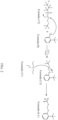
- a preferred embodiment of a method of synthesis for the compound of Formula (5-1) in the aforementioned first preferred embodiment series is as follows: Using the compounds of Formula (8) and Formula (9) in FIG. 1 , a compound of Formula (10) is obtained by reacting a positively charged AH group in the Formula (8) with a carbon-oxygen bond next to the sulfonate group in the Formula (9) in an environment of potassium carbonate (K 2 CO 3 ) and acetone.
- a in the foregoing formula also represents oxygen (O), sulfur (S), selenium (Se), tellurium (Te) or a combination thereof
- B is halogen, nitrile group (CN), hydrogen (H), nitro group (NO 2 ), nitrosyl group (NO), amine group (NH 2 ) or a combination thereof; and the remaining elements not denoted are carbon (C) elements.
- the compounds of Formula (5-2) and Formula (5-3) in the first preferred embodiment series can be synthesized correspondingly with different substituent positions but by the same synthetic route.
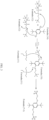
- the compound of Formula (13) is reacted with the compound of Formula (11), and the compound of Formula (6-1) is obtained by reacting a positively charged nitrogen atom of the Formula (11) with a hydrogen atom on the original positively charged AH group of the Formula (13).
- a in the foregoing formula also represents oxygen (O), sulfur (S), selenium (Se), tellurium (Te) or a combination thereof
- B represents halogen, nitrile group (CN), hydrogen (H), nitro group (NO 2 ), nitrosyl group (NO), amine group (NH 2 ) or a combination thereof; and the remaining elements not denoted are carbon (C) elements.
- the compounds of Formula (6-2) and Formula (6-3) in the second preferred embodiment series can be synthesized correspondingly with different substituent positions but by the same synthetic route.
- a preferred embodiment of a method of synthesis for the compound of Formula (7-1) in the aforementioned third preferred embodiment series is as follows: Using the compounds of Formula (14) and Formula (12) in FIG. 3 , a compound of Formula (15) is obtained by reacting two positively charged AH groups in the Formula (14) with a carbon-oxygen bond next to the sulfonate group of the two Formulas (12) in an environment of potassium carbonate (K 2 CO 3 ) and acetone.
- the compound of Formula (15) is reacted with the two compounds of Formula (11) and the compound of Formula (7-1) is obtained by reacting a positively charged nitrogen atom of the two Formulas (11) with a hydrogen atom on the two original positively charged AH groups of the Formula (15).
- a in the foregoing formula also represents oxygen (O), sulfur (S), selenium (Se), tellurium (Te) or a combination thereof
- B is halogen, nitrile group (CN), hydrogen (H), nitro group (NO 2 ), nitrosyl group (NO), amine group (NH 2 ) or a combination thereof; and the remaining elements not denoted are carbon (C) elements.
- the compounds of Formula (7-2) in the third preferred embodiment series can be synthesized correspondingly with different substituent positions but by the same synthetic route.
- the present invention further provides a method of prolonging the lifespan of an electrochemical device at high potentials using each preferred embodiment of the aforementioned electrolyte additive, comprising the steps of:
- the above overcharge voltage may have different values for different electrochemical devices, for example for a lithium battery, the preferred overcharge potential may be 4.2V to 6V which allows the electrolyte additive to initiate shuttling to the negative electrode to oxidize the metal into the metal ions.
- the overcharge voltage described in the present invention is higher for any commercially applicable electrochemical device.
- the metal deposited on the negative electrode is preferably referred to as the inactive metal.
- the inactive lithium metal deposited on the negative electrode also referred to as dead lithium
- the present invention enables the oxidation of the inactive metal back to metal ions through the use of electrolyte additives to re-participate in the electrochemical reaction and maintain the capacitive performance of the electrochemical device.
- the electrochemical device comprises a lithium battery, a sodium battery, a zinc battery, an aluminum battery, a potassium battery, a magnesium battery, or a combination thereof.
- the metal and the metal ion correspond to the type of the electrochemical device, e.g., if the electrochemical device is a lithium battery, then the metal is a lithium metal and the metal ion is a lithium-ion.
- the positive electrode preferably comprises a positive material and the negative electrode may or may not comprise a negative material. If the negative electrode does not comprise the negative electrode material, then the device is an anode-free (no anode) electrochemical device.
- the oxidized electrolyte additive can be shuttled to the negative electrode (position 2 in FIG. 4 ) to convert the lithium metal (or dead lithium) at the negative electrode into lithium ion (position 3 in FIG. 4 ), then the electrolyte additive can be shuttled back to the positive electrode to be oxidized after reduction (position 4 in FIG. 4 ) to effectively revive the dead lithium, thereby greatly prolonging the lifespan of the battery.
- the electrolyte additive can even promote the negative electrode to generate a beneficial solid electrolyte interface (SEI).
- the present invention will conduct a series of validity tests using the electrochemical device as the lithium battery, and the electrolyte additive (added to the electrolyte comprising 1M LiPF6 and EC:DEC) is Embodiment 3-1 in Table 1-3 above as an example.
- FIG. 5A and FIG. 5B which are cyclic voltammograms (CV) of the comparative example without the addition of the electrolyte additive ( FIG. 5A ) and the preferred embodiment of the present invention ( FIG. 5B ) with the addition of 0.3 M of the electrolyte additive, respectively.
- CV cyclic voltammograms
- the performance of the embodiment of the present invention containing the electrolyte additive is stable under low voltage and high voltage, indicating that the present invention activates the protective mechanism under high voltage and is suitable for operation under high voltage.
- the performance of the comparative example is poor after the voltage exceeds 3.96V and even fails to show a normal CV at the 6 th cycle, indicating that it cannot be operated under high voltage and the electrical properties are greatly reduced.
- FIG. 6A and FIG. 6B are voltage profiles of the comparative example without the addition of the electrolyte additive ( FIG. 6A ) and the preferred embodiment of the present invention with the addition of 0.3 M of the electrolyte additive ( FIG. 6B ), respectively.
- FIG. 6A shows that the battery loses capacity quickly when overcharged
- FIG. 6B shows that the battery still maintains good capacity and electrical properties when overcharged.
- the embodiment of the present invention containing the electrolyte additive has excellent overcharge adaptability.
- the electrolyte additive of the present invention can oxidize the inactive lithium into the lithium ion that can re-participate in the electrochemical reaction, thus maintaining the electrical properties of the battery.
- FIG. 7 is a linear scanning voltammetric curve of the comparative example without the addition of the electrolyte additive and the preferred embodiment of the present invention with the addition of the electrolyte additive. From FIG. 7 , it can be seen that the embodiment of the present invention still has stable electrical properties under high voltage (up to 5.2V), indicating that the electrolyte additive of the present invention activates the protective mechanism to maintain the electrical properties of the battery under high voltage.
- FIG. 8A and FIG. 8B are scanning electron microscopy (SEM) images of the comparative example without the addition of the electrolyte additive and the preferred embodiment of the present invention with the addition of 0.3 M of the electrolyte additive after 1 cycle and 5 cycles of lithium stripping, respectively.
- SEM scanning electron microscopy
- FIG. 9A and FIG. 9B are FIB-SEM images of the comparative example without the addition of the electrolyte additive and the preferred embodiment of the present invention with the addition of 0.3 M of the electrolyte additive after 1 cycle and 5 cycles of lithium stripping, respectively.
- FIG. 9A and FIG. 9B it can be seen that the negative electrode of the embodiment of the present invention generates a relatively thin solid electrolyte interface (SEI) layer.
- SEI solid electrolyte interface
- FIGS. 8A to 9B it can be seen that the electrolyte additive of the present invention can cause the lithium battery to form a denser and thinner SEI layer.
- the electrolyte additive of the present invention activates the oxidation action of the inactive metal (e.g., dead lithium) and restores the inactive metal deposited on the negative electrode into the active metal ion and allows them to re-participate in the electrochemical reaction, and the thickness of the deposited layer also decreases dramatically.
- the inactive metal e.g., dead lithium
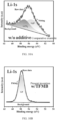
- FIG. 10A and FIG. 10B are X-ray photoelectron spectroscopy (XPS) images of the comparative example without the addition of the electrolyte additive ( FIG. 10A ) and the preferred embodiment of the present invention with the addition of 0.3 M of the electrolyte additive ( FIG. 10B ), respectively. Comparing them, it can be seen that the negative electrode in the embodiment with the electrolyte additive has more signals of a benign SEI layer (lithium fluoride LiF), indicating that the present invention can indeed enable the negative electrode to generate a benign SEI layer and enhance the properties of the battery.
- XPS X-ray photoelectron spectroscopy
- the material formed on the negative electrode in FIGS. 9A and 9B is scraped off, it is analyzed by titration gas chromatography analysis. Since the scraped-off material contains lithium metal, which reacts with water to generate lithium oxide and hydrogen, the chemical formula of the reaction is Li+H 2 O ⁇ Li 2 O+H 2 , and by calculating the amount of hydrogen generated, the amount of inactive lithium (dead lithium) can be deduced from the material on the negative electrode. Please refer to FIGS.
- FIGS. 11A ⁇ 11B and 12A-12B which are titration gas chromatography (TGC) analyses of the comparative example without the addition of the electrolyte additive and the preferred embodiment of the present invention with the addition of the electrolyte additive, respectively.
- TGC titration gas chromatography
- FIG. 13 are test data of a capacity retention rate of the comparative example without the addition of the electrolyte additive and the preferred embodiment of the present invention with the addition of the electrolyte additive, using a normal voltage of 4.3 V and an overcharge voltage of 4.5 V for the charge/discharge cycles.
- FIG. 13 shows that the capacity retention rate of the present invention increased even when the charge/discharge cycle reached the 15th cycle, where the voltage was increased from 4.3V to 4.5V.
- the comparative example continued to decrease significantly, indicating that the electrolyte additive of the present invention activates the protective mechanism to maintain the electrical properties of the battery under high voltage.
- FIG. 15 is test data of a coulombic efficiency and a capacity retention rate of the comparative example (without the electrolyte additive) and the preferred embodiment of the present invention (with the addition of 0.3 M of the electrolyte additive) for a lithium cell (Li
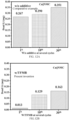
- the embodiment of the present invention maintains nearly 100% coulombic efficiency and at least 60% or more capacity retention rate for more than 230 cycles of charge and discharge compared to the comparative example which consumes almost all of the capacity at the 150 th cycle.
- the present invention is capable of prolonging the lifespan of the electrochemical device and maintaining high performance.
Landscapes
- Chemical & Material Sciences (AREA)
- Engineering & Computer Science (AREA)
- Chemical Kinetics & Catalysis (AREA)
- Electrochemistry (AREA)
- General Chemical & Material Sciences (AREA)
- Manufacturing & Machinery (AREA)
- General Physics & Mathematics (AREA)
- Physics & Mathematics (AREA)
- Condensed Matter Physics & Semiconductors (AREA)
- Inorganic Chemistry (AREA)
- Materials Engineering (AREA)
- Secondary Cells (AREA)
- Battery Electrode And Active Subsutance (AREA)
Applications Claiming Priority (1)
| Application Number | Priority Date | Filing Date | Title |
|---|---|---|---|
| TW112132130A TWI903217B (zh) | 2023-08-25 | 2023-08-25 | 一種電解質添加劑、其合成方法與應用 |
Publications (2)
| Publication Number | Publication Date |
|---|---|
| EP4513608A2 true EP4513608A2 (de) | 2025-02-26 |
| EP4513608A3 EP4513608A3 (de) | 2025-07-16 |
Family
ID=92503570
Family Applications (1)
| Application Number | Title | Priority Date | Filing Date |
|---|---|---|---|
| EP24196389.1A Pending EP4513608A3 (de) | 2023-08-25 | 2024-08-26 | Elektrolytzusatz, verfahren zur synthese und anwendungen davon |
Country Status (4)
| Country | Link |
|---|---|
| US (1) | US20250070248A1 (de) |
| EP (1) | EP4513608A3 (de) |
| CN (1) | CN119518091A (de) |
| TW (1) | TWI903217B (de) |
Family Cites Families (8)
| Publication number | Priority date | Publication date | Assignee | Title |
|---|---|---|---|---|
| EP1728291B1 (de) * | 2004-02-10 | 2018-04-04 | LG Chem, Ltd. | Wasserfreier elektrolyt und lithium-sekundärbatterie damit |
| RU2013145681A (ru) * | 2011-04-12 | 2015-05-20 | Убе Индастриз, Лтд. | Неводный раствор электролита и устройство хранения энергии, использующее данный раствор |
| EP3098893B1 (de) * | 2014-01-22 | 2017-11-29 | Mitsubishi Chemical Corporation | Nicht-wässrige elektrolytlösung und diese verwendende sekundärbatterie mit nicht-wässrigem elektrolyt |
| KR20180027985A (ko) * | 2016-09-07 | 2018-03-15 | 솔브레인 주식회사 | 전해액 첨가제 및 이를 포함하는 리튬 이차 전지 |
| US20190089002A1 (en) * | 2017-09-20 | 2019-03-21 | Soulbrain Co., Ltd. | Electrolyte additive and lithium secondary battery comprising the same |
| US10770749B2 (en) * | 2017-11-02 | 2020-09-08 | Soulbrain Co., Ltd. | Electrolyte additive and lithium secondary battery comprising the same |
| EP3726636B1 (de) * | 2017-12-12 | 2024-06-26 | Central Glass Company, Limited | Elektrolytlösung für batterien mit wasserfreiem elektrolyt sowie batterien mit wasserfreiem elektrolyt mit verwendung davon |
| TW202332114A (zh) * | 2022-01-25 | 2023-08-01 | 星歐光學股份有限公司 | 聚合物、電解質及電池 |
-
2023
- 2023-08-25 TW TW112132130A patent/TWI903217B/zh active
-
2024
- 2024-08-20 US US18/810,004 patent/US20250070248A1/en active Pending
- 2024-08-26 EP EP24196389.1A patent/EP4513608A3/de active Pending
- 2024-08-26 CN CN202411171157.0A patent/CN119518091A/zh active Pending
Also Published As
| Publication number | Publication date |
|---|---|
| TWI903217B (zh) | 2025-11-01 |
| TW202510394A (zh) | 2025-03-01 |
| EP4513608A3 (de) | 2025-07-16 |
| US20250070248A1 (en) | 2025-02-27 |
| CN119518091A (zh) | 2025-02-25 |
Similar Documents
| Publication | Publication Date | Title |
|---|---|---|
| CN105098246B (zh) | 高电压电解质和锂离子电池 | |
| KR101073228B1 (ko) | 비수성 전해질 이차 전지 | |
| CN111602277B (zh) | 可再充电的金属卤化物电池 | |
| CN107331892B (zh) | 一种电解液、正极及其制备方法和一种锂离子电池 | |
| JP2018505538A (ja) | 充電式リチウム電池の高塩濃度電解質 | |
| US9531002B2 (en) | Transition metal cyanometallate cathode battery with metal plating anode | |
| US4331743A (en) | Method for increasing recycling life of non-aqueous cells | |
| EP3605708B1 (de) | Wasserfreier elektrolyt für lithiumsekundärbatterie und denselben umfassende lithiumsekundärbatterie | |
| CN108736065B (zh) | 一种电解液及含有该电解液和/或正极的锂离子电池 | |
| US7422827B2 (en) | Nonaqueous electrolyte | |
| US20170018804A1 (en) | Electrolyte and magnesium secondary battery | |
| KR920009805B1 (ko) | 라튬 이차전지 | |
| US20090253024A1 (en) | Nitro-Compound Cathodes for Batteries and Semi-Fuel Cells | |
| EP4513608A2 (de) | Elektrolytzusatz, verfahren zur synthese und anwendungen davon | |
| KR20160099133A (ko) | 리튬이온 이차전지용 전해질 및 이를 갖는 리튬이온 이차전지 | |
| KR20210105152A (ko) | 리튬 금속 이차전지용 전해액 및 이를 사용한 리튬 금속 이차전지 | |
| CN118367243A (zh) | 一种电池集流体防腐蚀方法以及其防腐蚀层 | |
| CN116031489A (zh) | 一种锂金属电池电解液及其锂金属电池 | |
| KR100736909B1 (ko) | 리튬 전지용 비수 전해액 및 이를 포함하는 리튬이차전지 | |
| KR100726889B1 (ko) | 리튬 전지용 비수 전해액 및 이를 포함하는 리튬이차전지 | |
| KR102913293B1 (ko) | 인듐 착화합물 기반 전해질 첨가제, 그를 포함하는 리튬이차전지용 전해질 및 리튬이차전지 | |
| US20250391928A1 (en) | Electrolyte in rechargeable battery | |
| WO2016152055A1 (en) | Transition metal cyanometallate cathode battery with metal plating anode | |
| CN116936932A (zh) | 一种电解液添加剂及其制备方法、含该添加剂的电解液及其锂离子电池 | |
| KR20250137741A (ko) | 프탈이미드계 헤테로고리 화합물 기반 전해질 첨가제, 그를 포함하는 리튬이차전지용 전해질 및 리튬이차전지 |
Legal Events
| Date | Code | Title | Description |
|---|---|---|---|
| PUAI | Public reference made under article 153(3) epc to a published international application that has entered the european phase |
Free format text: ORIGINAL CODE: 0009012 |
|
| STAA | Information on the status of an ep patent application or granted ep patent |
Free format text: STATUS: REQUEST FOR EXAMINATION WAS MADE |
|
| 17P | Request for examination filed |
Effective date: 20240919 |
|
| AK | Designated contracting states |
Kind code of ref document: A2 Designated state(s): AL AT BE BG CH CY CZ DE DK EE ES FI FR GB GR HR HU IE IS IT LI LT LU LV MC ME MK MT NL NO PL PT RO RS SE SI SK SM TR |
|
| PUAL | Search report despatched |
Free format text: ORIGINAL CODE: 0009013 |
|
| AK | Designated contracting states |
Kind code of ref document: A3 Designated state(s): AL AT BE BG CH CY CZ DE DK EE ES FI FR GB GR HR HU IE IS IT LI LT LU LV MC ME MK MT NL NO PL PT RO RS SE SI SK SM TR |
|
| RIC1 | Information provided on ipc code assigned before grant |
Ipc: H01M 10/0567 20100101AFI20250610BHEP Ipc: H01M 10/42 20060101ALI20250610BHEP |