EP4508980A2 - Verbindungen zur herstellung verschiedener agrochemikalien und marker dafür - Google Patents
Verbindungen zur herstellung verschiedener agrochemikalien und marker dafür Download PDFInfo
- Publication number
- EP4508980A2 EP4508980A2 EP24221572.1A EP24221572A EP4508980A2 EP 4508980 A2 EP4508980 A2 EP 4508980A2 EP 24221572 A EP24221572 A EP 24221572A EP 4508980 A2 EP4508980 A2 EP 4508980A2
- Authority
- EP
- European Patent Office
- Prior art keywords
- compound
- composition
- tetflupyrolimet
- phenyl
- alkyl
- Prior art date
- Legal status (The legal status is an assumption and is not a legal conclusion. Google has not performed a legal analysis and makes no representation as to the accuracy of the status listed.)
- Pending
Links
Images






Classifications
-
- C—CHEMISTRY; METALLURGY
- C07—ORGANIC CHEMISTRY
- C07D—HETEROCYCLIC COMPOUNDS
- C07D207/00—Heterocyclic compounds containing five-membered rings not condensed with other rings, with one nitrogen atom as the only ring hetero atom
- C07D207/02—Heterocyclic compounds containing five-membered rings not condensed with other rings, with one nitrogen atom as the only ring hetero atom with only hydrogen or carbon atoms directly attached to the ring nitrogen atom
- C07D207/18—Heterocyclic compounds containing five-membered rings not condensed with other rings, with one nitrogen atom as the only ring hetero atom with only hydrogen or carbon atoms directly attached to the ring nitrogen atom having one double bond between ring members or between a ring member and a non-ring member
- C07D207/22—Heterocyclic compounds containing five-membered rings not condensed with other rings, with one nitrogen atom as the only ring hetero atom with only hydrogen or carbon atoms directly attached to the ring nitrogen atom having one double bond between ring members or between a ring member and a non-ring member with hetero atoms or with carbon atoms having three bonds to hetero atoms with at the most one bond to halogen, e.g. ester or nitrile radicals, directly attached to ring carbon atoms
- C07D207/24—Oxygen or sulfur atoms
- C07D207/26—2-Pyrrolidones
- C07D207/273—2-Pyrrolidones with hetero atoms or with carbon atoms having three bonds to hetero atoms with at the most one bond to halogen, e.g. ester or nitrile radicals, directly attached to other ring carbon atoms
-
- C—CHEMISTRY; METALLURGY
- C07—ORGANIC CHEMISTRY
- C07D—HETEROCYCLIC COMPOUNDS
- C07D207/00—Heterocyclic compounds containing five-membered rings not condensed with other rings, with one nitrogen atom as the only ring hetero atom
- C07D207/02—Heterocyclic compounds containing five-membered rings not condensed with other rings, with one nitrogen atom as the only ring hetero atom with only hydrogen or carbon atoms directly attached to the ring nitrogen atom
- C07D207/18—Heterocyclic compounds containing five-membered rings not condensed with other rings, with one nitrogen atom as the only ring hetero atom with only hydrogen or carbon atoms directly attached to the ring nitrogen atom having one double bond between ring members or between a ring member and a non-ring member
- C07D207/22—Heterocyclic compounds containing five-membered rings not condensed with other rings, with one nitrogen atom as the only ring hetero atom with only hydrogen or carbon atoms directly attached to the ring nitrogen atom having one double bond between ring members or between a ring member and a non-ring member with hetero atoms or with carbon atoms having three bonds to hetero atoms with at the most one bond to halogen, e.g. ester or nitrile radicals, directly attached to ring carbon atoms
- C07D207/24—Oxygen or sulfur atoms
- C07D207/26—2-Pyrrolidones
- C07D207/273—2-Pyrrolidones with hetero atoms or with carbon atoms having three bonds to hetero atoms with at the most one bond to halogen, e.g. ester or nitrile radicals, directly attached to other ring carbon atoms
- C07D207/277—Carbon atoms having three bonds to hetero atoms with at the most one bond to halogen, e.g. ester or nitrile radicals
-
- C—CHEMISTRY; METALLURGY
- C07—ORGANIC CHEMISTRY
- C07D—HETEROCYCLIC COMPOUNDS
- C07D207/00—Heterocyclic compounds containing five-membered rings not condensed with other rings, with one nitrogen atom as the only ring hetero atom
- C07D207/02—Heterocyclic compounds containing five-membered rings not condensed with other rings, with one nitrogen atom as the only ring hetero atom with only hydrogen or carbon atoms directly attached to the ring nitrogen atom
- C07D207/30—Heterocyclic compounds containing five-membered rings not condensed with other rings, with one nitrogen atom as the only ring hetero atom with only hydrogen or carbon atoms directly attached to the ring nitrogen atom having two double bonds between ring members or between ring members and non-ring members
- C07D207/34—Heterocyclic compounds containing five-membered rings not condensed with other rings, with one nitrogen atom as the only ring hetero atom with only hydrogen or carbon atoms directly attached to the ring nitrogen atom having two double bonds between ring members or between ring members and non-ring members with hetero atoms or with carbon atoms having three bonds to hetero atoms with at the most one bond to halogen, e.g. ester or nitrile radicals, directly attached to ring carbon atoms
- C07D207/36—Oxygen or sulfur atoms
- C07D207/38—2-Pyrrolones
-
- C—CHEMISTRY; METALLURGY
- C07—ORGANIC CHEMISTRY
- C07D—HETEROCYCLIC COMPOUNDS
- C07D211/00—Heterocyclic compounds containing hydrogenated pyridine rings, not condensed with other rings
- C07D211/04—Heterocyclic compounds containing hydrogenated pyridine rings, not condensed with other rings with only hydrogen or carbon atoms directly attached to the ring nitrogen atom
- C07D211/68—Heterocyclic compounds containing hydrogenated pyridine rings, not condensed with other rings with only hydrogen or carbon atoms directly attached to the ring nitrogen atom having one double bond between ring members or between a ring member and a non-ring member
- C07D211/72—Heterocyclic compounds containing hydrogenated pyridine rings, not condensed with other rings with only hydrogen or carbon atoms directly attached to the ring nitrogen atom having one double bond between ring members or between a ring member and a non-ring member with hetero atoms or with carbon atoms having three bonds to hetero atoms, with at the most one bond to halogen, directly attached to ring carbon atoms
- C07D211/78—Carbon atoms having three bonds to hetero atoms with at the most one bond to halogen
-
- C—CHEMISTRY; METALLURGY
- C07—ORGANIC CHEMISTRY
- C07D—HETEROCYCLIC COMPOUNDS
- C07D211/00—Heterocyclic compounds containing hydrogenated pyridine rings, not condensed with other rings
- C07D211/04—Heterocyclic compounds containing hydrogenated pyridine rings, not condensed with other rings with only hydrogen or carbon atoms directly attached to the ring nitrogen atom
- C07D211/80—Heterocyclic compounds containing hydrogenated pyridine rings, not condensed with other rings with only hydrogen or carbon atoms directly attached to the ring nitrogen atom having two double bonds between ring members or between ring members and non-ring members
- C07D211/84—Heterocyclic compounds containing hydrogenated pyridine rings, not condensed with other rings with only hydrogen or carbon atoms directly attached to the ring nitrogen atom having two double bonds between ring members or between ring members and non-ring members with hetero atoms or with carbon atoms having three bonds to hetero atoms, with at the most one bond to halogen directly attached to ring carbon atoms
- C07D211/90—Carbon atoms having three bonds to hetero atoms with at the most one bond to halogen
-
- C—CHEMISTRY; METALLURGY
- C07—ORGANIC CHEMISTRY
- C07D—HETEROCYCLIC COMPOUNDS
- C07D307/00—Heterocyclic compounds containing five-membered rings having one oxygen atom as the only ring hetero atom
- C07D307/02—Heterocyclic compounds containing five-membered rings having one oxygen atom as the only ring hetero atom not condensed with other rings
- C07D307/26—Heterocyclic compounds containing five-membered rings having one oxygen atom as the only ring hetero atom not condensed with other rings having one double bond between ring members or between a ring member and a non-ring member
- C07D307/30—Heterocyclic compounds containing five-membered rings having one oxygen atom as the only ring hetero atom not condensed with other rings having one double bond between ring members or between a ring member and a non-ring member with hetero atoms or with carbon atoms having three bonds to hetero atoms with at the most one bond to halogen, e.g. ester or nitrile radicals, directly attached to ring carbon atoms
- C07D307/32—Oxygen atoms
- C07D307/33—Oxygen atoms in position 2, the oxygen atom being in its keto or unsubstituted enol form
-
- C—CHEMISTRY; METALLURGY
- C07—ORGANIC CHEMISTRY
- C07D—HETEROCYCLIC COMPOUNDS
- C07D307/00—Heterocyclic compounds containing five-membered rings having one oxygen atom as the only ring hetero atom
- C07D307/02—Heterocyclic compounds containing five-membered rings having one oxygen atom as the only ring hetero atom not condensed with other rings
- C07D307/34—Heterocyclic compounds containing five-membered rings having one oxygen atom as the only ring hetero atom not condensed with other rings having two or three double bonds between ring members or between ring members and non-ring members
- C07D307/38—Heterocyclic compounds containing five-membered rings having one oxygen atom as the only ring hetero atom not condensed with other rings having two or three double bonds between ring members or between ring members and non-ring members with substituted hydrocarbon radicals attached to ring carbon atoms
- C07D307/40—Radicals substituted by oxygen atoms
- C07D307/46—Doubly bound oxygen atoms, or two oxygen atoms singly bound to the same carbon atom
-
- C—CHEMISTRY; METALLURGY
- C07—ORGANIC CHEMISTRY
- C07D—HETEROCYCLIC COMPOUNDS
- C07D401/00—Heterocyclic compounds containing two or more hetero rings, having nitrogen atoms as the only ring hetero atoms, at least one ring being a six-membered ring with only one nitrogen atom
- C07D401/02—Heterocyclic compounds containing two or more hetero rings, having nitrogen atoms as the only ring hetero atoms, at least one ring being a six-membered ring with only one nitrogen atom containing two hetero rings
- C07D401/04—Heterocyclic compounds containing two or more hetero rings, having nitrogen atoms as the only ring hetero atoms, at least one ring being a six-membered ring with only one nitrogen atom containing two hetero rings directly linked by a ring-member-to-ring-member bond
-
- C—CHEMISTRY; METALLURGY
- C07—ORGANIC CHEMISTRY
- C07D—HETEROCYCLIC COMPOUNDS
- C07D401/00—Heterocyclic compounds containing two or more hetero rings, having nitrogen atoms as the only ring hetero atoms, at least one ring being a six-membered ring with only one nitrogen atom
- C07D401/02—Heterocyclic compounds containing two or more hetero rings, having nitrogen atoms as the only ring hetero atoms, at least one ring being a six-membered ring with only one nitrogen atom containing two hetero rings
- C07D401/12—Heterocyclic compounds containing two or more hetero rings, having nitrogen atoms as the only ring hetero atoms, at least one ring being a six-membered ring with only one nitrogen atom containing two hetero rings linked by a chain containing hetero atoms as chain links
-
- C—CHEMISTRY; METALLURGY
- C07—ORGANIC CHEMISTRY
- C07D—HETEROCYCLIC COMPOUNDS
- C07D403/00—Heterocyclic compounds containing two or more hetero rings, having nitrogen atoms as the only ring hetero atoms, not provided for by group C07D401/00
- C07D403/02—Heterocyclic compounds containing two or more hetero rings, having nitrogen atoms as the only ring hetero atoms, not provided for by group C07D401/00 containing two hetero rings
- C07D403/04—Heterocyclic compounds containing two or more hetero rings, having nitrogen atoms as the only ring hetero atoms, not provided for by group C07D401/00 containing two hetero rings directly linked by a ring-member-to-ring-member bond
-
- C—CHEMISTRY; METALLURGY
- C07—ORGANIC CHEMISTRY
- C07D—HETEROCYCLIC COMPOUNDS
- C07D405/00—Heterocyclic compounds containing both one or more hetero rings having oxygen atoms as the only ring hetero atoms, and one or more rings having nitrogen as the only ring hetero atom
- C07D405/02—Heterocyclic compounds containing both one or more hetero rings having oxygen atoms as the only ring hetero atoms, and one or more rings having nitrogen as the only ring hetero atom containing two hetero rings
- C07D405/06—Heterocyclic compounds containing both one or more hetero rings having oxygen atoms as the only ring hetero atoms, and one or more rings having nitrogen as the only ring hetero atom containing two hetero rings linked by a carbon chain containing only aliphatic carbon atoms
Definitions
- the present invention relates to the field of chemistry and pesticide syntheses in particular.
- This invention specifically relates to synthetic intermediates, polymorphs and marker compounds and their salts, processes for their preparation and their uses.
- WO 2015/084796 and WO 2016/196593 reportedly disclose a variety of substituted cyclic amides, a method using them as a herbicide, and methods to prepare them.
- WO 2016/094117 discloses certain 3-oxo-3-(arylamino)propanoates, their salts and compositions, a process to prepare them and their use in preparing certain pyrrolidinones which are apparently, inter alia, useful as agricultural chemicals reportedly particularly as herbicides.
- WO 2018/175226 reportedly discloses certain pyrrolidinones, intermediates, and methods to prepare them.
- inventive intermediates; markers; compositions; the processes to prepare them; and their use in processes; mixtures; compositions; crystal forms; and amorphous solid forms of the present invention are not disclosed in these previous publications.
- the known methods of preparation for the chiral compounds, referred to, are deficient and suffer from disadvantages including at least one of, generally expensive because they employ expensive starting materials; involve multiple synthetic steps; involve the use of, and are based on catalysis employing heavy metals such as, Palladium, Rhodium, Iridium etc.; involve a ring-closing step; and introduce chirality into the system at an early stage of synthesis, making selective preparation of a desired syn or anti isomer of compounds I challenging.
- Several further novel and non-obvious useful aspects and embodiments of the invention are direct results of the herein disclosed inventive processes and novel synthetic intermediates.
- the present invention relates to various compounds, which are novel and useful intermediates in novel methods for preparation of certain compounds referred to as Saturated Targets and amorphous and crystal forms thereof, and certain marker compounds including Storage Marker compounds, methods for their preparation, their use, and compositions comprising them including methods to minimize their percentage content of Storage Markers in products and compositions of Saturated Target.
- Saturated Target, Unsaturated Precursor, compound III, compound IV and Storage Marker are sometimes referred to in the plural, e.g. Saturated Targets, Unsaturated Precursors, compounds III, compounds IV and Storage Markers , to reflect the plurality of compounds encompassed by the general structures describing them, no significance should be attributed to this and no inference should be made if the singular term is used for textural convenience.
- Saturated Target compounds and some of the inventive intermediates from which they can be produced, Unsaturated Precursor, compounds III and compounds IV, using the inventive methods of preparation herein described, as well as the Storage Marker compounds can exist as isomers and particularly one or more stereoisomers.
- the various stereoisomers include enantiomers, diastereomers, atropisomers and geometric isomers.
- Saturated Target is understood to be chiral. In cases where only one structure is drawn or labelled "1" or described as Saturated Target, the companion enantiomers, diastereomers or optical isomers etc.
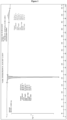
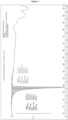
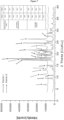
- each respective X-ray powder diffraction pattern displays at least one peak which is absent or at an intensity below the limit of detection, in the X-ray powder diffraction pattern for the other polymorphic form.
- the two novel polymorphic forms herein disclosed can be differentiated by this single characteristic peak.
- inventors refer to this type of peak as a differentiating peak.
- the differentiating peaks are each also part of each of the list of characteristic peaks.
- carbonyl is intended to include the corresponding "carbonyl” protected as acetal of C 1 -C 8 alcohol, e.g. Ethanol or C 1 -C 8 diol such as ethylene glycol, 1,3-Propanediol, Propylene glycol.
- dimethyl carbonyl will include a corresponding acetal exemplified by MeC(OCH 2 CH 2 O)Me.
- Metal is intended to include all forms of the metal including, though not limited to, metal salts, metal complexes etc.
- organo-lithium organo-copper and organo-zinc compounds for example, phenyl(3-(trifluoromethyl)phenyl)zinc, 3-(trifluoromethyl)phenyl)lithium, bis(3-(trifluoromethyl)phenyl)zinc, (3-(trifluoromethyl)phenyl)zinc(II) bromide, bis(3-(trifluoromethyl)phenyl)cuprate(I), bis(3-(trifluoromethyl)phenyl)copper etc., and clearly include combinations of these types of reagent.
- organo-lithium organo-copper and organo-zinc compounds for example, phenyl(3-(trifluoromethyl)phenyl)zinc, 3-(trifluoromethyl)phenyl)lithium, bis(3-(trifluoromethyl)phenyl)zinc, (3-(trifluoromethyl)phenyl)zinc(II) bromide, bis(3-(tri
- nucleophile e.g. Grignard reagent
- hydrogen/hydride source or hydrogenation is also intended as an option to be included within the concept of using a nucleophile, exemplified by the use of H 2 /Pd, NaBH 4 , CuH, or H 2 /Raney Ni etc. as well as electron sources exemplified by the use of Zn/AcOH, Na/NH 3 etc.
- Grignard reagent includes organo-magnesium compounds in which Mg is connected to carbon including Ate complexes, Turbo Grignard etc., exemplified by iPrMgCl, MeMgCl 2 Li etc.
- each instance of a substituent may independently be selected from any of the definitions of that substituent.
- a compound within a group represented by CH(R') 3 where R' was defined as F, Cl or I could include the compound CH(F)(Cl)(I).
- the present invention relates inter alia, to each of the compounds of formulae 2, 3 and 4 as defined below, herein referred to as Unsaturated Precursor, and intermediates III and IV, as further defined below, which are novel, useful intermediates in the herein disclosed novel methods of preparation of certain agrochemical compounds, in particular, Pyrrolidinones identified herein as Compounds of formulae 1 and generally referred to as Saturated Targets, defined below.
- One example of these methods is represented in the scheme below.
- Unsaturated Precursor; Compounds III; and IV individually is useful as an intermediate for preparation of Saturated Targets without being dependent on the others in a chain of reactions as exemplified.
- Advantageously Saturated Targets include those Pyrrolidinones which are Anilide Pesticides most exemplified by, 2'-fluoro-1-methyl-2-oxo-4-[3-(trifluoromethyl)phenyl]pyrrolidine-3-carboxanilide, and most especially, optical isomers and/or diastereomers thereof, useful as herbicides, including the following structures,
- the present invention also relates to certain marker compounds including those identified herein as Storage Markers, exemplified by the compound of formula D below, which are further produced from an exemplified Saturated Target compound having the structure below, which is most especially exemplified by: (3S,4S)-2'-fluoro-1-methyl-2-oxo-4-[3-(trifluoromethyl)phenyl]pyrrolidine-3-carboxanilide, in the following scheme, wherein the rate and degree of conversion and amount of Storage Marker of formula D produced, and its percentage content in mixtures with compositions of the Saturated Target compound from which it was produced, is mediated by the characteristics of said composition and by the history of its storage at various defined environmental conditions, particularly exposure to sunlight, and thus Storage Markers of formula D, are novelly, and inventively utilized as indicative markers of said composition characteristics and evidence of historical storage conditions.
- Storage Markers of formula D are novelly, and inventively utilized as indicative markers of said composition characteristics and evidence of historical storage conditions.
- the present invention thus, also relates to methods of preparation of Saturated Target compounds, and methods of preparing each of various individual intermediates herein referred to as Unsaturated Precursor and compounds III, and IV and Storage Marker compounds of formula D which are embodiment subjects of the invention as well as industrially useful methods for the efficient preparation of certain Pyrrolidinones which are Anilide Pesticides, particularly exemplified by optically active compounds of 2'-fluoro-1 -methyl-2-oxo-4-[3-(trifluoromethyl)phenyl]pyrrolidine-3-carboxanilides, from the aforesaid intermediate compounds.
- the invention similarly relates to novel mixtures and compositions comprising Saturated Target and Storage Marker compounds which are exemplified by mixtures of Anilide Pesticide together with above mentioned respective markers which are indicative or evidence of, for example, sub-optimal storage conditions and/or disadvantageous composition characteristics or ingredients of said mixtures.
- the invention further relates to methods, ingredients and packaging useful in minimizing the percentage content of said Storage Marker compounds in compositions of Saturated Target by inter alia, minimizing, avoiding or mitigating the effects of, exposure of said compositions to, for example, sunlight.
- the invention is clearly, inextricably linked to those novel physical/chemical characteristics and/or attributes of Saturated Target compounds which result from having been produced by a process utilizing the Unsaturated Precursors and compounds III and IV of the invention as intermediates in their preparation.
- a Saturated Target compound prepared utilizing any of Unsaturated Precursor; compounds, III; or IV as intermediates can have, a novel impurity profile that can include at least trace amounts of any of Unsaturated Intermediates;, III; or IV as impurities carried through from the process, and thus will novelly provide evidence of that Saturated Target compound having been prepared using the inventive compounds, Unsaturated Intermediate, III or IV as intermediates.
- Combinations of Saturated Target with any of Unsaturated Precursor, III or IV are in themselves novel and have utility in inter alia, analysis of a test Saturated Target to determine its route of preparation and other uses independent of being preparative intermediates.
- the Saturated Target compounds having been produced by a process utilizing the compounds referred to as Unsaturated Precursor, III and IV of the invention as intermediates in their preparation will also have novel physical characteristics and/or attributes as a result.
- these characteristics include, though are not limited to, novel and useful polymorphic forms of 2'-fluoro-1 -methyl-2-oxo-4-[3-(trifluoromethyl)phenyl]pyrrolidine-3-carboxanilide and its individual enantiomers/diastereomers and mixtures thereof when produced by the inventive methods and intermediates.
- the invention also relates to both amorphous or non-crystalline solid forms and to each of crystalline polymorphs, Form I and Form II of (3S,4S)-N-(2-fluorophenyl)-1-methyl-2-oxo-4-[3-(trifluoromethyl)phenyl]-3-pyrrolidinecarboxamide (Tetflupyrolimet), and mixtures of both Form I and Form II, either as pure active ingredients or in combination with non-crystalline forms, carriers or additional ingredients etc. All of these mixtures are included herein within the term composition.
- composition in this description should be understood to include all mixtures of more than one material, including mixtures of active ingredients intermediates and markers even when there are no inactive or inert ingredients or carrier materials included.
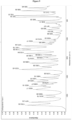
- This invention specifically includes novel Tetflupyrolimet Polymorph Form I which exhibits at least one of the following properties:
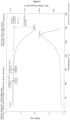
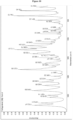
- This invention specifically includes novel Tetflupyrolimet Polymorph Form II which exhibits at least one of the following properties: An infrared (IR) absorption spectrum substantially as shown in Figure 10 .
- IR infrared
- An infrared (IR) absorption spectrum having at least one characteristic peak selected from the following values expressed as cm-1 ( ⁇ 1 cm-1) at 1678, 1546, 1395, 946, 924, 885, 825 and 662.
- An X-ray powder diffraction pattern substantially as shown in Figure 6 .
- the invention additionally relates to processes for the preparation of crystalline polymorphs Form I and Form II of (3S,4S)-N-(2-fluorophenyl)-1-methyl-2-oxo-4-[3-(trifluoromethyl)phenyl]-3-pyrrolidinecarboxamide (Tetflupyrolimet) as described in the invention.
- Unsaturated Precursor, III and IV respectively as defined infra and in the embodiments below, can each individually be prepared by general methods known in the art of synthetic organic chemistry by those skilled in these arts
- Each of the compounds, Unsaturated Precursor, III, and IV is at least one, preferably all of:
- inventive methods for preparing Saturated Target compounds can involve a scheme which utilizes all of compounds, Unsaturated Precursor, III and IV, and clearly also includes the individual aspects of methods of preparation of each of the intermediate compounds without reference to their subsequent use as intermediates in a multistep preparation.
- inventive process for preparing a Saturated Target compound Saturated Target will only include the use of one and/or two of the three corresponding novel intermediate compounds, without the occurrence of the other(s). Thus, it is useful to consider each of the claimed compounds as being inventively independent of each other.
- Unsaturated Precursors of formula 2 may be prepared directly from some compounds IV, of formula 4,
- each of the Compounds, Unsaturated Precursor, III and IV is individually useful as an intermediate for preparation of Saturated Target without being dependent on the others in the chain of reactions as exemplified above.
- the known methods of preparation for Saturated Targets of formula 1 are generally expensive because, they use expensive starting materials, involve multiple synthetic steps, involve the use of and/or are based on catalysis with heavy metals like Palladium, Rhodium, Iridium etc., involve closing the ring labelled P in the structure below, and/or introduce chirality into the system at an early stage of synthesis making selective preparation of a desired syn or anti isomer of compounds of formula 1 challenging.
- the invention provides novel intermediate compounds that may be used for a novel method of synthesis of Saturated Targets of formula 1 via reaction at the cyclic double bond in the ring system of an Unsaturated Precursor of formula 2, this step does not require the same expensive catalysts such as Pd, Rh or Ir as were required in previous processes.
- the invention also teaches and provides cheap closed-ring starting materials and intermediates that may be used for the synthesis of Unsaturated Precursor, avoiding the need for any ring closure synthetic step exemplified in the following scheme.
- NMP N-Methyl pyrrolidone
- reaction of the lactam/ secondary amide of the structure below, with Grignard reagent or organolithium reagent results in a 1,4 addition, instead of simple deprotonation and de-activation of the lactam / secondary amide, or other undesired reaction, for example attack on amide.
- the markers that can be formed in the above scheme can include some the following structures,
- the markers that may be formed in this scheme can include some the following structures,
- Grignard reagent and/or organolithium regent may be very desirable for production on industrial scale, reducing and/or eliminating problems including, waste issues e.g. heavy metals, B etc. use of expensive metal(s) e.g. Rh, Pd, Ir, Pt etc., reducing the number of synthetic steps, eliminating the need to purify the desired Saturated Target product from residual problematic impurities.
- inventive intermediates and processes herein disclosed can also be accompanied by some or all of the following potential advantages.
- the improvement of Syn-anti selectivity and introduction of chirality at the late stages of synthesis reduces the risk of partial or even full racemization in the final Saturated Target product, thus improving the yield of the desired chiral compound and, accordingly, reducing the production cost.
- the disclosed process also reduces the number of synthetic steps required for preparation of Saturated Target product, and allows for synthesis starting from a cyclic compound and thus avoids the need for cyclization as part of the synthesis.
- the starting materials can also be significantly cheaper than previously disclosed starting materials and the process requires cheaper reagents and catalysts and obviates the need for expensive heavy metals such as Palladium and Ruthenium etc.
- a substituent of A ⁇ may also be connected to another part of the molecule such as Q ⁇ , A ⁇ etc. for example in the following type of structure .
- Each A ⁇ is individually and independently a C, N, O or S atom, with or without substitution exemplified by -CH 2 - or -O-.
- each A ⁇ may be connected to another part of the molecule such as A ⁇ , A ⁇ , R ⁇ etc., with the proviso, that at least one of A ⁇ is a saturated atom exemplified by CH 2 .
- na is 1, 2, or 3
- Each Q ⁇ is individually and independently O, S, or N R ⁇ R ⁇ is a C, N, O or S atom with or without substitution exemplified by -N(Me) 2 .
- the substituent on R ⁇ may be hydrogen or a carbon- and/or nitrogen-containing group, exemplified by, substituted or unsubstituted, alkyl, aryl, naphthyl, heterocycles etc. connected to the ring via a C atom, or a Si atom if relevant.
- R ⁇ may also be connected to another part of the molecule such as Q ⁇ , A ⁇ etc in a ring via a C atom, or Si atom if relevant, for example in the structure below,
- the ring moiety of the Unsaturated Precursor, labelled P below is not aromatic i.e. not all atoms are capable of conjugation. Additionally, the double bond in that ring moiety indicated below, is also not part of an aromatic additional ring external to it.
- substituents of A ⁇ may also be connected to another part of the molecule such as, Q ⁇ , A ⁇ , etc. as a ring, for example:
- Each A ⁇ is individually and independently a C, N, O or S atom with 0-2 substituents, for example, A ⁇ may be, -N(Me)-, -C(Et)H-, -O- etc.
- Substituents on each A ⁇ are selected from H and/or R ⁇ defined infra, with the proviso that at least one of the A ⁇ atoms on the ring is a saturated atom exemplified by CH 2 .
- each A ⁇ in some circumstances may be connected to another part of the molecule such as, Q ⁇ , A ⁇ or to another A ⁇ , etc to form a ring.
- Each R ⁇ is individually and independentlyis halogen (Hal.), hydroxy (OH), cyano (CN), nitro, amino, C 1 -C 8 alkyl, C 1 -C 8 cyanoalkyl, C 1 -C 8 cyanoalkoxy, C 1 -C 8 haloalkyl, C 1 -C 8 hydroxyalkyl, C 1 -C 8 nitroalkyl, C 2 -C 8 alkenyl, C 2 -C 8 haloalkenyl, C 2 -C 8 nitroalkenyl, C 2 -C 8 alkynyl, C 2 -C 8 haloalkynyl, C 2 -C 8 alkoxyalkyl, C 3 -C 8 alkoxyalkoxyalkyl, C 2 -C 8 haloalkoxyalkyl, C 2 -C 8 haloalkoxyhaloalkoxy, C 3 -C 6 cycloalkyl, cyclopropylmethyl
- Each R ⁇ is individually and independently, Hal, OH, CN, nitro, amino, C 1 -C 8 alkyl, C 1 -C 8 cyanoalkyl, C 1 -C 8 cyanoalkoxy, C 1 -C 8 haloalkyl, C 1 -C 8 hydroxyalkyl, C 1 -C 8 nitroalkyl, C 2 -C 8 alkenyl, C 2 -C 8 haloalkenyl, C 2 -C 8 nitroalkenyl, C 2 -C 8 alkynyl, C 2 -C 8 haloalkynyl, C 2 -C 8 alkoxyalkyl, C 3 -C 8 alkoxyalkoxyalkyl, C 2 -C 8 haloalkoxyalkyl, C 2 -C 8 haloalkoxyhaloalkoxy, C 3 -C 6 cycloalkyl, cyclopropylmethyl, 1-methylcyclopropyl, 2-methyl
- R ⁇ may be connected to another part of the molecule such as Q ⁇ , A ⁇ etc. to form a ring.
- Each R ⁇ is individually and independently, CN, C 1 -C 3 alkyl, C 1 -C 8 hydroxyalkyl, C 2 -C 3 alkenyl, C 2 -C 3 alkynyl, C 3 -C 6 cycloalkyl, C 2 -C 3 alkoxyalkyl, C 1 -C 3 alkoxy, C 2 -C 3 alkylcarbonyl, C 2 -C 3 alkoxycarbonyl, C 2 -C 3 alkylaminoalkyl or C 3 -C 4 dialkylaminoalkyl.
- R ⁇ may be connected to another part of the molecule such as Q ⁇ , A ⁇ etc. forming a ring.
- Each R ⁇ is individually and independently, phenyl, phenylmethyl (benzyl), pyridinylmethyl, phenylcarbonyl (i.e. benzoyl), phenoxy, phenylethynyl, phenylsulfonyl or a 5- or 6-membered heterocyclic ring, each substituted or unsubstituted on ring members with up to 5 substituents independently selected from R ⁇ ,
- a pesticide synthesis intermediate compound having the following structure,
- a pesticide synthesis intermediate compound having the following structure,
- a Saturated Target which has the following structure, in combination, admix, mixture etc., with at least one Unsaturated Precursor which is defined by any of the following structures,
- a Saturated Target which has the following structure, in combination, admix, mixture etc., with at least one Unsaturated Precursor which is an Unsaturated Precursor defined by any of the following structures, wherein Q 1 , Q 2 , R 1 , R 2 , R 3 , R 4 , R6, Y1 and Y2 etc. have the meanings as defined in Claim 1 of PCT/US2014/068073 published as WO 2015/084796 .
- the text extracted from item 1 on page 286, line 6 until page 289 line 23 of WO 2015/084796 being specifically incorporated by reference solely for the purpose of defining the structures of this embodiment.
- a Saturated Target which has the following structure, in combination, admix, mixture etc., with at least one Unsaturated Precursor which is defined by any of the following structures,
- a pesticide synthesis intermediate compound defined by any one of the following structures,
- a Saturated Target having the following structure, in combination, admix, mixture etc. with at least one Unsaturated Precursor which is defined by any of the following structures, wherein Q 1 , Q 2 , R 1 , R 2 , R 7 , Y, A and J etc. have the meanings as defined in Claim 1 of PCT/US2016/030450 , published as WO2016182780 .
- the text of claim 1 on page 101, line 3 until page 106 line 28 of WO2016/182780 being specifically incorporated by reference solely for the purpose of defining the structures of this embodiment, the text being reproduced in Embodiment A37a.
- the text from claim 1 on page 74, line 10 until page 75 line 10 of WO 2020/161147 being specifically incorporated by reference solely for the purpose of defining the structures of this embodiment, the text being reproduced in Embodiment A38 .
- Saturated Target N-oxides salts and stereoisomers thereof, wherein the Saturated Target is a compound as defined in Claim 1 of PCT/US2018/035015 published as WO2018/222646 published as WO2018222646 , of the following formula, in combination with at least one Saturated Precursor each of which defined by any one of the following structures,
- a Saturated Target of the following formula and salts thereof wherein the Saturated Target is a compound as defined in Claim 1 of PCT/EP2018/057628 published as WO2018/184890 of the following formula, in combination with at least one Unsaturated Precursor, each defined by either one of the structures, wherein Q,W 2 , R 1 , R 2 , Y and Z etc. have the meanings as defined in Claim 1 of PCT/EP2018/057628 published as WO2018/184890 .
- the German language text from claim 1 on page 133, line 9 until page 136 line 4 of WO2018184890 being specifically incorporated herein by reference solely for the purpose of defining the structures of this embodiment.
- a process for preparing a Saturated Target from a corresponding Unsaturated Precursor comprising, combining the Unsaturated Precursor, a nucleophile exemplified by Grignard reagent, organo-lithium reagent, organo-zinc reagent, hydrogen source, e.g. H 2 /Pd/C or hydride source or electron source exemplified by Zn/AcOH, and at least one solvent to affect a 1,4 system substitution on the Unsaturated Precursor e.g. a 1,4-addition reaction, to obtain the Saturated Target generally defined by the following formula,
- one or more of the isomers is in excess, e.g. trans isomers or cis isomers:
- Embodiments B2 and B2a comprising, combining an Unsaturated Precursor, a nucleophile exemplified by a Grignard reagent, organo-lithium reagent, organo-zinc reagent, or a hydride source, a solvent and one or more catalytic components each chosen from, catalyst; pre catalyst and co-catalyst, to affect a 1,4 system substitution of the Unsaturated Precursor e.g. a 1,4-addition reaction to obtain the Saturated Target.
- an Unsaturated Precursor e.g. a 1,4-addition reaction to obtain the Saturated Target.
- Embodiments B2 and B2a comprising, combining an Unsaturated Precursor, a nucleophile exemplified by a Grignard reagent, organo-lithium reagent, organo-zinc reagent, or a hydride source, a solvent and one or more catalytic components each chosen from, catalyst; pre catalyst and co-catalyst, to affect a 1,4 system substitution of the Unsaturated Precursor exemplified by a 1,4-addition reaction to obtain the Saturated Target.
- the, Saturated Target product has one or more of the possible isomers in excess.
- Embodiments B2 to B6 comprising combining an Unsaturated Precursor, a nucleophile exemplified by a Grignard reagent, organo-lithium reagent, organo-zinc reagent, or a hydride source; solvent; one or more catalytic components each selected from, catalyst; pre catalyst; co-catalyst and an additive which is a source for a reversibly bound adduct, to an Unsaturated Precursor, to affect a 1,4-addition reaction to obtain the Saturated Target, further comprising steps of purifying and crystallizing the reaction product to obtain crystalline, purified, Saturated Target product.
- Embodiment B7 wherein the combination step comprises a Grignard reagent; organo-lithium reagent; organo-zinc reagent, or a hydride source, with solvent such as diethyl ether, and two or more catalytic components each selected from catalyst; pre catalyst; co-catalyst and mixtures thereof and Lewis acid.
- any one of Embodiments B1 to B8 comprising, dissolving the Unsaturated Precursor in a solvent exemplified by, diethyl ether, and preferably adding a catalytic component comprising one or more of, catalyst; pre catalyst; co-catalyst such as a combination of both CuBr.SMe 2 (Copper(I) bromide dimethyl sulfide complex) and R-BINAP or (S)-N-((S)-1-(butylamino)-1-oxo-3-phenylpropan-2-yl)-2-(((E)-2-(diphenylphosphaneyl) benzylidene) amino)-3-methylbutanamide agitating the reaction mass by e.g.
- a catalytic component comprising one or more of, catalyst
- pre catalyst pre catalyst
- co-catalyst such as a combination of both CuBr.SMe 2 (Copper(I) bromide dimethyl sul
- a source for a reversibly bound adduct such as Lewis acid exemplified by Trimethylsilyl chloride, and continuing agitation for a suitable time exemplified by about 20 minutes. Adjusting the temperature to optimal levels preferably a cold temperature, for example of between -20°C to -25°C. Adding nucleophile, for example a Grignard reagent or a hydride source, and agitating for a period of time to achieve an optimal product by balancing parameters typified by considerations of, desired quality, and acceptable yield within a reasonable reaction time.
- a source for a reversibly bound adduct such as Lewis acid exemplified by Trimethylsilyl chloride
- Quenching the reaction mass for example into aqueous NH 4 Cl solution, and optionally extracting with suitable solvent.
- Embodiment B9 further comprising a step of purifying the obtained Saturated Target product.
- Embodiment B1 comprising: In a first vessel A, dissolving an Unsaturated Precursor in a solvent exemplified by diethyl ether, and agitating at a suitable temperature. Optionally cooling the reaction mass is to a suitable temperature such as between -20°C to -25°C, and adding Lewis acid, for example, Trimethylsilyl chloride, and agitating for an appropriate period of time.
- a suitable temperature such as between -20°C to -25°C
- Lewis acid for example, Trimethylsilyl chloride
- a catalytic component comprising one or more of, catalyst; pre-catalyst; co-catalyst exemplified by a combination of both CuBr.SMe 2 (Copper(I) bromide dimethyl sulfide complex) and R -BINAP
- a nucleophilic component for example a Grignard reagent, organo-lithium reagent, organo-zinc reagent, or a hydride source
- vessel B a suitable temperature, (preferably cold)
- agitating for some time adding the contents of vessel A to vessel B at a suitable temperature (preferably cold), at an appropriate rate of addition, and agitating the mass for a suitable time, typically 20 minutes. Quenching the reaction mass e.g. into aq. NH 4 Cl solution, and optionally extracting with suitable solvent.
- washing the combined organic layer with e.g. saturated brine solution, and if desired, drying e.g. over Na 2 SO 4 . and optionally concentrating to obtain the Saturated Target product.
- Embodiment B12 further comprising a step of purifying the obtained Saturated Target.
- a process exemplified by the scheme comprising substitution of the 1,4 system such as a 1,4-addition using Grignard reagent, exemplified by 3-(trifluoromethyl)phenyl magnesium bromide.
- Embodiment B18 exemplified by the scheme, comprising substitution of the 1,4 system such as a 1,4-addition using Grignard reagent, exemplified by [3-(trifluoromethyl)phenyl]magnesium bromide)
- a process exemplified by the following scheme comprising substitution of the 1,4 system such as a 1,4-addition using organo-lithium reagent, exemplified by 3-(trifluoromethyl)phenyl lithium.
- a process represented by the scheme comprising, substitution of the 1,4 system by reduction of the double bond in the 1-Methyl-2H-pyrrol-5-one group, exemplified by the use of a hydride source.
- a process for obtaining a Saturated Target from an Unsaturated Precursor represented by the following scheme, said process comprising substitution of the 1,4 system such as 1,4-addition using Grignard reagent or hydride source, wherein the Saturated Target is a compound as defined in Claim 1 of PCT/US2014/068073 published as WO 2015/084796 , Wherein Q 1 , Q 2 , R 1 , R 2 , R 3 , R 4 , R 6 , Y 1 and Y 2 etc. have the meanings as defined in Claim 1 of PCT/US2014/068073 published as WO 2015/084796 .
- the text from claim 1 on page 286, line 6 until page 289, line 23 of WO 2015/084796 being specifically incorporated herein by reference solely for the purpose of defining the structures of this embodiment.
- Embodiment B45 wherein the chiral compound is selected from a group containing, naturally occuring, synthetic, modified, (e.g., substituted etc.), amino acids exemplified by N,N-dimethyl-L-prolinium and L-proline; peptides exemplified by, (S)-N-((S)-1-butylamino-1-oxo-3-phenylpropan-2-yl-2- (E)-2-diphenylphosphaneyl benzylidene amino-3-methylbutanamide; phosphorus ligand exemplified by, R-BINAP; proteins; enzymes; and sugars,
- Lewis bases can improve the workup and/or increase the yield.
- Embodiments B1-B50 conducted in the presence of strong bases exemplified by, MeMgCl; MeMgBr; iPrMgCl; iPrMgBr; BuLi; tert-BuLi; hexyllithium; NaH; and KH, etc.
- strong bases exemplified by, MeMgCl; MeMgBr; iPrMgCl; iPrMgBr; BuLi; tert-BuLi; hexyllithium; NaH; and KH, etc.
- a compound for use as a pesticide preferably, a herbicide synthetic process intermediate and/or marker compound of the following structure,
- a compound for use as a pesticide preferably, a herbicide synthetic process intermediate and/or marker compound of the following structure,
- a compound for use as a pesticide preferably, a herbicide synthetic process intermediate and/or marker compound of the structure,
- a compound for use as a pesticide preferably, a herbicide synthetic process intermediate and/or marker compound of the following structure,
- a compound for use as a pesticide preferably, a herbicide synthetic process intermediate and/or marker compound of the following structure,
- a compound for use as a pesticide preferably, a herbicide synthetic process intermediate and/or marker compound of the following structure,
- a compound for use as a pesticide preferably, a herbicide synthetic process intermediate and/or marker compound of the following structure,
- a compound for use as a pesticide preferably, a herbicide synthetic process intermediate and/or marker compound of the following structure,
- a Saturated Target compound having the following structure, in combination with at least one compound defined by any one of the following formulae:
- a Saturated Target compound having the structure, in combination with at least one compound defined by either one of the following formulae,
- a compound for use as a pesticide preferably, a herbicide synthetic process intermediate and/or marker having any one of the following structures,
- a Saturated Target compound having the following structure, in combination with at least one compound defined by any one of the following structures, and wherein
- Saturated Target N-oxides salts and stereoisomers thereof, wherein the Saturated Target is a compound as defined in Claim 1 of PCT/US2018/035015 published as WO 2018/222646 , having the following formula, in combination with at least one compound each defined by any one of the following structures, wherein,
- Embodiment D1a comprising, dissolving a compound of formula 3in suitable solvent e.g. Acetic acid, agitating (e.g. stirring etc.) for a period of time exemplified by about 20mins, adding portion wise, an Oxidant exemplified by meta-Chloroperoxy benzoic acid (mCPBA), or Hydrogen peroxide (H 2 O 2 ), at suitable temperature. Then, agitating the reaction mass at substantially the same temperature for some time e.g. about 2 hrs. The reaction mass can be quenched e.g. into aq.NaHCO 3 solution, and extracted with suitable solvent typically two times. The combined organic layer can be concentrated to obtain the corresponding Unsaturated Precursor of formula 2.
- suitable solvent e.g. Acetic acid
- agitating e.g. stirring etc.
- H 2 O 2 Hydrogen peroxide
- Embodiment D1a comprising, dissolving a compound of formula 3 in suitable solvent e.g. chlorobenzene, agitating (e.g. by stirring etc.) for a time exemplified by about 20mins, adding portion wise, an Activator exemplified by Base or Lewis acid at suitable temperature. Then, agitating the reaction mass at substantially the same temperature for some time e.g. about 2 hrs. The reaction mass can be quenched e.g. into NH 4 Cl solution, and extracted with suitable solvent typically two times. The combined organic layer can be concentrated to obtain the corresponding Unsaturated Precursor of formula 2 .
- suitable solvent e.g. chlorobenzene
- agitating e.g. by stirring etc.
- an Activator exemplified by Base or Lewis acid
- a process exemplified by the following scheme comprising, oxidation of the compound of the following formula, ,using oxidant, exemplified by meta-Chloroperoxy benzoic acid (mCPBA), or Hydrogen peroxide (H 2 O 2 ). to obtain the corresponding Unsaturated Precursor compound.
- oxidant exemplified by meta-Chloroperoxy benzoic acid (mCPBA), or Hydrogen peroxide (H 2 O 2 ).
- a process exemplified by the following scheme comprising, oxidation of the compound of the following formula, using oxidant, exemplified by meta-Chloroperoxy benzoic acid (mCPBA), or Hydrogen peroxide (H 2 O 2 ). to obtain the corresponding Unsaturated Precursor.
- oxidant exemplified by meta-Chloroperoxy benzoic acid (mCPBA), or Hydrogen peroxide (H 2 O 2 ).
- a process exemplified by the following scheme comprising, oxidation of the compound of the following formula, using oxidant exemplified by meta-Chloroperoxy benzoic acid (mCPBA), or Hydrogen peroxide (H 2 O 2 ). to obtain the corresponding Unsaturated Precursor compound.
- oxidant exemplified by meta-Chloroperoxy benzoic acid (mCPBA), or Hydrogen peroxide (H 2 O 2 ).
- a process exemplified by the following scheme comprising, oxidation of the compound of the following formula, using oxidant exemplified by meta-Chloroperoxy benzoic acid (mCPBA), or Hydrogen peroxide (H 2 O 2 ). to obtain the corresponding Unsaturated Precursor compound.
- oxidant exemplified by meta-Chloroperoxy benzoic acid (mCPBA), or Hydrogen peroxide (H 2 O 2 ).
- a compound of Formula 4 and e.g. salts etc. thereof, for use as an intermediate in the method of preparation of a corresponding Saturated Target of formula 1 wherein, R ⁇ , R ⁇ , A ⁇ , A ⁇ , na and Q ⁇ have the same meanings as defined in Embodiment A2, and R ⁇ and R ⁇ have the same meanings as defined in Embodiment B1 .
- Embodiment F1a comprising, dissolving a compound of formula 4 in suitable solvent with Base such as Sodium Hydride at a specified temperature, typically by cooling, agitating (e.g. stirring etc.), for a time exemplified by about 20mins, adding Electrophile exemplified by any of diphenyl disulfide; phenyl hypochlorothioite; phenyl hypobromoselenoite, dissolved in suitable solvent at substantially the same temperature, agitating the reaction mass at substantially the same temperature for some time.
- the reaction mass can be quenched e.g. into NH 4 Cl solution and extracted with suitable solvent typically two or more times, the combined organic layer can be washed and dried over Na 2 SO 4 and concentrated to obtain the corresponding compound of formula 3. This process is preferred when R ⁇ is H.
- Embodiment F1b comprising, dissolving a compound of formula 4 in suitable solvent together with a leaving group source exemplified by a halogenation reagent (e.g. Bromine source), at a specific temperature, optionally adding a Base and/or catalyst, (catalytic component comprising one or more of, catalyst; pre-catalyst; co-catalyst). Agitating the reaction mass (e.g. stirring etc.), at substantially the same temperature for some time exemplified by about 2 hours, quenching the reaction mass and extracting with a suitable solvent. Preferably the mass is washed again and/or the combined organic layers are washed, optionally dried e.g. over Na 2 SO 4 and concentrated to obtain the corresponding compound of formula 3.
- a halogenation reagent e.g. Bromine source
- a Base and/or catalyst catalytic component comprising one or more of, catalyst; pre-catalyst; co-catalyst.
- a Storage Marker having the following structure, and e.g. salts thereof, wherein, R ⁇ , Q ⁇ , Q ⁇ and R ⁇ , have the same meanings as defined in Embodiment A2
- a Storage Marker compound of formula D obtainable by exposure of Tetflupyrolimet to sunlight
- a Storage Marker compound of the following formula, wherein, R ⁇ , Q ⁇ , A ⁇ , A ⁇ and n ⁇ , have the same meanings as defined in Embodiment A2.
- a Storage Marker compound of the following formula, wherein, each R ⁇ , has the same meanings as defined in Embodiment A2.
- a process for preparing a Storage Marker compound from a corresponding Saturated Target compound in the following general scheme, wherein the Saturated Target is exposed to sunlight for sufficient time for detectable quantities of the corresponding Storage Marker to be formed when measured by an analytical method exemplified by HPLC and particularly by HPLC-MS.
- R ⁇ , A ⁇ , A ⁇ , R ⁇ and n ⁇ have the same meanings as defined in Embodiment A2.
- a process for preparing a Storage Marker compound from a corresponding Saturated Target compound comprising exposing a composition, such as a solution, of the Saturated Target to sunlight for sufficient time for detectable quantities of the corresponding Storage Marker to be formed in the composition, and particularly, quantities above the limit of quantitation, using analytical techniques exemplified by HPLC-MS.
- a process for preparing the corresponding Storage Marker compound from a Saturated Target compound which is, (3S,4S)-2'-fluoro-1-methyl-2-oxo-4-[3-(trifluoromethyl)phenyl]pyrrolidine-3-carboxanilide in the following scheme, comprising exposing a composition, such as a solution, of the (3S,4S)-2'-fluoro-1 -methyl-2-oxo-4-[3-(trifluoromethyl)phenyl]pyrrolidine-3-carboxanilide to sunlight for sufficient time for detectable quantities of the corresponding Storage Marker to be formed in the composition, and particularly, quantities above the limit of quantitation, using analytical techniques exemplified by HPLC-MS.
- composition comprises a solution, especially an aqueous solution, that is maintained at a predefined level of acidity/basicity, preferably, of pH, by a method exemplified by inclusion of a suitable buffer in the preferably, aqueous, solution.
- Embodiment H3 wherein the solution of the Saturated Target is maintained at a level of Acidity/Basicity exemplified by an aqueous solution of Saturated Target having a pH selected from about 4 ⁇ 1; 7 ⁇ 1; and 10 ⁇ 1, by inclusion of effective concentrations of suitable buffers in the preferably aqueous solution.
- a process for minimizing the rate of conversion of Tetflupyrolimet in a composition thereof to the corresponding Storage Marker comprising minimizing the time and extent to which said composition is exposed to sunlight and/or mitigating the converting effect of said exposure to sunlight.
- a process for minimizing the rate of conversion of Tetflupyrolimet in a composition thereof, to the corresponding Storage Marker, comprising including in said composition, at least one of, ingredient; excipient; adjuvant; carrier; or any additive that can mitigate the converting effect of said exposure to sunlight, or reduce the rate at which said conversion would occur on exposure to sunlight absent said ingredient, excipient, adjuvant, carrier or additive.
- a container-closure system that protects the contents from the converting effects of sunlight by virtue of the specific properties of the material of which it is composed, including any coating applied to it, including clear, colorless, or translucent containers made light-resistant by means of a light-resistant or opaque covering or by use of secondary packaging, or within amber colored containers, wherein light-resistance and opacity relates to the wavelengths of light mediating conversion of Tetflupyrolimet to the corresponding Storage Marker.
- a process for minimizing the rate at which an aqueous solution of Tetflupyrolimet is converted to the corresponding Storage Marker compound when said solution is exposed to sunlight comprising maintaining the pH of said aqueous solution to a range of between about 6 to about 8 and preferably about 7.
- a process to determine the time period that a stored composition comprising a Saturated Target compound, especially, a Tetflupyrolimet composition, was exposed to sunlight while in storage comprising measuring and quantifying the relative content of the corresponding Storage Marker compound as compared to the content of the Saturated Target in the composition, and evaluating the period of exposure to sunlight by reference to a standard calibrating rate of conversion in one or more reference compositions comprising the Saturated Target compound.
- Embodiment H13 wherein said measurement and quantifying of said relative content is by a method exemplified by calculating the ratio of the respective areas under the resolved characterizing peaks of each compound in a test sample by appropriate HPLC analysis.
- a stored packaged composition comprising a combination of detectable quantities of a Storage Marker compound and a corresponding Saturated Target compound from which it was converted, by a process exemplified by the process of Embodiment H2 .
- Embodiment I1 comprising detectable, preferably measurable, quantities of a Storage Marker compound of the following formula, including any isomer or enantiomer thereof, in combination with a Saturated Target compound of the following formula, including any isomer or enantiomer thereof, especially exemplified by (3S,4S)-2'-fluoro-1 -methyl-2-oxo-4-[3-(trifluoromethyl)phenyl]pyrrolidine-3-carboxanilide, of the following formula,
- composition comprises a solution, especially an aqueous solution, of the Saturated Target that is maintained at a predefined level of acidity/basicity, preferably pH, by a method exemplified by inclusion of a suitable buffer system in the preferably aqueous, solution.
- Embodiment 13 wherein the solution of the Saturated Target is maintained at a level of Acidity/Basicity exemplified by an aqueous solution of the Saturated Target having a pH selected from about 4 ⁇ 1; about 7 ⁇ 1; and about 10 ⁇ 1 maintained, by inclusion of suitable buffers in the preferably aqueous solution at concentrations effective to maintain said level of Acidity/Basicity.
- a packaged aqueous-based composition of Tetflupyrolimet characterized in that the rate at which the Tetflupyrolimet is converted to a corresponding Storage Marker of the following formula, including any isomer, enantiomer or mixture thereof, when the composition is exposed to sunlight during storage is minimized, wherein said composition is adapted to maintain pH during storage, at a range of between about 6 to about 8 and preferably about 7, by inclusion of an ingredient, excipient or other component, exemplified by a buffer or buffering system in the composition.
- An agricultural product comprising a composition of an 2'-fluoro-1-methyl-2-oxo-4-[3-(trifluoromethyl)phenyl]pyrrolidine-3-carboxanilide especially, Tetflupyrolimet, characterized in that the rate at which conversion to the corresponding Storage Marker of the following formula, including any isomer, enantiomer or mixture thereof, occurs during storage, is minimized, wherein said product is adapted to limit, reduce or minimize the time and extent or to substantially avoid exposure to sunlight of said composition within said product during storage, wherein said minimization is as compared to an agricultural Tetflupyrolimet product without said adaptation.
- An agricultural product comprising a Tetflupyrolimet composition protected to a detectable degree against sunlight-mediated conversion to the corresponding Storage Marker compound of the following formula, during manufacturing, packaging, labeling, transportation, or storage, of said composition, characterized in that the product comprises said composition contained within and/or shielded by substantially light-resistant, preferably, opaque packaging and/or a container-closure system that protects the contents from the effects of sunlight by virtue of the specific properties of the material of which it is composed, including any coating applied to it, including clear and colorless or translucent container made light-resistant by means of an opaque covering or by use of secondary packaging, or within amber colored containers.
- a Tetflupyrolimet composition characterized by a minimized rate or extent of sunlight-mediated conversion of Tetflupyrolimet to the corresponding Storage Marker of the following formula, comprising at least one of, ingredient, excipient, adjuvant, carrier or additive that can mitigate the converting effect of exposure to sunlight or reduce the rate at which said conversion would occur on exposure to sunlight absent said ingredient, excipient, adjuvant, carrier or additive.
- a Tetflupyrolimet composition stabilized to at least a measurable degree against sunlight-mediated conversion to the corresponding Storage Marker, during manufacturing, packaging, labeling, transportation, and storage, characterized in that said composition comprises at least one of, ingredient, excipient, adjuvant, carrier or additive that can mitigate the converting effect of exposure to sunlight and/or reduce the rate at which said conversion occurs absent said ingredient, excipient, adjuvant, carrier or additive.
- a product comprising a Tetflupyrolimet composition shielded against sunlight-mediated conversion to the corresponding Storage Marker during any of, manufacturing; packaging; labeling; transportation; or storage; of said composition, characterized in that the product comprises said Tetflupyrolimet composition contained within substantially light-resistant, preferably, opaque packaging substantially as detailed in Embodiment H10 .
- a Tetflupyrolimet composition stabilized to at least a measurable degree against conversion to the corresponding Storage Marker or displaying a measurably reduced rate of conversion to the corresponding Storage Marker during manufacturing, packaging, labeling, transportation, and storage, as compared to the standard calibrating rate of conversion in one or more reference compositions comprising the Tetflupyrolimet, characterized in that said composition comprises at least one component which is any, some or all, of,
- a buffered Tetflupyrolimet composition comprising less than a measurable, preferably less than a detectable, amount of, the corresponding Storage Marker compound after storage for a period equal to, or greater than 2 months in a sunlit environment.
- Tetflupyrolimet is in a liquid, solution, emulsion, or suspension composition.
- a crystalline polymorph Form I of N-(2-fluorophenyl)-1-methyl-2-oxo-4-[3-(trifluoromethyl)phenyl]-3-pyrrolidinecarboxamide which exhibits at least one of the following properties:
- a crystalline polymorph Form I of Tetflupyrolimet which exhibits at least one of the following properties:
- a composition comprising the crystalline polymorph Form I Tetflupyrolimet as defined in any one of Embodiments J1 or J2.
- a pesticidal, preferably, herbicidal composition comprising the crystalline polymorph Form I of any one of embodiments J1 and J2 ; and an herbicidally acceptable diluent or carrier.
- a pesticidal, preferably, herbicidal composition prepared from a crystalline polymorph Form I of any one of embodiments J1 and J2 .
- a crystalline polymorph Form II of N-(2-fluorophenyl)-1-methyl-2-oxo-4-[3-(trifluoromethyl)phenyl]-3-pyrrolidinecarboxamide which exhibits at least one of the following properties: An infrared (IR) absorption spectrum substantially as shown in Figure 10 .
- An infrared (IR) absorption spectrum having at least one characteristic peak selected from the following values expressed as cm-1 ( ⁇ 1 cm-1) at 1678, 1546, 1395, 946, 924, 885, 825 and 662.
- An X-ray powder diffraction pattern substantially as shown in Figure 6 .
- a crystalline polymorph Form II of Tetflupyrolimet which exhibits at least one of the following properties: An infrared (IR) absorption spectrum substantially as shown in Figure 10 .
- An infrared (IR) absorption spectrum having at least one characteristic peak selected from the following values expressed as cm-1 ( ⁇ 1 cm-1) at 1678, 1546, 1395, 946, 924, 885, 825 and 662.
- An X-ray powder diffraction pattern substantially as shown in Figure 6 .
- a composition comprising the crystalline polymorph Form II according to any one of Embodiments K1 or K2 .
- a pesticidal, preferably, herbicidal composition comprising the crystalline polymorph Form II according to any one of Embodiments K1 and K2 ; and a pesticidally, preferably, herbicidally acceptable diluent or carrier.
- a pesticidal, preferably, herbicidal composition prepared from the crystalline polymorph Form II according to any one of Embodiments K1 and K2 .
- a crystallization method for preparing the crystalline polymorph Form I according any one of embodiments J1 and J2 comprising recrystallization from tert-butyl methyl ether.
- a method for preparing the crystalline polymorph Form I according any one of embodiments J1 and J2 comprising:
- a method of preparing a crystalline polymorph Form II according to any one of embodiments K1 and K2 comprising: trituration with heptane.
- a method of preparing a crystalline polymorph Form II according to any one of embodiments K1 and K2 comprising,
- Three lots of about 50 mg of Saturated Target are each suspended in about 2ml of a 2% solution of acetonitrile in water, and sonicated for about 20 minutes.
- the three buffered solutions are each filtered and introduced to quartz tubes and exposed to natural sunlight for approximately 2 months.
- 1-methylpyrrolidin-2-one in e.g. THF is cooled to and maintained between -75°C -78°C.
- Lithium diisopropylamide in THF is added.
- reaction mass is stirred for e.g. ⁇ 30 minutes.
- 1-fluoro-2-isocyanatobenzene dissolved in THF is added dropwise over a period e.g. ⁇ 5min.
- reaction mass is allowed to warm to ambient and stirred for e.g. ⁇ 2 hr.
- reaction mixture is quenched e.g. into saturated NH 4 Cl and extracted with e.g. ethyl acetate.
- the combined organic layer is washed with saturated NaCl solution, dried over e.g. Na 2 SO 4 and concentrated to obtain the crude compound.
- the crude compound is purified by e.g. column chromatography using e.g. ethyl acetate/hexane as eluent to obtain N-(2-fluorophenyl)-1-methyl-2-oxopyrrolidine-3-carboxamide.
- reaction mass was stirred at between about -75°C to -78°C for about 30 minutes.
- reaction mass was allowed to warm to between about 20°C - 25°C and stirred for approximately 2 hr.
- reaction mixture was quenched into saturated NH 4 Cl and extracted with ethyl acetate.
- the crude compound was purified by column chromatography over silica gel (60-120 mesh) using ethyl acetate/hexane as eluent to get 400 mg of N-(2-fluorophenyl)-1-methyl-2-oxopyrrolidine-3-carboxamide as a light brown solid which approximates to17% yield, with a purity of about 88% as analyzed by HPLC.
- N-(2-fluorophenyl)-1-methyl-2-oxopyrrolidine-3-carboxamide is dissolved in e.g. THF. Then e.g. Sodium Hydride is added at a temperature e.g. of between about 0°C - 5°C.
- reaction mass is stirred at a temperature of e.g. between ⁇ 0°C - 5°C for e.g. about 20 minutes. Then, e.g. diphenyl disulfide dissolved in e.g. THF is added at a temperature of e.g. between about 0-5°C.
- the reaction mass is stirred at e.g. about 20°C-25°C for e.g. ⁇ 12 hours.
- reaction mass is quenched into e.g. aqueous NH 4 Cl solution and extracted with two lots of e.g. ethyl acetate (twice).
- the crude compound is purified by e.g. column chromatography over e.g. silica gel using e.g. ethyl acetate/hexane as eluent to obtain N-(2-fluorophenyl)-1-methyl-2-oxo-3-(phenylthio) pyrrolidine-3-carboxamide, as a solid .
- the reaction mass was stirred at a temperature of between about 0°C - 5°C for about 20 minutes.
- 25.42mmol of Diphenyl disulfide (5.5 g) dissolved in THF (5 ml) was added at a temperature of between about 0-5°C.
- the reaction mass was stirred at about 20°C-25°C for approximately 12 hours.
- reaction mass was quenched into Aqueous NH 4 Cl solution and extracted with two lots of about 50 ml ethyl acetate (twice).
- the crude compound was purified by column chromatography over Silica gel using Ethyl acetate /Hexane as eluent to obtain 3.8 gm of N-(2-fluorophenyl)-1-methyl-2-oxo-3-(phenylthio) pyrrolidine-3-carboxamide, as an off-white solid which approximates to about 52% yield, having a purity of about 98% as per LC-MS analysis.
- N-(2-fluorophenyl)-1-methyl-2-oxo-3-(phenylthio)pyrrolidine-3-carboxamide is dissolved in e.g. acetic acid and stirred for e.g. about 20 min. Then e.g. meta-Chloroperoxy- benzoic acid is added portion-wise at e.g. ambient temperatures. The reaction mass is stirred for e.g. about 2 hrs.
- reaction mass is quenched into e.g. aq.NaHCO 3 solution and extracted twice with e.g. ethyl acetate.
- the combined organic layers are concentrated to obtain the crude compound.
- N-(2-fluorophenyl)-1-methyl-2-oxo-2,5-dihydro-1H-pyrrole-3-carboxamide is dissolved in e.g. Diethyl ether then Copper(I) bromide dimethyl sulfide complex is added, followed by R-BINAP.
- the reaction mass is stirred for e.g. about 20 minutes.
- the reaction mass is maintained at a cold temperature exemplified by a temperature of between about -20°C and -25°C.
- Trimethylsilyl chloride is added and stirred for e.g. approximately 10 minutes.
- e.g. 3-(trifluoromethyl) phenyl) magnesium bromide solution is added and stirred for e.g. approximately 2 hours.
- the reaction mass is quenched into e.g. aqueous NH 4 Cl solution, and extracted with e.g. ethyl acetate.
- the combined organic layers are washed with e.g. saturated brine solution, dried over e.g. Na 2 SO 4 and concentrated to obtain crude product.
- reaction mass was stirred at approximately -20°C to -25°C for about 20 minutes.
- the reaction mass was kept to between about -20°C to -25°C.
- About 4.7 mmol of Trimethylsilyl chloride ( ⁇ 506 mg,) was added and stirred for approximately 10 minutes.
- 6.39 mmol of 1.62M, 3-(trifluoromethyl) phenyl) magnesium bromide solution (1.6 gm, 3.9 ml) was added at a temperature between about -20 -to -25°C and stirred for approximately 2 hours.
- reaction mass quenched into aqueous NH 4 Cl solution, and extracted with ethyl acetate.
- the combined organic layers were washed with saturated brine solution, dried over Na 2 SO 4 and concentrated to obtain roughly 1g of crude product having a purity of about 54% purity as measured by quantitative HPLC analysis representing a crude assay corrected yield of approximately 77%.
- the reaction mass was stirred at about 20°C-25°C o C for approximately 20 minutes.
- the reaction mass was cooled to, and maintained between -20°C to -25°C, and Trimethylsilyl trifluoromethanesulfonate (1g) was added and stirred for about 10 minutes.
- reaction mass was stirred at about 20°C -25°C for about 20 minutes.
- the reaction mass was cooled to and maintained at between about -20°C and about -25°C and 0.92 mmol Boron trifluoride diethyl etherate (0.12 mL) was added and stirred for approximately 20 minutes.
- Tetflupyrolimet Three lots of about 50 mg of Tetflupyrolimet were each suspended in about 2ml of a 2% solution of acetonitrile in water, and sonicated for about 20 minutes.
- the three solutions were each filtered and introduced to quartz tubes and exposed to natural sunlight for approximately 2 months.
- a 5 mL round bottomed flask is flame dried and purged with argon.
- reaction is quenched by pouring into saturated NaHCO 3 and diluted with Diethyl ether in water (Et 2 O/H2O) and then stirred for approximately 2 hours at ambient temperatures.
- the aqueous layer is extracted twice with Diethyl ether and the combined organic layers are washed with brine, dried over anhydrous MgSO 4 , filtered, and concentrated by rotary evaporation.
- the obtained crude material is purified by column chromatography over Silica gel (60-120 mesh) using Ethyl acetate/Hexane as eluent to obtain (anti)-N-(2-fluorophenyl)-1-methyl-2-oxo-4-(3-(trifluoromethyl) phenyl) pyrrolidine-3-carboxamide as an off-white solid.
- About 70% yield with a purity of approximately 90 % as measured by HPLC.
- a ratio of enantiomers of around 1:9 by Chiral HPLC analysis is obtainable in principle.
- enantiomeric excess can be directed to the desired product.
- This and the other specific preparations can also be conducted with alternative reagents and conditions as would be understood by practitioners of these arts to have equivalent function and/or effect
- reaction mass was concentrated to dryness, diluted with fresh dichloromethane and added to a stirred solution of 13.98 mmol 2-fluoroaniline (1.5 gm) and 27.96mmol triethylamine (2.8g) in 10ml Dichloromethane(5 vol) at about 0°C -5°C.
- reaction mass was warmed to about 20°C-25°C and stirred for approximately 2 hrs.
- the reaction mass was quenched into water and extracted with Dichloromethane (2 ⁇ 150 ml).
- the combined organic layer was washed with water followed by brine solution, dried over sodium sulphate and concentrated to obtain crude product.
- 500 mg of N-(2-fluorophenyl)-1-methyl-2-oxopyrrolidine-3-carboxamide was obtained. 15.1% yield, 88.8% purity as per LCMS.
- N-(2-fluorophenyl)-1-methyl-2-oxo-2, 5-dihydro-1H-pyrrole-3-carboxamide 500 mg, 2.13 mmol
- Diethyl ether 25ml
- CuBr.SMe 2 22 mg, 0.1 mmol
- 2,2'-bis(diphenylphosphanyl)-1,1'-binaphthalene 79 mg, 0.12 mmol
- Reaction mass was cooled to -35 to -30°C, Diethyl zinc (3.84 mL, 1 M, 3 eq) was added to the reaction mixture. The reaction mass was left to stir at -35-30°C for 4h. Reaction mass quenched into aq. NH 4 Cl solution, extracted with ethyl acetate (2x25 mL).
- N-(2,3-difluorophenyl)-1-methyl-2-oxopyrrolidine-3-carboxamide (2g, 7.8 mmol) was dissolved in THF (20 ml), added NaH (0.629 g, 26.2mmol) at 0-5°C. Reaction mass was stirred at 0-5°C for 20 minutes. Added Phenyl selenyl bromide (2 g, 8.5 mmol) dissolved in THF (5 mL) at 0-5°C and stirred for 2 hrs. Reaction mass was quenched into cold water, extracted with ethyl acetate (2x50 mL).
- N-(2,3-difluorophenyl)-1-methyl-2-oxo-3-(phenylselenyl) pyrrolidine-3-carboxamide (2g, 4.8 mmol) was dissolved in Dichloromethane (20 ml, 10 vol) added H 2 O 2 (1.1 g, 32.3 mmol; 30% solution) at 0-5°C. Reaction mass was stirred at 0-5°C for 2 hrs. Reaction mass was quenched into ice cold saturated NaHCO 3 solution and extracted with Dichloromethane (2x50 mL). The Organic layers were washed with NaHCO 3 solution (3x20 mL), dried under Na 2 SO 4 and concentrated to get crude.
- N-(2,3-difluorophenyl)-1-methyl-2-oxo-2,5-dihydro-1H-pyrrole-3-carboxamide 0.3 g, 1.19 mmol
- Copper(I) bromide dimethyl sulfide complex 12.2 mg, 0.059 mmol
- 2,2'-bis(diphenylphosphaneyl)-1,1'-binaphthalene 44.4 mg, 0.071 mmol
- Et 2 O 9 mL, 30 vol
- N-(2-fluorophenyl)-1-methyl-2-oxo-2,5-dihydro-1H-pyrrole-3-carboxamide 0.3 g, 1.28 mmol
- Copper(I) bromide dimethyl sulfide complex 13 mg, 0.063 mmol
- 2,2'-bis(diphenylphosphaneyl)-1,1'-binaphthalene 47 mg, 0.075 mmol
- Et 2 O 9 mL, 3 vol
- reaction mass lithiated 5-bromo-2-(trifluoromethyl) pyridine was added dropwise at -78-70°C and stirred for 1hr. Reaction mass quenched into aqueous NH 4 Cl solution, extracted with ethyl acetate (2x50 mL).
- N-(2-fluorophenyl)-1-methyl-2-oxo-4-(3-(trifluoromethyl) phenyl)-2,5-dihydro-1H-pyrrole-3-carboxamide 100 mg, 0.26 mmol
- Acetic acid 5ml, 50 vol
- Reaction mass was cooled to 0 to 5°C, added Zn dust (0.17 g, 2.64 mmol).
- the RM was stirred at 20-25°C for 12h.
- RM was filtered and concentrated to get crude.
- Crude LCMS indicates 30.6% of anti-N-(2-fluorophenyl)-1-methyl-2-oxo-4-(3-(trifluoromethyl) phenyl) pyrrolidine-3-carboxamide.
- N-(2-fluorophenyl)-1-methyl-2-oxo-4-(3-(trifluoromethyl) phenyl)-2,5-dihydro-1H-pyrrole-3-carboxamide 50 mg, 0.13mmol
- methanol 5ml, 50vol
- Tris(triphenylphosphine)rhodium(I) chloride 12 mg, 0.013 mmol
- the RM was stirred under H 2 pressure. The pressure was applied using hydrogen bladder at 20-25°C for 12h.
- the reaction was monitored using LCMS.
- RM was quenched with 2N NaOH solution (0.2 mL) and extracted with ethyl acetate (2x5 mL) and concentrated to obtain crude.
- the crude LCMS indicated the formation of desired mass up to -10%.
- N-(2-fluorophenyl)-1-methyl-2-oxo-2,5-dihydro-1H-pyrrole-3-carboxamide (0.1 g, 0.427 mmol), Copper(I) bromide dimethyl sulfide complex (4 mg, 0.021 mmol) and (S)-N-((S)-1-(butylamino)-1-oxo-3-phenylpropan-2-yl)-2-(((E)-2-(diphenylphosphaneyl) benzylidene) amino)-3-methylbutanamide (15 mg, 0.025 mmol) in Et 2 O (5 mL) were taken and cooled to -78-70°C.
- N-(2,3-difluorophenyl)-1-methyl-2-oxo-2,5-dihydro-1H-pyrrole-3-carboxamide 0.3 g, 1.19 mmol
- Copper(I) bromide dimethyl sulfide complex (12 mg, 0.059 mmol)
- (S)-N-((S)-1-(butylamino)-1-oxo-3-phenylpropan-2-yl)-2-(((E)-2-(diphenylphosphaneyl) benzylidene) amino)-3,3-dimethylbutanamide 43 mg, 0.071 mmol) in Et 2 O (6 mL, 20 vol) were taken .
- reaction mass was cooled to -78-70°C followed by addition of lithiated 1-bromo-3-(trifluoromethyl) benzene at -78-70°C. Then stir the reaction mass at -78-70 for 4 h after 4 h reaction mass allowed to warm to 20-25°C and maintained at 20-25°C for 12 h.
- the reaction mass was monitored by TLC and LCMS. The TLC shows the formation of new spot, similarly, LCMS indicated the formation of desired mass. Then reaction mass was quenched with saturated aq. NH 4 Cl solution followed by the extraction with ethyl acetate (3 ⁇ 25 mL).
- N-(2,6-difluoropyridin-3-yl)-1-methyl-2-oxo-3-(phenylselenyl) pyrrolidine-3-carboxamide (4g, 9.73mmol) was dissolved in dichloromethane (40 mL, 10 vol), added H 2 O 2 (2.2g, 64.8 mmol; 30% aq solution) at 0-5°C. Reaction mass was stirred at 0-5 °C for 2 hrs. Reaction mass was quenched into saturated solution of NaHCO 3 at 0-5°C followed by Dichloromethane (2x100 mL) extraction. The Organic layers were washed with NaHCO3 solution (4x50 mL), dried over anhydrous Na 2 SO 4 and concentrated to get crude.
- N-(2,6-difluoropyridin-3-yl)-1-methyl-2-oxo-2,5-dihydro-1H-pyrrole-3-carboxamide 300 mg, 1.18 mmol
- CuBr.SMe 2 (12 mg, 0.05 mmol)
- (R)-2,2'-bis(diphenylphosphanyl)-1,1'-binaphthalene 44 mg, 0.071mmol
- Reaction mass was cooled to -20 to -25°C using dry-ice/acetonitrile, added Trimethylsilyl trifluoromethanesulfonate (0.57 g, 2.6mmol) and stirred for 20 minutes.
- Trimethylsilyl trifluoromethanesulfonate (0.57 g, 2.6mmol) and stirred for 20 minutes.
- Reaction mass quenched into aqueous NH 4 Cl solution (20 mL), extracted with ethyl acetate (2x50 mL).
- Reaction mass was cooled to -20 to -25°C using dry-ice/acetonitrile, added Trimethylsilyl trifluoromethanesulfonate (0.46g, 2.1 mmol) and stirred for 20 minutes.
- Trimethylsilyl trifluoromethanesulfonate (0.46g, 2.1 mmol) and stirred for 20 minutes.
- Reaction mass quenched into aq. NH 4 Cl solution (20 mL), extracted with ethyl acetate (2x50 mL).
- N-(2,3-difluorophenyl)-1-methyl-2-oxo-2,5-dihydro-1H-pyrrole-3-carboxamide 300 mg, 1.19 mmol
- Copper(I) bromide dimethyl sulfide complex (12 mg, 0.059 mmol)
- 2,2'-bis(diphenylphosphanyl)-1,1'-binaphthalene 44 mg, 0.071 mmol
- N-(2-fluorophenyl)-1-methyl-2-oxo-2,5-dihydro-1H-pyrrole-3-carboxamide (500mg, 2.13 mmol) was dissolved in dry Diethyl ether (20 mL, 4 vol), added Copper(I) bromide dimethyl sulphide complex (22 mg, 0.1 mmol) and (S)-N-((S)-1-(butylamino)-1-oxo-3-phenylpropan-2-yl)-2-(((E)-2-(diphenylphosphaneyl) benzylidene) amino)-3-methylbutanamide (76 mg, 0.12 mmol) at 20-25°C and stirred at 20-25°C for 20 minutes.
- N-(2,3-difluorophenyl)-1-methyl-2-oxopiperidine-3-carboxamide (2 g, 7.46 mmol) was dissolved in THF (20 ml, 10 vol), added NaH (0.89 g, 37.3 mmol) at 0-5°C. Reaction mass was stirred at 0-5°C for 30 minutes. Added Phenyl selenyl bromide (1.76 g, 7.46 mmol) dissolved in THF (5 mL) at 0-5°C and stirred for 2 hrs. Reaction mass was quenched into cold water, extracted with ethyl acetate (2x50 mL).
- N-(2,3-difluorophenyl)-1-methyl-2-oxo-3-(phenylselenyl) piperidine-3-carboxamide (2.5 g, 5.89 mmol) was dissolved in MDC (25 ml, 10 vol), added H 2 O 2 (1.3 g, 39.30 mmol; 30% solution) at 0-5°C. Reaction mass was stirred at 0-5 ° C for 2 hrs. Reaction mass was quenched into ice cold saturated NaHCO 3 solution, and extracted with Dichloromethane (2x50 mL). The Organic layers were washed with NaHCO3 solution (3x20 mL), dried under Na2SO4 and concentrated to get crude.
- N-(2,3-difluorophenyl)-1-methyl-2-oxo-1,2,5,6-tetrahydropyridine-3-carboxamide 250 mg, 0.93mmol
- Copper(I) bromide dimethyl sulfide complex 9 mg, 0.046 mmol
- 2,2'-bis(diphenylphosphanyl)-1,1'-binaphthalene 35 mg, 0.056 mmol
- THF 5 mL, 20 vol
- lithiated 1-bromo-4-fluorobenzene was added dropwise at -78-70°C and stirred for 1 h.
- the mixture A was then introduced into the mixture B at 0-5°C. Then the RM was warmed to 20-25°C, and stirred for 1 hr. Then RM was cooled to 0-5°C, N-(2-fluorophenyl)-1-methyl-2-oxo-2,5-dihydro-1H-pyrrole-3-carboxamide (500 mg 2.13 mmol) in Methyl tert-butyl ether (5 mL) was added dropwise. The mixture was warmed to 20-25°C and stirred for 12 h. The reaction was quenched with 10% aqueous HCl solution and extracted with ethyl acetate (25 mLx2).
- N-(2-fluorophenyl)-1-methyl-2-oxo-3-(phenylthio)-4-(3-(trifluoromethyl) phenyl) pyrrolidine-3-carboxamide (1.5g, 3.07mmol) was dissolved in dichloromethane (15mL, 10 vol), added m-CPBA (1.05g, 6.14 mmol) at 20-25°C. Reaction mass was stirred at 20-25°C for 4hrs. Reaction mass was quenched into ice cold saturated NaHCO 3 solution, and extracted with Dichloromethane (2x50 mL). The Organic layers were washed with NaHCO3 solution (2x50 mL), dried under Na 2 SO 4 and concentrated to get solid.
- Saturated Target compounds and the inventive intermediate, impurity, marker, and degradant compounds including inter alia , the compounds as encompassed by the general formulae II, III, IV and D, described and defined herein can be subjected to various electrophilic, nucleophilic, radical, organometallic, oxidation, and reduction reactions to add substituents or modify existing substituents.
- the present invention is further defined by the following items:
Landscapes
- Chemical & Material Sciences (AREA)
- Organic Chemistry (AREA)
- Organic Low-Molecular-Weight Compounds And Preparation Thereof (AREA)
- Pyrrole Compounds (AREA)
- Heterocyclic Carbon Compounds Containing A Hetero Ring Having Nitrogen And Oxygen As The Only Ring Hetero Atoms (AREA)
- Agricultural Chemicals And Associated Chemicals (AREA)
- Low-Molecular Organic Synthesis Reactions Using Catalysts (AREA)
Applications Claiming Priority (3)
| Application Number | Priority Date | Filing Date | Title |
|---|---|---|---|
| US202163289671P | 2021-12-15 | 2021-12-15 | |
| PCT/IL2022/051330 WO2023112033A2 (en) | 2021-12-15 | 2022-12-15 | Compounds useful for the preparation of various agrochemicals and markers thereof |
| EP22851041.8A EP4447681A2 (de) | 2021-12-15 | 2022-12-15 | Verbindungen zur herstellung verschiedener agrochemikalien und marker dafür |
Related Parent Applications (1)
| Application Number | Title | Priority Date | Filing Date |
|---|---|---|---|
| EP22851041.8A Division EP4447681A2 (de) | 2021-12-15 | 2022-12-15 | Verbindungen zur herstellung verschiedener agrochemikalien und marker dafür |
Publications (2)
| Publication Number | Publication Date |
|---|---|
| EP4508980A2 true EP4508980A2 (de) | 2025-02-19 |
| EP4508980A3 EP4508980A3 (de) | 2025-07-16 |
Family
ID=85157181
Family Applications (3)
| Application Number | Title | Priority Date | Filing Date |
|---|---|---|---|
| EP24221572.1A Pending EP4508980A3 (de) | 2021-12-15 | 2022-12-15 | Verbindungen zur herstellung verschiedener agrochemikalien und marker dafür |
| EP22851041.8A Pending EP4447681A2 (de) | 2021-12-15 | 2022-12-15 | Verbindungen zur herstellung verschiedener agrochemikalien und marker dafür |
| EP24213074.8A Pending EP4483714A3 (de) | 2021-12-15 | 2022-12-15 | Verbindungen zur herstellung verschiedener agrochemikalien und marker dafür |
Family Applications After (2)
| Application Number | Title | Priority Date | Filing Date |
|---|---|---|---|
| EP22851041.8A Pending EP4447681A2 (de) | 2021-12-15 | 2022-12-15 | Verbindungen zur herstellung verschiedener agrochemikalien und marker dafür |
| EP24213074.8A Pending EP4483714A3 (de) | 2021-12-15 | 2022-12-15 | Verbindungen zur herstellung verschiedener agrochemikalien und marker dafür |
Country Status (8)
| Country | Link |
|---|---|
| US (3) | US20250066297A1 (de) |
| EP (3) | EP4508980A3 (de) |
| JP (1) | JP2024545270A (de) |
| CN (1) | CN118401112A (de) |
| AR (1) | AR127968A1 (de) |
| CO (1) | CO2024008168A2 (de) |
| IL (3) | IL322595A (de) |
| WO (1) | WO2023112033A2 (de) |
Family Cites Families (28)
| Publication number | Priority date | Publication date | Assignee | Title |
|---|---|---|---|---|
| CA2406574C (en) | 2000-04-10 | 2006-12-05 | Teva Pharmaceutical Industries, Ltd. | Stable pharmaceutical compositions containing 7-substituted-3,5-dihydroxyheptanoic acids or 7-substituted-3,5-dihydroxyheptenoic acids |
| ES2752733T3 (es) | 2013-11-28 | 2020-04-06 | Kyorin Seiyaku Kk | Derivados de urea deuterados o marcados isotópicamente o sales farmacológicamente aceptables de los mismos útiles como agonistas de FPRL-1 |
| MX2016007259A (es) | 2013-12-03 | 2016-08-04 | Du Pont | Pirrolidinonas como herbicidas. |
| US9944602B2 (en) | 2014-07-02 | 2018-04-17 | E. I. Du Pont De Nemours And Company | Piperidinone herbicides |
| EP3230264B1 (de) | 2014-12-08 | 2019-09-11 | FMC Corporation | 3-oxo-3-(arylamino)-propanoate, verfahren zu deren herstellung und deren verwendung zur herstellung von pyrrolidinonen |
| EP3280709B1 (de) | 2015-04-10 | 2021-05-26 | FMC Corporation | Substituierte cyclische amide als herbizide |
| CN107531658B (zh) | 2015-04-27 | 2021-07-27 | Fmc公司 | 作为除草剂的丁内酯 |
| PL3294743T3 (pl) | 2015-05-12 | 2020-03-31 | Fmc Corporation | Podstawione arylem związki bicykliczne jako środki chwastobójcze |
| CN107709310B (zh) | 2015-06-02 | 2021-09-24 | Fmc公司 | 取代的环酰胺及其作为除草剂的用途 |
| CA3057297A1 (en) | 2017-03-21 | 2018-09-27 | Fmc Corporation | Pyrrolidinones and a process to prepare them |
| WO2018184890A1 (de) | 2017-04-05 | 2018-10-11 | Bayer Aktiengesellschaft | 4-substituierte n-amino und n-hydroxy 2-oxo-pyrrolidin-3-carboxamid-derivate, deren salze und ihre verwendung als herbizide wirkstoffe |
| CN108863787A (zh) * | 2017-05-12 | 2018-11-23 | 南开大学 | 3-烷基-2-乙氧羰基取代环状共轭烯酮的不对称催化氢化及其应用 |
| AR111839A1 (es) | 2017-05-30 | 2019-08-21 | Fmc Corp | Lactamas 3-sustituidas herbicidas |
| AR111967A1 (es) | 2017-05-30 | 2019-09-04 | Fmc Corp | Amidas herbicidas |
| BR112020000371A2 (pt) * | 2017-07-12 | 2020-07-14 | Syngenta Participations Ag | derivados de oxadiazol microbiocidas |
| CN111132973A (zh) * | 2017-07-18 | 2020-05-08 | 拜耳作物科学股份公司 | 取代的3-杂芳氧基-1h-吡唑及其盐及其作为除草活性物质的用途 |
| WO2019025156A1 (de) | 2017-08-03 | 2019-02-07 | Bayer Aktiengesellschaft | Substituierte pyrrolidinone sowie deren salze und ihre verwendung als herbizide wirkstoffe |
| WO2019135243A1 (en) * | 2018-01-07 | 2019-07-11 | Vidac Pharma Ltd | Methods for preparation of jasmonate compounds |
| US10676431B2 (en) | 2018-03-05 | 2020-06-09 | Bristol-Myers Squibb Company | Phenylpyrrolidinone formyl peptide 2 receptor agonists |
| JP7301042B2 (ja) * | 2018-03-30 | 2023-06-30 | 住友化学株式会社 | 複素環化合物及びそれを含有する有害節足動物防除組成物 |
| WO2020064260A1 (de) | 2018-09-24 | 2020-04-02 | Bayer Aktiengesellschaft | Substituierte 5-(sulfanyl)-3,4-dihydro-2h-pyrrol-4-carboxamide sowie deren salze und ihre verwendung als herbizide wirkstoffe |
| CN113329629A (zh) * | 2018-11-12 | 2021-08-31 | 先正达农作物保护股份公司 | 除草化合物 |
| GB201901559D0 (en) | 2019-02-05 | 2019-03-27 | Syngenta Crop Protection Ag | Herbicidal compositions |
| JP2022532929A (ja) | 2019-05-24 | 2022-07-20 | エフ エム シー コーポレーション | 除草剤としてのピラゾール-置換されたピロリジノン |
| JP2019182876A (ja) * | 2019-07-30 | 2019-10-24 | 住友化学株式会社 | 除草用組成物 |
| JP2021121582A (ja) * | 2020-01-31 | 2021-08-26 | クミアイ化学工業株式会社 | 5−(ピラゾール−5−イル)安息香酸アミド誘導体及び有害生物防除剤 |
| JP2021121581A (ja) * | 2020-01-31 | 2021-08-26 | クミアイ化学工業株式会社 | 3−(ピラゾール−1−イル)安息香酸アミド誘導体及び有害生物防除剤 |
| CN111233795B (zh) * | 2020-02-27 | 2023-12-29 | 山东省医学科学院药物研究所(山东省抗衰老研究中心、山东省新技术制药研究所) | 一种手性γ-丁内酯类化合物及其衍生物的制备方法及其应用 |
-
2022
- 2022-12-15 EP EP24221572.1A patent/EP4508980A3/de active Pending
- 2022-12-15 JP JP2024536320A patent/JP2024545270A/ja active Pending
- 2022-12-15 IL IL322595A patent/IL322595A/en unknown
- 2022-12-15 IL IL313538A patent/IL313538A/en unknown
- 2022-12-15 IL IL322597A patent/IL322597A/en unknown
- 2022-12-15 US US18/719,594 patent/US20250066297A1/en active Pending
- 2022-12-15 CN CN202280083483.9A patent/CN118401112A/zh active Pending
- 2022-12-15 EP EP22851041.8A patent/EP4447681A2/de active Pending
- 2022-12-15 AR ARP220103437A patent/AR127968A1/es unknown
- 2022-12-15 EP EP24213074.8A patent/EP4483714A3/de active Pending
- 2022-12-15 WO PCT/IL2022/051330 patent/WO2023112033A2/en not_active Ceased
-
2024
- 2024-06-24 CO CONC2024/0008168A patent/CO2024008168A2/es unknown
-
2025
- 2025-02-18 US US19/056,397 patent/US20260022095A1/en active Pending
- 2025-02-18 US US19/056,469 patent/US20250197350A1/en active Pending
Also Published As
| Publication number | Publication date |
|---|---|
| CN118401112A (zh) | 2024-07-26 |
| EP4483714A3 (de) | 2025-04-23 |
| US20250066297A1 (en) | 2025-02-27 |
| IL322597A (en) | 2025-10-01 |
| US20260022095A1 (en) | 2026-01-22 |
| CO2024008168A2 (es) | 2024-06-27 |
| WO2023112033A3 (en) | 2023-08-03 |
| EP4508980A3 (de) | 2025-07-16 |
| EP4483714A2 (de) | 2025-01-01 |
| IL322595A (en) | 2025-10-01 |
| JP2024545270A (ja) | 2024-12-05 |
| IL313538A (en) | 2024-08-01 |
| WO2023112033A2 (en) | 2023-06-22 |
| AR127968A1 (es) | 2024-03-13 |
| EP4447681A2 (de) | 2024-10-23 |
| US20250197350A1 (en) | 2025-06-19 |
Similar Documents
| Publication | Publication Date | Title |
|---|---|---|
| EP1554246B1 (de) | Dihydropyridinonderivate als hne-inhibitoren | |
| CA2496844C (en) | Dihydropyridine derivatives for use as human neutrophil elastase inhibitors | |
| EP2099788B1 (de) | Cyclisch substituierte 3,5-dicyano-2-thiopyridine und ihre verwendung | |
| EP3124486B1 (de) | Substituierte stickstoffhaltige heterocyclische derivate, pharmazeutische zusammensetzungen damit und antitumoranwendungen davon | |
| EP3031799A1 (de) | Aromatische verbindung | |
| Nagarajan et al. | Stereoselective synthesis of sugar-based β-lactam derivatives: docking studies and its biological evaluation | |
| EP1486500B1 (de) | 10-(3-cyclo propyl amino methyl-1-pyrrolidinyl) pyridobenzoxazin carbonsäure derivat mit wirkung gegen resistente bakterien | |
| Zadorozhnii et al. | Synthesis, spectral characteristics, and molecular structure of 2-(2, 4-dichlorophenyl)-6-(2-methoxybenzyl)-4-(trichloromethyl)-4 H-1, 3, 5-oxadiazine | |
| EP4508980A2 (de) | Verbindungen zur herstellung verschiedener agrochemikalien und marker dafür | |
| AU708122B2 (en) | Process for the preparation of (thio-)carbonic/carbamic acid 2-pyrrolidonyl-3-esters, thio esters and amides | |
| EP2906216B1 (de) | Inhibitoren der dna-gyrase zur behandlung bakterieller infektionen | |
| JP6063571B2 (ja) | ヘリコバクター・ピロリ感染の治療 | |
| BR122024024144A2 (pt) | Formas sólidas de compostos úteis para a preparação de vários agroquímicos e seus marcadores, composições compreendendo as rreferidas formas sólidas e seus métodos de preparação | |
| BR122024024433A2 (pt) | Compostos, composições armazenadas e embaladas, produtos de compostos úteis para a preparação de vários agroquímicos e seus marcadores e processos relacionados | |
| EP3816167B1 (de) | Kristall eines benzoxazolderivats | |
| Kambe et al. | Synthesis and evaluation of novel modified γ-lactam prostanoids as EP4 subtype-selective agonists | |
| CN110573512B (zh) | 杂环化合物 | |
| Zhang et al. | Mediation of metal chelation in cysteine-derived tetramate systems | |
| WO2023168108A2 (en) | Synthesis of sulfur(vi) compounds and reagents for same | |
| Dolezal et al. | Synthesis and biological evaluation of pyrazinecarboxamides | |
| JPWO2008105495A1 (ja) | ビステトラヒドロフラン化合物、その製造方法及び該化合物の用途 |
Legal Events
| Date | Code | Title | Description |
|---|---|---|---|
| PUAI | Public reference made under article 153(3) epc to a published international application that has entered the european phase |
Free format text: ORIGINAL CODE: 0009012 |
|
| STAA | Information on the status of an ep patent application or granted ep patent |
Free format text: STATUS: THE APPLICATION HAS BEEN PUBLISHED |
|
| AC | Divisional application: reference to earlier application |
Ref document number: 4447681 Country of ref document: EP Kind code of ref document: P |
|
| AK | Designated contracting states |
Kind code of ref document: A2 Designated state(s): AL AT BE BG CH CY CZ DE DK EE ES FI FR GB GR HR HU IE IS IT LI LT LU LV MC ME MK MT NL NO PL PT RO RS SE SI SK SM TR |
|
| REG | Reference to a national code |
Ref country code: DE Ref legal event code: R079 Free format text: PREVIOUS MAIN CLASS: A01N0043360000 Ipc: A01N0043180000 |
|
| PUAL | Search report despatched |
Free format text: ORIGINAL CODE: 0009013 |
|
| AK | Designated contracting states |
Kind code of ref document: A3 Designated state(s): AL AT BE BG CH CY CZ DE DK EE ES FI FR GB GR HR HU IE IS IT LI LT LU LV MC ME MK MT NL NO PL PT RO RS SE SI SK SM TR |
|
| RIC1 | Information provided on ipc code assigned before grant |
Ipc: A01N 43/18 20060101AFI20250611BHEP Ipc: C07D 207/273 20060101ALI20250611BHEP Ipc: C07D 207/38 20060101ALI20250611BHEP Ipc: C07D 211/78 20060101ALI20250611BHEP Ipc: C07D 211/90 20060101ALI20250611BHEP Ipc: C07D 307/33 20060101ALI20250611BHEP Ipc: C07D 307/46 20060101ALI20250611BHEP Ipc: C07D 401/04 20060101ALI20250611BHEP Ipc: C07D 401/12 20060101ALI20250611BHEP Ipc: C07D 403/04 20060101ALI20250611BHEP Ipc: C07D 405/06 20060101ALI20250611BHEP Ipc: A01N 43/36 20060101ALI20250611BHEP |
|
| STAA | Information on the status of an ep patent application or granted ep patent |
Free format text: STATUS: REQUEST FOR EXAMINATION WAS MADE |
|
| 17P | Request for examination filed |
Effective date: 20251223 |