EP4507159A2 - Batterieverwaltungssystem, batteriepack damit und verfahren zur herstellung eines ladeprotokolls einer lithiumsekundärbatterie - Google Patents
Batterieverwaltungssystem, batteriepack damit und verfahren zur herstellung eines ladeprotokolls einer lithiumsekundärbatterie Download PDFInfo
- Publication number
- EP4507159A2 EP4507159A2 EP23889159.2A EP23889159A EP4507159A2 EP 4507159 A2 EP4507159 A2 EP 4507159A2 EP 23889159 A EP23889159 A EP 23889159A EP 4507159 A2 EP4507159 A2 EP 4507159A2
- Authority
- EP
- European Patent Office
- Prior art keywords
- socx
- charge
- charging
- state
- internal resistance
- Prior art date
- Legal status (The legal status is an assumption and is not a legal conclusion. Google has not performed a legal analysis and makes no representation as to the accuracy of the status listed.)
- Pending
Links
Images


Classifications
-
- H—ELECTRICITY
- H01—ELECTRIC ELEMENTS
- H01M—PROCESSES OR MEANS, e.g. BATTERIES, FOR THE DIRECT CONVERSION OF CHEMICAL ENERGY INTO ELECTRICAL ENERGY
- H01M10/00—Secondary cells; Manufacture thereof
- H01M10/42—Methods or arrangements for servicing or maintenance of secondary cells or secondary half-cells
- H01M10/44—Methods for charging or discharging
-
- H—ELECTRICITY
- H02—GENERATION; CONVERSION OR DISTRIBUTION OF ELECTRIC POWER
- H02J—ELECTRIC POWER NETWORKS; CIRCUIT ARRANGEMENTS OR SYSTEMS FOR SUPPLYING OR DISTRIBUTING ELECTRIC POWER; SYSTEMS FOR STORING ELECTRIC ENERGY
- H02J7/00—Circuit arrangements for charging or discharging batteries or for supplying loads from batteries
- H02J7/90—Regulation of charging or discharging current or voltage
- H02J7/96—Regulation of charging or discharging current or voltage in response to battery voltage
-
- G—PHYSICS
- G01—MEASURING; TESTING
- G01R—MEASURING ELECTRIC VARIABLES; MEASURING MAGNETIC VARIABLES
- G01R31/00—Arrangements for testing electric properties; Arrangements for locating electric faults; Arrangements for electrical testing characterised by what is being tested not provided for elsewhere
- G01R31/36—Arrangements for testing, measuring or monitoring the electrical condition of accumulators or electric batteries, e.g. capacity or state of charge [SoC]
- G01R31/382—Arrangements for monitoring battery or accumulator variables, e.g. SoC
- G01R31/3835—Arrangements for monitoring battery or accumulator variables, e.g. SoC involving only voltage measurements
-
- G—PHYSICS
- G01—MEASURING; TESTING
- G01R—MEASURING ELECTRIC VARIABLES; MEASURING MAGNETIC VARIABLES
- G01R31/00—Arrangements for testing electric properties; Arrangements for locating electric faults; Arrangements for electrical testing characterised by what is being tested not provided for elsewhere
- G01R31/36—Arrangements for testing, measuring or monitoring the electrical condition of accumulators or electric batteries, e.g. capacity or state of charge [SoC]
- G01R31/389—Measuring internal impedance, internal conductance or related variables
-
- G—PHYSICS
- G01—MEASURING; TESTING
- G01R—MEASURING ELECTRIC VARIABLES; MEASURING MAGNETIC VARIABLES
- G01R31/00—Arrangements for testing electric properties; Arrangements for locating electric faults; Arrangements for electrical testing characterised by what is being tested not provided for elsewhere
- G01R31/36—Arrangements for testing, measuring or monitoring the electrical condition of accumulators or electric batteries, e.g. capacity or state of charge [SoC]
- G01R31/396—Acquisition or processing of data for testing or for monitoring individual cells or groups of cells within a battery
-
- H—ELECTRICITY
- H01—ELECTRIC ELEMENTS
- H01M—PROCESSES OR MEANS, e.g. BATTERIES, FOR THE DIRECT CONVERSION OF CHEMICAL ENERGY INTO ELECTRICAL ENERGY
- H01M10/00—Secondary cells; Manufacture thereof
- H01M10/42—Methods or arrangements for servicing or maintenance of secondary cells or secondary half-cells
-
- H—ELECTRICITY
- H01—ELECTRIC ELEMENTS
- H01M—PROCESSES OR MEANS, e.g. BATTERIES, FOR THE DIRECT CONVERSION OF CHEMICAL ENERGY INTO ELECTRICAL ENERGY
- H01M10/00—Secondary cells; Manufacture thereof
- H01M10/42—Methods or arrangements for servicing or maintenance of secondary cells or secondary half-cells
- H01M10/425—Structural combination with electronic components, e.g. electronic circuits integrated to the outside of the casing
-
- H—ELECTRICITY
- H01—ELECTRIC ELEMENTS
- H01M—PROCESSES OR MEANS, e.g. BATTERIES, FOR THE DIRECT CONVERSION OF CHEMICAL ENERGY INTO ELECTRICAL ENERGY
- H01M10/00—Secondary cells; Manufacture thereof
- H01M10/42—Methods or arrangements for servicing or maintenance of secondary cells or secondary half-cells
- H01M10/44—Methods for charging or discharging
- H01M10/441—Methods for charging or discharging for several batteries or cells simultaneously or sequentially
-
- H—ELECTRICITY
- H01—ELECTRIC ELEMENTS
- H01M—PROCESSES OR MEANS, e.g. BATTERIES, FOR THE DIRECT CONVERSION OF CHEMICAL ENERGY INTO ELECTRICAL ENERGY
- H01M10/00—Secondary cells; Manufacture thereof
- H01M10/42—Methods or arrangements for servicing or maintenance of secondary cells or secondary half-cells
- H01M10/48—Accumulators combined with arrangements for measuring, testing or indicating the condition of cells, e.g. the level or density of the electrolyte
-
- H—ELECTRICITY
- H01—ELECTRIC ELEMENTS
- H01M—PROCESSES OR MEANS, e.g. BATTERIES, FOR THE DIRECT CONVERSION OF CHEMICAL ENERGY INTO ELECTRICAL ENERGY
- H01M10/00—Secondary cells; Manufacture thereof
- H01M10/42—Methods or arrangements for servicing or maintenance of secondary cells or secondary half-cells
- H01M10/48—Accumulators combined with arrangements for measuring, testing or indicating the condition of cells, e.g. the level or density of the electrolyte
- H01M10/482—Accumulators combined with arrangements for measuring, testing or indicating the condition of cells, e.g. the level or density of the electrolyte for several batteries or cells simultaneously or sequentially
-
- H—ELECTRICITY
- H02—GENERATION; CONVERSION OR DISTRIBUTION OF ELECTRIC POWER
- H02J—ELECTRIC POWER NETWORKS; CIRCUIT ARRANGEMENTS OR SYSTEMS FOR SUPPLYING OR DISTRIBUTING ELECTRIC POWER; SYSTEMS FOR STORING ELECTRIC ENERGY
- H02J7/00—Circuit arrangements for charging or discharging batteries or for supplying loads from batteries
-
- H—ELECTRICITY
- H02—GENERATION; CONVERSION OR DISTRIBUTION OF ELECTRIC POWER
- H02J—ELECTRIC POWER NETWORKS; CIRCUIT ARRANGEMENTS OR SYSTEMS FOR SUPPLYING OR DISTRIBUTING ELECTRIC POWER; SYSTEMS FOR STORING ELECTRIC ENERGY
- H02J7/00—Circuit arrangements for charging or discharging batteries or for supplying loads from batteries
- H02J7/90—Regulation of charging or discharging current or voltage
- H02J7/933—Regulation of charging or discharging current or voltage the cycle being controlled or terminated in response to electric parameters
-
- H—ELECTRICITY
- H01—ELECTRIC ELEMENTS
- H01M—PROCESSES OR MEANS, e.g. BATTERIES, FOR THE DIRECT CONVERSION OF CHEMICAL ENERGY INTO ELECTRICAL ENERGY
- H01M10/00—Secondary cells; Manufacture thereof
- H01M10/42—Methods or arrangements for servicing or maintenance of secondary cells or secondary half-cells
- H01M10/425—Structural combination with electronic components, e.g. electronic circuits integrated to the outside of the casing
- H01M2010/4271—Battery management systems including electronic circuits, e.g. control of current or voltage to keep battery in healthy state, cell balancing
-
- H—ELECTRICITY
- H02—GENERATION; CONVERSION OR DISTRIBUTION OF ELECTRIC POWER
- H02J—ELECTRIC POWER NETWORKS; CIRCUIT ARRANGEMENTS OR SYSTEMS FOR SUPPLYING OR DISTRIBUTING ELECTRIC POWER; SYSTEMS FOR STORING ELECTRIC ENERGY
- H02J7/00—Circuit arrangements for charging or discharging batteries or for supplying loads from batteries
- H02J7/50—Circuit arrangements for charging or discharging batteries or for supplying loads from batteries acting upon multiple batteries simultaneously or sequentially
-
- Y—GENERAL TAGGING OF NEW TECHNOLOGICAL DEVELOPMENTS; GENERAL TAGGING OF CROSS-SECTIONAL TECHNOLOGIES SPANNING OVER SEVERAL SECTIONS OF THE IPC; TECHNICAL SUBJECTS COVERED BY FORMER USPC CROSS-REFERENCE ART COLLECTIONS [XRACs] AND DIGESTS
- Y02—TECHNOLOGIES OR APPLICATIONS FOR MITIGATION OR ADAPTATION AGAINST CLIMATE CHANGE
- Y02E—REDUCTION OF GREENHOUSE GAS [GHG] EMISSIONS, RELATED TO ENERGY GENERATION, TRANSMISSION OR DISTRIBUTION
- Y02E60/00—Enabling technologies; Technologies with a potential or indirect contribution to GHG emissions mitigation
- Y02E60/10—Energy storage using batteries
Definitions
- the present invention relates to a method for establishing a quick charging protocol that reflects heat generation and internal resistance due to charging and discharging of a large capacity battery cell, a battery management system capable of establishing such a quick charging protocol, and a battery pack including the same.
- the process of charging a battery involves introducing current into the battery to build up charge and energy, and this process must be carefully controlled.
- excessive charging current (C-rate) or charging voltage can permanently age the performance of a battery and ultimately cause complete failure, or cause a sudden failure such as a leak or explosion of highly corrosive chemicals.
- a charge map with a "multi-stage constant-current charging protocol" is often utilized to adjust the current rate during constant-current charging in a stepwise manner.
- the charge map includes at least one data array in which a relationship between a plurality of current rates and a plurality of transition conditions is recorded. Whenever each transition condition is satisfied, the following sequence of current rates can be supplied to the battery as charging current.
- a current rate (which may also be referred to as a 'C-rate') is the charging current divided by the maximum capacity of the battery, using the unit 'C'.
- three-electrode cells are difficult to manufacture and require a dedicated charger and discharger to charge and discharge, so there are many constraints such as the completeness of the three-electrode cell, the manufacturing time of the three-electrode cell, the preparation of the dedicated charger and discharger, and the like.
- the limit state of charge identified in these three-electrode cells to large capacity battery cells with capacities in the range of 40-200 Ah, there is no technology that reflects the resistance of large capacity battery cells or the heat generation during quick charging.
- the method of establishing charging protocols using three-electrode cells is subject to the experimenter's subjectivity as the Li-plating zones are not clearly distinguished as the charging current becomes smaller and as the negative electrode composition becomes more favorable for quick charging, making it difficult to establish charging protocols that exhibit similar voltage profiles in case of deviations in the battery cells.
- the present invention is designed to solve the above problems, and aims to provide a method for deriving a charging protocol that does not require manufacturing a three-electrode cell in advance to derive a limit state of charge by charging current, a method for deriving a charging protocol that considers the resistance of a large capacity battery cell and the heat generation state during quick charging, and a battery management system capable of establishing such a charging protocol, and a battery pack mounting the same.
- a battery management system includes, a measurement portion configured to measure, for a two-electrode battery cell having a positive electrode and a negative electrode, a closed circuit voltage (CCV SOCx ) and an open circuit voltage (OCV SOCx ), respectively, according to a state of charge (SOCx), when charged with different charging currents (I); a memory portion configured to collect and store internal resistance profiles plotting the internal resistance value (R SOCx ) according to the state of charge for each charging current (I), by substituting the measured CCV SOCx and OCV SOCx into Equation 1 below to calculate the internal resistance value (R SOCx ) according to the state of charge; and a control portion configured to determine, from the internal resistance profiles, limit state of charges corresponding to each charging current, and to establish a charging protocol based thereon.
- Internal resistance value according to state of charge (R SOCx ) (CCV SOCx - OCV SOCx )/I
- control portion may be configured to determine a state of charge (SOCx) value, as a limit state of charge, at a point where the graphical shape of the internal resistance profile changes from flat to a downward trend.
- SOCx state of charge
- control portion may be configured to re-establish the charging protocol by periodically, during repeated charging and discharging of the battery cells, deriving new limit state of charges corresponding to each charging current.
- the battery management system further includes a connecting portion configured to connect with a charging device to supply a charging current to the battery cell according to a charging protocol established by the control portion.
- the measurement portion is configured to measure a status information of the battery cell comprising at least one of a voltage of the battery cell and a state of charge.
- the charging current (I) is selected from a range of 0.33C to 6.0C.
- a battery pack is provided.
- the battery pack includes the above-mentioned battery management system.
- the battery pack may include a plurality of battery cells having a capacity of 40 to 200 Ah.
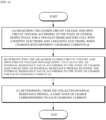
- a method for establishing a lithium secondary battery charging protocol includes: (a) measuring the closed circuit voltage (CCV SOCx ) and open circuit voltage (OCV SOCx ) according to the state of charge (SOCx), respectively, for a two-electrode battery cell with a positive electrode and a negative electrode, when charged with different charging currents (I);
- the limit state of charge is determined as a state of charge (SOC) value at a point where the graphical shape of the internal resistance profile changes from flat to a downward trend.
- SOC state of charge
- the two-electrode battery cell has a capacity of 40 to 200 Ah.
- the charging current (I) is selected from the range of 0.33C to 6.0C.
- the charging current (I) is set at an interval of 0.1C to 1.0C.
- a method for establishing a charging protocol further includes mapping a charging protocol based on a limit state of charge by charging current, wherein the mapping process maps so that each charging current is charged at a corresponding charging current up to a limit state of charge, but the charging current decreases as the state of charge increases.
- the battery management system and charging protocol setting method according to the present invention have the effect of providing a charging protocol that reflects the resistance and heat generation directly from a large capacity battery cell, without the need to manufacture a three-electrode cell, which is cumbersome to manufacture.
- the battery management system and the charging protocol setting method according to the present invention have the effect of non-destructively identifying the degree of degeneration of a battery cell even during operation of the battery cell, and updating the charging protocol to reflect the degeneration of the battery cell.
- the battery management system and charging protocol setting method according to the present invention can derive a limit state of charge even at a charging current as low as 1.0C, thereby providing a charging protocol favorable for quick charging.
- control portion refers to a unit that handles at least one function or operation, which may be implemented in hardware or software, or a combination of hardware and software.
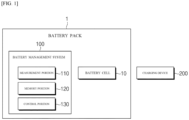
- FIG. 1 is a diagram illustrating an exemplary configuration of a battery pack including a battery management system according to an exemplary embodiment of the present invention.
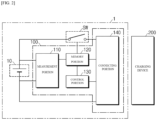
- FIG. 2 is a diagram schematically illustrating of a battery pack including a battery management system according to an exemplary embodiment of the present invention.
- a battery pack 1 may include a battery cell 10 and a battery management system 100.
- the battery management system 100 is a battery management system that monitors the voltage, current, temperature, and the like of the battery cell 10 to control and manage them to prevent overcharging, overdischarging, and the like.
- the battery cell 10 is a two-electrode battery cell having a negative electrode and a positive electrode, which is a single, physically separable cell.
- a pouch-type lithium polymer cell may be considered as a battery cell 10.
- the battery cell 10 may be a large capacity battery cell having a capacity in the range of 40 to 200 Ah.
- the battery pack 1 may also include a battery module with one or more battery cells 10 connected in series and/or parallel.
- a lithium-containing transition metal oxide may be used as a positive electrode active material comprising the positive electrode of the battery cell 10.
- a lithium-containing transition metal oxide may be used.
- a negative electrode active material that comprises the negative electrode
- a carbon-based meterial such as graphite or activated carbon, or a material such as silicon oxide (SiO x ) is being used.
- the present invention derives the Li-plating point at which a limit state of charge is set from an internal resistance profile that plots the internal resistance values according to the state of charge of the battery cell.
- a battery management system 100 may include a measurement portion 110, a memory portion 120, and a control portion 130.
- the battery management system 100 may further include a connecting portion 140 configured to connect with a charging device 200 capable of supplying charging current to the battery cell, according to a charging protocol established by the control portion 130.
- the charging device 200 may be connected with the battery pack 1. And, the charging device 200 connected with the battery pack 1 may supply a charging current to the battery cell 10 according to a charging protocol established by the control portion 130 for the battery cell 10.
- the battery management system 100 may control the operation of the switching portion SW to control the charging and discharging of the battery cells 10 and/or battery modules.
- the measurement portion 110 is configured to measure status information of the battery cell, which includes at least one of a voltage and a state of charge for the battery cell 10.
- the measurement portion 110 is configured to measure a closed circuit voltage (CCV SOCx ) according to a state of charge (SOCx) and an open circuit voltage (OCV SOCx ) according to a state of charge (SOCx), respectively, for calculating an internal resistance value of the battery cell 10.
- the values of the closed circuit voltage (CCV SOCx ) and the open circuit voltage (OCV SOCx ) measured by the measurement portion 110 are the basis data for calculating the internal resistance value at the corresponding state of charge (SOCx).
- the measurement portion 110 is configured to measure, for the battery cell 10, a closed circuit voltage (CCV SOCx ) and an open circuit voltage (OCV SOCx ), respectively, according to the state of charge, at different charging currents (I).
- the charging current (I) may be plurally selected within a range of 0.2C to 6C, more specifically 0.33C to 6C, and more specifically 0.5C to 5C.
- the interval of the charging current (I) may be set at an interval of 0.1C to 1.0C. For example, for the battery cell 10, with a charging current (I) of various values set at intervals of 0.25C, such as 0.25C - 0.5C - 0.75C...
- charging is performed up to SOC 100%
- the measurement portion 110 is configured to measure the closed circuit voltage (CCV SOCx ) and the open circuit voltage (OCV SOCx ) according to the state of charge (SOCx) at each charging current (I), wherein each measuring point of the closed circuit voltage (CCV SOCx ) and the open circuit voltage (OCV SOCx ) may be set at a SOC 2.5% interval, at a SOC 5% interval, or at a SOC 10% interval.
- the memory portion 120 is configured to calculate the internal resistance value R SOCx according to the state of charge SOCx by substituting the CCV SOCx and the OCV SOCx measured by the measurement portion 110 into the Equation 1 below, and to collect and store an internal resistance profile plotting the internal resistance value R SOCx according to the state of charge for each charging current I.
- Internal resistance value according to state of charge (R SOCx ) (CCV SOCx - OCV SOCx )/I
- the actual internal resistance of the battery cell can be calculated by dividing the difference between the closed circuit voltage and the open circuit voltage by the (quick) charging current.
- the open circuit voltage (OCV SOCx ) may be measured within 1 second to 30 seconds, or within 1 second to 15 seconds, or within 1 second to 10 seconds, or within 2 seconds to 9 seconds, from the measurement starting time of the closed circuit voltage (CCV SOCx ).
- the control portion 130 is configured to determine, from the internal resistance profile, a limit state of charge corresponding to each charging current (I) stored in the memory portion, and to establish a charging protocol based thereon.
- the control portion 130 of the present invention may be configured to determine a value of the state of charge (SOCx) at the point in the internal resistance profile where the shape of the graph changes from flat to a downward trend, as the limit state of charge.
- SOCx state of charge
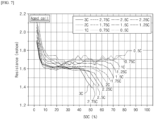
- FIG. 3 illustrates an internal resistance profile according to a state of charge (SOCx) derived by measuring a closed circuit voltage (CCY SOCx ) according to a state of charge(SOCx) and an open circuit voltage (OCV SOCx ) according to a state of charge (SOCx), respectively, by charging current (I), calculating an internal resistance value (R SOCx ), and plotting an internal resistance value (R SOCx ) according to a state of charge (SOCx), according to an exemplary embodiment of the present invention.
- SOCx state of charge
- FIG. 3 internal resistance profile plotting internal resistance values according to the state of charge is shown for a range of charging currents (I) from 0.5C to 3C, for various values of charging current set at intervals of 0.25C.
- lithium ions are inserted into the graphite layer of the negative electrode during the charge rest period and are simultaneously coupled to the Li-plating portion.
- the lithium ions are inserted into the negative electrode and exist as a series resistance, but at the state of charge interval after Li-plating occurs, the case where lithium ions are inserted into the negative electrode and the case where Li-plating occurs form a parallel resistance, causing the overall resistance to drop. Therefore, in the internal resistance profile according to the state of charge, a decrease in the internal resistance value is an indicator that Li-plating has occurred.
- control portion 130 of the present invention determines the value of the state of charge (SOCx) at the point where the graph of the internal resistance profile by charging current changes from flat to a downward trend, as the limit state of charge. And after the control portion 130 determines the limit state of charge corresponding to each charge current I as described above, the control portion 130 can establish a charging protocol based on this.
- the battery management system 100 has the effect that the measurement portion 110, the memory portion 120, and the control portion 130 can charge the battery cells according to a charging protocol that reflects the resistance of the large capacity battery cell 10 and the heat generated by quick charging.
- control portion 130 may be configured to re-establish the charging protocol by periodically, during repeated charging and discharging of the battery cells, deriving a new limit state of charge corresponding to each charging current. This is to reflect battery cell aging over repeated charge and discharge cycles.
- control portion 130 controls the measurement portion 110 to measure a closed circuit voltage (CCV SOCx ) according to a state of charge (SOCx) and an open circuit voltage (OCV SOCx ) according to a state of charge(SOCx), respectively, for the battery cell when charged with a different charging current (I), for every 100 cycles, controls the memory portion 120 to calculate an internal resistance value (R SOCx ) according to the state of charge by substituting the measured CCV SOCx and OCV SOCx into Equation 1 below, controls the memory portion 120 to collect and store an internal resistance profile plotting the internal resistance value according to the state of charge for each charging current I, and derive a new limit state of charge corresponding to each charging current from the internal resistance profile stored in the memory portion 120, and based on the above, establishes a new charging protocol reflecting aging.
- CCV SOCx closed circuit voltage
- OCV SOCx open circuit voltage
- the battery management system has the effect of non-destructively identifying the degree of battery cell aging even while the battery cell is in operation, and updating the charging protocol to reflect the aging of the battery cell.
- FIG. 6 is a flowchart of a method for establishing a charging protocol for a lithium secondary battery, according to an exemplary embodiment of the present invention.
- the limit state of charge may be the state of charge (SOC) value at the point where the shape of the internal resistance profile changes from flat to a downward trend.
- the charging current (I) may be set at regular intervals, within a range of 0.2C to 6C, more specifically 0.33C to 6C, more specifically 0.5C to 5C.
- the interval may be from 0.1C to 1.0C.
- the method of establishing a charging protocol may further include mapping a charging protocol based on a limit state of charge by charging current.
- the mapping process may be such that each charging current is mapped to charge at the corresponding charging current up to a limit state of charge, but the charging current decreases as the state of charge increases.
- the limit state of charge corresponding to a charging current of 3.0C may be SOC 40%
- the limit state of charge corresponding to a charging current of 2.5C may be SOC 45%
- the limit state of charge corresponding to a charging current of 2.0C may be SOC 55%
- the limit state of charge corresponding to a charging current of 5C is SOC 65%
- it can be mapped so that charging can be performed with a charging current of 3.0C for SOC 40% and below, 2.5C for SOC 45% and below, 2.0C for SOC 55% and below, and 1.5C for SOC 65% and below.
- the limit state of charge was determined by measuring the negative electrode potential (CCV) according to the state of charge (SOC) of the three-electrode cell while charging at a charging current set at 0.25C intervals in the range of 1.0C to 2.75C for a mono-cell of 50mAh, and determining the state of charge at the point where the negative electrode potential begins to stabilize instead of dropping as the limit state of charge.
- CCV negative electrode potential
- SOC state of charge
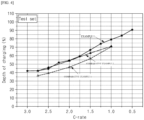
- the limit state of charge by charging current was derived using the same method as in Comparative Example 1, except that the temperature was set to 35 degrees Celsius, and the results are shown in Table 2 and FIG. 4 .
- a battery cell (Preparation Example 1) used in Example 1 was prepared, and a battery cell (Preparation Example 2) in which the composition of the negative electrode was changed to provide excellent quick charging capability was prepared from the battery cell of Preparation Example 1.
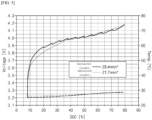
- a charging protocol was established by deriving the limit state of charge by charging current in the same manner as in the Example. As a result, a charging protocol was established in which the charging protocol for the battery cell of Preparation Example 1 required 28.4 minutes to charge (first charging protocol), and the charging protocol for the battery cell of Preparation Example 2 required 21.7 minutes to charge (second charging protocol).
- the battery cell of Preparation Example 1 and the battery cell of Preparation Example 2 exhibit similar voltage profiles.
- the method of establishing a charging protocol according to the present invention has the effect of enabling the establishment of a protocol that uses a similar state of charge for battery cells with different electrode compositions.
- the aged cell which has been subjected to 500 cycles of charge and discharge and has undergone aging, has an increased internal resistance value from about 1.4 m ⁇ to about 1.6 m ⁇ , compared to the begin of life (BOL) battery cell (Example 1) that has not been subjected to repeated charge and discharge. This is thought to be reflecting aging due to repeated charge and discharge cycles. It was also found that the rate of increase of the internal resistance value varied depending on the charging current. Also, in FIG.
- the x-axis coordinate (SOC) of the point at which the curve of the graph flattens and begins to decline is shifted more to the left than the x-axis coordinate of the point at which the curve of the graph flattens and begins to decline in FIG. 3 . It can be seen that the limit state of charge by charging current decreases in cells in which aging has been progressed.
- the charging protocol establishment method of the present invention and the battery management system according to the present invention are expected to have the effect of updating a new charging protocol that reflects the degeneration of the battery cell during operation.
- a battery cell (capacity: 40Ah) having the same specification as the battery cell used in Example 1 was connected to the electrochemical charger and discharger. Based on the limit state of charge by charging current listed in Table 1 of Example 1, the charging protocol was mapped as shown in Table 3 below, the battery cell was fully charged to SOC 100% according to the mapped charging protocol, and the fully charged battery cell was fully discharged to SOC 0% with a constant current of 0.33C.
- a battery cell (capacity: 40Ah) with the same specification as the battery cell used in Example 1 was connected to the electrochemical charger and fully charged to SOC 100% with a constant current of 0.33C, and the fully charged battery cell was fully discharged to SOC 0% with a constant current of 0.33C.
Landscapes
- Engineering & Computer Science (AREA)
- General Chemical & Material Sciences (AREA)
- Manufacturing & Machinery (AREA)
- Chemical & Material Sciences (AREA)
- Chemical Kinetics & Catalysis (AREA)
- Electrochemistry (AREA)
- Physics & Mathematics (AREA)
- General Physics & Mathematics (AREA)
- Power Engineering (AREA)
- Microelectronics & Electronic Packaging (AREA)
- Secondary Cells (AREA)
- Charge And Discharge Circuits For Batteries Or The Like (AREA)
- Tests Of Electric Status Of Batteries (AREA)
Applications Claiming Priority (2)
| Application Number | Priority Date | Filing Date | Title |
|---|---|---|---|
| KR20220147912 | 2022-11-08 | ||
| PCT/KR2023/017917 WO2024101901A2 (ko) | 2022-11-08 | 2023-11-08 | 배터리 관리 시스템, 이를 포함하는 배터리 팩 및 리튬 이차전지의 충전 프로토콜 수립방법 |
Publications (2)
| Publication Number | Publication Date |
|---|---|
| EP4507159A2 true EP4507159A2 (de) | 2025-02-12 |
| EP4507159A4 EP4507159A4 (de) | 2025-11-26 |
Family
ID=91033317
Family Applications (1)
| Application Number | Title | Priority Date | Filing Date |
|---|---|---|---|
| EP23889159.2A Pending EP4507159A4 (de) | 2022-11-08 | 2023-11-08 | Batterieverwaltungssystem, batteriepack damit und verfahren zur herstellung eines ladeprotokolls einer lithiumsekundärbatterie |
Country Status (7)
| Country | Link |
|---|---|
| US (1) | US20250343431A1 (de) |
| EP (1) | EP4507159A4 (de) |
| JP (1) | JP7744091B2 (de) |
| KR (1) | KR102676183B1 (de) |
| CN (1) | CN119096448A (de) |
| CA (1) | CA3250577A1 (de) |
| WO (1) | WO2024101901A2 (de) |
Families Citing this family (1)
| Publication number | Priority date | Publication date | Assignee | Title |
|---|---|---|---|---|
| KR20250169725A (ko) * | 2024-05-27 | 2025-12-04 | 주식회사 엘지에너지솔루션 | 배터리 관리 시스템, 이를 포함하는 배터리 팩 및 리튬 이차전지의 충전 프로토콜 수립방법 |
Family Cites Families (14)
| Publication number | Priority date | Publication date | Assignee | Title |
|---|---|---|---|---|
| JP4782663B2 (ja) * | 2006-11-29 | 2011-09-28 | パナソニック株式会社 | 充電システム、充電装置、及び電池パック |
| JP2009109269A (ja) | 2007-10-29 | 2009-05-21 | Panasonic Corp | 充電深度算出回路 |
| US11397216B2 (en) * | 2010-05-21 | 2022-07-26 | Qnovo Inc. | Battery adaptive charging using a battery model |
| JP6239241B2 (ja) * | 2013-02-04 | 2017-11-29 | 株式会社東芝 | 電池性能推定方法および電池性能推定装置 |
| KR101985812B1 (ko) | 2015-08-18 | 2019-06-04 | 주식회사 엘지화학 | 전지 충전 한계 예측 방법과 이를 이용한 전지 급속 충전 방법 및 장치 |
| KR101897859B1 (ko) * | 2015-08-24 | 2018-09-12 | 주식회사 엘지화학 | 리튬 석출 탐지 방법, 이를 이용한 이차전지 충전 방법과 장치 및 이차전지 시스템 |
| JP6668054B2 (ja) | 2015-11-27 | 2020-03-18 | 日立オートモティブシステムズ株式会社 | 車載充電器及びそれを備えた車両 |
| JP6883742B2 (ja) * | 2016-09-16 | 2021-06-09 | パナソニックIpマネジメント株式会社 | 電池の診断方法、電池の診断プログラム、電池管理装置、及び蓄電システム |
| KR102255524B1 (ko) * | 2016-09-26 | 2021-05-25 | 주식회사 엘지에너지솔루션 | 리튬 이차전지의 충전 프로토콜 수립방법 및 충전 프로토콜을 포함하는 리튬 이차전지용 전지 관리 시스템 |
| JP2020046317A (ja) * | 2018-09-19 | 2020-03-26 | 株式会社豊田自動織機 | 電圧推定装置及び電圧推定方法 |
| JP7645498B2 (ja) * | 2020-09-29 | 2025-03-14 | パナソニックIpマネジメント株式会社 | 管理装置、及び電源システム |
| KR102887324B1 (ko) * | 2020-11-25 | 2025-11-14 | 주식회사 엘지에너지솔루션 | 배터리 관리 장치 및 방법 |
| KR20220147912A (ko) | 2021-04-28 | 2022-11-04 | 이복찬 | 시분할 초음파 세척기 |
| KR102857601B1 (ko) * | 2022-01-11 | 2025-09-09 | 주식회사 엘지에너지솔루션 | 배터리 충전 심도 산출 장치 및 그것의 동작 방법 |
-
2023
- 2023-11-08 WO PCT/KR2023/017917 patent/WO2024101901A2/ko not_active Ceased
- 2023-11-08 CA CA3250577A patent/CA3250577A1/en active Pending
- 2023-11-08 KR KR1020230153513A patent/KR102676183B1/ko active Active
- 2023-11-08 US US18/864,000 patent/US20250343431A1/en active Pending
- 2023-11-08 CN CN202380038989.2A patent/CN119096448A/zh active Pending
- 2023-11-08 EP EP23889159.2A patent/EP4507159A4/de active Pending
- 2023-11-08 JP JP2024565185A patent/JP7744091B2/ja active Active
Also Published As
| Publication number | Publication date |
|---|---|
| EP4507159A4 (de) | 2025-11-26 |
| CN119096448A (zh) | 2024-12-06 |
| JP2025517137A (ja) | 2025-06-03 |
| CA3250577A1 (en) | 2025-07-09 |
| WO2024101901A2 (ko) | 2024-05-16 |
| US20250343431A1 (en) | 2025-11-06 |
| KR102676183B1 (ko) | 2024-06-19 |
| WO2024101901A3 (ko) | 2024-07-04 |
| KR20240067042A (ko) | 2024-05-16 |
| JP7744091B2 (ja) | 2025-09-25 |
Similar Documents
| Publication | Publication Date | Title |
|---|---|---|
| US10605870B2 (en) | Method for predicting battery charge limit, and method and apparatus for rapidly charging battery using same | |
| TWI633694B (zh) | 鋰鍍覆的偵測方法,用於充電二次電池組的方法與設備,以及利用彼等的二次電池組系統 | |
| EP2874272B1 (de) | Ladesteuerungsverfahren für sekundärzelle und ladesteuerungsvorrichtung für sekundärzelle | |
| KR101776546B1 (ko) | 전지 시스템 | |
| US9250297B2 (en) | Methods for testing lithium ion battery and evaluating safety of lithium ion battery | |
| EP4451377A1 (de) | Sekundärbatterie, batteriemodul, batteriepack und elektrische vorrichtung | |
| EP4468557A1 (de) | Verfahren zur herstellung eines ladeprotokolls für lithiumsekundärbatterie, batterieverwaltungssystem, batteriepack und batteriezellenladevorrichtung | |
| US20050030041A1 (en) | Method for determining a steady state battery terminal voltage | |
| KR20190003688A (ko) | 리튬 배터리를 열 처리하는 방법 | |
| KR102255524B1 (ko) | 리튬 이차전지의 충전 프로토콜 수립방법 및 충전 프로토콜을 포함하는 리튬 이차전지용 전지 관리 시스템 | |
| EP4507159A2 (de) | Batterieverwaltungssystem, batteriepack damit und verfahren zur herstellung eines ladeprotokolls einer lithiumsekundärbatterie | |
| Friedrich et al. | Experimental investigation of fast charging protocols over aging using multilayer pouch cells with silicon-dominant anodes | |
| KR102785035B1 (ko) | 배터리의 엔트로피 측정방법 및 이를 활용한 배터리의 열화 추정방법 | |
| US20130309554A1 (en) | Lead-acid battery with high specific power and specific energy | |
| US20260079215A1 (en) | Method for Controlling Battery Module of Rechargeable Battery | |
| EP4213262A1 (de) | Sekundärbatterie mit niedrigem zellwiderstand und hervorragenden lebensdauereigenschaften | |
| Chang | Impact of Cathode Materials, Thickness, and Charging C-rate on Lithium Deposi-tion in Lithium-Ion Batteries | |
| Liu et al. | Discovery and development of a fast charging li-ion battery | |
| KR20240141477A (ko) | 리튬 이차전지의 리튬 석출 시기 예측 방법 | |
| CN120453533A (zh) | 过放电电池修复方法及装置 |
Legal Events
| Date | Code | Title | Description |
|---|---|---|---|
| STAA | Information on the status of an ep patent application or granted ep patent |
Free format text: STATUS: THE INTERNATIONAL PUBLICATION HAS BEEN MADE |
|
| PUAI | Public reference made under article 153(3) epc to a published international application that has entered the european phase |
Free format text: ORIGINAL CODE: 0009012 |
|
| STAA | Information on the status of an ep patent application or granted ep patent |
Free format text: STATUS: REQUEST FOR EXAMINATION WAS MADE |
|
| 17P | Request for examination filed |
Effective date: 20241106 |
|
| AK | Designated contracting states |
Kind code of ref document: A2 Designated state(s): AL AT BE BG CH CY CZ DE DK EE ES FI FR GB GR HR HU IE IS IT LI LT LU LV MC ME MK MT NL NO PL PT RO RS SE SI SK SM TR |
|
| A4 | Supplementary search report drawn up and despatched |
Effective date: 20251027 |
|
| RIC1 | Information provided on ipc code assigned before grant |
Ipc: H02J 7/00 20060101AFI20251021BHEP Ipc: G01R 31/3835 20190101ALI20251021BHEP Ipc: G01R 31/389 20190101ALI20251021BHEP |
|
| DAV | Request for validation of the european patent (deleted) | ||
| DAX | Request for extension of the european patent (deleted) |