EP4503884A1 - Halbleiterstruktur und herstellungsverfahren dafür - Google Patents
Halbleiterstruktur und herstellungsverfahren dafür Download PDFInfo
- Publication number
- EP4503884A1 EP4503884A1 EP23914277.1A EP23914277A EP4503884A1 EP 4503884 A1 EP4503884 A1 EP 4503884A1 EP 23914277 A EP23914277 A EP 23914277A EP 4503884 A1 EP4503884 A1 EP 4503884A1
- Authority
- EP
- European Patent Office
- Prior art keywords
- staircase
- layers
- region
- semiconductor
- stacked structure
- Prior art date
- Legal status (The legal status is an assumption and is not a legal conclusion. Google has not performed a legal analysis and makes no representation as to the accuracy of the status listed.)
- Pending
Links
Images






Classifications
-
- H—ELECTRICITY
- H10—SEMICONDUCTOR DEVICES; ELECTRIC SOLID-STATE DEVICES NOT OTHERWISE PROVIDED FOR
- H10B—ELECTRONIC MEMORY DEVICES
- H10B12/00—Dynamic random access memory [DRAM] devices
- H10B12/30—DRAM devices comprising one-transistor - one-capacitor [1T-1C] memory cells
- H10B12/48—Data lines or contacts therefor
- H10B12/482—Bit lines
-
- H—ELECTRICITY
- H10—SEMICONDUCTOR DEVICES; ELECTRIC SOLID-STATE DEVICES NOT OTHERWISE PROVIDED FOR
- H10B—ELECTRONIC MEMORY DEVICES
- H10B12/00—Dynamic random access memory [DRAM] devices
- H10B12/01—Manufacture or treatment
- H10B12/09—Manufacture or treatment with simultaneous manufacture of the peripheral circuit region and memory cells
-
- H—ELECTRICITY
- H10—SEMICONDUCTOR DEVICES; ELECTRIC SOLID-STATE DEVICES NOT OTHERWISE PROVIDED FOR
- H10W—GENERIC PACKAGES, INTERCONNECTIONS, CONNECTORS OR OTHER CONSTRUCTIONAL DETAILS OF DEVICES COVERED BY CLASS H10
- H10W20/00—Interconnections in chips, wafers or substrates
- H10W20/01—Manufacture or treatment
- H10W20/031—Manufacture or treatment of conductive parts of the interconnections
- H10W20/032—Manufacture or treatment of conductive parts of the interconnections of conductive barrier, adhesion or liner layers
- H10W20/038—Manufacture or treatment of conductive parts of the interconnections of conductive barrier, adhesion or liner layers covering conductive structures
-
- H—ELECTRICITY
- H10—SEMICONDUCTOR DEVICES; ELECTRIC SOLID-STATE DEVICES NOT OTHERWISE PROVIDED FOR
- H10B—ELECTRONIC MEMORY DEVICES
- H10B12/00—Dynamic random access memory [DRAM] devices
- H10B12/01—Manufacture or treatment
- H10B12/02—Manufacture or treatment for one transistor one-capacitor [1T-1C] memory cells
-
- H—ELECTRICITY
- H10—SEMICONDUCTOR DEVICES; ELECTRIC SOLID-STATE DEVICES NOT OTHERWISE PROVIDED FOR
- H10B—ELECTRONIC MEMORY DEVICES
- H10B12/00—Dynamic random access memory [DRAM] devices
- H10B12/50—Peripheral circuit region structures
-
- H—ELECTRICITY
- H10—SEMICONDUCTOR DEVICES; ELECTRIC SOLID-STATE DEVICES NOT OTHERWISE PROVIDED FOR
- H10W—GENERIC PACKAGES, INTERCONNECTIONS, CONNECTORS OR OTHER CONSTRUCTIONAL DETAILS OF DEVICES COVERED BY CLASS H10
- H10W20/00—Interconnections in chips, wafers or substrates
- H10W20/01—Manufacture or treatment
- H10W20/031—Manufacture or treatment of conductive parts of the interconnections
-
- H—ELECTRICITY
- H10—SEMICONDUCTOR DEVICES; ELECTRIC SOLID-STATE DEVICES NOT OTHERWISE PROVIDED FOR
- H10D—INORGANIC ELECTRIC SEMICONDUCTOR DEVICES
- H10D88/00—Three-dimensional [3D] integrated devices
- H10D88/01—Manufacture or treatment
Definitions
- the present disclosure relates to the field of semiconductor technologies, and in particular, to a semiconductor structure and a method of manufacturing the same.
- the present disclosure is intended to provide a semiconductor structure and a method of manufacturing the same, so as to reduce a resistive-capacitive delay issue and improve performance of the semiconductor structure.
- the method of manufacturing a semiconductor structure includes the following steps: a substrate and a stacked structure located on the substrate are provided, the stacked structure including first insulating layers and semiconductor layers alternately stacked along the vertical direction, and the stacked structure having a first region; parts of the stacked structure in the first region are etched down to the substrate to form multiple first trenches arranged at intervals and multiple first staircase regions located between the first trenches; second insulating layers are formed in the first trenches; the stacked structure in the multiple first staircase regions is etched along the vertical direction to form a first staircase structure; conductive layers are formed at the top of the first staircase structure; and the semiconductor layers under the conductive layers are removed.
- the multiple first staircase regions are successively a 1 st staircase region to an N th staircase region along the horizontal direction; and that the stacked structure in the multiple first staircase regions is etched along the vertical direction to form a first staircase structure includes the following steps: the stacked structure in the multiple first staircase regions is etched successively along the horizontal direction and at least one layer among the first insulating layers and the semiconductor layers in the first staircase regions is etched to form the first staircase structure, a j th staircase region being etched simultaneously when the 1 st staircase region to a (j-1) th staircase region being etched, 1 ⁇ j ⁇ N, and j and N being integers greater than 1.
- the semiconductor layers are silicon layers
- the step that a substrate and a stacked structure located on the substrate are provided includes the following steps: the substrate is provided; multiple silicon layers and multiple silicon germanium layers alternately distributed are formed on the substrate by an epitaxial process; the silicon germanium layers are removed; and the first insulating layers are formed between the silicon layers to form the stacked structure.
- that parts of the stacked structure in the first region are etched down to the substrate includes the following steps: a photoresist layer is formed on the surface of the stacked structure, the photoresist layer located in the first region having etching holes defining locations of the first trenches; the stacked structure is etched along the etching holes to form the multiple first trenches, the first trenches being uniformly distributed in the first region along the horizontal direction, and areas of the first staircase regions between adjacent ones of the first trenches being the same; and the photoresist layer is removed.
- the stacked structure further includes a second region adjacent to the first region, and the step that the stacked structure in the multiple first staircase regions is etched along the vertical direction includes the following steps: a mask layer is formed, the mask layer being formed on surfaces of the second insulating layers and the surface of the second region of the stacked structure; and the stacked structure in the multiple first staircase regions is etched successively along the vertical direction with the mask layer serving as a mask.
- the step that the stacked structure in the multiple first staircase regions is etched successively along the vertical direction with the mask layer serving as a mask includes the following steps: a shielding layer is formed on surfaces of the multiple first staircase regions; and parts of the shielding layer are etched and a portion of the shielding layer on the surfaces of the staircase regions is retained before the stacked structure in the first staircase regions is etched.
- the step that the stacked structure in the multiple first staircase regions is etched along the vertical direction includes the following step: at least one layer among the first insulating layers and the semiconductor layers in the stacked structure in each of the first staircase regions is etched until the surface of a target semiconductor layer is exposed.
- the step that conductive layers are formed at the top of the first staircase structure includes the following step: the conductive layers are deposited on surfaces of the first staircase structure.
- the semiconductor layers are silicon layers
- the step that conductive layers are formed at the top of the first staircase structure includes the following steps: at least parts of the silicon layers are etched on the surfaces of the first staircase structure; and the conductive layers are deposited on surfaces of the silicon layers remaining in the first staircase structure.
- the semiconductor layers are silicon layers
- the step that conductive layers are formed at the top of the first staircase structure includes the following step: a metallization process is performed on the silicon layers at the top of the first staircase structure to form the conductive layers.
- the method of manufacturing further includes the following steps: third insulating layers are formed on surfaces of the conductive layers; conductive through holes exposing the conductive layers are formed inside the third insulating layers in the staircase regions; and conductive pillars are formed inside the conductive through holes, the conductive pillars being connected to the conductive layers by contact.
- the stacked structure further includes a third region arranged at an interval from the first region
- the method further includes the following step simultaneously when the parts of the stacked structure in the first region are etched down to the substrate: parts of the stacked structure in the third region are etched down to the substrate to form multiple second trenches arranged at intervals and multiple second staircase regions located between the second trenches; and the method further includes the following step simultaneously when the stacked structure in the multiple first staircase regions is etched along the vertical direction to form the first staircase structure: the stacked structure in the multiple second staircase regions is etched along the vertical direction to form a second staircase structure.
- the step that the semiconductor layers under the conductive layers are removed includes the following steps: etching grooves are formed, the etching grooves exposing side surfaces of the first staircase structure in the stacked structure; the semiconductor layers in the first staircase structure are removed along the etching grooves to form first gaps; and the etching grooves and the first gaps are filled in to form insulating support layers.
- the present disclosure further provides a semiconductor structure.
- the semiconductor structure includes: a substrate and a stacked structure located on the substrate, the stacked structure including a first region; an insulating staircase structure, the insulating staircase structure being located in the first region and including multiple insulating stairs arranged at intervals, and the heights of any two insulating stairs being different; and conductive layers, the conductive layers being located on the insulating stairs, respectively.
- the semiconductor structure further includes: multiple conductive pillars, the multiple conductive pillars being electrically connected to the conductive layers, respectively.
- the insulating stair includes first insulating layers and insulating support layers alternately arranged along a vertical direction.
- the semiconductor structure further includes: second insulating layers, the second insulating layers being located on the substrate and located between adjacent ones of the insulating stairs.
- the stacked structure includes a second region adjacent to the first region, the stacked structure in the second region includes the first insulating layers and semiconductor layers alternately stacked along the vertical direction, and the conductive layer located on each of the insulating stairs is electrically connected to each of the semiconductor layers.
- a first staircase structure is formed by forming multiple first staircase regions and etching the first staircase regions. Conductive layers are formed on the surfaces of the first staircase structure, and semiconductor layers under the conductive layers are removed, so that the conductive layers are all located on insulating stairs. Each conductive layer may be connected to the semiconductor layers with the same area. Conductive pillars subsequently formed are connected to the conductive layers. The conduction area of connections of the conductive pillars subsequently formed is the area of the semiconductor layers having the same area and the area of the conductive layers having the same area.
- the difference between the conduction areas of the connections of the conductive pillars can be reduced and further the connection of each conductive pillar can be enabled to have the same conduction area by controlling the conductive layers to have the same area, thereby preventing a resistive-capacitive delay issue of the semiconductor structure and improving the performance of the semiconductor structure.
- first staircase region A1: first region, A2: second region, A3: third region, T1: 1 st staircase region, T2: 2 nd staircase region, T3: 3 rd staircase region, T4: 4 th staircase region, 31: first staircase structure, 32: second staircase structure, 41: first trench, 42: second insulating layer, 43: second trench, 44: fourth insulating layer, 51: shielding layer, 52: mask layer, 61: conductive layer, 62: conductive pillar, 63: third insulating layer, and 64: insulating support layer.
- FIG. 1 is a flowchart of a method of manufacturing a semiconductor structure according to embodiments of the present disclosure.
- the method of manufacturing a semiconductor structure according to embodiments of the present disclosure may include the following steps: S1: a substrate 1 and a stacked structure 2 located on the substrate 1 are provided, the stacked structure 2 including first insulating layers 21 and semiconductor layers 22 alternately stacked along the vertical direction, and the stacked structure 2 having a first region A1 (with reference to FIG.
- S2 parts of the stacked structure 2 in the first region A1 are etched down to the substrate 1 to form multiple first trenches 41 arranged at intervals and multiple first staircase regions 10 located between the first trenches 41;
- S3 second insulating layers 42 are formed in the first trenches 41;
- S4 the stacked structure 2 in the multiple first staircase regions 10 is etched along the vertical direction to form a first staircase structure 31;
- S5 conductive layers 61 are formed at the top of the first staircase structure 31; and
- S6 the semiconductor layers 22 under the conductive layers 61 are removed.
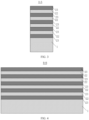
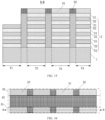
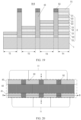
- FIG. 2 to FIG. 23 are schematic structural diagrams corresponding to steps of the method of manufacturing a semiconductor structure according to embodiments of the present disclosure.
- FIG. 2 , FIG. 5 , FIG. 8 , FIG. 11 , FIG. 14 , FIG. 16 , FIG. 18 , and FIG. 20 are top views of steps according to embodiments of the present disclosure.
- FIG. 3 , FIG. 6 , FIG. 9 , and FIG. 12 are respectively cross-sectional views taken along the A-A lines in FIG. 2 , FIG. 5 , FIG. 8 , and FIG. 11 .
- FIG. 21 are respectively cross-sectional views taken along the B-B lines in FIG. 2 , FIG. 5 , FIG. 8 , FIG. 11 , FIG. 14 , FIG. 16 , FIG. 18 , and FIG. 21 .
- FIG. 22 to FIG. 23 are cross-sectional views taken along the B-B lines corresponding to steps of the method of manufacturing a semiconductor structure according to embodiments of the present disclosure after the step corresponding to FIG. 21 .
- the vertical direction may be a direction perpendicular to the top surface of the substrate, and the horizontal direction may be a direction parallel to the top surface of the substrate.
- the substrate 1 and the stacked structure 2 located on the substrate 1 are provided.
- the stacked structure 2 includes the first insulating layers 21 and the semiconductor layers 22 alternately stacked along the vertical direction, and the stacked structure 2 has the first region A1.
- the first region A1 may be configured to form staircase lead structures.
- the substrate 1 may be but is not limited to a silicon substrate 1. This specific implementation may be described by exemplifying the silicon substrate 1 as the substrate 1. In another embodiment, the substrate 1 may alternatively be a semiconductor substrate 1 such as gallium nitride, gallium arsenide, gallium carbide, silicon carbide, or SOI.
- the stacked structure 2 is formed on the substrate 1.
- the stacked structure 2 may include multiple first insulating layers 21 and multiple semiconductor layers 22.
- the semiconductor layers 22 and the first insulating layers 21 are alternately stacked one by one along the vertical direction.
- the first insulating layers 21 may be oxide layers, e.g., silicon nitride layers, and the semiconductor layers 22 may have the same material as the substrate 1.
- the semiconductor layers 22 may be silicon layers, and the step that a substrate 1 and a stacked structure 2 located on the substrate 1 are provided may include the following steps:
- the substrate 1 is provided.
- the substrate 1 may be the silicon substrate 1 or the like. Description is provided in this specific implementation of the present disclosure by exemplifying the silicon substrate as the substrate 1.
- sacrificial layers such as the silicon germanium layers 23 and the semiconductor layers 22 alternately distributed along the vertical direction are formed on the substrate 1 by the epitaxial growth process.
- the semiconductor layers 22 may be silicon layers.
- the silicon germanium layers 23 may be removed, and subsequently the space formed after the silicon germanium layers 23 are removed may be filled in to form the first insulating layers 21.
- the first insulating layers 21 are formed between the silicon layers (the semiconductor layers 22), and are alternately distributed with the silicon layers along the vertical direction to form the stacked structure 2.
- Such practice features a simple process and can improve the preparation efficiency of the semiconductor structure.
- the stacked structure 2 may alternatively be formed deposited.
- the first insulating layers 21 and the semiconductor layers 22 may be alternately deposited in sequence to form the stacked structure 2.
- the numbers of the semiconductor layers 22 and the first insulating layers 21 may be set according to an actual requirement, and the present disclosure sets no special limitations thereto.
- the top layer of the stacked structure 2 may be the first insulating layer 21, and the bottom layer of the stacked structure 2 may be the first insulating layer 21, thereby protecting the semiconductor layers 22, preventing the semiconductor layers 22 from oxidization or contamination that may affect the performance of the semiconductor structure, and isolating the semiconductor layers 22 from the substrate 1.
- the first insulating layer 21 may be an oxide layer, such as a silicon oxide layer.
- the parts of the stacked structure 2 in the first region A1 are etched down to the substrate 1 to form the multiple first trenches 41 arranged at intervals and the multiple first staircase regions 10 located between the first trenches 41; and in the step of S3, the second insulating layers 42 are formed in the first trenches 41.
- the multiple first staircase regions 10 namely, a 1 st staircase region T1, a 2 nd staircase region T2, a 3 rd staircase region T3, and a 4 th staircase region T4 shown in FIG. 10
- the multiple first staircase regions 10 distributed at intervals can be formed by etching the stacked structure 2 in the first region A1, and the multiple first staircase regions 10 are separated by the first trenches 41.
- the first trenches 41 are filled in with the second insulating layers 42, and the multiple first staircase regions 10 can be isolated by the second insulating layers 42.
- conductive structures of the multiple first staircase regions 10 can be isolated when the conductive structures are subsequently formed in the first staircase regions 10.
- the step that parts of the stacked structure 2 in the first region A1 are etched down to the substrate 1 may include the following steps:
- the photoresist layer may be formed on the upper surface of the stacked structure 2, and the photoresist layer is provided with the etching holes.
- the etching holes correspond to the locations, in the first region A1, configured to define the first trenches 41.
- the stacked structure 2 may be etched along the etching holes down to the surface of the substrate 1 by at least one of wet etching or dry etching, so that the multiple first trenches 41 are formed in the stacked structure 2. As shown in FIG. 8 and FIG.
- the multiple first trenches 41 may be uniformly distributed in the first region A1 along the horizontal direction, and the first staircase regions 10 are formed between adjacent ones of the first trenches 41, thereby enabling the first staircase regions 10 between the adjacent ones of the first trenches 41 to have the same area.
- the conductive layers 61 formed in the first staircase regions 10 are enabled to have the same area when the conductive layers 61 are subsequently formed in the first staircase regions 10, so that the conductive layer 61 connected to each first staircase region 10 has the same area as the semiconductor layer 22, thereby preventing a resistance-capacitance (RC) delay issue caused by the difference between the areas of conductive structures connected to leads, and further improving the performance of the semiconductor structure.
- RC resistance-capacitance
- the photoresist layer may be removed afterwards, and the second insulating layers 42 may be formed in the first trenches 41 by at least one of a chemical vapor deposition method, a physical vapor deposition method, or atomic layer deposition, so that the multiple first staircase regions 10 can be insulated and isolated from each other with the second insulating layers 42.
- the second insulating layer 42 may be an oxide layer, a nitride layer, a nitride oxide layer, or a combined layer with a nitride layer and a nitride oxide layer being alternately distributed along the vertical direction, or a composite layer with a nitride layer and an oxide layer being alternately covered and stacked.
- the second insulating layer 42 may be a silicon nitride layer or a silicon nitride oxide layer.
- the stacked structure 2 in the multiple first staircase regions 10 is etched along the vertical direction to form the first staircase structure 31.
- the first staircase structure 31 corresponding to the multiple first staircase regions may have a height difference.
- the upper surfaces of the first staircase structure 31 in the multiple first staircase regions are provided with different heights, and the different heights are staggered, so that the first staircase structure 31 corresponding to two adjacent first staircase regions 10 is provided with different heights.
- the heights of the first staircase structure 31 corresponding to the multiple first staircase regions 10 may be distributed along the horizontal direction in a progressive increase or decrease manner, or the heights may be distributed in a staggered manner, thereby subsequently reducing the parasitic capacitance between the conductive pillars 62 on the first staircase structure 31 in adjacent first staircase regions 10.
- the multiple first staircase regions 10 may be successively the 1 st staircase region T1 to an N th staircase region along the horizontal direction.
- the step that the stacked structure 2 in the multiple first staircase regions is etched along the vertical direction to form a first staircase structure 31 may include the following step: the stacked structure in the multiple first staircase regions is etched successively along the horizontal direction and at least one layer among the first insulating layers 21 and the semiconductor layers 22 in the first staircase regions 10 is etched to form the first staircase structure 31, a j th staircase region being etched simultaneously when a 1 st staircase region to a (j-1) th staircase region being etched, 1 ⁇ j ⁇ N, and j and N being integers greater than 1.
- the first region A1 of the stacked structure 2 may include the multiple first staircase regions 10 along the horizontal direction, and the multiple first staircase regions 10 may include the 1 st staircase region T1, a 2 nd staircase region T2, ..., and the N th staircase region along the horizontal direction.
- the 1 st staircase region T1, the 2 nd staircase region T2, ..., and the N th staircase region may be successively etched when the multiple first staircase regions 10 are etched. All previously-etched first staircase regions are simultaneously etched when the next first staircase region 10 is being etched. For example, the 1 st staircase region T1 is etched, as shown in FIG. 11 to FIG. 15 .
- the 2 nd staircase region T2 may be etched, and the 1 st staircase region T1 may be synchronously etched simultaneously when the 2 nd staircase region T2 is being etched, as shown in FIG. 16 to FIG. 17 .
- the 1 st staircase region T1 and the 2 nd staircase region T2 may be synchronously etched simultaneously when the 3 rd staircase region T3 is being etched, and so on.
- the 1 st staircase region T1 to the (j-1) th staircase region may be etched simultaneously when the j th staircase region is being etched, so that the stacked structure 2 obtained after etching the multiple first staircase regions 10 may be provided with a certain height difference to form the first staircase structure 31.
- the multiple first staircase regions 10 may be four first staircase regions, namely, the 1 st staircase region T1, the 2 nd staircase region T2, the 3 rd staircase region T3, and the 4 th staircase region T4 distributed along the horizontal direction.
- the 1 st staircase region T1 is etched.
- the 1 st staircase region T1 is synchronously etched simultaneously when the 2 nd staircase region T2 is being etched.
- the 1 st staircase region T1 and the 2 nd staircase region T2 are synchronously etched simultaneously when the 3 rd staircase region T3 is being etched.
- the 4 th staircase region T4 is etched.
- the examples shown in the accompanying drawings of the present disclosure include four first staircase regions 10. Only the stacked structure 2 in the 4 th staircase region may be etched according to a practical situation when the 4 th staircase region is being etched, provided that a first staircase structure with a height difference can be formed. Certainly, it may be understood that, the 1 st staircase region T1, the 2 nd staircase region T2, and the 3 rd staircase region T3 may be synchronously etched when the first staircase region 10 is etched in the case that there are more first staircase regions 10, for example, more than four first staircase regions.
- At least one layer among the first insulating layers 21 and the semiconductor layers 22 in the first staircase region 10 may be etched each time the first staircase region 10 is etched so that, for example, the semiconductor layer 22 at a lower level can be exposed.
- the conductive layers 61 may be connected to the semiconductor layers 22 to facilitate electrical connection of the conductive layers 61 when the conductive layers 61 are subsequently formed at the top of the first staircase structure 31.
- the step that the stacked structure 2 in the multiple first staircase regions 10 is etched along the vertical direction includes the following step: at least one layer among the first insulating layers 21 and the semiconductor layers 22 in the stacked structure in each of the first staircase regions 10 is etched until the surface of a target semiconductor layer 22 is exposed.
- the conductive layer 61 may be formed on the target semiconductor layer 22 when the conductive layer 61 is subsequently formed, so that the conductive layer 61 can be electrically connected to the semiconductor layer 22.
- the target semiconductor layer 22 may be disposed according to an actual requirement, for example, may be disposed according to the number of layers in the stacked structure 2 or the number of stairs in the staircase structure.
- the stacked structure 2 further includes a second region A2 adjacent to the first region A1.
- the step that the stacked structure 2 in the multiple first staircase regions 10 is etched along the vertical direction includes the following steps: a mask layer 52 is formed, the mask layer 52 being formed on the surfaces of the second insulating layers 42 and the surface of the second region A2 of the stacked structure 2; and the stacked structure 2 in the multiple first staircase regions 10 is etched successively along the vertical direction with the mask layer 52 serving as a mask.
- the stacked structure 2 further includes the second region A2, and the first region A1 is disposed adjacent to the second region A2.
- the second region A2 may be configured to form a storage cell stacked structure including a word line structure or a bit line structure
- the first region A1 is configured to form the first staircase structure 31, so that the word line structure or the bit line structure located in the second region A2 can be led out.
- the mask layer 52 may be formed on the surfaces of the second insulating layers 42 and the surface of the second region A2 of the stacked structure 2.
- an initial mask layer may be formed on the surface of the stacked structure 2, and then the initial mask layer may be photoetched to remove parts of the initial mask layer located in the multiple first staircase regions and retain parts of the initial mask layer located on the surfaces of the second insulating layers 42 and the second region A2, thereby forming the mask layer 52 shielding the second insulating layers 42 and the parts of the stacked structure 2 in the second region A2.
- the first staircase regions are not covered by the mask layer 52.
- the stacked structure 2 in the multiple first staircase regions may be successively etched along the vertical direction with the mask layer 52 serving as a mask.
- the mask layer 52 may be a hard mask layer, for example, the mask layer 52 may be a silicon nitride oxide layer.
- the step that the stacked structure in the multiple first staircase regions is etched successively along the vertical direction with the mask layer 52 serving as a mask may include the following steps:
- the multiple first staircase regions 10 are exposed after the mask layer 52 is formed on the second insulating layers 42 and the second region A2 of the stacked structure 2.
- the shielding layer 51 may be deposited on the surfaces of the first staircase regions by a deposition method.
- the shielding layer 51 may be a low-K dielectric layer, e.g., a spin-on hardmask (SOH) layer.
- SOH spin-on hardmask
- the surface of the stacked structure 2 in the multiple first staircase regions 10 is covered by the shielding layer 51.
- the parts of the shielding layer 51 in the first staircase regions to be etched may be removed and a portion of the shielding layer 51 in the first staircase regions 10 may be retained before the stacked structure 2 in the first staircase regions 10 is etched. In this way, the parts of the stacked structure 2 in the first staircase regions 10 with the shielding layer 51 removed may be etched, without etching the stacked structure 2 in the first staircase regions 10 with the shielding layer 51 unremoved.
- the multiple first staircase regions 10 may include the 1 st staircase region T1, the 2 nd staircase region T2, ..., the N th staircase region along the horizontal direction.
- the shielding layer 51 on the surface of the j th staircase region is removed and the shielding layer 51 on the surfaces of the (j+1) th staircase region to the N th staircase region is retained when the j th staircase region is etched.
- the multiple first staircase regions 10 may include the 1 st staircase region T1, the 2 nd staircase region T2, the 3 rd staircase region T3, and the 4 th staircase region T4.
- the shielding layer 51 located on the surface of the 1 st staircase region T1 may be removed and the shielding layer 51 located on the surfaces of the 2 nd staircase region T2, the 3 rd staircase region T3, and the 4 th staircase region T4 may be retained before the stacked structure 2 in the 1 st staircase region T1 is etched.
- the shielding layer 51 located in the 2 nd staircase region T2 is removed and the shielding layer 51 in the 3 rd staircase region T3 and the 4 th staircase region T4 is retained when the stacked structure 2 in the 2 nd staircase region T2 is etched.
- the stacked structure 2 in the 1 st staircase region T1 and the 2 nd staircase region T2 is exposed, so that the stacked structure 2 in the 1 st staircase region T1 and the 2 nd staircase region T2 is etched.
- the shielding layer 51 in the 3 rd staircase region T3 is removed and the shielding layer 51 in the 4 th staircase region T4 is retained, so that the 1 st staircase region T1, the 2 nd staircase region T2, and the 3 rd staircase region T3 are exposed, and the stacked structure 2 in the 1 st staircase region T1, the 2 nd staircase region T2, and the 3 rd staircase region T3 may be synchronously etched.
- the shielding layer 51 in the 4 th staircase region T4 is removed, so that the 1 st staircase region T1 to the 4 th staircase region T4 are exposed and that the 1 st staircase region T1 to the 4 th staircase region T4 can be synchronously etched.
- the step of S5 may be performed after the first staircase structure 31 is formed: the conductive layers 61 are formed at the top of the first staircase structure 31, and the conductive layers 61 may be connected to the semiconductor layers 22 to lead out signals.
- the step that conductive layers 61 are formed at the top of the first staircase structure 31 may include the following step: the conductive layers 61 are deposited on the surfaces of the first staircase structure 31.
- the stacked structure 2 in the first staircase regions 10 may be etched along the vertical direction down to the target semiconductor layer 22, and then the conductive layer 61 is formed on the surface of the target semiconductor layer 22.
- the conductive layer 61 is connected to a part of semiconductor layer 22 in the first staircase region 10 by contact, so as to be connected to the semiconductor layer 22 containing this part of semiconductor layer by contact.
- the stacked structure 2 in the first staircase regions 10 may be etched along the vertical direction down to the surfaces of the first insulating layers 21.
- the conductive layers 61 may be deposited on the surfaces of the first insulating layers 21.
- the conductive layers 61 may be connected to the sidewalls of the upper semiconductor layers 22 on the surfaces of the first insulating layers 21 by contact.
- the conductive layers 61 may have the same thickness as the semiconductor layers 22 after deposition.
- the semiconductor layers 22 are silicon layers
- the step that conductive layers 61 are formed at the top of the first staircase structure 31 includes the following steps: at least parts of the silicon layers are etched on the surfaces of the first staircase structure 31; and the conductive layers 61 are deposited on the surfaces of the silicon layers remaining in the first staircase structure 31.
- the top of the first staircase structure 31 is provided with the silicon layers.
- dry etching or wet etching may be performed on the silicon layers to remove the parts of the silicon layers, and grooves may be formed on the surfaces of the silicon layers.
- the conductive layers 61 may be formed on the surfaces of the remaining silicon layers by a deposition method.
- the grooves formed after the parts of the silicon layers are removed are filled in by the conductive layers 61.
- the thickness of the conductive layers 61 and the thickness of the remaining silicon layers may be the same as the thickness of the silicon layers present before etching, so as to reduce a resistive-capacitive delay issue.
- the semiconductor layers 22 are silicon layers
- the step that conductive layers 61 are formed at the top of the first staircase structure 31 may include the following step: a metallization process is performed on the silicon layers at the top of the first staircase structure 31 to form the conductive layers 61.
- the semiconductor layers 22 in the stacked structure 2 containing the silicon layers at the top of the first staircase structure 31 are partially silicified to form the conductive layers 61.
- the conductive layers 61 and the semiconductor layers 22 in the stacked structure 2 are the same silicon layers to implement connection by contact, and the conductive layers 61 are metal silicide layers to improve the electrical conductivity effect of the conductive layers 61.
- the semiconductor layers 22 under the conductive layers 61 are removed. Specifically, the semiconductor layers 22 correspondingly located under the conductive layers 61 in the stacked structure 2 are removed. In other words, the semiconductor layers 22 located under the conductive layers 61 in the first region A1 are removed, so that the conductive layers 61 in the first staircase structure in the first region A1 are suspended. As such, the semiconductor layer 22 connected to the conductive layer 61 in each of the first staircase regions 10 is provided with the same area.
- the semiconductor layer 22 connected to the conductive layer 61 in each of the first staircase regions 10 is located in the second region A2, thereby reducing the area difference between the conductive layer 61 in each of the first staircase regions 10 and the semiconductor layer 22 connected thereto by contact, and further reducing a resistive-capacitive delay issue of the semiconductor structure.
- the conductive layer 61 in each of the first staircase regions 10 and the semiconductor layer 22 in contact therewith can be enabled to have the same total area by controlling the conductive layers 61 in the multiple first staircase regions 10 to have the same area, thereby further reducing the resistive-capacitive delay issue of the semiconductor structure and improving the performance of the semiconductor structure.
- the step that the semiconductor layers 22 under the conductive layers 61 are removed may include the following steps: etching grooves are formed, the etching grooves exposing the side surfaces of the first staircase structure 31 in the stacked structure 2; the semiconductor layers 22 in the first staircase structure 31 are removed along the etching grooves to form first gaps; and the etching grooves and the first gaps are filled in to form insulating support layers 64.
- the stacked structure 2 may be etched by an etching process to form the etching grooves.
- the stacked structure 2 may be etched along the sidewalls of the first staircase regions in the vertical direction.
- the sidewalls of the first staircase structure 31 are exposed by the etching grooves, and the semiconductor layers 22 located under the first staircase structure 31 are also exposed.
- the semiconductor layers 22 may be etched along the etching grooves to remove the semiconductor layers 22 located under the conductive layers 61, so that the first gaps are formed under the conductive layers 61.
- the etching rate may be controlled by controlling an etching parameter, such that the semiconductor layers 22 located under the conductive layers 61 and in the first staircase regions 10 are removed during the process of etching the semiconductor layers 22.
- an insulating material is deposited to fill in the etching grooves and the first gaps to form the insulating support layers 64.
- the conductive layers 61 are formed on the insulating support layers 64 or the first insulating layers 21, thereby enabling the semiconductor layers 22 connected by contact to the conductive layer 61 in each of the first staircase regions 10 to have the same area.
- the method of manufacturing a semiconductor structure in the embodiments of the present disclosure may further include the following steps: third insulating layers 63 are formed on the surfaces of the conductive layers 61; conductive through holes exposing the conductive layers 61 are formed inside the third insulating layers 63 in the first staircase regions; and conductive pillars 62 are formed inside the conductive through holes, the conductive pillars 62 being connected to the conductive layers 61 by contact.
- the third insulating layers 63 are deposited on the surfaces of the semiconductor layers 22 by at least one of a chemical vapor deposition method, a physical vapor deposition method, and an atomic layer deposition method.
- the surfaces of the third insulating layers 63 may be flush with the surfaces of the second insulating layers 42.
- the third insulating layers 63 may be etched to form the conductive through holes in the third insulating layers 63.
- the surfaces of the conductive layers 61 are exposed by the conductive through holes, and then the conductive pillars 62 may be deposited inside the conductive through holes, so that the conductive pillars 62 are connected to the conductive layers 61 by contact.
- the step that the conductive pillars 62 are formed may include the following step: a conductive material may be deposited inside the conductive through holes and the surfaces of the third insulating layers 63, and then the conductive material located on the surfaces of the third insulating layers 63 is removed and the conductive material located inside the conductive through holes is retained to form the conductive pillars 62.
- the material of the conductive pillars 62 may be a metal material, for example, the material of the conductive pillars 62 may be metal tungsten.
- the stacked structure 2 may further include a third region A3 arranged at an interval from the first region A1, and the third region A3 may also be configured to form a staircase structure.
- the third region A3 and the first region A1 are respectively located on both sides of the second region A2.
- the method further includes the following step simultaneously when the parts of the stacked structure 2 in the first region A1 are etched down to the substrate 1: the parts of the stacked structure 2 in the third region A3 are etched down to the substrate 1 to form multiple second trenches 43 arranged at intervals and multiple second staircase regions located between the second trenches 43; and the method further includes the following step simultaneously when the stacked structure 2 in the multiple first staircase regions is etched along the vertical direction to form the first staircase structure 31: the stacked structure 2 in the multiple second staircase regions is etched along the vertical direction to form a second staircase structure 32.
- the second staircase regions are etched simultaneously when the first staircase regions are etched to form the second staircase structure 32.
- the first staircase structure 31 and the second staircase structure 32 are synchronously formed, and a forming process of the second staircase structure 32 may be the same as that of the first staircase structure 31.
- the stacked structure 2 in the second region A2 may be simultaneously etched, so as to form the second trenches 43 in the second region A2.
- the second trenches 43 may be distributed at intervals along the horizontal direction of the second region A2, and the second staircase regions between adjacent ones of the second trenches 43 are provided with the same area.
- fourth insulating layers 44 may be simultaneously formed inside the second trenches 43, and the material of the fourth insulating layers 44 may be the same as that of the second insulating layers 42.
- the multiple second staircase regions may be simultaneously etched along the vertical direction to form the second staircase structure 32.
- the forming process of the second staircase structure 32 may be the same as that of the first staircase structure 31, thereby simplifying the process steps.
- the first region A1 and the second region A2 may be separately etched, so that the first staircase structure 31 and the second staircase structure 32 with different shapes, different dimensions, or different height ranges may be formed. As such, the first staircase structure 31 and the second staircase structure 32 can be separately formed according to an actual requirement.
- the conductive layers 61 may be simultaneously formed at the top of the second staircase structure 32, the semiconductor layers 22 under the conductive layers 61 in the second region A2 may be removed, and an insulating material may be filled in to form insulating stairs.
- the third insulating layers 63 and the conductive pillars 62 are formed, the third insulating layers 63 may be simultaneously formed on the surfaces of the conductive layers 61 in the second staircase structure 32.
- the conductive pillars 62 connected to the conductive layers 61 by contact may be formed in the third insulating layers 63 in the second region A2.
- the semiconductor structure may include: a substrate 1 and a stacked structure 2, an insulating staircase structure, and conductive layers 61 located on the substrate 1.
- the stacked structure 2 includes a first region A1; the insulating staircase structure is located in the first region A1 and include multiple insulating stairs arranged at intervals, and the heights of any two insulating stairs are different; and the conductive layers 61 are located on the insulating stairs, respectively.
- the conductive layers 61 may be connected to the conductive pillars 62 by contact to lead out signals, and adjacent insulating structures are provided with a height difference, thereby reducing the parasitic capacitance generated between the conductive pillars 62 formed on the adjacent insulating structures.
- the semiconductor structure may further include multiple conductive pillars 62, and the multiple conductive pillars 62 are electrically connected to the conductive layers 61 to lead out signals of the stacked structure 2 through the conductive pillars 62.
- the insulating stairs may include first insulating layers 21 and insulating support layers 64 alternately arranged along a vertical direction.
- the semiconductor structure further includes: second insulating layers 42.
- the second insulating layers 42 are located on the substrate 1 and located between adjacent ones of the insulating stairs, so as to isolate the conductive layers 61 and the conductive pillars 62 on the multiple insulating stairs.
- the stacked structure 2 includes a second region A2 adjacent to the first region A1, the stacked structure 2 in the second region A2 includes the first insulating layers 21 and semiconductor layers 22 alternately stacked along the vertical direction, and the conductive layer 61 located on each of the insulating stairs is electrically connected to each of the semiconductor layers 22.
- a first staircase structure 31 is formed by forming multiple first staircase regions and etching the first staircase regions.
- Conductive layers 61 are formed on the surfaces of the first staircase structure 31, and semiconductor layers 22 under the conductive layers 61 are removed, so that the conductive layers 61 are all located on insulating stairs.
- Each conductive layer 61 may be connected to the semiconductor layers 22 with the same area.
- Conductive pillars 62 subsequently formed are connected to the conductive layers 61.
- the conduction area of connections of the conductive pillars 62 subsequently formed is the area of the semiconductor layers 22 having the same area and the area of the conductive layers 61 having the same area.
- the difference between the conduction areas of the connections of the conductive pillars 62 can be reduced and further the connection of each conductive pillar 62 can be enabled to have the same conduction area by controlling the conductive layers 61 to have the same area, thereby preventing the resistive-capacitive delay issue of the semiconductor structure and improving the performance of the semiconductor structure.
Landscapes
- Engineering & Computer Science (AREA)
- Manufacturing & Machinery (AREA)
- Internal Circuitry In Semiconductor Integrated Circuit Devices (AREA)
- Semiconductor Memories (AREA)
Applications Claiming Priority (2)
| Application Number | Priority Date | Filing Date | Title |
|---|---|---|---|
| CN202310007146.8A CN118338658A (zh) | 2023-01-03 | 2023-01-03 | 半导体结构及其制造方法 |
| PCT/CN2023/111130 WO2024146137A1 (zh) | 2023-01-03 | 2023-08-04 | 半导体结构及其制造方法 |
Publications (2)
| Publication Number | Publication Date |
|---|---|
| EP4503884A1 true EP4503884A1 (de) | 2025-02-05 |
| EP4503884A4 EP4503884A4 (de) | 2025-08-13 |
Family
ID=91766648
Family Applications (1)
| Application Number | Title | Priority Date | Filing Date |
|---|---|---|---|
| EP23914277.1A Pending EP4503884A4 (de) | 2023-01-03 | 2023-08-04 | Halbleiterstruktur und herstellungsverfahren dafür |
Country Status (4)
| Country | Link |
|---|---|
| US (1) | US20250071975A1 (de) |
| EP (1) | EP4503884A4 (de) |
| CN (1) | CN118338658A (de) |
| WO (1) | WO2024146137A1 (de) |
Family Cites Families (4)
| Publication number | Priority date | Publication date | Assignee | Title |
|---|---|---|---|---|
| CN112908882B (zh) * | 2021-01-25 | 2022-03-15 | 长江存储科技有限责任公司 | 一种检测方法 |
| KR20220157142A (ko) * | 2021-05-20 | 2022-11-29 | 에스케이하이닉스 주식회사 | 반도체 메모리 장치 및 그 제조 방법 |
| CN115064435A (zh) * | 2022-05-20 | 2022-09-16 | 长江存储科技有限责任公司 | 三维存储器及其制备方法 |
| CN115332251A (zh) * | 2022-08-12 | 2022-11-11 | 长鑫存储技术有限公司 | 半导体结构及其制造方法 |
-
2023
- 2023-01-03 CN CN202310007146.8A patent/CN118338658A/zh active Pending
- 2023-08-04 WO PCT/CN2023/111130 patent/WO2024146137A1/zh not_active Ceased
- 2023-08-04 EP EP23914277.1A patent/EP4503884A4/de active Pending
-
2024
- 2024-11-13 US US18/945,537 patent/US20250071975A1/en active Pending
Also Published As
| Publication number | Publication date |
|---|---|
| CN118338658A (zh) | 2024-07-12 |
| WO2024146137A1 (zh) | 2024-07-11 |
| US20250071975A1 (en) | 2025-02-27 |
| EP4503884A4 (de) | 2025-08-13 |
Similar Documents
| Publication | Publication Date | Title |
|---|---|---|
| US11183421B2 (en) | Interconnection structure of metal lines, method of fabricating the same and semiconductor device | |
| KR102344862B1 (ko) | 수직형 반도체 소자 | |
| CN110534524B (zh) | 垂直半导体装置 | |
| KR102508897B1 (ko) | 수직형 메모리 소자 및 그 형성 방법 | |
| JP7114327B2 (ja) | 半導体装置及び半導体装置の製造方法 | |
| CN112086457B (zh) | 包括空气间隔件的半导体装置及其制造方法 | |
| CN103400794A (zh) | 自对准沟槽的形成方法 | |
| KR102741066B1 (ko) | 반도체 장치 | |
| US12342535B2 (en) | Memory forming method and memory | |
| CN114171524B (zh) | 半导体结构及三维存储器的制备方法 | |
| KR102768876B1 (ko) | 반도체 소자 및 그의 제조 방법 | |
| KR102704112B1 (ko) | 반도체 소자 | |
| EP4503884A1 (de) | Halbleiterstruktur und herstellungsverfahren dafür | |
| CN112614845B (zh) | 存储器的制作方法 | |
| KR102815729B1 (ko) | 반도체 장치 | |
| CN114334988A (zh) | 三维存储器及其制备方法 | |
| CN112614848B (zh) | 三维存储器结构及其制备方法 | |
| KR102676753B1 (ko) | 수직형 메모리 장치 | |
| KR102719090B1 (ko) | 반도체 장치 및 그 제조 방법 | |
| CN114334987A (zh) | 三维存储器及其制备方法 | |
| CN108321118B (zh) | 导电层间介质空洞的制备方法和半导体器件 | |
| KR20220151337A (ko) | 수직형 메모리 장치 및 이의 제조 방법 | |
| KR20260021994A (ko) | 반도체 소자 | |
| KR20250080134A (ko) | 수직형 메모리 장치 | |
| WO2024036991A1 (zh) | 半导体结构及半导体结构的制备方法 |
Legal Events
| Date | Code | Title | Description |
|---|---|---|---|
| STAA | Information on the status of an ep patent application or granted ep patent |
Free format text: STATUS: THE INTERNATIONAL PUBLICATION HAS BEEN MADE |
|
| PUAI | Public reference made under article 153(3) epc to a published international application that has entered the european phase |
Free format text: ORIGINAL CODE: 0009012 |
|
| STAA | Information on the status of an ep patent application or granted ep patent |
Free format text: STATUS: REQUEST FOR EXAMINATION WAS MADE |
|
| 17P | Request for examination filed |
Effective date: 20241028 |
|
| AK | Designated contracting states |
Kind code of ref document: A1 Designated state(s): AL AT BE BG CH CY CZ DE DK EE ES FI FR GB GR HR HU IE IS IT LI LT LU LV MC ME MK MT NL NO PL PT RO RS SE SI SK SM TR |
|
| A4 | Supplementary search report drawn up and despatched |
Effective date: 20250710 |
|
| RIC1 | Information provided on ipc code assigned before grant |
Ipc: H10B 12/00 20230101AFI20250704BHEP Ipc: H10D 88/00 20250101ALN20250704BHEP |
|
| STAA | Information on the status of an ep patent application or granted ep patent |
Free format text: STATUS: EXAMINATION IS IN PROGRESS |
|
| 17Q | First examination report despatched |
Effective date: 20251015 |
|
| GRAP | Despatch of communication of intention to grant a patent |
Free format text: ORIGINAL CODE: EPIDOSNIGR1 |
|
| STAA | Information on the status of an ep patent application or granted ep patent |
Free format text: STATUS: GRANT OF PATENT IS INTENDED |