EP4501909A1 - Heterozyklushaltige aminosäureverbindung und komplex - Google Patents
Heterozyklushaltige aminosäureverbindung und komplex Download PDFInfo
- Publication number
- EP4501909A1 EP4501909A1 EP23780166.7A EP23780166A EP4501909A1 EP 4501909 A1 EP4501909 A1 EP 4501909A1 EP 23780166 A EP23780166 A EP 23780166A EP 4501909 A1 EP4501909 A1 EP 4501909A1
- Authority
- EP
- European Patent Office
- Prior art keywords
- compound
- complex
- group
- solution
- heterocycle
- Prior art date
- Legal status (The legal status is an assumption and is not a legal conclusion. Google has not performed a legal analysis and makes no representation as to the accuracy of the status listed.)
- Pending
Links
Images

Classifications
-
- C—CHEMISTRY; METALLURGY
- C07—ORGANIC CHEMISTRY
- C07D—HETEROCYCLIC COMPOUNDS
- C07D207/00—Heterocyclic compounds containing five-membered rings not condensed with other rings, with one nitrogen atom as the only ring hetero atom
- C07D207/02—Heterocyclic compounds containing five-membered rings not condensed with other rings, with one nitrogen atom as the only ring hetero atom with only hydrogen or carbon atoms directly attached to the ring nitrogen atom
- C07D207/04—Heterocyclic compounds containing five-membered rings not condensed with other rings, with one nitrogen atom as the only ring hetero atom with only hydrogen or carbon atoms directly attached to the ring nitrogen atom having no double bonds between ring members or between ring members and non-ring members
- C07D207/10—Heterocyclic compounds containing five-membered rings not condensed with other rings, with one nitrogen atom as the only ring hetero atom with only hydrogen or carbon atoms directly attached to the ring nitrogen atom having no double bonds between ring members or between ring members and non-ring members with hetero atoms or with carbon atoms having three bonds to hetero atoms with at the most one bond to halogen, e.g. ester or nitrile radicals, directly attached to ring carbon atoms
- C07D207/16—Carbon atoms having three bonds to hetero atoms with at the most one bond to halogen, e.g. ester or nitrile radicals
-
- A—HUMAN NECESSITIES
- A01—AGRICULTURE; FORESTRY; ANIMAL HUSBANDRY; HUNTING; TRAPPING; FISHING
- A01N—PRESERVATION OF BODIES OF HUMANS OR ANIMALS OR PLANTS OR PARTS THEREOF; BIOCIDES, e.g. AS DISINFECTANTS, AS PESTICIDES OR AS HERBICIDES; PEST REPELLANTS OR ATTRACTANTS; PLANT GROWTH REGULATORS
- A01N43/00—Biocides, pest repellants or attractants, or plant growth regulators containing heterocyclic compounds
- A01N43/34—Biocides, pest repellants or attractants, or plant growth regulators containing heterocyclic compounds having rings with one nitrogen atom as the only ring hetero atom
- A01N43/36—Biocides, pest repellants or attractants, or plant growth regulators containing heterocyclic compounds having rings with one nitrogen atom as the only ring hetero atom five-membered rings
-
- A—HUMAN NECESSITIES
- A01—AGRICULTURE; FORESTRY; ANIMAL HUSBANDRY; HUNTING; TRAPPING; FISHING
- A01N—PRESERVATION OF BODIES OF HUMANS OR ANIMALS OR PLANTS OR PARTS THEREOF; BIOCIDES, e.g. AS DISINFECTANTS, AS PESTICIDES OR AS HERBICIDES; PEST REPELLANTS OR ATTRACTANTS; PLANT GROWTH REGULATORS
- A01N55/00—Biocides, pest repellants or attractants, or plant growth regulators, containing organic compounds containing elements other than carbon, hydrogen, halogen, oxygen, nitrogen and sulfur
- A01N55/02—Biocides, pest repellants or attractants, or plant growth regulators, containing organic compounds containing elements other than carbon, hydrogen, halogen, oxygen, nitrogen and sulfur containing metal atoms
-
- A—HUMAN NECESSITIES
- A01—AGRICULTURE; FORESTRY; ANIMAL HUSBANDRY; HUNTING; TRAPPING; FISHING
- A01P—BIOCIDAL, PEST REPELLANT, PEST ATTRACTANT OR PLANT GROWTH REGULATORY ACTIVITY OF CHEMICAL COMPOUNDS OR PREPARATIONS
- A01P21/00—Plant growth regulators
-
- C—CHEMISTRY; METALLURGY
- C05—FERTILISERS; MANUFACTURE THEREOF
- C05C—NITROGENOUS FERTILISERS
- C05C11/00—Other nitrogenous fertilisers
-
- C—CHEMISTRY; METALLURGY
- C07—ORGANIC CHEMISTRY
- C07D—HETEROCYCLIC COMPOUNDS
- C07D205/00—Heterocyclic compounds containing four-membered rings with one nitrogen atom as the only ring hetero atom
- C07D205/02—Heterocyclic compounds containing four-membered rings with one nitrogen atom as the only ring hetero atom not condensed with other rings
- C07D205/04—Heterocyclic compounds containing four-membered rings with one nitrogen atom as the only ring hetero atom not condensed with other rings having no double bonds between ring members or between ring members and non-ring members
-
- C—CHEMISTRY; METALLURGY
- C07—ORGANIC CHEMISTRY
- C07F—ACYCLIC, CARBOCYCLIC OR HETEROCYCLIC COMPOUNDS CONTAINING ELEMENTS OTHER THAN CARBON, HYDROGEN, HALOGEN, OXYGEN, NITROGEN, SULFUR, SELENIUM OR TELLURIUM
- C07F15/00—Compounds containing elements of Groups 8, 9, 10 or 18 of the Periodic Table
- C07F15/02—Iron compounds
Definitions
- the present invention relates to a novel heterocycle-containing amino acid compound and a complex.
- iron is an element necessary for respiration, photosynthesis, DNA synthesis, and the like, and, particularly, is an active central metal of an enzyme essential for chlorophyll biosynthesis. Accordingly, iron deficiency causes chlorosis (iron-deficiency chlorosis) which involves yellowing of leaves.
- a poor soil regarded as an unsuitable soil for agriculture accounts for about 67% of the total land area in the world, and a half thereof is an alkaline soil.
- iron exists in the form of trivalent ferric hydroxide (Fe(OH) 3 ), which is insoluble in water. Plants cannot sufficiently absorb iron from the roots, leading to iron deficiency.
- hydroponic cultivation is known in which plants are grown using a culture solution prepared by dissolving nutrients in water (hereinafter, referred to as "hydroponic nutrient solution") without using soil.
- the nutrients contained in the hydroponic nutrient solution include macronutrients such as nitrogen, phosphorus, and potassium; and micronutrients such as manganese, zinc, iron, and molybdenum.
- Iron of the nutrients is contained as an iron complex, such as Fe-EDTA and Fe-DTPA, to enhance solubility in water.
- the hydroponic nutrient solution may be used while being circulated.
- the hydroponic nutrient solution may be sterilized by, for example, heating or ultraviolet irradiation, to prevent the growth of pathogenic bacteria.
- the ultraviolet irradiation method is widely adopted because a high sterilization effect can be obtained in a short time.
- Patent Literature 1 JP 2016-63758 A
- An object of the present invention is to provide a heterocycle-containing amino acid compound which has an ability to uptake a metal such as iron and easily forms a complex, and a complex suitable for plant cultivation which is prepared using the heterocycle-containing amino acid compound.
- Another object of the present invention is to provide a complex which is stable because decomposition is suppressed when a solution thereof is irradiated with ultraviolet rays, and which is suitable for plant cultivation using a liquid fertilizer containing the solution.
- the present invention is as follows.
- an iron complex for example, can be easily formed.
- the complex of the present invention is suitable for plant cultivation by soil cultivation and hydroponic cultivation.
- the complex of the present invention is suitable for soil cultivation, particularly plant cultivation using alkaline soil.
- the complex of the present invention is stable due to suppressed decomposition when a solution of the complex is irradiated with ultraviolet rays.
- the complex is suitable as a raw material for a liquid fertilizer, such as a hydroponic nutrient solution to be subjected to the ultraviolet irradiation method for sterilization in hydroponic cultivation.
- the heterocycle-containing amino acid compound of the present invention is a compound represented by the following general formula (1) or a salt thereof.
- n is 1, 2, or 3
- R 1 represents a hydrogen atom, -OH, -NH 2 , -NH-CO-CH 3 , -NH-CO-CH 2 OH, or -NR 2 -(CH 2 ) m -COOH, where m is 1 or 2, and R 2 represents a hydrogen atom or a methyl group.
- optical isomer for the heterocycle-containing amino acid compound or a salt thereof in the present invention include compounds represented by the following general formulae (2) and (3) or salts thereof.
- n is 1, 2, or 3
- R 1 represents -OH, -NH 2 , -NH-CO-CH 3 , -NH-CO-CH 2 OH, or -NR 2 -(CH 2 ) m -COOH, where m is 1 or 2, and R 2 represents a hydrogen atom or a methyl group.
- n 1, 2 or 3.
- the heterocycle-containing amino acid compound of the present invention is easily soluble in water and suitable for complex formation.
- Examples of the reducing agent include a boron compound such as sodium cyanoborohydride and sodium triacetoxyborohydride.
- inorganic acids such as hydrogen chloride, hydrogen bromide, hydrogen fluoride, hydrogen iodide, aluminum chloride, aluminum bromide, boron trichloride, boron tribromide, sulfuric acid, and phosphoric acid and organic acids such as formic acid, acetic acid, trifluoroacetic acid, propionic acid, methanesulfonic acid, p-toluenesulfonic acid, and trifluoromethanesulfonic acid may be used as a deprotecting agent.
- the deprotection may be performed in a solvent.
- a 5-membered ring compound which is the heterocycle-containing amino acid compound represented by the above general formula (1) and in which R 1 is -OH (hydroxy group) can be produced, for example, by reacting L-proline tert-butyl with a reactive aldehyde having an aldehyde group on one end of the molecule and having an ester bond containing a saturated hydrocarbon group and an alkoxy group on the other end in a solvent in the presence of a reducing agent (reductive amination reaction), and then appropriately subjecting the resultant solution to extraction, purification, and the like to form a precursor having a group (an alkyl group, in this case, a tert-butyl group) serving as a protecting group for a carboxy group and an alkoxy group derived from the reactive aldehyde, and then deprotecting the tert-butyl group from the precursor.
- R 23 examples include include an alkoxycarbonyl group which may be substituted with halogen, such as methoxycarbonyl group, ethoxycarbonyl group, 2,2,2-trichloroethoxycarbonyl group, and tert-butoxycarbonyl group (Boc); an alkenyloxycarbonyl group such as vinyloxycarbonyl group; an aralkyloxycarbonyl group such as benzyloxycarbonyl group (Cbz) and 9-fluorenylmethoxycarbonyl group; an aralkyl group which may have a substituent, such as benzyl group, p-nitrobenzyl group, o-nitrobenzyl group, m-nitrobenzyl group, 2,4-dinitrobenzyl group, p-chlorobenzyl group, p-bromobenzyl group, and p-methoxybenzyl group; an acyl group such as formyl group, acetyl group, trifluoroace
- the reducing agent and the deprotecting agent for deprotecting the protecting group of the carboxy group similar to those described for the heterocycle-containing amino acid compound (H1) may be used.
- a method for performing hydrogenolysis using a transition metal catalyst such as Pd, Pt, Ru, and Rh
- a method for performing hydrogenolysis using a catalyst on which a transition metal such as Pd-carbon and palladium hydroxide-carbon (Pearlman's catalyst) is supported Birch reduction method; and the like may be applied.
- a 5-membered ring compound which is a heterocycle-containing amino acid compound represented by the above general formula (1) and in which R 1 is -NHCOCH 3 (acetamide group) can be produced, for example, by adding acetic anhydride to a solution prepared by dissolving a compound represented by the above general formula (11) in a solvent in the presence of an organic base such as triethylamine, reacting the resultant mixture to convert -NH 3 + ⁇ AcO - to -NHCOCH 3 , and then deprotecting the resultant reaction solution to convert -COOR derived from the above general formula (11) to -COOH.
- an organic base such as triethylamine
- the deprotecting agent similar to that described for the heterocycle-containing amino acid compound (H1) may be used.
- a 5-membered ring compound which is a heterocycle-containing amino acid compound represented by the above general formula (1) and in which R 1 is -NHCOCH 2 OH can be produced, for example, by adding a compound having a group serving as a protecting group for a hydroxy group (such as tert-butyldimethylsilyl glycolate (HOCH(O)CH 2 -O-TBS)) to a solution prepared by dissolving a compound represented by the above general formula (11) in a solvent in the presence of an organic base (such as N,N-dimethyl-4-aminopyridine) and an activating agent for a carboxy group (such as 1 -ethyl-3-(3-dimethylaminopropyl)carbodiimide hydrochloride (EDCI)), and reacting the resultant mixture to convert -NH 3 + ⁇ AcO - to -NHCOCH 2 -O-TBS, then deprotecting the resultant reaction solution to convert -O-TBS to
- the deprotecting agent similar to that described for the heterocycle-containing amino acid compound (H1) may be used.
- a 5-membered ring compound which is a heterocycle-containing amino acid compound represented by the above general formula (1) and in which R 1 is -NHCH 2 COOH can be produced, for example, by adding an alkyl glyoxylate (such as ethyl glyoxylate) as a reactive aldehyde to a solution prepared by dissolving a compound represented by the above general formula (11) in a solvent in the presence of a reducing agent, then reacting the resultant mixture to convert -NH 3 + ⁇ AcO - to -NHCH 2 COOEt (in the case of ethyl glyoxylate), then deprotecting the resultant reaction solution to convert -OEt to -OH, and further converting -COOR derived from the above general formula (11) to -COOH.
- an alkyl glyoxylate such as ethyl glyoxylate
- the reducing agent and the deprotecting agent similar to those described for the heterocycle-containing amino acid compound (H1) may be used.
- a 5-membered ring compound which is a heterocycle-containing amino acid compound represented by the above general formula (1) and in which R 1 is -N(CH 3 )-(CH 2 ) 2 COOH can be produced, for example, by reacting a compound having a carbon-carbon double bond on one end of the molecule and an ester bond containing a saturated hydrocarbon group on the other end with an oxidizer (such as ozone gas) in a solvent to convert the carbon-carbon double bond moiety to an aldehyde group, reacting the aldehyde compound with a compound represented by the above general formula (11) to convert -NH 3 + ⁇ AcO - to -N(CH 3 )-(CH) 2 COOR, then deprotecting the resultant reaction solution to convert -(CH) 2 COOR to -(CH) 2 COOH, and further converting -COOR derived from the above general formula (11) to -COOH.
- an oxidizer such as ozone gas
- the complex of the present invention is a metal complex containing the heterocycle-containing amino acid compound and a metal element.
- the complex of the present invention is a metal complex in which a ligand consisting of the heterocycle-containing amino acid compound is coordinate-bonded to a central atom based on the metal element.
- the number of ligands for one central atom is not particularly limited, and may be one or two or more.
- a complex having two ligands has a dimer structure.
- the metal element may be, for example, Fe, Zn, Cu, Mn, Ca, Mg, Ni, Cd, Pb, Co, or Al.
- Fe is preferable because the complex is suitable for plant cultivation.
- the complex of the present invention can be produced by mixing an aqueous solution of the heterocycle-containing amino acid compound with a compound having a metal element that forms a central atom or an aqueous solution of the compound, and adjusting the pH to a predetermined value (e.g., pH1 to pH10).
- a predetermined value e.g., pH1 to pH10
- the compound having a metal element include sulfates, sulfites, nitrates, nitrites, phosphates, carbonates, halides, perhalogenates, hypohalites, oxides, and the like.
- the central element of the complex is Fe, iron sulfate, iron nitrate, iron nitrite, iron chloride, iron perchlorate or the like may be used as a raw material for production.
- an aqueous solution containing the complex is normally obtained.
- an aqueous solution containing an Fe complex or a mixed solution prepared by further adding an additional component (such as a macronutrient) to the aqueous solution is preferably used as a liquid fertilizer for plant cultivation by soil cultivation and hydroponic cultivation.
- the pH (25°C) of the liquid fertilizer is preferably in a range from 1 to 10.
- the hydroponic nutrient solution In hydroponic cultivation, when a hydroponic nutrient solution as a liquid fertilizer is used while being circulated, the hydroponic nutrient solution is sometimes sterilized with ultraviolet rays to prevent the growth of pathogenic bacteria.
- the ultraviolet rays are light having a wavelength in a range of 10 to 400 nm.
- the liquid fertilizer containing the complex of the present invention is used as the hydroponic nutrient solution and the hydroponic nutrient solution is irradiated with such ultraviolet rays, decomposition of the complex is suppressed. Specifically, precipitation formation in the hydroponic nutrient solution after ultraviolet irradiation is suppressed, and a change in composition of the hydroponic nutrient solution is also suppressed.
- the hydroponic nutrient solution having a stable composition can be used in the sterilization of the hydroponic nutrient solution using the ultraviolet rays in the hydroponic cultivation.
- efficient plant cultivation is achieved.
- plants can be suitably cultivated in alkaline soil.
- the resulting heterocycle-containing amino acid compounds were subjected to 1 H NMR measurement.
- the splitting pattern is as follows.
- V1 hydrochloride (V1) in which R 1 represents a hydrogen atom and n is 2 in the general formula (1).
- V3 hydrochloride (V3) in which R 1 represents an amino group and n is 2 in the general formula (1).
- the resultant residue was purified by ion exchange to yield 18.3 mg (0.061 mmol, 88%) of a compound (V7) as a milky white solid.
- Ion exchange was performed using an ion exchange resin "Dowex (registered trademark) 50W ⁇ 2" manufactured by The Dow Chemical Company, with an eluate of 5% ammonia water.
- 259 mg (1.12 mmol) of L-tBu azetidine (T16) and 76 mg (1.19 mmol) of sodium cyanoborohydride (NaBH 3 CN) were added to react at a temperature of 0°C for 70 minutes while stirring. Then, the completion of the reaction was confirmed by TLC, a saturated aqueous sodium hydrogen carbonate solution was added to this reaction solution. Further, ethyl acetate was added to the resultant mixed solution for solvent extraction. The organic layer was collected and dried over magnesium sulfate.
- the absorbance was measured by placing the aqueous complex solution in a 10-mm-wide cell, and irradiating the cell with ultraviolet rays having a wavelength of 253.7 nm using an ultraviolet absorbance measuring device "UV-mini 1240" (model name) manufactured by Shimadzu Corporation (see Table 1).
- Aqueous complex solutions were prepared in the same manner as those in Example 2-1 except that the compounds (V2) to (V4) were used in place of the compound (V1), and absorbances were measured (see Table 1).
- aqueous solution of a dimer complex having an Fe concentration of 100 ⁇ M and containing two molecules of the compound (V4) coordinated to one Fe ion was prepared in the same manner as those in Example 2-2 except that the compound (V4) was used in place of the compound (V1), and the absorbance was measured (see Table 1).
- Aqueous complex solutions were prepared in the same manner as those in Example 2-1 except that the compounds (V5) to (V8) were used in place of the compound (V1), and absorbances were measured (see Table 1).
- An aqueous complex solution was prepared in the same manner as those in Example 2-1 except that the compound (V9) was used in place of the compound (V1), and the absorbance was measured (see Table 1).
- aqueous solution of a dimer complex having an Fe concentration of 100 ⁇ M and containing two molecules of the compound (V9) coordinated to one Fe ion was prepared in the same manner as those in Example 2-2 except that the compound (V9) was used in place of the compound (V1), and the absorbance was measured (see Table 1).
- An aqueous solution of an iron complex of citric acid (hereinafter, also referred to as "Fe-citric acid”) was prepared in the same manner as those in Example 2-1 except that citric acid was used in place of the compound (V1), and the absorbance was measured (see Table 1).
- An aqueous solution of Fe-PDMA was prepared in the same manner as those in Example 2-1 except that PDMA was used in place of the compound (V1), and the absorbance was measured (see Table 1).
- Fe-EDTA powder was dissolved in 200 mL of a deionized water and then the pH of the aqueous solution was adjusted to 5.0 using NaOH. Subsequently, about 220 mL of a deionized water was added to the resultant mixture to yield an aqueous complex solution having an Fe concentration of 100 ⁇ M (5.6 ppm). Thereafter, the absorbance was measured in the same manner as in Example 2-1 (see Table 1).
- Aqueous complex solutions were prepared in the same manner as those in Comparative Example 2-4 except that Fe-DTPA, Fe-EDDHA, or Fe-HBED was used in place of Fe-EDTA. Thereafter, absorbances were measured in the same manner as in Example 2-1 (see Table 1).
- Examples 2-1 to 2-13 are examples of complexes prepared using the heterocycle-containing amino acid compound of the present invention.
- absorbances were less than 0.500, which were lower than absorbances of the aqueous complex solutions obtained in Comparative Examples 2-1 to 2-7. Accordingly, it can be seen that the complex of the present invention is highly stable in an aqueous solution irradiated with ultraviolet rays.
- Each of the complexes obtained in Comparative Examples 2-2 and 2-5 was added to a liquid based on the formulation in the Horticultural Experiment Station.
- the pH of the mixture was adjusted to 5.0 using NaOH to prepare 1.5 L of a nutrient solution having an Fe concentration of 100 ⁇ M.
- the nutrient solution was continuously irradiated with ultraviolet rays having a wavelength of 253.7 nm using a sterilization lamp "Turbo Twist 3X 9W” (trade name) manufactured by KAMIHATA FISH INDUSTRIES LTD., while circulating the nutrient solution.
- the Fe concentrations in the nutrient solution after 15 minutes, 30 minutes, 60 minutes, and 90 minutes were measured using a simple reflection photometer "RQflex" (trade name) manufactured by Merck & Co., Inc. (see Table 2).
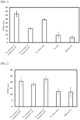
- Seeds of corn variety "Launcher 82" were placed on a paper towel wetted with tap water. 8 days after germination, the seedlings were immersed in 45 mL of a hydroponic nutrient solution (a liquid based on the formulation in the Horticultural Experiment Station). 2 days after that, 3 mL of iron materials including various aqueous complex solutions were administered to the seedlings. Then, on the 3rd day after the administration of the iron materials, the leaf color (SPAD value) of corn was measured. This hydroponic cultivation was performed in two pots, and the average value of the SPAD values was calculated. For comparison, an experiment of administering only iron sulfate and an experiment of administering no iron material were also performed. These results are shown in Table 3 and Fig. 1 .
- Iron materials containing the Fe complex of the compound (V2) or citric acid are aqueous complex solutions having an Fe concentration of 100 ⁇ M, the aqueous complex solutions being obtained by preparing a first aqueous solution having a concentration of the compound (V2) or citric acid of 0.2 mM using a deionized water, and then adding iron sulfate to the first aqueous solution and dissolving therein to have an iron sulfate concentration of 0.1 mM.
- An iron material containing the Fe complex of the compound (V7) is an aqueous complex solution having an Fe concentration of 100 ⁇ M, the aqueous complex solution being obtained by preparing a first aqueous solution having a concentration of the compound (V7) of 0.1 mM using a deionized water, and then adding iron sulfate to the first aqueous solution and dissolving therein to have an iron sulfate concentration of 0.1 mM.
- Seeds of paddy rice variety "Nipponbare” were seeded in tap water, and soaked at a temperature of 27°C for 7 days to germinate. Thereafter, the germinated seeds were immersed in a hydroponic nutrient solution (a liquid based on the formulation in the Horticultural Experiment Station). After 7 days, 3 seedlings as one plant were transplanted into soil obtained by adding fertilizer to 800 g of shelly fossil soil with pH9 per pot, and soil cultivation was started. The soil cultivation was performed at a temperature of 28°C for 14 hours in the day and at 23°C for 10 hours in the night. The soil was water-sprinkled once every 2 days such that the amount of water in the soil was 270 mL.
- Iron materials containing the Fe complex of the compound (V1) or citric acid are aqueous complex solutions having an Fe concentration of 600 ⁇ M, the aqueous complex solutions being obtained by preparing a first aqueous solution having a concentration of the compound (V1) or citric acid of 1.2 mM using a deionized water, and then adding iron sulfate to the first aqueous solution and dissolving therein to have an iron sulfate concentration of 0.6 mM.
- Iron materials containing the Fe complex of the compound (V3) or the compound (V4) are aqueous complex solutions having an Fe concentration of 600 ⁇ M, the aqueous complex solutions being obtained by preparing a first aqueous solution having a concentration of the compound (V3) or the compound (V4) of 0.6 mM using a deionized water, and then adding iron sulfate to the first aqueous solution and dissolving therein to have an iron sulfate concentration of 0.6 mM.
- Seeds of paddy rice variety "Nipponbare” were seeded in tap water, and soaked at a temperature of 27°C for 7 days to germinate. Thereafter, the germinated seeds were immersed in a hydroponic nutrient solution (a liquid based on the formulation in the Horticultural Experiment Station). After 6 days, 3 seedlings as one plant were transplanted into soil obtained by adding fertilizer to 800 g of shelly fossil soil with pH9 per pot, and soil cultivation was started. The soil cultivation was performed at a temperature of 28°C for 14 hours in the day and at 23°C for 10 hours in the night. The soil was water-sprinkled once every 2 days such that the amount of water in the soil was 270 mL.
- Iron materials containing the Fe complex of the compound (V2) or citric acid are aqueous complex solutions having an Fe concentration of 200 ⁇ M, the aqueous complex solutions being obtained by preparing a first aqueous solution having a concentration of the compound (V2) or citric acid of 0.4 mM using a deionized water, and then adding iron sulfate to the first aqueous solution and dissolving therein to have an iron sulfate concentration of 0.2 mM.
- Iron materials containing the Fe complex of the compound (V5), Fe complex of the compound (V6), or Fe complex of the compound (V7) are aqueous complex solutions having an Fe concentration of 200 ⁇ M, the aqueous complex solutions being obtained by preparing a first aqueous solution having a concentration of the compound (V5), Fe complex of the compound (V6), or Fe complex of the compound (V7) of 0.2 mM using a deionized water, and then adding iron sulfate to the first aqueous solution and dissolving therein to have an iron sulfate concentration of 0.2 mM.
- the complex can be suitably used as a raw material of, for example, a hydroponic nutrient solution to be sterilized by ultraviolet irradiation.
- the metal element contained in the complex is Fe
- the complex is suitable as a raw material of a hydroponic nutrient solution suitable for plant cultivation.
Landscapes
- Chemical & Material Sciences (AREA)
- Organic Chemistry (AREA)
- Life Sciences & Earth Sciences (AREA)
- Plant Pathology (AREA)
- Zoology (AREA)
- Environmental Sciences (AREA)
- Engineering & Computer Science (AREA)
- Pest Control & Pesticides (AREA)
- Wood Science & Technology (AREA)
- Agronomy & Crop Science (AREA)
- Health & Medical Sciences (AREA)
- Dentistry (AREA)
- General Health & Medical Sciences (AREA)
- Botany (AREA)
- General Chemical & Material Sciences (AREA)
- Chemical Kinetics & Catalysis (AREA)
- Organic Low-Molecular-Weight Compounds And Preparation Thereof (AREA)
Applications Claiming Priority (2)
| Application Number | Priority Date | Filing Date | Title |
|---|---|---|---|
| JP2022054884 | 2022-03-30 | ||
| PCT/JP2023/011815 WO2023190156A1 (ja) | 2022-03-30 | 2023-03-24 | 複素環含有アミノ酸化合物及び錯体 |
Publications (2)
| Publication Number | Publication Date |
|---|---|
| EP4501909A1 true EP4501909A1 (de) | 2025-02-05 |
| EP4501909A4 EP4501909A4 (de) | 2026-03-11 |
Family
ID=88201419
Family Applications (1)
| Application Number | Title | Priority Date | Filing Date |
|---|---|---|---|
| EP23780166.7A Pending EP4501909A4 (de) | 2022-03-30 | 2023-03-24 | Heterozyklushaltige aminosäureverbindung und komplex |
Country Status (4)
| Country | Link |
|---|---|
| US (1) | US20250382264A1 (de) |
| EP (1) | EP4501909A4 (de) |
| JP (1) | JPWO2023190156A1 (de) |
| WO (1) | WO2023190156A1 (de) |
Family Cites Families (6)
| Publication number | Priority date | Publication date | Assignee | Title |
|---|---|---|---|---|
| JP4117009B2 (ja) * | 2006-11-14 | 2008-07-09 | サントリー株式会社 | ムギネ酸類の効率的製造方法 |
| EP2097065A2 (de) * | 2006-11-29 | 2009-09-09 | Foamix Ltd. | Verschäumbare wasserfreie zusammensetzungen mit modulierungsmitteln |
| JP2016017035A (ja) * | 2014-07-04 | 2016-02-01 | 愛知製鋼株式会社 | 金属キレート形成性化合物の製造方法 |
| JP2016063758A (ja) | 2014-09-24 | 2016-04-28 | 栗田工業株式会社 | 水耕栽培システム |
| BR112018008951B1 (pt) * | 2015-11-09 | 2022-04-05 | Aichi Steel Corporation | Composto de aminoácido, complexo, mistura, fertilizante, e, agente regulador de crescimento de plantas |
| AU2018392996B2 (en) * | 2017-12-21 | 2025-01-09 | Biotelliga Holdings Limited | Materials and methods for producing alkaloids |
-
2023
- 2023-03-24 US US18/837,063 patent/US20250382264A1/en active Pending
- 2023-03-24 JP JP2024512348A patent/JPWO2023190156A1/ja active Pending
- 2023-03-24 EP EP23780166.7A patent/EP4501909A4/de active Pending
- 2023-03-24 WO PCT/JP2023/011815 patent/WO2023190156A1/ja not_active Ceased
Also Published As
| Publication number | Publication date |
|---|---|
| EP4501909A4 (de) | 2026-03-11 |
| JPWO2023190156A1 (de) | 2023-10-05 |
| WO2023190156A1 (ja) | 2023-10-05 |
| US20250382264A1 (en) | 2025-12-18 |
Similar Documents
| Publication | Publication Date | Title |
|---|---|---|
| Kimura et al. | Carboxyester hydrolysis promoted by a new zinc (II) macrocyclic triamine complex with an alkoxide pendant: a model study for the serine alkoxide nucleophile in zinc enzymes | |
| CN106068252B (zh) | 含硝化抑制剂的肥料混合物 | |
| SK153294A3 (en) | Method of preparation of clavulanic acid, its using and its salt | |
| CN108349886B (zh) | 新型含杂环氨基酸化合物和其用途 | |
| EP3830084B1 (de) | Verfahren zur reinigung von isavuconazoniumsulfat | |
| EP4501909A1 (de) | Heterozyklushaltige aminosäureverbindung und komplex | |
| EP3848350B1 (de) | Heterocyclen enthaltende aminosäureverbindung und salz davon, komplex, zusammensetzung, düngemittel und pflanzenwachstumsregulator | |
| EP4129995A1 (de) | Neuartige lactamverbindung oder salz davon, komplex und düngemittel und pflanzenwachstumsregulator mit dieser verbindung oder diesem salz und komplex | |
| CN1264852C (zh) | 磷霉素单氨丁三醇合成新方法 | |
| Kayano et al. | Mugineic Acids: Natural Product Chemistry Contributing to Environmental Issues | |
| CN121159332B (zh) | 一种含s-丙酰芸内酯与润湿渗透剂的多功能水溶肥料及其制备方法 | |
| CN108623598A (zh) | 一种亚胺培南中间体及亚胺培南的制备方法 | |
| RU2779668C1 (ru) | Способ получения калькобутрола | |
| US4438044A (en) | Di-L-cysteine L-malate and process for the production thereof | |
| EP3406590A1 (de) | Chelatbildner zur behandlung von ernährungsstörungen bei pflanzen | |
| RU2793411C1 (ru) | Смесь удобрений, содержащая ингибитор нитрификации | |
| CN115403476A (zh) | 5-氨基乙酰丙酸的柠檬酸盐和酒石酸盐及其制备方法 | |
| DE69711112T2 (de) | Sulfonat von Glutathion-Monoester | |
| KR100991525B1 (ko) | N-아세틸티아졸리딘-4-카르복실산의 신규한 제조 방법 | |
| JPH03190882A (ja) | 2―カルボキシエチルオキサゾピロロキノリン類 | |
| JPH0713052B2 (ja) | ジペプチド | |
| JPH049387A (ja) | 4―ヒドロキシフェニルメチルオキサゾピロロキノリン類 | |
| JPH03170484A (ja) | 新規なオキサゾピロロキノリン化合物 | |
| JPS63211263A (ja) | 新規ジペプチド | |
| JPH03279355A (ja) | ジペプチド化合物 |
Legal Events
| Date | Code | Title | Description |
|---|---|---|---|
| STAA | Information on the status of an ep patent application or granted ep patent |
Free format text: STATUS: THE INTERNATIONAL PUBLICATION HAS BEEN MADE |
|
| PUAI | Public reference made under article 153(3) epc to a published international application that has entered the european phase |
Free format text: ORIGINAL CODE: 0009012 |
|
| STAA | Information on the status of an ep patent application or granted ep patent |
Free format text: STATUS: REQUEST FOR EXAMINATION WAS MADE |
|
| 17P | Request for examination filed |
Effective date: 20240920 |
|
| AK | Designated contracting states |
Kind code of ref document: A1 Designated state(s): AL AT BE BG CH CY CZ DE DK EE ES FI FR GB GR HR HU IE IS IT LI LT LU LV MC ME MK MT NL NO PL PT RO RS SE SI SK SM TR |
|
| DAV | Request for validation of the european patent (deleted) | ||
| DAX | Request for extension of the european patent (deleted) | ||
| A4 | Supplementary search report drawn up and despatched |
Effective date: 20260209 |
|
| RIC1 | Information provided on ipc code assigned before grant |
Ipc: C07D 207/16 20060101AFI20260203BHEP Ipc: C07F 15/02 20060101ALI20260203BHEP Ipc: A01N 43/36 20060101ALI20260203BHEP Ipc: A01N 55/02 20060101ALI20260203BHEP Ipc: C07D 205/04 20060101ALI20260203BHEP |