EP4486006A1 - Kommunikationssystem und kommunikationsendgerät - Google Patents
Kommunikationssystem und kommunikationsendgerät Download PDFInfo
- Publication number
- EP4486006A1 EP4486006A1 EP22928812.1A EP22928812A EP4486006A1 EP 4486006 A1 EP4486006 A1 EP 4486006A1 EP 22928812 A EP22928812 A EP 22928812A EP 4486006 A1 EP4486006 A1 EP 4486006A1
- Authority
- EP
- European Patent Office
- Prior art keywords
- base station
- communication
- information
- communication terminal
- control mode
- Prior art date
- Legal status (The legal status is an assumption and is not a legal conclusion. Google has not performed a legal analysis and makes no representation as to the accuracy of the status listed.)
- Pending
Links
Images





Classifications
-
- H—ELECTRICITY
- H04—ELECTRIC COMMUNICATION TECHNIQUE
- H04W—WIRELESS COMMUNICATION NETWORKS
- H04W4/00—Services specially adapted for wireless communication networks; Facilities therefor
- H04W4/70—Services for machine-to-machine communication [M2M] or machine type communication [MTC]
-
- G—PHYSICS
- G05—CONTROLLING; REGULATING
- G05D—SYSTEMS FOR CONTROLLING OR REGULATING NON-ELECTRIC VARIABLES
- G05D1/00—Control of position, course, altitude or attitude of land, water, air or space vehicles, e.g. using automatic pilots
- G05D1/20—Control system inputs
- G05D1/22—Command input arrangements
- G05D1/221—Remote-control arrangements
- G05D1/226—Communication links with the remote-control arrangements
-
- G—PHYSICS
- G05—CONTROLLING; REGULATING
- G05D—SYSTEMS FOR CONTROLLING OR REGULATING NON-ELECTRIC VARIABLES
- G05D1/00—Control of position, course, altitude or attitude of land, water, air or space vehicles, e.g. using automatic pilots
- G05D1/60—Intended control result
- G05D1/69—Coordinated control of the position or course of two or more vehicles
- G05D1/698—Control allocation
- G05D1/6987—Control allocation by centralised control off-board any of the vehicles
-
- G—PHYSICS
- G05—CONTROLLING; REGULATING
- G05D—SYSTEMS FOR CONTROLLING OR REGULATING NON-ELECTRIC VARIABLES
- G05D2105/00—Specific applications of the controlled vehicles
- G05D2105/45—Specific applications of the controlled vehicles for manufacturing, maintenance or repairing
-
- G—PHYSICS
- G05—CONTROLLING; REGULATING
- G05D—SYSTEMS FOR CONTROLLING OR REGULATING NON-ELECTRIC VARIABLES
- G05D2107/00—Specific environments of the controlled vehicles
- G05D2107/70—Industrial sites, e.g. warehouses or factories
-
- G—PHYSICS
- G05—CONTROLLING; REGULATING
- G05D—SYSTEMS FOR CONTROLLING OR REGULATING NON-ELECTRIC VARIABLES
- G05D2109/00—Types of controlled vehicles
- G05D2109/10—Land vehicles
-
- H—ELECTRICITY
- H04—ELECTRIC COMMUNICATION TECHNIQUE
- H04W—WIRELESS COMMUNICATION NETWORKS
- H04W36/00—Hand-off or reselection arrangements
- H04W36/08—Reselecting an access point
Definitions
- the present disclosure relates to a communication system and a communication terminal.
- Patent Document 1 discloses a system including a robot, a machining device, a robot controller that controls the robot, a machining device controller that controls the machining device, and a programmable logic controller that generates commands for the robot controller and the machining device controller.
- Patent Document 1 Japanese Unexamined Patent Publication No. 2019-209454
- the present disclosure provides a communication system effective for improving reliability of inter-device communication by mobile wireless communication.
- a communication system includes: a host system including a client device and a server device configured to perform inter-device communication with the client device; and a communication terminal connected to the client device and configured to perform mobile wireless communication for inter-device communication with a base station connected to the server device, wherein the communication terminal is configured to notify the host system of information of the base station.
- a communication terminal is a communication terminal that is connected to a client device of a host system including the client device and a server device that are configured to perform inter-device communication with each other, the communication terminal being configured to perform mobile wireless communication for the inter-device communication with a base station connected to the server device, the communication terminal including: a base station information acquisition unit configured to acquire information of the base station; and a notification unit configured to notify a system of information of the base station.
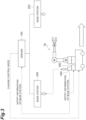
- FIG. 1 is a schematic view illustrating a machine system.
- a machine system 1 illustrated in FIG. 1 includes a server device 100 and a plurality of machines 20. Each of the plurality of machines 20 performs motions. Although three machines 20 are illustrated in FIG. 1 , the number of the machines 20 is not limited to this.
- Each of the plurality of machines 20 includes a body 30 and a local controller 300.
- the body 30 is a machine that is controlled by the local controller 300 and performs multiple types of motion.
- the type of the body 30 is not particularly limited.
- the body 30A is a mobile robot, and performs motions for conveying, processing, assembling, and the like on a workpiece.
- Specific examples of the motions include a motion for conveying a component and attaching the component to a workpiece, a motion for conveying a tool such as a screw tightening tool or a welding torch and processing the workpiece, and a motion for conveying the workpiece itself.
- the body 30 includes an automated guided vehicle 31 and a robot 40.
- the automated guided vehicle 31 supports and moves the robot 40.
- the robot 40 is, for example, a vertical articulated industrial robot.
- the robot 40 includes a base 41, a pivoting portion 42, a first arm 43, a second arm 44, a wrist portion 45, and a tip portion 46.
- the base 41 is placed on top of the automated guided vehicle 31.
- the pivoting portion 42 is mounted on the base 41 so as to be rotatable about a vertical axis 51.
- the robot 40 includes a joint 61 that attaches the pivoting portion 42 to the base 41 so as to be rotatable about the axis 51.
- the first arm 43 is connected to the pivoting portion 42 so as to be rotatable about an axis 52 intersecting (for example, orthogonal to) the axis 51.
- the robot 40 includes a joint 62 that connects the first arm 43 to the pivoting portion 42 so as to be rotatable about the axis 52. Intersecting includes being skewed, such as so-called grade separation. The same applies to the following.
- the first arm 43 extends from the pivoting portion 42 along a direction that intersects (for example, is orthogonal to) the axis 52.
- the second arm 44 is connected to the end of the first arm 43 so as to be rotatable about an axis 53 parallel to the axis 52.
- the robot 40 includes a joint 63 that connects the second arm 44 to the first arm 43 so as to be rotatable about the axis 53.
- the second arm 44 includes an arm base 47 that extends from the end of the first arm 43 along one direction that intersects (for example, is orthogonal to) the axis 53, and an arm end 48 that further extends from the end of the arm base 47 along the same one direction.
- the arm end 48 is rotatable about an axis 54 relative to the arm base 47.
- the axis 54 intersects (for example, is orthogonal to) the axis 53.
- the robot 40 includes a joint 64 that connects the arm end 48 to the arm base 47 so as to be rotatable about the axis 54.
- the wrist portion 45 is connected to the arm end 48 so as to be rotatable about an axis 55 that intersects (for example, is orthogonal to) the axis 54.
- the robot 40 includes a joint 65 that connects the wrist portion 45 to the arm end 48 so as to be rotatable about the axis 55.
- the wrist portion 45 extends from the end of the arm end 48 along one direction that intersects (for example, is orthogonal to) the axis 55.
- the tip portion 46 is connected to the end of the wrist portion 45 so as to be rotatable about an axis 56 that intersects (for example, is orthogonal to) the axis 55.
- the robot 40 includes a joint 66 that connects the tip portion 46 to the wrist portion 45 so as to be rotatable about the axis 56.
- An end effector is provided on the tip portion 46.
- Specific examples of the end effector include a hand that grips a workpiece, and a work tool that performs processing, assembly, or the like on a workpiece.
- Actuators 71, 72, 73, 74, 75, 76 drive the joints 61, 62, 63, 64, 65, 66.
- Each of the actuators 71, 72, 73, 74, 75, 76 includes, for example, an electric motor and a transmission unit (for example, a reduction gear) that transmits the power of the electric motor to the joints 61, 62, 63, 64, 65, 66.
- the actuator 71 drives the joint 61 so as to rotate the pivoting portion 42 about the axis 51.
- the actuator 72 drives the joint 62 so as to rotate the first arm 43 about the axis 52.
- the actuator 73 drives the joint 63 so as to rotate the second arm 44 about the axis 53.
- the actuator 74 drives the joint 64 so as to rotate the arm end 48 about the axis 54.
- the actuator 75 drives the joint 65 so as to rotate the wrist portion 45 about the axis 55.
- the actuator 76 drives the joint 66 so as to rotate the tip portion 46 about the axis 56.
- the body 30 is not necessarily limited to the above-described mobile robot, and may be a robot fixed at a fixed position.
- the body 30 may be an automated guided vehicle that performs a motion for conveying a conveyance object such as a workpiece.
- the body 30B is an automated guided vehicle that conveys a conveyance object such as a workpiece.
- the body 30B includes an automated guided vehicle 33 and a loading table 34.
- the automated guided vehicle 33 supports and moves the loading table 34.
- the loading table 34 supports the conveyance object.
- the server device 100 performs inter-device communication with the local controller 300 of the plurality of machines 20, and causes the bodies 30 of the plurality of machines 20 to perform a series of motions for production of a workpiece or the like.
- the machine system 1 includes a communication system 10.
- the communication system 10 includes a host system 11 and a communication terminal 400.
- the host system 11 includes the machine 20 that is an example of a client device, and the server device 100 that performs inter-device communication with the client device.
- the inter-device communication is communication performed between devices to control motion, for example, as described above.
- Such inter-device communication may include transmission and reception of control commands, transmission and reception of feedback information during control, transmission and reception of operation completion notifications in response to a control command, and the like.
- the communication terminal 400 is connected to the local controller 300 and performs mobile wireless communication for inter-device communication with a base station 200 connected to the server device 100.
- Examples of the mobile wireless communication include, but are not necessarily limited to, communication using a fifth-generation mobile communication system (5G communication).
- 5G communication fifth-generation mobile communication system
- the communication terminal 400 is fixed to the body 30 and moves together with the body 30. Accordingly, the communication terminal 400 can be moved by the local controller 300.
- a plurality of base stations 200 may be connected to the server device 100.
- a connection state between the communication terminal 400 and the plurality of base stations 200 may have an influence on reliability of inter-device communication. For example, there is a possibility that mobile wireless communication satisfying a requirement for the inter-device communication cannot be performed depending on specifications of the base station 200 to which the communication terminal 400 is connected because the specifications of the plurality of base stations 200 are different from each other. For example, in the base station 200 whose communication speed is low, there is a possibility that inter-device communication cannot be performed at a sufficiently high speed.
- the communication terminal 400 is configured to notify the host system 11 of information of the base station 200. Accordingly, in the host system 11, it is possible to cope with the above-described influence based on the information of the base station 200. Examples of coping with the above-described influence include changing the control mode of the body 30 by the server device 100, as illustrated in FIG. 3 .
- the communication terminal 400 may notify the local controller 300 of the information of the base station 200, may notify the server device 100 of the information of the base station 200, or may notify both the local controller 300 and the server device 100 of the information of the base station 200.
- Notifying the server device 100 of the information of the base station 200 includes notifying the local controller 300 of the information of the base station 200 and causing the local controller 300 to transmit the information of the base station 200 to the server device 100.
- the information of the base station 200 may include both information of the base station 200 that is connected and information of the base station 200 that is not connected.
- the information of the base station 200 includes, for example, identification information of the base station 200.
- the identification information of the base station 200 may be, for example, information that can identify the individual base station 200 or information that can identify attributes of the base station 200. Examples of the information that can identify the attributes of the base station 200 include information indicating the type of the base station 200 and information indicating the specifications of the base station 200.
- the information of the base station 200 may include information of a communication state between the local controller 300 and the communication terminal 400.
- Examples of the information of the communication state include information on radio waves received from the base station 200 (for example, information on the strength of radio waves), information indicating a sign of handover from a connected base station 200 to another base station 200, and the like.
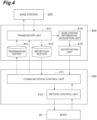
- FIG. 4 is a block diagram illustrating a functional configuration of the communication terminal 400 and the local controller 300.
- the communication terminal 400 includes a transceiver unit 411, a transmission buffer 412, a reception buffer 413, a base station information acquisition unit 414, and a notification unit 415 as functional constituent elements (hereinafter referred to as "functional blocks").
- the transceiver unit 411 performs mobile wireless communication with the base station 200.
- the transmission buffer 412 temporarily stores information that the transceiver unit 411 transmits to the base station 200 through mobile wireless communication.
- the reception buffer 413 temporarily stores information received by the transceiver unit 411 from the base station 200 through mobile wireless communication.
- the base station information acquisition unit 414 acquires the information of the base station 200 from the information that the transceiver unit 411 received from the base station 200.
- the notification unit 415 notifies the local controller 300 of the information of the base station 200.
- the local controller 300 includes a communication control unit 311 and a motion control unit 312 as functional blocks.
- the communication control unit 311 performs inter-device communication with the server device 100.
- the communication control unit 311 stores, in the transmission buffer 412, information to be transmitted from the communication terminal 400 to the base station 200, and reads, from the reception buffer 413, information that the communication terminal 400 receives from the base station 200.
- the motion control unit 312 controls the body 30 based on the control command received by the communication control unit 311 from the server device 100.
- the motion control unit 312 may be configured to autonomously perform at least a part of the control of the body 30 without being based on the control command from the server device 100.
- the local controller 300 controls the body 30 based on, for example, an operation program stored therein.
- the operation program includes a plurality of operation commands arranged in time series. Each of the plurality of operation commands includes an operation target position and an operation target speed of the body 30. Examples of the operation target position of the body 30 include an operation target position of the tip portion 46.
- the operation target position of the tip portion 46 includes an operation target posture of the tip portion 46.
- the communication control unit 311 receives notification of the information of the base station 200 from the notification unit 415.
- the communication control unit 311 may store the information of the base station 200 in the transmission buffer 412 and cause the communication terminal 400 to transmit the information to the base station 200.
- the information of the base station 200 is also notified to the server device 100.
- the communication terminal 400 may be configured to notify the server device 100 of the information of the base station 200 without going through the local controller 300.
- the notification unit 415 may store the information of the base station 200 in the transmission buffer 412 and cause the communication terminal 400 to transmit the information to the base station 200.
- the communication control unit 311 may control the communication terminal 400 to be connected to the base station 200 that is predetermined (default base station). For example, the communication control unit 311 designates the default base station and requests the transceiver unit 411 to limit the connection destination so as to be preferentially connected to the default base station.
- the transceiver unit 411 controls a transmission/reception direction of a radio signal by beam forming or the like so as to be easily connected to the default base station.
- the communication control unit 311 may request the transceiver unit 411 to connect to the base station 200 (including reconnection) after moving the body 30 using the motion control unit 312 so that the communication terminal 400 approaches the default base station.
- the communication control unit 311 may execute both moving the body 30 using the motion control unit 312 so that the communication terminal 400 approaches the default base station, and controlling the transceiver unit 411 to be preferentially connected to the default base station.
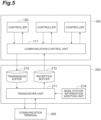
- FIG. 5 is a block diagram illustrating a functional configuration of the base station 200 and the server device 100.
- the base station 200 includes a transceiver unit 211, a transmission buffer 212, a reception buffer 213, and a base station information addition unit 214 as functional blocks.
- the transceiver unit 211 performs mobile wireless communication with the communication terminal 400.
- the transmission buffer 212 temporarily stores information that the transceiver unit 211 transmits to the communication terminal 400 through mobile wireless communication.
- the reception buffer 213 temporarily stores information received by the transceiver unit 211 from the communication terminal 400 through mobile wireless communication.
- the base station information addition unit 214 adds the above-described information of the base station 200 to the information that the transceiver unit 211 transmits to the communication terminal 400.
- the server device 100 includes a communication control unit 111 and a plurality of controllers 120 as functional blocks.
- the communication control unit 111 performs inter-device communication with the local controller 300.
- the communication control unit 111 stores, in the transmission buffer 212, information to be transmitted from the base station 200 to the communication terminal 400, and reads, from the reception buffer 213, information that the base station 200 receives from the communication terminal 400.
- the communication control unit 111 receives the information of the base station 200. As a result, the communication control unit 111 is notified of the information of the base station 200. Instead of the communication control unit 311, the communication control unit 111 may control the communication terminal 400 to be connected to the default base station. For example, the communication control unit 111 stores a request for restriction of a connection destination by beam forming or the like in the transmission buffer 212.
- the communication control unit 111 may request the transceiver unit 411 to connect to the base station 200 (including reconnection) after moving the body 30 using the motion control unit 312 so that the communication terminal 400 approaches the default base station.
- the communication control unit 111 stores, in the transmission buffer 212, a command to move the body 30 using the motion control unit 312 so that the communication terminal 400 approaches the default base station, and stores, in the transmission buffer 212, a request to connect to the base station 200 for the transceiver unit 411 after reading a completion notification of the movement of the body 30 from the reception buffer 213.
- Each of the plurality of controllers 120 controls each of the plurality of machines 20 through inter-device communication performed by the communication control unit 111.
- each of the plurality of controllers 120 includes an information reception unit 121, a command calculation unit 122, a command transmission unit 123, a mode change unit 124, and a sign detection unit 125 as functional blocks.
- the information reception unit 121 receives feedback information indicating a state of a corresponding machine 20 through inter-device communication.
- the feedback information include information indicating the current position and posture of the body 30.
- the current position and posture of the body 30 include the current position and posture of the automated guided vehicle 31 in the body 30A and the current position and posture of the robot 40 in the automated guided vehicle 31.
- the information indicating the current position and posture of the robot 40 may be the current angles of the joints 61, 62, 63, 64, 65, 66.
- the feedback information may be status information indicating whether the operation based on the command from the server device 100 is completed.
- the command calculation unit 122 calculates a motion command based on the feedback information.
- the motion command is a command to cause the local controller 300 to cause the body 30 to perform a motion.
- Examples of the motion command include a speed command or a force (torque) command for causing the current position and posture of the body 30 to follow the target position and posture.
- the motion command may be a start command of a predetermined series of operations.
- the command transmission unit 123 transmits the motion command to the local controller 300 of the corresponding machine 20 through inter-device communication.
- the mode change unit 124 changes the control mode of the machine 20 by the controller 120 based on the information of the base station 200. For example, the mode change unit 124 changes the control mode of the machine 20 by the controller 120 from one of a plurality of predetermined modes to another.
- the mode change unit 124 may change the control mode to reduce the influence of which controller 120 the communication terminal 400 is connected to.
- the plurality of control modes may include a server control mode and an autonomous control mode.
- the server control mode is a mode in which the controller 120 controls the motion of the body 30 through inter-device communication.
- the autonomous control mode is a mode in which the local controller 300 autonomously controls the motion of the body 30. In this case, for example, the controller 120 transmits a motion start command to the local controller 300 and receives a motion completion notification from the local controller 300.
- the frequency of inter-device communication is lower than in the server control mode. Accordingly, in the autonomous control mode, the influence of which the controller 120 the communication terminal 400 is connected to is smaller than that in the server control mode.
- Examples of the server control mode include a mode in which the motion of the body 30 is feedback-controlled by the server device 100.
- the controller 120 repeatedly executes reception of the feedback information by the information reception unit 121, generation of the motion command by the command calculation unit 122, and transmission of the motion command by the command transmission unit 123 at a predetermined control cycle.
- the information reception unit 121 receives feedback information indicating the current position and posture of the body 30.
- the command calculation unit 122 calculates a target position and posture for each control cycle based on a predetermined operation program, and calculates a motion command so that the current position and posture of the body 30 match the target position and posture.
- Making the current position and posture of the body 30 follow the target position and posture means changing the current position and posture in accordance with the change of the target position and posture so that the deviation between the target position and posture and the current position and posture remains within a predetermined range.
- the command calculation unit 122 calculates the motion command by performing a proportional operation, a proportional-integral operation, a proportional-integral-differential operation, or the like on the deviation between the target position and posture and the current position and posture.
- the command transmission unit 123 may add first cycle information designating a control cycle in which the motion command is to be read to the motion command and transmit the motion command to the local controller 300.
- the communication control unit 311 stores the received motion command until the control cycle designated by the first cycle information, and the motion control unit 312 reads the motion command in the control cycle and controls the body 30 based on the read motion command.
- the communication control unit 311 in the local controller 300 may add second cycle information designating the control cycle in which the feedback information is to be read to the feedback information and transmit the feedback information to the server device 100.
- the communication control unit 111 stores the feedback information until the control cycle designated by the second cycle information
- the information reception unit 121 reads the feedback information in the control cycle
- the command calculation unit 122 generates the motion command based on the read feedback information. Accordingly, the influence of the variation in the reception timing of the feedback information and the motion command on the motion of the body 30 is suppressed.
- a predetermined condition may be required for the capability of the base station 200.
- the base station 200 satisfying a predetermined condition is set as the above-described default base station.
- the mode change unit 124 sets the control mode of the machine 20 to the server control mode if it determines that the base station 200 (the base station 200 to which the communication terminal 400 is connected) is the default base station based on the information of the base station 200, and sets the control mode of the machine 20 to the autonomous control mode if it determines that the base station 200 is not the default base station.
- the mode change unit 124 changes the server control mode to the autonomous control mode.
- the mode change unit 124 changes the autonomous control mode to the server control mode if it is determined that the state is switched from a state in which the base station 200 is not the default base station to a state in which the base station 200 is the default base station (handover from another base station to the default base station has occurred).
- the plurality of control modes may include a stop mode for keeping the body 30 in a stopped state.
- the mode change unit 124 may set the control mode of the machine 20 to the server control mode if it is determined that the base station 200 is the default base station based on the information of the base station 200, and may set the control mode of the machine 20 to the stop mode if it is determined that the base station 200 is not the default base station.
- the mode change unit 124 changes the control mode of the machine 20 from the server control mode to the stop mode if it is determined that the state is changed from a state in which the base station 200 is the default base station to a state in which the base station 200 is not the default base station (handover from the default base station to another base station occurs).
- the mode change unit 124 changes the control mode of the machine 20 from the stop mode to the server control mode if it is determined that the state is changed from a state in which the base station 200 is not the default base station to a state in which the base station 200 is the default base station (handover from another base station to the default base station occurs).
- the mode change unit 124 may change the control mode so that the communication terminal 400 is more easily connected to the default base station.
- the plurality of control modes may include a first control mode in which the movement range of the body 30 reaches a position farther than a predetermined reference distance from the default base station, and a second control mode in which the movement range of the body 30 falls within the reference distance from the default base station.
- the second control mode may be a mode in which the body 30 is operated at a fixed position.
- the second control mode may be a mode in which the robot 40 is operated with the automated guided vehicle 31 located at a fixed position.
- the body 30 operates at a position closer to the default base station than in the first control mode. Accordingly, in the second control mode, the communication terminal 400 is more easily connected to the default base station as compared with the first control mode. For example, if it is determined that the base station 200 is not the default base station based on the information of the base station 200 while the mode change unit 124 is controlling the machine 20 in the first control mode, the mode change unit 124 changes the control mode of the machine 20 from the first control mode to the second control mode.
- the sign detection unit 125 detects the sign of handover of the base station 200 based on the information of the base station 200. For example, the sign detection unit 125 detects the sign of handover based on information of radio waves received by the communication terminal 400 from the base station 200. For example, the sign detection unit 125 detects the sign of handover when the strength of radio waves received by the communication terminal 400 from the base station 200 falls below a predetermined reference strength.
- the information on the base station 200 may further include information on whether the communication terminal 400 receives an instruction to connect to a base station 200 other than the base station 200 being connected (hereinafter referred to as "handover instruction").
- the sign detection unit 125 may detect the sign of handover when the communication terminal 400 is receiving the handover instruction.
- the sign detection unit 125 may detect the sign of handover based on both whether the communication terminal 400 receives the handover instruction and the information of the radio waves received by the communication terminal 400 from the base station 200. For example, the sign detection unit 125 may detect a sign of handover when the communication terminal 400 receives a handover instruction and the strength of radio waves received by the communication terminal 400 from the base station 200 falls below a reference strength.
- the communication terminal 400 may be configured to detect the sign of handover, and may be configured to notify the host system 11 of a detection result of the sign of handover by including the detection result in the information of the base station 200.
- the sign detection unit 125 detects the sign of handover based on the detection result of the sign of handover by the communication terminal 400.
- the mode change unit 124 may change the control mode based on the sign of handover if the sign detection unit 125 detects the sign of handover.
- the mode change unit 124 may change the control mode based on the sign of handover so as to reduce the influence of the handover. For example, the mode change unit 124 may change the server control mode to the autonomous control mode or the stop mode if the sign detection unit 125 detects a sign of handover during execution of the server control mode. After switching the server control mode to the autonomous control mode or the stop mode, the mode change unit 124 may change the autonomous control mode to the server control mode if the sign detection unit 125 does not detect the sign of handover due to the completion of the handover or the like.
- the mode change unit 124 may change the control mode based on the sign of handover so as to reduce the sign of handover.
- the plurality of control modes may include a first control mode in which the movement range of the body 30 reaches a position farther than a predetermined reference distance from the connected base station, and a second control mode in which the movement range of the body 30 falls within the reference distance from the connected base station.
- the second control mode may be a mode in which the body 30 is operated at a fixed position.
- the body 30 operates at a position closer to the connected base station as compared with the first control mode. Accordingly, in the second control mode, the sign of handover is reduced compared to the first control mode.
- the mode change unit 124 changes the control mode of the machine 20 from the first control mode to the second control mode if a sign of handover is detected by the sign detection unit 125 while the machine 20 is controlled in the first control mode.
- the communication control unit 111 may control the communication terminal 400 to decrease the sign of handover if the sign of handover is detected by the sign detection unit 125.
- the communication control unit 111 designates the base station 200 being connected so as to reduce the sign of handover, and stores a request for restriction of a connection destination in the transmission buffer 212.
- the transceiver unit 411 controls the transmission/reception direction of a radio signal by beam forming or the like so as to reduce the sign of handover.
- FIG. 7 is a block diagram illustrating a hardware configuration of the server device 100 and the base station 200.
- the server device 100 includes circuitry 190.
- the circuitry 190 includes a processor 191, a memory 192, storage 193, and a user interface 195.
- the storage 193 is a nonvolatile storage medium. Specific examples of the storage 193 include a hard disk and a flash memory.
- the storage 193 may be a portable storage media such as an optical disc.
- the storage 193 stores a program for configuring the above-described functional blocks in the server device 100.
- the memory 192 is a temporary memory such as a random-access memory, and temporarily stores the program that is loaded from the storage 193.
- the processor 191 is configured by one or more arithmetic elements, and causes the server device 100 to configure each of the functional blocks by executing the program loaded in the memory 192.
- a communication port 194 communicates with the base station 200 in response to a request from the processor 191.
- the base station 200 includes circuitry 290.
- the circuitry 290 includes a processor 291, a memory 292, storage 293, a communication port 294, and an antenna 295.
- the storage 293 is a nonvolatile storage medium. Specific examples of the storage 293 include a hard disk and a flash memory.
- the storage 293 may be a portable storage media such as an optical disc.
- the storage 293 stores a program for configuring the above-described functional blocks in the base station 200.
- the memory 292 is a temporary memory such as a random-access memory, and temporarily stores the program that is loaded from the storage 293.
- the processor 291 is configured by one or more arithmetic elements, and causes the base station 200 to configure each of the functional blocks by executing the program loaded in the memory 292.
- the communication port 294 communicates with the communication port 194 in response to a request from the processor 291.
- the antenna 295 transmits and receives a signal for mobile wireless communication in response to a request from the processor 291.
- FIG. 8 is a block diagram illustrating a hardware configuration of the local controller 300 and the communication terminal 400.
- the local controller 300 includes circuitry 390.
- the circuitry 390 includes a processor 391, a memory 392, storage 393, a communication port 394, and drive circuitry 395.
- the storage 393 is a nonvolatile storage medium. Specific examples of the storage 393 include a hard disk and a flash memory. The storage 393 may be a portable storage media such as an optical disc. The storage 393 stores a program for configuring the above-described functional blocks in the local controller 300.
- the memory 392 is a temporary memory such as a random-access memory, and temporarily stores the program that is loaded from the storage 393.
- the processor 391 is configured by one or more arithmetic elements, and causes the local controller 300 to configure each of the functional blocks by executing the program loaded in the memory 392.
- the communication port 394 communicates with the communication terminal 400 in response to a request from the processor 391.
- the drive circuitry 395 outputs driving power to the body 30 in response to a request from the processor 391, and acquires feedback information from the body 30.
- the communication terminal 400 includes circuitry 490.
- the circuitry 490 includes a processor 491, a memory 492, storage 493, a communication port 494, and an antenna 495.
- the storage 493 is a nonvolatile storage medium. Specific examples of the storage 493 include a hard disk and a flash memory.
- the storage 493 may be a portable storage media such as an optical disc.
- the storage 493 stores a program for configuring the above-described functional blocks in the communication terminal 400.
- the memory 492 is a temporary memory such as a random-access memory, and temporarily stores the program that is loaded from the storage 493.
- the processor 491 is configured by one or more arithmetic elements, and causes the communication terminal 400 to configure each of the functional blocks by executing the program loaded in the memory 492.
- the communication port 494 communicates with the communication port 394 in response to a request from the processor 491.
- the antenna 495 transmits and receives a signal for mobile wireless communication in response to a request from the processor 491.
- This control procedure includes a connection procedure between the communication terminal 400 and the base station 200, a control procedure of the communication terminal 400 by the host system 11, a change procedure of the control mode based on information of the base station 200, a change procedure of the control mode based on the sign of handover, a control procedure by server control mode, and a control procedure by autonomous control mode.
- Each procedure will be described below.
- the communication terminal 400 first executes steps S01, S02.
- the base station information acquisition unit 414 acquires information of the base station 200.
- the notification unit 415 notifies the local controller 300 of the information of the base station 200.
- the communication terminal 400 then executes a step S03.
- the transceiver unit 411 checks whether a request for connection to the base station 200 is received from the local controller 300. If it is determined in the step S03 that the request for connection is not received, the communication terminal 400 executes a step S04.
- the transceiver unit 411 checks whether a request for restricting connection destination restriction (for example, the above-described request for beam forming or the like) is received from the local controller 300. If it is determined in the step S04 that the request for restricting the connection destination is not received, the communication terminal 400 returns the process to the step S01.
- a request for restricting connection destination restriction for example, the above-described request for beam forming or the like
- the communication terminal 400 executes a step S05.
- the transceiver unit 411 controls the transmission/reception direction of a wireless signal so that the transceiver unit 411 can be easily connected to the base station 200 designated in the request for restriction of a connection destination.
- the communication terminal 400 executes a step S06.
- the transceiver unit 411 establishes a connection with the base station 200.
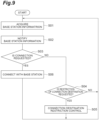
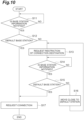
- the procedure described below can be executed by either the server device 100 or the local controller 300 in a state where a connection is established between the base station 200 and the communication terminal 400. It is assumed that the connection between the base station 200 and the communication terminal 400 is not established, and the following procedure is executed by the local controller 300.
- the local controller 300 first executes steps S 11, S12.
- the communication control unit 311 waits for the notification of information of the base station 200 from the notification unit 415.
- the communication control unit 311 waits for notification from the notification unit 415 of information of the base station 200 to which the communication terminal 400 can connect.
- the base station 200 to which the communication terminal 400 can be connected is referred to as a "candidate base station 200".
- the communication control unit 311 checks whether the candidate base station 200 is the default base station based on the information of the candidate base station 200. If it is determined in the step S12 that the candidate base station 200 is not the default base station, the communication control unit 311 executes steps S13, S14, S15.
- the communication control unit 311 designates the default base station and requests the transceiver unit 411 to restrict the connection destination. In response to this, the transceiver unit 411 controls the transmission/reception direction of the radio signal so as to facilitate connection to the default base station (the step S05 described above).
- the communication control unit 311 waits for the information of the candidate base station 200 to be notified again from the notification unit 415.
- the communication control unit 311 checks whether the candidate base station 200 is the default base station based on the information of the candidate base station 200.
- the local controller 300 executes a step S16.
- the communication control unit 311 moves the body 30 with the motion control unit 312 so that the communication terminal 400 approaches the default base station.
- the local controller 300 then returns the process to the step S13.
- the local controller 300 executes a step S 17.
- the communication control unit 311 requests the transceiver unit 411 to connect with the base station 200.
- the transceiver unit 411 establishes a connection with the base station 200 (the step S06 described above).
- the control procedure of the communication terminal 400 is completed.
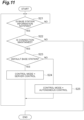
- the server device 100 first executes steps S21, S22.
- the communication control unit 111 waits for the notification of the information of the base station 200 from the notification unit 415.
- the communication control unit 111 checks whether the connection between the communication terminal 400 and the base station 200 is maintained based on the information of the base station 200 notified from the notification unit 415. If it is determined in the step S22 that the connection between the communication terminal 400 and the base station 200 is maintained, the server device 100 executes a step S23. In the step S23, based on the information of the base station 200 acquired by the communication control unit 111, the mode change unit 124 checks whether the base station 200 is the default base station.
- the server device 100 executes a step S24.
- the mode change unit 124 sets the control mode to the server control mode described above.
- the server device 100 executes a step S25.
- the mode change unit 124 sets the control mode to the autonomous control mode described above.
- the server device 100 returns the process to the step S21. Until it is determined that the connection between the communication terminal 400 and the base station 200 is not maintained in the step S22, the server device 100 repeatedly executes the above processing. If it is determined in the step S22 that the connection between the communication terminal 400 and the base station 200 is not maintained, the server device 100 ends the process. Thereafter, for example, the procedure illustrated in FIG. 10 is executed again.
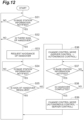
- the server device 100 first executes a step S31.
- the communication control unit 111 waits for the communication control unit 111 to be notified of the information of the base station 200 from the notification unit 415.
- the server device 100 then executes a step S32.
- the sign detection unit 125 checks whether there is a sign of handover of the base station 200 based on the information of the base station 200. If it is determined in the step S32 that there is no sign of handover, the server device 100 returns the process to the step S31.
- the server device 100 executes a step S33.
- the communication control unit 111 designates the base station 200 being connected so as to reduce the sign of handover, and stores a request for restriction of a connection destination in the transmission buffer 212.
- the transceiver unit 411 controls the transmission/reception direction of a radio signal by beam forming or the like so as to reduce the sign of handover.
- the server device 100 then executes a step S34.
- the communication control unit 111 waits for the communication control unit 111 to be notified of the information of the base station 200 from the notification unit 415.
- the sign detection unit 125 checks whether the sign of handover of the base station 200 is resolved based on the information of the base station 200.
- the server device 100 executes steps S36, S37, S38.
- the mode change unit 124 changes the above-described server control mode to the above-described autonomous control mode.
- the communication control unit 111 waits for the communication control unit 111 to be notified of the information of the base station 200 from the notification unit 415.
- the sign detection unit 125 checks whether the sign of handover in the base station 200 is resolved by the completion of the handover or the like based on the information of the base station 200.
- the server device 100 If it is determined in the step S38 that the sign of handover is not resolved, the server device 100 returns the process to the step S37. If it is determined in the step S38 that the sign of handover is resolved, the server device 100 executes a step S39. In the step S39, the mode change unit 124 changes the autonomous control mode to the server control mode.
- the server device 100 then returns the process to the step S31. If it is determined in the step S35 that the sign of handover of the base station 200 is resolved, the server device 100 returns the process to the step S31 without executing the steps S36, S37, S38, S39. The server device 100 repeats the above procedure.
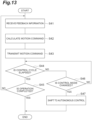
- This procedure is a control procedure executed by the server device 100 in the server control mode described above.
- the server device 100 executes steps S41, S42, S43, S44.
- the information reception unit 121 acquires feedback information indicating the current position and posture of the body 30.
- the command calculation unit 122 calculates a target position and posture for each control cycle based on a predetermined operation program, and calculates a motion command so that the current position and posture of the body 30 follow the target position and posture.
- the command transmission unit 123 transmits the motion command to the local controller 300.
- the command calculation unit 122 checks whether the control cycle has elapsed from immediately before the start of the step S41.
- step S44 the server device 100 executes a step S46.
- the command calculation unit 122 checks whether the control mode is changed from the server control mode to the autonomous control mode. If it is determined in the step S46 that the control mode is not changed, the server device 100 returns the process to the step S44. Thereafter, the server device 100 waits for the control cycle to elapse or the control mode to be changed.
- step S45 the command calculation unit 122 checks whether all operations based on the operation program are completed. If it is determined in the step S45 that not all operations are completed, the server device 100 returns the process to the step S41. If it is determined in the step S45 that all the operations are completed, the server device 100 completes the control by the server control mode.
- step S46 If it is determined in the step S46 that the control mode is changed, the server device 100 executes a step S47.
- step S47 each of the information reception unit 121, the command calculation unit 122, and the command transmission unit 123 starts processing for the autonomous control mode. Thus, the control by the server control mode is completed.
- This procedure is a control procedure executed by the server device 100 in the above-described autonomous control mode.
- the server device 100 executes steps S51, S52.
- the command transmission unit 123 transmits an operation command based on autonomous control to the local controller 300.
- the information reception unit 121 checks whether a completion notification of all operations in the autonomous control is received from the local controller 300.
- the server device 100 executes a step S53.
- the command calculation unit 122 checks whether the control mode is changed from the autonomous control mode to the server control mode. If it is determined in the step S53 that the control mode is not changed, the server device 100 returns the process to the step S52. Thereafter, the server device 100 waits for completion notifications of all operations to be received or the control mode to be changed.
- the server device 100 completes the control in the autonomous control mode. If it is determined in the step S53 that the control mode is changed, the server device 100 executes a step S54. In the step S54, each of the information reception unit 121, the command calculation unit 122, and the command transmission unit 123 starts processing for the server control mode. Thus, the control in the autonomous control mode is completed.
Landscapes
- Engineering & Computer Science (AREA)
- Aviation & Aerospace Engineering (AREA)
- Radar, Positioning & Navigation (AREA)
- Remote Sensing (AREA)
- Physics & Mathematics (AREA)
- General Physics & Mathematics (AREA)
- Automation & Control Theory (AREA)
- Computer Networks & Wireless Communication (AREA)
- Signal Processing (AREA)
- Mobile Radio Communication Systems (AREA)
Applications Claiming Priority (2)
| Application Number | Priority Date | Filing Date | Title |
|---|---|---|---|
| US202263312391P | 2022-02-22 | 2022-02-22 | |
| PCT/JP2022/029546 WO2023162291A1 (ja) | 2022-02-22 | 2022-08-01 | 通信システム及び通信端末 |
Publications (2)
| Publication Number | Publication Date |
|---|---|
| EP4486006A1 true EP4486006A1 (de) | 2025-01-01 |
| EP4486006A4 EP4486006A4 (de) | 2025-11-19 |
Family
ID=87765331
Family Applications (1)
| Application Number | Title | Priority Date | Filing Date |
|---|---|---|---|
| EP22928812.1A Pending EP4486006A4 (de) | 2022-02-22 | 2022-08-01 | Kommunikationssystem und kommunikationsendgerät |
Country Status (4)
| Country | Link |
|---|---|
| EP (1) | EP4486006A4 (de) |
| JP (1) | JP7797619B2 (de) |
| CN (1) | CN118696567A (de) |
| WO (1) | WO2023162291A1 (de) |
Family Cites Families (9)
| Publication number | Priority date | Publication date | Assignee | Title |
|---|---|---|---|---|
| JP4608472B2 (ja) * | 2006-10-02 | 2011-01-12 | 本田技研工業株式会社 | 移動ロボット及び移動ロボットの制御装置 |
| JP5569322B2 (ja) | 2010-10-07 | 2014-08-13 | ソニー株式会社 | 無線端末、無線通信方法、および無線通信システム |
| JP6539502B2 (ja) * | 2015-06-03 | 2019-07-03 | 日立建機株式会社 | 無線通信システム、管制サーバ、及び基地局切替動作制御方法 |
| US10449671B2 (en) | 2017-04-04 | 2019-10-22 | Toyota Research Institute, Inc. | Methods and systems for providing robotic operation constraints for remote controllable robots |
| JP6673401B2 (ja) | 2018-06-08 | 2020-03-25 | 株式会社安川電機 | 加工システム及び制御方法 |
| WO2020230824A1 (ja) | 2019-05-13 | 2020-11-19 | 株式会社安川電機 | マシン制御システム、プログラム、マシン、及び通信方法 |
| JP7371447B2 (ja) | 2019-11-08 | 2023-10-31 | 日本電気株式会社 | 制御装置及び制御方法 |
| JP7276185B2 (ja) * | 2020-02-12 | 2023-05-18 | トヨタ自動車株式会社 | タスク実行システム、無線接続方法、及びプログラム |
| JP7105829B2 (ja) | 2020-06-10 | 2022-07-25 | ソフトバンク株式会社 | 管理装置、通信システム、管理方法及びプログラム |
-
2022
- 2022-08-01 CN CN202280091846.3A patent/CN118696567A/zh active Pending
- 2022-08-01 EP EP22928812.1A patent/EP4486006A4/de active Pending
- 2022-08-01 JP JP2024502795A patent/JP7797619B2/ja active Active
- 2022-08-01 WO PCT/JP2022/029546 patent/WO2023162291A1/ja not_active Ceased
Also Published As
| Publication number | Publication date |
|---|---|
| JPWO2023162291A1 (de) | 2023-08-31 |
| WO2023162291A1 (ja) | 2023-08-31 |
| EP4486006A4 (de) | 2025-11-19 |
| JP7797619B2 (ja) | 2026-01-13 |
| CN118696567A (zh) | 2024-09-24 |
Similar Documents
| Publication | Publication Date | Title |
|---|---|---|
| US10500723B2 (en) | Machining system and machine controller in which a moving robot loads and unloads an article with respect to machining device | |
| US6816754B2 (en) | Method and system for controlling drive of a robot | |
| US8554369B2 (en) | Machining system and method | |
| US9254567B2 (en) | System for commanding a robot | |
| US11833687B2 (en) | Robot apparatus, control method for the robot apparatus, assembly method using the robot apparatus, and recording medium | |
| JP2015116663A (ja) | ロボット装置の制御方法及びロボット装置 | |
| US20200276716A1 (en) | Robot apparatus, control method for robot apparatus, method of manufacturing article using robot apparatus, communication device, communication method, control program, and recording medium | |
| EP4486006A1 (de) | Kommunikationssystem und kommunikationsendgerät | |
| JP5011507B2 (ja) | ロボット教示システム及びロボット教示方法 | |
| CN111263685B (zh) | 机器人方法和系统 | |
| US20190118379A1 (en) | Control device and control method for controlling workpiece moving device and robot to operate in cooperation with each other | |
| CN112368656B (zh) | 机器学习装置、数控装置、工作机械及机器学习方法 | |
| JP2020059069A (ja) | ローダ制御装置及びローダ制御方法 | |
| CN116391321A (zh) | 驱动装置及运送装置 | |
| US20240223346A1 (en) | Communication using time division duplex pattern | |
| JP7205972B2 (ja) | 教示システム | |
| JP7663702B2 (ja) | 通信システム、通信制御回路及び通信方法 | |
| JP7639187B2 (ja) | 通信システム、通信装置、及び通信方法 | |
| US20230297035A1 (en) | Servo system | |
| US20240403510A1 (en) | Production system with comparison between real and virtual space | |
| EP1741509B1 (de) | Schweissausrüstung | |
| JP2025087071A (ja) | ロボット制御方法、ロボットシステムおよびロボットコントローラー | |
| JP7006902B2 (ja) | ロボットシステム | |
| JP2000084880A (ja) | ロボット装置 | |
| CN121941576A (zh) | 机器人控制装置 |
Legal Events
| Date | Code | Title | Description |
|---|---|---|---|
| STAA | Information on the status of an ep patent application or granted ep patent |
Free format text: STATUS: THE INTERNATIONAL PUBLICATION HAS BEEN MADE |
|
| PUAI | Public reference made under article 153(3) epc to a published international application that has entered the european phase |
Free format text: ORIGINAL CODE: 0009012 |
|
| STAA | Information on the status of an ep patent application or granted ep patent |
Free format text: STATUS: REQUEST FOR EXAMINATION WAS MADE |
|
| 17P | Request for examination filed |
Effective date: 20240822 |
|
| AK | Designated contracting states |
Kind code of ref document: A1 Designated state(s): AL AT BE BG CH CY CZ DE DK EE ES FI FR GB GR HR HU IE IS IT LI LT LU LV MC MK MT NL NO PL PT RO RS SE SI SK SM TR |
|
| DAV | Request for validation of the european patent (deleted) | ||
| DAX | Request for extension of the european patent (deleted) | ||
| REG | Reference to a national code |
Ref country code: DE Ref legal event code: R079 Free format text: PREVIOUS MAIN CLASS: H04W0036080000 Ipc: H04W0004700000 |
|
| A4 | Supplementary search report drawn up and despatched |
Effective date: 20251020 |
|
| RIC1 | Information provided on ipc code assigned before grant |
Ipc: H04W 4/70 20180101AFI20251014BHEP Ipc: H04W 36/08 20090101ALI20251014BHEP Ipc: G05D 1/22 20240101ALI20251014BHEP Ipc: G05D 1/221 20240101ALI20251014BHEP |