EP4471160A2 - Verfahren und kits zur amplifikation von doppelsträngiger dna - Google Patents
Verfahren und kits zur amplifikation von doppelsträngiger dna Download PDFInfo
- Publication number
- EP4471160A2 EP4471160A2 EP24193022.1A EP24193022A EP4471160A2 EP 4471160 A2 EP4471160 A2 EP 4471160A2 EP 24193022 A EP24193022 A EP 24193022A EP 4471160 A2 EP4471160 A2 EP 4471160A2
- Authority
- EP
- European Patent Office
- Prior art keywords
- dna
- amplification
- polymerase
- dna molecules
- double stranded
- Prior art date
- Legal status (The legal status is an assumption and is not a legal conclusion. Google has not performed a legal analysis and makes no representation as to the accuracy of the status listed.)
- Pending
Links
- 108020004414 DNA Proteins 0.000 title claims abstract description 272
- 238000000034 method Methods 0.000 title claims abstract description 161
- 230000003321 amplification Effects 0.000 title claims abstract description 137
- 238000003199 nucleic acid amplification method Methods 0.000 title claims abstract description 137
- 102000053602 DNA Human genes 0.000 title claims abstract description 72
- 238000006073 displacement reaction Methods 0.000 claims abstract description 49
- 102000016928 DNA-directed DNA polymerase Human genes 0.000 claims abstract description 39
- 108010014303 DNA-directed DNA polymerase Proteins 0.000 claims abstract description 39
- 230000001640 apoptogenic effect Effects 0.000 claims abstract description 26
- 238000005096 rolling process Methods 0.000 claims abstract description 17
- 108010092681 DNA Primase Proteins 0.000 claims description 63
- 102000016559 DNA Primase Human genes 0.000 claims description 63
- 210000004027 cell Anatomy 0.000 claims description 30
- 239000012634 fragment Substances 0.000 claims description 20
- 210000004369 blood Anatomy 0.000 claims description 15
- 239000008280 blood Substances 0.000 claims description 15
- 108010006785 Taq Polymerase Proteins 0.000 claims description 14
- 230000008439 repair process Effects 0.000 claims description 11
- 108010021757 Polynucleotide 5'-Hydroxyl-Kinase Proteins 0.000 claims description 10
- 102000008422 Polynucleotide 5'-hydroxyl-kinase Human genes 0.000 claims description 10
- 108010017826 DNA Polymerase I Proteins 0.000 claims description 9
- 102000004594 DNA Polymerase I Human genes 0.000 claims description 9
- 210000002381 plasma Anatomy 0.000 claims description 9
- 210000001124 body fluid Anatomy 0.000 claims description 8
- 210000001175 cerebrospinal fluid Anatomy 0.000 claims description 8
- 210000002700 urine Anatomy 0.000 claims description 7
- 108020004682 Single-Stranded DNA Proteins 0.000 claims description 5
- 206010003445 Ascites Diseases 0.000 claims description 4
- 241000124008 Mammalia Species 0.000 claims description 4
- 239000013611 chromosomal DNA Substances 0.000 claims description 4
- 210000004080 milk Anatomy 0.000 claims description 4
- 239000008267 milk Substances 0.000 claims description 4
- 235000013336 milk Nutrition 0.000 claims description 4
- 210000003296 saliva Anatomy 0.000 claims description 4
- 210000000582 semen Anatomy 0.000 claims description 4
- 210000002966 serum Anatomy 0.000 claims description 4
- 210000001179 synovial fluid Anatomy 0.000 claims description 4
- 210000001138 tear Anatomy 0.000 claims description 4
- 238000012935 Averaging Methods 0.000 claims description 3
- 239000012472 biological sample Substances 0.000 claims description 3
- 230000001413 cellular effect Effects 0.000 claims description 3
- 239000002773 nucleotide Substances 0.000 abstract description 38
- 125000003729 nucleotide group Chemical group 0.000 abstract description 36
- 230000000694 effects Effects 0.000 abstract description 33
- 102000004190 Enzymes Human genes 0.000 abstract description 17
- 108090000790 Enzymes Proteins 0.000 abstract description 17
- 239000013615 primer Substances 0.000 description 59
- 238000012163 sequencing technique Methods 0.000 description 37
- 206010028980 Neoplasm Diseases 0.000 description 36
- 102000040430 polynucleotide Human genes 0.000 description 30
- 108091033319 polynucleotide Proteins 0.000 description 30
- 239000002157 polynucleotide Substances 0.000 description 30
- 201000011510 cancer Diseases 0.000 description 23
- 239000000523 sample Substances 0.000 description 19
- 238000013459 approach Methods 0.000 description 16
- 230000037452 priming Effects 0.000 description 16
- 108090000623 proteins and genes Proteins 0.000 description 16
- 230000000295 complement effect Effects 0.000 description 14
- 238000011528 liquid biopsy Methods 0.000 description 13
- 102000039446 nucleic acids Human genes 0.000 description 13
- 108020004707 nucleic acids Proteins 0.000 description 13
- 150000007523 nucleic acids Chemical class 0.000 description 13
- 230000035772 mutation Effects 0.000 description 12
- 230000008569 process Effects 0.000 description 10
- 238000012070 whole genome sequencing analysis Methods 0.000 description 10
- -1 TthPrimPol Proteins 0.000 description 9
- 239000003153 chemical reaction reagent Substances 0.000 description 9
- 239000005547 deoxyribonucleotide Substances 0.000 description 9
- 238000001514 detection method Methods 0.000 description 9
- 238000005516 engineering process Methods 0.000 description 9
- 238000004458 analytical method Methods 0.000 description 8
- 208000037265 diseases, disorders, signs and symptoms Diseases 0.000 description 8
- 102000004169 proteins and genes Human genes 0.000 description 8
- 230000035945 sensitivity Effects 0.000 description 8
- 238000007482 whole exome sequencing Methods 0.000 description 8
- 108091032973 (ribonucleotides)n+m Proteins 0.000 description 7
- 108700028369 Alleles Proteins 0.000 description 7
- 108091093088 Amplicon Proteins 0.000 description 7
- 238000000137 annealing Methods 0.000 description 7
- 206010009944 Colon cancer Diseases 0.000 description 6
- 230000004544 DNA amplification Effects 0.000 description 6
- 238000006243 chemical reaction Methods 0.000 description 6
- 238000003745 diagnosis Methods 0.000 description 6
- 150000002500 ions Chemical class 0.000 description 6
- 239000001226 triphosphate Substances 0.000 description 6
- 235000011178 triphosphate Nutrition 0.000 description 6
- 238000001712 DNA sequencing Methods 0.000 description 5
- 108091034117 Oligonucleotide Proteins 0.000 description 5
- VYPSYNLAJGMNEJ-UHFFFAOYSA-N Silicium dioxide Chemical compound O=[Si]=O VYPSYNLAJGMNEJ-UHFFFAOYSA-N 0.000 description 5
- 239000011324 bead Substances 0.000 description 5
- 238000001574 biopsy Methods 0.000 description 5
- 208000029742 colonic neoplasm Diseases 0.000 description 5
- 230000002068 genetic effect Effects 0.000 description 5
- 238000007481 next generation sequencing Methods 0.000 description 5
- 241000589499 Thermus thermophilus Species 0.000 description 4
- 125000002637 deoxyribonucleotide group Chemical group 0.000 description 4
- 238000009826 distribution Methods 0.000 description 4
- 238000002955 isolation Methods 0.000 description 4
- 230000007246 mechanism Effects 0.000 description 4
- 230000004048 modification Effects 0.000 description 4
- 238000012986 modification Methods 0.000 description 4
- 230000017074 necrotic cell death Effects 0.000 description 4
- 239000002245 particle Substances 0.000 description 4
- 239000000047 product Substances 0.000 description 4
- 108091008146 restriction endonucleases Proteins 0.000 description 4
- 241000894007 species Species 0.000 description 4
- 238000002626 targeted therapy Methods 0.000 description 4
- 210000001519 tissue Anatomy 0.000 description 4
- 239000003155 DNA primer Substances 0.000 description 3
- 108060002716 Exonuclease Proteins 0.000 description 3
- 241000193385 Geobacillus stearothermophilus Species 0.000 description 3
- 206010028851 Necrosis Diseases 0.000 description 3
- 108091028043 Nucleic acid sequence Proteins 0.000 description 3
- 238000012408 PCR amplification Methods 0.000 description 3
- 125000003275 alpha amino acid group Chemical group 0.000 description 3
- 230000006907 apoptotic process Effects 0.000 description 3
- 230000027455 binding Effects 0.000 description 3
- 230000015572 biosynthetic process Effects 0.000 description 3
- 239000000872 buffer Substances 0.000 description 3
- 238000005119 centrifugation Methods 0.000 description 3
- 201000010099 disease Diseases 0.000 description 3
- 102000013165 exonuclease Human genes 0.000 description 3
- 238000012165 high-throughput sequencing Methods 0.000 description 3
- 230000000977 initiatory effect Effects 0.000 description 3
- 230000005291 magnetic effect Effects 0.000 description 3
- 239000000463 material Substances 0.000 description 3
- 238000006116 polymerization reaction Methods 0.000 description 3
- 239000011535 reaction buffer Substances 0.000 description 3
- 238000011160 research Methods 0.000 description 3
- 230000002441 reversible effect Effects 0.000 description 3
- 239000000758 substrate Substances 0.000 description 3
- 238000003786 synthesis reaction Methods 0.000 description 3
- 206010008805 Chromosomal abnormalities Diseases 0.000 description 2
- 208000031404 Chromosome Aberrations Diseases 0.000 description 2
- 102000012410 DNA Ligases Human genes 0.000 description 2
- 108010061982 DNA Ligases Proteins 0.000 description 2
- 108020001019 DNA Primers Proteins 0.000 description 2
- LFQSCWFLJHTTHZ-UHFFFAOYSA-N Ethanol Chemical compound CCO LFQSCWFLJHTTHZ-UHFFFAOYSA-N 0.000 description 2
- 101001095015 Homo sapiens DNA-directed primase/polymerase protein Proteins 0.000 description 2
- 239000002146 L01XE16 - Crizotinib Substances 0.000 description 2
- 102000003960 Ligases Human genes 0.000 description 2
- 108090000364 Ligases Proteins 0.000 description 2
- 206010027476 Metastases Diseases 0.000 description 2
- 108010047956 Nucleosomes Proteins 0.000 description 2
- 239000002202 Polyethylene glycol Substances 0.000 description 2
- 241000051160 Thermus thermophilus HB27 Species 0.000 description 2
- 206010052779 Transplant rejections Diseases 0.000 description 2
- 208000037280 Trisomy Diseases 0.000 description 2
- 238000003556 assay Methods 0.000 description 2
- 230000008901 benefit Effects 0.000 description 2
- 210000000601 blood cell Anatomy 0.000 description 2
- 238000007385 chemical modification Methods 0.000 description 2
- 239000002299 complementary DNA Substances 0.000 description 2
- 238000010276 construction Methods 0.000 description 2
- 238000011109 contamination Methods 0.000 description 2
- KTEIFNKAUNYNJU-GFCCVEGCSA-N crizotinib Chemical compound O([C@H](C)C=1C(=C(F)C=CC=1Cl)Cl)C(C(=NC=1)N)=CC=1C(=C1)C=NN1C1CCNCC1 KTEIFNKAUNYNJU-GFCCVEGCSA-N 0.000 description 2
- 238000011161 development Methods 0.000 description 2
- 230000018109 developmental process Effects 0.000 description 2
- 238000007847 digital PCR Methods 0.000 description 2
- 239000000839 emulsion Substances 0.000 description 2
- 238000001976 enzyme digestion Methods 0.000 description 2
- 102000052116 epidermal growth factor receptor activity proteins Human genes 0.000 description 2
- 108700015053 epidermal growth factor receptor activity proteins Proteins 0.000 description 2
- 210000001808 exosome Anatomy 0.000 description 2
- 230000001605 fetal effect Effects 0.000 description 2
- 210000003754 fetus Anatomy 0.000 description 2
- 238000013412 genome amplification Methods 0.000 description 2
- PCHJSUWPFVWCPO-UHFFFAOYSA-N gold Chemical compound [Au] PCHJSUWPFVWCPO-UHFFFAOYSA-N 0.000 description 2
- 230000005764 inhibitory process Effects 0.000 description 2
- 108020004999 messenger RNA Proteins 0.000 description 2
- 239000000203 mixture Substances 0.000 description 2
- 239000003607 modifier Substances 0.000 description 2
- 238000012544 monitoring process Methods 0.000 description 2
- 208000010125 myocardial infarction Diseases 0.000 description 2
- YOHYSYJDKVYCJI-UHFFFAOYSA-N n-[3-[[6-[3-(trifluoromethyl)anilino]pyrimidin-4-yl]amino]phenyl]cyclopropanecarboxamide Chemical compound FC(F)(F)C1=CC=CC(NC=2N=CN=C(NC=3C=C(NC(=O)C4CC4)C=CC=3)C=2)=C1 YOHYSYJDKVYCJI-UHFFFAOYSA-N 0.000 description 2
- 210000001623 nucleosome Anatomy 0.000 description 2
- 229920001223 polyethylene glycol Polymers 0.000 description 2
- 238000002360 preparation method Methods 0.000 description 2
- 230000003449 preventive effect Effects 0.000 description 2
- 102000005962 receptors Human genes 0.000 description 2
- 108020003175 receptors Proteins 0.000 description 2
- 238000012216 screening Methods 0.000 description 2
- 239000006228 supernatant Substances 0.000 description 2
- 230000008685 targeting Effects 0.000 description 2
- 238000012360 testing method Methods 0.000 description 2
- 238000007671 third-generation sequencing Methods 0.000 description 2
- GPXBXXGIAQBQNI-UHFFFAOYSA-N vemurafenib Chemical compound CCCS(=O)(=O)NC1=CC=C(F)C(C(=O)C=2C3=CC(=CN=C3NC=2)C=2C=CC(Cl)=CC=2)=C1F GPXBXXGIAQBQNI-UHFFFAOYSA-N 0.000 description 2
- PROQIPRRNZUXQM-UHFFFAOYSA-N (16alpha,17betaOH)-Estra-1,3,5(10)-triene-3,16,17-triol Natural products OC1=CC=C2C3CCC(C)(C(C(O)C4)O)C4C3CCC2=C1 PROQIPRRNZUXQM-UHFFFAOYSA-N 0.000 description 1
- 206010069754 Acquired gene mutation Diseases 0.000 description 1
- 101100067974 Arabidopsis thaliana POP2 gene Proteins 0.000 description 1
- 241000203069 Archaea Species 0.000 description 1
- MLDQJTXFUGDVEO-UHFFFAOYSA-N BAY-43-9006 Chemical compound C1=NC(C(=O)NC)=CC(OC=2C=CC(NC(=O)NC=3C=C(C(Cl)=CC=3)C(F)(F)F)=CC=2)=C1 MLDQJTXFUGDVEO-UHFFFAOYSA-N 0.000 description 1
- 241000193830 Bacillus <bacterium> Species 0.000 description 1
- 241000894006 Bacteria Species 0.000 description 1
- 206010006187 Breast cancer Diseases 0.000 description 1
- 208000026310 Breast neoplasm Diseases 0.000 description 1
- 108020004638 Circular DNA Proteins 0.000 description 1
- 206010052360 Colorectal adenocarcinoma Diseases 0.000 description 1
- 230000006820 DNA synthesis Effects 0.000 description 1
- 230000004568 DNA-binding Effects 0.000 description 1
- 102100035299 DNA-directed primase/polymerase protein Human genes 0.000 description 1
- 102000007260 Deoxyribonuclease I Human genes 0.000 description 1
- 108010008532 Deoxyribonuclease I Proteins 0.000 description 1
- 102000001301 EGF receptor Human genes 0.000 description 1
- 241000196324 Embryophyta Species 0.000 description 1
- 108010042407 Endonucleases Proteins 0.000 description 1
- 102000004533 Endonucleases Human genes 0.000 description 1
- 241000206602 Eukaryota Species 0.000 description 1
- 241000282412 Homo Species 0.000 description 1
- 101100118549 Homo sapiens EGFR gene Proteins 0.000 description 1
- 101001012157 Homo sapiens Receptor tyrosine-protein kinase erbB-2 Proteins 0.000 description 1
- 229930010555 Inosine Natural products 0.000 description 1
- UGQMRVRMYYASKQ-KQYNXXCUSA-N Inosine Chemical compound O[C@@H]1[C@H](O)[C@@H](CO)O[C@H]1N1C2=NC=NC(O)=C2N=C1 UGQMRVRMYYASKQ-KQYNXXCUSA-N 0.000 description 1
- 208000008839 Kidney Neoplasms Diseases 0.000 description 1
- 241001465754 Metazoa Species 0.000 description 1
- 108010086093 Mung Bean Nuclease Proteins 0.000 description 1
- 208000014767 Myeloproliferative disease Diseases 0.000 description 1
- 108700020796 Oncogene Proteins 0.000 description 1
- 102000043276 Oncogene Human genes 0.000 description 1
- 229910019142 PO4 Inorganic materials 0.000 description 1
- 108010010677 Phosphodiesterase I Proteins 0.000 description 1
- 108091000080 Phosphotransferase Proteins 0.000 description 1
- 102000004022 Protein-Tyrosine Kinases Human genes 0.000 description 1
- 108090000412 Protein-Tyrosine Kinases Proteins 0.000 description 1
- 230000004570 RNA-binding Effects 0.000 description 1
- 102100030086 Receptor tyrosine-protein kinase erbB-2 Human genes 0.000 description 1
- 206010038389 Renal cancer Diseases 0.000 description 1
- 101100123851 Saccharomyces cerevisiae (strain ATCC 204508 / S288c) HER1 gene Proteins 0.000 description 1
- 102000044209 Tumor Suppressor Genes Human genes 0.000 description 1
- 108700025716 Tumor Suppressor Genes Proteins 0.000 description 1
- 241000251539 Vertebrata <Metazoa> Species 0.000 description 1
- 241000700605 Viruses Species 0.000 description 1
- JLCPHMBAVCMARE-UHFFFAOYSA-N [3-[[3-[[3-[[3-[[3-[[3-[[3-[[3-[[3-[[3-[[3-[[5-(2-amino-6-oxo-1H-purin-9-yl)-3-[[3-[[3-[[3-[[3-[[3-[[5-(2-amino-6-oxo-1H-purin-9-yl)-3-[[5-(2-amino-6-oxo-1H-purin-9-yl)-3-hydroxyoxolan-2-yl]methoxy-hydroxyphosphoryl]oxyoxolan-2-yl]methoxy-hydroxyphosphoryl]oxy-5-(5-methyl-2,4-dioxopyrimidin-1-yl)oxolan-2-yl]methoxy-hydroxyphosphoryl]oxy-5-(6-aminopurin-9-yl)oxolan-2-yl]methoxy-hydroxyphosphoryl]oxy-5-(6-aminopurin-9-yl)oxolan-2-yl]methoxy-hydroxyphosphoryl]oxy-5-(6-aminopurin-9-yl)oxolan-2-yl]methoxy-hydroxyphosphoryl]oxy-5-(6-aminopurin-9-yl)oxolan-2-yl]methoxy-hydroxyphosphoryl]oxyoxolan-2-yl]methoxy-hydroxyphosphoryl]oxy-5-(5-methyl-2,4-dioxopyrimidin-1-yl)oxolan-2-yl]methoxy-hydroxyphosphoryl]oxy-5-(4-amino-2-oxopyrimidin-1-yl)oxolan-2-yl]methoxy-hydroxyphosphoryl]oxy-5-(5-methyl-2,4-dioxopyrimidin-1-yl)oxolan-2-yl]methoxy-hydroxyphosphoryl]oxy-5-(5-methyl-2,4-dioxopyrimidin-1-yl)oxolan-2-yl]methoxy-hydroxyphosphoryl]oxy-5-(6-aminopurin-9-yl)oxolan-2-yl]methoxy-hydroxyphosphoryl]oxy-5-(6-aminopurin-9-yl)oxolan-2-yl]methoxy-hydroxyphosphoryl]oxy-5-(4-amino-2-oxopyrimidin-1-yl)oxolan-2-yl]methoxy-hydroxyphosphoryl]oxy-5-(4-amino-2-oxopyrimidin-1-yl)oxolan-2-yl]methoxy-hydroxyphosphoryl]oxy-5-(4-amino-2-oxopyrimidin-1-yl)oxolan-2-yl]methoxy-hydroxyphosphoryl]oxy-5-(6-aminopurin-9-yl)oxolan-2-yl]methoxy-hydroxyphosphoryl]oxy-5-(4-amino-2-oxopyrimidin-1-yl)oxolan-2-yl]methyl [5-(6-aminopurin-9-yl)-2-(hydroxymethyl)oxolan-3-yl] hydrogen phosphate Polymers Cc1cn(C2CC(OP(O)(=O)OCC3OC(CC3OP(O)(=O)OCC3OC(CC3O)n3cnc4c3nc(N)[nH]c4=O)n3cnc4c3nc(N)[nH]c4=O)C(COP(O)(=O)OC3CC(OC3COP(O)(=O)OC3CC(OC3COP(O)(=O)OC3CC(OC3COP(O)(=O)OC3CC(OC3COP(O)(=O)OC3CC(OC3COP(O)(=O)OC3CC(OC3COP(O)(=O)OC3CC(OC3COP(O)(=O)OC3CC(OC3COP(O)(=O)OC3CC(OC3COP(O)(=O)OC3CC(OC3COP(O)(=O)OC3CC(OC3COP(O)(=O)OC3CC(OC3COP(O)(=O)OC3CC(OC3COP(O)(=O)OC3CC(OC3COP(O)(=O)OC3CC(OC3COP(O)(=O)OC3CC(OC3COP(O)(=O)OC3CC(OC3CO)n3cnc4c(N)ncnc34)n3ccc(N)nc3=O)n3cnc4c(N)ncnc34)n3ccc(N)nc3=O)n3ccc(N)nc3=O)n3ccc(N)nc3=O)n3cnc4c(N)ncnc34)n3cnc4c(N)ncnc34)n3cc(C)c(=O)[nH]c3=O)n3cc(C)c(=O)[nH]c3=O)n3ccc(N)nc3=O)n3cc(C)c(=O)[nH]c3=O)n3cnc4c3nc(N)[nH]c4=O)n3cnc4c(N)ncnc34)n3cnc4c(N)ncnc34)n3cnc4c(N)ncnc34)n3cnc4c(N)ncnc34)O2)c(=O)[nH]c1=O JLCPHMBAVCMARE-UHFFFAOYSA-N 0.000 description 1
- 230000009471 action Effects 0.000 description 1
- 239000012082 adaptor molecule Substances 0.000 description 1
- 230000032683 aging Effects 0.000 description 1
- 238000012197 amplification kit Methods 0.000 description 1
- 102000004441 bcr-abl Fusion Proteins Human genes 0.000 description 1
- 108010056708 bcr-abl Fusion Proteins Proteins 0.000 description 1
- 230000001588 bifunctional effect Effects 0.000 description 1
- 239000013060 biological fluid Substances 0.000 description 1
- 230000031018 biological processes and functions Effects 0.000 description 1
- 230000015556 catabolic process Effects 0.000 description 1
- 230000030833 cell death Effects 0.000 description 1
- 229960005395 cetuximab Drugs 0.000 description 1
- 239000003795 chemical substances by application Substances 0.000 description 1
- 210000000349 chromosome Anatomy 0.000 description 1
- 210000001072 colon Anatomy 0.000 description 1
- 238000007796 conventional method Methods 0.000 description 1
- OFEZSBMBBKLLBJ-BAJZRUMYSA-N cordycepin Chemical group C1=NC=2C(N)=NC=NC=2N1[C@@H]1O[C@H](CO)C[C@H]1O OFEZSBMBBKLLBJ-BAJZRUMYSA-N 0.000 description 1
- OFEZSBMBBKLLBJ-UHFFFAOYSA-N cordycepine Natural products C1=NC=2C(N)=NC=NC=2N1C1OC(CO)CC1O OFEZSBMBBKLLBJ-UHFFFAOYSA-N 0.000 description 1
- 229960005061 crizotinib Drugs 0.000 description 1
- 238000011498 curative surgery Methods 0.000 description 1
- 230000009089 cytolysis Effects 0.000 description 1
- 238000007405 data analysis Methods 0.000 description 1
- 238000012217 deletion Methods 0.000 description 1
- 230000037430 deletion Effects 0.000 description 1
- 238000002405 diagnostic procedure Methods 0.000 description 1
- 230000029087 digestion Effects 0.000 description 1
- 238000010790 dilution Methods 0.000 description 1
- 239000012895 dilution Substances 0.000 description 1
- 239000000539 dimer Substances 0.000 description 1
- 229940079593 drug Drugs 0.000 description 1
- 239000003814 drug Substances 0.000 description 1
- 230000009977 dual effect Effects 0.000 description 1
- 239000003623 enhancer Substances 0.000 description 1
- 230000002255 enzymatic effect Effects 0.000 description 1
- 229940082789 erbitux Drugs 0.000 description 1
- PROQIPRRNZUXQM-ZXXIGWHRSA-N estriol Chemical compound OC1=CC=C2[C@H]3CC[C@](C)([C@H]([C@H](O)C4)O)[C@@H]4[C@@H]3CCC2=C1 PROQIPRRNZUXQM-ZXXIGWHRSA-N 0.000 description 1
- 229960001348 estriol Drugs 0.000 description 1
- 108020001507 fusion proteins Proteins 0.000 description 1
- 102000037865 fusion proteins Human genes 0.000 description 1
- 230000004545 gene duplication Effects 0.000 description 1
- 238000012239 gene modification Methods 0.000 description 1
- 230000005017 genetic modification Effects 0.000 description 1
- 235000013617 genetically modified food Nutrition 0.000 description 1
- 210000004602 germ cell Anatomy 0.000 description 1
- 239000011521 glass Substances 0.000 description 1
- 208000005017 glioblastoma Diseases 0.000 description 1
- 229940022353 herceptin Drugs 0.000 description 1
- 102000056359 human PrimPol Human genes 0.000 description 1
- 238000009396 hybridization Methods 0.000 description 1
- 125000002887 hydroxy group Chemical group [H]O* 0.000 description 1
- KTUFNOKKBVMGRW-UHFFFAOYSA-N imatinib Chemical compound C1CN(C)CCN1CC1=CC=C(C(=O)NC=2C=C(NC=3N=C(C=CN=3)C=3C=NC=CC=3)C(C)=CC=2)C=C1 KTUFNOKKBVMGRW-UHFFFAOYSA-N 0.000 description 1
- 210000002865 immune cell Anatomy 0.000 description 1
- 230000006872 improvement Effects 0.000 description 1
- 230000002401 inhibitory effect Effects 0.000 description 1
- 229960003786 inosine Drugs 0.000 description 1
- 238000003780 insertion Methods 0.000 description 1
- 230000037431 insertion Effects 0.000 description 1
- 201000010982 kidney cancer Diseases 0.000 description 1
- 150000002632 lipids Chemical class 0.000 description 1
- 210000004185 liver Anatomy 0.000 description 1
- 201000007270 liver cancer Diseases 0.000 description 1
- 208000014018 liver neoplasm Diseases 0.000 description 1
- 235000019689 luncheon sausage Nutrition 0.000 description 1
- 108010026228 mRNA guanylyltransferase Proteins 0.000 description 1
- 238000002595 magnetic resonance imaging Methods 0.000 description 1
- 230000003211 malignant effect Effects 0.000 description 1
- 230000008774 maternal effect Effects 0.000 description 1
- 238000005259 measurement Methods 0.000 description 1
- 201000001441 melanoma Diseases 0.000 description 1
- 230000000813 microbial effect Effects 0.000 description 1
- 244000005700 microbiome Species 0.000 description 1
- 239000011807 nanoball Substances 0.000 description 1
- 230000004770 neurodegeneration Effects 0.000 description 1
- 208000015122 neurodegenerative disease Diseases 0.000 description 1
- 239000002547 new drug Substances 0.000 description 1
- 208000002154 non-small cell lung carcinoma Diseases 0.000 description 1
- 238000011275 oncology therapy Methods 0.000 description 1
- 235000021317 phosphate Nutrition 0.000 description 1
- 150000003013 phosphoric acid derivatives Chemical class 0.000 description 1
- 102000020233 phosphotransferase Human genes 0.000 description 1
- 239000004033 plastic Substances 0.000 description 1
- 229920003023 plastic Polymers 0.000 description 1
- 238000001556 precipitation Methods 0.000 description 1
- 238000009609 prenatal screening Methods 0.000 description 1
- 238000002203 pretreatment Methods 0.000 description 1
- 239000002987 primer (paints) Substances 0.000 description 1
- 230000001915 proofreading effect Effects 0.000 description 1
- 238000000746 purification Methods 0.000 description 1
- 150000003230 pyrimidines Chemical class 0.000 description 1
- 238000012175 pyrosequencing Methods 0.000 description 1
- 239000002096 quantum dot Substances 0.000 description 1
- 230000002285 radioactive effect Effects 0.000 description 1
- 230000003362 replicative effect Effects 0.000 description 1
- 238000010839 reverse transcription Methods 0.000 description 1
- 239000004065 semiconductor Substances 0.000 description 1
- 238000010008 shearing Methods 0.000 description 1
- 239000000377 silicon dioxide Substances 0.000 description 1
- 239000007787 solid Substances 0.000 description 1
- 239000007790 solid phase Substances 0.000 description 1
- 239000000243 solution Substances 0.000 description 1
- 230000037439 somatic mutation Effects 0.000 description 1
- 238000003860 storage Methods 0.000 description 1
- 239000000126 substance Substances 0.000 description 1
- 230000002194 synthesizing effect Effects 0.000 description 1
- 230000009885 systemic effect Effects 0.000 description 1
- RWQNBRDOKXIBIV-UHFFFAOYSA-N thymine Chemical group CC1=CNC(=O)NC1=O RWQNBRDOKXIBIV-UHFFFAOYSA-N 0.000 description 1
- 238000002054 transplantation Methods 0.000 description 1
- 229960000575 trastuzumab Drugs 0.000 description 1
- 210000004881 tumor cell Anatomy 0.000 description 1
- 238000002604 ultrasonography Methods 0.000 description 1
- 229960003862 vemurafenib Drugs 0.000 description 1
- 230000003612 virological effect Effects 0.000 description 1
- 229940049068 xalkori Drugs 0.000 description 1
- 229940034727 zelboraf Drugs 0.000 description 1
Images









Classifications
-
- C—CHEMISTRY; METALLURGY
- C12—BIOCHEMISTRY; BEER; SPIRITS; WINE; VINEGAR; MICROBIOLOGY; ENZYMOLOGY; MUTATION OR GENETIC ENGINEERING
- C12Q—MEASURING OR TESTING PROCESSES INVOLVING ENZYMES, NUCLEIC ACIDS OR MICROORGANISMS; COMPOSITIONS OR TEST PAPERS THEREFOR; PROCESSES OF PREPARING SUCH COMPOSITIONS; CONDITION-RESPONSIVE CONTROL IN MICROBIOLOGICAL OR ENZYMOLOGICAL PROCESSES
- C12Q1/00—Measuring or testing processes involving enzymes, nucleic acids or microorganisms; Compositions therefor; Processes of preparing such compositions
- C12Q1/68—Measuring or testing processes involving enzymes, nucleic acids or microorganisms; Compositions therefor; Processes of preparing such compositions involving nucleic acids
- C12Q1/6844—Nucleic acid amplification reactions
- C12Q1/6853—Nucleic acid amplification reactions using modified primers or templates
- C12Q1/6855—Ligating adaptors
-
- C—CHEMISTRY; METALLURGY
- C12—BIOCHEMISTRY; BEER; SPIRITS; WINE; VINEGAR; MICROBIOLOGY; ENZYMOLOGY; MUTATION OR GENETIC ENGINEERING
- C12Q—MEASURING OR TESTING PROCESSES INVOLVING ENZYMES, NUCLEIC ACIDS OR MICROORGANISMS; COMPOSITIONS OR TEST PAPERS THEREFOR; PROCESSES OF PREPARING SUCH COMPOSITIONS; CONDITION-RESPONSIVE CONTROL IN MICROBIOLOGICAL OR ENZYMOLOGICAL PROCESSES
- C12Q2525/00—Reactions involving modified oligonucleotides, nucleic acids, or nucleotides
- C12Q2525/10—Modifications characterised by
- C12Q2525/191—Modifications characterised by incorporating an adaptor
-
- C—CHEMISTRY; METALLURGY
- C12—BIOCHEMISTRY; BEER; SPIRITS; WINE; VINEGAR; MICROBIOLOGY; ENZYMOLOGY; MUTATION OR GENETIC ENGINEERING
- C12Q—MEASURING OR TESTING PROCESSES INVOLVING ENZYMES, NUCLEIC ACIDS OR MICROORGANISMS; COMPOSITIONS OR TEST PAPERS THEREFOR; PROCESSES OF PREPARING SUCH COMPOSITIONS; CONDITION-RESPONSIVE CONTROL IN MICROBIOLOGICAL OR ENZYMOLOGICAL PROCESSES
- C12Q2525/00—Reactions involving modified oligonucleotides, nucleic acids, or nucleotides
- C12Q2525/30—Oligonucleotides characterised by their secondary structure
- C12Q2525/301—Hairpin oligonucleotides
-
- C—CHEMISTRY; METALLURGY
- C12—BIOCHEMISTRY; BEER; SPIRITS; WINE; VINEGAR; MICROBIOLOGY; ENZYMOLOGY; MUTATION OR GENETIC ENGINEERING
- C12Q—MEASURING OR TESTING PROCESSES INVOLVING ENZYMES, NUCLEIC ACIDS OR MICROORGANISMS; COMPOSITIONS OR TEST PAPERS THEREFOR; PROCESSES OF PREPARING SUCH COMPOSITIONS; CONDITION-RESPONSIVE CONTROL IN MICROBIOLOGICAL OR ENZYMOLOGICAL PROCESSES
- C12Q2531/00—Reactions of nucleic acids characterised by
- C12Q2531/10—Reactions of nucleic acids characterised by the purpose being amplify/increase the copy number of target nucleic acid
- C12Q2531/125—Rolling circle
Definitions
- Some of the most well- known drugs include Trastuzumab (Herceptin) for the treatment of breast cancer that targets the EGFR (HER2) receptor, Cetuximab (Erbitux) for the treatment of colorectal adenocarcinoma that targets the EGFR (HER1) receptor, Imatinib (Gleevec) for myeloproliferative disorders and CML targeting the Bcr-Abl fusion protein, Sorafenib (Nexavar) for liver and kidney cancer targeting several tyrosine protein kinases, Crizotinib (Xalkori) for the treatment of non-small cell lung carcinoma via inhibition of ALK-EML fusion proteins, or Vemurafenib (Zelboraf) for the treatment of melanoma
- Liquid biopsy is a term coined to describe diagnostic procedures done on nucleic acids in the blood or in other bodily fluids (e.g. urine or cerebrospinal fluid (CSF)) of patients 2, 3, 4 .
- CSF cerebrospinal fluid
- Cells dying by apoptosis or necrosis in a variety of diseases release DNA from their fragmented genomes into the bloodstream.
- DNA from a fetus can be detected in the blood of the mother.
- exosomes 30-100 nm microvesicles, that next to DNA or RNA also contain proteins and lipids from the originating cell 5, 6, 7 .
- nucleic acids in the blood can be detected and analyzed using PCR-based methods, next generation sequencing (NGS), or array technologies.
- NGS next generation sequencing
- Data that have been generated from analyzing liquid biopsies e.g., nucleic acids obtained from bodily fluids rather than from tumor masses
- MRI magnetic resonance imaging
- Clinical applications that look particularly promising for the liquid biopsy approach are the diagnosis of chromosomal abnormalities in the fetus (in particular trisomy) by analyzing the blood from the mother (called also non-invasive prenatal screening (NIPT) based on cfDNA) 8, 9, 10, 11, 12, 13, 14, 15 , the diagnosis and monitoring of graft rejection in transplantation patients (DNA from donor tissue attacked by immune cells of the host can be detected in the patient's blood) 16, 17, 18, 19, 20 , and diagnosis and monitoring of cancer disease 2, 4, 21, 22, 23, 24, 25 . Areas with limited data so far are other diseases with tissue necrosis or apoptosis, such as myocardial infarction 26 .
- NIPT non-invasive prenatal screening
- liquid biopsy is most advanced in the detection of fetal chromosomal abnormalities (in particular trisomies) where genomic diagnosis is challenging the traditional combination of nuchal thickness measurement by ultrasound and the triple test (AFP, hCG, and estriol) 11 .
- AFP, hCG, and estriol triple test
- Liquid biopsies may be superior to standard biopsies, as all parts of a tumor and all metastases are potentially sampled. Recent data indicate that in most cases analysis of circulating tumor DNA is faithfully reflecting mutations found in all known metastases of a cancer, or is even superior to such an approach (e.g. detecting mutations if standard biopsies fail, or showing more mutations than the standard tissue biopsies) 29 , suggesting that sequencing circulating tumor DNA can give a much more complete molecular picture of the systemic cancer disease than standard biopsies. Also, access to a patient's blood is unproblematic.
- Serial liquid biopsies can be easily taken to monitor cancer therapy effects or to screen for reoccurrence of cancer as long as the volume of blood needed for the respective analysis is small (e.g. a few milliliters). Sensitivity of the method may be superior for detecting cancer at a very early stage, e.g. in cases of reoccurrence of cancer disease after curative surgery, or in a population-based screening program. If liquid biopsy can improve early detection of tumors in preventive screening programs will lead to a higher rate of cured cancer disease, especially for tumor types where means of early detection and preventive screenings are limited or non-existent.
- Exome sequencing is advantageous to targeted PCR-based approaches, as practically the whole exome-based single-nucleotide mutation landscape can be analyzed as opposed to only few and pre-known mutations that can be assessed by targeted approaches. Therefore, exome sequencing has far more utility for early detection of cancer with high sensitivity, and of serial analyses of the changing clonal landscape of a tumor following treatment.
- cell-free DNA amounts 100 ngs are required for library construction 32 .
- exome sequencing has been done from cfDNA amounts of a minimum of 2.3 ng 33 .
- Newman and colleagues have performed exome sequencing ("CAPP-seq") from down to 7 ng cfDNA 34 . De Mattos-Arruda used down to 22 ng of cfDNA input into library construction 35 .
- a second problem that can diminish the detection power of liquid biopsy approaches is the "contamination" of cell-free DNA with DNA coming from unrelated processes (e.g. nucleated blood cells lysis during plasma isolation).
- Cell-free DNA present in the blood plasma or other bodily fluids can be broadly divided into the smaller size fragments (140 - 160 and 2-3x multiples of this) that originate from apoptotic breakdown of genomic DNA inside a cell, and larger size fragments that originate mainly from necrotic cell death (necrosis), but also exosome shedding, and other less understood processes.
- DNA fragments of apoptotic origin can also be detected in healthy people and can increase after sports or a cold for example.
- NGS Next-generation sequencing
- TGS Next-generation sequencing
- CAPPseq 34 targeted (TAmseq 37 ; CAPPseq 34 ), FastSeqS 38 , mFAST-SeqS 39 , Safe- SeqS 40 ), or whole genome sequencing 28 .
- Some commercial kits have also been used in this (e.g. Thermo Fisher Ion AmpliSeq Cancer Hotspot Panel v2).
- WO 2014/140,309 refers to methods for replicating, amplifying, and sequencing of nucleic acids using the thermostable, bifunctional replicase "TthPrimPol” from Thermus thermophilus HB27. It has been found that purified TthPrimPol displayed a strong DNA primase activity on a single-stranded oligonucleotide in which a potential primase recognition sequence (GTCC) is flanked by thymine residues. Such a tract of pyrimidines has been shown to be the preferred template context for initiation of the priming reaction by several viral, prokaryotic and eukaryotic RNA primases.
- GTCC potential primase recognition sequence
- a key problem is the difficulty to obtain results from biological fluids such as plasma, urine or CSF samples with very low cell-free DNA content.
- Methods disclosed herein provide a solution for this issue by amplifying short double-stranded polynucleotide fragments, including double-stranded DNA. This includes, without limitation those molecules found in cell-free DNA.
- Amplification is based on an amplification technology called “primase-initiated multiple displacement amplification" ("PI-MDA”, also referred to as "TruePrime”) combined with a novel set of sample pretreatments that allows its efficient amplification by subsequent steps such as rolling circle DNA amplification.
- PI-MDA primaryase-initiated multiple displacement amplification
- Primer-initiated multiple displacement amplification or “TruePrime” refers to a form of multiple displacement amplification (“MDA") that uses a primase/polymerase to provide primers for primer extension by a DNA polymerase.
- MDA multiple displacement amplification
- the polymerase has a very strong displacement capacity and good fidelity of synthesis to avoid sequence changes during the process.
- Phi29 DNA polymerase is Phi29 DNA polymerase. While the current gold standard MDA needs short pieces of DNA (“oligonucleotides”) to start off the amplification, primase-initiated multiple displacement amplification does not need any synthetic random primers.
- the presently disclosed methods address, among other problems, this liquid biopsy sensitivity and specificity issue by an adapted amplification of apoptotic cell-free DNA based on the PI-MDA technology (“TruePrime”), which is a method of DNA amplification by iterative priming, copying and displacement steps.
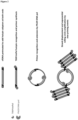
- TruePrime kits and protocols are available commercially from Expedeon AG and its affiliates. This disclosure provides a combination of existing TruePrime with the added steps of a sample pretreatment, comprising an end-repair, dA tailing, and the ligation of hairpin adaptors (see FIG. 1 ).
- these steps may be carried out by methods known in the art, including by use of the New England Biolabs NEBNext Ultra II DNA Library Prep Kit and similar products and methods, and/or for example: (a) for end repair T4 polynucleotide kinase (PNK) + T4 DNA polymerase Klenow fragment and T4 DNA polymerase large fragment are commonly used (b) for dA tailing Taq polymerase is commonly used.
- PNK polynucleotide kinase
- Klenow fragment and T4 DNA polymerase large fragment are commonly used
- b for dA tailing Taq polymerase is commonly used.
- This novel combination of methods provides an efficient process for what would otherwise be unworkable or inefficient: the amplification of small fragments of DNA by traditional TruePrime or other methods.
- the method steps may optionally be followed by the rolling circle DNA amplification method (see FIG. 2 ).
- PrimPol is an enzyme obtained from the thermophilic bacteria Thermus thermophilus. PrimPol combines two distinct and complementary activities in a single thermostable protein: primase and polymerase. Conventional polymerases require small stretches of nucleotides (primers) annealed to a template molecule to synthesize the complementary sequence. PrimPol, on the contrary, creates its own primer sequence, thereby offering fully novel applications.
- PrimPol is able to copy both DNA and RNA.
- RNA reflects what genetic information is actually expressed in a cell
- DNA refers to the general genetic information present in every cell in the body and often only reflects a predisposition of a person to develop a disease.
- the development of PrimPol will help to simplify technical aspects of DNA and RNA amplification procedures.
- PrimPol also shows a great tolerance to damaged DNA.
- DNA is subject to chemical modifications within the cells. Also during the processes necessary to purify the genetic material, and storage of forensic and clinical samples (e.g. formalin-fixed paraffin-embedded tissues) trigger such modifications. Chemical modifications have been shown to play an increasingly important role in several biological processes, such as aging, neurodegenerative diseases, and cancer. Therefore, there is great interest to develop methods for interrogating damaged DNA in the context of sequencing. Thus, an enzyme able to handle modified templates is of particular interest, since current amplification applications as well as second and third generation sequencing technologies are not optimized to use damaged samples.
- PrimPol is also suited to be used in different second and third generation sequencing technologies due to its ability to introduce a variety of substrate nucleotides (e.g. fluorescent nucleotides) into DNA and RNA template molecules.
- substrate nucleotides e.g. fluorescent nucleotides
- PrimPol has a role in multiple displacement amplification (MDA) reactions, generating primers for its subsequent use by Phi29 DNA polymerase, thus making unnecessary the use of random synthetic primers and possibly resulting in a more uniform amplification of DNA.
- MDA multiple displacement amplification
- Methods of amplifying linear, double stranded polynucleotides include attaching single-stranded hairpin adaptors to both ends of the DNA molecules to produce single stranded, covalently closed DNA molecules and amplifying the covalently closed DNA molecules by rolling circle amplification and multiple displacement amplification, e.g., primase-initiated multiple displacement amplification.
- Linear double stranded DNA for use in the amplification methods described herein can be provided from any source.
- Eukaryotic sources of DNA can include plants, animals, vertebrates, mammals, and humans.
- Microbial sources of DNA can include microbes sourced from a microbiome of an individual or from the environment.
- the linear double stranded DNA used in the amplification methods disclosed herein can be of any length.
- the linear double stranded DNA has a length of no more than 5000 nucleotides, no more than 1000 nucleotides, no more than 500 nucleotides or no more than 200 nucleotides.
- the population of linear double stranded DNA molecules to be amplified can have an average length of no more than 5000 nucleotides, no more than 1000 nucleotides, no more than 500 nucleotides, no more than 200 nucleotides, no more than 100 nucleotides, no more than 50 nucleotides, no more than 20 nucleotides, e.g., about 168 nucleotides.
- DNA molecules to be amplified can include molecules having a length between about 100 and about 220 nucleotides.
- the linear double stranded DNA can comprise fragmented chromosomal DNA. Such DNA fragments may have a length greater than 5000 nucleotides.
- Nucleic acids are typically isolated from other components by isolation methods well known in the art including, without limitation, capture on particles having DNA or RNA binding activity, such as silica particles; polyethylene glycol precipitation and SPRI (Solid Phase Reversible Immobilization) beads.
- isolation methods well known in the art including, without limitation, capture on particles having DNA or RNA binding activity, such as silica particles; polyethylene glycol precipitation and SPRI (Solid Phase Reversible Immobilization) beads.
- the linear double stranded DNA used in the methods disclosed herein can comprise cell-free DNA ("cfDNA").
- Cell-free DNA refers to DNA that is not encapsulated inside a cell.
- Cell-free DNA can be apoptotic cell-free DNA.
- FIG. 1 "Apoptotic cell-free DNA”.
- Apoptotic cfDNA refers to DNA released from dead or dying cells, e.g., through the apoptosis cell death mechanism, in which the DNA is cut between nucleosomes, producing DNA fragments of 160-170 bp, or multiples thereof, when the cut in the DNA is not produced between every nucleosome. This includes DNA released from normal cells, e.g. having a germline genome.
- ctDNA DNA released from cancer cells (e.g. malignant cells), also referred to as circulating tumor DNA or "ctDNA".
- This DNA typically carries somatic mutations associated with cancer e.g., in oncogenes or tumor suppressor genes.
- Apoptotic cfDNA also includes fetal DNA in the maternal circulation.
- Cell free DNA can be sourced from any of a number of different bodily fluids including, without limitation, blood, plasma, serum, CSF, urine, saliva, tear drops, milk, semen and synovial fluid.
- Apoptotic cfDNA typically has a size distribution with two peaks; a first mononucleosomal peak between about 110 to about 230 nucleotides, with a mode of about 168 nucleotides, and a second, minor dinucleosomal peak between about 240 to 440 nucleotides.
- Cell-free DNA molecules can be prepared from bodily fluids, such as blood, by conventional methods. Commercial kits for this purpose are available from, e.g., Thermo Fisher Scientific (Waltham, MA, USA), Active Motif (Carlsbad, CA, USA) and Qiagen (North Rhine-Westphalia, Germany). In general, cells are removed from a sample, for example by centrifugation. Silica particles, e.g. magnetic silica beads, are added to the sample from which cells have been removed. The silica particles bind the DNA. The particles are isolated from the supernatant, for example by centrifugation and/or application of magnetic force. Supernatant is removed and the particles are washed. Cell-free DNA is isolated from the particles by dilution with ethanol.
- the double stranded DNA molecules comprise fragmented genomic DNA, for example, isolated from cells or double stranded cDNA molecules produced from reverse transcription of RNA molecules, such as mRNA, rRNA or tRNA molecules.
- End-repair refers to a process of providing double stranded DNA molecules having 3' and/or 5' single strand overhangs with either sticky ends or blunt ends. End repair renders double stranded DNA molecules more suitable for attachment to polynucleotide adaptors. Attachment can be by either sticky-end ligation or blunt-end ligation. "Sticky-end ligation” refers to the ligation of two double-stranded polynucleotides, each of which has a 3' overhang complementary to the other 3' overhang.
- a sticky end can be, for example, a single nucleotide overhang, such as 3' dA and 3' dT, or a longer sticky-end, such as an overhang produced by restriction enzyme digestion.
- Bolunt-end ligation refers to the ligation of a double stranded polynucleotide to the blunt-end of another, double stranded polynucleotide.
- modification of the polynucleotide typically initially involves blunt ending the molecules. Typically, this involves using a polymerase to fill in a 5' overhang and a molecule having exonuclease activity to chew back a 3' overhang. Blunt-ending can be performed using a mixture of T4 polymerase and the DNA polymerase I klenow fragment. The klenow fragment possesses 5' - 3' polymerase activity to fill in 5' overhangs and 3' - 5' exonuclease activity to remove 3' overhangs. T4 DNA polymerase possesses a less efficient 5' ⁇ 3' polymerase activity and a more efficient 3' - 5' exonuclease activity.
- T4 polynucleotide kinase (“T4 PNK”) is used to phosphorylate the 5' strand of a molecule and dephosphorylate the 3' strand. Kits for performing blunt-ending of DNA molecules are available from a variety of commercial sources including Thermo Fisher Scientific (Waltham, MA, USA) and New England Biolabs (Ipswich, MA, USA).
- a blunt-ended polynucleotide can be dA-tailed by a process of adding a terminal 3' deoxy adenosine nucleotide to a DNA molecule. This action can be performed using Taq polymerase. ( FIG. 1 , "End-repaired cfDNA (3'-dA overhangs)".)
- Blunt-ended molecules or dA-tailed molecules can be used in the methods described herein by the attachment of single-stranded adaptors.
- Adaptors are polynucleotide molecules adapted for attachment to target molecules.
- adaptors include nucleotide sequences for priming DNA strand extension.
- the adaptor is a hairpin adaptor.
- hairpin adaptor refers to a single stranded nucleic acid molecule (e.g., DNA) that includes a second region flanked by a first and third region. The first and third regions have sufficient complementarity to hybridize with each other (e.g., 95%, 99%, or 100% complementary).
- the second region is not complementary to either the first or the third region.
- the adaptor can have a length of between 25 and 100 nucleotides long.
- the second region can be, for example, 4, 5, 6, 7, 8, 9, 10, 11, 12, 13, 14, 15, or fewer than 25 nucleotides long.
- a hairpin adaptor molecule can fold back on itself forming a stem-and-loop structure comprising a double stranded end and a single-stranded, internal segment that is not hybridized.
- Hairpin adaptors can include a 3' dA overhang, or be blunt-ended, depending on the application. See, e.g., FIG. 7 and FIG. 8 .
- Adaptors also typically include internal nucleotide sequences compatible with a DNA primase and/or primer extension.
- the hairpin adaptor can include a primase/polymerase recognition sequence, e.g., XTC, where X represents nucleotides a, T, G or C, for example, CTC, GTC or GTCC.
- the primase/polymerase recognition sequence can be located in the loop (non-complementary) portion of the adapter. Which is recognized by TthPrimPol.
- the hairpin adaptor comprises an amplification primer binding site.
- dA-tailed double-stranded polynucleotides can be attached on one or both ends to hairpin adaptors.
- the end of the adaptor is preferably compatible with the end of the double stranded polynucleotide. So, for example, a dA-tailed double-strand polynucleotide is attached to a dT tailed hairpin adaptor, or a blunt-ended double-stranded polynucleotide is attached to a blunt-ended hairpin adaptor. Attachment is typically performed with a DNA ligase, such as T4 DNA ligase.
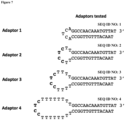
- hairpin adaptors have a sequence as depicted in FIG 7 , i.e., [SEQ ID NO:1], [SEQ ID NO:2], [SEQ ID NO:3], or [SEQ ID NO:4].
- the product of ligation between hairpin adaptors and double-stranded polynucleotides is a single-stranded, covalently closed polynucleotide. See, e.g., FIG. 1 ("Adaptor ligation"). Such a polynucleotide can also be described as a single stranded, circular polynucleotide.
- covalently closed DNA molecule refers to a DNA molecule having no free 5' or 3' end. Such molecules are also referred to as "circular DNA”. Because they have complementary internal sequences, such molecules can assume a "dumbbell" shape.
- a polynucleotide insert flanked on one or both ends by hairpin adaptors is referred to as a "adaptor-tagged polynucleotide".
- Single-stranded, covalently closed polynucleotides can be amplified by methods disclosed herein.
- amplification can be accomplished without the use of oligonucleotide primer molecules by using hairpin adaptors comprising one or more primase recognition sites together with a primase having DNA priming activity on single stranded DNA, such as TthPrimPol, and a DNA polymerase having strand displacement activity, such as Phi29 and deoxyribonucleotide triphosphates.
- hairpin adaptors comprising one or more primase recognition sites together with a primase having DNA priming activity on single stranded DNA, such as TthPrimPol, and a DNA polymerase having strand displacement activity, such as Phi29 and deoxyribonucleotide triphosphates.
- the term "priming” refers to the generation of an oligonucleotide primer on a polynucleotide template.
- the primase/polymerase can be a DNA-directed primase/polymerase, such as a PrimPol enzyme. Unlike most primases, PrimPol is uniquely capable of starting DNA chains with dNTPs.
- PrimPol enzymes include, among others, Thermus thermophilus primase/polymerase (“TthPrimPol”) and human primase/polymerase (“hsPrimPol”).
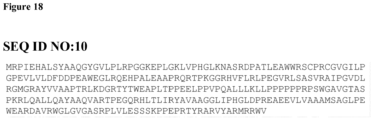
- thermophilus HB27 primase/polymerase is described, for example, in WO 2014/140309, published September 18, 2014 ("Methods for amplification and sequencing using thermostable TthPrimPol"). It has an amino acid sequence shown in FIG. 18 [SEQ ID NO: 10]. It bears Gene ID: NC_005835 in the NCBI Entrez database, protein WP_011173100.1 TthPrimPol can be obtained commercially in kits from Expedeon (Cambridge, UK).
- the PrimPol can be a relative of any PrimPol described herein including the following: An allelic variant (a naturally occurring variation of a gene), an artificial variant (a gene or protein comprising one or more genetic modifications to a naturally occurring gene or protein while retaining natural function), a homolog (a naturally occurring gene from another genus or species than the one defined, or a distinct gene in the same strain or species that encodes for a protein having nearly identical folding and function); an ortholog (a homolog that occurs in another genus or species from the one discussed) or a paralog (a homolog that occurs in the same strain or species as the one discussed, e.g., as a result of gene duplication).
- a PrimPol enzyme can have at least 80%, 85%, 90%, 95%, 98% or 99% amino acid sequence homology with the protein of SEQ ID NO: 10.
- Amplification methods can employ a DNA polymerase with strand displacement activity, e.g., a polymerase with strong binding to single-stranded DNA e.g., in preference to double-stranded DNA.
- Strand displacement activity can be useful in displacing hybridized strands of a DNA molecule while extending a primer position, for example, in the loop area of a hairpin structure.
- Phi29 DNA polymerase can be obtained commercially from, for example, New England Biolabs (Ipswich, MA, USA), ThermoFisher Scientific (Waltham, MA, USA and Expedeon (Cambridge, UK). Phi29 polymerase can generate DNA fragments up to 100 kb. The enzyme has a 3' ⁇ 5' exonuclease proofreading activity and provides up to 1000-fold higher fidelity compared to Taq DNA polymerase-based methods. Phi29 polymerase can function on DNA comprising secondary structures such as hairpin loops.
- the DNA polymerase can be Bacillus steatothermophilus (Bst) polymerase.
- Primer creation and primer extension can be accomplished by providing primase/polymerase enzymes and DNA polymerases with deoxyribonucleotide substrates e.g., deoxyribonucleotide triphosphates. Typically, these include the four standard bases, A, T, G and C. However, in certain embodiments non-natural nucleotides, such as inosine can be included. In certain embodiments nucleotides may bear a label for detection or capture of polynucleotides into which they are incorporated.
- Multiple displacement amplification is an isothermal, non-PCR-based DNA amplification method in which primer extension from a template molecule produces molecules which themselves are primed and copied by primer extension to produce a branch-like structure. Branches are displaced from each other as primers are extended from one DNA molecule template into the branch area.
- MDA employs random hexamers as primers to prime amplification at multiple sites on an original template and amplified copies thereof. Multiple strand amplification is further described in, for example, WO2011/047307A1, published April 21, 2011 (“Multiple Displacement Amplification"). Polymerization that extends primers at multiple priming sites.
- priming is accomplished with a primase/polymerase, such as TthPrimPol.
- priming includes the provision of deoxyribonucleotide triphosphates as a reagent.
- the deoxyribonucleotides are unmodified.
- deoxyribonucleotides can be modified by attachments to a label, for example, a fluorescent molecule.
- label refers to a chemical moiety attached to a molecule, such as a nucleic acid molecule. Detectable labels include, for example, fluorescent labels, luminescent labels, enzymatic labels, colorimetric labels such as colloidal gold or colored glass or plastic beads and radioactive labels.
- a single stranded, covalently closed nucleic acid molecule template (“cfDNA pretreated to add hairpin adaptors at both ends") is provided.
- a primase/polymerase such as TthPrimPol, is provided and recognizes recognition sites in the hairpin adapter and primes polymerization by the synthesis of primers.
- TthPrimPol hairpin recognition and primer synthesis A DNA polymerase with preference for binding single-stranded nucleic acid molecules and strand displacement activity amplifies the template through a combination of rolling circle amplification and multiple displacement amplification.
- Rolling circle amplification provides a concatenated molecule that folds back on itself forming double-stranded segments based on the complementary sequences. These folds also include the adapter sequences comprising primase/polymerase recognition sites. The primase/polymerase synthesizes primers on the concatenated molecule which are, in turn, extended by the DNA polymerase. The result is exponential amplification of the original template molecule, typically in branched fashion. ("Stranded displacement and exponential rolling circle amplification by new priming events".)
- amplification is primed with random sequence primers.
- random sequence primers can be hexamers comprising a degenerate set of sequences. Amplification can continue by multiple displacement amplification.
- DOP-PCR uses a single primer for PCR (instead of a forward and reverse primer).
- This primer is usually an oligomer having about 22 bases with a six-nucleotide degenerate region in the center, e.g. 5'CGACTCGAGNNNNNNATGTGG 3' [SEQ ID NO: 9].
- This degenerate region is a random sequence composed of any of the four DNA nucleotides.
- the first five steps of the DOP-PCR procedure are a non-specific amplification step.
- the degenerate primer along with low annealing temperatures will cause random annealing at locations across the entire genome. During PCR, extension will occur from these primers and create long fragments.
- LA-PCR linker-adaptor PCR
- amplification of single-stranded, covalently closed DNA molecules is performed by using any combination of a thermostable DNA polymerase (e.g., Taq polymerase) and a highly processive strand-displacement DNA polymerase (e.g., Phi29 polymerase or Bacillus stearothermophilus (Bst) polymerase).
- a thermostable DNA polymerase e.g., Taq polymerase
- a highly processive strand-displacement DNA polymerase e.g., Phi29 polymerase or Bacillus stearothermophilus (Bst) polymerase.
- MALBAC Multiple Annealing and Looping Based Amplification Cycles
- MALBAC is a non-exponential whole genome amplification method. Primers used in MALBAC allow amplicons to have complementary ends which form loops, inhibiting exponential copying.
- high throughput sequencing refers to the simultaneous or near simultaneous sequencing of thousands of nucleic acid molecules. High throughput sequencing is sometimes referred to as “next generation sequencing” or “massively parallel sequencing”. Platforms for high throughput sequencing include, without limitation, massively parallel signature sequencing (MPSS), Polony sequencing, 454 pyrosequencing, Illumina (Solexa) sequencing, SOLiD sequencing, Ion Torrent semiconductor sequencing, DNA nanoball sequencing, Heliscope single molecule sequencing, single molecule real time (SMRT) sequencing (PacBio), and nanopore DNA sequencing (e.g., Oxford Nanopore).
- MPSS massively parallel signature sequencing
- Polony sequencing Polony sequencing
- 454 pyrosequencing Illumina (Solexa) sequencing
- SOLiD sequencing sequencing
- Ion Torrent semiconductor sequencing DNA nanoball sequencing
- Heliscope single molecule sequencing single molecule real time sequencing
- SMRT single molecule real time sequencing
- nanopore DNA sequencing e.g., Oxford Nanopore
- Methods described herein can be used for, without limitation, whole genome sequencing, exome sequencing and amplicon sequencing.
- apoptotic cfDNA comprises sequences from the entire genome
- the amplification product of methods described herein represent whole genome amplification.
- amplified molecules themselves can be subject to amplification of specific amplicons.
- Sequence capture using baits directed to gene sequences in the genome can be used to isolate amplified molecules representing the exome.
- By reverse transcribing mRNA into double stranded cDNA an amplified transcriptome can be produced for sequencing.
- DNA amplified by the methods disclosed herein has properties of double-stranded DNA. This is due, at least in part, to the complementarity within strands which fold back on themselves. Accordingly, amplified DNA can be prepared for sequencing as one might native double-stranded DNA. Library preparation methods depend on both the sequencing platform and the sequencing approach. For example, the sequencing platform may be adapted for short reads, such as Illumina or Ion Torrent, or for long reads, such as PacBio or Oxford Nanopore. Sequencing approaches include targeted, whole exome or whole genome sequencing.
- the libraries are prepared using kits that include the adaptors suitable for the sequencing to occur.
- long-read whole genome sequencing e.g., PacBio and Oxford Nanopore
- PCR is used to amplify certain regions of interest, that will be the only ones sequenced afterwards.
- kits for use in performing the methods disclosed herein are also provided herein.
- kit refers to a collection of items intended for use together.
- kits disclosed herein include 2, 3, 4, 5, 6, 7, elements selected from: (1) a PrimPol enzyme (e.g., TthPrimPol); (2) a DNA polymerase (e.g., Phi29); (3) a single strand hairpin adaptor; (4) one or more enzymes for dsDNA end repair (e.g., T4 DNA polymerase, klenow fragment and/or Taq polymerase); (5) one or more enzymes for DNA ligation; (6) dNTPs; (7) an enhancer, e.g. to increase DNA ligation efficiency, e.g., polyethylene glycol; (8) reaction buffer and (9) a buffer for use with any of the aforementioned elements.
- the kits can comprise containers to hold these reagents for.
- Kits can include containers to hold reagents. Containers, themselves, can be placed into a shipping container. The container can be transmitted by hand delivery or by a common carrier, such as a national postal system or a delivery service such as FedEx. Kits also can contain a container for shipping collected blood to a central facility, such as a box or a bag. Kits can also typically include instructions for use as well as and software for data analysis and interpretation.
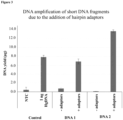
- Example 1 Hairpin addition at both DNA ends according to the disclosure allows the efficient amplification of short DNA molecules by TruePrime multiple displacement amplification
- Shown in FIG. 3 is the amplification of short DNA molecules (200 bp) obtained by PCR amplification.
- the end-repair and dA-tailing reaction, and the addition of the hairpin adaptors enables the efficient amplification of the short DNA input by TruePrime.
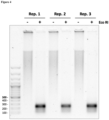
- DNA 1 of a single restriction recognition site for EcoRI enzyme allowed us to obtain single units of the amplified material (see FIG. 4 ), demonstrating the amplification mechanism illustrated in FIG. 2 .
- Example 2 TruePrime rolling circle amplification shows more specific amplification of the target molecule than MDA methods based on random synthetic primers
- Shown in FIG. 5 is the amplification of short DNA molecules (200 bp) obtained by PCR amplification and subjected to the procedure of the disclosure: end-repair, dA-tailing, hairpin-adaptor ligation and rolling circle amplification.
- the rolling circle amplification can be carried out either with TthPrimPol (TruePrime) or random synthetic primers (RPs) to trigger the amplification, using two independently- prepared DNA samples as substrate (Prep 1 and Prep 2).
- TthPrimPol TruePrime
- RPs random synthetic primers
- Example 3 Hairpin addition at both DNA ends according to the disclosure allows the efficient amplification of DNA molecules from 50 bp up to 1250 bp by TruePrime multiple displacement amplification
- Shown in FIG. 6 is the amplification of DNA molecules ranging from 50 bp up to 1250 bp (50, 100, 150, 200, 400, 500, 600, 700, 800 and 1250 bp) obtained by PCR amplification.
- the end-repair and dA-tailing reaction, and the addition of the hairpin adaptors enables the efficient amplification of the different DNA molecules by TruePrime.
- Example 4 TthPrimPol DNA primase efficiency depending on the hairpin sequence of the adaptor.
- FIG. 7 Shown in FIG. 7 are the different hairpin adaptors tested. All the adaptors have self-complementary sequences that allow auto-hybridization of the molecules forming a hairpin. The hairpin sequence and length differ in each case.
- Adaptor 1 shows the highest activity, as can be deduced from the amount of DNA primers generated, as well as the almost complete absence of the unincorporated labelled nucleotide (G*), which highlights the efficiency of the DNA primase activity using this molecule.
- G* unincorporated labelled nucleotide
- the other three adaptors that contain a more accessible TthPrimPol recognition sequence (3' CTCC 5') 46 show less activity, especially in the case of adaptor 2.
- Adaptor 1 shows the highest activity and the shortest sequence, so it becomes the best candidate to be used in the cfDNA amplification workflow.
- Example 5 Present method results in a very efficient amplification of cell-free DNA samples from cancer patients.
- Example 6 Present method results in a very sensitive amplification of cell-free DNA samples from cancer patients.
- FIG. 10 Shown in FIG. 10 are the excellent sensitivity and efficiency of the disclosure workflow, which achieves DNA amplification yields in the range of micrograms starting from picograms of cell-free DNA. It is remarkable the proportionality between the input amount and the amplification yield observed.
- Example 7 Short-read (Illumina) and long-read (Oxford Nanopore MiniON) whole genome sequencing confirms the feasibility and efficiency of the method workflow for the amplification of apoptotic cell-free DNA.
- sequences from the Oxford Nanopore MinION run were analyzed and tested for the occurrence of the hairpin adaptor sequence [SEQ ID NO:1]. Although the sequencing quality was not high, the sequence of the hairpin adaptor [SEQ ID NO:1] could be found in almost every read and separated sequence fragments with a high similarity (proven by BLAST of those fragments, which had identical genetic region as hit).
- FIG. 11 Shown in FIG. 11 is the high correlation of fragments separated by the hairpin adaptor sequence [SEQ ID NO:1] in respect to the length of the MiniON read.
- Short-read (Illumina) whole genome sequencing 1000 ng of each amplified cell-free DNA were sheared with Covaris to obtain 500 bp fragments. Sheared DNA was purified using AMPure beads and the library was prepared using the NxSeq AmpFREE Low DNA Library kit (Lucigen). Dual indices were added by PCR and the samples were sequenced in an Illumina HiSeq 2500 using paired-end reads (2 x 150 bp).
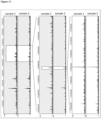
- FIG. 12 Shown in FIG. 12 are the coverage and copy number variant (CNV) detection results.
- the coverage of two samples from the same patient looks nearly identical and highly even, as does the CNV plot, in which except for single parts both samples have an identical composition of ploidies.
- the reads were analyzed by CLC Genomics Workbench, combined into one read and then separated again at the position of the hairpin. The hairpin sequence could be found in almost all combined reads.
- the again separated and artificially created new paired reads were aligned to the human genome and analyzed for the coverage statistics, reproducibility and CNV content.
- FIG. 13 Shown in FIG. 13 is the coverage plot from the two samples from one patient in different resolutions. It is remarkable the almost identical amplification and results from the post-sequencing process.
- Example 8 Amplicon sequencing confirms the feasibility and efficiency of the method workflow for the amplification of apoptotic cell-free DNA.
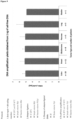
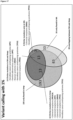
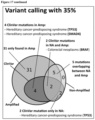
- Variant calling was carried out for single nucleotide variants, multiple nucleotide variants, insertions and deletions at different frequencies, from 35% to 1%. Shown in FIG. 14 are the number of annotated and non-annotated variants detected in each patient comparing the amplified and non-amplified cfDNA samples in each case.
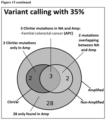
- FIG. 15 Shown in FIG. 15 are the results obtained for the first patient and the higher number of clinically relevant variants in the amplified sample in comparison to the non-amplified cfDNA sample from the same patient at two different allele frequencies (1% and 35%).
- 1% frequency 30 clinically relevant (ClinVar) mutations are detected in the amplified sample, while only 14 in the non-amplified one. From those 14, 10 are also detected in the amplified sample.
- 35% frequency 3 ClinVar mutations are detected in the non-amplified sample. Those 3 and 2 additional ClinVar mutations are found in the amplified material.
- FIG. 16 Shown in FIG. 16 are the results obtained for the second patient and the higher number of clinically relevant variants in the amplified sample in comparison to the non-amplified cfDNA sample from the same patient at two different allele frequencies (1% and 35%).
- 1% frequency 31 ClinVar mutations are detected in the amplified sample, while only 13 in the non-amplified one. From those 13, 10 are also covered in the amplified sample.
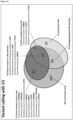
- FIG. 17 Shown in FIG. 17 are the results obtained for the third patient and the higher number of clinically relevant variants in the amplified sample in comparison to the non-amplified cfDNA sample from the same patient at two different allele frequencies (1% and 35%).
- 1% frequency 26 ClinVar mutations are detected in the amplified sample, while only 16 in the non-amplified one. From those 16, 13 are also covered in the amplified sample.
- an element includes a combination of two or more elements, notwithstanding use of other terms and phrases for one or more elements, such as “one or more.”
- the term “or” is, unless indicated otherwise, non-exclusive, i.e., encompassing both "and” and “or.”
- the term “any of” between a modifier and a sequence means that the modifier modifies each member of the sequence. So, for example, the phrase “at least any of 1, 2 or 3" means “at least 1, at least 2 or at least 3".
Landscapes
- Chemical & Material Sciences (AREA)
- Life Sciences & Earth Sciences (AREA)
- Organic Chemistry (AREA)
- Engineering & Computer Science (AREA)
- Zoology (AREA)
- Wood Science & Technology (AREA)
- Proteomics, Peptides & Aminoacids (AREA)
- Health & Medical Sciences (AREA)
- Biophysics (AREA)
- Chemical Kinetics & Catalysis (AREA)
- Immunology (AREA)
- Microbiology (AREA)
- Molecular Biology (AREA)
- Analytical Chemistry (AREA)
- Physics & Mathematics (AREA)
- Biotechnology (AREA)
- Biochemistry (AREA)
- Bioinformatics & Cheminformatics (AREA)
- General Engineering & Computer Science (AREA)
- General Health & Medical Sciences (AREA)
- Genetics & Genomics (AREA)
- Measuring Or Testing Involving Enzymes Or Micro-Organisms (AREA)
- Preparation Of Compounds By Using Micro-Organisms (AREA)
Applications Claiming Priority (3)
| Application Number | Priority Date | Filing Date | Title |
|---|---|---|---|
| US201762589074P | 2017-11-21 | 2017-11-21 | |
| EP18811727.9A EP3714064B8 (de) | 2017-11-21 | 2018-11-14 | Verfahren und kits zur amplifikation von doppelsträngiger dna |
| PCT/EP2018/081219 WO2019101596A1 (en) | 2017-11-21 | 2018-11-14 | Methods and kits for amplification of double stranded dna |
Related Parent Applications (2)
| Application Number | Title | Priority Date | Filing Date |
|---|---|---|---|
| EP18811727.9A Division EP3714064B8 (de) | 2017-11-21 | 2018-11-14 | Verfahren und kits zur amplifikation von doppelsträngiger dna |
| EP18811727.9A Division-Into EP3714064B8 (de) | 2017-11-21 | 2018-11-14 | Verfahren und kits zur amplifikation von doppelsträngiger dna |
Publications (2)
| Publication Number | Publication Date |
|---|---|
| EP4471160A2 true EP4471160A2 (de) | 2024-12-04 |
| EP4471160A3 EP4471160A3 (de) | 2025-03-05 |
Family
ID=64564819
Family Applications (2)
| Application Number | Title | Priority Date | Filing Date |
|---|---|---|---|
| EP18811727.9A Active EP3714064B8 (de) | 2017-11-21 | 2018-11-14 | Verfahren und kits zur amplifikation von doppelsträngiger dna |
| EP24193022.1A Pending EP4471160A3 (de) | 2017-11-21 | 2018-11-14 | Verfahren und kits zur amplifikation von doppelsträngiger dna |
Family Applications Before (1)
| Application Number | Title | Priority Date | Filing Date |
|---|---|---|---|
| EP18811727.9A Active EP3714064B8 (de) | 2017-11-21 | 2018-11-14 | Verfahren und kits zur amplifikation von doppelsträngiger dna |
Country Status (8)
| Country | Link |
|---|---|
| US (2) | US11920189B2 (de) |
| EP (2) | EP3714064B8 (de) |
| JP (1) | JP7026248B2 (de) |
| CN (1) | CN111712580B (de) |
| AU (1) | AU2018371063C1 (de) |
| ES (1) | ES2993028T3 (de) |
| SG (1) | SG11202004534RA (de) |
| WO (1) | WO2019101596A1 (de) |
Families Citing this family (11)
| Publication number | Priority date | Publication date | Assignee | Title |
|---|---|---|---|---|
| CN109750092B (zh) * | 2017-11-03 | 2022-12-06 | 北京贝瑞和康生物技术有限公司 | 一种靶向富集高gc含量目标dna的方法和试剂盒 |
| CN111712580B (zh) | 2017-11-21 | 2024-06-18 | 4贝思生物有限公司 | 用于扩增双链dna的方法和试剂盒 |
| EP3740571A4 (de) | 2018-01-19 | 2021-12-08 | Generation Bio Co. | Aus zellfreier synthese gewonnene geschlossenendige dna-vektoren und verfahren zur gewinnung von cedna vektoren |
| WO2020263978A1 (en) * | 2019-06-25 | 2020-12-30 | Accuragen Holdings Limited | Methods and systems for disease detection |
| JP7771066B2 (ja) * | 2020-01-31 | 2025-11-17 | ティリス セラピューティクス,エセ.エレ. | 閉じた直鎖dnaを作製するためのプロセス |
| AU2021310008A1 (en) * | 2020-07-13 | 2023-01-19 | Grail, Inc. | Nuclease-associated end signature analysis for cell-free nucleic acids |
| CN114507708A (zh) * | 2020-11-16 | 2022-05-17 | 唐纳德·李 | 一种制备长分子测序dna的方法 |
| EP4293101A1 (de) | 2022-06-14 | 2023-12-20 | Asklepios Biopharmaceutical, Inc. | Reaktor kontrollierter temperatur und verfahren zur verwendung davon |
| EP4299731A1 (de) | 2022-06-29 | 2024-01-03 | ASOCIACIÓN CENTRO DE INVESTIGACIÓN COOPERATIVA EN NANOCIENCIAS "CIC nanoGUNE" | Synthetische primaspe-polymerase und deren verwendungen |
| WO2024175089A1 (en) * | 2023-02-23 | 2024-08-29 | Centre For Novostics | Single-molecule strand-specific end modalities |
| WO2025238067A1 (en) | 2024-05-15 | 2025-11-20 | Ascend Advanced Therapies Gmbh | Novel vector system for aav production |
Citations (2)
| Publication number | Priority date | Publication date | Assignee | Title |
|---|---|---|---|---|
| WO2011047307A1 (en) | 2009-10-15 | 2011-04-21 | Ibis Biosciences, Inc. | Multiple displacement amplification |
| WO2014140309A1 (en) | 2013-03-15 | 2014-09-18 | Sygnis Biotech S.L.U. | Methods for amplification and sequencing using thermostable tthprimpol |
Family Cites Families (17)
| Publication number | Priority date | Publication date | Assignee | Title |
|---|---|---|---|---|
| US6235502B1 (en) * | 1998-09-18 | 2001-05-22 | Molecular Staging Inc. | Methods for selectively isolating DNA using rolling circle amplification |
| CA2360342A1 (en) | 1999-12-02 | 2001-06-07 | Molecular Staging Inc. | Generation of single-strand circular dna from linear self-annealing segments |
| CN101415838A (zh) * | 2003-09-26 | 2009-04-22 | 首科安普有限公司 | 用滚环扩增法扩增多核苷酸 |
| US7368265B2 (en) * | 2006-01-23 | 2008-05-06 | Compass Genetics, Llc | Selective genome amplification |
| KR101414713B1 (ko) * | 2007-10-11 | 2014-07-03 | 삼성전자주식회사 | 리가제 및 엔도뉴클레아제의 존재하에서 롤링서클 증폭에의하여 표적 핵산을 증폭하는 방법 |
| US9080211B2 (en) | 2008-10-24 | 2015-07-14 | Epicentre Technologies Corporation | Transposon end compositions and methods for modifying nucleic acids |
| US8486630B2 (en) | 2008-11-07 | 2013-07-16 | Industrial Technology Research Institute | Methods for accurate sequence data and modified base position determination |
| AU2012304537B2 (en) | 2011-09-06 | 2015-08-20 | Gen-Probe Incorporated | Closed nucleic acid structures |
| EP2753715A4 (de) * | 2011-09-09 | 2015-05-20 | Univ Leland Stanford Junior | Verfahren zur gewinnung einer sequenz |
| US9528107B2 (en) * | 2012-01-31 | 2016-12-27 | Pacific Biosciences Of California, Inc. | Compositions and methods for selection of nucleic acids |
| US9938568B2 (en) * | 2013-07-26 | 2018-04-10 | General Electric Company | Ligase-assisted nucleic acid circularization and amplification |
| US20170067097A1 (en) * | 2014-04-11 | 2017-03-09 | Redvault Biosciences, Lp | Systems and methods for clonal replication and amplification of nucleic acid molecules for genomic and therapeutic applications |
| WO2016195963A1 (en) * | 2015-05-29 | 2016-12-08 | Tsavachidou Dimitra | Methods for constructing consecutively connected copies of nucleic acid molecules |
| WO2017087823A1 (en) | 2015-11-18 | 2017-05-26 | Mir Kalim U | Super-resolution sequencing |
| WO2017162754A1 (en) * | 2016-03-22 | 2017-09-28 | Vib Vzw | Means and methods for amplifying nucleotide sequences |
| EP4253565A3 (de) * | 2017-01-24 | 2024-07-03 | Vastogen, Inc. | Verfahren zur konstruktion von kopien von nukleinsäuremolekülen |
| CN111712580B (zh) | 2017-11-21 | 2024-06-18 | 4贝思生物有限公司 | 用于扩增双链dna的方法和试剂盒 |
-
2018
- 2018-11-14 CN CN201880087158.3A patent/CN111712580B/zh active Active
- 2018-11-14 ES ES18811727T patent/ES2993028T3/es active Active
- 2018-11-14 SG SG11202004534RA patent/SG11202004534RA/en unknown
- 2018-11-14 AU AU2018371063A patent/AU2018371063C1/en active Active
- 2018-11-14 WO PCT/EP2018/081219 patent/WO2019101596A1/en not_active Ceased
- 2018-11-14 US US16/763,921 patent/US11920189B2/en active Active
- 2018-11-14 EP EP18811727.9A patent/EP3714064B8/de active Active
- 2018-11-14 JP JP2020545440A patent/JP7026248B2/ja active Active
- 2018-11-14 EP EP24193022.1A patent/EP4471160A3/de active Pending
-
2023
- 2023-12-11 US US18/536,209 patent/US20240336963A1/en active Pending
Patent Citations (2)
| Publication number | Priority date | Publication date | Assignee | Title |
|---|---|---|---|---|
| WO2011047307A1 (en) | 2009-10-15 | 2011-04-21 | Ibis Biosciences, Inc. | Multiple displacement amplification |
| WO2014140309A1 (en) | 2013-03-15 | 2014-09-18 | Sygnis Biotech S.L.U. | Methods for amplification and sequencing using thermostable tthprimpol |
Non-Patent Citations (53)
| Title |
|---|
| "Gene", Database accession no. NC_005835 |
| AARTHY RMANI SVELUSAMI SSUNDARSINGH SRAJKUMAR T: "Role of Circulating Cell-free DNA in Cancers", MOLDIAGN THER, vol. 19, no. 6, 2015, pages 339 - 350 |
| ADZHUBEI LASCHMIDT SPESHKIN LRAMENSKY VEGERASIMOVA ABORK P ET AL.: "A method and server for predicting damaging missense mutations", NAT METHODS, vol. 7, no. 4, 2010, pages 248 - 249, XP055054836, DOI: 10.1038/nmeth0410-248 |
| BAMFORD SDAWSON EFORBES SCLEMENTS JPETTETT RDOGAN A ET AL.: "The COSMIC (Catalogue of Somatic Mutations in Cancer) database and website", BR J CANCER, vol. 91, no. 2, 2004, pages 355 - 358, XP002572580, DOI: 10.1038/SJ.BJC.6601894 |
| BECK JOELLERICH MSCHULZ USCHAUERTE VREINHARD LFUCHS U ET AL.: "Donor-Derived Cell-free DNA Is a Novel Universal Biomarker for Allograft Rejection in Solid Organ Transplantation", TRANSPLANT PROC, vol. 47, no. 8, 2015, pages 2400 - 2403, XP029318585, DOI: 10.1016/j.transproceed.2015.08.035 |
| BELIC JKOCH MULZ PAUER MGERHALTER TMOHAN S ET AL.: "Rapid Identification of Plasma DNA Samples with Increased ctDNA Levels by a Modified FAST-SeqS Approach", CLIN CHEM, vol. 61, no. 6, 2015, pages 838 - 849 |
| BETTEGOWDA CSAUSEN MLEARY RJKINDE IWANG YAGRAWAL N ET AL.: "Detection of circulating tumor DNA in early- and late-stage human malignancies", SCI TRANSLMED, vol. 6, no. 224, 2014, pages 224ra224, XP055341350, DOI: 10.1126/scitranslmed.3007094 |
| BIANCHI DWPARKER RLWENTWORTH JMADANKUMAR RSAFFER CDAS AF ET AL.: "DNA sequencing versus standard prenatal aneuploidy screening", N ENGL J MED, vol. 370, no. 9, 2014, pages 799 - 808 |
| BREITBACH STUG SHELMIG SZAHN DKUBIAK TMICHAL M ET AL.: "Direct quantification of cell-free, circulating DNA from unpurified plasma", PLOS ONE, vol. 9, no. 3, 2014, pages e87838 |
| BUTLER TMJOHNSON-CAMACHO KPETO MWANG NJMACEY TAKORKOLA JE ET AL.: "Exome Sequencing of Cell-free DNA from Metastatic Cancer Patients Identifies Clinically Actionable Mutations Distinct from Primary Disease", PLOS ONE, vol. 10, no. 8, 2015, XP055449812, DOI: 10.1371/journal.pone.0136407 |
| CROWLEY EDI NICOLANTONIO FLOUPAKIS FBARDELLI A: "Liquid biopsy: monitoring cancer-genetics in the blood", NAT REV CLIN ONCOL, vol. 10, no. 8, 2013, pages 472 - 484, XP055494262, DOI: 10.1038/nrclinonc.2013.110 |
| CUCKLE HBENN PPERGAMENT E: "Cell-free DNA screening for fetal aneuploidy as a clinical service", CLIN BIOCHEM, vol. 48, no. 15, 2015, pages 932 - 941, XP029291494, DOI: 10.1016/j.clinbiochem.2015.02.011 |
| DAWSON SJTSUI DWMURTAZA MBIGGS HRUEDA OMCHIN SF ET AL.: "Analysis of circulating tumor DNA to monitor metastatic breast cancer", N ENGL J MED, vol. 368, no. 13, 2013, pages 1199 - 1209, XP055494258, DOI: 10.1056/NEJMoa1213261 |
| DE MATTOS-ARRUDA LWEIGELT BCORTES JWON HHNG CKNUCIFORO P ET AL.: "Capturing intra-tumor genetic heterogeneity by de novo mutation profiling of circulating cell-free tumor DNA: a proof- of-principle", ANN ONCOL, vol. 25, no. 9, 2014, pages 1729 - 1735, XP055478582, DOI: 10.1093/annonc/mdu239 |
| DE VLAMINCK IMARTIN LKERTESZ MPATEL KKOWARSKY MSTREHL C ET AL.: "Noninvasive monitoring of infection and rejection after lung transplantation", PROC NATL ACAD SCI U S |
| DE VLAMINCK IVALANTINE HASNYDER TMSTREHL CCOHEN GLUIKART H ET AL.: "Circulating cell-free DNA enables noninvasive diagnosis of heart transplant rejection", SCI TRANSL MED, vol. 6, no. 241, 2014, XP055501377, DOI: 10.1126/scitranslmed.3007803 |
| DIAZ LA, JR.WILLIAMS RTWU JKINDE IHECHT JRBERLIN J ET AL.: "The molecular evolution of acquired resistance to targeted EGFR blockade in colorectal cancers", NATURE, vol. 486, no. 7404, 2012, pages 537 - 540 |
| DIEHL FLI MHE YKINZLER KWVOGELSTEIN BDRESSMAN D: "BEAMing: single-molecule PCR on microparticles in water-in-oil emulsions", NAT METHODS, vol. 3, no. 7, 2006, pages 551 - 559, XP002510523, DOI: 10.1038/NMETH898 |
| DIEHL FSCHMIDT KCHOTI MAROMANS KGOODMAN SLI M ET AL.: "Circulating mutant DNA to assess tumor dynamics", NAT MED, vol. 14, no. 9, 2008, pages 985 - 990, XP002666722, DOI: 10.1038/NM.1789 |
| DRESSMAN DYAN HTRAVERSO GKINZLER KWVOGELSTEIN B.: "Transforming single DNA molecules into fluorescent magnetic particles for detection and enumeration of genetic variations", PROC NATL ACAD SCI U S A, vol. 100, no. 15, 2003, pages 8817 - 8822, XP055560058, DOI: 10.1073/pnas.1133470100 |
| FORBES SABEARE DGUNASEKARAN PLEUNG KBINDAL NBOUTSELAKIS H ET AL.: "COSMIC: exploring the world's knowledge of somatic mutations in human cancer", NUCLEIC ACIDS RES, vol. 43, 2015, pages D805 - 811, XP055386484, DOI: 10.1093/nar/gku1075 |
| FORSHEW TMURTAZA MPARKINSON CGALE DTSUI DWKAPER F ET AL.: "Noninvasive identification and monitoring of cancer mutations by targeted deep sequencing of plasma DNA", SCI TRANSL MED, vol. 4, no. 136, 2012 |
| GIELIS EMLEDEGANCK KJDE WINTER BYDEL FAVERO JBOSMANS JLCLAAS FH ET AL.: "Cell-free DNA: An Upcoming Biomarker in Transplantation", AM J TRANSPLANT, vol. 15, no. 10, 2015, pages 2541 - 2551 |
| JIA SZOCCO DSAMUELS MLCHOU MFCHAMMAS RSKOG J ET AL.: "Emerging technologies in extracellular vesicle-based molecular diagnostics", EXPERT REV MOL DIAGN, vol. 14, no. 3, 2014, pages 307 - 321 |
| KANDOTH CMCLELLAN MDVANDIN FYE KNIU BLU C ET AL.: "Mutational landscape and significance across 12 major cancer types", NATURE, vol. 502, no. 7471, 2013, pages 333 - 339, XP055614322, DOI: 10.1038/nature12634 |
| KINDE IPAPADOPOULOS NKINZLER KWVOGELSTEIN B.: "FAST-SeqS: a simple and efficient method for the detection of aneuploidy by massively parallel sequencing", PLOS ONE, vol. 7, no. 7, 2012, pages e41162, XP055085154, DOI: 10.1371/journal.pone.0041162 |
| KUMAR PHENIKOFF SNG PC: "Predicting the effects of coding non-synonymous variants on protein function using the SIFT algorithm", NAT PROTOC, vol. 4, no. 7, 2009, pages 1073 - 1081, XP055032238, DOI: 10.1038/nprot.2009.86 |
| LEBOFSKY RDECRAENE CBERNARD VKAMAL MBLIN ALEROY Q ET AL.: "Circulating tumor DNA as a non-invasive substitute to metastasis biopsy for tumor genotyping and personalized medicine in a prospective trial across all tumor types", MOL ONCOL, vol. 9, no. 4, 2015, pages 783 - 790, XP029125024, DOI: 10.1016/j.molonc.2014.12.003 |
| LI MCHEN WDPAPADOPOULOS NGOODMAN SNBJERREGAARD NCLAURBERG S ET AL.: "Sensitive digital quantification of DNA methylation in clinical samples", NAT, vol. 27, no. 9, 2009, pages 858 - 863, XP055034577, DOI: 10.1038/nbt.1559 |
| LI MDIEHL FDRESSMAN DVOGELSTEIN BKINZLER KW: "BEAMing up for detection and quantification of rare sequence variants", NAT METHODS, vol. 3, no. 2, 2006, pages 95 - 97, XP008126872, DOI: 10.1038/nmeth850 |
| LIPPI GSANCHIS-GOMAR FCERVELLIN G: "Cell-free DNA for diagnosing myocardial infarction: not ready for prime time", CLIN CHEM LAB MED, 2015 |
| MURTAZA MDAWSON SJTSUI DWGALE DFORSHEW TPISKORZ AM ET AL.: "Non-invasive analysis of acquired resistance to cancer therapy by sequencing of plasma DNA", NATURE, vol. 497, no. 7447, 2013, pages 108 - 112, XP055403638, DOI: 10.1038/nature12065 |
| NEWMAN AMBRATMAN SVTO JWYNNE JFECLOV NCMODLIN LA ET AL.: "An ultrasensitive method for quantitating circulating tumor DNA with broad patient coverage", NAT MED, vol. 20, no. 5, 2014, pages 548 - 554, XP055580741, DOI: 10.1038/nm.3519 |
| NG PCHENIKOFF S: "Predicting deleterious amino acid substitutions", GENOME RES, vol. 11, no. 5, 2001, pages 863 - 874 |
| NG PCHENIKOFF S: "SIFT: Predicting amino acid changes that affect protein function", NUCLEIC ACIDS RES, vol. 31, no. 13, 2003, pages 3812 - 3814 |
| NORTON MEJACOBSSON BSWAMY GKLAURENT LCRANZINI ACBRAR H ET AL.: "Cell-free DNA analysis for noninvasive examination of trisomy", N ENGL J MED, vol. 372, no. 17, 2015, pages 1589 - 1597 |
| PICHER AJBUDEUS BWAFZIG OKRUGER CGARCÍA-GÓMEZ SMARTÍNEZ-JIMÉNEZ MIDIAZ-TALAVERA AWEBER DBLANCO LSCHNEIDER A: "TruePrime is a novel method for whole-genome amplification from single cells based on TthPrimpol", NAT COMM, vol. 7, 29 November 2016 (2016-11-29), pages 13296 |
| ROBINSON CVAN DEN BOOM DBOMBARD AT: "Noninvasive prenatal detection of aneuploidy", CLIN OBSTET GYNECOL, vol. 57, no. 1, 2014, pages 210 - 225 |
| SCHWARZENBACH HHOON DSPANTEL K: "Cell-free nucleic acids as biomarkers in cancer patients", NAT REV CANCER, vol. 11, no. 6, 2011, pages 426 - 437, XP055247315, DOI: 10.1038/nrc3066 |
| SIM NLKUMAR PHU JHENIKOFF SSCHNEIDER GNG PC: "SIFT web server: predicting effects of amino acid substitutions on proteins", NUCLEIC ACIDS RES, vol. 40, 2012, pages W452 - 457 |
| SIRAVEGNA GBARDELLI A: "Blood circulating tumor DNA for non-invasive genotyping of colon cancer patients", MOL ONCO, 2015 |
| SIRAVEGNA GBARDELLI A: "Genotyping cell-free tumor DNA in the blood to detect residual disease and drug resistance", GENOME BIOL, vol. 15, no. 8, 2014, pages 449, XP021208771, DOI: 10.1186/s13059-014-0449-4 |
| SKOG JWURDINGER TVAN RIJN SMEIJER DHGAINCHE LESTEVES M ET AL.: "Glioblastoma microvesicles transport RNA and proteins that promote tumour growth and provide diagnostic biomarkers", NAT CELL BIOL, vol. 10, no. 12, 2008, pages 1470 - 1476, XP002633335, DOI: 10.1038/ncb1800 |
| SNYDER TMKHUSH KKVALANTINE HAQUAKE SR: "Universal noninvasive detection of solid organ transplant rejection", PROC NATL ACAD SCI U S A, vol. 108, no. 15, 2011, pages 6229 - 6234, XP055524568, DOI: 10.1073/pnas.1013924108 |
| SPEICHER MRPANTEL K: "Tumor signatures in the blood", NAT BIOTECHNOL, vol. 32, no. 5, 2014, pages 441 - 443 |
| STOKOWSKI RWANG EWHITE KBATEY AJACOBSSON BBRAR H ET AL.: "Clinical performance of non- invasive prenatal testing (NIPT) using targeted cell-free DNA analysis in maternal plasma with microarrays or next generation sequencing (NGS) is consistent across multiple controlled clinical studies", PRENAT DIAGN, 2015 |
| SYNGELAKI APERGAMENT EHOMFRAY TAKOLEKAR RNICOLAIDES KH: "Replacing the combined test by cell-free DNA testing in screening for trisomies 21, 18 and 13: impact on the diagnosis of other chromosomal abnormalities", FETAL DIAGN THER, vol. 35, no. 3, 2014, pages 174 - 184 |
| TABERNERO JLENZ H-JSIENA SSOBRERO AFALCONE AYCHOU M ET AL.: "Analysis of circulating DNA and protein biomarkers to predict the clinical activity of regorafenib and assess prognosis in patients with metastatic colorectal cancer: a retrospective, exploratory analysis of the CORRECT trial", THE LANCET ONCOLOGY, vol. 16, no. 8, 2015, pages 937 - 948, XP055465872, DOI: 10.1016/S1470-2045(15)00138-2 |
| THIERRY ARMOULIERE FEL MESSAOUDI SMOLLEVI CLOPEZ-CRAPEZ EROLET F ET AL.: "Clinical validation of the detection of KRAS and BRAF mutations from circulating tumor DNA", NAT MED, vol. 20, no. 4, 2014, pages 430 - 435 |
| TIE JKINDE IWANG YWONG HLROEBERT JCHRISTIE M ET AL.: "Circulating tumor DNA as an early marker of therapeutic response in patients with metastatic colorectal cancer", ANN ONCOL, vol. 26, no. 8, 2015, pages 1715 - 1722, XP055464341, DOI: 10.1093/annonc/mdv177 |
| WAGNER AJMITCHELL METOMITA-MITCHELL A: "Use of cell-free fetal DNA in maternal plasma for noninvasive prenatal screening", CLIN PERINATOL, vol. 41, no. 4, 2014, pages 957 - 966 |
| WANG YSPRINGER SZHANG MMCMAHON KWKINDE IDOBBYN L ET AL.: "Detection of tumor- derived DNA in cerebrospinal fluid of patients with primary tumors of the brain and spinal cord", PROC NATL ACAD SCI U S A, vol. 112, no. 31, 2015, pages 9704 - 9709, XP055347126, DOI: 10.1073/pnas.1511694112 |
| WAX JRCHARD RLITTON CPINETTE MG: "Prenatal aneuploidy screening using cell-free DNA", AM J OBSTET GYNECOL, 2015 |
Also Published As
| Publication number | Publication date |
|---|---|
| ES2993028T3 (en) | 2024-12-20 |
| SG11202004534RA (en) | 2020-06-29 |
| US11920189B2 (en) | 2024-03-05 |
| EP4471160A3 (de) | 2025-03-05 |
| AU2018371063B2 (en) | 2024-12-12 |
| EP3714064A1 (de) | 2020-09-30 |
| EP3714064B1 (de) | 2024-09-18 |
| EP3714064B8 (de) | 2024-10-30 |
| US20240336963A1 (en) | 2024-10-10 |
| US20200362403A1 (en) | 2020-11-19 |
| AU2018371063C1 (en) | 2025-04-17 |
| CN111712580A (zh) | 2020-09-25 |
| EP3714064C0 (de) | 2024-09-18 |
| JP2021503947A (ja) | 2021-02-15 |
| CN111712580B (zh) | 2024-06-18 |
| JP7026248B2 (ja) | 2022-02-25 |
| AU2018371063A1 (en) | 2020-06-11 |
| WO2019101596A1 (en) | 2019-05-31 |
Similar Documents
| Publication | Publication Date | Title |
|---|---|---|
| US20240336963A1 (en) | Methods and kits for amplification of double stranded dna | |
| EP3947723B1 (de) | Verfahren und zusammensetzungen zur nukleinsäure-analyse | |
| Liang et al. | Single-cell sequencing technologies: current and future | |
| US10329605B2 (en) | Method to increase sensitivity of detection of low-occurrence mutations | |
| CN108026575B (zh) | 扩增核酸序列的方法 | |
| ES2769796T3 (es) | Oligonucleótidos de bloqueo aumentados en Tm y señuelos para un enriquecimiento de diana mejorado y una selección fuera de diana reducida | |
| AU2011316807C1 (en) | Varietal counting of nucleic acids for obtaining genomic copy number information | |
| JP2020000253A (ja) | 腫瘍試料の多重遺伝子分析の最適化 | |
| US11952613B2 (en) | Methods and reagents for enhanced next generation sequencing library conversion and incorporation of molecular barcodes into targeted and random nucleic acid sequences | |
| JP2021176302A (ja) | 腫瘍のディープシークエンシングプロファイリング | |
| WO2017027835A1 (en) | Method of preparing cell free nucleic acid molecules by in situ amplification | |
| US20240084291A1 (en) | Methods and compositions for sequencing library preparation | |
| WO2025090956A1 (en) | Methods for detecting nucleic acid variants using capture probes | |
| KR20250022682A (ko) | 시퀀싱 라이브러리 제조를 위한 방법 및 조성물 | |
| Valdés-Mora et al. | Single-cell genomics and epigenomics | |
| WO2025207921A1 (en) | Methods for methylation enrichment using cpg-specific deamination | |
| HK1260078A1 (en) | Deep sequencing profiling of tumors |
Legal Events
| Date | Code | Title | Description |
|---|---|---|---|
| PUAI | Public reference made under article 153(3) epc to a published international application that has entered the european phase |
Free format text: ORIGINAL CODE: 0009012 |
|
| STAA | Information on the status of an ep patent application or granted ep patent |
Free format text: STATUS: THE APPLICATION HAS BEEN PUBLISHED |
|
| AC | Divisional application: reference to earlier application |
Ref document number: 3714064 Country of ref document: EP Kind code of ref document: P |
|
| AK | Designated contracting states |
Kind code of ref document: A2 Designated state(s): AL AT BE BG CH CY CZ DE DK EE ES FI FR GB GR HR HU IE IS IT LI LT LU LV MC MK MT NL NO PL PT RO RS SE SI SK SM TR |
|
| PUAL | Search report despatched |
Free format text: ORIGINAL CODE: 0009013 |
|
| AK | Designated contracting states |
Kind code of ref document: A3 Designated state(s): AL AT BE BG CH CY CZ DE DK EE ES FI FR GB GR HR HU IE IS IT LI LT LU LV MC MK MT NL NO PL PT RO RS SE SI SK SM TR |
|
| RIC1 | Information provided on ipc code assigned before grant |
Ipc: C12Q 1/6855 20180101AFI20250129BHEP |