EP4470532A1 - Nanopräparat für gelenkanalgesie und herstellungsverfahren dafür und verwendung davon - Google Patents
Nanopräparat für gelenkanalgesie und herstellungsverfahren dafür und verwendung davon Download PDFInfo
- Publication number
- EP4470532A1 EP4470532A1 EP23759253.0A EP23759253A EP4470532A1 EP 4470532 A1 EP4470532 A1 EP 4470532A1 EP 23759253 A EP23759253 A EP 23759253A EP 4470532 A1 EP4470532 A1 EP 4470532A1
- Authority
- EP
- European Patent Office
- Prior art keywords
- nanopreparation
- castor oil
- polyoxyethylene
- phospholipid
- hel
- Prior art date
- Legal status (The legal status is an assumption and is not a legal conclusion. Google has not performed a legal analysis and makes no representation as to the accuracy of the status listed.)
- Pending
Links
Images

Classifications
-
- A—HUMAN NECESSITIES
- A61—MEDICAL OR VETERINARY SCIENCE; HYGIENE
- A61K—PREPARATIONS FOR MEDICAL, DENTAL OR TOILETRY PURPOSES
- A61K9/00—Medicinal preparations characterised by special physical form
- A61K9/48—Preparations in capsules, e.g. of gelatin, of chocolate
- A61K9/50—Microcapsules having a gas, liquid or semi-solid filling; Solid microparticles or pellets surrounded by a distinct coating layer, e.g. coated microspheres, coated drug crystals
- A61K9/51—Nanocapsules; Nanoparticles
- A61K9/5107—Excipients; Inactive ingredients
- A61K9/5123—Organic compounds, e.g. fats, sugars
-
- A—HUMAN NECESSITIES
- A61—MEDICAL OR VETERINARY SCIENCE; HYGIENE
- A61K—PREPARATIONS FOR MEDICAL, DENTAL OR TOILETRY PURPOSES
- A61K31/00—Medicinal preparations containing organic active ingredients
- A61K31/56—Compounds containing cyclopenta[a]hydrophenanthrene ring systems; Derivatives thereof, e.g. steroids
- A61K31/57—Compounds containing cyclopenta[a]hydrophenanthrene ring systems; Derivatives thereof, e.g. steroids substituted in position 17 beta by a chain of two carbon atoms, e.g. pregnane or progesterone
- A61K31/573—Compounds containing cyclopenta[a]hydrophenanthrene ring systems; Derivatives thereof, e.g. steroids substituted in position 17 beta by a chain of two carbon atoms, e.g. pregnane or progesterone substituted in position 21, e.g. cortisone, dexamethasone, prednisone or aldosterone
-
- A—HUMAN NECESSITIES
- A61—MEDICAL OR VETERINARY SCIENCE; HYGIENE
- A61K—PREPARATIONS FOR MEDICAL, DENTAL OR TOILETRY PURPOSES
- A61K31/00—Medicinal preparations containing organic active ingredients
- A61K31/56—Compounds containing cyclopenta[a]hydrophenanthrene ring systems; Derivatives thereof, e.g. steroids
- A61K31/58—Compounds containing cyclopenta[a]hydrophenanthrene ring systems; Derivatives thereof, e.g. steroids containing heterocyclic rings, e.g. danazol, stanozolol, pancuronium or digitogenin
-
- A—HUMAN NECESSITIES
- A61—MEDICAL OR VETERINARY SCIENCE; HYGIENE
- A61K—PREPARATIONS FOR MEDICAL, DENTAL OR TOILETRY PURPOSES
- A61K47/00—Medicinal preparations characterised by the non-active ingredients used, e.g. carriers or inert additives; Targeting or modifying agents chemically bound to the active ingredient
- A61K47/06—Organic compounds, e.g. natural or synthetic hydrocarbons, polyolefins, mineral oil, petrolatum or ozokerite
- A61K47/24—Organic compounds, e.g. natural or synthetic hydrocarbons, polyolefins, mineral oil, petrolatum or ozokerite containing atoms other than carbon, hydrogen, oxygen, halogen, nitrogen or sulfur, e.g. cyclomethicone or phospholipids
-
- A—HUMAN NECESSITIES
- A61—MEDICAL OR VETERINARY SCIENCE; HYGIENE
- A61K—PREPARATIONS FOR MEDICAL, DENTAL OR TOILETRY PURPOSES
- A61K47/00—Medicinal preparations characterised by the non-active ingredients used, e.g. carriers or inert additives; Targeting or modifying agents chemically bound to the active ingredient
- A61K47/44—Oils, fats or waxes according to two or more groups of A61K47/02-A61K47/42; Natural or modified natural oils, fats or waxes, e.g. castor oil, polyethoxylated castor oil, montan wax, lignite, shellac, rosin, beeswax or lanolin
-
- A—HUMAN NECESSITIES
- A61—MEDICAL OR VETERINARY SCIENCE; HYGIENE
- A61K—PREPARATIONS FOR MEDICAL, DENTAL OR TOILETRY PURPOSES
- A61K9/00—Medicinal preparations characterised by special physical form
- A61K9/0012—Galenical forms characterised by the site of application
- A61K9/0019—Injectable compositions; Intramuscular, intravenous, arterial, subcutaneous administration; Compositions to be administered through the skin in an invasive manner
-
- A—HUMAN NECESSITIES
- A61—MEDICAL OR VETERINARY SCIENCE; HYGIENE
- A61K—PREPARATIONS FOR MEDICAL, DENTAL OR TOILETRY PURPOSES
- A61K9/00—Medicinal preparations characterised by special physical form
- A61K9/10—Dispersions; Emulsions
- A61K9/127—Synthetic bilayered vehicles, e.g. liposomes or liposomes with cholesterol as the only non-phosphatidyl surfactant
- A61K9/1271—Non-conventional liposomes, e.g. PEGylated liposomes or liposomes coated or grafted with polymers
- A61K9/1272—Non-conventional liposomes, e.g. PEGylated liposomes or liposomes coated or grafted with polymers comprising non-phosphatidyl surfactants as bilayer-forming substances, e.g. cationic lipids or non-phosphatidyl liposomes coated or grafted with polymers
-
- A—HUMAN NECESSITIES
- A61—MEDICAL OR VETERINARY SCIENCE; HYGIENE
- A61K—PREPARATIONS FOR MEDICAL, DENTAL OR TOILETRY PURPOSES
- A61K9/00—Medicinal preparations characterised by special physical form
- A61K9/10—Dispersions; Emulsions
- A61K9/127—Synthetic bilayered vehicles, e.g. liposomes or liposomes with cholesterol as the only non-phosphatidyl surfactant
- A61K9/1277—Preparation processes; Proliposomes
-
- A—HUMAN NECESSITIES
- A61—MEDICAL OR VETERINARY SCIENCE; HYGIENE
- A61P—SPECIFIC THERAPEUTIC ACTIVITY OF CHEMICAL COMPOUNDS OR MEDICINAL PREPARATIONS
- A61P19/00—Drugs for skeletal disorders
- A61P19/02—Drugs for skeletal disorders for joint disorders, e.g. arthritis, arthrosis
-
- A—HUMAN NECESSITIES
- A61—MEDICAL OR VETERINARY SCIENCE; HYGIENE
- A61P—SPECIFIC THERAPEUTIC ACTIVITY OF CHEMICAL COMPOUNDS OR MEDICINAL PREPARATIONS
- A61P29/00—Non-central analgesic, antipyretic or antiinflammatory agents, e.g. antirheumatic agents; Non-steroidal antiinflammatory drugs [NSAID]
-
- A—HUMAN NECESSITIES
- A61—MEDICAL OR VETERINARY SCIENCE; HYGIENE
- A61K—PREPARATIONS FOR MEDICAL, DENTAL OR TOILETRY PURPOSES
- A61K9/00—Medicinal preparations characterised by special physical form
- A61K9/14—Particulate form, e.g. powders, Processes for size reducing of pure drugs or the resulting products, Pure drug nanoparticles
- A61K9/19—Particulate form, e.g. powders, Processes for size reducing of pure drugs or the resulting products, Pure drug nanoparticles lyophilised, i.e. freeze-dried, solutions or dispersions
-
- Y—GENERAL TAGGING OF NEW TECHNOLOGICAL DEVELOPMENTS; GENERAL TAGGING OF CROSS-SECTIONAL TECHNOLOGIES SPANNING OVER SEVERAL SECTIONS OF THE IPC; TECHNICAL SUBJECTS COVERED BY FORMER USPC CROSS-REFERENCE ART COLLECTIONS [XRACs] AND DIGESTS
- Y02—TECHNOLOGIES OR APPLICATIONS FOR MITIGATION OR ADAPTATION AGAINST CLIMATE CHANGE
- Y02A—TECHNOLOGIES FOR ADAPTATION TO CLIMATE CHANGE
- Y02A50/00—TECHNOLOGIES FOR ADAPTATION TO CLIMATE CHANGE in human health protection, e.g. against extreme weather
- Y02A50/30—Against vector-borne diseases, e.g. mosquito-borne, fly-borne, tick-borne or waterborne diseases whose impact is exacerbated by climate change
Definitions
- the present disclosure belongs to the field of biomedicine, and in particular to a nanopreparation for joint analgesia, and a preparation method and use thereof.
- Osteoarthritis is an aging disease with joint pain as a main symptom, which is caused by multiple factors. It has a high disability rate and imposes a heavy burden on the country and society.
- Analgesia is the leading demand of OA patients at visit.
- Glucocorticoid GC
- GC Glucocorticoid
- GC has poor solubility, and has important problems that need to be solved urgently, such as a short duration of the analgesic effect, the analgesic effect being not significant enough, and potential safety hazards.
- an immediate-release suspension injection of triamcinolone acetonide used clinically has an average retention time of 3.8 days in a knee joint of a patient with osteoarthritis, and the frequency of intra-articular injection is relatively high. Therefore, it is of great significance to improve the solubility of GC, reduce the administration frequency of GC, and prolong its analgesic effect on osteoarthritis.
- encapsulating a drug in a nanocarrier of a liposome or polymer material can improve solubility of the drug.
- the liposome has a low drug load for GC and is prone to drug precipitation in a short period of time.
- Encapsulating GC in a nanocarrier made of a polymer material can also improve solubility of GC, but there are fewer polymer materials available for human injection and it is difficult to achieve long-term drug release after intra-articular injection.
- sustained-release microspheres based on the polymers have gradually become one of the research hotspots of new pharmaceutical preparations.
- the polymer sustained-release microspheres on the market are mainly polylactic acid-glycolic acid (PLGA) sustained-release microspheres.
- GC e.g., triamcinolone acetonide, dexamethasone, dexamethasone palmitate, etc.
- the analgesic effect of GC on OA can last for 4-12 weeks, and the retention time and analgesic time of the drug in the joint cavity are related to the particle size of the microspheres.
- the particle size of the microspheres is greater than 25 ⁇ m, there is a risk of promoting the development of joint inflammation.
- the preparation process is complex, terminal sterilization is difficult, and the lactic acid and glycolic acid produced during a degradation process may cause decrease in pH in the joint cavity, thereby promoting the development of inflammatory response.
- a technical problem to be solved by the present disclosure is to overcome the shortcomings and defects mentioned in the Background above by providing a nanopreparation for joint analgesia made of glucocorticoid, phospholipid and polyoxyethylene castor oil, which can also achieve long-term sustained release of a drug (for more than 4 weeks) at the same time.
- its preparation process is simple and easy to control, and it is easy to sterilize. It not only solves the problem of poor solubility of GC, but also allows excipients as used to not cause risks such as local pH reduction.
- a nanopreparation for joint analgesia including glucocorticoid and a nanocarrier
- the nanocarrier is mainly composed of phospholipid and an auxiliary agent
- the auxiliary agent includes polyoxyethylene castor oil
- the glucocorticoid includes one or more of clobetasol propionate, diflorasone acetate, dexamethasone propionate, difluprednate, mometasone furoate, diflucortolone valerate, betamethasone butyrate propionate, fluocinolone acetonide, hydrocortisone propionate butyrate, beclomethasone propionate, deprodone propionate, betamethasone valerate, dexamethasone valerate, prednisolone valerate acetate, fluocinolone, hydrocortisone butyrate, clobetasone butyrate, alclomethasone propionate, triamcinolone acetonide, flumethasone pivalate, prednisolone, hydrocortisone, dexamethasone, dexamethasone palmitate, and triamcinolone
- the phospholipid includes one or more of natural soybean phospholipid, natural egg yolk phospholipid, and synthetic phospholipid, and more preferably phospholipid E80, S100, PC98-T, and HSPC.
- the polyoxyethylene castor oil includes one or more of polyoxyethylene 35 castor oil (EL-35), polyoxyethylene 40 castor oil (EL-40), polyoxyethylene 40 hydrogenated castor oil (HEL-40), and polyoxyethylene 60 hydrogenated castor oil (HEL-60). More preferably, solid polyoxyethylene castor oil (at least one of HEL-40 and HEL-60) is used in combination with liquid polyoxyethylene castor oil (at least one of EL-35 and EL-40) to further increase the drug load.
- EL-35 polyoxyethylene 35 castor oil
- EL-40 polyoxyethylene 40 castor oil
- HEL-40 polyoxyethylene 40 hydrogenated castor oil
- HEL-60 polyoxyethylene 60 hydrogenated castor oil
- the auxiliary agent further includes polyethylene glycol 15-hydroxystearate (with the trade name of Kolliphor HS15), and the drug load is higher after addition of the polyethylene glycol 15-hydroxystearate.
- polyethylene glycol 15-hydroxystearate with the trade name of Kolliphor HS15
- the drug load is higher after addition of the polyethylene glycol 15-hydroxystearate.
- the auxiliary agent includes polyoxyethylene 40 hydrogenated castor oil (HEL-40), polyoxyethylene 35 castor oil (EL-35) and polyethylene glycol 15-hydroxystearate. More preferably, the auxiliary agent is composed of polyoxyethylene 40 hydrogenated castor oil (HEL-40), polyoxyethylene 35 castor oil (EL-35) and polyethylene glycol 15-hydroxystearate.
- the auxiliary agent includes polyoxyethylene 60 hydrogenated castor oil (HEL-60), polyoxyethylene 35 castor oil (EL-35) and polyethylene glycol 15-hydroxystearate. More preferably, the auxiliary agent is composed of polyoxyethylene 60 hydrogenated castor oil (HEL-60), polyoxyethylene 35 castor oil (EL-35) and polyethylene glycol 15-hydroxystearate.
- the auxiliary agent includes polyoxyethylene 40 hydrogenated castor oil (HEL-40), polyoxyethylene 40 castor oil (EL-40) and polyethylene glycol 15-hydroxystearate. More preferably, the auxiliary agent is composed of polyoxyethylene 40 hydrogenated castor oil (HEL-40), polyoxyethylene 40 castor oil (EL-40) and polyethylene glycol 15-hydroxystearate.
- the auxiliary agent includes polyoxyethylene 60 hydrogenated castor oil (HEL-60), polyoxyethylene 40 castor oil (EL-40) and polyethylene glycol 15-hydroxystearate. More preferably, the auxiliary agent is composed of polyoxyethylene 60 hydrogenated castor oil (HEL-60), polyoxyethylene 40 castor oil (EL-40) and polyethylene glycol 15-hydroxystearate.
- the three auxiliary agents may be present in any mass ratio.
- nanoparticles with higher drug load can be prepared.
- the auxiliary agent includes polyoxyethylene 60 hydrogenated castor oil (HEL-60) and polyoxyethylene 35 castor oil (EL-35). More preferably, the auxiliary agent is composed of polyoxyethylene 60 hydrogenated castor oil (HEL-60) and polyoxyethylene 35 castor oil (EL-35).
- the auxiliary agent includes polyoxyethylene 60 hydrogenated castor oil (HEL-60) and polyethylene glycol 15-hydroxystearate. More preferably, the auxiliary agent is composed of polyoxyethylene 60 hydrogenated castor oil (HEL-60) and polyethylene glycol 15-hydroxystearate.
- the auxiliary agent is a combination of the aforementioned two auxiliary agents
- the two auxiliary agents may be present in any mass ratio.
- a mass ratio of the phospholipid to the auxiliary agent is (1:20)-(20: 1), preferably (1:10)-(10:1), more preferably (1:5)-(5:1), and more preferably (1:2)-(2:1). Most preferably, a mass ratio of the phospholipid to the auxiliary agent is 3:5.
- the drug load of the glucocorticoid is 0.5-20%.
- a particle size of the nanopreparation is less than 200 nm.
- a dosage form of the nanopreparation is an injection or a lyophilized powder for injection.
- the present disclosure further accordingly provides a method for preparing the nanopreparation for joint analgesia, including the following steps: dissolving glucocorticoid, phospholipid, and an auxiliary agent in an organic solvent, removing the organic solvent by a reduced-pressure evaporation method, adding water for stripping, and then obtaining the nanopreparation by probe ultrasound, high-pressure homogenization or extrusion through a microporous membrane.
- the present disclosure further accordingly provides use of the nanopreparation in the preparation of a drug for joint analgesia of osteoarthritis.
- RV10-type rotary evaporator IKA Group, Germany
- JY92-II-type ultrasonic cell pulverizer Nedbo Xinzhi Scientific Instrument Research Institute
- EmulsiFlex-C5 high pressure homogenizer AVESTIN, Canada
- MS105DU-type electronic balance MEALER TOLEDO, USA
- Zetasizer Nano zsu3100-type laser particle size analyzer Mealvern, UK
- ModulyoD freeze dryer Thermo, USA
- Lumina 3 small-animal in vivo imager Perkin Elmer, USA.
- Triamcinolone acetonide (Aladdin Reagent (Shanghai) Co., Ltd.); dexamethasone (Aladdin Reagent (Shanghai) Co., Ltd.); dexamethasone palmitate (Aladdin Reagent (Shanghai) Co., Ltd.); prednisolone (Aladdin Reagent (Shanghai) Co., Ltd.); egg yolk lecithin E80 (Lipoid, Germany); soybean lecithin S100 (Lipoid, Germany); polyoxyethylene 35 castor oil (EL-35) (BASF, Germany); polyoxyethylene 40 castor oil (EL-40) (BASF, Germany); polyoxyethylene 40 hydrogenated castor oil (HEL-40) (BASF, Germany); polyoxyethylene 60 hydrogenated castor oil (HEL-60) (BASF, Germany); polyethylene glycol 15-hydroxystearate (HS15) (BASF, Germany); DiD (Biotium, USA), triamcinolone
- a nanoparticle loaded with triamcinolone acetonide (TA) for joint analgesia was provided.
- the formula of the nanoparticle contained triamcinolone acetonide (TA), phospholipid E80, and HEL-40, and the dosage form was an injection.
- a method for preparing the nanoparticle was as follows:
- a nanoparticle loaded with triamcinolone acetonide (TA) for joint analgesia was provided.
- the formula of the nanoparticle contained triamcinolone acetonide (TA), phospholipid E80, and HEL-60, and the dosage form was an injection.
- a method for preparing the nanoparticle was as follows: 4 mg of triamcinolone acetonide, 100 mg of phospholipid E80, and 100 mg of HEL-60 were dissolved in chloroform, concentrated under reduced pressure to remove the organic reagent, added with normal saline for hydration, and subjected to probe ultrasound in an ice-water bath to obtain the nanoparticle.
- the particle size was 120 nm.
- a nanoparticle loaded with dexamethasone palmitate for joint analgesia was provided.
- the formula of the nanoparticle contained dexamethasone palmitate, phospholipid S100, and HEL-40, and the dosage form was an injection.
- a method for preparing the nanoparticle was as follows: 4 mg of dexamethasone palmitate, 125 mg of phospholipid S100, and 70 mg of HEL-40 were dissolved in chloroform, concentrated under reduced pressure to remove the organic reagent, added with normal saline for hydration, and subjected to probe ultrasound in an ice-water bath to obtain the nanoparticle.
- the particle size was 144 nm.
- a nanoparticle loaded with dexamethasone palmitate for joint analgesia was provided.
- the formula of the nanoparticle contained dexamethasone palmitate, phospholipid S100, and HEL-60, and the dosage form was an injection.
- a method for preparing the nanoparticle was as follows: 4 mg of dexamethasone palmitate, 100 mg of phospholipid S 100, and 100 mg of HEL-60 were dissolved in chloroform, concentrated under reduced pressure to remove the organic reagent, added with normal saline for hydration, and subjected to probe ultrasound in an ice-water bath to obtain the nanoparticle.
- the particle size was 128 nm.
- a nanoparticle loaded with dexamethasone for joint analgesia was provided.
- the formula of the nanoparticle contained dexamethasone, phospholipid S100, and HEL-60, and the dosage form was an injection.
- a method for preparing the nanoparticle was as follows: 2 mg of dexamethasone, 50 mg of phospholipid S100, and 10 mg of HEL-60 were dissolved in chloroform, concentrated under reduced pressure to remove the organic reagent, added with normal saline for hydration, and subjected to high-pressure homogenization to obtain the nanoparticle.
- the particle size was 118 nm.
- a nanoparticle loaded with prednisolone for joint analgesia was provided.
- the formula of the nanoparticle contained prednisolone, phospholipid PC98-T, and HEL-60, and the dosage form was an injection.
- a method for preparing the nanoparticle was as follows: 1 mg of prednisolone, 40 mg of phospholipid PC98-T, and 4 mg of HEL-60 were dissolved in a mixed solution of chloroform and ethanol, concentrated under reduced pressure to remove the organic reagent, added with normal saline for hydration, and subjected to high-pressure homogenization to obtain the nanoparticle.
- the particle size was 129 nm.
- a nanoparticle loaded with dexamethasone for joint analgesia was provided.
- the formula of the nanoparticle contained dexamethasone, phospholipid HSPC, and HEL-60, and the dosage form was an injection.
- a method for preparing the nanoparticle was as follows: 4 mg of dexamethasone, 30 mg of phospholipid HSPC, and 150 mg of HEL-60 were dissolved in chloroform, concentrated under reduced pressure to remove the organic reagent, added with normal saline for hydration, and subjected to high-pressure homogenization to obtain the nanoparticle.
- the particle size was 105 nm.
- a nanoparticle loaded with dexamethasone palmitate for joint analgesia was provided.
- the formula of the nanoparticle contained dexamethasone palmitate, phospholipid E80, and HEL-60, and the dosage form was an injection.
- a method for preparing the nanoparticle was as follows: 2 mg of dexamethasone palmitate, 15 mg of phospholipid E80, and 150 mg of HEL-60 were dissolved in chloroform, concentrated under reduced pressure to remove the organic reagent, added with normal saline for hydration, and subjected to high-pressure homogenization to obtain the nanoparticle.
- the particle size was 92 nm.
- a nanoparticle loaded with triamcinolone acetonide (TA) for joint analgesia was provided.
- the formula of the nanoparticle contained triamcinolone acetonide (TA), phospholipid E80, HS15, and HEL-60, and the dosage form was an injection.
- a method for preparing the nanoparticle was as follows: 20 mg of triamcinolone acetonide, 100 mg of phospholipid E80, 40 mg of HS15 and 60 mg of HEL-60 were dissolved in chloroform, concentrated under reduced pressure to remove the organic reagent, added with normal saline for hydration, and subjected to high-pressure homogenization to obtain the nanoparticle.
- the particle size was 124 nm.
- a nanoparticle loaded with dexamethasone for joint analgesia was provided.
- the formula of the nanoparticle contained dexamethasone, phospholipid E80, HS15 and EL-35, and the dosage form was an injection.
- a method for preparing the nanoparticle was as follows: 20 mg of dexamethasone, 100 mg of phospholipid E80, 40 mg of HS15 and 60 mg of EL-35 were dissolved in chloroform, concentrated under reduced pressure to remove the organic reagent, added with normal saline for hydration, and subjected to high-pressure homogenization to obtain the nanoparticle.
- the particle size was 118 nm.
- a nanoparticle loaded with triamcinolone acetonide (TA) for joint analgesia was provided.
- the formula of the nanoparticle contained triamcinolone acetonide (TA), phospholipid E80, EL-35, and HEL-40, and the dosage form was an injection.
- a method for preparing the nanoparticle was as follows: 20 mg of triamcinolone acetonide, 100 mg of phospholipid E80, 50 mg of EL35 and 50 mg of HEL-40 were dissolved in chloroform, concentrated under reduced pressure to remove the organic reagent, added with normal saline for hydration, and subjected to high-pressure homogenization to obtain the nanoparticle.
- the particle size was 136 nm.
- a nanoparticle loaded with dexamethasone for joint analgesia was provided.
- the formula of the nanoparticle contained dexamethasone, phospholipid E80, EL-35 and HEL-60, and the dosage form was an injection.
- a method for preparing the nanoparticle was as follows: 20 mg of dexamethasone, 100 mg of phospholipid E80, 50 mg of EL-35 and 50 mg of HEL-60 were dissolved in chloroform, concentrated under reduced pressure to remove the organic reagent, added with normal saline for hydration, and subjected to high-pressure homogenization to obtain the nanoparticle.
- the particle size was 132 nm.
- a nanoparticle loaded with triamcinolone acetonide (TA) for joint analgesia was provided.
- the formula of the nanoparticle contained triamcinolone acetonide (TA), phospholipid E80, and HEL-40, and the dosage form was lyophilized powder for injection.
- a method for preparing the nanoparticle was as follows: 4 mg of triamcinolone acetonide, 125 mg of phospholipid E80, and 70 mg of HEL-40 were dissolved in chloroform, concentrated under reduced pressure to remove the organic reagent, added with pure water for hydration, subjected to probe ultrasound in an ice-water bath, and then added with mannitol at a mass-to-volume ratio of 10%, and freeze-dried to obtain the nanoparticle.
- a nanoparticle loaded with dexamethasone for joint analgesia was provided.
- the formula of the nanoparticle contained dexamethasone palmitate, phospholipid E80, and HEL-60, and the dosage form was lyophilized powder for injection.
- a method for preparing the nanoparticle was as follows: 4 mg of dexamethasone, 100 mg of phospholipid E80, and 100 mg of HEL-60 were dissolved in chloroform, concentrated under reduced pressure to remove the organic reagent, added with pure water for hydration, subjected to probe ultrasound in an ice-water bath, and then added with mannitol at a mass-to-volume ratio of 10%, and freeze-dried to obtain the nanoparticle.
- a nanoparticle loaded with triamcinolone acetonide (TA) for joint analgesia was provided.
- the formula of the nanoparticle contained triamcinolone acetonide (TA), phospholipid E80, and HEL-40, and the dosage form was an injection.
- a method for preparing the nanoparticle was as follows: 4 mg of triamcinolone acetonide, 125 mg of phospholipid E80, and 4 mg of HEL-40 were dissolved in chloroform, concentrated under reduced pressure to remove the organic reagent, added with normal saline for hydration, and subjected to probe ultrasound in an ice-water bath to obtain the nanoparticle. The product was opaque and had precipitates.
- a nanoparticle loaded with triamcinolone acetonide (TA) for joint analgesia was provided.
- the formula of the nanoparticle contained triamcinolone acetonide (TA), phospholipid E80, and HEL-40, and the dosage form was an injection.
- a method for preparing the nanoparticle was as follows: 4 mg of triamcinolone acetonide, 4 mg of phospholipid E80, and 125 mg of HEL-40 were dissolved in chloroform, concentrated under reduced pressure to remove the organic reagent, added with normal saline for hydration, and subjected to probe ultrasound in an ice-water bath to obtain the nanoparticle.
- the particle size was 203 nm, and precipitation occurred within 30 min.
- the present disclosure used the same method for preparing a nanoparticle (thin film hydration method) as that in the examples to prepare nanoparticles loaded with glucocorticoid using phospholipid or polyoxyethylene castor oil alone; at the same time, by fixing the ratio of phospholipid to polyoxyethylene castor oil, the effects of different compositions of polyoxyethylene castor oil and whether or not adding HS15 on the properties of the nanoparticles loaded with glucocorticoid prepared from the nanoparticles were investigated.
- nanoparticles loaded with triamcinolone acetonide prepared by using phospholipid E80 or HEL-60 alone were very unstable or cannot encapsulate the drug well; phospholipid E80 and HEL-60 needed to be used in combination at a certain ratio to prepare nanoparticles that met the requirements of the inventor. Moreover, when HEL-60 was used in combination with EL-35 or HEL-60 was used in combination with HS15, nanoparticles with higher drug load could be prepared.
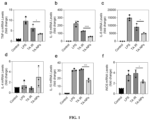
- Mouse-derived macrophages RAW264.7 were inoculated in a 12-well cell culture plate, and stimulated with LPS for 24 h after confluence.
- the culture medium was replaced with a drug-containing culture medium, which were a TA solution (labeled as TA IR) and TA-loaded NPs (the concentration of TA was 4 ⁇ g/mL, the culture medium without addition of drug was used as a control, and the TA-loaded NPs were prepared according to Example 2 and labeled as TA-NPs).
- the concentrations of IL-1 ⁇ , TNF- ⁇ , IL-6, IL-10, IL-4 and iNOS in the medium were determined by using real-time fluorescence quantitative PCR.
- Cells not treated with LPS and cells treated with LPS but not treated with TA were labeled as a "Control" group and a "LPS" group respectively.
- treatment with TA-NPs could significantly reduce the expression of genes of macrophage inflammatory factors.
- An OA rat model was established by intra-articularly injecting sodium iodoacetate into the knee joints of SD rats. When the knee joints of the rat were swelled and the pain threshold was significantly reduced, the OA rat model was obtained.
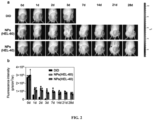
- NPs HEL-40
- NPs HEL-60
- a DiD solution labeled as DiD
- NPs HEL-40
- NPs HEL-60
- the fluorescence intensity of the inflamed joints of the rats was investigated by a small-animal in vivo imager on days 0, 1, 2, 3, 7, 14, 21 and 28, respectively.
- NPs HEL-60
- NPs HEL-40
- Rats in the OA model were treated with normal saline (labeled as Saline), a commercially available triamcinolone acetonide solution for injection (labeled as TA IR), TA-loaded NPs prepared in Example 2 (labeled as TA-NPs), and non-drug-loaded NPs prepared in Example 2 (labeled as Vehicle) respectively by intra-articular injection.
- normal saline labeled as Saline
- TA-NPs TA-loaded NPs prepared in Example 2
- TA-NPs non-drug-loaded NPs prepared in Example 2
- Vehicle non-drug-loaded NPs prepared in Example 2
- an equal volume of normal saline was injected into the knee joint cavities of normal rats as a control (labeled as Control).
- the administration dosage of TA was 60 ⁇ g per knee joint, and administration was conducted on day 7 after modeling, for a total of 1 times of administration. Starting from the first day of administration, a mechanical paw withdrawal threshold
Landscapes
- Health & Medical Sciences (AREA)
- Chemical & Material Sciences (AREA)
- Life Sciences & Earth Sciences (AREA)
- Medicinal Chemistry (AREA)
- Pharmacology & Pharmacy (AREA)
- Animal Behavior & Ethology (AREA)
- General Health & Medical Sciences (AREA)
- Public Health (AREA)
- Veterinary Medicine (AREA)
- Epidemiology (AREA)
- Engineering & Computer Science (AREA)
- Bioinformatics & Cheminformatics (AREA)
- General Chemical & Material Sciences (AREA)
- Chemical Kinetics & Catalysis (AREA)
- Rheumatology (AREA)
- Nuclear Medicine, Radiotherapy & Molecular Imaging (AREA)
- Organic Chemistry (AREA)
- Physical Education & Sports Medicine (AREA)
- Optics & Photonics (AREA)
- Orthopedic Medicine & Surgery (AREA)
- Nanotechnology (AREA)
- Biomedical Technology (AREA)
- Dermatology (AREA)
- Immunology (AREA)
- Physics & Mathematics (AREA)
- Dispersion Chemistry (AREA)
- Biophysics (AREA)
- Molecular Biology (AREA)
- Oil, Petroleum & Natural Gas (AREA)
- Pain & Pain Management (AREA)
- Pharmaceuticals Containing Other Organic And Inorganic Compounds (AREA)
- Medicinal Preparation (AREA)
- Steroid Compounds (AREA)
Applications Claiming Priority (2)
| Application Number | Priority Date | Filing Date | Title |
|---|---|---|---|
| CN202210184618.2A CN116077465B (zh) | 2022-02-25 | 2022-02-25 | 用于关节镇痛的纳米制剂及其制备方法和应用 |
| PCT/CN2023/077964 WO2023160631A1 (zh) | 2022-02-25 | 2023-02-23 | 用于关节镇痛的纳米制剂及其制备方法和应用 |
Publications (2)
| Publication Number | Publication Date |
|---|---|
| EP4470532A1 true EP4470532A1 (de) | 2024-12-04 |
| EP4470532A4 EP4470532A4 (de) | 2026-02-18 |
Family
ID=86206951
Family Applications (1)
| Application Number | Title | Priority Date | Filing Date |
|---|---|---|---|
| EP23759253.0A Pending EP4470532A4 (de) | 2022-02-25 | 2023-02-23 | Nanopräparat für gelenkanalgesie und herstellungsverfahren dafür und verwendung davon |
Country Status (5)
| Country | Link |
|---|---|
| US (1) | US20250170069A1 (de) |
| EP (1) | EP4470532A4 (de) |
| JP (1) | JP2025506762A (de) |
| CN (1) | CN116077465B (de) |
| WO (1) | WO2023160631A1 (de) |
Families Citing this family (1)
| Publication number | Priority date | Publication date | Assignee | Title |
|---|---|---|---|---|
| CN118662643A (zh) * | 2024-06-04 | 2024-09-20 | 中南大学湘雅医院 | 一种激素类药物组合物在制备治疗骨关节炎药物中的用途 |
Family Cites Families (16)
| Publication number | Priority date | Publication date | Assignee | Title |
|---|---|---|---|---|
| JPS56161317A (en) * | 1980-05-15 | 1981-12-11 | Green Cross Corp:The | Pharmaceutical preparation of fatty corpuscle of steroid |
| JP3202999B2 (ja) * | 1991-01-31 | 2001-08-27 | 協和醗酵工業株式会社 | 肝移行性リポソーム製剤 |
| US7744920B2 (en) * | 2004-09-09 | 2010-06-29 | Hadasit Medical Research Services & Development Limited | Use of liposomal glucocorticoids for treating inflammatory states |
| AU2005321751B2 (en) * | 2004-12-31 | 2012-04-05 | Iceutica Pty Ltd | Nanoparticle composition and methods for synthesis thereof |
| CN100551445C (zh) * | 2006-01-06 | 2009-10-21 | 中国药科大学 | 一种含有难溶性药物的自组装前体脂质体及其制备方法 |
| US20070178051A1 (en) * | 2006-01-27 | 2007-08-02 | Elan Pharma International, Ltd. | Sterilized nanoparticulate glucocorticosteroid formulations |
| CN101181227B (zh) * | 2007-12-10 | 2012-05-30 | 沈阳药科大学 | 生物黏附性环孢素a固体脂质纳米粒原位凝胶制剂及其制备方法 |
| AU2016228201A1 (en) * | 2008-04-21 | 2016-10-13 | Otonomy, Inc. | Auris formulations for treating otic diseases and conditions |
| CN102670518B (zh) * | 2011-03-14 | 2014-08-20 | 齐鲁制药有限公司 | 一种难溶性药物球形颗粒的制备方法 |
| CN103505420A (zh) * | 2012-06-29 | 2014-01-15 | 江西中医学院 | 液晶纳米制剂及其制备方法 |
| KR101565908B1 (ko) * | 2013-11-28 | 2015-11-05 | 한국화학연구원 | 난용성 약물이 봉입된 마이셀 나노입자를 포함하는 장기 안정성이 우수한 약학적 제제 및 이의 제조방법 |
| WO2018131620A1 (ja) * | 2017-01-12 | 2018-07-19 | テクノガード株式会社 | 薬物含有脂肪乳剤およびその製造方法 |
| CN113795246B (zh) * | 2019-05-06 | 2024-10-11 | 福多兹制药公司 | 用于治疗关节疼痛和炎症的可注射缓释制剂 |
| CN111904932B (zh) * | 2019-05-08 | 2023-06-20 | 北京德立福瑞医药科技有限公司 | 一种含有糖皮质激素的胶束制剂及其制备方法 |
| CN112773776B (zh) * | 2019-11-11 | 2023-06-20 | 上海胜联医药科技有限公司 | 一种载药纳米粒体系 |
| CN114796110A (zh) * | 2021-01-28 | 2022-07-29 | 北京德立福瑞医药科技有限公司 | 一种不含乙醇的难溶性药物浓缩液以及由其制备的胶束溶液 |
-
2022
- 2022-02-25 CN CN202210184618.2A patent/CN116077465B/zh active Active
-
2023
- 2023-02-23 JP JP2024549556A patent/JP2025506762A/ja active Pending
- 2023-02-23 US US18/841,369 patent/US20250170069A1/en active Pending
- 2023-02-23 WO PCT/CN2023/077964 patent/WO2023160631A1/zh not_active Ceased
- 2023-02-23 EP EP23759253.0A patent/EP4470532A4/de active Pending
Also Published As
| Publication number | Publication date |
|---|---|
| US20250170069A1 (en) | 2025-05-29 |
| CN116077465A (zh) | 2023-05-09 |
| JP2025506762A (ja) | 2025-03-13 |
| CN116077465B (zh) | 2024-05-24 |
| EP4470532A4 (de) | 2026-02-18 |
| WO2023160631A1 (zh) | 2023-08-31 |
Similar Documents
| Publication | Publication Date | Title |
|---|---|---|
| EP1073426B1 (de) | Pharmazeutische ciclosporin-formulierung mit verbesserten biopharmazeutischen eigenschaften, erhöhter physikalischer qualität & stabilität sowie verfahren zur herstellung | |
| JP2683575B2 (ja) | 固体状脂質微粒子(固体状脂質ナノ球体)製の薬剤用キャリヤー | |
| EP4259093B1 (de) | Material und verfahren zur behandlung von krebs | |
| JP2002531526A (ja) | 無水状態の局所的皮膚調製剤 | |
| EP0790821A1 (de) | Pharmazeutische nanosuspensionen zur arzneistoffapplikation als systeme mit erhöhter sättigungslöslichkeit und lösungsgeschwindigkeit | |
| EP1476195B1 (de) | Verbesserung der wirkung von zentralen und peripheren nervensystemmitteln | |
| WO2022160971A1 (zh) | 一种含有难溶性药物的浓缩液以及由其制备的乳剂 | |
| CN111012734A (zh) | 一种载药网状原位相变凝胶缓释系统及其制备方法 | |
| EP4470532A1 (de) | Nanopräparat für gelenkanalgesie und herstellungsverfahren dafür und verwendung davon | |
| CN108926534B (zh) | 改性kgm卵磷脂载nmn透皮醇质体、制剂及其制备工艺与应用 | |
| WO2016008283A1 (zh) | 外敷用抗甲状腺软膏的制备方法 | |
| CN116077669B (zh) | 用于治疗关节痛的糖皮质激素纳米脂质载体、制法及应用 | |
| CN119770668A (zh) | 基于生物正交点击化学反应的靶向体系及其制备方法与应用 | |
| EP2726071B1 (de) | Topische formulierungen mit lipidmikrokapsel-abgabemitteln und ihre verwendungen | |
| CN102579737A (zh) | 一种血竭纳米药物结晶制剂及其制备方法 | |
| EP4371552A1 (de) | Kosmetische zusammensetzung enthaltend molekulare aggregate von gallensäuren oder gallensäuresalzen | |
| US11382863B2 (en) | Injectable suspension comprising an insoluble corticosteroid and a soluble corticosteroid | |
| IT201900015408A1 (it) | “collirio basato su una formulazione liposomiale sterilizzabile a base di curcumina e suo uso oftalmico” | |
| CN112972392B (zh) | 一种胆红素纳米颗粒及其制备和应用 | |
| US20100221350A1 (en) | Dermatological compositions comprising vitamin d lipid vesicles | |
| CN116098866A (zh) | 一种用于治疗关节痛的糖皮质激素脂肪乳、其制法及应用 | |
| CN114712343B (zh) | 一种携载光甘草定的脾靶向纳米药物的制备方法及应用 | |
| CN119488510B (zh) | 一种负载抗生素的纳米乳剂及其制备方法和应用 | |
| CN112773776A (zh) | 一种载药纳米粒体系 | |
| CN121796322A (zh) | 秋水仙碱外用纳米乳胶剂及其制备方法与应用 |
Legal Events
| Date | Code | Title | Description |
|---|---|---|---|
| STAA | Information on the status of an ep patent application or granted ep patent |
Free format text: STATUS: THE INTERNATIONAL PUBLICATION HAS BEEN MADE |
|
| PUAI | Public reference made under article 153(3) epc to a published international application that has entered the european phase |
Free format text: ORIGINAL CODE: 0009012 |
|
| STAA | Information on the status of an ep patent application or granted ep patent |
Free format text: STATUS: REQUEST FOR EXAMINATION WAS MADE |
|
| 17P | Request for examination filed |
Effective date: 20240827 |
|
| AK | Designated contracting states |
Kind code of ref document: A1 Designated state(s): AL AT BE BG CH CY CZ DE DK EE ES FI FR GB GR HR HU IE IS IT LI LT LU LV MC ME MK MT NL NO PL PT RO RS SE SI SK SM TR |
|
| DAV | Request for validation of the european patent (deleted) | ||
| DAX | Request for extension of the european patent (deleted) | ||
| REG | Reference to a national code |
Ref country code: DE Ref legal event code: R079 Free format text: PREVIOUS MAIN CLASS: A61K0009510000 Ipc: A61K0009000000 |
|
| A4 | Supplementary search report drawn up and despatched |
Effective date: 20260116 |
|
| RIC1 | Information provided on ipc code assigned before grant |
Ipc: A61K 9/00 20060101AFI20260112BHEP Ipc: A61K 9/19 20060101ALI20260112BHEP Ipc: A61K 9/1272 20250101ALI20260112BHEP Ipc: A61K 9/1277 20250101ALI20260112BHEP Ipc: A61K 9/51 20060101ALI20260112BHEP Ipc: A61K 47/24 20060101ALI20260112BHEP Ipc: A61K 47/44 20170101ALI20260112BHEP Ipc: A61P 19/02 20060101ALI20260112BHEP Ipc: A61K 31/573 20060101ALI20260112BHEP Ipc: A61K 31/58 20060101ALI20260112BHEP Ipc: A61P 29/00 20060101ALI20260112BHEP |