EP4464825A1 - Oberflächenbehandeltes aluminiumblech, harzbeschichtetes oberflächenbehandeltes aluminiumblech und formkörper - Google Patents
Oberflächenbehandeltes aluminiumblech, harzbeschichtetes oberflächenbehandeltes aluminiumblech und formkörper Download PDFInfo
- Publication number
- EP4464825A1 EP4464825A1 EP23740274.8A EP23740274A EP4464825A1 EP 4464825 A1 EP4464825 A1 EP 4464825A1 EP 23740274 A EP23740274 A EP 23740274A EP 4464825 A1 EP4464825 A1 EP 4464825A1
- Authority
- EP
- European Patent Office
- Prior art keywords
- resin
- layer
- aluminum
- base material
- aluminum sheet
- Prior art date
- Legal status (The legal status is an assumption and is not a legal conclusion. Google has not performed a legal analysis and makes no representation as to the accuracy of the status listed.)
- Pending
Links
Images




Classifications
-
- C—CHEMISTRY; METALLURGY
- C25—ELECTROLYTIC OR ELECTROPHORETIC PROCESSES; APPARATUS THEREFOR
- C25D—PROCESSES FOR THE ELECTROLYTIC OR ELECTROPHORETIC PRODUCTION OF COATINGS; ELECTROFORMING; APPARATUS THEREFOR
- C25D11/00—Electrolytic coating by surface reaction, i.e. forming conversion layers
-
- B—PERFORMING OPERATIONS; TRANSPORTING
- B32—LAYERED PRODUCTS
- B32B—LAYERED PRODUCTS, i.e. PRODUCTS BUILT-UP OF STRATA OF FLAT OR NON-FLAT, e.g. CELLULAR OR HONEYCOMB, FORM
- B32B15/00—Layered products comprising a layer of metal
- B32B15/20—Layered products comprising a layer of metal comprising aluminium or copper
-
- B—PERFORMING OPERATIONS; TRANSPORTING
- B32—LAYERED PRODUCTS
- B32B—LAYERED PRODUCTS, i.e. PRODUCTS BUILT-UP OF STRATA OF FLAT OR NON-FLAT, e.g. CELLULAR OR HONEYCOMB, FORM
- B32B15/00—Layered products comprising a layer of metal
- B32B15/04—Layered products comprising a layer of metal comprising metal as the main or only constituent of a layer, which is next to another layer of the same or of a different material
- B32B15/08—Layered products comprising a layer of metal comprising metal as the main or only constituent of a layer, which is next to another layer of the same or of a different material of synthetic resin
-
- C—CHEMISTRY; METALLURGY
- C23—COATING METALLIC MATERIAL; COATING MATERIAL WITH METALLIC MATERIAL; CHEMICAL SURFACE TREATMENT; DIFFUSION TREATMENT OF METALLIC MATERIAL; COATING BY VACUUM EVAPORATION, BY SPUTTERING, BY ION IMPLANTATION OR BY CHEMICAL VAPOUR DEPOSITION, IN GENERAL; INHIBITING CORROSION OF METALLIC MATERIAL OR INCRUSTATION IN GENERAL
- C23C—COATING METALLIC MATERIAL; COATING MATERIAL WITH METALLIC MATERIAL; SURFACE TREATMENT OF METALLIC MATERIAL BY DIFFUSION INTO THE SURFACE, BY CHEMICAL CONVERSION OR SUBSTITUTION; COATING BY VACUUM EVAPORATION, BY SPUTTERING, BY ION IMPLANTATION OR BY CHEMICAL VAPOUR DEPOSITION, IN GENERAL
- C23C22/00—Chemical surface treatment of metallic material by reaction of the surface with a reactive liquid, leaving reaction products of surface material in the coating, e.g. conversion coatings, passivation of metals
- C23C22/05—Chemical surface treatment of metallic material by reaction of the surface with a reactive liquid, leaving reaction products of surface material in the coating, e.g. conversion coatings, passivation of metals using aqueous solutions
- C23C22/68—Chemical surface treatment of metallic material by reaction of the surface with a reactive liquid, leaving reaction products of surface material in the coating, e.g. conversion coatings, passivation of metals using aqueous solutions using aqueous solutions with pH between 6 and 8
-
- C—CHEMISTRY; METALLURGY
- C25—ELECTROLYTIC OR ELECTROPHORETIC PROCESSES; APPARATUS THEREFOR
- C25D—PROCESSES FOR THE ELECTROLYTIC OR ELECTROPHORETIC PRODUCTION OF COATINGS; ELECTROFORMING; APPARATUS THEREFOR
- C25D11/00—Electrolytic coating by surface reaction, i.e. forming conversion layers
- C25D11/02—Anodisation
- C25D11/04—Anodisation of aluminium or alloys based thereon
-
- C—CHEMISTRY; METALLURGY
- C25—ELECTROLYTIC OR ELECTROPHORETIC PROCESSES; APPARATUS THEREFOR
- C25D—PROCESSES FOR THE ELECTROLYTIC OR ELECTROPHORETIC PRODUCTION OF COATINGS; ELECTROFORMING; APPARATUS THEREFOR
- C25D11/00—Electrolytic coating by surface reaction, i.e. forming conversion layers
- C25D11/02—Anodisation
- C25D11/04—Anodisation of aluminium or alloys based thereon
- C25D11/18—After-treatment, e.g. pore-sealing
Definitions
- the present invention relates to a surface-treated aluminum sheet, a resin-coated surface-treated aluminum sheet, and a molded body.
- treatment that forms aluminum hydroxide called "boehmite" on a surface of an aluminum base material is disclosed as chromium-free surface treatment.
- chromium-free surface-treated aluminum sheets performance equal to or higher than that available from chromate phosphate treatment or chromate conversion coating is required. Specifically, corrosion resistance, followability to forming work (formability), adhesion between a surface treatment layer and a coating film (hereinafter also called “resin adhesion”), and the like are required.
- boehmite is used in sealing treatment for anodized aluminum films, and is known as a material having corrosion resistance.
- Boehmite is also known for its acicular texture having ruggedness on the surface. Owing to this acicular texture, boehmite is considered to exhibit the mechanical interlocking adhesion with respect to a resin layer such as a coating film or a film, and hence to improve the resin adhesion.
- a coating film that contains aluminum hydroxide such as boehmite is typically obtained by treatment that immerses an aluminum base material in hot water or exposes it to steam or superheated steam.
- aluminum hydroxide such as boehmite
- the above-mentioned treatment hence has not conventionally been applied to a production line which continuously feeds sheets and requires short-time treatment.
- the above-mentioned treatment also involves a problem that no reduction in cost can be realized.
- the above-mentioned acicular texture is a brittle texture, and hence also has a problem that a surface-treated aluminum sheet having such an acicular texture cannot sufficiently follow metal pressing such as drawing and ironing.
- chromium-free surface-treated aluminum sheets performance equal to or higher than that available from chromate phosphate treatment or chromate conversion coating is required. Specifically, corrosion resistance, followability to forming work (formability), adhesion between a surface treatment layer and a resin layer (hereinafter also called “resin adhesion”), and the like are required.
- an aluminum hydroxide film formed on a surface of an aluminum base material is considered to be a film primarily including alumina monohydrate (AlO(OH)) called “boehmite.”
- Boehmite is mainly used in sealing treatment for anodized aluminum films, and is known as a material having corrosion resistance.
- Boehmite is also known for its acicular texture having ruggedness on the surface. This acicular texture is considered to exhibit the Owing to this acicular texture, boehmite is considered to exhibit the mechanical interlocking adhesion with respect to a resin layer such as a coating film or a film, and hence to improve the resin adhesion. with respect to a resin layer such as a coating film or a film, and hence to improve the resin adhesion.
- amorphous alumina Al 2 O 3
- crystalline alumina Al 2 O 3
- amorphous alumina is known to be dissolved in a short period of time when immersed in hot water.
- the present inventors decided to place focus on not only the above-mentioned the mechanical interlocking adhesion by an acicular texture but also the proportion of amorphous alumina in a film.
- the present invention has as an object thereof the provision of a surface-treated aluminum sheet having all of corrosion resistance, formability, and resin adhesion.
- the present invention also has as other objects thereof the provision of a resin-coated surface-treated aluminum sheet using the surface-treated aluminum sheet, and a molded body.
- a surface-treated aluminum sheet in an embodiment of the present invention (1) includes an aluminum base material, and an amorphous layer formed on at least one side of the aluminum base material, the aluminum base material is an aluminum sheet or an aluminum alloy sheet, and the amorphous layer contains aluminum hydroxide, has an oxygen element to aluminum element (O/Al) ratio in a range of 1.7 to 3.0, and has a thickness of 1 nm or greater.
- O/Al oxygen element to aluminum element
- the surface-treated aluminum sheet further includes a crystalline layer formed on the amorphous layer, and the crystalline layer contains aluminum hydroxide, has an oxygen element to aluminum element (O/Al) ratio in a range of 1.7 to 3.0, and has a thickness of 5 nm or greater.
- O/Al oxygen element to aluminum element
- the thickness of the crystalline layer is 20 times or less the thickness of the amorphous layer.
- the resin-coated surface-treated aluminum sheet (4) further has a resin layer on the surface-treated aluminum sheet of any one of the (1) to (3) described above, and the resin layer is a thermoplastic resin layer or a thermosetting resin layer.
- a molded body in a further embodiment of the present invention preferably includes (5) the surface-treated aluminum sheet described in any one of the (1) to (3) described above, or the resin-coated surface-treated aluminum sheet described in the (4) described above.
- the molded body is one of a container, a lid, or a structural member.
- a surface-treated aluminum sheet in a still further embodiment of the present invention (7) includes an aluminum base material, and a surface treatment layer formed on at least one side of the aluminum base material, the aluminum base material is an aluminum sheet or an aluminum alloy sheet, and the surface treatment layer contains aluminum hydroxide, and has a Pa/Pb value of 6.0 or smaller when, in an infrared absorption spectrum measured by FT-IR (Fourier transformation infrared spectrometer), the height of an absorbance peak at wavenumbers of 850 to 1000 cm -1 is defined as Pa, and the height of an absorbance peak at wavenumbers of 1000 to 1200 cm -1 is defined as Pb.
- FT-IR Fastier transformation infrared spectrometer
- the surface treatment layer has a thickness of 1 to 2000 nm.
- the molded body is one of a container, a lid, or a structural member.
- a surface-treated aluminum sheet having all of corrosion resistance, formability, and resin adhesion can be provided.
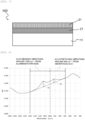
- FIG. 1 is a diagram schematically depicting an embodiment of the surface-treated aluminum sheet of the present invention.
- a surface-treated aluminum sheet 100 of this embodiment includes an aluminum base material 10 and an amorphous layer 20 formed on at least one side of the aluminum base material 10. It is to be noted that the surface-treated aluminum sheet 100 depicted in FIG. 1 has the amorphous layer 20 on one side thereof, but without being limited to this, may have the amorphous layer 20 on each side of the aluminum base material 10.
- a pure aluminum sheet or an aluminum alloy sheet can be used as the aluminum base material 10.
- the alloy type of the aluminum base material is selected according to the application.
- a container or lid material for example, a 3000 series or 5000 series aluminum alloy sheet of the JIS standards is used from the viewpoints of workability, strength, and corrosion resistance.
- a 6000 series or 7000 series aluminum alloy sheet is used according to the application.
- the amorphous layer 20 is characterized in containing aluminum hydroxide and having the oxygen element to aluminum element (O/Al/O) ratio in a range of 1.7 to 3.0 and a thickness of 1 nm or greater.
- the amorphous layer 20 in this embodiment contains aluminum hydroxide.
- Aluminum hydroxide that is contained in the amorphous layer 20 in this embodiment preferably includes alumina monohydrate (AlO(OH)) and alumina trihydrate (Al(OH) 3 ).
- AlO(OH) alumina monohydrate
- Al(OH) 3 alumina trihydrate
- the amorphous layer 20 can be improved in corrosion resistance, formability, and resin adhesion.
- the formation method of the amorphous layer 20 is not particularly limited to any kind, and the amorphous layer 20 can be formed, for example, by immersing an aluminum base material for 0.1 to 20 seconds in an alkali solution of pH 8 to 13 heated at 30°C to 100°C, and then rinsing it with water of 5°C to 100°C. It is to be noted that the formation method of the amorphous layer 20 will be described in detail later.
- the film which contains aluminum hydroxide in the amorphous layer 20 in this embodiment also has an amorphous structure.
- amorphous structure in this embodiment represents a state in which no lattice fringe is observed in a TEM (transmission electron micrograph) cross-sectional image. This lattice fringe appears when an image is formed with two waves of a transmitted wave of an electron beam emitted from a crystal and a diffracted wave from certain lattice planes of the crystal, and is an image of bright and dark stripes corresponding to the interplanar spacing of the crystal lattice.
- this lattice fringe is observed in a TEM cross-sectional image at a microarea in the film that meets the above-mentioned diffraction conditions. If a film has an amorphous structure, however, the above-mentioned diffraction conditions are not met, so that no lattice fringe is observed in the film.
- a film which has been formed on a surface of aluminum or an aluminum alloy by treatment of immersion in hot water or exposure to steam or superheated steam and contains aluminum hydroxide such as boehmite has a thickness of approximately 500 to 3,000 nm, and a texture having ruggedness called "acicularity" or "feathery” is observed in a TEM cross-sectional image.
- This acicular texture has a crystalline structure, and the above-mentioned lattice fringe is observed in the TEM cross-sectional image. Meanwhile, this acicular texture is not observed in the amorphous layer 20 in this embodiment, the amorphous layer 20 has an amorphous structure, and the above-mentioned lattice fringe is not observed in the TEM cross-sectional image.
- the thickness of the amorphous layer 20 contributes to improvement in corrosion resistance, formability, and resin adhesion if it is 1 nm or greater, with 3 nm or greater being more preferred, and 6 nm or greater being still more preferred.
- the thickness upper limit of the amorphous layer 20 has no particular limitation, but from the viewpoints of treatment time and the like, 1,000 nm or smaller is preferred, with 500 nm or smaller being more preferred.
- the resin adhesion of aluminum hydroxide represented by boehmite has been considered to be brought about by the mechanical interlocking adhesion of acicular or feathery ruggedness. While one of the factors that improve the resin adhesion is the mechanical interlocking adhesion, when studied in more detail, it was found that the possession of water-insoluble or less water-soluble property by aluminum hydroxide also makes a significantly contribution to the resin adhesion. If the front layer of the aluminum base material is a naturally formed, water-soluble film, the film on the surface of the aluminum base material, upon arrival of water at an adhesion interface with the resin, is dissolved, so that the resin layer is readily separated from the base material.
- the acicular texture of aluminum hydroxide has conventionally been considered essential for improving the resin adhesion.
- a treatment time of approximately 30 to 120 seconds has hence been needed to allow sufficient growth of the acicular texture.
- the present inventors thought that even with an extremely thin film of approximately 1 to 10 nm generated and formed in an initial extremely short period of time of approximately 0.1 to 2 seconds upon formation of a film containing aluminum hydroxide, the resin adhesion could be improved.
- the oxygen element to aluminum element (O/Al) ratio of the amorphous layer 20 is in the range 1.7 to 3.0. It is to be noted that the (O/Al) ratio is determined by specifying the amorphous layer from the TEM cross-sectional image, and performing energy dispersion X-ray spectroscopy (EDS) of a center area of the layer.
- EDS energy dispersion X-ray spectroscopy
- the (O/Al) ratio of aluminum oxide (Al 2 O 3 ) is approximately 1.5
- the (O/Al) ratio of alumina trihydrate (Al(OH) 3 ) is approximately 3.0
- the (O/Al) ratio of alumina monohydrate (AlO(OH)) is approximately 2.0.
- the amorphous layer 20 in this embodiment is substantially free of phosphorus and chromium. Meanwhile, the amorphous layer 20 in this embodiment contains alumina monohydrate and alumina trihydrate as aluminum hydroxide. Further, the above-mentioned aluminum oxide (Al 2 O 3 ) may also be contained as a compound other than those mentioned above. Moreover, extremely trace compounds that are present in the treatment solution, for example, silicon dioxide (SiO 2 ), magnesium oxide (MgO), and the like, may also be contained. What is important in this embodiment is to control the (O/Al) ratio of the amorphous layer 20 in the range of 1.7 to 3.0.
- the front layer film of the surface-treated aluminum sheet is formed as a film insoluble or less soluble in water.
- Aluminum hydroxide is considered to be formed when water and active metal aluminum come into contact, and the film so formed remains in an extremely stable state in water. The film so formed is thus insoluble or less soluble in water. If the film with the thus-formed aluminum hydroxide contained therein abundantly contains alumina trihydrate, the (O/Al) ratio takes a value close to 3.0. Further, if the film with the thus-formed aluminum hydroxide contained therein abundantly contains alumina monohydrate, on the other hand, the (O/Al) ratio takes a value close to 2.0.
- the (O/Al) ratio of the whole film takes a smaller value as the proportion of aluminum oxide in the film increases. If the proportion of aluminum oxide in the film increases, the film dissolves more easily in water despite being a film containing aluminum hydroxide, so that required corrosion resistance and resin adhesion are no longer available. This applies equally to a case where a compound of a different element is abundantly contained.
- the (O/Al) ratio of the whole film of the amorphous layer 20 in the range of 1.7 to 3.0 in order to obtain sufficient corrosion resistance and resin adhesion. Since corrosion resistance and resin adhesion are improved as the proportion of alumina monohydrate, rather than alumina trihydrate, increases in the aluminum hydroxide contained in the film, the (O/Al) ratio is controlled preferably in a range of 1.8 to 2.6, more preferably in a range of 1.9 to 2.2.
- alumina monohydrate is thermally more stable than alumina trihydrate, and hence, its insolubility is allowed to remain stably even in water of high temperature.
- FIG. 2 is a diagram schematically depicting a surface-treated aluminum sheet 200 according to the second embodiment.
- the surface-treated aluminum sheet 200 according to the second embodiment is primarily different from that of the first embodiment in that a crystalline layer 30 is formed on an amorphous layer 20.
- common elements are identified by the same reference signs, and their description is omitted.
- the amorphous layer 20 and the crystalline layer 30 are formed on one side on an aluminum base material 10 in FIG. 2 although not limited to this configuration.
- the amorphous layer 20 and the crystalline layer 30 may be formed on each side of the aluminum base material.
- the surface-treated aluminum sheet 200 may be in a form that the amorphous layer 20 and the crystalline layer 30 are both formed on the one side of the aluminum base material 10, and only the amorphous layer 20 is formed on the other side.
- the amorphous layer 20 and the crystalline layer 30 are formed on the one side of the aluminum base material 10, and one or more known metal layers and/or resin layers may be formed on the other side.
- the crystalline layer 30 is formed on the amorphous layer 20. Similar to the amorphous layer 20, the crystalline layer 30 is formed as a film with aluminum hydroxide contained therein.
- Aluminum hydroxide include alumina monohydrate and alumina trihydrate, and the oxygen element to aluminum element (O/Al) ratio of the crystalline layer 30 is in the range of 1.7 to 3.0.
- the crystalline layer 30 in this embodiment is substantially free of phosphorus and chromium. Meanwhile, the crystalline layer 30 in this embodiment may contain the above-mentioned aluminum oxide (Al 2 O 3 ) in addition to alumina monohydrate and alumina trihydrate. Further, extremely trace compounds that are present in the treatment solution, for example, silicon dioxide (SiO 2 ), magnesium oxide (MgO), and the like, may also be contained. What is important in this embodiment is to control the (O/Al) ratio of the crystalline layer 30 in the range of 1.7 to 3.0.
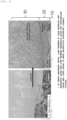
- FIG. 4 contains TEM cross-sectional images presenting examples of the amorphous layer 20 and the crystalline layer 30 in this embodiment.
- the amorphous layer 20 formed on the aluminum base material 10 has a dense texture, and the crystalline layer 30 having an acicular texture is formed thereon.
- the film that contains aluminum hydroxide in the crystalline layer 30 has the acicular texture, and a structure clearly different from that of the amorphous layer 20 is observed in the cross-sectional image.
- a line between the aluminum base material 10 and the amorphous layer 20 and a line between the amorphous layer 20 and the crystalline layer 30 are lines added to make respective boundaries visible clearly.
- Whether the film that contains aluminum hydroxide in the crystalline layer 30 in this embodiment has the crystalline structure can be determined depending on whether a lattice fringe is observed in the TEM cross-sectional image.
- the lattice fringe is observed if it is a crystalline layer.
- This lattice fringe appears when an image is formed with two waves of a transmitted wave of an electron beam emitted from a crystal and a diffracted wave from certain lattice planes of the crystal, and is an image of bright and dark stripes corresponding to the interplanar spacing of the crystal lattice.
- this lattice fringe is observed in a TEM cross-sectional image at a microarea in the film that meets the above-mentioned diffraction conditions. If a film has an amorphous structure, however, the above-mentioned diffraction conditions are not met, so that no lattice fringe is observed in the film.
- the TEM cross-sectional images of FIG. 4 are results of an observation at 1 million times magnification, but the existence or absence of the above-mentioned lattice fringe cannot be determined at this magnification.
- the thickness of the crystalline layer 30 is 5 nm or greater, preferably 25 nm or greater, more preferably 50 nm or greater.
- the thickness upper limit of the crystalline layer 30 has no particular limitation, but from the viewpoints of treatment time and cost, 400 nm or smaller is preferred, with 200 nm or smaller being more preferred.
- This crystalline layer 30 has a role to improve the resin adhesion based on the mechanical interlocking adhesion by the acicular or feathery ruggedness. It is not necessary to make the crystalline layer 30 thicker than needed, because this mechanical interlocking adhesion does not rely upon the thickness of the film but relies upon the roughness of the film surface. If the crystalline layer 30 is made thicker beyond needed, the treatment time becomes longer, leading to a decrease in productivity and an increase in cost.
- the mechanical interlocking adhesion is obtained, and the resin adhesion is improved, but at around 200 nm, the improving effect for the resin adhesion comes to saturation, and at 400 nm or greater, the resin adhesin is not improved. If increased further to 500 nm or greater, the crystalline layer 30 can no longer follow forming, and hence undergoes a cohesive failure when worked, raising a problem that the resin adhesion is lowered conversely.
- the thickness of the crystalline layer 30 is preferably 20 times or less than that of the amorphous layer 20. Since an amorphous layer is excellent in formability as mentioned above, the amorphous layer 20 follows forming even if a large deformation is applied, for example, through drawing and ironing, so that the amorphous layer 20 can evenly cover the surface of the worked portion. Meanwhile, the acicular texture of the crystalline layer 30 is crystalline, so that the crystalline layer 30 cannot follow forming, and is worked while developing film cracks.
- the crystalline layer 30 Upon observation of the surface of the aluminum sheet after its drawing and ironing, the crystalline layer 30 was found to exist in a partially disintegrated state, and upon observation of its cross-section, a large difference in level was found to be produced between a portion where the crystalline layer 30 remained and another portion where the crystalline layer 30 did not remain.
- the thickness of the crystalline layer 30 exceeds 20 times that of the amorphous layer 20, the resin layer separates by a difference in level produced between the amorphous layer 20 and the crystalline layer 30 after forming, and the resin adhesion is lowered.
- the control of the ratio of the crystalline layer 30 to the amorphous layer 20 to the above-described value or smaller is therefore preferred from the viewpoint of ensuring the resin adhesin of the worked portion. More preferably, the above-described thickness ratio is controlled to 15 times or less. It is to be noted that no lower limit exists on the above-described thickness ratio because this issue arises only when the crystalline layer 30 becomes extremely thick relative to the amorphous layer 20.
- the amorphous layer 20 does not exist, in other words, if only the crystalline layer 30 is formed on the aluminum base material, the corrosion resistance and resin adhesion of the worked portion are significantly lowered as there is no layer that can follow forming.
- the amorphous layer 20 is thus essential, and owing to the existence of this layer on the aluminum base material, good formability and good corrosion resistance and resin adhesion of the worked portion are obtained.
- FIG. 3 is a diagram schematically depicting a resin-coated surface-treated aluminum sheet 300 according to this embodiment.
- the resin-coated surface-treated aluminum sheet 300 according to this embodiment is primarily different from the surface-treated aluminum sheet of the first embodiment or second embodiment in that a resin layer 40 is formed on an amorphous layer 20 or a crystalline layer 30.
- a resin layer 40 is formed on an amorphous layer 20 or a crystalline layer 30.
- the resin layer 40 is formed on the amorphous layer 20 via the crystalline layer 30 in FIG. 3 although not limited to this configuration.
- the resin layer 40 may hence be directly formed on the amorphous layer 20.
- the amorphous layer 20 and the resin layer 40 may also be formed on each side of the aluminum base material.
- thermoplastic resin or thermosetting resin can preferably be applied.
- thermoplastic resin one or more of polyolefin resin, polyester resin, polycarbonate resin, acrylic resin, polystyrene resin, ABS resin, polyamide resin, fluorinated resin, polyvinyl chloride resin, and the like can preferably be applied.
- thermosetting resin one or more of acrylic resin, unsaturated polyester resin, phenol resin, urea resin, polyurethane resin, silicone resin, polyimide resin, melamine resin, epoxy resin, and the like can preferably be applied.
- thermoplastic resin polyolefin resin or polyester resin and their blends can be applied more preferably.
- polyethylene resin polypropylene resin, ethylene-propylene copolymer resin, ethylene-acrylic acid ester copolymer resin, ionomer resin, and the like can preferably be applied.
- polyester resin Exemplifying the types of polyester resin, one or more of polyethylene terephthalate resin, polybutylene terephthalate resin, polyethylene terephthalate resin with polyethylene isophthalate copolymerized therewith, polybutylene terephthalate resin with polybutylene isophthalate copolymerized therewith, and the like can be preferably applied.
- polyester resin can be applied more preferably.
- the resin layer 40 may be a multilayer resin layer.
- a two-layer polyethylene terephthalate resin layer in which polyethylene isophthalate has been copolymerized at different ratios or the like can be used.
- the resin layer 40 may also be a resin layer in which different types of resin have been blended.
- a resin layer in which ionomer resin or ethylene-propylene copolymer resin has been blended with polyethylene terephthalate resin a resin layer in which polyethylene terephthalate resin and polybutylene terephthalate resin have been blended, or the like can also be applied.
- resin additives for example, an antiblocking agent such as amorphous silica, an inorganic filler such as calcium carbonate, magnesium carbonate, talc, or glass, various kinds of fibers such as glass fibers, carbon fibers, or aramid fibers, an antistatic agent, an antioxidant such as tocopherol, an ultraviolet absorber, and the like can be added according to a known method.
- an antiblocking agent such as amorphous silica
- an inorganic filler such as calcium carbonate, magnesium carbonate, talc, or glass
- various kinds of fibers such as glass fibers, carbon fibers, or aramid fibers
- an antistatic agent such as tocopherol, an ultraviolet absorber, and the like
- the thickness of the resin layer 40 is not particularly limited to any value, but, in the case of thermoplastic resin, is preferably in a range of 3 to 300 um, with a range of 5 to 230 um being more preferred. In the case of thermosetting resin, it is preferably in a range of 0.5 to 100 um, with a range of 1 to 50 um being more preferred. In general, as the resin layer becomes thicker, the corrosion resistance is improved, but the resin adhesion and the formability are lowered. There is hence an optimal thickness range according to the application. It is to be noted that a formation method of the resin layer 40 will be described later.
- FIG. 6 is a diagram schematically depicting an embodiment of the surface-treated aluminum sheet of the present invention.
- a surface-treated aluminum sheet 400 of this embodiment includes an aluminum base material 11 and a surface treatment layer 21 formed on at least one side of the aluminum base material 11. It is to be noted that the surface-treated aluminum sheet 400 depicted in FIG. 6 has the surface treatment layer 21 on one side. However, without being limited to this configuration, it may have the surface treatment layer 21 on each side of the aluminum base material 11.
- a pure aluminum sheet or an aluminum alloy sheet can be used as the aluminum base material 11.
- the alloy type of the aluminum base material is selected according to the application.
- a container or lid material for example, a 3000 series or 5000 series aluminum alloy sheet of the JIS standards is used from the viewpoints of workability, strength, and corrosion resistance.
- a 6000 series or 7000 series aluminum alloy sheet is used depending on the application.
- the surface treatment layer 21 contains aluminum hydroxide.
- Aluminum hydroxide includes alumina monohydrate (AlO(OH), alumina trihydrate (Al(OH) 3 ), and the like. By the inclusion of these substances, corrosion resistance, resin adhesion, and the like can be improved.
- Aluminum hydroxide in the surface treatment layer 21 can be identified by a peak that appears in a wavenumber range of 1000 to 1200 cm -1 in an infrared absorption spectrum measured by FT-IR. This peak that appears in the wavenumber range of 1000 to 1200 cm -1 is known to be an absorbance peak associated with Al-OH bending vibrations originated from aluminum hydroxide.
- amorphous alumina (Al 2 O 3 ) can also be contained.
- the amorphous alumina in the surface treatment layer 21 can be identified by a peak that appears in a wavenumber range of 850 to 1000 cm -1 in the infrared absorption spectrum measured by FT-IR. This peak that appears in the wavenumber range of 850 to 1000 cm -1 is known to be an absorbance peak originated from Al-OH stretching vibrations of amorphous alumina. It is to be noted, that in this embodiment, the content of amorphous alumina may be extremely close to zero insofar as the below-mentioned peak ratio is 6.0 or smaller.
- This embodiment is characterized in that the above-described proportion of amorphous alumina is specified in the surface treatment layer 21. More specifically, this embodiment is to maintain the insoluble or less soluble property of the surface treatment layer 21 and hence to control the resin adhesion of the surface treatment layer 21, irrespective of the thickness of the surface treatment layer 21, by specifying the proportion of amorphous alumina in terms of its ratio to aluminum hydroxide.
- the surface-treated aluminum sheet 400 of this embodiment is characterized in that the value of the peak ratio "Pa/Pb" is 6.0 or smaller when, in the infrared absorption spectrum of the surface treatment layer 21 as measured by FT-IR, the height of the absorbance peak at the wavenumbers of 850 to 1000 cm -1 is defined as "Pa” and the height of the absorbance peak at the wavenumbers of 1000 to 1200 cm -1 is defined as "Pb.”
- the present inventor thought that, even with an aluminum hydroxide film in an initial stage of formation as formed in a short treatment time of approximately 0.5 to 30 seconds without sufficient growth of the above-described acicular texture of boehmite, sufficient resin adhesion could be exhibited by the insoluble or less soluble property of aluminum hydroxide by a decreased amount of water-soluble amorphous alumina contained in the aluminum hydroxide film.
- the present inventors also thought that, even with a film containing aluminum hydroxide and formed to a sufficient thickness of 500 nm or greater, the insoluble or less soluble property could not be retained if the proportion of amorphous alumina in the film becomes high.
- the proportion of amorphous alumina in the film of the surface treatment layer 21 changes with the formation method of the film. Between, for example, a method of treatment by immersion in hot water of 75°C or higher and a method of treatment in steam of 110°C or higher, the proportion of amorphous alumina in the film becomes smaller when treated in steam. Even by the method of treatment by immersion in hot water, the proportion of amorphous alumina becomes smaller as the concentration of phosphorus (P), concentration of calcium (Ca), concentration of silicon (Si), concentration of magnesium (Mg), and concentration of iron (Fe) in water become lower.
- P concentration of phosphorus
- Ca concentration of calcium
- Si concentration of silicon
- Mg concentration of magnesium
- Fe concentration of iron
- the important point of the present invention is that, in whatever production method, such performance as sufficient resin adhesion is obtained since the insoluble or less soluble property of the surface treatment layer 21 is retained by the value of the above-described "Pa/Pb" ratio being controlled to the predetermined value or lower. If the value of the above-described "Pa/Pb" ratio is equal to or smaller than the predetermined value, sufficient corrosion resistance and resin adhesin are obtained even with a thin aluminum hydroxide film of approximately 1 to 100 nm in an initial stage of formation. It is therefore possible to produce a surface-treated layer in a short film formation time, and hence to apply a production method that continuously passes sheets as a coil product. An extensive cost reduction can be expected by realization of these.
- the above-mentioned infrared absorption spectrum of the thin aluminum hydroxide film formed by the treatment in the short period of time can be measured by the reflection absorption spectroscopy (RAS) method using a known Fourier transformation infrared spectrometer (FT-IR).
- RAS reflection absorption spectroscopy
- FT-IR Fourier transformation infrared spectrometer
- absorbance at a wavenumber of 1200 cm -1 and absorbance at a wavenumber of 850 cm -1 in the infrared absorption spectrum are first connected with a straight line, and the straight line is used as a baseline.
- the peak originated from Al-O stretching vibrations of amorphous alumina the highest point from the baseline in the wavenumber range of 850 to 1000 cm -1 is then designated as an absorbance peak height Pa.
- the peak originated from Al-OH bending vibrations of aluminum hydroxide the highest point from the baseline in the wavenumber range of 1000 to 1200 cm -1 is designated as an absorbance peak height
- the corrosion resistance, the formability, and the resin adhesion are improved if the thickness of the surface treatment layer 21 is 1 nm or greater.
- the thickness upper limit of the surface treatment layer 21 is preferably 2,000 nm or smaller from the viewpoints of cohesive failure during forming, treatment time, and the like.
- the optimal thickness of the surface treatment layer 21 is dependent on the application. If used for containers or lids, however, a range of 10 to 600 nm is preferred, with a range of 20 to 300 nm being more preferred. If used for construction structural members or automobile structural members, in contrast, 50 to 2,000 nm are preferred, with 100 to 1,000 nm being more preferred.
- the surface treatment layer 21 in this embodiment is substantially free of phosphorus and chromium. Meanwhile, the surface treatment layer 21 in this embodiment contains alumina monohydrate and alumina trihydrate as aluminum hydroxide as mentioned above. In addition, aluminum oxide (Al 2 O 3 ) may also be contained as a compound other than those mentioned above. The surface treatment layer 21 in this embodiment may also contain extremely trace compounds that are present in the treatment solution, for example, silicon dioxide (SiO 2 ), magnesium oxide (MgO), and the like.
- FIG. 7 is a diagram schematically depicting a resin-coated surface-treated aluminum sheet 500 according to this embodiment.
- the resin-coated surface-treated aluminum sheet 500 according to this embodiment is primarily different from the surface-treated aluminum sheet of the first embodiment in that a resin layer 31 is formed on a surface treatment layer 21.
- common elements are identified by the same reference signs, and their description is omitted.
- the resin layer 31 is formed on the surface treatment layer 21 in FIG. 7 although not limited to this configuration.
- the resin layer 31 may hence be formed on the surface treatment layer 21 via a known adhesive layer or the like.
- the surface treatment layer 21 and the resin layer 31 may also be formed on each side of the aluminum base material 11.
- thermoplastic resin polyolefin resin or polyester resin and their blends can be applied more preferably.
- polyolefin resin one or more of polyethylene resin, polypropylene resin, ethylene-propylene copolymer resin, ethylene-acrylic acid ester copolymer resin, ionomer resin, and the like can preferably be applied.
- polyester resin one or more of polyethylene terephthalate resin, polybutylene terephthalate resin, polyethylene terephthalate resin with polyethylene isophthalate copolymerized therewith, polybutylene terephthalate resin with polyethylene isophthalate copolymerized therewith, and the like can preferably be applied.
- polyester resin can be applied more preferably.
- the resin layer 31 may be a multilayer resin layer. For example, a two-layer polyethylene terephthalate resin layer in which polyethylene isophthalate has been copolymerized at different ratios, or the like can be used. Further, the resin layer 31 may also be a resin layer in which different types of resin have been blended. For example, a resin layer in which ionomer resin or ethylene-propylene copolymer resin has been blended with polyethylene terephthalate resin, a resin layer in which polyethylene terephthalate resin and polybutylene terephthalate resin have been blended, or the like can also be applied.
- resin additives for example, an antiblocking agent such as amorphous silica, an inorganic filler such as calcium carbonate, magnesium carbonate, talc, or glass, a variety of fibers such as glass fibers, carbon fibers, or aramid fibers, an antistatic agent, an antioxidant such as tocopherol, an ultraviolet absorber, and the like can be added according to a known method.
- an antiblocking agent such as amorphous silica
- an inorganic filler such as calcium carbonate, magnesium carbonate, talc, or glass
- fibers such as glass fibers, carbon fibers, or aramid fibers
- an antistatic agent such as tocopherol, an ultraviolet absorber, and the like
- the thickness of the resin layer 31 is not particularly limited to any value, but in the case of thermoplastic resin, is preferably in the range of 3 to 300 ⁇ m, with the range of 5 to 230 um being more preferred. In the case of thermosetting resin, it is preferably in the range of 0.5 to 100 ⁇ m, with the range of 1 to 50 um being more preferred. In general, as the resin layer becomes thicker, the corrosion resistance is improved, but the resin adhesion and the formability are lowered. There is hence an optimal thickness range according to the application. It is to be noted that a formation method of the resin layer 31 will be described later.
- the first production method of the surface-treated aluminum sheet in this embodiment there is a method that immerses an aluminum base material in an alkali solution of pH 8 to 13 at 30°C to 100°C, and keeps it in contact with the alkali solution for 0.1 to 20 seconds, a method that subjects the aluminum base material to cathodic electrolytic treatment for 0.1 to 10 seconds in an alkali solution of pH 8 to 13 at 30°C to 100°C, a method that subjects the aluminum base material to anodic electrolytic treatment for 0.1 to 10 seconds in the same alkali solution, or the like.
- an amorphous layer that contains aluminum hydroxide has an oxygen element to aluminum element (O/Al) ratio in the range of 1.7 to 3.0, and has a thickness of 1 nm or greater.
- an aqueous sodium carbonate solution, an aqueous sodium aluminate solution, an aqueous sodium hydroxide solution, an aqueous potassium hydroxide solution, or the like is preferably used.
- water for use in the alkali solution pure water is preferred, and deionized water having the electrical conductivity of 1 ⁇ S/cm or lower is typically used, but tap water or the like having the electrical conductivity of 300 ⁇ S/cm or lower can also be used. If calcium carbonate and silicon dioxide are present as impurities in the solution, they act as barriers against the formation of the aluminum hydroxide film, and therefore water from which such impurities have been removed should be used.
- the pH of the treatment solution (alkali solution) for use in the above-described treatment step is set preferably to 8 to 13, with pH 8 to 12 being more preferred, and pH 8 to 11 being still more preferred.
- Substantially no aluminum hydroxide is formed in an acidic solution of pH 6 or lower, and stable formation of a film is possible in water of pH 7 or higher or an alkali solution.
- the reason that pH 8 or higher is preferred is to dissolve a naturally formed oxide film which exists on the surface of the aluminum base material before the treatment, in an extremely short period of time.
- a native oxide film on an aluminum base material is a film primarily including aluminum oxide, and can be dissolved in an extremely short time in an alkali solution.
- the temperature of the treatment solution (alkali solution) for use in the above-described treatment step is preferably 30°C to 100°C, more preferably 50°C to 100°C, and still more preferably 60°C to 100°C. As the temperature of the treatment solution becomes higher, the native oxide film that exists on the surface of the aluminum base material before the treatment can be dissolved in a shorter period of time.
- anodic electrolytic treatment can also be used.
- the current density for the anodic electrolytic treatment in this treatment step it may be set, for example, to 1 to 10 A/dm 2 or the like.
- the second production method of the surface-treated aluminum sheet in this embodiment includes a surface treatment step that forms the surface treatment layer 21 which contains aluminum hydroxide, on the aluminum base material.
- the surface treatment step forms the surface treatment layer 21 such that the value of Pa/Pb is 6.0 or smaller when, in the infrared absorption spectrum measured by FT-IR, the height of the absorbance peak at the wavenumbers of 850 to 1000 cm -1 originated primarily from Al-O stretching vibrations of amorphous alumina is defined as Pa and the height of the absorbance peak at the wavenumbers of 1000 to 1200 cm -1 originated primarily from Al-OH bending vibrations of aluminum hydroxide is defined as Pb.
- the surface treatment step is not particularly limited to any kind if it is a step capable of setting the value of the above-described peak ratio Pa/Pb to 6.0 or smaller.
- Examples include a method that immerses an aluminum base material in a solution of pH 6 to 13 at 20°C to 100°C, and keeps it in contact with the solution for 0.1 to 30 seconds, a method that brings the aluminum base material into contact with steam of 100°C to 140°C for 0.1 to 120 seconds in the steam, and the like. From the viewpoint of reducing the proportion of amorphous alumina in the surface treatment layer 21, the method of exposure to steam is more preferred than the method of immersion in the solution.
- the solution of 20°C to 100°C, the steam of 100°C to 140°C, or the like can be used.
- the temperature of the treatment solution is higher, the formation of the film which contains aluminum hydroxide becomes faster, and the film can be formed in a still shorter period of time.
- an alkali used in the surface treatment solution is to dissolve a naturally formed oxide film which exists on the surface of the aluminum base material before the treatment, in an extremely short period of time.
- a native oxide film on an aluminum base material is a film primarily including aluminum oxide, and can be dissolved in an extremely short period of time in an alkali solution.
- a more preferred pH range is therefore pH 8 to 10.
- pure water can preferably be used.
- Deionized water having the electrical conductivity of 10 ⁇ S/cm or lower may also be used.
- the reason why pure water or deionized water is preferred is that the proportion of amorphous alumina to be contained in the surface treatment layer 21 becomes higher with the phosphorus concentration, calcium concentration, silicon concentration, magnesium concentration, and iron concentration being higher in the surface treatment solution. If any one of the phosphoric acid concentration, calcium concentration, silicon concentration, magnesium concentration, and iron concentration exceeds 1 ppm, the proportion of amorphous alumina to be contained in the surface treatment layer 21 abruptly increases. It is hence preferred to control the concentrations of these elements to 1 ppm or lower, with 0.1 ppm or lower being more preferred.
- the temperature of steam is preferably 100°C to 140°C.
- the temperature of superheated steam is preferably 120°C to 350°C.
- the surface treatment layer 21 can be formed according to the application by treatment in a shorter period of time.
- the surface of the aluminum base material becomes wet at the moment of its feeding into a superheated steam oven, or the aluminum base material is fed in a pre-wetted state into a superheated steam oven. A process is hence needed to dry the aluminum base material, because the film that contains aluminum hydroxide is promptly formed at a timing when the water on the surface of the aluminum base material vaporizes.
- a pre-treatment step may be included before the above-described surface treatment step.
- the pre-treatment step is performed as a step that removes the native oxide film existing on the surface of the aluminum base material.
- immersion treatment or cathodic electrolytic treatment can be performed using an alkali solution.
- immersion treatment conditions it is possible to set the alkali solution to pH 8 to 13, the solution temperature to 20°C to 90°C, and the immersion time to 0.1 to 10 seconds.
- cathodic electrolytic treatment conditions it is possible to set the alkali solution to pH 8 to 13, the solution temperature to 20°C to 90°C, the cathodic electrolysis time to 0.1 to 10 seconds, and the current density to 1 to 10 A/dm 2 .
- the native oxide film existing on the surface of the aluminum base material is removed, and at the same time, localized dissolution of the aluminum base material is suppressed, so that a more homogeneous surface treatment layer 21 can be formed with aluminum hydroxide contained therein.
- cathodic electrolytic treatment is preferred than immersion treatment because the native oxide layer can be more evenly removed.
- the production method of the resin-coated surface-treated aluminum sheet in each embodiment can be a method that forms a resin layer on a surface-treated aluminum sheet obtained as described above, or the like.
- the formation of the resin layer can be performed by a desired method.
- thermoplastic resin examples include a method that laminates the resin which is in a molten state, directly on the surface-treated aluminum sheet, a method that applies the resin which has been processed into the form of a film on a different production line, to the surface-treated aluminum sheet which has been heated on a lamination line, by thermocompression bonding, and the like.
- Containers include beverage cans, food cans, rectangular cans, drum cans, spray cans, electronic circuit protection cases, battery cases, and the like.
- known molding methods can be applied using the above-mentioned surface-treated aluminum sheet or resin-coated surface-treated aluminum sheet.
- the surface-treated aluminum sheet or resin-coated surface-treated aluminum sheet is punched into predetermined shapes with predetermined dimensions, and then molded into various containers in press molds.
- conventionally known forming techniques such as drawing, drawing-redrawing, drawing and ironing, and the like can be applied.
- thermoplastic resin layer or a thermosetting resin layer on the surface of the surface-treated aluminum sheet enables the friction coefficient of the surface to a forming tool to be lowered, so that thinning of a side wall portion of the container can be performed, and a weight reduction of the container can be realized.
- Lids include stay-on tab (SOT) type easy-open lids, full-open type easy-open lids (EOE), easy-peel lids using aluminum foil, bottom lids for 3-piece cans such as welded cans, crown-type lids, screw caps, cover lids, and so on.
- SOT stay-on tab
- EOE full-open type easy-open lids
- EOE easy-peel lids using aluminum foil
- bottom lids for 3-piece cans such as welded cans, crown-type lids, screw caps, cover lids, and so on.
- SOT stay-on tab
- EOE full-open type easy-open lids
- EOE easy-peel lids using aluminum foil
- bottom lids for 3-piece cans such as welded cans, crown-type lids, screw caps, cover lids, and so on.
- the surface-treated aluminum sheet or the resin-coated surface-treated aluminum sheet is first punched into a predetermined shape with predetermined dimensions, and is then or concurrently
- bottom lids for three-piece cans such as welded cans may be made by a method that does not include the scoring and pressing for EOE conversions among the above-described steps.
- Structural members include automobile structural members, watercraft structural members, aircraft structural members, structural members for electric home appliances, construction structural members such as doors, shutters, ducts, and aluminum sashes, and so on. These structural members can each be produced by a known method such as pressing using the above-mentioned surface-treated aluminum sheet or resin-coated surface-treated aluminum sheet.
- a specimen was cut by a microsampling method, and fixed on a stage made of Cu. Subsequently, a cross-sectional TEM specimen of approximately 100 nm was prepared by FIB (focused ion beam) processing, TEM observation and EDS analysis were performed, and the oxygen element to aluminum element (O/Al) ratio was calculated.
- FIB focused ion beam
- the adhesion between a resin layer and a surface treatment layer after canmaking was evaluated as follows.
- resin layers were formed on a surface-treated aluminum sheet to prepare a resin-laminated sheet. Specifically, on each side of the surface-treated aluminum sheet heated at 280°C for 10 seconds, a non-stretched two-layer PET film (thickness 20 um) was laminated, followed by immersion in water for quenching to obtain the resin-laminated sheet.
- a non-stretched two-layer PET film (thickness 20 um) was laminated, followed by immersion in water for quenching to obtain the resin-laminated sheet.
- the two-layer PET film a film with two layers of PET resin in which isophthalic acid (IA) had been copolymerized at 2 mol%, as a front layer, and PET resin in which isophthalic acid (IA) had been copolymerized at 15 mol%, as a lower layer, laminated at a layer ratio of 4/1 was used.
- beverage cans were made next. Specifically, 50 mg/m 2 of paraffin wax was applied to both sides of the resin-laminated sheet, followed by punching with a blank diameter of 142 mm to make cup preforms. Using a known canmaking machine (Body Maker), the cup preforms were then worked into 350 mL cans with a reduction rate of 65%. At that time, the side of an outer side of each can was chosen as a side for evaluation.
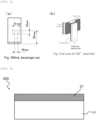
- the 180° peel strength of a 15 mm wide film was measured in the 180° peel test depicted in FIG. 5(b) .
- a tension tester was used for the measurement, and the measurement was performed at room temperature and at a tensile rate of 20 mm/min.
- the resin adhesion after the canmaking was evaluated as follows.
- a cut was formed by a utility knife in the outer surface of the formed 350 mL can at a height position of 90 mm from a can bottom.
- the can was placed in a retort chamber, and was subjected to retort treatment at 125°C for 45 min.
- the maximum film peel length on a lower side of a portion of the unloaded can where the cut had been formed by the utility knife was measured, and was evaluated as follows.
- this retort adhesion test at the worked portion after the canmaking is known to exhibit correlations with the corrosion resistance, and both the corrosion resistance and the resin adhesion of the worked portion can be evaluated by this test.
- An aluminum base material - A3104 alloy type, H19 temper, 0.27 mm sheet thickness - was provided. After rolling oil for the aluminum base material was degreased by a known method, cathodic electrolytic treatment of 1 second was performed in a 1% aqueous sodium carbonate solution (treatment solution A-1) of 60°C. Immediately after that, the aluminum base material was rinsed for 0.5 seconds with deionized water (treatment solution B) of 20°C, and water was removed by a roller, followed by drying in a dryer to obtain a surface-treated aluminum sheet with a film containing aluminum hydroxide formed on each side thereof.
- treatment solution A-1 1% aqueous sodium carbonate solution
- treatment solution B deionized water
- an amorphous layer of 2.5nm average thickness was identified on the aluminum base material. It is to be noted that, as the average thickness of the film, measurement was made in the TEM cross-sectional image at desired 10 points where rugged portions were equally included, and the average of measurement values was used. The determination of amorphousness or crystallinity was made depending on whether or not a lattice fringe existed in the cross-sectional image. Specifically, observation was performed at a high magnification of 2 million times, and the existence or non-existence of the lattice fringe was determined by observing desired different cross-sectional images of two to three areas.
- a resin layer was thermocompression-bonded on the amorphous layer of the above-obtained surface-treated aluminum sheet to prepare a resin-laminated sheet.
- a resin-laminated sheet Specifically, on each side of the surface-treated aluminum sheet heated at 280°C, a non-stretched two-layer PET film (20 um thickness) was laminated, followed by immersion in water for quenching to obtain the resin-laminated sheet.
- the two-layer PET film a film with two layers of PET resin in which isophthalic acid (IA) had been copolymerized at 2 mol%, as a front layer, and PET resin in which isophthalic acid (IA) had been copolymerized at 15 mol%, as a lower layer, laminated at a layer ratio of 4/1 was used.
- 50 mg/m 2 of paraffin wax was applied to both sides of the resin-laminated sheet, followed by punching with a blank diameter of 142 mm to make cup preforms.
- the cup preforms were then worked into 350 mL cans with a reduction rate of 65%.
- Film peel strength of an outer side, a can wall portion, of the above-made beverage can was evaluated by a 180° peel test. The evaluation result is as presented in Table 3.
- Example 1 was repeated except that the temperature of the treatment solution and the treatment time were changed as in Table 1. The results are presented in Tables 2 and 3.
- Example 1 was repeated except that the temperature of the treatment solution, the treatment conditions, and the treatment time were changed as in Table 1. The results are presented in Tables 2 and 3.
- Example 1 was repeated except that the treatment conditions were changed to anodic electrolytic treatment, and the treatment time was changed as in Table 1. The results are presented in Tables 2 and 3.
- Example 4 was repeated except that the treatment time was changed as in Table 1. The results are presented in Tables 2 and 3.
- An aluminum base material - A5021 alloy type, H18 temper, 0.25 mm sheet thickness - was provided. After rolling oil for the aluminum base material was degreased by the known method, the aluminum base material was immersed for 15 seconds in a 0.004% aqueous sodium carbonate solution (treatment solution A-2) of 98°C. Without water rinsing being performed, the aluminum base material was then squeezed by rollers as it is, followed by drying in a dryer to obtain a surface-treated aluminum sheet with a film containing aluminum hydroxide formed on each side thereof. Similar evaluations as in Example 1 were performed on the surface-treated aluminum sheet so obtained. The results are presented in Tables 2 and 3.
- Example 6 was repeated except that the treatment solution was changed to a 0.001% aqueous sodium carbonate solution (treatment solution A-3), and the treatment time was changed as in Table 1. The results are presented in Tables 2 and 3.
- Example 3 was repeated except that the treatment solution was changed to a 0.1% aqueous sodium aluminate solution (treatment solution C-1) and the temperature of the treatment solution and the treatment time were changed as in Table 1. The results are presented in Tables 2 and 3.
- An aluminum base material - A3104 alloy type, H19 temper, 0.27 mm sheet thickness - was provided.
- cathodic electrolytic treatment was performed for 5 seconds in a 1% aqueous sodium carbonate solution (treatment solution A-1) of 60°C.
- treatment solution B deionized water
- treatment solution B deionized water
- Example 9 was repeated except that the rinse time after the treatment was changed as in Table 1. The results are presented in Tables 2 to 3.
- Example 8 was repeated except that the treatment solution was changed to a 0.5% aqueous sodium aluminate solution (treatment solution C-2).
- treatment solution C-2 a 0.5% aqueous sodium aluminate solution
- the pH of the treatment solution C-2 was 12.3. If the pH exceeds 12, aluminum hydroxide is formed during immersion treatment, and at the same time, the aluminum metal surface is excessively etched, so that an acicular texture rapidly grown in the form of rough skin is formed. In this case, the thickness of the crystalline layer exceeds 20 times that of the amorphous layer, and film separation is caused by a difference in level between a lump of acicular texture, which has occurred upon forming, and the amorphous layer. Hence, the evaluation results of the above-described 180° peel test and retort adhesion test were "passed," but compared with the other Examples, the resin adhesion of the worked portion was lowered.
- the film naturally formed after the degreasing was a film primarily including aluminum oxide, and the oxygen element to aluminum element (O/Al) ratio was 1.6.
- the film on the front layer of the aluminum sheet was dissolved in water during retort processing, and it was impossible to obtain sufficient resin adhesion.
- An aluminum base material - A3104 alloy type, H19 temper, 0.27 mm sheet thickness - was provided. After rolling oil for the aluminum base material was degreased by the known method, the aluminum base material was immersed for 2 seconds in a 0.5% aqueous sulfuric acid solution (treatment solution D) of 60°C. Immediately after that, the aluminum base material was rinsed for 0.5 seconds with deionized water (treatment solution B) of 20°C and squeezed by rollers, followed by drying in a dryer to obtain a surface-treated aluminum sheet. Evaluations similar to those in Example 1 were performed on the surface-treated aluminum sheet so obtained. The results are presented in Tables 2 and 3.
- Pickling treatment is typically applied as a pre-step of chromate phosphate treatment or the like, but with a method of immersion in an acidic solution, a film that contains aluminum hydroxide is less likely to be formed, and what is formed is a film primarily including aluminum oxide. Accordingly, the oxygen element to aluminum element (O/Al) ratio of the film after the surface treatment was 1.6, the film on the surface of the aluminum sheet was dissolved in water during retort processing, and it was impossible to obtain sufficient resin adhesion.
- O/Al oxygen element to aluminum element
- the surface-treated aluminum sheets produced by these Examples have been found to have all of corrosion resistance, formability, and resin adhesion.
- the surface-treated aluminum sheets produced by these Examples have been found to achieve the above-described advantageous effects despite the short period of treatment time.
- the untreated aluminum sheet and surface-treated aluminum sheet of the Comparative Examples have been found to be unable to satisfy one or more of corrosion resistance, formability, and resin adhesion as required.
- the absorbance at the wavenumber of 1200 cm -1 and the absorbance at the wavenumber of 850 cm -1 in the infrared absorption spectrum were first connected with the straight line as presented in FIG. 8 , and the straight line was used as a baseline.
- the peak originated from Al-O stretching vibrations of amorphous alumina the highest point from the baseline in the wavenumber range of 850 to 1000 cm -1 was then designated as the absorbance peak height Pa.
- the peak originated from Al-OH bending vibrations of aluminum hydroxide the highest point from the baseline in the wavenumber range of 1000 to 1200 cm -1 was designated as the absorbance peak height Pb.
- the absorbance peak ratio (Pa/Pb) was calculated from the measured Pa and Pb.
- the absorbance peak height Pa and the absorbance peak height Pb are presented along with the calculated absorbance peak ratio (Pa/Pb) in Table 5.
- the adhesion between a resin layer and a surface treatment layer after canmaking was evaluated as follows. First, the resin layer was formed on a surface-treated aluminum sheet to prepare a resin-laminated sheet. Specifically, on each side of the surface-treated aluminum sheet heated at 280°C for 10 seconds, a non-stretched two-layer PET film (thickness 20 um) was laminated, followed by immersion in water for quenching to obtain the resin-laminated sheet.
- the two-layer PET film a film with two layers of PET resin in which isophthalic acid (IA) had been copolymerized at 2 mol%, as a front layer, and PET resin in which isophthalic acid (IA) had been copolymerized at 15 mol%, as a lower layer, laminated at a layer ratio of 4/1 was used.
- the 180° peel strength of a 15 mm wide film was measured by the 180° peel test depicted in FIG. 9(b) .
- a tension tester was used for the measurement, and the measurement was performed at room temperature and at a tensile rate of 20 mm/min.
- the resin adhesion after the canmaking was evaluated as follows.
- test and evaluation were performed by the following method using the above-described drawn and ironed can.
- a cut was formed by a utility knife in the outer surface of the 350 mL drawn and ironed can at a height position of 90 mm from a can bottom.
- the can was placed in a retort chamber, and was subjected to retort treatment at 125°C for 45 minutes.
- the maximum film peel length on a lower side of a portion of the unloaded can where the cut had been formed by the utility knife was measured, and was evaluated as follows.
- this retort adhesion test at the worked portion after the canmaking is known to exhibit correlations with the corrosion resistance, and both the corrosion resistance and the resin adhesion of the worked portion can be evaluated by this test.
- each surface treatment layer was measured from a cross-sectional observation of the film by TEM (transmission electron microscope). Specimens were cut by the microsampling method from the various surface-treated aluminum sheets, and each specimen was fixed on a stage made of Cu. Subsequently, a cross-sectional TEM specimen of approximately 100 nm thickness was prepared by FIB (focused ion beam) processing, and its TEM observation was performed. As the average thickness of the surface treatment layer, measurement was made in the TEM cross-sectional image at desired 10 points where rugged portions were equally included, and the average of the measurement values was used.
- FIB focused ion beam
- An aluminum base material - A3104 alloy type, H19 temper, 0.27 mm sheet thickness - was provided. After rolling oil for the aluminum base material was degreased by the known method, the aluminum base material was immersed for 8 seconds in a treatment solution (deionized water of 98°C) (surface treatment step) as presented in Table 4. Water was removed by a roller, followed by drying in a dryer to obtain a surface-treated aluminum sheet with a surface treatment layer containing aluminum hydroxide formed on each side thereof.
- a treatment solution deionized water of 98°C
- the height (Pa) of an absorbance peak at the wavenumbers of 850 to 1000 cm -1 originated primarily from Al-O stretching vibrations of amorphous alumina and the height (Pb) of an absorbance peak at the wavenumbers of 1000 to 1200 cm -1 originated primarily from Al-OH bending vibrations of aluminum hydroxide in the above-obtained surface treatment layer were measured, and were as presented in Table 5. Further, the absorbance peak ratio (Pa/Pb) was also calculated from the thus-obtained values, and was as presented in Table 5. An infrared absorption spectrum in Example 12 is presented in FIG. 10 .
- a resin layer was thermocompression-bonded on the surface treatment layer of the above-obtained surface-treated aluminum sheet to prepare a resin-laminated sheet.
- a resin-laminated sheet Specifically, on each side of the surface-treated aluminum sheet heated at 280°C, a non-stretched two-layer PET film (thickness 20 um) was laminated, followed by immersion in water for quenching to obtain the resin-laminated sheet.
- the two-layer PET film a film with two layers of PET resin in which isophthalic acid (IA) had been copolymerized at 2 mol%, as a front layer, and PET resin in which isophthalic acid (IA) had been copolymerized at 15 mol%, as a lower layer, laminated at a layer ratio of 4/1 was used.
- 50 mg/m 2 of paraffin wax was applied to both sides of the resin-laminated sheet, followed by punching with a blank diameter of 142 mm to make cup preforms.
- the cup preforms were then worked into 350 mL cans with a reduction rate of 65%.
- the film peel strength of an outer side, a can wall portion, of the above-made drawn and ironed can was evaluated by a 180° peel test. The evaluation result was as presented in Table 5.
- Example 12 Rolling oil for the aluminum base material was degreased by the known method, and as a surface treatment step, the aluminum base material was then held for 30 seconds under a steam environment of 125°C in a retort chamber as presented in Table 4. Except for these, Example 12 was repeated. The results are presented in Table 5. Further, an infrared absorption spectrum in Example 13 is presented in FIG. 11 .
- a pre-treatment step was performed in a manner similar to that in Example 14. Immediately after that, the aluminum base material was immersed for 2 seconds in a treatment solution (deionized water of 98°C) (surface treatment step). Water was removed by a roller, followed by drying in a dryer to obtain a surface-treated aluminum sheet with a surface treatment layer containing aluminum hydroxide formed on each side thereof. The results are presented in Table 5.
- a pre-treatment step was performed in a manner similar to that in Example 14.
- a surface treatment step was performed in a manner similar to that in Example 12, and water was then removed by a roller, followed by drying in a dryer to obtain a surface-treated aluminum sheet with a surface treatment layer containing aluminum hydroxide formed on each side thereof.
- Table 5 The results are presented in Table 5.
- a pre-treatment step was performed in a manner similar to that in Example 14.
- the aluminum base material was immersed for 5 seconds in a treatment solution (0.5% aqueous sodium aluminate solution of 80°C) (surface treatment step).
- a treatment solution (0.5% aqueous sodium aluminate solution of 80°C) (surface treatment step).
- Water was removed by a roller, followed by drying in a dryer to obtain a surface-treated aluminum sheet with a surface treatment layer containing aluminum hydroxide formed on each side thereof.
- Table 5 The results are presented in Table 5.
- a pre-treatment step was performed in a manner similar to that in Example 14.
- the aluminum base material was immersed for 3 days in a treatment solution (deionized water of 25°C) (surface treatment step).
- a treatment solution deionized water of 25°C
- Water was removed by a roller, followed by drying in a dryer to obtain a surface-treated aluminum sheet with a surface treatment layer containing aluminum hydroxide formed on each side thereof.
- the film so formed was a film primarily including aluminum hydroxide, and its absorbance peak ratio (Pa/Pb) was 0.712. Meanwhile, the thickness of the surface treatment layer was as thick as 2,746 nm.
- the layer underwent a cohesive failure when forming, and the surface-treated aluminum sheet failed the 180° peel test of the can wall.
- the results are presented in Table 5.
- the aluminum base material was immersed for 3 days in a treatment solution (deionized water of 25°C) as presented in Table 4. Except for these, Example 12 was repeated.
- the film so formed was a film primarily including aluminum hydroxide, and its absorbance peak ratio (Pa/Pb) was 0.834. Meanwhile, the thickness of the surface treatment layer was as thick as 3,200 nm. Hence, the film underwent a cohesive failure by forming, and the resultant surface-treated aluminum sheet failed the 180° peel test of the can wall.
- the results are presented in Table 5.
- An aluminum base material - A3104 alloy type, H19 temper, 0.27 mm sheet thickness - was provided. After rolling oil for the aluminum base material was degreased by the known method, evaluations similar to those in Example 12 were performed directly without performing surface treatment. The results are presented in Table 5. Films which were naturally formed after the degreasing were films primarily including aluminum oxide, and their absorbance peak ratio (Pa/Pb) was 93. In this case, the native oxide film existing on the front layer of the aluminum sheet is dissolved in water during retort processing. The retort adhesion test resulted in failing to obtain sufficient resin adhesion. The results are presented in Table 5.
- An aluminum base material - A3104 alloy type, H19 temper, 0.27 mm sheet thickness - was provided. After rolling oil for the aluminum base material was degreased by the known method, the aluminum base material was immersed for 2 seconds in a 0.5% aqueous sulfuric acid solution of 60°C. Water was removed by a roller, followed by drying in a dryer to obtain a surface-treated aluminum sheet. Evaluations similar to those in Example 12 were performed on the surface-treated aluminum sheet so obtained. The results are presented in Table 5.
- Pickling treatment is typically applied as a pre-step for chromate phosphate treatment or the like, but with a method of immersion in an acidic solution, films that contain aluminum hydroxide are less likely to be formed, and what are formed are films primarily including amorphous alumina. Accordingly, the absorbance peak ratio (Pa/Pb) of films after the surface treatment was 9.895. As the film on the front layer of the aluminum sheet was dissolved in water during retort processing, the retort adhesion test resulted in failing to obtain sufficient resin adhesion. The results are presented in Table 5. Further, an infrared absorption spectrum in Comparative Example 4 is presented in FIG. 12
- anodic electrolytic treatment of 15 seconds was performed in a 1% aqueous sodium carbonate solution of 65°C (pre-treatment step).
- the aluminum base material was immersed for 1 second in a treatment solution (tap water of 25°C) (surface treatment step).
- a treatment solution tap water of 25°C
- surface treatment step Water was removed by a roller, followed by drying in a dryer to obtain a surface-treated aluminum sheet with a surface treatment layer containing aluminum hydroxide formed on each side thereof.
- a film that is formed by anodic electrolytic treatment is a film primarily including amorphous alumina. Accordingly, the absorbance peak ratio (Pa/Pb) of each film was 6.364.
- Example 15 and Example 16 are compared, their pre-treatment steps are both the same in details, but in their surface treatment steps, the treatment was performed for a longer immersion time in Example 16 than in Example 15. It is considered that, as a result, the film primarily including aluminum hydroxide grew more and the value of the absorbance peak ratio relatively became smaller in Example 16 than in Example 15.
- Example 12 and Example 16 are compared, their surface treatment steps are both the same in details, but Example 12 is different in undergoing no pre-pretreatment step. It has been confirmed that Example 16 resulted in greater growth of the film primarily including aluminum hydroxide and greater thickness of the surface treatment layer despite the immersion was performed in the same surface treatment solution for the same length of time (8 seconds) in the surface treatment step. One possible reason for these is that the native oxide film on the surface of the aluminum base material had been removed by the pre-treatment step in Example 16. In Example 12 in which no pre-treatment step is performed, in contrast, it is considered that the native oxide film was first removed by the surface treatment step, and the growth of the film primarily including aluminum hydroxide was subsequently initiated. The above-described differences are considered to have arisen as the difference in the absorbance peak ratio.
- Example 17 used the alkali solution of high pH as the surface treatment solution in the surface treatment step. As a result, the absorbance peak ratio became the highest among Examples 12 to 20.
- the dissolution rate of the aluminum base material was higher than the growth rate of the film primarily including aluminum hydroxide. It is also considered that, if an aluminum alloy sheet is immersed in an alkali solution of high pH, the alloying components in the base material are also dissolved along with aluminum, and the growth of a film primarily including aluminum hydroxide is inhibited by the alloying components.
- Example 18 and Example 19 the results of the retort adhesion test were "passed," but the results in the 180° peel test did not meet the standard.
- One possible reason for this result is that the thickness of the surface treatment layer was greater than 2000 nm in both Example 18 and Example 19, and a cohesive failure hence occurred inside the surface treatment layer during the 180° peel test.
- These Examples cannot be used in applications where the required formability is high (applications where the reduction rate of each can wall is high), such as drawn and ironed cans, but can be used without problem in applications where the required formability is low, for example, if applied to lids and DR cans (drawn and redrawn cans), structural members subjected to bending forming, and the like.
- Example 16 and Example 14 are compared, their surface pre-treatment steps are all the same, but they are different in that Comparative Example 5 used tap water as the surface treatment solution, but Example 16 used deionized water. As a result, the absorbance peak ratio resulted to be greater than 6 in Comparative Example 5.
- One possible reason for this result is that the formation of a film primarily including aluminum hydroxide was inhibited by calcium, silicon, magnesium, iron, and the like contained in tap water. Meanwhile, it has also been confirmed that, if at approximately 25°C and for short seconds as in Example 14, the formation of a film primarily including aluminum hydroxide is not inhibited even in tap water.
- Comparative Example 6 Through a study on Comparative Example 6, it has been confirmed that the anodic electrolysis in the pre-treatment step in Comparative Example 6 was a method to grow a film primarily including amorphous alumina, and as a result, the value of the resultant absorbance peak ratio exceeded 6, and the standard was not met in the results of the retort adhesion test.
- the surface-treated aluminum sheets of this invention can be applied to a wide field of industry including containers and their lids - such as food cans, beverage cans, electronic circuit protection cases, and battery cases -, structural members for watercrafts, aircrafts, automobiles, and electric home appliances, construction structural members, heat exchanger members, and so on.
- containers and their lids - such as food cans, beverage cans, electronic circuit protection cases, and battery cases -, structural members for watercrafts, aircrafts, automobiles, and electric home appliances, construction structural members, heat exchanger members, and so on.
Landscapes
- Chemical & Material Sciences (AREA)
- Chemical Kinetics & Catalysis (AREA)
- Engineering & Computer Science (AREA)
- Materials Engineering (AREA)
- Metallurgy (AREA)
- Organic Chemistry (AREA)
- Electrochemistry (AREA)
- General Chemical & Material Sciences (AREA)
- Mechanical Engineering (AREA)
- Laminated Bodies (AREA)
Applications Claiming Priority (3)
| Application Number | Priority Date | Filing Date | Title |
|---|---|---|---|
| JP2022002640A JP2023102210A (ja) | 2022-01-11 | 2022-01-11 | 表面処理アルミニウム板、樹脂被覆表面処理アルミニウム板、及び成形体 |
| JP2022200048A JP2024085510A (ja) | 2022-12-15 | 2022-12-15 | 表面処理アルミニウム板、樹脂被覆表面処理アルミニウム板、及び成形体 |
| PCT/JP2023/000473 WO2023136265A1 (ja) | 2022-01-11 | 2023-01-11 | 表面処理アルミニウム板、樹脂被覆表面処理アルミニウム板、及び成形体 |
Publications (2)
| Publication Number | Publication Date |
|---|---|
| EP4464825A1 true EP4464825A1 (de) | 2024-11-20 |
| EP4464825A4 EP4464825A4 (de) | 2025-12-24 |
Family
ID=87279144
Family Applications (1)
| Application Number | Title | Priority Date | Filing Date |
|---|---|---|---|
| EP23740274.8A Pending EP4464825A4 (de) | 2022-01-11 | 2023-01-11 | Oberflächenbehandeltes aluminiumblech, harzbeschichtetes oberflächenbehandeltes aluminiumblech und formkörper |
Country Status (3)
| Country | Link |
|---|---|
| EP (1) | EP4464825A4 (de) |
| KR (1) | KR20240134288A (de) |
| WO (1) | WO2023136265A1 (de) |
Families Citing this family (2)
| Publication number | Priority date | Publication date | Assignee | Title |
|---|---|---|---|---|
| CN121420091A (zh) * | 2023-07-07 | 2026-01-27 | 东洋钢钣株式会社 | 树脂被覆铝无缝罐、树脂被覆铝板、拉深减薄罐 |
| WO2025013803A1 (ja) * | 2023-07-07 | 2025-01-16 | 東洋鋼鈑株式会社 | 樹脂被覆アルミニウム缶蓋、樹脂被覆アルミニウム板 |
Family Cites Families (11)
| Publication number | Priority date | Publication date | Assignee | Title |
|---|---|---|---|---|
| JPS564629B2 (de) | 1974-06-13 | 1981-01-31 | ||
| JPS5546468B2 (de) | 1974-06-13 | 1980-11-25 | ||
| JP3703944B2 (ja) | 1997-06-25 | 2005-10-05 | 三菱アルミニウム株式会社 | 2ピース缶用の表面処理アルミニウム材及び2ピース缶用の表面処理アルミニウム材の製造方法 |
| JP3203219B2 (ja) | 1997-11-26 | 2001-08-27 | 三洋電機株式会社 | 混成集積回路装置の製造方法 |
| JPH11229185A (ja) * | 1998-02-13 | 1999-08-24 | Kobe Steel Ltd | 耐熱割れ性および耐食性に優れたAl材料 |
| JP2003013253A (ja) | 2001-07-04 | 2003-01-15 | Kobe Steel Ltd | 塗膜密着性に優れたアルミニウム合金構造材およびアルミニウム合金構造材の塗膜密着性評価方法 |
| JP2004216801A (ja) | 2003-01-17 | 2004-08-05 | Toppan Printing Co Ltd | 積層体およびそれを用いた包装材料 |
| JP4719919B2 (ja) * | 2005-03-24 | 2011-07-06 | 学校法人近畿大学 | アルミニウム系材料上への機能性皮膜の製造方法及び該機能性皮膜を有するアルミニウム系材料 |
| JP4668063B2 (ja) | 2005-12-28 | 2011-04-13 | 古河スカイ株式会社 | 樹脂被覆アルミニウム板及びその製造方法 |
| CN103826822A (zh) * | 2011-09-26 | 2014-05-28 | 日本轻金属株式会社 | 铝树脂接合体及其制造方法 |
| JP6462249B2 (ja) * | 2014-07-02 | 2019-01-30 | 東洋鋼鈑株式会社 | 表面処理基材の製造方法 |
-
2023
- 2023-01-11 EP EP23740274.8A patent/EP4464825A4/de active Pending
- 2023-01-11 KR KR1020247017418A patent/KR20240134288A/ko active Pending
- 2023-01-11 WO PCT/JP2023/000473 patent/WO2023136265A1/ja not_active Ceased
Also Published As
| Publication number | Publication date |
|---|---|
| KR20240134288A (ko) | 2024-09-09 |
| WO2023136265A1 (ja) | 2023-07-20 |
| EP4464825A4 (de) | 2025-12-24 |
Similar Documents
| Publication | Publication Date | Title |
|---|---|---|
| EP4464825A1 (de) | Oberflächenbehandeltes aluminiumblech, harzbeschichtetes oberflächenbehandeltes aluminiumblech und formkörper | |
| EP1780312B1 (de) | Oberflächenbehandeltes material und oberflächenbehandlungsverfahren dafür, harzbeschichtetes metallmaterial, dose und dosendeckel | |
| EP2578727B1 (de) | Verfahren zur herstellung einer oberflächenbehandelten stahlplatte in einem oberflächenbehandlungsbad sowie mit diesem herstellungsverfahren geformte oberflächenbehandelte stahlplatte | |
| KR100789941B1 (ko) | 열가소성 수지 피복 알루미늄판 및 그 성형체 | |
| US6099953A (en) | Thermoplastic resin-coated aluminum alloy plate, and process and apparatus for producing the same | |
| US6238783B1 (en) | Thermoplastic resin coated aluminum alloy sheet, and method and apparatus for production thereof | |
| US9121105B2 (en) | Process for producing environmentally-friendly steel sheet for container material, environmentally-friendly steel sheet for container material, and laminated and pre-coated steel sheet for container material using the same | |
| US11753737B2 (en) | Surface-treated steel sheet, metal container, and method for producing surface-treated steel sheet | |
| KR20100072056A (ko) | 표면 처리 강판 및 그 제조 방법, 그리고 수지 피복 강판 | |
| EP3085816B1 (de) | Oberflächenbehandeltes stahlblech, mit einem organischen harz beschichteter metallbehälter und verfahren zur herstellung des oberflächenbehandelten stahlblechs | |
| US20200307159A1 (en) | Steel sheet for container | |
| TW200944622A (en) | Plated steel sheet for can and process for producing the plated steel sheet | |
| JP2010261068A (ja) | 錫めっき鋼板およびその製造方法 | |
| US12163243B2 (en) | Surface-treated steel sheet, metal container, and method for manufacturing surface-treated steel sheet | |
| US12359337B2 (en) | Method for passivating a tinplate strip and apparatus for producing said passivated tinplate strip | |
| JP2024085510A (ja) | 表面処理アルミニウム板、樹脂被覆表面処理アルミニウム板、及び成形体 | |
| JP7701584B2 (ja) | 樹脂被覆アルミニウムシームレス缶、樹脂被覆アルミニウム板、絞りしごき缶 | |
| EP4212650A1 (de) | Oberflächenbehandeltes stahlblech und herstellungsverfahren dafür | |
| JP5895905B2 (ja) | 容器用鋼板、その製造に用いられる処理液、および、容器用鋼板の製造方法 | |
| JP7762333B2 (ja) | 樹脂被覆アルミニウム缶蓋、樹脂被覆アルミニウム板 | |
| JP2023102210A (ja) | 表面処理アルミニウム板、樹脂被覆表面処理アルミニウム板、及び成形体 | |
| WO2015020053A1 (ja) | 容器用鋼板 | |
| JP5884180B2 (ja) | 表面処理鋼板の製造方法および表面処理鋼板、ならびに樹脂被覆鋼板、缶および缶蓋 | |
| JP3255606B2 (ja) | 耐水性と耐糸さび性に優れた輸送機用Al合金材 | |
| JP2008230117A (ja) | 樹脂被覆錫めっき鋼板、缶および缶蓋 |
Legal Events
| Date | Code | Title | Description |
|---|---|---|---|
| STAA | Information on the status of an ep patent application or granted ep patent |
Free format text: STATUS: THE INTERNATIONAL PUBLICATION HAS BEEN MADE |
|
| PUAI | Public reference made under article 153(3) epc to a published international application that has entered the european phase |
Free format text: ORIGINAL CODE: 0009012 |
|
| STAA | Information on the status of an ep patent application or granted ep patent |
Free format text: STATUS: REQUEST FOR EXAMINATION WAS MADE |
|
| 17P | Request for examination filed |
Effective date: 20240805 |
|
| AK | Designated contracting states |
Kind code of ref document: A1 Designated state(s): AL AT BE BG CH CY CZ DE DK EE ES FI FR GB GR HR HU IE IS IT LI LT LU LV MC ME MK MT NL NO PL PT RO RS SE SI SK SM TR |
|
| DAV | Request for validation of the european patent (deleted) | ||
| DAX | Request for extension of the european patent (deleted) | ||
| RIC1 | Information provided on ipc code assigned before grant |
Ipc: C25D 11/00 20060101AFI20250908BHEP Ipc: B32B 15/20 20060101ALI20250908BHEP Ipc: C23C 22/68 20060101ALI20250908BHEP Ipc: C25D 11/04 20060101ALI20250908BHEP Ipc: B32B 15/08 20060101ALI20250908BHEP Ipc: C25D 11/18 20060101ALI20250908BHEP |
|
| A4 | Supplementary search report drawn up and despatched |
Effective date: 20251126 |
|
| RIC1 | Information provided on ipc code assigned before grant |
Ipc: C25D 11/00 20060101AFI20251120BHEP Ipc: B32B 15/20 20060101ALI20251120BHEP Ipc: C23C 22/68 20060101ALI20251120BHEP Ipc: C25D 11/04 20060101ALI20251120BHEP Ipc: B32B 15/08 20060101ALI20251120BHEP Ipc: C25D 11/18 20060101ALI20251120BHEP |