EP4464738A1 - Schaumstabilisatoren für phenolschaum - Google Patents
Schaumstabilisatoren für phenolschaum Download PDFInfo
- Publication number
- EP4464738A1 EP4464738A1 EP24174761.7A EP24174761A EP4464738A1 EP 4464738 A1 EP4464738 A1 EP 4464738A1 EP 24174761 A EP24174761 A EP 24174761A EP 4464738 A1 EP4464738 A1 EP 4464738A1
- Authority
- EP
- European Patent Office
- Prior art keywords
- carbon atoms
- weight
- particularly preferably
- parts
- radicals
- Prior art date
- Legal status (The legal status is an assumption and is not a legal conclusion. Google has not performed a legal analysis and makes no representation as to the accuracy of the status listed.)
- Pending
Links
- 239000006260 foam Substances 0.000 title claims abstract description 72
- ISWSIDIOOBJBQZ-UHFFFAOYSA-N phenol group Chemical group C1(=CC=CC=C1)O ISWSIDIOOBJBQZ-UHFFFAOYSA-N 0.000 title claims abstract description 46
- 239000004872 foam stabilizing agent Substances 0.000 title description 16
- 239000000203 mixture Substances 0.000 claims abstract description 47
- 229920000570 polyether Polymers 0.000 claims abstract description 47
- 239000004721 Polyphenylene oxide Substances 0.000 claims abstract description 42
- 229920001568 phenolic resin Polymers 0.000 claims abstract description 37
- 239000005011 phenolic resin Substances 0.000 claims abstract description 37
- KXGFMDJXCMQABM-UHFFFAOYSA-N 2-methoxy-6-methylphenol Chemical compound [CH]OC1=CC=CC([CH])=C1O KXGFMDJXCMQABM-UHFFFAOYSA-N 0.000 claims abstract description 31
- 239000003054 catalyst Substances 0.000 claims abstract description 24
- KPUWHANPEXNPJT-UHFFFAOYSA-N disiloxane Chemical class [SiH3]O[SiH3] KPUWHANPEXNPJT-UHFFFAOYSA-N 0.000 claims abstract description 19
- 239000004604 Blowing Agent Substances 0.000 claims abstract description 12
- -1 alkyl radicals Chemical class 0.000 claims description 39
- 125000004432 carbon atom Chemical group C* 0.000 claims description 31
- 150000003254 radicals Chemical class 0.000 claims description 22
- 125000002496 methyl group Chemical group [H]C([H])([H])* 0.000 claims description 13
- 238000000034 method Methods 0.000 claims description 11
- XLYOFNOQVPJJNP-UHFFFAOYSA-N water Substances O XLYOFNOQVPJJNP-UHFFFAOYSA-N 0.000 claims description 10
- 239000002253 acid Substances 0.000 claims description 9
- 239000004359 castor oil Substances 0.000 claims description 8
- 235000019438 castor oil Nutrition 0.000 claims description 8
- ZEMPKEQAKRGZGQ-XOQCFJPHSA-N glycerol triricinoleate Natural products CCCCCC[C@@H](O)CC=CCCCCCCCC(=O)OC[C@@H](COC(=O)CCCCCCCC=CC[C@@H](O)CCCCCC)OC(=O)CCCCCCCC=CC[C@H](O)CCCCCC ZEMPKEQAKRGZGQ-XOQCFJPHSA-N 0.000 claims description 8
- QWTDNUCVQCZILF-UHFFFAOYSA-N isopentane Chemical compound CCC(C)C QWTDNUCVQCZILF-UHFFFAOYSA-N 0.000 claims description 8
- RGSFGYAAUTVSQA-UHFFFAOYSA-N Cyclopentane Chemical compound C1CCCC1 RGSFGYAAUTVSQA-UHFFFAOYSA-N 0.000 claims description 7
- OFBQJSOFQDEBGM-UHFFFAOYSA-N Pentane Chemical compound CCCCC OFBQJSOFQDEBGM-UHFFFAOYSA-N 0.000 claims description 7
- NBIIXXVUZAFLBC-UHFFFAOYSA-N Phosphoric acid Chemical compound OP(O)(O)=O NBIIXXVUZAFLBC-UHFFFAOYSA-N 0.000 claims description 6
- QAOWNCQODCNURD-UHFFFAOYSA-N Sulfuric acid Chemical compound OS(O)(=O)=O QAOWNCQODCNURD-UHFFFAOYSA-N 0.000 claims description 6
- 150000005840 aryl radicals Chemical class 0.000 claims description 6
- 125000001495 ethyl group Chemical group [H]C([H])([H])C([H])([H])* 0.000 claims description 6
- 229930195733 hydrocarbon Natural products 0.000 claims description 6
- 239000003380 propellant Substances 0.000 claims description 6
- 235000015112 vegetable and seed oil Nutrition 0.000 claims description 6
- 239000008158 vegetable oil Substances 0.000 claims description 6
- 238000009413 insulation Methods 0.000 claims description 5
- JOXIMZWYDAKGHI-UHFFFAOYSA-N toluene-4-sulfonic acid Chemical compound CC1=CC=C(S(O)(=O)=O)C=C1 JOXIMZWYDAKGHI-UHFFFAOYSA-N 0.000 claims description 5
- AFABGHUZZDYHJO-UHFFFAOYSA-N dimethyl butane Natural products CCCC(C)C AFABGHUZZDYHJO-UHFFFAOYSA-N 0.000 claims description 4
- 125000001033 ether group Chemical group 0.000 claims description 4
- DMEGYFMYUHOHGS-UHFFFAOYSA-N heptamethylene Natural products C1CCCCCC1 DMEGYFMYUHOHGS-UHFFFAOYSA-N 0.000 claims description 4
- ULYZAYCEDJDHCC-UHFFFAOYSA-N isopropyl chloride Chemical compound CC(C)Cl ULYZAYCEDJDHCC-UHFFFAOYSA-N 0.000 claims description 4
- WHOZNOZYMBRCBL-OUKQBFOZSA-N (2E)-2-Tetradecenal Chemical compound CCCCCCCCCCC\C=C\C=O WHOZNOZYMBRCBL-OUKQBFOZSA-N 0.000 claims description 3
- JIRHAGAOHOYLNO-UHFFFAOYSA-N (3-cyclopentyloxy-4-methoxyphenyl)methanol Chemical compound COC1=CC=C(CO)C=C1OC1CCCC1 JIRHAGAOHOYLNO-UHFFFAOYSA-N 0.000 claims description 3
- CVLHGLWXLDOELD-UHFFFAOYSA-N 4-(Propan-2-yl)benzenesulfonic acid Chemical compound CC(C)C1=CC=C(S(O)(=O)=O)C=C1 CVLHGLWXLDOELD-UHFFFAOYSA-N 0.000 claims description 3
- BRIXOPDYGQCZFO-UHFFFAOYSA-N 4-ethylphenylsulfonic acid Chemical compound CCC1=CC=C(S(O)(=O)=O)C=C1 BRIXOPDYGQCZFO-UHFFFAOYSA-N 0.000 claims description 3
- 229910000147 aluminium phosphate Inorganic materials 0.000 claims description 3
- SRSXLGNVWSONIS-UHFFFAOYSA-N benzenesulfonic acid Chemical compound OS(=O)(=O)C1=CC=CC=C1 SRSXLGNVWSONIS-UHFFFAOYSA-N 0.000 claims description 3
- 229940092714 benzenesulfonic acid Drugs 0.000 claims description 3
- 125000001797 benzyl group Chemical group [H]C1=C([H])C([H])=C(C([H])=C1[H])C([H])([H])* 0.000 claims description 3
- 125000000484 butyl group Chemical group [H]C([*])([H])C([H])([H])C([H])([H])C([H])([H])[H] 0.000 claims description 3
- 150000007522 mineralic acids Chemical class 0.000 claims description 3
- 150000007524 organic acids Chemical class 0.000 claims description 3
- 229940044654 phenolsulfonic acid Drugs 0.000 claims description 3
- 125000001997 phenyl group Chemical group [H]C1=C([H])C([H])=C(*)C([H])=C1[H] 0.000 claims description 3
- 238000002360 preparation method Methods 0.000 claims description 3
- 239000011541 reaction mixture Substances 0.000 claims description 3
- 239000004094 surface-active agent Substances 0.000 claims description 3
- 229910052799 carbon Inorganic materials 0.000 claims description 2
- 238000004519 manufacturing process Methods 0.000 description 14
- 239000003381 stabilizer Substances 0.000 description 12
- 150000001875 compounds Chemical class 0.000 description 9
- 239000000654 additive Substances 0.000 description 7
- 230000015572 biosynthetic process Effects 0.000 description 7
- 238000006243 chemical reaction Methods 0.000 description 4
- 238000009472 formulation Methods 0.000 description 4
- 229920005989 resin Polymers 0.000 description 4
- 239000011347 resin Substances 0.000 description 4
- 125000003903 2-propenyl group Chemical group [H]C([*])([H])C([H])=C([H])[H] 0.000 description 3
- 101100243454 Caenorhabditis elegans pes-10 gene Proteins 0.000 description 3
- KWYUFKZDYYNOTN-UHFFFAOYSA-M Potassium hydroxide Chemical compound [OH-].[K+] KWYUFKZDYYNOTN-UHFFFAOYSA-M 0.000 description 3
- HEMHJVSKTPXQMS-UHFFFAOYSA-M Sodium hydroxide Chemical compound [OH-].[Na+] HEMHJVSKTPXQMS-UHFFFAOYSA-M 0.000 description 3
- YXFVVABEGXRONW-UHFFFAOYSA-N Toluene Chemical compound CC1=CC=CC=C1 YXFVVABEGXRONW-UHFFFAOYSA-N 0.000 description 3
- ZMANZCXQSJIPKH-UHFFFAOYSA-N Triethylamine Chemical compound CCN(CC)CC ZMANZCXQSJIPKH-UHFFFAOYSA-N 0.000 description 3
- 150000001299 aldehydes Chemical class 0.000 description 3
- 230000000052 comparative effect Effects 0.000 description 3
- 229920001577 copolymer Polymers 0.000 description 3
- BASFCYQUMIYNBI-UHFFFAOYSA-N platinum Substances [Pt] BASFCYQUMIYNBI-UHFFFAOYSA-N 0.000 description 3
- 229920003987 resole Polymers 0.000 description 3
- IKHGUXGNUITLKF-UHFFFAOYSA-N Acetaldehyde Chemical compound CC=O IKHGUXGNUITLKF-UHFFFAOYSA-N 0.000 description 2
- IJGRMHOSHXDMSA-UHFFFAOYSA-N Atomic nitrogen Chemical compound N#N IJGRMHOSHXDMSA-UHFFFAOYSA-N 0.000 description 2
- VTYYLEPIZMXCLO-UHFFFAOYSA-L Calcium carbonate Chemical compound [Ca+2].[O-]C([O-])=O VTYYLEPIZMXCLO-UHFFFAOYSA-L 0.000 description 2
- 239000004215 Carbon black (E152) Substances 0.000 description 2
- XMSXQFUHVRWGNA-UHFFFAOYSA-N Decamethylcyclopentasiloxane Chemical compound C[Si]1(C)O[Si](C)(C)O[Si](C)(C)O[Si](C)(C)O[Si](C)(C)O1 XMSXQFUHVRWGNA-UHFFFAOYSA-N 0.000 description 2
- WTDHULULXKLSOZ-UHFFFAOYSA-N Hydroxylamine hydrochloride Chemical compound Cl.ON WTDHULULXKLSOZ-UHFFFAOYSA-N 0.000 description 2
- 229920003171 Poly (ethylene oxide) Polymers 0.000 description 2
- XLOMVQKBTHCTTD-UHFFFAOYSA-N Zinc monoxide Chemical compound [Zn]=O XLOMVQKBTHCTTD-UHFFFAOYSA-N 0.000 description 2
- 150000007513 acids Chemical class 0.000 description 2
- AYJRCSIUFZENHW-UHFFFAOYSA-L barium carbonate Chemical compound [Ba+2].[O-]C([O-])=O AYJRCSIUFZENHW-UHFFFAOYSA-L 0.000 description 2
- 239000004202 carbamide Substances 0.000 description 2
- RCNRJBWHLARWRP-UHFFFAOYSA-N ethenyl-[ethenyl(dimethyl)silyl]oxy-dimethylsilane;platinum Chemical compound [Pt].C=C[Si](C)(C)O[Si](C)(C)C=C RCNRJBWHLARWRP-UHFFFAOYSA-N 0.000 description 2
- 239000000945 filler Substances 0.000 description 2
- 239000003063 flame retardant Substances 0.000 description 2
- 238000005187 foaming Methods 0.000 description 2
- HYBBIBNJHNGZAN-UHFFFAOYSA-N furfural Chemical compound O=CC1=CC=CO1 HYBBIBNJHNGZAN-UHFFFAOYSA-N 0.000 description 2
- 229940052308 general anesthetics halogenated hydrocarbons Drugs 0.000 description 2
- 150000008282 halocarbons Chemical class 0.000 description 2
- 150000002430 hydrocarbons Chemical class 0.000 description 2
- 238000005259 measurement Methods 0.000 description 2
- 229910052751 metal Inorganic materials 0.000 description 2
- 239000002184 metal Substances 0.000 description 2
- 239000004848 polyfunctional curative Substances 0.000 description 2
- GHMLBKRAJCXXBS-UHFFFAOYSA-N resorcinol Chemical compound OC1=CC=CC(O)=C1 GHMLBKRAJCXXBS-UHFFFAOYSA-N 0.000 description 2
- 239000000243 solution Substances 0.000 description 2
- 239000000126 substance Substances 0.000 description 2
- 238000012360 testing method Methods 0.000 description 2
- GETQZCLCWQTVFV-UHFFFAOYSA-N trimethylamine Chemical compound CN(C)C GETQZCLCWQTVFV-UHFFFAOYSA-N 0.000 description 2
- XSQUKJJJFZCRTK-UHFFFAOYSA-N urea group Chemical group NC(=O)N XSQUKJJJFZCRTK-UHFFFAOYSA-N 0.000 description 2
- LVGUZGTVOIAKKC-UHFFFAOYSA-N 1,1,1,2-tetrafluoroethane Chemical compound FCC(F)(F)F LVGUZGTVOIAKKC-UHFFFAOYSA-N 0.000 description 1
- SCYULBFZEHDVBN-UHFFFAOYSA-N 1,1-Dichloroethane Chemical compound CC(Cl)Cl SCYULBFZEHDVBN-UHFFFAOYSA-N 0.000 description 1
- LGXVIGDEPROXKC-UHFFFAOYSA-N 1,1-dichloroethene Chemical compound ClC(Cl)=C LGXVIGDEPROXKC-UHFFFAOYSA-N 0.000 description 1
- KFUSEUYYWQURPO-UHFFFAOYSA-N 1,2-dichloroethene Chemical compound ClC=CCl KFUSEUYYWQURPO-UHFFFAOYSA-N 0.000 description 1
- CZHLPWNZCJEPJB-UHFFFAOYSA-N 1-chloro-3-methylbutane Chemical compound CC(C)CCCl CZHLPWNZCJEPJB-UHFFFAOYSA-N 0.000 description 1
- VFWCMGCRMGJXDK-UHFFFAOYSA-N 1-chlorobutane Chemical compound CCCCCl VFWCMGCRMGJXDK-UHFFFAOYSA-N 0.000 description 1
- SQCZQTSHSZLZIQ-UHFFFAOYSA-N 1-chloropentane Chemical compound CCCCCCl SQCZQTSHSZLZIQ-UHFFFAOYSA-N 0.000 description 1
- QTWJRLJHJPIABL-UHFFFAOYSA-N 2-methylphenol;3-methylphenol;4-methylphenol Chemical compound CC1=CC=C(O)C=C1.CC1=CC=CC(O)=C1.CC1=CC=CC=C1O QTWJRLJHJPIABL-UHFFFAOYSA-N 0.000 description 1
- 229920001342 Bakelite® Polymers 0.000 description 1
- IUMSDRXLFWAGNT-UHFFFAOYSA-N Dodecamethylcyclohexasiloxane Chemical compound C[Si]1(C)O[Si](C)(C)O[Si](C)(C)O[Si](C)(C)O[Si](C)(C)O[Si](C)(C)O1 IUMSDRXLFWAGNT-UHFFFAOYSA-N 0.000 description 1
- LYCAIKOWRPUZTN-UHFFFAOYSA-N Ethylene glycol Chemical compound OCCO LYCAIKOWRPUZTN-UHFFFAOYSA-N 0.000 description 1
- CTQNGGLPUBDAKN-UHFFFAOYSA-N O-Xylene Chemical compound CC1=CC=CC=C1C CTQNGGLPUBDAKN-UHFFFAOYSA-N 0.000 description 1
- 239000004698 Polyethylene Substances 0.000 description 1
- XSTXAVWGXDQKEL-UHFFFAOYSA-N Trichloroethylene Chemical compound ClC=C(Cl)Cl XSTXAVWGXDQKEL-UHFFFAOYSA-N 0.000 description 1
- BZHJMEDXRYGGRV-UHFFFAOYSA-N Vinyl chloride Chemical compound ClC=C BZHJMEDXRYGGRV-UHFFFAOYSA-N 0.000 description 1
- HCHKCACWOHOZIP-UHFFFAOYSA-N Zinc Chemical compound [Zn] HCHKCACWOHOZIP-UHFFFAOYSA-N 0.000 description 1
- FMRLDPWIRHBCCC-UHFFFAOYSA-L Zinc carbonate Chemical compound [Zn+2].[O-]C([O-])=O FMRLDPWIRHBCCC-UHFFFAOYSA-L 0.000 description 1
- 230000000996 additive effect Effects 0.000 description 1
- 230000032683 aging Effects 0.000 description 1
- 125000003172 aldehyde group Chemical group 0.000 description 1
- 229910001854 alkali hydroxide Inorganic materials 0.000 description 1
- 150000008044 alkali metal hydroxides Chemical class 0.000 description 1
- 229910052782 aluminium Inorganic materials 0.000 description 1
- XAGFODPZIPBFFR-UHFFFAOYSA-N aluminium Chemical compound [Al] XAGFODPZIPBFFR-UHFFFAOYSA-N 0.000 description 1
- WNROFYMDJYEPJX-UHFFFAOYSA-K aluminium hydroxide Chemical compound [OH-].[OH-].[OH-].[Al+3] WNROFYMDJYEPJX-UHFFFAOYSA-K 0.000 description 1
- 125000003277 amino group Chemical group 0.000 description 1
- 239000007864 aqueous solution Substances 0.000 description 1
- 239000004637 bakelite Substances 0.000 description 1
- YXVFYQXJAXKLAK-UHFFFAOYSA-N biphenyl-4-ol Chemical compound C1=CC(O)=CC=C1C1=CC=CC=C1 YXVFYQXJAXKLAK-UHFFFAOYSA-N 0.000 description 1
- 238000009835 boiling Methods 0.000 description 1
- 229910000019 calcium carbonate Inorganic materials 0.000 description 1
- AXCZMVOFGPJBDE-UHFFFAOYSA-L calcium dihydroxide Chemical compound [OH-].[OH-].[Ca+2] AXCZMVOFGPJBDE-UHFFFAOYSA-L 0.000 description 1
- 239000000920 calcium hydroxide Substances 0.000 description 1
- 229910001861 calcium hydroxide Inorganic materials 0.000 description 1
- 150000004649 carbonic acid derivatives Chemical class 0.000 description 1
- 230000015556 catabolic process Effects 0.000 description 1
- 230000003197 catalytic effect Effects 0.000 description 1
- 239000003638 chemical reducing agent Substances 0.000 description 1
- 150000008280 chlorinated hydrocarbons Chemical class 0.000 description 1
- 238000009833 condensation Methods 0.000 description 1
- 230000005494 condensation Effects 0.000 description 1
- 238000001816 cooling Methods 0.000 description 1
- 229930003836 cresol Natural products 0.000 description 1
- 238000004132 cross linking Methods 0.000 description 1
- 238000006731 degradation reaction Methods 0.000 description 1
- QGBSISYHAICWAH-UHFFFAOYSA-N dicyandiamide Chemical group NC(N)=NC#N QGBSISYHAICWAH-UHFFFAOYSA-N 0.000 description 1
- ZBCBWPMODOFKDW-UHFFFAOYSA-N diethanolamine Chemical compound OCCNCCO ZBCBWPMODOFKDW-UHFFFAOYSA-N 0.000 description 1
- 239000000975 dye Substances 0.000 description 1
- 230000000694 effects Effects 0.000 description 1
- ILEDWLMCKZNDJK-UHFFFAOYSA-N esculetin Chemical compound C1=CC(=O)OC2=C1C=C(O)C(O)=C2 ILEDWLMCKZNDJK-UHFFFAOYSA-N 0.000 description 1
- 238000011156 evaluation Methods 0.000 description 1
- 239000003205 fragrance Substances 0.000 description 1
- 238000013038 hand mixing Methods 0.000 description 1
- QTBFPMKWQKYFLR-UHFFFAOYSA-N isobutyl chloride Chemical compound CC(C)CCl QTBFPMKWQKYFLR-UHFFFAOYSA-N 0.000 description 1
- 239000007788 liquid Substances 0.000 description 1
- 230000007774 longterm Effects 0.000 description 1
- ZLNQQNXFFQJAID-UHFFFAOYSA-L magnesium carbonate Chemical compound [Mg+2].[O-]C([O-])=O ZLNQQNXFFQJAID-UHFFFAOYSA-L 0.000 description 1
- 239000001095 magnesium carbonate Substances 0.000 description 1
- 229910000021 magnesium carbonate Inorganic materials 0.000 description 1
- VTHJTEIRLNZDEV-UHFFFAOYSA-L magnesium dihydroxide Chemical compound [OH-].[OH-].[Mg+2] VTHJTEIRLNZDEV-UHFFFAOYSA-L 0.000 description 1
- 239000000347 magnesium hydroxide Substances 0.000 description 1
- 229910001862 magnesium hydroxide Inorganic materials 0.000 description 1
- 239000000463 material Substances 0.000 description 1
- 229910000000 metal hydroxide Inorganic materials 0.000 description 1
- 150000004692 metal hydroxides Chemical class 0.000 description 1
- 229910044991 metal oxide Inorganic materials 0.000 description 1
- 150000004706 metal oxides Chemical class 0.000 description 1
- WSFSSNUMVMOOMR-NJFSPNSNSA-N methanone Chemical compound O=[14CH2] WSFSSNUMVMOOMR-NJFSPNSNSA-N 0.000 description 1
- 238000002156 mixing Methods 0.000 description 1
- SNMVRZFUUCLYTO-UHFFFAOYSA-N n-propyl chloride Chemical compound CCCCl SNMVRZFUUCLYTO-UHFFFAOYSA-N 0.000 description 1
- 229910052757 nitrogen Inorganic materials 0.000 description 1
- HMMGMWAXVFQUOA-UHFFFAOYSA-N octamethylcyclotetrasiloxane Chemical compound C[Si]1(C)O[Si](C)(C)O[Si](C)(C)O[Si](C)(C)O1 HMMGMWAXVFQUOA-UHFFFAOYSA-N 0.000 description 1
- TWNQGVIAIRXVLR-UHFFFAOYSA-N oxo(oxoalumanyloxy)alumane Chemical compound O=[Al]O[Al]=O TWNQGVIAIRXVLR-UHFFFAOYSA-N 0.000 description 1
- 125000000913 palmityl group Chemical group [H]C([*])([H])C([H])([H])C([H])([H])C([H])([H])C([H])([H])C([H])([H])C([H])([H])C([H])([H])C([H])([H])C([H])([H])C([H])([H])C([H])([H])C([H])([H])C([H])([H])C([H])([H])C([H])([H])[H] 0.000 description 1
- MSSNHSVIGIHOJA-UHFFFAOYSA-N pentafluoropropane Chemical compound FC(F)CC(F)(F)F MSSNHSVIGIHOJA-UHFFFAOYSA-N 0.000 description 1
- 239000000049 pigment Substances 0.000 description 1
- 239000004014 plasticizer Substances 0.000 description 1
- 229920005906 polyester polyol Polymers 0.000 description 1
- 229920000573 polyethylene Polymers 0.000 description 1
- 229920001451 polypropylene glycol Polymers 0.000 description 1
- 229920001296 polysiloxane Polymers 0.000 description 1
- 239000011148 porous material Substances 0.000 description 1
- 230000008092 positive effect Effects 0.000 description 1
- 238000003918 potentiometric titration Methods 0.000 description 1
- 239000000843 powder Substances 0.000 description 1
- 238000012545 processing Methods 0.000 description 1
- 238000007670 refining Methods 0.000 description 1
- 238000010992 reflux Methods 0.000 description 1
- 238000005070 sampling Methods 0.000 description 1
- 239000007787 solid Substances 0.000 description 1
- 125000001424 substituent group Chemical group 0.000 description 1
- 238000003786 synthesis reaction Methods 0.000 description 1
- 229960002415 trichloroethylene Drugs 0.000 description 1
- 239000008096 xylene Substances 0.000 description 1
- 125000002256 xylenyl group Chemical class C1(C(C=CC=C1)C)(C)* 0.000 description 1
- 229910052725 zinc Inorganic materials 0.000 description 1
- 239000011701 zinc Substances 0.000 description 1
- 239000011667 zinc carbonate Substances 0.000 description 1
- 229910000010 zinc carbonate Inorganic materials 0.000 description 1
- 235000004416 zinc carbonate Nutrition 0.000 description 1
- 239000011787 zinc oxide Substances 0.000 description 1
Classifications
-
- C—CHEMISTRY; METALLURGY
- C08—ORGANIC MACROMOLECULAR COMPOUNDS; THEIR PREPARATION OR CHEMICAL WORKING-UP; COMPOSITIONS BASED THEREON
- C08J—WORKING-UP; GENERAL PROCESSES OF COMPOUNDING; AFTER-TREATMENT NOT COVERED BY SUBCLASSES C08B, C08C, C08F, C08G or C08H
- C08J9/00—Working-up of macromolecular substances to porous or cellular articles or materials; After-treatment thereof
- C08J9/04—Working-up of macromolecular substances to porous or cellular articles or materials; After-treatment thereof using blowing gases generated by a previously added blowing agent
- C08J9/12—Working-up of macromolecular substances to porous or cellular articles or materials; After-treatment thereof using blowing gases generated by a previously added blowing agent by a physical blowing agent
- C08J9/14—Working-up of macromolecular substances to porous or cellular articles or materials; After-treatment thereof using blowing gases generated by a previously added blowing agent by a physical blowing agent organic
- C08J9/141—Hydrocarbons
-
- C—CHEMISTRY; METALLURGY
- C08—ORGANIC MACROMOLECULAR COMPOUNDS; THEIR PREPARATION OR CHEMICAL WORKING-UP; COMPOSITIONS BASED THEREON
- C08J—WORKING-UP; GENERAL PROCESSES OF COMPOUNDING; AFTER-TREATMENT NOT COVERED BY SUBCLASSES C08B, C08C, C08F, C08G or C08H
- C08J9/00—Working-up of macromolecular substances to porous or cellular articles or materials; After-treatment thereof
- C08J9/0014—Use of organic additives
- C08J9/0042—Use of organic additives containing silicon
-
- C—CHEMISTRY; METALLURGY
- C08—ORGANIC MACROMOLECULAR COMPOUNDS; THEIR PREPARATION OR CHEMICAL WORKING-UP; COMPOSITIONS BASED THEREON
- C08J—WORKING-UP; GENERAL PROCESSES OF COMPOUNDING; AFTER-TREATMENT NOT COVERED BY SUBCLASSES C08B, C08C, C08F, C08G or C08H
- C08J9/00—Working-up of macromolecular substances to porous or cellular articles or materials; After-treatment thereof
- C08J9/0061—Working-up of macromolecular substances to porous or cellular articles or materials; After-treatment thereof characterized by the use of several polymeric components
-
- C—CHEMISTRY; METALLURGY
- C08—ORGANIC MACROMOLECULAR COMPOUNDS; THEIR PREPARATION OR CHEMICAL WORKING-UP; COMPOSITIONS BASED THEREON
- C08J—WORKING-UP; GENERAL PROCESSES OF COMPOUNDING; AFTER-TREATMENT NOT COVERED BY SUBCLASSES C08B, C08C, C08F, C08G or C08H
- C08J9/00—Working-up of macromolecular substances to porous or cellular articles or materials; After-treatment thereof
- C08J9/04—Working-up of macromolecular substances to porous or cellular articles or materials; After-treatment thereof using blowing gases generated by a previously added blowing agent
- C08J9/06—Working-up of macromolecular substances to porous or cellular articles or materials; After-treatment thereof using blowing gases generated by a previously added blowing agent by a chemical blowing agent
-
- C—CHEMISTRY; METALLURGY
- C08—ORGANIC MACROMOLECULAR COMPOUNDS; THEIR PREPARATION OR CHEMICAL WORKING-UP; COMPOSITIONS BASED THEREON
- C08K—Use of inorganic or non-macromolecular organic substances as compounding ingredients
- C08K5/00—Use of organic ingredients
- C08K5/54—Silicon-containing compounds
- C08K5/541—Silicon-containing compounds containing oxygen
- C08K5/5415—Silicon-containing compounds containing oxygen containing at least one Si—O bond
- C08K5/5419—Silicon-containing compounds containing oxygen containing at least one Si—O bond containing at least one Si—C bond
-
- C—CHEMISTRY; METALLURGY
- C08—ORGANIC MACROMOLECULAR COMPOUNDS; THEIR PREPARATION OR CHEMICAL WORKING-UP; COMPOSITIONS BASED THEREON
- C08L—COMPOSITIONS OF MACROMOLECULAR COMPOUNDS
- C08L61/00—Compositions of condensation polymers of aldehydes or ketones; Compositions of derivatives of such polymers
- C08L61/04—Condensation polymers of aldehydes or ketones with phenols only
-
- C—CHEMISTRY; METALLURGY
- C08—ORGANIC MACROMOLECULAR COMPOUNDS; THEIR PREPARATION OR CHEMICAL WORKING-UP; COMPOSITIONS BASED THEREON
- C08L—COMPOSITIONS OF MACROMOLECULAR COMPOUNDS
- C08L71/00—Compositions of polyethers obtained by reactions forming an ether link in the main chain; Compositions of derivatives of such polymers
- C08L71/02—Polyalkylene oxides
-
- C—CHEMISTRY; METALLURGY
- C08—ORGANIC MACROMOLECULAR COMPOUNDS; THEIR PREPARATION OR CHEMICAL WORKING-UP; COMPOSITIONS BASED THEREON
- C08L—COMPOSITIONS OF MACROMOLECULAR COMPOUNDS
- C08L83/00—Compositions of macromolecular compounds obtained by reactions forming in the main chain of the macromolecule a linkage containing silicon with or without sulfur, nitrogen, oxygen or carbon only; Compositions of derivatives of such polymers
- C08L83/04—Polysiloxanes
- C08L83/06—Polysiloxanes containing silicon bound to oxygen-containing groups
-
- C—CHEMISTRY; METALLURGY
- C08—ORGANIC MACROMOLECULAR COMPOUNDS; THEIR PREPARATION OR CHEMICAL WORKING-UP; COMPOSITIONS BASED THEREON
- C08J—WORKING-UP; GENERAL PROCESSES OF COMPOUNDING; AFTER-TREATMENT NOT COVERED BY SUBCLASSES C08B, C08C, C08F, C08G or C08H
- C08J2203/00—Foams characterized by the expanding agent
- C08J2203/14—Saturated hydrocarbons, e.g. butane; Unspecified hydrocarbons
-
- C—CHEMISTRY; METALLURGY
- C08—ORGANIC MACROMOLECULAR COMPOUNDS; THEIR PREPARATION OR CHEMICAL WORKING-UP; COMPOSITIONS BASED THEREON
- C08J—WORKING-UP; GENERAL PROCESSES OF COMPOUNDING; AFTER-TREATMENT NOT COVERED BY SUBCLASSES C08B, C08C, C08F, C08G or C08H
- C08J2361/00—Characterised by the use of condensation polymers of aldehydes or ketones; Derivatives of such polymers
- C08J2361/04—Condensation polymers of aldehydes or ketones with phenols only
-
- C—CHEMISTRY; METALLURGY
- C08—ORGANIC MACROMOLECULAR COMPOUNDS; THEIR PREPARATION OR CHEMICAL WORKING-UP; COMPOSITIONS BASED THEREON
- C08J—WORKING-UP; GENERAL PROCESSES OF COMPOUNDING; AFTER-TREATMENT NOT COVERED BY SUBCLASSES C08B, C08C, C08F, C08G or C08H
- C08J2361/00—Characterised by the use of condensation polymers of aldehydes or ketones; Derivatives of such polymers
- C08J2361/04—Condensation polymers of aldehydes or ketones with phenols only
- C08J2361/06—Condensation polymers of aldehydes or ketones with phenols only of aldehydes with phenols
-
- C—CHEMISTRY; METALLURGY
- C08—ORGANIC MACROMOLECULAR COMPOUNDS; THEIR PREPARATION OR CHEMICAL WORKING-UP; COMPOSITIONS BASED THEREON
- C08J—WORKING-UP; GENERAL PROCESSES OF COMPOUNDING; AFTER-TREATMENT NOT COVERED BY SUBCLASSES C08B, C08C, C08F, C08G or C08H
- C08J2361/00—Characterised by the use of condensation polymers of aldehydes or ketones; Derivatives of such polymers
- C08J2361/04—Condensation polymers of aldehydes or ketones with phenols only
- C08J2361/06—Condensation polymers of aldehydes or ketones with phenols only of aldehydes with phenols
- C08J2361/08—Condensation polymers of aldehydes or ketones with phenols only of aldehydes with phenols with monohydric phenols
- C08J2361/10—Phenol-formaldehyde condensates
-
- C—CHEMISTRY; METALLURGY
- C08—ORGANIC MACROMOLECULAR COMPOUNDS; THEIR PREPARATION OR CHEMICAL WORKING-UP; COMPOSITIONS BASED THEREON
- C08J—WORKING-UP; GENERAL PROCESSES OF COMPOUNDING; AFTER-TREATMENT NOT COVERED BY SUBCLASSES C08B, C08C, C08F, C08G or C08H
- C08J2483/00—Characterised by the use of macromolecular compounds obtained by reactions forming in the main chain of the macromolecule a linkage containing silicon with or without sulfur, nitrogen, oxygen, or carbon only; Derivatives of such polymers
- C08J2483/04—Polysiloxanes
- C08J2483/06—Polysiloxanes containing silicon bound to oxygen-containing groups
-
- C—CHEMISTRY; METALLURGY
- C08—ORGANIC MACROMOLECULAR COMPOUNDS; THEIR PREPARATION OR CHEMICAL WORKING-UP; COMPOSITIONS BASED THEREON
- C08J—WORKING-UP; GENERAL PROCESSES OF COMPOUNDING; AFTER-TREATMENT NOT COVERED BY SUBCLASSES C08B, C08C, C08F, C08G or C08H
- C08J2483/00—Characterised by the use of macromolecular compounds obtained by reactions forming in the main chain of the macromolecule a linkage containing silicon with or without sulfur, nitrogen, oxygen, or carbon only; Derivatives of such polymers
- C08J2483/10—Block- or graft-copolymers containing polysiloxane sequences
- C08J2483/12—Block- or graft-copolymers containing polysiloxane sequences containing polyether sequences
Definitions
- the present invention is in the field of phenolic foams.
- it relates to a composition for producing phenolic foam, a process for producing phenolic foam, phenolic foam produced according to the invention and its use.
- phenolic foam is understood to mean in particular a foam obtainable by reacting a phenolic resin with an acid as a catalyst with the addition of a blowing agent and a foam stabilizer.
- Phenolic foams are known to the person skilled in the art and are described, for example, in EP 3830174 A1 , DE 602004006376 T2 , EP 2898005 A1 , EP 1922357 A1 , WO 2022043561 A1 , EP 4073155 A1 , AU 2021238847 A1 or WO 2006114777 A1 Phenolic foams are also referred to as phenolic resin foams. This also applies to this invention.
- cell-stabilizing or foam-stabilizing additives can generally be used, which are intended to ensure a fine-cell, uniform and low-interference foam structure and thus have a significant positive effect on the properties of use, in particular the thermal insulation capacity of the foam.
- Foam stabilizers can usually be used for this purpose, such as foam stabilizers based on ethoxylated vegetable oils, such as castor oil, as in EP 3830174 A1
- PES polyether-modified siloxanes
- the combination of ethoxylated vegetable oils and polyether-modified siloxanes leads to excellent performance properties. This combination therefore represents a type of foam stabilizer that is usually preferred in the production of phenolic foam.
- WO 2004/056911 A2 describes, among other things, the preparation of closed-cell phenolic foams using polyethersiloxane copolymers as foam stabilizers to improve aging thermal conductivity, which are described using the general polysiloxane, polyethylene oxide and polypropylene oxide content.
- WO 2022/043561 A1 describes, among other things, the production of phenolic foams using foam stabilizers based on a mixture of ethoxylated castor oil and polyethersiloxane copolymers with less than 50% polyethylene oxide content, with preference being given to using polyethersiloxane copolymers which have a molecular weight of 9,500 to 25,000 g/mol and an HLB value of between 9 and 13.
- polyether-modified siloxanes as foam stabilizers in the presence of acids as catalysts can lead to a degradation of the polyether-modified siloxanes and a subsequent formation of cyclic siloxanes, preferably octamethylcyclotetrasiloxane (D4), decamethylcyclopentasiloxane (D5) and dodecamethylcyclohexasiloxane (D6), in particular D4 and D5, which have a negative effect on the properties, in particular the emissions, of the phenolic foam.
- D4 octamethylcyclotetrasiloxane
- D5 decamethylcyclopentasiloxane
- D6 dodecamethylcyclohexasiloxane
- the object of the present invention was to provide phenolic foams which have similar performance properties, in particular thermal insulation properties, as the phenolic foams produced with conventional polyether-modified siloxanes, but with regard to the emissions associated with the formation of cyclic siloxanes, have no or a lower formation of D4, D5 and/or D6, in particular D4 and/or D5.
- the object according to the invention is accompanied by a variety of advantages. It enables the provision of phenolic foams which meet the known requirements.
- the phenolic foams have very good insulation properties and exhibit excellent long-term behavior as well as a high surface quality. This is advantageously made possible without impairing the other properties of the material and with no or only minimal formation of cyclic siloxanes, preferably D4, D5 and/or D6, in particular D4 and/or D5.
- particularly fine-cell, uniform and low-interference foam structures are made possible.
- the invention also allows joint use with the alkoxylated vegetable oils known from the prior art.
- composition according to the invention comprises at least one polyether siloxane according to formula 1.
- Polyether siloxanes which can be used particularly preferably within the meaning of the invention are described in the three following preferred embodiments of the invention.
- the composition according to the invention is characterized in that the at least one polyether siloxane according to formula 1 is characterized in that it contains at least two different radicals R 1 , where at least one radical R 1 is a polyether radical according to formula 2 and one radical R 1 is an alkyl radical having 6 to 18 carbon atoms, where at most 50% of the radicals R 1 in a polyether siloxane according to formula 1 are alkyl radicals having 6 to 18 carbon atoms.
- the composition according to the invention can additionally contain at least one silicon-free surfactant. It corresponds to a particularly preferred embodiment of the invention if the composition according to the invention additionally contains at least one silicon-free surfactant in a total amount of 0.1 to 15 parts by weight, preferably 1 to 10 parts by weight, based on 100 parts by weight of the total phenolic resin used.
- the composition according to the invention can additionally contain at least one alkoxylated, preferably ethoxylated, vegetable oil, preferably castor oil. It corresponds to a particularly preferred embodiment of the invention if the composition according to the invention additionally contains at least one alkoxylated, preferably ethoxylated, vegetable oil, preferably castor oil, in a total amount of 0.1 to 15 parts by weight, preferably 1 to 10 parts by weight, based on 100 parts by weight of the total phenolic resin used.
- the composition according to the invention comprises at least one catalyst. It corresponds to a further particularly preferred embodiment of the invention if the at least one catalyst is selected from the group consisting of organic and inorganic acids, preferably the at least one catalyst is selected from the group consisting of sulfuric acid, phosphoric acid, benzenesulfonic acid, xylenesulfonic acid, para-toluenesulfonic acid, ethylbenzenesulfonic acid, naphtholsulfonic acid, cumenesulfonic acid and phenolsulfonic acid.
- the at least one catalyst is selected from the group consisting of organic and inorganic acids, preferably the at least one catalyst is selected from the group consisting of sulfuric acid, phosphoric acid, benzenesulfonic acid, xylenesulfonic acid, para-toluenesulfonic acid, ethylbenzenesulfonic acid, naphtholsulfonic acid, cumenesulf
- the at least one catalyst is contained in a total amount of 1 to 30 parts by weight, preferably 1 to 25 parts by weight, particularly preferably 3 to 20 parts by weight, based on 100 parts by weight of the total phenolic resin used.
- the composition according to the invention comprises at least one phenolic resin. If the at least one phenolic resin has a water content of 1 to 25% by weight, preferably 4 to 19% by weight, based on the total phenolic resin used, then a further particularly preferred embodiment of the invention is present.
- a particularly preferred phenolic foam formulation in the sense of this invention results in a density of 5 to 900 kg/m 3 and preferably has the composition given in Table 1, which corresponds to a preferred embodiment of the invention: Table 1: Composition of a preferred phenolic foam formulation component parts by weight phenolic resin 80 to 120 propellant >0 to 50 catalyst 1 to 30 foam stabilizer (inventive polyether siloxane according to formula 1) >0 to 15 Optional additional additives (flame retardants, etc.) 0 to 100
- Another object of the present invention is a process for producing phenolic foam, which is carried out using a reaction mixture containing a composition according to the invention as described above, in particular as defined in one of claims 1 to 10.
- a further object of the present invention is a phenolic foam produced according to the above-mentioned process according to the invention, preferably using a composition according to the invention, in particular as defined in one of claims 1 to 10.
- a particularly preferred phenolic foam is one which has a density according to ASTM D1622-2020 of 5 to 500 kg/m 3 , preferably 10 to 200 kg/m 3 , particularly preferably 12 to 100 kg/m 3 . This corresponds to a particularly preferred embodiment of the invention.
- Another object of the invention is the use of the phenolic foam according to the invention for thermal insulation.
- compositions according to the invention are described in more detail below.
- phenolic foams (these are also synonymously referred to as phenolic resin foams) is known per se.
- One or more phenolic resins preferably one or more so-called resole resins, are used to produce phenolic foams.
- the molar ratio of phenol groups to aldehyde groups is not subject to any restriction.
- the ratio is preferably in a range from 1:1 to 1:3, particularly preferably in a range of 1:1.5 to 1:2.5.
- the phenolic resin has a free aldehyde content of 0.1 wt.% to 0.5 wt.%. This can be determined by potentiometric titration according to ISO 11402:2004 with hydroxylamine hydrochloride.
- Phenolic resins which can preferably be used in foam production are liquids at 25 °C and normal pressure, preferably with water concentrations of about 1 to 25% by weight, preferably 5 to 20% by weight, and have methylol groups as reactive substituents, for example in EP 0170357 B1 If desired, the viscosity of the phenolic resin can be adjusted by, among other things, the water content. High water contents usually lead to a lower viscosity and thus facilitate both the handling of the resin and mixing during foam production.
- the viscosity of the phenolic resins that can preferably be used at 25 °C and normal pressure is preferably in the range from 1000 to 28000 mPa*s and can be determined by the usual methods known to those skilled in the art, such as using a Brookfield viscometer. Basic information on the production and composition of phenolic resins can be found in the state of the art and in particular in EP 3830174 A1 , EP 2898005 A1 , WO 2022043561 A1 or EP 4073155 A1 , described.
- Blowing agents and their use in the production of phenolic foams are known to those skilled in the art.
- the use of one or more blowing agents depends fundamentally on the type of system and the application of the resulting phenolic foam.
- a foam with a high or low density can be produced.
- foams with densities of preferably 5 kg/m 3 to 900 kg/m 3 , preferably 5 to 500 kg/m 3 , particularly preferably 10 to 200 kg/m 3 , in particular 12 to 100 kg/m 3 can be produced according to ASTM D1622-20.
- blowing agents that can be used are one or more of the corresponding compounds with suitable boiling points, such as hydrocarbons with 3, 4 or 5 carbon atoms, preferably cyclo-, iso- or n-pentane, halogenated hydrocarbons such as chlorinated hydrocarbons such as dichloroethane, 1,2-dichloroethene, n-propyl chloride, isopropyl chloride, butyl chloride, isobutyl chloride, pentyl chloride, isopentyl chloride, 1,1-dichloroethene, trichloroethene or chloroethene or fluorocarbons (HFC), such as HFC 245fa, HFC 134a or HFC 365mfc, hydrofluoroolefins (HFO) or hydrohaloolefins, preferably 1234ze, 1234yf, 1224yd, 1233zd(E)
- suitable boiling points such as hydrocarbons with 3,
- Catalysts that can be used for the production of phenolic foams are known to the person skilled in the art and are described, for example, in EP 0170 357 A1 or in DE 602004006376 T2 described.
- the usual organic and inorganic acids known from the prior art can be used here.
- One or more acids can be used.
- Particularly preferred are sulfuric acid, phosphoric acid, benzenesulfonic acid, xylenesulfonic acid, para-toluenesulfonic acid, ethylbenzenesulfonic acid, naphtholsulfonic acid, cumenesulfonic acid and/or phenolsulfonic acid.
- catalysts mixtures of several of these compounds can be used as catalysts.
- the preferred amount of catalyst used for a complete reaction is influenced, among other things, by the water content of the phenolic resin and/or, if the catalyst is in the form of an aqueous solution, also by its water content. For example, a higher acid concentration may be required if the water content is higher.
- Phenolic foam can be formed in a known manner, i.e. in particular by reacting a mixture comprising phenolic resin, blowing agent, foam stabilizer and catalyst.
- a catalyst is added to a mixture of phenolic resin, blowing agent and foam stabilizer, an exothermic reaction occurs between the methylol groups and phenol, which leads to the formation of methylene bridges and cross-linking. Water is released through condensation.
- the type and amount of acid used, the properties of the blowing agent and the structure of the foam stabilizer influence the exothermicity of the reaction and the foam formation.
- Foam stabilizers and their use in the production of phenolic foams are generally known to the person skilled in the art, as described above.
- at least one polyether siloxane according to formula 1 is used.
- the at least one polyether siloxane according to formula 1 functions as a foam stabilizer.
- additional foam stabilizers can also be used to support the foam production.
- Optional additives may be one or more of the substances known in the art that are usually used in the production of phenolic foams, such as viscosity reducers, plasticizers, hardeners, flame retardants, cell-refining additives, fillers, dyes, pigments and/or fragrances.
- Suitable optional additives are described, for example, in EP 3830174 A1 , US 4444912 A as well as EP 1922357 A1 described.
- Optional solid fillers that can be used include metal hydroxides such as aluminum hydroxide, magnesium hydroxide, metal carbonates such as calcium carbonate, magnesium carbonate, barium carbonate or zinc carbonate, metal oxides such as aluminum oxide or zinc oxide or metal powders such as zinc.
- Monoethylene glycol or polyester polyols can be used optionally to reduce the viscosity of the phenolic resin.
- Optional hardeners can include For example, compounds with amino groups such as urea or dicyandiamide can be used. Urea is preferably used. These can be used during foaming or during the production of the phenolic resin.
- any preferred or particularly preferred embodiment of the invention may be combined with one or more of the other preferred or particularly preferred embodiments of the invention.
- allyl polyethers or allyl hydrocarbons according to the composition given in Table 2 and 10 ppm Pt based on the total weight in the form of the Pt catalyst described above were placed in a three-necked flask with a KPG stirrer and reflux condenser. The apparatus was inertized with nitrogen and the mixture was heated to 80 °C. SiH-functional siloxane was then added according to the composition given in Table 2. The ratio of allyl polyether or allyl hydrocarbon and SiH-functional siloxane was chosen so that 1.4 mol of double bonds from the allyl polyether or allyl hydrocarbon were present per mol of SiH functions. An exothermic reaction began. The temperature was kept below 110 °C by cooling. The reaction mixture was then stirred at 100 °C for 3 h. Clear to slightly cloudy products were always obtained.
- the formulation shown in Table 3 was used for the application-related comparison.
- the comparative foaming was carried out using a hand-mixing method. Phenolic resin (batch quantity 180 ⁇ 5 g) and foam stabilizer were weighed into a beaker and mixed with a plate stirrer (6 cm diameter) for 15 minutes at 20 °C and 500 rpm. The blowing agent was then added, mixed for 30 seconds at 1500 rpm and then cooled to 18 °C. The acid was then added, the mixture was stirred at 2000 rpm for 45 seconds and transferred to an aluminum mold measuring 25 cm x 25 cm x 7 cm and thermostatted at 50 °C, which was lined with polyethylene film. After 1 hour, the foams were demolded and cured for 18 hours in an oven heated to 60 °C.
- the pore structure was assessed subjectively on a scale of 1 to 10, with 10 representing an (idealized) undisturbed, very fine foam and 1 representing an extremely strongly disturbed, coarse foam.
- the thermal conductivity ( ⁇ value in mW/m K) was measured on 2.5 cm thick panes using a Hesto Lambda Control device, model HLC X206, measured at an average temperature of 10°C in accordance with the requirements of the EN12667:2001 standard.
- the density was determined in accordance with ASTM D1622-20.
- the sum of the emissions of cycles D4 and D5 was measured as toluene equivalents on 7x7x7 cm test specimens using the test chamber method according to DIN EN ISO 16000-9:2006 with sampling after 24 hours and evaluation according to DIN ISO 16000-6:2022.
- the polyether siloxane foam stabilizers according to the invention were investigated both individually and in combination with an alkoxylated castor oil.
- TAGAT ® CH 40 was used as an ethoxylated castor oil from Evonik Operations GmbH. The results are shown in Tables 3 and 4.
Landscapes
- Chemical & Material Sciences (AREA)
- Health & Medical Sciences (AREA)
- Chemical Kinetics & Catalysis (AREA)
- Medicinal Chemistry (AREA)
- Polymers & Plastics (AREA)
- Organic Chemistry (AREA)
- Engineering & Computer Science (AREA)
- Materials Engineering (AREA)
- General Chemical & Material Sciences (AREA)
- Compositions Of Macromolecular Compounds (AREA)
- Manufacture Of Porous Articles, And Recovery And Treatment Of Waste Products (AREA)
Abstract
Zusammensetzung zur Herstellung von Phenolschaum, umfassend mindestens ein Phenolharz, mindestens ein Treibmittel, mindestens einen Katalysator sowie mindestens ein Polyethersiloxan nach Formel 1, MaMb 1DcDd 1.
Description
- Die vorliegende Erfindung liegt auf dem Gebiet der Phenolschäume. Insbesondere betrifft sie eine Zusammensetzung zur Herstellung von Phenolschaum, Verfahren zur Herstellung von Phenolschaum, erfindungsgemäß hergestellten Phenolschaum sowie dessen Verwendung. Unter Phenolschaum wird im Rahmen der vorliegenden Erfindung insbesondere ein Schaumstoff erhältlich durch Reaktion eines Phenolharzes mit einer Säure als Katalysator unter Zusatz eines Treibmittels und eines Schaumstabilisators verstanden. Phenolschäume sind dem Fachmann bekannt und beispielsweise in
EP 3830174 A1 ,DE 602004006376 T2 ,EP 2898005 A1 ,EP 1922357 A1 ,WO 2022043561 A1 ,EP 4073155 A1 ,AU 2021238847 A1 WO 2006114777 A1 beschrieben. Phenolschäume werden auch als Phenolharzschäume bezeichnet. Das gilt auch für diese Erfindung. - Bei der Herstellung von Phenolschaum können in der Regel zellstabilisierende bzw. schaumstabilisierende Additive eingesetzt werden, welche für eine feinzellige, gleichmäßige und störungsarme Schaumstruktur sorgen sollen und damit die Gebrauchseigenschaften, insbesondere zum Beispiel das thermische Isolationsvermögen des Schaumes im wesentlichen Maße positiv beeinflussen. Gewöhnlich können hierfür Schaumstabilisatoren eingesetzt werden, wie z.B. Schaumstabilisatoren auf Basis ethoxylierter Pflanzenöle, wie z.B. Rizinusöl, wie z.B. in
EP 3830174 A1 beschrieben. Als besonders effektiv hat sich der Einsatz von Polyether-modifizierten Siloxanen (PES), wie z.B. inWO 2022043561 A1 beschrieben, herausgestellt, um die Gebrauchseigenschaften weiter zu verbessern. Insbesondere die Kombination aus ethoxylierten Pflanzenölen und Polyether-modifizierten Siloxanen führt zu hervorragenden Gebrauchseigenschaften. Diese Kombination stellt daher einen bei der Herstellung von Phenolschaum üblicherweise bevorzugten Typ der Schaumstabilisatoren dar. -
WO 2004/056911 A2 beschreibt unter anderem die Herstellung geschlossenzelliger Phenolschäume unter Verwendung von Polyethersiloxan-Copolymeren als Schaumstabilisatoren zur Verbesserung der Alterung der Wärmeleitfähigkeit, wobei diese unter Verwendung des allgemeinen Polysiloxan-, Polyethylenoxid- und Polypropylenoxid-Gehaltes beschrieben sind. -
WO 2022/043561 A1 beschreibt unter anderem die Herstellung von Phenolschäumen unter Verwendung von Schaumstabilisatoren basierend auf einer Mischung aus ethoxyliertem Rizinusöl und Polyethersiloxan-Copolymeren mit weniger als 50% Polyethylenoxid-Gehalt, wobei bevorzugt solche Polyethersiloxan-Copolymere eingesetzt werden, welche eine Molekulargewicht von 9.500 bis 25.000 g/mol und einen HLB Wert zwischen 9 und 13 aufweisen. - Der Einfluss der Schaumstabilisatoren und deren Struktur auf die Emissionen des Schaumes und Wege diese zu verringern bzw. zu vermeiden sind bisher nicht beschrieben.
- Der Einsatz Polyether-modifizierter Siloxane als Schaumstabilisatoren in Gegenwart von Säuren als Katalysator kann zu einem Abbau der Polyether-modifizierten Siloxane und einer daraus folgenden Bildung zyklischer Siloxane, vorzugsweise Octamethylcyclotetrasiloxan (D4), Decamethylcyclopentasiloxan (D5) und Dodecamethylcyclohexasiloxan (D6), insbesondere D4 und D5, führen, welche sich negativ auf die Eigenschaften, insbesondere die Emissionen des Phenolschaums auswirken.
- Vor diesem Hintergrund war die Aufgabe der vorliegenden Erfindung die Bereitstellung von Phenolschäumen, die über gleichartige Gebrauchseigenschaften, insbesondere thermische Isolationseigenschaften, wie die mit herkömmlichen Polyether-modifizierten Siloxanen hergestellten Phenolschäume verfügen, aber hinsichtlich der Emissionen im Zusammenhang mit der Bildung zyklischer Siloxane, keine oder eine geringere Bildung von D4, D5 und/oder D6, insbesondere D4 und/oder D5, aufweisen.
- Die Aufgabe wird gelöst vom Gegenstand der Erfindung. Der Gegenstand der Erfindung ist eine Zusammensetzung zur Herstellung von Phenolschaum, umfassend mindestens ein Phenolharz, mindestens ein Treibmittel, mindestens einen Katalysator sowie mindestens ein Polyethersiloxan nach Formel 1,
MaM1 bDcD1 d (Formel 1)
mit - M =

- M1 =

- D =

- D1 =

- a = 0 bis 2,
- b = 0 bis 2,
- c = 0 bis 100, vorzugsweise 0 bis 75, besonders bevorzugt 0 bis 50,
- d = 1 bis 100, vorzugsweise 1 bis 75, besonders bevorzugt 1 bis 50,
wobei


- R = jeweils unabhängig voneinander, gleiche oder verschiedene Alkylreste mit 1 bis 16 Kohlenstoffatomen, gleiche oder verschiedene Arylreste mit 6 bis 16 Kohlenstoffatomen, H oder -O-R2, bevorzugt Methyl, Ethyl, Phenyl oder H, insbesondere Methyl,
- R2 = jeweils unabhängig voneinander gleiche oder verschiedene Alkylreste mit 1 bis 16 Kohlenstoffatomen, gleiche oder verschiedene Arylreste mit 6 bis 16 Kohlenstoffatomen oder
- H,
- R1 = jeweils unabhängig voneinander gleiche oder verschiedene Alkylreste mit 6 bis 18 Kohlenstoffatomen oder gleiche oder verschiedene Polyether-Reste, bevorzugt gleiche oder verschiedene Alkylreste mit 6 bis 18 Kohlenstoffatomen oder gleiche oder verschiedene Polyether-Reste nach Formel 2,

- R3 = jeweils unabhängig voneinander gleiche oder verschiedene divalente Alkylreste mit 2 bis 15 Kohlenstoffatomen, bevorzugt gleiche oder verschiedene divalente Alkylreste mit 3 bis 6 Kohlenstoffatomen, insbesondere bevorzugt -(CH2)3-,
- R4 = jeweils unabhängig voneinander gleiche oder verschiedene Alkylreste mit 1 bis 18 Kohlenstoffatomen, die optional Etherfunktionen besitzen, oder gleiche oder verschiedene Arylreste mit 6 bis 18 Kohlenstoffatomen, die optional Etherfunktionen besitzen, oder H, bevorzugt H, Methyl, Ethyl oder Benzyl,
- R5 = jeweils unabhängig voneinander gleiche oder verschiedene Reste ausgewählt aus der Gruppe bestehend aus: R2 und C(O)R2, wobei Methyl, Butyl, H oder C(O)Me bevorzugt sind, e = 0 bis 100, bevorzugt 0 bis 80, insbesondere 0 bis 60,
- f = 0 bis 100, bevorzugt 0 bis 80, insbesondere 0 bis 60,
- g = 0 bis 100, bevorzugt 0 bis 80, insbesondere 0 bis 60,
- h= 0 bis 100, bevorzugt 0 bis 60, besonders bevorzugt 0,
- wobei mindestens einer der Werte e, f, g oder h > 0 ist,
- wobei höchstens 50% der Reste R1 in einem Polyethersiloxan nach Formel 1, jeweils unabhängig voneinander gleiche oder verschiedene Alkylreste mit 6 bis 18 Kohlenstoffatomen sind und wobei das mindestens eine Polyethersiloxan nach Formel 1 in einer Gesamtmenge von 0,1 bis 20 Gewichtsteile, vorzugsweise 0,5 bis 10 Gewichtsteile, besonders bevorzugt 0,5 bis 8 Gewichtsteile bezogen auf 100 Gewichtsteile des gesamt eingesetzten Phenolharzes, enthalten ist.
- Der erfindungsgemäße Gegenstand geht mit vielfältigen Vorteilen einher. So ermöglicht er die Bereitstellung von Phenolschäumen, welche die bekannten Anforderungen erfüllen. Insbesondere verfügen die Phenolschäume über sehr gute Isolationseigenschaften und weisen ein hervorragendes Langzeitverhalten sowie eine hohe Oberflächenqualität auf. Vorteilhafterweise wird dies ermöglicht, ohne die sonstigen Eigenschaften des Materials zu beeinträchtigen und ohne oder mit nur geringer Bildung zyklischer Siloxane, vorzugsweise D4, D5 und/oder D6, insbesondere D4 und/oder D5. Es werden überdies besonders feinzellige, gleichmäßige und störungsarme Schaumstrukturen ermöglicht. Die Erfindung erlaubt ebenfalls den gemeinsamen Einsatz mit den aus dem Stand der Technik bekannten alkoxylierten Pflanzenölen.
- Die erfindungsgemäße Zusammensetzung umfasst mindestens ein Polyethersiloxan nach Formel 1. Im Sinne der Erfindung besonders bevorzugt einsetzbare Polyethersiloxane werden in den drei folgenden bevorzugten Ausführungsformen der Erfindung beschrieben.
- Wenn die erfindungsgemäße Zusammensetzung sich dadurch auszeichnet, dass das mindestens eine Polyethersiloxan nach Formel 1 für R1 mindestens einen Polyether-Rest der allgemeinen Formel 2 enthält, mit
- e = 6 bis 16,
- f = g = h = 0
oder
- h = 0,

- Wenn die erfindungsgemäße Zusammensetzung sich dadurch auszeichnet, dass das mindestens eine Polyethersiloxan nach Formel 1 für R1 mindestens zwei verschiedene Polyether-Reste der allgemeinen Formel 2 enthält, wobei mindestens ein Polyether der Kategorie 1 und mindestens ein Polyether der Kategorie 2 entspricht, mit
- a = 0 bis 2, besonders bevorzugt 2
- b = 0 bis 2, besonders bevorzugt 0,
- c = 0 bis 10, bevorzugt 0 bis 5, besonders bevorzugt 0
- d = 1 bis 80, vorzugsweise 1 bis 50, besonders bevorzugt 5 bis 40,
wobei

und - Kategorie 1:

- h = 0,

und - Kategorie 2:
- e = 6 bis 16,
- f = g = h = 0,
- oder

- h = 0,

- und das bevorzugte Verhältnis aus Polyethern der Kategorie 1 und Polyethern der Kategorie 2 im betreffenden Polyethersiloxan 10:90 bis 90:10 Gew.-%, besonders bevorzugt 20:80 bis 80:20 Gew.-%, insbesondere 25:75 bis 75:25 Gew.-% entspricht,
- Es entspricht einer weiteren besonders bevorzugten Ausführungsform der Erfindung, wenn die erfindungsgemäße Zusammensetzung sich dadurch auszeichnet, dass das mindestens eine Polyethersiloxan nach Formel 1 sich dadurch auszeichnet, dass es mindestens zwei verschiedene Reste R1 enthält, wobei mindestens ein Rest R1 ein Polyether-Rest nach Formel 2 und ein Rest R1 ein Alkylrest mit 6 bis 18 Kohlenstoffatomen ist, wobei höchstens 50% der Reste R1 in einem Polyethersiloxan nach Formel 1, Alkylreste mit 6 bis 18 Kohlenstoffatomen sind.
- Die erfindungsgemäße Zusammensetzung umfasst mindestens ein Treibmittel. Wenn das mindestens eine Treibmittel ausgewählt ist, aus der Gruppe bestehend aus
- Kohlenwasserstoffen mit 3, 4 oder 5 Kohlenstoff-Atomen, bevorzugt cyclo-, iso- und/oder n-Pentan
und - halogenierten Kohlenwasserstoffen mit 3, 4 oder 5 Kohlenstoff-Atomen, bevorzugt Isopropylchlorid, Hydrofluoroolefine und/oder Hydrohaloolefine, bevorzugt 1234ze, 1234yf, 1224yd, 1233zd(E) und/oder 1336mzz,
- Vorzugsweise kann die erfindungsgemäße Zusammensetzung zusätzlich mindestens ein siliziumfreies Tensid enthalten. Es entspricht einer besonders bevorzugten Ausführungsform der Erfindung, wenn in der erfindungsgemäßen Zusammensetzung zusätzlich mindestens ein siliziumfreies Tensid in einer Gesamtmenge von 0,1 bis 15 Gewichtsteile, vorzugsweise 1 bis 10 Gewichtsteile, bezogen auf 100 Gewichtsteile des gesamt eingesetzten Phenolharzes, enthalten ist.
- Vorzugsweise kann die erfindungsgemäße Zusammensetzung zusätzlich mindestens ein alkoxyliertes, bevorzugt ethoxyliertes, Pflanzenöl, bevorzugt Rizinusöl enthalten. Es entspricht einer besonders bevorzugten Ausführungsform der Erfindung, wenn in der erfindungsgemäßen Zusammensetzung zusätzlich mindestens ein alkoxyliertes, bevorzugt ethoxyliertes, Pflanzenöl, bevorzugt Rizinusöl in einer Gesamtmenge von 0,1 bis 15 Gewichtsteile, vorzugsweise 1 bis 10 Gewichtsteile, bezogen auf 100 Gewichtsteile des gesamt eingesetzten Phenolharzes, enthalten ist.
- Die erfindungsgemäße Zusammensetzung umfasst mindestens eine Katalysator. Es entspricht einer weiteren besonders bevorzugten Ausführungsform der Erfindung, wenn der mindestens eine Katalysator ausgewählt ist aus der Gruppe bestehend aus organischen und anorganischen Säuren, vorzugsweise ist der mindestens eine Katalysator ausgewählt aus der Gruppe bestehend aus Schwefelsäure, Phosphorsäure, Benzolsulfonsäure, Xylolsulfonsäure, para-Toluolsulfonsäure, Ethylbenzolsulfonsäure, Naphtolsulfonsäure, Cumolsulfonsäure und Phenolsulfonsäure.
- Weiterhin entspricht es einer besonders bevorzugten Ausführungsform der Erfindung, wenn der mindestens eine Katalysator in einer Gesamtmenge von 1 bis 30 Gewichtsteile, vorzugsweise 1 bis 25 Gewichtsteile, besonders bevorzugt 3 bis 20 Gewichtsteile, bezogen auf 100 Gewichtsteile des gesamt eingesetzten Phenolharzes, enthalten ist.
- Die erfindungsgemäße Zusammensetzung umfasst mindestens ein Phenolharz. Wenn das mindestens eine Phenolharz einen Wassergehalt von 1 bis 25 Gew.-%, bevorzugt 4 bis 19 Gew.-%, bezogen auf das gesamt eingesetzte Phenolharz, aufweist, so liegt eine weitere besonders bevorzugte Ausführungsform der Erfindung vor.
- Eine besonders bevorzugte Phenolschaum-Formulierung im Sinne dieser Erfindung ergibt ein Raumgewicht von 5 bis 900 kg/m3 und hat vorzugweise die in Tabelle 1 genannte Zusammensetzung, die einer bevorzugten Ausführungsform der Erfindung entspricht:
Tabelle 1: Zusammensetzung einer bevorzugten Phenolschaumformulierung Komponente Gewichtsteile Phenolharz 80 bis 120 Treibmittel >0 bis 50 Katalysator 1 bis 30 Schaumstabilisator (erfindungsgemäßes Polyethersiloxan nach Formel 1) >0 bis 15 Optional weitere Additive (Flammschutzmittel etc.) 0 bis 100 - Ein weiterer Gegenstand der vorliegenden Erfindung ist ein Verfahren zur Herstellung von Phenolschaum, welches unter Einsatz einer Reaktionsmischung, enthaltend eine erfindungsgemäße Zusammensetzung wie zuvor beschrieben, insbesondere wie in einem der Ansprüche 1 bis 10 definiert, erfolgt.
- Für weitere bevorzugte Ausführungsformen und Ausgestaltungen des erfindungsgemäßen Verfahrens sei außerdem auf die zuvor bereits im Zusammenhang mit der erfindungsgemäßen Zusammensetzung gemachten Ausführungen verwiesen.
- Ein weiterer Gegenstand der vorliegenden Erfindung ist ein Phenolschaum, hergestellt gemäß des zuvor genannten erfindungsgemäßen Verfahrens, vorzugsweise unter Einsatz einer erfindungsgemäßen Zusammensetzung, insbesondere wie in einem der Ansprüche 1 bis 10 definiert.
- Ein besonders bevorzugter Phenolschaum liegt vor, wenn der Phenolschaum eine Dichte nach ASTM D1622-2020 von 5 bis 500 kg/m3, bevorzugt 10 bis 200 kg/m3, insbesondere bevorzugt von 12 bis 100 kg/m3 aufweist. Dies entspricht einer besonders bevorzugten Ausführungsform der Erfindung.
- Ein weiterer Gegenstand der Erfindung ist die Verwendung des erfindungsgemäßen Phenolschaums zur thermischen Isolation.
- Nachfolgend werden besonders bevorzugte erfindungsgemäße Zusammensetzungen genauer beschrieben.
- Eine besonders bevorzugte erfindungsgemäße Zusammensetzung enthält die folgenden Bestandteile:
- mindestens ein Phenolharz,
- mindestens ein Treibmittel,
- mindestens ein Katalysator,
- mindestens ein Polyethersiloxan nach Formel 1 als Schaumstabilisator
- optional weitere Additive, etc.
- Die Herstellung von Phenolschäumen (diese werden synonym auch als Phenolharzschäume bezeichnet) ist an sich bekannt. Für die Herstellung von Phenolschäumen werden ein oder mehrere Phenolharze, vorzugsweise ein oder mehrere sogenannte Resolharze, verwendet. Entsprechend einsetzbare Phenolharze, vorzugsweise Resolharze, sind an sich bekannt. Insbesondere können sie in bekannter Weise durch Kondensation von Phenol oder einer phenolbasierten Verbindung wie zum Beispiel Kresol, Xylenol, para-Alkylphenol, para-Phenylphenol, Resorcin oder dergleichen und einem Aldehyd wie zum Beispiel Formaldehyd, Furfural, Acetaldehyd oder dergleichen unter vorzugsweise basischen Bedingungen, zum Beispiel durch Einsatz einer katalytische Menge an Alkalihydroxiden, wie z.B. Natriumhydroxid, Kaliumhydroxid oder Calciumhydroxid oder einem aliphatischen Amin, wie z.B. Trimethylamin oder Triethylamin, bevorzugt mit einem Überschuss an Aldehyd hergestellt werden. Dies stellt den üblichen Weg zur Herstellung von Phenolharzen, vorzugsweise Resolharzen dar, wobei die Erfindung nicht nur auf die gerade zuvor aufgeführten Chemikalien beschränkt ist.
- Das molare Verhältnis von Phenolgruppen zu Aldehydgruppen unterliegt dabei keiner Beschränkung. Bevorzugt liegt das Verhältnis in einem Bereich von 1:1 bis 1:3, besonders bevorzugt in einem Bereich von 1:1,5 bis 1:2,5. Vorzugsweise, aber nicht beschränkt darauf, hat das Phenolharz einen freien Aldehydgehalt von 0,1 Gew.-% bis 0,5 Gew.-%. Dieser kann mittels potentiometrischer Titration nach ISO 11402:2004 mit Hydroxylaminhydrochlorid bestimmt werden.
- Bevorzugt einsetzbare Phenolharze, die bei der Schaumherstellung verwendet werden können, sind bei 25 °C und Normaldruck Flüssigkeiten, und zwar vorzugsweise mit Wasserkonzentrationen von etwa 1 bis 25 Gew.-%, bevorzugt 5 bis 20 Gew.-%, und verfügen über Methylolgruppen als reaktive Substituenten, wie beispielsweise in
EP 0170357 B1 beschrieben. Sofern gewünscht, kann die Viskosität des Phenolharzes unter anderem durch den Wassergehalt eingestellt werden. So führen hohe Wassergehalte gewöhnlich zu einer niedrigeren Viskosität und erleichtern so sowohl die Handhabung des Harzes als auch das Mischen währen der Schaumherstellung. - Die Viskosität bevorzugt einsetzbarer Phenolharze bei 25 °C und Normaldruck liegt vorzugsweise in einem Bereich von 1000 bis 28000 mPa*s und kann durch die üblichen dem Fachmann bekannten Methoden wie z.B. mittels Brookfield Viskosimeter bestimmt werden. Grundsätzliches zur Herstellung und Zusammensetzung von Phenolharzen ist dem Stand der Technik entnehmbar und insbesondere z.B. in
EP 3830174 A1 ,EP 2898005 A1 ,WO 2022043561 A1 oderEP 4073155 A1 , beschrieben. - Treibmittel und deren Einsatz bei der Herstellung von Phenolschäumen sind dem Fachmann bekannt. Die Verwendung von einem oder mehreren Treibmitteln ist grundsätzlich abhängig von der Art des Systems und der Anwendung des erhaltenen Phenolschaums. Je nach Menge des verwendeten Treibmittels kann ein Schaum mit hoher oder niedriger Dichte hergestellt werden. So können Schäume mit Dichten von vorzugsweise 5 kg/m3 bis 900 kg/ m3, bevorzugt 5 bis 500 kg/ m3, besonders bevorzugt 10 bis 200 kg/m3, insbesondere 12 bis 100 kg/m3 nach ASTM D1622-20 hergestellt werden.
- Besonders bevorzugt einsetzbare Treibmittel wurden oben bereits beschrieben. Als mögliche Treibmittel können eine oder mehrere der entsprechenden Verbindungen mit passenden Siedepunkten, wie z.B. Kohlenwasserstoffe mit 3, 4 oder 5 Kohlenstoffatomen, bevorzugt cyclo-, iso- oder n-Pentan, halogenierte Kohlenwasserstoffe wie zum Beispiel chlorierte Kohlenwasserstoffe wie Dichlorethan, 1,2-Dichlorethen, n-Propylchlorid, Isopropylchlorid, Butylchlorid, Isobutylchlorid, Pentylchlorid, Isopentylchlorid, 1,1-Dichlorethen, Trichlorethen oder Chlorethen oder Fluorkohlenwasserstoffe (HFC), wie zum Beispiel HFC 245fa, HFC 134a oder HFC 365mfc, Hydrofluoroolefine (HFO) oder Hydrohaloolefine, bevorzugt 1234ze, 1234yf, 1224yd, 1233zd(E) oder 1336mzz sowie deren Mischungen eingesetzt werden.
- Besonders bevorzugt einsetzbare Katalysatoren wurden oben bereits beschrieben. Katalysatoren, die für die Herstellung von Phenolschäumen einsetzbar sind, sind dem Fachmann aus dem Stand der Technik bekannt und beispielsweise in
EP 0170 357 A1 oder inDE 602004006376 T2 beschrieben. Hierbei kann vorzugsweise auf die üblichen aus dem Stand der Technik bekannten organischen und anorganischen Säuren zurückgegriffen werden. Es können eine oder mehrere Säuren eingesetzt werden. Besonders bevorzugt einsetzbar sind Schwefelsäure, Phosphorsäure, Benzolsulfonsäure, Xylolsulfonsäure, para-Toluolsulfonsäure, Ethylbenzolsulfonsäure, Naphtolsulfonsäure, Cumolsulfonsäure und/oder Phenolsulfonsäure. Insbesondere können als Katalysatoren Gemische mehrerer dieser Verbindungen eingesetzt werden. Die bevorzugte Einsatzmenge der Katalysatoren für eine vollständige Reaktion wird unter anderem durch den Wassergehalt des Phenolharzes und/oder wenn der Katalysator als wässrige Lösung vorliegt auch durch dessen Wassergehalt beeinflusst. Beispielsweise kann bei höherem Wassergehalt eine höhere Säurekonzentration erforderlich sein. - Phenolschaum kann auf bekannte Weise, also insbesondere durch Reaktion einer Mischung umfassend Phenolharz, Treibmittel, Schaumstabilisator und Katalysator gebildet werden. Bei Zugabe eines Katalysators zu einem Gemisch aus Phenolharz, Treibmittel und Schaumstabilisator kommt es zu einer exothermen Reaktion zwischen den Methylolgruppen und Phenol, was zur Bildung von Methylenbrücken und zur Vernetzung führt. Dabei wird durch die Kondensation Wasser freigesetzt. Die Art und Menge der eingesetzten Säure, die Eigenschaften des Treibmittels und die Struktur des Schaumstabilisators beeinflussen dabei die Exothermie der Reaktion und die Schaumbildung.
- Schaumstabilisatoren und deren Einsatz bei der Herstellung von Phenolschäumen sind dem Fachmann, wie oben beschrieben, allgemein bekannt. Erfindungsgemäß wird mindestens ein Polyethersiloxan nach Formel 1 eingesetzt. Das mindestens eine Polyethersiloxan nach Formel 1 fungiert als Schaumstabilisator. Daneben können auch zusätzliche Schaumstabilisatoren eingesetzt werden, die die Schaumherstellung unterstützen. Diese Verbindungen sind aus dem Stand der Technik hinreichend bekannt. So wird beispielsweise in
EP 3830174 A1 der Einsatz von ethoxyliertem Rizinusöl beschrieben. - Als optionale Additive können eine oder mehrere der nach dem Stand der Technik bekannten Substanzen verwendet werden, die bei der Herstellung von Phenolschäumen üblicherweise Verwendung finden, wie zum Beispiel Viskositätserniedriger, Weichmacher, Härter, Flammschutzmittel, zellverfeinernde Additive, Füllstoffe, Farbstoffe, Pigmente und/oder Duftstoffe. Geeignete optionale Additive sind zum Beispiel in
EP 3830174 A1 ,US 4444912 A sowieEP 1922357 A1 beschrieben. - Als optionale feste Füllstoffe können zum Beispiel Metallhydroxide, wie Aluminiumhydroxid, Magnesiumhydroxid, Metallcarbonate, wie Calciumcarbonat, Magensiumcarbonat, Bariumcarbonat oder Zinkcarbonat, Metalloxide, wie Aluminiumoxid oder Zinkoxid oder Metallpulver, wie Zink verwendet werden. Zur Verringerung der Viskosität des Phenolharzes können zum Beispiel Monoethylenglykol oder Polyesterpolyole optional eingesetzt werden. Als optionale Härter können zum Beispiel Verbindungen mit Aminogruppen wie Harnstoff oder Dicyandiamid eingesetzt werden. Vorzugsweise wird Harnstoff eingesetzt. Diese können bei der Verschäumung als auch bereits bei der Herstellung des Phenolharzes eingesetzt werden.
- Das erfindungsgemäße Verfahren zur Herstellung von Phenolschäumen kann nach allen bekannten Methoden durchgeführt werden. Diese sind dem Fachmann bekannt und z.B. in
EP 3830174 A1 beschrieben. - Wenn aus dieser Beschreibung nichts anderes hervorgeht, dann kann jegliche bevorzugte oder besonders bevorzugte Ausführungsform der Erfindung mit einer oder mehreren der übrigen bevorzugten oder besonders bevorzugten Ausführungsformen der Erfindung kombiniert werden.
- Die erfindungsgemäßen Gegenstände sind nachfolgend beispielhaft beschrieben, ohne dass die Erfindung, deren Anwendungsbreite sich aus der gesamten Beschreibung und den Ansprüchen ergibt, auf diese beispielhaften Ausführungsformen beschränkt sein soll. Sind Bereiche, allgemeine Formeln oder Verbindungsklassen angegeben, so sollen diese nicht nur die entsprechenden Bereiche oder Gruppen von Verbindungen umfassen, die explizit erwähnt sind, sondern auch alle Teilbereiche und Teilgruppen von Verbindungen, die durch Herausnahme von einzelnen Werten (Bereichen) oder Verbindungen erhalten werden können. Werden im Rahmen der vorliegenden Beschreibung Dokumente zitiert, so soll deren Inhalt, insbesondere in Bezug auf den Sachverhalt, in dessen Zusammenhang das Dokument zitiert wurde, vollständig zum Offenbarungsgehalt der vorliegenden Erfindung gehören. Werden Mittelwerte angegeben, so handelt es sich, wenn nicht anders angegeben, um Zahlenmittel. Werden Parameter angegeben, die durch Messung bestimmt wurden, so wurden die Messungen, wenn nicht anders angegeben, bei einer Temperatur von 23 °C und Normaldruck ( 1 atm = 101325 Pa ) durchgeführt.
- Als Pt-Katalysator zur Herstellung der Polyethersiloxane wurde eine xylolische Lösung des Karstedt-Katalysators (Platinum(0)-1,3-divinyl-1,1,3,3-tetramethyldisiloxan Komplex (CAS 68478-92-2)) verwendet. Der Pt-Gehalt der Lösung betrug 2 Gew.-%. Der Katalysator wurde von Merck bezogen und ohne weitere Aufarbeitung eingesetzt.
- Zur Synthese der Polyethersiloxane wurden Allylpolyether bzw. Allylkohlenwasserstoffe entsprechend der in Tabelle 2 angegebenen Zusammensetzung und 10 ppm Pt bezogen auf die Gesamteinwaage in Form des oben beschriebenen Pt-Katalysators in einem Dreihalskolben mit KPG-Rührer und Rückflusskühler vorgelegt. Die Apparatur wurde mit Stickstoff inertisiert und die Mischung wurde auf 80 °C erhitzt. Anschließend wurde SiH-funktionelles Siloxan entsprechend der in Tabelle 2 angegebenen Zusammensetzung zudosiert. Das Verhältnis von Allylpolyether bzw. Allylkohlenwasserstoff und SiH-funktionellem Siloxan wurde so gewählt, dass pro mol SiH-Funktionen 1,4 mol Doppelbindungen aus dem Allylpolyether bzw. Allylkohlenwasserstoff vorlagen. Eine exotherme Reaktion setzte ein. Durch Kühlung wurde die Temperatur unter 110 °C gehalten. Anschließend wurde das Reaktionsgemisch 3 h bei 100 °C gerührt. Es wurden stets klare bis leicht trübe Produkte erhalten.
- Es wurden die in Tabelle 2 entsprechend Formel 1 und Formel 2 dargestellten Polyethersiloxane hergestellt und anwendungstechnisch untersucht. Für PES 1 bis 14 gilt R = Methyl, R3 = -(CH2)3- und h = 0. PES 1 bis 3 gelten als nicht-erfinderische Vergleichsbeispiele.
Tabelle 2: Zusammensetzung der Polyethersiloxan-Schaumstabilisatoren (PES) PES a b c d Polyether 1 Polyether 2 Verhältnis Polyether 1 / Polyether 2 e f+g R5 e f+g R5 PES 1 2 0 58 8 11 3,5 -H - - - - PES 2 2 0 18 2 11 9 -H - - - - PES 3 2 0 30 6 11 3,5 -H 18 5 -H 30/70 PES 4 2 0 28 10 12 0 -H 22 10 -H 40/60 PES 5 2 0 9 4 12 0 -H - - - - PES 6 2 0 7 8 14 17 -H 11 9 -H 50/50 PES 7 0 2 49 17 11 3,5 -H - - - - PES 8 0 2 32 16 11 9 -CH3 11 1,5 -H 20/80 PES 9 2 0 0 12 0 25 -H 15 3 -H 50/50 PES 10 2 0 0 12 0 25 -H 20 4,5 -H 65/35 PES 11 2 0 0 21 0 25 -H 20 4,5 -H 50/50 PES 12 2 0 0 6 0 25 -H 12 0 -H 75/25 PES 13 2 0 0 38 0 15 -CH3 12 0 -H 60/40 PES 14 2 0 0 12 0 25 -H 26 7 -H * * Für PES 14 gilt für R1: 50% Polyether 1, 25% Polyether 2 und 25% ein Hexadecylrest. - Für den anwendungstechnischen Vergleich wurde die in Tabelle 3 dargestellte Formulierung verwendet. Die Durchführung der Vergleichsverschäumungen erfolgte im Handmischverfahren. Dazu wurden Phenolharz (Ansatzmenge 180 ± 5 g) und Schaumstabilisator in einen Becher eingewogen und mit einem Tellerrührer (6 cm Durchmesser) 15 min bei 20 °C und 500 rpm vermischt. Danach wurde das Treibmittel zugegeben, für 30 s bei 1500 rpm vermischt und anschließend auf 18 °C gekühlt. Anschließend wurde die Säure zugegeben, die Mischung bei 2000 rpm für 45 s verrührt und in eine auf 50 °C thermostatisierte Aluminiumform von 25 cm x 25 cm x 7 cm Größe überführt, welche mit Polyethylenfolie ausgekleidet war. Nach 1 h wurden die Schaumstoffe entformt und 18 h in einem auf 60 °C beheizten Ofen ausgehärtet.
- Die Porenstruktur wurde subjektiv anhand einer Skala von 1 bis 10 beurteilt, wobei 10 einen (idealisierten) ungestörten, sehr feinen Schaum und 1 einen extrem stark gestörten, groben Schaum repräsentiert. Die Wärmeleitzahl (λ-Wert in mW/m K) wurde an 2,5 cm dicken Scheiben mit einem Gerät vom Typ Hesto Lambda Control, Modell HLC X206 bei einer mittleren Temperatur von 10°C entsprechend den Vorgaben der Norm EN12667:2001 gemessen. Die Dichte wurde entsprechend ASTM D1622-20 bestimmt. Die Summe der Emission der Zyklen D4 und D5 wurde an 7x7x7 cm großen Probekörpern im Prüfkammerverfahren nach DIN EN ISO 16000-9:2006 mit Beprobung nach 24 h und Auswertung nach DIN ISO 16000-6:2022 als Toluolequivalente gemessen.
- Die erfindungsgemäßen Polyethersiloxan-Schaumstabilisatoren wurden sowohl einzeln als auch in Kombination mit einem alkoxylierten Rizinusöl untersucht. Hierzu wurde TAGAT® CH 40 als ethoxyliertes Rizinusöl der Firma Evonik Operations GmbH verwendet. Die Ergebnisse sind in Tabelle 3 und 4 dargestellt.
Tabelle 3: Formulierung zur Herstellung von Phenolschaum Komponente Gewichtsteile Phenolharz* 100 Schaumstabilisator 4,5 Cyclo- / Isopentan 85/15 10 p-Toluolsulfonsäure 65 Gew.-% in Wasser 18 * Phenolharz Cellobond J6014L der Firma Bakelite Tabelle 3: Eigenschaften der Phenolschäume Schaumstabilisator Dichte in kg/m3 λ in mW/mK Zellstruktur Oberfläche Zellstruktur Innenstörung Emission D4+D5 in µg/m3 PES 1 38,9 24,1 5,5 6,0 > 600 PES 2 37,6 23,7 5,5 5,0 > 600 PES 3 35,4 22,2 7,0 7,0 > 600 PES 4 35,2 22,1 7,5 7,0 < 400 PES 5 35,9 22,5 7,0 6,5 < 400 PES 6 34,7 22,4 7,0 7,0 < 400 PES 7 34,1 21,9 6,5 6,5 < 400 PES 8 36,1 22,4 6,5 7,0 < 400 PES 9 35,2 22,0 7,0 7,0 < 400 PES 10 34,9 21,6 7,5 7,5 < 400 PES 11 35,0 21,3 7,5 7,5 < 400 PES 12 36,4 22,9 6,5 6,5 < 400 PES 13 35,7 22,8 7,0 6,5 < 400 PES 14 34,6 21,2 7,5 7,5 < 400 Tabelle 4: Eigenschaften der Phenolschäume Schaumstabilisator Dichte in kg/m3 λ in mW/mK Zellstruktur Oberfläche Zellstruktur Innenstörung Emission D4+D5 in µg/m3 TAGAT® CH 40 / PES 1 (2,5:2,0) 36,7 22,9 6,0 6,0 > 300 TAGAT® CH 40 / PES 2 (2,5:2,0) 36,8 23,1 6,5 6,5 > 300 TAGAT® CH 40 / PES 3 (2,5:2,0) 35,3 22,2 7,0 7,5 > 300 TAGAT® CH 40 / PES 4 (2,5:2,0) 34,8 22,0 7,0 7,0 < 200 TAGAT® CH 40 / PES 5 (2,5:2,0) 35,2 22,3 7,0 7,0 < 200 TAGAT® CH 40 / PES 6 (2,5:2,0) 35,0 22,2 7,5 6,5 < 200 TAGAT® CH 40 / PES 7 (2,5:2,0) 34,6 21,6 7,0 7,0 < 200 TAGAT® CH 40 / PES 8 (2,5:2,0) 35,5 22,0 6,5 6,5 < 200 TAGAT® CH 40 / PES 9 (2,5:2,0) 34,2 21,8 7,5 7,5 < 200 TAGAT® CH 40 / PES 10 (2,5:2,0) 34,5 21,9 8,0 7,5 < 200 TAGAT® CH 40 / PES 11 (2,5:2,0) 34,8 21,4 7,5 7,5 < 200 TAGAT® CH 40 / PES 12 (2,5:2,0) 36,7 22,9 6,5 6,5 < 200 TAGAT® CH 40 / PES 13 (2,5:2,0) 35,5 22,7 6,5 6,5 < 200 TAGAT® CH 40 / PES 14 (2,5:2,0) 34,2 21,3 7,5 7,5 < 200 - Die Ergebnisse zeigen, dass mit allen erfindungsgemäßen Schaumstabilisatoren Schaumqualitäten erzielt werden können, die auf dem gleichen Niveau oder leicht über dem von nicht erfindungsgemäßen Schaumstabilisatoren liegen. Ebenso konnte gezeigt werden, dass mit allen erfindungsgemäßen Schaumstabilisatoren eine deutlich Verbesserung hinsichtlich der Emission von D4 und D5 erreicht werden konnte. Alle anderen für den Gebrauch relevanten Schaumeigenschaften werden durch die erfindungsgemäßen Schaumstabilisatoren nicht oder nur unwesentlich beeinflusst.
Claims (14)
- Zusammensetzung zur Herstellung von Phenolschaum, umfassend mindestens ein Phenolharz, mindestens ein Treibmittel, mindestens einen Katalysator sowie mindestens ein Polyethersiloxan nach Formel 1,
MaM1 bDcD1 d (Formel 1)
mitM = M1 =
M1 = D =
D =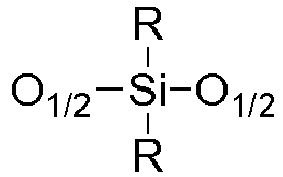 D1 =
D1 = a = 0 bis 2,b = 0 bis 2,c = 0 bis 100, vorzugsweise 0 bis 75, besonders bevorzugt 0 bis 50,d = 1 bis 100, vorzugsweise 1 bis 75, besonders bevorzugt 1 bis 50, wobei

 vorzugsweise 1 bis 4, besonders bevorzugt 1 bis 3,R = jeweils unabhängig voneinander, gleiche oder verschiedene Alkylreste mit 1 bis 16 Kohlenstoffatomen, gleiche oder verschiedene Arylreste mit 6 bis 16 Kohlenstoff-atomen, H oder -O-R2, bevorzugt Methyl, Ethyl, Phenyl oder H, insbesondere Methyl,R2 = jeweils unabhängig voneinander gleiche oder verschiedene Alkylreste mit 1 bis 16 Kohlenstoffatomen, gleiche oder verschiedene Arylreste mit 6 bis 16 Kohlenstoffatomen oder H,R1 = jeweils unabhängig voneinander gleiche oder verschiedene Alkylreste mit 6 bis 18 Kohlenstoffatomen oder gleiche oder verschiedene Polyether-Reste, bevorzugt gleiche oder verschiedene Alkylreste mit 6 bis 18 Kohlenstoffatomen oder gleiche oder verschiedene Polyether-Reste nach Formel 2,
 R3 = jeweils unabhängig voneinander gleiche oder verschiedene divalente Alkylreste mit 2 bis 15 Kohlenstoffatomen, bevorzugt gleiche oder verschiedene divalente Alkylreste mit 3 bis 6 Kohlenstoffatomen, insbesondere bevorzugt -(CH2)3-,R4 = jeweils unabhängig voneinander gleiche oder verschiedene Alkylreste mit 1 bis 18 Kohlenstoffatomen, die optional Etherfunktionen besitzen, oder gleiche oder verschiedene Arylreste mit 6 bis 18 Kohlenstoffatomen, die optional Etherfunktionen besitzen, oder H, bevorzugt H, Methyl, Ethyl oder Benzyl,R5 = jeweils unabhängig voneinander gleiche oder verschiedene Reste ausgewählt aus der Gruppe bestehend aus: R2 und C(O)R2, wobei Methyl, Butyl, H oder C(O)Me bevorzugt sind,e = 0 bis 100, bevorzugt 0 bis 80, insbesondere 0 bis 60,f = 0 bis 100, bevorzugt 0 bis 80, insbesondere 0 bis 60,g = 0 bis 100, bevorzugt 0 bis 80, insbesondere 0 bis 60,h= 0 bis 100, bevorzugt 0 bis 60, besonders bevorzugt 0,wobei mindestens einer der Werte e, f, g oder h > 0 ist,wobei höchstens 50% der Reste R1 in einem Polyethersiloxan nach Formel 1, jeweils unabhängig voneinander gleiche oder verschiedene Alkylreste mit 6 bis 18 Kohlenstoffatomen sindund wobei das mindestens eine Polyethersiloxan nach Formel 1 in einer Gesamtmenge von 0,1 bis 20 Gewichtsteile, vorzugsweise 0,5 bis 10 Gewichtsteile, besonders bevorzugt 0,5 bis 8 Gewichtsteile bezogen auf 100 Gewichtsteile des gesamt eingesetzten Phenolharzes, enthalten ist.
 - Zusammensetzung nach Anspruch 1, dadurch gekennzeichnet, dass das mindestens eine Polyethersiloxan nach Formel 1 sich dadurch auszeichnet, dass es für R1 mindestens einen Polyether-Rest der allgemeinen Formel 2 enthält, mite = 6 bis 16,f = g = h = 0oder
 h = 0,
- Zusammensetzung nach Anspruch 1, dadurch gekennzeichnet, dass das mindestens eine Polyethersiloxan nach Formel 1 sich dadurch auszeichnet, dass es für R1 mindestens zwei verschiedene Polyether-Reste der allgemeinen Formel 2 enthält, wobei mindestens ein Polyether der Kategorie 1 und mindestens ein Polyether der Kategorie 2 entspricht, mita = 0 bis 2, besonders bevorzugt 2b = 0 bis 2, besonders bevorzugt 0,c = 0 bis 10, bevorzugt 0 bis 5, besonders bevorzugt 0d = 1 bis 80, vorzugsweise 1 bis 50, besonders bevorzugt 5 bis 40,wobei

 Kategorie 1:
 h = 0,
 Kategorie 2:e = 6 bis 16,f = g = h = 0,oder
 h = 0,
 und das bevorzugte Verhältnis aus Polyethern der Kategorie 1 und Polyethern der Kategorie 2 im betreffenden Polyethersiloxan 10:90 bis 90:10 Gew.-%, besonders bevorzugt 20:80 bis 80:20 Gew.-%, insbesondere 25:75 bis 75:25 Gew.-% entspricht.
 - Zusammensetzung nach einem der Ansprüche 1 bis 3, dadurch gekennzeichnet, dass das mindestens eine Polyethersiloxan nach Formel 1 sich dadurch auszeichnet, dass es mindestens zwei verschiedene Reste R1 enthält, wobei mindestens ein Rest R1 ein Polyether-Rest nach Formel 2 und ein Rest R1 ein Alkylrest mit 6 bis 18 Kohlenstoffatomen ist, wobei höchstens 50% der Reste R1 in einem Polyethersiloxan nach Formel 1, Alkylreste mit 6 bis 18 Kohlenstoffatomen sind.
- Zusammensetzung nach einem der Ansprüche 1 bis 4, dadurch gekennzeichnet, dass das mindestens eine Treibmittel ausgewählt ist aus der Gruppe bestehend aus- Kohlenwasserstoffen mit 3, 4 oder 5 Kohlenstoff-Atomen, bevorzugt cyclo-, iso- und/oder n-Pentan
und- halogenierten Kohlenwasserstoffen mit 3, 4 oder 5 Kohlenstoff-Atomen, bevorzugt Isopropylchlorid, Hydrofluoroolefine und/oder Hydrohaloolefine, bevorzugt 1234ze, 1234yf, 1224yd, 1233zd(E) und/oder 1336mzz. - Zusammensetzung nach einem der Ansprüche 1 bis 5, dadurch gekennzeichnet, dass zusätzlich mindestens ein siliziumfreies Tensid in einer Gesamtmenge von 0,1 bis 15 Gewichtsteile, vorzugsweise 1 bis 10 Gewichtsteile, bezogen auf 100 Gewichtsteile des gesamt eingesetzten Phenolharzes, enthalten ist.
- Zusammensetzung nach einem der Ansprüche 1 bis 6, dadurch gekennzeichnet, dass zusätzlich mindestens ein alkoxyliertes, bevorzugt ethoxyliertes, Pflanzenöl, bevorzugt Rizinusöl in einer Gesamtmenge von 0,1 bis 15 Gewichtsteile, vorzugsweise 1 bis 10 Gewichtsteile, bezogen auf 100 Gewichtsteile des gesamt eingesetzten Phenolharzes, enthalten ist.
- Zusammensetzung nach einem der Ansprüche 1 bis 7, dadurch gekennzeichnet, dass der mindestens eine Katalysator ausgewählt ist aus der Gruppe bestehend aus organischen und anorganischen Säuren, vorzugsweise ist der mindestens eine Katalysator ausgewählt aus der Gruppe bestehend aus Schwefelsäure, Phosphorsäure, Benzolsulfonsäure, Xylolsulfonsäure, para-Toluolsulfonsäure, Ethylbenzolsulfonsäure, Naphtolsulfonsäure, Cumolsulfonsäure und Phenolsulfonsäure.
- Zusammensetzung nach einem der Ansprüche 1 bis 8, dadurch gekennzeichnet, dass der mindestens eine Katalysator in einer Gesamtmenge von 1 bis 30 Gewichtsteile, vorzugsweise 1 bis 25 Gewichtsteile, besonders bevorzugt 3 bis 20 Gewichtsteile, bezogen auf 100 Gewichtsteile des gesamt eingesetzten Phenolharzes, enthalten ist.
- Zusammensetzung nach einem der Ansprüche 1 bis 9, dadurch gekennzeichnet, dass das mindestens eine Phenolharz einen Wassergehalt von 1 bis 25 Gew.-%, bevorzugt 4 bis 19 Gew.-%, bezogen auf das gesamt eingesetzte Phenolharz, aufweist.
- Verfahren zur Herstellung von Phenolschaum, dadurch gekennzeichnet, dass es unter Einsatz einer Reaktionsmischung, enthaltend eine Zusammensetzung wie in einem der Ansprüche 1 bis 10 definiert, erfolgt.
- Phenolschaum hergestellt gemäß dem Verfahren nach Anspruch 11.
- Phenolschaum nach Anspruch 12, dadurch gekennzeichnet, dass der Phenolschaum eine Dichte nach ASTM D1622-20 von 5 bis 500 kg/m3, bevorzugt 10 bis 200 kg/m3, insbesondere bevorzugt von 12 bis 100 kg/m3 aufweist.
- Verwendung des Phenolschaums nach einem der Ansprüche 12 bis 13 zur thermischen Isolation.
Applications Claiming Priority (1)
| Application Number | Priority Date | Filing Date | Title |
|---|---|---|---|
| EP23174207 | 2023-05-19 |
Publications (1)
| Publication Number | Publication Date |
|---|---|
| EP4464738A1 true EP4464738A1 (de) | 2024-11-20 |
Family
ID=86469052
Family Applications (1)
| Application Number | Title | Priority Date | Filing Date |
|---|---|---|---|
| EP24174761.7A Pending EP4464738A1 (de) | 2023-05-19 | 2024-05-08 | Schaumstabilisatoren für phenolschaum |
Country Status (6)
| Country | Link |
|---|---|
| US (1) | US20240384051A1 (de) |
| EP (1) | EP4464738A1 (de) |
| JP (1) | JP2024167089A (de) |
| KR (1) | KR20240167397A (de) |
| CN (1) | CN118994840A (de) |
| CA (1) | CA3238288A1 (de) |
Citations (13)
| Publication number | Priority date | Publication date | Assignee | Title |
|---|---|---|---|---|
| US4444912A (en) | 1981-07-10 | 1984-04-24 | Koppers Company, Inc. | Phenolic foam and composition and method for preparing the same |
| EP0170357A1 (de) | 1984-05-25 | 1986-02-05 | BP Chemicals Limited | Verfahren zur Herstellung von Phenolharzschäumen |
| WO2004056911A2 (en) | 2002-12-20 | 2004-07-08 | Kingspan Holdings (Irl) Limited | A closed cell phenolic foam |
| WO2006114777A1 (en) | 2005-04-27 | 2006-11-02 | Kingspan Holdings (Irl) Limited | Plasticiser for phenolic foam, and a process for producing phenolic foam |
| DE602004006376T2 (de) | 2003-01-13 | 2008-01-10 | Kingspan Holdings (Irl) Ltd., Kingscourt | Phenolharzschaumstoff |
| EP1922357A1 (de) | 2005-09-08 | 2008-05-21 | Kingsplan Holdings (IRL) Limited | Phenolharzschaumstoff |
| EP2898005A1 (de) | 2012-09-18 | 2015-07-29 | Kingspan Holdings (IRL) Limited | Phenolschaum |
| CN107586435A (zh) * | 2017-09-18 | 2018-01-16 | 中国林业科学研究院林产化学工业研究所 | 一种提高酚醛泡沫保温材料机械强度的方法 |
| EP3830174A1 (de) | 2018-07-30 | 2021-06-09 | Kingspan Holdings (IRL) Limited | Phenolschaum und verfahren zu seiner herstellung |
| JP7016687B2 (ja) * | 2016-12-10 | 2022-02-07 | 積水化学工業株式会社 | フェノール樹脂発泡板 |
| WO2022043561A1 (en) | 2020-08-31 | 2022-03-03 | Kingspan Holdings (Irl) Limited | Phenolic foam |
| AU2021238847A1 (en) | 2020-03-19 | 2022-09-29 | Kingspan Holdings (Irl) Limited | Phenolic foam and method of manufacture thereof |
| EP4073155A1 (de) | 2020-01-27 | 2022-10-19 | Kingspan Holdings (IRL) Limited | Phenolschaum und verfahren zu seiner herstellung |
-
2024
- 2024-05-08 EP EP24174761.7A patent/EP4464738A1/de active Pending
- 2024-05-12 US US18/661,644 patent/US20240384051A1/en active Pending
- 2024-05-14 KR KR1020240062917A patent/KR20240167397A/ko active Pending
- 2024-05-14 CA CA3238288A patent/CA3238288A1/en active Pending
- 2024-05-17 CN CN202410613757.1A patent/CN118994840A/zh active Pending
- 2024-05-17 JP JP2024080736A patent/JP2024167089A/ja active Pending
Patent Citations (14)
| Publication number | Priority date | Publication date | Assignee | Title |
|---|---|---|---|---|
| US4444912A (en) | 1981-07-10 | 1984-04-24 | Koppers Company, Inc. | Phenolic foam and composition and method for preparing the same |
| EP0170357A1 (de) | 1984-05-25 | 1986-02-05 | BP Chemicals Limited | Verfahren zur Herstellung von Phenolharzschäumen |
| EP0170357B1 (de) | 1984-05-25 | 1989-04-19 | BP Chemicals Limited | Verfahren zur Herstellung von Phenolharzschäumen |
| WO2004056911A2 (en) | 2002-12-20 | 2004-07-08 | Kingspan Holdings (Irl) Limited | A closed cell phenolic foam |
| DE602004006376T2 (de) | 2003-01-13 | 2008-01-10 | Kingspan Holdings (Irl) Ltd., Kingscourt | Phenolharzschaumstoff |
| WO2006114777A1 (en) | 2005-04-27 | 2006-11-02 | Kingspan Holdings (Irl) Limited | Plasticiser for phenolic foam, and a process for producing phenolic foam |
| EP1922357A1 (de) | 2005-09-08 | 2008-05-21 | Kingsplan Holdings (IRL) Limited | Phenolharzschaumstoff |
| EP2898005A1 (de) | 2012-09-18 | 2015-07-29 | Kingspan Holdings (IRL) Limited | Phenolschaum |
| JP7016687B2 (ja) * | 2016-12-10 | 2022-02-07 | 積水化学工業株式会社 | フェノール樹脂発泡板 |
| CN107586435A (zh) * | 2017-09-18 | 2018-01-16 | 中国林业科学研究院林产化学工业研究所 | 一种提高酚醛泡沫保温材料机械强度的方法 |
| EP3830174A1 (de) | 2018-07-30 | 2021-06-09 | Kingspan Holdings (IRL) Limited | Phenolschaum und verfahren zu seiner herstellung |
| EP4073155A1 (de) | 2020-01-27 | 2022-10-19 | Kingspan Holdings (IRL) Limited | Phenolschaum und verfahren zu seiner herstellung |
| AU2021238847A1 (en) | 2020-03-19 | 2022-09-29 | Kingspan Holdings (Irl) Limited | Phenolic foam and method of manufacture thereof |
| WO2022043561A1 (en) | 2020-08-31 | 2022-03-03 | Kingspan Holdings (Irl) Limited | Phenolic foam |
Also Published As
| Publication number | Publication date |
|---|---|
| US20240384051A1 (en) | 2024-11-21 |
| KR20240167397A (ko) | 2024-11-26 |
| CN118994840A (zh) | 2024-11-22 |
| CA3238288A1 (en) | 2025-06-25 |
| JP2024167089A (ja) | 2024-11-29 |
Similar Documents
| Publication | Publication Date | Title |
|---|---|---|
| DE2429028C2 (de) | Verfahren zur Herstellung eines stark rückfedernden flexiblen Polyätherurethanschaumstoffs | |
| EP2182020B1 (de) | Silikonpolyetherblock-copolymere mit definierter polydispersität im polyoxyalkylenteil und deren verwendung als stabilisatoren zur herstellung von polyurethanschäumen | |
| EP2554574B1 (de) | Polysiloxanpolyether-Copolymere mit Carbonatgruppen-haltigen (Polyether-)Resten und deren Verwendung als Stabilisatoren zur Herstellung von Polyurethanschäumen | |
| EP2481770B1 (de) | Verwendung von Silikonpolyetherblock-Copolymeren mit hochmolekularen nicht endverkappten Polyetherresten als Stabilisatoren zur Herstellung von Polyurethanschäumen niedriger Dichte | |
| DE69424633T2 (de) | Halogenfreie Treibmittel, enthaltend cycloaliphalische Kohlenwasserstoffe für polymere Schaumstoffe auf Isocyanatbasis | |
| DE102006061351A1 (de) | Verfahren zur Herstellung von SiOC-verknüpften, linearen Polydimethylsiloxan-Polyoxyalkylen-Blockcopolymeren und ihre Verwendung | |
| EP0106101B1 (de) | Verfahren zur Herstellung hochelastischer kalthärtender Polyurethanschaumstoffe | |
| DE1745317C3 (de) | Verfahren zur Herstellung von Polyurethanschaumstoffen | |
| EP2481766A1 (de) | Silikonpolyetherblock-Copolymere mit hochmolekularen Polyetherresten und deren Verwendung als Stabilisatoren zur Herstellung von Polyurethanschäumen | |
| DE3035677A1 (de) | Zelliges polymerisat | |
| DE2643163B2 (de) | Verfahren zur Herstellung von Phenolharzschäumen | |
| DE1520529A1 (de) | Verfahren zur Herstellung von Polyurethan-Schaumstoffen | |
| DE3713130A1 (de) | Zu elastomeren schaumstoffen haertbare massen auf polydiorganosiloxangrundlage | |
| DE2607469B2 (de) | Morpholinmodifizierte Polysiloxan-Polyoxyalkylen-Blockmischpolymere und deren Verwendung | |
| EP3656797A1 (de) | Verfahren zur herstellung von polyoxymethylen-polyalkylenoxid-blockcopolymeren | |
| DE3037683A1 (de) | Elastische duroplast-schaumstoffe | |
| EP0092700B1 (de) | Verfahren zur Herstellung hochelastischer kalthärtender Polyurethanschaumstoffe | |
| EP4438664A1 (de) | Dispergiermittel für feststoffhaltige phenolschäume | |
| DE1236185B (de) | Verfahren zur Herstellung von Polyurethanschaumstoffen | |
| DE2707100A1 (de) | Phenolharz-schaumstoffmassen und verfahren zur herstellung von phenolharzschaumstoffen | |
| EP4653491A1 (de) | Schaumstabilisatoren für phenolschaum | |
| WO2025016824A1 (de) | Schaumstabilisatoren für phenolschaum | |
| DE2710284A1 (de) | Phenolharz-schaumkunststoffe und verfahren zur herstellung derselben | |
| DE102006050101B4 (de) | Herstellungsverfahren für ein stabilisiertes polyacetalharz,dieses beinhaltende polyacetalharzzusammensetzung, formartikelaus der polyacetalharzzusammensetzung, und verwendung einersubstanz zum abbau instabiler termini für ein polyacetalharz | |
| DE10394054B4 (de) | Zusammensetzung für die Herstellung von starrem Polyurethanschaumstoff und daraus gebildeter starrer Polyurethanschaumstoff |
Legal Events
| Date | Code | Title | Description |
|---|---|---|---|
| PUAI | Public reference made under article 153(3) epc to a published international application that has entered the european phase |
Free format text: ORIGINAL CODE: 0009012 |
|
| STAA | Information on the status of an ep patent application or granted ep patent |
Free format text: STATUS: REQUEST FOR EXAMINATION WAS MADE |
|
| 17P | Request for examination filed |
Effective date: 20240508 |
|
| AK | Designated contracting states |
Kind code of ref document: A1 Designated state(s): AL AT BE BG CH CY CZ DE DK EE ES FI FR GB GR HR HU IE IS IT LI LT LU LV MC ME MK MT NL NO PL PT RO RS SE SI SK SM TR |