EP4446006A2 - Matériau zéolithique ayant une structure de réseau comprenant du si, o, et ti - Google Patents
Matériau zéolithique ayant une structure de réseau comprenant du si, o, et ti Download PDFInfo
- Publication number
- EP4446006A2 EP4446006A2 EP24192047.9A EP24192047A EP4446006A2 EP 4446006 A2 EP4446006 A2 EP 4446006A2 EP 24192047 A EP24192047 A EP 24192047A EP 4446006 A2 EP4446006 A2 EP 4446006A2
- Authority
- EP
- European Patent Office
- Prior art keywords
- weight
- containing compound
- apha color
- color number
- zeolitic material
- Prior art date
- Legal status (The legal status is an assumption and is not a legal conclusion. Google has not performed a legal analysis and makes no representation as to the accuracy of the status listed.)
- Pending
Links
Images



Classifications
-
- C—CHEMISTRY; METALLURGY
- C01—INORGANIC CHEMISTRY
- C01B—NON-METALLIC ELEMENTS; COMPOUNDS THEREOF; METALLOIDS OR COMPOUNDS THEREOF NOT COVERED BY SUBCLASS C01C
- C01B37/00—Compounds having molecular sieve properties but not having base-exchange properties
- C01B37/005—Silicates, i.e. so-called metallosilicalites or metallozeosilites
-
- B—PERFORMING OPERATIONS; TRANSPORTING
- B01—PHYSICAL OR CHEMICAL PROCESSES OR APPARATUS IN GENERAL
- B01J—CHEMICAL OR PHYSICAL PROCESSES, e.g. CATALYSIS OR COLLOID CHEMISTRY; THEIR RELEVANT APPARATUS
- B01J29/00—Catalysts comprising molecular sieves
- B01J29/04—Catalysts comprising molecular sieves having base-exchange properties, e.g. crystalline zeolites
- B01J29/06—Crystalline aluminosilicate zeolites; Isomorphous compounds thereof
- B01J29/70—Crystalline aluminosilicate zeolites; Isomorphous compounds thereof of types characterised by their specific structure not provided for in groups B01J29/08 - B01J29/65
- B01J29/7049—Crystalline aluminosilicate zeolites; Isomorphous compounds thereof of types characterised by their specific structure not provided for in groups B01J29/08 - B01J29/65 containing rare earth elements, titanium, zirconium, hafnium, zinc, cadmium, mercury, gallium, indium, thallium, tin or lead
- B01J29/7088—MWW-type, e.g. MCM-22, ERB-1, ITQ-1, PSH-3 or SSZ-25
-
- B—PERFORMING OPERATIONS; TRANSPORTING
- B01—PHYSICAL OR CHEMICAL PROCESSES OR APPARATUS IN GENERAL
- B01J—CHEMICAL OR PHYSICAL PROCESSES, e.g. CATALYSIS OR COLLOID CHEMISTRY; THEIR RELEVANT APPARATUS
- B01J29/00—Catalysts comprising molecular sieves
- B01J29/04—Catalysts comprising molecular sieves having base-exchange properties, e.g. crystalline zeolites
- B01J29/06—Crystalline aluminosilicate zeolites; Isomorphous compounds thereof
- B01J29/061—Crystalline aluminosilicate zeolites; Isomorphous compounds thereof containing metallic elements added to the zeolite
-
- B—PERFORMING OPERATIONS; TRANSPORTING
- B01—PHYSICAL OR CHEMICAL PROCESSES OR APPARATUS IN GENERAL
- B01J—CHEMICAL OR PHYSICAL PROCESSES, e.g. CATALYSIS OR COLLOID CHEMISTRY; THEIR RELEVANT APPARATUS
- B01J29/00—Catalysts comprising molecular sieves
- B01J29/04—Catalysts comprising molecular sieves having base-exchange properties, e.g. crystalline zeolites
- B01J29/06—Crystalline aluminosilicate zeolites; Isomorphous compounds thereof
- B01J29/40—Crystalline aluminosilicate zeolites; Isomorphous compounds thereof of the pentasil type, e.g. types ZSM-5, ZSM-8 or ZSM-11, as exemplified by patent documents US3702886, GB1334243 and US3709979, respectively
- B01J29/405—Crystalline aluminosilicate zeolites; Isomorphous compounds thereof of the pentasil type, e.g. types ZSM-5, ZSM-8 or ZSM-11, as exemplified by patent documents US3702886, GB1334243 and US3709979, respectively containing rare earth elements, titanium, zirconium, hafnium, zinc, cadmium, mercury, gallium, indium, thallium, tin or lead
-
- C—CHEMISTRY; METALLURGY
- C01—INORGANIC CHEMISTRY
- C01B—NON-METALLIC ELEMENTS; COMPOUNDS THEREOF; METALLOIDS OR COMPOUNDS THEREOF NOT COVERED BY SUBCLASS C01C
- C01B39/00—Compounds having molecular sieve and base-exchange properties, e.g. crystalline zeolites; Their preparation; After-treatment, e.g. ion-exchange or dealumination
- C01B39/02—Crystalline aluminosilicate zeolites; Isomorphous compounds thereof; Direct preparation thereof; Preparation thereof starting from a reaction mixture containing a crystalline zeolite of another type, or from preformed reactants; After-treatment thereof
- C01B39/026—After-treatment
-
- C—CHEMISTRY; METALLURGY
- C01—INORGANIC CHEMISTRY
- C01B—NON-METALLIC ELEMENTS; COMPOUNDS THEREOF; METALLOIDS OR COMPOUNDS THEREOF NOT COVERED BY SUBCLASS C01C
- C01B39/00—Compounds having molecular sieve and base-exchange properties, e.g. crystalline zeolites; Their preparation; After-treatment, e.g. ion-exchange or dealumination
- C01B39/02—Crystalline aluminosilicate zeolites; Isomorphous compounds thereof; Direct preparation thereof; Preparation thereof starting from a reaction mixture containing a crystalline zeolite of another type, or from preformed reactants; After-treatment thereof
- C01B39/06—Preparation of isomorphous zeolites characterised by measures to replace the aluminium or silicon atoms in the lattice framework by atoms of other elements, i.e. by direct or secondary synthesis
- C01B39/08—Preparation of isomorphous zeolites characterised by measures to replace the aluminium or silicon atoms in the lattice framework by atoms of other elements, i.e. by direct or secondary synthesis the aluminium atoms being wholly replaced
- C01B39/085—Group IVB- metallosilicates
-
- B—PERFORMING OPERATIONS; TRANSPORTING
- B01—PHYSICAL OR CHEMICAL PROCESSES OR APPARATUS IN GENERAL
- B01J—CHEMICAL OR PHYSICAL PROCESSES, e.g. CATALYSIS OR COLLOID CHEMISTRY; THEIR RELEVANT APPARATUS
- B01J2229/00—Aspects of molecular sieve catalysts not covered by B01J29/00
- B01J2229/30—After treatment, characterised by the means used
- B01J2229/34—Reaction with organic or organometallic compounds
-
- Y—GENERAL TAGGING OF NEW TECHNOLOGICAL DEVELOPMENTS; GENERAL TAGGING OF CROSS-SECTIONAL TECHNOLOGIES SPANNING OVER SEVERAL SECTIONS OF THE IPC; TECHNICAL SUBJECTS COVERED BY FORMER USPC CROSS-REFERENCE ART COLLECTIONS [XRACs] AND DIGESTS
- Y02—TECHNOLOGIES OR APPLICATIONS FOR MITIGATION OR ADAPTATION AGAINST CLIMATE CHANGE
- Y02P—CLIMATE CHANGE MITIGATION TECHNOLOGIES IN THE PRODUCTION OR PROCESSING OF GOODS
- Y02P20/00—Technologies relating to chemical industry
- Y02P20/50—Improvements relating to the production of bulk chemicals
- Y02P20/52—Improvements relating to the production of bulk chemicals using catalysts, e.g. selective catalysts
Definitions
- the present invention relates to a zeolitic material of MWW framework type having a framework structure comprising Si, O, and Ti, obtained or obtainable from a Ti containing compound, wherein the Ti containing compound has an APHA color number of ⁇ 300, the APHA color number being determined according to DIN EN ISO 6271 :2016-05; wherein the Ti containing compound comprises a Ti containing alcoholate selected from the group of Ti(O-alkyl) 4 , wherein each alkyl group is independently selected from branched or unbranched C1 to C6 alkyl.
- the present invention also relates to a process for preparation of said zeolitic material, a molding comprising said zeolitic material, the use of said molding and a process for oxidizing an organic compound comprising bringing an organic compound in contact with a catalyst comprising a molding.
- Propylene oxide is an important intermediate in the chemical industry.
- a suitable process for the preparation of propylene oxide starts from propylene and makes use of hydrogen peroxide (H 2 O 2 ) as oxidizing agent, of a solvent and of an epoxidation catalyst comprising a titanium zeolite.
- Titanium zeolites useful for this purpose include titanium silicate-1 (TS-1), which is a titano-silicate zeolite with a MFI framework structure.
- TS-1 has been paid much attention because it enables clean oxidative reactions under comparably mild conditions.
- TS-1 is usually hydrothermally synthesized, using a Ti containing alcoholate (alkoxide) precursor in order to get a controlled incorporation of Ti into the zeolite framework.
- Ti precursor of choice compound such as tetraethyl orthotitanate (Ti(OEt) 4 ), tetraisopropyl orthotitanate (Ti(OPr) 4 ), or tetra-n-butyl orthotitanate Ti(OBu) 4 are often used.
- Ti(OEt) 4 tetraethyl orthotitanate
- Ti(OPr) 4 tetraisopropyl orthotitanate
- OBu tetra-n-butyl orthotitanate
- US 2013/296159 A1 describes a process for preparing a zeolitic material, wherein, inter alia, tetraethylorthotitanate (TEOTi, Ti(OEt) 4 ) is used as titanium source, EP 0 712 852 A1 is directed to a method for epoxidizing an olefin using a TS-1 catalyst.
- TEOTi tetraethylorthotitanate
- D.-G. Huang et al. ( Deng-Gao Huang, Xian Zhang, Bao-Hui Chen, Zi-Sheng Chao, Catalysis Today, 158 (2010), pages 510-514 ) describe the synthesis of TS-1 via three different procedures using tetraethylorthosilicate and tetrabutyl orthotitanate as Si and Ti sources and tetrapropylammonium hydroxide as template.
- a positive influence of alcohols such as ethanol on the synthesis is described, wherein a slow hydrolysis of the Ti containing species is indicated as well as a reduced formation of titanium dioxide (anatas form).
- Ti containing compound such as Ti(OEt) 4 are normally described as colorless liquids but these compounds tend to develop color over time. Now, it has been surprisingly found that the color of the Ti containing compound is essential for the performance of the final zeolitic material having a framework structure comprising Si, O, and Ti produced therefrom.
- 1 st aspect - zeolitic material having a framework structure comprising Si, O, and Ti
- the invention relates in a first aspect to zeolitic material having a framework structure comprising Si, O, and Ti, obtained or obtainable from a Ti containing compound, wherein the Ti containing compound has an APHA color number of ⁇ 300.
- the APHA color number in the context of the present invention is determined according to DIN EN ISO 6271 :2016-05.
- An APHA color number of the Ti containing compound of ⁇ 300 means preferably an APHA color number in the range of from 0 (zero) to 300.
- the APHA color number is ⁇ 290 (in the range of from 0 to 290), more preferred the APHA color number is ⁇ 280 (in the range of from 0 to 280), more preferred the APHA color number is ⁇ 270 (in the range of from 0 to 270), more preferred the APHA color number is ⁇ 260 (in the range of from 0 to 260), more preferred the APHA color number is ⁇ 251 (in the range of from 0 to 251) more preferred the APHA color number is ⁇ 250 (in the range of from 0 to 250), more preferred the APHA color number is ⁇ 200 (in the range of from 0 to 200), more preferred the APHA color number is ⁇ 150 (in the range of from 0 to 150), more preferred the APHA color number is ⁇ 105 (in the range of from 0 to 105).
- the zeolitic material having a framework structure comprising Si, O, and Ti obtained or obtainable from a Ti containing compound, wherein the Ti containing compound has an APHA color number of ⁇ 300, is used as catalyst in a, preferably continuous, epoxidation of a C2 to C5 alkylene with hydrogen peroxide, the catalytic performance, especially the selectivity, decreases with increasing APHA number of the Ti containing compound that was used for the synthesis of the zeolitic material.
- catalysts based on Ti containing compounds having an APHA color number of ⁇ 300 give remarkably higher selectivity of ⁇ 85 % (range of from 85 to 95%).
- Catalysts based on Ti containing compounds having an APHA color number of > 300 result in selectivity of ⁇ 85 % at longer runtimes.
- the zeolitic material having a framework structure comprising Si, O, and Ti is obtained or obtainable from a Ti containing compound as mentioned above.
- the Ti containing compound comprises a Ti containing alcoholate (alkoxide), preferably selected from the group of Ti(O-alkyl) 4 , wherein each alkyl group is independently selected from branched or unbranched C1 to C6 alkyl; more preferably from the group consisting of tetraethyl orthotitanate (Ti(OEt) 4 ), tetraisopropyl orthotitanate (Ti(OPr) 4 ), tetra-n-butyl orthotitanate Ti(OBu) 4 and mixtures of two or more of these compounds; more preferably from the group of tetraethyl orthotitanate (Ti(OEt) 4 ), tetraisopropyl orthotitanate (Ti(OPr) 4 ) and mixtures of Ti(OEt) 4
- the Ti containing compound from which the zeolitic material having a framework structure comprising Si, O, and Ti is obtained or obtainable, comprises at least 90 weight-%, preferably at least 95 weight-%, more preferably at least 96 weight-%, more preferably at least 97 weight-%, more preferably at least 98 weight-%, more preferably at least 99 weight-% of the Ti containing alcoholate based on the overall weight of the Ti containing compound.
- "At least 90 weight-%” means a value in the range of from 90 to 100 weight-%; the same applies for the other values mentioned above.
- the Ti containing compound from which the zeolitic material having a framework structure comprising Si, O, and Ti is obtained or obtainable, comprises ⁇ 10 weight-%, more preferably ⁇ 5 weight-%, more preferably ⁇ 4 weight-%, more preferably ⁇ 3 weight-%, more preferably ⁇ 2 weight-%, more preferably ⁇ 1 weight-%, based on the overall weight of the Ti containing compound, of a substance of formula (I) wherein R, R 1 and R 2 are independently selected from the group consisting of hydrogen atom and branched or unbranched C1 to C6 alkyl, and R 3 is selected from the group consisting of hydrogen atom, branched or unbranched C1 to C6 alkyl, and branched or unbranched C1 to C6 alkenyl.
- ⁇ 10 weight-% means a value in the range of from 0 (zero) to 10 weight-%; the same applies for the other values mentioned above.
- the substance of formula (I) may be present in monomeric form as shown in formula (I) or may be present in oligomeric form with 2 to 7 repeating units. These oligomers are present only in amounts of ⁇ 100 ppm, preferably ⁇ 50 ppm, more preferred ⁇ 10 ppm, based on the overall weight of the Ti containing compound.
- the Ti containing compound may comprise isophorone based substances of formula (II) wherein R 4 , R 5 , and R 6 are independently selected from hydrogen atom and branched or unbranched C1 to C6 alkyl.
- the catalytic performance especially the selectivity, decreases with increasing APHA number of the Ti containing compound that was used for the synthesis of the zeolitic material.
- a coloring of the Ti containing compound comprising the Ti containing alcoholate an APHA color number of ⁇ 300, determined according to DIN EN ISO 6271 :2016-05, should be avoided in the synthesis of the zeolitic material.
- the carbonyl containing compound for example, acetaldehyde or acetone, undergoes an aldol condensation under strong basic conditions, wherein the resulting aldol condensation products correspond to formula (I).
- These aldol condensation products contribute to the color and interfere in the synthesis of the zeolitic material having a framework structure comprising Si, O, and Ti.
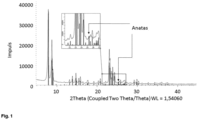
- the zeolitic material having a framework structure comprising Si, O, and Ti obtained or obtainable from a Ti containing compound as described above, has preferably a titanium dioxide content of ⁇ 1.5 weight-%, preferably ⁇ 1.2 weight-%, more preferably ⁇ 1 weight-%, more preferably ⁇ 0.5 weight-%, based on the overall weight of the zeolitic material, wherein preferably at least 98 weight-% of the titanium dioxide are of anatas form, determined according to Reference Example 7.
- the zeolitic material having a framework structure comprising Si, O, and Ti, obtained or obtainable from a Ti containing compound as described above, has preferably a crystallinity, determined in accordance with Reference Example 7, of more than 85 weight-%, preferably in the range of from 85 to 95 weight-%, more preferably in the range of from 87 to 93 weight-%, based on the total weight of the zeolitic material.
- the zeolitic material exhibits a BET specific surface area in the range of from 440 to 580 m 2 /g, preferably in the range of from 450 to 570 m 2 /g, determined as described in Reference Example 4.
- 95 to 100 weight-% preferably from 98 to 100 weight-%, more preferably from 99 to 100 weight-%, more preferably from 99.5 to 100 weight-%, more preferably from 99.9 to 100 weight-% of the zeolitic material, obtained or obtainable from a Ti containing compound as described above, consist of Si, O, Ti and optionally H.
- the zeolitic material comprises Ti in an amount in the range from 0.2 to 5 weight-%, more preferably in the range from 0.5 to 4 weight-%, more preferably in the range from 1.0 to 3 weight-%, more preferably in the range from 1.2 to 2.5 weight-%, more preferably in the range from 1.4 to 2.2 weight-%, calculated as elemental Ti and based on the total weight of the zeolitic material.
- the zeolitic material having a framework structure comprising Si, O, and Ti obtained or obtainable from a Ti containing compound as described above, is a titanium zeolite having ABW, ACO, AEI, AEL, AEN, AET, AFG, AFI, AFN, AFO, AFR, AFS, AFT, AFX, AFY, AHT, ANA, APC, APD, AST, ASV, ATN, ATO, ATS, ATT, ATV, AWO, AWW, BCT, BEA, BEC, BIK, BOG, BPH, BRE, CAN, CAS, CDO, CFI, CGF, CGS, CHA, CHI, CLO, CON, CZP, DAC, DDR, DFO, DFT, DOH, DON, EAB, EDI, EMT, EPI, ERI, ESV, ETR, EUO, FAU, FER, FRA, GIS, GIU, GME, GON
- Framework types such as MCM-22(S), MCM-56, IEZ-MWW, ITQ (delaminated MWW), MIT-1, and MCM-36 are titanium zeolites having framework structures related to MWW framework structure, obtained or obtainable therefrom or from the respective two dimensional precursor by, for example, layer expansion and/or postmodification.
- zeolitic material having a framework structure comprising Si, O, and Ti is prepared from the Ti containing compound provided that finally a zeolitic material is achieved.
- Suitable process for such a synthesis are known to a person skilled in the art, including commonly known hydrothermal synthesis methods.
- the zeolitic material having a framework structure comprising Si, O, and Ti is prepared from one or more sources of Si, one or more Ti containing compound(s), and one or more structure directing agent(s). These compounds are mixed in the presence of water in a suitable manner so that an aqueous mixture is obtained, which is then crystallized at elevated temperature and at elevated pressure.
- the one or more sources of Si comprises one or more compounds selected from the group consisting of silicas, silicates, and mixtures thereof; preferably from the group consisting of fumed silica, silica hydrosols, reactive amorphous solid silicas, silica gel, silicic acid, water glass, sodium metasilicate hydrate, sesquisilicate, disilicate, colloidal silica, pyrogenic silica, silicic acid esters, tetraalkoxysilanes, and mixtures of two or more thereof; more preferably from the group consisting of silica hydrosols, silica gel, silicic acid, water glass, sodium metasilicate hydrate, colloidal silica, silicic acid esters, tetraalkoxysilanes, and mixtures of two or more thereof; more preferably from the group consisting of silica hydrosols, silicic acid, colloidal silica, silicic acid esters, tetraalkoxysilanes, and mixture
- the one or more structure directing agent(s) comprise one or more compound(s) selected from the group consisting of amine, quaternary ammonium compound, alcohol and mixtures of two or more of these agents.
- the one or more structure directing agent(s) is/are selected from tetraalkylammonium cation R 1 R 2 R 3 R 4 N + -containing compounds, wherein R 1 , R 2 , R 3 , and R 4 each independently represent a C1 to C10 alkyl group.
- R 1 , R 2 , R 3 , and R 4 independently from one another represent an, optionally branched, C1-C6 alkyl group, preferably C1-C5 alkyl group, more preferably C2-C4 alkyl group, and more preferably an, optionally branched, C2-C3 alkyl group, wherein more preferably R 1 , R 2 , R 3 , and R 4 independently from one another represent ethyl or propyl, wherein more preferably all of R 1 , R 2 , R 3 , and R 4 represent propyl, preferably n-propyl.
- the one or more tetraalkylammonium cation R 1 R 2 R 3 R 4 N + -containing compounds are salts, more preferably one or more salts selected from the group consisting of halides, preferably chloride and/or bromide, more preferably chloride, hydroxide, sulfate, nitrate, phosphate, acetate, and mixtures of two or more thereof, more preferably from the group consisting of chloride, hydroxide, sulfate, and mixtures of two or more thereof, wherein more preferably the one or more tetraalkylammonium cation R 1 R 2 R 3 R 4 N + -containing compounds are tetraalkylammonium hydroxides and/or chlorides, and more preferably tetraalkylammonium hydroxides.
- the one or more structure directing agent(s) is/are preferably used in the form of an aqueous solution.
- the one or more Ti containing compound(s) is/are Ti containing compound(s) having an APHA color number of ⁇ 300.
- the zeolitic material having a framework structure comprising Si, O, and Ti is prepared said process comprising:
- the one or more Ti containing compound(s) and the one or more structure directing agent(s), preferably in aqueous solution are pre-mixed before step a), preferably in a closed vessel, followed by removal of alcohol formed by distillation, obtaining an aqueous solution comprising a reaction product of the one or more Ti containing compound(s) and the one or more structure directing agent(s).
- reaction product is an aqueous solution of Ti-tetrapropyl ammonium hydroxide.
- the zeolitic material having a framework structure comprising Si, O, and Ti is prepared by a process comprising
- the reactor of b) and c) is pressure-resistant, for example, an autoclave.
- the process is carried out batch wise (batch mode) or continuously (continuous mode).
- continuous mode it is preferred that at least one of steps a), b) and c), respectively at least one of steps a'), b and c) is done continuously. More preferred regarding continuous mode, all steps a), b) and c) and a'), b) and c) respectively are done continuously.
- a continuous flow reactor is used as reactor of b) and c).
- the H 2 O Si molar ratio of water to the one or more sources of Si calculated as SiO 2 in the mixture prepared in (a) and (a') respectively is preferably in the range of from 100 : 1 to 10 : 1. It is preferred that the Si : Ti molar ratio of the one or more sources of Si, calculated as SiO 2 , to the one or more Ti containing compound(s), calculated as TiO 2 , of the mixture prepared in (a) and (a') respectively is in the range of from 1 : 100 to 100: 1, more preferably from 1 : 50 to 50 : 1, more preferably from 10: 1 to 50 : 1.
- the molar ratio of the one or more structure directing agent(s) : the one or more Ti containing compound(s), calculated as TiO 2 of the mixture prepared in (a) and (a') respectively is preferably in the range of from 5 : 1 to 100 . 1, more preferably from 10 : 1 to 50 : 1, more preferably 20 : 1 to 40 :1.
- step c) is carried out at a temperature in the range of from 90 to 280 °C, more preferably of from 110 to 250 °C, more preferably of from 130 to 220 °C, more preferably of from 150 to 200 °C, more preferably of from 160 to 190 °C, and more preferably of from 170 to 180 °C. It is further preferred that c) is carried out under autogenous pressure, wherein preferably the pressure is in the range of from 0.5 to 15 MPa, more preferably in the range of from 1 to 12 MPa, more preferably from 1.5 to 11 MPa, more preferably from 2 to 10 MPa.
- the mixture prepared in a) is aged at a temperature in the range of from 15 to 120°C, more preferably from 20 to 115°C, more preferably from 22 to 100°C. It is preferred that the aging is done for a time period in the range of from 0.05 to 48 h, more preferably from 0.15 to 24 h, more preferably from 0.25 to 12 h, more preferably from 0.5 to 6 h, more preferably from 0.75 to 3 h, more preferably from 1 to 2 h. Alcohol formed during said aging is preferably removed by distillation, at least partially.
- the process may comprise further process steps. It is preferred that the process further comprises
- calcining in h) is effected at a temperature in the range from 300 to 700 °C, more preferably from 375 to 625 °C, more preferably from 425 to 575 °C, more preferably from 470 to 550 °C.
- duration of calcination no restrictions exist as long as the final calcined material obtained from h) has a suitable three dimensional zeolitic structure, which a person skilled in the art can easily determine, for example, by measurement and analysis of X-ray diffraction (XRD) data.
- XRD X-ray diffraction
- calcination is done preferably for a time in the range of from 1 to 10 hours, more preferably from 2 to 8 hours, more preferably from 3 to 6 hours.
- the invention relates to a Ti containing compound having an APHA color number of ⁇ 300.
- the Ti containing compound comprises a Ti containing alcoholate, preferably selected from the group of Ti(O-alkyl) 4 , wherein each alkyl group is independently selected from branched or unbranched C1 to C6 alkyl, more preferably from the group consisting of tetraethyl orthotitanate (Ti(OEt) 4 ), tetraisopropyl orthotitanate (Ti(OPr) 4 ), tetra-n-butyl orthotitanate Ti(OBu) 4 and mixtures of two or more of these compounds, more preferably from the group of tetraethyl orthotitanate (Ti(OEt) 4 ), tetraisopropyl orthotitanate (Ti(OPr) 4 ) and mixtures of Ti(OEt) 4 and Ti(OPr) 4 .
- the Ti containing compound having an APHA color number of ⁇ 300 comprises at least 90 weight-%, preferably at least 95 weight-%, more preferably at least 96 weight-%, more preferably at least 97 weight-%, more preferably at least 98 weight-%, more preferably at least 99 weight-% of the Ti containing alcoholate based on the overall weight of the Ti containing compound.
- the Ti containing compound comprises preferably ⁇ 10 weight-%, more preferably ⁇ 5 weight-%, more preferably ⁇ 4 weight-%, more preferably ⁇ 3 weight-%, more preferably ⁇ 2 weight-%, more preferably ⁇ 1 weight-%, based on the overall weight of the Ti containing compound, of a substance of formula (I), wherein R, R 1 and R 2 are independently selected from the group consisting of hydrogen atom and branched or unbranched C1 to C6 alkyl, and R 3 is selected from the group consisting of hydrogen atom, branched or unbranched C1 to C6 alkyl, and branched or unbranched C1 to C6 alkenyl.
- R, R 1 and R 2 are independently selected from the group consisting of hydrogen atom and branched or unbranched C1 to C6 alkyl
- R 3 is selected from the group consisting of hydrogen atom, branched or unbranched C1 to C6 alkyl, and branched or unbranched C1 to
- the invention relates to the use of a Ti containing compound having an APHA color number of ⁇ 300 as described above with respect to the 2 nd aspect for the preparation of a zeolitic material having framework structure comprising Si, O, and Ti according to the 1 st aspect described above. Consequently, the invention also relates to a process for preparation of a zeolitic material having a framework structure comprising Si, O, and Ti, wherein the zeolitic material having a framework structure comprising Si, O, and Ti, is prepared from a Ti containing compound having an APHA color number of ⁇ 300, wherein said Ti containing compound is as described with respect to the 2 nd aspect above.
- the invention further relates in a 4 th aspect to a molding comprising a zeolitic material having a framework structure comprising Si, O, and Ti according to the 1 st aspect as described above.
- the molding exhibits a tortuosity parameter relative to water ⁇ 4, more preferably in the range of from 1.0 to 2.5, more preferably in the range of from 1.3 to 2.0, more preferably in the range of from 1.40 to 1.80, more preferably in the range of from 1.50 to 1.75, more preferably in the range of from 1.55 to 1.70, determined as described in Reference Example 5.
- the pore volume of the molding determined according to DIN 66133:1993-06 preferably ranges from 0.1 to 1.5 ml/g.
- the invention also relates to the use of the molding a as an adsorbent, an absorbent, a catalyst or a catalyst component, preferably as a catalyst or as a catalyst component, more preferably as a Lewis acid catalyst or a Lewis acid catalyst component, as an isomerization catalyst or as an isomerization catalyst component, as an oxidation catalyst or as an oxidation catalyst component, as an aldol condensation catalyst or as an aldol condensation catalyst component, or as a Prins reaction catalyst or as a Prins reaction catalyst component.
- the molding is preferably used as an epoxidation catalyst or as an epoxidation catalyst component, more preferably as an epoxidation catalyst.
- the molding is used in the epoxidation reaction of an organic compound having at least one C-C double bond, preferably a C2-C10 alkene, more preferably a C2-C5 alkene, more preferably a C2-C4 alkene, more preferably a C2 or C3 alkene, more preferably propene, more preferably for the epoxidation of propene with hydrogen peroxide as oxidizing agent, more preferably for the epoxidation of propene with hydrogen peroxide as oxidizing agent in a solvent comprising an alcohol, preferably methanol.
- the invention relates to a process for oxidizing an organic compound comprising bringing an organic compound in contact, preferably in continuous mode, with a catalyst comprising a molding according to the 4 th aspect, preferably for epoxidizing an organic compound, more preferably for epoxidizing an organic compound having at least one C-C double bond, preferably a C2-C10 alkene, more preferably a C2-C5 alkene, more preferably a C2-C4 alkene, more preferably a C2 or C3 alkene, more preferably propene.
- Hydrogen peroxide is preferably used as oxidizing agent, wherein the (ep)oxidation reaction is preferably carried out in a solvent, more preferably in a solvent comprising an alcohol, preferably methanol. More preferred, the (ep)oxidation reaction is carried out in a solvent mixture comprising a solvent and water, more preferably in a solvent mixture comprising an alcohol, preferably methanol, and water.
- the invention relates to a process for preparing propylene oxide comprising reacting propene, preferably in continuous mode, with hydrogen peroxide in a solvent in the presence of a catalyst comprising a molding according to the 4 th aspect to obtain propylene oxide.
- Reacting propene with hydrogen peroxide in a solvent in the presence of a catalyst is preferably carried out in an epoxidation zone at an absolute pressure in the epoxidation zone in the range from 0.5 to 5.0 MPa, preferably in the range from 1.5 to 3.0 MPa, more preferably in the range from 1.8 to 2.8 MPa.
- reacting propene with hydrogen peroxide in a solvent in the presence of a catalyst is carried out in an epoxidation zone at a temperature in the epoxidation zone in the range from 33 to 73 °C, preferably in the range from 38 to 63 °C, more preferably in the range from 53 to 63 °C.
- the temperature in the epoxidation zone is measured with a tenfold thermocouple, i.e. ten thermoelements.
- the epoxidation zone is defined as the zone where a reaction of hydrogen peroxide and propylene resulting in propylene oxide formation still takes place in a detectable amount ( ⁇ 10 ppm propylene oxide).
- the hotspot i.e. the zone where maximum reaction takes place, is typically located in the first half of the catalyst bed and preferably ⁇ six of the ten thermoelements are located in the first half of the catalyst bed.
- the temperature in epoxidation zone is the average temperature determined from the temperature values measured by all thermoelements located in the first half of the catalyst bed. Typically, the temperature values measured by these thermoelements differ from each other in the range of from 6 to 10°C.
- a cooling medium is used for adjusting the temperature in the epoxidation zone, wherein the temperature of the cooling medium is preferably in the range from 25 to 65 °C, preferably in the range from 30 to 55 °C, more preferably in the range from 345 to 55 °C.
- the temperature of the cooling medium is preferably the temperature of the cooling medium at entrance into the reactor.
- a temperature of the cooling medium in the range from 45 to 55 °C is the optimum temperature range. Temperatures below 45 °C are related to the start-up stage of the epoxidation reaction and are too low for an efficient tempering during the epoxidation reaction. Above 55 °C the decomposition of hydrogen peroxide and the formation of oxygen increase exponentially.
- the temperature in the epoxidation zone is in the optimum range of 53 to 63 °C so that a maximum in selectivity and an optimum in activity are reached.
- the weight ratio of propylene : hydrogen peroxide (w/w) is preferably in the range from 1:1 to 6:1, more preferably in the range from 1:1 to 2:1 or in the range from 4 :1 to 5:1.
- the weight ratio of solvent: hydrogen peroxide (w/w) is preferably in the range from 15:1 to 5:1, more preferably in the range from 12:1 to 6:1, more preferably in the range from 11:1 to 8:1.
- the weight ratio of solvent: propylene (w/w) in the reaction mixture is in the range from 10:1 to 1:0.1, preferably in the range from 9:1 to 1:1, more preferably in the range from 9:1 to 7:1 or in the range from 1.5:1 to 1:1.
- the solvent is preferably an organic solvent, more preferably an organic epoxidation solvent, more preferred the organic solvent is selected from the group consisting of alcohol, acetonitrile, tert-butanol, propionitrile and mixtures of two or more thereof; more preferred selected from the group consisting of alcohol, acetonitrile and mixtures of alcohol and acetonitrile; more preferred the organic solvent comprises at least an alcohol.
- the "organic solvent comprises at least an alcohol” means that at least 90 weight-%, preferably at least 95 weight-%, more preferred at least 98 weight-%, more preferred at least 99 weight-% of the organic solvent consists of the alcohol, based on the overall weight of the organic solvent.
- the alcohol is preferably a C1 to C5 mono alcohol or a mixture of two or more C1 to C5 alcohols, more preferred the alcohol comprises at least methanol, more preferred the alcohol is methanol.
- the organic solvent is methanol.
- water used for the solvent mixture No restrictions exist regarding the water used for the solvent mixture. It is conceivable to use, for example, water which is treated with NH 3 but water not having been treated with NH 3 can also be used.
- deionized water is used for the reaction mixture.
- the deionized water can be obtained using ion-exchangers of using condensate. Typical grades of deionized water are defined in ISO 3696 of 1987 and all grades described there can be used within the scope of this invention.
- the water may additionally contain traces of corrosion inhibiting additives like ammonia, hydrazine or hydroxylamine in which case it should have a pH value in the range of 7 to 9 (measured with a calibrated glass electrode).
- the water used does not contain corrosion inhibiting additives.
- reaction mixture comprises propylene, water, organic solvent, and hydrogen peroxide and can be provided according to any conceivable method.
- a reaction mixture comprising propylene, water, organic solvent, and hydrogen peroxide or a source of hydrogen peroxide, is prepared from two or more streams. More preferably, the reaction mixture is provided by combining at least three individual streams wherein a first stream comprises hydrogen peroxide or a source of hydrogen peroxide, optionally as aqueous solution, a second stream comprises propylene and optionally propane and a third stream comprises the organic solvent and optionally water.
- a pure or essentially pure propylene as starting material and as part of the reaction mixture.
- a mixture of propylene and propane is used.
- the weight ratio of propylene : propane is preferably at least 7:3.
- commercially available propylene can be employed which may be either a polymer grade propylene or a chemical grade propylene.
- polymer grade propylene has a propylene content in the range of from 99 to 99.8 weight-% and a propane content in the range of from 0.2 to 1 weight-%.
- Chemical grade propylene typically has a propylene content in the range of from 92 to 98 weight-% and a propane content in the range of from 2 to 8 weight-%.
- a mixture of propylene and propane is used which has a propylene content in the range of from 99 to 99.8 weight-% and a propane content in the range of from 0.2 to 1 weight-%.
- hydrogen peroxide is used in the form of an aqueous hydrogen peroxide solution.
- Said aqueous hydrogen peroxide solution has preferably a total organic carbon content (TOC) in the range from 100 to 800 mg per kg hydrogen peroxide comprised in the aqueous hydrogen peroxide solution, more preferably in the range from120 to 750 mg per kg hydrogen peroxide comprised in the aqueous hydrogen peroxide solution, more preferably in the range from 150 to 700 mg per kg hydrogen peroxide comprised in the aqueous hydrogen peroxide solution, determined according to DIN EN 1484.
- TOC total organic carbon content
- the aqueous hydrogen peroxide solution has a pH in the range from 0 to 3.0, more preferably in the range from 0.1 to 2.5, more preferably in the range from 0.5 to 2.3, determined as described in Reference Example 4.
- the aqueous hydrogen peroxide solution comprises from 20 to 80 weight-%, preferably from 30 to 70 weight-%, more preferably from 40 to 60 weight-% of hydrogen peroxide relative to the total weight of the aqueous hydrogen peroxide solution.
- the aqueous hydrogen peroxide solution is obtained or obtainable from an anthraquinone process.
- an aqueous hydrogen peroxide solution which is obtained as crude hydrogen peroxide solution by extraction of a mixture which results from a process known as anthraquinone process (see, e.g., Ullmann's Encyclopedia of Industrial Chemistry, 5th edition, volume A 13 (1989) pages 443-466 ), wherein a solution of an anthraquinone is used containing an alkyl group preferably having of from 2 to 10 carbon atoms, more preferably a 2-6 carbon atoms, more preferably 2, 5 or 6 carbon atoms, and where the solvent used usually consists of a mixture of at least two different solvents.
- the anthraquinone process Preferably, mixtures of two solvents or mixtures of three solvents are used. Preferably none of the solvents used in the anthraquinone process is a nitrogen containing substance.
- This solution of the anthraquinone is usually referred to as the working solution.
- the hydrogen peroxide formed in the course of the anthraquinone process is generally separated by extraction from the respective working solution after a hydrogenation/re-oxidation cycle. Said extraction can be performed preferably with essentially pure water, and the crude aqueous hydrogen peroxide solution is obtained. It is generally possible to further purify and/or concentrate the thus obtained crude aqueous hydrogen peroxide solution by distillation.
- aqueous hydrogen peroxide solution which has not been subjected to purification and/or concentration by distillation and it is also possible to use an aqueous hydrogen peroxide solution which has been subjected to purification and/or concentration by distillation.
- a suitable extracting agent preferably an organic solvent is used. More preferably, the organic solvent used for this further extraction stage is the same solvent which is used in the anthraquinone process.
- the extraction is performed using just one of the solvents in the working solution and most preferably using just the most nonpolar solvent of the working solution.
- the crude washed hydrogen peroxide solution is used as the aqueous hydrogen peroxide solution.
- the production of a crude solution is described, for example, in European patent application EP 1 122 249 A1 .
- EP 1 122 249 A1 As to the term "essentially pure water”, reference is made to paragraph 10, page 3 of EP 1 122 249 A1 which is incorporated by reference.
- the hydrogen peroxide can also be treated to remove trace metals, for example, as described in the WO 2015/049327 A1 before use.
- the hydrogen peroxide is prepared in situ in the epoxidation zone from hydrogen and oxygen, preferably in the presence of a suitable noble metal catalyst comprised in the epoxidation zone.
- a suitable noble metal catalyst preferably comprises one or more of palladium, platinum, silver, gold, rhodium, iridium, ruthenium and osmium.
- the noble metal catalyst comprises palladium.
- the noble metal catalyst is preferably supported on a carrier, wherein the carrier preferably comprises one or more of SiO 2 , Al 2 O 3 , B 2 O 3 , GeO 2 , Ga 2 O 3 , ZrO 2 , TiO 2 , MgO, carbon and one or more zeolites, preferably one or more titanium zeolites. More preferably, the carrier comprises the epoxidation catalyst comprising a titanium zeolite. If hydrogen peroxide is prepared in the epoxidation zone according in situ from hydrogen and oxygen, the reaction mixture comprises propylene, hydrogen, oxygen, water, and organic solvent.
- a reaction mixture comprising propylene, hydrogen, oxygen, water, and organic solvent is contacted in an epoxidation zone with an epoxidation catalyst comprising a zeolitic material having a framework structure comprising Si, O, and Ti as described with respect to the 1 st aspect of the invention or a molding according to the 4 th aspect to a molding comprising a zeolitic material having a framework structure comprising Si, O, and Ti according to the 1 st aspect as described above respectively and the reaction mixture is subjected to epoxidation reaction conditions in the epoxidation zone, obtaining, in the epoxidation zone, a mixture comprising propylene oxide, water, and organic solvent.
- an epoxidation catalyst comprising a zeolitic material having a framework structure comprising Si, O, and Ti as described with respect to the 1 st aspect of the invention or a molding according to the 4 th aspect to a molding comprising a zeolitic material having a framework structure comprising Si,
- the epoxidation reaction conditions comprise trickle-bed conditions or fixed-bed conditions, wherein fixed-bed conditions are more preferred.
- these conditions are applied in a reactor wherein the catalyst is present in a fixed-bed.
- “Trickle-bed conditions” preferably mean that the reaction is preferably carried out at temperatures and pressures at which the reaction mixture is present partly in a liquid phase and partly in a gaseous phase, with the catalyst being present in a fixed bed.
- the reaction is preferably carried out at temperatures and pressures at which the reaction mixture is liquid and no gas phase is present in the epoxidation zone, wherein two or more liquid phases may exist, with the catalyst being present in a fixed bed.
- the contacting of the reaction mixture in the epoxidation zone with the epoxidation catalyst is carried out at an absolute pressure in the epoxidation zone in the range from 0.5 to 5.0 MPa, preferably in the range from 1.5 to 3.0 MPa, more preferably in the range from 1.8 to 2.8 MPa.
- the contacting of the reaction mixture in the epoxidation zone with the epoxidation catalyst can be carried out in any appropriate way.
- it can be carried out in a batch reactor or in at least one semi-continuously operated reactor or in at least one continuously operated reactor.
- the continuous mode of operation is preferred.
- the contacting of the reaction mixture in an epoxidation zone with an epoxidation catalyst is carried out in at least one, preferably continuously operated, reactor such as a tube reactor or a tube bundle reactor which preferably contains at least one cooling jacket surrounding the at least one tube.
- a cooling medium flows through the cooling jacket.
- the nature of the cooling medium is not particular restricted as long as it is sufficient for adjusting the temperature in the epoxidation zone.
- the cooling medium comprises water, wherein it may additionally comprise additives such as aliphatic C2 to C5 mono-alcohols, aliphatic C2 to C5 dialcohols and mixtures of two or more thereof.
- ⁇ 90 weight-%, more preferred ⁇ 95 weight-% of the cooling medium are water, based on the total weight of the cooling medium.
- the temperature of the cooling medium is the temperature of the cooling medium used for adjusting the temperature of the reaction mixture in epoxidation zone wherein it is preferred that said temperature is adjusted by passing the cooling medium through a cooling jacket, wherein the temperature of the cooling medium is preferably the temperature of the cooling medium prior to adjusting the temperature of the reaction mixture, preferably the temperature of the cooling medium at the entrance of the cooling jacket.
- the contacting of the reaction mixture in the epoxidation zone with the epoxidation catalyst is carried out at a temperature in the epoxidation zone in the range from 33 to 73 °C, preferably in the range from 38 to 63 °C, more preferably in the range from 53 to 63 °C.
- the temperature in the epoxidation zone is measured with a tenfold thermocouple, i.e. ten thermoelements.
- the epoxidation zone is defined as the zone where a reaction of hydrogen peroxide and propylene resulting in propylene oxide formation still takes place in a detectable amount ( ⁇ 10 ppm propylene oxide).
- the hotspot i.e. the zone where maximum reaction takes place, is typically located in the first half of the catalyst bed and preferably ⁇ six of the ten thermoelements are located in the first half of the catalyst bed.
- the temperature in epoxidation zone is the average temperature determined from the temperature values measured by all thermoelements located in the first half of the catalyst bed. Typically, the temperature values measured by these thermoelements differ from each other in the range of from 6 to 10°C.
- the temperature of the cooling medium is the temperature of the cooling medium at entrance into the reactor.
- the temperature of the cooling medium is in the range from 25 to 65 °C, more preferably in the range from 30 to 55 °C, more preferably in the range from 345 to 55 °C.
- a temperature of the cooling medium in the range from 45 to 55 °C is the optimum temperature range. Temperatures below 45 °C are related to the start-up stage of the epoxidation reaction and are too low for an efficient tempering during the epoxidation reaction. Above 55 °C the decomposition of hydrogen peroxide and the formation of oxygen increase exponentially. In the range from 45 to 55 °C of the cooling medium, the temperature in the epoxidation zone is in the optimum range of 53 to 63 °C so that a maximum in selectivity and an optimum in activity are reached.
- the reaction mixture is contacted in an epoxidation zone with an epoxidation catalyst comprising a zeolitic material having a framework structure comprising Si, O, and Ti according to the 1 st aspect of the invention or a molding according to the 4 th aspect to a molding comprising a zeolitic material having a framework structure comprising Si, O, and Ti according to the 1 st aspect as described above respectively, and the reaction mixture is subjected to epoxidation reaction conditions in the epoxidation zone, obtaining, in the epoxidation zone, a mixture comprising propylene oxide, water, and organic solvent.
- an epoxidation catalyst comprising a zeolitic material having a framework structure comprising Si, O, and Ti according to the 1 st aspect of the invention or a molding according to the 4 th aspect to a molding comprising a zeolitic material having a framework structure comprising Si, O, and Ti according to the 1 st aspect as described above respectively, and the reaction mixture
- the epoxidation zone comprises one or more epoxidation subzone wherein a given epoxidation subzone preferably consist of one or more epoxidation reactors wherein, with regard to the design of the one or more epoxidation reactors, no specific restrictions exist provided that the reactors are suitable for carrying out a, preferably continuous, epoxidation reaction.
- the epoxidation zone comprises a first epoxidation subzone consisting of one or more epoxidation reactors A.
- first epoxidation subzone as used in this context of the present invention relates to the epoxidation subzone into which the reaction mixture is passed, wherein the epoxidation zone may comprise further epoxidation subzones which are arranged downstream of the first epoxidation subzone. If the first epoxidation subzone consisting of two or more epoxidation reactors A, it is preferred that the two or more epoxidation reactors A are arranged in parallel. In this case, it is preferred that the reaction mixture is passed into at least one of the epoxidation reactors A.
- the reactors in operation are operated essentially identically so that in every epoxidation reactor A in operation, a given epoxidation condition is in the same range in every reactor. For example, the temperature in the epoxidation zone is in the same range in every reactor.
- the temperature of the cooling medium is the temperature of the cooling medium used for adjusting the temperature of the reaction mixture in the first epoxidation reaction subzone wherein it is preferred that said temperature is adjusted by passing the cooling medium through a cooling jacket of the one or more epoxidation reactors A, wherein the temperature of the cooling medium is preferably the temperature of the cooling medium prior to adjusting the temperature of the reaction mixture, preferably the temperature of the cooling medium at the entrance of the cooling jacket of the one or more epoxidation reactors A. If the first epoxidation subzone comprises two or more epoxidation reactors A, the temperature of the cooling medium relates a given reactor A in operation of the first epoxidation subzone.
- the epoxidation zone consists of the first epoxidation subzone.
- the epoxidation zone additionally comprises a second epoxidation subzone consisting of one or more epoxidation reactors B wherein, if the second epoxidation subzone comprises two or more epoxidation reactors B, the two or more epoxidation reactors B are arranged in parallel, wherein the second epoxidation subzone is arranged downstream of the first epoxidation subzone.
- the effluent stream obtained from the first epoxidation subzone optionally after a suitable intermediate treatment, is passed into at least one of the epoxidation reactors B.
- the effluent stream obtained from the first epoxidation subzone is passed into at least one of the epoxidation reactors B, at least one of the reactors B is taken out of operation, for example for maintenance purposes and/or for regenerating the catalyst comprised in the at least one of the reactors B.
- the second epoxidation subzone comprises two or more epoxidation reactors B, the reactors in operation are operated essentially identically so that in every epoxidation reactor B in operation, a given epoxidation condition is in the same range in every reactor.
- the epoxidation zone comprises at least one further epoxidation subzone arranged downstream of the second epoxidation subzone.
- the epoxidation zone consists of the first epoxidation subzone and the second epoxidation subzone.
- the temperature of the reaction mixture in the second epoxidation reaction subzone is not adjusted by passing a cooling medium through a cooling jacket of the one or more epoxidation reactors B.
- the second epoxidation subzone is an essentially adiabatic epoxidation subzone. More preferably, the second epoxidation subzone is an adiabatic epoxidation subzone.
- the invention relates to propylene oxide obtained or obtainable from the process according to the 5 th aspect.
- the present invention is further illustrated by the following reference examples, comparative examples, and examples.
- a vertically arranged tubular reactor (length: 1.4 m, outer diameter 10 mm, internal diameter: 4 mm; material: stainless austenitic steel of type 1.4571) equipped with a cooling jacket for thermostatization, was charged with 15 g of the moldings of the respective TS-1 catalyst in the form of strands as described in the respective Examples and Comparative Examples below.
- the area within the reactor covered by the moldings is called the catalyst bed.
- the remaining reactor volume was filled with inert material (steatite spheres, 2 mm in diameter) to a height of about 5 cm at the lower end of the reactor and the remainder at the top end of the reactor.
- thermocouple ten thermoelements, each made of stainless austenitic steel of type 1.4571. Six of the ten thermoelements were located in the first half of the catalyst bed.
- Feed streams were provided for all starting materials methanol, propylene and hydrogen peroxide.
- the starting materials were passed with the following flow rates: methanol (49 g/h); hydrogen peroxide (9 g/h; employed as aqueous hydrogen peroxide solution with a hydrogen peroxide content of 40 weight-%); propylene (7 g/h; polymer grade).
- an average temperature in the epoxidation zone was adjusted in the range of from 60 to 70 °C so that the hydrogen peroxide conversion, determined on the basis of the reaction mixture leaving the reactor, was essentially constant at 90 %.
- the pressure within the reactor was held constant at 21 bar(abs), and the reaction mixture - apart from the fixed-bed catalyst - consisted of one single liquid phase.
- the reactor effluent stream downstream the pressure control valve was collected, weighed and analyzed. Organic components were analyzed in two separate gas-chromatographs.
- the hydrogen peroxide content was determined colorimetrically using the titanyl sulfate method.
- N 2 sorption isotherms were determined at 77 K according to the method disclosed in DIN 66131:1993-07.
- the BET specific surface area was determined via nitrogen physisorption at 77 K according to the method disclosed in DIN 66131 :1993-07.
- the N 2 sorption isotherms at the temperature of liquid nitrogen were measured using Micrometrics ASAP 2020M and Tristar system for determining the BET specific surface area as in Reference Example 3.
- PFG NMR enables the destruction free examination of thermal molecular motion, in free gases and liquids, in macro and supra molecular solutions and of adsorbed molecules in porous systems.
- the principle and applications are as described in US 2007/0099299 A1 .
- the tortuosity factor was calculated.
- the tortuosity factor of a porous material is determined from the self diffusion coefficient of a probe molecule in the porous system (D eff ) and the self diffusion coefficient of the free liquid (D 0 ) according to formula (2) (see S. Kolitcheff, E. Jolimaitre, A. Hugon, J. Verstraete, M. Rivallan, P-L. Carrette, F. Couenne and M.
- the free diffusion coefficient for water was taken as 2.02 ⁇ 10 -9 m 2 s -1 at 20 °C (see M. Holz, S. R. Heil and A. Sacco. Phys. Chem. Chem. Phys., 2000, 2, 4740-4742 ).
- Samples were prepared for NMR analyses by drying a small quantity (0.05-0.2 g) of molded catalyst at T > 350 °C under vacuum overnight in NMR measurement tubes. The sample was then filled via a vacuum line with nanopure water (Millipore Advantage A10) to 90 % of the pore volume of the catalyst support (determined by Hg-porosimetry). The filled sample was then flame sealed into the measurement tube and left overnight before measurement.
- nanopure water Micropore Advantage A10
- the NMR analyses to determine D eff for water in the catalyst materials were conducted at 20 °C and 1 bar at 400 MHz 1H resonance frequency with Bruker Avance III NMR spectrometer.
- a Bruker Diff50 probe head was used with Bruker Great 60A gradient amplifiers.
- a temperature of 20 °C was maintained with water cooled gradient coils.
- the pulse program used for the PFG NMR self-diffusion analyses was the stimulated spin echo with pulsed field gradients according to Fig. 1b of US 2007/0099299 A1 .
- the gradient pulse length was 1 ms.
- Spin echo attenuation curves were fitted to equation 6 of US 2007/0099299 A .
- the slope of each line corresponds to a diffusion coefficient.
- the average diffusion coefficient, across all diffusion times, was used to calculate tortuosity for each catalyst support, according to Formula (2) above.
- the total kneading time was 40 min.
- the resulting formable mass obtained from kneading was extruded at a pressure of 130 bar through a matrix having circular holes with a diameter of 1.9 mm.
- the obtained strands were dried in air in an oven at a temperature of 120 °C for 4 h and calcined in air at a temperature of 490 °C for 5 h.
- Powder X-ray diffraction (PXRD) data was collected using a diffractometer (D8 Advance Series II, Bruker AXS GmbH) equipped with a LYNXEYE detector operated with a Copper anode X-ray tube running at 40kV and 40mA.
- the geometry was Bragg-Brentano, and air scattering was reduced using an air scatter shield.
- Crystallinity of the samples was determined using the software DIF-FRAC.EVA provided by Bruker AXS GmbH, Düsseldorf. The method is described on page 121 of the user manual. The default parameters for the calculation were used.
- phase composition The phase composition was computed against the raw data using the modelling software DIFFRAC.TOPAS provided by Bruker AXS GmbH, Düsseldorf. The crystal structures of the identified phases, instrumental parameters as well the crystallite size of the individual phases were used to simulate the diffraction pattern. This was fit against the data in addition to a function modelling the background intensities.
- the samples were homogenized in a mortar and then pressed into a standard flat sample holder provided by Bruker AXS GmbH for Bragg-Brentano geometry data collection.
- the flat surface was achieved using a glass plate to compress and flatten the sample powder.
- the data was collected from the angular range 2 to 70 ° 2Theta with a step size of 0.02 ° 2Theta, while the variable divergence slit was set to an angle of 0.1 °.
- the crystalline content describes the intensity of the crystalline signal to the total scattered intensity (User Manual for DIFFRAC.EVA, Bruker AXS GmbH, Düsseldorf).
- Example 1 Determination of APHA color and organic impurities
- the precipitate (TiO 2 ) that had formed over time was filtered off.
- the quantification was done by HPLC/CE - Derivatized with DNPH (2,4-dinitrophenylhydrazine); column: Symmetry Shield RP18, 5 ⁇ m 2.1 ⁇ 150 mm, Waters; 45 °C; 0.4 ml/min; runtime 45 min, UV detector.
- Acetaldehyde and crotonaldehyde were clearly identified by comparison with database spectra; the quantification in the sample with APHA color number 68 was done by HPLC/CE - Derivatized with DNPH (2,4-Dinitrophenylhydrazine); Column: Symmetry Shield RP18 , 5 ⁇ m 2.1*150mm, Waters; 45 °C; 0.4 ml/min; runtime 45 min, UV detector. The respective amounts were:
- Ti(OPr) 4 tetraisopropyl orthotitanate
- APHA color was determined using a Lico ® 620 Colorimeter according to DIN EN ISO 6271:2016-05 (Hazen color value).
- Acetone and 4-methyl-3-penten-2-on were clearly identified by comparison with database spectra; quantification in the sample with APHA color number 75 was done by HPLC/CE - Derivatized with DNPH (2,4-Dinitrophenylhydrazine); Column: Symmetry Shield RP18 , 5 ⁇ m ⁇ 150mm, Waters; 45 °C; 0.4 ml/min; runtime 45 min, UV detector. The the respective amounts were: Acetone: 23 mg/kg (23 ppm) 4-methyl-3-penten-2-on: 5 mg/kg (5 ppm)
- the APHA color of different tetraethylorthotitanate (Ti(OEt) 4 ) probes was determined using a Lico ® 620 Colorimeter according to DIN EN ISO 6271:2016-05 (Hazen color value).
- the APHA color of different tetrabutylorthotitanate (Ti(OBu) 4 ) probes was determined using a Lico ® 620 Colorimeter according to DIN EN ISO 6271:2016-05 (Hazen color value).
- a titanium silicalite-1 (TS-1) powder was prepared according to the following recipe:
- Tetraethyl orthosilicate and tetraethylorthotitanate having an APHA color number of 102 were added into a four-neck flask.
- Deionized water and aqueous tetrapropylammonium hydroxide were added under stirring at 200 U/min.
- the pH value of the solution, determined by a pH electrode, was 13.54.
- the solution was hydrolyzed for 60 min at room temperature (25 °C), wherein the temperature increased up to 60 °C.
- Ethanol formed during the reaction was removed by distillation until the temperature in the flask sump of 95 °C was reached.
- the amount of ethanol removed was 547 g, the pH value in the sump was11.98.
- the remaining gel was stirred until it had a temperature of 40 °C.
- 530 g deionized water were added under stirring, the pH value of the resulting solution, determined with a pH electrode, was 11.52.
- the suspension containing titanium silicalite-1 crystals was transferred into another vessel, where it was diluted with deionized water in a volume ratio of 1:1 under stirring at 200 U/min, Teflon-horseshoe mixer). Afterwards, about 215.8 g of a 10-weight-% aqueous HNO 3 solution were added so that the pH value, determined with a pH electrode, decreased to 7, followed by filtration (porcelain suction, blue band filter). The filter cake was washed three times with 1000 ml deionised water each, followed by drying in a ventilated muffle over at 120 °C for 4 hours and subsequent calcination under air at 490 °C for 5 hours (Heating rate 2 °C/min).
- a zeolitic material in form of a powder was obtained in 88 weight-% based on the weight of the initial tetraethylorthotitanate. Based on crystallinity and phase composition data determined according to Reference Example 7, 100 weight-% of the obtained particles were of TS-1 structure (anatas content (TiO 2 ) of 0 weight-%), and exhibited a Ti content of 2.0 weight-%, calculated as elemental Ti, an Si content of 42 weight-%, calculated as elemental Si, based on the overall weight of the obtained particles.
- the BET specific surface area of the powder, determined according to Reference Example 4 was 563 m 2 /g.
- the powder's absorption of diffuse reflected light was measured with a UV/VIS/NIR spectral photometer Lambda 950 with 150 mm integrating sphere (Ulbrichtkugel) with indication of the lamp switching point. Based on the % R-spectra, a Kubelka-Munk Transformation (KM) was carried out, the results are shown in Fig. 2 . No significant bands could be found above 330 nm (about 330 nm to about 350 nm), which indicates the absence of significant amounts of anatas.
- a titanium silicalite-1 (TS-1) powder was prepared according to the following recipe:
- Tetraethyl orthosilicate and tetraethylorthotitanate having an APHA color number of 251 (probe no. 1 from Example 1) were added into a four-neck flask.
- Deionized water and aqueous tetrapropylammonium hydroxide were added under stirring at 200 U/min.
- the pH value of the solution, determined with a pH electrode, was 13.56. Further steps were conducted as in Example 2.
- a zeolitic material in form of a powder was obtained in 93 weight-% based on the weight of the initial tetraethylorthotitanate. Based on crystallinity and phase composition data determined according to Reference Example 7, 100 % of the obtained particles were of TS-1 structure (anatas (TiO 2 ) content of 0 weight-%). The particles exhibited a Ti content of 2.0 weight-%, calculated as elemental Ti, and a Si content of 44 weight-%, calculated as elemental Si, based on the overall weight of the obtained particles.
- the BET specific surface area of the powder, determined according to Reference Example 4 was 462 m 2 /g.
- Example 2 The powder's absorption of diffuse reflected light was determined as in Example 2, the resulting spectrum from Kubelka-Munk Transformation (KM) is shown in Fig. 2. No significant bands could be found above 330 nm (about 330 nm to about 350 nm), which indicates the absence of significant amounts of anatas.
- Moldings were prepared according to Reference Example 6.
- the resulting strands after water treatment and calcination had a tortuosity parameter relative to water, as determined according to Reference Example 5, of 1.6.
- a titanium silicalite-1 (TS-1) powder was prepared according to the following recipe:
- Tetraethyl orthosilicate and tetraethylorthotitanate having an APHA color number of 300 (probe no. 2 from Example 1) were added into a four-neck flask.
- Deionized water and aqueous tetrapropylammonium hydroxide were added under stirring at 200 U/min.
- the pH value of the solution, determined with a pH electrode, was 13.50. Further steps were conducted in accordance with Example 2.
- a zeolitic material in form of a powder was obtained in 91 weight-% based on the weight of the initial tetraethylorthotitanate. Based on crystallinity and phase composition data determined according to Reference Example 7, 99.0 weight-% of the obtained particles were of TS-1 structure with 1.0 weight-% anatas, based on the overall weight of the obtained particles. The particles exhibited a Ti content of 2.0 weight-%, calculated as elemental Ti, and a Si content of 45 weight-%, based on the overall weight of the obtained particles.
- the BET specific surface area of the powder, determined according to Reference Example 4 was 437 m 2 /g.
- the powder's absorption of diffuse reflected light was determined as in Example 2, the resulting spectrum from Kubelka-Munk Transformation (KM) is shown in Fig. 2 .
- a significant band could be found above 330 nm (about 330 nm to about 350 nm), which indicates the presence of significant amounts of anatas.
- Moldings were prepared according to Reference Example 6.
- the resulting strands after water treatment and calcination had a tortuosity parameter relative to water, as determined according to Reference Example 5, of 2.2.
- a titanium silicalite-1 (TS-1) powder was prepared according to the following recipe:
- Tetraethyl orthosilicate and tetraethylorthotitanate having an APHA color number > 1000 (probe no. 3 from Example 1) were added into a four-neck flask.
- Deionized water and aqueous tetrapropylammonium hydroxide were added under stirring at 200 U/min.
- the pH value of the solution, determined with a pH electrode, was 13.48. Further steps were conducted in accordance with Example 2.
- a zeolitic material in form of a powder was obtained in 92 weight-% based on the weight of the initial tetraethylorthotitanate. Based on crystallinity and phase composition data determined according to Reference Example 7, 98.7 weight-% of the obtained particles were of TS-1 structure with 1.3 weight-% anatas, based on the overall weight of the obtained particles. The particles exhibited a Ti content of 2.0 weight-%, calculated as elemental Ti, and a Si content of 43 weight-%, based on the overall weight of the obtained particles.
- the BET specific surface area of the powder, determined according to Reference Example 4 was 455 m 2 /g.
- the powder's absorption of diffuse reflected light was determined as in Example 2, the resulting spectrum from Kubelka-Munk Transformation (KM) is shown in Fig. 2 .
- a significant band could be found above 330 nm (about 330 nm to about 350 nm), which indicates the presence of significant amounts of anatas.
- Moldings were prepared according to Reference Example 6.
- the resulting strands after water treatment and calcination had a tortuosity parameter relative to water, as determined according to Reference Example 5, of 1.4.
- a titanium silicalite-1 (TS-1) powder was prepared according to the following recipe:
- Tetraethyl orthosilicate and tetraethylorthotitanate having an APHA color number > 1000 (probe no. 4 from Example 1) were added into a four-neck flask.
- Deionized water and aqueous tetrapropylammonium hydroxide were added under stirring at 200 U/min.
- the pH value of the solution, determined with a pH electrode, was 13.48. Further steps were conducted in accordance with Example 2.
- a zeolitic material in form of a powder was obtained in 89 weight-% based on the weight of the initial tetraethylorthotitanate. Based on crystallinity and phase composition data determined according to Reference Example 7, 98.5 weight-% of the obtained particles were of TS-1 structure with 1.5 weight-% anatas, based on the overall weight of the obtained particles. The particles exhibited a Ti content of 2.0 weight-%, calculated as elemental Ti, and and Si content of 44 weight-%, based on the overall weight of the obtained particles.
- the BET specific surface area of the powder, determined according to Reference Example 4, was 461 m 2 /g.
- the powder's absorption of diffuse reflected light was determined as in Example 2, the resulting spectrum from Kubelka-Munk Transformation (KM) is shown in Fig. 2 .
- a significant band could be found above 330 nm (about 330 nm to about 350 nm), which indicates the presence of significant amounts of anatas.
- Moldings were prepared according to Reference Example 6.
- the resulting strands after water treatment and calcination had a tortuosity parameter relative to water, as determined according to Reference Example 5, of 1.3.
- a deboronated zeolitic material having MWW framework type was prepared according to Example 1 of WO 2013/117537 A1 .
- the spray-dried deboronated zeolitic material of framework type MWW (deboronated MWW) obtained had a B content of 0.08 wt.-%, an Si content of 42 wt.-%, and a TOC of 0.23 wt.-%.
- TiMWW MWW framework type
- Piperidine was added to a beaker with 500 g deionised water and stirred for 10 min at 200 rpm.
- Tetrabutylorthotitanate having an APHA color number of 171 (probe no. 5 from Example 1) was added under stirring. After 15 min of stirring, 321.8 g demineralized water was added followed by further 15 min of stirring. The deboronated MWW was added and the suspension was stirred for 60 min. The suspension was subsequently transferred to a 2.5 liter autoclave and heated under stirring to 170°C for 48 h. After cooling down, the suspension filtered over a porcelain filter, washed with deionised water and the filter cake was dried for 10 h at 120°C.
- a zeolitic material in form of a powder was obtained.
- the crystallinity determined according to Reference Example 7, was 82 %.
- the particles exhibited a Ti content of 2.1 weight-%, calculated as elemental Ti, and and Si content of 41 weight-%, based on the overall weight of the obtained particles.
- a deboronated zeolitic material having MWW framework type was prepared according to Example 1 of WO 2013/117537 A1 .
- the spray-dried deboronated zeolitic material of framework type MWW (deboronated MWW) obtained had a B content of 0.08 wt.-%, an Si content of 42 wt.-%, and a TOC of 0.23 wt.-%.
- TiMWW MWW framework type
- Piperidine was added to a beaker with 500 g deionised water and stirred for 10 min at 200 rpm.
- Tetrabutylorthotitanate having an APHA color number of 537 (probe no. 6 from Example 1) was added under stirring. After 15 min of stirring, 321.8 g demineralized water was added followed by further 15 min of stirring. The deboronated MWW was added and the suspension was stirred for 60 min. The suspension was subsequently transferred to a 2.5 liter autoclave and heated under stirring to 170°C for 48 h. After cooling down, the suspension filtered over a porcelain filter, washed with deionised water and the filter cake was dried for 10 h at 120°C.
- a zeolitic material in form of a powder was obtained.
- the crystallinity determined according to Reference Example 7, was 74 %.
- the particles exhibited a Ti content of 1.9 weight-%, calculated as elemental Ti, and and Si content of 42 weight-%, based on the overall weight of the obtained particles.
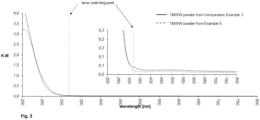
- the powder's absorption of diffuse reflected light was determined as in Example 2, the resulting spectrum from Kubelka-Munk Transformation (KM) is shown in Fig. 3 .
- TS-1 powders from the Examples 2, 3 and 4 and of the Comparative Examples 1 and 2 were preliminarily tested with respect to their general suitability as epoxidation catalysts according to the PO test as described in Reference Example 1, using methanol (45 ml) as solvent.
- the respective resulting values of the propylene oxide activity, as well as a summary of the powder characteristics, are shown in Table 5 below.
- Example 2 102 88 2.0 42 0 563 8.8
- Example 3 251 93 2.0 44 0 462 8.90
- Example 4 300 91 2.0 45 1.0 437 8.7 Comparative Example 1 >1000 92 2.0 43 1.3 455 8.40 Comparative Example 2 >1000 89 2.0 44 1.5 461 8.10
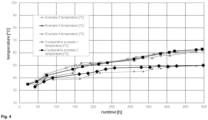
- the TS-1 catalyst based on a Ti containing compound having an APHA color number of 300 at least resulted in a selectivity at 500 h of still about 85 %.
- the TS-1 catalysts based on Ti containing compounds having an APHA color number of ⁇ 300 gave remarkably better results at 500 h in that the selectivity was clearly above 92 %.
Landscapes
- Chemical & Material Sciences (AREA)
- Organic Chemistry (AREA)
- Materials Engineering (AREA)
- Engineering & Computer Science (AREA)
- Chemical Kinetics & Catalysis (AREA)
- Crystallography & Structural Chemistry (AREA)
- Geology (AREA)
- Life Sciences & Earth Sciences (AREA)
- General Life Sciences & Earth Sciences (AREA)
- Inorganic Chemistry (AREA)
- Silicates, Zeolites, And Molecular Sieves (AREA)
- Catalysts (AREA)
- Low-Molecular Organic Synthesis Reactions Using Catalysts (AREA)
- Organic Low-Molecular-Weight Compounds And Preparation Thereof (AREA)
- Solid-Sorbent Or Filter-Aiding Compositions (AREA)
Applications Claiming Priority (3)
| Application Number | Priority Date | Filing Date | Title |
|---|---|---|---|
| EP20164934 | 2020-03-23 | ||
| EP21712203.5A EP4126763A1 (fr) | 2020-03-23 | 2021-03-22 | Matériau zéolithique ayant une structure de réseau comprenant du si, o, et ti |
| PCT/EP2021/057246 WO2021191135A1 (fr) | 2020-03-23 | 2021-03-22 | Matériau zéolithique ayant une structure de réseau comprenant du si, o, et ti |
Related Parent Applications (1)
| Application Number | Title | Priority Date | Filing Date |
|---|---|---|---|
| EP21712203.5A Division EP4126763A1 (fr) | 2020-03-23 | 2021-03-22 | Matériau zéolithique ayant une structure de réseau comprenant du si, o, et ti |
Publications (2)
| Publication Number | Publication Date |
|---|---|
| EP4446006A2 true EP4446006A2 (fr) | 2024-10-16 |
| EP4446006A3 EP4446006A3 (fr) | 2025-01-15 |
Family
ID=69953894
Family Applications (2)
| Application Number | Title | Priority Date | Filing Date |
|---|---|---|---|
| EP21712203.5A Pending EP4126763A1 (fr) | 2020-03-23 | 2021-03-22 | Matériau zéolithique ayant une structure de réseau comprenant du si, o, et ti |
| EP24192047.9A Pending EP4446006A3 (fr) | 2020-03-23 | 2021-03-22 | Matériau zéolitique ayant une structure de structure comprenant si, o et ti |
Family Applications Before (1)
| Application Number | Title | Priority Date | Filing Date |
|---|---|---|---|
| EP21712203.5A Pending EP4126763A1 (fr) | 2020-03-23 | 2021-03-22 | Matériau zéolithique ayant une structure de réseau comprenant du si, o, et ti |
Country Status (8)
| Country | Link |
|---|---|
| US (1) | US20230191378A1 (fr) |
| EP (2) | EP4126763A1 (fr) |
| JP (1) | JP7760518B2 (fr) |
| KR (1) | KR20220157483A (fr) |
| CN (1) | CN115348950B (fr) |
| BR (1) | BR112022018861A2 (fr) |
| SA (1) | SA522440609B1 (fr) |
| WO (1) | WO2021191135A1 (fr) |
Families Citing this family (2)
| Publication number | Priority date | Publication date | Assignee | Title |
|---|---|---|---|---|
| CN118338963A (zh) * | 2021-11-29 | 2024-07-12 | 巴斯夫欧洲公司 | 用于过氧化氢活化的催化剂 |
| CN115260483B (zh) * | 2022-08-31 | 2024-06-25 | 江苏钟山新材料有限公司 | 一种制备聚醚多元醇的方法 |
Citations (7)
| Publication number | Priority date | Publication date | Assignee | Title |
|---|---|---|---|---|
| EP0712852A1 (fr) | 1994-11-16 | 1996-05-22 | ARCO Chemical Technology, L.P. | Procédé pour l'époxidation catalysée par moyen de silicate de titanium |
| EP1122249A1 (fr) | 2000-02-02 | 2001-08-08 | SOLVAY (Société Anonyme) | Procédé de fabrication d'un oxiranne |
| IN189381B (fr) | 1994-06-02 | 2003-02-15 | Council Scient Ind Res | |
| US20070099299A1 (en) | 2005-09-20 | 2007-05-03 | Basf Aktiengesellschaft | Catalyst support, catalyst and process for dehydrogenating hydrocarbons |
| WO2013117537A1 (fr) | 2012-02-07 | 2013-08-15 | Basf Se | Procédé de préparation d'un matériau zéolitique |
| US20130296159A1 (en) | 2012-04-24 | 2013-11-07 | Basf Se | Zeolitic materials and methods for their preparation using alkenyltrialkylammonium compounds |
| WO2015049327A1 (fr) | 2013-10-02 | 2015-04-09 | Solvay Sa | Procédé de fabrication d'une solution aqueuse purifiée de peroxyde d'hydrogène |
Family Cites Families (11)
| Publication number | Priority date | Publication date | Assignee | Title |
|---|---|---|---|---|
| IT1127311B (it) | 1979-12-21 | 1986-05-21 | Anic Spa | Materiale sintetico,cristallino,poroso costituito da ossidi di silicio e titanio,metodo per la sua preparazione e suoi usi |
| JP4241068B2 (ja) * | 2002-03-07 | 2009-03-18 | 昭和電工株式会社 | Mww型ゼオライト物質の製造方法 |
| US6960671B2 (en) * | 2002-09-20 | 2005-11-01 | Arco Chemical Technology, L.P. | Process for direct oxidation of propylene to propylene oxide and large particle size titanium silicalite catalysts for use therein |
| DE10356184A1 (de) * | 2003-12-02 | 2005-07-07 | Basf Ag | Zeolithisches Material vom Pentasil-Strukturtyp, seine Herstellung und seine Verwendung |
| KR20110126598A (ko) * | 2009-03-13 | 2011-11-23 | 스미또모 가가꾸 가부시끼가이샤 | 올레핀 옥사이드의 제조 방법 |
| RU2561100C2 (ru) * | 2009-11-27 | 2015-08-20 | Басф Се | Способ получения катализатора на основе титанового цеолита |
| EP2812115B1 (fr) * | 2012-02-07 | 2017-05-17 | Basf Se | Micro-poudre contenant un matériau de type zéolithique contenant du ti et zn |
| RU2673798C9 (ru) * | 2013-07-24 | 2019-04-08 | Басф Се | Регенерация титансодержащего цеолита |
| RU2671638C2 (ru) * | 2013-07-24 | 2018-11-06 | Басф Се | Способ получения пропиленоксида |
| CN109574033A (zh) * | 2017-09-28 | 2019-04-05 | 中国石油化工股份有限公司 | 成型的含贵金属钛硅分子筛及其制备方法和应用以及生产过氧化氢的方法 |
| CN108191794B (zh) * | 2017-12-29 | 2020-02-11 | 中触媒新材料股份有限公司 | 一种丙烯环氧化反应方法 |
-
2021
- 2021-03-22 US US17/912,868 patent/US20230191378A1/en active Pending
- 2021-03-22 JP JP2022558155A patent/JP7760518B2/ja active Active
- 2021-03-22 BR BR112022018861A patent/BR112022018861A2/pt unknown
- 2021-03-22 KR KR1020227036878A patent/KR20220157483A/ko active Pending
- 2021-03-22 EP EP21712203.5A patent/EP4126763A1/fr active Pending
- 2021-03-22 CN CN202180023340.4A patent/CN115348950B/zh active Active
- 2021-03-22 WO PCT/EP2021/057246 patent/WO2021191135A1/fr not_active Ceased
- 2021-03-22 EP EP24192047.9A patent/EP4446006A3/fr active Pending
-
2022
- 2022-09-22 SA SA522440609A patent/SA522440609B1/ar unknown
Patent Citations (7)
| Publication number | Priority date | Publication date | Assignee | Title |
|---|---|---|---|---|
| IN189381B (fr) | 1994-06-02 | 2003-02-15 | Council Scient Ind Res | |
| EP0712852A1 (fr) | 1994-11-16 | 1996-05-22 | ARCO Chemical Technology, L.P. | Procédé pour l'époxidation catalysée par moyen de silicate de titanium |
| EP1122249A1 (fr) | 2000-02-02 | 2001-08-08 | SOLVAY (Société Anonyme) | Procédé de fabrication d'un oxiranne |
| US20070099299A1 (en) | 2005-09-20 | 2007-05-03 | Basf Aktiengesellschaft | Catalyst support, catalyst and process for dehydrogenating hydrocarbons |
| WO2013117537A1 (fr) | 2012-02-07 | 2013-08-15 | Basf Se | Procédé de préparation d'un matériau zéolitique |
| US20130296159A1 (en) | 2012-04-24 | 2013-11-07 | Basf Se | Zeolitic materials and methods for their preparation using alkenyltrialkylammonium compounds |
| WO2015049327A1 (fr) | 2013-10-02 | 2015-04-09 | Solvay Sa | Procédé de fabrication d'une solution aqueuse purifiée de peroxyde d'hydrogène |
Non-Patent Citations (7)
| Title |
|---|
| "Ullmann's Encyclopedia of Industrial Chemistry", vol. A 13, 1989, pages: 443 - 466 |
| DENG-GAO HUANGXIAN ZHANGBAO-HUI CHENZI-SHENG CHAO, CATALYSIS TODAY, vol. 158, 2010, pages 510 - 514 |
| F. ELWINGERP. POURMANDI. FURO, J. PHYS. CHEM. C., vol. 121, 2017, pages 13757 - 13764 |
| M. HOLZS. R. HEILA. SACCO, PHYS. CHEM. CHEM. PHYS., vol. 2, 2000, pages 4740 - 4742 |
| S. KOLITCHEFFE. JOLIMAITREA. HUGONJ. VERSTRAETEM. RIVALLANP-L. CARRETTEF. COUENNEM. TAYAKOUT-FAYOLLE, CATAL. SCI. TECHNOL., vol. 8, 2018, pages 4537 |
| STALLMACH ET AL., ANNUAL REPORTS ON NMR SPECTROSCOPY, vol. 61, 2007, pages 51 - 131 |
| ZWICK TECHNISCHE DOKUMENTATION: "handbook", December 2001, ZWICK GMBH & CO., article "Register 1: Betriebsanleitung / Sicherheitshandbuch for die Material-Prüfmaschine Z2.5/TS1 S" |
Also Published As
| Publication number | Publication date |
|---|---|
| BR112022018861A2 (pt) | 2022-11-22 |
| US20230191378A1 (en) | 2023-06-22 |
| KR20220157483A (ko) | 2022-11-29 |
| JP7760518B2 (ja) | 2025-10-27 |
| WO2021191135A1 (fr) | 2021-09-30 |
| EP4126763A1 (fr) | 2023-02-08 |
| JP2023524375A (ja) | 2023-06-12 |
| CN115348950B (zh) | 2025-01-10 |
| SA522440609B1 (ar) | 2024-07-10 |
| CN115348950A (zh) | 2022-11-15 |
| EP4446006A3 (fr) | 2025-01-15 |
Similar Documents
| Publication | Publication Date | Title |
|---|---|---|
| KR102451359B1 (ko) | 산화프로필렌의 정제 방법 | |
| US9446390B2 (en) | Process for preparing acrylic acid using an aluminum-free zeolitic material | |
| EP3487844B1 (fr) | Procédé de préparation d'oxyde de propylène | |
| KR102451361B1 (ko) | 프로필렌 옥사이드의 정제 방법 | |
| EP3066086B1 (fr) | Procédé d'oxydation de composés carbonyle organiques | |
| EP4446006A2 (fr) | Matériau zéolithique ayant une structure de réseau comprenant du si, o, et ti | |
| US10774034B2 (en) | Process for the conversion of ethylene oxide to monoethanolamine and ethylenediamine employing a zeolite | |
| EP3615519B1 (fr) | La récouverment de la propene par récurage avec un mélange d'un solvant et de l'eau | |
| US20230145404A1 (en) | H2o2 without dibc for po production |
Legal Events
| Date | Code | Title | Description |
|---|---|---|---|
| PUAI | Public reference made under article 153(3) epc to a published international application that has entered the european phase |
Free format text: ORIGINAL CODE: 0009012 |
|
| STAA | Information on the status of an ep patent application or granted ep patent |
Free format text: STATUS: THE APPLICATION HAS BEEN PUBLISHED |
|
| AC | Divisional application: reference to earlier application |
Ref document number: 4126763 Country of ref document: EP Kind code of ref document: P |
|
| AK | Designated contracting states |
Kind code of ref document: A2 Designated state(s): AL AT BE BG CH CY CZ DE DK EE ES FI FR GB GR HR HU IE IS IT LI LT LU LV MC MK MT NL NO PL PT RO RS SE SI SK SM TR |
|
| REG | Reference to a national code |
Ref country code: DE Ref legal event code: R079 Free format text: PREVIOUS MAIN CLASS: B01J0029400000 Ipc: C01B0039080000 |
|
| PUAL | Search report despatched |
Free format text: ORIGINAL CODE: 0009013 |
|
| AK | Designated contracting states |
Kind code of ref document: A3 Designated state(s): AL AT BE BG CH CY CZ DE DK EE ES FI FR GB GR HR HU IE IS IT LI LT LU LV MC MK MT NL NO PL PT RO RS SE SI SK SM TR |
|
| RIC1 | Information provided on ipc code assigned before grant |
Ipc: B01J 29/40 20060101ALI20241210BHEP Ipc: B01J 29/06 20060101ALI20241210BHEP Ipc: C01B 37/00 20060101ALI20241210BHEP Ipc: C01B 39/08 20060101AFI20241210BHEP |
|
| STAA | Information on the status of an ep patent application or granted ep patent |
Free format text: STATUS: REQUEST FOR EXAMINATION WAS MADE |
|
| 17P | Request for examination filed |
Effective date: 20250211 |
|
| RAX | Requested extension states of the european patent have changed |
Extension state: BA Payment date: 20250211 |
|
| STAA | Information on the status of an ep patent application or granted ep patent |
Free format text: STATUS: EXAMINATION IS IN PROGRESS |
|
| 17Q | First examination report despatched |
Effective date: 20250925 |