EP4434101B1 - Abstimmung von formulierungen auf basis anionenleitfähiger polymere (ionomere) zur herstellung von elektrochemisch aktiven schichten - Google Patents
Abstimmung von formulierungen auf basis anionenleitfähiger polymere (ionomere) zur herstellung von elektrochemisch aktiven schichten Download PDFInfo
- Publication number
- EP4434101B1 EP4434101B1 EP22813999.4A EP22813999A EP4434101B1 EP 4434101 B1 EP4434101 B1 EP 4434101B1 EP 22813999 A EP22813999 A EP 22813999A EP 4434101 B1 EP4434101 B1 EP 4434101B1
- Authority
- EP
- European Patent Office
- Prior art keywords
- anion
- dispersion
- aromatic
- structural element
- bonded
- Prior art date
- Legal status (The legal status is an assumption and is not a legal conclusion. Google has not performed a legal analysis and makes no representation as to the accuracy of the status listed.)
- Active
Links
Images


Classifications
-
- C—CHEMISTRY; METALLURGY
- C25—ELECTROLYTIC OR ELECTROPHORETIC PROCESSES; APPARATUS THEREFOR
- C25B—ELECTROLYTIC OR ELECTROPHORETIC PROCESSES FOR THE PRODUCTION OF COMPOUNDS OR NON-METALS; APPARATUS THEREFOR
- C25B11/00—Electrodes; Manufacture thereof not otherwise provided for
- C25B11/04—Electrodes; Manufacture thereof not otherwise provided for characterised by the material
- C25B11/051—Electrodes formed of electrocatalysts on a substrate or carrier
- C25B11/073—Electrodes formed of electrocatalysts on a substrate or carrier characterised by the electrocatalyst material
- C25B11/075—Electrodes formed of electrocatalysts on a substrate or carrier characterised by the electrocatalyst material consisting of a single catalytic element or catalytic compound
- C25B11/085—Organic compound
-
- B—PERFORMING OPERATIONS; TRANSPORTING
- B01—PHYSICAL OR CHEMICAL PROCESSES OR APPARATUS IN GENERAL
- B01J—CHEMICAL OR PHYSICAL PROCESSES, e.g. CATALYSIS OR COLLOID CHEMISTRY; THEIR RELEVANT APPARATUS
- B01J23/00—Catalysts comprising metals or metal oxides or hydroxides, not provided for in group B01J21/00
- B01J23/38—Catalysts comprising metals or metal oxides or hydroxides, not provided for in group B01J21/00 of noble metals
- B01J23/40—Catalysts comprising metals or metal oxides or hydroxides, not provided for in group B01J21/00 of noble metals of the platinum group metals
- B01J23/46—Ruthenium, rhodium, osmium or iridium
- B01J23/468—Iridium
-
- B—PERFORMING OPERATIONS; TRANSPORTING
- B01—PHYSICAL OR CHEMICAL PROCESSES OR APPARATUS IN GENERAL
- B01J—CHEMICAL OR PHYSICAL PROCESSES, e.g. CATALYSIS OR COLLOID CHEMISTRY; THEIR RELEVANT APPARATUS
- B01J23/00—Catalysts comprising metals or metal oxides or hydroxides, not provided for in group B01J21/00
- B01J23/38—Catalysts comprising metals or metal oxides or hydroxides, not provided for in group B01J21/00 of noble metals
- B01J23/54—Catalysts comprising metals or metal oxides or hydroxides, not provided for in group B01J21/00 of noble metals combined with metals, oxides or hydroxides provided for in groups B01J23/02 - B01J23/36
- B01J23/56—Platinum group metals
- B01J23/62—Platinum group metals with gallium, indium, thallium, germanium, tin or lead
- B01J23/622—Platinum group metals with gallium, indium, thallium, germanium, tin or lead with germanium, tin or lead
-
- B—PERFORMING OPERATIONS; TRANSPORTING
- B01—PHYSICAL OR CHEMICAL PROCESSES OR APPARATUS IN GENERAL
- B01J—CHEMICAL OR PHYSICAL PROCESSES, e.g. CATALYSIS OR COLLOID CHEMISTRY; THEIR RELEVANT APPARATUS
- B01J23/00—Catalysts comprising metals or metal oxides or hydroxides, not provided for in group B01J21/00
- B01J23/70—Catalysts comprising metals or metal oxides or hydroxides, not provided for in group B01J21/00 of the iron group metals or copper
- B01J23/74—Iron group metals
-
- C—CHEMISTRY; METALLURGY
- C25—ELECTROLYTIC OR ELECTROPHORETIC PROCESSES; APPARATUS THEREFOR
- C25B—ELECTROLYTIC OR ELECTROPHORETIC PROCESSES FOR THE PRODUCTION OF COMPOUNDS OR NON-METALS; APPARATUS THEREFOR
- C25B11/00—Electrodes; Manufacture thereof not otherwise provided for
- C25B11/04—Electrodes; Manufacture thereof not otherwise provided for characterised by the material
- C25B11/051—Electrodes formed of electrocatalysts on a substrate or carrier
- C25B11/052—Electrodes comprising one or more electrocatalytic coatings on a substrate
-
- C—CHEMISTRY; METALLURGY
- C25—ELECTROLYTIC OR ELECTROPHORETIC PROCESSES; APPARATUS THEREFOR
- C25B—ELECTROLYTIC OR ELECTROPHORETIC PROCESSES FOR THE PRODUCTION OF COMPOUNDS OR NON-METALS; APPARATUS THEREFOR
- C25B11/00—Electrodes; Manufacture thereof not otherwise provided for
- C25B11/04—Electrodes; Manufacture thereof not otherwise provided for characterised by the material
- C25B11/051—Electrodes formed of electrocatalysts on a substrate or carrier
- C25B11/055—Electrodes formed of electrocatalysts on a substrate or carrier characterised by the substrate or carrier material
- C25B11/069—Electrodes formed of electrocatalysts on a substrate or carrier characterised by the substrate or carrier material consisting of at least one single element and at least one compound; consisting of two or more compounds
-
- C—CHEMISTRY; METALLURGY
- C25—ELECTROLYTIC OR ELECTROPHORETIC PROCESSES; APPARATUS THEREFOR
- C25B—ELECTROLYTIC OR ELECTROPHORETIC PROCESSES FOR THE PRODUCTION OF COMPOUNDS OR NON-METALS; APPARATUS THEREFOR
- C25B11/00—Electrodes; Manufacture thereof not otherwise provided for
- C25B11/04—Electrodes; Manufacture thereof not otherwise provided for characterised by the material
- C25B11/051—Electrodes formed of electrocatalysts on a substrate or carrier
- C25B11/073—Electrodes formed of electrocatalysts on a substrate or carrier characterised by the electrocatalyst material
- C25B11/075—Electrodes formed of electrocatalysts on a substrate or carrier characterised by the electrocatalyst material consisting of a single catalytic element or catalytic compound
- C25B11/081—Electrodes formed of electrocatalysts on a substrate or carrier characterised by the electrocatalyst material consisting of a single catalytic element or catalytic compound the element being a noble metal
-
- C—CHEMISTRY; METALLURGY
- C25—ELECTROLYTIC OR ELECTROPHORETIC PROCESSES; APPARATUS THEREFOR
- C25B—ELECTROLYTIC OR ELECTROPHORETIC PROCESSES FOR THE PRODUCTION OF COMPOUNDS OR NON-METALS; APPARATUS THEREFOR
- C25B9/00—Cells or assemblies of cells; Constructional parts of cells; Assemblies of constructional parts, e.g. electrode-diaphragm assemblies; Process-related cell features
- C25B9/17—Cells comprising dimensionally-stable non-movable electrodes; Assemblies of constructional parts thereof
- C25B9/19—Cells comprising dimensionally-stable non-movable electrodes; Assemblies of constructional parts thereof with diaphragms
- C25B9/23—Cells comprising dimensionally-stable non-movable electrodes; Assemblies of constructional parts thereof with diaphragms comprising ion-exchange membranes in or on which electrode material is embedded
-
- H—ELECTRICITY
- H01—ELECTRIC ELEMENTS
- H01M—PROCESSES OR MEANS, e.g. BATTERIES, FOR THE DIRECT CONVERSION OF CHEMICAL ENERGY INTO ELECTRICAL ENERGY
- H01M4/00—Electrodes
- H01M4/86—Inert electrodes with catalytic activity, e.g. for fuel cells
- H01M4/8663—Selection of inactive substances as ingredients for catalytic active masses, e.g. binders, fillers
- H01M4/8668—Binders
-
- H—ELECTRICITY
- H01—ELECTRIC ELEMENTS
- H01M—PROCESSES OR MEANS, e.g. BATTERIES, FOR THE DIRECT CONVERSION OF CHEMICAL ENERGY INTO ELECTRICAL ENERGY
- H01M4/00—Electrodes
- H01M4/86—Inert electrodes with catalytic activity, e.g. for fuel cells
- H01M4/88—Processes of manufacture
- H01M4/8825—Methods for deposition of the catalytic active composition
- H01M4/8828—Coating with slurry or ink
-
- H—ELECTRICITY
- H01—ELECTRIC ELEMENTS
- H01M—PROCESSES OR MEANS, e.g. BATTERIES, FOR THE DIRECT CONVERSION OF CHEMICAL ENERGY INTO ELECTRICAL ENERGY
- H01M8/00—Fuel cells; Manufacture thereof
- H01M8/10—Fuel cells with solid electrolytes
- H01M8/1016—Fuel cells with solid electrolytes characterised by the electrolyte material
- H01M8/1018—Polymeric electrolyte materials
- H01M8/1039—Polymeric electrolyte materials halogenated, e.g. sulfonated polyvinylidene fluorides
-
- C—CHEMISTRY; METALLURGY
- C25—ELECTROLYTIC OR ELECTROPHORETIC PROCESSES; APPARATUS THEREFOR
- C25B—ELECTROLYTIC OR ELECTROPHORETIC PROCESSES FOR THE PRODUCTION OF COMPOUNDS OR NON-METALS; APPARATUS THEREFOR
- C25B1/00—Electrolytic production of inorganic compounds or non-metals
- C25B1/01—Products
- C25B1/02—Hydrogen or oxygen
- C25B1/04—Hydrogen or oxygen by electrolysis of water
-
- C—CHEMISTRY; METALLURGY
- C25—ELECTROLYTIC OR ELECTROPHORETIC PROCESSES; APPARATUS THEREFOR
- C25B—ELECTROLYTIC OR ELECTROPHORETIC PROCESSES FOR THE PRODUCTION OF COMPOUNDS OR NON-METALS; APPARATUS THEREFOR
- C25B11/00—Electrodes; Manufacture thereof not otherwise provided for
- C25B11/04—Electrodes; Manufacture thereof not otherwise provided for characterised by the material
- C25B11/051—Electrodes formed of electrocatalysts on a substrate or carrier
- C25B11/073—Electrodes formed of electrocatalysts on a substrate or carrier characterised by the electrocatalyst material
- C25B11/075—Electrodes formed of electrocatalysts on a substrate or carrier characterised by the electrocatalyst material consisting of a single catalytic element or catalytic compound
- C25B11/077—Electrodes formed of electrocatalysts on a substrate or carrier characterised by the electrocatalyst material consisting of a single catalytic element or catalytic compound the compound being a non-noble metal oxide
-
- H—ELECTRICITY
- H01—ELECTRIC ELEMENTS
- H01M—PROCESSES OR MEANS, e.g. BATTERIES, FOR THE DIRECT CONVERSION OF CHEMICAL ENERGY INTO ELECTRICAL ENERGY
- H01M8/00—Fuel cells; Manufacture thereof
- H01M8/10—Fuel cells with solid electrolytes
- H01M2008/1095—Fuel cells with polymeric electrolytes
-
- H—ELECTRICITY
- H01—ELECTRIC ELEMENTS
- H01M—PROCESSES OR MEANS, e.g. BATTERIES, FOR THE DIRECT CONVERSION OF CHEMICAL ENERGY INTO ELECTRICAL ENERGY
- H01M2300/00—Electrolytes
- H01M2300/0017—Non-aqueous electrolytes
- H01M2300/0065—Solid electrolytes
- H01M2300/0082—Organic polymers
-
- Y—GENERAL TAGGING OF NEW TECHNOLOGICAL DEVELOPMENTS; GENERAL TAGGING OF CROSS-SECTIONAL TECHNOLOGIES SPANNING OVER SEVERAL SECTIONS OF THE IPC; TECHNICAL SUBJECTS COVERED BY FORMER USPC CROSS-REFERENCE ART COLLECTIONS [XRACs] AND DIGESTS
- Y02—TECHNOLOGIES OR APPLICATIONS FOR MITIGATION OR ADAPTATION AGAINST CLIMATE CHANGE
- Y02E—REDUCTION OF GREENHOUSE GAS [GHG] EMISSIONS, RELATED TO ENERGY GENERATION, TRANSMISSION OR DISTRIBUTION
- Y02E60/00—Enabling technologies; Technologies with a potential or indirect contribution to GHG emissions mitigation
- Y02E60/30—Hydrogen technology
- Y02E60/36—Hydrogen production from non-carbon containing sources, e.g. by water electrolysis
-
- Y—GENERAL TAGGING OF NEW TECHNOLOGICAL DEVELOPMENTS; GENERAL TAGGING OF CROSS-SECTIONAL TECHNOLOGIES SPANNING OVER SEVERAL SECTIONS OF THE IPC; TECHNICAL SUBJECTS COVERED BY FORMER USPC CROSS-REFERENCE ART COLLECTIONS [XRACs] AND DIGESTS
- Y02—TECHNOLOGIES OR APPLICATIONS FOR MITIGATION OR ADAPTATION AGAINST CLIMATE CHANGE
- Y02E—REDUCTION OF GREENHOUSE GAS [GHG] EMISSIONS, RELATED TO ENERGY GENERATION, TRANSMISSION OR DISTRIBUTION
- Y02E60/00—Enabling technologies; Technologies with a potential or indirect contribution to GHG emissions mitigation
- Y02E60/30—Hydrogen technology
- Y02E60/50—Fuel cells
Definitions
- the invention relates to a dispersion intended for the production of an electrochemically active laminated body. Furthermore, it relates to the production of an electrochemically active laminated body, within the scope of which the inventive dispersion is provided. Furthermore, it relates to an electrochemically active laminated body, which is obtained in particular by the production method, and to an electrochemical cell containing at least one such laminated body. Furthermore, the invention relates to a process for producing hydrogen and oxygen by splitting water, in which the electrochemical cell is used.
- Electrochemical cells are technical devices in which electrochemical processes are carried out. They typically consist of an anode, a cathode, and a separator arranged between the anode and cathode, which divides the electrochemical cell into two compartments. Examples of electrochemical cells include batteries, fuel cells, and electrolysis cells. Electrolysis occurs in electrolysis cells, i.e., the breaking or forming of chemical bonds using electrical energy.
- AEM anion-conducting membranes
- PEM proton-conducting membranes
- AEM-WE anion exchange membrane water electrolysis
- alkaline membrane water electrolysis The well-known alkaline water electrolysis with a porous diaphragm is not an AEM-WE in the modern sense because the diaphragm is fluid-conducting.
- the membrane of an AEM-WE is fluid-tight. Anion conduction occurs at the ion level.
- electrocatalysts In electrochemical processes, material conversions take place on the surface of electrocatalysts. To generate a high catalytically active surface and to enable mass transport, electrocatalysts are embedded in porous, electrically conductive layers. The layers are applied to other components of the electrochemical cell or used as a separate component. Generally, these are referred to as electrochemically active laminates, regardless of whether the laminate fulfills other functions within the cell besides catalysis.
- CCM catalyst-coated membrane
- an electrochemically active composite body can be an electrode in which an electrically conductive substrate is coated with electrocatalytically active material, thus obtaining a catalyst-coated substrate (CCS); see Miller et al., Section 5.1.
- CCS catalyst-coated substrate
- the morphology of an electrochemically active composite is determined by the catalyst particles and their arrangement within the composite.
- Polymeric binders are suitable for the permanent mechanical adhesion of the catalyst particles to each other and to a support material – especially those that enable ion transport in accordance with the electrochemical reaction (ion-conductive polymers, often referred to as "ionomers").
- Park et al. used the polymer FAA-3-Br from Fumatech (FUMATECH BWT GmbH, Bietigheim-Bissingen, Germany) as the ionomer. However, Park et al. did not provide a precise specification of the ionomer FAA-3-Br.
- Leng et al. fabricated catalyst-coated electrodes for an alkaline fuel cell by spraying a Pt-containing ink onto a carbon mat.
- the ink contained a precursor of a Nafion ionomer.
- the ionomer was then cross-linked in situ on the carbon mat: Yongjun Leng, Lizhu Wang, Michael A. Hickner, et al., Alkaline membrane fuel cells with in-situ cross-linked ionomers, Electrochimica Acta, Volume 152, 2015, Pages 93-100, DOI 10.1016/j.electacta.2014.11.055
- Faid et al. used a catalyst ink containing dissolved ionomer, catalyst, isopropanol, and water.
- the catalyst system used was Ni, Ni/C, and Pt/C and Ir: Alaa Y.
- Faid, et al. Effect of anion exchange ionomer content on electrode performance in AEM water electrolysis, International Journal of Hydrogen Energy, Volume 45, Issue 53, 2020, Pages 28272-28284, DOI 10.1016/j.ijhydene.2020.07.202
- Electrochemically active laminated bodies are well known. More specifically, these laminated bodies are MEAs (Membrane Electrode Assemblies) intended for use in fuel cells. During MEA production, an ionomer is dissolved in a water/alcohol mixture, and catalyst particles are dispersed in the solution. The dispersion is applied to a substrate. This procedure requires that the ionomer is soluble in water/alcohol. Electrochemically active laminated bodies intended for use in water electrolysis must not contain water-soluble ionomers, as these would dissolve again during cell operation.
- MEAs Membrane Electrode Assemblies
- Pandiarajan T. et al. coated an MEA with a dispersion of catalyst, ionomer, DMSO, 2-propanol, and water. Ce-doped manganese/iron spinel was used as the catalyst.
- the invention was based on the object of making anion-conducting polymers usable as ionomers for the production of electrochemically active layered bodies.
- the common advantage of the ionomers according to structural formula (I), (II) or (III) is their good ionic conductivity, high chemical and mechanical stability in alkaline environment and low synthesis costs.
- the anion-conducting polymers processed into the dispersion obey the structural formula (I) or (II) or (III).
- the mass ratio of anion-conducting polymer to particles is between 1:1 and 1:20, or between 1:1 and 1:5, or between 1:6 and 1:10. This means that the weight fraction of the particles containing the electrocatalytically active substance is greater than the weight fraction of the anion-conducting polymer. In this way, a high density is catalytically active centers.
- the composite body produced from the dispersion thus achieves particularly high electrochemical activity.
- ionomers dissolve particularly well in solvents from the following group: N-methyl-2-pyrrolidone (NMP), N,N-dimethylformamide (DMF), N,N-dimethylacetamide (DMAC), or dimethyl sulfoxide (DMSO).
- NMP N-methyl-2-pyrrolidone
- DMF N,N-dimethylformamide
- DMAC N,N-dimethylacetamide
- DMSO dimethyl sulfoxide
- the solvent can be removed by drying, leaving the ionomer as a solid in the form of a polymer film.
- concentration of the anion-conductive polymer relative to the volume of the solvent should be between 10 mg/ml and 500 mg/ml or between 50 mg/ml and 100 mg/ml.
- an electrocatalytically active substance which contains at least one transition element.
- Transition elements within the meaning of the invention are Sc, Ti, V, Cr, Mn, Fe, Co, Ni, Cu, Zn, Y, Zr, Nb, Mo, Tc, Ru, Rh, Pd, Ag, Cd, La, Hf, Ta, W, Re, Os, Ir, Pt, Au, Hg, Ac, Rf, Db, Sg, Bh, Hs, Mt, Ds, and Rg.
- Substances containing a transition element exhibit higher electrocatalytic activity than substances without a transition element.
- the comparatively good electrical conductivity of the transition metals reduces the internal resistance of the electrochemical cell.
- the electrolytic activity of the composite produced from the dispersion is achieved by adding an electrocatalyst to the dispersion.
- the electrocatalyst is then immobilized in the final composite by the ionomer.
- electrocatalysts used include particles containing an electrocatalytically active substance selected from the group consisting of iridium (Ir), iridium oxide (IrOx), nickel oxide (NiOx), cobalt oxide (CoOx), nickel-iron mixed oxide (NiFeOx), nickel-cobalt mixed oxide (NiCoOx), lead-ruthenium mixed oxide (PbRuOx), and platinum on carbon (Pt/C).
- an electrocatalytically active substance selected from the group consisting of iridium (Ir), iridium oxide (IrOx), nickel oxide (NiOx), cobalt oxide (CoOx), nickel-iron mixed oxide (NiFeOx), nickel-cobalt mixed oxide (NiCoOx), lead-
- an anion-conducting polymer is processed in the dispersion, which is described by at least one of the following structural formulas (IVa) to (IVd): where M a and M b represent a natural number from 1 to 500 or from 5 to 250, and where the aromatic rings may be further substituted with one or more halogens and/or with one or more C 1 - to C 4 - alkyl radicals, in particular with methyl radicals.
- the dispersion does not necessarily have to contain a separate dispersant.
- the solvent can also function as a dispersant.
- at least one dispersant is preferably added. This makes the dispersion more flowable.
- a mixture of several dispersants can also be used.
- the dispersion formulation contains two dispersants, namely water and an alcohol, with the volume ratio of water to alcohol being between 1:3 and 3:1.
- water and alcohol are used in a ratio of 1:1.
- the alcohol Ethanol, methanol, 1-propanol, or 2-propanol are suitable. Such a water/alcohol mixture evaporates well when the dispersion dries.
- the solids concentration of the dispersion is preferably between 5 mg/ml and 100 mg/ml or between 10 mg/ml and 25 mg/ml, each based on the total volume of the liquid components of the dispersion.
- the solids present in the dispersion correspond to the catalytically active particles.
- the ionomer in the solution is considered liquid.
- the dispersion described here is intended to produce an electrochemically active layered body.
- the solvent and the optional dispersant evaporate during drying, so that they are not found in the laminate.
- the dispersion is applied to the substrate in a known manner by doctor blade, spraying or screen printing.
- One advantage of the dispersion described here is that it can be used to coat textile substrates. Electrochemically active laminates based on a textile structure have a particularly large surface area and can therefore enable high process intensity. Therefore, a textile fabric is preferably used as the substrate. Textile fabrics are nonwovens, felts, wovens, or knitted fabrics. The fabrics are made of fibers, Threads or yarns. Felts or nonwovens made of nickel fibers, carbon fibers, or steel fibers are preferably coated with the dispersion. Such substrates are inexpensive, electrically conductive, and stable in the alkaline environment of an AEM-WE process. They are therefore suitable as electrodes in CCS designs.
- the dispersion described here can also be used to coat a membrane made of an anion-conducting polymer. If an anion-conducting membrane is used as the substrate, the resulting layered body is a CCM.
- the membrane used as the substrate also contains ionomers of structure (I) or (II) or (III). This allows for particularly good bonding of the catalyst particles to the membrane because the ionomers are compatible.
- This procedure leads to a particularly homogeneous distribution of the electrocatalytically active particles in the anion-conducting polymer and to a stable dispersion.
- Water and alcohol are particularly suitable as dispersants, as the particles can be easily suspended in them and the water and alcohol dry quickly after application of the dispersion.
- the boiling point of water and alcohol is lower than, for example, that of DMSO (189°C). Consequently, the use of water/alcohol as a dispersant in the production of electrochemically active laminates enables rapid layer buildup.
- water is unsuitable as a solvent, as the anion-conducting polymers used in water electrolysis must, by design, be water-insoluble. Otherwise, the water electrolysis cell would quickly disintegrate during operation. Since alcohols also hardly dissolve the anion-conducting polymers described here, a significantly more powerful organic solvent must be used.
- At least one of the following substances is used as the organic solvent: N-methyl-2-pyrrolidone (NMP), N,N-dimethylformamide (DMF), N,N-dimethylacetamide (DMAC) or dimethyl sulfoxide (DMSO).
- NMP N-methyl-2-pyrrolidone
- DMF N,N-dimethylformamide
- DMAC N,N-dimethylacetamide
- DMSO dimethyl sulfoxide
- These solvents can also be removed by drying, leaving the ionomer as a solid in the form of a polymer film.
- sedimentation experiments have shown that these organic substances are not suitable as dispersants for all catalyst systems. Depending on the chosen catalyst system, it is therefore advisable to use different substances as solvents or dispersants.
- the invention further provides an electrochemically active laminated body comprising a substrate and an at least two-phase coating applied thereto, wherein the coating comprises an anion-conductive polymer as the first phase and particles containing an electrocatalytically active substance as the second phase, and wherein the second phase is dispersed in the first phase, wherein the anion-conductive polymer contains at least one structure according to formula (I), (II) or (III).
- the laminated body is in particular a CCM or a CCS.
- the loading based on the electrochemically active substance is preferably between 0.2 mg/cm 2 and 10 mg/cm 2 or 0.4 mg/cm 2 and 2 mg/cm 2 .
- the electrochemically active layered body contains an anion-conducting polymer which is described by at least one of the following structural formulas (IVa) to (IVd): where M a and M b represent a natural number from 1 to 500, preferably from 5 to 250 and where the aromatic rings may be further substituted with one or more halogens and/or with one or more C 1 - to C 4 - alkyl radicals, in particular with methyl radicals.
- Such ionomers exhibit good ionic conductivity, high chemical and mechanical stability in alkaline environments, and low synthesis costs. Furthermore, they immobilize the catalyst particles well on the substrate and are easy to process in dispersion.
- the coating on the substrate or more precisely its first dispersed phase consisting of the anion-conducting polymer, acquires a specific structure that improves the accessibility of the catalytically active centers of the particles in the coating for the electrolyte.
- An electrochemically active laminate obtained by the coating process according to the invention is therefore also a subject of the invention.
- the electrochemically active composite produced from the dispersion is ideal for use in an electrochemical cell, such as a CCM or CCS.
- the electrochemical cell can also include other components, such as other electrodes or separators, or fluid conductors or contact plates.
- the electrochemical cell containing the laminated body is preferably used to carry out a process for producing hydrogen and oxygen by electrochemical splitting of water, in which an aqueous electrolyte with a pH of 7 to 15 is filled into the electrochemical cell.
- aqueous electrolyte with a pH of 7 to 15 is filled into the electrochemical cell.
- Suitable solvents include N-methyl-2-pyrrolidone (NMP), N,N-dimethylformamide (DMF), N,N-dimethylacetamide (DMAC), or dimethyl sulfoxide (DMSO).
- NMP N-methyl-2-pyrrolidone
- DMF N,N-dimethylformamide
- DMAC N,N-dimethylacetamide
- DMSO dimethyl sulfoxide
- the polymer content is between 10 mg/ml and 500 mg/ml or between 25 mg/ml and 200 mg/ml.
- the mass ratio of ionomer to catalytically active substance is between 1:1 and 1:20 or between 1:3 and 1:5 for catalysts based on, for example, platinum supported on carbon (Pt/C), iridium (Ir), iridium oxide (IrOx), nickel oxide (NiOx), cobalt oxide (CoOx), nickel-iron mixed oxide (NiFeOx), nickel-cobalt mixed oxide (NiCoOx) or lead-ruthenium mixed oxide (PbRuOx).
- Catalyst and ionomer solution can be applied directly (e.g. by screen printing or a doctor blade method) after dispersing (e.g. with an ULTRA-TURRAX ® dispersing device from IKA, Staufen, DE or a three-roll mill, e.g. from EXAKT, Norderstedt, DE) - under shearing action, both cause the particle size to be adjusted (d 50 in the range between 0.1 ⁇ m and 50 ⁇ m) as well as a dispersion - directly (e.g. by screen printing or a doctor blade method).
- dispersing e.g. with an ULTRA-TURRAX ® dispersing device from IKA, Staufen, DE or a three-roll mill, e.g. from EXAKT, Norderstedt, DE
- aqueous dispersions can be produced, particularly for application in spray processes, in which a catalyst is first dispersed in a solution of water and lower alcohols (preferably ethanol, 1-propanol or 2-propanol) under the action of ultrasound or a disperser (e.g. with an ULTRA-TURRAX ® dispersing device from IKA, Staufen, DE with additional adjustment of the particle size: d 50 in the range between 0.1 ⁇ m to 50 ⁇ m) and to which the ionomer solution (preferably 50 mg/ml) is then added, followed by further dispersing under ultrasound.
- the solids concentration is between 5 mg/ml and 100 mg/ml, preferably between 10 mg/ml and 25 mg/ml.
- the unit mg/ml of the ionomer solution refers to mass of polymer / volume of solvent, or of the dispersion to mass of catalyst / volume of liquid components.
- Particularly suitable substrates for the application of the prepared formulations are nonwovens made of carbon or nonwovens made of metal (nickel, stainless steel, titanium) as well as ion-conducting, polymeric membranes.
- the loading of the substrate relative to the catalyst is between 0.2 mg/cm 2 and 10 mg/cm 2 or 0.4 mg/cm 2 and 2 mg/cm 2 .
- Table 1 shows the composition of some dispersions according to the invention with which catalyst layers could be applied to substrates.
- the ionomer used is a substance prepared as described in Example 3 of WO 2021/013694 A1 described.
- the ionomer was first dissolved in dimethyl sulfoxide with stirring and at 60 °C for 16 h.
- the catalysts were then dispersed in the dispersant, consisting of equal volumes of water and ethanol, either using ultrasound (BRANSONICTM B-1200 E2 from Branson Ultrasonics Corporation, Brookfield, CT, US) for 30 min in an ice bath at a power of 30 W or using an ULTRA- TURRAX® T10 basic disperser (IKA, Staufen, DE) for 3 min at level 3.
- the dispersions according to the invention were sprayed onto the substrates using a PRISM 400 ultrasonic spray coater (Ultrasonic Systems, Inc., Haverhill, MA, US). The formulation was continuously stirred during the process. These substrates were kept at a temperature of 60°C, which continuously evaporated the dispersant, thus producing the laminated bodies according to the invention.
- the resulting composites could be used as electrodes for the production of hydrogen and/or oxygen in alkaline membrane water electrolysis (AEM-WE).
- the electrochemical cell according to Figure 1 It essentially consisted of two electrically active laminates (A, A') (at least one of which was produced by the process according to the invention) separated by an anion-conducting membrane (B).
- the electrolyte supply (1M KOH, 60 °C) was provided via a flow and current distributor (C), each of which was electrically insulated by seals (D).
- the catalyst layers produced on the basis of the described catalyst ionomer formulations can also be used in electrochemical processes other than alkaline membrane water electrolysis (AEM-WE) - examples include an alkaline fuel cell or the electrolysis (reduction) of carbon dioxide.
- AEM-WE alkaline membrane water electrolysis
- Dispersions 1 to 4 are placed in the ultrasonic bath for 30 minutes and then shaken. Sedimentation is observed and documented.
- the dispersions are placed in the ultrasonic bath for one minute, shaken and the sedimentation is observed.
- the upper phase is milky and the lower phase is black.
Landscapes
- Chemical & Material Sciences (AREA)
- Chemical Kinetics & Catalysis (AREA)
- Engineering & Computer Science (AREA)
- Electrochemistry (AREA)
- Materials Engineering (AREA)
- Organic Chemistry (AREA)
- Metallurgy (AREA)
- General Chemical & Material Sciences (AREA)
- Manufacturing & Machinery (AREA)
- Life Sciences & Earth Sciences (AREA)
- Sustainable Development (AREA)
- Sustainable Energy (AREA)
- Inorganic Chemistry (AREA)
- Catalysts (AREA)
- Inert Electrodes (AREA)
- Electrolytic Production Of Non-Metals, Compounds, Apparatuses Therefor (AREA)
- Electrodes For Compound Or Non-Metal Manufacture (AREA)
- Addition Polymer Or Copolymer, Post-Treatments, Or Chemical Modifications (AREA)
- Manufacturing Of Micro-Capsules (AREA)
Description
- Die Erfindung betrifft eine Dispersion, die zur Herstellung eines elektrochemisch aktiven Schichtkörpers bestimmt ist. Ferner betrifft sie die Herstellung eines elektrochemisch aktiven Schichtkörpers, im Rahmen dessen die erfinderische Dispersion bereitgestellt wird. Außerdem betrifft sie einen elektrochemisch aktiven Schichtkörper, der insbesondere durch das Herstellungsverfahren erhalten ist, sowie eine elektrochemische Zelle, die mindestens einen solchen Schichtkörper enthält. Außerdem betrifft die Erfindung ein Verfahren zur Herstellung von Wasserstoff und Sauerstoff durch Spaltung von Wasser, bei der die elektrochemische Zelle verwendet wird.
- Elektrochemische Zellen sind technische Einrichtungen, in denen elektrochemische Prozesse durchgeführt werden. Sie umfassen in der Regel eine Anode, eine Kathode und ein zwischen Anode und Kathode angeordneten Separator, der die elektrochemische Zelle in zwei Kompartimente unterteilt. Beispiele für elektrochemische Zellen sind Batterien, Brennstoffzellen und Elektrolysezellen. In Elektrolysezellen wird Elektrolyse betrieben, also die Auftrennung oder das Knüpfen von chemischen Bindungen mit Hilfe von elektrischer Energie.
- Eine bedeutende Elektrolyse ist die Wasserelektrolyse, bei der Wasser in Sauerstoff und Wasserstoff gespalten wird. Der Separator einer Wasserelektrolysezelle kann als ionenleitende Membran ausgeführt sein. Unterschieden werden dabei anionenleitende Membranen (anion exchange membranes - AEM) und protonenleitende Membranen (proton exchange membranes - PEM). Die Wasserspaltung mit Hilfe von anionenleintenden Membranen wird oft AEM-WE (engl. anion exchange membrane water electrolysis) abgekürzt oder auch alkalische Membran-Wasserelektrolyse genannt. Die altbekannte alkalische Wasserelektrolyse mit einem porösen Diaphragma ist keine AEM-WE im heutigen Sinne, weil das Diaphragma fluidleitend ist. Die Membran einer AEM-WE ist indessen fluidisch dicht. Die Anionenleitung erfolgt auf Ebene der Ionen.
- Einen hervorragenden Überblick über Aufbau und Werkstoffe der gegenwärtig in der AEM-WE eingesetzten elektrochemischen Zellen bieten:
Miller, Hamish Andrew et al: Green hydrogen from anion exchange membrane water electrolysis: a review of recent developments in critical materials and operating conditions. Sustainable Energy Fuels, 2020, 4, 2114 DOI: 10.1039/c9se01240k - In elektrochemischen Prozessen finden Stoffumsätze an der Oberfläche von Elektrokatalysatoren statt. Zur Erzeugung einer hohen katalytisch aktiven Oberfläche sowie zur Ermöglichung von Stofftransporten werden Elektrokatalysatoren in porösen, elektrisch leitfähigen Schichten verwendet. Die Schichten werden auf andere Bauelemente der elektrochemischen Zelle aufgetragen oder als separates Bauteil eingesetzt. Allgemein soll hier von elektrochemisch aktiven Schichtkörpern die Rede sein, unabhängig davon, ob der Schichtkörper neben der Katalyse noch weitere Funktionen innerhalb der Zelle erfüllt.
- Auf dem Gebiet der Wasserelektrolysezellen ist es üblich, Membranen mit elektrokatalytisch aktivem Material zu beschichten, sodass eine "catalyst coated membrane" (CCM) erhalten wird; vgl. Miller et al. Sect. 5.2. Eine solche CCM ist ein erstes Beispiel für einen elektrochemisch aktiven Schichtkörper.
- Ein anderes Beispiel für einen elektrochemisch aktiven Schichtkörper kann eine Elektrode sein, bei der ein elektrisch leitfähiges Substrat mit elektrokatalytisch aktivem Material beschichtet wird, sodass ein "catalyst coated substrate" (CCS) erhalten wird; vgl. Miller et al. Sect. 5.1. Ein solches CCS ist ein zweites Beispiel für einen elektrochemisch aktiven Schichtkörper.
- Die Morphologie eines elektrochemisch aktiven Schichtkörpers wird durch die Katalysatorpartikel und deren Anordnung in dem Schichtkörper bestimmt. Zur dauerhaft mechanischen Haftung der Katalysatorpartikel untereinander sowie an einem Trägermaterial eignen sich polymere Binder - insbesondere solche, die einen Ionentransport entsprechend der elektrochemischen Reaktion ermöglichen (ionenleitfähiges Polymer, oft auch als "Ionomer" bezeichnet).
- Die Effizienz und Lebensdauer von elektrochemisch aktiven Schichtkörpern werden insbesondere durch Auswahl sowie Abstimmung der einzelnen Komponenten und deren Verarbeitung bestimmt. Dabei entscheidend ist bereits die Herstellung geeigneter Katalysator-Ionomer-Formulierungen.
- In der wissenschaftlichen Literatur sind bereits einige Katalysator-Ionomer-Formulierungen sowie zugehörige Verfahren zur Herstellung von elektrochemisch aktiven Schichtkörpern bekannt:
So beschreiben Chen et al. die Herstellung von CCMs für Brennstoffzellen auf Basis des Ionomers Poly(fluorenyl aryl piperidinium):
Chen, N., Wang, H.H., Kim, S.P. et al. Poly(fluorenyl aryl piperidinium) membranes and ionomers for anion exchange membrane fuel cells. Nat Commun 12, 2367 (2021). DOI 10.1038/s4 1467-021-226 12-3 - Park et al. beschichten eine anionenleitfähige Membran der Fa. Fumatech (FUMATECH BWT GmbH, Bietigheim-Bissingen, Deutschland) mit einem Gemisch aus Iridiumoxid und Platin/Kohlenstoff, um eine CCM für eine Wasserelektrolysezelle zu erhalten:
Ji Eun Park, Sun Young Kang, Seung-Hyeon Oh, et al. High-performance anion-exchange membrane water electrolysis, Electrochimica Acta, Volume 295, 2019, Pages 99-106, DOI 10.1016/j.electacta.2018.10.143 - Als lonomer nutzten Park et al das Polymer FAA-3-Br der Fa. Fumatech (FUMATECH BWT GmbH, Bietigheim-Bissingen, Deutschland). Eine genaue Spezifikation des lonomers FAA-3-Br liefern Park et al. indes nicht.
- Leng et al. stellten katalysatorbeschichtete Elektroden für eine alkalische Brennstoffzelle her, indem sie ein Kohlenstoffvlies mit einer Pt-haltigen Tinte bespritzten. Die Tinte enthielt eine Vorstufe eines Nafion-Ionomers. Das lonomer wurde erst auf dem Kohlenstoffvlies in-situ vernetzt:
Yongjun Leng, Lizhu Wang, Michael A. Hickner, et al., Alkaline membrane fuel cells with in-situ cross-linked ionomers, Electrochimica Acta, Volume 152, 2015, Pages 93-100, DOI 10.1016/j.electacta.2014.11.055 - In ähnlicher Weise nutzen Faid et al. eine Katalysatortinte enthaltend gelöstes lonomer, Katalysator, Isopropanol und Wasser. Als Katalysatorsystem wird Ni, Ni/C und Pt/C und Ir verwendet:
Alaa Y. Faid, et al.: Effect of anion exchange ionomer content on electrode performance in AEM water electrolysis, International Journal of Hydrogen Energy, Volume 45, Issue 53, 2020, Pages 28272-28284, DOI 10.1016/j.ijhydene.2020.07.202 - Aus der
US 2021/0009726 A1 ist die Herstellung von elektrochemisch aktiven Schichtkörpern bekannt. Genauer gesagt, handelt es sich bei den Schichtkörpern um MEA (Membrane Electrode Assemblies), die für den Einsatz in Brennstoffzellen bestimmt sind. Bei der Herstellung der MEA wird ein lonomer in einem Wasser/Alkohol-Gemisch gelöst und Katalysator-Partikel in der Lösung dispergiert. Die Dispersion wird auf ein Substrat aufgetragen. Dieses Vorgehen setzt voraus, dass das lonomer in Wasser/Alkohol löslich ist. Elektrochemisch aktive Schichtkörper, die in der Wasserelektrolyse eingesetzt werden sollen, dürfen keine wasserlöslichen Ionomere enthalten, da diese sich im Betrieb der Zelle wieder auflösen würden. - Pandiarajan T. et al beschichten eine MEA mit einer Dispersion aus Katalysator, Ionomer, DMSO, 2-propanol und Wasser. Als Katalysator wird Ce-dotiertes Mangan/Eisen-Spinell eingesetzt.
Pandiarajan T., Berchmans L.J., Ravichandran S.: Fabrication of spinel ferrite based alkaline anion exchange membrane water electrolysers for hydrogen production. DOI: 10.1039/c5ra01123j - Aus der
WO 2021/013694 A1 ist ein anionen leitendens Polymer mit einer Strukturformel (I) bekannt, das für die Herstellung von Membranen verwendet werden kann. Die Herstellung von CCMs, CCSs und anderen elektrochemisch aktiven Schichtkörpern ist darin nicht offenbart. - Die Herstellung von lonomere mit einer Strukturformel (II) ist in der zum Zeitpunkt dieser Anmeldung noch unveröffentlichten
europäischen Anmeldung 21152487.1 - Die Herstellung von lonomere mit einer Strukturformel (III) ist in der zum Zeitpunkt dieser Anmeldung noch unveröffentlichten
europäischen Anmeldung 21162711.2 - Der Erfindung lag die Aufgabe zu Grunde, anionenleitende Polymere als lonomere zur Herstellung von elektrochemisch aktiven Schichtkörpern nutzbar zu machen.
- Gelöst wird diese Aufgabe jeweils durch eine Dispersion nach Anspruch 1, durch ein Verfahren zur Herstellung eines elektrochemisch aktiven Schichtkörpers nach Anspruch 8, durch den elektrochemisch aktiven Schichtkörper nach Anspruch 13 und 15, durch die elektrochemische Zellen nach Anspruch 16 und durch das Verfahren zur Herstellung von Wasserstoff und Sauerstoff nach Anspruch 17. Bevorzugte Ausführungsformen der Erfindung sind in den abhängigen Ansprüchen niedergelegt.
- Alle diese Gegenstände beruhen auf dem einheitlichen Konzept, ein lonomer gemäß Strukturformel (I), (II) und (III) in Lösung zu bringen, in einer Dispersion zu verarbeiten und mit dieser Dispersion katalytisch aktive Schichtkörper für elektrochemische Zellen herzustellen. Alle die hier offenbarten Gegenstände bilden damit einen gemeinsamen erfinderischen Komplex.
- Im Rahmen von Untersuchungen stellte sich heraus, dass sich diese Art von Polymeren (Ionomere) insbesondere in Zusammenhang mit den nachfolgend abgestimmten Katalysator-Ionomer-Formulierungen erfolgreich zu Katalysatorschichten prozessieren ließen, welche sich insbesondere für elektrochemische Prozesse eignen, bei denen der Transport von Anionen stattfindet. Besonders gut funktioniert dies in AEM-WE Prozessen. Die aus der hier beschriebenen Dispersion hergestellte Schichtkörper eignen sich daher insbesondere zum Einsatz als CCM oder CCS in alkalischen Wasserelektrolysen.
- Der gemeinsame Vorteil der lonomere nach Strukturformel (I), (II) oder (III) ist ihre gute ionische Leitfähigkeit, hohe chemische sowie mechanische Beständigkeit im alkalischen Milieu und die geringen Synthesekosten.
- Die zu der Dispersion verarbeiteten anionenleitende Polymere gehorchen der Strukturformel (I) oder (II) oder (III).
- Das anionenleitende Polymer gemäß Strukturformel (I) ist wie folgt definiert:

- worin X für ein Strukturelement steht, umfassend ein positiv geladenes Stickstoffatom, welches an C1 und C2 gebunden ist und das über zwei Bindungen an ein oder zwei Kohlenwasserstoffreste gebunden ist, umfassend 1 bis 12, vorzugsweise 1 bis 6, besonders bevorzugt 1 oder 5 Kohlenstoffatome
- und worin Z für ein Strukturelement steht, das ein Kohlenstoffatom umfasst, welches an C3 und C4 gebunden ist, und das mindestens einen aromatischen Sechsring umfasst, der direkt an eines der Sauerstoffatome gebunden ist, wobei die aromatischen Sechsringe durch ein oder mehrere Halogen- und/oder ein oder mehrere C1- bis C4-Alkylreste substituiert sein können.
- Das anionenleitende Polymer gemäß Strukturformel (II) ist wie folgt definiert:

- worin X für ein Strukturelement steht, umfassend ein positiv geladenes Stickstoffatom, welches an C1 und C2 gebunden ist und das über zwei Bindungen an ein oder zwei Kohlenwasserstoffreste gebunden ist, umfassend 1 bis 12, vorzugsweise 1 bis 6, besonders bevorzugt 1 oder 5 Kohlenstoffatome,
- und worin Z für ein Strukturelement steht, das ein Kohlenstoffatom umfasst, welches an C3 und C4 gebunden ist, und das mindestens einen aromatischen Sechsring umfasst, der direkt an eines der Sauerstoffatome gebunden ist, wobei der aromatische Sechsring in den Postionen 3 und 5 mit derselben oder verschiedenen C1- bis C4-Alkylreste substituiert sein kann, insbesondere mit einer Methyl-, iso-Propyl- oder tert-Butyl-Gruppe, wobei die Methylgruppe bevorzugt ist.
- Das anionenleitende Polymer gemäß Strukturformel (III) ist wie folgt definiert:

- worin X für eine Keton- oder Sulfon-Gruppe steht;
- worin Z für Strukturelement steht, welches mindestens ein tertiäres Kohlenstoffatom und mindestens einen aromatisches Sechsring umfasst, wobei der aromatische Sechsring mit einem der beiden Sauerstoffatome direkt verbunden ist;
- worin Y für ein Strukturelement steht, welches mindesten ein Stickstoffatom mit positiver Ladung umfasst, wobei dieses Stickstoffatom mit dem Strukturelement Z verbunden ist.
- Ein erster Gegenstand der Erfindung ist mithin eine Dispersion, welche zumindest die folgenden Komponenten enthält:
- eine Lösung eines anionenleitfähigen Polymers;
- Partikeln enthaltend mindestens eine elektrokatalytisch aktive Substanz;
- optional mindestens ein Dispersionsmittel;
- Innerhalb der Dispersion beträgt das Massenverhältnis von anionenleitendem Polymer zu Partikel zwischen 1:1 und 1:20 oder zwischen 1:1 und 1:5 oder zwischen 1:6 und 1:10. Dies bedeutet, dass der Gewichtsanteil der Partikel enthaltend die elektrokatalytisch aktive Substanz größer ist als der Gewichtsanteil des anionenleitfähigen Polymer. Auf diese Weise wird eine hohe Dichte katalytisch aktiven Zentren erreicht. Das aus der Dispersion hergestellte Schichtkörper erreicht so eine besonders hohe elektrochemische Aktivität.
- Diese Ionomere lassen sich besonders gut auflösen in Lösemittel aus der folgenden Gruppe: N-Methyl-2-pyrrolidon (NMP), N,N-Dimethylformamid (DMF), N,N-Dimethylacetamid (DMAC) oder Dimethylsulfoxid (DMSO). DMSO ist dabei bevorzugt. Das Lösemittel lässt sich durch Trocknung entfernen, sodass das lonomer als Feststoff in Form eines Polymerfilms zurückbleibt. Die Konzentration des anionenleitfähigen Polymers bezogen auf das Volumen des Lösemittels sollte zwischen 10 mg/ml und 500 mg/ml oder zwischen 50 mg/ml und 100 mg/ml betragen.
- Vorzugsweise wird eine elektrokatalytisch aktive Substanz eingesetzt, welche mindestens ein Übergangselement aufweist. Übergangselemente im Sinne der Erfindung sind Sc, Ti, V, Cr, Mn, Fe, Co, Ni, Cu, Zn, Y, Zr, Nb, Mo, Tc, Ru, Rh, Pd, Ag, Cd, La, Hf, Ta, W, Re, Os, Ir, Pt, Au, Hg, Ac, Rf, Db, Sg, Bh, Hs, Mt, Ds, Rg. Substanzen enthaltend ein Übergangselement weisen nämlich eine höhere elektrokatalytische Aktivität auf als Substanzen ohne Übergangselement. Außerdem bewirkt die vergleichsweise gute elektrische Leitfähigkeit der Übergangsmetalle eine Absenkung des Innenwiderstands der elektrochemischen Zelle.
- Die elektrolytische Aktivität des aus der Dispersion hergestellten Schichtkörpers wird durch Zugabe eines Elektrokatalysators in die Dispersion realisiert. Der Elektrokatalysator wird dann im späteren Schichtkörper durch das lonomer immobilisiert. Als Elektrokatalysator werden beispielsweise Partikel verwendet, die eine elektrokatalytisch aktive Substanz enthalten, welche ausgewählt ist aus der Gruppe bestehend aus Iridium (Ir), Iridiumoxid (IrOx), Nickeloxid (NiOx), Cobaltoxid (CoOx), Nickel-Eisen-Mischoxid (NiFeOx), Nickel-Cobalt-Mischoxid (NiCoOx), Blei-Ruthenium-Mischoxid (PbRuOx), Platin auf Kohlenstoff (Pt/C). Um eine effektive Dichte der katalytisch aktiven Zentren im Schichtkörper zu erzielen, wird das Massenverhältnis von anionenleitendem Polymer zu Partikel in der Dispersion zwischen 1:1 und 1:20 oder zwischen 1:1 und 1:5 oder zwischen 1:6 und 1:10 eingestellt.
- Besonders bevorzugt wird ein anionenleitendes Polymer in der Dispersion verarbeitet, was durch mindestens eine der folgenden Strukturformeln (IVa) bis (IVd) beschrieben ist:


- Die Dispersion muss nicht zwingend ein gesondertes Dispersionsmittel enthalten. Unter Umständen kann das Lösemittel gleichzeitig die Funktion als Dispersionsmittel übernehmen. Um die Verarbeitbarkeit der Dispersion zu erhöhen, wird allerdings vorzugsweise mindestens ein Dispersionsmittel zugesetzt. Dadurch wird die Dispersion fließfähiger. Es kann auch ein Gemisch aus mehreren Dispersionsmitteln eingesetzt werden. Insbesondere hat es sich als vorteilhaft herausgestellt, wenn die Rezeptur der Dispersion zwei Dispersionsmittel enthält, nämlich Wasser und einen Alkohol, wobei das Volumenverhältnis des Wassers zu dem Alkohol zwischen 1:3 und 3:1 beträgt. Vorzugsweise werden Wasser und Alkohol im Verhältnis 1:1 eingesetzt. Als Alkohol eignen sich Ethanol, Methanol, 1-Propanol oder 2-Propanol. Ein solches Wasser/Alkoholgemisch verdampft beim Trocknen der Dispersion gut.
- Um eine gute Verarbeitbarkeit zu gewährleisten, beträgt die Feststoffkonzentration der Dispersion vorzugsweise zwischen 5 mg/ml bis 100 mg/ml oder zwischen 10 mg/ml und 25 mg/ml, jeweils bezogen auf das Gesamtvolumen der flüssigen Bestandteile der Dispersion. Die in der Dispersion anwesenden Feststoffe entsprechen den katalytisch aktiven Partikeln. Das lonomer in der Lösung wird als flüssig angesehen.
- Die hier beschriebene Dispersion ist dazu bestimmt einen elektrochemisch aktiven Schichtkörper herzustellen.
- Ein weiterer Gegenstand der Erfindung ist daher ein Verfahren zur Herstellung eines elektrochemisch aktiven Schichtkörpers, umfassend die folgenden Schritte:
- a) Bereitstellen einer erfindungsgemäßen Dispersion, welche zumindest die folgenden Komponenten enthält:
- ein Dispersionsmittel;
- eine von dem Dispersionsmittel verschiedenes, organisches Lösemittel;
- eine Lösung eines anionenleitfähigen Polymers in dem organischen Lösemittel;
- Partikeln enthaltend mindestens eine elektrokatalytisch aktive Substanz;
- b) Bereitstellen eines Substrats;
- c) Auftragen der Dispersion auf das Substrat;
- d) Trocknen der auf dem Substrat aufgetragenen Dispersion;
- e) Erhalt eines Schichtkörpers, umfassend das Substrat und eine darauf aufgebrachte, zumindest zweiphasige Beschichtung, wobei die Beschichtung als erste Phase das anionenleitfähige Polymer und als zweite Phase die Partikel umfasst und wobei die zweite Phase in der ersten Phase dispergiert ist.
- Das Lösemittel und das optional vorhandene Dispersionsmittel verdampft beim Trocknen, sodass es sich nicht im Schichtkörper wiederfindet.
- Das Auftragen der Dispersion auf das Substrat erfolgt in bekannter Weise durch Rakeln, durch Sprühen oder durch Siebdruck.
- Ein Vorteil der hier beschriebenen Dispersion besteht darin, dass sich mit ihr textile Substrate beschichten lassen. Elektrochemisch aktive Schichtkörper auf Basis einer textilen Struktur weisen eine besonders große Oberfläche auf und können daher eine hohe Prozessintensität ermöglichen. Vorzugsweise wird daher als Substrat ein textiles Flächengebilde verwendet. Textile Flächengebilde sind Vliese, Filze, Gewebe oder Gewirke. Die Flächengebilde sind aus Fasern, Fäden oder Garnen aufgebaut. Vorzugsweise werden Filze oder Vliese mit der Dispersion beschichtet, die aus Nickel-Fasern, Kohlenstoff-Fasern oder Stahl-Fasern aufgebaut sind. Derartige Substrate sind nämlich kostengünstig verfügbar, elektrisch leitend und im alkalischen Milieu eines AEM-WE-Prozesses stabil. Sie eignen sich daher als Elektrode in CCS Bauweise.
- Mit der hier beschriebenen Dispersion kann auch eine Membran aus einem anionenleitenden Polymer beschichtet werden. Wird eine anionenleitende Membran als Substrat verwendet, handelt es sich bei dem erhaltenen Schichtkörper um eine CCM. Vorzugsweise enthält die als Substrat verwendete Membran ebenfalls lonomere nach Struktur (I) oder (II) oder (III). Dann lässt sich eine besonders gute Anbindung der Katalysatorpartikel an die Membran realisieren, weil die lonomere kompatibel sind.
- Eine für die Herstellung von elektrochemisch aktiver Schichtkörper optimal geeignete Dispersion wird durch die folgende Prozedur hergestellt:
- i) Bereitstellen des Dispersionsmittels;
- ii) Bereitstellen des von dem Dispersionsmittel verschiedenen, organischen Lösemittels;
- iii) Bereitstellen des anionenleitfähigen Polymers;
- iv) Bereitstellen der Partikeln;
- v) Lösen des anionenleitfähigen Polymers in dem organischen Lösemittel, sodass eine Lösung des anionenleitfähigen Polymers erhalten wird:
- vi) Suspendieren der Partikel in dem Dispersionsmittel, sodass eine Suspension erhalten wird;
- vii) Dosieren der Lösung zu der Suspension.
- Diese Vorgehensweise führt zu einer besonders homogenen Verteilung der elektrokatalytisch aktiven Partikel in dem anionenleitenden Polymer und zu einer stabilen Dispersion.
- Als Dispersionsmittel eignen sich insbesondere Mischungen aus Wasser und Alkohol, da sich die Partikel darin gut suspendieren lassen und Wasser und Alkohol nach dem Auftragen der Dispersion schnell trocknen. Der Siedepunkt von Wasser und Alkohol ist nämlich niedriger als etwa von DMSO (189°C). Folglich ermöglicht die Verwendung von Wasser/Alkohol als Dispersionsmittel bei der Herstellung elektrochemisch aktiver Schichtkörper einen raschen Schichtaufbau. Als Lösemittel ist Wasser indes ungeeignet, da die anionenleitfähigen Polymere, die in einer Wasserelektrolyse eingesetzt werden sollen, prinzipbedingt wasserunlöslich sein müssen. Andernfalls würde sich die Wasserelektrolysezelle im Betrieb rasch selbst zerlegen. Da auch Alkohole die hier beschriebenen anionenleitenden Polymere kaum lösen, muss ein deutlich leistungsfähigeres organisches Lösemittel verwendet werden. Bevorzugt wird als organisches Lösemittel mindestens eine der folgenden Substanzen eingesetzt: N-Methyl-2-pyrrolidon (NMP), N,N-Dimethylformamid (DMF), N,N-Dimethylacetamid (DMAC) oder Dimethylsulfoxid (DMSO). DMSO ist dabei bevorzugt. Diese Lösemittel lassen sich ebenfalls durch Trocknung entfernen, sodass das lonomer als Feststoff in Form eines Polymerfilms zurückbleibt. Als Dispersionsmittel eignen sich die genannten organischen Substanzen jedoch nicht für alle Katalysatorsysteme, wie Sedimentationsversuche zeigen. Abhängig von dem gewählten Katalysatorsystem macht es daher Sinn, als Lösemittel bzw. Dispersionsmittel unterschiedliche Substanzen zu verwenden.
- Ein weiterer Gegenstand der Erfindung ist ein elektrochemisch aktiver Schichtkörper, umfassend ein Substrat und eine darauf aufgebrachte, zumindest zweiphasige Beschichtung, wobei die Beschichtung als erste Phase ein anionenleitfähiges Polymer und als zweite Phase Partikel enthaltend eine elektrokatalytisch aktive Substanz umfasst, und wobei die zweite Phase in der ersten Phase dispergiert ist, wobei das anionenleitfähige Polymer mindestens eine Struktur nach Formel (I), (II) oder (III) enthält. Abhängig von dem gewählten Substrat handelt es sich bei dem Schichtkörper insbesondere um eine CCM oder um ein CCS. In beiden Fällen liegt die Beladung bezogen auf die elektrochemisch aktive Substanz vorzugsweise zwischen 0,2 mg/cm2 und 10 mg/cm2 oder 0,4 mg/cm2 und 2 mg/cm2.
- Besonders bevorzugt enthält der elektrochemisch aktive Schichtkörper ein anionenleitendes Polymer, das durch mindestens eine der folgenden Strukturformeln (IVa) bis (IVd) beschrieben ist:


- Derartige Ionomere haben eine gute ionische Leitfähigkeit, hohe chemische sowie mechanische Beständigkeit im alkalischen Milieu und haben geringen Synthesekosten. Außerdem immobilisieren sie die Katalysatorpartikel gut auf dem Substrat und lassen sich hervorragend in der Dispersion verarbeiten.
- Je nach gewählter Rezeptur der Dispersion, der gewählten Auftragsmethode und Zeit/Temperaturregime des Trocknungsprozesses erhält die Beschichtung auf dem Substrat, genauer gesagt ihrer erste disperse Phase aus dem anionenleitenden Polymer eine spezielle Struktur, welche die Erreichbarkeit der katalytisch aktiven Zentren der Partikel in der Beschichtung für den Elektrolyten verbessert. Ein elektrochemisch aktiver Schichtkörper, welcher erhalten ist durch das erfindungsgemäße Beschichtungsverfahren, ist daher ebenfalls ein Gegenstand der Erfindung.
- Der aus der Dispersion hergestellte, elektrochemisch aktive Schichtkörper lässt sich vorzüglich in einer Elektrochemischen Zelle einsetzen, etwa als CCM oder CCS. Die elektrochemische Zelle kann neben dem Schichtkörper noch weitere Komponenten umfassen, etwa andere Elektroden oder Separatoren, oder Fluidleiter oder Kontaktplatten.
- Aufgrund der besonderen Beständigkeit des lonomers und der katalytischen Aktivität der Partikel, die in der Dispersion verarbeitet wurden und sich in dem Schichtkörper wieder finden, wird die den Schichtkörper enthaltende elektrochemische Zelle vorzugsweise zur Durchführung eines Verfahrens zur Herstellung von Wasserstoff und Sauerstoff durch elektrochemische Spaltung von Wasser verwendet, bei dem ein wässriger Elektrolyt mit einem pH-Wert von 7 bis 15 in die elektrochemische Zelle gefüllt wird. Eine solcher AEM-WE Prozess ist ebenfalls ein Gegenstand der Erfindung.
- Die Erfindung soll nun anhand von Ausführungsbeispielen näher erläutert werden. Es zeigen:
- Figur 1:
- Aufbau der elektrochemischen Zelle;
- Figur 2:
- Teststand für die elektrochemischen Zelle;
- Figur 3:
- Graphische Darstellung der Strom-Spannungs-Kurven.
- Grundlage der Herstellung von Formulierungen mit oben beschriebenen Polymeren (lonomeren) ist die Herstellung einer lonomer-Lösung. Als Lösemittel eignen sich beispielsweise N-Methyl-2-pyrrolidon (NMP), N,N-Dimethylformamid (DMF), N,N-Dimethylacetamid (DMAC) oder Dimethylsulfoxid (DMSO), bevorzugt ist DMSO, da es als nicht-Gefahrstoff eingestuft ist. Der Anteil des Polymers liegt zwischen 10 mg/ml und 500 mg/ml oder zwischen 25 mg/ml und 200 mg/ml .
- Das Massenverhältnis von lonomer zu katalytisch aktiver Substanz liegt zwischen 1:1 und 1:20 oder zwischen 1:3 und 1:5 bei Katalysatoren auf Basis von beispielsweise Platin geträgert auf Kohlenstoff (Pt/C), Iridium (Ir), Iridiumoxid (IrOx), Nickeloxid (NiOx), Cobaltoxid (CoOx), Nickel-Eisen-Mischoxid (NiFeOx), Nickel-Cobalt-Mischoxid (NiCoOx) oder Blei-Ruthenium-Mischoxid (PbRuOx).
- Katalysator und Ionomer-Lösung können zum einen nach Dispergieren (beispielsweise mit einem Dispergiergerät ULTRA-TURRAX® von der Firma IKA, Staufen, DE oder einem Dreiwalzwerk bspw. von der Firma EXAKT, Norderstedt, DE - unter Schereinwirkung bewirkt beides die Einstellung der Partikelgröße (d50 im Bereich zwischen 0,1 µm bis 50 µm) sowie einer Dispersion, - direkt appliziert werden (beispielsweise mittels Siebdruckes oder einem Rakelverfahren). Zum anderen können insbesondere für die Applikation in Sprühprozessen wässrige Dispersionen hergestellt werden, bei denen ein Katalysator zunächst in einer Lösung aus Wasser sowie niederen Alkoholen (vorzugsweise Ethanol, 1-Propanol oder 2-Propanol) unter Einwirkung von Ultraschall oder einem Dispergierer (beispielsweise mit einem Dispergiergerät ULTRA-TURRAX® von der Firma IKA, Staufen, DE mit zusätzlicher Einstellung der Partikelgröße: d50 im Bereich zwischen 0,1 µm bis 50 µm) dispergiert wird und dem anschließend die Ionomer-Lösung (vorzugsweise 50 mg/ml) mit nachfolgend weiterem Dispergieren unter Ultraschall zugesetzt wird. Der Feststoffkonzentration hierbei liegt zwischen 5 mg/ml und 100 mg/ml, bevorzugt zwischen 10 mg/ml und 25 mg/ml. Die Einheit mg/ml der lonomer-Lösung bezieht sich auf Masse Polymer / Volumen Lösemittel bzw. der Dispersion auf Masse Katalysator / Volumen flüssiger Bestandteile.
- Als Substrate für die Applikation der hergestellten Formulierungen eignen sich insbesondre Vliese aus Kohlenstoff bzw. Vliese aus Metall (Nickel, Edelstahl, Titan) sowie ionenleitende, polymere Membranen.
- Die Beladung des Substrates bezogen auf den Katalysator liegt zwischen 0,2 mg/cm2 und 10 mg/cm2 oder 0,4 mg/cm2 und 2 mg/cm2.
- Tabelle 1 zeigt die Zusammensetzung einiger erfindungsgemäßer Dispersionen, mit denen Katalysatorschichten auf Substrate aufgebracht werden konnten.
- Bei dem verwendeten lonomer handelt es sich um eine Substanz hergestellt wie in Beispiel 3 der
WO 2021/013694 A1 beschrieben. - Das lonomer wurde zunächst unter Rühren und Temperatur (60 °C) über 16 h in Dimethylsulfoxid gelöst. Anschließend wurden die Katalysatoren im Dispergiermittel, bestehend aus gleichen Volumenteilen Wasser und Ethanol, entweder unter Ultraschall (BRANSONICTM B-1200 E2 der Firma Branson Ultrasonics Corporation, Brookfield, CT, US) für 30 min im Eisbad und einer Leistung von 30 W oder mit einem Dispergiergerät ULTRA-TURRAX® T10 basic (Firma IKA, Staufen, DE) für 3 min auf Stufe 3 dispergiert. Nach Zugabe der Ionomerlösung erfolgt eine weitere Dispersion mittels Ultraschalls im Eisbad für 1 min bei einer Leistung von 30 W und einer Dispergierung mit einem Schüttler (MS1 Minishaker der Firma IKA, Staufen, DE) für 10 s bei 2500 rpm. Die Anteile wurden entsprechend Tabelle 1 gewählt.
- Die erfindungsgemäßen Dispersionen wurde mit einem Ultraschallsprühbeschichter PRISM 400 (Fa. Ultrasonic Systems, Inc, Haverhill, MA, US) auf die Substrate gesprüht. Die Formulierung wird während des Prozesses stets gerührt. Diese Substrate wurden auf einer Temperatur von 60 °C gehalten, wodurch kontinuierlich das Dispergiermittel verdampfte, sodass die erfindungsgemäßen Schichtkörper hergestellt wurden.
- Die so erhaltenen Schichtkörper ließen sich verwenden als Elektroden zur Erzeugung von Wasserstoff und/oder Sauerstoff in der alkalischen Membran-Wasserelektrolyse (AEM-WE). Die elektrochemische Zelle gemäß
Figur 1 bestand dabei im Wesentlichen aus zwei elektrisch aktiven Schichtkörpern (A, A') (wovon mindestens einer nach dem erfindungsgemäßen Verfahren hergestellt wurde), die durch eine anionenleitende Membran (B) getrennt wurden. Die Elektrolytversorgung (1M KOH, 60 °C) erfolgte über je einen Strömungs-/ und Stromverteiler (C), die beide über Dichtungen (D) elektrisch isoliert wurden. - Die Funktion der hergestellten Schichtkörper konnte in der genannten Zelle in einem Teststand (
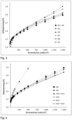
Figur 2 ) anhand typischer Strom-Spannungs-Kurven (galvanostatisch: 0,02 - 1,50 A/cm2) gezeigt werden, was die Diagramme inFigur 3 und Figur 4 zeigen. - Grundsätzlich können die auf Grundlage der beschriebenen Katalysator-Ionomer-Formulierungen (Dispersionen) hergestellten Katalysatorschichten auch in anderen elektrochemischen Prozessen als in der alkalischen Membran-Wasserelektrolyse (AEM-WE) angewendet werden - Beispiele hierzu sind eine alkalische Brennstoffzelle oder der Elektrolyse (Reduktion) von Kohlendioxid.
Tabelle 1 Zusammensetzung von Dispersionen Beispiel Ionomer-Lösung Massenverhältnis Dispersionsmittel katalytisch aktive Substanz Feststoff Dispergieren Substrat Elektrochemisch aktive Substanz auf Substrat # Konzentration Ionomer in DMSO [mg/ml] Partikel lonomer Anteil Wasser Anteil Ethanol Bezeichnung Konzentration [mg/ml] Technologie Bezeichnung Beladung [mg/cm2] 1 50 3 1 1 1 Pt/C 11 Ultraschall Vlies: Kohlenstoff 0,6 2 50 4 1 1 1 Ir 11 Ultraschall Vlies: Edelstahl 1,0 3 50 4 1 1 1 IrOx 11 Ultraschall Vlies: Kohlenstoff 1,1 4 50 3 1 1 1 Ir 11 Ultraschall Vlies: Edelstahl 0,9 5 50 6 1 1 1 Ir 11 Ultraschall Vlies: Edelstahl 1,0 6 50 9 1 1 1 Ir 11 Ultraschall Vlies: Edelstahl 1,0 7 50 4 1 1 1 PbRuOx 11 Ultraschall Vlies: Edelstahl 1,0 8 50 4 1 1 1 NiOx 11 Ultraschall Vlies: Edelstahl 0,9 9 50 4 1 1 1 CoOx 11 Ultraschall Vlies: Edelstahl 0,9 10 27,5 13 1 1 1 Pt/C 27 Ultraschall Vlies: Kohlenstoff 0,2 11 27,5 13 1 1 1 IrOx 27 Ultraschall Vlies: Kohlenstoff 1,6 12 50 3 1 1 1 Pt/C 11 Ultraschall Membran 0,6 13 50 4 1 1 1 Ir 11 Ultraschall Membran 1,0 14 50 3 1 1 1 Pt/C 11 ULTRA-TURRAX® Vlies: Kohlenstoff 0,7 15 50 4 1 1 1 Ir 11 ULTRA-TURRAX® Vlies: Edelstahl 1,0 - Mit Sedimentationsversuchen soll die Stabilität der Dispersionen untersucht werden. Dafür stehen vier verschiedene Zusammensetzungen zur Verfügung, die je mit und ohne lonomer betrachtet werden. Als Katalysator wird entweder Platin/Kohlenstoff oder Nickeloxid verwendet.
- Die Dispersionen werden in einem Schnappdeckelglas angesetzt:
- Dispersion 1: 11mg/ml Pt/C in DMSO
- Dispersion 2: 11 mg/ml Pt/C in Ethanol:Wasser
- Dispersion 3: 11 mg/ml NiO in DMSO
- Dispersion 4: 11 mg/ml NiO in Ethanol:Wasser
- Die Dispersionen 1 bis 4 werden 30 Minuten in das Ultraschallbad gestellt und anschließend geschüttelt. Die Sedimentation wird beobachtet und dokumentiert.
- Nach etwa 30 Minuten wird lonomer hinzugegeben:
- Dispersion 1 und 2: + 3,7 mg/ml lonomer
- Dispersion 3 und 4: + 2,8 mg/ml Ionomer
- Die Dispersionen werden eine Minute in das Ultraschallbad gestellt, geschüttelt und die Sedimentation beobachtet.
- Dispersion mit Pt/C in DMSO + Ionomer sedimentiert nach 15 Minuten und bildet zwei Phasen, wobei die obere Phase durchsichtig und die untere Phase schwarz ist. Auch die Dispersionen mit Nickeloxid in Ethanol und Wasser mit und ohne Ionomer bilden eine zwei-Phasen-Trennung. Ohne lonomer entwickelt sich diese nach ca 3 Minuten. Hier setzt sich unten eine schwarze Schicht ab und oben eine dunkelgraue. Bei der Dispersion mit lonomer erkennt man ebenfalls nach 3 Minuten eine leichte Trennung in hell und dunkel, diese wird jedoch sichtbarer nach 15 Minuten. Die obere Phase ist milchig und die untere schwarz.
- Die Dispersionen Pt/C in Ethanol und Wasser mit und ohne Ionomer, sowie Nickeloxid in DMSO mit und ohne lonomer und Pt/C in DMSO weisen keine Auffälligkeiten in der Versuchszeit auf.
Claims (16)
- Dispersion, welche zumindest die folgenden Komponenten enthält:• eine Lösung eines anionenleitfähigen Polymers;• Partikeln enthaltend mindestens eine elektrokatalytisch aktive Substanz;• optional mindestens ein Dispersionsmittel;wobei das anionenleitfähige Polymer mindestens eine Struktur enthält, welche ausgewählt ist aus der Gruppe bestehend aus den Strukturformeln (I), (II) und (III):
 wobei in (I) X für ein Strukturelement steht, umfassend ein positiv geladenes Stickstoffatom, welches an C1 und C2 gebunden ist und das über zwei Bindungen an ein oder zwei Kohlenwasserstoffreste gebunden ist, umfassend 1 bis 12, vorzugsweise 1 bis 6, besonders bevorzugt 1 oder 5 Kohlenstoffatomeund wobei in (I) Z für ein Strukturelement steht, das ein Kohlenstoffatom umfasst, welches an C3 und C4 gebunden ist, und das mindestens einen aromatischen Sechsring umfasst, der direkt an eines der Sauerstoffatome gebunden ist, wobei die aromatischen Sechsringe durch ein oder mehrere Halogen- und/oder ein oder mehrere C1- bis C4-Alkylreste substituiert sein können;
 wobei in (II) X für ein Strukturelement steht, umfassend ein postitiv geladenes Stickstoffatom, welches an C1 und C2 gebunden ist und das über zwei Bindungen an ein oder zwei Kohlenwasserstoffreste gebunden ist, umfassend 1 bis 12, vorzugsweise 1 bis 6, besonders bevorzugt 1 oder 5 Kohlenstoffatome,und wobei in (II) Z für ein Strukturelement steht, das ein Kohlenstoffatom umfasst, welches an C3 und C4 gebunden ist, und das mindestens einen aromatischen Sechsring umfasst, der direkt an eines der Sauerstoffatome gebunden ist, wobei der aromatische Sechsring in den Postionen 3 und 5 mit derselben oder verschiedenen C1- bis C4-Alkylreste substituiert sein kann, insbesondere mit einer Methyl-, iso-Propyl- oder tert-Butyl-Gruppe, wobei die Methylgruppe bevorzugt ist;
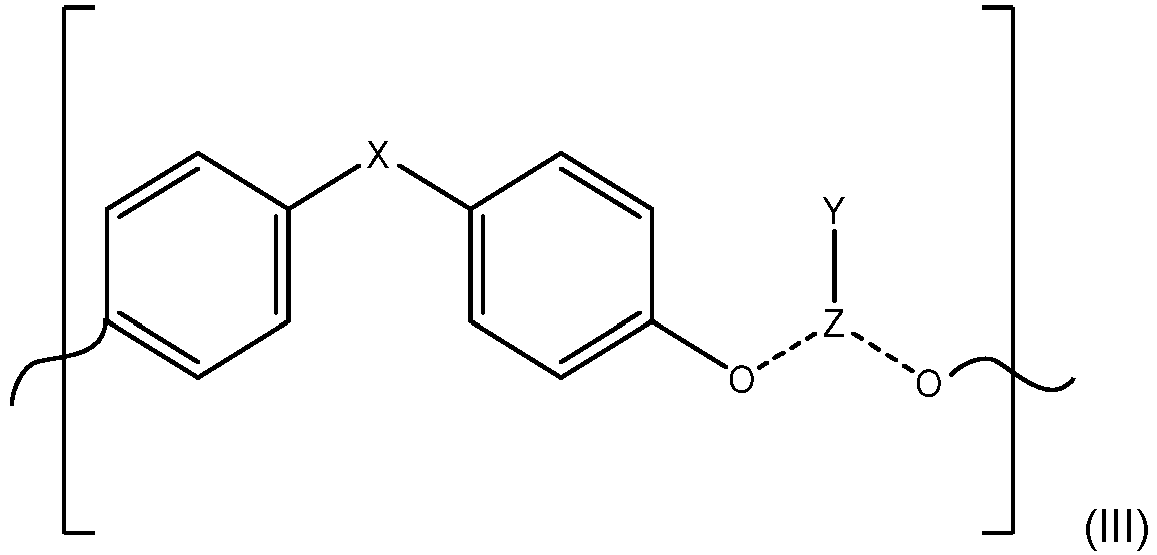 wobei in (III) X für eine Keton- oder Sulfon-Gruppe steht;wobei in (III) Z für Strukturelement steht, welches mindestens ein tertiäres Kohlenstoffatom und mindestens einen aromatisches Sechsring umfasst, wobei der aromatische Sechsring mit einem der beiden Sauerstoffatome direkt verbunden ist;und wobei in (III) Y für ein Strukturelement steht, welches mindesten ein Stickstoffatom mit positiver Ladung umfasst, wobei dieses Stickstoffatom mit dem Strukturelement Z verbunden ist;dadurch gekennzeichnet,dass das Massenverhältnis von anionenleitendem Polymer zu Partikel in der Dispersion zwischen 1:1 und 1:20 beträgt oder zwischen 1:1 und 1:5 oder zwischen 1:6 und 1:10.
 - Dispersion nach Anspruch 1, dadurch gekennzeichnet, dass die Lösung des anionenleitfähigen Polymers zumindest ein Lösemittel enthält, welches ausgewählt ist aus der Gruppe bestehend aus N-Methyl-2-pyrrolidon (NMP), N,N-Dimethylformamid (DMF), N,N-Dimethylacetamid (DMAC) oder Dimethylsulfoxid (DMSO), und dass die Konzentration des anionenleitfähigen Polymers bezogen auf das Volumen des Lösemittels zwischen 10 mg/ml und 500 mg/ml oder zwischen 50 mg/ml und 100 mg/ml beträgt.
- Dispersion nach Anspruch 1 oder 2, dadurch gekennzeichnet, dass die elektrokatalytisch aktive Substanz mindestens ein Übergangselement aufweist.
- Dispersion nach Anspruch 1 oder 2 oder 3, dadurch gekennzeichnet, dass die Partikel mindestens eine elektrokatalytisch aktive Substanz enthalten, welche ausgewählt ist aus der Gruppe bestehend aus Iridium (Ir), Iridiumoxid (IrOx), Nickeloxid (NiOx), Cobaltoxid (CoOx), Nickel-Eisen-Mischoxid (NiFeOx), Nickel-Cobalt-Mischoxid (NiCoOx), Blei-Ruthenium-Mischoxid (PbRuOx), Platin auf Kohlenstoff (Pt/C) und dass das Massenverhältnis von anionenleitendem Polymer zu Partikel in der Dispersion zwischen 1:1 und 1:20 beträgt oder zwischen 1:1 und 1:5 oder zwischen 1:6 und 1:10.
- Dispersion nach Anspruch 4, dadurch gekennzeichnet, dass das anionenleitende Polymer durch mindestens eine der folgenden Strukturformeln (IVa) bis (IVd) beschrieben ist:


- Dispersion nach Anspruch 5, enthaltend zwei Dispersionsmittel, nämlich Wasser und einen Alkohol, wobei das Volumenverhältnis des Wassers zu dem Alkohol zwischen 1:3 und 3:1 beträgt.
- Dispersion nach einem der Ansprüche 2 bis 6, gekennzeichnet durch eine Feststoffkonzentration von 5 mg/ml bis 100 mg/ml oder zwischen 10 mg/ml und 25 mg/ml, jeweils bezogen auf das Gesamtvolumen der flüssigen Bestandteile der Dispersion.
- Verfahren zur Herstellung eines elektrochemisch aktiven Schichtkörpers, umfassend die folgenden Schritte:a) Bereitstellen einer Dispersion nach einem der Ansprüche 1 bis 7, welche zumindest die folgenden Komponenten enthält:• ein Dispersionsmittel;• eine von dem Dispersionsmittel verschiedenes, organisches Lösemittel;• eine Lösung eines anionenleitfähigen Polymers in dem organischen Lösemittel;• Partikeln enthaltend mindestens eine elektrokatalytisch aktive Substanz;b) Bereitstellen eines Substrats;c) Auftragen der Dispersion auf das Substrat;d) Trocknen der auf dem Substrat aufgetragenen Dispersion;e) Erhalt eines Schichtkörpers, umfassend das Substrat und eine darauf aufgebrachte, zumindest zweiphasige Beschichtung, wobei die Beschichtung als erste Phase das anionenleitfähige Polymer und als zweite Phase die Partikel umfasst und wobei die zweite Phase in der ersten Phase dispergiert ist.
- Verfahren nach Anspruch 8, dadurch gekennzeichnet, dass das Auftragen durch Rakeln, durch Sprühen oder durch Siebdruck erfolgt.
- Verfahren nach Anspruch 8 oder 9, dadurch gekennzeichnet, dass es sich bei dem Substrat um ein textiles Flächengebilde handelt, welches aus Fasern aus Nickel, Kohlenstoff oder Stahl aufgebaut ist.
- Verfahren nach Anspruch 8 oder 9, dadurch gekennzeichnet, dass es sich bei dem Substrat um eine Membran aus einem anionenleitenden Polymer handelt.
- Verfahren nach einem der Ansprüche 8 bis 11, dadurch gekennzeichnet, dass das Bereitstellen der Dispersion wie folgt erfolgt:i) Bereitstellen des Dispersionsmittels;ii) Bereitstellen des von dem Dispersionsmittel verschiedenen, organischen Lösemittels;iii) Bereitstellen des anionenleitfähigen Polymers;iv) Bereitstellen der Partikeln;v) Lösen des anionenleitfähigen Polymers in dem organischen Lösemittel, sodass eine Lösung des anionenleitfähigen Polymers erhalten wird:vi) Suspendieren der Partikel in dem Dispersionsmittel, sodass eine Suspension erhalten wird;vii) Dosieren der Lösung zu der Suspension.
- Elektrochemisch aktiver Schichtkörper, erhalten durch ein Verfahren nach einem der Ansprüche 8, 9 oder 10, umfassend ein Substrat und eine darauf aufgebrachte, zumindest zweiphasige Beschichtung, wobei die Beschichtung als erste Phase ein anionenleitfähiges Polymer und als zweite Phase Partikel enthaltend eine elektrokatalytisch aktive Substanz umfasst, und wobei die zweite Phase in der ersten Phase dispergiert ist,
dadurch gekennzeichnet,dass das anionenleitfähige Polymer mindestens eine Struktur enthält, welche ausgewählt ist aus der Gruppe bestehend aus den Strukturformeln (I), (II) und (III): wobei in (I) X für ein Strukturelement steht, umfassend ein postitiv geladenes Stickstoffatom, welches an C1 und C2 gebunden ist und das über zwei Bindungen an ein oder zwei Kohlenwasserstoffreste gebunden ist, umfassend 1 bis 12, vorzugsweise 1 bis 6, besonders bevorzugt 1 oder 5 Kohlenstoffatomeund wobei in (I) Z für ein Strukturelement steht, das ein Kohlenstoffatom umfasst, welches an C3 und C4 gebunden ist, und das mindestens einen aromatischen Sechsring umfasst, der direkt an eines der Sauerstoffatome gebunden ist, wobei die aromatischen Sechsringe durch ein oder mehrere Halogen- und/oder ein oder mehrere C1- bis C4-Alkylreste substituiert sein können;
 wobei in (II) X für ein Strukturelement steht, umfassend ein postitiv geladenes Stickstoffatom, welches an C1 und C2 gebunden ist und das über zwei Bindungen an ein oder zwei Kohlenwasserstoffreste gebunden ist, umfassend 1 bis 12, vorzugsweise 1 bis 6, besonders bevorzugt 1 oder 5 Kohlenstoffatome,und wobei in (II) Z für ein Strukturelement steht, das ein Kohlenstoffatom umfasst, welches an C3 und C4 gebunden ist, und das mindestens einen aromatischen Sechsring umfasst, der direkt an eines der Sauerstoffatome gebunden ist, wobei der aromatische Sechsring in den Postionen 3 und 5 mit derselben oder verschiedenen C1- bis C4-Alkylreste substituiert sein kann, insbesondere mit einer Methyl-, iso-Propyl- oder tert-Butyl-Gruppe, wobei die Methylgruppe bevorzugt ist;
 wobei in (III) X für eine Keton- oder Sulfon-Gruppe steht;wobei in (III) Z für Strukturelement steht, welches mindestens ein tertiäres Kohlenstoffatom und mindestens einen aromatisches Sechsring umfasst, wobei der aromatische Sechsring mit einem der beiden Sauerstoffatome direkt verbunden ist;und wobei in (III) Y für ein Strukturelement steht, welches mindesten ein Stickstoffatom mit positiver Ladung umfasst, wobei dieses Stickstoffatom mit dem Strukturelement Z verbunden ist.
 - Elektrochemisch aktiver Schichtkörper nach Anspruch 13, dadurch gekennzeichnet, dass das anionenleitende Polymer durch mindestens eine der folgenden Strukturformeln (IVa) bis (IVd) beschrieben ist:


- Elektrochemische Zelle umfassend mindestens einen elektrochemisch aktiven Schichtkörper nach Anspruch 13 oder 14.
- Verfahren zur Herstellung von Wasserstoff und Sauerstoff durch elektrochemische Spaltung von Wasser, bei welchem ein wässriger Elektrolyt mit einem pH-Wert von 7 bis 15 in eine elektrochemische Zelle nach Anspruch 15 gefüllt wird.
Applications Claiming Priority (2)
| Application Number | Priority Date | Filing Date | Title |
|---|---|---|---|
| EP21208557.5A EP4181240A1 (de) | 2021-11-16 | 2021-11-16 | Abstimmung von formulierungen auf basis anionenleitfähiger polymere (ionomere) zur herstellung von elektrochemisch aktiven schichten |
| PCT/EP2022/080984 WO2023088714A1 (de) | 2021-11-16 | 2022-11-07 | Abstimmung von formulierungen auf basis anionenleitfähiger polymere (ionomere) zur herstellung von elektrochemisch aktiven schichten |
Publications (2)
| Publication Number | Publication Date |
|---|---|
| EP4434101A1 EP4434101A1 (de) | 2024-09-25 |
| EP4434101B1 true EP4434101B1 (de) | 2025-05-14 |
Family
ID=78676374
Family Applications (2)
| Application Number | Title | Priority Date | Filing Date |
|---|---|---|---|
| EP21208557.5A Withdrawn EP4181240A1 (de) | 2021-11-16 | 2021-11-16 | Abstimmung von formulierungen auf basis anionenleitfähiger polymere (ionomere) zur herstellung von elektrochemisch aktiven schichten |
| EP22813999.4A Active EP4434101B1 (de) | 2021-11-16 | 2022-11-07 | Abstimmung von formulierungen auf basis anionenleitfähiger polymere (ionomere) zur herstellung von elektrochemisch aktiven schichten |
Family Applications Before (1)
| Application Number | Title | Priority Date | Filing Date |
|---|---|---|---|
| EP21208557.5A Withdrawn EP4181240A1 (de) | 2021-11-16 | 2021-11-16 | Abstimmung von formulierungen auf basis anionenleitfähiger polymere (ionomere) zur herstellung von elektrochemisch aktiven schichten |
Country Status (11)
| Country | Link |
|---|---|
| US (1) | US20250034733A1 (de) |
| EP (2) | EP4181240A1 (de) |
| JP (1) | JP2024545567A (de) |
| KR (1) | KR20240113766A (de) |
| CN (1) | CN118266105A (de) |
| AR (1) | AR127685A1 (de) |
| AU (1) | AU2022391917B2 (de) |
| CA (1) | CA3238362A1 (de) |
| ES (1) | ES3037156T3 (de) |
| TW (1) | TW202335356A (de) |
| WO (1) | WO2023088714A1 (de) |
Families Citing this family (7)
| Publication number | Priority date | Publication date | Assignee | Title |
|---|---|---|---|---|
| EP4579011A3 (de) * | 2020-06-11 | 2025-09-17 | Solvay Specialty Polymers USA, LLC | Mischungen von polyetherketonketonpolymeren |
| EP4464819A1 (de) | 2023-05-15 | 2024-11-20 | Evonik Operations GmbH | Struktureller aufbau einer elektrochemischen zelle |
| EP4606933A1 (de) | 2024-02-26 | 2025-08-27 | Evonik Operations GmbH | Rakelbare katalysatortinte mit hohem feststoffanteil |
| WO2025214812A1 (de) | 2024-04-11 | 2025-10-16 | Evonik Operations Gmbh | Herstellen von elektrokatalytisch aktiven schichtkörpern mit anionenleitfähigkeit |
| EP4645482A1 (de) * | 2024-04-29 | 2025-11-05 | Evonik Operations GmbH | Direktbeschichtung von anionenaustauschmembranen mit katalytisch aktivem material |
| EP4678681A1 (de) | 2024-07-12 | 2026-01-14 | Evonik Operations GmbH | Herstellen von polymeren für die aem-wasserelektrolyse mit verringerter quellungsneigung |
| CN121942006A (zh) | 2024-08-22 | 2026-04-28 | 株式会社Lg新能源 | 车辆进入管理方法、车辆进入管理装置和包括该车辆进入管理装置的系统 |
Family Cites Families (5)
| Publication number | Priority date | Publication date | Assignee | Title |
|---|---|---|---|---|
| CN104829814B (zh) * | 2015-04-27 | 2017-04-12 | 南阳师范学院 | 一种含季铵化哌啶基团的聚合物、制备方法及阴离子交换膜、制备方法 |
| CN106750303B (zh) * | 2017-01-20 | 2019-03-19 | 吉林大学 | 一种含甲基哌啶基团的聚芳醚及其制备方法 |
| WO2019068051A2 (en) * | 2017-09-28 | 2019-04-04 | Yushan Yan | POLY (ARYL PIPERIDINIUM) POLYMERS COMPRISING THOSE HAVING STATIC CATIONIC PENDANT GROUPS FOR USE AS ANION AND IONOMER EXCHANGING MEMBRANES |
| CN110294845A (zh) * | 2019-07-03 | 2019-10-01 | 中国科学院长春应用化学研究所 | 一种叔胺型聚芳醚砜(酮)聚合物树脂及其制备方法和阴离子交换膜 |
| PT3770201T (pt) | 2019-07-22 | 2023-08-18 | Evonik Operations Gmbh | Membrana polimérica condutora de aniões |
-
2021
- 2021-11-16 EP EP21208557.5A patent/EP4181240A1/de not_active Withdrawn
-
2022
- 2022-11-07 US US18/711,077 patent/US20250034733A1/en active Pending
- 2022-11-07 ES ES22813999T patent/ES3037156T3/es active Active
- 2022-11-07 AU AU2022391917A patent/AU2022391917B2/en active Active
- 2022-11-07 CN CN202280076306.8A patent/CN118266105A/zh active Pending
- 2022-11-07 WO PCT/EP2022/080984 patent/WO2023088714A1/de not_active Ceased
- 2022-11-07 CA CA3238362A patent/CA3238362A1/en active Pending
- 2022-11-07 KR KR1020247016132A patent/KR20240113766A/ko active Pending
- 2022-11-07 EP EP22813999.4A patent/EP4434101B1/de active Active
- 2022-11-07 JP JP2024525813A patent/JP2024545567A/ja active Pending
- 2022-11-14 TW TW111143334A patent/TW202335356A/zh unknown
- 2022-11-15 AR ARP220103143A patent/AR127685A1/es unknown
Also Published As
| Publication number | Publication date |
|---|---|
| ES3037156T3 (en) | 2025-09-29 |
| WO2023088714A1 (de) | 2023-05-25 |
| EP4181240A1 (de) | 2023-05-17 |
| CN118266105A (zh) | 2024-06-28 |
| TW202335356A (zh) | 2023-09-01 |
| AU2022391917A1 (en) | 2024-06-27 |
| EP4434101A1 (de) | 2024-09-25 |
| JP2024545567A (ja) | 2024-12-10 |
| US20250034733A1 (en) | 2025-01-30 |
| KR20240113766A (ko) | 2024-07-23 |
| CA3238362A1 (en) | 2023-05-25 |
| AU2022391917B2 (en) | 2025-09-11 |
| AR127685A1 (es) | 2024-02-21 |
Similar Documents
| Publication | Publication Date | Title |
|---|---|---|
| EP4434101A1 (de) | Abstimmung von formulierungen auf basis anionenleitfähiger polymere (ionomere) zur herstellung von elektrochemisch aktiven schichten | |
| EP3980580B1 (de) | Elektrisch leitfähige nanofasern für eine polymermembran-basierte elektrolyse | |
| DE69317700T2 (de) | Verfahren zur Herstellung von Elektrode-Anordnungen | |
| DE102006051431B4 (de) | Sulfonierte Perfluorcyclobutan Polyelektrolytmembranen für Brennstoffzellen | |
| DE112013007069B4 (de) | Verfahren zum Herstellen eines feinen Katalysatorpartikels und Brennstoffzelle umfassend ein durch das Herstellverfahren hergestelltes feines Katalysatorpartikel | |
| DE69503222T2 (de) | Hochleistungs-elektroden-strukturen fuer elektrolytische zelle und prozess zu deren herstellung | |
| EP1961841B1 (de) | Verfahren zur elektrochemischen Abscheidung von Katalysatorpartikeln auf kohlefaserhaltigen Substraten sowie Vorrichtung dafür | |
| EP1150369B1 (de) | Gasverteilerstrukturen und Gasdiffusionselektroden für Polymerelektrolyt-Brennstoffzellen | |
| DE112015004105T5 (de) | Katalysator | |
| DE102011118236A1 (de) | Verbesserte Brennstoffzellen-Lebensdauer durch auf Oxid getragene Edelmetalle in einer Membran | |
| DE112013004009T5 (de) | Verfahren zur Herstellung eines katalytischen Materials | |
| DE69930347T2 (de) | Verfahren zur Herstellung einer Suspension zur Bildung einer Katalysatorschicht für eine Brennstoffzelle mit Protonenaustauschmembran | |
| DE102016209742B4 (de) | Herstellung einer Hochleistungs-Brennstoffzellenelektrode mit Kern-Schale-Katalysator | |
| WO2019096540A1 (de) | Ethylenselektive elektrode mit gemischt-valentem cu4o3-katalysator | |
| DE102010017397A1 (de) | Membranelektrodenanordnung und Brennstoffzelle | |
| DE10001170A1 (de) | Gasdiffusionselektrode, Verfahren zu ihrer Herstellung und Brennstoffzelle, die eine solche Elektrode enthält | |
| DE112010005461B4 (de) | Brennstoffzelle | |
| WO2023088734A1 (de) | Struktureller aufbau einer elektrochemischen zelle | |
| EP1601037B1 (de) | Membran-Elektroden-Einheit für Direkt-Methanol-Brennstoffzellen (DMFC) | |
| DE102013205290B4 (de) | Kautschuk-Rissverringerungsmittel in Polyelektrolytmembranen | |
| WO2018234194A1 (de) | Elektrophoretische selektive membranmodifizierung mit iridiumoxid als katalysator | |
| DE102013217840A1 (de) | Kronenether-enthaltende PEM-Elektrode | |
| DE102009048448A1 (de) | Verbesserte Elektrodenmorphologie unter Verwendung von Zusatzlösungsmitteln mit hohem Siedepunkt in Elektrodentinten | |
| EP1150370A2 (de) | Gasverteilerstrukturen und Gasdiffusionselektroden für Polymerelektrolyt-Brennstoffzellen | |
| DE102019104500A1 (de) | Verbesserung der katalysatoraktivität einer pem-brennstoffzellenelektrode mit einem ionischen flüssigen additiv |
Legal Events
| Date | Code | Title | Description |
|---|---|---|---|
| STAA | Information on the status of an ep patent application or granted ep patent |
Free format text: STATUS: UNKNOWN |
|
| STAA | Information on the status of an ep patent application or granted ep patent |
Free format text: STATUS: THE INTERNATIONAL PUBLICATION HAS BEEN MADE |
|
| PUAI | Public reference made under article 153(3) epc to a published international application that has entered the european phase |
Free format text: ORIGINAL CODE: 0009012 |
|
| STAA | Information on the status of an ep patent application or granted ep patent |
Free format text: STATUS: REQUEST FOR EXAMINATION WAS MADE |
|
| 17P | Request for examination filed |
Effective date: 20240603 |
|
| AK | Designated contracting states |
Kind code of ref document: A1 Designated state(s): AL AT BE BG CH CY CZ DE DK EE ES FI FR GB GR HR HU IE IS IT LI LT LU LV MC ME MK MT NL NO PL PT RO RS SE SI SK SM TR |
|
| GRAP | Despatch of communication of intention to grant a patent |
Free format text: ORIGINAL CODE: EPIDOSNIGR1 |
|
| STAA | Information on the status of an ep patent application or granted ep patent |
Free format text: STATUS: GRANT OF PATENT IS INTENDED |
|
| GRAJ | Information related to disapproval of communication of intention to grant by the applicant or resumption of examination proceedings by the epo deleted |
Free format text: ORIGINAL CODE: EPIDOSDIGR1 |
|
| STAA | Information on the status of an ep patent application or granted ep patent |
Free format text: STATUS: REQUEST FOR EXAMINATION WAS MADE |
|
| RIC1 | Information provided on ipc code assigned before grant |
Ipc: C25B 11/081 20210101ALI20250107BHEP Ipc: C25B 11/077 20210101ALI20250107BHEP Ipc: C25B 11/069 20210101ALI20250107BHEP Ipc: C25B 11/052 20210101ALI20250107BHEP Ipc: H01M 8/10 20160101ALI20250107BHEP Ipc: H01M 8/1039 20160101ALI20250107BHEP Ipc: C25B 1/04 20210101ALI20250107BHEP Ipc: C25B 11/04 20210101ALI20250107BHEP Ipc: H01M 4/86 20060101AFI20250107BHEP |
|
| DAV | Request for validation of the european patent (deleted) | ||
| DAX | Request for extension of the european patent (deleted) | ||
| GRAP | Despatch of communication of intention to grant a patent |
Free format text: ORIGINAL CODE: EPIDOSNIGR1 |
|
| INTG | Intention to grant announced |
Effective date: 20250120 |
|
| STAA | Information on the status of an ep patent application or granted ep patent |
Free format text: STATUS: GRANT OF PATENT IS INTENDED |
|
| INTC | Intention to grant announced (deleted) | ||
| INTG | Intention to grant announced |
Effective date: 20250220 |
|
| GRAS | Grant fee paid |
Free format text: ORIGINAL CODE: EPIDOSNIGR3 |
|
| GRAA | (expected) grant |
Free format text: ORIGINAL CODE: 0009210 |
|
| STAA | Information on the status of an ep patent application or granted ep patent |
Free format text: STATUS: THE PATENT HAS BEEN GRANTED |
|
| AK | Designated contracting states |
Kind code of ref document: B1 Designated state(s): AL AT BE BG CH CY CZ DE DK EE ES FI FR GB GR HR HU IE IS IT LI LT LU LV MC ME MK MT NL NO PL PT RO RS SE SI SK SM TR |
|
| P01 | Opt-out of the competence of the unified patent court (upc) registered |
Free format text: CASE NUMBER: APP_16922/2025 Effective date: 20250408 |
|
| REG | Reference to a national code |
Ref country code: GB Ref legal event code: FG4D Free format text: NOT ENGLISH |
|
| REG | Reference to a national code |
Ref country code: CH Ref legal event code: EP |
|
| REG | Reference to a national code |
Ref country code: DE Ref legal event code: R096 Ref document number: 502022003992 Country of ref document: DE |
|
| REG | Reference to a national code |
Ref country code: IE Ref legal event code: FG4D Free format text: LANGUAGE OF EP DOCUMENT: GERMAN |
|
| REG | Reference to a national code |
Ref country code: NL Ref legal event code: FP |
|
| REG | Reference to a national code |
Ref country code: ES Ref legal event code: FG2A Ref document number: 3037156 Country of ref document: ES Kind code of ref document: T3 Effective date: 20250929 |
|
| PG25 | Lapsed in a contracting state [announced via postgrant information from national office to epo] |
Ref country code: FI Free format text: LAPSE BECAUSE OF FAILURE TO SUBMIT A TRANSLATION OF THE DESCRIPTION OR TO PAY THE FEE WITHIN THE PRESCRIBED TIME-LIMIT Effective date: 20250514 Ref country code: PT Free format text: LAPSE BECAUSE OF FAILURE TO SUBMIT A TRANSLATION OF THE DESCRIPTION OR TO PAY THE FEE WITHIN THE PRESCRIBED TIME-LIMIT Effective date: 20250915 |
|
| REG | Reference to a national code |
Ref country code: LT Ref legal event code: MG9D |
|
| PG25 | Lapsed in a contracting state [announced via postgrant information from national office to epo] |
Ref country code: NO Free format text: LAPSE BECAUSE OF FAILURE TO SUBMIT A TRANSLATION OF THE DESCRIPTION OR TO PAY THE FEE WITHIN THE PRESCRIBED TIME-LIMIT Effective date: 20250814 Ref country code: GR Free format text: LAPSE BECAUSE OF FAILURE TO SUBMIT A TRANSLATION OF THE DESCRIPTION OR TO PAY THE FEE WITHIN THE PRESCRIBED TIME-LIMIT Effective date: 20250815 |
|
| PG25 | Lapsed in a contracting state [announced via postgrant information from national office to epo] |
Ref country code: PL Free format text: LAPSE BECAUSE OF FAILURE TO SUBMIT A TRANSLATION OF THE DESCRIPTION OR TO PAY THE FEE WITHIN THE PRESCRIBED TIME-LIMIT Effective date: 20250514 |
|
| PG25 | Lapsed in a contracting state [announced via postgrant information from national office to epo] |
Ref country code: BG Free format text: LAPSE BECAUSE OF FAILURE TO SUBMIT A TRANSLATION OF THE DESCRIPTION OR TO PAY THE FEE WITHIN THE PRESCRIBED TIME-LIMIT Effective date: 20250514 |
|
| PG25 | Lapsed in a contracting state [announced via postgrant information from national office to epo] |
Ref country code: HR Free format text: LAPSE BECAUSE OF FAILURE TO SUBMIT A TRANSLATION OF THE DESCRIPTION OR TO PAY THE FEE WITHIN THE PRESCRIBED TIME-LIMIT Effective date: 20250514 |
|
| PG25 | Lapsed in a contracting state [announced via postgrant information from national office to epo] |
Ref country code: RS Free format text: LAPSE BECAUSE OF FAILURE TO SUBMIT A TRANSLATION OF THE DESCRIPTION OR TO PAY THE FEE WITHIN THE PRESCRIBED TIME-LIMIT Effective date: 20250814 |
|
| PG25 | Lapsed in a contracting state [announced via postgrant information from national office to epo] |
Ref country code: IS Free format text: LAPSE BECAUSE OF FAILURE TO SUBMIT A TRANSLATION OF THE DESCRIPTION OR TO PAY THE FEE WITHIN THE PRESCRIBED TIME-LIMIT Effective date: 20250914 |
|
| PG25 | Lapsed in a contracting state [announced via postgrant information from national office to epo] |
Ref country code: LV Free format text: LAPSE BECAUSE OF FAILURE TO SUBMIT A TRANSLATION OF THE DESCRIPTION OR TO PAY THE FEE WITHIN THE PRESCRIBED TIME-LIMIT Effective date: 20250514 |
|
| PGFP | Annual fee paid to national office [announced via postgrant information from national office to epo] |
Ref country code: NL Payment date: 20251119 Year of fee payment: 4 |
|
| PGFP | Annual fee paid to national office [announced via postgrant information from national office to epo] |
Ref country code: DE Payment date: 20251119 Year of fee payment: 4 |
|
| PG25 | Lapsed in a contracting state [announced via postgrant information from national office to epo] |
Ref country code: SM Free format text: LAPSE BECAUSE OF FAILURE TO SUBMIT A TRANSLATION OF THE DESCRIPTION OR TO PAY THE FEE WITHIN THE PRESCRIBED TIME-LIMIT Effective date: 20250514 Ref country code: DK Free format text: LAPSE BECAUSE OF FAILURE TO SUBMIT A TRANSLATION OF THE DESCRIPTION OR TO PAY THE FEE WITHIN THE PRESCRIBED TIME-LIMIT Effective date: 20250514 |
|
| PGFP | Annual fee paid to national office [announced via postgrant information from national office to epo] |
Ref country code: AT Payment date: 20260113 Year of fee payment: 4 |
|
| PGFP | Annual fee paid to national office [announced via postgrant information from national office to epo] |
Ref country code: IT Payment date: 20251201 Year of fee payment: 4 |
|
| PGFP | Annual fee paid to national office [announced via postgrant information from national office to epo] |
Ref country code: FR Payment date: 20251126 Year of fee payment: 4 |
|
| PG25 | Lapsed in a contracting state [announced via postgrant information from national office to epo] |
Ref country code: CZ Free format text: LAPSE BECAUSE OF FAILURE TO SUBMIT A TRANSLATION OF THE DESCRIPTION OR TO PAY THE FEE WITHIN THE PRESCRIBED TIME-LIMIT Effective date: 20250514 |
|
| PG25 | Lapsed in a contracting state [announced via postgrant information from national office to epo] |
Ref country code: EE Free format text: LAPSE BECAUSE OF FAILURE TO SUBMIT A TRANSLATION OF THE DESCRIPTION OR TO PAY THE FEE WITHIN THE PRESCRIBED TIME-LIMIT Effective date: 20250514 |
|
| PG25 | Lapsed in a contracting state [announced via postgrant information from national office to epo] |
Ref country code: SK Free format text: LAPSE BECAUSE OF FAILURE TO SUBMIT A TRANSLATION OF THE DESCRIPTION OR TO PAY THE FEE WITHIN THE PRESCRIBED TIME-LIMIT Effective date: 20250514 |
|
| PGFP | Annual fee paid to national office [announced via postgrant information from national office to epo] |
Ref country code: ES Payment date: 20251229 Year of fee payment: 4 |
|
| REG | Reference to a national code |
Ref country code: DE Ref legal event code: R097 Ref document number: 502022003992 Country of ref document: DE |
|
| PG25 | Lapsed in a contracting state [announced via postgrant information from national office to epo] |
Ref country code: RO Free format text: LAPSE BECAUSE OF FAILURE TO SUBMIT A TRANSLATION OF THE DESCRIPTION OR TO PAY THE FEE WITHIN THE PRESCRIBED TIME-LIMIT Effective date: 20250514 |
|
| PLBE | No opposition filed within time limit |
Free format text: ORIGINAL CODE: 0009261 |
|
| STAA | Information on the status of an ep patent application or granted ep patent |
Free format text: STATUS: NO OPPOSITION FILED WITHIN TIME LIMIT |
|
| REG | Reference to a national code |
Ref country code: CH Ref legal event code: L10 Free format text: ST27 STATUS EVENT CODE: U-0-0-L10-L00 (AS PROVIDED BY THE NATIONAL OFFICE) Effective date: 20260325 |
|
| 26N | No opposition filed |
Effective date: 20260217 |