EP4433403B1 - Erfassen von neuen aufzugsbetriebsparametersatzen - Google Patents
Erfassen von neuen aufzugsbetriebsparametersatzen Download PDFInfo
- Publication number
- EP4433403B1 EP4433403B1 EP21815944.0A EP21815944A EP4433403B1 EP 4433403 B1 EP4433403 B1 EP 4433403B1 EP 21815944 A EP21815944 A EP 21815944A EP 4433403 B1 EP4433403 B1 EP 4433403B1
- Authority
- EP
- European Patent Office
- Prior art keywords
- elevator
- operation parameters
- setup run
- determining
- setup
- Prior art date
- Legal status (The legal status is an assumption and is not a legal conclusion. Google has not performed a legal analysis and makes no representation as to the accuracy of the status listed.)
- Active
Links
Images
Classifications
-
- B—PERFORMING OPERATIONS; TRANSPORTING
- B66—HOISTING; LIFTING; HAULING
- B66B—ELEVATORS; ESCALATORS OR MOVING WALKWAYS
- B66B5/00—Applications of checking, fault-correcting, or safety devices in elevators
- B66B5/0006—Monitoring devices or performance analysers
- B66B5/0012—Devices monitoring the users of the elevator system
-
- B—PERFORMING OPERATIONS; TRANSPORTING
- B66—HOISTING; LIFTING; HAULING
- B66B—ELEVATORS; ESCALATORS OR MOVING WALKWAYS
- B66B1/00—Control systems of elevators in general
- B66B1/34—Details, e.g. call counting devices, data transmission from car to control system, devices giving information to the control system
- B66B1/3415—Control system configuration and the data transmission or communication within the control system
- B66B1/3423—Control system configuration, i.e. lay-out
-
- B—PERFORMING OPERATIONS; TRANSPORTING
- B66—HOISTING; LIFTING; HAULING
- B66B—ELEVATORS; ESCALATORS OR MOVING WALKWAYS
- B66B1/00—Control systems of elevators in general
- B66B1/34—Details, e.g. call counting devices, data transmission from car to control system, devices giving information to the control system
- B66B1/3476—Load weighing or car passenger counting devices
-
- B—PERFORMING OPERATIONS; TRANSPORTING
- B66—HOISTING; LIFTING; HAULING
- B66B—ELEVATORS; ESCALATORS OR MOVING WALKWAYS
- B66B5/00—Applications of checking, fault-correcting, or safety devices in elevators
- B66B5/0006—Monitoring devices or performance analysers
- B66B5/0018—Devices monitoring the operating condition of the elevator system
- B66B5/0031—Devices monitoring the operating condition of the elevator system for safety reasons
Definitions
- an elevator may perform a setup run to acquire and memorize parameter data of operation parameters needed for the operation of the elevator control system.
- This data may comprise elevator shaft parameters, including floor positions and door sides.
- the acquired data may be used for several purposes, such as for controlling the movement of the elevator car, for absolute positioning system of the elevator car, and/or for traction/rope slipping monitoring of an elevator, for example. Therefore, the accuracy of the data is important.
- EP 3 734 445 A1 discloses a method of remotely updating a control device for controlling a people transportation system operated with control software according to the preamble of claim 1.
- US 2018/229965 A1 and EP 3 848 317 A1 disclose elevator control systems, wherein a setup run before the elevator is put into commission according to the preamble of claim 14.
- a method for acquiring a new set of elevator operation parameters of an elevator comprising:
- the previous set refers to the set of operation parameters which was in place/running/utilized but which data integrity was then determined to be lost.
- the previous setup could also be referred to as the current setup which data integrity has been determined to be lost since that set, even if corrupted, is still "in place”. Nevertheless, there has been a valid set of operation parameters in the elevator and previous or current set refers to that set which data integrity is then determined to be lost.
- the set of pre-conditions may further comprise determining that the elevator is fault-free relative to the performing of the setup run.
- the initiation of the setup run may be performed automatically in response to the determining the loss of data integrity if the set of pre-conditions are fulfilled.
- the method may comprise simulating the initiation of the setup run, wherein the simulating comprises at least changing a status of a manual switch in an elevator control system remotely.
- the method may comprise monitoring the data integrity.
- the determining the loss of data integrity may occur during the monitoring.
- the set of elevator operation parameters may relate to operation parameters of an elevator shaft.
- the setup run is an elevator set up run or an elevator door system setup run.
- an elevator safety control system comprising a processing unit and a memory unit.
- the elevator control system is configured to execute a method in accordance with the first aspect.
- the elevator control system is configured to: determine a loss of data integrity relative to a previous set of elevator operation parameters, and check whether a set of pre-conditions for the acquiring are fulfilled, the set of pre-conditions comprising: determine that a movable unit or an elevator car of the elevator is empty of persons, determine that an elevator shaft of the elevator is empty of persons, and determine that a safety system of the elevator is operable.
- the elevator control system is configured to initiate, such as including at least generating a request for, a setup run to be performed by utilizing the movable unit or the elevator car for the acquiring of the new set.
- an elevator or elevator system comprises at least one elevator car, or other movable unit, movable in an elevator shaft, an elevator drive system for moving the movable unit or the elevator car, and an elevator safety control system in accordance with the second aspect, wherein the elevator drive system is configured for performing the setup run based on the initiation thereof.
- the elevator drive system may comprise, for example, an elevator motor and in connection thereto a motor control unit.
- the present invention provides a method for acquiring a new set of elevator operation parameters of an elevator, an elevator safety control system, and an elevator.
- the present invention provides advantages over known solutions no immediate site visit required due to lost of operation parameters, or the "setup", of the elevator. Thus, restoring the data may be performed without unnecessary delays and without visit of service personnel to the elevator site. Even if the setup run, whether automatic or remotely initiated, fails, it can provide additional information, which can be used when planning the site visit. For example, information can be collected about required spare parts, which means that the amount of site visits is minimized.
- the elevator can possibly be returned to normal operation automatically or remotely and call out is avoided, thereby the elevator out of use time can at least be shortened, if not almost completely avoided except for the time taken by the setup run, and elevator is taken back to normal operation faster.
- a plurality of may refer to any positive integer starting from two (2), that is being two/at least two, or more, such as three/at least three, four/at least four, and so on.
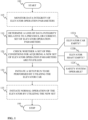
- Figure 1 shows a flow diagram of a method in accordance with an embodiment.
- Item 100 refers to a start-up phase of the method. Suitable equipment and components are obtained, and (sub-)systems assembled and configured for operation.
- item 100 may be method steps or features of a controlling unit and/or the elevator (system) itself, for instance.
- item 100 may include a method step relating to the arrangement of at least necessary systems and components.
- item 100 may refer to the controlling unit and/or the elevator (system) that may be configured to operate in the some, such as the normal, manner. This applies also to other items described in Fig. 1 .
- the method may, optionally, comprise monitoring 105 data integrity related to operation parameters of the elevator. This may be implemented by checksum algorithm, for instance. Set of operation parameters data may thus be protected, for example, with a 32- or 16-bit CRC (cyclic redundancy check) checksum. Whenever the data is written into the memory, it is verified that it is written correctly and when it is read it is verified that the calculated checksum matches to the stored checksum, thereby being able to verify the data integrity. Other known methods for determining the integrity may alternatively be used.
- the elevator may comprise a dedicated circuit for monitoring and/or testing the data integrity.
- a programmable random access memory testing circuit may be used which detects a signal to initiate testing of at least one random access memory circuit having regard to the data integrity.
- the testing circuit reads application data in a first memory block of the at least one memory circuit to a temporary memory of the testing circuit.
- the testing circuit executes marching test for the first memory block in a memory circuit. Then the testing circuit returns the application data back to the first memory block in the memory circuit.
- Item 110 refers to determining a loss of data integrity relative to a previous set of elevator operation parameters.
- the loss of data integrity may, optionally, be determined during the monitoring 105 of the data integrity or the indication of the loss may be provided essentially from outside the elevator, or at least outside the elevator safety control system of the elevator.
- the set of elevator operation parameters may relate to, for example, operation parameters of an elevator shaft, such as certain locations therein which may be related to landing floors and/doors.
- An elevator operation parameter may be or relate to a door zone in the elevator shaft.
- the loss of data integrity may be determined in response to detecting at least one selected from the group consisting of: data corruption, such as based on detecting an error by a checksum algorithm, data incompatibility, a change in the at least one elevator operation parameter, a change of an operating software version, a faulty magnet in a safety and/or control system.
- data corruption such as based on detecting an error by a checksum algorithm, data incompatibility, a change in the at least one elevator operation parameter, a change of an operating software version, a faulty magnet in a safety and/or control system.
- data corruption such as based on detecting an error by a checksum algorithm, data incompatibility, a change in the at least one elevator operation parameter, a change of an operating software version, a faulty magnet in a safety and/or control system.
- data corruption such as based on detecting an error by a checksum algorithm, data incompatibility, a change in the at least one elevator operation parameter, a change of an operating software
- Item 120 refers to checking whether a set of pre-conditions for the acquiring are fulfilled, the set of pre-conditions comprising: determining that an elevator car of the elevator is empty of persons (item 122A), determining that an elevator shaft of the elevator is empty of persons (item 122B), and determining that a safety system of the elevator is operable (122C), e.g., there are no critical faults.
- the determination of the empty elevator car may be performed by a load weighing device that indicates that there are no passengers (that is, it measures no mass or mass under some weight threshold value) in the car.
- a load weighing device that indicates that there are no passengers (that is, it measures no mass or mass under some weight threshold value) in the car.
- an optical sensor such as a camera or a closed-circuit television (CCTV) may be arranged into the elevator car for determining that the car is empty.
- the measurement of the optical sensor may be processed by a processing unit, such as by a pattern recognition algorithm thereon.
- the determining that an elevator shaft of the elevator is empty of persons may be performed by verifying that a service technician is not on the site of the elevator. This may be done based on, for example, checking whether a service technician has utilized his/her authorization badge or the like at the site of the elevator.
- empty shaft may be determined by an optical sensor, such as by a camera in the shaft (CCTV).
- CCTV camera in the shaft
- this may also be relevant if there are temporary safety/services spaces arranged to the elevator shaft. Thus, it may be determined that the temporary spaces are dismantled/taken away and that the persons have exit the shaft, if any.
- the determining that a safety system of the elevator is operable may mean determining that determining that a static safety chain of the elevator is closed, that is, it does not indicate any further operational anomaly.
- Item 130 refers to initiating, such as including at least generating a request for, a setup run to be performed by utilizing the elevator car for the acquiring of the new set.
- the setup run may then be performed as a response to the initiating, and/or the request, by the elevator drive system.
- the setup run may be an elevator setup run or an elevator door system setup run, for instance.
- Method execution may be stopped at item 199.
- the setup run has at least been initiated, for example, automatically or remotely, and optionally also finished successfully or unsuccessfully.
- the method may comprise determining whether local regulations, such as legal regulations, allow the setup run to be performed automatically. This may be done already when setting up the elevator or when the loss of data integrity is detected, or as a part of checking the pre-conditions (that is, the local regulations being one of the pre-conditions). In some cases, the local regulations may prevent the automatic setup run. If this is the case, the method may comprise determining whether local regulations, such as legal regulations, allow the setup run to be performed remotely.
- the method may comprise, after the initiation and during the subsequent setup run, obtaining data, preferably by an absolute positioning system of the elevator, related to the elevator operation parameters or based on which the elevator operation parameters are obtainable, and storing the data into a memory.
- the setup run has at least been initiated, for example, automatically or remotely, and at least to some extent, even slightly, the movable unit of the setup run, such as the elevator car or door or motor or (traction) sheave or the like, has also been moved, that is it has changed its position.
- the setup run may be finished successfully or unsuccessfully.
- the method may comprise determining the new set of elevator operation parameters upon successful completion of the setup run. Thus, if it is verified that the setup run has been completed successfully, the new set of operation parameters have been acquired. The verification may be based on monitoring the elevator during the setup run, such as relative to one or many parameters, sequences, etc. of the setup run. As the skilled person can contemplate, the setup run is pre-defined sequence of steps/events which are executed. Thus, verifying that all sequences have been properly performed during the setup run may, preferably, be part of the overall process of setup run.
- the method may further comprise initiating the normal operation of the elevator by utilizing the new set of elevator operation parameters. This may be identical or different to the process when the elevator is begun to be used for the first time after determination of the operation parameters, such as after an initial setup run or other way of determining and loading the operation parameters, whatever may be the case.
- the set of pre-conditions may further comprise determining that the loss of data integrity occurred during the normal operation of the elevator. Thus, if the loss of data integrity occurs during abnormal conditions, such as when service personnel has set the elevator to maintenance mode, the setup run may not be initiated. Furthermore, the check for the loss of data integrity during the normal operation may, preferably, also include verification that the previous set, which data integrity was lost, actually existed. Thus, there has been a valid set of operation parameters in the elevator. In addition, there may be determined a time period for having no set of operation parameters or invalid set, which time period, if exceeded, can also be one pre-condition for the setup run.
- the set of pre-conditions may further comprise determining that the elevator is fault-free relative to the performing of the setup run. If the elevator safety control system includes any flags or information related to detected faults, the setup run may not be initiated.
- a further pre-condition may be that it is checked if an automatic setup run has been attempted already after the loss of data integrity (or an attempt counter has reached a given threshold). If there has been previous attempt, or too many of them, it may be concluded that automatic setup run is not to be initiated any more.
- the initiation of the setup run may be performed automatically in response to the determining the loss of data integrity if the set of pre-conditions are fulfilled.
- the initiation of the setup run may be enabled to be performed remotely in response to the determining the loss of data integrity if the set of pre-conditions are fulfilled.
- the method may comprise simulating the initiation of the setup run, wherein the simulating comprises at least changing a status of a manual switch in an elevator control system remotely.
- the safety switch may be, for example, an RDF (rescue drive function) switch.
- RDF operation refers to an elevator operating mode wherein one or more of the safety circuits of the elevator are bypassed, in this case by the RDF switch, which the RDF switch is set to an inspection position.
- RDF switch is merely a one example of the safety switch in relation to the simulating as referred to herein.
- There may be, depending on the elevator, one or several other switches or devices which are to be operated, conventionally by the service personnel at the site of the elevator, in order to perform the setup run.
- all necessary switches and devices are either configured to automatically change their statuses/states or the statuses/states are being changed remotely, if the pre-conditions are met so that the setup run can be performed without the need to send service personnel to the elevator site.
- the method may, optionally, comprise initiating 135 a normal operation of the elevator by utilizing the new set of elevator operation parameters.
- the set of operation parameters is lost due corruption of stored data, for example, when non-volatile memory write operation is interrupted by a power break or outage. Non-volatile memory is still functional but because the setup data has been lost, a new setup run is required. Normal operation of the elevator may then be restored automatically after the successful setup run.
- the setup run may be configured such that the elevator car stops next to the failed magnet.
- Still a further example relates to updating of control software which may be set to require a new setup run.
- this has meant that a service person needs to be on site of the elevator. If, however, the setup run is initiated remotely in accordance with an embodiment, the site visit by the service person may not be required at all.
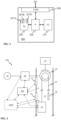
- FIG. 2 illustrates schematically an elevator safety control system 200 according to an embodiment of the present invention.
- External units 201 may be connected to a communication interface 208 of the elevator safety control system 200.
- the external unit 201 may comprise wireless connection or a connection by a wired manner.
- the communication interface 208 provides interface for communication with external units 201, such as for receiving elevator operation parameter related data during setup run.
- There may also be connecting to the external system, such as a laptop or a handheld device.
- the elevator safety control system 200 may comprise one or more processors 204, one or more memories 206 being volatile or non-volatile for storing portions of computer program code 207A-207N and any data values and possibly one or more user interface units 210.
- the mentioned elements may be communicatively coupled to each other with e.g. an internal bus.
- the processor 204 of the elevator safety control system 200 is at least configured to implement at least some items or method steps as illustrated in and/or described in connection with Fig. 1 hereinabove.
- the implementation of the method may be achieved by arranging the processor 204 to execute at least some portion of computer program code 207A-207N stored in the memory 206 causing the processor 204, and thus the elevator safety control system 200, to implement one or more items and/or method steps as described.
- the processor 204 is thus arranged to access the memory 206 and retrieve and store any information therefrom and thereto.
- the processor 204 herein refers to any unit suitable for processing information and control the operation of the elevator safety control system 200, among other tasks.
- the operations may also be implemented with a microcontroller solution with embedded software.
- the memory 206 is not limited to a certain type of memory only, but any memory type suitable for storing the described pieces of information may be applied in the context of the present invention.
- the elevator safety control system 200 may indeed be a single device having necessary functionalities being implemented therein and able to communicate with, such as receive data from and transmit data to, other entities.
- the elevator safety control system 200 may indeed be arranged to communicate between one or several entities of the elevator and even outside the elevator, such as over the internet with remote service or control center.
- the elevator safety control system 200 may alternatively be implemented as a distributed system, such as having a plurality of devices, at least some of them being in communication with each other.
- the elevator safety control system 200 is not necessarily situated in one location of the elevator but may be physically distributed functional entity.
- FIG. 3 illustrates schematically an elevator 300, or an elevator or conveyor system, in accordance with an embodiment.
- the elevator 300 comprises at least one elevator car 10, or other movable unit, movable in an elevator shaft 12.
- the elevator 300 also preferably comprises the elevator safety control system 200.
- the elevator 300 may preferably comprise an electric motor 20 for moving an elevator car 10 comprised in the elevator 300.
- the elevator car 10 may be mechanically coupled to the electric motor 20, for example, by a hoisting rope 16, hydraulic means or in more direct manner in case of a linear motor.
- the operation of the electric motor 20 may be controlled by a motor control unit (not shown) such as a frequency converter or an inverter.
- the hoisting rope 16 may comprise, for example, steel or carbon fibers.
- the term 'hoisting rope' does not limit the form of the element anyhow.
- the hoisting rope 16 may be implemented as a rope, a belt, or a track in ropeless or rope-free elevators.
- the elevator 300 may comprise an elevator control unit 1000 for controlling the operation of the elevator 1000.
- the elevator control unit 1000 may be a separate device or may be comprised in the other components of the elevator 1000 such as in or as a part of the electrical drive (not shown).
- the elevator control unit 1000 may also be implemented in a distributed manner so that, e.g., one portion of the elevator control unit 1000 may be comprised in the electrical drive (not shown) and another portion in the elevator car 10, for instance.
- the elevator control unit 1000 may also be arranged in distributed manner at more than two locations or in more than two devices.
- the elevator safety control system 200 may be essentially part of the elevator control unit 1000. However, in some other embodiments, they are separate systems, however, preferably in communication connection with one another.
- the safety control system 200 may be configured, when initiating the setup run, to generate a request for the setup run to be performed by utilizing the elevator car 10 for the acquiring of the new set of elevator operation parameters, in response to the determining the loss of data integrity and if the set of pre-conditions are fulfilled.
- the elevator drive system may be configured for performing the setup run based on the request.
- the elevator 300 may comprise an elevator brake arrangement 25 comprising an elevator brake, preferably, an electromechanical elevator brake.
- a main electrical power supply 30 such as a three- or single-phase electrical power grid for powering different devices of the elevator 300.
- the electrical drive (not shown) and the electric motor 20.
- the elevator car 10 may operate in the elevator shaft 12 or hoistway 12 serving landing floors 19.
- the hoisting rope 16 may be arranged in connection with a traction sheave 22.
- the normal operation refers herein to the mode of operation where there are no critical faults existing in the system and the elevator car 10 can serve the landing floors based on a pre-defined control logic and incoming elevator call signals.
- Critical faults are faults which directly affect the safety of the elevator 300 which, thus, cause the elevator safety control system 200 to prevent the use of elevator car 10 by others than certified service personnel.
- An example of a non-critical fault is a faulty light which is not related to safety or emergency situations, for instance.
Landscapes
- Engineering & Computer Science (AREA)
- Automation & Control Theory (AREA)
- Computer Networks & Wireless Communication (AREA)
- Mechanical Engineering (AREA)
- Maintenance And Inspection Apparatuses For Elevators (AREA)
Claims (15)
- Verfahren zum Erfassen eines neuen Aufzugsbetriebsparametersatzes eines Aufzugs (300),wobei der neue Satz mindestens einen Aufzugsbetriebsparameter beinhaltet, wobei das Verfahren dadurch gekennzeichnet ist, dass es umfasst:Ermitteln (110) eines Datenintegritätsverlusts in Bezug auf einen vorherigen Aufzugsbetriebsparametersatz;Prüfen (120), ob ein Satz von Vorbedingungen für das Erfassen erfüllt sind, wobei der Satz von Vorbedingungen umfasst:- Ermitteln (122A), dass sich in einer Aufzugkabine (10) des Aufzugs (300) keine Personen befinden,- Ermitteln (122B), dass sich in einem Aufzugschacht (12) des Aufzugs (300) keine Personen befinden, und- Ermitteln (122C), dass ein Sicherheitssystem des Aufzugs (300) funktionsfähig ist;Initiieren (130) eines durchzuführenden Setup-Ablaufs, indem die Aufzugkabine (10) für das Erfassen des neuen Satzes verwendet wird.
- Verfahren nach Anspruch 1, das nach dem Initiieren (130) und während des Setup-Ablaufs, ein Erhalten von Daten, vorzugsweise von einem absoluten Positionierungssystem des Aufzugs (300), die sich auf die Aufzugsbetriebsparameter beziehen oder basierend darauf, welche der Aufzugsbetriebsparameter erhältlich sind, und ein Speichern der Daten in einem Speicher umfasst.
- Verfahren nach Anspruch 2, das, nach einem erfolgreichen Abschluss des Setup-Ablaufs, ein Ermitteln des neuen Aufzugsbetriebsparametersatzes umfasst.
- Verfahren nach Anspruch 3. das ein Initiieren eines normalen Betriebs des Aufzugs (300) umfasst, indem der neue Aufzugsbetriebsparametersatz verwendet wird.
- Verfahren nach einem der Ansprüche 1 bis 4, wobei der Satz von Vorbedingungen ferner ein Ermitteln umfasst, dass der Datenintegritätsverlust während eines normalen Betriebs des Aufzugs (300) aufgetreten ist.
- Verfahren nach einem der Ansprüche 1 bis 5, wobei der Satz von Vorbedingungen ferner ein Ermitteln umfasst, dass der Aufzug (300) fehlerfrei in Bezug auf das Durchführen des Setup-Ablaufs ist.
- Verfahren nach einem der Ansprüche 1 bis 6, wobei das Initiieren des Setup-Ablaufs als Reaktion auf das Ermitteln des Datenintegritätsverlusts automatisch durchgeführt wird, wenn der Satz von Vorbedingungen erfüllt wurde.
- Verfahren nach einem der Ansprüche 1 bis 6, wobei das Initiieren des Setup-Ablaufs als Reaktion auf das Ermitteln des Datenintegritätsverlusts ferngesteuert durchgeführt wird, wenn der Satz von Vorbedingungen erfüllt wurde.
- Verfahren nach Anspruch 7 oder 8, das ein Simulieren des Initiierens des Setup-Ablaufs umfasst, wobei das Simulieren mindestens ein ferngesteuertes Verändern eines Zustands eines manuellen Schalters in einem Aufzugsteuersystem umfasst.
- Verfahren nach einem der Ansprüche 1 bis 9, das ein Überwachen (105) der Datenintegrität umfasst.
- Verfahren nach einem der Ansprüche 1 bis 10, wobei der Datenintegritätsverlust als Reaktion auf ein Erkennen mindestens eines ausgewählten Elements aus einer Gruppe ermittelt wird, die besteht aus: einer Datenverletzung, einer Dateninkompatibilität, einer Veränderung bei dem mindestens einen Aufzugsbetriebsparameter, einer Veränderung einer Betriebssoftwareversion, einem fehlerhaften Magneten in einem Sicherheits- und/oder Steuersystem oder einem absoluten Positionierungssystem einer Aufzugkabine (10), das verletzt wurde oder nicht kompatibel ist.
- Verfahren nach einem der Ansprüche 1 bis 11, wobei sich der Aufzugsbetriebsparametersatz auf Betriebsparameter eines Aufzugschachts (12) bezieht.
- Verfahren nach einem der Ansprüche 1 bis 12, wobei der Setup-Ablauf ein Aufzug-Setup-Ablauf oder ein Aufzugtürsystem-Setup-Ablauf ist.
- Aufzugsicherheitssteuersystem (200), das eine Verarbeitungseinheit (204) und eine Speichereinheit (206) umfasst, dadurch gekennzeichnet, dass das Aufzugsteuersystem (200) konfiguriert ist zum:Ermitteln (110) eines Datenintegritätsverlusts in Bezug auf einen vorherigen Aufzugsbetriebsparametersatz;Prüfen (120), ob ein Satz von Vorbedingungen für das Erfassen erfüllt sind, wobei der Satz von Vorbedingungen umfasst:- Ermitteln (122A), dass sich in einer Aufzugkabine (10) des Aufzugs (300) keine Personen befinden,- Ermitteln (122B), dass sich in einem Aufzugschacht (12) des Aufzugs (300) keine Personen befinden, und- Ermitteln (122C), dass ein Sicherheitssystem des Aufzugs (300) funktionsfähig ist;Initiieren (130) eines durchzuführenden Setup-Ablaufs, indem die Aufzugkabine (10) für das Erfassen des neuen Satzes verwendet wird.
- Aufzug (300), umfassend:mindestens eine Aufzugkabine (10) die in einem Aufzugschacht (12) bewegbar ist,ein Aufzugantriebssystem zum Bewegen der Aufzugkabine (10) undein Aufzugsicherheitssteuersystem nach Anspruch 14, wobei das Aufzugantriebssystem konfiguriert ist zum Durchführen des Setup-Ablaufs basierend auf dem Initiieren (130) desselben.
Applications Claiming Priority (1)
| Application Number | Priority Date | Filing Date | Title |
|---|---|---|---|
| PCT/EP2021/081771 WO2023088532A1 (en) | 2021-11-16 | 2021-11-16 | Acquiring new set of elevator operation parameters |
Publications (3)
| Publication Number | Publication Date |
|---|---|
| EP4433403A1 EP4433403A1 (de) | 2024-09-25 |
| EP4433403C0 EP4433403C0 (de) | 2025-06-25 |
| EP4433403B1 true EP4433403B1 (de) | 2025-06-25 |
Family
ID=78819475
Family Applications (1)
| Application Number | Title | Priority Date | Filing Date |
|---|---|---|---|
| EP21815944.0A Active EP4433403B1 (de) | 2021-11-16 | 2021-11-16 | Erfassen von neuen aufzugsbetriebsparametersatzen |
Country Status (5)
| Country | Link |
|---|---|
| US (1) | US20240239633A1 (de) |
| EP (1) | EP4433403B1 (de) |
| CN (1) | CN118234674A (de) |
| AU (1) | AU2021474055A1 (de) |
| WO (1) | WO2023088532A1 (de) |
Family Cites Families (3)
| Publication number | Priority date | Publication date | Assignee | Title |
|---|---|---|---|---|
| ES2766599T3 (es) * | 2017-02-10 | 2020-06-12 | Kone Corp | Procedimiento, unidad de control de seguridad, y sistema de ascensor para definir una información de posición absoluta de una cabina de ascensor |
| EP3734445A1 (de) * | 2019-04-30 | 2020-11-04 | Inventio AG | Sichere und zuverlässige fernaktualisierung einer steuerungsvorrichtung in einem aufzug |
| EP3848317A1 (de) * | 2020-01-09 | 2021-07-14 | KONE Corporation | Aufzugsicherheitssystem |
-
2021
- 2021-11-16 CN CN202180104217.5A patent/CN118234674A/zh active Pending
- 2021-11-16 AU AU2021474055A patent/AU2021474055A1/en active Pending
- 2021-11-16 WO PCT/EP2021/081771 patent/WO2023088532A1/en not_active Ceased
- 2021-11-16 EP EP21815944.0A patent/EP4433403B1/de active Active
-
2024
- 2024-03-27 US US18/618,083 patent/US20240239633A1/en active Pending
Also Published As
| Publication number | Publication date |
|---|---|
| EP4433403C0 (de) | 2025-06-25 |
| WO2023088532A1 (en) | 2023-05-25 |
| CN118234674A (zh) | 2024-06-21 |
| US20240239633A1 (en) | 2024-07-18 |
| AU2021474055A1 (en) | 2024-04-11 |
| EP4433403A1 (de) | 2024-09-25 |
Similar Documents
| Publication | Publication Date | Title |
|---|---|---|
| AU2014339258B2 (en) | Method and apparatus for commissioning a lift installation | |
| CN1192964C (zh) | 电梯的电子安全系统 | |
| CN101537953B (zh) | 电梯的自动诊断装置 | |
| CN108928697B (zh) | 用于生成电梯门系统的维护数据的方法和系统 | |
| US9367416B2 (en) | Safety circuit of an elevator, and method for identifying a functional nonconformance of a safety circuit of an elevator | |
| KR20180005690A (ko) | 안전 관련 소프트웨어를 업데이트하는 방법 | |
| WO2006090470A1 (ja) | エレベータ装置 | |
| CN107250021B (zh) | 用于运行具有临时参与者的电子安全系统的方法 | |
| WO2006033153A1 (ja) | エレベータ装置 | |
| CN111295350B (zh) | 用于监控人员运送设备中的对于安全关键的状态的安全监控装置以及用于运行这种安全监控装置的方法 | |
| KR20070049213A (ko) | 엘리베이터 제어기의 파워-온-리셋 | |
| CN111137773A (zh) | 用于检测电梯系统的故障的方法和系统 | |
| US20240239633A1 (en) | Method for acquiring new set of elevator operation parameters of an elevator, an elevator safety control system, and elevator | |
| HK40112086A (zh) | 获取新的一组电梯操作参数 | |
| CN112622927A (zh) | 一种车辆驾驶控制方法、装置、电子设备和存储介质 | |
| JP6537745B2 (ja) | エレベーターの遠隔監視システム | |
| EP4389665B1 (de) | Überprüfung von konfigurationsparameteränderungen in einem aufzugssicherheitssystem | |
| KR20190066066A (ko) | 엘리베이터 고장의 원격 복구 시스템 | |
| US20240369987A1 (en) | Functional safety management system and method for managing functional safety status of plurality of equipment under control | |
| US20250298606A1 (en) | Software update mechanism for time critical applications | |
| WO2018100604A1 (ja) | エレベーター故障の遠隔復旧システム | |
| HK1220295B (zh) | 用於调试电梯设备的方法和装置 | |
| HK40024542A (en) | Safety monitoring device for monitoring safety-relevant states in a person-transporting system, and method for operating same | |
| WO2018123038A1 (ja) | エレベーター故障の遠隔復旧システム | |
| KR20040058025A (ko) | 엘리베이터 제어반의 제어프로그램 원격 교체장치 및 그방법 |
Legal Events
| Date | Code | Title | Description |
|---|---|---|---|
| STAA | Information on the status of an ep patent application or granted ep patent |
Free format text: STATUS: UNKNOWN |
|
| STAA | Information on the status of an ep patent application or granted ep patent |
Free format text: STATUS: THE INTERNATIONAL PUBLICATION HAS BEEN MADE |
|
| PUAI | Public reference made under article 153(3) epc to a published international application that has entered the european phase |
Free format text: ORIGINAL CODE: 0009012 |
|
| STAA | Information on the status of an ep patent application or granted ep patent |
Free format text: STATUS: REQUEST FOR EXAMINATION WAS MADE |
|
| 17P | Request for examination filed |
Effective date: 20240514 |
|
| AK | Designated contracting states |
Kind code of ref document: A1 Designated state(s): AL AT BE BG CH CY CZ DE DK EE ES FI FR GB GR HR HU IE IS IT LI LT LU LV MC MK MT NL NO PL PT RO RS SE SI SK SM TR |
|
| P01 | Opt-out of the competence of the unified patent court (upc) registered |
Free format text: CASE NUMBER: APP_55324/2024 Effective date: 20241009 |
|
| GRAP | Despatch of communication of intention to grant a patent |
Free format text: ORIGINAL CODE: EPIDOSNIGR1 |
|
| STAA | Information on the status of an ep patent application or granted ep patent |
Free format text: STATUS: GRANT OF PATENT IS INTENDED |
|
| DAV | Request for validation of the european patent (deleted) | ||
| DAX | Request for extension of the european patent (deleted) | ||
| INTG | Intention to grant announced |
Effective date: 20250131 |
|
| GRAS | Grant fee paid |
Free format text: ORIGINAL CODE: EPIDOSNIGR3 |
|
| GRAA | (expected) grant |
Free format text: ORIGINAL CODE: 0009210 |
|
| STAA | Information on the status of an ep patent application or granted ep patent |
Free format text: STATUS: THE PATENT HAS BEEN GRANTED |
|
| AK | Designated contracting states |
Kind code of ref document: B1 Designated state(s): AL AT BE BG CH CY CZ DE DK EE ES FI FR GB GR HR HU IE IS IT LI LT LU LV MC MK MT NL NO PL PT RO RS SE SI SK SM TR |
|
| REG | Reference to a national code |
Ref country code: GB Ref legal event code: FG4D |
|
| REG | Reference to a national code |
Ref country code: CH Ref legal event code: EP |
|
| REG | Reference to a national code |
Ref country code: CH Ref legal event code: EP |
|
| REG | Reference to a national code |
Ref country code: IE Ref legal event code: FG4D |
|
| U01 | Request for unitary effect filed |
Effective date: 20250701 |
|
| U07 | Unitary effect registered |
Designated state(s): AT BE BG DE DK EE FI FR IT LT LU LV MT NL PT RO SE SI Effective date: 20250707 |
|
| P04 | Withdrawal of opt-out of the competence of the unified patent court (upc) registered |
Free format text: CASE NUMBER: APP_32177/2025 Effective date: 20250702 |
|
| PG25 | Lapsed in a contracting state [announced via postgrant information from national office to epo] |
Ref country code: NO Free format text: LAPSE BECAUSE OF FAILURE TO SUBMIT A TRANSLATION OF THE DESCRIPTION OR TO PAY THE FEE WITHIN THE PRESCRIBED TIME-LIMIT Effective date: 20250925 Ref country code: GR Free format text: LAPSE BECAUSE OF FAILURE TO SUBMIT A TRANSLATION OF THE DESCRIPTION OR TO PAY THE FEE WITHIN THE PRESCRIBED TIME-LIMIT Effective date: 20250926 |
|
| PG25 | Lapsed in a contracting state [announced via postgrant information from national office to epo] |
Ref country code: HR Free format text: LAPSE BECAUSE OF FAILURE TO SUBMIT A TRANSLATION OF THE DESCRIPTION OR TO PAY THE FEE WITHIN THE PRESCRIBED TIME-LIMIT Effective date: 20250625 |
|
| PG25 | Lapsed in a contracting state [announced via postgrant information from national office to epo] |
Ref country code: RS Free format text: LAPSE BECAUSE OF FAILURE TO SUBMIT A TRANSLATION OF THE DESCRIPTION OR TO PAY THE FEE WITHIN THE PRESCRIBED TIME-LIMIT Effective date: 20250925 |
|
| U20 | Renewal fee for the european patent with unitary effect paid |
Year of fee payment: 5 Effective date: 20251127 |
|
| PG25 | Lapsed in a contracting state [announced via postgrant information from national office to epo] |
Ref country code: IS Free format text: LAPSE BECAUSE OF FAILURE TO SUBMIT A TRANSLATION OF THE DESCRIPTION OR TO PAY THE FEE WITHIN THE PRESCRIBED TIME-LIMIT Effective date: 20251025 |
|
| PG25 | Lapsed in a contracting state [announced via postgrant information from national office to epo] |
Ref country code: SM Free format text: LAPSE BECAUSE OF FAILURE TO SUBMIT A TRANSLATION OF THE DESCRIPTION OR TO PAY THE FEE WITHIN THE PRESCRIBED TIME-LIMIT Effective date: 20250625 |
|
| PG25 | Lapsed in a contracting state [announced via postgrant information from national office to epo] |
Ref country code: CZ Free format text: LAPSE BECAUSE OF FAILURE TO SUBMIT A TRANSLATION OF THE DESCRIPTION OR TO PAY THE FEE WITHIN THE PRESCRIBED TIME-LIMIT Effective date: 20250625 |
|
| PG25 | Lapsed in a contracting state [announced via postgrant information from national office to epo] |
Ref country code: PL Free format text: LAPSE BECAUSE OF FAILURE TO SUBMIT A TRANSLATION OF THE DESCRIPTION OR TO PAY THE FEE WITHIN THE PRESCRIBED TIME-LIMIT Effective date: 20250625 |
|
| PG25 | Lapsed in a contracting state [announced via postgrant information from national office to epo] |
Ref country code: SK Free format text: LAPSE BECAUSE OF FAILURE TO SUBMIT A TRANSLATION OF THE DESCRIPTION OR TO PAY THE FEE WITHIN THE PRESCRIBED TIME-LIMIT Effective date: 20250625 |
|
| PG25 | Lapsed in a contracting state [announced via postgrant information from national office to epo] |
Ref country code: ES Free format text: LAPSE BECAUSE OF FAILURE TO SUBMIT A TRANSLATION OF THE DESCRIPTION OR TO PAY THE FEE WITHIN THE PRESCRIBED TIME-LIMIT Effective date: 20250625 |
|
| PLBE | No opposition filed within time limit |
Free format text: ORIGINAL CODE: 0009261 |
|
| STAA | Information on the status of an ep patent application or granted ep patent |
Free format text: STATUS: NO OPPOSITION FILED WITHIN TIME LIMIT |
|
| REG | Reference to a national code |
Ref country code: CH Ref legal event code: L10 Free format text: ST27 STATUS EVENT CODE: U-0-0-L10-L00 (AS PROVIDED BY THE NATIONAL OFFICE) Effective date: 20260507 |