EP4432601A2 - Schlüsselmanager, quantenkryptographisches kommunikationssystem, qkdn-steuerungsvorrichtung, informationsverarbeitungsvorrichtung, schlüsselverwaltungsverfahren, qkdn-steuerungsverfahren, informationsverarbeitungsverfahren und computerprogramm - Google Patents
Schlüsselmanager, quantenkryptographisches kommunikationssystem, qkdn-steuerungsvorrichtung, informationsverarbeitungsvorrichtung, schlüsselverwaltungsverfahren, qkdn-steuerungsverfahren, informationsverarbeitungsverfahren und computerprogramm Download PDFInfo
- Publication number
- EP4432601A2 EP4432601A2 EP23218887.0A EP23218887A EP4432601A2 EP 4432601 A2 EP4432601 A2 EP 4432601A2 EP 23218887 A EP23218887 A EP 23218887A EP 4432601 A2 EP4432601 A2 EP 4432601A2
- Authority
- EP
- European Patent Office
- Prior art keywords
- key
- application
- information
- qkdn
- identification information
- Prior art date
- Legal status (The legal status is an assumption and is not a legal conclusion. Google has not performed a legal analysis and makes no representation as to the accuracy of the status listed.)
- Pending
Links
Images









Classifications
-
- H—ELECTRICITY
- H04—ELECTRIC COMMUNICATION TECHNIQUE
- H04L—TRANSMISSION OF DIGITAL INFORMATION, e.g. TELEGRAPHIC COMMUNICATION
- H04L9/00—Cryptographic mechanisms or cryptographic arrangements for secret or secure communications; Network security protocols
- H04L9/08—Key distribution or management, e.g. generation, sharing or updating, of cryptographic keys or passwords
- H04L9/0816—Key establishment, i.e. cryptographic processes or cryptographic protocols whereby a shared secret becomes available to two or more parties, for subsequent use
- H04L9/0852—Quantum cryptography
- H04L9/0855—Quantum cryptography involving additional nodes, e.g. quantum relays, repeaters, intermediate nodes or remote nodes
-
- H—ELECTRICITY
- H04—ELECTRIC COMMUNICATION TECHNIQUE
- H04L—TRANSMISSION OF DIGITAL INFORMATION, e.g. TELEGRAPHIC COMMUNICATION
- H04L9/00—Cryptographic mechanisms or cryptographic arrangements for secret or secure communications; Network security protocols
- H04L9/08—Key distribution or management, e.g. generation, sharing or updating, of cryptographic keys or passwords
- H04L9/0816—Key establishment, i.e. cryptographic processes or cryptographic protocols whereby a shared secret becomes available to two or more parties, for subsequent use
- H04L9/0852—Quantum cryptography
-
- H—ELECTRICITY
- H04—ELECTRIC COMMUNICATION TECHNIQUE
- H04L—TRANSMISSION OF DIGITAL INFORMATION, e.g. TELEGRAPHIC COMMUNICATION
- H04L9/00—Cryptographic mechanisms or cryptographic arrangements for secret or secure communications; Network security protocols
- H04L9/08—Key distribution or management, e.g. generation, sharing or updating, of cryptographic keys or passwords
- H04L9/0816—Key establishment, i.e. cryptographic processes or cryptographic protocols whereby a shared secret becomes available to two or more parties, for subsequent use
- H04L9/0819—Key transport or distribution, i.e. key establishment techniques where one party creates or otherwise obtains a secret value, and securely transfers it to the other(s)
- H04L9/0822—Key transport or distribution, i.e. key establishment techniques where one party creates or otherwise obtains a secret value, and securely transfers it to the other(s) using key encryption key
-
- H—ELECTRICITY
- H04—ELECTRIC COMMUNICATION TECHNIQUE
- H04L—TRANSMISSION OF DIGITAL INFORMATION, e.g. TELEGRAPHIC COMMUNICATION
- H04L9/00—Cryptographic mechanisms or cryptographic arrangements for secret or secure communications; Network security protocols
- H04L9/08—Key distribution or management, e.g. generation, sharing or updating, of cryptographic keys or passwords
- H04L9/0816—Key establishment, i.e. cryptographic processes or cryptographic protocols whereby a shared secret becomes available to two or more parties, for subsequent use
- H04L9/085—Secret sharing or secret splitting, e.g. threshold schemes
Definitions
- Embodiments of the present disclosure relate generally to a key manager, a quantum cryptographic communication system, a QKDN control device, an information processing device, a key management method, a QKDN control method, an information processing method, and a computer program.
- an application acquires random numbers shared with another application by using quantum key distribution (QKD) from a key manager and performs cryptographic communication with another application by using the random numbers as an encryption key.
- QKD quantum key distribution
- the cryptographic communication between the applications is performed in a user network such as the Internet, which is different from QKD networks.
- a key manager (10) is connected to a quantum key distribution (QKD) device (2) generating a link key by QKD.
- the key manager (10) includes a communication interface (11) and a processing unit (13).
- the communication interface (11) is configured to receive, from a source application (Sa) of a user network, request information of an application key including first identification information for identifying the source application, second identification information for identifying a destination application (5c), and a requested amount of the application key used for encrypting or decrypting communication in the user network.
- the processing unit (13) is configured to identify a key manager (10) as a sharing destination of the application key from the second identification information.
- the processing unit (13) is configured to determine a sharing amount of the application key from the requested amount of the application key.
- the processing unit (13) is configured to cause the communication interface (11) to transmit the application key to the key manager as the sharing destination.
- the application key to be transmitted has been encrypted by using the link key and satisfying the sharing amount.
- the processing unit (13) is configured to cause the communication interface (11) to transmit the application key of the requested amount to the source application identified by the first identification information.
- address registration processing for using an encryption function of a cryptographic communication network can be automated.
- FIG. 1 is a diagram illustrating an example of the configuration of a quantum cryptographic communication system according to a first embodiment.
- a QKD network architecture includes, from the bottom, a quantum layer, a key management layer, and a QKD network control layer and a QKD network management layer for managing these three layers. With these four layers, an application key used for encrypting and decrypting data communication of an application 5 is generated and supplied to a service layer in the uppermost user network.
- three nodes 1 QKD nodes/trusted nodes
- the QKD network and the user network are individually installed in a base A, a base B, and a base C.
- the quantum layer includes QKD modules 2 and QKD links 3.
- the main function of the quantum layer is to enable exchanging photons and classical information (control information transmitted and received in a normal control link different from the QKD link) with a QKD module 2 at another base and sharing a link key (random number sequence).
- the quantum layer also has a function of supplying a random number sequence to key managers (KMs) 10 (10a to 10c).
- KMs key managers
- a link key (quantum encryption key) shared by the QKD links 3 is guaranteed not to be eavesdropped based on the principle of quantum mechanics.
- the QKD modules 2 (2a, 2b-1, 2b-2, and 2c) are each connected by a QKD link 3 such as an optical fiber.
- the scheme of sharing a link key by the QKD technology has constraint of distance that the link key can be shared due to use of a single photon as a medium.
- the QKD modules 2 are basically on a one-to-one basis, however, in a case of relaying, at least two QKD modules 2b-1 and 2b-2 are required in the base B that performs the relaying.
- the example of FIG. 1 illustrates a case where an application key K A AC is supplied to the base A and the base C.
- the QKD module 2b-1 decrypts the application key encrypted in the base A with the same link key K L AB (namely, a common key in which the encryption key and the decryption key are the same) as that of the base A. Then, the QKD module 2b-2 encrypts the decrypted application key again with the link key K L BC and relays the encrypted application key K A AC to the base C.
- a link key generation rate is about 200,000 to 300,000 bits per second (200 to 300 kbps) within a range of 50 km of laid fibers.
- the QKD key generation rate reaches a maximum of 10 Mbps for a short distance.
- the key management layer includes key managers (KMs) 10a to 10c and KM links.
- the main functions of the key management layer include supply of an application key to the applications 5a and 5c that actually encrypt data, key relay to another base via a KM link, and others.
- the key managers (KMs) 10a to 10c perform overall key management such as reception of a key request from the applications 5a and 5c and storage of an interface.
- the QKD network control layer includes a QKD network controller 4 and links.
- the QKD network control layer controls services of the QKD network in general.
- the QKD network controller may be installed in each base, or one (or more) QKD network controller(s) may be installed in the entire quantum cryptographic communication system as illustrated in FIG. 1 .
- the QKD network controller 4 and a KM 10 may be integrally implemented.
- the QKD network management layer includes a QKDN control device 6.
- the QKD network management layer has a function of collecting performance information from each of the layers, monitoring whether or not services are operating properly, and commanding control to the QKD network control layer as needed.
- a plurality of QKDN control devices 6 may be provided depending on the configuration of the QKD network. Alternatively, the function of the QKDN control device 6 may be implemented by a KM10.
- the service layer includes, although the configuration differs depending on a user, the applications 5a and 5c for implementing encrypted communication, computer modules, and others.
- the service layer has a function of encrypting the application key with the link key and transferring the encrypted application key to an adjacent node.
- an application 5 in the service layer may separately generate an encryption key (application key) that is different from the link key from random number information or the like irrelevantly from QKD.
- the application key is mainly used for encryption by a common encryption scheme.
- the common encryption scheme is an encryption scheme in which communication data and messages are encrypted and decrypted with the same application key shared in advance on the transmission side and the reception side.
- the application key is used in advanced encryption standard (AES) encryption, one time pad (OTP) encryption, and others.
- AES advanced encryption standard
- OTP one time pad
- a user network management layer includes a user network control device 7.
- the user network management layer collects performance information from the service layer and monitors whether or not the services are operated properly.
- the architecture illustrated in FIG. 1 indicates basic elements. Actually, the configuration of the architecture may change depending on the situation. For example, the number of bases is not limited to three. Moreover, the number of applications 5 is not limited to two. Moreover, for example, the number of QKDN control devices 6 in the QKD network management layer is not limited to one.
- the above-described user network is a public network, in which cryptographic communication is performed by the applications 5.
- the applications 5 operate in information processing devices 8 such as a personal computer or a smart device.
- the user network is, for example, a data communication network such as the Internet or a cellular communication network.
- QKD network Quantum cryptographic communication network
- QKD nodes/nodes are installed depending on the actual needs.
- the nodes transmit an encryption key for cryptographic communication to the user network.
- the user network and the QKD network are loosely coupled. Therefore, the applications 5 do not have information about the configuration of the QKD network.
- the information about the configuration of the QKD network is, for example, mapping information representing which application 5 is connected to which KM 10.
- FIG. 2 is a diagram illustrating an example of a quantum cryptographic communication network 100 according to the first embodiment.
- the example of FIG. 2 is of a small-scale QKDN since the number of KMs is as small as eight.
- Applications A and D in the user network perform secure communication via a data communication network 103.
- a key sharing network (KSN) 102 in the key management layer includes KMs 10 and links between the KMs 10.
- the QKDN control device 6 that communicates with the KMs 10 of the key sharing network 102 is installed.
- a network 101 including a plurality of QKD modules 2 and a plurality of QKD links 3 between the QKD modules 2 is configured. Since the connection between QKD modules 2 is one-to-one, the QKD modules 2 corresponding to a higher KM 10 are installed depending on the number of links connected to the higher KM 10.
- the number of KMs 10, the number of QKD modules 2, and the number of applications are not limited to the example of FIG. 2 .
- the mapping information of the KM 10 and the QKD module 2 includes a distributed scheme managed and shared by individual KMs 10 and a centralized system managed by a dedicated mechanism (for example, manage by only one authoritative route server device). In the present embodiment, a case where the mapping information is managed by the QKDN control device 6 will be described.
- FIG. 3 is a diagram illustrating an example of the functional configuration of a key manager (KM) 10 of the first embodiment.
- the key manager (KM) 10 of the first embodiment includes a communication unit 11, a storage unit 12, and a processing unit 13.
- the communication unit 11 is implemented by a communication interface that performs communication in at least one of a wireless manner and a wired manner.
- the communication unit 11 includes a KM communication unit 111, a control communication unit 112, and an application communication unit 113.
- the KM communication unit 111 performs communication for sharing an encryption key (application key) with one or more KMs 10 in the key management layer of the QKDN.
- the control communication unit 112 performs communication for sharing information such as the mapping information with the QKDN control device 6 in the QKD network management layer.
- the application communication unit 113 performs communication for sharing, for example, ID information or information regarding an application key request with the applications 5 of the user network which is the uppermost service layer.
- the communication unit 11 may be implemented without being divided into the above three functional components.
- the storage unit 12 is implemented by a storage medium such as a hard disk drive (HDD), an optical disk, a memory card, or a random access memory (RAM).
- a storage medium such as a hard disk drive (HDD), an optical disk, a memory card, or a random access memory (RAM).
- the storage unit 12 stores various types of information and the application key shared among KMs 10.
- the information stored in the storage unit 12 is ID information of the applications 5 in the user network, information of a key request, ID information of the destination KM from the QKDN control device 6, a key accumulation state with the destination KM, and others.
- the processing unit 13 is implemented by at least one processing device and executes processing of the KM 10.
- This processing device includes, for example, a control device and an arithmetic device and is implemented by an analog or digital circuit or the like.
- the processing device may be a central processing unit (CPU) or may be a general-purpose processor, a microprocessor, a digital signal processor (DSP), an application specific integrated circuit (ASIC), a field-programmable gate array (FPGA), or a combination thereof.
- the processing unit 13 includes an acquisition unit 131, an execution unit 132, a key processing unit 133, a provision unit 134, a control unit 135, a management unit 136, and a platform unit 137.
- the acquisition unit 131 acquires information from the communication unit 11.
- the execution unit 132 reads information from the storage unit 12 and executes processing in response to a key request from an application 5 in the user network. For example, the execution unit 132 calculates the amount of application keys corresponding to the destination KM 10 and executes key sharing processing in a case where the application keys are in short. In addition, for example, in a case where application keys that satisfy the requested amount are held in the storage unit 12, the execution unit 132 executes processing of transmitting the application key to the application 5.
- the key processing unit 133 passes the application key to the provision unit 134 in accordance with the key request from the application 5. Specifically, the key processing unit 133 determines the requested amount of application keys, a provision time for transmitting the application key to the application 5, and a destination indicating a transmission destination of the application key in response to the request from the application 5.
- the provision unit 134 transmits the application key to the application 5 on the user network in the service layer. For example, the provision unit 134 transmits the application key of the requested amount determined by the key processing unit 133 to the transmission destination determined by the key processing unit 133 by the provision time determined by the key processing unit 133. Note that the function of the provision unit 134 may be included in the communication unit 11.
- the control unit 135 controls processing performed in the KM 10. For example, the control unit 135 controls activation and operation of each function of the KM 10.
- the management unit 136 manages key resources such as the key generation rate or the key holding amount of a link connected to the KM 10.
- the platform unit 137 provides operating system functions of a computer that are necessary for management and operation of functions on the KM 10, basic network functions, security functions, etc.
- FIG. 4 is a diagram illustrating an example of the functional configuration of the QKDN control device 6 of the first embodiment.
- the QKDN control device 6 of the first embodiment includes a communication unit 61, a storage unit 62, and a processing unit 63. Note that implementation methods by hardware of the communication unit 61, the storage unit 62, and the processing unit 63 are similar to those of the communication unit 11, the storage unit 12, and the processing unit 13 of the KM 10.
- the QKDN control device 6 is connected to one or more KMs 10 that transmits an application key used for encrypting or decrypting communication between applications 5 in the user network to the applications 5.
- the communication unit 61 includes a KM communication unit 611 and a control communication unit 612.
- the KM communication unit 611 communicates with the one or more KMs 10 described above. For example, the KM communication unit 611 performs communication for sharing ID information of the KMs 10, ID information of applications connected to the KMs 10, the accumulation state of application keys with the destination KM 10, and others.
- the control communication unit 612 performs communication for sharing information such as the mapping information and the key accumulation state between KMs 10 between QKDN control devices 6.
- the control communication unit 612 communicates with the authoritative route server device.
- the communication unit 61 may be implemented without being divided into the above two components.
- the storage unit 62 stores the mapping information and the key accumulation state.
- the mapping information includes, for example, the ID information of a KM 10 and the ID information of the application to which the application key is transmitted by the KM 10. Those pieces of ID information are correlated with each other in the mapping information.
- second identification information and third identification information can be specified.
- the second identification information is for identifying the destination application 5
- the third identification information is for identifying the KM 10 that transmits the application key to the destination application 5.
- the key accumulation state indicates an accumulation state of application keys shared between KMs 10.
- the key accumulation state indicates the amount of application keys already shared between the KM 10 connected to the source application 5 and the KM 10 connected to the destination application 5.
- the processing unit 63 includes an acquisition unit 631, a control unit 632, a management unit 633, and a platform unit 634.
- the acquisition unit 631 acquires information from the communication unit 61.
- the control unit 632 controls processing performed in the QKDN control device 6.
- the control unit 632 is responsible for control of activation and operation of each function.
- the control unit 632 causes the communication unit 61 (an example of the communication interface) to acquire, from KMs 10, mapping information in which identification information for identifying the application 5 is correlated with identification information for identifying the KM 10 that transmits the application key to the application 5, and state information of the application key.
- the control unit 632 then stores the mapping information and the state information in the storage unit 62.
- the management unit 633 manages information of the KMs 10 connected to the QKDN control device 6, the number of KMs 10, and others.
- the platform unit 634 provides operating system functions of a computer that are necessary for management and operation of functions on the QKDN control device 6, basic network functions, security functions, etc.
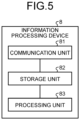
- FIG. 5 is a diagram illustrating an example of the functional configuration of the information processing device 8 according to the first embodiment.
- the information processing device 8 of the first embodiment includes a communication unit 81, a storage unit 82, and a processing unit 83. Note that implementation methods by hardware of the communication unit 81, the storage unit 82, and the processing unit 83 are similar to those of the communication unit 11, the storage unit 12, and the processing unit 13 of the KM 10.
- the communication unit 81 transmits, by QKD, application key request information including first identification information for identifying a source application (for example, the application 5a of FIG. 1 ) of the user network, second identification information for identifying a destination application (for example, the application 5c in FIG. 1 ), and the requested amount of the application key used for encrypting or decrypting communication in the user network to a KM 10 connected to a QKD module 2 (an example of a QKD device) that generates a link key.
- the communication unit 81 receives the application key shared with a KM 10 to which the application key specified from the second identification information is shared in such a manner as to satisfy the requested amount.
- the storage unit 82 stores, for example, an application key for each communication destination of an application 5.
- the processing unit 83 causes the application 5 to operate and thereby encrypts communication in the user network.
- FIG. 6 is a sequence diagram illustrating an example of a secure communication method according to the first embodiment.
- the example of the secure communication method in FIG. 6 includes ID registration processing, ID conversion processing, and application key sharing and transmission processing.
- the application (source) 5a when connecting the application (source) 5a to the KM (source) 10a, the application (source) 5a notifies the KM 10a of ID information (for example, the IP address or the like) of the application 5a (step S1).
- the KM 10a registers the ID information of the application 5a notified in step S1 and the ID information of the KM 10a in the QKDN control device 6 (step S2).
- the application (destination) 5d when connecting the application (destination) 5d to the KM (destination) 10d, the application (destination) 5d notifies the KM 10d of ID information (for example, the IP address or the like) of the application 5d (step S3).
- the KM 10d registers the ID information of the application 5d notified in step S3 and the ID information of the KM 10d in the QKDN control device 6 (step S4).
- the QKDN control device 6 generates the mapping information from the information registered in steps S2 and S4.
- the mapping information is centrally managed by the QKDN control device 6. Incidentally, the mapping information is periodically updated.
- the application 5a Before performing secure communication, the application 5a requests the KM 10a of the application key (step S5). At this point, the application 5a also notifies the KM 10a of information representing that the secure communication destination of the application 5a is the application 5d (for example, the ID information of the destination application 5d) and the requested amount of the application key.
- the KM 10a since the KM 10a does not have the information of the destination KM 10d connected to the application 5d which is the destination, the KM 10a requests the QKDN control device 6 to convert the ID information of the application 5d to obtain the ID information of the KM 10d (step S6).
- the QKDN control device 6 makes reference to the mapping information and notifies the KM 10a of the ID information of the KM 10d connected to the application 5d (step S7).
- the KMs 10a and 10d share the application key among the KM 10a to the KM 10d (step S8). Specifically, the KM 10a determines a sharing amount of the application key from the requested amount of the application key and shares the application key so as to satisfy the sharing amount by transmitting the application key encrypted with a link key to the KM 10d.
- the KMs 10a and 10d provide (transmit) the application key shared in step S8 to the applications 5a and 5d (steps S9 and S10).
- the application 5a encrypts communication data using the application key provided in step S9 and transmits the encrypted communication data to the application 5d via the data communication network 103. Then, the application 5d decrypts the encrypted communication data received in step S11 with the application key provided in step S10 (same as the application key provided in step S9), thereby performing secure communication (step S11).
- the KM 10a accumulates link keys generated by the QKD module 2a. Then, the KM 10a encrypts the application key using a link key and relays the encrypted application key to the adjacent KM 10b. Similarly, the KM 10b relays the encrypted application key to the neighboring KM 10c, and the KM 10c relays the encrypted application key to the neighboring KM 10d.
- Each KM 10 consumes the link key when encrypting the application key with the link key and exchanging the application key. That is, each KM 10 uses a link key of the one-time pad and discards the link key once used. In addition, each KM 10 determines a key relay route for sharing an application key with a desirable KM 10. Then, each KM 10 shares (transfers) the application key to the destination KM 10 while repeating encryption and decryption using a link key in each link following the determined route.
- a node 1 in each base has the function of generating and sharing random numbers with a QKD module 2 on another side (the function of the QKD module 2) and the function of performing cryptographic communication on the key sharing network 102 using the generated random numbers as a link key (the function of the KM 10).
- the KM 10 may have a function of generating random numbers independently of the link key and a function of transmitting the random numbers generated independently of the link key to another node 1 (KM 10).
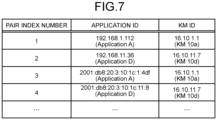
- FIG. 7 is a table illustrating an example of mapping information according to the first embodiment.
- the mapping information indicates a correspondence between the ID information of applications and the ID information of KMs 10 to which the applications are connected.
- a KM 10 makes reference to the mapping information as illustrated in FIG. 7 when converting the ID information of an application 5 into the ID information of a KM 10.
- the mapping information in FIG. 7 is an example of a case where the mapping information is managed by an IP-based table.
- the table includes the pair index number, the application ID, and the KM ID.
- the pair index number is a number for identifying data of the table.
- the pair index number is, for example, a number that is automatically allocated when data is added to the table.
- the application ID of an application D is 192.168.11.36 (IPv4) or 2001:db8:20:3:10:1c:11:8 (IPv6).
- the ID of a KM for example, the ID of the KM 10d is 16.10.11.7 (IPv4).
- the IP address of a KM 10 can be converted and generated in accordance with a given rule on the basis of the IP address of an application connected to the KM 10.
- the IP address of the KM 10 can also be designated by the QKDN control device 6.
- the ID of the KM 10 is often designated by the QKDN control device 6.
- the QKDN is a private network and is not connected to a public network. Therefore, the IP address of a KM 10 of the QKDN can coincide with the IP address of the application 5 connected to the KM 10.
- the KM 10 When connecting a KM 10 to the application 5, the KM 10 notifies the QKDN control device 6 of the ID information of the KM 10 and the ID information of the application 5. Upon receiving the information notified from the KM 10, the QKDN control device 6 adds the information to the mapping information. In addition, there are a case where the mapping information is updated only when there is a change and a case where the mapping information is periodically updated.
- the ID information such as the assigned IP address may change due to the influence of travelling of the information processing device 8 on which the application 5 operates.
- the application 5 may notify a newly connected KM 10 of the changed ID information, and the newly connected KM 10 may notify the QKDN control device 6 of the change of the mapping information.
- KMs 10 connected to the application 5 may be notified that the service is to be stopped, and the KMs 10 may notify the QKDN control device 6 of deletion of mapping information of the application 5 for which the service is to be stopped.
- mapping information is integrally managed and periodically updated.
- An advantage of the integral management of the mapping information is that, even when the number of KMs 10 increases, the storage area for storing the mapping information of individual KMs 10 can be saved as compared with the case where each of the KMs 10 stores the mapping information. In addition, the problem of redundancy and duplication of the mapping information of the individual KMs 10 can also be improved.
- the QKDN control device 6 installed it is possible to efficiently respond to an inquiry about the mapping information.
- the KM 10 of the first embodiment is a key manager connected to the QKD module 2 (an example of a QKD device) that generates a link key by QKD.
- the communication unit 11 (an example of the communication interface) receives, from the source application of the user network, the application key request information including the first identification information for identifying the source application, the second identification information for identifying the destination application, and the requested amount of the application key used for encrypting or decrypting communication in the user network.
- the processing unit 13 identifies a key manager as a sharing destination of the application key from the second identification information, and determines the sharing amount of the application key from the requested amount of the application key.
- the processing unit 13 causes the communication unit 11 to transmit the application key that has been encrypted with a link key and satisfies the sharing amount to the key manager as the sharing destination.
- the processing unit 13 causes the communication unit 11 to transmit the application key of the requested amount to the source application identified by the first identification information.
- the application 5 can be easily correlated with the key managers that transmit the encryption key to the application 5.
- the key sharing network (KSN) 102 is generally divided into two or more KSN domains in order to efficiently and easily manage the KSN 102.
- the KSN domain for example, the number of KMs 10, the number of links between KMs 10, or the like is limited to within a given limit value (for example, 1000).
- FIG. 8A is a diagram illustrating a first example of the KSN domain of the second embodiment. Illustrated in FIG. 8A is a case where there are five key sharing networks 102a to 102e of the same type (five KSN domains of the same type) (in the example of FIG. 8A , IP-based). Note that the number of key sharing networks 102 and the number of QKDN control devices 6 may be any number and are not limited to the example of FIG. 8A .
- the five KSN domains illustrated in FIG. 8A have an IP-based ID system.
- Dedicated QKDN control devices 6a to 6e in the QKD network management layer are installed for the respective key sharing networks 102a to 102e in the key management layer.
- the QKDN control devices 6 collect information such as the mapping information from KMs 10 of the respective key sharing networks 102 and manage the collected information.
- the key sharing networks 102 are connected by KMs 10 each installed at an interdomain border (hereinafter, referred to as a border KM (BKM)).
- BKM border KM
- the BKMs at the interdomain border are located at physically the same location (node). Incidentally, information sharing between the BKMs does not depend on the QKD links 3 used for sharing the link key.
- mapping information of the KM 10d is desirably shared from the QKDN control device 6d to the QKDN control device 6a.
- each KSN domain is not limited to the same standards, the same scale, or the same quantum protocol.
- the KSN domain (key sharing network 102) is not limited to an IP-based ID system.
- IP-based key sharing networks 102 and non-IP-based key sharing networks 102 may be present together.
- FIG. 8B is a diagram illustrating a second example of the KSN domain of the second embodiment. Illustrated in FIG. 8B is an example in which different types of key sharing networks 102 are present together. In the example of FIG. 8B , there are five key sharing networks 102a to 102e. The key sharing networks 102a, 102c, and 102d are IP-based key sharing networks 102, and the key sharing networks 102b and 102e are non-IP-based key sharing networks 102. Note that the number of key sharing networks 102 and the number of QKDN control devices 6 may be any number and are not limited to the example of FIG. 8B .
- mapping information of the destination is efficiently shared.
- FIG. 9 is a diagram illustrating an example of an ID system for identifying a KM 10 according to the second embodiment.
- the ID system of a KM 10 generally includes a QKD identifier, a KSN identification number, and a KM identification number.
- the QKD identifier identifies that it is a QKDN.
- the QKD identifier may further include an identifier for identifying the type of the QKDN.
- the KSN identification number indicates an ID for identifying the key sharing network 102.
- the KM identification number indicates an ID for identifying the KM 10.
- the ID system of the KM 10 may follow, for example, an existing ID system.
- IP Internet Protocol
- the network part including a subnet
- the host part is set to the KM identification number.
- IPv4 32 bits
- IPv6 128 bits
- An advantage of utilizing the IP-based ID system is that the protocol of the IP network can be utilized as it is and that routing for key relays between KMs 10 can be easily implemented.
- a system for identifying a KM 10 by combining the KSN identification number and the KM identification number is also referred to as a tree type.
- the ID system of the KMs 10 may follow to the universally unique identifier (UUID)-based ID system (128 bits).
- UUID universally unique identifier
- MAC media access control address
- SUBI organizationally unique identifier
- the organizationally unique identifier (OUI) (24 bits) part in the ID system (48 bits) is uniquely assigned as the QKD identifier and the KSN identification number in such a manner as to avoid redundancy.
- the remaining OUI (24 bits) part is assigned to the KM identification number. Since the identification numbers of KMs are not duplicated, such a system is also referred to as a distributed type.
- An original ID system is only required to include at least the KSN identification number and the KM identification number, and it is sufficient that a key relay based on the original ID system can be implemented inside the key sharing network 102.
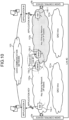
- FIG. 10 is a diagram illustrating an example of a quantum cryptographic communication network according to the second embodiment.
- the example of FIG. 10 illustrates a case of a QKDN including different types of key sharing networks 102a and 102b.
- the application A and the application B perform secure communication via a data communication network 103.
- An application A connects to a KM 10a-1 in the key sharing network 102a.
- An application B connects to a KM 10b-1 in the key sharing network 102b.
- the key sharing networks 102a and 102b are connected by Link #1 between a BKM 10a-2 and a BKM 10b-2 which are physically located at the same location.
- Link #1 does not depend on a network 101a or 101b of a QKD link 3.
- QKDN control devices 6a and 6b are installed in the key sharing networks 102a and 102b, respectively, and the QKDN control devices 6a and 6b are connected by a separate link (Link #2).
- Link #2 the networks 101a and 101b of the QKD link 3 may be used, or an ordinary link protected by a scheme other than QKD may be used. Note that there is a case where no Link #2 is present. In a case where Link #2 is not present, it is also conceivable to share information via Link #1 between the BKMs 10a-2 and 10b-2.
- KMs 10 in the key sharing networks 102 and QKD modules 2 in the networks 101a and 101b of the QKD link 3 are omitted for the sake of simplicity.
- FIG. 11 is a sequence diagram illustrating an example of a secure communication method according to the second embodiment.
- the example of FIG. 11 illustrates a sequence of relaying and transmitting an application key on the basis of the mapping information and the key accumulation state in the configuration of FIG. 10 .
- An application 5a (source) corresponds to the application A in FIG. 10 .
- An application 5b (destination) corresponds to the application B in FIG. 10 .
- the application 5a when connecting the application 5a to the KM 10a-1, the application 5a notifies the KM 10a-1 of the ID information of the application 5a (step S21).
- the KM 10a-1 registers the ID information of the application 5a notified in step S21 and the ID information of the KM 10a-1 in the table of mapping information stored in the QKDN control device 6a (step S22).
- the application 5b when connecting the application 5b to the KM 10b-1, the application 5b notifies the KM 10b-1 of the ID information of the application 5b (step S23) and registers the ID information of the application 5b and the ID information of the KM 10b-1 in the table of mapping information of the QKDN control device 6b (step S24).
- the application 5a Before performing secure communication, the application 5a requests the KM 10a-1 for the application key (step S25). At this point, the application 5a notifies the KM 10a-1 of information representing that the secure communication destination of the application 5a is the application 5b (for example, ID information of the destination application 5b) and the requested amount of the application key.
- the KM 10a-1 requests the QKDN control device 6a to convert the ID of the application 5b into the ID of the KM 10 connected to the application 5b (step S26).
- the QKDN control device 6a makes reference to the table of mapping information and searches for the KM 10 to which the application 5b is connected. In a case where the information of the KM 10 to which the application 5b is connected is not found, the QKDN control device 6a inquires of the QKDN control device 6b about the ID information of the KM 10 to which the application 5b is connected (step S27). The QKDN control device 6b makes reference to the table of mapping information and identifies that the KM 10 to which the application 5b is connected is the KM 10b-1 and the ID information of the KM 10b-1.
- the QKDN control device 6a Upon receiving the mapping information representing that the KM 10 to which the application 5b is connected is the KM 10b-1 from the QKDN control device 6b (step S28), the QKDN control device 6a returns the ID information of the KM 10b-1 to the KM 10a-1 (step S29).
- the QKDN control device 6b inquires of the KM 10b-1 about the application key accumulation state shared with the KM 10a-1. Upon receiving the application key accumulation state (step S30), the QKDN control device 6b notifies the QKDN control device 6a of the application key accumulation state (step S31).
- the QKDN control device 6a updates the mapping information and the key accumulation state stored in the storage unit 62 of the QKDN control device 6a on the basis of the mapping information notified in step S27 and the application key accumulation information notified in step S30.
- the QKDN control device 6a calculates the required amount (sharing amount) of the application key to be additionally required from the requested amount of the application key and the application key accumulation state shared between the KM 10a-1 and the KM 10b-1 and notifies the KM 10a-1 of the required amount of the application key (step S32).
- the KM 10a-1 performs key relay of the application key from the KM 10a-1 to the KM 10b-1 to share the application key (step S33).
- the KMs 10a-1 and 10b-1 provide (transmit) the application key to the applications 5a and 5b (steps S34 and S35).
- step S36 Since the secure communication in step S36 is the same as the secure communication ( FIG. 6 ) in step S11 of the first embodiment, description thereof will be omitted.
- step S31 in a case where the required amount of the application key to be additionally required is zero (in a case where the application key accumulation amount is larger than or equal to the requested amount of the application key), the KM 10a-1 immediately provides the application key from the KM 10a-1 to the application 5a. In addition, the KM 10a-1 transmits an instruction to immediately provide the application key to the application 5b to the KM 10b-1.
- the required amount (sharing amount) of the application key to be additionally required may be calculated by the processing unit 13 of the KM 10.
- the communication unit 11 of the KM 10 receives the state information of the application key from the QKDN control device 6a, and the processing unit 13 determines the sharing amount of the application key from the requested amount and the state information of the application key.
- FIG. 12 is a table illustrating an example of mapping information according to the second embodiment.
- FIG. 12 is an example of a table of mapping information shared between the QKDN control devices 6a and 6b.
- the table in FIG. 12 indicates a table stored in the QKDN control device 6a.
- the type and the KSN ID are added.
- Type "i” indicates inside information and indicates that the ID information is collected from KMs 10 inside a corresponding KSN domain.
- Type "o” indicates outside information and indicates ID information shared by another QKDN control device 6 (ID information of a KM 10 belonging to another KSN domain).
- the KSN ID is, for example, an identification number of the KSN.
- the KM ID only the identification number of the KM 10 may be registered alone, or an ID obtained by combining the identification number of the KSN and the identification number of the KM may be used.
- the KM 10a-1 has the IP-based ID system
- the KM 10b-1 has a non-IP-based ID system.
- the application ID (for example, the IP address) is assigned from the data communication network 103 to which the application 5 belongs.
- a plurality of applications 5 may connect to the same KM 10. Conversely, one application 5 does not connect to a plurality of KMs 10.
- the information from each KM 10 in the KSN domain is periodically (regularly) updated. The period is set depending on the actual situation.
- the data stored in the table of mapping information is added, deleted, or updated also when a new application is connected to a KM 10, when a KM 10 disconnects from an application 5, or when an application key is requested from an application 5.
- FIG. 13 is a table illustrating an example of state information of the second embodiment.
- FIG. 13 illustrates an example of a table of state information shared between the QKDN control devices 6a and 6b.
- the table of FIG. 13 indicates a table stored in the QKDN control device 6a.
- the table of FIG. 13 includes the type, the sequence number, the source KM ID, the destination KM ID, the encryption application key, and the decryption application key.
- the sequence information is identification information assigned in the order of storing the data.
- the sequence number is, for example, numbers assigned in the order of time.
- the source KM ID is identification information for identifying the source KM 10.
- the destination KM ID is identification information for identifying the destination KM 10.
- the encryption application key and the decryption application key information indicate the remaining amount of the currently accumulated application keys.
- the example of the data of the first row and the data of the third row in FIG. 13 illustrates a case where the sequence numbers coincide with each other since the accumulation state of the application key has been shared.
- the remaining amount of the encryption application key of the KM 10a-1 coincides with the remaining amount of the decryption application key of the KM 10b-1.
- the remaining amount of the decryption application key of the KM 10a-1 also coincides with the remaining amount of the encryption application key of the KM 10b-1.
- the example of the data of the second row and the data of the fourth row in FIG. 13 indicates a case where the accumulation state of the application key has not been shared for a while, and thus the sequence numbers do not coincide with each other.
- the accumulation state of the application key of the KM 10a-1 belonging to the KSN domain managed by the QKDN control device 6a is new, and the accumulation state of the application key shared by another QKDN control device 6 managing the KSN domain to which KM 10b-x belongs is old. Therefore, the encryption application key of the KM 10a-1 and the decryption application key of the KM 10b-x do not coincide with each other.
- the accumulation states of application keys of KMs 10 in the KSN domain managed by a QKDN control device 6 may be periodically (regularly) updated or may not be periodically updated. The period is set depending on the actual situation. In addition, when an application key is requested from an application 5, the accumulation state of the application key may be updated.
- an accumulated application key may be used in advance. That is, each KM 10 may share a given amount of application keys in advance regardless of presence of an application key request. As a result, in a case where the amount of application key to be requested is less than or equal to the accumulation amount (current accumulation amount) of the application key that has been shared in advance, the source KM 10 and the destination KM 10 can transmit the application key to the application 5 without performing new application key sharing processing.
- the QKDN control device 6 or the KM 10 notified of the application key accumulation state from the QKDN control device 6 calculates the amount of application key that will be additionally required and performs the application key sharing processing as necessary.
- the application key can be transmitted to an application 5 flexibly and efficiently.
- FIG. 14 is a diagram illustrating an example of a format of a query message regarding sharing of mapping information according to the second embodiment.
- a header part of the query message includes six fields.
- Version of Application is a field indicating the version of the application 5.
- 0x04 is stored in Version of Application.
- 0x06 is stored in Version of Application.
- 0x10 is stored in Version of Application.
- Version of KM is a field indicating the version of the KM 10.
- 0x04 is stored in Version of KM.
- 0x06 is stored in Version of KM.
- 0 ⁇ 10 is stored in Version of KM.
- Type is a field indicating the type of the message. For example, in the case of an inquiry, 0x00 is stored in Type. Moreover, for example, in the case of a response, 0x10 is stored in Type. Alternatively, for example, in the case of an error, 0x20 is stored in Type.
- 0x11 is stored in Code in the case of a response of the ID of the KSN domain.
- 0 ⁇ 12 is stored in Code.
- 0x13 is stored in Code.
- 0x14 is stored in Code.
- 0x21 is stored in Code.
- 0 ⁇ 22 is stored in Code.
- 0x23 is stored in Code.
- 0 ⁇ 24 is stored in Code.
- Length is a field indicating the length of the message.
- Checksum is a field for an error check of a message.
- the data part of the query message includes four fields.
- Source Application ID is a field indicating information of the source application 5.
- the length of Source Application ID is 32 bits in the case of IPv4, and the length of Source Application ID is 128 bits in the case of IPv6.
- Destination Application ID is a field indicating information of the destination application 5.
- the length of Destination Application ID is 32 bits in the case of IPv4, and the length of Destination Application ID is 128 bits in the case of IPv6.
- Source KM ID is a field indicating information of the source KM 10.
- Source KSN ID is a field indicating information of the KSN domain to which the source KM 10 belongs.
- FIG. 15 is a diagram illustrating an example of a format of a response message regarding sharing of the mapping information of the second embodiment.
- the header part of the response message includes six fields.
- the header part of the response message is the same as the header part of the query format.
- the data part of the response message includes eight fields. The first four fields are consistent with the data part of the query message. In the data part of the response message, two fields for the mapping information and two fields for the accumulation state of the application key are added.
- Destination KM ID is a field indicating ID information of the destination KM 10.
- Destination KSN ID is a field indicating ID information of the destination KSN domain.
- Sequence Number is a field indicating the sequence number.
- Available Amount of Application Key is a field indicating the accumulation state of the application key already shared between the source KM 10 and the destination KM 10.
- field length of the message is defined depending on the actual requirement.
- the field lengths of the messages illustrated in FIGS. 12 and 13 are examples.
- the operation at the time when an application key is requested from the application 5 connected to the KM 10a in the key sharing network 102a and secure communication is performed with the application connected to the KM 10d in the key sharing network 102d is basically the same as that in FIG. 10 .
- information sharing among the QKDN control devices 6a to 6d is not connected by one link, it is slightly complicated.
- the QKDN control devices 6a to 6d there are a form of sharing by distributed management and a form of sharing by centralized management.
- the distributed management a dedicated network for QKDN control devices 6 is configured.
- an authoritative route server device is installed, and all the QKDN control devices 6 are connected to the authoritative route server device.
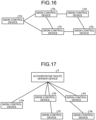
- FIG. 16 is a diagram illustrating an example of the configuration of distributed management according to the second embodiment.
- QKDN control devices 6 constitute a dedicated network, and each of the QKDN control devices 6 stores the mapping information and the state information of the application key.
- Each of the QKDN control devices 6 also creates, updates, and deletes the mapping information and the state information of the application key.
- mapping information and the state information of the application key is shared among the QKDN control devices 6.
- a QKDN control device 6 simultaneously forwards the same query message to the other QKDN control devices 6 in the dedicated network, for example, in a broadcast manner in order to find information of the destination.
- the other QKDN control devices 6 receive the query message and make reference to the field of Destination Application ID. Then, each of those devices 6 checks the mapping information and returns a response message.
- the QKDN control device 6 When the response messages arrive from the other QKDN control devices 6, the QKDN control device 6 that has transmitted the query message checks the fields of Type and Code. In the case of an error as a result of checking the fields of Type and Code, the QKDN control device 6 determines that secure communication between the applications 5 is impossible since there is no related information of the destination application 5. Alternatively, in a case where it is not an error as a result of checking the fields of Type and Code, the QKDN control device 6 performs key transmission and key relay processing on the basis of the four pieces of field information from Destination KM ID field.
- a sequence number (for example, in the order of time) is assigned to related information, and the most recent information is always used.
- the link between the QKDN control devices 6 may be the QKD link 3 or an ordinary link protected by a scheme other than QKD.
- FIG. 17 is a diagram illustrating an example of the configuration of centralized management according to the second embodiment.
- the QKDN control devices 6 are connected to an authoritative route server device 9.
- the related information such as the mapping information and the state information of the application key is integrally managed by the authoritative route server device 9.
- a QKDN control device 6 inquires of the authoritative route server device 9 for related information. In a case where it is not an error as a result of checking the fields of Type and Code included in a response message received from the authoritative route server device 9, the QKDN control device 6 performs key transmission and key relay processing on the basis of the mapping information and the state information of the application key.
- the QKDN control device 6 feeds back to the KM 10 that secure communication between the applications 5 is not possible since there is no related information of the destination application 5.
- links between the authoritative route server device 9 and the QKDN control devices 6 may be the QKD link 3 or may be an ordinary link protected by a scheme other than QKD.
- FIG. 18 is a diagram illustrating an example of the hardware configuration of the KM 10, the QKDN control device 6, and the information processing device 8 according to the first and second embodiments.
- the KM 10, the QKDN control device 6, and the information processing device 8 include a control device such as a CPU 201, a storage device such as a read only memory (ROM) 202 and a RAM 203, and a communication I/F 204 that is connected to a network and performs communication.
- the CPU 201, the ROM 202, the RAM 203, and the communication I/F 204 are connected by a bus 205.
- computer programs executed by the KM 10, the QKDN control device 6, and the information processing device 8 are provided by being incorporated in the ROM 202 or the like in advance.
- the computer programs executed by the KM 10, the QKDN control device 6, and the information processing device 8 may be provided as a computer program product by being recorded in a computer-readable recording medium such as a compact disk read only memory (CD-ROM), a flexible disk (FD), a compact disk recordable (CD-R), or a digital versatile disk (DVD) as a file in an installable format or an executable format.
- a computer-readable recording medium such as a compact disk read only memory (CD-ROM), a flexible disk (FD), a compact disk recordable (CD-R), or a digital versatile disk (DVD) as a file in an installable format or an executable format.
- the computer programs executed by the KM 10, the QKDN control device 6, and the information processing device 8 may be provided by being stored in a computer connected to a network such as the Internet and allowing download via the network.
- the computer programs executed by the KM 10, the QKDN control device 6, and the information processing device 8 may be provided or distributed via a network such as the Internet.
- the computer programs executed by the KM 10, the QKDN control device 6, and the information processing device 8 can cause a computer to function as components of the KM 10, the QKDN control device 6, and the information processing device 8 described above.
- the CPU 201 can read the computer programs from a computer-readable storage medium onto a main storage device such as the RAM 203 and execute the computer programs.
Landscapes
- Engineering & Computer Science (AREA)
- Computer Security & Cryptography (AREA)
- Computer Networks & Wireless Communication (AREA)
- Signal Processing (AREA)
- Physics & Mathematics (AREA)
- Electromagnetism (AREA)
- Theoretical Computer Science (AREA)
- Computer And Data Communications (AREA)
Applications Claiming Priority (1)
| Application Number | Priority Date | Filing Date | Title |
|---|---|---|---|
| JP2023043319A JP7753277B2 (ja) | 2023-03-17 | 2023-03-17 | 鍵管理装置、量子暗号通信システム、qkdn制御装置、情報処理装置、鍵管理方法、qkdn制御方法、情報処理方法及びプログラム |
Publications (2)
| Publication Number | Publication Date |
|---|---|
| EP4432601A2 true EP4432601A2 (de) | 2024-09-18 |
| EP4432601A3 EP4432601A3 (de) | 2024-11-13 |
Family
ID=89224718
Family Applications (1)
| Application Number | Title | Priority Date | Filing Date |
|---|---|---|---|
| EP23218887.0A Pending EP4432601A3 (de) | 2023-03-17 | 2023-12-20 | Schlüsselmanager, quantenkryptographisches kommunikationssystem, qkdn-steuerungsvorrichtung, informationsverarbeitungsvorrichtung, schlüsselverwaltungsverfahren, qkdn-steuerungsverfahren, informationsverarbeitungsverfahren und computerprogramm |
Country Status (3)
| Country | Link |
|---|---|
| US (1) | US20240313955A1 (de) |
| EP (1) | EP4432601A3 (de) |
| JP (1) | JP7753277B2 (de) |
Cited By (1)
| Publication number | Priority date | Publication date | Assignee | Title |
|---|---|---|---|---|
| EP4716150A1 (de) * | 2024-09-20 | 2026-03-25 | Kabushiki Kaisha Toshiba | Schlüsselverwaltungsvorrichtung, schlüsselverwaltungsverfahren und computerprogrammprodukt |
Family Cites Families (52)
| Publication number | Priority date | Publication date | Assignee | Title |
|---|---|---|---|---|
| AU691197B2 (en) * | 1993-09-09 | 1998-05-14 | British Telecommunications Public Limited Company | Method for key distribution using quantum cryptography |
| WO2001086855A2 (en) * | 2000-04-28 | 2001-11-15 | The Regents Of The University Of California | Apparatus for free-space quantum key distribution in daylight |
| US7581093B2 (en) * | 2003-12-22 | 2009-08-25 | Nortel Networks Limited | Hitless manual cryptographic key refresh in secure packet networks |
| WO2005098781A1 (en) * | 2004-04-01 | 2005-10-20 | Dana Corporation | Intelligent transportation system |
| US7437081B2 (en) * | 2004-11-01 | 2008-10-14 | Magiq Technologies, Inc | System and method for providing two-way communication of quantum signals, timing signals, and public data |
| US7826749B2 (en) * | 2005-09-19 | 2010-11-02 | The Chinese University Of Hong Kong | Method and system for quantum key distribution over multi-user WDM network with wavelength routing |
| US7889868B2 (en) * | 2005-09-30 | 2011-02-15 | Verizon Business Global Llc | Quantum key distribution system |
| US7940757B2 (en) * | 2006-02-23 | 2011-05-10 | Cisco Technology, Inc. | Systems and methods for access port ICMP analysis |
| JP5288087B2 (ja) * | 2007-06-11 | 2013-09-11 | 日本電気株式会社 | 秘匿通信ネットワークにおける暗号鍵管理方法および装置 |
| US8855316B2 (en) * | 2008-01-25 | 2014-10-07 | Qinetiq Limited | Quantum cryptography apparatus |
| WO2010044709A2 (en) * | 2008-10-17 | 2010-04-22 | Dmitry Ivanovich Sychev | Methods and devices of quantum encoding on dwdm (roadm) network and fiber optic links |
| GB0819665D0 (en) * | 2008-10-27 | 2008-12-03 | Qinetiq Ltd | Quantum key dsitribution |
| JP5366024B2 (ja) * | 2008-12-10 | 2013-12-11 | 日本電気株式会社 | 秘匿通信ネットワークにおける共有乱数管理方法および管理システム |
| JP5024481B2 (ja) * | 2009-05-07 | 2012-09-12 | 日本電気株式会社 | コヒーレント受信機 |
| KR101351012B1 (ko) * | 2009-12-18 | 2014-01-10 | 한국전자통신연구원 | 다자간 양자 통신에서의 사용자 인증 방법 및 장치 |
| US20120082464A1 (en) * | 2010-01-08 | 2012-04-05 | Nec Corporation | Coherent optical receiving apparatus, coherent optical communications system employing same, and coherent optical communications method |
| CN102907018B (zh) * | 2010-05-21 | 2015-08-26 | 日本电气株式会社 | 相干光接收机、用于检测相干光接收机中的通道间时滞的装置和方法 |
| WO2012086831A1 (ja) * | 2010-12-21 | 2012-06-28 | 日本電気株式会社 | コヒーレント光受信器、コヒーレント光受信器におけるレーン間スキュー検出装置および検出方法 |
| US8626000B2 (en) * | 2011-02-01 | 2014-01-07 | Nec Corporation | Coherent optical receiver, apparatus and method for detecting inter-channel skew in coherent optical receiver |
| WO2013051244A1 (ja) * | 2011-10-05 | 2013-04-11 | 日本電気株式会社 | 信号処理装置及び信号処理方法 |
| US9237098B2 (en) * | 2012-07-03 | 2016-01-12 | Cisco Technologies, Inc. | Media access control (MAC) address summation in Datacenter Ethernet networking |
| JP5784562B2 (ja) * | 2012-09-07 | 2015-09-24 | 株式会社東芝 | 通信装置およびプログラム |
| JP6030925B2 (ja) * | 2012-11-12 | 2016-11-24 | ルネサスエレクトロニクス株式会社 | 半導体装置及び情報処理システム |
| WO2014122815A1 (ja) * | 2013-02-07 | 2014-08-14 | 日本電気株式会社 | 信号処理装置及び信号処理方法 |
| US9923641B2 (en) * | 2013-03-27 | 2018-03-20 | Nec Corporation | Signal processing device, optical communication system, and signal processing method |
| JP6206487B2 (ja) * | 2013-04-09 | 2017-10-04 | 日本電気株式会社 | 信号処理装置及び信号処理方法 |
| US10560265B2 (en) * | 2013-06-08 | 2020-02-11 | Quantumctek Co., Ltd. | Mobile secret communications method based on quantum key distribution network |
| JP6211818B2 (ja) * | 2013-06-11 | 2017-10-11 | 株式会社東芝 | 通信装置、通信方法、プログラムおよび通信システム |
| KR101776137B1 (ko) * | 2014-10-30 | 2017-09-19 | 에스케이 텔레콤주식회사 | 양자 키 분배 시스템에서 복수의 장치에 키를 공급하는 장치 및 방법 |
| EP3026939B1 (de) * | 2014-11-27 | 2017-08-16 | Rohde & Schwarz GmbH & Co. KG | Verkehrskontrollsystem |
| US10171177B2 (en) * | 2014-12-22 | 2019-01-01 | Nec Corporation | Digital signal processor, digital optical receiver using the same, and digital signal processing method |
| JP6426477B2 (ja) * | 2015-01-06 | 2018-11-21 | 株式会社東芝 | 通信装置、通信システムおよびプログラム |
| CN105991285B (zh) * | 2015-02-16 | 2019-06-11 | 阿里巴巴集团控股有限公司 | 用于量子密钥分发过程的身份认证方法、装置及系统 |
| JP2016171530A (ja) * | 2015-03-13 | 2016-09-23 | 株式会社東芝 | 通信装置、通信方法、プログラムおよび通信システム |
| JP6400513B2 (ja) * | 2015-03-18 | 2018-10-03 | 株式会社東芝 | 量子鍵配送装置、量子鍵配送方法およびプログラム |
| CN106301769B (zh) * | 2015-06-08 | 2020-04-10 | 阿里巴巴集团控股有限公司 | 量子密钥输出方法、存储一致性验证方法、装置及系统 |
| US11588783B2 (en) * | 2015-06-10 | 2023-02-21 | Cisco Technology, Inc. | Techniques for implementing IPV6-based distributed storage space |
| US9960465B2 (en) * | 2015-07-30 | 2018-05-01 | Lg Chem, Ltd. | Battery pack |
| US10193593B2 (en) * | 2015-08-21 | 2019-01-29 | Nec Corporation | Signal processing device, communication system, and signal processing method |
| WO2017169424A1 (ja) * | 2016-03-30 | 2017-10-05 | 日本電気株式会社 | 光信号受信装置、光通信システム、および光信号受信装置の補償信号の生成方法 |
| KR101830339B1 (ko) * | 2016-05-20 | 2018-03-29 | 한국전자통신연구원 | 양자 네트워크상에서의 양자키 분배 장치 및 방법 |
| CN112217637B (zh) * | 2016-11-04 | 2024-03-15 | 华为技术有限公司 | 一种基于集中管理与控制网络的量子密钥中继方法和装置 |
| KR101860234B1 (ko) * | 2016-12-20 | 2018-05-21 | 엘에스산전 주식회사 | 듀얼 포트 스위치의 링크 속도 설정 방법 |
| US10476794B2 (en) * | 2017-07-30 | 2019-11-12 | Mellanox Technologies Tlv Ltd. | Efficient caching of TCAM rules in RAM |
| US10673883B2 (en) * | 2018-05-14 | 2020-06-02 | Cisco Technology, Inc. | Time synchronization attack detection in a deterministic network |
| US11212294B2 (en) * | 2018-09-12 | 2021-12-28 | Grid7 LLC | Data packet security with expiring time-based hash message authentication codes (HMACs) |
| EP4045967A4 (de) * | 2019-10-17 | 2023-11-15 | Cable Television Laboratories, Inc. | Quantenschlüsselverteilung und -verwaltung in passiven optischen netzen |
| JP7282713B2 (ja) * | 2020-04-16 | 2023-05-29 | 株式会社東芝 | 量子暗号装置、量子暗号通信料金計算システム及び量子暗号通信料金計算方法 |
| US11711210B2 (en) * | 2020-12-28 | 2023-07-25 | Mellanox Technologies, Ltd. | Quantum key distribution-based key exchange orchestration service |
| US12088703B2 (en) * | 2021-05-10 | 2024-09-10 | Electronics And Telecommunications Research Institute | Method and apparatus for control action based on software defined networking associated with quantum key distribution network management in quantum key distribution network |
| JP2024067733A (ja) * | 2022-11-07 | 2024-05-17 | 日本電気株式会社 | 量子鍵配送システム、量子鍵配送方法およびプログラム |
| JP2024118747A (ja) * | 2023-02-21 | 2024-09-02 | 日本電気株式会社 | 連続量量子鍵配送システムにおける受信機、共有情報生成方法、通信制御方法およびプログラム |
-
2023
- 2023-03-17 JP JP2023043319A patent/JP7753277B2/ja active Active
- 2023-12-08 US US18/533,412 patent/US20240313955A1/en active Pending
- 2023-12-20 EP EP23218887.0A patent/EP4432601A3/de active Pending
Cited By (1)
| Publication number | Priority date | Publication date | Assignee | Title |
|---|---|---|---|---|
| EP4716150A1 (de) * | 2024-09-20 | 2026-03-25 | Kabushiki Kaisha Toshiba | Schlüsselverwaltungsvorrichtung, schlüsselverwaltungsverfahren und computerprogrammprodukt |
Also Published As
| Publication number | Publication date |
|---|---|
| JP7753277B2 (ja) | 2025-10-14 |
| JP2024132522A (ja) | 2024-10-01 |
| US20240313955A1 (en) | 2024-09-19 |
| EP4432601A3 (de) | 2024-11-13 |
Similar Documents
| Publication | Publication Date | Title |
|---|---|---|
| US8588410B2 (en) | Simplified secure symmetrical key management | |
| JP5839125B2 (ja) | ノードおよび通信方法 | |
| CN111010274B (zh) | 一种安全低开销的SRv6实现方法 | |
| CA2727127C (en) | Key management in a wireless network using primary and secondary keys | |
| JP2013527668A (ja) | マシンツーマシン通信方法 | |
| US9509589B2 (en) | Communication device, communication system, communication method, and computer program product | |
| EP4432601A2 (de) | Schlüsselmanager, quantenkryptographisches kommunikationssystem, qkdn-steuerungsvorrichtung, informationsverarbeitungsvorrichtung, schlüsselverwaltungsverfahren, qkdn-steuerungsverfahren, informationsverarbeitungsverfahren und computerprogramm | |
| JP2004214758A (ja) | 親局及び子局及び通信システム及び通信プログラム及び通信プログラムを記録したコンピュータ読み取り可能な記録媒体 | |
| CN115378585B (zh) | 一种量子密钥生命周期管理系统 | |
| EP2645677B1 (de) | Verfahren und netzwerkelement für das inhaltsbasierte ansprechen in einem datentransfernetzwerk | |
| EP1645071B1 (de) | Gesicherte indirekte adressierung | |
| JP2010074225A (ja) | ルータ及びネットワークシステム | |
| US9614822B2 (en) | Node device, communication method and network system | |
| CN102474458B (zh) | 中继设备 | |
| JP7822990B2 (ja) | 鍵管理装置、qkdn制御装置、量子暗号通信システム、鍵管理方法、qkdn制御方法及びプログラム | |
| KR100965382B1 (ko) | 센서 네트워크에서의 보안 관리 방법 및 센서네트워크에서의 보안 관리 시스템 | |
| JP5532993B2 (ja) | 中継装置 | |
| WO2019180837A1 (ja) | 監視制御システム | |
| CN117675301A (zh) | 一种发送报文的方法、adwan控制器及节点设备 | |
| KR20170011323A (ko) | 식별자 기반의 소스 라우팅 방법 및 이를 위한 장치 | |
| CN115865605A (zh) | 网络通信系统 | |
| JP2011029781A (ja) | 通信システムおよびパケット転送方法 | |
| Miyazawa et al. | Traffic Engineering Database Management Information Base in support of MPLS-TE/GMPLS |
Legal Events
| Date | Code | Title | Description |
|---|---|---|---|
| PUAI | Public reference made under article 153(3) epc to a published international application that has entered the european phase |
Free format text: ORIGINAL CODE: 0009012 |
|
| STAA | Information on the status of an ep patent application or granted ep patent |
Free format text: STATUS: REQUEST FOR EXAMINATION WAS MADE |
|
| 17P | Request for examination filed |
Effective date: 20231220 |
|
| AK | Designated contracting states |
Kind code of ref document: A2 Designated state(s): AL AT BE BG CH CY CZ DE DK EE ES FI FR GB GR HR HU IE IS IT LI LT LU LV MC ME MK MT NL NO PL PT RO RS SE SI SK SM TR |
|
| PUAL | Search report despatched |
Free format text: ORIGINAL CODE: 0009013 |
|
| AK | Designated contracting states |
Kind code of ref document: A3 Designated state(s): AL AT BE BG CH CY CZ DE DK EE ES FI FR GB GR HR HU IE IS IT LI LT LU LV MC ME MK MT NL NO PL PT RO RS SE SI SK SM TR |
|
| RIC1 | Information provided on ipc code assigned before grant |
Ipc: H04L 9/08 20060101AFI20241010BHEP |