EP4428850A1 - Ton- oder qualitätskontrollvorrichtung für musikinstrument oder dergleichen, steuerverfahren und programm - Google Patents
Ton- oder qualitätskontrollvorrichtung für musikinstrument oder dergleichen, steuerverfahren und programm Download PDFInfo
- Publication number
- EP4428850A1 EP4428850A1 EP22890064.3A EP22890064A EP4428850A1 EP 4428850 A1 EP4428850 A1 EP 4428850A1 EP 22890064 A EP22890064 A EP 22890064A EP 4428850 A1 EP4428850 A1 EP 4428850A1
- Authority
- EP
- European Patent Office
- Prior art keywords
- electrodes
- voltage
- electrode
- quality
- control apparatus
- Prior art date
- Legal status (The legal status is an assumption and is not a legal conclusion. Google has not performed a legal analysis and makes no representation as to the accuracy of the status listed.)
- Pending
Links
Images














Classifications
-
- G—PHYSICS
- G10—MUSICAL INSTRUMENTS; ACOUSTICS
- G10K—SOUND-PRODUCING DEVICES; METHODS OR DEVICES FOR PROTECTING AGAINST, OR FOR DAMPING, NOISE OR OTHER ACOUSTIC WAVES IN GENERAL; ACOUSTICS NOT OTHERWISE PROVIDED FOR
- G10K9/00—Devices in which sound is produced by vibrating a diaphragm or analogous element, e.g. fog horns, vehicle hooters or buzzers
- G10K9/08—Devices in which sound is produced by vibrating a diaphragm or analogous element, e.g. fog horns, vehicle hooters or buzzers driven by water or other liquids
-
- G—PHYSICS
- G10—MUSICAL INSTRUMENTS; ACOUSTICS
- G10G—REPRESENTATION OF MUSIC; RECORDING MUSIC IN NOTATION FORM; ACCESSORIES FOR MUSIC OR MUSICAL INSTRUMENTS NOT OTHERWISE PROVIDED FOR, e.g. SUPPORTS
- G10G7/00—Other auxiliary devices or accessories, e.g. conductors' batons or separate holders for resin or strings
-
- G—PHYSICS
- G01—MEASURING; TESTING
- G01V—GEOPHYSICS; GRAVITATIONAL MEASUREMENTS; DETECTING MASSES OR OBJECTS; TAGS
- G01V3/00—Electric or magnetic prospecting or detecting; Measuring magnetic field characteristics of the earth, e.g. declination, deviation
- G01V3/02—Electric or magnetic prospecting or detecting; Measuring magnetic field characteristics of the earth, e.g. declination, deviation operating with propagation of electric current
-
- G—PHYSICS
- G10—MUSICAL INSTRUMENTS; ACOUSTICS
- G10D—STRINGED MUSICAL INSTRUMENTS; WIND MUSICAL INSTRUMENTS; ACCORDIONS OR CONCERTINAS; PERCUSSION MUSICAL INSTRUMENTS; AEOLIAN HARPS; SINGING-FLAME MUSICAL INSTRUMENTS; MUSICAL INSTRUMENTS NOT OTHERWISE PROVIDED FOR
- G10D3/00—Details of, or accessories for, stringed musical instruments, e.g. slide-bars
- G10D3/22—Material for manufacturing stringed musical instruments; Treatment of the material
-
- G—PHYSICS
- G10—MUSICAL INSTRUMENTS; ACOUSTICS
- G10D—STRINGED MUSICAL INSTRUMENTS; WIND MUSICAL INSTRUMENTS; ACCORDIONS OR CONCERTINAS; PERCUSSION MUSICAL INSTRUMENTS; AEOLIAN HARPS; SINGING-FLAME MUSICAL INSTRUMENTS; MUSICAL INSTRUMENTS NOT OTHERWISE PROVIDED FOR
- G10D9/00—Details of, or accessories for, wind musical instruments
- G10D9/08—Material for manufacturing wind musical instruments; Treatment of the material
-
- G—PHYSICS
- G10—MUSICAL INSTRUMENTS; ACOUSTICS
- G10K—SOUND-PRODUCING DEVICES; METHODS OR DEVICES FOR PROTECTING AGAINST, OR FOR DAMPING, NOISE OR OTHER ACOUSTIC WAVES IN GENERAL; ACOUSTICS NOT OTHERWISE PROVIDED FOR
- G10K11/00—Methods or devices for transmitting, conducting or directing sound in general; Methods or devices for protecting against, or for damping, noise or other acoustic waves in general
- G10K11/36—Devices for manipulating acoustic surface waves
-
- G—PHYSICS
- G10—MUSICAL INSTRUMENTS; ACOUSTICS
- G10K—SOUND-PRODUCING DEVICES; METHODS OR DEVICES FOR PROTECTING AGAINST, OR FOR DAMPING, NOISE OR OTHER ACOUSTIC WAVES IN GENERAL; ACOUSTICS NOT OTHERWISE PROVIDED FOR
- G10K15/00—Acoustics not otherwise provided for
- G10K15/02—Synthesis of acoustic waves
-
- G—PHYSICS
- G10—MUSICAL INSTRUMENTS; ACOUSTICS
- G10K—SOUND-PRODUCING DEVICES; METHODS OR DEVICES FOR PROTECTING AGAINST, OR FOR DAMPING, NOISE OR OTHER ACOUSTIC WAVES IN GENERAL; ACOUSTICS NOT OTHERWISE PROVIDED FOR
- G10K9/00—Devices in which sound is produced by vibrating a diaphragm or analogous element, e.g. fog horns, vehicle hooters or buzzers
- G10K9/12—Devices in which sound is produced by vibrating a diaphragm or analogous element, e.g. fog horns, vehicle hooters or buzzers electrically operated
- G10K9/121—Flextensional transducers
Definitions
- the preset invention relates to a sound quality or quality control apparatus, a control method, and a program for a musical instrument or the like.
- Patent Literature 1 describes a piano technique in which a soundboard is made of wood and a frame is made of metal to generate a natural and rich sound by superimposing sounds of different tones.
- Patent Literature 2 discloses a structure for noise processing in a double coil pickup in electric guitars.
- Patent Literature 3 reports an attempt to examine the influence of electromagnetic waves on liquids regarding the quality of objects.
- Patent Literature 4 discloses a technique for a golf club, in which a score line having a specific angle with respect to a horizontal virtual line is disposed in each of an upper region and a lower region of a face surface.
- the score line in the lower region allows the face surface to easily bite a ball, thereby enhancing the effect of increasing the magnitude of spin, while the score line in the upper region facilitates removal of moisture or the like to enhance the effect of maintaining the magnitude of spin.
- Patent Literature 5 discloses that fully aromatic polyester with a moisture absorption rate of 0.6% is used for a tennis gut to suppress a reduction of repulsion force and improve wear resistance caused by moisture absorption, and also to maintain creep performance that reduces the looseness of the gut.
- Non-patent Literature 1 discloses how the sound wave conduction characteristics of wood depend on the moisture content.
- Non-patent Literature 1 Velocity and Damping of Ultrasonic Waves in Wood with Various Moisture Contents by Yasuyoshi Kodama, in Materials (J. Soc. Mat. Sci., Japan), Vol.41, No. 461, P144-147, February 1992
- Patent Literature 1 states that the tone of a piano is adjusted according to the material of the piano. However, it is difficult to apply this technique to existing pianos because a drastic change in the structure of the piano is required for the tone adjustment.
- Patent Literature 2 states that the sound quality of an electric guitar is adjusted by changing a noise processing structure. However, therein lies a problem that a major modification in the structure of a double coil pickup is required for adjusting the sound quality.
- Patent Literature 3 states that electromagnetic waves influences the state of moisture in food products, though the control of the food product quality, such as those related to a sugar content and an acidity, is not covered.
- Patent Literature 4 states that the magnitude of spin is adjusted by improving the shape of the score line of a golf club.
- the magnitude of spin depends on the amount of humidity and moisture when the golf club is used, and Patent Literature 4 does not cover how to control the quality, such as that related to the magnitude of spin and a flying distance, without changing the structure of the golf club such as the shape of the score line.
- Patent Literature 5 states that fully aromatic polyester with a moisture absorption rate of 0.6% is used for a tennis gut to suppress repulsion force reduction due to moisture absorption and to improve wear resistance. However, Patent Literature 5 does not cover the measures for controlling the product quality, such as that related to the gut repulsion force, abrasion resistance, and creep performance, without changing the structure of the gut or a tennis racket.
- Non Patent Literature 1 covers the sound wave conduction characteristics of wood, and it does not cover the topic of controlling the sound quality or the quality of wood.
- An object of the present invention is to provide a sound quality or quality control apparatus, a sound quality or quality control method, or a sound quality or quality control program, in which at least one of an electric field, a magnetic field, an electromagnetic field, or electromagnetic waves generated by an electrode is caused to act on an object having liquid inside or on a surface to freely control the sound quality or quality of the object.
- a sound quality or quality control apparatus in one aspect of the present invention includes: at least one electrode; and a controller configured to control at least one of a voltage value, a current value, a frequency, or a phase of voltage or current applied to the electrode, in which while an object is disposed to face the electrode, the object having liquid inside or on a surface and containing at least one of wood, leather, metal, an inorganic material, an organic material, an animal- or plant-derived material, or a composite material, at least one of a voltage value, a current value, a frequency, or a phase of the voltage or the current, having a DC component and/or an AC component to be applied to the electrode, is adjusted, and at least one of an electric field, a magnetic field, an electromagnetic field, or electromagnetic waves, generated by the electrode, is controlled to control a state of the liquid present inside or around the object that is disposed to face the electrode, so that a sound quality or quality of the object is
- the embodiments of the present invention can freely control the quality of the object by causing at least one of an electric field, a magnetic field, an electromagnetic field, or electromagnetic waves generated by an electrode to act on an object containing, for example, wood, leather or the like.
- moisture such as free water and the like as liquid contained inside or on the surface of an object
- examples of the moisture contained inside or on the surface of an object according to the present invention are not limited to water, but can be applied to any liquids such as an aqueous solution, an emulsion, an oil, an electrolyte solution, an organic solvent, an ionic fluid, a viscous fluid, a non-viscous fluid, a compressive fluid, a non-compressive fluid, and any other liquids.
- the expression “moisture” may sometimes be used in the respective embodiments, but this is not intended to limit the liquid to water alone, and is widely applicable to any liquid.
- a control apparatus, a control method, a program, and a storage medium according to a first embodiment will be described with reference to FIG. 1 to FIG. 19 .
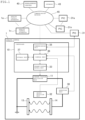
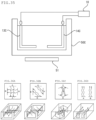
- FIG. 1 is a conceptual diagram of a quality control apparatus 1.
- the quality control apparatus 1 includes a controller 10 and a pair of electrodes 13 and 14.
- the controller 10 includes a current voltage control unit 33, a control unit 36, a communication unit 35, and a storage unit 37.
- the electrodes 13 and 14 are supplied with at least one of DC voltage or AC voltage from a current voltage application unit 11 controlled by the current voltage control unit 33.
- the current and/or voltage applied to the electrodes 13 and 14 is detected by a detection unit 38 and fed back to the control unit 36.
- An object detection unit 32 e.g., a camera
- the current voltage application unit 11 and the detection unit 38 may be integrated with the controller 10.
- the controller 10 and the current voltage application unit 11 may be integrated with each other and accommodated in a single housing.
- the detection unit 38 may also be provided in the electrodes 13 and 14 so as to detect the state of generated electromagnetic waves.
- the detection unit 38 configured to detect the state of electromagnetic waves may be integrated with the electrodes 13 and 14. It is also possible to integrate a cable for the detection unit 38 with a cable for the electrodes 13 and 14, and in such a case, routing the cable would become easier.
- the electrodes 13 and 14 may also be used as a unit configured to detect the generation status of an electromagnetic field.
- the detection unit 38 includes a current and/or voltage detection unit, the current voltage application unit 11 can also detect current and/or voltage.
- the current and/or voltage detection unit of the detection unit 38 can be integrated with the current voltage application unit 11, and can further be integrally incorporated into the housing of a controller or the like. Moreover, when the current and/or voltage detection unit of the detection unit 38 detects data, values relating to generation of electromagnetic waves are superimposed on the data. Accordingly, the electromagnetic waves generated in the electrodes 13 and 14 can be detected from the detection data.
- FIG. 1 illustrates an example where a pair of electrodes 13 and 14 are provided.
- the present embodiment is not limited to this, and the number of the electrodes may be any number as long as the number is one or more, and various shapes can be adopted as will be described later.
- an object may be disposed so as to face the electrode.
- the control unit 36 calculates a control command value in response to the detection of the object.
- the current voltage control unit 33 controls the current voltage application unit 11 to control current and voltage applied to the electrodes 13 and 14, so that at least one of an electric field, a magnetic field, an electromagnetic field or electromagnetic waves is applied to the object disposed to face the electrodes (hereafter, expressions such as “an electromagnetic field is applied”, “irradiated with electromagnetic waves”, or “an electric field is applied” are used in certain parts, but these expressions are not intended to limit the electromagnetic field, the electromagnetic waves, and the electric field.
- the expressions include the magnetic field, the electromagnetic field or the electromagnetic waves.).
- the electromagnetic field applied to an object is controlled, by the control unit 36, to be in a desired state, which depends on the control command that has been calculated by the feedback control based on the detection value from the detection unit 38.
- the communication unit 35 communicates with a management server 40, a database 43, other PCs 31a to 31n, and other quality control apparatuses 1a to In to receive control parameters and/or control values from the management server 40.
- the storage unit 37 stores programs, and the control unit 36 including CPU and the like can operate using the programs stored in the storage unit 37.
- the control unit 36 controls the current voltage application unit 11, based on the control parameters and/or the control values received from the management server 40, via a current voltage control unit 33 built in the controller 10, to control current and/or voltage applied to the electrodes 13 and 14.
- the programs can be rewritten from the management server 40 via the communication unit 35.
- the programs may be stored in a removable memory such as a flash memory, so that the programs for the controller 10 can be rewritten by using the removable memory. Furthermore the programs can be set or rewritten by using a man-machine interface 31 connected to the communication unit 35.
- the management server 40 includes the functions, such as updating or performing maintenance of the program of the controller 10, surveying or monitoring the use status of the controller 10, collecting or analyzing position information or environmental information on the controller 10, collecting or analyzing improvement request information from the controller 10, performing maintenance of the controller 10, collecting control information from the controller 10 and/or information from the database 43, generating and providing learning model information for the controller 10, providing control information based on the learning model information, or providing control parameters of the controller 10.
- the management server 40 can constantly collect the control information on the controller 10, and therefore the management server 40 has the functions of constantly discerning the use status of the controller 10 to perform surveillance or monitoring.
- the monitoring function includes discerning the state of a user using the quality control apparatus 1 corresponding to the controller 10 by analyzing how and how much the user uses the quality control apparatus 1 in which time band. For example, when a certain restaurant uses the quality control apparatus, the management server 40 can discern a business status, a visitor status, a cooking status, a preparation status, or other statuses, of the restaurant.
- the management server 40 can discern a life status, a safety status or the like of the individual as a user, based on the use status of the quality control apparatus. Therefore, when the management server 40 determines that there is an abnormality in the quality control apparatus 1, it is possible to notify the abnormality to the pertinent user and to also notify the abnormality to registered contacts and emergency contacts such as police and fire departments.
- the management server 40 can collect, from the controller 10, position information, climate information, regional information or the like about the place where the quality control apparatus 1 is disposed, and the management server 40 can discern the position information or the environmental status about the place where the quality control apparatus 1 is used. For example, management server 40 can thus transmit control information corresponding to the operating environment or the like to the controller 10.
- the management server 40 can collect, from the controller 10, the improvement request information that is input into the controller 10 from the PC 31, or can collect the improvement request information, which is input from the PC 31 that communicates with the controller 10, directly from the PC 31.
- the improvement request information includes information such as requests for improvement of the quality control apparatus 1 from users, evaluations of the control results, and request items. These pieces of improvement request information are analyzed in the management server 40 and used to set control parameters of each quality control apparatus 1.
- the management server 40 can collect and survey information such as an operating status of the controller 10, the status of programs, the status of apparatus control parameters, the information stored in the storage unit 37, the statue of devices, and the environmental status of the quality control apparatus, to perform maintenance of the programs of the controller 10, the control parameters, detection information, control result information, various setting parameters, and the content of stored data in the storage unit.
- the content of maintenance includes, but is not particularly limited to, setting or update of programs, setting or update of control parameters and setting parameters, and setting or update of the learning model described later.
- Various operating status information, control information or the like, collected from the controller 10 and/or the information collected from the database 43 are used for deep learning in the management server 40 as described later. Learning model information trained by deep learning and/or control parameters or the like calculated by the learning model are provided to the controller 10 of each of the quality control apparatuses 1.
- the controller 10 is connected to an object detection unit 32 configured to detect the type and/or the state of an object disposed between the electrodes. Thus, the controller 10 recognizes the type and/or the state of the object and controls the current voltage application unit 11 incorporated therein, to achieve output voltage and/or output current suitable for the type, state, size and the like of the object.
- the current voltage application unit 11 has a function that is at least one of DC-DC conversion, DC-AC conversion, AC-DC conversion, and AC-AC conversion as described later.
- the current voltage application unit 11 can be a variable voltage variable frequency (VVVF) inverter.
- the current voltage application unit 11 can apply, to the electrodes 13 and 14, voltage/current that is DC voltage/current superimposed on AC voltage/current.
- the man-machine interface 31 communicates with the controller 10, and thus a user can set and operate the controller by inputs from the man-machine interface 31.
- man-machine interface 31 examples include a display, a touch panel, a keyboard, and a mouse.
- the controller 10 is operated by a smartphone, a mobile phone, a tablet terminal, a mobile terminal, or a personal computer such as a laptop computer (hereinafter, the man-machine interface 31 may be simply referred to as "PC")
- the smartphone or the like can also have the functions of the man-machine interface 31, the communication unit 35, and the like.
- the PC 31 can perform setting of the control parameters, update of the control program or the like, and can also survey the status, such as an operational status and a control status of the controller 10.
- the PC 31 and the controller 10 are connected via a communication network, the PC 31 can perform setting, operation, surveillance and the like of the controller 10 from a remote location.
- the quality control apparatus 10 is connected to an external power supply (not illustrated).
- the external power supply may be an AC power supply or a DC power supply.
- the DC power supply may be a battery including a primary cell, a secondary cell, and the like. If the quality control apparatus 1 can be moved, conveyed, or carried around, it is convenient to use a battery as the external power supply 39 in terms of securing power supply.
- the controller 10 performs feedback control on at least one of values of current and/or voltage applied to the electrode, their frequencies, and their phases on the basis of a detection signal from a detection unit 38, which will be described later.
- a processing target object is disposed between the electrodes 13 and 14.
- the processing target object is not particularly limited as long as the object is at least one of solid, liquid, and gas. Various objects can be the processing target as will be described later.
- the controller 10 is connected to a communication network 45 via the communication unit 35 or via the PC 31, and the communication network 45 is connected to the management server 40, the database 43, quality control apparatuses 1a to 1n, and PCs 31a to 31n.
- the management server 40 can collect, from the controller 10, the control information including detection data from the object detection unit 32 and/or the detection unit 38 via the communication unit 35 or the PC 31.
- the management server 40 uses data from the database 43, information from each of the quality control apparatuses 1 and 1a to 1n, and information from each of the PCs 31 and 31a to 31n, to calculate a learning model for obtaining control parameters of the controller by machine learning such as deep learning, for example.
- the management server 40 transmits the trained learning model or calculation parameters obtained by the trained model, to the controller 10 of each of the quality control apparatuses 1 and 1a to 1n.
- the controller 10 uses the learning model in the control unit 36 to calculate parameters adaptive to an object disposed to face the electrodes 13 and 14, based on the detection data from the object detection unit 32 and/or the detection unit 38, or uses adaptive parameters transmitted from the management server 40 in the control unit 36 to perform arithmetic calculation for the current voltage control unit 33 to control the current and/or voltage to be applied from the current voltage application unit 11 to the electrodes 13 and 14.
- the storage unit 37 stores a control program. The controller 10 is controlled based on the control program.
- control program Since the control program is rewritable from the management server 40, it is possible to update and upgrade the program in a timely manner. It is also possible to set, change, and update the control program from the PC 31. In addition, various control parameters of the controller 10 can be set and changed by the PC 31. Although an example where the controller 10 is controlled based on the control program has been described here, the present embodiment is not limited to this.
- the controller 10 without a microcomputer can perform quality control by applying to an object an electromagnetic field corresponding to the object.
- the control by the controller 10 is not limited to the feedback control, but may be open-loop control that can provide a constant output, for example. It is also possible to use the controller 10 that manually inputs, sets, and changes the setting values.
- the pair of electrodes 13 and 14 are illustrated as electrodes in a form of a plate as an example.
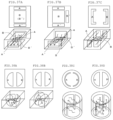
- the electrodes 13 and 14 are not limited to the plate form, and may be in a form of a foil, a film, or a layer, and can also have various shapes such as a rod shape, a spherical shape, a semi-spherical shape, a cylindrical shape, a semi-cylindrical shape, a conical shape, a semi-conical shape, a substantially L shape, a substantially rectangular U shape, a polygonal shape, a polygonal columnar shape, a polygonal pyramid shape, a curved shape, or a bent shape (see FIG. 33 to FIG.
- the electrodes 13 and 14 in a form of a foil and a film can have an extremely small thickness, and thus are space saving. Furthermore, such electrodes 13 and 14 can have a shape freely designed and are light weight. Thus, such electrodes 13 and 14 can be easily installed.
- the electrode of a layer form includes a thin-film electrode provided to be stacked on a predetermined substrate, for example.
- the shape of the electrodes 13 and 14 is not limited to a flat plate shape, and may be any shape.
- the electrodes 13 and 14 in a form of a foil are used, the electrodes can be shaped as desired to conform to the shape of their installed locations.
- the electrodes can be in a form of a curved shape.
- the electrodes 13 and 14 may be provided with a plurality of through holes. With the plurality of through holes provided, the electrodes can have improved characteristics for generating electromagnetic waves and air permeability, and can also ensure visibility through the electrodes.
- the holes can have various shapes such as a circular shape, an elliptical shape, a polygonal shape, a slit shape, a linear shape, or a combination of these. For example, hexagonal holes may be provided.
- the material of the electrodes 13 and 14 is not particularly limited as long as the material has conductivity.
- conductive metal such as copper, iron, stainless steel, aluminum, titanium, gold, silver, and platinum, an alloy of these metals, a conductive material such as a conductive oxide or a conductive glass, or the like is used.
- the electrodes 13 and 14 may have surfaces coated with an insulating material.
- an inner surface of the fryer and the electrodes are insulated from each other.
- the electrodes are provided on an inner surface of a container, the inner surface of the container and the electrodes are preferably insulated from each other.
- the pair of electrodes 13 and 14 may be made of different materials.
- the material of the electrode 13 may be stainless steel and the material of the electrode 14 may be titanium. Furthermore, combinations between stainless steel and aluminum, between stainless steel and copper, and the like may be employed.
- the characteristics of the electromagnetic waves generated from the electrodes can be adjusted. In such a case, the characteristics of the electromagnetic waves can also be adjusted by exchanging the materials of the electrode 13 and the electrode 14.
- the number of electrodes is not limited to one pair, and may be set as appropriate to be one, three or more, two pairs or more, or the like. Also in these cases, the characteristics of the electromagnetic waves generated from the electrodes can be adjusted by appropriately selecting the material of each electrode.
- the characteristics of the electromagnetic waves generated from two pairs of electrodes can be adjusted with one pair of electrodes made of stainless steel and the other pair of electrodes made of copper.
- the electrodes 13 and 14 generate at least one of an electric field, a magnetic field, an electromagnetic field, electromagnetic waves, sound waves, and ultrasonic waves.
- the material of the electrodes 13 and 14 is not limited to a conductive material.
- non-conductive material such as resin may be used.
- a dedicated housing may be provided for installation of the quality control apparatus 1.
- the quality control apparatus 1 may be installed in an existing housing, for example.
- the existing housing in which the quality control apparatus 1 can be installed can be selected from various housings including: a refrigerator, a freezer, a refrigerating warehouse, a freezer warehouse, a storage house, a warehouse, a refrigerator car, a freezing car, a cooler box, a container for transport, a container for storage, a showcase, a shelf, a drawer, a fryer, a cultivation container (for hydroponics, etc.), a fuel tank, a PC, a mobile phone, a chair bed, furniture, bedding, home appliances, various manufacturing equipment in a factory, processing equipment, medical equipment, health equipment, beauty equipment, cooking equipment, polishing equipment, vehicles, semiconductor cleaning equipment, and equipment for controlling vapor resulting from cooling during a refining step, a baking step, and a drying step.
- the pair of electrodes 13 and 14 can be arranged along a ceiling surface and a bottom surface in the refrigerator, along side wall surfaces facing each other, along the ceiling surface, a tray, and the bottom surface, along the ceiling surface, the bottom surface, and the side surface, or along an inner surface of the door and a back side surface.
- the electrodes are provided along both inner side surfaces of an oil container.
- the pair of electrodes 13 and 14 may be in any arrangement as long as they face each other.
- the pair of electrodes do not need to be arranged in parallel, and may be in an orthogonal positional relationship.
- the electrodes can be in any arrangement as long as the space to accommodate the processing target object can be provided between the electrodes.
- the number, arrangement, and shape of the electrodes are not particularly limited.
- the number of electrodes is not limited to one pair, and may be one, three or more, or two pairs or more, as can be seen in FIGS. 9 , 10 , and 23 to 30 described later, for example.
- the quality control apparatus 1 is not limited to the installation in a housing, and can be disposed at any location as long as the pair of electrodes 13 and 14 can be disposed.
- any location such as a shelf or a wall can be used as long as the pair of electrodes 13 and 14 can be disposed to face each other.
- a screen shaped member can be used to fix the electrodes 13 and 14, for example.
- a chopping board may be used.
- the number of electrodes is not limited to one pair, and may be one, three or more, or two pairs or more, as can be seen in FIGS. 9 , 10 , and 23 to 30 described later, for example.
- the controller 10 can apply, to the pair of electrodes 13 and 14, at least any one of the DC component voltage and the AC component voltage.
- the DC component voltage is not particularly limited, and the output voltage, the electrode potential, or the interelectrode voltage of the controller 10 can be adjusted between 0 V and 5000 V, for example, can be adjusted between 0 V and 2000 V, for example, can be adjusted between 0 V and 500 V, for example, can be adjusted between 0 V and 200 V, for example, can be adjusted between 0 V and 100 V, for example, can be adjusted between 5 V and 20 V, for example, and can be adjusted between 10 V and 15 V, for example.
- a low voltage may be applied or a high voltage may be applied.
- the low voltage may be, for example, a voltage of about 1.5 V to 50 V
- the polarity may be positive or negative.
- the voltage can be adjusted between -5000 V and +5000 V, for example, can be adjusted between -2000 V and +2000 V, for example, can be adjusted between -500 V and +500 V, and, for example, can be adjusted between -200 V and +200 V
- a DC power supply or an AC power supply may be used for the power supply voltage.
- a battery featuring excellent portability can be used as the power supply, for example.
- the AC power supply a commercial power supply can be used, for example, meaning that the power supply can easily be ensured.
- the power supply voltage may be AC voltage of 100 V to 400 V, for example, DC voltage of 5 V to 20 V, for example, and DC voltage of 10 V to 15 V, for example.
- the spatial electric field When expressed in terms of the spatial electric field, it can be adjusted between -2000 V/cm and +2000 V/cm, for example, can be adjusted between -500 V/cm and +500 V/cm, or, for example, can be adjusted between -200 V/cm and +200 V/cm.
- At least the DC component voltage is applied to the pair of electrodes 13 and 14.
- the DC component voltage may be applied with the AC component voltage set to be 0 V, for example.
- the orientation of the DC component voltage may be positive (+) or negative (-).
- the orientation of the DC component voltage is positive when the potential of the electrode 14 is higher than the potential of the electrode 13 (ground potential), and is negative when the potential of the electrode 14 is lower than the potential of the electrode 13. The effect of improving the property of the object is obtained with the positive DC component voltage and with the negative DC component voltage.
- the AC component voltage can be applied in addition to the DC component voltage. Furthermore, only the AC component voltage may be applied with the DC component voltage set to be 0 V.
- the frequency of the AC component voltage is not particularly limited, and can be adjusted between 0 and 1 MHz, for example, can be adjusted between 0 Hz and 500 kHz, for example, can be adjusted between 0 Hz and 200 kHz, for example, and can be adjusted between 0 Hz and 100 kHz, for example.
- the AC component voltage When the AC component voltage has 0 Hz, it is substantially the DC voltage.
- the voltage may be used in a lower frequency band or in a higher frequency band. In the lower frequency band, the frequency band of about 1 Hz to 50 Hz may be used, for example.
- the voltage of the AC component voltage is not particularly limited, and the spatial electric field/cm between peaks can be adjusted between 0 and 2000 Vpp/cm, for example, can be adjusted between 0 and 500 Vpp/cm, for example, and can be adjusted between 0 and 200 Vpp/cm, for example.
- the output voltage of the controller 10 the electrode potential or the interelectrode voltage can be adjusted between 0 and 5000 Vpp, for example, can be adjusted between 0 and 2000 Vpp, for example, can be adjusted between 0 and 500 Vpp, for example, and also can be adjusted between 50 and 250 Vpp, for example, relative to the electrodes.
- the voltage applied to the above-described electrodes the voltage of 0 to 5000 Vpp can be supplied.
- the voltage can be adjusted between 0 and 2000 Vpp, for example, can be adjusted between 0 and 500 Vpp, for example, and also between 50 V and 250 Vpp, for example.
- a low voltage may be used or a high voltage may be used.
- the voltage of about 1.5 Vpp to 50 Vpp may be used, for example.
- the voltage of the external power supply may be DC voltage or AC voltage
- the external power supply may be an AC power supply or a DC power supply.
- a commercial power supply can be used as the AC power supply.
- the DC power supply may be a battery including a primary cell and a secondary cell.
- various batteries such as 12-V battery and a dry cell can be used.
- a method of performing voltage control on the DC power supply by a DC-DC converter a method of performing the voltage control by the DC-DC converter when the AC power supply is rectified by an AC-DC converter or after the AC power supply has been rectified, and the like can be employed.
- the voltage value and the frequency of the AC component voltage can be controlled in the controller 10 with methods including: a method of controlling the DC power supply with a DC-AC converter (inverter); a method of rectifying the AC power supply with an AC-DC converter and then controlling the resultant power supply with a DC-AC converter (inverter); and a method of controlling the AC power supply with an AC-AC converter.
- the power supply voltage of the DC power supply may be directly used as the DC component voltage.
- the target voltage and the target frequency of the AC component voltage are equal to the power supply voltage of the AC power supply, the power supply voltage of the AC power supply may be directly used as the AC component voltage.
- the DC component voltage and the AC component voltage are added, that is, the DC component voltage is added as offset voltage to the AC component voltage, and the resultant voltage is applied between the pair of electrodes 13 and 14.
- the DC component voltage may also be controlled.
- the AC component of voltage applied to an electrode includes sinusoidal voltage.
- the AC voltage component according to the present embodiment is not limited to sinusoidal voltage, and includes voltage of any waveform such as rectangular waveforms or PWM waveforms.
- the sinusoidal wave and the rectangular wave are not limited to the sinusoidal wave and the rectangular wave in a strict sense, and indicate waveforms taking noise, distortion, and the like into consideration.
- the DC component of the voltage applied to the electrode is not limited to constant voltage, and DC component voltage varying over time may also be used.
- a voltage controlling unit in the controller 10 may be any of an analog circuit, a digital circuit, and a circuit obtained by combining analog and digital circuits.
- sinusoidal voltage may be generated by the analog circuit, or equivalent sinusoidal waves can be generated with the PWM waveform.
- a digital circuit may be used, and an analog circuit can also be used.
- the controller 10 controls voltage or current to be applied to the electrodes 13 and 14 to be at least one voltage or current selected from the group consisting of:
- the quality control apparatus 1 is driven by the controller 10 and an electric field is generated between the pair of electrodes 13 and 14.
- the electrodes 13 and 14 function as an antenna, and an electromagnetic field is generated with electromagnetic waves radiated between the electrodes 13 and 14.
- the electrodes 13 and 14 may also be vibrated by an electric, magnetic, or mechanical unit, so that sound waves and/or ultrasonic waves can be generated between the electrodes.
- An example of the unit that can be used for generating the sound waves and/or ultrasonic waves between the electrodes includes a piezoelectric element.
- at least one of an electric field, a magnetic field, an electromagnetic field, electromagnetic waves, sound waves, and ultrasonic waves is generated between the electrodes 13 and 14. With the sound waves and/or ultrasonic waves used in addition to the electric field, magnetic field, electromagnetic field, or electromagnetic waves, a higher effect of improving the characteristics of an object can be achieved.
- the controller 10 performs feedback control on at least one of the values of the current and/or the voltage applied to the electrode, the frequency of the current and/or the voltage, and the phase of the current and/or the voltage, based on a detection signal from the detection unit 38.
- the detection unit 38 includes at least one of a voltage sensor configured to detect the voltage applied to the electrode, a current sensor configured to detect the current applied to the electrode, a frequency sensor configured to detect the frequency of the voltage and/or current applied to the electrode, a phase sensor configured to detect the phase of the voltage and/or current applied to the electrode, a magnetic field sensor configured to detect a magnetic field between the electrodes 13 and 14, an electric field sensor configured to detect an electric field between the electrodes 13 and 14, a sound wave sensor configured to detect the magnitude and/or the frequency of the sound waves between the electrodes 13 and 14, and an ultrasonic wave sensor configured to detect the magnitude and/or the frequency of the ultrasonic waves between the electrodes 13 and 14.
- the electrode may be provided with the sensor.
- the electrode itself can be used as the sensor.
- wires for example, two wires
- the power supply line and the sensor lines may be combined into a single cord.
- the single cord used in such a case is at least covered with an insulating material.
- the cord preferably also has durability and heat resisting property.
- the cord is preferably capable of withstanding cold temperatures.
- the cord is required to have durability and heat resisting property in addition to insulating property, and thus may be coated using a material such as fluorine resin, for example.
- a pair of electrodes only one of the electrodes may be provided with the sensor.
- both electrodes may be provided with sensors, so that the sensor provided to one of the electrodes can detect a physical quantity generated by the other electrode.
- the sensor may be provided to at least one of the electrodes. However, this should not be construed in a limited sense, and the sensor may be provided to a plurality of electrodes or to all of the electrodes.
- the control target value may be remotely set through an unillustrated communication device.
- the control parameters and/or the control amount of the controller 10 can also be remotely controlled.
- the controllers 10 of a plurality of the quality control apparatuses 1 can be collectively managed by the server 40 at a remote location, whereby the controllers 10 can be appropriately controlled.
- the control mode for the controller 10 is not limited to the remote control from the server 40.
- the controller 10 of each quality control apparatus 1 can be individually controlled with the control target value and/or the control parameter directly set to each controller 10, for example.
- the controller 10 is provided with the storage unit 37 storing a control program.
- the controller 10 is controlled based on this control program.
- the control program is rewritable through communications or the storage medium, and thus a program version can be upgraded by updating the program as appropriate.
- the controller 10 and the server 40 can communicate with each other.
- the storage unit 37 stores the control parameter, the control amount, the control program, or various setting values transmitted from the server 40.
- the control program can be stored in any appropriate storage medium.
- FIG. 2 is a schematic view of water molecules.
- FIG. 2A illustrates water molecules in a freely moving state
- FIG. 2B illustrates water molecules in a pearl-chain structure.
- the target object (a food product such as meat, fish, and vegetable, beverage, animal/plant cells, oil, and the like, for example) contains water molecules as moisture such as free water.
- water molecules H 2 O
- H water molecules
- active oxygen 30 or cause hydrogen bond. This results in larger and thus less active water molecules. Then, oxidation of the water molecules starts.
- the electric field generated between the pair of electrodes 13 and 14 causes the water molecules to be arranged in a single orientation. This is because, in the water molecules, oxygen atoms O with strong attractive force for electrons become slightly negative and hydrogen atoms H, which are likely to emit electrons, become slightly positive, and thus the atoms are oriented in the respective directions toward the electric field between the pair of electrodes 13 and 14.
- the water molecules changes their orientation in an alternating manner. Specifically, the water molecules change their orientations at a frequency that is the same as that of the AC component voltage to be in a state as if they are vibrating. As the water molecules repeatedly vibrate, as illustrated in FIG. 2B , the hydrogen bonding with the active oxygen 30 or other components is released. Thus, the water molecules are gradually finely grained and arranged.
- the DC component voltage applied between the pair of electrodes 13 and 14 involves a force component causing the water molecules to be arranged along the orientation of the electric field generated by the DC component voltage.
- the regular arrangement of the water molecules can also be achieved by applying only the DC component voltage between the pair of electrodes 13 and 14.
- Application of the AC component voltage to the DC component voltage results in the water molecules changing their orientation at a frequency that is the same as that of the AC component voltage, and involves the force component causing the water molecules to be arranged in a single direction.
- the movement of the water molecules to be regularly arranged is facilitated.
- the electric field between the pair of electrodes 13 and 14 causes the water particles as the moisture such as free water to be attracted to each other, whereby the pearl-chain structure is achieved.
- the water molecules change their orientation at a frequency that is the same as that of the AC component voltage to be in the vibrating state. As the water molecules repeatedly vibrate, the hydrogen bonding with the active oxygen 30 or other components is released. Thus, the water molecules are gradually finely grained and arranged.
- This effect of the AC component voltage in the case where the voltage applied between the pair of electrodes 13 and 14 includes no DC component voltage similarly applies to the state of the water particles. Specifically, the electric field between the pair of electrodes 13 and 14 causes the water particles as the moisture such as free water to be attracted to each other, whereby the pearl-chain structure is achieved.
- the sound waves or the ultrasonic waves have an effect of vibrating the water molecules.
- application of DC component voltage and/or AC component voltage between the pair of electrodes 13 and 14 with the sound waves and/or ultrasonic waves at a predetermined frequency and with a predetermined intensity generated between the electrodes increases the effect of facilitating the movement of the water molecules to be arranged.
- the water molecules can be aligned even if no voltage is applied between the electrodes.
- the quality control apparatus 1 of the present embodiment can generate cavitation by controlling an electric field, a magnetic field, an electromagnetic field, electromagnetic waves, sound waves or ultrasonic waves generated from the electrode, and the cavitation generates a large number of fine bubbles in the liquid.
- an arrangement direction of water molecules or water particles is along the direction of application of the electromagnetic field, it is possible to control the arrangement direction of water molecules or water particles by controlling the electromagnetic field to be applied.
- the electromagnetic field applied by a pair of electrodes 13 and 14 is in a constant direction.
- an electromagnetic field is applied from each of two orthogonal pairs of electrodes (the electrodes 13 and 14, and electrodes 15 and 16) in FIG. 9 described later, so that controlling the current or voltage applied to each electrode can adjust the direction of the electromagnetic field generated between each electrodes, in addition to the strength of the electromagnetic field. This makes it possible to control the arrangement direction of water molecules or water particles.
- Water can be classified into “bonded water” and "free water".
- the bonded water is in a stable state due to hydrogen bonding with other components.
- the free water is in a freely movable state corresponding to a fresh and moist state when the object is a food product.
- molecules of the free water are likely to bond with other components, meaning that the food containing free water is perishable.
- the food product is perishable as a result of free water bonding with germs, viruses, microorganisms, or active enzyme.
- the food product could be perishable, because bonded water turns into free water due to elapse of time, temperature rise, and dry environment and cell components that has been hydrogen-bonded may partly be picked up by the food product.
- a bonded state where free water is in the pearl-chain structure this is distinguished from the "bonded water state” described above
- a state of bonding to other cell and the like is achieved to enable the freshness to be maintained.
- the quality control apparatus 1 is expected to enable the water molecules to be in the pearl-chain structure so that free water bonding is achieved to establish a structure as stable as that of the bonded water. Specifically, the water molecules regularly arranged by the quality control apparatus 1 according to the present embodiment do not bond with other components while being held in the object, whereby a food product can be maintained to be in a fresh and moist state.
- the quality control apparatus 1 installed in a container, the arrangement of free water in an object in the container can be controlled.
- the object is a food product, a medicine, or a cell
- the freshness of the food product, the medicine, or the cell can be maintained.
- the quality control apparatus 1 may be used as a transportation container, so that a food product can be transported for a longer distance with the freshness maintained compared with conventional cases.
- the container may be a styrofoam container or the like, and a transportation container can be formed by attaching the quality control apparatus 1 according to the present embodiment to an existing styrofoam container.
- the water molecules are maintained to be in the regularly arranged state for few days.
- the object is a food product, a medicine, or a cell
- the freshness of the food product, the medicine, or the cell can be maintained even when the object is relocated and stored in a different container after the pearl-chain structure state of free water has been achieved by the quality control apparatus 1 according to the present embodiment.
- the quality control apparatus 1 of the present embodiment can micronize the moisture in an object as described above, the quality control apparatus 1 can also control the cells containing moisture so that the cells themselves are arranged in a pearl-chain structure or the cells themselves are micronized.
- the water molecules in moisture of an object are electrically aligned, to be oriented in substantially the same direction (orientation of the electric field).
- the conductivity of the object increases.
- the water molecules can be aligned also when the object is liquid.
- the conductivity can be increased even when the object is pure water, for example.
- the water molecules slightly vibrate at a predetermined frequency in an electric field, and thus do not crystallize at a temperature close to 0°C.
- the hydrogen bonding between water molecules in the object is suppressed (reduced), and thus physiological water can be obtained, for example.
- Fine bubbles such as microbubbles, micro-nano bubbles, nanobubbles, or the like may be added to this water, so that more functional water can be obtained.
- Such improvement of the function of liquid achieved by an electric field and fine bubbles is not limited to water, and can be achieved for a solution, emulsion, oil, and the like, for example.
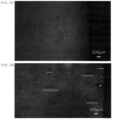
- FIG. 3 is a photomicrograph of free water.
- FIG. 3A shows a state of the free water before application of an electric field.
- FIG. 3B shows a state of the free water after the application of the electric field.
- the pearl-chain structure of the water particles can be seen in portions marked with white underlines.
- FIG. 3A in the free water before the application of the electric field, no pearl-chain structure of the water particles can be found.
- the quality control apparatus 1 according to the present embodiment can achieve the pearl-chain structure state of the free water.
- FIG. 3 shows the pearl-chain structure of aqueous phase in oil phase, it is also possible to perform the similar control of liquid pearl-chain structure through control of the electric field to be applied, even between other types of liquids.
- FIG. 4 illustrates potential simulation results of water particles.
- FIG. 4A is a diagram illustrating a simulation model.
- FIG. 4B illustrates a potential simulation result.
- free water in the simulation model includes four water particles in the pearl-chain structure in a center portion, and two independent water particles on the left side thereof.
- FIG. 4B illustrates three portions of equipotential regions in a cross section in a vertical direction along a longitudinal direction of the water particles.
- the rightmost cross section it is indicated that in a portion where the water particles are in the pearl-chain structure, equipotential water particles are in the pearl-chain structure.
- the region with the four water particles in the pearl-chain structure, in the center portion in the figure, is substantially uniformly colored.
- the potential is substantially uniform in the region with the four water particles in the pearl-chain structure.
- Electric field lines running among the four water particles in the pearl-chain structure indicate that these four water particles are attracted to each other. Electric field lines can also be found between the four water particles in the pearl-chain structure and the two independent water particles separated from and on the left side of the four water particles in the pearl-chain structure. Thus, it is expected that force in a direction to be attracted to the four water particles in the pearl-chain structure is also acting on the two independent water particles. Thus, the two independent water particles may join the pearl-chain structure of the four particles.
- interfacial tension can be reduced by applying the electromagnetic field with the quality control apparatus 1 according to the present embodiment.
- the interfacial tension can be reduced by 10% or more, or by 20% or more depending on the condition of the electromagnetic field.
- the interfacial tension can be reduced by 60% or more, by appropriately controlling the DC component voltage and the AC component voltage, for example. This effect is expected to be attributable to the increase in interfacial polarization as a result of the electromagnetic field application.
- micro water droplets separated from the food to be in the cooking oil as a result of the moisture in the food turning into water vapor in the cooking oil are micro water droplets. If the interfacial polarization in the micro water droplets is sufficient for reducing the interfacial tension, the pearl-chain structure of the micro water droplets is achieved with attraction between dipoles.
- the interfacial tension of the oil/water interface can be reduced with the pair of electrodes 13 and 14 of the quality control apparatus 1 according to the present embodiment installed in the fryer.
- the moisture in the food turns into water vapor in the cooking oil, resulting in bumping.
- a predetermined electromagnetic field is generated, so that surface tension between the oil/water interface can be reduced.
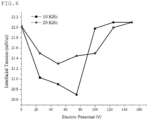
- FIG. 5 and FIG. 6 are graphs showing reduction of interfacial tension between cooking oil and water achieved by the quality control apparatus 1 according to the present embodiment.
- FIG. 5 is a graph of interfacial tension between cooking oil and water as a result of changing the frequency and the voltage value (0 to 75 V) of the applied voltage.
- FIG. 6 is a graph of interfacial tension between cooking oil and water as a result of changing the frequency and the voltage value (0 to 150 V) of the applied voltage.
- a pair of stainless electrodes were inserted into a container including water (lower layer) and cooking oil (upper layer) in a state of having their interfaces in contact with each other, and the interfacial tension between the cooking oil and the water was measured while applying AC voltage with various frequencies and voltage values.
- Face Automatic Surface Tensiometer Kerowa Interface Science, Inc.
- a pair of flat plate electrodes were used as the electrode.
- a curved electrode conforming to an inner wall of a cylindrical container may be used, or a flexible electrode such as stainless foil may be arranged along an inner surface of a container.
- FIG. 5 is a graph showing the interfacial tension of the cooking oil and water, as a result of changing the frequency of the AC voltage applied to the electrode from 10 kHz to 50 kHz and changing the voltage from 0 V to 75 V It can be seen in FIG. 5 that the interfacial tension between the cooking oil and water is associated with the frequency and voltage value of the AC voltage applied to the electrode.
- the quality control apparatus 1 can control the interfacial tension by adjusting the applied voltage. For example, when the quality control apparatus 1 is applied to a fryer, reduction of the interfacial tension results in the moisture contained in food turning into dispersible micro water droplets with a small particle diameter in the cooking oil upon being separated from the food as described above. Thus, even when the water droplets evaporate in the heated cooking oil to be vaporized, resulting bumping is small.
- the magnitude of the bumping can be adjusted with the quality control apparatus 1 controlling the interfacial tension.
- the voltage applied to the electrode can be set in accordance with various conditions of cooking using the fryer as well as various types, states, and amounts of food ingredients.
- the interfacial tension can be appropriately controlled by applying appropriate voltage to the electrode, whereby food cooked can have excellent mouthfeel and taste. This is also effective in a case where the feedback control is performed on the voltage applied to the electrode.
- the interfacial tension can be measured or estimated, and thus can be used as one of the control parameters.
- FIG. 6 is a graph showing the interfacial tension between the cooking oil and water, as a result of changing the frequency of the AC voltage applied to the electrode from 10 kHz to 20 kHz and changing the voltage from 0 V to 160 V.
- FIG. 6 illustrates an example of measurement performed by a certain experiment apparatus. Of course, it is impossible to expand the measurement result to cover any kinds of measurement system. Still, the results at least indicate that the interfacial tension is associated with the frequency and the voltage value of the AC voltage applied to the electrode. Utilizing such association, the interfacial tension can be optimized by adjusting the frequency and the voltage value of the AC voltage applied to the electrode. As described above, the association between the effect of the quality control apparatus 1 according to the present and the interfacial tension has been understood.
- the effect can be optimized based on the association with the interfacial tension, not only in the case of fryers, but also in cases where the present invention is applied to other targets, that is, used for cold storage, storage, and the like.
- the measurement of the interfacial tension described above is relatively easy.
- the voltage applied to the electrode can be more appropriately and more easily controlled with optimization of the quality control apparatus 1 according to the present embodiment being analyzable based on the association with the interfacial tension.
- FIGS. 5 and 6 illustrate the reduction in interfacial tension between the aqueous phase and the oil phase
- the interfacial tension between the liquid phase and phases other than the liquid phase can also be controlled by controlling the electromagnetic field to be applied in a similar manner.
- the control of the interfacial tension of the liquid can be applied not only to the interfacial tension between the liquid phase and another liquid phase, but also to the interfacial tension between the liquid phase and gas phase and to the interfacial tension between the liquid and solid phase.
- the quality control apparatus of the present embodiment can also control the interfacial tension, a contact angle and the like by application of an electromagnetic field.
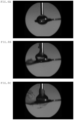
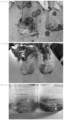
- FIG. 7 includes photographs showing water droplets dropping into oil.
- the photograph shows a state where saline is dropped into cooking oil from a thin tube (a metal straw with a diameter of 1.0 mm) with an annular electrode provided to surround an area around a tip of the thin tube, and with voltage of 100 V applied between the thin tube and the annular electrode. Without the voltage application, no water droplet drops into the oil.
- the voltage application leads to reduction of interfacial tension between the cooking oil and saline, resulting in water droplets dropping into the oil. It can be seen in FIG. 7 that fine bubbles are dispersed around the dropping water droplets.
- the voltage application leads to the reduction of the interfacial tension, resulting in a smaller particle diameter of the water droplets as well as generation of fine bubbles when the water droplets drop.
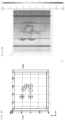
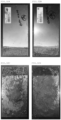
- FIG. 8A illustrates a state before the voltage application
- FIG. 8B illustrates a state where the voltage application has started
- FIG. 8C illustrates a state after the voltage application.
- FIG. 8A, FIG. 8B, and FIG. 8C are in a chronological order. Fine bubbles can be found as illustrated in FIG. 8B and FIG. 8C as a result of voltage application. In some parts, they cannot be clearly distinguished from gas generated from the electrode due to electrolysis.
- the electromagnetic field acts on the moisture present inside or on the surface of the object, which makes it possible to prevent, suppress, or control moisture being rotten, moisture being turbid, color being turbid, algae growth, sliminess, rusting, molding or the like.
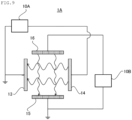
- FIG. 9 is a conceptual view of electrodes according to the first modification.
- the quality control apparatus according to the first modification is different from the quality control apparatus according to the first embodiment in that two pairs of electrodes are provided.
- a quality control apparatus 1A includes controllers 10A and 10B as well as first electrodes 13 and 14 and second electrodes 15 and 16 as two pairs of electrodes.
- the controllers 10A and 10B each include an AC component voltage generation unit and a DC component voltage generation unit. In the actual circuit configuration of the controller 10, the AC component voltage generation unit and the DC component voltage generation unit may not be separately provided, and thus the circuit configuration having the functions of both units may be employed.
- the two controllers 10A and 10B may be configured as a single controller. The single controller may apply voltage to both of the first electrodes 13 and 14 and the second electrodes 15 and 16, as long as the first electrodes 13 and 14 and the second electrodes 15 and 16 generate similar electromagnetic waves.
- the quality control apparatus 1A is driven by the controllers 10A and 10B and an electric field is generated between the pair of first electrodes 13 and 14 and between the pair of second electrodes 15 and 16.
- the electrodes 13 to 16 each function as an antenna, and an electromagnetic field is generated with electromagnetic waves radiated between the first electrodes 13 and 14 and between the second electrodes 15 and 16.
- an electric field, a magnetic field, an electromagnetic field, and electromagnetic waves is generated between the electrodes 13 and 14 and the electrodes 15 and 16.
- the electrodes 13 and 14 may also be vibrated by an electric, magnetic, or mechanical unit, so that sound waves and/or ultrasonic waves can be generated between the electrodes. With the water molecules vibrated by predetermined sound waves and/or ultrasonic waves, the water molecules can be aligned without applying voltage between the electrodes.
- a processing target object is disposed between the first electrodes 13 and 14 and between the second electrodes 15 and 16.
- the processing target object is not particularly limited as long as the object is at least one of solid, liquid, and gas, as in the first embodiment.
- the first electrodes 13 and 14 may be provided on side surfaces in the refrigerator, and the second electrodes 15 and 16 may be provided on the ceiling surface, the bottom surface, or the tray.
- FIG. 9 illustrates an example where the first electrodes 13 and 14 and the second electrodes 15 and 16 are orthogonally arranged.
- first electrodes 13 and 14 and the second electrodes 15 and 16 may be in any arrangement as long as at least part of the electromagnetic field generated by the first electrodes 13 and 14 and the electromagnetic field generated by the second electrodes 15 and 16 acts on the processing target object.
- the controllers 10A and 10B perform feedback control on at least one of the value of the current and the voltage applied to the electrode, the frequency of the current and/or the voltage, and the phase of the current and/or the voltage, based on a detection signal from an unillustrated detector.
- the detector includes at least one of a voltage sensor configured to detect the voltage applied to the electrode, a current sensor configured to detect the current applied to the electrode, a frequency sensor configured to detect the frequency of the voltage and/or current applied to the electrode, a magnetic field sensor configured to detect a magnetic field between the electrodes 13 and 14 and between the electrodes 15 and 16, an electric field sensor configured to detect an electric field between the electrodes 13 and 14 and between the electrodes 15 and 16, a phase detection sensor for voltage, a phase detection sensor for current, and a phase detection sensor for voltage and current.
- At least one of the control target values in the controllers 10A and 10B which are the current value, the voltage value, their frequencies, and their phases, is set in accordance with the type and/or the state of the target object.
- the current and/or voltage applied from the controller 10A to the first electrodes 13 and 14 as well as the frequency and the phase of the current and/or voltage may be respectively the same as, or different from, the current and/or voltage applied from the controller 10B to the second electrodes 15 and 16 as well as the frequency and the phase of the current and/or voltage.
- various combinations may be employed including a combination with voltage and frequency being different therebetween, a combination with only the frequency being different, and a combination with frequency and the phase being different therebetween.
- the control target value may be remotely set through an unillustrated communication device.
- the control parameters and/or the control amount of the controllers 10A and 10B can also be remotely controlled.
- the controllers 10A and 10B of a plurality of the quality control apparatuses 1A can be collectively managed by the server 40 at a remote location, whereby the controllers 10A and 10B can be appropriately controlled.
- the control mode for the controllers 10A and 10B is not limited to the remote control from the server 40.
- the controllers 10A and 10B of each quality control apparatus 1A can be individually controlled with the control target value and/or the control parameter directly set to each of the controllers 10A and 10B, for example.
- an electromagnetic field is applied from each of two orthogonal pairs of electrodes (X-direction electrodes 13 and 14 and Y-direction electrodes 15 and 16), so that controlling the current or voltage applied to each electrode can adjust the direction of the electromagnetic field generated between each electrode as well as the strength of the electromagnetic field. This makes it possible to control the arrangement direction of water molecules or water particles.
- the strength and direction of the electromagnetic field generated by each electrode can be adjusted by adjusting, for example, a ratio between the voltage value applied to the X-direction electrodes 13 and 14 and the voltage applied to the Y-direction electrodes 15 and 16. This makes it possible to atomize the moisture inside or on the surface of an object, which is disposed in the electromagnetic field, into fine particles and to also control the arrangement state of the moisture, which is atomized into fine particles, to be in a desired direction.
- adjusting the DC voltage component can control the arrangement of the moisture inside or on the surface of the object, which is disposed in the electromagnetic field generated by each electrode, in any direction with respect to two-dimensional X-Y coordinates.
- an additional pair of Z-direction electrodes (not shown) and a controller 10C are added to the two pairs of electrodes, the X-direction electrodes 13 and 14 and the Y-direction electrodes 15 and 16 in FIG. 9 , electromagnetic waves of a desired direction and strength can be generated in three-dimensional space.
- the arrangement of the moisture inside or on the surface of the object, which is disposed in the electromagnetic field generated by each electrode can be controlled in any direction with respect to three-dimension.
- the quality control apparatus of the present embodiment can improve properties of an object by atomizing water molecules inside or on the surface of the object into fine particles and by controlling the state of the pearl-chain structure in a specific direction and controlling the arrangement direction.
- FIG. 10 is a conceptual view of different electrodes according to the first modification.
- FIG. 10A illustrates an example where a single electrode is used.
- FIG. 10B illustrates an example where a single electrode and two electrodes facing this electrode are used.
- a pair of electrodes are used.
- two pairs of electrodes are used.
- the present invention is not limited to this, and a single electrode may be used, and an odd number of electrodes such as three electrodes may be used.
- the electromagnetic waves can be generated with a single electrode 17.
- FIG. 10B when three electrodes are used, two electrodes 19 and 20 may face a single electrode 18, or three electrodes may generate different types of electromagnetic waves.
- the number and arrangement of electrodes can be set as appropriate and are not limited.
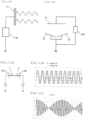
- FIG. 11 is a diagram illustrating waveforms obtained by using voltage at different frequencies according to the second modification.
- FIG. 12 is a diagram illustrating waveforms obtained by using voltage in different phases according to the second modification. For configurations that are the same as those in FIG. 11 to FIG. 12 , the same reference numerals are used and the descriptions thereof are omitted.
- a quality control apparatus according to the second modification is different from that according to the first embodiment and the first modification in that a pair of electrodes are different from each other in the electromagnetic waves they generate.
- an electrode 21A that is one of a pair of electrodes 21A and 21B generates electromagnetic waves (P wave) at a frequency of 50 kHz and the other electrode 21B generates electromagnetic waves (Q wave) at a frequency of 47 kHz.
- A represents the amplitude of the electromagnetic waves.
- the electromagnetic wave that is the sum of the P and Q waves are applied between the pair of electrodes 21A and 21B as illustrated in FIG. 11C .
- an electrode 22A that is one of a pair of electrodes 22A and 22B generates electromagnetic waves (P wave) at a frequency of 50 kHz and the other electrode 22B generates electromagnetic waves (Q wave) at a frequency of 30 kHz.
- A represents the amplitude of the electromagnetic waves.
- the electromagnetic wave that is the sum of the P and Q waves are applied between the pair of electrodes 22A and 22B as in FIG. 12B .
- the phases of the waveforms are set to ⁇ /2.
- A represents the amplitude of the electromagnetic waves.
- the electromagnetic wave that is the sum of the P and Q waves are applied between the pair of electrodes 23A and 23B as in FIG. 12D .
- the electrodes generate electromagnetic waves at different frequencies and/or with different phases.
- peak-to-peak voltage of the electromagnetic waves can be adjusted by adjusting the AC component voltage applied to the electrodes.
- the DC component voltage as offset voltage for the AC component voltage may be applied by adjusting the DC component voltage applied to the electrodes.
- the DC component voltage applied may be different between the electrodes.
- the AC component voltages applied to the electrodes may be different from each other in the peak-to-peak voltage value, frequency, and phase.
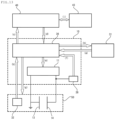
- FIG. 13 is a block diagram of a moisture control apparatus 1.
- the same reference numerals are used, and the descriptions thereof are omitted.
- FIG. 13 is a block diagram corresponding to FIG. 1 .
- the communication unit 35, the storage unit 37, the external power supply 39, and the like are omitted.
- the control unit 36 actually communicates with the management server 40 and the like via the communication unit 35, inputs and outputs data to and from the storage unit 37, receives power from the external power supply 39, and controls the current voltage application unit 11 via the current voltage control unit 33, these operations are omitted in FIG. 13 .
- the controller 10 is illustrated to be outside the housing 50 (for example, a refrigerator or the like). However, this should not be construed in a limiting sense, and the controller 10 may be provided inside the housing 50.
- settings of the controller 10 are input through an input on the man-machine interface 31.
- the settings include a setting on ON/OFF and an operation mode of the controller 10, a type and/or a state of an object, output voltage and/or output current of the current voltage application unit 11, and the like.
- Examples of the operation mode include an automatic mode, an object input mode, a manual setting mode, and the like.
- the controller 10 is automatically controlled so that an appropriate state of the object is achieved based on a detection signal from the object detection unit 32, a detection signal from the detection unit 38, and a control parameter and/or a control value from the management server 40, as described later.
- the controller 10 is appropriately controlled based on the object, with the type and/or the state of the object input through the man-machine interface 31.
- the manual setting mode for example, the output voltage and/or output current of the current voltage application unit 11 is manually set.
- the automatic mode is set, for example, unless stated otherwise.
- a housing setting value for the housing 50 may be able to be input through the man-machine interface 31.
- the information about an object collected by the object detection unit 32 includes an image from a camera in the refrigerator, a detection signal related to moisture in a food product from a moisture amount sensor, a detection signal from a temperature sensor and/or a humidity sensor (including a detection signal from a sensor built in the refrigerator), and the like.
- the information about an object collected by the object detection unit 32 includes an image from a camera in the container, a detection signal from a temperature sensor and/or a humidity sensor in the container, a signal from a GPS provided to the container (the GPS may be provided to the controller 10), and the like.
- the information about an object collected by the object detection unit 32 includes an image from a camera capturing an image of a food product cooked, a detection signal related to the moisture of the food product from a moisture amount sensor, a detection signal related to the temperature of the food product, a detection signal related to the temperature of the oil of the fryer, information about the type of the oil of the fryer, information indicating a replacement timing of the oil of the fryer, and the like.
- the information about the object collected by the object detection unit 32 in response to an instruction from the CPU 36 is transmitted to the management server 40 via the communication unit 35.
- the setting input in the flow (a) is the object input mode
- information about the type and the state of the object input through the man-machine interface 31 is transmitted to the management server 40, for example.
- the setting input in the flow (a) is the manual setting mode
- the information about the output voltage and/or output current of the current voltage application unit 11 is transmitted to the management server 40.
- a predetermined control parameter and a control value may be transmitted from the management server 40 to the control unit 36.
- the output voltage and/or output current of the current voltage application unit 11 manually set for the information collection in the management server 40 may be transmitted to the management server 40, and the control unit 36 may calculate the control value.
- the correction of the control value or the information collection are not required in the management server 40, the information about the output voltage and/or output current does not need to be transmitted to the management server 40 in the flow (c).
- a control parameter and/or a control value suitable for the type and the state of the object is calculated.
- the management server 40 may refer to information other than the type and the state of the object by communicating with a database 43 and the like.
- the other information includes season, weather, weather forecast, date and time, location, supply and demand forecast, warehousing and storage status of a refrigerator, a transport path of a container and traffic condition thereof, a status of a group of containers related to the container, inventory control information, store congestion, economic indicators, information on the Web, and the like.
- the image from the camera enables the type and the state of the object to be determined by image recognition in the management server 40.
- AI trained by, for example, deep learning can be used, for example, so that the type and the state of the object can be accurately recognized.
- the type and the state of the object can be accurately recognized based on the image from the camera, by using a neural network trained by the image of a food product from the camera and data about the actual type and the state of the food product.
- the server can communicate with another controller 10 to accumulate a large amount of image recognition data, whereby the image recognition accuracy for various objects can be increased.
- control unit 36 may perform the image recognition by using a learning model that has been trained by the management server 40 and transmit the result of the image recognition to the server 40 in the flow (c).
- the image recognition is thus performed by the controller 10, the communication amount of data transmission in the flow (c) can be reduced.
- control parameter and/or the control value calculated in the management server 40 is transmitted to the control unit 36 of the controller 10.
- control unit 36 uses the control parameter and/or the control value transmitted from the management server 40 to control the output voltage and/or output current of the current voltage application unit 11.
- the control unit 36 performs feedback control on at least one of the values of the current and voltage applied to the electrodes 13 and 14, their frequencies, and their phases, based on the detection signal detected by the detection unit 38.
- the detection signal detected by the detection unit 38 includes at least one of voltage applied to the electrode, the current applied to the electrode, the frequency and/or the phase of the voltage and/or current applied to the electrode, the magnetic field between the electrodes 13 and 14, the electric field between the electrodes 13 and 14, and the sound waves and/or the ultrasonic waves between the electrodes 13 and 14.
- the control value fed back in this case may be a control value calculated by the control unit 36 or may be a control value calculated by the management server 40.
- the control target value is transmitted from the management server 40 to the control unit 36 in the flow (d).
- the setting value as the control target value is input in the flow (a).
- the control target value may be set variably over time based on the information about the object collected by the object detection unit 32.
- the control value fed back is a control value calculated by the management server 40
- the detection signal as a result of the detection by the detection unit 38 is transmitted to the management server 40 in the flow (c) for calculating the control value fed back by the management server 40.
- the management server 40 calculates the control value fed back, and the control value is transmitted from the management server 40 to the control unit 36 in the flow (d).
- control not using the detection unit 38 may be employed.
- the flow (f) is omitted, and the output voltage and/or output current of the current voltage application unit 11 is controlled in the flow (e).
- various control such as sensor-less control and open loop control can be applied.
- the control unit 36 may transmit a control command to the housing 50 when the housing 50 has the automatic adjustment function.
- the control command is a setting value of temperature and/or humidity in the refrigerator, for example.
- the control command is a setting value of the temperature/humidity for the container, for example.
- the housing 50 When the housing 50 is a container and is stored in a warehouse with adjustable temperature/humidity, as described later, in the flow (i), information about the adjustment of the temperature/humidity of the container is transmitted to a management server of the warehouse that is the external server and the database 43, for appropriately adjusting the state of the temperature/humidity of all the containers also including other containers.
- the control command is a temperature setting value of oil in the oil tank, for example, and may be used for notifying the oil replacement timing if necessary.
- the flow (g) is not a necessary element. In such a case, the information about the control command from the control unit 36 is displayed on the man-machine interface 31 in the flow (h).
- the man-machine interface 31 displays, for example, the control status of the output voltage and/or output current of the current voltage application unit 11 as an example of the control status in the control unit 36, information about the type and the state of the current target object, the status of the housing 50 (detection information from the object detection unit 32), and information about the control command from the CPU 36 to the housing 50 if the housing 50 has no automatic adjustment function.
- the man-machine interface 31 can display information transmitted from the management server 40 in the flow (d) in addition to the control parameter and/or the control value, when required or in response to an operation on the man-machine interface 31.
- Examples of such information include season, weather, weather forecast, date and time, location, supply and demand forecast, warehousing and storage status of a refrigerator, a transport path of a container and traffic condition thereof, a status of a group of containers related to the container, inventory control information, store congestion, economic indicators, information on the Web, and the like. An operator can appropriately produce and manage the object by referring to such pieces of information.
- the man-machine interface 31 may be integrated with the controller 10.
- the man-machine interface 31 and the controller 10 may be separately provided.
- the man-machine interface 31 as well as some of the functions of the controller 10 may be provided separately from the controller 10.
- the man-machine interface 31 may be a mobile terminal having a communication function, examples of which include a smartphone, a mobile phone, a tablet terminal, and a PC.
- the man-machine interface 31 as well as some of the functions of the controller 10 are provided separately from the controller 10, the man-machine interface 31 and at least one of the functions of the communication unit 35 and the storage unit 37, and the arithmetic function of the control unit 36 or some of such functions may be provided separately from the controller 10.
- the man-machine interface 31 as well as the functions of the object detection sensor 32 or the detection unit 38 or some of their functions can be integrated.
- the camera function built in a smartphone, a mobile phone, a tablet terminal or a PC may be used as the object detection unit 32.
- the management server 40 communicates with the database 43 to exchange information required for object management or to collect data.
- the management server 40 can communicate with a required external server through the Internet.
- the housing 50 is a container, for example, a management database or a management server for a warehouse managing the container can be accessed, for example.
- the housing 50 is a refrigerator.
- a tablet terminal is used as the man-machine interface 31, and the refrigerator includes an inside camera, a temperature/humidity sensor, and an automatic temperature/humidity adjustment function.
- the "automatic mode" is selected as the operation mode and "low” is selected as the refrigerator temperature using the tablet terminal, and this information is transmitted to the CPU in the flow (a).
- the camera in the refrigerator serving as the object detection unit 32 captures an image in at least a range including a food product preserved between the electrodes, and this information is transmitted to the management server 40 in the flows (b) and (c). Then, in the management server 40, the type and the state of the target food product is identified by AI-based image recognition, for example.
- the range of image capturing by the camera in the refrigerator preferably covers the entirety of the stored food product, and a plurality of cameras can be provided if necessary. Furthermore, information detected by the temperature/humidity sensor in the refrigerator serving as the object detection unit 32 is transmitted to the management server 40 in the flows (b) and (c).
- the management server 40 uses the type and the state of the food product identified by the image recognition and the information about the temperature and the humidity in the refrigerator transmitted thereto, to calculate the control parameter and/or the control value related to the output voltage and/or output current of the current voltage application unit 11 while taking the electromagnetic field to be generated by the electrodes 13 and 14 into consideration.
- the control parameter and/or the control value varies depending on the type and the state of the food product preserved, that is, varies among a case where leafy vegetable is preserved, a case where raw sea bream is stored, and a case where cooked (boiled) sea bream is preserved.
- the control parameter and/or the control value is transmitted to the control unit 36, and the output voltage and/or output current of the current voltage application unit 11 is appropriately controlled based on the control parameter and/or the control value. Furthermore, in the flow (f), the feedback control is performed on the output voltage and/or output current of the current voltage application unit 11, based on the detection value from the detection unit 38.
- the temperature and humidity of the refrigerator are appropriately controlled based on the information ("low" refrigerator temperature) input in the flow (a), the information calculated by the management server 40, and the like.
- various pieces of information related to the food product stored can be displayed on the tablet terminal together with the information transmitted from the management server 40.
- An example of the information that can be displayed on the tablet terminal is at least one of the type and the state of the food product preserved, a preserved date, best before date, notification on a food product that is close to the best before date, menu of a dish prepared using the food product preserved, a recipe, a shopping list, and the like.
- data required for the calculation in the management server 40 may be acquired.
- the information similar to that obtained by the management server 40 can be acquired by the communication function of the tablet terminal.
- a URL and the like may be transmitted in the flows (d) and (h), whereby the communication amount in the flows (d) and (h) can be reduced.
- the housing 50 is a container.
- a tablet terminal is used as the man-machine interface 31
- the container is provided with the GPS
- the management database and the management server are provided to the warehouse in which the container is stored.
- information including the "automatic mode” as the operation mode and "apple harvested on Z (day), Y (month), X (year) (just harvested)” as the type and the state of the object is transmitted to the control unit 36 in the flow (a).
- the GPS serving as the object detection unit 32 transmits information about the position of the container to the management server 40 in the flows (b) and (c) together with the information about the type and the state of the object.
- the management server 40 recognizes the position of the container, and stores information indicating that the container including the "apple harvested on Z (day), Y (month), X (year)" was transported by land from the harvested location and stored in a predetermined warehouse.
- the management server 40 can also access (the flow (i) described above) the management database of such a warehouse, and thus can recognize data about the management status of the container in the warehouse.
- the management server 40 uses information (including the information indicating the position of the container, the type and the state of the object, the status in the warehouse, the location, the season, weather, weather forecast, and information acquired in the flow (i) such as a status of a group of containers related to the container) to calculate the control parameter and/or the control value related to the output voltage and/or output current of the current voltage application unit 11 while taking the electromagnetic field to be generated from the electrodes 13 and 14 into consideration.
- the management server 40 can calculate the control parameter and/or the control value appropriate for storing the "apple harvested on Z (day), Y (month), X (year)" in a predetermined warehouse.
- the control parameter and/or the control value is transmitted to the control unit 36, and the output voltage and/or output current of the AC component voltage generation unit 11 and the DC component voltage generation unit 12 is appropriately controlled based on the control parameter and/or the control value. Furthermore, in the flow (f), feedback control is performed on the output voltage and/or output current of the AC component voltage generation unit 11 and the DC component voltage generation unit 12 based on the detection value from the detection unit 38. In the example described herein, the container has no temperature control function, and thus the flow (g) is omitted.
- the tablet terminal can display various types of information about the object stored in the container, together with the information transmitted from the management server 40.
- An example of the information that can be displayed on the tablet terminal is at least one of the type and the state of the food product stored in the container, a route and history of transportation, a future distribution schedule, the warehouse currently storing the object, the management status in the warehouse, when the object is ripe, best before date, and other information related to the container.
- information required for managing the container is directly transmitted from the management server 40 to the management server of the management database for the warehouse currently storing the container, to be used for managing the warehouse.
- a tablet terminal is used as the man-machine interface 31
- a camera of the tablet terminal is used instead of a camera of the object detection sensor, and an automatic adjustment function for the temperature of the oil of the fryer is provided.
- An example is described where the "automatic mode" is selected as the operation mode and "automatic” is selected as the oil temperature using the tablet terminal, and information indicating these is transmitted to the CPU in the flow (a).
- An image of a food product cooked with the fryer is captured using the camera of the tablet terminal instead of the camera of the object detection unit 32, and information of the image is transmitted to the management server 40 in the flow (c).
- a camera built in the fryer may be used as the object detection unit 32, instead of the camera of the tablet terminal.
- the image of the food product may only be captured at an initial timing when the cooked food is changed.
- the information about the oil temperature from the fryer serving as the object detection unit 32 is also transmitted to the management server 40 in the flows (b) and (c).
- a sensor that measures the amount of moisture in the food product, a sensor that measures the temperature of the food product, and the like may be provided, and information from these sensors may be transmitted to the management server 40 in the flows (b) and (c) if necessary.
- the management server 40 determines the type and the state of the target food product through the image recognition using AI, for example.
- the management server 40 sets the temperature of the oil of the fryer and calculates the control parameter and/or the control value related to the output voltage and/or output current of the current voltage application unit 11 based on the electromagnetic field to be generated from the electrodes 13 and 14, by using the type and the state of the food product determined by the image recognition, various pieces of information transmitted in the flow (c), and information acquired in the flow (i) such as the season, weather, weather forecast, date and time, location, and store congestion.
- the control parameter and/or the control value as well as the temperature of the oil of the fryer varies in accordance with the type and the state of the cooked food product, that is, among a case where fried shrimps are cooked, a case where fried potatoes are cooked, and a case where deep-fried chicken is cooked.
- control parameter and/or the control value is transmitted to the CPU 36, and the output voltage and/or output current of the current voltage application unit 11 is appropriately controlled based on these.
- feedback control is performed on the output voltage and/or output current of the current voltage application unit 11 based on the detection value from the detection unit 38.
- temperature of the oil of the fryer is appropriately controlled based on the information calculated by the management server 40.
- the tablet terminal can display various types of information related to the food product to be cooked together with the information transmitted from the management server 40.
- An example of the information that can be displayed on the tablet terminal is at least one of the type and the state of the food product cooked, the temperature of the oil of the fryer, the number of cooked dishes, a history of the cooked food products, and a food product scheduled to be cooked next.
- data required for the calculation in the management server 40 is acquired.
- Information similar to that acquired by the management server 40 can be acquired by a communication function of the tablet terminal.
- a URL and the like may be transmitted in the flows (d) and (h), whereby the communication amount in the flows (d) and (h) can be reduced.
- FIG. 14 A quality control apparatus, a quality control method, a program, and a storage medium according to a fourth modification of the present invention will be described with reference to FIG. 14 .
- the same reference numerals are used, and the descriptions thereof are omitted.
- the current value or voltage value and the frequency of the current or voltage are set to be predetermined values.
- the current value or voltage value and/or the frequency are changed within a predetermined range with a predetermined pattern, and thus are swept.
- FIG. 14A illustrates an example where the voltage value, current value, or frequency is linearly and continuously swept.
- FIG. 14B illustrates an example where the voltage value, current value, or frequency is changed linearly and stepwise.
- the voltage value is changed stepwise, and the frequency is swept linearly and continuously, or the frequency is changed stepwise and the voltage value is swept linearly and continuously, whereby electromagnetic waves with an appropriate current value or a voltage value and/or an appropriate frequency can be automatically generated for any target.
- an appropriate current value, voltage value, or frequency is generated at a predetermined timing within a sweeping range.
- FIG. 14C is merely an example, and thus should not be construed in a limiting sense.
- the other value changes from 0 to the peak and then from the peak to 0.
- a change may be repeated in which one value increases from 0 to the peak while the other value is fixed, and then decreases from the peak to 0 when the other value changes stepwise and is fixed at a certain value.
- FIG. 14C while one value changes stepwise, the other value changes from 0 to the peak continuously and frequently.
- this should not be construed in a limiting sense. For example, while one value changes gently and continuously, the other value may change from 0 to the peak continuously and frequently.
- the sweeping pattern is not limited to those illustrated in FIG. 14 .
- a curved change, sinusoidal change, smooth analog change, discrete change, random change, and the like may be employed, for example.
- An AC voltage value, a DC voltage value, an AC current value, a DC current value, a frequency, and the like may be changed.
- the values may be changed one by one, a plurality of the values may be changed in an interlocked manner (see, for example, the example of FIG. 14C ), or a plurality of the values may be simultaneously changed.
- the sweep range may be within a range defined in the first to the third modifications, for example, or may be expanded to be even wider than such a range.
- an appropriate current value, voltage value, or frequency is generated at a predetermined timing within a sweeping range. Furthermore, through feedback by the object detection sensor 32 and the like, the controller 10 may recognize the state of the target and analyze the state in association with the pattern of the sweep change or the analysis may be performed on the server side, so that an appropriate (or optimum) current value, voltage value, or frequency can be automatically detected.
- the detected appropriate value may be shared with another controller 10 through a server, in addition to being used by the controller 10 for the control thereafter.
- FIG. 15(A) shows an electrode 24 attached to a guitar
- FIG. 15(B) shows electrodes 25 to 28 attached to a guitar case
- FIG. 15(C) shows electrodes attached to the inside of the guitar.
- the direction of the electromagnetic waves applied from the electrodes to the guitar is adjusted, the moisture inside or on the surface of the guitar is micronized, while the micronized moisture is arranged in a pearl-chain structure, and the arrangement direction is controlled to a desired direction in accordance with the applied electromagnetic waves, so that the quality of the guitar can be controlled. Since the state of moisture contained in wood, which is a material of the guitar, influences the sound quality of the guitar in particular, controlling the state of moisture structure of the wood in each part of the guitar helps sound quality improvement of the guitar.
- the arrangement and number of electrodes can be adjusted according to the structure of the guitar and the structure of the case.
- two pairs of electrodes can be disposed in the directions orthogonal to each other so that an electromagnetic field of optional strength and direction can be generated in a two-dimensional direction.
- three pairs of electrodes can be disposed in the directions orthogonal to each other so that an electromagnetic field of optional strength and direction can be generated in three-dimensional directions.
- an electrode 24B that is a negative electrode (an earth-side electrode) is attached to a front board of the guitar, and an electrode 24A that is a positive electrode is attached to a back board of the guitar.
- the controller 10 (illustration omitted) is disposed away from the guitar, and the controller 10 may be attached to the guitar. While the voltage applied to the electrode when the guitar is irradiated with electromagnetic waves is not particularly limited, AC voltage of 100 V with a frequency of 50 kHz may be adopted. Effective irradiation time of the electromagnetic waves is generally 5 minutes or longer, and although the irradiation time is not particularly limited, the electromagnetic waves may be applied for about 10 minutes, for example.
- the power supply to the controller needs to be performed for only 10 minutes, for example, to irradiate the guitar with electromagnetic waves from the electrodes, and therefore how the power is supplied becomes more flexible, and therefore, the power supply can be a battery, for example, a rechargeable battery. If the power supply is a rechargeable battery, the battery may be charged when the guitar is not in use and when commercial power supply is available.
- FIG. 15(A) illustrates an example where the electrodes 24A and 24B are attached to the front board and the back board of the body of the guitar.
- the present embodiment is not limited to this configuration, and the electrodes may be attached to the neck or the side boards of the guitar.
- the arrangement of the electrodes 24A and 24B is determined by taking into account the influence of the electrodes on vibration and resonance of the guitar.
- an electrode 27 is built into the body of an electric guitar.
- the electrode 27 is illustrated as a single electrode, a pair of electrodes may be adopted, and in that case, for example, a negative electrode (an earth-side electrode) is attached to the front board side of the body, and a positive electrode is attached to the back board side of the body.
- the controller 10 (illustration omitted) is disposed away from the guitar, and the controller 10 may be attached to the guitar. While the voltage applied to the electrode when the guitar is irradiated with electromagnetic waves is not particularly limited, AC voltage of 100 V with a frequency of 50 kHz may be adopted. As in the case of FIG.
- effective irradiation time of the electromagnetic waves is generally 5 minutes or longer, and although the irradiation time is not particularly limited, the electromagnetic waves may be applied for about 10 minutes, for example. Then, the action on the moisture present inside or on the surface of the guitar, obtained by irradiating the guitar with electromagnetic waves by the quality control apparatus of the present embodiment, continues even without application of electromagnetic waves, so that excellent effects as described later are sustained.
- an electrode 25A that is a positive electrode is attached to a portion corresponding to the neck on the bottom surface of the guitar case
- an electrode 25B that is a negative electrode is attached to a portion corresponding to the neck on the inner surface of a lid of the guitar case
- an electrode 26A that is a positive electrode is attached to a portion corresponding to the body on the bottom surface of the guitar case
- an electrode 26B that is a negative electrode is attached to a portion corresponding to the body on the inner surface of the lid of the guitar case.
- the controller 10 (illustration omitted) is attached to the guitar case, and a battery-powered controller is preferably adopted as the controller 10, and the controller 10 is not particularly limited thereto.
- the controller 10 can be provided at a position away from the guitar case or can be powered by a commercial power supply.
- the voltage applied to the electrode to irradiate the guitar with electromagnetic waves is not particularly limited, and AC voltage of 100 V with a frequency of 50 kHz may be adopted.
- FIG. 15(C) illustrates an example where the electrodes are provided on the inner surface of a guitar case, and the arrangement of the electrodes is merely an example and is not intended to limit the present embodiment thereto.
- the number of electrodes may be at least one, and when, for example, one pair or two or more pairs of electrodes are provided, the sound quality control apparatus of the present embodiment can irradiate the guitar with electromagnetic waves.
- the setting for irradiating electromagnetic waves from electrodes provided on the inner surface of the guitar case using the sound quality control apparatus of the present embodiment are not particularly limited, and the voltage applied to the electrodes is AC voltage of 100 V with a frequency of 50 kHz, and the application time is 10 minutes.
- the quality control apparatus of the present embodiment irradiates the guitar with electromagnetic waves for 10 minutes before use, then the action on the moisture present inside or on the surface of the guitar, obtained by irradiating the guitar with electromagnetic waves by the quality control apparatus of the present embodiment, continues even after the irradiation of electromagnetic waves is stopped and the guitar is removed from a storage case, so that excellent effects as described later are sustained.
- the effects persist even after the guitar is removed from the storage case, and therefore when the electrode of the sound quality control apparatus 1 is provided in the storage case, there is no need to attach the sound quality control apparatus 1 on the body of the guitar itself. Accordingly, the sound quality control apparatus 1 does not exert unnecessary influence on the original vibration or resonance characteristics possessed by the guitar.
- FIG. 15(D) shows another example where the quality control apparatus of the present embodiment is attached to a guitar case.
- the electrode 13 is attached to the inner surface of the lid of the guitar case, the electrode 14 is attached to the bottom surface of a guitar storage part, and a controller 10 is attached to the inner side surface of the guitar case.
- FIG. 15(D) shows a power line for supplying electric power from the commercial power supply
- the present embodiment is not limited thereto, and it is possible to adopt a battery-operated system, for example.
- the controller 10 can be provided at a position away from the guitar case.
- the voltage applied to the electrode to irradiate the guitar with electromagnetic waves is not particularly limited, and AC voltage of 100 V with a frequency of 50 kHz may be adopted.
- FIG. 15(D) illustrates an example where a pair of electrodes are respectively provided on the inner surface and the bottom surface of the guitar case, and the arrangement of the electrodes is merely an example and is not intended to limit the present embodiment thereto.
- the number of electrodes may be at least one, and when, for example, one pair or two or more pairs of electrodes are provided, the sound quality control apparatus of the present embodiment can irradiate the guitar with electromagnetic waves.
- the settings for irradiating electromagnetic waves from electrodes provided on the inner surface of the guitar case using the sound quality control apparatus of the present embodiment are not particularly limited, and the voltage applied to the electrodes is AC voltage of 100 V with a frequency of 50 kHz, and the application time is 10 minutes.
- the quality control apparatus of the present embodiment irradiates the guitar with electromagnetic waves for 10 minutes before use, then the action on the moisture present inside or on the surface of the guitar, obtained by irradiating the guitar with electromagnetic waves by the quality control apparatus of the present embodiment, continues even after the irradiation of electromagnetic waves is stopped and the guitar is removed from a storage case, so that excellent effects as described later are sustained.
- the controller 10 further includes a built-in or external thermometer and hygrometer.
- the controller 10 measures the temperature and humidity in the guitar case and controls the current or voltage applied to the electrodes 13 and 14 so as to apply to the guitar an electromagnetic field suitable for the temperature and humidity in the guitar case.
- a display unit that displays information from the controller 10 is provided.
- the display unit can display the temperature and humidity detected by the thermometer and hygrometer, along with control information.
- the control information includes control parameters, such as power ON/OFF setting modes, setting values, and measurement values.
- the types of musical instruments are not limited to stringed musical instruments, and the sound quality control apparatus may be applicable to all kinds of musical instruments, such as wind instruments and percussion instruments.
- musical instruments include: musical instruments made of wood materials such as violins, guitars, cellos, basses, ukuleles, flutes, reeds, pianos, xylophones, and Japanese harps (koto); musical instruments made of leather materials such as drums and Japanese drums; and musical instruments made of wood and leather materials such as Japanese harps (koto), and Japanese stringed musical instruments (shamisen).
- Acoustic devices other than the musical instruments are also the targets of the present embodiment. For example, audio equipment using wood materials such as speakers and woofers, and hearing equipment using wood or resin materials such as headphones are also included in the present embodiment.
- first to sixth strings of each guitar are played with the same force, and then chords of open strings are played.
- the played sound is recorded.
- a front surface, a back surface, a side board, a neck, and strings of each guitar are irradiated with electromagnetic waves generated by the sound quality control apparatus of the present embodiment for 10 minutes each, and then, the first to sixth strings are played with the same force and then chords of open strings are played.
- the played sound is recorded.
- the electromagnetic wave control parameters by the sound quality control apparatus of the present embodiment were AC voltage of 100 V and the frequency of 50kHz.
- FIG. 16 illustrates the result of the sensory test on acoustic guitars.
- FIG. 17 illustrates the result of the sensory test about tones obtained when electric guitars are connected to an amplifier.
- FIG. 18 illustrates the result of the sensory test on wood basses.
- FIG. 19 illustrates the result of the sensory test on ukuleles.
- FIG. 16 fifteen subjects performed the sensory test on acoustic guitars. Fourteen subjects evaluated that sustain was better after irradiation, with a high evaluation rate of 93%. Fourteen subjects evaluated that the vibration of sounds was better after irradiation, with a high evaluation rate of 93%. Fifteen subjects evaluated that the attack sound of the neck was better after irradiation, with a high evaluation rate of 100%. Fifteen subjects evaluated that the strings were more slippery and easily played, with a high evaluation rate of 100%. As a result of the sensory test on the acoustic guitars, the high evaluation rate is higher after irradiation of electromagnetic waves by the sound quality control apparatus of the present embodiment in all the evaluation items.
- FIG. 17 fifteen subjects performed the sensory test on electric guitars.
- the high evaluation rate is higher after irradiation of electromagnetic waves by the sound quality control apparatus of the present embodiment in all the evaluation items.
- FIG. 18 three subjects performed the sensory test on wood basses. Two subjects evaluated that sustain was better after irradiation, with a high evaluation rate of 66%. Three subjects evaluated that the vibration of sound was better after irradiation, with a high evaluation rate of 100%. Three subjects evaluated that the attack sound of the neck was better after irradiation, with a high evaluation rate of 100%. Three subjects evaluated that the strings were more slippery and easily played, with a high evaluation rate of 100%. As a result of the sensory test on the wood basses, the high evaluation rate is higher after irradiation of electromagnetic waves by the sound quality control apparatus of the present embodiment in all the evaluation items.
- FIG. 19 eight subjects performed the sensory test on ukuleles. Five subjects evaluated that sustain was better after irradiation, with a high evaluation rate of 73%. Four subjects evaluated that the vibration of sound was better after irradiation, with a high evaluation rate of 50%. Five subjects evaluated that the attack sound of the neck was better after irradiation, with a high evaluation rate of 63%. Seven subjects evaluated that the strings were more slippery and easily played, with a high evaluation rate of 85%. As a result of the sensory test on the ukuleles, the high evaluation rate is higher after irradiation of electromagnetic waves by the sound quality control apparatus of the present embodiment in all the evaluation items.
- a comment (e) below is an evaluation comment by a violinist.
- An electromagnetic field was applied to the front board, back board, side boards, neck, and strings for 10 minutes each, under the condition of voltage applied to the electrode being AC voltage of 100 V with 50 kHz.
- the violin to be evaluated was made by Pressenda, Italy in 1825 with Pernambuco wood.
- the sensory tests on the acoustic guitars, electric guitars, wood basses, and ukuleles demonstrated that in each of the items of sustain, sound resolution, and attack sound of the sound quality or quality of each musical instrument, the high evaluation rate was higher and the evaluations in comments from musicians were also higher when electromagnetic waves were irradiated by the sound quality control apparatus of the present embodiment.
- the result indicates that irradiation of electromagnetic waves by the sound quality control apparatus of the present embodiment has the effect of improving the sound quality or quality of the musical instruments.
- the parameters of the control apparatus were AC voltage value of 100 V and the frequency of 50 kHz, and the control parameters that can be adopted in the present embodiment are not limited to this.
- the AC voltage value can be adjusted between 0 V and 2000 V with the frequency between 0 and 1 MH, and also the DC voltage, adjusted between 0 V and 2000 V, may be applied as a DC offset voltage, for example.
- the sound quality control apparatus of the present embodiment is applicable not only to the musical instrument body and musical instrument case, but is also applicable to, for example, a manufacturing process of the guitar, and more specifically applicable to a step of drying varnish, a step of drying paint, a step of shaving wood, a drying step and the like.
- a manufacturing process of the guitar and more specifically applicable to a step of drying varnish, a step of drying paint, a step of shaving wood, a drying step and the like.
- the sound quality or quality of the musical instruments can be improved.
- An electromagnetic field is applied to wood while it is drying, and thereby the moisture inside the wood is minimized, aligned, and then dried.
- an electromagnetic field is applied to the varnish to minimize and align the moisture contained in the varnish, and then the varnish is applied to the guitar. Reduction of the effect in a shaved portion of the wood is alleviated.
- Instrument parts or products themselves are applied with an electromagnetic field before drying to minimize and align all the moisture in the material, and then drying is performed. After the musical instruments are completed as a product, they are applied with an electromagnetic field to minimize and align all the moisture in the material, and then drying is performed.
- the sound quality control apparatus is applicable not only to finished products, but also to musical instrument parts. For example, irradiating the strings of a guitar with predetermined electromagnetic waves from the electrodes of the sound quality control apparatus of the present embodiment provides the effect of smoothing the strings and reducing sound vibration when the strings are rubbed.
- a predetermined electromagnetic field applied to the musical instrument from the electrodes of the sound quality control apparatus of the present embodiment, acts on the moisture inside or on the surface of each material to micronize and arrange the moisture in a pearl-chain structure in a specific direction, so that the acoustic performance of the musical instrument is improved.
- Guitar strings are divided into plain strings and wound strings.
- the plain strings are mainly used for relatively thin first, second and third strings, while the wound strings are mainly used for relatively thick fourth, fifth, and sixth strings.
- the plain strings are strings made of a single material.
- chemical fibers such as nylon, piano wires which are a type of steel wire or the like are used.
- the wound strings are made of a winding wire wound around a core wire.
- chemical fibers such as nylon for the core wire, and silver-plated copper wires or the like for the winding wire.
- tin-plated piano wires are used as the plain strings, while piano wires are used as the core wire of the wound strings, and copper alloys, such as bronze, are used for the winding wires.
- the predetermined electromagnetic field applied to the musical instrument from the electrodes of the sound quality control apparatus of the present embodiment, micronize the moisture present inside or on the surface of these string materials and arranges the moisture in a pearl-chain structure in a specific direction, so that the acoustic performance of the strings is improved.
- Electric guitars can be affected by electromagnetic noise because they use pickups to convert vibration of guitar reduction into an electrical signal.
- the frequency of sound produced by the electric guitars is about 80 Hz to 2000 Hz, and the frequency of an upper limit sound that can be produced by an amplifier is about 7 kHz.
- an 88-key piano can play sound with a frequency of 27 to 4200 Hz. Since the audible range of the human ear is said to be between 20 Hz and 20 KHz, the electromagnetic field with a frequency of 50 kHz, generated from the electrodes of the sound quality control apparatus of the present embodiment, does not become noise for the musical instruments, nor is it perceived as noise by the human ear.
- the second embodiment describes examples of sports articles. Irradiating sports articles with electromagnetic waves by the quality control apparatus of the present embodiment provides, for example, the effect of controlling the slippage of racket guts to improve ball hitting sensation, and the effect of improving the quality of golf clubs to improve a flying distance.
- the quality control apparatus of the present embodiment disposing an electrode or electrodes on the case or cover of the sports article facilitates application of the electromagnetic waves to a desired position of the sports article.
- the direction of the electromagnetic waves applied from the electrodes to the sports article are adjusted, the moisture inside or on the surface of the sports article is micronized while the micronized moisture is arranged in a pearl-chain structure, and the arrangement direction is controlled to a desired direction corresponding to the applied electromagnetic waves, so that the quality of the sports article can be controlled.
- the method of applying electromagnetic waves to the sports article is not limited to attaching electrodes to the case or cover of the sports article.
- electrodes fixed on a workbench may apply an electromagnetic field to the sports article, or electrodes may be attached directly to the sports article.
- two pairs of electrodes can be disposed in the directions orthogonal to each other to generate an electromagnetic field of optional strength and direction in two-dimensional directions.
- three pairs of electrodes can be disposed in the directions orthogonal to each other to generate an electromagnetic field of optional strength and direction in three-dimensional directions.
- the present embodiment is applicable to sports products including surfboards, body boards, skim boards, canoes, kayaks, yachts, boats, ships, vehicles, bikes, bicycles, airplanes, motor sports, bamboo swords, skateboards, snowboards, unicycles, guns, bows, arrows, cues, drivers (golf), irons (golf), putters (golf), golf balls, skis, stocks (ski), skateboards, roller skates, bats (baseball, cricket, softball, etc.), gloves (baseball, cricket, softball, etc.), balls for ball game (e.g.
- each sport article can be improved by irradiating each sport article with electromagnetic waves by the quality control apparatus of the present embodiment.
- electromagnetic waves irradiated by the quality control apparatus of the present embodiment act on the moisture inside or on the surface of board materials, and speed, flow, and maneuver are improved.
- electromagnetic waves irradiated by the quality control apparatus of the present embodiment act on the moisture inside or on the surface of the materials of ship bodies or surface paints, so that the quality can be improved, such as the resistance of waves being reduced in a bow while maintaining an appropriate resistance when riding in a flow.
- electromagnetic waves acts on the moisture inside or on the surface of the materials of ship bodies or surface paints, so that electromagnetic waves irradiated by the quality control apparatus of the present embodiment can reduce resistance with water, such as wave formation resistance, friction resistance, and viscous pressure resistance.
- the quality control apparatus of the present embodiment irradiates fuel with electromagnetic waves, so that the electromagnetic waves act on the moisture in the fuel, and thus fuel efficiency is improved.
- the quality control apparatus of the present embodiment irradiates fuel with electromagnetic waves, so that the electromagnetic waves act on oil and moisture at a joint or a contact point of each component in particular, which makes it possible to reduce the resistance of equipment such as chains, gears, pulleys, and hubs, or road resistance.
- electromagnetic waves irradiated by the quality control apparatus of the present embodiment act on the moisture inside or on the surface of bamboo, which makes it possible to improve the quality and also the durability of bamboo, and makes it harder to break.
- electromagnetic waves irradiated by the quality control apparatus of the present embodiment act on the material of the guns themselves as well as component members of a cartridge, such as a warhead, a cartridge brass, gunpowder, a blasting cap, and particularly on the moisture present in each part, so that combustion speed in a chamber is properly adjusted.
- a cartridge such as a warhead, a cartridge brass, gunpowder, a blasting cap, and particularly on the moisture present in each part, so that combustion speed in a chamber is properly adjusted.
- electromagnetic waves irradiated by the quality control apparatus of the present embodiment improve the performance of strings and board springs, and act also on the materials of bows and particularly on the moisture present inside or on the surface of each component, which achieves quality improvement such as improved accuracy and range.
- electromagnetic waves irradiated by the quality control apparatus of the present embodiment act on the moisture in wood that is a raw material, which optimizes slipperiness of a shaft, the state of a tip and a tap, and impact transmission characteristics of wood, so that the force applied to a ball and the quality of rotation is improved.
- electromagnetic waves irradiated by the quality control apparatus of the present embodiment act on the materials of a portion where a shaft or a face is provided, also act on the moisture inside or on the surface of each part in particular by optimizing the moisture state on the surface of the face, exert influence on the transmission of force from face to the ball and on slide and spin of the ball, and improve the flight distance of the ball while optimizing the rotation given to the ball.
- electromagnetic waves irradiated by the quality control apparatus of the present embodiment act on the moisture state in a core, inside a cover, on the surface of the cover, dimples and the like and exerts influence on the transmission of the force transmitted from a golf club, and on the slide and spin of the ball.
- the flight distance of the ball is improved, and directional stability is improved.
- electromagnetic waves irradiated by the quality control apparatus of the present embodiment act on the materials of the boards to optimize rigidity, elasticity or base states, and also act on wax applied to a base and particularly on the moisture present inside or on the surface of each component member or wax, so that lubrication friction can be reduced.
- electromagnetic waves act on the materials of the stocks, such as aluminum and carbon, to optimize rigidity and elasticity, and also act on the state of a ring and a ferrule and particularly on the moisture present inside or on the surface of each component member, to ensure appropriate contact with a snow surface.
- electromagnetic waves irradiated by the quality control apparatus of the present embodiment act on liquid such as oil or moisture present between each component member, to provide the effect of reducing device resistance, such as rotational resistance of bearings.
- the electromagnetic waves also act on a skateboard deck and a grip tape, and particularly on the moisture present inside or on the surface of each part, and causes effects on the rigidity and elasticity of the deck and the friction performance of the grip tape.
- Bats for baseball, cricket, softball, etc. are made of highly rigid materials, and a node of vibration is set so that the impact on a grip area gripped by hands is reduced when hitting is performed at the center of hitting. Electromagnetic waves irradiated by the quality control apparatus of the present embodiment act on the materials of the bats, such as wood and metal, and particularly on the moisture present inside or on the surface of the bats, so that the way the vibration is transmitted inside the bats when the ball is hit with the bats is improved, while characteristics of force applied from the bats to ball or the rotation state are improved, which makes it possible to improve hitting efficiency.
- Hitting noise generated when the hitting efficiency is improved by irradiation of electromagnetic waves by the quality control apparatus of the present embodiment, is clearly more transparent and clearer than the hitting noise before irradiation of electromagnetic waves. This effect is also related to the improvement of sound quality in the case of musical instruments.
- Gloves are made of leather such as cowhide, and electromagnetic waves irradiated by the quality control apparatus of the present embodiment act on the moisture present inside or on the surface of leather, and improves the quality of leather, such as flexibility, hardness, cushioning characteristics, and durability.
- baseball uses a cork or low-repulsion rubber as the core of regulation balls
- cricket uses a cork core.
- Softball uses a cork core or a kapok core
- lacrosse uses hard rubber balls
- soccer, rugby, American football, basketball, and volleyball use air tubes, such as butyl rubber tubes and latex rubber tubes, with the surface being made of natural leather, synthetic leather, rubber, resin or the like.
- Tennis uses rubber balls with a felt surface, and squash and racquetball use hollow rubber balls.
- the electromagnetic waves act on the moisture of raw materials of the core materials to influence elasticity and rigidity, also act on the materials constituting surface skins and particularly on the moisture inside or on the surface of each part, and exert influence on impact transmission characteristics at the time of contact and on friction characteristics, slip characteristics, or other characteristics or provides other effects. This improves the characteristics of the balls, and improves quality in terms of ball hitting sensation, controllability, and spin characteristics.
- electromagnetic waves irradiated by the quality control apparatus of the present embodiment act on the materials of frames and shafts and influence the rigidity, elasticity, impact transmission characteristics or the like and further act on the strings and particularly on moisture present inside or on the surface of each part of the rackets or the strings, which improves the performance of strings, in terms of repulsion characteristics, slip characteristics, characteristics to apply spin to shuttles and balls, durability and the like and thereby improves the quality, such as hitting sensation, hitting speed, and controllability.
- shuttlecocks of badminton are manufactured by inserting waterfowl feathers into a cork core
- electromagnetic waves irradiated by the quality control apparatus of the present embodiment act on the moisture inside or on the surface of the cork and feathers, improve the characteristics of the force transmitted from the strings to the shuttlecock during a shot by the racket, and shuttlecock rotation characteristics, and thereby improve the quality, such as hitting sensation, hitting speed, and controllability.
- Table tennis rackets are made of a single board of wood or made of a plywood board that is formed by attaching a plurality of sheets of wood or sheets of woven fiber such as carbon or ZL fiber, with the surface of the rackets being coated with rubber such as synthetic rubber or natural rubber, the rubber including backhand rubber, forehand rubber, and pimpled rubber.
- rubber such as synthetic rubber or natural rubber, the rubber including backhand rubber, forehand rubber, and pimpled rubber.
- the electromagnetic waves act on the moisture inside and on the surface of wood, fiber, or rubber that are raw materials of the rackets, and adjust hitting force and rotational force that the rubber apples to a ping-pong ball at the time of impact, so that quality improvement, such as adjustment of ball hitting speed, improvement of hitting sensation, improvement of controllability (the trajectory of a hit ball, the amount of rotation, etc.), is achieved.
- Ping-pong balls are hollow balls made of celluloid or plastic, and when the quality control apparatus of the present embodiment irradiates the ping-pong balls with electromagnetic waves, the electromagnetic waves act on the moisture inside or on the surface of celluloid or plastic that are raw material of the balls, and the hitting force and the rotational force applied by the rubber of the racket to the ping-pong balls during impact are adjusted, so that quality improvement, such as adjustment of ball hitting speed, improvement of hitting sensation, improvement of durability, and improvement of controllability (the trajectory of a hit ball, the amount of rotation, etc.), is achieved.
- electromagnetic waves irradiated by the quality control apparatus of the present embodiment act on the moisture inside or on the surface, and provide the effects of improving grip performance by the thrower's hand, and improving a throw distance due to reduction of deviation from the center of gravity and reduction of air resistance.
- Javelins for javelin throw for athletic sports are made up of a tip that is a distal end portion, a grip that is gripped by an athlete, and a handle that is a body portion.
- a javelin for men is 2.6 m to 2.7 m in length and weighs 805 g to 825 g
- a javelin for women is 2.2 m to 2.3 m in length and weighs 605 g to 625 g
- the javelins being made of metal, such as duralumin and stainless steel, carbon fiber, graphite fiber or the like.
- the electromagnetic waves act on the moisture inside or on the surface of the material of the handle of the javelins, so that rotation around a long shaft, vibration characteristics, vibration damping characteristics and the like are adjusted, and also the friction characteristics or the like of the grip portion are adjusted, which makes it possible to increase a throw distance.
- the quality control apparatus of the present embodiment can irradiate the stored sports products with electromagnetic waves.
- the setting for irradiating electromagnetic waves from electrodes provided on the inner surface of the storage case of each sport product using the quality control apparatus of the present embodiment is not particularly limited, and the voltage applied to the electrodes is AC voltage of 100 V with a frequency of 50 kHz, and the application time is one hour.
- the quality control apparatus of the present embodiment irradiates the sports products with electromagnetic waves for one hour before use, then the action on the moisture present inside or on the surface of each sport product, obtained by irradiating each sport product with electromagnetic waves by the quality control apparatus of the present embodiment, continues even after the irradiation of electromagnetic waves is stopped and each product is removed from the storage case, so that each effect as described above is sustained.
- a period of time for each sport product to be irradiated with electromagnetic waves from the electrodes provided on the inner surface of the storage case is about one hour before each sport product is used as described before. Accordingly, even when the power supply is a battery, there is no need to increase the capacity of the battery, and when the battery is rechargeable, the battery can be charged while the quality control apparatus is not performing irradiation of electromagnetic waves.
- the expression that the electrodes are provided on the inner surface of the storage case of each sport product has been used here, this does not mean to limit that the electrodes are exposed to the inner surface of the storage case.
- the electrodes can be disposed anywhere in the storage case.
- the electrodes may be disposed so as to be embedded inside the storage case.
- the electrodes are not limited to plate-shaped electrodes, and thin electrodes or sheet-shaped electrodes can also be adopted, so that electrodes can be disposed so as to be adjusted to the shape of the storage case.
- FIG. 20 shows an example of applying the quality control apparatus of the present embodiment to the case of baseball bats.
- the electrode 13 is attached to the inner surface of a lid of the bat case, the electrode 14 is attached to the bottom surface of a bat storage part, and the controller 10 is attached to the inner side surface of the bat case.
- FIG. 20 shows a power line for supplying electric power from a commercial power supply, the present embodiment is not limited to this, and it is possible to adopt a battery-operated system, for example.
- the controller 10 can also be provided at a position away from the guitar case.
- the voltage applied to the electrodes to irradiate the guitar with electromagnetic waves is not particularly limited, and AC voltage of 100 V with a frequency of 50 kHz may be adopted, for example.
- FIG. 20 illustrates an example where a pair of electrodes are provided on the inner surface and the bottom surface of the bat case, and the arrangement of the electrodes is merely an example and is not intended to limit the present embodiment thereto.
- the number of electrodes may be at least one, and when, for example, one pair or more pairs of electrodes are provided, the sound quality control apparatus of the present embodiment can irradiate the bats with electromagnetic waves.
- the bat case in FIG. 20 can store four bats, and the present embodiment is not limited thereto.
- the number of bats to be stored may be, for example, three or less, or five or more.
- the setting for irradiating electromagnetic waves from the electrodes provided on the inner surface of the bat case using the quality control apparatus of the present embodiment is not particularly limited, and the voltage applied to the electrodes is AC voltage of 100 V with a frequency of 50 kHz, and the application time is one hour.
- the quality control apparatus of the present embodiment irradiates the bat with electromagnetic waves for one hour before use, then the action on the moisture present inside or on the surface of the bat, obtained by irradiating the bat with electromagnetic waves by the quality control apparatus of the present embodiment, continues even after the irradiation of electromagnetic waves is stopped and the bat is removed from a storage case, so that excellent effects as described above are sustained.
- the application time of the electromagnetic field is not specified to one hour, and the application time of about 5 minutes also provides the effects.
- the controller 10 further includes a built-in or external thermometer and hygrometer.
- the controller 10 measures the temperature and humidity in the bat case and controls the current or voltage applied to the electrodes 13 and 14 so as to apply to the bat an electromagnetic field suitable for the temperature and humidity in the bat case.
- On the outer surface of the controller 10 or the bat case there is a display unit that displays information from the controller 10, and the display unit can display the temperature and humidity detected by the thermometer and hygrometer, along with control information.
- the control information includes control parameters, such as power ON/OFF, setting modes, setting values, and measurement values.
- FIG. 21 shows an example of applying the quality control apparatus of the present embodiment to the case of a table tennis racket.
- the table tennis case has a structure in which two substantially square-shaped cases, a bottom-side case and a lid-side case, are connected at one side, and both the cases are fastened by fixing parts such as fasteners, for example.
- a pair of electrodes 13 and 14 and the controller 10 are attached to the inner top surface of the lid-side case.
- the arrangement of the electrodes 13 and 14 and the controller 10 is not particularly limited, and for example, the electrode 13 can be provided on the inner top surface of the lid-side case and the other electrode 14 can be provided on the inner bottom-side case, or both the electrodes 13 and 14 can be provided on the inner bottom surface of the bottom-side case.
- the electrodes 13 and 14 do not have to be exposed, and when, for example, the electrodes 13 and 14 are covered with a decorating fabric, cushioning material or the like, it is possible to prevent the electrodes from coming into direct contact with the table tennis racket, and to protect the rubber or the like of the table tennis racket.
- the power supply is not particularly limited, a commercial power supply can be used, for example, or a rechargeable battery can be used in consideration of portability, for example.
- the voltage applied to the electrodes is, for example, AC voltage of 100 V with 50kH.
- the electrodes 13 and 14 are applied with voltage so as to apply an electromagnetic field to the rackets and the ping-pong balls from the electrodes.
- the application conditions of the electric field are, for example, AC voltage of 100 V with a frequency of 50 kHz, and application time is one hour.
- the quality control apparatus of the present embodiment irradiates the table tennis racket with electromagnetic waves for one hour before use, then the action on the moisture present inside or on the surface of the racket, obtained by irradiating the racket with electromagnetic waves by the quality control apparatus of the present embodiment, continues even after the irradiation of electromagnetic waves is stopped and the racket is removed from the storage case, so that excellent effects as described above are sustained.
- the application time of the electromagnetic field is not specified to one hour, and the application time of about 5 minutes also provides the effects.
- Sports products are made of various materials, and moisture is present inside or on the surface of each material.
- the quality control apparatus of the present embodiment irradiates electromagnetic waves
- the electromagnetic waves atomize the moisture present inside or on the surface of the materials of the sport products while arranging the moisture in a pearl-chain structure in a specific direction, so that the quality of sports products can be improved.
- metal materials water molecules also present in the state of, for example, hydrogen bond or the like, and therefore electromagnetic waves irradiated by the quality control apparatus of the present embodiment act on the moisture present inside or on the surface of metal, so that the quality of sports products using metal materials can be improved.
- Electromagnetic wave application conditions are set as appropriate according to the types, use states, use conditions or the like of the sports products. Although the AC voltage, the frequency, the application time or the like are illustrated in the embodiment described above, the present embodiment is not limited thereto, and these parameters are adjustable within the range of the electromagnetic field application conditions in the embodiments described before.
- the quality control apparatus 1 of a third embodiment performs quality control of strawberries in distribution of the strawberries.
- the quality control apparatus 1 is provided in a strawberry collecting place, although the present invention is not particularly limited thereto.
- Strawberries produced by producers are inspected and graded at the collecting place, and then delivered to supermarkets and other stores by distributors. Consumers who purchase the strawberries that are sold at stores consume strawberries at home.
- the management server 40 can comprehensively manage strawberry sales information at each store, strawberry production information (variety, production capacity, production status, production schedule) of a plurality of strawberry producers, strawberry collecting status in each collecting place, operation status of distributors and the like. As a result, the management server collects order information after discerning a strawberry stock status, sales information, or other information at each store, and transmits the order information to the quality control apparatus 1 at each collecting place, the producers, and the distributors via the communication network 43.
- strawberries are illustrated as objects to be applied with an electromagnetic field by the quality control apparatus 1.
- the present embodiment is not limited thereto, and is widely applicable to fruits, such as grapes, melons, watermelons, mangoes, peaches, apples, pears, bananas, oranges, grapefruit, mandarin oranges, blueberries, cranberries, and cherries, for example.
- the quality control apparatus 1 of the present embodiment is also widely applicable not only to the fruits but also to vegetables, grains, beans, mushrooms and the like.
- the quality control apparatus 1 which is the same apparatus as shown in FIG. 1 , controls AC voltage and frequency, the AC voltage being the voltage applied to at least one electrode, for example, one pair or more pairs of electrodes 13 and 14, which generate at least one of an electric field, a magnetic field, an electromagnetic field, and electromagnetic waves to strawberries, to control the quality of strawberries, including at least one of taste, smell, mouthfeel, freshness, maturation degree, or aesthetic performance, to a predetermined state.
- a flat electrode can be used as for the shape of the electrode.
- the shape of the electrode in the present embodiment is not limited to the flat electrode as describe above, and electrodes of various forms can be adopted. Since various forms of electrodes can be adopted, the arrangement and size of the electrodes can freely be designed.
- one pair of electrodes 13 and 14 can be disposed at both end edges of a conveyor in a width direction, the conveyor being used at the collecting place, the electrodes can be disposed in strawberry storage racks, and also a sheet-like electrode with a large area can be provided on the wall of warehouses so that boxed strawberries are collectively irradiated with electromagnetic waves.
- each quality indicator can be controlled to achieve the characteristics as shown by curves L1 to L4, the indicator including, for example, an aging index (AGEs score), hardness (Hardness (N)), a sugar content (Brix [%]), and an acidity (acidity [ml]) after elapse of predetermined period, for example, after 24 days, as shown in graphs of FIGS. 22(A) to 22(D).
- the voltage applied to the electrodes was AC voltage of 100 V with a frequency of 50 kHz.
- electromagnetic wave application information data on various strawberry varieties (hereinafter referred to as “electromagnetic wave application information") measured one day to n days (where n is a natural number) after irradiation with electromagnetic waves is stored in the storage unit 37.
- the electromagnetic wave application information may further include temperature conditions, and a large amount of data in which parameters such as AC voltage values and frequencies applied to the electrodes 13 and 14 are varied.
- the electromagnetic wave application information stored in other quality control apparatuses 1a to In are also collected in the management server 40 and stored in the database 43, and so these pieces of information are available for controlling electromagnetic waves applied to strawberries in each quality control apparatus.
- the data are analyzed after performing statistical processing such as using average values.
- quality characteristic data on strawberries may differ depending on, for example, seasonal and temperature conditions, and it is necessary, therefore, to pay attention to the data measurement conditions in the statistical processing.
- an example of an input screen of the PC 31 by the quality control apparatus 1 of the present embodiment is shown.
- order information including variety, harvest date, delivery date, and quantity, such as "Pearl White” as variety, “March 25” as delivery date, and "48 packs” as quantity, is input into the control unit 36 based on the input from the input screen of the PC 31.
- the order information may be input directly into the control unit 36 via the communication network 45.
- input of variety, delivery date, and quantity is essential.
- stock information Information on stocks produced by each producer or production plans (hereinafter referred to as "stock information") are collected in the management server 40 and stored in the database 43. For example, when harvest date is not specified as shown in FIG. 22 , the stock information is used to automatically select strawberries that match the delivery date.
- the order information includes variety, harvest date, delivery date, and quantity, and also includes information on AGEs, hardness, a sugar content, and an acidity, each consisting of three values of "high”, “intermediate”, and “low”.
- FIG. 22 shows an example where AGEs "intermediate”, hardness "low”, a sugar content “intermediate”, and an acidity "high” are selected.
- the control unit 36 calculates the stock of the strawberries conforming to the setting and the conditions of the electromagnetic field applied to the strawberries, using the stock information and the electromagnetic field application information stored in the database 43. Specifically, for example, the stock of Pearl White that satisfies the quantity is selected as shown in FIG. 22 , and the electromagnetic field application time conforming to AGEs "intermediate", hardness "low", a sugar content "intermediate, and an acidity "high” is calculated. For example, under the condition of 24 days after electric field application, electric field application time of 40 seconds is obtained.
- a distribution plan is made so that an electromagnetic field is applied to the selected stock of Pearl White from the electrodes 13 and 14 of the quality control apparatus 1 of the present embodiment for the calculated time of 40 seconds, and then the strawberries are delivered to the ordered supermarket on March 25 that is the delivery data 24 days after.
- the condition of 24 days after the electric field application is merely an example, and the range of allowable days is determined based on the stock information, distribution conditions, storage conditions and the like of strawberries.
- storage conditions it has been confirmed that the storage period of strawberries after application of electromagnetic waves by the quality control apparatus 1 of the present embodiment is significantly expanded, and strawberries can be stored for 30 days or more depending on, for example, the storage conditions.
- Calculation of the electromagnetic field application time in the control unit 36 is particularly limited, and fuzzy inference can be used, for example.
- a membership function is set to assign “low,” “intermediate,” and “high” to AGEs, hardness, a sugar content, and an acidity, and as a consequent part of the fuzzy rule, the electromagnetic field application time is set to "short (20 seconds)", “standard (40 seconds)", “long (80 seconds)", and “very long (240 seconds)” .
- the management server 40 automatically generates fuzzy rules (IF-THEN rules) based on the electromagnetic field application information stored in the database 43.
- the conditions of AGEs, hardness, a sugar content, and an acidity may also be weighted.
- a learning model is calculated in the management server 40 by training using deep learning based on the information stored in the database 43 and information collected in each quality control apparatus, with order information used as input, and stocks corresponding to orders and electromagnetic field application conditions (application time, voltage value, frequency or the like of application voltage) used as output.
- the control unit 36 uses the learning model trained in the management server 40, to calculate the stock and the electromagnetic field application condition corresponding to an order based on the order information.
- An object detection unit 32 can acquire an image signal of the strawberries that are targets of electromagnetic field application, and detect the type, condition, size or the like of the strawberries through image recognition. This makes it possible to apply an electromagnetic field suitable for the target strawberries.
- electromagnetic field application information it is necessary to track down strawberries to which the electromagnetic field has been applied, along with the electromagnetic field application conditions, and performs data management. By attaching tracking information, such as barcodes, to strawberry packs, management of the electromagnetic field application information and traceability during distribution can be improved. AGEs, hardness, a sugar content, and an acidity are measured to acquire the electromagnetic field application information, and the measurement data are stored in the storage unit 37 together with the electromagnetic field application conditions.
- the electromagnetic field application information is further collected by the management server 40, stored in the database 43, and managed for use in each of the quality control apparatuses 1 and 1a to 1n.
- the quality control apparatus 1 according to a fourth embodiment will be described with reference to FIG. 23 and FIG. 24 , by taking as an example the quality control of tobacco leaves in which, for example, the degree of maturation is promoted, stopped, or delayed, and freshness is increased or maintained.
- the same reference numerals are used and the descriptions thereof are omitted.
- tobacco leaves are merely exemplary, and the present embodiment is not limited thereto, but is also applicable to other plants, herbs, fruits, vegetables, beans, mushrooms and the like.
- promoting maturation refers to decrease in sugar concentration and increase in cell concentration, and promoting the degree of maturation is in opposite relation to increasing the freshness.
- FIG. 23 illustrates quality control processing of tobacco leaves using the quality control apparatus 1 according to the present embodiment, in which examples of setting screens of a man-machine interface 31, such as a smartphone or a tablet terminal, are shown.
- FIG. 23(A) shows an input screen for variety name, harvest date, and delivery date of a target object. For example, variety name "tobacco leaves”, harvest date "May 1", and delivery date "May 17" are input, and when the input is correct, "confirm” button is operated.
- setting 1 setting 2 and manual setting shown in FIG. 23(B)
- “13g-dry cell/L” is input in the setting 1 "cell concentration”, and when the input is correct, "confirm” button is operated.
- the setting 2 is set to no input, and the manual setting is set to "OFF". However, to set manual setting, the manual setting is switched to "ON" and then the level of suppression and promotion is manually set.
- the case of specifying cell concentration has been illustrated here, and the present embodiment is not limited to the case. For example, it is possible to specify a sugar concentration value, and to specify that the sugar concentration is lowered to a final concentration, the cell concentration is increased to a final concentration, an inhibition degree of a metabolic rate is increased, and a promotion degree of the metabolic rate is increased.
- the setting information input in FIG. 23(A) and FIG. 23(B) is input to the control unit 36 of the quality control apparatus 1.
- the control unit 36 calculates the conditions of an electromagnetic field applied to a target object based on the control information stored in the storage unit 37, and displays, on the man-machine interface 31 as shown in FIG. 23(C) , the information on the electromagnetic field applied to the object from the electrodes.
- applied electric field "30 V/m”, application time "all times”, and variation "suppressed” are displayed, for example.
- transmit button is operated to control the quality control apparatus 1 under the conditions.
- control unit 36 When the transmit button is operated, the control unit 36 outputs a control command to the current voltage control unit 33 to apply an electromagnetic field from the electrodes 13 and 14 to an object according to the calculated conditions, and the current voltage control unit 33 controls the current voltage application unit 11 based on the control command.
- FIG. 23 shows an example where order information is input from the man-machine interface 31, and it is also possible for an orderer to input order information from the PCs 31a to 31n.
- the order information may be transmitted to the control unit 36 of the corresponding quality control apparatus 1.
- FIG. 24A to FIG. 24E illustrate some data from a wide variety of electromagnetic field application information. These data show data obtained by culturing tobacco BY-2 (Nicotiana tabacum cv. Bright Yellow No.2) cells as tobacco leaves. In a culture method, a subculture was first performed with sucrose as a stabilizer for about 2 weeks, and after washing, a main culture was performed with glucose or the like as a medium. The culture conditions were swirling at 130 rpm in a dark place at 27°C. FIG. 24A to FIG. 24E show data related to a main culture period, and sugar concentration and cell concentration were detected by sampling from the medium with lapse of days.
- sugar concentration was detected by calculation from absorbance of the infrared spectrum, and the cell concentration was calculated from turbidity at 600 nm.
- Sugar concentration and cell concentrations were detected for the cells applied with an electromagnetic field under predetermined electromagnetic field application conditions during a main culture and for the cells without application of the electromagnetic field.
- FIG. 24A illustrates control data for sugar concentration and cell concentration in the quality control apparatus 1.
- FIG. 24A is a graph in the case where an electric field of 30 V/m was applied to tobacco leaves from the electrodes 13 and 14 over the entire period of the culture period, in which measured data of sugar concentration and cell concentration were approximated by a Boltzmann function.
- a sugar concentration H (straight line) is a graph of sugar concentration under application of an electric field
- a sugar concentration C (single-dotted line) is a graph of sugar concentration when an electric field is not applied (control)
- a cell concentration H broken line
- a cell concentration C double-dotted line
- 24A indicates that when an electric field of 30 V/m is applied to tobacco leaves from the electrodes 13 and 14 of the quality control apparatus of the present embodiment, decrease in sugar concentration is delayed and increase in cell concentration is delayed as compared with when the electric field is not applied.
- the cell concentration is 13g-dry cell/L when the culture period is 16 days under application of an electric field of 30 V/m. Therefore, in the case of the order information in FIG. 23 , applied electric field of "30 V/m" and application time of "all times" are calculated as the electromagnetic field application conditions in the control unit 36.
- FIG. 24B illustrates control data for growth promotion and inhibition for each exposure time (electromagnetic field application time) in the quality control apparatus 1.
- suppression and promotion of the degree of maturation of tobacco leaves can be controlled.
- a culture period t O,s,H corresponds to an inflection point of the sugar concentration curve under the application of electromagnetic waves
- a culture period t O,s,C corresponds to an inflection point of the sugar concentration curve without application of electromagnetic waves
- a culture period t O,x,H corresponds to an inflection point of the cell concentration curve under the application of electromagnetic waves
- a culture period t O,x,C corresponds to an inflection point of the cell concentration curve without application of electromagnetic waves
- 24B represents a ratio t O,s,H / t O,s,C of the inflection points of the sugar concentration curves with or without the application of voltage
- a horizontal axis represents a ratio t O,x,H /t O,x,C of the inflection points of the cell concentration curves with or without the application of voltage.
- Plots include the case where the level of an electric field applied over the entire culture period is 15 V/m, 30 V/m, 50 V/m, 70 V/m, 300 V/m, or 700 V/m, the case where the period of applying an electric field of 30 V/m is 1 min, 1 h, or 1 d, or the case where the period of applying an electric field of 700 V/m is 1 min, 1 h, or 1 d.
- the culture period is not particularly limited, the culture period was set to, for example, 25 days, and a predetermined electric field was applied for each electric field application period immediately after the start of the culture. Using this data, the application conditions of electromagnetic waves can be obtained to adjust the degree of increasing the suppression or increasing the promotion of the maturation degree of tobacco leaves.
- FIG. 24C illustrates control data for growth promotion and inhibition over a culture period in the quality control apparatus 1.
- a horizontal axis represents an exposure period (electric field application time, unit: min) when an electric field of 30 V/m is applied to the electrodes 13 and 14.
- the culture period is not particularly limited, the culture period was set to, for example, 25 days, and a predetermined electric field was applied for each electric field application period immediately after the start of the culture.
- a vertical axis represents t O,H /t O,C .
- Plots of a white circle each represent a ratio of inflection points of the sugar concentration curve when an electric field of 30 V/m was applied
- plots of a black circle each represent a ratio of inflection points of the cell concentration curve when an electric field of 30 V/m was applied
- plots of a white square each represent a ratio of inflection points of the sugar concentration curve when an electric field of 700 V/m was applied
- plots of a black square each represent a ratio of inflection points of the cell concentration curve when an electric field of 700 V/m was applied.
- the graph of FIG. 24C shows that when the applied electric field is 30 V/m, both the sugar concentration characteristics and the cell concentration characteristics increase with an increase in the electric field application period.
- both the sugar concentration characteristics and the cell concentration characteristics decrease with the increase of the electric field application period, the characteristics being opposite to the characteristics when the applied electric field is 30 V/m.
- the application conditions of electromagnetic waves can be obtained to adjust the degree of increasing the suppression or increasing the promotion of the maturation degree of tobacco leaves.
- FIG. 24D illustrates control data for a specific consumption rate in the quality control apparatus 1 of the present embodiment.
- the specific consumption rate is the consumption rate divided by the cell concentration (Cx), which is the rate of sugar consumption per cell 1 [g-dry cell].
- the consumption rate is sugar concentration Cswo differentiated by culture period t, which is expressed as dCs/dt. Therefore, the specific consumption rate is expressed as (dCs/dt)/Cs.
- the graph of a solid line H in FIG. 24D shows the specific consumption rate when an electric field of 30 V/m is applied to tobacco leaves from the electrodes 13 and 14 over the entire culture period, and the graph of a broken line C shows the specific consumption rate when an electric field is not applied.
- FIG. 24D is an example where the culture period is 25 days, although the culture period is not particularly limited thereto.
- FIG. 24E illustrates control data for suppressing variation in the quality control apparatus 1 of the present embodiment.
- FIG. 23(C) includes a control instruction for "suppressing" variation, and the data on variation can be obtained from the graph in FIG. 24E.
- FIG. 24E shows data on the ratio of standard deviations of sugar concentration or cell concentration when an electric field is applied to a large number of tobacco leaves over the entire culture period (25 days).
- SD max,H is a standard deviation of sugar concentration or cell concentration when voltage of 30 V/m is applied
- SD max,C is a standard deviation of sugar concentration or cell concentration when voltage is not applied.
- a vertical axis represents values of SD max,H / SD max,C
- a horizontal axis represents the strength of the electric field applied to the electrodes 13 and 14.
- FIG. 24E indicates that the variation is suppressed regardless of the electric field strength, in all the plots except for the sugar concentration data when the electric field of 700 V/m is applied.
- the result of a sensory test by an experiment of applying an electromagnetic field to coffee beans using the quality control apparatus 1 of a fifth embodiment is shown. It is known that coffee beans deteriorate over time after roasting and that coffee beans lose their smell over time after grinding. The following two experiments show that the quality control apparatus 1 of the present embodiment can improve the quality of coffee and increase (rejuvenates) its freshness.
- the test result is presented by Ryota Nakagawa (IMA cafe), who is a coffee creator and an advanced coffee Meister certified by the Japan Specialty coffee Association (SCAJ).
- Coffee beans roasted and grounded six days before and then applied with an electromagnetic field by the quality control apparatus of the present embodiment, and the coffee beans not applied with an electromagnetic field were tasted and compared.
- coffee was extracted using a machine that could brew in the same way every time, such as coffee being poured in the same way in the same place with the same amount of hot water.
- the result of the experiment 1 indicates that the quality control apparatus 1 of the present embodiment can control the quality of coffee beans and controls to increase their freshness (rejuvenate them) by applying an electromagnetic field to coffee beans which has been stored for some time after grinding.
- coffee was extracted using a machine that could brew in the same way every time, such as coffee being poured in the same way in the same place with the same amount of hot water.
- an electromagnetic field may be applied to coffee beans before grinding.
- the result of the experiment 2 indicates that the quality control apparatus 1 of the present embodiment can control the quality of coffee beans and control to increase their freshness (rejuvenate them) by applying an electromagnetic field to coffee beans which has been stored for some time after roasting.
- coffee fragrance components there are more than 800 coffee fragrance components, and among these fragrance components, there are about 60 fragrance components that have a strong influence on the flavor.
- coffee beans are ground into powder, one coffee bean is ground into about 500 particles on average.
- the porous nature of coffee beans increases the surface area of ground coffee beans.
- the quality control apparatus of the present embodiment applies an electromagnetic field to the coffee beans, the moisture inside or on the surface of the coffee beans is micronized and arranged in a pearl-chain structure. When coffee is extracted, this micronized moisture acts as carriers that extract many of the fragrance components of the coffee beans from the inside of the coffee beans, so that more fragrant components can be extracted from the inside of the coffee beans, and thus, the application of electromagnetic waves can control the quality of coffee beans and control to increase the freshness.
- old rice means rice that has been stored for one or more years after harvest.
- old rice include rice stored for one year, two years, three years and the like after harvest. It is said that old rice has deterioration odor like old grains when it is cooked, and it is known that the odor is generated when the fat contained in a rice bran and the surface of the rice becomes old.
- a sensory test was carried out to compare the rice applied with an electromagnetic field for one hour while being immersed in water for one hour, and the rice not applied with an electromagnetic field, before the rice is cooked.
- the quality control apparatus of the present embodiment applied an electromagnetic field to old rice, deterioration odor was reduced, and hardness and dryness were improved. Therefore, the quality control apparatus 1 of the present embodiment can control the quality of old rice and controls to increase its freshness by applying an electromagnetic field to old rice while the old rice is immersed in water.
- the quality control apparatus of the present embodiment applies an electromagnetic field to old rice during immersion before cooking, the moisture inside the rice is micronized and is also arranged in a pearl-chain structure, so that the moisture is spread evenly throughout the rice and puffed-up rice can be cocked. Moreover, when fine moisture in a rice bran portion or in a portion on the surface or near the surface of the rice vaporizes, it has the effect of removing the odor components which are caused by old fat.
- FIG. 25 is an external perspective view of a food thawing apparatus.
- the food thawing apparatus has the electrode 13 on a bottom surface and the other electrode 14 on a side surface.
- FIG. 26 shows an example of comparison between the case of applying an electromagnetic field using a food thawing apparatus of the present embodiment and the case of not applying an electromagnetic field when thawing a block of tune fillet.
- FIG. 27 includes a photograph in the case of applying an electromagnetic field using the food thawing apparatus of the present embodiment on the right side and a photograph showing a comparative example on the left side.
- the color of tuna is blackish and the meat of tuna is not firm.
- the red color of the tuna remains clear, and the meat is firm and fresh.
- FIG. 28 is a perspective view of an example where the quality control apparatus 1 is attached to a wagon.
- FIG. 29 shows the result of comparison between the case of applying electromagnetic waves using the quality control apparatus 1 of the present embodiment and the case of a comparative example (control).
- FIG. 30 shows photographs of double cherry blossoms bloomed at the end of March and stored in a refrigerator at 0°C for three and a half months.
- the quality control apparatus 1 of the present embodiment applied an electromagnetic field, and it was found that the freshness of the cherry blossoms was maintained in the blooming state even after the elapse of three and a half months.
- FIG. 31 an example of applying the quality control apparatus 1 of a tenth embodiment of the present invention to cultivation of perilla will be described.
- An experiment of hydroponic cultivation of perilla was performed by putting tap water into containers made by cutting off an upper portion of empty PET bottles.
- FIG. 31 shows the growth degree and the turbidity of water observed when the same size amounts of perilla were cultivated at normal temperature for two months.
- FIG. 31A is a photograph showing the growth of perilla roots after two months.
- FIG.31B is a photograph showing the cultivation state of perilla.
- FIG. 31C is a photograph showing the turbidity of water in the containers after two months of cultivation of perilla.
- the left photograph shows the case of applying an electromagnetic field by the quality control apparatus of the present embodiment
- the right photograph shows the case without application of an electromagnetic field.
- the electromagnetic field application conditions AC voltage of 100 V with a frequency of 50 kHz was applied to a pair of electrodes, and the containers were interposed between the pair of electrodes at all times to constantly apply an electromagnetic field to perilla during the cultivation period.
- FIG. 31A indicates that when an electromagnetic field is applied by the quality control apparatus of the present embodiment, the perilla roots grow better than the case of the comparative example.
- FIG. 31B indicates that when an electromagnetic field is applied by the quality control apparatus of the present embodiment, the perilla leaves also grow better than the case of the comparative example.
- FIG. 31C as for the water turbidity after cultivation, water is black and turbid in the comparative example, whereas when an electromagnetic field is applied by the quality control apparatus of the present embodiment, the turbidity of water is suppressed and the transparency of water is high. It was also found that when an electromagnetic field is applied by the quality control apparatus of the present embodiment, sliminess of water is also suppressed as compared with the comparative example.
- the growth of the roots and leaves of perilla leaves can be improved and the effect of suppressing the turbidity or sliminess of water is provided.
- the present embodiment is not limited to the cultivation of perilla, but is applicable to the cultivation of other plants as well.
- the growth state of plants is improved, and the effect of suppressing turbidity and sliminess of water is provided.
- liquid is not limited to water, and it is possible to suppress turbidity and sliminess of liquids other than water.
- the present embodiment when the present embodiment is applied to, for example, water pipes, fire prevention water tanks, water reservoirs, various water tanks, pipelines and the like, it becomes possible to maintain the state of the liquids in each facility in a clean state, for example, in the state without turbidity or sliminess, and to save the time and effort taken for maintenance such as cleaning.
- the quality control apparatus 1 of the present embodiment applies an electromagnetic field to an object as described before, the electromagnetic field acts on the moisture present inside or on the surface of the object, and makes it possible to prevent, suppress, or control moisture being rotten, moisture being turbid, color being turbid, algae growth, sliminess, rusting, molding or the like.
- the quality control apparatus 1 is applicable to such purposes as rust proofing, mold proofing, and corrosion prevention for water pipes, fire prevention water tanks, water reservoirs, various water tanks and the like, rust proofing for pipelines (e.g. oil pipelines), rust proofing for storage materials (e.g. metal products such as molds) in storage of materials, mold prevention, rust prevention, corrosion prevention, algae prevention for steel, wood, furniture, textiles, fabrics, leather, and all other materials, and cracking prevention for art works, paintings and the like.
- rust proofing, mold proofing, and corrosion prevention for water pipes, fire prevention water tanks, water reservoirs, various water tanks and the like
- rust proofing for pipelines e
- the effect of the quality control apparatus of the present embodiment was confirmed by comparing a vase applied with an electromagnetic field by the quality control apparatus of the present embodiment and a vase not applied with an electromagnetic field in terms of the state of water in each vase, sliminess, turbidity, or other factors.
- the effects, as seen in the tenth embodiment described above, are also true in water pipes, fire prevention water tanks, water reservoirs, and various water tanks.
- FIG. 32 illustrates a rust prevention experiment according to the eleventh embodiment.
- Each iron plate used in the experiment is an identical magnetic iron plate material that is 100 mm wide, 200 mm long, and 1 mm thick.
- FIG. 32A shows an iron plate material that was soaked in bittern water of about 30 mm for 24 hours while being applied with an electromagnetic field by the quality control apparatus 1 of the eleventh embodiment of the present invention.
- the strength of the electromagnetic field is not particularly limited within the range of the above conditions.
- FIG. 32A AC voltage with a frequency of 50 kHz and a voltage of 100 V was applied between a pair of electrodes, and the iron plate material was disposed between the pair of electrodes.
- FIG. 32B shows an iron plate material identical in specifications to the iron plate material of FIG. 32A that was soaked in bittern water of about 30 mm for 24 hours.
- FIG. 32B is a comparative example that is not applied with an electromagnetic field.
- FIG. 32C shows the iron plate material of FIG. 31A that was removed from the bittern water and left for 7 days.
- FIG. 32D is a comparative example and shows the iron plate material of FIG. 32B that was removed from the bittern water and further left for 7 days.
- the experiment shows that the quality control apparatus 1 of the eleventh embodiment of the present invention can be used for rust prevention.
- the rust prevention effect of the quality control apparatus 1 of the eleventh embodiment of the present invention can be used to prevent rust in water pipes, pipelines (such as oil pipelines), storage materials (e.g., metal products such as molds) in storage of materials, and steel.
- FIG. 33 illustrates an example where electrodes 13A and 14A are provided to an existing refrigerator.
- FIG. 34 illustrates an example where the electrodes 13B and 14B are provided to an existing container.
- FIG. 35 illustrates an example where the electrodes 13C and 14C are provided to an existing fryer.
- the electrodes 13 and 14 are specifically arranged by way of example. The configurations of the electrodes 13 and 14 are the same as those in the first to the sixth embodiments.
- the electrodes are disposed so as to adjust the direction of electromagnetic waves applied from the electrodes to an object, micronize the moisture inside or on the surface of the object while arranging the micronized moisture in a pearl-chain structure, and control the arrangement direction to a desired direction corresponding to the applied electromagnetic waves, so that the quality of the object can be controlled.
- two pairs of electrodes can be disposed in the directions orthogonal to each other to generate an electromagnetic field of optional strength and direction in two-dimensional directions.
- three pairs of electrodes can be disposed in the directions orthogonal to each other to generate an electromagnetic field of optional strength and direction in three-dimensional directions.
- the moisture inside or on the surface of the object is micronized in accordance with the shape of the object while the micronized moisture is arranged in a pearl-chain structure, and the arrangement direction is controlled to a desired direction, so that the quality of the object can be controlled.
- the electrodes 13A and 14A are provided to an existing refrigerator.
- the electrodes 13A and 14A provided to the refrigerator serving as a housing 50A are formed of conductive plate members (for example, copper, iron, stainless steel, or aluminum) having a substantially L-shaped cross section, and have a plurality of holes (for example, polygonal such as hexagonal holes or circular holes) on bottom plates, although the electrodes are not limited to these.
- the electrodes 13A and 14A are connected to each other via a connector 41.
- the connector 41 is a substantially rectangular thin plate made of an insulating material such as fluorine resin such as polytetrafluoroethylene (Teflon (registered trademark), for example).
- the refrigerator serving as the housing 50A includes various types of refrigerators such as a household refrigerator and a large commercial refrigerator.
- the shape of the electrode is not limited to the substantially L shape, and may be a flat plate shape or a thin film shape, for example.
- the electrodes 13A and 14A may be provided on inner walls of the refrigerator serving as the housing 50A to face each other.
- the electrodes 13A and 14A may be arranged to face the ceiling surface, the floor surface, or a tray of the refrigerator.
- the electrodes 13A and 14A may each be provided to the door-side surface and the back-side surface to face each other.
- the number of electrodes may be any number of at least 1, and may be 2, 4, or 6, for example.
- the electrodes 13A and 14A provided to the refrigerator serving as the housing 50A apply electromagnetic fields to food inside the refrigerator, the water particles as moisture such as free water contained in the food are attracted to each other to be in the pearl-chain structure.
- the water molecules thus regularly arranged do not bond with other components while being held in the object, whereby a food product can be maintained to be in a fresh and moist state.
- electrodes 13B and 14B are provided to an existing container.
- the electrodes provided to the container serving as a housing 50B are formed of conductive plate members (for example, copper, iron, stainless steel, or aluminum) having a substantially L-shaped cross section or a substantially rectangular U-shaped cross section, and have a plurality of holes (for example, polygonal such as hexagonal holes or circular holes) on bottom plates, although the electrodes are not limited to these.
- the electrodes 13B and 14B are connected to each other via a connector 41B if necessary.
- the connector 41B is a substantially rectangular thin plate made of an insulating material such as fluorine resin such as polytetrafluoroethylene (Teflon (registered trademark), for example).
- the container serving as the housing 50B illustrated to be a relatively large container in FIG. 34 , includes various types of container such as a small portable container and a large cargo container.
- the shape of the electrode is not limited to the substantially L shape, and may be a flat plate shape or a thin film shape, for example.
- the electrodes 13B and 14B may be provided on inner walls of the container serving as the housing 50B to face each other.
- the electrodes 13B and 14B may be arranged to face the ceiling surface and the floor surface of the container.
- the electrodes 13B and 14B may each be provided to the door-side surface and the back-side surface to face each other.
- the number of electrodes may be any number of at least 1, and may be 2, 4, or 6, for example.
- the electrodes 13B and 14B provided to the container serving as the housing 50B apply electromagnetic fields to food inside the container, the water particles as moisture such as free water contained in the food are attracted to each other to be in the pearl-chain structure.
- the water molecules thus regularly arranged do not bond with other components while being held in the object, whereby a food product can be maintained to be in a fresh and moist state.
- the container provided with the electrodes 13B and 14B may be provided in a refrigerating warehouse, a freezer warehouse, a freshness maintaining warehouse, or the like to be managed within a predetermined storage temperature range.
- the container provided with the electrodes 13B and 14B can maintain freshness of the food product, while being provided in a warehouse without a special freshness maintaining function.
- electrodes 13C and 14C are provided in an oil tank of an existing fryer (housing 50C).
- the electrodes 13C and 14C provided to the fryer serving as the housing 50C are formed of conductive plate members (for example, copper, iron, stainless steel, or aluminum) having a substantially L-shaped cross section, and have a plurality of holes (for example, polygonal such as hexagonal holes or circular holes) on bottom plates, although the electrodes are not limited to these.
- the electrodes 13C and 14C have bottom surfaces provided along the bottom surface of the oil tank of the fryer.
- a heating unit 51 is provided on the outer side of the oil tank of the fryer, that is, on the outer side of the bottom surface of the oil tank in the example illustrated in FIG. 35 .
- the electrodes 13C and 14C are each electrically connected to the controller 10, and the controller 10 applies the output voltage to the electrodes 13C and 14C.
- the electrodes 13C and 14C apply the electromagnetic field into the oil tank of the fryer, the interfacial tension of the oil/water interface is reduced, and the free water contained in the food is in the pearl-chain structure due to the electromagnetic field applied, so that the moisture is less likely to be separated from the food.
- the moisture contained in the food thus controlled to suppress bumping, an effect of suppressing entrance of oil into the food can be obtained. Furthermore, with this effect, the food cooked can have superb mouthfeel and taste.
- voltage and/or current is constantly applied to the electrodes 13 and 14.
- the voltage and/or current may be applied only at a predetermined timing or only for a predetermined period of time, instead of being constantly applied, to the electrodes 13 and 14 in the housing 50 in which the object is placed.
- the housing 50A is a refrigerator
- the freshness of food in the refrigerator can be constantly maintained with an electromagnetic field application pattern repeating applying the electromagnetic field to the food in the refrigerator from the electrodes 13A and 14A for an hour, applying no voltage and/or current to the electrodes 13A and 14A for 47 hours; and applying the electromagnetic field to the food in the refrigerator for another hour. Accordingly, the power consumption can be reduced.
- the housing 50B is a container
- the electrodes 13B and 14B apply the electromagnetic field to food in the container for about an hour
- water particles as moisture such as free water contained in the food are attracted to each other to be in the pearl-chain structure.
- this state is maintained for a predetermined period of time even in a state where the electromagnetic field is no longer applied.
- the electromagnetic field application period is not limited to an hour, and the no electromagnetic field application period can also be set as appropriate. These periods can be adjusted as appropriate based on the type and the state of an object in the container, storage temperature/humidity of the container, and the like.
- a period during which the electromagnetic field is applied to an object in the container may be set at a timing when a new object is placed in the container.
- the placement of a new object in the container can be detected by, for example, a camera in the container, a signal from the man-machine interface 31, information in a management database of a warehouse storing the container, and the like, for example.
- the electromagnetic field does not need to be constantly applied into the oil tank of the fryer from the electrodes 13C and 14C. After a period during which the electromagnetic field is applied into the oil tank of the fryer from the electrodes 13C and 14C, a predetermined period during which no electromagnetic field is applied may be provided, followed by the period during which the electromagnetic field is applied again. Also in this case, the effects that the moisture contained in the food is controlled to suppress bumping to suppressed penetration of oil into the food and that the cooked food thus can have superb mouthfeel and taste can be maintained.
- the period during which the electromagnetic field is applied to the oil tank of the fryer and the period during which no electromagnetic field is applied can be set as appropriate based on the food cooked, the type of the oil, the temperature of the oil, and the like.
- FIG. 36 to FIG. 41 illustrate examples of electrodes with various shapes.
- the shape, the arrangement, and the voltage application pattern of the electrodes according to the present embodiment are not limited to those in FIG. 1 to FIG. 41 , and include modifications other than these and combinations of various embodiments.
- FIG. 36 illustrates an alternative embodiment of the shape, arrangement, and voltage application pattern of two pairs of electrodes A, A', B, and B' or a pair of electrodes A and B.
- FIG. 36A voltage is applied to each of the pair of flat plate electrodes A and A' facing each other and the pair of flat plate electrodes B and B' facing each other.
- FIG. 36A voltage is applied to each of the pair of flat plate electrodes A and A' facing each other and the pair of flat plate electrodes B and B' facing each other.
- FIG. 36B voltage is applied to each of the pair of flat plate electrodes A and A' provided on adjacent surfaces and the pair of flat plate electrodes B and B' provided on adjacent surfaces.
- FIG. 36C voltage is applied to bent electrodes A and B facing each other.
- FIG. 36D a flat plate electrode A and a flat plate electrode B are provided side by side on one side, and voltage is applied to the flat plate electrode A and the flat plate electrode B.
- FIG. 37 illustrates yet another embodiment of the shape, arrangement, and voltage application pattern of two pairs of electrodes A, A', B, and B' or a pair of electrodes A and B.
- FIG. 37A voltage is applied to each of a pair of flat plate electrodes A and A' facing each other and flat plate electrodes B and B' facing each other.
- FIG. 37B voltage is applied to each of a pair of flat plate electrodes A and A' facing each other and a pair of flat plate electrodes B and B' provided on adjacent surfaces.
- FIG. 37C voltage is applied to square U-shaped electrodes A and B facing each other.
- FIG. 38 illustrates yet still another embodiment of shapes, arrangements, and voltage application patterns of a pair of curved electrodes A and B.
- voltage is applied to electrodes A and B with a shape obtained by cutting a hemisphere in half.
- voltage is applied to hemispherical electrodes A and B facing each other.
- FIG. 38C voltage is applied to a pair of electrodes A and B with shapes obtained by cutting a cylinder in half along the height direction.
- FIG. 38D voltage is applied to a pair of electrodes A and B with shapes obtained by cutting a bottomed cylinder in half along the height direction.
- FIG. 39 illustrates an electrode used for a fryer.
- the electrode is divided in two in the width direction, and the electrodes divided are integrated while being electrically insulated from each other. Voltage is applied between this pair of electrodes.
- the pair of electrodes that have a shape along a cylindrical shape and have a plurality of notches forming a mesh are provided on a base member (a black portion on the bottom surface) while being insulated from each other. Voltage is applied between this pair of electrodes.
- FIG. 41 illustrates comb-shaped electrodes, in which a pair of comb-shaped electrodes are disposed so that the comb teeth are alternately arranged.
- the respective embodiments described above are not intended to limit the present invention to these embodiments.
- the present invention is equally applicable to any other embodiments within the scope of the appended claims.
- the respective embodiments can be changed as appropriate and some of the respective embodiments can be used in combination as appropriate.
- the number of electrodes is not limited to one pair, but may be set as appropriate to be one as shown in FIG. 10A , or three or more as shown in FIG. 9 and FIG. 10B .
- AC voltage of 100 V with a frequency of 50 kHz is illustrated as an AC voltage component applied to the electrodes.
Landscapes
- Engineering & Computer Science (AREA)
- Physics & Mathematics (AREA)
- Multimedia (AREA)
- Acoustics & Sound (AREA)
- Manufacturing & Machinery (AREA)
- Life Sciences & Earth Sciences (AREA)
- Health & Medical Sciences (AREA)
- General Physics & Mathematics (AREA)
- Geophysics (AREA)
- General Life Sciences & Earth Sciences (AREA)
- Remote Sensing (AREA)
- Geology (AREA)
- Environmental & Geological Engineering (AREA)
- Audiology, Speech & Language Pathology (AREA)
- General Health & Medical Sciences (AREA)
- General Preparation And Processing Of Foods (AREA)
- Water Treatment By Electricity Or Magnetism (AREA)
- Tea And Coffee (AREA)
- Food Preservation Except Freezing, Refrigeration, And Drying (AREA)
- Storage Of Fruits Or Vegetables (AREA)
- Stringed Musical Instruments (AREA)
- Non-Alcoholic Beverages (AREA)
- Freezing, Cooling And Drying Of Foods (AREA)
- Cereal-Derived Products (AREA)
- Auxiliary Devices For Music (AREA)
- Soundproofing, Sound Blocking, And Sound Damping (AREA)
- Electrolytic Production Of Non-Metals, Compounds, Apparatuses Therefor (AREA)
Applications Claiming Priority (2)
| Application Number | Priority Date | Filing Date | Title |
|---|---|---|---|
| JP2021181031 | 2021-11-05 | ||
| PCT/JP2022/041430 WO2023080244A1 (ja) | 2021-11-05 | 2022-11-07 | 楽器等の音質ないし品質制御装置、制御方法及びプログラム |
Publications (2)
| Publication Number | Publication Date |
|---|---|
| EP4428850A1 true EP4428850A1 (de) | 2024-09-11 |
| EP4428850A4 EP4428850A4 (de) | 2025-10-08 |
Family
ID=86241616
Family Applications (1)
| Application Number | Title | Priority Date | Filing Date |
|---|---|---|---|
| EP22890064.3A Pending EP4428850A4 (de) | 2021-11-05 | 2022-11-07 | Ton- oder qualitätskontrollvorrichtung für musikinstrument oder dergleichen, steuerverfahren und programm |
Country Status (7)
| Country | Link |
|---|---|
| US (1) | US20240321252A1 (de) |
| EP (1) | EP4428850A4 (de) |
| JP (3) | JP7493863B2 (de) |
| KR (1) | KR102903414B1 (de) |
| CN (1) | CN118215958A (de) |
| TW (1) | TW202331209A (de) |
| WO (1) | WO2023080244A1 (de) |
Families Citing this family (2)
| Publication number | Priority date | Publication date | Assignee | Title |
|---|---|---|---|---|
| TW202421220A (zh) * | 2022-08-11 | 2024-06-01 | 新加坡商永恆量子控股有限公司 | 液體控制裝置 |
| CN119002606B (zh) * | 2024-10-21 | 2025-01-24 | 杭州艾力特数字科技有限公司 | 基于环境因素的空间声场控制方法、系统、电子设备及介质 |
Family Cites Families (23)
| Publication number | Priority date | Publication date | Assignee | Title |
|---|---|---|---|---|
| JPS6442069A (en) | 1987-08-10 | 1989-02-14 | Mitsubishi Electric Corp | Waveform equalizer circuit |
| JPH01160472A (ja) * | 1987-12-16 | 1989-06-23 | Zenichi Matsui | 飲食物処理装置 |
| US5572123A (en) * | 1995-06-07 | 1996-11-05 | University Of Alaska | Apparatus and method for on-line inspection of electrically conductive food products using liquid electrolyte |
| JP2002291949A (ja) | 2001-03-30 | 2002-10-08 | Yokohama Rubber Co Ltd:The | ゴルフクラブ |
| US7166793B2 (en) | 2004-01-22 | 2007-01-23 | Kevin Beller | Compact hum-canceling musical instrument pickup with improved tonal response |
| US20100102930A1 (en) * | 2008-10-23 | 2010-04-29 | Whirlpool Corporation | Introduction of a self-reporting portable container into an inventory system |
| US20160059044A1 (en) * | 2009-10-12 | 2016-03-03 | Kona Medical, Inc. | Energy delivery to intraparenchymal regions of the kidney to treat hypertension |
| US8986231B2 (en) * | 2009-10-12 | 2015-03-24 | Kona Medical, Inc. | Energetic modulation of nerves |
| US9119951B2 (en) * | 2009-10-12 | 2015-09-01 | Kona Medical, Inc. | Energetic modulation of nerves |
| US9171061B2 (en) * | 2012-04-16 | 2015-10-27 | Eugenio Minvielle | Local storage and conditioning systems for nutritional substances |
| US20140091136A1 (en) * | 2012-10-01 | 2014-04-03 | Jonas Ybarra, JR. | Tracking system for food products |
| JP5812017B2 (ja) | 2013-01-22 | 2015-11-11 | ヤマハ株式会社 | 鍵盤楽器 |
| US9349238B2 (en) * | 2013-03-13 | 2016-05-24 | Pantry Retail, Inc. | Vending kit and method |
| US20160350704A1 (en) * | 2015-05-29 | 2016-12-01 | Eugenio Minvielle | Nutrition based food system and method |
| US20160350715A1 (en) * | 2015-05-29 | 2016-12-01 | Eugenio Minvielle | Nutrition Based Food System and Method |
| US20170055774A1 (en) * | 2015-09-01 | 2017-03-02 | Illinois Tool Works, Inc. | Rf deep fat fryer |
| US20180232689A1 (en) * | 2017-02-13 | 2018-08-16 | Iceberg Luxembourg S.A.R.L. | Computer Vision Based Food System And Method |
| RU2755155C2 (ru) * | 2017-05-19 | 2021-09-13 | Эвертрон Холдингз Пте. Лтд. | Устройство управления ингредиентами, способ управления ингредиентами, способ транспортировки, способ приготовления пищи и программа |
| KR102071529B1 (ko) * | 2017-08-03 | 2020-01-30 | 에버트론 홀딩스 피티이 리미티드 | 성분 제어방법 및 성분 제어장치 |
| CN110741519B (zh) * | 2017-11-14 | 2021-08-24 | 后藤锦隆 | 保鲜装置 |
| SG11202004928PA (en) * | 2017-12-31 | 2020-06-29 | Evertron Holdings Pte Ltd | Moisture control apparatus, moisture control method, program, storage medium, produced object, product, apparatus, and facility |
| JP6593910B1 (ja) * | 2019-06-18 | 2019-10-23 | 慶孝 大友 | テラヘルツ電磁波照射効果の実証装置 |
| JP2025506433A (ja) * | 2022-02-07 | 2025-03-11 | アラカ, インコーポレイテッド | 化学機械平坦化スラリー処理技術並びにそれを使用して基板を研磨するためのシステム及び方法 |
-
2022
- 2022-11-07 CN CN202280073668.1A patent/CN118215958A/zh active Pending
- 2022-11-07 WO PCT/JP2022/041430 patent/WO2023080244A1/ja not_active Ceased
- 2022-11-07 EP EP22890064.3A patent/EP4428850A4/de active Pending
- 2022-11-07 KR KR1020247018629A patent/KR102903414B1/ko active Active
- 2022-11-07 TW TW111142450A patent/TW202331209A/zh unknown
- 2022-11-07 JP JP2023539917A patent/JP7493863B2/ja active Active
-
2024
- 2024-05-01 US US18/652,756 patent/US20240321252A1/en active Pending
- 2024-05-14 JP JP2024079024A patent/JP7727336B2/ja active Active
-
2025
- 2025-07-30 JP JP2025127483A patent/JP7784782B2/ja active Active
Also Published As
| Publication number | Publication date |
|---|---|
| JP2025166012A (ja) | 2025-11-05 |
| JP7493863B2 (ja) | 2024-06-03 |
| KR20240107148A (ko) | 2024-07-08 |
| WO2023080244A1 (ja) | 2023-05-11 |
| JPWO2023080244A1 (de) | 2023-05-11 |
| CN118215958A (zh) | 2024-06-18 |
| JP7727336B2 (ja) | 2025-08-21 |
| TW202331209A (zh) | 2023-08-01 |
| KR102903414B1 (ko) | 2025-12-23 |
| JP2024109686A (ja) | 2024-08-14 |
| JP7784782B2 (ja) | 2025-12-12 |
| US20240321252A1 (en) | 2024-09-26 |
| EP4428850A4 (de) | 2025-10-08 |
Similar Documents
| Publication | Publication Date | Title |
|---|---|---|
| JP7784782B2 (ja) | 制御装置、制御方法及びプログラム | |
| JP7296682B1 (ja) | 制御装置、制御方法及びプログラム | |
| Becker et al. | Bulk refrigeration of fruits and vegetables Part I: theoretical considerations of heat and mass transfer | |
| Kudachikar et al. | Effect of modified atmosphere packaging on quality and shelf life of ‘Robusta’banana (Musa sp.) stored at low temperature | |
| Cabrera et al. | Physiological response to chilling temperatures of intermittently warmed cucumber fruit | |
| HK40112905A (zh) | 乐器等音质或品质控制装置、控制方法及程序 | |
| CN109632001A (zh) | 一种物流运输过程中草莓机械伤害的监测方法 | |
| Jacob | A handbook on post harvest management of fruits and vegetables | |
| Molla et al. | Study on the suitability of banana varieties in relation to preparation of chips | |
| Lee et al. | Optimization of curing treatment and storage temperature of Chinese yam | |
| Nagaraju et al. | Deferral of banana fruit ripening by cool chamber storage | |
| Vaida | Study on the Results’ Progress Tendency over the Last Five Years at the 1500m Boys Speed Skating Event | |
| Doshi et al. | Studies on pre-cooling and storage of banana for extension of shelf life | |
| Li et al. | A miniature instrumented sphere to understand impacts created by mechanical blueberry harvesters | |
| Mahajan et al. | Studies on the maintenance of color and quality of litchi fruits under cold storage conditions | |
| Luchsinger et al. | SENSORIAL POST-HARVEST QUALITY EVOLUTION IN APRICOT (PRUNUS ARMENIACA L.) CULTIVARS´ PALSTEYN´ AND´ GRANDIR´ | |
| Lamptey | Assessment Of The Physical, Chemical And Organoleptic Characteristics Of Watermelon (Citrullus Lanatus [THUNB]) Waxed With Different Plant Oils | |
| Knab et al. | Concepts in Motion: Temporal Bottlenecks for Interpretable Video Classification | |
| ITIGAN et al. | SENSORY ANALYSIS OF THE DEHYDRATED PRODUCT OBTAINED FROM APPLES HARVESTED FROM THE TRADITIONAL ORCHARDS OF THE BRAN-ZĂRNEȘTI AREA | |
| Jabbar et al. | Accelerated fruit libraries: an alternate tool to predict the quality of different grower lines of'Hayward'kiwifruit during storage | |
| Purwadaria | Research and development for quality and safety of fresh and fresh cut produce in Indonesia |
Legal Events
| Date | Code | Title | Description |
|---|---|---|---|
| STAA | Information on the status of an ep patent application or granted ep patent |
Free format text: STATUS: THE INTERNATIONAL PUBLICATION HAS BEEN MADE |
|
| PUAI | Public reference made under article 153(3) epc to a published international application that has entered the european phase |
Free format text: ORIGINAL CODE: 0009012 |
|
| STAA | Information on the status of an ep patent application or granted ep patent |
Free format text: STATUS: REQUEST FOR EXAMINATION WAS MADE |
|
| 17P | Request for examination filed |
Effective date: 20240522 |
|
| AK | Designated contracting states |
Kind code of ref document: A1 Designated state(s): AL AT BE BG CH CY CZ DE DK EE ES FI FR GB GR HR HU IE IS IT LI LT LU LV MC ME MK MT NL NO PL PT RO RS SE SI SK SM TR |
|
| DAV | Request for validation of the european patent (deleted) | ||
| DAX | Request for extension of the european patent (deleted) | ||
| A4 | Supplementary search report drawn up and despatched |
Effective date: 20250908 |
|
| RIC1 | Information provided on ipc code assigned before grant |
Ipc: G10G 7/00 20060101AFI20250902BHEP Ipc: G01V 3/02 20060101ALI20250902BHEP |