EP4414902A2 - Computerbasierte systeme, rechnerkomponenten und rechnerobjekte zur implementierung von dynamischer ausreisservorspannungsreduktion in maschinenlernmodellen - Google Patents
Computerbasierte systeme, rechnerkomponenten und rechnerobjekte zur implementierung von dynamischer ausreisservorspannungsreduktion in maschinenlernmodellen Download PDFInfo
- Publication number
- EP4414902A2 EP4414902A2 EP24183704.6A EP24183704A EP4414902A2 EP 4414902 A2 EP4414902 A2 EP 4414902A2 EP 24183704 A EP24183704 A EP 24183704A EP 4414902 A2 EP4414902 A2 EP 4414902A2
- Authority
- EP
- European Patent Office
- Prior art keywords
- model
- outlier
- activity
- data
- machine learning
- Prior art date
- Legal status (The legal status is an assumption and is not a legal conclusion. Google has not performed a legal analysis and makes no representation as to the accuracy of the status listed.)
- Pending
Links
Images







Classifications
-
- G—PHYSICS
- G06—COMPUTING OR CALCULATING; COUNTING
- G06N—COMPUTING ARRANGEMENTS BASED ON SPECIFIC COMPUTATIONAL MODELS
- G06N20/00—Machine learning
- G06N20/20—Ensemble learning
-
- G—PHYSICS
- G06—COMPUTING OR CALCULATING; COUNTING
- G06F—ELECTRIC DIGITAL DATA PROCESSING
- G06F17/00—Digital computing or data processing equipment or methods, specially adapted for specific functions
- G06F17/10—Complex mathematical operations
- G06F17/18—Complex mathematical operations for evaluating statistical data, e.g. average values, frequency distributions, probability functions, regression analysis
-
- G—PHYSICS
- G06—COMPUTING OR CALCULATING; COUNTING
- G06F—ELECTRIC DIGITAL DATA PROCESSING
- G06F18/00—Pattern recognition
- G06F18/20—Analysing
- G06F18/21—Design or setup of recognition systems or techniques; Extraction of features in feature space; Blind source separation
- G06F18/214—Generating training patterns; Bootstrap methods, e.g. bagging or boosting
-
- G—PHYSICS
- G06—COMPUTING OR CALCULATING; COUNTING
- G06F—ELECTRIC DIGITAL DATA PROCESSING
- G06F18/00—Pattern recognition
- G06F18/20—Analysing
- G06F18/24—Classification techniques
- G06F18/243—Classification techniques relating to the number of classes
- G06F18/2433—Single-class perspective, e.g. one-against-all classification; Novelty detection; Outlier detection
-
- G—PHYSICS
- G06—COMPUTING OR CALCULATING; COUNTING
- G06F—ELECTRIC DIGITAL DATA PROCESSING
- G06F9/00—Arrangements for program control, e.g. control units
- G06F9/06—Arrangements for program control, e.g. control units using stored programs, i.e. using an internal store of processing equipment to receive or retain programs
- G06F9/46—Multiprogramming arrangements
- G06F9/48—Program initiating; Program switching, e.g. by interrupt
- G06F9/4806—Task transfer initiation or dispatching
- G06F9/4843—Task transfer initiation or dispatching by program, e.g. task dispatcher, supervisor, operating system
- G06F9/4881—Scheduling strategies for dispatcher, e.g. round robin, multi-level priority queues
-
- G—PHYSICS
- G06—COMPUTING OR CALCULATING; COUNTING
- G06N—COMPUTING ARRANGEMENTS BASED ON SPECIFIC COMPUTATIONAL MODELS
- G06N20/00—Machine learning
-
- G—PHYSICS
- G06—COMPUTING OR CALCULATING; COUNTING
- G06N—COMPUTING ARRANGEMENTS BASED ON SPECIFIC COMPUTATIONAL MODELS
- G06N3/00—Computing arrangements based on biological models
- G06N3/02—Neural networks
- G06N3/08—Learning methods
-
- G—PHYSICS
- G06—COMPUTING OR CALCULATING; COUNTING
- G06N—COMPUTING ARRANGEMENTS BASED ON SPECIFIC COMPUTATIONAL MODELS
- G06N3/00—Computing arrangements based on biological models
- G06N3/02—Neural networks
- G06N3/08—Learning methods
- G06N3/09—Supervised learning
-
- G—PHYSICS
- G06—COMPUTING OR CALCULATING; COUNTING
- G06N—COMPUTING ARRANGEMENTS BASED ON SPECIFIC COMPUTATIONAL MODELS
- G06N3/00—Computing arrangements based on biological models
- G06N3/02—Neural networks
- G06N3/08—Learning methods
- G06N3/0985—Hyperparameter optimisation; Meta-learning; Learning-to-learn
-
- G—PHYSICS
- G06—COMPUTING OR CALCULATING; COUNTING
- G06N—COMPUTING ARRANGEMENTS BASED ON SPECIFIC COMPUTATIONAL MODELS
- G06N5/00—Computing arrangements using knowledge-based models
- G06N5/01—Dynamic search techniques; Heuristics; Dynamic trees; Branch-and-bound
-
- G—PHYSICS
- G06—COMPUTING OR CALCULATING; COUNTING
- G06N—COMPUTING ARRANGEMENTS BASED ON SPECIFIC COMPUTATIONAL MODELS
- G06N7/00—Computing arrangements based on specific mathematical models
- G06N7/01—Probabilistic graphical models, e.g. probabilistic networks
Definitions
- the present disclosure generally relates to improved computer-based systems, computing components and computing objects configured to implement bias reduction in machine learning models.
- a machine learning model may include one or more computers or processing devices to form predictions or determinations based on patterns and inferences learned from sample/training data. Bias in sample/training data selection can propagate into machine learning model predictions and determinations.
- Embodiments of the present disclosure include methods for dynamic outlier bias reduced machine learning models.
- the methods include receiving, by at least one processor, a training data set of target variables representing at least one activity-related attribute for at least one user activity; receiving, by the at least one processor, at least one bias criteria used to determine one or more outliers; determining, by the at least one processor, a set of model parameters for a machine learning model including: (1) applying, by the at least one processor, the machine learning model having a set of initial model parameters to the training data set to determine a set of model predicted values; (2) generating, by the at least one processor, an error set of data element errors by comparing the set of model predicted values to corresponding actual values of the training data set; (3) generating, by the at least one processor, a data selection vector to identify non-outlier target variables based at least in part on the error set of data element errors and the at least one bias criteria; (4) utilizing, by the at least one processor, the data selection vector on the training data set to generate a non-outlier
- Embodiments of the present disclosure include systems for dynamic outlier bias reduced machine learning models.
- the systems include at least one processor in communication with a non-transitory computer-readable storage medium having software instructions stored thereon, where the software instructions, when executed, cause the at least one processor to perform steps to: receive a training data set of target variables representing at least one activity-related attribute for at least one user activity; receive at least one bias criteria used to determine one or more outliers; determine a set of model parameters for a machine learning model including: (1) apply the machine learning model having a set of initial model parameters to the training data set to determine a set of model predicted values; (2) generate an error set of data element errors by comparing the set of model predicted values to corresponding actual values of the training data set; (3) generate a data selection vector to identify non-outlier target variables based at least in part on the error set of data element errors and the at least one bias criteria; (4) utilize the data selection vector on the training data set to generate a non-outlier data set; (5) determine a set of updated model parameters for
- the systems and methods of embodiments of the present disclosure further including: applying, by the at least one processor, the data selection vector to the training data set to determine an outlier training data set ; training, by the at least one processor, using the outlier training data set, at least one outlier-specific model parameter of at least one outlier-specific machine learning model to predict outlier data values; and utilizing, by the at least one processor, the outlier-specific machine learning model to predict outlier activity-related data values for the set of outlier activity-related data.
- the systems and methods of embodiments of the present disclosure further including: training, by the at least one processor, using the training data set, generalized model parameters of a generalized machine learning model to predict data values; utilizing, by the at least one processor, the generalized machine learning model to predict outlier activity-related data values for the set of outlier activity-related data; and utilizing, by the at least one processor, the generalized machine learning model to predict the activity-related data values.
- the systems and methods of embodiments of the present disclosure further including: applying, by the at least one processor, the data selection vector to the training data set to determine an outlier training data set; training, by the at least one processor, using the outlier training data set, an outlier-specific model parameters of an outlier-specific machine learning model to predict outlier data values; training, by the at least one processor, using the training data set, generalized model parameters of a generalized machine learning model to predict data values; utilizing, by the at least one processor, the outlier-specific machine learning model to predict outlier activity-related data values for the set of outlier activity-related data; and utilizing, by the at least one processor, the outlier-specific machine learning model to predict the activity-related data values.
- the systems and methods of embodiments of the present disclosure further including: training, by the at least one processor, using the training data set, generalized model parameters of a generalized machine learning model to predict data values; utilizing, by the at least one processor, the generalized machine learning model to predict the activity-related data values for the set of activity-related data; utilizing, by the at least one processor, the outlier classifier machine learning model to identify outlier activity-related data values of the activity-related data values; and removing, by the at least one processor, the outlier activity-related data values.
- training data set includes the at least one activity-related attribute of concrete compressive strength as a function of concrete composition and concrete curing exposure.
- training data set includes the at least one activity-related attribute of energy use data as a function of household environmental conditions and lighting conditions.
- the systems and methods of embodiments of the present disclosure further including: receiving, by the at least one processor, an application programming interface (API) request to generate a prediction with at least one data element; and instantiating, by the at least one processor, at least one cloud computing resource to schedule execution of the machine learning model; utilizing, by the at least one processor according to the schedule for execution, the machine learning model to predict at least one activity-related data element value for the at least one data element; and returning, by the at least one processor, the at least one activity-related data element value to a computing device associated with the API request.
- API application programming interface
- the training data set includes the at least one activity-related attribute of three-dimensional patient imagery of a medical dataset; and where the machine learning model is configured to predict the activity-related data values including two or more physically-based rendering parameters based on the medical dataset.
- the training data set includes the at least one activity-related attribute of simulated control results for electronic machine commands; and where the machine learning model is configured to predict the activity-related data values including control commands for the electronic machine.
- the systems and methods of embodiments of the present disclosure further including: splitting, by the at least one processor, the set of activity-related data into a plurality of subsets of activity-related data; determining, by the at least one processor, an ensemble model for each subset of activity-related data of the plurality of subsets of activity-related data; where the machine learning model includes an ensemble of models; where each ensemble model includes a random combination of models from the ensemble of models; utilizing, by the at least one processor, each ensemble model separately to predict ensemble-specific activity-related data values; determining, by the at least one processor, an error for each ensemble model based on the ensemble-specific activity-related data values and known values; and selecting, by the at least one processor, a highest performing ensemble model based on a lowest error.
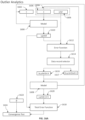
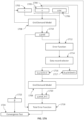
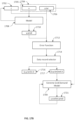
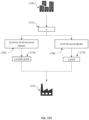
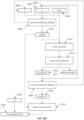
- FIGS. 1-14B show one or more schematic flow diagrams, certain computer-based architectures, and/or screenshots of various specialized graphical user interfaces which are illustrative of some exemplary aspects of at least some embodiments of the present disclosure.
- the term "real-time” is directed to an event/action that can occur instantaneously or almost instantaneously in time when another event/action has occurred.
- the "real-time processing,” “real-time computation,” and “real-time execution” all pertain to the performance of a computation during the actual time that the related physical process (e.g., a user interacting with an application on a mobile device) occurs, in order that results of the computation can be used in guiding the physical process.
- exemplary inventive, specially programmed computing systems with associated devices are configured to operate in the distributed network environment, communicating with one another over one or more suitable data communication networks (e.g., the Internet, satellite, etc.) and utilizing one or more suitable data communication protocols/modes such as, without limitation, IPX/SPX, X.25, AX.25, AppleTalk(TM), TCP/IP (e.g., HTTP), near-field wireless communication (NFC), RFID, Narrow Band Internet of Things (NBIOT), 3G, 4G, 5G, GSM, GPRS, WiFi, WiMax, CDMA, satellite, ZigBee, and other suitable communication modes.
- the NFC can represent a short-range wireless communications technology in which NFC-enabled devices are "swiped,” “bumped,” “tap” or otherwise moved in close proximity to communicate.
- a machine-readable medium may include any medium and/or mechanism for storing or transmitting information in a form readable by a machine (e.g., a computing device).
- a machine-readable medium may include read only memory (ROM); random access memory (RAM); magnetic disk storage media; optical storage media; flash memory devices; electrical, optical, acoustical or other forms of propagated signals (e.g., carrier waves, infrared signals, digital signals, etc.), and others.
- computer engine and “engine” identify at least one software component and/or a combination of at least one software component and at least one hardware component which are designed/programmed/configured to manage/control other software and/or hardware components (such as the libraries, software development kits (SDKs), objects, etc.).
- SDKs software development kits
- Examples of hardware elements may include processors, microprocessors, circuits, circuit elements (e.g., transistors, resistors, capacitors, inductors, and so forth), integrated circuits, application specific integrated circuits (ASIC), programmable logic devices (PLD), digital signal processors (DSP), field programmable gate array (FPGA), logic gates, registers, semiconductor device, chips, microchips, chip sets, and so forth.
- the one or more processors may be implemented as a Complex Instruction Set Computer (CISC) or Reduced Instruction Set Computer (RISC) processors; x86 instruction set compatible processors, multi-core, or any other microprocessor or central processing unit (CPU).
- the one or more processors may be dual-core processor(s), dual-core mobile processor(s), and so forth.
- Examples of software may include software components, programs, applications, computer programs, application programs, system programs, machine programs, operating system software, middleware, firmware, software modules, routines, subroutines, functions, methods, procedures, software interfaces, application program interfaces (API), instruction sets, computing code, computer code, code segments, computer code segments, words, values, symbols, or any combination thereof. Determining whether an embodiment is implemented using hardware elements and/or software elements may vary in accordance with any number of factors, such as desired computational rate, power levels, heat tolerances, processing cycle budget, input data rates, output data rates, memory resources, data bus speeds and other design or performance constraints.
- One or more aspects of at least one embodiment may be implemented by representative instructions stored on a machine-readable medium which represents various logic within the processor, which when read by a machine causes the machine to fabricate logic to perform the techniques described herein.
- Such representations known as "IP cores" may be stored on a tangible, machine readable medium and supplied to various customers or manufacturing facilities to load into the fabrication machines that make the logic or processor.
- IP cores may be stored on a tangible, machine readable medium and supplied to various customers or manufacturing facilities to load into the fabrication machines that make the logic or processor.
- various embodiments described herein may, of course, be implemented using any appropriate hardware and/or computing software languages (e.g., C++, Objective-C, Swift, Java, JavaScript, Python, Perl, QT, etc.).
- one or more of exemplary inventive computer-based devices of the present disclosure may include or be incorporated, partially or entirely into at least one personal computer (PC), laptop computer, ultra-laptop computer, tablet, touch pad, portable computer, handheld computer, palmtop computer, personal digital assistant (PDA), cellular telephone, combination cellular telephone/PDA, television, smart device (e.g., smart phone, smart tablet or smart television), mobile internet device (MID), messaging device, data communication device, and so forth.
- PC personal computer
- laptop computer ultra-laptop computer
- tablet touch pad
- portable computer handheld computer
- palmtop computer personal digital assistant
- PDA personal digital assistant
- cellular telephone combination cellular telephone/PDA
- television smart device (e.g., smart phone, smart tablet or smart television), mobile internet device (MID), messaging device, data communication device, and so forth.
- smart device e.g., smart phone, smart tablet or smart television
- MID mobile internet device
- server should be understood to refer to a service point which provides processing, database, and communication facilities.
- server can refer to a single, physical processor with associated communications and data storage and database facilities, or it can refer to a networked or clustered complex of processors and associated network and storage devices, as well as operating software and one or more database systems and application software that support the services provided by the server. Cloud servers are examples.
- exemplary inventive computer-based systems, and/or exemplary inventive computer-based devices of the present disclosure may be configured to utilize hardwired circuitry that may be used in place of or in combination with software instructions to implement features consistent with principles of the disclosure.
- implementations consistent with principles of the disclosure are not limited to any specific combination of hardware circuitry and software.
- various embodiments may be embodied in many different ways as a software component such as, without limitation, a stand-alone software package, a combination of software packages, or it may be a software package incorporated as a "tool" in a larger software product.
- exemplary software specifically programmed in accordance with one or more principles of the present disclosure may be downloadable from a network, for example, a website, as a stand-alone product or as an add-in package for installation in an existing software application.
- exemplary software specifically programmed in accordance with one or more principles of the present disclosure may also be available as a client-server software application, or as a web-enabled software application.
- exemplary software specifically programmed in accordance with one or more principles of the present disclosure may also be embodied as a software package installed on a hardware device.
- exemplary inventive computer-based systems/platforms, exemplary inventive computer-based devices, and/or exemplary inventive computer-based components of the present disclosure may be configured to handle numerous concurrent users that may be, but is not limited to, at least 100 (e.g., but not limited to, 100-999), at least 1,000 (e.g., but not limited to, 1,000-9,999 ), at least 10,000 (e.g., but not limited to, 10,000-99,999 ), at least 100,000 (e.g., but not limited to, 100,000-999,999), at least 1,000,000 (e.g., but not limited to, 1,000,000-9,999,999), at least 10,000,000 (e.g., but not limited to, 10,000,000-99,999,999), at least 100,000,000 (e.g., but not limited to, 100,000,000-999,999,999), at least 1,000,000,000 (e.g., but not limited to, 1,000,000,000-10,000,000,000).
- at least 100 e.g., but not limited to, 100-999
- 1,000 e.g., but not limited to
- exemplary inventive computer-based systems and/or exemplary inventive computer-based devices of the present disclosure may be configured to output to distinct, specifically programmed graphical user interface implementations of the present disclosure (e.g., a desktop, a web app., etc.).
- a final output may be displayed on a displaying screen which may be, without limitation, a screen of a computer, a screen of a mobile device, or the like.
- the display may be a holographic display.
- the display may be a transparent surface that may receive a visual projection.
- Such projections may convey various forms of information, images, and/or objects.
- such projections may be a visual overlay for a mobile augmented reality (MAR) application.
- MAR mobile augmented reality
- cloud As used herein, terms “cloud,” “Internet cloud,” “cloud computing,” “cloud architecture,” and similar terms correspond to at least one of the following: (1) a large number of computers connected through a real-time communication network (e.g., Internet); (2) providing the ability to run a program or application on many connected computers (e.g., physical machines, virtual machines (VMs)) at the same time; (3) network-based services, which appear to be provided by real server hardware, and are in fact served up by virtual hardware (e.g., virtual servers), simulated by software running on one or more real machines (e.g., allowing to be moved around and scaled up (or down) on the fly without affecting the end user).
- a real-time communication network e.g., Internet
- VMs virtual machines
- the exemplary inventive computer-based systems and/or the exemplary inventive computer-based devices of the present disclosure may be configured to securely store and/or transmit data by utilizing one or more of encryption techniques (e.g., private/public key pair, Triple Data Encryption Standard (3DES), block cipher algorithms (e.g., IDEA, RC2, RC5, CAST and Skipjack), cryptographic hash algorithms (e.g., MD5, RIPEMD-160, RTR0, SHA-1, SHA-2, Tiger (TTH),WHIRLPOOL, RNGs).
- encryption techniques e.g., private/public key pair, Triple Data Encryption Standard (3DES), block cipher algorithms (e.g., IDEA, RC2, RC5, CAST and Skipjack), cryptographic hash algorithms (e.g., MD5, RIPEMD-160, RTR0, SHA-1, SHA-2, Tiger (TTH),WHIRLPOOL, RNGs).
- the term "user” shall have a meaning of at least one user.
- the terms “user”, “subscriber” “consumer” or “customer” should be understood to refer to a user of an application or applications as described herein and/or a consumer of data supplied by a data provider.
- the terms “user” or “subscriber” can refer to a person who receives data provided by the data or service provider over the Internet in a browser session, or can refer to an automated software application which receives the data and stores or processes the data.
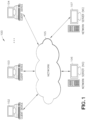
- FIG. 1 depicts a block diagram of an exemplary computer-based system 100 for bias reduction in machine learning in accordance with one or more embodiments of the present disclosure.
- the exemplary inventive computing devices and/or the exemplary inventive computing components of the exemplary computer-based system 100 may be configured to manage a large number of members and/or concurrent transactions, as detailed herein.
- the exemplary computer-based system/platform 100 may be based on a scalable computer and/or network architecture that incorporates varies strategies for assessing the data, caching, searching, and/or database connection pooling, including dynamic outlier bias reduction (DOBR) as described in embodiments herein.
- DOBR dynamic outlier bias reduction
- An example of the scalable architecture is an architecture that is capable of operating multiple servers.
- members 102-104 e.g., clients of the exemplary computer-based system 100 may include virtually any computing device capable of receiving and sending a message over a network (e.g., cloud network), such as network 105, to and from another computing device, such as servers 106 and 107, each other, and the like.
- a network e.g., cloud network
- the member devices 102-104 may be personal computers, multiprocessor systems, microprocessor-based or programmable consumer electronics, network PCs, and the like.
- one or more member devices within member devices 102-104 may include computing devices that typically connect using a wireless communications medium such as cell phones, smart phones, pagers, walkie talkies, radio frequency (RF) devices, infrared (IR) devices, CBs, integrated devices combining one or more of the preceding devices, or virtually any mobile computing device, and the like.
- a wireless communications medium such as cell phones, smart phones, pagers, walkie talkies, radio frequency (RF) devices, infrared (IR) devices, CBs, integrated devices combining one or more of the preceding devices, or virtually any mobile computing device, and the like.
- one or more member devices within member devices 102-104 may be devices that are capable of connecting using a wired or wireless communication medium such as a PDA, POCKET PC, wearable computer, a laptop, tablet, desktop computer, a netbook, a video game device, a pager, a smart phone, an ultra-mobile personal computer (UMPC), and/or any other device that is equipped to communicate over a wired and/or wireless communication medium (e.g., NFC, RFID, NBIOT, 3G, 4G, 5G, GSM, GPRS, WiFi, WiMax, CDMA, satellite, ZigBee, etc.).
- a wired or wireless communication medium such as a PDA, POCKET PC, wearable computer, a laptop, tablet, desktop computer, a netbook, a video game device, a pager, a smart phone, an ultra-mobile personal computer (UMPC), and/or any other device that is equipped to communicate over a wired and/or wireless communication medium (e.g., NFC, RFID
- one or more member devices within member devices 102-104 may include may run one or more applications, such as Internet browsers, mobile applications, voice calls, video games, videoconferencing, and email, among others. In some embodiments, one or more member devices within member devices 102-104 may be configured to receive and to send web pages, and the like.
- applications such as Internet browsers, mobile applications, voice calls, video games, videoconferencing, and email, among others.
- one or more member devices within member devices 102-104 may be configured to receive and to send web pages, and the like.
- an exemplary specifically programmed browser application of the present disclosure may be configured to receive and display graphics, text, multimedia, and the like, employing virtually any web based language, including, but not limited to Standard Generalized Markup Language (SMGL), such as HyperText Markup Language (HTML), a wireless application protocol (WAP), a Handheld Device Markup Language (HDML), such as Wireless Markup Language (WML), WMLScript, XML, JavaScript, and the like.
- SMGL Standard Generalized Markup Language
- HTML HyperText Markup Language
- WAP wireless application protocol
- HDML Handheld Device Markup Language
- WMLScript Wireless Markup Language
- a member device within member devices 102-104 may be specifically programmed by either Java, .Net, QT, C, C++ and/or other suitable programming language.
- one or more member devices within member devices 102-104 may be specifically programmed include or execute an application to perform a variety of possible tasks, such as, without limitation, messaging functionality, browsing, searching, playing, streaming or displaying various forms of content, including locally stored or uploaded messages, images and/or video, and/or games.
- the exemplary network 105 may provide network access, data transport and/or other services to any computing device coupled to it.
- the exemplary network 105 may include and implement at least one specialized network architecture that may be based at least in part on one or more standards set by, for example, without limitation, Global System for Mobile communication (GSM) Association, the Internet Engineering Task Force (IETF), and the Worldwide Interoperability for Microwave Access (WiMAX) forum.
- GSM Global System for Mobile communication
- IETF Internet Engineering Task Force
- WiMAX Worldwide Interoperability for Microwave Access
- the exemplary network 105 may implement one or more of a GSM architecture, a General Packet Radio Service (GPRS) architecture, a Universal Mobile Telecommunications System (UMTS) architecture, and an evolution of UMTS referred to as Long Term Evolution (LTE).
- GSM Global System for Mobile communication
- IETF Internet Engineering Task Force
- WiMAX Worldwide Interoperability for Microwave Access
- the exemplary network 105 may implement one or more of a
- the exemplary network 105 may include and implement, as an alternative or in conjunction with one or more of the above, a WiMAX architecture defined by the WiMAX forum. In some embodiments and, optionally, in combination of any embodiment described above or below, the exemplary network 105 may also include, for instance, at least one of a local area network (LAN), a wide area network (WAN), the Internet, a virtual LAN (VLAN), an enterprise LAN, a layer 3 virtual private network (VPN), an enterprise IP network, or any combination thereof.
- LAN local area network
- WAN wide area network
- VLAN virtual LAN
- VPN layer 3 virtual private network
- enterprise IP network or any combination thereof.
- At least one computer network communication over the exemplary network 105 may be transmitted based at least in part on one of more communication modes such as but not limited to: NFC, RFID, Narrow Band Internet of Things (NBIOT), ZigBee, 3G, 4G, 5G, GSM, GPRS, WiFi, WiMax, CDMA, satellite and any combination thereof.
- the exemplary network 105 may also include mass storage, such as network attached storage (NAS), a storage area network (SAN), a content delivery network (CDN) or other forms of computer or machine-readable media.
- NAS network attached storage
- SAN storage area network
- CDN content delivery network
- the exemplary server 106 or the exemplary server 107 may be a web server (or a series of servers) running a network operating system, examples of which may include but are not limited to Microsoft Windows Server, Novell NetWare, or Linux.
- the exemplary server 106 or the exemplary server 107 may be used for and/or provide cloud and/or network computing.
- the exemplary server 106 or the exemplary server 107 may have connections to external systems like email, SMS messaging, text messaging, ad content providers, etc. Any of the features of the exemplary server 106 may be also implemented in the exemplary server 107 and vice versa.
- one or more of the exemplary servers 106 and 107 may be specifically programmed to perform, in non-limiting example, as authentication servers, search servers, email servers, social networking services servers, SMS servers, IM servers, MMS servers, exchange servers, photo-sharing services servers, advertisement providing servers, financial/banking-related services servers, travel services servers, or any similarly suitable service-base servers for users of the member computing devices 101-104.
- one or more exemplary computing member devices 102-104, the exemplary server 106, and/or the exemplary server 107 may include a specifically programmed software module that may be configured to send, process, and receive information using a scripting language, a remote procedure call, an email, a tweet, Short Message Service (SMS), Multimedia Message Service (MMS), instant messaging (IM), internet relay chat (IRC), mIRC, Jabber, an application programming interface, Simple Object Access Protocol (SOAP) methods, Common Object Request Broker Architecture (CORBA), HTTP (Hypertext Transfer Protocol), REST (Representational State Transfer), or any combination thereof.
- SMS Short Message Service
- MMS Multimedia Message Service
- IM instant messaging
- IRC internet relay chat
- mIRC Jabber
- SOAP Simple Object Access Protocol
- CORBA Common Object Request Broker Architecture
- HTTP Hypertext Transfer Protocol
- REST Real-S Transfer Protocol
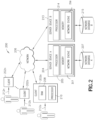
- FIG. 2 depicts a block diagram of another exemplary computer-based system/platform 200 in accordance with one or more embodiments of the present disclosure.
- the member computing devices 202a, 202b through 202n shown each at least includes a computer-readable medium, such as a random-access memory (RAM) 208 coupled to a processor 210 or FLASH memory.
- the processor 210 may execute computer-executable program instructions stored in memory 208.
- the processor 210 may include a microprocessor, an ASIC, and/or a state machine.
- the processor 210 may include, or may be in communication with, media, for example computer-readable media, which stores instructions that, when executed by the processor 210, may cause the processor 210 to perform one or more steps described herein.
- examples of computer-readable media may include, but are not limited to, an electronic, optical, magnetic, or other storage or transmission device capable of providing a processor, such as the processor 210 of client 202a, with computer-readable instructions.
- suitable media may include, but are not limited to, a floppy disk, CD-ROM, DVD, magnetic disk, memory chip, ROM, RAM, an ASIC, a configured processor, all optical media, all magnetic tape or other magnetic media, or any other medium from which a computer processor can read instructions.
- various other forms of computer-readable media may transmit or carry instructions to a computer, including a router, private or public network, or other transmission device or channel, both wired and wireless.
- the instructions may comprise code from any computer-programming language, including, for example, C, C++, Visual Basic, Java, Python, Perl, JavaScript, and etc.
- member computing devices 202a through 202n may also comprise a number of external or internal devices such as a mouse, a CD-ROM, DVD, a physical or virtual keyboard, a display, or other input or output devices.
- examples of member computing devices 202a through 202n e.g., clients
- member computing devices 202a through 202n may be specifically programmed with one or more application programs in accordance with one or more principles/methodologies detailed herein.
- member computing devices 202a through 202n may operate on any operating system capable of supporting a browser or browser-enabled application, such as Microsoft TM , Windows TM , and/or Linux.
- member computing devices 202a through 202n shown may include, for example, personal computers executing a browser application program such as Microsoft Corporation's Internet Explorer TM , Apple Computer, Inc.'s Safari TM , Mozilla Firefox, and/or Opera.
- users, 212a through 212n may communicate over the exemplary network 206 with each other and/or with other systems and/or devices coupled to the network 206.
- exemplary server devices 204 and 213 may be also coupled to the network 206.
- one or more member computing devices 202a through 202n may be mobile clients.
- At least one database of exemplary databases 207 and 215 may be any type of database, including a database managed by a database management system (DBMS).
- DBMS database management system
- an exemplary DBMS-managed database may be specifically programmed as an engine that controls organization, storage, management, and/or retrieval of data in the respective database.
- the exemplary DBMS-managed database may be specifically programmed to provide the ability to query, backup and replicate, enforce rules, provide security, compute, perform change and access logging, and/or automate optimization.
- the exemplary DBMS-managed database may be chosen from Oracle database, IBM DB2, Adaptive Server Enterprise, FileMaker, Microsoft Access, Microsoft SQL Server, MySQL, PostgreSQL, and a NoSQL implementation.
- the exemplary DBMS-managed database may be specifically programmed to define each respective schema of each database in the exemplary DBMS, according to a particular database model of the present disclosure which may include a hierarchical model, network model, relational model, object model, or some other suitable organization that may result in one or more applicable data structures that may include fields, records, files, and/or objects.
- the exemplary DBMS-managed database may be specifically programmed to include metadata about the data that is stored.
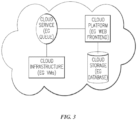
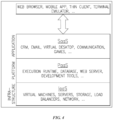
- the exemplary inventive computer-based systems/platforms, the exemplary inventive computer-based devices, and/or the exemplary inventive computer-based components of the present disclosure may be specifically configured to operate in a cloud computing/architecture such as, but not limiting to: infrastructure a service (IaaS), platform as a service (PaaS), and/or software as a service (SaaS).
- Figures 3 and 4 illustrate schematics of exemplary implementations of the cloud computing/architecture(s) in which the exemplary inventive computer-based systems/platforms, the exemplary inventive computer-based devices, and/or the exemplary inventive computer-based components of the present disclosure may be specifically configured to operate.
- Dynamic Outlier Bias Reduction may be used to improve the accuracy and understanding of generalized linear models specifically for benchmarking studies.
- DOBR Dynamic Outlier Bias Reduction
- it is a method that may be applied to a wide variety of analysis models where there are one or more independent variables and one dependent variable.
- the present disclosure, and embodiments therein, are illustrative of the inventive application of DOBR to improving the accuracy of machine learning model predictions.
- DOBR is not a predictive model. Instead, in embodiments, it is an add-on method to predictive or interpretive models that can improve the accuracy of model predictions.
- DOBR identified outliers are based on the difference between the data supplied target variable and the model computed value. As outliers are identified, via a pre-determined selection criterion, the outlier dependent data records and model produced dependent variables are removed from the analysis. Further analysis may continue with these records permanently removed. However, in other embodiments of the exemplary inventive system and methods, at each model iteration, the outlier identification process includes the entire dataset so that all records undergo outlier scrutiny using the last iteration's predictive model as defined by its calculation parameters.
- exemplary embodiments of the present invention reduce bias in the machine learning model by, e.g., including an entire dataset at each iteration to reduce the propagation of selection bias of training data.
- machine learning models can be trained and implemented more accurately and more efficiently to improve the operation of machine learning systems.
- FIG. 5 illustrates a block diagram of an exemplary inventive bias reduction system in machine learning in accordance with one or more embodiments of the present disclosure.
- a bias reduction system 300 may include component for dynamic outlier bias reduction (DOBR) in datasets under analysis by, e.g., machine learning engines.
- DOBR provides an iterative process to remove outlier records subject to a pre-defined criterion. This condition is the user-defined error acceptance value expressed as a percentage. It refers to how much error the user is willing to accept in the model based potentially on their insights and other analysis results that will be described later in this discussion. A value of 100% signifies that all of the error is accepted and no records will be removed in the DOBR process. If 0% is chosen, then all of the records are removed. Generally, error acceptance values in the range of 80 to 95% have been observed for industrial applications.
- a user may interact with the bias reduction system 300 to administer the error acceptance value via a user input device 308 and view results via a display device 312, among other user interaction behaviors using the display device 312 and user input device 308.
- the bias reduction system 300 may analyze a dataset 311 received into a database 310 or other storage in communication with the bias reduction system 300.
- the bias reduction system 300 may receive the dataset 311 via the database 310 or other storage device and make predictions using one or more machine learning models with dynamic outlier bias reduction for improved accuracy and efficiency.
- components of the bias reduction system 300 may include, e.g., a DOBR engine 301 in communication with a model index 302 and model library 303, a regressor parameter library 305, a classifier parameter library 304 and a DOBR filter 306, among other possible components.
- Each component may include a combination of hardware and software to implement component functions, such as, e.g., memory and storage devices, processing devices, communications devices, input/output (I/O) interfaces, controllers, networking and communications devices, an operating system, a kernel, device drivers, a set of instructions, among other components.
- the model library 303 may include machine learning models such as, e.g., a support vector machine (SVM), a Linear Regressor, a Lasso model, Decision Tree regressors, Decision Tree classifiers, Random Forest regressors, Random Forest classifiers, K Neighbors regressors, K Neighbors classifiers, Gradient Boosting regressors, Gradient Boosting classifiers, among other possible classifiers and regressors.
- SVM support vector machine
- the DOBR engine 301 may employ a model index 302 that indexes each model to a model identifier to use as a function by the DOBR engine 301.
- models including, e.g., Linear Regression, XGBoost Regression, Support Vector Regression, Lasso, K Neighbors Regression, Bagging Regression, Gradient Boosting Regression, Random Forest Regression, Decision Tree Regression, among other regression models and classification models, may be indexed by a number identifier and labeled with a name.
- pseudo-code 2 depicts an example of a model index code for use by the model index 302.
- the bias reduction system 300 may record model parameters in, e.g., memory or storage, such as, e.g., hard drives, solid state drives, random access memory (RAM), flash storage, among other storage and memory devices.
- regressor parameters may be logged and adjusted in a regressor parameter library 305.
- the regressor parameter library 305 may include storage and communication hardware configured with sufficient memory and bandwidth to store, adjust and communicate a multitude of parameters for multiple regressors, e.g., in real time. For example, for each regression machine learning model instantiated by the DOBR engine 301, respective parameters may be initialized and updated in the regressor parameter library 305.
- classifier parameters may be logged and adjusted in a classifier parameter library 304.
- the classifier parameter library 304 may include storage and communication hardware configured with sufficient memory and bandwidth to store, adjust and communicate a multitude of parameters for multiple regressors, e.g., in real time. For example, for each classification machine learning model instantiated by the DOBR engine 301, respective parameters may be initialized and updated in the regressor parameter library 305.
- a user via the user input device 308, may establish an initial set of parameters. However, in some embodiments, the initial set of parameters may be predetermined.
- the DOBR engine 301 may correlate a model from as identified in the model index 302 to a set of parameters in the regressor parameter library 305.
- the DOBR engine 301 may call a set of parameters according to, e.g., an identification (ID) number associated with a given regression model.
- the regressor parameter library 305 may identify parameters for each regression model similar to pseudo-code 4 below:
- the DOBR engine 301 may load one or more instantiated and initialized models, e.g., into a cache or buffer of the DOBR engine 301.
- the dataset 311 may then be loaded from the database 310 into, e.g., a same or different cache or buffer or other storage device of the DOBR engine 301.
- the processor 307 or a processor in the DOBR engine 301 may then execute each model to transform the dataset 311 into, e.g., a respective prediction of activity-related data values that characterize the results or parameters of an activity based on certain input attributes related to the activity. For example, appliance energy usage in home and/or commercial environments, concrete compressive strength in a variety of applications and formulations, object or image recognition, speech recognition, or other machine learning applications.
- the DOBR engine 301 may be modelling appliance energy usage based on a dataset 311 of historical energy usage, time of year, time of day, location, among other factors.
- the DOBR engine 301 may called a set of regressors from the model library 303 via the model index 302 connected to a bus of the DOBR engine 301.
- the DOBR engine 301 may then called a parameter file or log associated with regressors for appliance energy usage estimation in the regressor parameter library 305 connected to a bus of the DOBR engine 301.
- the DOBR engine 301 may then utilize a processor 307 to predict a future energy consumption based on the models and model parameters, time and date, location, or other factor and combinations thereof.
- the DOBR engine 301 may be modelling concrete compressive strength based on a dataset 311 of concrete materials, time of year, time of day, location, humidity, curing time, age, among other factors.
- the DOBR engine 301 may called a set of regressors from the model library 303 via the model index 302 connected to a bus of the DOBR engine 301.
- the DOBR engine 301 may then called a parameter file or log associated with regressors for concrete compressive strength estimation in the regressor parameter library 305 connected to a bus of the DOBR engine 301.
- the DOBR engine 301 may then utilize a processor 307 to predict a future concrete compressive strength based on the models and model parameters for a particular concrete formulation, time and date, location, or other factor and combinations thereof.
- the DOBR engine 301 may be performing speech recognition based on a dataset 311 of utterances and ground-truth transcriptions, among other factors.
- the DOBR engine 301 may called a set of classifiers from the model library 303 via the model index 302 connected to a bus of the DOBR engine 301.
- the DOBR engine 301 may then called a parameter file or log associated with classifiers for speech recognition in the classifier parameter library 304 connected to a bus of the DOBR engine 301.
- the DOBR engine 301 may then utilize a processor 307 to predict a transcription of recorded speech data based on the models and model parameters for a set of one or more utterances.
- the DOBR engine 301 may be automatically predicting rendering settings for medical imagery based on a dataset 311 of settings for multiple rendering parameters across imaging and/or visualizations, among other factors, as described in U.S. Patent No. 10,339,695 , herein incorporated by reference in its entirety for all purposes.
- the DOBR engine 301 may called a set of classifiers from the model library 303 via the model index 302 connected to a bus of the DOBR engine 301.
- the DOBR engine 301 may then called a parameter file or log associated with classifiers for rendering settings in the classifier parameter library 304 connected to a bus of the DOBR engine 301.
- the DOBR engine 301 may then utilize a processor 307 to predict a rendering settings data based on the models and model parameters for a set of one or more medical datasets.
- the DOBR engine 301 may be performing robotic control of machinery based on a dataset 311 of machine control command results and simulated results of machine control commands, among other factors, as described in U.S. Patent No. 10,317,854 , herein incorporated by reference in its entirety for all purposes.
- the DOBR engine 301 may called a set of regression models from the model library 303 via the model index 302 connected to a bus of the DOBR engine 301.
- the DOBR engine 301 may then called a parameter file or log associated with regression model for robotic control in the regressor parameter library 305 connected to a bus of the DOBR engine 301.
- the DOBR engine 301 may then utilize a processor 307 to predict a a success or failure of a particular control commands based on the models and model parameters for a set of control commands, environmental information, sensor data and/or simulations of the commands.
- the bias reduction system 300 may implement the machine learning models in a cloud environment, e.g., as a cloud service for remote users.
- a cloud service may be designed to support large numbers of users and a wide variety of algorithms and problem sizes, including those described above, as well as other potential models, datasets and parameter tunings specific to a user's use case, as described in U.S. Patent No. 10,452,992 , herein incorporated by reference in its entirety for all purposes.
- a number of programmatic interfaces may be defined by the service in which the bias reduction system 300 is implemented, which guide non-expert users to start using machine learning best practices relatively quickly, without the users having to expend a lot of time and effort on tuning models, or on learning advanced statistics or artificial intelligence techniques.
- the interfaces may, for example, allow non-experts to rely on default settings or parameters for various aspects of the procedures used for building, training and using machine learning models, where the defaults are derived from the one or more sets of parameters in the classifier parameter library 304 and/or regressor parameter library 305 for similar models to the individual user.
- the default settings or parameters may be used as a starting point to customize a user's machine learning model using training with the user's datasets via the DOBR engine 301 and optimizer 306.
- users may customize the parameters or settings they wish to use for various types of machine learning tasks, such as input record handling, feature processing, model building, execution and evaluation.
- the cloud-service bias reduction system 300 may have extendable built-in capabilities of the service, e.g., by registering customized functions with the service.
- the modules may in some cases be shared with other users of the service, while in other cases the use of the customized modules may be restricted to their implementers/owners.
- the bias reduction system 300 may include models in the model library 303 that enable an ensemble approach to machine learning model training and implementation, as described in U.S. Patent No. 9,646,262 , herein incorporated by reference in its entirety for all purposes. Such an approach may be useful for applications to data analytics using electronic datasets of electronic activity data.
- the database 310 may include one or more structured or unstructured data sources.
- An unsupervised learning module in certain embodiments, is configured to assemble an unstructured data set into an organized data set using a plurality of unsupervised learning techniques, e.g., in an ensemble of models from the model library 303.
- the unsupervised learning module is configured to assemble an unstructured data set into multiple versions of an organized data set
- a supervised learning module in certain embodiments, is configured to generate one or more machine learning ensembles based on each version of multiple versions of an organized data set and to determine which machine learning ensemble exhibits a highest predictive performance according to, e.g., model error after training each model in each ensemble using the DOBR engine 301 and optimizer 306.
- outliers in the dataset 311 may reduce the accuracy of the implemented models, thus increasing the number of training iterations.
- the DOBR engine 301 may include a DOBR filter 301b to dynamically test data point errors in the dataset to determine outliers. Thus, outliers may be removed to provide a more accurate or representative dataset 311.
- the DOBR filter 301b may provide an iterative mechanism for removing outlier data points subject to a pre-defined criterion, e.g., the user-defined error acceptance value described above and provided, e.g., by a user via the user input device 308.
- the user-defined error acceptance value expressed as a percentage where, e.g., a value of 100% signifies that all of the error is accepted and no data points will be removed by the filter 301b, while a value of, e.g., 0% results in all of the data points being removed.
- the filter 301b may be configured with an error acceptance value in the range of between, e.g., about 80% and about 95%.
- the filter 301b may be configured to perform functions as depicted in pseudo-code 6 below:
- the DOBR filter 301b works in conjunction with an optimizer 306, which is configured to determine error and optimize parameters for each model in the regressor parameter library 305 and the classifier parameter library 304.
- the optimizer 306 may determine model and communicate the error to the filter 301b of the DOBR engine 301.
- the optimizer 306 may include, e.g., storage and/or memory devices and communication devices with sufficient memory capacity and bandwidth to receive the dataset 311 and model predictions and determine, e.g., outliers, convergence, error, absolute value error, among other error measures.
- the optimizer 306 may be configured to perform functions as depicted in pseudo-code 7 below:
- the bias reduction system 300 may then return to a user, via, e.g., the display 312, machine learning model predictions, an outlier analysis, a convergence of predictions, among other data produced by the DOBR engine 301 in a more accurate and efficient manner due to the reduction in outliers that would otherwise bias predictions.
- FIG. 6 illustrates a flowchart of an exemplary inventive methodology in accordance with one or more embodiments of the present disclosure.
- DOBR such as the DOBR engine 301 and filter 301b described above, provides an iterative process to remove outlier records subject to a pre-defined criterion.
- This condition is the user-defined error acceptance value expressed as a percentage. It refers to how much error the user is willing to accept in the model based potentially on their insights and other analysis results that will be described later in this discussion. A value of 100% signifies that all of the error is accepted and no records will be removed in the DOBR process. If 0% is chosen, then all of the records are removed.
- error acceptance values in the range of 80 to 95% have been observed for industrial applications.
- DOBR DOBR
- embodiments of the DOBR methodology can also determine the percentage of the dataset that represents model outliers. This pre-analysis step can assist in setting the proper error acceptance value or if outliers are present at all.
- C ⁇ P ⁇ y pred i ⁇ y tar i i 2 , i ⁇ 1 m , where P ⁇ is a percentile function, i is an index of a record entry, and m is the number of record entries.
- DOBR can be implemented to reduce bias in training the model M 408.
- the solution model M 408 is implemented by a model engine, including, e.g., a processing device and a memory and/or storage device.
- the model 408 using the new model coefficients computes new prediction values 420 for the complete dataset.
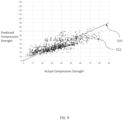
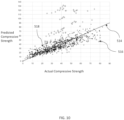
- FIG. 9 and FIG. 10 displays the results of these calculations using the complete dataset 512 ( FIG. 9 ) and the DOBR version ( FIG. 10 ) with the outliers identified and removed from the calculation.
- the outlier values 516 marked in red crosses, are computed from the non-outlier model. Both of these plots show the actual versus predicted target values with the diagonal line 510 and 514, respectively for FIG. 9 and FIG. 10 , depicting equality.
- the complete dataset calculation shows how outliers can bias results.
- the DOBR modified plot shows the bias removed with the diagonal line 514 bisecting the non-outlier values 518 and also apparent groups of outlier data points 516 that may warrant further study.
- the identification of outliers and the patterns they sometime form in the above type of plots have been useful for additional benefits of the DOBR method in industrial applications.
- the outliers can form patterns or groups that simply are not observed by other methods. This information is created by simply using DOBR with the analyst supplied model. No additional information or assumptions are required. In practice, the DOBR defined outlier set can supply useful information to improve, provide insights, or validate the underlying model.
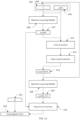
- FIG. 11 is a block diagram of another exemplary computer-based system for machine learning predictions with DOBR in accordance with one or more embodiments of the present disclosure.
- a machine learning procedure starts with a dataset, X ⁇ , consisting of n independent variables and m records in length and an array ( m ⁇ 1) of target variables, ⁇ .
- the dataset ⁇ X ⁇ , ⁇ ⁇ is divided into two randomly selected subsets of pre-determined size: one to train the model and the other to test its predictive accuracy, as per, e.g., equation 13 below:
- DOBR in addition to computing a more accurate model for the restricted dataset, in embodiments, DOBR also provides an outlier dataset that can be further studied relative to the given model to understand the cause or causes of high model prediction error.
- the predictive model is computed from the training data and that model alone is used in the testing phase. Since, by design the testing phase may not use the target values to determine outliers, the DOBR methodology described above with reference to FIG. 6 may not apply. However, there is an exemplary aspect of the DOBR methodology may not have been utilized above: the outlier - non-outlier classification potential as suggested by DOBR's output results mentioned previously.
- the dataset may be divided into two randomly selected parts: one for training and one for testing.
- both the independent and target variables are kept, but in testing the target variables are hidden and the independent variables are used to predict the target variable.
- the known target variable values are only used to measure the model's predictive error.
- DOBR can be implemented to reduce bias in training the machine learning model L 608.
- the machine learning model L 608 is implemented by a model engine, including, e.g., a processing device and a memory and/or storage device.
- the convergence test 624 may terminate the iterative process if, for example, the percent error is less than, e.g., 0.5%. Otherwise, the process may return to the training dataset 604.
- the DOBR iteration procedure measures how well the model can predict itself rather than measuring its accuracy relative to the test dataset.
- the objective here is to test the capability of the model to predict the target variable and records with large deviations are systematically removed to improve the model's ability to focus on the larger majority of the data where the data predictions are relatively good. This process must be done on the same dataset. It doesn't make any sense to remove records from the training set if outliers are identified in the testing set.
- This process is fundamental to the DOBR method in that the records that are removed in a previous iteration are re-entered after a new model (new model parameters) have been computed. This process requires that the same dataset be used.
- this iteration procedure is performed after the learning model is defined.
- the user selects the machine learning algorithm and then determines the specific hyperparameters that "tune" or configure the model.
- These parameters can be chosen using standard techniques such as cross-validation or simply by plotting testing error as a function of the specific, user-supplied parameter ranges.
- the particular values used may optimize prediction accuracy versus computing time while ensuring the model is neither under- or over-fitted. There are several robust tools to assist in this process but the user experience and intuition are also valuable advantages in selecting the best model hyperparameters.
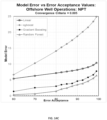
- the Error Acceptance vs Model Error plot is computed from this step by applying a sequence of error acceptance values and tabulating or plotting the results. These plots identify the fraction of the dataset that are outliers in the sense that their error contribution is marginally larger than the error contribution of data records that fit the model. Also in practice, these plots can show more than one type of variation not explained by the model.
- the slope can vary as it convergences to the slope of the model. These variations can assist in researching the nature of additional data-coded behavior that is unexplained by the model.
- the records that occupy the different slope intervals can be identified and their further investigation can provide insights that may help in constructing an even more robust model.
- the base model ⁇ y Base ⁇ suggests it might be a better predictor for non-outlier records.
- the test dataset is uncensored, containing both non-outliers and outliers. Therefore, is it uncertain if applying a non-outlier, customized model to uncensored test data will produce a better predictive model compared to ⁇ y ref ⁇ .
- ⁇ Base may be observed to be either statistically equal to or greater than ⁇ ref .
- the DOBR model computed from the selected (non-outlier) records always produces a lower model error since the identified outlier records are omitted.
- the DOBR model error equals the total model error since the datasets are the same.
- the objective may be to develop a model using a subset of available data (training) and then measure its predictive accuracy on another subset (testing).
- the DOBR methodology removes model outliers each iteration before computing model parameters.
- machine learning model development this can be done in the training phase, but by definition, the target values in testing can only be used to measure the model's predictive accuracy without advanced knowledge of outliers.
- the standard DOBR methodology may be generalized utilizing more of the DOBR model information computed in the training phase.
- FIG. 11 is a block diagram of another exemplary computer-based system for machine learning with reduced bias in accordance with one or more embodiments of the present disclosure.
- the following information is produced: the DOBR selected training dataset values for the non-outliers ( x , y ) in , the DOBR training data selection vector for the non-outliers ⁇ I in ⁇ , the DOBR selected training dataset values for the outliers ( x, y ) out , and the DOBR training data selection vector for the outliers ⁇ 1 - I in ⁇ .
- DOBR classifies the training data into two mutually exclusive subsets.
- the complete set of the training data attributes, x train , and the DOBR produced classifications, ⁇ I train ⁇ are used to construct/train a classifier machine learning model, C, e.g., stored in the model library 303.
- This model is applied to the testing dataset, x test , to classify the testing data records as outliers or non-outliers based on the training dataset DOBR-established knowledge.
- the above information creates several possible "full dataset" predictive models for analysis of the test dataset.
- the machine learning model L 608 is defined by the non-outlier data, ( x, y ) in and applied to the DOBR test classified data x test in to predict the non-outlier test values. The same procedure is done for the outlier data.
- the objective of this combination is to use the most precise predictive model with its corresponding dataset. In other words, this model tests the overall predictive accuracy of the non-outlier and outlier models applied separately on their respective datasets that were defined with the DOBR classification.
- the machine learning model L 608 is defined by the training data, ( x, y ) train and is also applied to the DOBR test classified data x test in .
- This model uses the broad knowledge of L ( x, y ) train to predict the target values of the DOBR defined outlier and non-outlier x values. The purpose of this model is test the predictive accuracy of the full training model applied separately to the DOBR classified non-outlier and outlier datasets.
- the third model ⁇ y 3 ⁇ is a hybrid that joins the predictive characteristics of the previous two approaches. This model tests the predictive benefit, if any, of joining L ( x, y ) train , the model 608 trained on the total training with L ( x, y ) out , the specific model trained on the DOBR classified outliers in the training set applied to their respective, classified datasets. There are additional hybrid models that may be explored in further research.
- the complete test dataset is predicted utilizing both the DOBR classified non-outlier and outlier records.
- DOBR defined outliers are records that contain variation not adequately described in the current variables (or features) given utilized machine learning model.
- the analyst has at least three options or more.
- a first option is to apply the base model, ⁇ y ref ⁇ , and do not apply DOBR. This is data-driven strategy when the Risk Acceptance vs. Model Error curve is close to a linear relationship.
- a second is to apply one or more of the models: ⁇ y 1 ⁇ , ⁇ y 2 ⁇ , or ⁇ y 3 ⁇ , and combine e.g. average the results.
- a third is to develop predictions for just the non-outlier records and further research the outlier data to develop a modeling strategy for this specialized new dataset - e.g. change the machine learning model or add variables to account for unexplained variation, etc.
- the DOBR method was not initially designed to improve the prediction of the complete dataset. By design, the method converges to the best set of outliers based on the provided model and dataset. The remaining data and model calculations provide improved accuracy but there is no guidance on how to make predictions for the outliers. The implicit decision is to apply a different model to the outlier dataset that reflects the unique data variations that are not present in the non-outlier model.
- two models are defined to test non-outlier prediction accuracy - removing the outliers from the analysis.
- the reference model utilizes the complete training data-defined model to make predictions from the dataset, x test .
- the classification vector is then applied to remove predicted outliers based on the DOBR method's knowledge obtained from the training dataset.
- This model applies DOBR to the most general or broad domain model.
- ⁇ y ref ⁇ as a comparison basis for models ⁇ y 1 ⁇ , ⁇ y 2 ⁇ , and ⁇ y 3 ⁇ (Models 3, 4 and 5, respectively).
- ⁇ y 4 ⁇ and ⁇ y 5 ⁇ the model predictions for the non-outlier dataset, the comparison basis is ⁇ I C ⁇ * y test .
- the measure of DOBR's predictive accuracy is gauged by how much, (if any), ⁇ 1 , ⁇ 2 , and/or ⁇ 3 are less than ⁇ Ref .
- the measure of improvement is the decrease in error relative to the outlier adjusted base error ⁇ Ref . The adjustment are described below with regards to the example results.
- the accuracy of the previously defined five models may be tested with seven machine learning regression models: Linear Regression, k Nearest Neighbor, LASSO, Support Vector, Decision Tree, Bagging, and Random Forest. These machine learning regression models are examples of a broad spectrum of model constructs. Additional or alternative models are also contemplated, such as neural networks, clustering, ensemble models, among others and combinations thereof.
- Linear regression is a method that gives analysts insights regarding the process where the coefficients (or the model parameters), can have a technical/process-related meaning.
- a model of the process, represented by an equation, must be supplied by the analyst and the coefficients are determined by minimizing the error between the predicted and the data supplied target values.
- LASSO an abbreviation for ⁇ least absolute shrinkage and selection operator,' is a regression-related methodology where an addition term is added to the objective function. This term is the sum of the absolute values of the regression coefficients and it is minimized subject to a user supplied parameter. The purpose of this additional term is to add a penalty for increasing the value of variable (or feature) coefficients. The minimization only retains the dominant coefficients and can help in reducing the hard to interpret effects of variable (or feature) covariance or collinearity.
- Decision Tree Regression can mimic human thinking and are intuitive and easy to interpret.
- the model chooses a decision tree construct that logically shows how the x values produce the target variable.
- the specific parameters like maximum depth and minimum samples per leaf are set by the analyst in the training/test machine learning exercise.
- Random Forest Regression builds on the Decision Tree method. Just like forests are made with trees, a random forest regression model is made with groups of decision trees. The analyst defines the forest structure by supplying the of estimators (number of trees in the forest), some parameters similar to decision trees maximum depth of the trees, leaf characteristics, and technical parameters related to how the model error is computed and applied.
- k-NN refers to k nearest neighbors methods where the predicted value is computed from the k nearest neighbors in the x (or feature) domain. Selecting the metric to measure distance and the specific number of nearest neighbors to use are the major parameters set by the analyst in tuning a model for predictions on a given dataset. It is a straightforward method that can work well for regression and classification predictions.
- Support Vector Regression is a versatile, machine learning method that has several variations. Regression means fitting a model to data and the optimization is usually a minimization of error between predicted and the target variables. With support vector regression, the error criterion is generalized to say that if the error is less than some value ' ⁇ ', then we say that's ⁇ close is good enough' and only errors greater than ' ⁇ ', are measured and optimized. In addition to this attribute, the method allows the data to be transformed into nonlinear domains with standard or in some cases, user-defined transformation functions or kernels. The multi-dimensional data structure is used where the objective is to compute robust predictions - not to model the data in the tradition spirit of regression.
- Bagging Regression computes prediction estimates from drawing random subsets with replacement. Each random sample computes a decision tree (by default) prediction of the target variable.
- the final ensemble prediction value can be computed several ways - the average value is one example.
- the primary machine learning variables are the number of estimators in each ensemble, the number of variables (or features) and samples to draw to train each estimator, and selection/replacement guidelines. The method can reduce the variance compared other methods like decision tree regression.
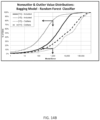
- the classifier model, C [( I training , x train ) , x test ] is an illustrative example since it is applied to the DOBR non-outlier/outlier classifications and the training set x values to define non-outlier and outliers in the test dataset. This a critical step in DOBR's machine learning application since it transfers the knowledge of outliers from the training set to the testing or production dataset. If there are improper classifications, the utility of DOBR methodology to improve the accuracy of machine learning predictions is not realized.
- FIG. 12 is a graph illustrating an example of relationship between model error and an error acceptance criterion of some exemplary computer-based machine learning models with reduced bias for predicting concrete strength in accordance with one or more embodiments of the present disclosure.
- the machine learning training exercise divides this dataset into a 70%:30% split with model tuning performed on the training dataset (70%) and the prediction results measured with the testing (30%) dataset.
- Default model parameters (e.g., for Python 3.6) are not shown since they do not add information to the results.
- the tuning process is an exercise in selecting parameters that minimized training and testing dataset errors using the mean squared error as the indicator. More sophisticated algorithms could be applied but the straightforward approach was used simply to ensure the results did not over- or under- fit either dataset error.
- a determination the percentage of data, if any, where the error is excessively large is performed.
- the machine learning models are applied for a sequence of error acceptance fractions record the corresponding model errors. This is done solely for the training data set since the test data set is used only to measure the machine learning model's prediction accuracy.
- error acceptance refers to the amount of total model error the user is willing to acceptance and also indicates the fraction of data that the model adequately describes.
- the error acceptance percentage sequence ranges from 100% to 60% in increments of 2.
- FIG. 13 is a graph illustrating an example of relationship between model error and an error acceptance criterion of some exemplary computer-based machine learning models with reduced bias for predicting energy use in accordance with one or more embodiments of the present disclosure.
- the second example contains appliance energy use data along with household environmental and lighting conditions with a sampling every 10 minutes for 41 ⁇ 2 months. It is comprised of 29 attributes: 28 input variables and 1 output (target variable) and 19,735 records: The dataset and documentation can be found at the University of California, Irvine machine learning repository archive.
- the model tuning results for seven machine learning models in appliance energy use prediction are given in Table 2, below.
- default model parameters e.g., for Python 3.6 are not shown since they do not add information to the results.
- the tuning process was an exercise in selecting parameters that minimized training and testing dataset errors using the mean squared error as the indicator. More sophisticated algorithms could be applied but the straightforward approach was used simply to ensure the results did not over- or under- fit either dataset error.
- a determination the percentage of data, if any, where the error is excessively large is performed.
- the machine learning models are applied for a sequence of error acceptance fractions record the corresponding model errors. This is done solely for the training data set since the test data set is used only to measure the machine learning model's prediction accuracy.
- error acceptance refers to the amount of total model error the user is willing to acceptance and also indicates the fraction of data that the model adequately describes.
- error acceptance percentage sequence ranges from 100% to 60% in increments of 2.
- FIG. 12 and FIG. 13 show, in part, the machine learning models' capability to adapt to high variation data.
- the linear behavior for several models applied to the Concrete Data show they can almost completely adequately describe the entire training dataset.
- the nonlinearity of the results for the energy dataset suggest that there is a significant percentage of data records where models produce inaccurate predictions or outliers.
- the straight line defined by the low error acceptance percentages may extrapolated to determine the error acceptance value where the fraction of outliers begins, as per an embodiment of the present invention. This process could be automated but in practice, it may be performed by hand to ensure that the selected error acceptance value reflects the analyst's judgment.
- the extrapolation exercise and error acceptance percentage selection is a relatively simple process but it has very important implications. It indicates how good the proposed model fits the data.
- the error acceptance value complement is the dataset percentage that are outliers, i.e., the percentage of records where the model fails to make relatively accurate predictions. This is important information in choosing the machine learning (or any model) for a given dataset and practical application.
- Table 3 represents the error acceptance values chosen for each mode for the two example datasets.
- the predictive accuracy of just the DOBR selected values are compared to the reference model.
- This is the basic utility of DOBR since the method by itself does not provide any specific information about increasing the predictive accuracy for the complete dataset. Therefore, the DOBR analysis presents the analyst with a potential tradeoff: to have better predictive power for part of the dataset but with no information provided for outlier records.
- the question addressed in this section is how much, if any, are the DOBR selected results more accurate compared to the corresponding reference model test data predictions.
- the reference error is computed for the complete dataset.
- the adjusted reference error values for comparison with the non-outlier datasets is computed by multiplying the complete reference error by the error acceptance value. For example, if the reference error is 10.0 and the error acceptance value is 80%, then the adjusted reference error is 10 x 80% or 8.0.
- the interpretation utilizes the definition of "error acceptance.” If the non-outlier data is computed on 80% of the data for example, then 80% of the total error should still be remaining in the non- outlier data. This is the error acceptance definition.
- the results measuring the predictive accuracy performance of the DOBR selected non-outliers is presented in Table 4 and Table 5, below, corresponding to, e.g., a concrete strength dataset and an energy dataset, respectively.
- the reference error is computed by multiplying the actual error acceptance percentages by the point estimates of ⁇ y Ref ⁇ , ⁇ y test ⁇ .
- the Random Forest classifier was not applied to the concrete dataset since it was judged not going to change the conclusions regarding DOBR's predictive accuracy improvement.
- the results show the mean ⁇ a 95% confidence interval from 100 random trial selections of training and test data subsets.
- the Support Vector results were computed from fewer iterations (5 or 10) for manage computing time issues.
- Table 4 shows that there is little, if any predictive improvement using the DOBR selected records. This result is not surprising and in fact, is expected based on the shape of the error acceptance vs. model error curve shown in Fig. 12 .
- Table 5 indicates there is considerable improvement in the DOBR selected predictions from the reference model values for both the Bagging and Random Forest classifiers, see FIG. 14A and FIG. 14B , respectively, below.
- the difference in improvement results between models shows that model choice is important. Even though this decision is made by the analyst, it is interesting to compare the prediction accuracy by model. Model run time and several other factors are also important and this research is not designed or intended to suggest the viability of one model over another.
- Table 6 shows the predictive accuracy results for train/test samplings of the concrete compression strength dataset with the Bagging Classifier.
- the Random Forest Classifier was not applied to this dataset.
- the table displays the root mean square error (see, Equation 15) at a 95% confidence level between the test data and each of the models for 100 random selections of the training and test datasets.
- Linear Regression and LASSO produce the largest base or reference model errors.
- the ⁇ y 1 ⁇ models yield prediction accuracies statistically the same as all of the other models except Decision Tree.
- the Decision Tree model produces the best prediction accuracy and all of the models excluding Linear Regression and LASSO appear not to improve with the addition of DOBR.
- Table 7 shows the increase (+) or decrease (-) in prediction accuracy of the DOBR models relative to the reference model in each case for, e.g, Concrete Compression Strength Prediction Accuracy Performance of DOBR Models: Bagging Classifier.
- Table 7 ⁇ y 1 ⁇ % Improvement ⁇ y 2 ⁇ % Improvement ⁇ y 3 ⁇ % Improvement Linear Regression 12.39% ⁇ 0.55% 3.44% ⁇ 0.51% 8.63% ⁇ 0.47% LASSO 11.98% ⁇ 0.60% 2.44% ⁇ 0.53% 9.29% ⁇ 0.42%
- Bagging reference model has the largest reference error values but its DOBR augmented model results are generally in the same statistical ranges as the other models. Also for practical reasons the Support Vector model was run for only 10 iterations. This explains the increase in uncertainty across its model results.
- FIG. 14A and FIG. 14B illustrate plots of non-outlier and outlier distributions in classifier models according to an exemplary embodiment of an inventive exemplary computer based system with a DOBR classifier in accordance with one or more embodiments of the present disclosure.
- the reference error value is highlighted in both plots of FIG. 14A and FIG. 14B .
- the top set of arrows show that 80% the non-outlier error values are less than 1,000 which says the 20% of the error values are > 1,000.
- This lower set of arrows show also that for the outlier distributions, about 20% of outlier values have an error ⁇ 1,000 or 80% has errors >1,000 - which should be representative of outlier errors.
- FIG. 14C illustrates plots of model error as a function of error acceptance values for an example use case of an exemplary embodiment of an inventive exemplary computer based system with a DOBR-trained machine learning model for predicting non-production time in well drilling in accordance with one or more embodiments of the present disclosure.
- Linear regression is included in this analysis since it is the only model where the coefficients can provide engineering insights to help identify additional best practice refinements.
- the other models are more robust from a predictive perspective but offer little insights.
- M represents a given hyptertuned model.
- Data_xin_scrub and Data_yin _ scrub are the DOBR computed inliers from the training set
- Data_xout_scrub and Data_yout_scrub are the DOBR computed outliers from the training set
- DOBR_Model_testin and DOBR_Model_testout are the test dataset inliers and outliers, respectively, computed from the DOBR classification model
- BaseModel_yin, BaseModel_yout are non-DOBR computed model results classified into inliers and outliers using the DOBR classification model
- I assigns BaseModel values to BaseModel_yin for DOBR defined inliers and to BaseModel_yin for DOBR defined outliers.
- image rendering and visualization may leverage machine learning models to automatically predict and implement rendering parameters based on, e.g., medical data, as described in U.S. Patent No. 10,339,695 , herein incorporated by reference in its entirety for all purposes.
- DOBR may be employed to train and implement machine learning models for content-based rendering.
- a medical dataset representing a three-dimensional region of a patient may be employed as input data.
- outliers from a training medical dataset may be removed such that the machine learning model may be trained on non-outlier data according to the DOBR techniques described above.
- a machine learning model may be trained with the DOBR techniques described above to generate a control command for a machine to output the control command, as described in U.S. Patent No. 10,317,854 , herein incorporated by reference in its entirety for all purposes.
- a simulator may perform a simulation of a work operation of the machine based on the control command.
- the simulator may generate a complete data set for training the machine learning model by simulating physical actions of the machine based on the control command.
- Such a dataset may be processed using the DOBR iterations to ensure any outlier simulations are removed when training the model parameters including the work operation data, control command data and machine data used as input for each simulation.
- DOBR Dynamic Object Access Protocol
- a Software-as-a-Service implementation for on-demand model training and deployment
- outlier dataset analytics with outlier trained models grid energy optimization modeling
- user content recommendation modeling for optimizing user engagement
- FIG. 15 illustrates a block diagram of an exemplary inventive bias reduced model generation service for machine learning model training and deployment in accordance with one or more embodiments of the present disclosure.
- a bias reduced model generation service 1500 may be implemented as Software-as-a-Service (SaaS) by including components for dynamic outlier bias reduction (DOBR) in training datasets for the training and deployment of one or more machine learning model(s).
- DOBR provides an iterative process to remove outlier records subject to a pre-defined criterion. This condition is the user-defined error acceptance value expressed as a percentage. It refers to how much error the user is willing to accept in the model based potentially on their insights and other analysis results that will be described later in this discussion. A value of 100% signifies that all of the error is accepted and no records will be removed in the DOBR process. If 0% is chosen, then all of the records are removed. Generally, error acceptance values in the range of 80 to 95% have been observed for industrial applications.
- a user may interact with the bias reduced model generation service 1500 to initiate a request for a machine learning model.
- the bias reduced model generation service 1500 may receive the request, train machine learning models based on the request and return to the user a trained machine learning model for use towards the user's purpose.
- the user may use a computing device 1511 to communicate with the bias reduced model generation service 1500, e.g., via a network 1520.
- the computing device 1511 may send a model request 1512 to the bias reduced model generation service 1500 to request a custom trained model.
- the model request 1512 may include requested model attributes, such as, e.g., the error acceptance value for DOBR dataset filtering, a model type (e.g., classification, object detection, natural language processor, data prediction, time-series prediction, computer vision, etc.), model memory limits, or any other requested model attributes or any combination thereof.
- the model request 1512 may also include training data for the modelling task for which the custom trained model is to be used.
- the request may include a package of electrical power demand data according to, e.g., time of day, day of the week, day of the month, month of the year, season, weather, location, population density, among other electrical power demand data.
- the request may include a package of user engagement data including, e.g., click rates, click frequency, times spent on content, content location on page, content screen area, content type or classification, among other user engagement data, in combination with user data such as user characteristics, including e.g., browser, location, age, or other user characteristics or any combination thereof.
- the computing device 1511 may send the model request 1512 with the training data to the bias reduced model generation service 1500 over the network 1520 using any suitable electronic request.
- the model request 1512 may be communicated to the bias reduced model generation service 1500 via, e.g., a suitable application programming interface (API), messaging protocol, or other communication technology.
- the model request 1512 may be communicated across, e.g., a direct interface between the computing device 1511 and the bias reduced model generation service 1500 or across the network 1520 (such as a local area network (LAN), wide area network (WAN), Internet, intranet, or other network and combinations thereof), or a combination thereof.
- LAN local area network
- WAN wide area network
- Internet intranet, or other network and combinations thereof
- connection may include, e.g., hard wired connections (e.g., fiber optic cabling, coaxial cabling, copper wire cabling, ethernet, etc.), wireless connections (e.g., WiFi, Bluetooth, Zigbee, Z-Wave, cellular networking such as 5G, 4G, Long Term Evolution (LTE), 3G, High-Speed Downlink Packet Access (HSPA), Global System for Mobile Communications (GSM), Code-division multiple access (CDMA) or other technologies, and combinations thereof), or combination thereof.
- hard wired connections e.g., fiber optic cabling, coaxial cabling, copper wire cabling, ethernet, etc.
- wireless connections e.g., WiFi, Bluetooth, Zigbee, Z-Wave, cellular networking such as 5G, 4G, Long Term Evolution (LTE), 3G, High-Speed Downlink Packet Access (HSPA), Global System for Mobile Communications (GSM), Code-division multiple access (CDMA) or other technologies, and combinations thereof
- the bias reduced model generation service 1500 may analyze a dataset 1511 received into a database 1510 or other storage in communication with the bias reduced model generation service 1500.
- the bias reduced model generation service 1500 may receive the dataset 1511 via the database 1510 or other storage device and make predictions using one or more machine learning models with dynamic outlier bias reduction for improved accuracy and efficiency.
- the bias reduced model generation service 1500 includes a combination of hardware and software components, including, e.g., storage and memory devices, cache, buffers, a bus, input/output (I/O) interfaces, processors, controllers, networking and communications devices, an operating system, a kernel, device drivers, among other components.
- a processor 1507 is in communication with multiple other components to implement functions of the other components.
- each component has time scheduled on the processor 1507 for execution of component functions, however in some embodiments, each component is scheduled to one or more processors in a processing system of the processor 1507. In other embodiments, each component has its own processor included therewith.
- components of the bias reduced model generation service 1500 may include, e.g., a DOBR training engine 1501 in communication with a model index 1502 and model library 1503, a regressor parameter library 1505, a classifier parameter library 1504 and a DOBR filter 1506, among other possible components.
- Each component may include a combination of hardware and software to implement component functions, such as, e.g., memory and storage devices, processing devices, communications devices, input/output (I/O) interfaces, controllers, networking and communications devices, an operating system, a kernel, device drivers, a set of instructions, among other components.
- the DOBR training engine 1501 includes a model engine for instantiating and executing machine learning models.
- the DOBR training engine 1501 may access models for instantiation in a model library 1503 through the use of a model index 1502.
- the model library 1503 may include a library of machine learning models that may be selectively accessed and instantiated for use by an engine such as the DOBR training engine 1501.
- the model library 1503 may include machine learning models such as, e.g., a support vector machine (SVM), a Linear Regressor, a Lasso model, Decision Tree regressors, Decision Tree classifiers, Random Forest regressors, Random Forest classifiers, K Neighbors regressors, K Neighbors classifiers, Gradient Boosting regressors, Gradient Boosting classifiers, among other possible classifiers and regressors.
- SVM support vector machine
- the DOBR training engine 1501 may select a set of model architectures. For example, some models may be smaller than others, and thus based on a maximize size requirement in the model request 1512, the DOBR training engine 1501 may use the model index 1502 to identify model architectures in the model library 1503 conforming the maximize size requirement. Similarly, a model type or task type may be used to identify model architectures. For examples, the DOBR training engine 1501 may select a set of model architectures listed for use with classification tasks, regression tasks, time-series prediction tasks, computer vision tasks, or any other task.
- the DOBR training engine 1501 may employ the model index 1502.
- the model index 1502 may index each model with reference to a model identifier, a model type, a set of task types, a memory footprint, among other model architecture characteristics.
- models including, e.g., Linear Regression, XGBoost Regression, Support Vector Regression, Lasso, K Neighbors Regression, Bagging Regression, Gradient Boosting Regression, Random Forest Regression, Decision Tree Regression, among other regression models and classification models, may be indexed by a number identifier and labeled with a name.
- the software instructions are stored within a memory of the respective model library 1503 or model index 1502 and buffered in a cache for provision to the processor 1507.
- the DOBR training engine 1501 may utilize the model index 1502 by accessing or calling the index via communications and/or I/O devices, the use the index to call models as functions from the model library 1503 via communications and/or I/O devices.
- the bias reduced model generation service 1500 may record model parameters in, e.g., memory or storage, such as, e.g., hard drives, solid state drives, random access memory (RAM), flash storage, among other storage and memory devices.
- regressor parameters may be logged and adjusted in a regressor parameter library 1505.
- the regressor parameter library 1505 may include storage and communication hardware configured with sufficient memory and bandwidth to store, adjust and communicate a multitude of parameters for multiple regressors, e.g., in real time. For example, for each regression machine learning model instantiated by the DOBR training engine 1501, respective parameters may be initialized and updated in the regressor parameter library 1505.
- a user via the model request 1512 from the computing device 1511, may establish an initial set of parameters in addition to the training data.
- the initial set of parameters may be predetermined or stochastic (e.g., randomly initialized).
- the DOBR training engine 1501 may correlate a model selected from the model index 1502 to a set of parameters in the regressor parameter library 1505. For example, the DOBR training engine 1501 may call a set of parameters according to, e.g., an identification (ID) number associated with a given regression model.
- ID identification
- classifier parameters may be logged and adjusted in a classifier parameter library 1504.
- the classifier parameter library 1504 may include storage and communication hardware configured with sufficient memory and bandwidth to store, adjust and communicate a multitude of parameters for multiple classifiers, e.g., in real time. For example, for each classification machine learning model instantiated by the DOBR training engine 1501, respective parameters may be initialized and updated in the classifier parameter library 1504.
- a user via the user input device 1508, may establish an initial set of parameters.
- the initial set of parameters may be predetermined or stochastic (e.g., randomly initialized).
- the DOBR training engine 1501 may correlate a model selected from the model index 1502 to a set of parameters in the classifier parameter library 1504. For example, the DOBR training engine 1501 may call a set of parameters according to, e.g., an identification (ID) number associated with a given regression model.
- ID an identification
- the DOBR training engine 1501 may load one or more instantiated and initialized models, e.g., into a cache or buffer of the DOBR training engine 1501.
- the training dataset may be ingested from the model request 1512, and the DOBR training engine 1501 may train each model in the set of models using the iterative DOBR training procedure.
- the processor 1507 or a processor in the DOBR training engine 1501 may utilize each model to transform the training dataset into, e.g., a respective prediction of, for example, a predicted grid electrical power demand based on each input datapoint of, e.g., time of day, day of the week, day of the month, month of the year, season, weather, location, population density, among other electrical power demand data.
- the predicted outputs may be compared against the actual power demand of the training dataset.
- the DOBR training engine 1501 may train the set of models to model user engagement according to content attributes based on the training dataset of the model request 1512.
- the set of models may be used to predict a predicted user engagement based on inputs from the training dataset including, e.g., e.g., content location on page, content screen area, content type or classification, among other user engagement data, in combination with user data such as user characteristics, including e.g., browser, location, age, or other user characteristics or any combination thereof.
- the predicted user engagement may then be compared to the actual user engagement for each input according to the training dataset based on user engagement metrics such as, e.g., click rates, click frequency, times spent on content, among other user engagement metrics or any combination thereof
- outliers in the training dataset from the model request 1512 may reduce the accuracy of the implemented models, thus increasing the number of training iterations to achieve an accurate set of parameters for a given model in a given application.
- the DOBR training engine 1501 may include a DOBR filter 1501b to dynamically test data point errors in the training dataset to determine outliers. Thus, outliers may be removed to provide a more accurate or representative of the training dataset from the model request 1512.
- the DOBR filter 1501b may provide an iterative mechanism for removing outlier data points subject to a pre-defined criterion, e.g., the user-define error acceptance value described above and provided, e.g., by a user via the user input device 1508.
- the user-defined error acceptance value expressed as a percentage where, e.g., a value of 100% signifies that all of the error is accepted and no data points will be removed by the filter 1501b, while a value of, e.g., 0% results in all of the data points being removed.
- the filter 1501b may be configured with an error acceptance value in the range of between, e.g., about 80% and about 95%.
- the DOBR filter 1501b works in conjunction with an optimizer 1506, which is configured to determine error and optimize parameters for each model in the regressor parameter library 1505 and the classifier parameter library 1504.
- the optimizer 1506 may determine model and communicate the error to the filter 1501b of the DOBR training engine 1501.
- the optimizer 1506 may include, e.g., storage and/or memory devices and communication devices with sufficient memory capacity and bandwidth to receive the dataset 1511 and model predictions and determine, e.g., outliers, convergence, error, absolute value error, among other error measures.
- the DOBR training engine 1501 selects and trains multiple models using the DOBR filter 1501b and the training dataset from the model request 1512, the DOBR training engine 1501 may compare error rates between each model in a last iteration of training. Thus, the DOBR training engine 1501 may check each model for a lowest error rate using an outlier reduced dataset of the training dataset. The model having the lowest error may be considered the highest performing model, and thus may be selected for deployment. In some embodiments, the DOBR training engine 1501 may select a set of models including only one model. In such a scenario, the DOBR training engine 1501 can skip the step for comparing error rates and use the one model for deployment.
- the bias reduced model generation service 1500 may return the selected model, trained using the filter 1501b for dynamic outlier bias reduced training, to the computing device 1511 as a production ready model 1513.
- the production ready model 1513 may include the model architecture selected according to the model request 1512 and the trained parameters for the model.
- the bias reduced model generation service 1500 may provide a SaaS solution for on demand training and deployment of machine learning models, custom selected and trained for a user's particular task and/or production environment.
- a user may simply develop artificially intelligent software products without needing to building the machine learning model from scratch.
- the use of DOBR improves on the accuracy and efficiency of model training by dynamically removing outliers from the supplied training dataset to reduce bias and error in the model.
- FIGs. 16A and 16B depict a dynamic outlier bias reduction for outlier dataset modelling according to an illustrative methodology in accordance with one or more embodiments of the present disclosure.
- one or more models can be trained to predict an output according to a given input x 1606.
- DOBR such as the DOBR training engine 1501 and filter 1501b described above, provides an iterative process to remove outlier records subject to a pre-defined criterion. This condition is the user-defined error acceptance value expressed as a percentage. It refers to how much error the user is willing to accept in the model based potentially on their insights and other analysis results that will be described later in this discussion. A value of 100% signifies that all of the error is accepted and no records will be removed in the DOBR process. If 0% is chosen, then all of the records are removed. Generally, error acceptance values in the range of 80 to 95% have been observed for industrial applications.
- bias reduction through the iterative and dynamic outlier reduction in training machine learning models may provide efficient and powerful training for more accurate machine learning models.
- machine learning models as well as other analytic models may be applied to the outlier dataset. Such modelling of the outlier dataset may yield insight into abnormal situations such as extreme events, externalities, anomalies, and root causes of such abnormal situations.
- the error acceptance criterion, C(oc) may be defined according to, e.g., equation 1 as described above.
- the percentile function is an intuitive guide in understanding why the model includes or excludes certain data records, such as equation 2 as described above. Since the DOBR procedure is iterative, in an embodiment, a convergence criterion may be defined, such as, e.g., 0.5%.
- DOBR can be implemented to reduce bias in training the model M 1608.
- the solution model M 1608 is implemented by a model engine, including, e.g., a processing device and a memory and/or storage device.
- the exemplary methodology computes model coefficients, M(c) 1602 and model estimates ⁇ y pred ⁇ 1610 for all records applying the solution model, M 1608, to the complete input dataset ⁇ x , y tar ⁇ 1604 according to, e.g., equation 3 as described above.
- a total error function 1618 computes initial model total error e 0 according to, e.g., equation 16 as described above.
- the total model error may include a model prediction error aggregating individual errors of the prediction of each datapoint in the total dataset.
- the error function 1612 may also compute model errors according to, e.g., equation 5 as described above.
- the model errors are employed to determine a data record selection vector ⁇ I k ⁇ according to, e.g., equation 6 as described above.
- the data record section vector may include a binary classification based on a percentile of each model error for each data record in a distribution of the model errors.
- the data record selection vector includes a percentile threshold, above which data records are classified as outliers, and equal to or below which data records are classified as non-outliers.
- the error function 1612 computes a new data record selection vector ⁇ I k ⁇ according to, e.g., equation 6 as described above to define the outlier dataset 1617 and the non-outlier dataset 1616.
- a data record selector 1614 computes the non-outlier data records to be included in model computation by selecting only records where the record selection vector is equal to 1, according to, e.g., equation 7 as described above.
- the model 1608 with the latest coefficients 1602 computes new predicted values 1620 and model coefficients 1602 from the DOBR selected data records 1616 according to, e.g., equation 8 as described above.
- the model 1608 using the new model coefficients compute new prediction values 1620 for the complete dataset.
- This step reproduces computing the predicted values 1620 for the DOBR selected records in the formal steps, but in practice the new model can be applied to just the DOBR removed records according to, e.g., equation 9 as described above.
- the total error function 1618 computes model total error according to, e.g., equation 10 as described above.
- a convergence test 1624 tests model convergence according to, e.g., equation 11 described above using the convergence criteria 1622 ( ⁇ ), such as, e.g., 0.5%.
- the convergence test 1624 may terminate the iterative process if, for example, the percent error is less than, e.g., 0.5%. Otherwise, the process may return to the initial dataset 1604.
- the outlier analytics model 1609 may also utilize current coefficients to computes new predicted outlier values 1621 and outlier model coefficients from the outlier dataset 1617 according to, e.g., equation 8 as described above.
- the outlier analytics model 1609 may updated at each iterative step in dynamic outlier bias reduction.
- the outlier analytics model 1609 may be trained after the all iterative steps in dynamic outlier bias reduction have been completed and convergence on the convergence criteria 1622 has occurred for the model 1608.
- the outlier analytics model 1609 may be trained against outlier data records to model bias-inducing outliers.
- the outlier analytics model 1609 may include, e.g., a suitable machine learning model for modelling the outlier data records, such as, e.g., a regression model or a classifier model.
- the outlier analytics model 1609 may include, e.g., Decision Trees, Random forest, Naive Bayes, K-Nearest Neighbor, Support vector machine, Neural network (convolutional neural network and/or recurrent neural network), or any other model or any combination thereof.
- the outlier analytics model 1609 may ingest new data records to determine a likelihood of outlier behavior.
- extreme weather events may be predicted based on weather condition inputs provided to the outlier analytics model 1609 trained on outlier weather events.
- the outlier analytics model 1609 may include a binary classifier model to classify data records as either a likely outlier or not a likely outlier based on a predicted probability value.
- the predicted probability value exceeds a threshold probability value, the associated data records may be classified as a likely outlier.
- Such predictions may be used to inform predictions by the model 1608 or other analyses based on the associated data record.
- the outlier analytics model 1609 may include a statistical model for characterizing, e.g., a frequency of outliers under given conditions, a ratio of the frequency of outliers to the frequency of non-outliers under given conditions, or other charactization.
- the frequencies and/or ratios may be based on, e.g., average values of the data records for the given conditions, median values of the data records for the given conditions, or other statistical aggregation for of the data records under given conditions.
- the outlier data records 1617 may be clustered according to a clustering model of the outlier analytics model 1609, such as, e.g., k-means clustering, distribution modelling (e.g., Bayesian distributions, mixture modeling, Gaussian modelling, etc.) or other cluster analysis or any combination thereof.
- a clustering model of the outlier analytics model 1609 such as, e.g., k-means clustering, distribution modelling (e.g., Bayesian distributions, mixture modeling, Gaussian modelling, etc.) or other cluster analysis or any combination thereof.
- distribution modelling e.g., Bayesian distributions, mixture modeling, Gaussian modelling, etc.
- the outlier analytics model 1609 may group outlier data records 1617 together according to similarities for use in, e.g., root cause analysis or other analyses or any combination thereof.
- FIGs. 17A through 17C depict a dynamic outlier bias reduction for grid energy demand prediction and energy supply optimization according to an illustrative methodology in accordance with one or more embodiments of the present disclosure.
- one or more models can be trained to predict an output according to a given input x 1706.
- DOBR such as the DOBR training engine 1501 and filter 1501b described above, provides an iterative process to remove outlier records subject to a pre-defined criterion. This condition is the user-defined error acceptance value expressed as a percentage. It refers to how much error the user is willing to accept in the model based potentially on their insights and other analysis results that will be described later in this discussion. A value of 100% signifies that all of the error is accepted and no records will be removed in the DOBR process. If 0% is chosen, then all of the records are removed. Generally, error acceptance values in the range of 80 to 95% have been observed for industrial applications.
- bias reduction through the iterative and dynamic outlier reduction in training machine learning models may provide efficient and powerful training for more accurate machine learning models.
- machine learning models as well as other analytic models may be applied to the outlier dataset. Such modelling of the outlier dataset may yield insight into abnormal situations such as extreme events, externalities, anomalies, and root causes of such abnormal situations.
- a grid energy demand model 1708 may be trained to predict grid energy demand for power supply and storage optimization.
- An excess of electrical power supply produced by a power generation facility may go unutilized, thus wasting the material, resources and money needed to supply the energy.
- a deficiency in electrical power supply may have drastic consequences including blackouts and brownouts that may limited to a given area or may be more widespread depending on the degree of the deficiency.
- the grid demand model 1708 is advantageously trained to more accurately predict energy demand can provide improvements to power supply management and optimization to improve resource utilization efficiency and reduce power outages.
- a DOBR model training process e.g., by the DOBR training engine 1501 described above, may be supplied with grid energy demand training data 1704 to train the grid demand model 1708 without outlier bias.
- the training data may include historical energy data records, where each record has an independent variable 1705 and a target output variable 1706.
- independent variable 1706 may include grid condition data, such as, e.g., time of day, day of the week, day of the month, month of the year, season, weather, location, population density, among other electrical power demand data and grid condition data.
- the target output variable 1706 of each data record may include, e.g., grid electrical power demand over a given period or at a given time.
- the error acceptance criterion, C(oc) may be defined according to, e.g., equation 1 as described above.
- the percentile function is an intuitive guide in understanding why the model includes or excludes certain data records, such as equation 2 as described above. Since the DOBR procedure is iterative, in an embodiment, a convergence criterion 1724 may be defined, such as, e.g., 0.5%.
- each data record of the grid energy demand training data 1704 may be provided to the grid demand model 1708 to generate a predicted output variable 1710 for each independent variable 1705.
- the target output variable 1706 and the predicted output variable 1710 may include a grid demand level, such as, e.g., a kilowatt (kW), gigawatt (GW), a terawatt (TW) or other unit of electrical power.
- the grid demand model 1708 may employ a suitable regression machine learning model.
- the grid demand model 1708 may include, e.g., Ridge regression, Lasso regression, Decision Tree, Random forest, K-Nearest Neighbor, Support vector machine, Neural network (recurrent neural network), or any other suitable regression model or any combination thereof.
- DOBR can be implemented to reduce bias in training the grid demand model M 1708 to more accurately predict future grid demand levels without outlier bias.
- the grid demand model M 1708 is implemented by a model engine, including, e.g., a processing device and a memory and/or storage device.
- the exemplary methodology computes model coefficients, M(c) 1702 and model estimates ⁇ y pred ⁇ 1710 for all records applying the grid demand model M 1708, to the complete input dataset ⁇ x, y tar ⁇ 1704 according to, e.g., equation 3 as described above.
- a total error function 1718 computes initial model total error e 0 according to, e.g., equation 17 as described above.
- the total model error may include a model prediction error aggregating individual errors of the predicted grid demand level compared to the target grid demand level of the target output variable 1706 for each independent variable 1705.
- the error function 1712 may also compute model errors according to, e.g., equation 5 as described above.
- the model errors are employed to determine a data record selection vector ⁇ I k ⁇ according to, e.g., equation 6 as described above.
- the data record section vector may include a binary classification based on a percentile of each model error for each data record in a distribution of the model errors.
- the data record selection vector includes a percentile threshold, above which data records are classified as outliers, and equal to or below which data records are classified as non-outliers.
- the error function 1712 computes a new data record selection vector ⁇ I k ⁇ according to, e.g., equation 6 as described above to define the outlier dataset 1717 and the non-outlier dataset 1716.
- a data record selector 1714 computes the non-outlier data records to be included in model computation by selecting only records where the record selection vector is equal to 1, according to, e.g., equation 7 as described above.
- the grid demand model 1708 with the latest coefficients 1702 computes new predicted grid demand values 1720 and model coefficients 1702 from the DOBR selected data records 1716 according to, e.g., equation 8 as described above.
- the grid demand model 1708 using the new model coefficients compute new grid demand values 1720 for the complete dataset.
- This step reproduces computing the new grid demand values 1720 for the DOBR selected records in the formal steps, but in practice the new model can be applied to just the DOBR removed records according to, e.g., equation 9 as described above.
- the total error function 1718 computes model total error according to, e.g., equation 10 as described above.
- a convergence test 1724 tests model convergence according to, e.g., equation 11 described above using the convergence criteria 1722 ( ⁇ ), such as, e.g., 0.5%.
- the convergence test 1724 may terminate the iterative process if, for example, the percent error is less than, e.g., 0.5%. Otherwise, the process may return to the initial dataset 1704.
- a risk of an extreme power requirement due to external factors may be determined through an analysis of the outlier dataset resulting from the end of the DOBR process.
- an extreme grid demand model 1709 may be trained on the outlier grid demand dataset 1717 determined by the data record selector 1714.
- the extreme grid demand model 1709 is trained to ingest an independent variable 1705 of the outlier dataset 1717 and predict a risk 1721 of an extreme grid demand condition. For example, in some embodiments, certain conditions may be correlated with increased risk of outlier data that constitutes abnormally high or abnormally low grid demand as defined by the outlier data record selector 1714.
- the extreme grid demand model 1709 may utilize the target variable 1706 of the training data set 1704 to determine an error of the predicted risk 1721 and updated model coefficients for the extreme grid demand model 1709.
- the extreme grid demand model 1709 may be trained to predict a degree of risk of an extreme grid demand level.
- a new grid condition data record 1731 can be measured for a power grid 1730.
- the grid condition data record 1731 may include, e.g., e.g., time of day, day of the week, day of the month, month of the year, season, weather, location, population density, among other electrical power demand data characterizing the power grid 1730.
- the grid demand model 1708 may predict a future demand level 1732.
- the prediction may include, e.g., a grid demand level over a next hour, two hours, three hours, four hours, six hours, eight hours, twelve hours, twenty four hours, two days, week, two weeks, month, or other prediction period.
- the grid demand model 1708 may produce a future projected grid demand level.
- the extreme grid demand model 1709 may also receive the new grid condition data record 1731 measured for the power grid 1730. In some embodiments, the extreme grid demand model 1709 may ingest the grid condition data record 1731 and produce a prediction of an extreme grid demand risk 1734, such as, e.g., a probability of value of an extreme grid condition occurring based on the training on outlier demand levels according to grid conditions.
- a power generation facility 1733 may receive the projected grid demand level 1732 and the extreme grid demand risk 1734 to optimize power generation.
- the power generation facility 1733 may dynamically scale power generation and power storage to compensate for projected increases or decreases in the demand.
- the dynamic scaling may include an optimization function that minimizes power generation surplus while minimizing a risk of power generation deficiency. For example, the power generation facility 1733 may balance a cost of a surplus against a frequency or extent of a deficiency, thus ensuring that adequate power is generated without wasting resources.
- the power generation facility 1733 may further adjust dynamic scaling where the extreme grid demand risk 1734 is high, such as, e.g., above 50%, above 60%, above 75% or other suitable threshold risk.
- the power generation facility 1733 may generate and store an additional buffer of electrical power (e.g., using batteries or other power storage mechanism) where the risk of an extreme demand event is high.
- the power generation facility 1733 may improve grid power supply management to reduce the risk of a power deficiency while also reducing resource inefficiencies.
- FIGs. 18A and 18B depict a dynamic outlier bias reduction for user engagement-optimized content recommendation prediction according to an illustrative methodology in accordance with one or more embodiments of the present disclosure.
- one or more models can be trained to predict an output according to a given input x 1706.
- DOBR such as the DOBR training engine 1501 and filter 1501b described above, provides an iterative process to remove outlier records subject to a pre-defined criterion. This condition is the user-defined error acceptance value expressed as a percentage. It refers to how much error the user is willing to accept in the model based potentially on their insights and other analysis results that will be described later in this discussion. A value of 100% signifies that all of the error is accepted and no records will be removed in the DOBR process. If 0% is chosen, then all of the records are removed. Generally, error acceptance values in the range of 80 to 95% have been observed for industrial applications.
- bias reduction through the iterative and dynamic outlier reduction in training machine learning models may provide efficient and powerful training for more accurate machine learning models.
- a content prediction model 1808 may be trained to predict content recommendations and/or content placement to users of computing devices and software applications. For example, internet advertisements may be placed on a web page being browsed by a user according to advertising content, or media content may be recommended in a media streaming application. The content predictions may be trained according to optimization of user engagement with content during a browsing session. Thus, the content prediction model 1808 is advantageously trained to more accurately predict content recommendations and placement for greater user engagement.
- a DOBR model training process e.g., by the DOBR training engine 1501 described above, may be supplied with user engagement training data 1804 to train the content prediction model 1808 without outlier bias.
- the training data may include characteristics of each user and the degree of engagement with content that each user encountered, where each record has an independent variable 1805 and a target output variable 1806.
- independent variable 1806 may include user characteristics data, such as, e.g., user data such as user characteristics, including e.g., browser, location, age, or other user characteristics or any combination thereof, and user engagement metrics such as e.g., click rates, click frequency, times spent on content, among other user engagement metrics or any combination thereof.
- user characteristics data such as, e.g., user data such as user characteristics, including e.g., browser, location, age, or other user characteristics or any combination thereof
- user engagement metrics such as e.g., click rates, click frequency, times spent on content, among other user engagement metrics or any combination thereof.
- the target output variable 1806 of each data record may include content characteristics, e.g., content source, content location on page, content screen area, content type or classification.
- the error acceptance criterion, C(oc) may be defined according to, e.g., equation 1 as described above.
- the percentile function is an intuitive guide in understanding why the model includes or excludes certain data records, such as equation 2 as described above. Since the DOBR procedure is iterative, in an embodiment, a convergence criterion 1824 may be defined, such as, e.g., 0.5%.
- each data record of the user engagement training data 1804 may be provided to the content prediction model 1808 to generate a predicted output variable 1810 for each independent variable 1805.
- the target output variable 1806 and the predicted output variable 1810 may include content characteristics for identifying content to surface to the user such as, e.g., content source, content location on page, content screen area, content type or classification.
- the content prediction model 1808 may employ a suitable classifier machine learning model such as, e.g., a multi-label classifier.
- the content prediction model 1808 may include, e.g., collaborative filtering, logistic regression, Decision Tree, Random forest, K-Nearest Neighbor, Support vector machine, Neural network (e.g., a convolutional neural network), or any other suitable classifier model or any combination thereof.
- DOBR can be implemented to reduce bias in training the content prediction model M 1808 to more accurately predict future grid demand levels without outlier bias.
- the content prediction model M 1808 is implemented by a model engine, including, e.g., a processing device and a memory and/or storage device.
- the exemplary methodology computes model coefficients, M ( c ) 1802 and model estimates ⁇ y pred ⁇ 1810 for all records applying the content prediction model M 1808, to the complete input dataset ⁇ x, y tar ⁇ 1804 according to, e.g., equation 3 as described above.
- a total error function 1818 computes initial model total error e 0 according to, e.g., equation 18 as described above.
- the total model error may include a model prediction error aggregating individual errors of the predicted content characteristics compared to the target content characteristics of the target output variable 1806 for each independent variable 1805.
- the error function 1812 may also compute model errors according to, e.g., equation 5 as described above.
- the predicted output variable 1810 may be compared against the target variable 1806 to assess error in the prediction.
- the error may be influenced by an optimizer that employs a loss function to maximize user engagement metrics, such as, e.g., click rates, click frequency, times spent on content, among other user engagement metrics or any combination thereof. Accordingly, the error based on a difference between the predicted output variable 1810 and the target variable 1806 according to user engagement levels may be used to update the coefficients of the content prediction model 1808.
- the model errors are employed to determine a data record selection vector ⁇ I k ⁇ according to, e.g., equation 6 as described above.
- the data record section vector may include a binary classification based on a percentile of each model error for each data record in a distribution of the model errors.
- the data record selection vector includes a percentile threshold, above which data records are classified as outliers, and equal to or below which data records are classified as non-outliers.
- the error function 1812 computes a new data record selection vector ⁇ I k ⁇ according to, e.g., equation 6 as described above to define the outlier dataset 1817 and the non-outlier dataset 1816.
- a data record selector 1814 computes the non-outlier data records to be included in model computation by selecting only records where the record selection vector is equal to 1, according to, e.g., equation 7 as described above.
- the content prediction model 1808 with the latest coefficients 1802 computes new predicted content characteristics 1820 and model coefficients 1802 from the DOBR selected data records 1816 according to, e.g., equation 8 as described above.
- the content prediction model 1808 using the new model coefficients compute new content characteristics 1820 for the complete dataset.
- This step reproduces computing the new content characteristics 1820 for the DOBR selected records in the formal steps, but in practice the new model can be applied to just the DOBR removed records according to, e.g., equation 9 as described above.
- the total error function 1818 computes model total error according to, e.g., equation 10 as described above.
- a convergence test 1824 tests model convergence according to, e.g., equation 11 described above using the convergence criteria 1822 ( ⁇ ), such as, e.g., 0.5%.
- the convergence test 1824 may terminate the iterative process if, for example, the percent error is less than, e.g., 0.5%. Otherwise, the process may return to the initial dataset 1804.
- new user characteristics 1831 of a user viewing content on a user computing device 1830 may include, e.g., e.g., browser, software application, device identifier, location, age, or other user characteristics or any combination thereof characterizing the user at the user computing device 1830.
- the content prediction model 1808 may predict content characteristics 1832 for content to be displayed to the user to maximize user engagement.
- the prediction may include, e.g., a content source, content location on page, content screen area, content type or classification or any combination thereof. Accordingly, the content prediction model 1808 may produce a content recommendation and placement to maximize engagement.
- the user computing device 1820 may receive content selected according to the content characteristics 1832 to display the content to the user. Accordingly, the user computing device 1830 may automatically receive dynamically selected content to maximize user engagement for, e.g., improved advertising revenue, more accurate advertising subject matter, media (e.g., music, video, music, imagery, social media content, etc.) that more closely matches the user's behavior, etc. Accordingly, the DOBR process can improve the content prediction model 1808 to provide content according to the content characteristics 1832 with reduced bias due to outlier behavior.
- the exemplary DOBR machine learning model may be based at least in part on is Monte Carlo method of computational algorithms (e.g., the Solovay-Strassen type algorithms, the Baillie-PSW type algorithms, the Miller-Rabin type algorithms, and/or Schreier-Sims type algorithms) that may consider the historical quality data for the desired non-outlier data.
- Monte Carlo method of computational algorithms e.g., the Solovay-Strassen type algorithms, the Baillie-PSW type algorithms, the Miller-Rabin type algorithms, and/or Schreier-Sims type algorithms
- the exemplary DOBR machine learning model may be continuously trained by, for example without limitation, applying at least one machine learning technique (such as, but not limited to, decision trees, boosting, support-vector machines, neural networks, nearest neighbor algorithms, Naive Bayes, bagging, random forests, etc.) to the collected and/or compiled sensor data (e.g., various type of visual data about environmental and/or cargo's physical/visual appearance).
- an exemplary neutral network technique may be one of, without limitation, feedforward neural network, radial basis function network, recurrent neural network, convolutional network (e.g., U-net) or other suitable network.
- an exemplary implementation of Neural Network may be executed as follows:
- the exemplary trained neural network model may specify a neural network by at least a neural network topology, a series of activation functions, and connection weights.
- the topology of a neural network may include a configuration of nodes of the neural network and connections between such nodes.
- the exemplary trained neural network model may also be specified to include other parameters, including but not limited to, bias values/functions and/or aggregation functions.
- an activation function of a node may be a step function, sine function, continuous or piecewise linear function, sigmoid function, hyperbolic tangent function, or other type of mathematical function that represents a threshold at which the node is activated.
- the exemplary aggregation function may be a mathematical function that combines (e.g., sum, product, etc.) input signals to the node.
- an output of the exemplary aggregation function may be used as input to the exemplary activation function.
- the bias may be a constant value or function that may be used by the aggregation function and/or the activation function to make the node more or less likely to be activated.
- an exemplary connection data for each connection in the exemplary neural network may include at least one of a node pair or a connection weight.
- the exemplary connection data for that connection may include the node pair ⁇ N1, N2>.
- the connection weight may be a numerical quantity that influences if and/or how the output of N1 is modified before being input at N2.
- a node may have a connection to itself (e.g., the connection data may include the node pair ⁇ N1, N1>).
- the exemplary trained neural network model may also include a species identifier (ID) and fitness data.
- ID a species identifier
- each species ID may indicate which of a plurality of species (e.g., cargo's loss categories) the model is classified in.
- the fitness data may indicate how well the exemplary trained neural network model models the input sensory data set.
- the fitness data may include a fitness value that is determined based on evaluating the fitness function with respect to the model.
- the exemplary fitness function may be an objective function that is based on a frequency and/or magnitude of errors produced by testing the exemplary trained neural network model on the input sensory data set.
- testing the exemplary trained neural network model may include inputting each of the ten values of A from the input sensor data set, comparing the predicted values of B to the corresponding actual values of B from the input sensor data set, and determining if and/or by how much the two predicted and actual values of B differ.
- the exemplary fitness function may be based on factors unrelated to error frequency or error rate, such as number of input nodes, node layers, hidden layers, connections, computational complexity, etc.
- the present disclosure may utilize several aspects of at least one of:
Landscapes
- Engineering & Computer Science (AREA)
- Theoretical Computer Science (AREA)
- Physics & Mathematics (AREA)
- General Physics & Mathematics (AREA)
- Data Mining & Analysis (AREA)
- Software Systems (AREA)
- General Engineering & Computer Science (AREA)
- Mathematical Physics (AREA)
- Evolutionary Computation (AREA)
- Artificial Intelligence (AREA)
- Life Sciences & Earth Sciences (AREA)
- Computing Systems (AREA)
- Mathematical Analysis (AREA)
- Computational Mathematics (AREA)
- Pure & Applied Mathematics (AREA)
- Mathematical Optimization (AREA)
- Computer Vision & Pattern Recognition (AREA)
- Bioinformatics & Cheminformatics (AREA)
- Bioinformatics & Computational Biology (AREA)
- Evolutionary Biology (AREA)
- Medical Informatics (AREA)
- Probability & Statistics with Applications (AREA)
- Algebra (AREA)
- Computational Linguistics (AREA)
- Databases & Information Systems (AREA)
- Health & Medical Sciences (AREA)
- General Health & Medical Sciences (AREA)
- Operations Research (AREA)
- Biophysics (AREA)
- Biomedical Technology (AREA)
- Molecular Biology (AREA)
- Management, Administration, Business Operations System, And Electronic Commerce (AREA)
- Multimedia (AREA)
- Debugging And Monitoring (AREA)
- Feedback Control In General (AREA)
- Image Analysis (AREA)
Applications Claiming Priority (4)
| Application Number | Priority Date | Filing Date | Title |
|---|---|---|---|
| US201962902074P | 2019-09-18 | 2019-09-18 | |
| US17/025,889 US11288602B2 (en) | 2019-09-18 | 2020-09-18 | Computer-based systems, computing components and computing objects configured to implement dynamic outlier bias reduction in machine learning models |
| EP21718320.1A EP4214652A1 (de) | 2019-09-18 | 2021-03-18 | Computerbasierte systeme, rechnerkomponenten und rechnerobjekte zur implementierung von dynamischer ausreisservorspannungsreduktion in maschinenlernmodellen |
| PCT/US2021/022861 WO2022060411A1 (en) | 2019-09-18 | 2021-03-18 | Computer-based systems, computing components and computing objects configured to implement dynamic outlier bias reduction in machine learning models |
Related Parent Applications (1)
| Application Number | Title | Priority Date | Filing Date |
|---|---|---|---|
| EP21718320.1A Division EP4214652A1 (de) | 2019-09-18 | 2021-03-18 | Computerbasierte systeme, rechnerkomponenten und rechnerobjekte zur implementierung von dynamischer ausreisservorspannungsreduktion in maschinenlernmodellen |
Publications (2)
| Publication Number | Publication Date |
|---|---|
| EP4414902A2 true EP4414902A2 (de) | 2024-08-14 |
| EP4414902A3 EP4414902A3 (de) | 2024-10-23 |
Family
ID=72717923
Family Applications (3)
| Application Number | Title | Priority Date | Filing Date |
|---|---|---|---|
| EP20785887.9A Withdrawn EP4022532A1 (de) | 2019-09-18 | 2020-09-18 | Computergestützte systeme, computerkomponenten und computerobjekte, die so konfiguriert sind, dass sie die dynamische reduzierung von ausreissern in maschinenlernmodellen implementieren |
| EP24183704.6A Pending EP4414902A3 (de) | 2019-09-18 | 2021-03-18 | Computerbasierte systeme, rechnerkomponenten und rechnerobjekte zur implementierung von dynamischer ausreisservorspannungsreduktion in maschinenlernmodellen |
| EP21718320.1A Pending EP4214652A1 (de) | 2019-09-18 | 2021-03-18 | Computerbasierte systeme, rechnerkomponenten und rechnerobjekte zur implementierung von dynamischer ausreisservorspannungsreduktion in maschinenlernmodellen |
Family Applications Before (1)
| Application Number | Title | Priority Date | Filing Date |
|---|---|---|---|
| EP20785887.9A Withdrawn EP4022532A1 (de) | 2019-09-18 | 2020-09-18 | Computergestützte systeme, computerkomponenten und computerobjekte, die so konfiguriert sind, dass sie die dynamische reduzierung von ausreissern in maschinenlernmodellen implementieren |
Family Applications After (1)
| Application Number | Title | Priority Date | Filing Date |
|---|---|---|---|
| EP21718320.1A Pending EP4214652A1 (de) | 2019-09-18 | 2021-03-18 | Computerbasierte systeme, rechnerkomponenten und rechnerobjekte zur implementierung von dynamischer ausreisservorspannungsreduktion in maschinenlernmodellen |
Country Status (14)
| Country | Link |
|---|---|
| US (1) | US11288602B2 (de) |
| EP (3) | EP4022532A1 (de) |
| JP (2) | JP7399269B2 (de) |
| KR (2) | KR102778732B1 (de) |
| CN (2) | CN114556382B (de) |
| AU (2) | AU2021343372B2 (de) |
| BR (1) | BR112022005003A2 (de) |
| CA (2) | CA3154671A1 (de) |
| DE (1) | DE112021004908T5 (de) |
| GB (4) | GB2603358B (de) |
| MX (1) | MX2023003217A (de) |
| NO (1) | NO20230419A1 (de) |
| SA (2) | SA522431988B1 (de) |
| WO (2) | WO2021055847A1 (de) |
Families Citing this family (53)
| Publication number | Priority date | Publication date | Assignee | Title |
|---|---|---|---|---|
| US9069725B2 (en) | 2011-08-19 | 2015-06-30 | Hartford Steam Boiler Inspection & Insurance Company | Dynamic outlier bias reduction system and method |
| US10557840B2 (en) | 2011-08-19 | 2020-02-11 | Hartford Steam Boiler Inspection And Insurance Company | System and method for performing industrial processes across facilities |
| CA2945543C (en) | 2014-04-11 | 2021-06-15 | Hartford Steam Boiler Inspection And Insurance Company | Improving future reliability prediction based on system operational and performance data modelling |
| US20220189630A1 (en) | 2020-12-14 | 2022-06-16 | Medtronic Minimed, Inc. | Machine learning models for detecting outliers and erroneous sensor use conditions and correcting, blanking, or terminating glucose sensors |
| US11636292B2 (en) | 2018-09-28 | 2023-04-25 | Hartford Steam Boiler Inspection And Insurance Company | Dynamic outlier bias reduction system and method |
| US11328177B2 (en) * | 2019-09-18 | 2022-05-10 | Hartford Steam Boiler Inspection And Insurance Company | Computer-based systems, computing components and computing objects configured to implement dynamic outlier bias reduction in machine learning models |
| US11615348B2 (en) | 2019-09-18 | 2023-03-28 | Hartford Steam Boiler Inspection And Insurance Company | Computer-based systems, computing components and computing objects configured to implement dynamic outlier bias reduction in machine learning models |
| US11657323B2 (en) * | 2020-03-10 | 2023-05-23 | International Business Machines Corporation | Machine learning model accuracy fairness |
| US11501239B2 (en) * | 2020-03-18 | 2022-11-15 | International Business Machines Corporation | Metric specific machine learning model improvement through metric specific outlier removal |
| CN112231127A (zh) * | 2020-09-22 | 2021-01-15 | 深圳市裕展精密科技有限公司 | 电子装置及用于分析设备可靠度的方法 |
| US12547909B2 (en) * | 2021-02-19 | 2026-02-10 | Capital One Services, Llc | Systems for the prediction of recurring data entries, mitigation of recurring data entries and methods thereof |
| WO2022215559A1 (ja) * | 2021-04-05 | 2022-10-13 | パナソニックIpマネジメント株式会社 | ハイブリッドモデル作成方法、ハイブリッドモデル作成装置、及び、プログラム |
| US20220318670A1 (en) * | 2021-04-05 | 2022-10-06 | Tekion Corp | Machine-learned entity function management |
| CN113176761B (zh) * | 2021-04-28 | 2022-09-06 | 西安电子科技大学 | 多加工特征薄板零件质量预测与工艺参数优化方法 |
| US12462200B1 (en) * | 2021-05-20 | 2025-11-04 | Pinterest, Inc. | Accelerated training of a machine learning model |
| CN113408742B (zh) * | 2021-06-24 | 2023-06-02 | 桂林理工大学 | 一种基于机器学习的高精度海表温度反演方法 |
| CN113722813B (zh) * | 2021-07-20 | 2024-07-05 | 中科云谷科技有限公司 | 用于泵车臂架状况监测的方法、装置及泵车 |
| WO2023049128A1 (en) * | 2021-09-21 | 2023-03-30 | Genentech, Inc. | Model routing and robust outlier detection |
| US12021928B2 (en) * | 2021-09-27 | 2024-06-25 | Indian Institute Of Technology Delhi | System and method for optimizing data transmission in a communication network |
| US11994966B2 (en) * | 2021-09-28 | 2024-05-28 | Cerner Innovation, Inc. | System and method for autonomous testing, machine-learning model-supervised prioritization, and randomized workflow generation |
| JP7775011B2 (ja) * | 2021-10-08 | 2025-11-25 | 太平洋セメント株式会社 | セメントの品質予測方法 |
| KR102729294B1 (ko) * | 2021-11-01 | 2024-11-11 | 부산대학교 산학협력단 | 실시간 배치셋 기반으로 인공지능 학습 데이터셋의 공정성을 보정하는 장치 및 그 방법 |
| CN114638982B (zh) * | 2021-12-14 | 2024-09-17 | 上海悠络客电子科技股份有限公司 | 一种在线目标检测模型构建方法 |
| CN116802648B (zh) * | 2022-01-20 | 2025-11-18 | 维萨国际服务协会 | 使用监督和无监督机器学习模型的基于时间的聚合学习的系统、方法和计算机程序产品 |
| US11755863B1 (en) * | 2022-03-02 | 2023-09-12 | Ricoh Company, Ltd. | Ink estimation model updates for production printers |
| US11775791B2 (en) * | 2022-03-02 | 2023-10-03 | Ricoh Company, Ltd. | Cloud-based parallel ink estimation for production printers |
| US12032117B2 (en) | 2022-03-07 | 2024-07-09 | International Business Machines Corporation | Weather/climate model forecast bias explainability |
| CA3250043A1 (en) * | 2022-04-22 | 2023-10-26 | Privacy Analytics Inc. | MACHINE LEARNING FOR DATA ANONYMIZATION |
| CN119213507A (zh) * | 2022-05-19 | 2024-12-27 | 阿斯利康(瑞典)有限公司 | 使用机器学习预测白蛋白尿 |
| CN115460567B (zh) * | 2022-11-09 | 2023-03-24 | 清华大学 | 数据处理方法、装置、计算机设备和存储介质 |
| US20240175906A1 (en) * | 2022-11-29 | 2024-05-30 | Utilidata, Inc. | Real-time electric vehicle charging detection |
| JP7651189B2 (ja) * | 2022-12-20 | 2025-03-26 | 竹本油脂株式会社 | 推定方法、推定プログラム、推定装置、および水硬性組成物用添加剤 |
| CN116306894B (zh) * | 2023-02-27 | 2025-09-09 | 华南理工大学 | 一种无监督域适应的多元时序数据异常检测方法 |
| CN116578945B (zh) * | 2023-05-24 | 2025-11-21 | 中国航空工业集团公司沈阳空气动力研究所 | 一种基于飞行器多源数据融合方法、电子设备及存储介质 |
| CN116384257B (zh) * | 2023-05-29 | 2023-09-29 | 浙江大学 | 一种空分整装冷箱装配误差预测与公差优化方法 |
| CN116625827B (zh) * | 2023-06-17 | 2024-01-23 | 广州市盛通建设工程质量检测有限公司 | 含钢渣细集料的混凝土抗压测试方法、装置、设备及介质 |
| CN116843080B (zh) * | 2023-07-12 | 2024-03-19 | 济南明泉数字商务有限公司 | 一种基于机器学习的尿素生产碳元素足迹预测方法及系统 |
| US12626152B2 (en) * | 2023-07-20 | 2026-05-12 | Bank Of America Corporation | Artificial intelligence-based auditors of artificial intelligence |
| CN117302236B (zh) * | 2023-09-27 | 2024-03-26 | 湖北天凯风林电子有限公司 | 一种基于深度学习的车辆状态监测方法及系统 |
| CN117316316B (zh) * | 2023-10-12 | 2026-07-07 | 抖音视界有限公司 | 训练及优化分析模型的方法、装置、电子设备和存储介质 |
| US20250123606A1 (en) * | 2023-10-13 | 2025-04-17 | International Business Machines Corporation | Sequential decision optimization for dynamic processes |
| US12653402B2 (en) * | 2023-10-24 | 2026-06-16 | Dentsply Sirona Inc. | Intraoral camera |
| CN117251816B (zh) * | 2023-10-26 | 2025-02-14 | 南方电网能源发展研究院有限责任公司 | 碳排放数据的验证方法、装置、计算机设备和存储介质 |
| US12547645B2 (en) * | 2023-11-20 | 2026-02-10 | Capital One Services, Llc | Systems and methods for classification of database records by mitigating bias using random data re-censoring |
| KR102929775B1 (ko) * | 2024-03-14 | 2026-02-23 | 서울과학기술대학교 산학협력단 | 텍스트 분류기를 실시간 데이터 스트림에 적응적으로 업데이트하는 업데이트 장치, 방법 및 이를 수행하기 위한 기록매체 |
| CN117951627B (zh) * | 2024-03-21 | 2024-07-19 | 潍柴动力股份有限公司 | 一种时序数据预测方法、装置及电子设备 |
| CN118656641B (zh) * | 2024-06-19 | 2025-03-25 | 四川华腾公路试验检测有限责任公司 | 一种公路路面性能预测方法 |
| JP7717297B1 (ja) * | 2024-09-06 | 2025-08-01 | Ube三菱セメント株式会社 | 生コンクリートの品質予測方法、品質予測プログラム、生コンクリートの製造方法、生コンクリートの品質予測装置、及び生コンクリートの製造システム |
| CN119538143B (zh) * | 2024-10-30 | 2025-10-10 | 中国科学院自动化研究所 | 一种手部运动热点快速定位方法及装置 |
| CN119417522B (zh) * | 2024-11-05 | 2025-10-10 | 华南理工大学 | 城市高密度环境下社区卫生服务中心选址方法及其系统 |
| US12547299B1 (en) * | 2024-12-02 | 2026-02-10 | Jmp Statistical Discovery Llc | Graphical user interface for interactive feature selection and refinement in applied modeling tasks |
| CN119989217B (zh) * | 2025-01-15 | 2026-01-09 | 朴道征信有限公司 | 虚拟产品标准画像存储方法、装置、设备和介质 |
| CN121249989B (zh) * | 2025-10-09 | 2026-04-14 | 金鼎重工有限公司 | 一种智能高炉炉况趋势预警系统及方法 |
Citations (6)
| Publication number | Priority date | Publication date | Assignee | Title |
|---|---|---|---|---|
| US8195484B2 (en) | 2005-06-15 | 2012-06-05 | Hartford Steam Boiler Inspection And Insurance Company | Insurance product, rating system and method |
| US8812331B2 (en) | 2012-04-27 | 2014-08-19 | Richard B. Jones | Insurance product, rating and credit enhancement system and method for insuring project savings |
| US9646262B2 (en) | 2013-06-17 | 2017-05-09 | Purepredictive, Inc. | Data intelligence using machine learning |
| US10317854B2 (en) | 2016-04-04 | 2019-06-11 | Fanuc Corporation | Machine learning device that performs learning using simulation result, machine system, manufacturing system, and machine learning method |
| US10339695B2 (en) | 2016-03-10 | 2019-07-02 | Siemens Healthcare Gmbh | Content-based medical image rendering based on machine learning |
| US10452992B2 (en) | 2014-06-30 | 2019-10-22 | Amazon Technologies, Inc. | Interactive interfaces for machine learning model evaluations |
Family Cites Families (122)
| Publication number | Priority date | Publication date | Assignee | Title |
|---|---|---|---|---|
| JPS58160241U (ja) | 1982-04-21 | 1983-10-25 | 呉羽化学工業株式会社 | b型バツフル |
| JPS59180731U (ja) | 1983-05-23 | 1984-12-03 | バブコツク日立株式会社 | 板状触媒水洗装置 |
| JPH0336071Y2 (de) | 1985-10-04 | 1991-07-31 | ||
| JPH0227976Y2 (de) | 1986-03-19 | 1990-07-27 | ||
| JPH0313329Y2 (de) | 1987-04-27 | 1991-03-27 | ||
| US5339392A (en) | 1989-07-27 | 1994-08-16 | Risberg Jeffrey S | Apparatus and method for creation of a user definable video displayed document showing changes in real time data |
| WO1997014019A1 (en) | 1995-10-12 | 1997-04-17 | Yazaki Corporation | Device for calculating maldistribution of load on vehicle and device for calculating load on vehicle |
| US7010336B2 (en) | 1997-08-14 | 2006-03-07 | Sensys Medical, Inc. | Measurement site dependent data preprocessing method for robust calibration and prediction |
| US6085216A (en) | 1997-12-31 | 2000-07-04 | Xerox Corporation | Method and system for efficiently allocating resources for solving computationally hard problems |
| JP2001318745A (ja) | 2000-05-11 | 2001-11-16 | Sony Corp | データ処理装置およびデータ処理方法、並びに記録媒体 |
| US6847976B1 (en) | 2000-06-15 | 2005-01-25 | Terrence B. Peace | Method and apparatus for significance testing and confidence interval construction based on user-specified distribution |
| US20040172401A1 (en) | 2000-06-15 | 2004-09-02 | Peace Terrence B. | Significance testing and confidence interval construction based on user-specified distributions |
| US6832205B1 (en) | 2000-06-30 | 2004-12-14 | General Electric Company | System and method for automatically predicting the timing and costs of service events in a life cycle of a product |
| US7124059B2 (en) | 2000-10-17 | 2006-10-17 | Accenture Global Services Gmbh | Managing maintenance for an item of equipment |
| US6988092B1 (en) | 2000-12-28 | 2006-01-17 | Abb Research Ltd. | Method for evaluation of energy utilities |
| US7043461B2 (en) | 2001-01-19 | 2006-05-09 | Genalytics, Inc. | Process and system for developing a predictive model |
| US7039654B1 (en) | 2002-09-12 | 2006-05-02 | Asset Trust, Inc. | Automated bot development system |
| US20030171879A1 (en) | 2002-03-08 | 2003-09-11 | Pittalwala Shabbir H. | System and method to accomplish pipeline reliability |
| US7313550B2 (en) | 2002-03-27 | 2007-12-25 | Council Of Scientific & Industrial Research | Performance of artificial neural network models in the presence of instrumental noise and measurement errors |
| US20070219741A1 (en) | 2005-05-20 | 2007-09-20 | Emilio Miguelanez | Methods and apparatus for hybrid outlier detection |
| US20040122625A1 (en) | 2002-08-07 | 2004-06-24 | Nasser Loren A. | Apparatus and method for predicting total ownership cost |
| JP4042492B2 (ja) | 2002-08-07 | 2008-02-06 | トヨタ自動車株式会社 | エンジン制御パラメータの適合方法及び適合システム |
| JP4109527B2 (ja) * | 2002-10-01 | 2008-07-02 | 新日本製鐵株式会社 | 制御モデルの学習方法、制御モデルの学習装置、コンピュータプログラム、及びコンピュータ読み取り可能な記憶媒体 |
| US7634384B2 (en) | 2003-03-18 | 2009-12-15 | Fisher-Rosemount Systems, Inc. | Asset optimization reporting in a process plant |
| US8478534B2 (en) | 2003-06-11 | 2013-07-02 | The Research Foundation For The State University Of New York | Method for detecting discriminatory data patterns in multiple sets of data and diagnosing disease |
| DE10331207A1 (de) | 2003-07-10 | 2005-01-27 | Daimlerchrysler Ag | Verfahren und Vorrichtung zur Vorhersage einer Ausfall-Häufigkeit |
| WO2005015476A2 (en) | 2003-08-07 | 2005-02-17 | Hsb Solomon Associates, Llc | System and method for determining equivalency factors for use in comparative performance analysis of industrial facilities |
| US20050125322A1 (en) | 2003-11-21 | 2005-06-09 | General Electric Company | System, method and computer product to detect behavioral patterns related to the financial health of a business entity |
| US20050131794A1 (en) | 2003-12-15 | 2005-06-16 | Lifson Kalman A. | Stock portfolio and method |
| EP1548623A1 (de) | 2003-12-23 | 2005-06-29 | Sap Ag | Korrektur von Datenabweichungen |
| JP4728968B2 (ja) | 2004-02-06 | 2011-07-20 | テスト アドバンテージ, インコーポレイテッド | データ解析の方法および装置 |
| JP4719694B2 (ja) | 2004-02-13 | 2011-07-06 | ウオーターズ・テクノロジーズ・コーポレイシヨン | 化学物質を追跡し、定量化するためのシステムおよび方法 |
| US7469228B2 (en) | 2004-02-20 | 2008-12-23 | General Electric Company | Systems and methods for efficient frontier supplementation in multi-objective portfolio analysis |
| CA2501003C (en) | 2004-04-23 | 2009-05-19 | F. Hoffmann-La Roche Ag | Sample analysis to provide characterization data |
| AU2005253651A1 (en) | 2004-06-21 | 2005-12-29 | Intersection Medical, Inc. | Cardiac monitoring system |
| DE102004032822A1 (de) | 2004-07-06 | 2006-03-23 | Micro-Epsilon Messtechnik Gmbh & Co Kg | Verfahren zur Verarbeitung von Messwerten |
| US20060069667A1 (en) | 2004-09-30 | 2006-03-30 | Microsoft Corporation | Content evaluation |
| US20060247798A1 (en) | 2005-04-28 | 2006-11-02 | Subbu Rajesh V | Method and system for performing multi-objective predictive modeling, monitoring, and update for an asset |
| US7536364B2 (en) | 2005-04-28 | 2009-05-19 | General Electric Company | Method and system for performing model-based multi-objective asset optimization and decision-making |
| US7966150B2 (en) | 2005-11-17 | 2011-06-21 | Florida Power & Light Company | Data analysis applications |
| US8290753B2 (en) | 2006-01-24 | 2012-10-16 | Vextec Corporation | Materials-based failure analysis in design of electronic devices, and prediction of operating life |
| WO2007117233A1 (en) | 2006-04-07 | 2007-10-18 | Hsb Solomon Associates, Llc | Emission trading product and method |
| US7447611B2 (en) | 2006-05-09 | 2008-11-04 | Hsb Solomon Associates, Llc | Power generation performance analysis system and method |
| US20100262442A1 (en) | 2006-07-20 | 2010-10-14 | Standard Aero, Inc. | System and method of projecting aircraft maintenance costs |
| US20100152595A1 (en) | 2006-08-31 | 2010-06-17 | Non-Linear Medicine, Inc. | Automated noise reduction system for predicting arrhythmic deaths |
| US8014591B2 (en) * | 2006-09-13 | 2011-09-06 | Aurilab, Llc | Robust pattern recognition system and method using socratic agents |
| US20080104624A1 (en) | 2006-11-01 | 2008-05-01 | Motorola, Inc. | Method and system for selection and scheduling of content outliers |
| JP5116307B2 (ja) | 2007-01-04 | 2013-01-09 | ルネサスエレクトロニクス株式会社 | 集積回路装置異常検出装置、方法およびプログラム |
| US8346691B1 (en) * | 2007-02-20 | 2013-01-01 | Sas Institute Inc. | Computer-implemented semi-supervised learning systems and methods |
| WO2008126209A1 (ja) | 2007-03-27 | 2008-10-23 | Fujitsu Limited | 重回帰分析による予測モデルの作成方法、作成装置、作成プログラム |
| US20080300888A1 (en) | 2007-05-30 | 2008-12-04 | General Electric Company | Systems and Methods for Providing Risk Methodologies for Performing Supplier Design for Reliability |
| US8040246B2 (en) | 2007-12-04 | 2011-10-18 | Avaya Inc. | Systems and methods for facilitating a first response mission at an incident scene |
| US8762364B2 (en) * | 2008-03-18 | 2014-06-24 | Yahoo! Inc. | Personalizing sponsored search advertising layout using user behavior history |
| JP5003566B2 (ja) | 2008-04-01 | 2012-08-15 | 三菱電機株式会社 | ネットワーク性能予測システム、ネットワーク性能予測方法およびプログラム |
| JP4991627B2 (ja) | 2008-05-16 | 2012-08-01 | 株式会社日立製作所 | 計画執行管理装置およびそのプログラム |
| US8386412B2 (en) | 2008-12-12 | 2013-02-26 | At&T Intellectual Property I, L.P. | Methods and apparatus to construct histogram and wavelet synopses for probabilistic data |
| US8509990B2 (en) | 2008-12-15 | 2013-08-13 | Panasonic Avionics Corporation | System and method for performing real-time data analysis |
| JP5297855B2 (ja) | 2009-03-26 | 2013-09-25 | Dowaメタルテック株式会社 | 銅合金板材およびその製造方法 |
| JP2010250674A (ja) | 2009-04-17 | 2010-11-04 | Nec Corp | 作業時間予測装置、方法、およびプログラム |
| US10739741B2 (en) | 2009-06-22 | 2020-08-11 | Johnson Controls Technology Company | Systems and methods for detecting changes in energy usage in a building |
| US8311772B2 (en) | 2009-12-21 | 2012-11-13 | Teradata Us, Inc. | Outlier processing |
| KR101733393B1 (ko) | 2009-12-31 | 2017-05-10 | 에이비비 리써치 리미티드 | 전력 플랜트의 부하 스케줄링을 위한 방법 및 제어 시스템 |
| JP5581965B2 (ja) | 2010-01-19 | 2014-09-03 | オムロン株式会社 | Mppt制御器、太陽電池制御装置、太陽光発電システム、mppt制御プログラム、およびmppt制御器の制御方法 |
| US20110246409A1 (en) | 2010-04-05 | 2011-10-06 | Indian Statistical Institute | Data set dimensionality reduction processes and machines |
| CN102081765A (zh) | 2011-01-19 | 2011-06-01 | 西安交通大学 | 输电设备状态检修的系统性控制方法 |
| JP5592813B2 (ja) | 2011-01-28 | 2014-09-17 | 株式会社日立ソリューションズ東日本 | 生涯需要予測方法、プログラムおよび生涯需要予測装置 |
| US9069725B2 (en) | 2011-08-19 | 2015-06-30 | Hartford Steam Boiler Inspection & Insurance Company | Dynamic outlier bias reduction system and method |
| US10557840B2 (en) | 2011-08-19 | 2020-02-11 | Hartford Steam Boiler Inspection And Insurance Company | System and method for performing industrial processes across facilities |
| US9111212B2 (en) | 2011-08-19 | 2015-08-18 | Hartford Steam Boiler Inspection And Insurance Company | Dynamic outlier bias reduction system and method |
| EP2788952A4 (de) | 2011-12-08 | 2015-08-19 | Copperleaf Technologies Inc | Vorrichtung, systeme und verfahren zur kapitalanlageninvestitionsplanung |
| US9158303B2 (en) | 2012-03-27 | 2015-10-13 | General Electric Company | Systems and methods for improved reliability operations |
| US8686364B1 (en) | 2012-09-17 | 2014-04-01 | Jp3 Measurement, Llc | Method and system for determining energy content and detecting contaminants in a fluid stream |
| EP2770442A3 (de) | 2013-02-20 | 2014-09-17 | Hartford Steam Boiler Inspection and Insurance Company | System und Verfahren zur dynamischen Verringerung der Verzerrung durch Ausreißer |
| US9536364B2 (en) | 2013-02-25 | 2017-01-03 | GM Global Technology Operations LLC | Vehicle integration of BLE nodes to enable passive entry and passive start features |
| CA2945543C (en) | 2014-04-11 | 2021-06-15 | Hartford Steam Boiler Inspection And Insurance Company | Improving future reliability prediction based on system operational and performance data modelling |
| US9568519B2 (en) | 2014-05-15 | 2017-02-14 | International Business Machines Corporation | Building energy consumption forecasting procedure using ambient temperature, enthalpy, bias corrected weather forecast and outlier corrected sensor data |
| WO2015179778A1 (en) | 2014-05-23 | 2015-11-26 | Datarobot | Systems and techniques for predictive data analytics |
| US20190050510A1 (en) | 2017-08-10 | 2019-02-14 | Clearag, Inc. | Development of complex agricultural simulation models from limited datasets |
| US9996933B2 (en) | 2015-12-22 | 2018-06-12 | Qualcomm Incorporated | Methods and apparatus for outlier detection and correction of structured light depth maps |
| US10198339B2 (en) | 2016-05-16 | 2019-02-05 | Oracle International Corporation | Correlation-based analytic for time-series data |
| US20190213446A1 (en) | 2016-06-30 | 2019-07-11 | Intel Corporation | Device-based anomaly detection using random forest models |
| US11429859B2 (en) | 2016-08-15 | 2022-08-30 | Cangrade, Inc. | Systems and processes for bias removal in a predictive performance model |
| US10860950B2 (en) * | 2016-08-31 | 2020-12-08 | Sas Institute Inc. | Automated computer-based model development, deployment, and management |
| WO2018075945A1 (en) | 2016-10-20 | 2018-04-26 | Consolidated Research, Inc. | System and method for benchmarking service providers |
| US11315045B2 (en) | 2016-12-29 | 2022-04-26 | Intel Corporation | Entropy-based weighting in random forest models |
| CN106934392B (zh) * | 2017-02-28 | 2020-05-26 | 西交利物浦大学 | 基于多任务学习卷积神经网络的车标识别及属性预测方法 |
| CN107391569B (zh) | 2017-06-16 | 2020-09-15 | 阿里巴巴集团控股有限公司 | 数据类型的识别、模型训练、风险识别方法、装置及设备 |
| US10638979B2 (en) | 2017-07-10 | 2020-05-05 | Glysens Incorporated | Analyte sensor data evaluation and error reduction apparatus and methods |
| US10474667B2 (en) | 2017-07-29 | 2019-11-12 | Vmware, Inc | Methods and systems to detect and correct outliers in a dataset stored in a data-storage device |
| JP6837949B2 (ja) | 2017-09-08 | 2021-03-03 | 株式会社日立製作所 | 予測システム及び方法 |
| US20190102693A1 (en) * | 2017-09-29 | 2019-04-04 | Facebook, Inc. | Optimizing parameters for machine learning models |
| US20190108561A1 (en) | 2017-10-05 | 2019-04-11 | Mindtree Ltd. | Purchase Intent Determination And Real Time In-store Shopper Assistance |
| EP3483797A1 (de) | 2017-11-13 | 2019-05-15 | Accenture Global Solutions Limited | Training, validierung und überwachung von modellen der künstlichen intelligenz und des maschinellen lernens |
| US10521654B2 (en) | 2018-03-29 | 2019-12-31 | Fmr Llc | Recognition of handwritten characters in digital images using context-based machine learning |
| US20190313963A1 (en) * | 2018-04-17 | 2019-10-17 | VideaHealth, Inc. | Dental Image Feature Detection |
| CN109299156A (zh) | 2018-08-21 | 2019-02-01 | 平安科技(深圳)有限公司 | 电子装置、基于XGBoost的电力数据异常预测方法及存储介质 |
| US12001949B2 (en) | 2018-09-05 | 2024-06-04 | Sartorius Stedim Data Analytics Ab | Computer-implemented method, computer program product and system for data analysis |
| US11636292B2 (en) | 2018-09-28 | 2023-04-25 | Hartford Steam Boiler Inspection And Insurance Company | Dynamic outlier bias reduction system and method |
| US20200160229A1 (en) | 2018-11-15 | 2020-05-21 | Adobe Inc. | Creating User Experiences with Behavioral Information and Machine Learning |
| US11204847B2 (en) | 2018-12-21 | 2021-12-21 | Microsoft Technology Licensing, Llc | Machine learning model monitoring |
| CN111382346B (zh) * | 2018-12-28 | 2023-09-01 | 第四范式(北京)技术有限公司 | 用于推荐内容的方法及系统 |
| US11797550B2 (en) | 2019-01-30 | 2023-10-24 | Uptake Technologies, Inc. | Data science platform |
| CN113614756A (zh) | 2019-03-26 | 2021-11-05 | Hrl实验室有限责任公司 | 用于具有可编程人机混合集成学习的预报警报的系统和方法 |
| US11593650B2 (en) | 2019-03-27 | 2023-02-28 | GE Precision Healthcare LLC | Determining confident data samples for machine learning models on unseen data |
| US11210587B2 (en) | 2019-04-23 | 2021-12-28 | Sciencelogic, Inc. | Distributed learning anomaly detector |
| US11354602B2 (en) | 2019-06-04 | 2022-06-07 | Bank Of America Corporation | System and methods to mitigate poisoning attacks within machine learning systems |
| US20200387836A1 (en) | 2019-06-04 | 2020-12-10 | Accenture Global Solutions Limited | Machine learning model surety |
| CN110245798A (zh) * | 2019-06-18 | 2019-09-17 | 天津安捷物联科技股份有限公司 | 一种写字楼电力系统月度用电量预测方法及系统 |
| US20200402665A1 (en) | 2019-06-19 | 2020-12-24 | GE Precision Healthcare LLC | Unplanned readmission prediction using an interactive augmented intelligent (iai) system |
| CN110378386B (zh) | 2019-06-20 | 2024-09-06 | 平安科技(深圳)有限公司 | 基于有监督的无标记异常识别方法、装置及存储介质 |
| WO2020260927A1 (en) | 2019-06-24 | 2020-12-30 | Telefonaktiebolaget Lm Ericsson (Publ) | Method for detecting uncommon input |
| US11954610B2 (en) | 2019-08-09 | 2024-04-09 | GE Precision Healthcare LLC | Active surveillance and learning for machine learning model authoring and deployment |
| CN110458374A (zh) | 2019-08-23 | 2019-11-15 | 山东浪潮通软信息科技有限公司 | 一种基于arima和svm的企业用电最大需量预测方法 |
| CN110411957B (zh) | 2019-08-28 | 2021-11-19 | 北京农业质量标准与检测技术研究中心 | 水果货架期及新鲜程度的无损快速预测方法及装置 |
| CN110543618A (zh) | 2019-09-05 | 2019-12-06 | 上海应用技术大学 | 基于概率密度函数估计的圆度不确定度评定方法 |
| PL4055801T3 (pl) | 2019-11-06 | 2024-12-23 | Centurylink Intellectual Property Llc | Prognozowana alokacja zasobów w brzegowej sieci obliczeniowej |
| CN110909822B (zh) | 2019-12-03 | 2022-11-11 | 中国科学院微小卫星创新研究院 | 一种基于改进的高斯过程回归模型的卫星异常检测方法 |
| CN111080502B (zh) | 2019-12-17 | 2023-09-08 | 清华苏州环境创新研究院 | 一种区域企业数据异常行为的大数据识别方法 |
| CN111157698B (zh) | 2019-12-24 | 2022-10-21 | 核工业北京地质研究院 | 一种利用发射率数据获取黑土土壤全钾含量的反演方法 |
| CN111709447A (zh) | 2020-05-14 | 2020-09-25 | 中国电力科学研究院有限公司 | 电网异常检测方法、装置、计算机设备和存储介质 |
| US11007891B1 (en) | 2020-10-01 | 2021-05-18 | Electricfish Energy Inc. | Fast electric vehicle charging and distributed grid resource adequacy management system |
| CN112257963B (zh) | 2020-11-20 | 2023-08-29 | 北京轩宇信息技术有限公司 | 基于航天软件缺陷数据分布离群点的缺陷预测方法及装置 |
-
2020
- 2020-09-18 WO PCT/US2020/051627 patent/WO2021055847A1/en not_active Ceased
- 2020-09-18 CN CN202080072815.4A patent/CN114556382B/zh active Active
- 2020-09-18 GB GB2204238.6A patent/GB2603358B/en active Active
- 2020-09-18 KR KR1020227012917A patent/KR102778732B1/ko active Active
- 2020-09-18 BR BR112022005003A patent/BR112022005003A2/pt unknown
- 2020-09-18 JP JP2022517214A patent/JP7399269B2/ja active Active
- 2020-09-18 CA CA3154671A patent/CA3154671A1/en not_active Abandoned
- 2020-09-18 EP EP20785887.9A patent/EP4022532A1/de not_active Withdrawn
- 2020-09-18 US US17/025,889 patent/US11288602B2/en active Active
- 2020-09-18 GB GB2310398.9A patent/GB2617045B/en active Active
- 2020-09-18 GB GB2402945.6A patent/GB2625937B/en active Active
-
2021
- 2021-03-18 WO PCT/US2021/022861 patent/WO2022060411A1/en not_active Ceased
- 2021-03-18 AU AU2021343372A patent/AU2021343372B2/en active Active
- 2021-03-18 GB GB2305640.1A patent/GB2614849B/en active Active
- 2021-03-18 CA CA3195894A patent/CA3195894A1/en active Pending
- 2021-03-18 MX MX2023003217A patent/MX2023003217A/es unknown
- 2021-03-18 DE DE112021004908.9T patent/DE112021004908T5/de not_active Withdrawn
- 2021-03-18 KR KR1020237013175A patent/KR20230070272A/ko active Pending
- 2021-03-18 EP EP24183704.6A patent/EP4414902A3/de active Pending
- 2021-03-18 EP EP21718320.1A patent/EP4214652A1/de active Pending
- 2021-03-18 NO NO20230419A patent/NO20230419A1/en unknown
- 2021-03-18 CN CN202180074814.8A patent/CN116569189A/zh active Pending
-
2022
- 2022-03-17 SA SA522431988A patent/SA522431988B1/ar unknown
-
2023
- 2023-03-17 SA SA523440223A patent/SA523440223B1/ar unknown
- 2023-12-05 JP JP2023205241A patent/JP7654916B2/ja active Active
-
2024
- 2024-12-18 AU AU2024278534A patent/AU2024278534B2/en active Active
Patent Citations (12)
| Publication number | Priority date | Publication date | Assignee | Title |
|---|---|---|---|---|
| US8195484B2 (en) | 2005-06-15 | 2012-06-05 | Hartford Steam Boiler Inspection And Insurance Company | Insurance product, rating system and method |
| US8548833B2 (en) | 2005-06-15 | 2013-10-01 | Hartford Steam Boiler Inspection And Insurance Company | Insurance product, rating system and method |
| US8554588B2 (en) | 2005-06-15 | 2013-10-08 | Hartford Steam Boiler Inspection And Insurance Company | Insurance product, rating system and method |
| US8554589B2 (en) | 2005-06-15 | 2013-10-08 | Hartford Steam Boiler Inspection And Insurance Company | Insurance product, rating system and method |
| US8595036B2 (en) | 2005-06-15 | 2013-11-26 | Hartford Steam Boiler Inspection And Insurance Company | Insurance product, rating system and method |
| US8676610B2 (en) | 2005-06-15 | 2014-03-18 | Hartford Steam Boiler Inspection And Insurance Company | Insurance product, rating system and method |
| US8719059B2 (en) | 2005-06-15 | 2014-05-06 | Hartford Steam Boiler Inspection And Insurance Company | Insurance product, rating system and method |
| US8812331B2 (en) | 2012-04-27 | 2014-08-19 | Richard B. Jones | Insurance product, rating and credit enhancement system and method for insuring project savings |
| US9646262B2 (en) | 2013-06-17 | 2017-05-09 | Purepredictive, Inc. | Data intelligence using machine learning |
| US10452992B2 (en) | 2014-06-30 | 2019-10-22 | Amazon Technologies, Inc. | Interactive interfaces for machine learning model evaluations |
| US10339695B2 (en) | 2016-03-10 | 2019-07-02 | Siemens Healthcare Gmbh | Content-based medical image rendering based on machine learning |
| US10317854B2 (en) | 2016-04-04 | 2019-06-11 | Fanuc Corporation | Machine learning device that performs learning using simulation result, machine system, manufacturing system, and machine learning method |
Also Published As
Similar Documents
| Publication | Publication Date | Title |
|---|---|---|
| US11914680B2 (en) | Computer-based systems, computing components and computing objects configured to implement dynamic outlier bias reduction in machine learning models | |
| AU2021343372B2 (en) | Computer-based systems, computing components and computing objects configured to implement dynamic outlier bias reduction in machine learning models | |
| US11615348B2 (en) | Computer-based systems, computing components and computing objects configured to implement dynamic outlier bias reduction in machine learning models | |
| Budennyy et al. | Eco2ai: carbon emissions tracking of machine learning models as the first step towards sustainable ai | |
| US11734157B2 (en) | Systems with software engines configured for detection of high impact scenarios with machine learning-based simulation and methods of use thereof | |
| Pu et al. | The analysis of strategic management decisions and corporate competitiveness based on artificial intelligence | |
| Stødle et al. | Data‐driven predictive modeling in risk assessment: Challenges and directions for proper uncertainty representation | |
| US12223018B2 (en) | Computer-based systems, computing components and computing objects configured to implement dynamic outlier bias reduction in machine learning models | |
| RU2813245C1 (ru) | Компьютерные системы, вычислительные компоненты и вычислительные объекты, выполненные с возможностью реализации уменьшения обусловленного выбросовыми значениями динамического отклонения в моделях машинного обучения | |
| US12585970B1 (en) | Systems and methods of implementing scorecards and boosted decision trees | |
| HK40096061A (en) | Computer-based systems, computing components and computing objects configured to implement dynamic outlier bias reduction in machine learning models | |
| US20250390791A1 (en) | Computer-based systems configured for evaluating and selecting machine-learning models and methods of use thereof | |
| Zhuo et al. | Enhancing Electricity Price Prediction Accuracy With an Attention Mechanism‐LSTM Hybrid Model | |
| CN120596971A (zh) | 航天质量知识推荐方法、装置、电子设备及存储介质 |
Legal Events
| Date | Code | Title | Description |
|---|---|---|---|
| PUAI | Public reference made under article 153(3) epc to a published international application that has entered the european phase |
Free format text: ORIGINAL CODE: 0009012 |
|
| STAA | Information on the status of an ep patent application or granted ep patent |
Free format text: STATUS: THE APPLICATION HAS BEEN PUBLISHED |
|
| AC | Divisional application: reference to earlier application |
Ref document number: 4214652 Country of ref document: EP Kind code of ref document: P |
|
| AK | Designated contracting states |
Kind code of ref document: A2 Designated state(s): AL AT BE BG CH CY CZ DE DK EE ES FI FR GB GR HR HU IE IS IT LI LT LU LV MC MK MT NL NO PL PT RO RS SE SI SK SM TR |
|
| PUAL | Search report despatched |
Free format text: ORIGINAL CODE: 0009013 |
|
| AK | Designated contracting states |
Kind code of ref document: A3 Designated state(s): AL AT BE BG CH CY CZ DE DK EE ES FI FR GB GR HR HU IE IS IT LI LT LU LV MC MK MT NL NO PL PT RO RS SE SI SK SM TR |
|
| RIC1 | Information provided on ipc code assigned before grant |
Ipc: G06N 7/01 20230101ALN20240918BHEP Ipc: G06N 5/01 20230101ALN20240918BHEP Ipc: G06N 20/20 20190101ALN20240918BHEP Ipc: G06N 3/08 20230101ALI20240918BHEP Ipc: G06N 20/00 20190101AFI20240918BHEP |
|
| STAA | Information on the status of an ep patent application or granted ep patent |
Free format text: STATUS: REQUEST FOR EXAMINATION WAS MADE |
|
| 17P | Request for examination filed |
Effective date: 20250314 |
|
| RAP3 | Party data changed (applicant data changed or rights of an application transferred) |
Owner name: THE HARTFORD STEAM BOILER INSPECTION AND INSURANCECOMPANY |
|
| STAA | Information on the status of an ep patent application or granted ep patent |
Free format text: STATUS: EXAMINATION IS IN PROGRESS |
|
| 17Q | First examination report despatched |
Effective date: 20260223 |